



Dark brown highlights on cool skin tones can look quietly expensive in the best way: smoky, tailored, and deliberate. Not gold. Not copper. Not that orange-leaning brunette that looks fine in the chair and then gets loud under bathroom lights. The whole trick is tone control. Dark brown pieces with ash, mushroom, espresso, graphite, or cool chestnut notes sit much closer to the natural undertone of cool skin, so the hair supports the face instead of fighting it.
That matters more than people think. Cool skin often reads pink, rosy, blue-red, or neutral with a cold cast, and warm brown highlights can make that redness feel louder. A better brown story is softer and deeper. Think level 3 to 5 brunettes, ribboned rather than striped, with placement that gives shape around the hairline, part, and ends. A good brunette colorist knows this isn’t about making the hair brighter. It’s about making the finish cleaner.
And that’s where dark brown highlights get interesting. They’re not one look. They can be baby-fine, chunky, face-framing, hidden underneath, melted through curls, or carved into a bob so the cut stops looking flat. The shade matters, yes, but placement does half the work. Sometimes more.
Why Dark Brown Highlights Play So Well with Cool Skin Tones
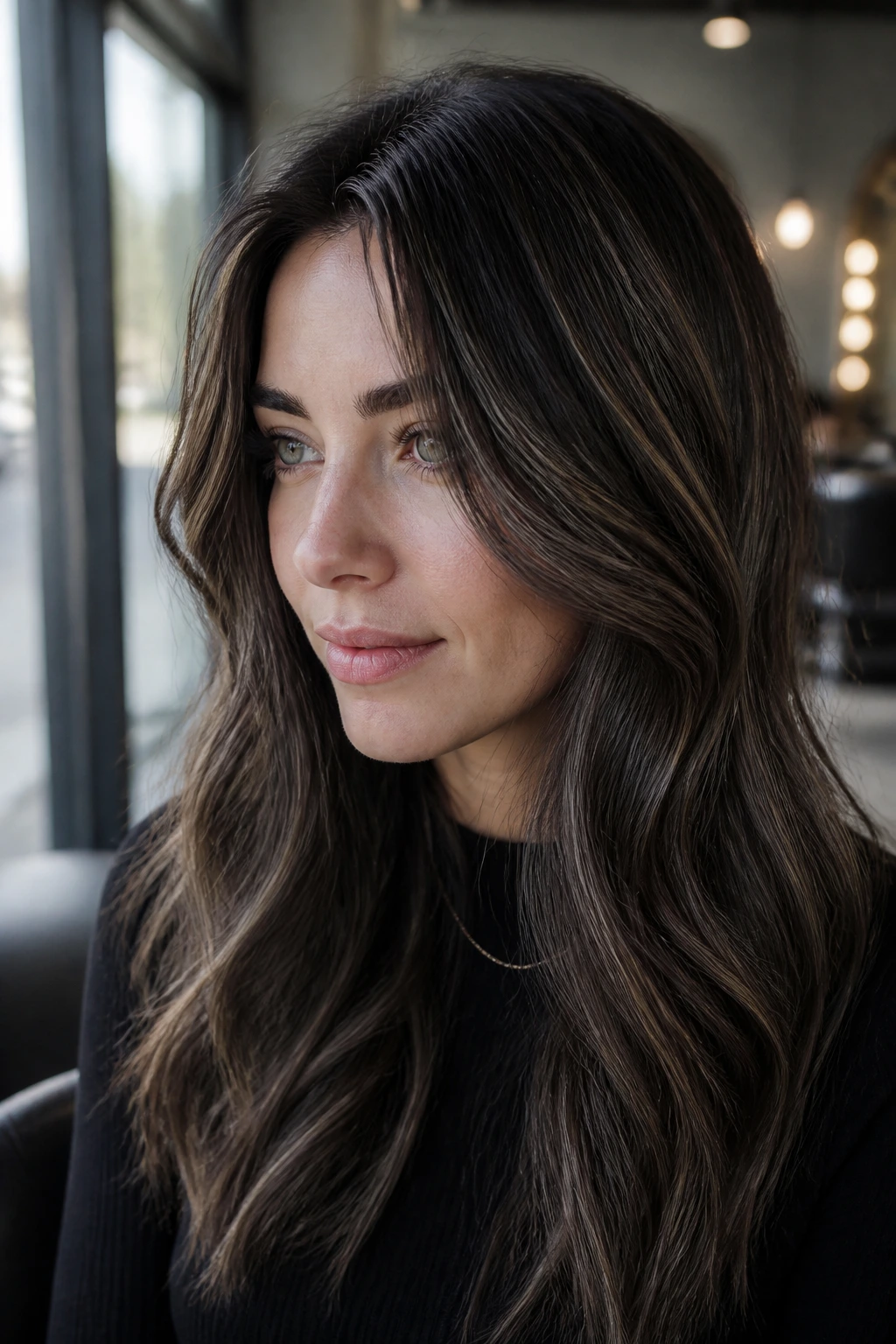
- Ash keeps the finish calm: Brown shades with a blue, violet, or green ash base stop the hair from turning orange against cool skin, which is the fastest way to make a brunette look off.
- Low contrast looks sharper than you’d expect: A level 4 or 5 brown ribboned through cool-toned hair gives shape without loud streaks, and that keeps the face from getting crowded.
- Face-framing pieces do more than brightness: Dark brown money pieces can sharpen cheekbones and jawline without the hard edge that blonde can leave on a cool complexion.
- Gloss is doing real work here: A cool brunette gloss can make the surface look reflective and clean, especially on mid-lengths and ends that usually go dull first.
- Grow-out is gentler: Dark brown dimension softens as it fades, so the line at the root stays quieter than lighter highlight work.
1. Mushroom Brown Ribbon Lights
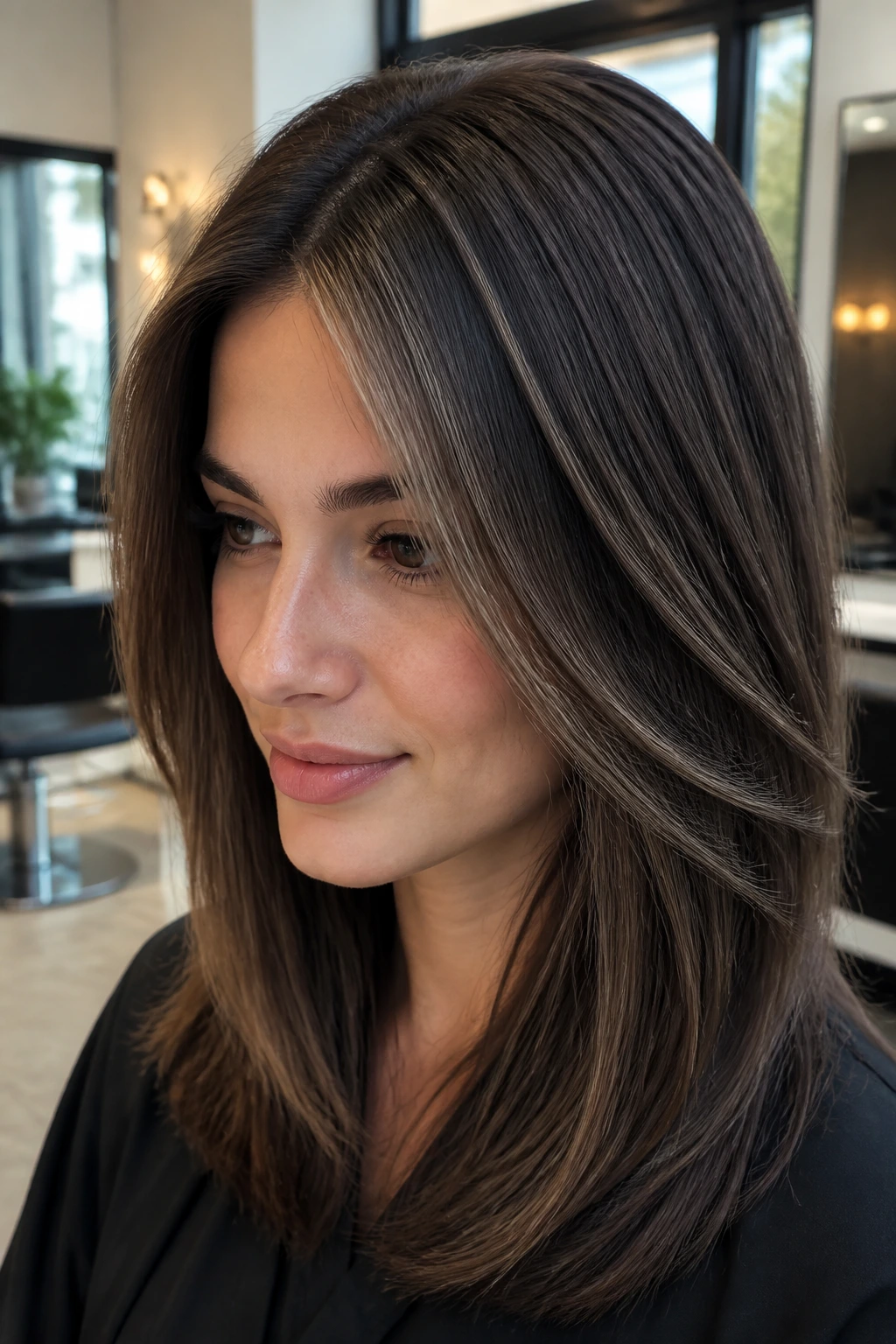
Mushroom brown is one of those shades that makes a cool complexion look composed without trying too hard. The color sits in that soft gray-brown lane, so the ribbons blend into dark hair instead of popping like copper strips. On straight or softly waved hair, I like it best when the highlights are thin enough to catch light only when the hair moves.
Why it flatters cool skin
The ash base is the whole point. Mushroom brown keeps the finish from leaning red, and that matters if your skin goes pink in natural light or flushes easily across the cheeks. Ask for fine ribbon lights, not chunky blocks, and keep the lift modest—usually one to two levels lighter than the base is enough.
- Ask for narrow foils around the part and temples.
- Keep the toner in the neutral-ash family.
- Avoid golden brown if you want the result to stay clean.
A strong mushroom brown result looks soft in a mirror and even softer outdoors. That’s the sweet spot.
2. Smoky Espresso Babylights
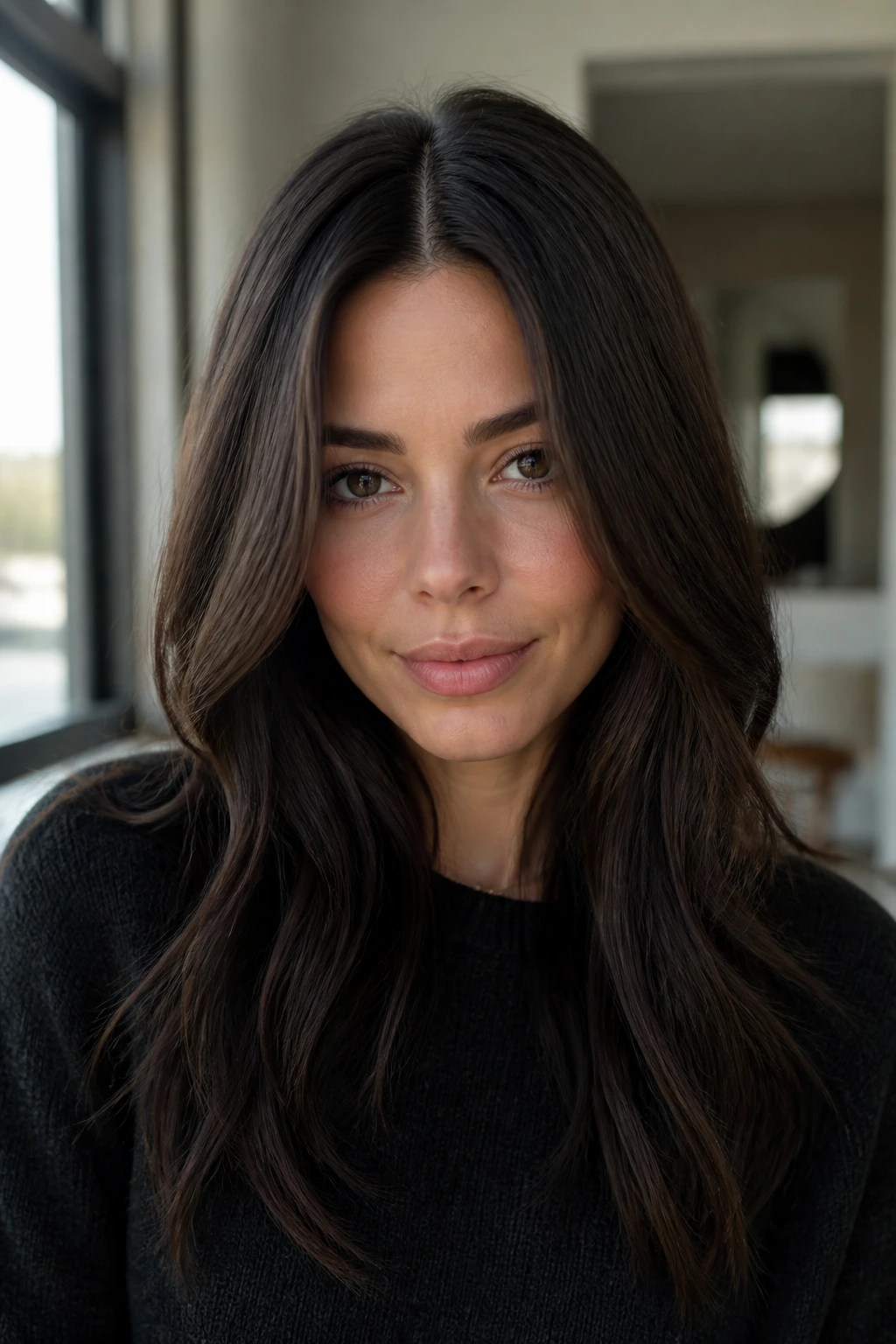
Smoky espresso babylights are for someone who wants people to notice the hair, not the dye job. These are the tiniest possible lightened strands, placed so close together that they read like a change in texture rather than obvious highlights. On cool skin, they keep the brunette feeling rich instead of muddy.
The best version is almost invisible at first glance. Then the sun hits it, or the hair swings forward, and the surface wakes up. That’s the charm. If your natural color is already deep brown, this can be a safer move than trying to force brightness that your undertone doesn’t want.
For this look, I’d keep the finish matte-cool, not glossy-warm. A beige-ash toner and a clean center part make a big difference. The babylights should sit mostly around the crown and front half of the hair where movement gives them life.
3. Ash Mocha Balayage
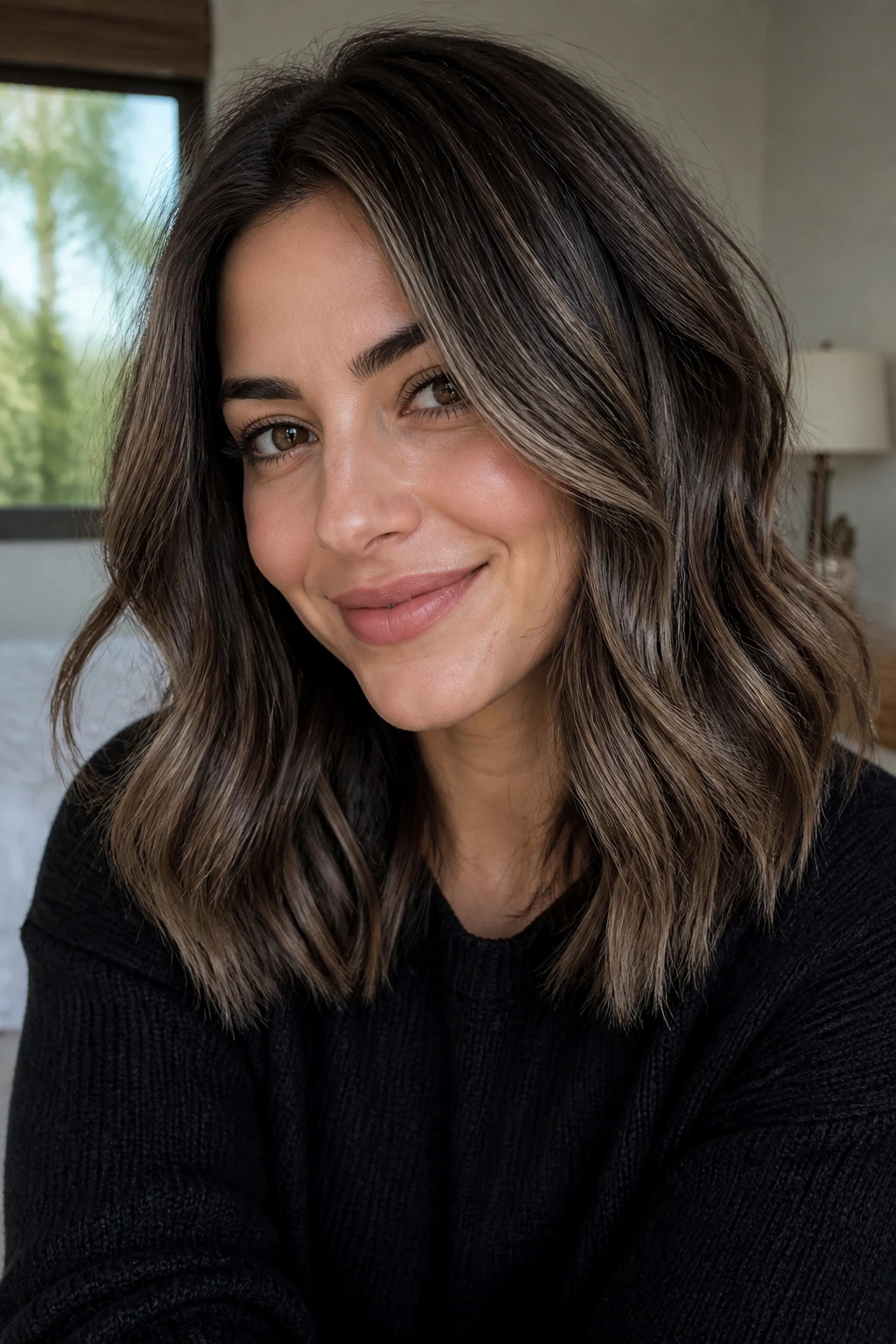
Ash mocha balayage is the workhorse option in this whole group. It gives you softness, a little depth, and enough movement to stop layered hair from collapsing into one flat brown sheet. The mocha part gives body. The ash part keeps it honest.
This look works especially well when the hair has medium layers or long, loose bends. Balayage lets the colorist place darker brown pieces where the hair naturally curves, which gives you dimension without a hard foil line. Cool skin gets the benefit of contour, not contrast for its own sake.
I like this one on shoulder-length cuts because the ends can carry more than one tone without looking busy. If you have a warm base, the ash toner matters. If you skip it, the mocha can tip orangey fast.
4. Cool Chestnut Money Piece
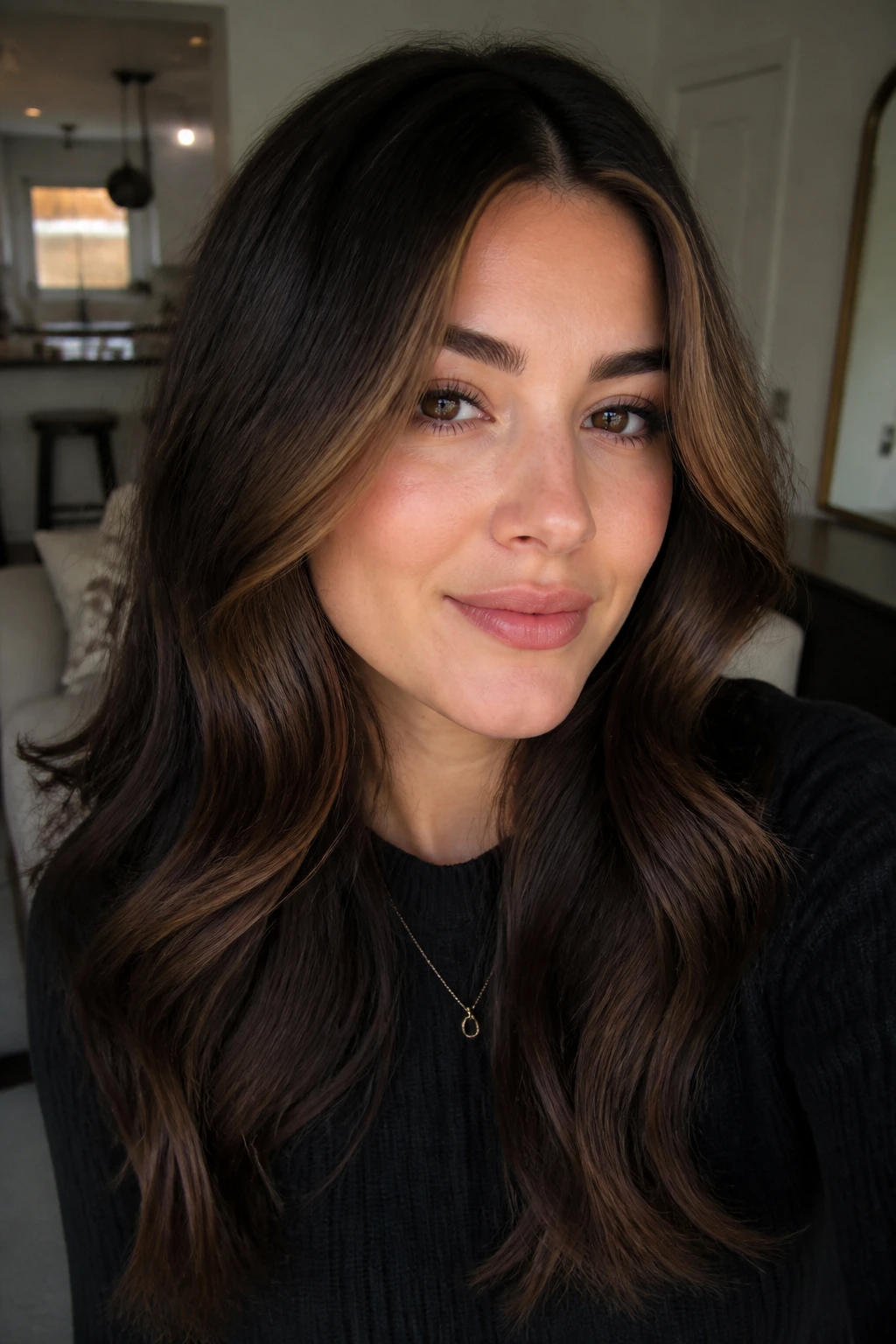
A cool chestnut money piece sounds simple, but it can change the whole face. The front sections are just light enough to open up the features, yet the brown stays deep enough to sit comfortably with cool undertones. On a cool face, that balance matters more than brightness.
This is the look I’d reach for if you want one visible move rather than a full-head shift. A money piece around the face can sharpen the cheek area and pull attention upward, especially when the rest of the hair stays in a darker brunette lane. It’s also easier to maintain than highlights scattered everywhere.
Best placement
Keep the section narrow at the root and slightly wider through the mids so it doesn’t look like a stripe. If your hair is parted in the middle, the money piece should frame both sides evenly. Off-center part? Then the brighter section should still look balanced when the hair swings.
5. Graphite Brown Peekaboo Panels
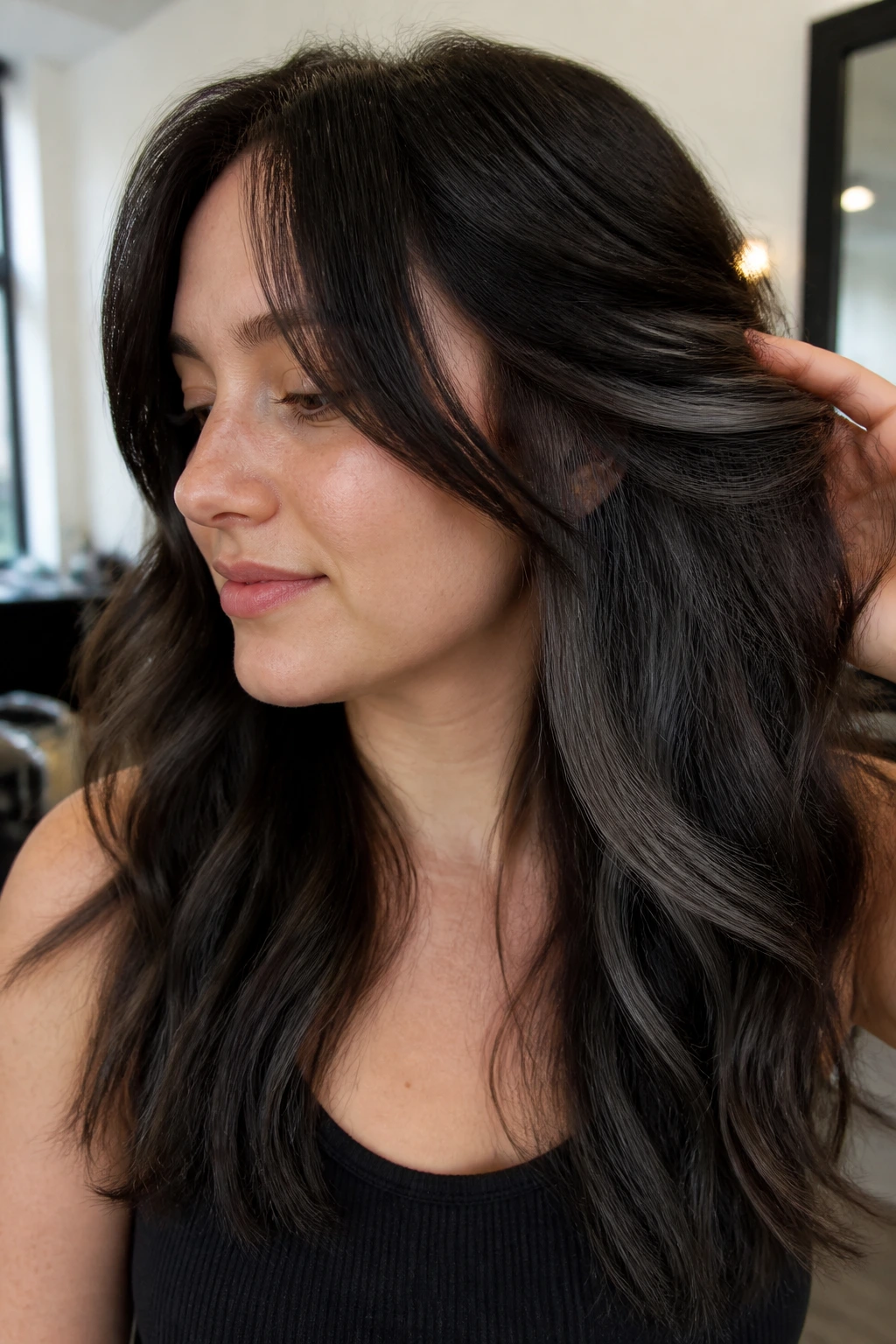
Graphite brown peekaboo panels are for people who want a little attitude without committing to anything loud. Hidden panels under the top layer give depth when the hair moves, but the surface still reads polished and dark. On cool skin, that shadowy effect looks cleaner than warm hidden color, which can flash red in the wrong light.
This one is a nice choice if you wear your hair up a lot. The color shows through braids, half-up knots, and ponytails, which makes the whole style feel more intentional. It also works well on blunt cuts where visible top-layer highlights might fight the shape.
If you want a cooler result, ask for graphite, slate, or ash-brown pieces under the crown and around the nape. Keep them thin enough that they appear as movement, not stripes. The payoff is subtle, but it’s the kind of subtle that gets noticed.
6. Mink Brown Melt for a Lob
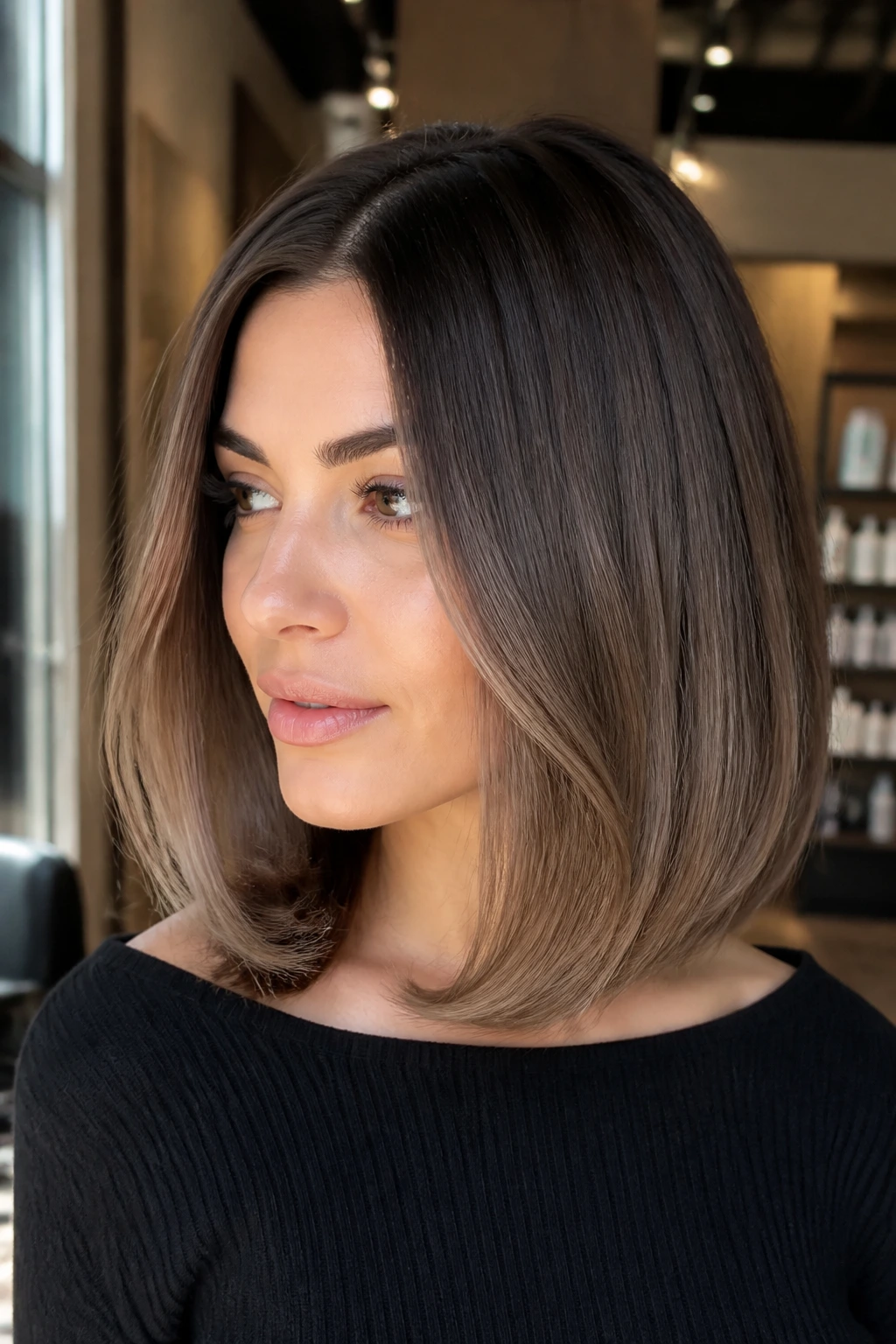
A mink brown melt on a lob gives you that smooth, expensive-looking gradient people keep trying to describe with five different words. I like it because the cut itself already has a clean edge, so the color doesn’t need to shout. It just needs to glide from root to ends.
The best mink brown finish starts with a dark root and slips into slightly lighter ash-brown mids, then settles back into a deep cool end. That soft shift keeps the lob from looking like a solid helmet, which can happen fast on one-length hair. Cool skin benefits because the shade stays neutral instead of yellow.
This is a strong choice if you hate obvious maintenance. The grow-out stays gentle, and the lob shape hides a lot of the transitional line. It’s practical without feeling plain.
7. Cocoa Contour Highlights for Curls
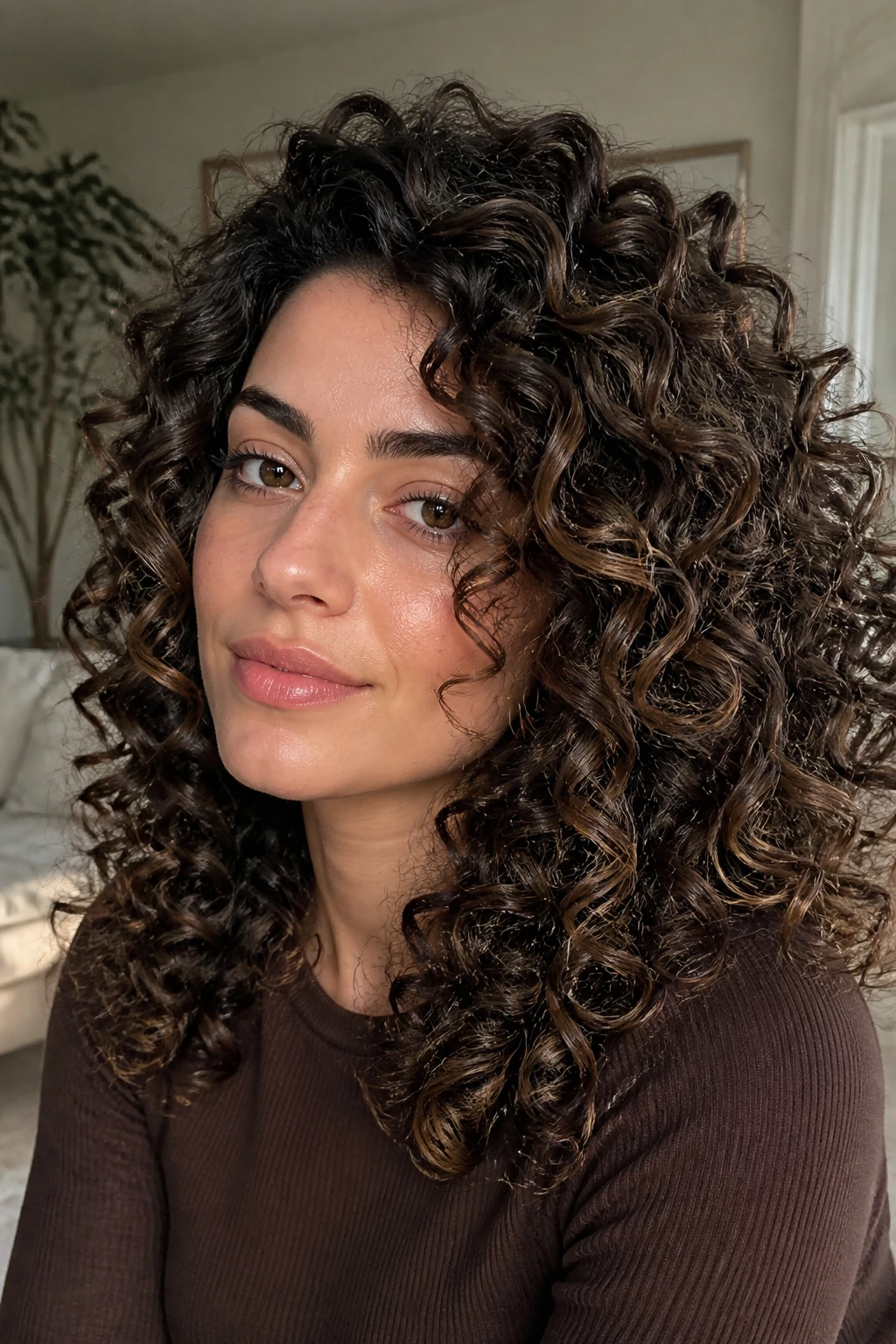
Cocoa contour highlights are one of my favorites on curls because the color can follow the curl pattern instead of fighting it. The darkest cocoa pieces build shape at the perimeter, while slightly lighter brown turns can sit where the curl opens. Done right, the hair looks fuller and more carved.
Cool skin tones usually look best when the cocoa stays muted. Not milk-chocolate warm. Not chestnut red. Just a cool, velvety brown that gives the curls a sense of depth. A colorist who understands curl placement will avoid blasting every coil with the same amount of light.
What to ask for
Tell your colorist you want dimension around the face, crown, and outer halo of the curls, with less emphasis on the interior. That prevents the color from getting busy. And yes, the toner matters here too. A beige-ash finish keeps the curls from reading orange under daylight.
8. Taupe-Brown Face-Framing Layers
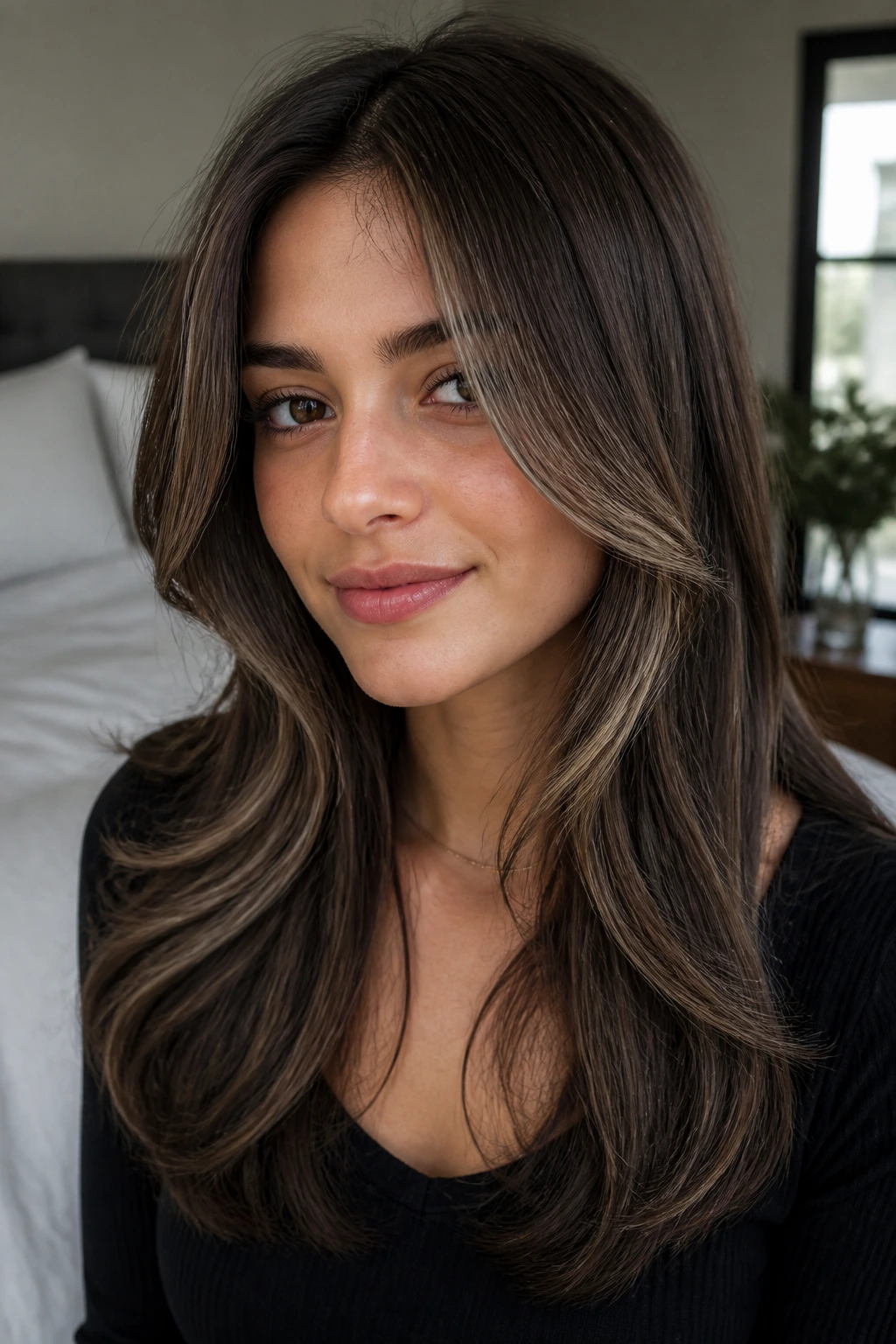
Taupe-brown is the quiet cousin of beige brunette, and on cool skin it can be a small miracle. The tone sits between brown and gray, which makes it a clean frame for rosy or blue-based undertones. When it’s placed along layered front sections, the effect is soft but noticeable.
This style works best when the haircut already has movement. The layers let the taupe pieces show when the hair turns, but they don’t need to dominate. That’s why I like this on collarbone cuts and long layers more than on super-long, blunt hair.
If you’re after a look that won’t argue with makeup, taupe-brown is a solid call. It sits well with mauves, berry lips, cool pink blush, and silver jewelry. That’s not a random detail; it changes how the whole face reads.
9. Slate Brown Ribbon Lights on a Bob
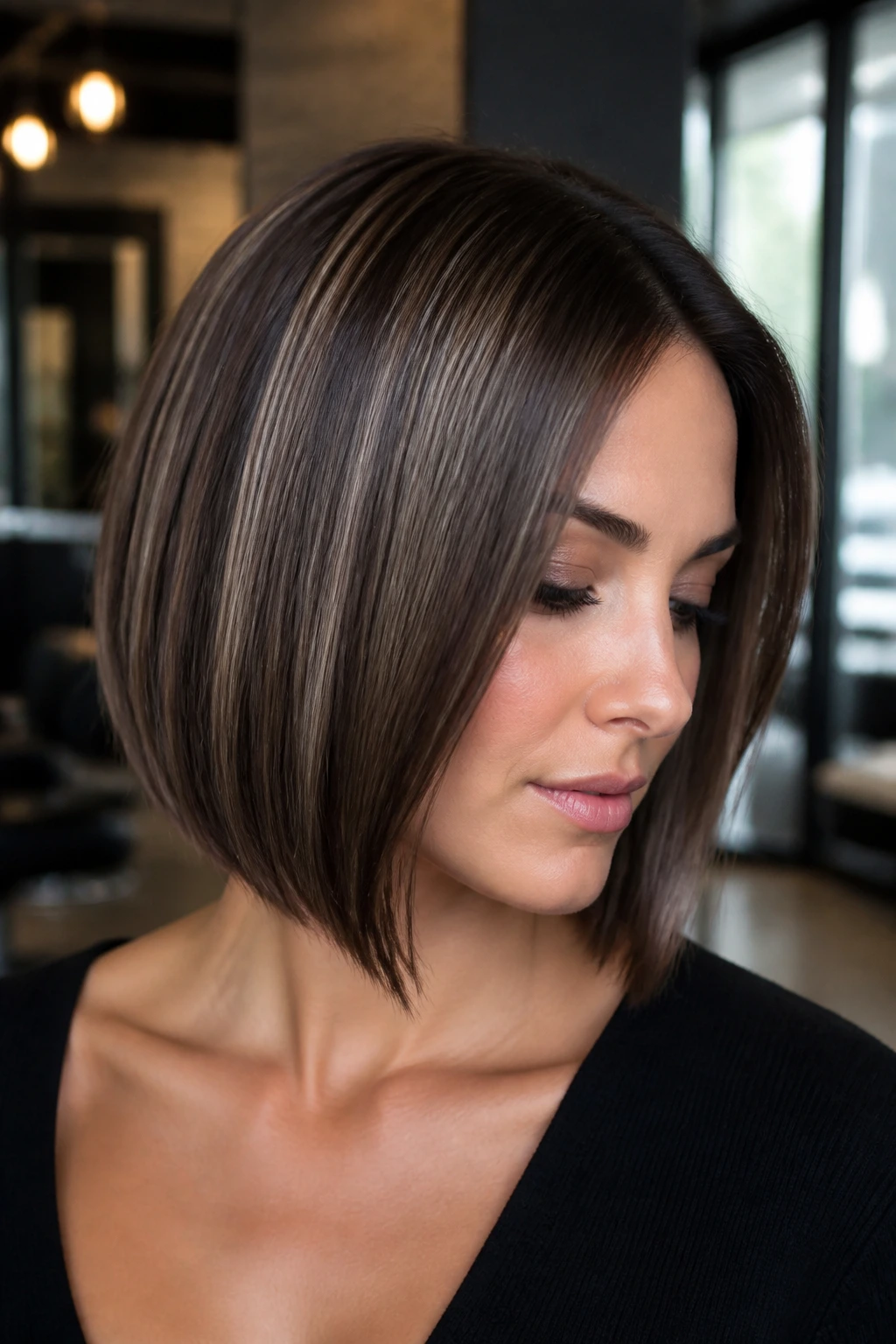
A bob needs clean color placement or it can go flat fast. Slate brown ribbon lights solve that by adding narrow pieces that move with the blunt line instead of breaking it apart. The shade is cool, deep, and just smoky enough to keep cool skin from looking washed out.
I like ribbon lights on a bob because the haircut already has a lot of structure. The color should support that structure, not compete with it. Thin ribbons around the crown and side panels create a sleek shift in tone without making the bob look streaky.
Keep the contrast modest. On short hair, too much variation can look busy in a hurry. A slate finish keeps the whole cut crisp, especially if you wear it tucked behind the ear or with one side pinned back.
10. Smoky Brunette Ombré Ends
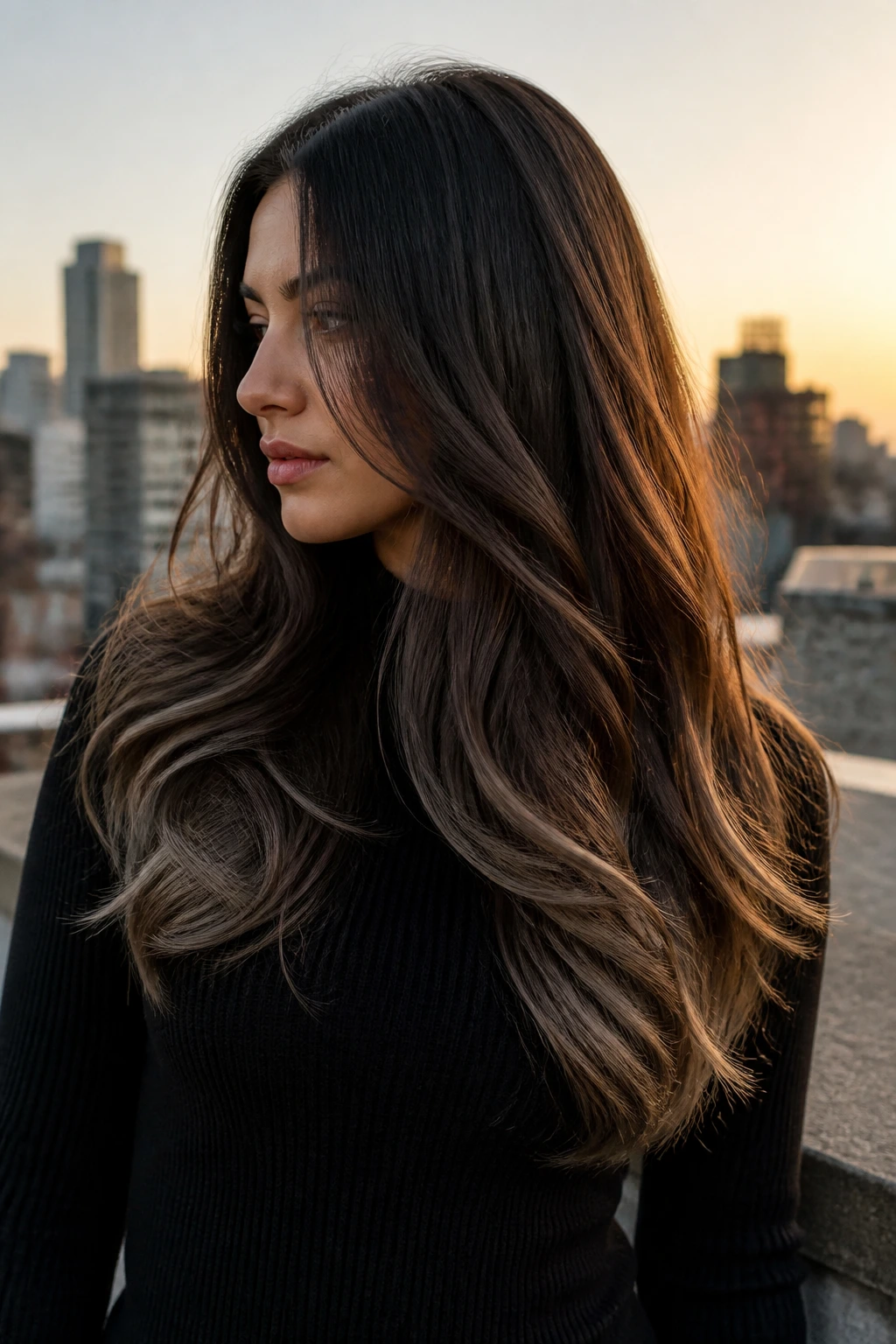
Smoky brunette ombré ends are for long hair that needs shape at the bottom. The trick here is not a dramatic fade. It’s a controlled shift from darker roots into slightly lighter, cooler brown ends that still feel grounded. On cool skin, that keeps the length from looking brassy and tired.
This is one of the easier ways to add dimension without reworking the whole head. If the base is already dark, the ombré can start around the mid-lengths and melt into a smoky coffee brown at the tips. That little change makes waves look more expensive. Blunt ends benefit too, because the color keeps them from feeling heavy.
The ends should look glossy, not dry. If the brown turns flat, the whole ombré loses its shape.
11. Cool Walnut Lowlights for Medium Brown Hair
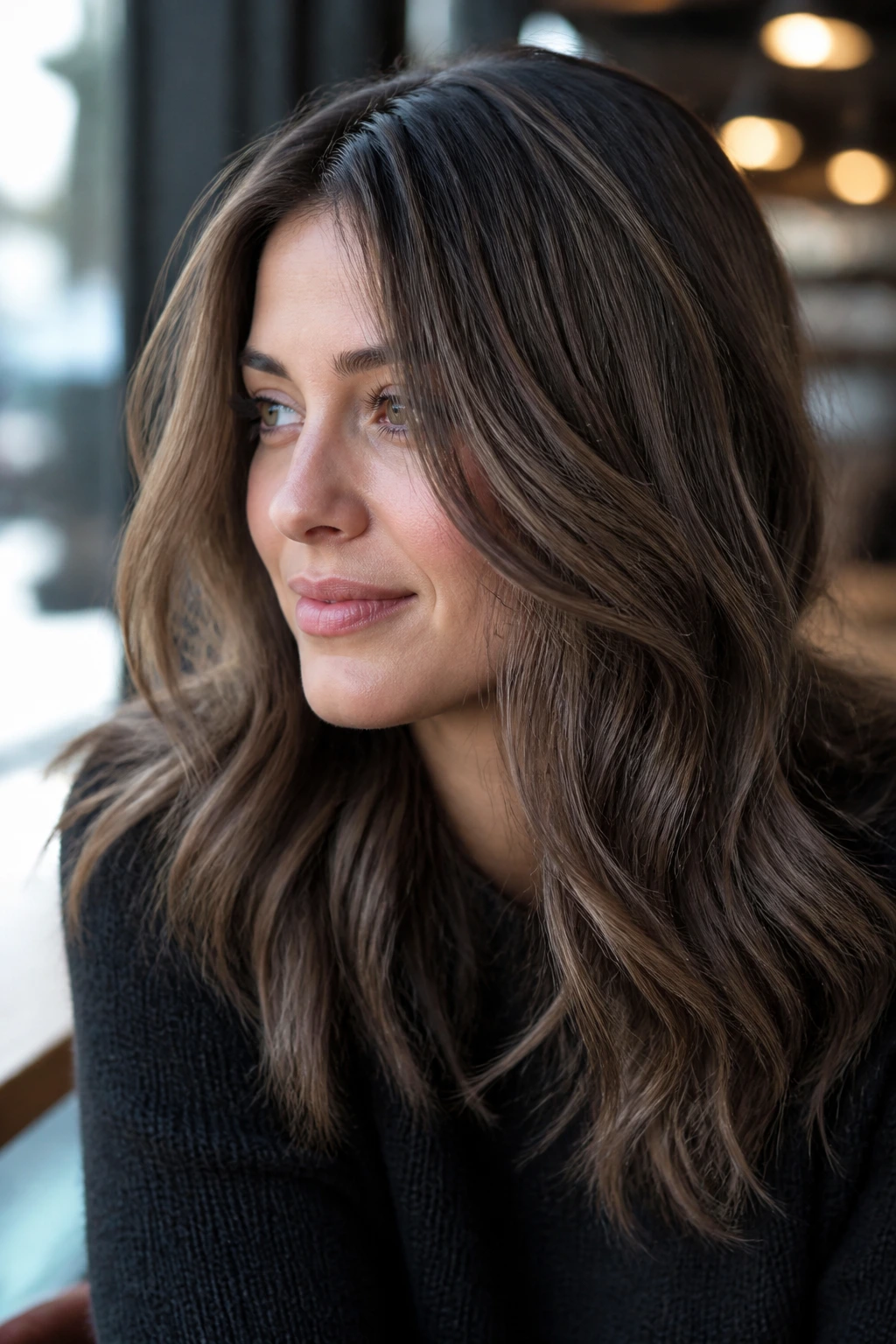
Not every brunette needs brighter highlights. Sometimes the smartest move is lowlights, and cool walnut is the shade that makes medium brown hair look fuller and more layered. The darker pieces add depth so the lighter brown around them reads more dimensional.
This is especially useful if your skin is cool and your hair is already a touch warm. Adding walnut lowlights pulls the overall temperature back in line. The result is calmer and often richer than trying to bleach the hair lighter.
I’d ask for lowlights in the interior and underneath sections, with a few pieces near the crown for balance. The top layer should still catch light, but the deeper walnut pieces give the hair something to fall against. It’s a smarter move than cranking up contrast everywhere.
12. Espresso Gloss With Carved Light
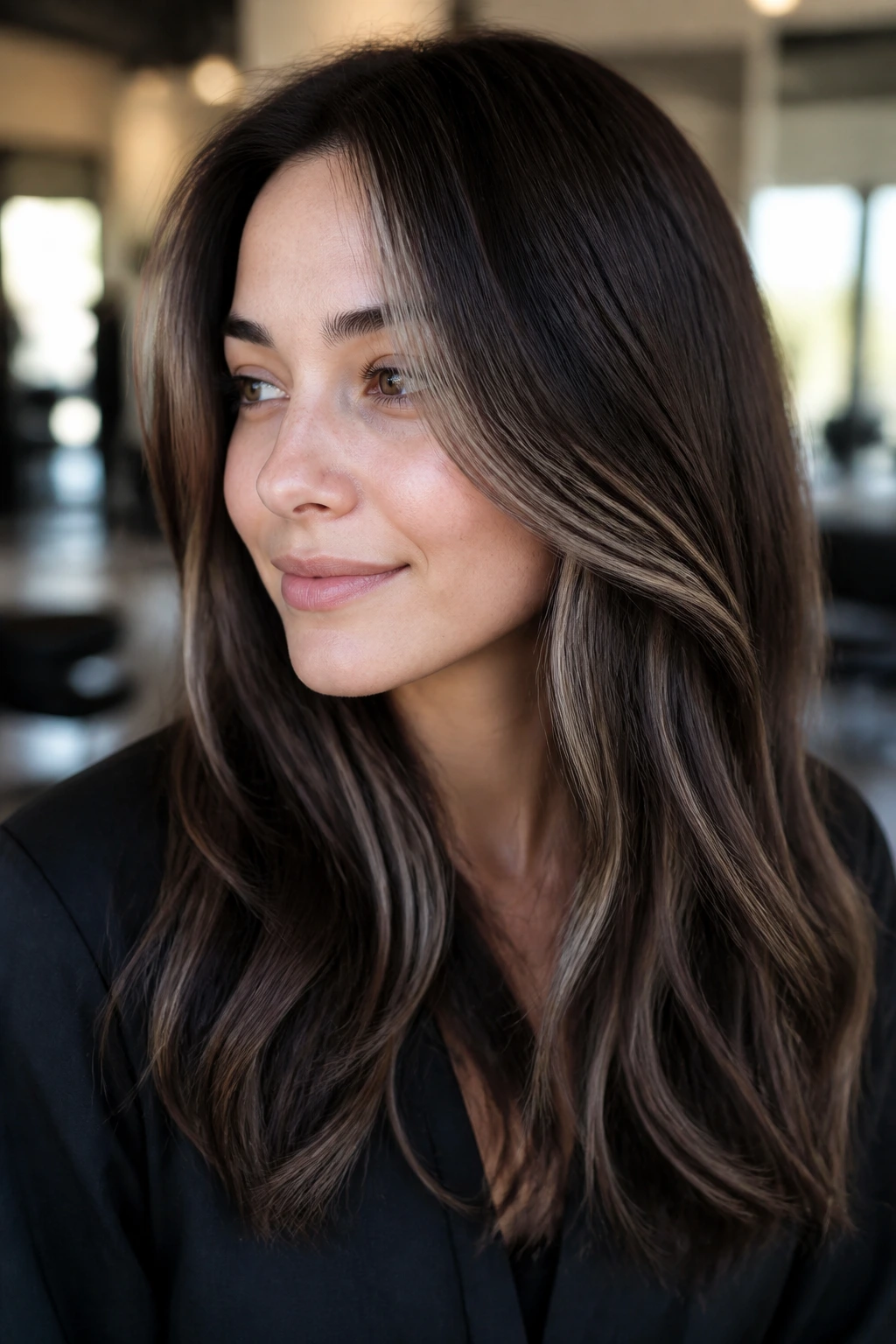
Espresso gloss with carved light is one of the least fussy brunette options here. You keep the base dark and glossy, then carve out a few strategic lighter pieces around the face and top layer. The effect is clean, not busy.
The gloss does more than make the hair shine. It keeps the espresso tone from looking dull, which can happen fast on cool skin if the color is too flat. A blue- or violet-based gloss can keep the brown from slipping into red. The carved pieces should be fine, not chunky, and they should follow the haircut.
This look is a good fit if you like dark hair but want a little movement. It doesn’t need drama. It needs precision.
13. Cool Chestnut Chunky Ribbons
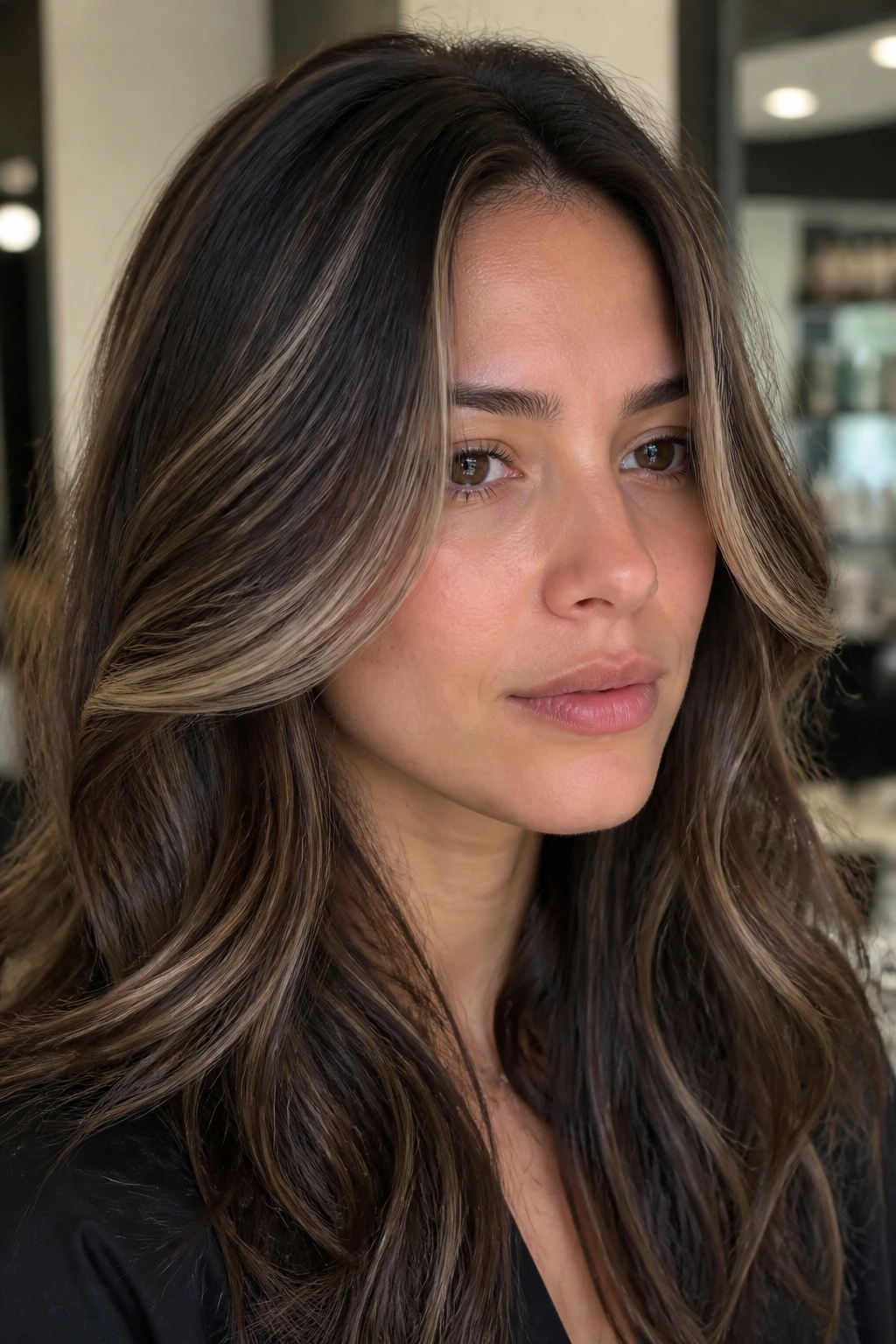
Chunky ribbons get a bad reputation because they can look dated when they’re too warm or too stripey. But in a cool chestnut tone, they can feel sharp and modern. The trick is to keep the ribbons soft-edged and placed where the haircut can handle them.
This version works best if you like a little more contrast around the face and crown. On cool skin, the chestnut should lean neutral, not red. If the pieces look too coppery in the foils, they’ll fight your undertone the second you step outside.
I’d save this look for layered cuts, lobs, or shoulder-length hair with movement. On very straight one-length hair, chunky ribbons can feel heavy. On layered hair, they can look deliberate and a little editorial.
14. Mocha Foilayage on Long Layers
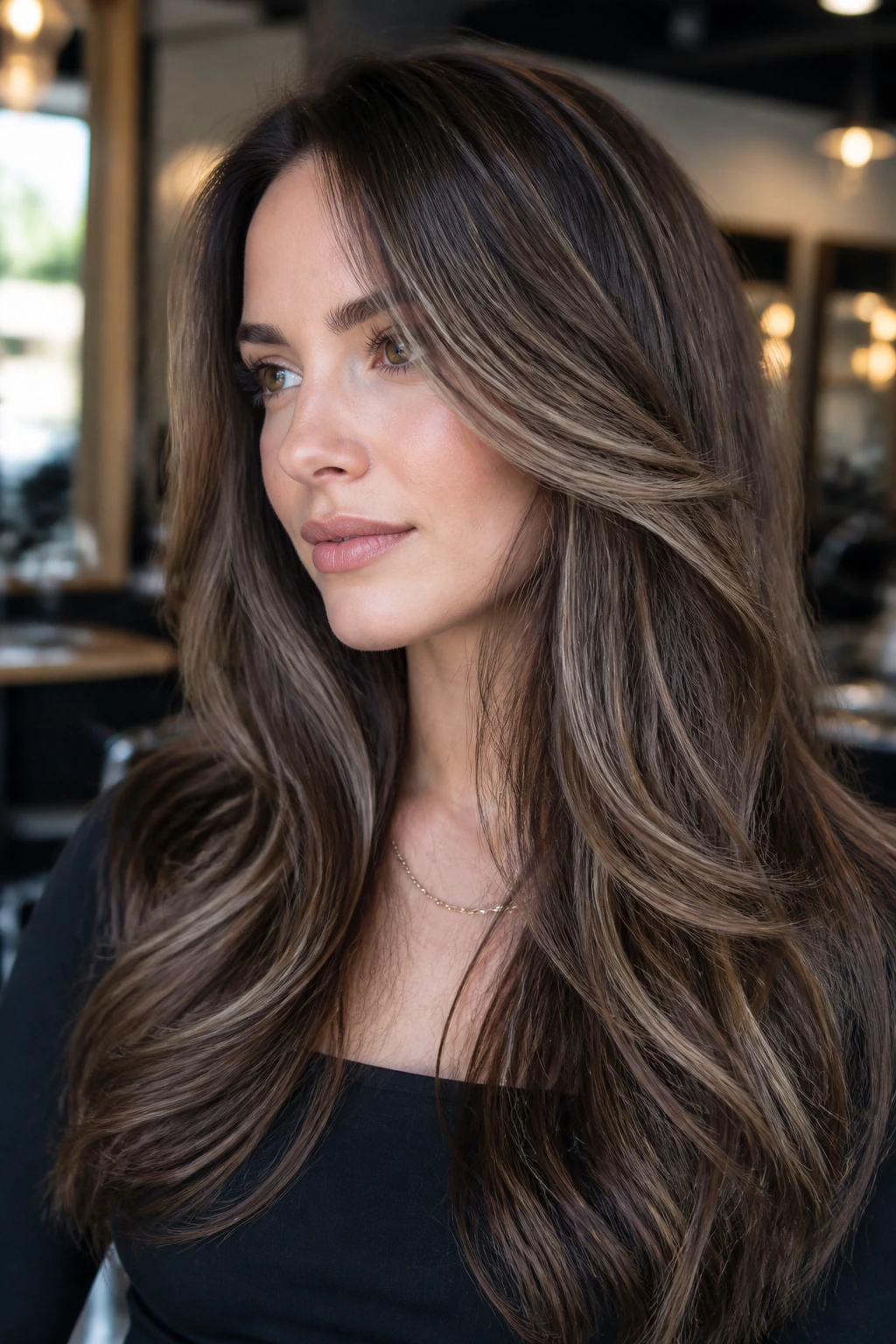
Mocha foilayage gives long layers the kind of dimension that balayage sometimes misses. Foils lift a little more than hand painting alone, so you get brighter mocha pieces with a softer edge. For cool skin, that extra control matters because the tone can stay neutral instead of drifting gold.
This look is especially useful if your hair is dense or dark and you want the color to show from across the room, not just in a mirror. Long layers let the mocha pieces move, which stops the finish from looking static. I like a mix of thin and medium sections so the color doesn’t feel planned to death.
Ask for an ash-beige toner after lifting. Without that, mocha can tip warm fast, and the whole thing loses the cool-skin advantage.
15. Ash Brown Curtain Bang Accents
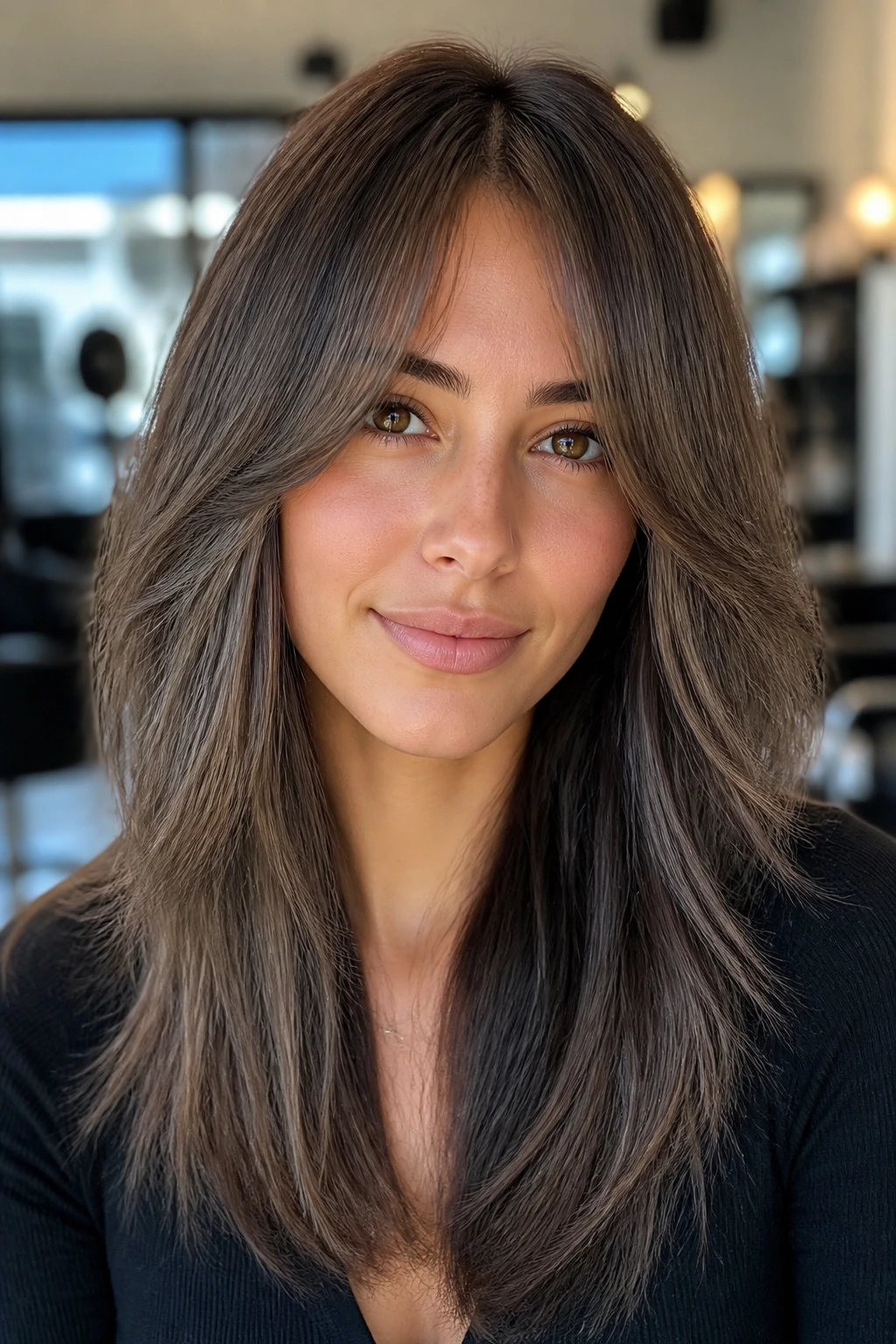
Curtain bangs can carry a surprising amount of color. Ash brown accents in the bang area draw the eye to the center of the face and soften the forehead without making the whole head lighter. On cool skin, that ash tone keeps the front from looking orange, which is a common mistake with fringe color.
This is a nice option if you want a small change that still shows every day. Bangs sit closest to the face, so the color has to behave. A few fine ash-brown pieces inside the curtain shape are enough; you do not need a full blonde-like effect.
Best way to wear it
Keep the root depth close to the rest of the hair and focus the lighter brown on the bend of the curtain. That way the fringe opens when it moves but doesn’t look striped when it’s dry. It’s a tiny move with a big payoff.
16. Soft Smoky Sweep for Fine Hair
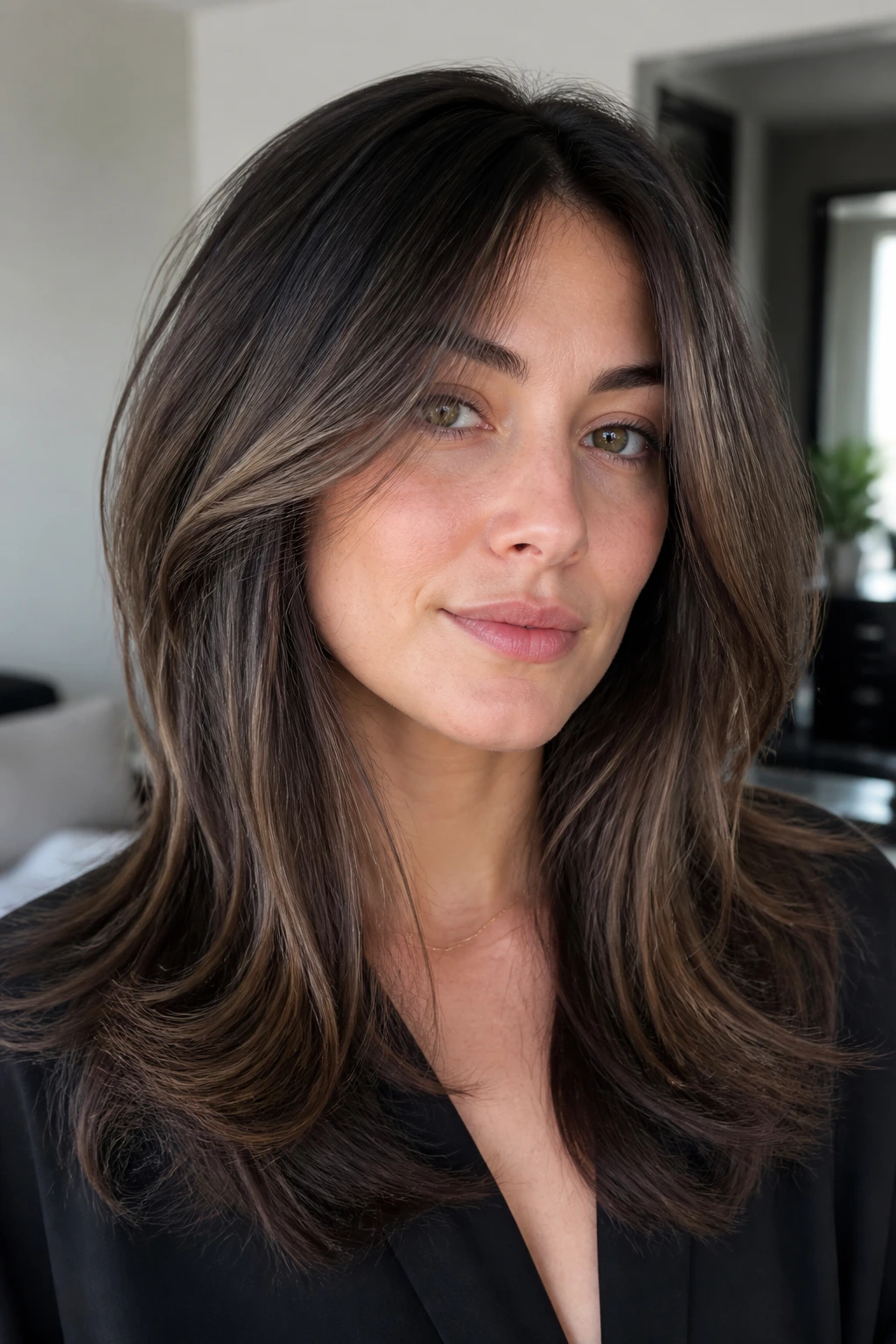
Fine hair needs room to breathe. A soft smoky sweep gives that without creating hard lines that can make the hair look thinner than it is. The idea is to place dark brown and smoky brown pieces in a way that suggests density rather than scattering light everywhere.
This is one of the better cool-skin options for people who worry about highlights making the hair look wispy. Keep the sections broad enough to show, but not so broad that they read as blocks. A soft sweep around the crown and front corners can create lift without sacrificing the illusion of fullness.
I’d stay away from very pale contrast here. Fine hair often looks better with quiet dimension, not a high-contrast stripe map. Smoky brown does that job without shouting.
17. Dark Roast Balayage on Deep Brunettes
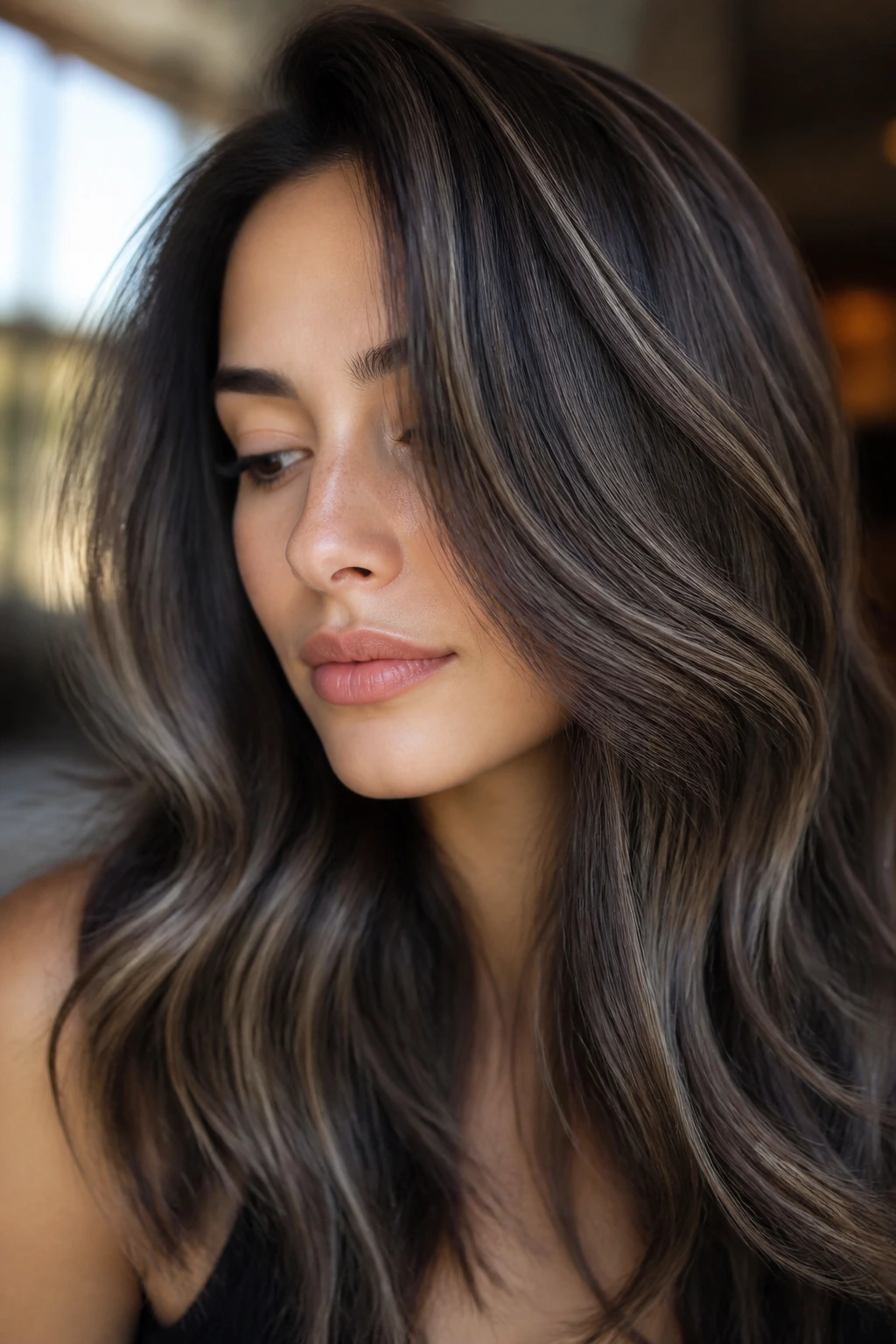
Dark roast balayage is for hair that starts very dark and does not need to pretend otherwise. The lighter pieces should still live in the dark brown family, just a level or two up, so the result feels believable on cool skin. Anything warmer than that can wobble into red-black territory quickly.
I like this on deep brunettes because the contrast is low enough to stay sophisticated but high enough to break up a solid mass of color. The balayage should sit mostly on the upper layers and ends, where movement can show it off. That keeps the base strong and the finish dimensional.
If your natural hair is almost black, be cautious with lift. Over-lightening can drag the undertone warm and create more work than the look is worth.
18. Iced Cocoa Money Layers
Iced cocoa money layers are a more grown-up version of the classic money piece. Instead of one bright strip, the highlight lives across layered front pieces so the face gets a gentle frame from cheekbone to collarbone. Cool skin likes this because the shade stays deep and creamy rather than golden.
This is a strong choice for mid-length to long layered cuts. The layers let the iced cocoa bend in and out of view, which keeps the color from feeling flat. It also gives you more control over how visible the highlight is on different days. Pull the hair back, and it softens. Wear it loose, and it pops.
Tell the colorist you want a cool cocoa tone, not caramel. Those two are not the same thing, even if salon menus sometimes act like they are.
19. Smoke-and-Mirrors Brunette Melt
Smoke-and-mirrors brunette melt is the look I’d call the least demanding and one of the smartest. The root stays dark, the mid-lengths blur into smoky brown, and the ends soften just enough to keep the shape alive. It’s the kind of color that looks expensive because nothing is fighting for attention.
On cool skin, the melt matters more than the individual highlight pieces. A harsh line anywhere near the part can make the whole thing feel too done. A true melt keeps the brown tones in the same cool family so the eye reads movement, not sections.
This one is forgiving if your hair grows fast or if you live in a ponytail. The grow-out line stays soft for a while, which means fewer awkward weeks and less salon panic.
20. Brunette Shimmer Lights for Straight Hair
Straight hair shows everything. Every foil line. Every uneven blend. Every warm piece that should have been toned down. That’s why brunette shimmer lights have to be finer and cooler than they would be on wavy hair.
The goal is surface shine, not obvious pattern. Place the lights in micro-weaves, especially around the part and face, so the color catches movement when hair is tucked, flipped, or blown smooth. Cool skin benefits because the hair reflects light without looking yellow.
I like this look best when the shade change stays subtle and the gloss is doing most of the visible work. Straight hair can carry a more graphic brown map, but only if the tone is disciplined. Otherwise, it goes stripey fast.
21. Shadow Root with Ash Brown Ends
A shadow root is one of those salon phrases that earns its keep. It gives the highlights a place to start without making the root look overprocessed or too light against cool skin. When the ends are kept ash brown, the whole head feels grounded.
This look is especially useful if you’re trying to stretch time between appointments. The root shadow softens the grow-out line and lets the ends carry the visible color. That means less maintenance and less panic when the roots start showing.
Ask for a root smudge that stretches about 1 to 1.5 inches, then melts into ash brown lengths. If the smudge goes too far or too warm, the whole finish can look muddy. Precision matters here.
22. Velvet Brown Interior Lows
Velvet brown interior lowlights are the secret weapon for hair that needs body. The darker pieces live underneath and inside the hair, so the top layer still catches light while the interior creates density. On cool skin, this reads richer than flat all-over color.
I love this move on medium-thick or thick hair that has started to look heavy at the ends. Interior lowlights break up that mass without changing the entire color story. The trick is to keep the lowlights cool and muted so they support the rest of the hair instead of darkening it into black.
This one does a lot of quiet work. People often assume highlights need to be lighter to matter. Not here.
23. Frosted Chestnut Face Frame on Mid-Length Hair
Frosted chestnut is one of the safer ways to brighten a cool face without wandering into warm territory. On mid-length hair, the chestnut pieces can sit right where the hair curves in toward the cheek and jaw, which gives a cleaner frame than random placement ever could.
This style works well when the cut has movement but isn’t overly layered. Too many layers can make the chestnut pieces scatter. A mid-length cut with a few strong face-framing layers lets the color breathe and keeps the result from looking busy.
If the skin is very cool, keep the chestnut close to neutral. The wrong chestnut leans red fast. The right one looks like a softer, darker version of brown suede.
24. Dimensional Mocha Waves
Dimensional mocha waves are basically a study in how to keep brown hair from falling asleep. Waves already help because they create little pockets of light and shadow, and mocha highlights make that movement easier to see. Cool skin stays in the safe zone when the mocha is ash-leaning and not sugary.
I’d use this on hair that’s naturally wavy or styled with a bend. The highlight pieces should be spread through the mids and ends, not piled at the top. That gives the wave pattern room to show off the color instead of hiding it.
A mocha wave look can be soft or punchier, depending on contrast. The more contrast you add, the more careful you have to be with the toner. That part is not optional.
25. Cool Brunette Halo Lights
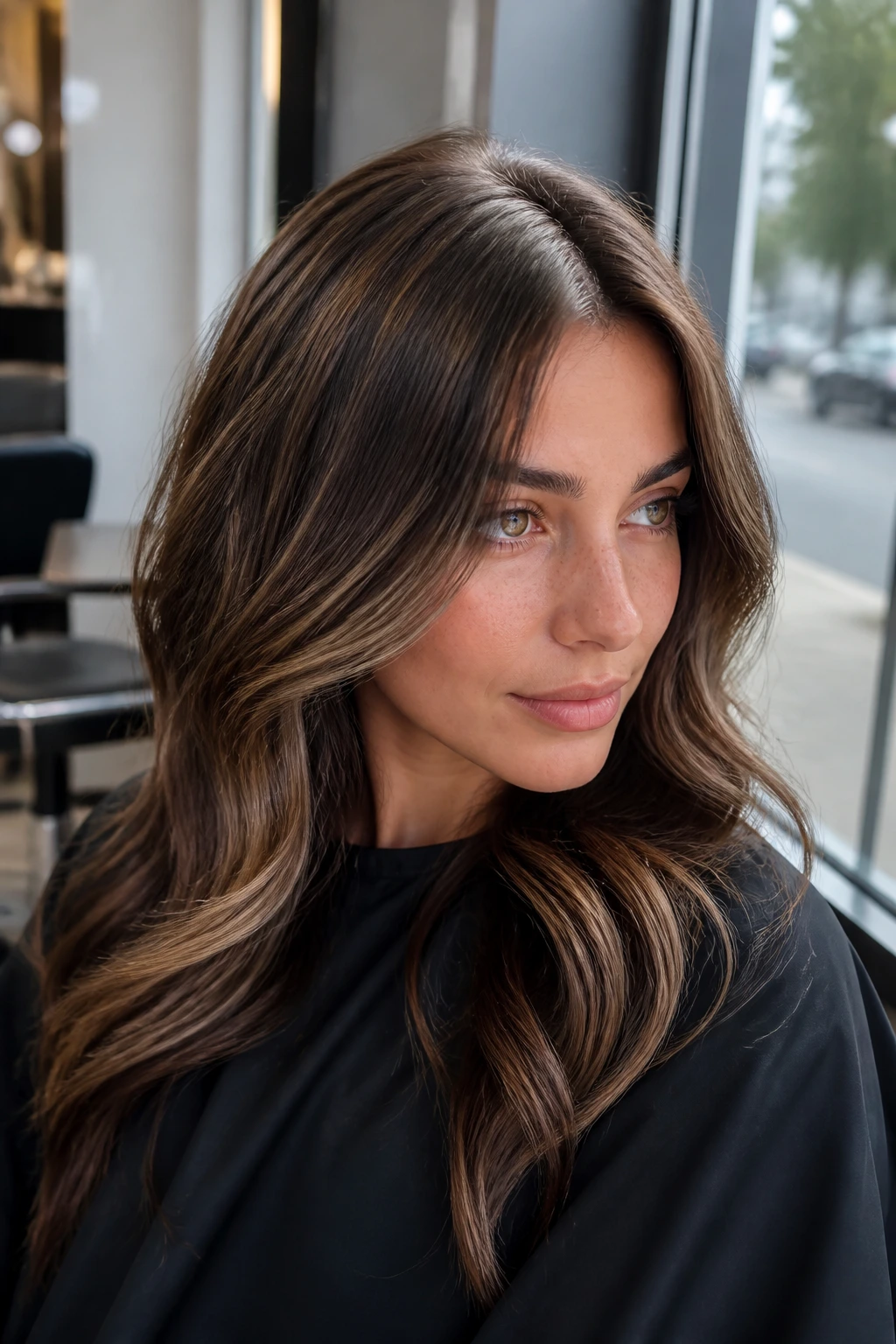
Halo lights sit near the crown and outer top layer, so they create lift where the eye lands first. On cool skin, a cool brunette halo can sharpen the face without turning the whole head into a highlight project. It’s bright where it matters and quiet everywhere else.
This style is especially useful for people whose hair tends to look flat on top. A few halo pieces give the impression of height and movement, which is useful on bobs, lobs, and long layers alike. Keep the pieces thin enough that the hair still looks like a brunette, not a stripe map.
It’s a smart salon ask if you want something visible but not high maintenance. The grow-out stays softer when the brightness lives near the crown and upper sides.
26. Midnight Brown Ribboning for Thick Hair
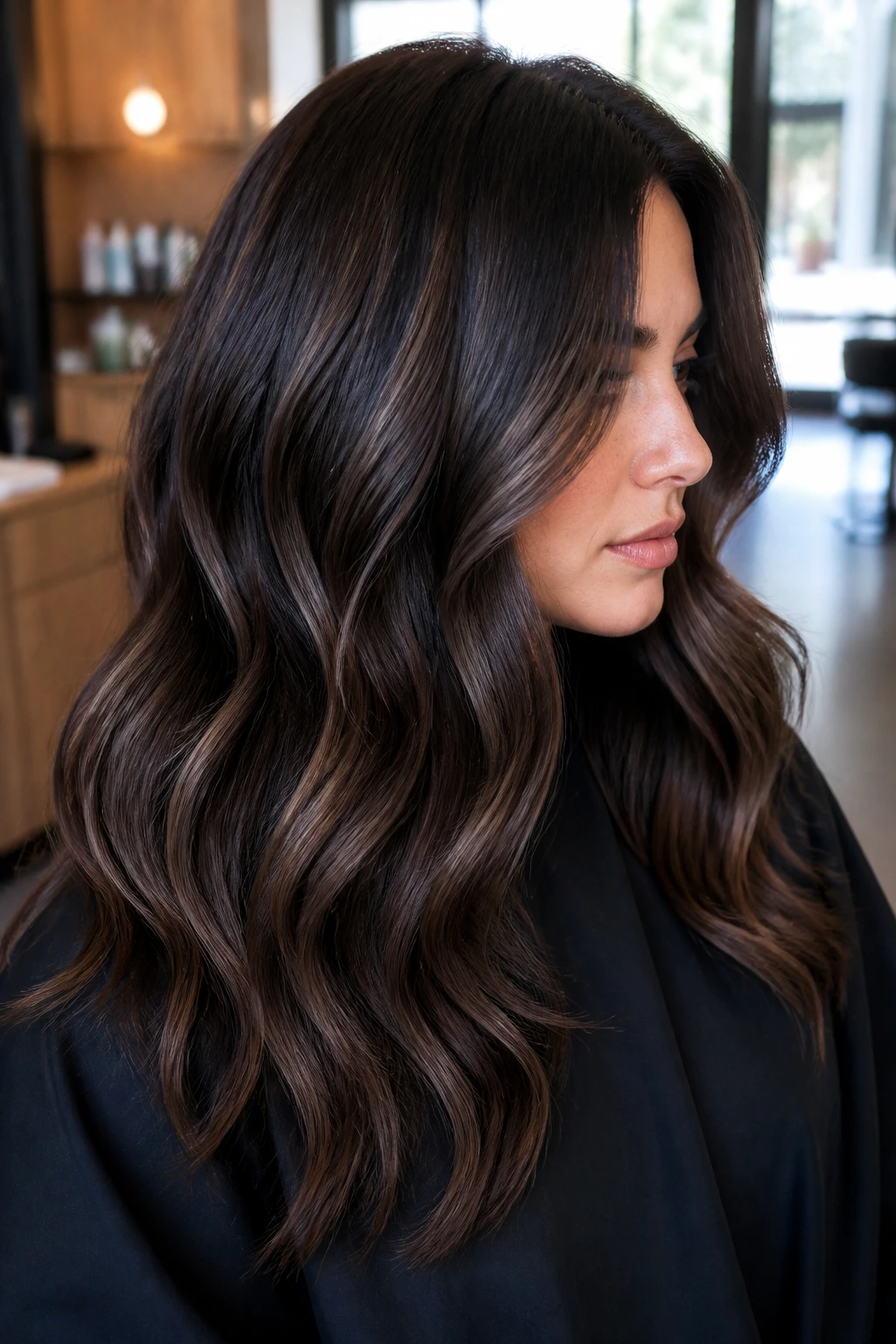
Thick hair can swallow subtle color if the sectioning is too timid. Midnight brown ribboning uses bigger, cleaner sections so the dimension actually shows through the density. The tone stays dark and cool, which helps cool skin keep its balance.
This is one of the few looks where a little more size can be a good thing. Thin babylights can vanish inside thick hair. Broader ribbons, placed with intention, create movement that survives the volume.
I’d keep the contrast controlled and the placement deliberate. Thick hair already has presence. The color just needs to break up the mass and give the eye somewhere to land.
27. Ash Espresso Taper on Pixies
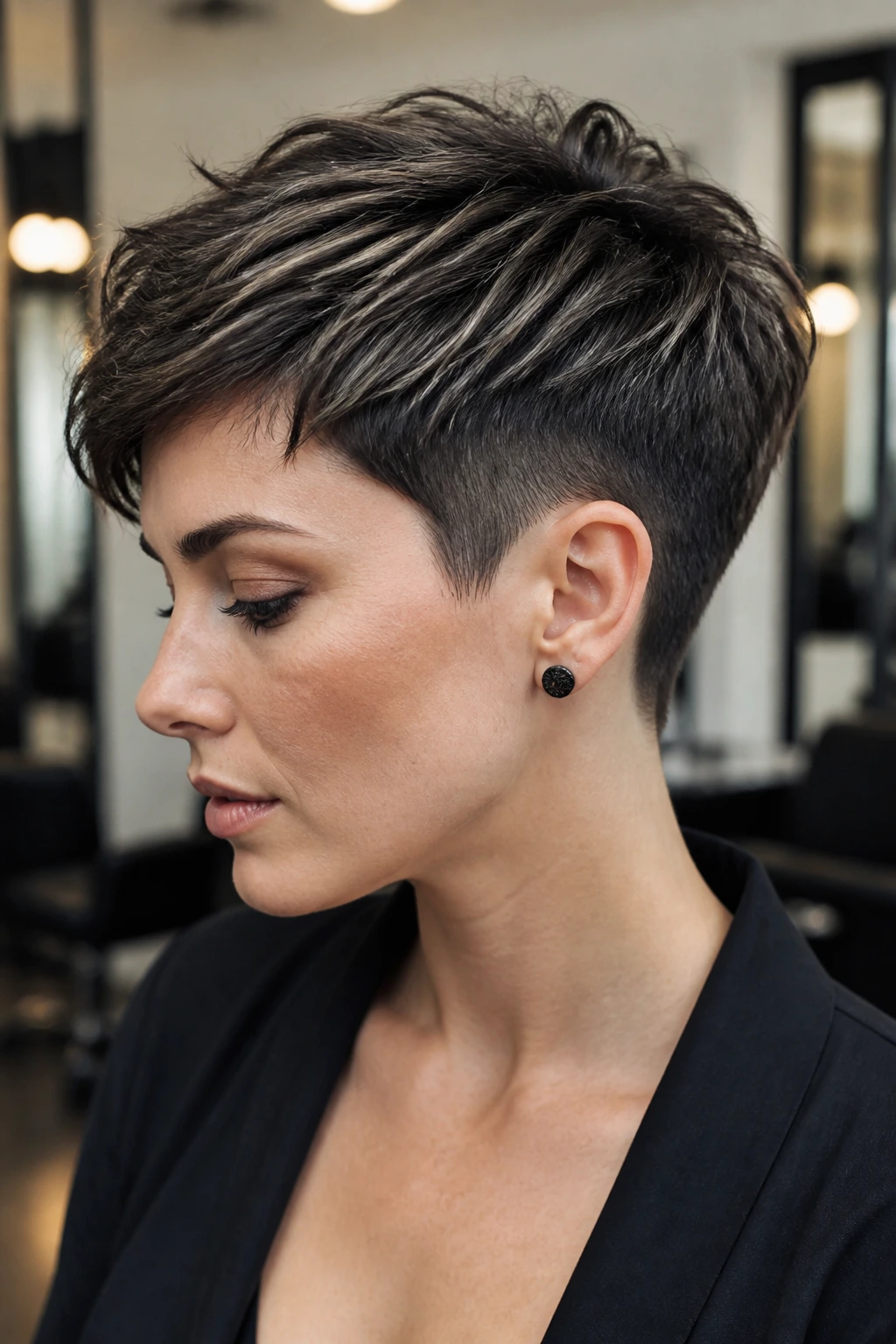
Pixies need color with shape. Ash espresso tapering gives the cut depth at the sides and back, then softens toward the top so the texture doesn’t look carved in with a marker. On cool skin, the espresso shade keeps the short cut grounded and sharp.
I like this on pixies and bixies because the color can follow the direction of the cut. A little extra depth near the nape and around the temples makes the top look lifted. The ash finish keeps the whole thing from sliding warm or brassy, which is a common short-hair problem under strong light.
A short cut can handle a bolder color than people think. It just has to be cleanly toned.
28. Cool Coffee Lived-In Balayage
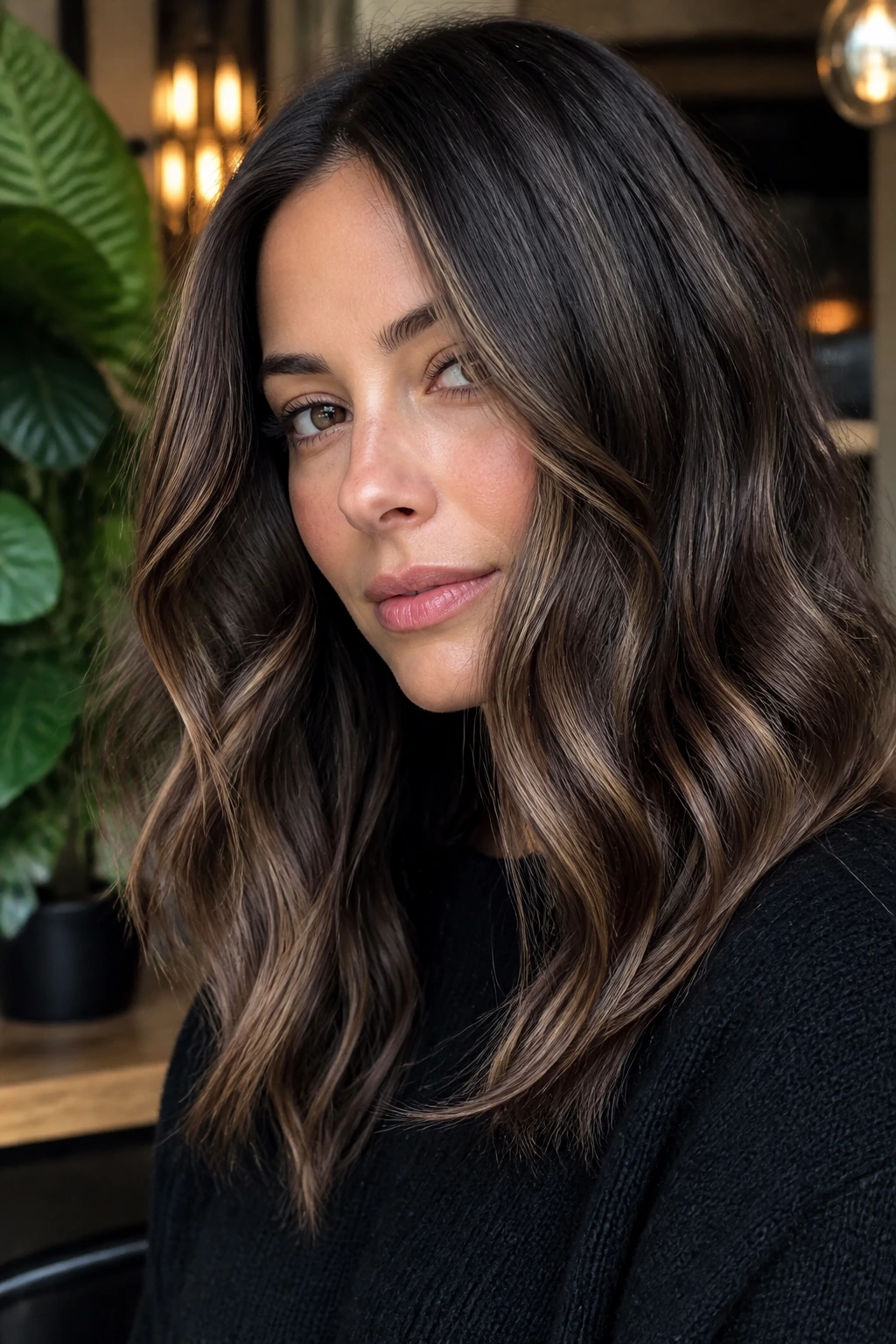
Cool coffee balayage is the relaxed version of brunette dimension. Nothing is overdrawn. The pieces are placed so the grow-out is soft, the movement is believable, and the color reads as coffee rather than caramel. Cool skin gets a better match from that restrained tone.
This is one of the easiest shades to live with if you do not want constant root maintenance. The balayage should start softly and get a little more visible toward the ends. If it looks too bright near the top, it starts losing that lived-in quality fast.
I’d ask for coffee, mocha, or ash-brown accents instead of anything labeled honey, bronze, or cinnamon. Those warmer words usually mean more warmth than cool skin needs.
29. Soft Smoked Brown Ends
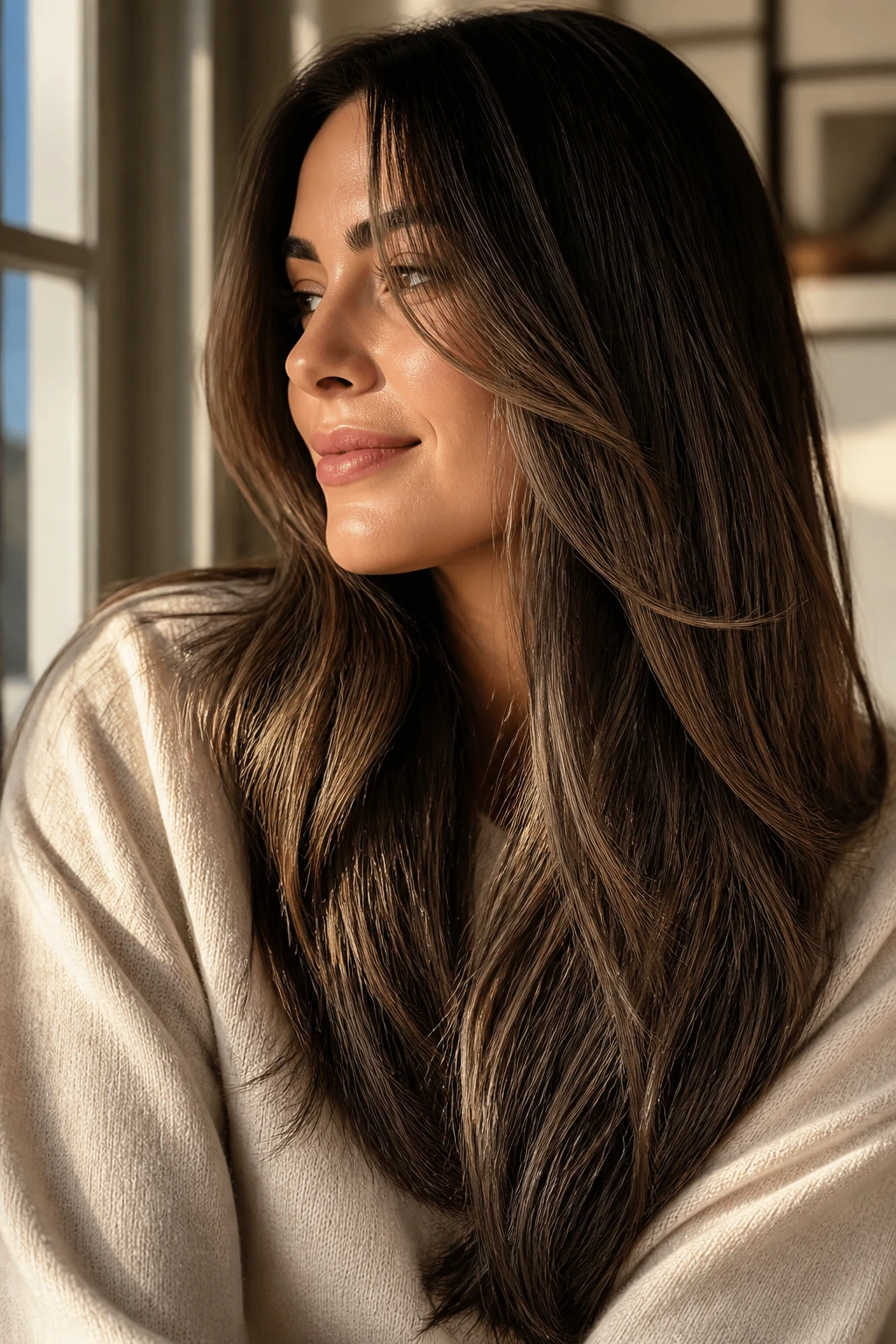
Soft smoked brown ends are the subtle finish for someone who wants just enough change to keep long hair from feeling heavy. The ends stay in the brown family, but with a smoky, cool cast that makes the length look more intentional. It’s understated, but not plain.
This look works well if your root color is already flattering and you do not want to touch the top much. The ends can be tinted or glossed so the last few inches feel softer and darker in a cool way. That makes the hair look thicker at the perimeter and less sun-faded.
The best part is the maintenance. Because the shift is concentrated at the ends, the regrowth stays calm. That is a nice trade.
30. Graphite Mocha Underpainting
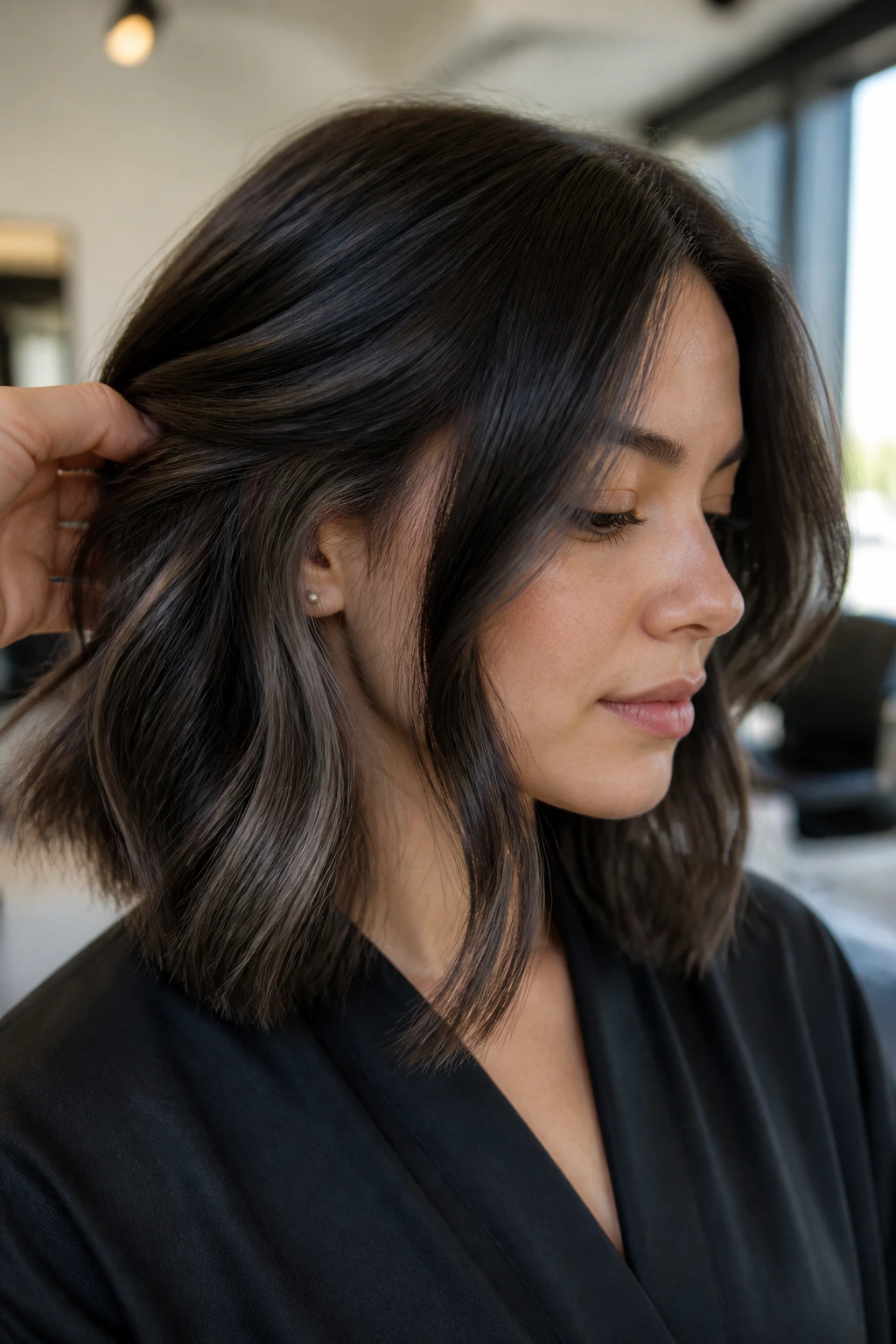
Graphite mocha underpainting is the most fashion-forward option in the bunch, and also one of the smartest if you like to tuck your hair behind the ears or wear it in waves. The lighter graphite-mocha pieces hide underneath the top layer, so they only peek through when the hair moves. On cool skin, the result stays sleek and controlled.
I like this for longer bobs, layered cuts, and any style with visible interior movement. The surface still looks dark and polished, but the underneath has enough contrast to keep it from going flat. It’s a good way to wear darker brown color without giving up dimension.
If you want drama that doesn’t read loud, this is the lane. The secret is in the underlayer, not the obvious top surface.
The Undertone Logic Behind Dark Brown Highlights
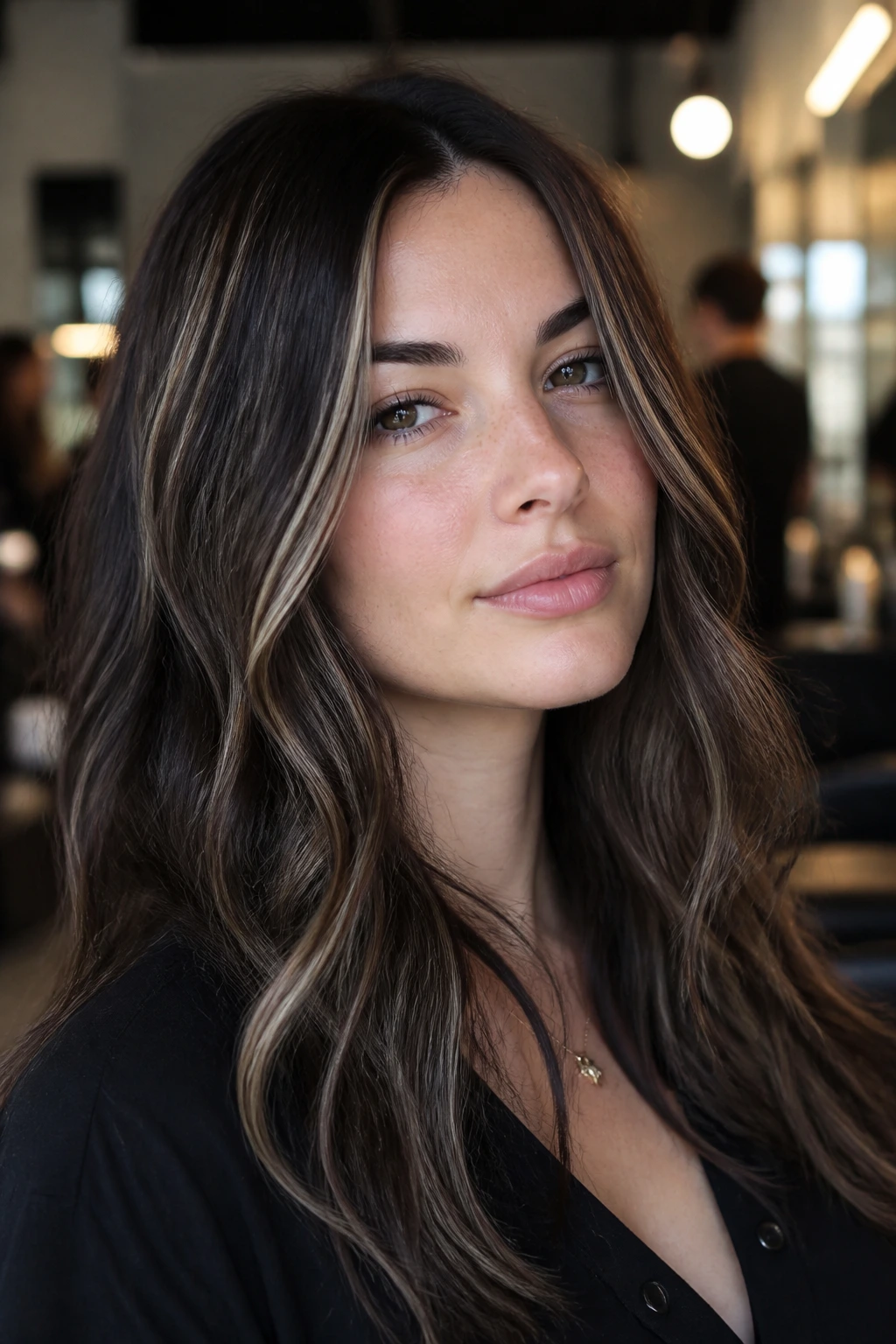
Cool skin tones change the rules a little. A warm brunette can look lovely on the wrong face and just slightly off on a cool one, even when the hair itself is beautifully done. That’s why dark brown highlights for cool skin tones work best when they sit in ash, mushroom, espresso, graphite, or taupe territory. These shades carry less gold and less red, so the face stays the focus.
The level matters too. If the pieces are lifted too far, the warmth comes out whether you want it or not. On most cool-toned brunettes, staying in the level 4 to 6 range gives enough dimension without tipping into orange. I’d rather see a strong, glossy level 5 brown than a half-warm level 7 that has to be toned every two weeks.
Placement changes the mood more than most people expect. A few face-framing pieces, a soft crown ribbon, or interior lowlights can reshape a haircut without changing the whole head. That’s why these brunette looks can be calm or bold depending on where the color lands. Same color family. Different attitude.
The other thing worth saying: not every cool skin tone is light. Deep skin with blue or neutral-cool undertones can wear these shades beautifully too, especially when the brown pieces have enough depth to stay visible against the base. The shade should flatter the undertone, not the chart.
How to Ask for Dark Brown Highlights at the Salon
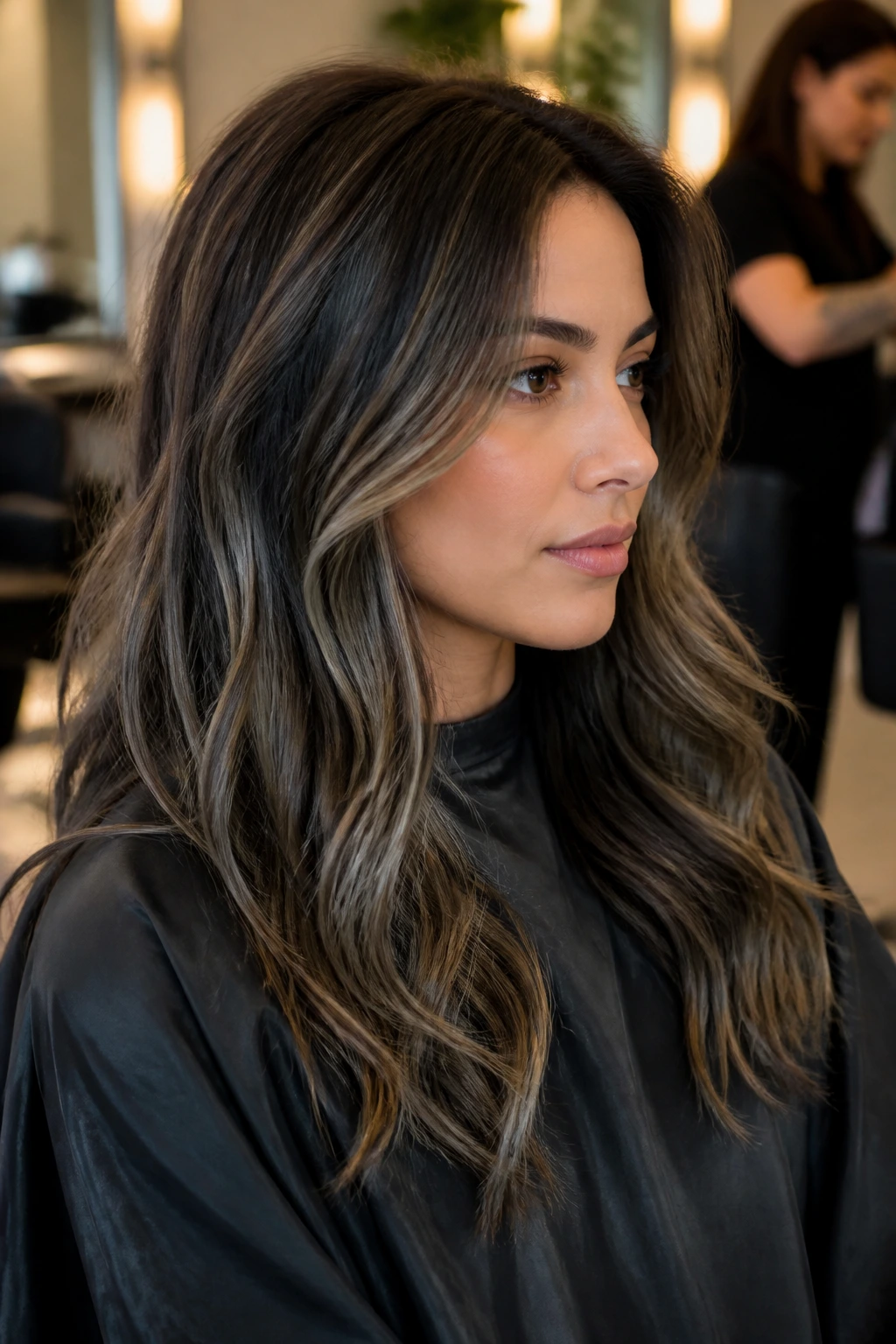
Walk in with more than a screenshot and a vague wish for “dimension.” That usually leads to random warmth or, worse, highlights that look nice on day one and strange after the first wash. Say what you want in terms of tone, placement, and contrast. That gives the colorist something usable.
Shade level: Ask for brown pieces that stay in the cool or neutral-cool family—mushroom, ash mocha, espresso, graphite, taupe, or smoky chestnut. If your hair lifts warm, tell them you want a blue-violet or ash toner after processing.
Placement: Say whether you want money-piece brightness, babylights around the hairline, ribbons through the mids, or interior lowlights. Those choices change the whole look more than the exact shade name does.
Contrast: If your skin is very cool, ask for “soft contrast” or “low-contrast dimension” rather than bright contrast. That keeps the color from looking striped.
Bring up your styling routine too. If you air-dry, wear curls, or use a flat iron every day, the placement should match that. Hair that lives in bends can handle more visible pieces. Pin-straight hair shows every line.
Tools a Colorist Uses for These Brunette Looks
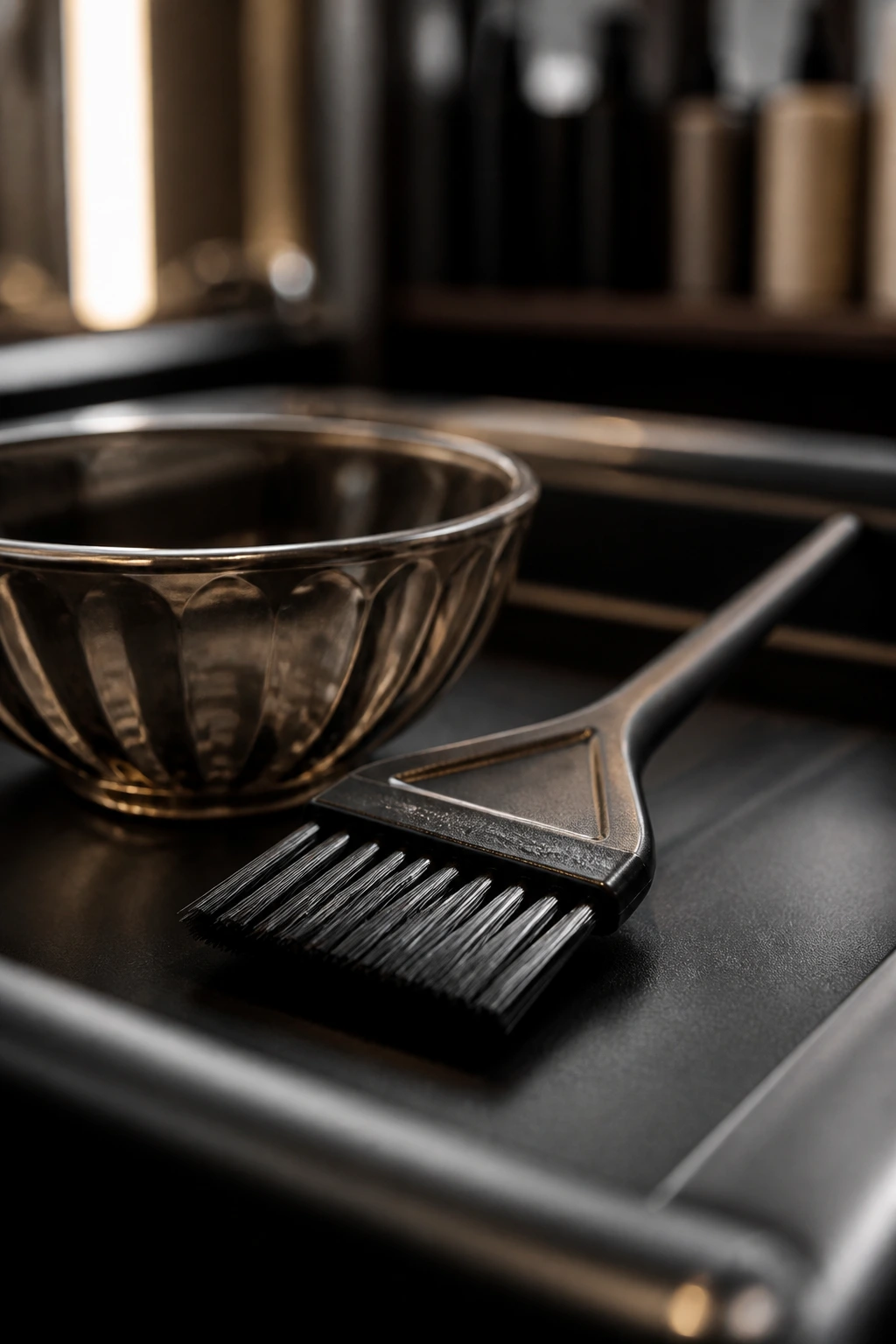
- Tail comb: For clean sectioning and thin babylight placement around the part and hairline.
- Color bowl and tint brush: Needed for glosses, root shadows, and controlled application on smaller sections.
- Foils and balayage boards: Foils lift a little more cleanly; boards help with hand-painted brunette dimension.
- Sectioning clips: Keep the top layer out of the way so the placement stays even.
- Balayage paddle or brush: Useful when a softer, swept brunette effect is needed on long layers.
- Level-based color swatches: A colorist should think in levels, not just names. Level 4 to 6 control matters here.
- Ash or blue-violet toner: This keeps dark brown from drifting orange after lightening.
- Color-safe shampoo and conditioner: Brown tones fade too if the wrong wash routine gets involved.
- Heat protectant: A must if you blow-dry or flat-iron; heat makes warm tones show through faster.
- Glossing treatment: Helps the brunette reflect light instead of going dull and flat between appointments.
How to Ask for the Shade, Placement, and Finish
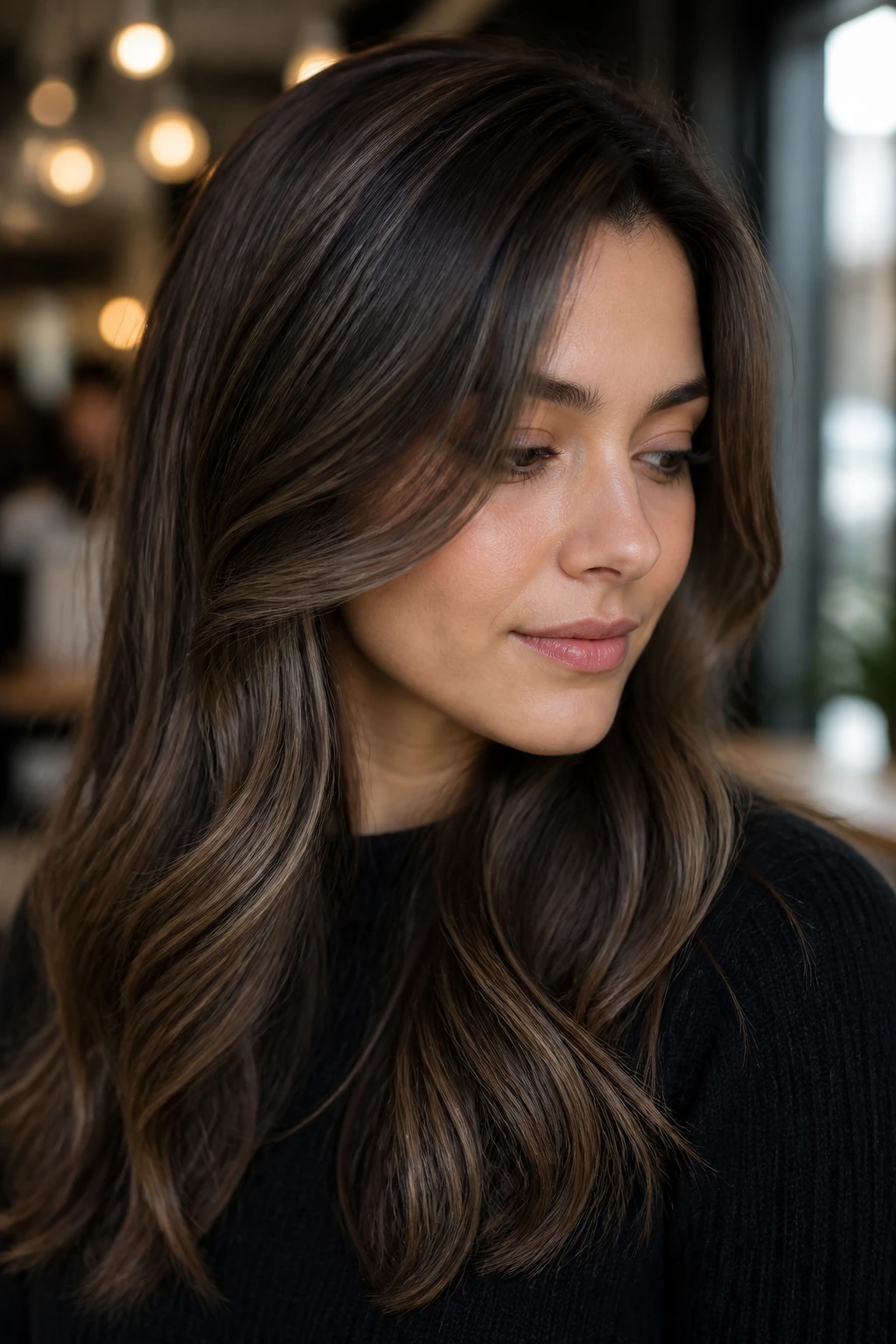
The easiest way to get a good result is to make the request smaller and clearer. Say you want dark brown highlights for cool skin tones, then specify the finish: smoky, ash, mushroom, espresso, taupe, graphite. Then say where you want the color to live. That’s the part people skip, and it matters a lot.
If you want the look subtle: Ask for babylights, micro-weaves, or a soft balayage melt. Keep the lift modest and the toner cool.
If you want the look visible: Ask for face-framing pieces, broader ribbons, or halo lights around the crown. Still stay in the cool brown family, though. Visible does not have to mean warm.
If you hate upkeep: Ask for a shadow root and a softer grow-out line. The root can stay close to your natural shade while the mids and ends carry the dimension.
If your hair pulls orange fast: Tell your colorist that straight-up warm brown does not work on you. Say it plainly. Ask what toner they’d use to keep the result cool for more than one wash.
One more thing. If the colorist says your hair will need to go much lighter to “show dimension,” ask whether lowlights or glossing would do the job with less lift. Sometimes the smarter brunette is the darker one.
Small Tweaks That Change the Finish
Face-Framing: Move the lightest cool-brown pieces around the cheekbone and temple if you want the face to read brighter. Keep them narrow if your features are delicate, wider if you want more shape.
Texture: Wavy and curly hair can take slightly broader brunette ribbons, while straight hair usually needs finer sections. The texture decides how the color shows, not the other way around.
Glossing: A clear gloss can give shine without changing the tone much. A beige-ash gloss can cool brass and keep the brown from slipping red after a few washes.
Parting: A center part gives a symmetrical, clean feel. A side part can make the same color look softer and a little more lifted near the front.
Make-It-Yours: If your wardrobe leans silver, black, slate, navy, berry, or charcoal, stay in ash-based brunette territory. If you wear a lot of camel or warm tan, you may still like cool brunette hair, but the contrast will feel sharper.
A small shift in placement often does more than a big shift in shade. That’s the part worth remembering.
Common Mistakes That Make Brunette Highlights Look Flat
The first mistake is going too warm. Coppery brown, honey brown, and caramel labels sound pretty on the shelf, but they can fight cool skin fast. The fix is to ask for ash-based toner and to reject any piece that flashes orange in the mirror before you leave the chair.
The second mistake is over-lightening. Dark brown highlights do not need to be pale to matter. If the pieces are lifted too high, they lose the depth that makes them flattering in the first place, and the whole finish can look patchy. Staying closer to a level 4, 5, or 6 keeps the tone grounded.
The third mistake is placing all the brightness at the same height. That creates a line, not dimension. Better placement mixes hairline pieces, crown ribbons, and a few interior sections so the color moves when the hair moves.
The fourth mistake is ignoring hair texture. Straight hair shows lines sharply, while curls can hide some irregularity. If the placement is too broad on straight hair, the result looks striped. If it’s too tiny on thick or curly hair, the color disappears.
The fifth mistake is skipping maintenance. Even a beautiful cool brown can drift warm if the wash routine is rough. Hot water, harsh shampoo, and too much heat styling will pull the tone off course.
Variations and Adaptations to Try
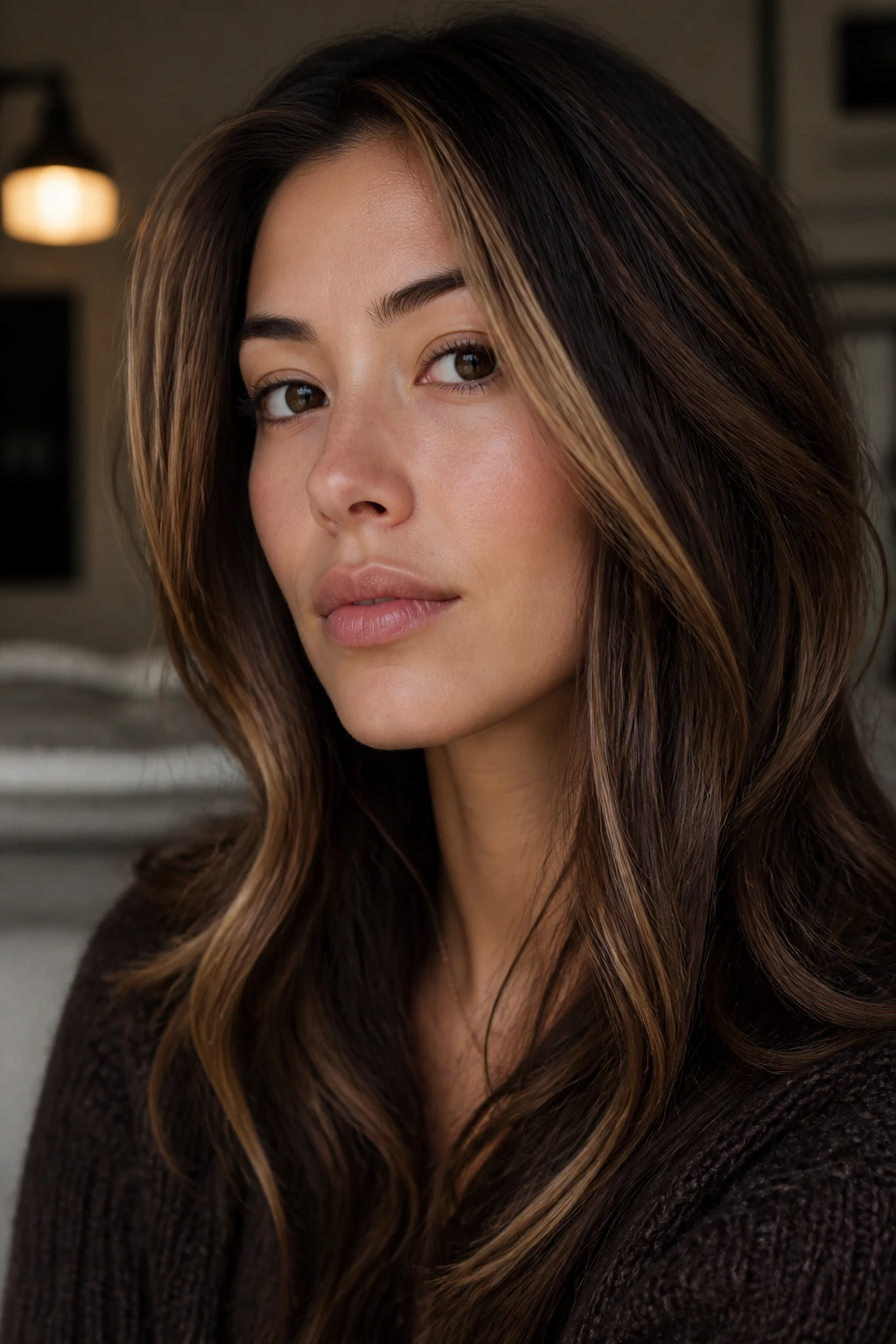
Soft Office Brunette: Keep the pieces thin, close to the base, and fully ash-toned. This works if you need the color to read polished under fluorescent light without looking done.
Editorial Stripe Brunette: Use chunkier chestnut or mushroom ribbons around the face and crown. It’s bolder and a little more graphic, so it suits layered cuts and sharper makeup.
Curly Halo Brunette: Concentrate the cool brown around the outer halo of curls and leave the interior deeper. The shape of the curls does the rest, and the color stays visible without getting busy.
Short-Bob Veil: Use slate or espresso ribboning on a bob so the blunt line stays crisp. The color should support the cut, not break it apart.
Low-Maintenance Grow-Out Brunette: Ask for a shadow root, soft balayage, and an ash gloss at the ends. The line stays quiet, which makes it easier to stretch appointments.
Grey-Blending Brunette: If you have silver strands coming in, cool dark brown highlights can help them fold into the hair instead of standing apart. The trick is keeping the shade neutral and the placement soft around the temples.
Keeping Dark Brown Highlights Cool Between Appointments
The best brunette color routine is not fancy. It’s careful. Start with a sulfate-free shampoo if your hair tends to fade fast, and keep the water lukewarm rather than hot. Hot showers strip gloss faster than people like to admit, and they pull warmth through the hair shaft in a hurry.
Use a color-depositing mask or gloss every 4 to 6 weeks if the tone starts to feel too flat or too warm. Blue shampoo can help if brown pieces lean orange, but don’t overuse it. Too much can make ash-brown hair look dull or muddy. Once a week is plenty for most people, and some don’t need it at all.
Heat protectant matters more on brunette color than people expect. Flat irons and curling wands expose warm undertones fast, especially on ends. Keep styling tools at the lowest temperature that still works—roughly 300°F to 350°F is usually enough for most hair that isn’t very coarse.
Salon refreshes usually land every 8 to 12 weeks, depending on how obvious the placement is and how fast your hair grows. If you wear a shadow root and soft ribbon lights, you can usually stretch it longer. If your face frame is bold, you may want a gloss or toner sooner.
Frequently Asked Questions
Will dark brown highlights look good on very fair cool skin?
Yes, if the tone stays ash, mushroom, or espresso rather than warm chestnut. Very fair cool skin can look washed out next to yellow-brown hair, but a smoky brunette shade adds shape without making the complexion look pinker than it already is.
Are dark brown highlights the same as lowlights?
Not always. Highlights usually mean lighter pieces against a darker base, while lowlights are darker pieces placed into lighter hair. In practice, people use both to build brunette dimension, and on cool skin, lowlights can be just as useful as true highlights.
How much lighter should the highlights be?
Usually one to three levels lighter is enough. If you go much lighter than that, the brown often warms up and loses the smoky finish that flatters cool undertones best.
Can curly hair wear these looks without looking patchy?
Absolutely, but the placement has to follow the curl pattern. Color that sits where the curl opens reads as shape; color dropped randomly through the coil pattern can look spotty. A curl-aware placement map makes a huge difference.
What if my hair turns orange fast?
Then the toner and shampoo matter more than the highlight itself. Ask for ash-based toner, avoid warm brown formulas, and use a blue or violet color-correcting product only when you need it—not every wash.
Do I need bleach for dark brown highlights?
If your base is already medium brown or lighter, sometimes not. Dark hair usually needs some lift for the brown pieces to show, but a colorist may be able to create dimension with glossing, lowlights, or very gentle lightening instead of heavy bleach.
Which haircut shows these colors best?
Layered lobs, long layers, bobs, and curtain-bang cuts all show brunette dimension well. Blunt cuts can still work, but the placement has to be cleaner so the color doesn’t fight the line.
How often should I refresh the tone?
Most people need a gloss or toner refresh every 4 to 8 weeks if they want the cool finish to stay crisp. If the color is subtle and your routine is gentle, you can push that longer.
A Cooler Brunette Finish
Dark brown highlights for cool skin tones work because they respect the undertone instead of arguing with it. That sounds small, but it changes everything. The right ash-brown ribbon or smoky face frame can make skin look calmer, hair look richer, and a cut look sharper without a dramatic color overhaul.
The best part is the range. You can go nearly invisible with babylights, build shape with a money piece, deepen the hair with lowlights, or pull the whole thing together with a shadow root and gloss. Cool brunettes do not need to be bright to be interesting. They just need clean tone and good placement.
If your mirror likes espresso, mushroom, slate, taupe, and cool chestnut more than caramel, you’re already on the right track. Keep the warmth in check, let the brown stay smoky, and the rest falls into place.