



Dark hair can look heavy in a mirror until a few honey blonde highlights start catching the bend of curtain bangs. Then the whole haircut shifts. The fringe stops reading like a block of hair split in half and starts doing what it’s supposed to do: open the face, soften the jawline, and throw a little light where the eye lands first.
Honey is the smart place to land for brunette hair. It’s warm enough to stay flattering against dark roots, but it doesn’t go so pale that the contrast feels harsh or expensive in the bad sense of the word — the kind that looks like it needs constant toner and a prayer. On a deep brown base, honey can lean gold, beige, caramel, bronze, or even a little coppery, and each direction changes how the curtain bangs sit in the overall cut.
The placement matters as much as the shade. Curtain bangs only really earn their keep when the bright pieces live where the hair folds away from the face, where the blowout bends, where the part opens, where a little movement can make the whole front half of the haircut look alive. The looks below play with that idea from every angle, from whisper-soft ribbons to chunky, very deliberate money pieces.
Why These Honey Tones Earn Their Keep
-
They light up the front without bleaching the whole head: A face frame in honey blonde gives dark hair some lift right where people look first, so the haircut feels brighter without turning the lengths into a project.
-
They play nicely with curtain bangs: The split in the fringe creates two natural lanes for color, and that makes soft ribbons, money pieces, or balayage around the temples look intentional instead of random.
-
They grow out with fewer hard lines: A root shadow, balayage, or smudged base keeps regrowth from announcing itself every time you tuck your hair behind your ears.
-
They work with texture instead of fighting it: Waves show off ribbons, straight hair shows shine, and curls can carry honey through the bend without looking stripy if the placement is done well.
-
They can be dialed up or down: The same honey family can be whisper-soft, beige, caramel, bronze, or bold enough to read like a full face-frame refresh. That range is the reason people keep coming back to it.
-
They suit dark hair better than icy blonde: On deep brunette bases, warm blonde tones usually blend more naturally than pale ash or platinum, which can look detached from the rest of the cut.
1. Soft Honey Money Pieces That Lift Curtain Bangs
This is the one I’d hand to someone who wants the fastest visual payoff with the least fuss. The dark hair stays dark, but the front pieces — the ones that skim the cheekbones and disappear into curtain bangs — get a soft honey money piece that makes the face frame do the work. It’s a clean move. No drama in the back, no foggy all-over lightening, just a brighter front that changes how the haircut lands from across the room.
The trick is placement. Ask for the lightest pieces to start around the bend of the bangs and sweep down just enough to catch the sides of the face. If the brightest part begins too high at the root, the bangs can look stripey. If it begins too low, you lose the open-framing effect that makes curtain bangs so useful in the first place.
Why it flatters so quickly
A honey money piece works because it acts like a tiny spotlight. Dark hair naturally creates a strong frame; adding warmth only around the face breaks that weight apart without making the whole style feel thin. It also lets you keep the back richer, which is useful if you like the depth of dark hair and do not want to lose it.
The best version has a soft root melt. That little shadow keeps the bright front from looking pasted on, and it buys you time between salon visits. On a blunt cut or a very dense fringe, a money piece can look too obvious if the panels are too wide. Narrower is better here. Always.
2. Caramel Balayage That Melts Into Espresso Hair
What if you want movement, not streaks? This is the answer. Caramel balayage on espresso hair gives you honey’s warmth, but it spreads the brightness through the mid-lengths and ends instead of concentrating everything at the front. The curtain bangs still get attention, just not in a way that shouts from the parking lot.
Balayage works well here because the painted pieces can follow the way curtain bangs sweep open. The color can start softer near the temple, then drift through the lengths in a way that feels hand-shaped rather than foiled and boxed in. On wavy hair, the effect is especially good. Every bend catches a different shade, and the bangs blend into the rest of the cut instead of sitting on top of it.
The part that makes it look expensive in the right way
It’s the lack of hard lines. A good caramel balayage on dark hair should make you wonder where the highlight really begins. If you can point to a single stripe and say, “That’s the highlight,” the placement is too obvious. Balayage should read as a soft melt, with the curtain bangs acting as the brightest doorway into the style.
This look is for someone who wants to stretch salon visits. The grow-out is gentle because the roots stay dark. You can go months, not weeks, before it starts looking tired, especially if the front pieces are glossed rather than over-lightened.
3. Feathered Face-Frame Ribbons for a Bright Open Center Part
A center part with curtain bangs loves this one. The face-frame ribbons are thin, feathered, and placed so the light lands in narrow lanes instead of broad slabs. That means the hair still looks rich, but the front opens up with a little shine every time you move your head. It’s a very specific kind of pretty. Quiet, but not shy.
Ask for two to four ribbons on each side, depending on density, with the brightest bits sitting near the cheekbone and jawline. The point is to echo the sweep of the bangs, not fight it. If the highlight is painted too far back, the curtain bangs can feel detached from the rest of the cut. Keep the panels close to the face, and let the lower pieces stay a shade deeper.
Why the ribbons matter
Thin ribbons show off the shape of curtain bangs better than chunky panels do. They keep the face frame airy, which matters if your hair is thick or has a lot of natural volume around the temples. On straight hair, these ribbons catch shine. On waves, they show movement. On curls, they need careful placement so they don’t break up the curl pattern.
I like this version when the haircut itself is doing a lot of the work. Feathered bangs, long layers, soft ends — the color just completes the line. You can blow it out smooth for a cleaner finish or leave a bend in the bangs for a little softness. Either way, the ribbons stay visible without stealing the whole show.
4. Toffee Babylights That Glow on Straight Dark Hair
Straight hair shows every line, good and bad. That’s why babylights make so much sense here. They thread tiny toffee-toned pieces through the top layers so the dark base stays intact, but the hair no longer looks flat when it’s worn sleek. With curtain bangs, the tiny highlight details keep the split at the front from turning into one heavy dark mass.
Babylights are best when you want shimmer instead of obvious color blocks. Think of them as the hair version of a fine linen shirt: the effect is subtle up close, but it changes the whole impression. On dark straight hair, that subtlety matters, because broad highlights can look harsh when there isn’t any wave to soften them.
The detail that keeps it polished
The bangs need a little extra care with this look. A few micro-light pieces should sit at the inside bend of the curtain fringe so the part opens naturally. Too many, and you lose the softness. Too few, and the bangs disappear into the base shade.
This one also holds up well with a shine serum or a lightweight gloss spray. Straight hair reflects light in a clean way, and toffee babylights pick that up beautifully. If your hair is fine, this is a safer choice than wider highlights because it won’t carve visible gaps through the density. If your hair is thick, it keeps the front from feeling like one giant curtain — which, for bangs, is the whole point.
5. Golden Ombré With Airy Curtain Fringe
Golden ombré gives you the darkest roots of the group and some of the brightest ends, which makes it a nice pick when you want the bangs to feel connected to the rest of the color rather than highlighted in isolation. The curtain fringe stays airy, but the eye keeps traveling down through the mid-lengths into warm golden ends. That vertical movement is what stops this from looking dated.
This style works best when the transition is soft enough that you can’t draw a line where one shade ends and the next begins. The honey pieces should show up more around the front and through the lower half of the hair, with the fringe catching just enough brightness to open the face. On long hair, the ombré effect gives the curtain bangs a reason to exist beyond the front of the head; they become part of the whole shape.
Where it shines and where it doesn’t
If your hair is very short, ombré can look awkward because there isn’t enough length for the fade to breathe. On medium and long hair, though, it gives a nice runway for the color to move. Loose waves help. So does a blowout that bends the bangs away from the face and lets the lighter ends hang in soft pieces.
I’d avoid making the ends too pale. Golden should still mean golden, not washed-out yellow. On dark hair, the warmth in the ombré is what keeps the color looking connected to the base. That’s the whole game here.
6. Cinnamon Honey Waves With a Lived-In Root
This is the warmest-feeling option in the collection, and it suits people who already know they like hair color with a little spice in it. Cinnamon honey sits between gold and red, which means it can make dark hair feel richer instead of lighter in the obvious sense. The curtain bangs catch that warmth near the temples, where the color bends into the face.
The lived-in root is what keeps this from turning loud. A deeper root gives the cinnamon honey space to glow, and it also keeps the fringe from looking like it was glued onto a different head. Wavy hair loves this shade because the warm pieces break over the bends and let the color flash in and out. Straight hair can wear it too, but the effect is softer and a bit less dimensional.
Who should reach for it
If your skin has peach, olive, or gold undertones, cinnamon honey tends to sit well without looking orange. If you already dislike red in your hair, skip this and pick a beige honey instead. That part matters. Warm tones are flattering when they suit you; they’re a headache when they don’t.
The lived-in root also means less maintenance around the bangs. You can go longer between touch-ups because the darker base is part of the look. The color grows out in a softer way, and the curtain bangs keep their shape even as the root shadow expands a bit. That makes this one easy to live with, which I appreciate more every time I see a style that looks good but behaves badly.
7. Chestnut Base and Honey Front Pieces
Some looks are about contrast. This one is about restraint. The chestnut base stays warm, deep, and glossy, while the front pieces get enough honey to open the face without changing the whole mood of the hair. Curtain bangs are the reason it works: the fringe gives you a natural place to put brightness without scattering it all over the head.
Ask for narrow honey ribbons around the temples and a few softer pieces through the bangs, then keep the rest close to chestnut. That way the face frame reads as a choice, not an accident. On dense hair, this is especially nice because the dark base keeps the style from looking overprocessed. The brightness stays where it matters.
The low-key version that still makes a difference
I like this for people who work in settings where bold color feels like too much. The shift is visible, but only in motion or daylight. From the front, you get that lifted curtain-bang effect. From the back, the hair stays full and dark.
A chestnut base also gives you a lot of room to style. Soft curls, polished blowouts, messy waves — the color doesn’t depend on one single finish to make sense. If you want a change that reads as thoughtful rather than obvious, this is one of the safest places to land.
8. Peekaboo Highlights Beneath Thick Curtain Bangs
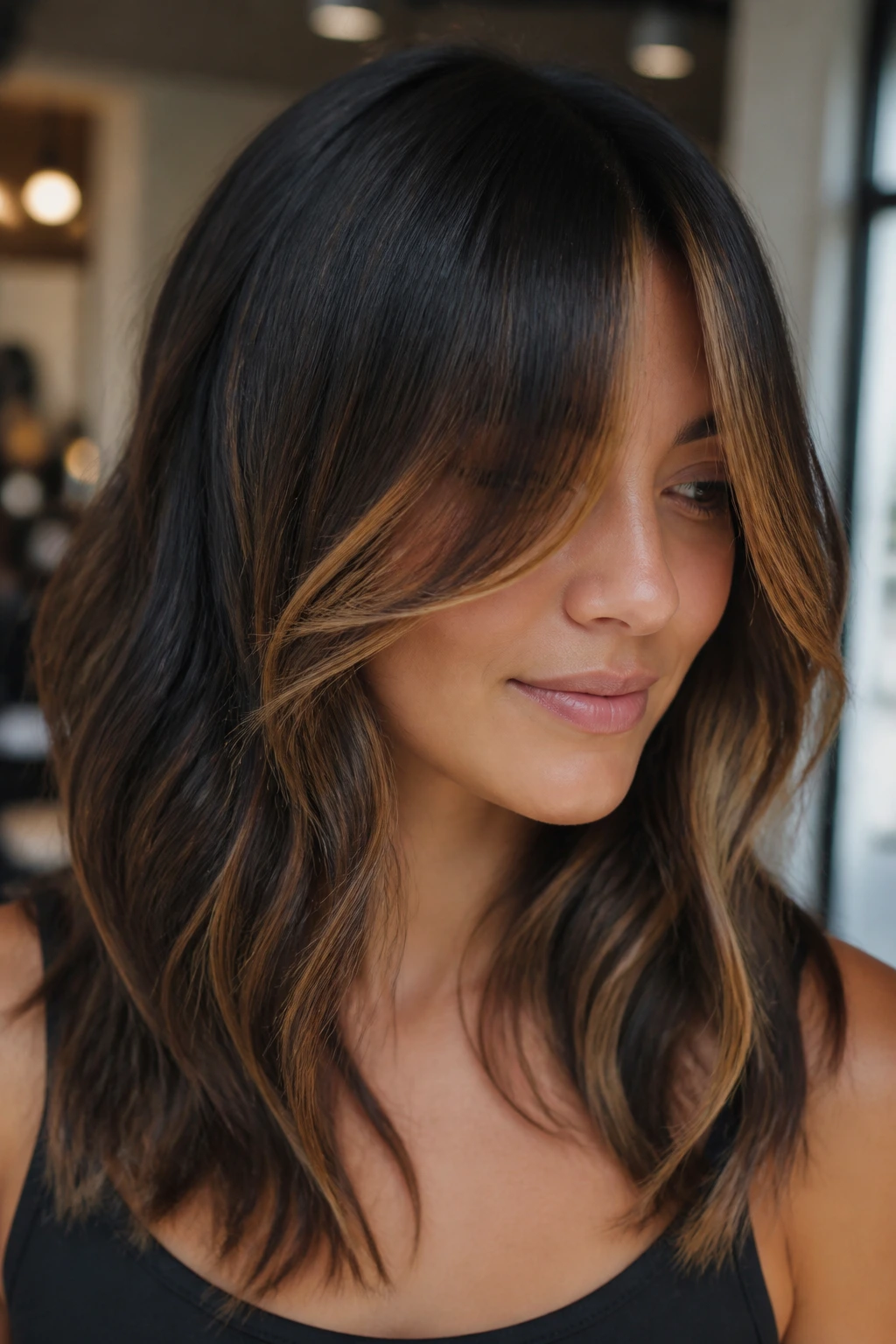
Thick curtain bangs can carry hidden color better than almost any other fringe. The trick is to place honey highlights beneath the top layer so the brightness peeks through when the bangs split, tuck, or swing forward. You get that little flash of gold without turning the entire fringe into a spotlight.
This works because thick curtain bangs already create built-in movement. A hidden layer of honey gives the style a second beat. When the hair settles, you still see dark richness on top. When it shifts, the lighter pieces show up underneath. It’s a nice bit of surprise, and it keeps the haircut from feeling heavy at the front.
Best use case
If your bangs are dense enough to cover a lot of forehead, peekaboo placement helps stop them from feeling like one dark sheet. It also reduces the chance that front-lightened pieces will look frizzy or porous right at eye level. That’s a small thing, but it matters.
This is not the choice for someone who wants obvious brightness in every selfie. The payoff is more private than that. You catch it in mirrors, in movement, when you lean forward. It’s color with a little mischief in it, and I’ve always had a soft spot for that.
9. Honey Beige Balayage for a Softer, Cooler Finish
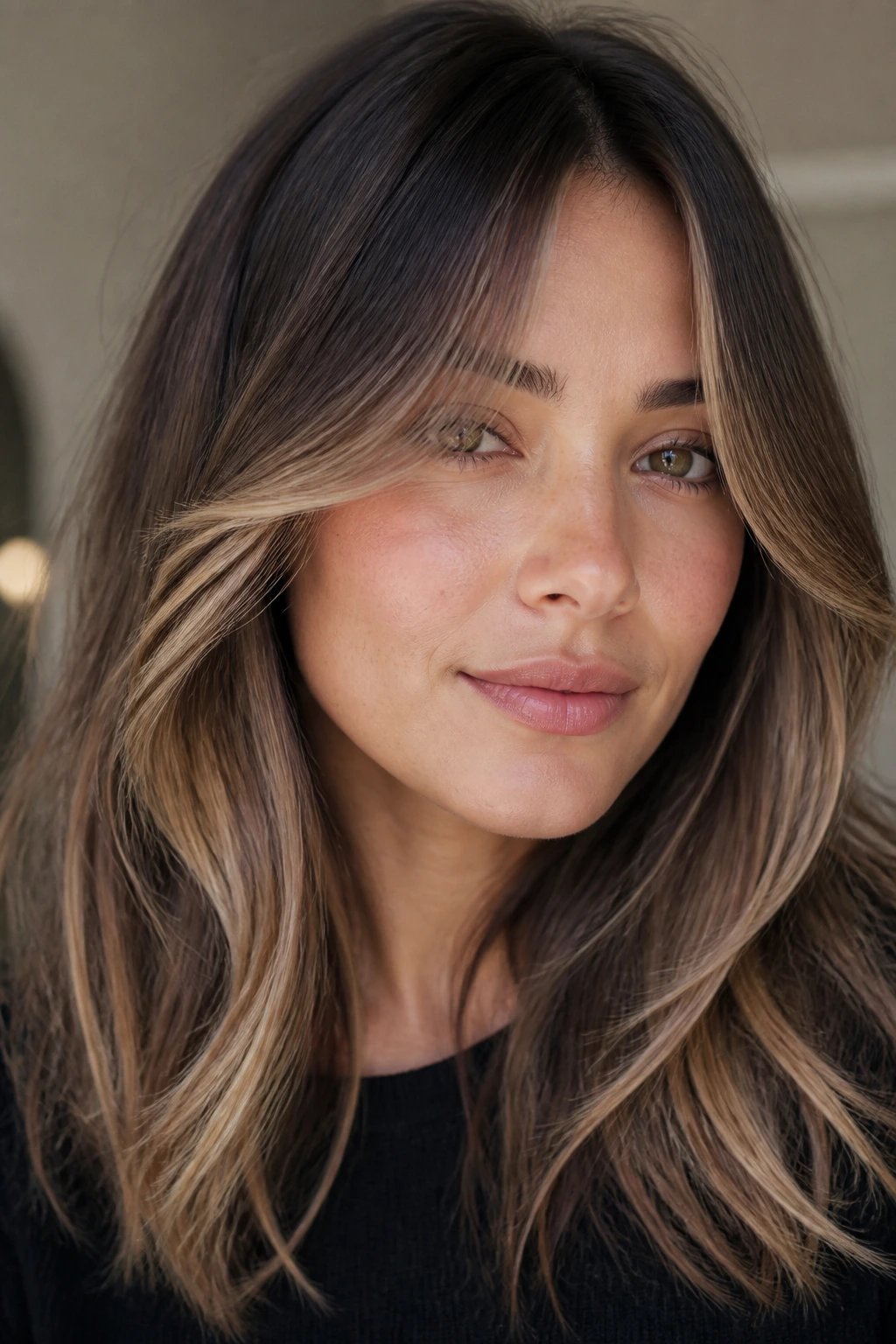
Can honey blonde look calm instead of golden? Absolutely. Beige honey is the answer. It sits between warmth and ash, which means it softens dark hair without tipping into orange or brass. On curtain bangs, that balance matters because the fringe frames the face so closely that any bad tone becomes obvious.
The balayage placement here is loose and blended, with the brightest pieces near the front and the gentler ones drifting through the mids. You want the honey to look muted in a nice way, not dull. Beige is doing the heavy lifting, and honey is just giving it life. On cooler or neutral skin, this tends to sit more naturally than straight gold.
Why beige is the safer warm tone
Dark hair often pulls red or orange when lightened. Beige honey keeps the color closer to champagne than bronze, which can be a relief if you want brightness without warmth overload. It’s still honey. It just behaves better.
This is a strong choice for people who like the idea of highlights but hate looking like they’ve been sun-bleached in a bad way. The curtain bangs still get their opening effect, but the result feels softer and cleaner. If your style leans minimal, this is probably your lane.
10. Bronze Streaks That Keep Wavy Dark Hair Rich
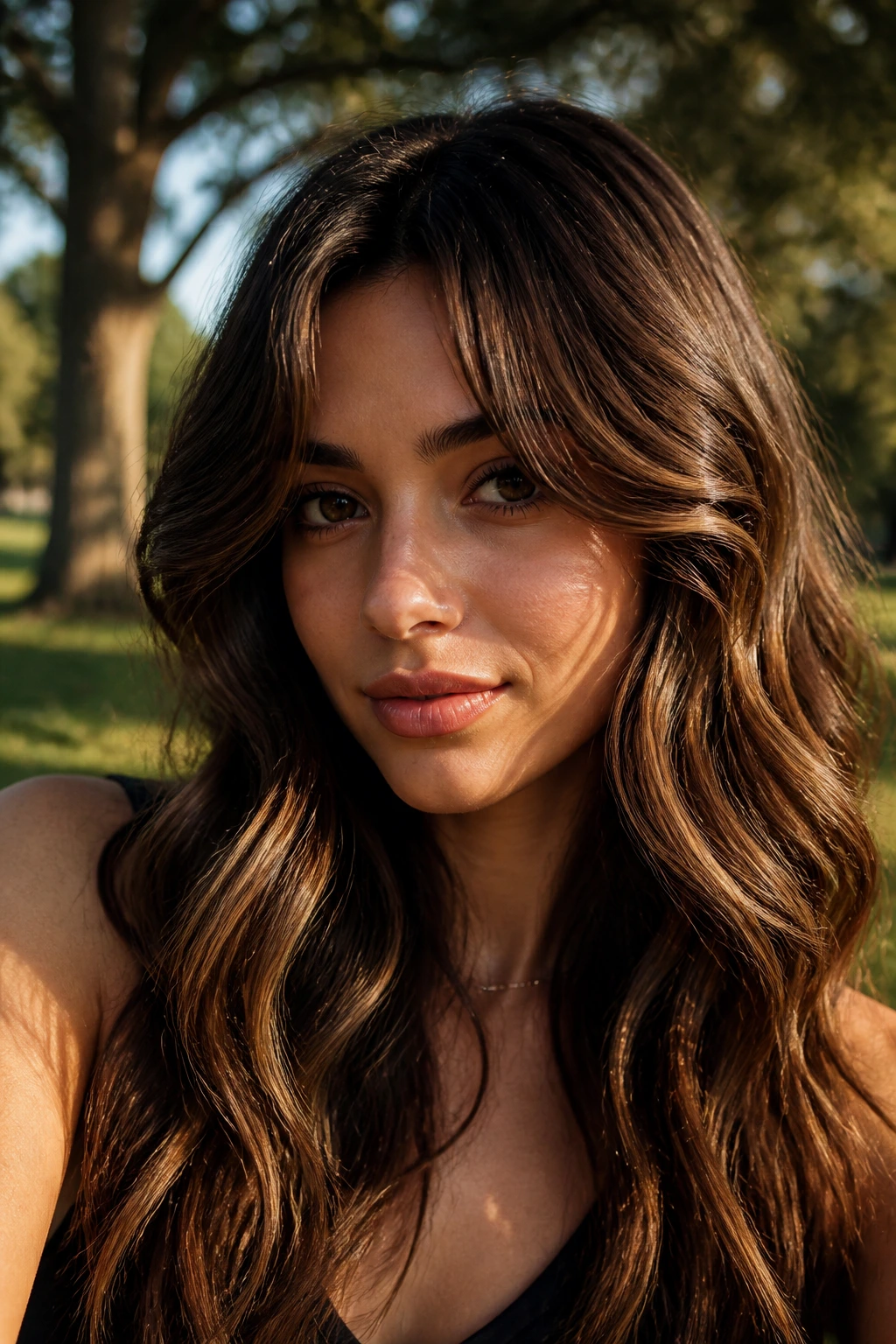
Bronze is the smartest choice when you don’t want true blonde. There. I said it. Bronze streaks still live in the honey family, but they keep more depth, which means dark hair doesn’t lose its richness. On wavy hair, the shine is the whole story. The streaks move across the bends and look warmer from some angles, deeper from others.
The curtain bangs should get just enough bronze to stop them from sinking into the rest of the hair. A few face-framing pieces at the temple and cheekbone can do that. Keep the rest broader and more diffused so the color feels woven in. If the streaks are too even, the effect flattens out fast.
Why this one works so well in motion
Bronze has a metal-like glow that catches light without going pale. That makes it a nice bridge between brunette and blonde. If your hair is naturally dark and wavy, this is one of the easiest ways to make the cut look dimensional without making the highlight pattern too busy.
It’s also forgiving as it grows out. Bronze doesn’t flash brass the way some warmer blondes do, so the maintenance cycle can stretch a bit. I’d choose this for someone who wants warmth first and brightness second.
11. Root Smudge and Honey Ends for Easy Grow-Out
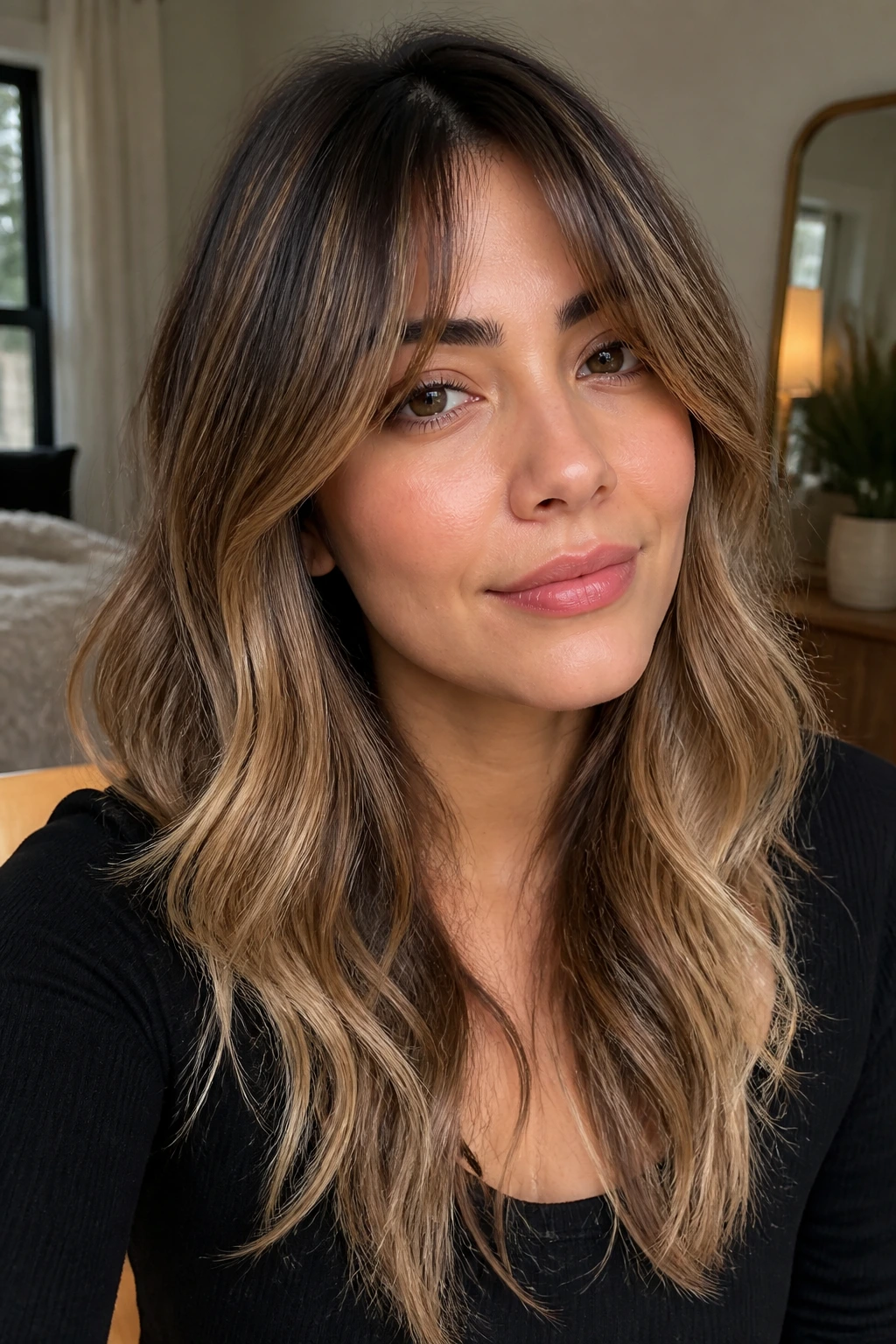
The root smudge is the thing that saves this look, not the highlights themselves. Dark roots melt into a softer midtone, then drift into honey ends, and suddenly the whole head looks expensive in the sense that it behaves well over time. Curtain bangs get a softened root area too, so the fringe doesn’t look disconnected from the rest of the hair.
This style is made for people who do not want their color to scream for attention in four weeks. You keep depth at the scalp, brightness at the bottom, and a gentle transition through the middle. On longer curtain bangs, that smudged root stops the front from feeling too heavy when the bangs separate.
The practical upside
A root smudge hides regrowth better than most bright-front looks. That matters on dark hair because natural roots don’t blend as politely as lighter ones do. By keeping the top shadowed, you let the honey live in the places that move — the ends, the face frame, the lower layers.
This one also plays nicely with heat styling. A bend in the bangs shows the gradient. Straight, it still reads clean. If you want honey blonde but you’re not interested in living at the salon, this is one of the most sensible ways to do it.
12. Chunky Honey Stripes With a ’90s Edge
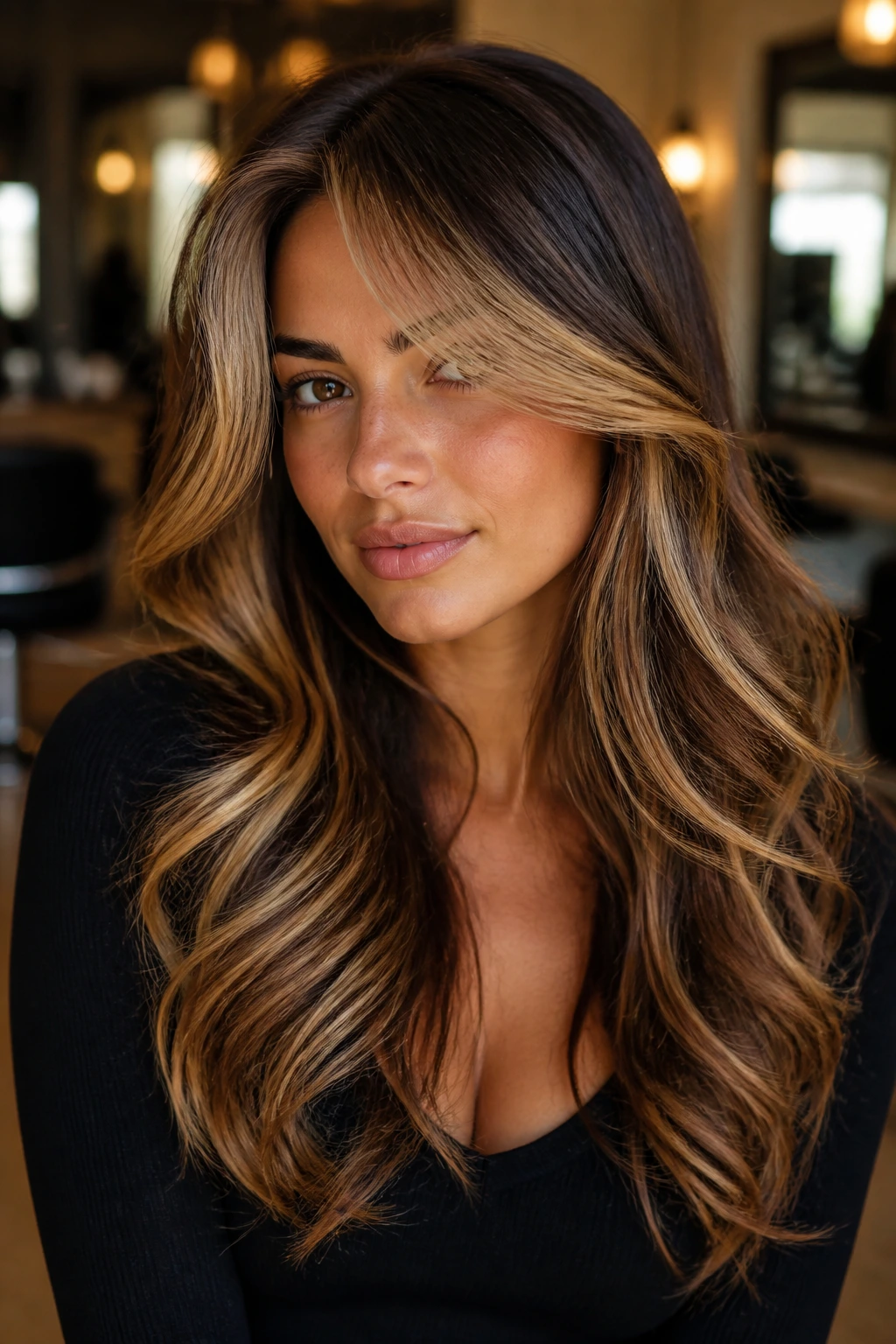
Chunky highlights are back in a grown-up way when they’re done with enough softness. On dark hair and curtain bangs, that means wider honey stripes near the face, but softened edges and a color that still feels warm rather than bleached. The result has attitude. Not chaos. There’s a difference.
The bangs need room to breathe here. Chunky pieces should sit beside the split of the fringe so the color looks deliberate when the curtain bangs fall open. If the stripes are too close together, the front can start to look busy. Two or three bolder panels are better than a dozen thin ones fighting for attention.
Who will like this one
If you like a more styled, high-contrast look, this is the one. It works beautifully with a big blowout and a little volume at the root. The whole point is that the color is visible from a distance, not just when you’re standing under a mirror light.
I’d keep the toner warm and glossy. Flat ash tones kill the energy of chunky stripes fast. Honey with a little gold reflect keeps the style alive. It’s a little nostalgic, a little loud, and sometimes that’s exactly the mood.
13. Toasted Almond Highlights for Medium-Dark Brunettes
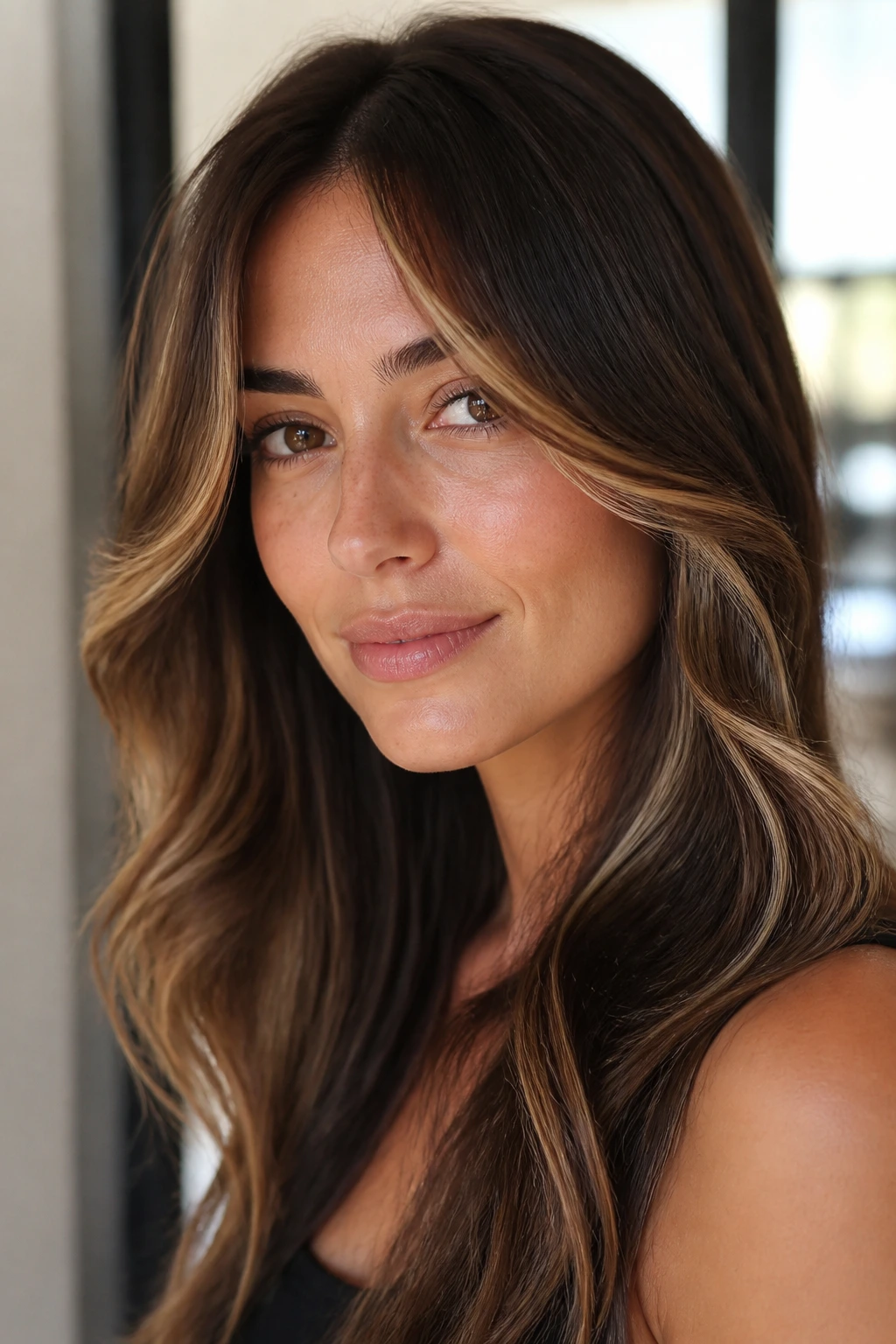
Toasted almond sits in that sweet middle space between blonde and brunette. It’s warm, neutral, and a little creamy, which makes it a useful shade for medium-dark hair that wants brightness without losing polish. Curtain bangs benefit from it because the color sits softly around the face rather than drawing a hard frame.
This look works best when the highlight placement follows the haircut. A few almond-toned ribbons should start around the temples and continue through the bangs into the first layer of the hair. That continuity matters. If the bangs are lighter than the lengths by a mile, the style starts to look chopped up.
The quiet strength of this shade
Toasted almond is one of the easiest honey-adjacent tones to live with because it doesn’t swing too far gold or too far beige. It feels deliberate but not fussy. On medium-dark brunettes, it can make the hair seem healthier and shinier without announcing that you went lighter.
This is a strong first highlight for someone who’s nervous about commitment. It doesn’t eat the base color. It just lifts it. And because the curtain bangs naturally move, even small amounts of almond tone can change the entire front of the haircut.
14. Auburn-Honey Blend for Warm Skin Tones
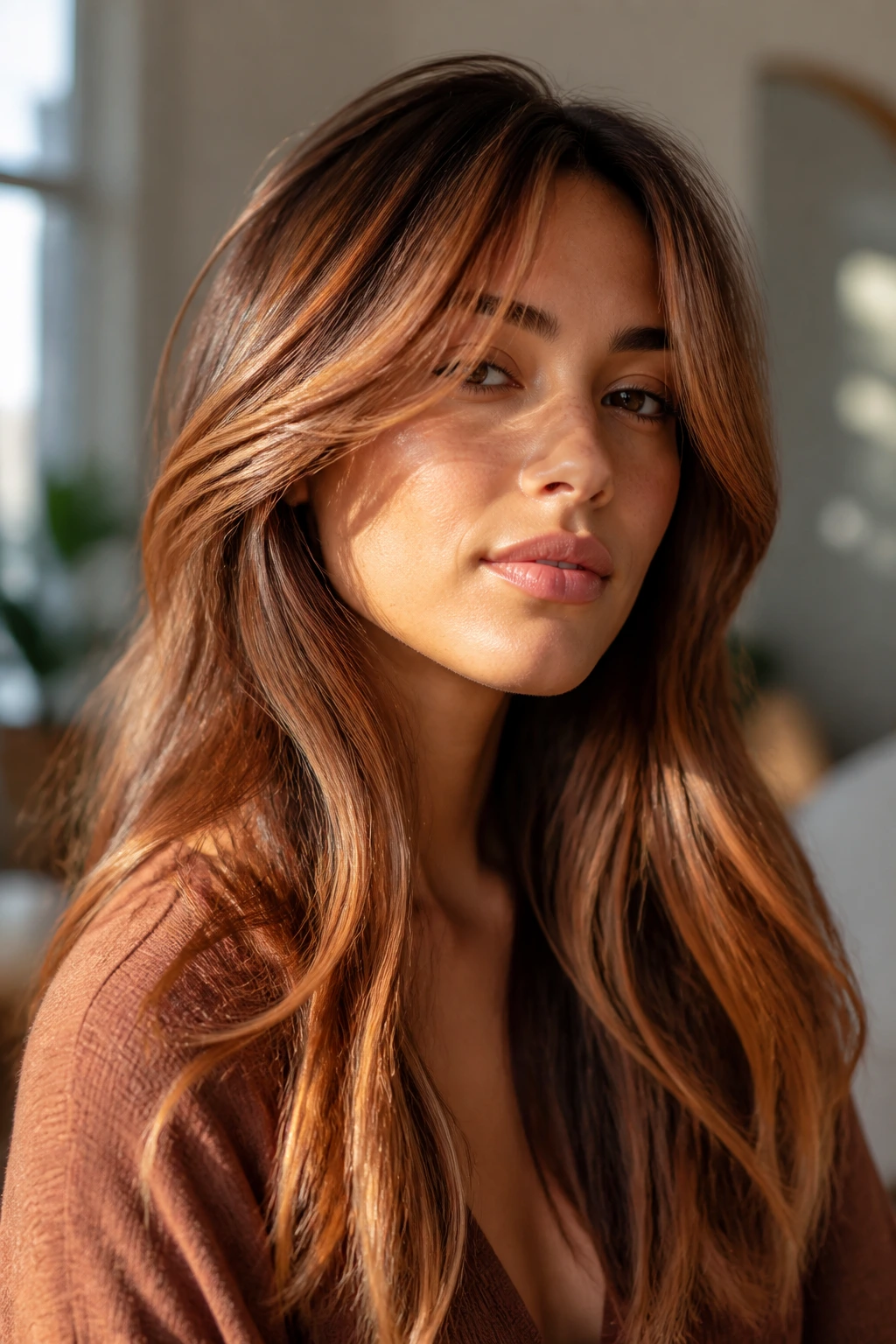
This is honey with a little copper in its pocket. Auburn-honey blends give dark hair warmth that reads richer than plain blonde and less red than full auburn. Curtain bangs love it because the bend of the fringe catches both the gold and the red reflect, which makes the face frame look alive instead of flat.
The key is balance. Too much red, and the color stops being honey. Too much gold, and the auburn disappears. A good blend feels like warm light rather than a solid color block. It works especially well if your base already has some natural warmth or if your skin leans peach, gold, or olive.
Where this shade feels strongest
I like this on hair that has movement. Waves, bends, soft layers — all of that helps the warm reflect change as you move. On very straight hair, auburn-honey can still look good, but it needs a clean blowout to show its depth.
If you like warm makeup, this color is easy to dress around. Bronzy eyes, peach blush, soft brown liner. The whole face starts to echo the same family of warmth, and the curtain bangs feel like part of the styling, not a separate feature.
15. Mushroom Brown Color With a Honey Glow
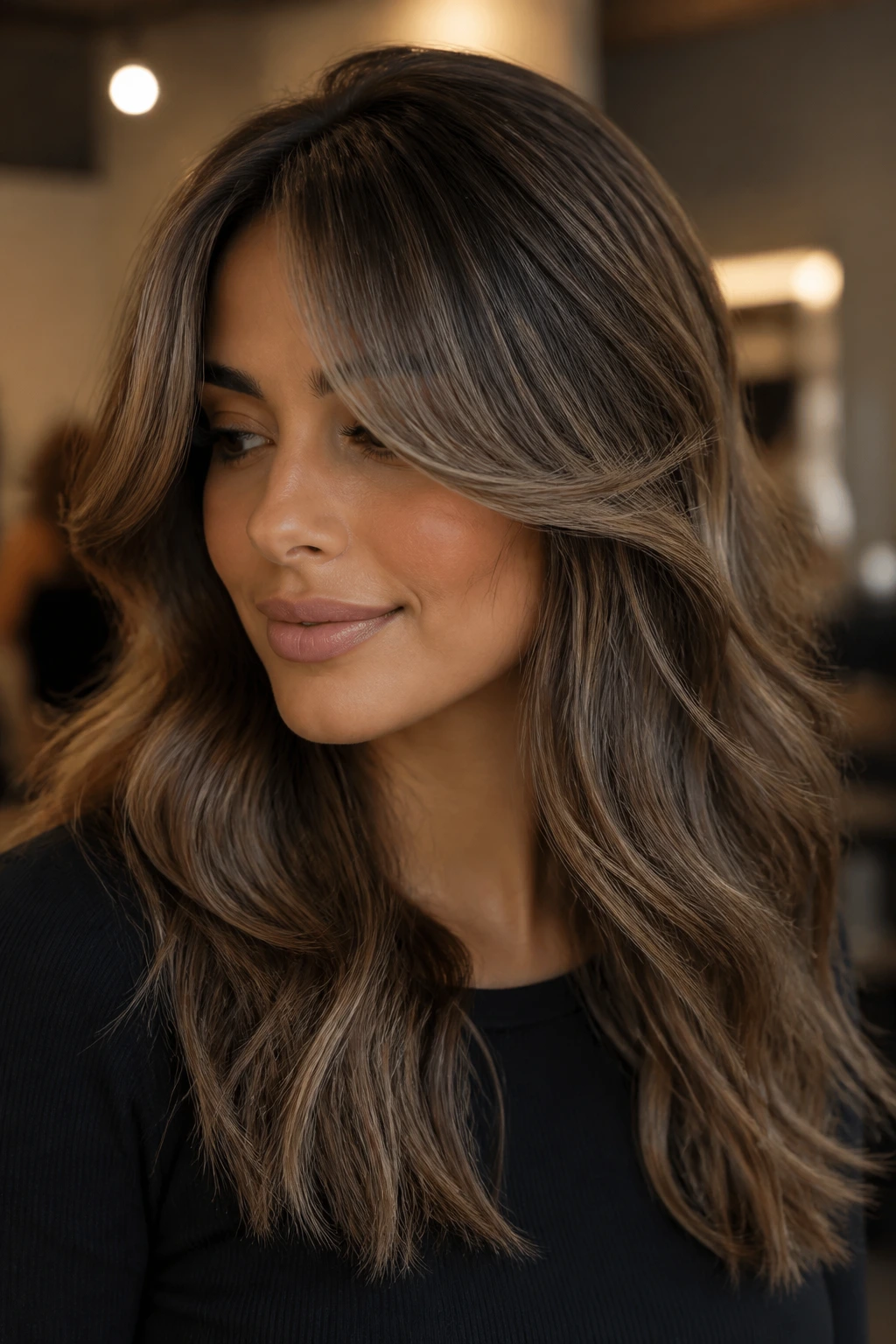
Mushroom brown is cool, earthy, and a little smoky. Add honey, and the whole thing wakes up. That contrast is the reason this style works so well on dark hair with curtain bangs: the base stays grounded, but the front gets enough golden warmth to stop the haircut from feeling heavy.
This is one of the best choices for people who like neutral tones but still want some brightness. The honey pieces should be fine and blended, not big and loud. Around the curtain bangs, the glow should be soft enough that you notice it in motion more than in a flat photo. That’s the sweet spot.
Why it doesn’t feel too warm
Mushroom brown keeps the honey under control. Instead of reading as yellow, the highlight reflects through a cooler base and looks more subdued. That’s useful if you’ve tried warm blonde before and thought it fought with your coloring.
I’d recommend this look for medium-length hair or longer, where the layered movement gives the color some place to live. It’s understated, but not boring. The bangs get enough light to separate from the rest of the hair, and that’s really the whole job.
16. Honey Ribbons That Stretch Through Long Layers
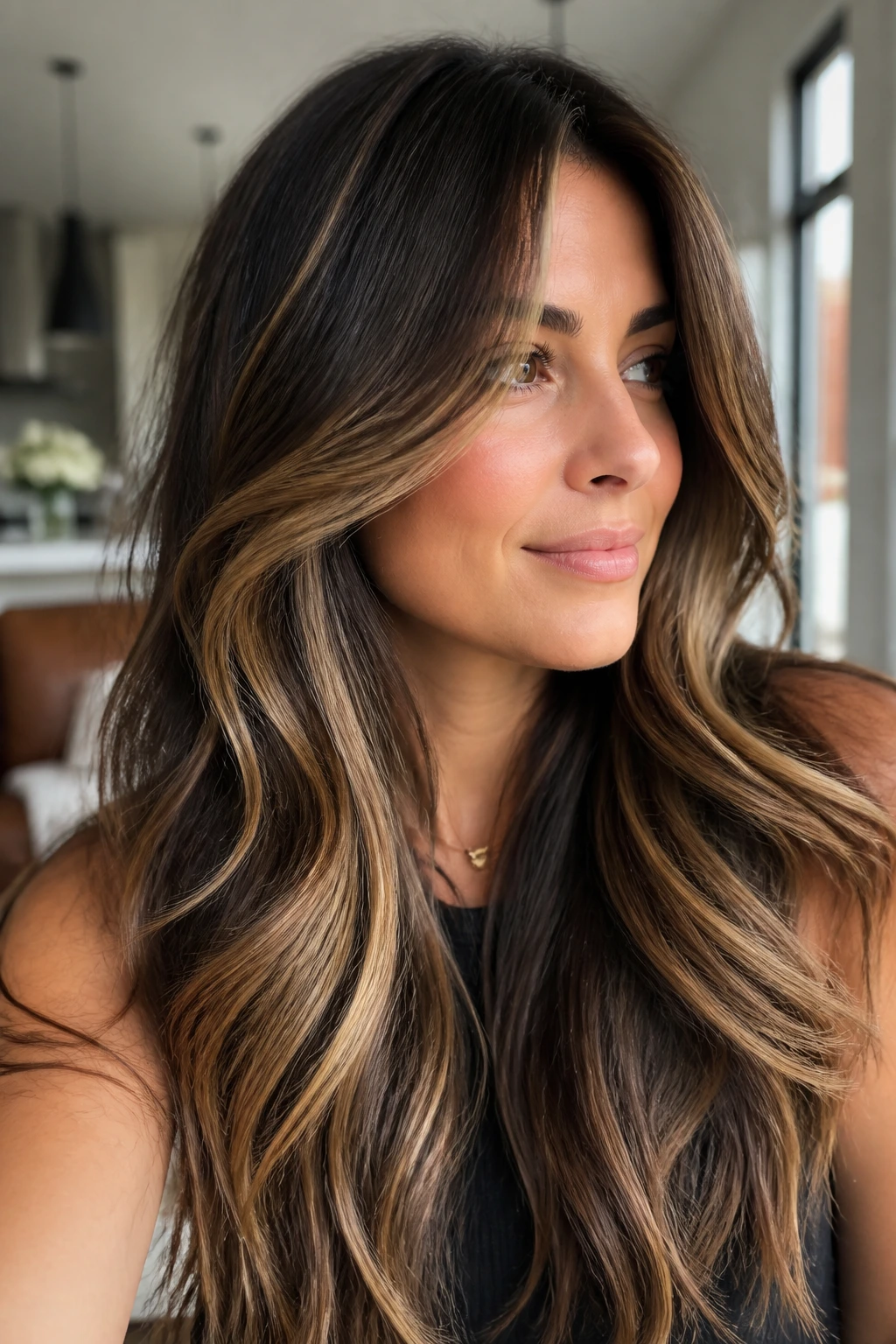
Long hair can swallow a face frame if the color stops at the front. Honey ribbons through long layers solve that by carrying the brightness down the cut so the curtain bangs feel tied to the rest of the style. The front still opens the face, but the movement keeps going all the way to the ends.
This is a good place for a slightly broader ribbon pattern. Two skinny front pieces are not enough when there are long layers in play. You want some honey at the temple, a few pieces around the mid-lengths, and a little more light toward the ends so the eye has somewhere to go.
The reason long layers matter
Long layers create breaks in density. Honey ribbons fill those breaks and make the shape of the haircut easier to read. Without them, long dark hair can look like one big curtain — not the good kind.
The curtain bangs should echo the lighter front pieces, but they do not need to be equally bright. I’d keep the fringe a half-step softer than the loudest ribbons in the lengths. That gives the cut depth, which is what long hair usually needs most.
17. Bright Face-Framing Foils for a High-Impact Blowout
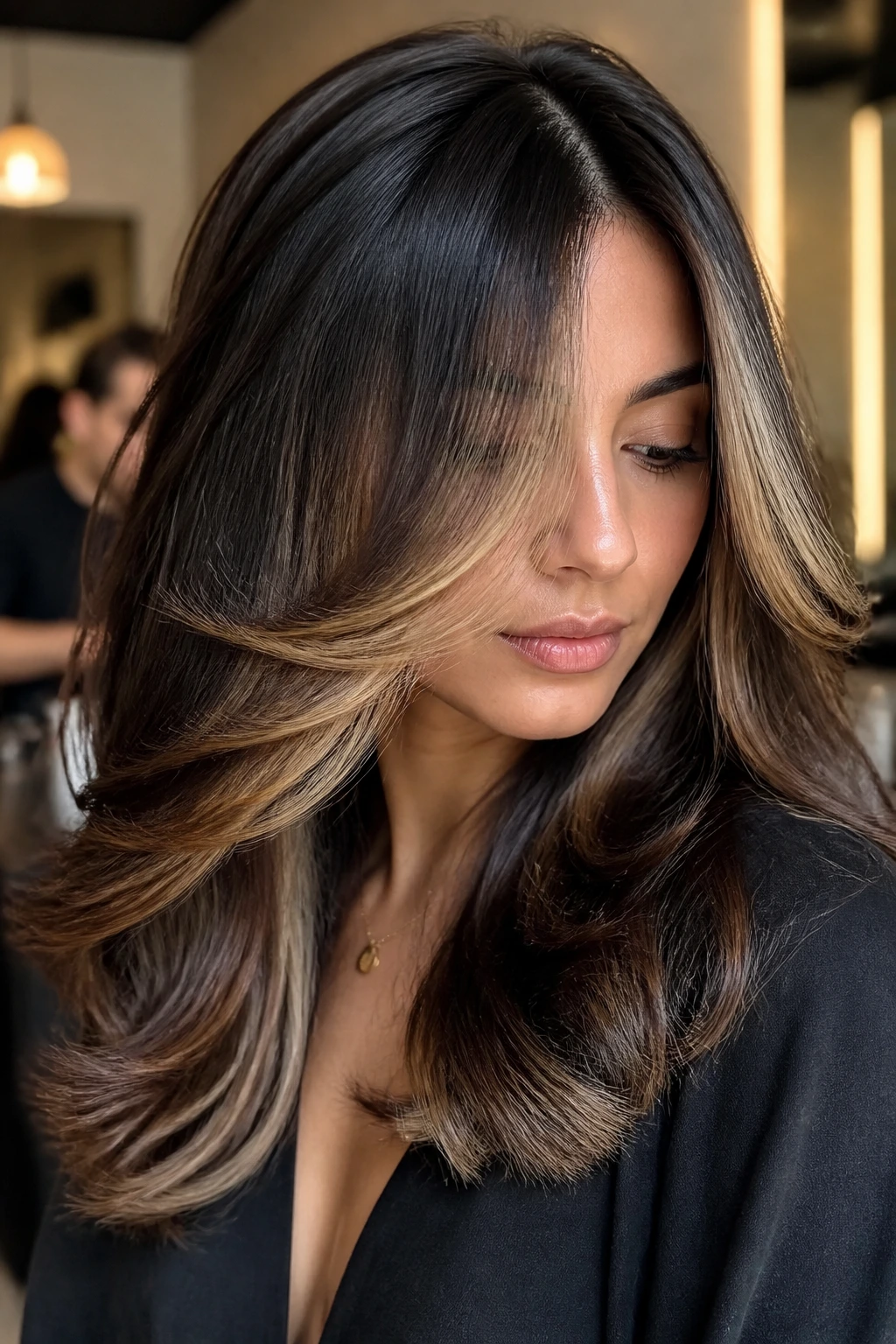
Want the front of the haircut to do the talking? Foils are the fastest route. Bright face-framing foils can lift the curtain bangs and the front panels enough to create a strong contrast against a dark base, which looks especially sharp after a round-brush blowout. The curve of the bangs catches the light, and the whole cut starts to feel intentional and polished.
This is less subtle than balayage. That’s the point. You’re using foil to get a cleaner, brighter result right where the eye lands first. If you like makeup, earrings, or a strong neckline, this kind of front-lightening can act like a frame around the face.
When to choose foils over paint
Foils are the better choice when you want a brighter result in fewer sessions. They can push the hair lighter than freehand painting, which helps if your base is very dark and you want visible honey rather than soft caramel. The cost is a little more maintenance and a little less softness.
I like this style for people who wear their curtain bangs blown out and brushed away from the face. The brighter front is meant to be seen. If you air-dry everything and let the bangs fall wherever they want, some of the effect gets lost. This one likes a little styling.
18. Dimensional Honey Lowlights and Highlights Together
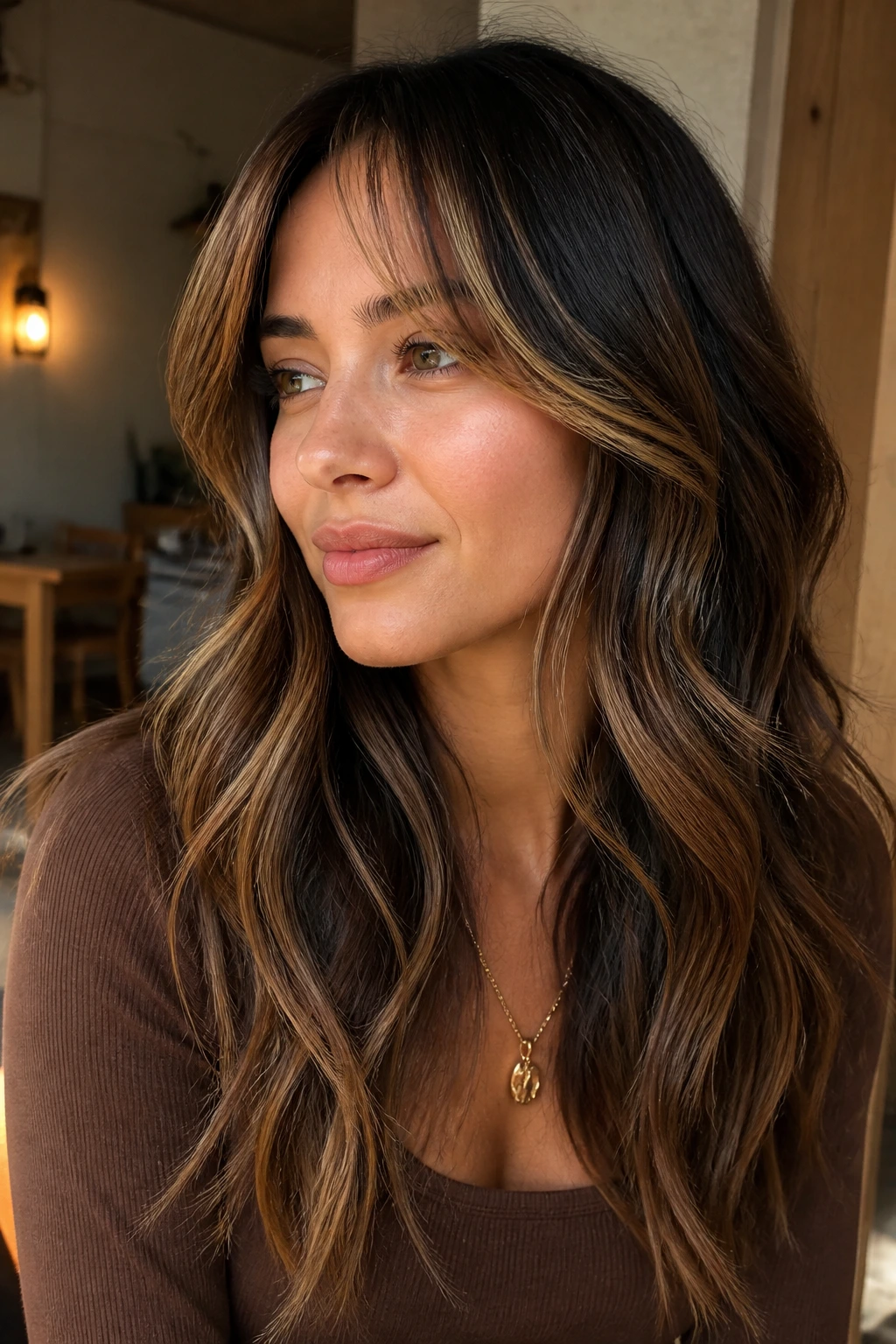
Not all honey looks need to be lighter. A mix of lowlights and highlights keeps dark hair from floating into a single flat shade. The darker pieces hold the base down, and the honey pieces bring the movement. Curtain bangs benefit from that contrast because the fringe looks fuller when there’s depth behind it.
This style is especially good for medium-density hair. Too many highlights alone can thin the visual weight of the cut. Adding lowlights back in makes the color look thicker, richer, and more expensive-looking — and yes, I’m using that phrase carefully, because the richness here actually has a reason.
Why the mix matters around the face
Around curtain bangs, too much light can make the front look narrow. A lowlight or two keeps the color from evaporating at the hairline. The honey still opens the face, but it sits inside a broader field of brown, which makes the haircut feel balanced.
This is also one of the best ways to stretch color between appointments. The lowlights hide what grows in, and the highlights stay bright enough to matter. If you’ve ever liked blonde for two weeks and then felt it go hollow, this is the fix.
19. Glossy Honey Melt for Very Dark Hair
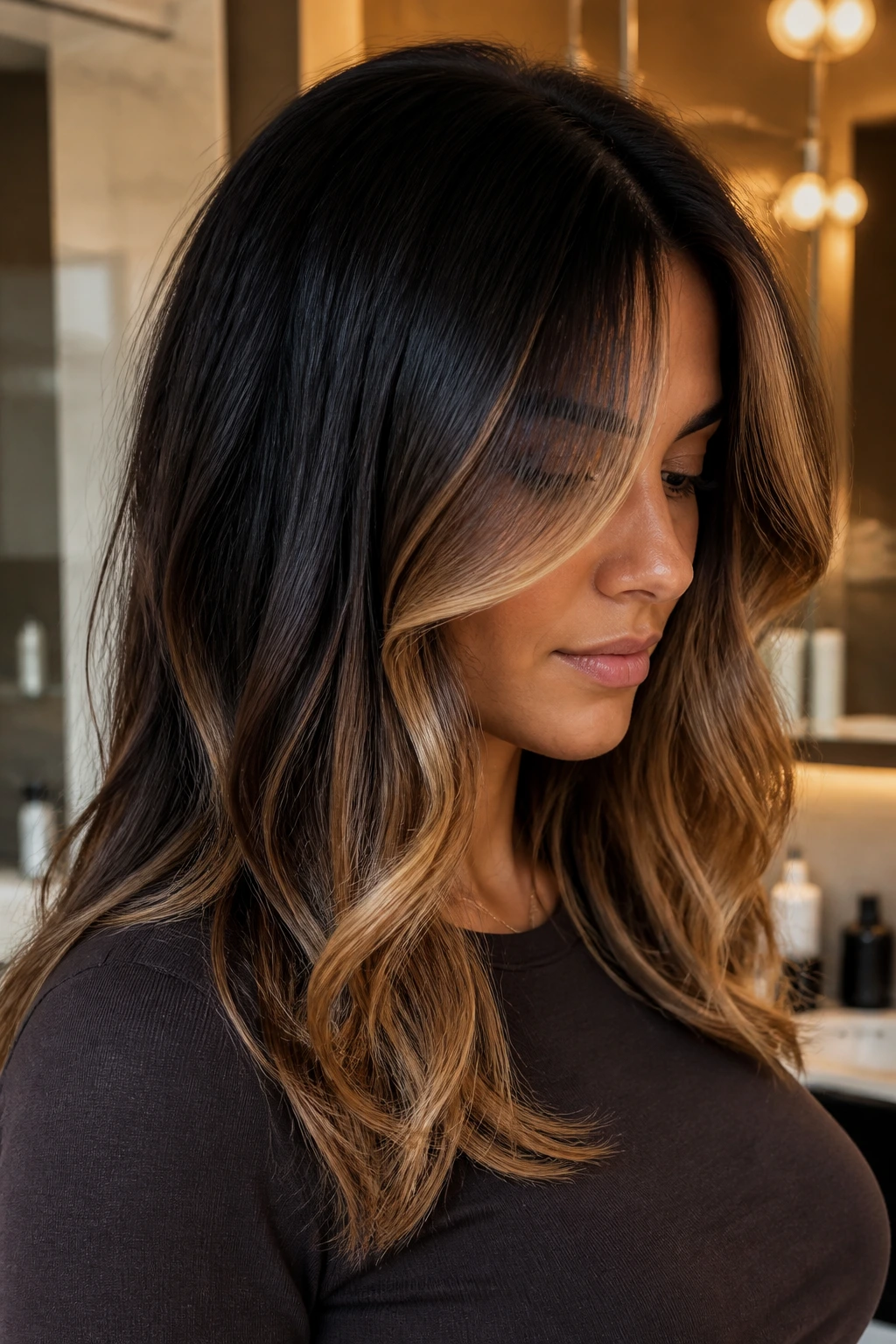
On black or near-black hair, the goal is not blonde everywhere. It’s a soft melt from dark root to honey mids and tips, with the curtain bangs carrying the brightest pieces. That approach keeps the hair from going orange in the awkward middle stage, which is where a lot of dark-to-light color jobs fall apart.
A glossy finish matters here. Very dark hair has a depth that honey can either complement or fight. The right melt keeps the base rich and gives the lighter pieces a reflective surface rather than a dry, chalky one. The bangs should still have movement, but the shine is what sells the whole look.
The part people get wrong
They try to make dark hair do platinum things. Bad plan. Honey on black hair works when it respects the base. The lift should be controlled, and the toner should stay warm enough to avoid that washed-out orange-yellow zone that can happen when dark hair is pushed too far too fast.
This look is gorgeous with loose waves or a big bend through the bangs. It gives the face a glow without pretending the hair was born light. That honesty is part of why it looks so good.
20. Sandy Honey Balayage for Sun-Lit Movement
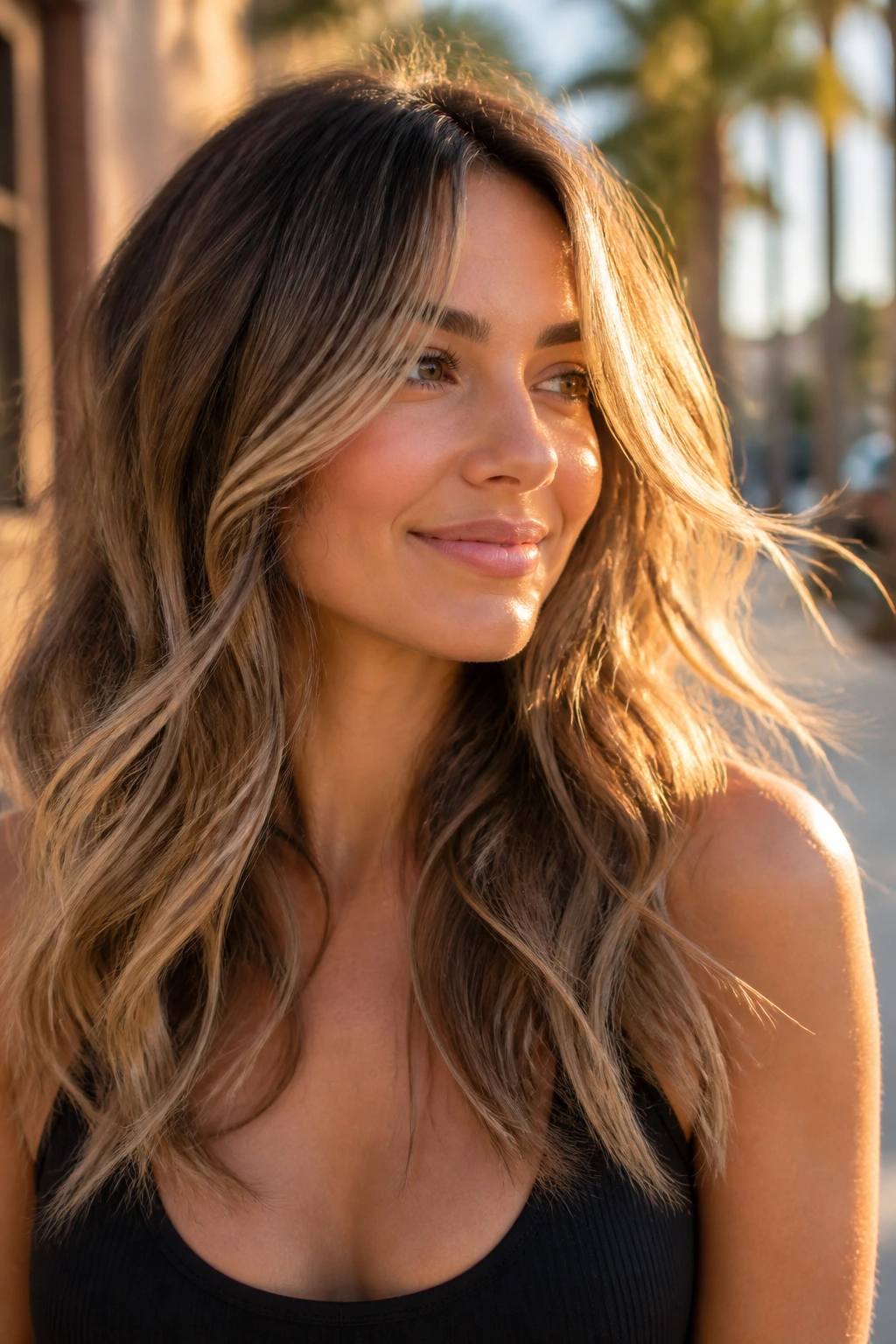
Sandy honey is what happens when honey gets a little beach air in it. The tone is lighter, softer, and slightly beige, which keeps it from turning brassy on dark hair. Curtain bangs get soft slivers around the temple and cheek, and the result feels like it’s been worn in real life rather than staged for a single photo.
Balayage keeps the sandy tone from looking striped. It should sit through the mids and ends, with the brightest front pieces just enough lighter to open the face. This is a good one for people who want movement but not obvious contrast. The color does its best work when the hair bends and shifts.
A strong fit for medium lengths
Medium-length cuts show this shade well because there’s enough length for the gradient to matter. On shorter cuts, sandy honey can blur too quickly. On long cuts, it can be gorgeous, but only if the placement is broad enough to avoid looking sparse.
If your natural hair is dark brown, this is a nice place to stay within reach of warmth without climbing into gold-girl territory. The curtain bangs feel soft, and the whole style keeps a light hand.
21. Vanilla Honey Money Pieces for a Dark Bob
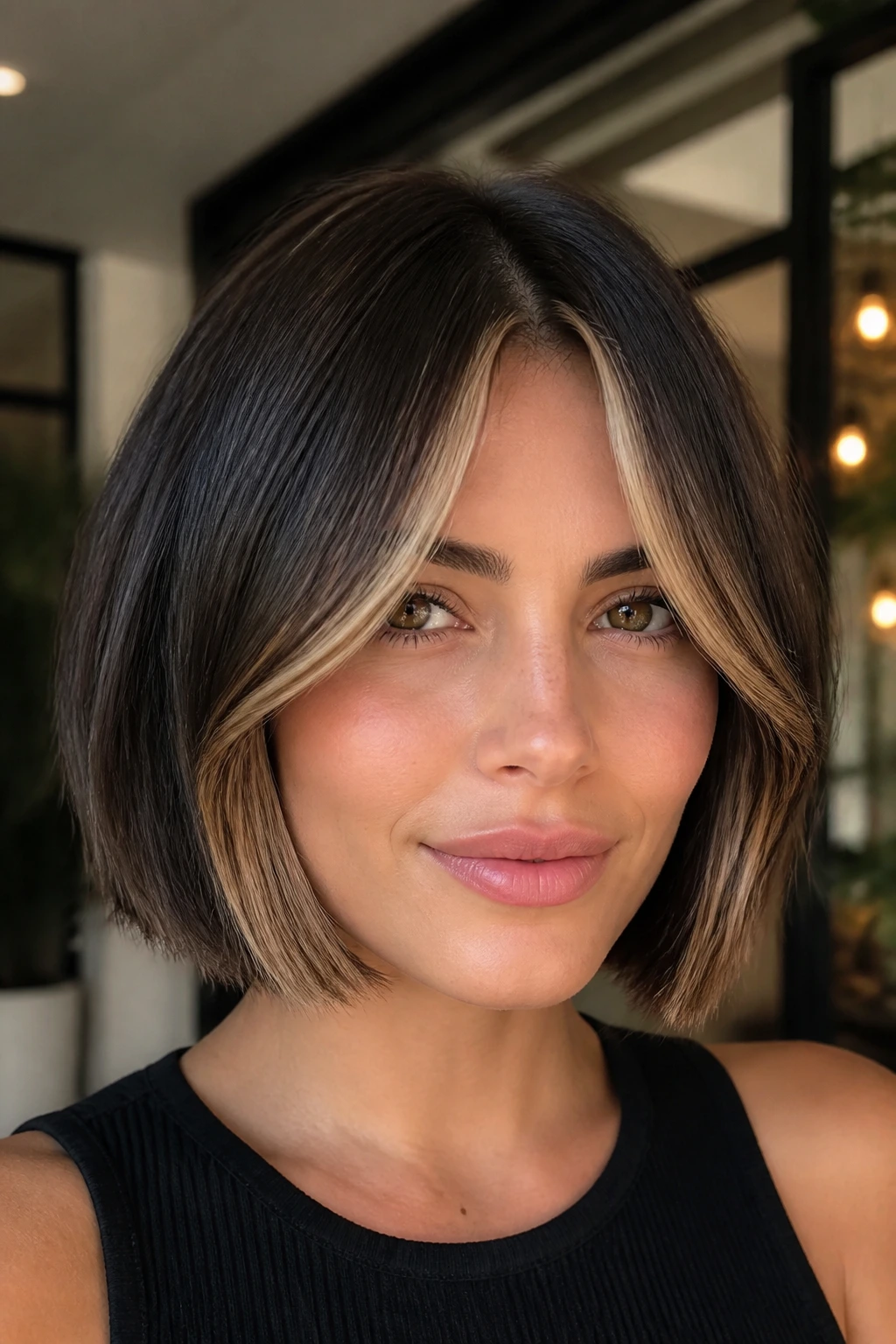
Shorter hair changes the whole conversation. On a dark bob, curtain bangs can look heavy fast if the front stays the same shade as the rest of the cut. Vanilla honey money pieces fix that by putting a brighter, creamier frame around the face without making the entire bob look lightened to the root.
Because the length is shorter, the highlight has to be narrower and cleaner. Big panels can look chunky in a bad way on a bob. A controlled money piece, though, gives the haircut a crisp edge and helps the curtain bangs separate from the rest of the hair. The result is playful, but not fussy.
Why this one is so flattering on shorter cuts
A bob has less room to hide color mistakes. That’s why the placement has to be precise. The best vanilla honey front pieces begin just where the bangs bend and continue a little into the side panel, so the front opens without breaking the shape of the cut.
This style pairs well with sharp earrings, a strong lip color, or a tailored collar. The haircut already has personality. The honey just gives it a bright face.
22. Maple Highlights That Add Warmth to Thick Hair
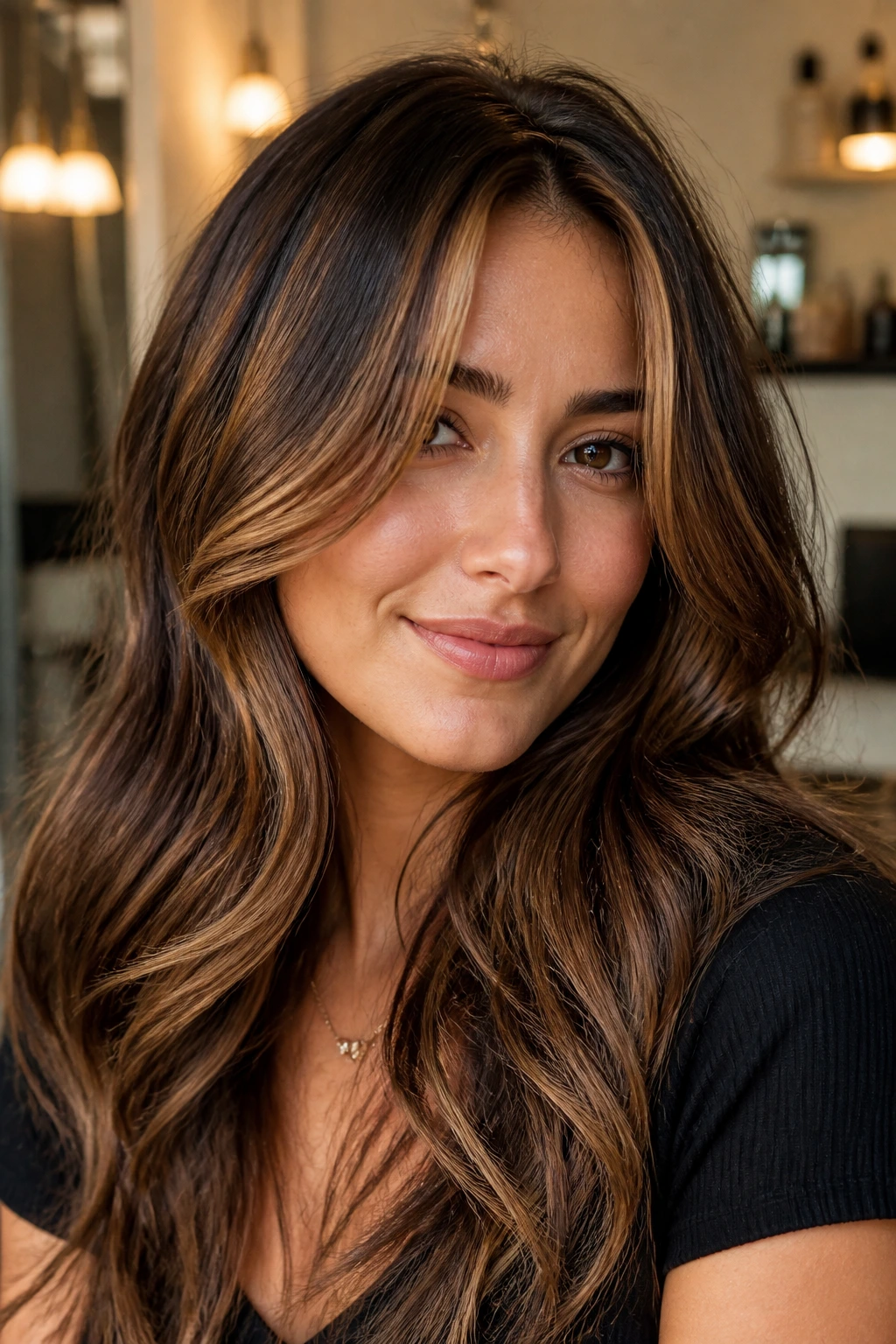
Thick hair needs more than a whisper of color. Maple highlights bring enough warmth and visibility to cut through density without turning the whole head pale. Curtain bangs benefit because the front pieces stop looking like one heavy sweep and start looking like part of a layered shape.
Broader painted sections work better here than tiny babylights. Thick hair can hide fine pieces, especially once the blowout settles. Maple gives you something that still reads from the front and from a little distance, which is what thick hair often needs.
The maintenance angle
Thick hair can be forgiving, but it also tends to eat product. Keep the finish light. Heavy creams can blur the highlight pattern and make the bangs collapse. A light serum on the ends and a round-brush lift at the roots usually does more than a pile of styling product.
I’d reach for maple when the goal is warmth and dimension, not dramatic contrast. It makes the hair look full, and the curtain bangs stay soft instead of disappearing into the shape.
23. Hidden Honey Underlayers for Low-Key Brightness
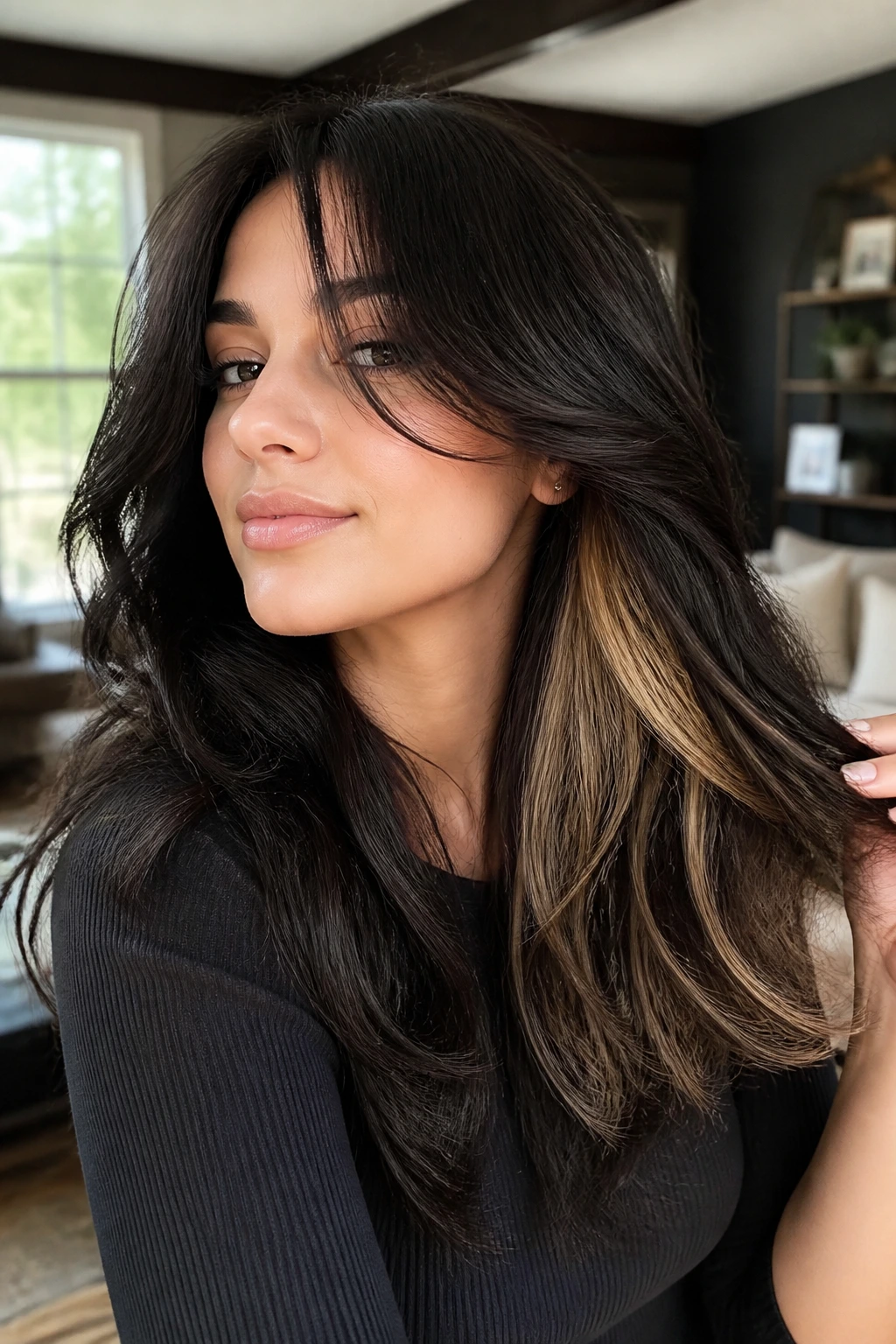
What if you want the color to show only when the hair moves? Underlayers are the answer. The honey lives beneath the top canopy, so the curtain bangs stay soft and the front stays dark from most angles. Then you tuck the hair, turn your head, or catch a little breeze, and the brightness flashes through.
This is one of the least obvious ways to wear honey blonde on dark hair. It’s also one of the easiest to live with. Regrowth is hidden, the contrast is lower, and the look doesn’t scream for touch-ups. Curtain bangs still get a little lift near the face, but the main color story is tucked below.
Best for people who want control
If you work in a setting where brighter highlights feel like too much, hidden underlayers give you some personality without full exposure. It’s color for the person wearing it, not for everyone else staring at it from the other side of a room.
I wouldn’t choose this if you want the bangs to be the star every day. The payoff is subtle. But subtle can be a good thing. Especially when you want dark hair to keep its depth.
24. Copper-Honey Blend for a Warmer, More Dramatic Look
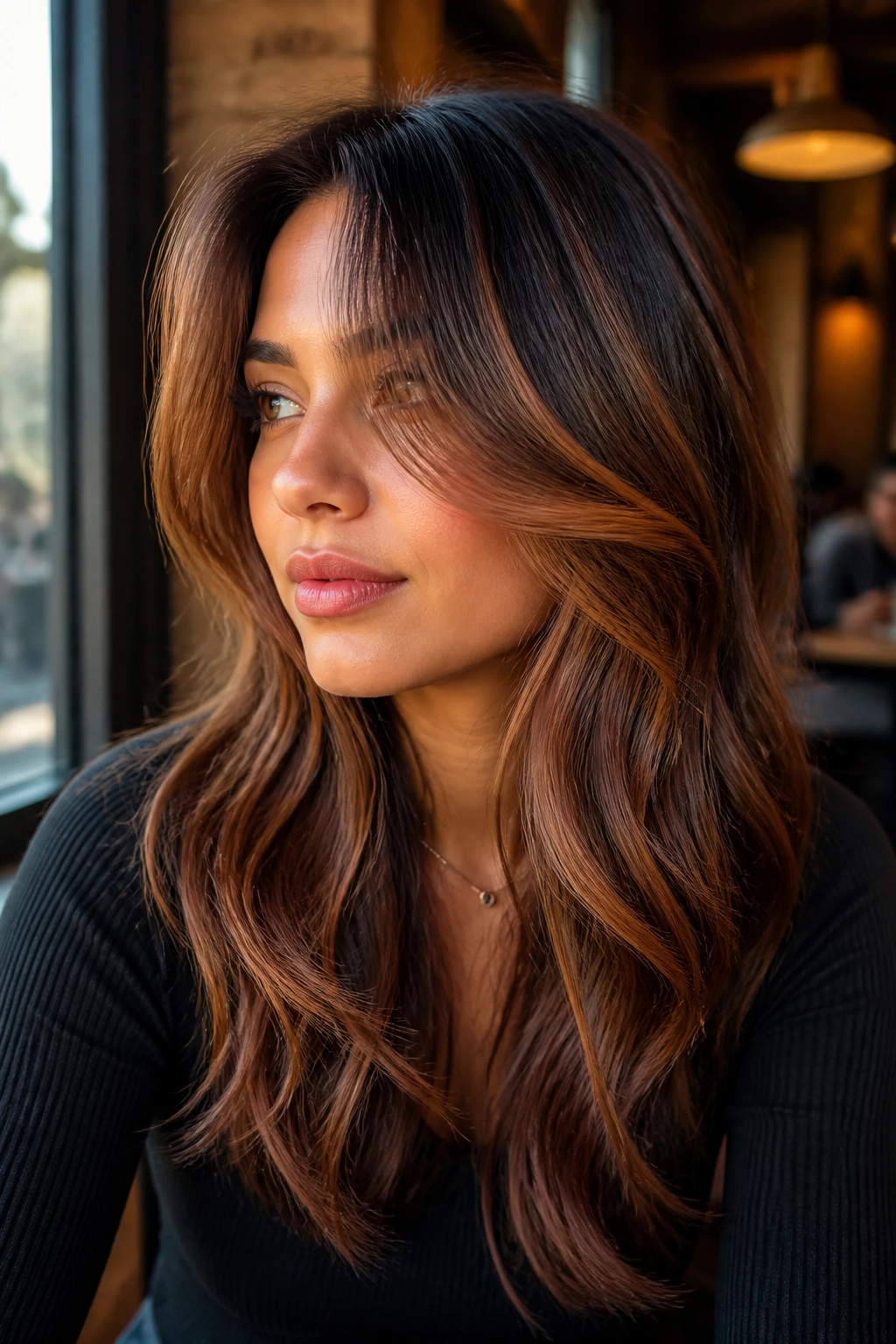
This is honey with a louder voice. Copper keeps the blonde from going dull, and curtain bangs get a fiery edge without losing softness. On dark hair, the blend can look almost lit from inside when the light hits it, which is why people who love warm color keep circling back to this kind of tone.
The color works best when the red is a note, not the whole song. You want honey first, copper second. Too much red, and the style moves away from blonde. Too little, and you lose the drama that makes this one special.
A good choice for warmth lovers
If your wardrobe leans camel, rust, cream, olive, or deep brown, copper-honey can fit right in. It also tends to flatter deeper skin tones and warm undertones because it echoes that natural richness instead of fighting it.
The curtain bangs should be softly blended so the warmth comes through the bend, not through a blunt streak at the root. This one needs gloss to stay alive. Warm tones fade fast if they’re neglected, and a dull copper-honey shade looks tired sooner than beige or bronze.
25. Creamy Honey Veil for a Soft, Subtle Finish
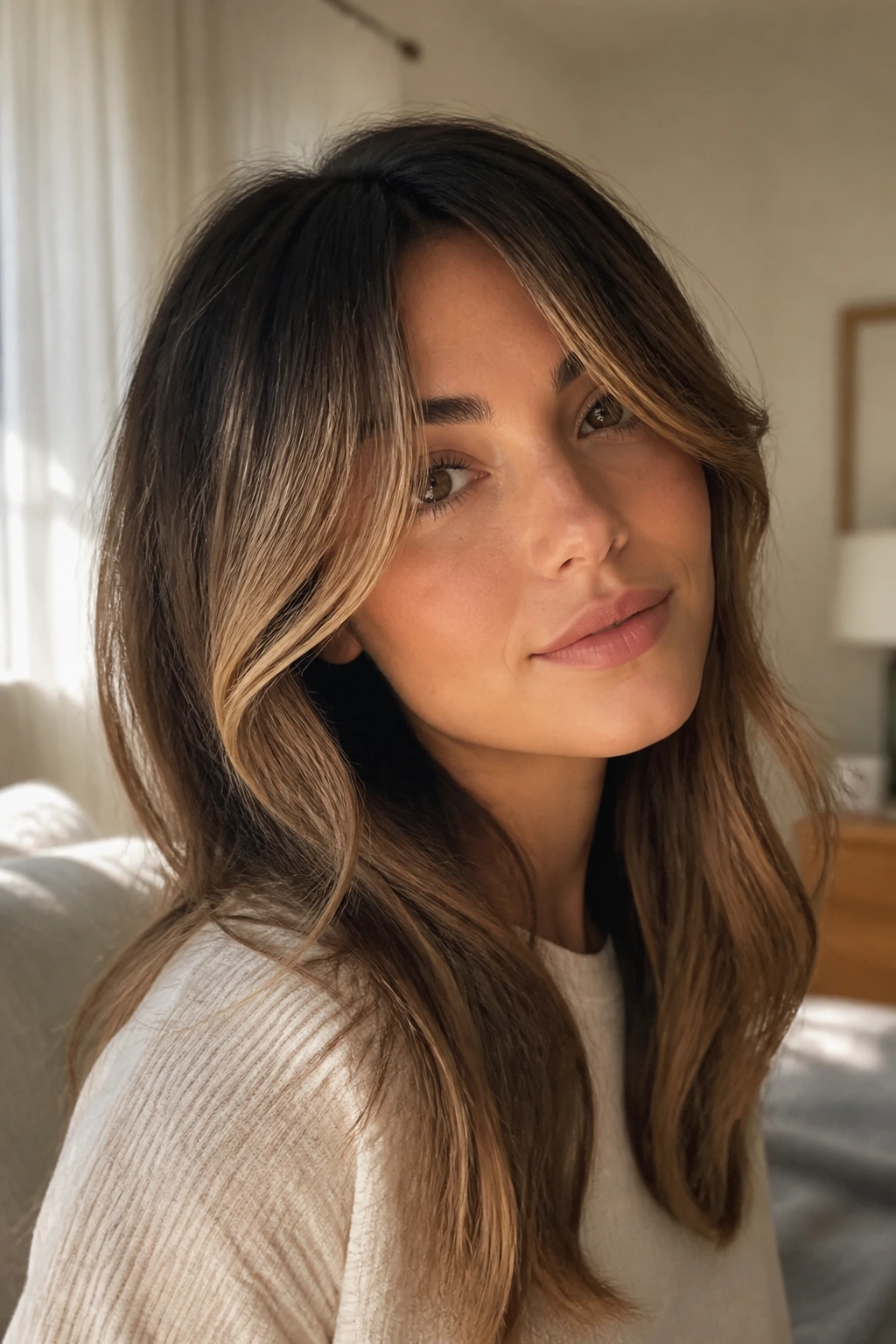
A creamy honey veil is the quietest move in the whole set, and sometimes that’s the smartest one. The highlights are so soft they almost read as a change in texture rather than a dramatic color shift. Curtain bangs get a whisper of light, just enough to open the eyes and keep the front from feeling heavy.
This is the style I’d hand to someone who wants honey blonde but doesn’t want anyone to point at their hair and say, “You got it done.” The color should feel like a natural softening. Not a spotlight. Not a stripe. Just a bit more light where the haircut bends around the face.
Why subtle can still feel finished
The creamy finish keeps the shade from becoming yellow or brassy. It also works well on damaged or fragile hair because you do not need to push the lift too far. That makes it a good first step for dark hair that has never been highlighted before.
If you squint and the curtain bangs still look rich and dark, that’s okay. The whole point is a veil, not a billboard. The best subtle color jobs are the ones that make the haircut look better without insisting on attention.
What Makes Honey Blonde Work So Well on Dark Hair with Curtain Bangs
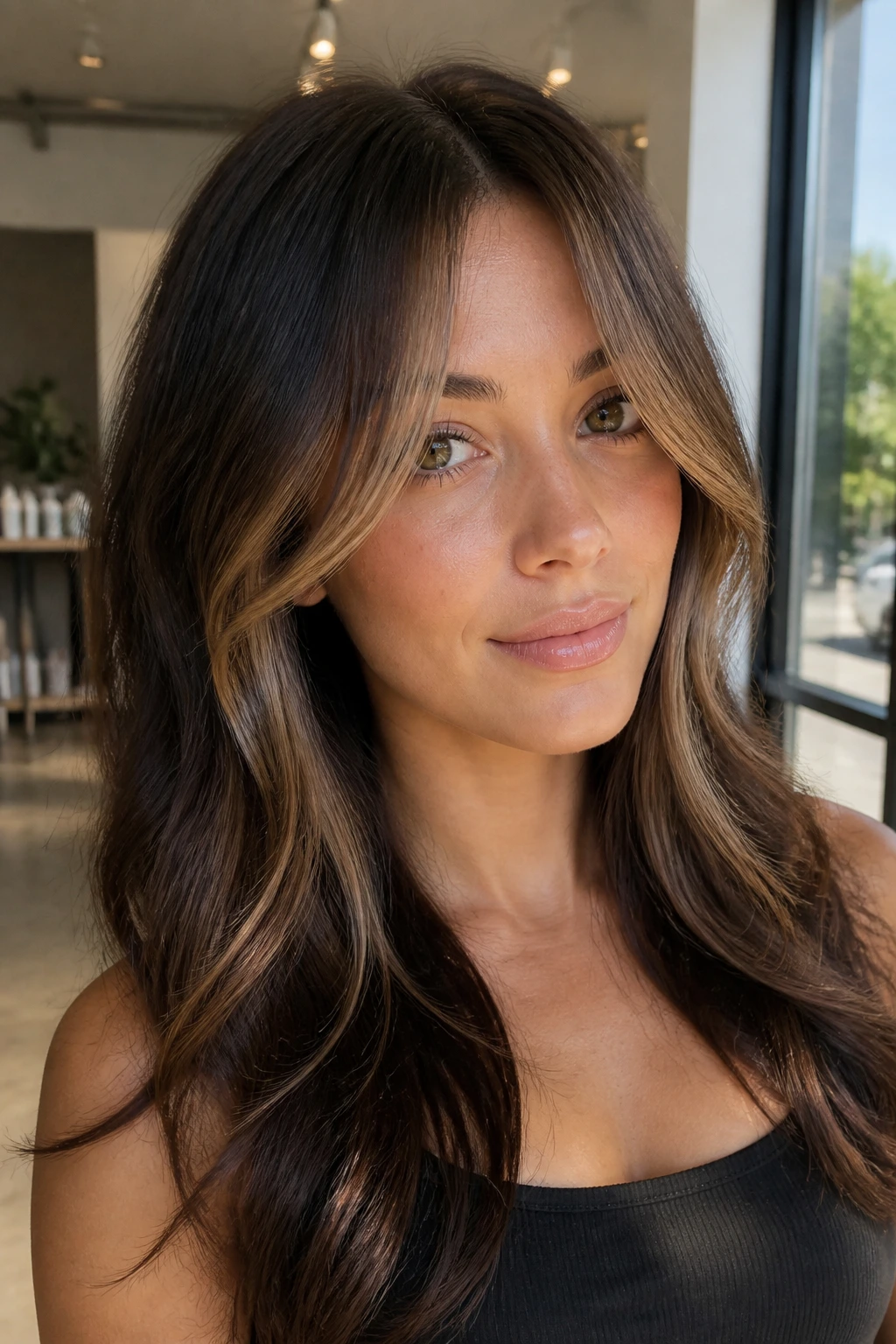
Honey works because it respects the base. Dark hair has depth, and curtain bangs have movement. Put those together and you’ve already done half the job. The color doesn’t need to be pale to matter. It just needs to be placed where the hair opens up — around the temples, through the bend of the fringe, and along the lengths that move when you turn your head.
Why the front pieces matter most
The front hairline gets sun, friction, heat, and constant handling. That makes it the first place people notice tone changes and the first place where porosity starts to show. A colorist who understands that will often keep the very front pieces slightly softer or slightly more glossed than the rest, so the curtain bangs don’t look fried while the back stays untouched.
Why honey beats icy blonde on many dark bases
On darker hair, honey tends to blend better than platinum or hard ash. The warmth connects the lightened pieces to the base, so the result feels like one haircut instead of two different colors arguing with each other. If you like movement and shine more than stark contrast, honey is usually the smarter pick.
There’s also a practical angle. Softer warm tones grow out more politely. That matters when the bangs sit in your face every day. You notice everything up there. Honey gives you some forgiveness.
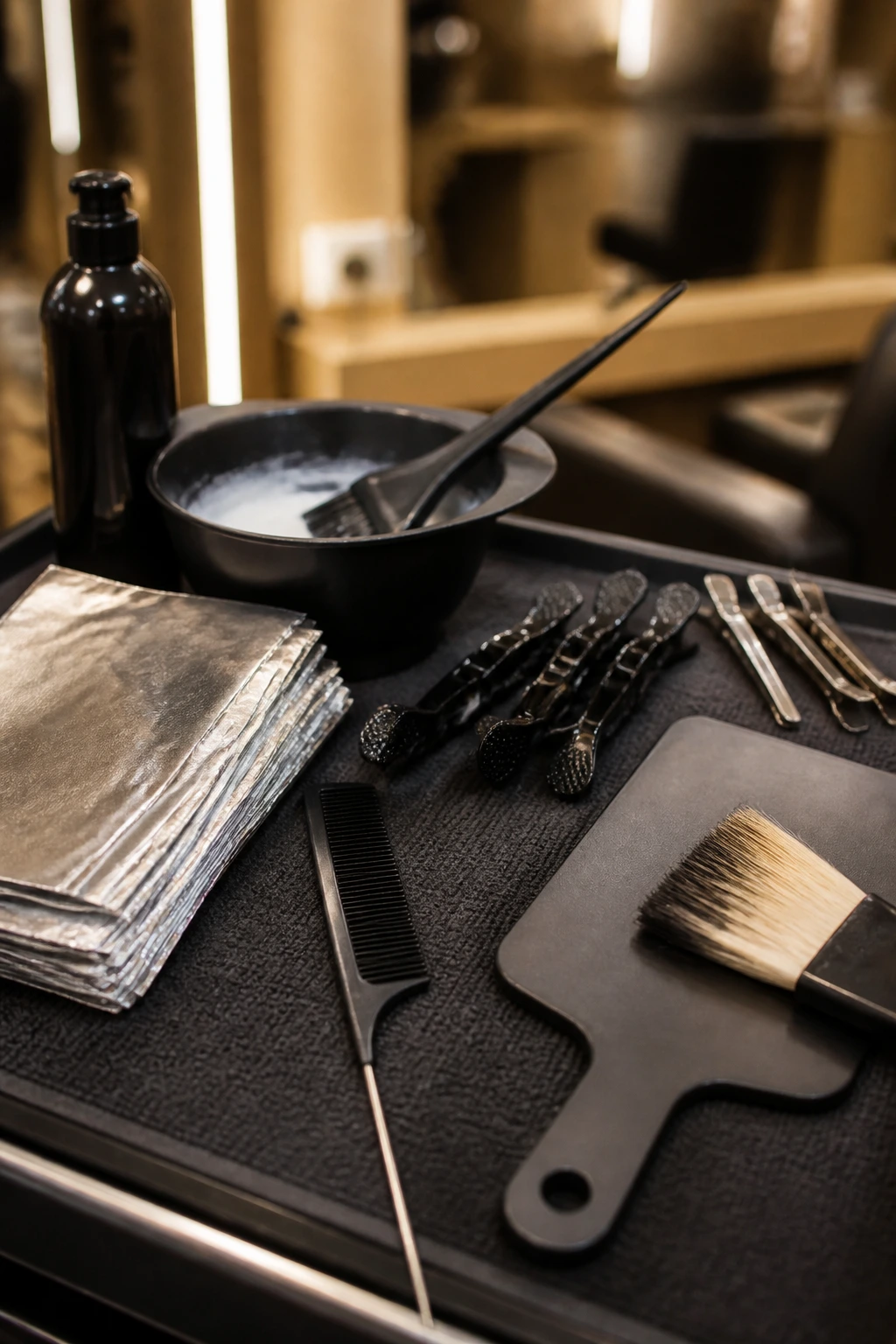
What Your Colorist Reaches for Behind the Chair
-
Foils: Useful for brighter face-framing pieces and cleaner lift around curtain bangs.
-
Balayage brush: Good for hand-painted ribbons that need a softer, lived-in edge.
-
Tint bowl and brush: For glosses, toners, and root smudges that keep honey from going flat.
-
Sectioning clips: Necessary for separating the curtain bangs from the rest of the hair so the front doesn’t get overdone.
-
Tail comb: Helps with clean parting and precise placement, especially around the temple and fringe.
-
Balayage board or paddle: Gives control when painting longer ribbons through the mid-lengths.
-
Hair clips with grip: The kind that hold thick hair without slipping out while color processes.
-
Color-safe shampoo and mask: Not a salon tool, but absolutely part of the kit if you want the highlight tone to stay soft.
-
Heat protectant: Essential if you blow-dry the curtain bangs often, which most people do.
-
Clear or beige-gold gloss: Optional, but it’s the thing that keeps honey looking glossy instead of dull after a few washes.
Choosing the Right Honey Tone for Your Base
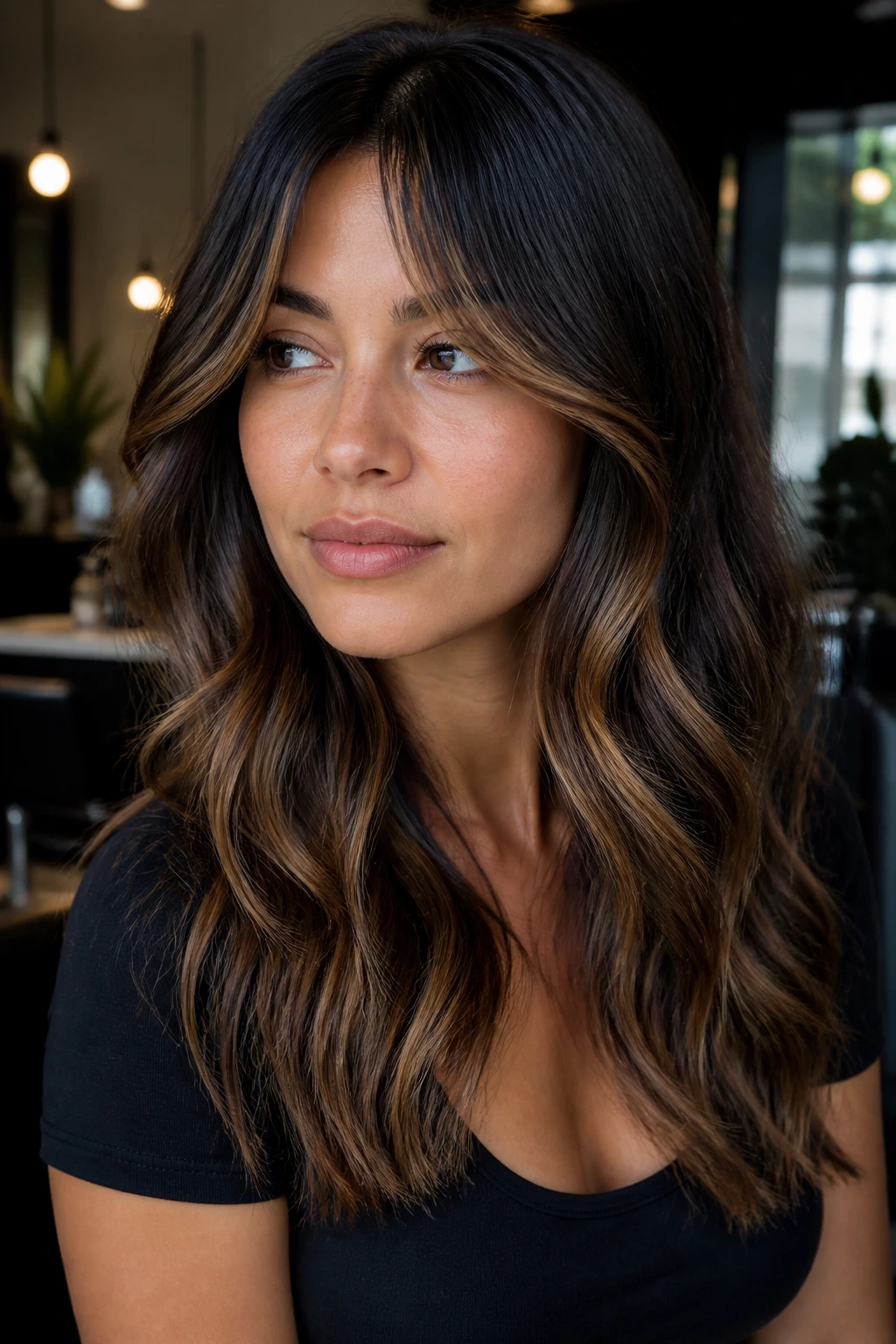
The base level matters more than people think. On very dark brown or black hair, honey usually needs to stay closer to caramel, bronze, or deep gold unless you’re ready for multiple lightening sessions. If you try to jump straight to pale honey on a deep base, the middle stage can go orange before it settles into a nicer tone.
For medium-dark brunettes, beige honey, toasted almond, or soft gold can work beautifully in one appointment if the hair is healthy enough. If your hair has old color, box dye, or a lot of heat damage, tell the colorist. That changes how fast the hair lifts and how the toner behaves. The front pieces often process faster because they’ve been exposed to more sunlight and styling, so a careful colorist may leave them slightly softer until the rinse.
What to bring to the appointment
Bring photos with hair that matches your natural depth, not just your dream shade. A honey blonde on level 5 brunette behaves differently than honey on level 3 black hair, and that difference matters. If you want warm gold, say that. If you want beige honey, say that too. Those words are not interchangeable in the chair.
Also bring a blunt answer about upkeep. Bright front pieces need more attention than soft balayage. If you wash often, use hot tools, or swim in treated water, the tone will need more care. Better to say that up front than to pretend you’re a low-maintenance person and then hate the fade.
How to Wear the Color With Curtain Bangs
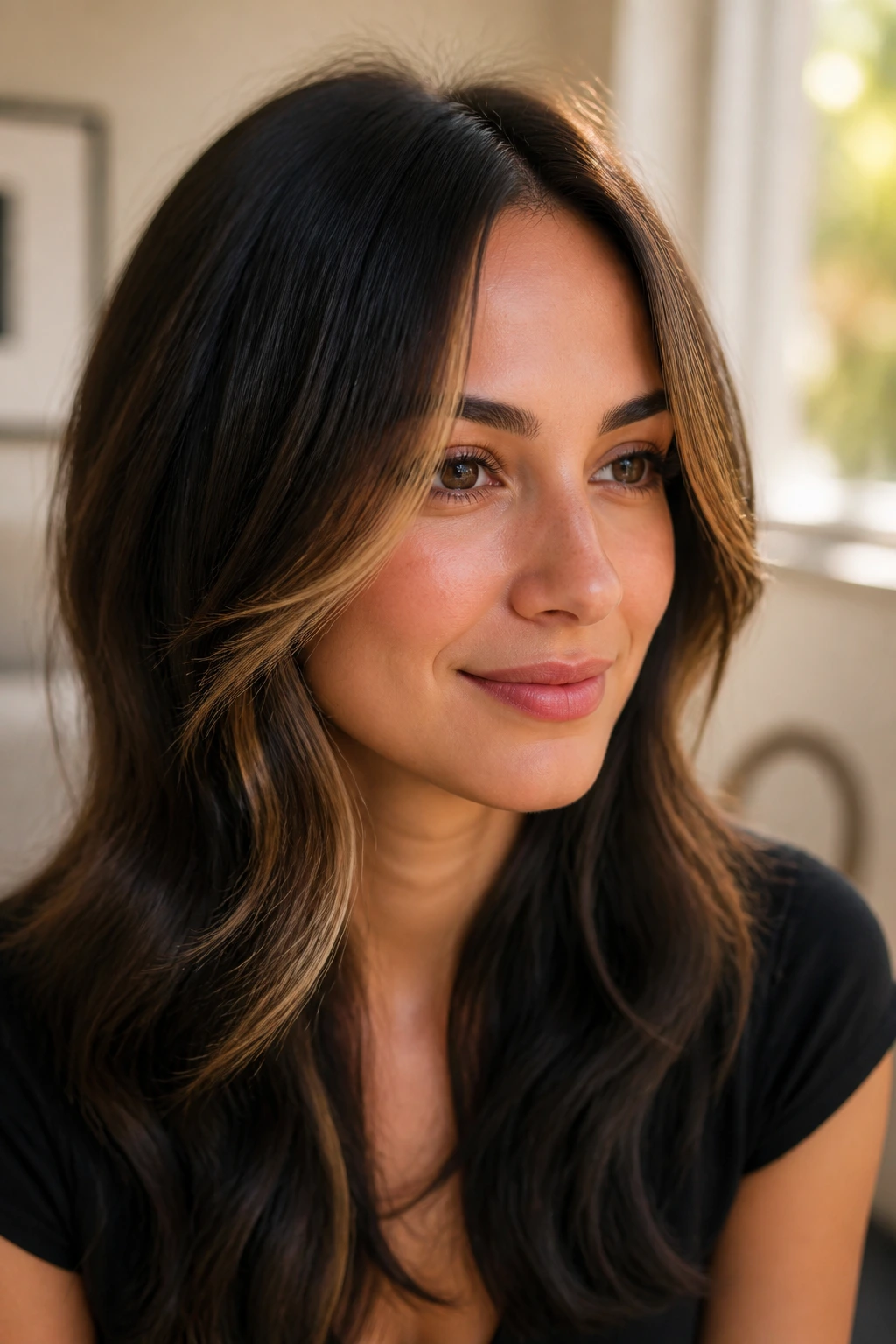
The part: A center part keeps curtain bangs honest and lets the honey pieces fall where they should. If your face frame is bright, a centered split usually shows it best.
The bend: A round brush, blow dryer, or hot brush makes the curtain fringe swing away from the face just enough to catch the highlight. Straight-down bangs hide the work.
The texture: Soft waves show ribbon placement. Sleek finishes show gloss. If the color feels too quiet on its own, a little bend at the ends usually wakes it up.
The finish: Lightweight oil on the mids and ends, not the roots. Heavy cream can swallow the highlight, especially in thick hair. A clean, slightly airy finish lets the honey reflect instead of sink.
Gold jewelry, cream tops, camel knits, black tees, even a sharp collar — all of that gives honey blonde somewhere to land visually. Hair color doesn’t live by itself. It needs a frame. Curtain bangs do some of that work already, which is why they pair so well with warm blonde pieces.
Extra Shine, Soft Contrast, and Less Brass
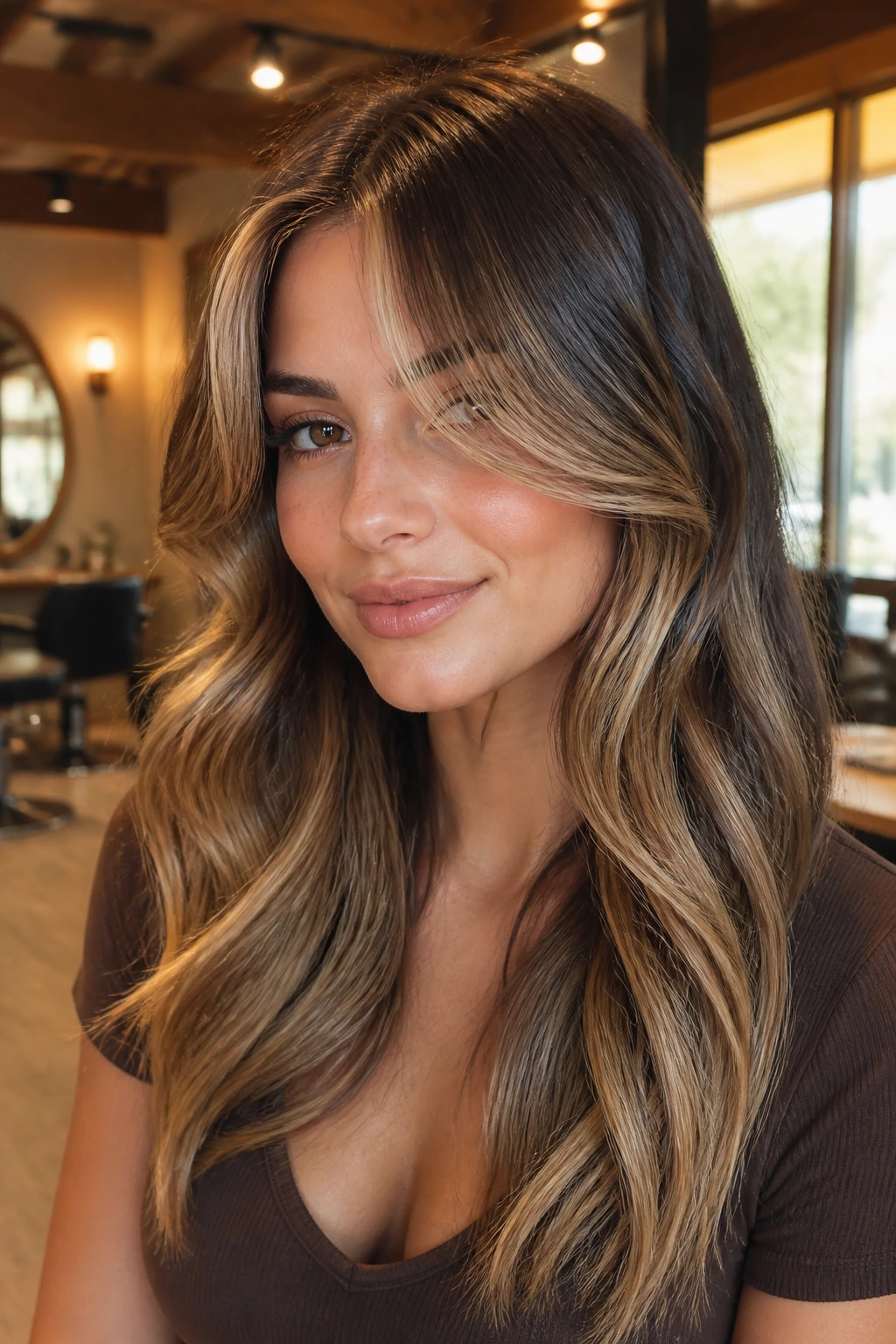
Tone booster: Ask for a beige-gold gloss after the lightening service if your honey tends to go too orange. A little gloss keeps the shade warm without making it flat.
Contrast control: Keep the root slightly darker than the face-framing pieces. That one move prevents curtain bangs from looking like two disconnected strips of color.
Bang balance: If your bangs are dense, don’t flood them with highlight. Put the brightest pieces at the bend and temple, then let the interior of the fringe stay a little deeper. The shape will look better, full stop.
Finish trick: A small amount of serum on the ends gives honey blonde more shine than a heavy styling cream. The light reflects better when the hair isn’t coated.
Make-it-yours: Fine hair usually looks best with babylights or skinny ribbons. Thick hair can take wider panels. Curly hair needs longer painted sections so the curl pattern doesn’t break into spots. Straight hair likes more precise front framing because there’s less natural movement to hide the placement.
Common Mistakes That Flatten Honey Highlights
-
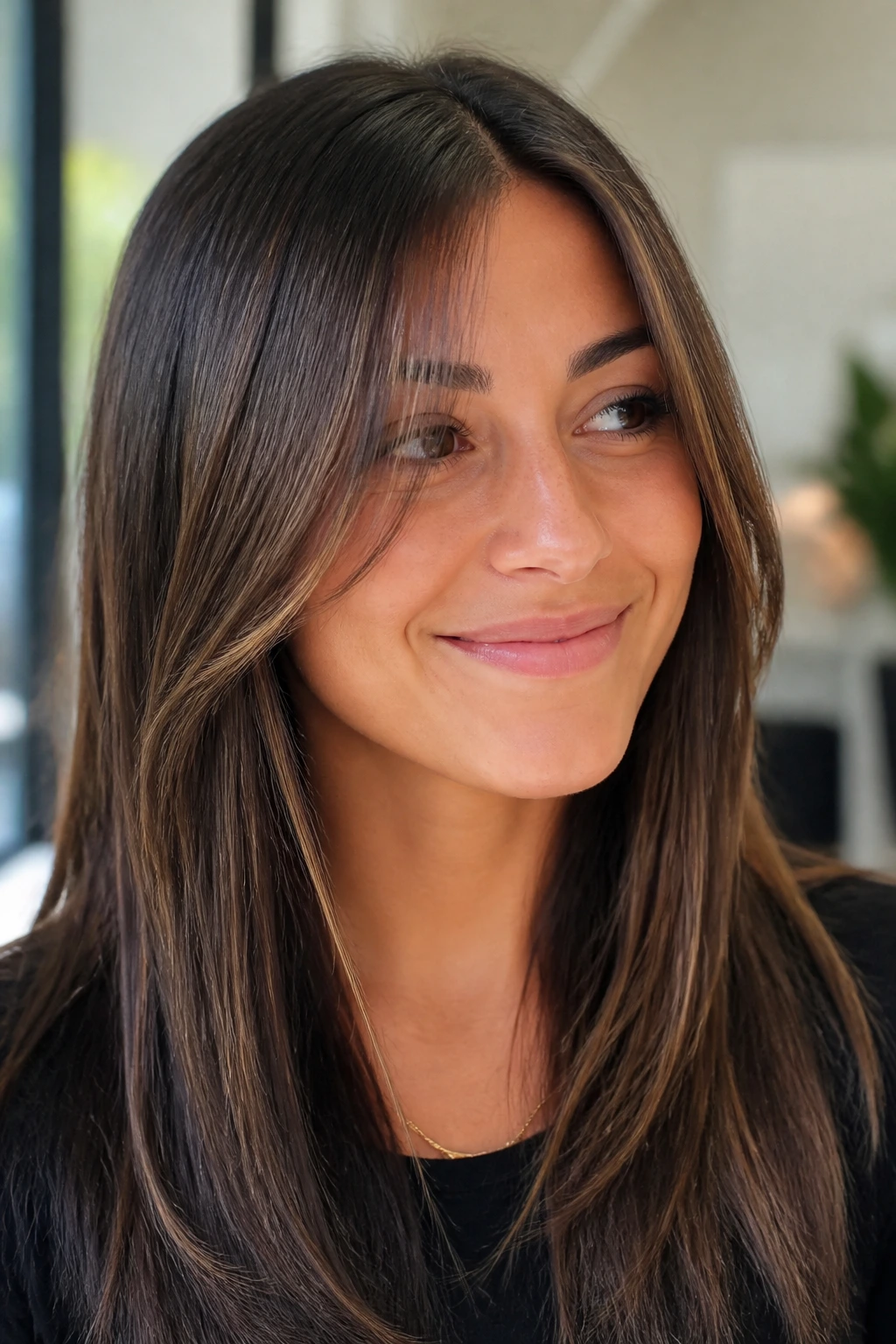
Lifting the whole front too high: Curtain bangs can turn stripey fast if the lightest pieces start at the root and run too wide. Keep the brightest part near the bend and soften the roots with a shadow or gloss.
-
Choosing ash toner to “fix” warmth: Honey is supposed to be warm. If you toner it into a gray-beige shell, the hair can go muddy instead of bright. Beige-gold usually works better than hard ash on dark bases.
-
Making the face frame too chunky for the haircut: Wide stripes can look bold in a way that fights the softness of curtain bangs. If you want chunkier color, keep the edges blurred so the bangs still move.
-
Ignoring porosity around the hairline: The front pieces often process faster because they’re touched, styled, and exposed more. If the color grabs too fast there, the bangs can look lighter and drier than the rest. A careful colorist checks that section first.
-
Using purple shampoo too often: A little is fine for cooling brass, but overdoing it can drain the warmth that makes honey look like honey. Once every week or two is usually enough for most people.
-
Skipping moisture after lightening: Honey on dark hair still needs hydration. If the ends feel rough, the color will lose its shine fast. A weekly mask and heat protectant matter more than people think.
Ways to Adapt the Look Without Losing the Point
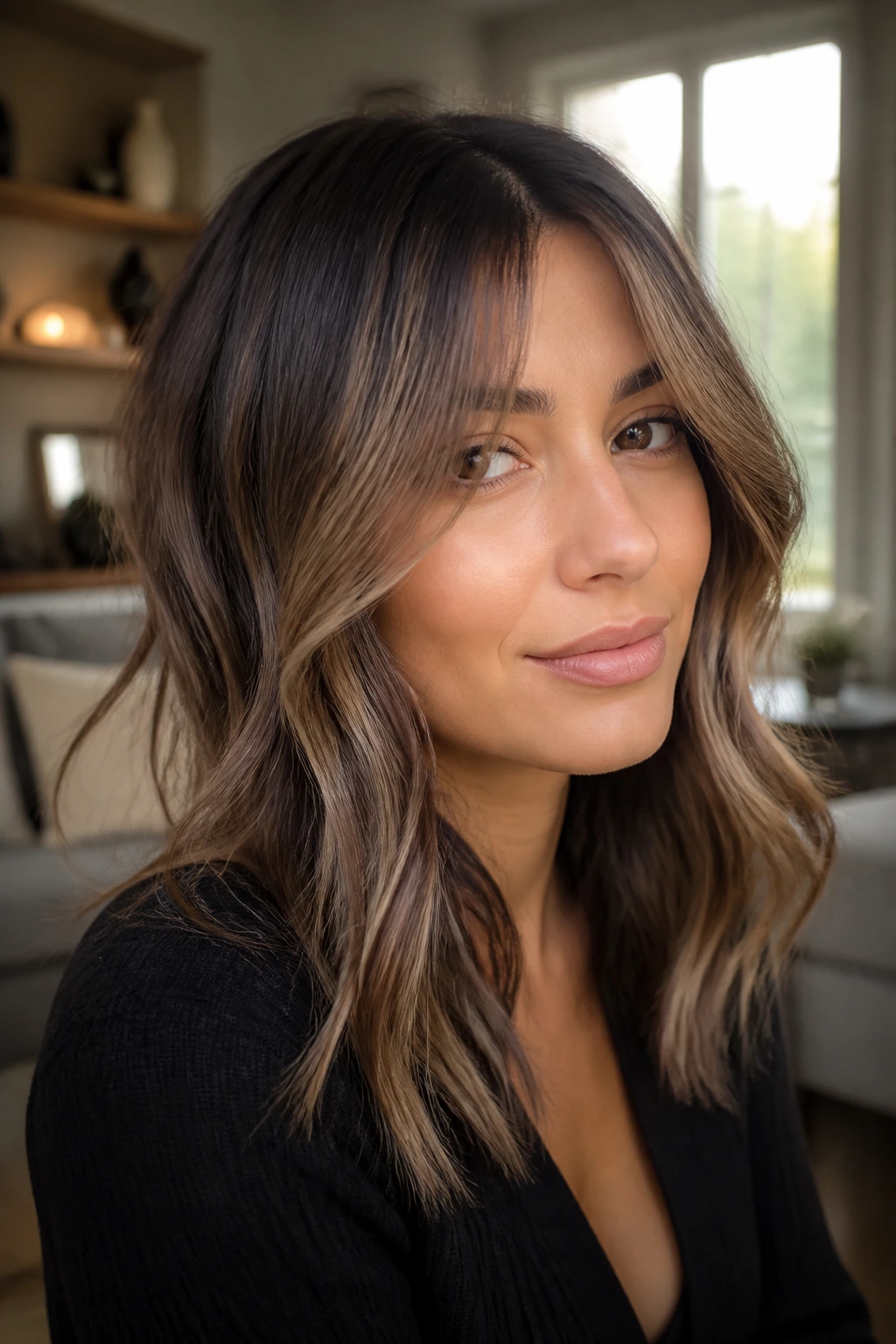
Barely-There Honey Whisper: This is the subtle version. Thin babylights and a soft gloss keep dark hair rich while giving curtain bangs just enough lift. Best if you want low drama and a very natural grow-out.
Bronde Face-Frame Pop: Bronde pushes a little deeper than blonde and a little lighter than brunette. It’s a smart middle ground when you want the curtain bangs to stand out but don’t want the whole style to read warm.
Smoked Honey Melt: Add a cool root shadow and a beige honey finish. The result is softer and a bit more modern, especially on medium-dark brunettes who want warmth without gold overload.
Warm Copper Cloud: This version leans richer and more red-gold. It fits people who already wear warm colors well and want the curtain bangs to feel brighter in a more dramatic way.
High-Contrast Honey Stripe: Fewer, brighter panels around the face, more obvious than balayage, less full than all-over blonding. If you like your hair to have a point of view, this is the one.
Keeping the Honey Bright Between Appointments
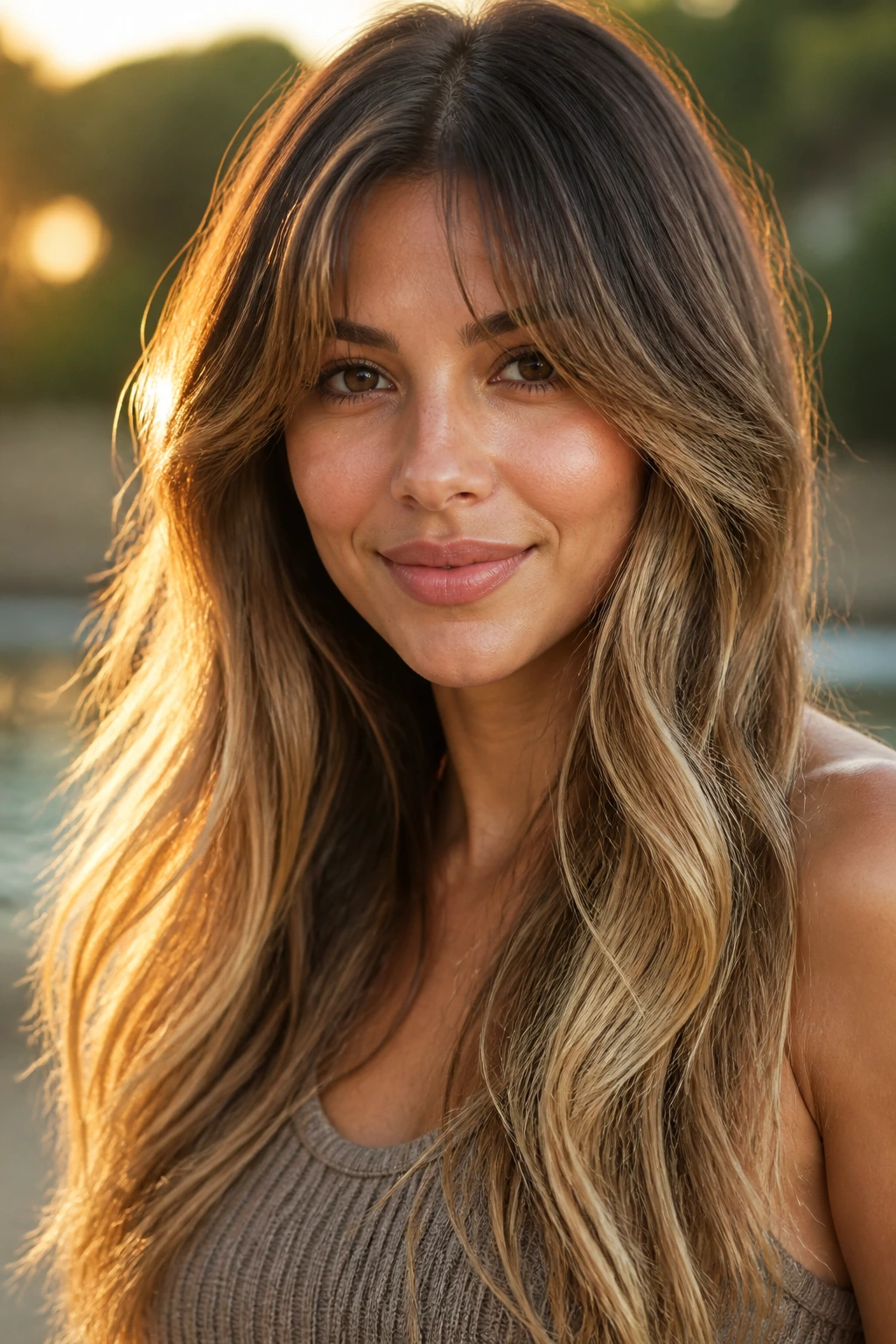
The first 72 hours after coloring matter. Skip harsh clarifying shampoo, keep the water lukewarm, and let the color settle. After that, wash only as often as your scalp needs it. For most people with highlighted dark hair, that means two to four washes a week, not daily shampoo unless your hair truly needs it.
A gloss or toner refresh every 4 to 8 weeks helps keep honey from slipping into orange or dull beige. Bright front pieces often need attention sooner than the back because they’re the first to fade. A root touch-up or partial highlight session usually lands somewhere around 8 to 12 weeks, depending on how visible you want regrowth to be.
Home care that actually matters
Use a sulfate-free shampoo if your hair is lightened. It helps the honey stay soft instead of stripped. A weekly mask is worth the five extra minutes. So is heat protectant every time you blow-dry the curtain bangs, because the front hairline takes the most punishment.
If you use a purple shampoo, keep it occasional. Honey is warm by design. Too much violet can mute the tone and make the color look tired. For swim days, wet the hair with clean water first and add a leave-in conditioner. That keeps chlorine and hard water from grabbing onto the lighter pieces as aggressively.
Questions People Ask Before Booking Honey Highlights
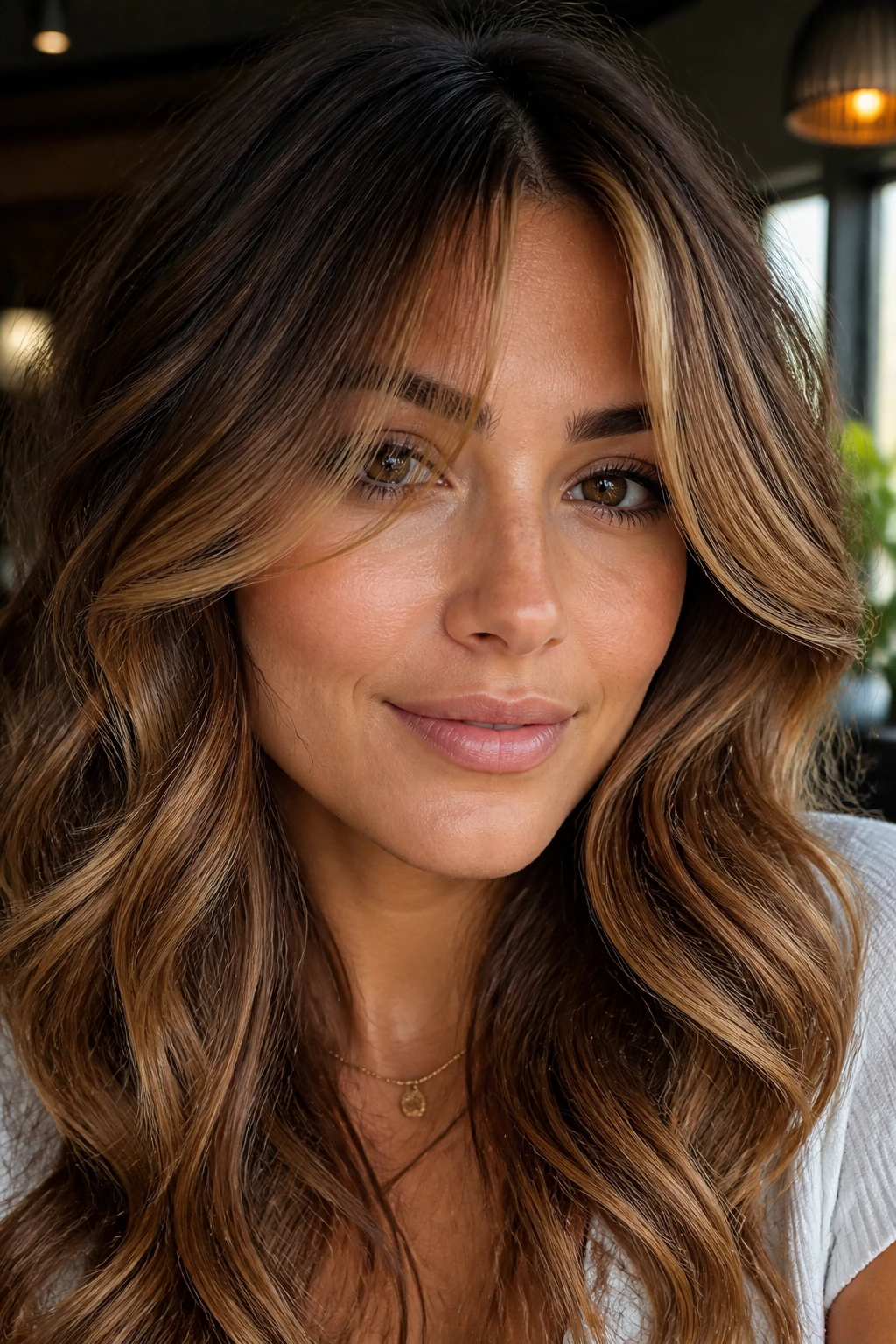
Will honey blonde highlights work on very dark hair?
Yes, but the shade usually needs to stay in the caramel-to-gold range unless you’re ready for more than one lightening session. On very dark hair, pushing too pale too fast can create orange in the middle stage, and that’s where the trouble starts.
Do curtain bangs need to be highlighted separately?
Usually, yes. The bangs sit right on the face, so they need their own placement plan. A few soft pieces at the bend or temple usually look better than flooding the entire fringe.
Is balayage or foil better for this look?
Balayage gives you softer, lived-in ribbons. Foils give you brighter lift and more contrast. If you want subtle grow-out, choose balayage. If you want the front to pop hard, foils win.
How do I keep honey from turning brassy?
Start with the right toner, then use color-safe shampoo and avoid overdoing purple shampoo. Brass often shows up when warm blonde is faded, not because the shade itself was wrong. Gloss refreshes help more than people think.
Can this work on curly hair?
Yes, but the placement has to follow the curl pattern. Honey pieces on curly hair should be painted in longer, thoughtful sections so the color doesn’t break up into spots when the curl shrinks.
What if I want something subtle?
Go for babylights, a soft root smudge, or hidden underlayers. You’ll still get the curtain-bang effect, but the color won’t announce itself every time you walk into a room.
Can I do honey blonde highlights at home?
You can try, but dark hair is hard to lift evenly, and the hairline around curtain bangs is where mistakes show first. If your base is very dark or previously colored, a salon is the safer bet.
How often will I need a refresh?
Glosses can run every 4 to 8 weeks if the tone needs help. Larger highlight touch-ups usually happen every 8 to 12 weeks, depending on how bright the front pieces are and how fast your hair grows.
A Softer Brightness for the Front of the Hair
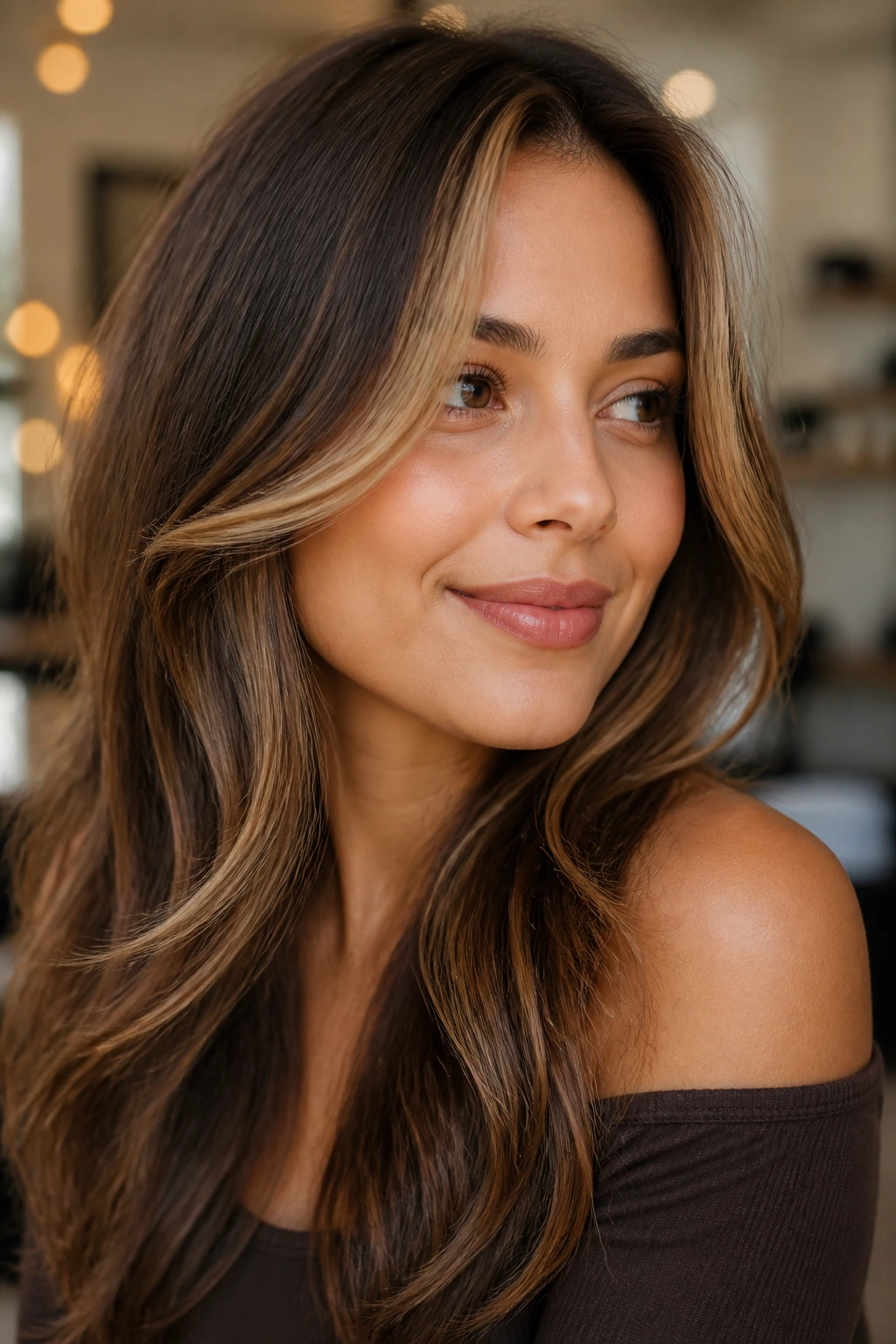
The best honey blonde highlights for dark hair with curtain bangs don’t fight the base color. They work with it. That’s the whole reason these looks hold up: the dark depth stays useful, the warm blonde pieces add light where the haircut needs it, and the fringe gets to do the face-framing job it was designed for in the first place.
The more I look at these styles, the more I like the ones that understand restraint. A little brightness at the front can do more than an all-over lightening job if the placement is right. Curtain bangs already create motion. Honey just gives that motion something to catch.
Pick the tone that matches your base, choose the placement that suits your texture, and let the bangs do the rest. The right version will look good when you first leave the chair, and even better when it settles into real life a week later.