



Caramel highlights on short hair have a sneaky effect: they make a cut look more expensive, more deliberate, and a lot fuller without asking the hair to do much extra work. A blunt bob with flat color can read a little stern. Add warm caramel pieces near the jaw, temple, or crown, and the whole shape wakes up.
That’s the part people miss. The color isn’t just “lighter.” It changes how your eye reads the haircut. A pixie suddenly has movement on top. A chin-length bob stops looking like a block and starts looking carved. Even a quick air-dry can look thought through when the lighter ribbons are placed where the hair bends, not scattered everywhere like confetti.
Short hair also gives you an advantage that longer cuts don’t: every highlight placement matters more, so you can get a lot of mileage from a few well-placed tones. A warm caramel bob can be soft and polished one day, messy and piecey the next, and still hold its shape. The styles below cover sleek, curly, shaggy, polished, and slightly undone versions, because short hair shouldn’t be trapped in one mood.
Why These 25 Short-Hair Looks Work So Well
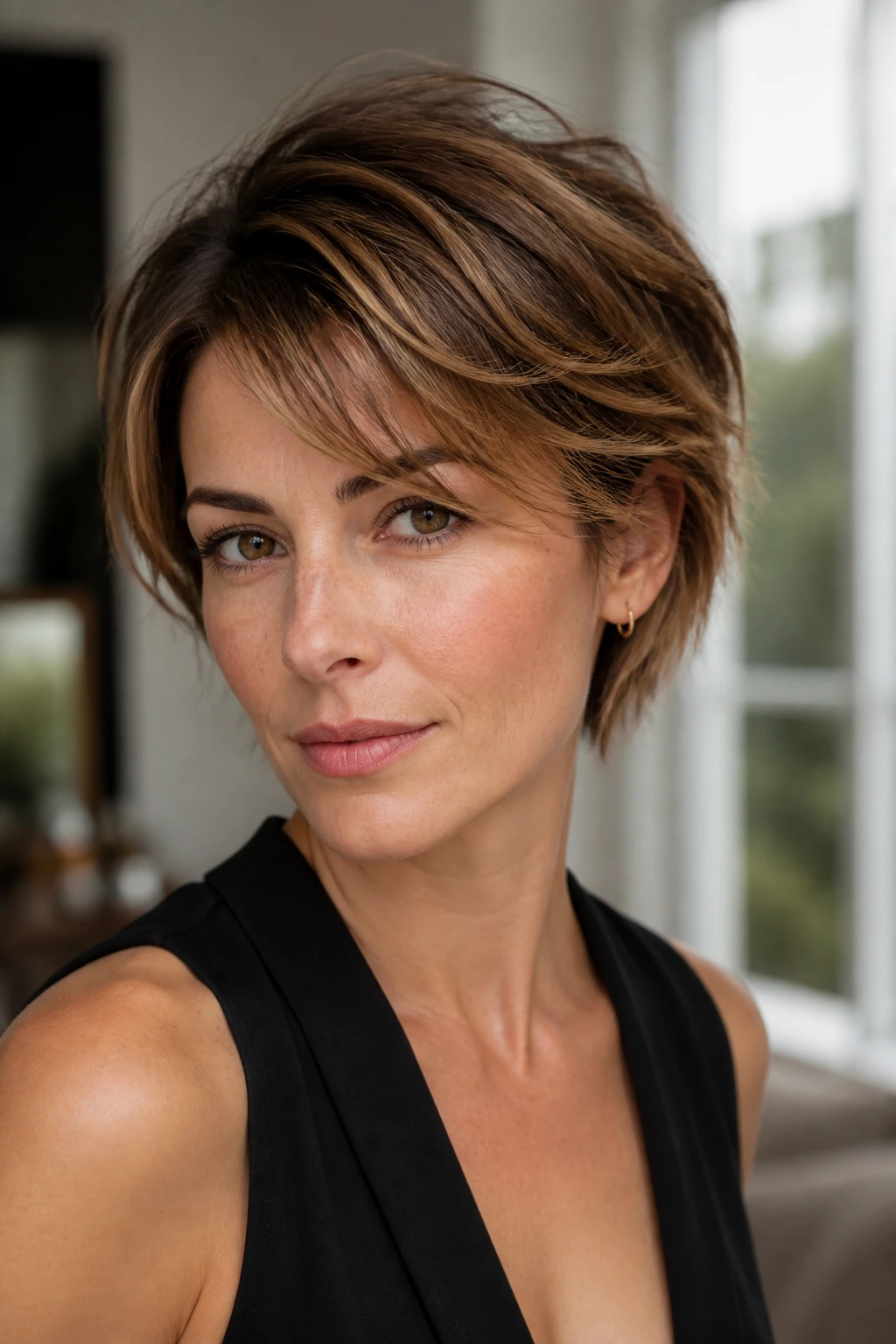
- The color follows the cut: Caramel highlights are easiest to notice on edges, bends, and ends, which is exactly where short hair does its best work.
- The warmth softens sharp lines: A blunt bob or pixie can feel severe in one flat shade; caramel breaks that up without washing the shape out.
- Grow-out looks kinder: A soft warm root melt usually grows out better than icy blonde on short hair, where regrowth shows fast.
- Texture shows up faster: Wavy, curly, or piecey short hair looks more intentional when light catches the top layers and face frame.
- Styling time stays sane: You do not need a full salon blowout every morning. A round brush, a curling wand, or even a rough dry can do enough.
- The same cut can read differently: Slick it down for polish, toss it up for texture, or tuck one side and let the highlights do the talking.
1. Soft Side-Part Bob with Caramel Ribbons
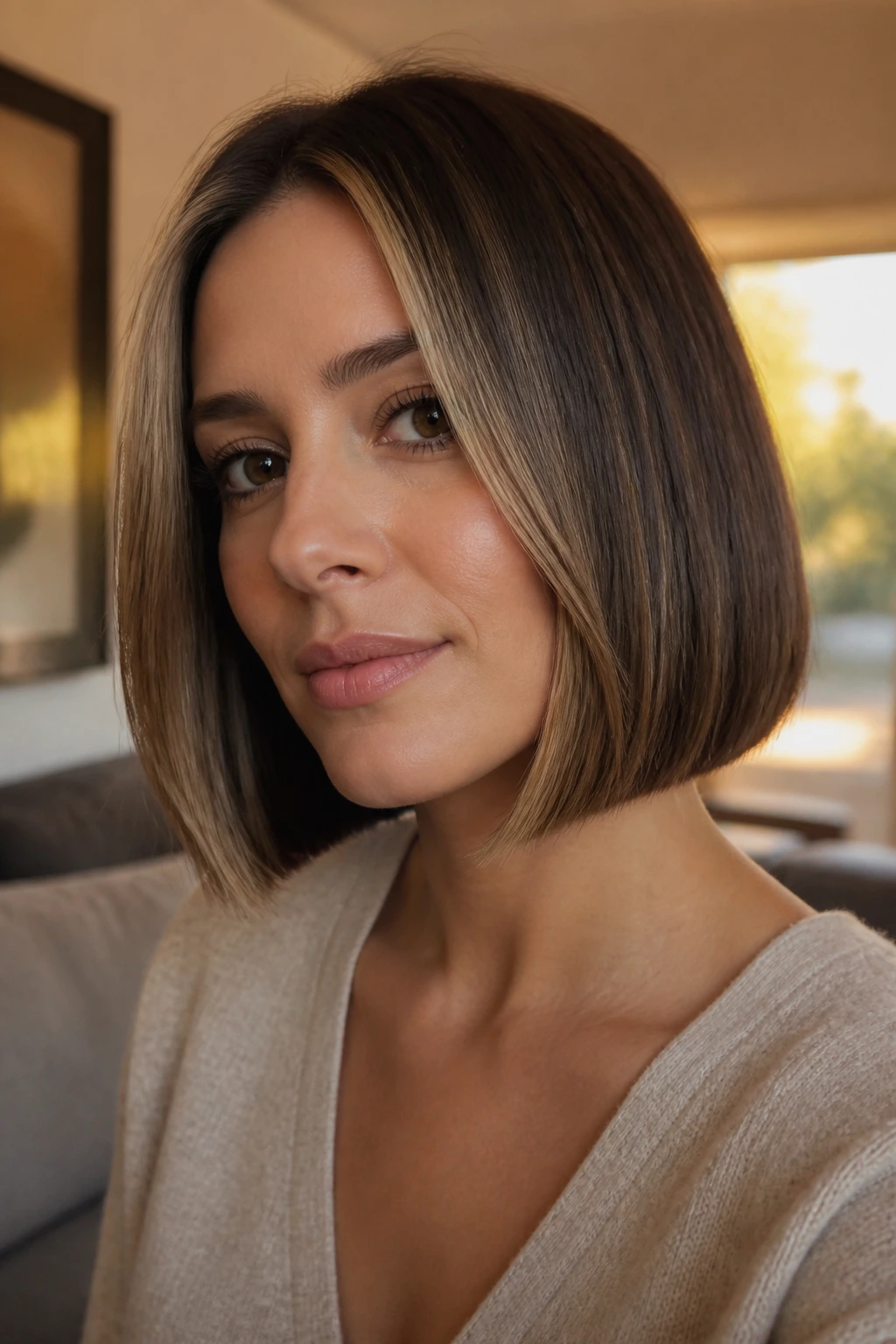
A side-part bob is one of those cuts that looks modest in the chair and expensive once it’s styled. The caramel highlights matter because they land right where the hair turns: along the part, over the cheekbone, and around the ends that graze the jaw.
Ask for lighter ribbons that stay a shade deeper underneath. That contrast keeps the bob from turning into one pale sheet. A 1.5-inch round brush and a quick bend at the bottom are enough; you want the ends to curve under, not curl into a prom ringlet.
- Best for fine to medium hair.
- Brightest pieces should live at the front and outer layer.
- A pea-size smoothing cream keeps the side part sleek.
2. Tousled French Bob with Whispery Ends
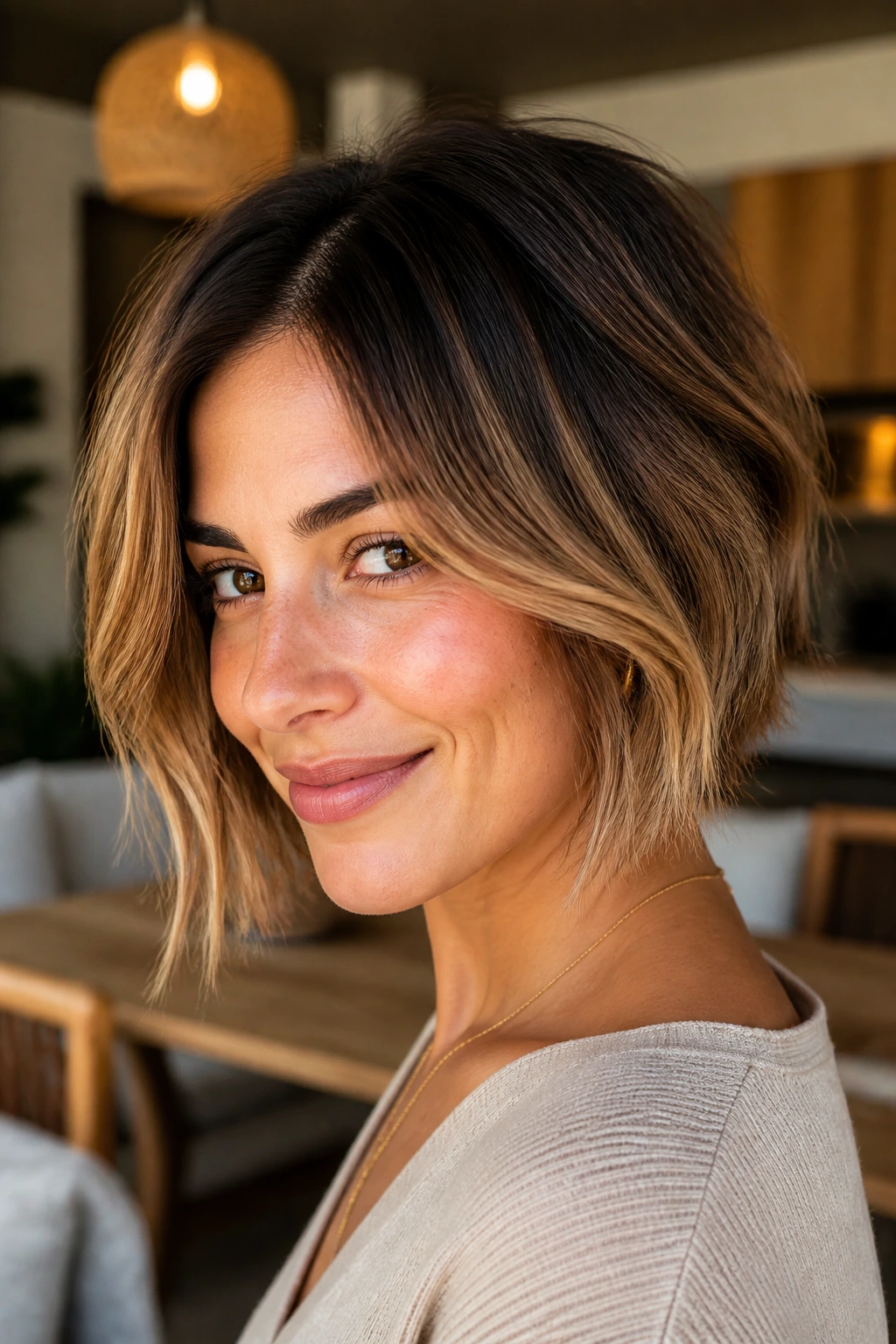
Why does this cut feel so easy to wear? Because the shape does half the work before you touch it with a styling tool. The French bob, especially at chin length, looks better when it’s a little imperfect, and caramel highlights make that looseness look on purpose.
The color should be broken up, not striped. Think soft honey through the top layer, then a few warmer pieces near the face so the fringe or shorter front pieces don’t disappear. Air-dry with a mousse or diffuse for five minutes if your hair pushes curly, and stop before the finish gets too polished. This one likes a bit of grit.
3. Piecey Pixie with Highlighted Crown
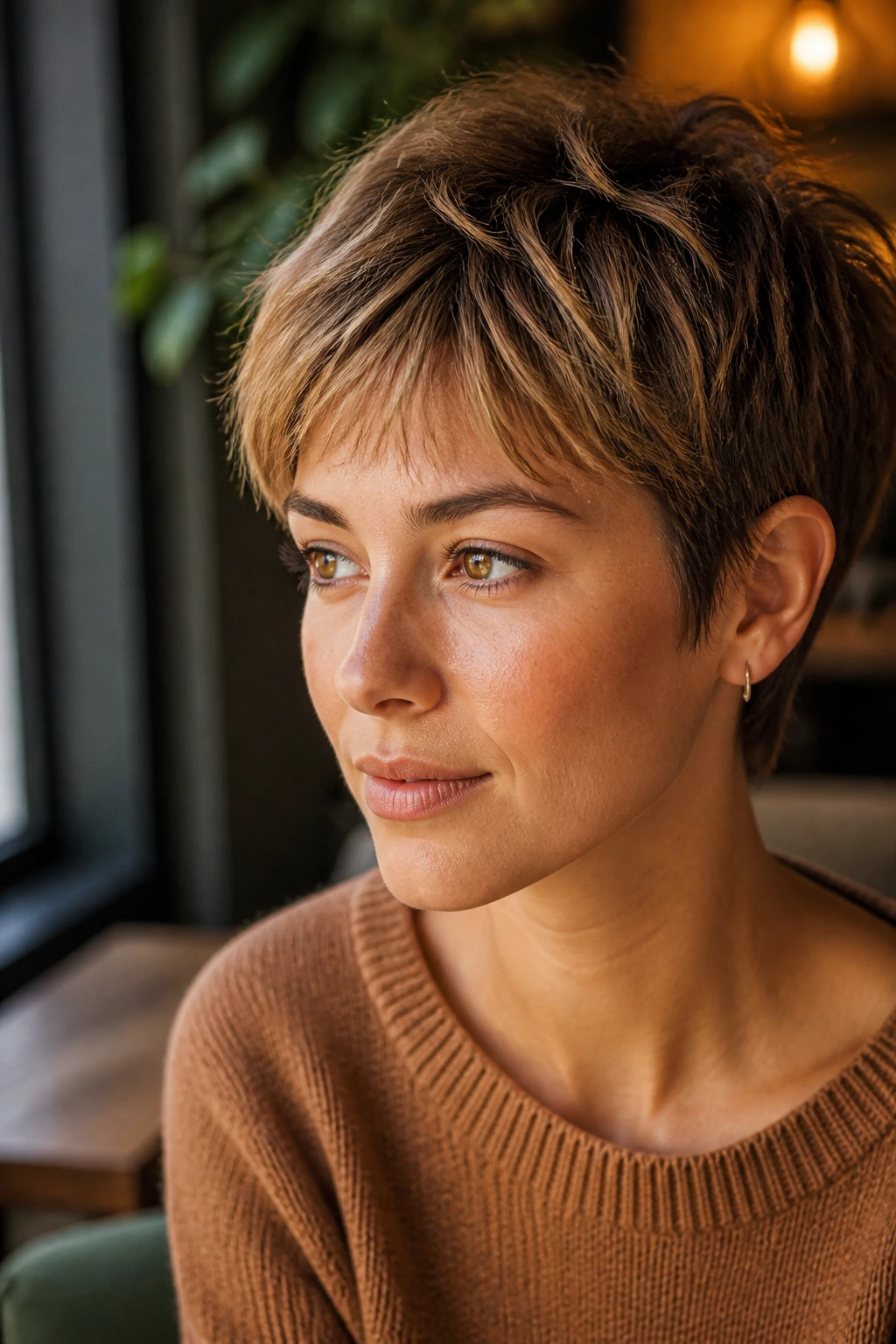
The pixie is where caramel highlights stop being “pretty” and start being useful. A short crop can flatten fast, but a few lighter strokes on the crown and fringe create lift without needing a ton of product.
Where the light belongs
Keep the sides deeper and let the caramel sit on the longer top layers. That’s the trick. If the brightest pieces drop into the nape and underneath, the cut can look busy instead of sharp.
A matte paste or styling cream is enough to separate the pieces. You’re aiming for movement, not spikes. On a good pixie, the highlights should look like they were placed by the haircut itself.
4. Blunt Chin-Length Bob with a Soft Money Piece
Picture a clean bob, then imagine a couple of brighter caramel pieces framing the front just enough to soften the line. That’s the whole story here. The blunt edge keeps the shape crisp; the face-framing color keeps it from feeling too rigid.
This works especially well if your hair is straight or naturally falls in a smooth bend. The money piece should not be icy or stripey. A toasted caramel or brown-sugar tone looks calmer against the perimeter and doesn’t fight the blunt cut.
A flat iron pass at medium heat, 350°F to 375°F, is enough if your hair is already smooth. Finish with a tiny bit of shine serum at the ends only. Too much near the roots, and the bob goes limp fast.
5. Textured Crop with Feathered Fringe
Some cuts need color to avoid looking overdone. The textured crop is one of them. Feathered fringe, short layers, and a little roughness around the crown all get a lift from caramel pieces that sit just on the surface of the cut.
The nicest version of this style is not neat. It’s soft at the hairline, light around the fringe, and a little choppy where the layers break apart. A dry texture spray or a light wax gives the ends separation. If your hair has a stubborn cowlick, this is one of the few short cuts where that trait can work for you instead of against you.
6. Curved Inverted Bob with Face-Framing Color
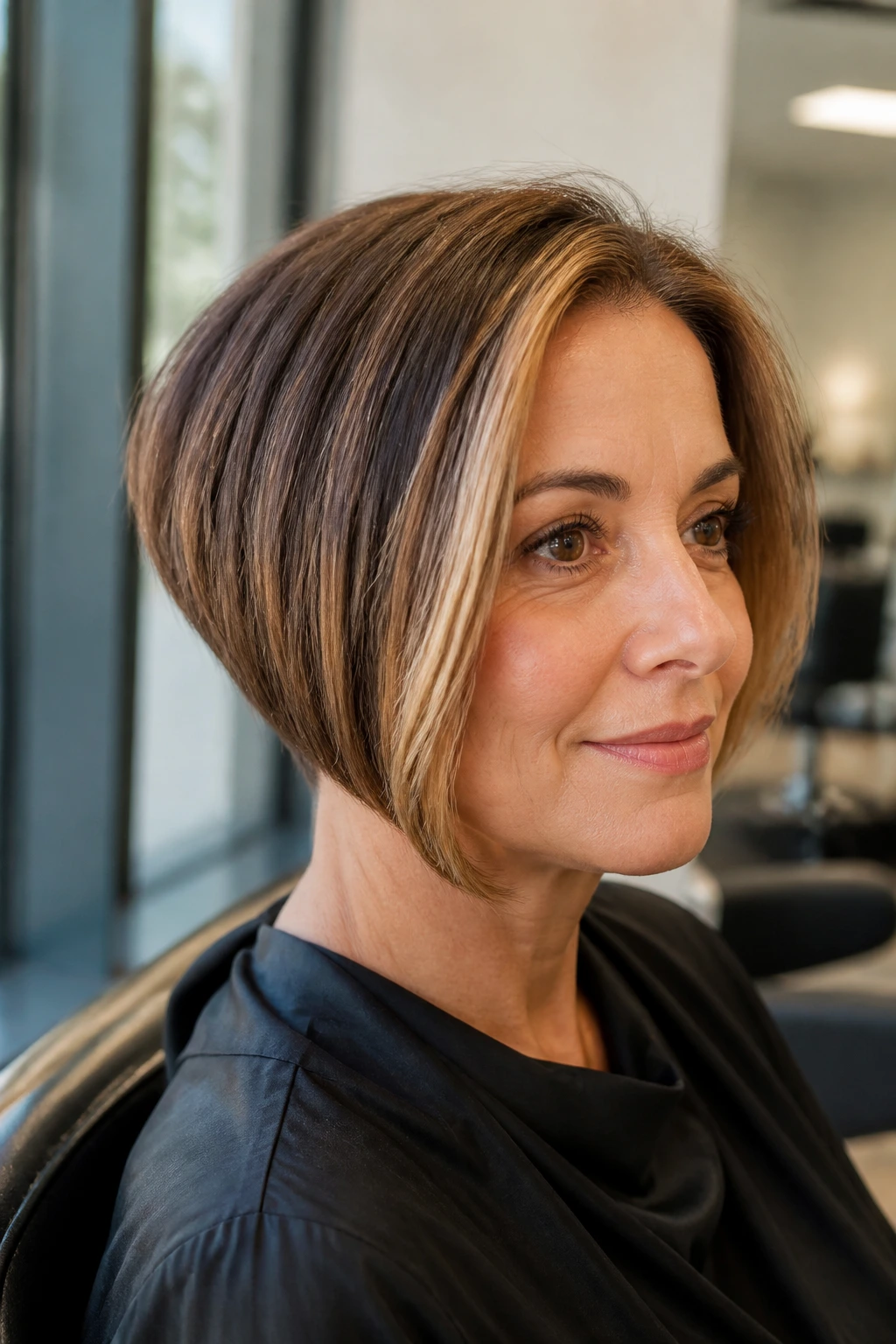
An inverted bob already has built-in shape. The back sits a touch shorter, the front gets longer, and the whole cut curves toward the face. Caramel highlights should follow that curve. If they don’t, you lose the structure.
This look suits thicker hair especially well because the angled perimeter removes bulk while the warm pieces stop the cut from feeling heavy. A round brush can help flip the front forward just a bit, and the lighter color at the edges makes the angle easier to see. It’s one of those styles that looks expensive with a clean neckline and not much else.
7. Wavy Lob That Skims the Jaw
What makes a wavy lob read fresh instead of basic? Placement. The caramel highlights should sit on the crests of the wave, not buried at the bottom where nobody sees them. That’s the difference between color that moves and color that vanishes.
Use a 1-inch curling wand and leave the last inch of the ends straight if you want a more modern shape. Alternate the curl direction and brush it out once it cools. The result should feel soft, not curled. This cut looks good when a few face-framing pieces are a little brighter, especially if your hair naturally swings toward the shoulders.
8. Shaggy Bob with Curtain Bangs
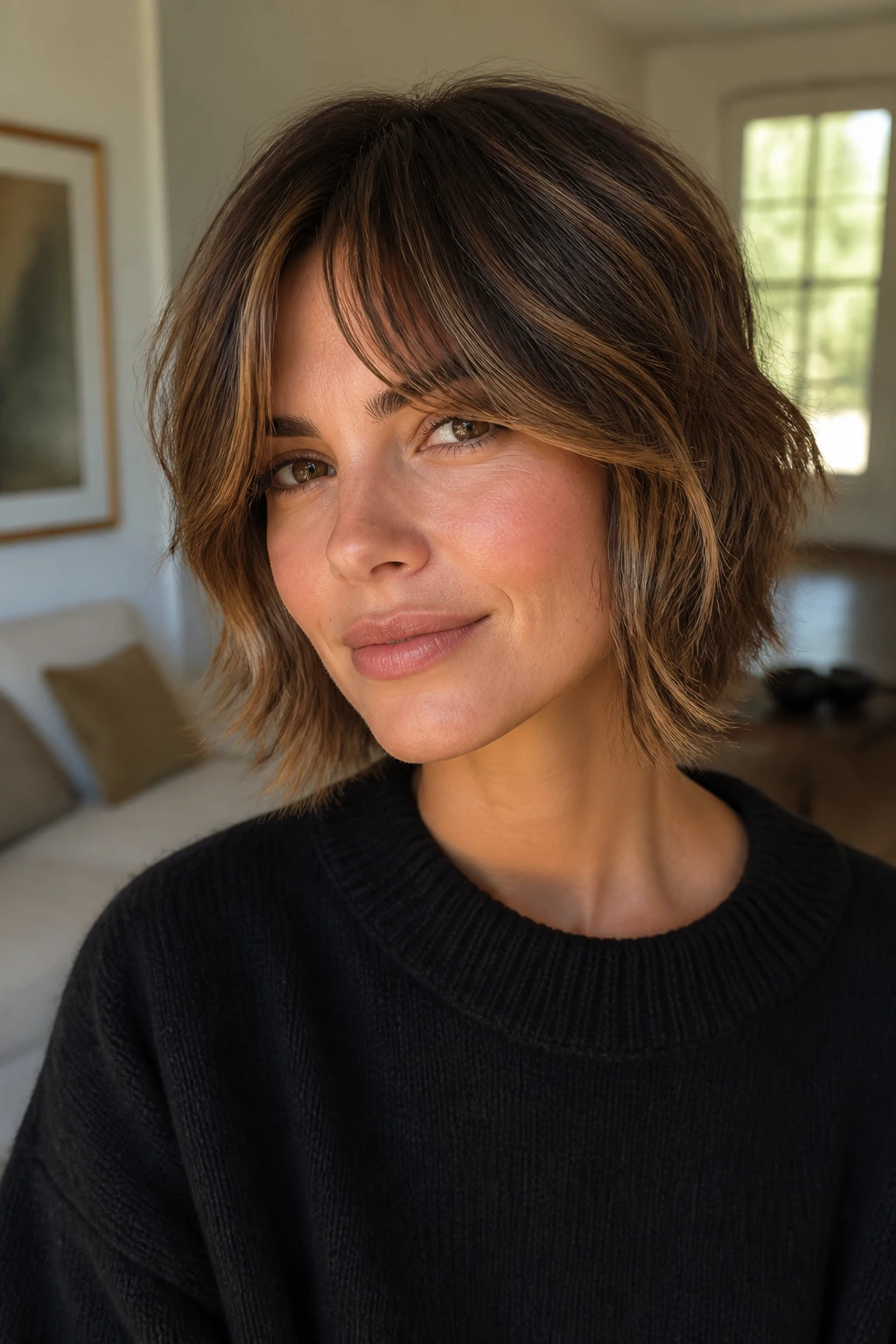
This one has an easy swagger to it. The shaggy bob already comes with layers that fall in broken pieces, so caramel highlights can sit right inside the bangs, through the cheekbone pieces, and around the crown without looking forced.
Curtain bangs are the part I like most here. They create a little curtain of brightness around the eyes, which is especially useful if your base color is dark brown and the rest of the haircut sits in soft waves. Scrunch in a lightweight mousse and let some of the texture stay imperfect. If everything is polished, the shag loses its point.
9. Sleek Tucked-Behind-Ear Bob
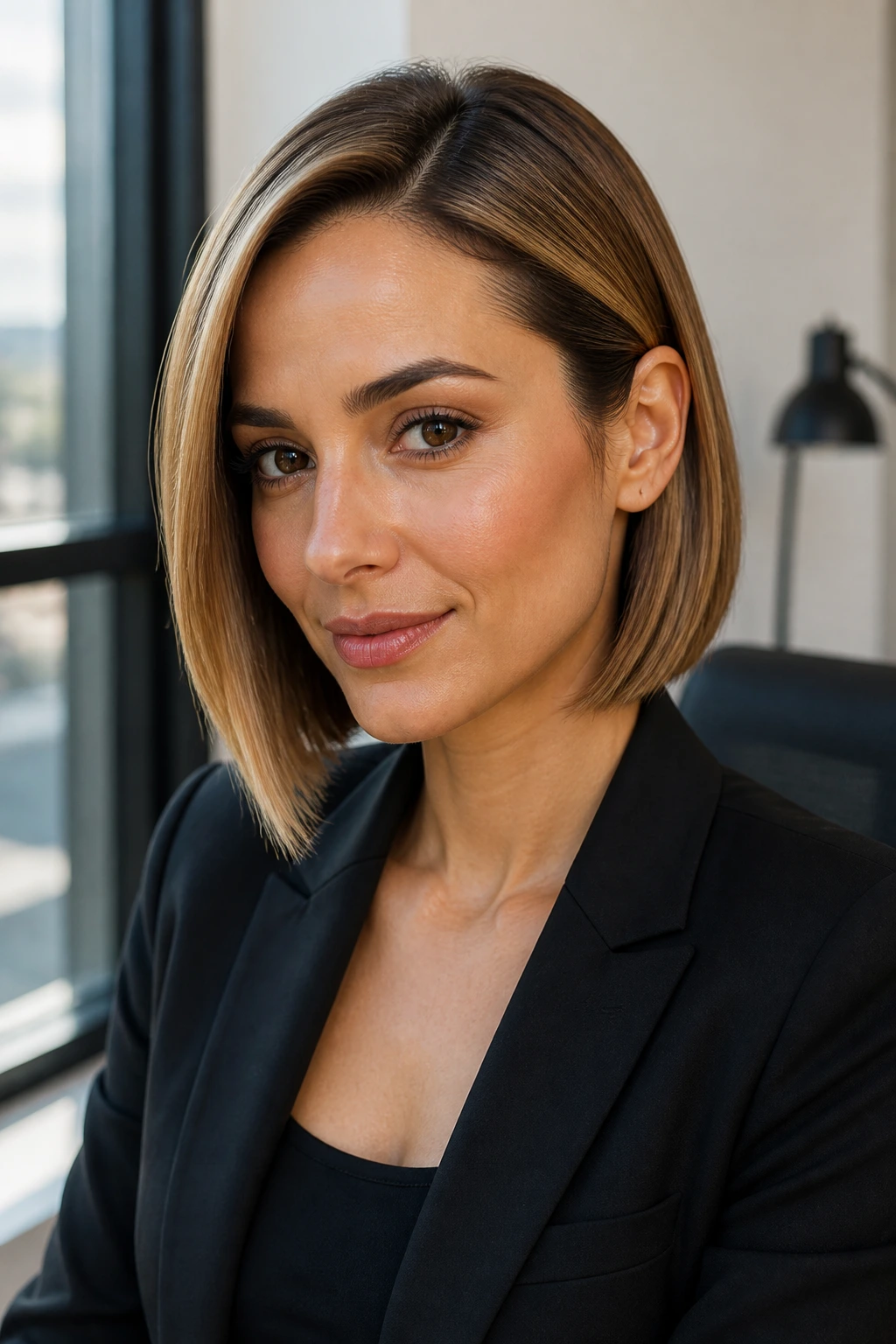
A tucked bob can look almost severe in one flat shade. Caramel changes that. The trick is to keep the finish glossy and the color placement clean: brighter pieces at the front, quieter tones through the back, and enough contrast to make the ear tuck feel intentional.
This is the bob for someone who likes a neat outline but doesn’t want it to feel harsh. A middle part or a slight off-center part both work. Tuck one side behind the ear, let the highlighted front fall forward on the other side, and the asymmetry does the rest. The style feels sharp with a blazer, but it also works with a plain T-shirt and small hoops.
10. Defined Curly Bob with Caramel Halo
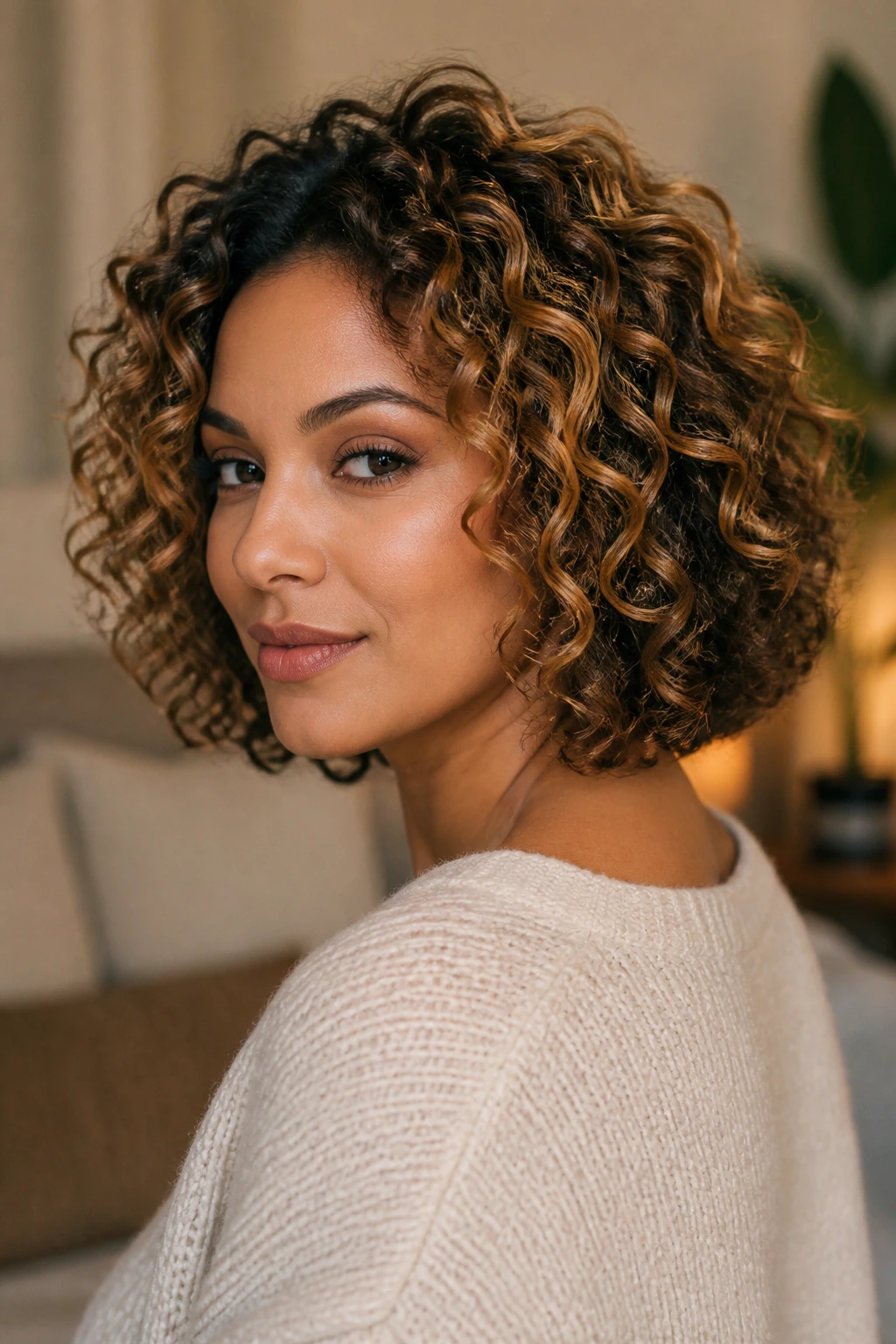
Curly hair and caramel highlights are a strong pair because curls need dimension. One flat shade can make the curl pattern blur together, while warmer pieces trace the outer bend of each curl and show off the shape.
How to place the brightness
Focus the lighter pieces on the top layer and around the face. That creates a halo effect without bleaching out the whole head. If you place too much brightness underneath, the curls can look frizzy instead of dimensional.
Use a curl cream or gel that gives hold without crunch. Diffuse on low heat, then stop touching it. The highlights will show up best when the curls keep their shape and don’t get puffed out by too much handling.
11. Long-Top Pixie with Lifted Crown
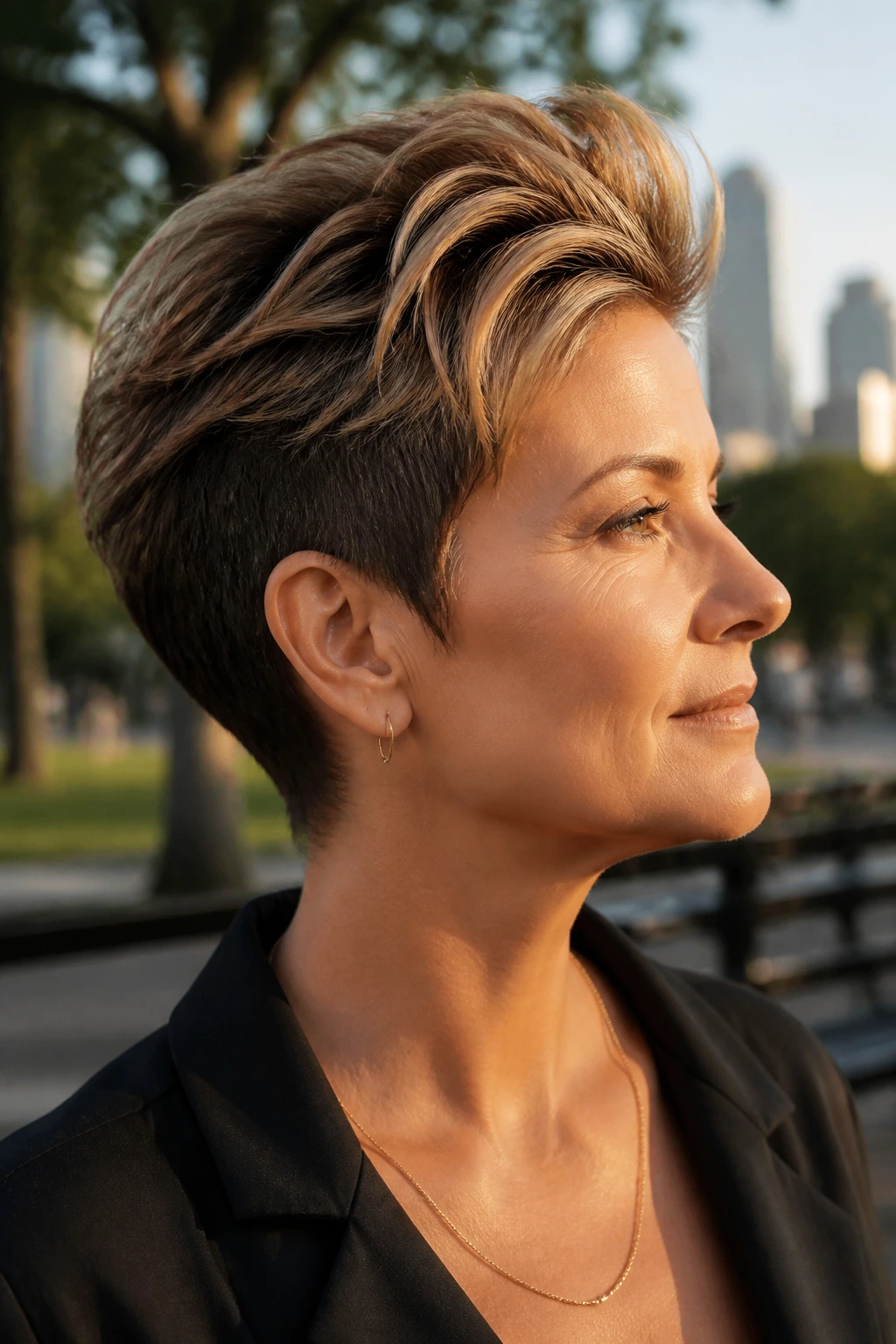
A long-top pixie lives or dies by the crown. If that top section collapses, the whole cut goes flat. Caramel highlights help because they catch on the lifted pieces and make the top read fuller than it really is.
The best version keeps the sides dark enough to ground the cut. Then the top can be brushed forward, back, or to the side depending on the day. If your hair is fine, ask for babylight-style placement on the top ridge rather than chunky streaks. You’ll get more lift and less stripe.
12. Asymmetrical Bob with a Deep Side Part
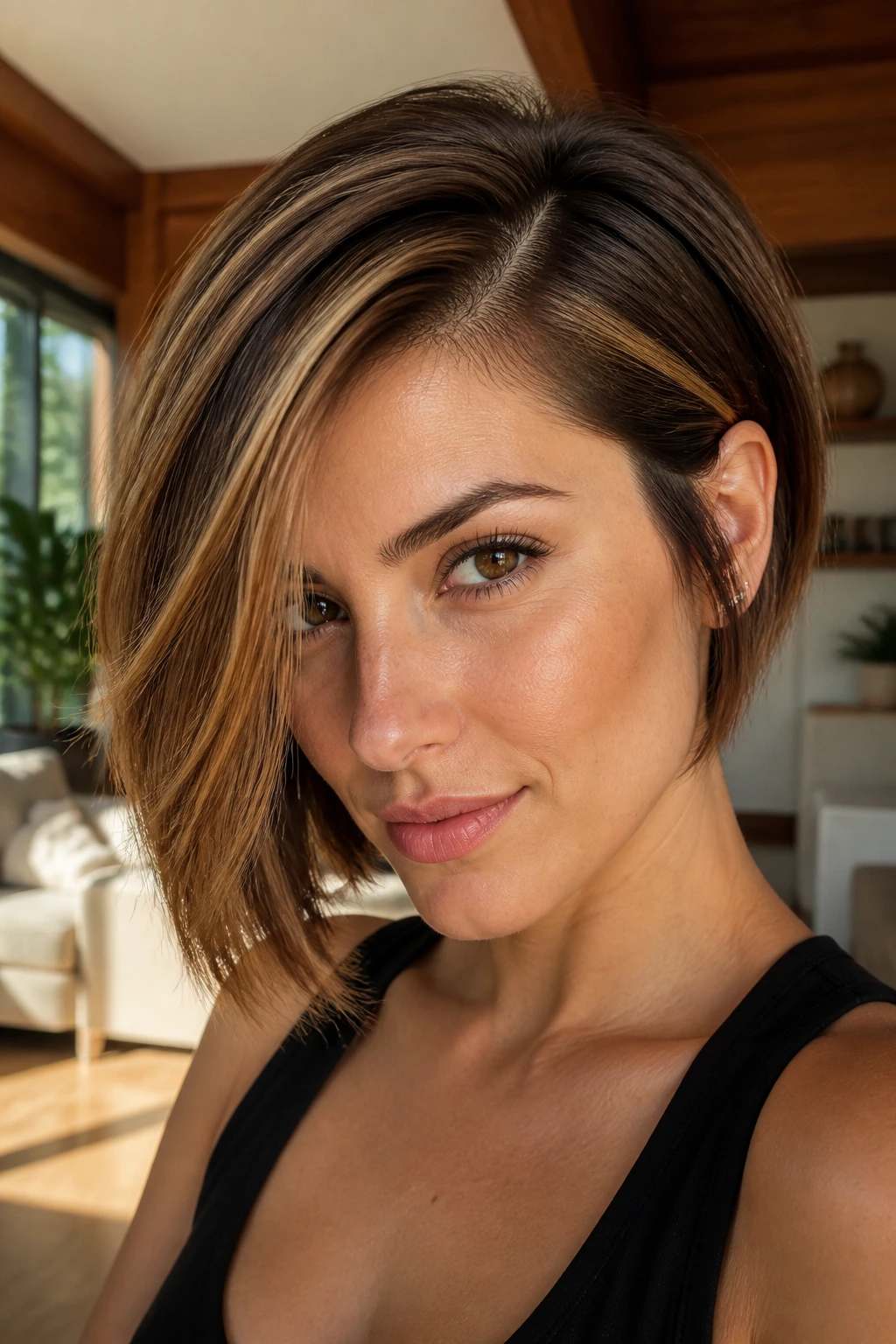
A deep side part gives an asymmetrical bob a little attitude, but the caramel color is what keeps it from feeling too rigid. The longer side gets the brighter sweep, the shorter side stays a touch deeper, and the result looks sharp without going flat.
This is one of the best short cuts for people who like a little drama but not a lot of length. The diagonal line across the face does the heavy lifting, especially if the lighter pieces hug the cheekbone and jaw. Straighten the ends or bend them under slightly; either way, the contrast should stay visible from root to tip.
13. Flip-Under Bob with Polished Ends
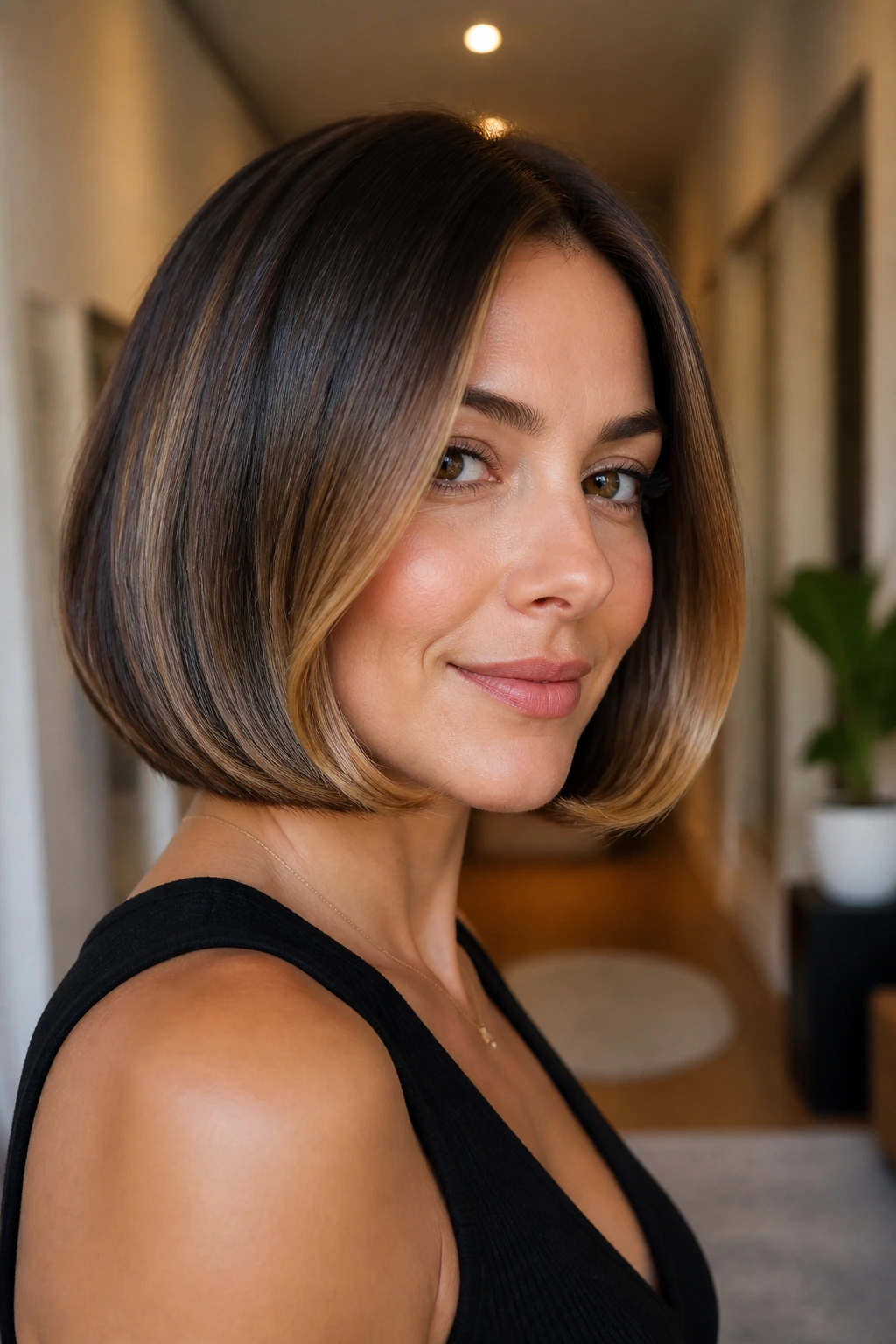
A flip-under bob is one of my favorite places to use caramel because the style gives the color a clear edge. When the ends turn under, the lighter tones sit right on the curve, and the whole cut reads clean and finished.
It’s a good choice if you like the look of a smooth blowout but don’t want a lot of layering. A round brush or a flat iron with rounded plates is enough to create the turn. Keep the top sleek, keep the ends shiny, and let the highlights sit a little brighter around the perimeter so the shape doesn’t disappear into the hair.
14. Air-Dried Natural Texture with Soft Highlights
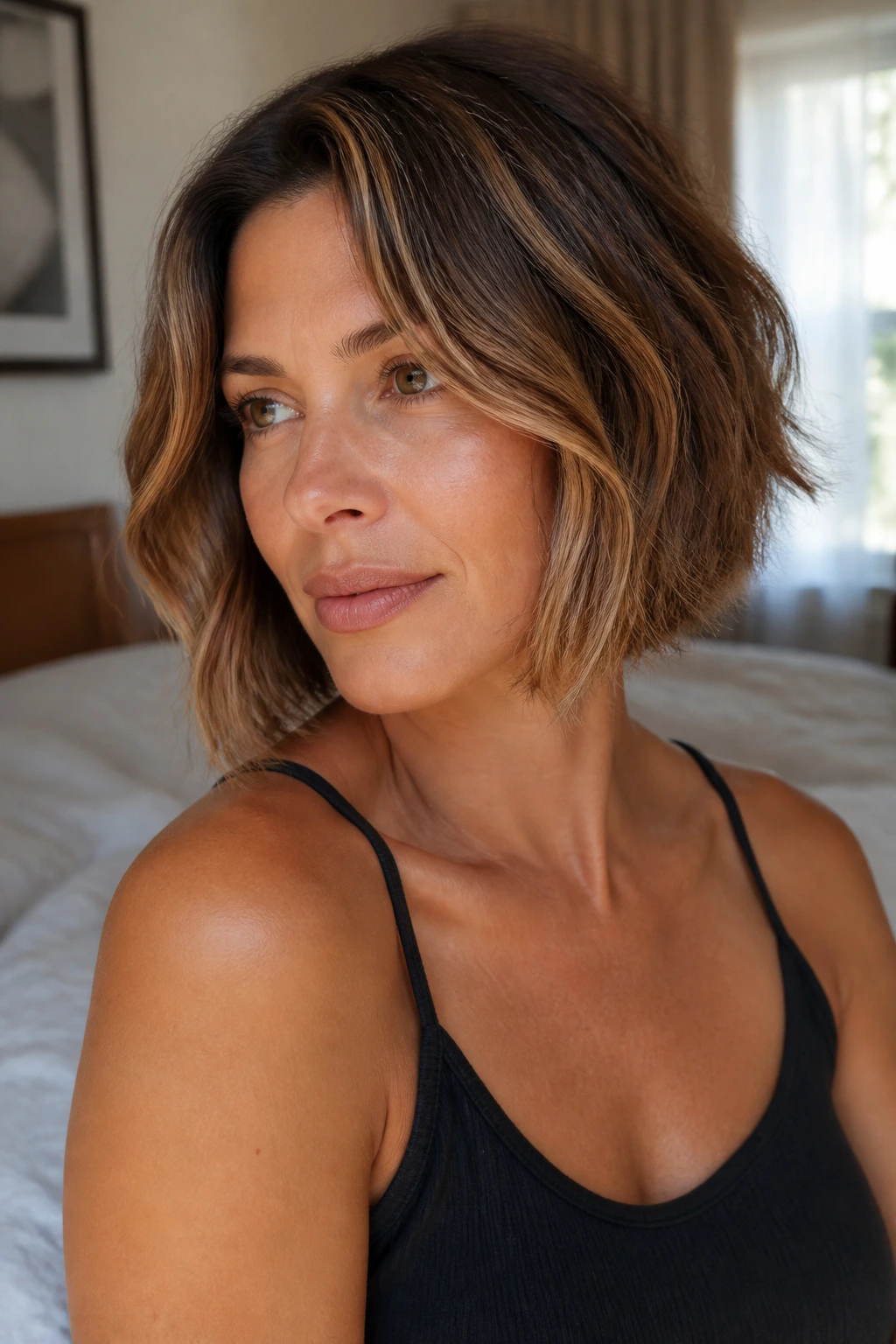
Some mornings, the best style is the one you don’t fight. If your hair already has a little wave or bend, caramel highlights can make that texture look richer with almost no styling at all.
The key is placement that respects the natural movement of your hair. Put the lighter pieces where the wave bends forward, around the face, and near the outer layer. Use a leave-in conditioner or a light cream, then let it dry without too much touching. If the hair gets overhandled, the cut starts to puff and the color loses its clean lines.
15. Deep Side-Part Pixie Cut
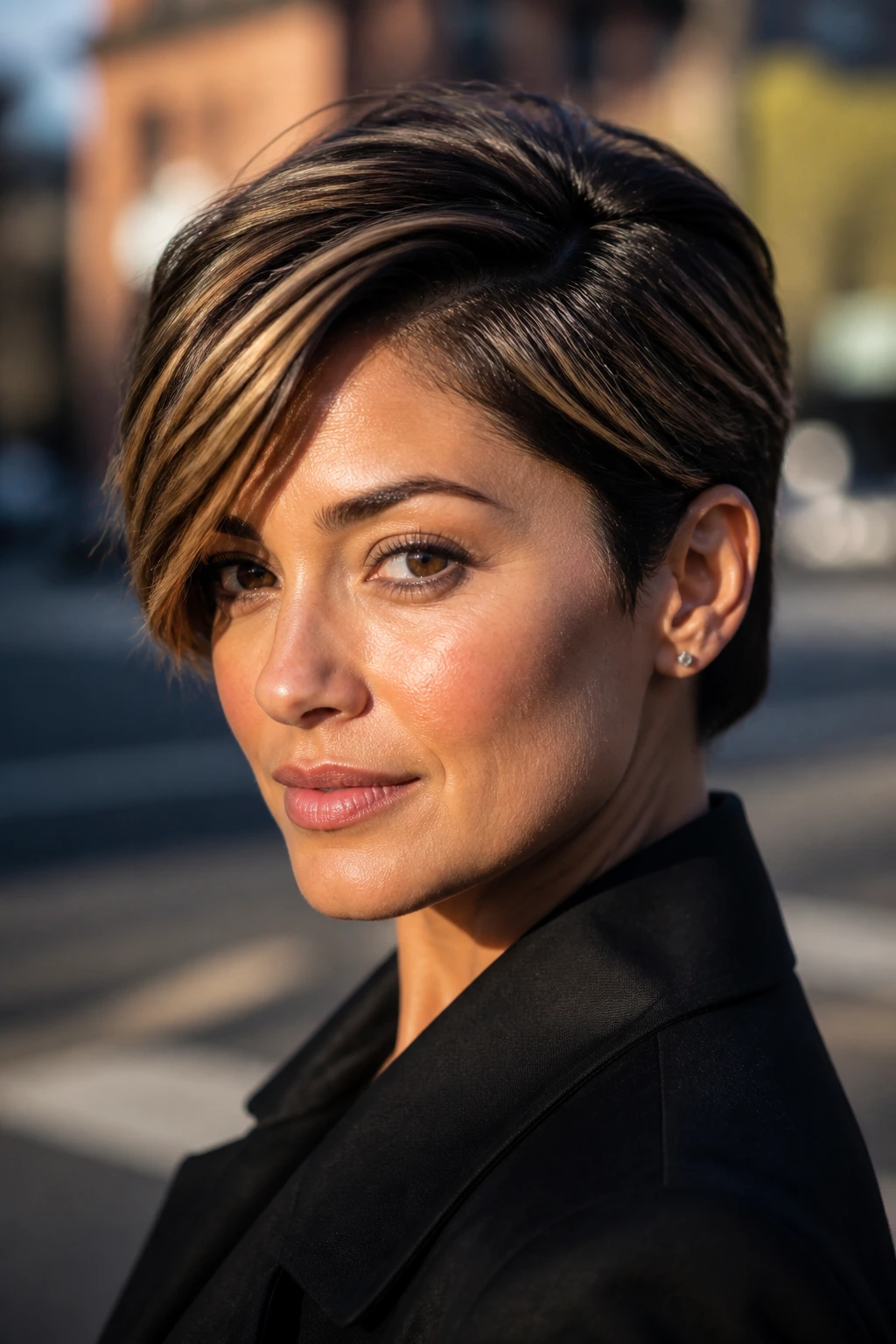
A deep side part on a pixie is pure shape. It gives the top some height, pushes the fringe across the forehead, and makes caramel highlights show up in all the right places—especially at the temple and on the longer side of the top.
This style works because it creates contrast without needing length. Keep the back and sides snug, let the top move, and use a small amount of paste to direct the front. The warm pieces should look like they’re catching light rather than sitting on top of the cut. That’s what keeps the whole thing from feeling helmet-like.
16. Rounded Mushroom Bob
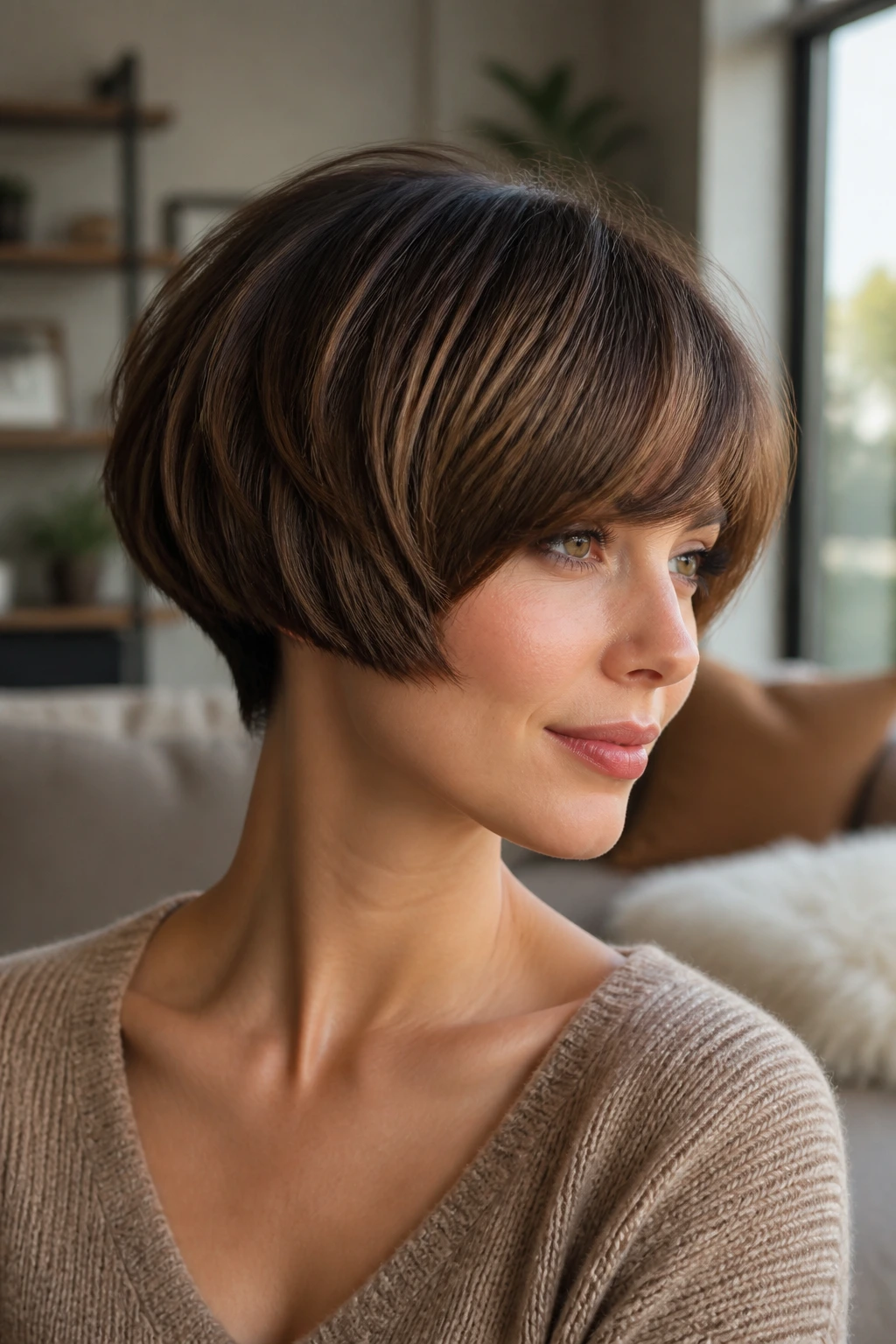
The mushroom bob has come a long way from the bowl-cut jokes people love to make. When the edges are softened and the color is placed well, it can look sleek, modern, and a little graphic in a good way.
Caramel highlights help by breaking up the dome shape. Place them around the perimeter and through the top layers so the cut keeps its roundness without turning heavy. This one is better with a satin finish than a high gloss. Too much shine can make the shape too obvious, and the point is to keep it softly curved, not rigid.
17. Mini Braids with Face-Framing Pieces
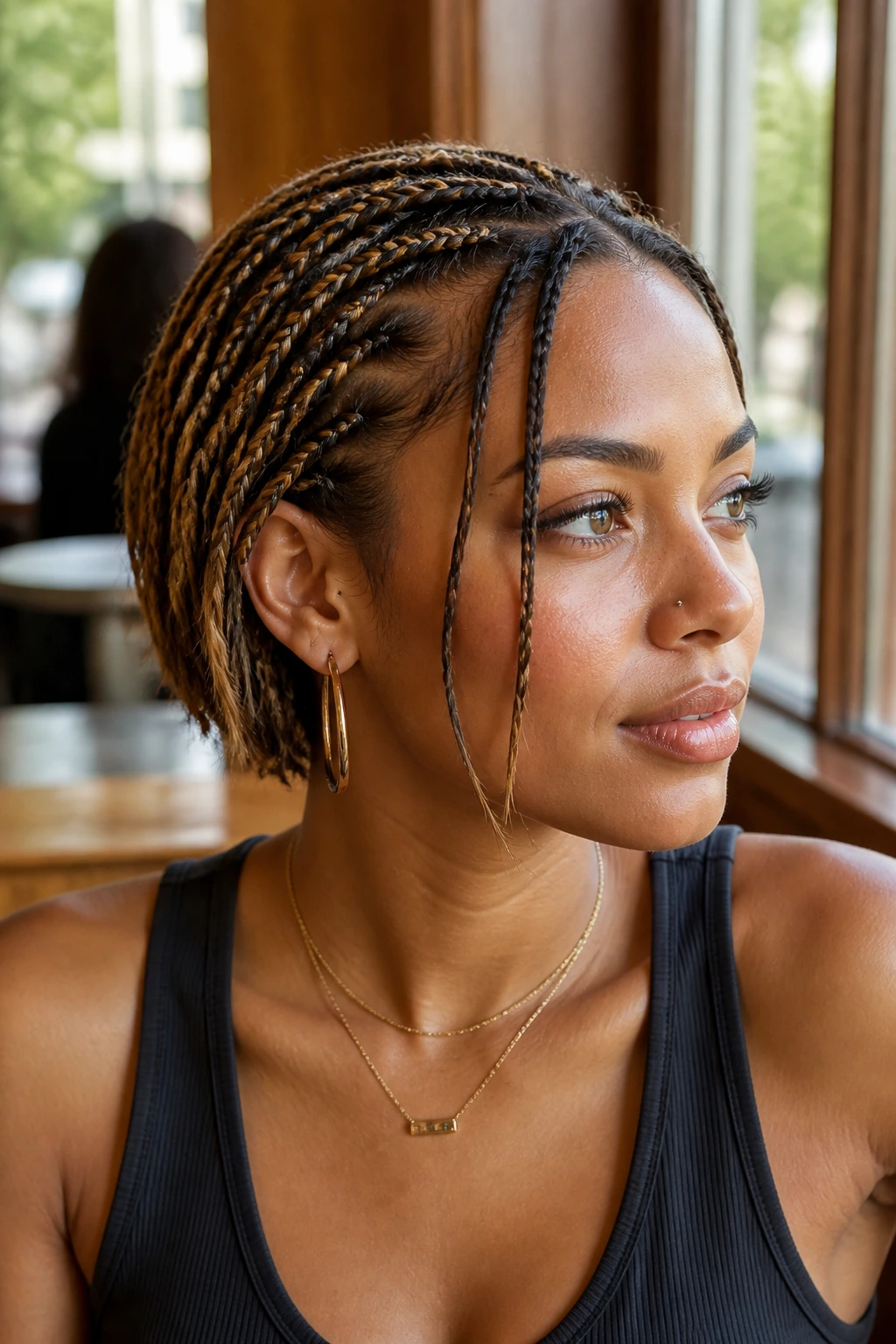
Short hair can absolutely handle tiny braids. In fact, caramel highlights make them easier to see. A couple of face-framing strands left loose, plus one or two narrow braids near the part or temple, can give a bob or lob a bit of edge without needing extra length.
The warm color helps the braid pattern stand out, especially if your base shade is deep brown. Keep the braids loose enough that they don’t pull at the scalp, and leave a few pieces free around the ears. It feels casual, but not sloppy. That’s a hard line to walk, and this style does it well.
18. Half-Up Twist on Short Hair
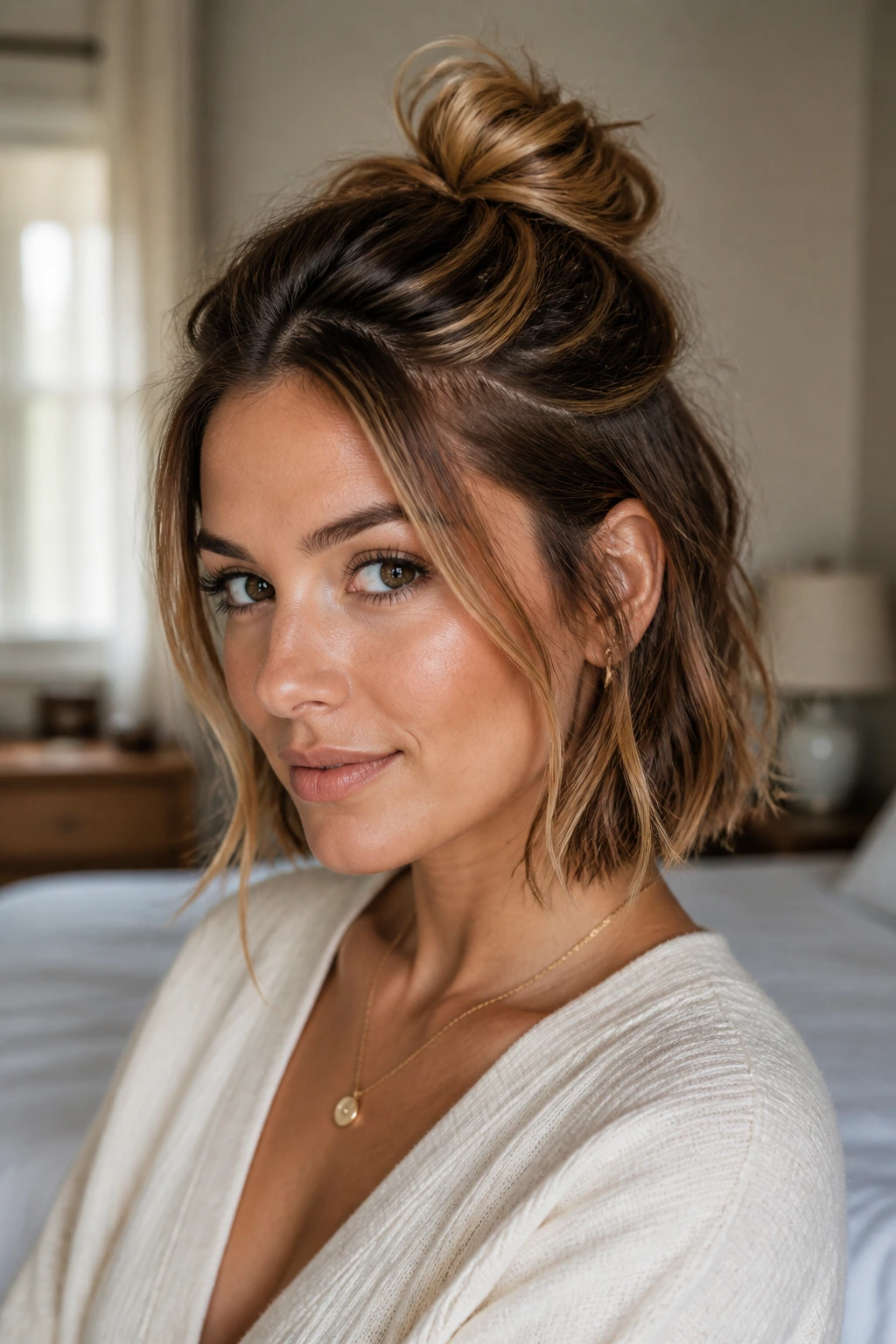
Can short hair do a half-up style without looking tiny? Yes, if the twist sits high enough to show off the crown and the highlights are concentrated near the top section.
The best version is a soft twist or mini top knot, not a tight little bun that screams “I ran out of time.” Pull up the top third of the hair, secure it with pins or a small elastic, and let the caramel pieces around the front fall loose. That lighter frame makes the style feel fuller and keeps the shorter layers from slipping out of the look.
19. Wet-Look Crop
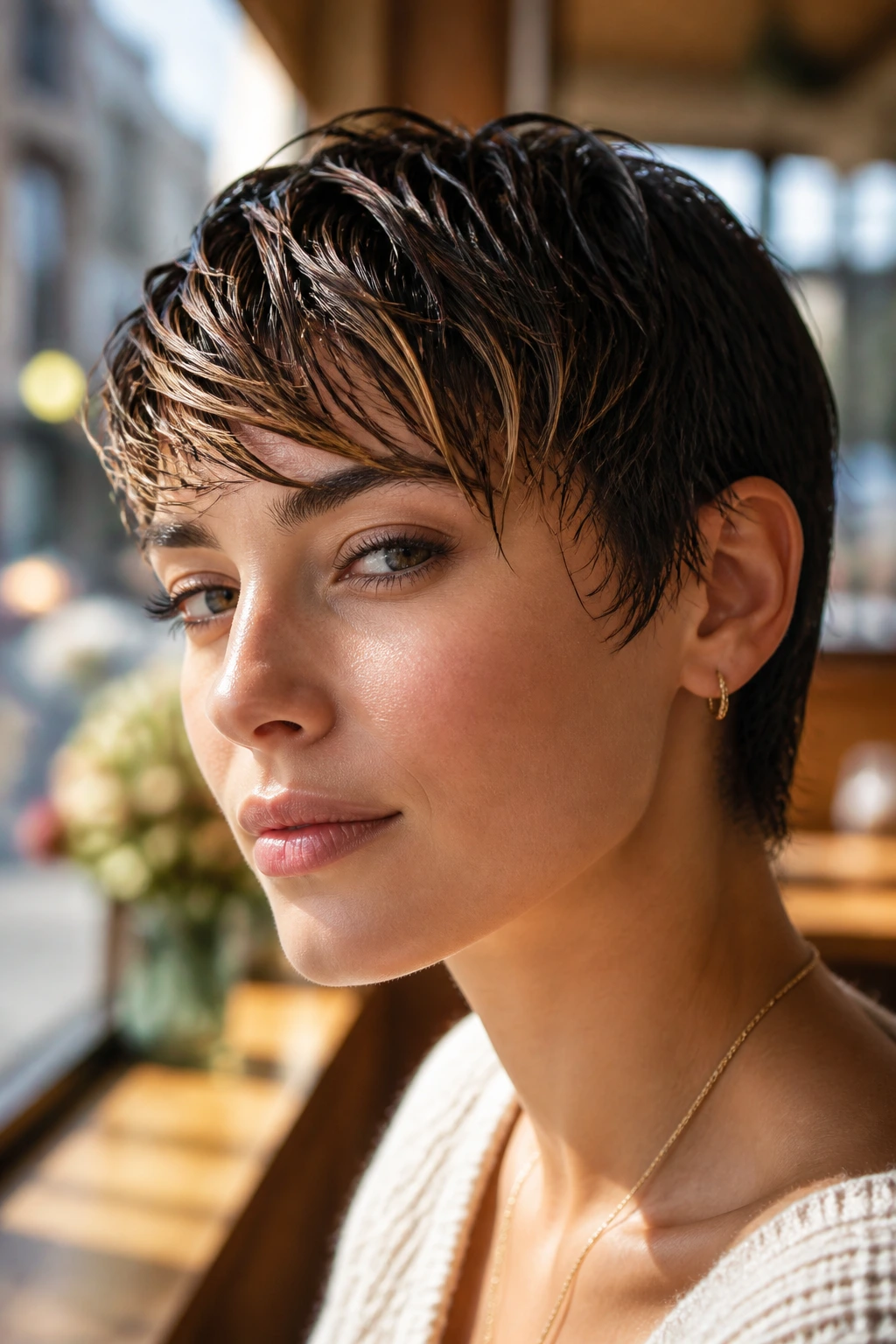
The wet look is a bold move, but caramel highlights make it more wearable. Against the glossy finish, the warm tones look richer and more dimensional, especially on short crops with longer pieces at the front.
Use gel or a strong-hold cream sparingly. You want shine and separation, not a crunchy helmet. Comb the product through, direct the front where you want it, and leave the ends slightly softer than the roots. The color should look lacquered, not drowned. On the right cut, it’s polished in a way that feels almost editorial.
20. Soft Corkscrew Curly Cut
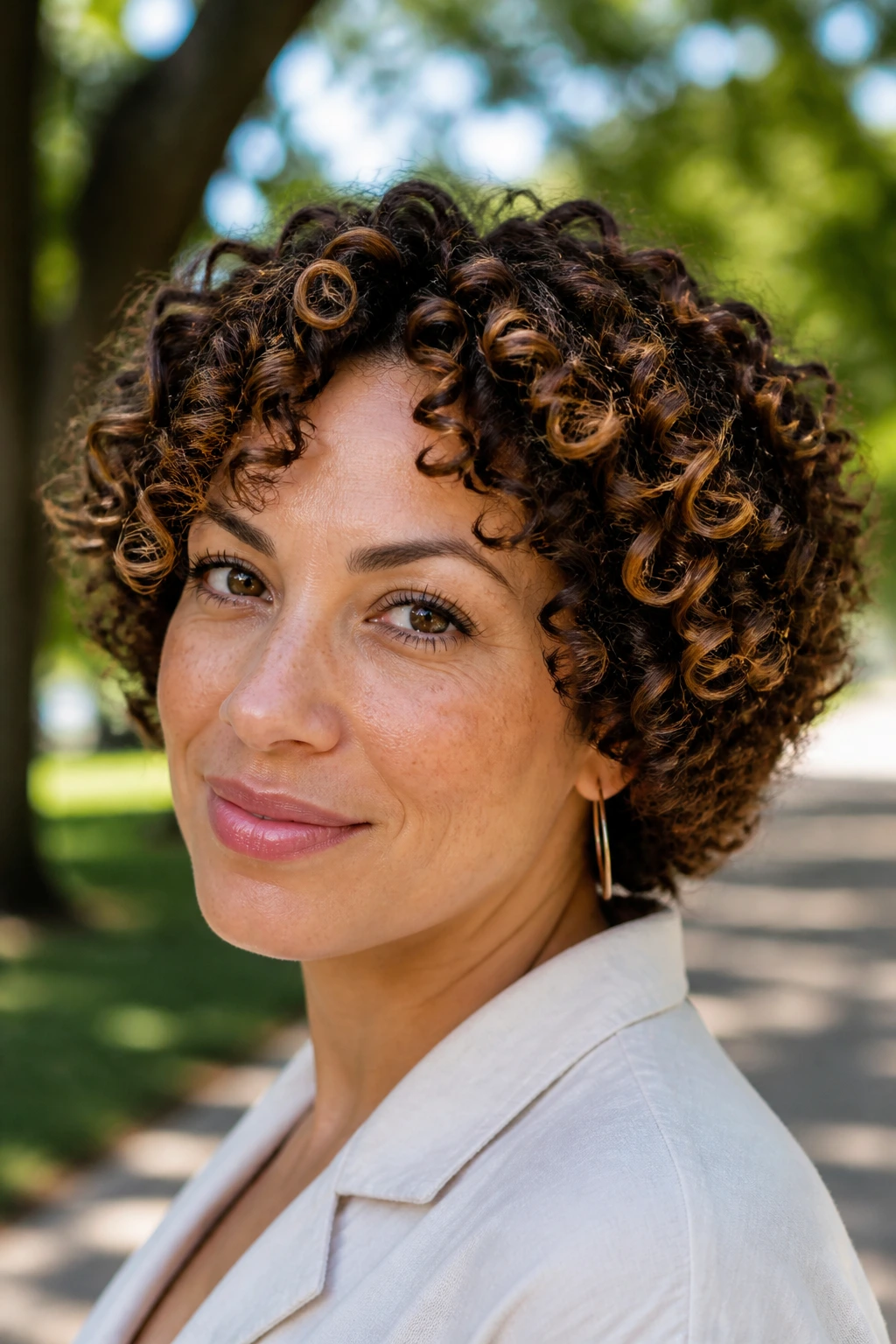
Tighter curls need a slightly different highlight map than waves. If the caramel is too chunky, the curl pattern can look broken. If it’s too fine, you lose the whole point. The sweet spot is a mix of small surface pieces and a few brighter curls around the hairline.
This cut works best when the shape follows the curl, not the other way around. Keep the layers rounded, use a rich curl cream, and diffuse only until the curl pattern sets. The highlights should sit where the curls curve outward and where the light naturally lands near the face. That’s where the dimension shows up first.
21. Choppy Bixie with Caramel Streaks
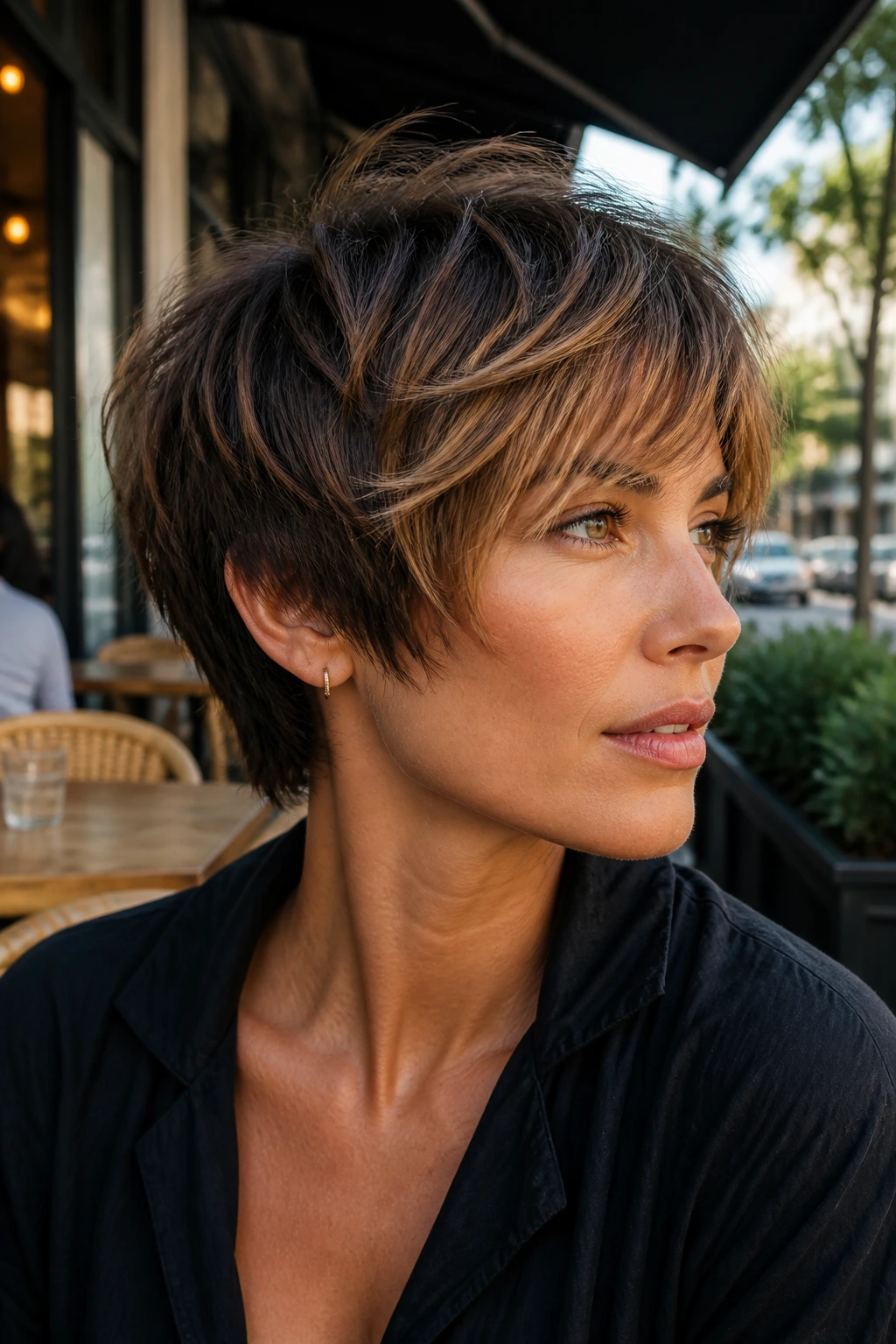
A bixie lives between a bob and a pixie, which means it can go flat or fabulous depending on the cut and finish. Caramel streaks are useful here because they break the shape into pieces and keep the in-between length from feeling awkward.
The placement makes the haircut
Put the lightest ribbons on the top and front pieces, then keep some depth through the underside and nape. That contrast makes the crop look layered instead of unfinished.
Use a little paste at the roots and a touch of texture spray through the ends. A bixie should move when you turn your head. If it sits in one smooth lump, the color won’t save it.
22. Old-Hollywood Waves on a Short Lob
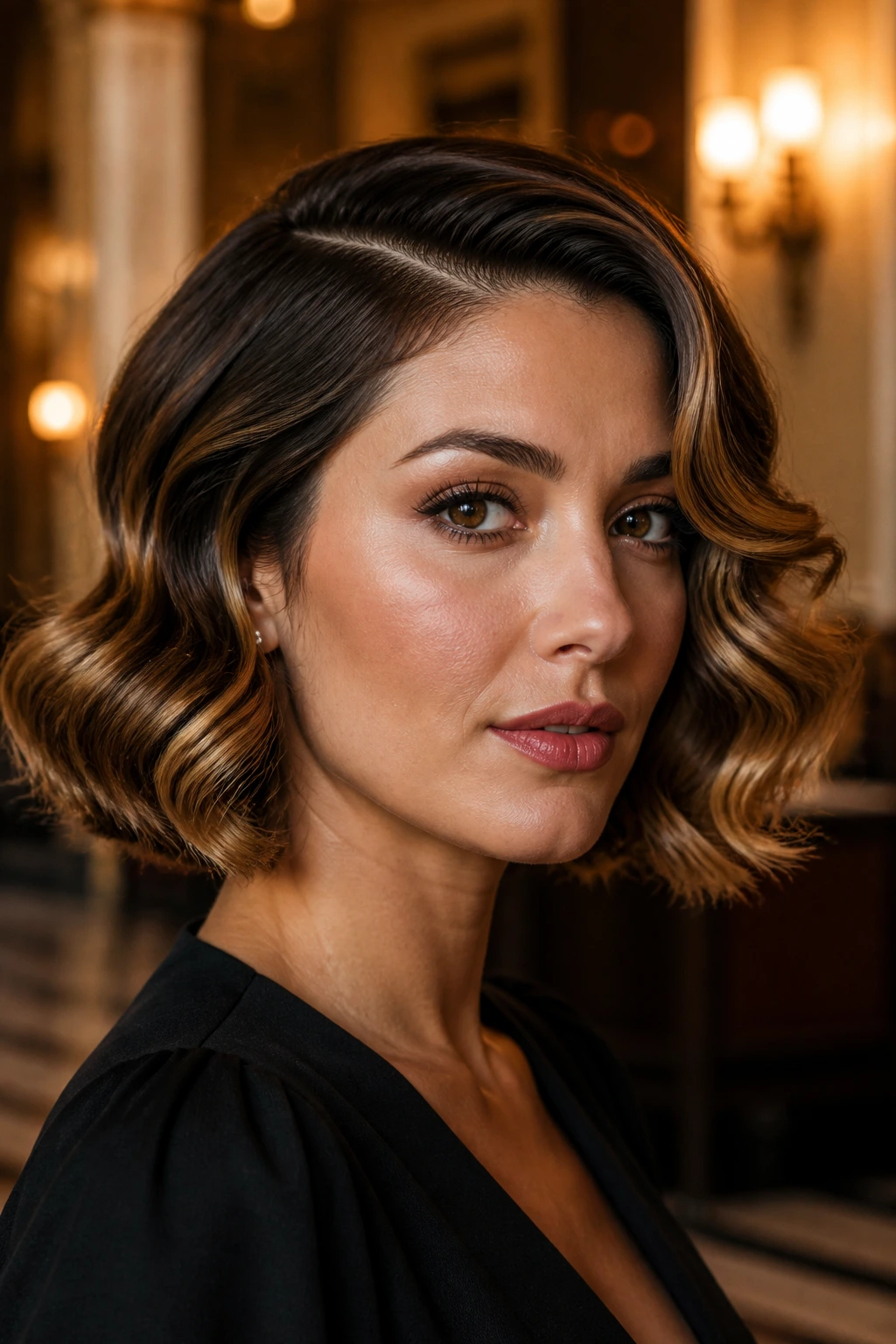
A short lob can carry an old-Hollywood wave better than people expect. The trick is to keep the bend soft and the wave pattern wide enough that the caramel highlights can ride the crests instead of hiding in the troughs.
This style loves a side part and a set with a curling iron around 1 inch in diameter. Clip the waves while they cool if you want them to hold longer. Once they’re brushed out, the warm pieces catch the light in a slow, smooth way that feels more classic than beachy. It’s one of the few polished short styles that still looks relaxed.
23. Sleek Center-Part Lob
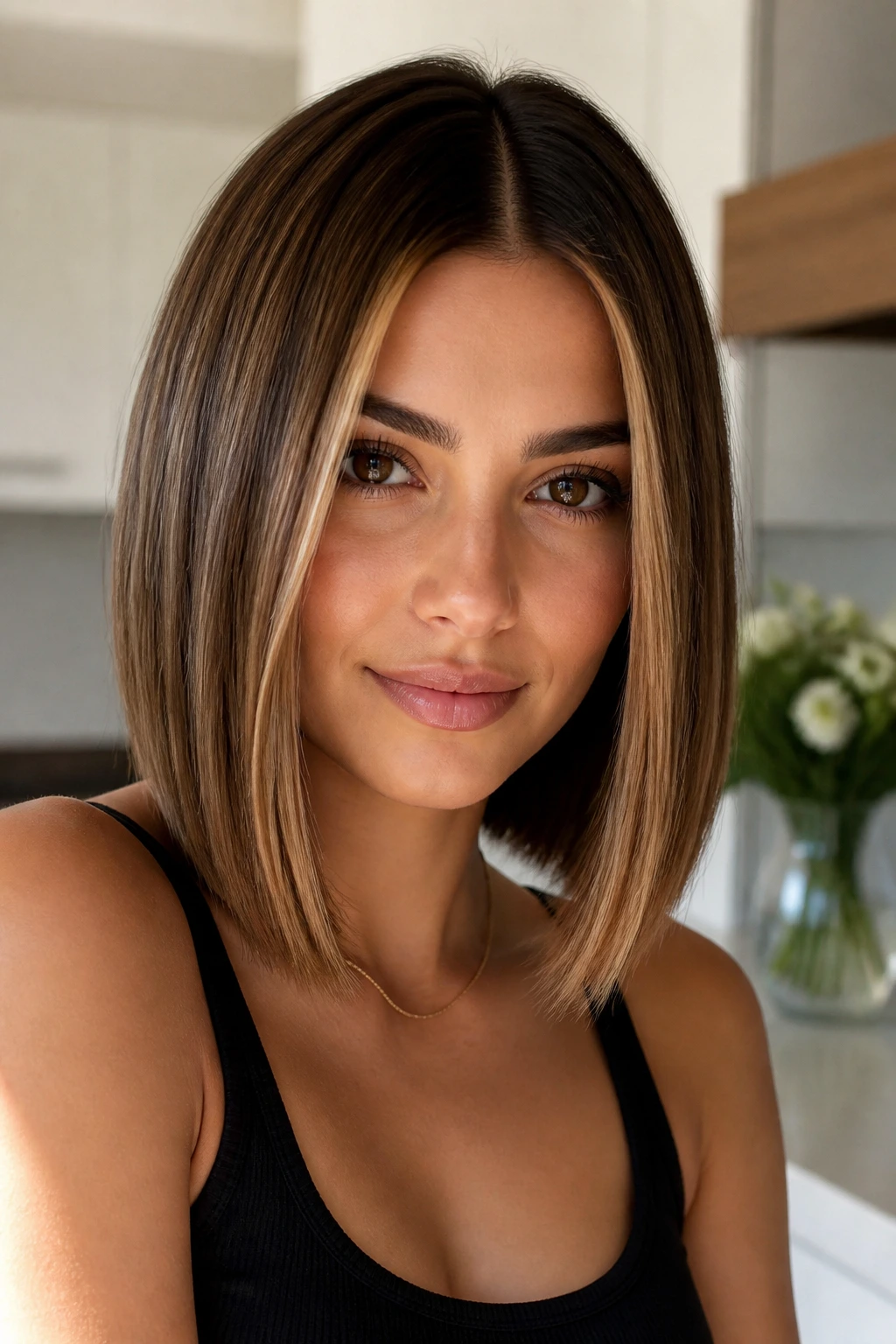
A center part on short hair is unforgiving in the best way. If the cut is off, you’ll know. If the color placement is off, you’ll know even faster. That’s why caramel highlights have to be deliberate here.
Brighten the face-framing pieces and keep the rest of the color softer and deeper. The symmetry of the part gives the highlights a clean runway to sit on, especially if the hair is straight or lightly bent with a flat iron. This style suits people who like order. No fluff. No fuss. Just a sharp center line and a warm frame.
24. Tousled Pin-Up Updo for Short Hair
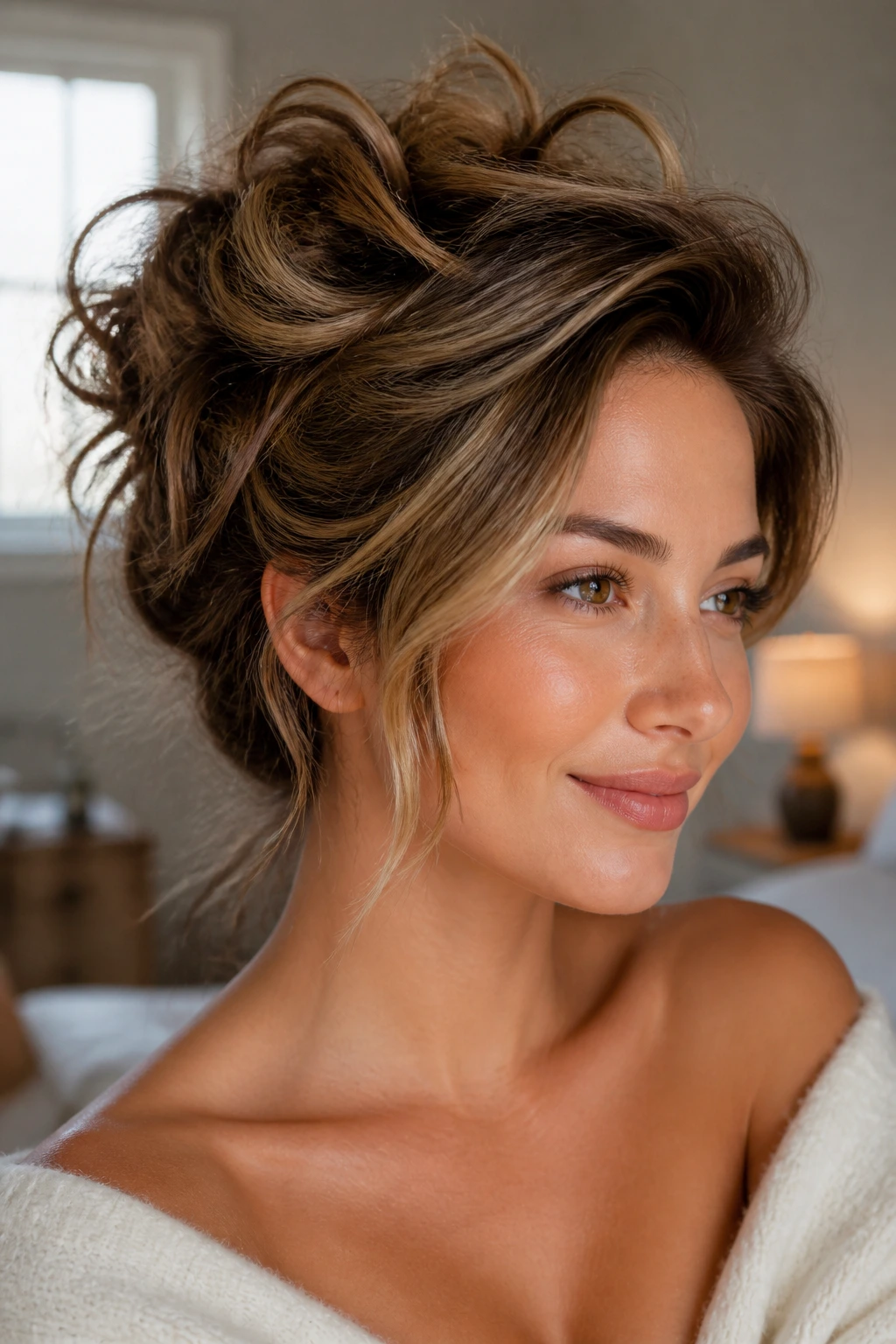
Short hair can still get pinned up when you use the texture, not the length, as the selling point. A few twists, hidden pins, and loose pieces at the neckline create enough lift to show off caramel highlights without fighting the cut.
The warm pieces are what make the updo look full instead of sparse. Leave some highlighted strands loose around the temples and ears, then tuck the rest loosely so the shape stays soft. This is one of those styles that looks better if it’s not too neat. A tiny bit of mess gives the color room to show.
25. Chin-Grazing Bob with Bright Money Piece
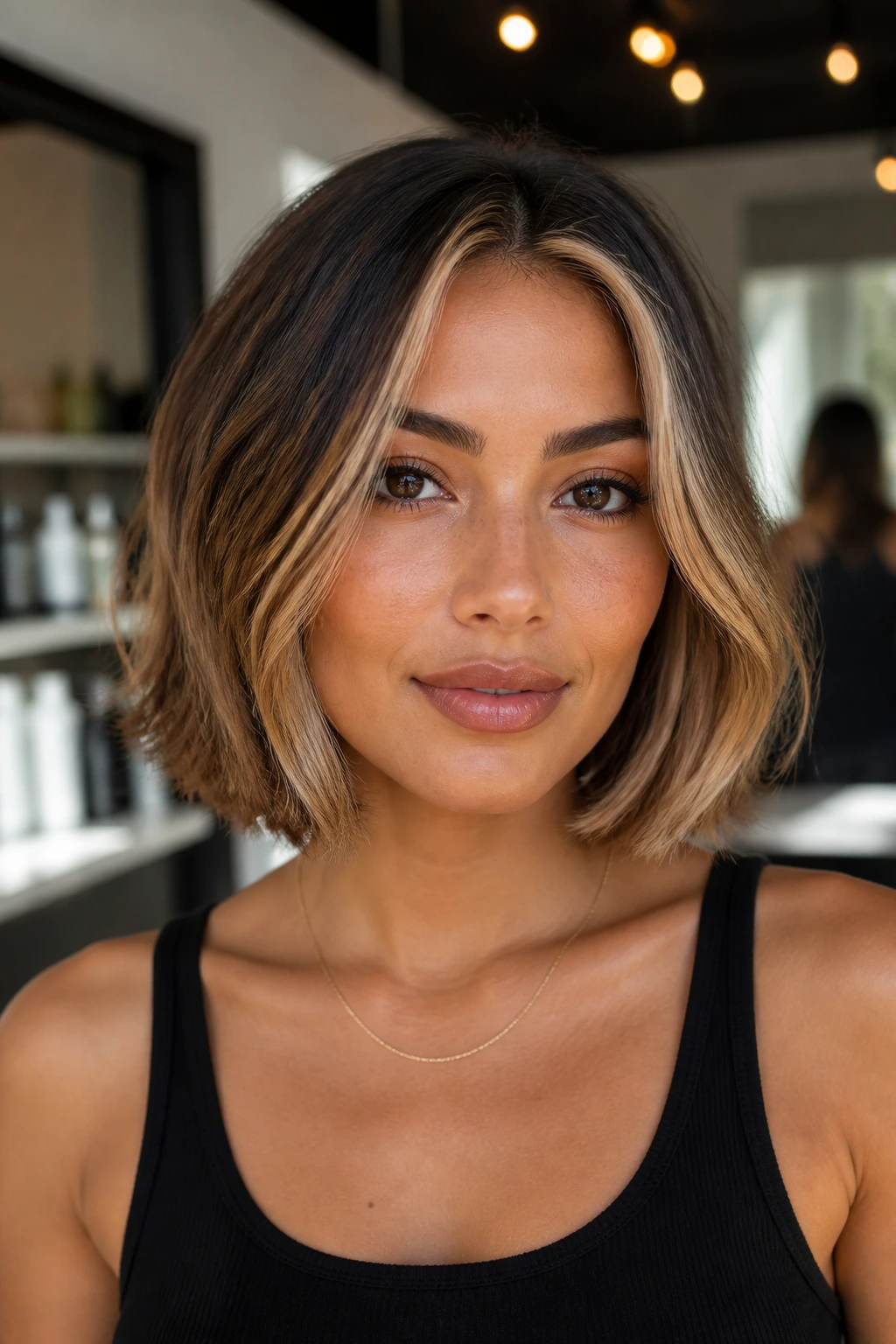
If you want one short style that carries a little more presence, this is it. The chin-grazing bob gives you enough length for movement, and the brighter money piece at the front keeps the whole cut from fading into the background.
The front section should be lighter, but not bleach-blonde bright unless that’s the look you want. A rich caramel with a touch of gold usually reads better with short hair, because it warms the skin and keeps the perimeter from looking harsh. Wear it straight, waved, or tucked. It handles all three without losing the front-frame effect.
Why Caramel Highlights Change the Shape of Short Hair
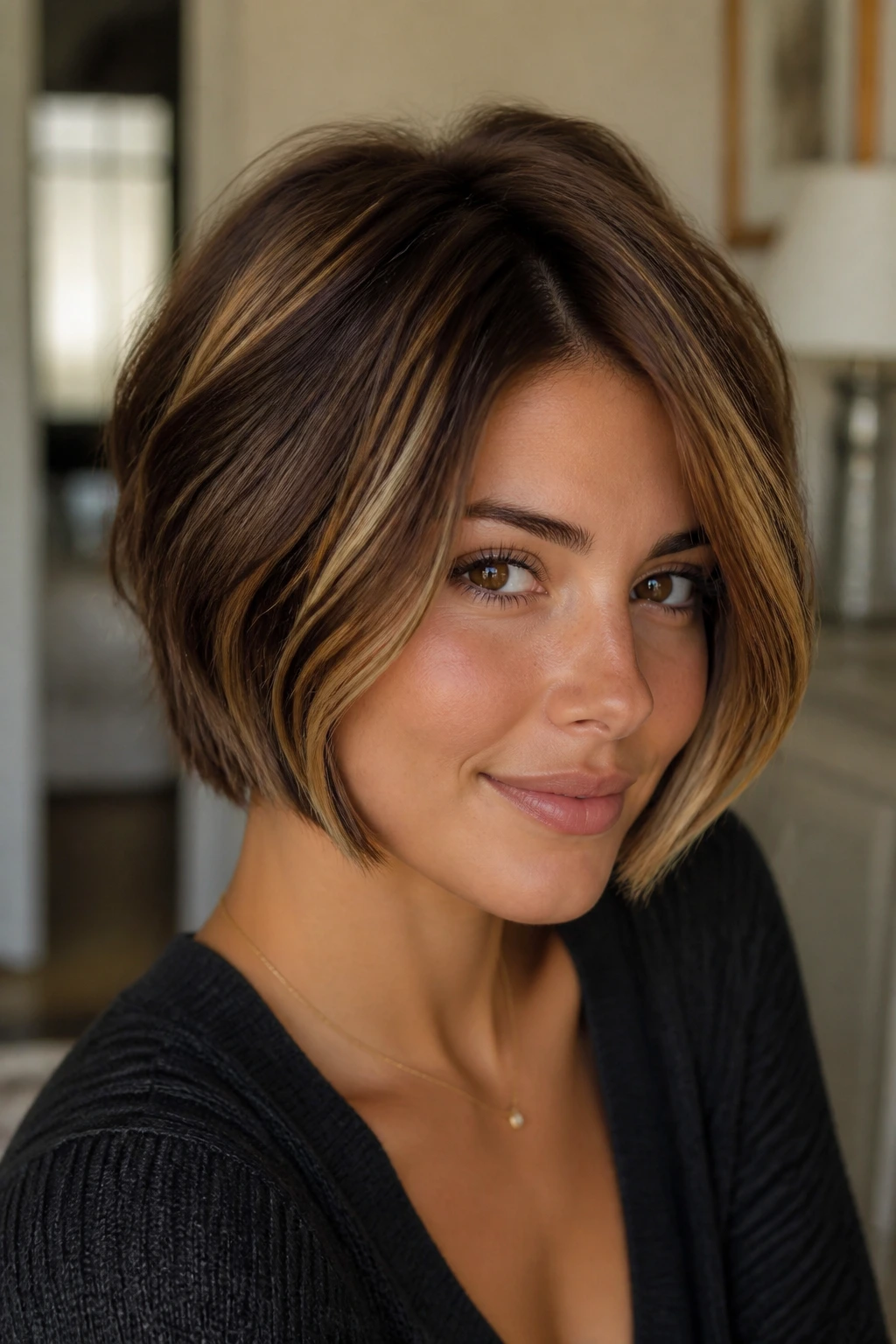
Caramel highlights do more than add color. They redraw the haircut. On short hair, where there isn’t much length to hide behind, a few warm ribbons can make a bob look thicker at the ends, a pixie look lifted at the crown, and a wavy lob look more alive around the cheekbones.
The placement matters as much as the shade. Light pieces at the face give you softness. Light pieces at the crown give you lift. Light pieces at the perimeter give you definition. Put them all in the wrong place and you get stripes; put them where the haircut already wants to move and you get shape.
There’s also the grow-out factor, which people underestimate. Caramel sits in a friendlier lane than icy blonde. It softens the line at the root, and on short hair that can be the difference between “needs a touch-up” and “still looks intentional.”
How to Choose the Right Caramel Shade for Your Base Color
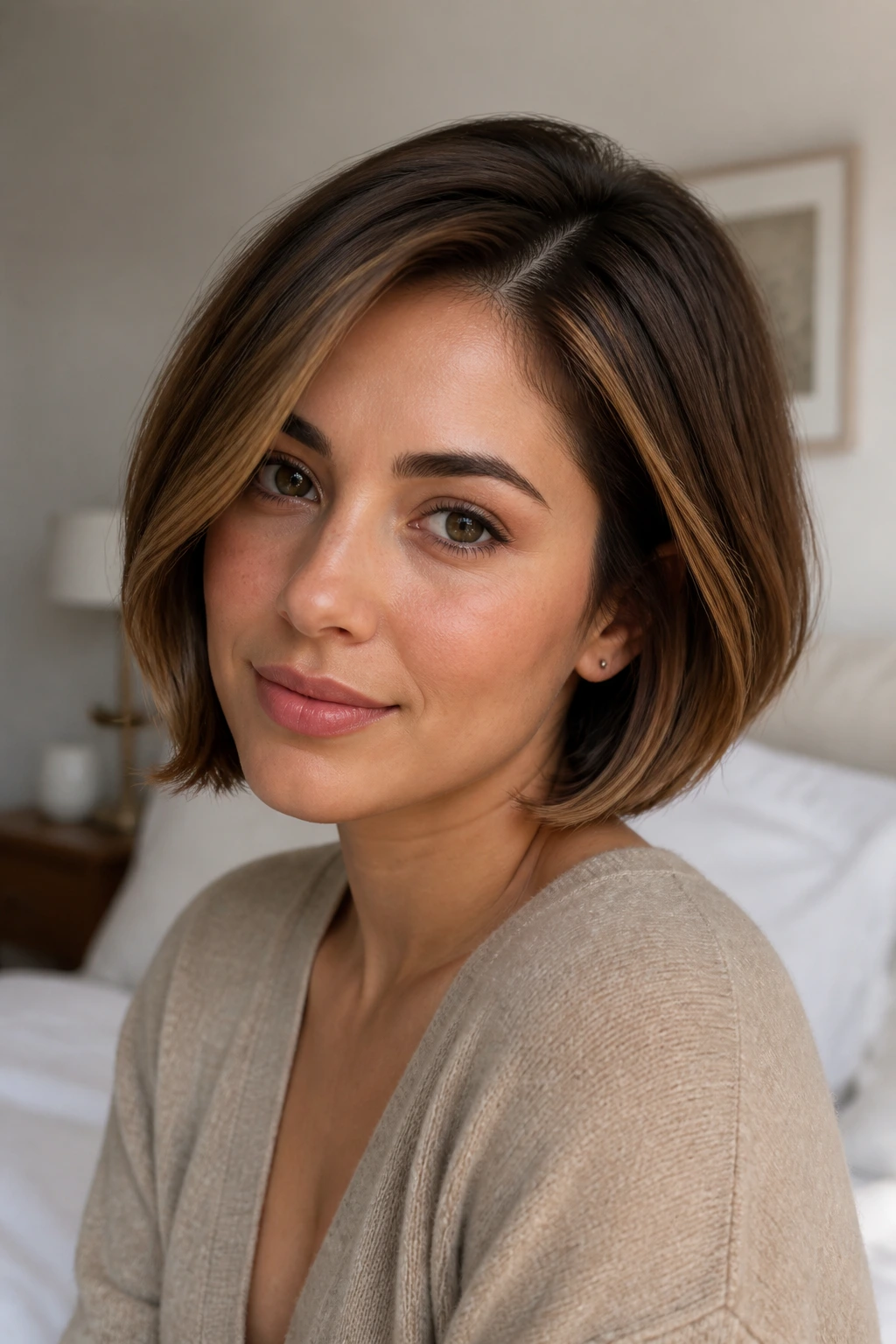
The right caramel tone depends less on fashion and more on what your hair is already doing. A deep brunette base usually handles brown sugar, toasted caramel, or a soft honey-caramel mix best. If you go too pale, the pieces can look hard instead of woven in.
Medium brown hair can take a wider spread. A beige-caramel or golden caramel often gives the most dimension, especially on bobs and shags where the light catches different layers. If your hair is already light brown, you may not need much lift at all—just enough brightness to break up the length.
On dark brown hair
Ask for fine ribbons rather than giant streaks. The contrast is prettier when the lighter pieces are narrow and deliberate.
On warm or golden bases
A toasted caramel usually sits naturally. It looks like it belongs there instead of fighting the base shade.
On cooler skin tones
A beige-caramel or neutral honey tone usually behaves better than orange-leaning gold. Too much warmth can turn brassy near the front, which is not the point.
Tools and Products That Make These Styles Easier
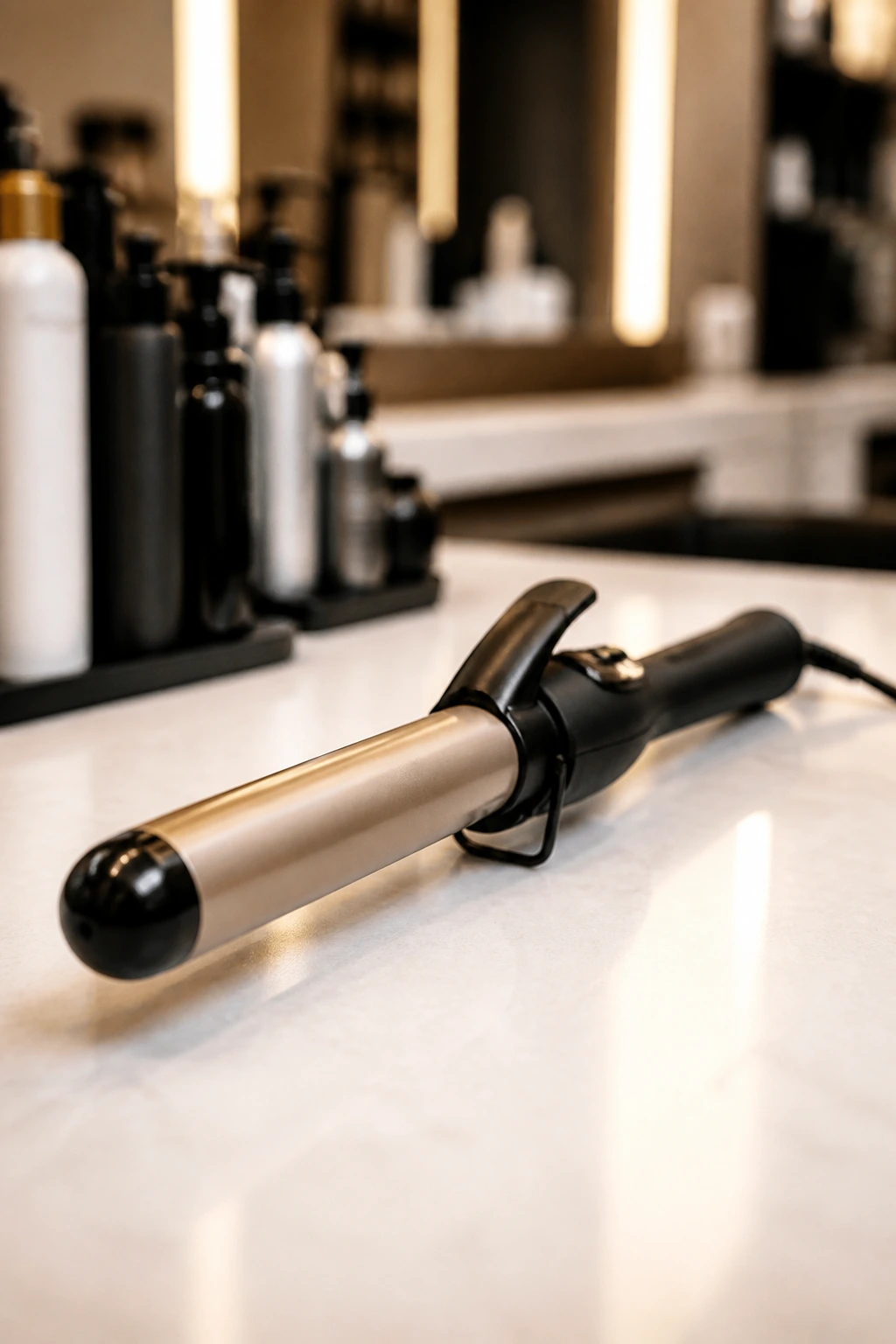
- 1-inch curling wand: Best for adding soft bends to bobs, lobs, and shaggy cuts without making the ends look curled to death.
- Flat iron with rounded edges: Useful for sleek bobs, tucked styles, and flipped-under ends.
- Blow dryer with a concentrator nozzle: Keeps the cut smooth while you direct the airflow where you want lift.
- 1.5-inch round brush: The workhorse for side-part bobs, inverted bobs, and any style that needs a gentle curve.
- Tail comb: Handy for clean parts, sectioning, and placing highlights mentally when you style at home.
- Duckbill or alligator clips: Essential for sectioning short hair without fighting the layers.
- Heat protectant spray: Non-negotiable if you use a wand or flat iron more than once a week.
- Texture spray or dry shampoo: Gives body to piecey pixies, bixies, and shaggy bobs when the roots start to collapse.
- Light mousse or curl cream: Better than heavy cream for wavy and curly short hair; it holds shape without dragging the hair down.
- Shine serum or glossing mist: Use one drop or a light spritz on the mid-lengths and ends only.
How to Wear These Looks for Work, Weekends, and Events
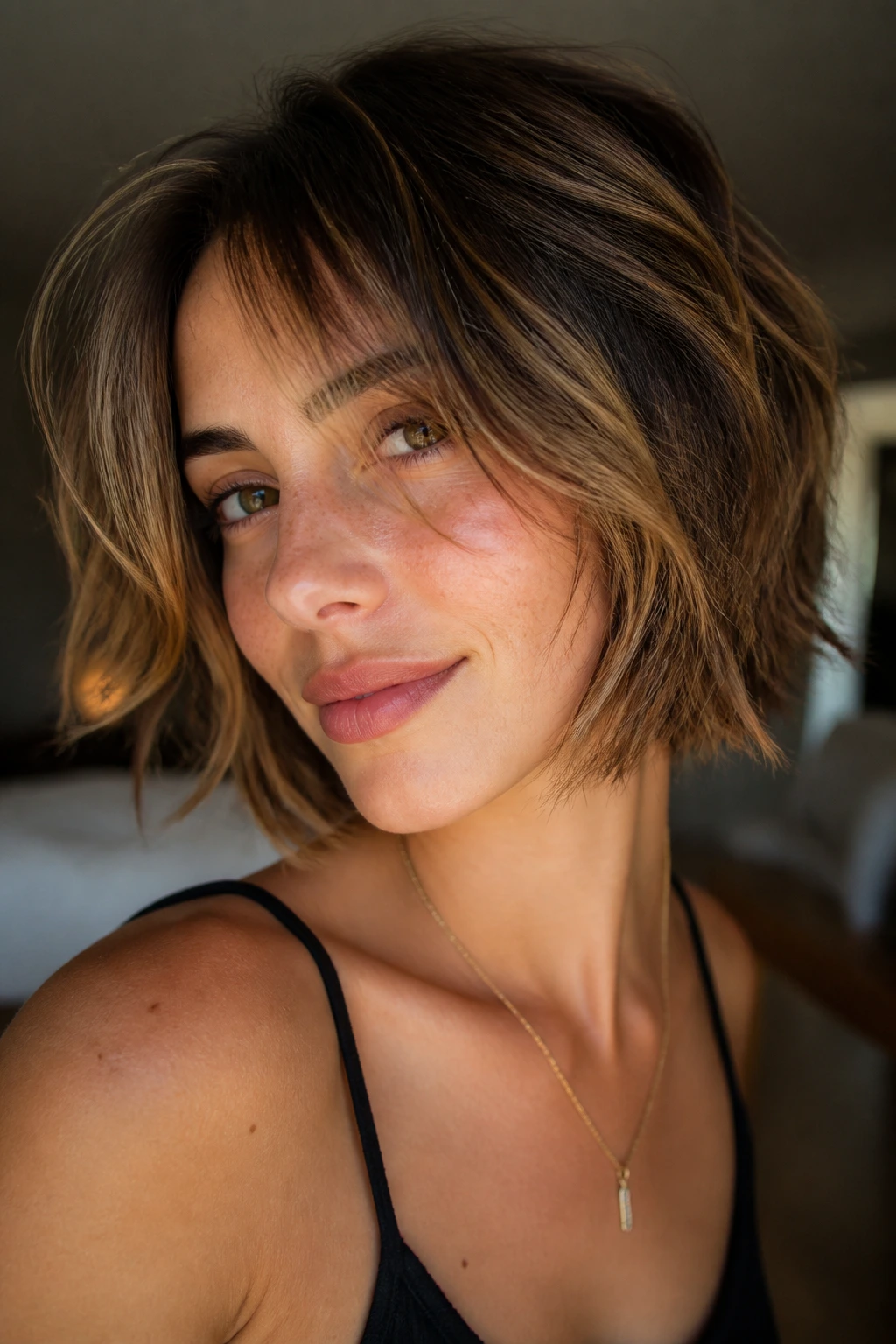
Presentation: For a polished day, keep the part clean and the ends controlled. For off-duty wear, scrunch in texture and let a few pieces fall loose around the face. If you’re going somewhere dressier, choose one highlight-heavy area—the fringe, the front bob line, or the crown—and let it be the focus.
Accessories: Small hoops, slim barrettes, a good blazer collar, or even a strong lip color can make caramel highlights read richer. Heavy accessories can compete with a short cut, so I tend to like things that sit close to the face rather than oversized clips that swallow the shape.
Best pairings: Side-part bobs look sharp with earrings that peek through. Pixies like sunglasses, tucked ears, and necklines that show off the nape. Curly cuts love softer fabric and open collars, because the shape already carries enough energy.
Timing: A quick refresh with dry shampoo at the roots and a bend through the front pieces takes five minutes and changes the whole mood. That’s usually enough.
Small Styling Moves That Make the Color Read Richer
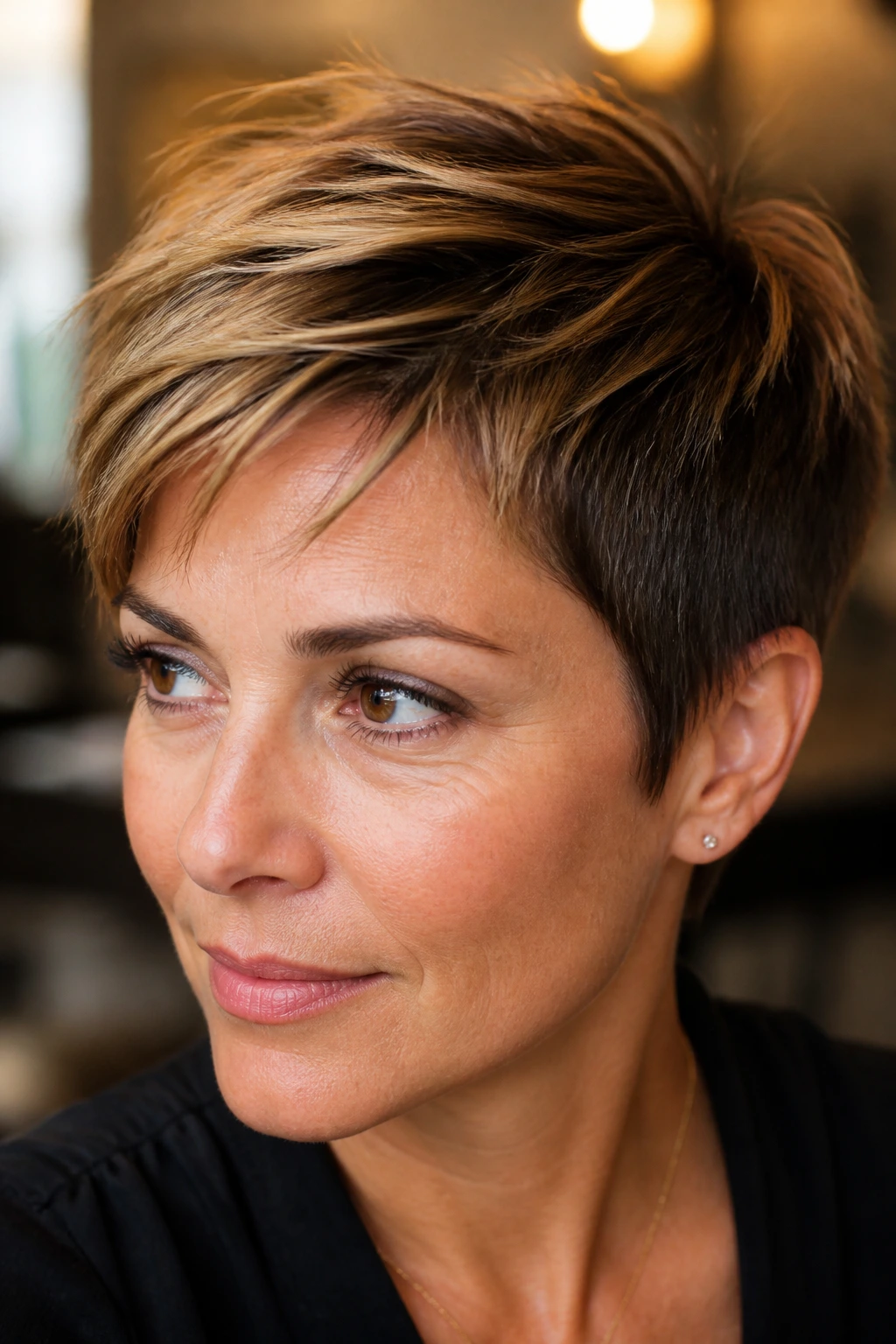
Gloss boost: A light shine spray or a pea-sized amount of serum on the ends makes caramel pieces look deeper and less dusty. Use less than you think. Short hair does not need much.
Contrast control: Keep the nape and underlayers a shade deeper if you want the highlights to pop. Too much light everywhere turns short hair into a blur, and the shape gets lost.
Texture trick: Put highlights where the hair bends—around the temple, along the part, on the crest of a wave, or through the top layer of a pixie. That’s where the eye catches movement first.
Make-it-yours: Fine hair usually looks best with babylights and soft placement. Thick hair can handle chunkier ribbons. Curly hair wants the light spread across the surface, not buried underneath. That one detail changes everything.
Keeping the Cut and Color Fresh Between Salon Visits
Short hair asks for a little more attention than people expect. A pixie often needs a trim every 4 to 5 weeks if you want the shape to stay crisp. Bobs and lobs can usually stretch to 6 to 8 weeks, but the ends start to lose their line before that if your hair grows fast.
For color, a gloss or toner every 6 to 8 weeks keeps caramel from drifting brassy or muddy. If your hair tends to go orange, use a cool-toned product only in small doses and only where it’s needed. A purple shampoo every wash is usually too much for caramel; it can dull the warmth you actually want. Use it sparingly, maybe once every 2 weeks, if the brass is getting loud.
Wash 2 to 3 times a week if your hair is dry or color-treated. A color-safe shampoo and conditioner will usually keep the tone calmer than a harsh cleansing formula. Add heat protectant every time you style with a hot tool. Every time. That’s one of those boring rules that pays off fast.
At night, a satin pillowcase or a loose clip keeps the part from flattening into a weird crease. Short hair loves to sleep funny.
Common Mistakes That Flatten Short Hair With Highlights
- Putting the light everywhere: When every layer gets the same brightness, the haircut loses depth and starts to look puffy. Keep some darker pieces underneath and around the nape.
- Going too chunky too soon: Wide highlights can be fun, but on a short bob or pixie they can look striped fast. If you want contrast, ask for a few deliberate ribbons rather than a full zebra effect.
- Using heavy product at the roots: Creams and oils near the scalp flatten the crown in minutes. Apply product from the mid-lengths down unless you’re working with a very dry curl.
- Skipping trims: Caramel highlights need a clean cut under them. When the ends fray, the color can’t save the shape.
- Styling everything the same way: A side part, a center part, a tucked ear, and a rough dry all show different things. If you never change the finish, you never see what the color can actually do.
Variations and Adaptations to Try
Babylight Whisper: Ask for ultra-fine caramel pieces if your hair is fine, straight, or easy to weigh down. The color looks softer and gives the impression of thickness without obvious stripes.
Chunky Retro Caramel: If you like a bolder, more graphic look, choose wider ribbons through the front and crown. This works best on blunt bobs and bixies where the cut can carry the contrast.
Curly Halo Placement: For curls and coils, keep the brightest pieces around the outer curve of the hair and the face frame. That way the color shows when the curl turns, not just when the hair is stretched out.
Root-Melt Grow-Out: Ask for a deeper root that melts into caramel through the mid-lengths. It’s the most forgiving option if you don’t want to visit the salon every few weeks.
Cool Beige Caramel: If golden warmth pulls too orange on you, choose a beige-leaning caramel with less gold. It still gives movement, but it sits flatter against cooler skin or ashier brows.
Frequently Asked Questions
Will caramel highlights work on very dark short hair?
Yes, but the placement matters more than the brightness. On very dark bases, fine ribbons or a soft face frame usually look better than big light streaks because the contrast stays clean instead of harsh.
Do caramel highlights make short hair look thicker?
They can, especially on bobs and pixies with some layer movement. The lighter pieces catch the bends and edges, which makes the shape read fuller than a single flat shade does.
What’s better for short hair: balayage or foils?
Foils give you more control and a brighter pop, which is useful on very short cuts. Balayage gives a softer, more blended result, especially on bobs and lobs where you want the grow-out to feel gentle.
How often do caramel highlights need to be toned?
Usually every 6 to 8 weeks if the shade starts turning brassy or muddy. If the warmth still looks rich and soft, you can stretch that longer and just refresh with a color-safe glossing product at home.
Can I wear these styles if my hair is fine and flat?
Yes, and in some cases the highlights help more than the cut alone. Ask for lighter pieces on the crown and around the face, then keep product light so the roots don’t collapse.
What if my highlights look too stripey?
That usually means the pieces are too wide or placed too evenly. A stylist can soften them with lowlights or a gloss, and at home you can help by styling with texture instead of forcing every strand into place.
Do short highlighted styles need special shampoo?
A color-safe shampoo is a good idea because it slows dullness and dryness. If your hair is very dry, choose a sulfate-free formula and wash a little less often so the caramel stays warm instead of washed out.
How do I keep the shape from growing out badly?
Book trims before the ends get fuzzy, and keep the darker root depth if you want softer regrowth. On short hair, the cut usually needs more attention than the color does.
The Shape Stays in the Color
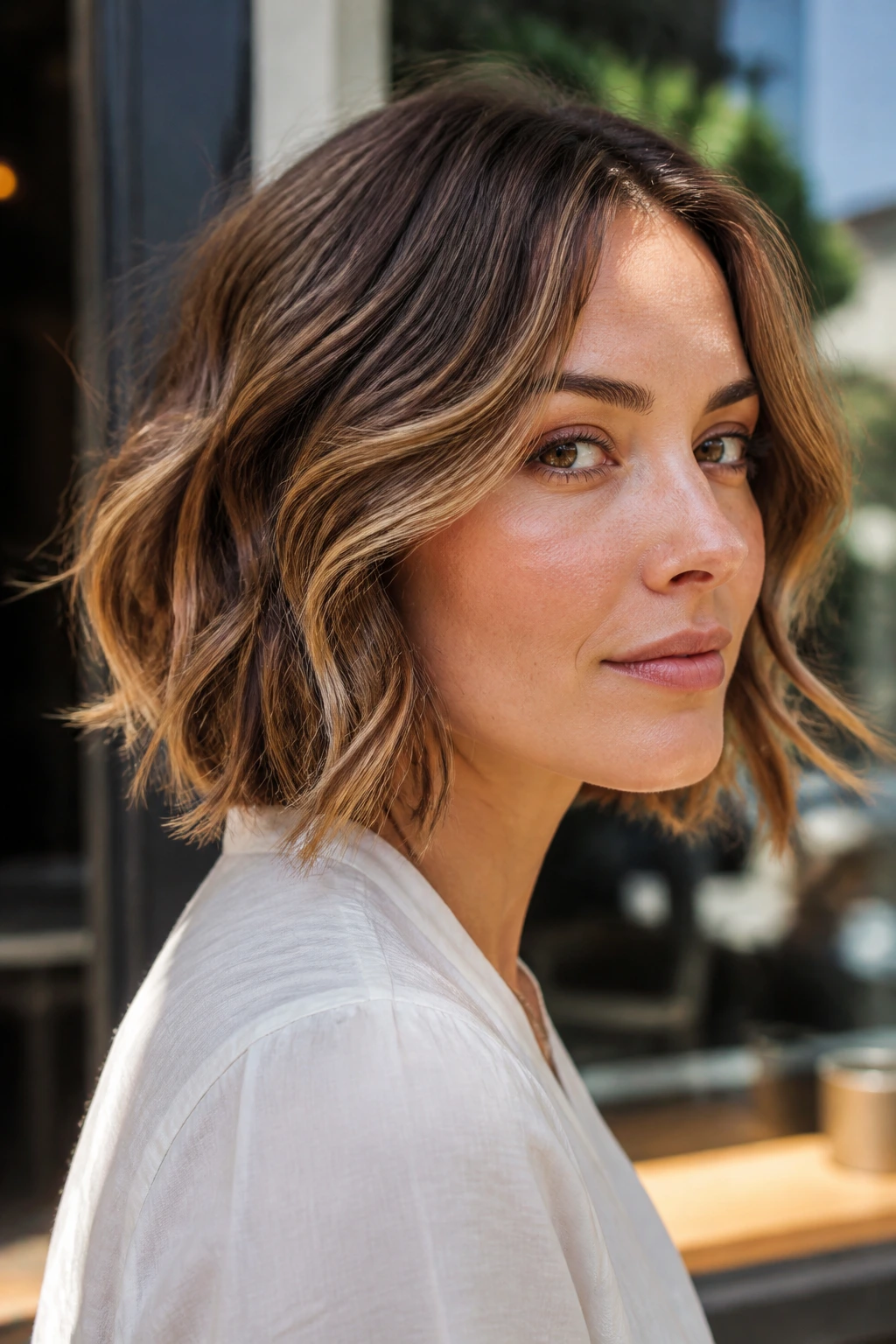
Caramel highlights on short hair work because they do a very practical job: they show the haircut where it bends, where it lifts, and where it needs softness. That’s why a bob can look sharper with just a few warm ribbons, and why a pixie often comes alive the second the crown gets some light.
Pick the version that matches your texture, not just your mood. A sleek center part, a shaggy bob, a curly halo, or a blunt chin-length cut all tell a different story once the caramel is in the right place. The good ones don’t fight the haircut. They expose it.
And that’s the real payoff here: the right placement can make short hair feel bigger, cleaner, and more alive without asking you to spend half the morning in front of a mirror.