



Bob highlights for fair skin and heart-shaped faces can go wrong fast if the blonde starts too high or the tone runs too yellow. Then the forehead looks wider, the chin looks narrower, and the whole haircut loses its shape before it has a chance to do anything useful. The prettiest versions do the opposite. They pull light downward, soften the temples, and keep a little depth where the head needs it most.
A heart-shaped face usually has a broader upper half and a slimmer jawline, so the smartest highlight placement does not fight that geometry. It works with it. Brightness near the cheekbones, a softer shadow at the root, and a few lower ribbons near the jawline can make a bob look balanced in a way that a flat all-over blonde never will. Fair skin adds another layer: beige, champagne, pearl, rose gold, soft copper, and smoky brunette tones all behave differently against pale undertones, and some are far kinder than others.
The 25 looks below stay inside that sweet spot. Some lean cool and creamy. Some bring in warmth without turning brassy. A few use lowlights because fair skin can look washed out when every strand is fighting for the spotlight. Good bob highlights do not scream. They make the haircut look intentional from across the room and quietly expensive up close.
Why These Bobs Work on Fair Skin and Heart-Shaped Faces
-
The bright pieces sit lower: When highlights begin around the cheekbone or mouth-corner area, they pull attention away from a wider forehead and toward the middle and lower third of the face.
-
The root stays soft: A half-inch to one-inch shadow root keeps fair skin from looking flattened by one solid pale block, and it gives the bob a little depth at the crown.
-
Lowlights do real work: One or two shades deeper in the underlayers stop pale blondes from turning chalky and make the hair look thicker at the ends.
-
Tone matters as much as placement: Beige, champagne, pearl, mushroom, and soft copper all read differently on fair skin, and the wrong undertone can make the complexion look pink, sallow, or washed out.
-
A bob loves movement: Shorter hair shows off every ribbon of color, so a soft bend, a tucked-behind-the-ear finish, or a piecey wave can make the highlights look much richer than pin-straight styling.
1. Creamy Beige Bob with Cheekbone Ribbons
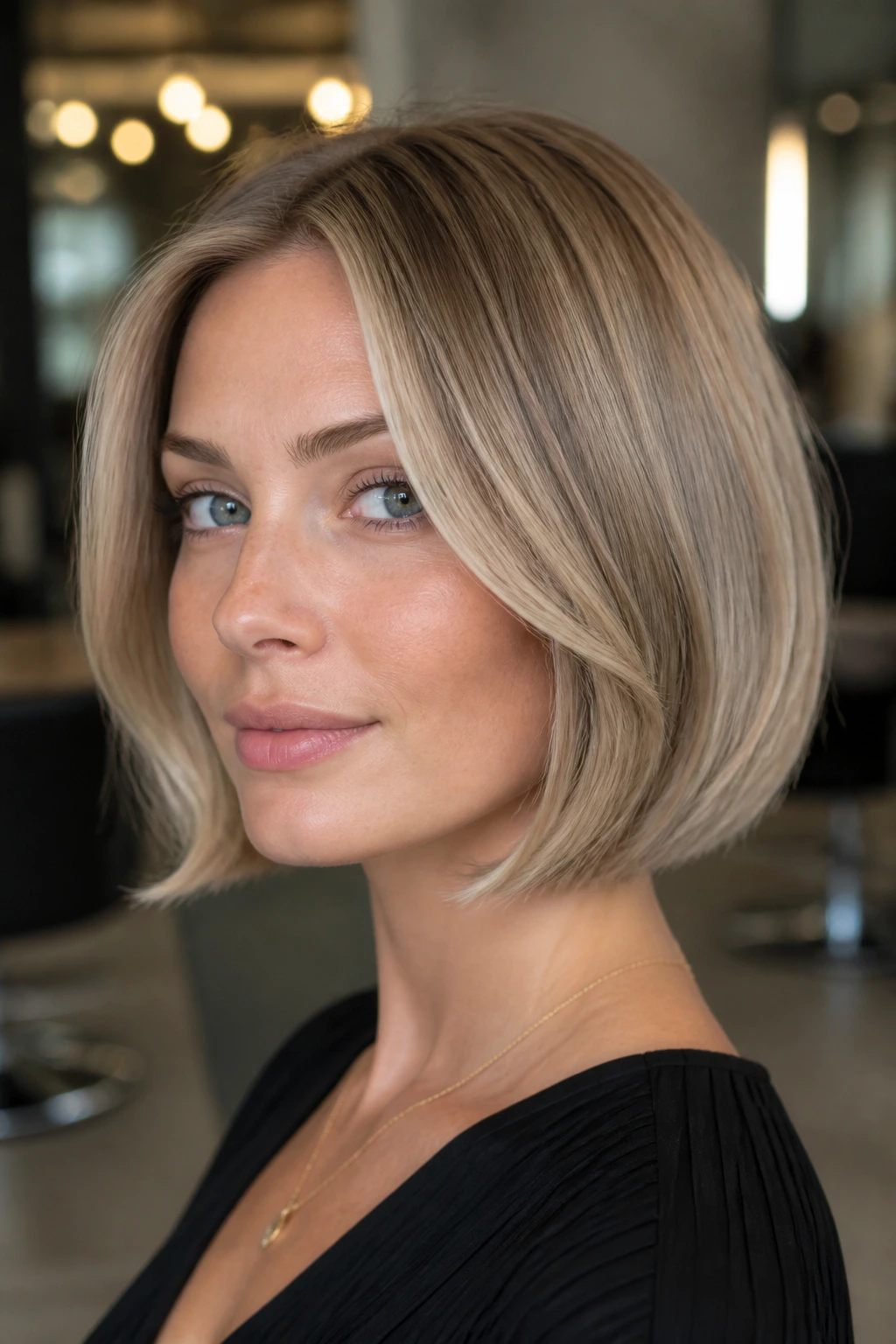
Creamy beige is one of those tones that behaves better than it looks on paper. It has enough warmth to keep fair skin from looking drained, but not so much gold that it turns orange under indoor light. On a bob that lands around the jawline, that softness is a gift. The cut stays crisp, and the color does the gentler part.
For a heart-shaped face, the best move is to keep the brightest ribbons just below the temples and let them skim the cheekbones. That placement creates a visual line that widens the lower half of the face without inflating the forehead. Ask for babylights around the front hairline, then a slightly deeper beige lowlight underneath. The contrast should feel like dimension, not stripes.
Best detail to request: keep the lightest strands no wider than a shoelace. Thick highlight panels can look loud on fair skin. Thin ones look expensive.
2. Champagne French Bob with a Half-Inch Root Smudge
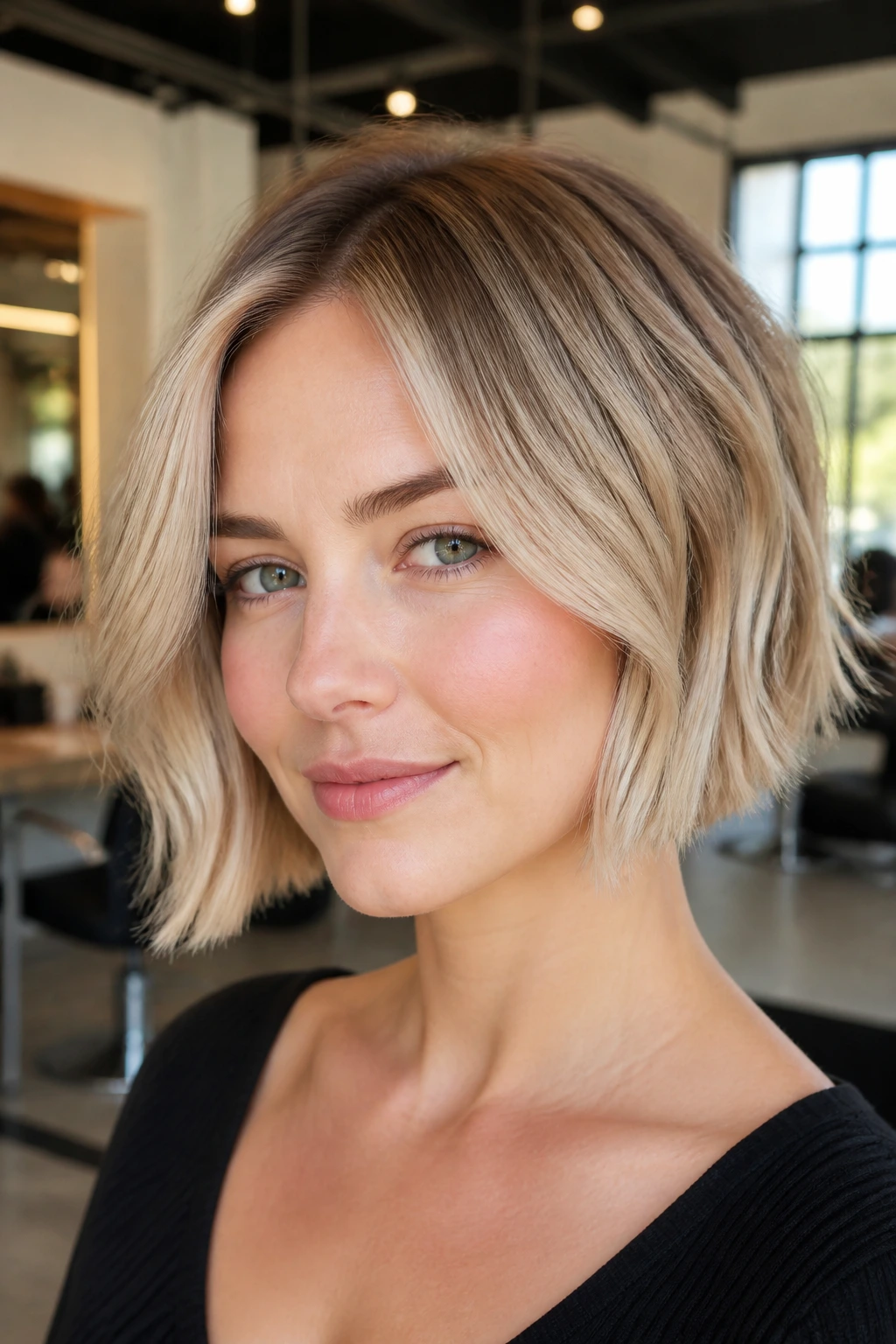
A French bob already has attitude. Add champagne highlights and it turns from cute to sharp in a way that never feels overworked. The trick is the root smudge. Without it, the color can read too bright at the top and make a heart-shaped face look top-heavy. With it, the brightness feels woven in instead of pasted on.
Where the brightness should sit
Keep the lightest champagne pieces around the eyes, cheekbones, and the first inch or two of the ends. The hairline at the temples should stay a touch darker, especially if your forehead is naturally broader. That tiny bit of shadow makes the bob feel shorter in the best way.
A half-inch root smudge is enough for most fair skins. Go deeper than that and the face can start to look muddy; go lighter and the whole thing loses shape. I like this version best when the bob is blunt but slightly beveled under the jaw. It gives the color a clean edge to live on.
- Tone: champagne beige, not yellow-gold
- Placement: cheekbone and front-end pieces
- Maintenance: gloss every 4 to 6 weeks
3. Mushroom Brown Bob with Pearl Lites
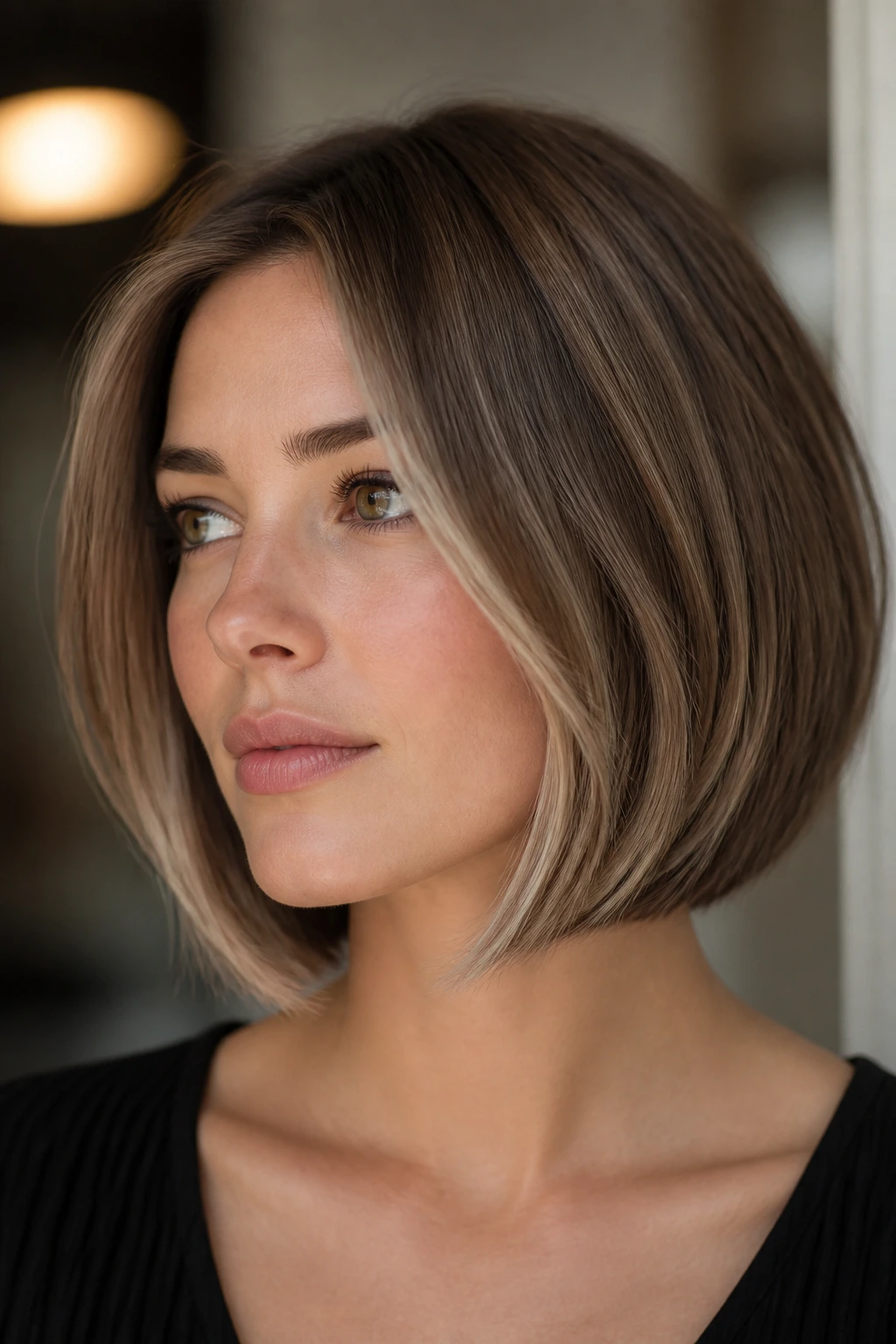
Not every fair-skinned client wants to look blonde. Some want depth. Mushroom brown is the answer when you want a cool, expensive-looking base with just enough light to keep the bob from feeling heavy. Pearl lites add a pale shimmer without that brassy blonde flash that can fight pink undertones.
On heart-shaped faces, mushroom brown is especially useful because it keeps the crown calm. The lower half of the haircut gets the attention instead. Ask for pearl-toned ribbons placed through the outer layer and around the jawline, with a few finer pieces at the cheekbones. The result is soft, not sleepy.
This is one of my favorite options for anyone with fair skin that flushes easily. It keeps the complexion clean. And because the light is cooler, the hair usually looks glossy even when the styling is simple.
4. Rose Gold Bob with Soft Temple Pieces
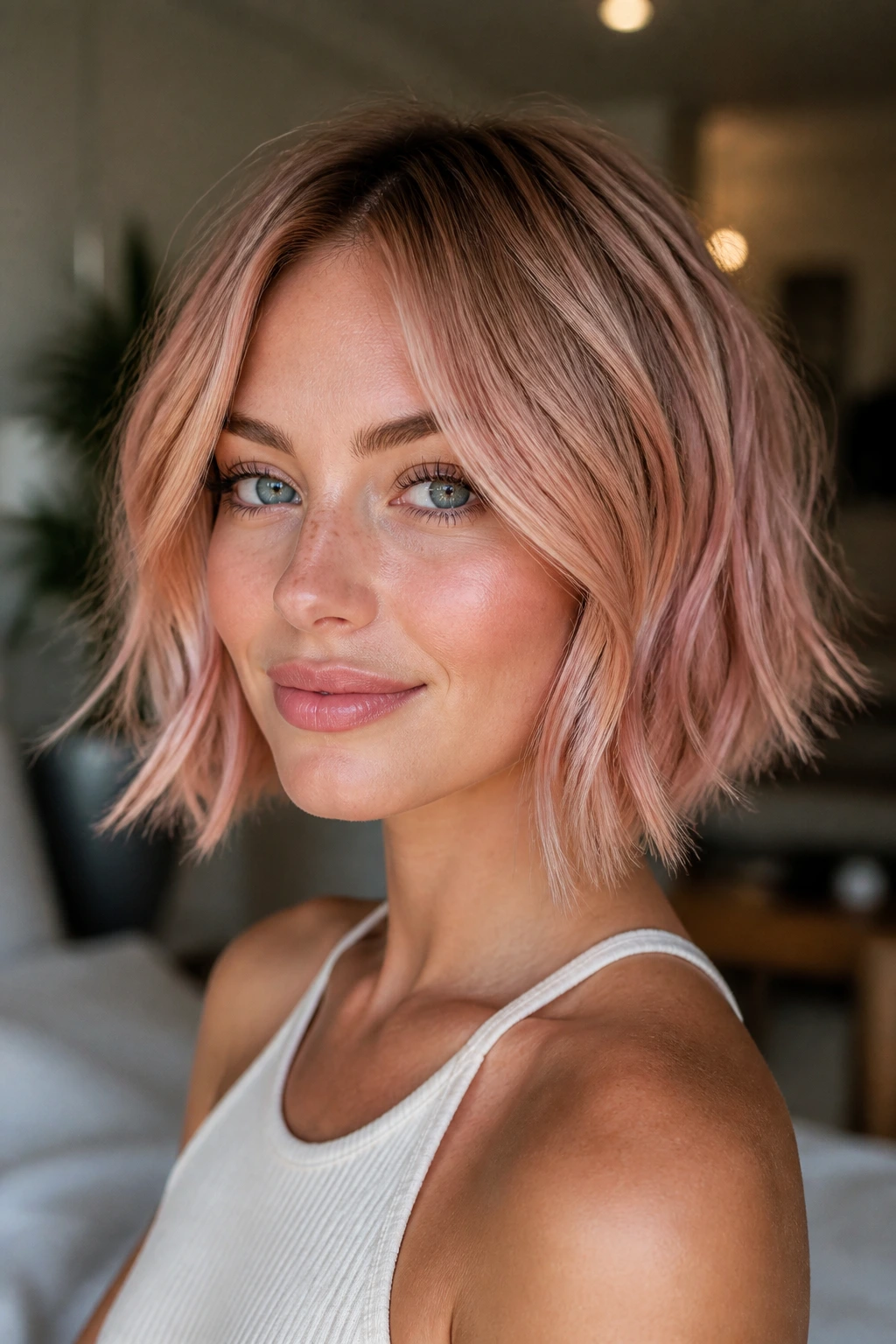
Rose gold can go cheesy in a hurry. Too pink, and it looks like candy. Too gold, and it loses the whole point. The good version is muted, like a peachy blush dabbed through a beige base. On fair skin, that tone can be gorgeous because it echoes the natural flush in the cheeks instead of competing with it.
For a heart-shaped face, the temple area is the place to be careful. Keep the brightest rose-gold pieces soft there, then let the stronger color live lower, around the cheekbone and ends. That keeps the forehead from looking wider than it is. If your bob is chin-length, a few rose-gold flashes at the front can make the cut look airier.
A straight ironed finish shows the shimmer best, but loose bends work too. Just do not make the waves too big. Big curls can swallow the light.
5. Butter Blonde Bob with Micro-Balayage
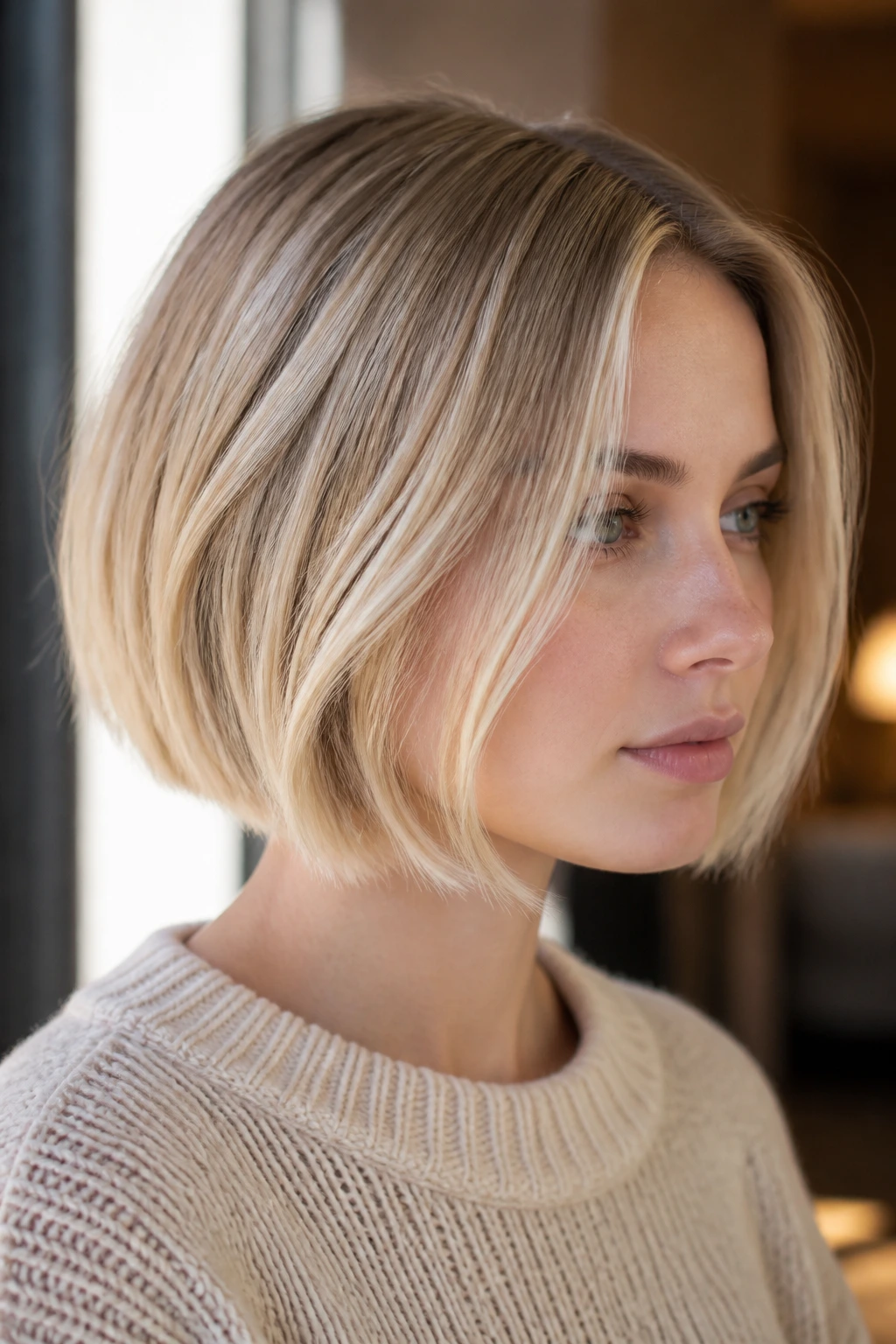
Butter blonde sounds warm, and it is, but the micro-balayage version keeps it from turning brassy. Instead of chunky streaks, you get tiny painted pieces that blend into the bob like sunlight slipping between blinds. On fair skin, that softness matters. It gives brightness without bleaching the face flat.
The placement that keeps it flattering
Ask for the lightest strokes to start below the temple line and then travel through the mid-lengths. The crown should stay a little softer, especially if your forehead feels prominent. On a heart-shaped face, that lower placement creates balance without trying too hard.
Micro-balayage is especially good on fine hair because it adds the look of density. The hair doesn’t need to be thick to look layered; the color does some of that work for you. If your bob is blunt, this keeps it from reading like one solid helmet of blonde.
My favorite version: a half-inch root shadow, butter blonde mids, and ends that are one shade lighter than the rest. Clean. Soft. Easy to wear.
6. Smoked Beige Brunette Bob with Narrow Highlights
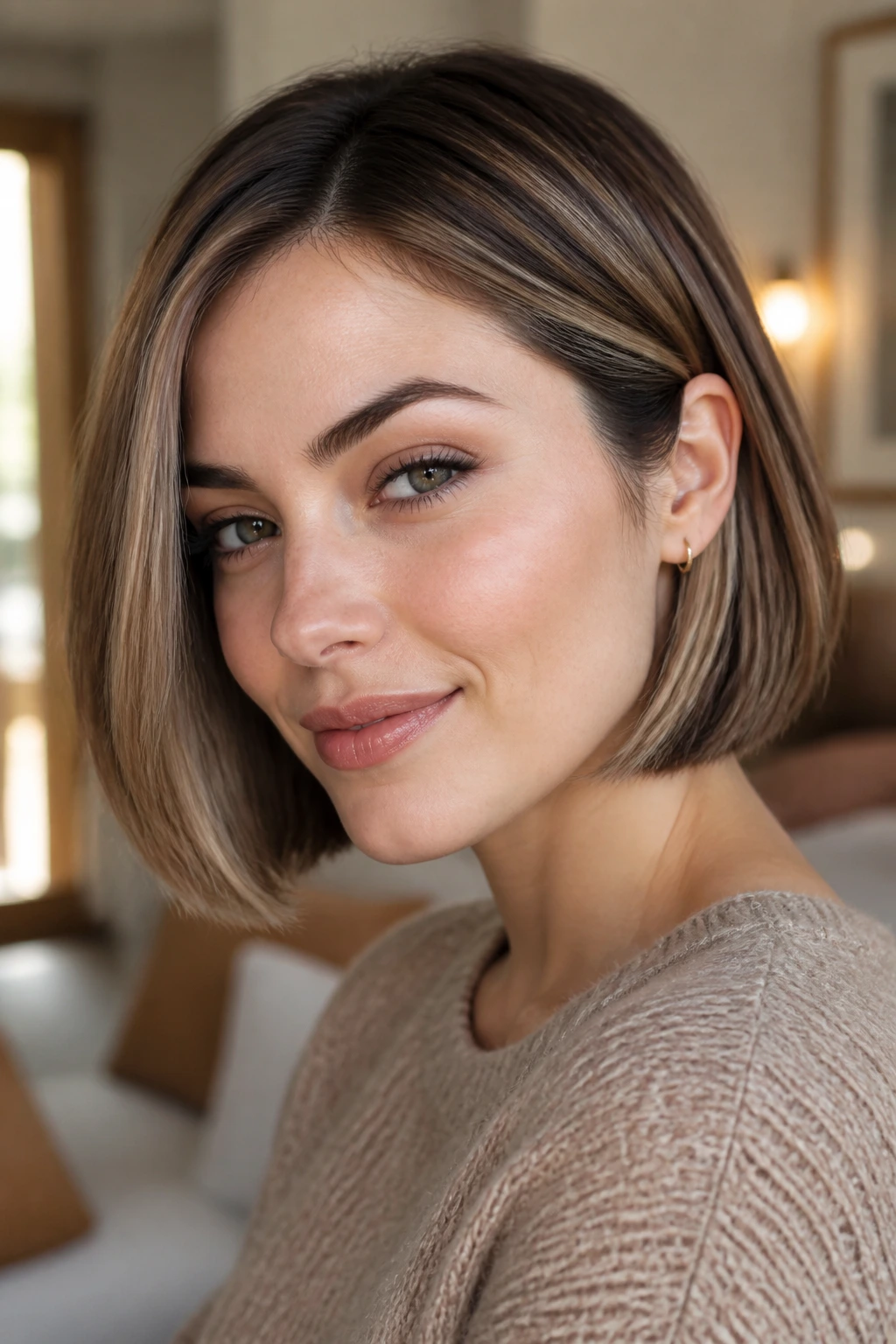
This is the one for people who want color but not a blonde identity crisis. Smoked beige brunette keeps the base dark enough to anchor fair skin, while narrow beige highlights lift the surface just enough to show movement. The effect is quieter than classic blonde highlights, and honestly, that’s the point.
Heart-shaped faces benefit from the control here. A brunette base keeps the top of the head visually smaller, while the narrow highlights around the cheekbones and ends widen the lower part of the face in a subtle way. Ask for highlights that are no wider than a pencil in most places, then a couple of softer ribbons closer to the front.
It looks especially good when the bob is tucked behind one ear. That little asymmetry lets the light catch the sides of the face. Very clean. Very smart.
7. Strawberry Blonde Bob with Copper Veil

Strawberry blonde is tricky because the best version looks natural enough to fool the eye. The copper veil should sit over a soft blonde base, not on top of a dark brunette one. On fair skin with peach or neutral undertones, it can be one of the prettiest ways to warm up a bob without going full red.
The face-shape part matters here. Keep the copper strongest through the mid-lengths and lower front pieces, not right at the temples. That gives the face a lifted frame without widening the forehead. If the bob has a side part, even better. The part creates a diagonal line that works nicely with heart-shaped features.
- Good for: skin that looks a little flat in ash blonde
- Avoid: neon copper or orange-gold
- Best styling move: a soft wave from the cheekbone down
8. Sandy Blonde Bob with Lived-In Lowlights
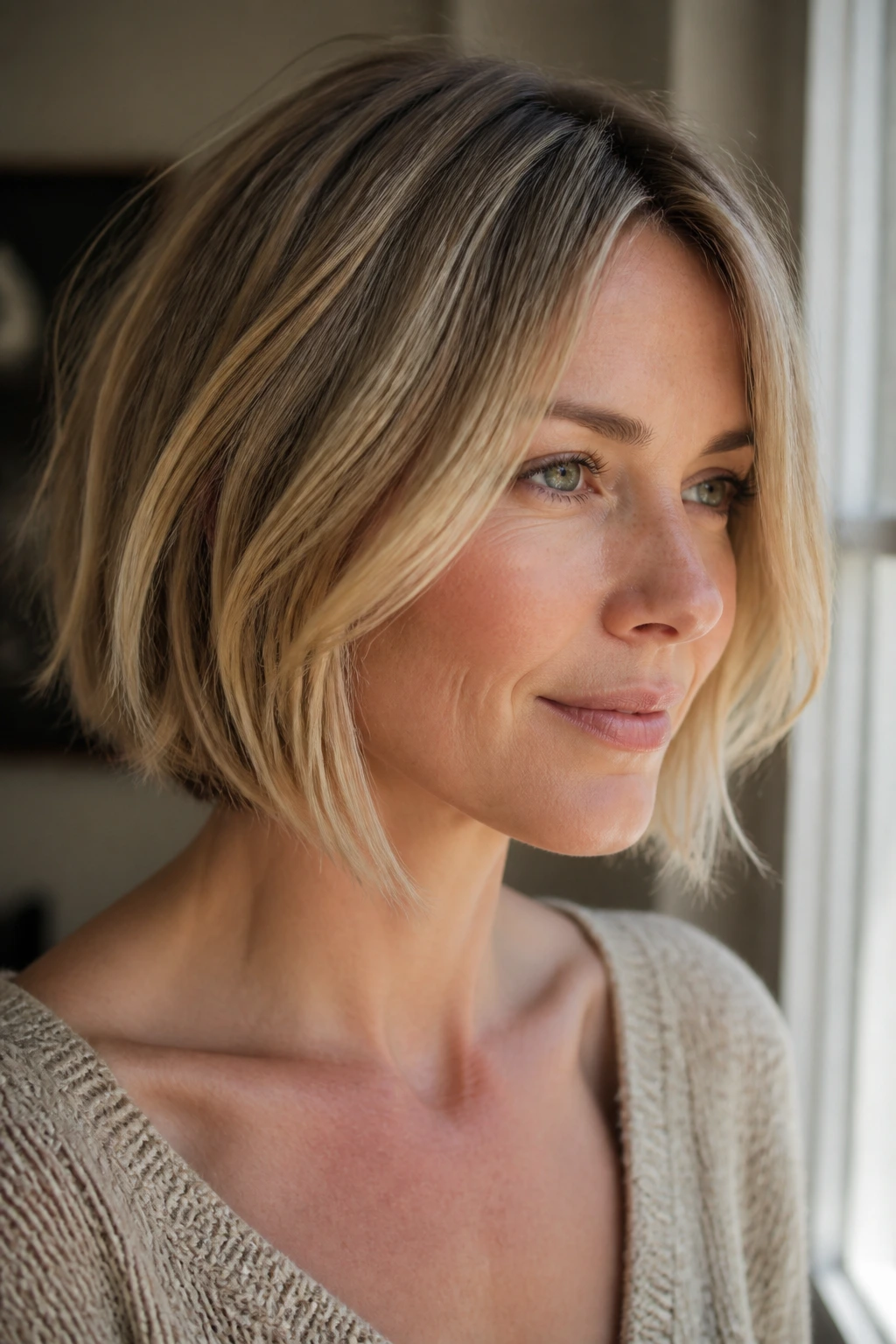
Sandy blonde has a beachy reputation, but the useful part is the lowlight work. A lot of fair-skinned blondes turn ghostly when every strand is light. Lived-in lowlights solve that. They keep the bob from looking like a single pale sheet and give the ends enough depth to move.
For heart-shaped faces, this is one of the safer choices because the contrast is gentle. The front pieces can still brighten the cheekbones, but the crown stays a bit muted. Ask for lowlights one to two shades deeper than your base, concentrated under the top layer and around the nape. That way, the color shows when the hair swings, not all the time.
This is the kind of bob that looks better on day two. A little texture spray, a bend at the ends, and the dimension wakes up.
9. Ash Blonde Bob with Frosted Ends
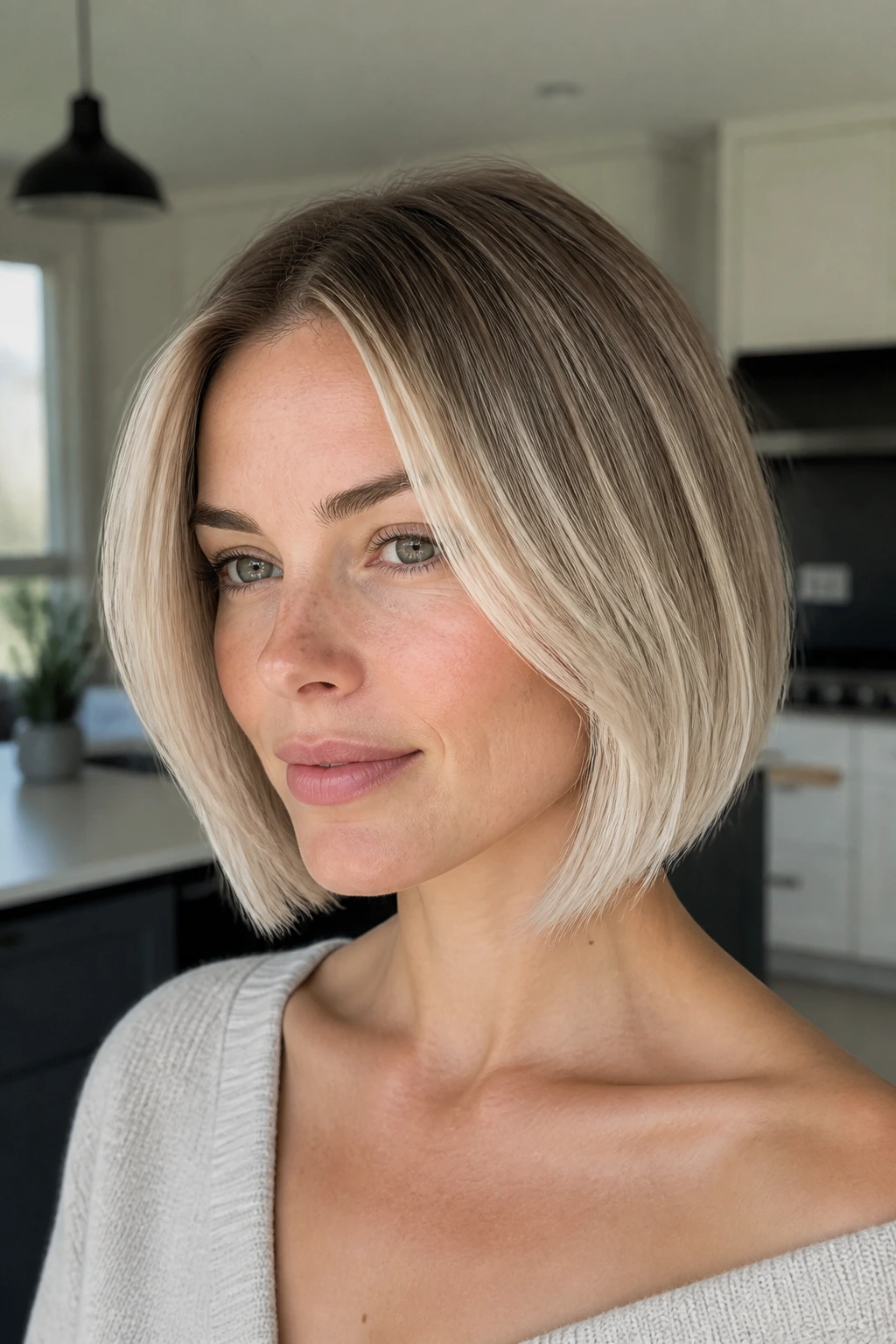
Ash blonde can be gorgeous on fair skin with cool or pink undertones, but it needs a steady hand. Too much ash and the face goes pale in a bad way. Frosted ends keep the tone fresh, while a soft root shadow stops the top from looking over-light.
The shape matters more here than on warmer looks. A heart-shaped face can handle the coolness if the highlights are kept below the widest part of the forehead. Think ends, cheekbones, and the outer layers around the jawline. That’s where the light should live. Not in a solid halo around the hairline.
If you wear a straight bob, this shade looks sleek and expensive. If you wave it, the frosted tips catch movement better than a warmer blonde would. Either way, purple shampoo needs a light touch. Too much and the ash starts to look dull instead of crisp.
10. Honey Chestnut Bob with Face-Lifting Slices
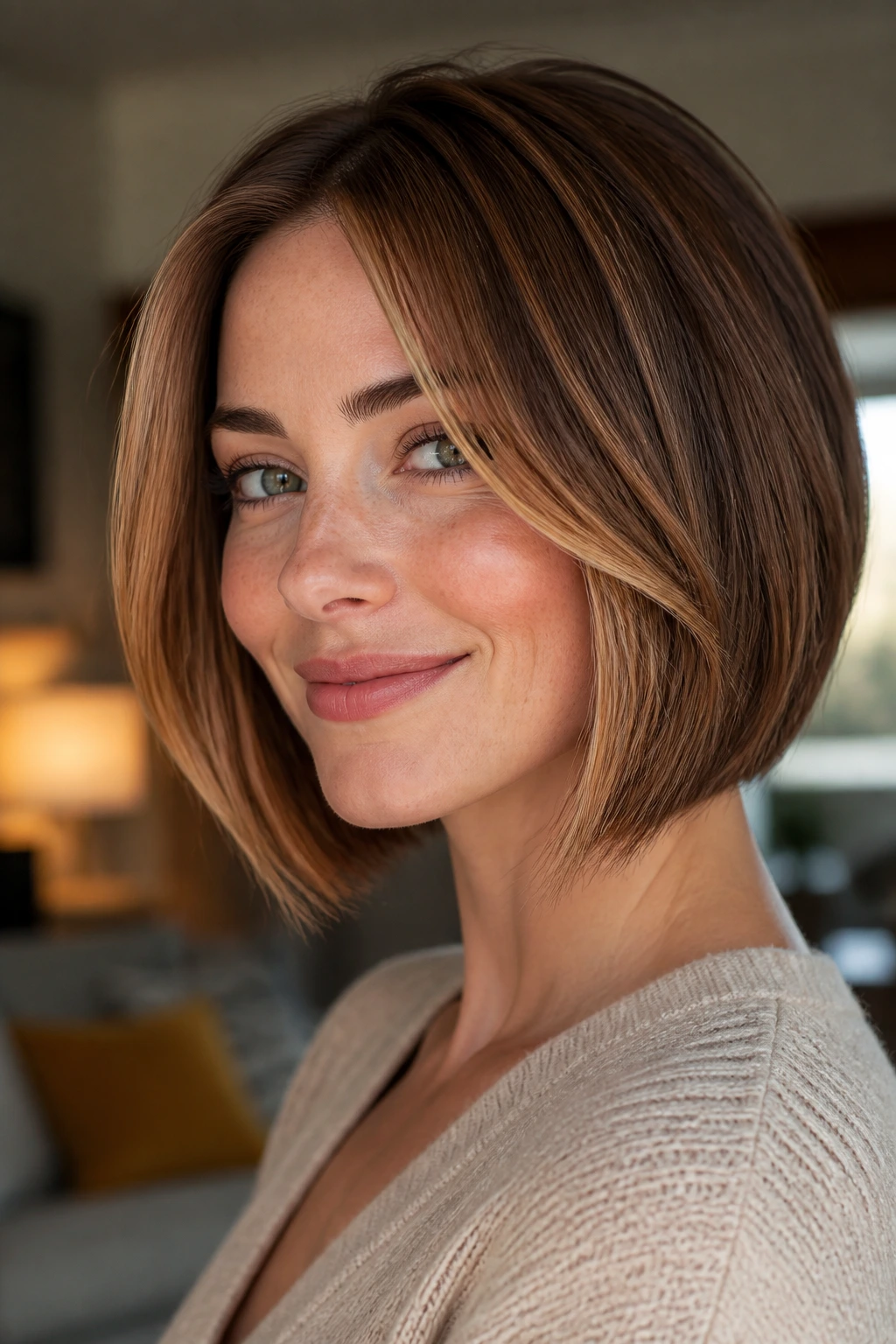
Honey chestnut is warmer and richer than the usual bob highlight crowd, and that’s exactly why it works. On fair skin that feels washed out by beige blondes, the honey adds life back into the face. The chestnut base keeps the root grounded, which is useful if your bob is blunt or slightly rounded.
The highlights should be sliced rather than scattered. That means a few deliberate face-framing pieces that start around the cheekbone and skim down toward the jaw. Those slices lift the face visually without crowding the forehead. If your hair is thick, this look gets even better because the pieces move independently instead of sitting in one flat block.
Best companion cut
A soft A-line bob gives this color room to breathe. The front stays a touch longer, which helps the light descend toward the jawline. Nice trick. Very effective.
11. Vanilla Blonde Bob with Side-Part Brightening
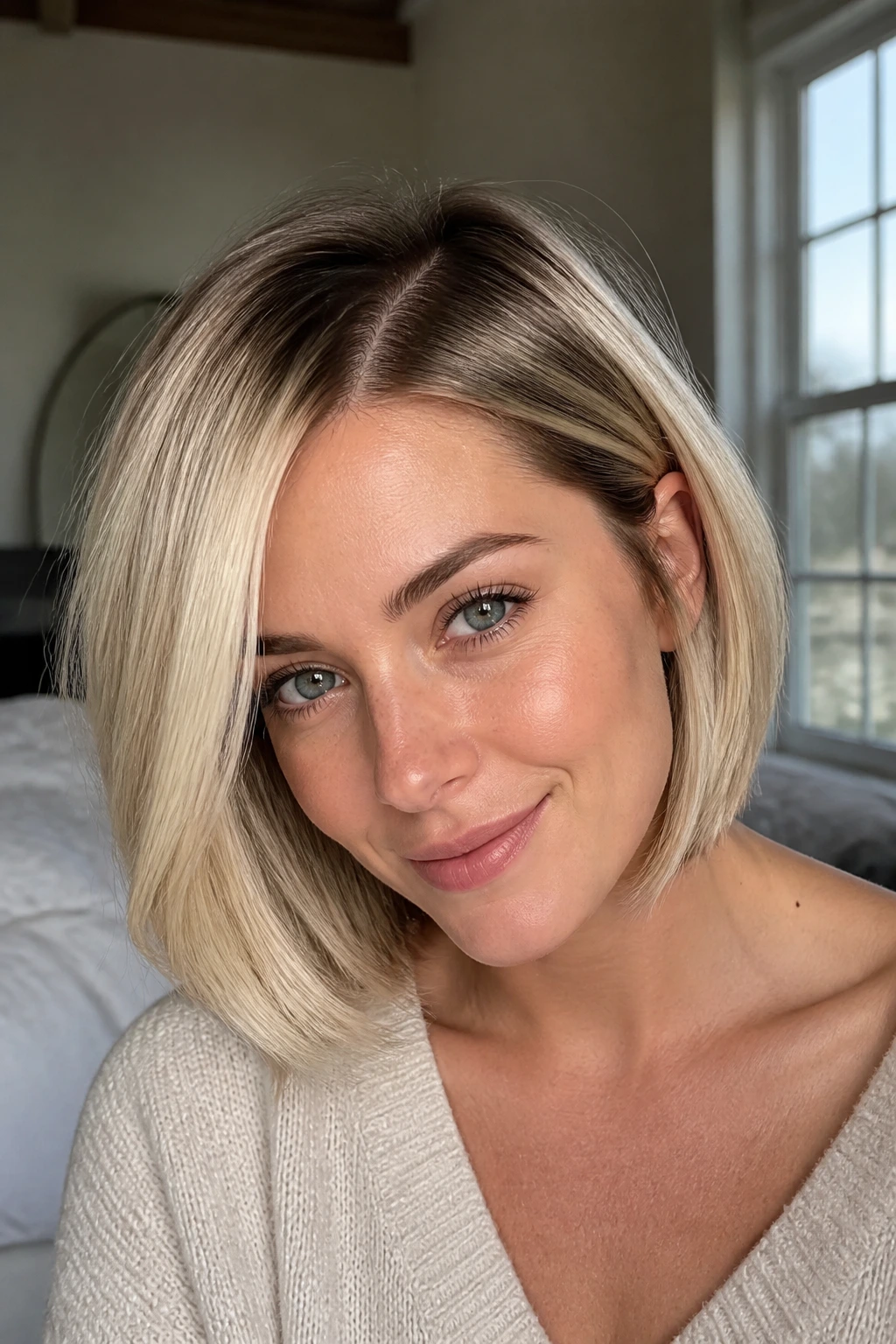
A side part changes everything on a heart-shaped face. It breaks up the width of the forehead before the color even enters the picture. Vanilla blonde builds on that by keeping the blonde creamy instead of icy, which is a much kinder match for fair skin that leans pink or neutral.
The brightening should begin at the side-part line and then sweep diagonally toward the cheekbone. That diagonal is doing a lot of work. It pulls the eye down and in, which softens the top-heavy feeling heart-shaped faces sometimes get from bright hair. The ends can stay a little darker for contrast, especially if the bob is straight and sharp.
This shade looks best when there’s a little shine to it. Not greasy shine. Just a clean gloss at the ends and around the front pieces. That’s where vanilla blonde goes from ordinary to polished.
12. Caramel Ribbon Bob on a Cool Brunette Base
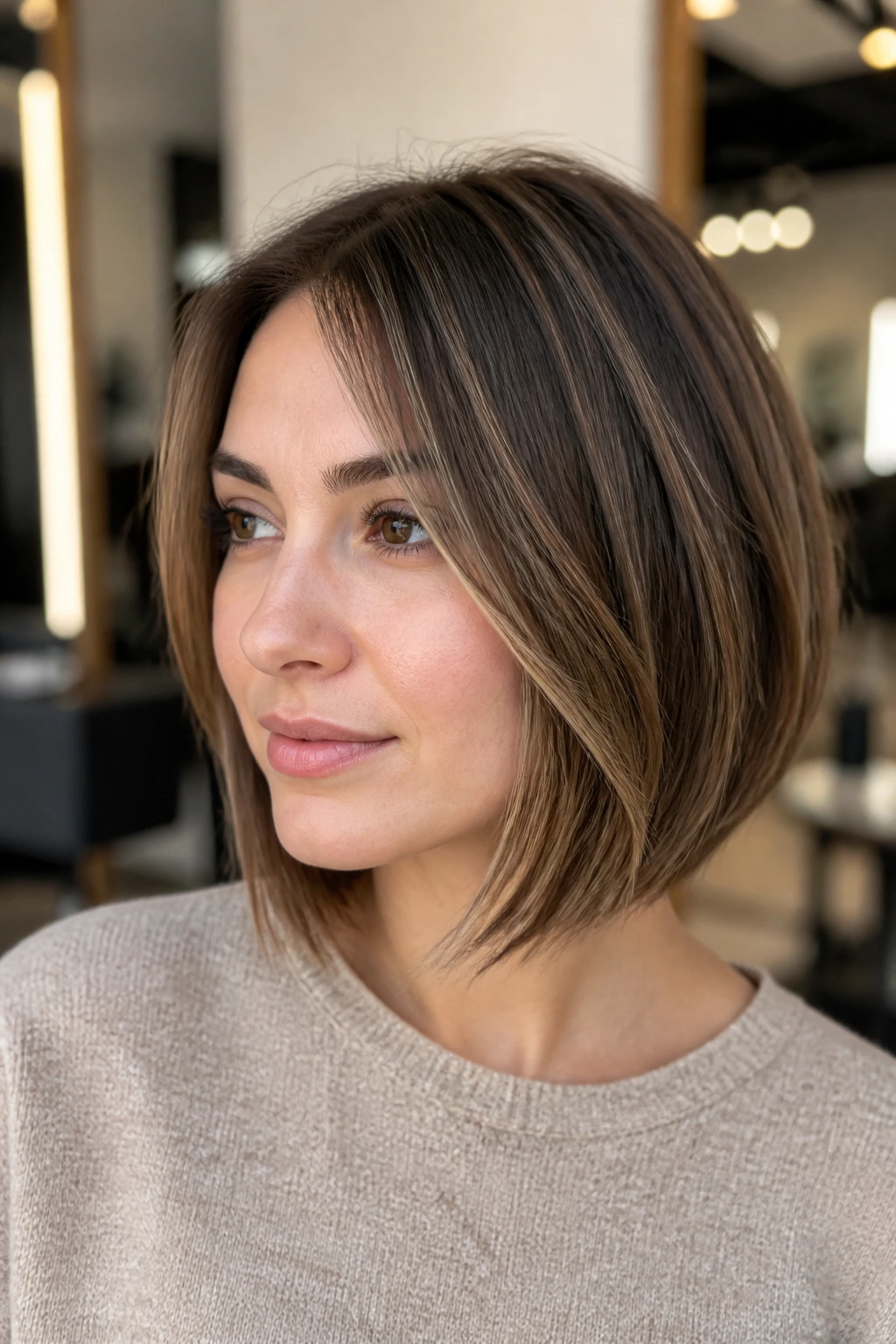
Caramel ribbons on a brunette bob can get noisy if the highlights are too chunky. The better version is narrow, smoky, and placed like thin threads through a cool brown base. On fair skin, that contrast is enough to wake the face up without stealing attention from the eyes.
For heart-shaped faces, the brunette base helps hold the forehead in check. The caramel can then show up lower, around the mid-lengths and ends, where it adds softness to the jawline. Ask your colorist for ribbons no wider than half an inch, and ask them to keep the front pieces feathered instead of blocked.
This style is especially good if you want dimension but do not want maintenance drama. The grow-out is forgiving. The color can fade a little and still look intentional.
13. Espresso Bob with Mocha Threading
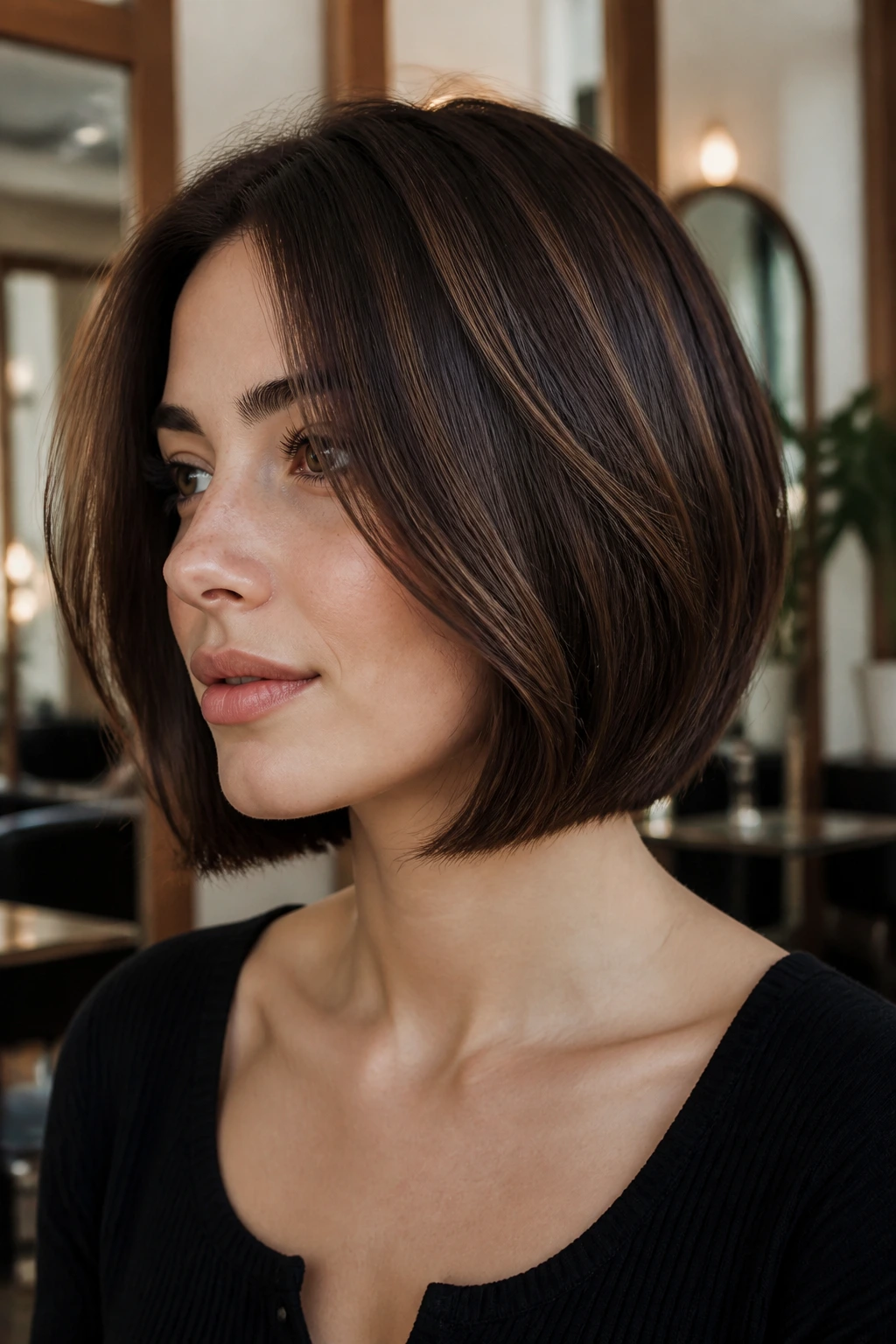
Can a dark bob flatter fair skin? Absolutely. It just needs movement. Espresso on its own can look heavy near the face, but mocha threading breaks it up in a way that feels modern without trying to be blond. The color contrast is low enough to be subtle, yet strong enough to keep the bob from disappearing.
How to keep it from reading heavy
Keep the mocha threads in the mid-lengths and ends, not packed at the roots. That gives the crown a little lift and stops the forehead from feeling boxed in. On a heart-shaped face, the best place for brighter strands is the lower front section, where they can widen the jaw visually.
This is one of the smartest picks for pale skin that prefers depth. It’s flattering in low light, flattering in daylight, and far less likely to look brassy than a warm blonde. If you like eyeliner, a dark bob like this can look fantastic. The hair gives your face a frame instead of competing with it.
14. Pearl Blonde Blunt Bob with Airy Texture
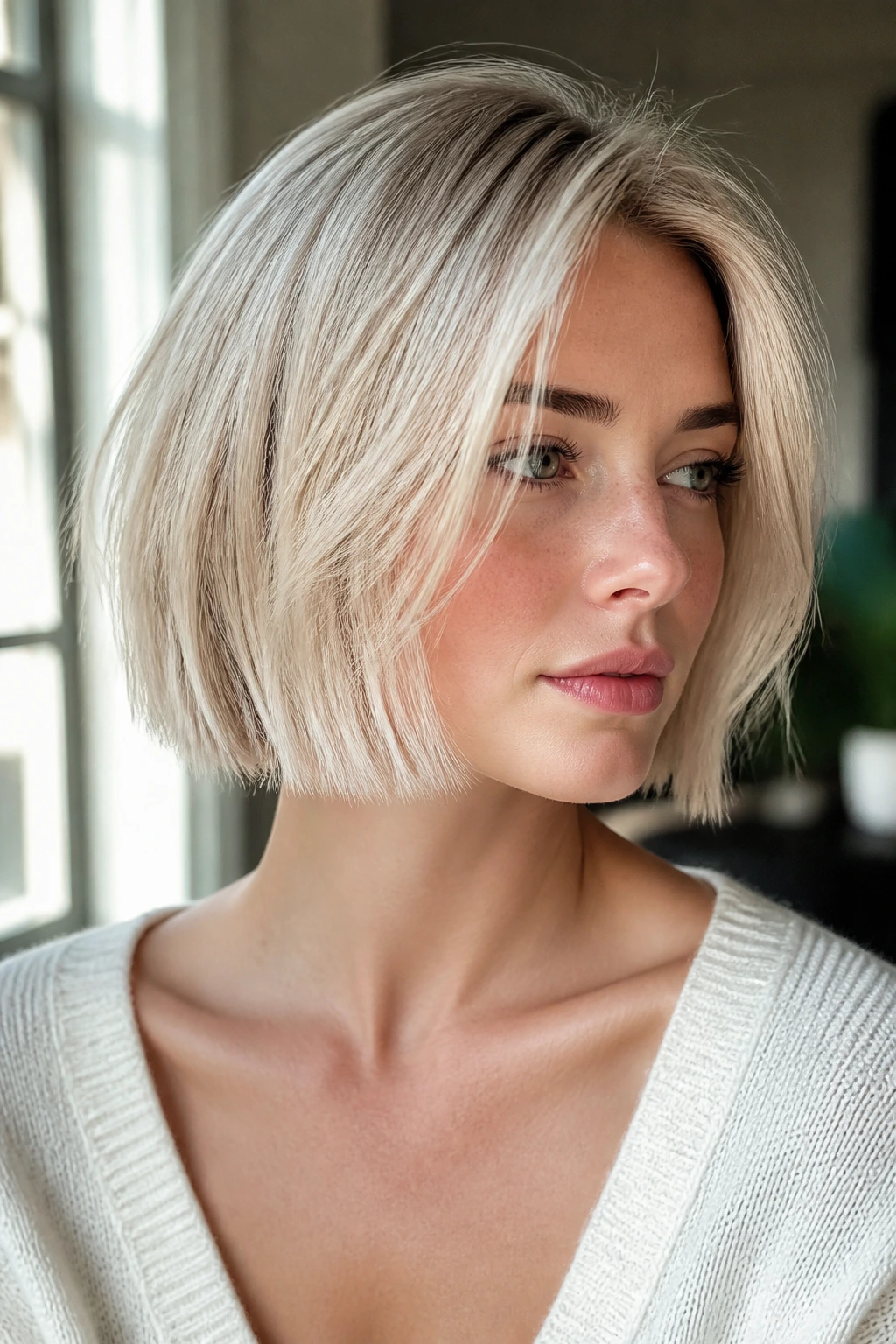
Pearl blonde is cooler and more luminous than a plain beige blonde, which makes it a strong option for fair skin that can handle lightness. On a blunt bob, though, the cut needs a little air. Without texture, the whole style can feel like a sheet. With a few piecey bends, it gets movement.
Heart-shaped faces do well here when the bright pearl tone is kept slightly lower on the head. The front can still be light, but the temples should stay soft. That prevents the forehead from taking over the look. A center part can work if the bob lands right at the jaw, though a slight off-center part usually looks easier.
If you want the color to feel expensive rather than icy, ask for a pearl gloss over pre-lightened pieces. That tiny bit of tone keeps the blonde from going flat under indoor lights.
15. Copper-Kissed Bob with Peach Highlights
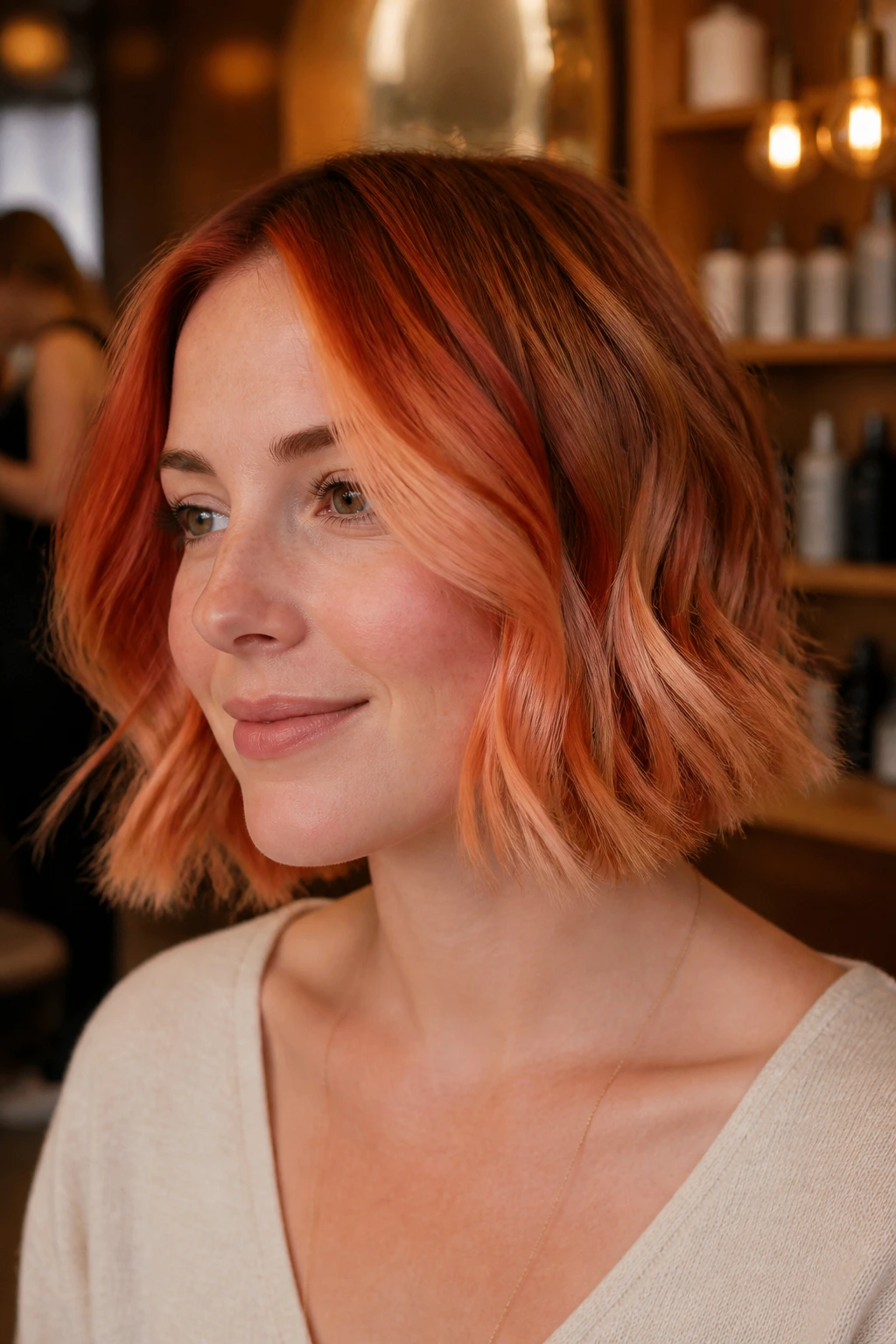
Copper-kissed highlights are one of the best fixes for fair skin that looks tired in ash or beige blonde. The peach in the color wakes the complexion up, and the copper gives the bob a warmer edge that feels deliberate. If your skin has freckles, this is even better. The color seems to belong there.
For heart-shaped faces, keep the strongest copper around the front third of the hair and let the peachy pieces trail into the ends. That gives the lower face more weight without lighting up the entire hairline. The result is soft and a little playful, but not loud.
- Best on: fair skin with peach or neutral undertones
- Not ideal for: anyone who wants very cool hair
- Style with: a loose bend and a side part
16. Bronde Bob with Sunlit Ends
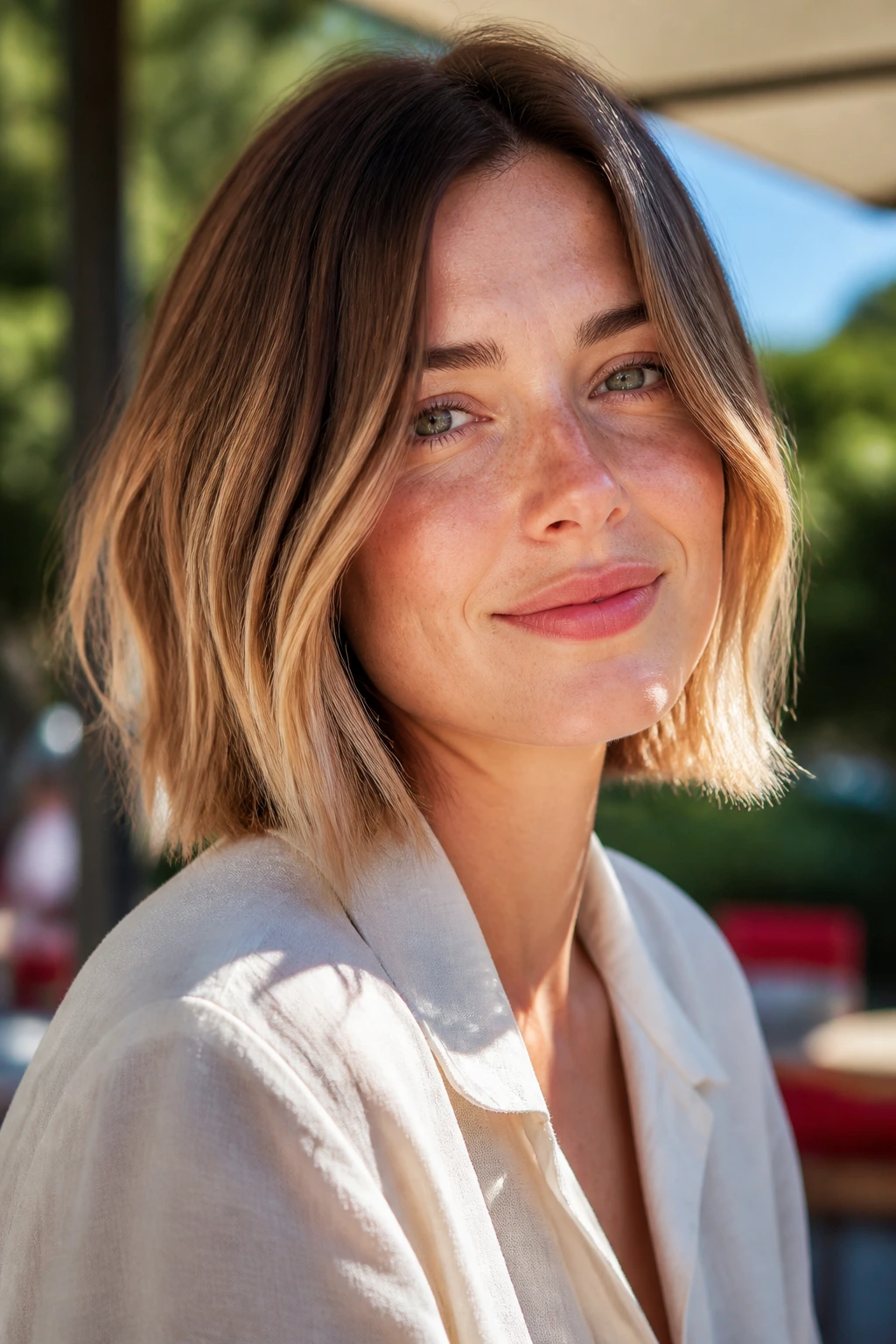
Bronde is the practical answer when you want brightness without giving up depth. It sits between brown and blonde, which sounds vague until you see it on a bob. Then it makes perfect sense. The roots stay grounded, the mids carry warmth, and the ends catch the light like they’ve been outside all day.
Heart-shaped faces get a nice benefit from the dark-to-light fade. The top half stays calm while the ends pull visual attention downward. That’s a good balance for anyone who feels their forehead dominates the face in photos. On fair skin, a bronde bob can be flattering because it doesn’t sit too starkly against the complexion.
This is also one of the easiest color stories to maintain. A gloss can keep the warm brown-beige mix clean, and the grow-out tends to look intentional. No hard line. No panic at the salon chair.
17. Cool Beige Bob with Hidden Lowlights
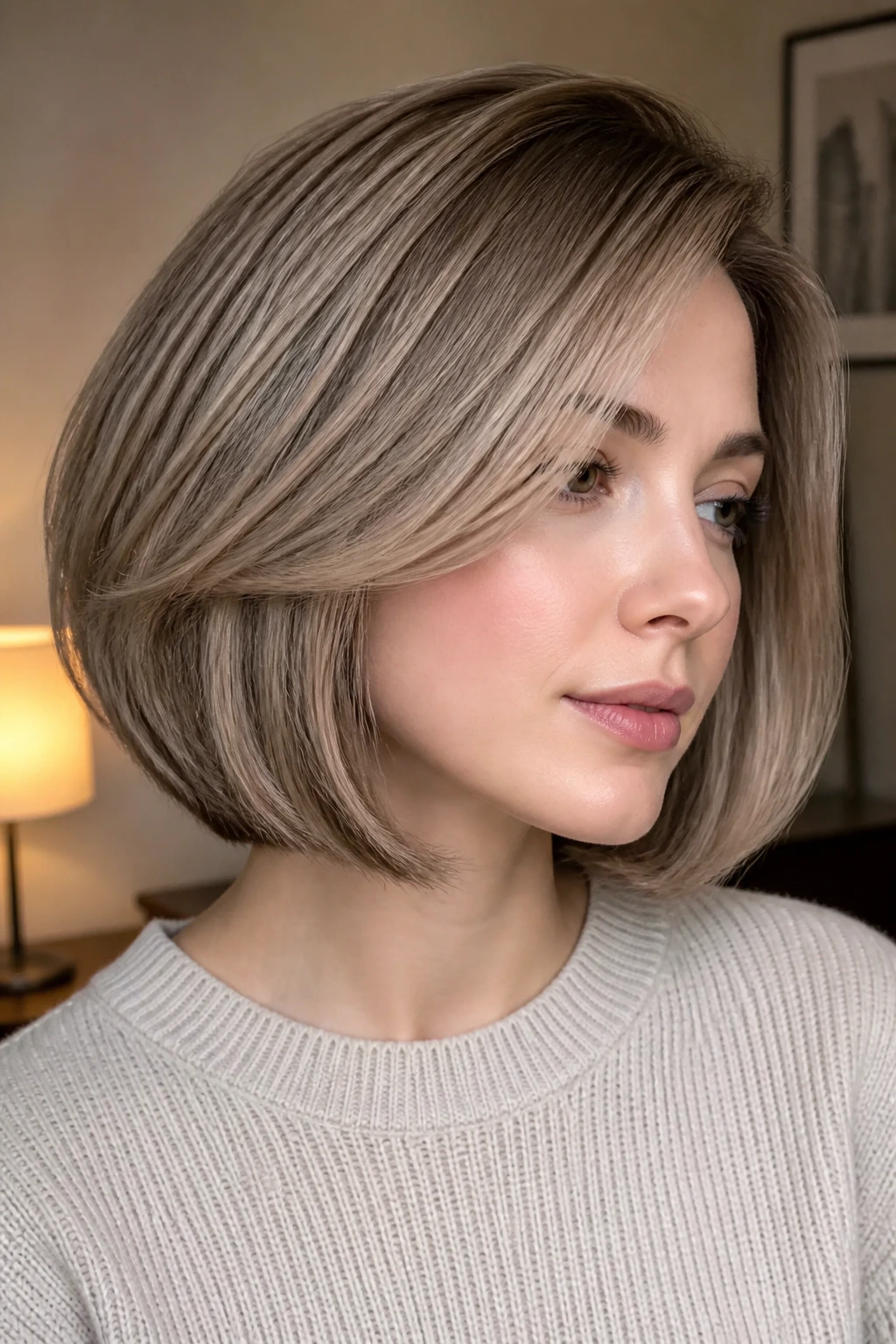
Hidden lowlights are underrated. They sit under the top layer, so the color looks lighter and airier from above while still having depth when the hair moves. On fair skin, that matters because all-over lightness can go chalky fast. A cool beige bob with hidden lowlights avoids that problem without feeling dark.
For a heart-shaped face, this is useful because the underside carries some of the visual weight. The top stays soft, the sides feel fuller, and the jawline gets a little more shape. Ask for lowlights that peek through when the bob is tucked behind the ears or curled under. You don’t need a dramatic contrast. You need a smart one.
This works especially well if your hair is fine and a little slippery. The lowlights create the illusion of thickness, which is worth more than an extra shade of blonde.
18. Platinum Bob with a Soft Shadow Root
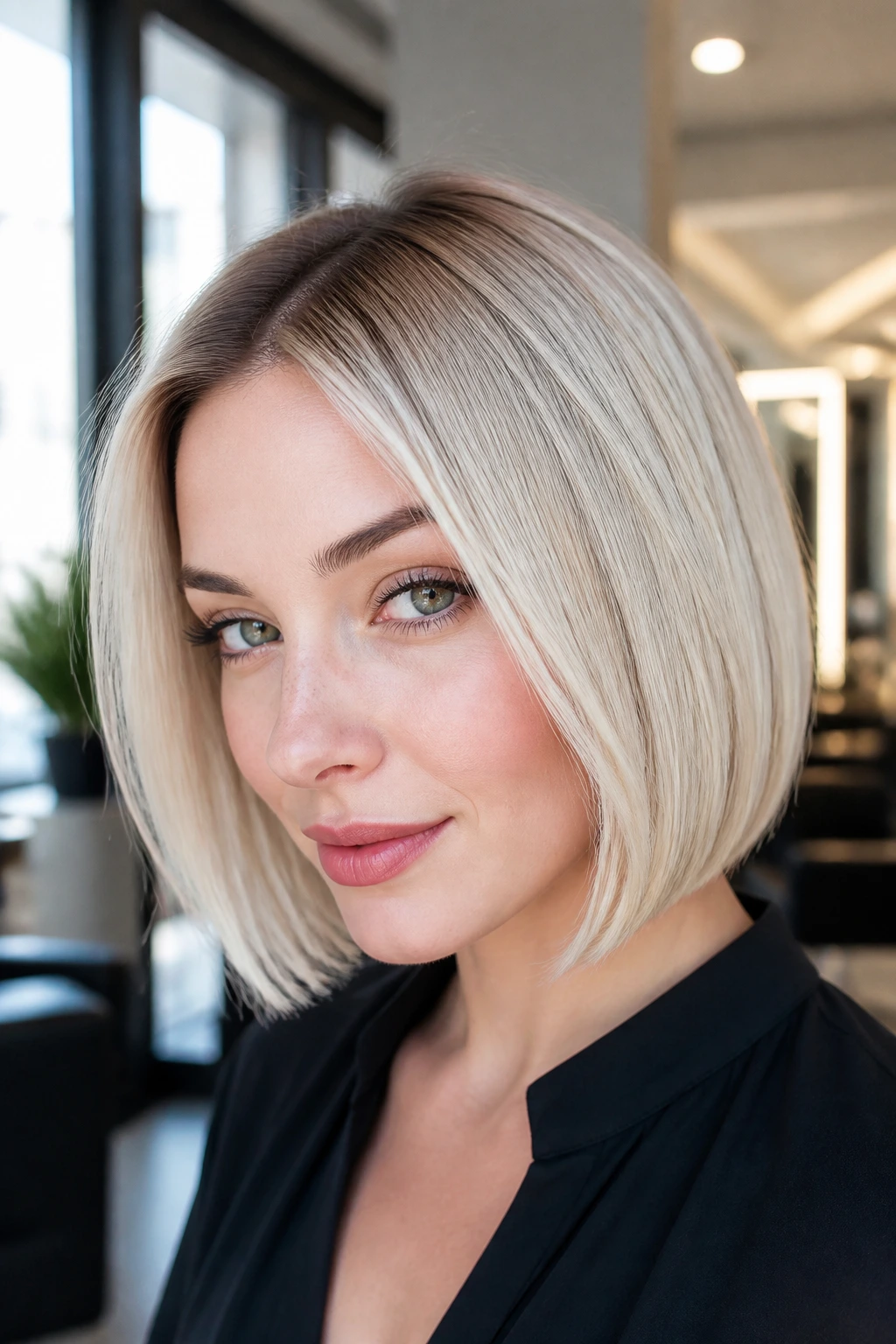
Platinum on fair skin sounds easy, but it is not. If the tone is too harsh or the root is too bright, the forehead can jump forward and the rest of the face can disappear. A soft shadow root fixes that. It gives the platinum somewhere to land.
The strongest version of this look keeps the lightest pieces away from the temple area and lets the brightness show through the ends and outer layer. On a heart-shaped face, that keeps the top of the head from feeling too wide. It also makes the bob look cleaner, because the eye reads the color as a controlled contrast instead of a solid block.
Wear this one straight, tucked, or with a very slight bend. Too much curl and the platinum can feel fluffy. Too little shape and it gets severe. There’s a narrow lane here. Stay in it.
19. Toffee Swirl Bob with Piecey Layers
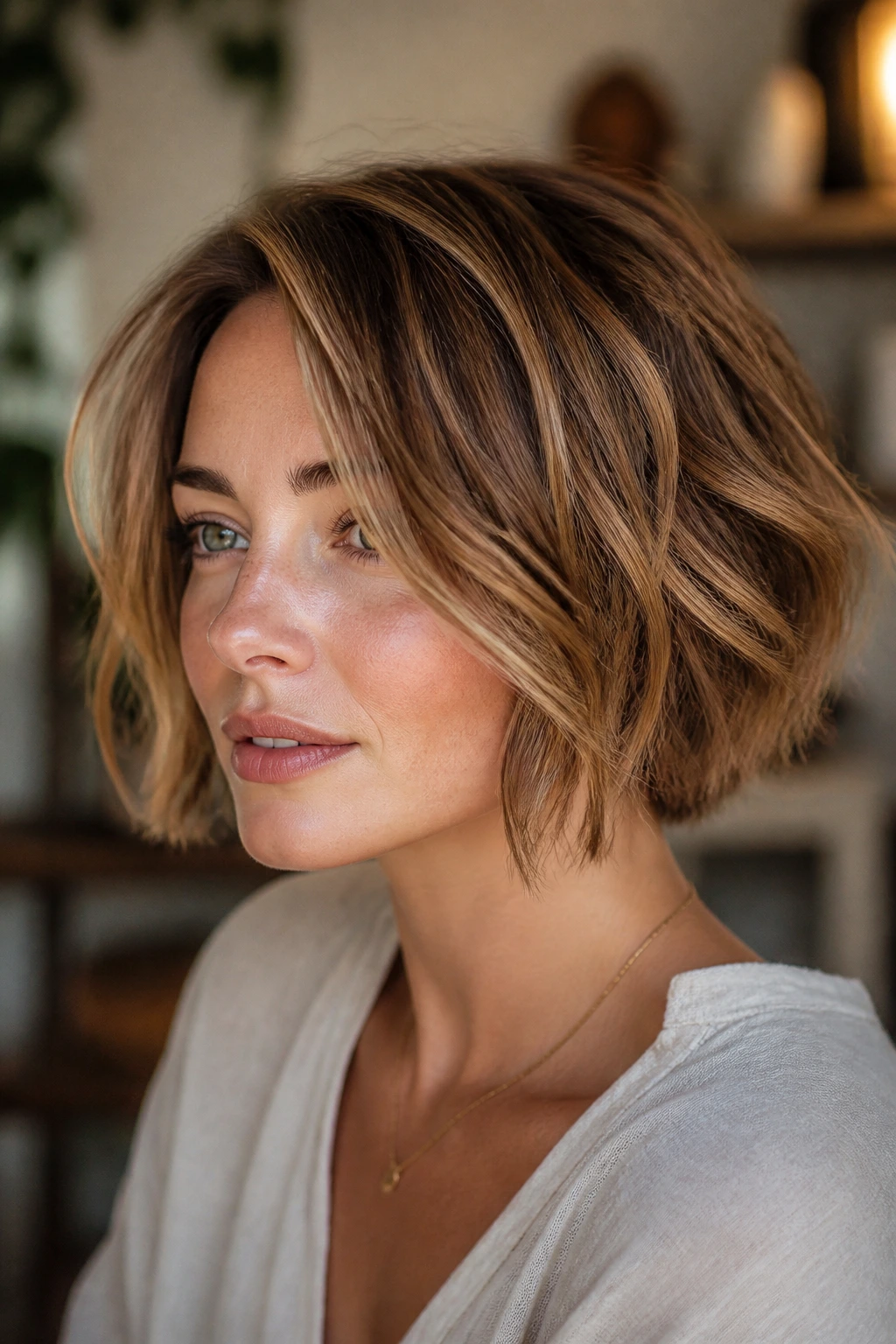
Toffee swirl sounds soft, and that’s exactly the point. This version works when the highlights follow the movement of the cut instead of sitting on top of it. Piecey layers give each swirl a place to live, so the color reads in little pockets rather than one big surface.
Why the layers matter here
A heart-shaped face does well when the highlight pattern widens the lower half a bit. Piecey layers help that happen. The brighter toffee can start near the cheekbones, then break apart toward the jaw and ends, which keeps the forehead from looking over-bright.
This is a nice option if you like texture spray and a slightly undone finish. The highlight pattern looks good when the hair is not perfect. In fact, it looks better. That’s rare with blonde work, and I like it for that reason alone.
- Best technique: ask for swirled ribbons, not heavy stripes
- Best cut: a layered bob with movement at the ends
- Best finish: air-dried bends or a loose flat-iron wave
20. Smoky Brunette Bob with Honey Peekaboo Panels
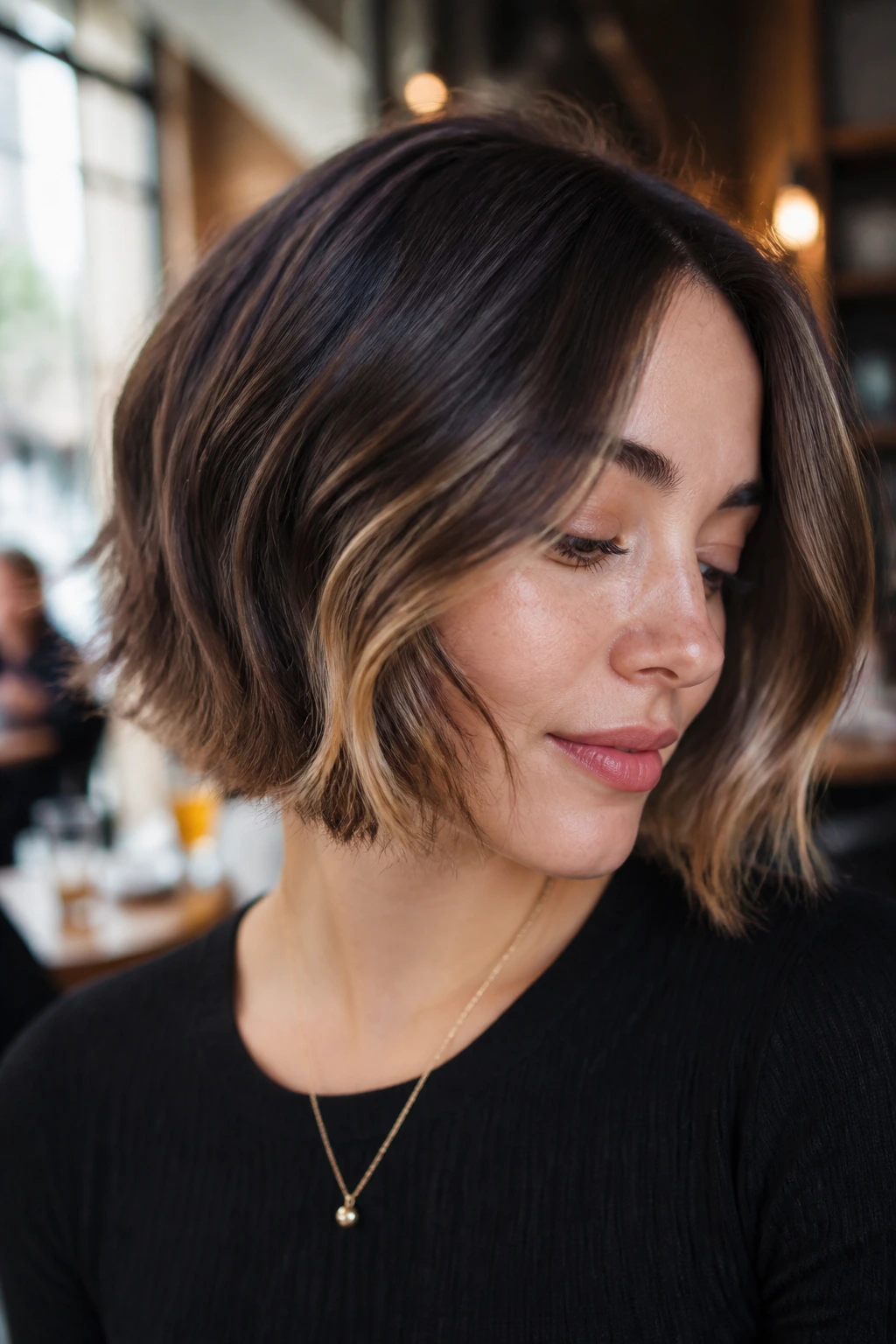
Not every highlight has to sit on the surface. Peekaboo panels let the honey color flash through when the hair moves, which is a lovely way to keep fair skin from getting overwhelmed. The smoky brunette base does the stabilizing. The honey panels do the brightening. The bob gets to do both jobs.
For a heart-shaped face, the hidden placement is useful because it avoids crowding the forehead. The color shows lower and deeper in the haircut, usually around the sides and underside. That draws the eye toward the jawline and neck rather than the temples. If your hair is thick, this can also cut down on bulk without stripping out dimension.
This style feels a little more playful than a standard brunette bob. It’s the one I’d pick for someone who likes subtle surprises.
21. Apricot Bob with Soft Gold Streaks
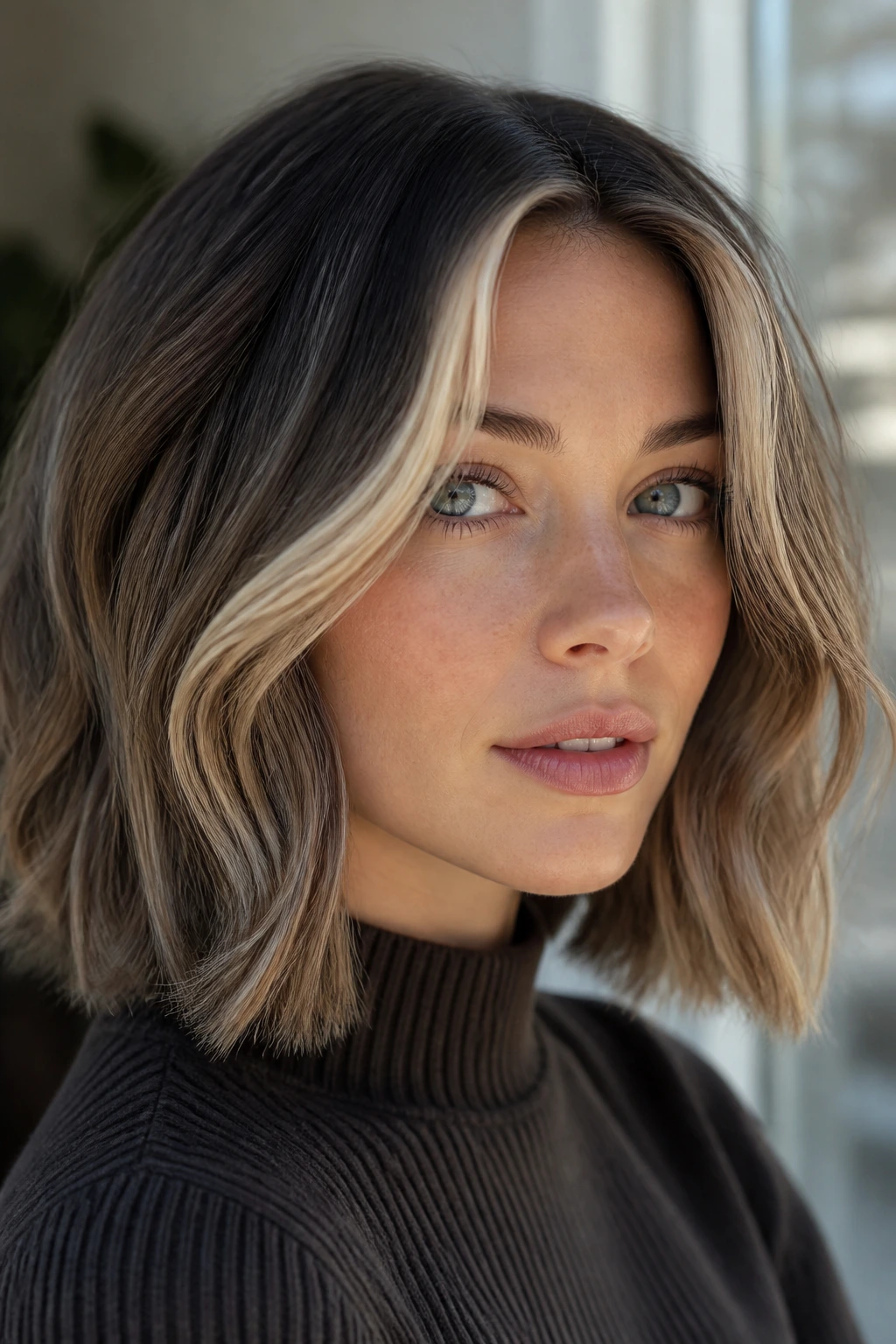
Apricot is one of those shades that can rescue fair skin from looking flat. It has warmth, but it’s gentler than copper and less buttery than gold. On a bob, that matters because the cut already brings structure. The color just has to soften the face around it.
Heart-shaped faces look best when the apricot streaks land around the outer edges of the front sections and then continue through the lower lengths. That way the light sits closer to the jawline. If the crown is too bright, the face can start to feel top-heavy. Keep the strongest warmth below the eyebrow line and the look stays balanced.
This is a nice choice for springy texture, but it can be just as pretty on straight hair. The gold streaks catch movement either way. Not loud. Just alive.
22. Icy Sand Bob with a Narrow Money Piece
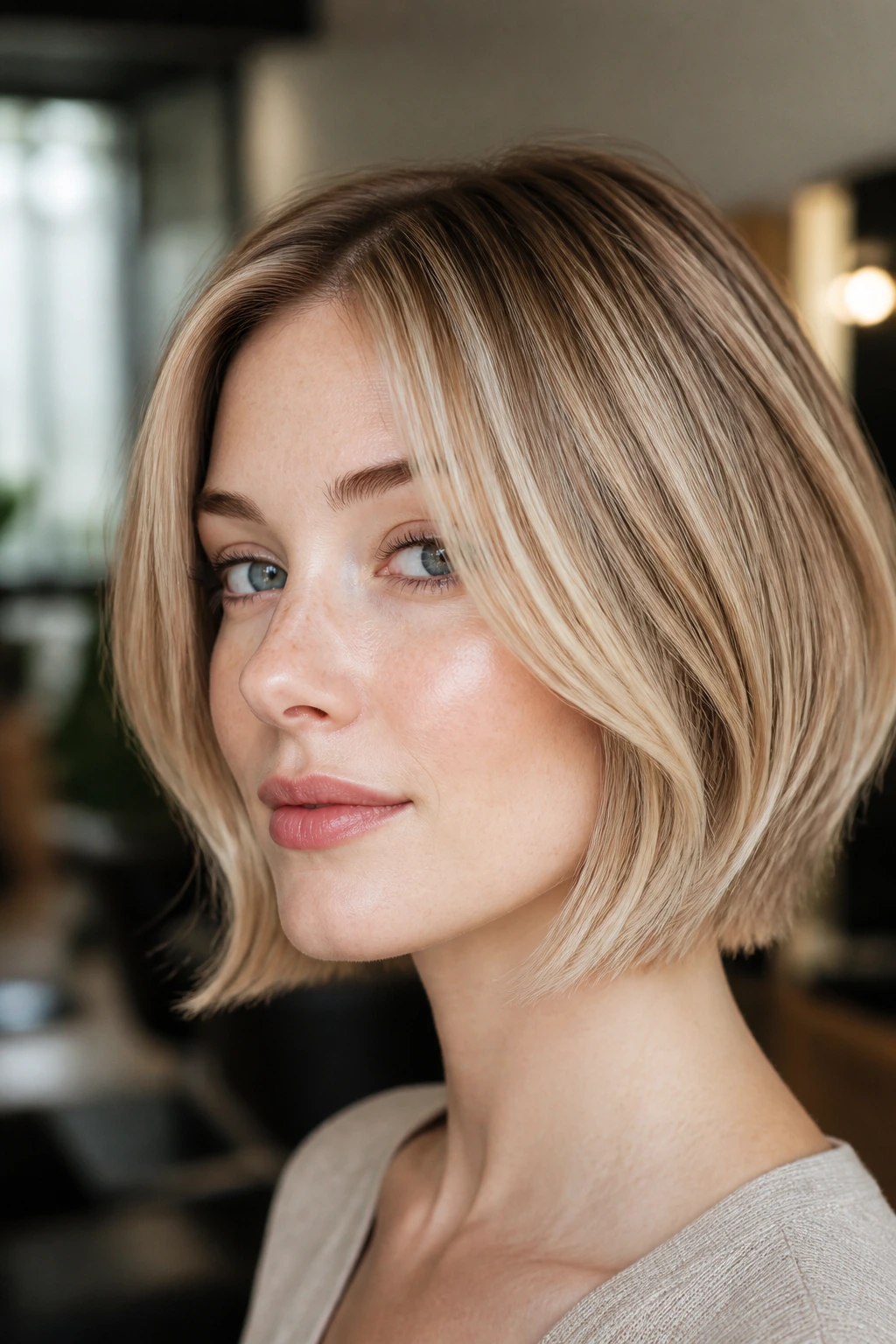
A money piece can be a gift or a mistake. Too wide, and it blows up the forehead on a heart-shaped face. Too icy, and fair skin can look drained. The narrow money piece version solves both problems by keeping the brightness slim and controlled, like a fine line drawn exactly where it should be.
The money piece rule
Keep the front strip only a shade or two lighter than the rest of the blonde, not four shades lighter. That lets it brighten the eyes and cheekbones without turning into a block. On an icy sand bob, the rest of the color should stay softly beige so the face keeps some warmth.
This works best with straight styling or a slight inward bend at the ends. When the front pieces curve toward the jaw, the entire face looks narrower and better proportioned. Small detail. Big payoff.
23. Toasted Almond Bob with Choppy Ends
Toasted almond is warm without being brass. On a bob with choppy ends, that warmth gets a little edge, which is useful if your skin is fair but not fond of pale blondes. The choppy cut keeps the highlights from sitting in a stiff line, and that matters more than most people think.
The safest placement is through the middle and lower thirds of the hair, with just a few lighter pieces around the front. Heart-shaped faces need that lower visual weight. It stops the forehead from dominating and gives the jawline more presence. If your hair is thick, this look can be especially good because the choppy texture breaks up the bulk.
A good texturizing spray makes this one sing. Use too much, though, and the ends can go dry. A light hand is better.
24. Soft Cocoa Bob with Champagne Veil
Soft cocoa is for the person who wants depth first and light second. Fair skin often looks best with at least some contrast around the face, and this brown base gives it that. The champagne veil lifts the surface just enough that the bob doesn’t feel dark or flat.
For a heart-shaped face, the veil should sit in the front pieces and around the lower curve of the bob. That’s the area that helps balance the wider forehead. If the champagne is too concentrated at the temples, the look can widen the top of the face in a way you’ll notice in photos. Keep the brightness lower and it behaves beautifully.
This is one of the more elegant options in the group, and I mean that in a practical way. It wears well with simple makeup and doesn’t need constant toner appointments to stay interesting.
25. Warm Beige Bob with Jawline-Brightening Babylights
This is the safest salon ask if you want the whole category to work without a lot of drama. Warm beige is soft enough for fair skin, and babylights are thin enough to keep the face shape under control. The little highlights around the jawline are what make it feel tailored. They widen the lower face in a quiet, useful way.
A heart-shaped face usually benefits from that lower brightness. It keeps the eye from hanging out only at the forehead and eyes. The bob feels more complete. If you like a side part, even better. If you prefer the center, make sure the front pieces curve toward the chin rather than straight down.
Best for low-maintenance color: babylights grow out gently, and warm beige usually needs less correction than ash blonde. That alone makes this one worth a hard look.
Why This Color Map Works Better Than Random Blonde
The big mistake with bob highlights is treating the haircut like a blank canvas. It isn’t. A bob changes quickly because every inch matters, and on fair skin with a heart-shaped face, the wrong placement shows up fast. A heavy money piece at the temples can widen the forehead. A yellow blonde at the crown can flatten the complexion. Chunky streaks at the ends can make the bob look dated instead of deliberate.
What works better is a color map that respects the shape of the face. That means brighter pieces lower on the head, softer depth at the root, and enough contrast to keep the hair from turning into one pale blur. The best versions usually have at least two of these elements working together: a shadow root, a face-framing ribbon, or a lowlight tucked under the top layer.
Fair skin is not one note. Some complexions lean rosy and need beige or pearl. Others lean peachy and come alive with champagne or apricot. A good bob highlight doesn’t fight that. It uses the right tone and lets the haircut do the rest.
Essential Tools for These Looks
-
Tail comb: Helps you keep sectioning clean when you’re asking for precise face-framing highlights or a narrow money piece.
-
Color clips: Useful for holding the top and bottom layers apart so the lowlights stay hidden where they should.
-
1-inch curling iron or wand: The easiest way to show off ribbons and babylights without making the bob look too curly.
-
Round brush: Best for a smooth blowout that keeps beige, champagne, and pearl tones glossy.
-
Heat protectant spray: Fair hair can look fried fast; a light mist before styling keeps the ends from going crispy.
-
Purple shampoo or blue shampoo: Purple is usually the better fit for blondes; blue is better when brunette ribbons start to go orange.
-
Color-safe shampoo and conditioner: Keeps toner from washing out too quickly and helps the highlights stay soft instead of rough.
-
Glossing serum or lightweight oil: One drop on the ends can make a bob look finished instead of dry.
Smart Shade Selection and Salon Notes
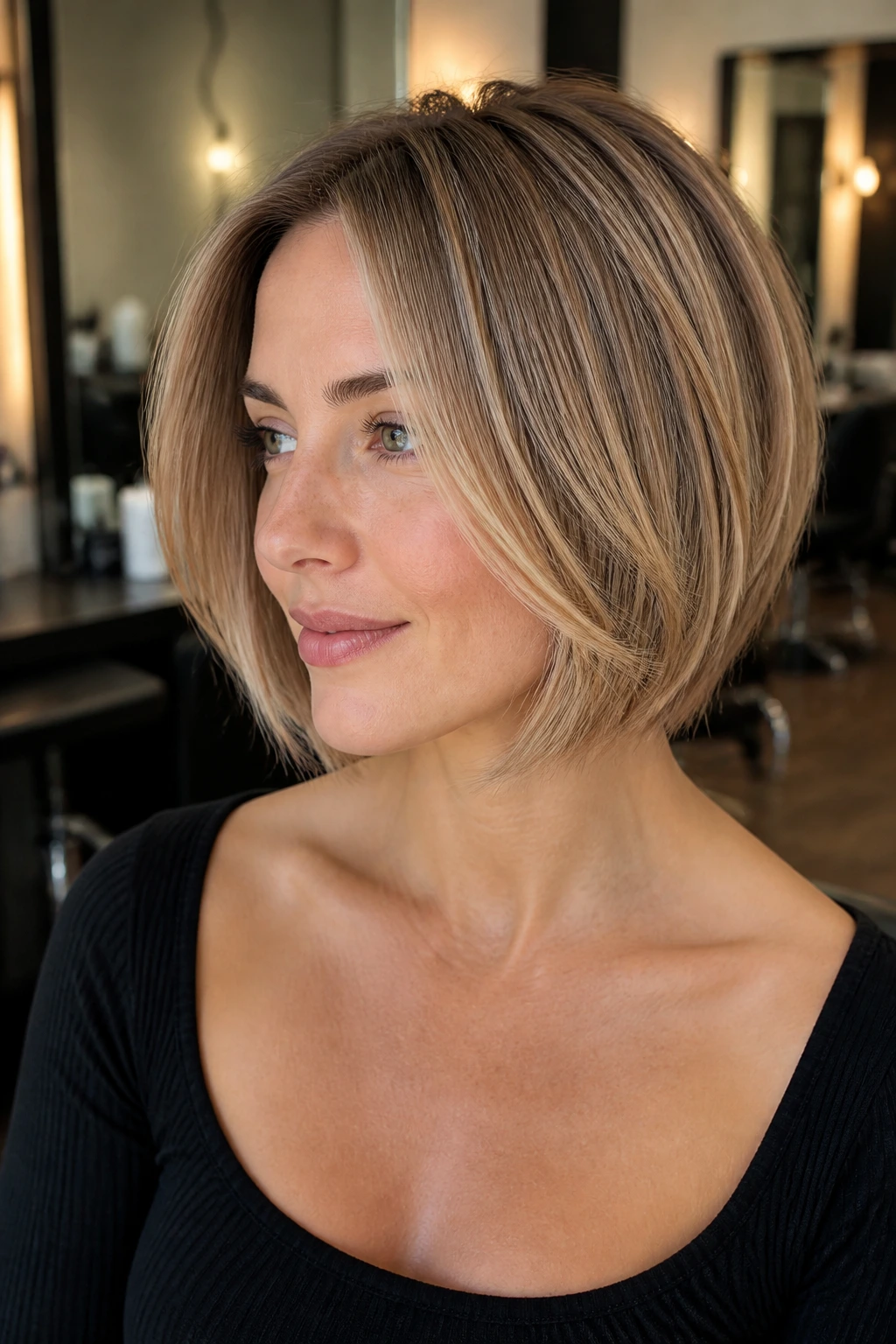
Fair skin asks for more judgment than people think. The wrong blonde can make pale skin look flat, but the right one can sharpen the eyes and cheeks in a way makeup never quite does. If your skin leans pink, pearl, beige, and muted champagne usually behave better than strong gold. If your skin has a peach or golden cast, rose gold, apricot, and soft honey tend to look more natural. Cool ash can work too, but only if the face still has enough depth around it.
The other half of the equation is placement. Heart-shaped faces usually do better when the light starts lower than the temples and travels toward the cheekbones, jawline, or ends. A half-inch root smudge helps. So does keeping the brightest face-framing pieces narrow. Thick front pieces can be pretty on other face shapes. On this one, they often widen the forehead more than you want.
Bring photos, but bring the right photos. You want examples with similar skin tone and a similar face shape, not just a pretty blonde on someone else. Tell the colorist whether you want low-maintenance grow-out, how often you’re willing to tone, and whether you like warmth or prefer a cooler finish. Those details matter more than the trend name.
How to Wear and Style These Bobs
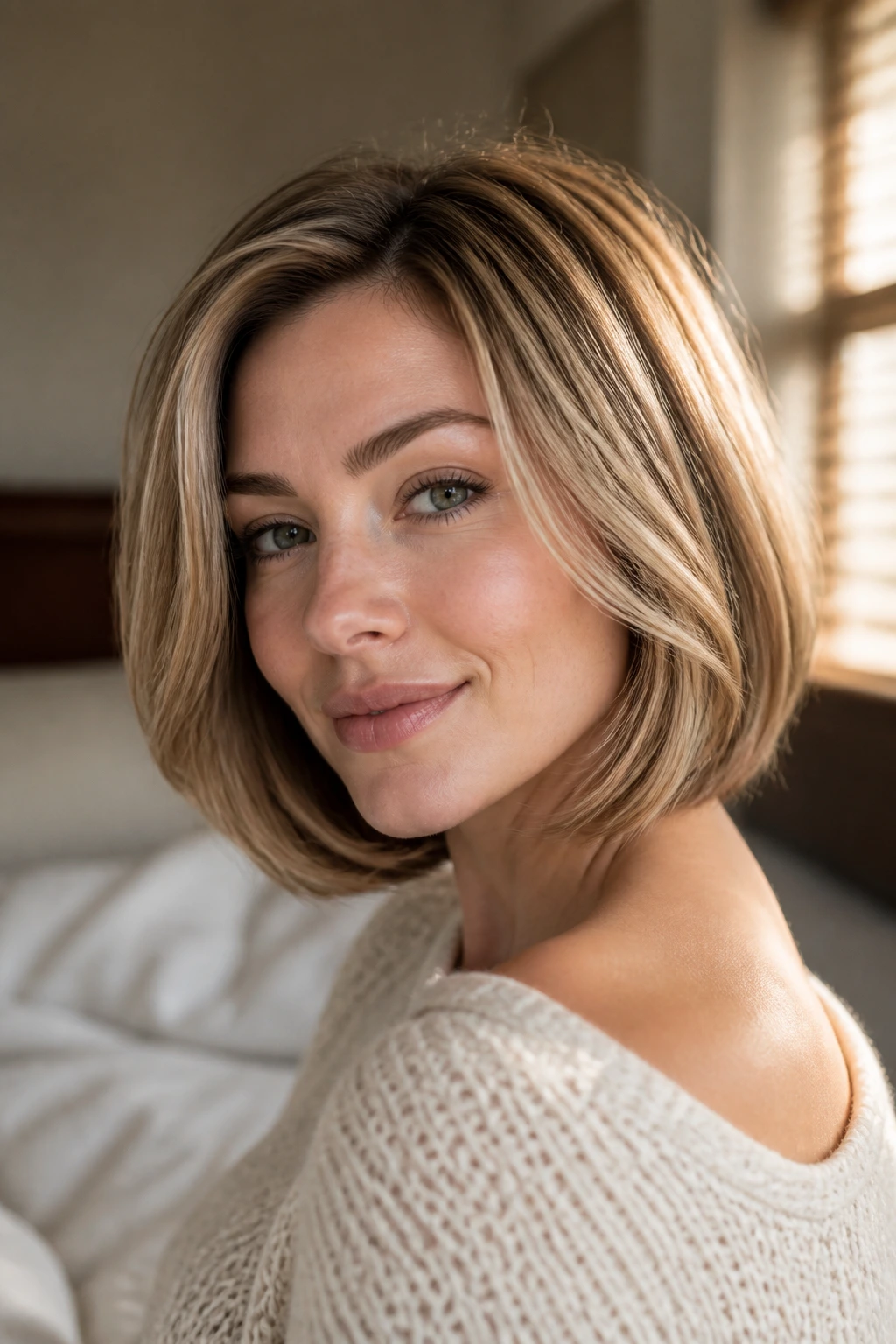
Presentation: A bob with highlights looks best when the part and the finish agree with the face shape. A soft side part eases the width of the forehead, while a center part works better if the front pieces fall toward the jaw instead of straight down.
Texture: A loose bend from a 1-inch iron shows off ribbons, babylights, and peekaboo panels far better than poker-straight hair. Keep the bend soft; tight curls make the color look busier than it is.
Finish: Use a pea-sized amount of serum on the ends, not the roots. Fair blondes and pale brunettes can go stringy fast if the product creeps too high, and the top of the bob should stay airy.
Pairings: These shades look especially good with rosy blush, soft taupe eyeshadow, clean brows, and earrings that don’t fight the hairline. Tortoiseshell frames, slim hoops, and simple collarbones-heavy necklines all let the highlights do their job.
Proportion: If the bob ends at the jaw, make sure the lightest pieces are not all above the cheekbones. The lower half of the face needs a little help. If the bob is longer, the ends can carry more brightness and still keep the face balanced.
Additional Shine Boosters and Personal Tweaks
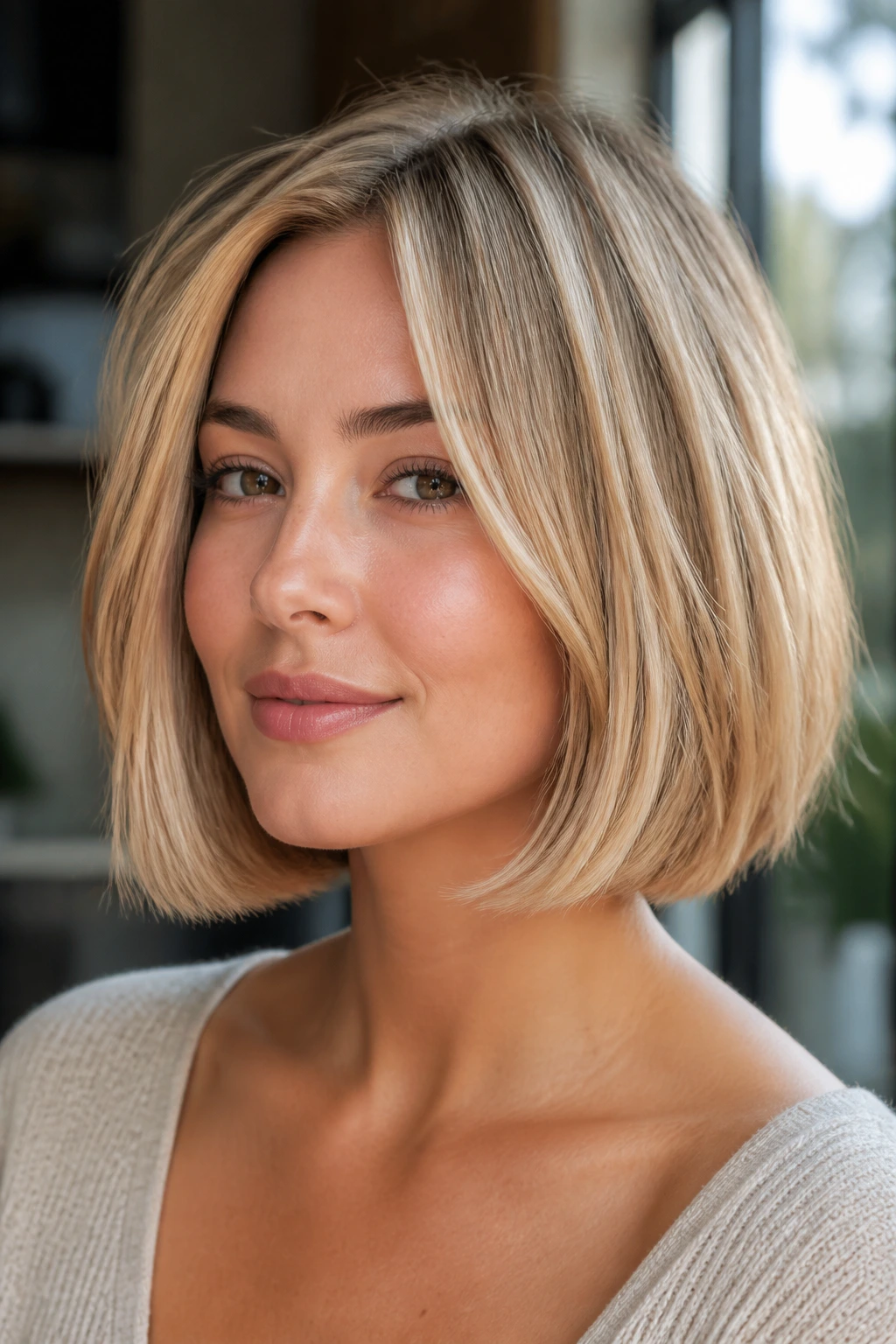
Tone Boost: A clear or beige gloss between color appointments keeps creamy blondes from turning dull and keeps brunettes from looking flat. Ask for a gloss that is one shade softer than your highlight level, not darker.
Placement Trick: If your forehead feels wide, push the brightest pieces a little lower at the temples and let them flare out near the cheekbones. That one move changes the whole shape of the bob.
Texture Trick: Fine hair usually benefits from slightly chunkier highlight ribbons, while thick hair looks better with finer weaving. The highlight size should match the hair density or the color starts to feel pasted on.
Make-It-Yours: If you like warmth, choose champagne, honey, apricot, or caramel. If you like a cooler finish, go for beige, pearl, mushroom, or ash. If you want the lowest maintenance option, ask for babylights with a soft root shadow and stop there.
Maintenance, Toning, and Grow-Out Guidance
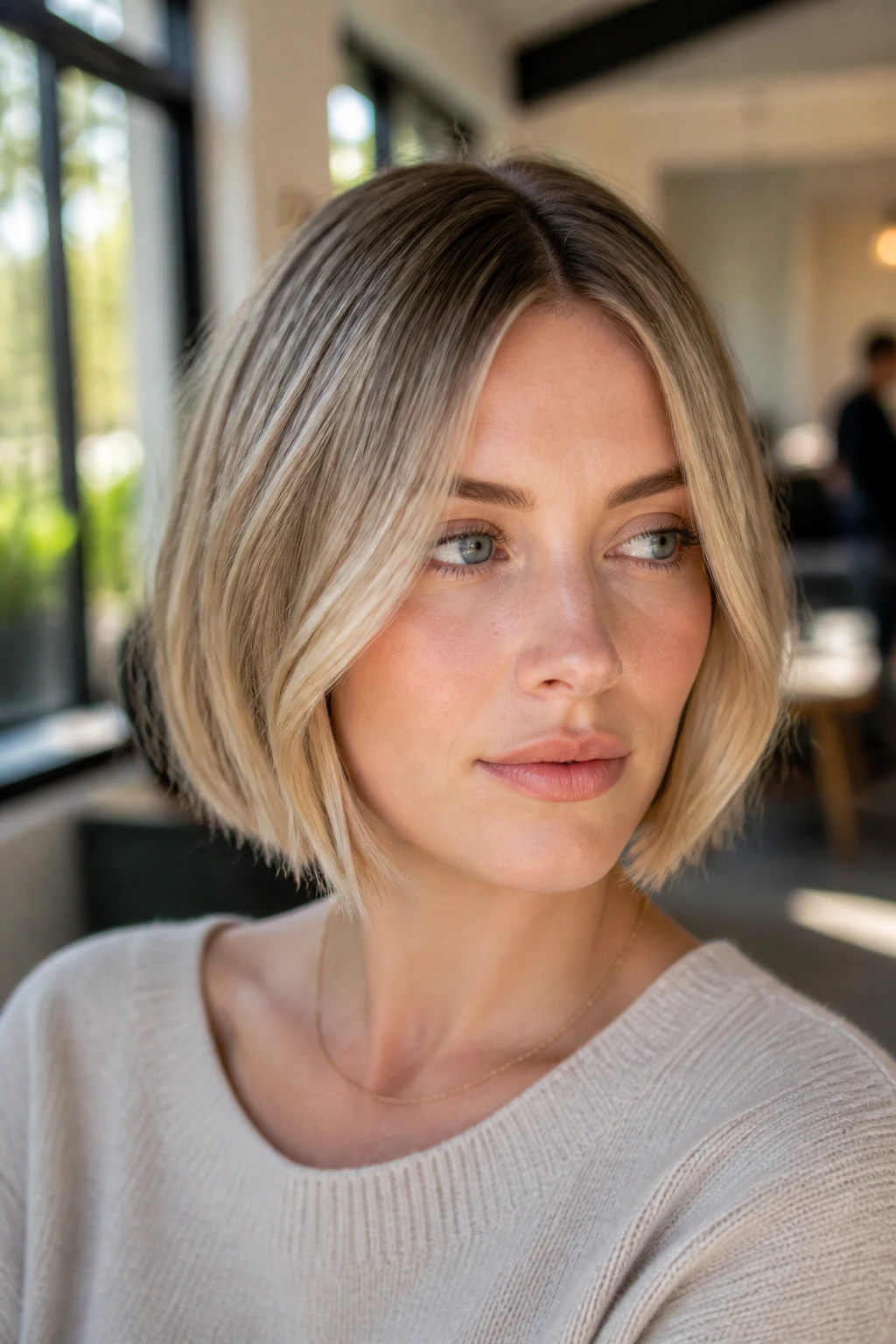
Bob highlights need a little more discipline than longer hair because the cut changes the shape of the color every time it’s trimmed. A light dusting of the ends every 6 to 8 weeks keeps the bob clean. Partial highlights usually hold up well for 8 to 10 weeks, while a gloss or toner refresh often belongs somewhere around the 4- to 6-week mark if you like the tone crisp.
Purple shampoo is useful, but don’t overdo it. Once a week is enough for most blondes. Two times a week can be too much unless your hair pulls very yellow. For brunettes with caramel or honey ribbons, blue shampoo may help when warmth turns brassy, but again, use it sparingly. Too much tonal shampoo can make the hair look dry and cloudy.
If you want the grow-out to stay pretty, ask for a root smudge and softer babylights instead of hard foil lines. The color will blur better as it grows. That matters a lot on a bob, where even half an inch of regrowth can change the whole mood.
Common Mistakes to Avoid
Brightening the temples too much: This is the fastest way to make a heart-shaped face look wider at the top. Keep the strongest light below or beside the temples, not across them.
Choosing the wrong blonde temperature: Stark icy blonde on pink fair skin can look chalky; heavy gold on cool fair skin can go orange. The fix is simple: match the tone to the undertone, then soften it with a gloss if needed.
Skipping lowlights: A bob with only highlights can turn into a flat pale sheet. Add a few deeper strands under the top layer so the haircut has depth and the ends don’t blur into one color.
Going too chunky on short hair: Wide ribbons on a bob can look stripey because there isn’t much length to break them up. Thin weaving usually looks better, especially around the face.
Ignoring the cut: Highlights can’t save a bob that is shaped wrong for the face. If the ends flare too hard at the jaw or sit too blunt at the widest part of the forehead, the color has to work overtime. Get the silhouette right first.
Over-toning the blonde: If the hair starts to look gray, dusty, or flat, the toner is doing too much. Step back from purple shampoo and ask for a softer beige or champagne gloss at the salon.
Variations and Adaptations to Try
Soft Money Piece Edit: Keep the base neutral beige or light brown and add one narrow money piece on the side part. This is a good fit if you want brightness near the face without a full head of light strands.
Cool-Girl Mushroom Bob: Use a taupe brunette base with pearl or ash ribbons through the outer layer. It works well on fair skin that looks better in silver jewelry than gold, and it gives the bob a quiet, modern finish.
Warm Honey Lift: Replace beige tones with honey and soft caramel, then keep the lightest strands around the cheekbones and lower front sections. This suits fair skin that needs color, not frost.
Low-Maintenance Bronde: Ask for a brunette base, sunlit ends, and a soft root shadow. The grow-out stays neat, and heart-shaped faces benefit from the lighter ends drawing the eye downward.
Pale Peach Glow: Swap champagne for apricot and pale copper, especially if your complexion has freckles or a peach undertone. It warms the face without making the bob look too red.
Ultra-Subtle Babylight Bob: Use very fine highlights throughout the mid-lengths with a low-contrast toner. This is the quietest option here, and it’s the one to choose if you want dimension that shows up mostly in movement.
Questions People Ask Before They Book the Color
Which highlight shade is safest for fair skin?
Beige and champagne are usually the easiest starting points because they soften pale skin without turning it yellow or chalky. If you know your undertone is cool, pearl or mushroom can be just as flattering.
Do heart-shaped faces always need a side part?
No, but a side part often helps because it breaks up forehead width before the color even comes into play. A center part can still work if the front pieces are kept soft and the brightness sits lower on the head.
Can a blunt bob still have flattering highlights?
Yes, but the highlights need more movement inside the cut. Thin babylights, a shadow root, or a slightly beveled edge keep the blunt line from looking boxy.
What if my highlights make my forehead look wider?
The fix is usually placement, not color. Ask for the brightest pieces to move lower toward the cheekbones and jawline, and keep the temples a shade softer.
Are lowlights useful on fair skin?
Very. They stop pale blonde from looking flat and give the bob some shape under the top layer. On fine hair, they also make the cut look fuller.
How often should bob highlights be toned?
Most blondes stay clean with a gloss every 4 to 6 weeks, though some can go longer if the shade is beige rather than icy. Brunette-based looks usually need less frequent toning.
What if my hair turns brassy quickly?
That usually means the underlying warmth is showing through. Use a color-safe shampoo, keep heat styling under control, and ask your colorist for a cooler toner or a slightly deeper root next time.
Is balayage or foils better for this face shape?
Both can work. Balayage usually gives a softer grow-out and gentler face-framing, while foils give more precise brightness. For heart-shaped faces, I tend to like foils around the front with balayage through the ends.
The Shape That Light Loves
The best bob highlights for fair skin and heart-shaped faces do one thing well: they make the haircut feel balanced without calling attention to the balancing act. A good shade can soften a wide forehead, give the jawline more presence, and keep pale skin from disappearing under the wrong kind of blonde. That’s a lot of work for a few thin ribbons of color.
If you’re heading to a salon chair, bring the kind of reference that shows placement, not just color. The placement is what changes the face. The tone is what keeps the skin alive. Get both right, and even the simplest bob starts looking tailored instead of generic.