



Heart-shaped faces have a very particular problem to solve with hair color: the forehead can dominate if the brightness sits too high, and the chin can disappear if everything goes flat and dark through the ends. The sweet spot is a color pattern that softens the top half of the face, adds richness through the mid-lengths, and gives the lower half a little more visual weight. Rich lowlights with highlights do that better than a single all-over shade ever could.
I’ve always liked this kind of color work because it behaves like tailoring. A blunt, one-note blonde can feel loud around a broad forehead. A deep, even brunette can make the jawline recede. But a good mix of caramel, chestnut, mocha, bronze, beige, or copper ribbons can change the whole balance without screaming for attention. The best versions don’t look striped. They look expensive, even when the cut itself is simple.
That’s the trick with heart-shaped faces: you’re not trying to hide the face shape. You’re steering the eye. Brightness near the cheekbone, depth near the root, and dimension through the lower half of the hair usually do more work than people expect. Some looks below are soft and barely-there. Others are bolder and a little flirtier. All of them are built around the same idea — make the forehead feel lighter, the ends feel fuller, and the whole shape feel more intentional.
Why This Collection Works on Heart-Shaped Faces
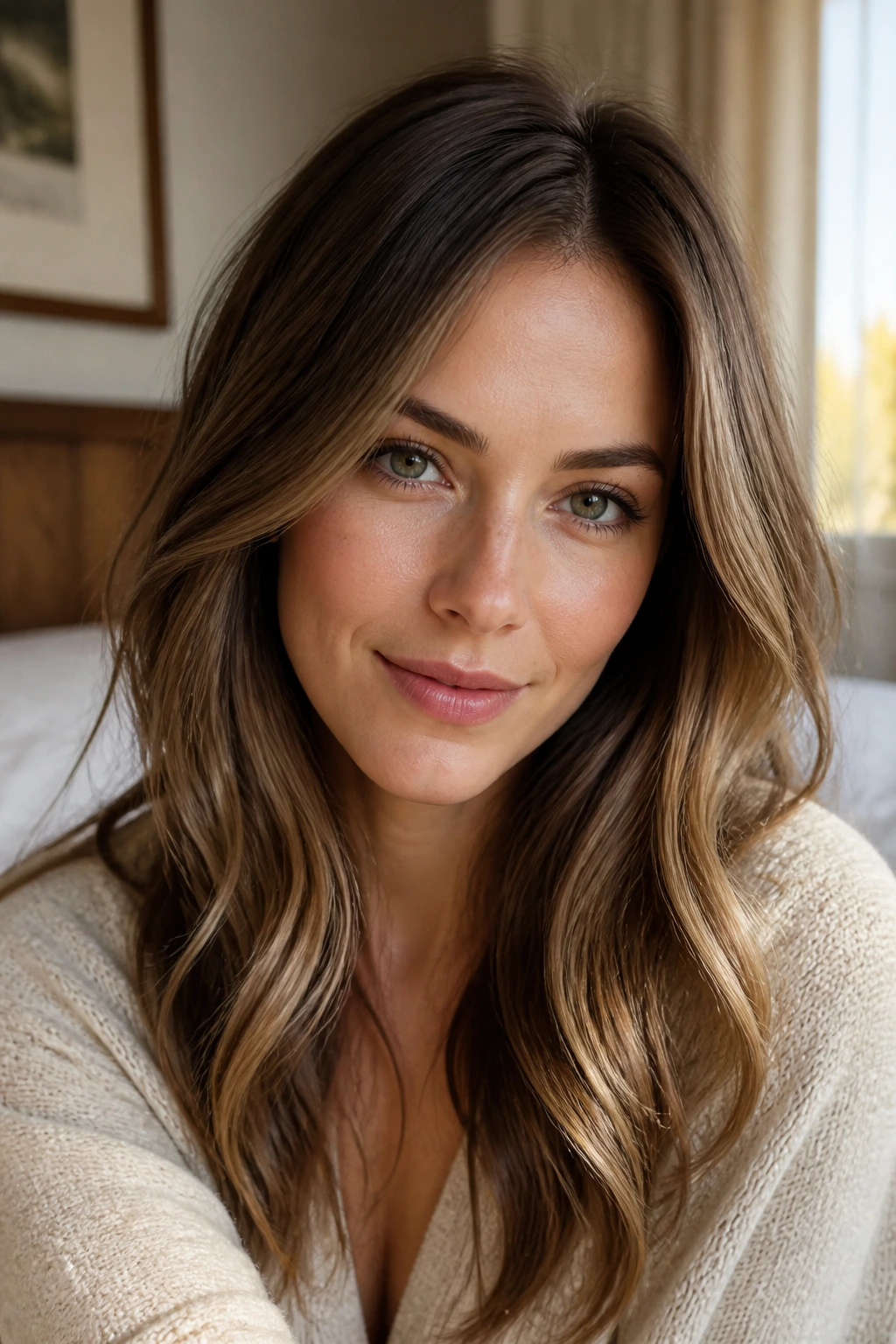
-
It softens the upper face: Keeping the brightest pieces a little lower than the hairline prevents the forehead from becoming the loudest thing on the head.
-
It adds visual weight where heart shapes need it: Deeper ribbons through the mid-lengths and ends make the chin area feel more grounded, which is the balancing act most color jobs miss.
-
It gives layered cuts something to show off: If your hair already has movement, the contrast between highlights and lowlights makes the layers read as texture instead of frizz or fluff.
-
It grows out with less drama: A shadow root and scattered lowlights keep the line of demarcation softer, so you are not stuck with a bright band around the face two weeks after a salon visit.
-
It works in warm or cool palettes: Caramel, honey, mocha, ash beige, copper, mahogany, and walnut all do the same job in different moods.
-
It keeps the face from looking too top-heavy: That matters more than people think. A heart-shaped face can carry brightness beautifully, but only when the placement knows when to stop.
1. Chestnut Halo Balayage
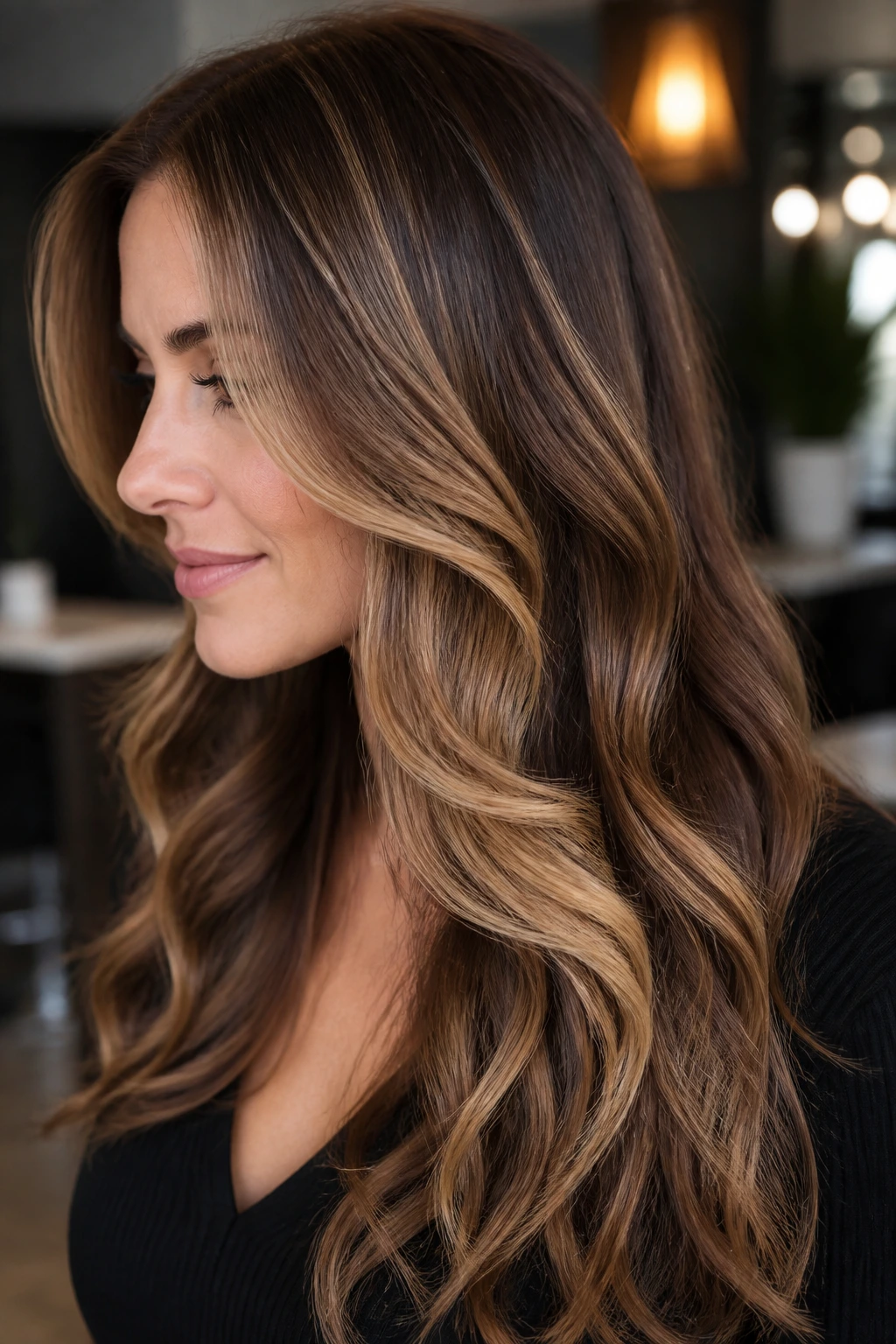
Chestnut halo balayage has a way of making hair look thicker without making it look busy. The chestnut lowlights sit under the top layer like a shadow, while the brighter ribbons skim the outer wave and the lower half of the hair. On a heart-shaped face, that matters because the eye stops fighting the forehead and starts following the curve of the cut.
Why It Flatters a Heart Shape
The halo effect keeps brightness away from the temples, where too much light can widen the upper face. Instead, the shimmer lands lower, around the cheek and collarbone area. That gives a softer frame, especially if your hair falls in long layers or a collarbone-length lob.
I like this one for medium brunettes who want dimension but not a dramatic change. It reads polished in straight hair and even better in a loose bend. A few face-framing pieces can sit just below the brow line, but I would keep the brightest chunk from starting at the root. That’s the part that usually gets overdone.
2. Caramel Money Piece with a Soft Shadow Root
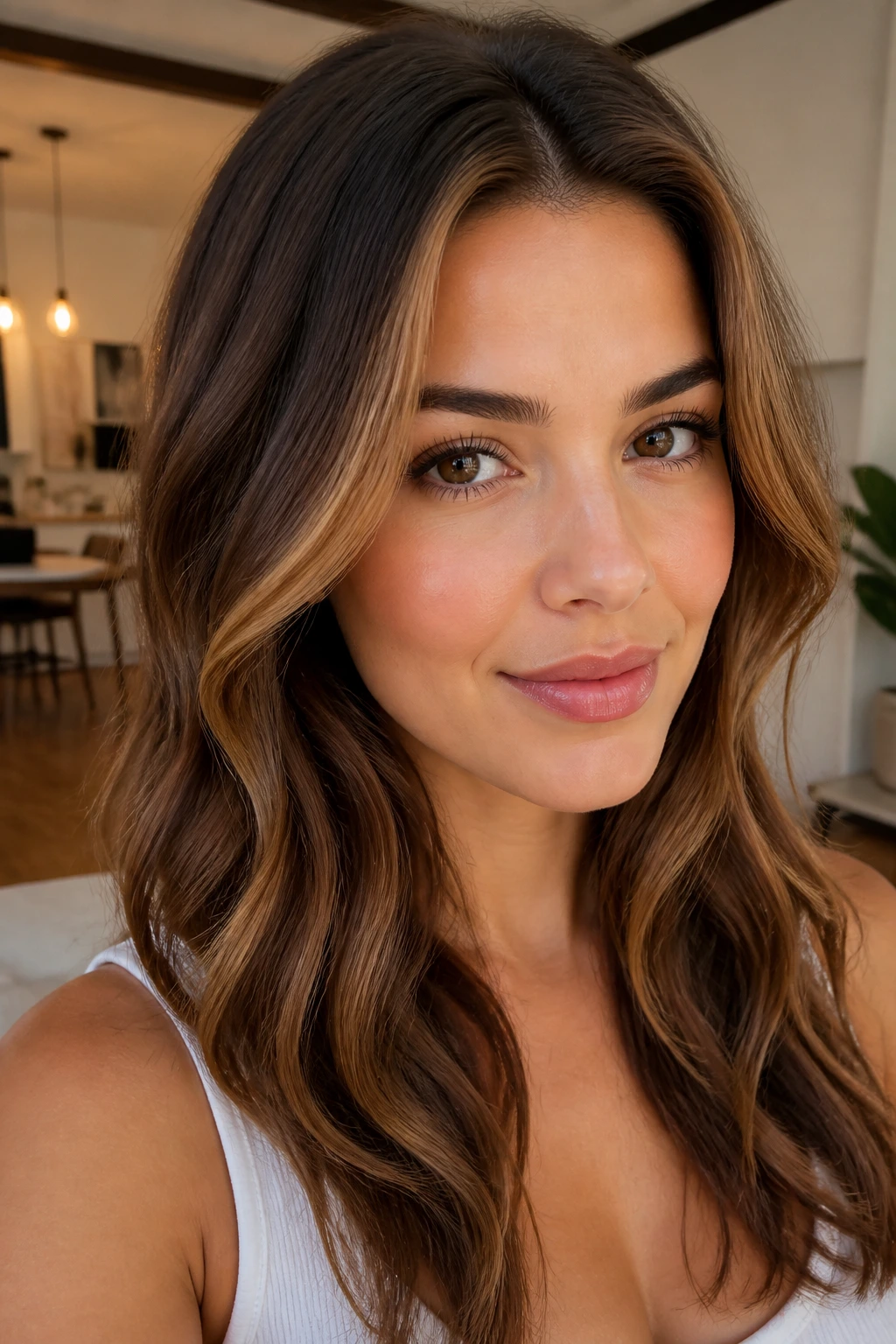
This is the look for someone who wants the face to open up without turning the whole head into a bright halo. The money piece is caramel, not pale blonde, and the shadow root stays a shade or two deeper so the top doesn’t pull too wide. It’s clean, obvious in the right way, and a little cheeky.
A heart-shaped face can handle a money piece if the brightest strands are placed with restraint. Keep them just off the temple, let them curve inward around the cheekbone, and stop before the lightness climbs too high on the forehead. That shape gives lift without widening.
The shadow root matters here. It keeps the scalp area soft and makes the brightness feel like it was painted in rather than dropped on top of the hair. If your hair is fine, this is especially useful because a deeper root makes the body of the hair look fuller from a distance.
3. Copper Ribbon Lob with Smoked Ends
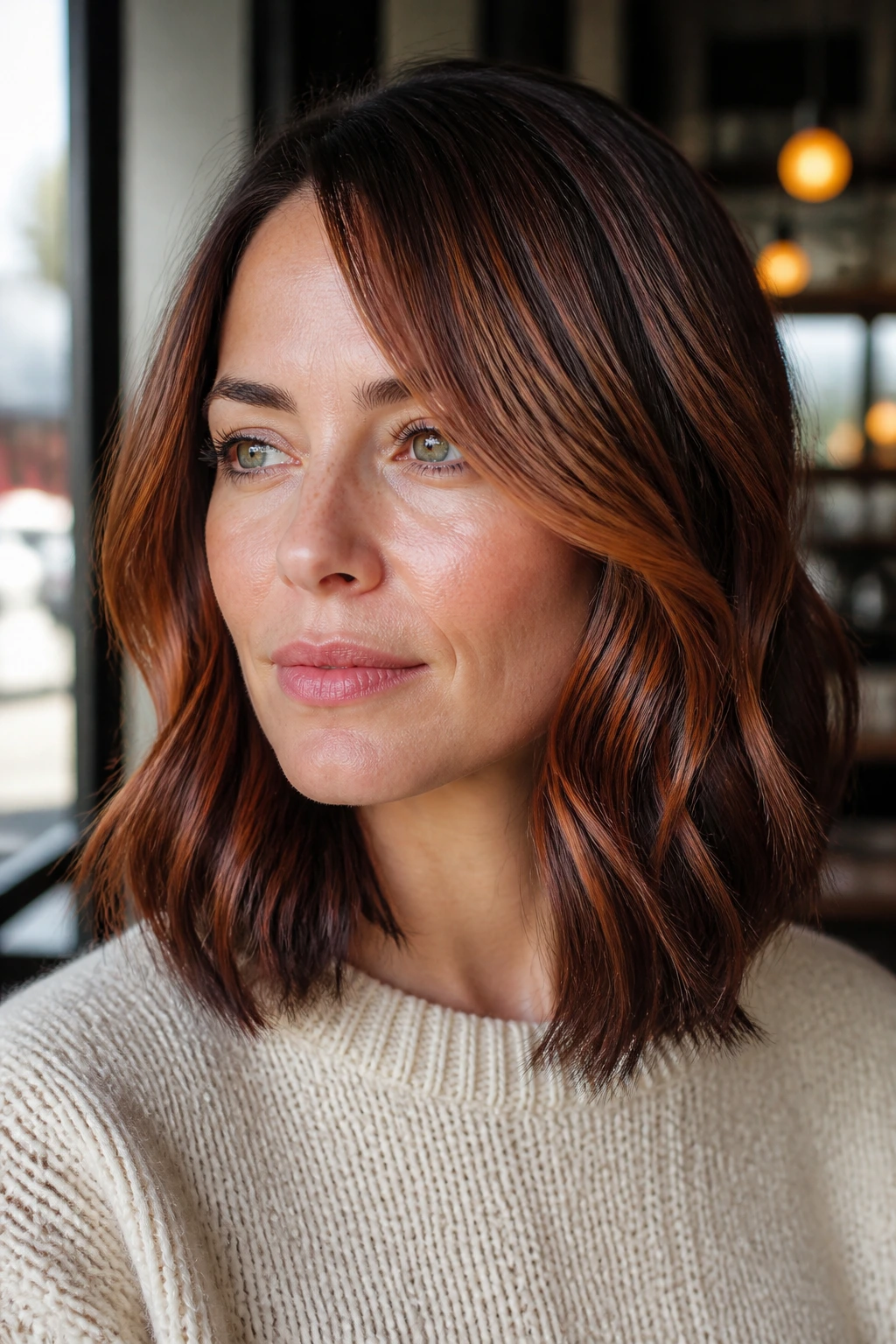
Copper on a lob has attitude. The color catches the light in thin, ribbon-like streaks, and the smoked ends keep it from turning candy-bright or overly shiny at the bottom. On a heart-shaped face, a lob already does some balancing work because it puts visual interest near the jaw and neck.
The trick is to avoid pushing the copper too far up into the root area. Keep the boldest strands from the mid-shaft down, then let a few warmer pieces graze the cheekbone. That makes the face feel narrower at the top and fuller at the bottom, which is exactly what this shape needs.
I also like this look on hair with a little wave. Copper can go flat fast if the hair is pin-straight and over-smoothed. A bend through the ends — not a curl, just a bend — makes the smoked lowlights and bright ribbons play against each other.
4. Mushroom Brown Layers with Beige Ribbons
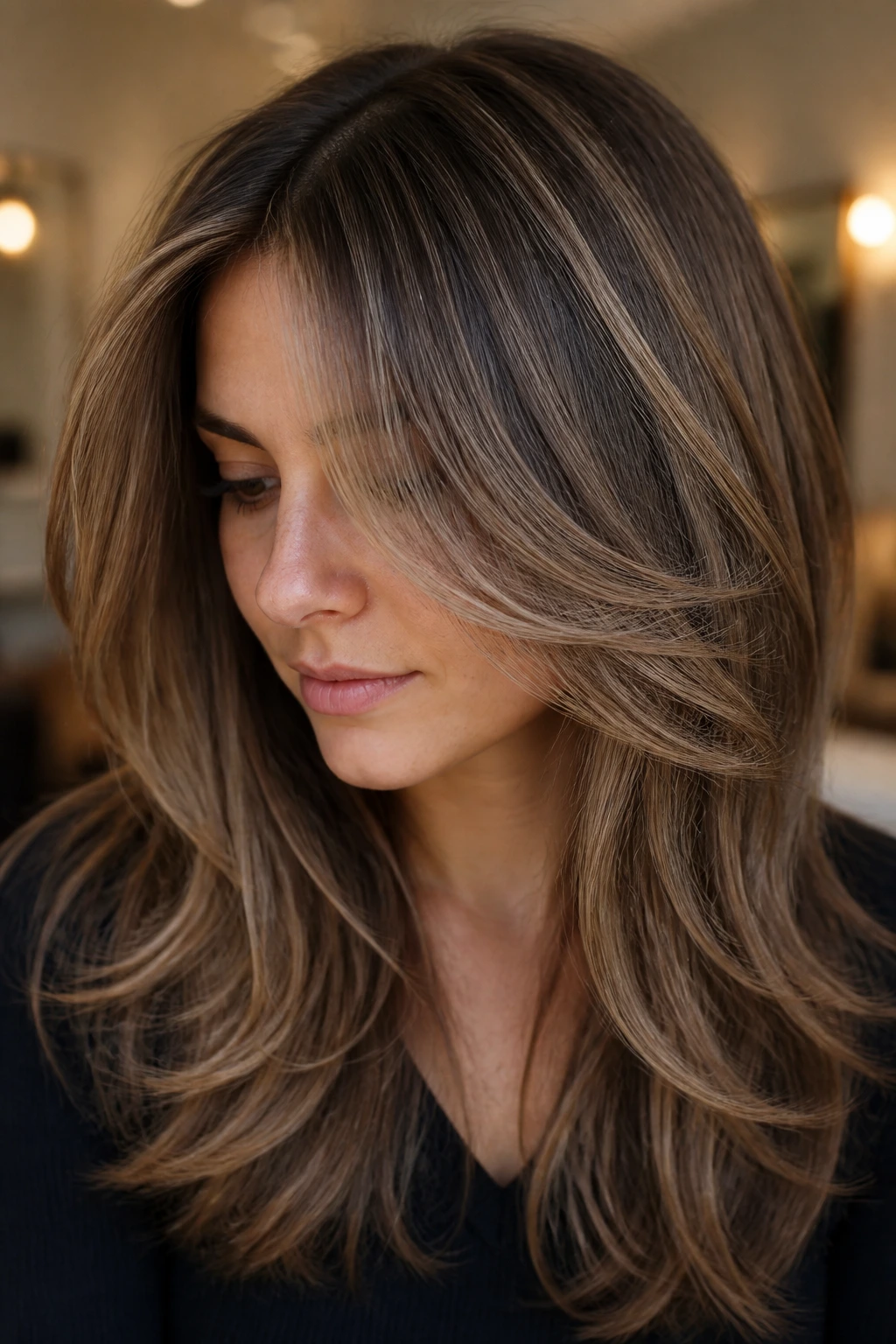
Want something cool without looking dusty? Mushroom brown is the answer, and beige ribbons keep it from drifting into mud. This is one of those color mixes that looks understated in the mirror and richer in motion. The lowlights are soft taupe-brown, while the highlights stay beige rather than icy.
What Makes It Work
Heart-shaped faces can wear cooler color beautifully when the placement does not crowd the forehead. Mushroom brown behaves because it pulls attention downward through the layers instead of exploding across the top. The beige ribbons are best when they start below the brow level and stay concentrated around the mid-lengths and ends.
That keeps the look elegant, not flattened. I’d use this on layered shoulder-length cuts, especially if you want the color to feel modern without going silver or ash-heavy. The effect is subtle until the light hits it. Then it wakes up.
5. Mocha Melt with Curtain Bangs
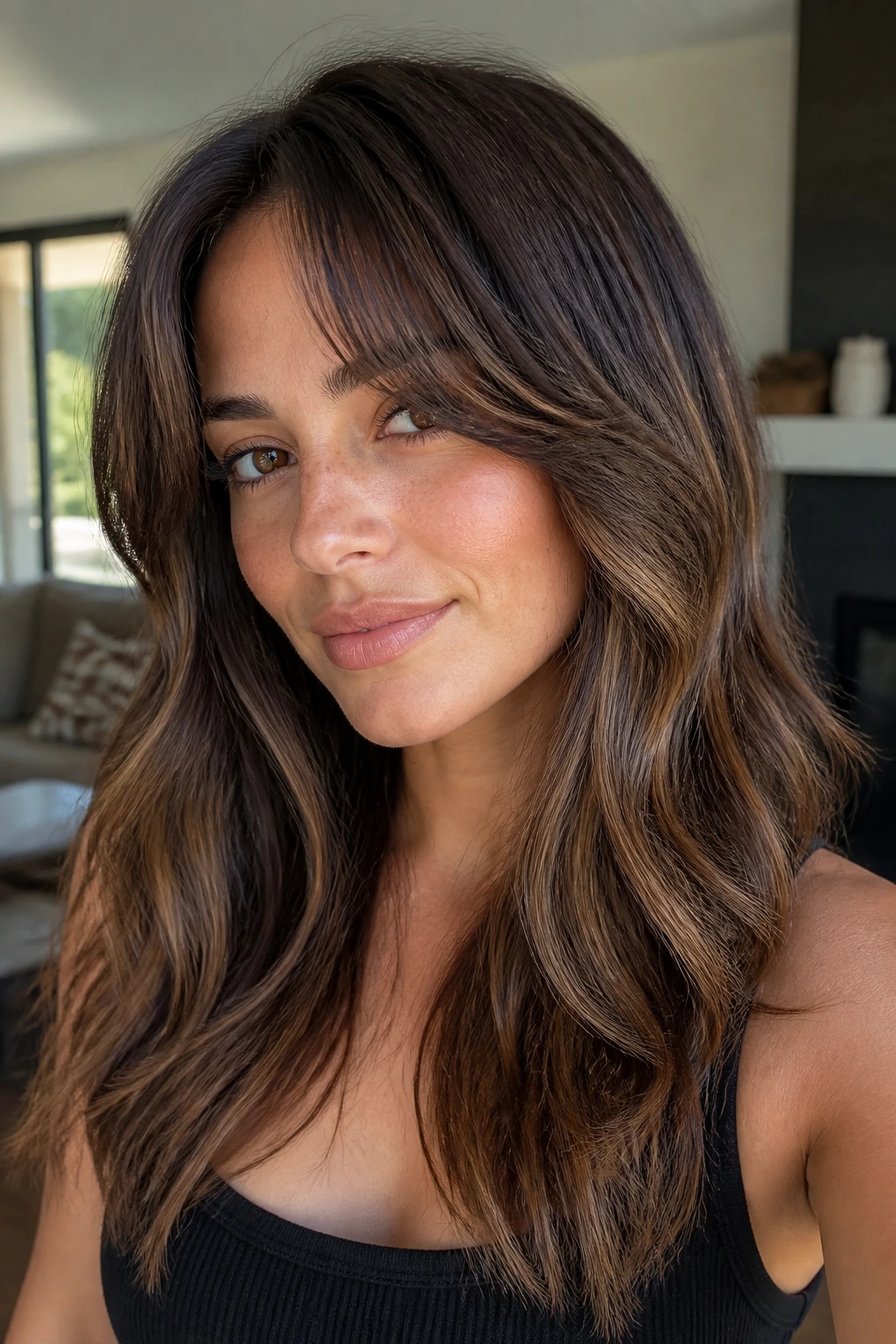
Curtain bangs change the whole math here. They break up the width at the top of the face, and a mocha melt gives the bangs a soft, shaded frame instead of a harsh line. The base stays deep and creamy at the same time — not too red, not too ashy — with lighter pieces melting through the mid-lengths.
This is one of the better choices if you like a face-framing highlight but hate the look of obvious streaks. The brightest strands can sit at the edge of the curtain fringe and slide outward toward the cheekbone. That gives the forehead room to breathe.
I’d keep the ends a little darker than the rest of the hair. It sounds minor, but it helps the eye travel down instead of getting stuck at the fringe. On a heart-shaped face, that downward motion is your friend.
6. Toffee Swirl Layers
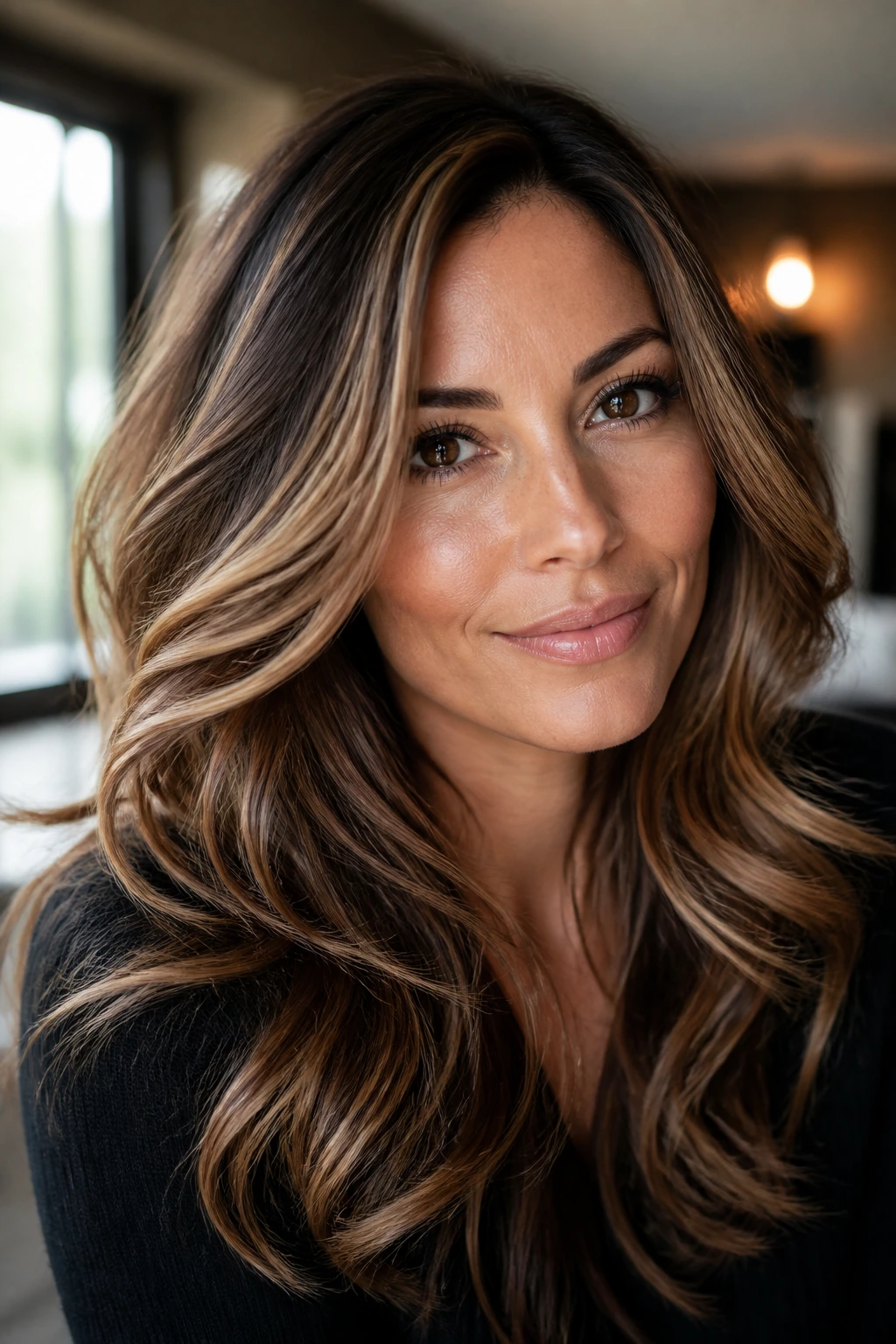
Toffee swirl layers are warm, glossy, and a little old-school in the best way. The toffee highlights are never pure yellow; they sit in that browned-gold zone that looks expensive against a deeper brunette base. The lowlights should be just dark enough to make the lighter swirls pop without looking stripey.
This look works because the layers do the heavy lifting. Every flip and bend in the cut creates a new place for the color to catch. If you’ve got a heart-shaped face and hair that tends to puff at the crown, this is smarter than piling brightness around the hairline. Let the movement happen lower.
I like toffee on medium to thick hair because the contrast reads better when there’s some body behind it. Fine hair can wear it too, but the ribbons need to be thinner. Broad, chunky highlights will blunt the shape fast.
7. Espresso Underpainting for Thick Hair
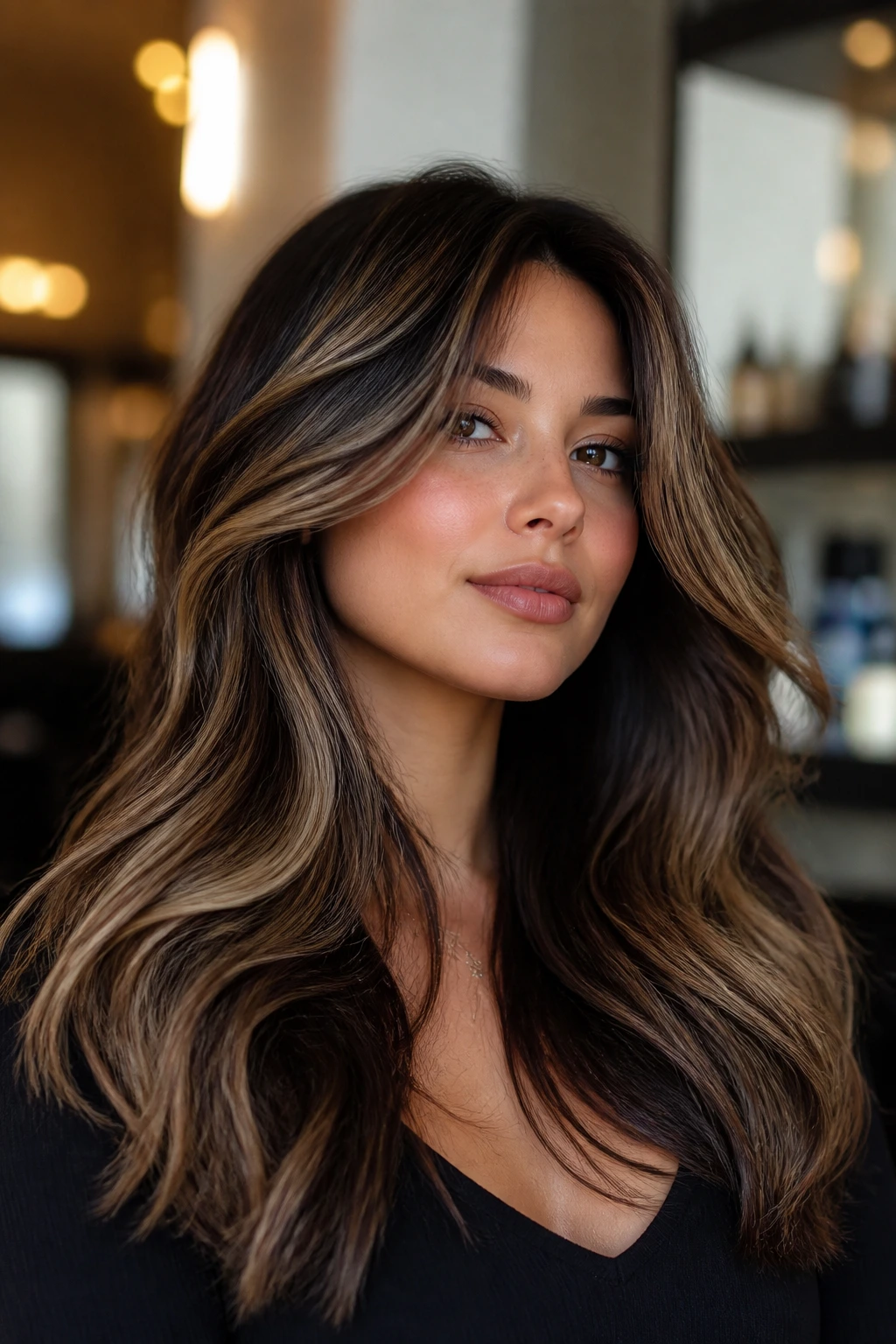
Espresso underpainting is one of my favorite tricks for thick hair because it adds depth without stacking lightness around the outer layer. The dark espresso lowlights live underneath, hidden just enough to show through when the hair moves. Then the highlights stay on the surface and around the face, where they can actually do something useful.
That “useful” part matters. Thick hair can swallow color if the pieces are too fine or too evenly spread. Underpainting makes the hair look denser at the crown and more dimensional through the ends. On a heart-shaped face, it also keeps the top from getting too puffed out.
If your hair naturally grows wide around the temples, this is a smart fix. Keep the brightest pieces around the cheekbone and lower jaw zone, then let the espresso underneath anchor everything else. The result is richer than a standard balayage and a lot less puffy.
8. Honey Walnut Waves
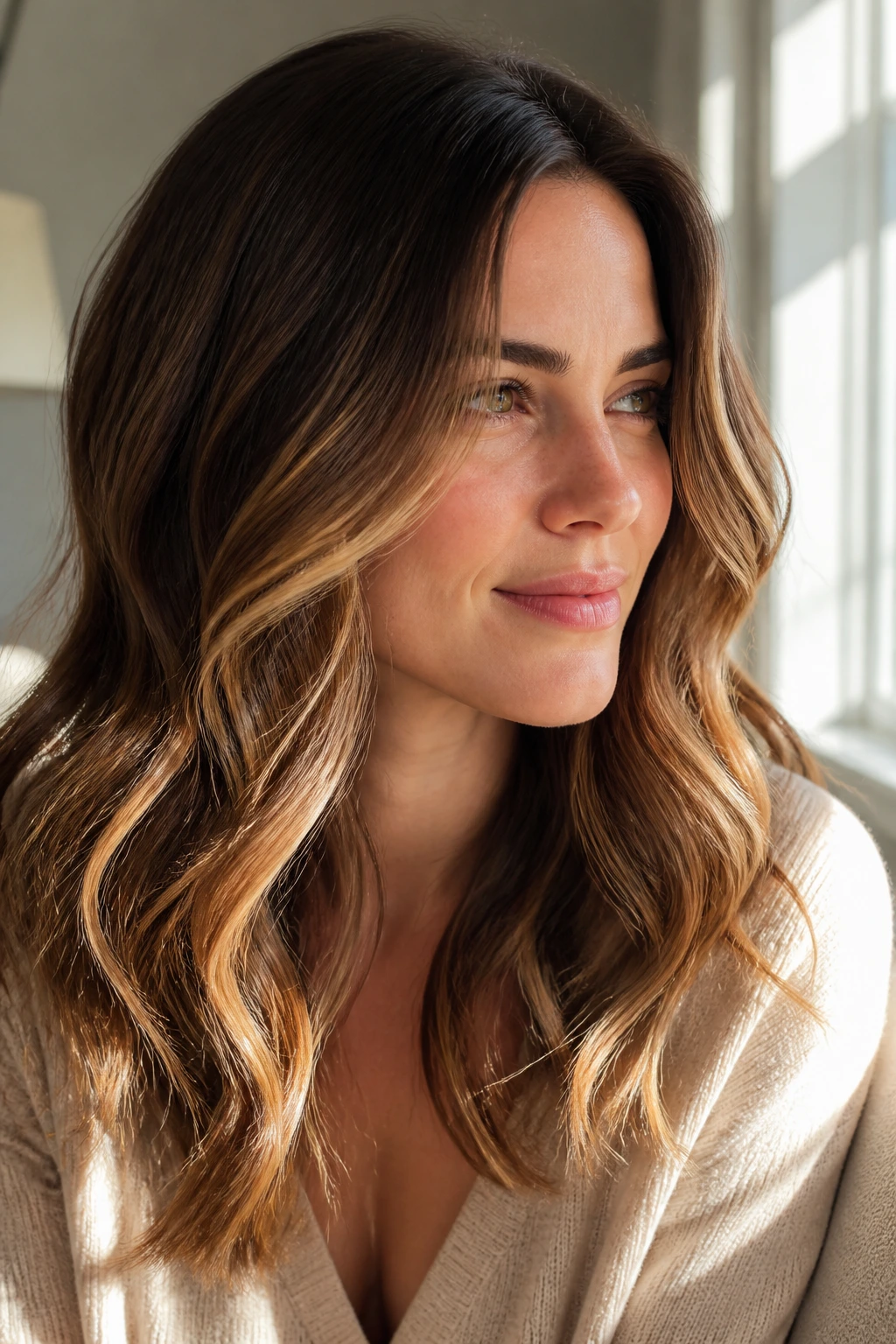
Honey walnut waves have a warm, almost toasted look that flatters skin without shouting for attention. The walnut lowlights bring depth, while the honey pieces sit like thin threads woven through the wave pattern. Nothing about it is heavy. That’s the charm.
The face-shape benefit is easy: keep the honey away from the outermost temple area and let it drift through the mid-lengths and ends. When the wave falls, the light catches at the cheek and collarbone instead of the forehead. That tiny placement choice can change how balanced a heart-shaped face looks in profile.
This is a good look if you wear loose waves often. Straight hair can still handle it, but the ribbons become more obvious once there’s a bend. If you want the color to feel even richer, ask for a gloss with a warm beige finish after the foils.
9. Auburn Gloss with Cinnamon Lowlights
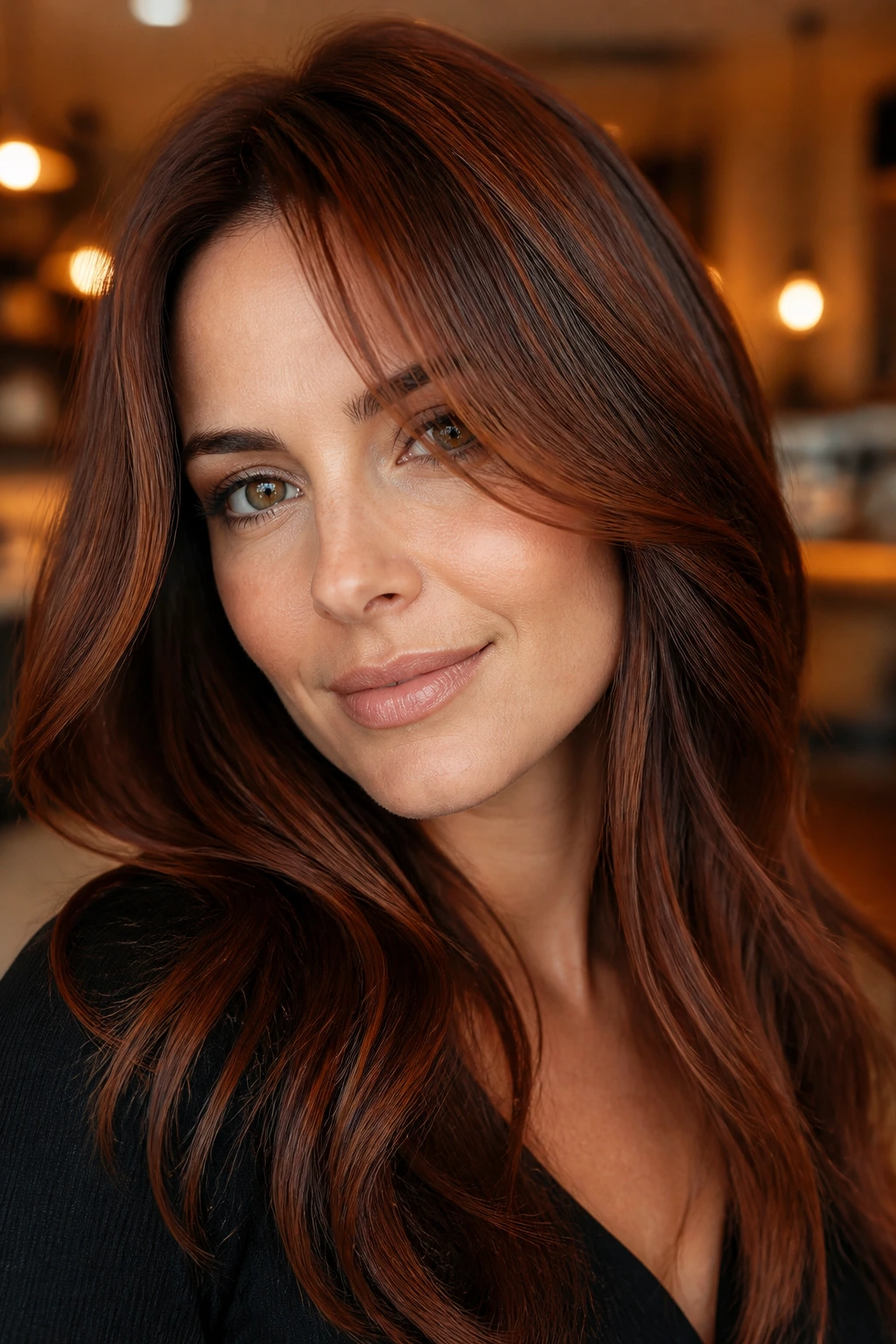
Auburn gloss with cinnamon lowlights has warmth, but it’s not loud. The gloss gives the surface that wet-shine look, while the cinnamon pieces keep the base from going flat and one-dimensional. On dark brunettes, this can look especially good because the red-brown tones wake up the skin without flooding the face with brightness.
The placement is the whole point. I’d keep the auburn lightness low and mid-face, not high at the roots. The cinnamon lowlights should sit under the top layer and through the ends, where they can make the hair look thicker. A heart-shaped face benefits from that deeper lower half more than from a bright crown.
This is also a forgiving color if you do not want frequent maintenance. Red-brown glosses fade more softly than icy blondes. They lose intensity, not shape. That matters.
10. Ash Brown and Beige Blend
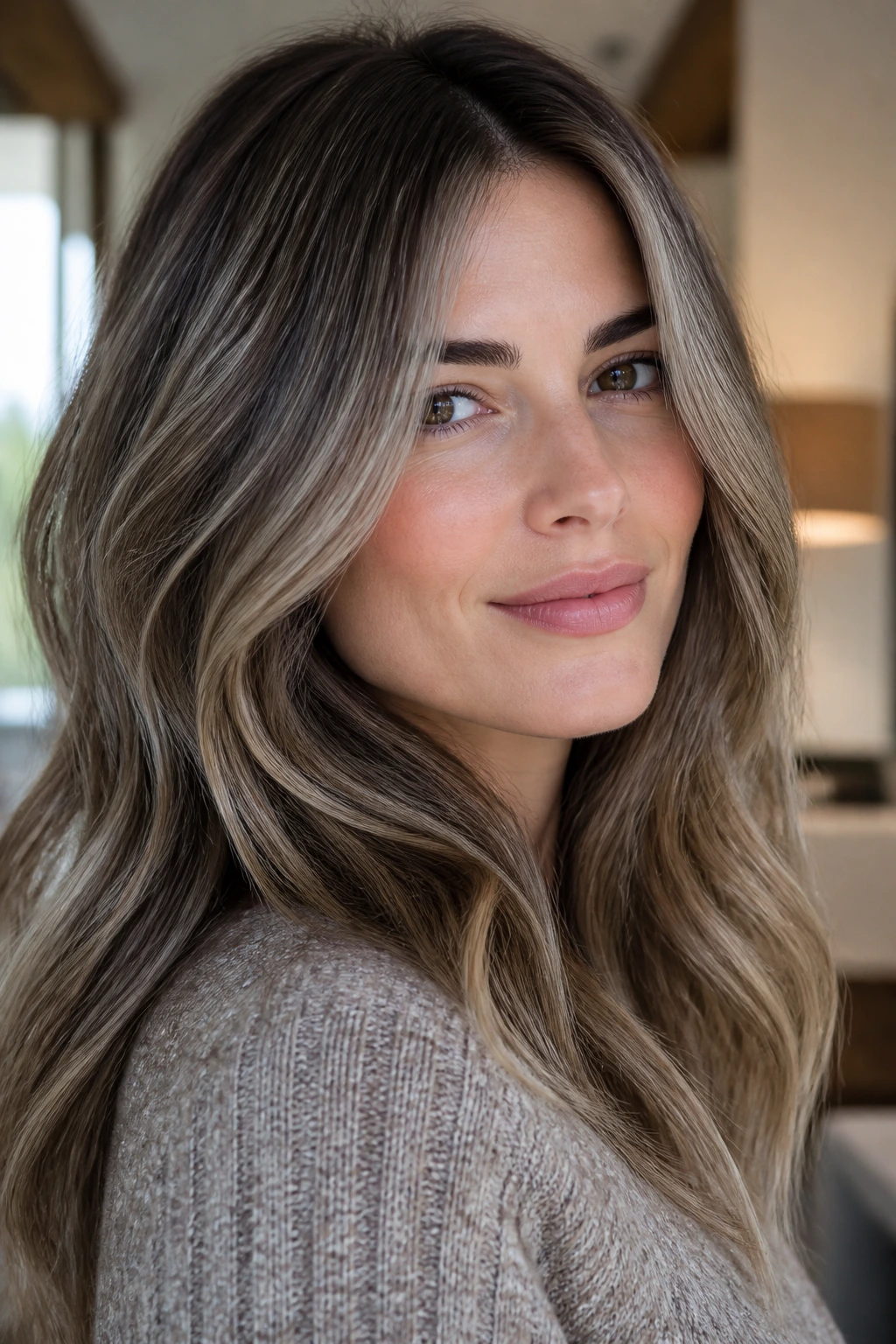
Ash brown can look chic or it can look tired. The difference is beige. Beige ribbons keep the ash from collapsing into flat gray-brown, and on a heart-shaped face that contrast helps soften the forehead without dulling the whole head. The goal is cool, not cold.
I like this most on straight or softly bent hair, because the contrast is clean and the root depth stays visible. If your base is medium brown, ask for lowlights about one level deeper than natural and highlights no more than two to three levels lighter. That keeps the whole thing believable.
There’s a catch. Too much ash near the face can wash out the upper half of the face, especially if your skin is already cool-toned. Keep the brightest beige near the mid-lengths and ends, and let the root stay a little deeper. That tiny move gives the face more shape.
11. Bronde with Dark Roots and Bright Ends
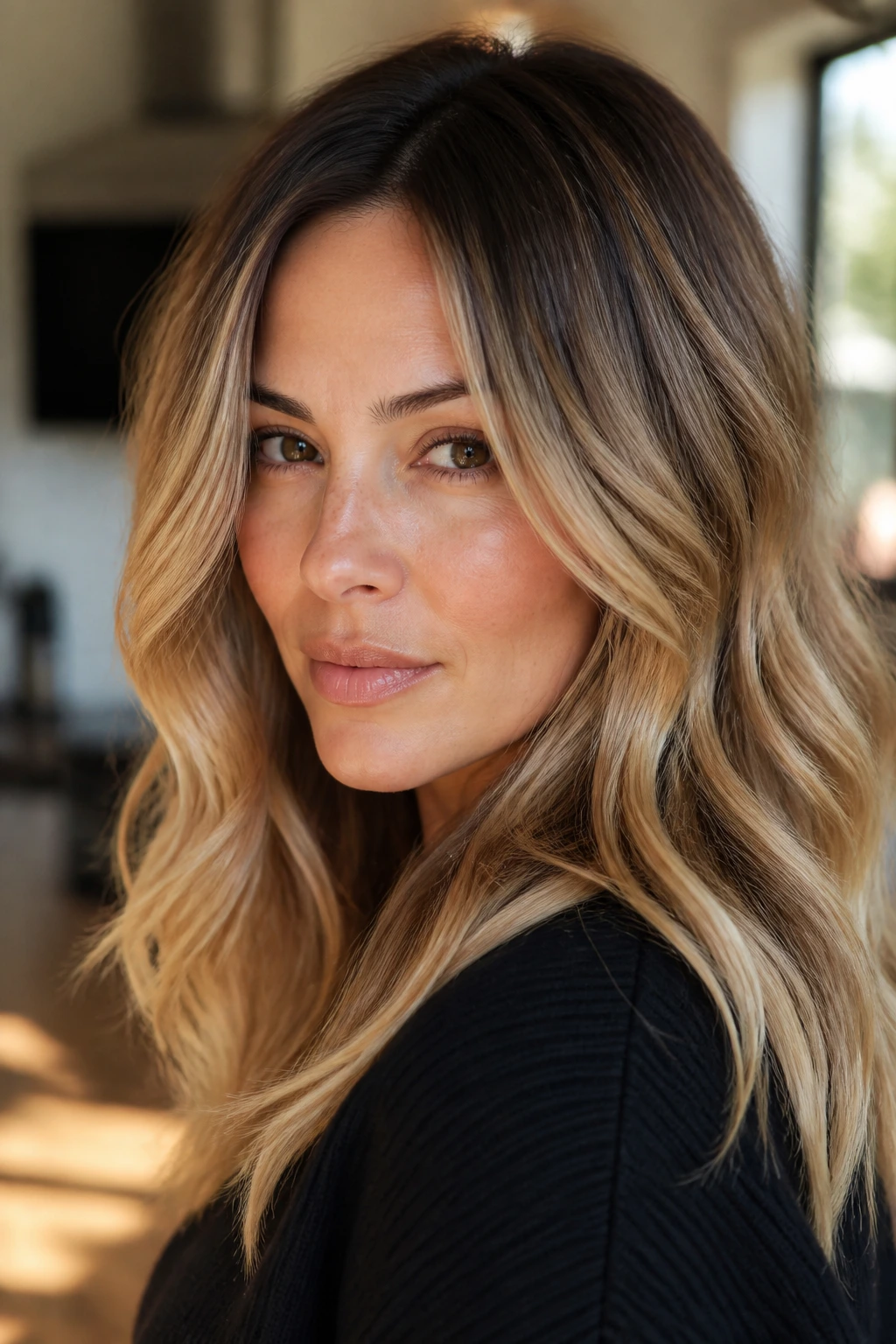
Bronde sounds easy, but the good versions are precise. Dark roots anchor the top, and bright ends keep the hair from feeling heavy. On a heart-shaped face, that contrast helps because the eye travels downward instead of sitting at the hairline.
Why It’s Different
The roots should stay deliberately shadowed. Not dirty, not grown-out, just soft and deep enough to trim the forehead visually. The bright ends can be honey-beige or caramel-blonde depending on your base, but they need to start lower than the temple. If the lightness begins too high, the face gets wider, plain and simple.
This look works well on long layers and on anyone who likes a low-effort grow-out. The root shadow gives you that lived-in feel without looking unplanned. I’d call it one of the safer options if you’re nervous about going bright around the face.
12. Bronze Peekaboo Layers
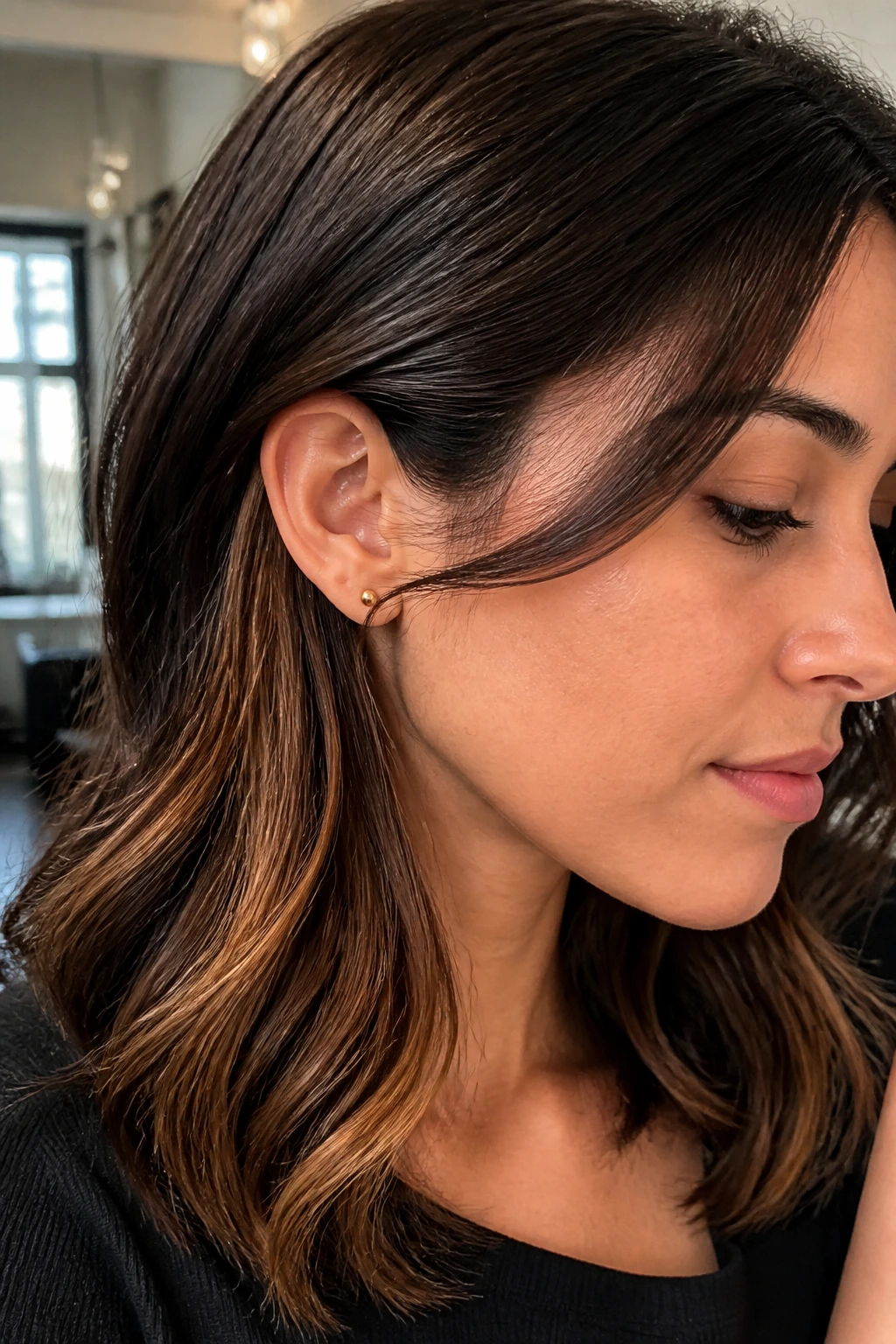
Bronze peekaboo layers are for the person who wants dimension that moves. The bronze sits under the top layer, so the color flashes when the hair shifts, tucks behind the ear, or bends at the shoulder. It’s a subtle kind of drama, which is exactly why it works.
For heart-shaped faces, peekaboo placement is smart because it keeps the lighter tone away from the widest part of the forehead. The brightness lives lower, where the layers separate and the ends open up. You get movement near the jawline without turning the top section into a spotlight.
I like this on medium to dark brunettes because bronze has enough warmth to show through without looking orange. If your hair is very fine, keep the peekaboo pieces thin. Chunky hidden panels can look stripy once they move.
13. Buttercream Blonde over Neutral Brown
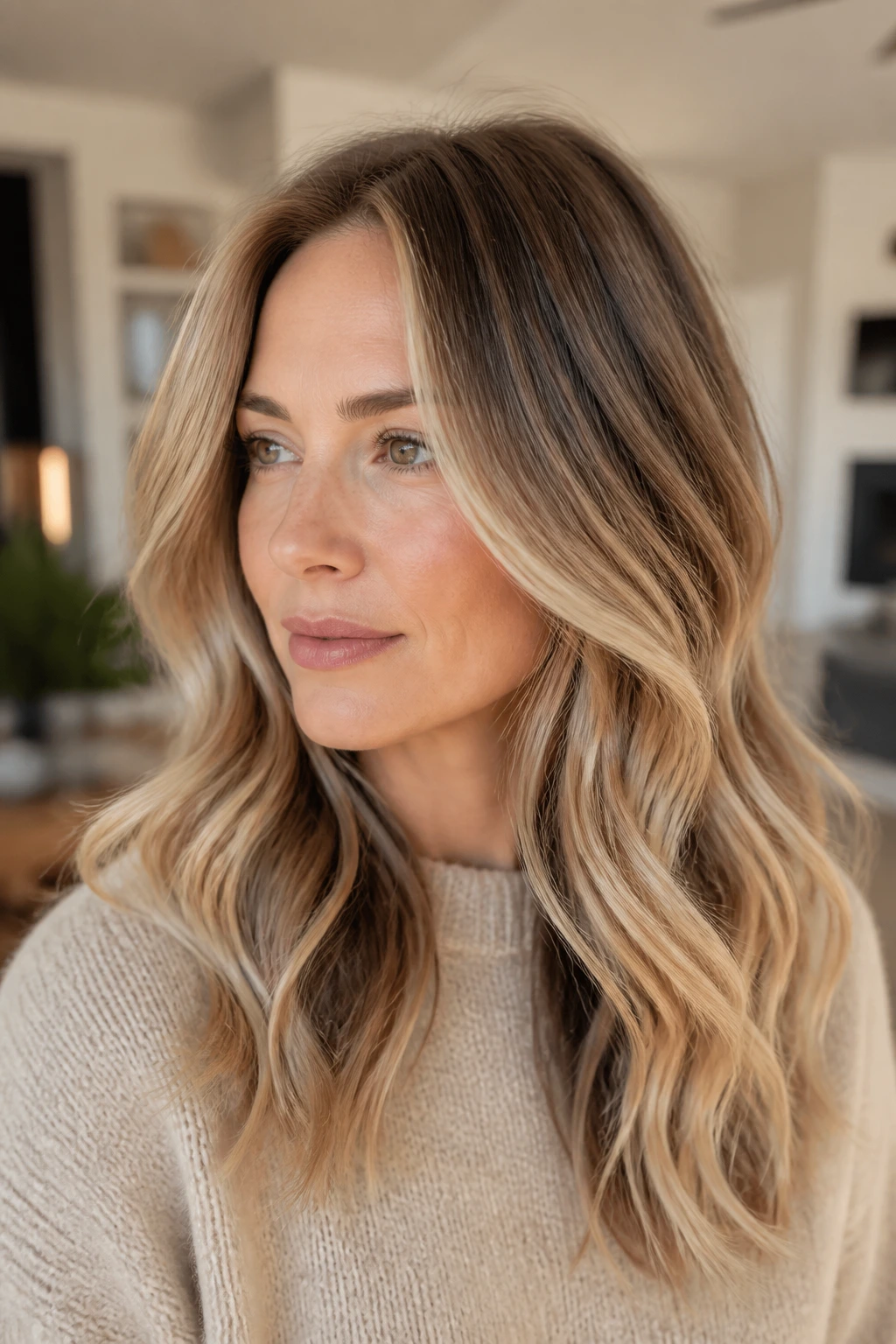
Buttercream blonde sounds airy, but the neutral brown base keeps it grounded. That balance matters on heart-shaped faces because a too-bright blonde can overpower the upper half of the face. Neutral brown calms it down and makes the blonde feel woven in instead of pasted on.
This one is for someone who wants to be clearly blonde but not bleachy. The brightest pieces should sit around the lower face and the outer layer, not as a solid frame at the temples. A few softer lowlights through the crown help the root area stay dimensional.
It’s also a good choice if you wear your hair in a soft wave or a rounded blowout. The light catches the bend and gives the cut more shape. Straight, one-length hair can make buttercream blonde look flatter than it should, so the cut matters here.
14. Maple Biscotti Balayage
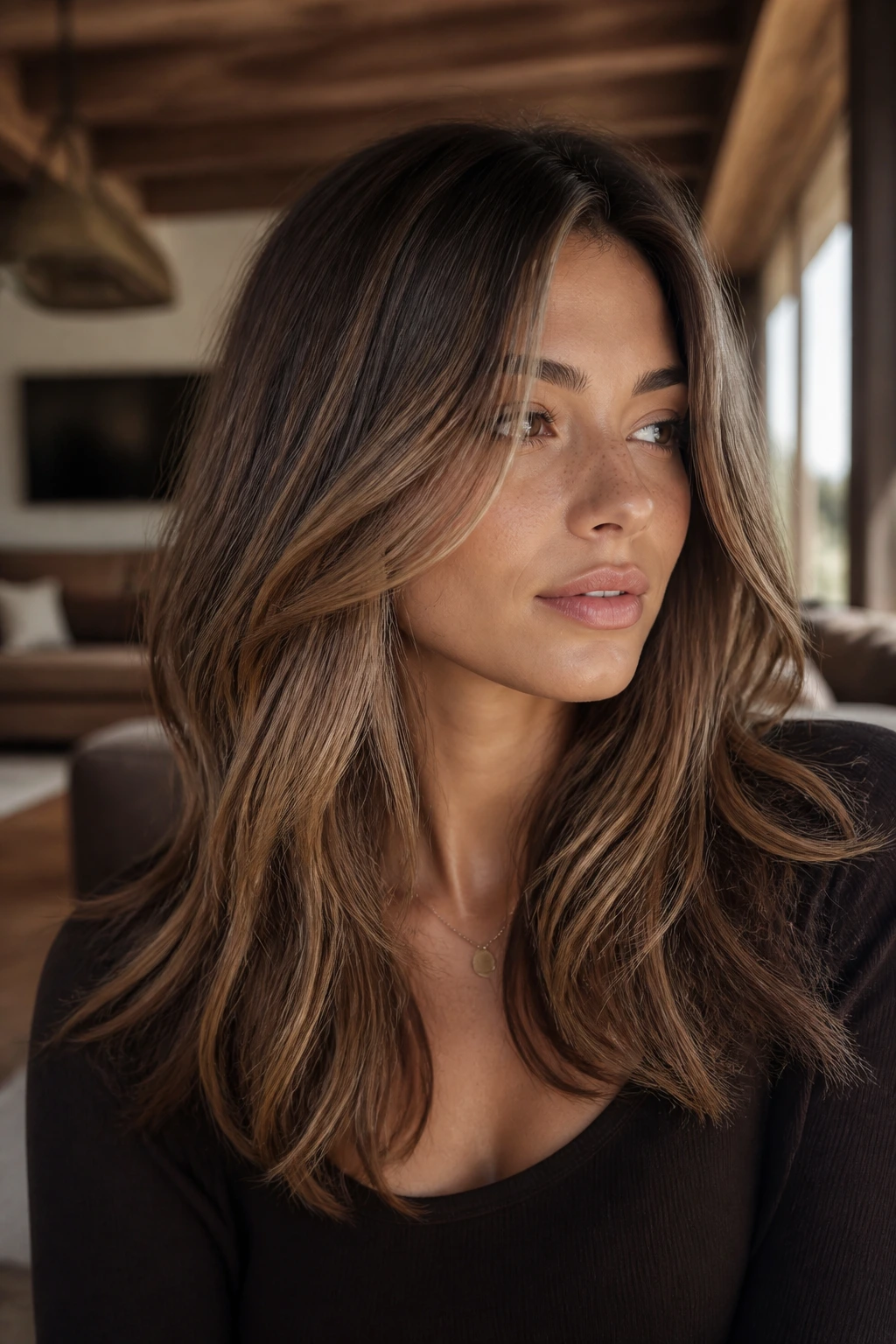
Maple biscotti is one of those shade names that sounds like dessert and behaves like a tailor. The base usually lives in the medium brunette range, then the highlights lean maple-beige with a touch of warmth. The lowlights stop the whole thing from becoming sugary.
The face-shape part is in the balance. Keep the lightness through the sides of the hair and the lower half, then soften the crown with a shade that is one step deeper. On a heart-shaped face, that makes the forehead feel less broad without hiding the cheekbones.
This color does especially well when the cut has movement. Long layers, a soft lob, or even a shag with controlled ends can all carry it. If the cut is too blunt, the color has less room to move and the whole thing can feel blocky.
15. Cocoa and Copper Swirl
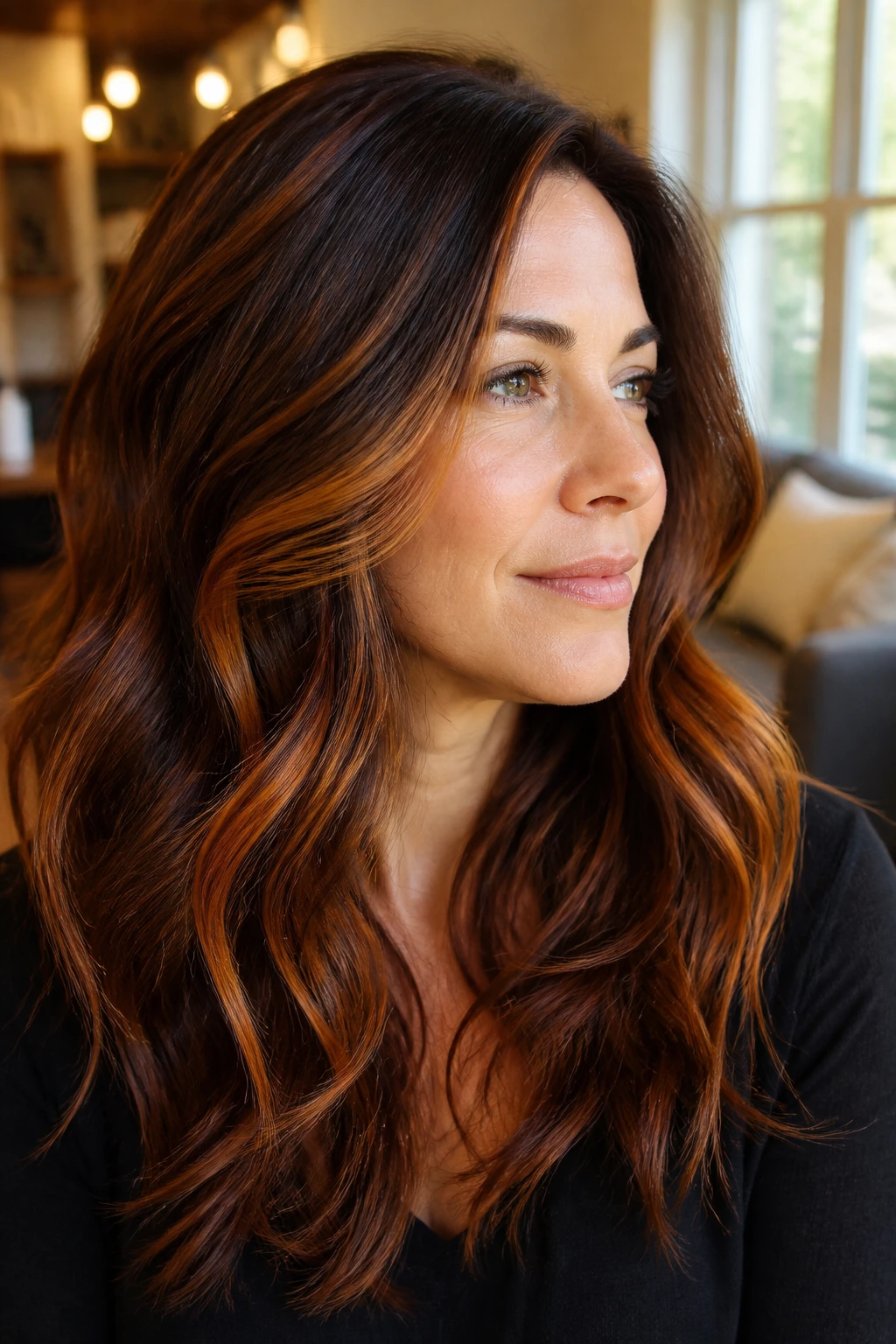
Cocoa and copper swirls are proof that warm and cool do not need to fight. The cocoa lowlights give the hair depth, while the copper pieces bring a little fire through the mid-lengths. On a heart-shaped face, that mix is useful because the warmth can lift the lower half without expanding the forehead.
The key is placement, not quantity. A few copper ribbons around the cheekbone and below are enough. Put too much brightness high up and the face shape starts to look broader than it is. Keep the cocoa richer at the crown and around the roots, especially if the haircut has a lot of volume already.
This one looks best when the hair moves. A blowout with a bend at the ends makes the copper catch in a way that straight hair often hides. If you want the look to feel more wearable, ask for thin copper slices rather than broad panels.
16. Sandy Beige Ends with a Root Smudge
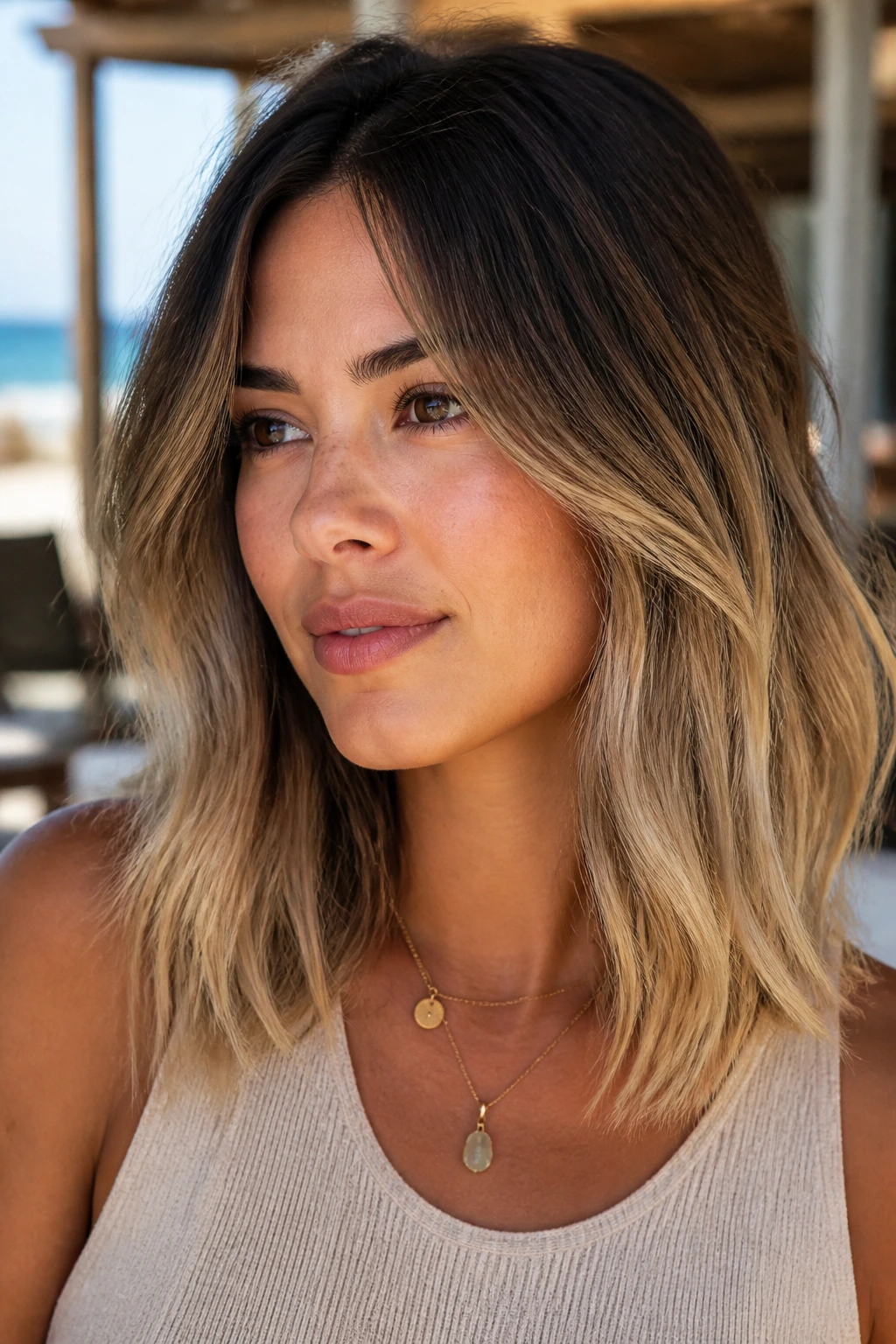
Sandy beige ends paired with a root smudge create an easy, beachy finish without the usual over-lightened look. The root smudge keeps the scalp area dark enough to slim the top visually, and the beige ends give the hair a soft, sun-faded finish. On a heart-shaped face, that contrast helps a lot.
I’d use this on medium-length hair with some layering at the bottom. The color is meant to live at the ends, where it can brighten the jaw and neck area. If the beige climbs too high, especially near the temples, the balance starts to go sideways.
The nice part is how forgiving it is. The smudge softens grow-out and gives you a little flexibility on maintenance. If your hair is naturally warm, ask for a beige with a touch of cream rather than a cool pearl tone.
17. Smoky Chestnut with Vanilla Lights
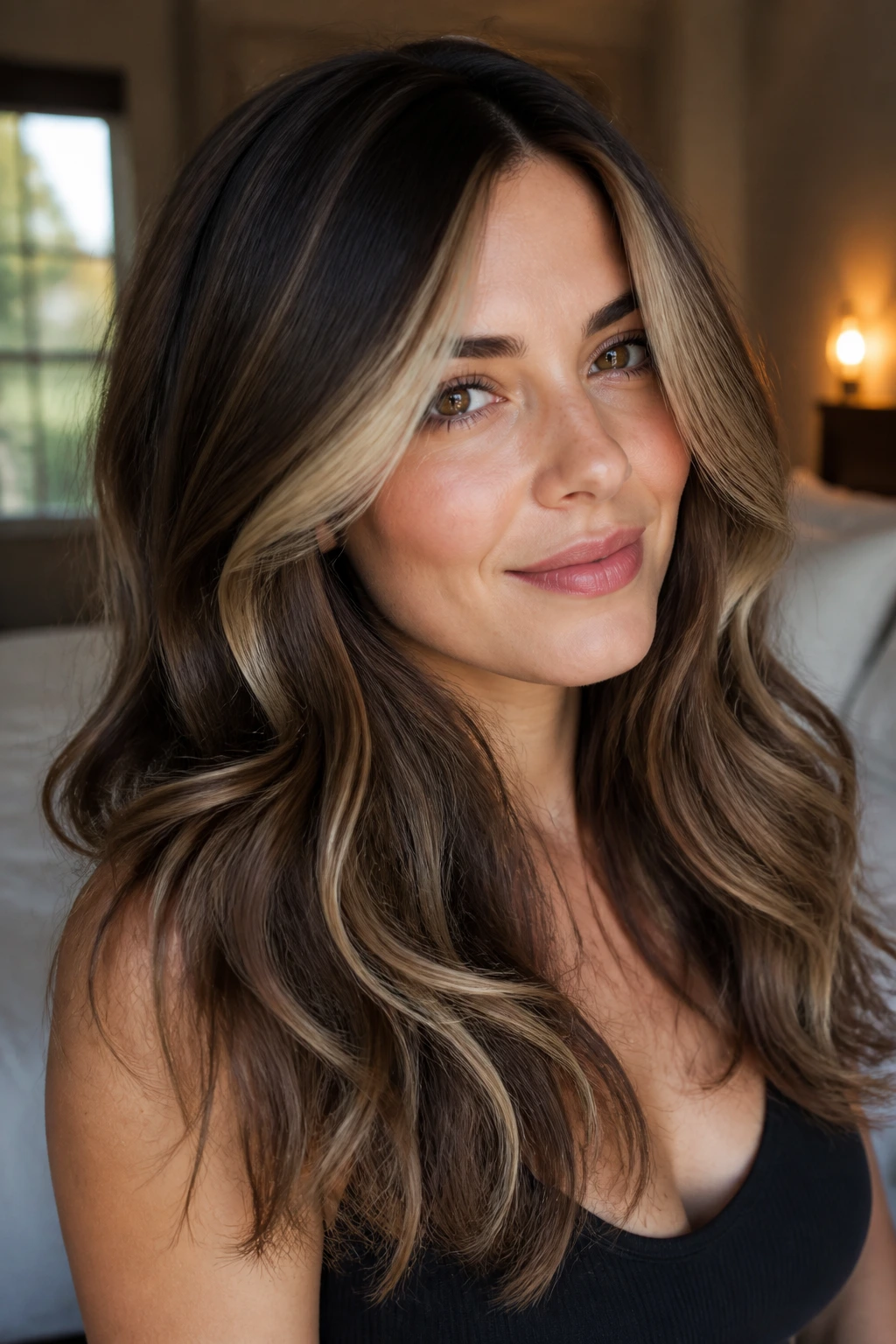
Smoky chestnut with vanilla lights has a clean, polished look that sits somewhere between rich brunette and soft blonde. The chestnut lowlights keep the roots and interior full, while the vanilla lights float around the face and the ends. It’s one of the easiest ways to get brightness without losing depth.
The Face-Shape Advantage
The brightest pieces should start low enough to graze the cheekbone and then taper toward the collarbone. That draws the eye down and away from the broader upper face. A heart-shaped face usually looks best when the crown stays a shade deeper, and this color scheme handles that without much fuss.
I also like this on finer hair because the thin, vanilla ribbons make the strands look lighter and more separated. If the pieces are too chunky, the whole effect turns streaky. Keep them feathered, and the result looks airy instead of loud.
18. Mahogany Ribbon Lights
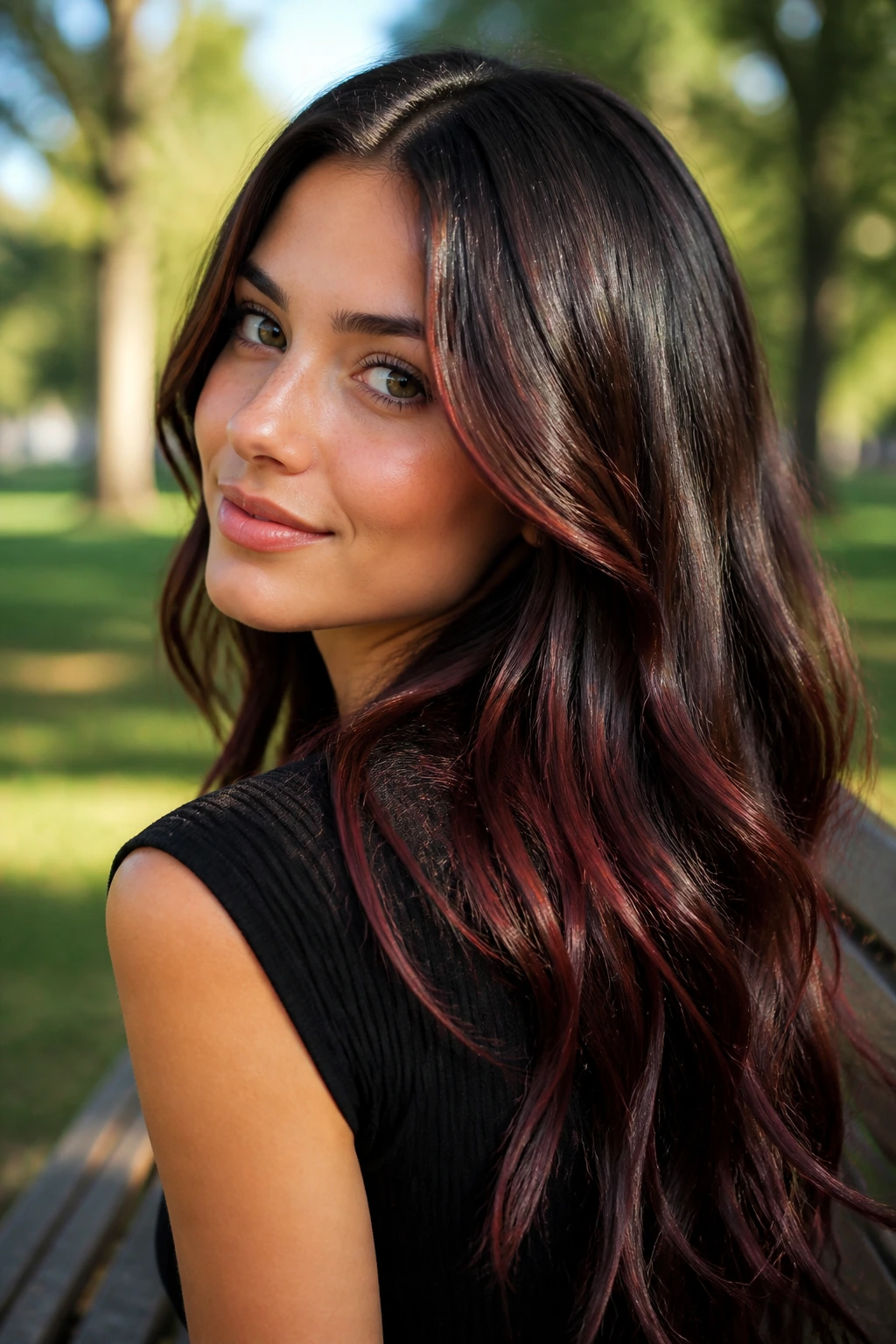
Mahogany ribbon lights bring a deeper, richer mood than caramel or honey. The red-brown tone is subtle in low light and almost velvety in bright light. On a heart-shaped face, that richness is useful because it adds visual weight to the lower half without needing very light highlights.
This is a strong choice if you already have dark hair and do not want to fight brassiness. The mahogany ribbons can be placed through the mid-lengths and ends, with a few thinner pieces around the jaw. That keeps the face balanced and the hair from reading as one big dark block.
The finish should be glossy. Mahogany loses a lot if it looks dry, so a smoothing cream or shine mist helps. I would not pair this with heavy blonde strands near the temples. Let the red-brown tones do the work.
19. Caramel Drizzle on a Lob
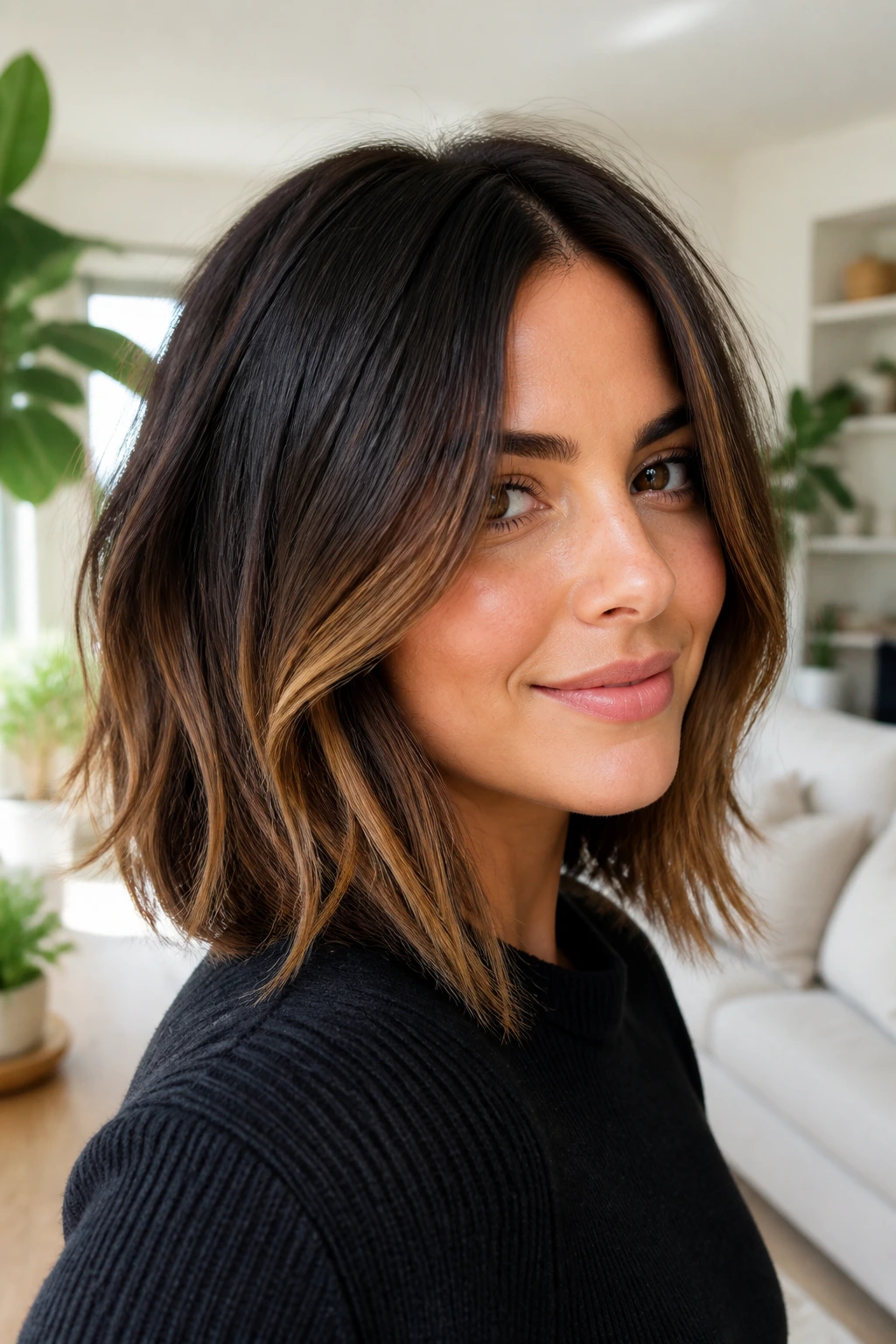
A lob and caramel drizzle are natural partners. The cut already lands near the jaw and collarbone, which is where a heart-shaped face usually needs more visual action. Caramel placed in thin drizzle-like lines on the lower half of the hair keeps the attention where it belongs.
I like this look because it can be as subtle or as noticeable as you want. A few face-framing pieces can start around the cheekbone, but the richest payoff comes from letting the caramel thread through the ends. That creates a soft sweep that fills out the lower face.
If your lob is blunt, this color placement helps break up the heaviness. If your lob has layers, it gives the ends more movement. Either way, the forehead stays soft because the brightest pieces do not climb too high.
20. Latte Brown Face Frame
Latte brown is soft enough to be flattering but not so light that it erases the face shape. A latte face frame means the front pieces are lighter than the base, but still warm and brown-based. The rest of the hair stays deeper, which gives the whole style some structure.
The thing I like most here is the control. You can brighten the face without making the temple area too wide. Place the lighter pieces just off the hairline, let them curve inward, and keep the root area shaded. That gives a heart-shaped face a smoother top edge.
This is a strong pick if you wear your hair pulled back sometimes. The face frame still reads when the hair is up, which is handy if you do not want your color to vanish the second you tie your hair in a knot. That’s not a small thing.
21. Soft Ginger with Brunette Lows
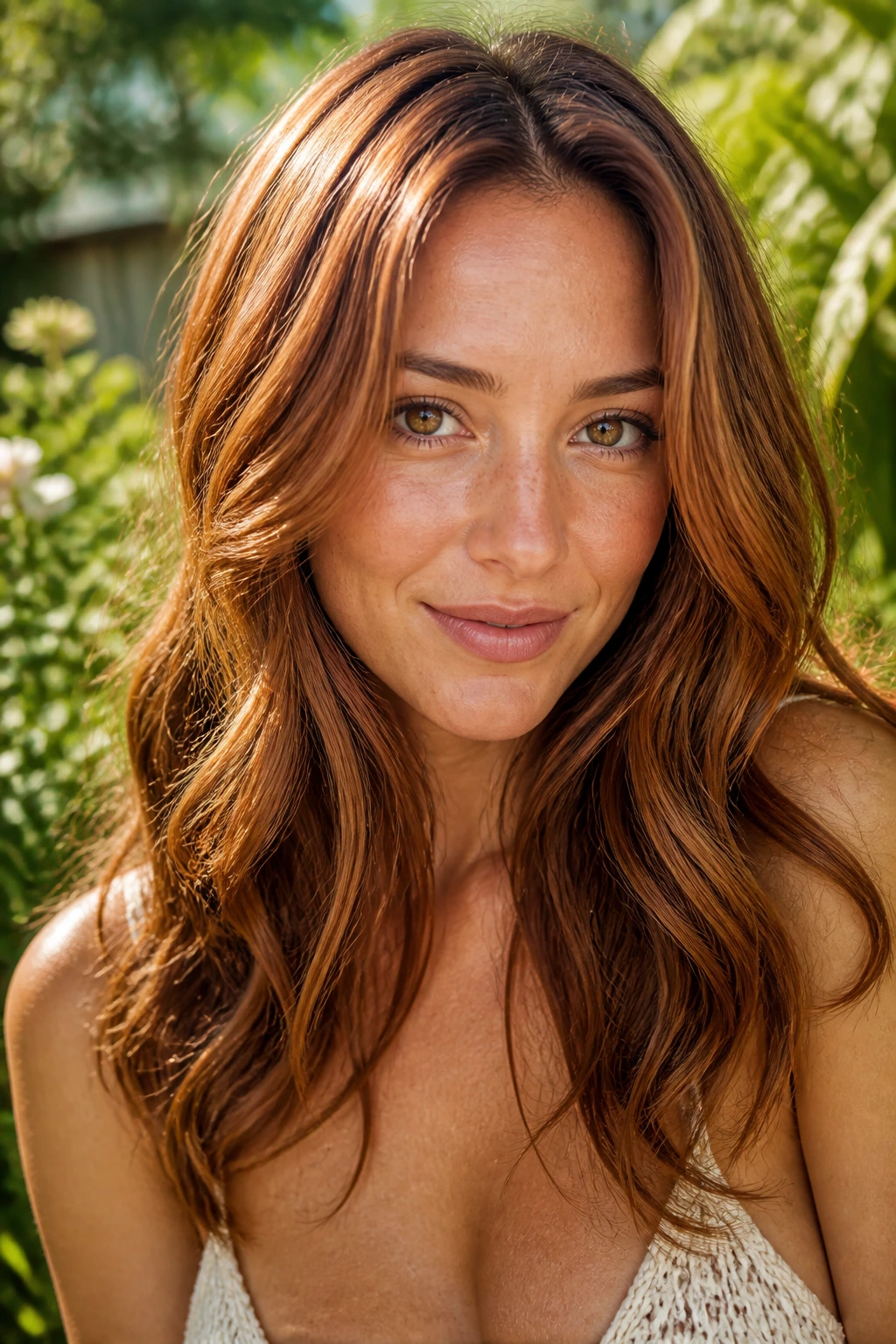
Soft ginger can be gorgeous on brunettes, but the lowlights are what stop it from becoming one-note. The brunette lows give the ginger something to sit against, and they keep the warmth from ballooning across the whole head. On a heart-shaped face, that contrast helps keep the upper face from feeling too open.
Why It Works
The ginger should live in thin, airy ribbons rather than broad swaths. Keep the brightness around the cheekbone and below, and let the brunette lows deepen the crown and interior sections. That balance makes the color look layered instead of painted.
If your skin leans warm, this can be a knockout. If your skin is cooler, ask for more copper-gold than orange. The exact tone matters more than the label. And if you wear waves, even better — ginger is one of those colors that wakes up when it catches a bend.
22. Hazelnut Dimension with Airy Ends
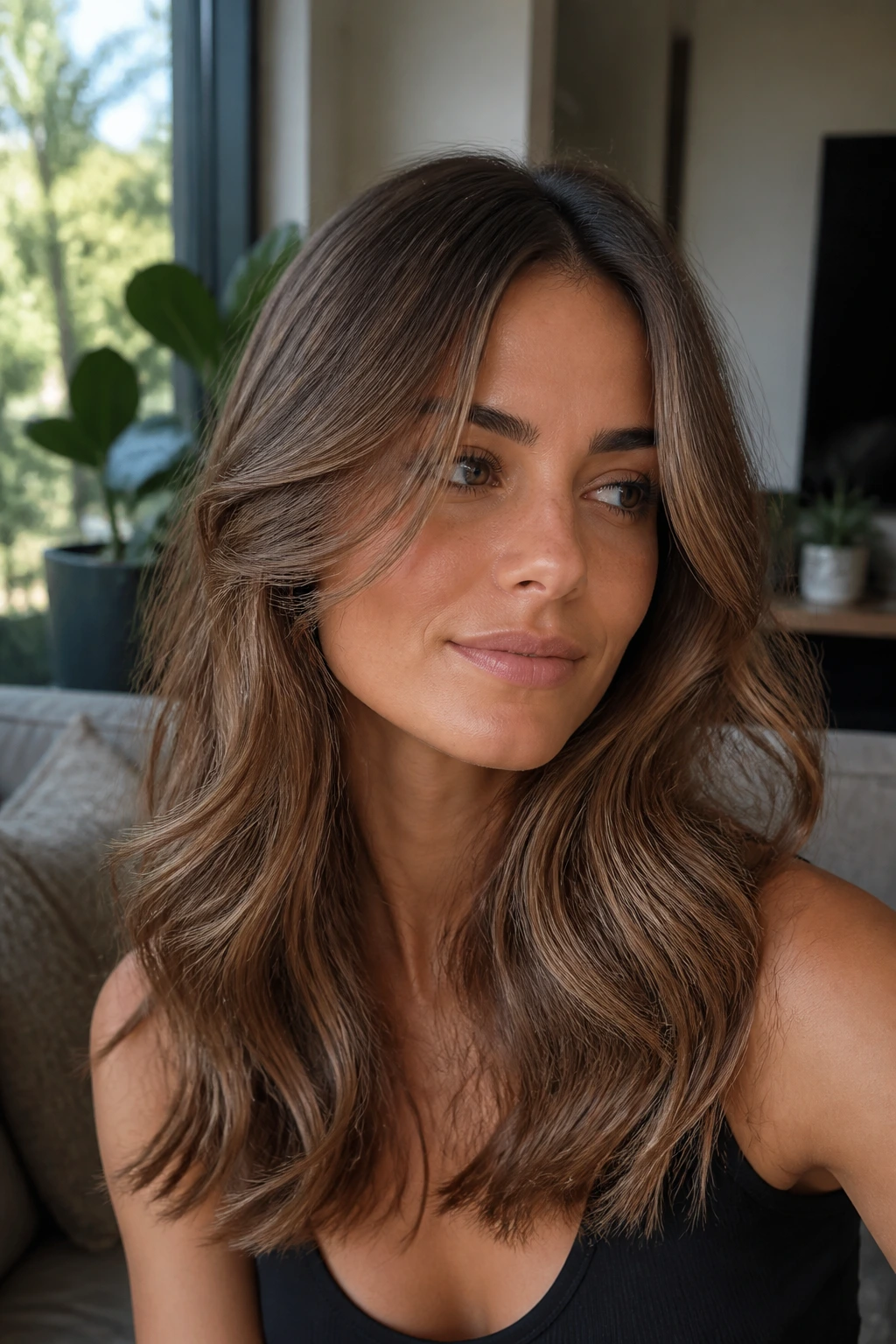
Hazelnut dimension is all about movement. The base stays in the brunette family, but the lighter hazelnut ribbons are thin and airy, especially at the ends. That keeps the color from swelling out the top of a heart-shaped face and instead directs attention lower.
I’d pick this for anyone who wants dimension that does not shout. It looks expensive in a quiet way, but not because it’s beige or bland. The contrast is soft enough that the hair still reads as one color at a glance, then the ribbons appear when the light shifts.
The airy ends matter because they stop the style from feeling heavy at the bottom. If the ends are too dark, the look can feel dense. If they’re too light, the face gets top-heavy. Hazelnut sits in the useful middle.
23. Champagne Beige with Root Depth
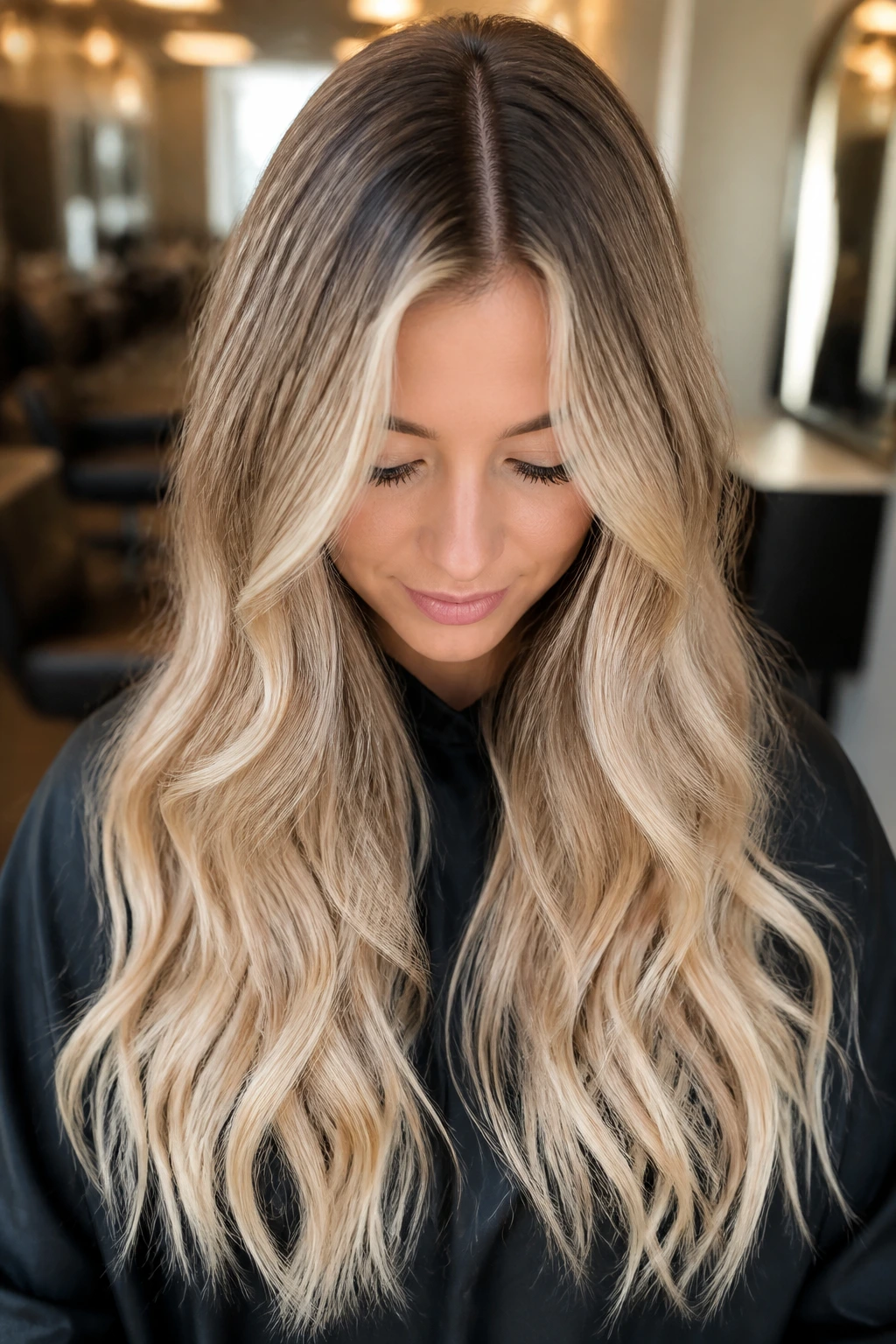
Champagne beige gets tricky fast. Without root depth, it can make the whole face look wider and the hair look a little helmet-like. With root depth, it becomes graceful. The darker root gives the crown a little shadow, and the champagne beige keeps the ends bright enough to feel lifted.
This is a nice option if you want a lighter overall feel but you still like structure. On a heart-shaped face, the root shadow should stay soft and the brightest pieces should live lower, especially around the outer layers. That lets the cheekbones come forward without flattening the forehead.
I’d be careful with the toner here. If the beige goes too cool, the color can turn brittle-looking. A soft champagne tone with a hint of cream usually sits better on this face shape because it keeps the color warm enough to feel alive.
24. Walnut Gloss with Subtle Pops
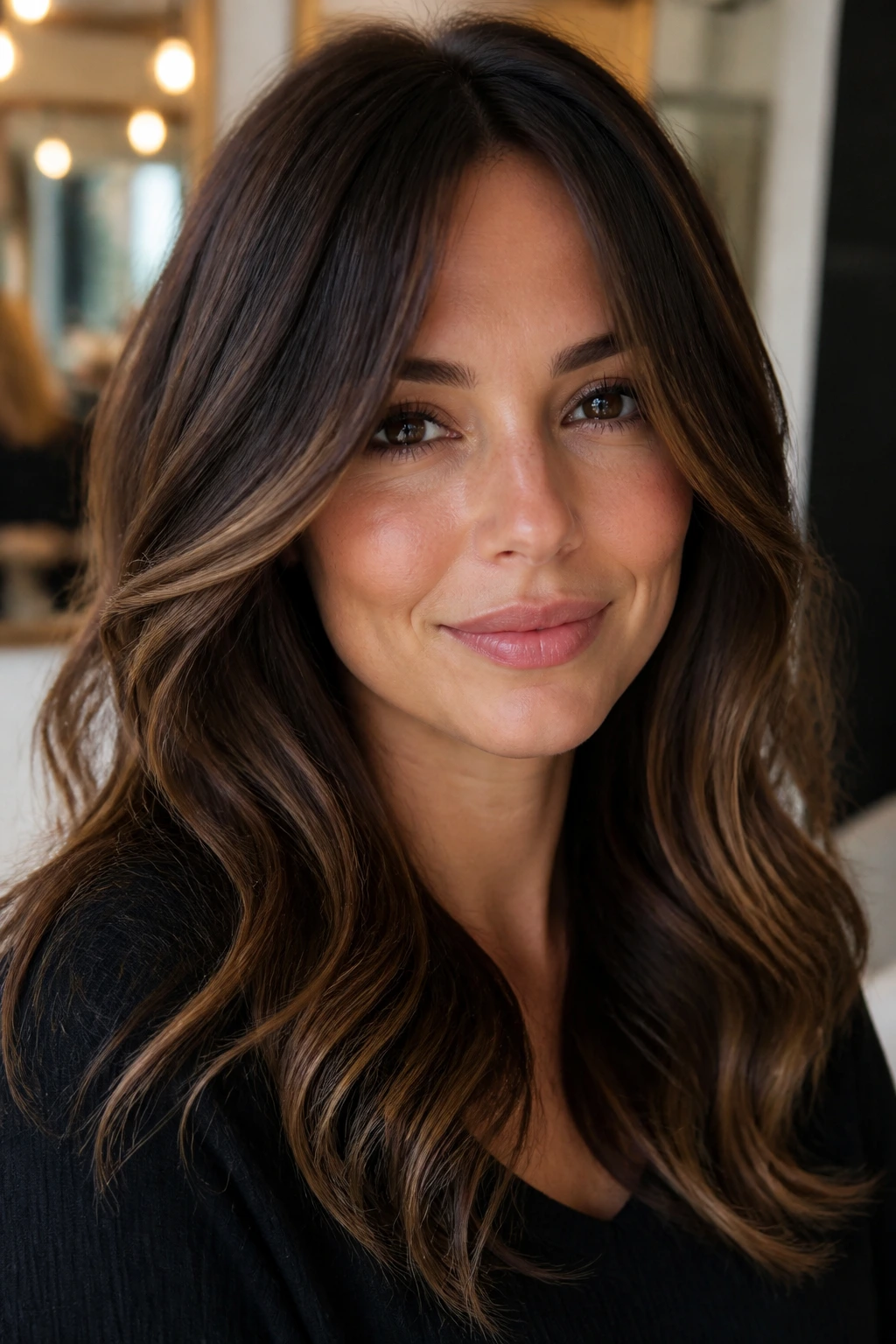
Walnut gloss with subtle pops is one of the most wearable looks on the list. The walnut base is deep and smooth, and the tiny highlighted pieces are scattered just enough to catch the light. Nothing is shouty. Nothing is striped. It feels controlled.
For heart-shaped faces, the trick is to keep the brightest bits low and around the outer edges of the cut. A few subtle pops near the jawline and lower cheek can bring the shape into balance without messing with the temple area. If you wear your hair straight, this can look very sleek. If you wear waves, it turns softer.
A gloss finish matters here more than in a lot of other looks. Walnut without shine can look dull, and subtle highlights disappear. With a polished finish, it reads rich and expensive.
25. Blackberry Brown with Merlot Lights
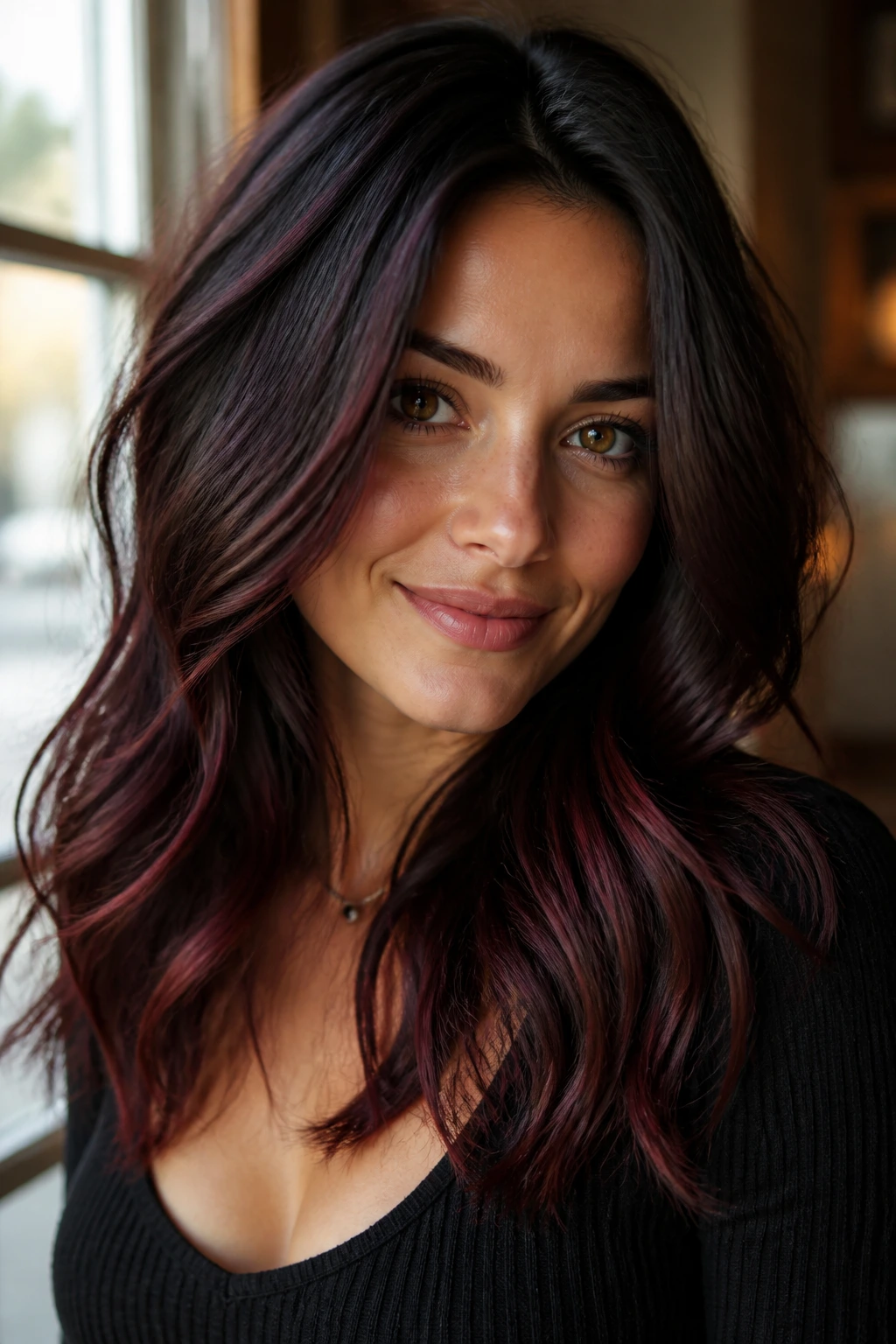
Blackberry brown with merlot lights is for someone who likes depth with a little drama. The base stays dark and inky, while the merlot lights flash through the mid-lengths like a wine stain in good light. On a heart-shaped face, that darkness at the top can be surprisingly flattering because it narrows the forehead visually.
The bright pieces should never sit in a thick band around the hairline. Let them surface lower, around the mouth and collarbone zone, where they soften the jaw and keep the ends alive. If the face frame is too bright, the whole look tilts the wrong way. This is a color that needs a little restraint.
I like it on medium to thick hair and on cuts that move. The contrast between blackberry and merlot looks richer when the hair swings or bends. Straight hair can work too, but the shine has to be there. Without shine, the dark base swallows the whole effect.
Why Placement Beats a One-Note Color Block
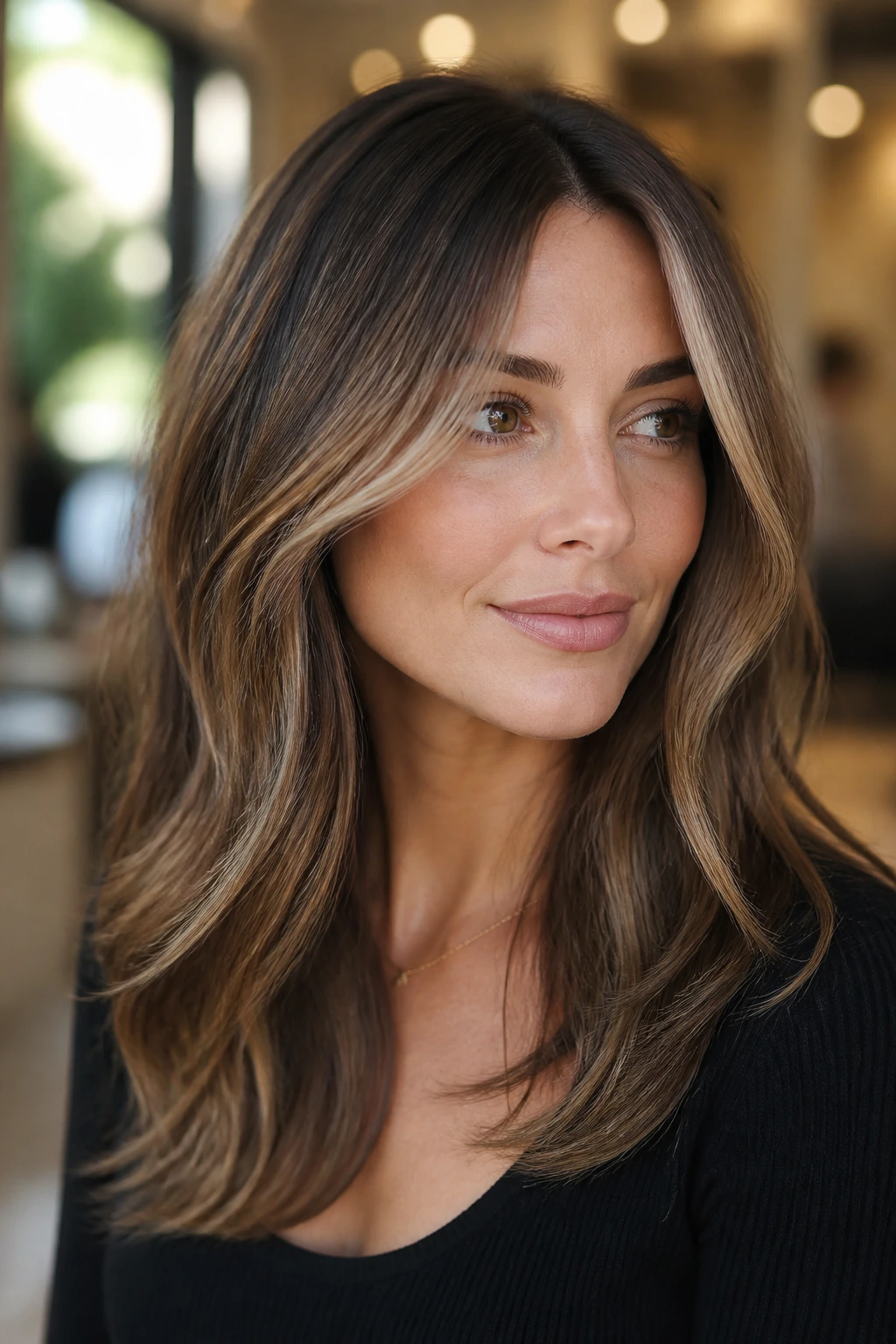
A heart-shaped face can take brightness, but not everywhere at once. That’s the part people miss. If the highlights sit too high, the forehead looks broader. If the lowlights are too deep through the lower half, the chin disappears and the face starts to feel inverted. Placement is what keeps the balance.
The smartest color jobs use the hair as a frame, not a billboard. A touch of brightness around the cheekbone. A deeper root. Thinner pieces near the temples, not chunky panels. Fuller movement through the ends. That’s the map.
Where the Eye Should Go
You want the eye to move from the forehead to the cheekbones and then down to the jawline, not stop at the top of the head. That means the lightest pieces should usually live lower than people expect.
Why Depth Matters Too
Lowlights are not filler. They are structure. They keep the brighter pieces from floating off the head and make the hair look denser, which is especially useful if your face shape already has a strong upper half.
Essential Tools for Salon Visits and At-Home Maintenance
-
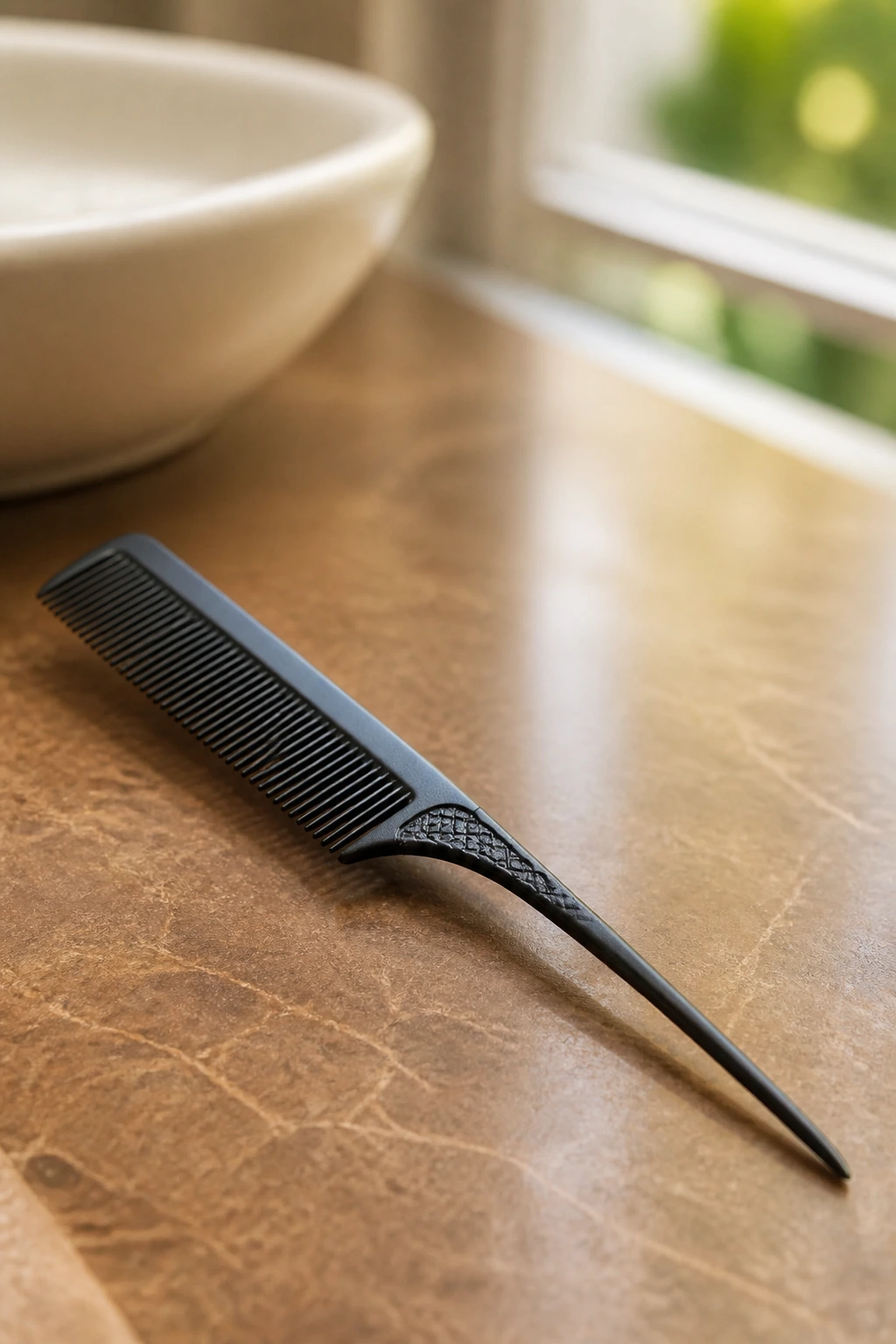
Tail comb: Helps section the hair cleanly so highlights and lowlights do not blur into one another before you want them to.
-
Sectioning clips: You’ll want 4-6 sturdy clips to keep the crown, sides, and back separated while you work or style.
-
Tint brush and color bowl: Useful if you’re depositing a gloss, toner, or root shadow at home; a regular kitchen bowl is too awkward for clean application.
-
Balayage board or foil paper: Not mandatory for every look, but helpful for keeping painted pieces controlled and preventing overlap.
-
Gloves: Any color-depositing or toning product can stain hands fast. Skip the improvisation.
-
Sulfate-free shampoo: Better for keeping highlights bright and lowlights glossy without stripping the tone out too fast.
-
Color mask or deep conditioner: A weekly mask keeps the ends from looking dry, especially if you’re working with caramel, copper, or blonde ribbons.
-
Heat protectant spray: Non-negotiable if you blow-dry or curl the hair. Color fades faster on dry, overheated strands.
-
Purple or blue shampoo: Pick the one that matches your tone. Purple helps blonde and beige pieces; blue is better when brassiness shows up in brunette-to-blonde blends.
Smart Shade Selection and Tone Tips
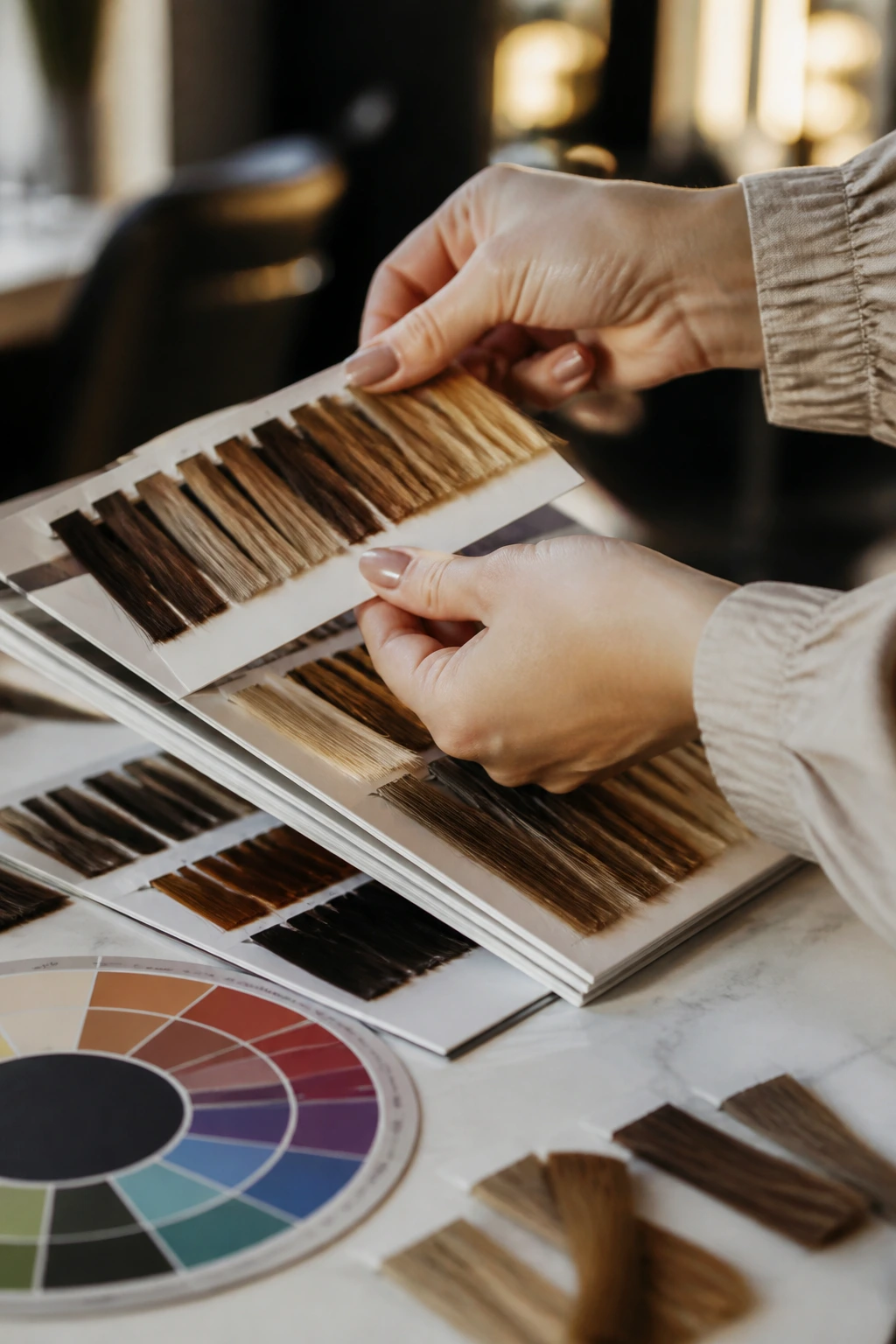
The right lowlight is usually one to two levels deeper than your natural base if you want softness, and two to three levels deeper if you want the hair to look denser. Go darker than that and the ribbons can start to look painted on. Go lighter than that and the contrast gets flimsy. That balance matters a lot on heart-shaped faces because the depth around the crown is doing real work.
If your base is a level 4 or 5 brunette, caramel, honey, and beige highlights usually sit best around level 6 or 7. If your base is darker, espresso, mocha, chestnut, or mahogany lowlights can make the whole thing look richer without fighting your natural color. I prefer tones that echo what already exists in the hair or skin rather than pushing into a shade that looks borrowed from someone else’s head.
Ask for fine weaves near the hairline and wider painted sections from the cheekbone down if you want a flattering heart-shaped frame. That detail is worth repeating because it changes the whole look. The temples should not be a bright billboard. The lower half of the hair should carry more of the shine.
Another thing: bring photos that show the hair in daylight, not just under salon lights. A beige blonde that looks soft indoors can turn much brighter outside. If you know your hair pulls yellow, copper, or red when lightened, say so. That’s not small talk. That is the difference between a flattering gloss and a tone you spend weeks trying to fix.
How to Wear and Style the Dimension
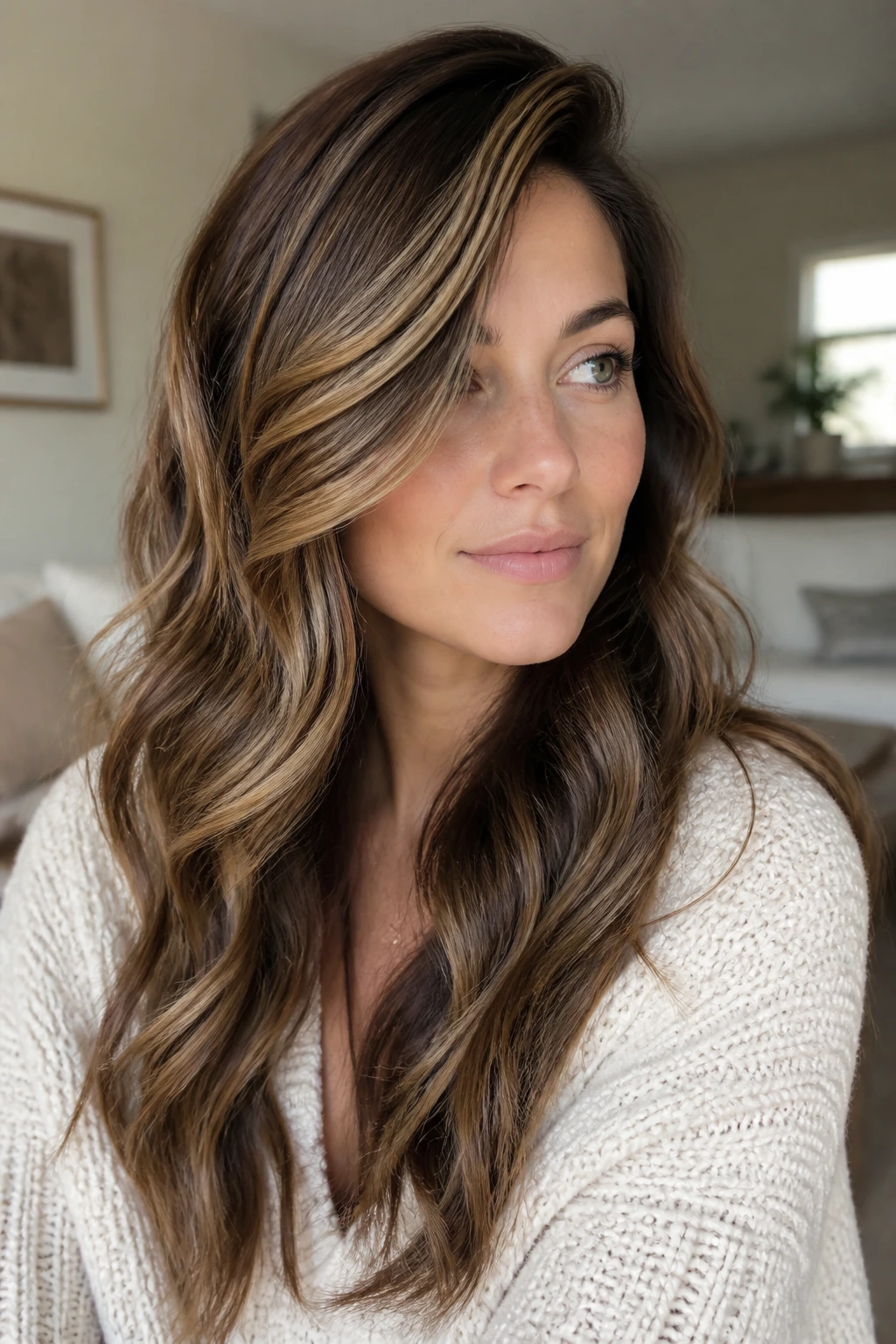
Soft waves do a lot of the work for you. They let the highlights and lowlights separate, which means the eye sees the contrast as movement instead of color blocks. If you wear your hair straight, ask for slightly thicker ribbons and a softer root shadow, because the lines will show more clearly on a smooth surface.
Parting matters more on a heart-shaped face than people admit. A deep side part can reduce the look of width at the forehead, while a soft center part can work if the front pieces are lighter and the crown stays shadowed. I usually like a part that isn’t carved like a ruler. A little looseness around the root feels better and less severe.
The best cuts for this color work are collarbone lobs, long layers, curtain bangs, soft shags, and butterfly layers. Those shapes give the highlights room to move downward. A blunt chin-length bob can still work, but it asks for very careful placement or it can feel boxy.
Finish with shine spray on the mids and ends, not at the roots. Heavy oil near the hairline can make the top collapse, which is the opposite of what you want here. Keep the crown light, keep the ends reflective, and let the color do the balancing.
Extra Tips for Keeping the Blend Rich
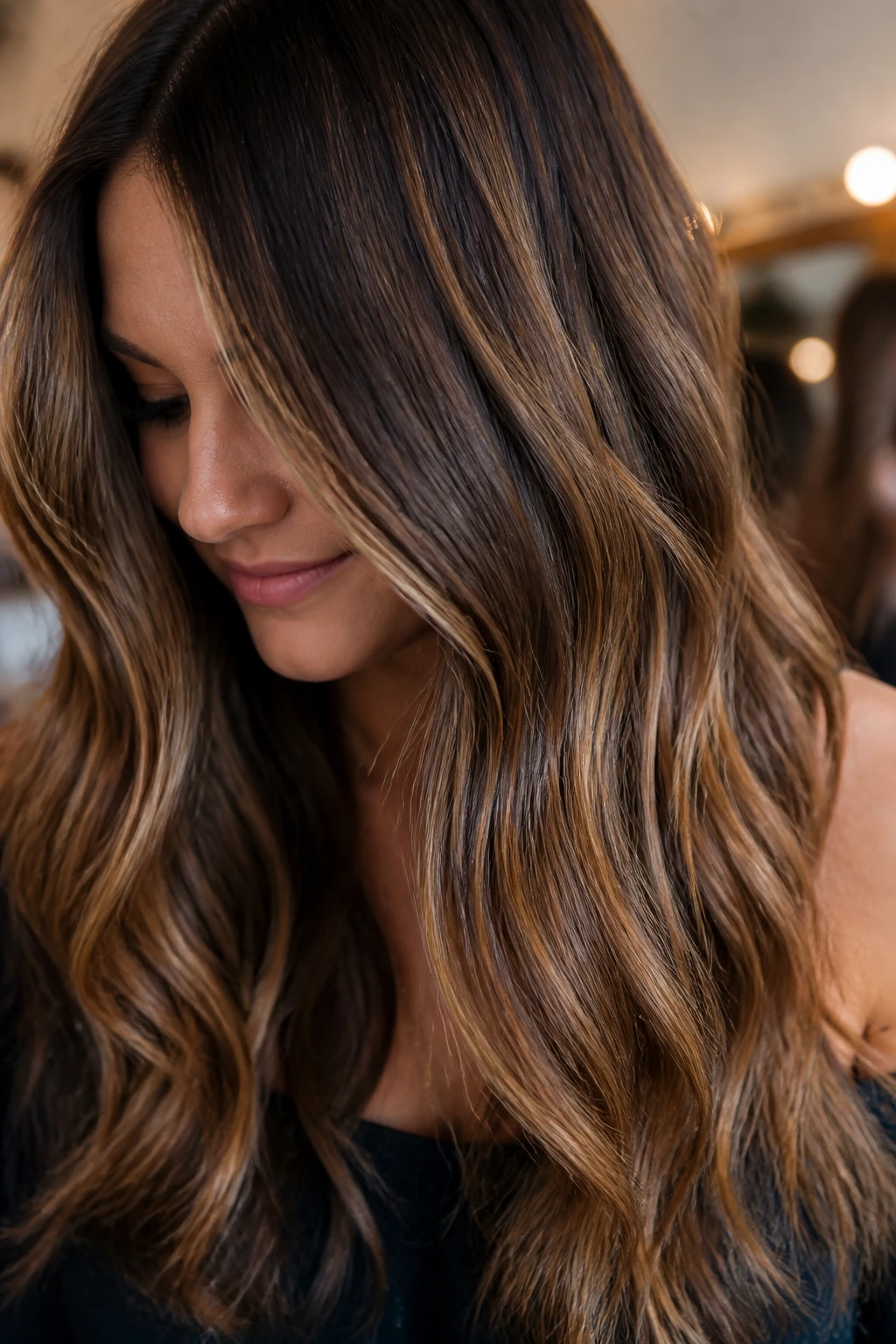
Tone Check: If your blonde pieces start to go brassy, do not immediately reach for a darker dye. A beige or blue-violet gloss often fixes the tone without wiping out the dimension you paid for.
Placement Trick: Ask your colorist to keep the brightest pieces slightly below the widest part of the forehead. That simple shift usually looks better on a heart-shaped face than a center-heavy face frame.
Salon Script: If you’re describing the look, say you want “depth at the root, softer brightness around the cheekbone, and more light through the ends.” That gives the stylist a map. Vague requests usually produce vague hair.
At-Home Finish: A few drops of lightweight shine serum on the lower third of the hair can make the lowlights look richer. Avoid the scalp. You want polish, not grease.
Common Mistakes That Flatten a Heart-Shaped Face
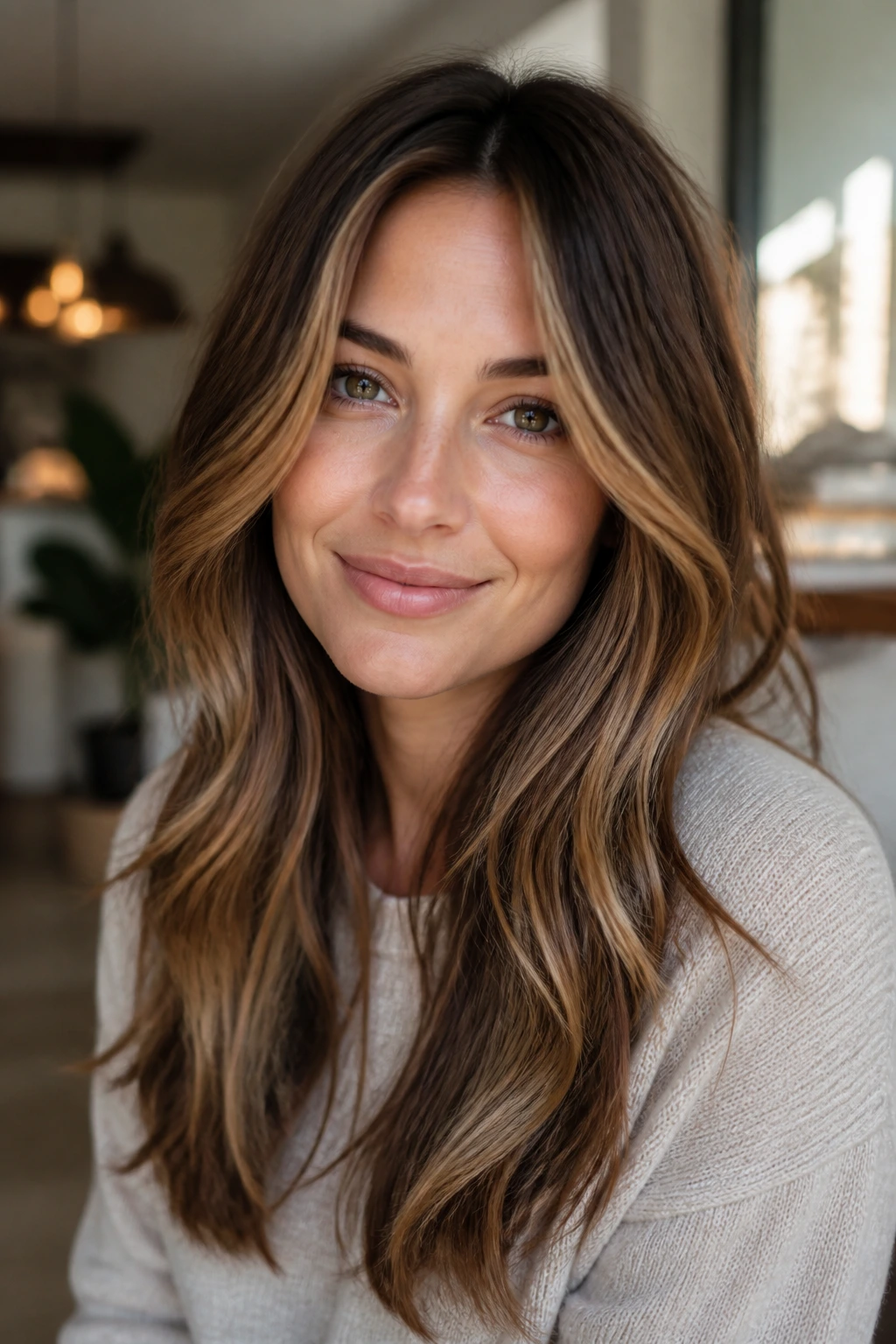
The biggest mistake is putting the brightest pieces right at the temples. It seems flattering on paper, but on a heart-shaped face it can make the forehead look wider and the whole top half feel louder than the rest. Move the lightness lower. That fixes a surprising amount.
Another problem is over-lightening the ends and forgetting the crown. If the ends are bright but the root is flat and one-tone, the hair can look disconnected. A little shadow near the scalp keeps the shape grounded and makes the lower brightness feel intentional.
People also go too ash or too beige without checking their skin tone. That can drain warmth from the face and make the color look slightly dry, even when the hair is healthy. If that happens, a soft caramel or honey glaze is often a better rescue than trying to force a cooler tone to behave.
Chunky, same-width highlights are another one. They read stripey fast. Thin ribbons near the face and slightly wider movement through the lower half give a much better balance. And no, the stripey version is not “bold.” It’s just stripey.
Finally, don’t ignore the haircut. A blunt cut can swallow dimension if the placement isn’t careful, while a layered cut can make the same color look alive. The color and cut need each other. Always.
Variations and Adaptations to Try
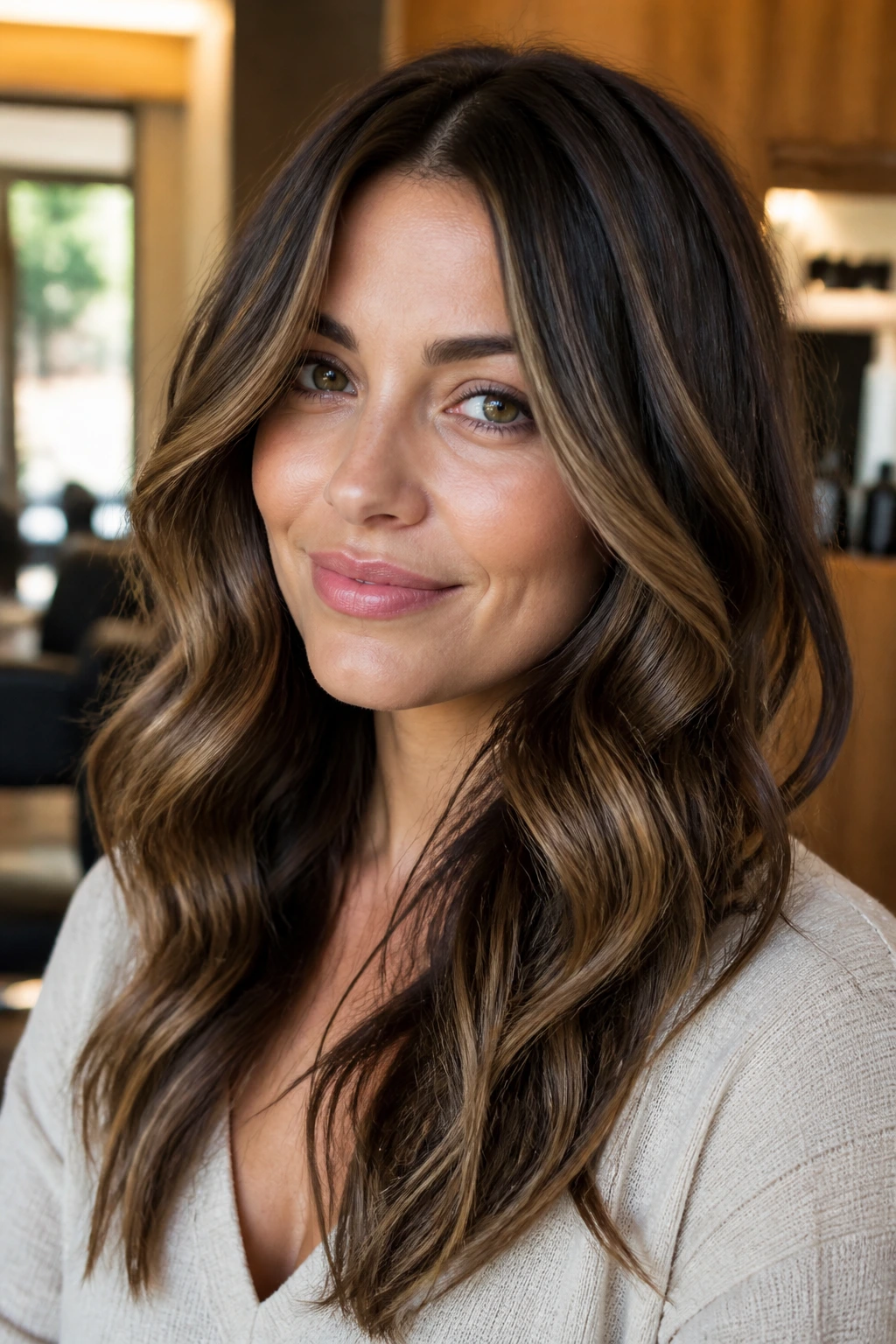
Soft-Contrast Brunette: Keep the highlights only one to two levels lighter than your base and deepen the lowlights just enough to separate the layers. This is the safest path if you want richness without obvious streaks. It’s especially good for office-friendly hair that still needs movement.
High-Drama Money Piece: Brighten the face frame a little more, but keep the rest of the head deeper. The trick is to stop the brightness at the cheekbone and not let it spill across the temples. This version works when you want the face to look lifted without lighting the whole room.
Cool Smoky Blend: Use mushroom brown, ash beige, and cool brunette lowlights for a softer, moodier finish. It’s best when your skin has a cool or neutral undertone and you want the hair to feel polished rather than sunny. Keep the toner soft so it does not go flat gray.
Warm Copper Glow: Build around copper, caramel, and cinnamon ribbons if your skin leans warm or peachy. The warmer finish can make the face look brighter, but the lowlights still need to stay in place so the forehead doesn’t dominate. Thin ribbons work better than large panels here.
Curly Halo Placement: If your hair is curly or coily, place the lighter pieces on the outer ringlets and keep more depth underneath. That lets the shape stay full without ballooning at the top. Heart-shaped faces and curls can be a lovely pair when the brightness respects the curl pattern instead of fighting it.
Keeping the Color Fresh Between Salon Visits
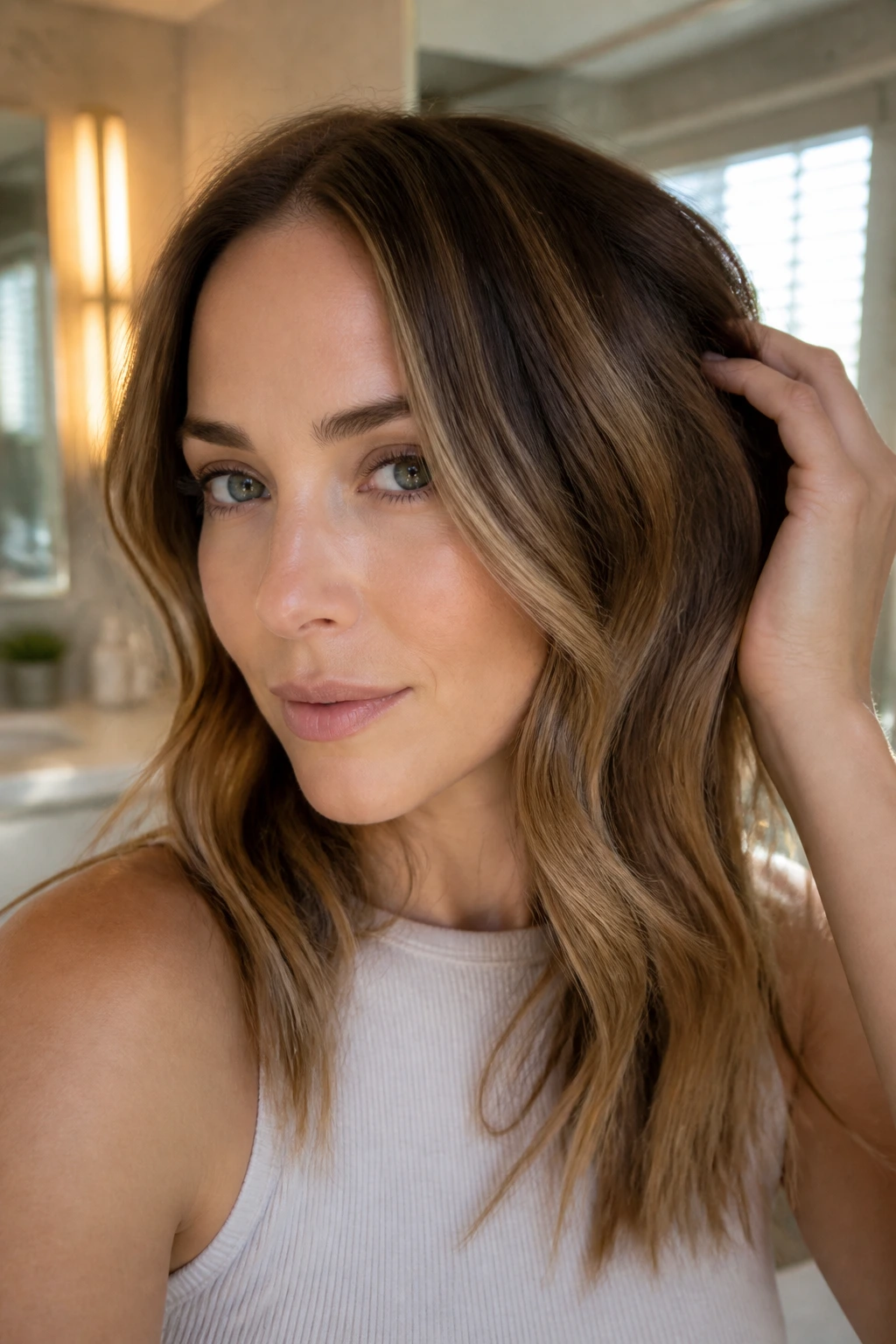
Color like this ages best when you treat maintenance as a rhythm, not a crisis. Gloss or toner usually needs refreshing every 4 to 6 weeks if you want the highlights to stay clean and the lowlights to stay rich. Root touch-ups can stretch to 6 to 8 weeks for many placements, especially if you asked for a shadow root or balayage that grows out softly.
Use a sulfate-free shampoo 2 to 3 times a week, then follow with a conditioner that actually feels slippery in the shower. If your hair is blonde, beige, or champagne, use purple shampoo about once a week, not every wash. Too much and the hair can go dull or slightly gray. If your highlights are copper or caramel, a color-depositing mask in the same family can keep the warmth from fading too fast.
Heat styling matters more than people like to admit. Blow-dryers, flat irons, and curling wands all eat tone when they’re used hot and often. A heat protectant every time is the boring answer, and boring answers are often the right ones. If the ends start to look dusty, a small trim and a gloss do more than a desperate round of over-toning.
Hard water and product buildup can also flatten dimension. If your hair starts looking coated instead of glossy, clarify every 3 to 4 weeks and follow with a deep mask. The shine comes back fast when the residue is gone. And if you swim, wet the hair first and coat the ends with conditioner before you go in. It is a small step with a very real payoff.
Frequently Asked Questions
What highlight placement is best for a heart-shaped face?
The safest placement keeps the brightest pieces lower than the hairline, usually around the cheekbone, jaw, and ends. That softens the forehead and keeps the face from looking top-heavy. A few lighter strands near the front are fine, but they work better when they curve inward instead of sitting straight at the temples.
Do lowlights matter as much as highlights here?
Yes, maybe more than people expect. Lowlights create the depth that makes the highlights look rich instead of washed out, and they give the lower half of the hair a fuller feel. On a heart-shaped face, that extra weight near the ends helps balance the wider upper face.
Should the brightest pieces start at the root?
Usually no. Brightness that begins at the root can widen the forehead visually and make the top half of the face feel busier. A shadow root or soft root melt gives you a cleaner frame and a more flattering grow-out.
Can this work on short hair?
Absolutely, but the placement has to be tighter. A chin-length bob or pixie can carry highlights and lowlights beautifully if the lightness stays away from the temples and the darker pieces anchor the crown. Short hair gives less room for error, so precision matters more.
What if my hair is already blonde?
Then the job becomes about depth, not more lightness. Add lowlights, a root shadow, or beige-gold ribbons so the color does not look flat or over-processed. Heart-shaped faces often look better with a little darkness near the top than with one bright sheet of blonde.
Are cool tones or warm tones better for heart-shaped faces?
Neither is automatically better. Warm caramel, copper, and honey tones can soften the face and add glow, while cooler ash, mushroom, and beige tones can sharpen the shape if they’re placed carefully. The real key is keeping the brightest pieces low and not crowding the forehead.
How do I stop the color from looking stripey?
Use thinner highlights near the face and let the lowlights break up the sections through the mid-lengths. Stripey color usually happens when the pieces are too wide, too even, or too close to the root line. Soft weaving and overlapping tones fix most of that.
What should I tell my stylist if I only have one inspiration photo?
Tell them what you like about the photo — the amount of contrast, the warmth or coolness, the placement around the face, the root depth. A good photo is useful, but the details inside the photo matter more than the photo itself. If you have a heart-shaped face, say so out loud. That one detail changes the placement conversation.
A Softer Frame Wins
The best color on a heart-shaped face does not fight the shape. It frames it. That means leaving the forehead a little softer, giving the lower half of the hair more life, and using lowlights as structure instead of treating them like background filler.
Some of these looks lean warm, some go cool, and a few sit right in the middle. That range is useful. You can keep the same face-flattering idea and still land in a shade that fits your skin, your cut, and how much maintenance you want to sign up for.
If you’re choosing between two options, pick the one with better placement rather than the louder color. The placement does the long-term work. The shade just gets the credit.