



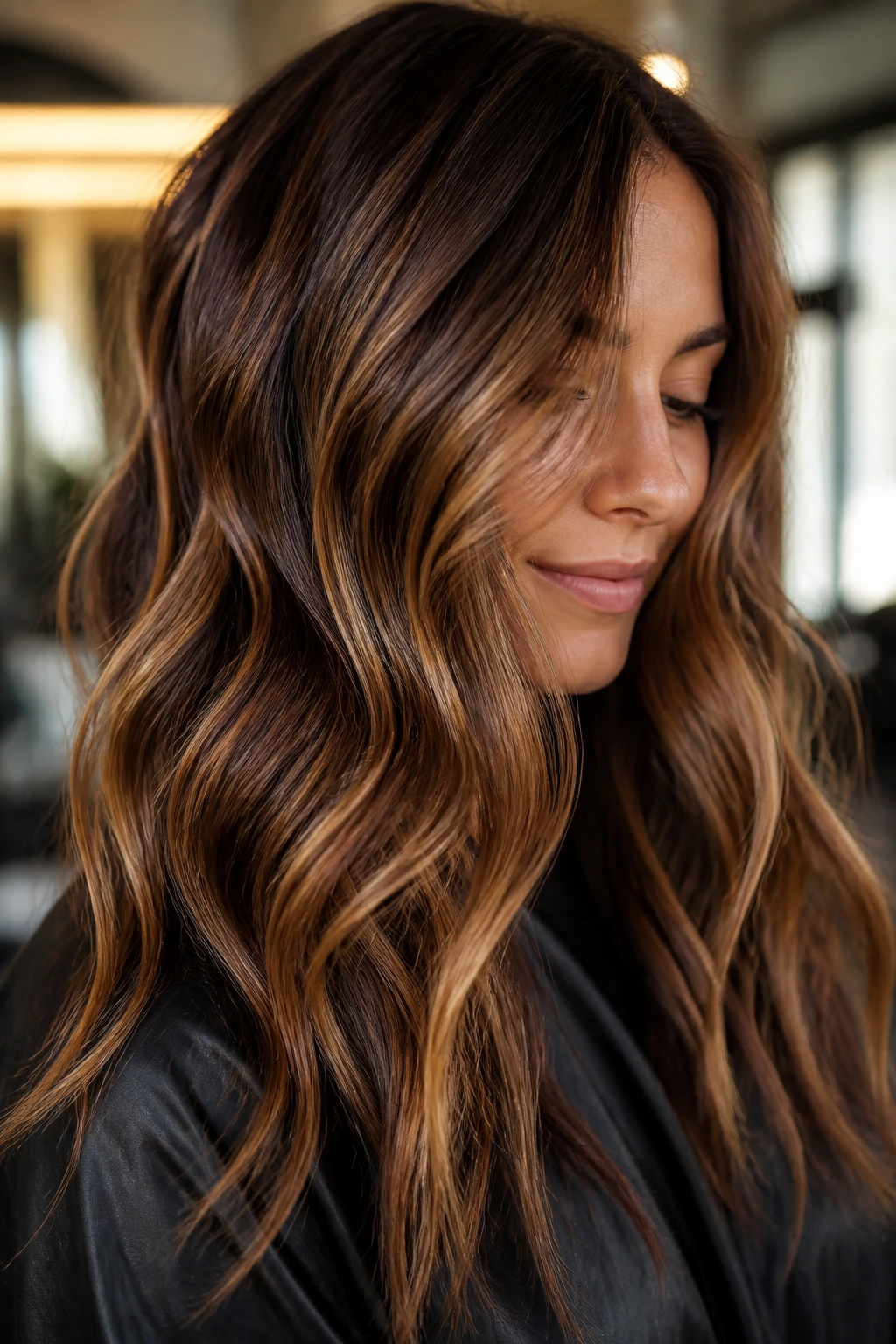
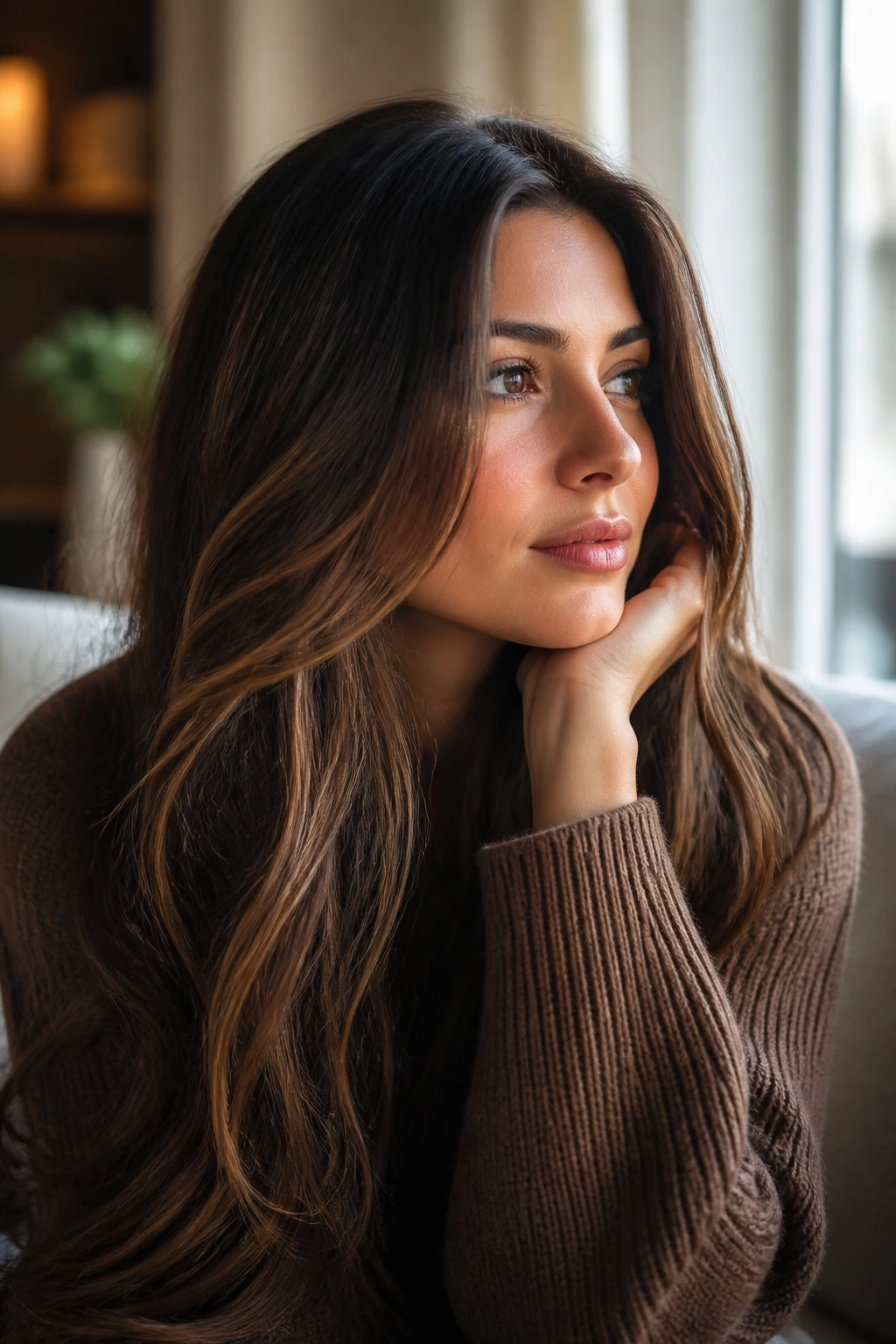
Dark brown caramel honey highlights for brunettes work best when they look like light found the hair on its own. Not a stripe. Not a helmet of blonde. Just warm, glossy pieces that move through the hair like the sun slipped in through a window and stayed there for an hour.
That’s the whole trick with brunette color: keep the depth, then wake it up. On a level 4 espresso base, caramel can sit one or two levels lighter and still feel grounded. Honey pushes a little brighter, which is useful around the face, at the ends, or inside curls where the lighter pieces catch and disappear in the same motion. Push those tones too orange and the whole thing turns noisy fast. Keep them soft and dimensional, and the result looks expensive in the old-school sense — rich, tailored, and easy to wear.
I’m picky about this color family because it can go wrong in such obvious ways. Too many highlights and the hair starts to look striped. Too little contrast and the caramel vanishes into the brown. The good versions have root depth, a little air around the face, and just enough lowlight to stop everything from flattening out after a few washes. That balance is what makes these shades so dependable on brunette hair, and the 30 ideas below lean into it from every angle.
Why These Brunette Highlights Feel Rich Instead of Flat
-
Depth stays in charge: Dark brown hair gives caramel and honey something solid to sit against, so the highlights read as dimension instead of blonde overload.
-
Warmth needs control: Caramel and honey can turn brassy fast if they’re lifted too far, which is why the best versions stay in the brown-to-golden lane rather than drifting orange.
-
Placement changes the whole mood: A face frame, a few ribbons through the mids, or a soft balayage melt can make the same color look polished, casual, or bold.
-
Lowlights matter more than people think: A few deeper strands keep the highlight pattern from looking dusty or washed out after several shampoos.
-
Brunettes get the easiest grow-out: When the root shadow is left alone, the color softens instead of screaming for a correction appointment every four weeks.
1. Soft Caramel Ribbons Through Espresso Brown
This is the look I reach for when someone wants movement without a big personality shift. The ribbons are thin enough to tuck into the hair, but they still show up when waves bend or a blowout flips at the ends. On espresso brown, caramel should look like a soft shift in tone, not a pasted-on stripe.
Ask for a few wider pieces through the mid-lengths and a lighter hand at the crown. That keeps the top from looking busy while the lower half picks up the warmth. It’s one of those styles that gets better as it grows, which is why it works so well on long layers and shoulder-length cuts.
Best on hair that moves
The shape matters here. A blunt cut can handle it, but layers make the ribbons breathe a little more. If your hair is very straight, curl the ends under or away from the face so the contrast shows up in motion instead of only in photos.
2. Honey Money Piece for Instant Brightening
A money piece is the fastest way to wake up a dark brunette face. The honey should sit just a bit brighter than the surrounding hair — enough to catch the cheekbone line and the part, not so light that it takes over. That front-of-face brightness is what makes the whole color feel fresh.
I like this look on rounder faces and heavier fringe because it creates a little lift where the eye lands first. Keep the roots deep and the ends soft, or the face frame starts looking disconnected from the rest of the hair. A warm gloss after lightening helps the honey stay golden instead of going straw-yellow.
Ask for this at the salon
Tell your colorist you want two face-framing pieces, lifted to a honey tone, with soft blending back into the brunette base. If you wear a middle part, ask for the brightness to sit evenly on both sides; if you wear a side part, the brighter side can take a touch more contrast.
3. Shadow-Root Balayage with Caramel Ends
This is the most forgiving version in the whole set, and that’s not a small thing. The shadow root keeps the grow-out smooth, while the caramel lives through the mid-lengths and concentrates at the ends where the hair can handle a little more light. It looks especially good on layered cuts because the bottom pieces catch the most movement.
The trick is not to drag the lightener too high. Leave enough depth at the root that the color still feels like brunette hair, then feather the caramel down in a soft melt. If your hair tends to puff up on the ends, this placement helps because the lighter pieces make the shape look more intentional.
4. Fine Babylights for a Barely-There Glow
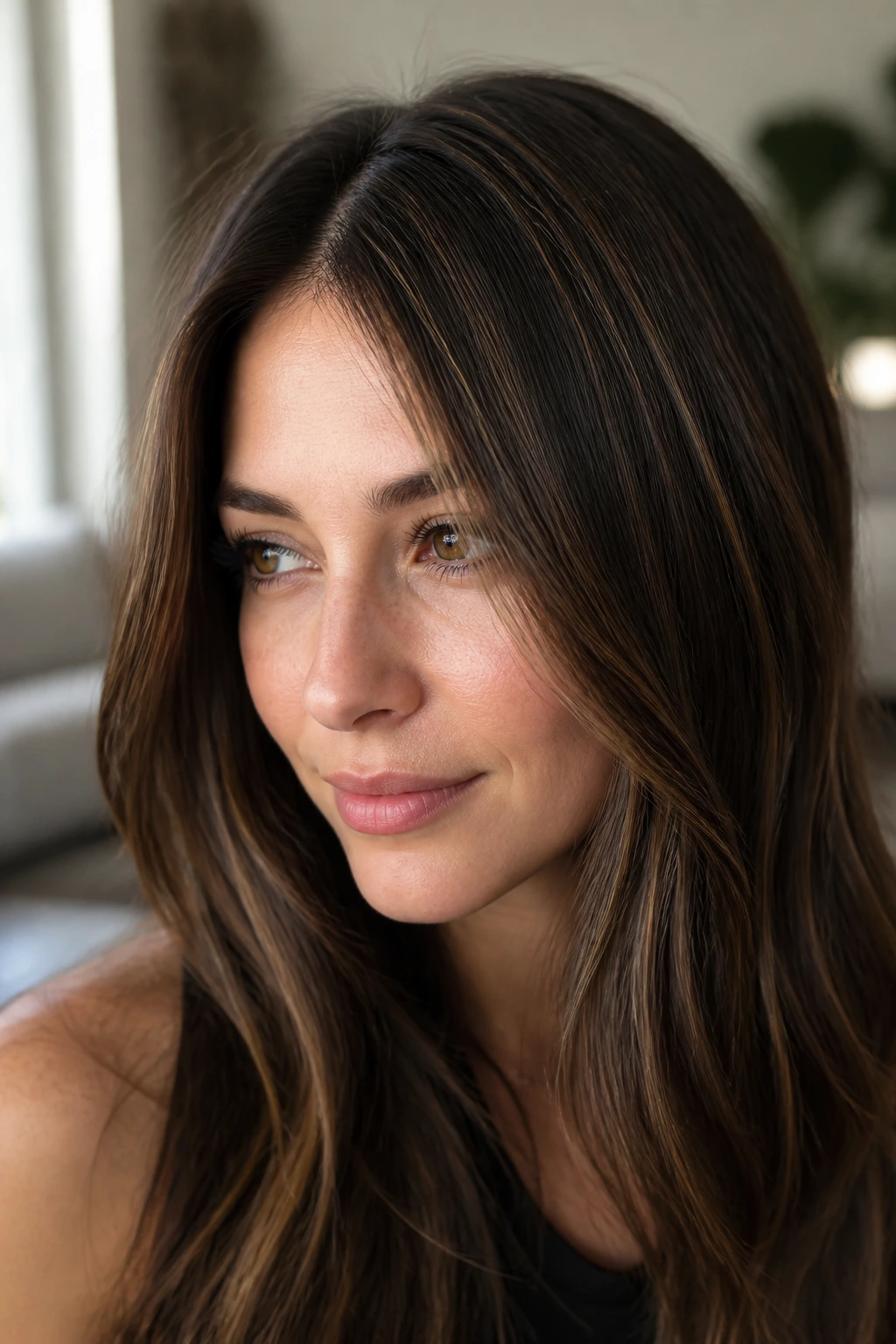
Babylights are for people who want color that whispers. Tiny weaves of honey and soft caramel blend into the brunette base so closely that the effect is more sheen than stripe. On fine hair, that matters. Thick chunks can overwhelm the cut and make the ends look thinner than they are.
The best babylights are scattered around the part, temples, and outer layers, not packed everywhere. You want them to lift the surface, not turn the whole head into a pale weave. Keep the toner warm-beige rather than icy, or the brunette base can look muddy beside it.
5. Chunky Ribbon Highlights for Thick Brunette Hair
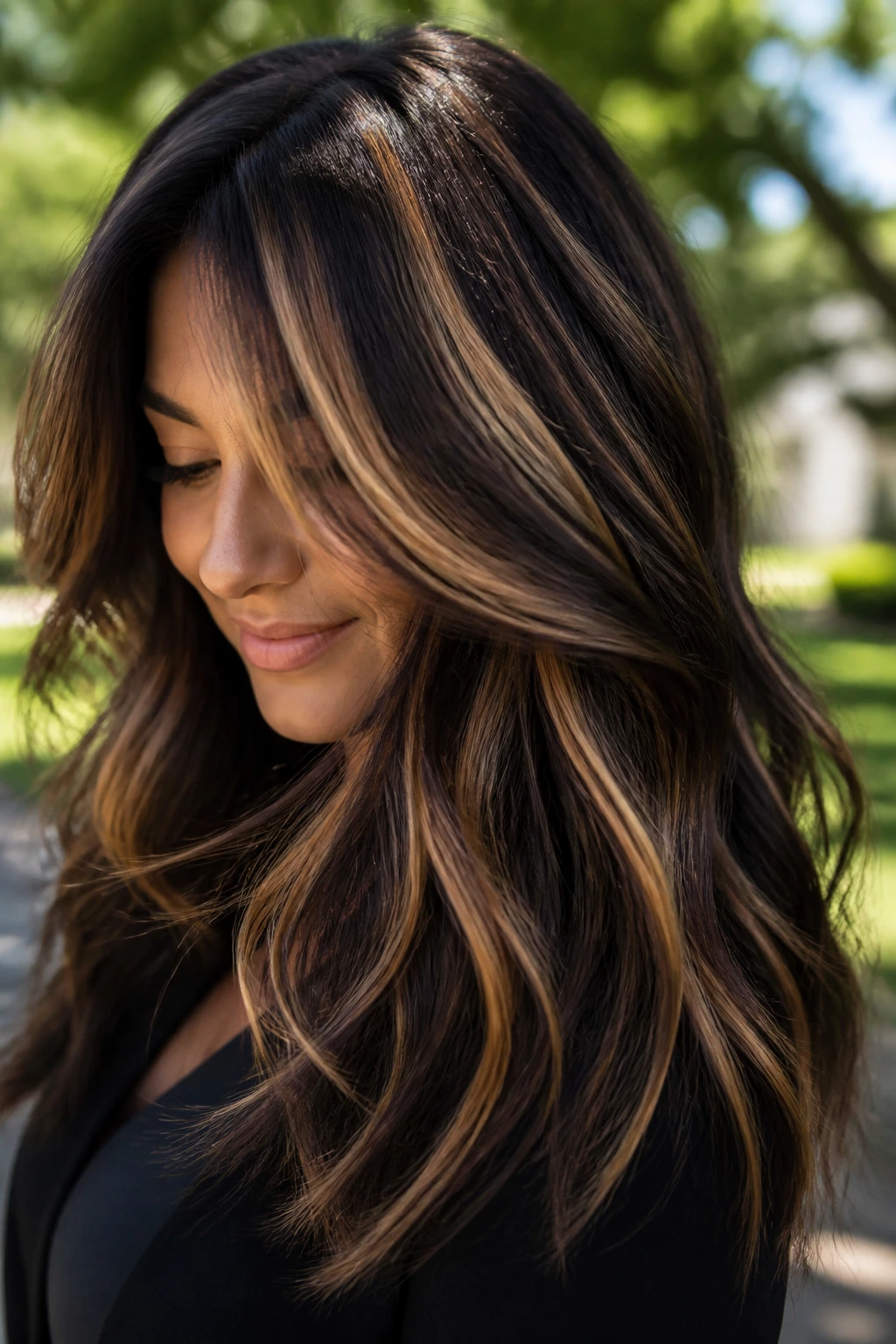
Thick hair can handle bolder ribbons, and honestly, it often needs them. A few wider caramel pieces cut through density and show off the shape of the cut. On long, heavy brunette hair, the contrast stops everything from reading as one dark sheet.
I prefer these when the haircut already has movement — long layers, face-framing edges, maybe a bit of texture at the ends. Too many chunky ribbons on a square, one-length cut can feel dated fast. But place them well and they make waves look bigger, not busier.
What makes this version work
- The ribbons should be wider at the mids and softer near the root.
- Honey can sit closer to the face, while caramel spreads through the lengths.
- A gloss every few weeks keeps the color from turning patchy after shampooing.
6. Toasted Toffee Face Frames on a Wavy Lob
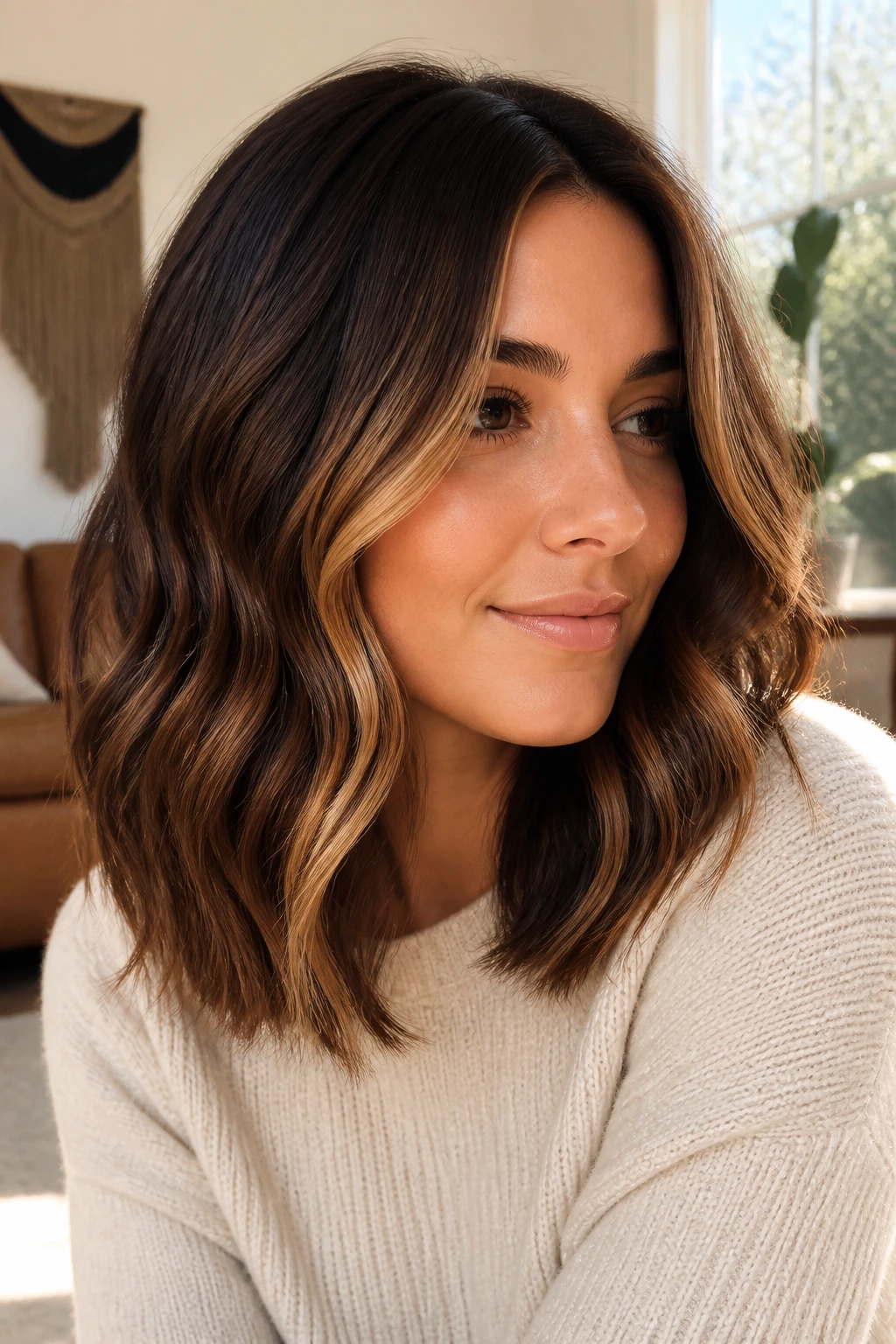
A lob loves this treatment because the cut already has built-in movement. Toasted toffee around the face brings the eyes up and keeps the length from looking heavy near the shoulders. The rest of the hair can stay darker, which makes the front pieces do the talking.
This is one of my favorites for people who wear their hair in loose bends or a rough blowout. The lighter pieces trace the curve of the cheek and jaw, and the bob suddenly looks more expensive without looking fussed over. Keep the toffee a touch deeper than honey if your base is already warm; otherwise, the whole thing can start to drift orange.
7. Chestnut-and-Honey Melt for Long Layers
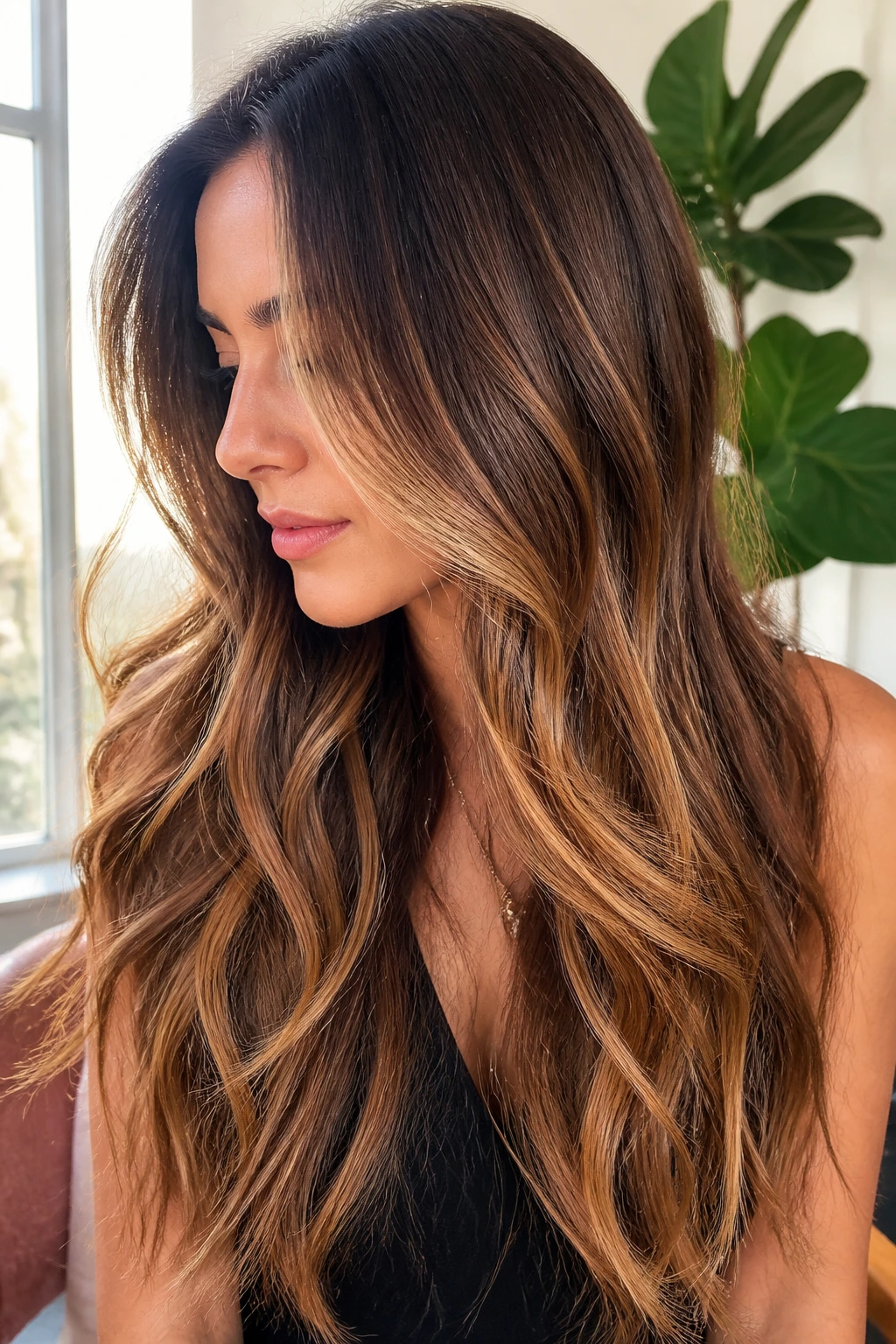
Long layers give color room to travel, and this melt uses that space well. Chestnut at the root and around the underside keeps the brunette heart intact, while honey threads through the mid-lengths and ends like sunlight catching every bend. It’s softer than a heavy balayage and richer than a single-tone gloss.
The color reads best when there’s some air in the hairstyle — loose curls, a paddle-brush blowout, or a big round-brush finish. Straight, flat ironing can make the contrast look tighter than you want. If you wear your hair straight often, keep the honey pieces a little more diffused so they don’t look like hard bands.
8. Peekaboo Caramel Underlayers
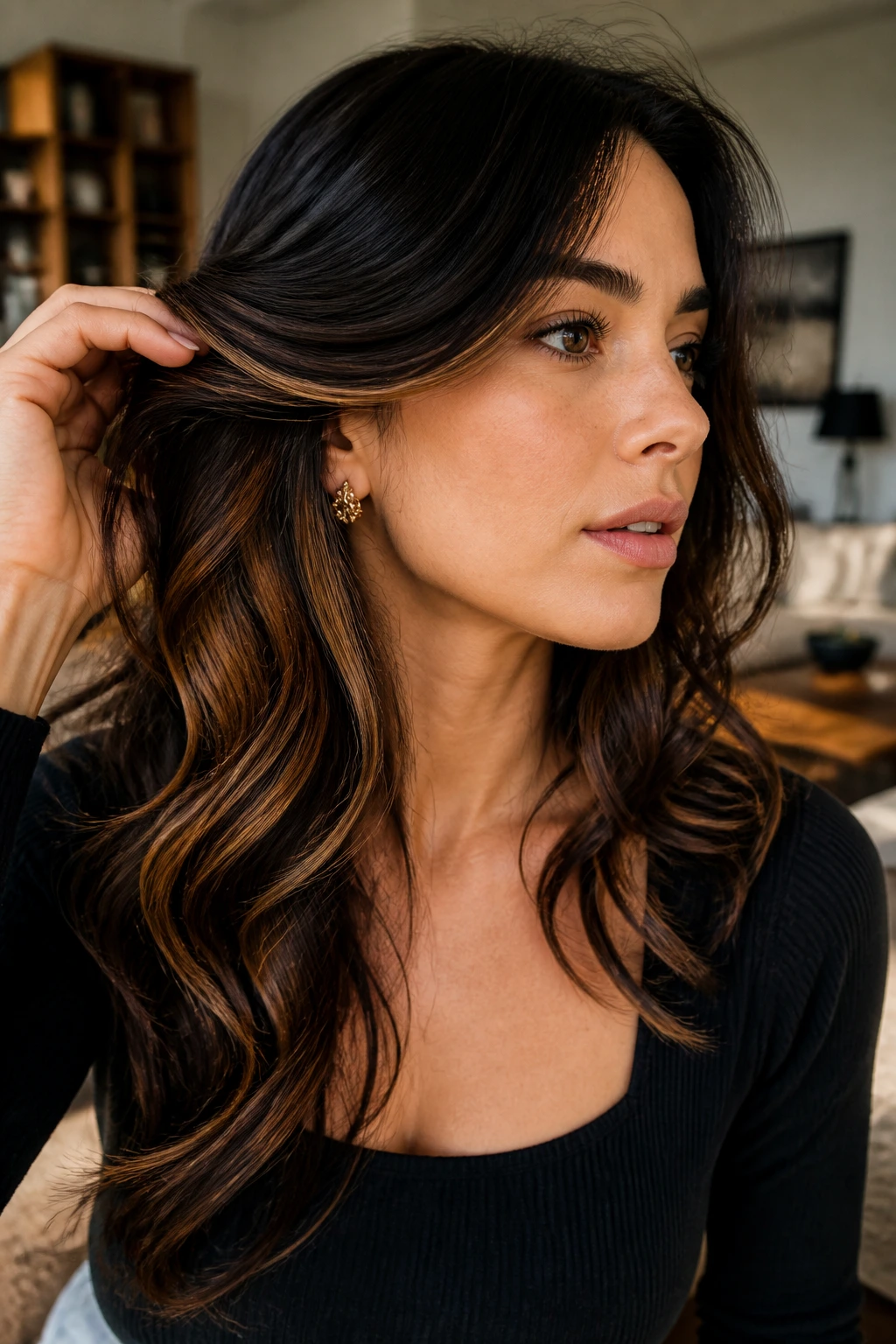
Peekaboo color is a neat little trick. The top stays dark and polished, while the caramel lives underneath, showing only when the hair moves or tucks behind the ear. It’s a smart choice for anyone who likes a brunette base but wants a little drama when the hair swings.
This also works well if your job or dress code prefers a calmer look. The color feels private until you want it to show. Curly hair makes this even better because the underlayers pop out naturally, and the caramel flashes in little surprises instead of sitting on top all day.
9. Bronde Blend with a Soft Honey Veil
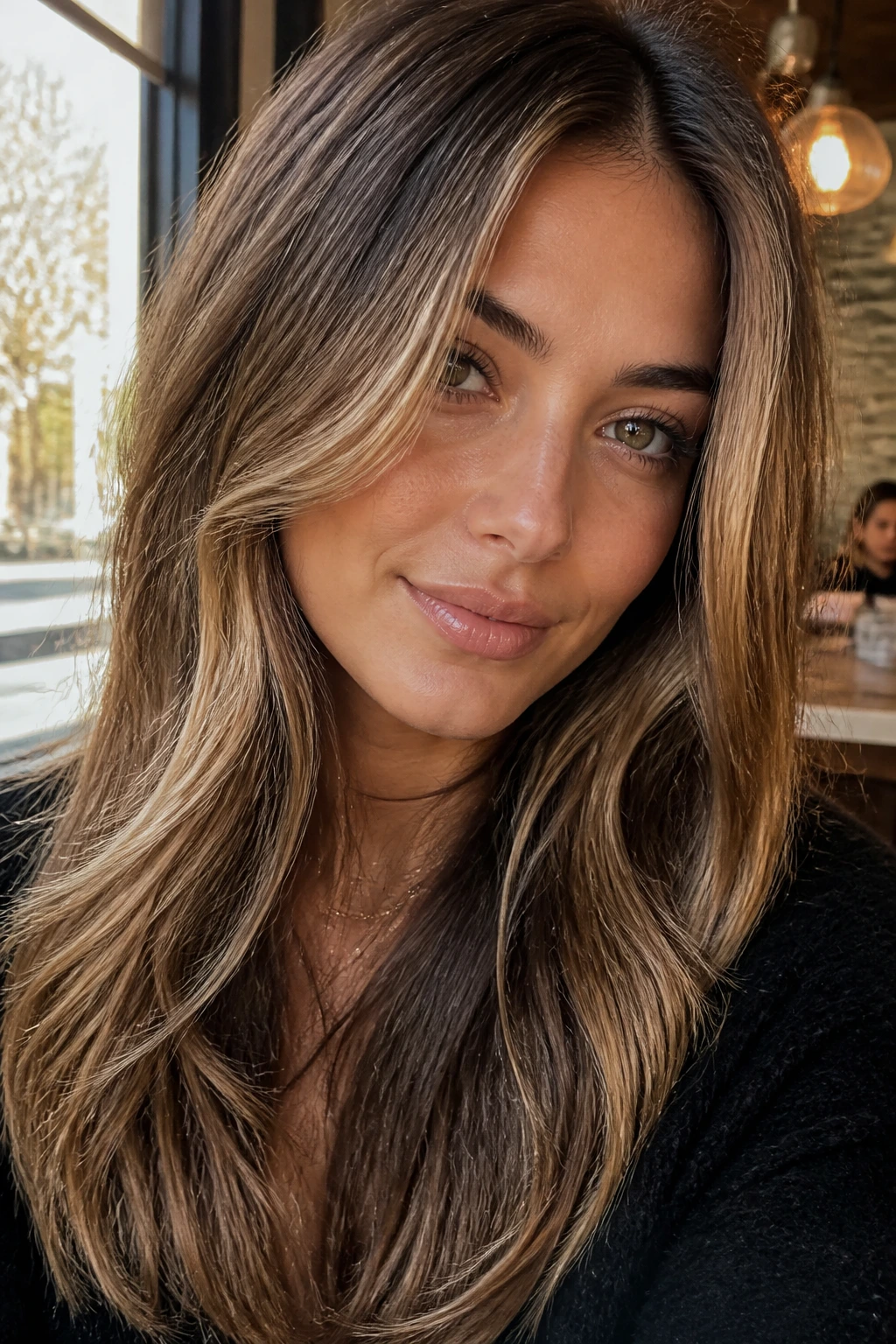
Bronde sits in that middle lane between brunette and blonde, but I like it best when the brunette still wins. A honey veil keeps the overall look warm and airy without losing the depth that makes brunettes look glossy in the first place. It’s less about contrast and more about softness.
If your natural base is already medium brown, this can be a nice way to lighten things without going fully blonde. Ask for a veil effect around the face and crown, then keep the mid-lengths more muted. The whole point is to avoid the “striped” look and let the color read as one soft gradient.
10. Cinnamon Caramel Slices for Straight Hair
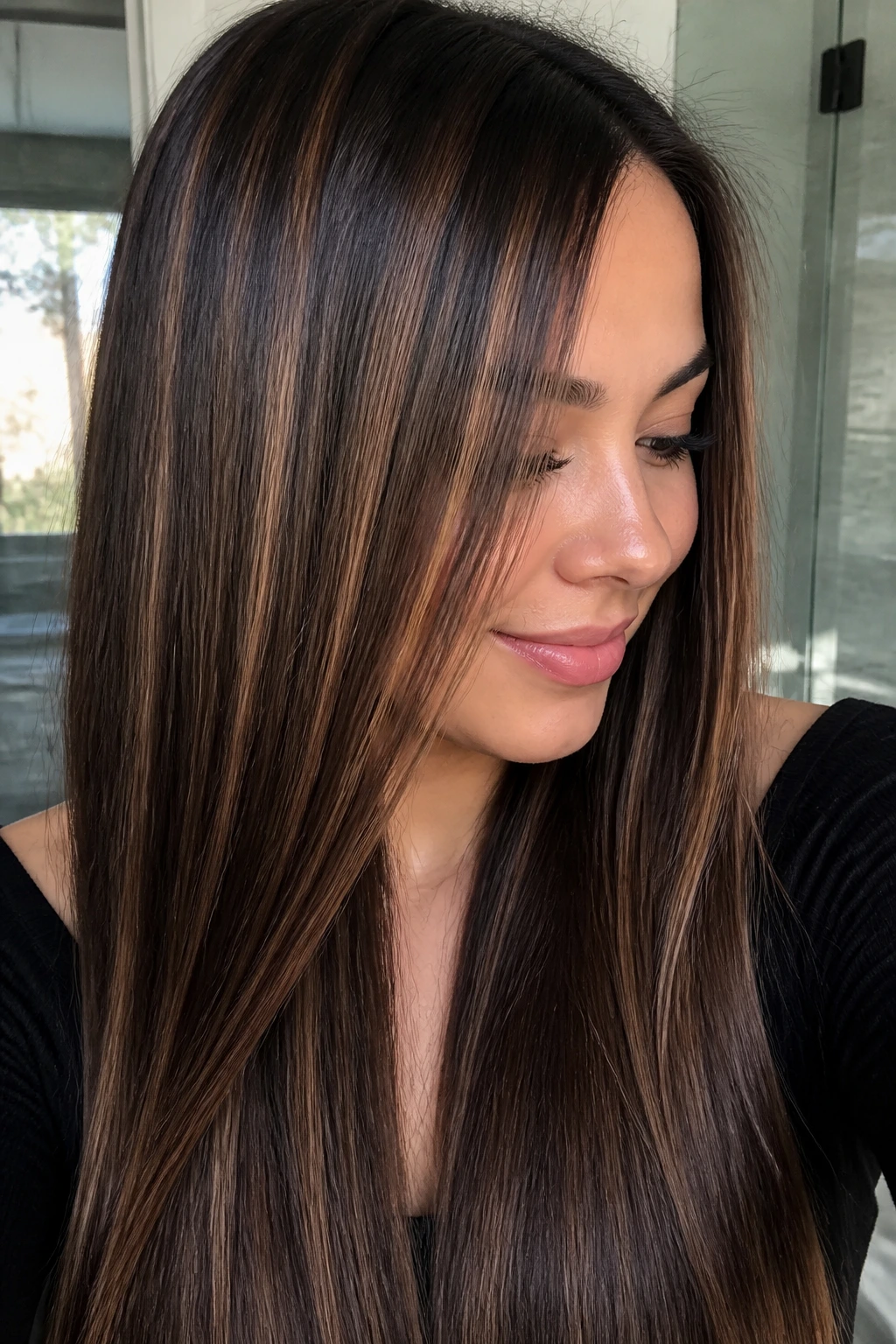
Straight hair can be unforgiving with highlights. Every line shows. That’s why cinnamon caramel slices need to be placed carefully, with enough spacing that the hair doesn’t look like it was outlined with a marker. When done right, though, the result is sharp and polished.
I like this on sleek, blunt cuts because the slices echo the geometry of the haircut. The warm cinnamon note keeps the brown base from going flat under indoor light, and the caramel gives it movement even when the hair lies still. A shine spray helps here, but only on the mids and ends. Skip the roots or the whole thing goes greasy.
11. Warm Lowlights for Extra Depth
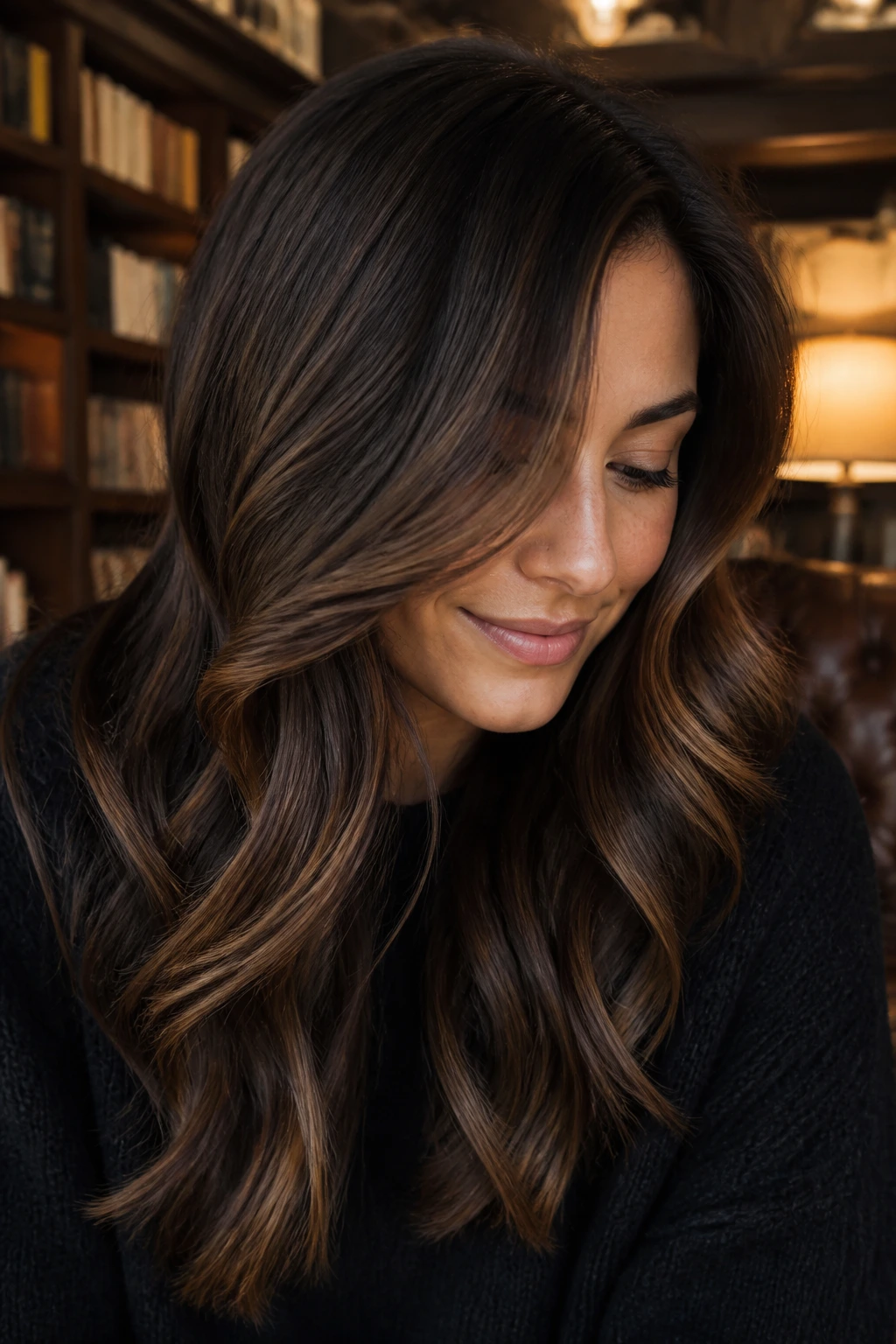
Not every brunette needs more light. Sometimes the smartest move is to add deeper pieces back in. Warm lowlights in chestnut or cocoa make the existing caramel and honey stand out more, especially if your hair has already been lightened several times and started to lose shape.
This is the fix when highlights look nice for a week and then go faint. The lowlights restore structure. They’re also useful around the underside of the hairline, where lighter pieces can make the whole cut look thinner than it is. A good colorist will weave these in so the brunette doesn’t go muddy.
12. Honey-Glazed Curls with Painted Ends
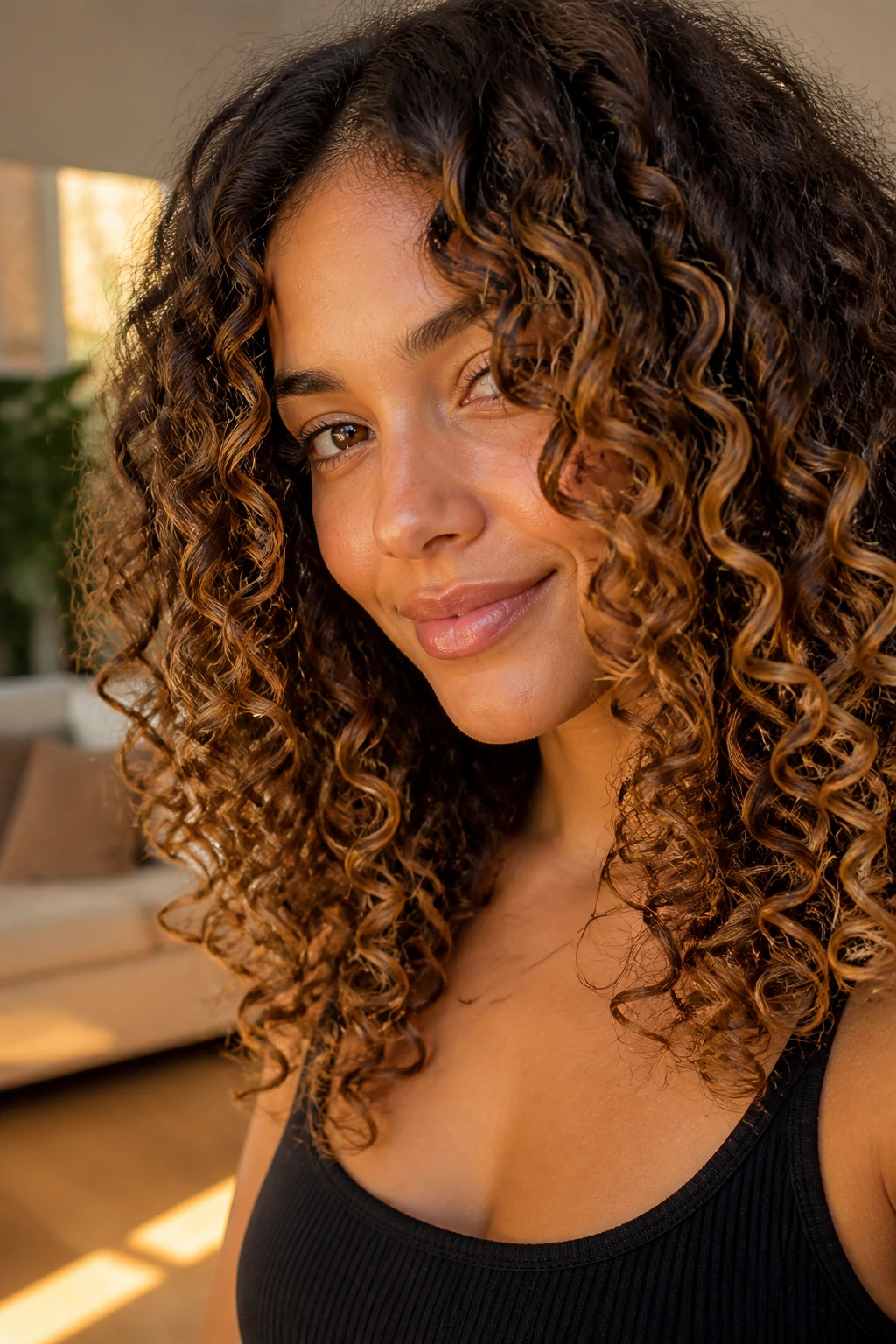
Curls love this placement because the light hits every bend differently. Painting honey through the ends gives definition without bleaching the life out of the curl pattern. The color should look suspended inside the curl, not sitting on top of it.
The best version keeps the root area deeper, then brightens the outer coil pattern where the hair naturally catches light. If your curls are dry, keep the lightness one step softer than you think you want. Curly hair already creates its own volume; the highlight job should support that, not chase it with too much lift.
Curl note
A gloss with a beige-gold tone can keep the honey from turning brassy between wash days, which matters more on curls because product buildup can make warm highlights look dull fast.
13. Smoky Brunette with Caramel Mid-Lengths
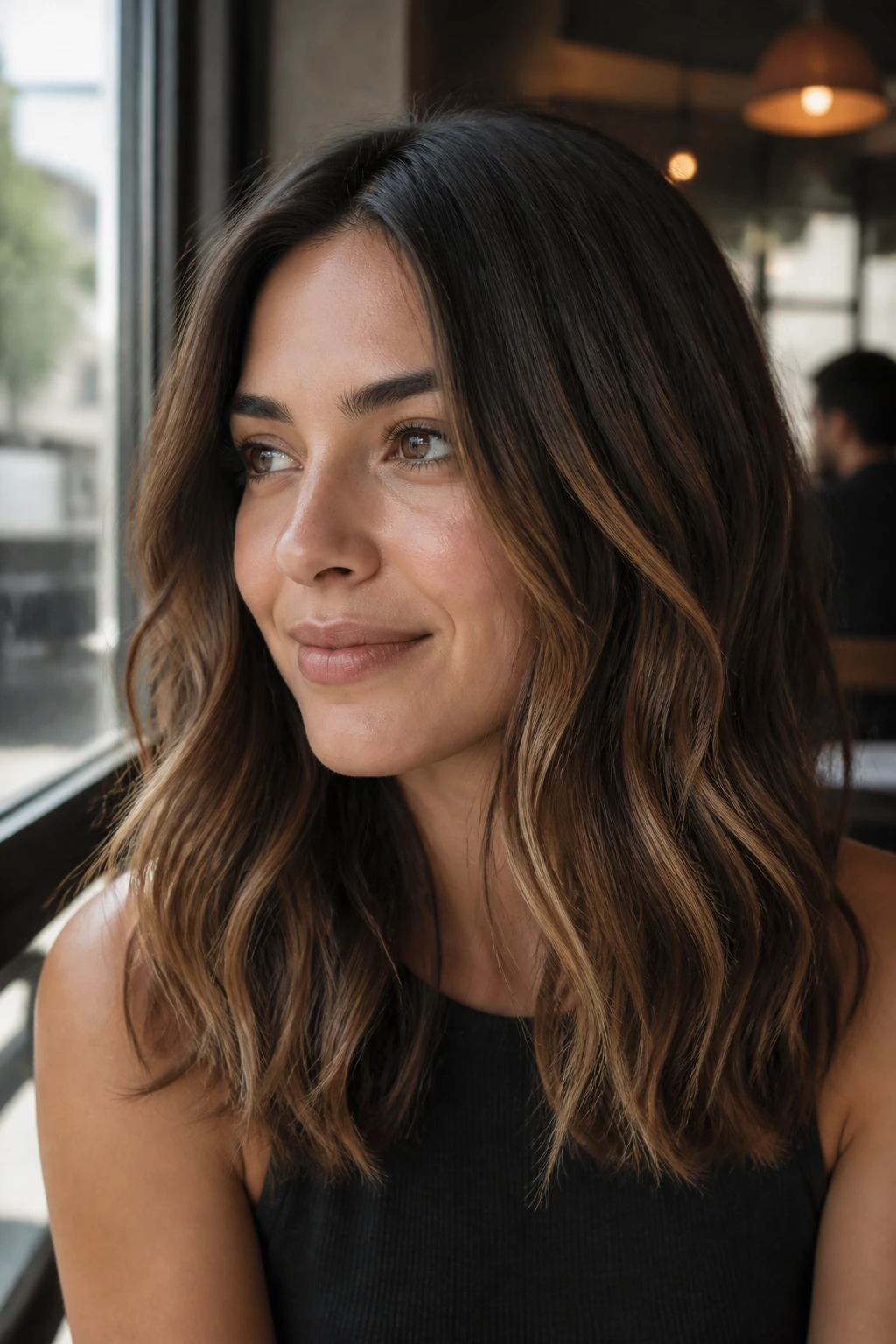
This one is for people who want warmth, but not sweetness. The brunette base stays smoky and deep, while caramel sits mostly in the middle of the hair, where it can catch movement without lighting up the whole head. The result feels more grown-up than a fully bright balayage.
Mid-length placement is a clever move because it keeps the roots grounded and the ends from going too light. The hair looks fuller in the middle, which helps if your ends are fine or a little see-through. It’s one of those styles that can look polished in a blazer and still work with a T-shirt. No fuss.
14. Golden Slices Around Curtain Bangs
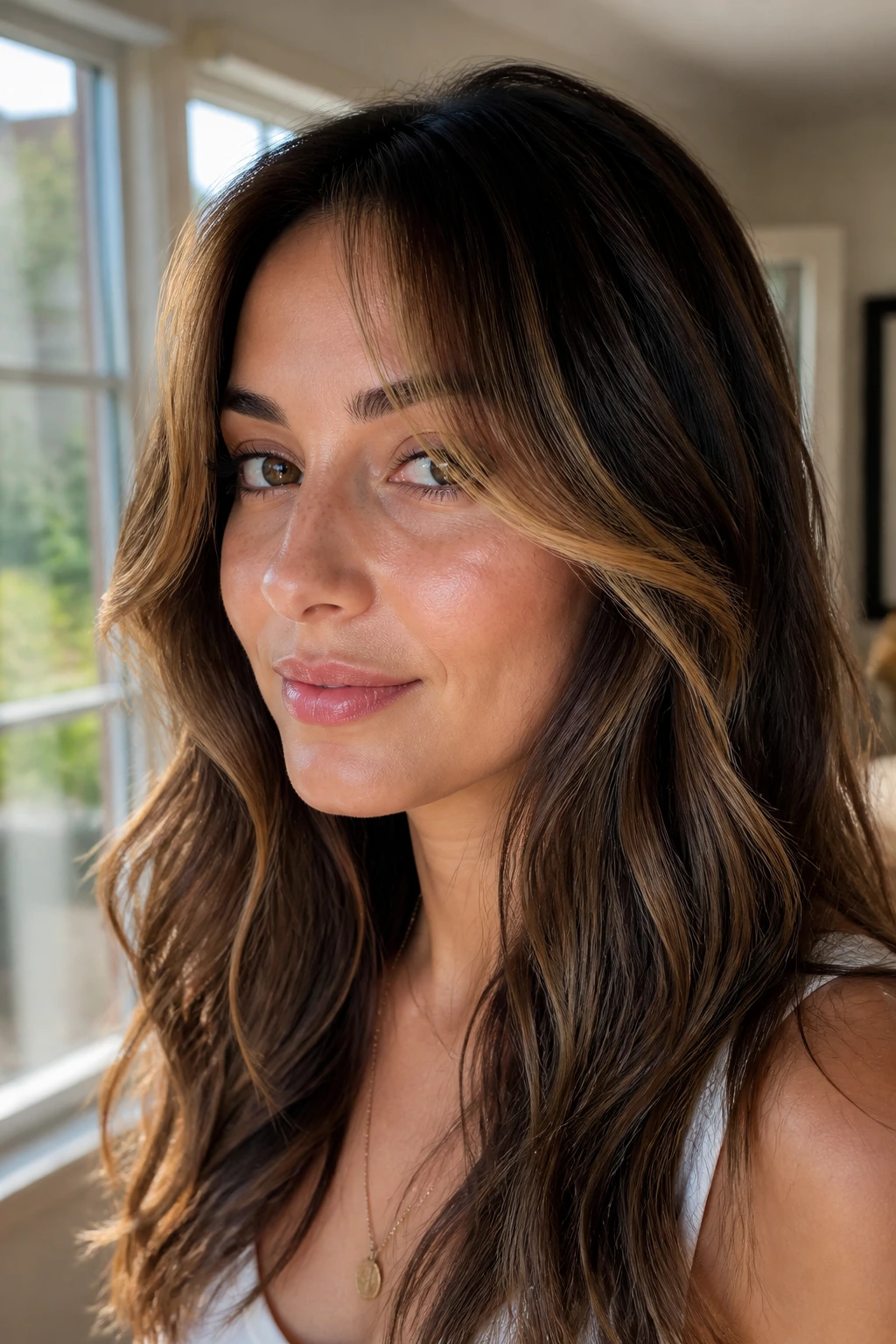
Curtain bangs make a strong case for a little extra brightness near the face. Golden slices around the fringe open up the eyes and stop the bangs from blending too tightly into the rest of the brunette. That warmth is especially nice if your bangs sit over the cheekbones.
Don’t go too blonde here. Curtain bangs move a lot, and over-lightening them can make the grow-out obvious in a bad way. Keep the slices narrow and soft, then blend them back into the front layers. When the bangs split in the middle, the gold should frame the face rather than shouting over it.
15. Amber Balayage on a Collarbone Lob
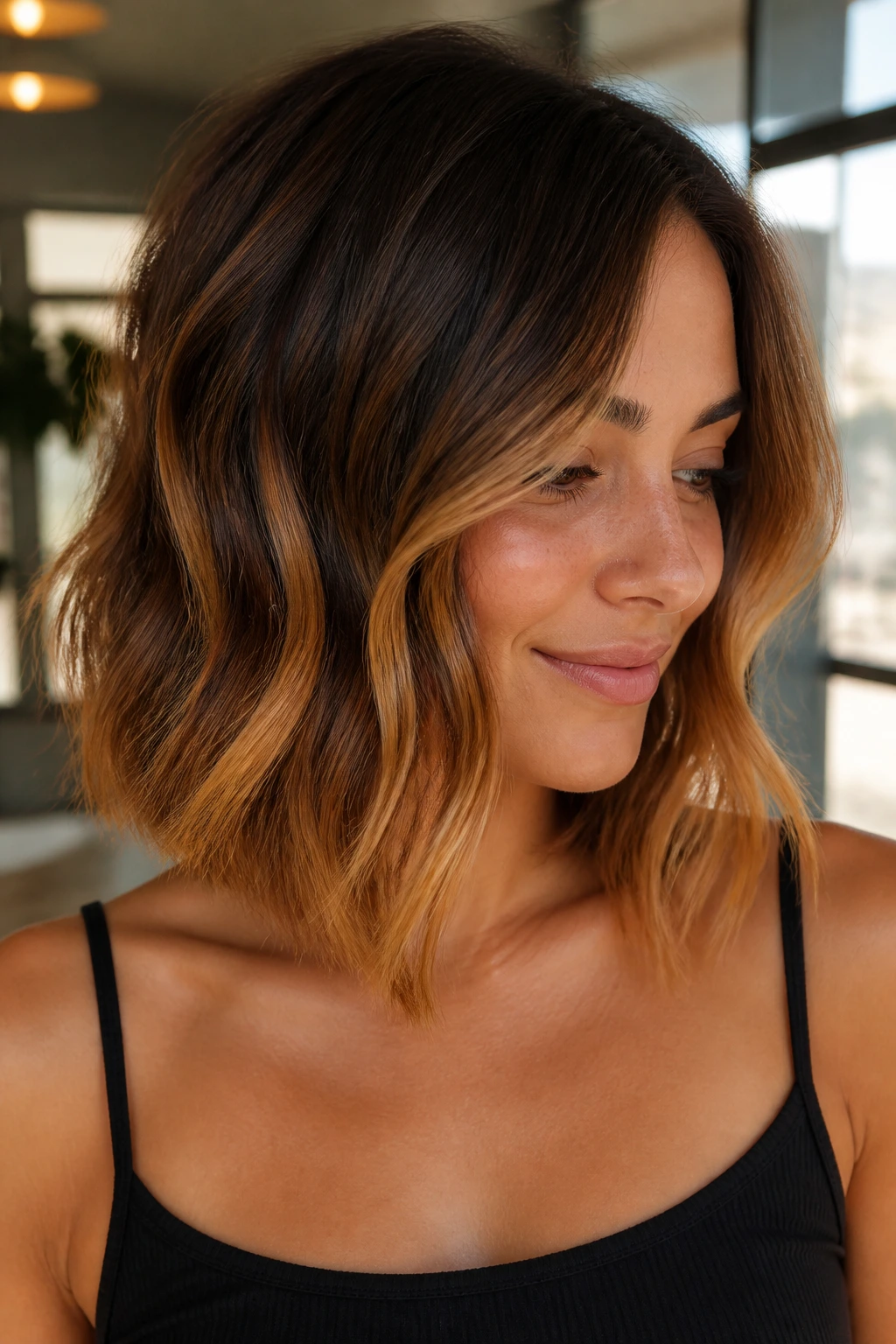
Amber is a richer version of honey, and it reads beautifully on a lob because the cut already has that swingy, collarbone-length motion. The balayage should start low enough to keep the brunette base visible, then warm up the ends with amber-gold reflection. The effect is polished, not precious.
This style works especially well if your hair naturally bends a little at the ends. The amber catches on those curves and gives the cut a finish that looks intentional even on air-dry days. If your base is very dark, keep the amber more caramel than copper or it will look too loud against the brown.
16. Mocha Base with Toffee Swirl Ends
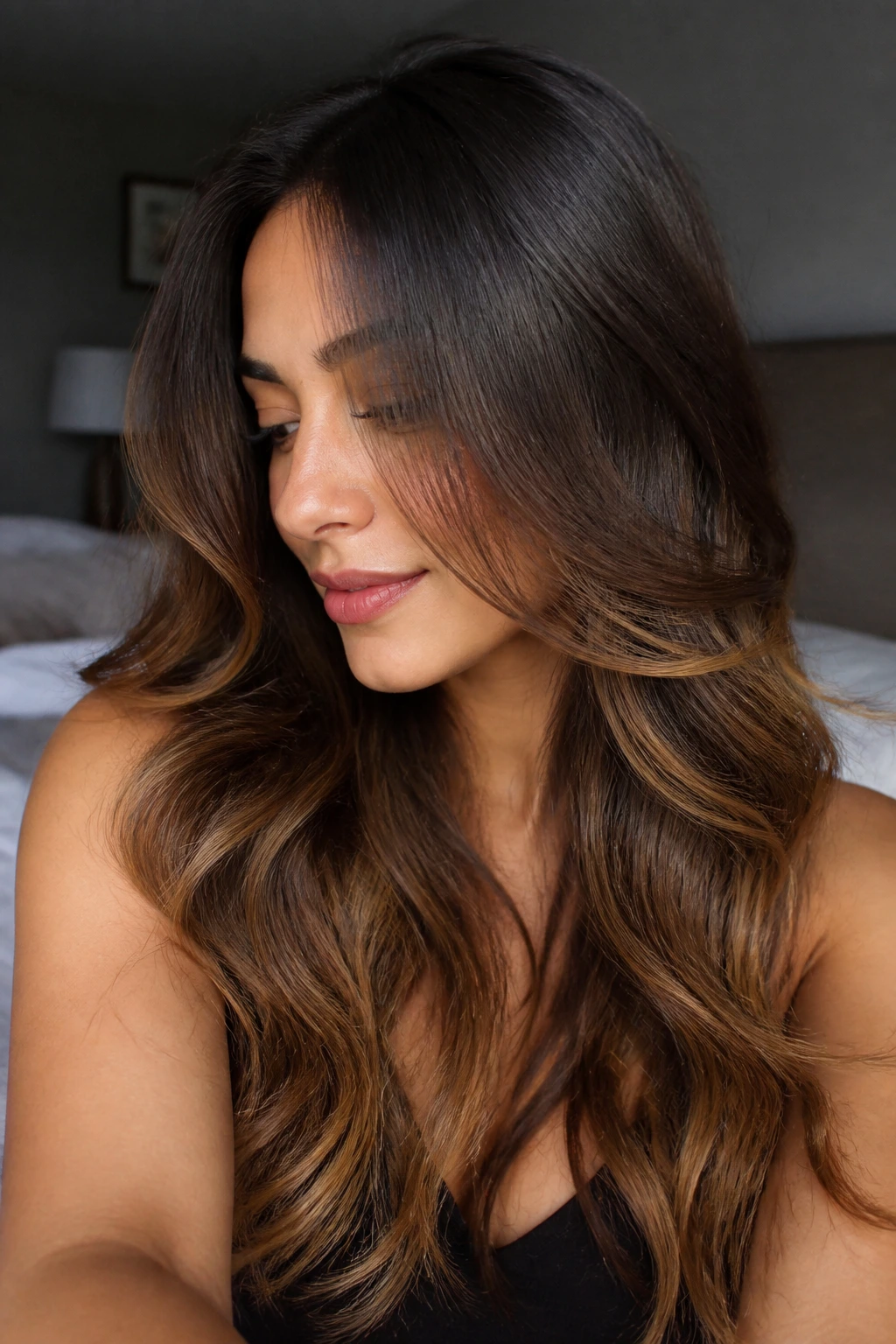
The swirl effect is exactly what it sounds like: darker mocha near the scalp and through the top layers, then toffee threading into the ends so the color looks poured, not painted. It gives long hair a sense of weight and shine at the same time.
I like this on thicker straight hair and blowout styles because the ends can hold a little more contrast without looking busy. It’s also a good choice if you want highlights that show up mostly when the hair moves. The ends carry the brightness, the rest stays moody. That balance is what keeps it from looking overworked.
17. Face-Framing Highlights for a Rounded Bob
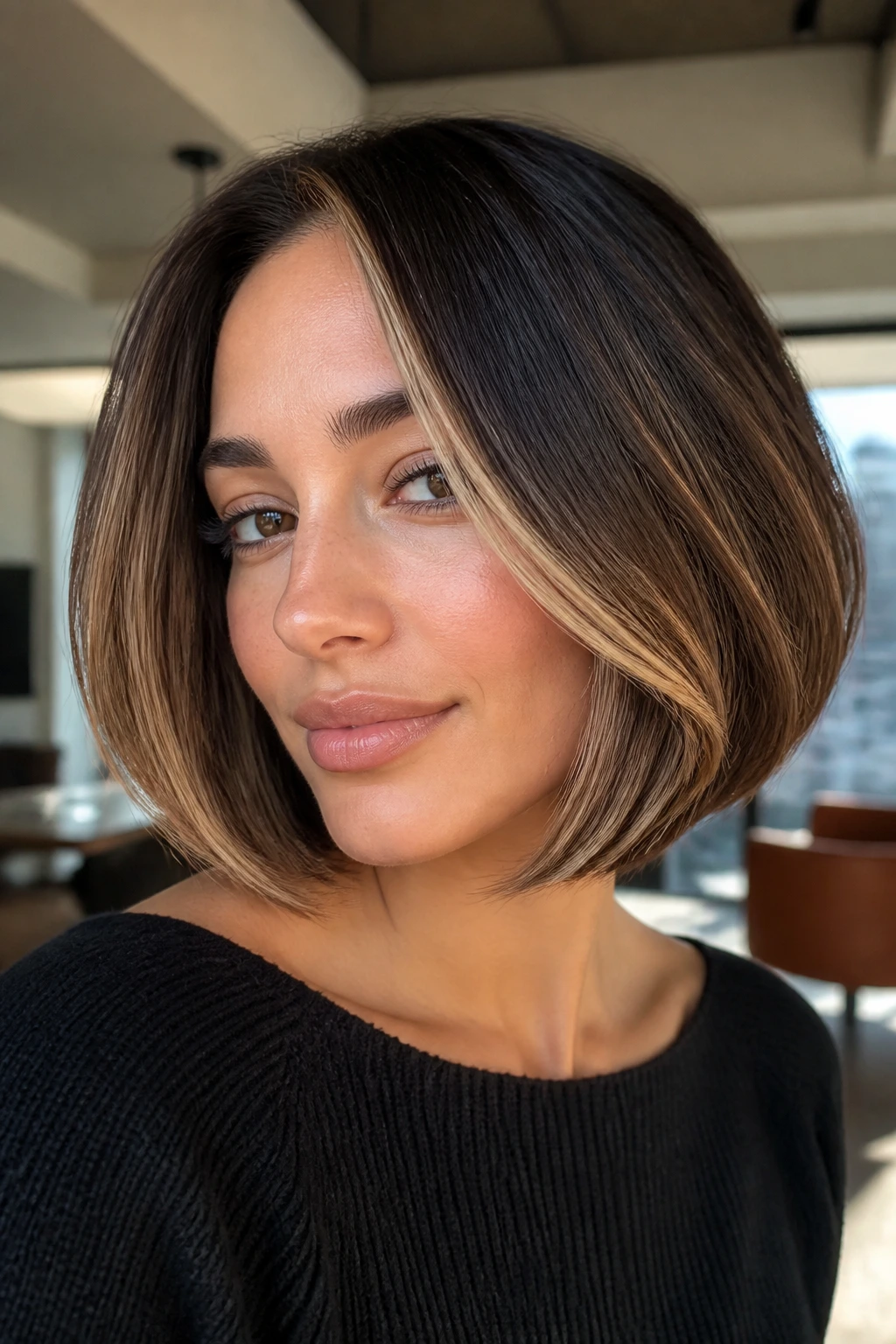
A rounded bob can flatten out if the color is too even. Face-framing caramel and honey pieces pull the shape forward and make the curve around the jaw read more clearly. The rest of the bob can stay a shade darker for contrast.
The highlight placement should hug the cheekbone and taper toward the chin. That keeps the cut soft without losing its structure. If the bob is very sleek, the lighter front sections become the line of the haircut; if it’s textured, they make the ends flick brighter when the hair moves.
18. Sunlit Crown Lights on Layered Waves
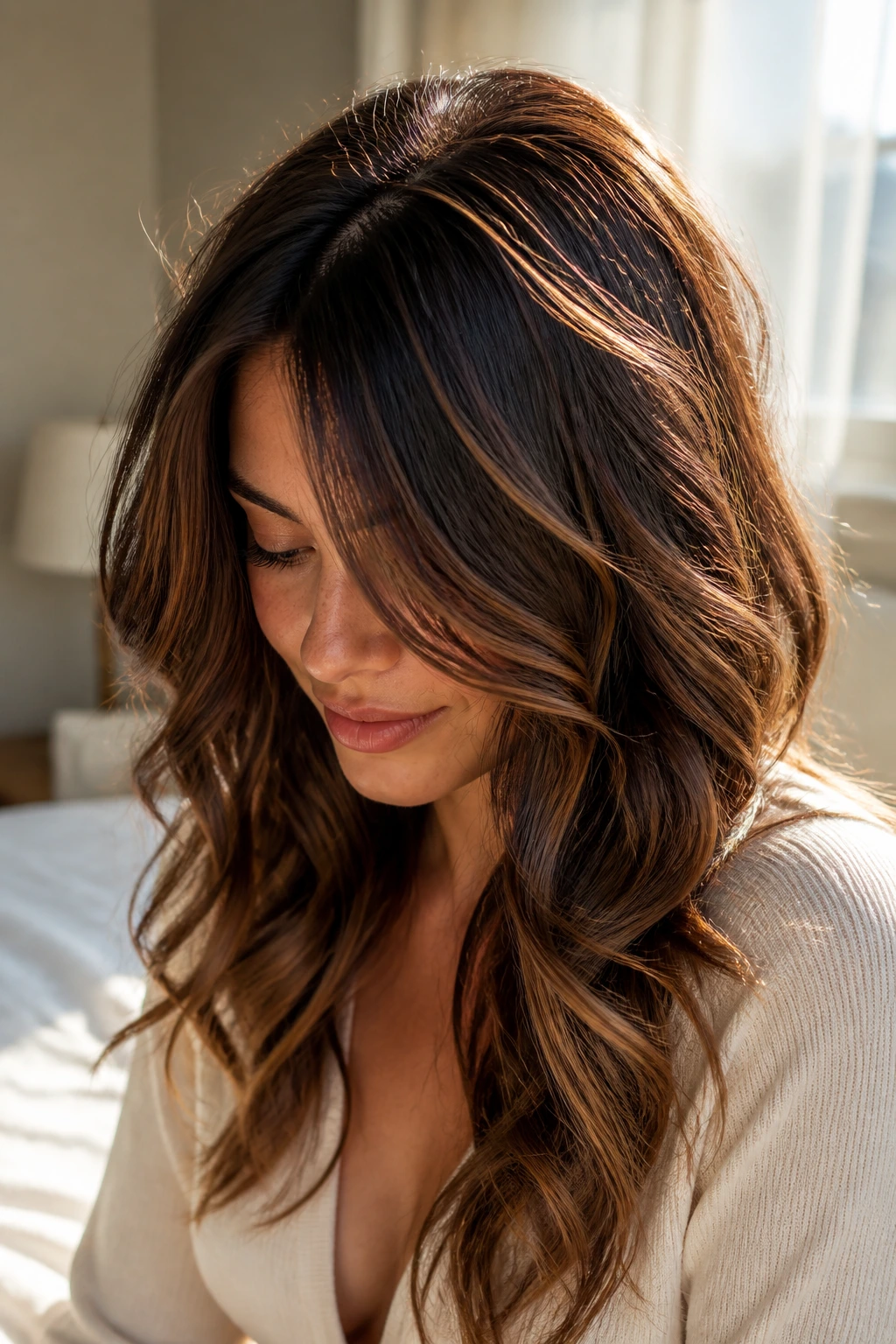
Crown lights are underrated. They brighten the top layers and part area just enough to make layered waves look sun-touched from above, which is where a lot of highlight jobs fail. People often only think about the face frame and ends. The crown matters more than they realize.
This is a smart option if your hair falls forward or part lines show a lot of scalp. Tiny honey pieces near the top soften that contrast and make the color look more blended. On wavy hair, those lights peek through each bend. On straight hair, they give the whole style a lighter top layer without sacrificing root depth.
19. Caramel Contour Pieces for Oval Faces
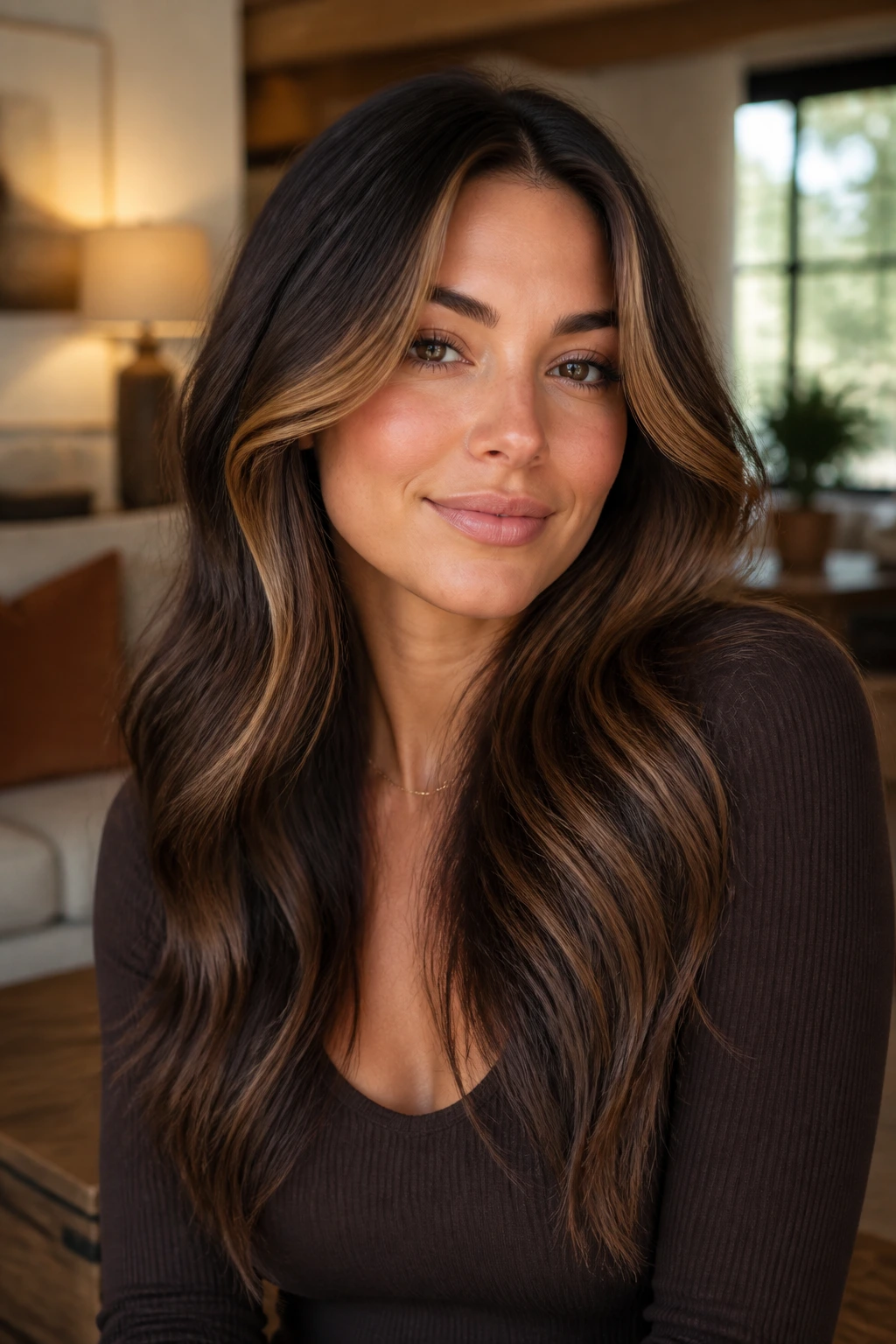
Contour pieces are like makeup for the hair. The caramel follows the angle you want the eye to read first, usually from temple to cheekbone to jaw. On an oval face, you can be a little bolder because the shape handles brightness easily.
This look is less about all-over color and more about framing. You get a brunette base with selective warmth placed where the haircut and face shape benefit from it most. If the face frame sits too low, the highlights can drag the eye downward. Keep them slightly higher and more angled, and the whole shape lifts.
20. Honey Tips on Loose Beach Waves
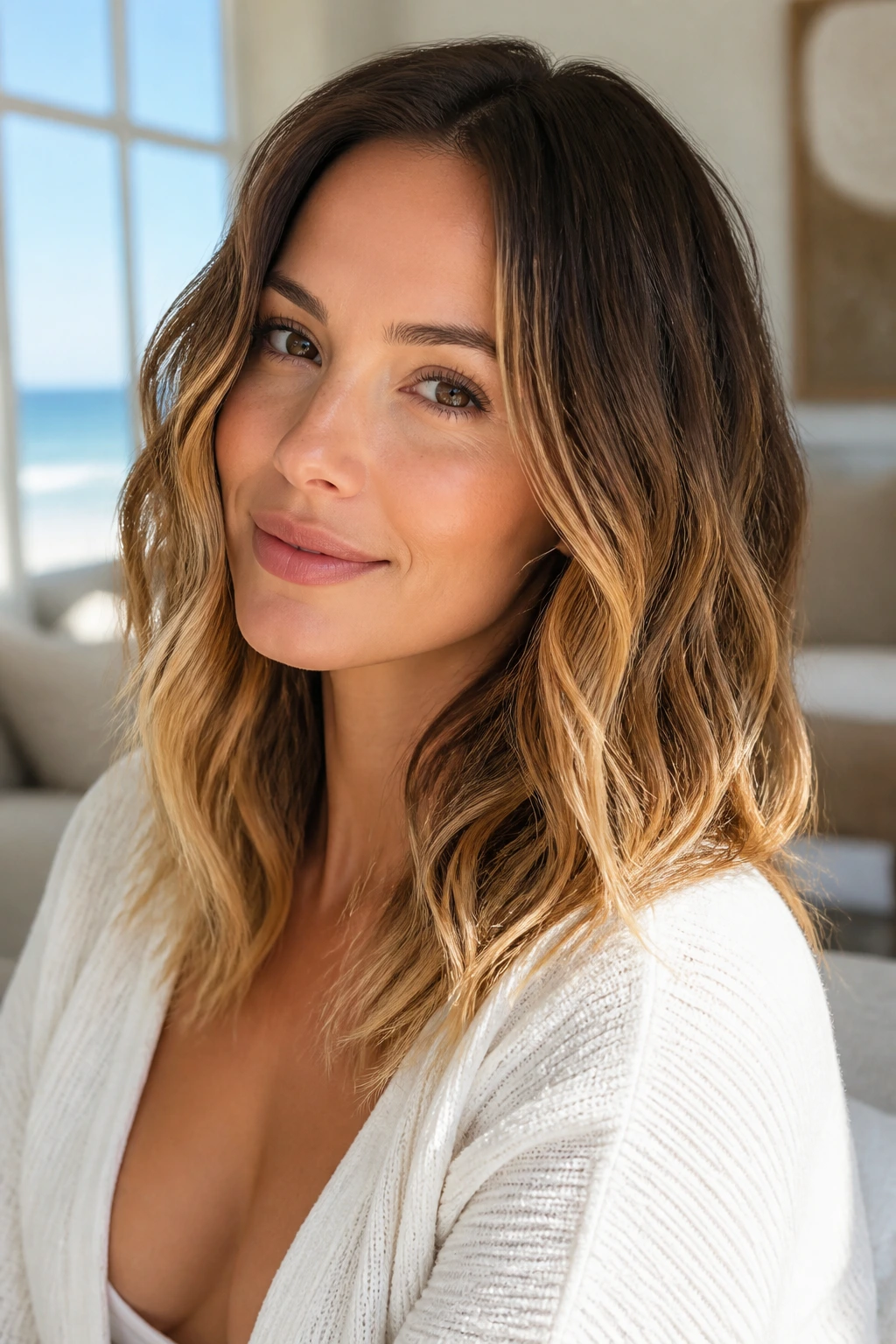
Honey tips work because beach waves already have a loose, casual bend that can carry lighter ends without looking harsh. The tips should be brighter than the mid-lengths, but not so blonde that they lose connection to the brunette base. Think sunlit, not dipped.
This is one of the easiest ways to fake natural lightening on dark brown hair. The ends catch every piece of movement, and the honey makes the wave pattern pop. If your hair is prone to frizz, keep the lightest sections inside the wave pattern, not on the outer halo. That keeps the finish smoother.
21. Cinnamon-Bronze Blend for Warm Undertones
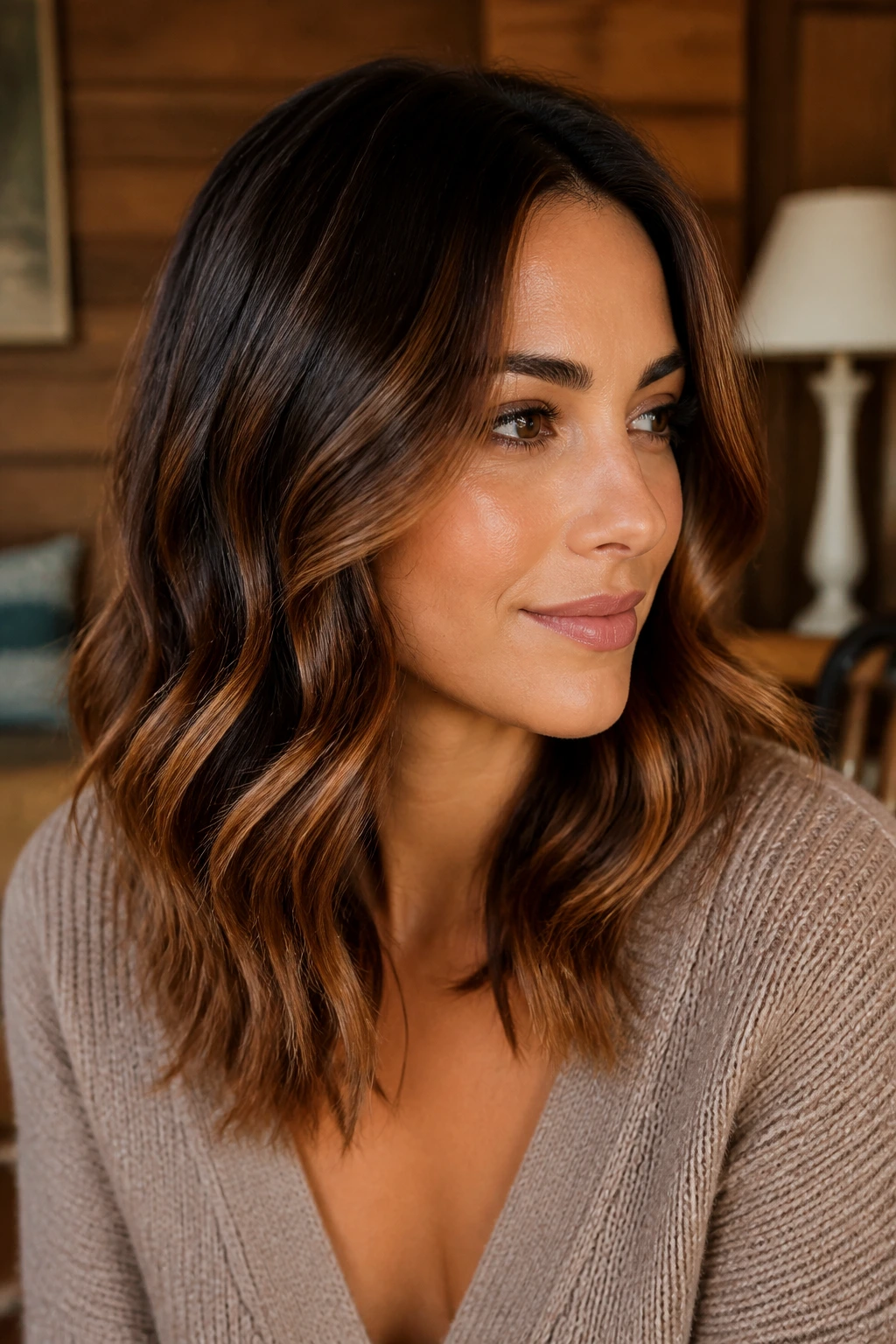
Warm undertones in skin can handle a slightly richer highlight palette, and cinnamon-bronze does exactly that. It’s deeper and more grounded than bright honey, which means the color won’t fight with naturally golden or olive skin. On brunette hair, it reads polished without going pale.
This version is a nice fit for people who want warmth but don’t want the high shine of a very light caramel. The bronze pieces sit closer to the mid-lengths, while cinnamon shades keep the lowlights from disappearing. It’s a cozy color, in the literal sense. Nothing icy here.
22. Cool-Balanced Caramel for Neutral Brunettes
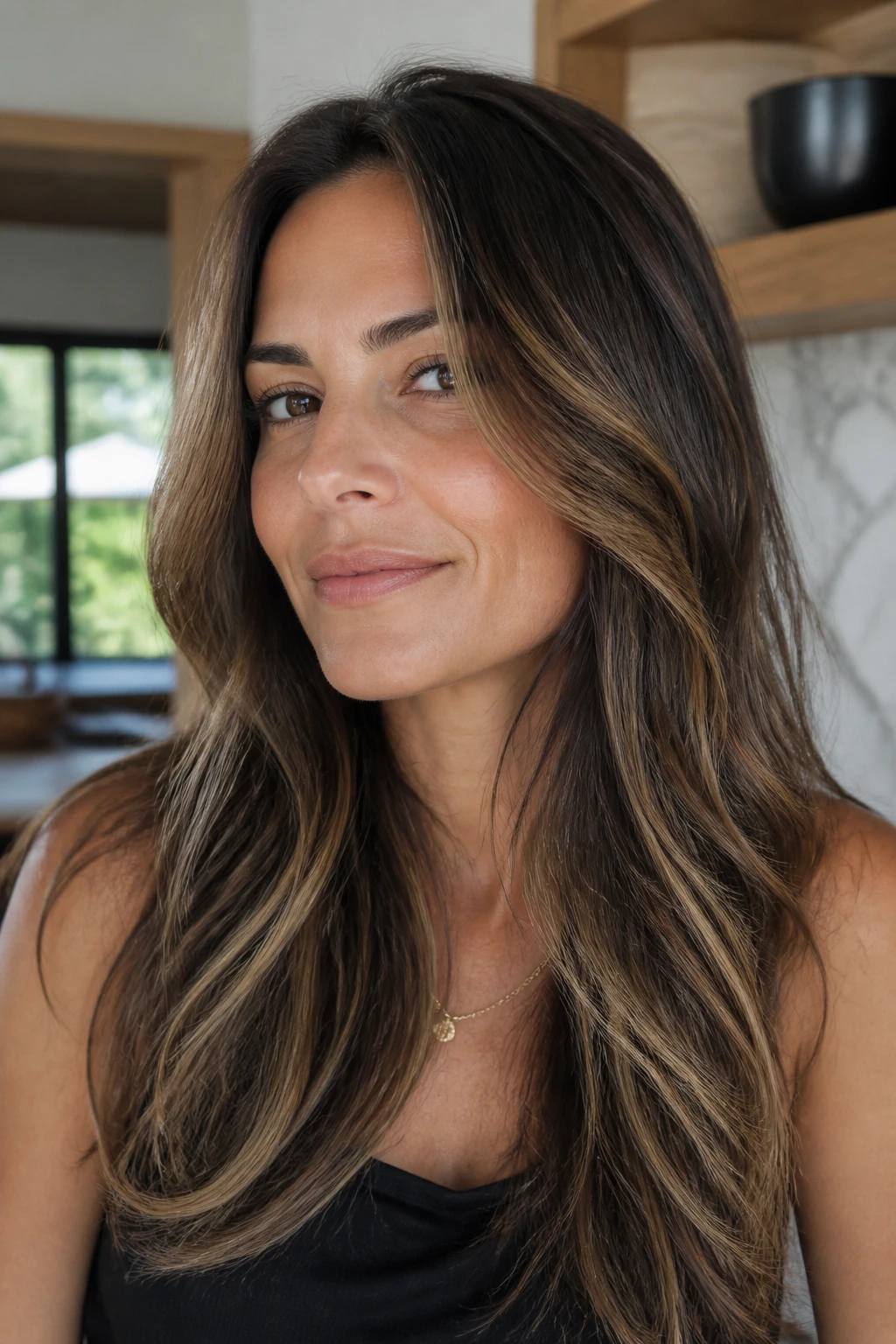
Some brunettes can wear warmth, but only if it’s kept in check. Cool-balanced caramel uses beige and soft gold instead of rich orange, which keeps the look from veering too coppery on neutral skin tones or naturally ashy brown hair. That small adjustment makes a huge difference.
Ask for a caramel that sits closer to beige-gold than pumpkin. The highlight should still feel warm, just not sugary. This is one of the few versions where I’d rather see a slightly muted toner than a brighter one, because the whole point is to keep the brunette base looking clean and modern.
23. Dimensional Money Piece with Lowlights
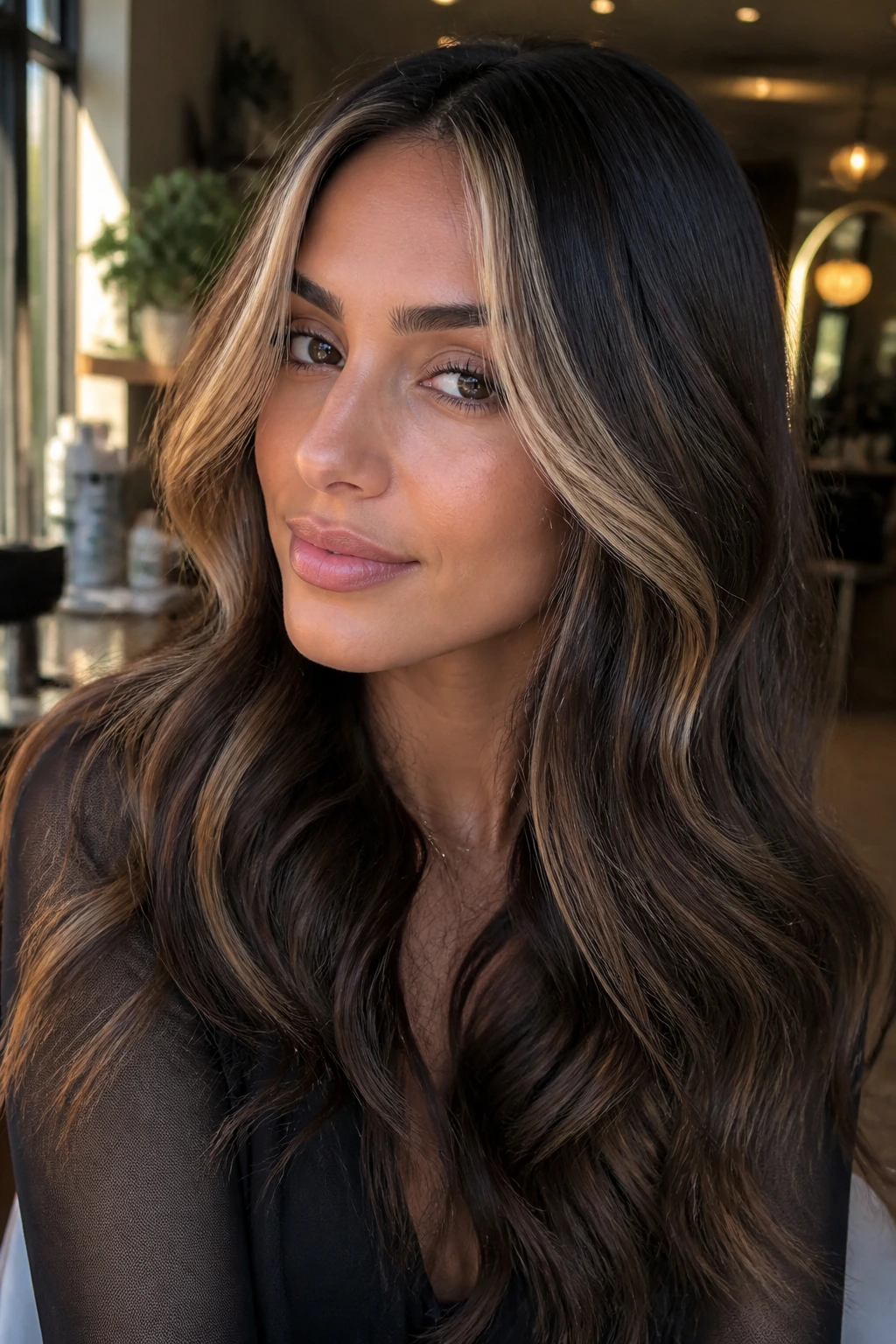
This is the more layered cousin of the regular money piece. You still brighten the front, but you tuck in a few deeper lowlights around it so the highlight doesn’t float awkwardly on top of the hair. That contrast gives the front zone more shape and stops the color from looking flat in a week.
It’s a good move if your hair is naturally fine or if your face frame tends to disappear once it’s styled. The lowlights create a shadow that makes the honey look brighter by comparison. Slightly annoying to explain to a colorist, maybe. Worth it, absolutely.
24. Glossed Espresso Hair with Honey Sheen
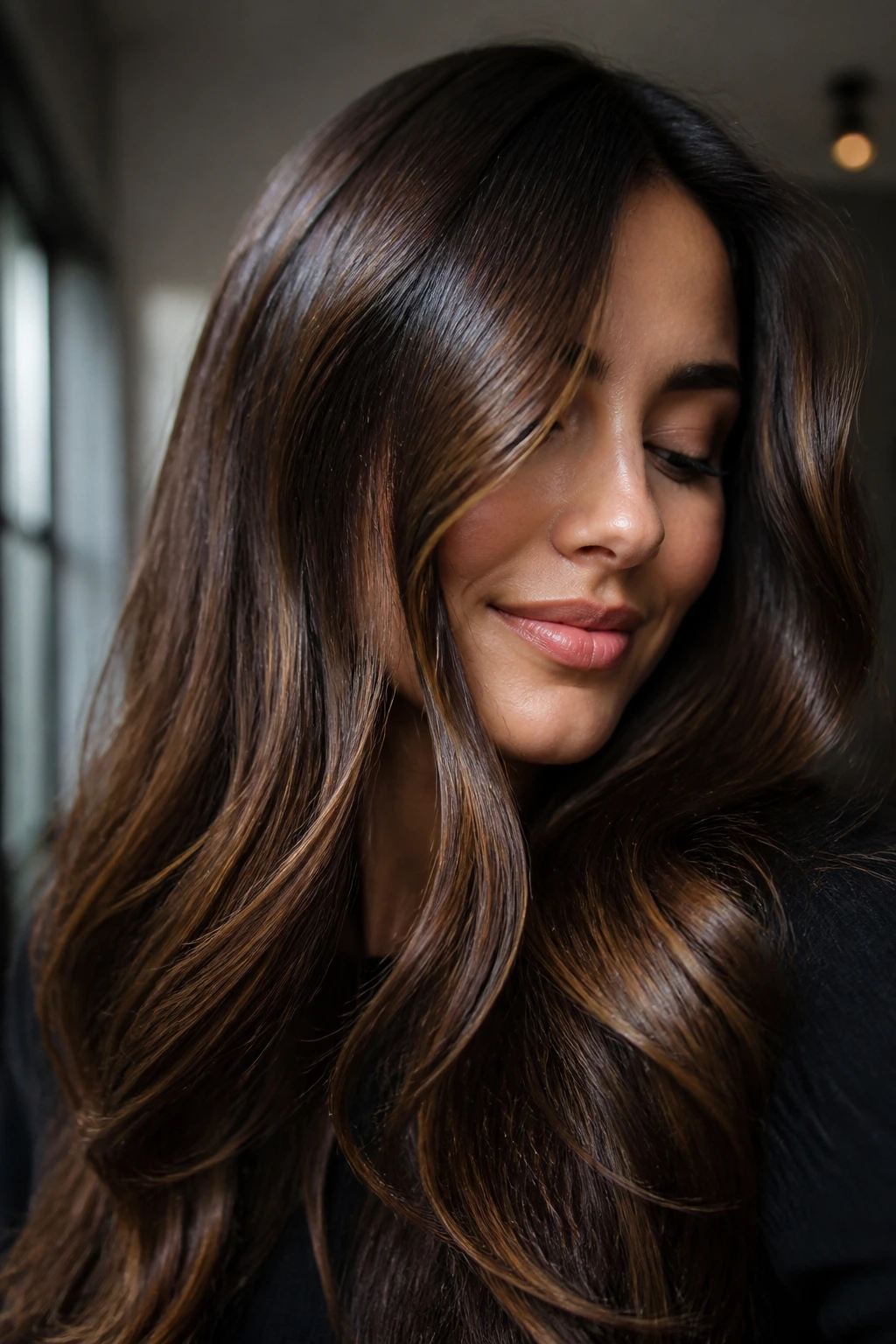
Not everyone wants to see obvious highlights. Some people want shine, a hint of warmth, and a brunette base that looks healthier under indoor light. That’s where a honey sheen over espresso brown does its best work. It doesn’t scream color; it suggests it.
This style is often achieved with a glaze or very soft surface pieces. The goal is a reflective finish rather than a big contrast pattern. If your hair is already dark and you wear it sleek or blown out smooth, this can be more flattering than a heavier highlight job because it leaves the hair looking dense.
25. Ribbon Highlights for Glass-Straight Hair
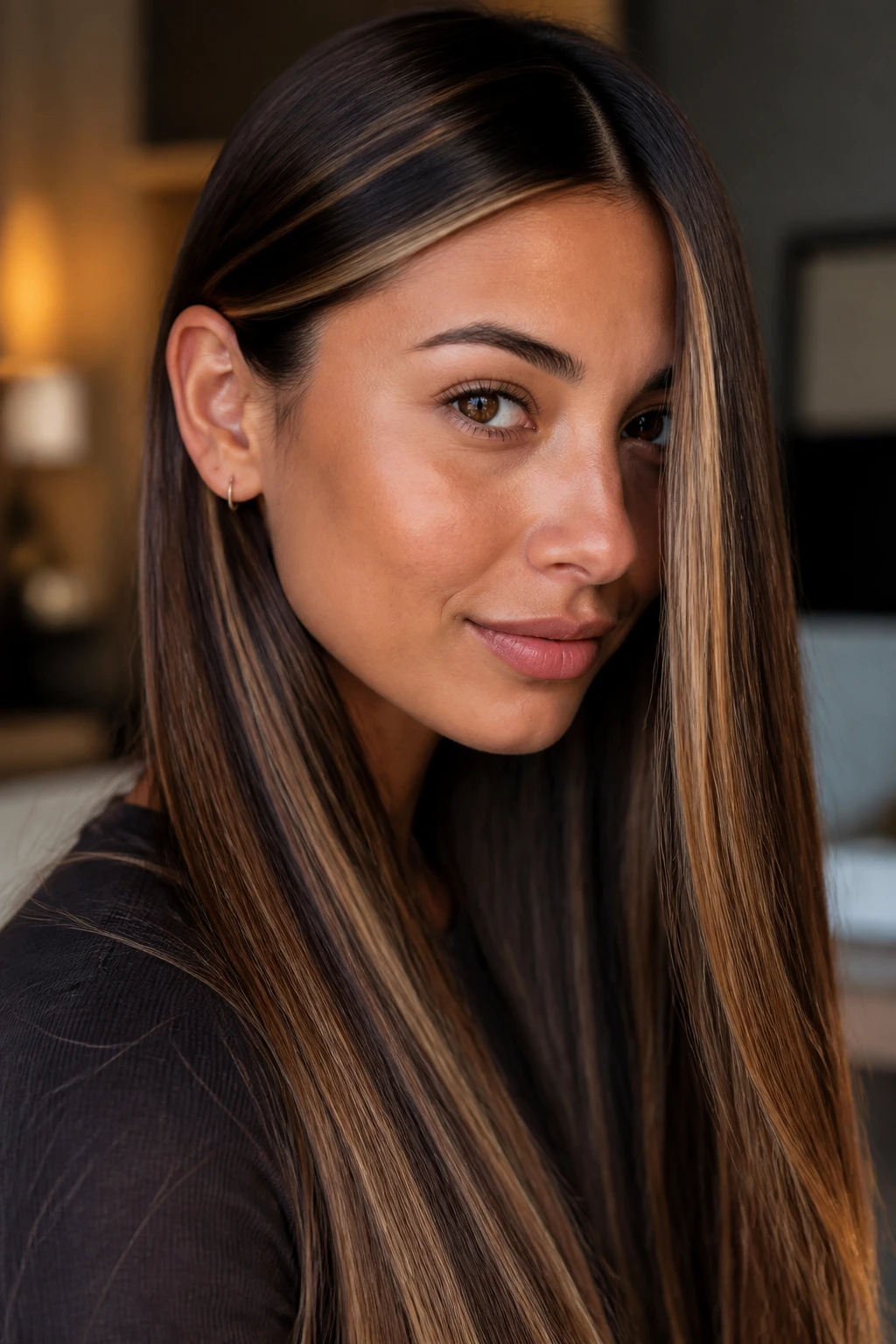
Glass-straight hair needs placement with a little discipline. Soft ribbons work because they create movement where the hair doesn’t naturally bend much on its own. The caramel should be narrow enough to stay sleek, but visible enough that the dark brown base doesn’t read as a single block.
I like this on people who wear a center part and tuck one side behind the ear. The ribbons show their shape better when the hair is still. If the highlights are too chunky, the straight finish can start looking rigid. Keep the lines smooth, and the hair looks polished instead of stiff.
26. Curly-Coil Caramel Painting
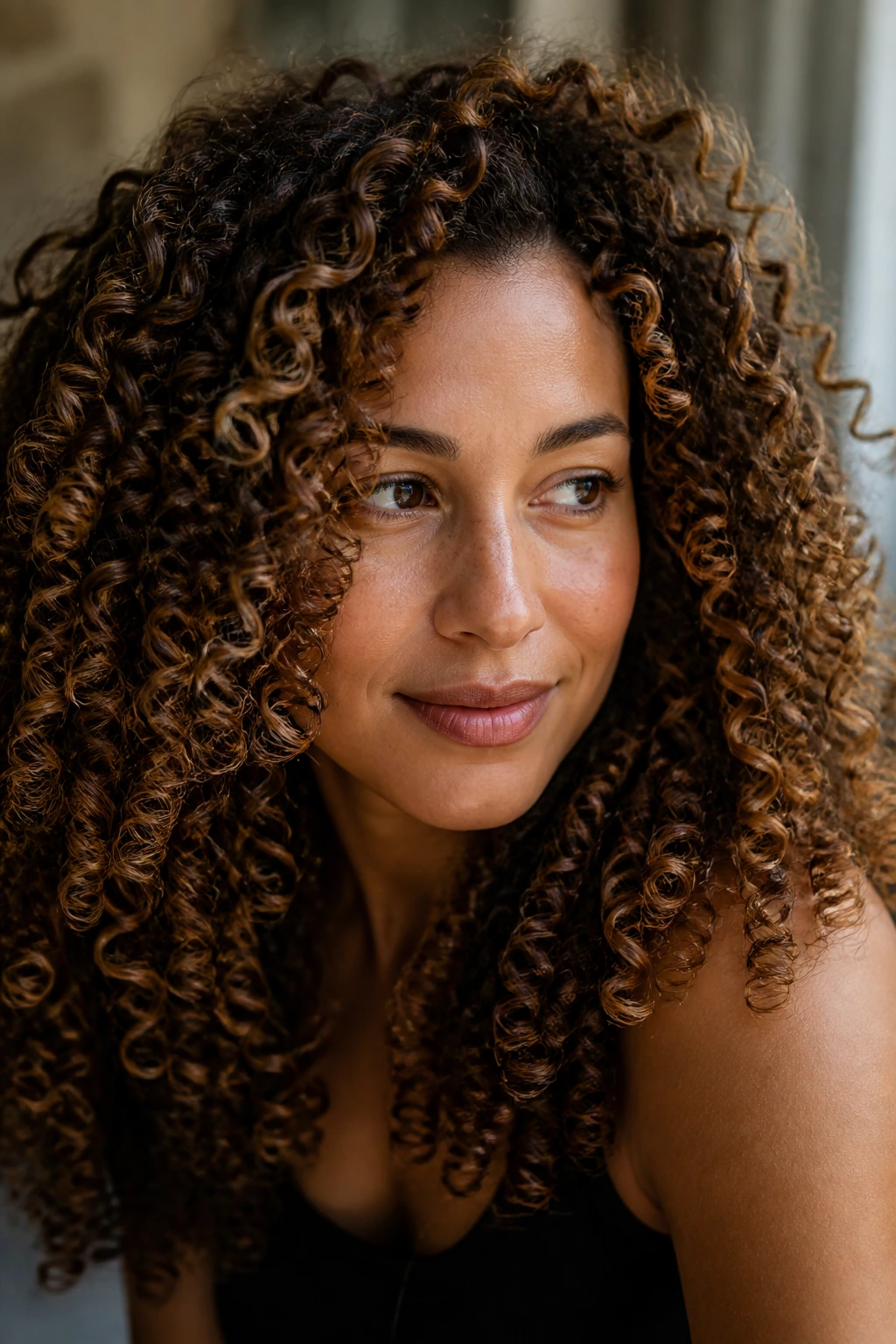
Coily and curly textures take color differently because the strands sit in spirals, not sheets. Painting caramel through the raised surfaces of the curls gives the whole head a brighter, more sculpted look. The darker valleys between curls keep the brunette depth intact.
This one should be done with patience. Too much saturation can make the curl pattern look cloudy, while careful hand-painting keeps the highs and lows distinct. If you’ve ever seen curls that looked “blonde” in the chair but flat a week later, it was probably because the shadows were erased. Don’t do that.
27. Subtle Halo Lights Under the Part
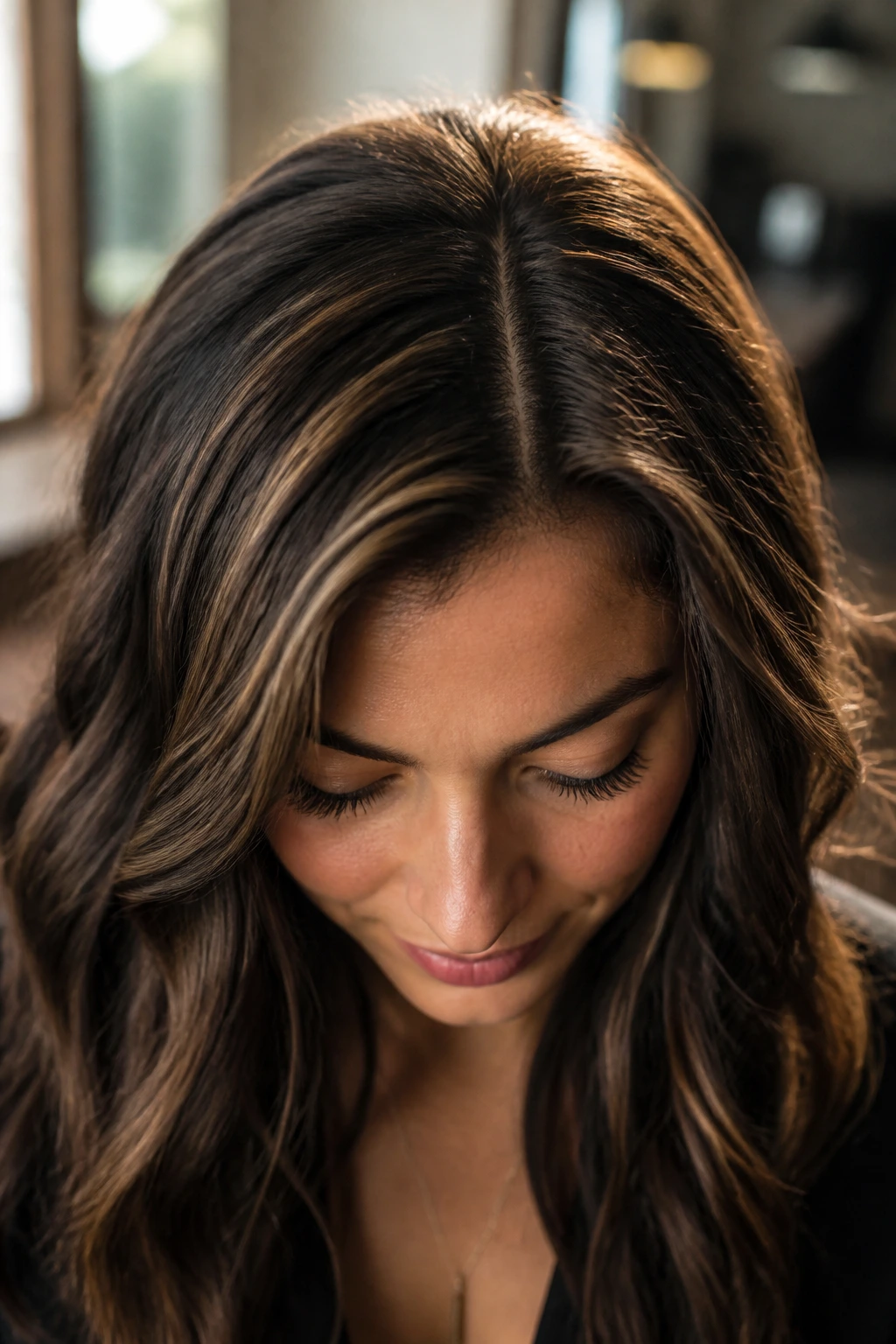
Halo lights are one of those details people notice without realizing why. A few soft honey pieces around the part and top layers give the illusion that the whole head is brighter, even though most of the hair stays dark. It’s clever. Quiet, but clever.
This is especially good for people who wear their hair up a lot. The light at the crown catches in ponytails, buns, and clips, and the style looks more finished from every angle. If your part shifts often, keep the halo slightly wider so it still reads when the hair moves.
28. Copper-Kissed Honey for Deeper Browns
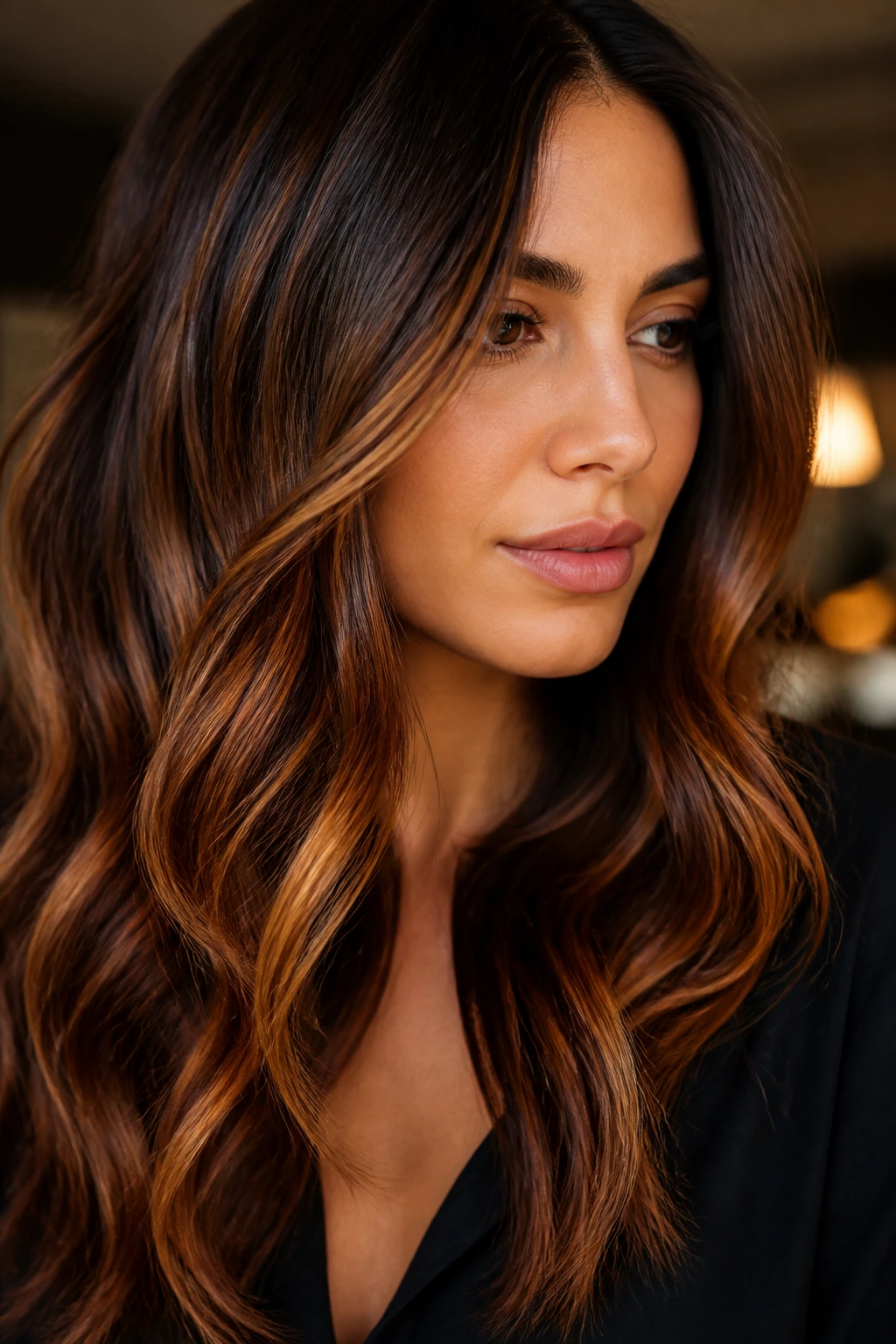
Deep brunettes sometimes need a little extra warmth to show the highlight at all. A copper-kissed honey tone does that without turning the hair fully red. It’s rich, glowing, and especially flattering when the skin has gold, olive, or peach undertones.
This isn’t the look for someone who wants barely-there beige pieces. The warmth is the point. Still, the copper should be a kiss, not a takeover. If the hair is already warm naturally, keep the copper in the ends or the face frame and leave the rest more caramel so it doesn’t become too loud.
29. High-Contrast Panels for Bold Brunettes
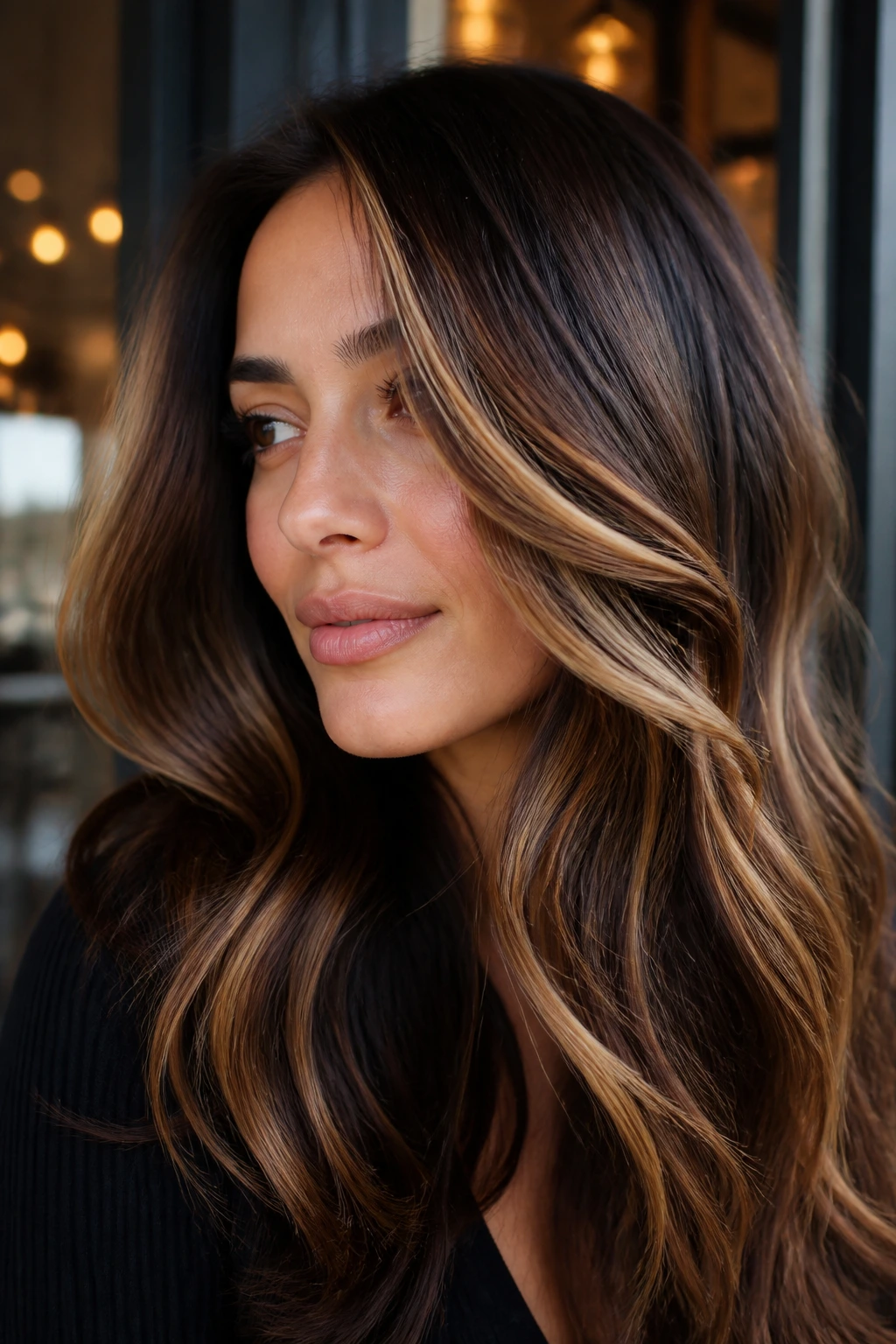
This is the loudest option in the set, and it works when the haircut can support it. Wider honey panels against a dark brown base create a strong visual line, which is useful on blunt cuts, structured lobs, or long hair that needs a little edge. It’s not subtle. That’s the point.
The key is making the panels intentional, not random. Place them where the eye naturally lands — around the face, through the upper layers, or down the outer curtain of the hair. If the panels are too evenly spaced, the look loses shape fast. Put them where they can act like design.
30. Soft-Toasted Brunette Blend with a Gloss Finish
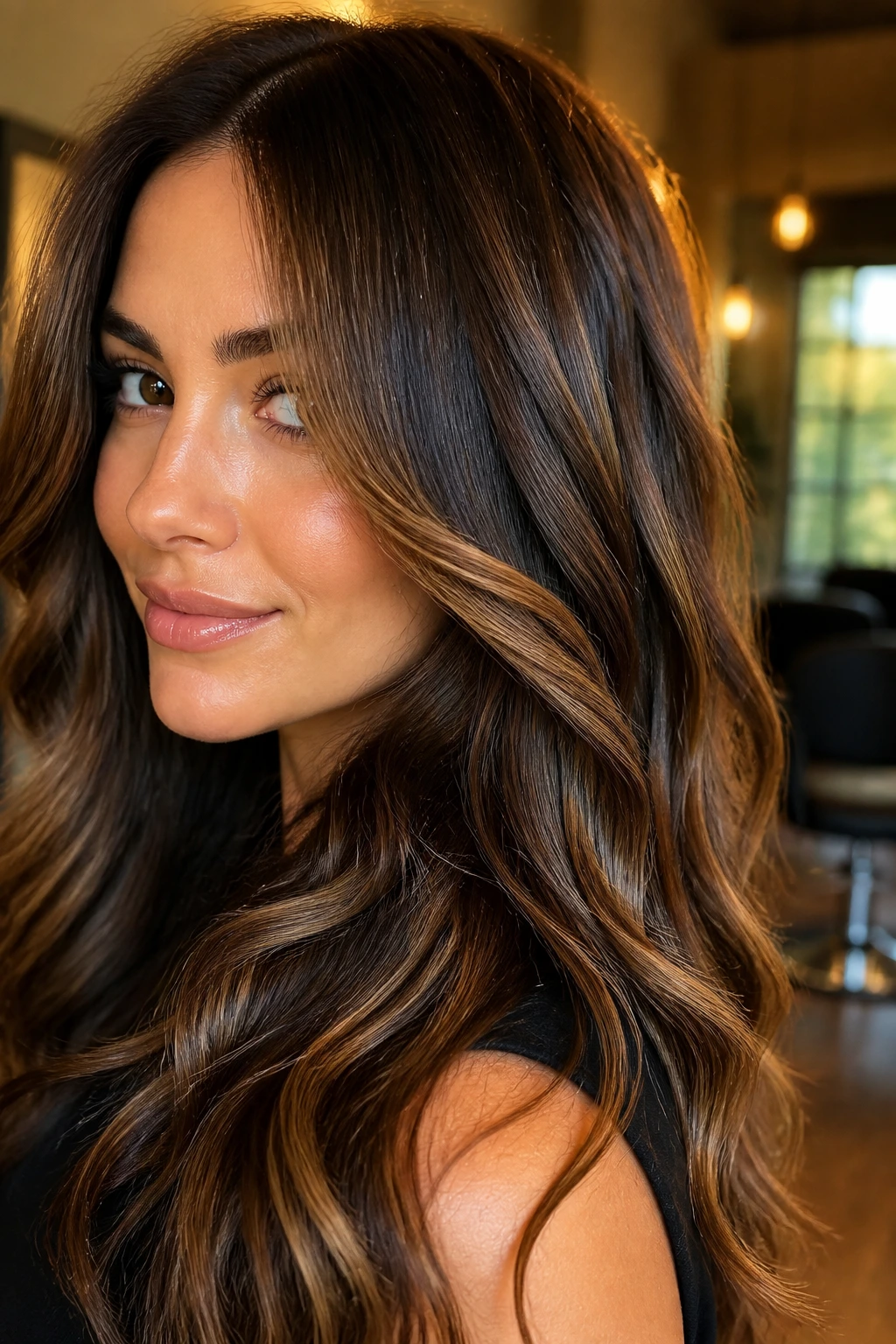
This is the version for people who want everything to look finished, not flashy. Soft toasted tones sit between caramel and honey, then a gloss pulls the whole thing together so the brunette reads smooth, shiny, and expensive-looking in the plainest sense of the word. The highlight isn’t the main event. The finish is.
It works beautifully on hair that’s been layered, cut blunt, or worn in waves, because the gloss keeps all the pieces speaking the same language. If you’re choosing one of the quieter looks from this list, this is the one that stays elegant the longest. Not because it’s fancy. Because it’s balanced.
How Dark Brown, Caramel, and Honey Behave on Brunette Hair
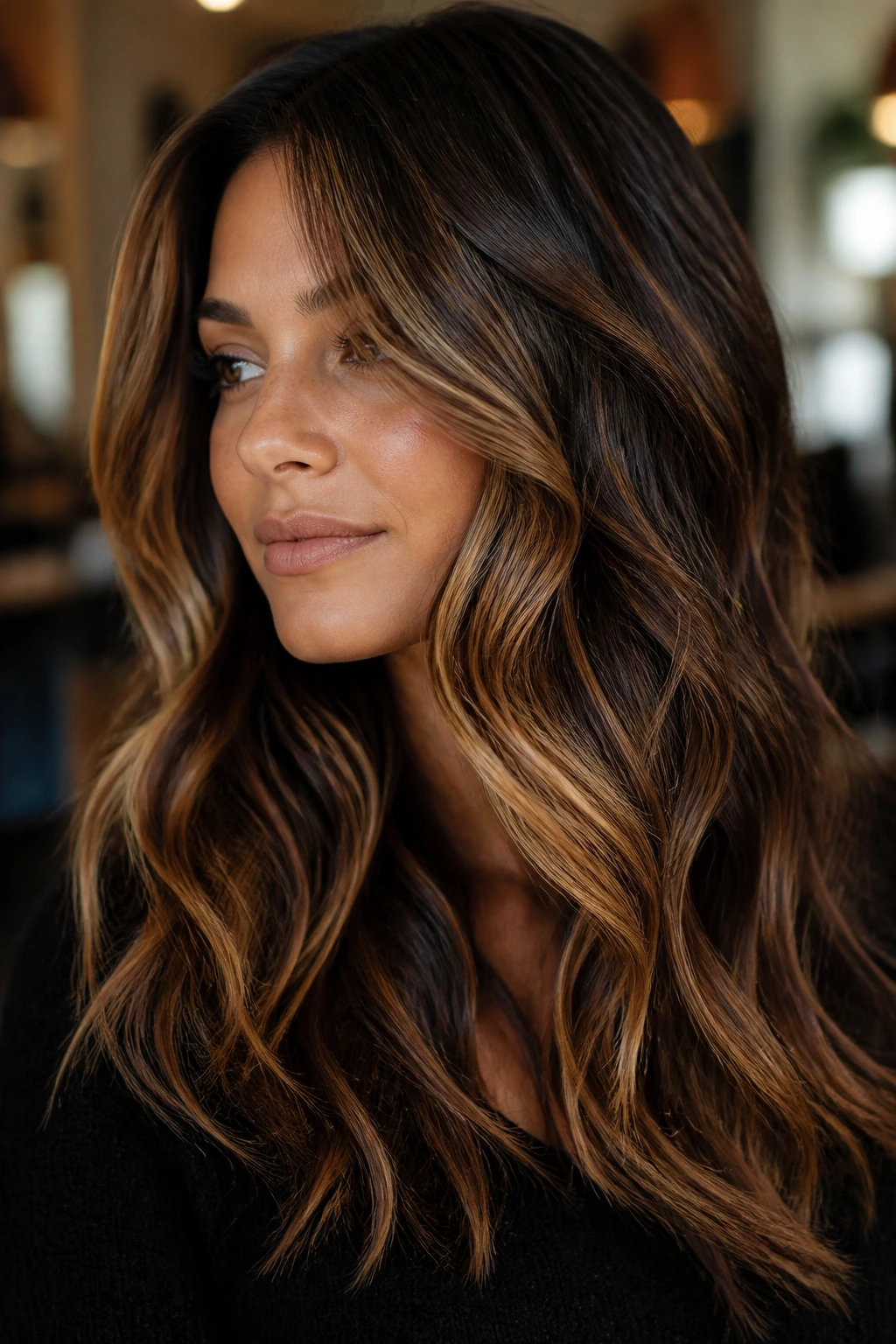
Dark brown hair is doing half the work before the color even goes on. The base gives caramel and honey something to sit against, which is why these shades look richer on brunettes than they do on lighter hair. On a level 4 or 5 base, caramel reads as glow; on a level 7 base, the same color can look much louder and a little less grounded.
That’s also why the undertone matters. Honey wants to go golden. Caramel wants warmth, but not orange. If your natural hair is already warm, the highlight formula needs a cooler beige note or the whole thing can tilt brassy after a few shampoos. If your base is cooler or ashier, a gold-beige gloss helps the lighter pieces blend back in instead of floating above the brunette.
Lowlights are the unsung part of the equation. A few deeper pieces keep the color from looking too airy, especially on layered hair or curls. Without them, the highlight pattern can flatten out and feel a bit cheap. With them, the hair has depth from root to end, and that’s the real reason these looks keep showing up on brunettes who want color that lasts beyond the first salon blowout.
Essential Tools for Getting the Look
- Color-safe shampoo: A sulfate-free formula helps caramel and honey hold their tone longer between washes.
- Moisture-rich conditioner: Lightened brunette ends need slip, or they start looking rough and thirsty fast.
- Blue or purple shampoo, used sparingly: Blue helps if the caramel turns orange; purple helps if it goes yellow, but too much can mute the warmth you actually want.
- Heat protectant spray: Any highlight set will fade faster if you fry it with a 425°F flat iron and no barrier.
- Microfiber towel or cotton T-shirt: Less roughness on damp hair means less frizz and less friction on delicate lightened strands.
- Wide-tooth comb: Better for moving conditioner through curls and waves without snapping the lighter pieces.
- Bond-building treatment: Useful if the hair has been lightened more than once; it helps the ends feel less fragile.
- Glossing serum or lightweight oil: A tiny amount on the mids and ends makes caramel and honey reflect light instead of looking dry.
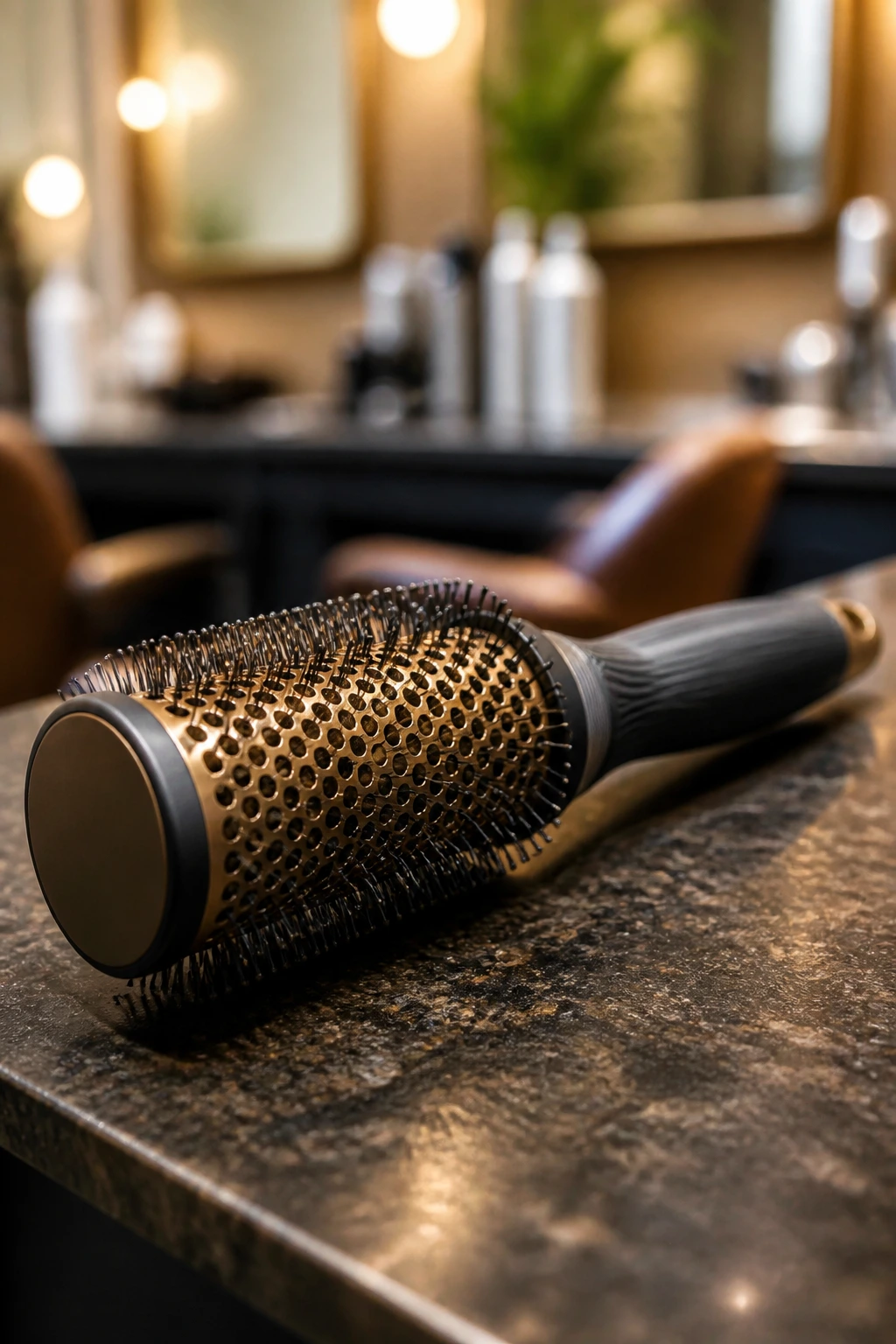
- Ceramic round brush or diffuser: Pick the one that matches your texture; the style matters as much as the color here.
- Salon clips: Handy if you’re sectioning at home for toning, drying, or checking where the bright pieces live.
What to Ask for at the Salon So the Color Lands Right
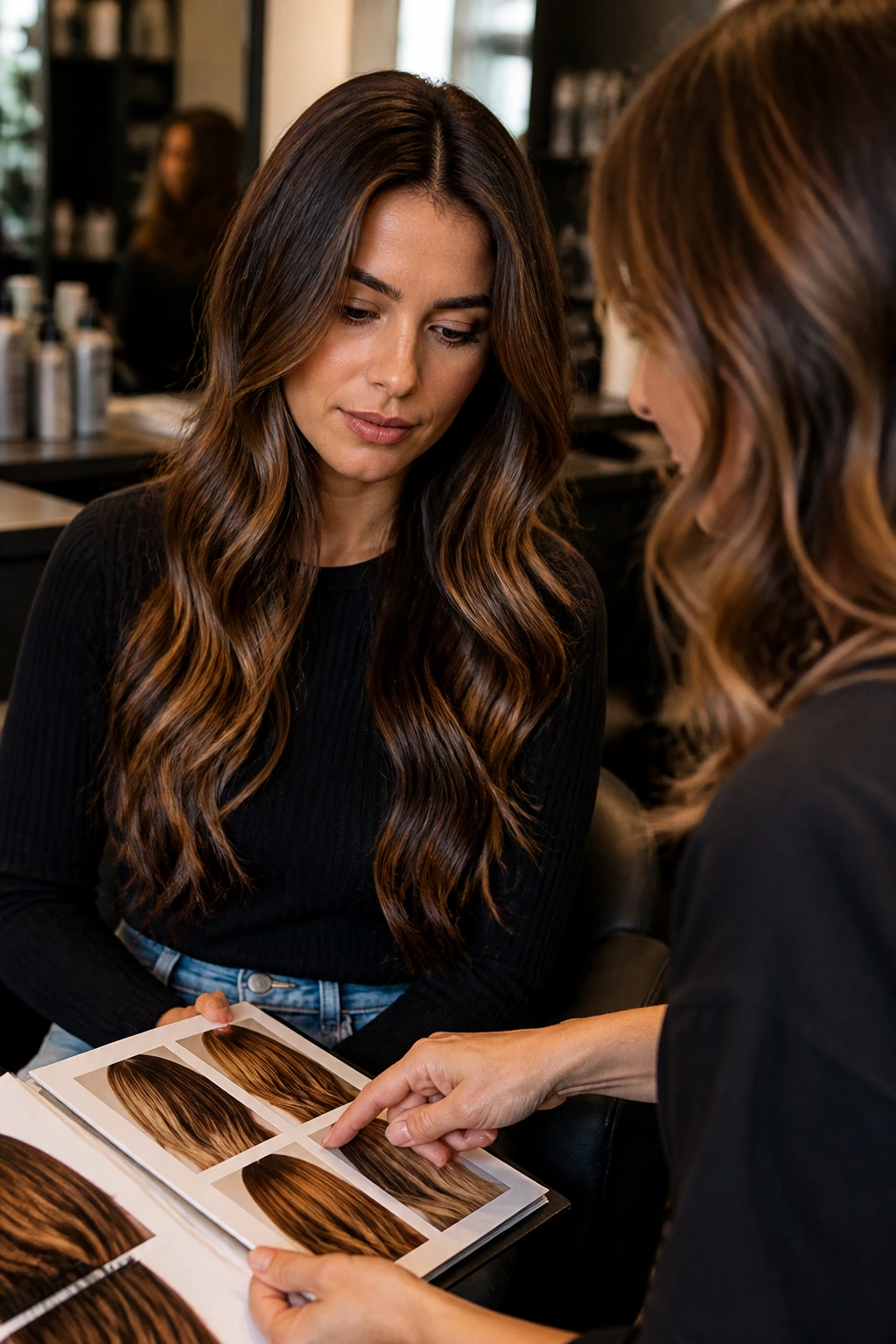
The shortest version is this: bring photos, but bring the right ones. Show your colorist the brunette base you want to keep, not only the highlight shade. If all they see is bright ends on a blondish photo, you may leave with far more lift than you expected. That’s where many brunette highlight jobs go sideways.
Use plain language. Say you want dark brown roots with caramel and honey pieces that stay soft around the face and mids, not a solid blonde look. If you like low-maintenance grow-out, ask for a shadow root and soft balayage. If you want more contrast, ask for brighter face-framing pieces and softer color through the rest of the head. The words matter more than people think.
A good salon consultation usually comes down to three decisions: how light, where bright, and how warm. If the answer to all three is vague, the result will be vague too. I’d rather hear a colorist say, “Let’s keep the honey to the front and gloss the rest to caramel-beige,” than hear a glossy promise and no details. Specificity is the difference between intentional and accidental.
How to Style Caramel and Honey Highlights So They Actually Show Up
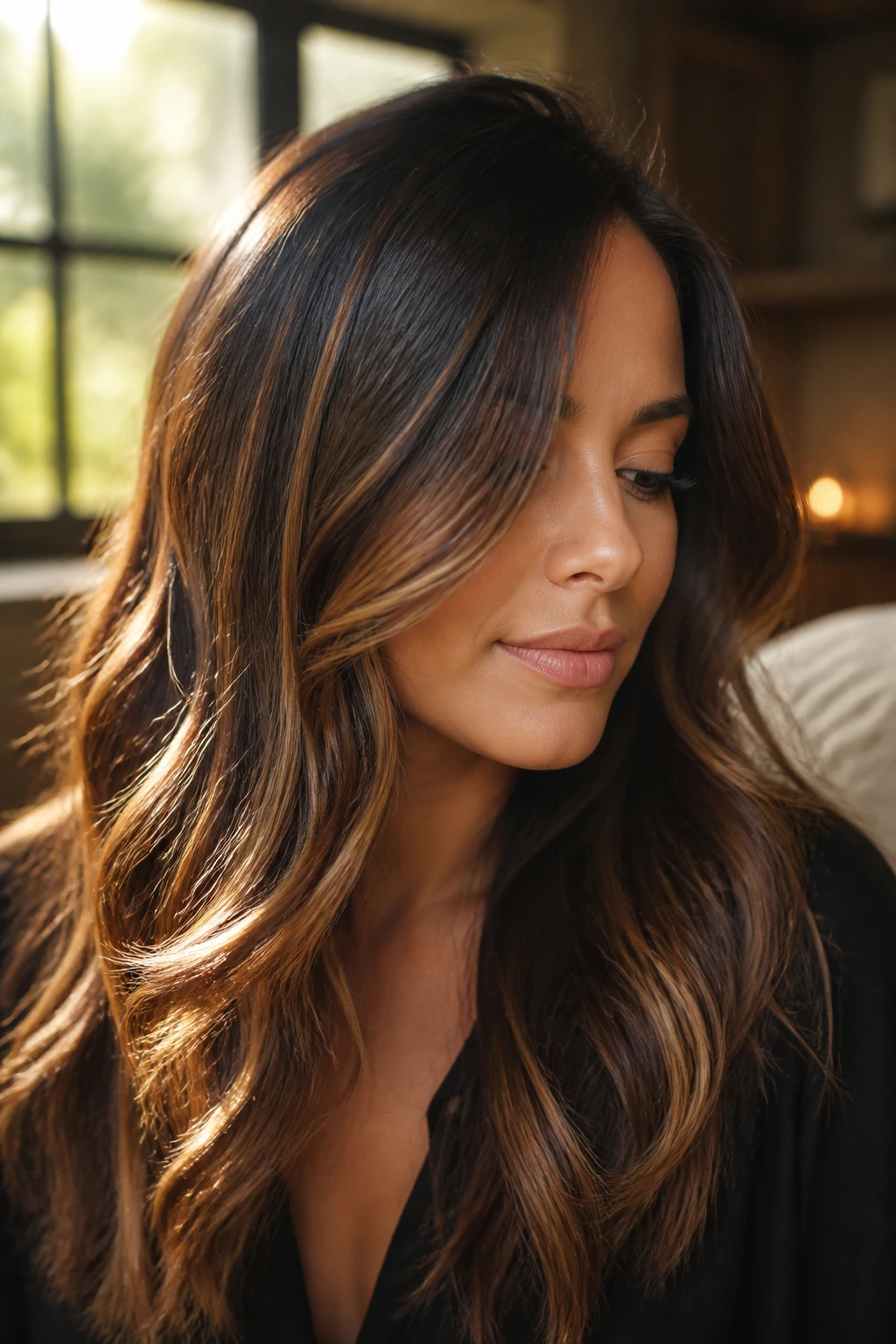
Parting: A middle part gives symmetry to face-framing pieces, while a deep side part makes caramel ribbons and halo lights look broader. If the highlight job is subtle, shift the part until the brightest pieces sit where the eye lands first.
Texture: Loose bends show the color best. Flat-ironed hair makes the contrast cleaner, but it can also make chunky highlights look harsher, so keep the bend soft if the pattern is bold.
Finish: Use a lightweight shine serum on the ends, not the roots. Honey looks dull when the hair is dusty, and caramel loses its richness if the ends are fuzzy.
Updos: Half-up styles are underrated here. They let the lighter pieces peek out around the temples and crown, which is where this color tends to look most alive. If you wear full buns or ponytails, ask for more brightness near the hairline so the color still shows.
Additional Tips and Tone Boosters
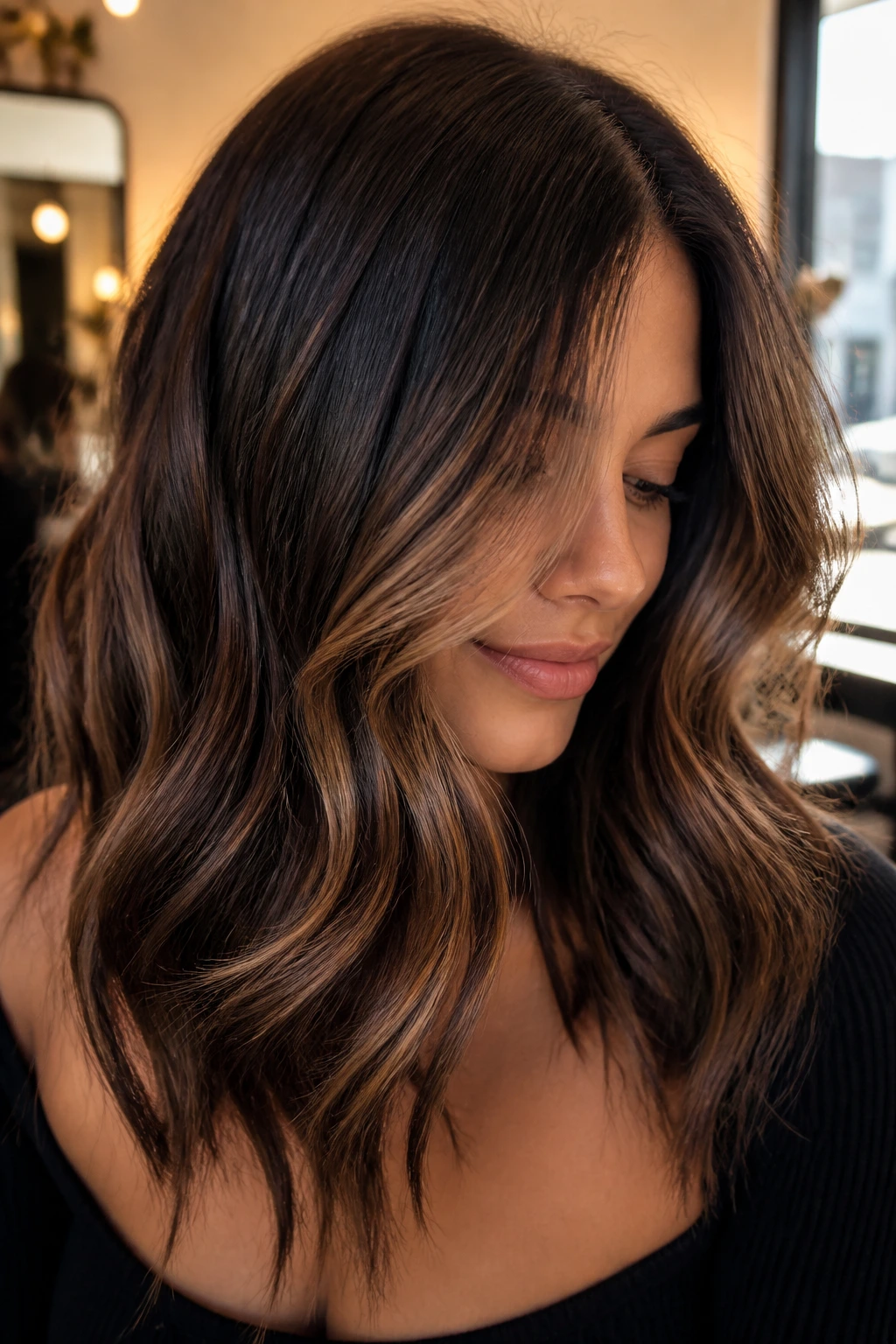
Tone Booster: A clear or beige-gold gloss every 6 to 8 weeks keeps caramel from drifting orange and honey from turning too yellow. Glosses are the easiest way to keep warm brunette highlights looking deliberate instead of faded.
Customization: If you want more edge, ask for deeper lowlights underneath and brighter honey only at the face frame. If you want something softer, spread the caramel through the mids and keep the crown close to your natural level.
Style Move: A small bend with a 1-inch curling iron is often enough. You do not need ringlets to show off this color. A few turns away from the face, then a brush-through, gives the highlights enough movement to catch light.
Make-It-Yours: For fine hair, use babylights and a softer gloss so the ends don’t look thin. For curly hair, keep more dimension between the curls and the background. For a bold look, widen the face frame and let the honey sit a shade lighter than the rest.
Keeping the Color Fresh Between Visits
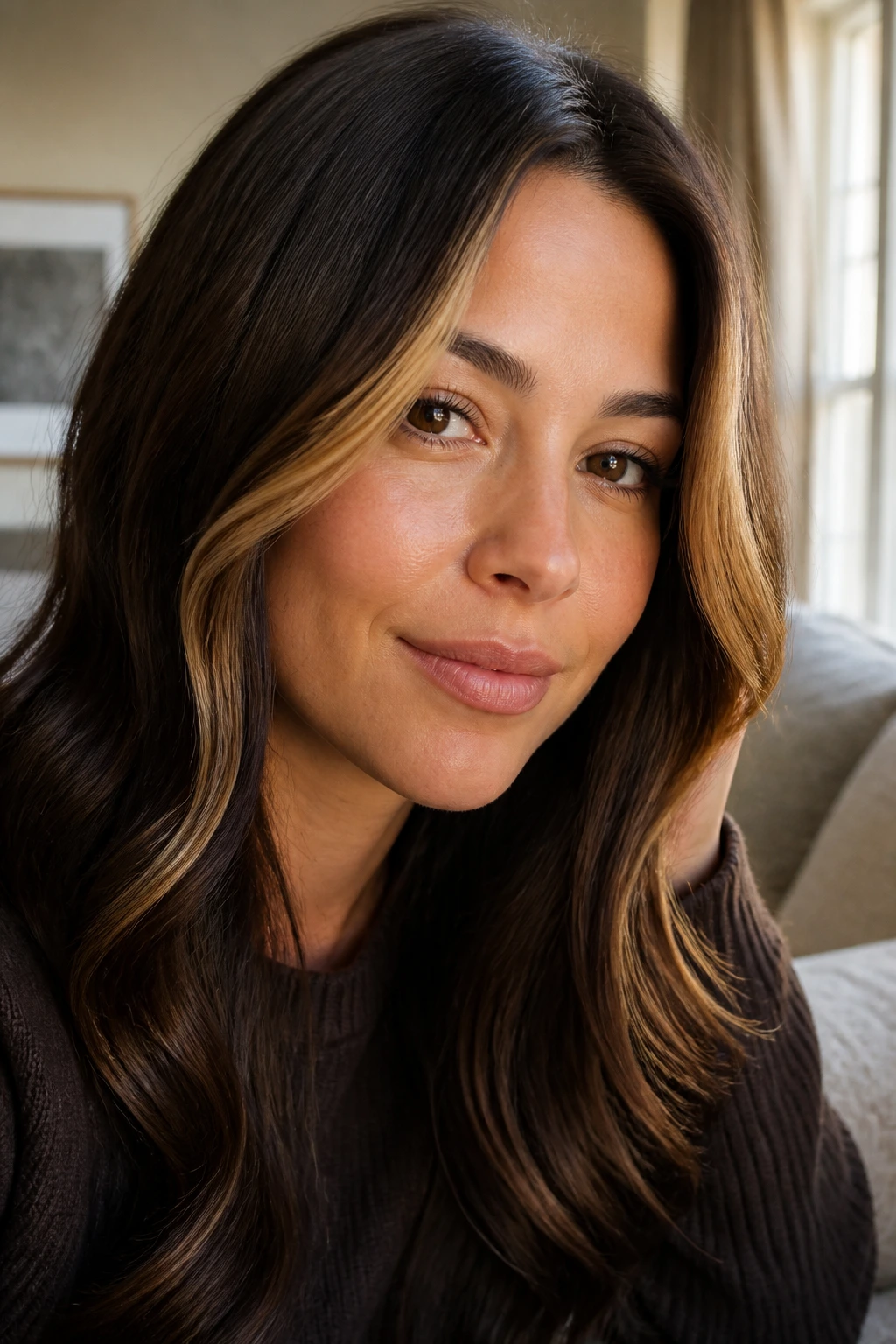
Warm brunette highlights usually look their best in the first few weeks, when the toner is still doing its job. After that, the tone can soften, the honey can get a little dull, and the caramel may lean orange if the hair is porous. A sensible routine keeps that from happening.
Wash 2 to 3 times a week if you can. Use lukewarm water, not hot. Hot water opens the cuticle faster, and the warm tones can fade into that tired, dry look no one wants. A color-safe shampoo and conditioner are enough most days; save stronger toning shampoos for when you actually see brass, not as a weekly habit out of fear.
For maintenance, most brunettes can stretch a gloss or toner refresh every 6 to 8 weeks, while highlight touch-ups often sit around the 8 to 12 week range depending on placement. A face frame may need attention sooner than a soft balayage melt because the contrast is more visible right around the part and temple. If your hair is heavily lightened or very porous, book the refresh sooner rather than later. Waiting until it looks dull usually means it has already lost the tone you paid for.
Heat protection matters more than people like to admit. If you blow-dry, smooth, or curl often, keep the tool temperature moderate and skip the habit of passing over the same section six times. One or two controlled passes is enough for most styles. A silk or satin pillowcase helps, too. It sounds fussy. It also keeps the lighter pieces from looking rough by the end of the week.
Variations and Shade Swaps to Try
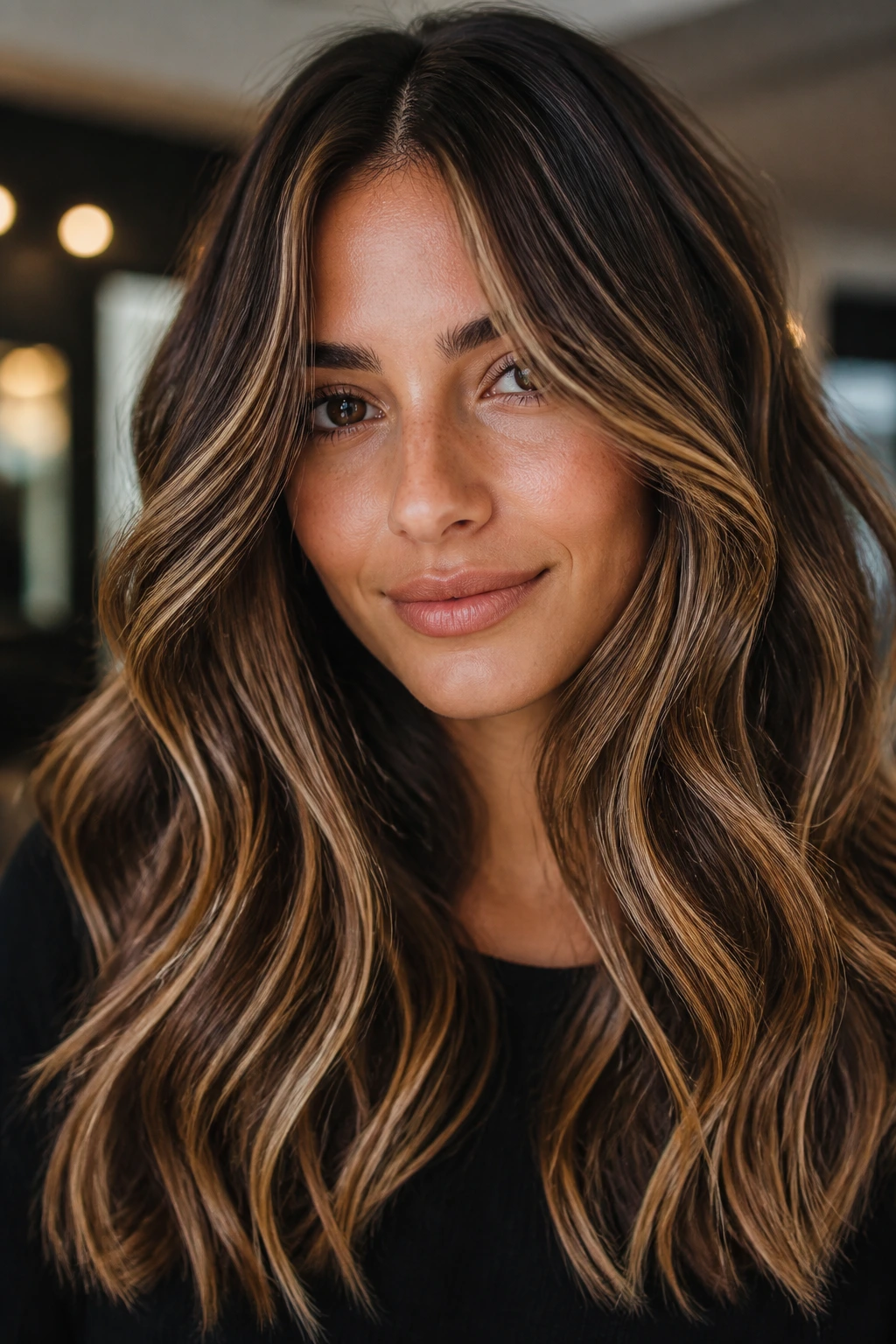
Toasted Beige Brunette: Swap the richer caramel for beige-gold pieces if your skin leans cool or neutral. The result is softer and less orange, which keeps the brunette base looking clean instead of copper-heavy.
Honey Halo Frame: Keep almost all the brightness around the face and crown, then leave the lengths darker. This is a smart choice if you want a visible change that still grows out quietly.
Smoky Chestnut Melt: Add deeper chestnut lowlights through the mids and only a few honey pieces at the ends. It’s a good fit for anyone who likes warmth but doesn’t want high contrast.
Copper-Kissed Brunette: Move the caramel a little richer and let it flirt with amber. This version flatters warm undertones and deeper brown bases that need more glow to show the color.
Low-Key Lived-In Balayage: Use soft hand-painted pieces with a shadow root and a gloss finish. That’s the most forgiving option if you don’t want regular touch-ups and prefer the color to blur as it grows.
Common Mistakes to Avoid
-
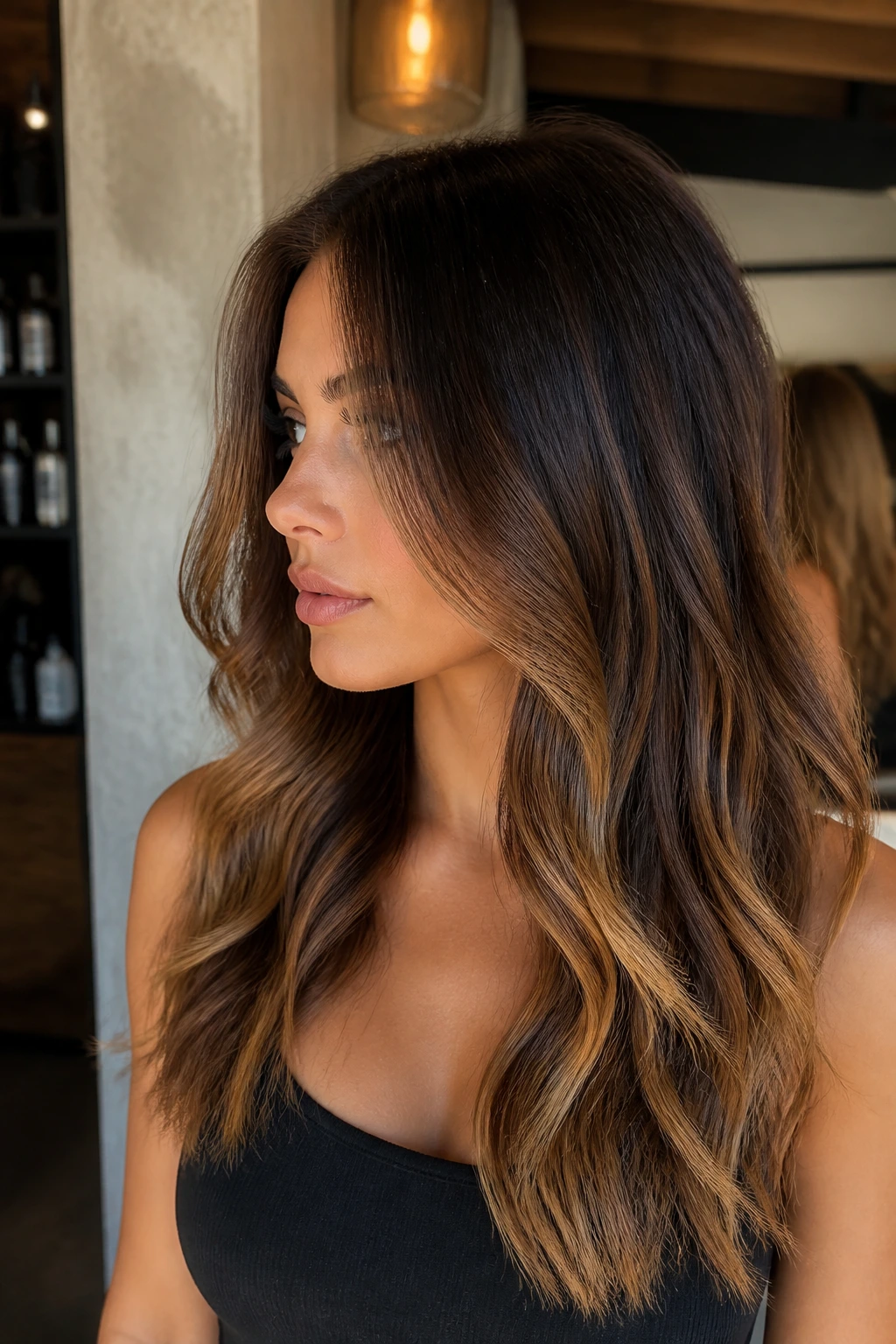
Going too light too fast: If your base is dark brown, jumping straight to pale honey can make the hair look striped and dry. Ask for gradual lift and a warm gloss instead.
-
Ignoring lowlights: A highlight-only job on brunette hair often looks flat after a few washes. A few deeper pieces keep the caramel and honey from floating on top.
-
Letting orange brass build up: Warm highlights can drift orange if you overuse heat or skip toner. Use a blue-toned shampoo only when you need it, not every wash.
-
Placing brightness only on the top layer: The result can look thin from certain angles. Blend some color into the mids and ends so the hair has depth when it moves.
-
Forgetting the haircut: Highlights don’t rescue a shape that needs trimming. If the layers are blunt in the wrong spots, even a gorgeous caramel tone can look heavy.
Questions Brunettes Ask Most
Will caramel and honey highlights work on very dark brown hair?
Yes, but they usually need more careful lifting and a stronger sense of placement. On very dark bases, a face frame or soft balayage often looks better than trying to brighten the whole head at once.
Are these highlights good for curly hair?
They can be excellent on curls because the bends show the color naturally. The key is keeping enough depth between the light pieces so the curl pattern still looks defined.
How often do they need touch-ups?
A soft balayage can go 8 to 12 weeks or longer, while money pieces and crown lights usually need attention sooner. The more contrast you choose, the faster the grow-out shows.
Can I keep them from looking brassy?
Yes. Use lukewarm water, a color-safe shampoo, and the right toner refreshes. If the brass goes orange, a blue-toned shampoo helps; if it goes yellow, purple can help, but don’t overdo either one.
Do caramel and honey highlights suit cool skin tones?
They can, as long as the tone stays beige-gold instead of orange-gold. Cooler brunettes often look better with muted caramel and softer placement rather than bright coppery pieces.
What’s the difference between balayage and regular highlights here?
Balayage is painted on for a softer grow-out and more diffused light. Traditional highlights can be brighter and more patterned, which works well if you want a sharper, more visible contrast.
Can I do this at home?
Technically yes, but brunette bases are where DIY color goes sideways fastest. Uneven lift shows up immediately on dark hair, and warm tones can turn orange before you notice it.
Do lowlights make the hair look darker?
A little, yes, but that’s the point. They give the highlights shape and make the caramel and honey appear brighter by comparison, which usually looks better than one flat bright layer.
The Warmest Kind of Dimension
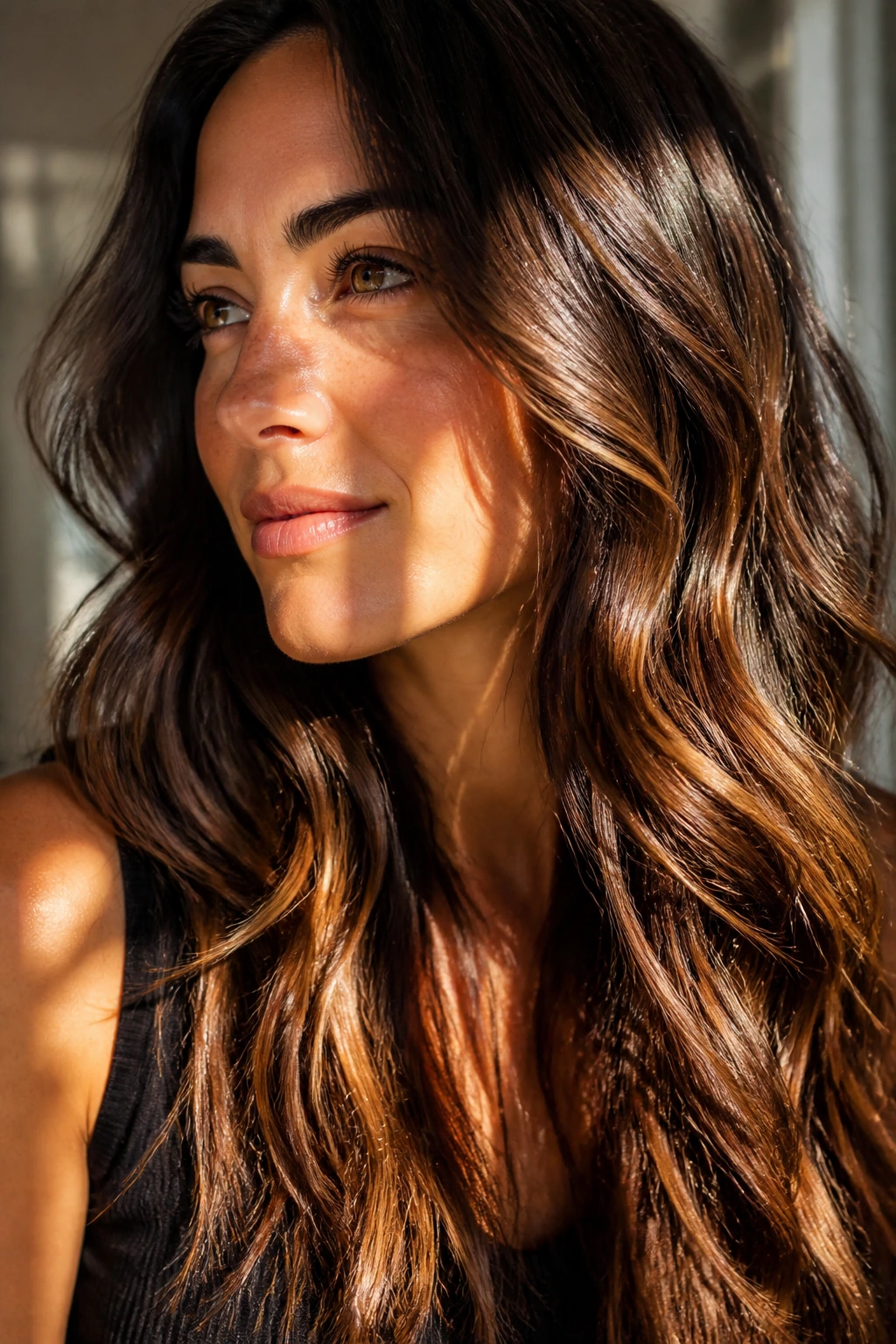
Caramel and honey don’t need to be loud to do their job. On brunette hair, they work because they keep the base intact while adding movement, shine, and that little flicker of warmth that makes a cut look intentional. The strongest versions are never about covering everything. They’re about placing the light where it matters and leaving enough dark behind it.
If you’re choosing one of these looks, start with your base shade, then decide how much contrast you actually want to see at the root, the face frame, and the ends. That one decision will do more for the final result than any trend photo ever will. And if the colorist gets the balance right, the hair won’t just look lighter. It’ll look smarter.