



Fine hair and box braids do not always behave like they belong in the same sentence. Add a child’s busy day to the mix — backpack straps, car seats, playground runs, naps, outfit changes, the occasional dramatic head toss — and you can see why the wrong bun starts slipping, sagging, or tugging long before lunchtime. The answer is not more hair. It is better shape.
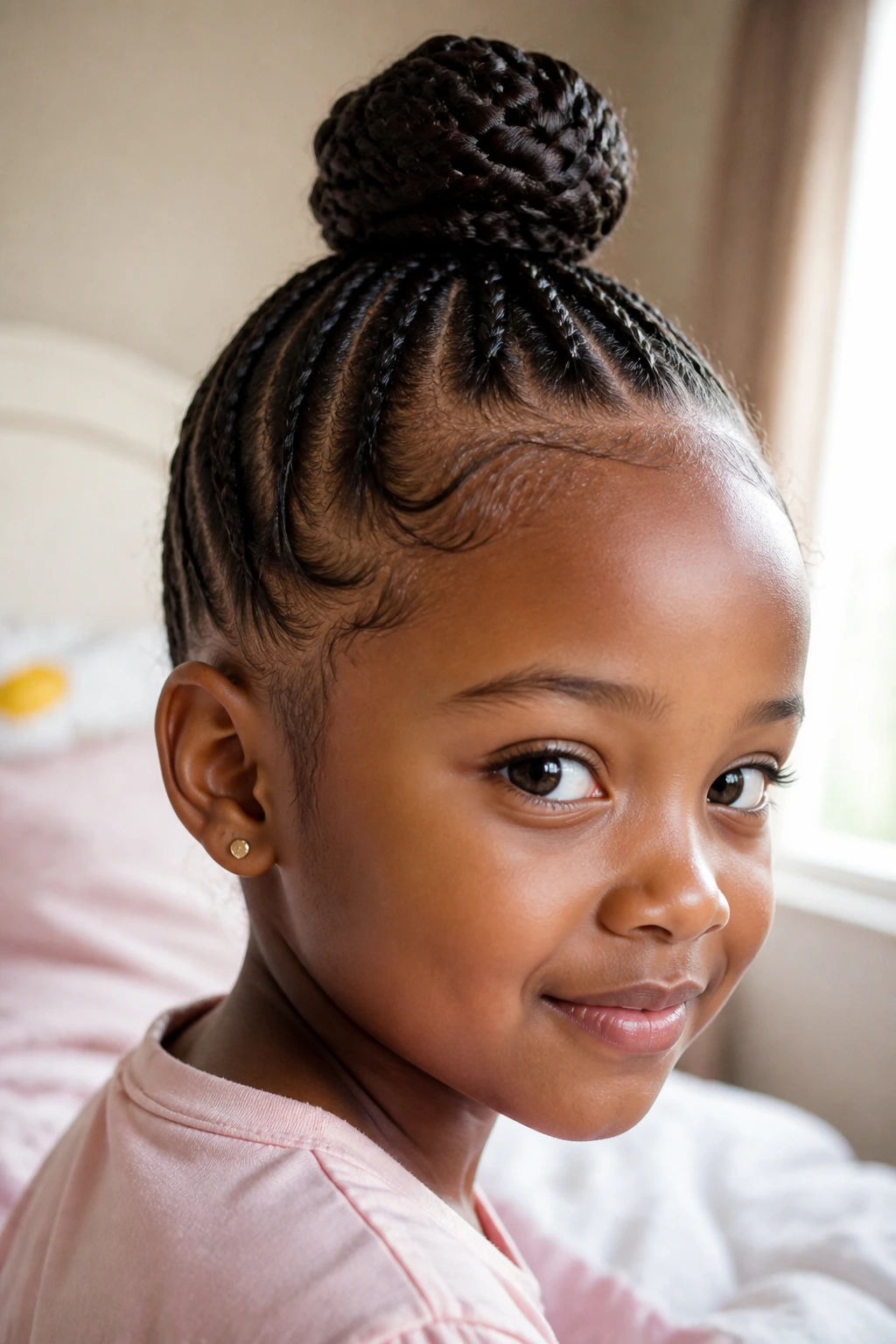
Bun box braids for kids with fine hair work best when the braid sections stay small, the added hair stays light, and the bun sits where the head can actually carry it. A style that looks neat but feels heavy at the roots is a bad trade. A smaller, smarter bun usually wins because it keeps the scalp calm and the finish tidy at the same time.
That balance is what matters here. Some of these styles sit high and playful, some tuck low and quiet, and some use tiny details — a ribbon, a part pattern, one small accent braid — to make the whole look feel finished without piling on weight. The best ones are the styles the child forgets about after a few minutes. That is the real test.
Why This Collection Works for Small Heads and Soft Strands
-
Less Pull at the Root: Smaller box parts and lighter buns keep the hairline from getting yanked when the child moves, which matters more on fine strands than almost anything else.
-
School-Day Practical: These looks stay put through reading time, snack time, and recess without asking for a full reset every few hours.
-
Photo-Friendly Without the Bulk: A clean bun shape gives you a neat outline and a clear part pattern, so the style still looks polished even when it stays compact.
-
Kid Comfort Comes First: Fine hair often tells on tight styling fast — temple rubbing, a sore crown, a child touching the same spot over and over — and these styles are built to avoid that.
-
Easy to Dress Up or Calm Down: A satin ribbon, a few cuffs, or a sharper part can turn the same base style from plain to party-ready without starting over.
What Fine Hair Needs Before the First Part Is Made
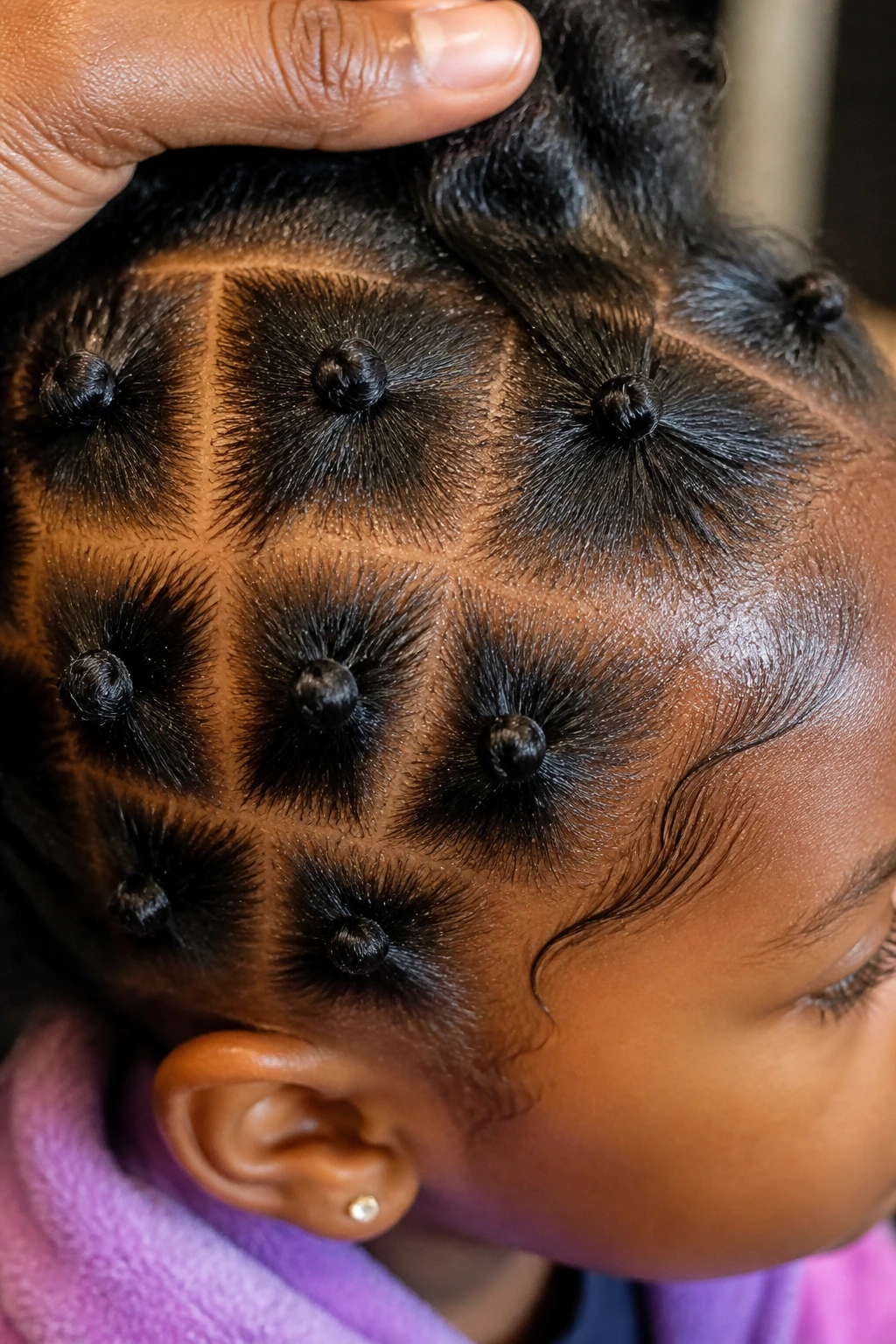
Fine hair rewards restraint. The biggest mistake is treating it like thick hair and building a style that depends on bulk to hold itself together. It won’t. If the sections are too wide, the bun ends up heavy in the middle and floppy at the edges. If the added hair is too dense, the braid does the work for an hour and the scalp does the complaining after that.
Start with smaller squares than you think
For most kids with fine hair, I like box parts that sit around postage-stamp size, or a touch smaller. That keeps each braid light enough to lie flat and gives the bun something neat to anchor to later. If a section feels thick in your fingers before you even start braiding, it’s already too much for a child’s head.
Choose lightweight hair, not long hair for the sake of length
Pre-stretched braiding hair tends to behave better than fluffy, freshly separated hair because it slides into the braid more cleanly and doesn’t balloon at the ends. You do not need a full mountain of extension hair for a child’s style here. In a lot of cases, a small bundle is enough to add shape without turning the bun into a helmet.
Keep the scalp calm
Tiny bit of leave-in, a little water, and a soft gel at the part line go farther than a thick coat of product. Fine hair gets gunky faster than coarse hair, and a heavy paste near the scalp can make the style look dull by day two. If the child winces when you touch the crown, stop and ease up. That is the signal that matters.
1. Feather-Light High Crown Bun
A high crown bun is the first style I reach for when the child wants the braids off the neck and off the shoulders. On fine hair, the key is making the bun compact, not grand. Think small crown, neat base, clean outline.
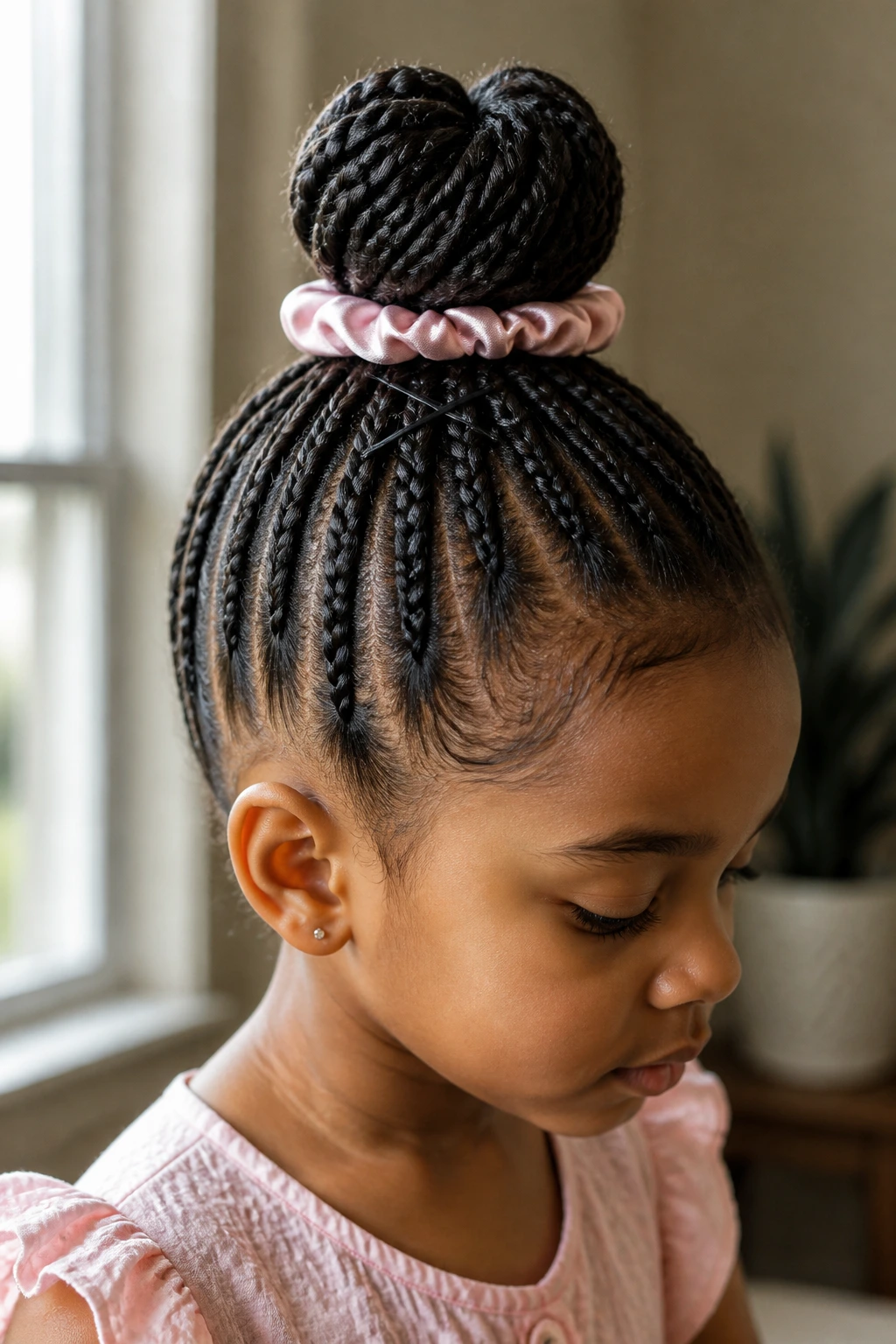
I like to gather the braids high enough to clear the ears, then twist them once before tucking the ends in a tight little circle. If the bun starts looking wide, you’ve got too much hair feeding into it. Two crossed bobby pins at the base usually hold better than one giant elastic, and a satin scrunchie beats a thick rubber band every time.
What keeps it light
- Use 6 to 10 small box braids in the bun zone, not a heavy pile from the whole head.
- Keep the base loose enough that a fingertip can slide under the scrunchie.
- Pin the bun flat against the crown so it doesn’t wobble when the child bends forward.
Tiny, neat, and out of the way. That is the whole point.
2. Twin Mini Space Buns
Two buns can sound like twice the work, but on fine hair they often solve the weight problem. Instead of asking one bun to hold the whole head of braids, you split the load and let each side do a smaller job. The result looks playful, but the real win is balance.
I prefer these buns to sit a little above the ears rather than dead on top of the head. That keeps them from feeling top-heavy. If the braids are short, twist each side once, then coil it into a bun and secure it with a small elastic before pinning. If they are longer, wrap them with less twist so the shape stays soft instead of tight.
Kids who like symmetry tend to love this one. Kids who twist in their sleep do too, because one bun can loosen and the style still looks intentional instead of lopsided.
3. Low Nape Ballet Bun
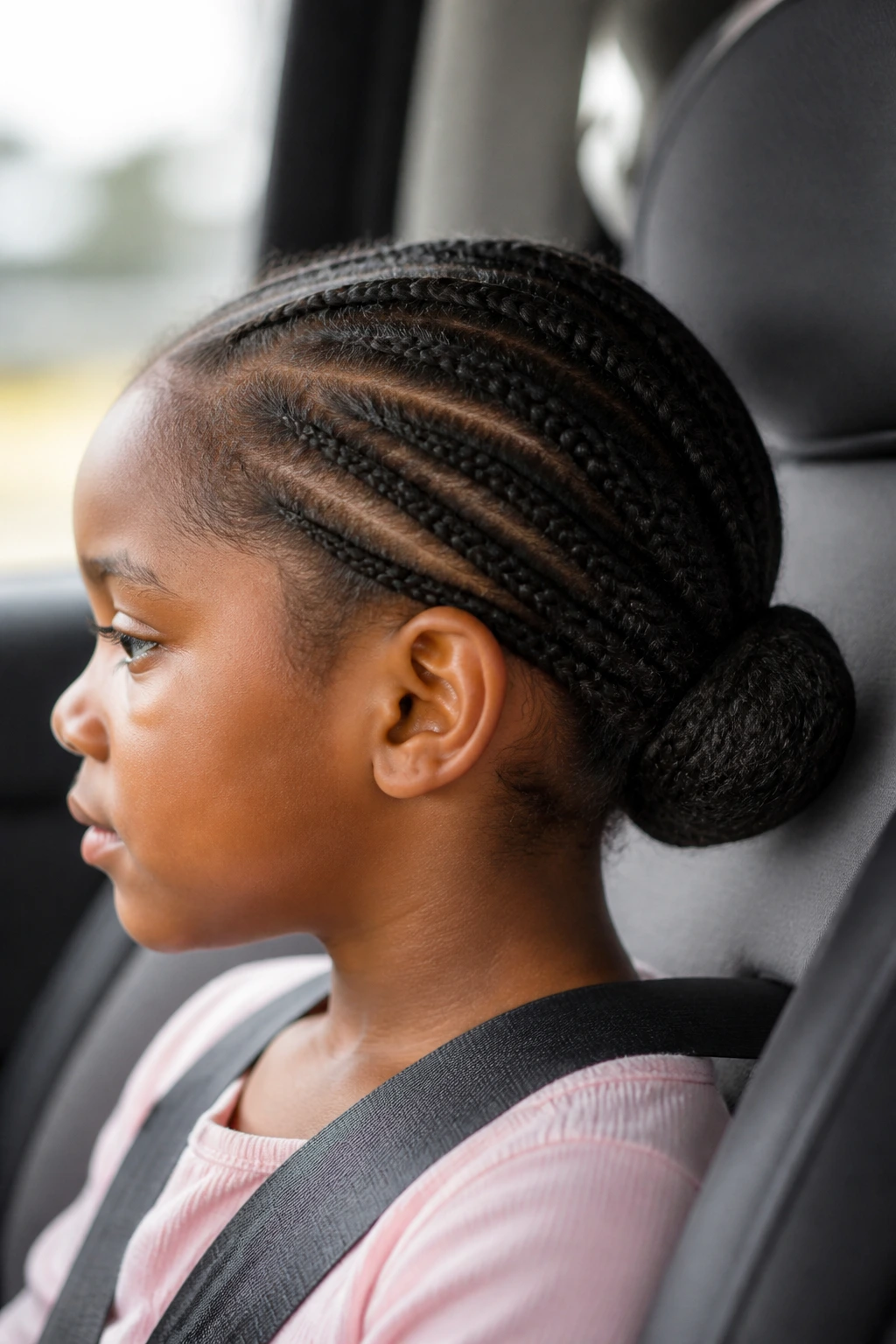
Low is kinder than high when the scalp is tender. A bun sitting at the nape takes pressure off the crown and keeps the style quiet under hats, hoodies, and car-seat straps. It’s the style I reach for on mornings when I want the head to feel settled, not styled to death.
The trick is to keep the bun flat. Gather the braids low, smooth them with your hands, and wrap them into a snug coil against the neck. If the hair is especially fine, make the bun a touch wider rather than taller; that spreads the weight instead of stacking it. A couple of pins crossed through the base usually hold better than a tight elastic alone.
This style also hides frizz well. Fine hair tends to show fuzz at the nape first, and a low bun keeps that area tucked where it’s less likely to get rubbed loose by collars or backpack straps.
4. Side-Swept Bun with Face-Framing Braids
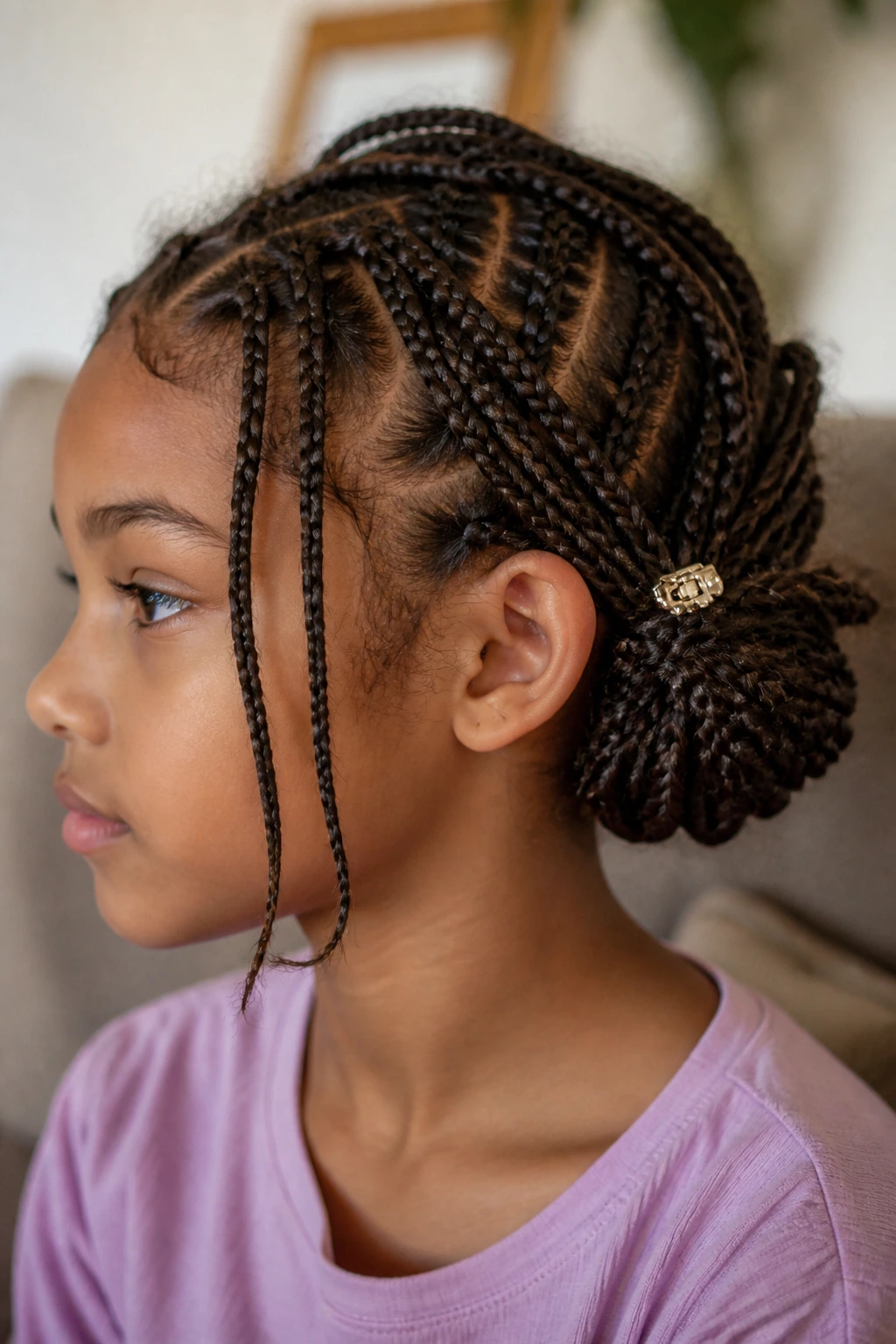
When a straight center part feels too plain, a side bun brings shape back without adding bulk. It also gives you a way to keep a few braids near the face while moving the rest of the weight to one side. That can make a huge difference for children who do not like hair falling into their eyes but still want some movement around the cheeks.
Start by sweeping the braids toward the stronger side of the head — usually the side that doesn’t sleep against the pillow as much. Leave two or three braids loose in front if you want a softer edge. Then twist the rest into a low side bun and pin it close to the ear. The bun should look anchored, not like it’s hanging off the head.
A ribbon or one small clip works well here. Anything bigger starts competing with the bun itself, and the style loses the clean line that makes it good.
5. Half-Up Top Knot Bun
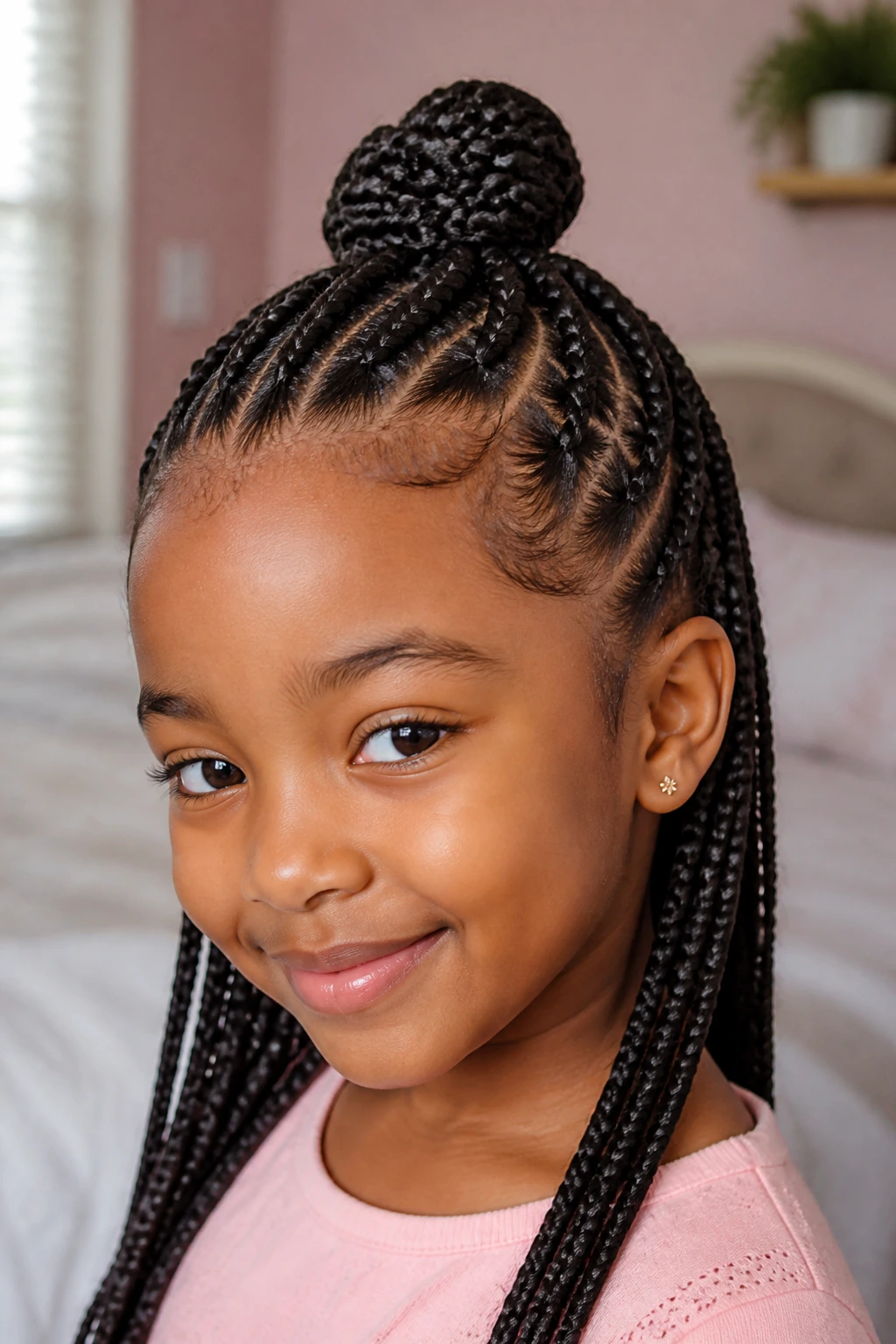
Half-up styles are useful when the hair is too fine, too short, or too newly braided for a full bun to feel secure. You get the lift at the crown without forcing every braid into one spot. The back stays down, which also gives the style a little swing.
I like this one for kids who want to see their length. Gather only the top half of the braids into a small knot and leave the lower half hanging. The knot should be compact — think the size of a clementine, not a grapefruit. If it starts growing larger than that, the style stops feeling light and starts pulling.
No need to make it perfect. A half-up top knot can handle a few loose ends at the back, and that tiny bit of softness often makes it look better on a child than a sleek, forced-up version ever will.
6. Halo Braided Bun
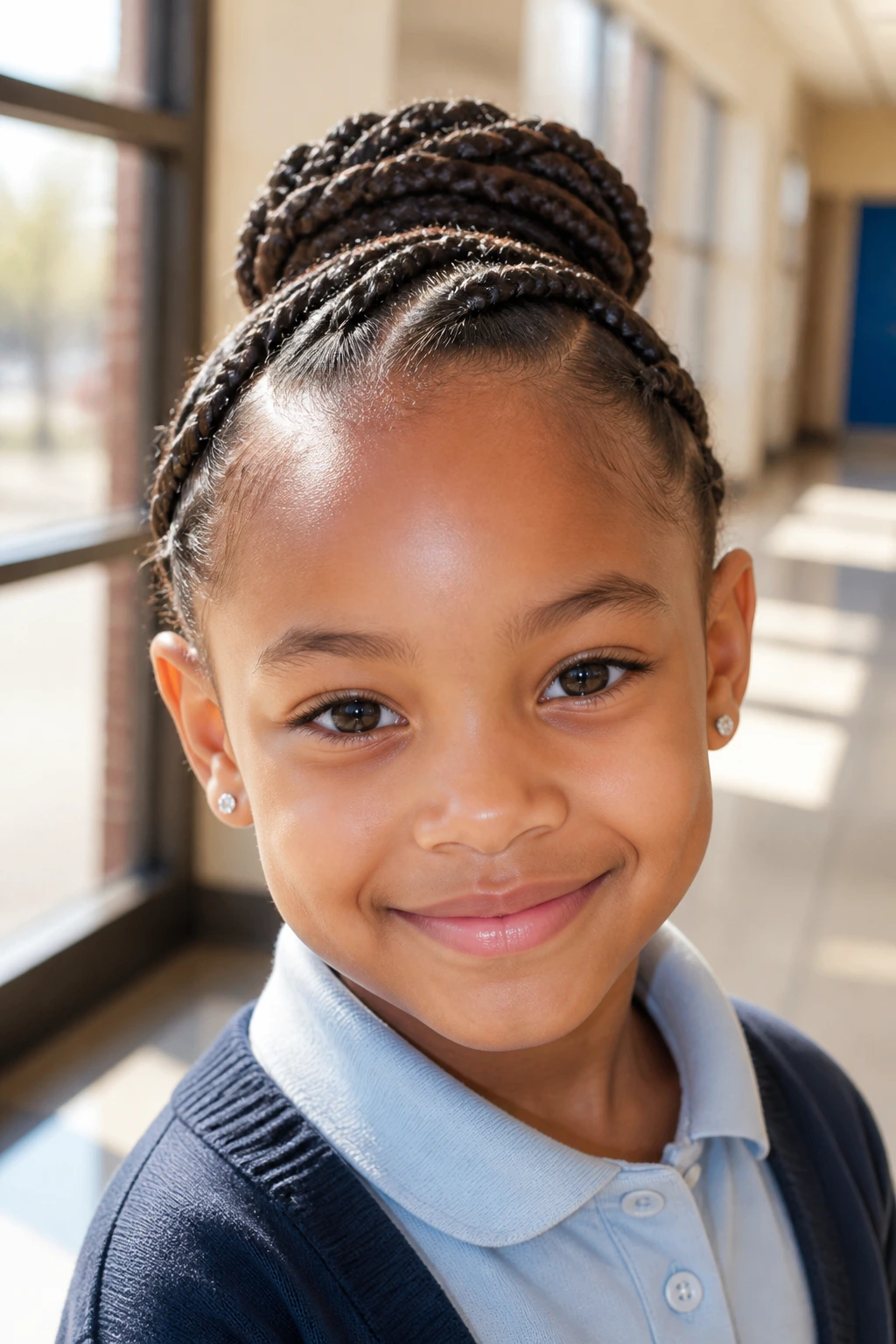
A halo bun spreads the braid path around the head before everything gathers at one point. That matters on fine hair, because the bun is not carrying all the visual weight by itself. The eye follows the braid line around the crown first, then lands on the bun.
I think this style works best when the parting is clean and the braids are not too wide. Four anchor braids around the perimeter are usually enough to guide the shape. Pull them back in a circle, then gather the rest into a bun that sits just above the occipital bone. That placement keeps the bun from bumping around every time the child looks down.
It’s a good picture-day style, but not because it tries hard. The halo line gives it structure. The bun gives it finish. That’s enough.
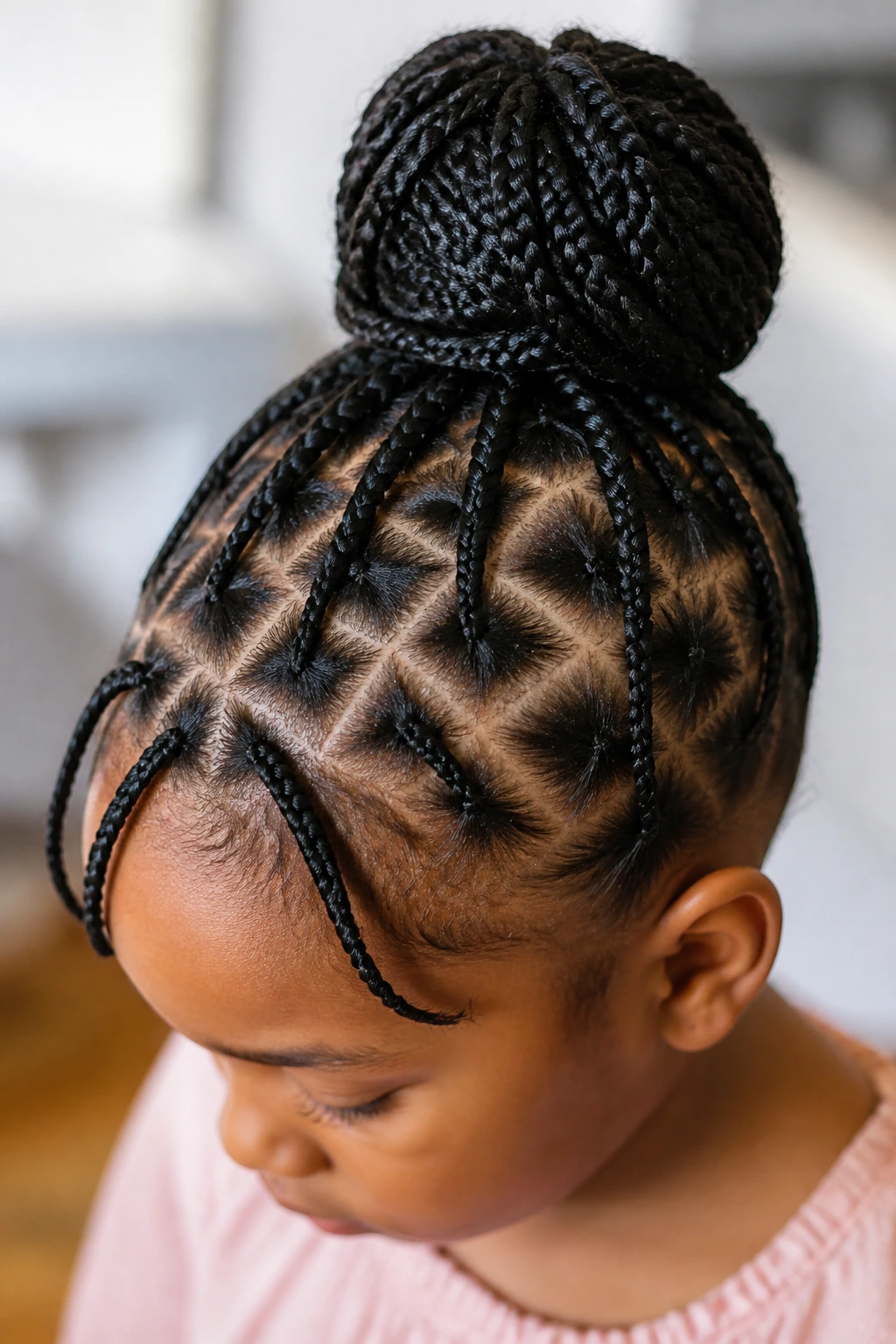
7. Zigzag-Part Crown Bun
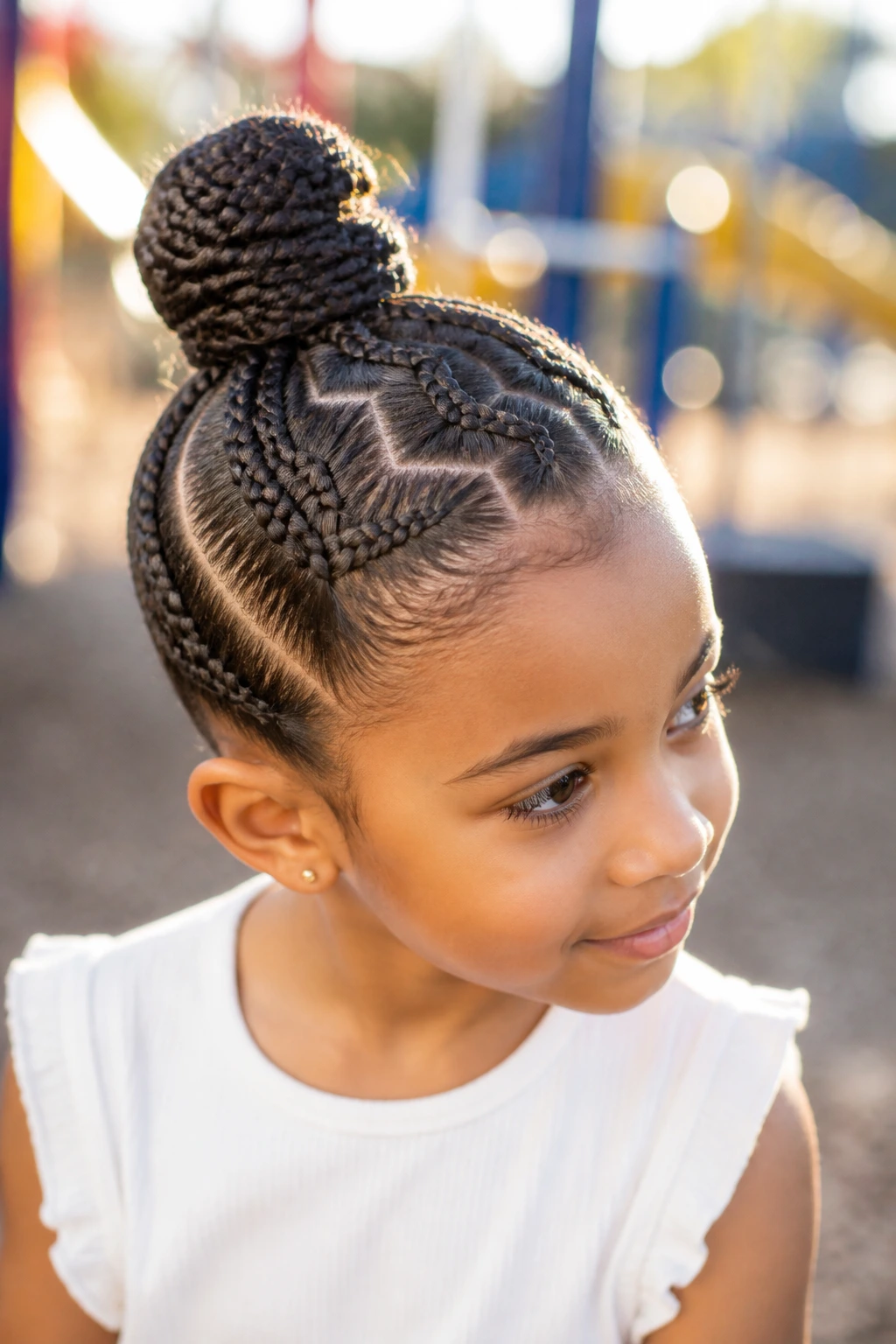
A zigzag part can wake up a simple bun fast, and it does it without adding a single ounce of weight. On fine hair, that matters. Decorative parting gives you interest where accessories might feel too heavy.
Why the parting matters
Keep the zigzags wide and smooth, not tiny and scratchy. Very small zigzags can make the part look busy and they take longer to execute cleanly on soft hair. A few strong, visible angles look better and stay neater as the style grows out.
Once the braids are in, gather them into a crown bun and keep the bun itself plain. That contrast is what makes the style work. The part does the talking; the bun stays quiet.
If the child loves fun details but picks at cuffs or beads, this is the style I’d pick first. It gives personality without asking the braids to carry more weight.
8. Ribbon-Wrapped Bun
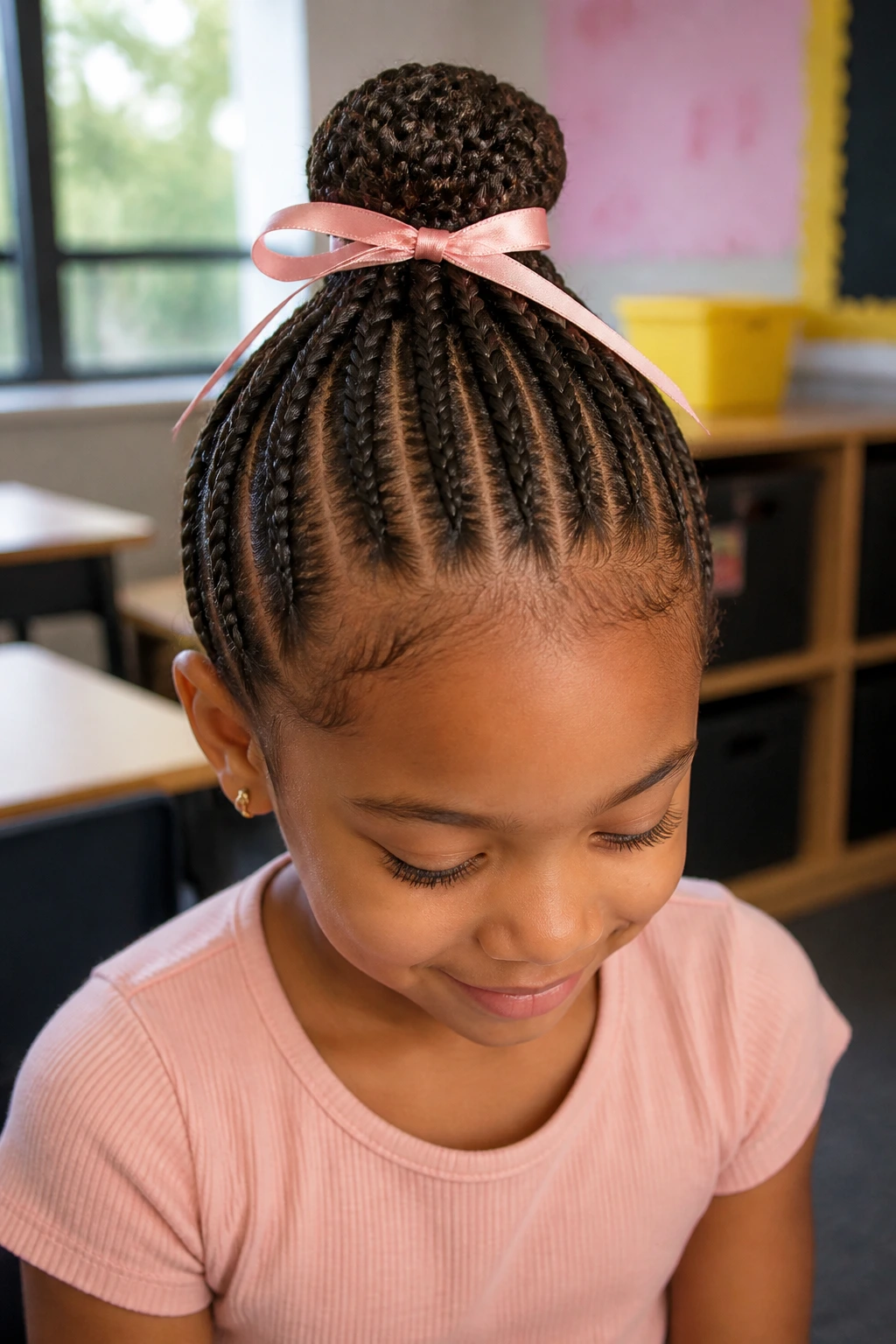
A ribbon does more for a small bun than another row of heavy accessories ever will. On fine hair, that’s not a small thing. It adds color, softens the shape, and keeps the style from looking too stark.
Use a narrow satin ribbon, about ¼ to ½ inch wide, and wrap it around the base after the bun is pinned. You can tie it in a bow, tuck the ends under, or let a short tail trail down the back. The satin surface slides nicely and doesn’t snag the braid texture the way stiff craft ribbon can.
School colors, birthday colors, even a plain black ribbon — all of them work. The bun stays the same, which is the beauty of it. Change the ribbon, change the mood.
9. Low Tucked Knot Bun
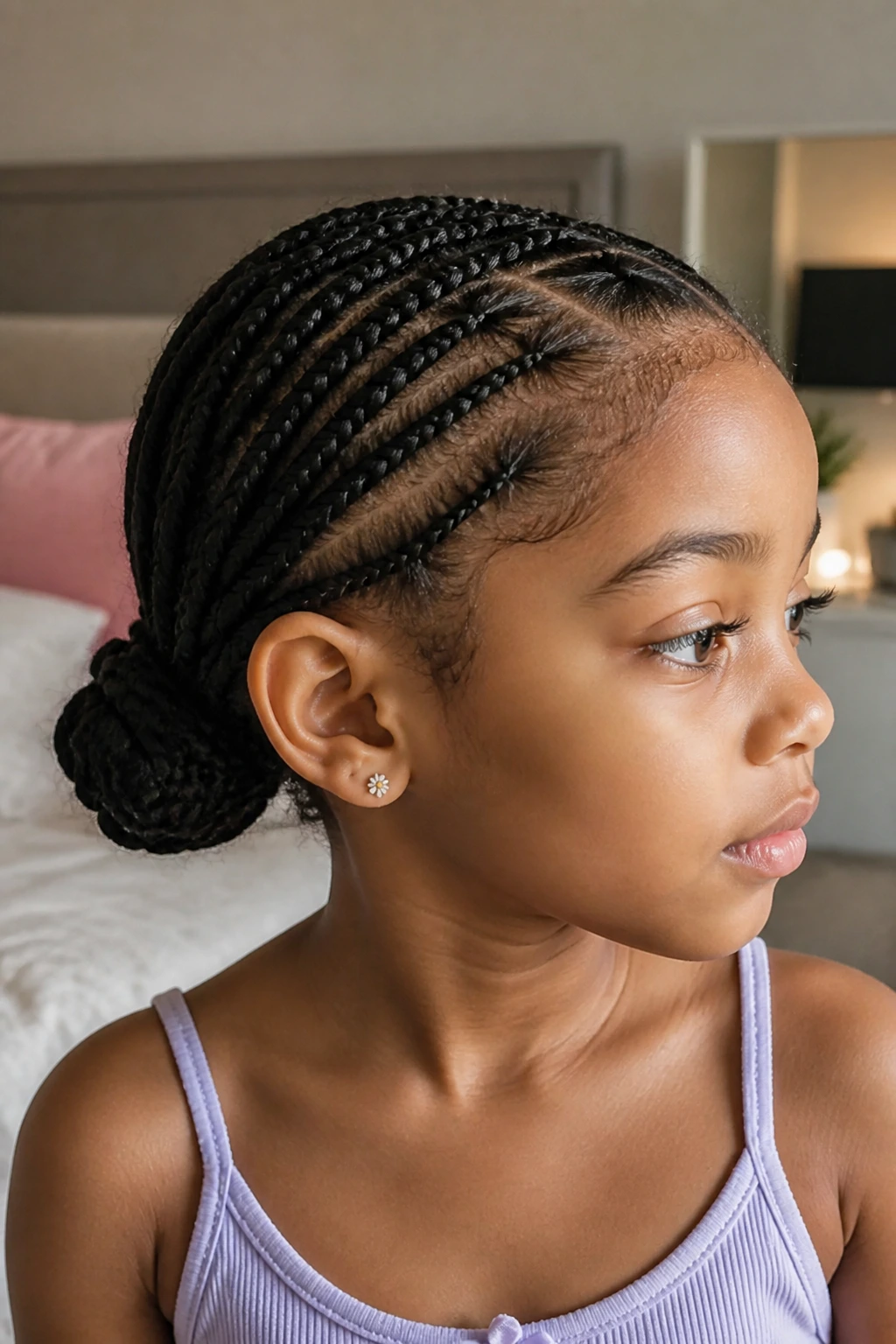
When the week has already been long, this is the bun I trust. Low tucked knots are simple, tidy, and kind to a sensitive crown. They sit close to the nape and do not ask the hairline to hold anything dramatic.
The style starts with a low pony made from the braids, then the ends are folded under and tucked back into the base until the knot looks smooth. A fine-haired child usually looks better in this style when the knot stays small and slightly rounded instead of pulled into a tight knot rope. Leave the shape soft enough that it does not press into the neck.
It’s the quietest style in the bunch. No big lift, no heavy stack, no drama. Some mornings, that’s exactly what a child’s head wants.
10. Heart-Part Bun with Beads
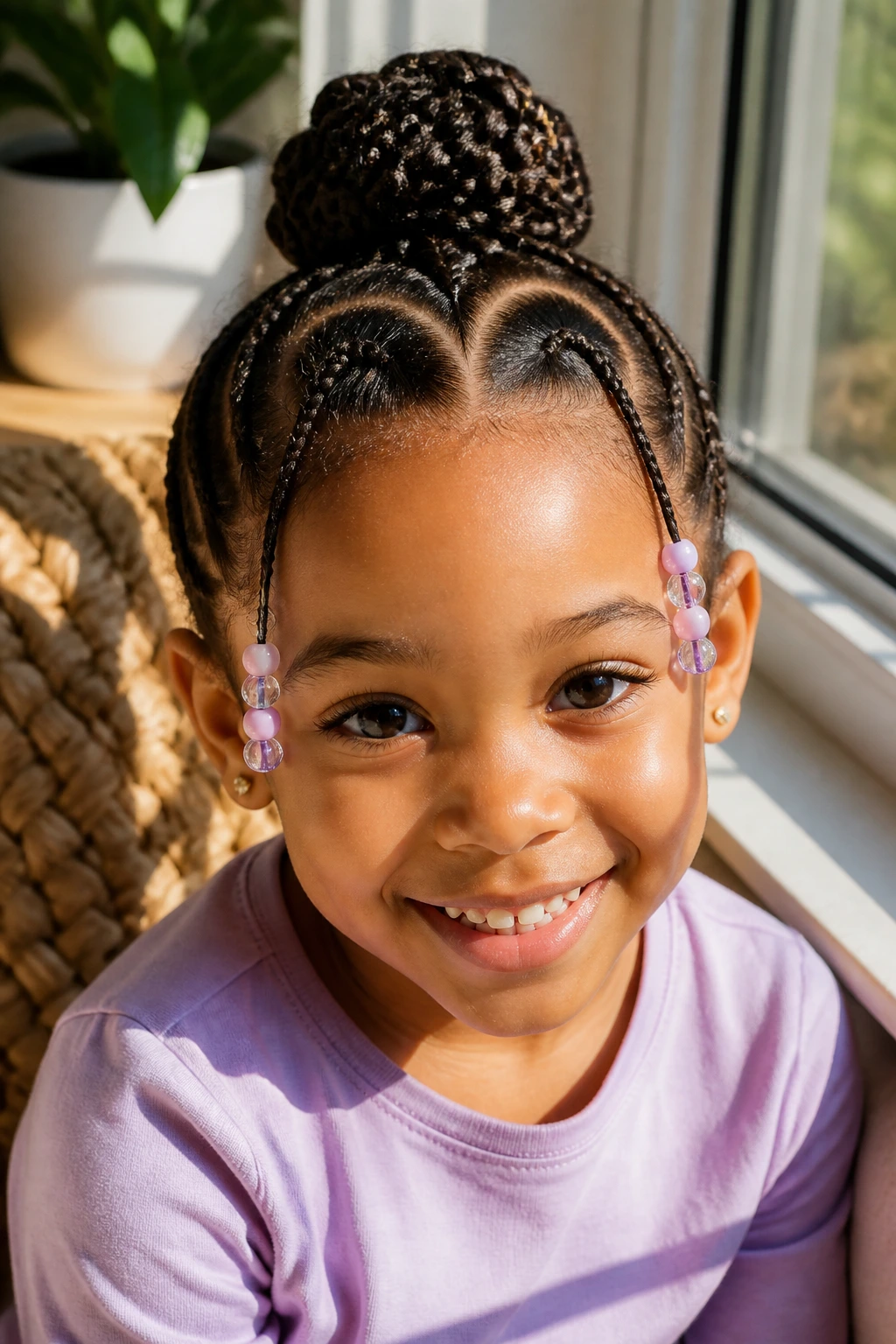
Can a playful part look neat on fine hair? Yes, if the accessory work stays light. A heart part around the crown gives the bun a sweet frame, and a few tiny beads at the front can finish it without tipping the style into weighty territory.
The heart shape works best when the lines are smooth and the curves are wide enough to read from a short distance. If the heart is too fussy, it turns into scratchy parting that can bother the scalp. Keep the bun itself small and centered, then let the part do the decoration.
Beads should be used sparingly. Two or three, max, near the face is plenty. If you can hear the beads clacking every time the child turns, there are too many.
11. Pineapple Bun
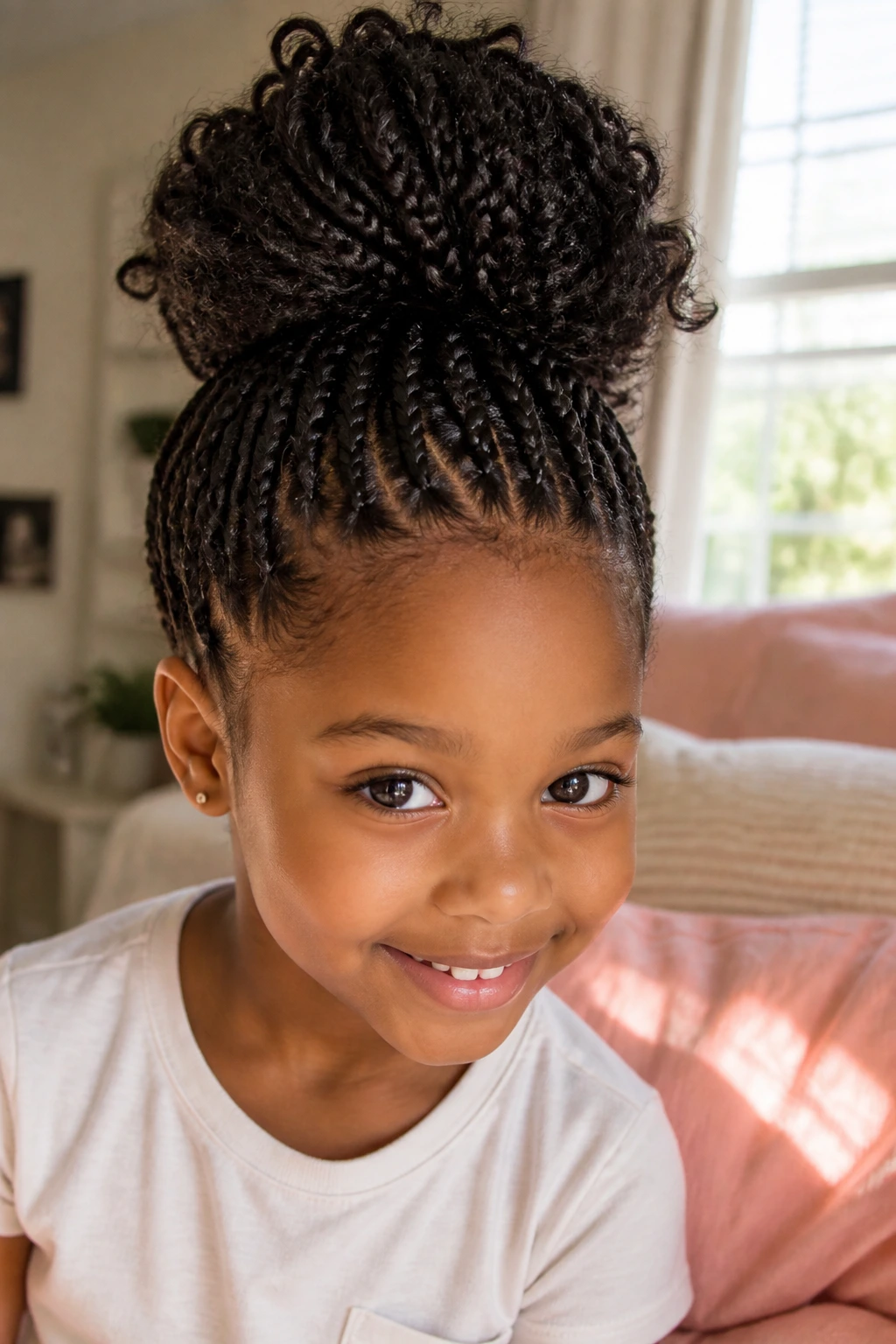
A pineapple bun sits high and loose, almost like the braids were lifted for a sleep style but polished enough to leave the house. Fine hair likes this because the weight stays high and the sides stay light. It also keeps the ends from dragging on collars and seats.
The bun should feel airy, not squeezed flat. Gather the braids loosely near the top of the head, then wrap the ends around once or twice and pin them just enough to keep the shape. If you over-tighten this one, you lose the soft, lifted look that makes it work.
I like it on days when the child wants movement. The top stays neat, the rest of the style still has a little bounce, and the whole thing feels less formal than a sculpted crown bun.
12. Donut Bun with a Braided Base
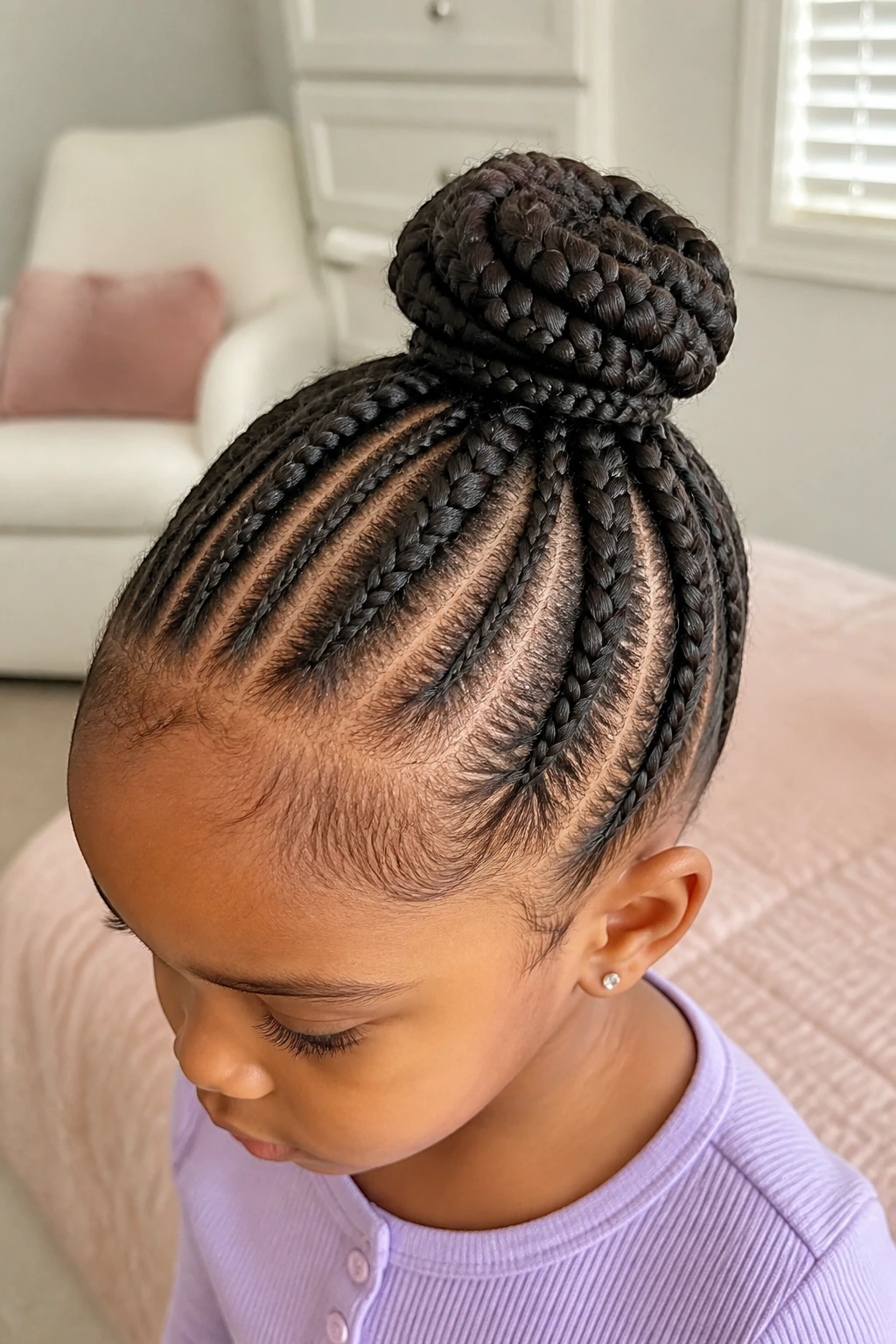
A foam donut can help, but on fine hair it should be the assistant, not the star. Too large, and it shows through. Too bulky, and it adds a strange hump that the head does not need. If you use one, keep it small and cover it with braided hair instead of letting it sit out in the open.
I prefer to build the base with a few braids first, then wrap the rest around the center so the bun looks round from the outside and supported from the inside. That gives the shape more grip, which matters when the hair is soft and not naturally thick.
If the bun looks stretched across the head instead of round, stop and reduce the size. The best donut bun on fine hair is compact and neat, not oversized.
13. Bubble-Braid Bun
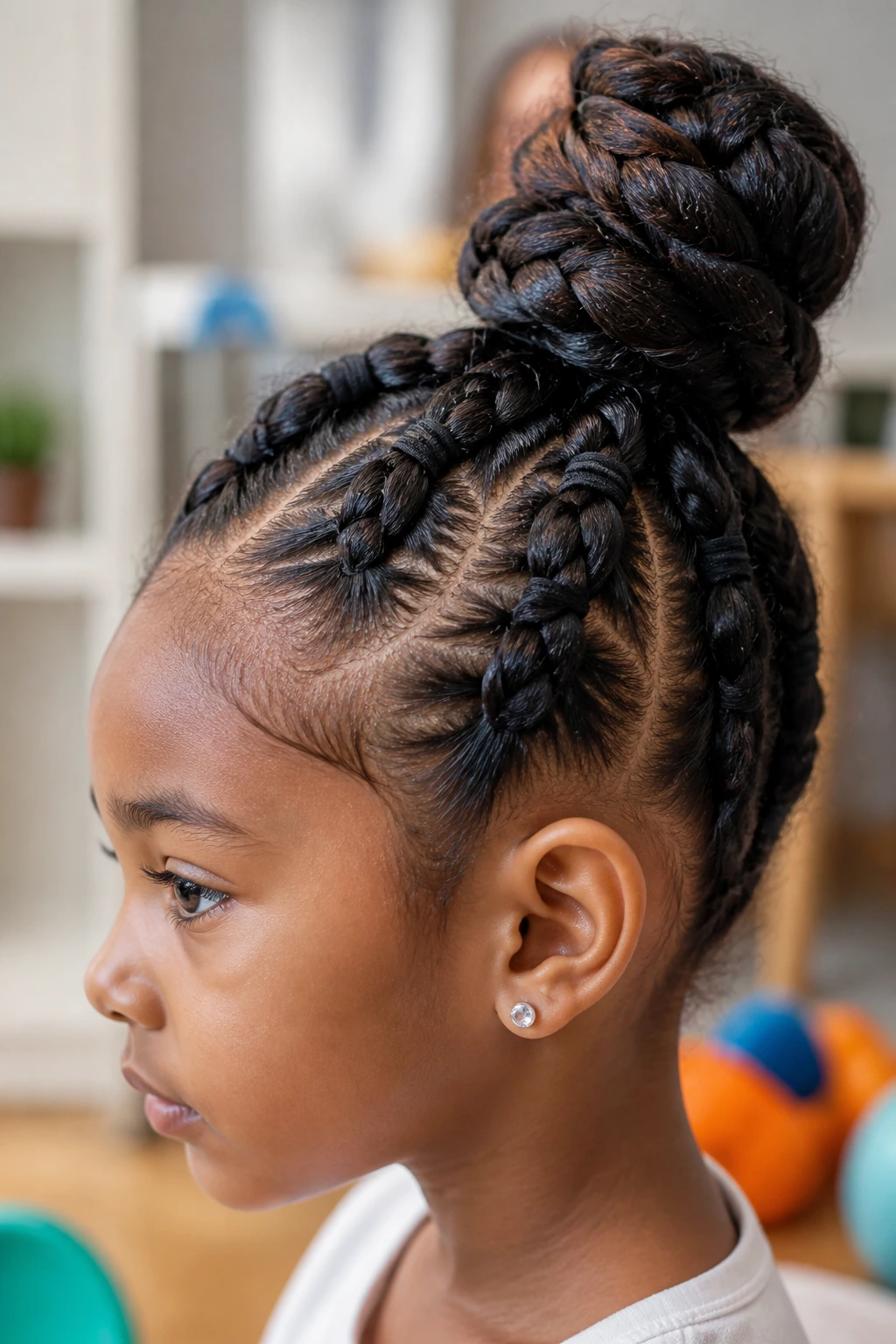
Bubble braids are useful when you want volume without asking fine hair to carry more hair. Add a few tiny elastics down the gathered braids, puff each section gently, and then coil the tail into a bun. The bubbles create texture first, then the bun finishes the shape.
The bubble trick
Keep the elastic spacing around 1 to 1½ inches apart. Wider gaps make the bubbles sag, and tiny gaps tend to look crowded on a child’s head. Once the sections are puffed, they should feel soft rather than stiff.
This one is good for kids who like a little flair but do not want a pile of accessories. The bubbles do the visual work. The bun stays practical.
14. Off-Center School-Day Bun
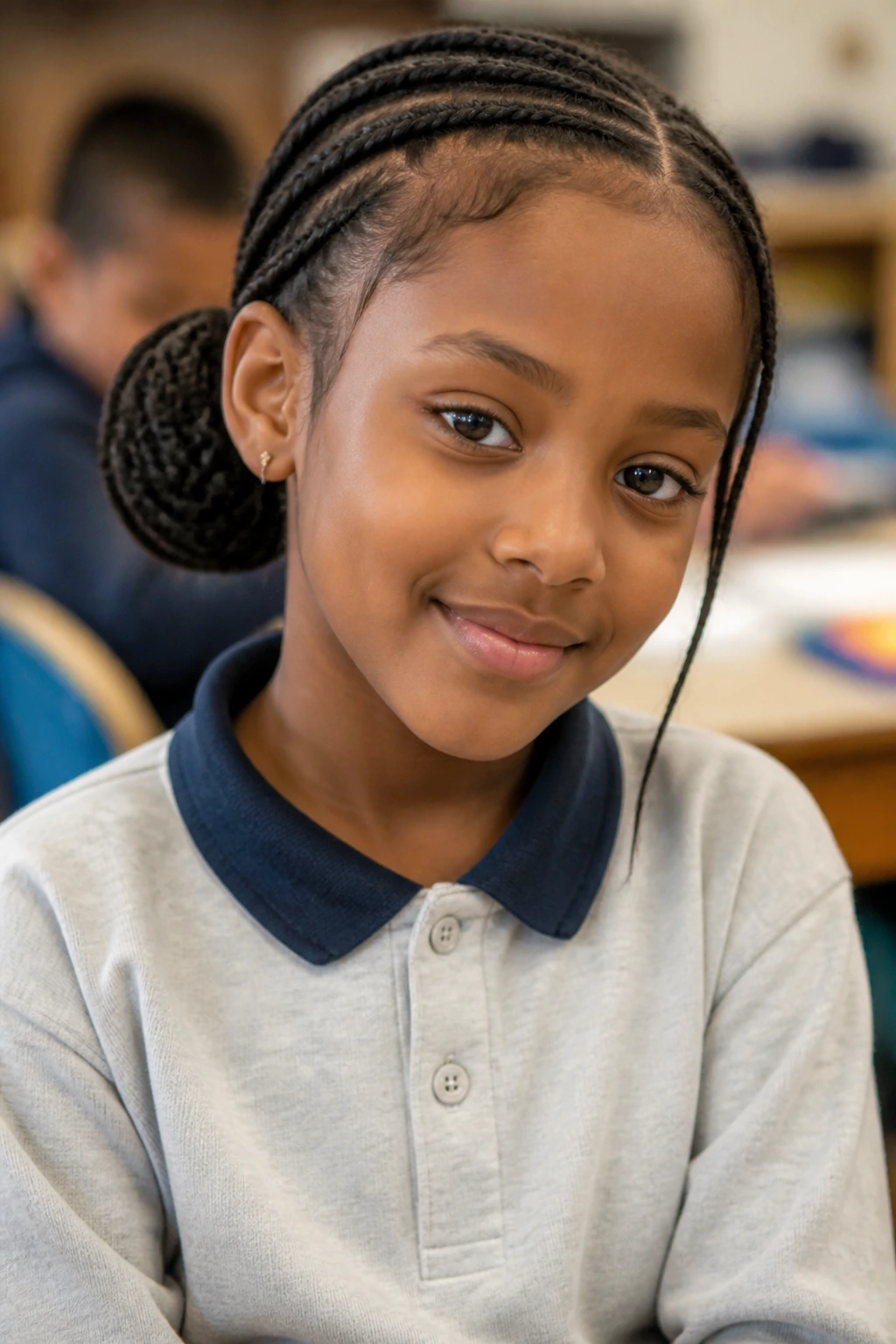
A bun does not have to sit dead center to look neat. In fact, a slightly off-center bun often behaves better on fine hair because it follows the natural tilt of the head instead of fighting it. That small shift can make a big difference in comfort.
This is the style I’d use for long school days or car rides. Move the bun a little behind one ear or just above the nape on one side, then pin it flat. The asymmetry keeps it from feeling too formal, which children tend to like.
It also hides minor unevenness in the braids. If one side was parted a little fuller than the other, the off-center bun makes that look intentional instead of obvious.
15. Curly-Ends Bun
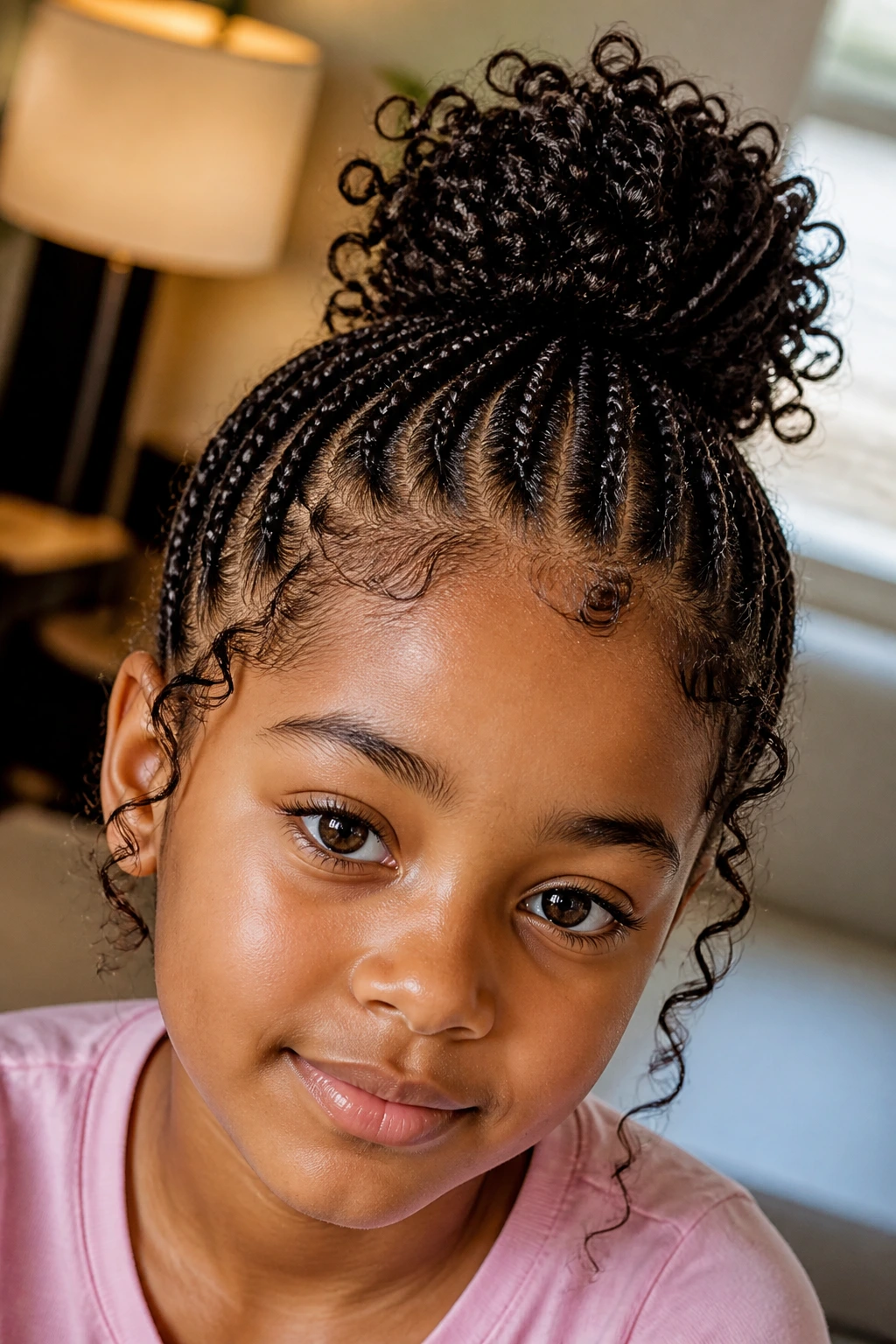
Some kids want braids with a bit of movement at the end, not a sealed-off finish. Curly ends can do that without adding much weight if you keep the curls small and controlled. A few flexi rods or perm rods can give the ends a soft bend before they are tucked into the bun.
The important part is keeping the curls light. Big curls look cute for about ten minutes and then start to frizz against the bun base. Small, springy ends hold their shape longer and give the style a softer edge.
This one has a nice, lived-in feel. The bun itself stays tidy, but the ends keep the whole style from looking rigid.
16. Four-Section Bun Cluster
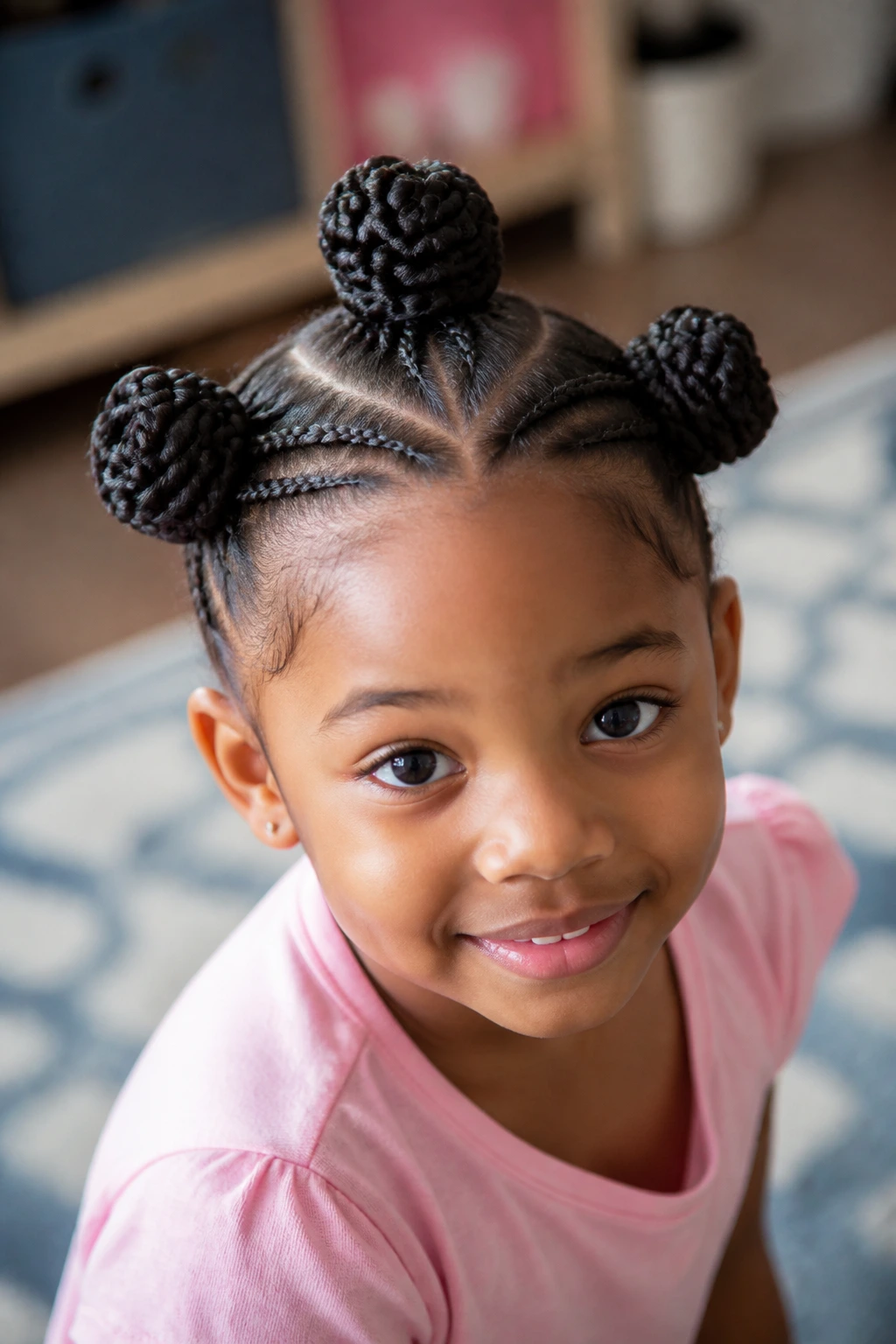
What if one bun feels too heavy? Split the gathered braids into four smaller sections and wrap each into its own tiny coil around a shared center. You end up with a cluster instead of a single dense knot, and that spreads the weight out better on fine hair.
Four small buns, one shape
This works especially well when the hair is medium length and a single bun would have to be stuffed too hard to hold. Each section gets its own little pin or elastic, so nothing pulls on one exact point. The cluster reads as one style from a distance, but it wears like several smaller ones.
I like it when the child wants height without the heaviness of a full top bun. The shape is a little playful, a little tidy, and much kinder to a tender scalp than a stacked knot.
17. Side Bun with One Statement Braid
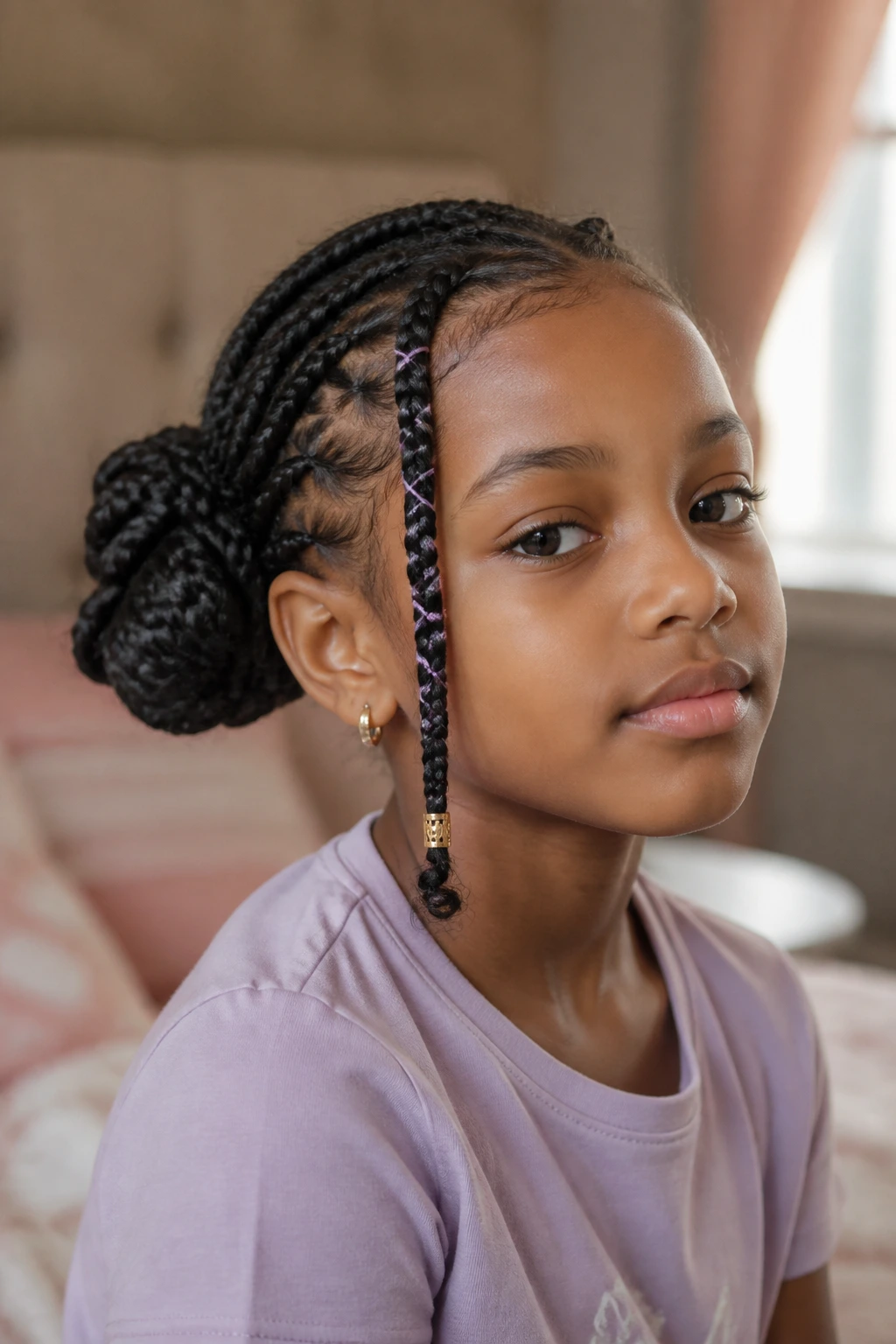
A side bun does not need ten accessories to feel finished. One statement braid — maybe with a few cuffs or a colored thread wrap — can carry the whole look while the rest stays simple. That is usually the better move on fine hair anyway.
Keep the statement braid near the front so it shows when the child turns her head. Then tuck the rest of the braids into a small side knot. The style feels thoughtful, not busy, and the lighter base keeps the scalp from getting overloaded.
This is the one I’d choose for a child who likes one special detail but does not want the whole head decorated. Less noise. Better shape.
18. Dress-Up High Bun with Tiny Gold Cuffs
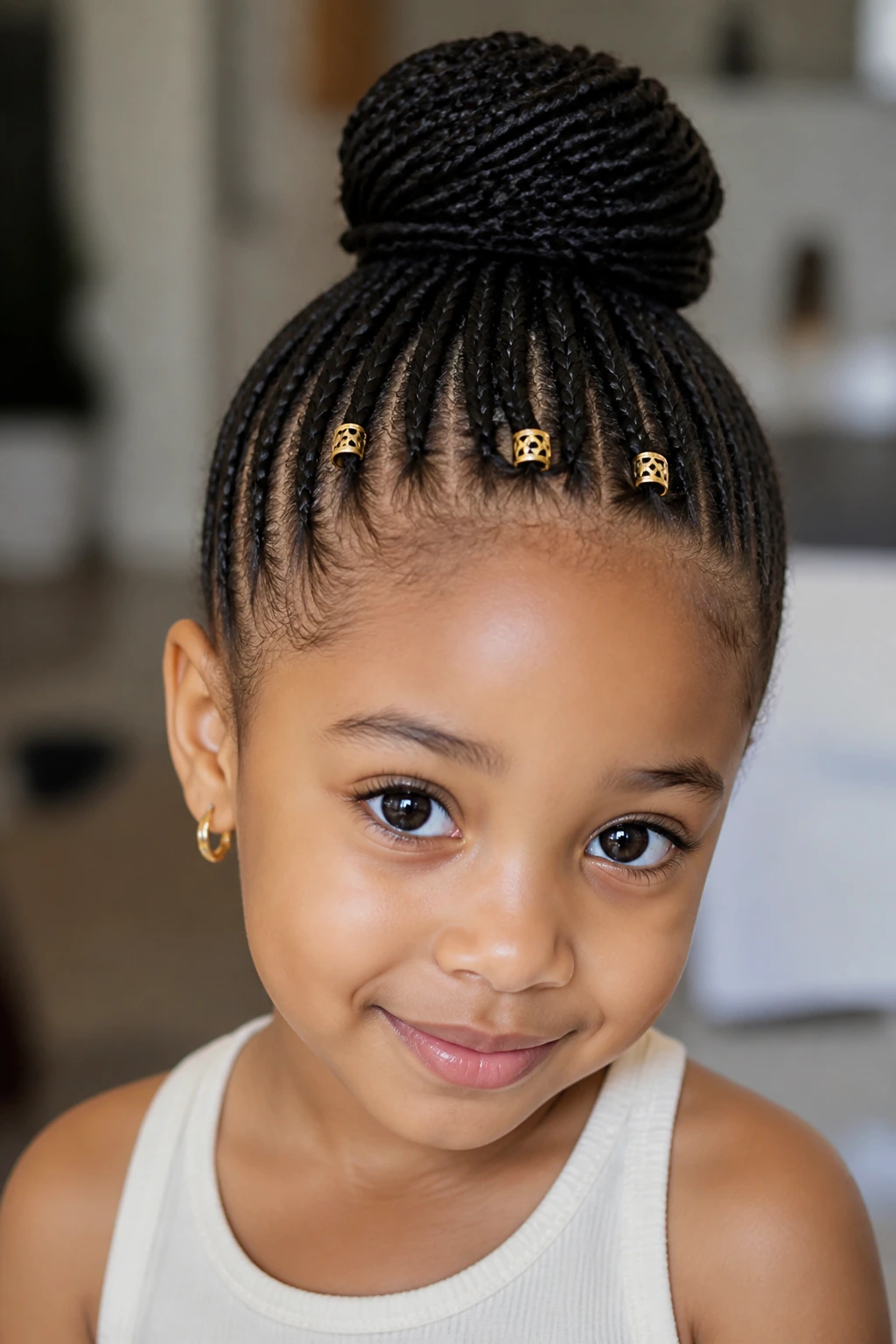
Small accessories beat big ones every time on fine hair. A high bun with two or three tiny gold cuffs near the front braids can look finished for a party, recital, or family photo without making the style heavier than it needs to be.
The bun itself should stay compact. Gather the braids high, smooth the crown, and pin the bun flat so the cuffs remain the accent instead of the bun wobbling around them. If the cuffs are clinking against each other, there are too many.
I like this style because it knows when to stop. A little shine. A clean line. No extra bulk. That restraint is what makes it work on a child’s head.
Why Lightweight Bun Box Braids Last Longer on Fine Hair
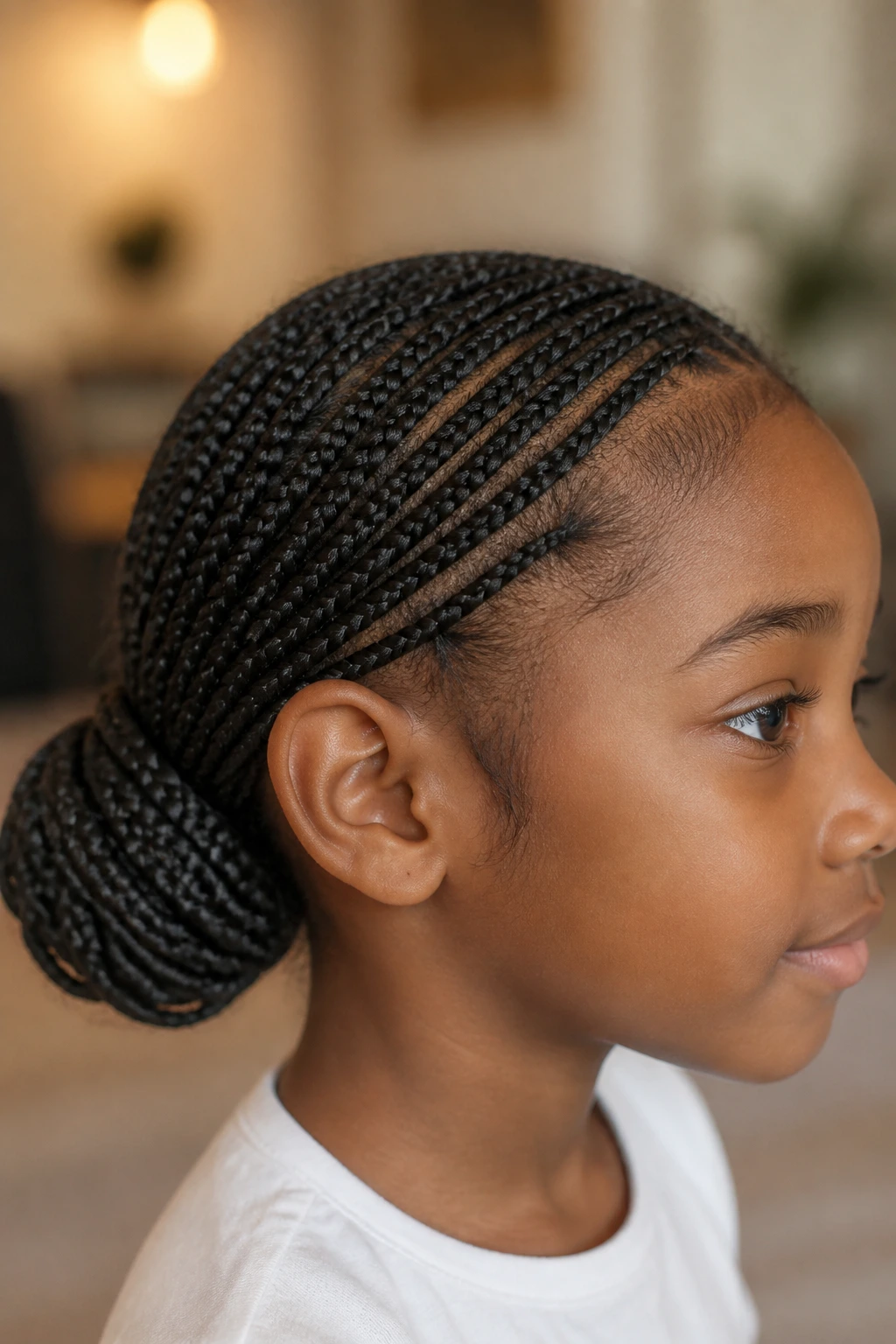
Weight is the real enemy here, not length by itself. Fine hair can carry braids for a while, but when the bun gets too dense or the accessory pile gets too heavy, the roots start to complain. The style may still look neat from the front while the scalp is already tired.
That is why smaller boxes and flatter buns win. They spread the load across more points instead of asking one tight bundle to do all the work. A bun that sits low or mid-height also tends to move less, which means fewer tiny tugs every time the child turns her head.
What the head feels, not just what it looks like
If the style feels itchy at the temples by the first afternoon, the parts were probably too large or the bun sat too tight. If the bun keeps drifting backward, the base needs more anchor points, not more hair. The body usually tells you the truth before the mirror does.
That is the part many people miss. A style can be neat and still be wrong for fine hair. The goal is a braid bun that holds shape and stays comfortable after the novelty wears off.
Essential Tools for These Styles
-
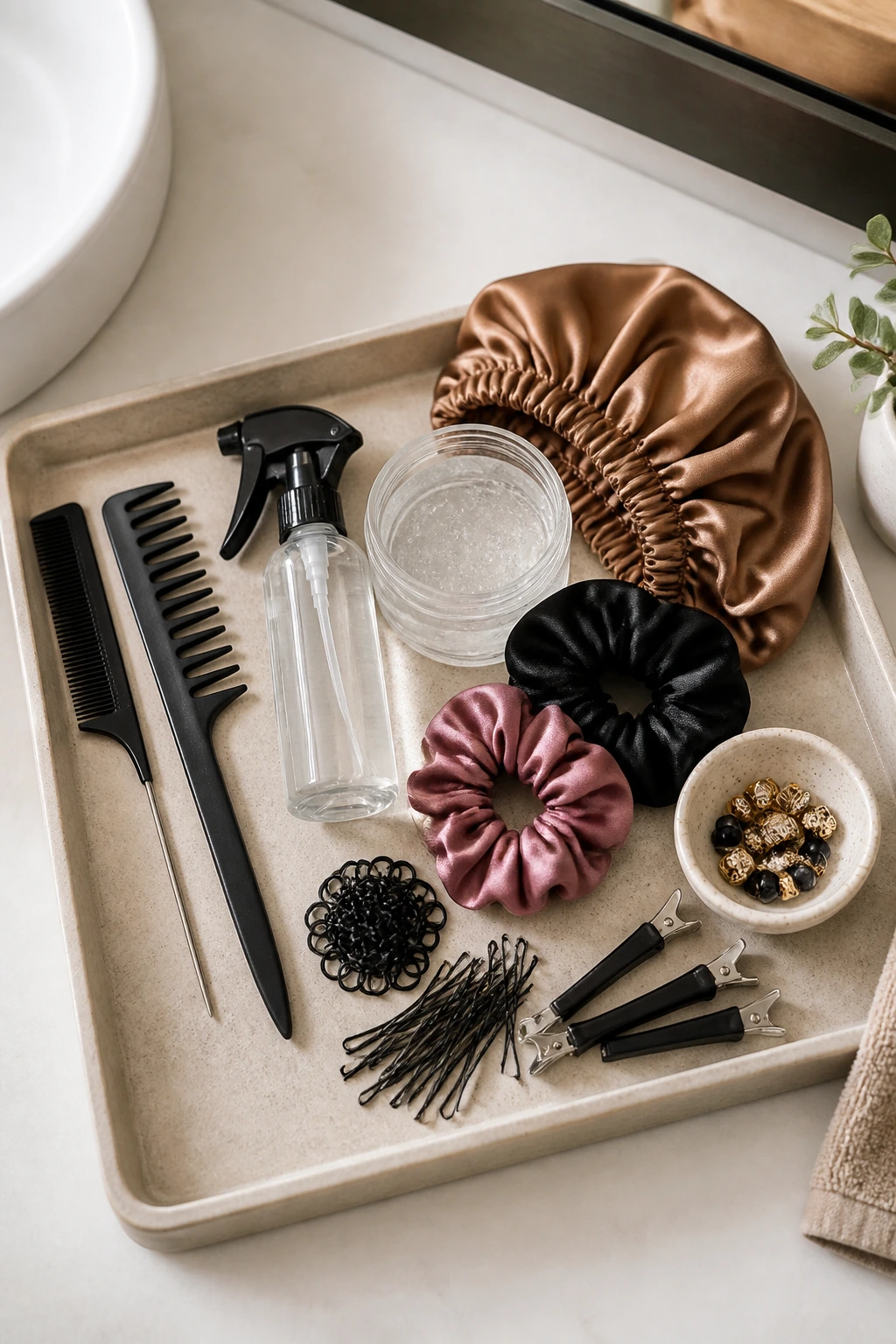
Rat-tail comb with a pointed tip: Clean parts matter a lot here, and the pointed end helps you make neat squares and soft curves.
-
Wide-tooth comb or detangling brush: Fine hair breaks easily when it’s forced, so detangle from the ends up.
-
Spray bottle filled with water and leave-in conditioner: A light mist softens the hair before parting without soaking the whole head.
-
Light hold gel or edge control: Use a small amount at the part line only; heavy product tends to build up fast on kids’ hair.
-
Satin scrunchies and small no-snag elastics: These hold buns and bubbles without biting into soft strands.
-
Bobby pins or U-pins: A few pins are often enough to flatten a bun and keep it from shifting.
-
Duckbill clips: Helpful for separating sections while you braid one side at a time.
-
Kids’ satin bonnet or pillowcase: Night protection matters if you want the parts to stay clean and the bun to stay smooth.
-
Small accessory tray: Tiny cuffs, ribbons, beads, and clips are easier to manage when they are not rolling across the floor.
Smart Shopping for Lightweight Braiding Hair and Accessories
The first thing I look for is hair that feels light in the hand before it ever touches the head. Pre-stretched braiding hair is usually a better choice than thick, fluffy bundles because it feeds into the braid smoothly and does not add so much puff at the ends. For fine hair, that smaller profile matters. A dense braid can look dramatic on thick hair and just feel bulky on a child.
Length matters less than people think. A braid that reaches the shoulder blade can still be used in a bun if the sections are small and the bun is flat. But if the hair is so long that it takes multiple wraps to hide the ends, you are probably adding more weight than the head needs. I’d rather see a neat mid-length bun than a giant knot that slumps by afternoon.
Accessories should follow the same rule. Tiny cuffs, narrow ribbon, slim elastics, and light beads are enough. Big plastic beads and heavy clips look cute on a shelf and annoying on a small scalp. If you can feel the accessory pulling the braid down in your fingers before it’s even installed, skip it.
How to Keep Bun Box Braids Fresh Between Washes
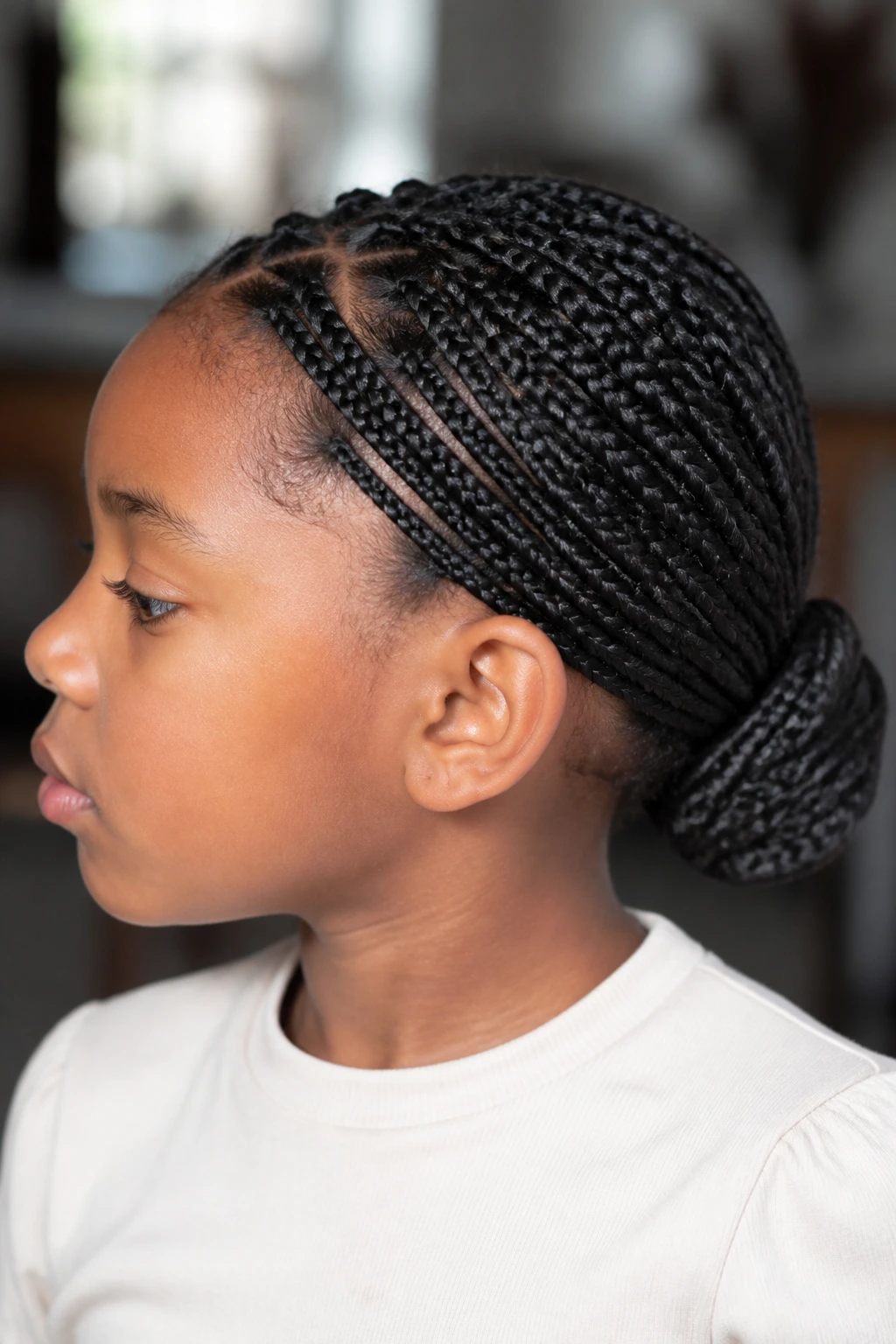
Fine hair usually shows buildup at the roots before it shows frizz in the bun, so the care routine has to be light and regular. I like a quick morning check: smooth the bun, mist the scalp line only if it feels dry, and fix any loose pins before the day starts. That takes less time than fighting a wobbly bun halfway through a school run.
At night, a satin bonnet or pillowcase helps the braids stay settled. If the bun is high, wrap it loosely with a satin scarf first so the shape does not flatten oddly against the pillow. If the child hates scarves, use the bonnet alone and keep the bun a little lower from the start.
For scalp refreshes, a diluted shampoo or a very light cleansing foam every 7 to 10 days is usually enough for most kids in this style. Rinse carefully around the part lines and dry the roots well with a cool or low setting so moisture does not sit under the braids. Fine hair does not appreciate a damp scalp hiding under product.
If the bun starts to smell stale, feel itchy, or shift constantly, that is the sign to wash or remove sooner rather than trying to “stretch” the style. A tired bun rarely gets better on its own.
Additional Styling Tweaks That Make the Whole Set Feel New
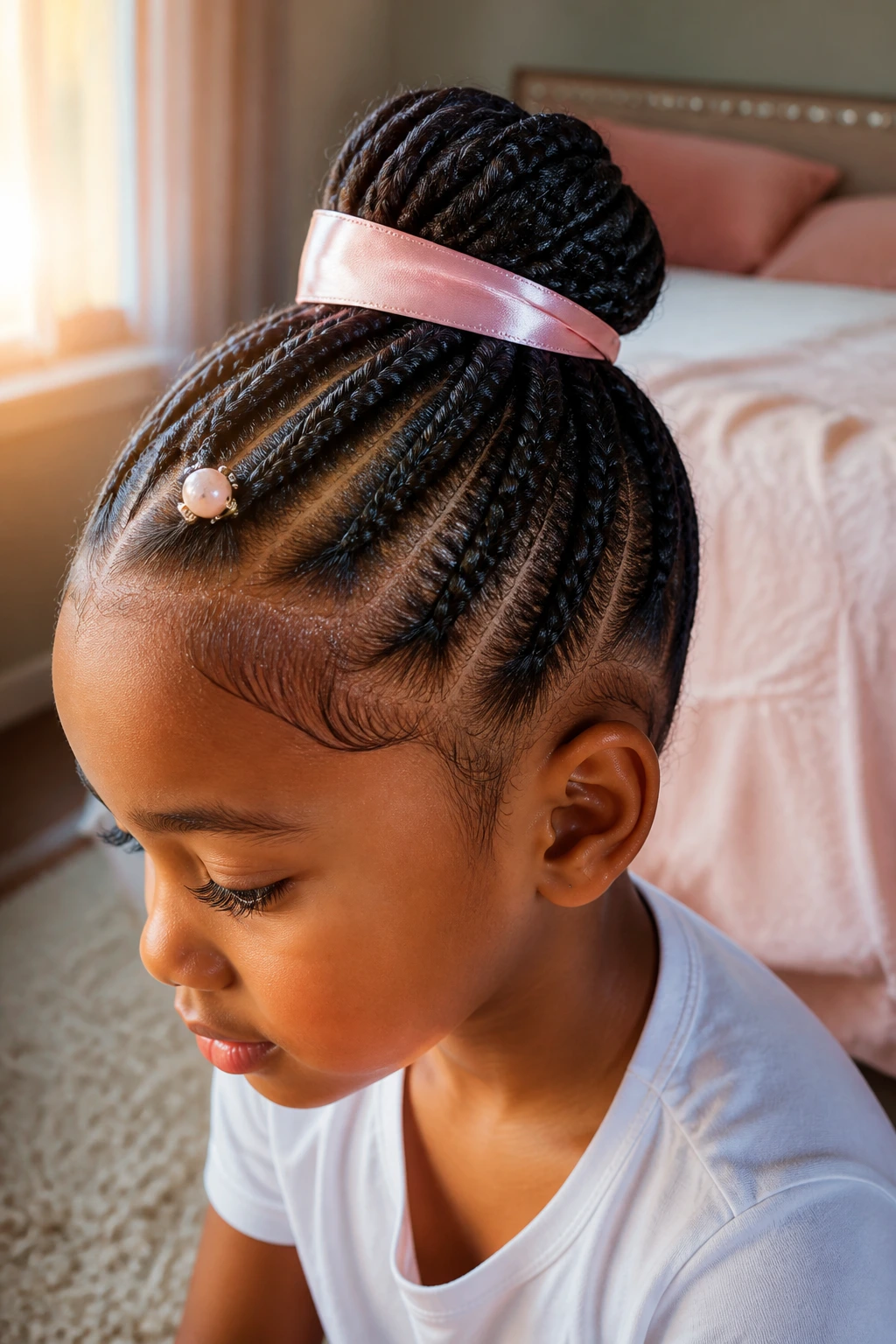
Softness Upgrade: A narrow satin ribbon tied around the bun base can calm down a style that looks too severe. It also covers the scrunchie, which is a nice bonus on days when the parting is neat but the finish feels plain.
Color Accent: One colored braid wrap, a few tiny cuffs, or a pair of matching beads near the front can make the same bun feel different without changing the structure. Use one accent, not five. The style should still breathe.
Time-Saver: Pre-part the hair into rows and clip each one before you start braiding. That keeps the installation moving and helps you stay consistent on both sides of the head. Fine hair shows part mistakes fast, so the extra prep pays off.
Make-It-Yours: If the child has a favorite color, school color, or sports color, bring it into the ribbon or accessories rather than loading the braid itself with heavy extras. The shape stays light, and the style still feels personal.
Common Mistakes to Avoid
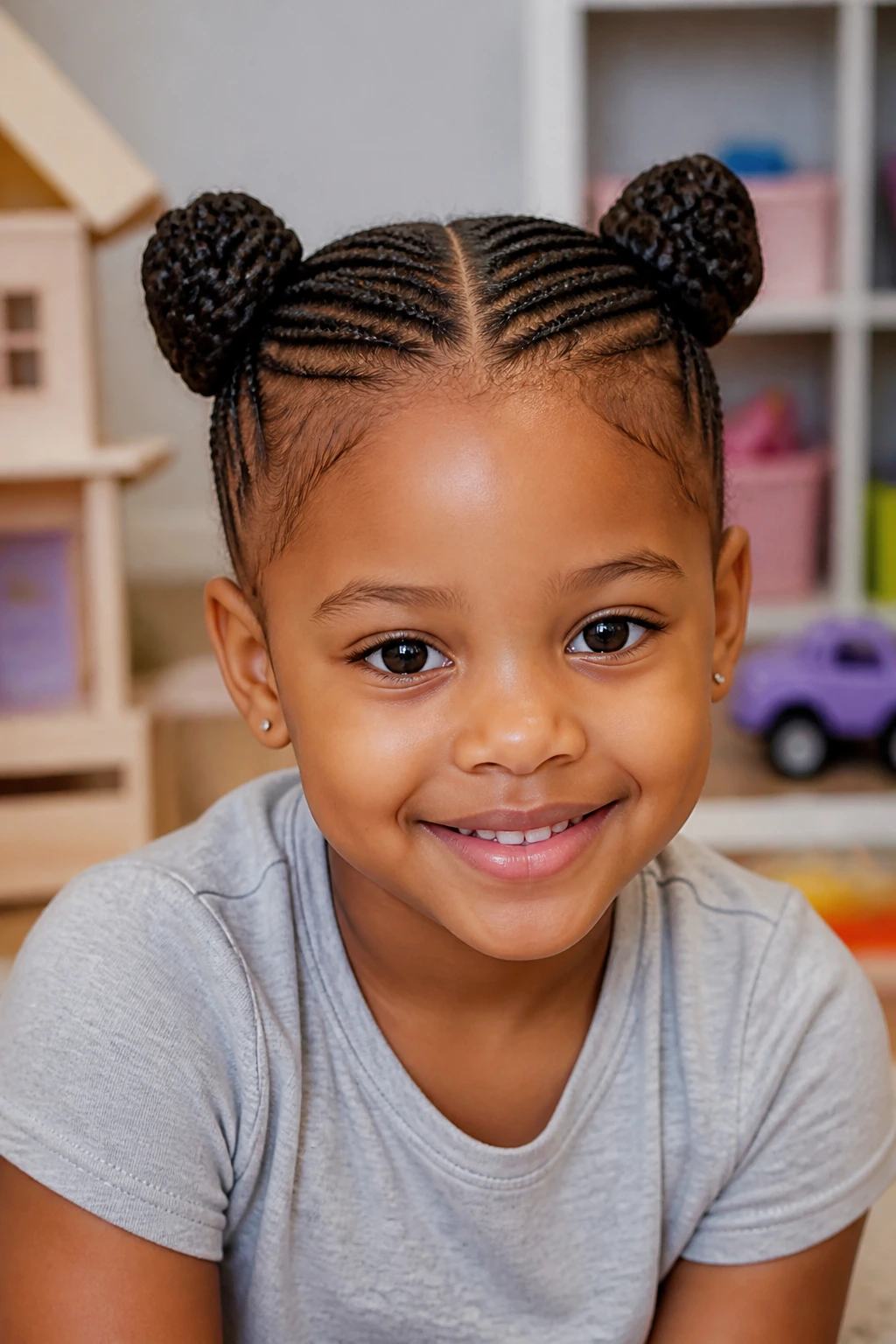
Making the sections too large: The bun may look full for an hour, then sit heavy and slide. Fine hair needs smaller boxes and a lighter finish, even if that means the style takes a little longer.
Adding too much hair to the bun: A dense knot can tug at the crown and make the child want to scratch or unwrap it. If the bun feels bulky in your hands, trim the amount of added hair before you commit.
Using tight elastics at the base: A hard elastic can bite into soft strands and leave a dent that lasts all day. Satin scrunchies, soft bands, and pins spread the pressure out much better.
Stacking heavy accessories: Big beads, thick cuffs, and oversized clips all sound fun until the bun tilts under the weight. Keep the accessory count small and place the prettiest pieces near the front where they can be seen without dragging the style down.
Leaving the style in too long: Fine hair shows frizz and buildup earlier than thick hair. If the roots are sore or the bun is no longer sitting flat, that is the style telling you it’s time to take it out.
Variations and Alternatives to Try
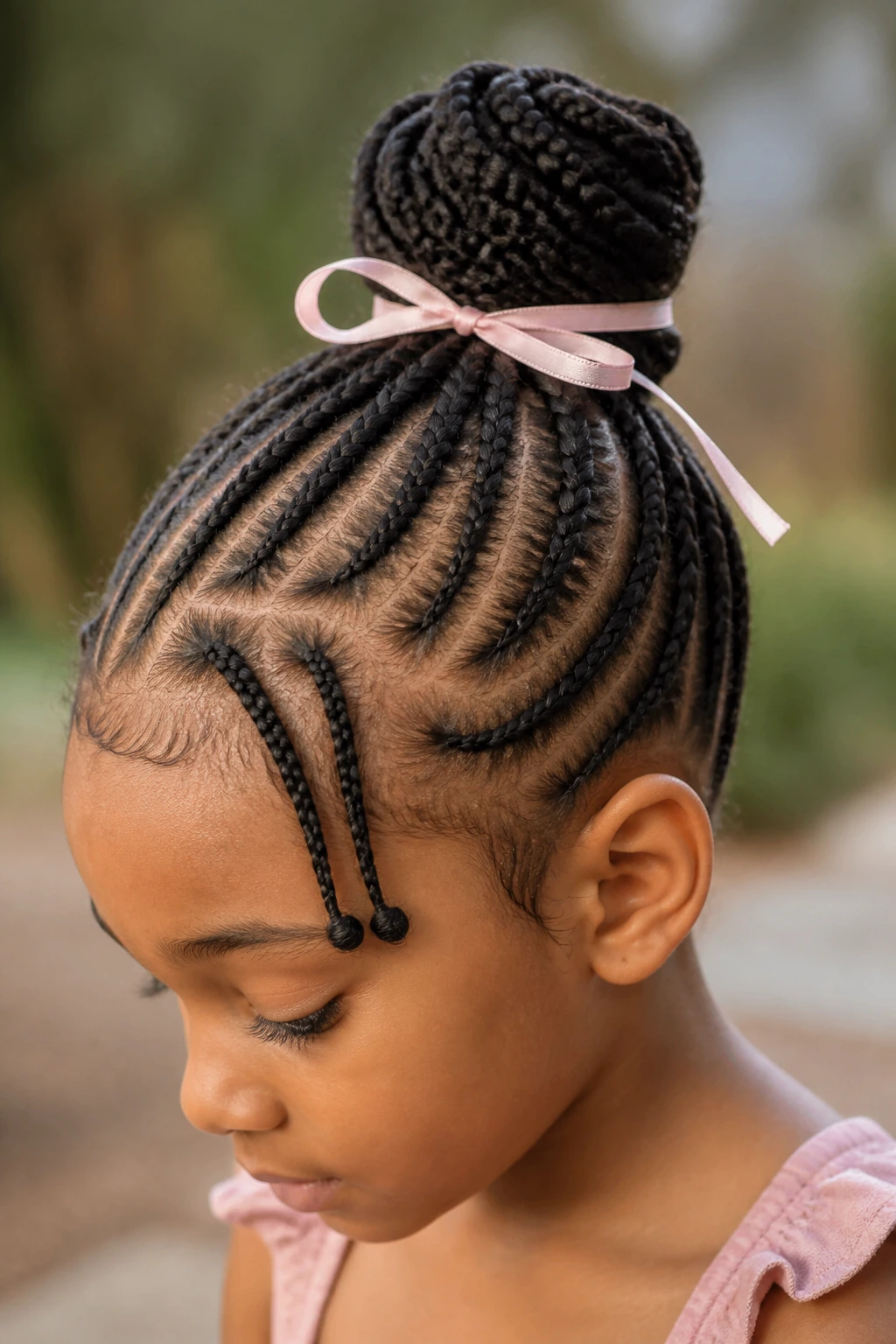
No-Extension Soft Bun: Skip added hair altogether and braid only the child’s natural hair into small boxes before gathering it into a bun. This is the lightest option and often the easiest choice for very fine or short hair.
Knotless Frontline Version: Use knotless feed-ins along the hairline and classic box braids farther back. The front feels gentler, and the bun still has enough structure to hold its shape.
Ribbon-and-Bead Party Bun: Keep the braids plain, then add one ribbon and two tiny beads at the front. That gives you a dressy style without the weight of a full accessory set.
Ballet-Flat Low Bun: Build the bun low, smooth, and flat, with no dangling ends. It’s a good pick for dance class, nap-friendly days, or any child who hates things touching the neck.
Short-Hair Mini Bun Set: If the hair is still short, use very small box parts and build a tiny bun cluster instead of a single knot. The shape stays controlled and the braids have a better chance of staying anchored.
Sleep Care, Washing, and Removal Timing
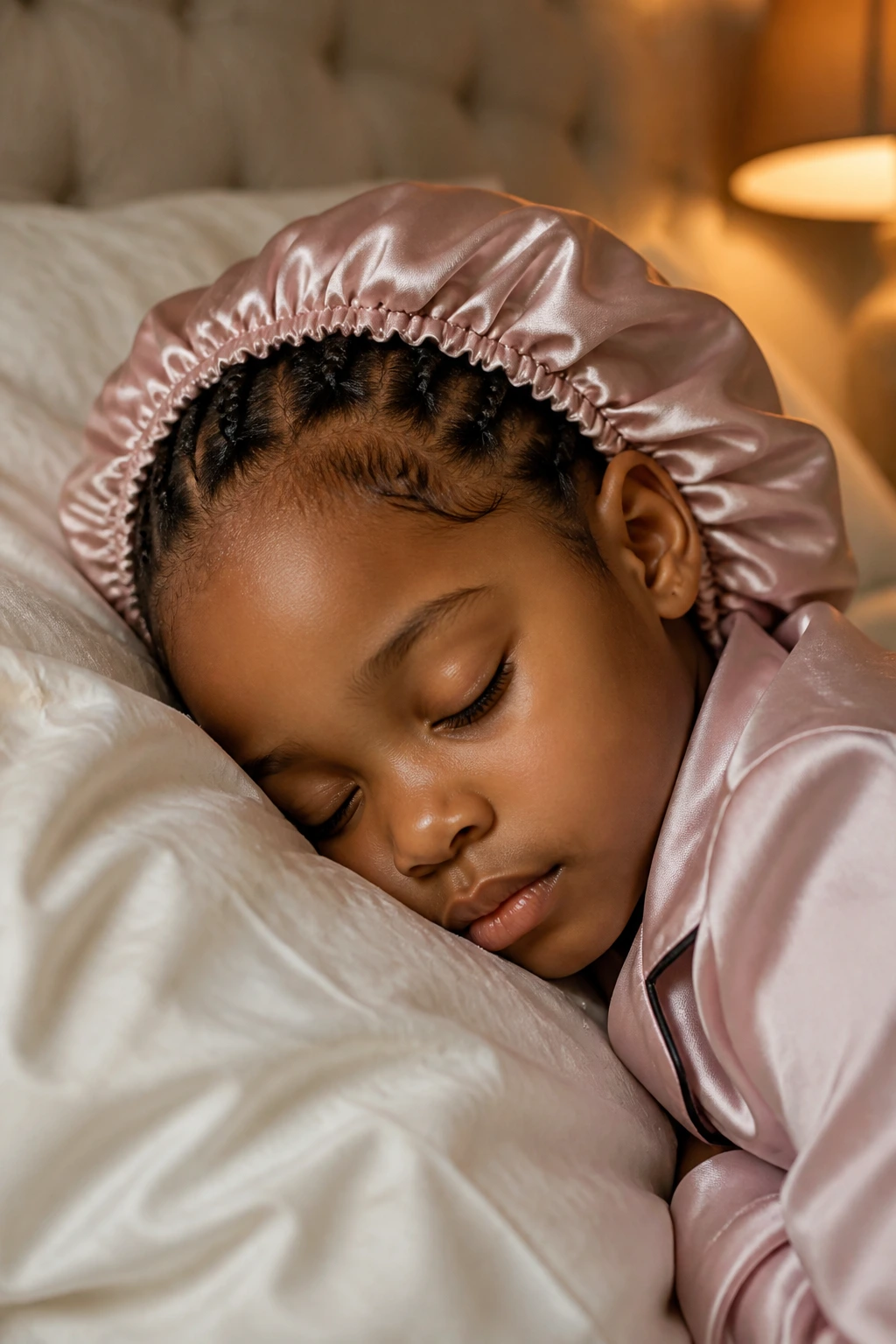
Night care is where a lot of good braids get ruined. A satin bonnet or pillowcase keeps the bun from drying out and stops the parts from getting rough against cotton. If the bun is high, a loose satin scarf around the base helps keep the shape from flattening into a strange lump by morning. Keep it loose. The goal is protection, not another round of tension.
Washing should stay gentle. A diluted shampoo applied mainly to the scalp line works better than scrubbing the braids themselves. Let the water run through, squeeze the hair lightly with a towel, and dry the roots well. Fine hair holds moisture close to the scalp, and that can turn a neat style into a damp one fast.
Most kids with fine hair do well with this style for about 2 to 3 weeks, sometimes less if the scalp is sensitive or the child is especially active. If the bun is lifting, the parts are fuzzing, or the scalp feels tender, take it down. Removal should be slow and patient, with conditioner or oil on the lengths to reduce snagging. If extension hair was used, do not cut blindly near the natural hair. Work from the ends and know where the added hair stops before you snip anything.
Frequently Asked Questions
How small should the box parts be for fine hair?
Think in small squares, not wide panels. For most kids, postage-stamp sized sections are a safe place to start because they spread the load and keep the bun from getting too heavy.
Can I add braiding hair if the child’s hair is very fine?
Yes, but keep it light and use less than you would on thicker hair. Pre-stretched braiding hair is usually easier to manage because it does not puff up as much at the ends.
How long can these bun box braids stay in?
For many kids with fine hair, two to three weeks is the outer edge. If the scalp gets sore, the parts look messy, or the bun won’t stay put, take them out sooner.
What if the bun keeps slipping?
The base is probably too smooth or too loose. Add one or two crossed bobby pins, switch to a satin scrunchie, or reduce the amount of hair in the bun so it sits flatter.
Are beads a bad idea for fine hair?
Not if you use them sparingly. A few tiny beads near the front can look lovely, but heavy bead rows can drag on the braid and make the bun feel lopsided.
Can I wash the style without ruining it?
Yes. Use diluted shampoo at the scalp, rinse gently, and dry the roots well. The trick is not scrubbing the whole bun like it’s loose hair; that usually creates frizz and fuzz.
Is knotless better than classic box braids for kids with fine hair?
Knotless often feels gentler at the front because it removes that small knot at the root. If the child has a tender hairline, knotless feed-ins around the edges can be a smarter choice.
What do I do if the child says it hurts after braiding?
Take it seriously and loosen or remove the style. A little snugness at first is one thing; pain, pinching, or visible tugging at the temples means the parts or the bun are too tight.
A Style That Stays Kind to the Scalp
The best bun box braids on a child with fine hair do not shout. They sit neatly, hold their shape, and leave the scalp alone enough that the child can get on with the day. That is the sweet spot — not bigger, not heavier, not packed with extras that look fun for a photo and miserable by hour three.
Small parts, light hair, gentle tension. Those three choices do most of the work. Once you get them right, the bun can be playful, polished, simple, or dressy without turning into a tug-of-war at the hairline.
The smartest style is usually the one that feels almost easy to wear. Start there, and the rest tends to fall into place.