



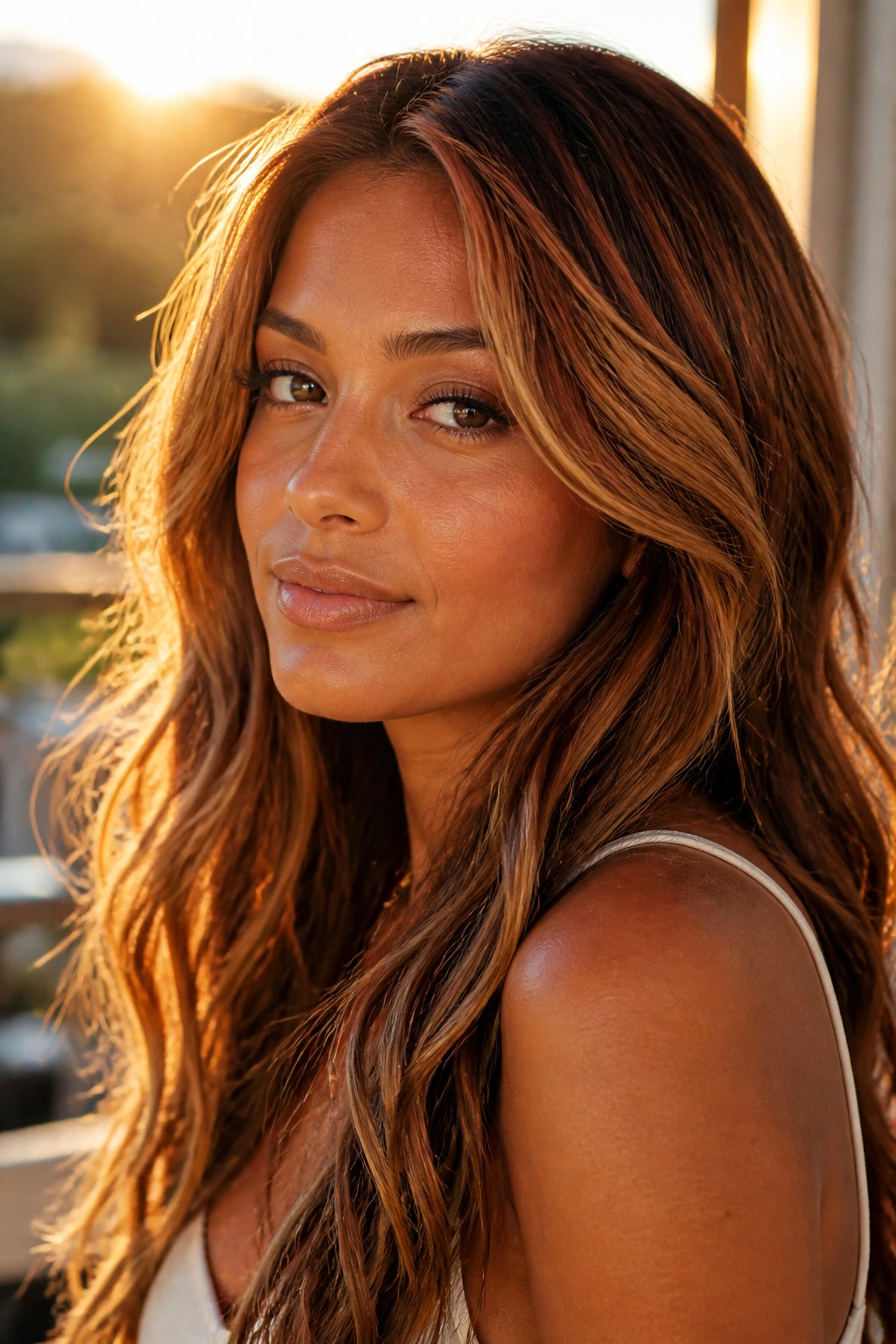
Tan skin has a way of making warm hair color look earned instead of painted on. That’s why honey blonde, brown, and caramel highlights can look so good here: they echo the skin’s natural warmth, then bounce it forward with a soft, sunlit finish that never feels stiff or icy.
The mistake people make is chasing blonde that’s too pale, too ashy, or too flat. On tan skin, those cooler tones can drain the face a little, especially when the hair is all one note from roots to ends. The better move is usually a richer mix — deeper brown at the base, honey where the light should hit, caramel for softness, and a few lowlights when the hair needs more shadow.
That combination gives you room to play. A few fine ribbons can look delicate and glossy; thicker slices can give you that lived-in, slightly nostalgic feel; and a well-placed money piece can pull the whole face forward in a single shot. The trick is choosing the right placement for your cut, your texture, and the undertone in your skin.
Why These Warm Ribbons Look So Good on Tan Skin
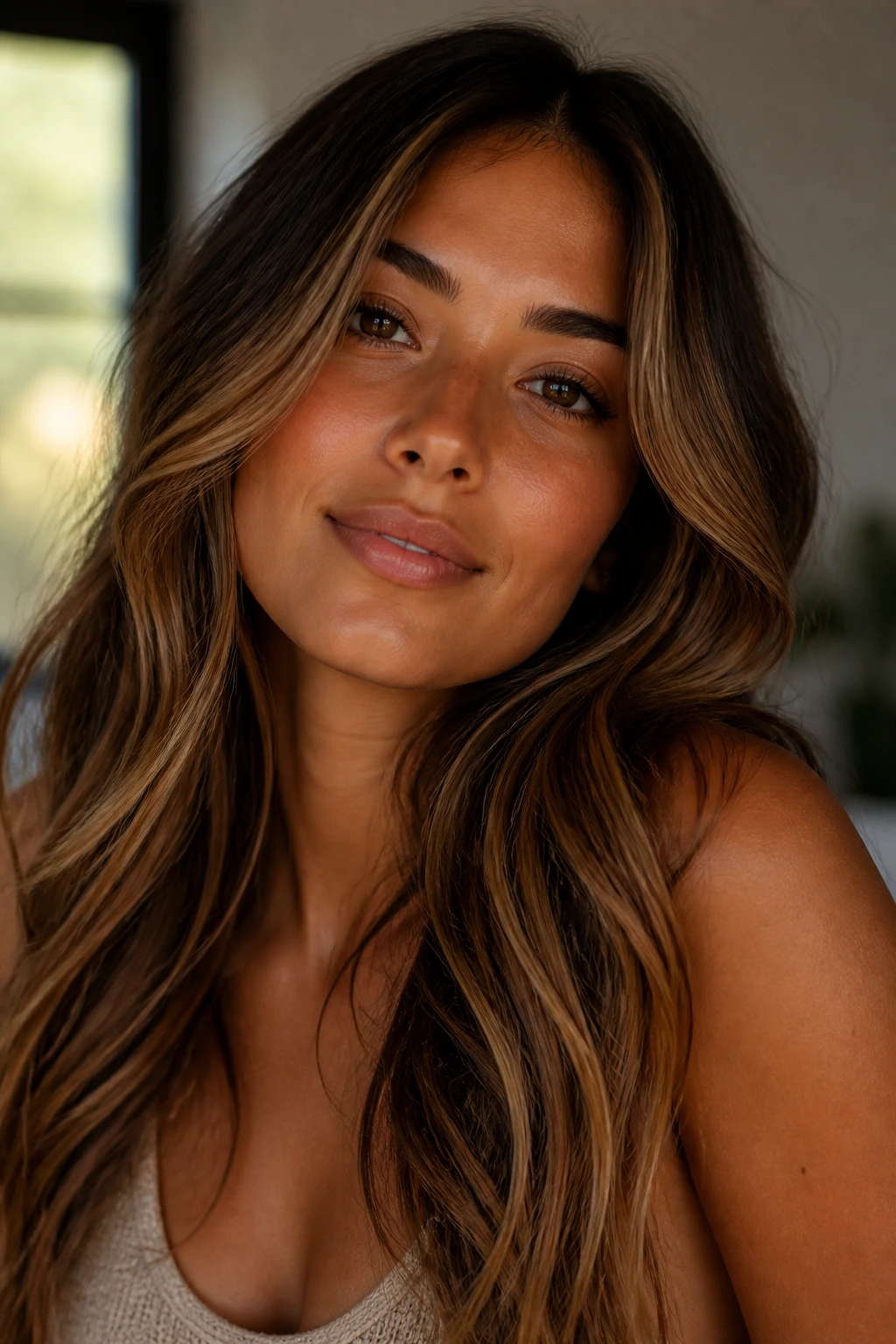
-
Warmth Matching: Honey, caramel, and soft brown sit in the same color family as tan skin, so the hair lifts the face without creating a harsh line against the complexion.
-
Dimension Over Flatness: Mixing lighter and darker pieces keeps the color moving in daylight and under indoor bulbs, which matters a lot when the base is already medium to dark brown.
-
Soft Grow-Out: A deeper root with woven highlights usually grows out more cleanly than a solid blonde, especially if you like to go several weeks between salon visits.
-
Face-First Placement: The best versions place the brightest pieces near the cheekbones, part line, and ends, where they catch light instead of sitting in one heavy band.
-
Easy to Adjust: The same palette can read subtle or bold just by changing thickness, gloss tone, and whether the lowlights lean chestnut, mocha, or maple.
-
Better Than One-Note Blonde: On tan skin, a mix of honey blonde, brown, and caramel usually feels richer than a single bright blonde panel. The blend looks deliberate, not pasted on.
1. Face-Framing Honey Money Piece
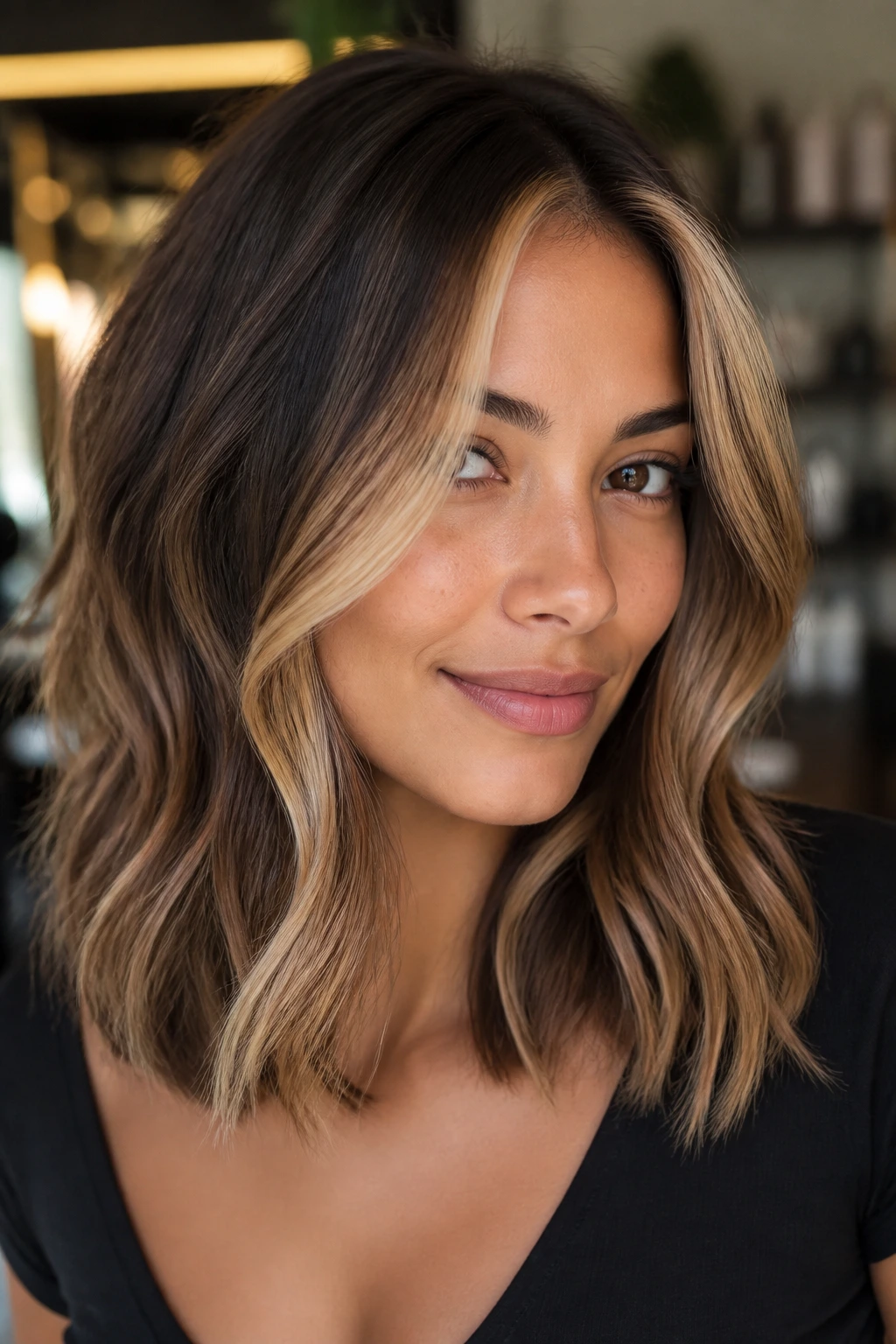
A good money piece is not about blasting the front of the hair with bleach and hoping for the best. On tan skin, the brightest strands should sit right where light would naturally hit — around the cheekbones, temple, and part line — so the color lifts the face without turning the front of the head into a stripe.
The sweet spot is usually a honey blonde that’s one to two levels lighter than the rest of the hair, softened with caramel around the edges. That keeps the front bright, but not harsh. If the base is a deep brown, ask for a soft root melt so the contrast fades instead of stopping abruptly at the scalp.
This works especially well on layered cuts and long waves. The front pieces move first, which gives the whole style a little energy even when the rest of the hair is quiet.
2. Caramel Balayage Over a Chestnut Base
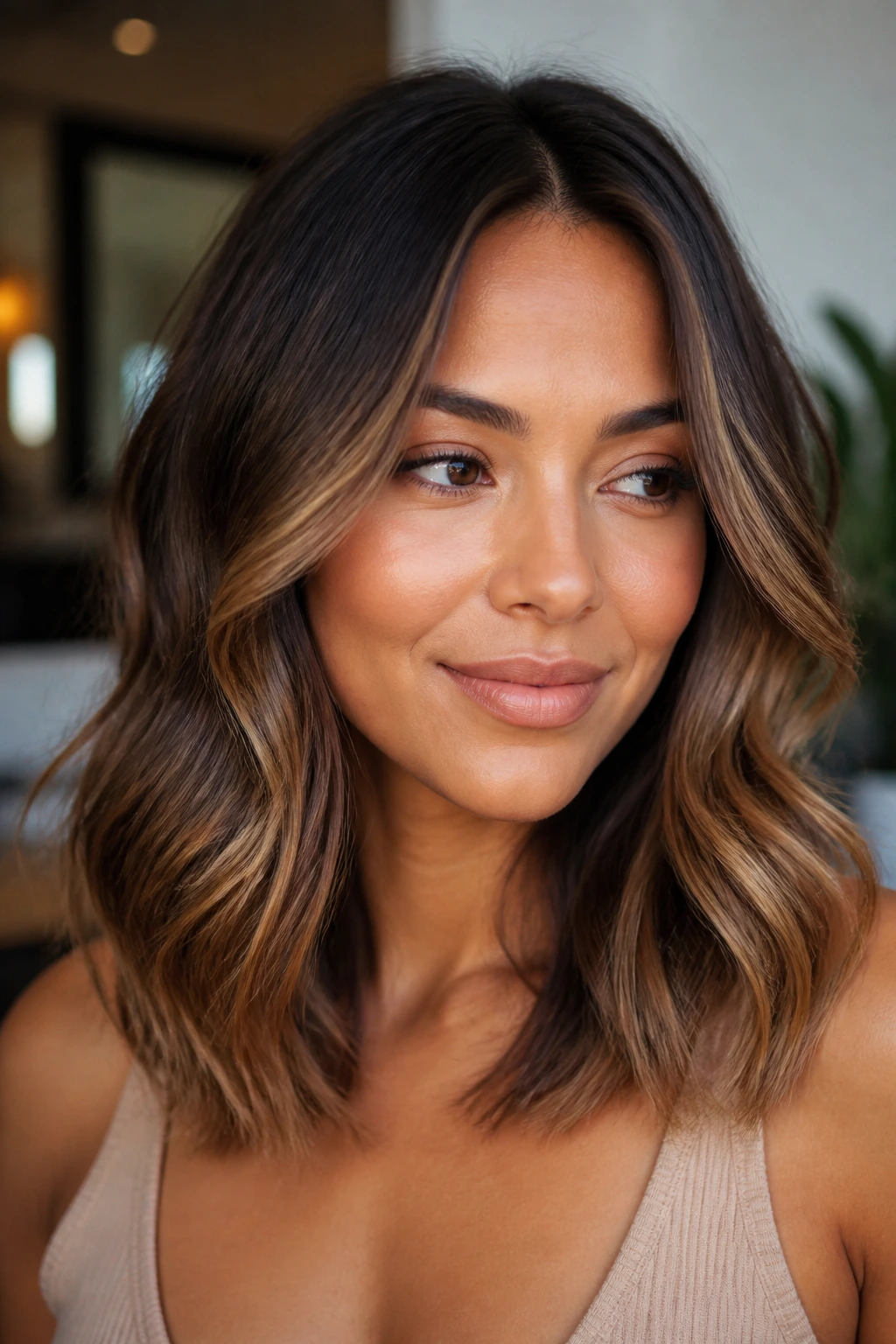
Balayage on chestnut brown hair gives tan skin a gentle glow that feels expensive without being stiff. The chestnut base does most of the grounding, while caramel paint strokes melt through the mids and ends so the hair looks like it has been in the sun for weeks, not minutes.
Why It Feels So Natural
The balayage placement avoids hard foil lines, which matters if you want the color to grow out softly. On tan skin, that softness keeps the face warm instead of busy.
Ask for caramel pieces that stay a little deeper near the root and get brighter at the ends. That gradient is what gives the style movement.
- Best on shoulder-length waves or long layers.
- Ask for a neutral-warm gloss, not ash.
- Keep the lightest pieces around the front and bottom third.
3. Babylight Honey on Dark Brown Waves
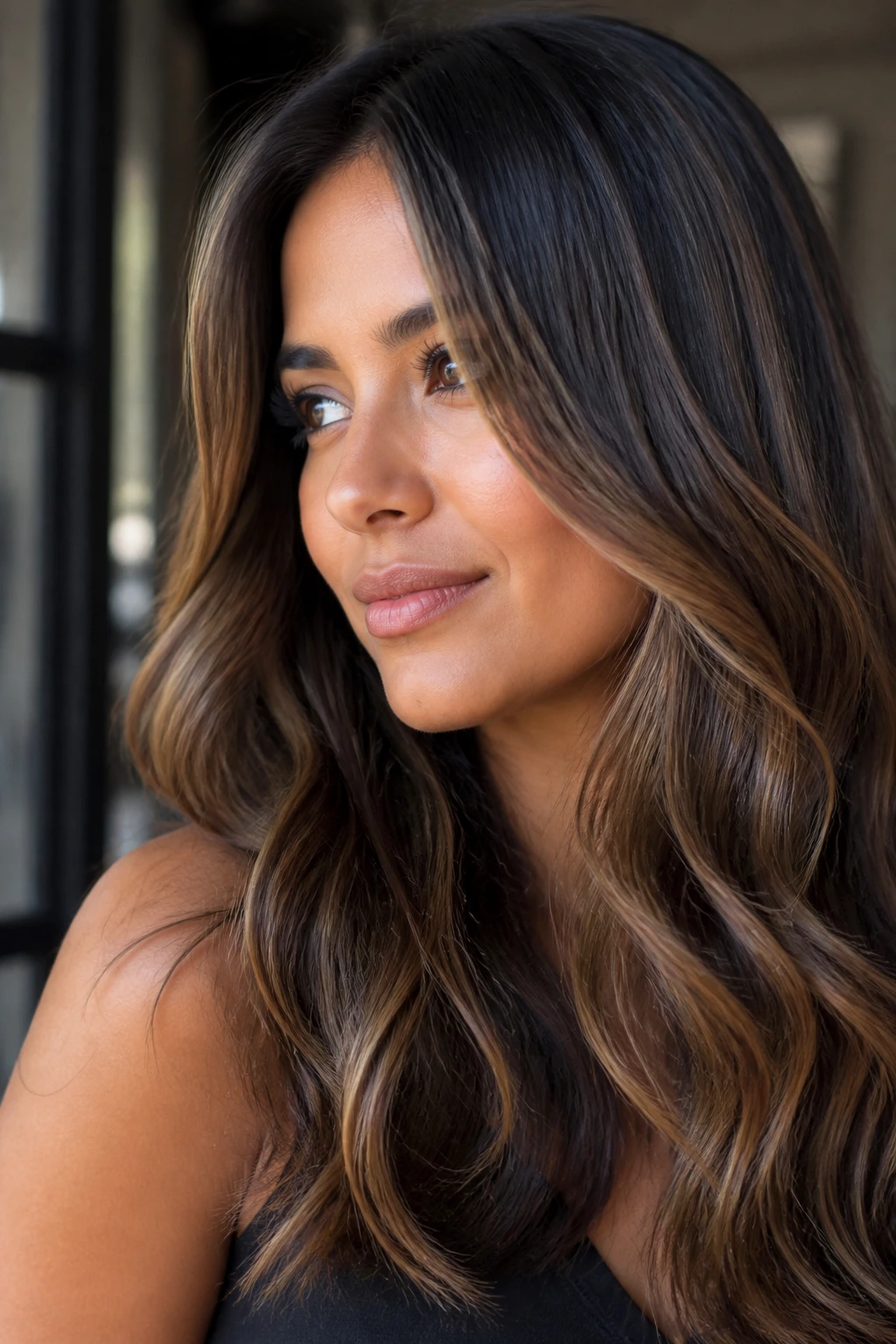
Tiny babylights can do more for dark brown hair than chunky blonde ever will. The thinness of the strands matters here. They catch light in little flashes, which gives tan skin that polished, expensive glow without changing the base too much.
This style is for someone who wants visible brightness but hates obvious highlights. Honey tones threaded through dark brown waves create a soft shimmer, almost like the hair has its own filter. If the hair is thick, babylights also help break up the mass so the cut feels lighter.
A colorist will usually weave these with fine slices or micro-foils, then finish with a gloss that keeps the honey from drifting brassy. Don’t skip the gloss. Without it, the light pieces can start looking too yellow against warm skin.
4. Rooted Bronde with a Soft Gloss Finish
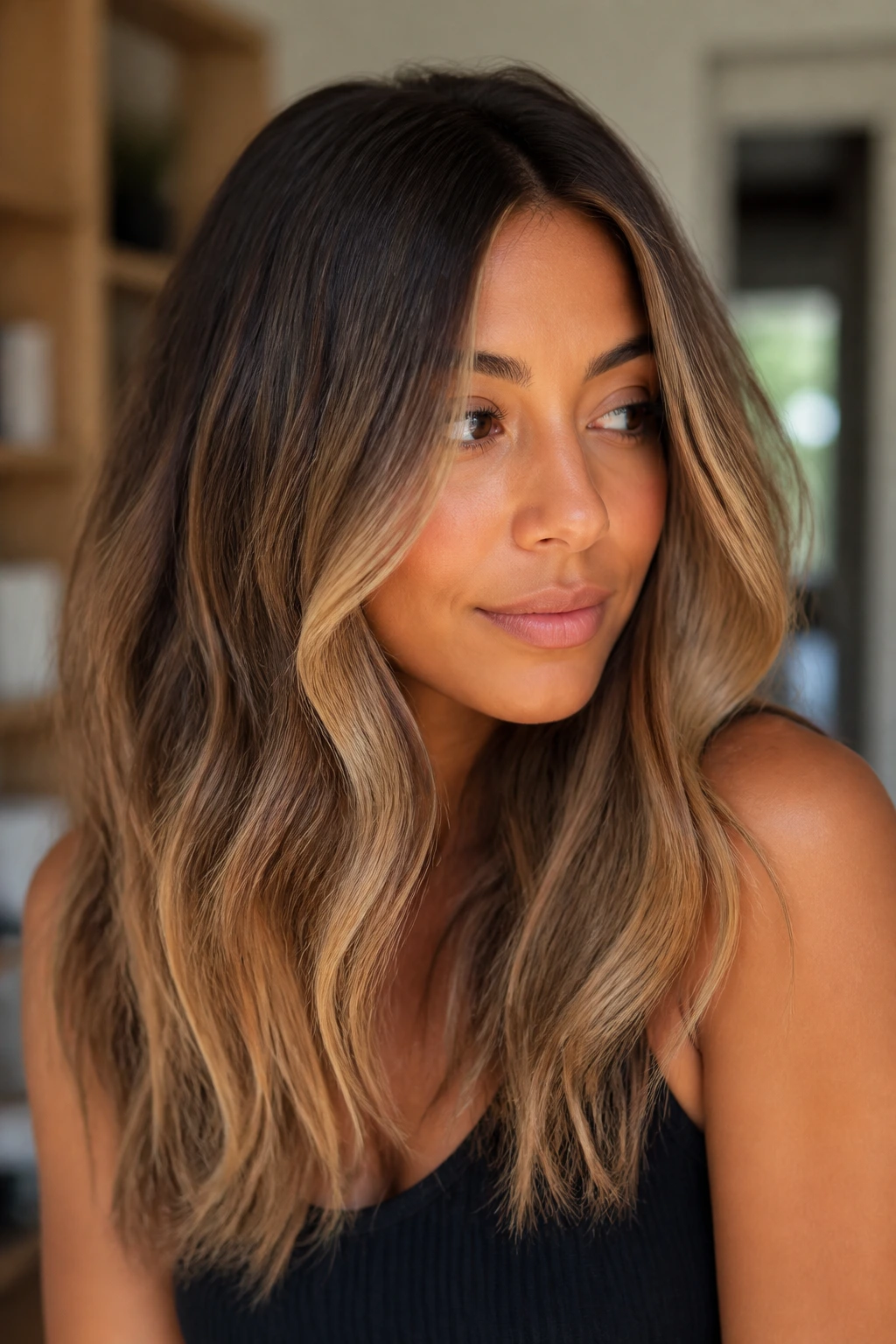
What happens when brunette and blonde meet in the middle? You get bronde, and on tan skin it can be one of the safest places to land. The rooted version keeps the base closer to medium brown, then fades into honey and caramel through the mids so the contrast never feels loud.
A soft gloss is the real key. Beige-gold gloss can make the highlights feel smoother and more expensive, while a slightly warmer caramel glaze keeps the whole head from reading washed out. This is the kind of color that looks good with a blowout, but it also behaves well on second-day waves.
If your natural hair is already in the brown family, this is a smart low-commitment option. It gives you brightness without making the regrowth line a daily problem.
5. Thick Caramel Ribbons for a ’90s Feel
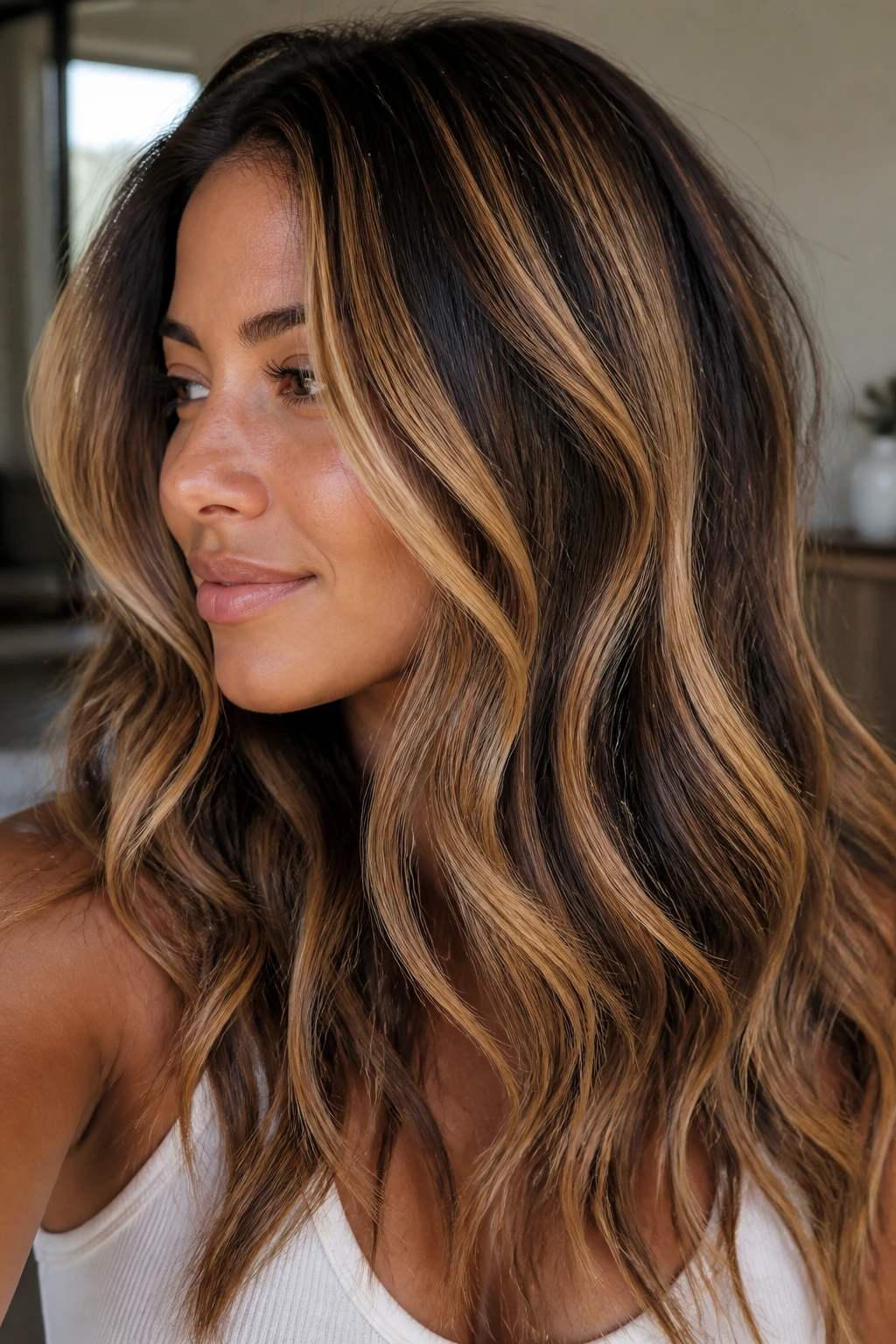
There’s a reason chunky ribbons keep coming back: they show up. On tan skin, thick caramel pieces through a medium brown base can look bold in a way that still feels flattering, because the warmth keeps the contrast from going cold.
This style works best when the highlights are placed with intention — not evenly everywhere, but in broad strokes around the face, crown, and outer layers. The result has a little nostalgia, but it doesn’t need to look dated. Keep the caramel rich and the base deep, and the color reads current.
A blunt cut or a layered lob makes this especially strong. Straightened, the ribbons look graphic; waved, they soften into a more lived-in pattern.
6. Toffee Lowlights That Add Depth Fast
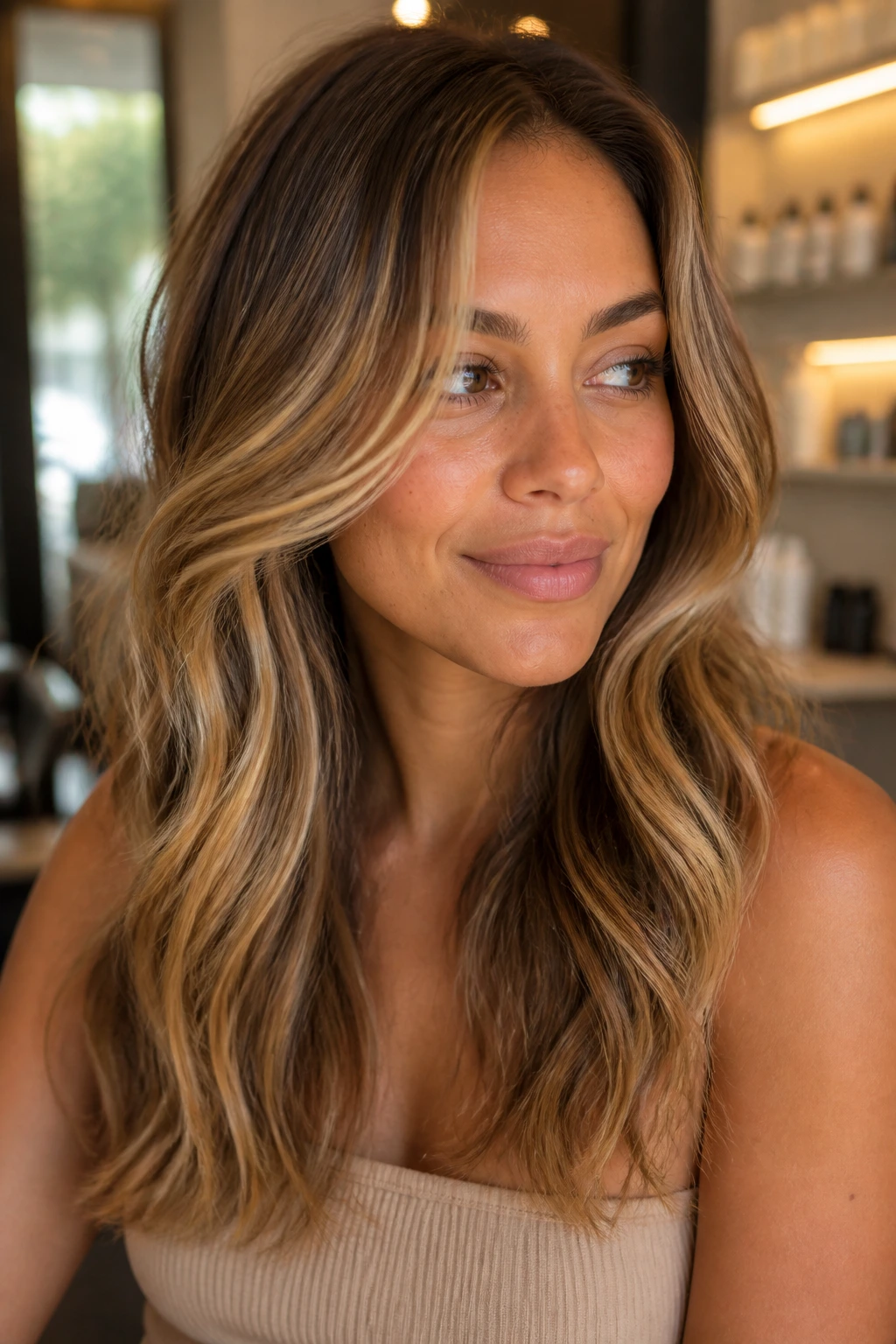
Can lowlights matter as much as highlights? On tan skin, yes — sometimes more. Toffee lowlights tucked through a honey base keep the hair from going too bright or too flat, especially if the existing color has drifted lighter over time.
What They Fix
Lowlights restore shadow. That shadow makes the lighter pieces look brighter by contrast, which is the whole trick. Without it, honey blonde can spread out and lose shape.
Ask for lowlights one to two levels deeper than your base, with a warm toffee or mocha tone. They should be scattered through the mids and interior layers, not painted over the top like stripes.
7. Sun-Kissed Foilayage on Layered Hair
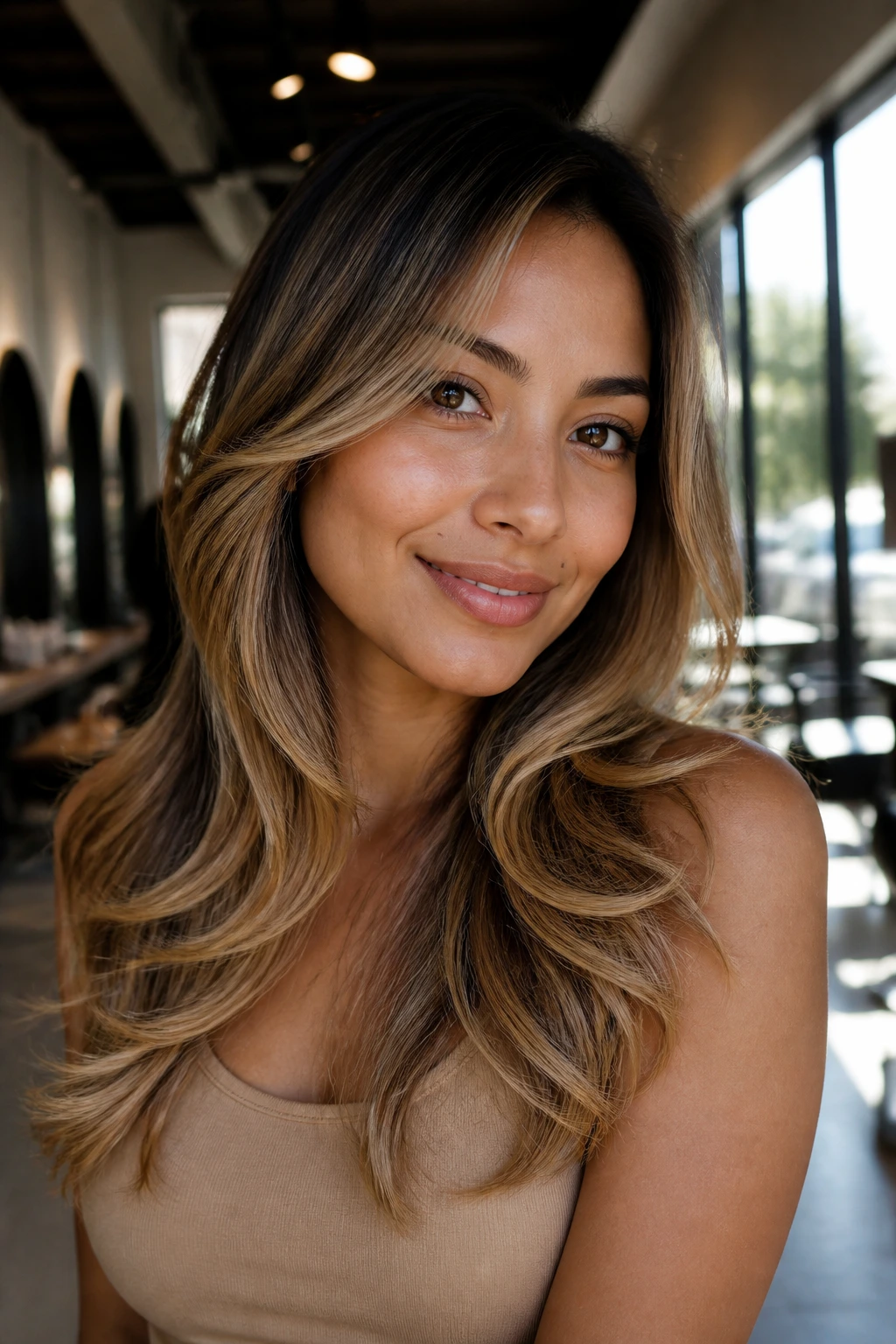
Foilayage gives you that hybrid effect people keep chasing: the softness of balayage with a little more lift where you want it. On layered hair, the brighter pieces land nicely on the moving ends, so the cut itself does some of the work.
Tan skin tends to love this because the lighter pieces are usually honey blonde at the mid-lengths and caramel at the ends, with a brown base holding everything together. It reads like sunlight, but organized. That distinction matters.
If your hair is thick, foilayage can help create brightness that actually shows through the layers. If your hair is finer, ask for fewer but more strategic pieces so the color doesn’t get busy.
8. Honey-and-Cinnamon Melt on Medium Brown Hair
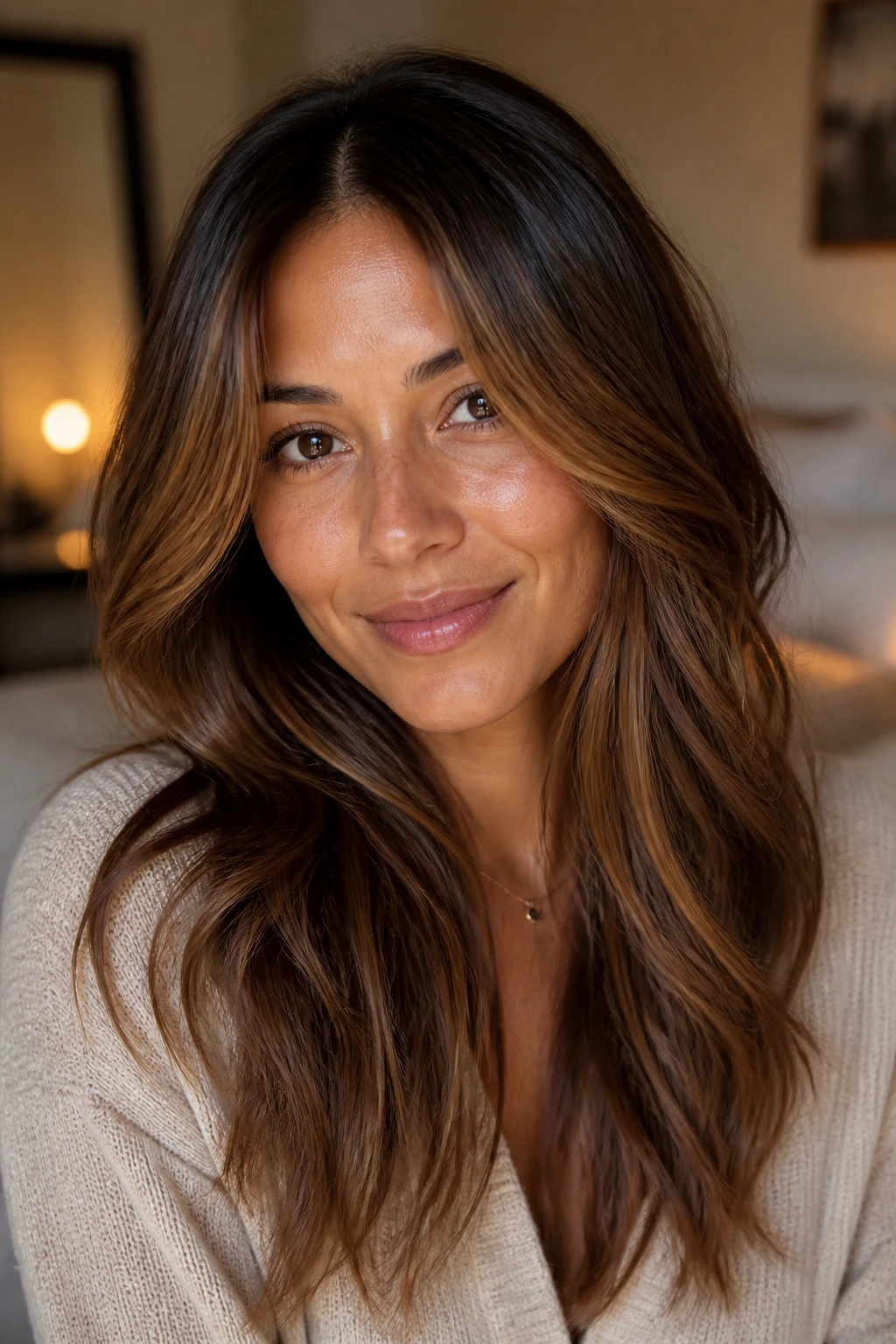
A honey-and-cinnamon melt is warmer and a little spicier than standard caramel. The cinnamon tone gives medium brown hair a red-brown glow that flatters tan skin with golden or olive undertones, especially when the light catches the hair indoors.
This is a good choice if you want warmth without turning the hair into a yellow-blonde story. The cinnamon keeps the palette richer. The honey is what gives it lift, usually around the face and on the ends.
The best version has almost no visible line between shades. Everything should slide into the next color. If the contrast gets too sharp, the look starts to feel costume-y instead of soft.
9. Golden Bronde on a Long Bob
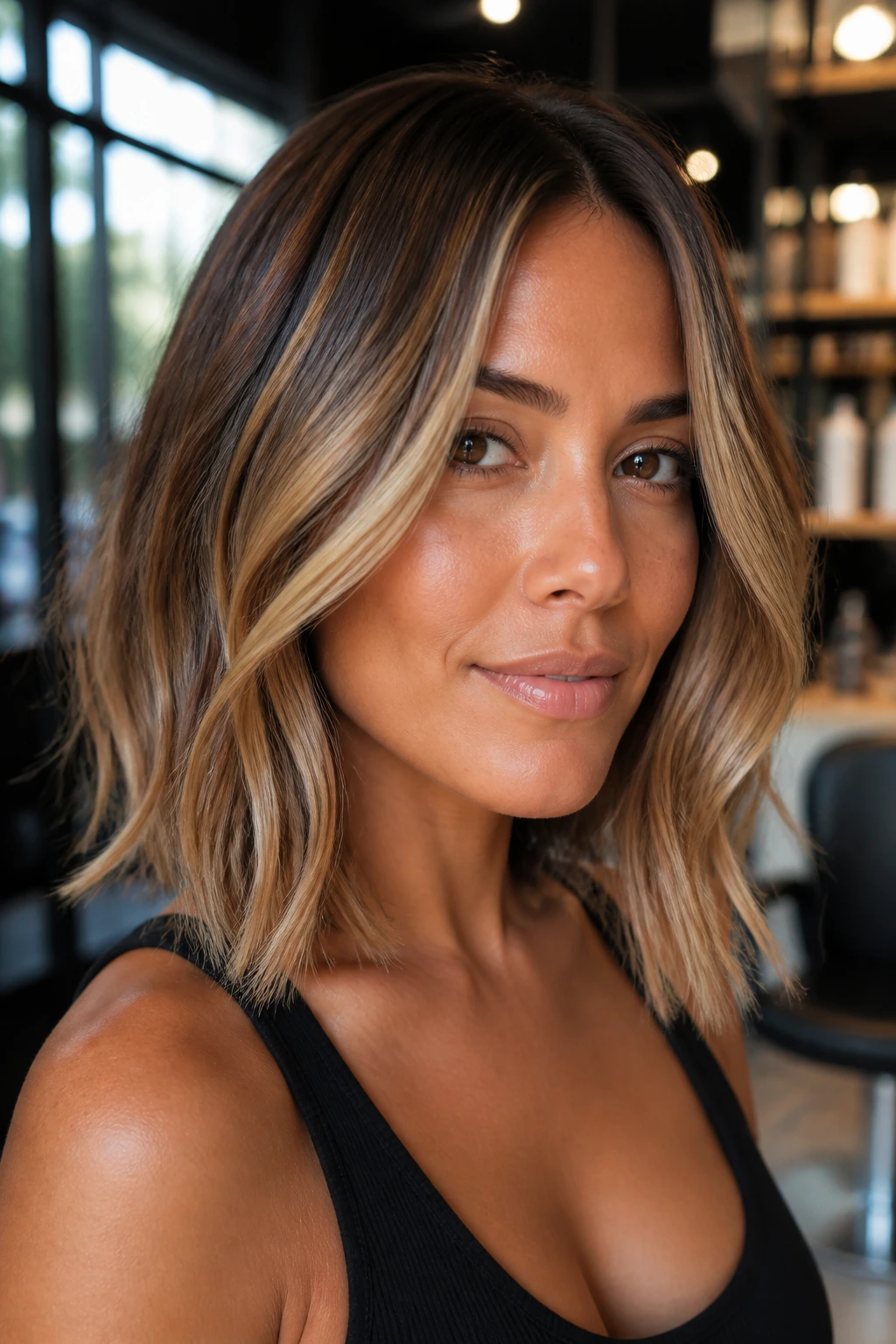
A lob gives bronde room to breathe. The cut ends around the collarbone, which means the honey pieces can sit right where they move most — at the jaw, near the shoulders, and at the ends where the hair flips.
Golden bronde on tan skin works because it doesn’t try to be the palest thing in the room. It uses a medium brown base, then lets gold-beige highlights and caramel ribbons do the brightening. That’s why it holds up so well under day-to-night lighting.
If the lob is blunt, the color should be more woven and refined. If the lob has layers, you can go a little bolder with the brighter strands.
10. Peekaboo Caramel Panels Underneath
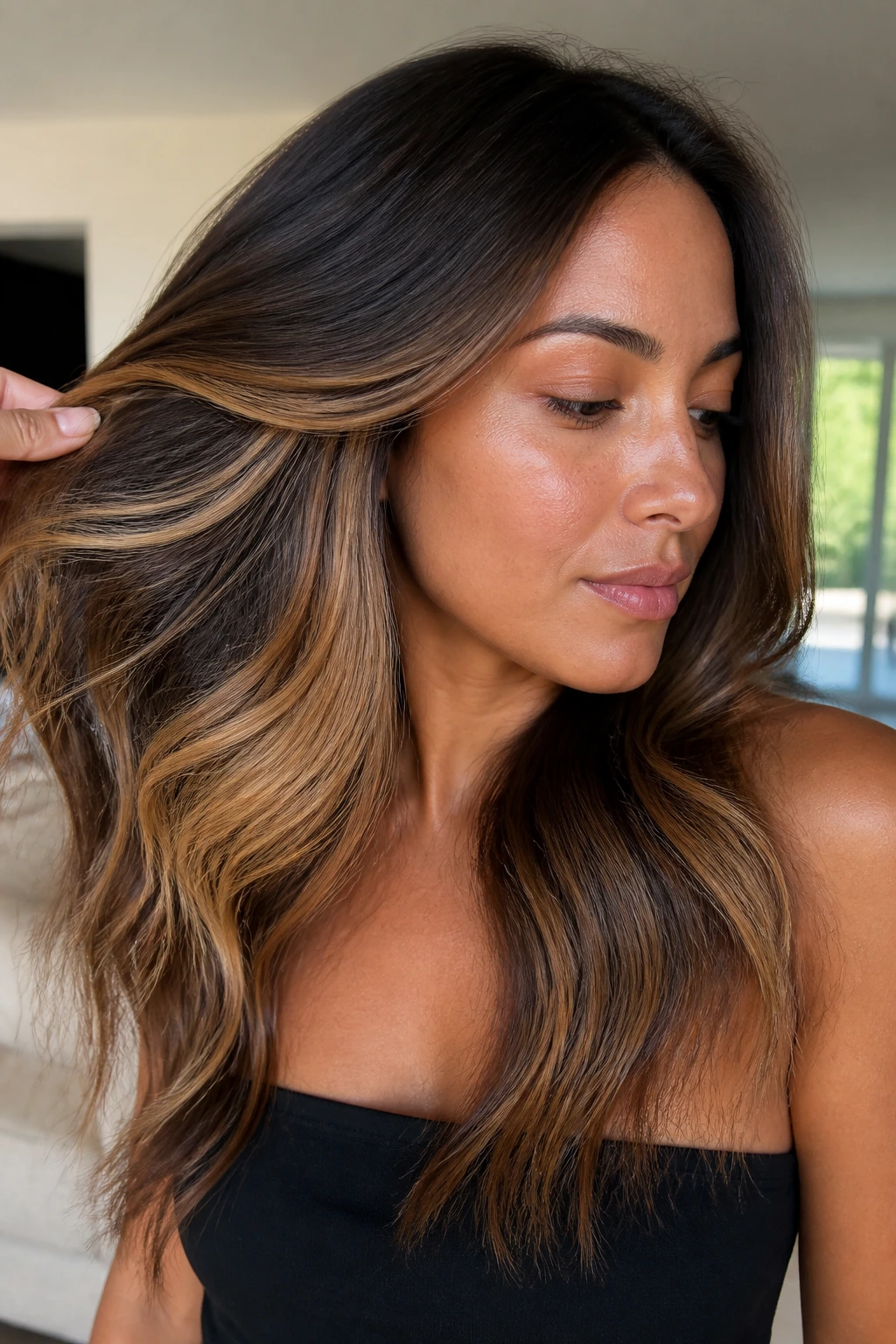
Peekaboo highlights are for the person who wants contrast but doesn’t want to wear it all on top. Caramel panels underneath the crown or through the interior layers give tan skin a warm hit of color that shows when the hair moves.
Best Use Cases
- Straight styles, where the hidden color appears at the ends.
- Loose buns and half-up styles, where the lower layers show.
- Thick hair, which can handle more contrast without looking stringy.
This style is especially nice if you like your hair to look different depending on how you wear it. Up, the caramel flashes. Down, it softens into a hint of warmth.
11. Honey Blonde Ends with a Root Shadow
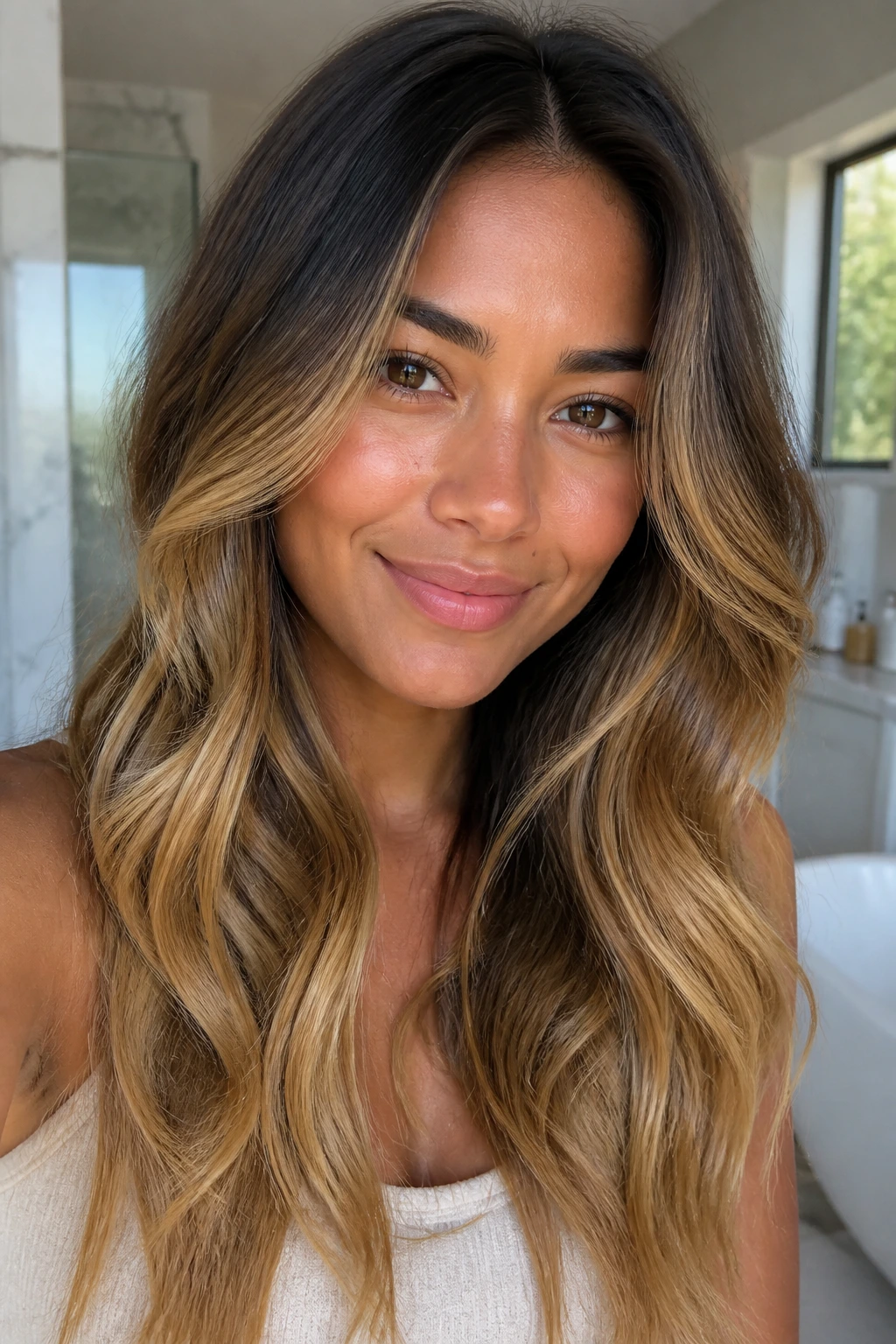
This is one of the easiest ways to keep blonde from looking fussy. The root shadow gives depth, and the honey ends deliver the lift. On tan skin, that darker root keeps the face from looking washed out while the lighter ends still catch the light.
The contrast should feel smooth, not sharp. A good shadow root usually sits around one to two levels deeper than the mid-lengths and melts down into honey blonde ends with no obvious banding. If the hair is long and wavy, this can be gorgeous because the brightest parts land where the waves bend.
It’s also a practical choice. As the hair grows, the root shadow buys you time.
12. Curly Caramel Highlights on Natural Texture
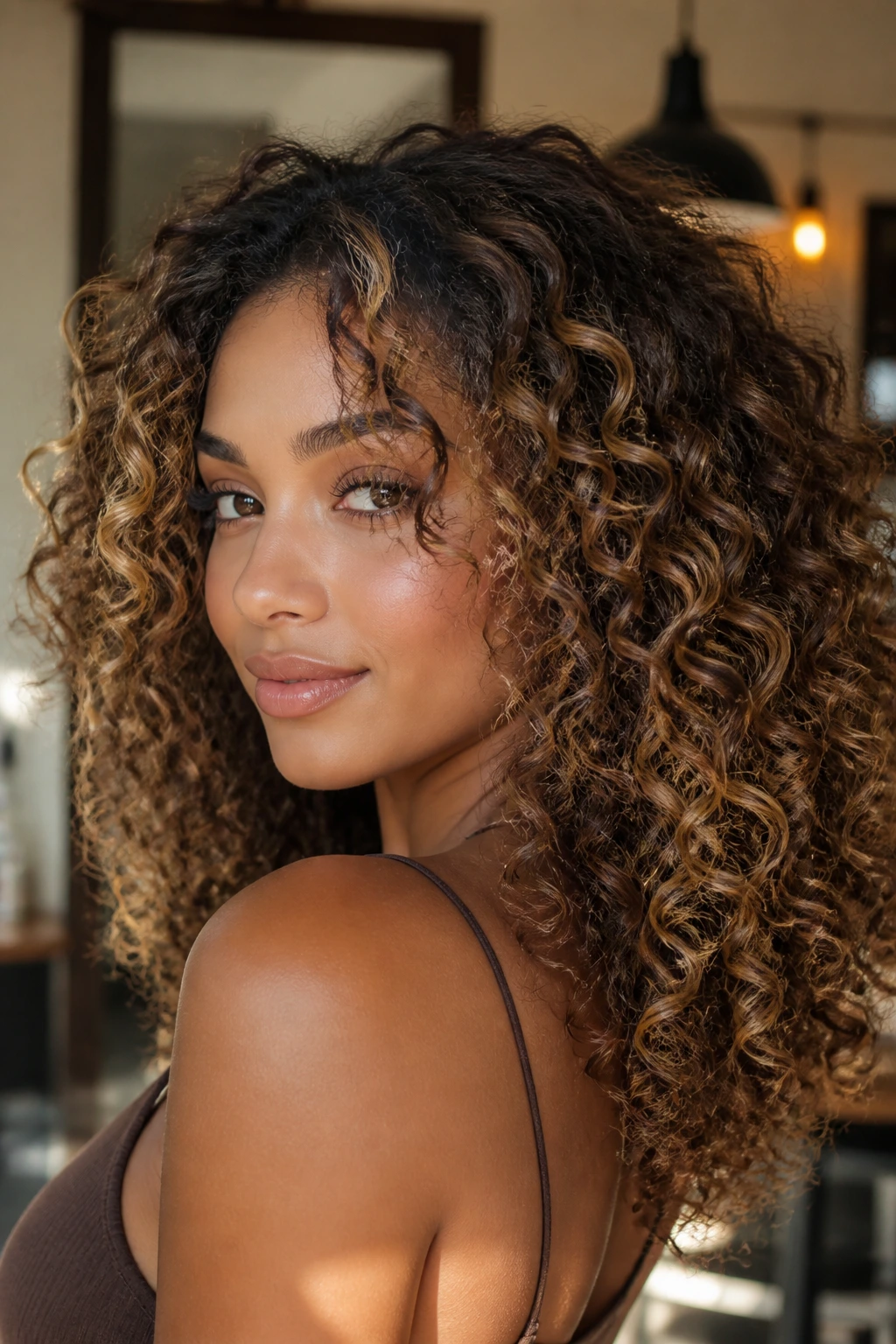
Curly hair doesn’t need the same highlight map as straight hair. The coils and bends already create depth, so caramel highlights should be placed where the curl pattern opens and shows light — around the face, crown, and outer ring of the curl.
On tan skin, warm caramel pieces can make curls look defined without needing a ton of brightness. The color follows the shape of the curl, which gives the whole style a more organic feel. Too many pale pieces can make curly hair look frizzy or scattered. Caramel keeps it lush.
Ask for hand-painted placement if possible. It tends to follow the curl’s own movement better than rigid sectioning.
13. Bronze and Honey Contour Pieces
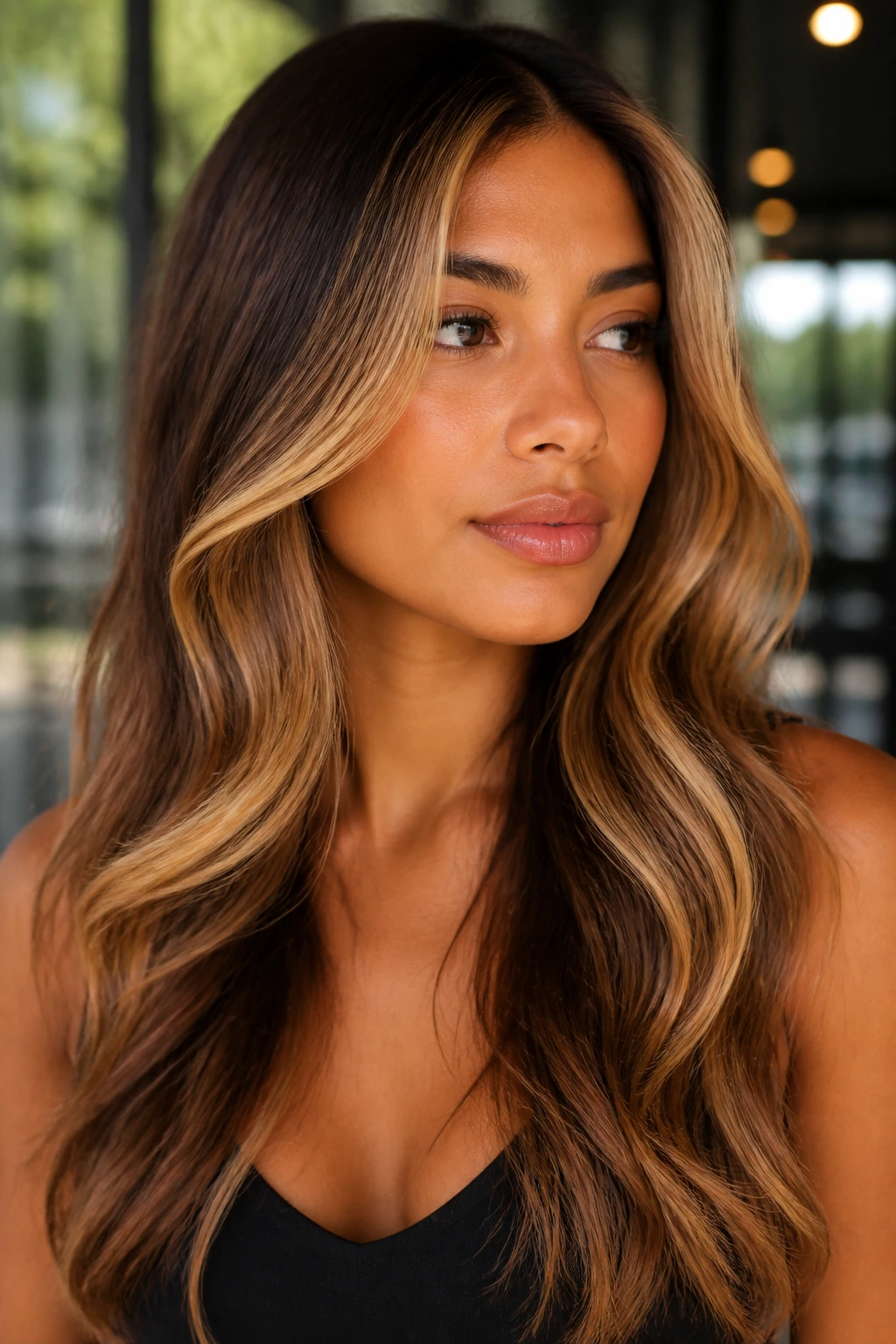
Contour highlights work the same way makeup contour does: they guide the eye. Bronze near the deeper parts of the hair and honey around the face can create a very flattering frame on tan skin, especially if the cut already has layers near the cheekbones.
The bronze pieces add shadow underneath, which keeps the honey from floating away visually. That is the part most people miss. Bright hair needs dark around it or it loses shape.
This style is especially good when you want your face to look more lifted. Keep the brightest pieces just in front of the ears and around the top layers, then let the deeper bronze peek through from below.
14. Soft Ombré with Brown-to-Caramel Lift
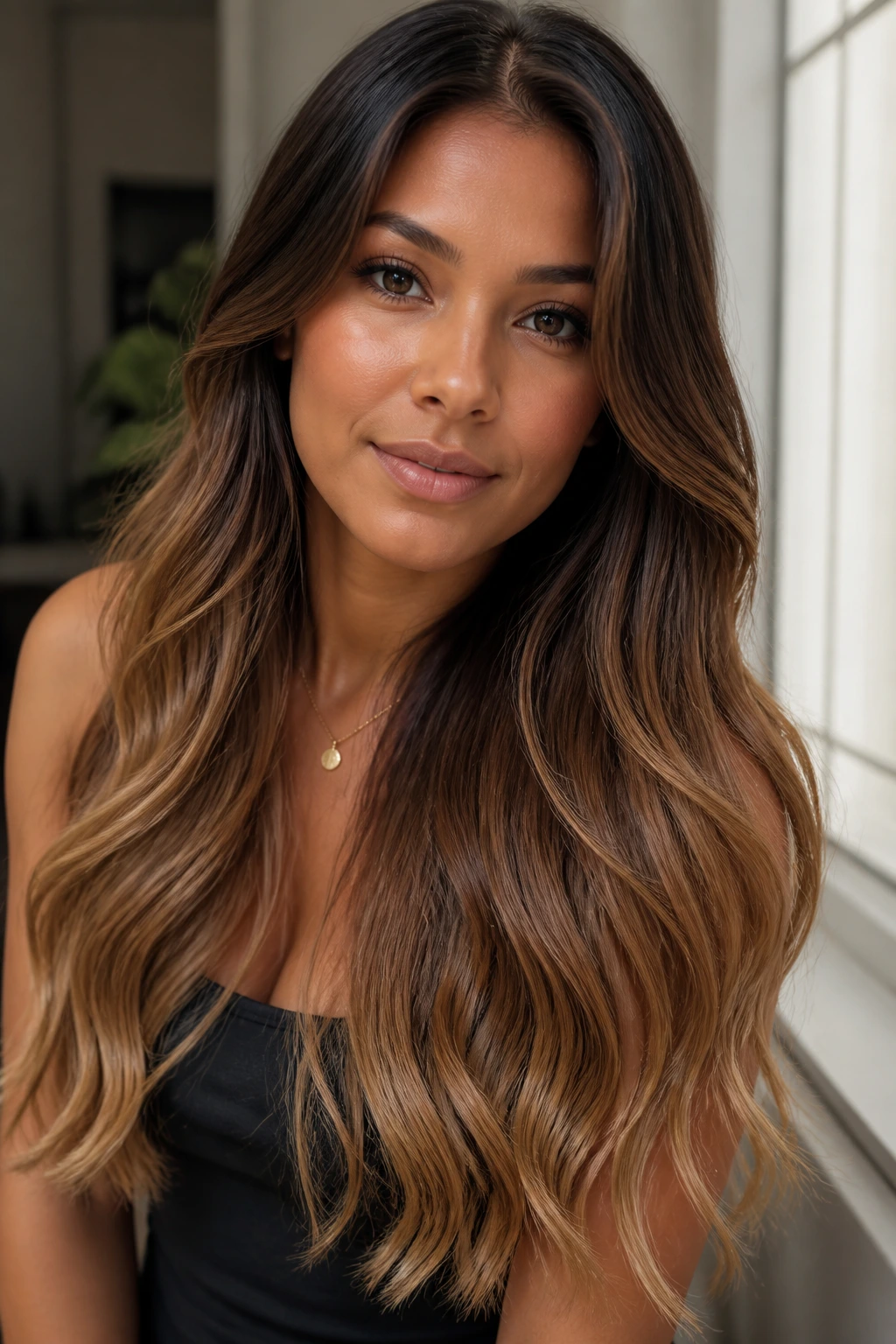
Want the color to stay easy? Ombré still works, as long as the transition is soft and the caramel isn’t too pale. The base can stay a rich brunette, then move gradually into warm brown and soft caramel toward the ends.
How to Keep It Modern
Avoid a harsh dip-dye line. The color should fade, not stop.
On tan skin, this style is useful because it keeps the root area calm and the ends lively. It works well on long hair where the gradient has space to stretch. Shorter cuts can still wear it, but the color needs to start higher so the transition doesn’t look chopped off.
15. Butter Honey Slices on Espresso Hair
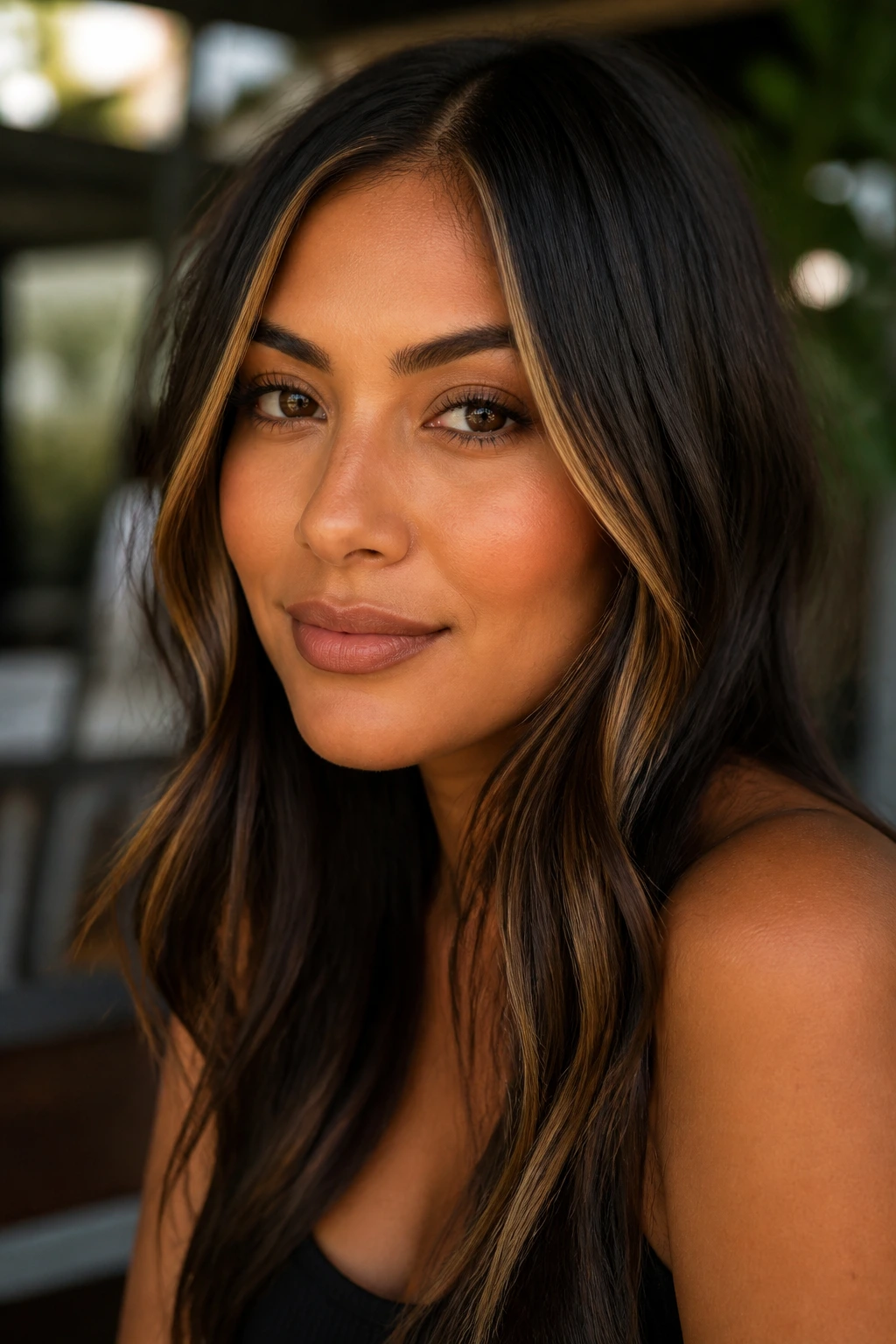
Espresso hair needs restraint, not competition. A few buttery honey slices through a very dark brown or black-brown base can be enough to create a visible glow on tan skin without changing the whole mood of the hair.
The trick is keeping the slices deliberate and not too wide. Thick pale ribbons on dark hair can turn harsh fast. Butter honey is softer than platinum, more golden than beige, and much friendlier next to warm skin.
This look shines on straight hair because the contrast stays crisp. On waves, it gets a little softer, which can be a nice trade if you want a less graphic result.
16. Amber Lowlights for Extra Contrast
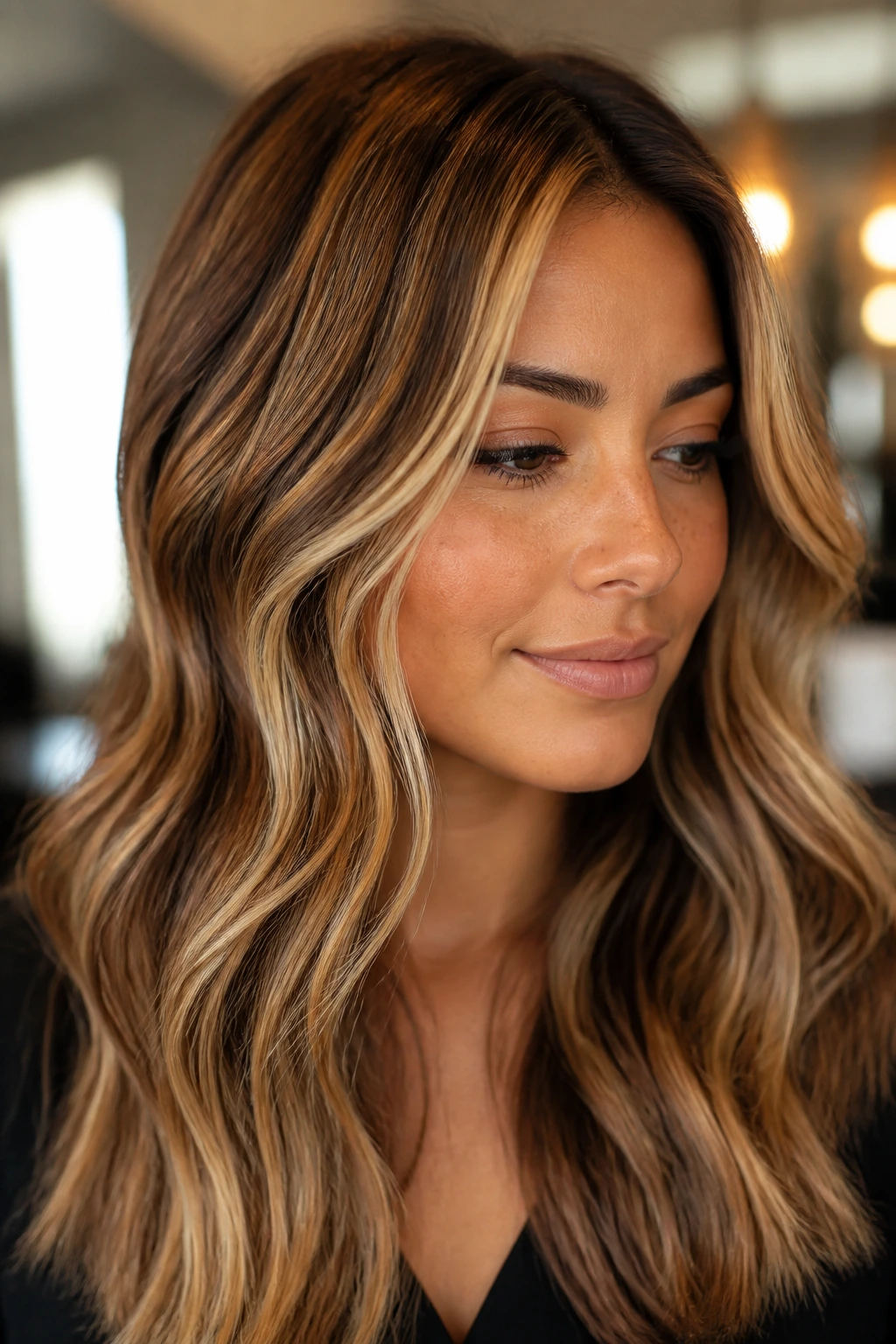
Why add darker pieces when the goal is lightness? Because amber lowlights can make the honey parts look richer. Tan skin usually benefits from depth near the base and brightness only where it counts, and amber lowlights give that balance without making the hair look heavy.
These darker threads are good for anyone whose highlights have gone too bright or too yellow. A few warm lowlights can pull the tone back into caramel territory and give the hair a better frame.
They also help if your cut has lost shape. Shadow does what scissors can’t always do: it creates the illusion of movement.
17. Maple-Caramel Highlights on Wavy Lob
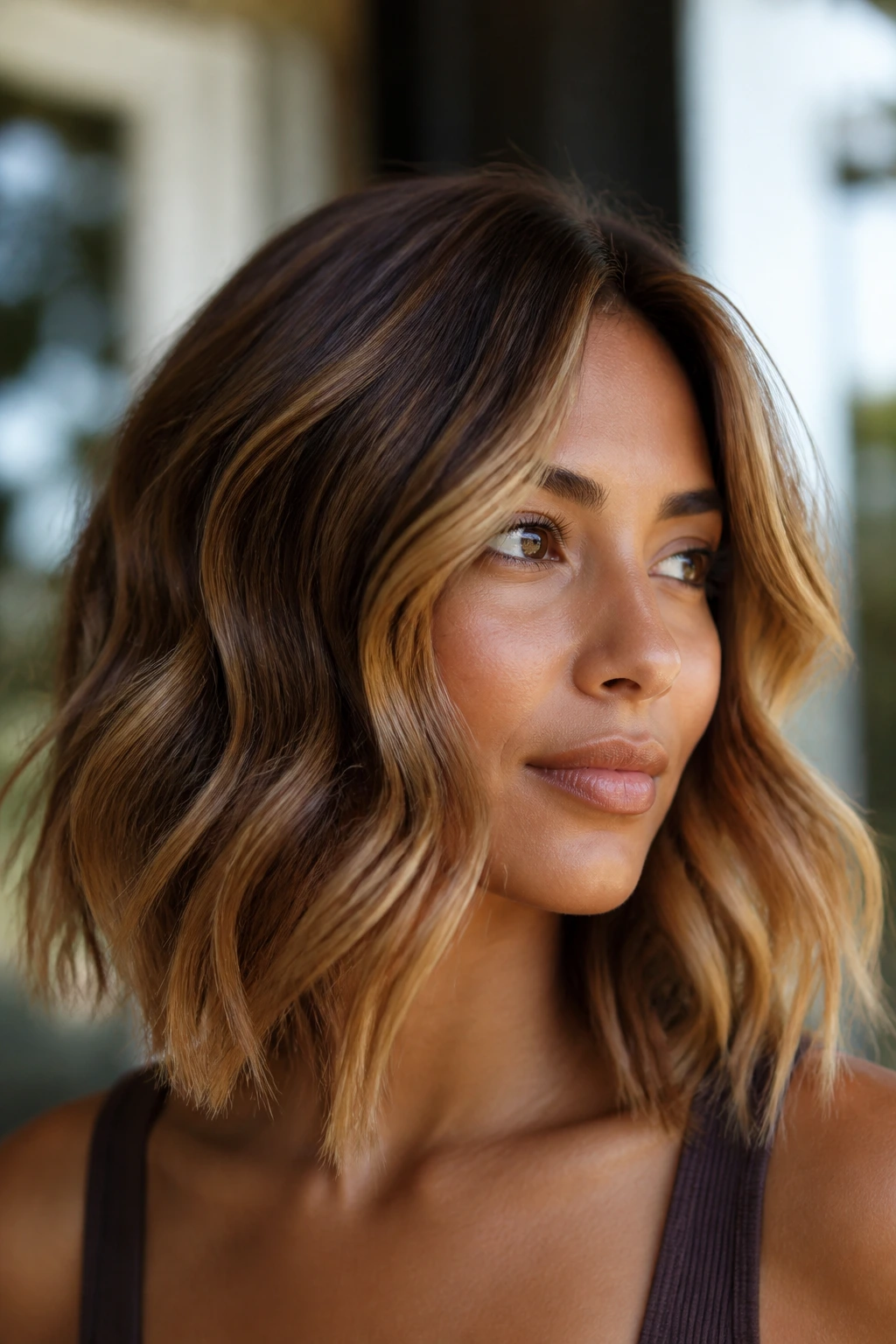
A wavy lob is one of the easiest cuts for maple-caramel color because the bends in the wave show off both the warm light and the deeper base. Maple adds a slightly richer brown note than straight caramel, which gives tan skin a polished, autumn-leaning glow.
The color should sit somewhere between honey and toffee, never too red and never too gold. That middle ground is what keeps it wearable. If you like texture sprays and rough-dried waves, this shade loves a bit of undone finish.
Ask for pieces that are brighter at the front and softer through the back. It keeps the style from reading too one-sided.
18. Honey Glossing for Brunette Hair
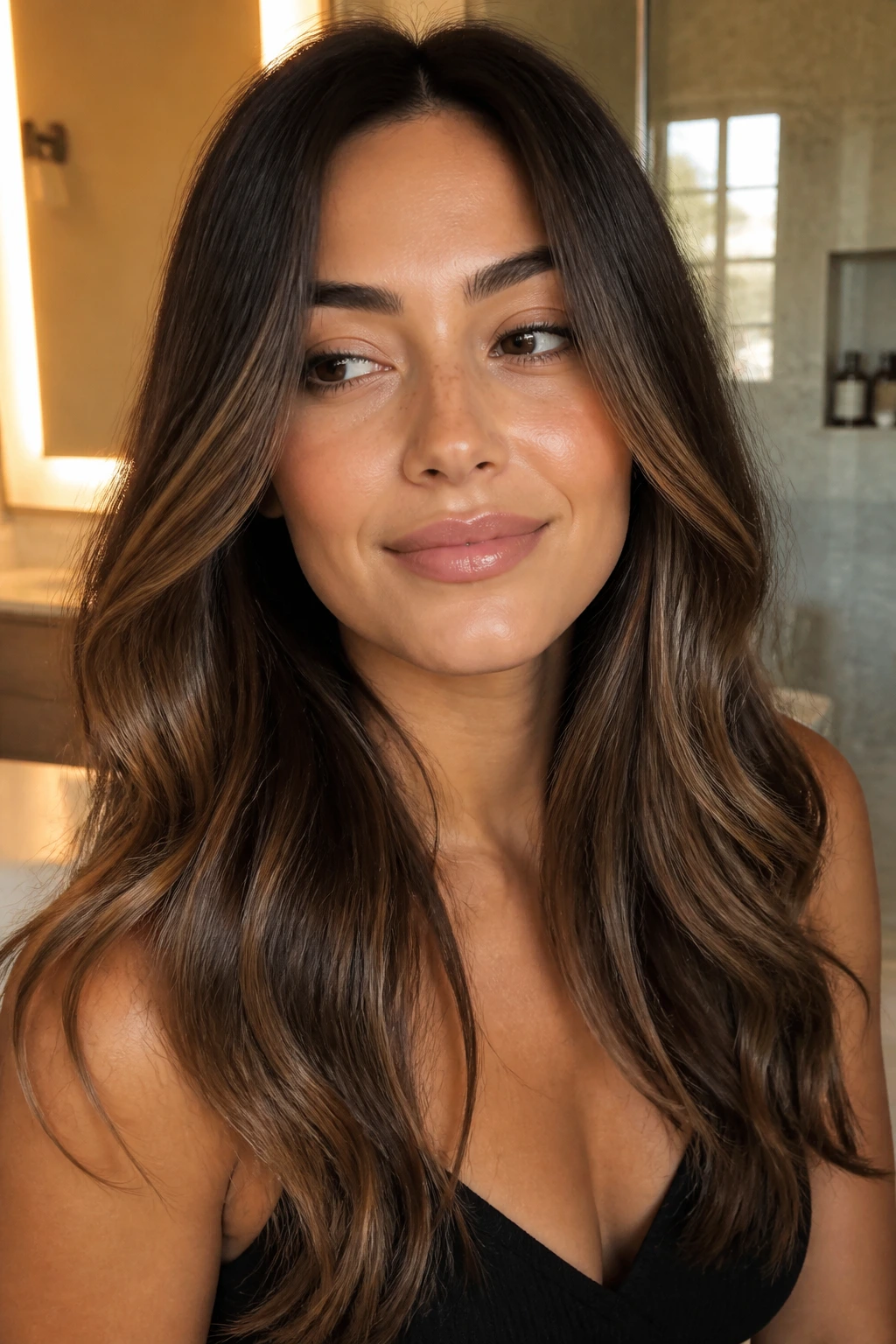
Sometimes the smartest move is not adding more highlight at all. A honey gloss over brunette hair can soften the tone, deepen the shine, and make tan skin look warmer without changing the structure of the color.
The Subtle Route
This is for people who want reflected light, not obvious streaks. A gloss can add honey warmth to the mids and ends so the hair looks healthier and more luminous, especially when the base is already a pleasing brown.
It’s a good fit between full salon appointments, too. Glossing can refresh the tone when highlights have faded and started looking dull.
19. Chunky Face Highlights with Dimensional Ends
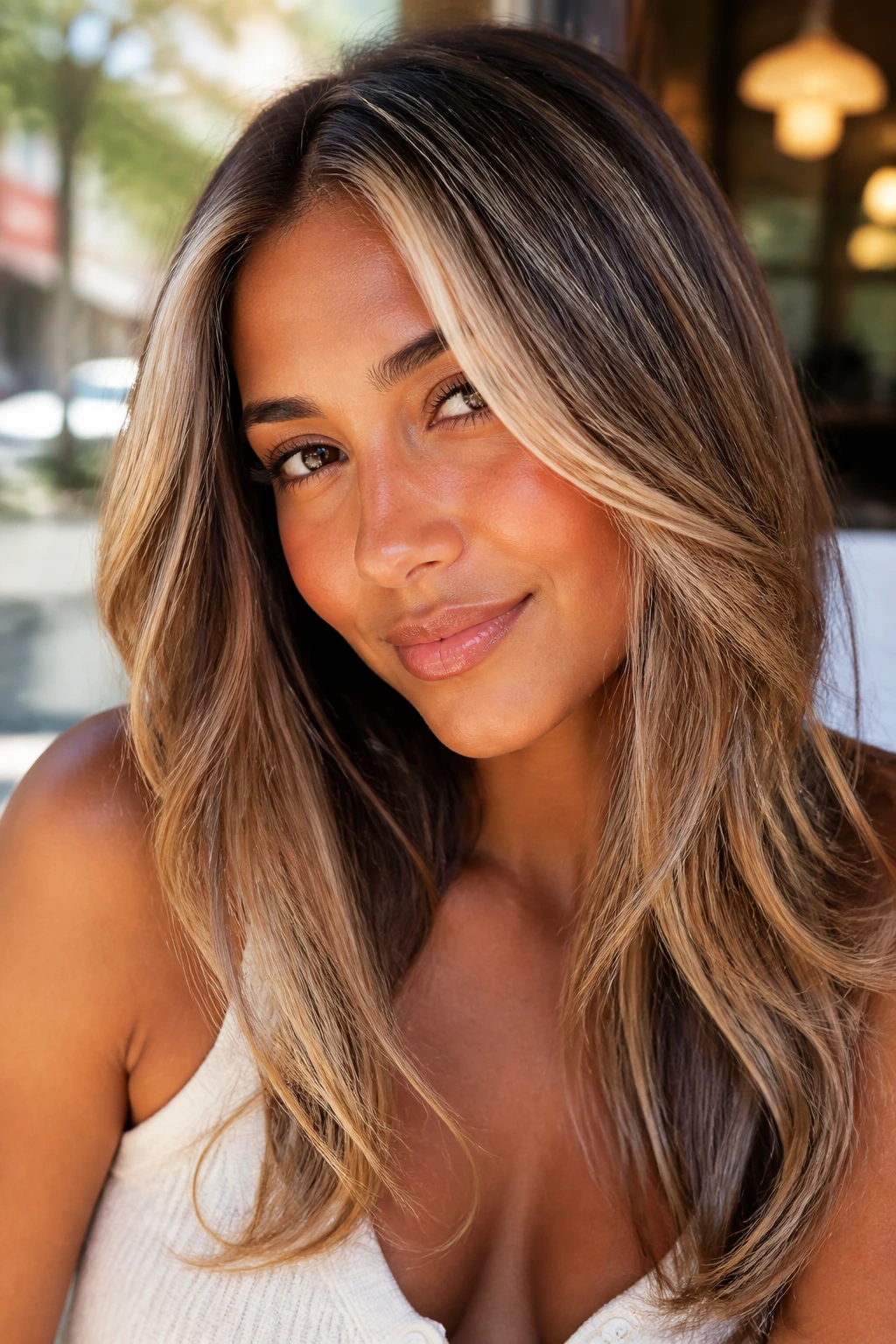
Bold around the face, softer through the ends — that’s the formula. Chunky face highlights can give tan skin a clean lift, while the rest of the hair stays more blended and dimensional so the look doesn’t get too loud.
This style works especially well if your haircut has movement at the front. The front pieces frame the cheekbones, and the ends carry the warmth in a quieter way. The contrast can feel fresh, especially on straight or lightly waved hair.
The best version keeps the chunky highlights warm, not pale. Honey blonde with a caramel edge is usually enough.
20. Tan-Skin Bronde with Beige Honey Tones
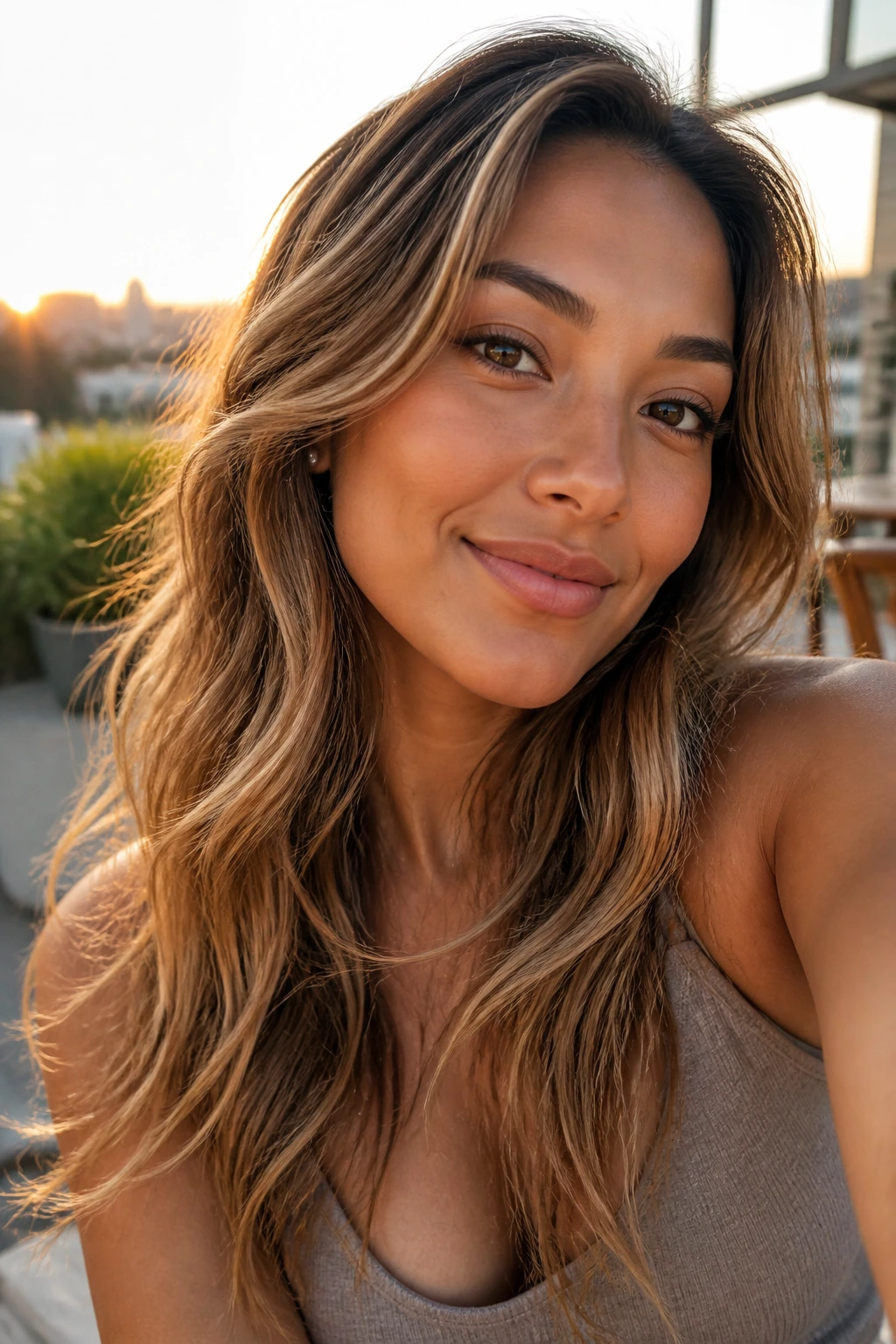
Can beige still count as warm? On tan skin, yes — if it’s not too cool. Beige honey tones sit between gold and neutral, which makes them useful when you want brightness without obvious yellow.
This bronde look avoids the hard orange zone and the too-ashy zone at the same time. It’s a balancing act, but when it’s done right, it gives hair a soft, expensive-looking finish that flatters a lot of undertones.
It’s one of the better choices if your skin has both golden and olive notes. Too much gold can feel sunny; too much ash can feel flat. Beige honey lives in the middle.
21. Layered Caramel Highlighting for Thick Hair
Thick hair can swallow color if the placement is too sparse. Layered caramel highlighting solves that by following the cut’s shape instead of trying to paint the whole head equally.
The highlights should be slightly stronger on the outer layers and around the face, with softer pieces tucked inside the shape for movement. On tan skin, this keeps the hair from looking like one big brown block. The caramel creates threads of light that show through when the hair moves.
If your hair is heavy or dense, ask for contrast at multiple depths. One note of color is never enough.
22. Soft Sunkissed Babylights Around the Crown
A crown highlight is all about where the light lands when the hair is parted. Soft babylights around the crown give tan skin a gentle halo effect, especially if the lighter strands are honey blonde and the surrounding hair stays medium brown.
Why This Placement Works
The crown is where sunlight naturally hits first, so even fine highlights here can change the whole read of the hair. You don’t need a lot. You need smart placement.
This is a nice choice if you wear your hair up often, because the lifted pieces stay visible in buns, ponytails, and clipped-back styles. The color looks intentional even when the rest of the hair is simple.
23. Honey Auburn Blend for Warm Undertones
A little auburn can make honey blonde look deeper and richer. On tan skin with warm or golden undertones, this blend adds a coppery edge that keeps the color from leaning flat or overly yellow.
The auburn should stay soft, more cinnamon than true red. Think of it as a warm filter through the honey pieces, not a full-on copper transformation. That subtle shift is what makes the look feel custom.
It works well in fall-like light, but really, that’s just shorthand for “it looks good when the sun drops low.” And that’s most of the time people notice their hair anyway.
24. Toffee-Tipped Layers with a Lived-In Root
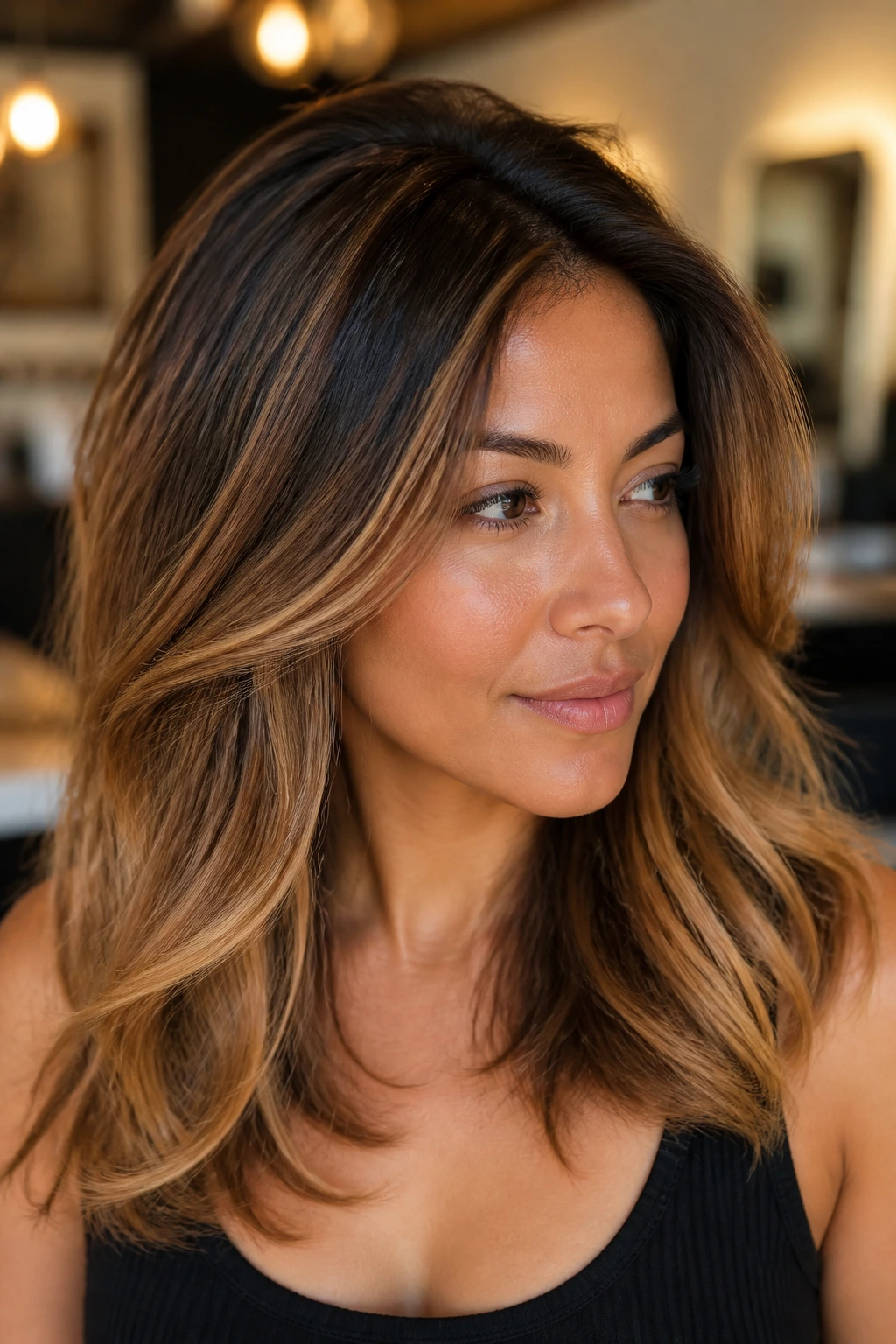
What if you want brightness, but you also want to stretch your appointments? Toffee-tipped layers with a lived-in root do both. The deeper base keeps the color grounded, while the lighter ends still give tan skin that warm glow.
The tips should be bright enough to show movement, but not so pale that they detach from the rest of the hair. Toffee is the bridge shade here. It keeps the ends warm and soft, which matters when the hair is layered and shifts around a lot.
This is a solid everyday option. It’s the kind of color that looks better after a little wear, not less.
25. Glossy Brown-Caramel Mix with Lowlight Depth
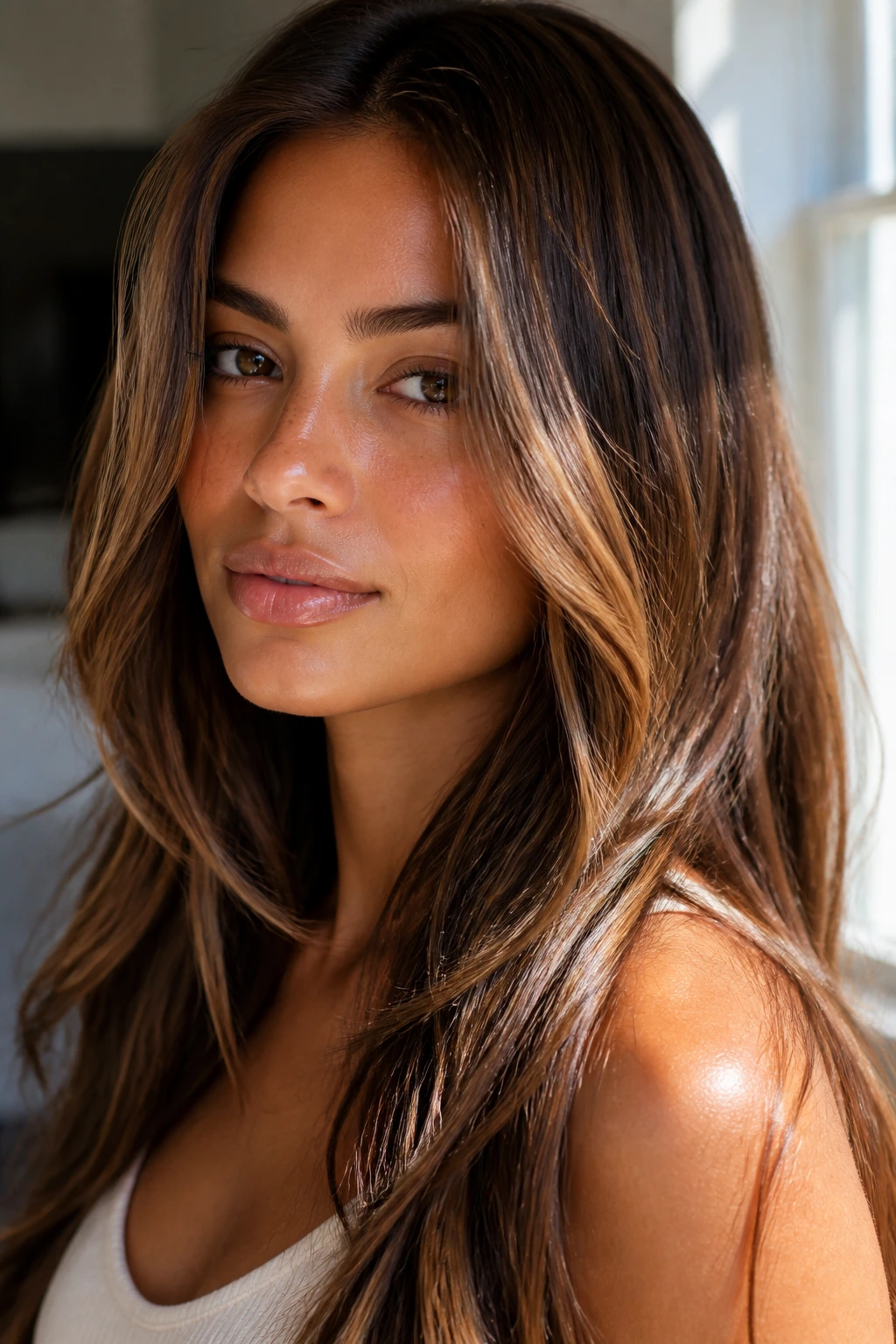
A glossy brown-caramel mix is the finish you want when the goal is richness, not drama. It blends brown, caramel, and honey into a shiny, dimensional cloud of color that flatters tan skin without ever looking overworked.
The lowlights are what keep the whole thing from becoming a flat warm wash. They carve out shape. The caramel pieces keep the hair from disappearing into one dark sheet. And the gloss ties the whole palette together so it feels soft at the edges.
If you love warm tones but hate anything that looks stripey, this is the one to bring to the salon photo. It’s warm, dense, and easy on the eyes.
The Shade Map That Keeps the Color Flattering
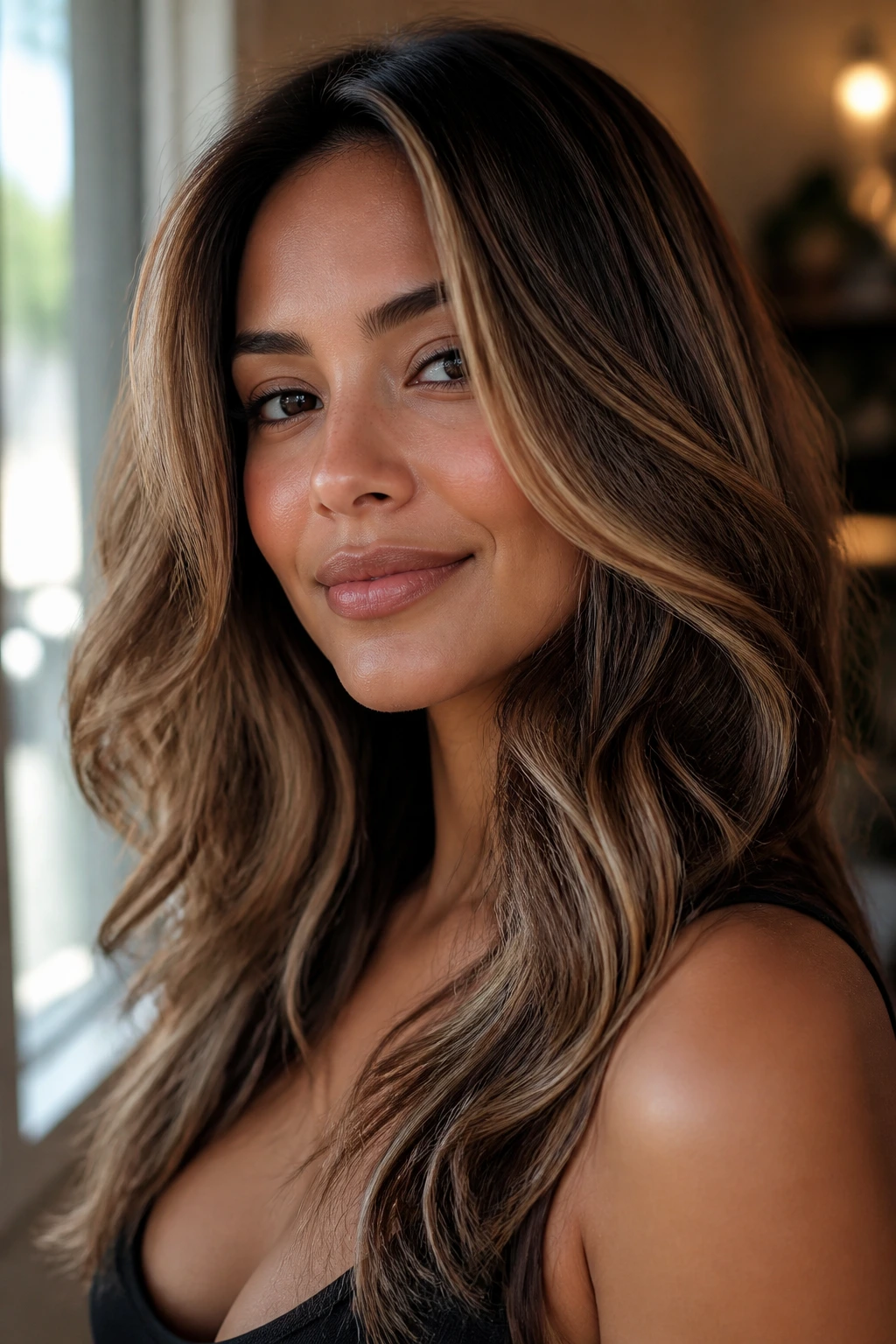
The safest way to think about honey blonde brown caramel highlights for tan skin is in levels, not just names. Honey usually sits in the golden-blonde family, caramel leans richer and deeper, and brown gives the base the depth it needs so the lighter pieces can do their job.
Tan skin with golden undertones usually handles more honey. Tan skin with olive undertones often looks best when caramel and brown carry more of the work, with honey used sparingly around the face. If the undertone is neutral, you can move in either direction, but gloss tone matters a lot. A too-ashy gloss can cool the whole head down fast.
Placement matters just as much as shade. Brightness near the cheeks, crown, and ends draws the eye where you want it. Brightness everywhere can erase the shape of the haircut. And if you’re not sure where to start, ask the colorist to keep the base one to three levels deeper than the lightest ribbons. That little gap is what makes the color look dimensional instead of washed out.
What to Tell Your Colorist Before the Foils Come Out
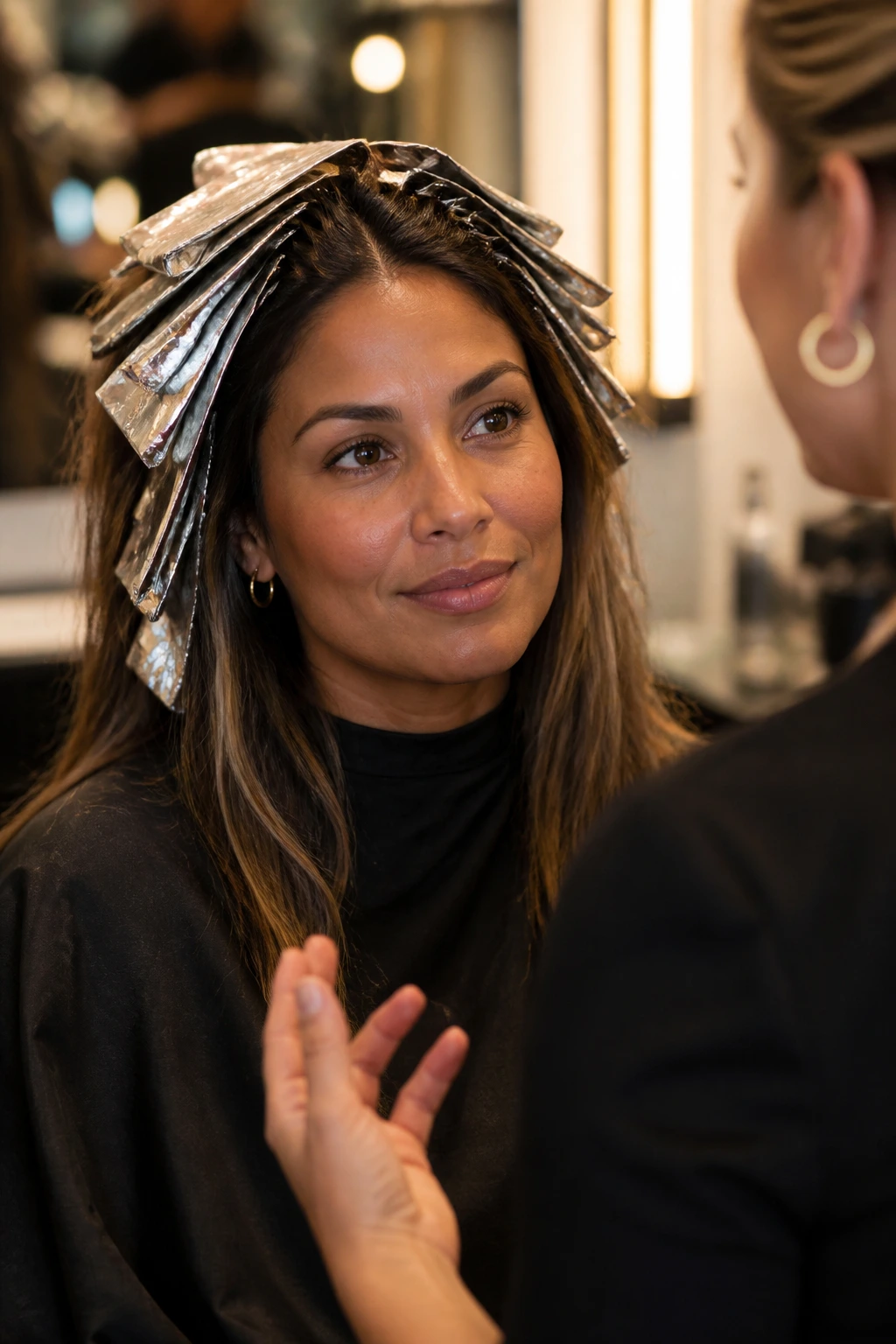
A good consultation saves a lot of bad hair days. Bring photos that show the exact placement you like, not just the color. A honey caramel balayage on curls and a honey money piece on a lob are not the same job, even if both look warm in the same picture.
Be direct about how light you want to go. Saying “not too blonde” is vague; saying “keep the lightest pieces around level 7 or 8, with a warm gloss” gives your colorist something real to work with. If you want depth, mention lowlights. If you hate a strong root line, ask for a root melt or shadow root from the start.
Also say how often you want to come back. A low-maintenance grow-out, a high-contrast placement, and a full-foil blonde are three different promises. Hair color is easier when the salon chair and your calendar are telling the same story.
Essential Tools and Salon Must-Haves
-
Daylight inspiration photos: Bring two or three pictures that show the front, side, and back if possible. Lighting changes the shade a lot.
-
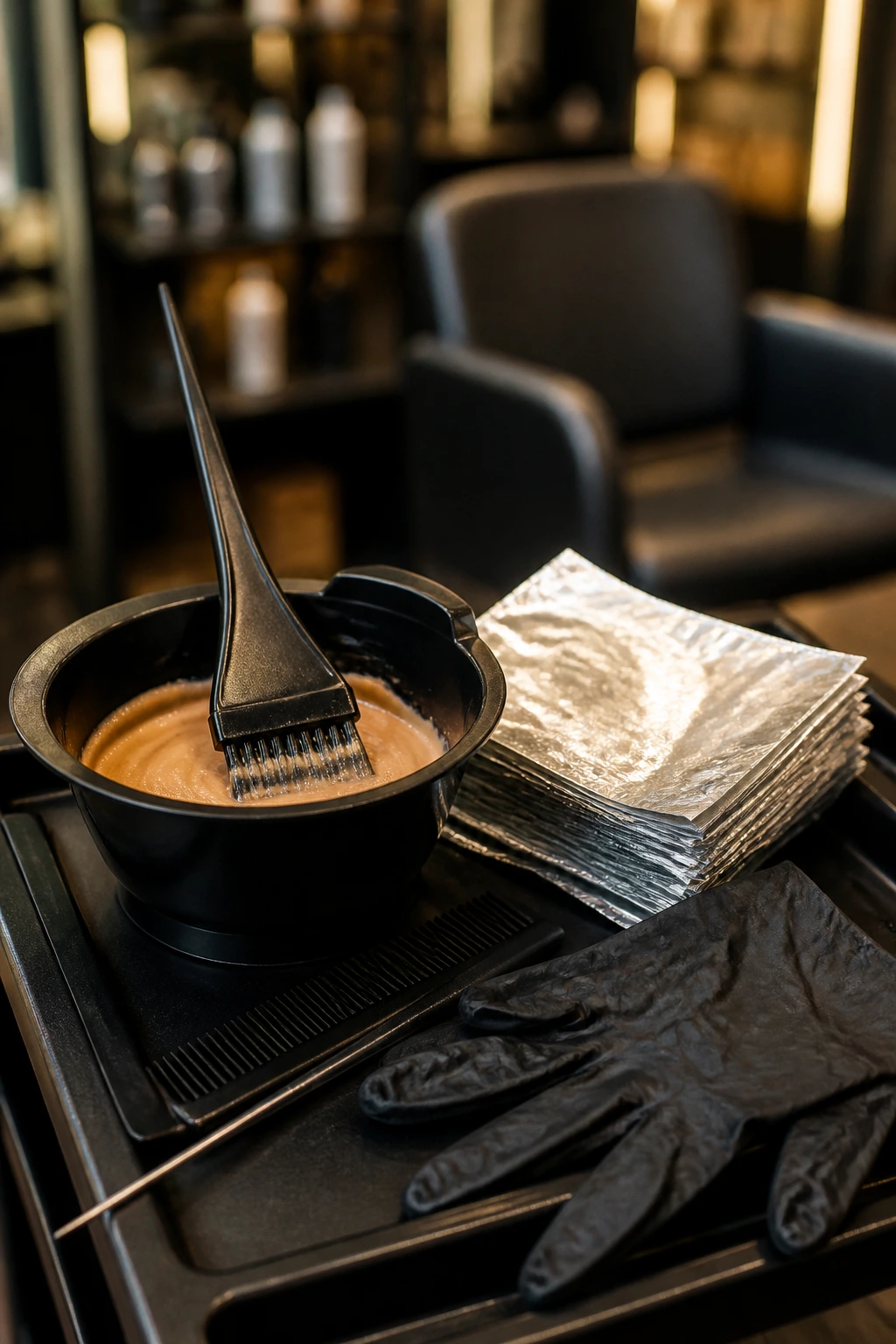
Tint brush and foils or balayage board: Your colorist will choose the technique, but the placement tool changes how sharp or soft the highlights look.
-
Color-safe shampoo: Sulfate-free shampoo helps keep honey and caramel tones from fading too quickly.
-
Color gloss or glaze: A gloss refreshes warmth and shine between larger color appointments.
-
Heat protectant spray: Warm tones look dull when the hair is fried; protect the finish before any blow-dry or iron.
-
Microfiber towel or soft cotton tee: Less roughing = less frizz, especially on highlighted waves and curls.
-
Wide-barrel curling iron or 1-inch wand: Loose bends show off the ribbons and lowlights better than pin-straight hair does.
-
Purple shampoo, used sparingly: Only useful if the blonde starts getting too yellow. Overuse can flatten the warmth that makes this palette work.
Smart Shade Choices When You Sit in the Chair
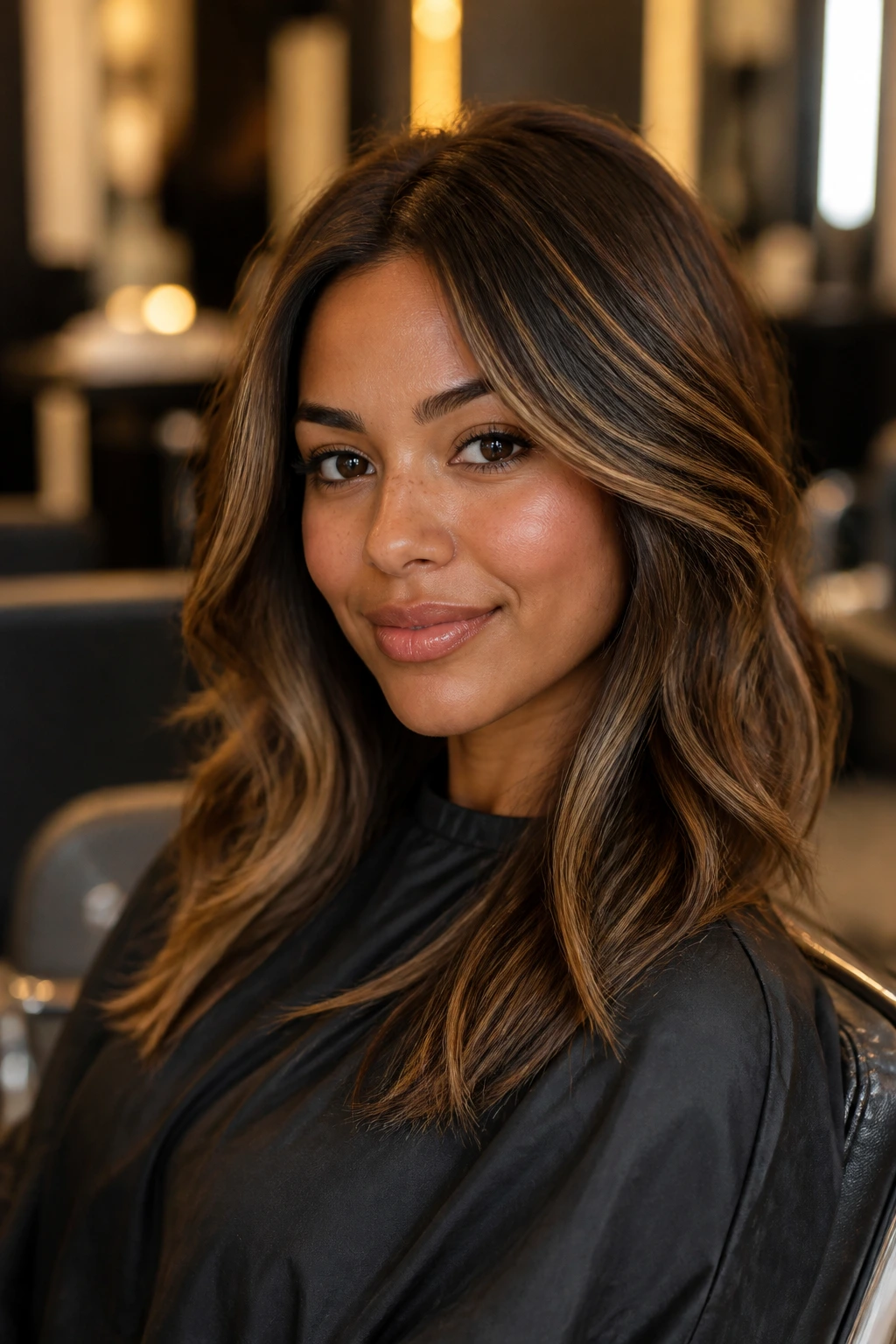
The best highlights for tan skin are rarely the lightest ones in the room. They’re the ones that sit in balance with the base. If your natural hair is dark brown, ask for honey only where you want focus, then let caramel and brown do the heavy lifting through the mids and underside.
If your skin has a golden cast, warmer honey tones usually look seamless. If your skin has olive notes, keep the blonde a touch deeper and let caramel or chestnut take up more space. That avoids the “too yellow” problem that can happen when the lightest pieces are everywhere. And if your hair tends to pull brassy, ask for a beige-gold gloss rather than an overly warm one. The difference is small on paper. On hair, it’s the difference between soft and loud.
How to Style the Color So the Dimension Shows
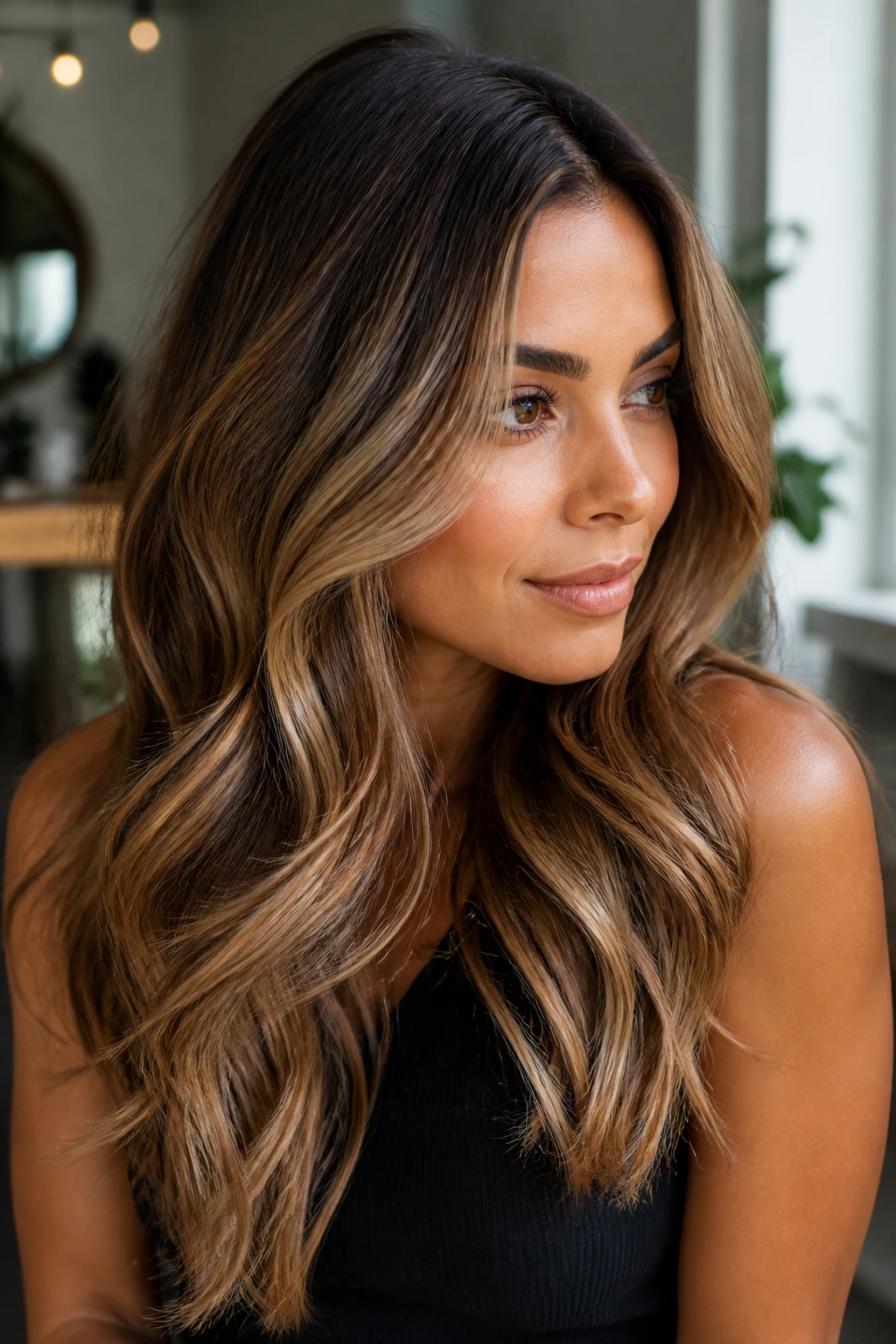
Loose waves do a lot of work here. They split the highlights and lowlights into visible ribbons, which keeps the color from flattening into one tone. A round brush blowout also helps, because it lifts the honey pieces around the face and crown.
Straight styles can work, but they need precision. A blunt, pin-straight finish tends to show every placement line, so if you want that sleek look, make sure the highlights were painted with a soft blend from the start. For curls, scrunching in a light cream or gel can help the caramel pieces pop without puffing the hair up into frizz.
And one small thing: part the hair where the light naturally hits your face. Center part, side part, slightly off-center — it changes where the brightness lands. That tiny shift can make the color feel a lot more intentional.
Additional Tips for More Shine and Better Dimension
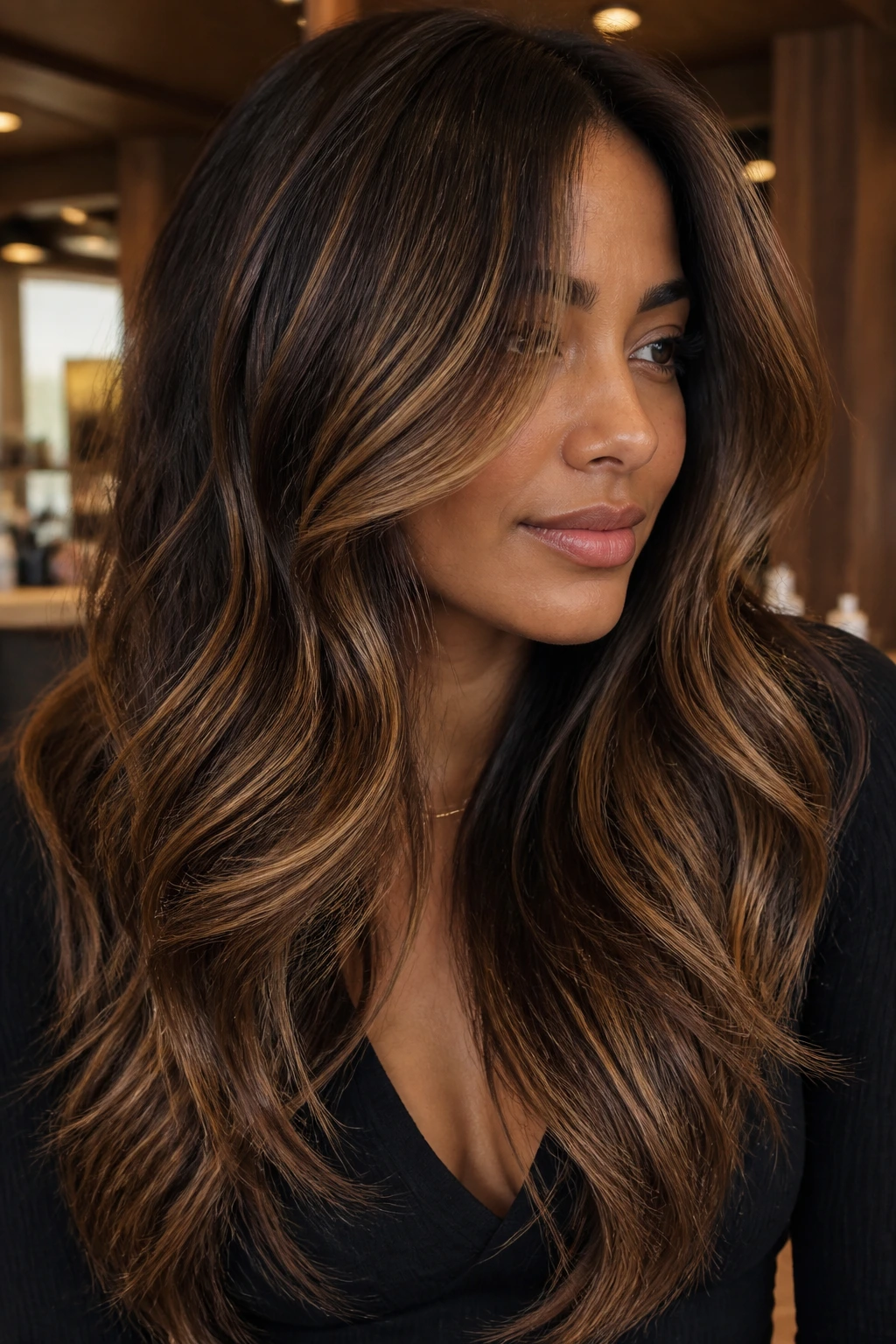
Gloss Boost: A demi-permanent gloss every few weeks can keep honey from turning dull and make caramel look deeper without repainting the whole head.
Texture Boost: A wave spray or light mousse gives the ribbons something to separate on, which helps the color read from a distance.
Face-Frame Boost: Ask for a few brighter strands around the hairline, then keep the rest softer. That keeps the face open without over-lightening the whole head.
Lowlight Boost: If the highlight pattern feels scattered, add a few deeper ribbons through the interior. A little shadow is usually what makes the brightness feel expensive.
Make-It-Yours: If you wear your hair curly, keep the highlight pieces wider and fewer. If your hair is straight or fine, go finer and more frequent so the result doesn’t look patchy.
Common Shade Mistakes That Make Tan Skin Look Flat
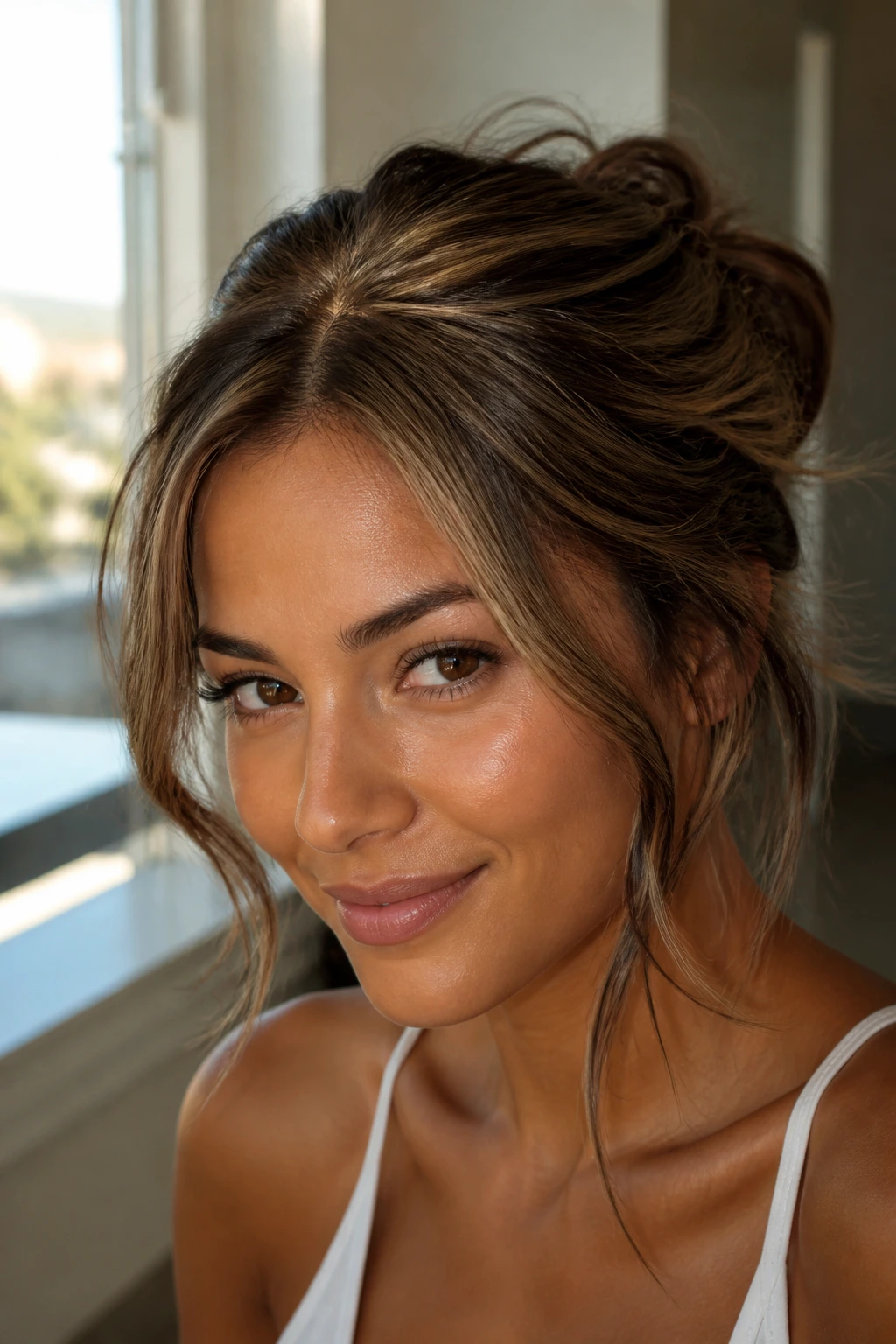
The first mistake is going too cool. Ashy blonde can be lovely on the right skin, but on tan skin it often pulls the color out of the face and makes the hair look disconnected from the complexion. The fix is simple: steer back toward honey, gold, caramel, or beige-gold.
The second mistake is skipping lowlights. A head full of light pieces can look stringy or overprocessed, especially if the base is naturally dark. Add depth back in with chestnut, toffee, or mocha strands.
Another one: putting the brightest pieces everywhere. That kills the shape of the haircut and makes the color look busy. Brighten the front and ends first, then decide if the crown or interior even needs more. A lot of the time, it doesn’t.
And don’t over-tone with purple shampoo. It can drag the warmth right out of this palette and make the honey look beige in a tired way. Use it only when brass starts showing, and rinse it out fast.
Variations and Adaptations to Try
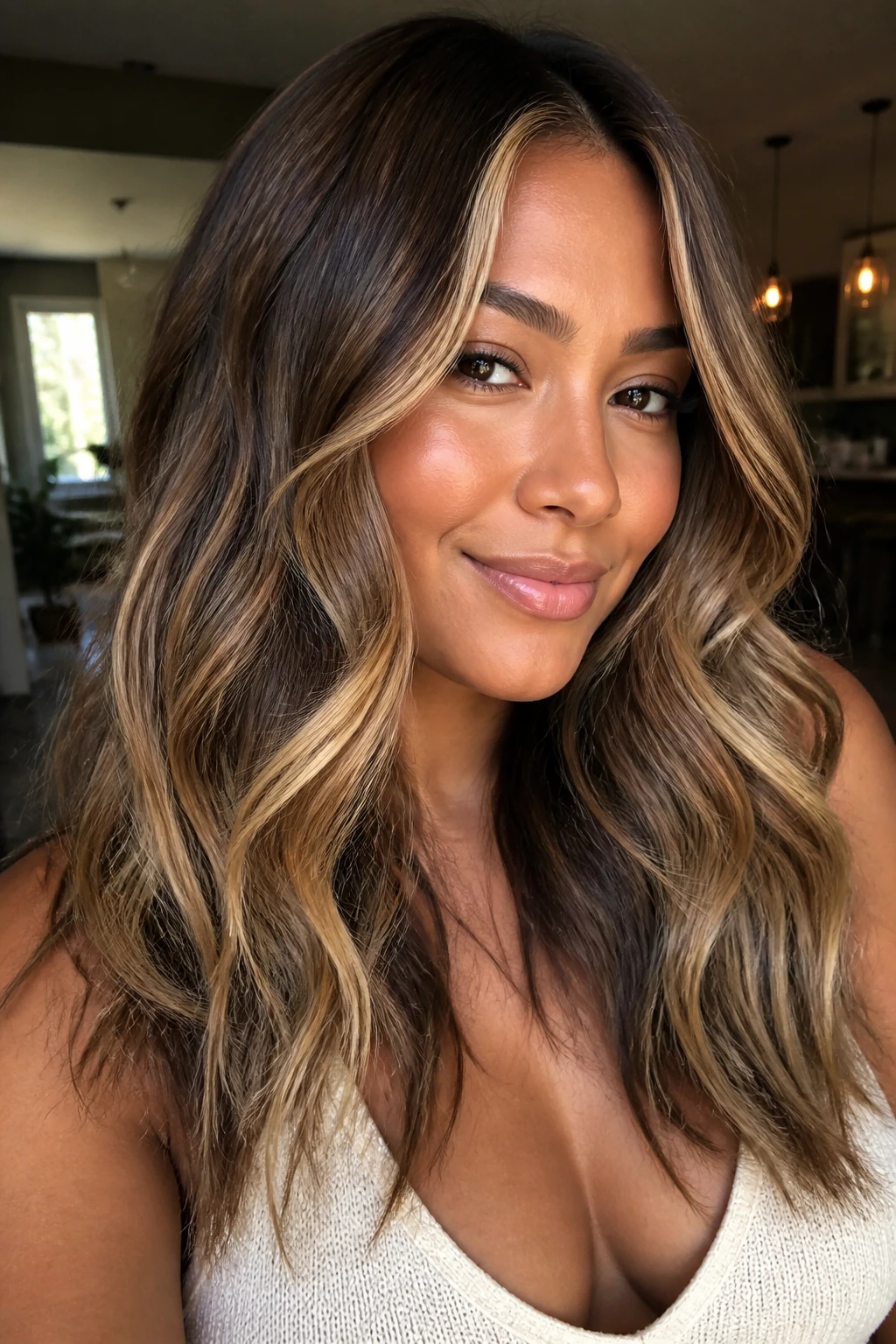
Sunlit Honey Bronde: Keep the base medium brown and let the highlight pattern stay fine and blended. This is the softest route if you want warmth without obvious contrast.
Chestnut-Heavy Caramel Blend: Push the color richer with more lowlights and just a few honey ribbons around the face. It suits tan skin that leans olive or golden and wants depth first.
Bold Money Piece Version: Make the front pieces several shades lighter than the rest, then keep the mids and ends more subdued. This gives you a stronger frame without lightening the whole head.
Curly Halo Lights: Place the brightest pieces around the crown and outer curl pattern instead of the whole surface. The result looks airy and defined, not scattered.
Gloss-Only Refresh: If your highlights are already in place, refresh with a warm caramel or honey glaze instead of adding more color. This is the easiest way to bring back shine between bigger appointments.
How to Keep the Color Fresh Between Visits
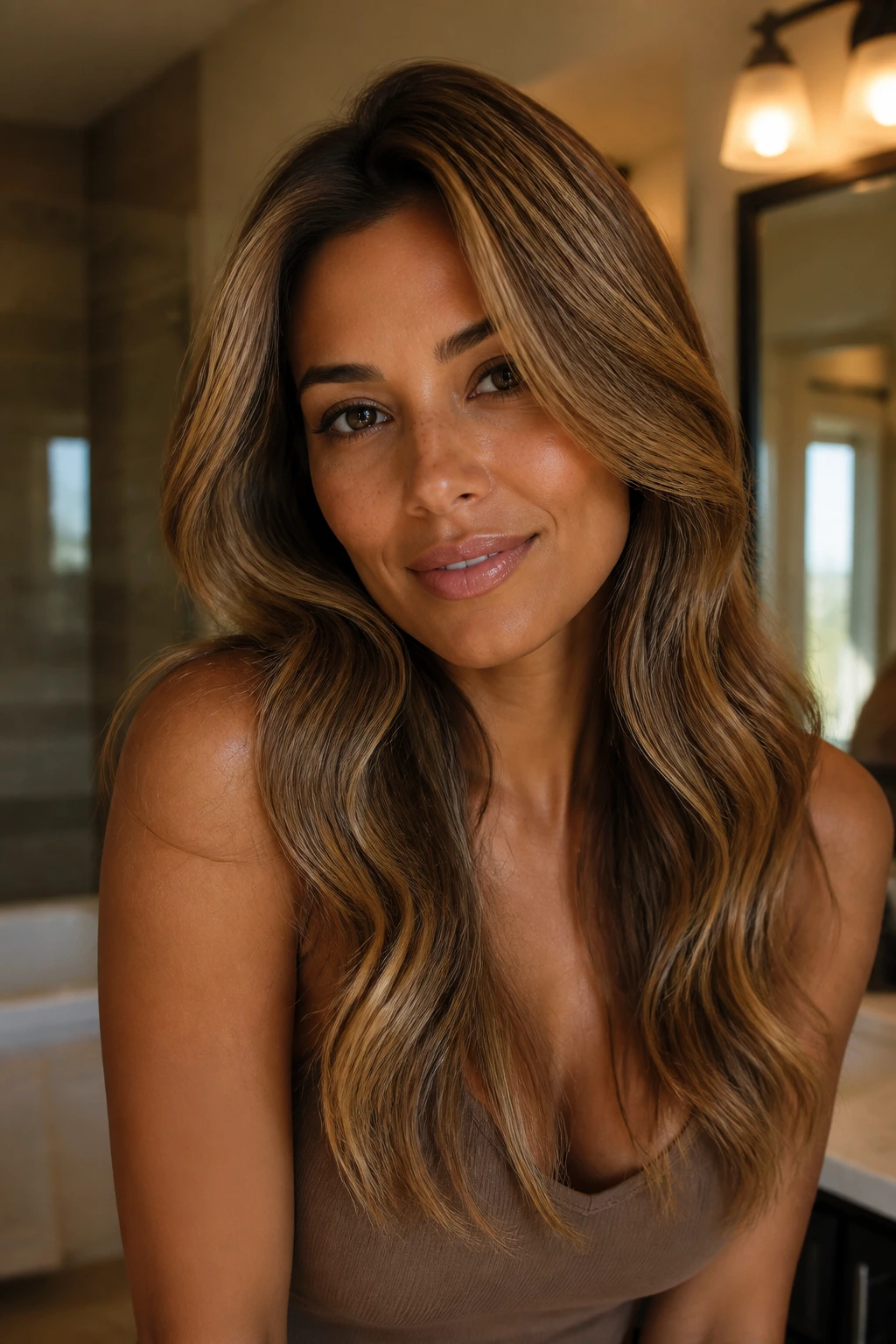
Warm highlights fade differently than cool ones. Honey and caramel usually lose their shine before they lose their actual depth, which means the hair can start looking tired even when the color itself is still fine. A color-safe shampoo, lukewarm water, and a weekly mask go a long way here.
If you heat style a lot, use a protectant every single time. Highlighted ends are the first thing to dry out, and dried-out ends make the whole color look rough. A small drop of lightweight oil on the mids and ends can help, but don’t smother the root area or the hair can look greasy fast.
Salon touch-ups depend on the placement. Babylights and root shadows can stretch longer; chunky face frames and bright money pieces usually need earlier refreshes. Gloss every 6 to 8 weeks is a solid rhythm for keeping the warmth clean. If the hair starts looking too yellow, a quick toning service is better than piling on purple shampoo at home for weeks on end.
Frequently Asked Questions
Will honey blonde highlights look too yellow on tan skin?
They can, if the tone is pushed too warm or if the gloss is skipped. The safer choice is a honey-gold or beige-honey shade with some brown and caramel around it, so the color stays soft instead of brassy.
Should tan skin choose highlights or lowlights first?
If the hair is already light, lowlights often help more than another round of highlights. They bring back shape and make the lighter pieces look intentional. If the hair is dark and flat, then highlights can open it up first.
Do these colors work on curly hair?
Yes, but the placement should follow the curl pattern. Fine babylights can disappear inside curls, so many curly heads look better with slightly wider caramel pieces around the outer layers and face frame.
How often should I get the gloss refreshed?
Every 6 to 8 weeks is a solid range if you use heat often or wash frequently. If the hair stays shiny and the tone holds, you can stretch longer. When the warmth starts looking faded or muddy, it’s time.
Can dark brown hair go honey blonde without looking patchy?
It can, but it usually needs to be lifted gradually. A balayage, foilayage, or highlight-and-gloss approach keeps the transition softer than one heavy bleach session. Patience matters here.
What if I want a low-maintenance version?
Ask for a rooted look with babylights or soft balayage, not a solid blonde through the mids. The deeper root gives you grow-out room, and the lighter pieces still show when the hair moves.
Do I need purple shampoo for this color?
Not always. Purple shampoo is useful only if the blonde starts pushing too yellow. Too much of it can flatten the warmth that makes honey and caramel look good on tan skin.
What haircut shows these highlights best?
Layered lobes, long layers, and soft curtain bangs all show off the ribbons well because they create movement. Blunt cuts can still work, but they need cleaner highlight placement so the color doesn’t read like a stripe.
Keeping the Glow Warm, Not Washed Out
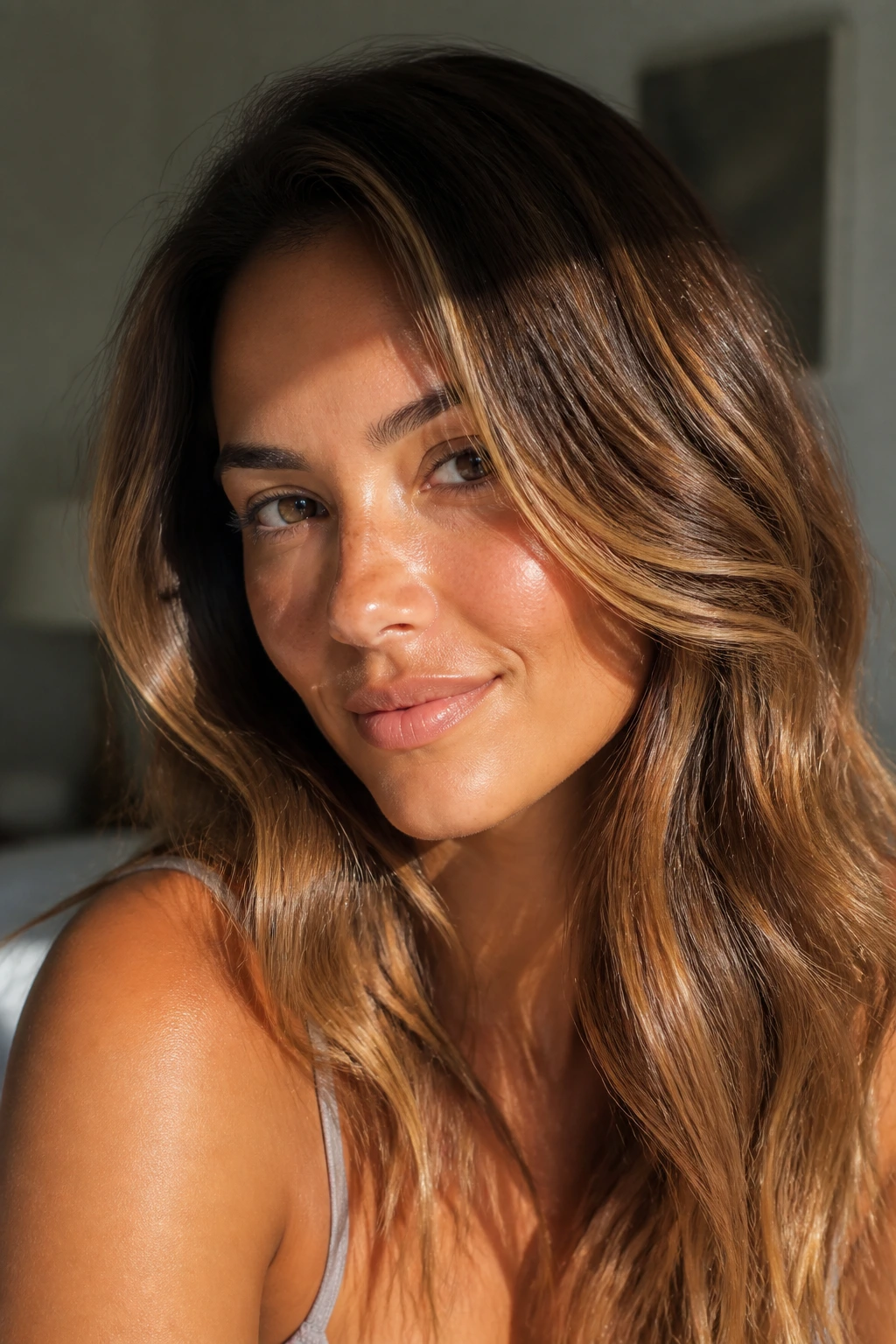
The best honey blonde brown caramel highlights for tan skin don’t try to fight the complexion. They work with it, which is why the finish feels richer than a plain blonde ever does. Warmth, depth, and smart placement do most of the heavy lifting; the colorist just has to keep the balance honest.
If you remember one thing, make it this: brightness is only flattering when it has somewhere to land. Around the face, through the waves, at the ends, beneath a deeper root — that’s where the warmth comes alive. Bring a few clear photos, ask for levels instead of vague “lighter” talk, and keep the gloss warm enough to match your skin instead of cooling it down.