



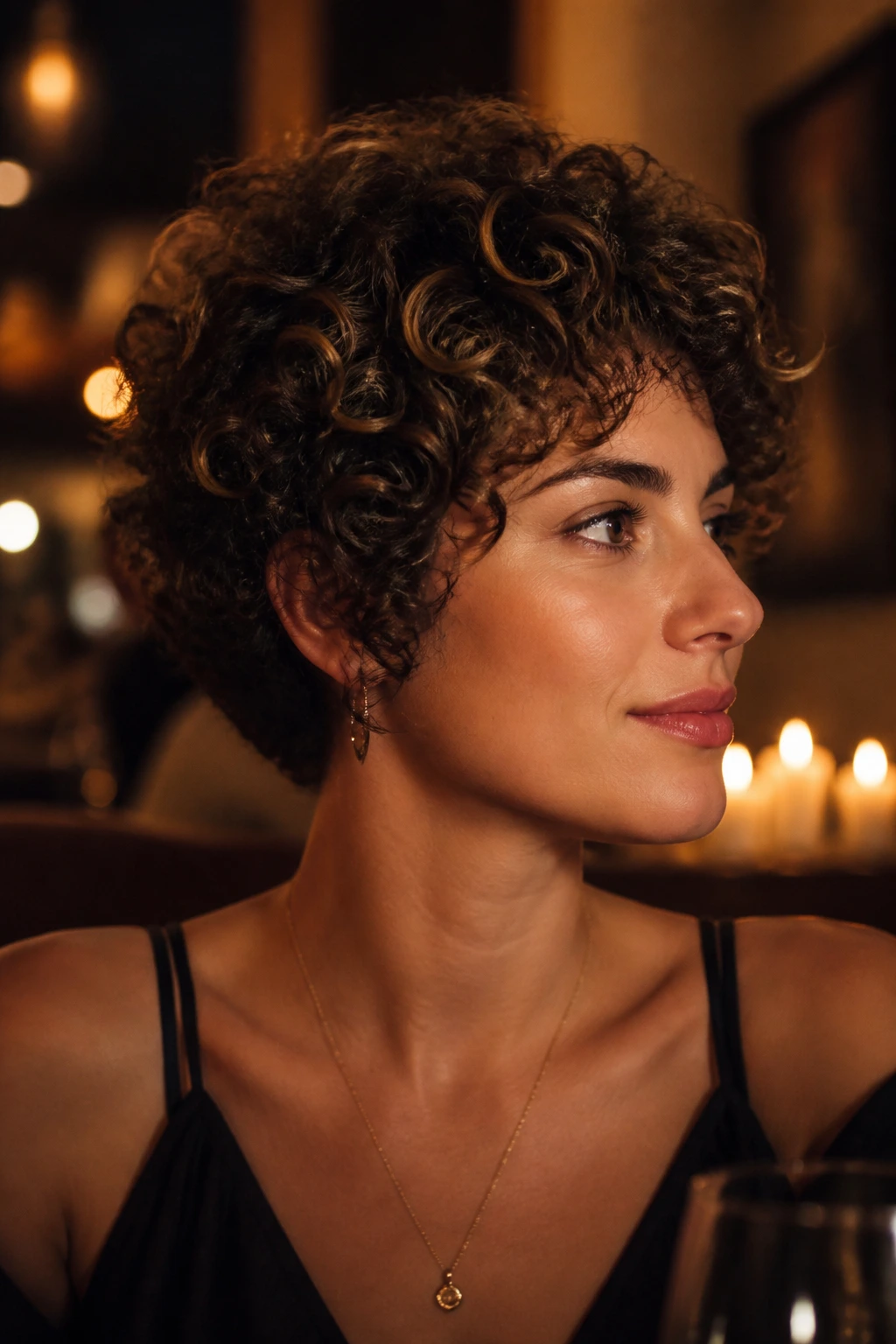
Short curly haircuts for date night with lowlights have a sneaky advantage: they look more finished before you’ve even touched a diffuser. That matters when the light gets soft, the room gets warm, and every curl starts telling the truth. A smart lowlight placement adds shadow inside the shape, so the cut looks fuller at the roots, cleaner at the edges, and less puffy in the middle.
I’ve always liked lowlights more than people expect on short curls. Highlights can be pretty, sure, but darker ribbons tucked through a bob or pixie do something more useful: they separate curl clumps, sharpen the outline, and keep the whole style from turning into one bright halo. On short hair, that little bit of depth makes a big difference.
The trick is restraint. A level or two deeper than your base color is usually enough. Go too dark and the curls can look painted on; go too chunky and the shape starts to read stripey instead of dimensional. The best versions are the ones that look effortless from across the table and even better when you lean in.
Why These Cuts Work Better Under Candlelight
-
Depth Without Bulk: Lowlights tucked inside the curl mass keep short hair from ballooning out at the sides, which is useful when your cut stops at the cheek, jaw, or nape.
-
Shape You Can See From Across the Room: A strong perimeter and a little darker color underneath make the curl pattern stand out instead of blur together.
-
Less Panic With Styling: If the haircut already has movement and the color already has shadow, you don’t need a pile of products to fake both.
-
Softer Grow-Out: Interior lowlights blur into regrowth better than an all-over dark change, so the style holds its shape longer between salon visits.
-
Better In Low Light: Restaurant lighting tends to flatten bright, uniform color. Deeper ribbons keep the curls visible when the room goes dim.
Which Cuts Suit Loose Curls, Coils, and Fine Hair
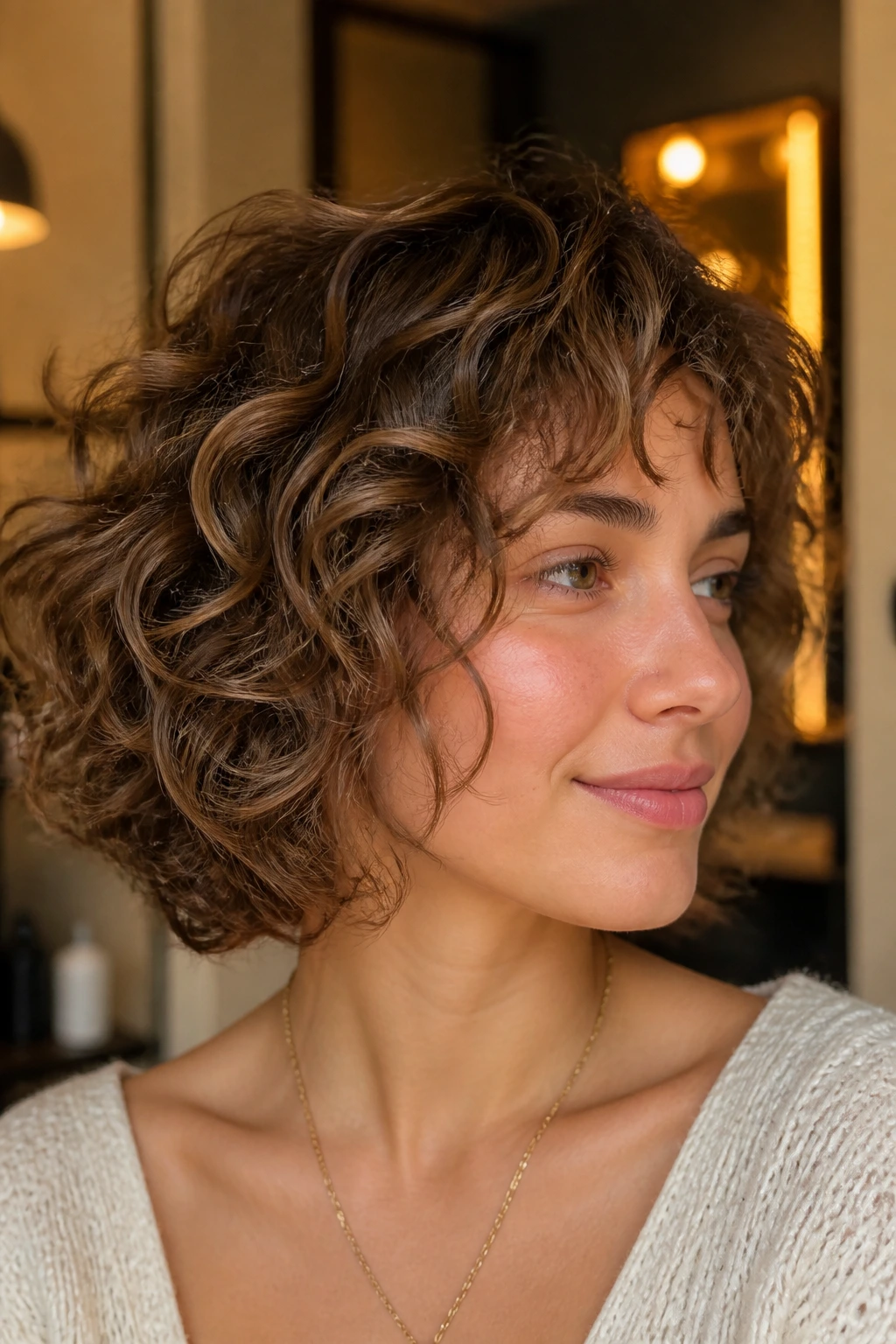
Not every short curly cut behaves the same way. A loose 2C wave can take a choppier shape and still look polished. Tighter 3C curls and coils usually need more room through the crown and sides, or the silhouette starts to puff out before you’ve left the driveway. Fine curls sit in a weird middle ground: they need shape, but too much layering can make them look skinny at the ends.
If your curls are loose and springy, a bob, lob, or shag with lowlights through the interior layers will give you the richest result. If your curls are tight, ask for a clean outline and a little extra length where shrinkage hits hardest — usually the nape, temples, and front corners. Fine curls usually do best with a sculpted cut and lowlights placed under the top layer rather than all over the crown.
And if your hair is thick? Don’t fight it. Let the cut carry some weight out of the sides or back, then use the lowlights to break up the mass. That’s the difference between a shape and a cloud.
1. Curly French Bob with Chestnut Lowlights
A French bob on curls lives or dies by the line at the jaw. Keep it soft, not boxy, and the whole style starts to feel a little more deliberate — the kind of deliberate that looks good next to a restaurant menu and a glass of red wine. Chestnut lowlights tucked under the top layer stop the bob from reading as one bright helmet of curls.
Why It Works
The cut sits right where the cheekbone and jaw can do some visual lifting. That matters. A curl that lands at chin level can either frame the face or widen it, and the lowlights help tip that balance in your favor. Ask for light internal layering and a slightly longer front if your curls shrink a full inch or two when dry.
A side tuck on one side is enough. Seriously.
2. Rounded Pixie Crop with Espresso Lowlights
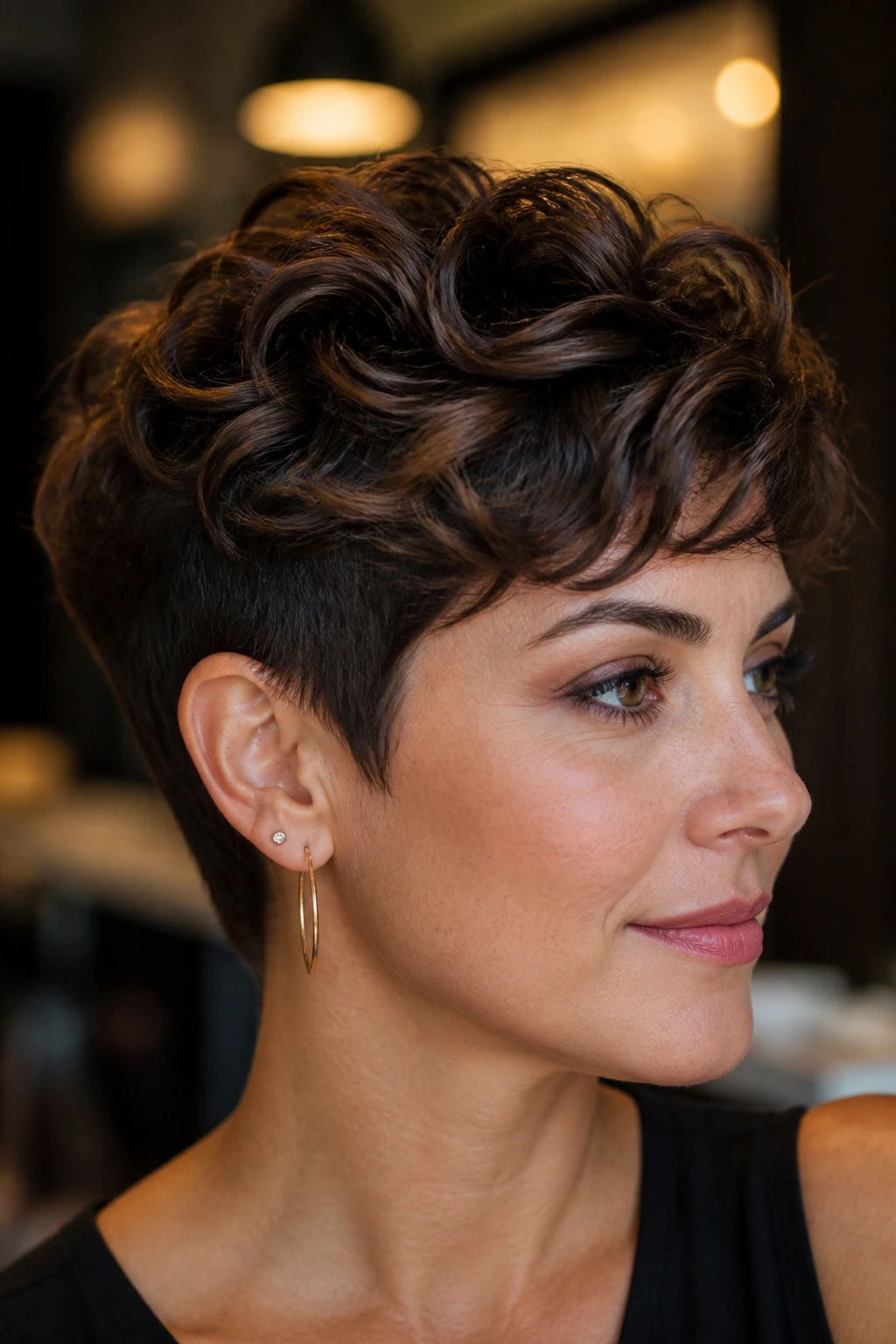
A rounded pixie crop gives you shape without the fuss of length hanging around your face. Espresso lowlights underneath the top curls make the crown look denser, which is useful if your hair is fine or if you’ve got loose curls that collapse after a few hours. The result feels polished without turning stiff.
What to Ask For
Keep the sides close and let the top carry the curl. The top should still move when you shake your head; if it sits too flat, the cut loses the whole point. Ask for lowlights around the temple and nape area, not just on the surface, so the color shows depth when the hair shifts.
This one loves a small hoop earring and a clean neckline. It has that neat, slightly mischievous energy that plays well after dark.
3. Chin-Length Curly Shag with Walnut Lowlights
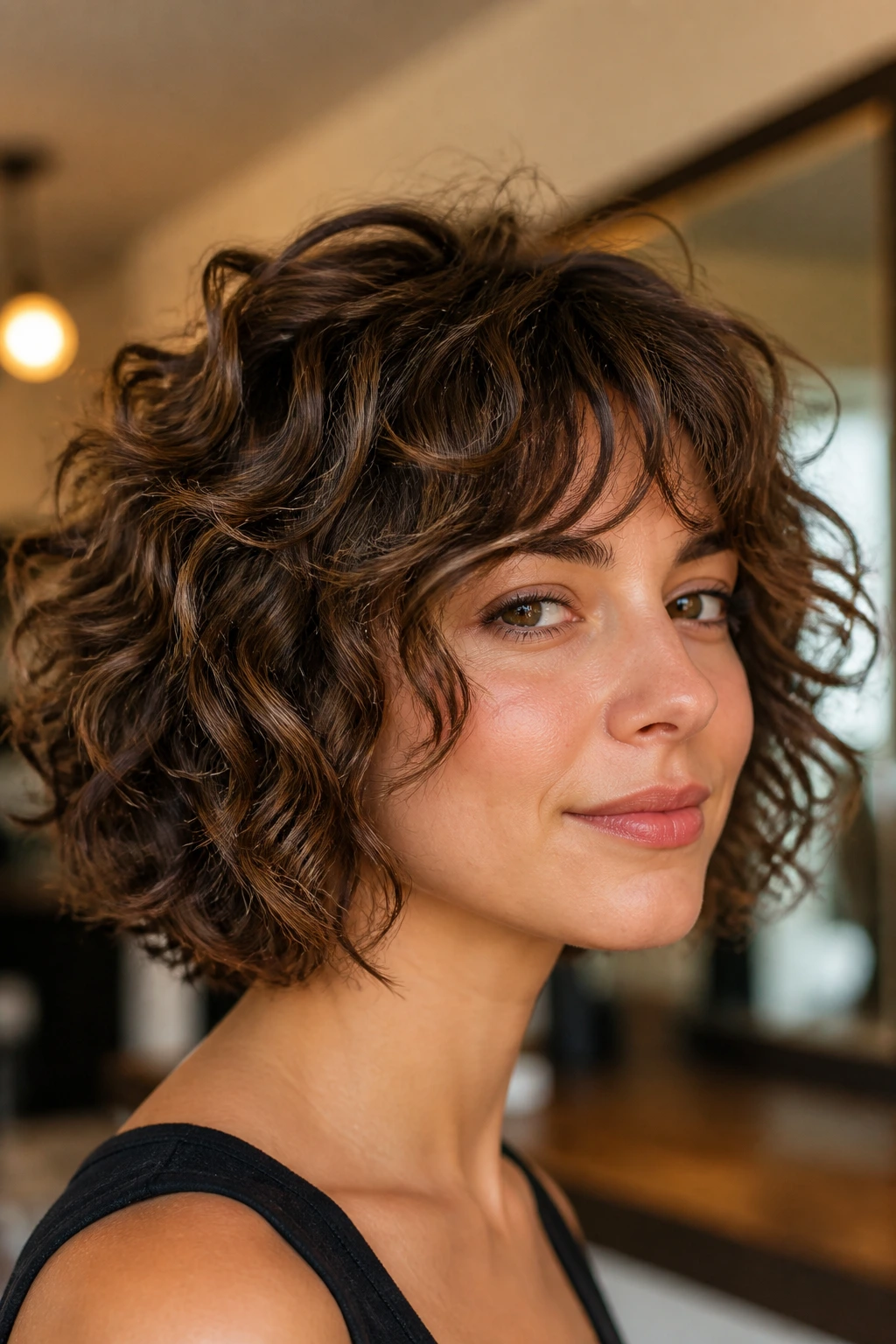
Want movement? This is where the cut gets louder than the color. A chin-length shag on curly hair gives you those little broken-up layers around the face, and walnut lowlights keep the shape from going fuzzy at the edges. The shadow sits in the curls instead of on top of them.
Why It Flatters
The shag is useful because it removes bulk where curl density usually gets heavy — around the cheeks and lower sides. Walnut lowlights work especially well here because they don’t fight the curl pattern; they sit inside it and make each bend easier to see. If your hair tends to go triangle-shaped, this cut fixes a lot of that by weight alone.
A little root lift at the crown makes the whole thing feel intentional. Skip the crunchy finish. You want touchable, not shellacked.
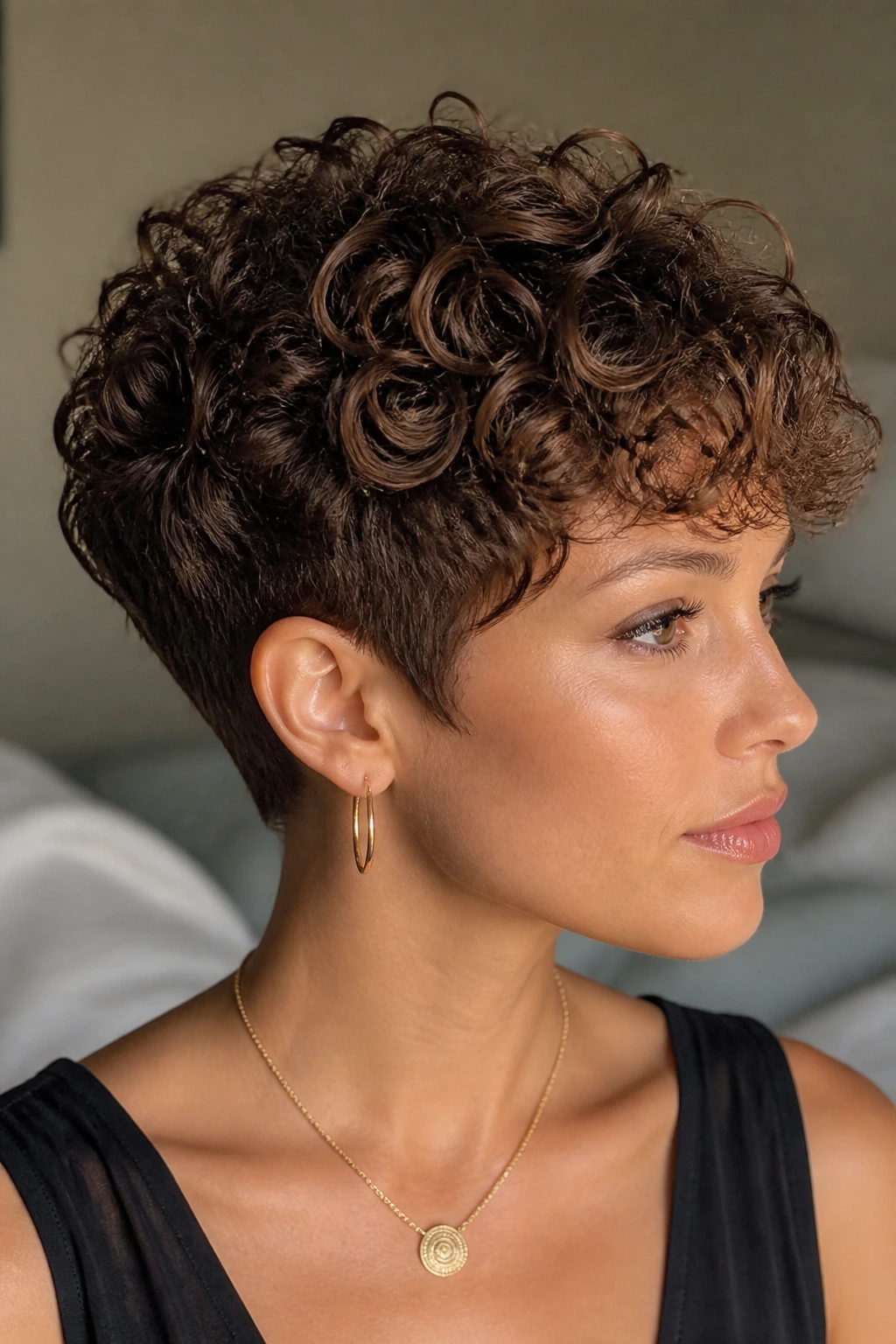
4. Tapered Curly Crop with Mocha Lowlights
The tapered crop is the cleanest option in the whole set, and I mean that in a good way. Shorter at the nape, fuller at the top, and shaped so the side silhouette stays neat, it’s the kind of cut that looks sharp with very little effort. Mocha lowlights inside the crown and around the back add the darker depth that keeps the top from looking too fluffy.
A tapered shape is a smart call if you like a jacket collar, a bare neck, and earrings that can actually be seen. The lowlights should live where the curls naturally fold inward; that’s what gives the style dimension. If the sides are too dark and too solid, the cut can go helmety. Keep it airy.
5. Side-Parted Curly Lob with Toffee Lowlights
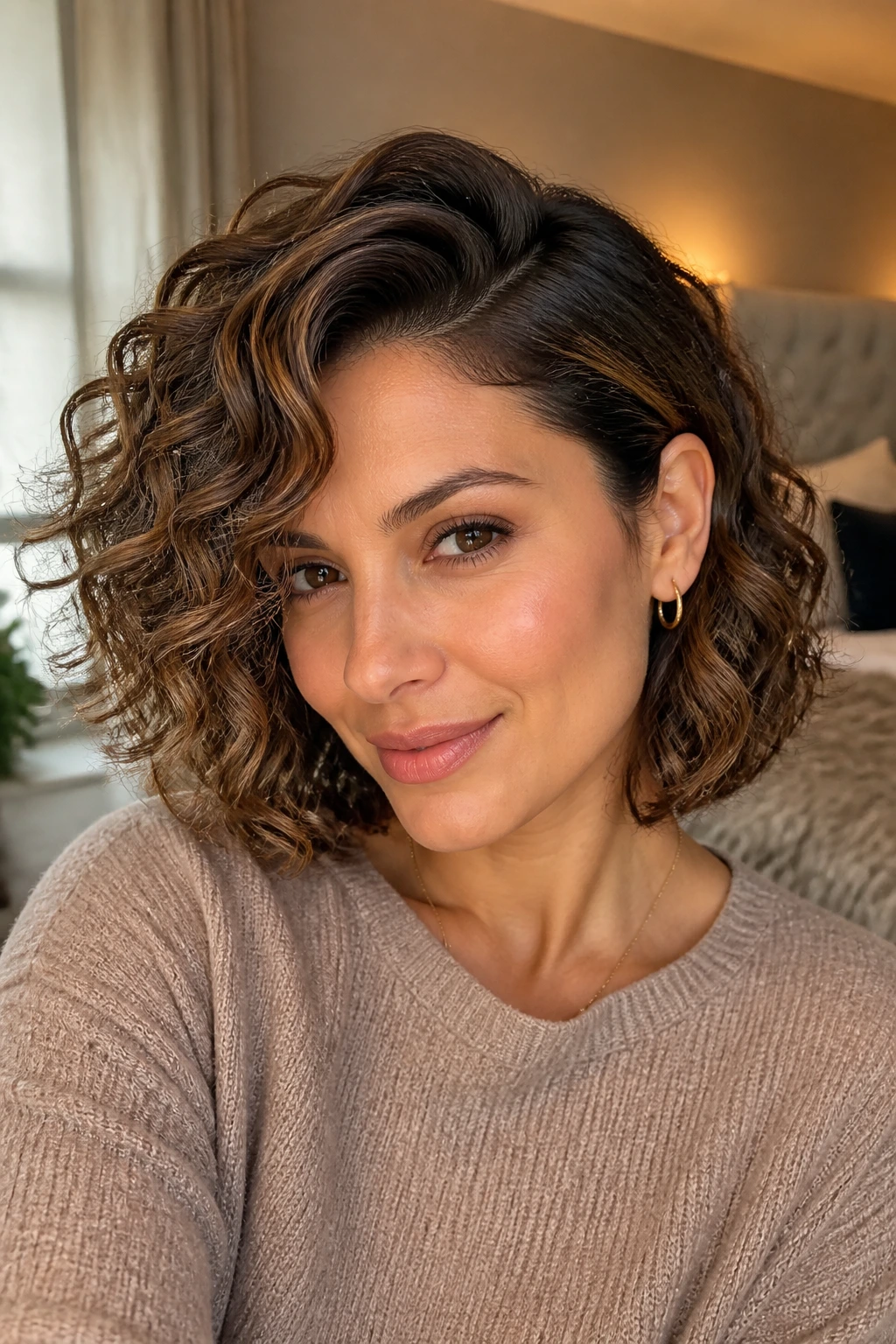
This one is the softest flirt in the group. The lob sits just long enough to tuck behind one ear, but still short enough to feel fresh and easy. A side part gives the curls a little lift at the front, and toffee lowlights warm up the shape without stealing light from the face.
The nice part is how forgiving this cut is. If one side goes a little flatter than the other, the asymmetry still looks chic. Ask your stylist for long layers that keep the ends loose, not choppy. That lets the curl ringlets hang instead of stacking into a puff.
If you want a little more drama, sweep the heavier side across the forehead and leave the opposite side clipped back. It reads romantic without trying too hard.
6. Layered Ringlet Bob with Cinnamon Lowlights
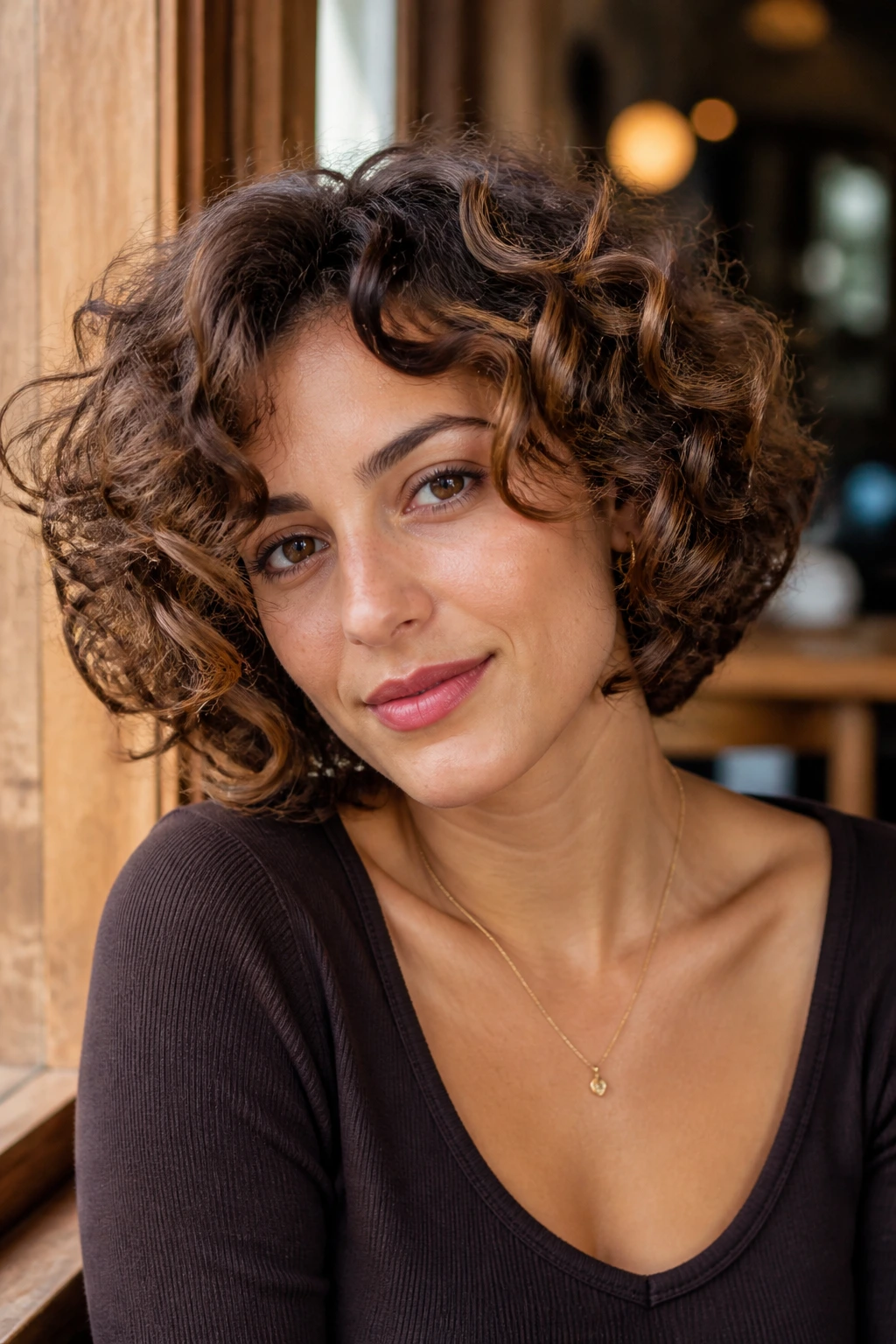
Ringlet curls love a bob when the shape is rounded and the layers are placed with a light hand. Cinnamon lowlights give those spirals a warmer, richer edge, especially if your natural base sits in the medium-brown range. The contrast is subtle, but it keeps the curls from looking like one bright ball.
Quick Shape Note
This bob should look like the curls were encouraged, not forced. The ends need enough freedom to spring, and the layers should support the ringlets instead of breaking them apart. If your curl pattern is tight, ask for dry cutting or a curl-by-curl trim so the shape doesn’t shrink into a surprise triangle.
A little shine cream on the very ends is enough. More than that and the definition starts to blur.
7. Curly Mullet with Smoky Brunette Lowlights
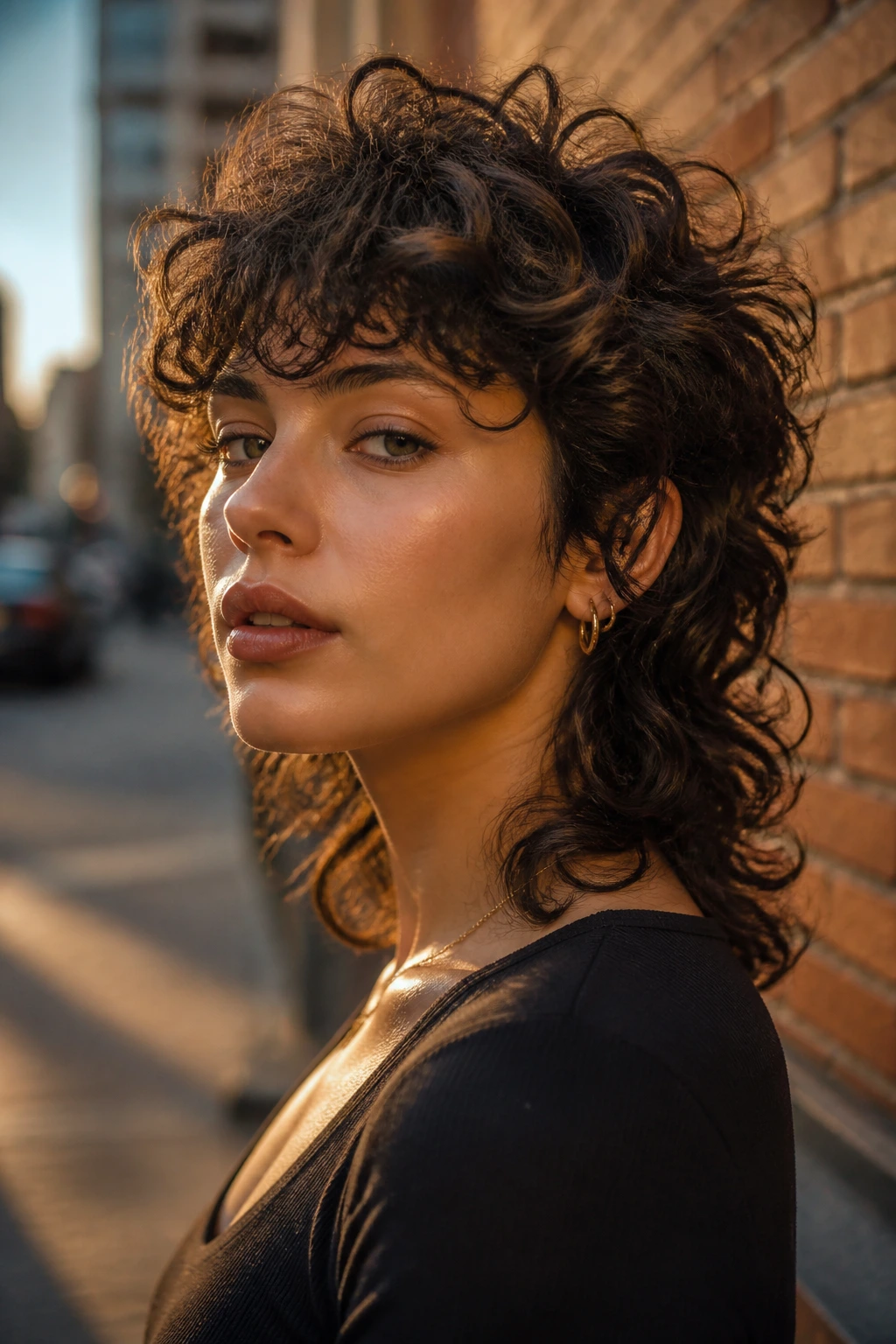
The curly mullet is for someone who likes a little edge in the mirror. Shorter around the face, longer in the back, and full of uneven movement, it works because the shape already has personality. Smoky brunette lowlights keep the top from getting too bright and help the nape look intentionally dark and soft.
This cut is better than it sounds on paper. The curly texture softens the mullet line, and the lowlights make the whole thing feel layered rather than harsh. If you wear statement earrings or a leather jacket, this one pulls everything together fast.
Keep the front pieces a touch shorter if you want more lift around the eyes. The back can stay longer and loose, which is where the romance sneaks in.
8. Sculpted Pixie-Bob with Cocoa Lowlights
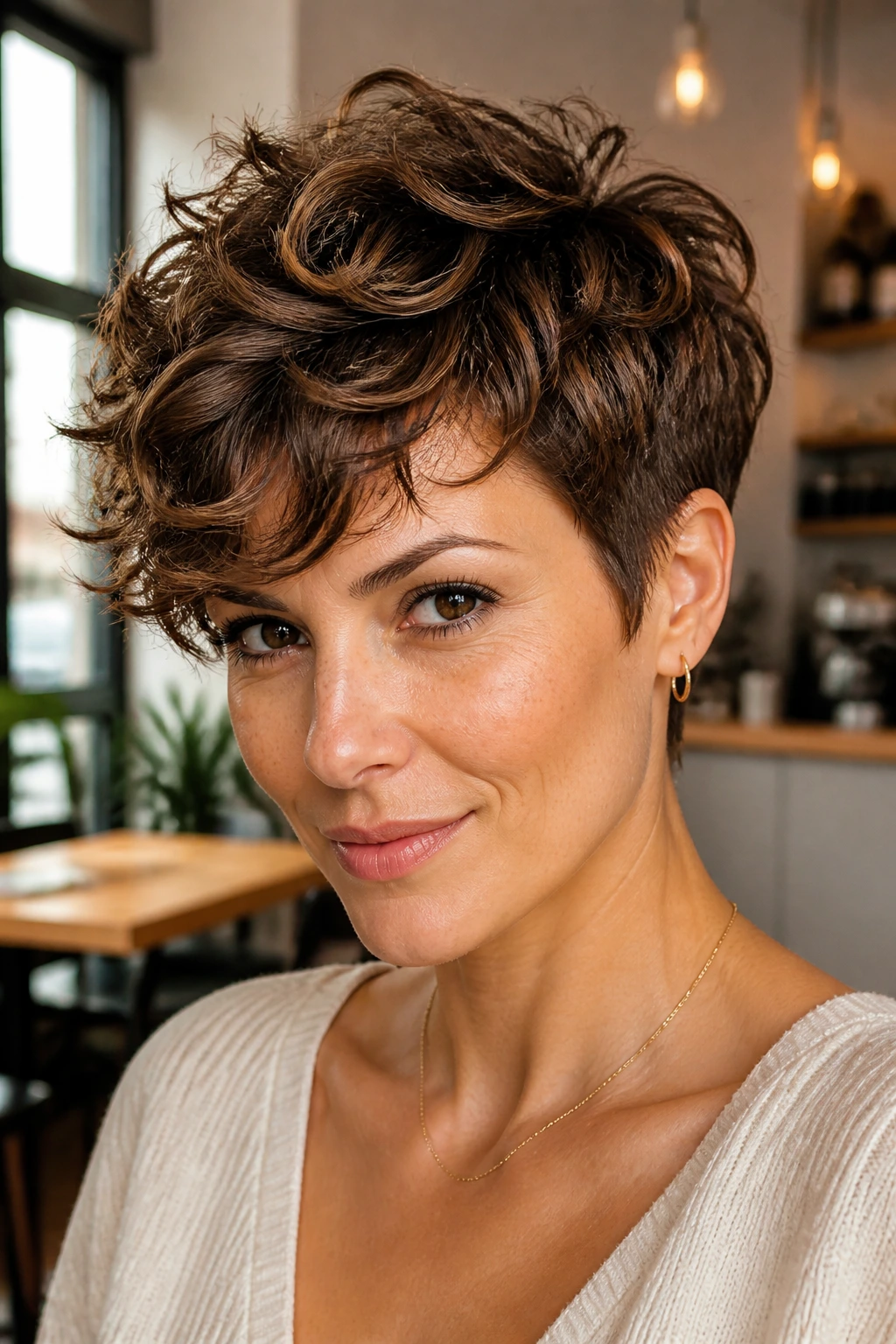
A pixie-bob sits between playful and precise, which is a nice place to be for dinner plans. It has the neatness of a pixie around the sides with a little more length through the top and front. Cocoa lowlights tucked through the underside make the top curls stand up in a cleaner way.
The shape works best when the perimeter is crisp and the top stays soft. You want enough length for a finger-styled wave or a loose curl pattern, but not so much that the shape collapses over your forehead. Ask for a little extra balance at the crown if your hair is thick; otherwise the top can swell.
This is one of those cuts that looks more expensive when the neckline is clean. Tiny detail, big payoff.
9. Asymmetrical Curly Bob with Auburn Lowlights
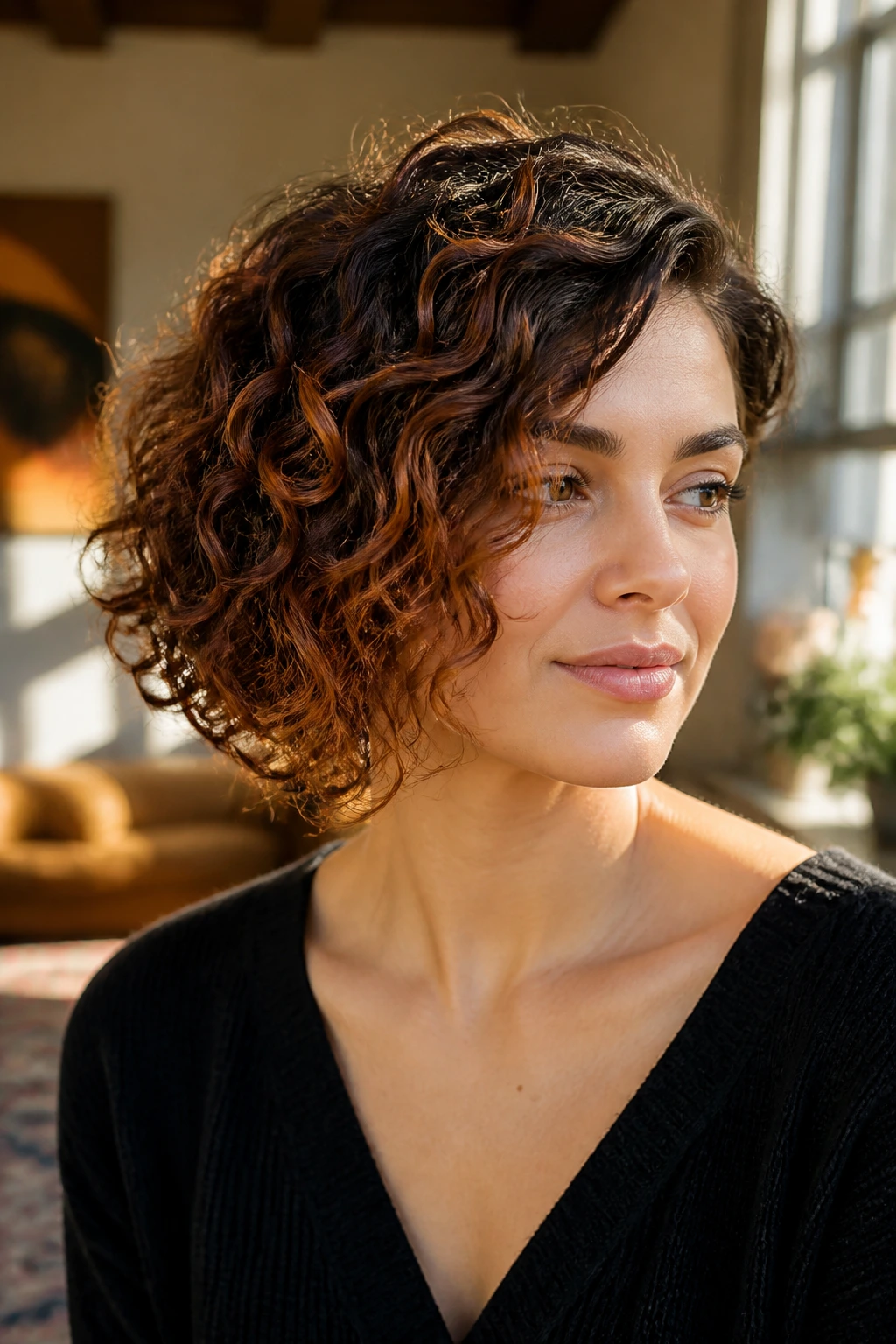
A slight asymmetry changes everything. One side a little longer than the other gives the cut motion even before you fluff it, and auburn lowlights keep the curl mass from going flat or gray in dim light. The warmth near the face is especially nice if you wear copper lipstick or gold jewelry.
What I like here is the sense of direction. The eye has somewhere to go. If your curls are loose and elastic, the longer side can drape forward; if they’re tighter, the angle will still show once the curls dry.
Ask for the shorter side to hit just below the ear and the longer side to graze the jaw. That keeps the difference visible without turning the cut into a gimmick.
10. Soft Afro Crop with Dark Chocolate Lowlights
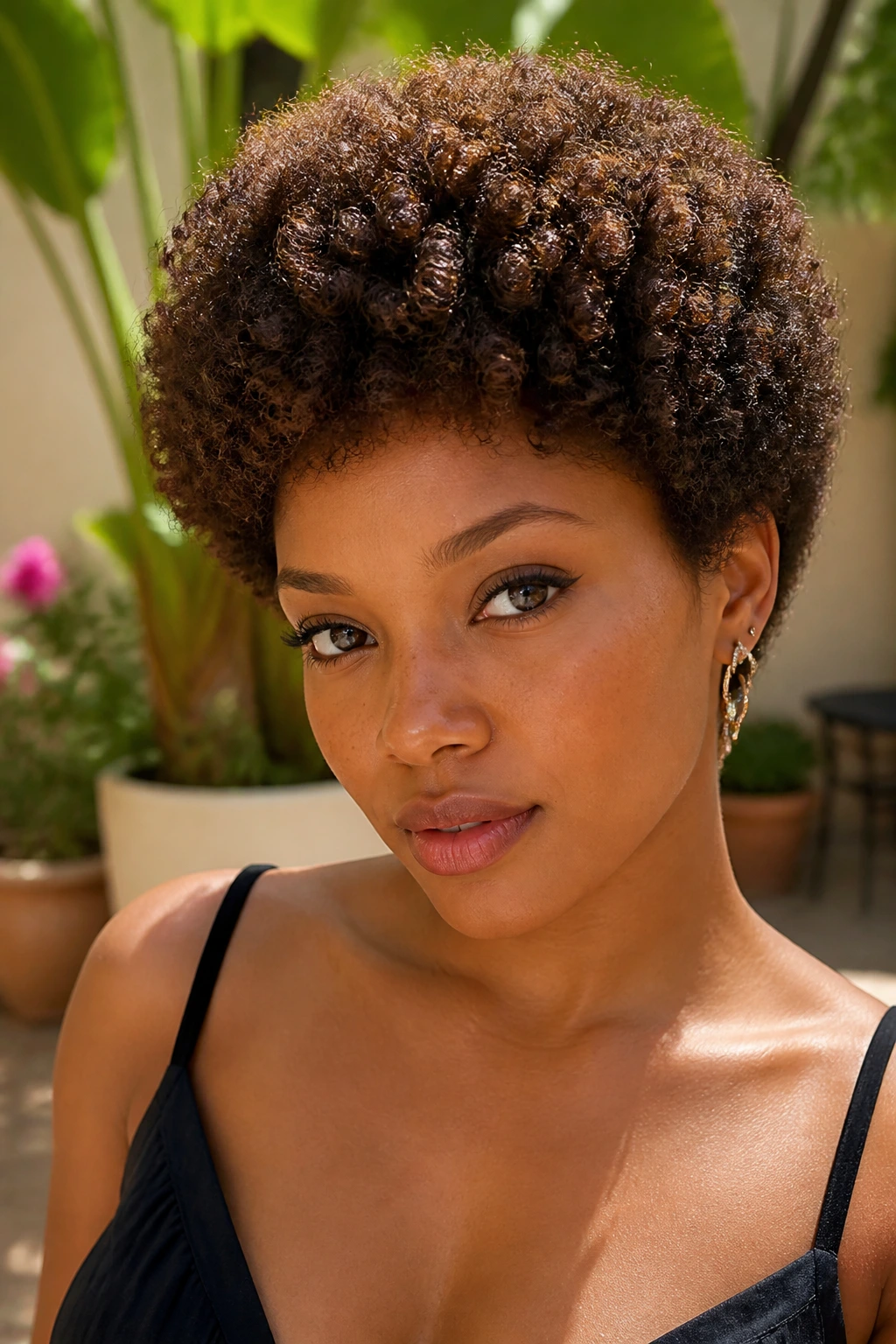
This cut is all about shape control. A soft afro crop can be beautifully rounded, but if every curl sits the same length, the silhouette can get too wide through the sides. Dark chocolate lowlights placed in the recesses of the curl pattern create depth without taking away the natural texture.
The trick is not to darken everything. Let the outer curls catch the light and put the lowlights where the shape needs shadow — around the temples, under the crown, and just inside the edge. That gives the crop a fuller center and a neater outline.
A tiny bit of edge control at the hairline helps, but don’t slick it down too hard. This cut wants lift, not tension.
11. Neck-Grazing Curly Cut with Bronze Lowlights
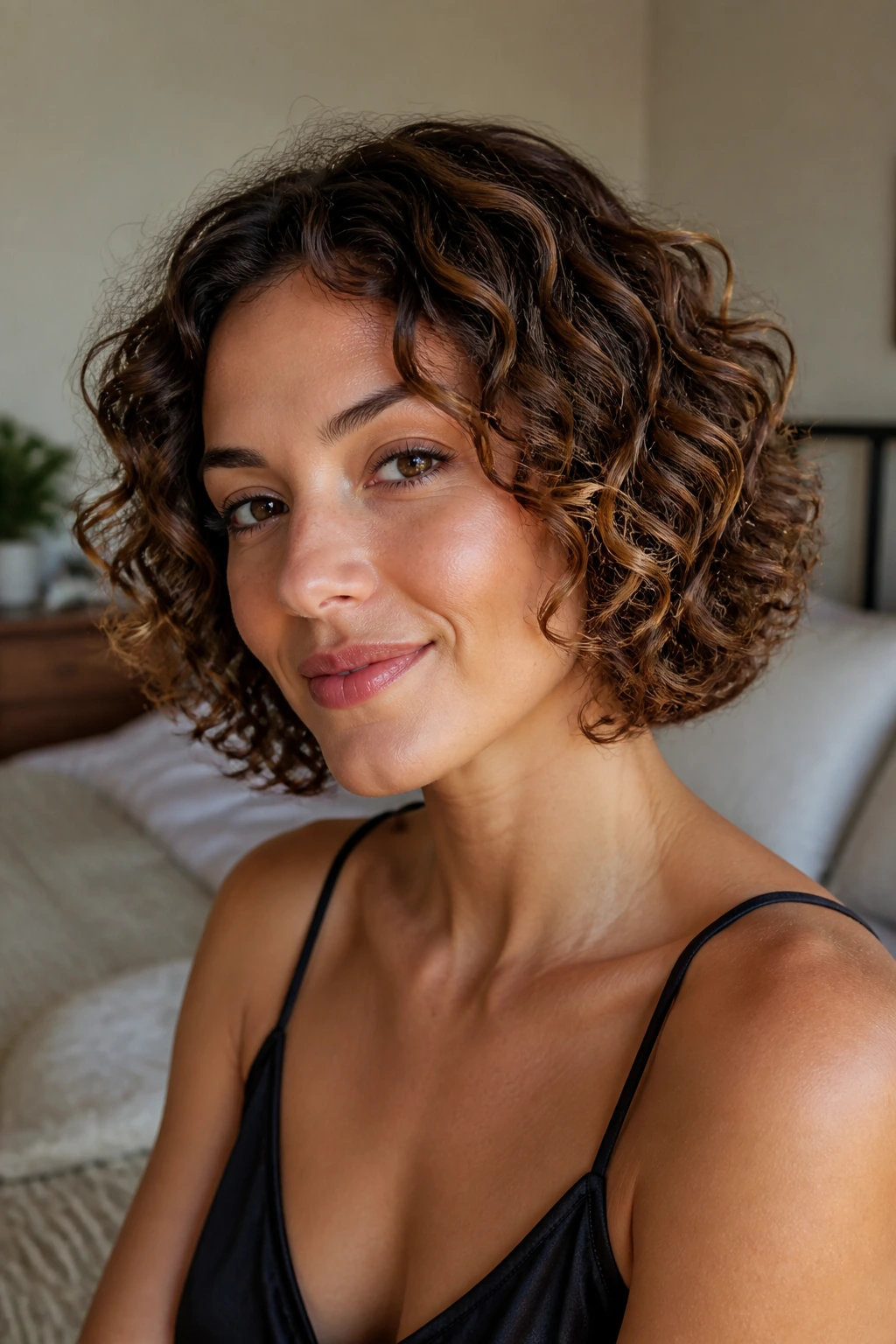
If you like a little length but still want the haircut to feel short, a neck-grazing cut is a nice middle ground. Bronze lowlights make the curls look warmer and more polished, especially if your natural color sits in the dark-brown range. The shape lands just far enough below the chin to move when you turn your head, which is half the charm.
A good neck-grazing cut should curl inward at the ends rather than flaring outward. That’s where the lowlights help — they tuck visual weight into the bottom and keep the top from puffing out. If you’ve got a long neck, this cut is especially flattering. If you’ve got a shorter neck, keep the back slightly shorter so it doesn’t crowd the collar line.
12. Curly Bixie with Deep Brunette Lowlights
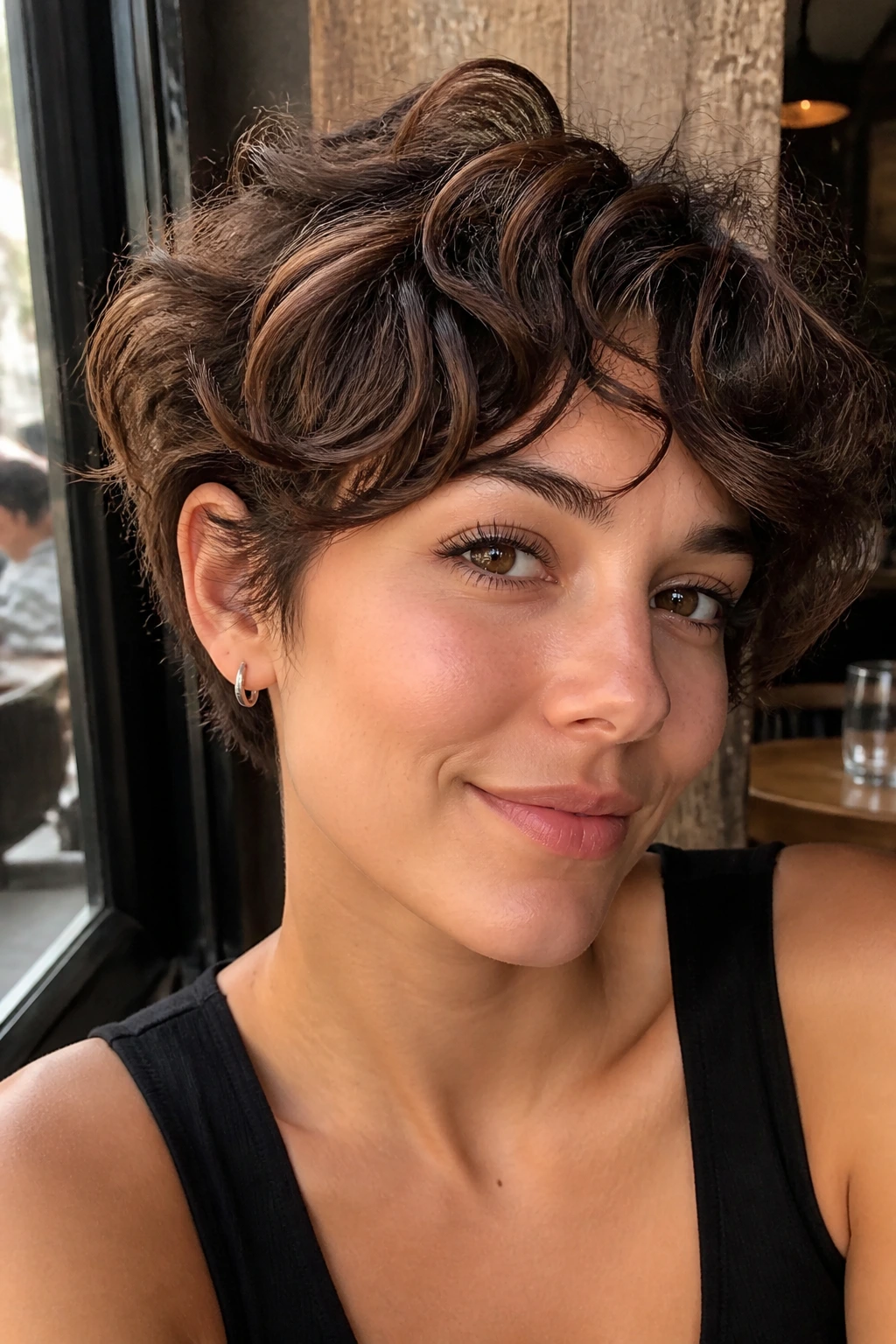
The bixie is the easy answer when you want something between a bob and a pixie. It’s short, but not severe; soft, but not shaggy. Deep brunette lowlights bring some shadow into the top layers and make the whole thing look fuller without adding bulk.
How It Wears
This is a good choice if your curls are fine or if your hairline needs a little softness around the ears. The front can stay a touch longer to frame the face, while the back stays tighter for clean shape. Ask for the lowlights to sit below the widest curl layer, not all the way through the fringe.
That placement matters more than most people think. Put darkness in the wrong spot and the cut looks muddy. Put it under the curl canopy and the style starts doing the work for you.
13. Jaw-Length Inverted Bob with Hazelnut Lowlights
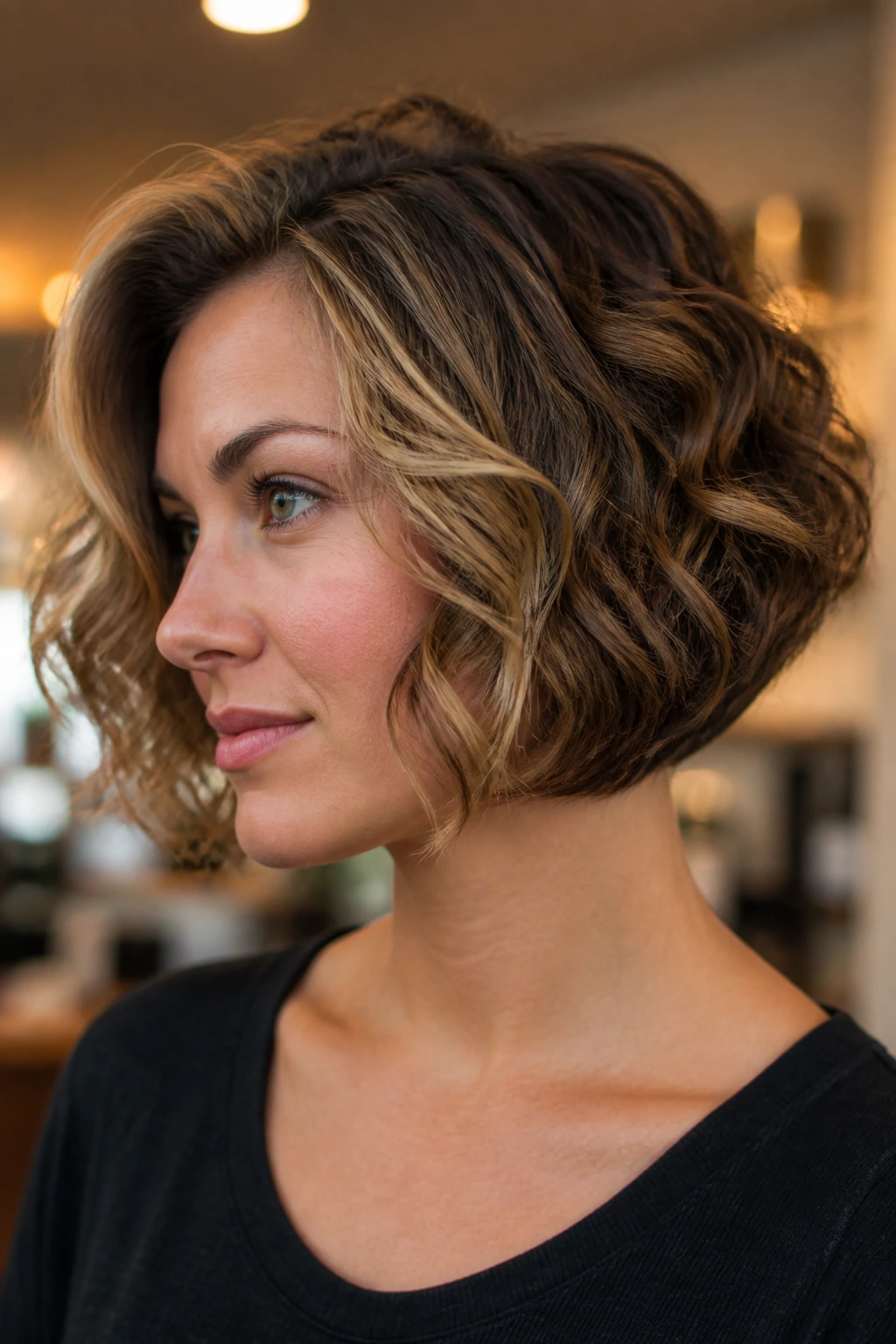
An inverted bob gives you a shorter back and longer front, which is useful when your curls need lift without too much width. Hazelnut lowlights through the nape and underlayer keep the back from looking too bright or puffy. The front angles toward the chin in a way that feels sharp but not severe.
This cut likes a deep side part or a slightly off-center part, depending on how much face framing you want. If your jaw is strong, the longer front pieces soften it. If your face is rounder, the angled front can add a little length visually.
A light gel cast works well here. Once it’s broken, the lowlights show more clearly because the curl clumps stay defined.
14. Curly Crop with Micro Bangs and Midnight Brown Lowlights
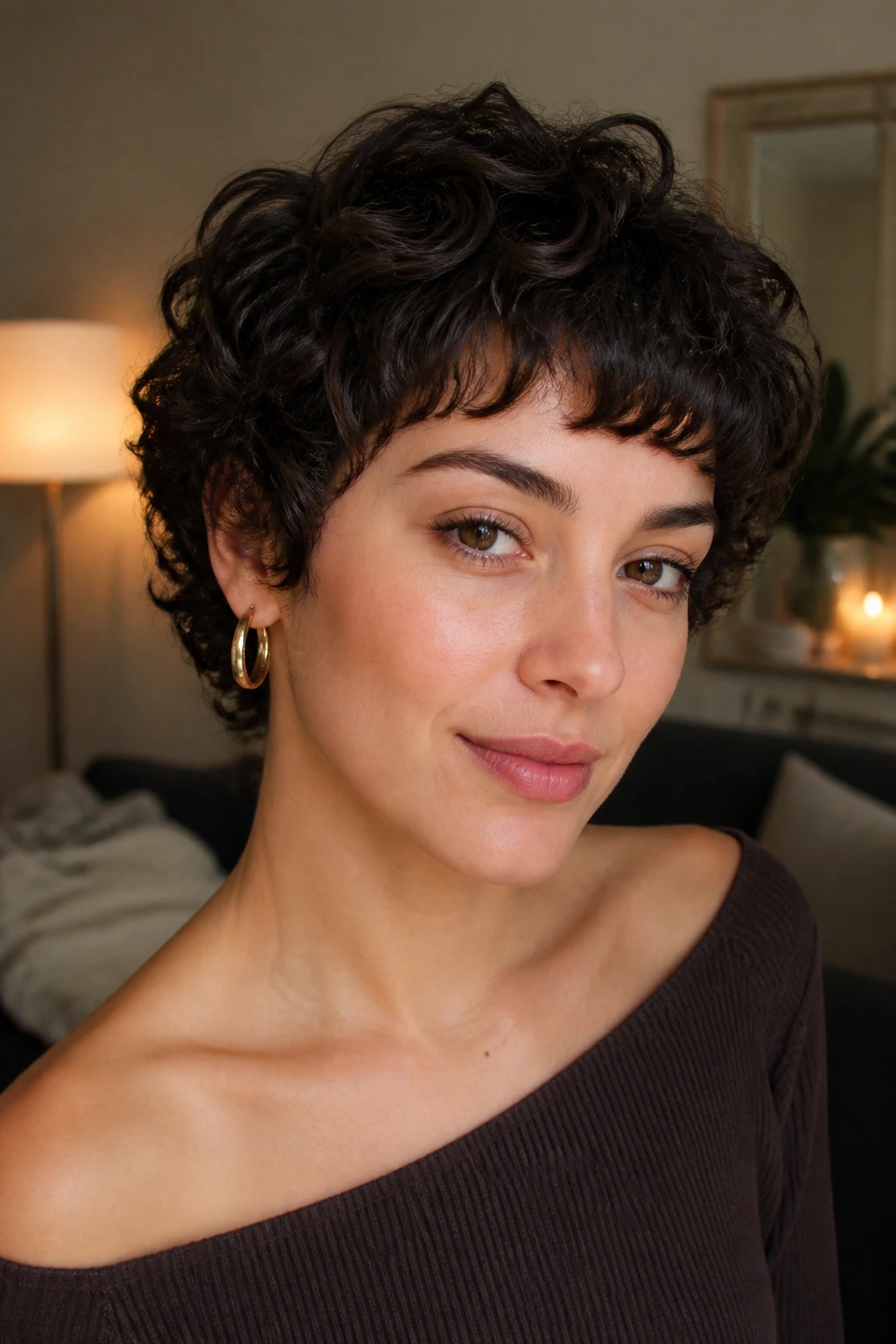
Micro bangs are a choice. Not a timid one. When they’re cut with curl in mind, they open up the face and make the eyes look larger, and midnight brown lowlights underneath stop the fringe from turning into one flat strip.
This cut works best when the bangs are intentionally separated, not blunt and heavy. The crop underneath should stay compact so the fringe can be the star. If your curls shrink fast, leave the bangs longer than you think; tiny bangs that bounce up too far can get awkward in a hurry.
This one reads a little artsy, a little knowing. It’s not trying to disappear into the room.
15. Fluffy Shaggy Bob with Chestnut-Black Lowlights
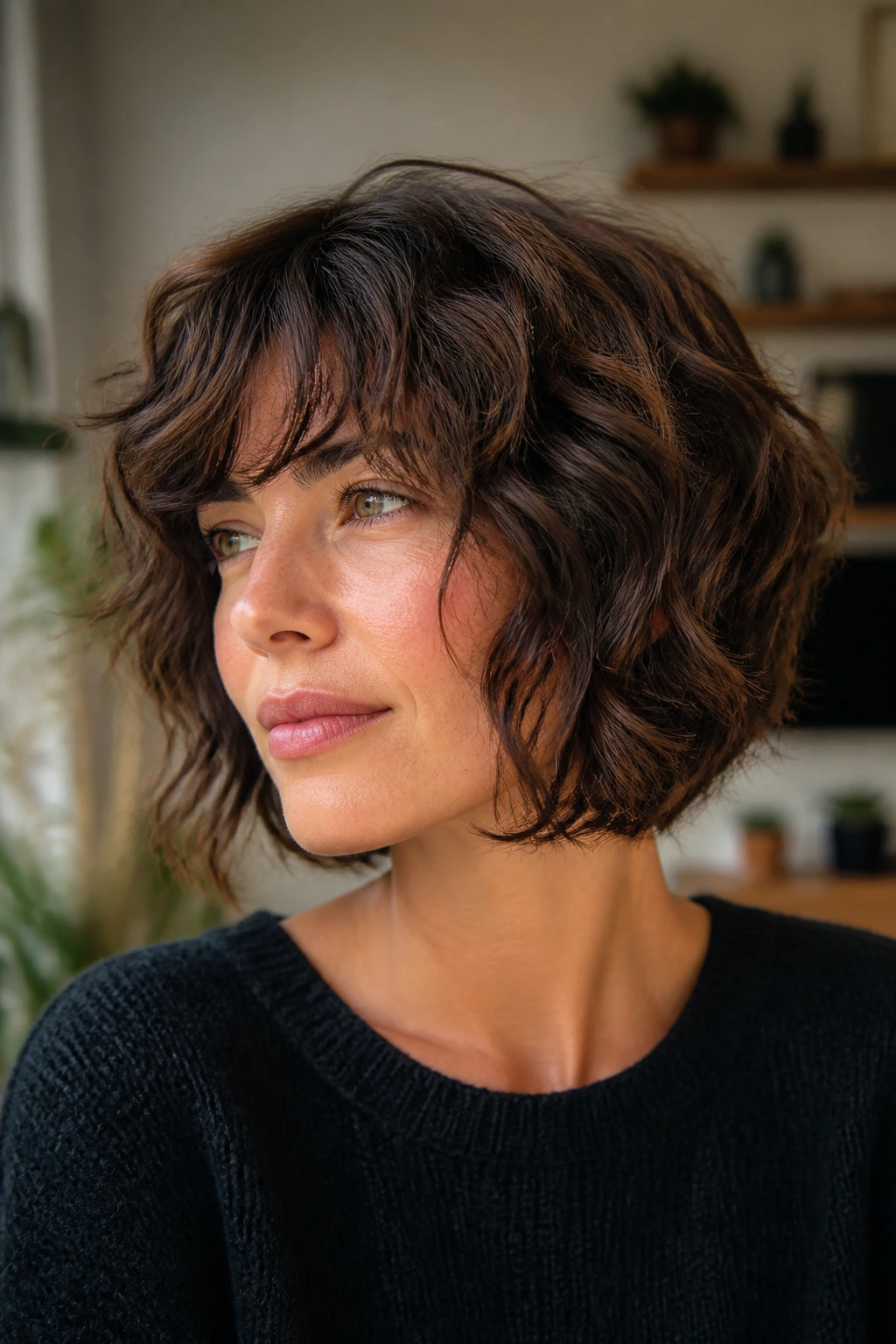
The fluffy shaggy bob is for anyone who likes a softer outline. It has that broken-up, touchable look that sits somewhere between polished and undone. Chestnut-black lowlights add depth without making the curls look flat, which is the main risk with all-over dark shades on short hair.
The cut should have movement around the crown and cheeks, but not so many choppy layers that the ends get wispy. You want piecey, not thin. That distinction matters. Ask for the lowlights to stay mostly in the interior layers and around the underside so the top still catches light.
This one looks best when you leave a little frizz alone. Not a lot. Just enough to keep it from feeling over-edited.
16. Round Layered Cut with Caramelized Brunette Lowlights
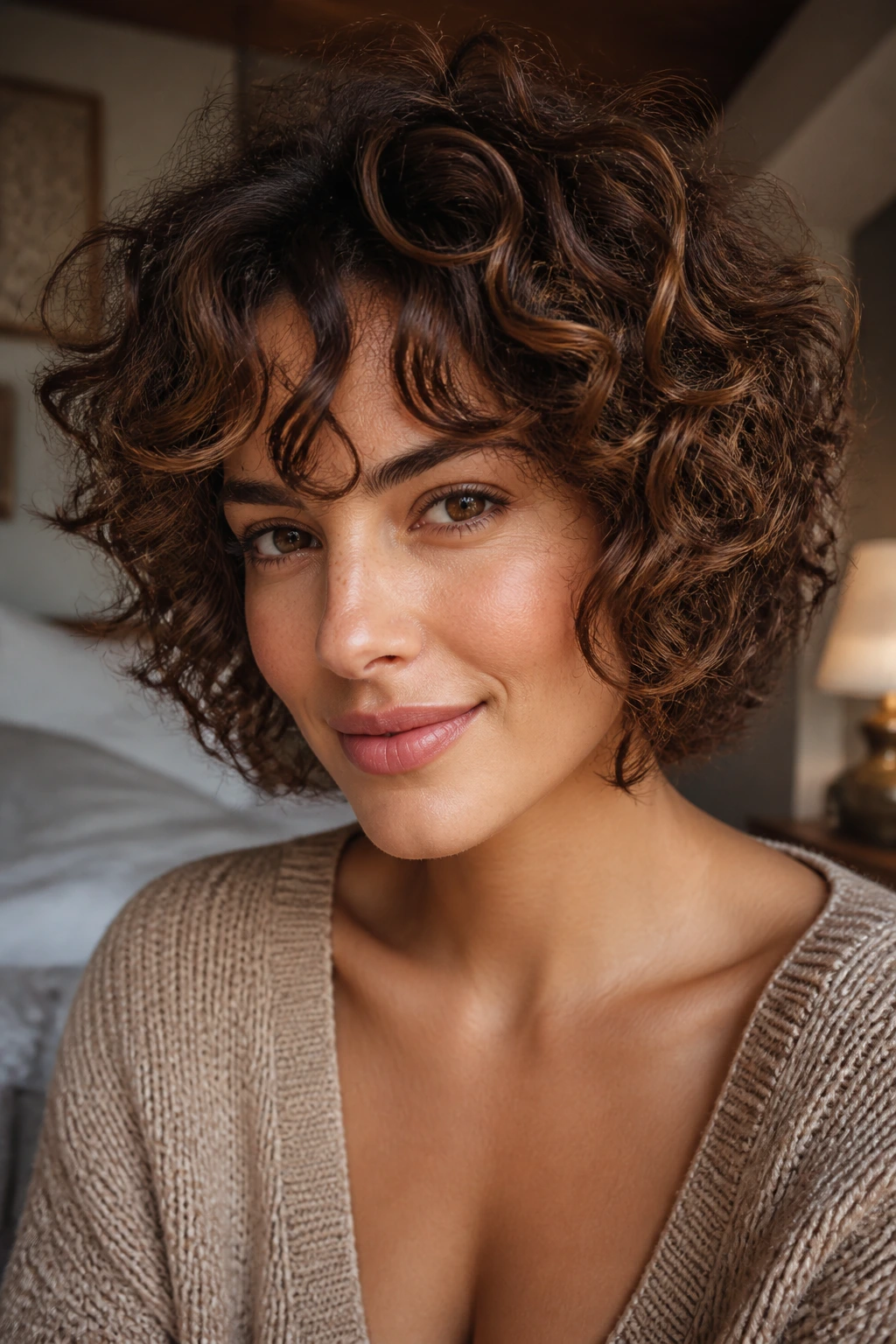
Round cuts get a bad reputation from people who’ve only seen bad ones. A well-shaped round layered cut keeps the curl line soft and balanced, which is exactly why it works for dinner plans. Caramelized brunette lowlights slide through the inside layers and make the round shape feel dimensional instead of bulky.
The face framing should be gentle, not severe. If your curls are medium to tight, ask for the shortest layers to stay away from the widest part of your face. The lower layers can take a little more darkness because that’s what keeps the bottom from looking too airy.
This style looks especially nice with a neckline that shows a little skin. The curve of the cut and the curve of the collarbone do some pleasant work together.
17. Tucked-Behind-Ear Curly Bob with Mahogany Lowlights
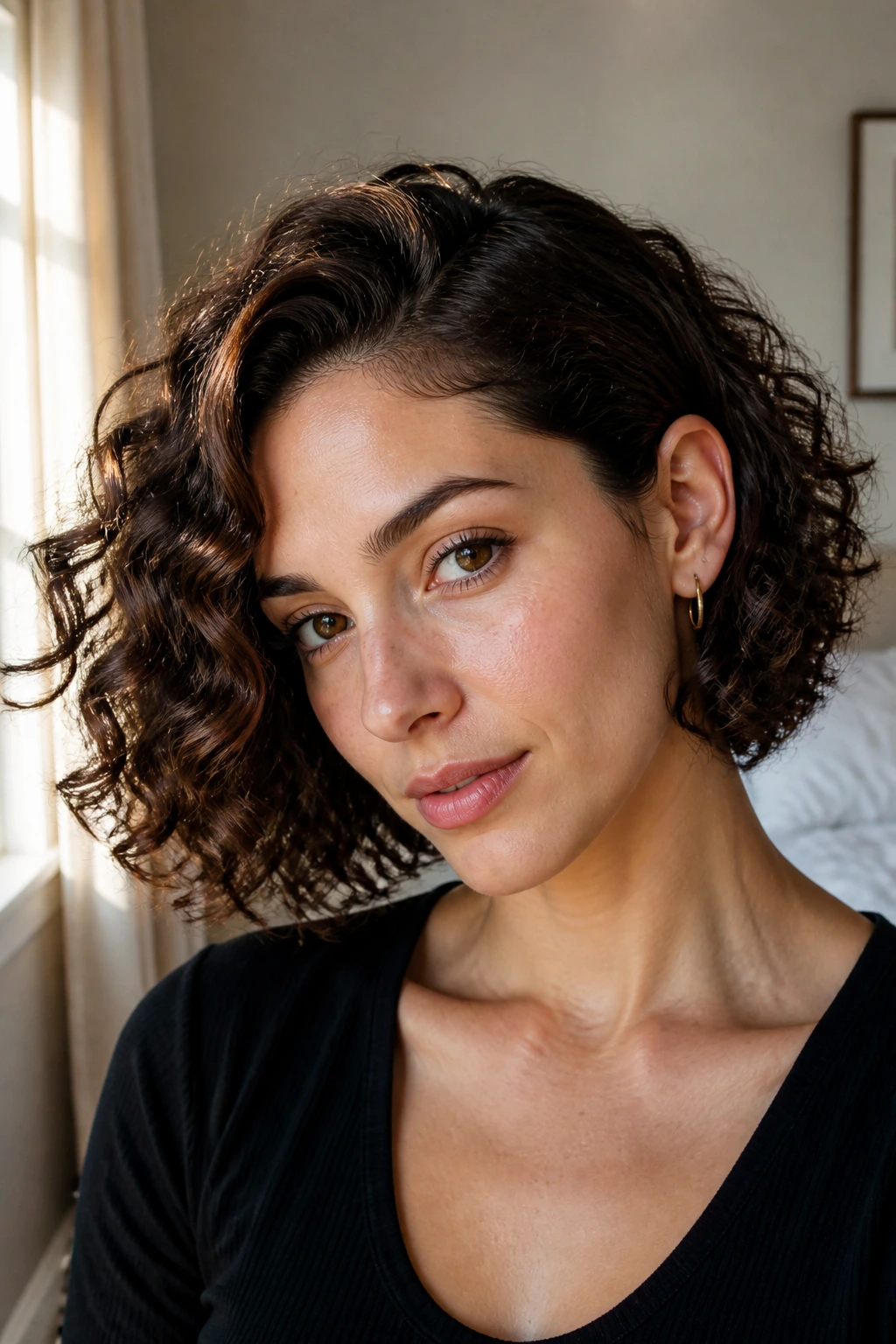
This is one of my favorites because it’s simple and a little sly. The haircut itself doesn’t need a huge amount of drama; the magic happens when one side gets tucked behind the ear and the other side stays loose. Mahogany lowlights around the temple and beneath the top layer make the movement easier to see.
The tuck opens the face, shows off earrings, and gives the cut an asymmetrical note without changing the shape. It also keeps curls off the cheek if your hair tends to frizz there. Ask for a bob that lands just below the jaw so the tuck doesn’t make the length disappear.
The result feels clean and a little intentional, like you thought about it for three minutes and got it right.
18. Curly Wolf Cut with Smoked Cocoa Lowlights
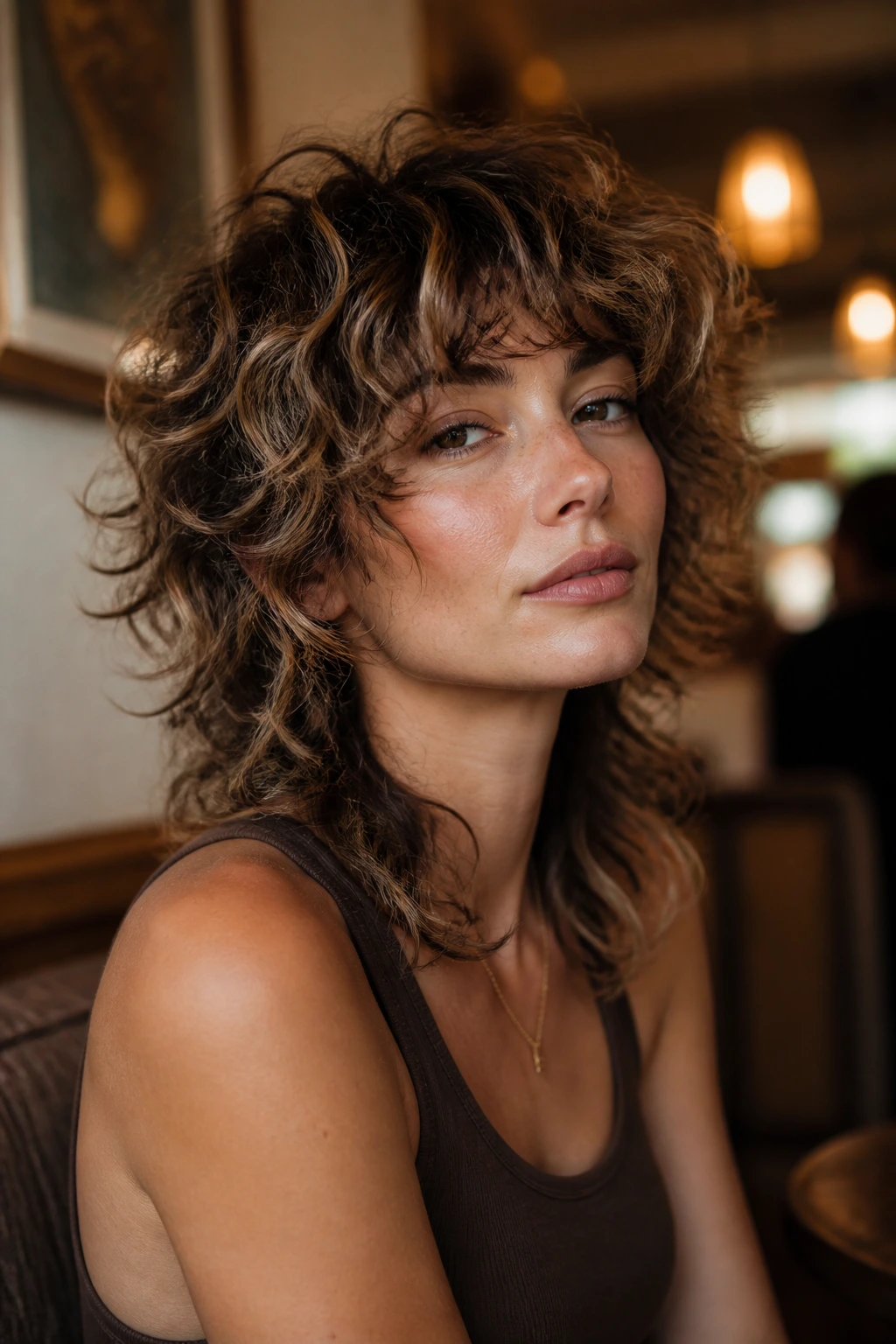
The curly wolf cut is a little wild, but in the best way. It keeps more length through the back and crown, with layers that create that shag-meets-mullet feel. Smoked cocoa lowlights stop the upper layers from looking too bright or too dense, which helps the shape stay readable.
This one works when you want movement and a little edge without committing to a full punk moment. The layers should feather around the face and keep the crown lifted. If the top gets too short, the cut loses its softness; if the bottom gets too thick, it stops feeling light.
A diffuser helps here, but don’t over-dry the ends. A tiny bit of bend looks better than a frizzed-out finish.
19. Side-Swept Curly Pixie with Coffee Bean Lowlights
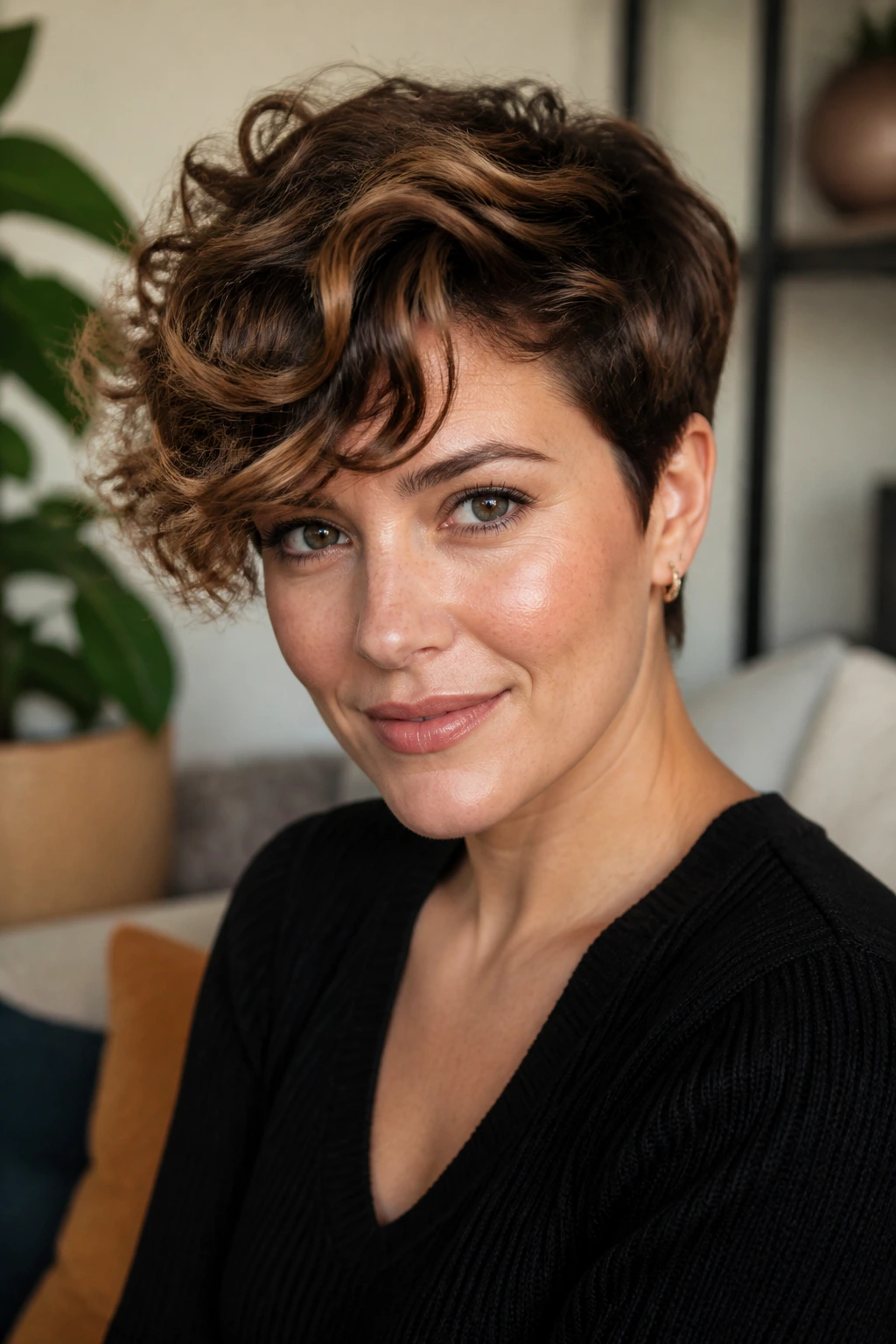
A side-swept pixie brings the focus straight to the eyes and cheekbones. The longer front section gives the cut a little sweep, and coffee bean lowlights behind it keep the top from looking too flat or too bright. It’s a good choice if you like short hair but still want some softness around the face.
The side-swept piece should fall with a little bend, not a heavy wave. If your hair is thick, have the stylist thin the interior, not the outer layer, or the style can lose its shape fast. This cut is a great excuse for a strong brow or a bold earring.
I’d keep the color lowlights subtle here. Too much contrast at the front can make the sweep look striped.
20. Jaw-Skimming Curly Cut with Sable Lowlights
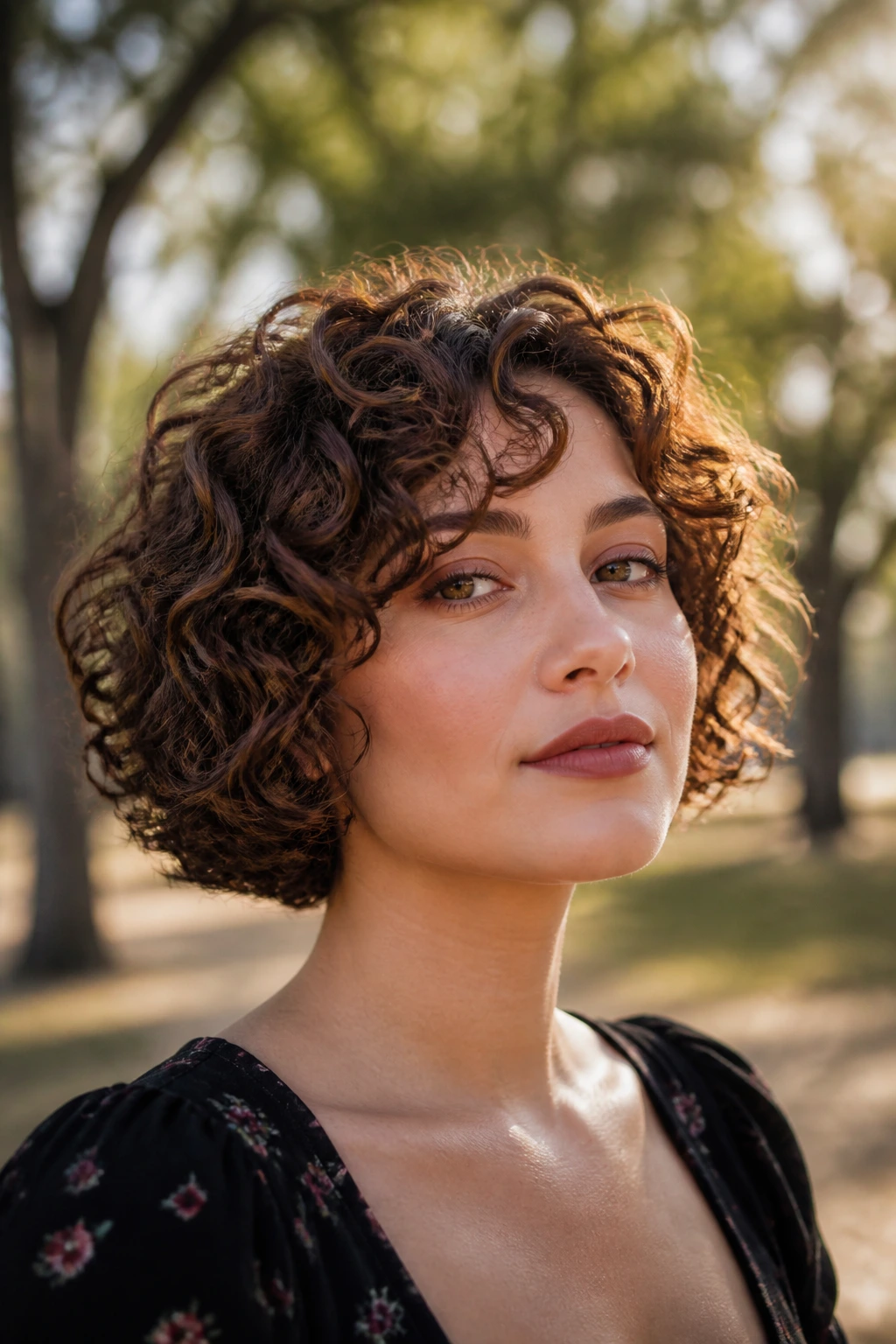
A jaw-skimming cut is crisp, and that’s the point. It sits right on the line where curls can still bounce but the outline remains controlled. Sable lowlights tucked into the underside make the perimeter look clean and keep the whole shape from going too round.
This style is especially nice if your jawline is something you want to show off. It also works well with a middle part if you want symmetry, or a side part if you want a little lift at the temples. The cut should not end up too wide at the bottom; if it does, the lowlights need to move lower and deeper.
That’s the thing with this haircut. Small placement changes matter.
21. Short Curly Cut with Curly Curtain Fringe and Walnut Lowlights
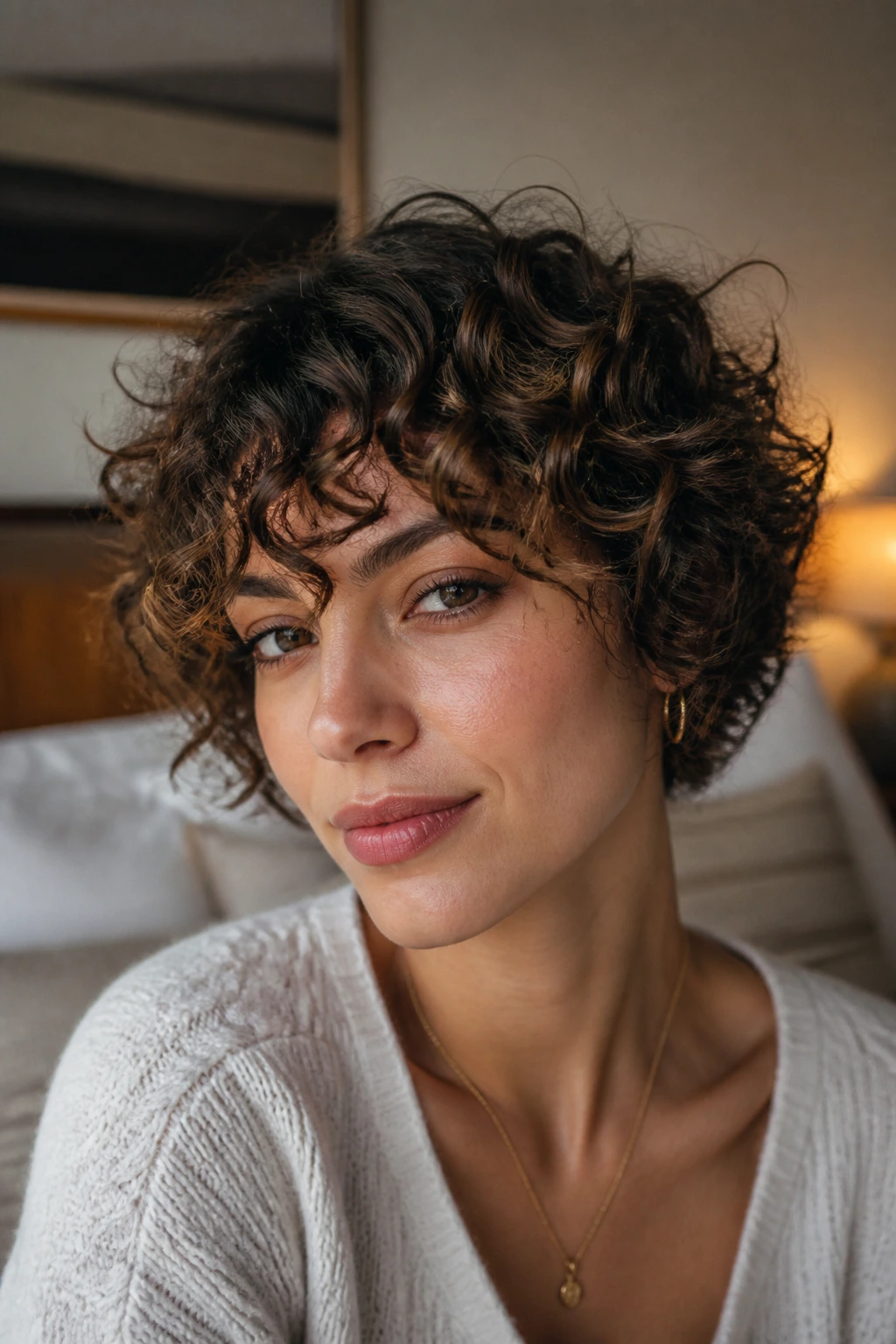
A curly curtain fringe can soften the forehead without hiding it. On short curls, it splits naturally and frames the face in a way that feels relaxed rather than fussy. Walnut lowlights underneath give the fringe depth, so the front doesn’t look like one bright puff.
The best version has enough length in the fringe to separate around the eyes. If it’s too short, it can bounce too high and start looking severe. Keep the side layers soft and let the fringe sit a little looser than the rest of the cut.
This is a nice option if you like jewelry and makeup to stay visible. The fringe frames; it doesn’t compete.
22. Blunt Curl Bob with Dark Roast Lowlights
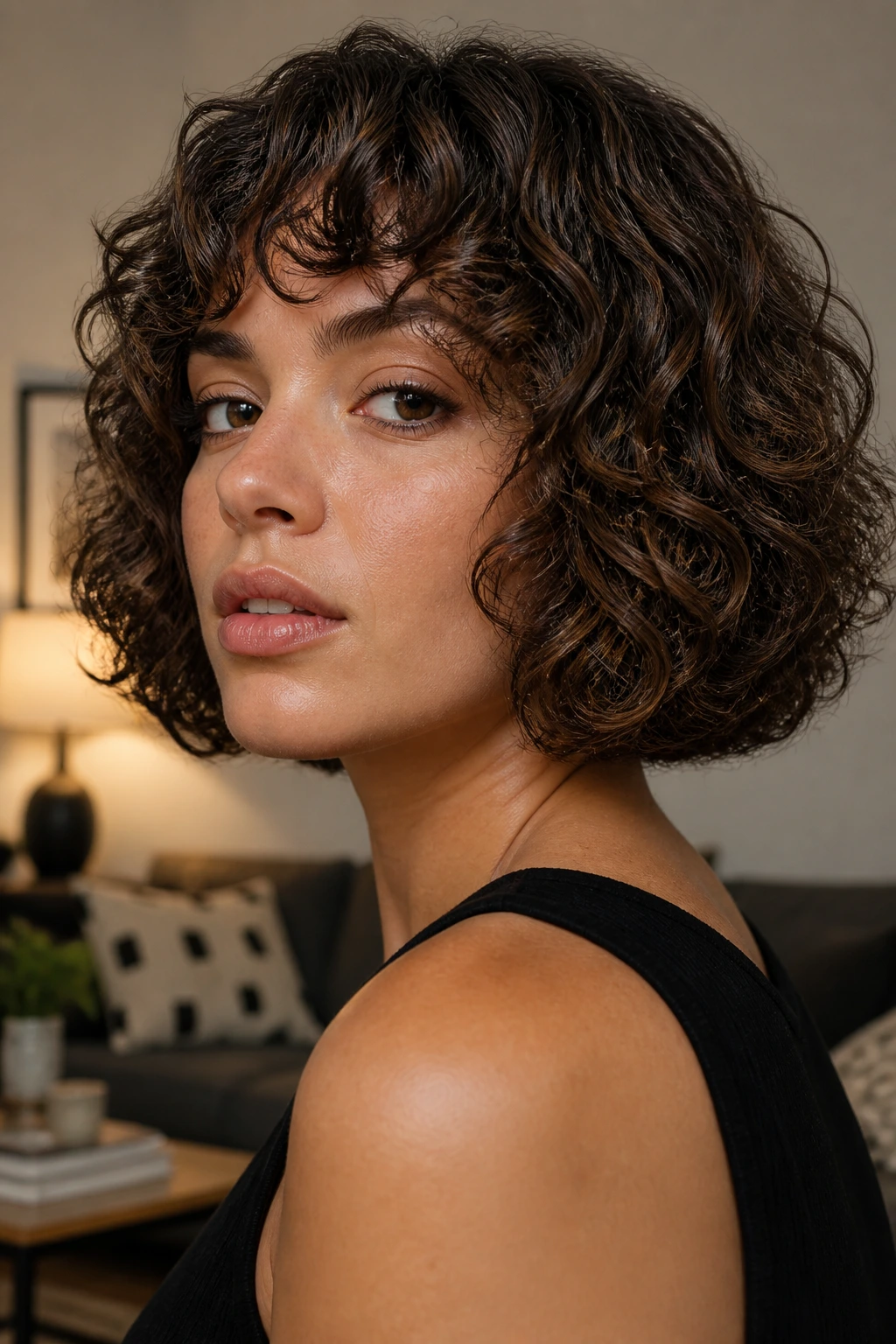
A blunt curl bob sounds strict, but the curls keep it from looking harsh. The perimeter is clear, the silhouette is simple, and dark roast lowlights inside the shape stop it from looking like a solid block. That contrast is what keeps the cut from becoming boxy.
The blunt edge works best when the curls at the bottom are trimmed carefully, not hacked into a straight line without checking shrinkage. If your hair has a lot of spring, the dry cut matters. Lowlights belong in the inner layers and around the back where shadow will deepen the shape.
This one has a little polish to it that pairs well with a red lip or a bare neck. Clean lines do a lot of work here.
23. Tousled Curly Crop with Chestnut Ribbon Lowlights
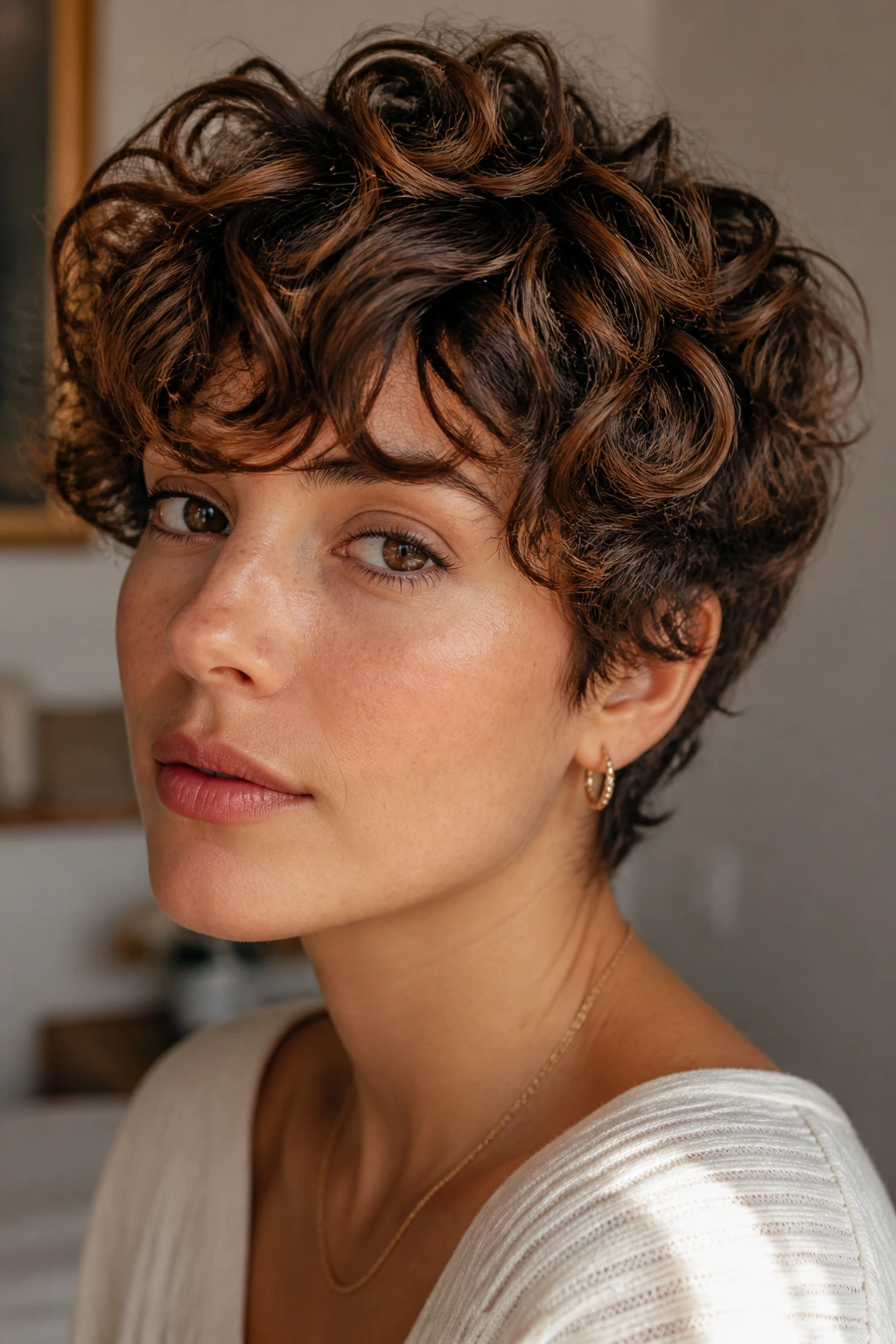
The tousled crop is easygoing in the best sense. It’s short, slightly messy, and not interested in being over-managed. Chestnut ribbon lowlights keep the curls from collapsing into one fuzzy tone, which is what makes the look hold up after a long dinner.
A crop like this should still have a shape under the mess. You want the curl movement to feel casual, not accidental. Ask for a little extra texture around the crown and a softer outline near the ears. That keeps the style playful instead of puffy.
This is one of those cuts that improves when you stop touching it. Always annoying. Also true.
24. Stacked Curly Bob with Espresso-Brown Lowlights
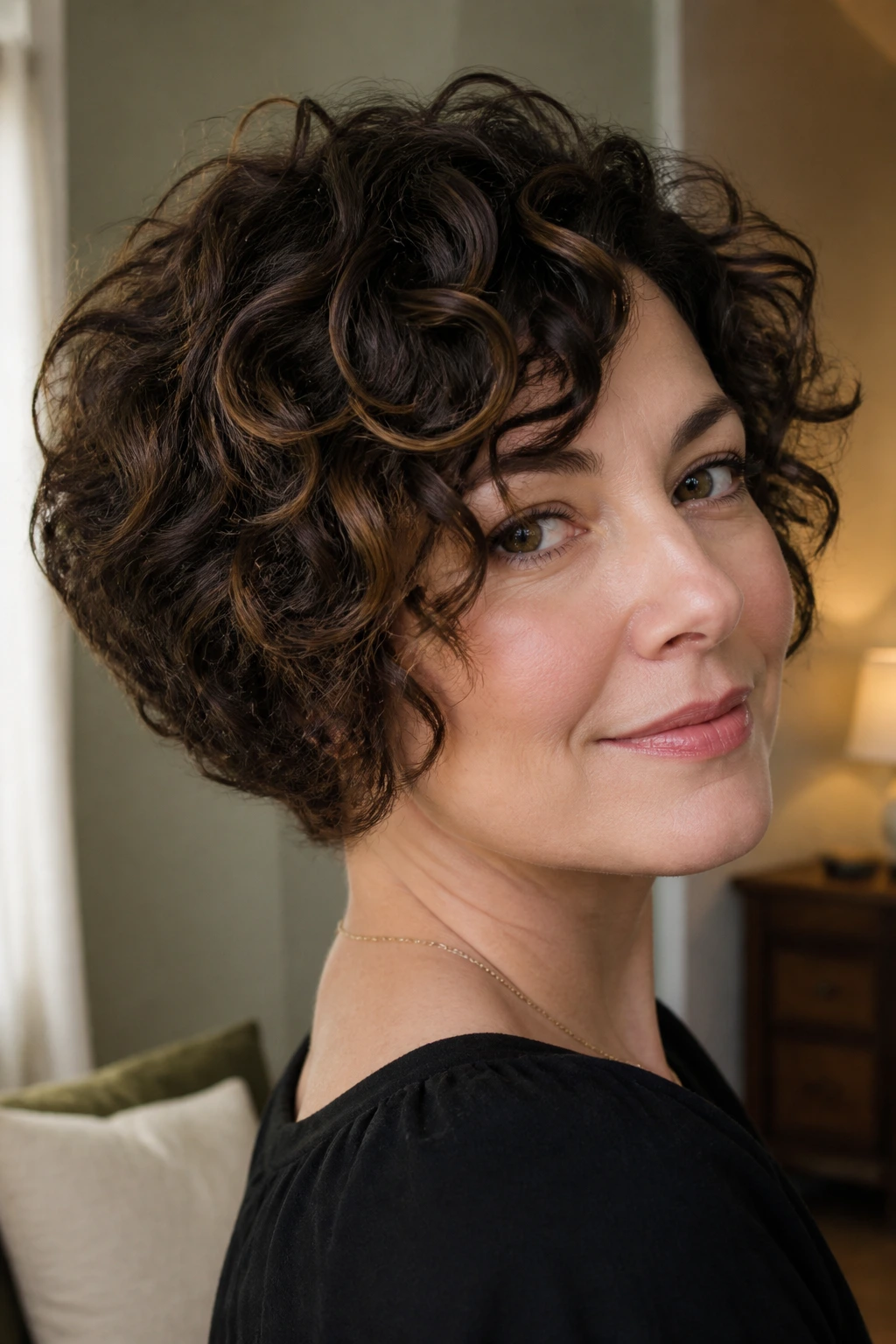
A stacked bob gives you lift at the back and a little curve through the neckline, which is handy if you want height without length. Espresso-brown lowlights through the crown and lower back add shadow where the shape could otherwise get too bright. The result feels full, balanced, and tidy.
This cut is especially strong on thick curls because the stacking removes bulk while preserving body. If your curls are fine, keep the stacking softer so the back doesn’t disappear. The front can stay just long enough to skim the cheekbones.
The biggest mistake here is overloading the top with product. A heavy cream can flatten the stack and erase the whole point.
25. Oval Curly Pixie with Mulberry-Brown Lowlights
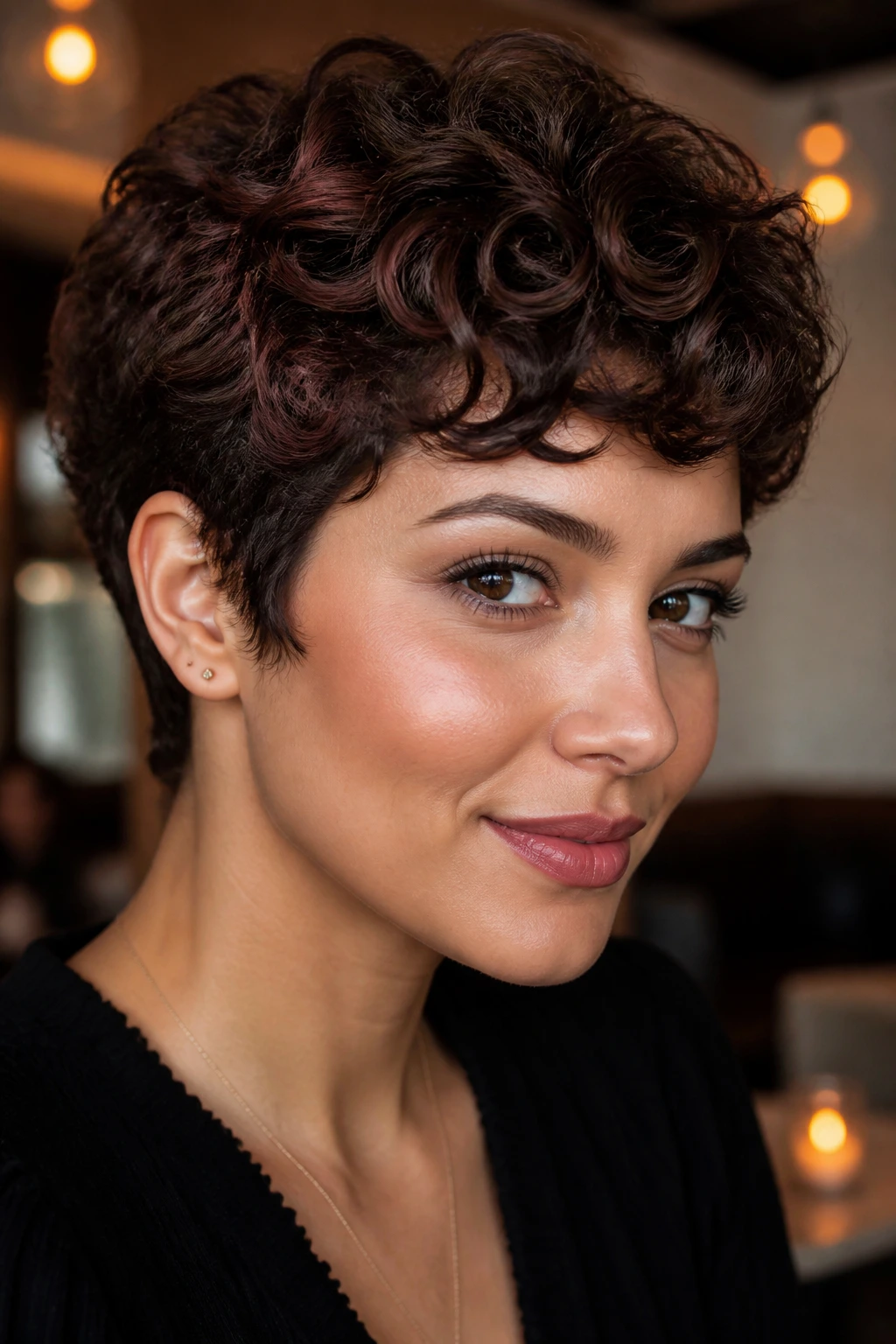
An oval pixie is the softer cousin of the classic close crop. It keeps the silhouette rounded, with more curl on top and gentle tapering around the sides. Mulberry-brown lowlights add a little warmth and depth that shows up especially well under warm indoor light.
This is the cut for someone who wants short hair that still feels a little romantic. The oval shape flatters because it follows the head rather than fighting it. Ask for a soft edge around the hairline and a touch more length through the top so the curls can form rather than sit flat.
If you want the whole look to feel a bit richer, leave one or two front pieces longer. Tiny change. Big difference.
Why Lowlights Make Short Curls Look Richer
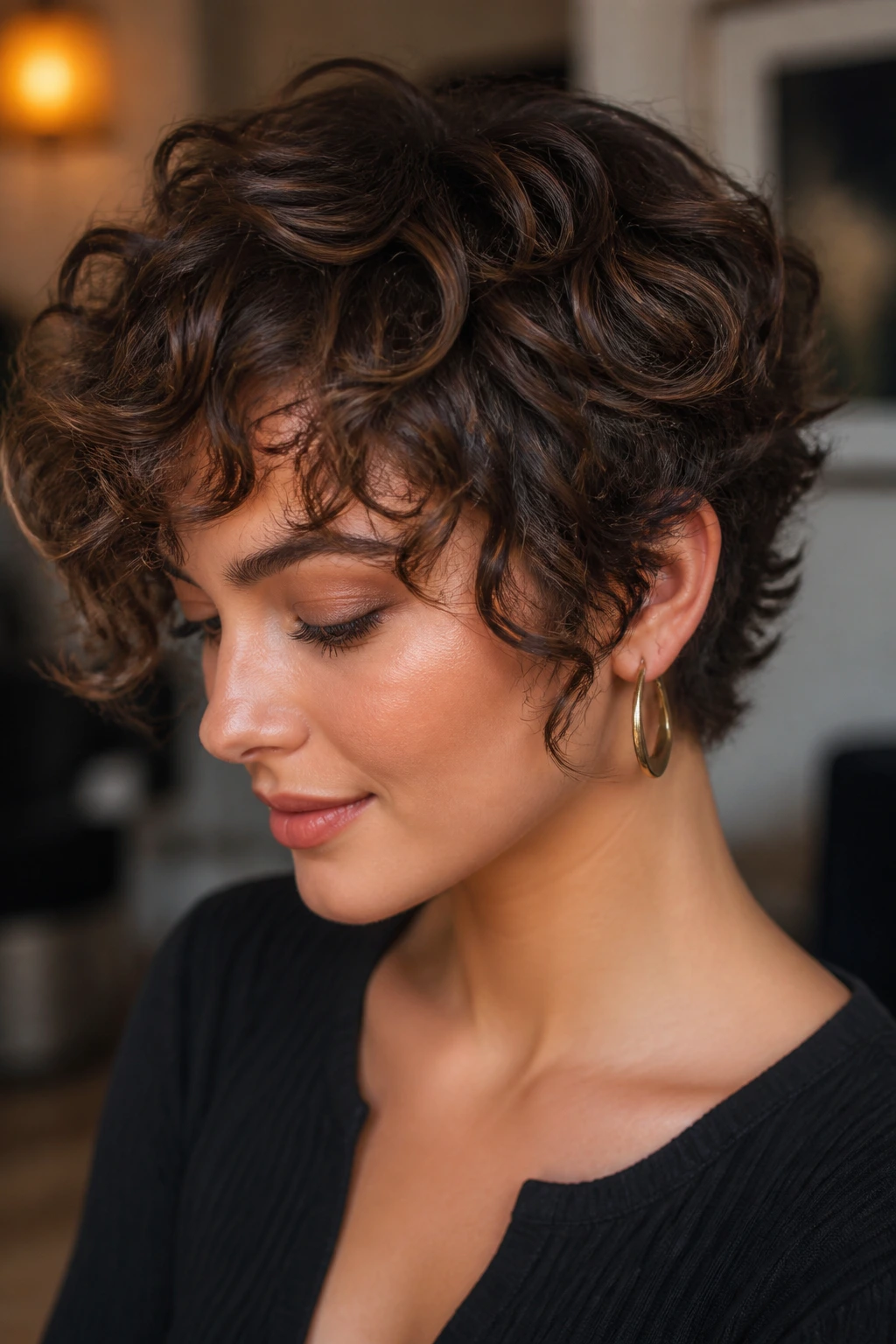
Short curls have a funny problem: they can look expensive or busy depending on how much shadow lives inside the shape. Lowlights fix that by giving the curl pattern places to disappear and reappear. Instead of one flat brown, you get layers of depth, and the eye reads that as movement.
The best lowlights on short curly hair usually sit one or two shades deeper than the base. That’s enough to create contrast without turning the hair into a striped mess. I like interior placement most — under the crown, around the nape, behind the ears, and inside the curl mass where the light won’t hit first.
-
Shadow at the Bend: Darker strands at the curl bend make the coil look tighter and more defined.
-
Cleaner Silhouette: The outer layer stays bright enough to show shape, while the interior stays rich and grounded.
-
Less “Puffy” Visual Weight: Depth inside the haircut keeps the sides from looking wide under warm lighting.
-
Better Regrowth Blending: Since lowlights blend into your base as they grow, the line stays softer for longer.
Essential Tools for Styling These Cuts
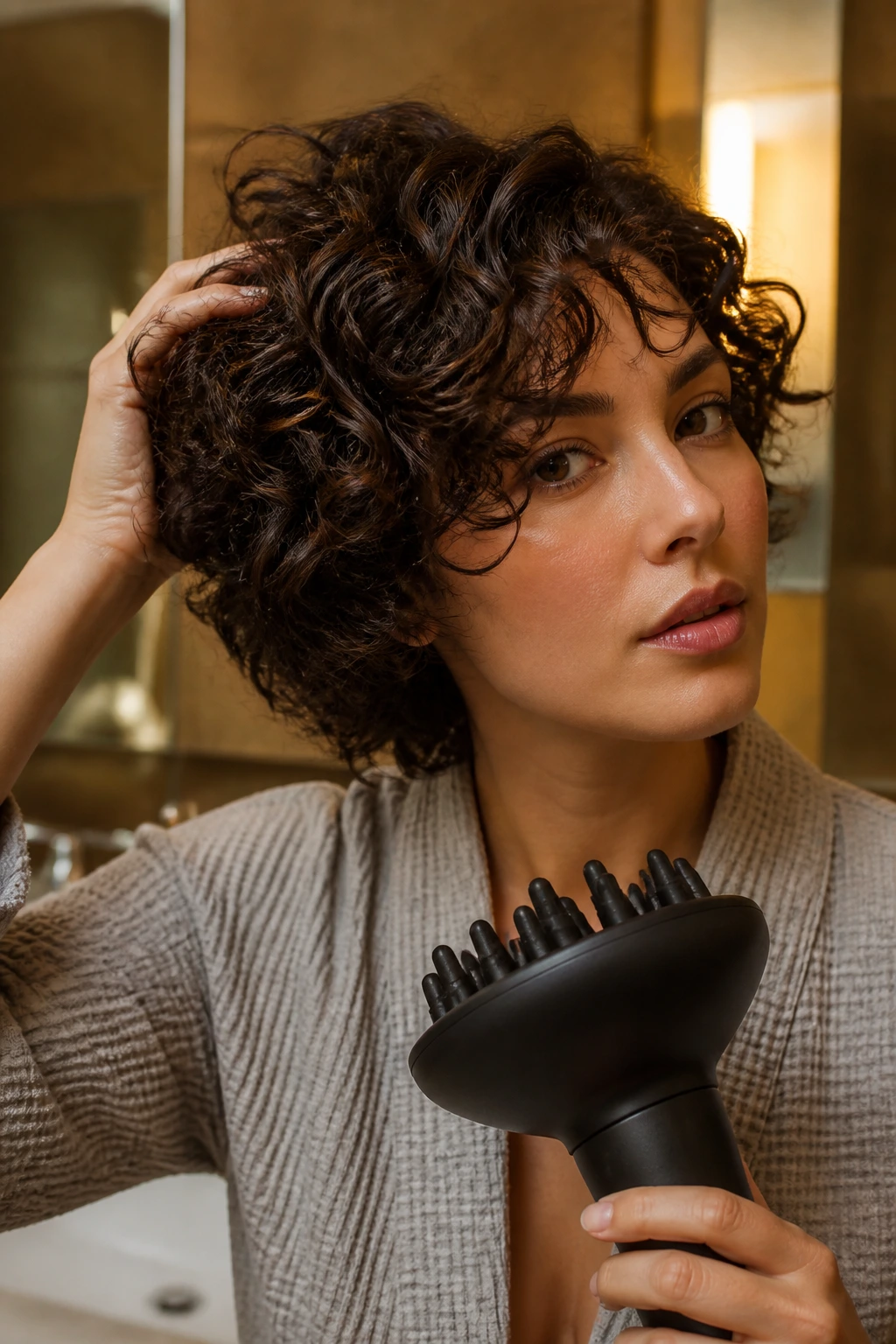
-
Diffuser attachment: Keeps short curls from blasting apart while drying and helps preserve the cut line.
-
Microfiber towel or cotton T-shirt: A regular bath towel roughs up the cuticle; these are gentler for short curls.
-
Wide-tooth comb: Use it only when hair is soaked and coated with leave-in so you don’t break the curl clumps.
-
Duckbill clips or curl clips: Great for lifting the crown while the hair dries and preventing flat spots at the roots.
-
Lightweight leave-in conditioner: Helps short curls stay soft without piling on weight near the scalp.
-
Flexible-hold gel or mousse: Pick one, not five. You want hold and movement, not helmet hair.
-
Small tail comb: Handy for clean parts, controlled sections, and smoothing the hairline without over-brushing.
-
Color-safe shampoo and conditioner: Important if you want lowlights to stay rich instead of turning brassy or dull.
-
Satin pillowcase or bonnet: Saves the curl shape and protects the lowlight pattern from friction and frizz.
How to Choose the Right Lowlight Shade
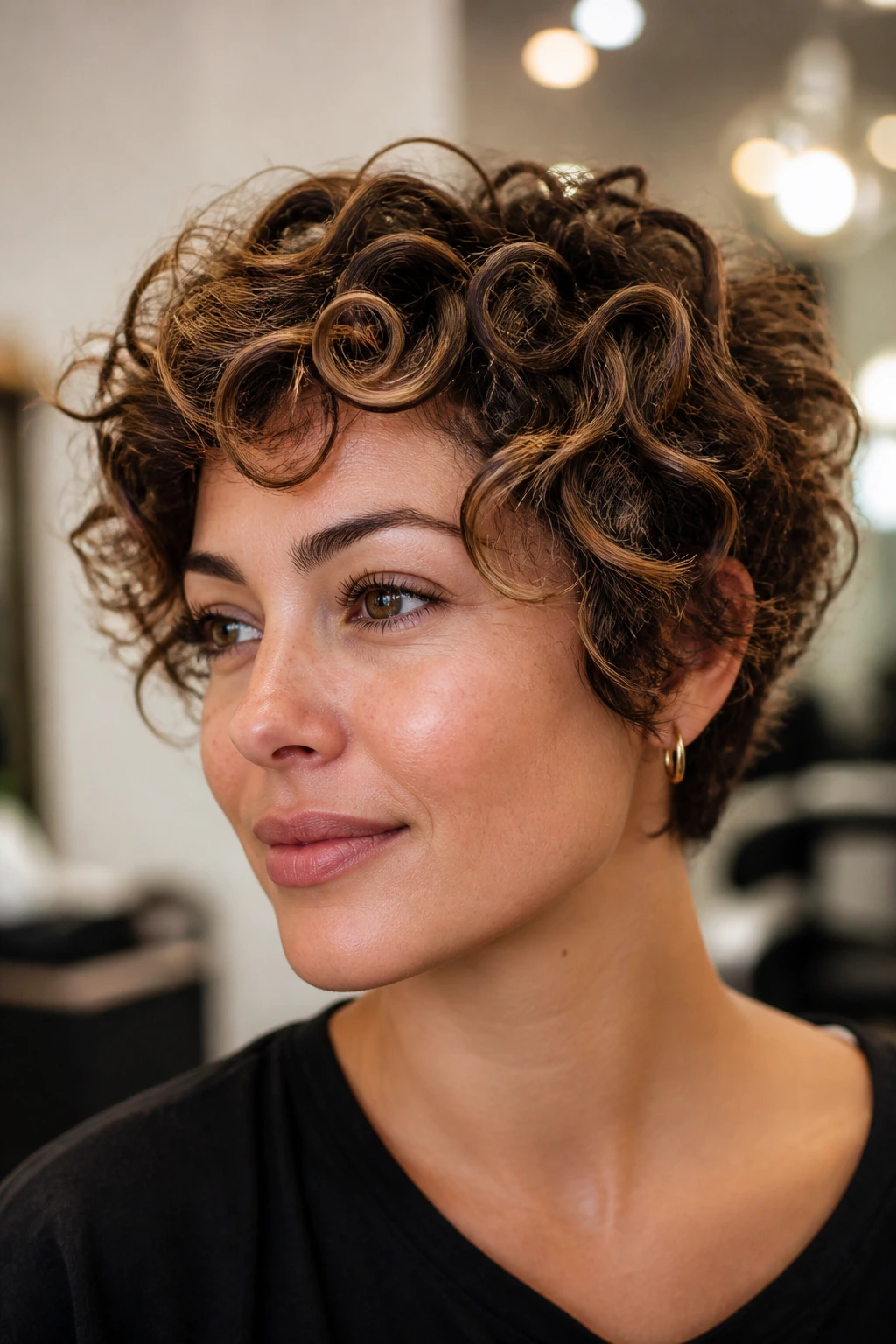
Shade matters more than people think. If the lowlights are too dark, the curls look painted. If they’re too warm or too cool for the base, the whole head starts fighting itself. The easiest rule is to stay in the same color family and move just one or two levels deeper.
Deep Brown or Black Hair
Go for espresso, dark chocolate, smoked cocoa, or soft sable. You want the shade to add depth, not black-out the curl pattern. Interior placement matters most here because that’s what keeps the top from looking flat.
Medium Brown Hair
Chestnut, walnut, mocha, hazelnut, and toffee all work well. These shades warm up short curls without making them muddy, and they show especially well on layered bobs and pixies. If your skin leans cool, keep the warmth subtle.
Copper, Auburn, or Red-Brown Hair
Pick mahogany, cinnamon brown, auburn-brown, or mulberry-brown. Pure black lowlights can make red tones look heavy and blunt. A softer brown-red depth keeps the curls lively.
Gray or Salt-and-Pepper Hair
Soft taupe, mushroom brown, and smoky brunette shades can blur the contrast and make the grow-out look intentional. Put the darker pieces low and inside the shape. That way the brightness on top still catches the light.
If you’re talking to a colorist, ask for fine foils or painted lowlights, not chunky stripes. That one sentence saves a lot of regret.
The Styling Routine That Makes Short Curls Look Date-Ready
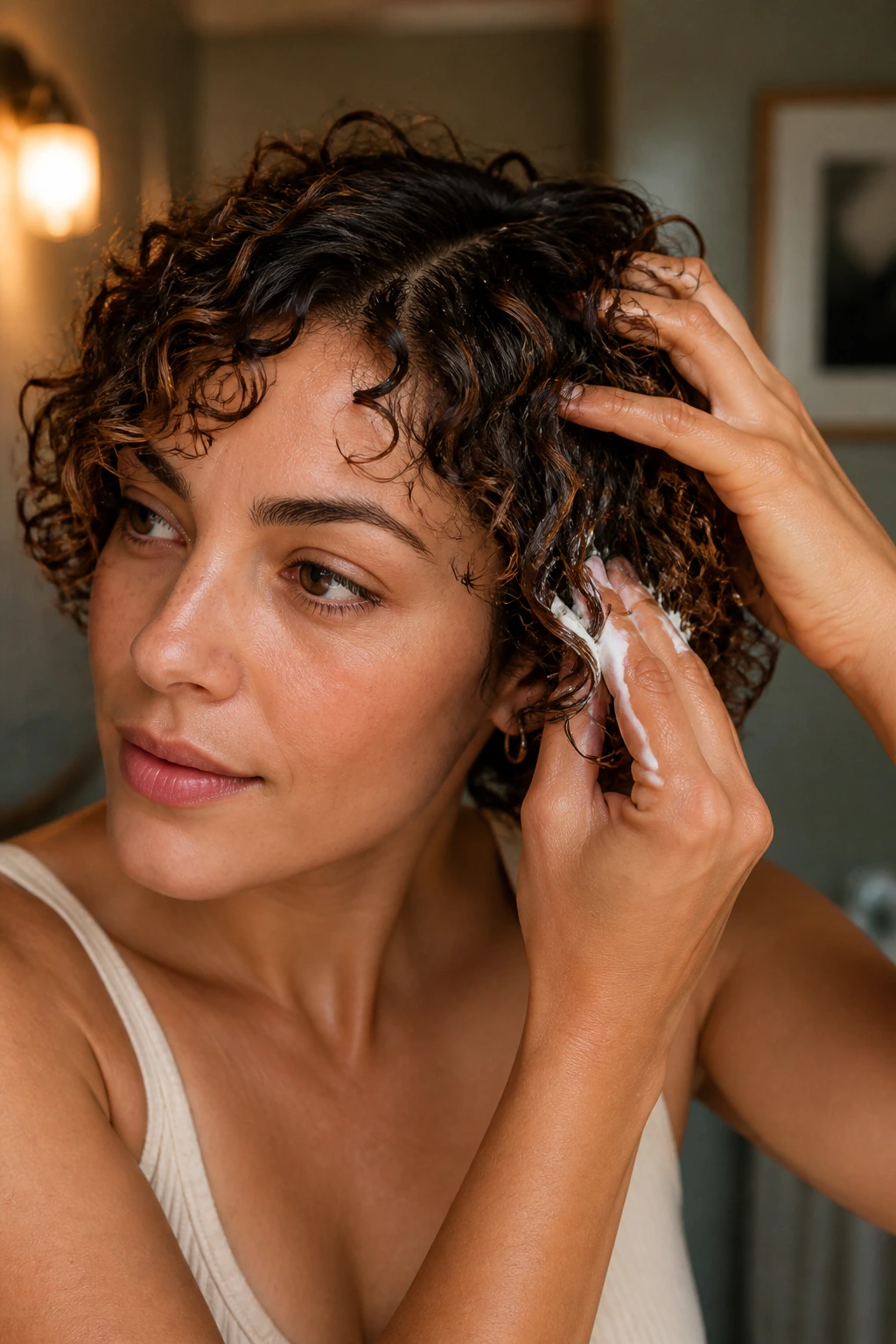
Step 1: Start on soaking-wet hair. Apply leave-in conditioner first, then a curl cream or light mousse, and finish with a flexible gel if you want more hold. Short curls set better when the product is distributed before the curl starts to dry.
Step 2: Scrunch from the ends upward. Don’t rake through the top layer too much. That can separate the curl clumps and make the cut look frayed instead of defined.
Step 3: Clip the crown if you need lift. Two or three small clips at the roots can keep the top from drying flat. On a bob or pixie-bob, this tiny step changes the whole silhouette.
Step 4: Diffuse on low heat and low speed. Stop when the hair is about 80 percent dry. The remaining moisture will finish setting the curl pattern without blowing it apart.
Step 5: Break the cast with one or two drops of serum. Press, don’t rub. You want the curls soft, not greasy.
Step 6: Tuck one side, pin a fringe, or leave one ear exposed. That little asymmetry reads intentional and keeps short curls from looking too school-photo neat.
Additional Styling Tips and Finishers
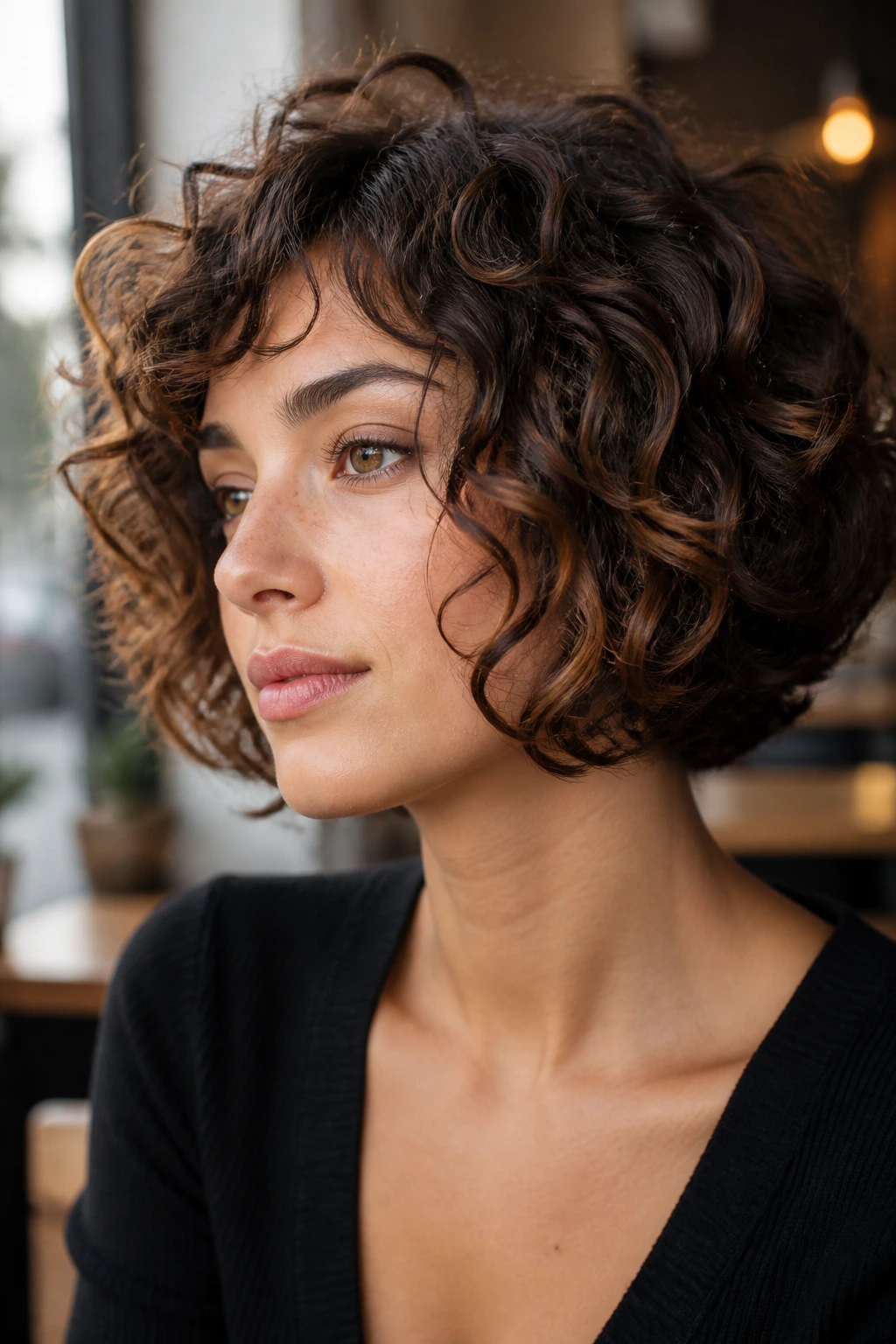
-
Texture Boost: Finger-coil only the front pieces that frame your eyes. You do not need to coil the whole head unless you want a more formal finish.
-
Accessory Move: Small hoops, slim drops, and pearl pins work especially well with jaw-length cuts and pixies because they don’t disappear behind the curls.
-
Parting Choice: A deep side part gives short curly hair more lift; a center part gives it symmetry and a cleaner line. Pick one, then keep it consistent through the styling routine.
-
Finish Touch: If the ends look a little dry, smooth a pea-sized amount of serum over the bottom inch only. Don’t run it through the crown or you’ll flatten the top.
-
Make-It-Yours: If you like a softer look, loosen the front with your fingers after drying. If you like more drama, pin one side back and let the lowlights show in the shift of the curls.
Keeping the Cut Sharp Between Appointments
Short curly hair changes shape faster than long hair. That’s the trade. The upside is that small maintenance moves go a long way.
Keep the Color Dimensional
Lowlights tend to hold up well, but they still fade if you wash too often or use harsh shampoo. A color-safe wash every few cleans is enough for most people. If the lowlights start looking too warm or brassy, a salon gloss or toner can bring the depth back without darkening the whole head.
Keep the Shape Clean
Most short curly cuts need a trim every 6 to 8 weeks if you want the outline to stay crisp. If you’re growing it out, you can stretch that a little, but the nape and side corners will show wear first. Watch for the triangle effect. That’s usually your sign that the cut needs help.
Refresh Between Washes
A spray bottle with water, a small dab of leave-in, and a palmful of gel can revive short curls in minutes. Mist the hair until it’s damp, scrunch once or twice, and let it air for a few minutes before touching it again. Heavy oils are a bad idea here; they sit on short curls and make the lowlights look dull.
Sleep Like You Mean It
Use a satin pillowcase or bonnet. Friction is what roughs up the curl clumps and smears the clean edges of the cut. If you wake up with a flattened side, mist that area, clip the roots for ten minutes, and let the shape reset.
Variations and Adaptations to Try
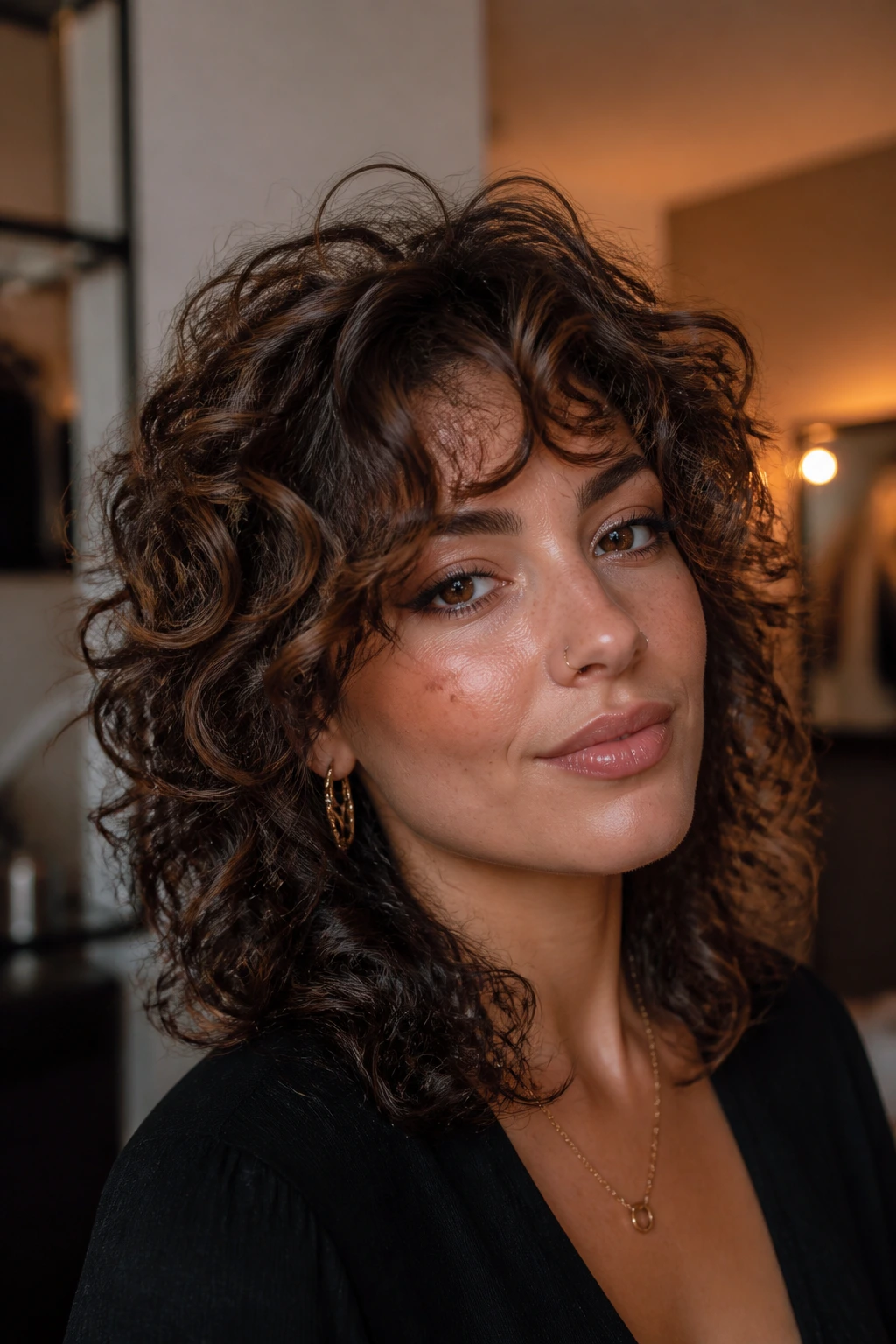
Soft Romantic Version: Choose a rounded bob or bixie, then keep the lowlights in chestnut, walnut, or mocha. This version leans warm and touchable, with less contrast and more curl softness around the face.
High-Contrast Night-Out Version: Go for a blunt bob, sculpted pixie-bob, or jaw-length cut with espresso or dark roast lowlights. The sharper contrast makes the curl pattern pop, especially under warm indoor lighting.
Low-Maintenance Grow-Out Version: Ask for interior-only lowlights and a cut with soft layers rather than a hard edge. The grow-out stays gentler, which matters if you don’t want to babysit the color every few weeks.
Bold Edge Version: Try a curly wolf cut, curly mullet, or asymmetrical bob with smoky brunette or auburn lowlights. These styles carry more attitude and look best when the curl texture has room to move.
Fine-Curl Version: Keep the lowlights sparse and close to the underside so the hair doesn’t look striped. A sculpted pixie-bob or stacked bob usually works better than a heavily layered shag if the texture is delicate.
Coily Version: Focus the lowlights underneath the crown and near the nape, then let the outer curl pattern stay brighter. That keeps the silhouette clean and stops the shape from reading too dark at the edges.
Common Mistakes That Flatten the Whole Look
-
Making the lowlights too chunky: Big color panels show up as stripes instead of depth on short curls. Ask for finer placement and a softer blend.
-
Going too dark too fast: If the lowlights are black against a medium base, the curls can lose shape and look muddy. One or two shades deeper usually does the job.
-
Using heavy creams at the roots: This is a fast way to kill volume at the crown, especially on pixies and bobs. Keep richer products off the scalp and use them only where the ends need slip.
-
Cutting without checking shrinkage: Curly hair that looks chin-length wet may sit at the cheekbone once it dries. If the stylist doesn’t account for that, the cut lands in the wrong place.
-
Leaving the neckline untouched: Short curly hair shows everything. A messy nape or shaggy sideburn can make an otherwise nice cut look unfinished.
-
Over-diffusing on high heat: That roughs up the curl surface and makes the lowlights look dull. Low heat and patience beat blasting the shape into submission.
Questions People Actually Ask About Short Curly Haircuts with Lowlights
Do lowlights make short curly hair look thicker?
Yes, usually. The darker pieces create shadow between curls, which makes the clumps look fuller and more defined. The effect is strongest when the lowlights sit inside the haircut instead of on the outer surface.
How short is too short for lowlights?
Very short crops can still take lowlights, but the placement has to be precise. If the hair is clipped close to the scalp, use fine interior foils or painted depth around the crown and temples rather than broad color panels.
Will lowlights work on fine curls?
They can, and often they help a lot. Fine curls usually do better with a sculpted shape and subtle lowlights underneath the top layer so the hair doesn’t look flat or patchy.
How often do short curly lowlights need a touch-up?
Most people can stretch them to 8 to 12 weeks if the shade is close to the natural base and the placement is soft. If you like sharp contrast, you’ll probably want to refresh them closer to the 6- to 8-week mark.
What if my curls frizz in humidity?
Keep the cut a little more structured and use a light gel or mousse before diffusing. Lowlights won’t stop frizz, but they do make the shape look intentional even when the texture gets bigger.
Should lowlights go all over the head?
Usually not. On short curly hair, too much color can flatten the top and darken the face too much. Interior placement around the nape, crown, and behind the ears gives a better result.
Can I wear a side part with any of these cuts?
Most of them, yes. A side part often gives short curls more lift and makes the lowlights show in a more interesting way because the curl mass shifts across the head.
What should I tell my stylist?
Ask for the haircut shape first, then mention that you want lowlights placed for depth, not stripes. If you have shrinkage, say so out loud. That one detail helps the cut land in the right spot once it dries.
A Cut That Feels Ready Before You Leave the House
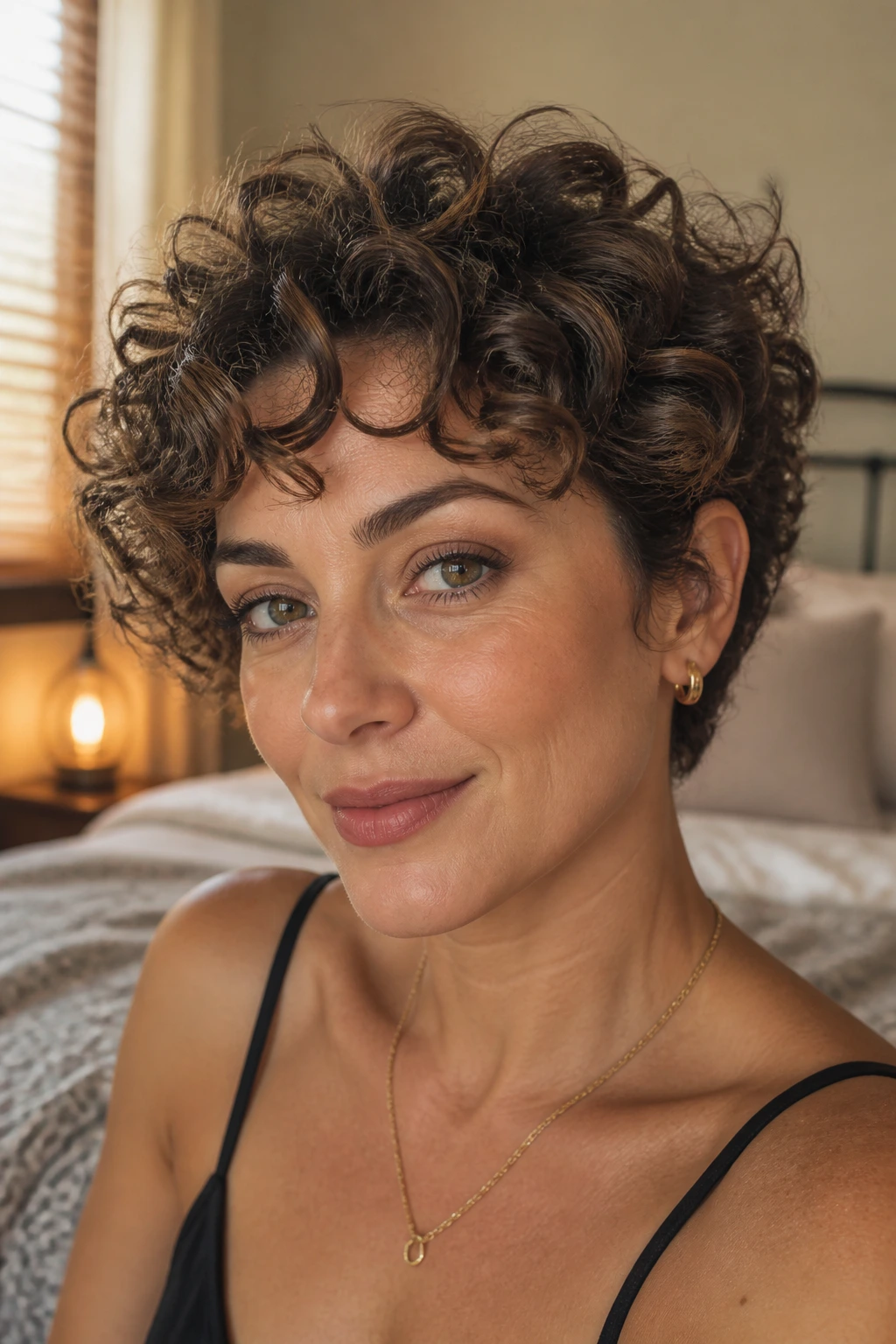
The best thing about these short curly shapes is that they do not ask you to do too much. A good bob, pixie, shag, or crop with lowlights already has depth built in, so all you’re really doing is nudging it into place. That’s a relief on a night when you’d rather think about earrings, lipstick, or the first drink than wrestle with a flat iron.
Pick the cut that matches your curl pattern, then choose lowlights that make the curls look richer instead of darker for the sake of being darker. That’s the whole trick. Once the shape and color are working together, the haircut stops feeling like hair maintenance and starts feeling like part of the outfit.