



Natural gray hairstyles for fair skin with lowlights can look soft and expensive or flat and chalky; the gap between those two outcomes usually comes down to shadow. Fair skin tends to show every tone shift fast, so a silver bob without any depth can make the face look washed out, while a few ash-brown ribbons or a smoky root shadow bring the whole thing back to life.
That’s the part people miss. Gray hair does not need to be “fixed” into one solid color. It needs shape. It needs the kind of dimension that keeps a chin-length bob from floating away from the face and stops a long silver wave from reading like a sheet of metal under daylight.
The right lowlight placement does more than darken a strand or two. It gives the hair a spine. It can make fine hair look fuller, make curls look more organized, and keep pale skin from disappearing into the same cool plane as the hair. A little mushroom, taupe, mink, or smoky mocha goes a long way, especially when the cut already has clean lines.
Why Natural Gray Hairstyles for Fair Skin with Lowlights Work So Well
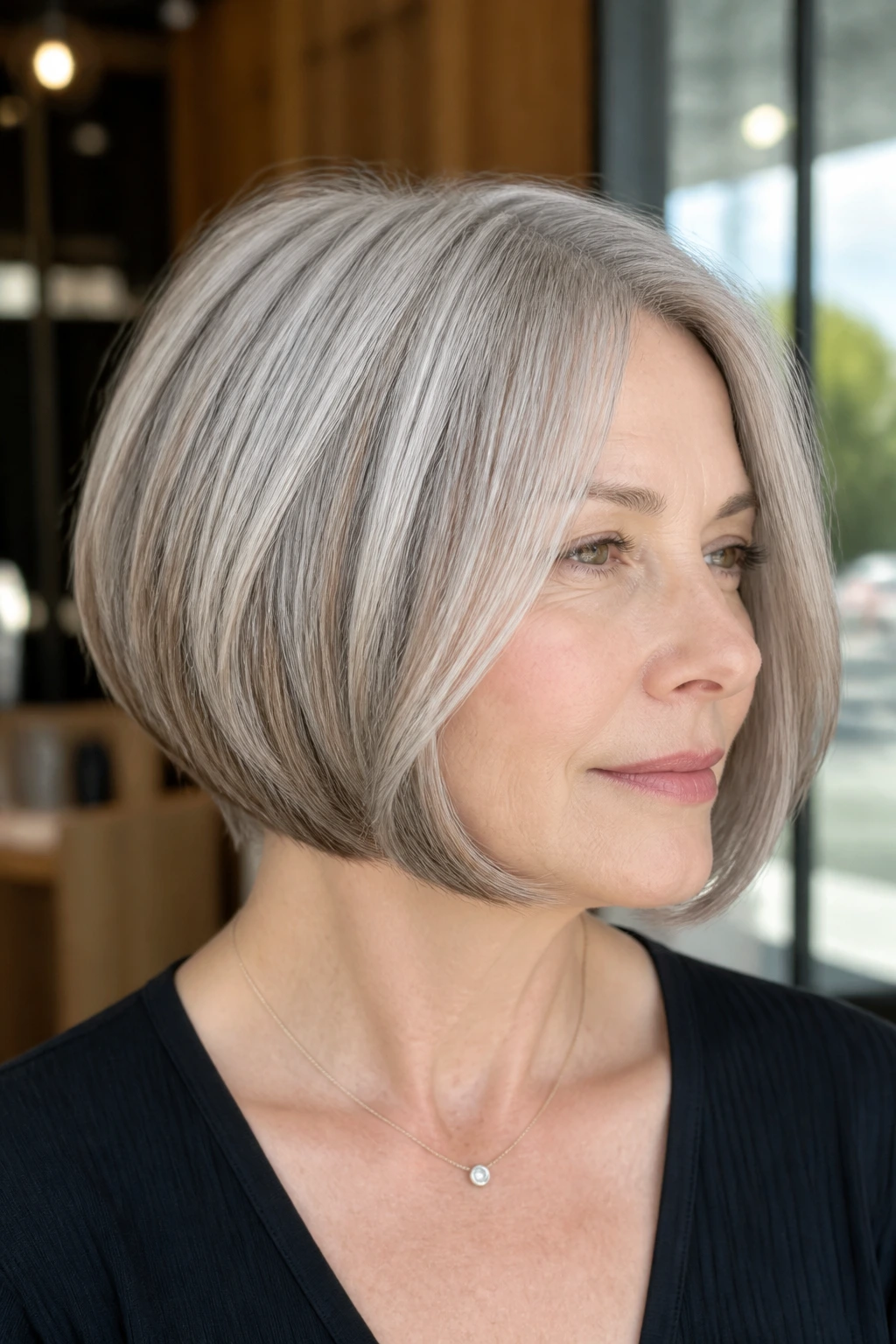
- Soft contrast keeps the face alive: A lowlight that sits one or two shades deeper than your silver gives fair skin a frame without making the hair look heavy.
- Cool tones do the heavy lifting: Mushroom brown, taupe, ash beige, and mink lowlights echo the cooler side of gray, which keeps pink-leaning fair skin from looking flushed or sallow.
- Shadow makes gray look intentional: A plain silver blanket can go flat fast; a few darker ribbons at the crown, nape, or underlayer create the sense that the color was planned.
- The cut matters as much as the color: Lowlights look sharper on a bob or pixie with a clean edge, while layers and waves need the shadow tucked underneath so the surface still reads light.
- Grow-out stays calmer: Subtle lowlights and a soft root melt blur the line between salon visits, which is a relief when your hair is already high-contrast.
- Texture gets a second job: Gray hair often has more bend, more frizz, and more wiry bits than younger hair. Lowlights catch those changes and turn them into movement instead of fuzz.
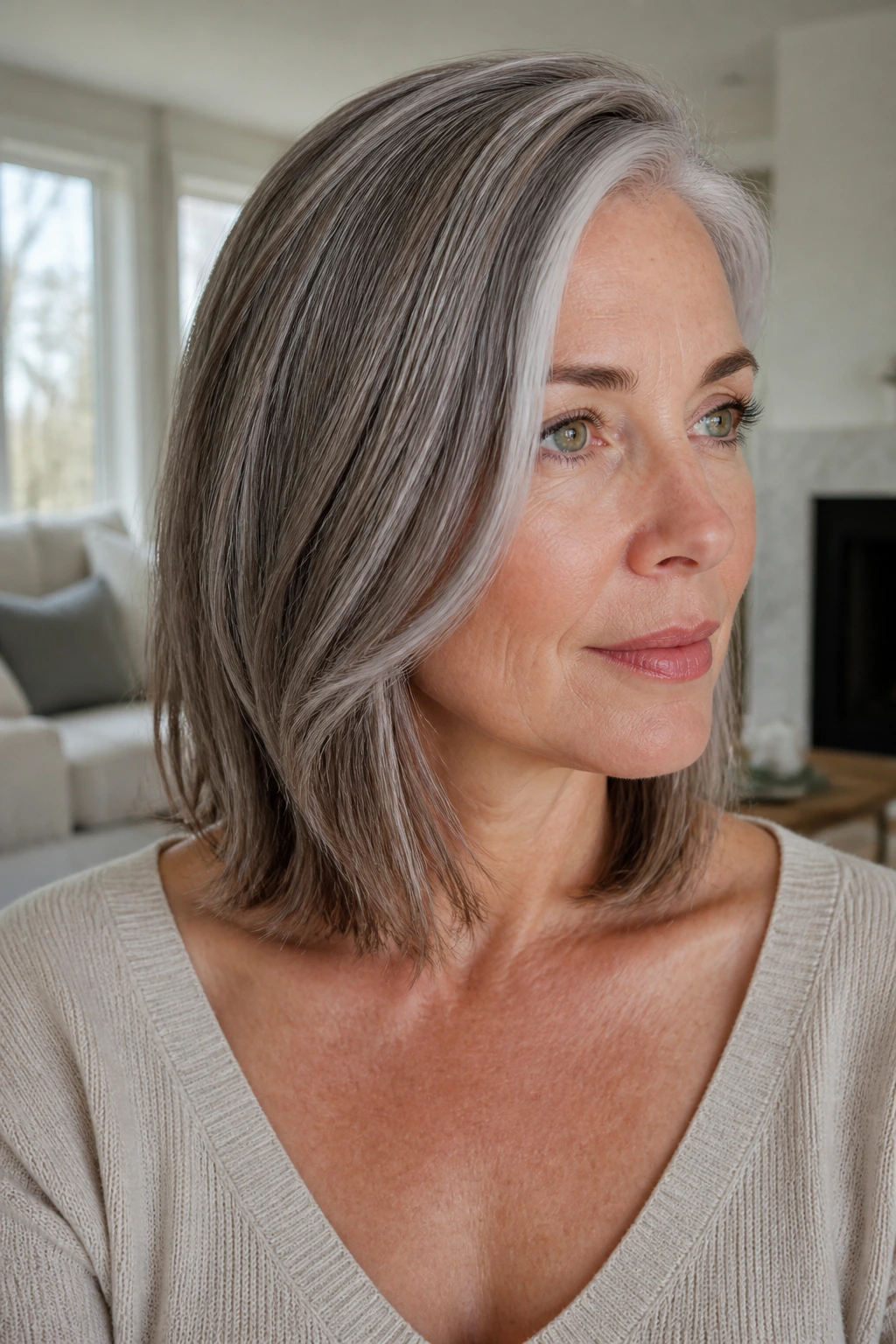
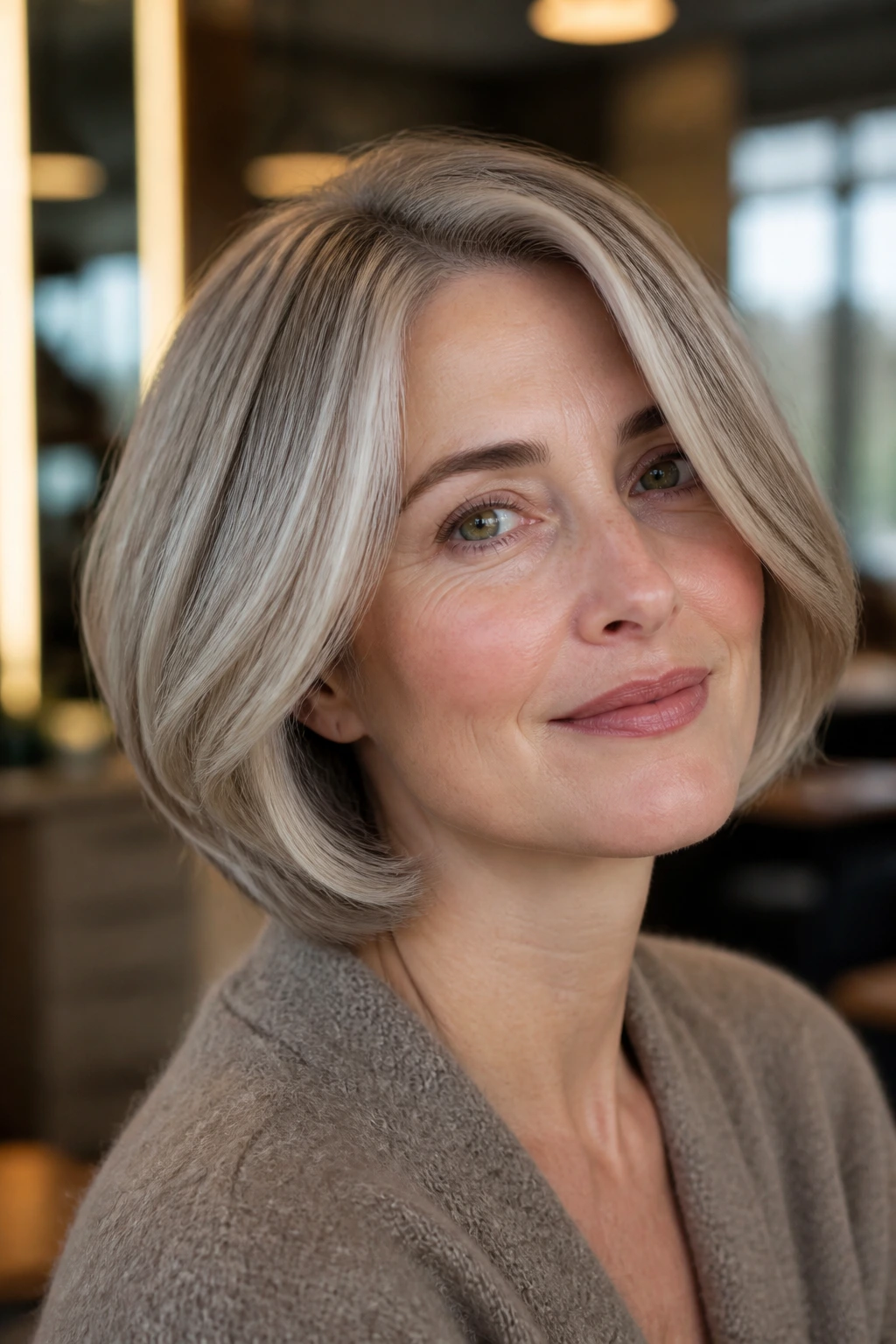
1. Soft Silver Bob with Mushroom Lowlights
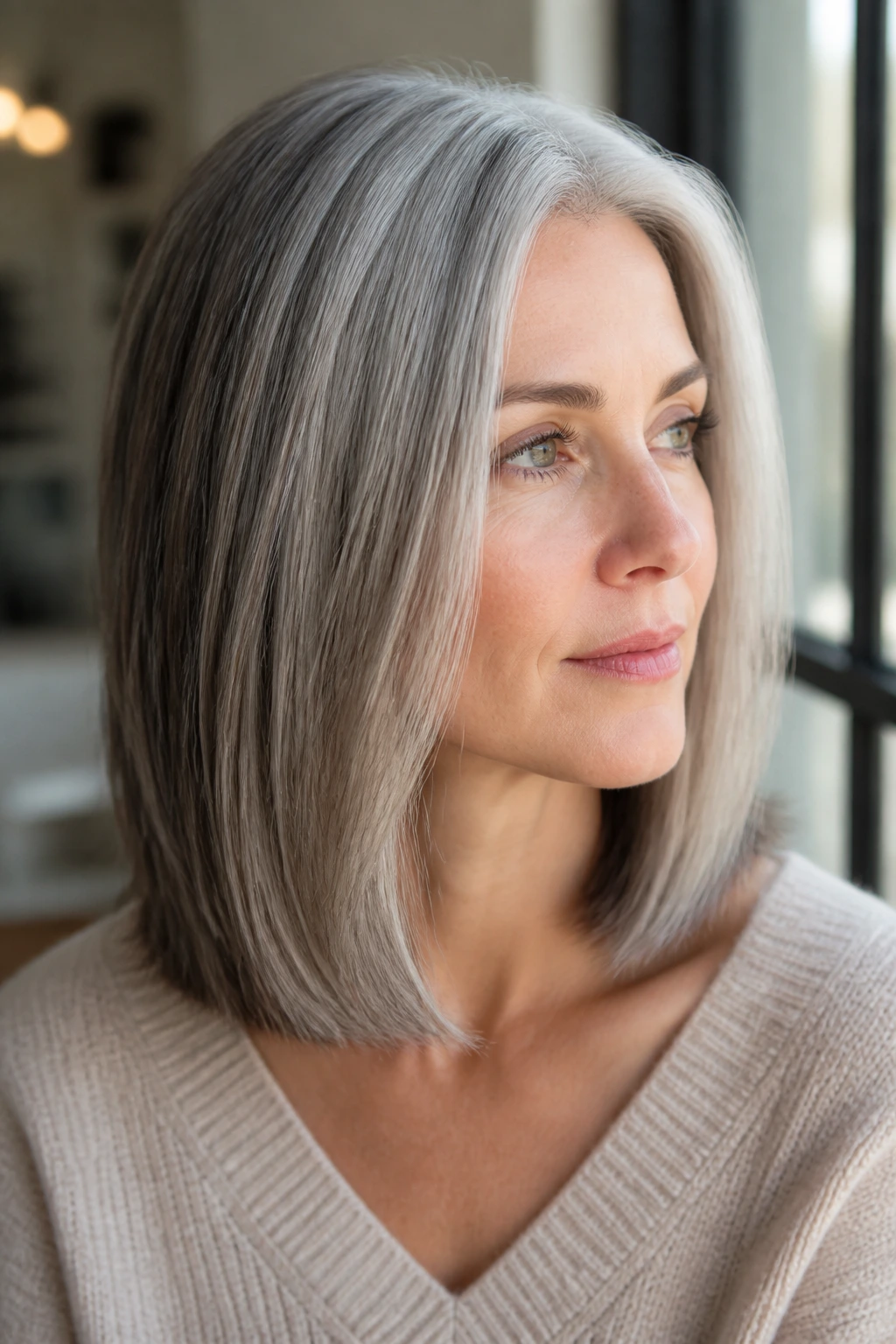
A chin-length bob is one of my favorite places to use mushroom lowlights because the shape already does half the styling work. The cool brown shadow sits under the silver surface and gives the cut a little weight at the jawline, which is exactly where fair skin often needs it.
Why it flatters fair skin
Mushroom brown is that quietly useful shade that never shouts. On fair skin, it softens the edges of the face without turning the bob dark, and it makes white-gray pieces around the front look brighter by comparison.
- Ask for lowlights one level deeper than your gray, not three.
- Keep the darkest pieces under the top layer so the bob still reads soft.
- A slight bend at the ends, made with a 1-inch iron, keeps the cut from looking helmet-straight.
Pro tip: If your hair is fine, ask for fewer, thinner lowlight slices. Chunky panels can make the bob look stripy in daylight, and daylight is unforgiving.
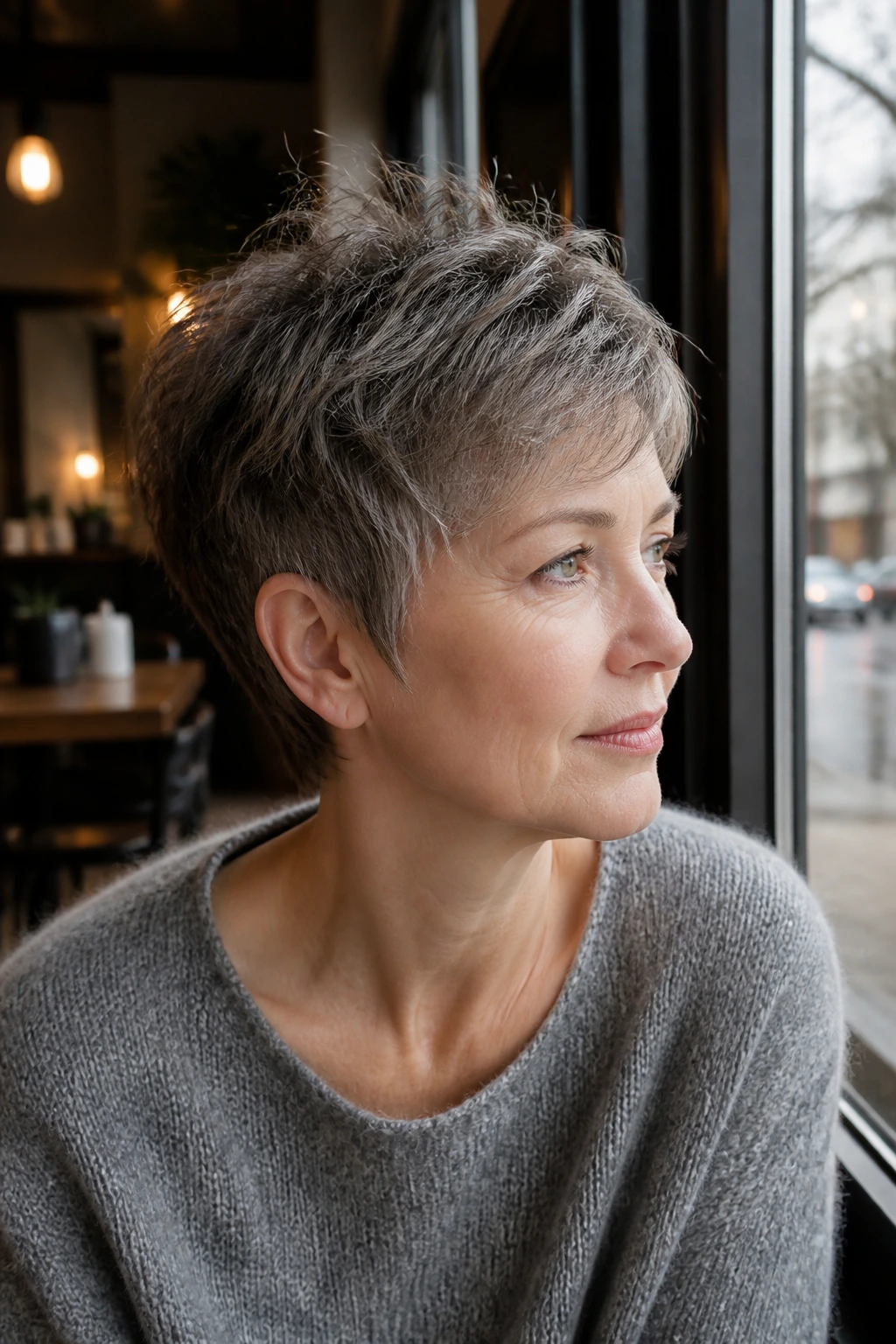
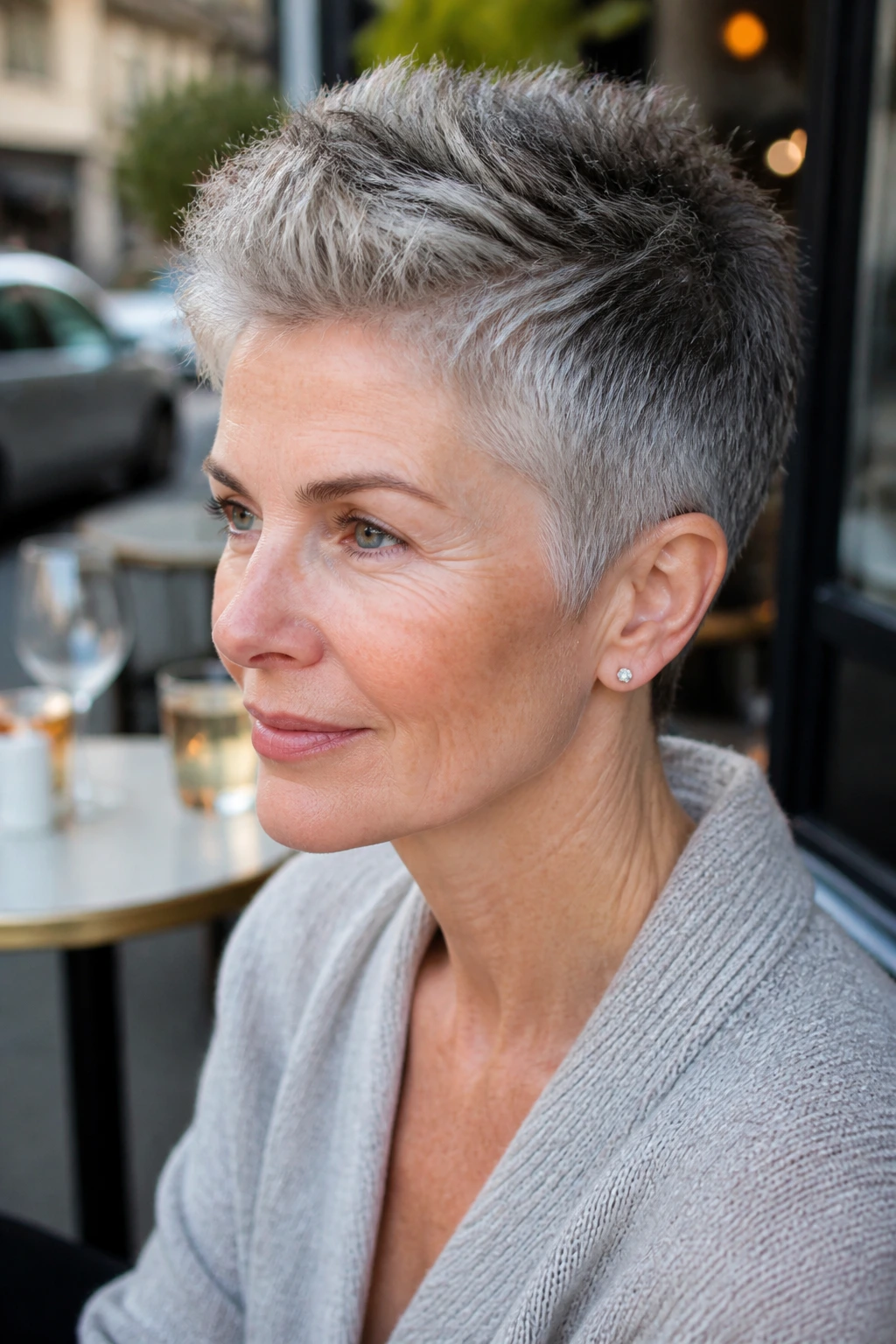
2. Feathered Pixie with Ash-Brown Streaks
Why does a pixie work so well here? Because the short length lets ash-brown lowlights act like tiny shadows instead of big color blocks. On fair skin, that matters.
The feathered top keeps the crown light, while the lowlights tuck into the sides and back, which makes the whole cut feel airy rather than dark. I like this version for people whose gray comes in bright and white at the hairline but needs a little grit through the back.
What makes it tick
A pixie with texture needs contrast, but not much. A few cool brown streaks near the temple and nape give the cut shape, and a pea-sized matte paste brings the choppy bits forward.
If you wear glasses, this is one of the neatest options on the list. It keeps the face open, keeps the ears visible, and does not fight with a frame.
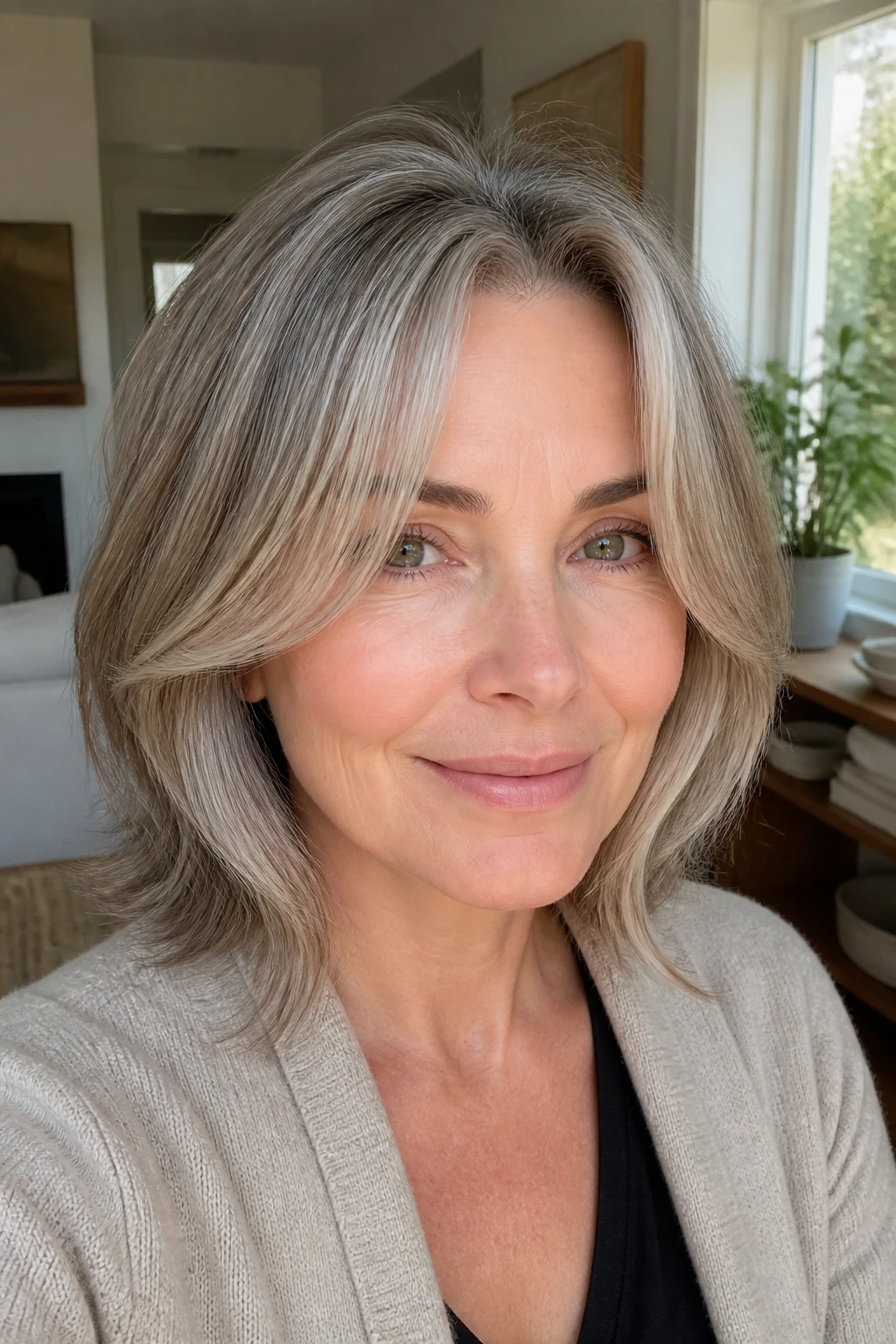
3. Collarbone Lob with Taupe Ribbons
This is the one I recommend to people who want gray hair to feel polished without looking overcolored. A collarbone lob leaves enough length for movement, and taupe ribbons sit right in the sweet spot between silver and brown.
The effect is subtle in the best way. You see it most when the hair swings, not when it sits still.
Quick details that matter
- Keep the lowlights below the cheekbone so the face stays bright.
- Ask for a soft blend at the part, not a hard stripe.
- Use a round brush only on the ends; too much bend near the roots can make the lob flip out awkwardly.
A center part makes this cut clean, but a deep side part gives fair skin a little more contour. Both work. The cut is forgiving like that.
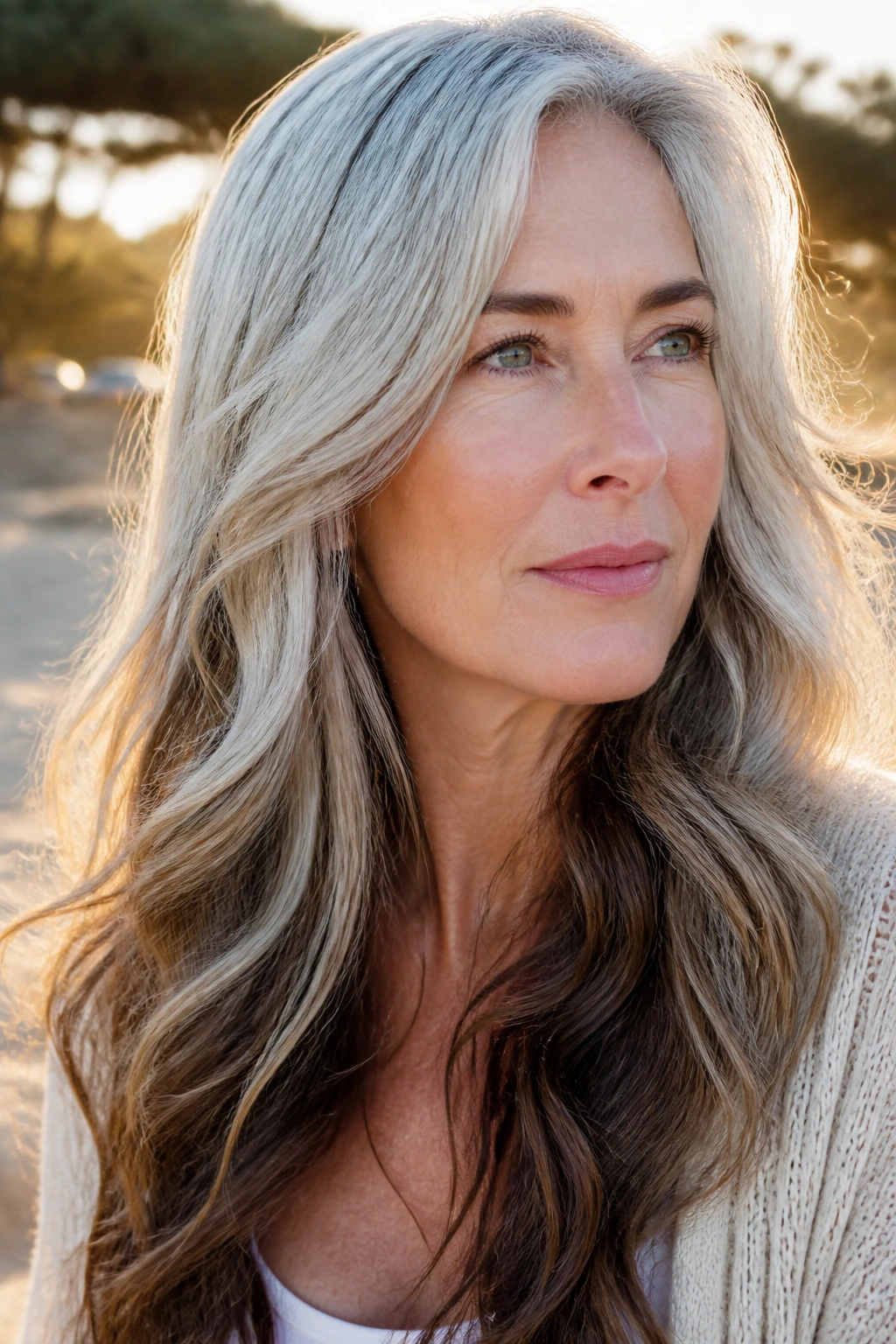
4. Long Waves with Smoky Mocha Lowlights
Long silver waves can look luxurious, but they can also look too pale if the whole surface is the same tone. Smoky mocha lowlights solve that by dropping shadow into the mid-lengths and underneath the wave pattern.
The trick is restraint. I do not like mocha lowlights around the front hairline on fair skin unless the hair is very dense. Too much depth there can pull the face down.
The best placement is usually from the ear back, then sprinkled into the lower half of the length. When the waves break over those pieces, the hair looks thicker and more dimensional.
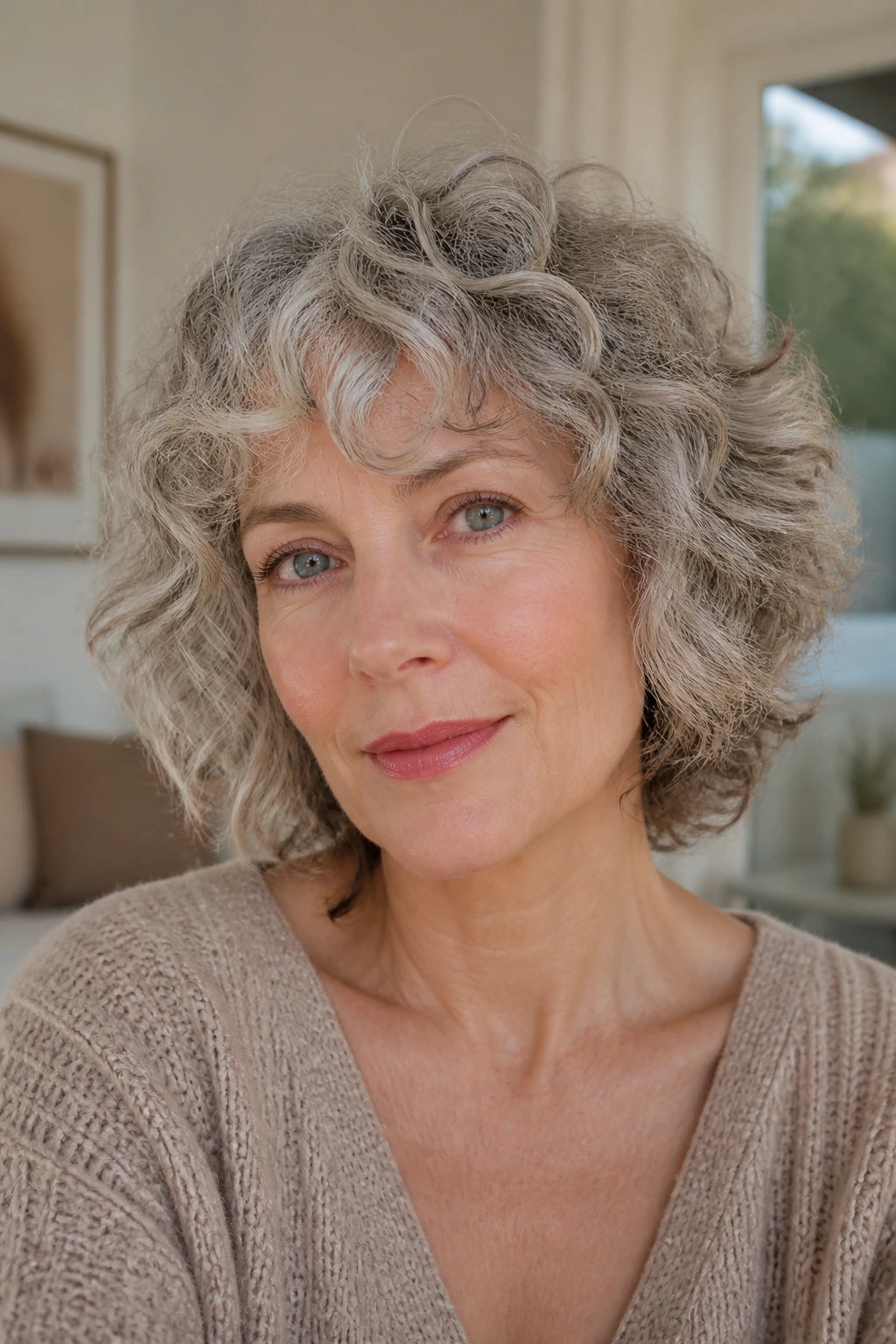
5. Curly Gray Shag with Dimensional Ends
Curly gray hair is already doing a lot. A shag cut with lowlights keeps all that texture from turning into a single puff of silver.
The lowlights belong inside the curl mass, not on the outermost ring. That way the curl pattern stays bright on the surface, while the darker pieces sit where they can make each bend look more defined.
Where the shadow belongs
A curly shag lives or dies by placement. Put the lowlights too high, and the curls can look muddy. Put them low and tucked in, and the cut suddenly has shape.
I like this look because it handles grow-out well. Curly hair hides a lot, and the lowlights only show when the curls move, which feels natural instead of staged.
6. Side-Parted French Bob with Pearl Glaze
A French bob can be a little severe on fair skin if it’s all one tone. Add a pearl glaze and soft lowlights beneath the top layer, and the whole thing relaxes.
The side part is doing real work here. It breaks the symmetry and gives the face a gentle diagonal line, which is useful if your features are fine or your skin has a rosy cast.
This is a polished cut, but not a stiff one. The ends should curve slightly inward, and the lowlights should be soft enough that you notice movement before you notice color.
7. Tapered Crop with Salt-and-Pepper Crown
A tapered crop can look sharp and clean on fair skin, especially when the crown keeps a little salt-and-pepper variation. The sides stay neat, the nape is tight, and the top carries the visual interest.
That crown contrast is what saves the style from feeling flat. A crop that’s all one silver shade can read a bit helmet-like; a darker root zone or a few ash-brown pieces at the top breaks it up.
Wear this one with confidence. It likes a good brow, a little ear visibility, and a tidy neckline.
8. Curtain-Bang Lob with Ash Beige Lowlights
Curtain bangs are forgiving, which is probably why they work so well with gray. They soften the forehead, skim the temples, and give fair skin a little framing without locking the style into one mood.
Ash beige lowlights keep the bangs from looking too stark against pale skin. They also help the lob underneath look fuller, since those pieces can be placed just below the surface and left to move.
The best part is that this cut wears up and down easily. Air-dry it, blow it out, or bend the front pieces away from the face. It still holds together.
9. Sleek Shoulder-Length Cut with Smoke Shadow
A sleek shoulder-length cut needs shadow more than it needs shine. That sounds backwards, but it isn’t. Gray hair already reflects a lot of light, so the smoke shadow keeps the length from turning into one bright panel.
The cut works best when the ends are blunt enough to feel intentional. Long, wispy ends can make fair skin look even paler, while a smoother line gives the hair shape.
I’d keep the lowlights under the top half and around the nape. Let the silver on top stay bright. That contrast is the point.
10. Grown-Out Layered Shag with Deep Brunette Underlayers
This is the style for someone who likes a little edge but does not want high-maintenance color. The top stays mostly silver, the layers do the moving, and the deeper brunette lives underneath where it gives the hair some real depth.
The underlayer is doing the visual heavy lifting here. It makes the shag look thicker at the ends and keeps the surface from reading one-note.
A grown-out shag is not lazy when it’s done well. It just knows where to stop.
11. Wavy Bixie with Cool Chestnut Lowlights
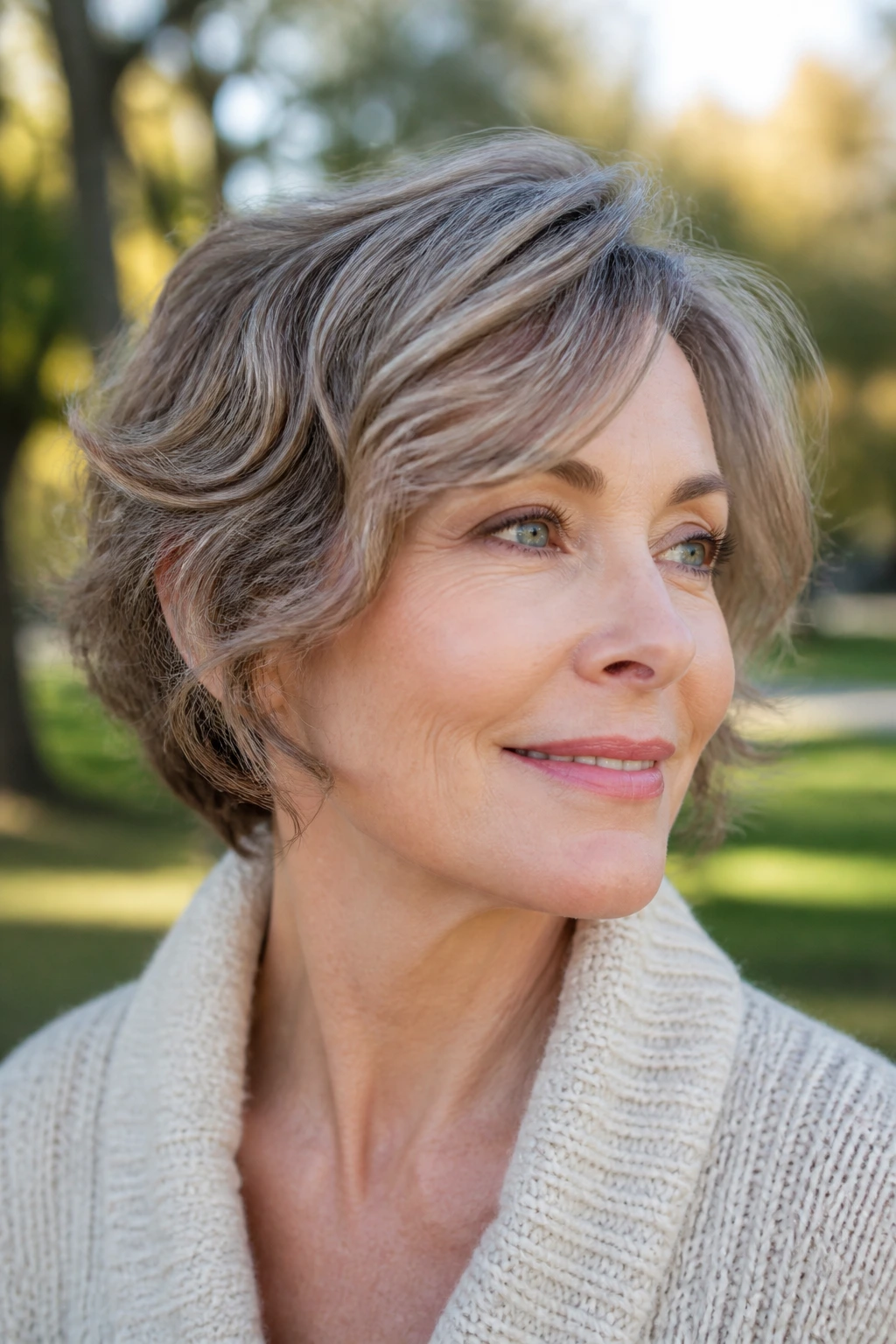
The bixie sits between a bob and a pixie, which means it can go soft or edgy depending on the texture. On fair skin, cool chestnut lowlights give it enough depth to avoid a washed-out look while keeping the cut light around the eyes.
I like this shape for people who want movement without too much length. The waves can flip out a little at the ends, and the lowlights catch that bend so the hair never looks paper-thin.
If your hair is fine, this is one of the best options in the lineup. It adds visual weight where you need it.
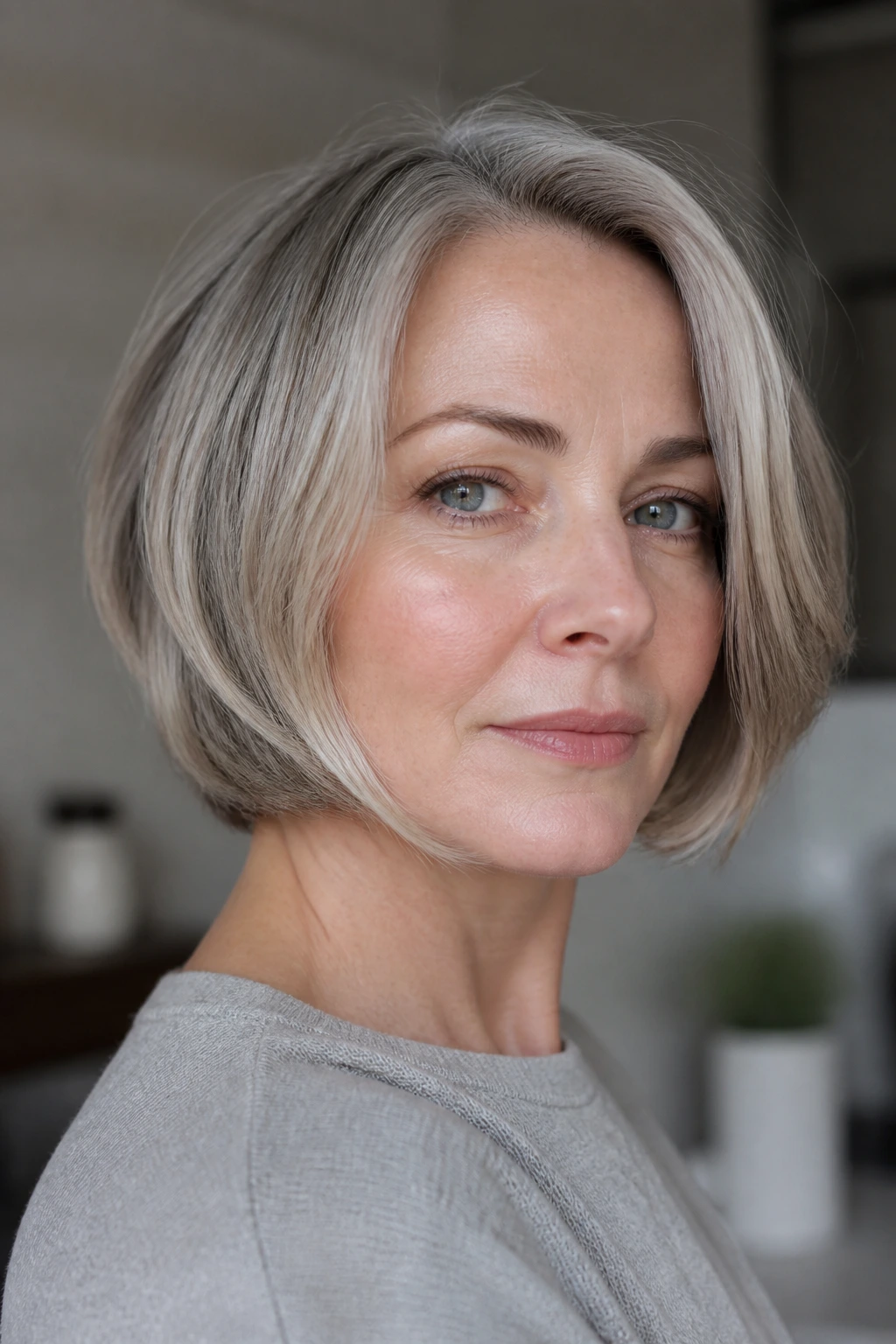
12. Chin-Length Blunt Bob with Micro-Lowlights
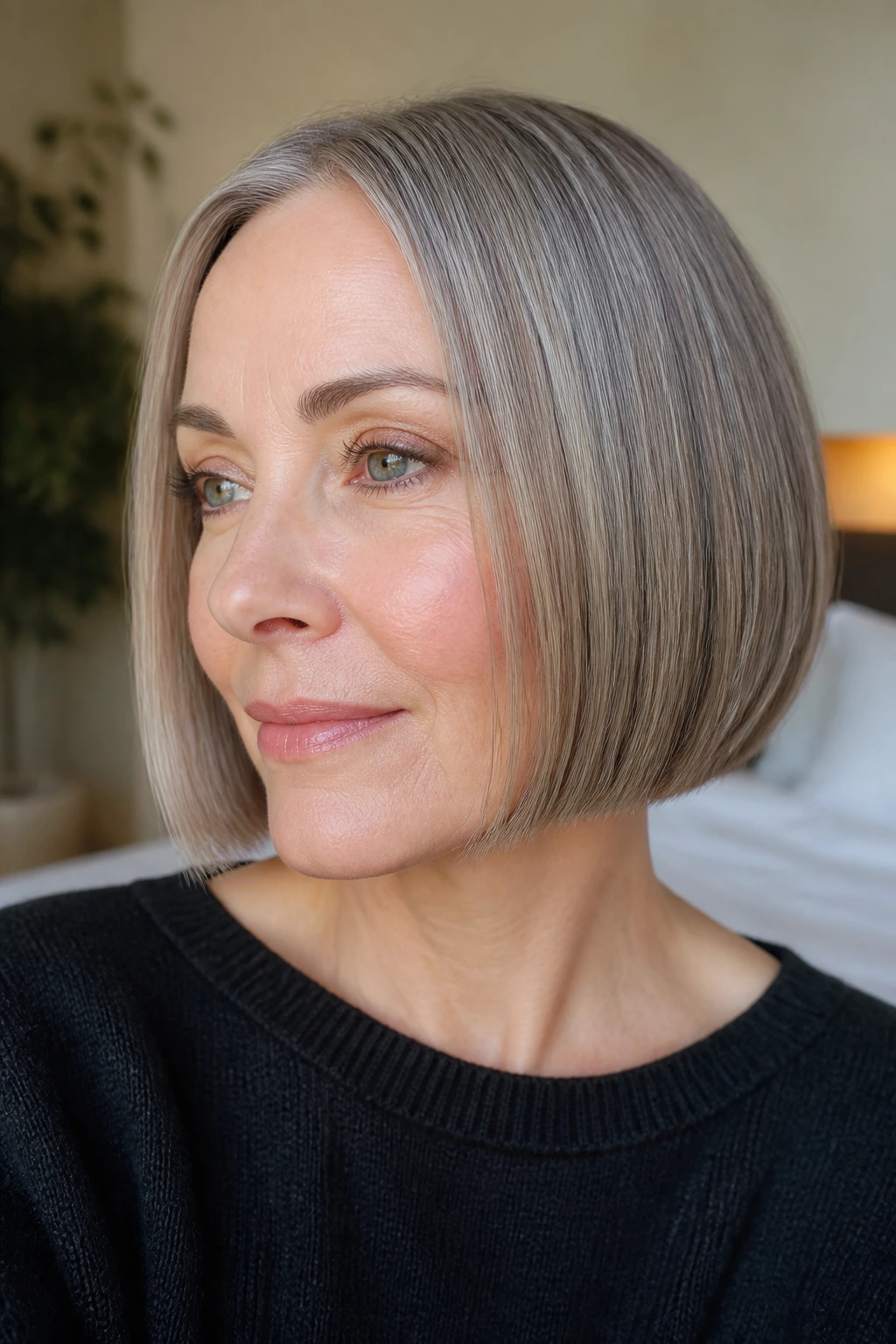
Can a blunt bob feel soft? Yes, if the lowlights are fine enough. Micro-lowlights are tiny slices of color that read more like texture than stripes.
That’s why this cut works on fair skin. It keeps the line clean, but the color underneath stops the bob from looking like a block of white-silver. You still get the crisp edge, just with some depth under it.
Ask for this if you want the cut to stay bright
Tell the colorist you want the silver to stay dominant. The lowlights should be narrow, cool, and scattered, not packed in. Too much depth and the whole point of the blunt line disappears.
13. Silver Pixie with Choppy Fringe
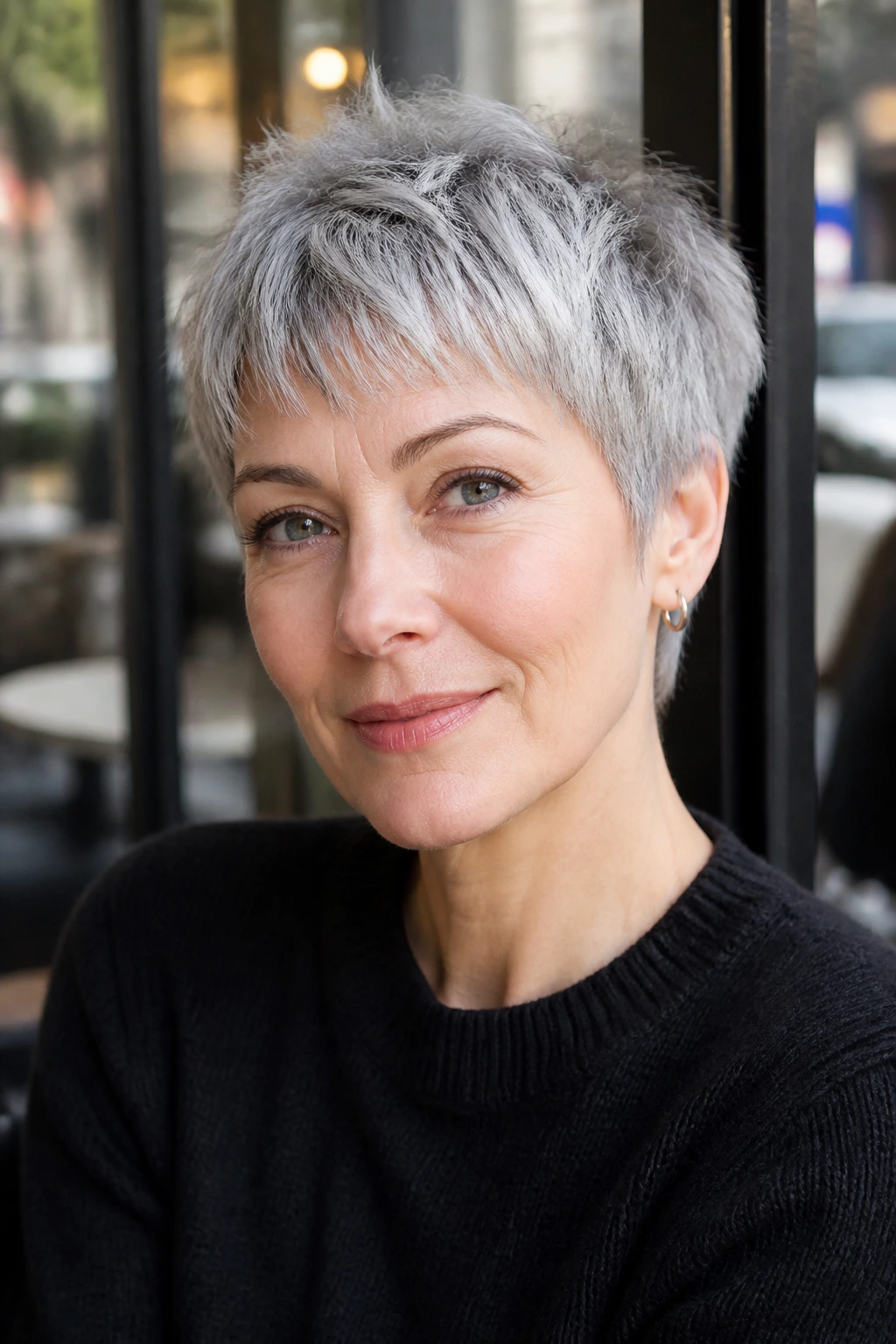
A silver pixie can be a little severe, so a choppy fringe is the right antidote. It breaks the forehead line and gives fair skin a softer start at the face.
The lowlights can sit mainly through the crown and temples. That keeps the fringe bright while adding enough depth behind it to stop the cut from floating away from the scalp.
This one is blunt in a good way. It has personality. It also takes five minutes to style if you know where to put your fingers and the paste.
14. Long Layered Cut with Face-Framing Smoke
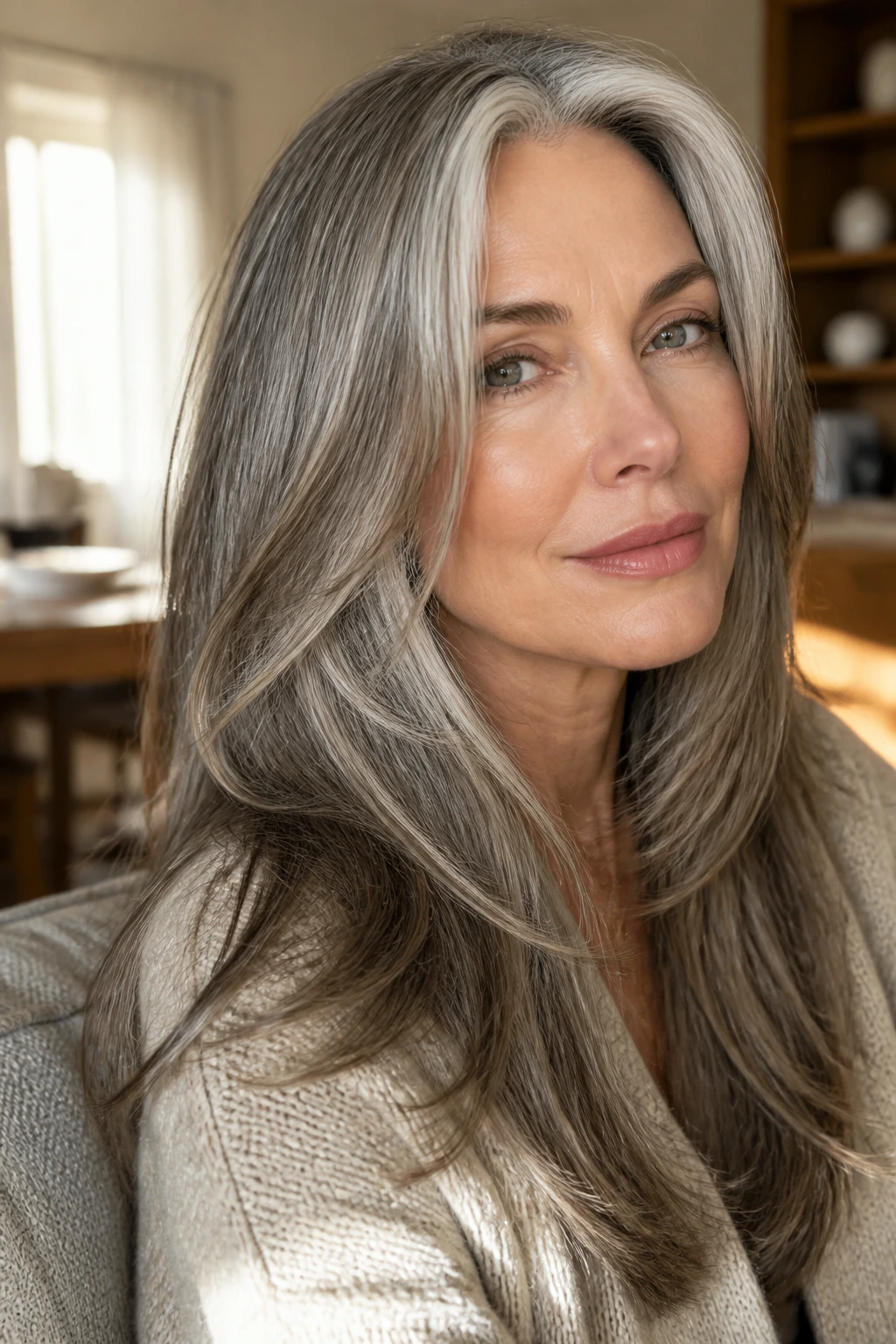
Long gray hair with no shaping can look heavy at the ends, especially on fair skin. Face-framing smoke lowlights fix that by giving the front pieces a little contour without covering up the silver.
The longer layers let the hair swing, which matters. Gray hair with lowlights looks best when it moves and shows you different tones as it falls.
Keep the darkest pieces below the cheekbone. That leaves the skin open and lets the eyes stay the focal point.
15. Soft Inverted Bob with Root Shadow
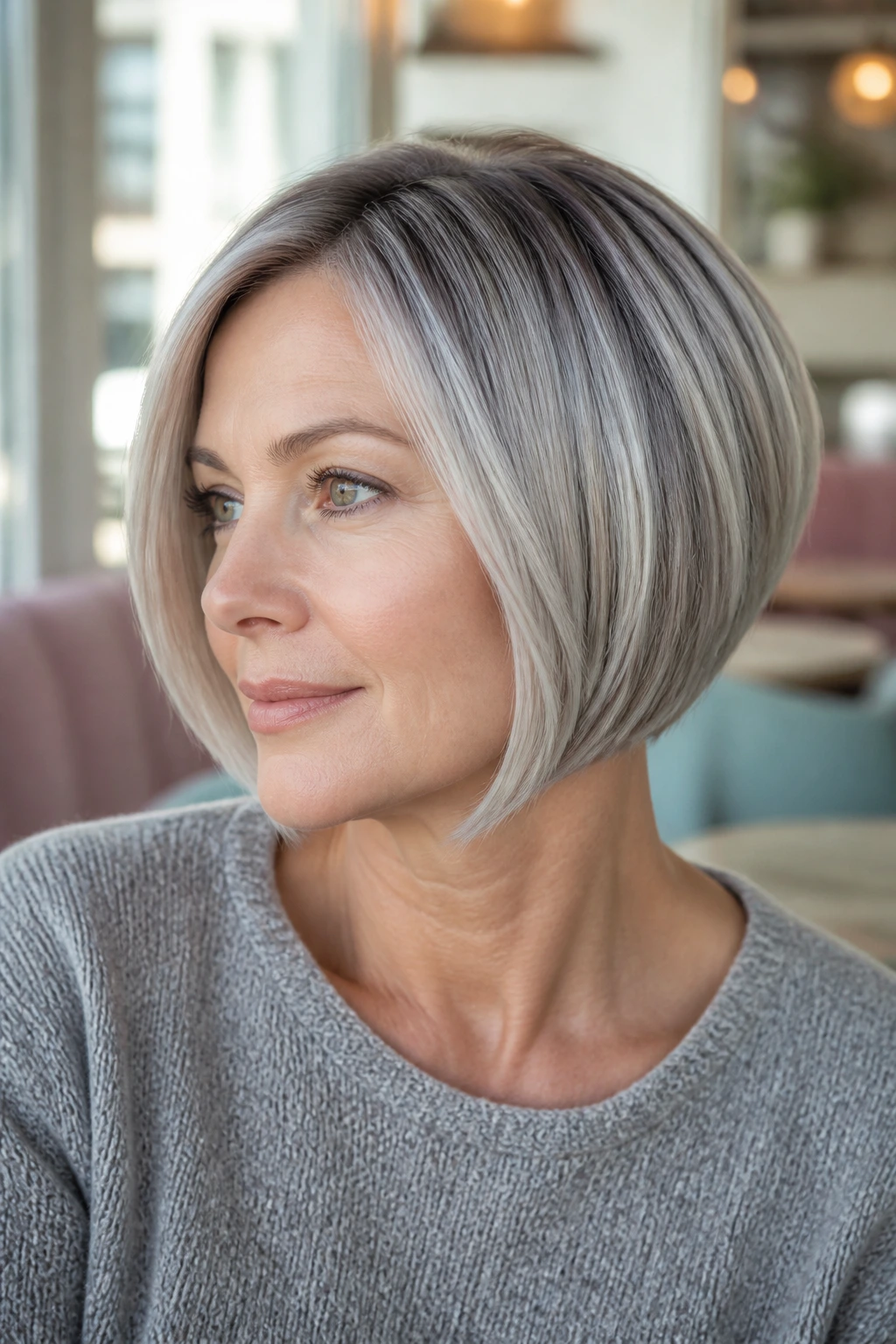
The inverted bob is sneaky good for gray hair. Shorter in back, longer in front, it creates an instant angle, and the root shadow at the crown makes that angle look even cleaner.
On fair skin, this shape gives the jawline some structure. It doesn’t need a lot of color drama because the cut itself already creates the visual lift.
I prefer a soft inversion here, not a dramatic stacked shape. Too much stack can fight the delicate quality of gray hair. A gentle curve is enough.
16. Natural Gray Curls with Cocoa Ribbons
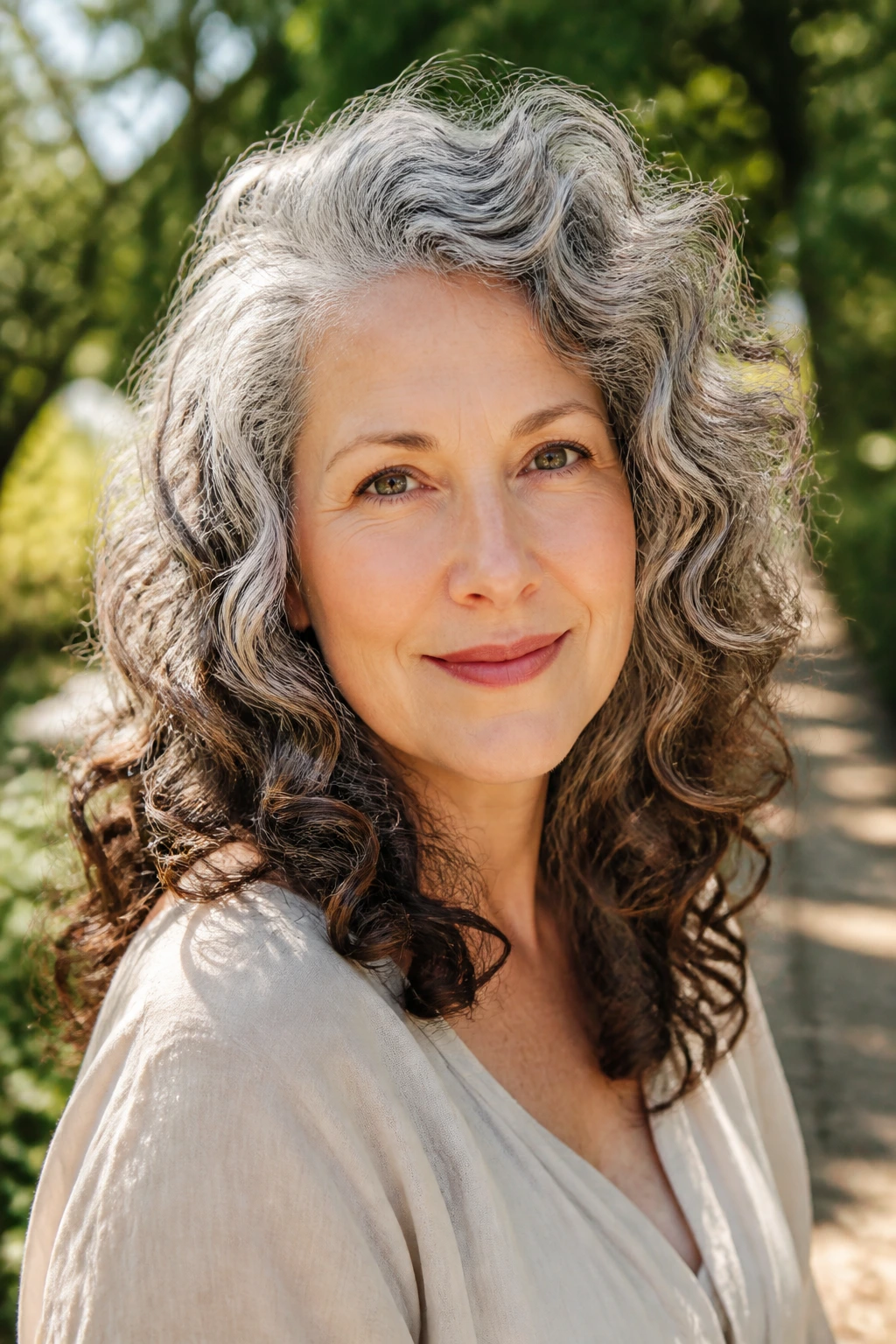
Curls and cocoa lowlights are a nice match because the curl pattern breaks up the color automatically. On fair skin, the cocoa stays warm enough to add depth, but not so warm that it goes orange.
The ribbons should be tucked through the interior and lower third of the curl group. That keeps the surface bright and the movement clean.
Keep the curl pattern in charge
Do not comb this style out after coloring. Use your fingers or a wide-tooth comb, then scrunch in a light cream. Curls need shape more than they need obedience.
17. Low Chignon with Wispy Gray Tendrils
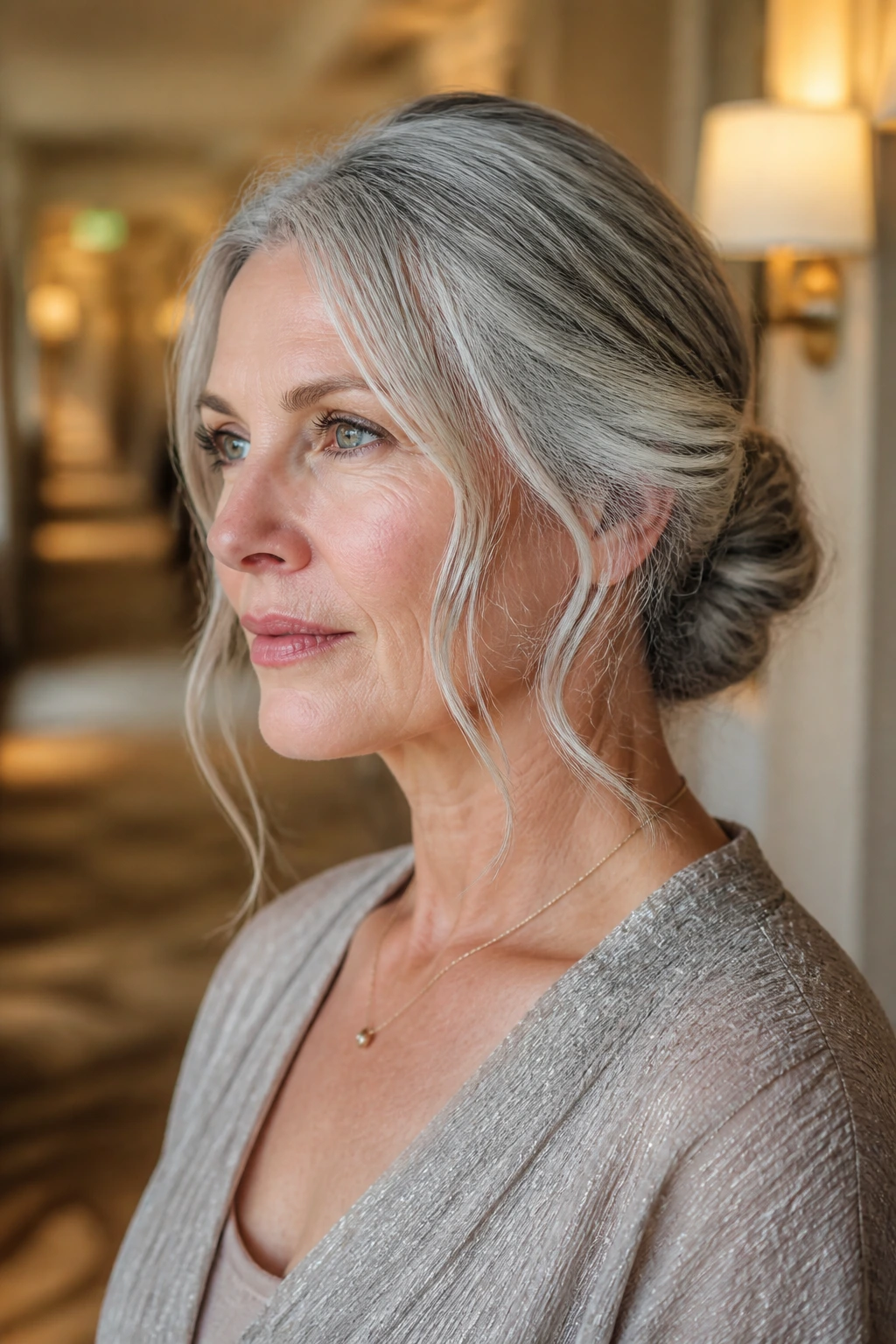
A low chignon can feel too formal if the hair is one flat tone. Add a few soft lowlights through the gathered length and leave wispy tendrils around the face, and the style loosens up fast.
This is a good one for events, but it works on ordinary days too. The shadow at the nape keeps the bun from looking like a hard knot, and the tendrils keep fair skin from going blank around the temples.
I like this with a soft side part and a little texture spray. Too sleek and it starts to look severe.
18. Braided Crown with Dimensional Mid-Length Gray
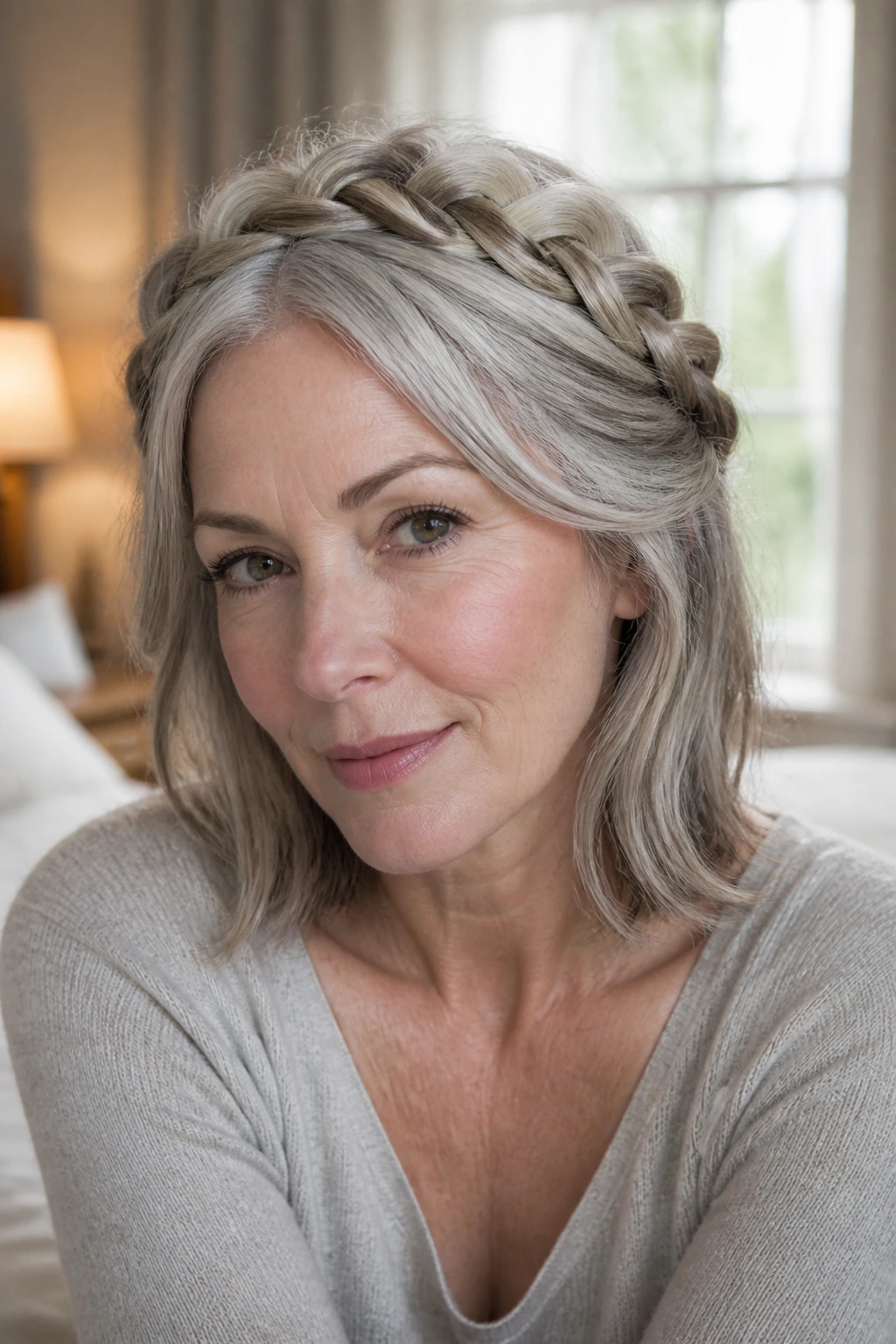
Why does a braided crown look richer with lowlights? Because braids show contrast in slices. Every turn in the braid catches a different tone, and fair skin benefits from that little bit of movement near the face.
Mid-length hair is enough for this style if the layers aren’t too short. The lowlights should be placed through the mid-shaft, not just the ends, so the braid has color depth all the way around.
It is one of those styles that looks more complicated than it is. That’s usually a good sign.
19. Half-Up Twist with Silver Waves
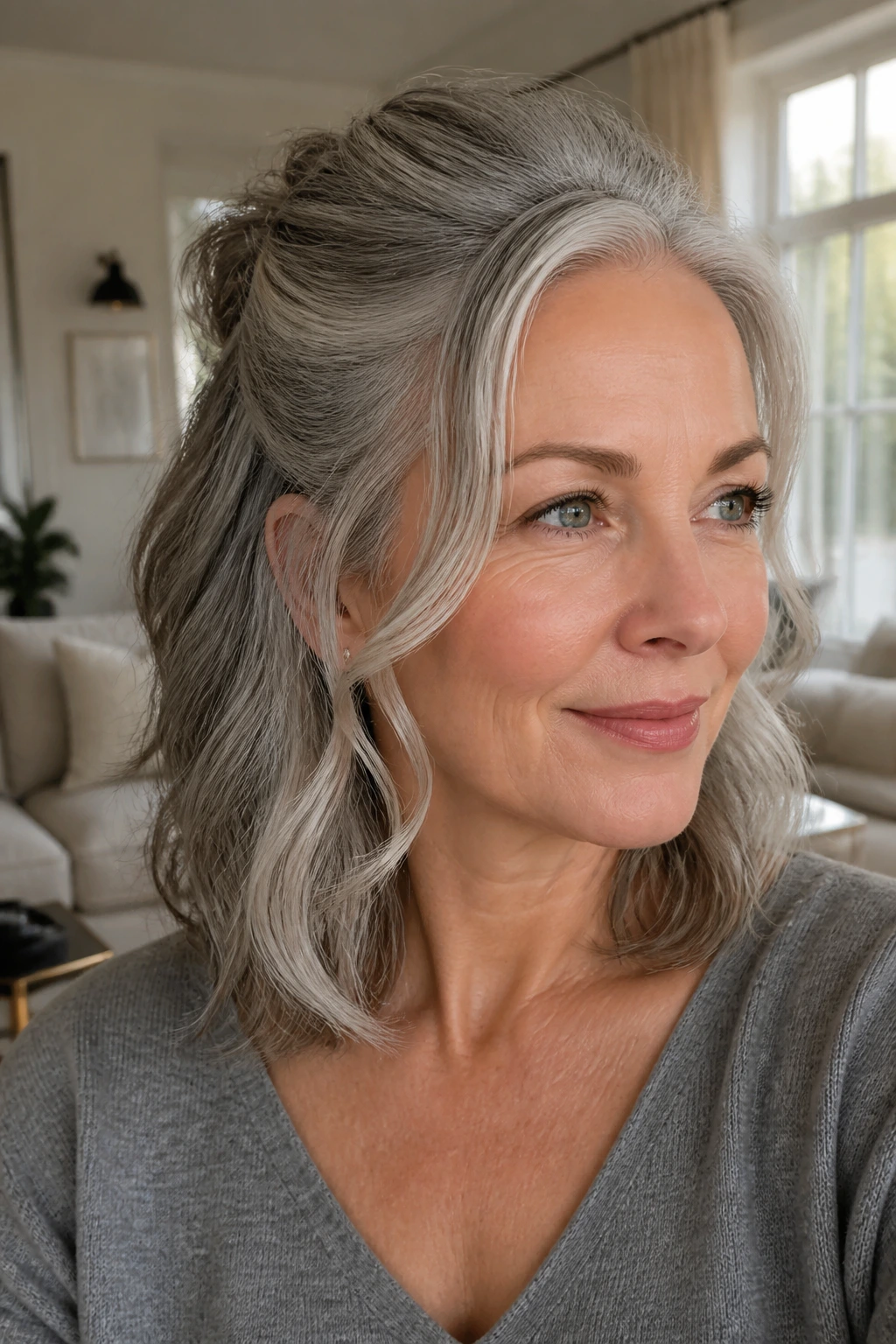
A half-up twist lets the silver waves stay visible while giving the crown some lift. The lowlights keep the bottom half from turning into a pale curtain, which is helpful on fair skin.
This is a strong everyday choice. It takes the pressure off perfectly styled hair and gives you a little shape around the face without putting the whole head up.
If you want it to feel softer, leave a few pieces loose at the temples. If you want it cleaner, smooth the front back and let the twist do the talking.
20. Airy Shoulder Flip with Sandy Lowlights
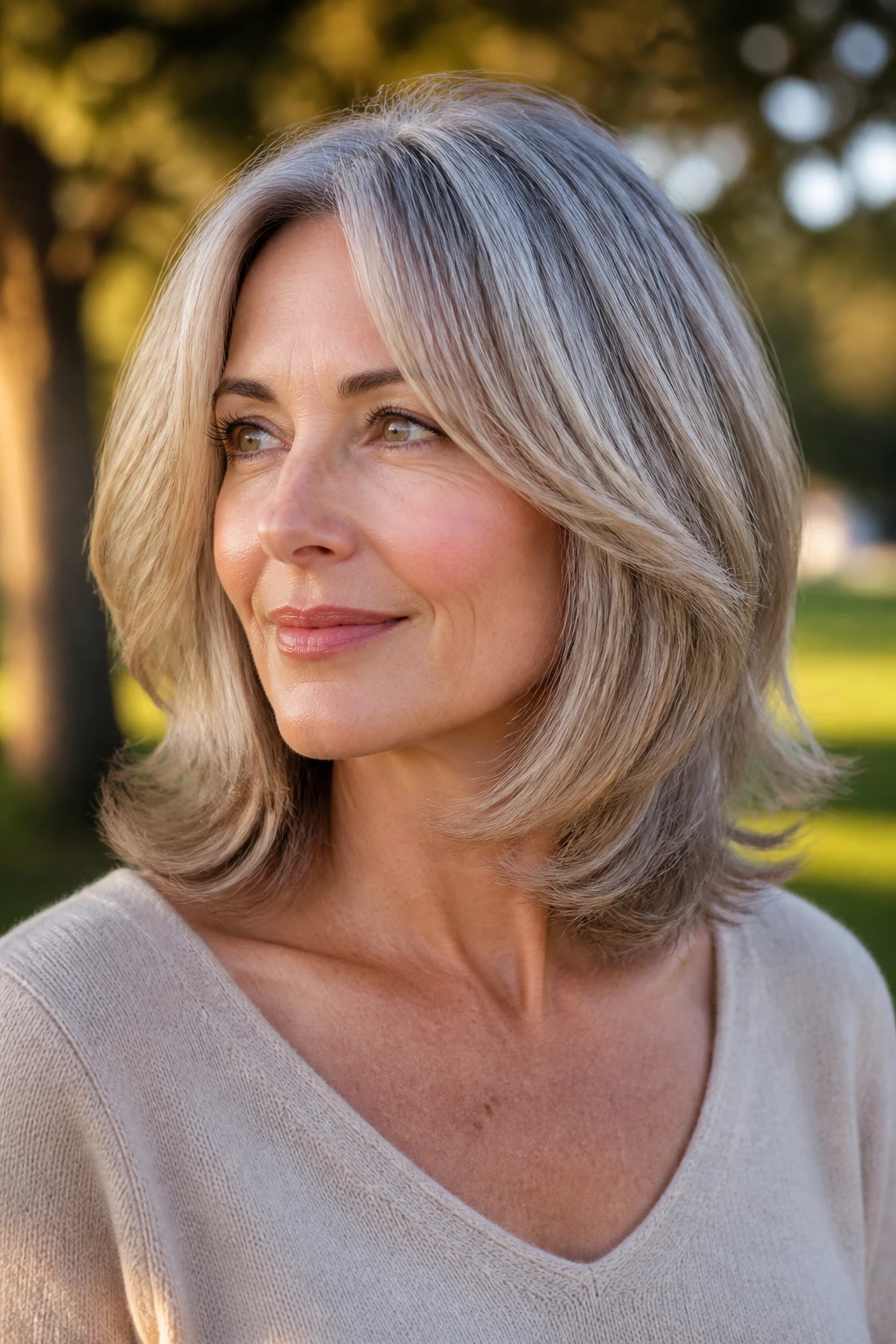
A shoulder-length flip has a touch of retro energy, but it doesn’t have to look costume-like. Sandy lowlights make it feel grounded, and the flipped ends add a little bounce that fair skin can wear without getting overwhelmed.
The color placement should stay light and diffused. Think surface haze, not heavy stripes. The ends will do the visual work if they’re blown out or curled under just enough to move.
This is one of the easiest styles to live with. It feels finished even on a rushed morning.
21. Textured Mullet with Charcoal Underside
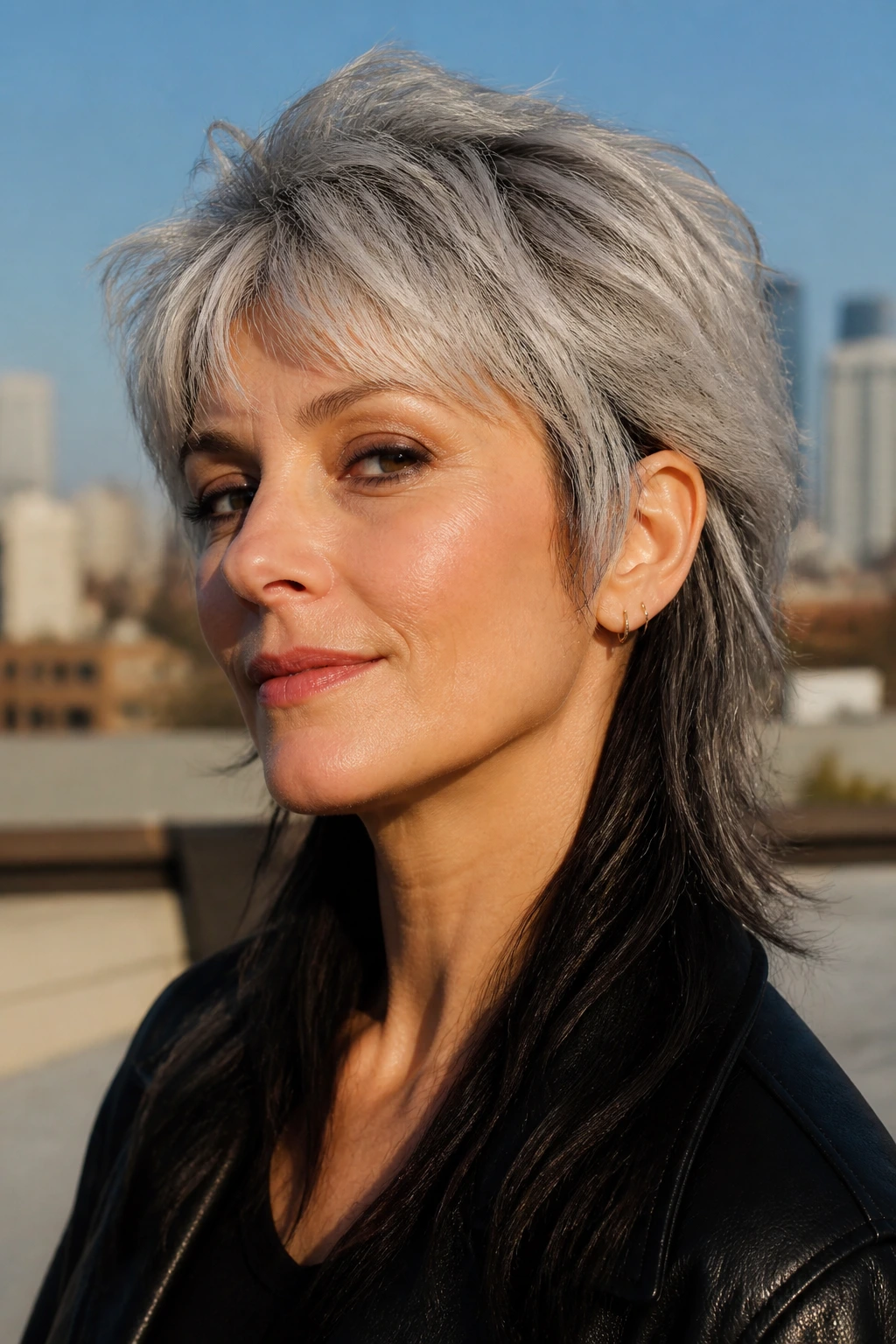
I know the word mullet makes some people flinch, but the textured version can look sharp on gray hair. The trick is keeping the charcoal underside hidden enough that the top remains silver and bright.
That contrast gives fair skin some grit without putting dark color near the face. The cut itself brings the attitude; the color just backs it up.
It works best when the layers are broken and a little piecey. If you smooth it too much, you lose the whole point.
22. Sleek Straight Lob with Graphite Panels
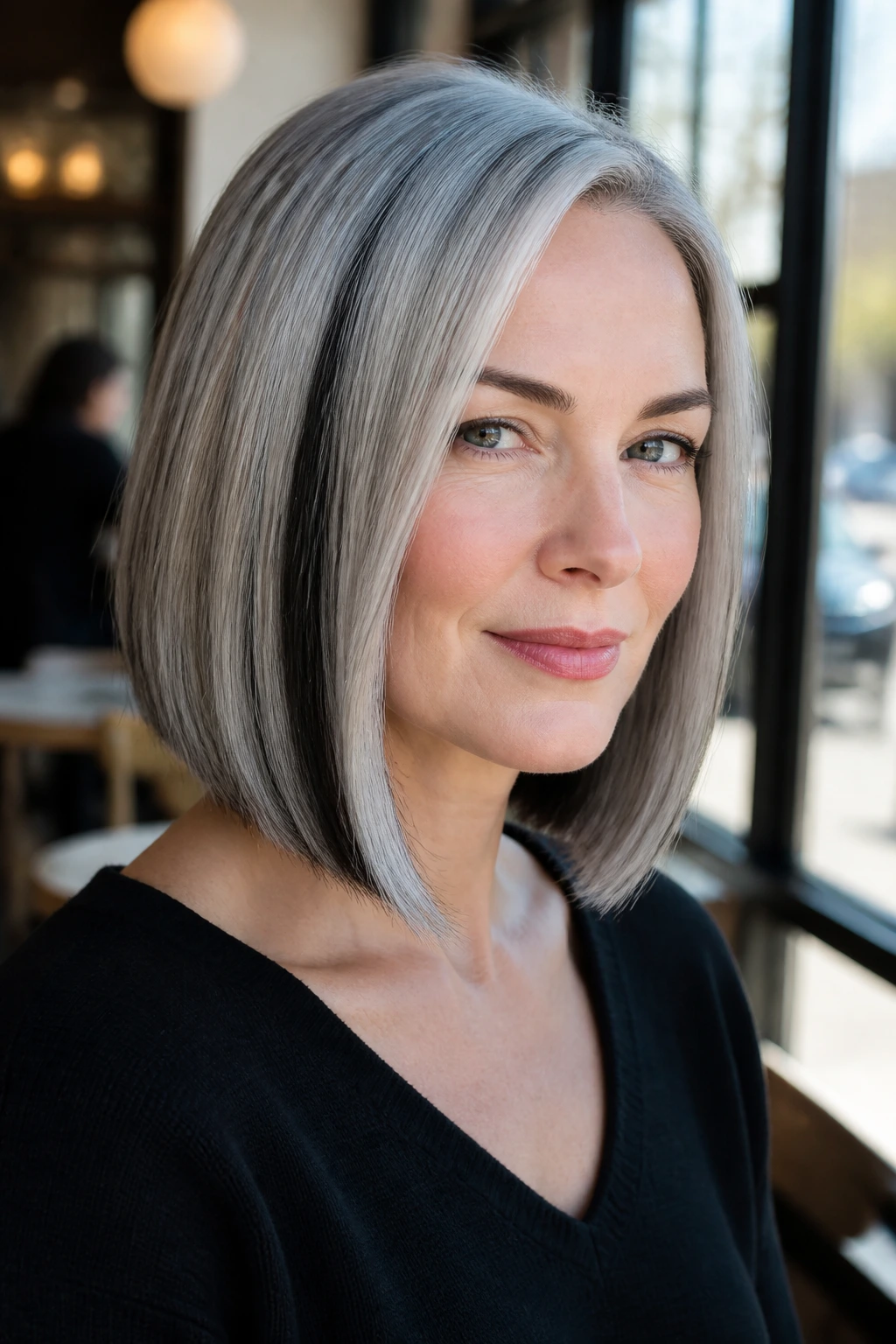
A straight lob with graphite panels is for someone who likes clean lines and a bit of edge. The graphite lowlights should sit in narrow panels beneath the surface, almost like a whisper, not a stripe.
On fair skin, this kind of placement looks crisp instead of harsh. The straight finish lets you see the shift between silver and graphite without making the hair feel busy.
Where to place the deeper pieces
Keep the panels away from the hairline. Put them through the middle and lower sections, where they can add weight and make the lob feel denser.
23. Loose Ponytail with Face-Framing Strands
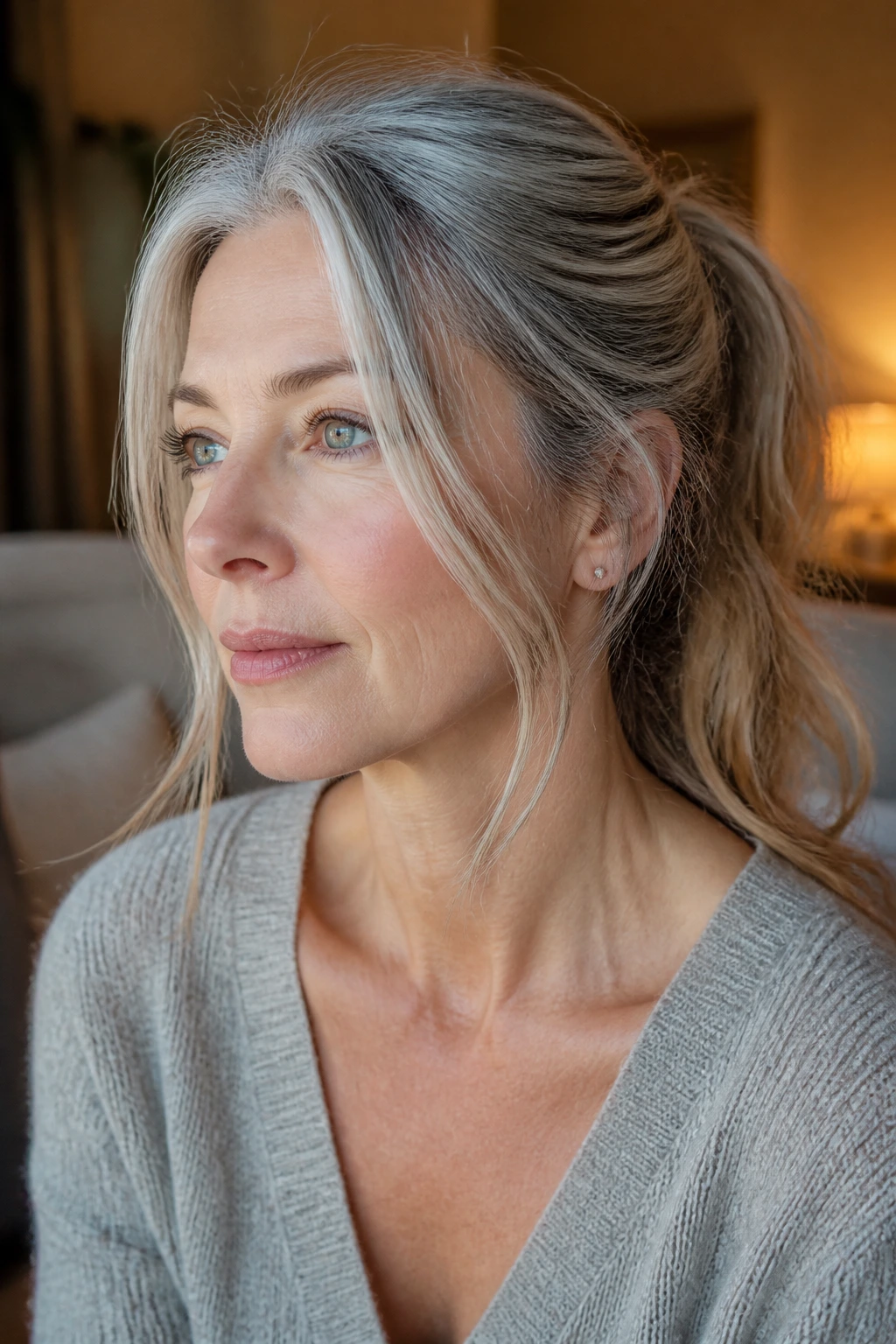
A loose ponytail sounds plain until you put the right color in it. With lowlights through the length and a few face-framing strands left out, the style gets enough depth to feel deliberate.
Fair skin benefits from the softness at the temples. The silver around the face stays bright, while the ponytail itself carries the darker tone and keeps the silhouette from disappearing.
I like this one for second-day hair. It accepts a little texture and does not need perfection.
24. Rounded Crop with Feathered Neckline
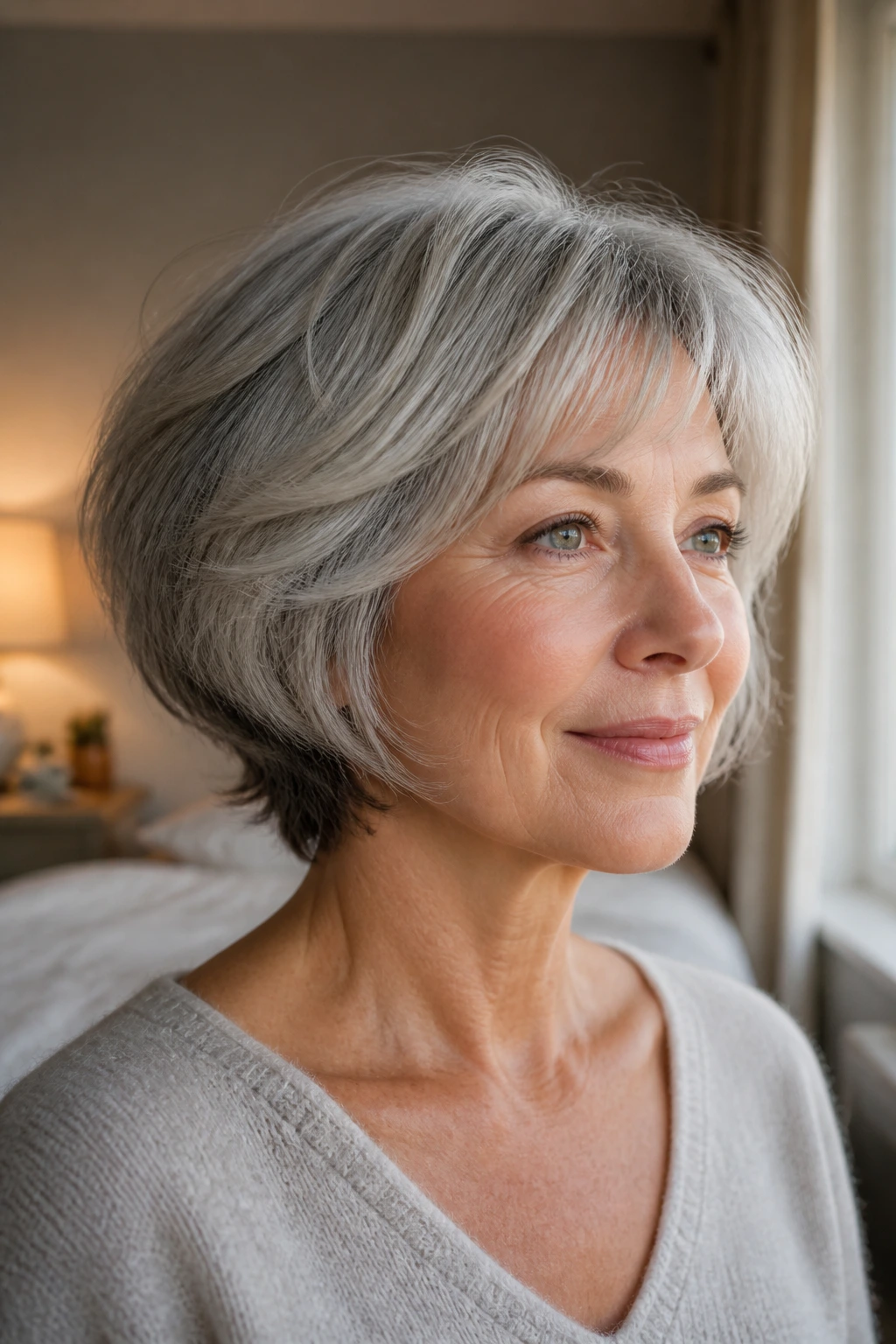
A rounded crop can look gentle, which is useful when the hair is gray and the skin is fair. The feathered neckline keeps the cut from looking hard, and the lowlights at the nape give the shape a fuller edge.
This style works especially well if your hair grows out puffy around the ears. The rounded outline tucks that away and turns the shape into a soft halo instead of a block.
It’s tidy, but not severe. That distinction matters more than people think.
25. Elegant Wave Set with Champagne-Smoke Lowlights
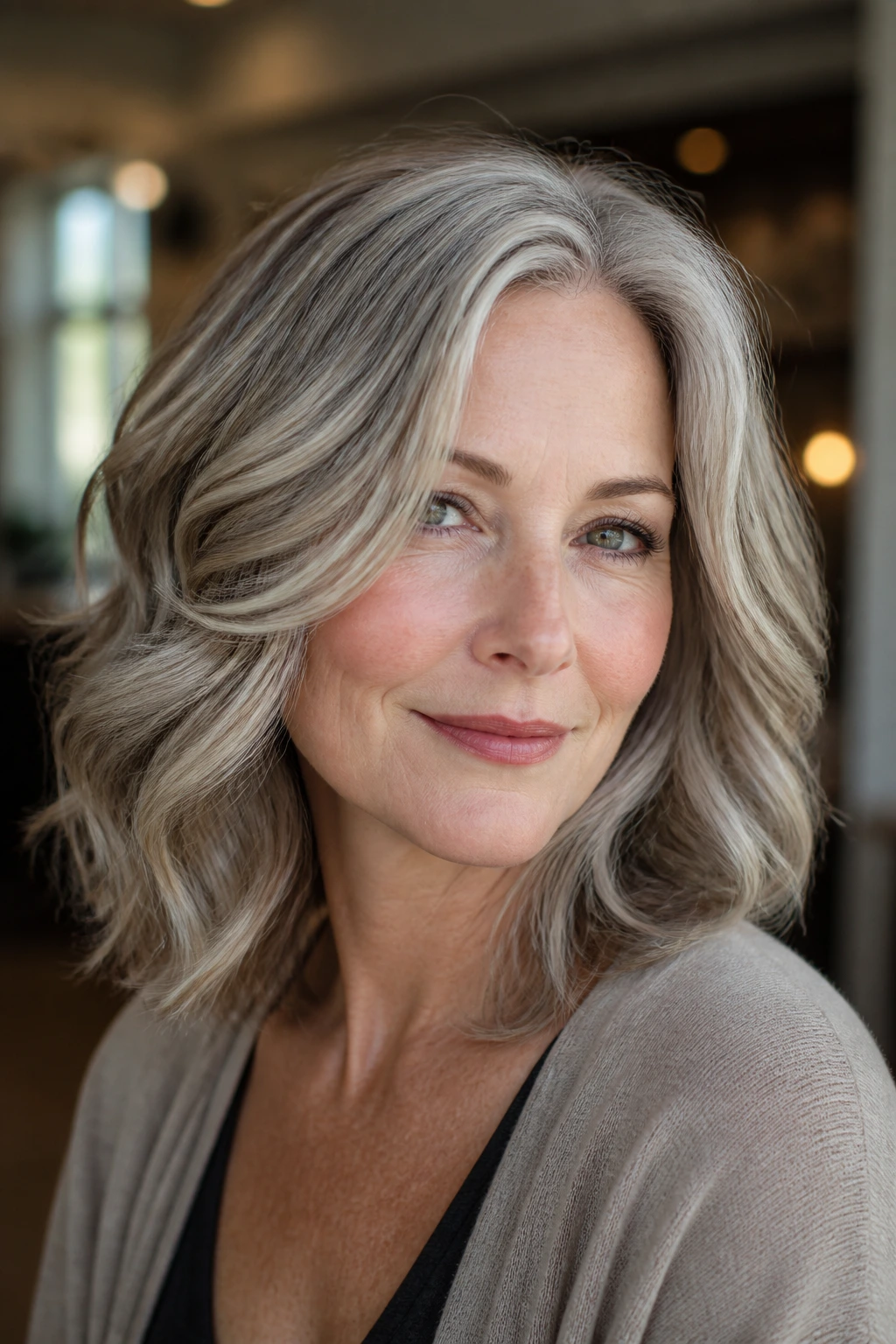
Champagne-smoke lowlights are one of the prettiest options for fair skin because they stay cool enough to flatter while keeping a little brightness in the mix. Paired with soft waves, they make gray hair look deliberate rather than accidental.
The waves should be loose and brushed out slightly, not set into stiff curls. You want the lowlights to shimmer through the bends, not sit in separate sections.
A wave set like this is the closest thing to a dressed-up silver look without going full glam. It still feels like hair a person can live in.
Why Lowlights Matter More Than a Heavy Color Job
The thing about gray hair is that it already brings its own shine. What it often lacks is depth, especially when the silver is bright and the skin is fair. Lowlights solve that by creating a low, cool shadow that the eye reads as shape.
I prefer lowlights to big dramatic color changes on gray hair for one simple reason: they age more gracefully. A soft mushroom ribbon or ash-brown veil grows out with less fuss than a deep brown block, and it still keeps the haircut from flattening out in daylight.
There’s also a practical side people love once they try it. Gray hair can be wiry at the crown and smoother at the ends, or the other way around, and lowlights help disguise those texture jumps. They let the hair look fuller without forcing it to be darker overall.
Essential Tools for These Styles
- Color-safe shampoo: A sulfate-free formula keeps silver from dulling and protects any lowlight gloss from fading too fast.
- Purple or blue shampoo: Use it sparingly, usually once every 1-2 weeks, to keep yellowing under control without turning the hair chalky.
- Heat protectant spray: Gray hair can be dry and frizzy, so this matters before blow-drying, curling, or flat-ironing.
- Round brush: A medium round brush is the easiest way to bend bobs, lobs, and flips without making them look overworked.
- Wide-tooth comb: Better than a brush for waves, curls, and fragile ends.
- Sectioning clips: These make lowlight placement or blow-drying much cleaner, especially around the crown.
- 1-inch curling iron or wand: Good for soft bends, not tight ringlets.
- Light mousse or root-lift spray: Helpful for pixies, crops, and fine hair that collapses at the crown.
- Texture spray: Useful on shag cuts and bixies when you want separation instead of stiffness.
- Finishing serum: A drop on the ends keeps gray hair from looking fuzzy in dry air.
- Hand mirror: Handy for checking the nape and underlayers, where lowlights usually do their best work.
- Color brush and bowl: Optional, but useful if you are refreshing a gloss or doing a salon-style root melt at home.
Smart Shade Rules for Fair Skin and Gray Hair
Shade choice matters more than cut shape when the skin is very fair. A lowlight that is too dark will swallow the face; one that is too warm can pull against cool gray and make the whole head look muddy. I usually steer people toward taupe, mushroom brown, ash beige, mink, slate, and cool chestnut before I ever reach for anything deeper.
If your skin leans rosy, stay away from warm gold-brown lowlights near the hairline. They can make the cheeks look redder than they are. If your skin is neutral and your gray is bright white, a soft level 6 or 7 cool brown usually blends better than a blackish shade.
The placement matters as much as the color. The closer the lowlight sits to the face, the softer it needs to be. Deep panels belong under the surface, in the nape, or inside the layers. That’s where they give density without competing with the skin.
How to Wear These Styles in Daily Life
Parting: A center part keeps lobs and long layers clean, but a deep side part adds contour around the eyes and softens a strong jaw. If your hair is flat at the crown, a slightly off-center part can do more than another can of volumizing spray.
Texture: Air-dried bends keep gray from feeling stiff. Sleek finishes show off blunt cuts and graphite panels. I like the softer option most of the time, but a straight lob can look excellent when the cut line is sharp and the lowlights are tucked underneath.
Face framing: Leave the first half-inch to inch around the face lighter than the underlayers. On fair skin, that bright border keeps the hair from sitting too close to the complexion.
Makeup balance: A little blush, a defined brow, and some lip color keep silver hair from flattening the face. You do not need a full face. You do need a bit of contrast.
Glasses and earrings: Tiny hoops can get lost under a shag; angular frames can sharpen a bob. If you wear glasses, let the cut breathe around the temples so the frames and the hair do not fight.
Extra Styling Tips and Finishing Moves
Tone matching: If your gray hair pulls yellow from hard water, use a clarifying wash every 2-4 weeks before reaching for more toner. Yellow is a water issue more often than a color issue, and that distinction saves a lot of frustration.
Volume trick: Blow-dry the crown first, lifting the roots with a round brush or fingers, then finish the ends. Gray hair often goes flat at the top before anywhere else, so start there, not at the fringe.
Flavor, if you want the kitchen metaphor: A tiny bit of shine serum on the ends acts like seasoning. Too much and the whole cut looks greasy. One pump is usually enough for shoulder-length hair.
Heat safety: Keep hot tools around 300-350°F if your gray is dry or porous. Higher temperatures usually do not buy you much besides extra frizz.
Color refresh: Ask for a gloss instead of a full recolor when the lowlights fade. Gloss gives shine and a slight color reset without overloading the hair.
Common Mistakes That Drain the Color
- Going too dark with the lowlights: On fair skin, level 4 or near-black pieces can look like stripes instead of depth. Keep the deeper shade a couple of levels below the gray, not a cliff below it.
- Placing dark pieces at the hairline: This is the fastest way to make the face look drawn. The front needs soft, bright pieces; the depth belongs under the surface.
- Overusing purple shampoo: Once or twice a week is usually enough. Daily use can leave silver hair dull, dry, and a little lavender around the porous ends.
- Ignoring the haircut shape: A strong color story cannot rescue a cut that is too bulky at the sides or too thin at the ends. Shape first, color second.
- Skipping heat protection: Gray hair shows heat damage fast. Frizz, yellowing, and rough ends all show up sooner than people expect.
- Picking one part for every style: A flat center part can make some bobs look severe and some crops look boxy. Move the part a little and see what happens. Often that tiny shift solves the whole problem.
Variations and Adaptations to Try
Mushroom Minimalist: Keep the gray dominant and use only a few mushroom lowlights under the crown and nape. This is the cleanest option if you want dimension but hate obvious color work.
Smoke-Shadow Softening: Add a soft root shadow and very light taupe pieces through the mid-lengths. It works well for fine hair that needs a fuller look without a lot of dark color.
Curly Cloud Blend: For curls and waves, push the lowlights into the interior of the pattern and leave the outer ring bright. The hair keeps its bounce, and the contrast shows up only when the texture moves.
Porcelain Bob: Use the bluntest cut on the list with micro-lowlights and a cool gloss. This suits fair skin that looks best in crisp, clean lines and doesn’t need a lot of warmth.
Charcoal Edge: Reserve charcoal or graphite lowlights for the underside only. That gives you a slightly bolder result without dragging the face into too much darkness.
Soft Brunette Frame: Place slightly deeper lowlights only around the back and lower sides, leaving the front silver and airy. This is the safest choice if your skin is very pale or easily flushed.
Keeping Gray Hair Fresh Between Salon Visits
Gray hair does not need constant color, but it does need a little maintenance rhythm. Most pixies and crops want a trim every 4-6 weeks because the shape matters so much. Bobs and lobs usually hold for 6-8 weeks. Long layers can stretch to 10-12 weeks if the ends stay healthy.
Glosses and lowlight refreshes are a different story. A soft gloss every 4-6 weeks keeps silver from looking yellow or dull, especially if you use hot tools or live with hard water. If your lowlights are demi-permanent, they often need a touch-up somewhere around 6-10 weeks, depending on how porous the hair is and how much contrast you started with.
Night care helps more than people admit. A silk or satin pillowcase cuts down on frizz, and a loose braid or loose clip at bedtime keeps long gray hair from tangling into a fuzzy mess. If your hair is short, a light cream before bed can help the ends stay smooth without looking greasy the next morning.
Frequently Asked Questions
What lowlight shade looks best on fair skin?
Cool taupe, mushroom brown, ash beige, and mink are usually the safest starting points. They add depth without making the hair look harsh against light skin.
Can gray hair with lowlights still look natural?
Yes, if the lowlights are soft, thin, and placed under the surface or away from the hairline. The trick is to let silver stay the main character.
Are lowlights better than highlights for gray hair?
For many fair-skinned people, yes. Lowlights add shape and keep the face from looking washed out, while too many highlights can push gray hair toward one pale, undefined shade.
How often should lowlights be refreshed?
Most demi-permanent lowlights need a refresh every 6-10 weeks, though very porous hair may fade faster. A gloss in between can keep the tone steady.
Will these styles work on fine hair?
They can, and some of them work especially well. Pixies, bobs, bixies, and blunt lobs get more body from lowlights placed under the top layer, but avoid heavy dark panels that collapse the shape.
Can I do lowlights at home?
You can, but gray hair is picky about tone. If you try it yourself, stay in the ash-taupe family, use thin sections, and avoid the hairline. A salon result is easier to get when the placement is subtle.
What if my gray is patchy or mixed with old color?
That usually needs a softer blend, not a stronger one. Ask for a root shadow and scattered lowlights rather than an all-over color correction, which can look too flat on fair skin.
What if the lowlights turn too dark?
A gloss can soften them, and a few lighter face-framing pieces can restore balance. In the future, stay one shade lighter than what you think you need; gray hair always reads darker than it looks in the tube.
Silver, Shadow, and Shape
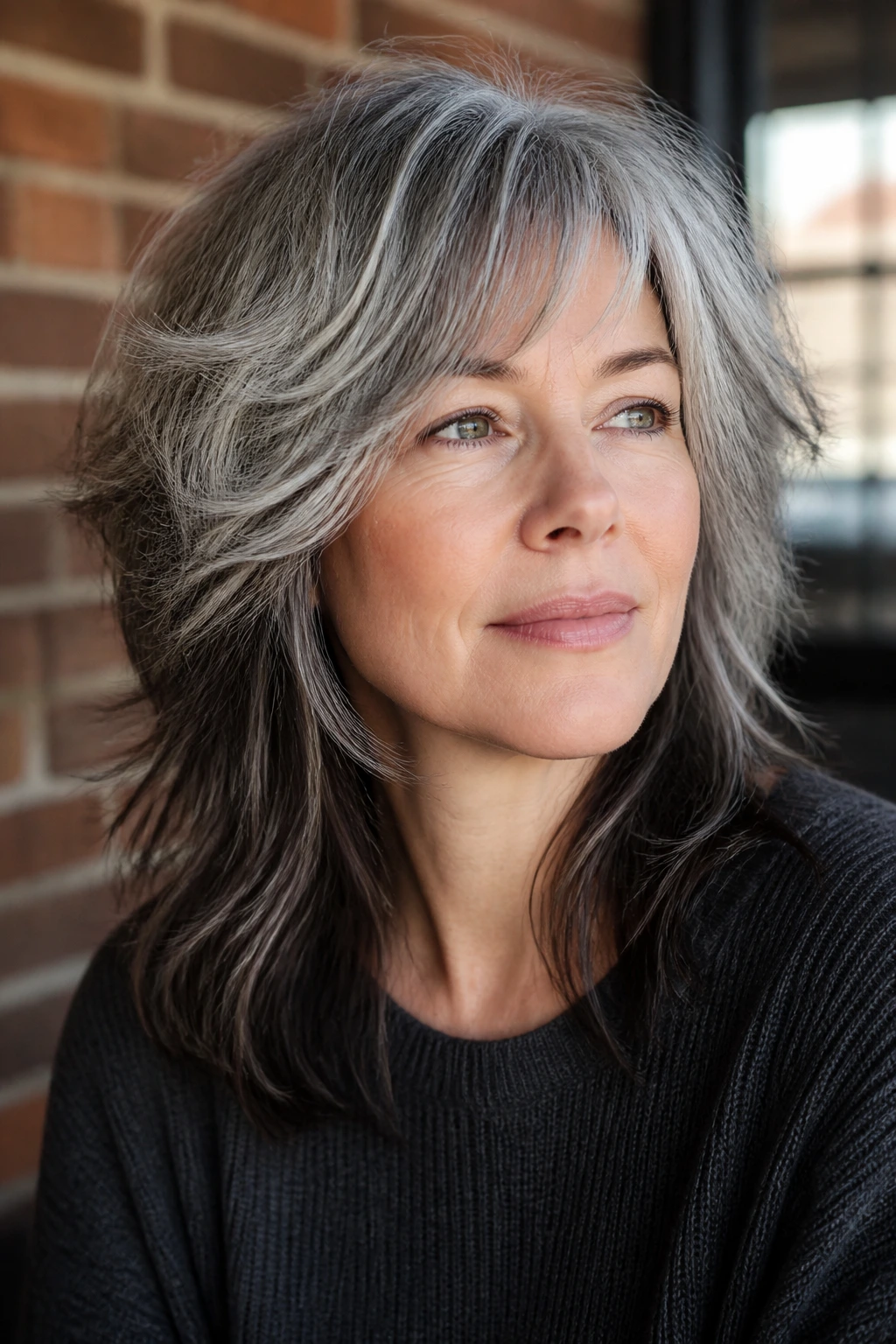
The best gray hairstyles for fair skin are rarely the loudest ones. They’re the ones that understand where to keep the light and where to tuck in the shadow. That balance is what makes a silver bob look expensive instead of washed out, and what keeps a long wave from turning into a pale blur.
I keep coming back to the same idea because it matters: lowlights are not there to hide gray. They’re there to give it edges. Once the cut has a clear shape and the shadow sits in the right places, the whole look settles down.
Bring a photo that shows both the cut and the color placement, not just one or the other. That’s the easiest way to get the kind of gray that feels intentional on fair skin, and it usually starts with one careful lowlight—not ten.