



Burgundy highlights on fair skin can look razor-sharp or muddy, and the difference usually comes down to undertone and placement, not the dye brand. Put the same wine-red striping on two people and you’ll get two very different reads: one wakes up the complexion, the other can make the skin look pinker than it is. That’s why this shade family rewards a little restraint and a good eye.
Wavy hair helps more than people expect. The bends in the hair catch a burgundy ribbon, break it into flashes, then let it disappear again as the wave turns. Straight hair often shows every line at once; waves soften the transition, so burgundy can look layered instead of stamped on. I’ve always liked that about it. It feels lived-in, not stiff.
The trick is choosing the right kind of burgundy for the skin you’ve got and the movement your hair already has. A blue-red cherry can sharpen cool fair skin. A brown-leaning merlot can keep peachier skin from looking flushed. And if the hair is fine, lowlights matter just as much as highlights, because a little depth underneath keeps the whole thing from reading thin and stripey.
Why This Collection Feels Different on Fair Skin and Wavy Hair
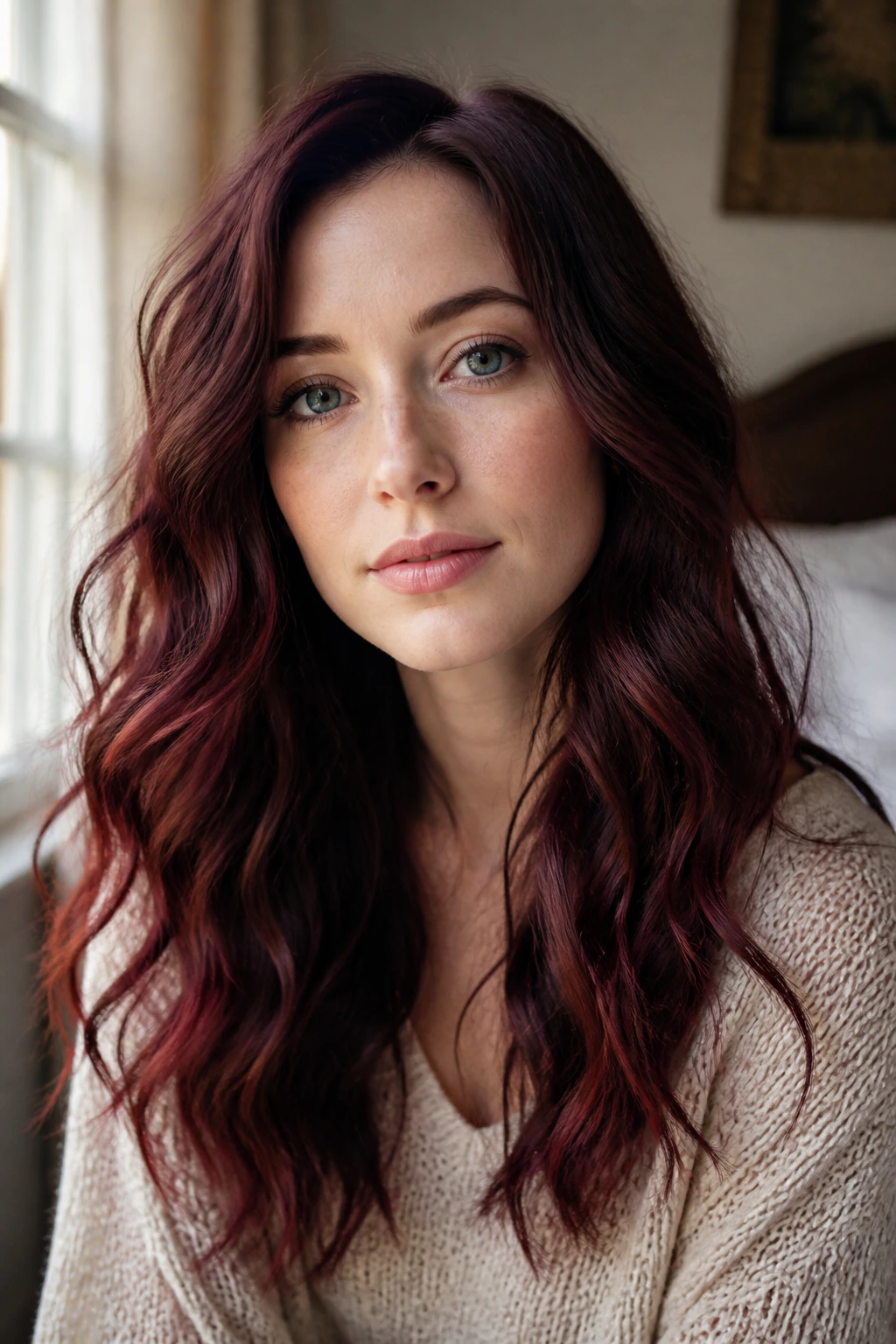
- Undertone-first thinking: Burgundy isn’t one color; it’s a whole family, and picking the right red-brown mix keeps pale skin from looking blotchy.
- Wave-friendly placement: Loose bends show off ribbons, money pieces, and lowlights in a way flat hair never will.
- Low-commitment options: Several of these looks lean on glosses, peekaboo panels, or soft balayage, so you can test burgundy without a full head of red.
- Fine-hair friendly depth: Lowlights and shadow roots add body by making the strands look denser at the scalp and through the mids.
- Salon-proof detail: Each look comes with a clear placement idea, which matters more than the brand of color.
- Grow-out that doesn’t scream: A good burgundy plan softens as it fades instead of leaving a hard line at the root.
1. Cool Cherry-Merlot Face-Framing Pieces
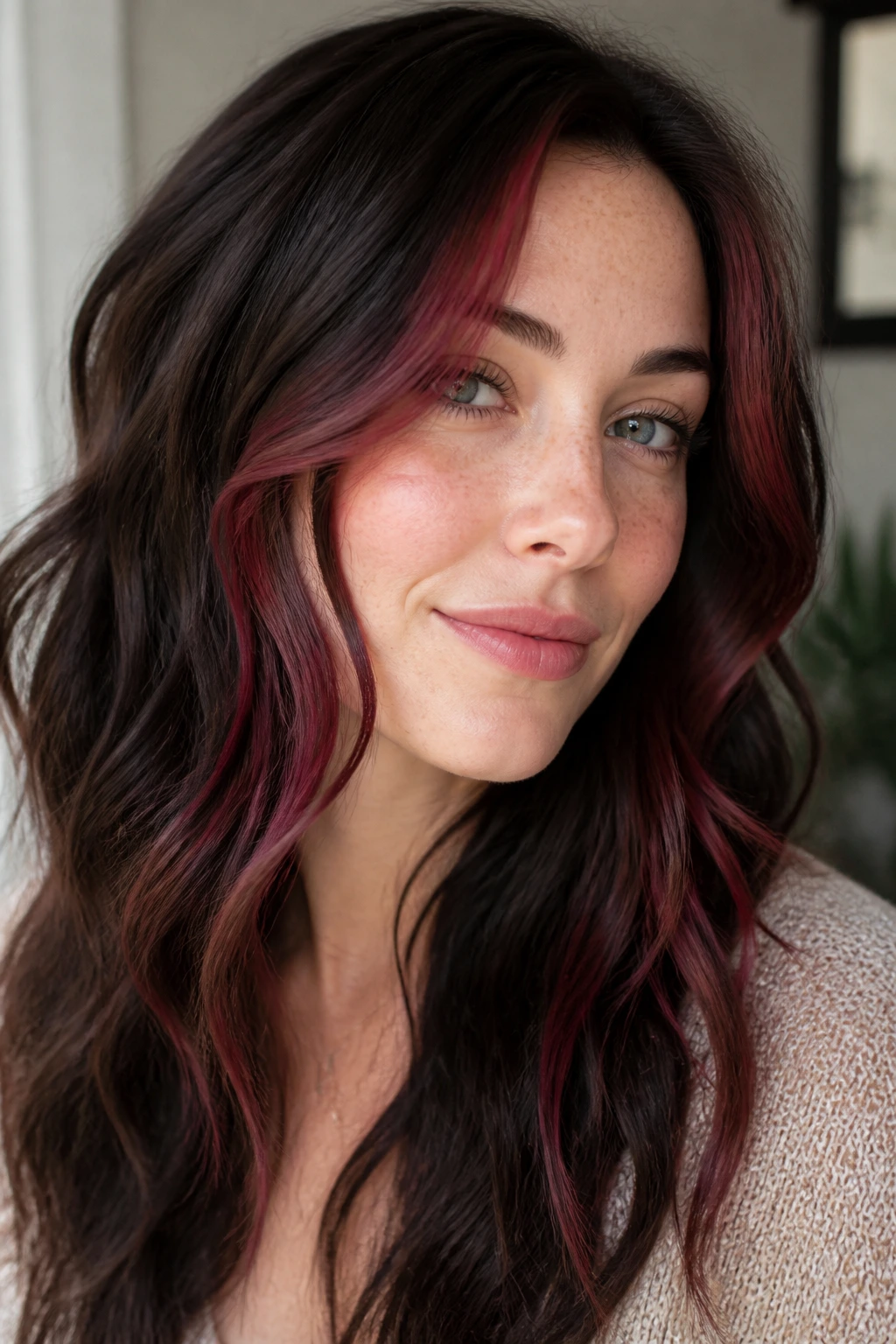
A clean strip of cherry-merlot around the face is one of the safest burgundy moves for very fair skin. The reason is simple: the color sits close to the complexion, so it needs enough depth to avoid looking brassy, but enough blue-red in it to keep the skin from turning pink.
Why It Flatters Pale Skin
On cool or neutral fair skin, blue-based burgundy reads crisp instead of orange. Ask for two to four thin foils on each side, starting near the cheekbone and feathering down toward the collarbone, not a thick chunk right at the hairline. That softer start keeps the color from looking like a block when you wear your hair up.
Wavy hair makes the placement work harder. The front pieces bend with the curl pattern, so the color shows in little flashes instead of one hard stripe.
- Ask for 1/8- to 1/4-inch sections around the face.
- Keep the deepest shade near the roots, then let it soften toward the ends.
- Pair it with a gloss after lifting so the red stays wine-colored, not neon cherry.
Best for: pale skin that looks better in silver than gold, and hair that already has loose S-waves.
2. Burgundy Babylights Over a Beige Blonde Base
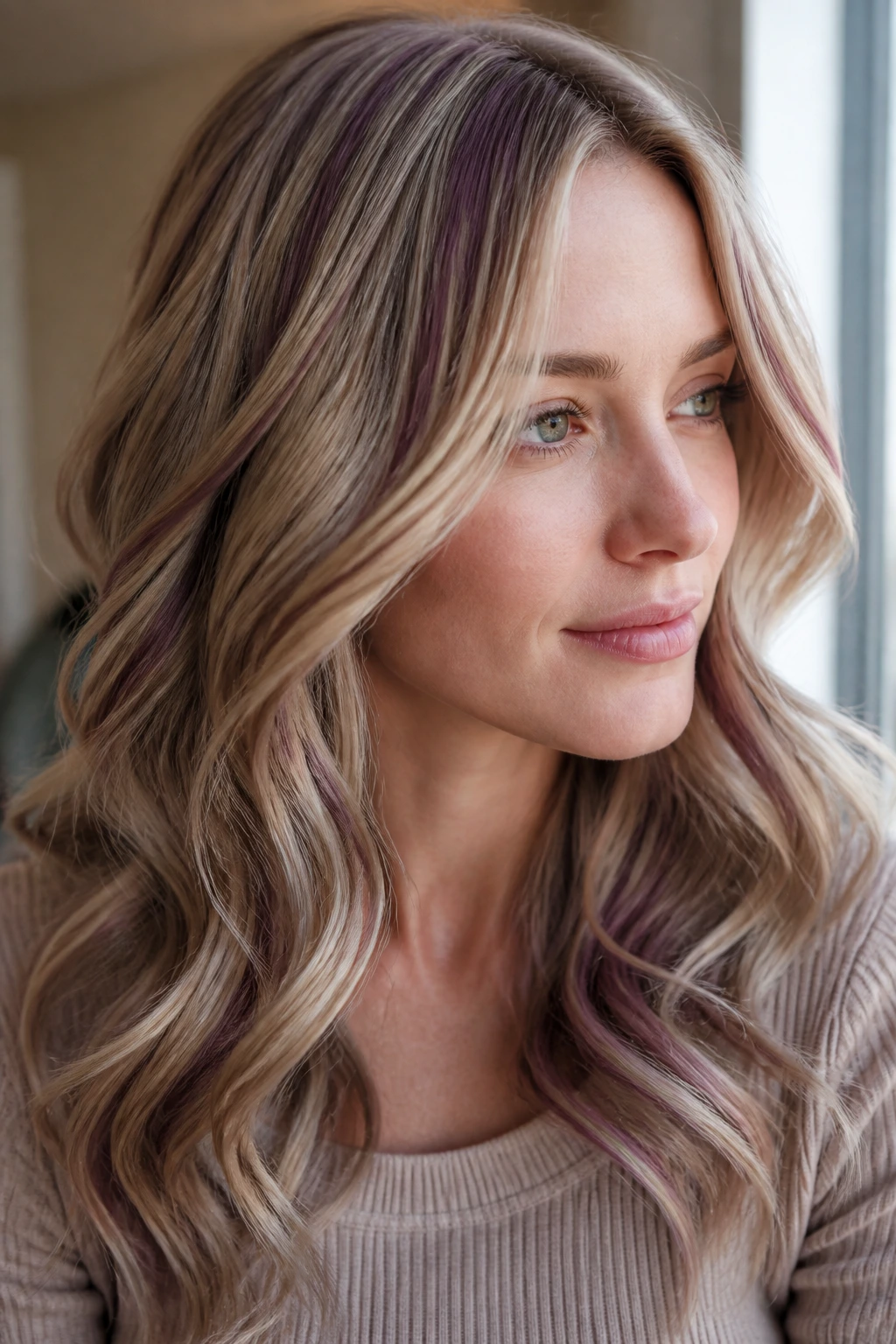
Babylights are the quietest way to wear burgundy, and on a beige blonde base they look like fine strands of mulled wine woven through cream. Up close, you see the red-brown shift. From a few feet away, you just get warmth and movement.
The beauty of this look is how little it fights your natural texture. Wavy hair already has movement at the surface, so tiny highlights can sit on the bends without stealing the whole show. That matters on fair skin, where a huge block of color can dominate fast.
What Makes It Work
Babylights are painted or foiled in extremely thin slices, usually around 1/16 inch. That size keeps the burgundy whisper-soft. If your base is a pale gold blonde, ask the colorist to tone it down to a beige or mushroom blonde first; otherwise the burgundy can slip into a peachy red that looks too bright against light skin.
This is the look I’d send someone to if they want “something different” but still need the hair to behave at work, in school, or in pictures taken without flattering lighting.
3. Plum-Burgundy Balayage on Loose Waves
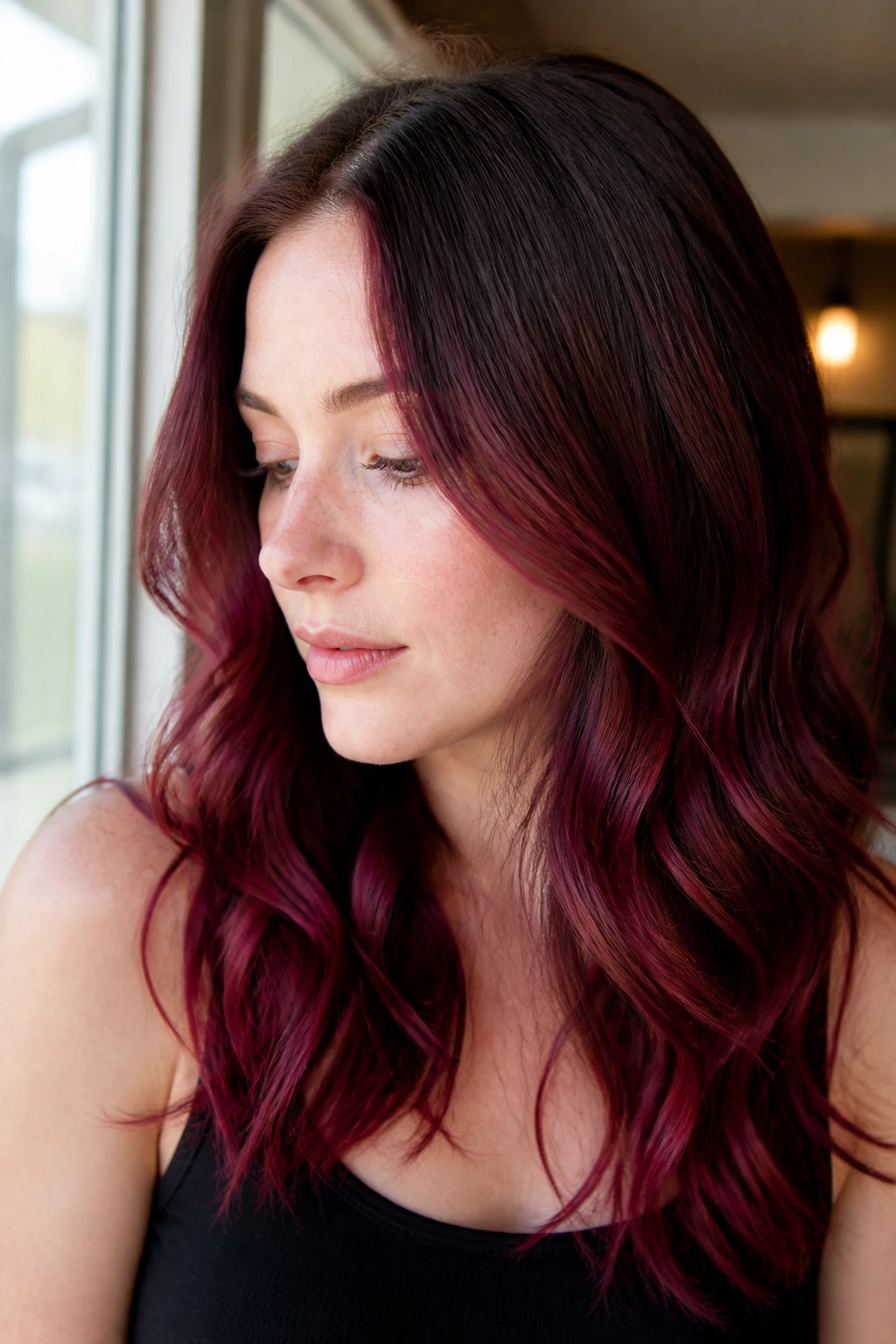
Plum-burgundy balayage has a little more personality than cherry shades. It leans cooler, deeper, and slightly smoky, which gives fair skin a cleaner edge than a warmer red sometimes can. On wavy hair, the painted sections catch on the curve of each bend, so the color feels spread through the length instead of stacked at the top.
Where the Paint Should Sit
Balayage is all about placement. The color should start a few inches below the roots, then get heavier from the mid-lengths to the ends. If your hair is shoulder-length, that usually means the first sweep begins around the ear to cheekbone level, then gets denser in the bottom half.
Don’t let anyone paint plum burgundy right to the root unless you want a full red-brown effect. The root blur is what keeps the grow-out soft, and on fair skin it stops the color from looking harsh around the scalp.
Best for: anyone who wants a deeper burgundy result without losing the lightness around the face.
4. Wine-Red Money Piece with a Shadow Root
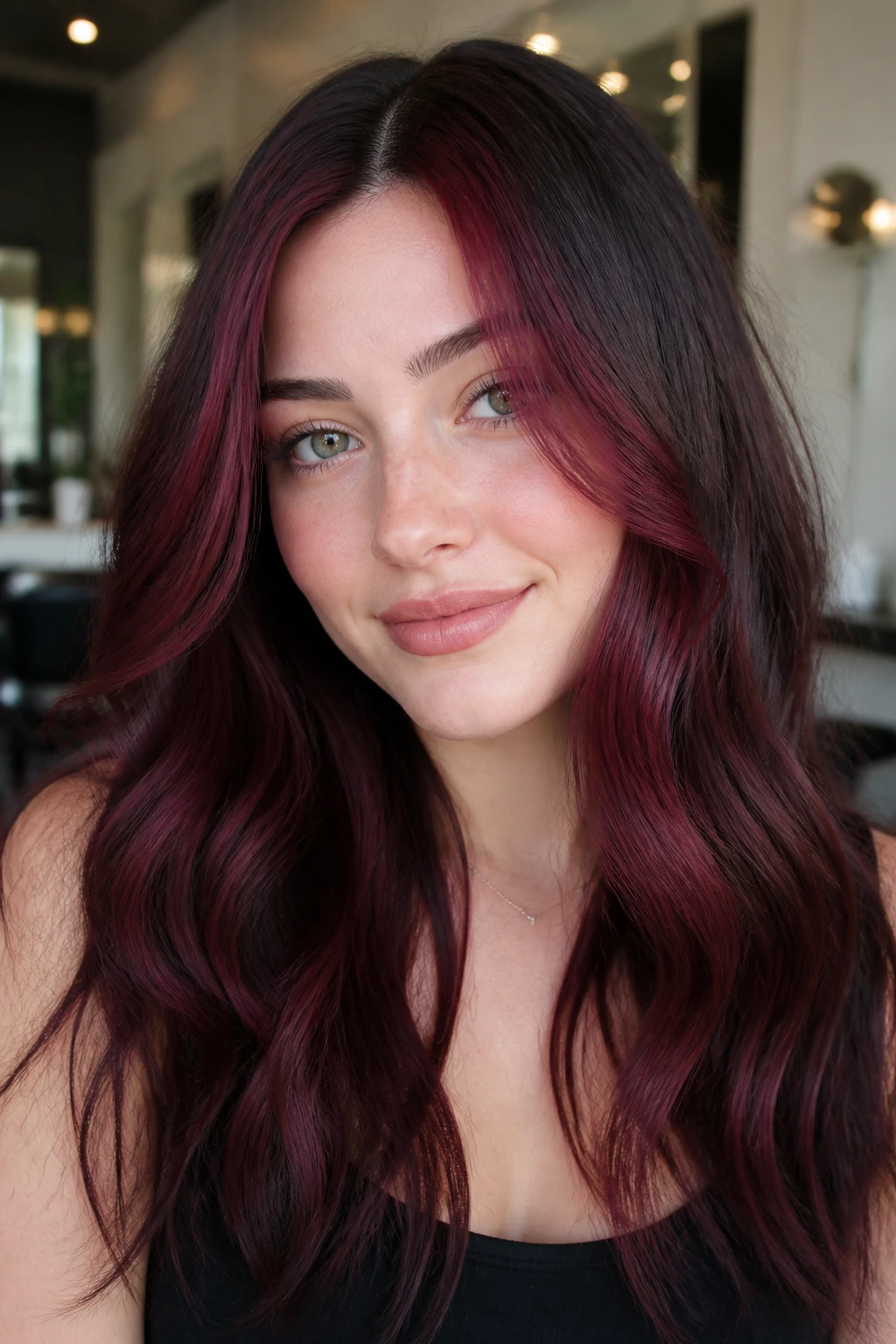
This one is bolder. A wine-red money piece places the color exactly where the eye lands first: the front hairline, the part, the cheekbone area. If the rest of the hair stays darker with a soft shadow root, the contrast feels deliberate instead of loud.
That shadow root is the part people skip, and it’s the part that saves the whole look. On fair skin, a hard red line at the root can make the hairline look too painted. A root shadow about 1 inch deep softens the jump from natural color to burgundy, which matters even more on wavy hair because the color appears and disappears as the wave turns.
Best Fit
If you like wearing a center part, this is a strong choice. The money piece frames both sides evenly, and the waves keep it from reading flat. It also works if your face is long or narrow, since the brighter front pieces widen the visual frame a bit.
5. Blackberry Lowlights for Fine Wavy Hair
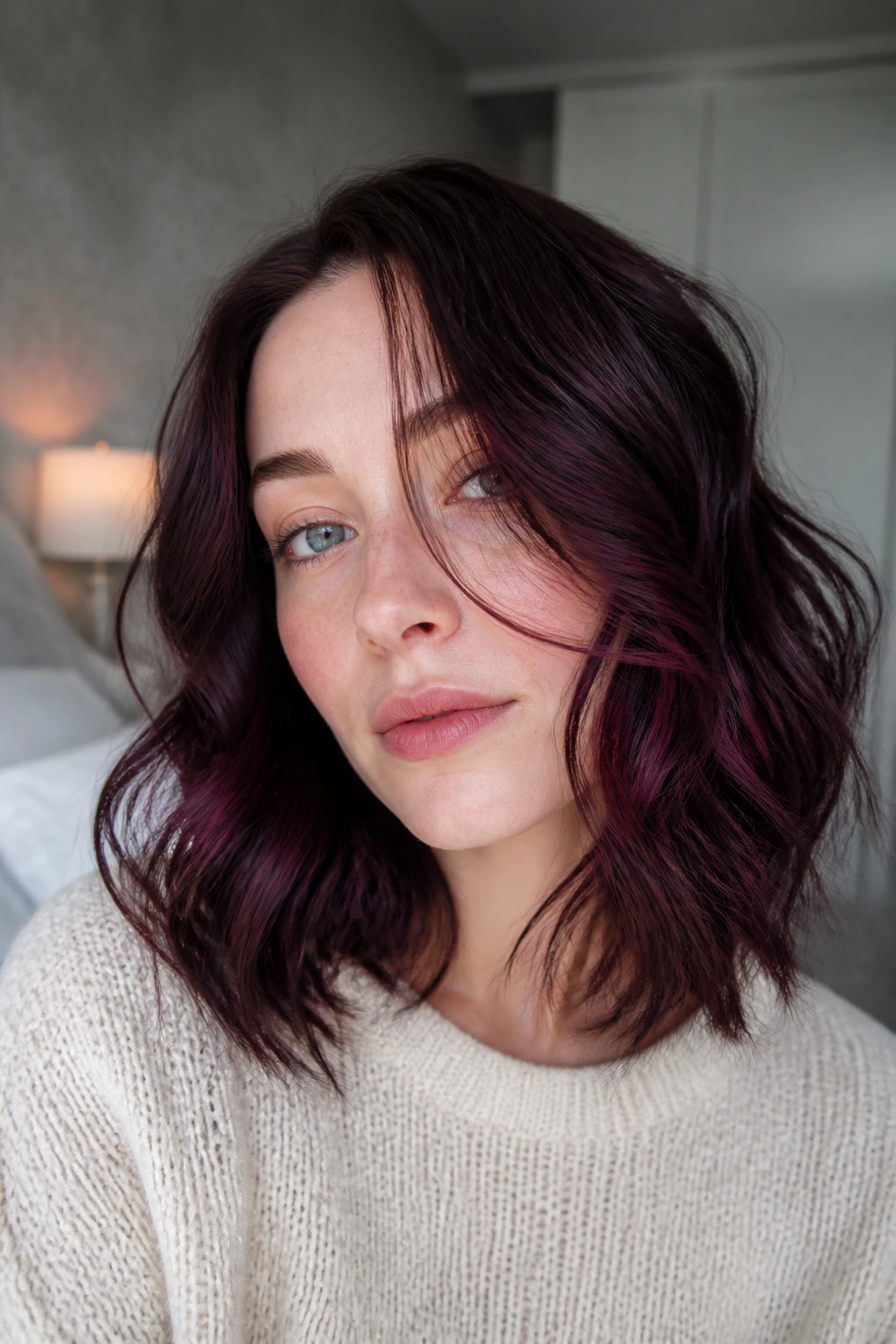
Lowlights don’t get enough credit. For fine wavy hair, blackberry lowlights can do more for the shape of the cut than bright highlights ever will. They tuck between lighter strands and build the illusion of denser hair, especially through the mids and underneath.
That matters on fair skin because the contrast stays soft. Instead of sitting on top of the hair as a loud color statement, the blackberry shade gives the waves more shadow. The wave pattern looks thicker. The scalp doesn’t show through as much. And the hair keeps some of its lightness at the edges, which keeps the face from feeling boxed in.
Pro tip: Ask for lowlights that are one to two levels deeper than your base, not jet black. True black can look flat and a little severe next to fair skin. Blackberry keeps the richness, but it still moves.
6. Mulled Wine Ribbon Highlights
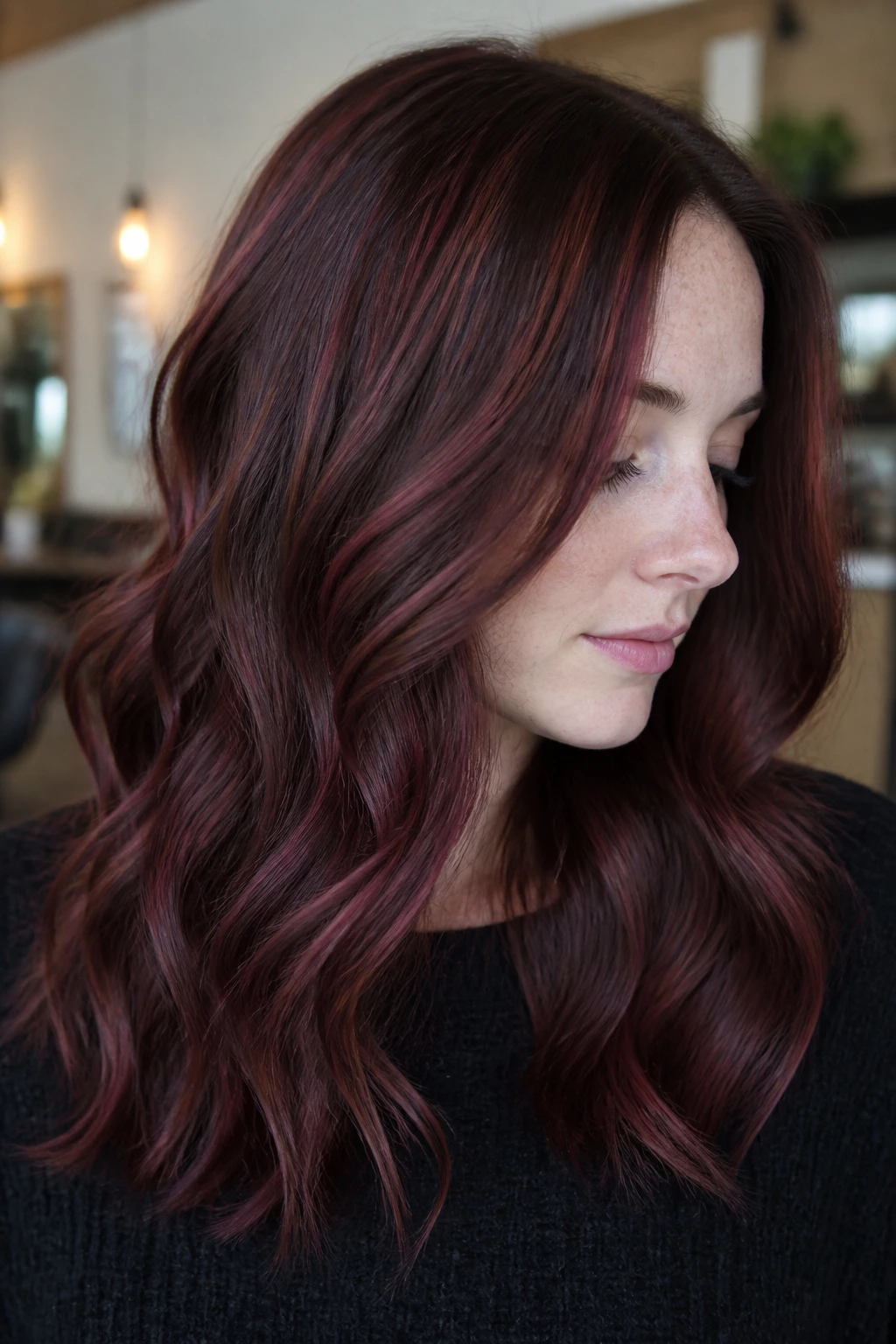
Ribbon highlights are exactly what they sound like: longer, softer strokes of color that run through the hair like strands of ribbon in a braid. Mulled wine is a good burgundy choice here because it’s not too blue and not too brick-red. It sits in the middle, which makes it easier on lighter skin.
Unlike tiny babylights, ribbons show more clearly on wavy hair. Each bend catches the darker side of the strand and the lighter side of the strand, so the color looks woven in rather than painted on. That’s especially nice if your hair is medium to thick and needs some visual break-up.
Who It Suits
This look suits people who want burgundy to read from across the room, but don’t want the hard edge of a chunked stripe. It also grows out better than a very fine highlight set, because the larger sections soften at the root instead of leaving a dotted line.
7. Cranberry Ends with a Soft Root Melt
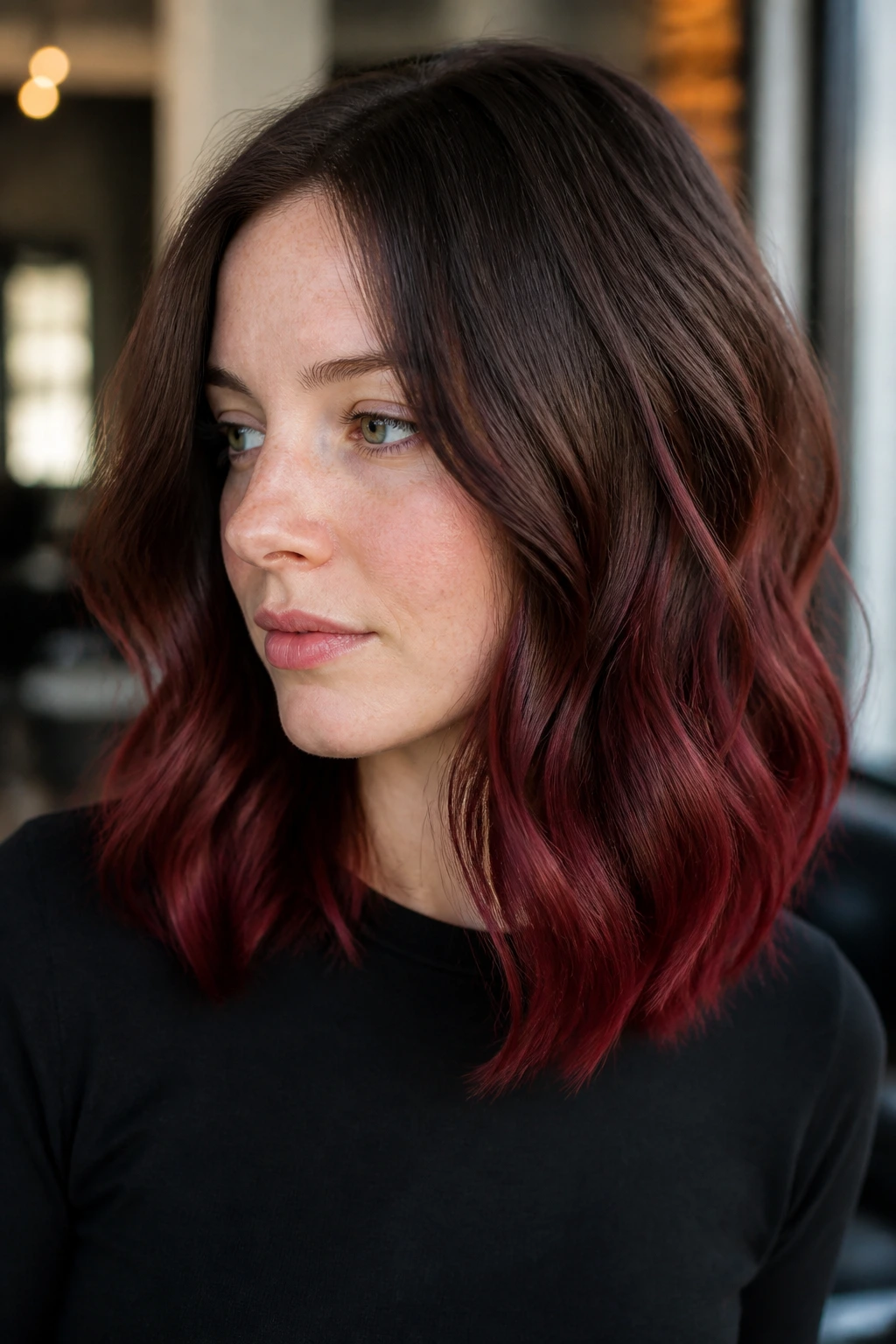
Cranberry ends are the easiest way to wear red if you’re nervous about saturation near the face. The root stays close to your natural shade, then melts into a deeper burgundy and finishes at a brighter cranberry on the last few inches. It keeps the attention on the movement of the hair, not on a harsh perimeter.
For fair skin, this is a smart move because the brighter color sits away from the face. You still get the burgundy family, but the lightest part of the shade is at the ends where it looks more playful than overwhelming. On wavy hair, the tips flick out and catch light in a way that makes the color feel especially layered.
What to Ask For
Ask for a root melt of 2 to 3 inches, then a burgundy-to-cranberry fade below it. Keep the cranberry concentrated on the last third of the hair if you want the top to stay quiet. And if your hair is porous from previous lightening, ask for a gloss instead of a full direct-dye saturation. Porous ends drink up red fast.
8. Peekaboo Merlot Panels Under the Top Layer
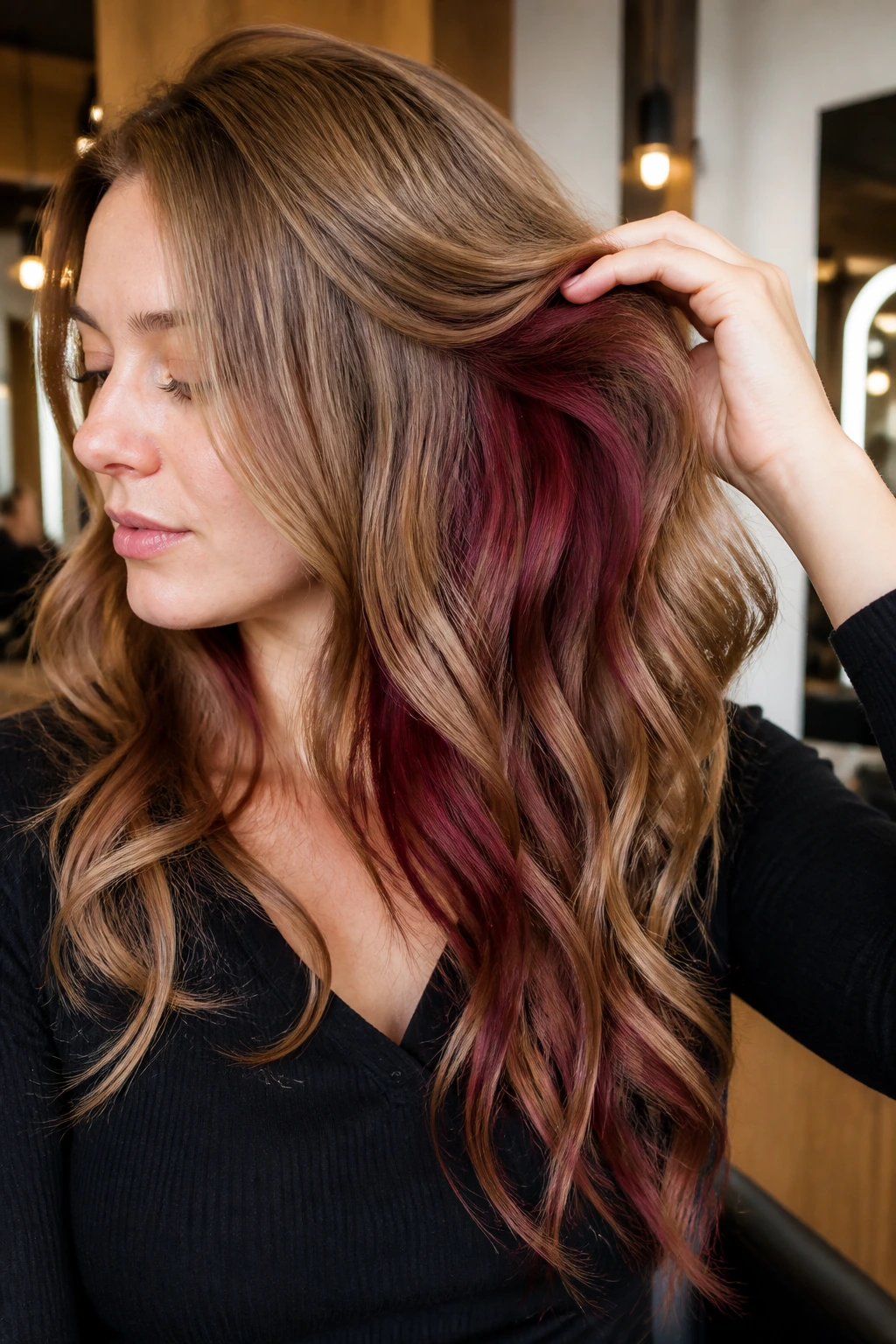
Peekaboo color is for people who want the fun without the full commitment. Merlot panels placed under the top layer show up when the hair swings, when you tuck it behind your ear, or when you pull it into a half-up style. Loose waves are especially good here because they create little windows into the color underneath.
This is one of my favorite burgundy choices for fair skin because the contrast stays optional. If your complexion is very pale, you can keep the top layer a soft brown, ash blonde, or beige and let the merlot live underneath. The face stays bright, but the hair gets the surprise.
A simple note. Don’t place the underlayer too thick. Two or three narrow panels through the nape and lower sides are enough. More than that, and it starts behaving like a full dye job.
9. Rosewood Foilayage for Neutral Fair Skin
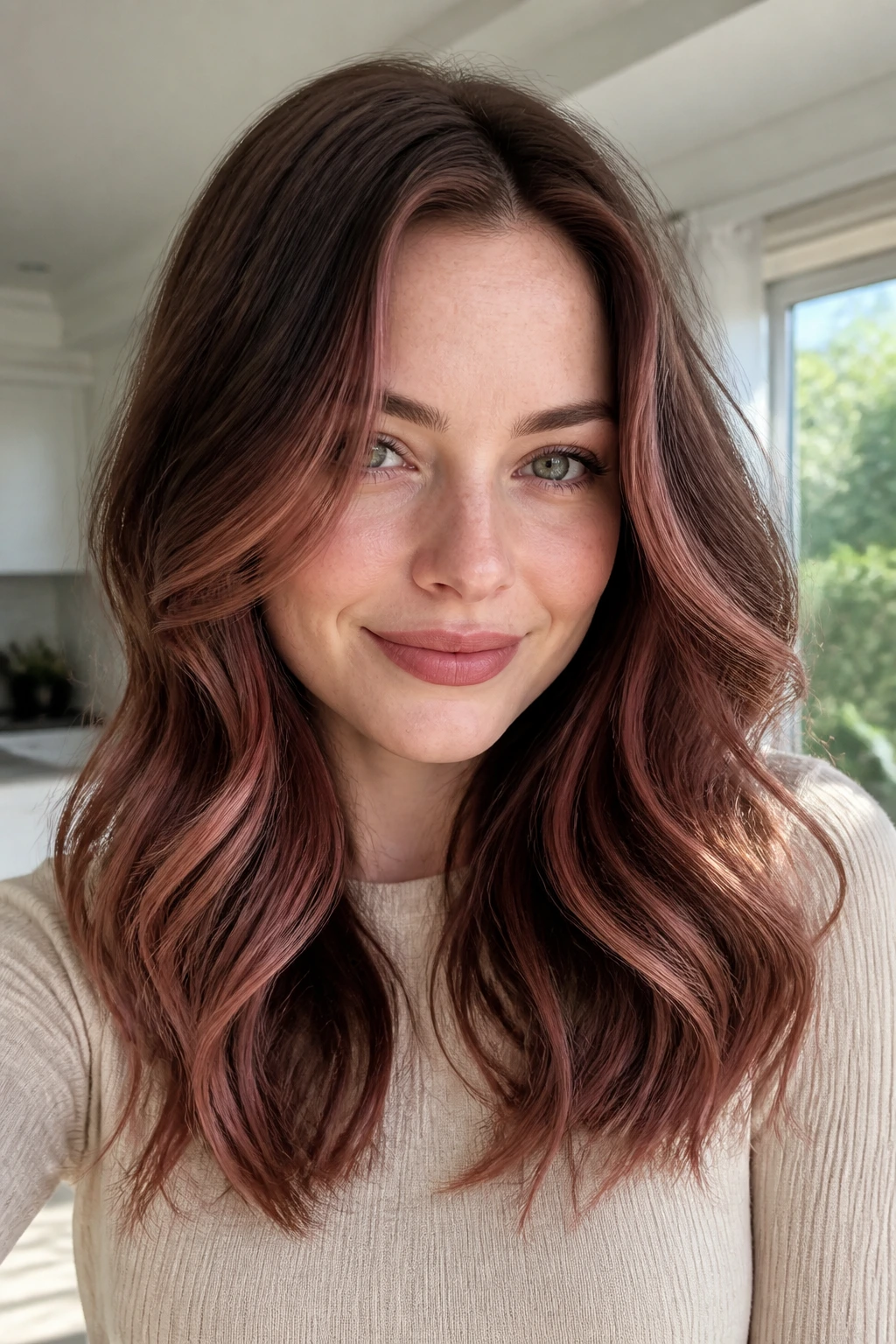
Foilayage mixes the lift of foils with the hand-painted feel of balayage, and rosewood is the burgundy version that tends to feel soft rather than sharp. It’s a little brown, a little red, a little dusty. That makes it a good fit for neutral fair skin, which can wear both warm and cool tones without much fuss.
The best part is how the placement follows the wave pattern. The brighter rosewood pieces can sit on the outer bends of the wave, while deeper pieces tuck beneath, so the hair looks layered from every angle. This is the kind of color that doesn’t need loud contrast to show up.
Why I’d Pick It
If you want burgundy but don’t want your hair to announce “red” every time you walk past a mirror, this is the compromise. It gives the warmth of wine without drifting into copper.
10. Chocolate Cherry Dimension on Light Brown Hair
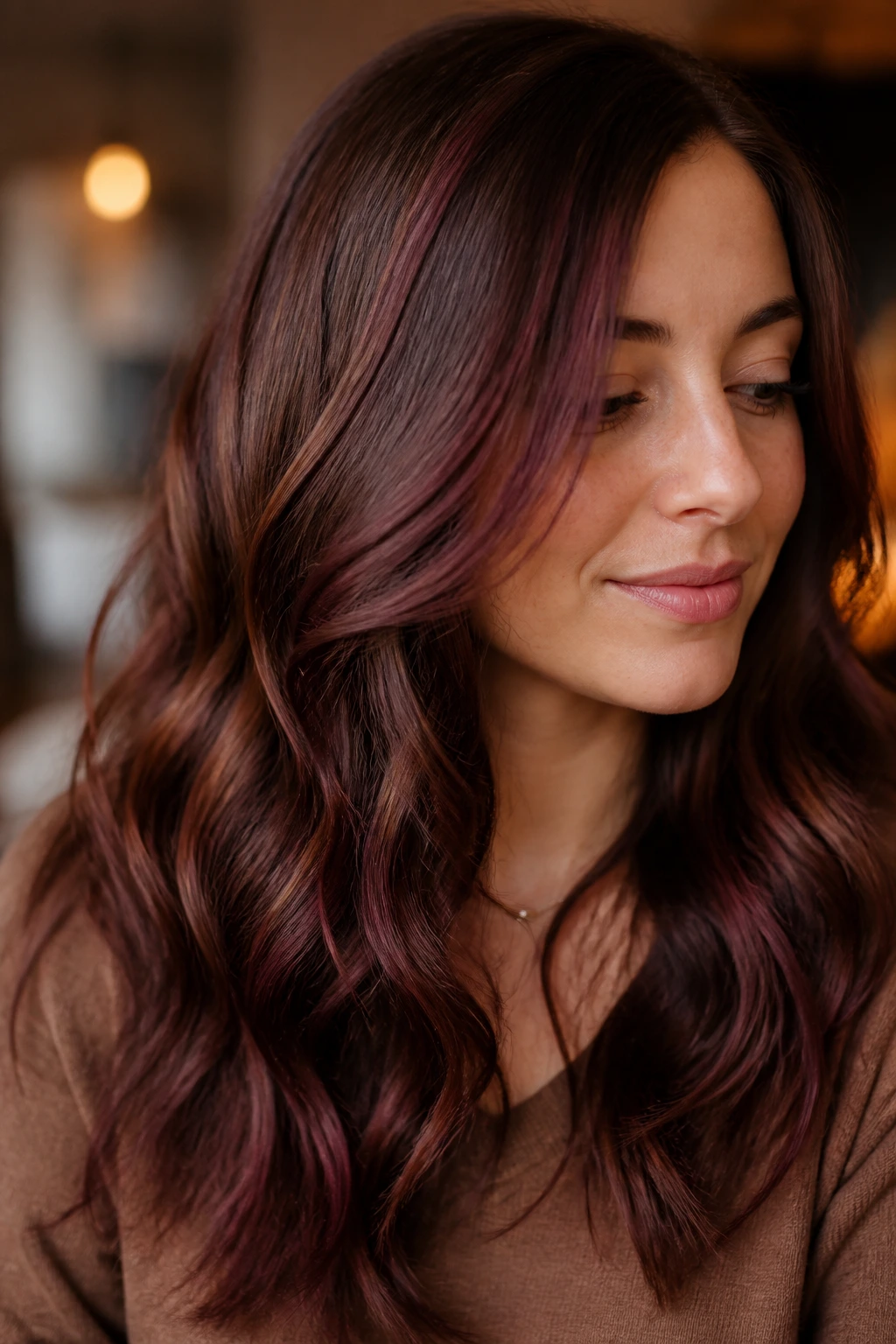
Chocolate cherry is the look for someone who wants burgundy to whisper from a brunette base, not shout over it. On light brown hair, the color looks like deep red-brown thread worked through the mids and ends. On fair skin, that balance matters. It brings warmth to the face without throwing a red spotlight on it.
The look gets better when the waves are brushed out. Tight curls can hide the depth and make the hair feel busy. Soft, loose waves show the chocolate underlayer and the cherry reflection on top, which is the whole point.
What Makes It Different
Unlike brighter burgundy highlights, chocolate cherry doesn’t require much lightening. That means less damage and more shine. If your hair is already fine or dry, that matters a lot. You get depth without overprocessing the strand just to chase a red tone.
11. Garnet Streaks Around the Crown
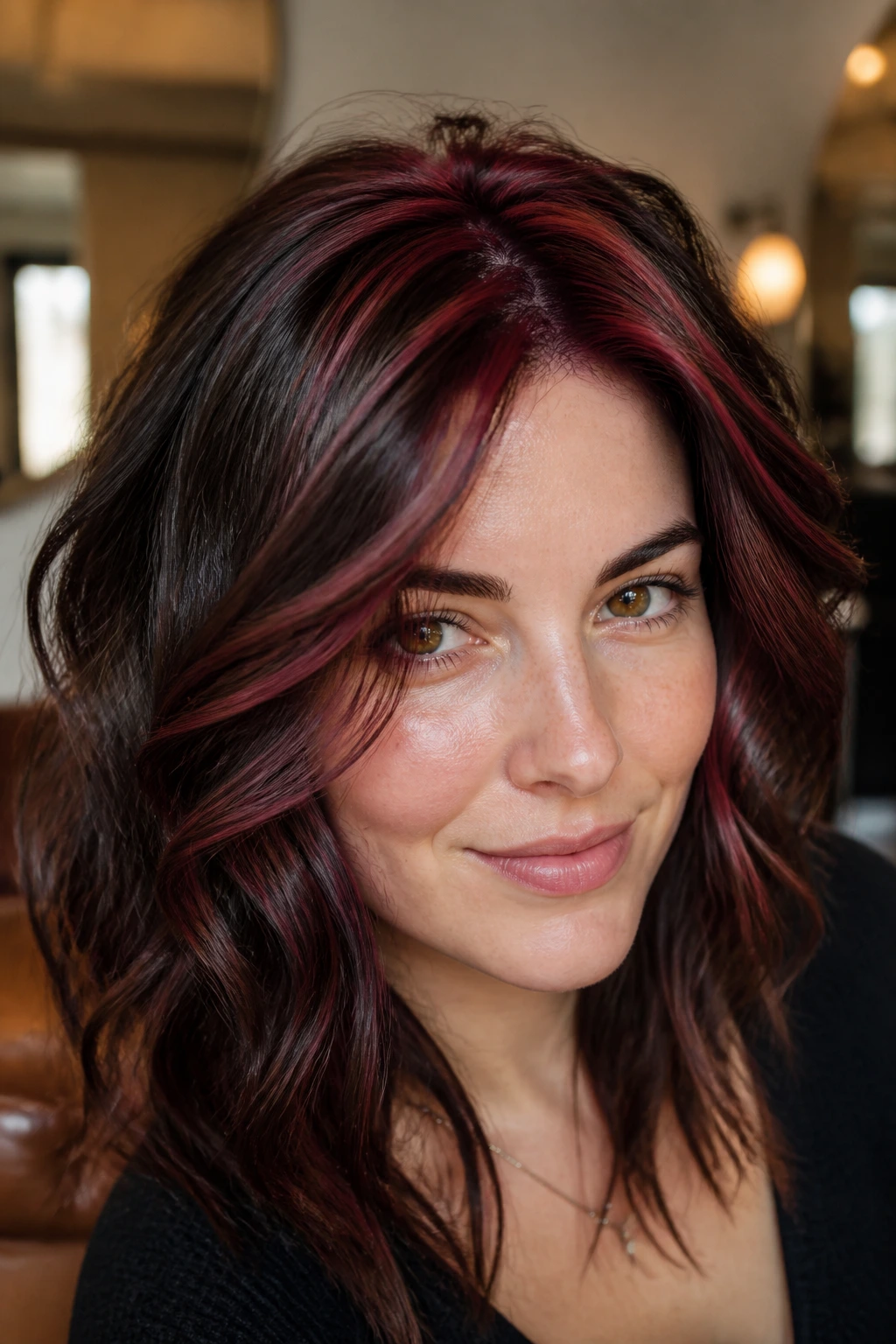
Most people focus on the face and ends, then forget the crown. That’s a mistake, because the crown is where lift and movement show first. Garnet streaks placed around the part and crown can make wavy hair look fuller at the top, which is where many fair-haired people need help most.
The color should not be laid down like stripes on a zebra. Ask for narrow streaks that break apart across the top section, leaving some of your natural shade between them. That spacing keeps the head from reading flat. It also means the waves can do their job, because the bends separate each streak as the hair moves.
If your hair falls flat at the roots by day three, this is a good way to fake more body without teasing or heavy styling.
12. Velvet Burgundy Balayage on Sandy Blonde
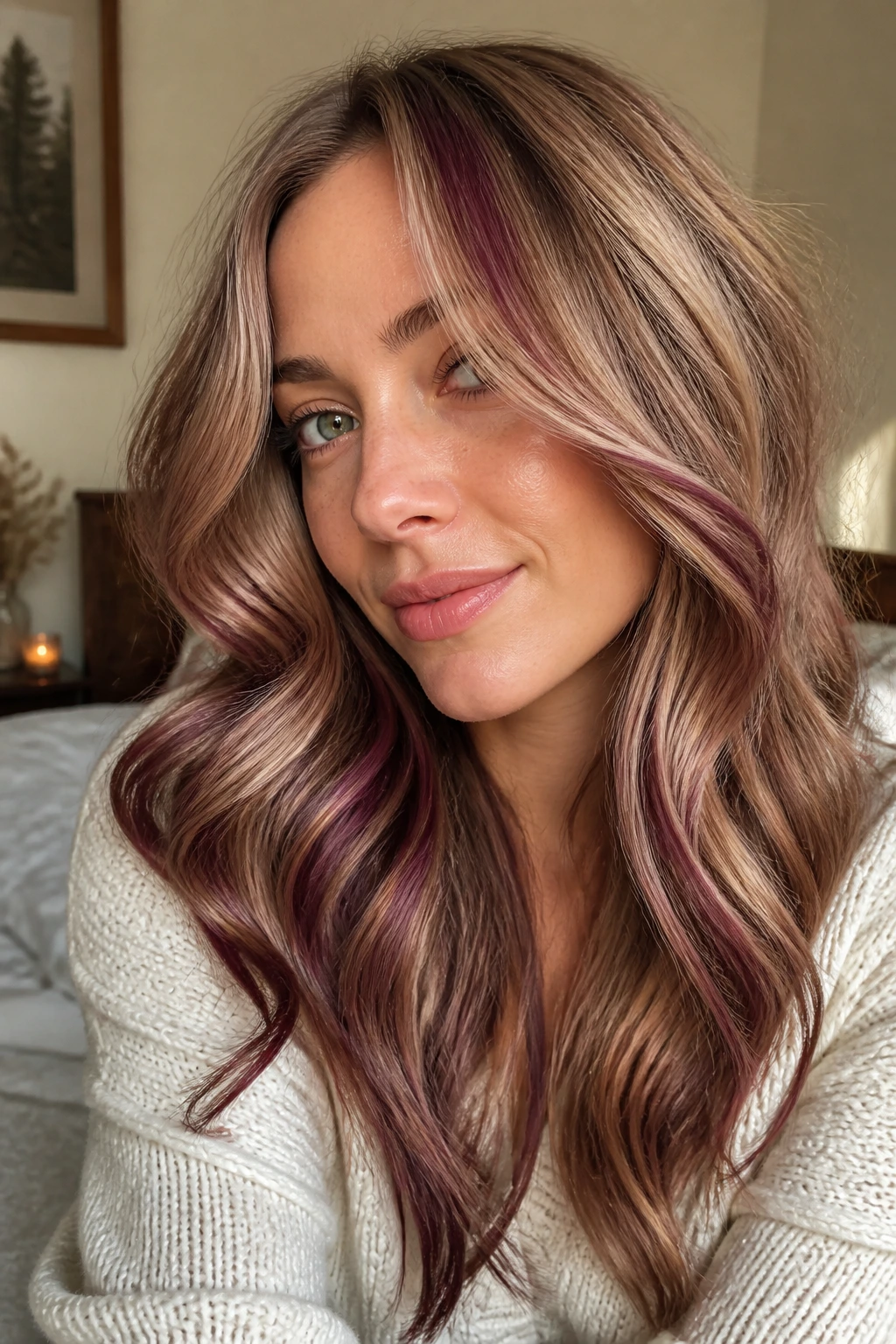
Velvet burgundy is softer than standard red-violet. It has that deeper, brushed texture in color form — not glossy, not bright, not muddy. On sandy blonde, it lands somewhere between wine and plum, which can be kind to fair skin that needs depth more than brightness.
The sandy base matters here. If the blonde is too pale and yellow, the burgundy can turn weirdly hot at the ends. A beige-toned blonde gives the red enough room to sit down properly. Ask for a toner that cancels yellow first, then layer in the burgundy balayage.
Who Should Choose It
Choose this if you like a lower-key result that still reads expensive in the mirror. It’s also one of the easier burgundy looks to wear with natural waves, because the color doesn’t rely on a lot of sharp lift.
13. Smoky Plum Lowlights for Over-Highlighted Hair
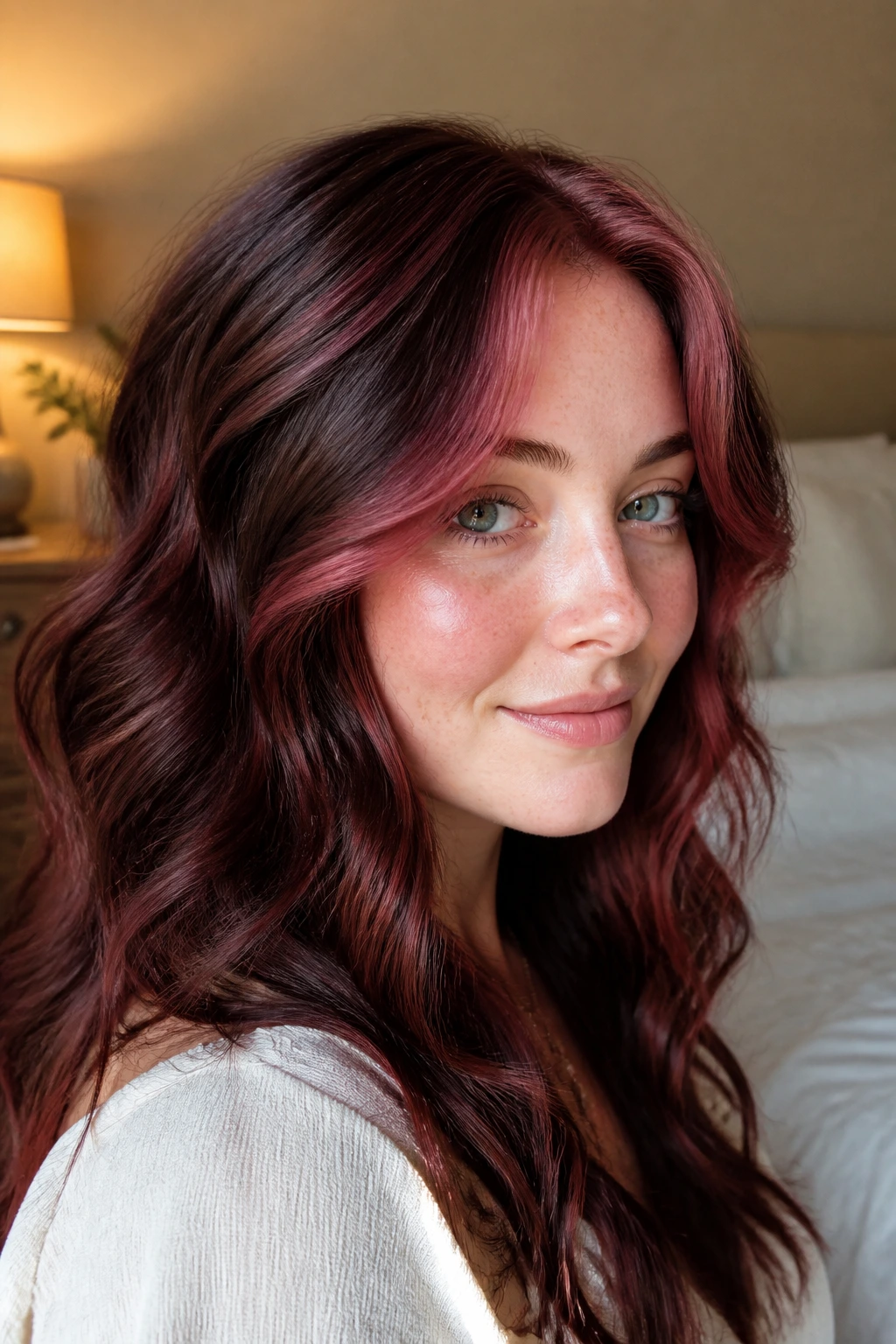
If your hair has too much blonde and not enough shape, smoky plum lowlights are the fix I’d reach for first. They slide between the lighter pieces and give the whole head some dark anchor points. On fair skin, that can be a lifesaver, because too much pale blonde next to pale skin can wash the face out.
Smoky plum is cooler than cherry or merlot, so it helps if your skin leans pink or you flush easily. The color should sit underneath the brighter pieces, not over them. Think shadow, not paint.
A lot of people try to solve over-lightening with another round of highlights. Bad idea. What they usually need is contrast, and lowlights give it without making the hair even more fragile.
14. Black Cherry Ombre on Long Waves
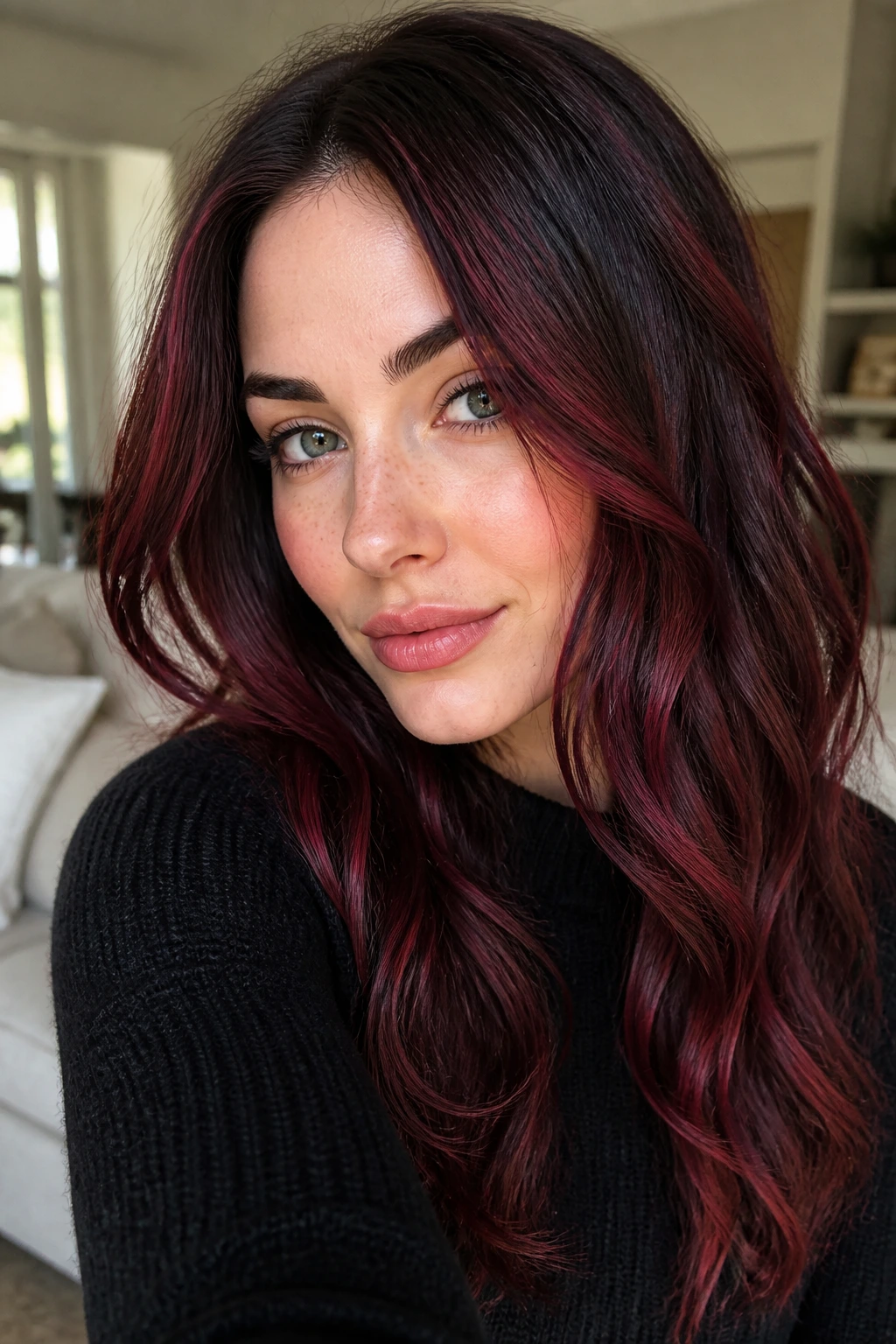
Long hair gives burgundy room to move, and black cherry ombré uses that length well. The roots stay deep, the mids shift into wine, and the ends carry the richest red-black tone. On waves, the gradient feels smooth because every bend breaks the fade into little steps instead of one obvious color change.
This is especially good if you wear your hair down a lot. The ombré starts to look almost liquid when the light hits the ends. Fair skin stays visible because the lighter top sections near the face keep the whole look from swallowing the complexion.
If you’re tempted by a dramatic burgundy but don’t want constant root maintenance, ombré is a practical way in. The grow-out is part of the design.
15. Mulberry Face-Frame and Ends
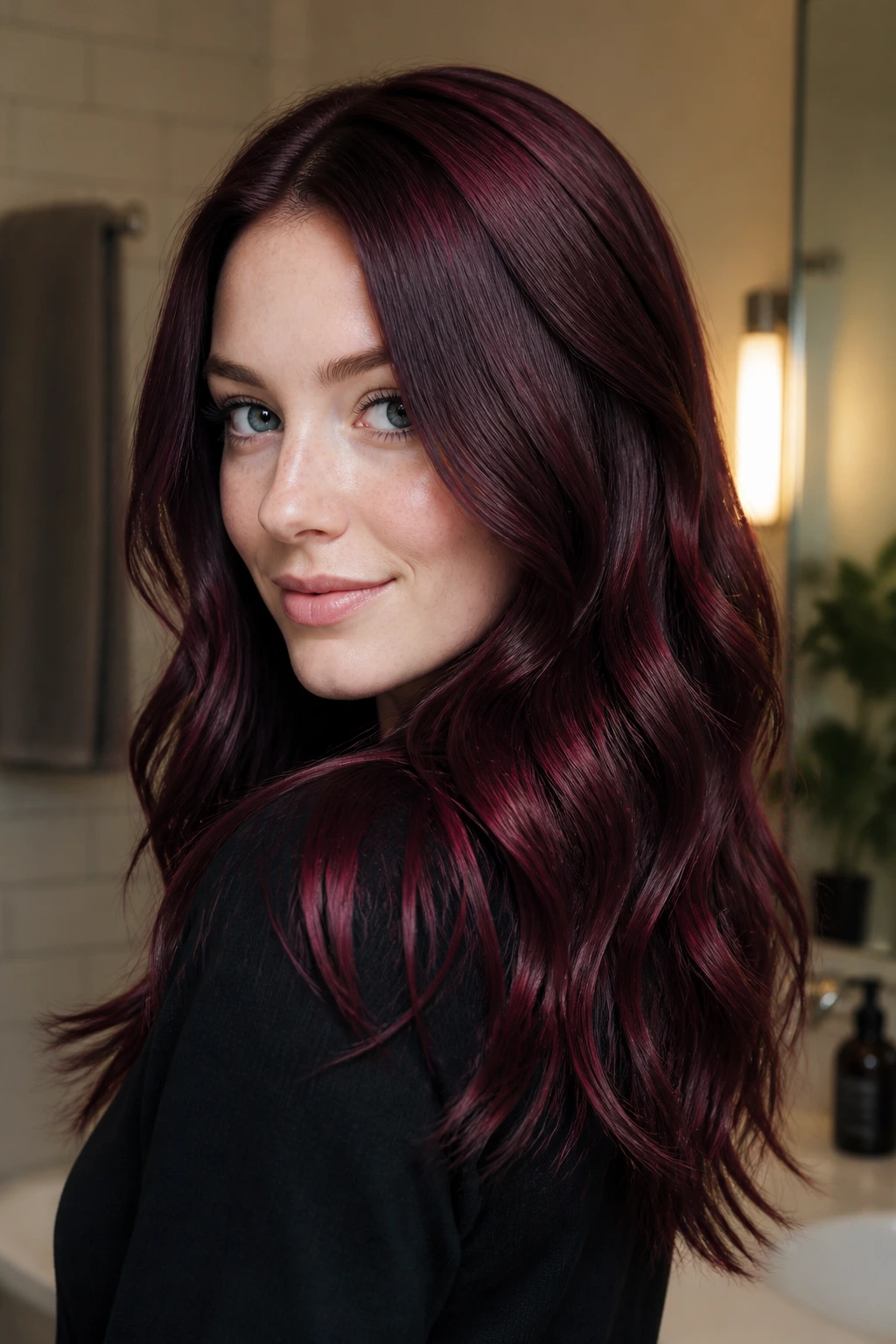
Mulberry has a softer, slightly pinker edge than merlot, which makes it a nice choice for fair skin that can take red but not a hard scarlet. The smartest place for it is the frame around the face and the very ends. Leave the middle quieter, and the hair keeps its movement.
This look feels especially good on medium-density wavy hair. There’s enough strand to show the color, but not so much that the whole head turns heavy. The face-framing pieces can start a little below the cheekbone, then fade into the ends so the color looks brushed through rather than boxed in.
Quick Read
- Best on neutral-to-cool fair skin.
- Looks softer than cherry.
- Needs less salon time than a full-head burgundy map.
16. Spiced Burgundy with Copper Undertones
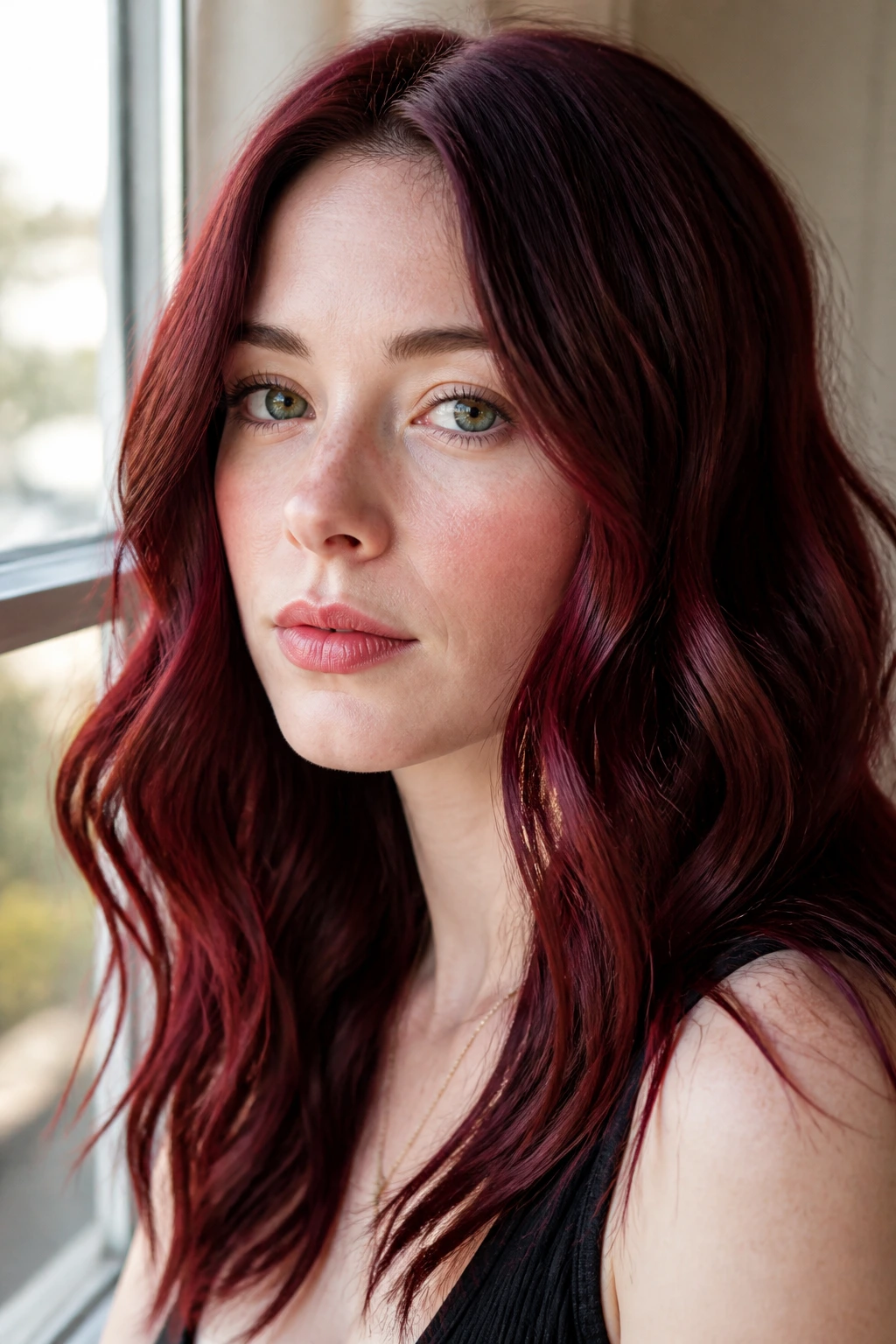
Not every fair complexion wants a blue-red burgundy. Some need a warmer note, and spiced burgundy handles that nicely. It brings a little copper and cinnamon into the red-brown mix, which is useful for peachy or golden fair skin that can look flat with cooler reds.
The warning here is simple: don’t let the copper take over. If the shade goes orange, it stops being burgundy and starts fighting the skin. The good version stays deep, warm, and a little earthy. On wavy hair, the copper undertone catches the raised part of the wave, which makes the color look active instead of heavy.
If you wear gold jewelry better than silver, this is one of the burgundy shades worth testing first.
17. Glassy Burgundy Gloss Over Soft Highlights
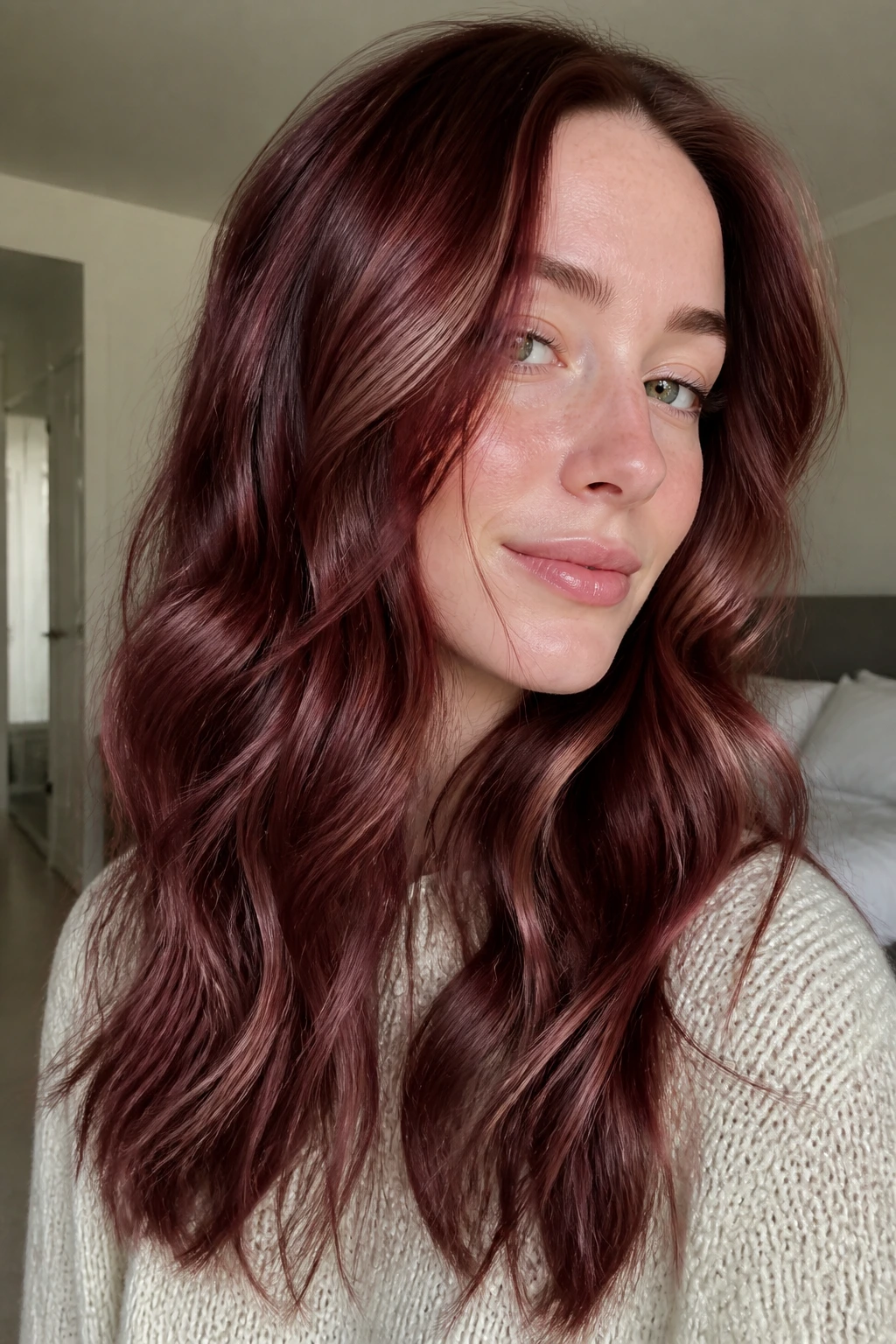
This one is for the person who already has highlights and wants to nudge them toward burgundy without starting over. A glassy gloss coats the hair with a translucent wine tone that settles over existing lighter pieces. The result is less stripey, more unified, and much shinier than raw lifted hair.
The key is that the gloss should not be opaque. A good burgundy gloss lets the lighter pieces underneath show through, which is why it looks so good on waves. Each curve reflects a slightly different depth of color. The hair ends up looking layered, not painted.
This is also the easiest way to test burgundy before committing to a full highlight session. If you love it, you can deepen later. If you hate it, the fade is gentler than permanent color.
18. Soft Burgundy Underlights for a Half-Up Look
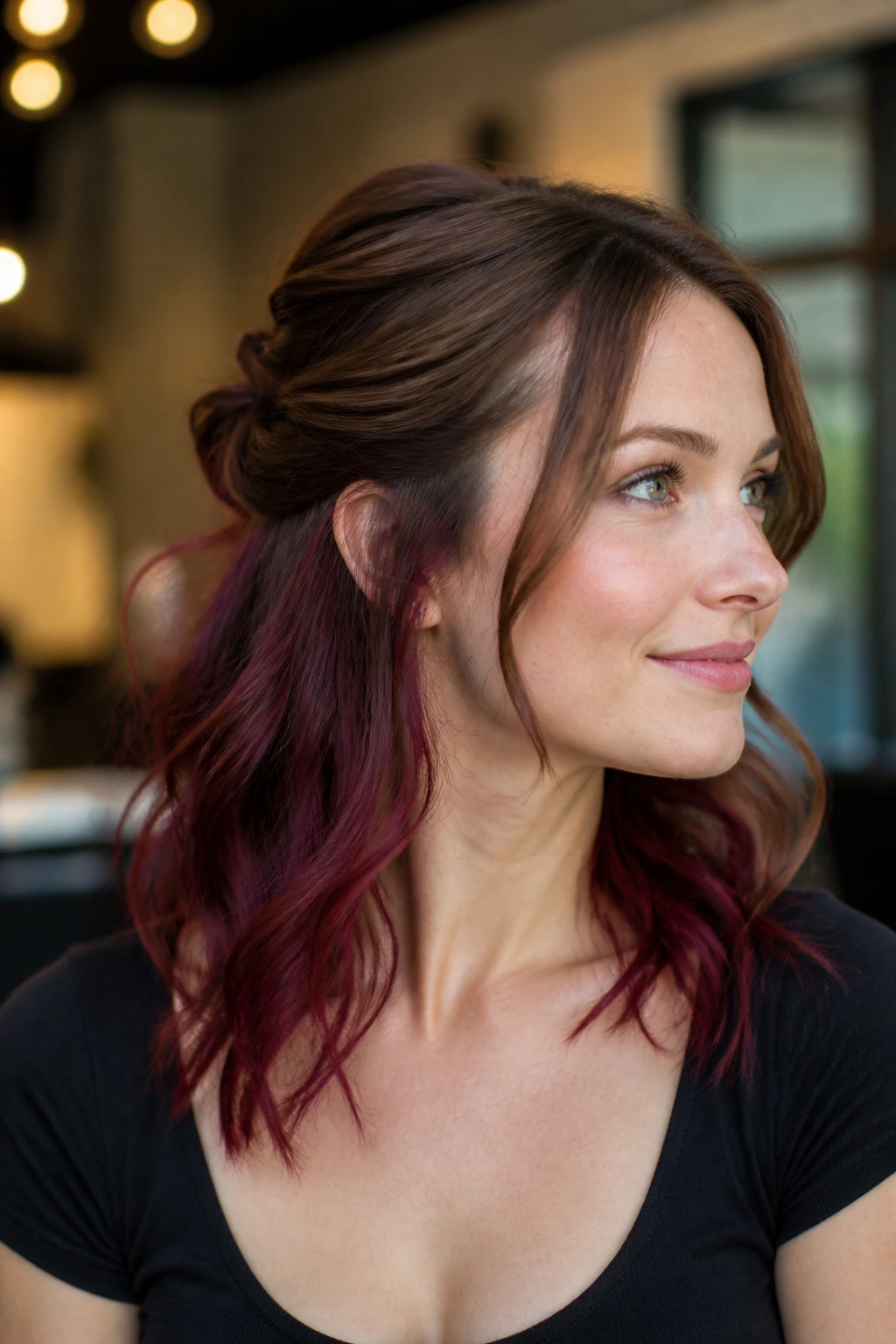
Underlights live beneath the top layer, so they show most when the hair moves or gets pinned up. Soft burgundy underlights are a nice fit for fair skin because the color stays tucked away until you want it visible. A half-up style reveals the underside, then loose waves hide it again.
That switch is what makes the look interesting. You get two versions of the hair in one day. Down, it reads subtle. Pulled back, it turns richer and more obvious. If you wear clips, claws, or tiny half-up twists, the underlights earn their keep fast.
Ask for the color to sit through the lower third and nape area, with a little extra brightness near the side layers so the reveal doesn’t feel accidental. A narrow, thoughtful placement beats a bulky hidden panel every time.
Why Burgundy and Wavy Hair Work So Well Together
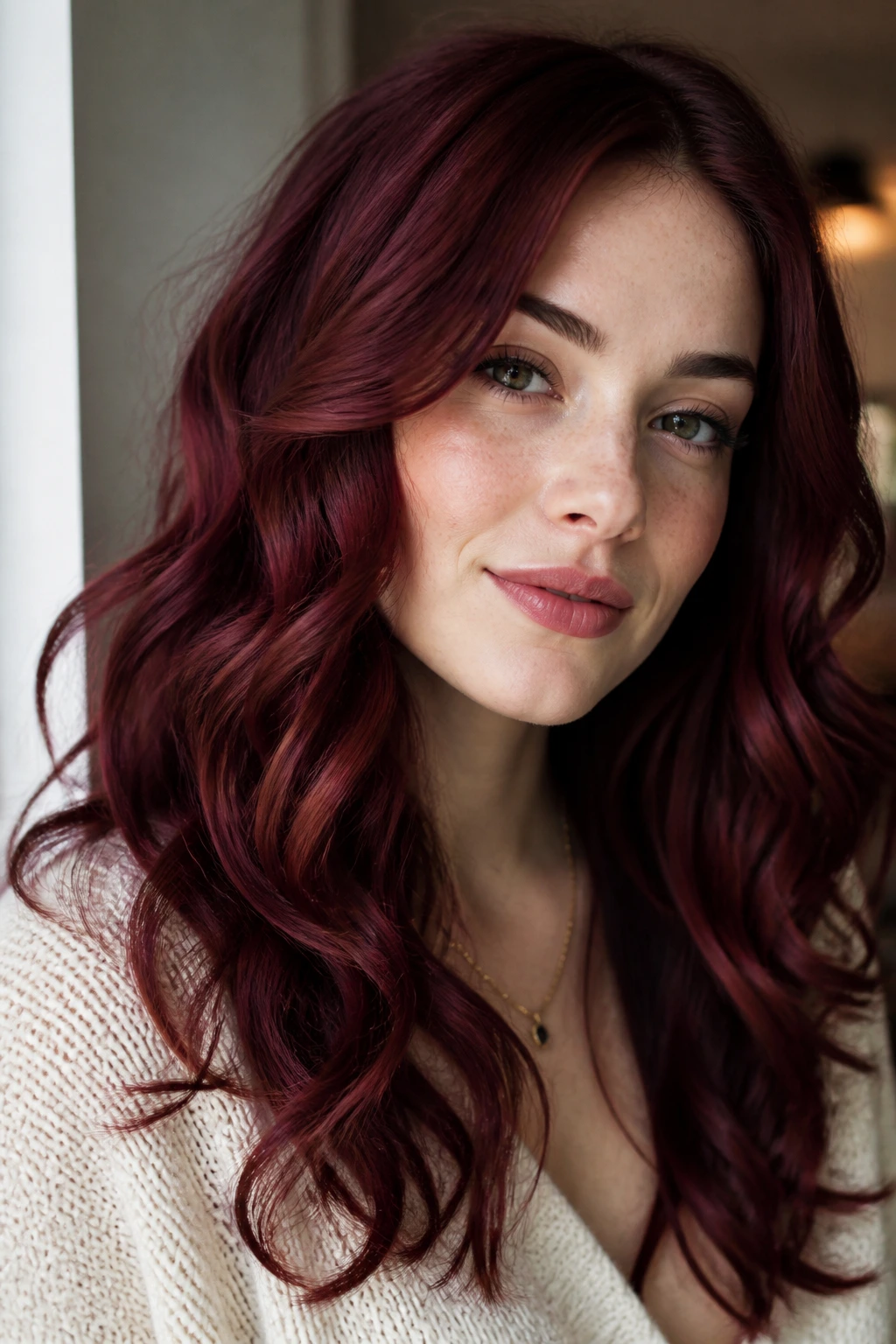
Burgundy does not need perfect symmetry. That’s half the reason it works on wavy hair. The wave pattern breaks up the color into smaller pieces, which keeps the eye moving and stops the shade from reading like a single flat mass. On straight hair, burgundy can look graphic. On wavy hair, it looks layered.
Fair skin changes the equation. Light complexions can lose shape fast if the hair sits too close to the same pale value. Burgundy fixes that by giving the eye a darker anchor. The trick is to choose a red-brown that doesn’t fight the skin’s undertone. Blue-red for cooler skin. Brown-red for warmer skin. Smoky plum if you want to split the difference.
I also like burgundy because it wears its fading well. A lot of reds turn ugly as they wash out. Burgundy usually softens into rose-brown, dusty plum, or muted merlot. That’s a better exit than neon fade, and it matters if you don’t want the hair to look tired halfway through the grow-out.
How to Choose the Right Burgundy Shade for Your Undertone
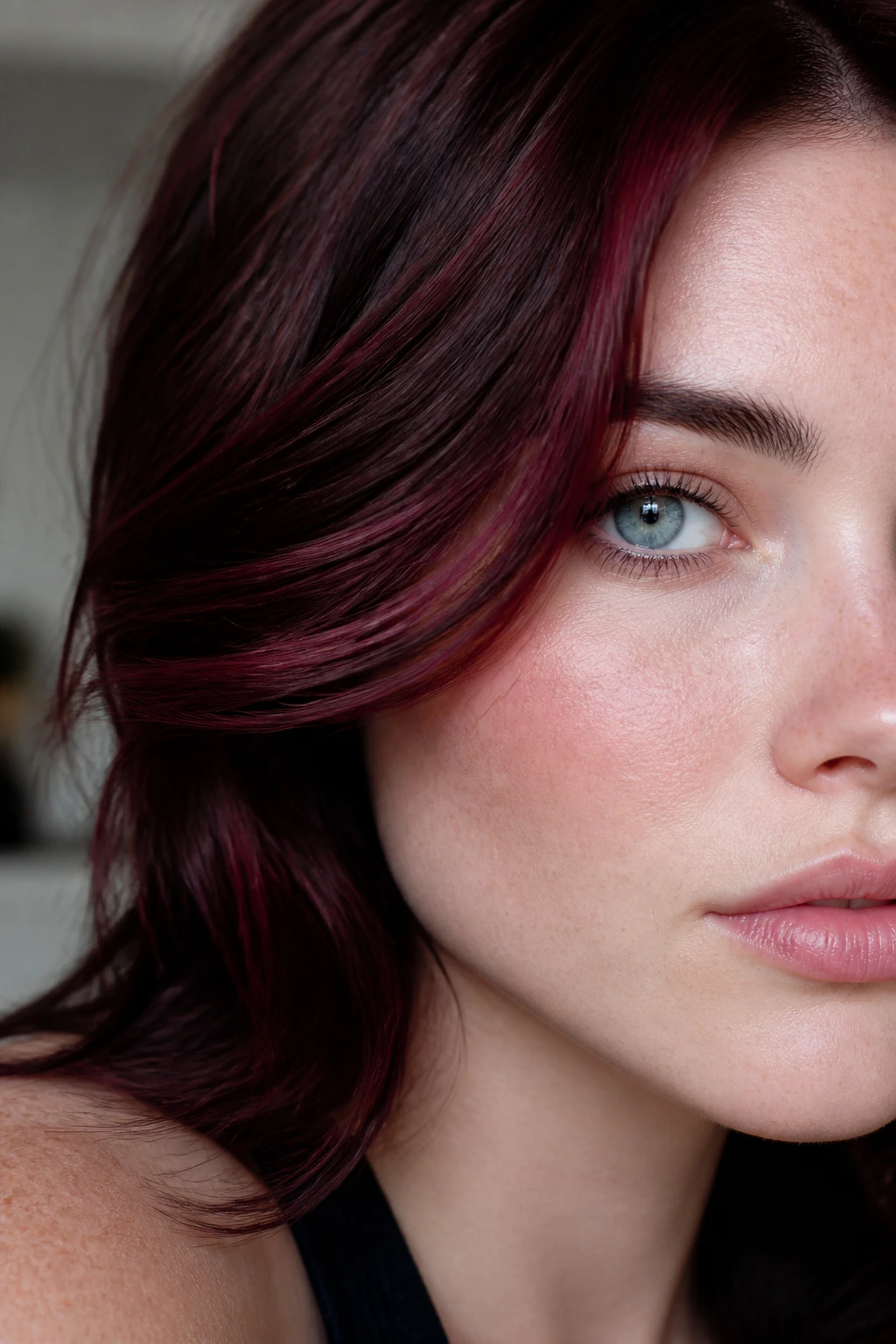
Start with your skin, not the inspiration photo. A flat red-purple that looks rich on one person can look brash on another, and fair skin is where that mismatch shows first. Hold a burgundy sweater, lipstick, or scarf near your face in daylight and watch what happens. If your skin looks calmer, you’re on the right track. If it looks pinker or duller, keep moving.
Cool Fair Skin
Blue-based burgundy, cherry merlot, black cherry, and smoky plum usually behave best here. These shades have enough coolness to sit beside pink or rosy skin without turning orange. If your face already flushes easily, avoid a very coppery red near the front pieces.
Warm Fair Skin
Spiced burgundy, mulled wine, cranberry with brown depth, and rosewood tend to work better. The touch of brown or copper keeps the skin from looking washed out. Too much blue-red can look a little icy next to peachy undertones, which is why the warmer burgundy family often wins here.
Neutral Fair Skin
Lucky group. Neutral skin can wear the widest range, from garnet to plum to merlot. The main decision is how much contrast you want. If your hair is very pale, a deeper burgundy keeps it from fading into the skin. If your hair is already medium brown, a softer rosewood or chocolate cherry may be enough.
Bring a daylight photo to the salon. Not a filtered one. Filtered hair photos lie for a living.
What to Tell Your Colorist Before the Foils Go In
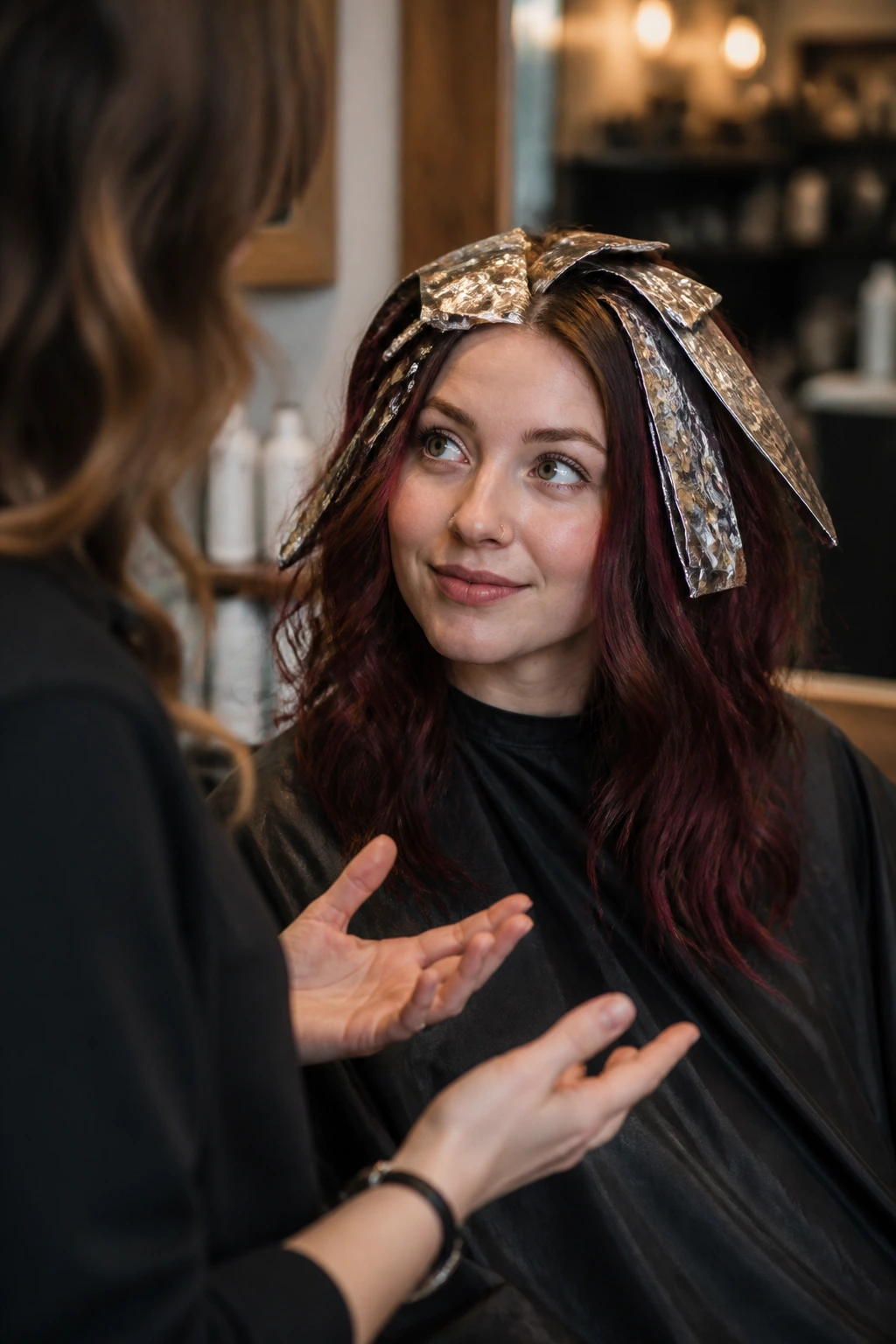
The best burgundy appointments start with boring details. That’s not glamorous, but it saves money and regret. Tell the colorist how often you wash your hair, how much heat you use, and whether you want the result to be obvious at work or only noticeable in sunlight. Those three things change the placement plan more than most people realize.
Bring two photos, not ten. One should show the shade you like. The other should show the placement — face-frame, babylights, balayage, underlights, whatever it is. Too many references create noise, and then you end up with a mash-up nobody asked for.
Name the undertone. Say “blue-red burgundy,” “plum burgundy,” or “warm merlot with brown in it.” Those words matter. “Red” alone is too vague, and vague is how you get cherry when you wanted wine.
Set a maintenance limit. If you only want to come back every 10 to 12 weeks, say so. A high-contrast money piece with permanent lift is a different commitment from a glossed balayage or peekaboo panel.
Ask where the color will fade first. Good colorists know which pieces will lose tone fastest — usually the ends and the most porous front sections. If they can tell you that before they start, you’re in better hands.
Tools and Products Worth Having on Hand
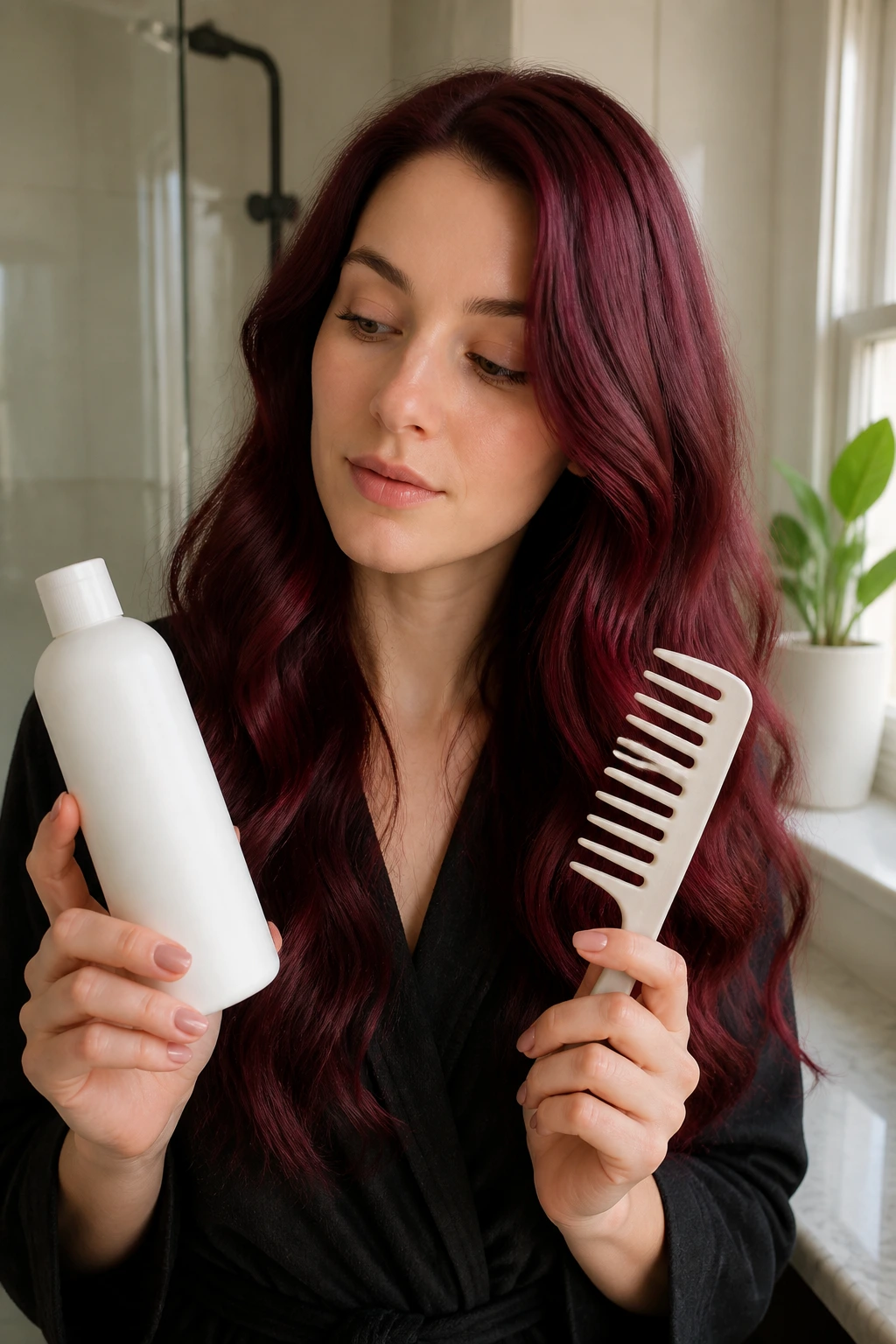
- Color-safe shampoo: Choose one without harsh sulfates; it slows the fade on burgundy tones.
- Moisturizing conditioner: Burgundy looks better on hair that lies smooth, not frizzy.
- Color-depositing mask or conditioner: A red-brown or plum version can refresh faded mids between salon visits.
- Heat protectant spray: Flat irons and curling wands chew through burgundy fast if you skip this.
- Microfiber towel or soft T-shirt: Rough towels puff up the cuticle and make red tones look dull.
- Wide-tooth comb: Good for detangling waves without wrecking the pattern.
- Leave-in conditioner: Helpful if the hair is bleached or the ends feel dry.
- Shine serum or light cream: Use a tiny amount on mids and ends to keep burgundy from looking dusty.
- Purple shampoo, if your base is blonde: Use sparingly; too much can mute burgundy and make the blonde look smoky in a bad way.
How to Show Off Burgundy Highlights Without Letting Them Fight Your Face
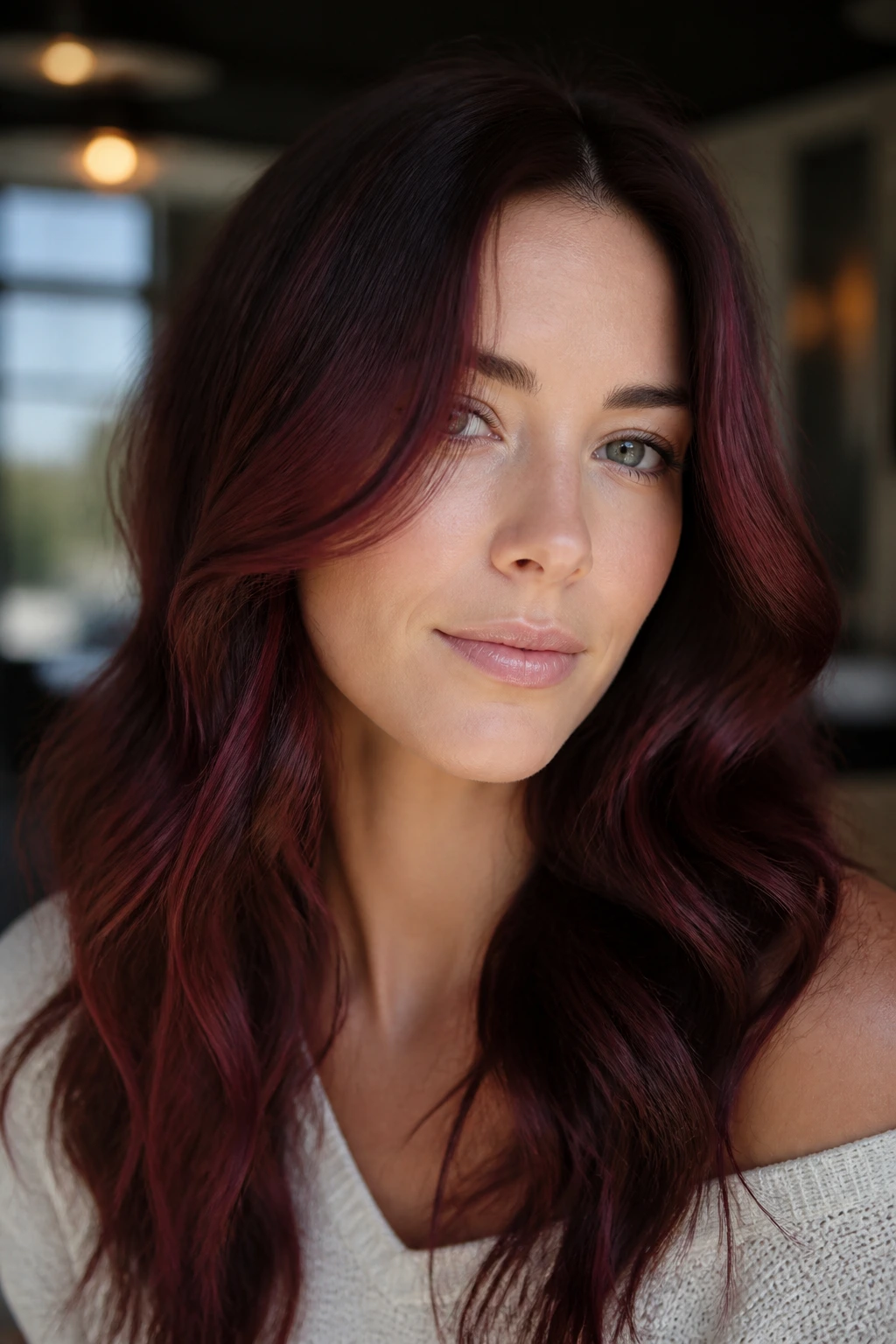
Presentation: Loose S-waves are the cleanest way to show burgundy on wavy hair, because they separate the ribbons and lowlights without turning the hair into a helmet. A center part feels modern with money pieces; a soft side part pushes color toward one cheek and can be kinder if one side of the face is stronger than the other.
Accompaniments: Cream, charcoal, denim blue, forest green, and muted plum all sit well beside burgundy on fair skin. If you wear makeup, think berry blush, a neutral lip, or a warm nude with enough pink to stop the face from disappearing next to deep hair color. Gold jewelry works better with spiced burgundy. Silver usually feels better with plum or cherry.
Portions: For fine hair, ask for lighter placement and smaller sections so the color doesn’t swallow the wave pattern. For thick hair, you can handle more ribbons and still keep the look soft. If your hair is shoulder-length or shorter, a few well-placed face-frame pieces do more than a full-head map of burgundy foils.
Finish: Keep the ends smooth. A pea-sized amount of cream or serum is enough. Too much product clumps the waves together and hides the color you paid for.
Additional Ways to Make Burgundy Read Better on Wavy Hair
Brightness: If the burgundy looks too dark in the mirror, add brightness around the part and front corners instead of lightening everything. A few lifted pieces near the face will wake up fair skin without turning the whole head red.
Depth: If the result looks thin or washed out, add one shade of lowlight beneath the brighter pieces. That tiny change gives the wave something to sit against, and the hair often looks fuller within the first styling pass.
Softness: A gloss between salon visits can blur a hard line where burgundy has faded too fast. Ask for a translucent red-brown glaze, not an opaque refresh, unless you want the whole head darker.
Make-it-yours: If you want low maintenance, keep the deepest burgundy away from the root and concentrate it in the mids and ends. If you want a bolder look, widen the face-framing pieces and let them reach the collarbone.
Common Mistakes That Make Burgundy Look Flat or Harsh
- Choosing a red that’s too bright for the skin: Bright cherry can look fun in a swatch and harsh on very fair faces. Fix it by asking for a wine, plum, or merlot base with less orange.
- Placing thick stripes through the top layer: Thick burgundy blocks can make wavy hair look stripey instead of dimensional. Narrower sections and softer paint placement solve that fast.
- Skipping lowlights on very light hair: If the base is pale blonde and the burgundy sits alone, the result can feel stringy. A few deeper pieces underneath give the eyes something to follow.
- Letting porous ends soak up too much red: Bleached ends grab pigment fast and can turn muddy or overly dark. A gloss or controlled toner is safer than flooding the ends with direct dye.
- Using too much heat too often: Burgundy fades faster with hot tools, and dry ends lose shine first. Keep irons around 300°F to 325°F when you can, and always use heat protectant.
- Ignoring the root shadow: Without a soft transition, burgundy highlights can look painted on. A blurred root keeps the whole head calmer and easier to grow out.
Variations and Alternative Ways to Wear Burgundy
Cherry Cola Softness: This version blends burgundy with brunette depth so the red stays in the background until the light hits it. It’s a smart pick for people who want dimension without a loud front piece.
Midnight Plum Frame: Go cooler and darker around the face, then let the rest of the hair stay softer. This works well if your fair skin leans pink or you wear silver jewelry more often than gold.
Spiced Merlot Glow: Add a warm brown-copper note to the burgundy and keep the placement airy. Peachy fair skin usually handles this better than a blue-red shade.
Hidden Cabernet Underlights: Put the color underneath the top layer and leave the surface almost untouched. This is the easiest option if you need the color to stay subtle at work but still want something noticeable in a half-up style.
Retro Chunky Burgundy Panels: Wider ribbons near the part and around the face give a stronger, more graphic effect. They’re bold, but on wavy hair the bends break them up enough that they don’t look rigid.
Keeping Burgundy Rich Between Touch-Ups
Burgundy fades. Fast enough that you’ll notice if you wash in hot water every day, slow enough that you can keep it decent with the right routine.
Wash two to three times a week if you can. Cooler water helps the cuticle stay flatter, which slows pigment loss. A sulfate-free shampoo matters here; harsher cleansers pull red tone out sooner than almost anything else in a home routine.
Use a color-depositing conditioner or mask every one to two weeks if the burgundy starts drifting toward brown or rose. If your hair is very porous, shorter intervals work better. If the ends are lightened, they may need a weekly moisturizing mask even when the color itself still looks fine.
Gloss refreshes usually land every 4 to 6 weeks for demi-permanent or glossed burgundy, while permanent highlight maintenance often stretches to 6 to 8 weeks depending on root growth and how obvious you want the contrast to be. Direct-dye burgundy can fade in 8 to 12 washes, sometimes faster on bleached hair. That’s normal. The color is thin by design.
Skip heavy clarifying shampoos unless you’re stripping old product before a salon visit. They can rip out the red faster than you want, and on fair skin a faded burgundy can look tired instead of soft.
Questions People Ask Before They Book Burgundy
Will burgundy highlights look too red on very fair skin?
They can, if the shade leans bright cherry or orange-red. A deeper wine, plum, or merlot usually behaves better because it brings the contrast down a notch and stops the hair from fighting the complexion.
What burgundy shade works best for cool undertones?
Blue-red burgundy, black cherry, and smoky plum tend to sit best on cool fair skin. They keep the face from looking flushed and usually read cleaner under daylight than warm red tones.
Is balayage or foil better for wavy hair?
Balayage gives a softer, painted effect that blends well with waves. Foils give more lift and brighter contrast, so they’re better if you want a sharper face frame or stronger burgundy ribbons.
Can I get burgundy highlights without bleaching?
Sometimes, yes, if your hair is already light enough or you’re going for a glaze-like effect on lighter brown hair. If your base is dark blonde or brunette and you want a real burgundy pop, some lift usually has to happen first.
What if my hair is fine and breaks easily?
Ask for fewer, softer pieces and keep the burgundy closer to a gloss or lowlight plan. That way you get the color shift without over-processing too much hair at once.
How do I stop burgundy from fading pink?
Use cooler water, fewer washes, and a color-depositing conditioner with red-brown or plum tone. Pink fade usually means the red pigment has washed out faster than the brown base, so adding a little brown back into the routine helps.
Should I choose highlights or lowlights if my hair already feels thin?
Lowlights usually help more, because they build depth and make the hair look denser. A few burgundy highlights near the face can still work, but all-over lightening tends to flatten fine hair if it’s overdone.
What if I want the color to stay office-friendly?
Keep the burgundy tucked into babylights, underlights, or a soft balayage instead of a bold money piece. You’ll still see the shade in motion, just not in a way that takes over every room you walk into.
Why Burgundy Keeps Working on Fair Skin
Burgundy has range, and that’s why it lasts. It can look cool, warm, smoky, bright, or nearly hidden, all depending on how much red, brown, or plum sits inside the formula. Fair skin benefits from that flexibility more than people think, because a light complexion needs contrast, but not always a loud one.
Wavy hair does half the styling work for you. The movement breaks the color into ribbons, panels, and flashes, which is exactly what keeps burgundy from looking heavy. If you choose the shade with your undertone in mind and keep the placement soft where it meets the face, the result holds onto shape even as it fades.
Start subtle if you’re unsure. A cherry merlot money piece, a rosewood babylight set, or a soft burgundy gloss can tell you a lot before you commit to bigger sections. Once you know how your skin reacts, the rest gets easier — and the hair gets a lot more interesting.