



Chunky cornrows with curls for work solve a very specific problem: you want your hair to look neat, finished, and intentional by 8:30 a.m., then still look like it had a plan by 4:45 p.m. Straight-back braids can do the neat part. Loose curls can do the soft part. Put them together, and you get a style that keeps the scalp organized while the ends still move.
That mix matters more than people admit. Under harsh office lights, tiny details show up fast — uneven parts, frizz at the temple, a braid that sits too high on one side. Chunky cornrows are forgiving in a way micro braids aren’t. They’re easier to install, easier to read from a distance, and easier to refresh before a meeting. The curls keep the style from looking stiff or too severe, which is exactly why this combo lands so well in workplaces where you want polish without looking like you’re trying too hard.
I also like that this style gives you room to adjust the vibe. Tighter parts, darker braiding hair, and controlled curls read conservative. A side part, a low ponytail, or soft face-framing pieces make the same base look more relaxed. That flexibility is the whole point. You can wear one braid pattern to a client meeting, a studio shift, or a day behind a desk, and the difference lives in how you finish it.
Why These Cornrow-and-Curl Looks Earn Their Keep at Work
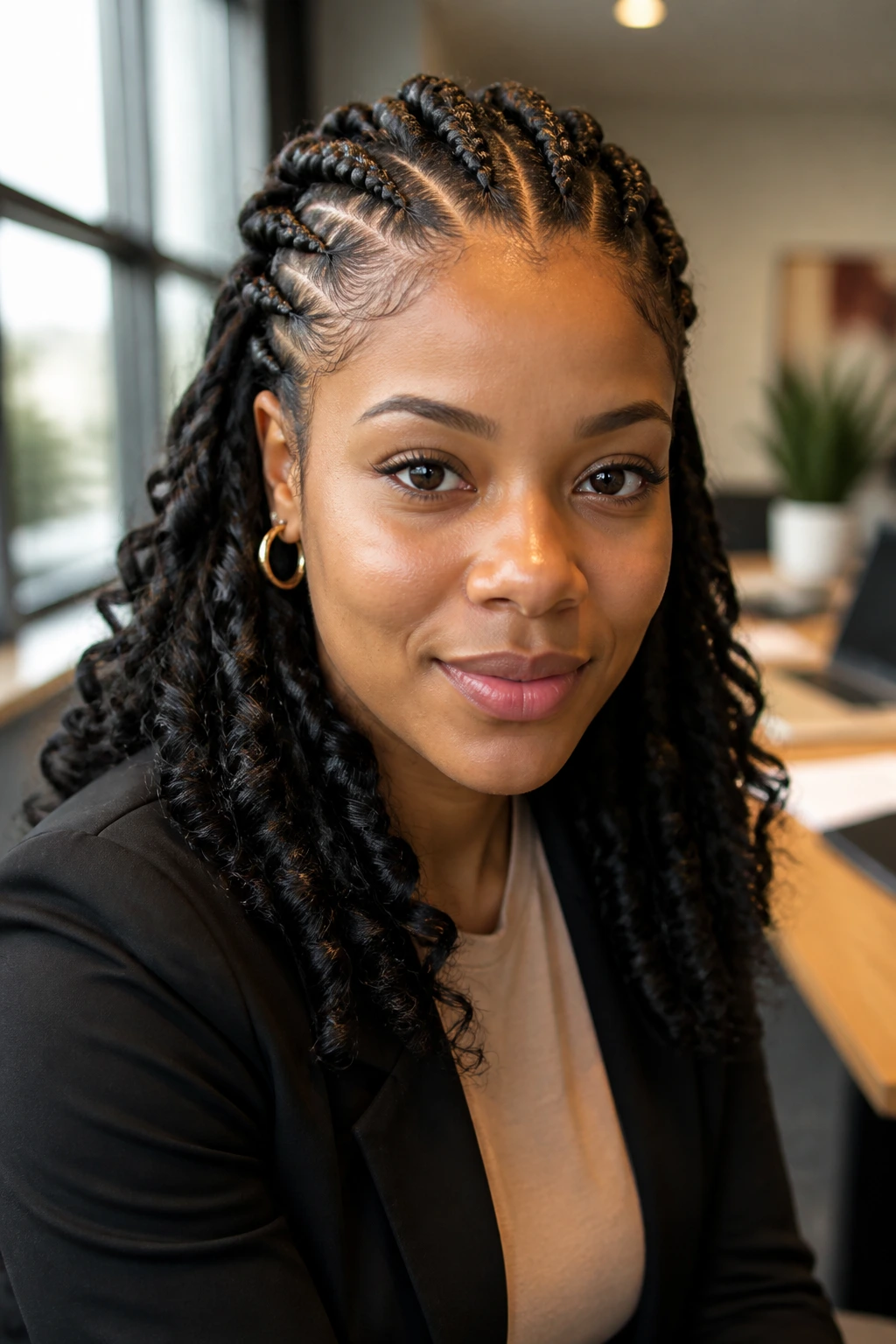
-
Neat at the roots: Chunky parts show cleaner on a busy morning, and they stay readable even when your hair is brushed back behind headphones or a badge lanyard.
-
Soft at the ends: Curls keep the style from feeling hard or helmet-like, which matters in spaces where you’re face-to-face with people all day.
-
Less daily fuss: Once the braids are in, you’re mostly refreshing the curls and smoothing the hairline, not rebuilding the whole style every morning.
-
Easy to tone up or down: The same braid map can look conservative with dark hair and minimal accessories, or more expressive with a side sweep and defined curls.
-
Better for long workdays: Larger rows usually mean fewer points of tension than tiny braids, which can be kinder if you’re wearing the style for two or three weeks.
-
Photo-friendly without being stiff: That curl at the end gives movement in real life, not just in selfies, so the style still looks alive after a long shift.
1. Side-Swept Chunky Cornrows with Curled Ends
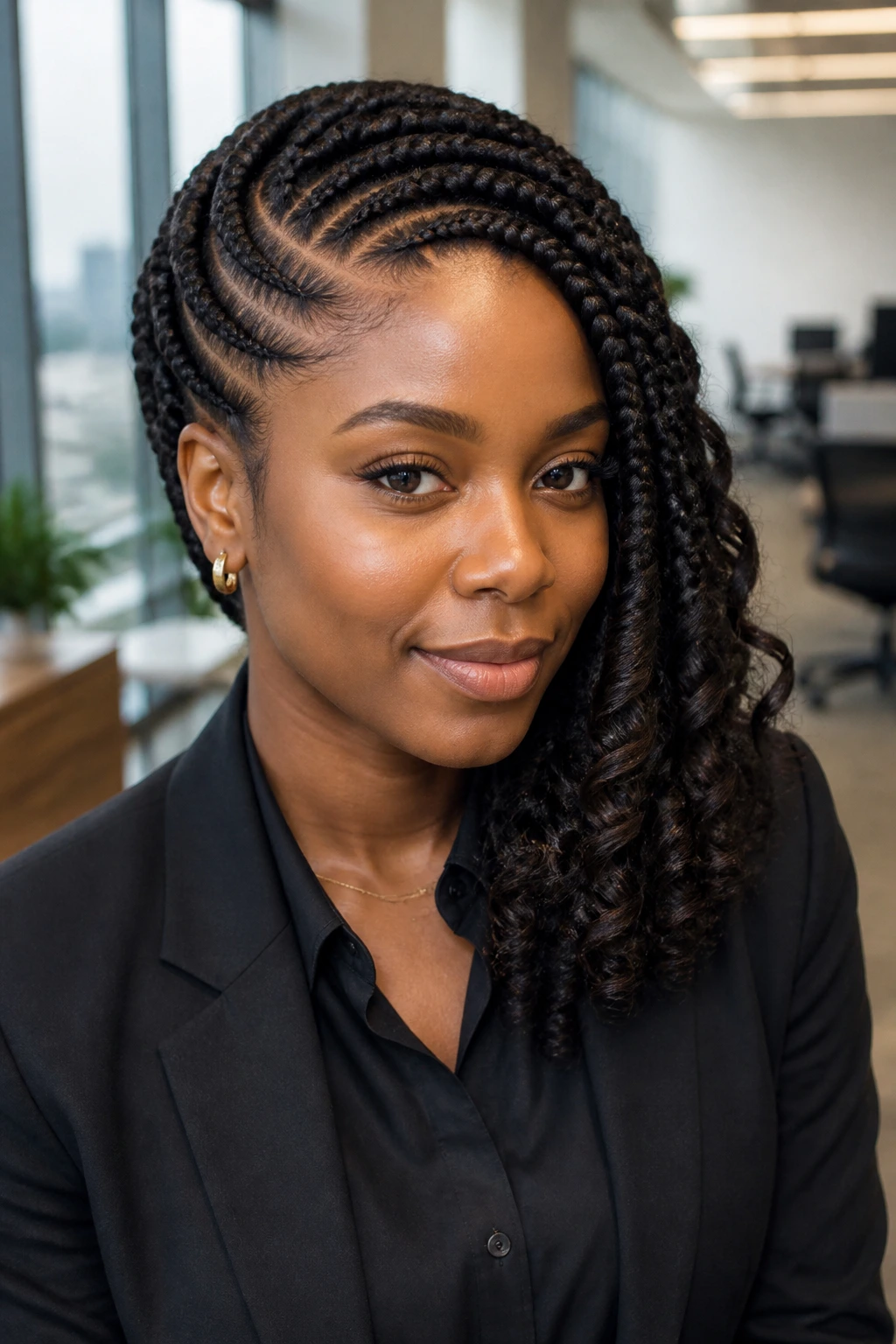
A deep side part does a lot of the heavy lifting here. It pulls the eye across the face, which keeps the braids from reading boxy, and the curled ends soften the whole shape so it works with a blazer, a shell top, or even a simple button-down. I like this version when the dress code is vague and you need the style to say “put together” without looking severe.
Why the angle matters
The diagonal line gives you movement before the curls even start. That matters because work hair should look considered from across a room, not only from the bathroom mirror. Keep the front braid a touch narrower than the back rows so the style frames the face instead of closing it in.
- Best for medium to thick hair.
- Works well with oval, round, and heart-shaped faces.
- Ask for the curls to start below the braid ends so the root doesn’t puff up.
Work note: tuck the heavier side behind one ear if you need to look sharper for a presentation.
2. Center-Part Chunky Cornrows with Soft Spiral Ends
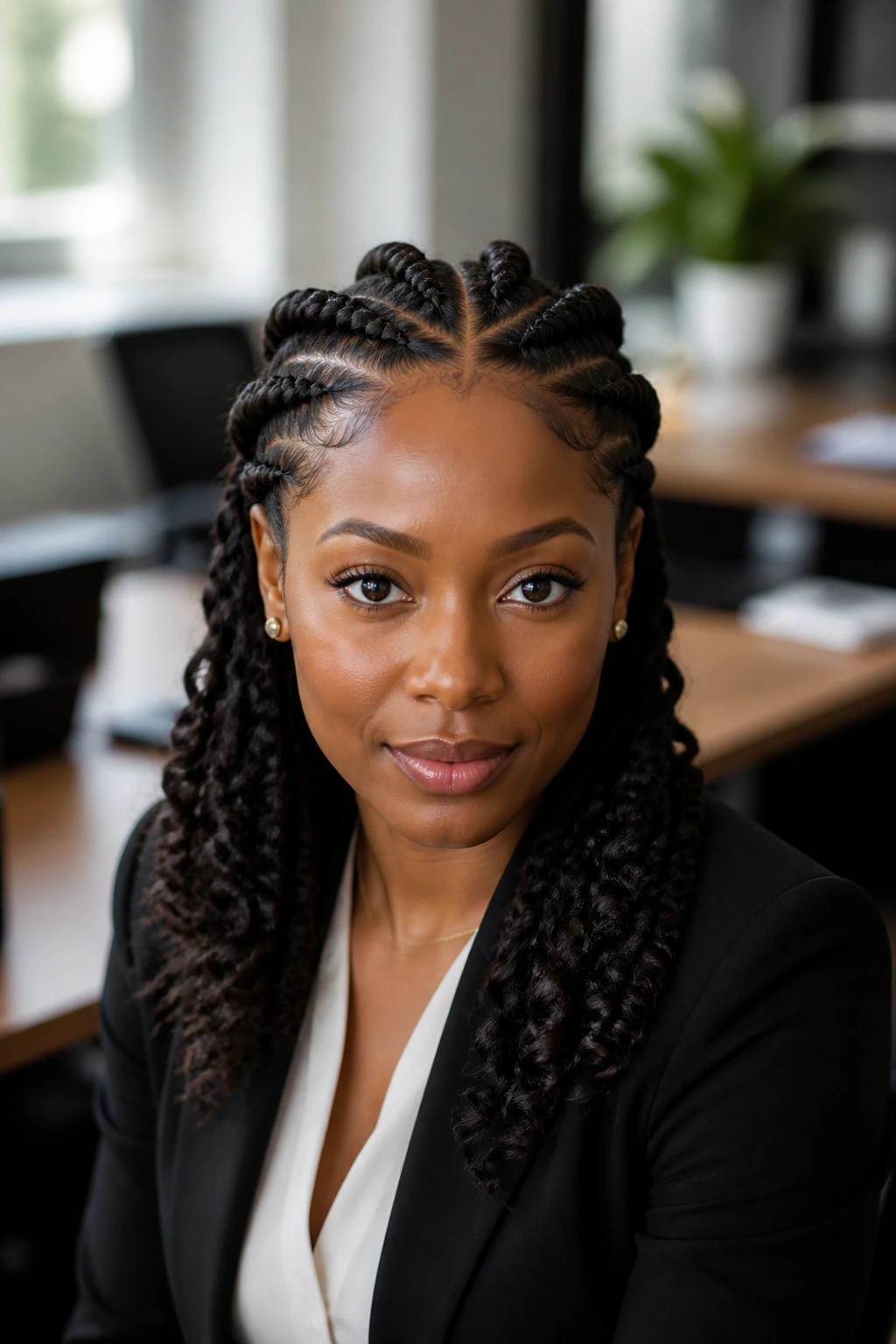
A center part is the cleanest choice when you want the whole style to read calm and deliberate. The symmetry does half the styling for you, and the spiral ends add just enough movement to keep it from feeling rigid. This one is a favorite for offices where tidy hair matters more than flashy hair.
The trick is in the balance. Keep the braids close to the scalp, but don’t pull them so tight that the part looks shiny or stressed. A good center part should look like it belongs there, not like it was carved with a ruler and a grudge.
What makes it office-friendly
- The line down the middle gives the face a structured frame.
- Spiral curls hold a neat shape better than random loose ends.
- Small earrings and a plain collar look especially clean with this style.
If your braider uses a little mousse at the end and lets the curls cool before separating them, the finish stays smoother longer. That tiny pause matters. It really does.
3. Half-Up, Half-Down Chunky Cornrows with Curls
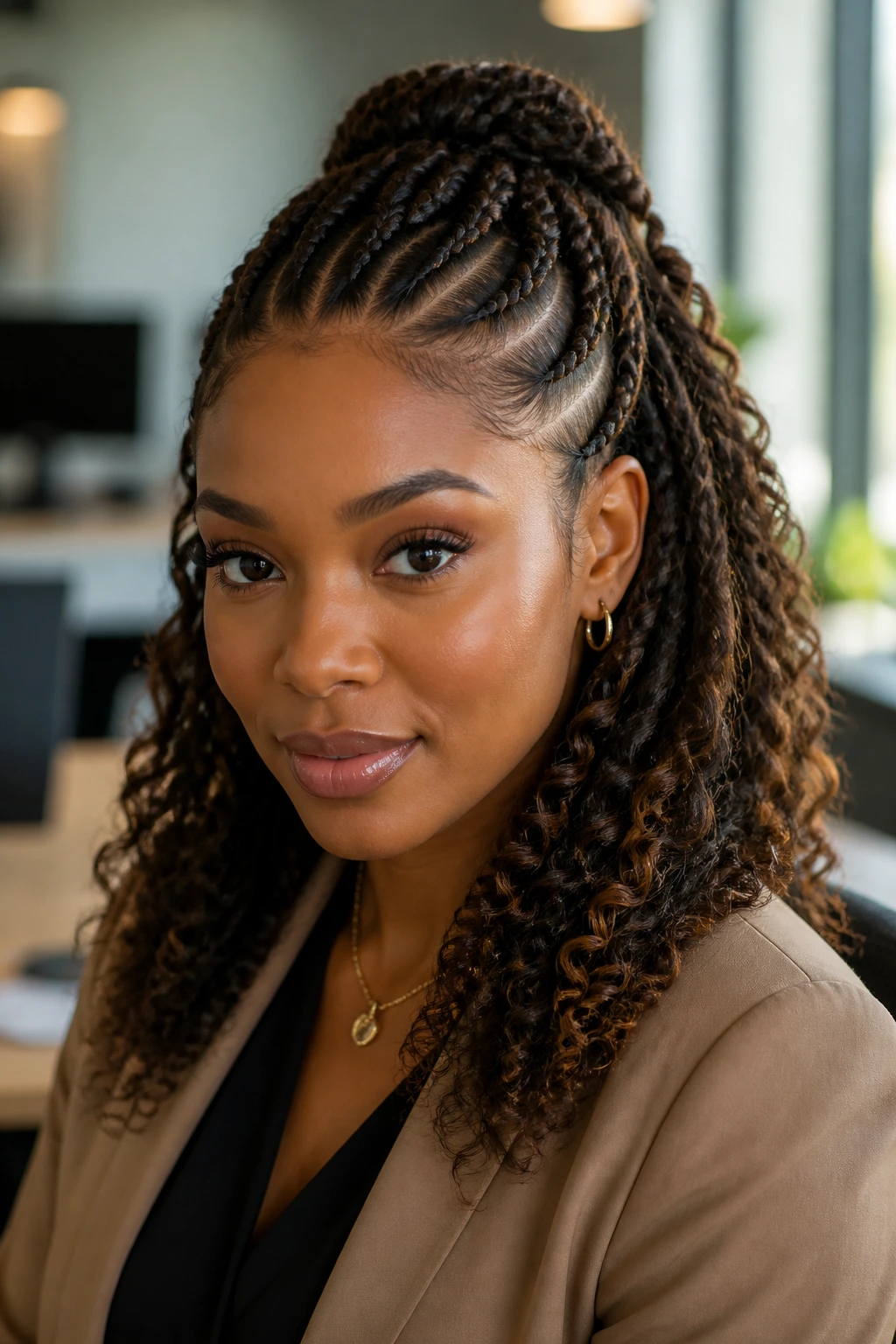
Need a style that looks finished on Monday and still has some bounce by Thursday? This is it. The top braids stay pulled back, which keeps your face clear during calls and desk work, while the lower curls give the style a little swing when you move.
It works especially well if your workplace allows a softer look but not a fully loose one. The half-up shape reads tidy, and the curled length keeps it from looking too severe. I’d pick this for creative offices, classrooms, or anywhere you want your hair to look intentional without feeling locked down.
Best part
You can change the mood with one pin. A simple black clip makes it stricter. A gold cuff or wrapped ponytail base makes it more styled.
Keep the top section smooth, not bulky. If the crown is too puffy, the style starts to look like two different ideas fighting each other.
4. Straight-Back Feed-In Cornrows with Loose Curls
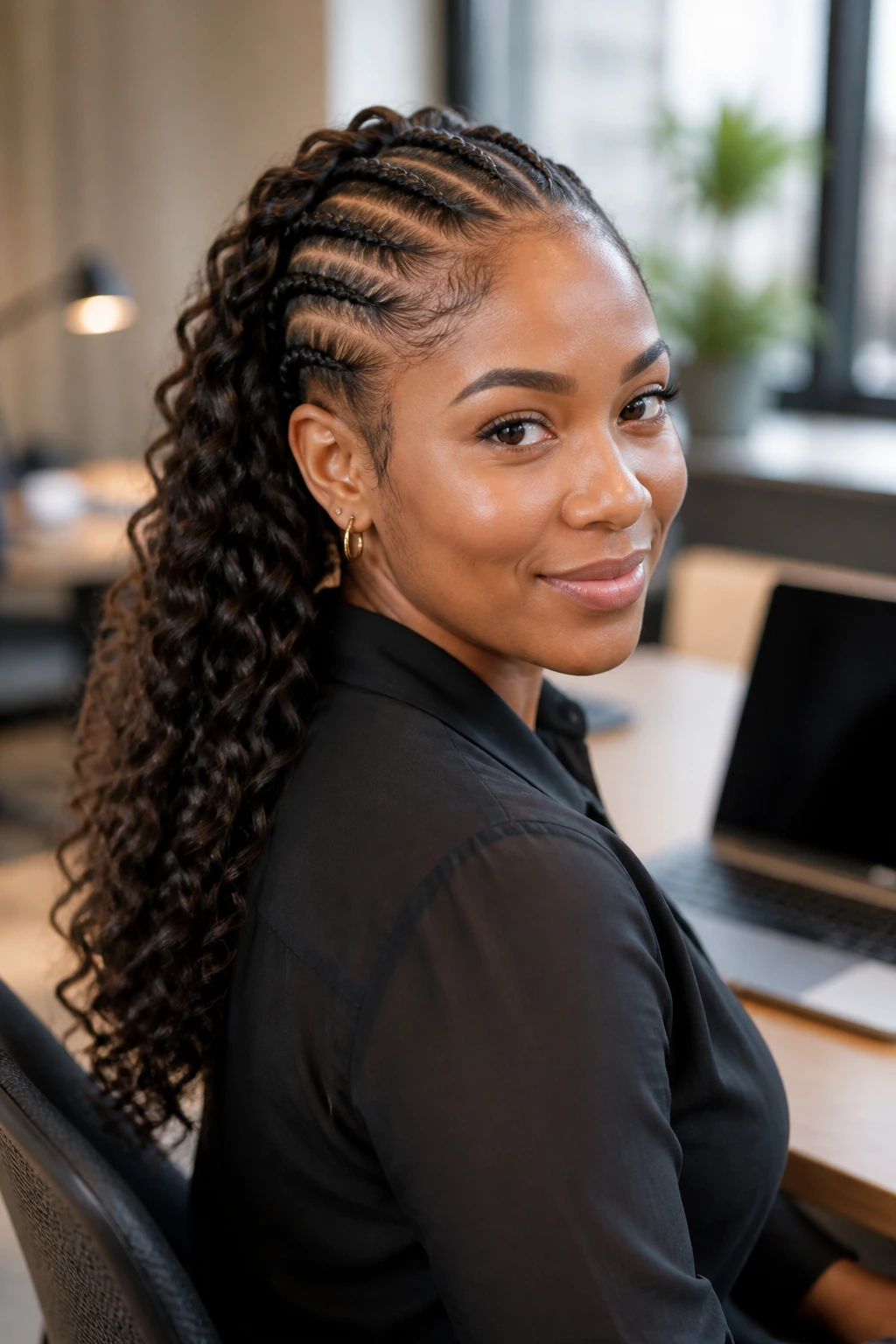
Straight-back braids are the workhorse of this whole set. They’re familiar, fast to read, and hard to mess up if the parting is even. Add loose curls at the ends and you get a style that feels grounded at the scalp but not heavy at the bottom.
This version is good for long days, especially if you wear glasses or a headset. The front stays out of your face, the rows lie flat, and the curls move enough to keep the style from looking flat after lunch. That is the sweet spot.
The science behind the look
Feed-in braiding makes the braid thickness build gradually, which means the front won’t look swollen or blunt. The result is smoother at the hairline and easier to tuck behind the ear. If you keep the curls shoulder length or slightly shorter, they won’t snag on collars and seat belts as much.
A small amount of mousse on the ends every few days keeps the shape tidy without making the hair crunchy.
5. Braided Crown Cornrows with a Curly Back Fall
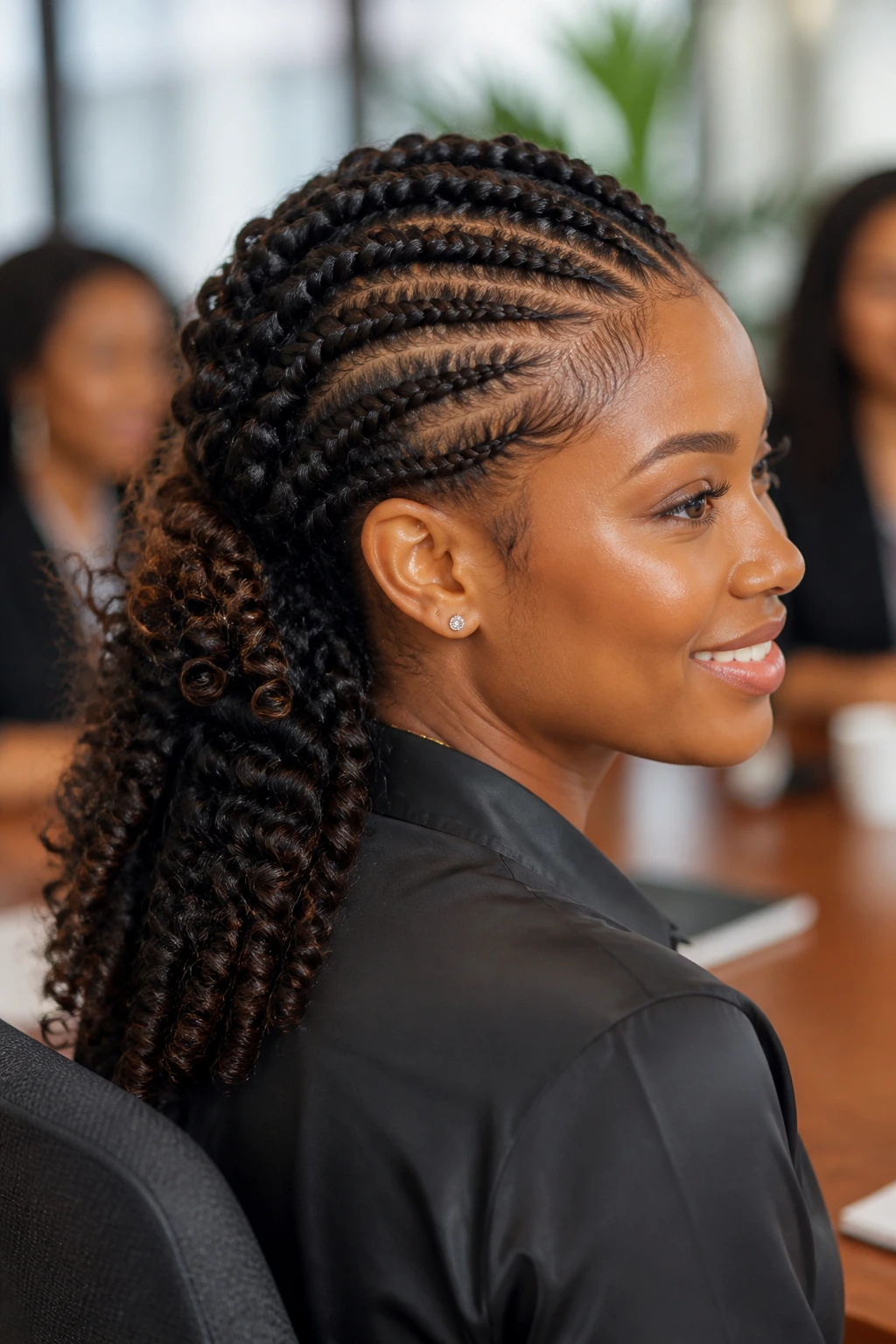
This one reads polished from the front and softer from the back, which is a nice trick when you spend part of the day face-to-face and part of it on video. The braided crown keeps your hairline structured, while the curls tumble from the back like a controlled curtain.
It’s a strong option for meetings, interviews, or any day you want the top of the style to look almost architectural. The crown gives you that clean, lifted feeling, and the curls keep the style from becoming too rigid. It’s formal without being fussy.
Where it shines
- Sitting at a front desk.
- Leading a meeting.
- Wearing a collar or crew neck.
Ask your stylist to keep the crown compact so it sits close to the head. If the top gets too tall, the whole style starts reading more dramatic than professional.
6. Low Ponytail Cornrows with Wrapped Base
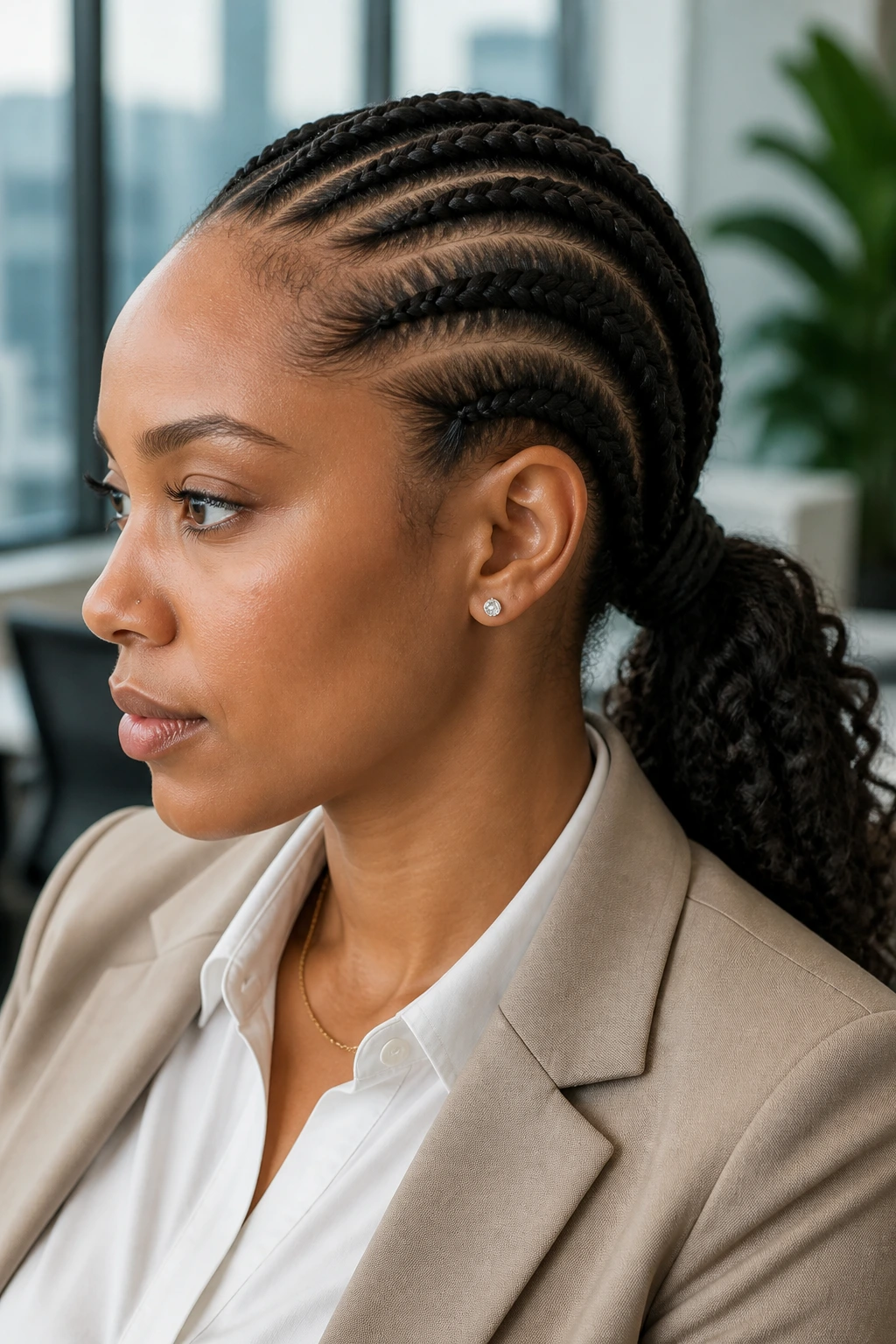
A low ponytail is one of the safest bets for work because it stays controlled from the first email to the last errand. With chunky cornrows, the ponytail gets extra structure, and the curls at the tail keep it from looking like a gym style.
The wrapped base is the part I love most. It hides the tie, cleans up the silhouette, and makes the style look thought through. If you wear a blazer or anything with a sharp shoulder, the ponytail sits neatly below the line instead of competing with it.
Best for: busy days, travel days, and jobs where you keep bending over a desk or counter.
Keep the pony low enough that it doesn’t bump your collar every time you move. A ponytail that sits too high tends to bounce around and frizz faster.
7. Triangle-Part Cornrows with Light Curl Movement
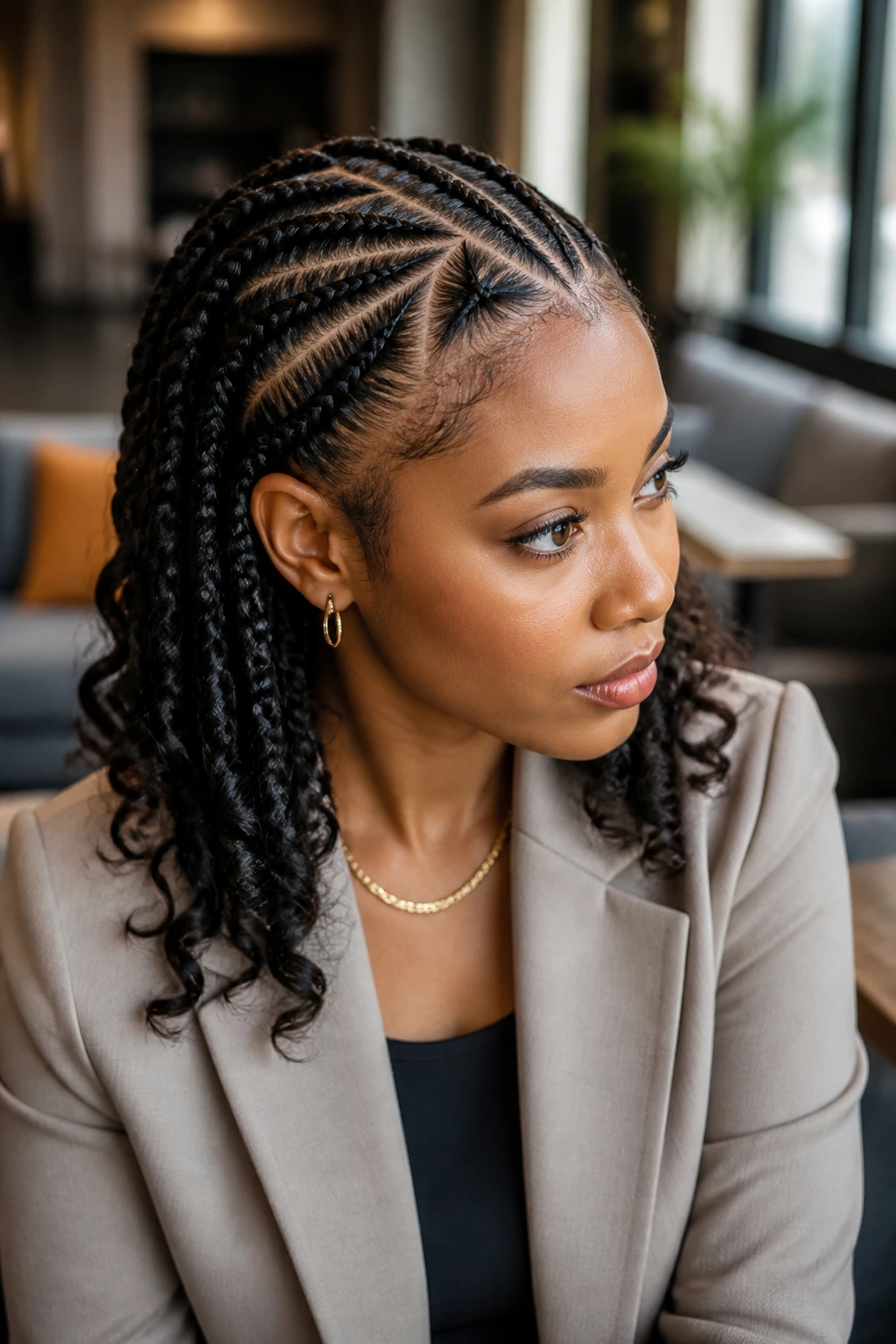
Triangle parts add visual interest without making the style loud. They give the scalp pattern a little geometry, which helps if you like your hair to have detail but still need it to behave in a workplace setting. The curls stay soft, so the pattern does not become too busy.
This is a nice middle ground for someone who wants something more styled than straight rows but less formal than a crown or bun. Triangle parts catch light in a subtle way, and they look best when the parts are clean and the rows are not overpacked.
How to keep it refined
Use dark or natural-tone braiding hair if the dress code is conservative. If your workplace is more relaxed, a warm brown or honey mix can look rich without tipping into “too much.” The part shape does the talking here, so the curls can stay light.
A light mist of holding spray on the roots, not the ends, helps the shape stay crisp.
8. Zig-Zag Part Cornrows with Defined Ends
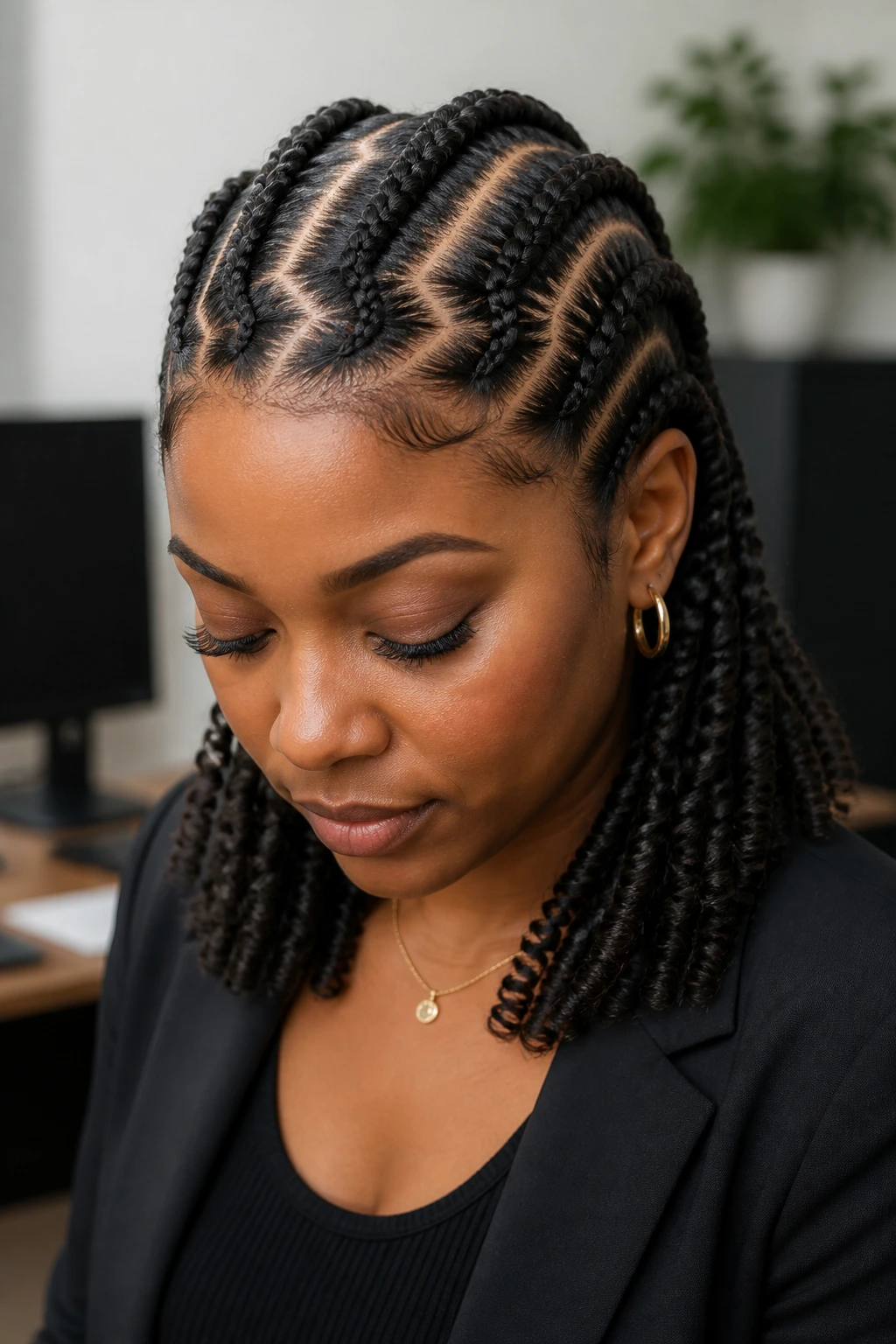
Zig-zag parts add a little attitude, but they still read neat if the rows are thick and the curls are controlled. I like this version for work environments that allow personality as long as the overall look is tidy. The parting gives you texture at the scalp before the curls even start.
The key is restraint. Keep the zig-zag clean and even, not jagged for the sake of being dramatic. If the lines are too erratic, the style starts to look playful in a way that doesn’t always translate well at work.
Good use case
- Creative agencies.
- Salon or beauty jobs.
- Casual Fridays that still need polish.
Pair it with simple clothing and let the braids be the detail. You do not need loud earrings, patterned tops, and a zig-zag part all at once. One strong choice is enough.
9. Tucked Low Bun with Curly Tail
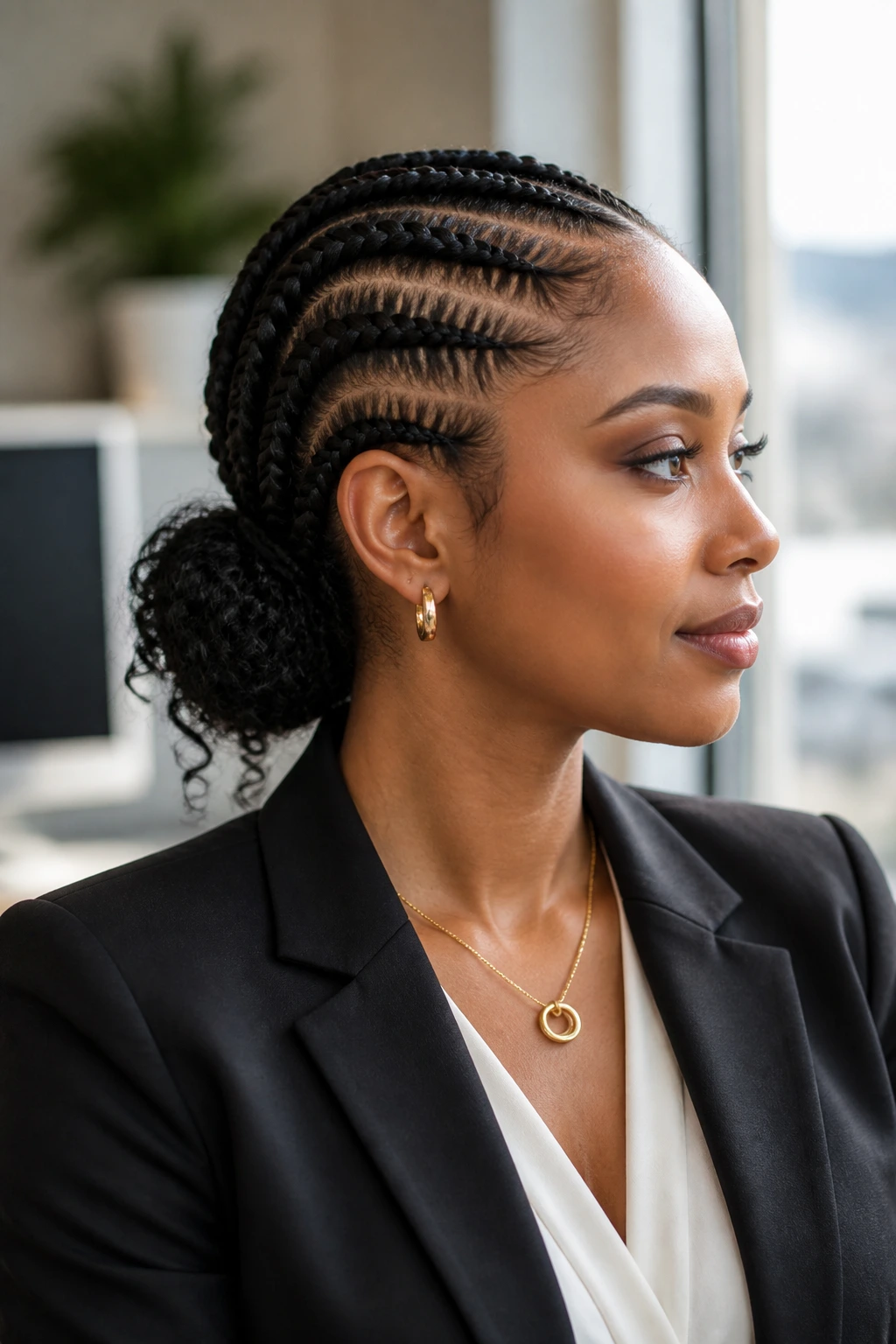
A low bun is a quiet style, and that’s exactly why it works. The bun keeps the silhouette compact, while the curly tail adds just enough softness to keep it from looking severe or too school-uniform-ish. If you need your hair off your neck all day, this is a smart pick.
It also behaves well under jackets and scarves. The bun sits low enough to avoid constant friction, and the curls can be pinned or left to spill a little depending on how formal you need to look. That flexibility is useful. Nice, even.
Small detail that matters: keep the bun snug but not cranked tight. A bun that pulls at the nape by noon is not a win, no matter how neat it looked at 7 a.m.
10. Front-Focused Cornrows with Face-Framing Curls
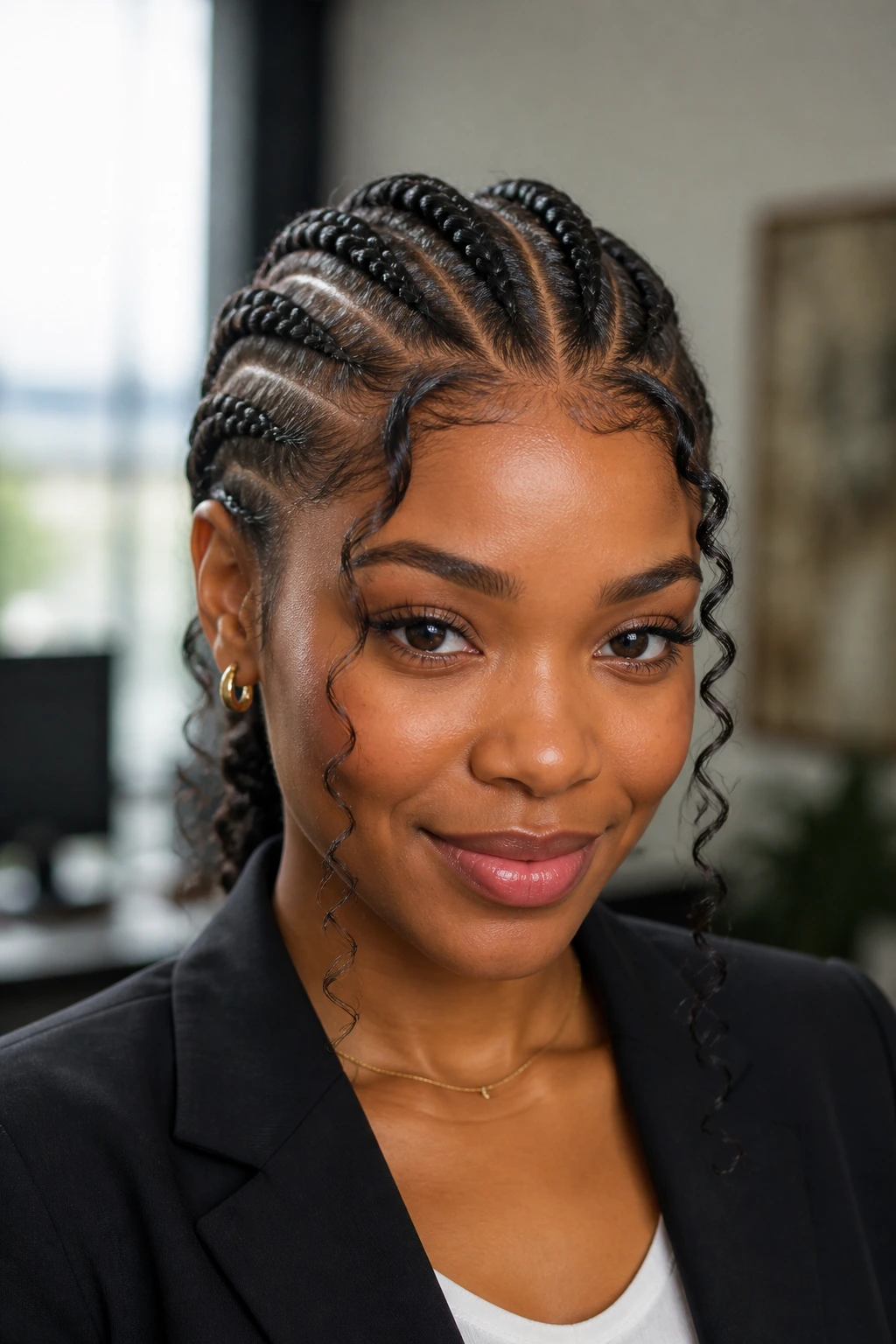
This style gives the front rows the spotlight and lets the curls stay lighter around the face. It works well when you want your features to stay open and visible, especially if you wear glasses or talk to people all day. The braids create structure. The curls add a soft edge.
I like this one for jobs where you’re visible to clients or coworkers and still want the hair to feel friendly, not severe. The face-framing pieces should be narrow enough to move, but not so loose that they keep falling into your eyes. That little balance takes care.
Quick guide
- Keep the front rows shorter and cleaner.
- Let the curls start around chin to collarbone length.
- Use a tiny bit of mousse on the framing pieces so they don’t puff up.
The style reads best when the front pieces are intentional, not accidental.
11. Asymmetrical Cornrows with One Curly Sweep
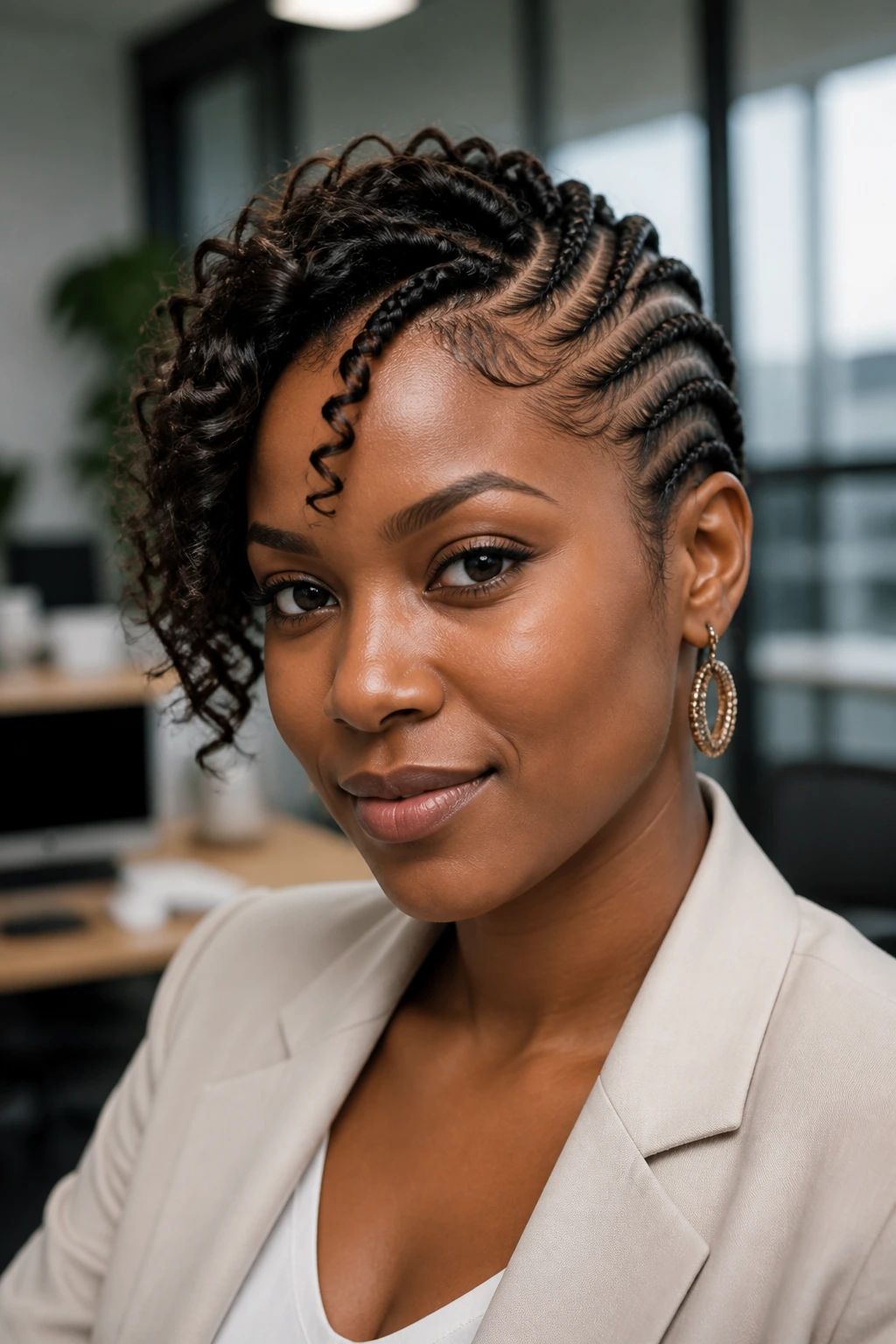
Sometimes a perfect mirror part feels too formal. An asymmetrical layout gives the style a little tension, and that can be useful in creative workplaces or casual offices where you still want a clean finish. One side gets more braids, the other gets more curl movement. Simple. Effective.
The asymmetry makes the curls feel like a design choice, not just the leftover end of the style. That’s the difference between “done” and “styled.” Keep the heavier side close to the scalp so the imbalance feels deliberate, not messy.
If you’ve got a strong jawline or a strong pair of glasses, this shape is a nice way to soften one side of the face without hiding the whole look. It’s a small detail, but it changes the mood fast.
12. Curly Bob-Length Cornrows
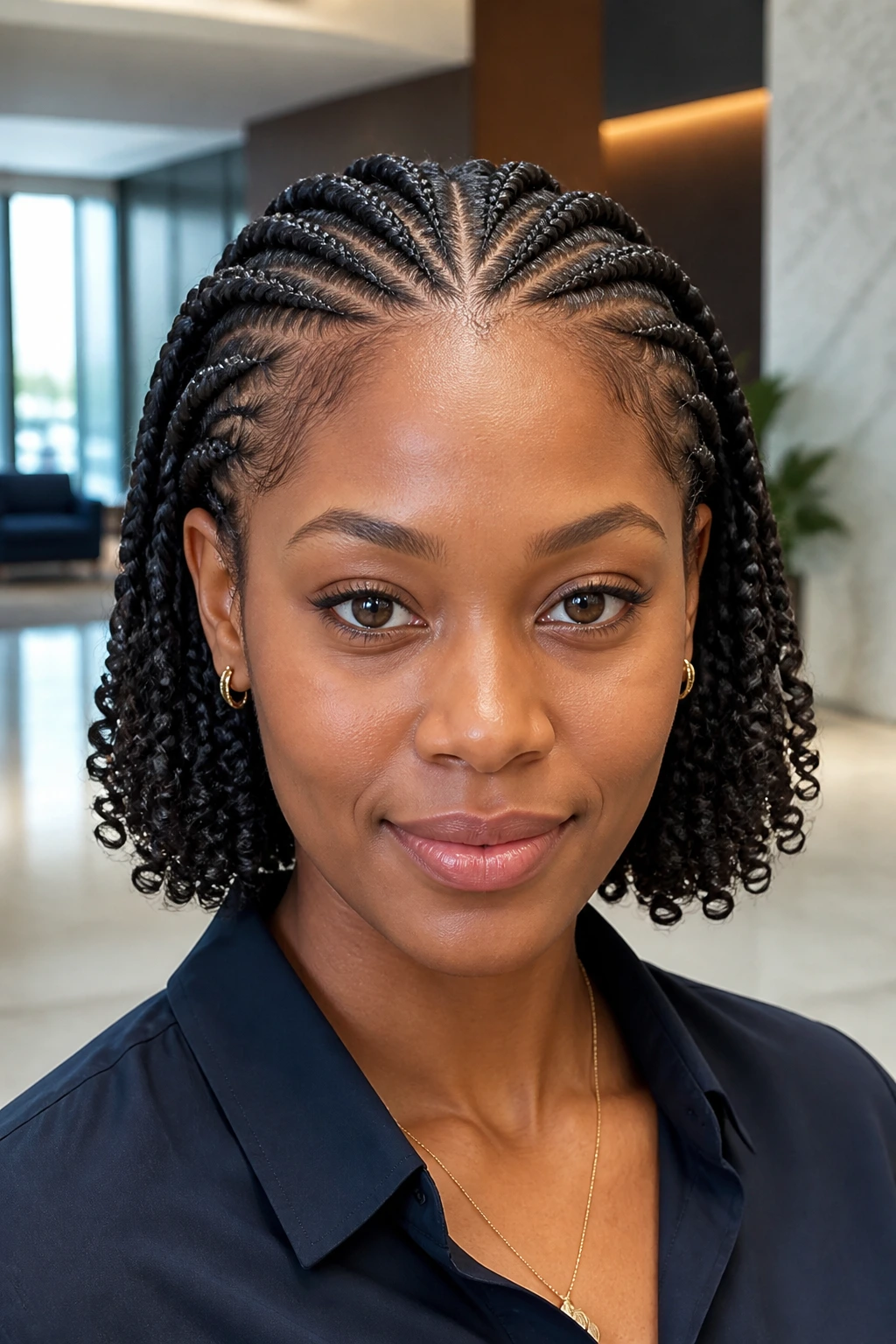
Bob-length braids are underrated for work. They sit lighter, dry faster, and don’t get caught in chair backs or jacket collars as much as longer styles. Add curls at the ends and the whole thing feels fresh rather than severe.
This is a good choice if you work in a warm building, commute on public transit, or simply do not want hair brushing your shoulders all day. A bob length also keeps the style tidy longer because the ends are easier to refresh. Less drag. Less frizz.
Why I’d pick it
The shorter length keeps the look neat even when the day gets busy. The curls add movement where the cut is otherwise compact. It’s easier to keep the style balanced on smaller heads or finer hair.
A bob with curls looks best when the ends are cut or shaped evenly before installation. A blunt, uneven finish will show fast.
13. Two-Chunk Cornrow Style with Soft Ends
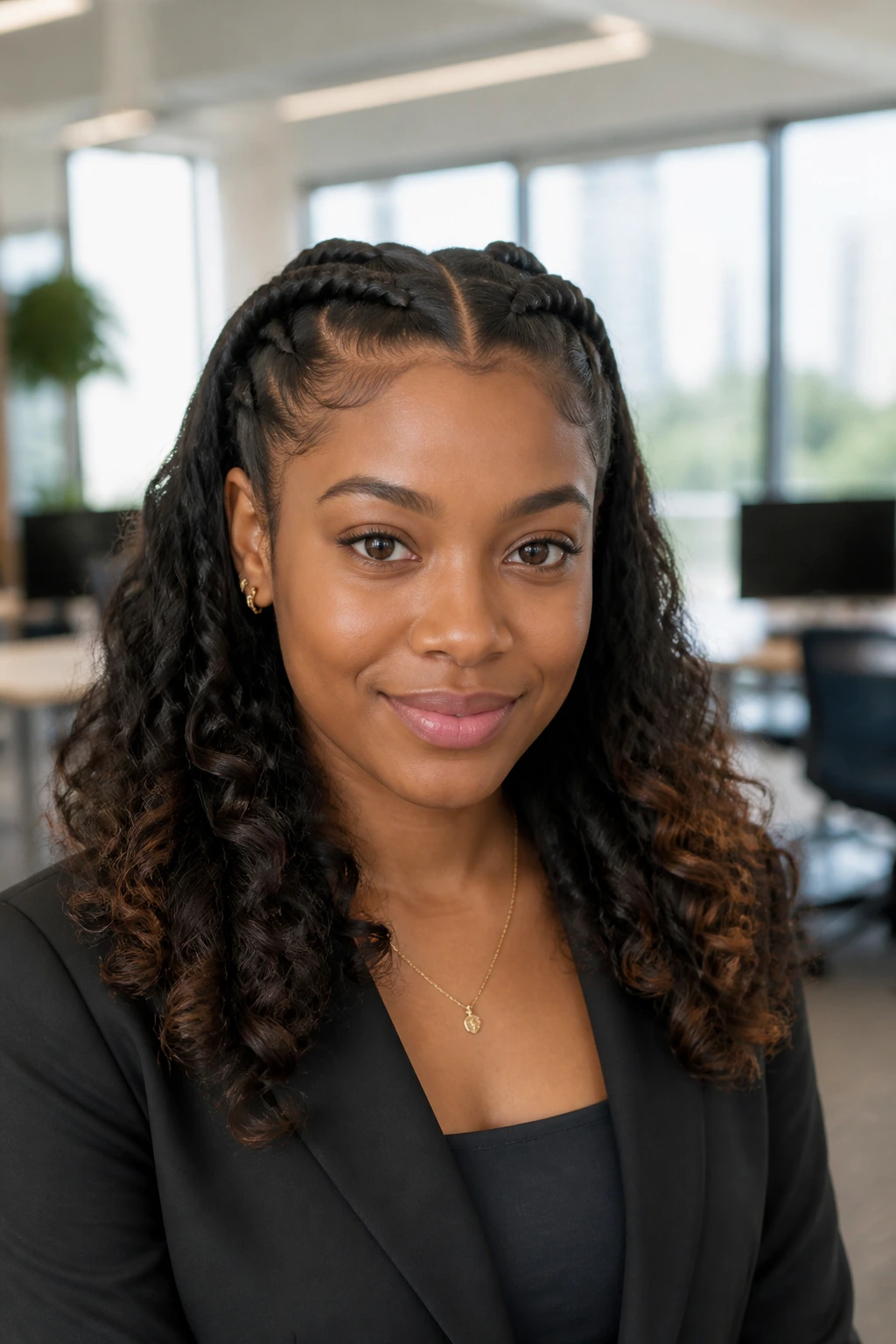
This is the minimal version for people who want the cleanest possible scalp pattern with almost no fuss. Two thicker cornrow sections can look sleek and modern, and the soft ends keep the style from feeling unfinished. It’s a very controlled look. In a good way.
I’d choose this when your job is active and you need the hair mostly out of the way, but you still want some definition around the face and shoulders. It’s also one of the easiest styles to refresh. The fewer sections you have, the fewer places frizz can creep in.
A little shine spray on the braids can make this style look extra clean, but don’t drench it. Too much product at the roots starts looking oily under fluorescent lights, and nobody wants that.
14. Side Ponytail Cornrows for Long Meetings
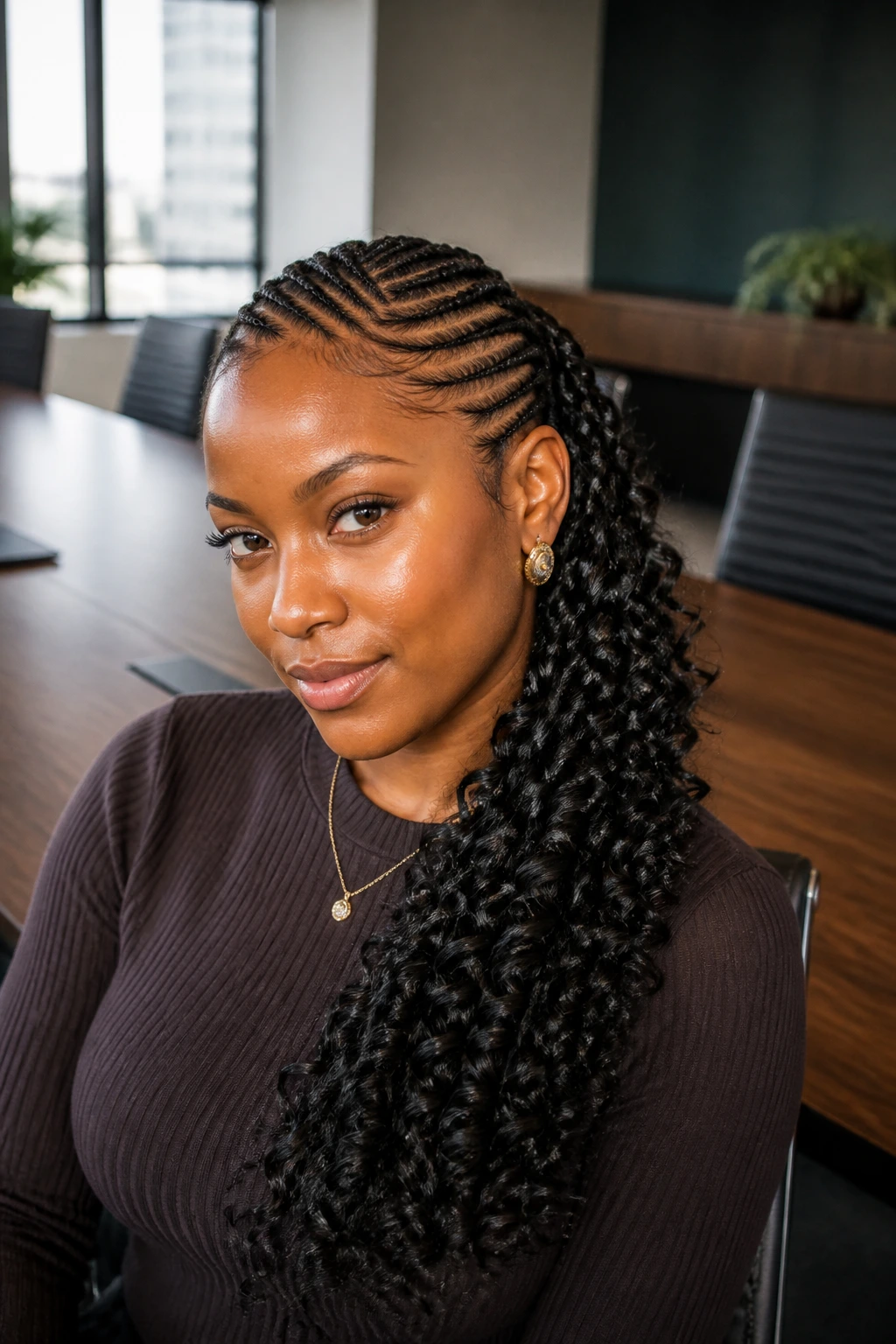
A side ponytail keeps the weight off the back of your neck and pulls the whole look toward one shoulder, which feels softer than a strict low pony. It’s a good move for long meetings, travel days, or work setups where you’re constantly turning your head to look at a screen.
The side placement is what keeps it interesting. Without it, a low ponytail can drift into plain territory. With it, the curls fall over one shoulder and frame the face instead of hanging straight down the spine.
Helpful detail
Use a flat wrap or a braid base that sits close to the scalp so the side ponytail doesn’t bulge. If the elastic is too bulky, you’ll feel it against your neck all day. That gets old quickly.
This style likes a light edge finish and a smooth crown. Anything puffy up top makes the side placement feel accidental.
15. Braided Bangs with Curly Back Length
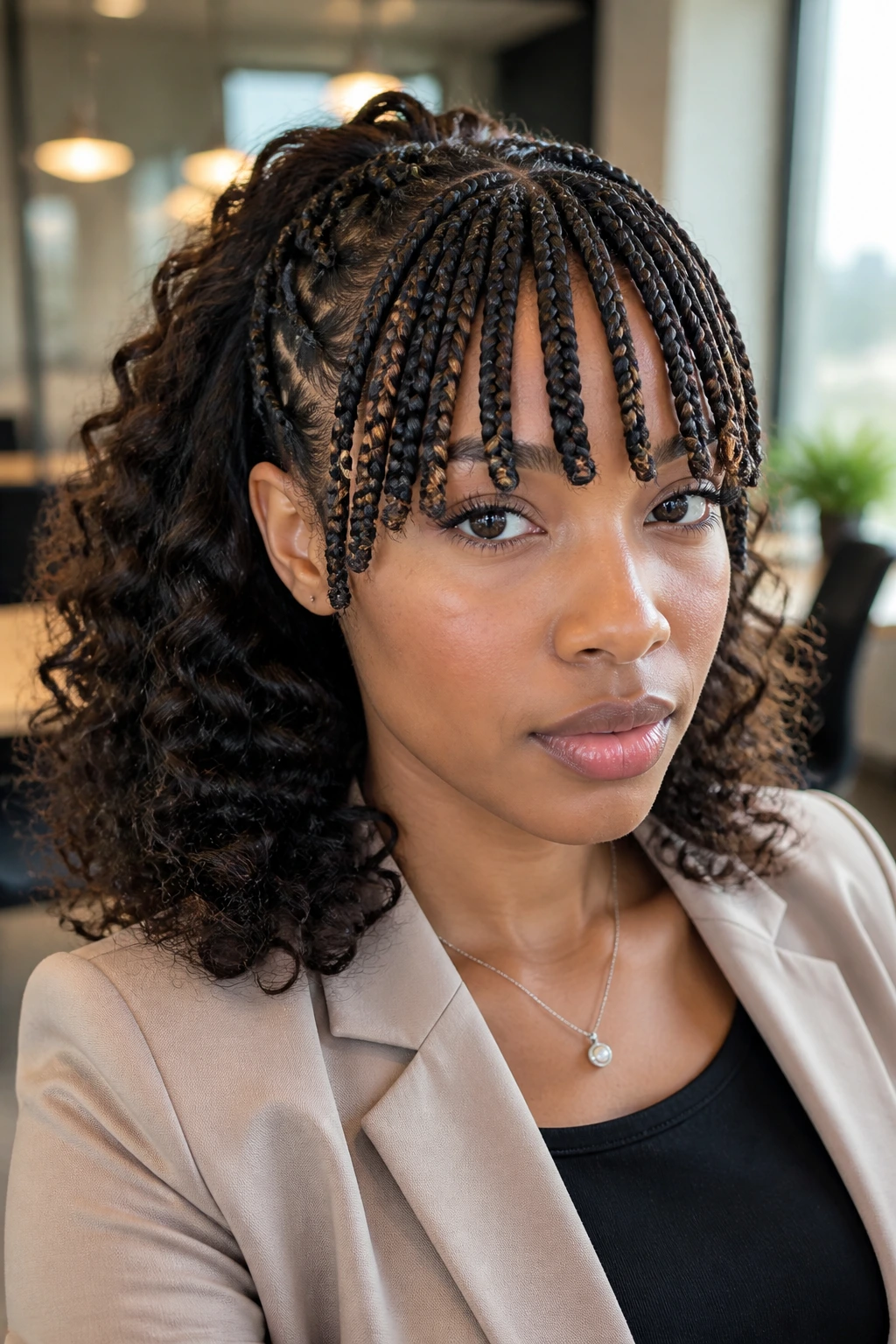
Braided bangs are for people who want the front of the style to do something specific. They can soften the forehead, make the eyes stand out, and give the whole look a more styled edge. The curly back length keeps the mood from becoming too severe.
This version works well with layered work outfits — think turtlenecks, blazers, simple dresses, or even a plain knit top. The bangs create a frame, so the rest of the style can stay simple. That’s a smart trade.
If you wear your hair back a lot during the day, braided bangs also help the style keep its shape after you’ve tucked and untucked it a few times. They hold the front together when life does not.
16. Halo Cornrows with a Curly Nape
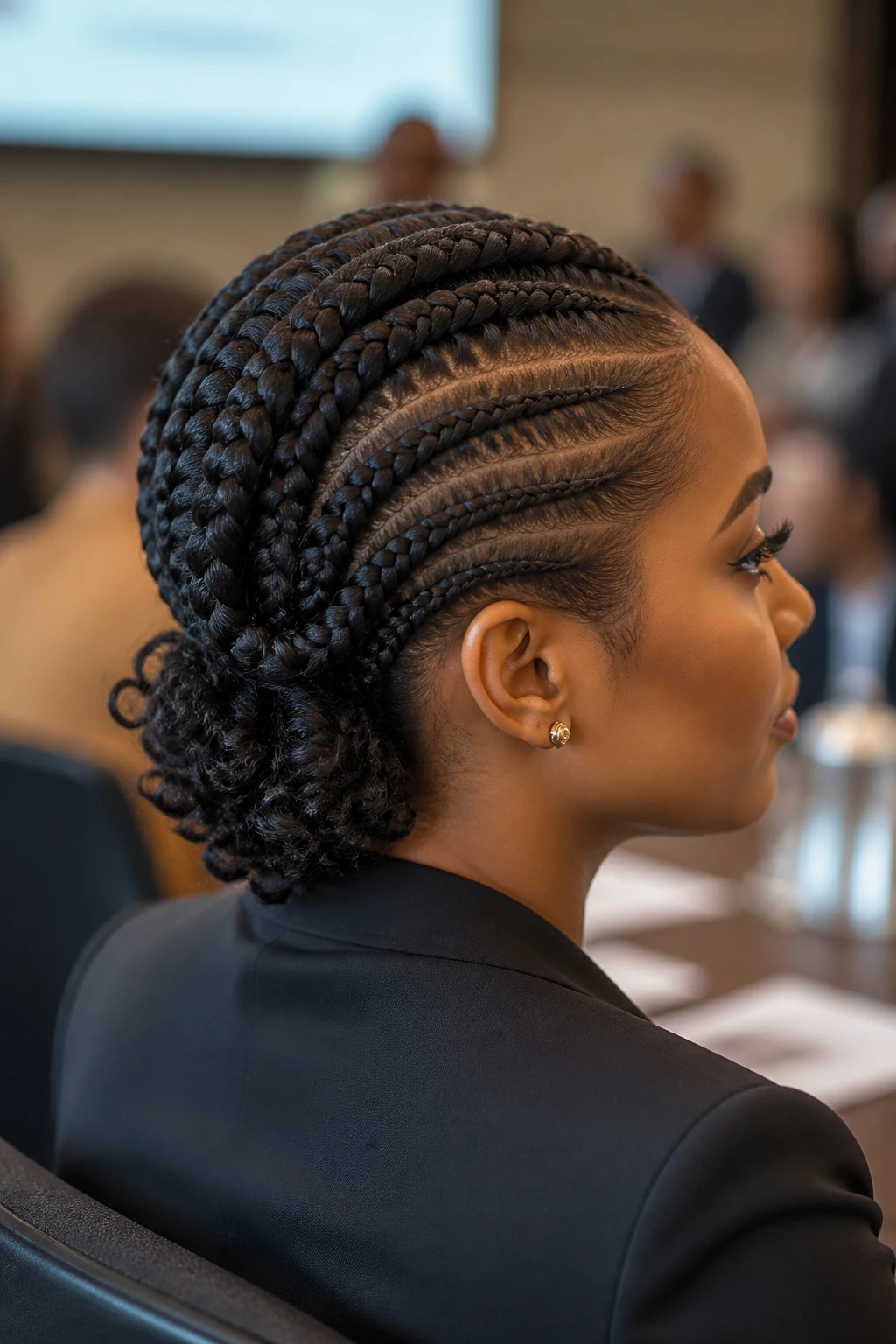
A halo braid pattern gives you a clean outer line, and the curls at the nape bring the softness back in. It’s one of the more elegant choices in this list, which makes it a good fit for presentations, formal workplaces, or days when you need to look polished with very little effort.
The crown line should follow the head closely. If it sits too high, the halo starts feeling costume-like. Keep it close, smooth, and even. The curls at the nape can be fuller, because that’s where the eye lands last.
This style plays well with small studs, a plain neckline, and minimal makeup. It does the most when the rest of the outfit stays clean.
17. Minimal Straight-Back Cornrows with Fluffed Ends
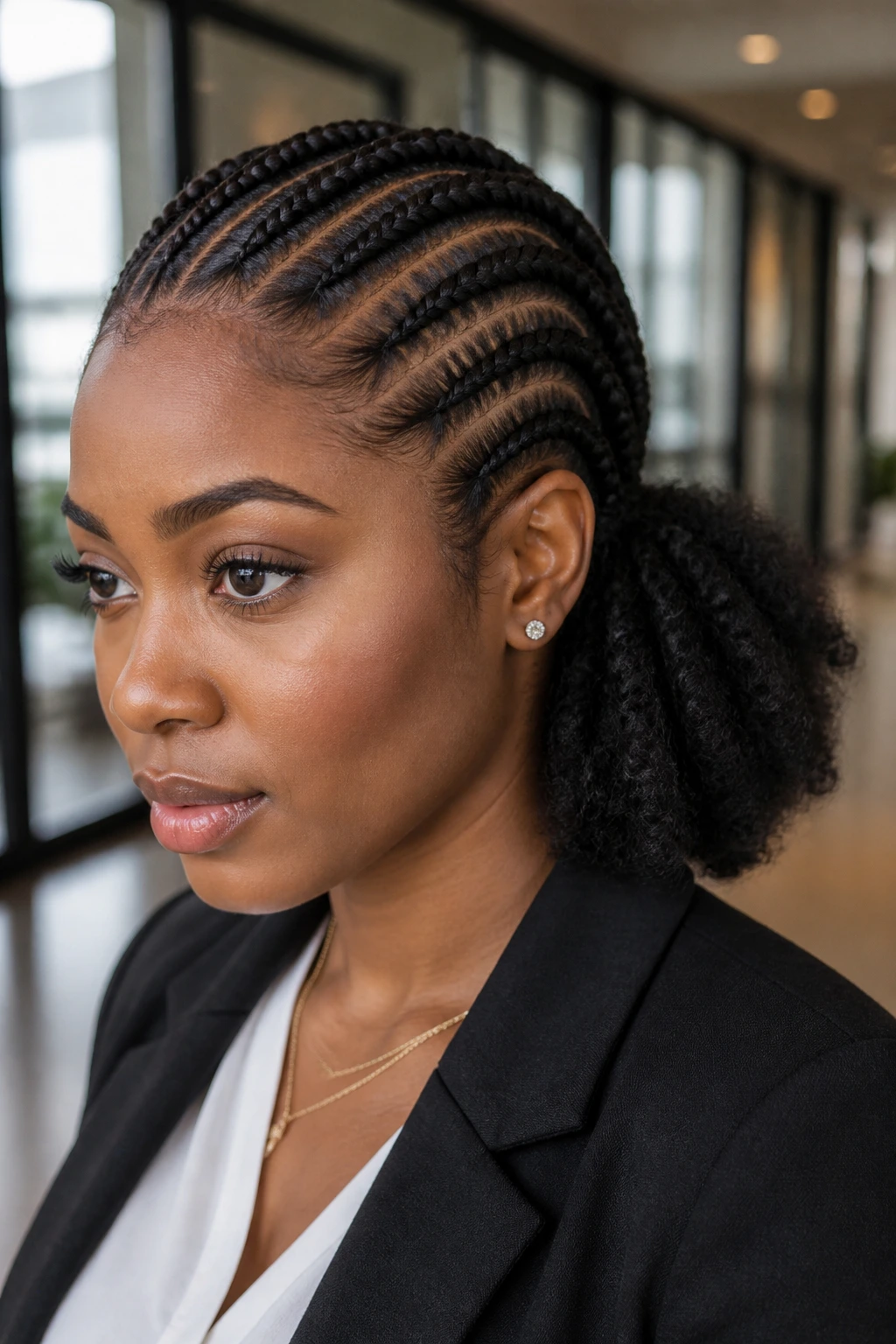
This is the no-nonsense version. Straight-back rows, chunky enough to lay flat, with ends that are fluffed just enough to keep them from looking stiff. If your workplace leans conservative, this is one of the safest options in the bunch.
The charm is in the restraint. You are not fighting the hair. You are letting the braid pattern do the organizing and the curls do a little bit of the talking. The result is tidy, calm, and easy to maintain across a long week.
What to ask for
- Slightly narrower front rows.
- Ends that are curled, not aggressively teased.
- A smooth braid line from temple to nape.
If you want the cleanest possible version, skip extra cuffs and bright accessories. The style is strong enough without them.
18. Office-Ready Mohawk Cornrows with Loose Curls
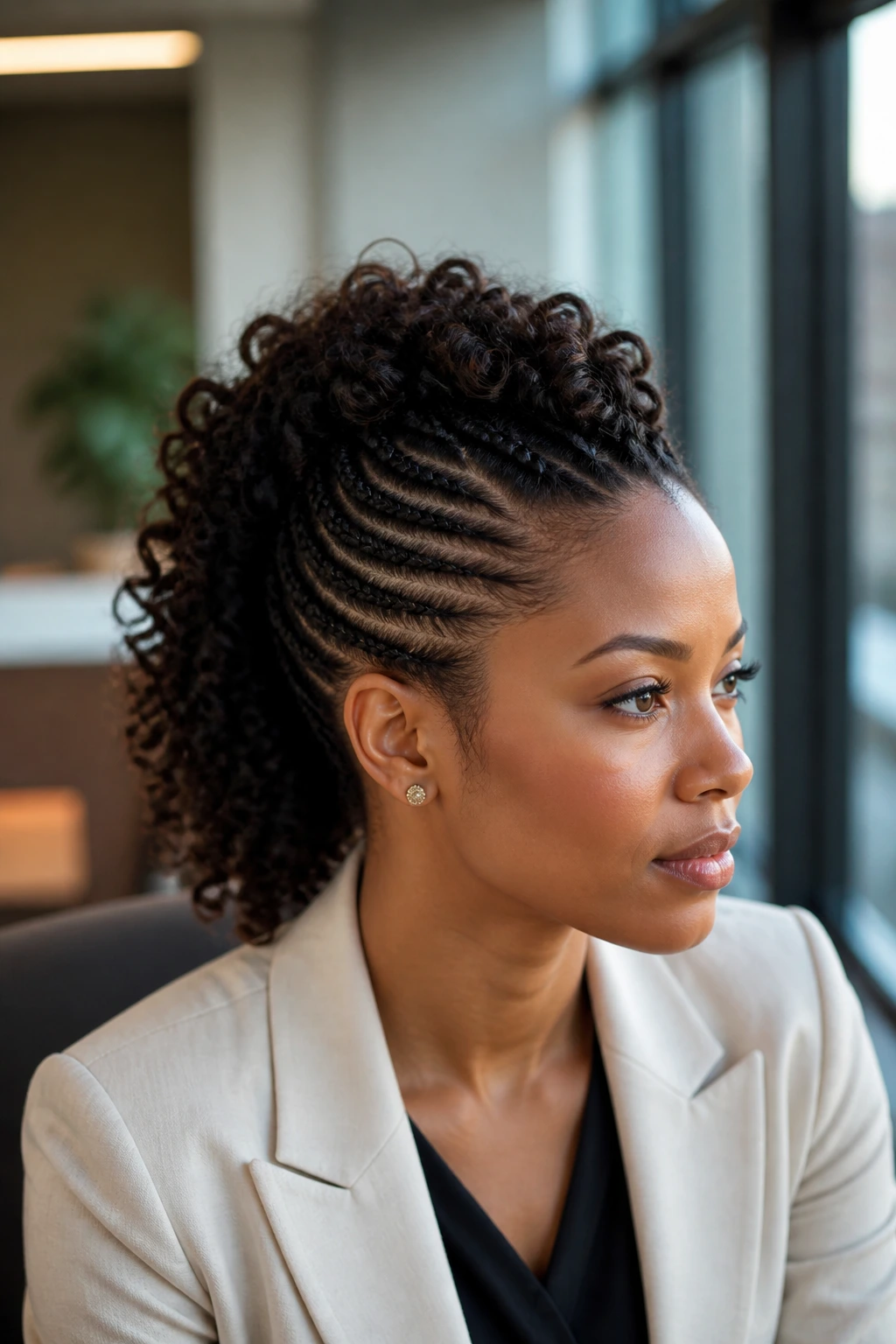
Mohawk shapes sound bold, but the office-friendly version is more contained than people expect. The sides stay braided close to the scalp, and the center rows carry the curl volume, which creates height without making the style spiky. It’s structured. Not wild.
I’d save this for workplaces that allow a bit of edge — fashion, media, design, beauty, maybe a relaxed creative office. The center ridge adds length and gives the face a lifted line. The loose curls keep it from turning hard.
This style looks best when the sides are polished and the center is the only place with real movement. That contrast is the whole point. Too much volume everywhere, and the shape loses its shape.
19. Micro Face-Frame Cornrows and a Soft Cascade
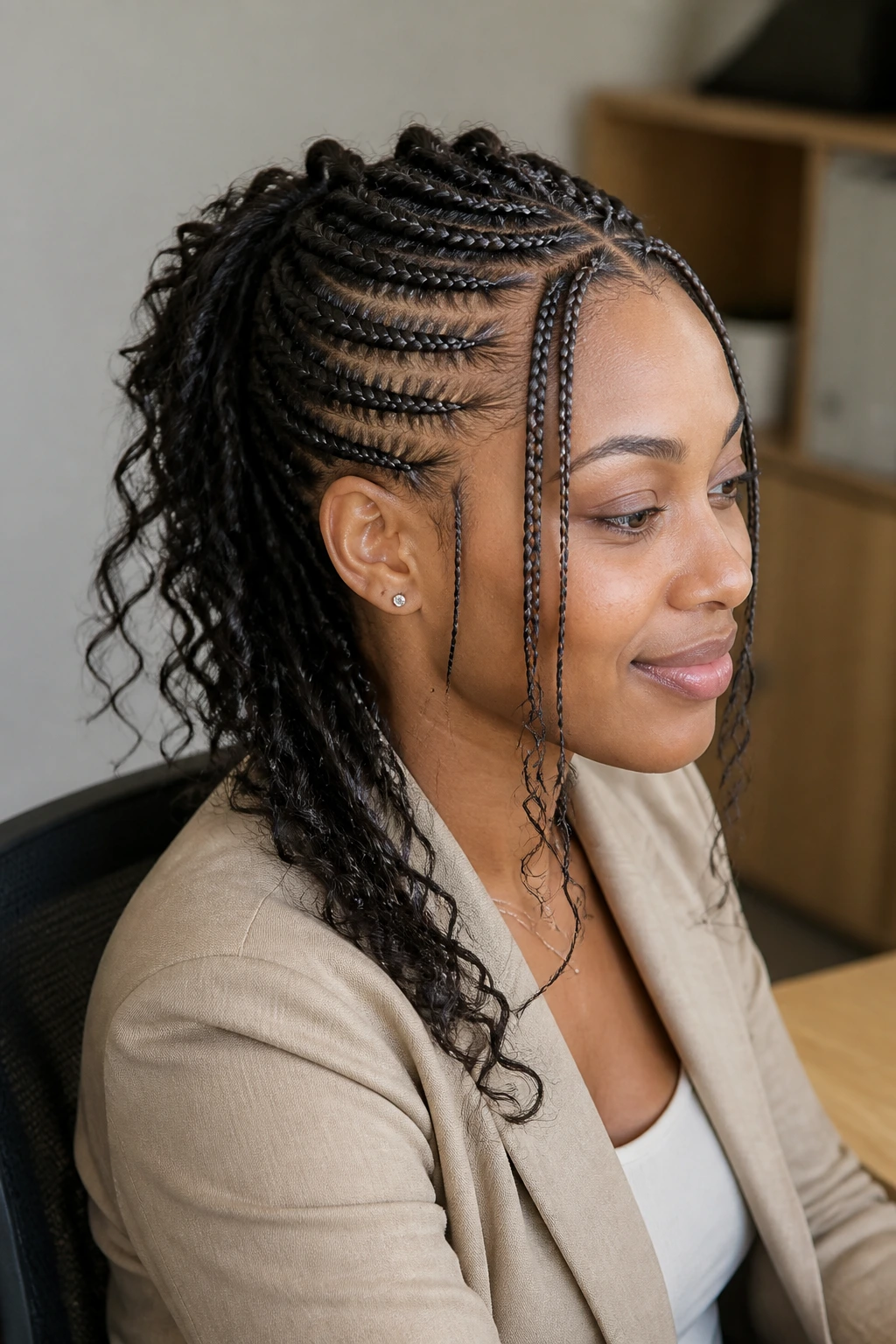
A few smaller rows around the face can make a chunky style feel more custom. They’re like the frame around a painting: small, but they change how the whole thing reads. The soft cascade in the back keeps the style grounded and easy to wear.
This is a nice option if your face tends to disappear under very thick braids. The small front rows add detail without forcing you into a full micro-braid install. You get texture where people look first and length where it matters.
The best version of this style is not overworked. Keep the face frame delicate and let the cascade stay loose enough to move. That contrast looks deliberate, and it photographs well in the boring, real-life way that matters most.
20. Low Side Bun Cornrows with Waterfall Curls
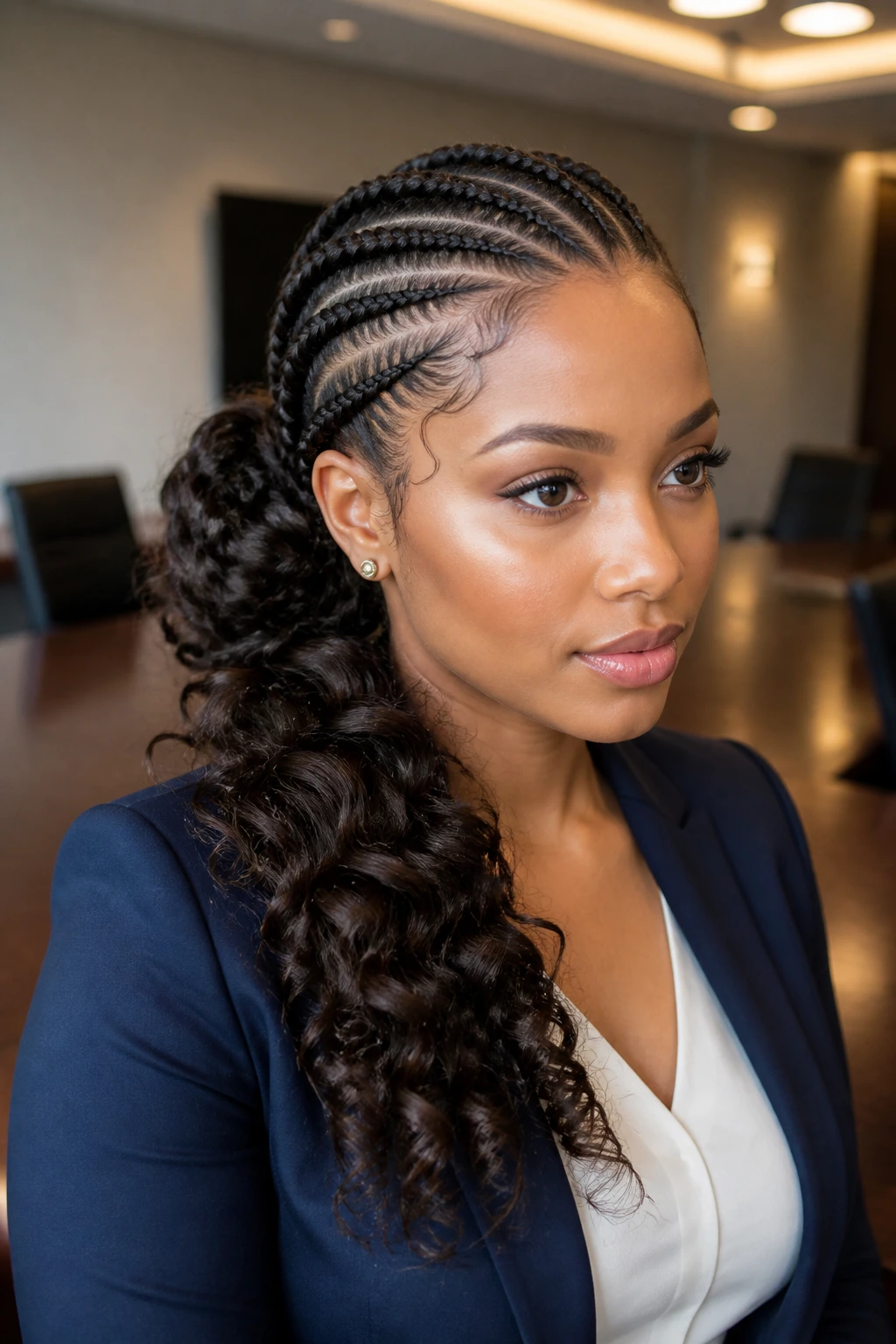
This style has a little more polish than a basic low bun because the side placement and waterfall curls soften the edges. It’s a strong choice for formal days, interviews, or the kind of meeting where you want your hair to look quietly expensive without being fussy about it.
The bun should sit low and close, with the curls falling over one side or just brushing the neckline. If the curls are too voluminous, the bun loses its shape. If they’re too short, the waterfall effect disappears. Aim for medium curl length and keep the ends neat.
Good pairing
A simple dress. A crisp blouse. A small hoop earring.
Anything that lets the braid pattern stay the main event.
21. Stitched Cornrows with a Sleek Center Part
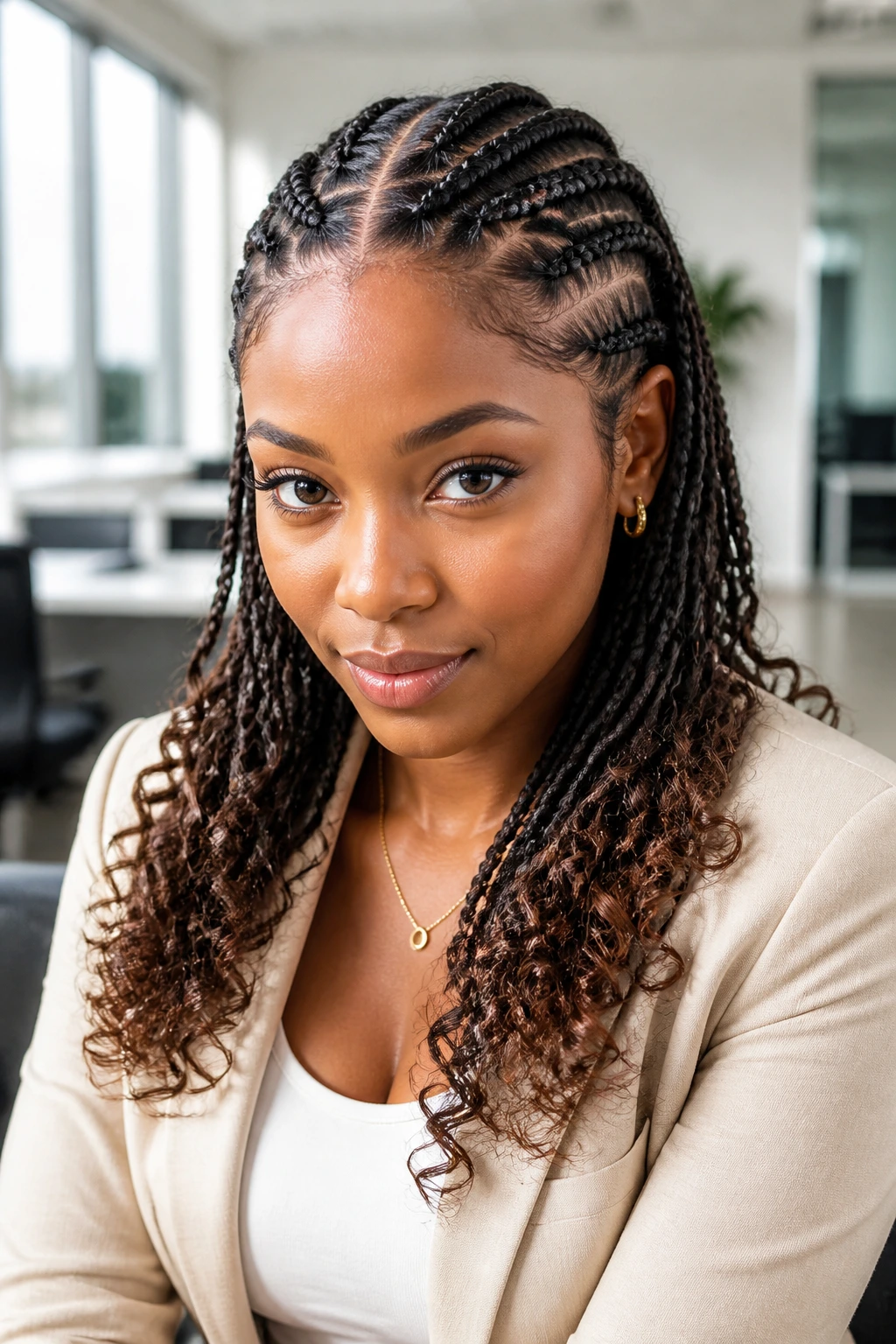
Stitched cornrows are the precise one in the group. The lines are tighter, the part is cleaner, and the whole look has that crisp, almost graphic finish that can handle a more formal office. Add curls at the ends and you get structure up top with movement below.
This is the style I’d pick if I wanted my hair to look deliberate on purpose, not just “done.” It works because the pattern is visible without shouting. You can see the hands that made it, which is part of the charm.
Keep the scalp product light here. Heavy gel makes stitched parts look greasy fast, especially under bright light. Clean lines need clean shine, not wet shine.
22. Chunky Cornrows into a Curly Puff
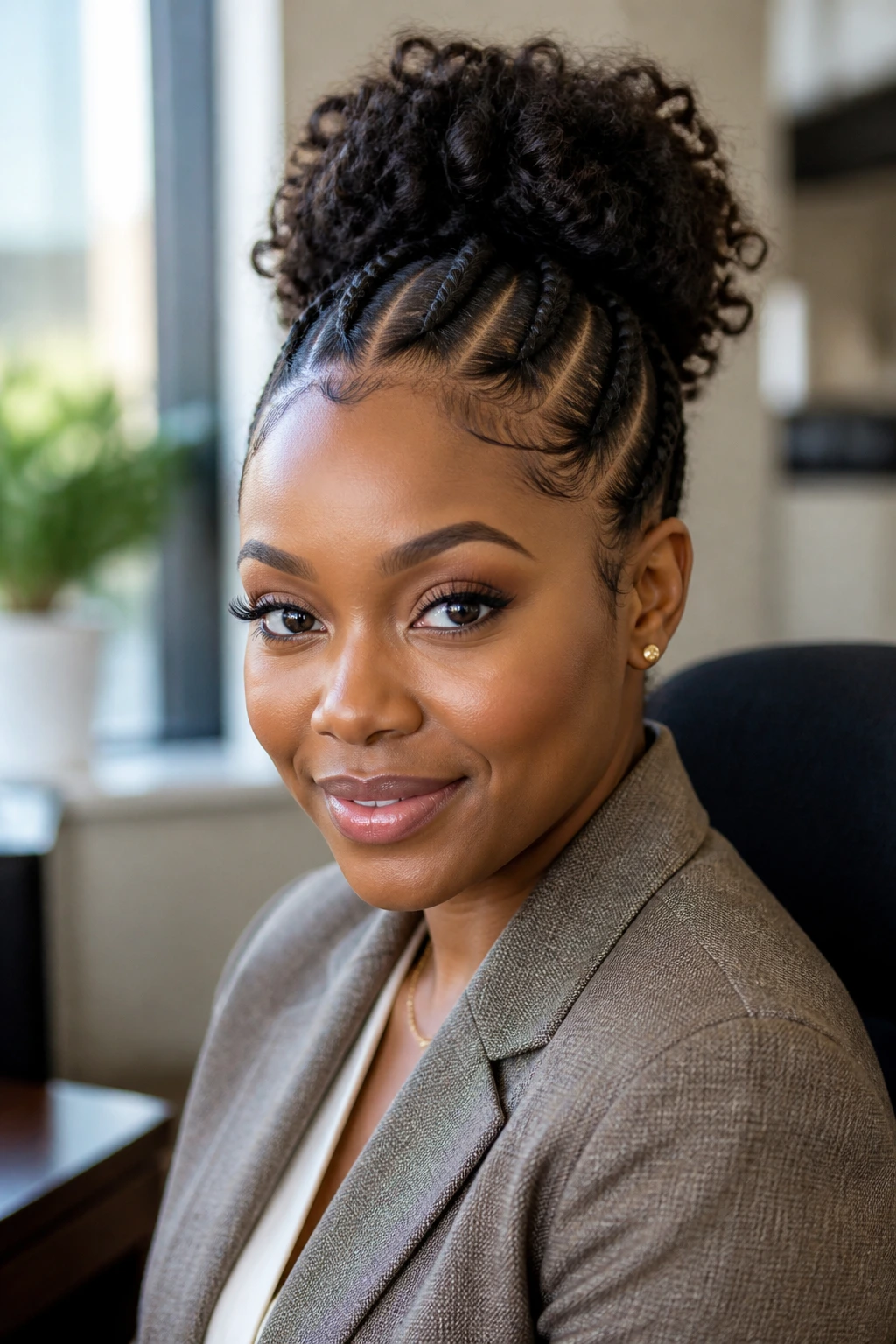
A puff at the end gives this style a softer, more rounded finish than a loose fall of curls. It keeps the silhouette lively and neat at the same time, which is useful if you want the style to read professional without hanging all the way down your back.
This version works especially well on fuller textures or longer extensions because the puff can hold shape without looking thin. If the workplace is active or warm, the puff also keeps the ends from getting caught in chairs, zippers, and lanyards. That’s practical. I respect practical hair.
A satin scrunchie or wrapped band looks cleaner than a thick elastic here. The finish matters more than people think.
23. Braided Headband Cornrows with Open Curls
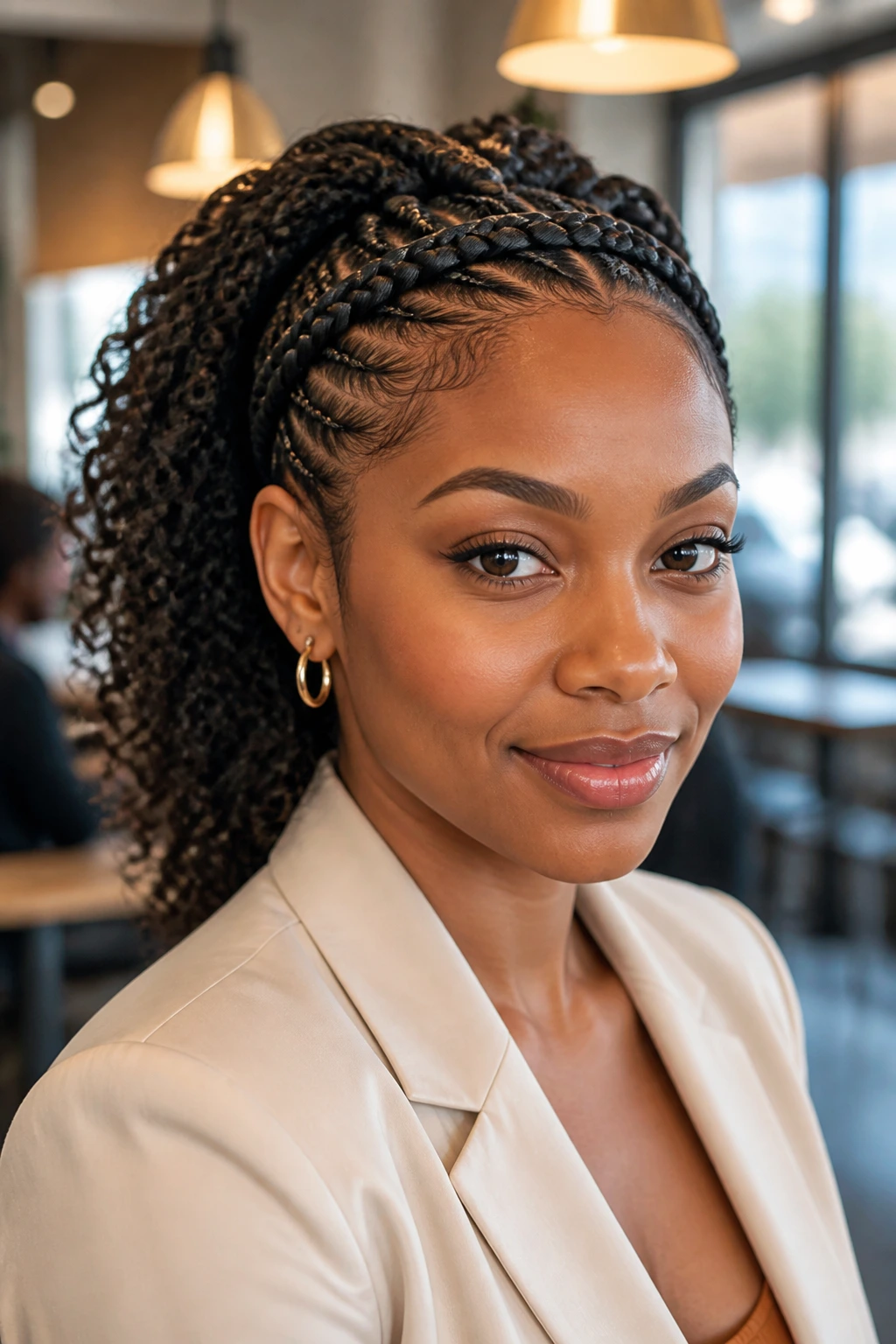
A headband braid is one of the easiest ways to make curly lengths look controlled. The front row acts like a built-in frame, and the open curls behind it keep the style soft and wearable. It’s a nice choice when you want your hair pulled away from your face without going fully back.
This style also plays well with glasses, because the front is already organized. No fighting with temple arms. No constant brushing hair aside during a call. The curls can stay open and loose in the back where they won’t get in your way.
If you work somewhere that prefers hair off the face but doesn’t require a strict updo, this is a smart compromise. It’s clear, tidy, and still has enough personality to feel like you.
24. Deep Side Part Cornrows with a Blunt Curly Finish
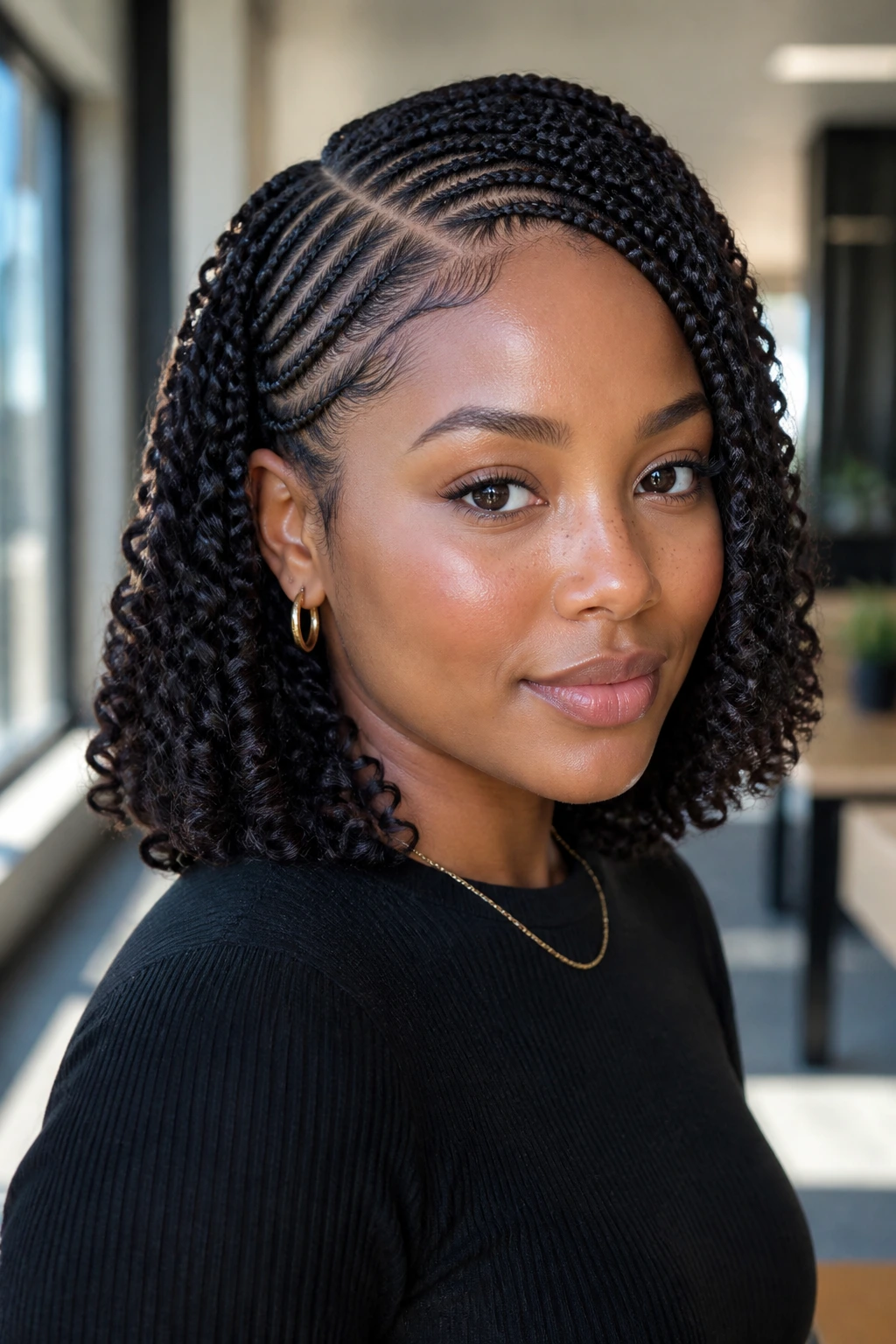
A deep side part gives this style drama, but the blunt curl finish pulls it back into work territory. The ends land with purpose. They do not drift into messy. That makes all the difference.
I like this one for people who want a little more fashion in their work hair without making the whole style difficult to live with. The heavy side can frame the cheekbone, while the blunt ends keep the silhouette tidy. It’s one of those styles that looks better the more the parts are kept crisp.
If your hair is naturally dense, this shape can be especially flattering because the part creates space at the top and the ends keep the weight balanced. It’s a good counterweight.
25. Cornrows with Curled Ends and a Tucked Scarf
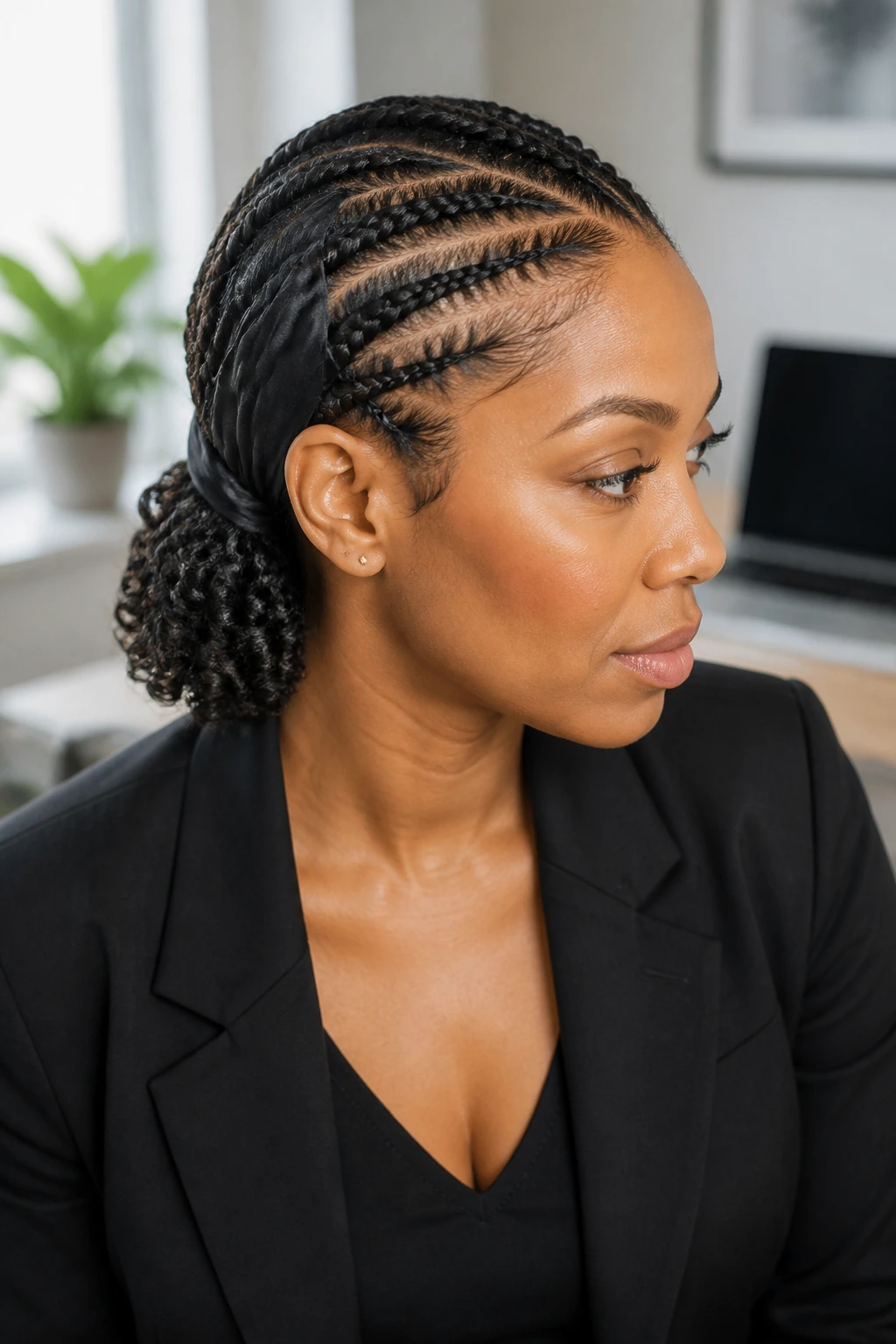
A scarf can make the same braid pattern feel more intentional, and in a work setting that can be useful. Choose a plain silk or satin scarf in a dark, solid color, and tuck it around the base or along the line of the braids. The curls stay the focus, but the scarf gives the whole style a cleaner finish.
This is the sort of look that works when your braids are a few days old and you want them to feel fresh again. It also helps if you’re trying to stretch the style through a full work week without the roots looking tired. A scarf buys you time. Time is the point.
Keep the scarf slim. A huge knot turns the style into a project. Nobody needs that at 7 a.m.
26. Work-Week Cornrows with Subtle Cuffs
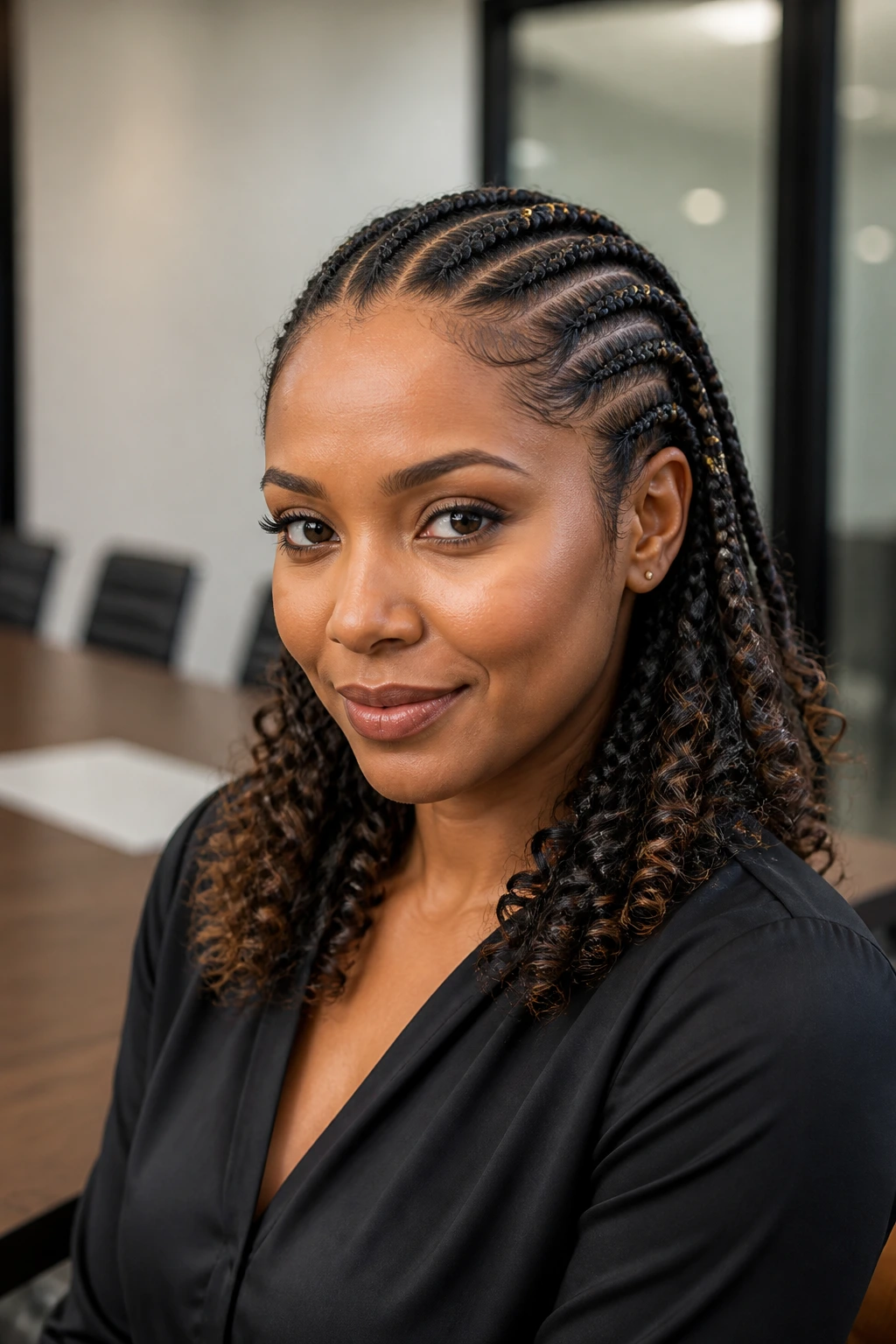
Subtle cuffs can be a nice compromise if your workplace allows a little personality but not much sparkle. Small gold, silver, or matte cuffs on a few braids give the style a finished edge without making it loud. The curls keep it soft, so the cuffs don’t feel overdone.
The trick is restraint. Two or three cuffs is usually enough. A whole row of metal starts competing with the outfit and can tip the style toward costume. That is not the goal.
This version is handy when you want the braids to look fresh at the end of the week. The cuffs break up the line just enough that the style still feels styled even when the curls have relaxed a little.
27. Jumbo Feed-In Cornrows with Loose Wand Curls
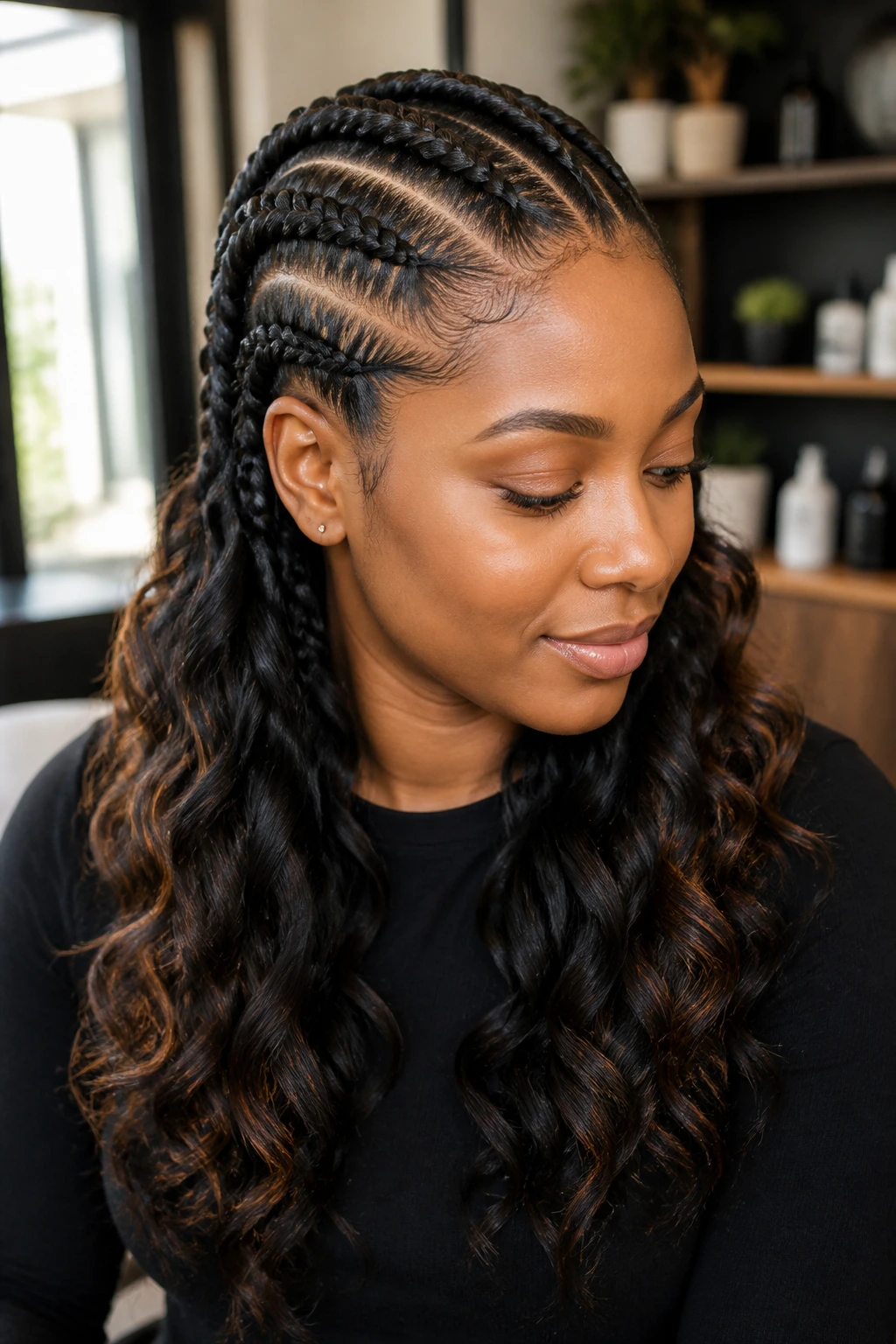
Jumbo feed-in braids are bold in size, but they can still read work-friendly if the parts are clean and the curl pattern is soft. The gradual feed-in keeps the braid base smooth, which helps the style sit close to the scalp instead of looking bulky from the start.
Loose wand curls at the ends make this style feel softer than you’d expect from such big braids. The contrast is the whole appeal. Strong at the root, airy at the finish. If you like a braid style that can hold its own in a room, this one has presence.
This is the version I’d choose for thicker textures or anyone who wants fewer braids and less installation time. Less time in the chair. Fewer sections to maintain. That matters.
28. Low Chignon Cornrows with Soft Tendrils
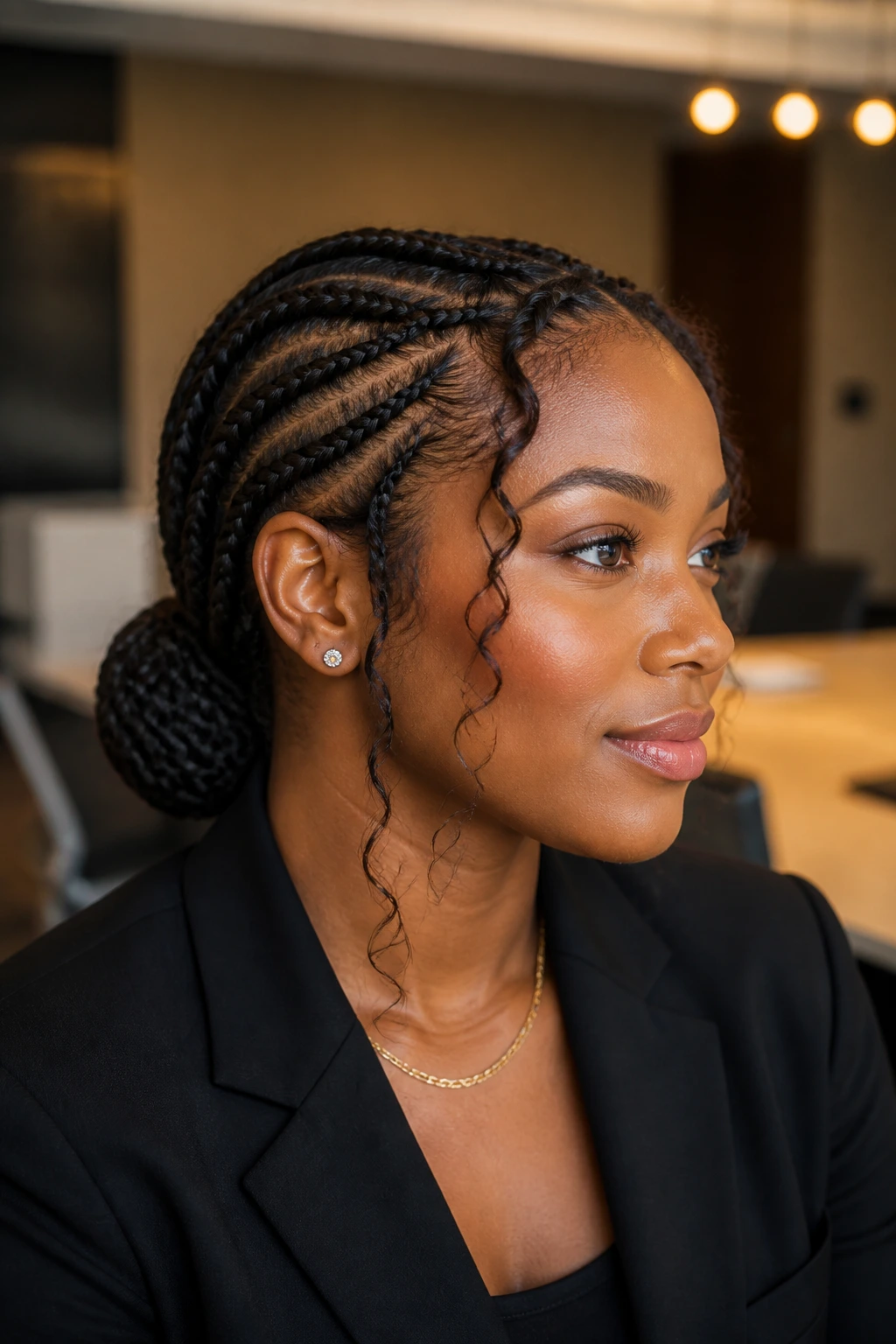
A chignon instantly makes the hair look more formal, and the soft tendrils around the face keep it from feeling too strict. It’s one of the best options for presentations, interviews, or meetings where you want the hair to disappear into the background but still look styled.
The low placement is what gives the style its calm. Nothing is fighting the neckline. Nothing is bouncing around. The tendrils are there on purpose, which is better than having stray curls drift loose and call it a day.
Keep it neat
Pin the chignon close to the base and let only a few curls stay free. If the tendrils are too many, the style loses its shape fast. A tiny bit of shine spray on the braids helps the finish look deliberate.
29. Crisscross Cornrows with Curled Length
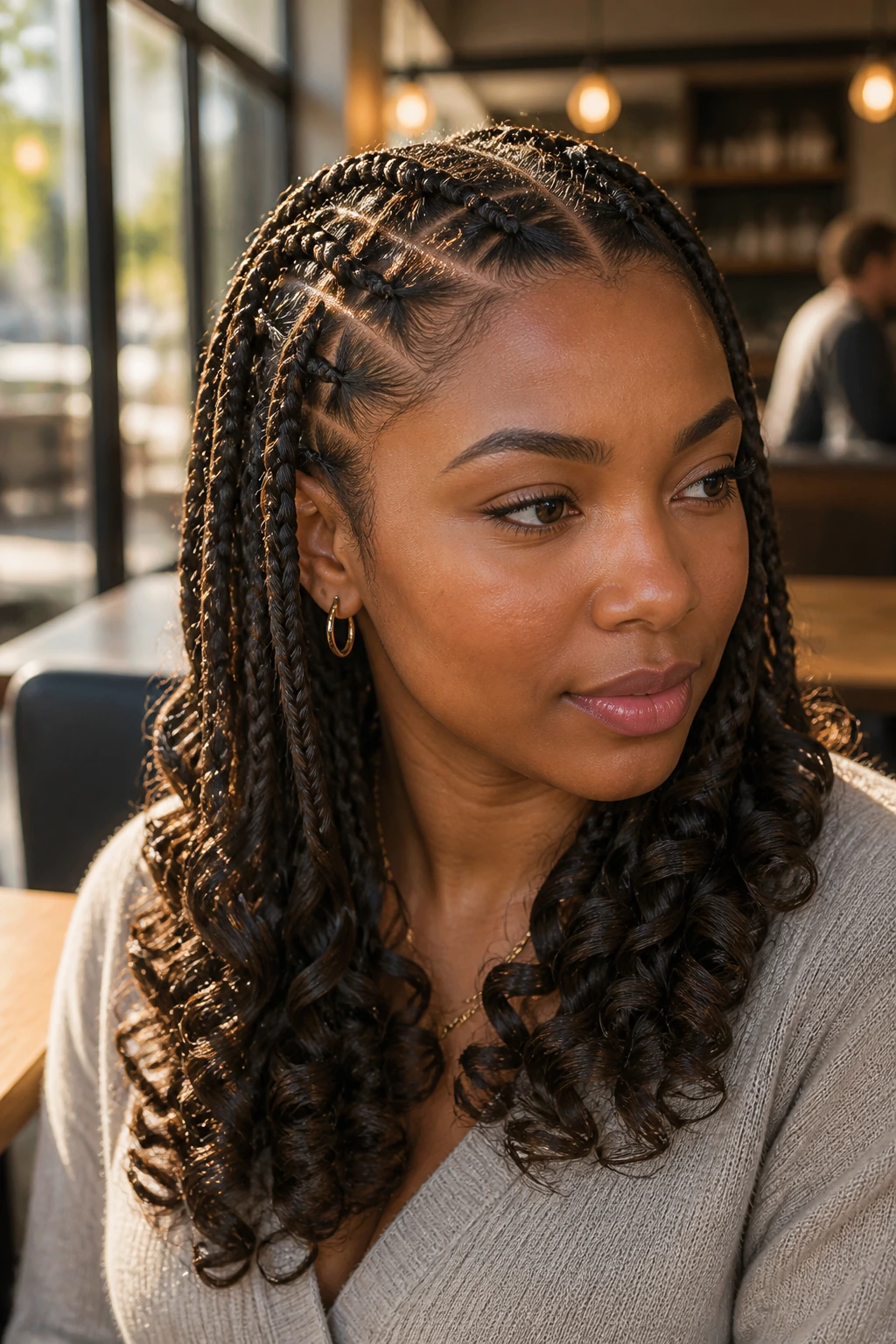
Crisscross parts add a bit of pattern without pushing the style into anything too ornate. They’re a good fit when you want the scalp detail to be part of the design but still need the whole thing to behave in a work setting. The curls at the ends keep the finish relaxed.
This style looks especially good on medium to long lengths because the crossing lines have room to show. On shorter lengths, the pattern can get busy fast. So size matters here. Give the design enough space to breathe.
If your workplace lets you wear something more expressive, this is a nice middle path. You get detail, but you do not get chaos.
30. Soft-Edge Chunky Cornrows with Shoulder-Length Curls
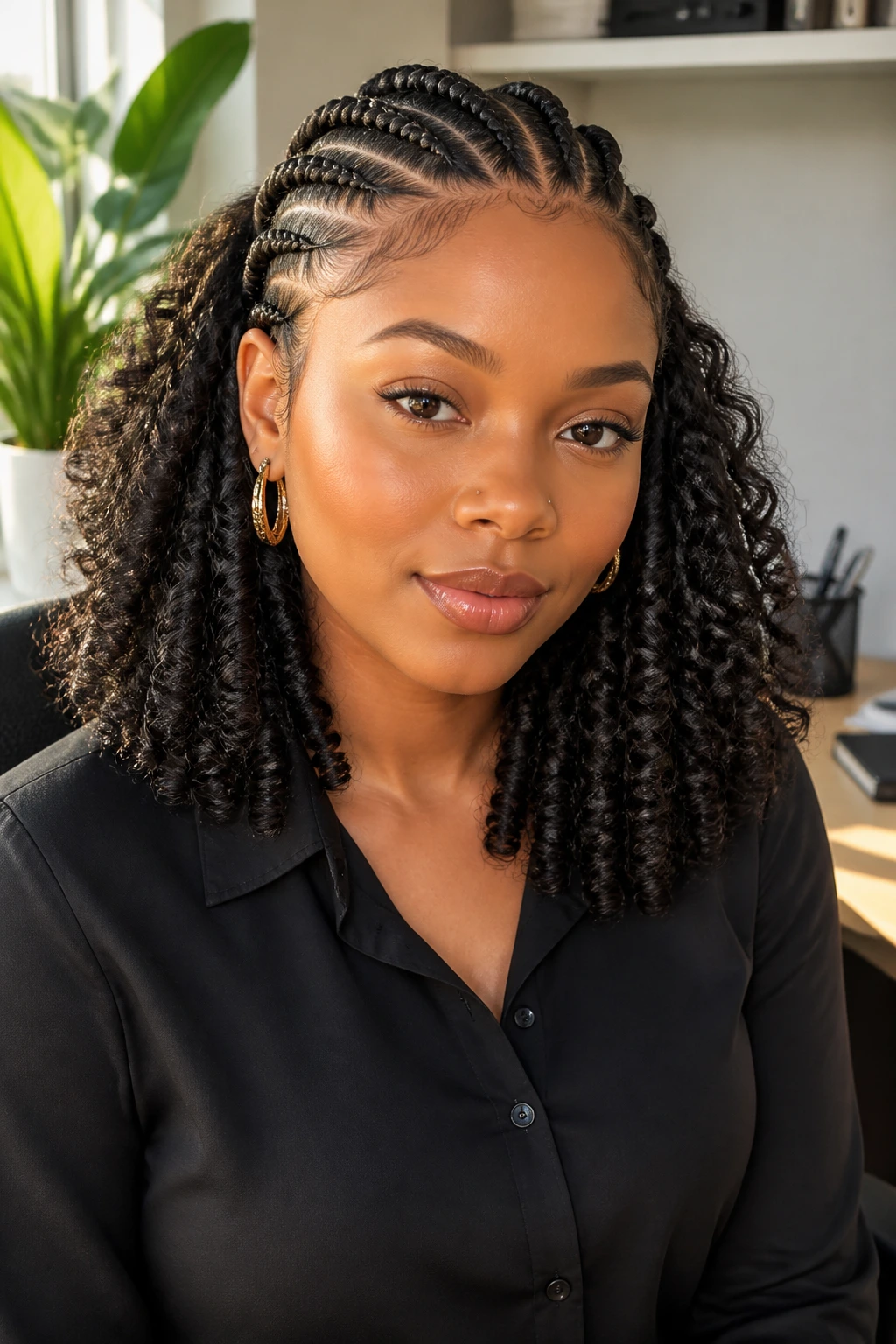
This is the all-purpose version, the one that can get you through office days, errands, and after-work plans without needing a change. The braids stay thick and smooth, the edges stay soft, and the curls hit around the shoulders, which keeps the style balanced and easy to live with.
Shoulder length is a smart stopping point. Long enough to look styled. Short enough not to get annoying by noon. If you want one braid set that won’t fight your collar, your seatbelt, or your laptop, this is the safest bet in the whole bunch.
A lot of people make work hair too stiff because they think polished means tight. It doesn’t. It means controlled. This style gets that right.
Why Chunky Cornrows with Curls Hold Up So Well in a Workday
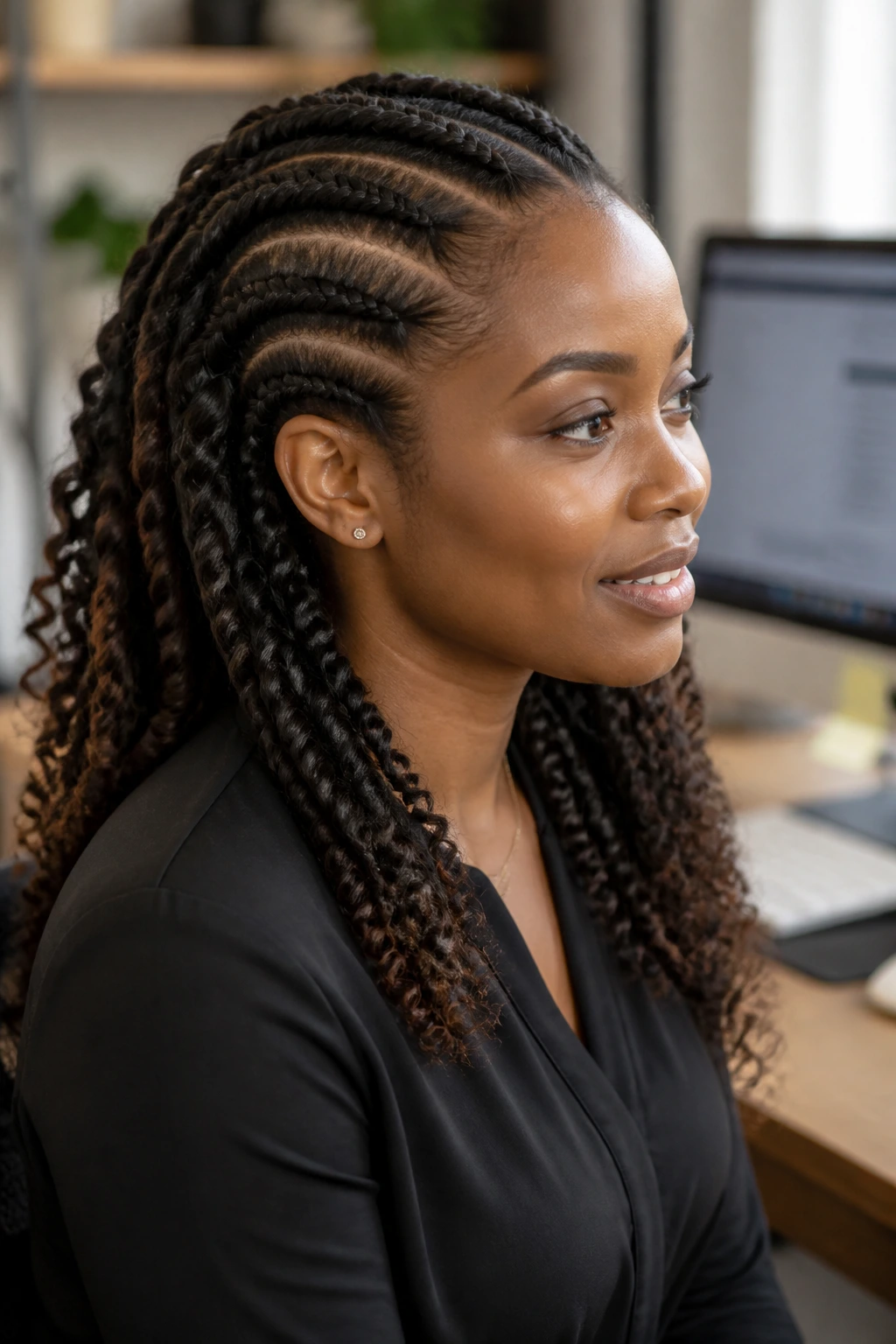
The best thing about chunky cornrows with curls is that they split the job in half. The braids handle structure. The curls handle softness. That sounds simple, but it solves a lot of small problems that show up during a workday: flyaways near the temple, hair getting trapped under a lanyard, ends rubbing against a collar, and the general tired look that comes from touching your hair too much.
Bigger rows also age more gracefully than tiny ones. When the parts are clean and the tension is sensible, the style usually keeps its shape longer because there’s less surface area for frizz to attack. I’m not saying it never needs attention. It does. But it’s easier to refresh a chunky set with mousse and a scarf than it is to rescue a very small, very busy braid pattern.
The curls matter more than people think. They keep the style from feeling sharp in every direction, which is useful in client-facing work, classrooms, retail floors, or anywhere you want your hair to say “I’m here and I’m organized,” not “I fought my hair for three hours.” That softer finish is the reason this combo keeps showing up in real life, not just on mood boards.
Tools That Make the Install Cleaner and Faster
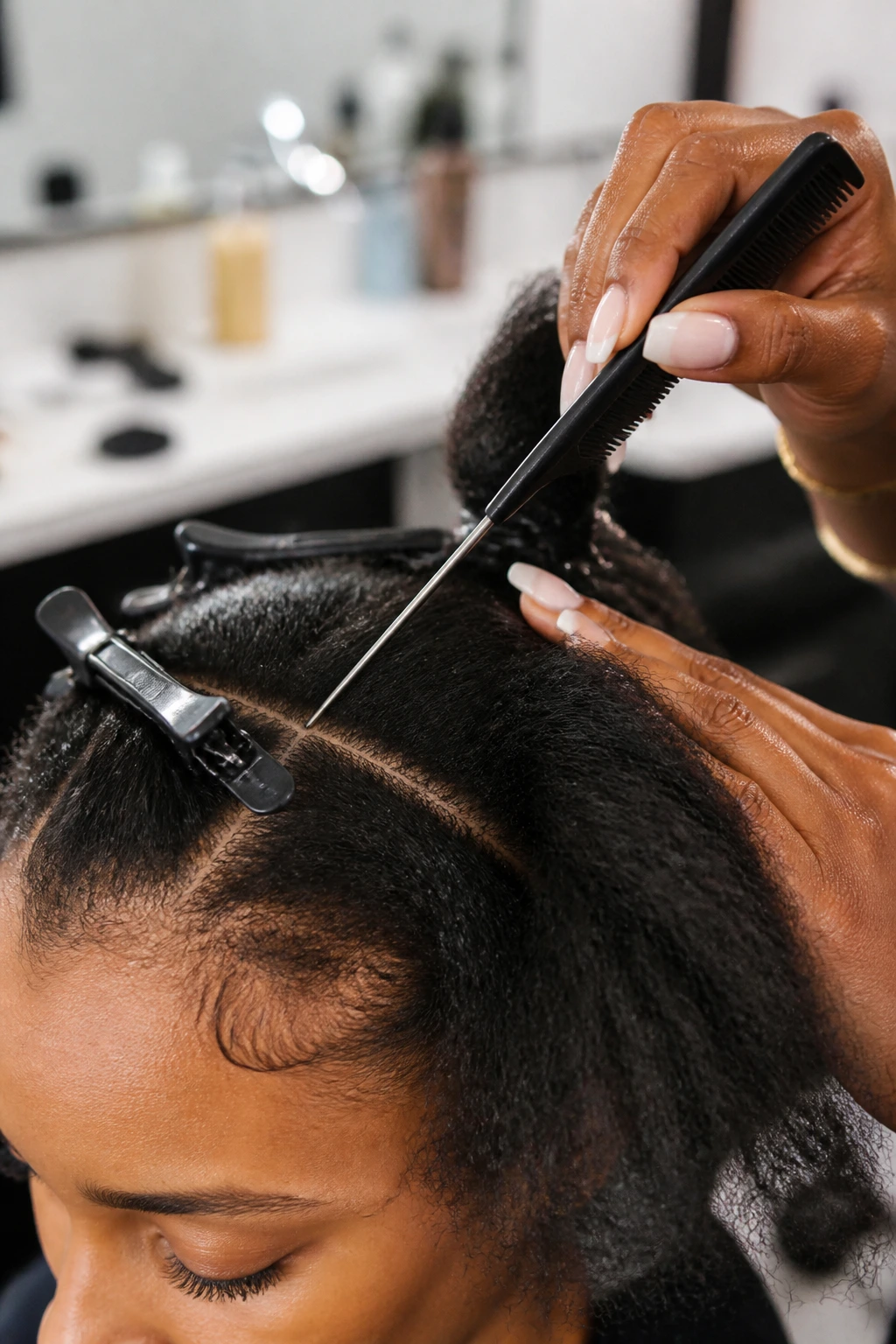
-
Rat-tail comb: The tail gives you crisp parts, and crisp parts are half the battle with chunky cornrows.
-
Duckbill or sectioning clips: Use 6 to 10 of them so the hair stays separated while you braid.
-
Braiding hair, pre-stretched if possible: Pre-stretched hair saves time and usually blends more smoothly at the root.
-
Mousse or foam wrap lotion: This helps the braids lie flatter and keeps the curls from looking rough on day one.
-
Edge brush and light edge control: Keep these light. A stiff, shiny hairline can look harsh under office lights.
-
Satin scarf or bonnet: You need something that actually stays put while you sleep.
-
Small elastics or thread wraps: Useful for securing ends or ponytail styles without adding a bulky knot.
-
Curling wand or flexi rods: Pick one, not five tools. Keep the curl finish consistent.
-
Spray bottle with water and leave-in: Helpful for refreshing the curls without soaking the braids.
-
Scalp oil in a nozzle bottle: Makes it easier to apply product directly to the part lines without drenching the hair.
Smart Shopping and Product Tips
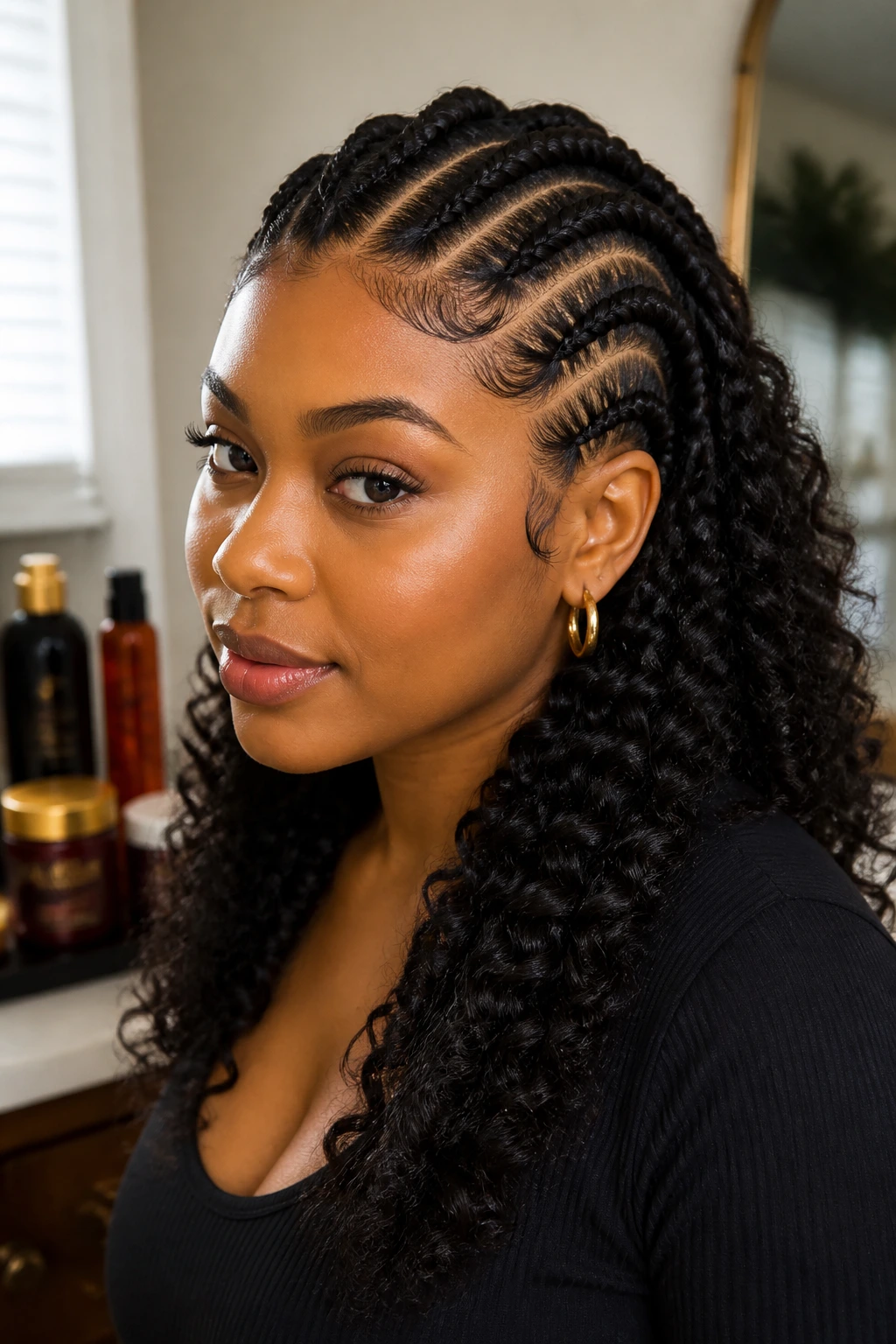
Start with the braiding hair. If your work setting leans formal, choose a texture and color that sit close to your natural hair or your usual extensions. Very shiny synthetic hair can look sharp in an unhelpful way, especially under fluorescent light. A softer, pre-stretched braid hair usually blends better and lays flatter at the root.
For the curls, pick a method that matches how long you want to keep the style. Heat-safe synthetic hair can hold a curl nicely, but human-hair pieces or mixed fibers tend to behave better if you want the curl to last through several washes or a long wear period. If you’re setting the ends with heat, use a low-to-medium heat setting and test one strand first. Do not assume every fiber likes the same temperature.
Product choice matters more at the hairline than anywhere else. A light gel or edge control is enough for most people. Heavy, greasy products can migrate onto the braids and make the style look dull by midday. For curl refreshes, a foam mousse is usually cleaner than a thick cream because it dries with less buildup. If your office is dry, a little water-based leave-in on the curls can stop them from getting brittle by the second week.
How to Wear These Styles to Work Without Overthinking It
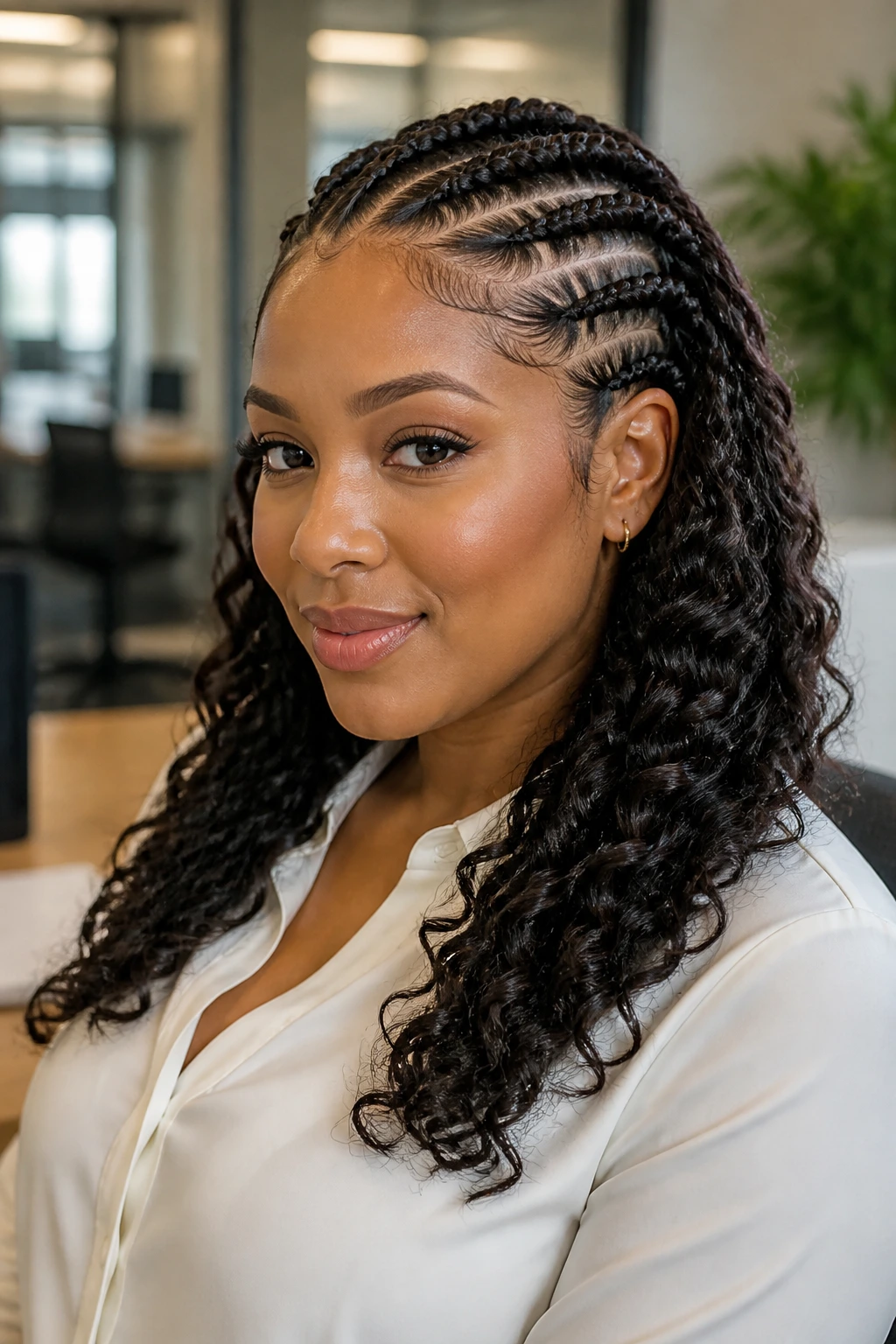
Presentation: Keep the scalp neat, the parting clean, and the curls shaped. That’s the whole formula. If the style has a lot of volume, anchor it with a low neckline or a simpler top so the hair stays in charge and the outfit doesn’t fight it.
Accompaniments: Small hoops, stud earrings, glasses, collars, turtlenecks, and simple blouses all work well. Big, noisy accessories can make chunky braids look busier than they are, so I’d pick one focal point and leave it there.
Scale: If your workplace is conservative, stick to fewer rows, darker tones, and tighter curl definition. If the dress code gives you room, side parts, cuffs, or a low ponytail can add personality without breaking the overall polish.
Finish: A light mist of mousse before you leave the house helps the curls hold shape longer. If you commute, wrap the style loosely in a satin scarf or use a hood carefully so you don’t crush the ends before you even get to your desk.
Small Moves That Make the Style Look Better All Week
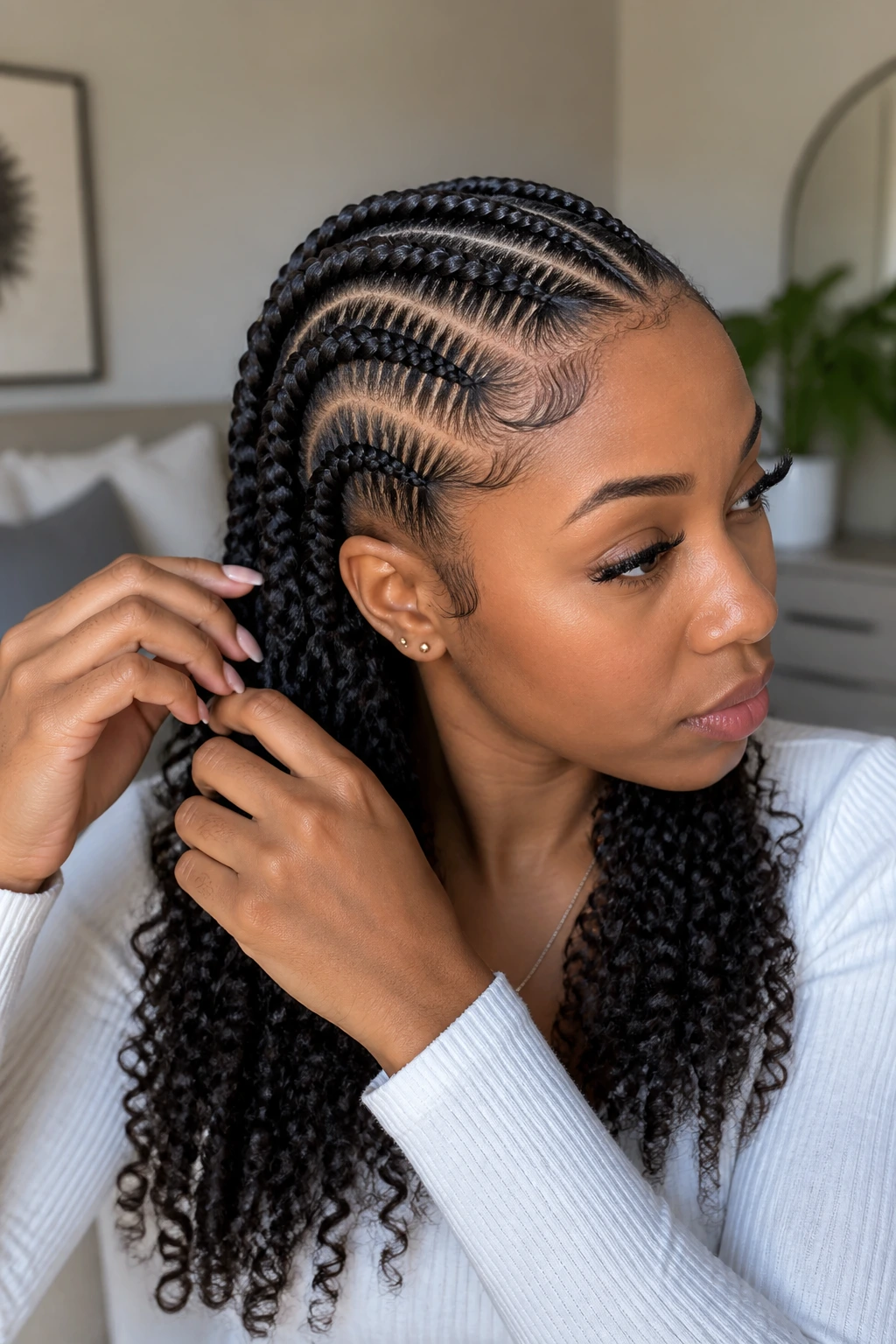
Edge Control: Use it sparingly. A thin line at the hairline is enough; too much turns shiny fast and starts looking like product buildup instead of neatness.
Curl Definition: Separate the curls with your fingers while they’re still slightly damp, not dry and frizzy. That gives you shape without creating a cloud around the ends.
Customization: Swap the part from center to side, or shift the braid count from six to eight, and the whole mood changes. Same basic style. Different read.
Accessory Swap: Keep one pair of subtle cuffs or pins in your bag. If the braids look tired by Thursday, one tiny accent can make them feel fresh again.
Make-It-Yours: If your job is highly formal, choose low-shine hair and minimal curls. If your space is creative, add more texture at the ends or a small braided detail near the face.
The Mistakes That Make a Neat Style Look Tired Fast
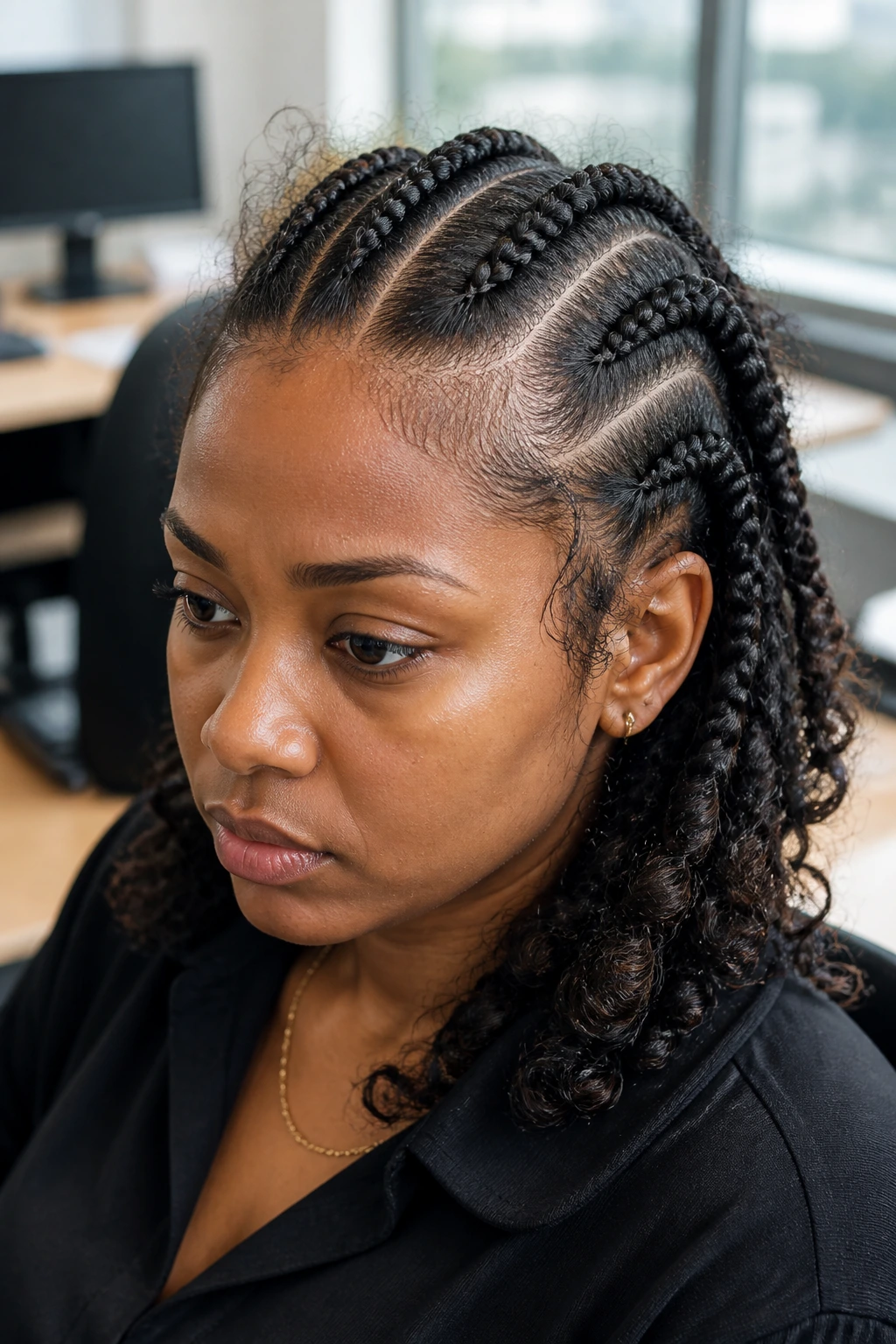
Tight roots at the front. If the hairline aches the day you get it done, that is not neatness — it’s tension. The fix is simple: ask for looser anchor points around the edges and stop the install if the pull gets sharp.
Too much curl volume. Huge, fluffy ends can look lovely on day one and feel unruly by day three, especially on a desk job where they rub against collars and chair backs. Ask for curls that match your work environment, not the biggest version possible.
Skipping night wrapping. A satin bonnet or scarf is not optional if you want the style to last. Without it, the braids frizz at the roots and the curls lose shape fast. That little bit of friction does more damage than most people expect.
Heavy product buildup. Thick gels, oils, and creams near the scalp will make the parts look dusty or greasy after a few days. Keep product targeted, use less than you think you need, and wipe any excess from the hairline before leaving the house.
Choosing the wrong length. Ends that are too long can snag on purses, jacket collars, and office chairs. Too short, and the style can lose its soft finish. Shoulder length or just below usually hits the safest middle ground for work.
Variations and Adaptations to Try
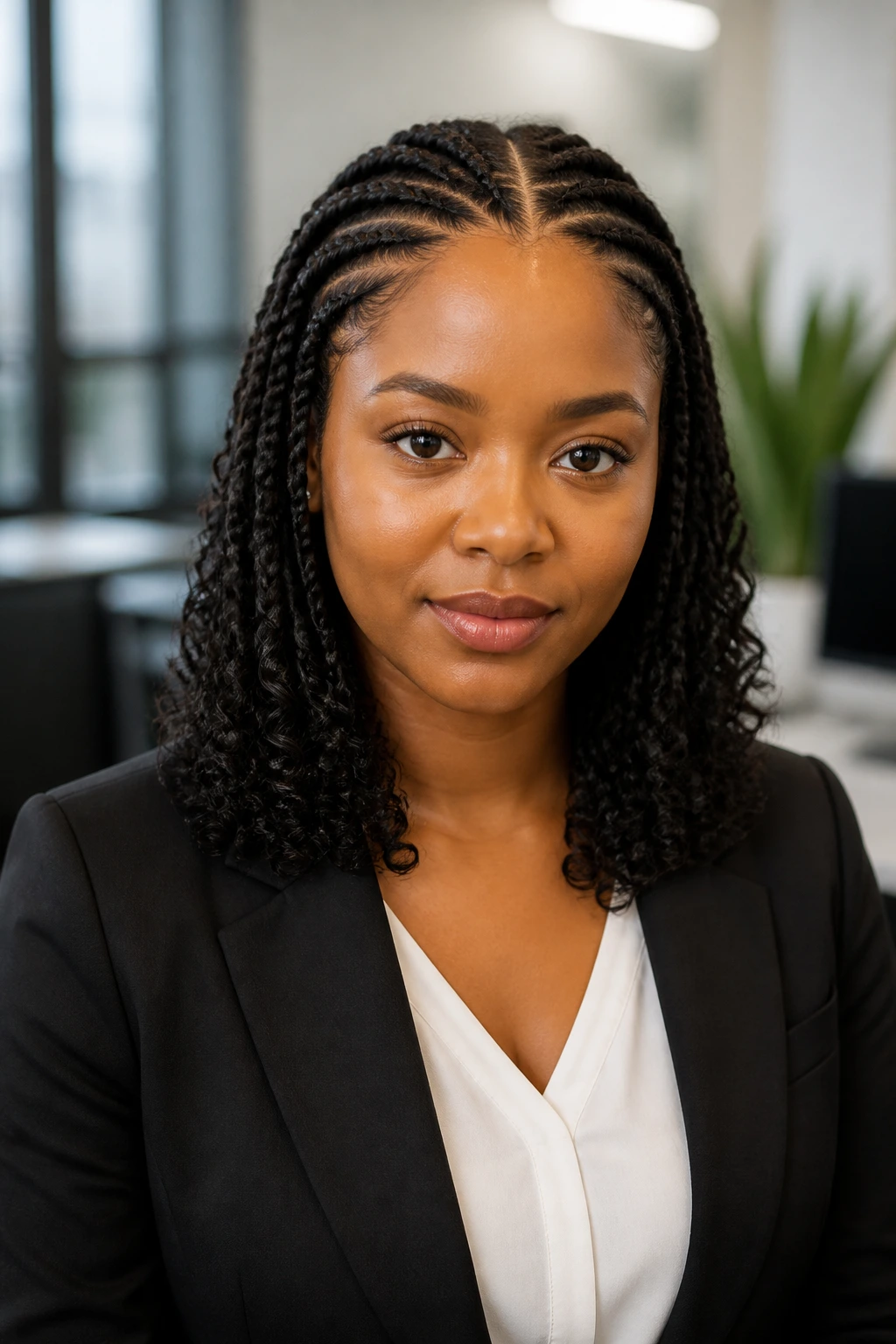
Strict Office Version: Choose a center part, six to eight straight-back rows, dark braiding hair, and curl ends that sit just below the shoulders. Skip cuffs, beads, and anything that flashes too much in bright light. This is the safest version for conservative workplaces, and it still looks finished.
Creative Studio Version: Move the part to the side, add one braided detail near the temple, and let the curls stay looser around the face. A few gold cuffs or a wrapped ponytail base can make the style feel more editorial without turning it into a costume. Clean roots still matter here.
Low-Tension Version: Use fewer, thicker rows and keep the braid base a little larger. That cuts down on install time and lowers the pull on the scalp, which is useful if you know your hair gets sore fast. This version usually feels lighter even when it looks full.
Short-Hair Adaptation: Add modest extensions only where you need length, and stop the curls around collarbone level. You do not need a long tail to make the style work; you need even parts and a smooth finish. Shorter versions also tend to dry and refresh faster.
Heat-Free Curl Version: Set the ends on flexi rods or perm rods instead of a wand, then let them dry fully before separating. This is the better choice if you want to avoid heat or preserve the life of the synthetic hair. The curls may be softer, but they usually last well.
Subtle Color Version: Keep the base close to your natural tone and add only a small highlight through the curl length if you want movement. This is a smart way to make the style visible without making it louder. A little contrast goes a long way.
Keeping the Braids Fresh Between Wash Days
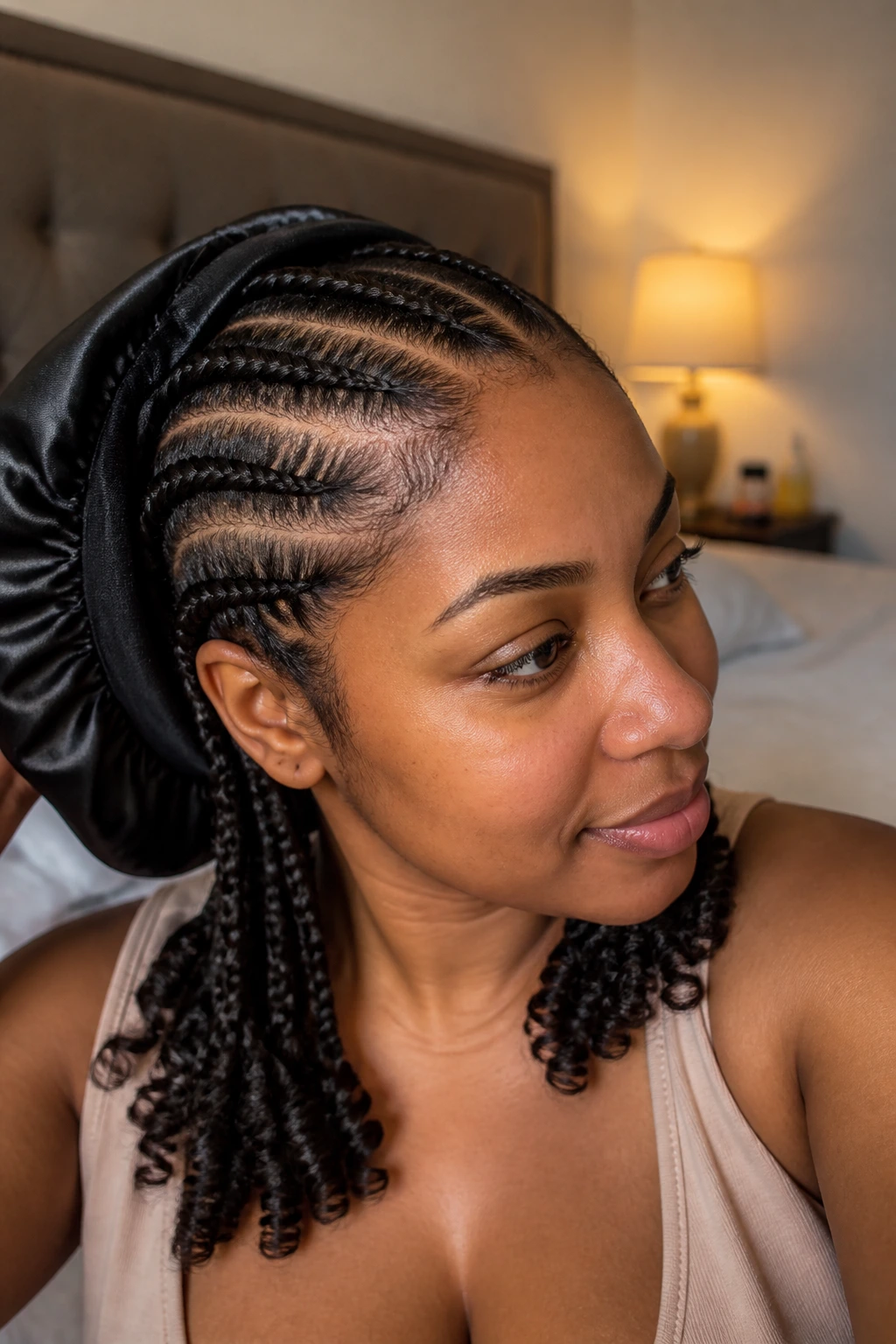
A work hairstyle lives or dies by the night routine. Wrap the braids with a satin scarf or bonnet before bed, and if the curls are long, tuck them loosely so they don’t get crushed at the nape. Sleep on a satin pillowcase too if you tend to toss the scarf off. Redundancy helps.
For the scalp, a light oil or scalp tonic every two or three days is usually enough. Use the nozzle to place product directly on the parts, not across the hair. If the scalp feels dry or itchy, don’t flood it with oil first. A gentle cleanse or a diluted wash can help more than adding another layer.
Curls need their own maintenance. A small pump of foam mousse every three to four days can revive shape without leaving residue. If the ends start to frizz, twist them lightly with damp fingers and let them air-dry. Try not to touch the curls all day; desk habits wear them down fast.
Most chunky cornrow styles with curls are happiest around two to four weeks, depending on tension, hair growth, and how hard your workday is on your hair. If the roots start to lift sharply or the scalp gets sore, take that as the signal to remove the style. Not a suggestion. A signal.
Questions People Actually Ask Before Booking the Style
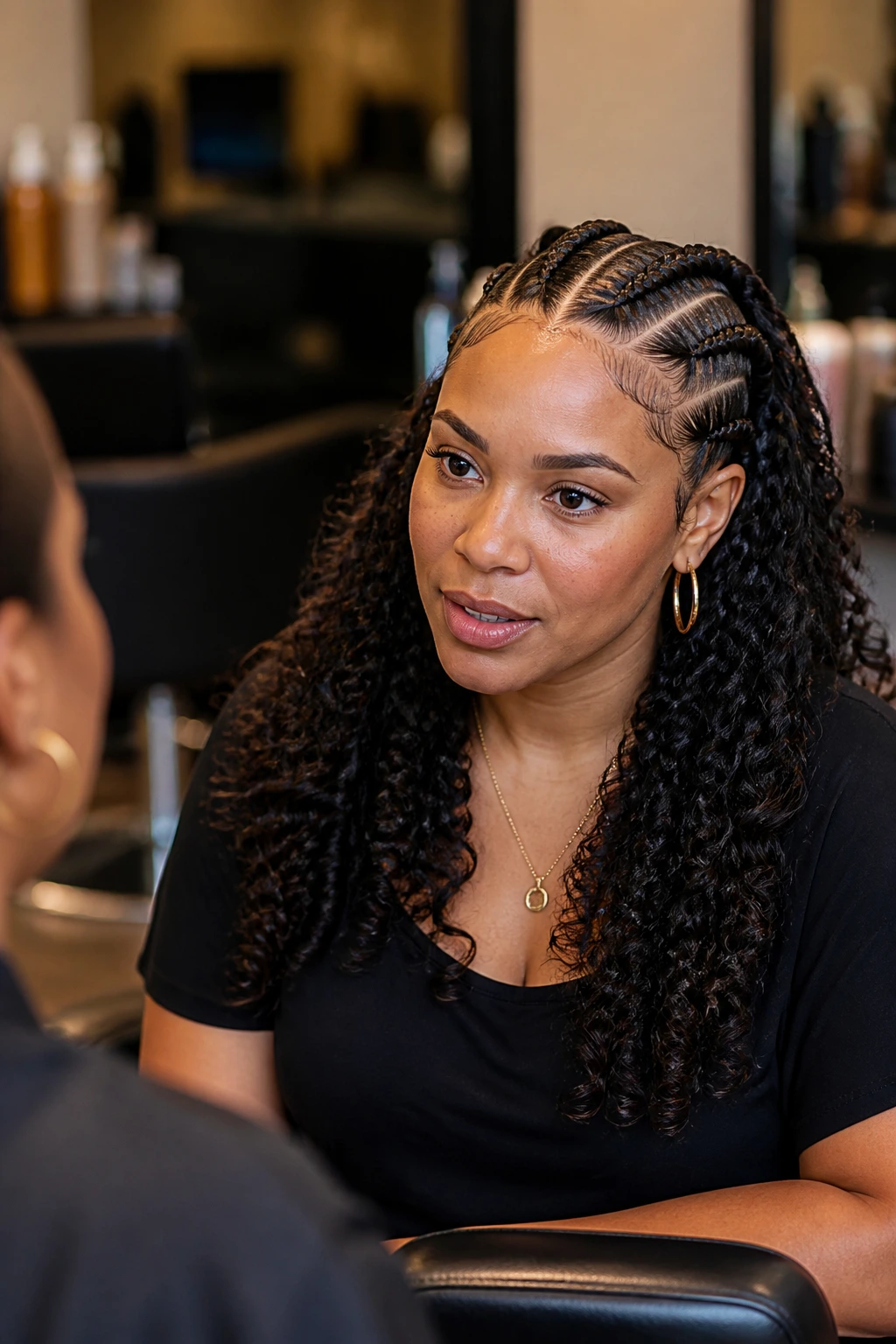
How long do chunky cornrows with curls usually last for work?
Most styles hold well for about two to four weeks if the installation is clean and the nighttime wrapping is consistent. If your curls are longer or your job is physically active, expect to refresh the ends more often and take the style down sooner.
Are chunky cornrows professional enough for a conservative office?
Yes, if you keep the parts neat, the color close to your natural tone, and the accessories minimal. A center part or straight-back layout with controlled curls usually reads the most formal. The style becomes less office-friendly when the curls are oversized or the accessories get flashy.
What kind of braiding hair should I buy?
Pre-stretched braiding hair is usually the easiest choice because it lays flatter and saves install time. If you want a softer finish, choose hair that is not overly shiny. The curl length should match how long you’re willing to maintain it; longer ends need more upkeep.
Can I wash my scalp with this style in?
You can, but be gentle. Use a diluted shampoo or a foam cleanser along the parts, then rinse lightly and dry the roots fully so moisture does not sit under the braids. Wet braids that stay damp too long can start to smell and frizz faster.
Do curls make the style less protective?
Not if the braids themselves are installed with sensible tension and the curls are maintained well. The curls are the least protected part, so they need wrapping and occasional refreshes. The braids at the scalp are where the real protective work happens.
What if the braids start to hurt after a day or two?
That usually means the install is too tight. A little scalp awareness is normal; pain, bumps, or a pulling sensation at the edges is not. If the discomfort does not ease quickly, ask for the style to be loosened or taken down. Protecting the hairline matters more than keeping the install.
Can I wear this style if my hair is short or fine?
Yes, but the braid size and the amount of added hair should stay moderate. Fine hair usually looks better with fewer, larger rows that don’t overwhelm the scalp. Short hair can still handle the style if the anchor points are secure and the extensions are matched carefully.
Are feed-in braids or knotless braids better for work?
Feed-in braids often give a cleaner, more structured look at the root, which many people prefer for work. Knotless braids can feel lighter, though they may need a little more time to settle. If your top priority is a smooth, polished scalp line, feed-in is usually the easier sell.
The Styles That Still Look Good at 5 P.M.
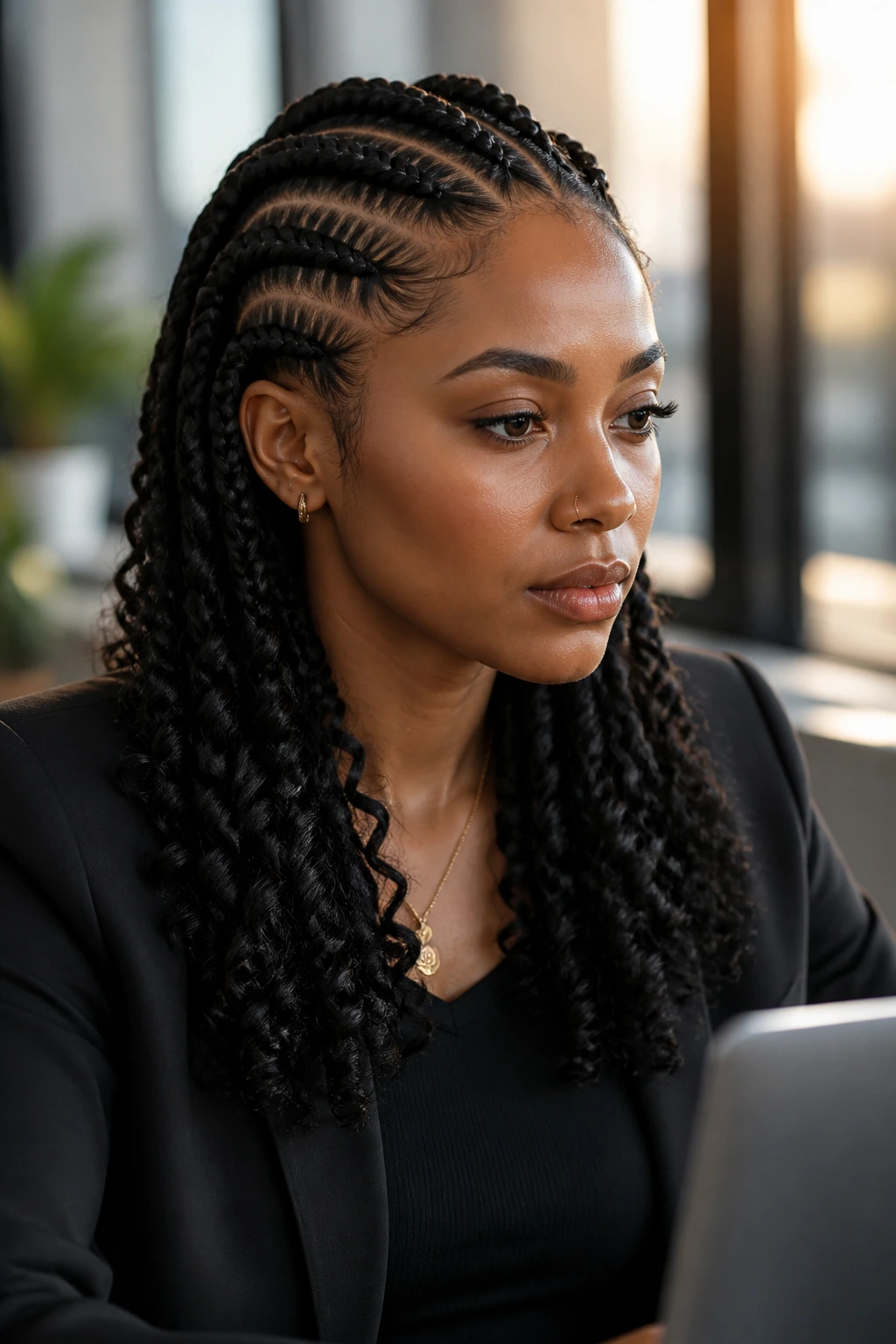
The smartest thing about chunky cornrows with curls is that they do not ask you to keep babysitting them. Once the parts are clean, the tension is kind, and the curls are set with some restraint, the style can carry you through a long workday without needing a full reset at lunch. That’s not a small thing.
Pick the version that fits your dress code, your commute, and your patience. A tidy center part, a side sweep, a low bun, or a simple ponytail can all work; the real difference is how much movement you want at the ends and how much structure you want at the scalp. Keep those two pieces in balance, and the style does its job.
Then leave it alone more than you think you should. That’s the part people resist. The hair usually looks better when it is wrapped at night, refreshed lightly, and not overhandled by a mirror at every break. Chunky cornrows with curls for work are at their best when they look calm, not busy, and that’s a very good thing to wear into a room.