



Fine hair can make a quiff look crisp or flimsy, and there’s not much middle ground. The best quiff haircuts for boys with fine hair don’t try to fake thickness with a mountain of product. They use shape, smart length, and cleaner sides so the front can stand up without looking stiff or see-through.
That’s the trick most people miss. Fine hair usually looks its best when the cut does some of the work and the styling only gives it a nudge. A front that’s long enough to lift, sides that are trimmed tight enough to create contrast, and a little texture at the top can make the whole haircut read fuller than it really is.
And fine hair has a few habits you have to respect. It lies flat fast. It shows scalp sooner than medium or coarse hair. It also gets heavy-looking the second someone piles on glossy pomade or leaves too much bulk around the temples. So the cuts below are built around a simple idea: make the top look stronger, keep the sides clean, and don’t fight the hair’s natural softness.
Why These Quiff Styles Work So Well on Fine Hair
-
The front gets the spotlight: A quiff depends on the first 2.5 to 4 inches at the hairline, so the shape looks fuller when the front is left a touch longer than the crown.
-
Shorter sides make the top look denser: Even a gentle taper takes away visual weight from the sides, which makes the hair on top look like it has more body.
-
Texture beats shine on fine strands: Matte clay, paste, or powder gives grip without the slick, separated look that makes thin hair obvious.
-
The blow-dryer matters more than the product: A 2-minute lift at the roots with warm air does more for volume than smearing in extra product ever will.
-
Cleaner outlines keep the style looking deliberate: Fine hair can look messy fast, so neat sideburns, a tidy neckline, and a controlled front shape help the cut stay sharp through the day.
-
These cuts stay school-friendly: A good quiff for a boy with fine hair should still look decent after a backpack strap, a hoodie, or a sweaty recess. That matters more than photo-ready height.
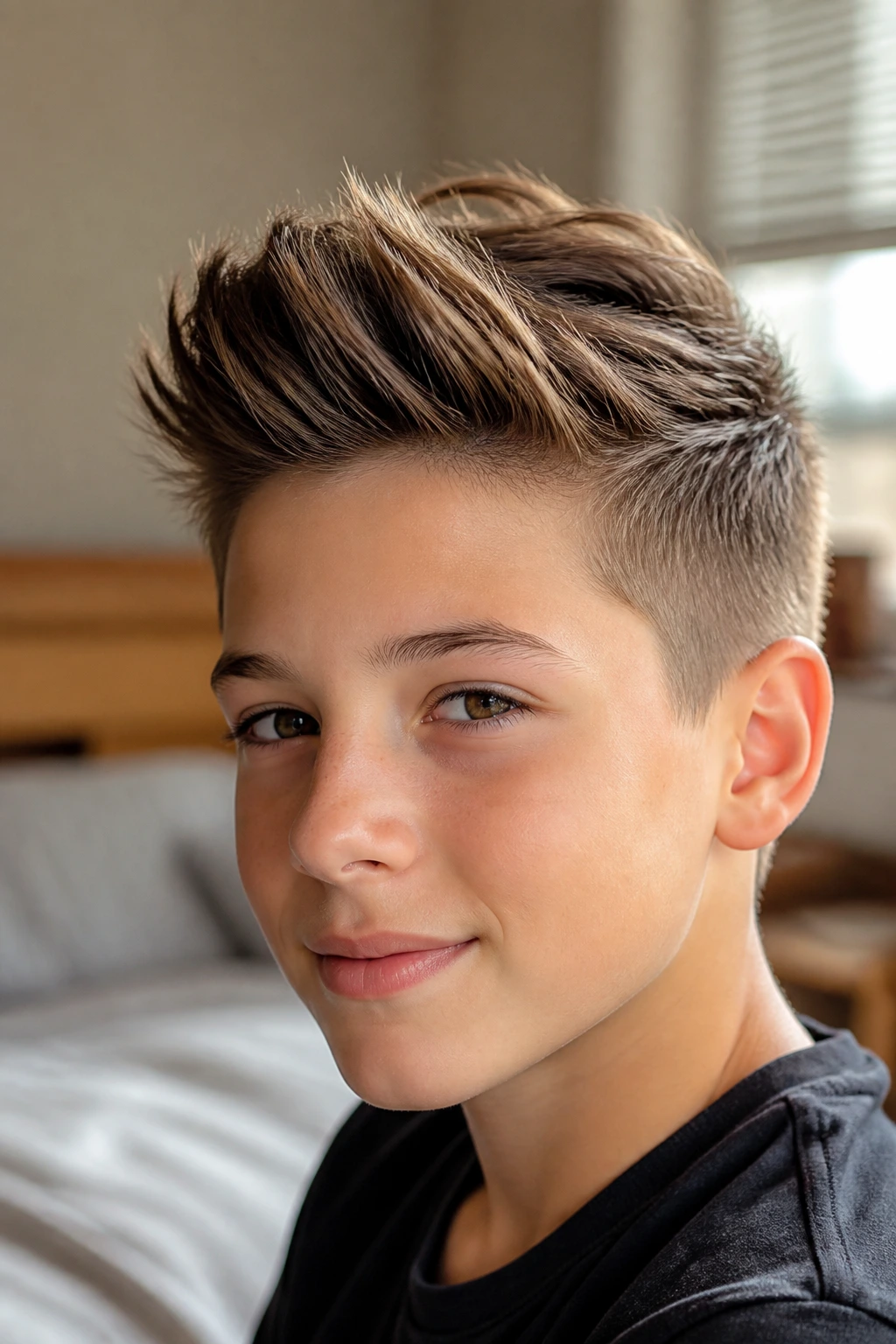
1. Soft Taper Quiff
A soft taper quiff is the one I reach for when a boy needs height without the “I spent 20 minutes on this” look. The top stays medium-long, usually around 2.5 to 3 inches, while the sides taper down gradually instead of disappearing into a skin fade. That gentle fade keeps the haircut from looking too severe, which is useful when the hair itself is fine and a little soft around the edges.
Why It Works
The taper keeps the eye on the front, not the scalp. Fine hair usually looks best when there’s a calm transition from top to sides, because harsh contrast can make the top seem thinner if the length is too short. This cut also grows out kindly. After three or four weeks, it still looks like a haircut instead of a fuzzy shape waiting for a fix.
Ask for a longer front and light scissor texture through the top. The goal is not choppy chaos. It’s a soft lift that can be brushed up in the morning and still look neat by afternoon.
2. Low Fade Quiff
A low fade quiff gives fine hair a little more edge without going full dramatic. The fade starts low, around the ear and just above the sideburn, so the top remains the clear focus. If the hair is straight and slippery, this is one of the easiest ways to make the quiff look thicker, because the clean sides frame the front instead of competing with it.
Why It Works
The low fade takes weight out of the lower half of the cut, which makes the top look visually bigger. That’s the whole game with fine hair. You’re not adding bulk; you’re removing anything that steals attention from the lift at the front.
This version suits boys who want something neat enough for school but still a little modern. Style it with a root-lift spray, then blow-dry the front upward and slightly back. Use a pea-sized amount of matte paste at the end. More than that and the shape starts to droop.
3. Mid Fade Quiff
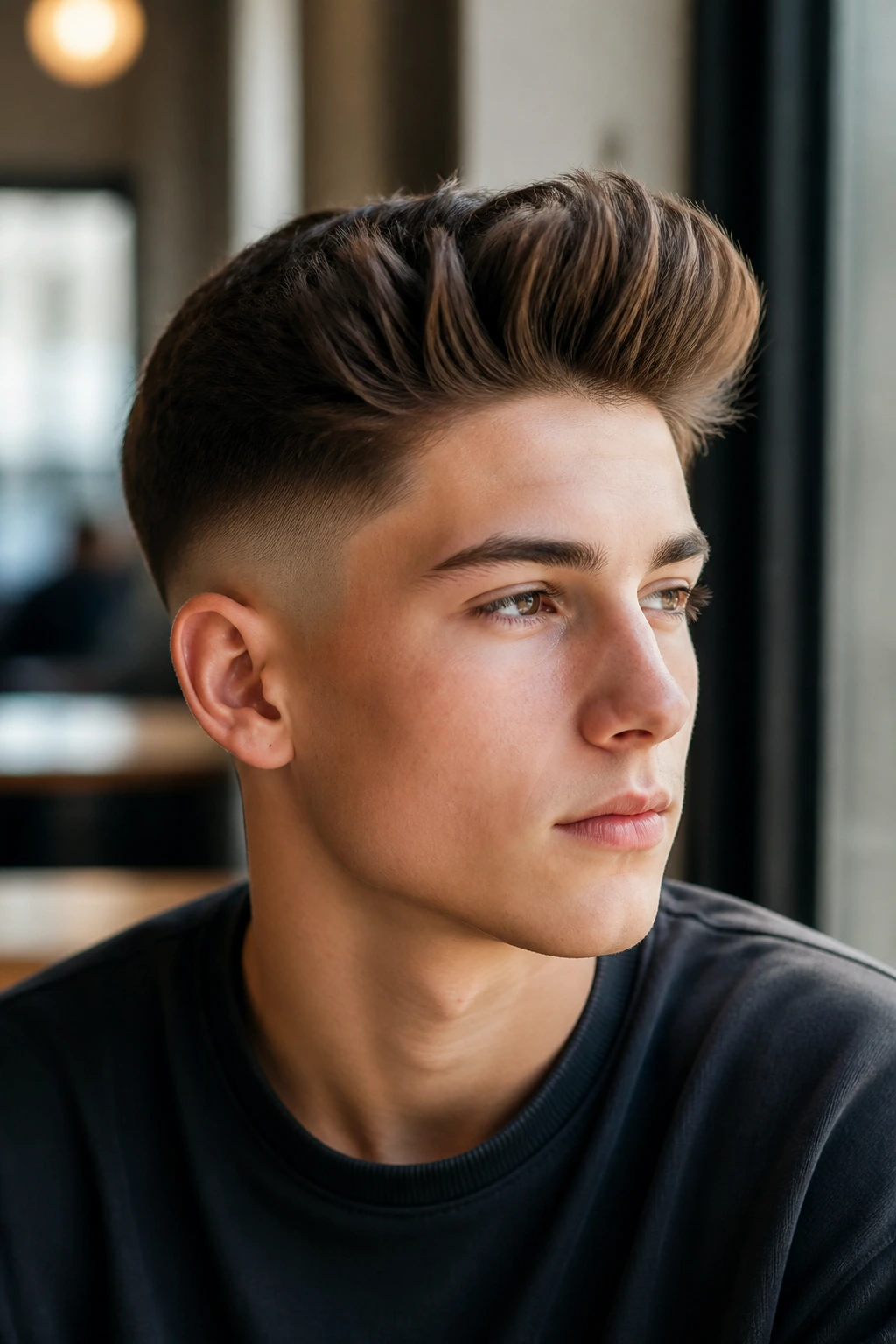
The mid fade quiff is sharper and a touch more noticeable than the low fade version. The fade starts around the middle of the sides, so there’s a cleaner shift from top to bottom. For boys with fine hair, that extra contrast can be a good thing, because it makes the top look like it has more density by comparison.
Why It Works
Fine hair often looks better when the top is given a stronger frame. A mid fade does that without shaving the sides down to the skin. It’s also a good option if the hairline is a little uneven, since the fade can hide small irregularities that would be obvious on a longer side.
This cut likes texture. If the top is left smooth and combed flat, it can look narrow. Point-cut the front, rough-dry it with your fingers, and finish by pushing the front up in small sections rather than one big sweep. That gives the quiff a little broken surface, which is what fine hair needs.
4. High Fade Quiff
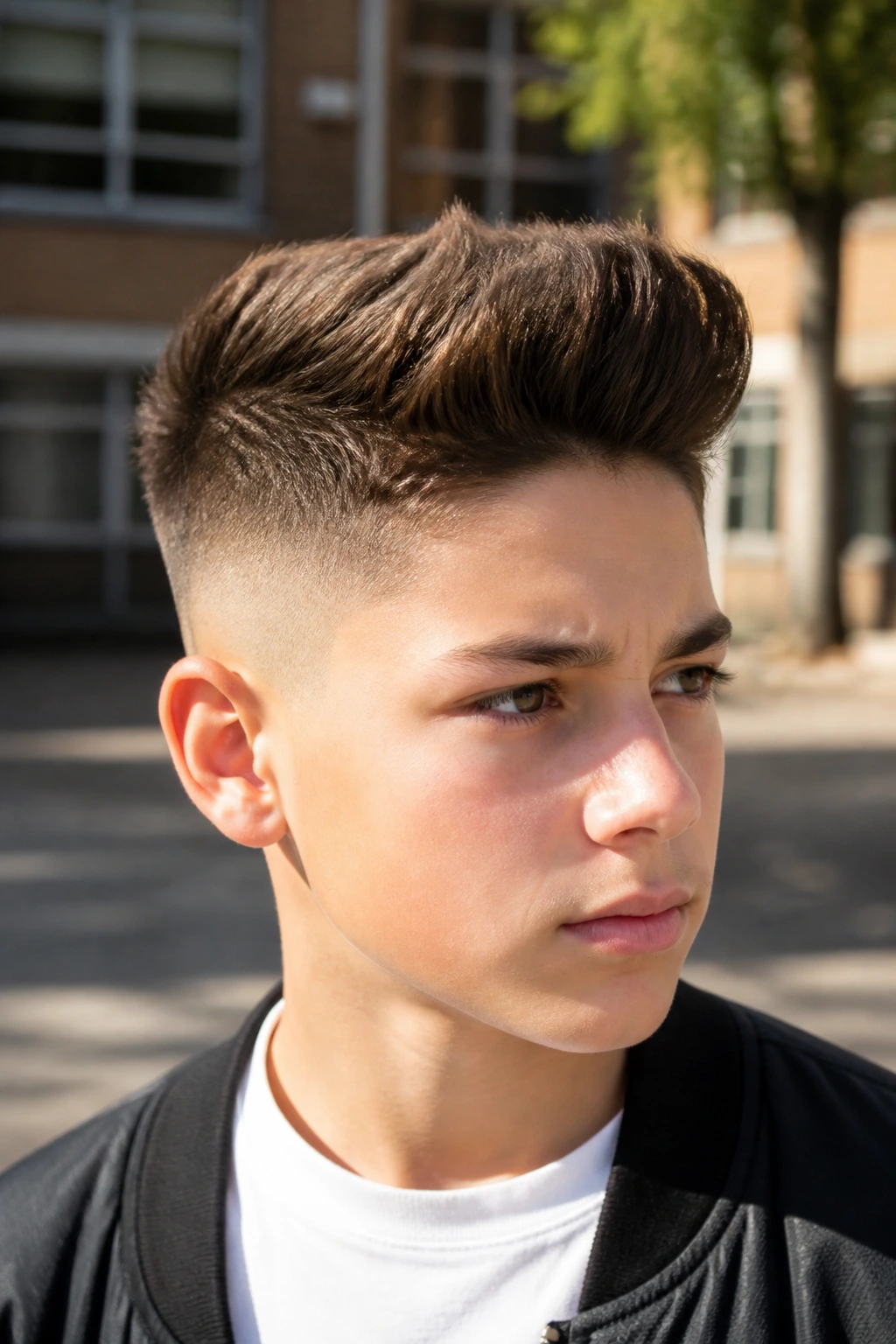
A high fade quiff is for boys who want the top to look like the only thing that matters. The fade climbs high on the sides, so the contrast is bold right away. On fine hair, that can be a smart move if the top is left long enough, because the eye sees a fuller crown and front by comparison.
Why It Works
There’s no hiding in this cut. The sides are short, the top is longer, and the shape has to be clean. That is actually useful for fine hair, because too much side bulk makes the whole head look wider and flatter. A high fade tightens the outline and lets the front do the work.
The catch is length. If the top is too short, the quiff looks like a brushed-up buzz instead of a real style. Keep at least 3 inches on top, and a bit more at the fringe if the hair falls forward easily. This one needs a blow-dryer. Skipping it makes the haircut lose half its point.
5. Skin Fade Quiff
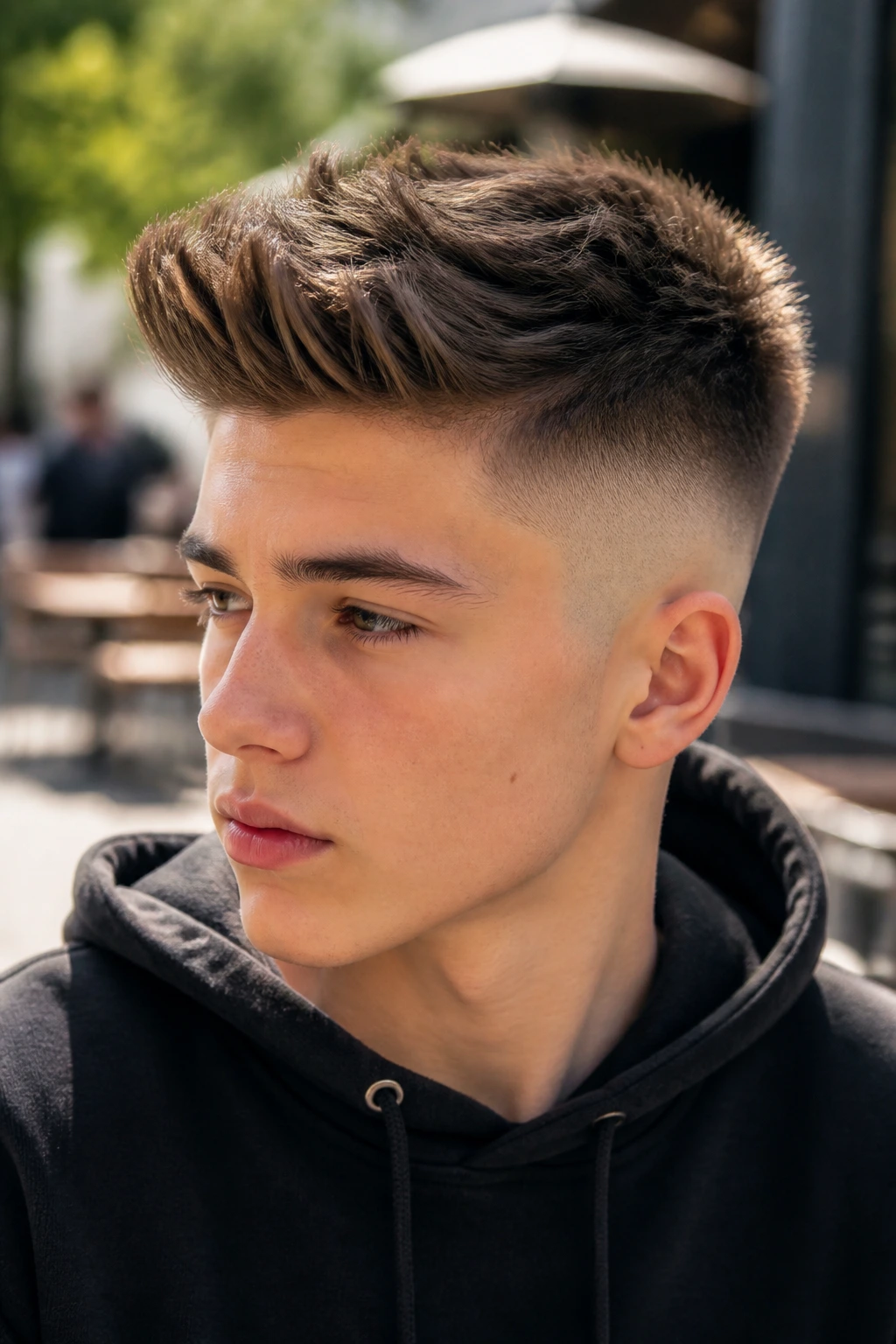
A skin fade quiff is the boldest version in the group. The sides go down to bare skin, which creates a sharp contrast against the top and makes fine hair appear more substantial up there. It’s a clean, crisp look, but it does ask for regular upkeep. Grow it out too long and the fade gets fuzzy fast.
Why It Works
Skin fades can help fine hair by removing every bit of visual clutter from the sides. That leaves the eye with nowhere to go except the top. If the front is lifted properly, the haircut reads fuller than the strand count suggests.
This style works best when the top has texture and a little length, not when it’s slicked back like a formal cut. Matte products are the better fit here. A shiny finish can make the scalp show through more easily. If the boy has a rounder face, the vertical shape of this quiff can be especially useful, because it adds height without widening the sides.
6. Textured Choppy Quiff
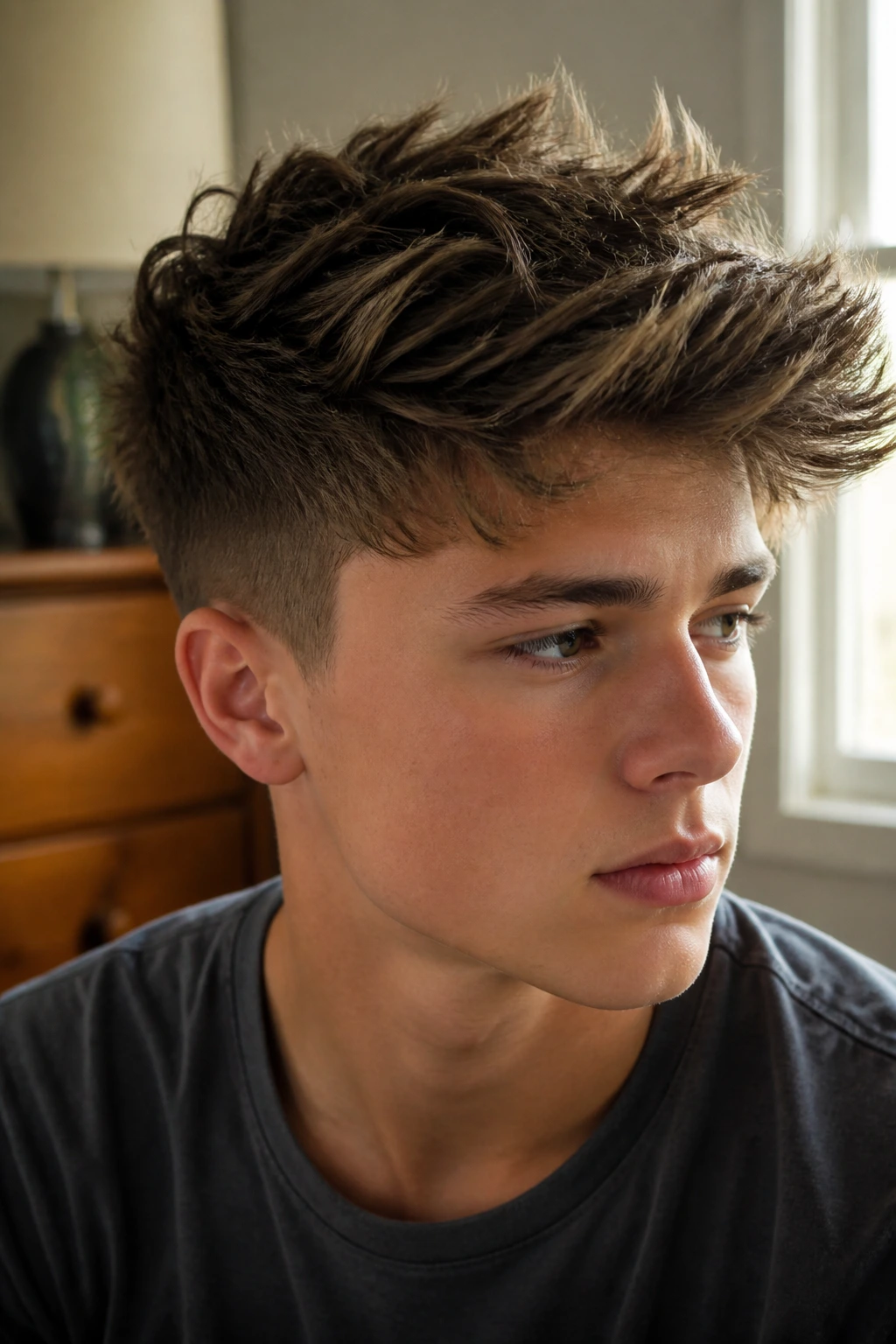
If fine hair falls flat in a hurry, a textured choppy quiff is often the fix. The barber keeps the top piecey with point cutting, then lets the front carry the shape. Nothing should look too smooth or too perfect. Fine hair tends to look richer when the edges of each section are broken up a bit.
Why It Works
The choppy texture creates shadows. Shadows make hair look denser. That’s a simple trick, but it matters. A blunt, polished quiff can expose the fact that the hair is fine, while a broken-up surface makes the top read as fuller and more relaxed.
This one is especially good for straight hair that lies down the second it dries. Use a lightweight spray first, then dry the top in different directions with your fingers until it has some lift. Finish with matte clay, but keep it away from the roots. If the product starts at the scalp, the quiff collapses faster.
7. Brush-Up Quiff
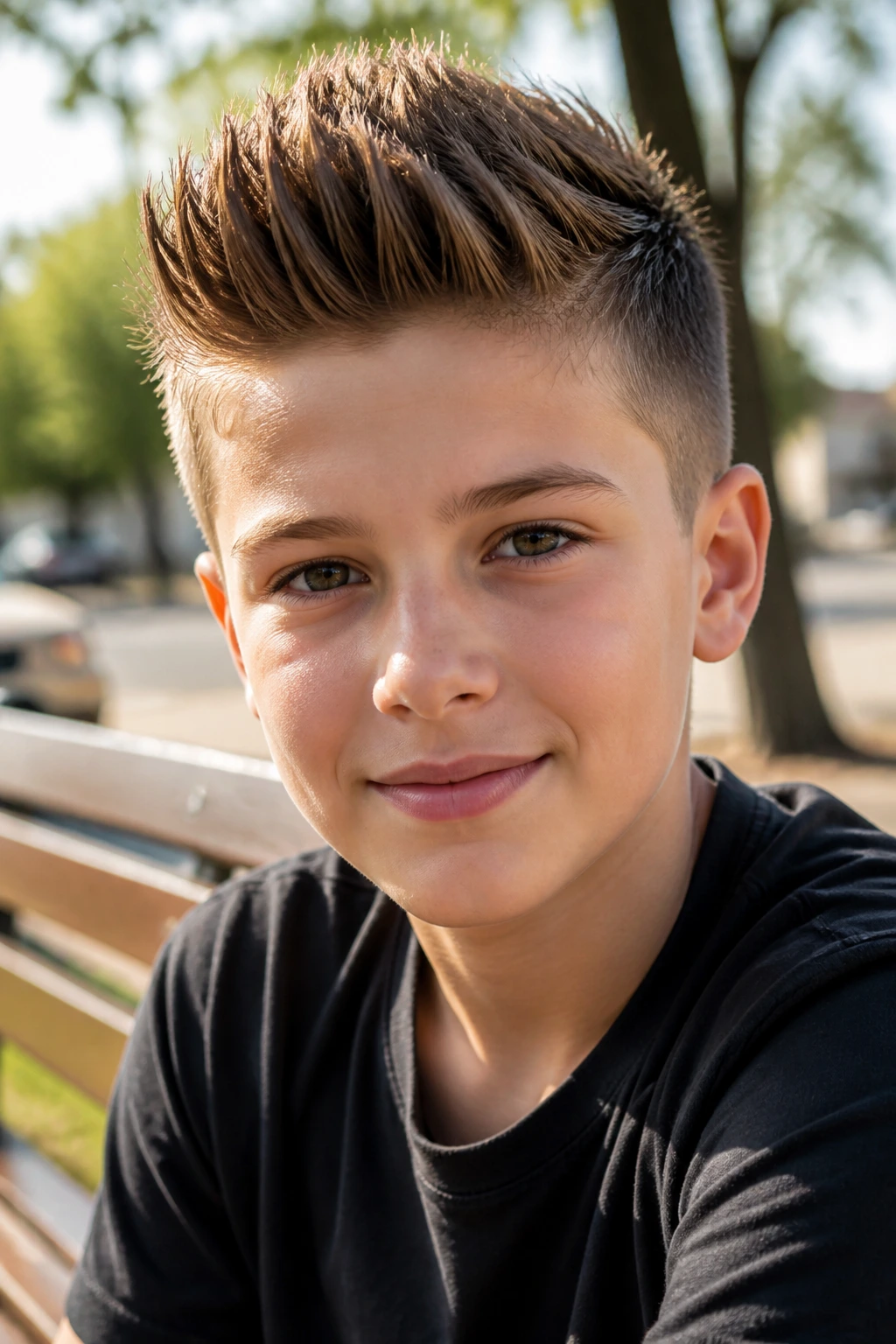
A brush-up quiff is a short, energetic version of the style. The front is lifted straight up and slightly back, which makes it neat and easy to read from a distance. For boys with fine hair, this is a useful haircut because it doesn’t ask for much length. The shape does the work.
Why It Works
Short fine hair can be stubborn in a boring way. It doesn’t always have enough weight to hold a big quiff, but it can stand up nicely when the front is cut with purpose. A brush-up keeps the silhouette clean and avoids the sagging that shows up when the top gets too long.
This style suits active boys because it doesn’t need constant fixing. Two minutes with a dryer, then a small amount of paste worked through the front, usually does the trick. If the hair is very thin at the hairline, keep the front slightly shorter on the edges and a bit longer in the middle. That little shape helps the quiff stand up without looking like a shelf.
8. Mini Quiff
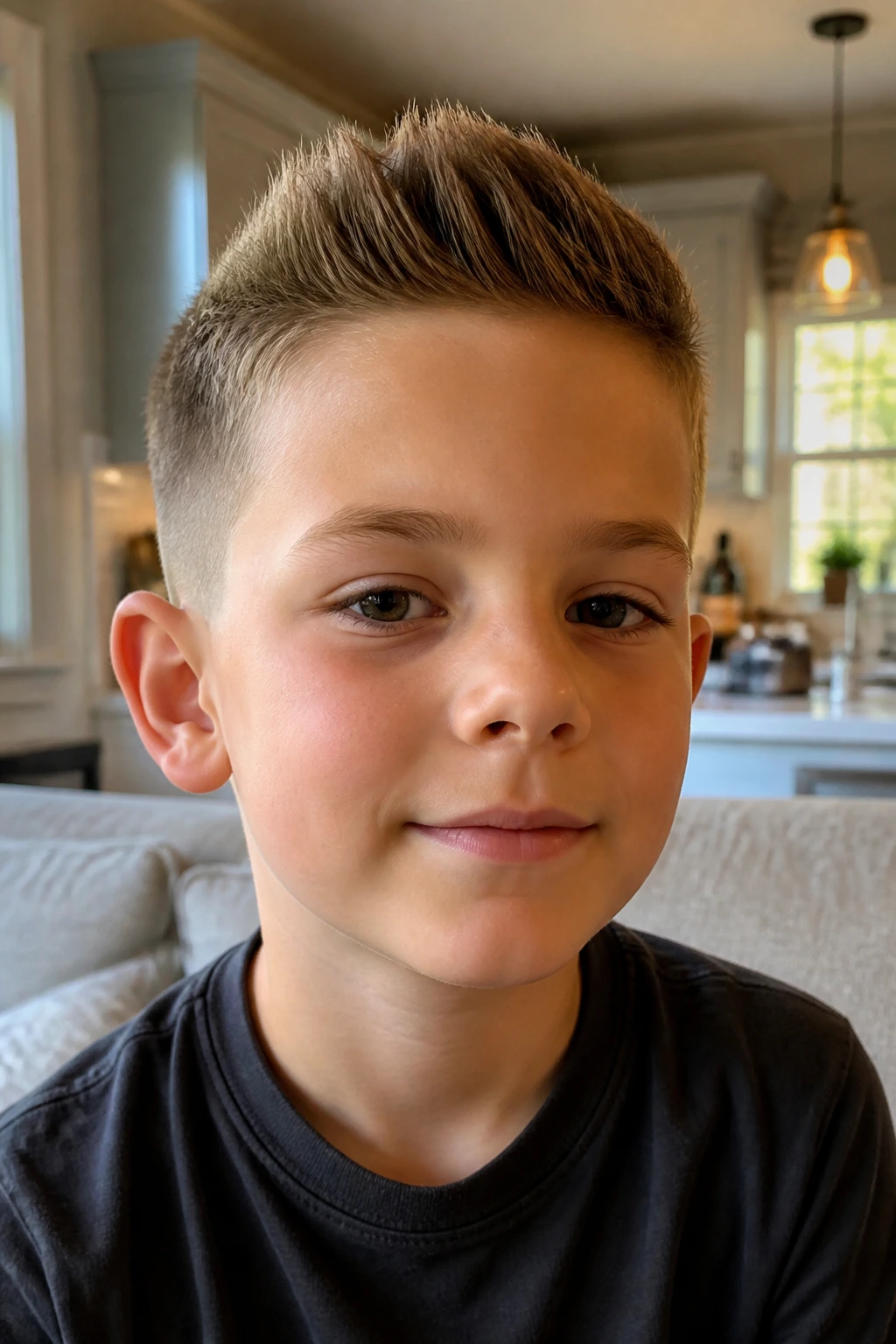
A mini quiff is the understated cousin in the family. The top stays short, often around 1.5 to 2 inches, and the front gets just enough lift to break the flat line at the hairline. This is a smart cut for younger boys, especially if they don’t want hair hanging in their eyes all day.
Why It Works
Fine hair often looks best when it’s not forced into too much height. A mini quiff gives the idea of a quiff without asking the strands to hold a huge shape. That makes it easier to wear, easier to style, and easier to keep looking decent after a long day.
It also grows out well. Short quiffs can go soft instead of shaggy, which is a nice change from styles that lose shape fast. Ask for a neat taper around the ears and neckline so the haircut stays tidy even when the top starts to relax. A tiny bit of mousse or powder is enough here. Heavy cream will make it droop.
9. Side-Part Quiff
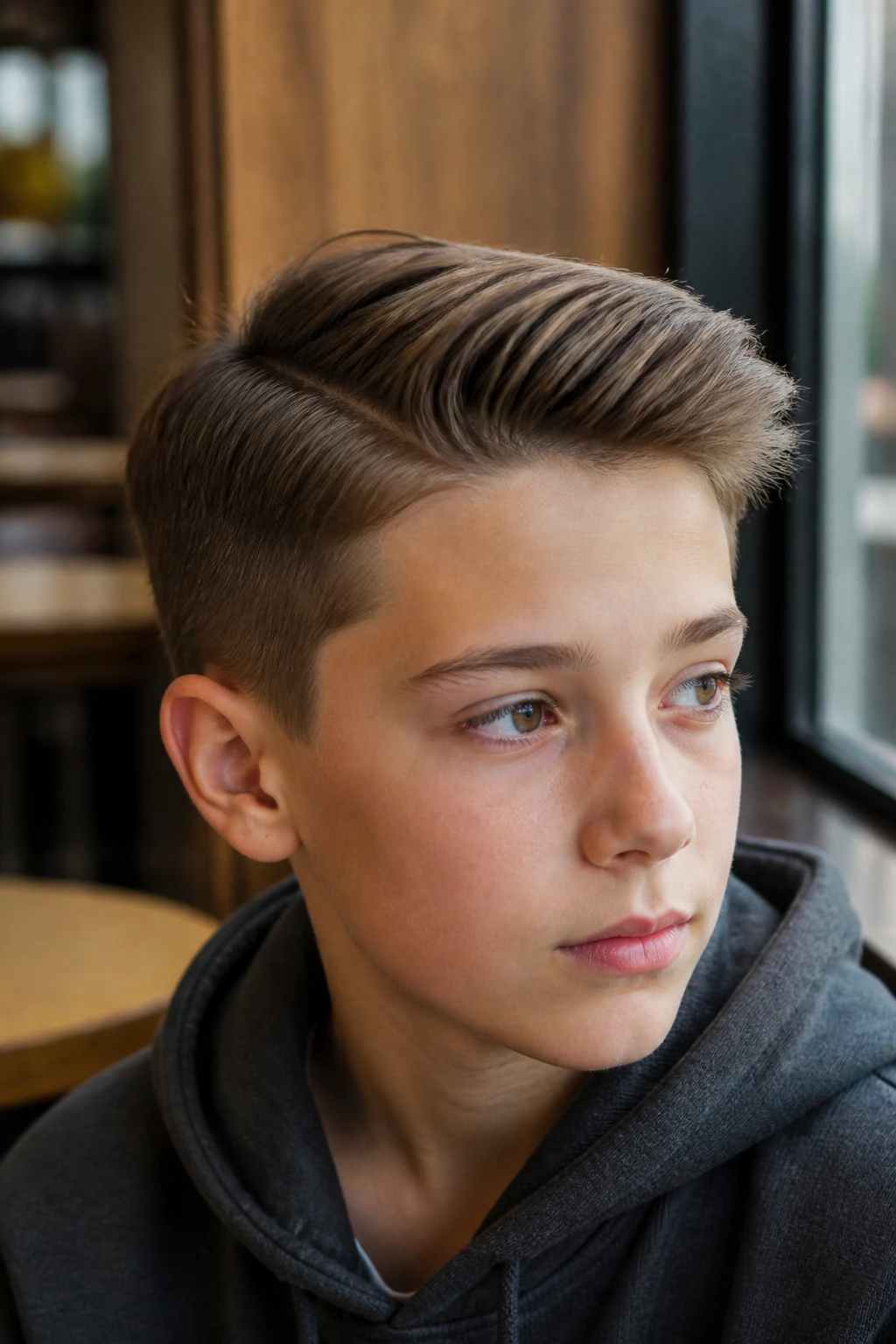
A side-part quiff mixes a classic part with a lifted front. Instead of pushing everything straight back, the top is swept up and slightly across. That slight direction change is a gift for fine hair, because it gives the illusion of more structure and more volume than a flat part ever could.
Why It Works
Hair that wants to fall forward often behaves better when you give it a lane. The side part creates that lane. It also helps boys with a cowlick near the front, because the hair can be guided around the stubborn spot instead of fighting it head-on.
This version has a neat, almost school-uniform feel, which I like on younger boys who still want some shape. Keep the part soft if the hair is very fine. A hard, razor-sharp line can sometimes make the top look too sparse by comparison. For styling, comb the part while the hair is damp, then dry the front up and over. The order matters.
10. Ivy League Quiff
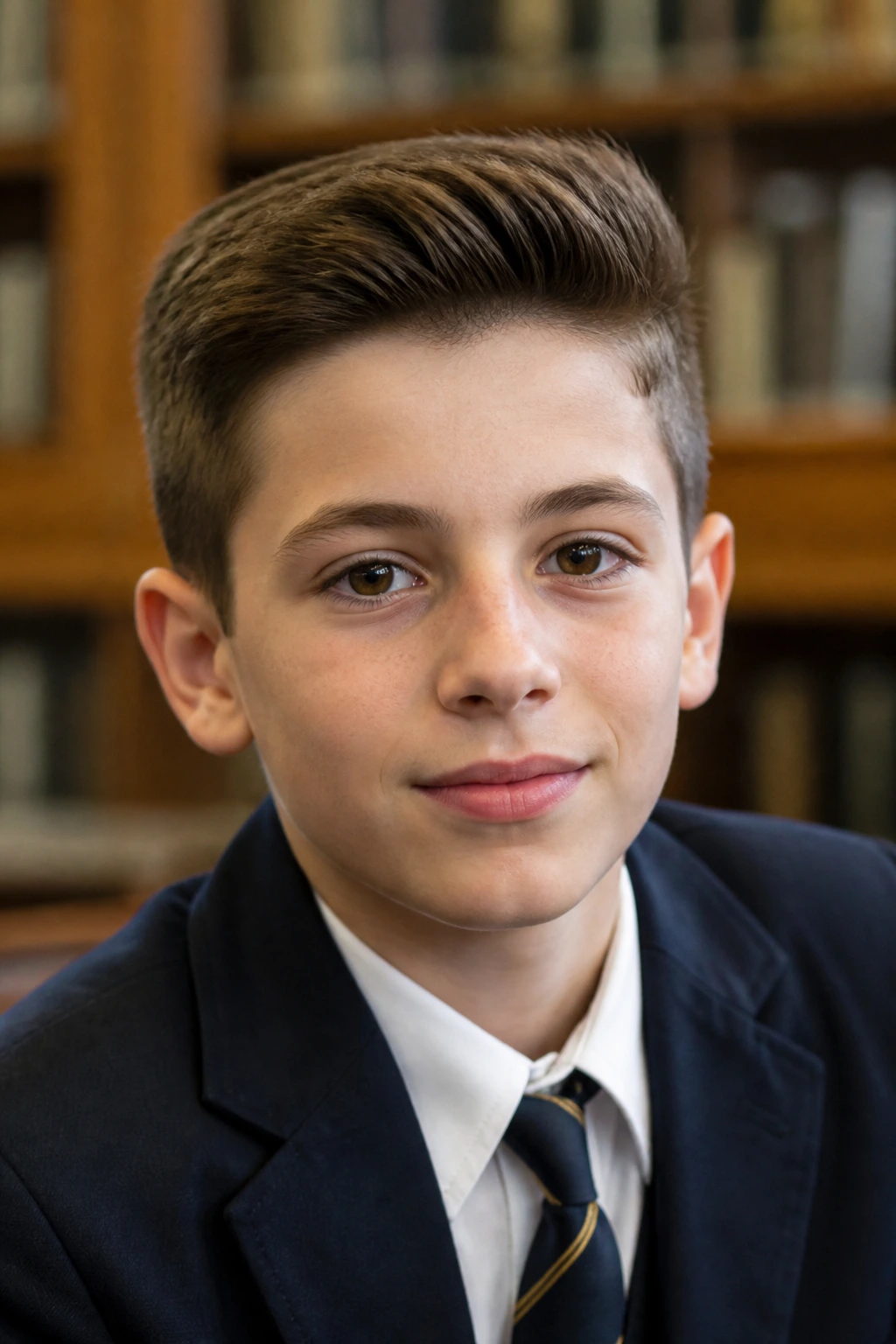
The Ivy League quiff is a more polished, restrained option. Think of it as a crew cut with manners. The top is longer than a standard short cut, but not long enough to flop forward, and the front gets a light lift rather than a full, tall quiff.
Why It Works
This haircut suits fine hair because it doesn’t overreach. A lot of boys try to make their hair do too much, and that’s when thin strands start to show their limits. The Ivy League quiff keeps the shape believable, which is often better than chasing height that won’t stay up.
It also fits formal settings without feeling stiff. If you want one haircut that works for school photos, family events, and ordinary weekdays, this is a strong choice. Ask the barber to keep the top textured but tidy, with enough length at the front to sweep upward with a comb. It’s a small lift, not a skyscraper.
11. Disconnected Quiff
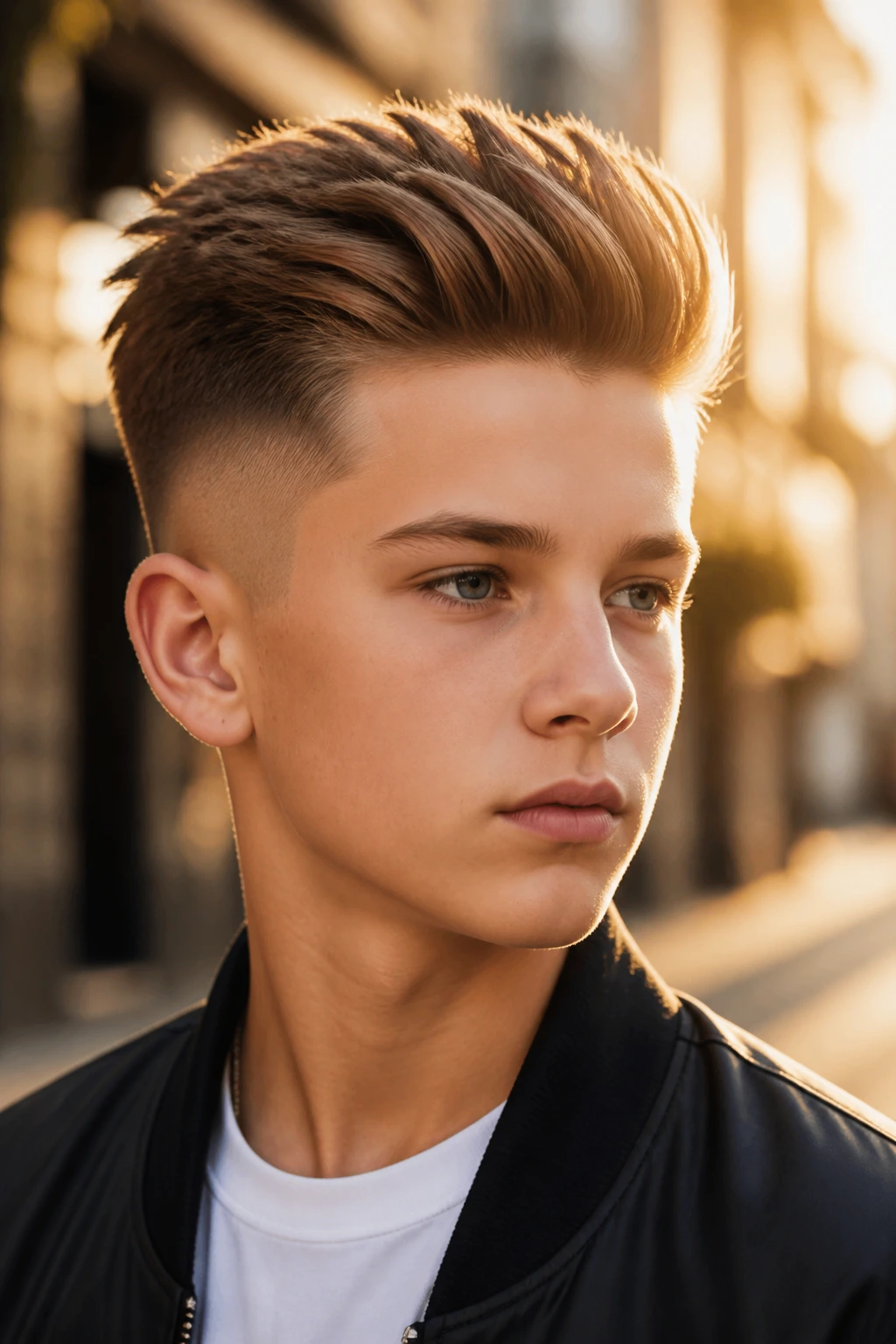
A disconnected quiff is blunt on purpose. The top is left much longer than the sides, and there’s little to no blending between them. That hard break can be a smart move on fine hair, because the contrast makes the top look denser and more deliberate.
Why It Works
When the sides are sharply shorter, the top doesn’t have to compete with them. That’s a big deal for fine hair, where too much softness around the edges can make the whole haircut look washed out. The disconnect gives the style a cleaner outline and a stronger silhouette.
The tradeoff is upkeep. This haircut grows out in a way that shows every week. If the fade or side length starts creeping up, the disconnect loses its punch. It also needs a barber who can keep the top textured instead of flat. Ask for point cutting through the front and a clear separation from the sides. If it’s too neat, it turns ordinary fast.
12. Messy Fringe Quiff
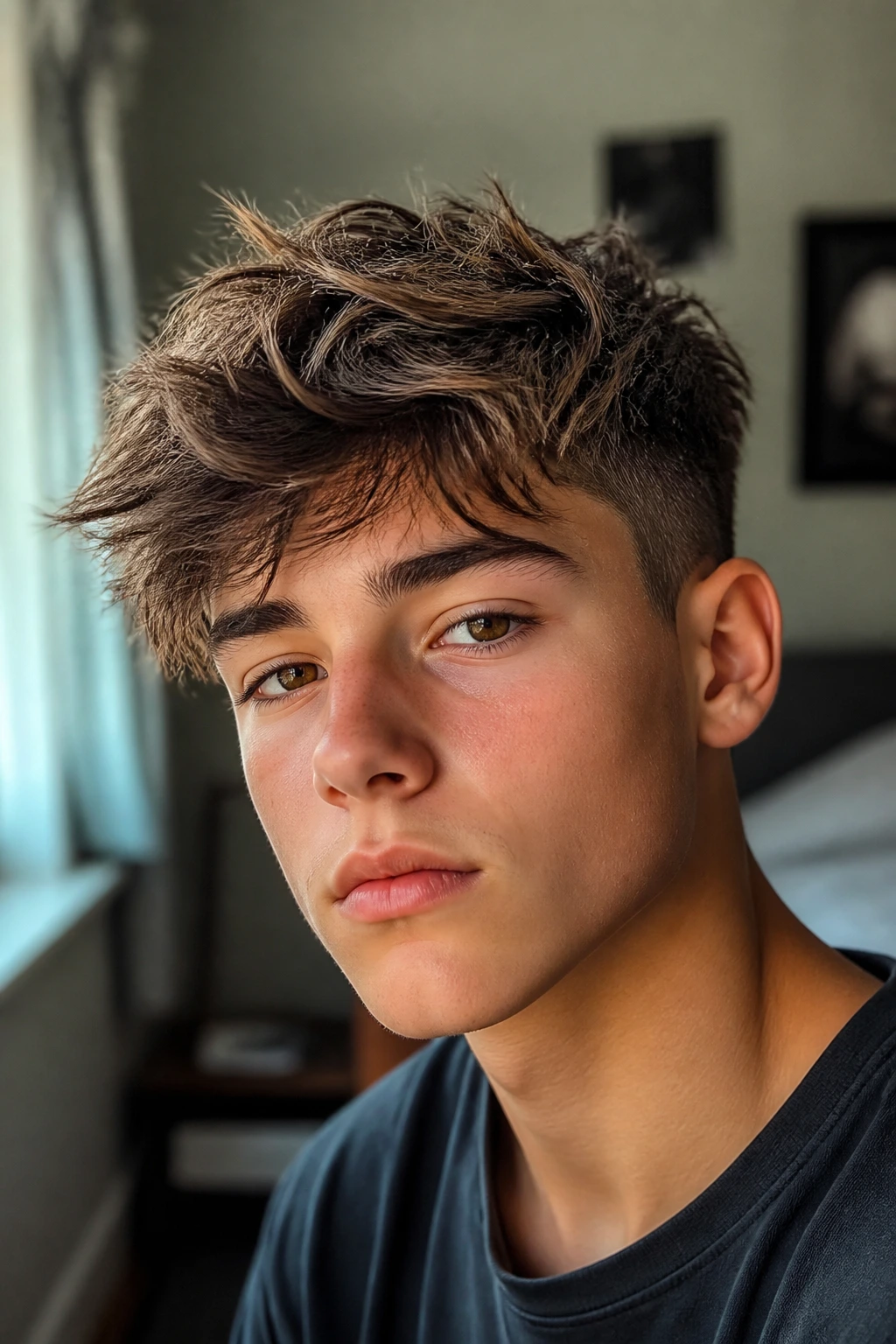
The messy fringe quiff is the one for boys who don’t want their hair to look too “done.” The front sits partly up and partly forward, with loose strands breaking the line. Fine hair often benefits from this softer approach because it hides the places where density is weakest.
Why It Works
A perfectly polished quiff can expose every gap. A messy one hides them. That’s not laziness; it’s strategy. The slightly undone front makes the hair look thicker because it breaks up the outline and keeps the eye moving.
This cut works best with matte powder or a light paste. Use your fingers, not a tight comb. Push the front upward, then let a few pieces fall forward just a little. If the fringe is cut too bluntly, the style turns heavy. Ask for soft, irregular layers through the front so the hair can move instead of sitting in one stiff block.
13. Hard Part Quiff
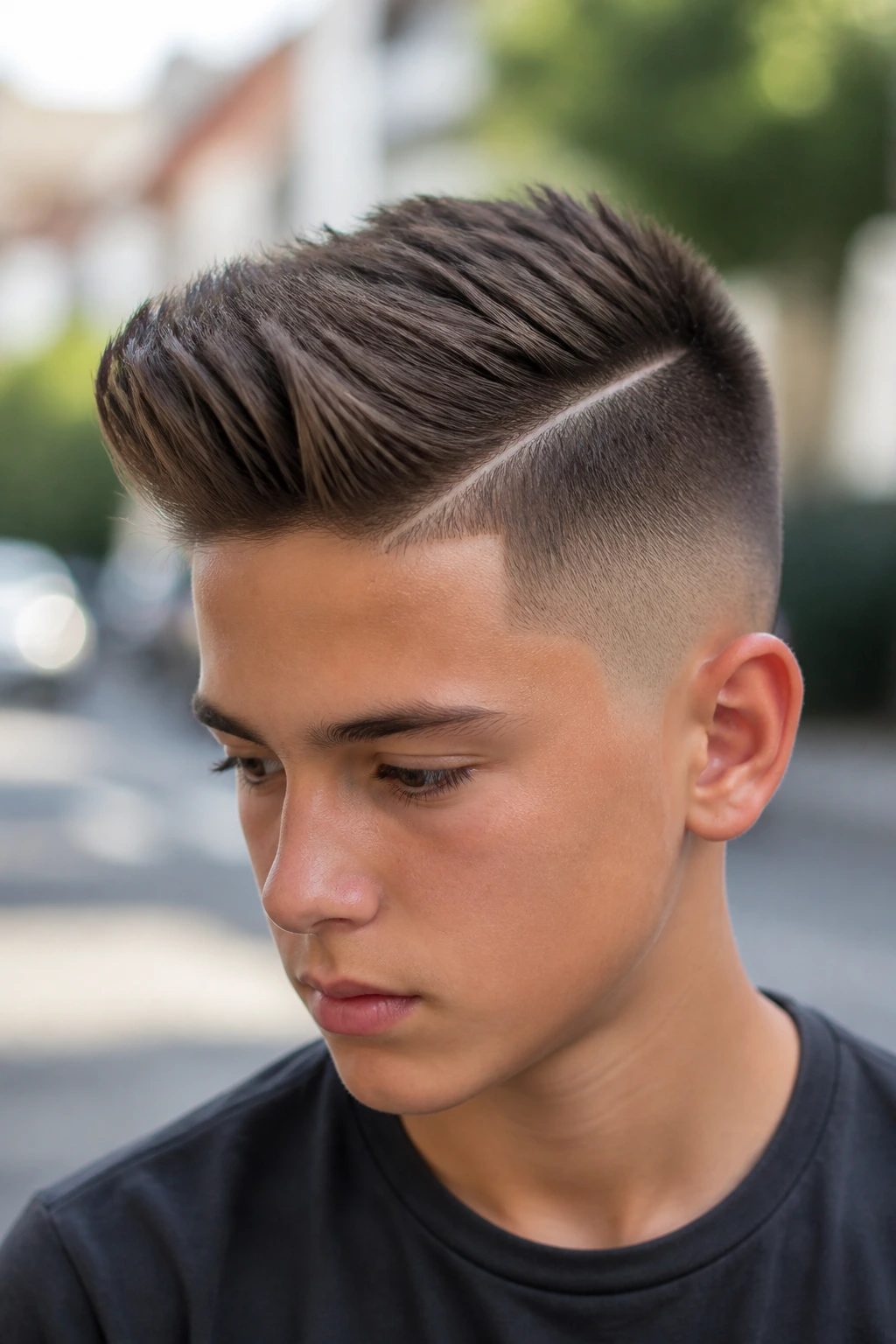
A hard part quiff brings a clean line into the style, usually shaved or clipped in by the barber. That part gives the haircut a built-in shape, which can be useful when fine hair tends to wander. It’s a sharper, more styled look, and it works best when the hair isn’t ultra-thin.
Why It Works
The hard part creates structure right away. For boys with medium-fine hair, that can make the top look more intentional and the styling easier in the morning. The part helps guide the front up and over, so the quiff doesn’t drift into a vague side-sweep by lunch.
There is a catch. If the hair is very sparse at the part line, a hard part can look a little stark. In that case, a soft side part is usually kinder. But when the hair has enough coverage, this cut gives the quiff a neat edge that reads tidy rather than fussy. Keep the top around 3 inches and use a light cream or paste; shiny products make the part stand out too much.
14. Wavy Quiff
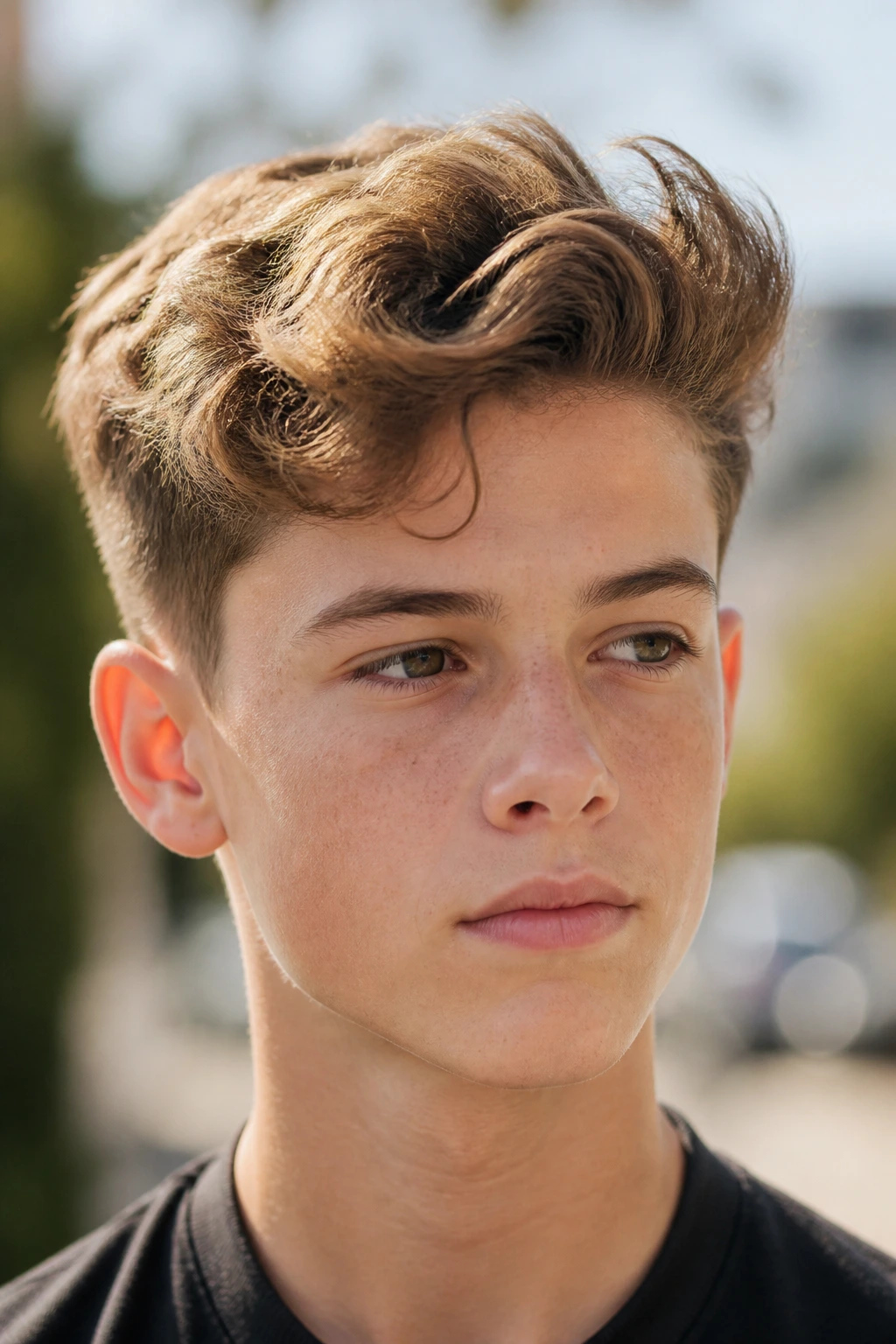
A wavy quiff lets a little natural bend do the lifting. Fine hair with even a slight wave can look thicker than straight hair, because the movement creates texture on its own. The cut should leave enough length for that wave to show through instead of clipping it too short and wiping the shape out.
Why It Works
Wave adds body where fine hair usually lacks it. The front doesn’t have to stand perfectly upright; it just needs to rise and curl slightly back. That softer shape looks fuller and less brittle than a straight, brushed-up quiff.
The barber should avoid over-thinning the top. Fine wavy hair loses its character fast if too much weight is taken out. Dry it with a diffuser or a dryer on low heat, then use a cream or light paste. A dry matte product can make waves look crunchy, and crunchy is not the goal. Let the movement stay loose.
15. Curly Quiff
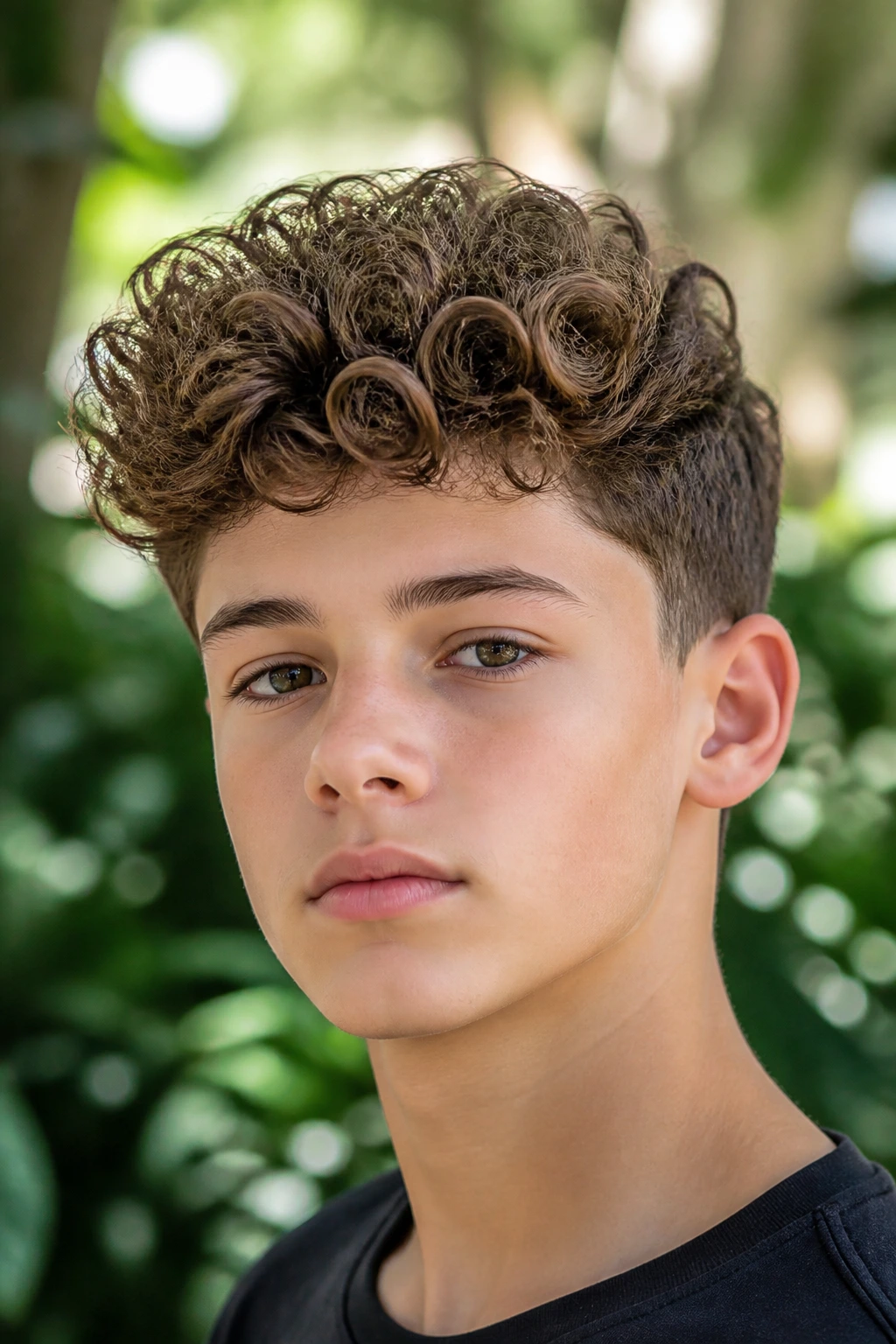
A curly quiff works when fine hair has curls, not just a little bend. The trick is to keep enough length on top for the curls to stack upward instead of collapsing into frizz. A boy with fine curls can get a surprisingly full-looking quiff, but only if the shape is cut around the curl pattern instead of against it.
Why It Works
Curly strands create volume on their own, even when the individual hairs are fine. That’s why this style can look richer than a straight-hair quiff of the same length. The curls lift, separate, and give the front a fuller edge.
Don’t cut the top too short. Curls shrink, and fine curls shrink more than people expect. Keep the front long enough that it can be pushed up and still sit above the forehead after drying. Use a curl cream or very light mousse, then shape the front with your fingers. A comb usually fights the curl and makes the top look flatter.
16. Long-Top Quiff
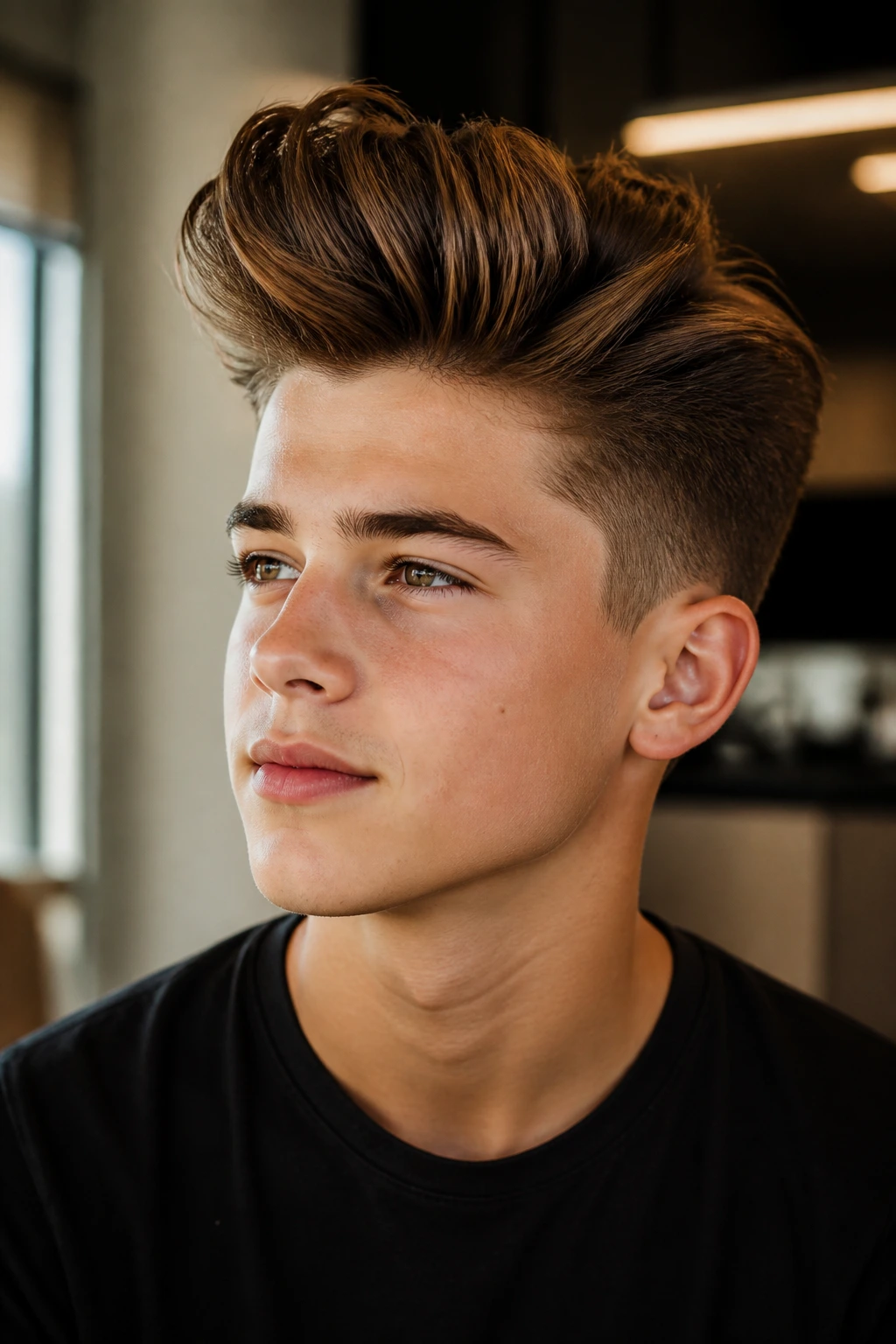
A long-top quiff is the dramatic one. The front is left longer — sometimes 4 inches or more — so the quiff can rise higher and sweep back with more presence. On fine hair, this only works if the hair can support the length without looking stringy, and that means the ends need clean shaping.
Why It Works
Longer top length gives you room to build shape. Fine hair often loses interest when it’s too short, but a longer front can be blown up and bent back into a fuller silhouette. The trick is to keep the bulk balanced, not bulky. Those are different things.
This style needs morning effort. No way around it. Start with a root-lift spray, dry the hair upward from the front, and use a brush or fingers to set the direction while the hair is still warm. Once it cools, the shape holds better. A little matte paste on the ends keeps the lift from looking wispy.
17. Faux Hawk Quiff
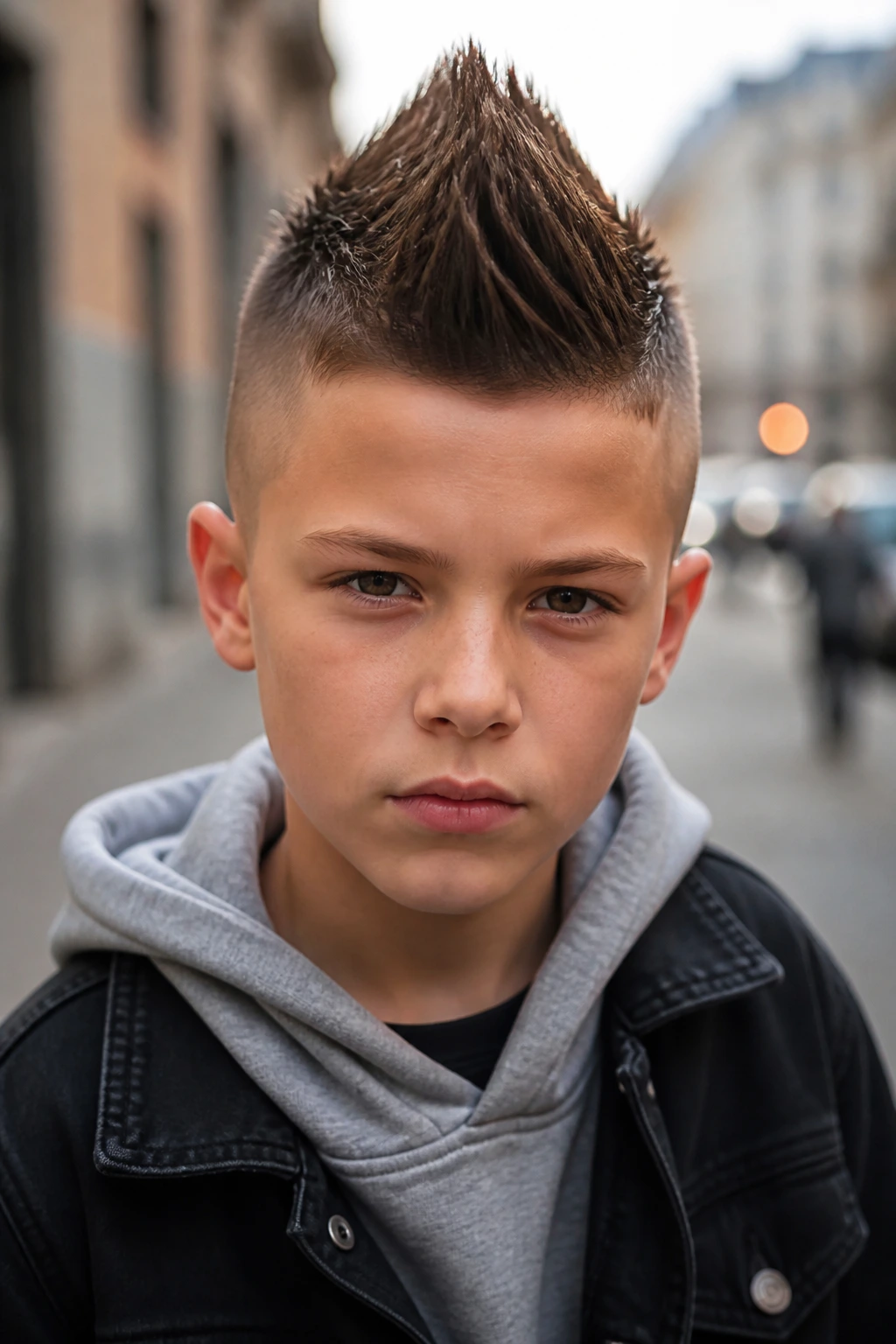
A faux hawk quiff sits between sporty and sharp. The sides taper in tighter, and the center strip of hair rises more in the middle than at the temples. For boys with fine hair, this can be a clever choice because the shape naturally directs the eye to the center line, where the hair looks fullest.
Why It Works
The faux hawk outline gives fine hair a place to be bold without needing a huge amount of length. It also works well for boys who are active or don’t want to keep brushing the front back into place. The shape has some movement, which makes it less likely to look flat after a long day.
Keep the center strip textured so it doesn’t turn stiff and pointy. A soft, brushed-up faux hawk is easier to wear than a rigid one. If the hair is very straight, a little salt spray before drying helps create a rougher surface. That roughness is the difference between “flat” and “alive.”
18. Temple Fade Quiff
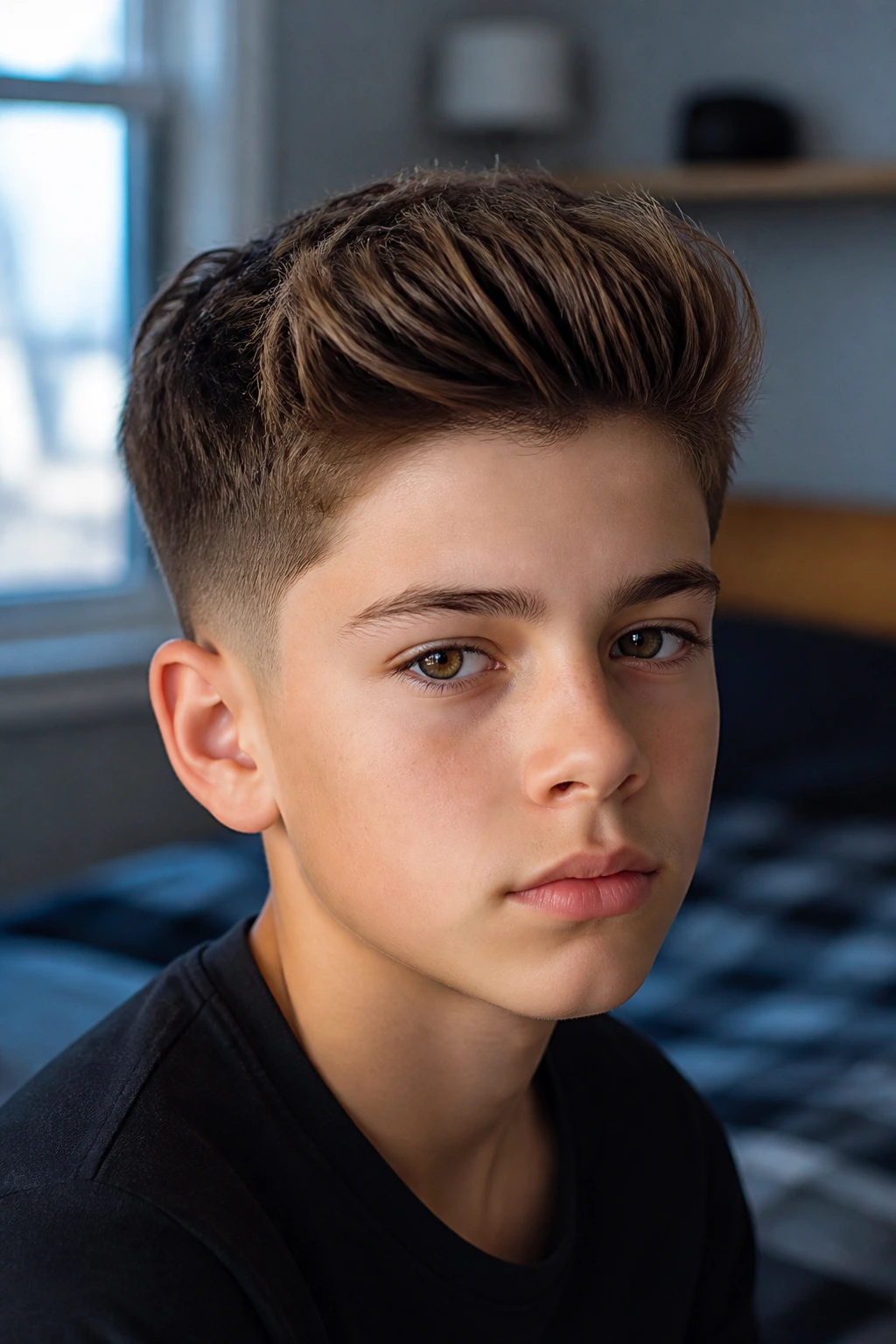
A temple fade quiff keeps the sides clean around the temples while leaving more life through the back and top. It’s a tidy, balanced choice for boys whose fine hair needs structure but not a severe fade. The result feels controlled, especially around the face, where hair can otherwise puff out or collapse.
Why It Works
The temple fade frames the quiff without stripping too much hair away. That matters on fine hair because you still want enough side coverage to keep the head shape looking natural. The fade just trims the noisy parts down around the face, so the front can stay lifted and neat.
This cut works well if the hairline is a little uneven or the temples are softer than the rest of the head. It smooths those corners out. Keep the top medium length and textured, then direct the front slightly upward and back. It’s one of those cuts that looks calm from across the room and sharp up close. I like that balance.
How to Make Fine Hair Look Thicker Without Piling on Product
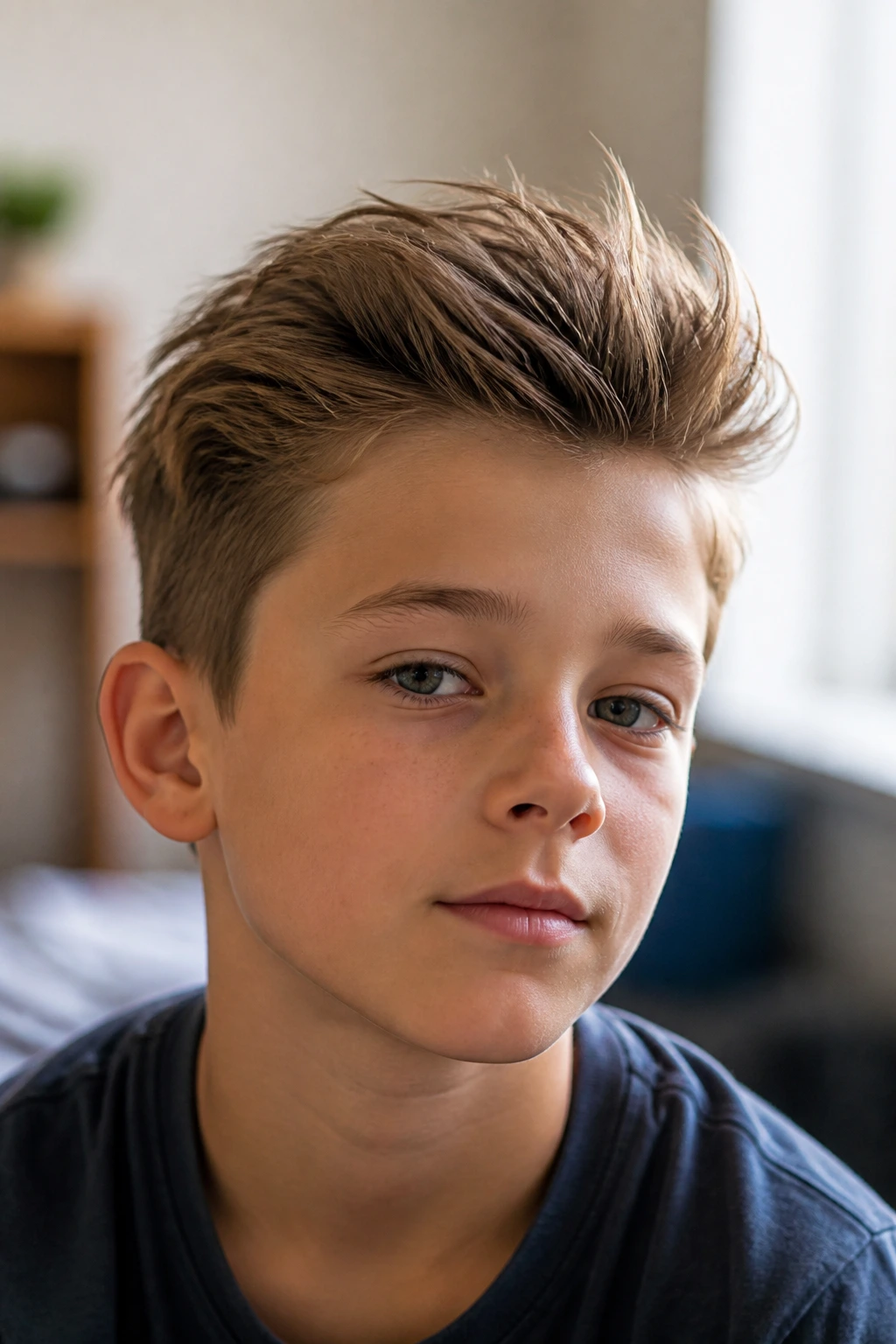
The best trick is almost annoyingly simple: start with the cut, not the jar. Fine hair gets crushed fast when someone reaches for heavy wax or glossy pomade before the shape has even been built. A quiff needs lift at the roots, not a helmet on top.
Start with a Damp, Not Wet, Base
Hair that’s dripping wet won’t hold direction well. Hair that’s barely damp will. Mist the top with water if needed, work in a little root-lift spray, then dry the front up and slightly back. The root is where the volume lives. If you skip that part, the quiff has nowhere to go.
Use Less Product Than You Think
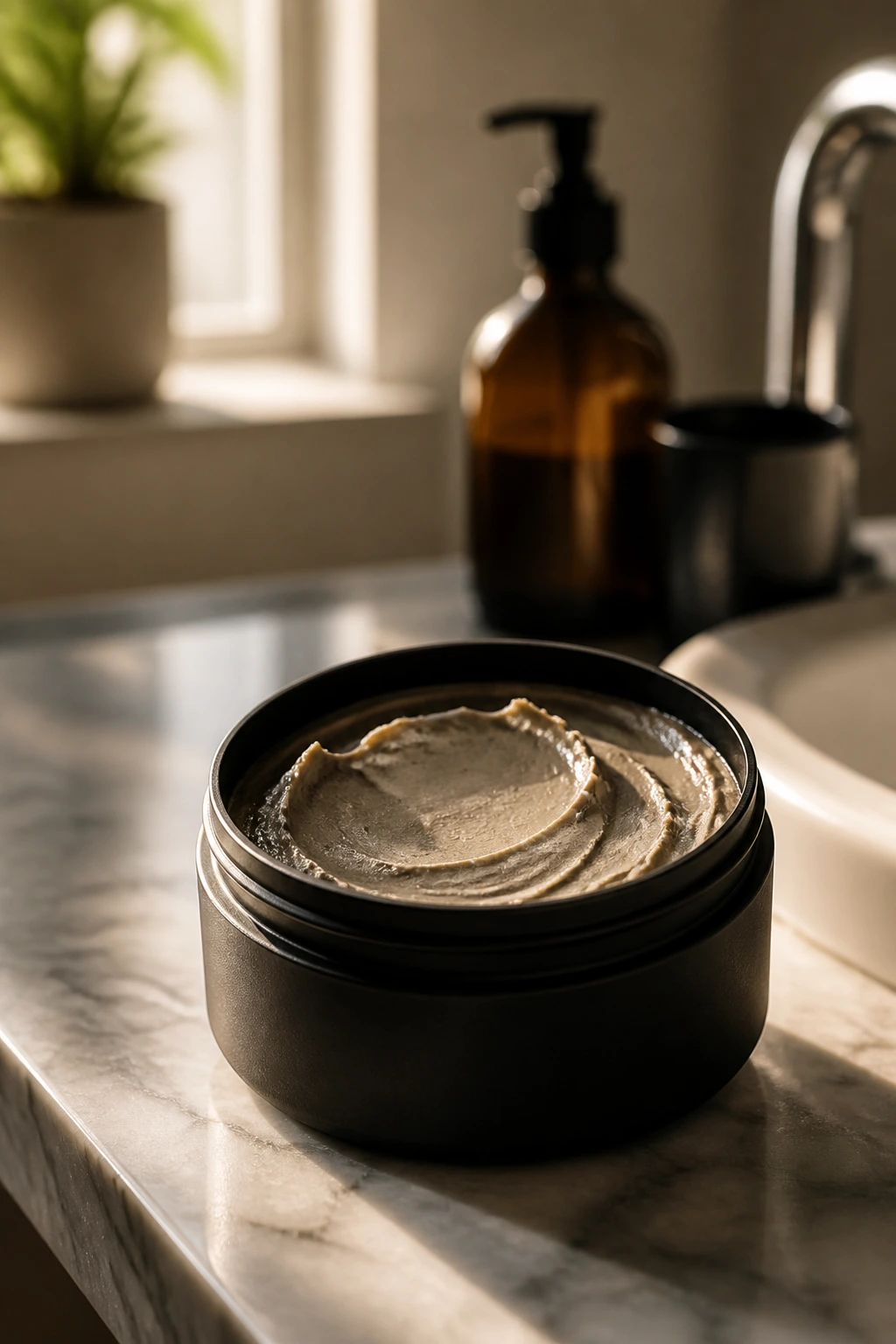
A pea-sized amount of matte paste is often enough for a boy with fine hair. Warm it in your palms, then touch it through the mid-lengths and ends first. Leave the roots fairly clean. Heavy buildup near the scalp is what makes fine hair slump.
Let Air and Heat Work Together
Blow-dry on medium heat with the nozzle pointed at the roots, then switch to cool air for the last few seconds. That cool shot helps lock the shape. It sounds fussy, but it really isn’t. Three minutes can change the whole haircut.
Tools and Products That Matter
-
Blow dryer with a nozzle attachment: The nozzle lets you aim air at the roots instead of blasting the whole head into a puff.
-
Vent brush or small round brush: A vent brush is faster for everyday styling; a small round brush adds more lift at the front.
-
Matte clay or paste: Look for a light, flexible hold. Heavy pomades usually weigh fine hair down.
-
Sea salt spray or root-lift spray: A few sprays at the roots give the hair a rougher grip before drying.
-
Wide-tooth comb: Useful for wet hair and for setting a part without flattening the top.
-
Texturizing scissors at the barber: These help break up the top without thinning it into see-through strands. Not every barber uses them well, though, so the cut still matters more than the tool.
-
Light hairspray, optional: A quick mist can help a longer quiff stay in place, but use it sparingly or the hair gets crispy.
What to Tell the Barber So the Cut Comes Out Right
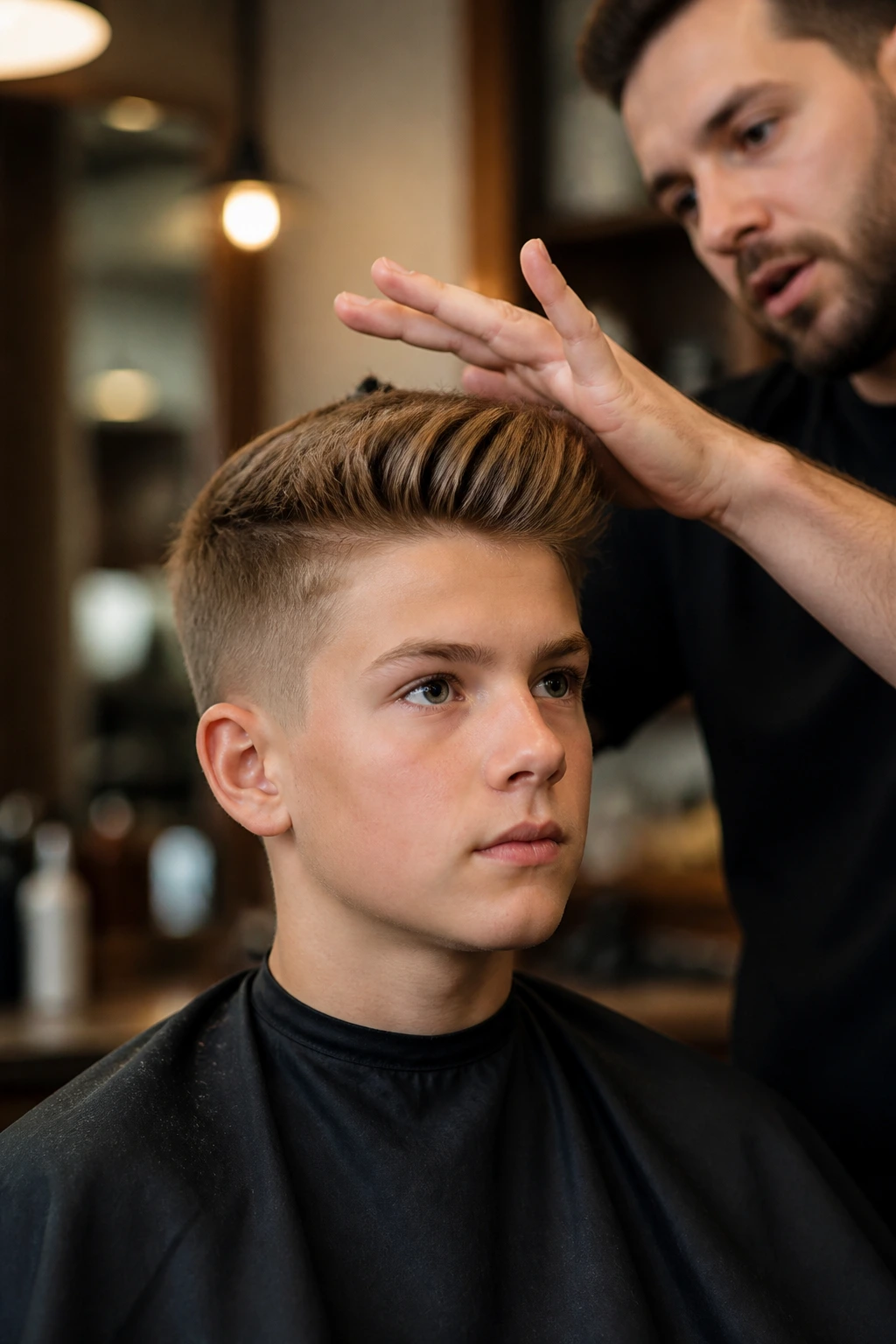
Bring reference photos, yes, but also say what the hair does on a normal Tuesday. Does it fall forward after 20 minutes? Does the crown stick up? Does the front split where it shouldn’t? That information is worth more than a photo taken under perfect lighting.
Ask for length on top, tighter sides, and texture without thinning the life out of it. Those words matter. Fine hair should usually be scissor-cut or point-cut on top, not aggressively razored. If a barber takes too much weight out of the crown, the quiff loses its base and starts looking wispy instead of lifted.
Be specific about the front. Say whether you want a soft brush-up, a side sweep, or a taller front. If you want something low-maintenance, say so. A boy who won’t use a blow dryer every morning needs a different cut than one who’s happy to spend three minutes shaping the front.
Common Mistakes That Flatten Fine Hair
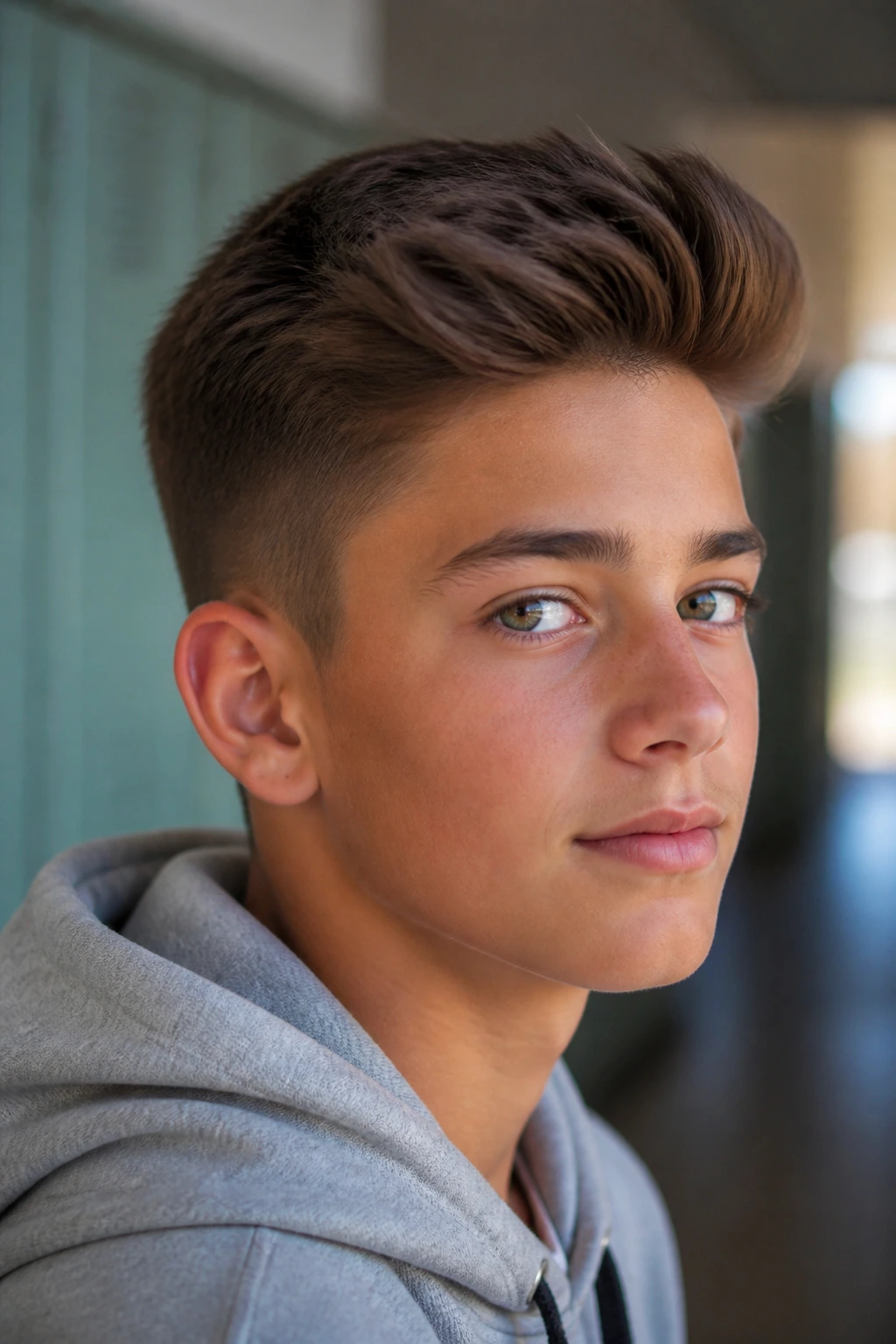
The first mistake is cutting the top too short. Short fine hair can stand up, but it can’t always become a real quiff. If the front is under about 2 inches, the style usually turns into a flat brush-up or a mild spiky cut. The fix is simple: leave more length at the hairline.
Another one is using thick, shiny product. Pomade can make fine hair look greasy and sparse at the same time, which is a strange but familiar disaster. Matte clay, powder, or light paste usually works better because it grips without separating the strands too much.
Then there’s skipping the blow-dryer. Air-drying leaves the roots exactly where they fell. That’s fine for some haircuts. It’s a problem for quiffs. If you want the front to stay up, you need to train it with heat and direction first.
Finally, thinning the crown too hard is a classic barber mistake with fine hair. The top may look airy in the chair, but a week later it can look patchy. Ask for texture, not over-thinning. Those are not the same thing.
Variations and Alternatives to Try
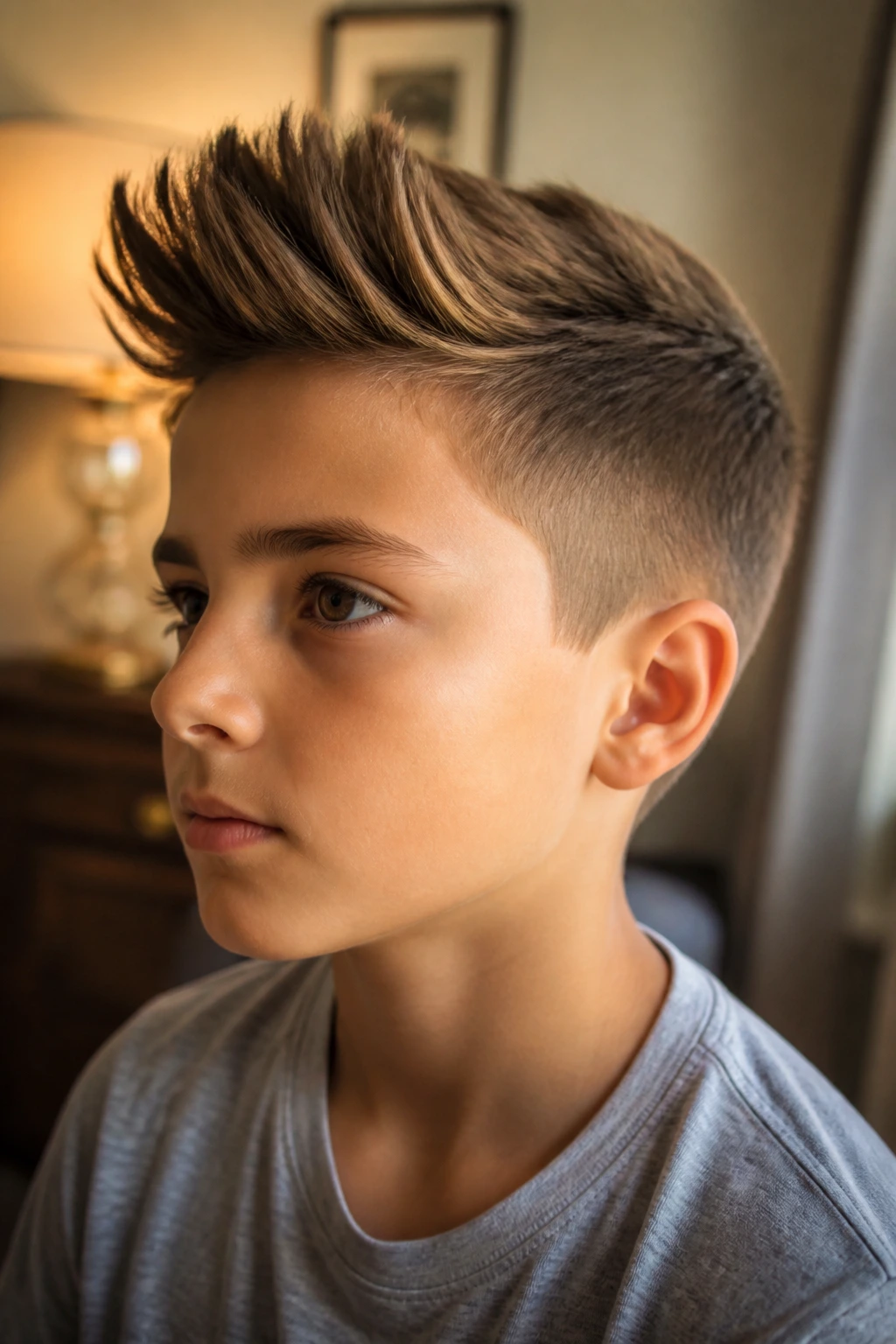
The School-Ready Taper keeps the front modest, the sides neat, and the whole shape easy to manage before class. It’s the best choice when the haircut needs to behave without a lot of touch-ups.
The Sharp Skin-Fade Version pushes the contrast harder and gives the top more visual punch. This works well when the boy wants a bolder look and is okay with regular trims.
The Soft Side Sweep is a quieter alternative if a full quiff feels too tall. It still lifts the front, but the shape leans a little across the forehead, which is useful for cowlicks.
The Sporty Faux Hawk puts the lift down the center and keeps the sides close. It’s a good answer for active boys who want something that stays together after running around.
The Longer Statement Quiff suits older boys or anyone with enough hair to play with a taller front. It needs more styling, but it gives fine hair a stronger silhouette when done well.
How to Keep the Shape Between Haircuts
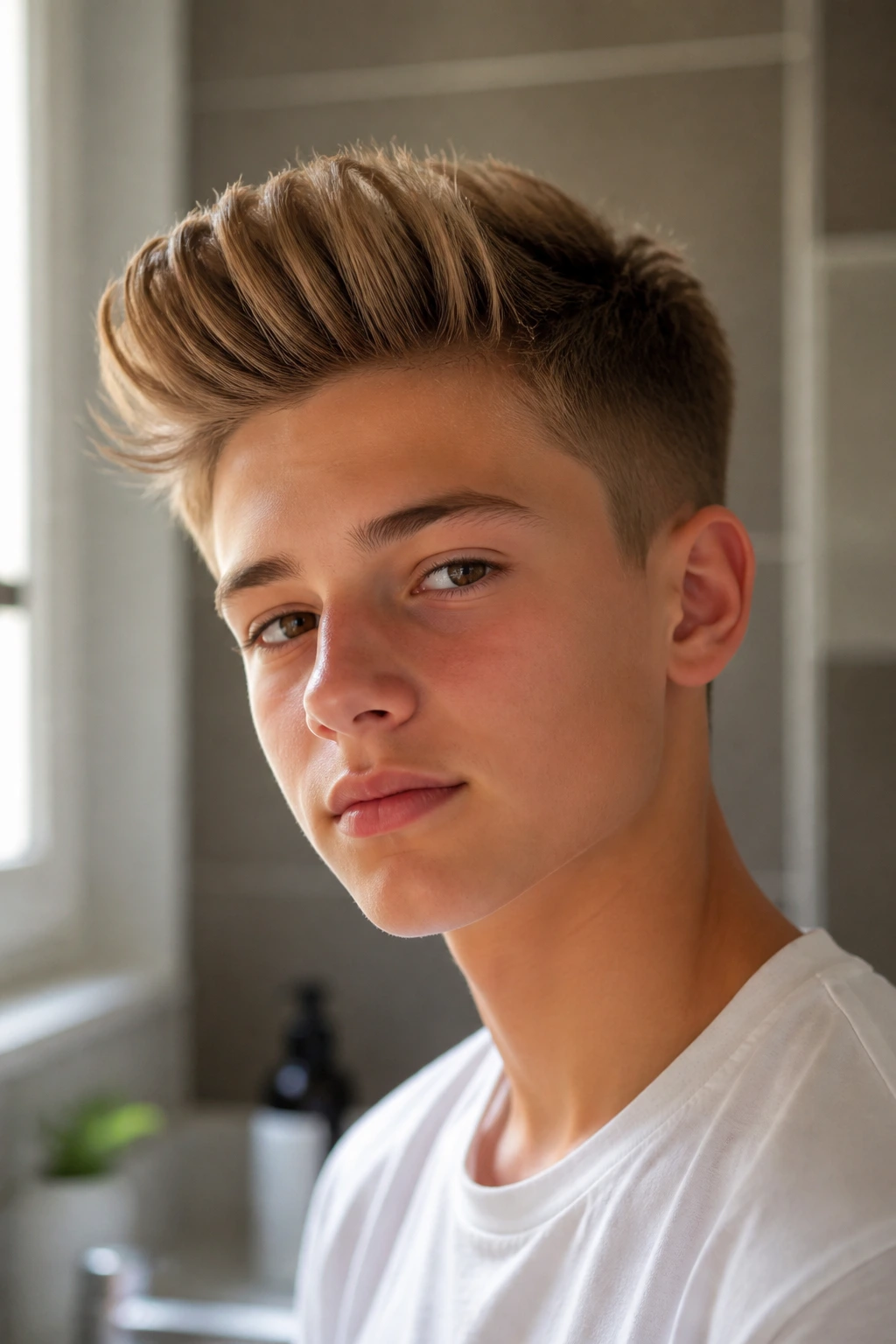
Fine hair grows out fast in a way that can be sneaky. One week it looks fine. Two weeks later, the front starts dropping and the sides puff out just enough to make the top seem weaker. A trim every 3 to 5 weeks keeps the balance where it should be.
Wash frequency matters too. If the hair gets coated in product every day, a light clarifying shampoo once in a while helps stop buildup from weighing it down. Don’t scrub the life out of it. Fine hair doesn’t need punishment; it needs a clean surface and a little grip.
At home, the easiest maintenance move is to reset the front with water and heat. A quick mist, a finger-comb, and 30 seconds with the dryer can bring the quiff back from the dead. If the hair is longer on top, sleep on a soft pillowcase and avoid flattening the front straight down. That tiny habit makes a difference.
Frequently Asked Questions
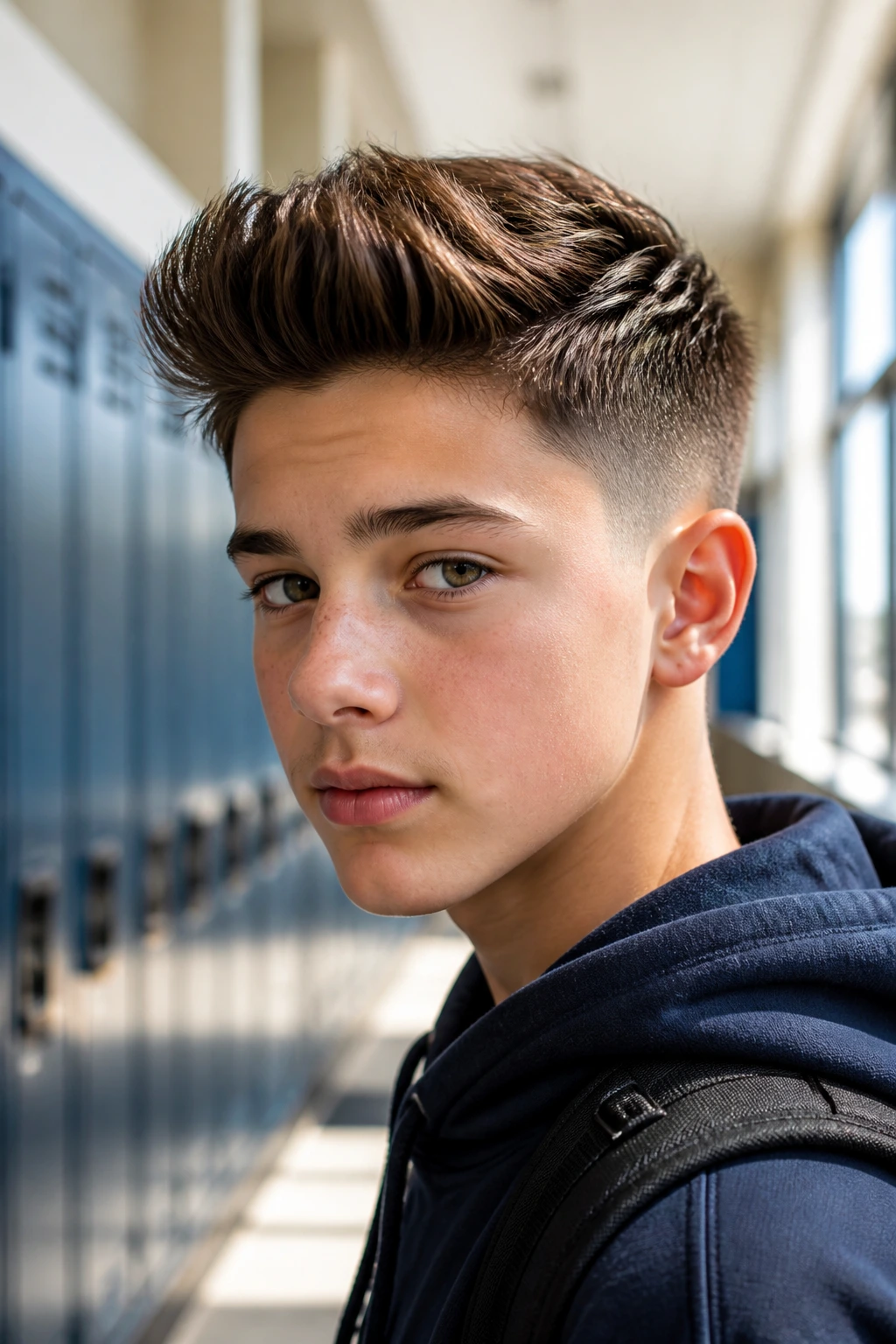
How long does fine hair need to be for a quiff?
Most fine hair needs at least 2.5 inches on top to make a believable quiff, and closer to 3 inches if you want height at the front. Shorter than that, the style usually becomes a brushed-up crop instead of a real quiff.
Is a fade or taper better for boys with fine hair?
A taper looks softer and grows out more gently, which is handy if you want a low-maintenance cut. A fade gives stronger contrast and can make the top look thicker, especially if the hair is very fine.
What product should a boy with fine hair use for a quiff?
Matte clay, light paste, or root-lift spray usually works better than shiny pomade. The goal is grip and shape, not shine. If the product makes the hair feel heavy or sticky, it’s too much.
Can a quiff work if the hair has a cowlick at the front?
Yes, but the hair has to be styled with the cowlick, not against it. A side-part quiff or a soft brush-up usually behaves better than a tall straight-up quiff, because the direction can work around the swirl.
How do you keep a quiff up all day at school?
Start with damp hair, blow-dry the roots upward, and finish with a small amount of matte product. If the front falls flat by lunchtime, the cut may be too short or the product may be too heavy.
Can boys with curly or wavy fine hair wear a quiff?
They usually can, and sometimes it looks fuller than straight fine hair because the bend adds body. The barber should leave enough length for the wave or curl to show, otherwise the texture gets clipped out.
How often should this haircut be trimmed?
Every 3 to 5 weeks is the sweet spot for most quiff styles on fine hair. Wait much longer and the sides lose their clean frame, which makes the top look thinner than it really is.
What if the quiff goes flat after a few hours?
Use less product near the roots and more lift during blow-drying. If it still drops, the top may need more length at the front or less bulk through the crown. Fine hair usually fails for one of those two reasons.
Keeping the Front Up
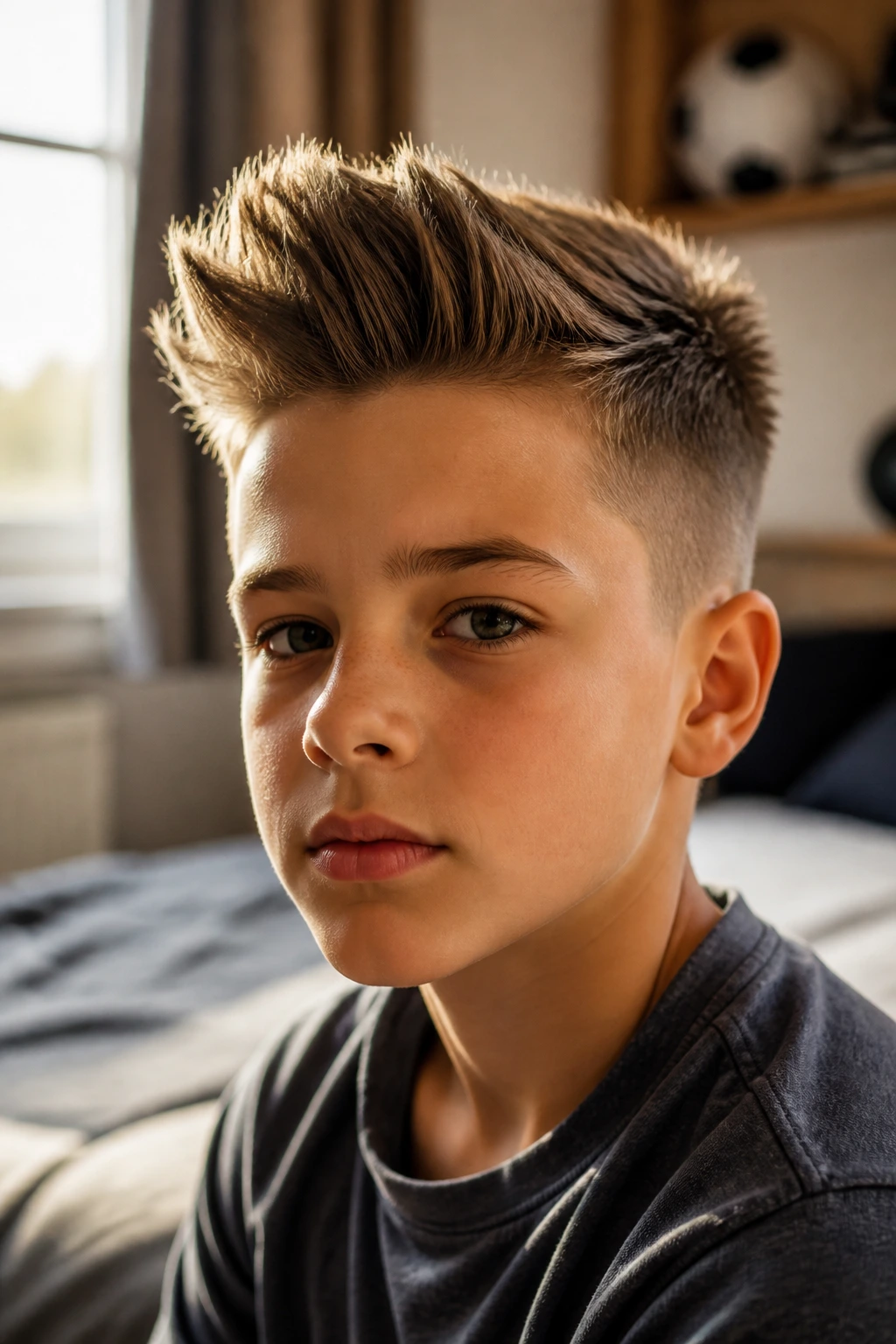
A good quiff on fine hair isn’t about forcing the hair to be something it isn’t. It’s about giving the front enough length, the sides enough cleanup, and the styling enough help to stay believable. When those three pieces line up, the haircut looks fuller than it ought to.
The best version is the one a boy can wear without fussing with it every half hour. Pick the cut that matches the hair, the routine, and the amount of morning effort that will actually happen. That’s where the good-looking quiff lives — not in the mirror for ten minutes, but on the head at 2 p.m. when the day has already started getting on with itself.