



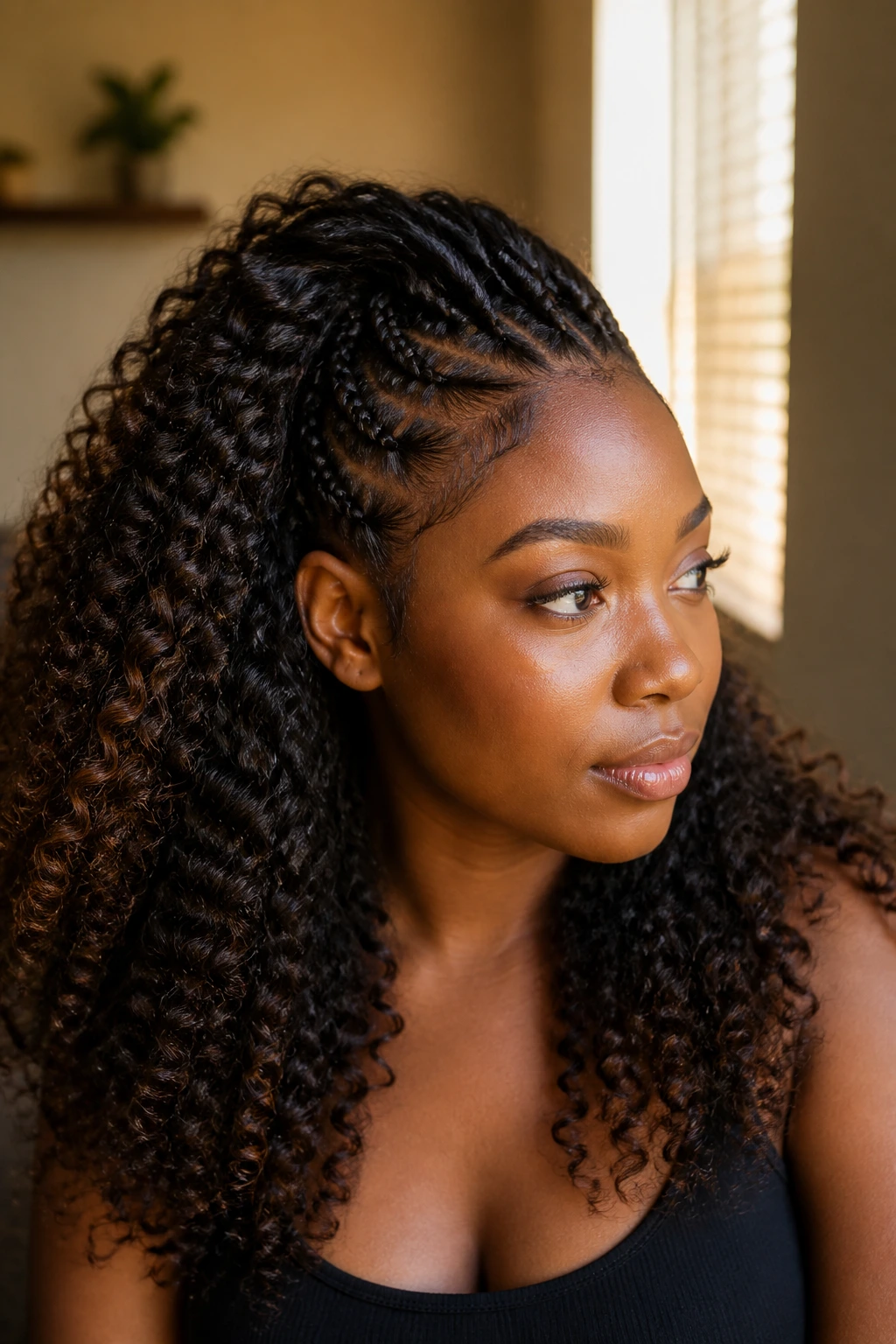
Half braids solve a very specific problem: you want the clean line and staying power of braids at the crown, but you do not want to bury the curls that make the style feel like yours. On Black women with curly hair, that balance can look polished fast — or it can look tight, bulky, and overworked if the parting is off by even a little.
The best half-braid styles do something I love: they give the front of the head structure and let the back keep moving. A good set can feel crisp at the roots, soft through the ends, and lively around the face instead of stiff. You get braid pattern, curl texture, and a little shape around the hairline without committing to a full head of braids that sits heavy for days.
What separates a good half-braid look from a frustrating one is usually prep, not talent. Stretched roots, a clean grid, the right amount of mousse, and a decision about how defined you want the loose curls to be — those details matter more than whether the braid is called cornrow, feed-in, goddess, or knotless. And yes, the right style can work on shoulder-length curls, longer coils, blown-out hair, or a fresh install with added hair.
Why This Collection Earns a Spot in Your Rotation
-
Less Weight at the Crown: Only the front or top section gets braided, so your scalp isn’t carrying a full install from ear to ear.
-
More Curl Visibility: The loose section stays in the frame, which means your texture still reads as the main event instead of the braid pattern swallowing it.
-
Flexible Length Options: Half braids work on short natural hair with added pieces, shoulder-length curls, stretched coils, and long hair that needs a cleaner shape.
-
Faster Chair Time: Fewer braids usually means a shorter install, especially if you’re doing medium or jumbo rows instead of tiny parts.
-
Easy to Dress Up or Down: Beads, cuffs, a side part, a swooped bang, or a big puff can push the same base style in a completely different direction.
-
Good for In-Between Hair Days: When the front starts frizzing but the back still looks good, half braids keep the style alive without forcing a full redo.
1. Center-Part Feed-In Half Braids with Loose Curls
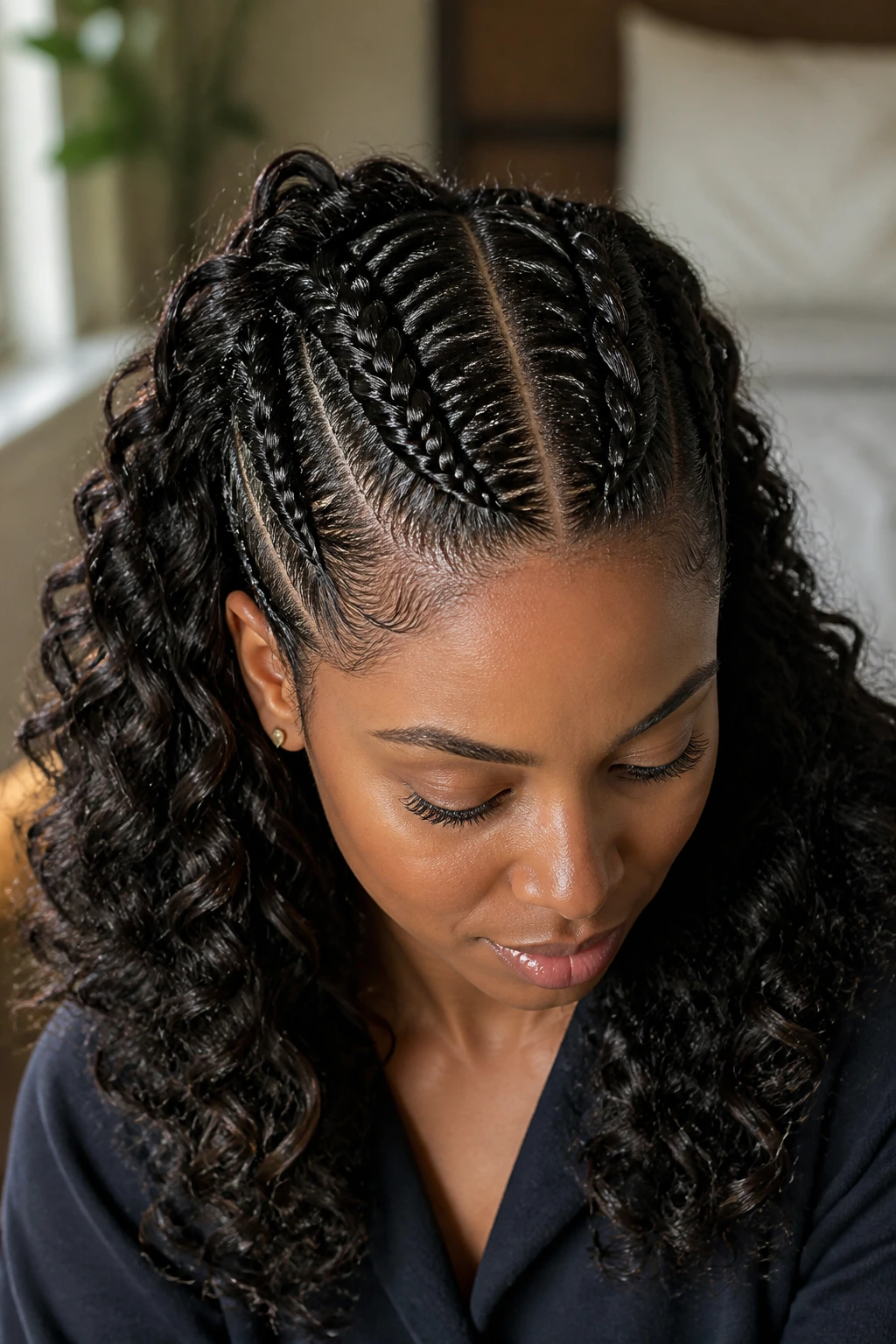
A clean middle part and two neat feed-in rows are where this style earns its keep. The braids sit close to the scalp, then stop before the back section gets overworked, which leaves the curls free to do their thing. I like this look when the hair is already stretched a bit; it keeps the front from puffing up by lunch.
Why It Reads So Clean
The part line does most of the visual work here. If the middle part is straight and the feed-ins are gradual, the style looks deliberate instead of busy, and the loose curls balance the symmetry with some softness.
The trick is to braid tight enough to hold the line, but not so tight that the front turns shiny and sore. That first inch matters. After that, let the curl section breathe.
2. Deep Side-Part Half Braids with a Swept Curl Fall
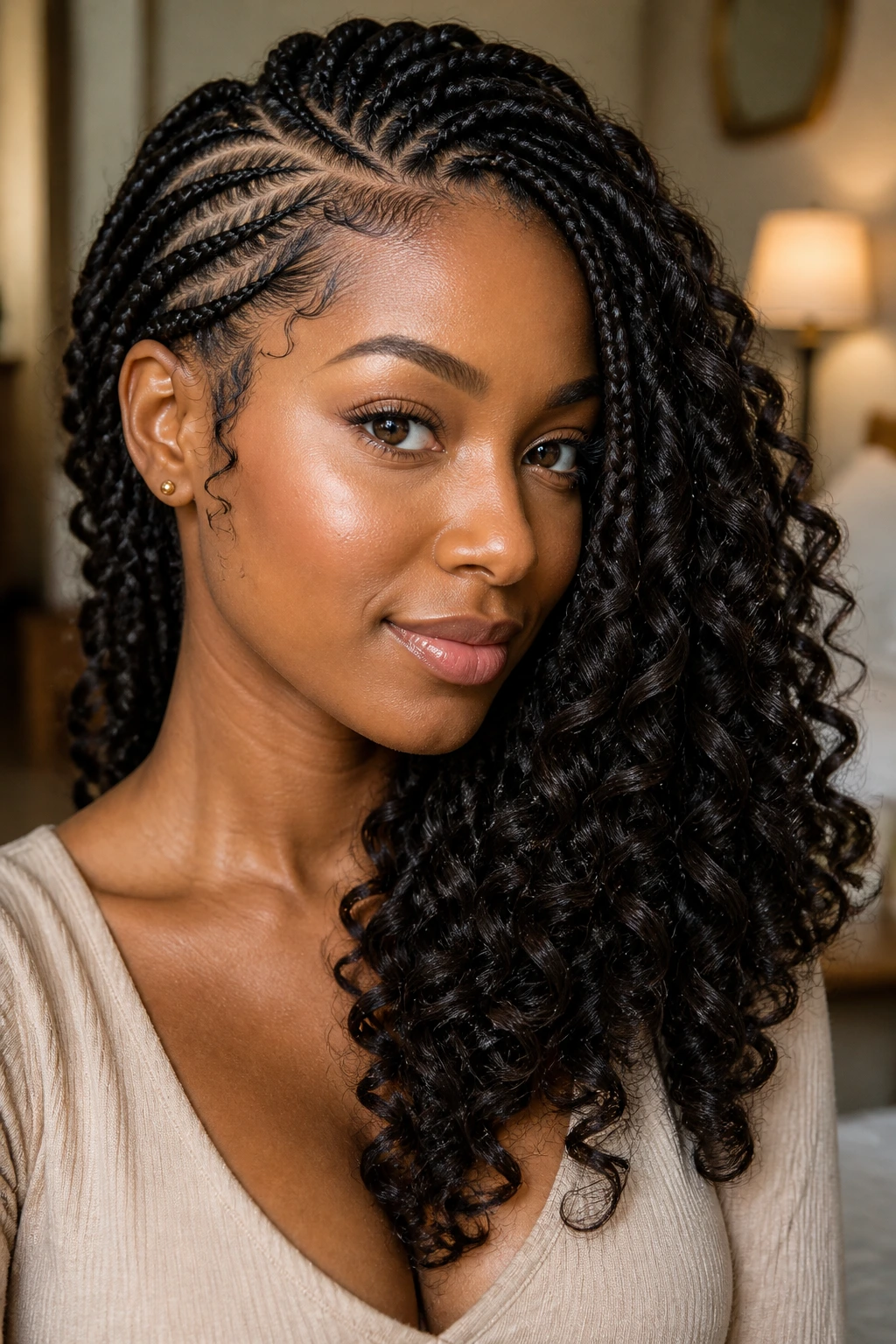
Want a style with a little attitude? Push the part over hard and let the braids sweep in one direction before they release into curls. The side part changes the whole mood, especially on dense curly hair, because it shifts the volume off-center and makes the face look longer.
What Makes It Different
This version works best when the curls are a touch fuller than the braids. The asymmetry is the point, so do not make both sides compete for attention.
A side part also gives you room to tuck one side behind the ear with a pin or a cuff. That tiny adjustment makes the style look intentional on days when the curls are getting a little loud.
3. Jumbo Cornrow Half Braids with Big Texture
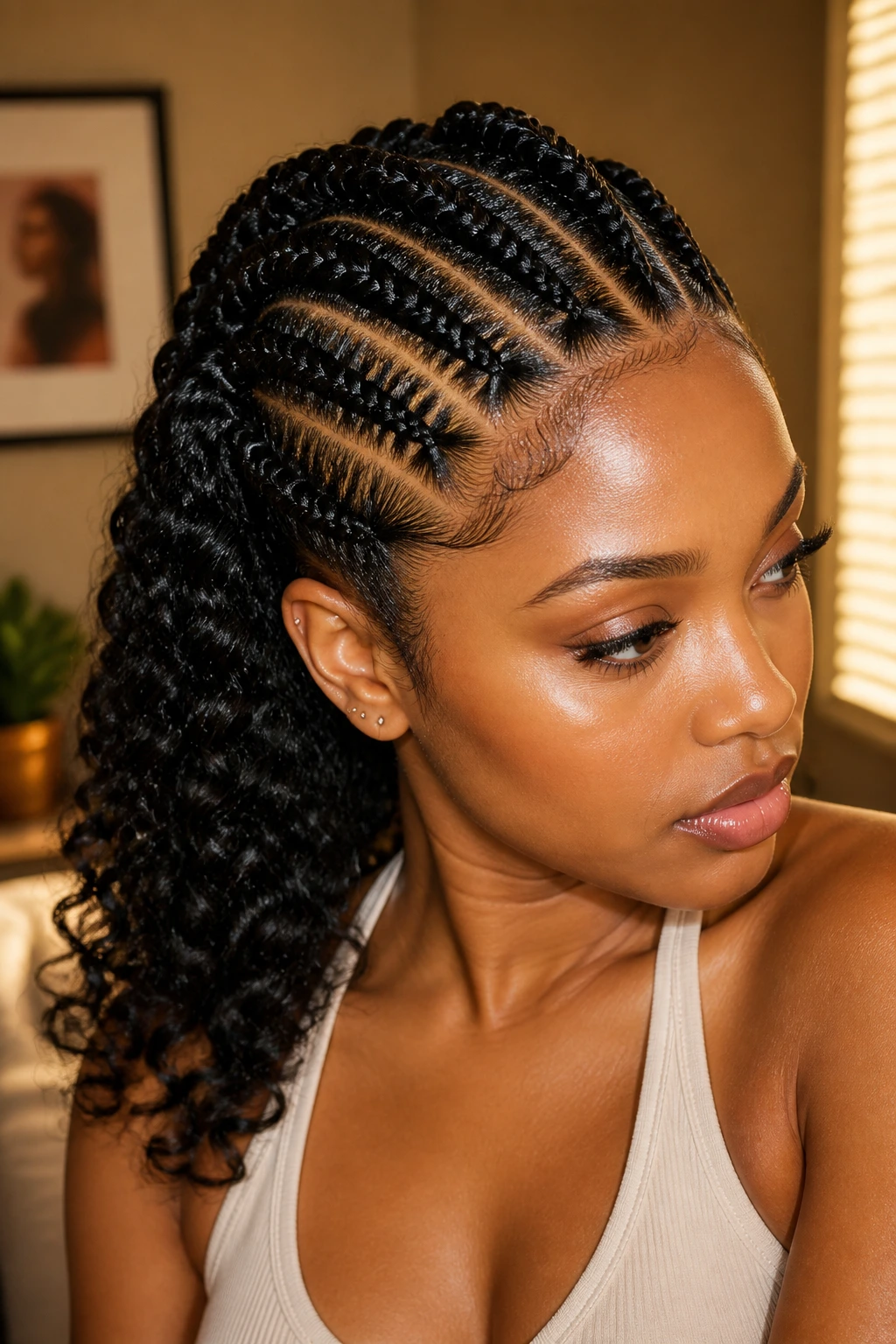
Jumbo rows are the move when you want something bold without spending forever in the chair. They show off scalp pattern fast, then hand the whole scene over to the curls in back. On coily hair, this version has a nice blunt honesty to it. No fuss. No tiny parting grid that eats your afternoon.
Best For
- Thick hair that needs a stronger visual frame
- Longer wear with less manipulation
- People who want braid detail without a full head of braids
Keep the back section big and fluffy. If you flatten the curls too much, the whole look loses its shape. A light mousse set after braiding helps the contrast stay sharp.
4. Stitch Braids with a Curly Waterfall
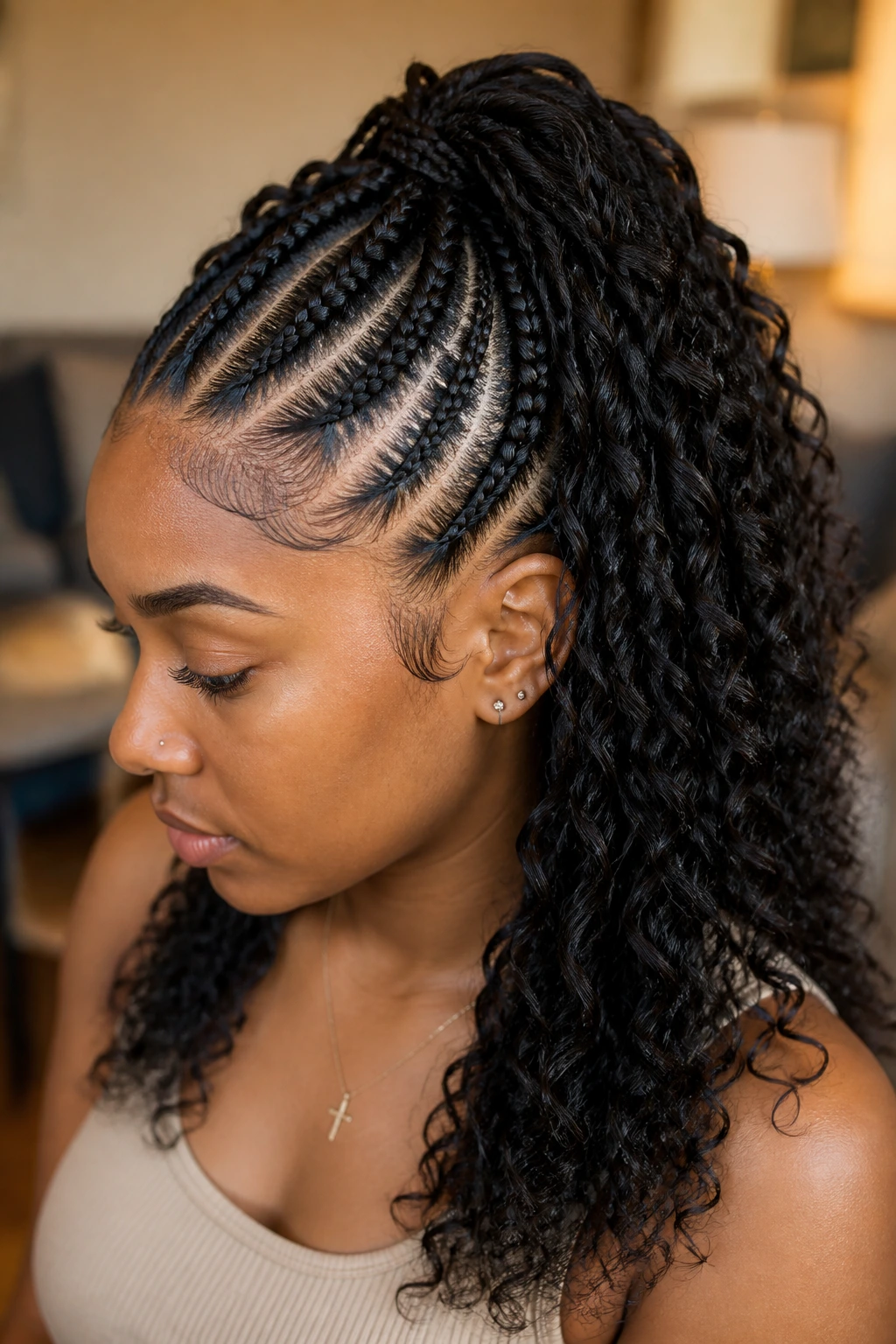
Stitch braids have that crisp, segmented look that feels almost architectural, and half-up placement keeps them from taking over the whole head. I like this style on hair with enough density to hold a clean line, because the stitch pattern looks best when each section is neat and even.
The back curls should fall like they were left there on purpose. Not messy. Not overstyled. Just loose enough to move when you turn your head.
A Small but Important Note
If your hairline is delicate, keep the stitch tension softer near the temples. The braid can still look sharp without pulling the front like it’s under contract.
5. Fulani-Inspired Half Braids with Beads and a Curly Length
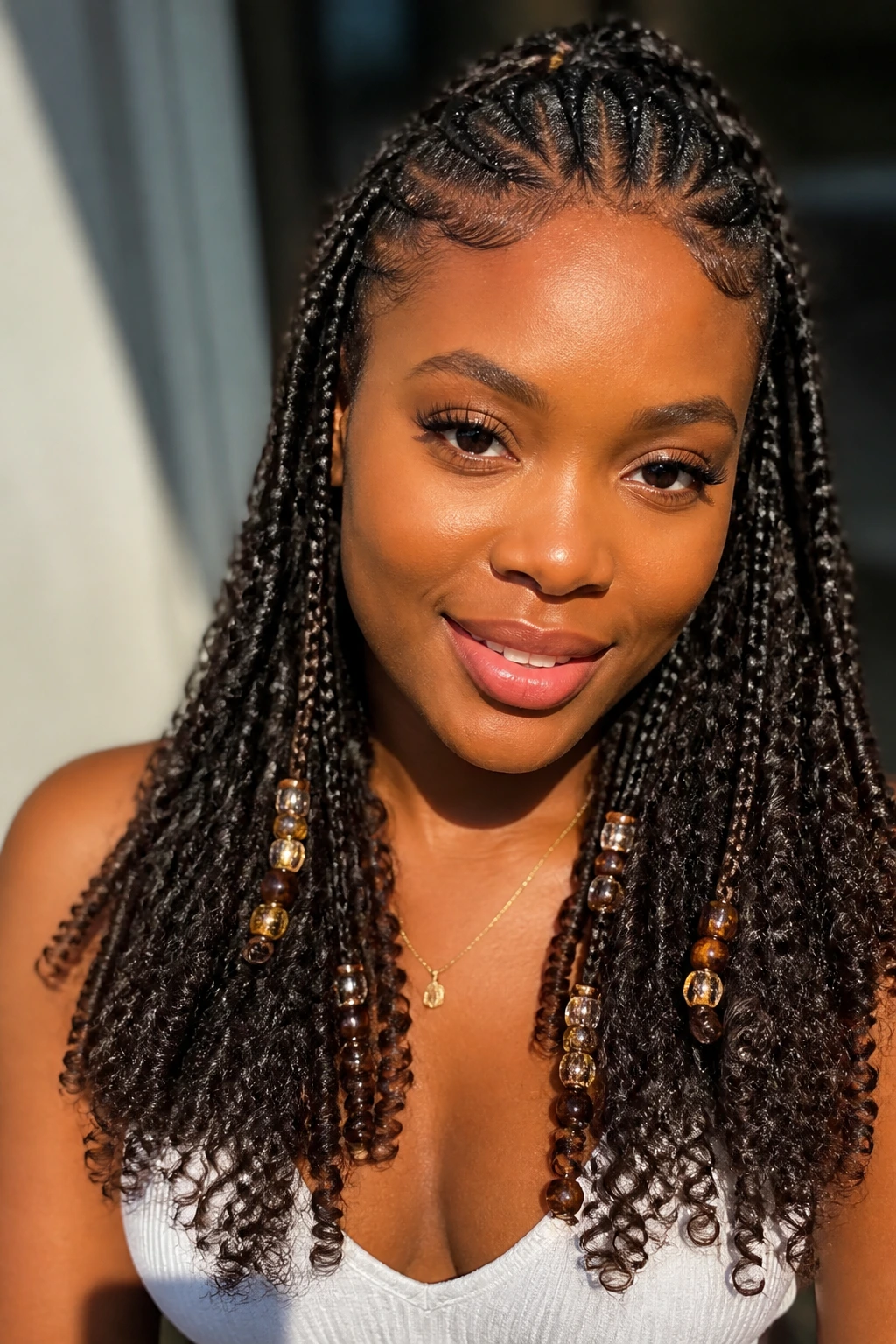
Beads change the whole personality of half braids. A few centered pieces, maybe one or two small braids at the temple, and a row of beads at the ends can make the style feel finished without making it heavy. The loose curls underneath keep the look from turning too stiff or too ceremonial.
The best version uses beads with some restraint. You want the sound, the movement, the little click when they hit each other — but not so many that the style starts dragging the front downward.
How to Wear It
Choose one bead color family and stick to it. Brass, black, wood, clear — any of those works. Mixing five finishes in one head usually looks like you reached into a craft bin.
6. Boho Half Box Braids with Curly Pieces
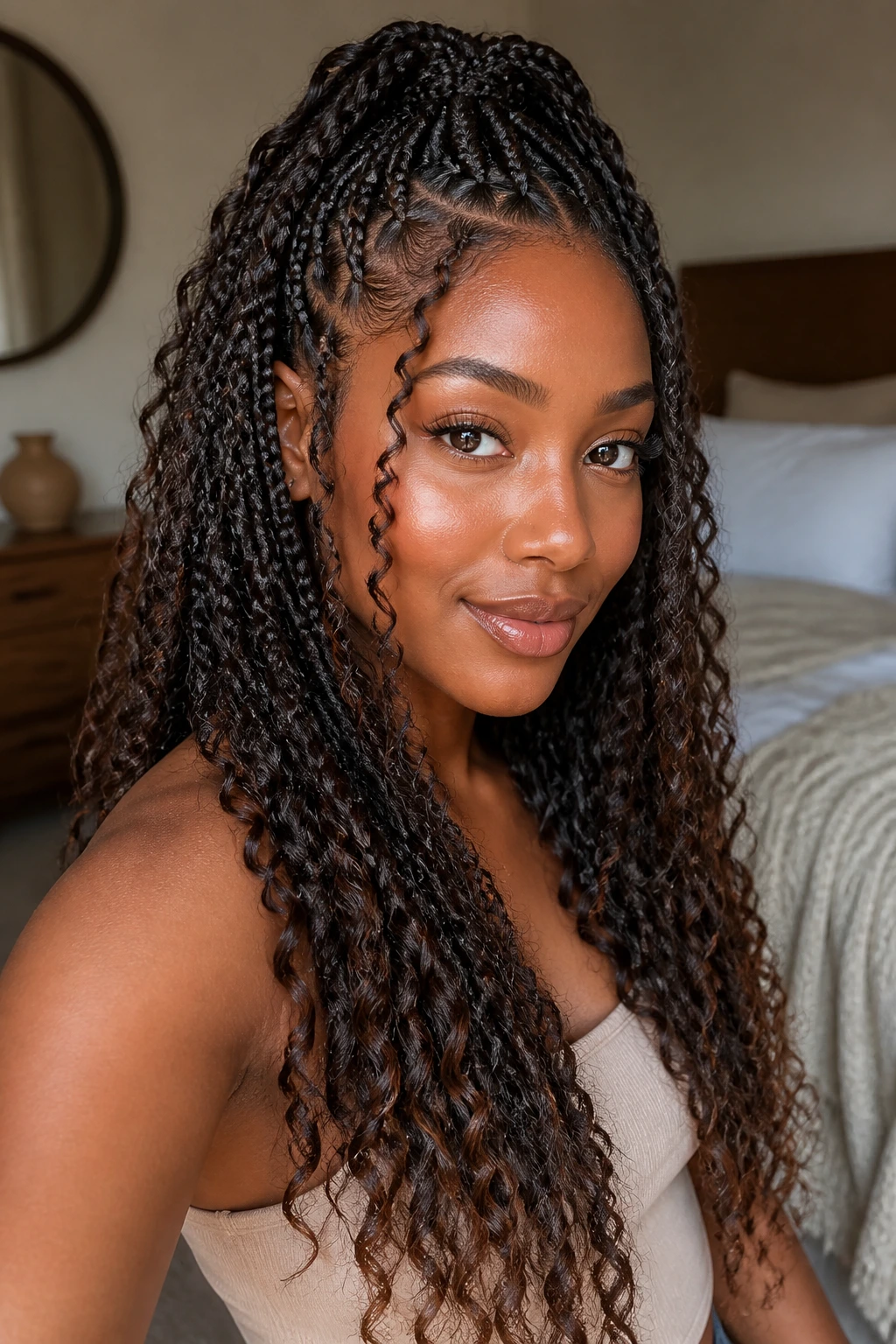
This is the style for people who like structure but refuse to give up softness. A few box braids at the crown or top rows, then curly pieces left free through the lengths, make the hair look fuller without feeling overbuilt. On curly Black hair, the mix of textures is what makes it interesting.
The best boho versions are a little imperfect. The loose pieces shouldn’t look curled by a machine. They should sit like they belong there.
Why It Works
Box braids keep the base orderly, while the curly pieces stop the look from going flat. If your own curls already have some spring, this style blends beautifully because the added texture doesn’t fight the natural one.
7. Half Braided Ponytail with Curly Ends
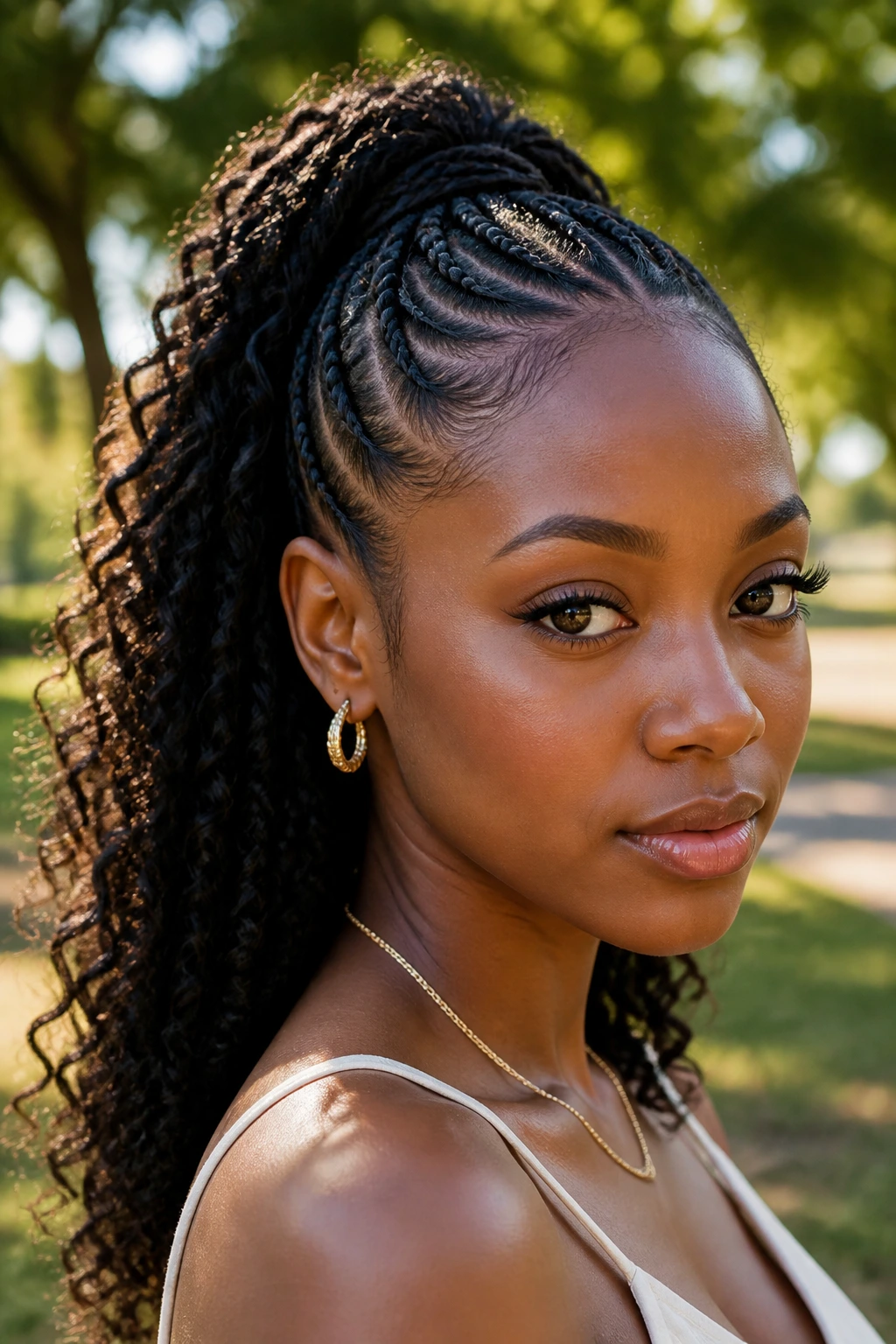
This one has lift. The braids pull back into a half ponytail, and the loose curls spill from the elastic point or from the back section, depending on how you build it. It’s a good choice when you want your face open and your curls visible.
A half ponytail can look sleek or playful. The difference comes down to placement. Put it high for a sharper silhouette. Put it lower if you want the curl section to sit around the shoulders instead of at the crown.
Pro Move
Wrap a small braid or a thin strand of hair around the elastic. It hides the rubber band and makes the style look cleaner from the back, which is where many half ponytails fall apart.
8. Braided Bangs with Shoulder-Length Curls
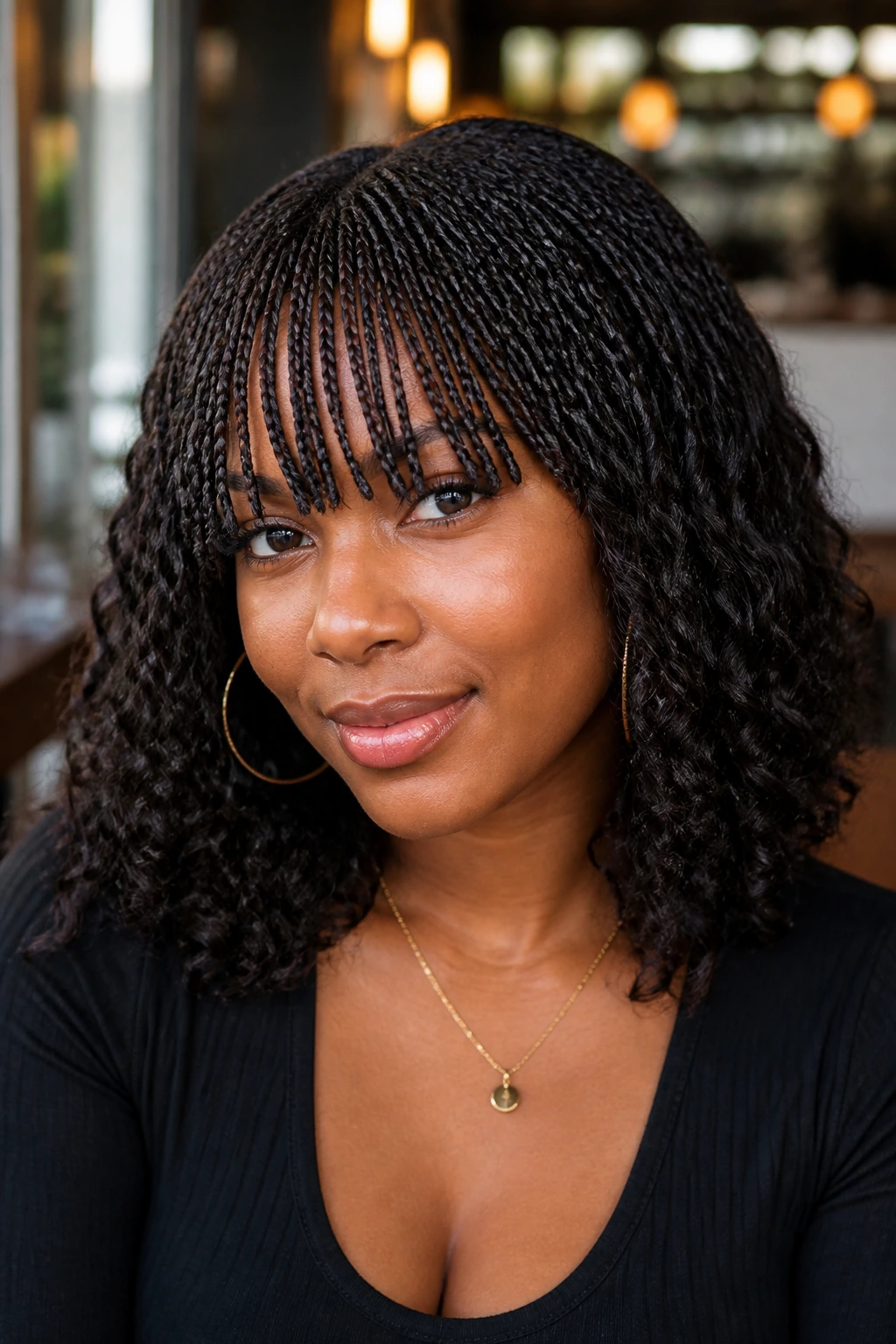
Braided bangs are underrated. They give you the face-framing control of braids without forcing the whole front into one severe block. With shoulder-length curls underneath, the style feels light and a little flirtier than a full braided front.
I like this best when the bangs are not too short. Let them graze the brows or sit just above them. If they’re too tight and too short, you spend the day tugging them into place.
Watch the Balance
The curls should sit below the cheekbone line so the bang section has something to contrast against. Too much curl volume at the front makes the braid detail disappear.
9. Zig-Zag Parts and Soft Curly Ends
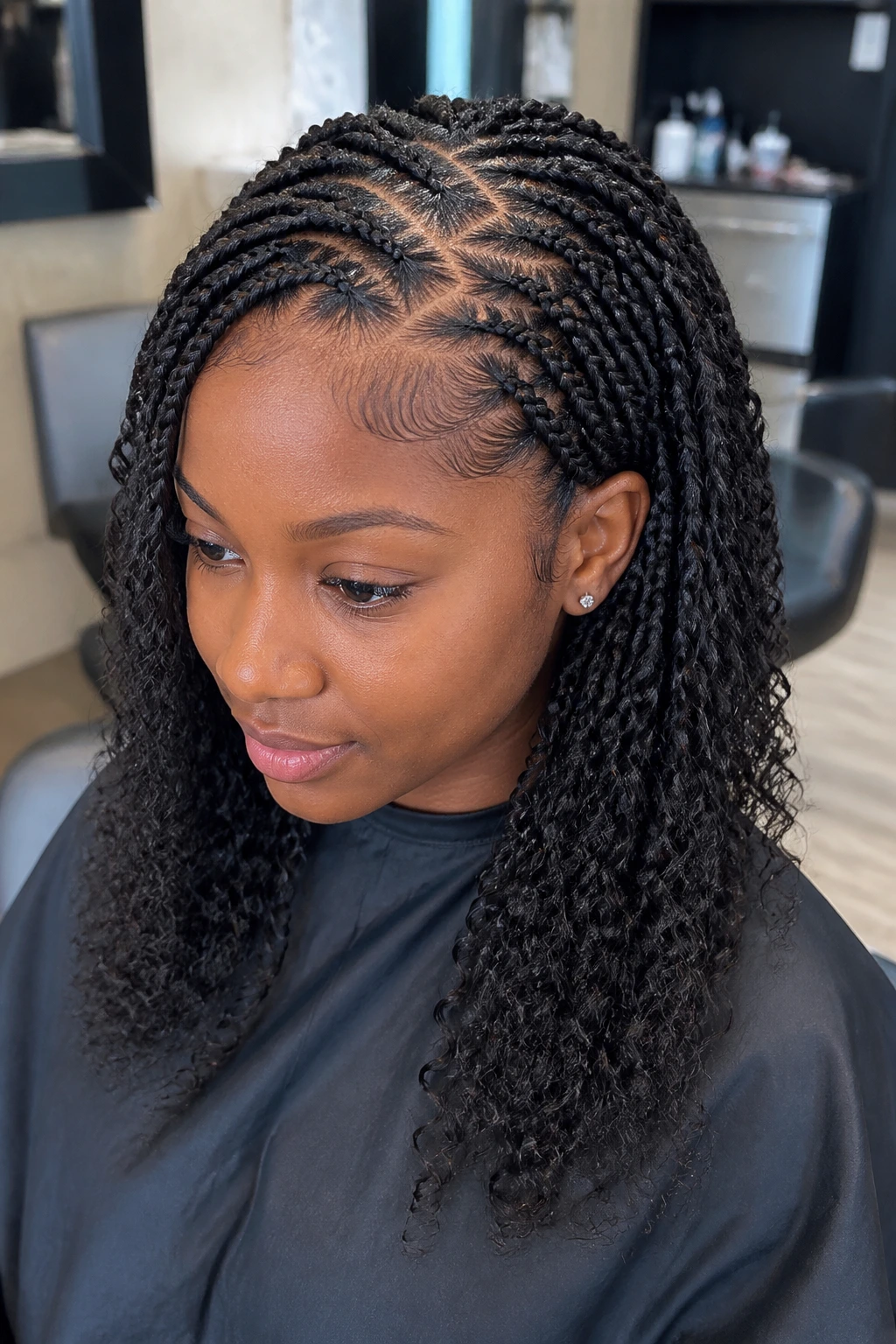
A zig-zag part is one of those details that changes the whole mood without adding more hair or more time. It gives the braid pattern movement before the curls even show up. On textured hair, the part itself becomes part of the style, not just a technical step.
This look suits people who want something playful but not loud. The lines are visible up close, and the curls give it a softer finish than straight-back rows would.
One Honest Warning
Zig-zags can get sloppy if the parting comb is dull or if the sections keep collapsing while you braid. Take your time. A neat zig-zag is a detail; a jagged one just looks rushed.
10. Crown Braids with a Wide Curly Halo
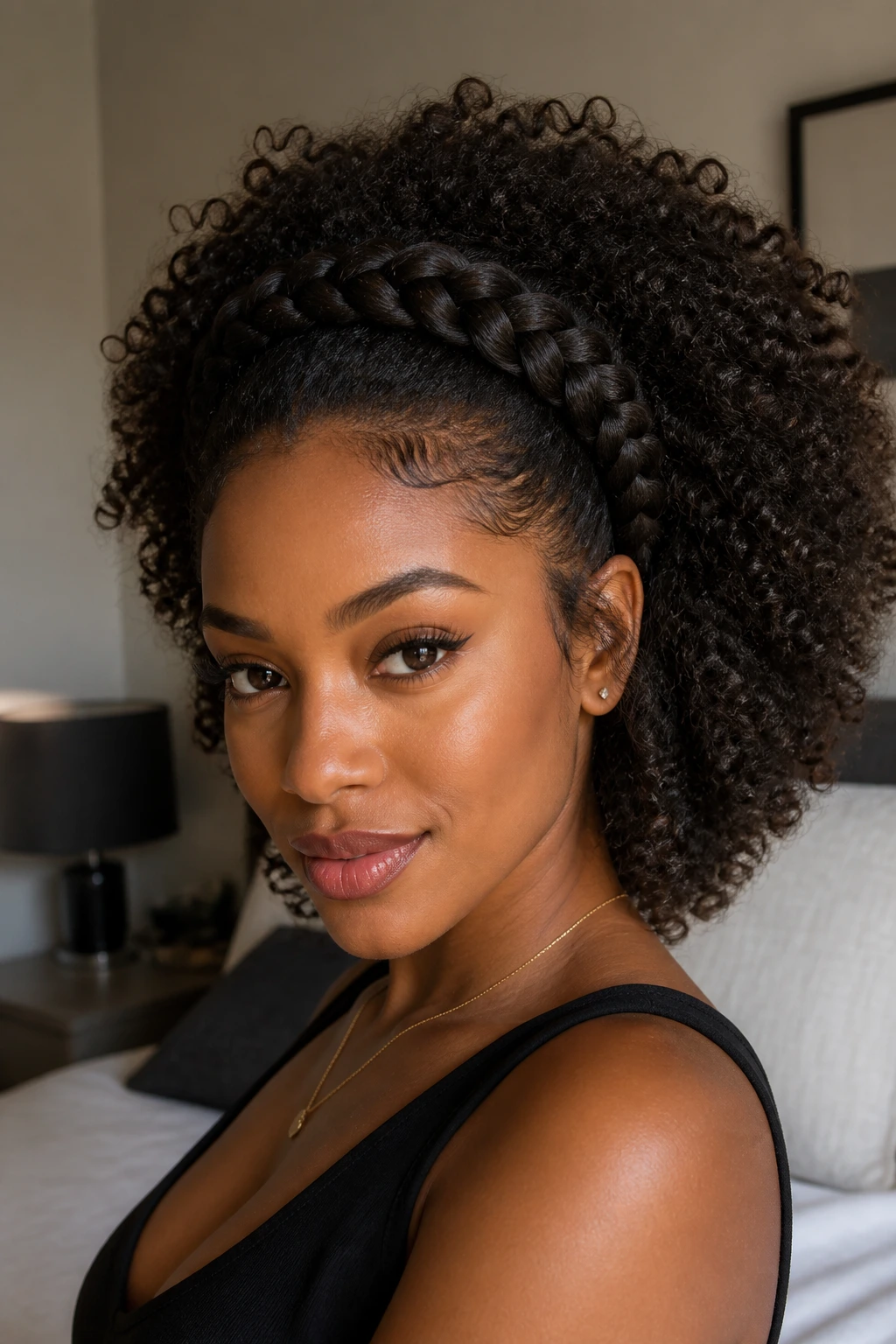
When the braids circle the front like a crown, the loose curls become a halo around the head. It’s a pretty shape, yes, but what I like most is the way it controls volume without flattening everything into one plane.
This is a smart choice for curly hair that tends to expand at the sides. The crown gives you a visual anchor, and the free curls help the style stay soft instead of severe.
How to Keep It From Looking Too Tight
Leave a little space in the crown. If the braids are pulled too flat, the style can look helmet-like. A slightly lifted braid line keeps the halo effect alive.
11. Braided Mohawk with Fluffed-Out Curls
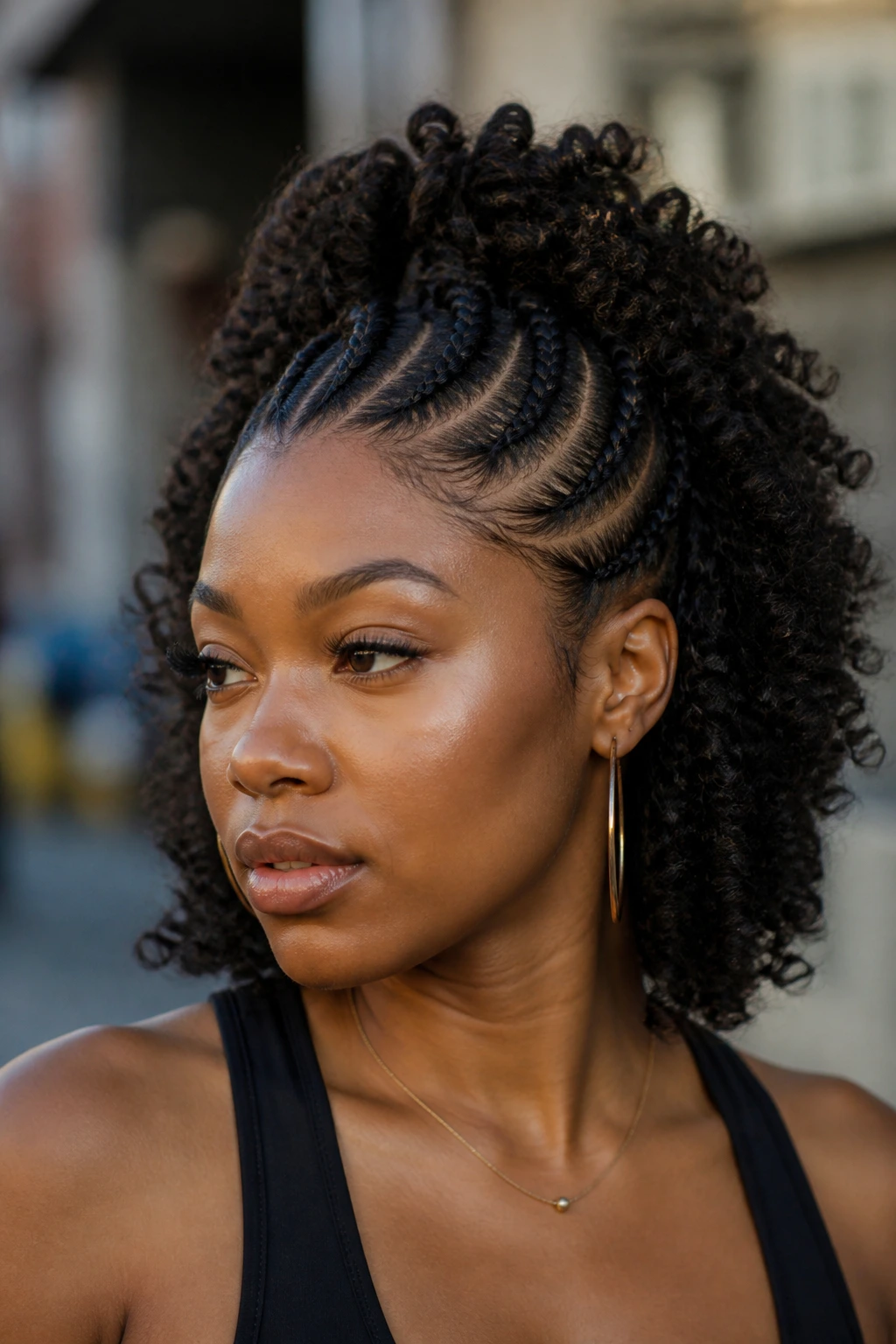
A braided mohawk half style puts the braid pattern down the middle or slightly off-center, then leaves the sides and back full and curly. It has edge, but not the kind that gets stiff. The curls keep it from looking too hard.
I reach for this on hair that has good density because the side volume helps frame the braid ridge. If your hair is finer, use a little more root mousse and less oil so the top does not collapse.
Why It Hits
The mohawk shape creates height without needing a full updo. That matters when you want drama at the crown but still want your curls brushing your shoulders.
12. Twin Dutch Braids into Loose Volume
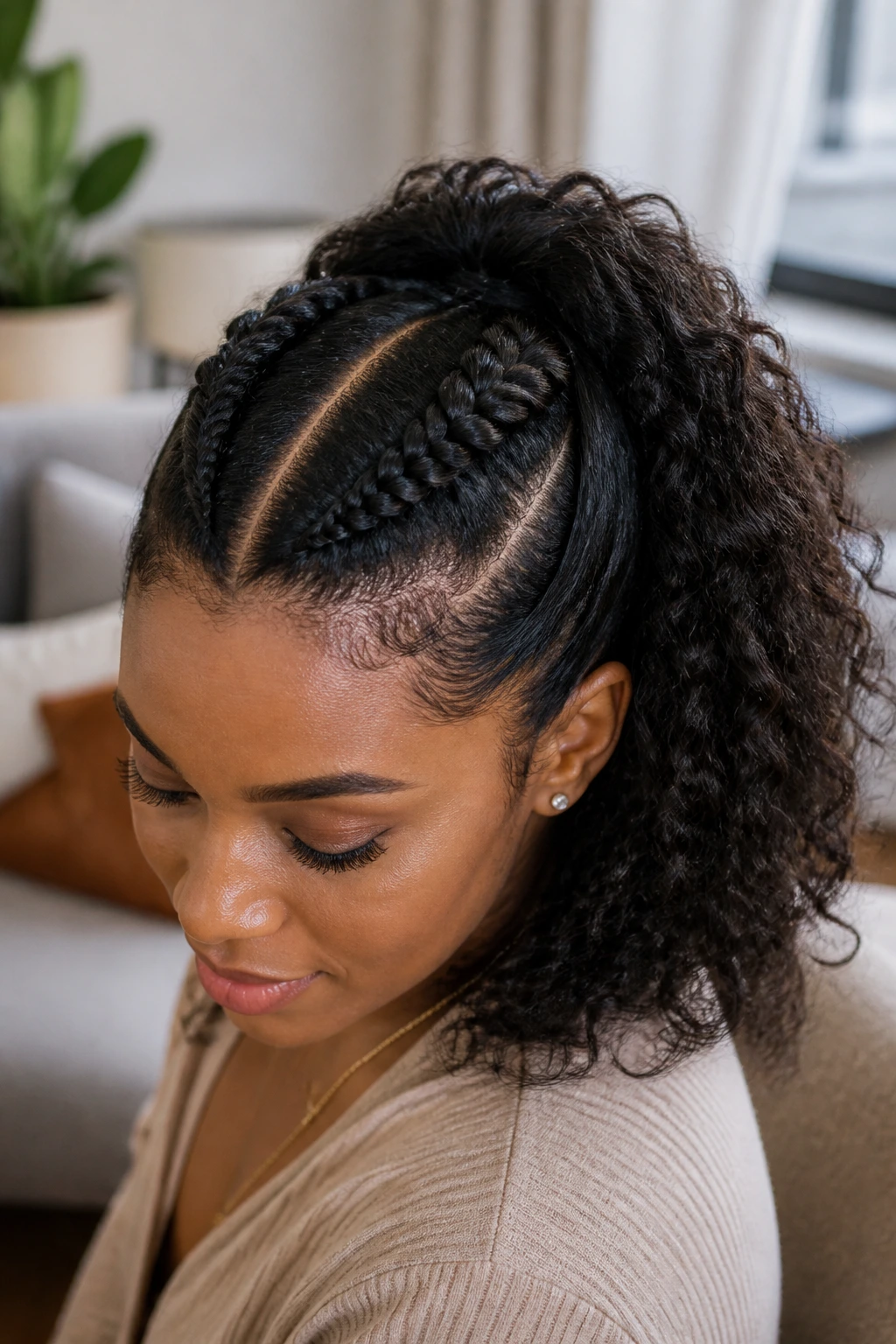
Two Dutch braids feeding back toward loose curls are a clean, sporty option that still feels feminine on curly hair. The braid rows sit visibly on top of the hair instead of disappearing into it, which gives you texture contrast right away.
This style works best when the loose section is fluffy rather than stretched. A stiff curl section makes the braids look disconnected. Soft volume ties the whole thing together.
Best On
People who want a style that stays put through a long day. Dutch braids grip well, and the loose ends are easy to refresh with a mist of water and leave-in.
13. Knotless Half Braids with Face-Framing Pieces
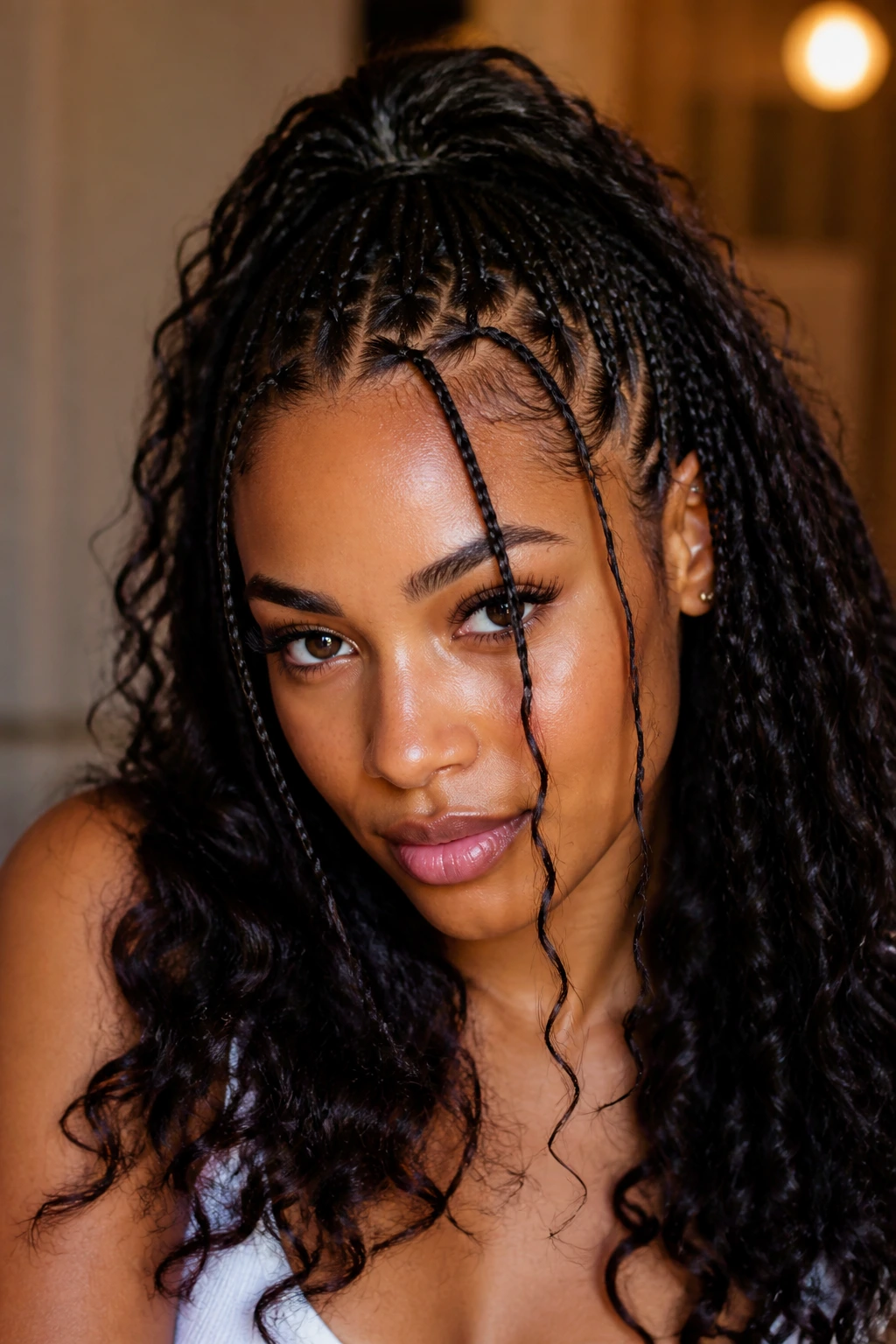
Knotless braids are kinder to the scalp, and in a half style that comfort matters. The braids start small and feed in gradually, so the front doesn’t have that heavy knot sitting on the root. Leave two or three face-framing pieces out, and the whole look softens fast.
The face-framing strands are not decoration. They stop the braid line from feeling too sealed off.
A Small Preference
I like this style with medium-sized braids rather than micro ones. You get the clean knotless look, but the install doesn’t drag on and the parts stay easier to maintain.
14. Triangle-Part Half Braids with a Clean Grid
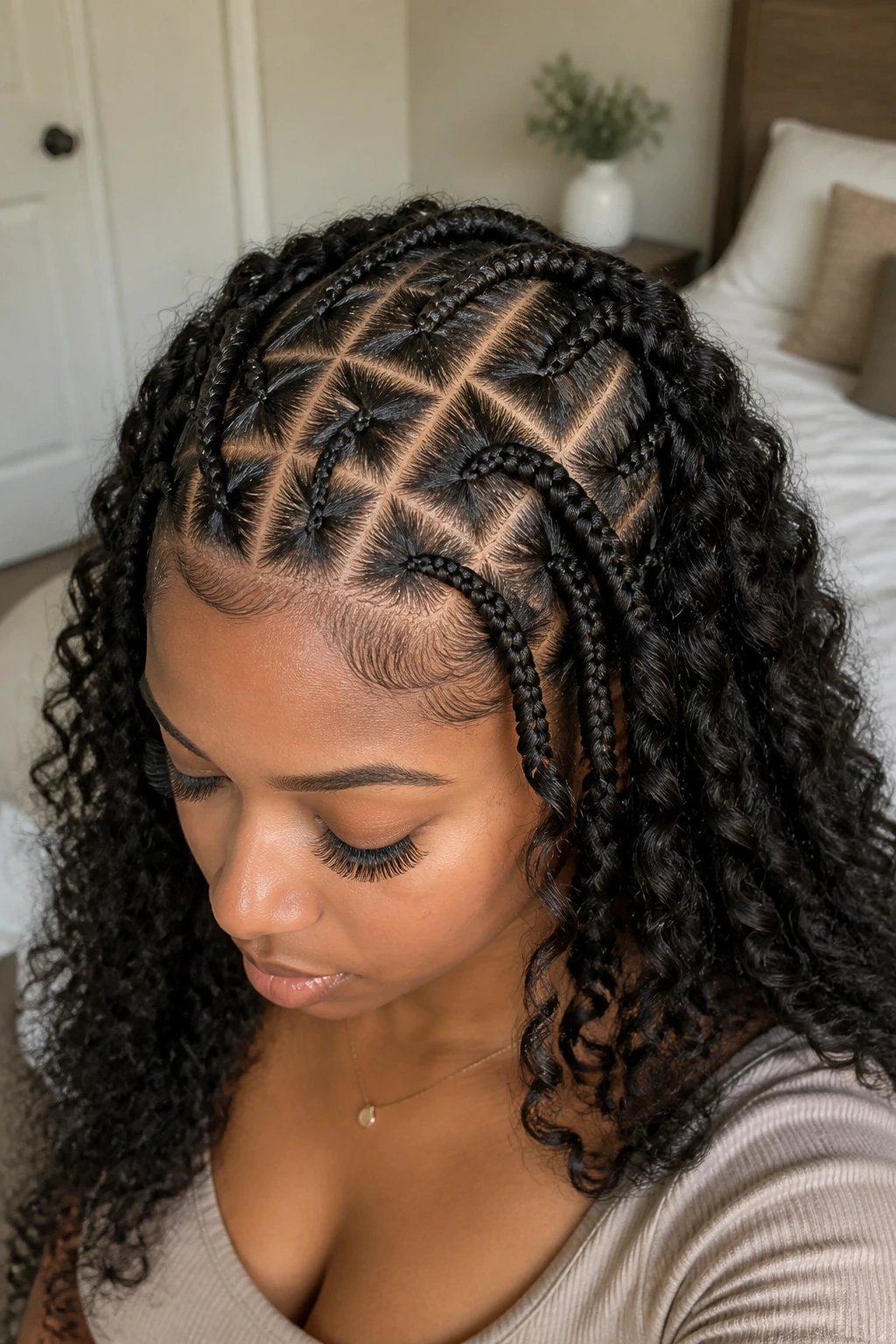
Triangle parts are for people who care about detail. Each section has a sharper shape, so the braid pattern looks more finished before you even get to the loose curls. On curly hair, those triangles create enough visual interest to carry the front section on their own.
The style reads best when the parts are crisp and the braid size stays consistent. If one triangle is huge and the next one is tiny, the whole grid starts to wobble.
When to Choose It
Pick this when you want the look to hold up in photos and in person. The geometry is strong, and the curls soften the harder lines just enough.
15. Micro Braids at the Front with Big Curly Length
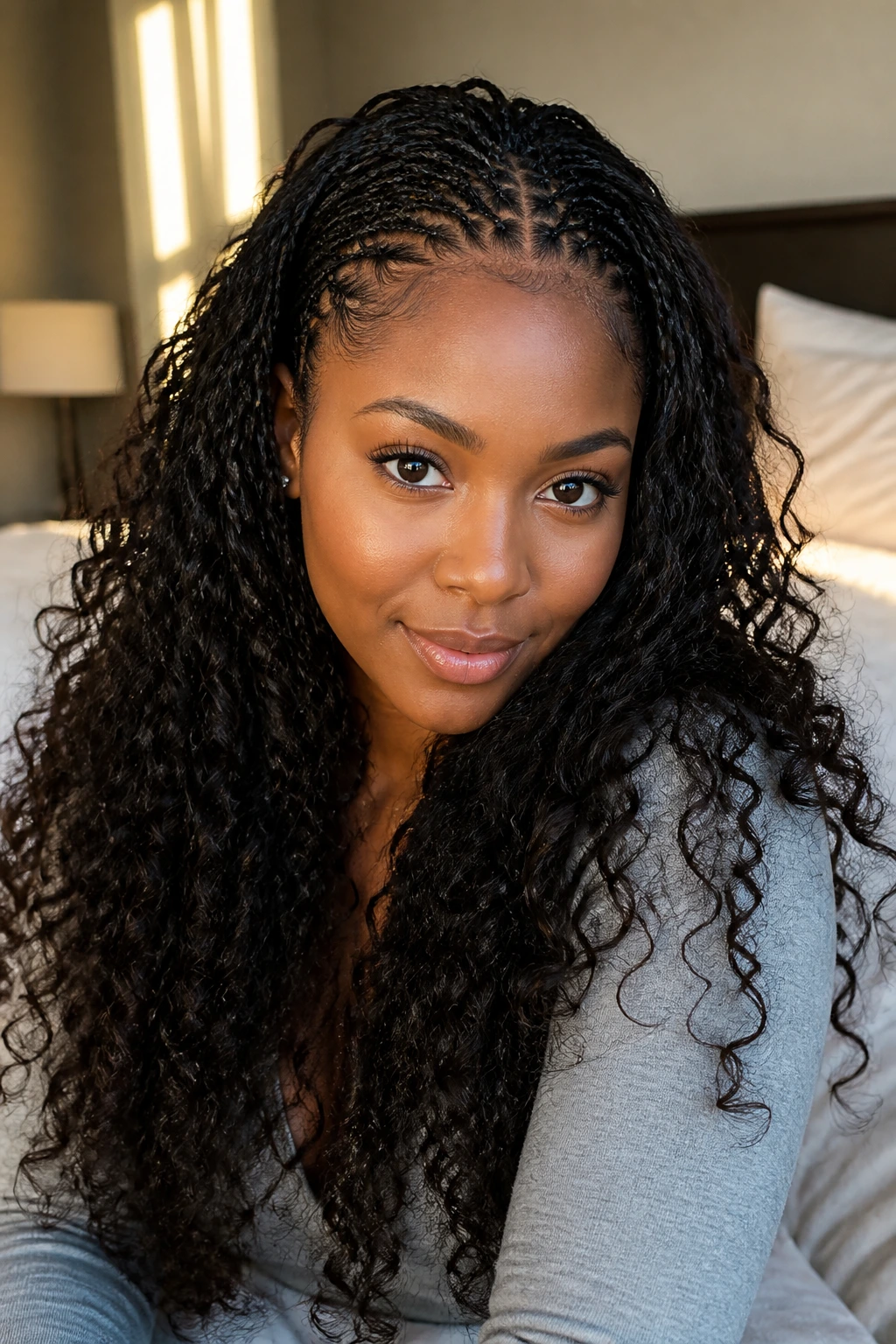
Micro braids at the hairline can be gorgeous if you keep the tension sane. They give you tiny detail up front, then the loose curly length takes over and makes the style feel rich instead of busy. I like this most on longer hair or on installs where the front needs a little more precision than the back.
The key is spacing. Micro braids should not crowd each other so tightly that the scalp looks shiny and sore.
H3: What Makes It Work
The micro detail gives the front area texture and control. The big curly length prevents the style from feeling too intricate or precious.
16. Goddess Braids with Scattered Curls
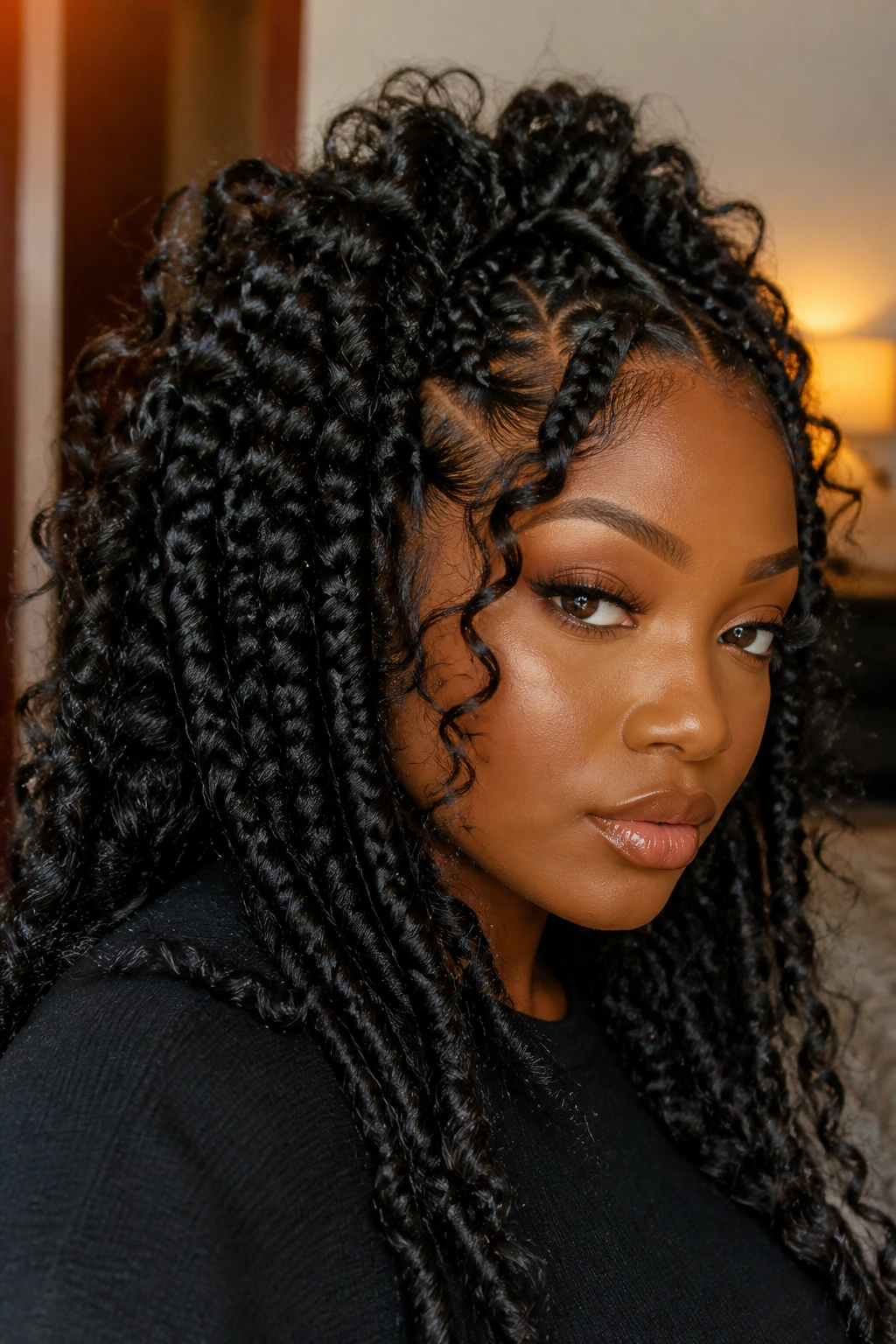
Goddess braids are thick, soft, and a little dramatic in the best way. Add scattered curls through the loose half and the whole look turns romantic without becoming sugary. This is one of my favorites when the hair is dense enough to hold a larger braid line.
The braid itself carries the structure. The curls carry the mood. That split is what keeps the style from feeling overloaded.
Tip
If you’re adding hair, use a matte braid hair rather than something glossy. Shiny synthetic hair can sit apart from the natural curls and make the whole style look disconnected.
17. Half Lemonade Braids Swept Over One Shoulder
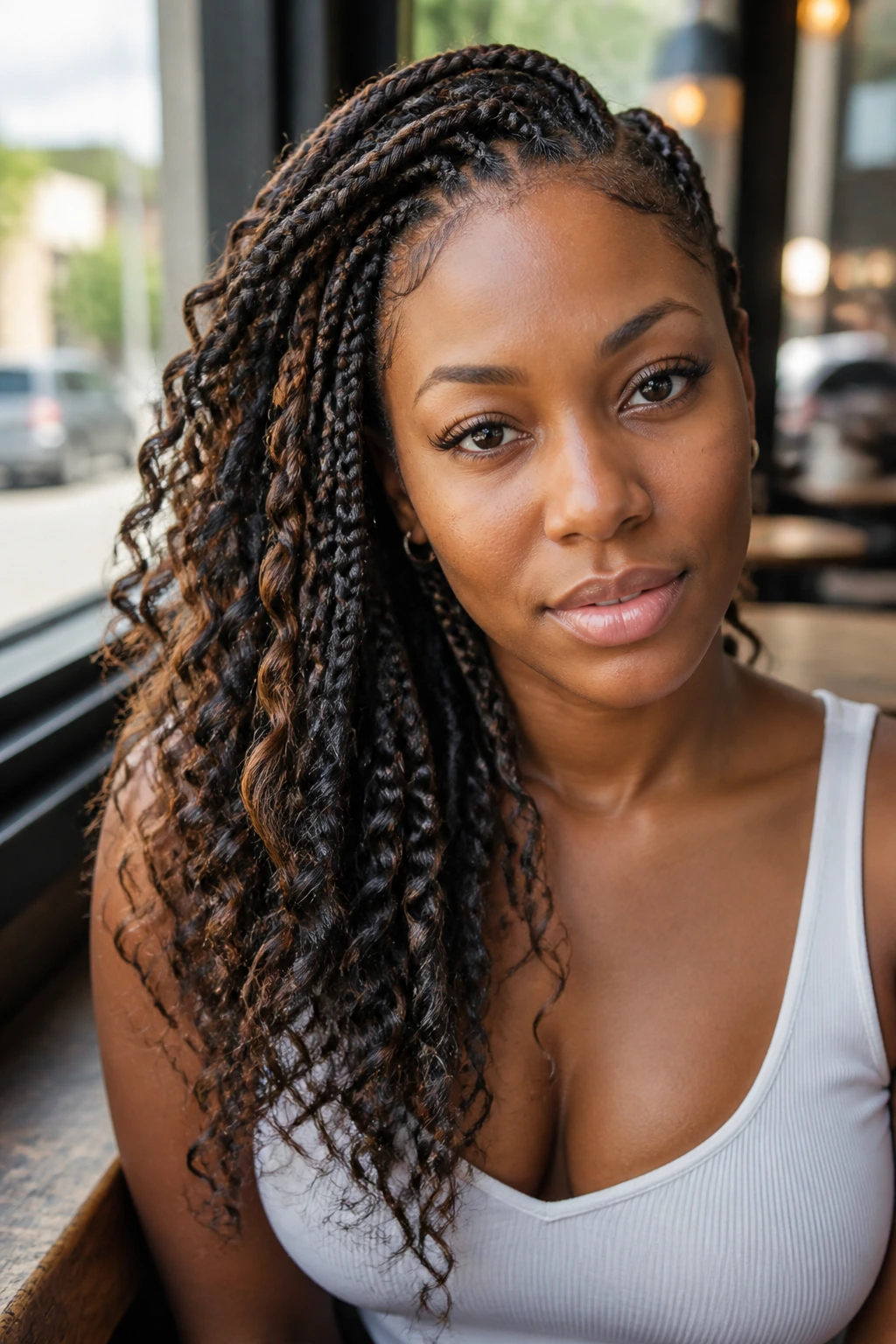
Lemonade braids already know how to sweep, and the half version lets the curls fall over the same side for a strong, slanted shape. This one has movement built into it. The braid direction leads the eye, and the curls land where the neck and shoulder line can show them off.
It’s especially nice if one side of your hairline is fuller than the other. The sweep gives you some control over that asymmetry.
How I’d Wear It
Pair it with a side part, gold cuffs, and a loose curl pattern that isn’t over-defined. The softness keeps the style from looking too engineered.
18. Heart-Part Half Braids for a Detail-Led Look
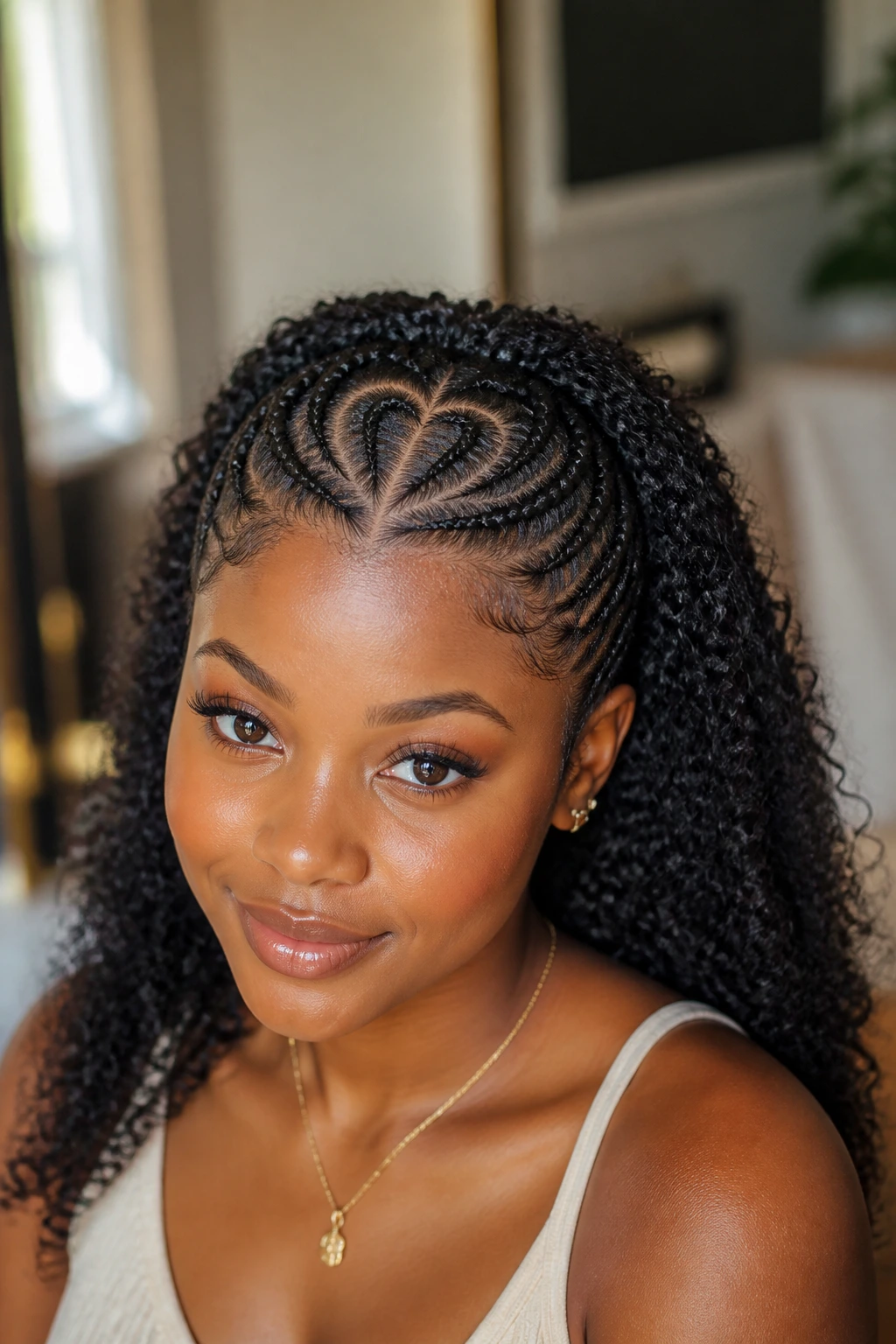
A heart part is the kind of detail people notice after a second glance. Up front, it gives the style a custom feel. With curls left down in the back, the shape keeps the front playful while the loose hair stops it from becoming precious.
This is a style for someone who likes one little statement rather than a full pile of extras. The part itself does enough work.
Best For
- Birthday looks
- Photo shoots
- Anyone bored with straight-back sections
If the heart is too small, it gets lost. Make it clear enough to read, even from a few feet away.
19. Braided Headband with a Natural Puff
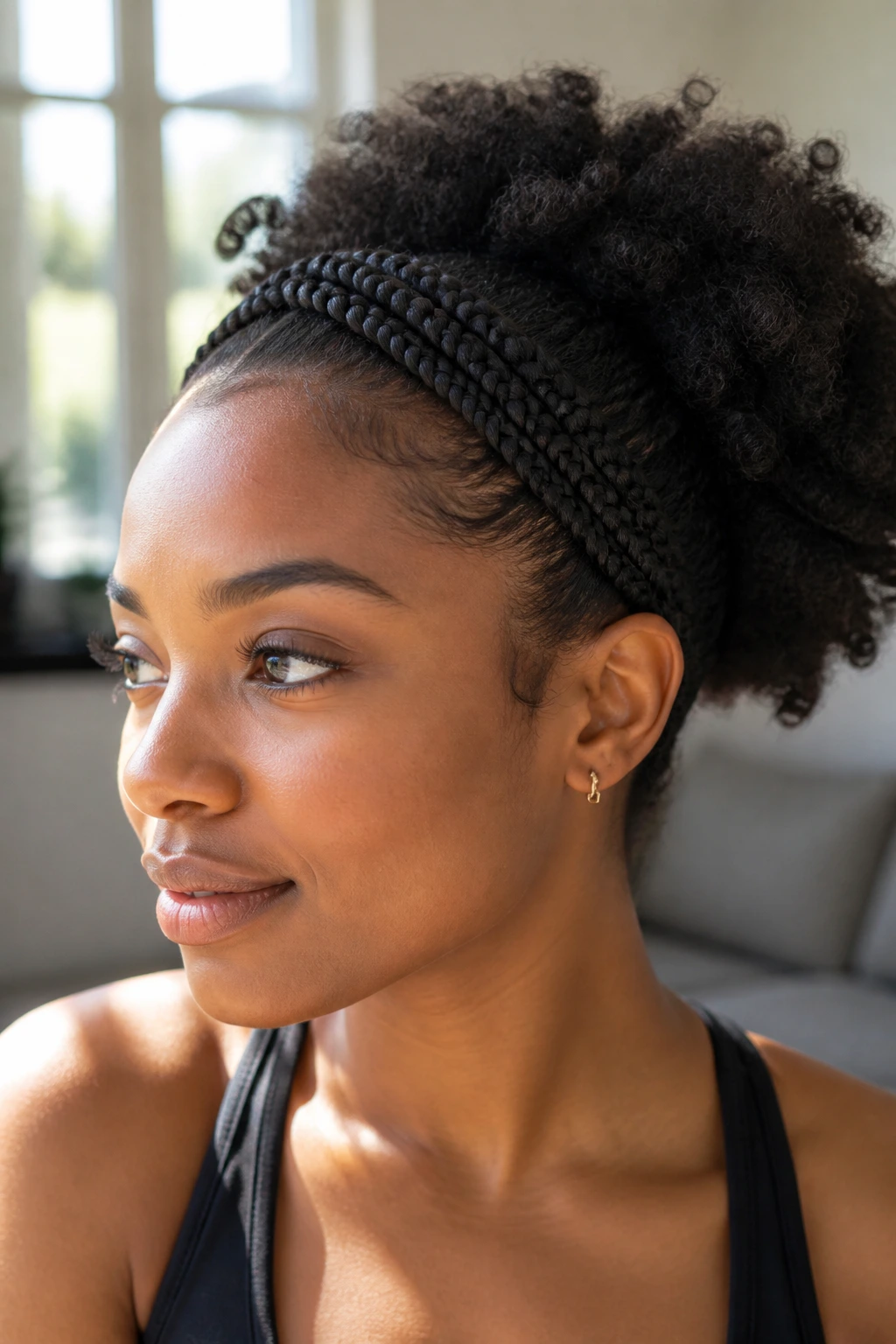
This is one of the easiest half-braid ideas to live with. The front becomes a braided headband, and the back stays in a puff or a full curly shape. It’s quick, practical, and surprisingly polished when the line is neat.
I like it on shorter hair and on thicker textures that already make a good puff. The braid acts like a frame, not a cage.
A Good Shortcut
If your curls are having a flat day, fluff the puff before you braid. The front braid looks better when the back has some lift to match it.
20. Half Braids on a Blown-Out Base
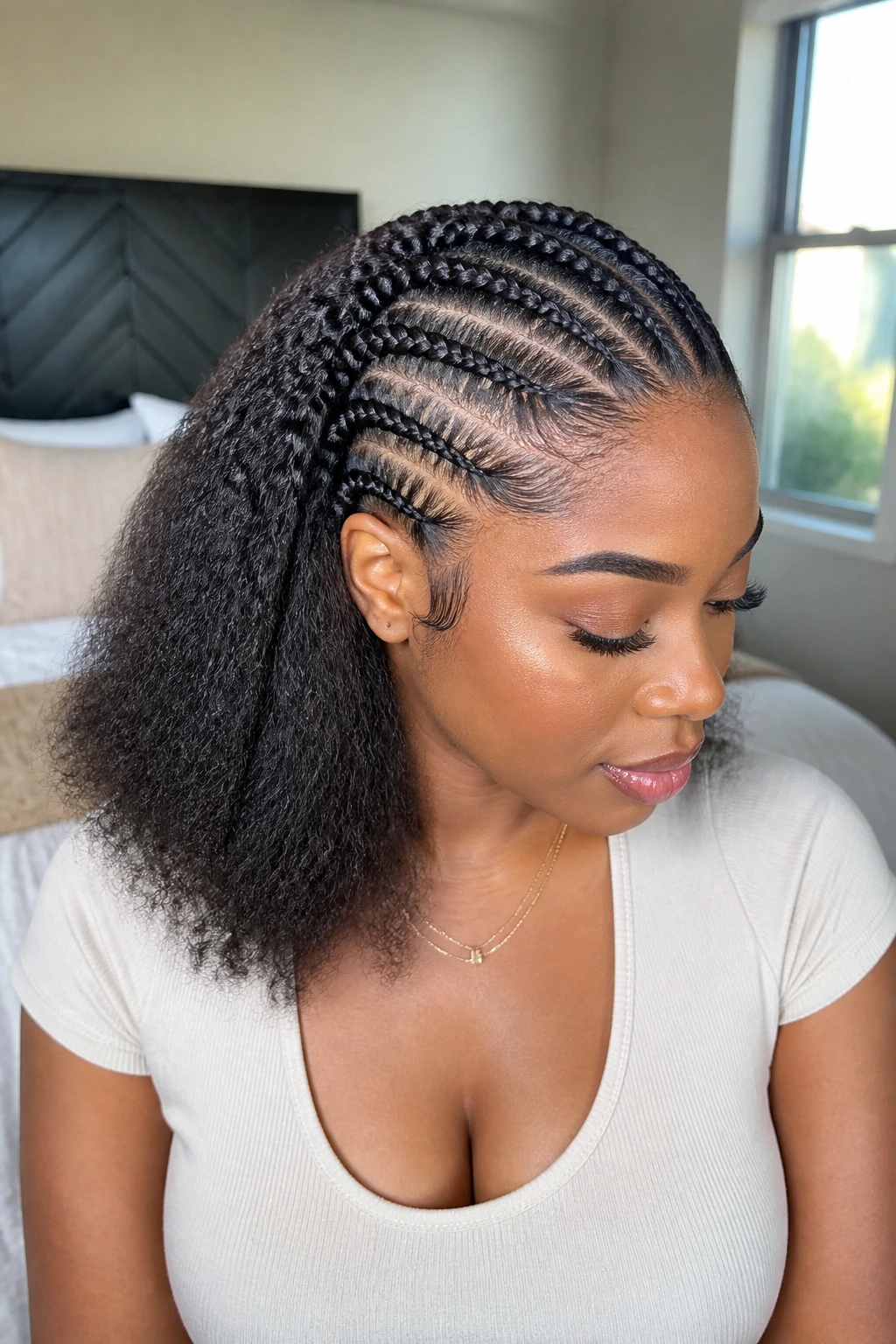
Sometimes the best half braid style starts with stretched hair, not freshly washed curls. A blown-out base gives you smoother parts, less shrinkage at the root, and a neater braid line. Then you let the back keep more texture, which creates contrast without needing extra hair.
This is the version I reach for when I want the braids to sit cleaner for longer. The downside is that you have to manage heat carefully.
Don’t Skip This
Use a heat protectant and keep the blow-dryer moving. You want stretch, not toasted ends. That difference shows up fast once the curls are left out.
21. Short Natural Hair Half Braids with Extensions
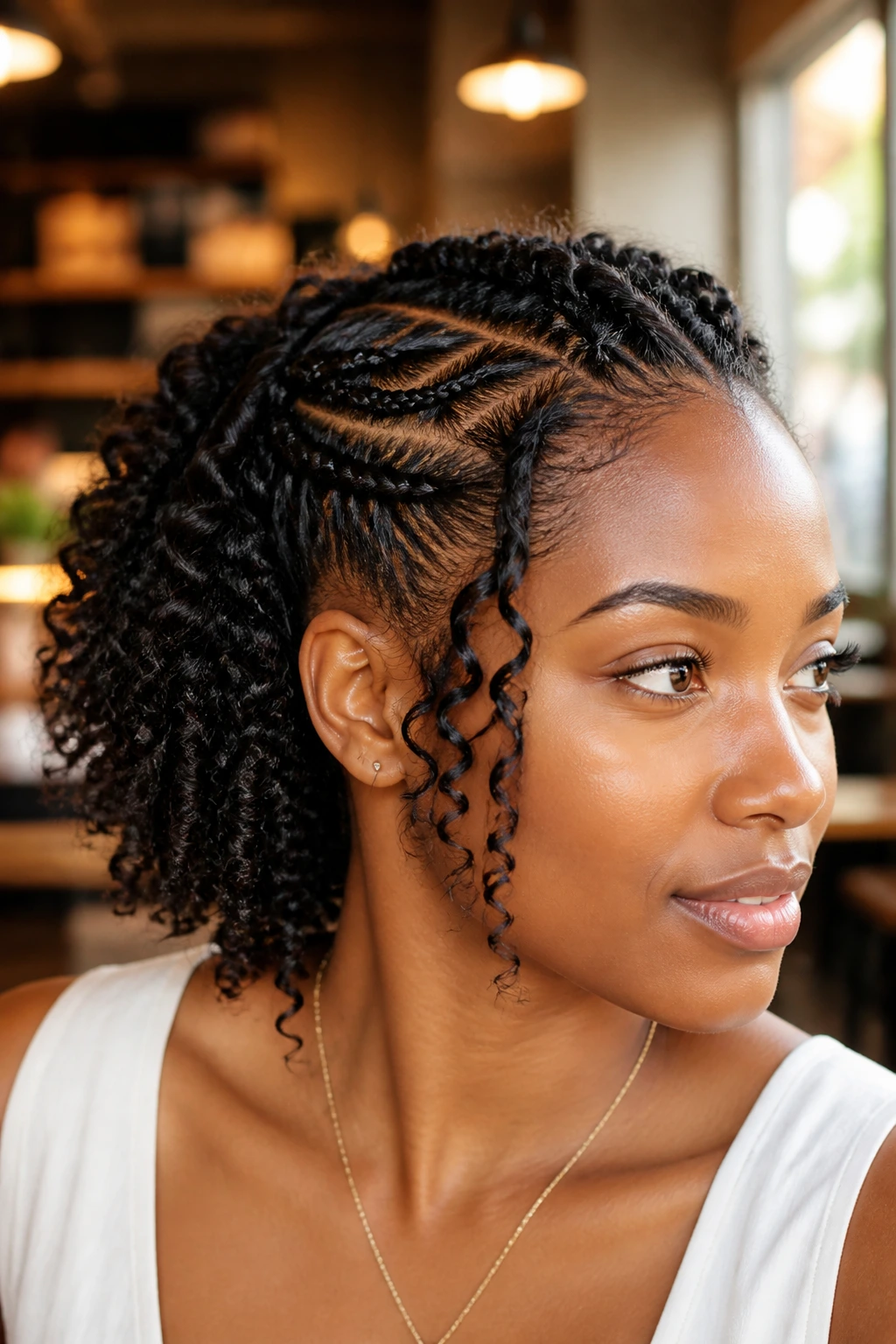
Short hair does not rule out half braids. It just asks for a smarter plan. Add a little extension hair to the braided section, leave your natural curls or coil-outs in the back, and you get a style with shape instead of a style that fights your length.
The best versions use lightweight hair and small-to-medium sections. Heavy braiding hair on a short base can drag the style down and make the front look awkward.
What to Watch
Match the braid thickness to your natural density. If the extensions are too bulky, the transition point shows. The braid should look like it grew there, not like it was dropped on top of the head.
22. Half Braids with Clip-In Curly Pieces
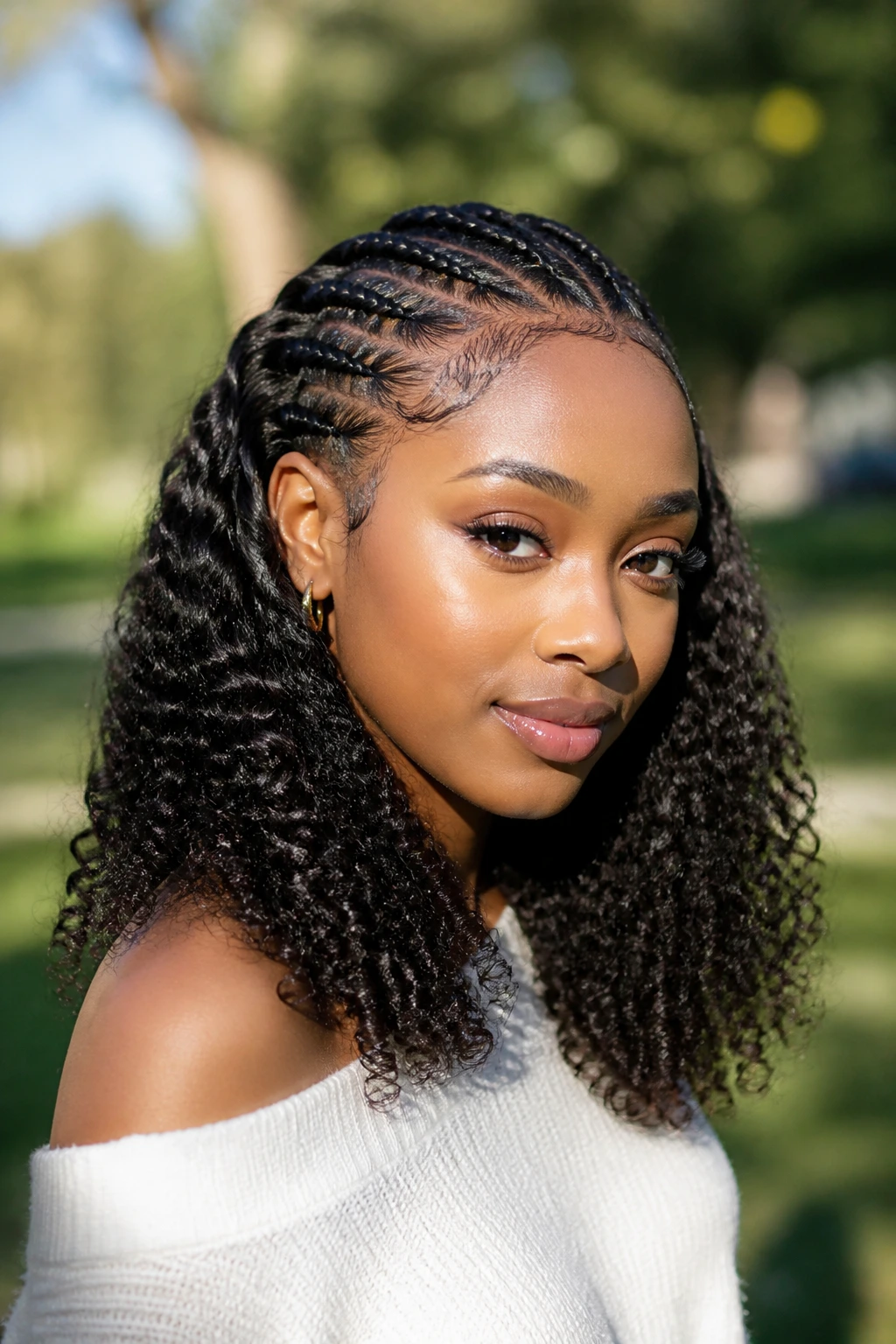
Clip-ins are useful when you want more curl volume without committing to a full install. Braid the top, clip the curls in underneath, and suddenly the half style has more body through the shoulders and chest. It’s especially helpful if your own curls are looser at the ends than you want.
The trick is blending. Pick clip-ins that match your texture family, not just your color.
A Practical Benefit
You can take them out at night if needed, which makes the style easier to protect and refresh. That is a big deal when you want volume without sleeping on too much hair.
23. Festival-Ready Half Braids with Wrapped Strands
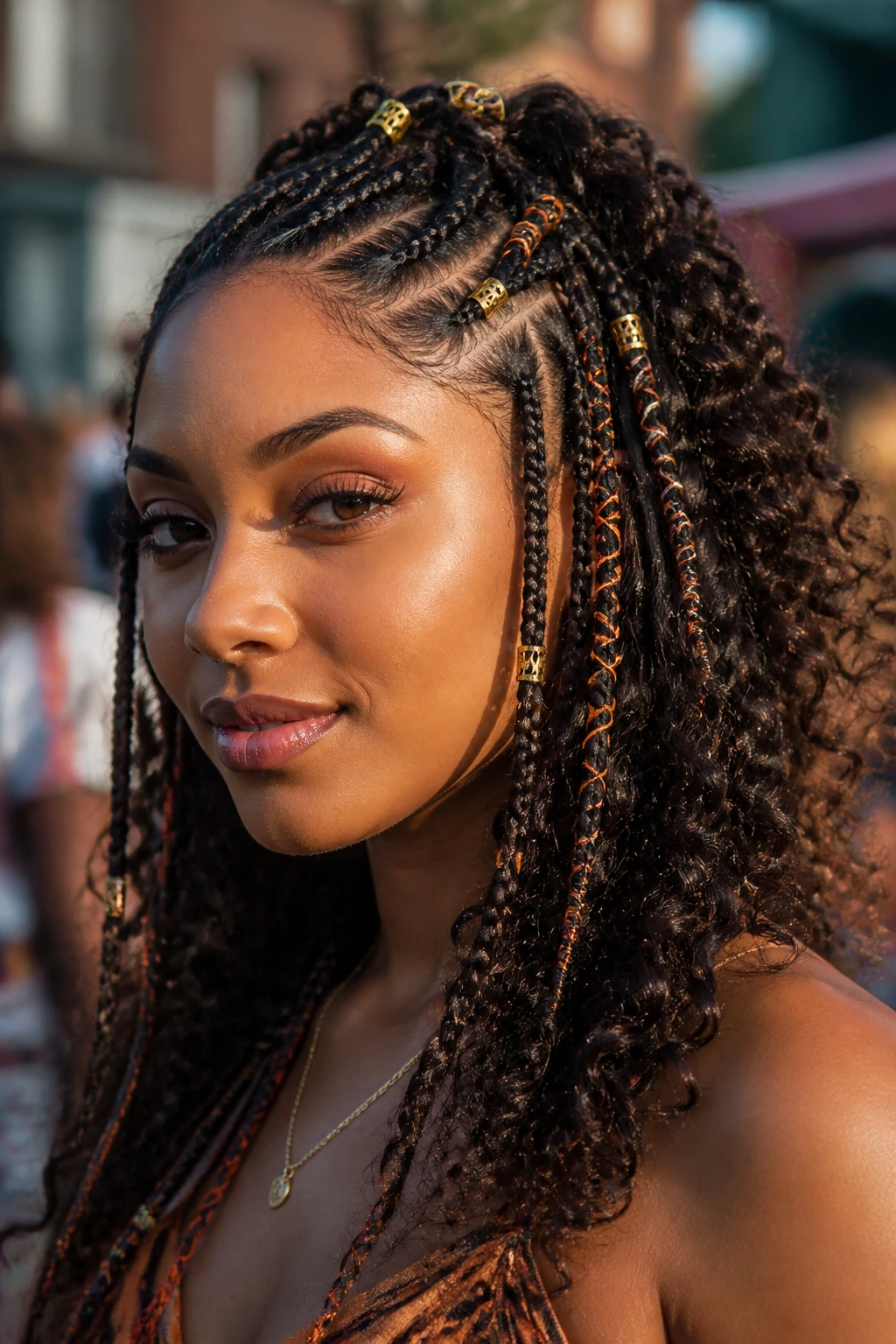
Wrapped strands, cuffs, maybe a little thread — this version leans fun without losing the braid structure. The curls stay loose, but the braided top section gets a little more personality. It’s the kind of style that looks intentional even when the rest of your outfit is simple.
What keeps it from feeling overdone is restraint. Pick one accent and repeat it. Wrap every braid with a different color and the whole thing starts fighting itself.
My Rule
If the curls are big, keep the accessories small. If the braids are thick and simple, you can push the accents a little harder.
24. Low Half Braids with a Tucked Nape
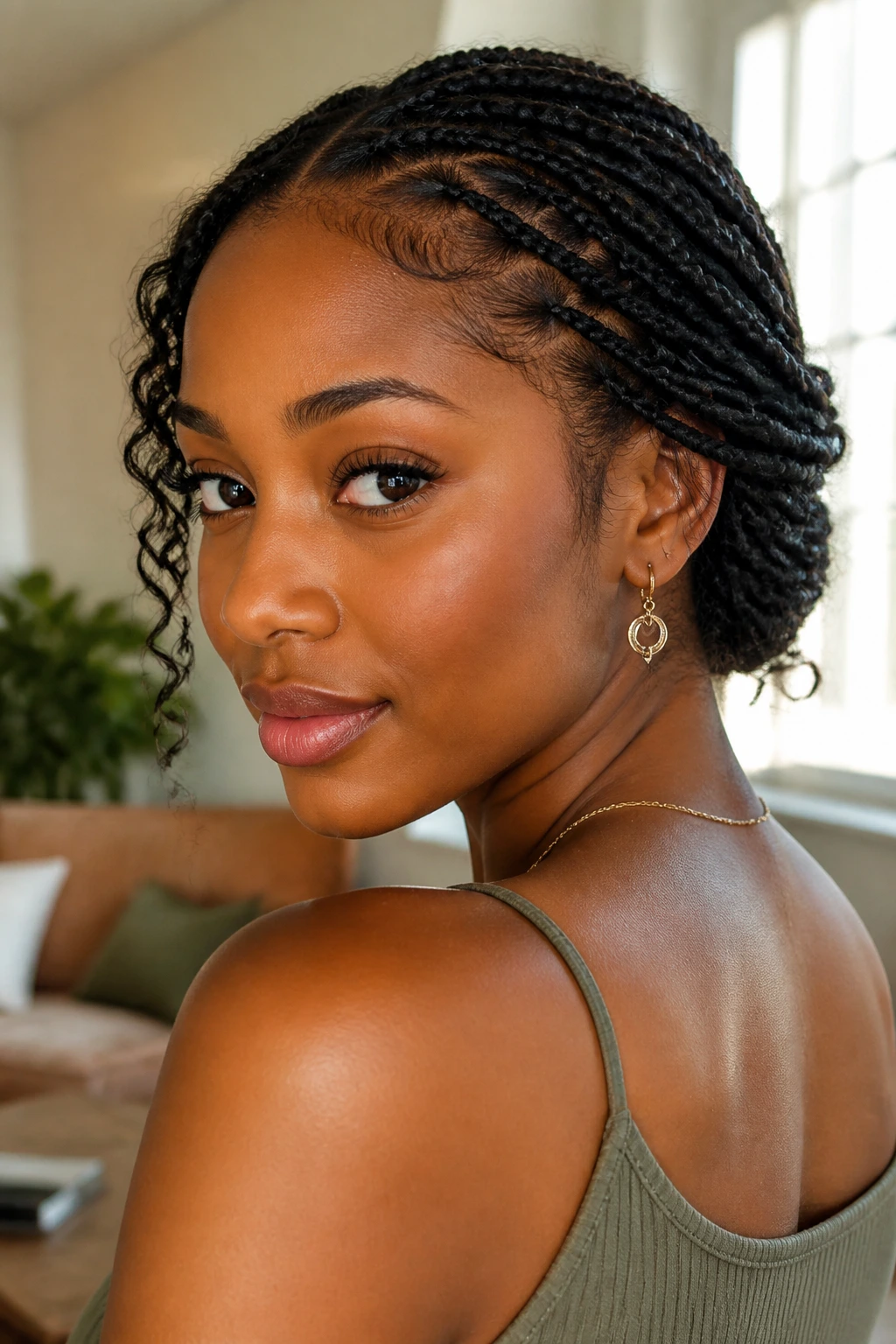
A low half braid keeps the shape close to the head and lets the curls sit lower on the neck and shoulders. The result is quieter, less top-heavy, and easier to wear with jackets, collars, and scarves. It’s a grown-woman look, honestly. Clean, soft, and not trying too hard.
This style works well when you want braid detail but do not want height at the crown.
The Small Detail That Matters
Tuck the nape cleanly. If that lower section gets frizzy or bulky, the neatness of the whole style disappears from the back.
25. Braided Top Rows with Free-Form Curls
Not every half braid style needs a dramatic finish. Sometimes the smartest move is a few neat braided rows at the top and the rest left as free-form curls with minimal shaping. It feels lighter, faster, and more natural than a heavily styled version.
I like this when the curls already have a good shape on their own. The braids just give the top some order.
Why It’s a Strong Finish
The contrast is subtle, which is the point. Braids on top. Movement below. No extra drama needed.
Why Half Braids Work So Well on Curly Hair
Half braids make sense on curly hair because they respect what the hair already wants to do. The front gets structure, the back keeps movement, and the style avoids that heavy, all-over braided feeling that can flatten a good curl pattern into a single shape. That balance is the reason these looks stay useful year after year.
There is also a practical side. Curly hair tends to shrink, swell, and puff depending on moisture, so braiding only part of it gives you more control over the areas that show most. The crown and hairline get tidier. The lengths keep the bounce. You do not have to choose between looking neat and looking textured.
Why the Pattern Matters
A braid pattern sits best when it works with your density instead of fighting it. Thick hair can handle bigger rows and more detail. Finer or shorter hair usually looks better with fewer, cleaner sections that don’t crowd the scalp.
Why the Curl Section Matters
Leave too little curl out and the style looks boxed in. Leave too much and the braids disappear. The sweet spot is usually a section that has enough weight to frame the face and shoulders, but not so much volume that it swallows the braid work.
Essential Tools for Half Braids on Curly Hair
-
Rat-tail comb: The fine tip makes clean parts and sharp zig-zags much easier.
-
Sectioning clips: They keep the curls separated while you braid the top rows.
-
Edge brush: Useful for smoothing the hairline without dumping too much product on it.
-
Styling mousse: Helps set curls and calm flyaways after the braids are finished.
-
Light-hold gel or edge control: Best for the parts and hairline, not for coating the whole head.
-
Satin scarf or bonnet: Protects the braid line and stops the curls from getting crushed overnight.
-
Spray bottle with water and leave-in mix: Handy for refreshing the loose curls between wash days.
-
Pre-stretched braiding hair or curly clip-ins: Optional, but useful when you want more length or fullness.
-
Blow-dryer with a concentrator or diffuser: Good for stretching roots before braiding or setting the curls after.
-
Small snag-free elastics: Better than rubber bands that snag the ends or snap on textured hair.
Choosing Products and Hair That Blend Instead of Fight
The best half braid styles start with the right materials. If you’re adding braiding hair, pre-stretched Kanekalon with a matte finish usually blends better with natural curly hair than shiny hair that looks plastic under indoor light. For boho styles, curly pieces should match your own curl family closely enough that the contrast feels intentional, not random.
Product choice matters more than people admit. A heavy grease at the roots can make braids slip and can leave the hairline slick in a bad way. A small amount of gel at the part, then mousse over the finished curls, usually gives you a cleaner result. I also prefer alcohol-free products near the front because curly hair can dry out fast when the style sits for more than a few days.
If your hair shrinks a lot, stretch it before parting. A quick blow-dry on low heat or a twist-out that’s been fully dried can make the braid map far easier to see. And if you’re using extensions, buy a little more than you think you need; running out halfway through the install is how people end up with mismatched rows and a bad attitude.
How to Wear Half Braids So They Stay Balanced
Shape: Match the braid size to your hair density. Thick hair can hold larger rows and still look full. Finer hair usually looks better with fewer, cleaner sections so the front doesn’t become crowded.
Parting: Keep the front map neat and the back loose. That contrast is the whole point. If both sections are overworked, the style loses its easy shape.
Finish: Set the curls with mousse and let them dry before you touch them. If you start raking through the loose hair while it is still damp, the frizz shows up fast.
Accessories: Use cuffs, beads, or thread on one section only unless you want the style to read loud. One accent is often enough. Two can be enough. Four starts looking like a supply closet.
Face Framing: Leave out a few curls or a soft braid tail near the cheekbones. That tiny bit of movement stops the style from looking too sealed off.
Extra Tips and Finishing Moves
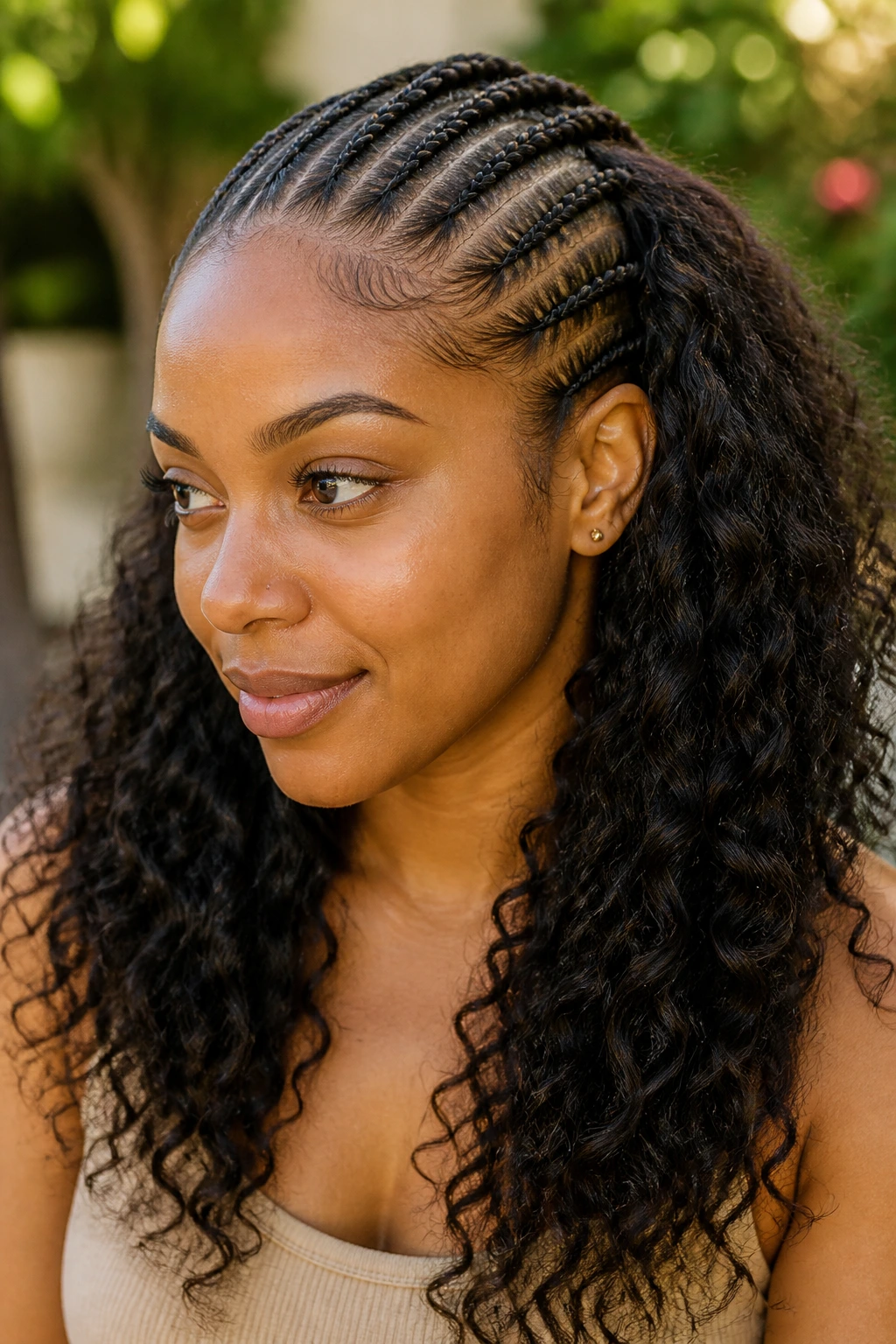
Root Control: If the scalp near the parts puffs up quickly, tap a small amount of edge control along the part line with a fingertip. Don’t smear it everywhere. That just makes buildup.
Curl Refresh: Mix water with a little leave-in, mist the loose section lightly, then scrunch with mousse. The curls will wake up without turning mushy.
Night Prep: Pineapple the loose curls if they’re long enough, then wrap the braided section with a satin scarf. If the curls are short, a bonnet over the whole style works better.
Time-Saver: If you’re doing your own hair, braid the top rows on dry, stretched hair and leave the curl set for the next morning. That split approach is slower on the calendar, but easier on your hands.
Common Mistakes That Make Half Braids Look Tired
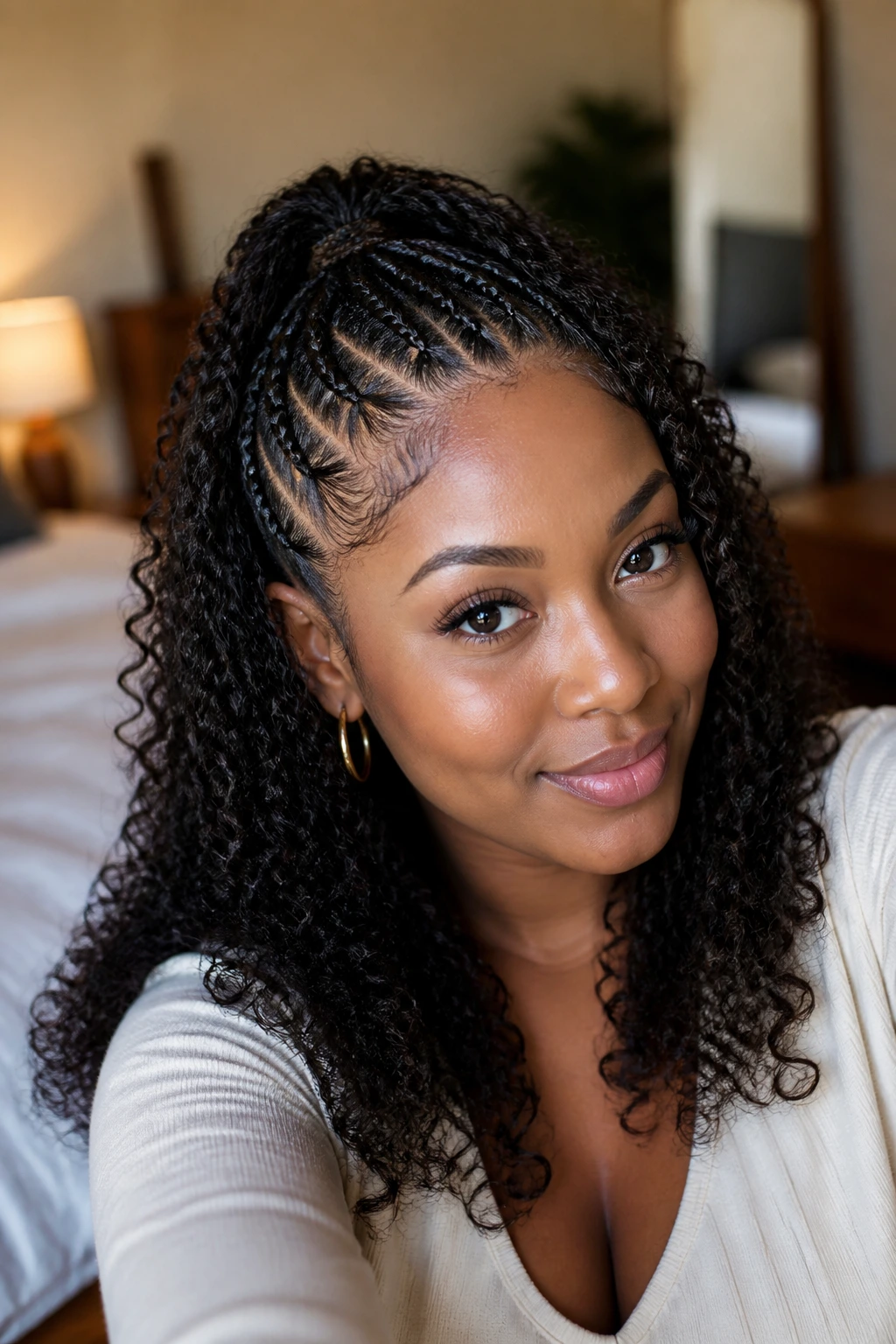
The biggest mistake is braiding too tight at the hairline. You know it’s happening when the scalp looks shiny, the braids feel sore, or the front starts itching within hours. The fix is simple and unglamorous: loosen the first part of the braid, use smaller feeding amounts, and stop pulling the roots flat.
Another common problem is skipping stretch before parting. Curly hair that is fully shrunken can hide your sections, and the braid grid starts drifting. A quick stretch, whether through blow-drying or a set that has been fully dried, makes the entire install cleaner.
Then there’s using too much product on the curls. Heavy cream or too much oil weighs down the loose section and makes it stringy by the second day. Use mousse for hold, not a thick layer of grease.
And one more: leaving the style in too long without refreshing the loose hair. The braids may still look fine, but the curls go stale first. Once the ends lose shape and the roots start to fray, the whole look ages fast.
Ways to Change the Look Without Starting Over
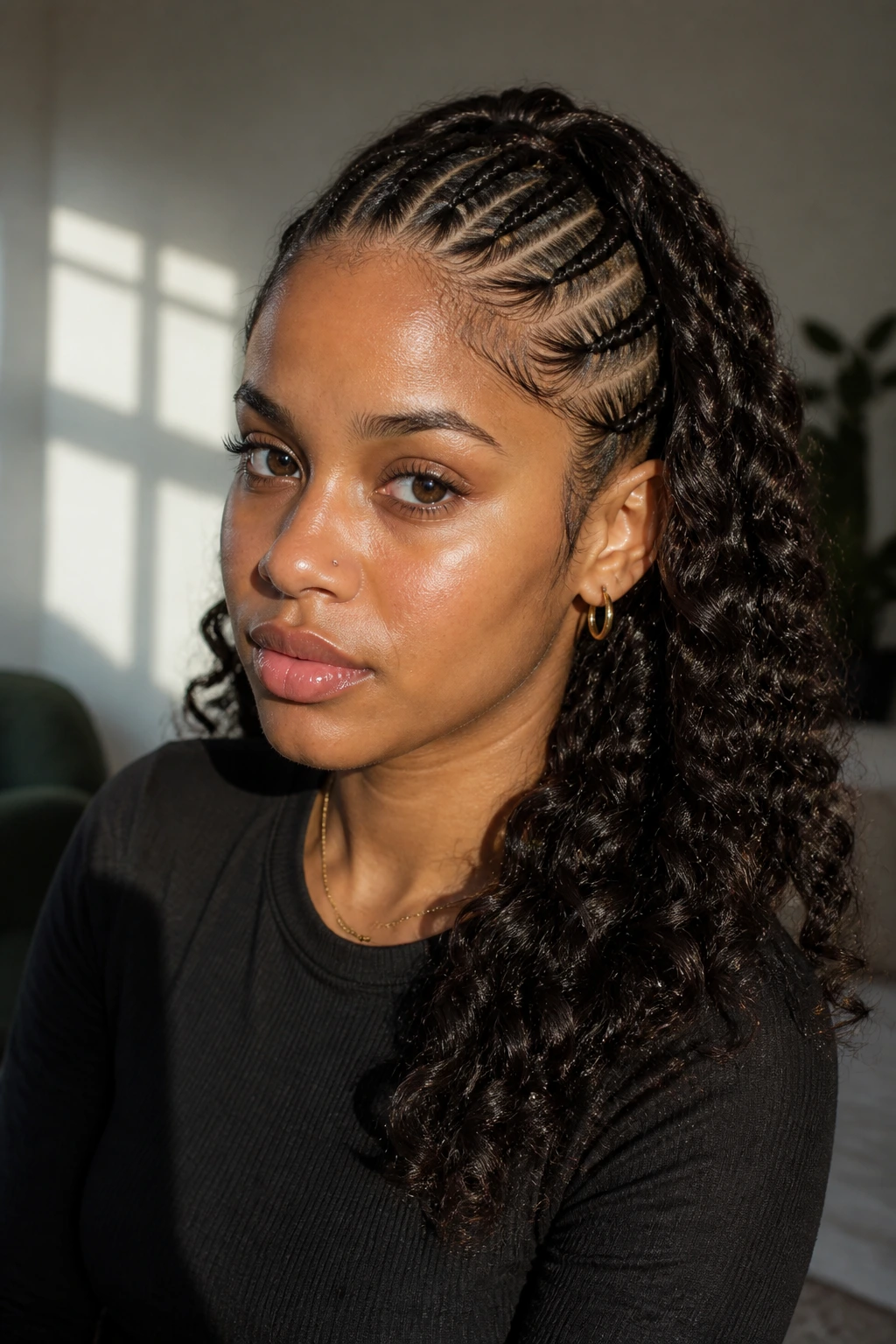
Soft Romantic Half Braids: Keep the rows small, leave the curls loose and fluffy, and skip accessories except for maybe one cuff near the temple. This version reads gentle and full.
Sharp Editorial Half Braids: Go with stitch parts, a deep middle line, and a slicker finish at the roots. The contrast between the crisp top and the airy back does the work.
Playful Beaded Version: Add beads only to two or three front braids. Enough to move. Not enough to clank.
Low-Maintenance Protective Version: Use knotless feed-ins, keep the braid count modest, and let the curls stay stretched instead of fully defined. This is the one I’d pick if you want the style to last with less fuss.
Short-Hair Friendly Version: Add curly clip-ins or small braiding hair pieces to the top rows only. The back can stay close to your own texture, which keeps the install lighter.
Keeping Half Braids Fresh Between Wash Days
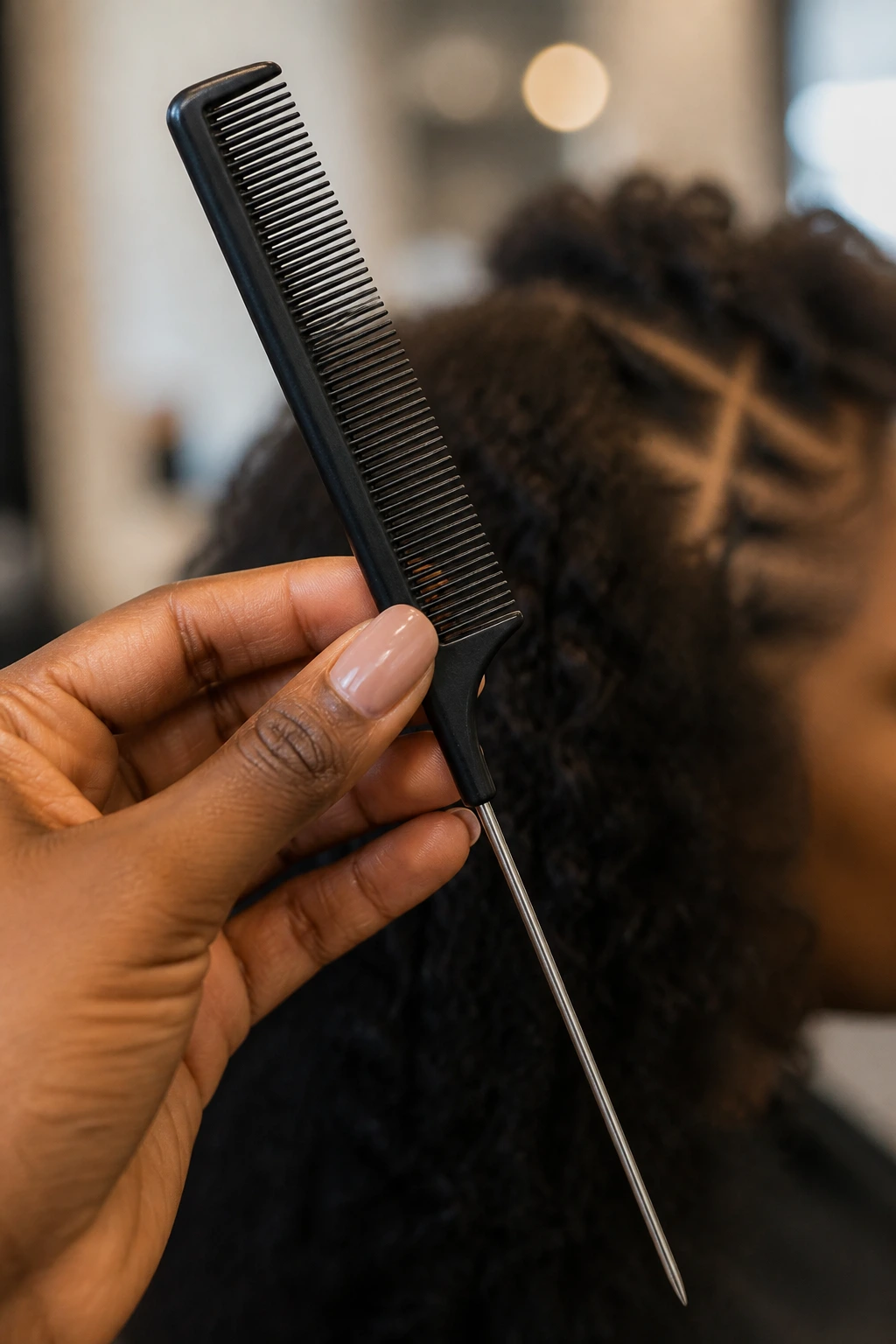
Half braids usually last longer when you treat the curls and the braids like two separate jobs. The braided section likes dryness and a clean scalp. The loose curls like a little moisture and gentle redefinition. Put those together and the style stays useful for days, sometimes longer if your hairline holds well.
At night, wrap the braids with a satin scarf or wear a bonnet that covers both sections. If the loose curls are long, a loose pineapple helps them keep shape. If they’re shorter, a scarf tied around the braid line and a bonnet over the rest usually works better than trying to force everything into one cap.
For cleaning, use an applicator bottle or a narrow nozzle to wash the scalp without soaking the curls too often. A diluted shampoo at the roots, followed by careful rinsing and a full dry time, is safer than drenching the style and hoping for the best. If you used added hair, let everything dry all the way through before tying it down again. Damp extensions and dense braids are a bad combination.
Most styles look their best for about one to two weeks before the curl section starts needing more help. If the braid line is still neat but the curls are tired, refresh the ends and keep going. If the roots feel tight, sore, or swollen, take the style down. Your scalp will thank you later.
Frequently Asked Questions
How long do half braids usually last on curly hair?
A neat set often lasts one to two weeks before the loose curls need real refreshing, though the braids themselves can stay tidy a bit longer. The limiting factor is usually the curl section, not the braid rows.
Can I do half braids on short natural hair?
Yes, but you may need small amounts of added hair for the top section to give the style enough grip and shape. Short hair can hold a beautiful half braid set when the parts are clean and the extensions are kept light.
Do half braids count as a protective style?
They can, if the tension is low and the ends are handled well. If the front is braided too tightly or the loose section is overmanipulated every day, the style stops feeling protective pretty quickly.
What’s the best hair texture for the loose back section?
The loose section works best when it matches your natural texture family or has been styled to a similar level of softness. Defined curls, fluffy twist-outs, stretched coils, and clip-ins can all work if the finish feels balanced next to the braid pattern.
Can I wash my scalp while wearing half braids?
Yes, and you probably should if the style stays in more than a few days. Use a diluted cleanser at the roots, rinse carefully, and dry fully so moisture doesn’t sit under the braided section.
How do I keep the curls from frizzing so fast?
Use mousse, not heavy cream, and let the curls dry before touching them. At night, cover the style with satin and avoid raking your fingers through the loose section all day.
Should the braids be tight at the front to last longer?
No. Tight braids don’t equal longer wear; they usually equal sore edges and a style you can’t wait to remove. A secure but comfortable braid line lasts better because your scalp isn’t fighting it.
What if my curls and the added braiding hair don’t match?
Keep the braid section simple and let the curls carry the texture contrast, or choose hair with a matte finish that sits closer to your own texture. A little mismatch can look intentional; a shiny, obvious mismatch usually cannot.
Braids That Leave Room for the Curls
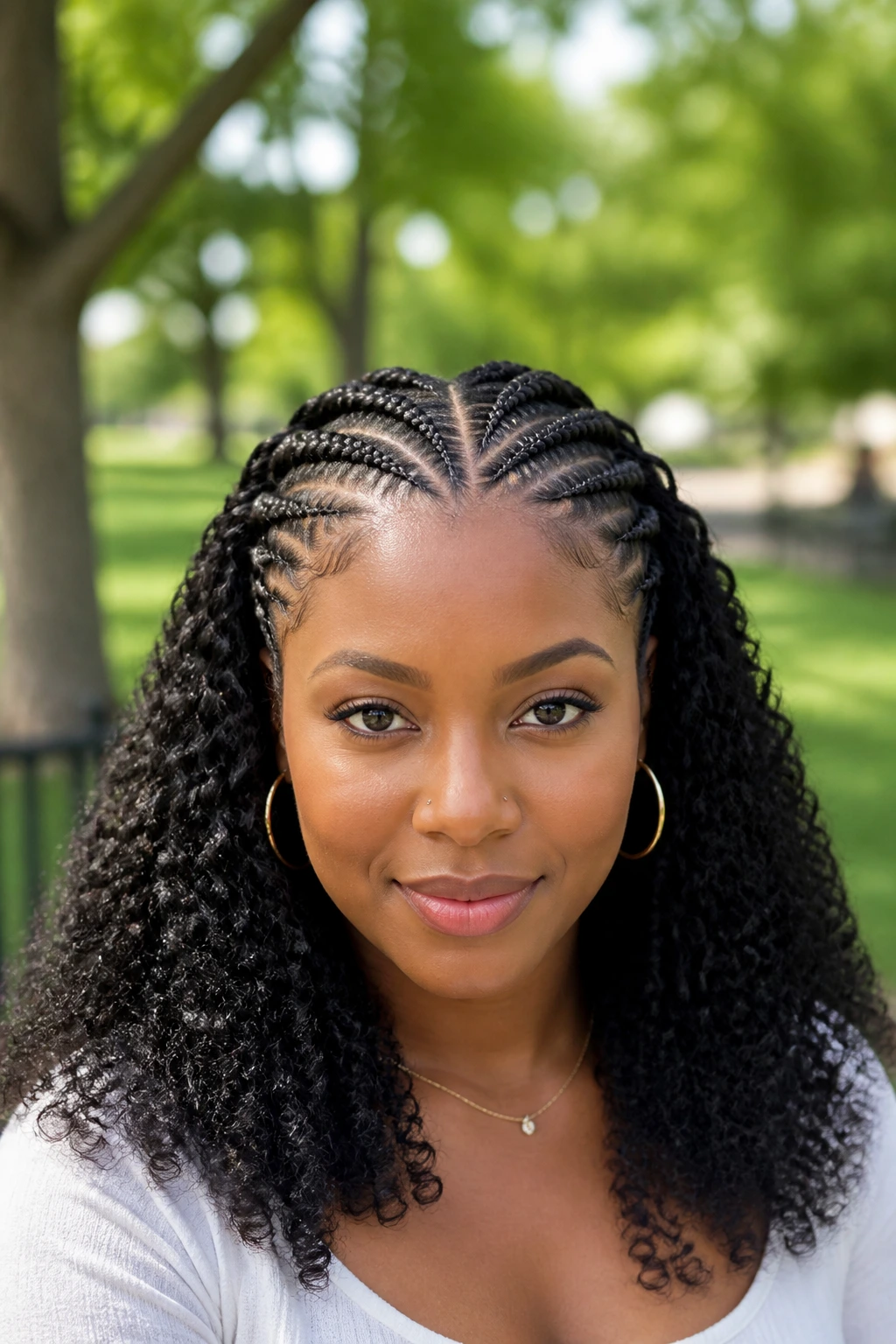
Half braids work because they don’t try to force curly hair into one mood. The top gets structure. The back gets movement. And the whole style has room to breathe, which is why it stays useful across hair lengths, densities, and curl patterns.
The styles that hold up best are the ones that respect tension, parting, and curl behavior. Get those three things right, and even a simple braid line with free curls can look finished in a way that feels personal, not borrowed.
Pick the version that matches your patience and your hair that week, then make the details count. A clean part, a soft wrap at night, and a little restraint with product go a long way.