



Black large braids for little girls with thin hair sit in a tricky little sweet spot. Go too small and the style can look busy, take forever, and put too much tension on delicate roots. Go too big and the braids can feel heavy before the week is out, especially if the ends are loaded up with beads, rubber bands, or too much added hair. The best versions do something smarter: they build shape first, then weight. That is the whole game.
I’ve always thought the prettiest braid styles for fine, low-density hair are the ones that look generous without being fussy. You can get there with a clean part, a careful amount of extension hair, and a length that makes sense for a child’s neck and shoulders. A collarbone-length braid often wears better than a dramatic waist-length look on a little girl whose hair is still fine and soft. That’s not a downgrade. It’s just good styling.
What follows is a big idea bank, but not a random one. These are braid styles that can be scaled down for a child’s head, keep the scalp comfortable, and still give that full, polished braid look parents want. Some are school-day easy. Some are for birthdays and photo days. A few look a little more dressed up, but they still lean on smart parting and lighter styling so they do not drag the hair down by the end of the day.
Why These Braids Work So Well on Fine Hair
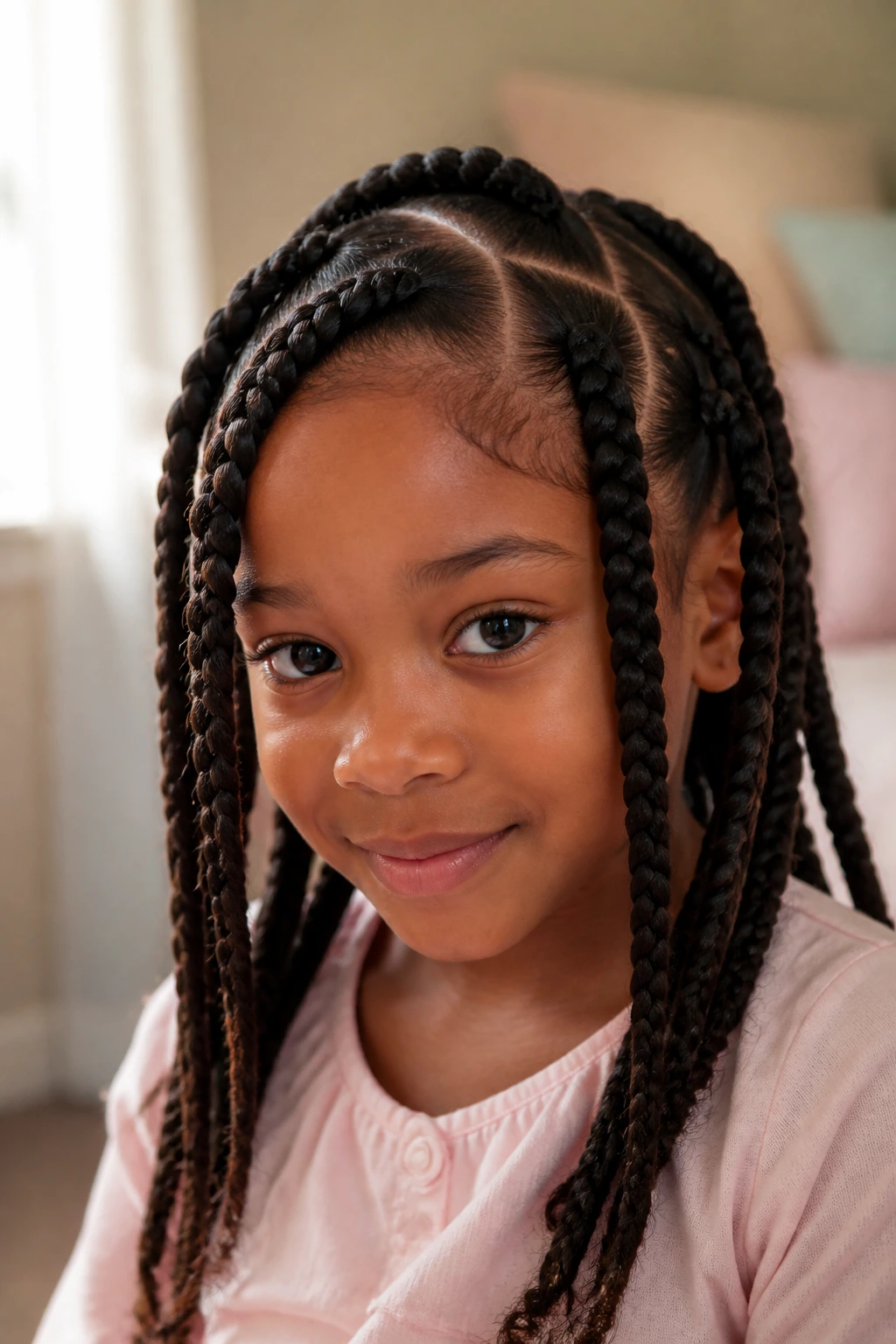
Less weight at the roots: Large braids use fewer sections, which means fewer anchor points pulling at a child’s hairline. That matters more than people think, especially on a scalp that gets tender fast.
Cleaner parting, less fuss: Bigger braids need fewer tiny sections, so the part pattern can stay neat without sitting in the chair forever. On fine hair, that shorter chair time is a gift.
Better balance with extensions: When the braid base is a little wider, the added hair spreads out instead of sitting like a lump. The style ends up looking fuller without feeling like a helmet.
Easier to refresh: Large braids show less frizz at the roots than micro styles, and that makes wash day and touch-ups less of a battle.
Works with shorter lengths: A lot of little girls with thin hair do not have a ton of density, but they do have enough length for a smart braid base. Large braids make that length work harder.
1. Center-Part Jumbo Box Braids with Clear Beads
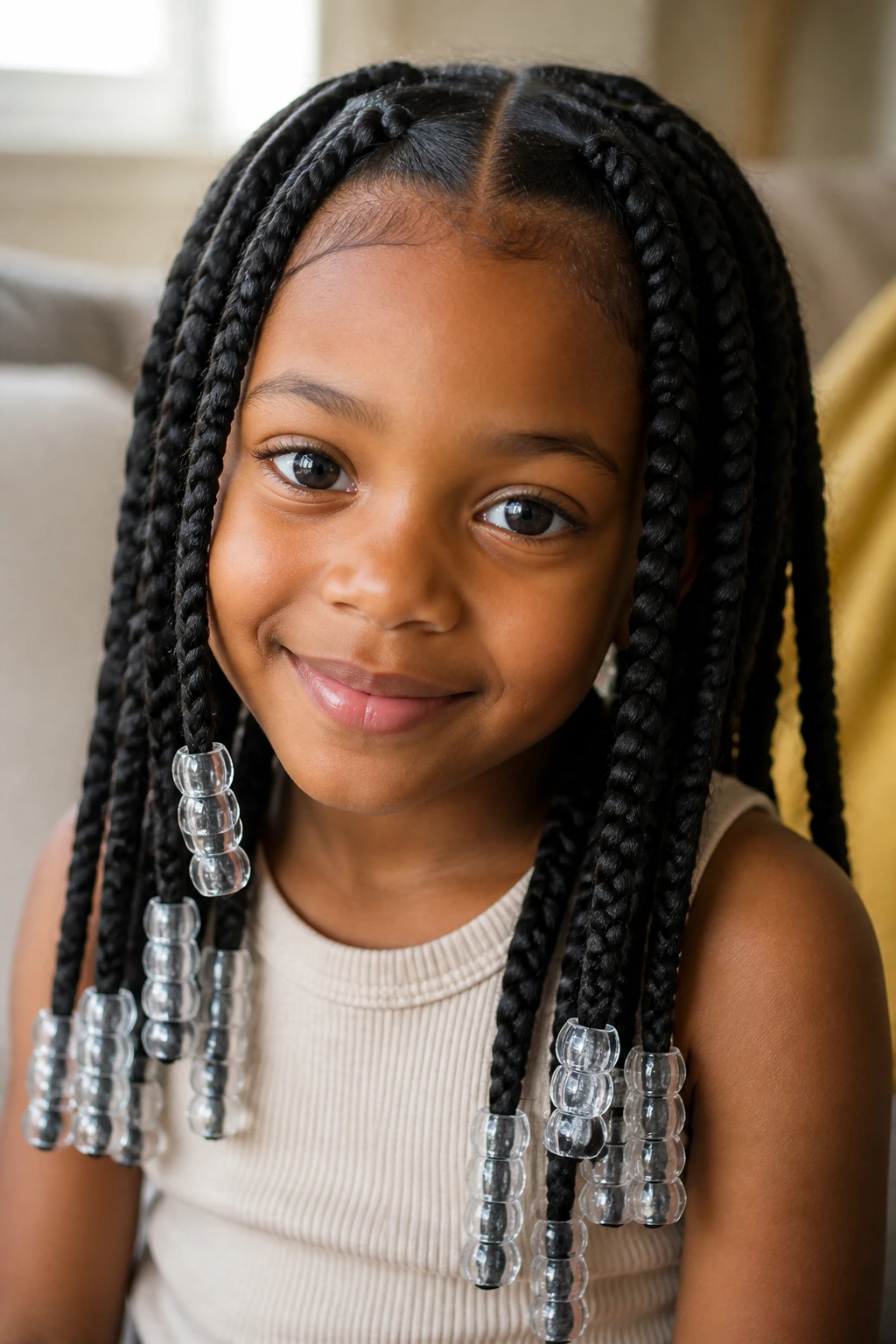
A clean center part changes everything here. It gives the braids a tidy, balanced look, and the symmetry helps thin hair look more intentional instead of sparse. Keep the length at the shoulders or just past them if the hair is very fine; that lets the braids swing a little without yanking on the scalp.
Why it works: Box braids are one of the easiest shapes to scale down for a child, and a center part keeps the braid count low. Clear or smoky acrylic beads add shine without much weight. Metal beads are pretty, but on thin hair I usually skip them unless the braids are short and the base is sturdy.
Best for: school pictures, Sunday wear, and kids who like a polished look without too much decoration.
Styling note: keep the braid ends sealed or lightly dipped, then add only a few beads per braid. More is not better here.
2. Side-Swept Feed-In Braids with a Deep Part
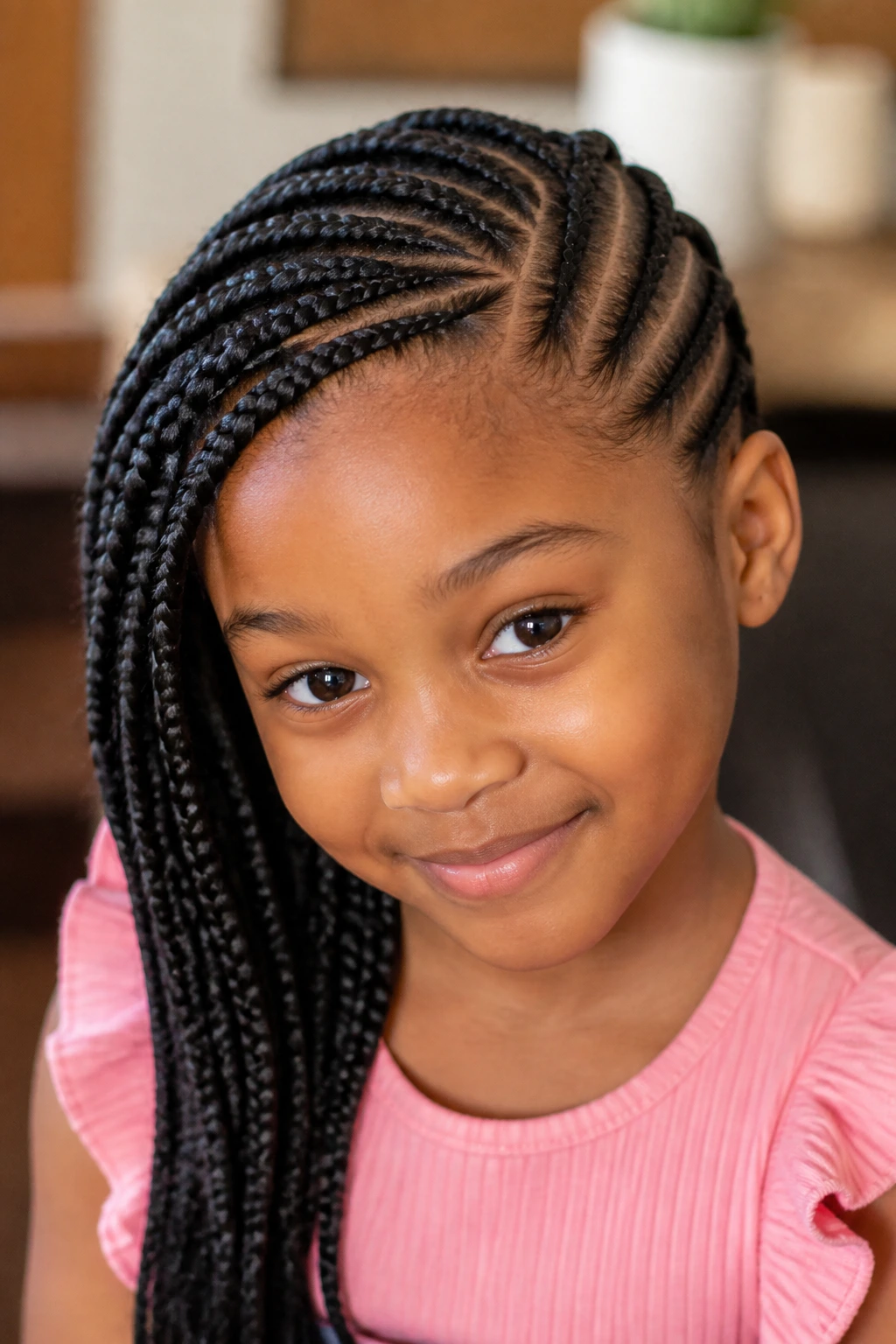
There’s a softness to a deep side part that I like on little girls with fine hair. It breaks up the scalp space in a flattering way, and the braids fall across the head with a little movement instead of standing in rigid rows. That makes the style feel full even when the actual hair density is modest.
Feed-in braids are the right tool if you want the braid to start small and build gradually. That slow build keeps the front from looking bulky. It also keeps the hairline from getting overloaded with one thick knot at the start.
If the child wears glasses or has a favorite side she sleeps on, this style can be adjusted around that. I would keep the side with the most movement a little lighter and avoid stuffing too much hair into the frontmost braid.
3. Two Oversized Braids into Low Ponytails
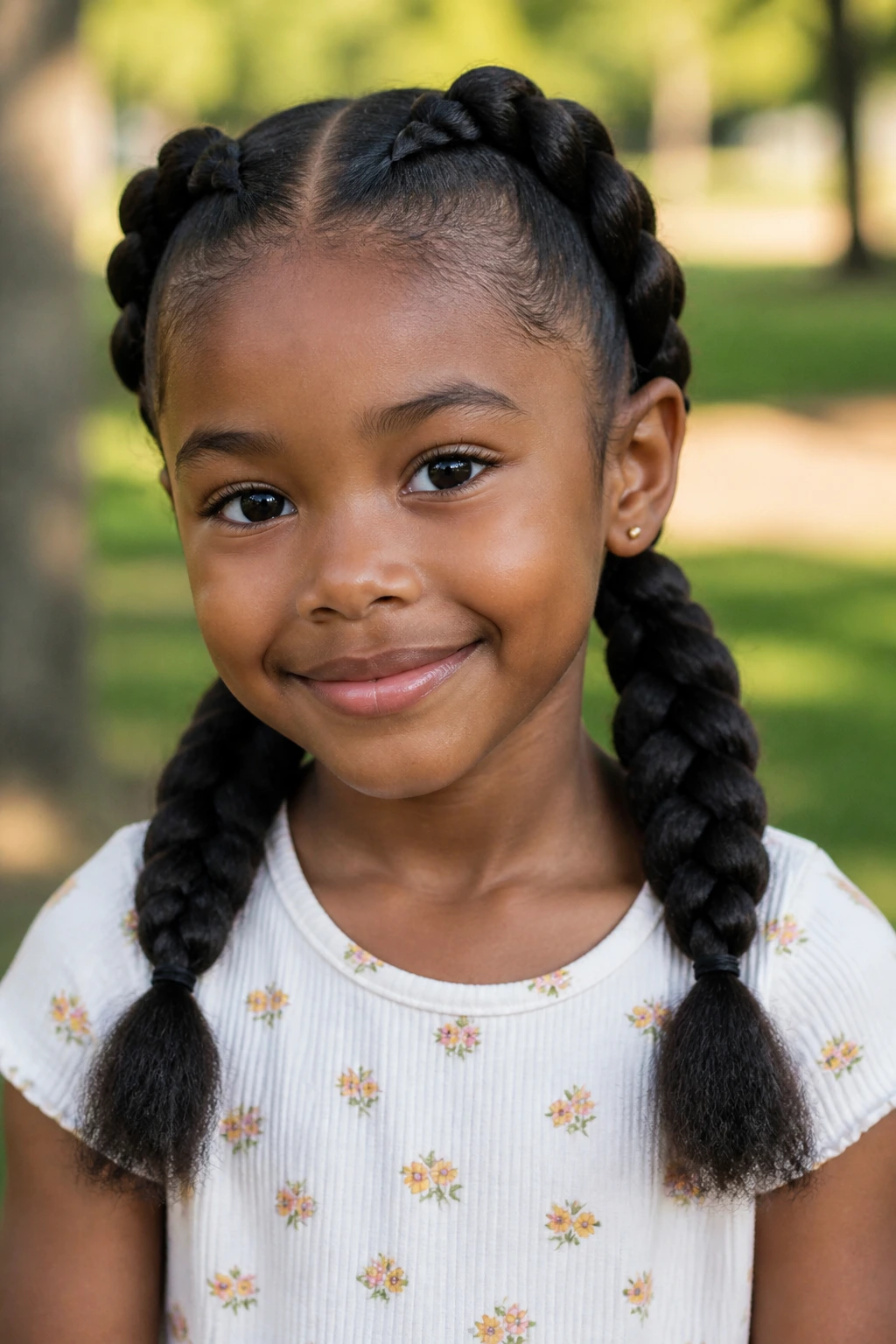
Two big braids sound almost too simple, and that is exactly why they work. On thin hair, simplicity keeps the style from slipping into heaviness. One braid on each side, gathered low near the nape, gives you structure without turning the head into a heavy stack of extensions.
This is one of my favorite options for active kids. The braids stay out of the eyes, the style looks neat from the front, and the weight sits low instead of all over the crown. That matters when a child is always running, climbing, or leaning her head back in the car seat.
Use a soft elastic at the base of each ponytail and skip oversized beads. If you want decoration, one ribbon tied around each braid is enough.
4. Crown Halo Braids with a Tucked Bun
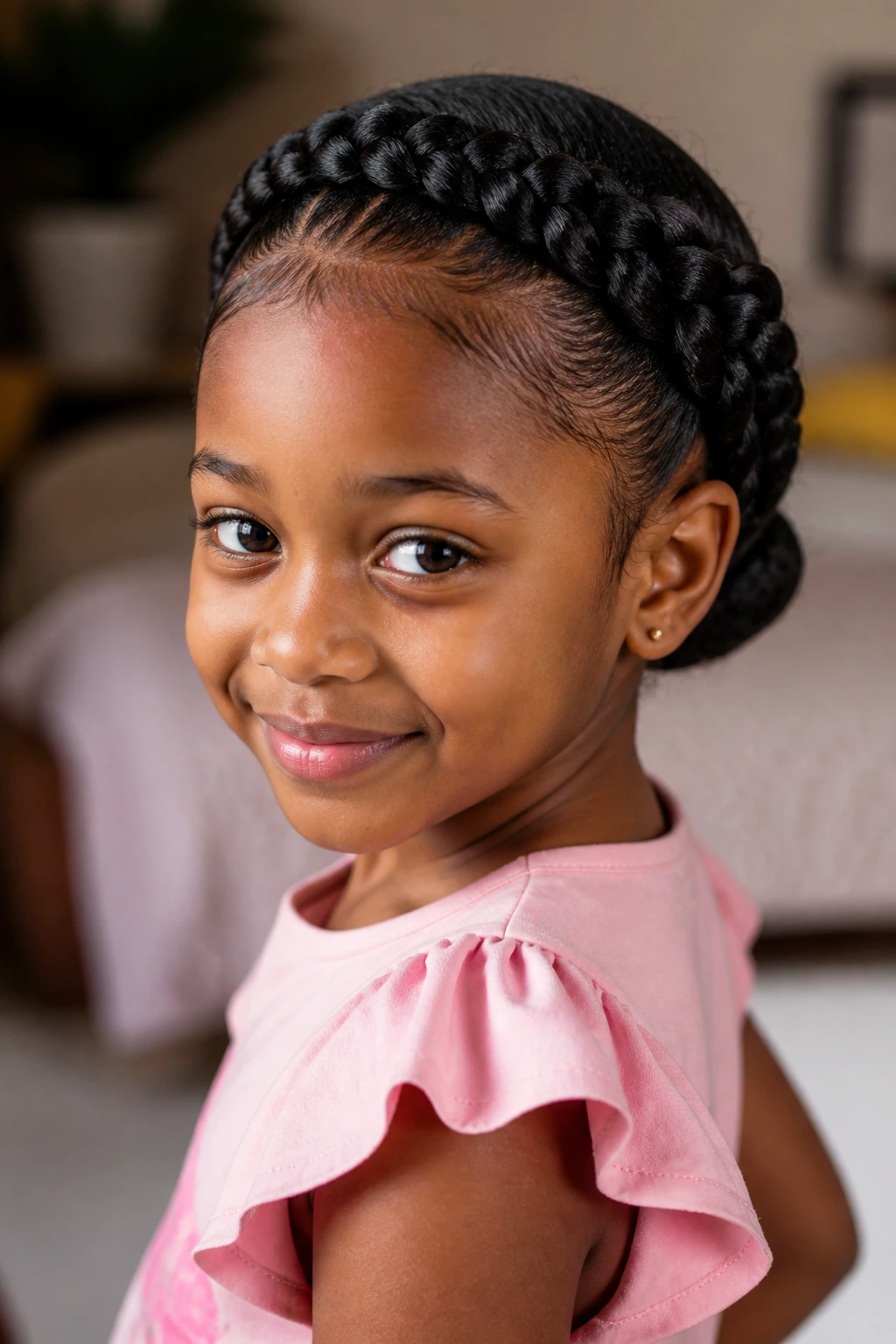
A halo braid can look fancy, but on thin hair it also has a practical side: it keeps the weight distributed around the head instead of stacking it in one spot. A tucked bun at the back gives the style a finished shape and keeps the ends off the shoulders.
The trick is keeping the braid path shallow. You want the braid to sit close to the scalp without being tight. If the stylist braids too hard around the crown, the style goes from elegant to annoying in a hurry.
This one is lovely for a child who does not like hair in her face. It also survives a long day well because the structure is built into the braid path, not into a lot of loose swinging length.
5. Triangle-Part Knotless Braids
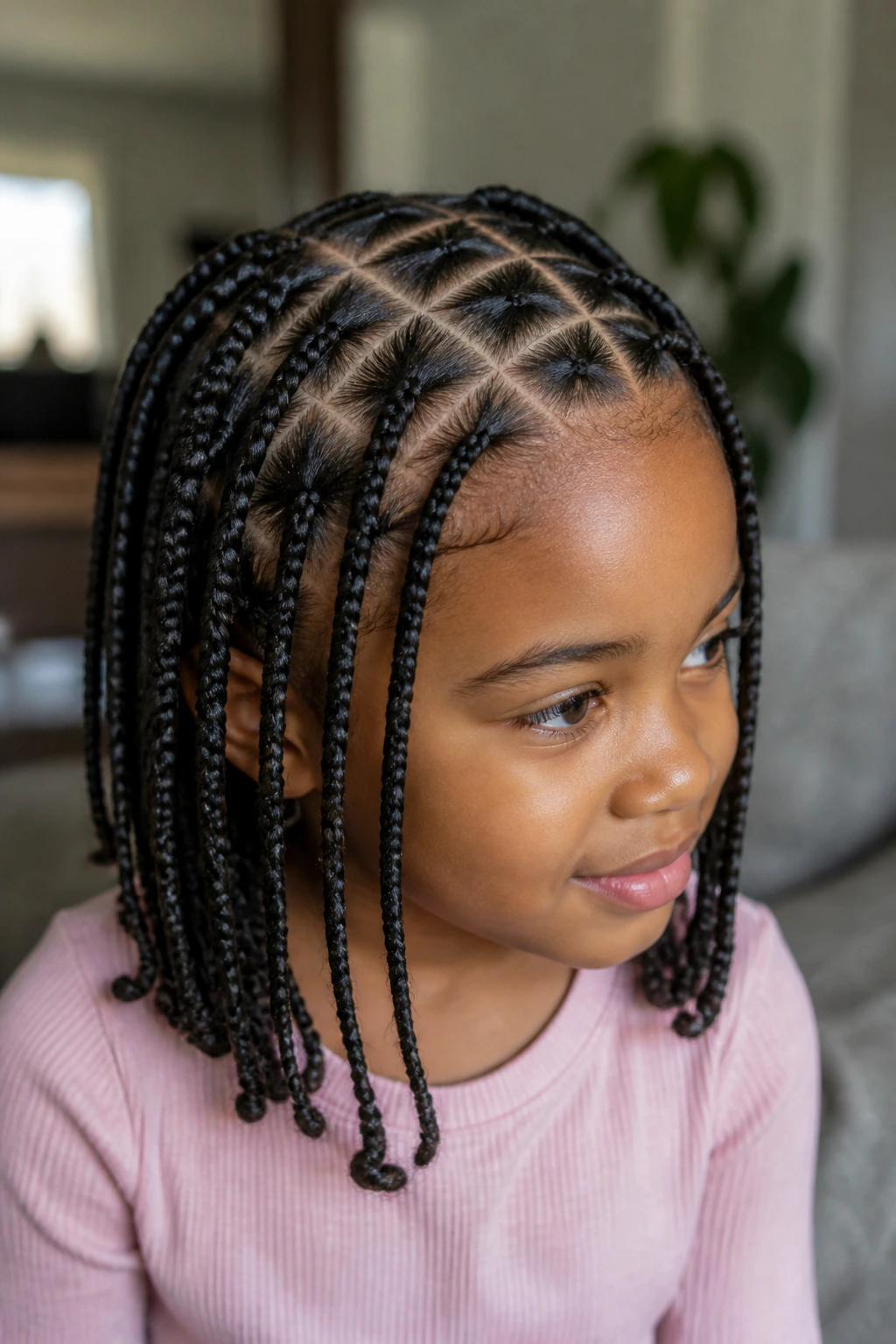
Triangle parts do something box parts don’t: they soften the grid. On thin hair, that visual softness helps the scalp look less exposed, and knotless braiding means the start of each braid sits flatter against the head. The result feels lighter and looks smoother.
What to ask for:
- Smaller triangle sections at the hairline, with slightly larger sections toward the back.
- A knotless start so the braid base doesn’t sit like a hard bump.
- Shoulder-length ends if the child is young or very active.
This style is a smart middle ground when you want braids that read “full” but not huge. The triangle shape adds interest without needing extra accessories.
6. Heart-Part Jumbo Braids
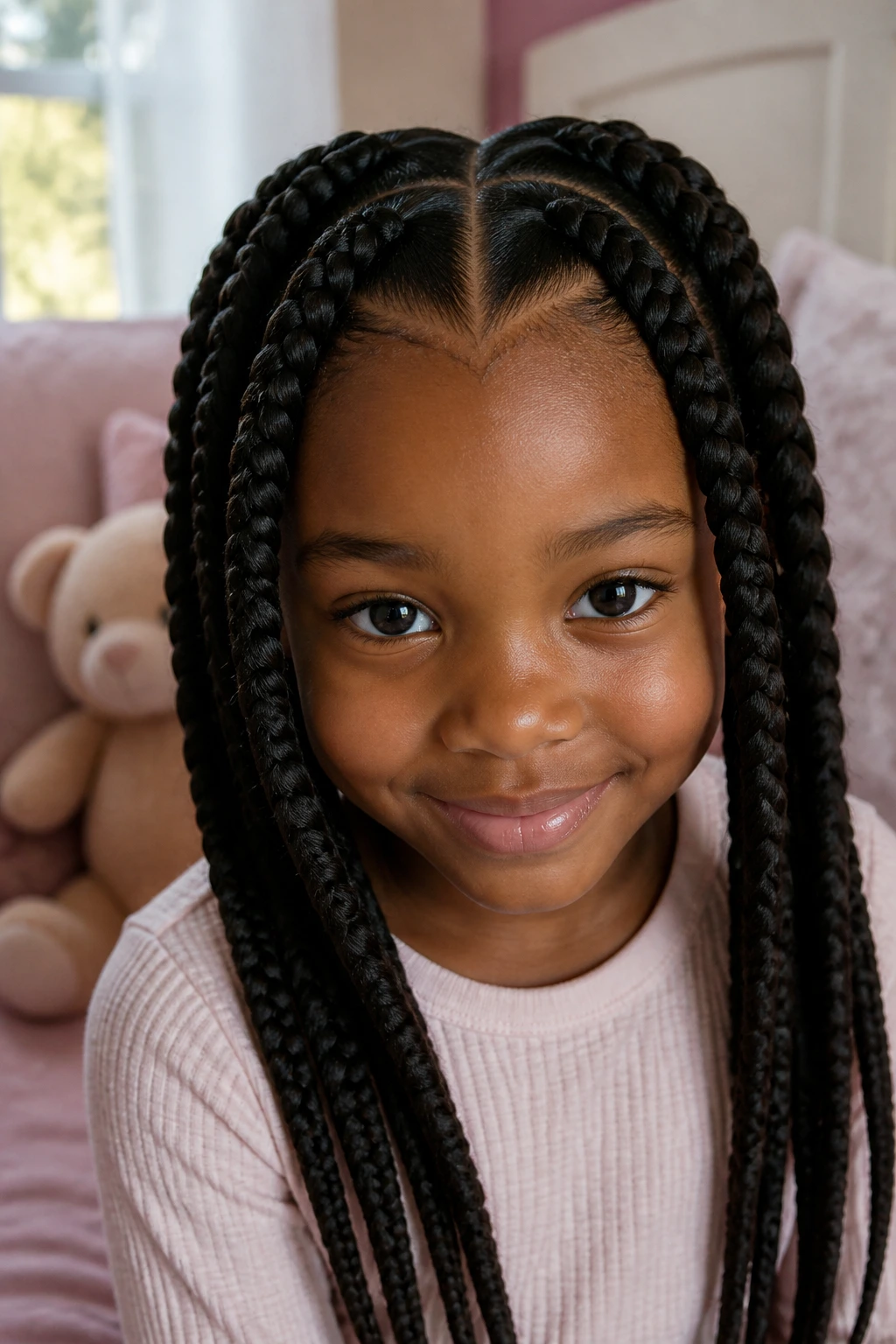
Heart parts are playful without going overboard, and they’re one of the few decorative part patterns that can still suit thin hair well. The heart shape gives the style personality before the braids even begin, so you do not have to pile on beads or colored wraps to make it feel special.
For thin hair, the key is keeping the heart design clean and not too large. A huge, wobbly heart can expose the scalp more than you want. A neat, medium-size heart sitting near the front or crown looks intentional and charming.
I like this style for birthdays and family events because it feels dressy from the start. The braid itself can stay fairly plain, which keeps weight down.
7. Half-Up, Half-Down Large Braids
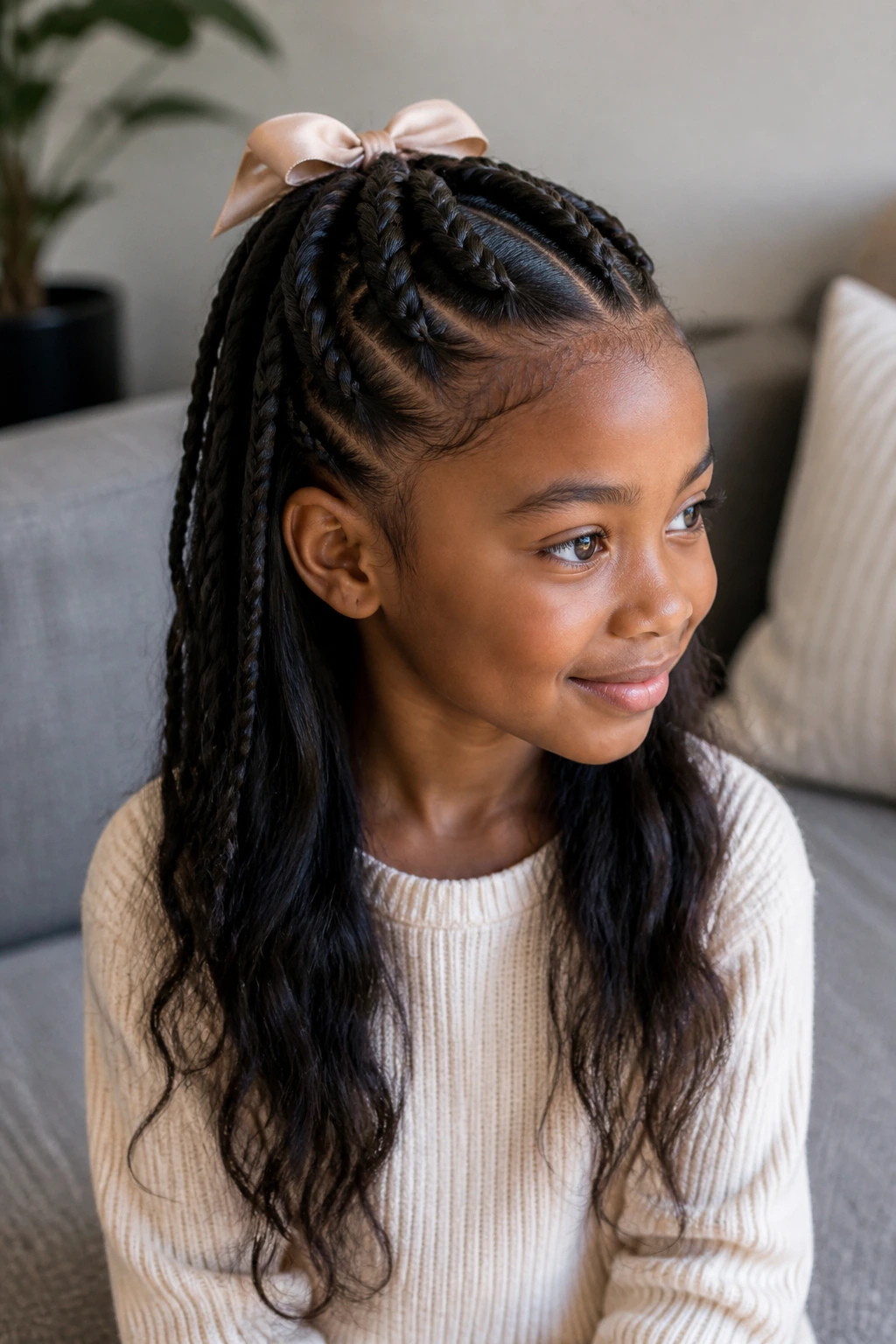
Half-up styles solve two problems at once. They keep some hair away from the face, and they leave the lower section free to move, which softens the look on a child with fine hair. The half-up portion gives height and shape, while the down section keeps the style from feeling too tight.
This works best when the braid count is moderate, not crowded. If you put too many large braids into the top half, the crown can feel heavy. But if you keep the top section neat and let the rest fall loose, the style has a nice, easy balance.
A small bow, one barrette, or a slim satin scrunchie is enough here. I would not add a stack of accessories. The braid pattern itself is the draw.
8. Shoulder-Length Braided Bob
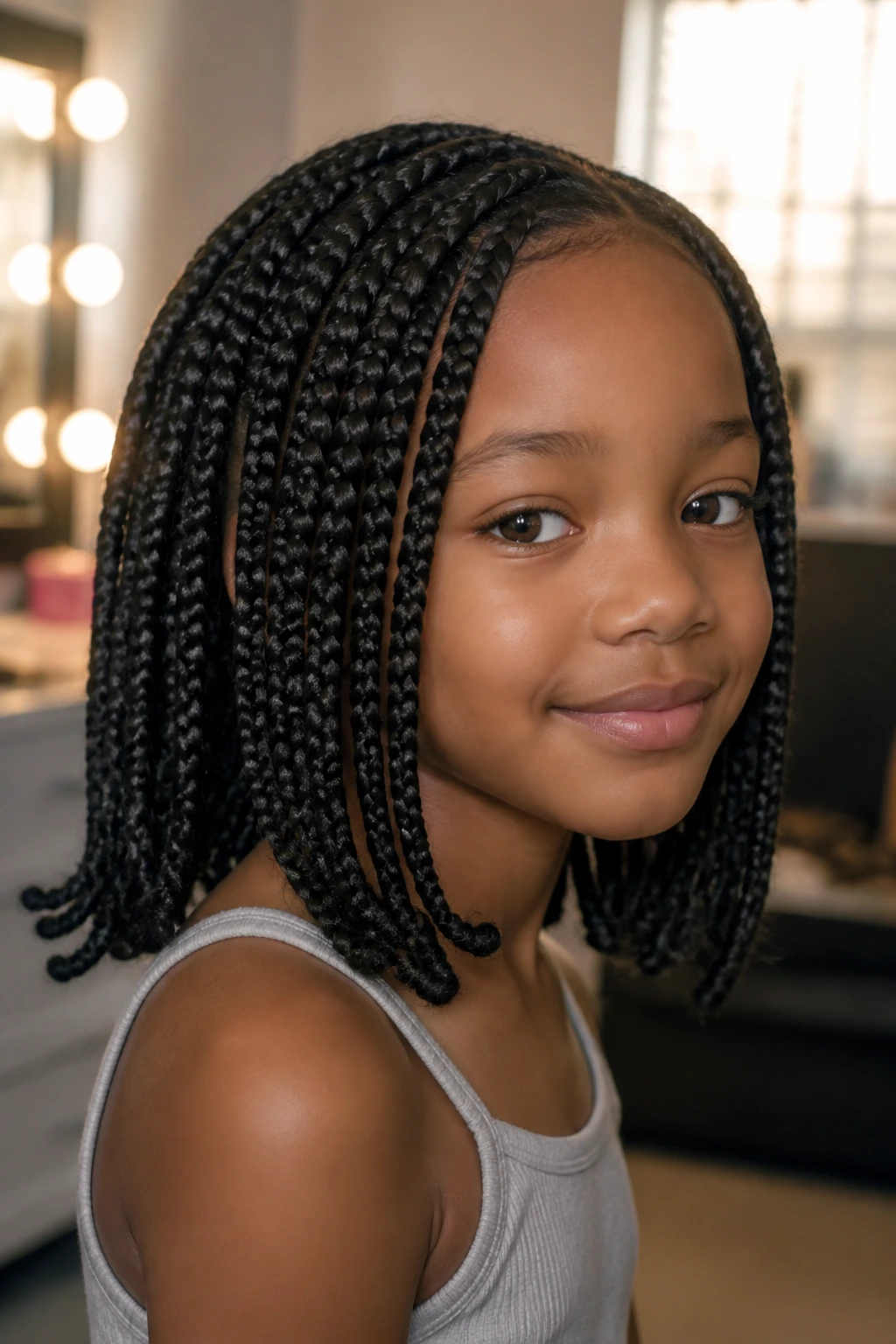
If a little girl’s hair is fine, shoulder-length is often the length that saves the whole style. A braided bob feels neat, bouncy, and light on the neck. It also keeps the braids from dragging when she naps, leans back, or swings her head around like children always do.
This is one of those styles that looks especially good with blunt ends or lightly curled tips. The shape stays compact, which means it holds up better between wash days. It also keeps the overall look age-appropriate without losing the braid drama.
I’m blunt about this: if the hair is thin, a bob is usually smarter than going long. Long braids can be fun, but they are not always kind.
9. Four Big Cornrows into a Ponytail
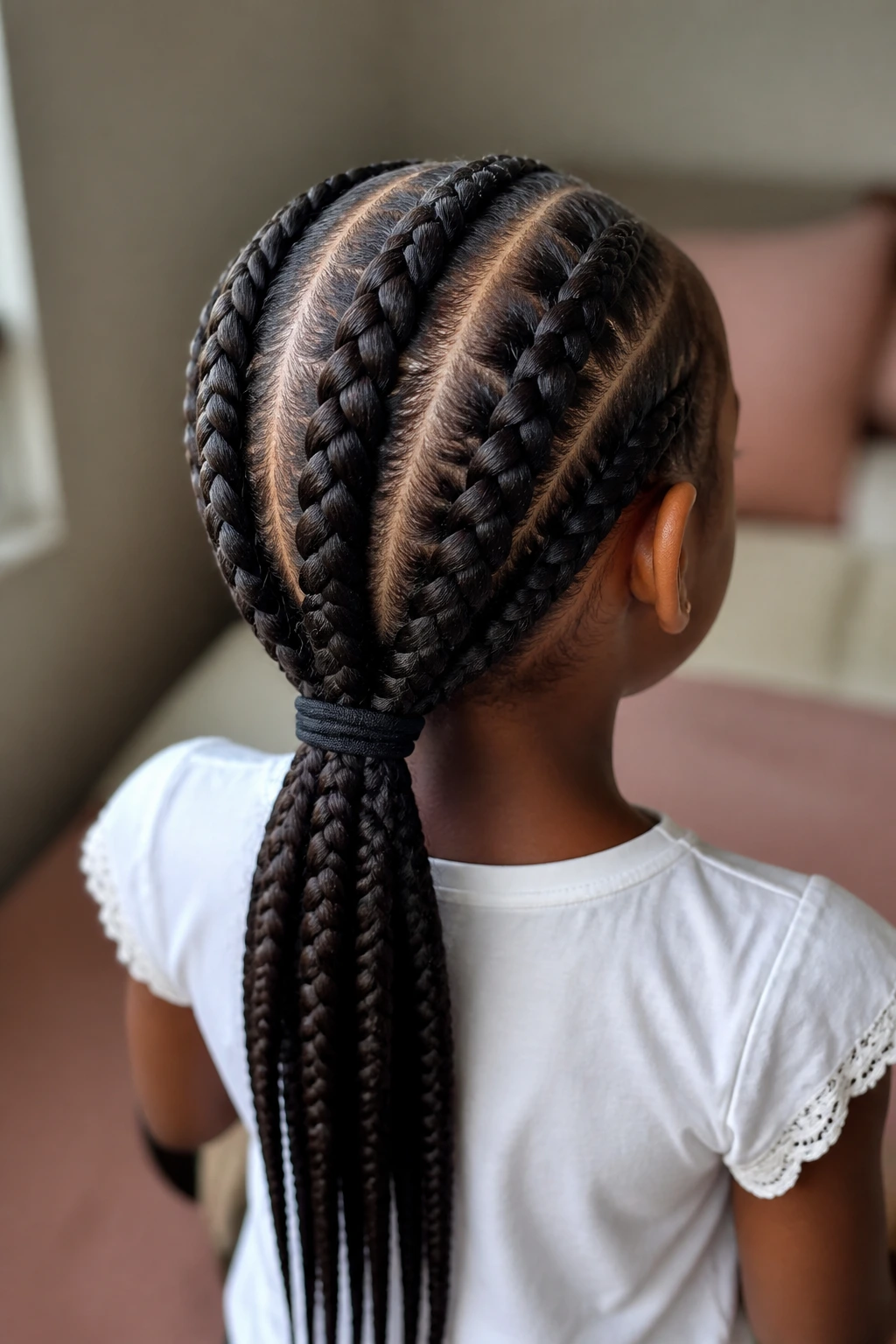
Four large cornrows are a quiet workhorse. They sit flat, stay neat, and keep the scalp manageable. Pulled into a single ponytail at the back, they give the look of fullness without putting too much braid weight all over the head.
This style is especially good for school weeks because it is easy to keep tidy with a quick satin wrap at night. The ponytail can be low and soft, or slightly lifted if the child likes a perkier shape. Just avoid making the pony base too tight; that’s where a lot of parents accidentally overdo it.
If you want a little decoration, wrap one braid around the ponytail holder instead of adding lots of extras. Cleaner is better here.
10. Zigzag-Part Jumbo Braids
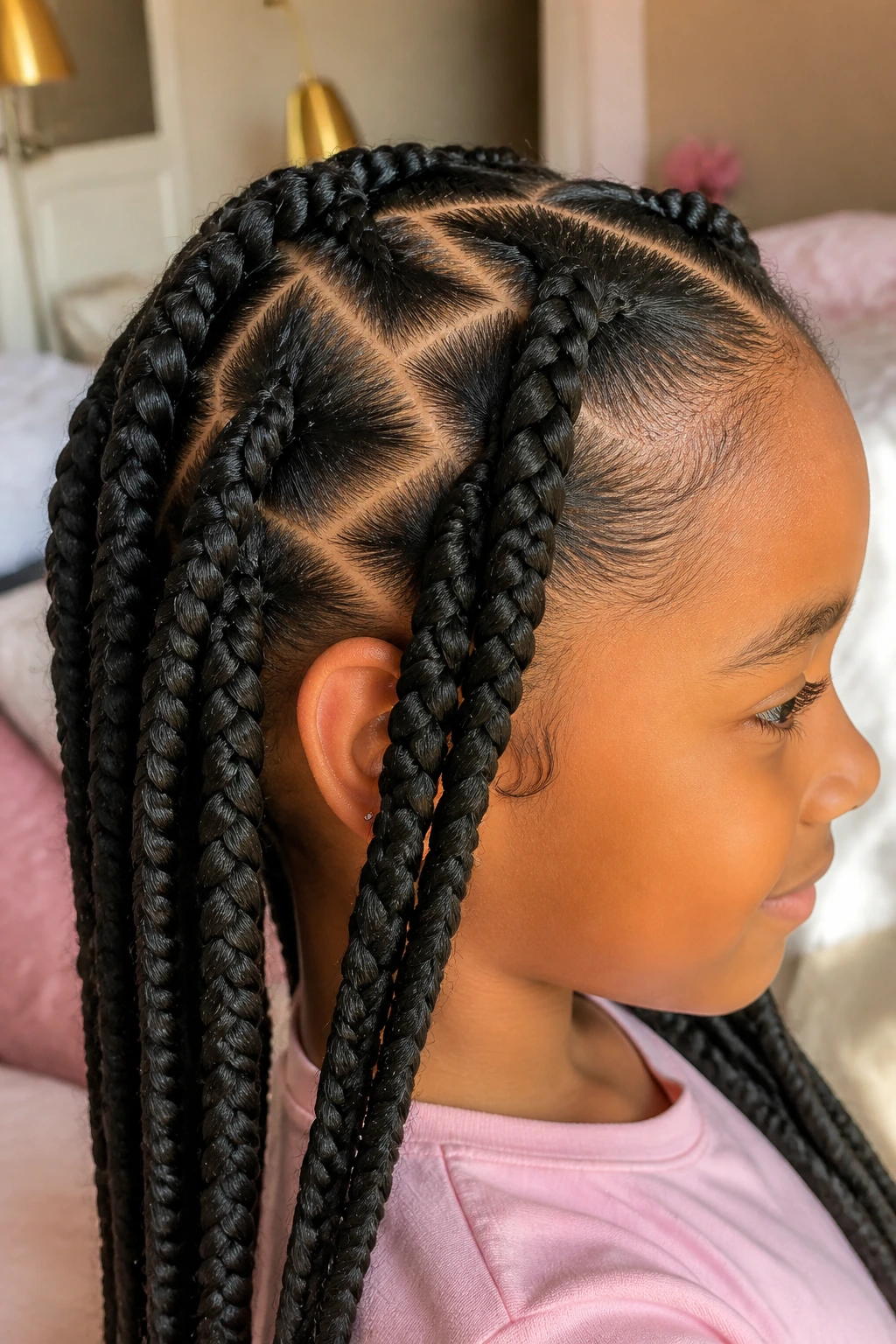
Zigzag parting is one of those details that makes a simple braid style look custom. On thin hair, it helps disguise sparse areas because the part lines are broken up instead of running in straight, obvious rows. The braids still stay large and manageable.
The zigzag itself does not need to be dramatic. A soft, shallow wave is enough. If it’s too sharp, the parts start looking stiff, and stiff is not what you want on a child’s head.
This style is fun because it gives visual interest without depending on length or heavy accessories. The parts do the talking. That’s usually my favorite kind of braid style for little girls.
11. Braided Space Buns
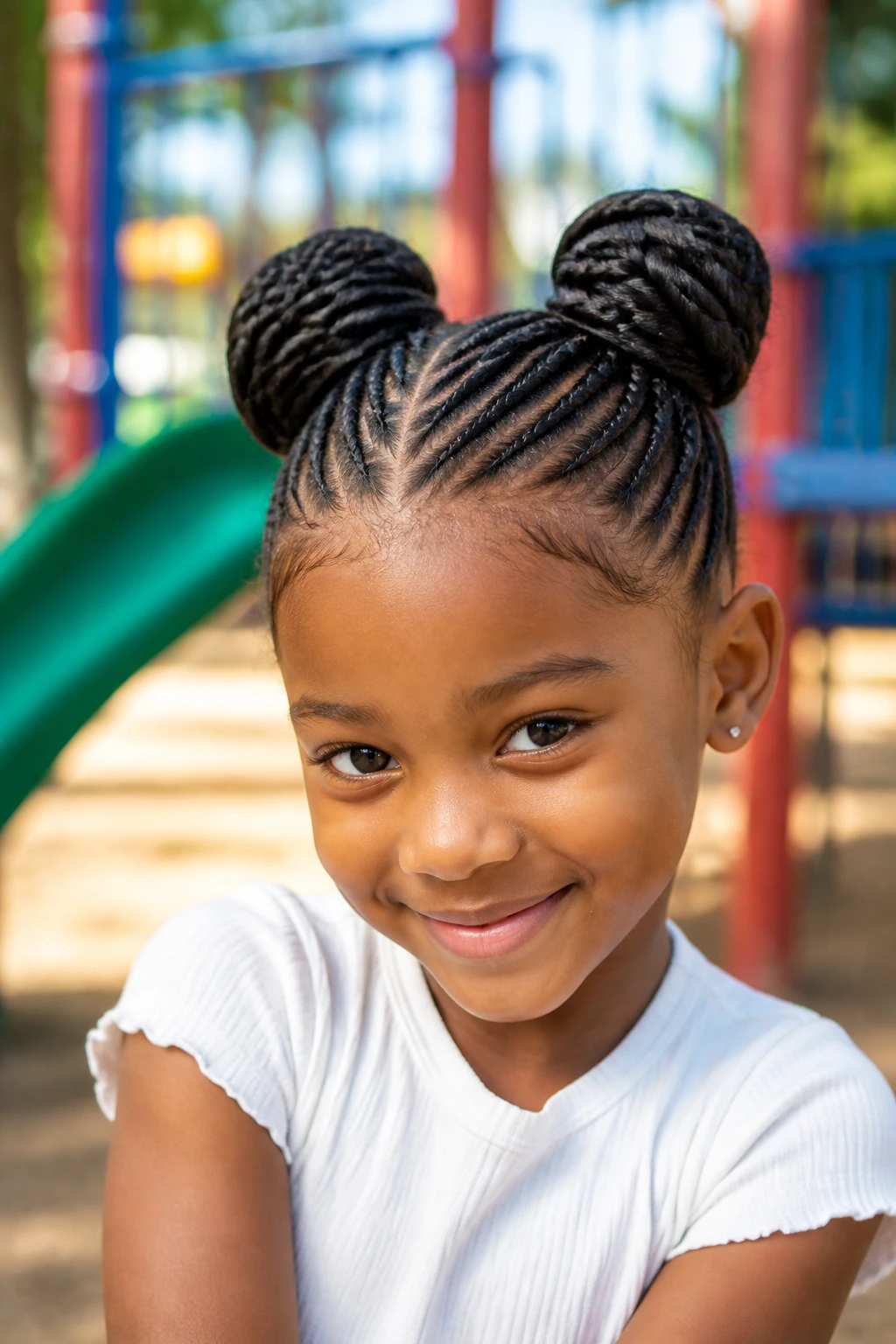
Space buns give you two neat stacks of braids that sit higher on the head, which can work well if the braids themselves are kept short and light. For thin hair, the upside is that the style looks playful and full without needing a lot of downward length.
The bun base should stay soft. I would not twist and wrap the braids so tightly that the scalp gets yanked upward. A loose, rounded bun with the ends tucked under feels better and usually lasts longer.
This style is good for hot days, dance classes, and kids who hate hair on their neck. It does ask for a little maintenance, though. If the buns flatten overnight, a quick fluff in the morning brings them back.
12. Lemonade Braids with Light Ends
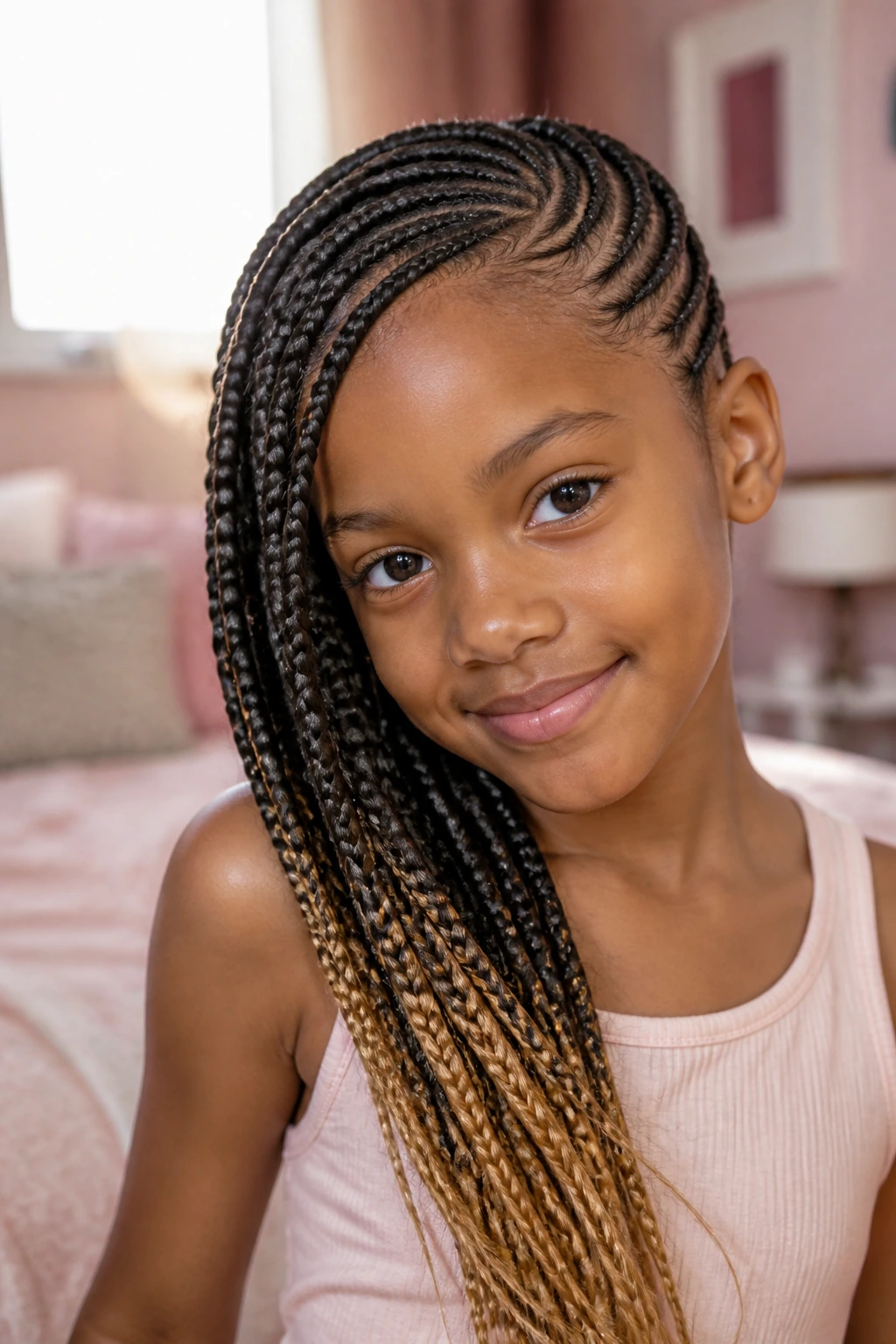
Lemonade braids sweep to one side, and that diagonal line can be very flattering on a small head. The style creates movement without needing a huge braid count, which is one reason it works so well for fine hair. The side sweep also keeps weight from sitting straight down the back.
For children, I prefer a shorter version of this look. Waist-length lemonade braids on thin hair can feel like too much by the third day. Shoulder to upper-back length usually reads better and feels better.
A few light beads at the ends can be enough. I would keep the finish simple so the side sweep stays the star.
13. Mohawk Braids with Curly Ends
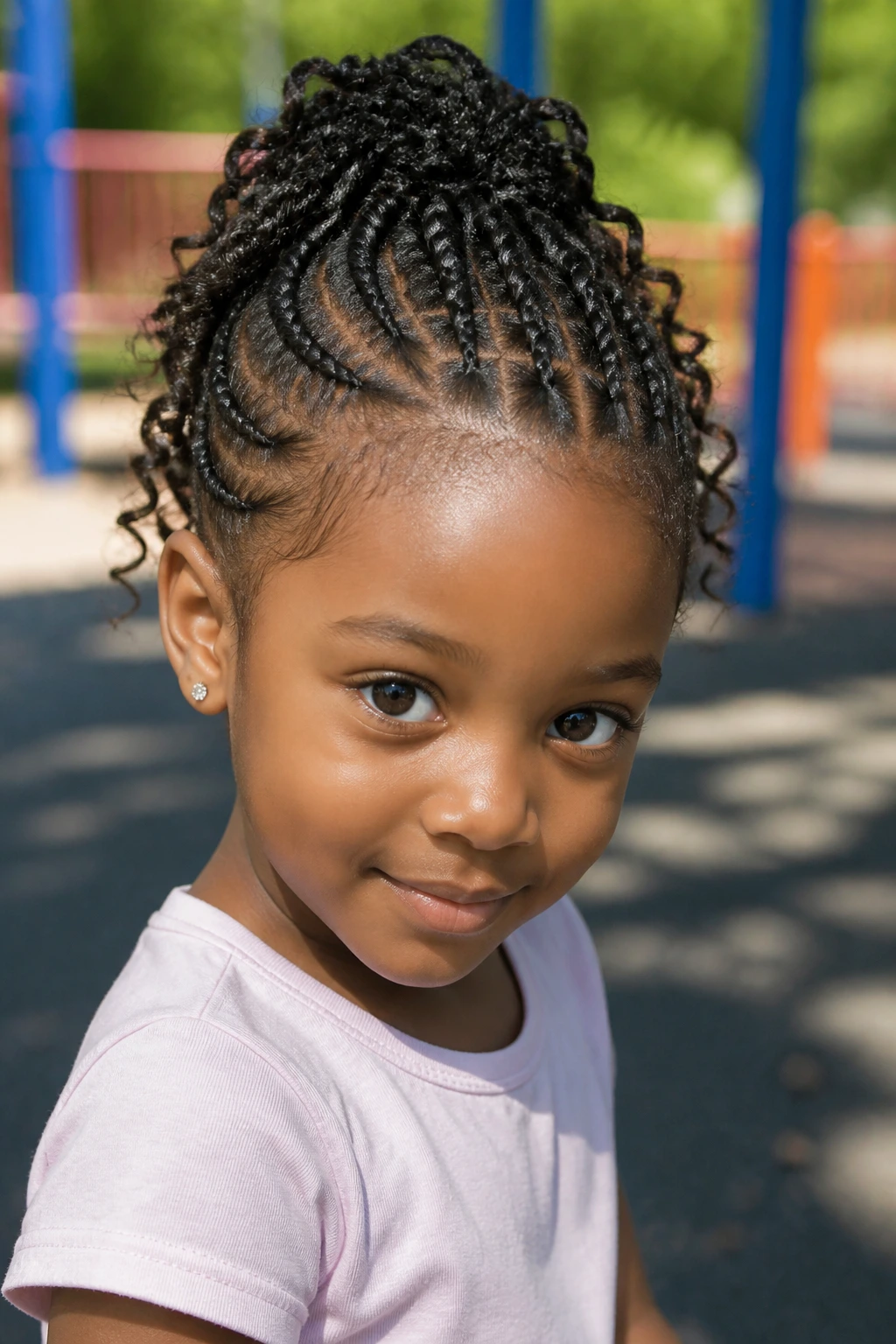
This is the bolder one in the bunch, but it can still work on thin hair if the braid ridge stays narrow and the sides are tucked down cleanly. The center line gives the style height, while the curly ends soften the look so it does not feel too severe for a child.
The curls at the ends also keep the style from dragging visually. Straight, heavy extensions can sometimes make a fine-haired child look weighed down. A little texture at the ends breaks that up.
If you choose this one, keep the braid length moderate and the curls light. The point is shape, not bulk.
14. Large Ghana Braids
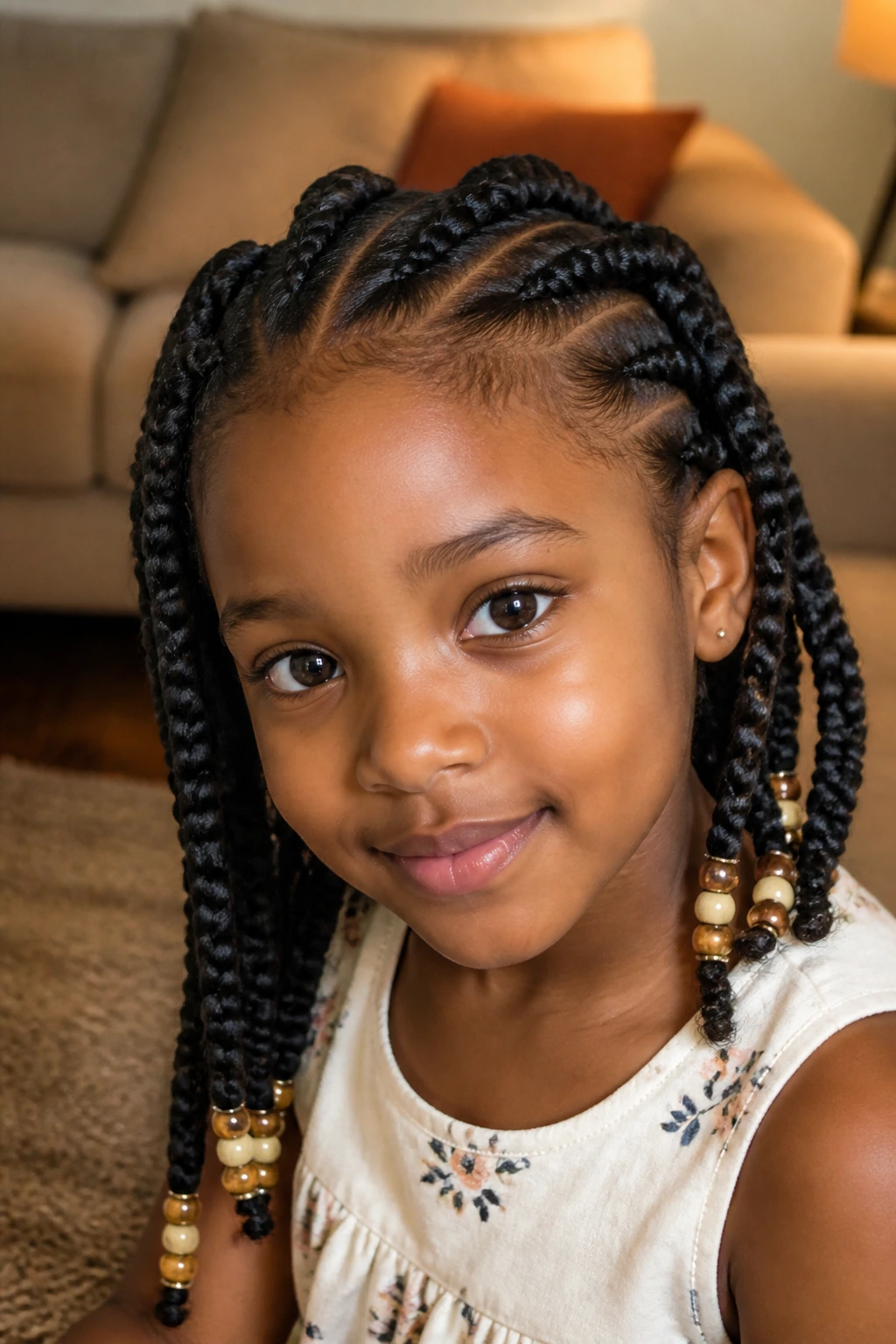
Ghana braids sit close to the scalp and build gradually, which is ideal when a child’s hair is fine and you want the front to stay smooth. They can look very polished, but they do need a careful hand. Too much feed-in too fast and the braid starts feeling thick at the base.
What I like here is the controlled look. The scalp stays visible in neat lines, but the braids themselves still read large and full. That balance is hard to get right with other styles.
Ghana braids also hold accessories well. If you want a few cuffs or small beads, place them away from the front hairline so the style stays comfortable.
15. Side Ponytail Braids with Ribbon Wrap
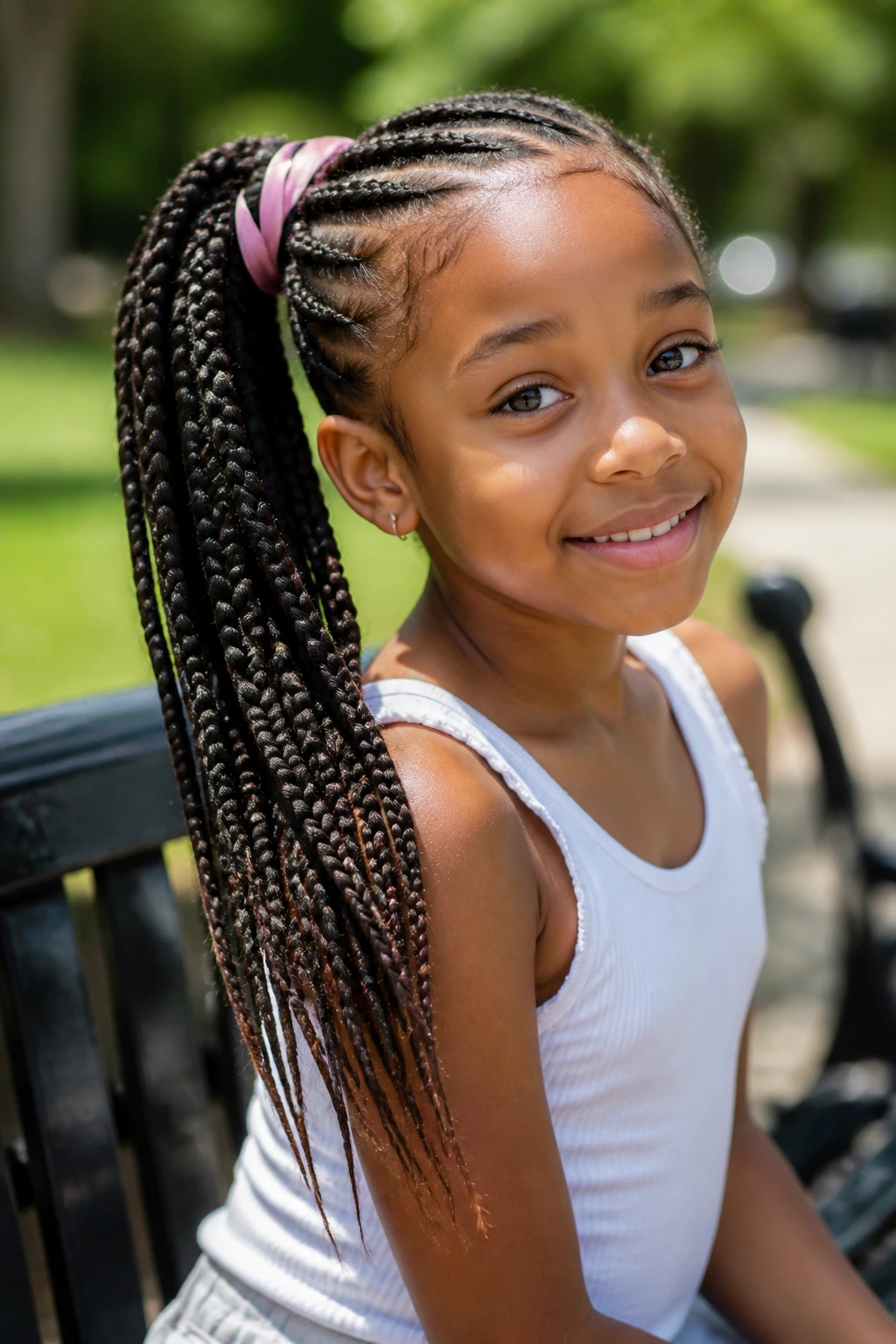
A side ponytail shifts the braid weight away from the center of the head, which can feel lighter on a child with thin hair. It also gives you a lot of styling room without needing a complicated pattern. The ribbon wrap is there to finish the look, not to carry it.
I like this style when the child wants something a little dressier than ordinary braids but not as formal as a crown braid. A satin ribbon matches the outfit, and because it’s soft, it doesn’t add much pull. That matters.
Keep the ponytail low enough that it doesn’t bang against the shoulder all day. High side ponytails can look fun, but they tug more than people expect.
16. Tucked-Under Braided Bun
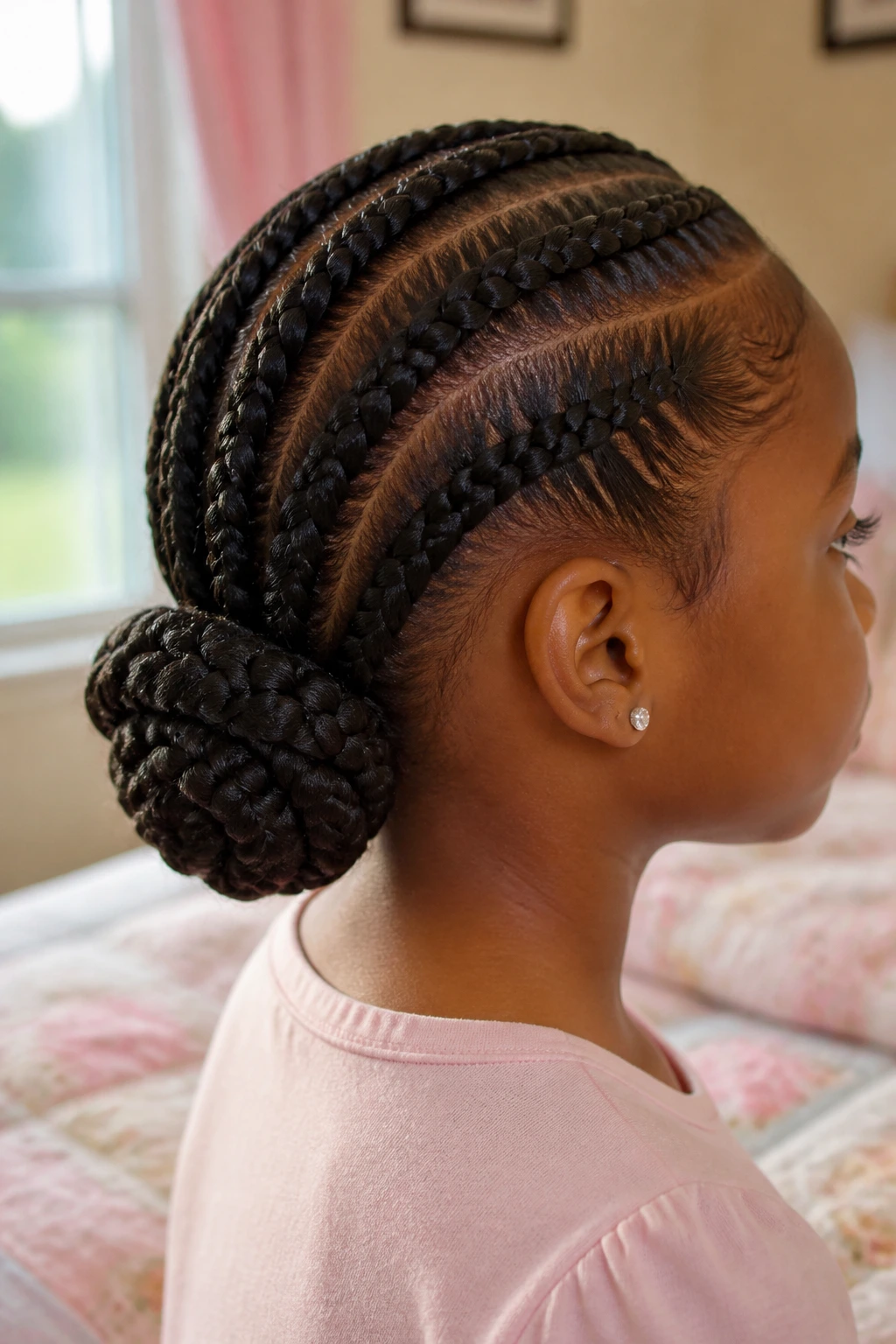
The tucked-under bun is one of the quietest protective styles on this list, and honestly, I think that’s a strength. It keeps all the braid ends contained, which reduces tangling, and it lets the scalp rest from long swinging length. On thin hair, that can be a relief.
The bun should sit low and broad, not stacked into a tall knot. A broad bun spreads the weight out. A tall bun can feel like a small backpack on the head.
This is the style I’d choose when the week is busy and you need the hair to behave. It’s not flashy. It is dependable, which is often the better trade.
17. Crisscross Crown Braids
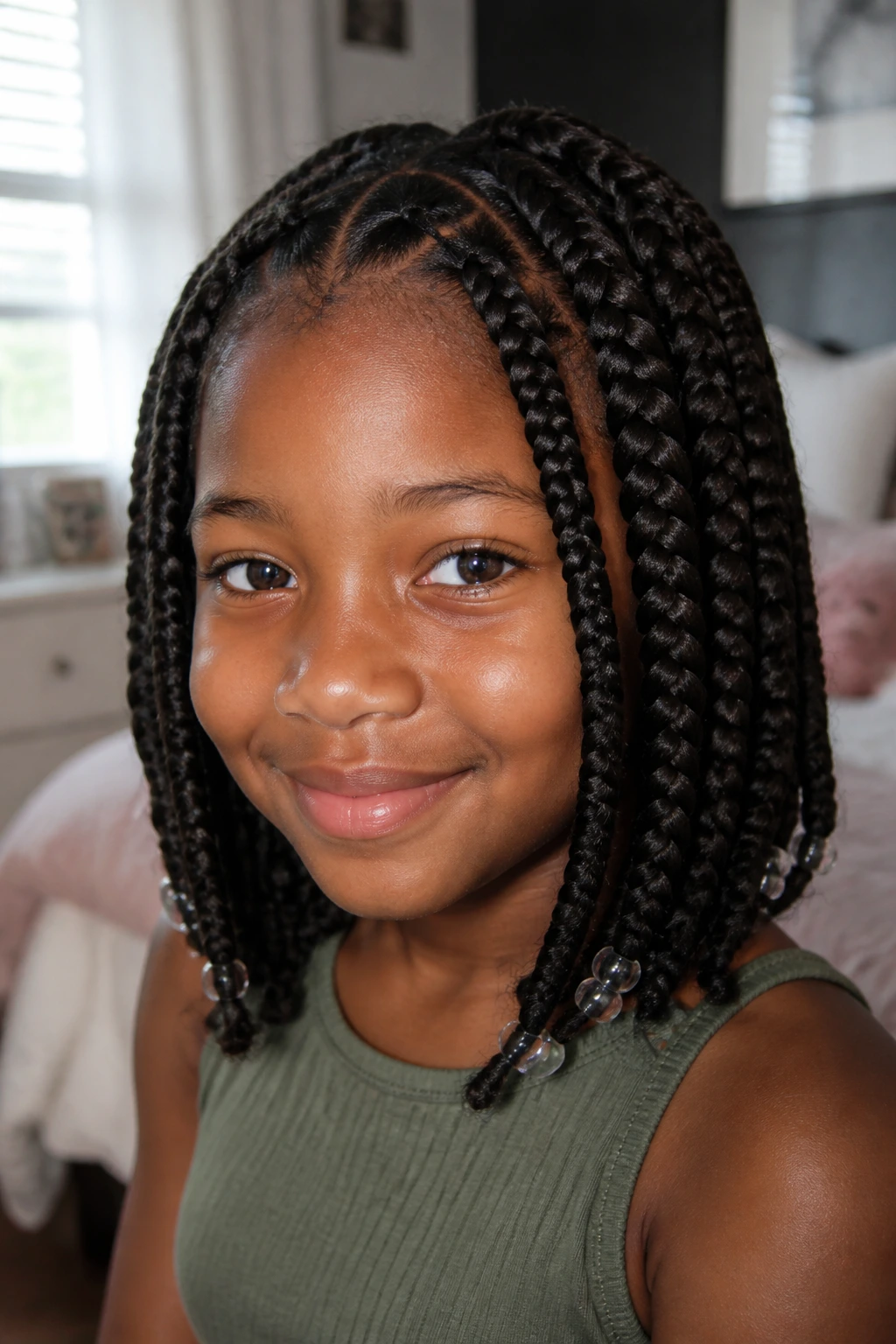
Crisscross braiding gives the front and crown a little architecture. The overlapping lines make the style look detailed, but the braid count can stay low, which keeps the hair from feeling crowded. On thin hair, that matters a lot more than people realize.
The crisscross pattern works best when the crossing sections are neat and not too narrow. If the strips are tiny, the scalp starts showing through more than intended. Wider sections keep the look bold and the tension gentle.
This style works well with a low bun, a ponytail, or even a few loose braided lengths. It is one of the more polished options here.
18. Stitch Braids with Bead Tips
Stitch braids are all about those clean, visible lines at the scalp. For little girls with thin hair, that sharp parting can make the braid set look very neat and orderly, especially when the rest of the hair would otherwise look sparse. The beads at the tips add weight at the very end, not at the roots, which is exactly where I prefer them.
The styling trick is restraint. A few evenly spaced beads look deliberate. A full row of heavy beads can start pulling the ends down and make the whole braid feel tired.
If the child moves a lot, choose acrylic beads over glass and keep the braid length modest. Clean lines, light ends.
19. Large Knotless Feed-In Braids
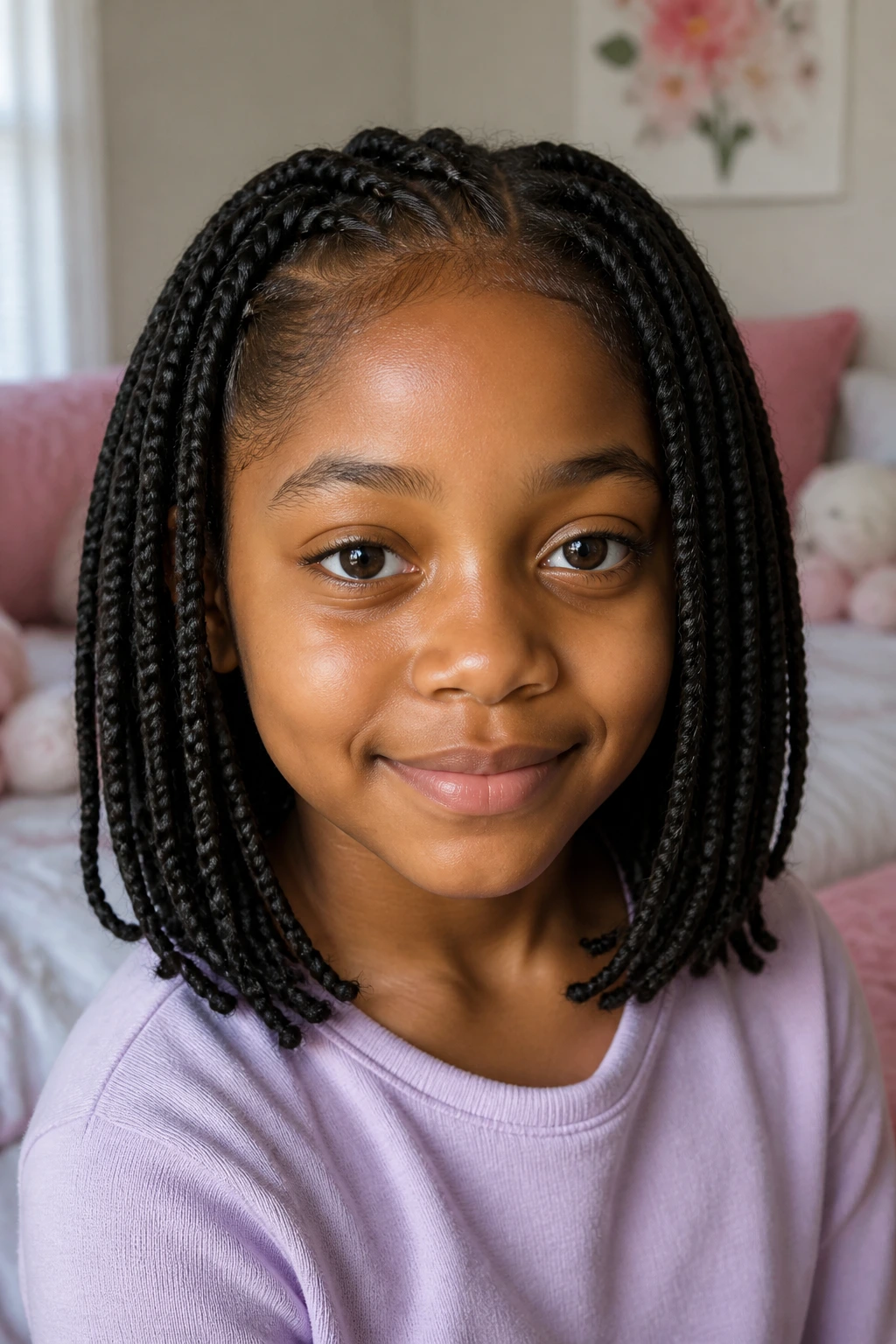
Knotless braids are one of the easiest recommendations to make for fine hair because the start of the braid lies flatter and feels softer. The feed-in method lets the stylist build thickness gradually, which avoids that thick knot at the scalp that can look and feel clunky.
For little girls, the braid count should stay moderate. The point is not to pack the whole head with braids. It’s to create enough shape that the style reads full while the scalp stays comfortable.
If you can choose only one modern braid style for thin hair, this one belongs near the top of the list. It just behaves better on a small head.
20. Diagonal Back Braids
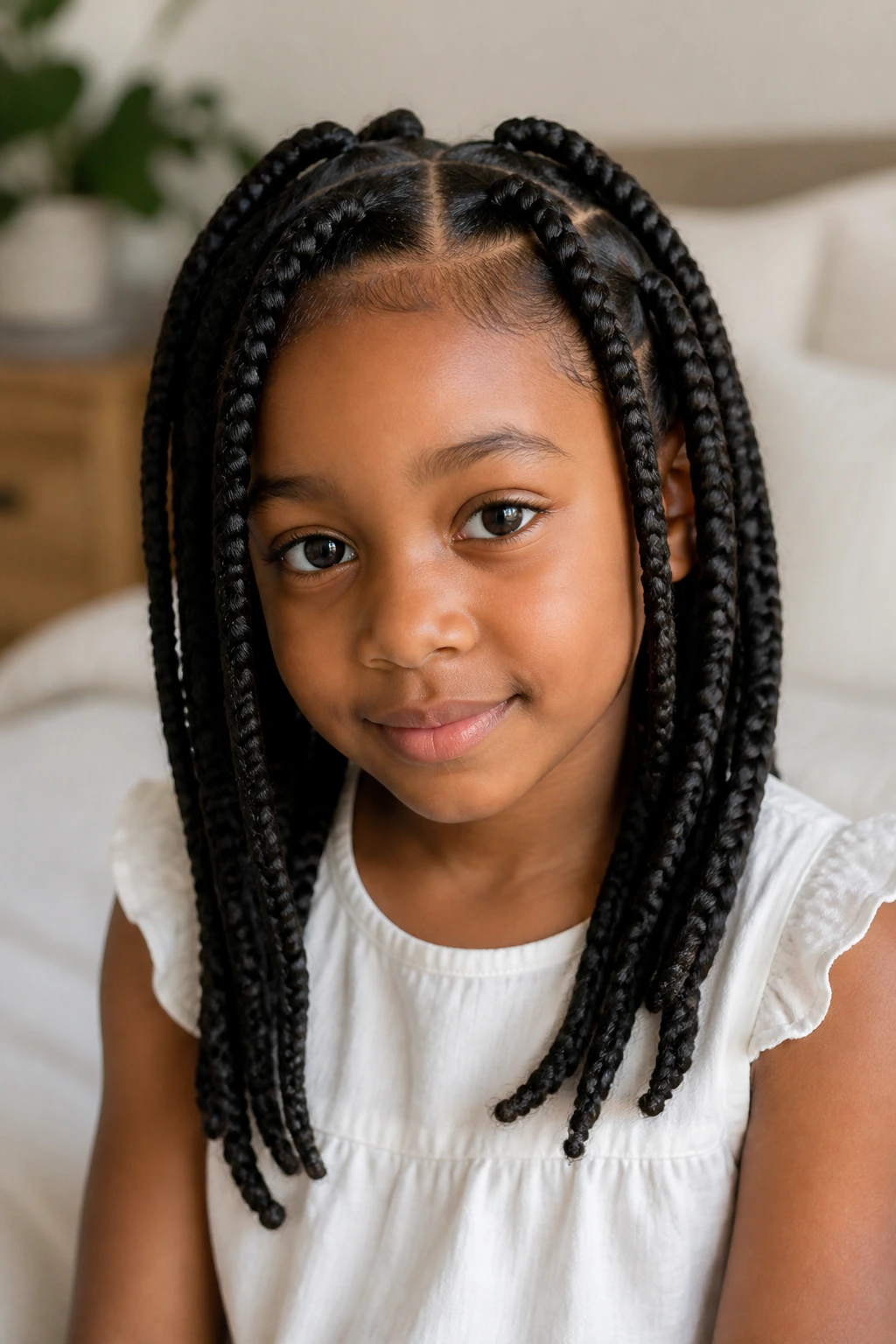
Diagonal parting is underrated. It changes the whole mood of the style without asking for extra length or added bulk. On a child with thin hair, diagonal braids can make the head shape look fuller because the part lines pull the eye across the scalp instead of straight back.
This style is especially nice if the child has a favorite side part or wears hair behind one ear. The diagonal flow works with that habit instead of fighting it. That makes it easier to keep neat through the week.
A low finish works best here. Diagonal rows into a ponytail or bun usually wear better than letting the braids hang very long.
21. Twin French Braids with Added Hair
Twin French braids are a classic for a reason. They keep the hair off the face, distribute weight evenly, and can be built up with added hair if the natural density is thin. On children, they feel familiar, which helps if a child is picky about new styles.
I like this choice when you want something that works for school and still looks finished on a weekend. The braids can stop at the nape or continue into two low tails. Both versions are easy to manage.
Keep the add-in light. If the French braid starts feeling stiff before it even reaches the ears, too much hair has gone in.
22. Box Braids with Soft Color Streaks
A touch of color can wake up a simple braid style fast. For little girls, I prefer soft streaks rather than loud blocks of color. Honey brown, burgundy, or a muted auburn thread through black braids gives contrast without turning the style into costume.
The color should be an accent, not the whole story. That matters on thin hair because a lot of color can make the braid look visually heavier. A few streaked pieces around the front or underlayer usually do enough.
This one is lovely if the child likes a bit of personality in her hair. Just keep the extension weight low and the color placement thoughtful.
23. Braided Pigtails with Jumbo Partings
Pigtails are young, sweet, and practical. The jumbo partings keep the style from looking overworked, and each side can be adjusted to match the child’s face shape. On thin hair, that division helps the scalp look balanced.
I like this style for kids who still need their hair to feel playful. It is also easy to dress up with ribbons, bows, or a few small beads. Because the braids are split into two groups, the weight never concentrates all in one place.
A side note: if the child is very young, pigtails usually wear better than long single braids. They stay up during play and don’t whip around as much.
24. Halo Braid with a Loose Tail
This is one of the prettier options for special days. The halo sits around the head like a crown, and the loose tail gives the style a soft finish instead of locking everything into a tight updo. For thin hair, the halo structure does some visual heavy lifting.
The tail should stay short to moderate in length. A huge tail hanging from a halo can upset the balance and make the style feel too bottom-heavy. A medium tail keeps the whole thing airy.
I’d choose this one for school concerts, church, or pictures. It has shape, but it still feels like a child’s hairstyle, not a mini adult style.
25. Wrapped-Base Braided Ponytail
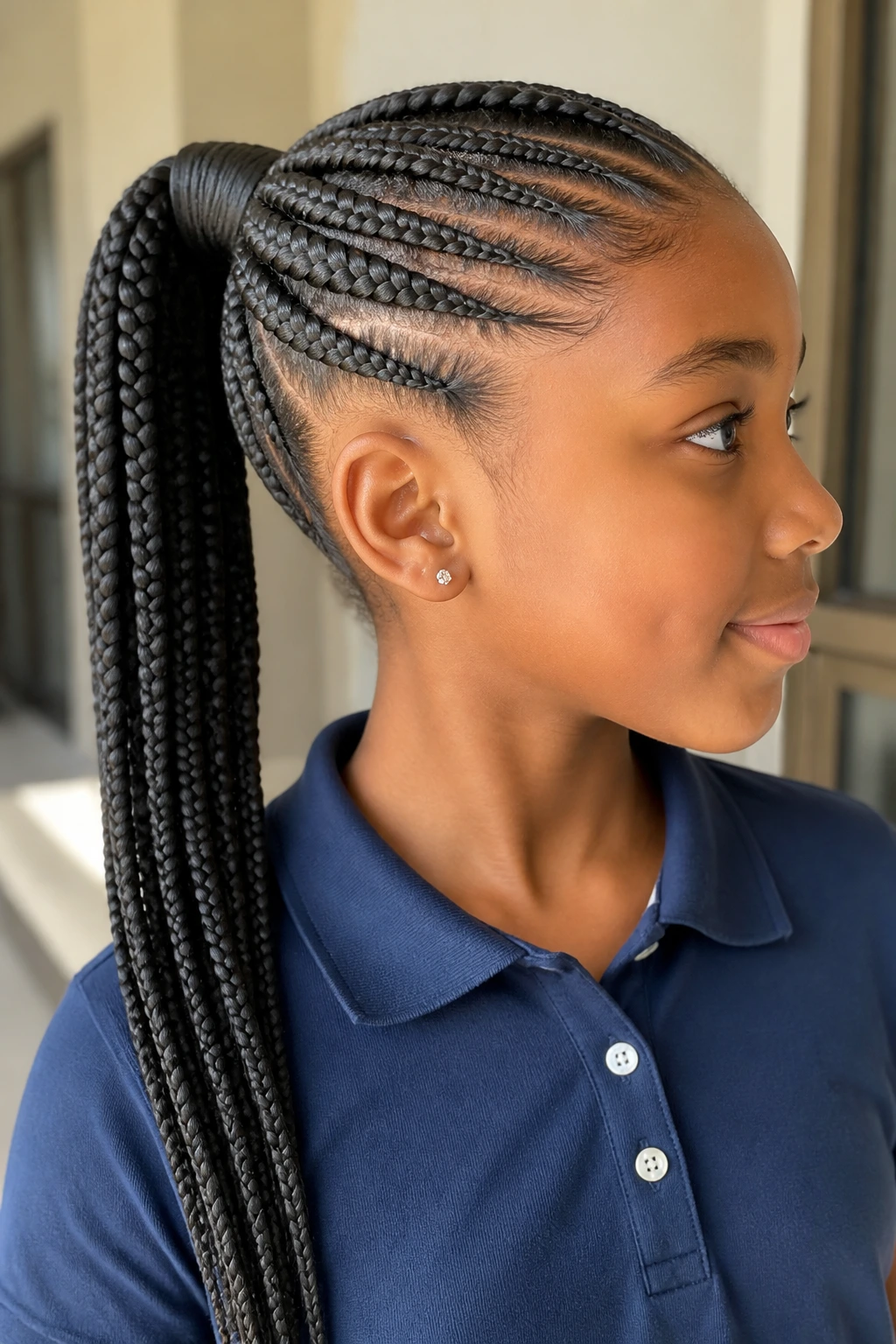
A wrapped base makes a ponytail look finished without piling on a lot of accessories. With braids, that wrapped section also hides the elastic and keeps the base from looking cluttered. On thin hair, cleanliness matters more than ornament.
The ponytail should sit low to medium height. A high wrapped pony can start pulling if the hairline is delicate. Low is calmer and easier to maintain.
This style is one of those quiet wins. It looks polished, works with many outfits, and does not ask for a lot of extra handling during the week.
26. Bubble Braids over Cornrows
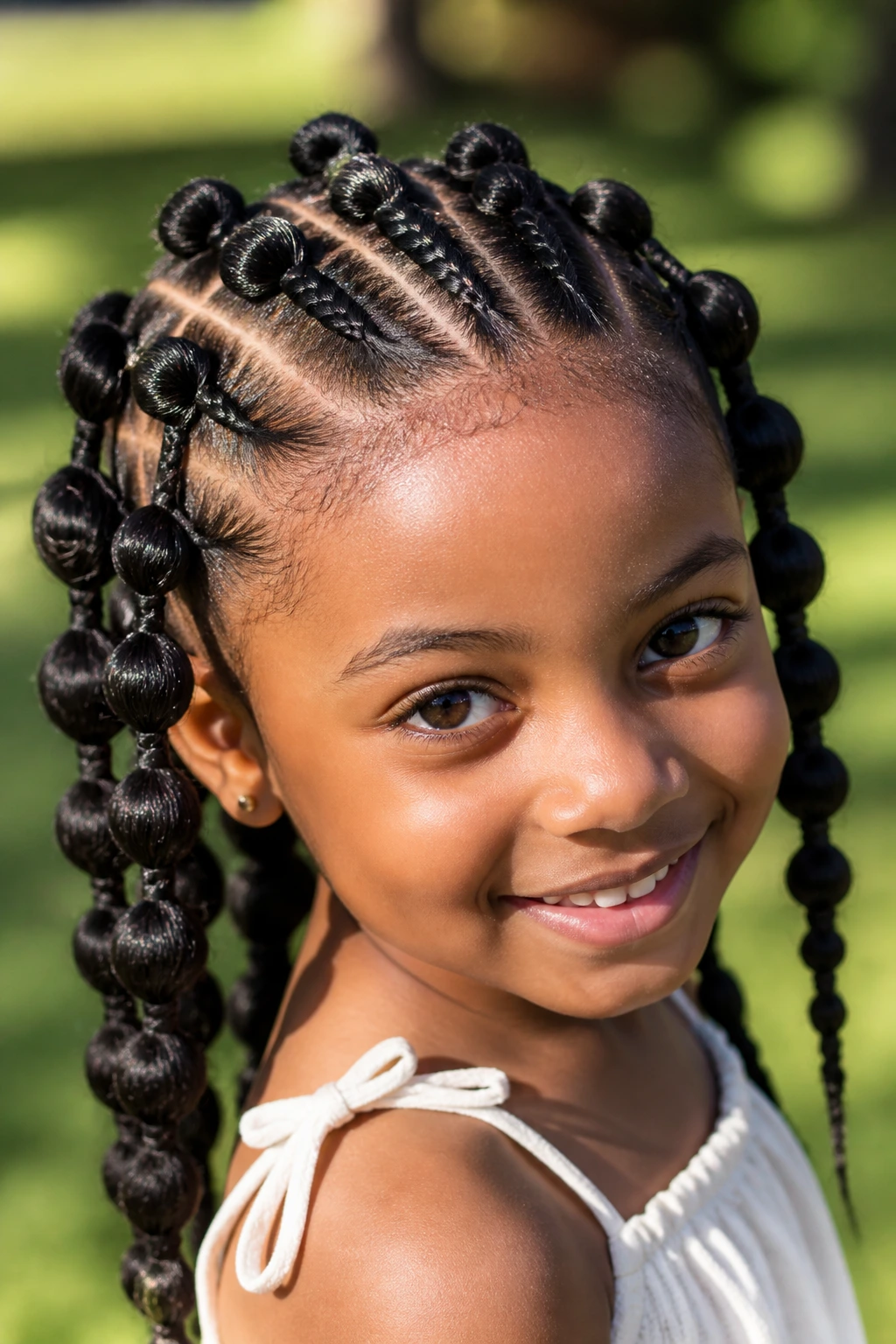
Bubble braids are fun because they turn one long braided section into a series of little rounded shapes. Over cornrows, that can create a playful, kid-friendly style without needing tons of added weight. The bubbles can be made with soft elastics spaced a few inches apart.
This style works best if the base cornrows are large and neat. If the base is too narrow, the style starts to look overcomplicated. Big, clear sections keep it readable.
I would keep the bubbles fairly loose. Tight bubble sections can tug, and the whole point of this style is movement without strain.
27. Braided Top Knot with a Scarf Tie
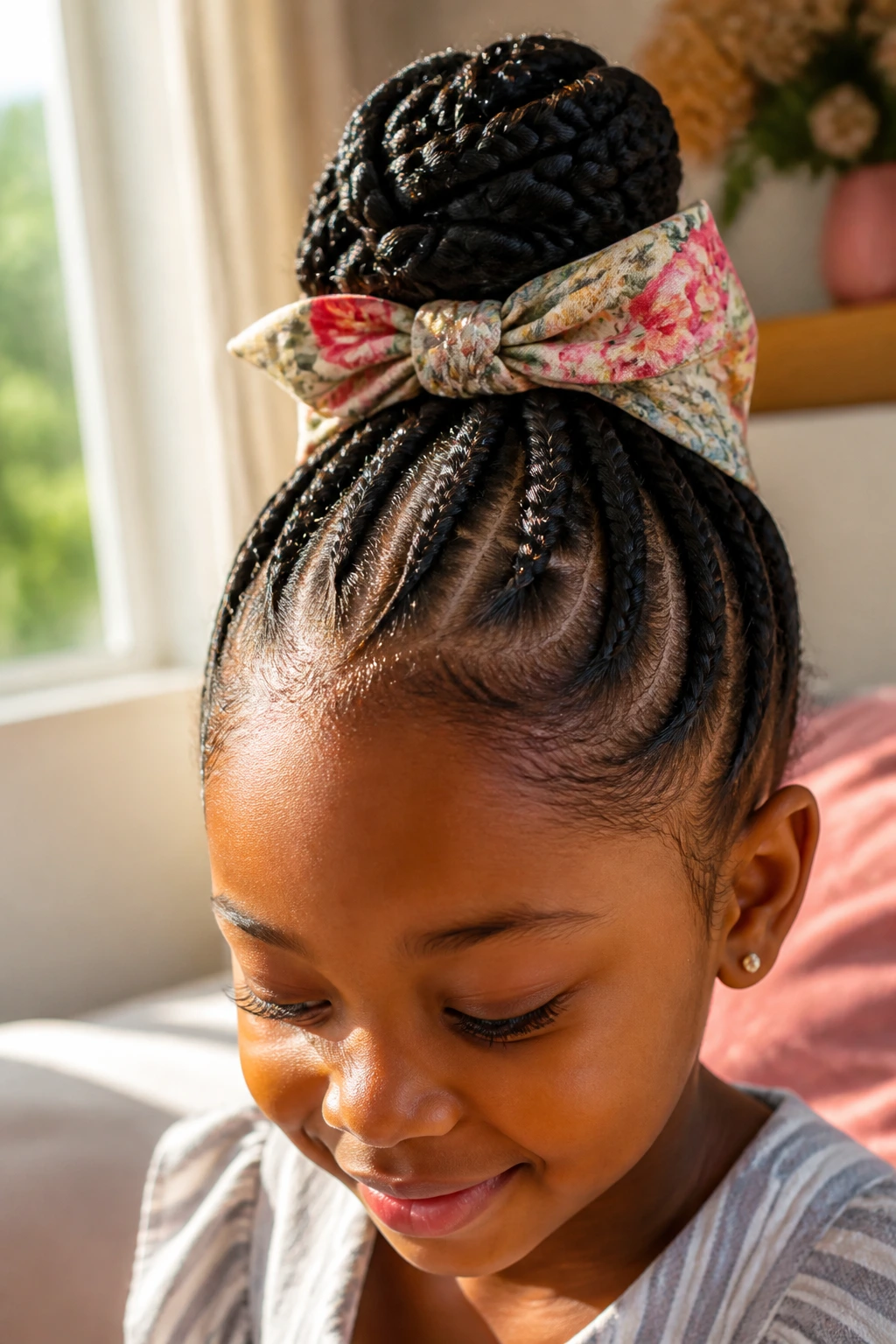
A top knot draws the eye upward, which can make thin hair look fuller at the crown. The braid structure gives the knot shape, and a scarf tie adds color without loading the head with beads or clips. On kids, that scarf can also keep the look in place.
The knot should be soft and compact. A huge knot can feel top-heavy, especially if the hair is already fine. A smaller knot with a tidy scarf bow reads better and wears better.
Choose a lightweight scarf, not a thick wrap. Thick fabric can add heat and bulk that the child does not need.
28. Boho Box Braids with a Few Curly Pieces
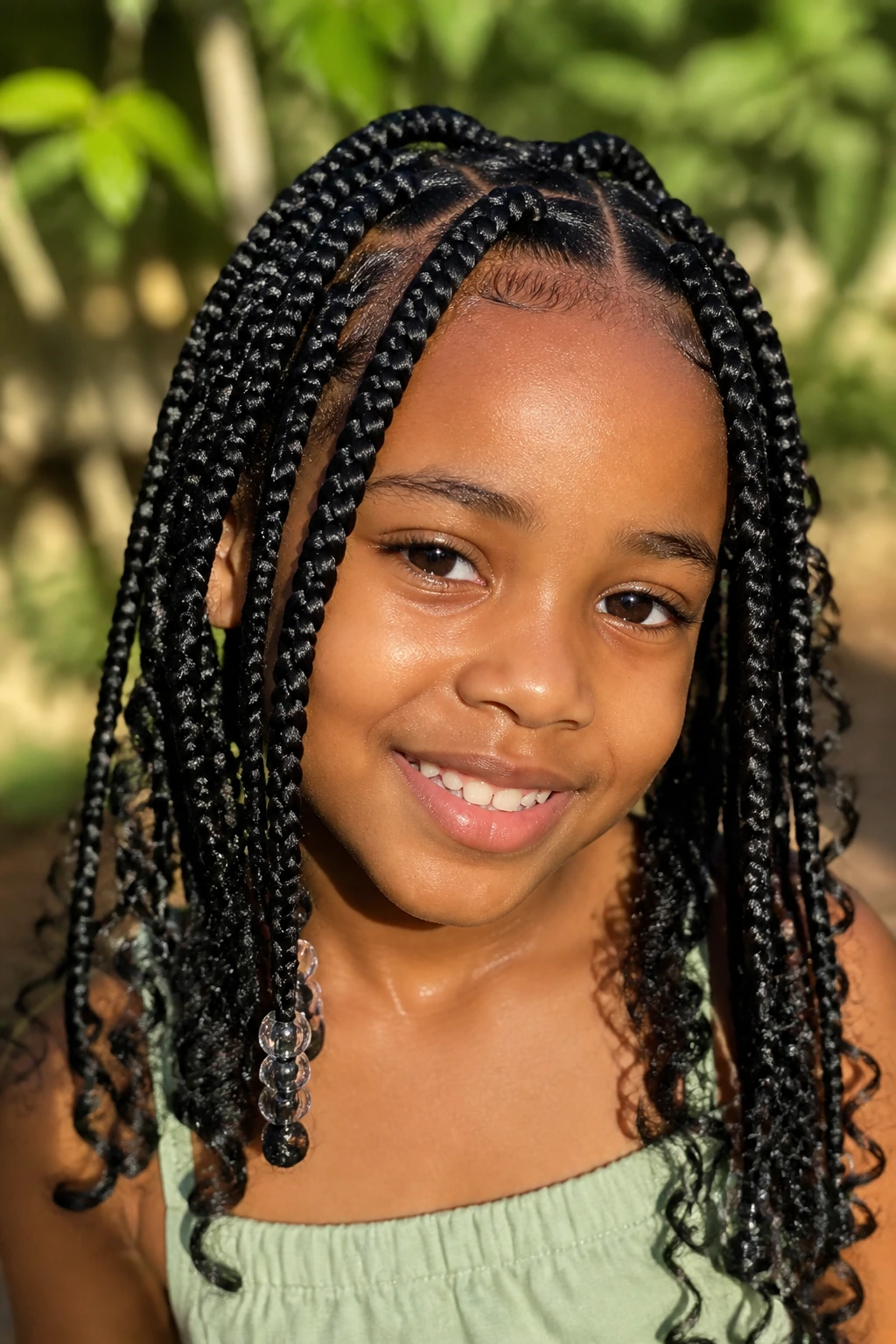
I’m careful with boho braids on thin hair, because too much loose texture can make the style look frayed fast. But a few curly pieces woven in sparingly can soften the look in a nice way. The key word is few.
Keep the base braid large and neat, then place the curly pieces only at the mid-length or ends. That keeps the style from losing structure. On little girls, that balance between tidy and soft works better than a full head of loose curls.
If the hair is very fine, I’d use this style sparingly and keep the curly additions minimal. It’s pretty, yes, but it needs restraint.
29. V-Shape Back-Part Braids
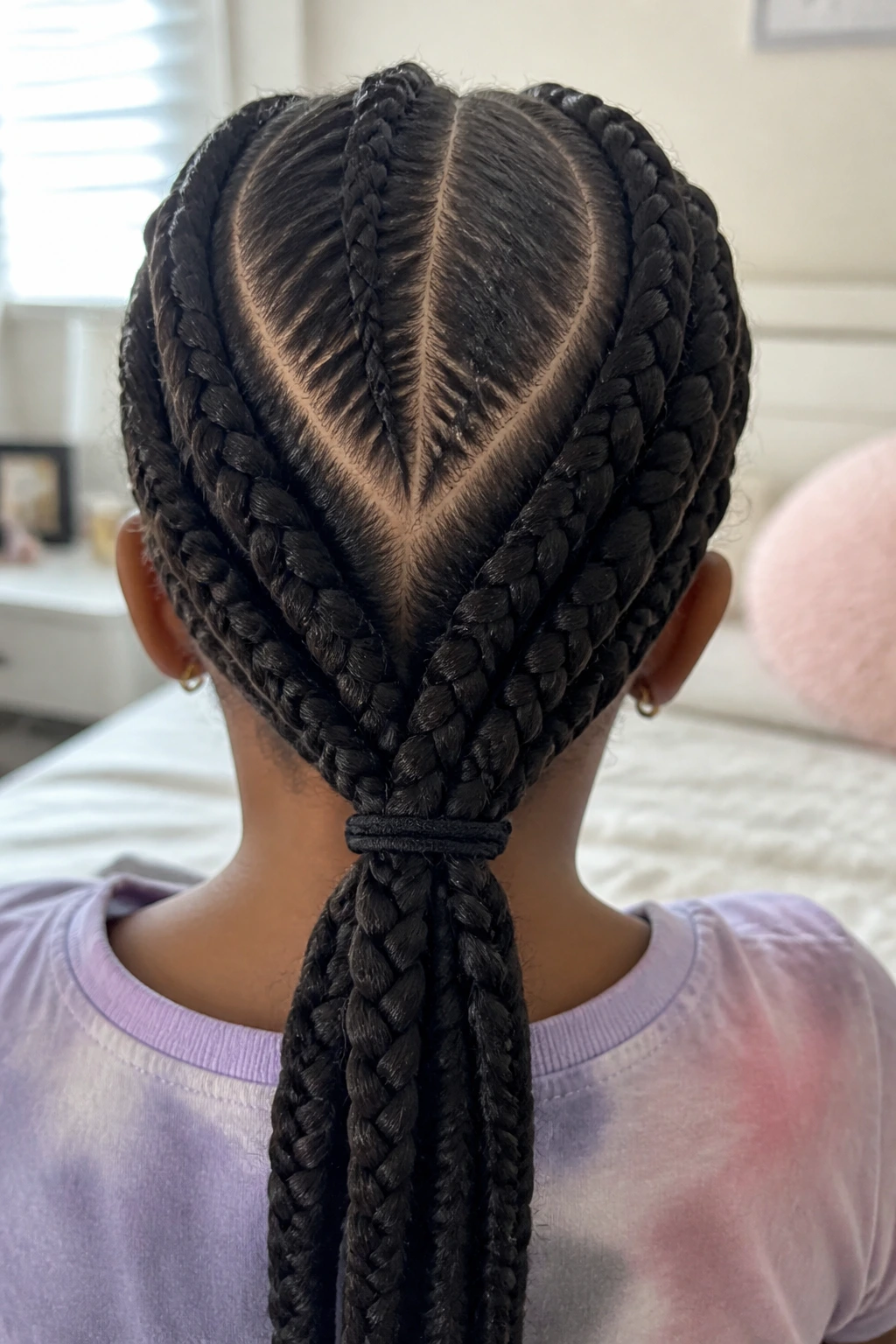
A V-shaped part at the back gives the braid set a custom finish that feels more interesting than a straight line. It also helps guide the braids into a low ponytail or bun without extra bulk. On thin hair, that shape can make the style look fuller across the back of the head.
The V does not need to be sharp. A soft point is usually enough. Harsh angles can create awkward part lines that show more scalp than you want.
This is one of those details that parents often overlook, then notice immediately once it’s done. It makes a simple braid set look deliberate.
30. Shoulder-Length Knotless Braids
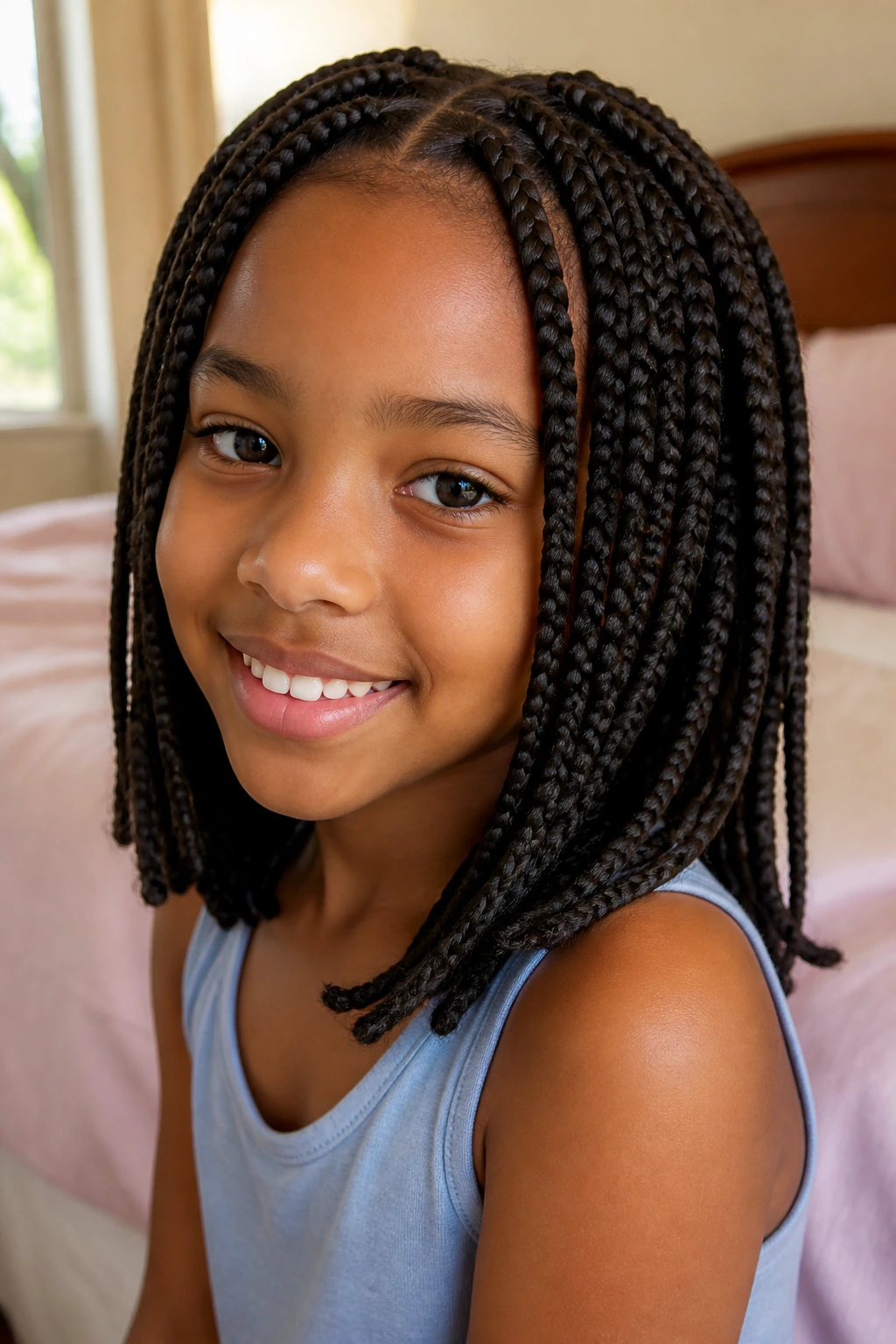
If I had to pick a single safe length for thin hair, shoulder length would be high on the list. It gives the child movement without causing that dragging feeling that shows up once the extensions get a little old. Knotless construction keeps the base smoother, which helps the style sit flatter.
Shoulder-length braids are also easier to wash and dry. That matters because a child’s scalp is not going to appreciate a heavy style that stays damp too long. Shorter length makes care simpler, plain and simple.
This is the practical choice. Not the flashiest one. The one that tends to survive real life.
31. Faux Hawk Braids with Tapered Sides
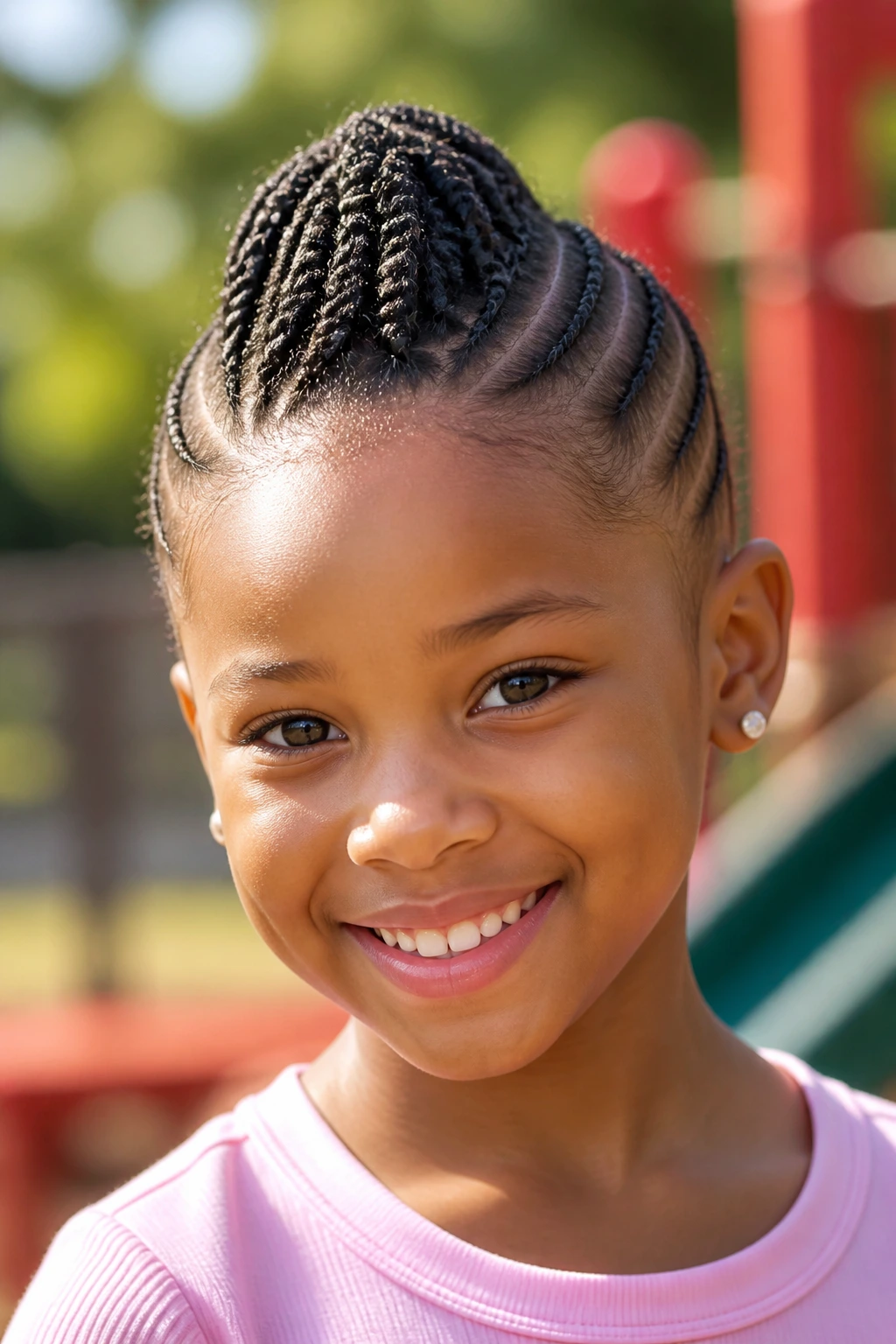
A faux hawk can be playful and a little edgy without crossing into uncomfortable territory. The sides stay tucked or braided close, and the center section gets the visual height. For thin hair, that center strip creates the illusion of fullness where you want it most.
The tapered sides are the part that keeps this style wearable. If the side braids are too thick, the whole look gets wide and hard to manage. Keep them narrow and let the center do the work.
This one is best for a child who likes a bit of flair and does not mind being noticed. It does not need heavy accessories. The shape is enough.
32. Ladder Braids on a Center Base
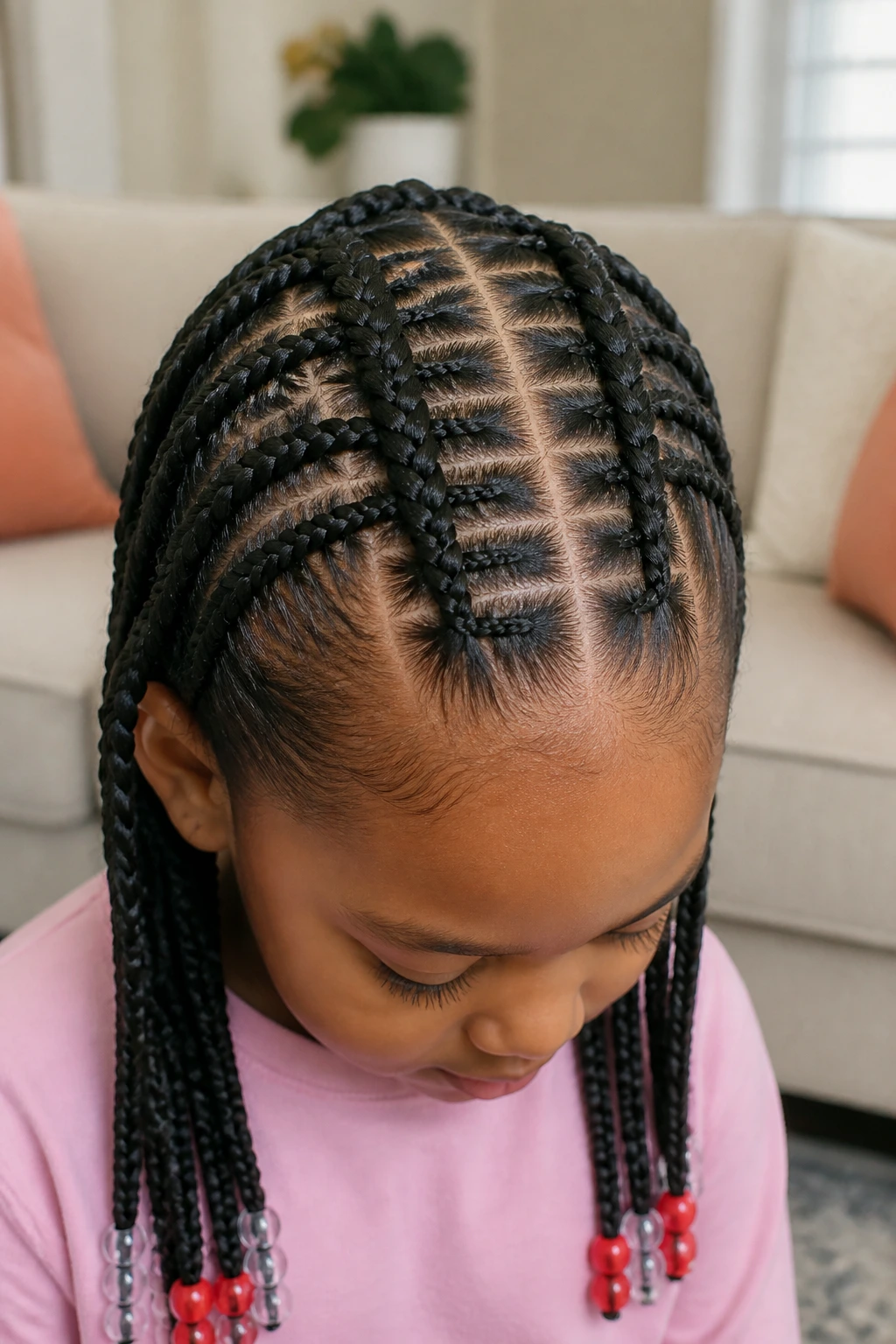
Ladder braids are more pattern-driven than most braid styles, which is why they can feel special without being bulky. The center base keeps the style grounded, and the horizontal links across it give a neat, woven look. For thin hair, that decorative pattern can hide sparse spots in a smart way.
The ladder effect should be clear but not crowded. If the sections are too tiny, the pattern gets messy fast. Large, readable steps make more sense on a child’s head.
This is a style I’d save for a day when you want something different but still controlled. It takes skill, so it’s worth finding someone who can keep the parting crisp.
33. Low Braided Bun with a Side Cornrow
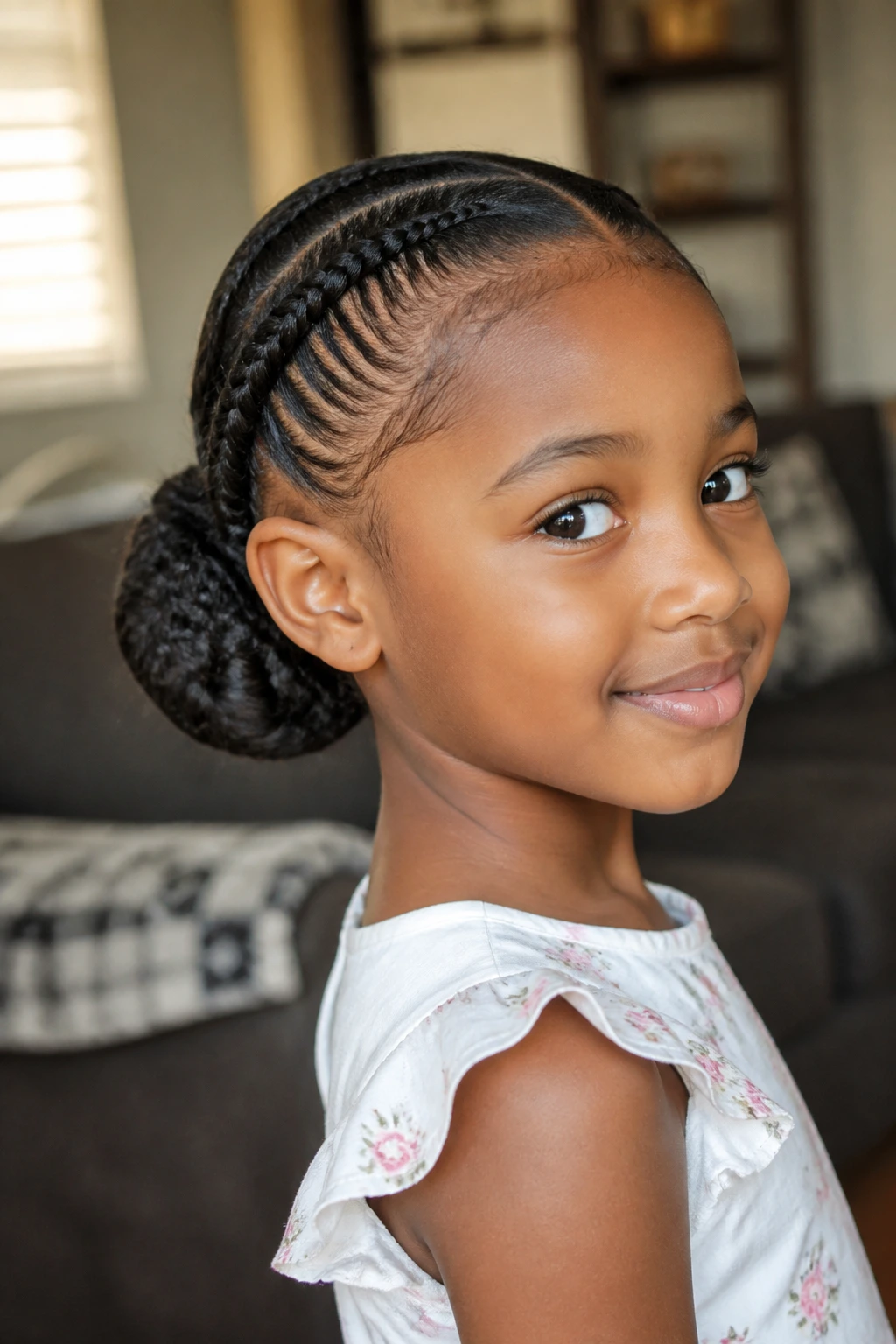
A low bun is one of the easiest ways to keep braid weight under control. Add a side cornrow, and you get a little design detail without adding much strain. That combo works beautifully on thin hair because the weight stays centered near the nape.
The bun should be broad, not tight. A tight bun can pull on the crown, especially if the braid base is small. A broad bun spreads the tension out and feels calmer.
This is a reliable school-and-weekend style. It stays neat, and it doesn’t need daily rebuilding to look presentable.
34. Double Crown Braids with Beaded Ends
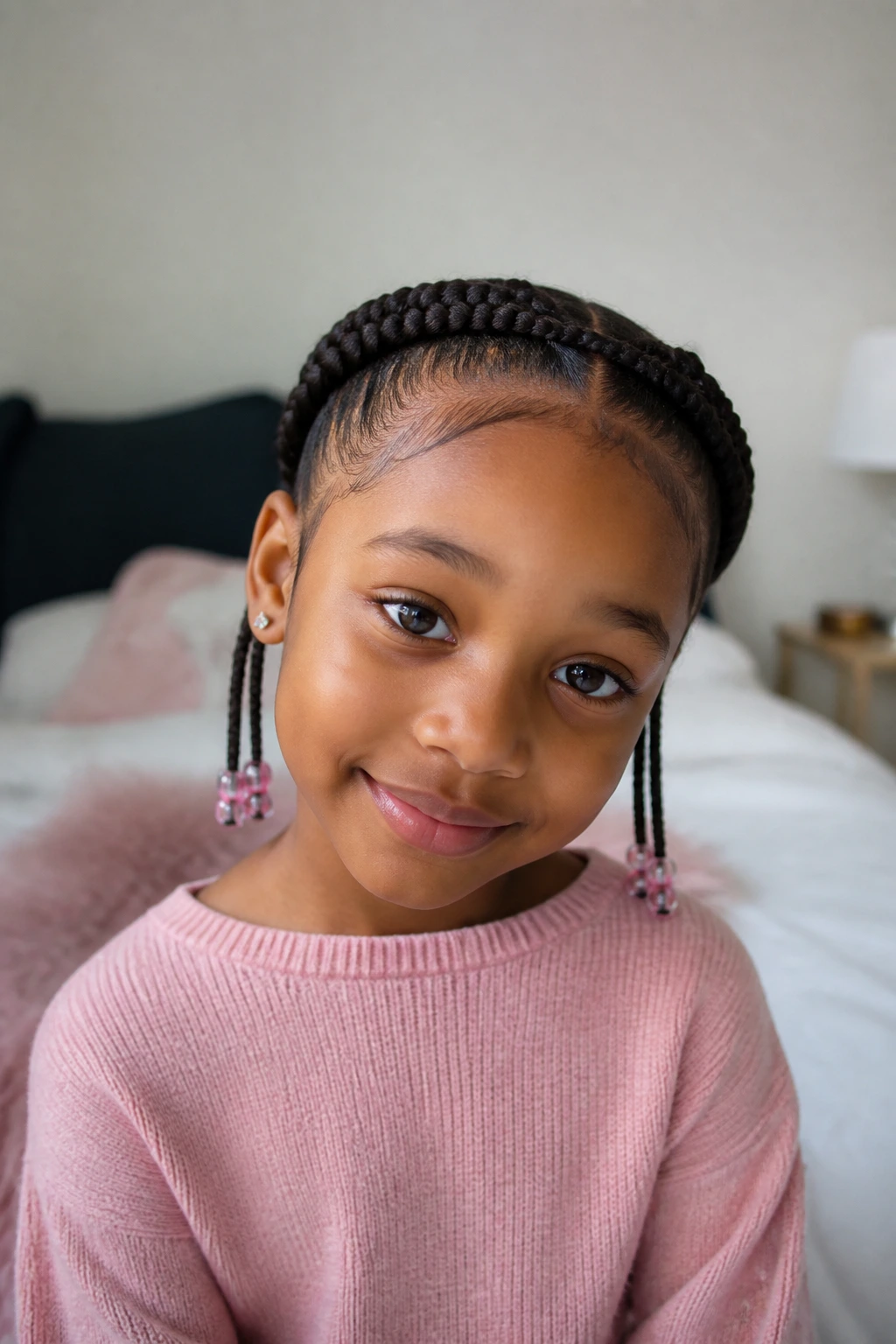
Two crown braids can look regal without being heavy if the braid size is kept moderate. The beaded ends give the style a finish that feels complete, especially when the rest of the hair is kept close to the head. On thin hair, the double crown makes the whole style look fuller from the front and sides.
I prefer fewer, lighter beads here. The crown already gives you visual weight. Too many accessories just make the ends swing and tug.
This style suits dressy occasions, but it can also work on ordinary days if the beads are simple. It has a little ceremony to it.
35. Jumbo Braids with Tiny Accent Feed-Ins
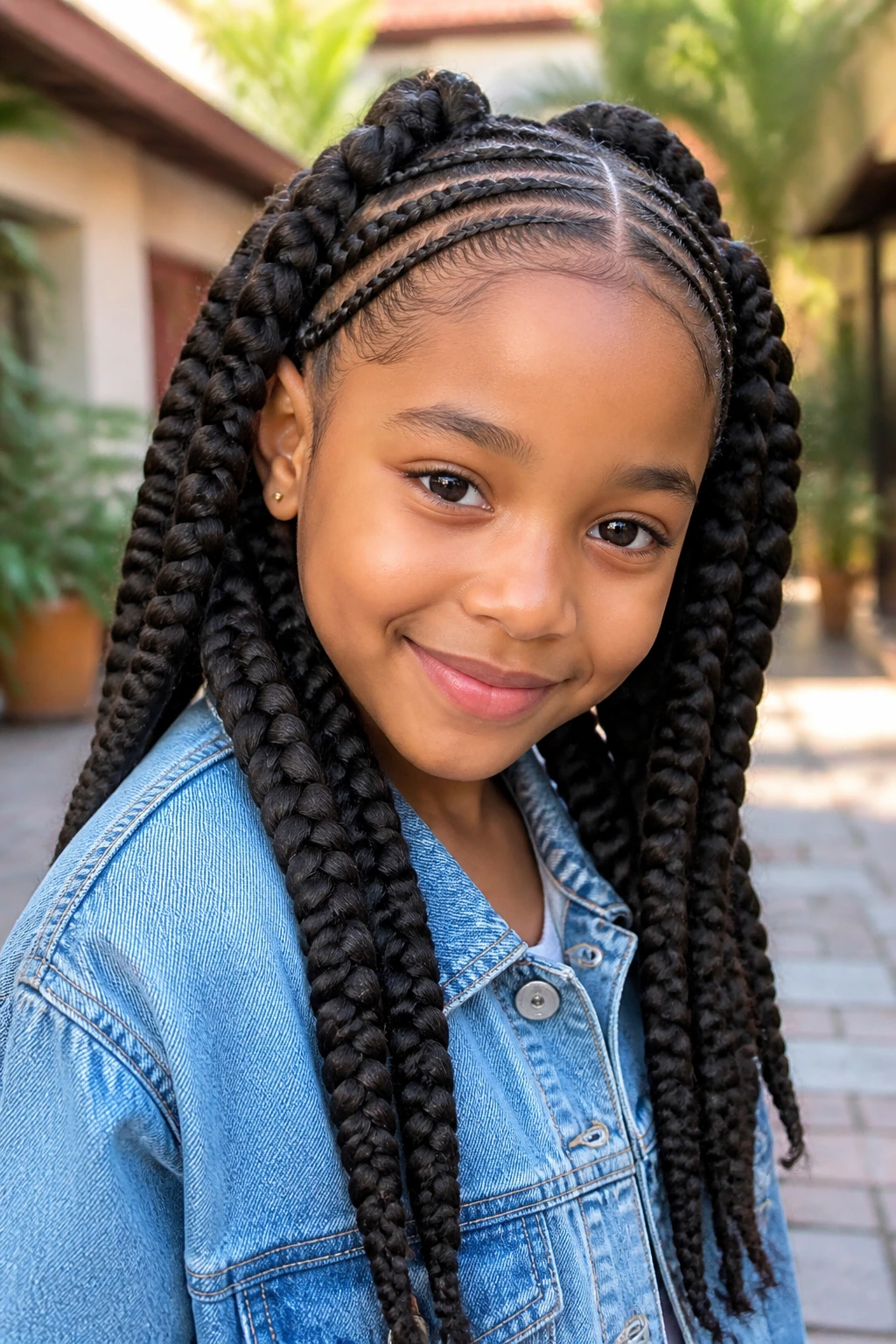
This is the style I pull out when I want the look of large braids but need to keep the head feeling light. The big braids carry the silhouette, while the tiny accent feed-ins add detail at the scalp without making the whole set heavy. On thin hair, that contrast is useful.
The accent braids should stay subtle. A few narrow feed-ins near the front or along one side can frame the face nicely. You do not need a full head of accent work; that would defeat the point of going large in the first place.
If you want one braid style that can be dressed up or down easily, this is a strong finish to the list. It gives you room to play without turning the style into a tugging contest.
Why Large Braids Feel Lighter on Fine Hair
Large braids are a better fit for thin hair than people assume because they reduce clutter at the scalp. With fewer sections, there are fewer places where the hair has to be gripped tightly, and that usually means less soreness after the first day. The braid itself can still look bold. It just does not need to come from a hundred tiny pieces.
There’s also a visual trick at work. Bigger braids create thicker lines, which read as fullness even when the natural hair density underneath is modest. That’s why a shoulder-length set with clean parts often looks better than a long, crowded set with too much extension hair piled in. Balance matters.
I’d rather see a child wearing eight well-built braids than twenty overpacked ones. Every time. The first one breathes. The second one often looks good for a photo and then starts acting like a burden.
Essential Tools for These Styles
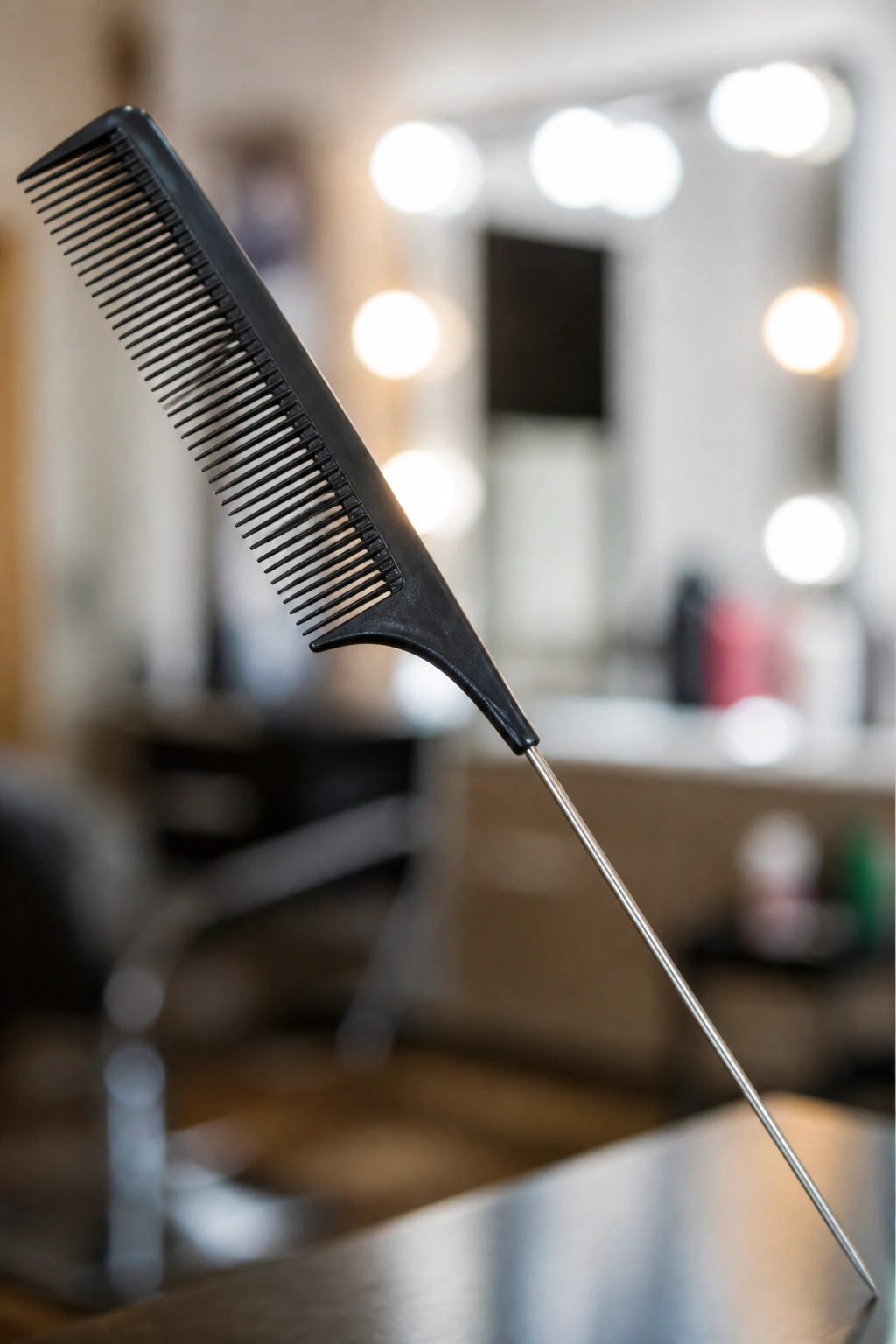
- Rat-tail comb: For clean parts, sharp sections, and small directional part designs like zigzags or triangles.
- Sectioning clips: Keep the rest of the hair out of the way while you work one part at a time.
- Wide-tooth comb or detangling brush: Helps smooth the hair without snapping delicate strands.
- Light leave-in conditioner: Use a small amount so the hair stays soft without slipping.
- Braiding hair: Pre-stretched, lightweight synthetic braiding hair is usually the easiest starting point.
- Soft-edge gel or braid mousse: Good for smoothing flyaways at the base and calming frizz later.
- Small elastics: Useful for ponytail finishes, bubble sections, and ribbon anchors.
- Beads and bead loader: Choose lightweight beads and a tool that won’t fight you on tiny braid ends.
- Satin bonnet or scarf: Keeps the braids from fuzzing up overnight.
- Spray bottle with water: A light mist helps with rehydrating and resetting parts; do not soak the hair.
Smart Shopping for Braiding Hair and Accessories
The first thing I look for is weight. For little girls with thin hair, the nicest braid set is often the one that uses less added hair than you expected. Pre-stretched braiding hair is easier to control because it’s already thinned out at the ends, which means less bulk and less waste. It also tends to braid more smoothly, especially if the stylist is trying to keep the base light.
Choose the length with the child’s real life in mind. School-age kids climb, nap, swing, and lean on car seats. A style that reaches the waist might sound lovely in theory, but if it keeps catching under backpack straps or brushing the floor in the car, it will be irritating by day two. Shoulder to mid-back length usually wears better on fine hair.
Accessories need the same sort of discipline. Acrylic beads are lighter than glass. Narrow ribbons sit better than wide, heavy bows. Tiny cuffs are fine; huge metal rings hanging from every braid are not. And if the child’s scalp is sensitive, skip anything that adds extra pull at the end.
Color is where you can have some fun without overdoing it. Black braids with soft brown or burgundy accents can warm up the style, especially in natural light. If you want pops of color, place them close to the face or at the ends so you get the effect without loading the entire head.
How to Wear, Style, and Dress Them Up
Presentation: Keep the braid base clean and the part lines crisp. On thin hair, a neat part does more for the final look than a pile of accessories ever will. If the style is large, let the silhouette stay simple.
Accessories: Beads, bows, ribbons, cuffs, and scarves all work, but the lightest version usually wins. One or two accents near the front or at the ends looks finished without turning the style into a tugging contest.
Scale: If the hair is fine, choose fewer braids and give each braid a little more width. That spreads the visual fullness across the head and keeps the scalp from feeling crowded.
Occasion Pairing: Soft center-part braids and shoulder-length bob styles work well for school. Halo braids, crown braids, and beaded ends make more sense for birthdays, family photos, or dress-up days. For busy weeks, low buns and ponytails are the styles I trust most.
Extra Tips for Softer Edges and Cleaner Parts
Finish: A small amount of braid mousse or a light edge gel can calm the flyaways around the hairline. Use it sparingly. If you can see a shiny, thick layer, you’ve used too much.
Comfort: Ask the stylist to check the nape and temples after the first few braids. Those are the spots that tend to pinch first on a child with fine hair. If the scalp feels tight before the style is finished, it will not magically feel better later.
Customization: Swap clear beads for amber, black, or pale gold if you want a different mood. The color changes the whole feel of the style even when the braid pattern stays the same.
Make-It-Yours: Ribbon bows, school colors, or a single accent braid near one temple can personalize the look without adding weight. That’s the kind of detail children notice and parents can actually manage.
Common Mistakes That Make Braids Heavy or Tight
Too much added hair at the base: The braid looks thick at first, then the child starts touching her scalp because it feels bulky. The fix is simple: feed in hair gradually and stop once the braid looks full enough.
Ends that are too heavy: Large beads, thick cuffs, and long extensions can drag the braid down. If the ends swing hard when the child turns her head, the style is too heavy.
Parts that are too small: Tiny sections can make fine hair look patchy and can also create more tension than needed. Larger, cleaner parts usually wear better and age better.
Skipping nighttime wrapping: Braids left uncovered get fuzzy fast, especially around the front and the nape. A satin bonnet or scarf keeps the style looking neater for longer.
Going too long: Waist-length braids can be beautiful, but on thin hair they often become inconvenient. If the child keeps tossing the braids over her shoulder or complaining about the weight, the length was too ambitious.
Variations and Adaptations to Try
School-Day Short Set: Keep the braids shoulder length with no beads, no heavy cuffs, and a low ponytail or bob finish. This is the version that survives backpacks, recess, and car rides.
Birthday-Ready Sparkle: Add a few clear beads, ribbon ties, or a single color accent braid near the face. Keep the braid count low so the style looks festive instead of cluttered.
Sensitive-Scalp Version: Choose knotless starts, fewer braids, and a shorter length. Avoid tight crown designs and anything that pulls sharply at the temple.
Playground-Proof Ponytail: Use large cornrows or feed-ins that end in one low ponytail or bun. It stays out of the way and does not swing all over the place.
Photo-Day Crown Style: Halo braids, crisscross crowns, and double-crown patterns photograph well because the part lines create shape from every angle. Keep the accessories light so the face stays the focus.
Low-Maintenance Weekend Style: Shoulder-length knotless braids are the easiest to refresh. They fluff up less, dry faster after washing, and are simpler to retwist at the roots.
Keeping the Braids Neat Between Washes
Most braid styles for little girls with thin hair wear best when the scalp stays clean but not overhandled. A light mist on the parts, a little scalp oil where needed, and a satin cover at night usually do more good than constant fussing. If the scalp gets itchy, treat that as a sign to check the product build-up, not to pack on more oil.
For many children, a fresh set can last about 2 to 3 weeks before the roots start looking tired. Some shorter styles can stretch a little longer, while heavier sets may need to come out sooner. If the hairline starts looking strained, take the style down. A neat removal beats holding on one week too long.
Wash only when the scalp needs it, and dry thoroughly. Damp braids are a bad bargain. They feel cool for a minute, then they sit there holding moisture close to the scalp, which is exactly how you end up with that stale, musty smell nobody wants.
Questions Parents Ask Before Booking Braids
How many braids are too many for thin hair?
Usually, fewer is better. If the braid count starts creeping up just to make the style look full, the hair may be too fine for that design. A good stylist can build volume with parting and extension placement instead of adding more sections.
Can little girls with thin hair wear large braids without extensions?
Sometimes, yes, especially if the hair is long enough to hold a base braid. Without added hair, the style will look smaller and softer, which may be exactly what you want. It’s a good option for children who are sensitive to weight.
Are beads too heavy for fine hair?
They can be if you overdo them. Lightweight acrylic beads, used sparingly, are usually fine on short to medium braids. A pile of large beads at the ends is where trouble starts.
What length works best on thin hair?
Shoulder length or a little below is usually the safest bet. It gives you shape without making the braids drag at the scalp or tangle in clothing.
How do I know if the braids are too tight?
If the child keeps touching her edges, says her scalp hurts, or seems unwilling to move her head normally, the style is too tight. Braids should feel snug, not sharp.
Can these styles work for very short hair?
Some can, especially knotless feed-ins, cornrows, and crown styles. Very short hair needs a stylist who knows how to anchor gently without forcing the braid.
What if the braids puff up fast?
That usually means the hair was dry, the parts were too rough, or the nighttime wrap got skipped. A little mousse on the surface and regular satin protection can slow the fuzzing down.
The Styles That Hold Their Shape
The best large braids for little girls with thin hair are the ones that respect the head they’re sitting on. That sounds obvious, but it gets ignored all the time. A pretty braid set that feels heavy by day three is not a win. A slightly simpler style that stays neat, light, and comfortable is the one that gets worn again.
I like braid styles that can breathe a little. Clean parts. Moderate length. Lightweight accessories. That combination tends to age better than flashy overloading, and children notice comfort faster than adults do anyway.
If you keep the base gentle and the finish light, these styles can look full without feeling fussy. That is the real trick, and it never gets old.