



Short natural hair can wear knotless hairstyles for short natural hair without looking cramped, but the style has to respect the length you actually have. A 3-inch coil stretch and a 5-inch blown-out puff do not behave the same way, and that difference shows up fast in the braid base, the parting, and the way the ends sit by your jaw.
The part I wish more people understood: knotless braids are only “low tension” when the feed-in is gentle. If a braider piles a thick bundle at the root, the style loses the whole point. On short hair, the first inch matters most. That’s where the braid either sits flat and clean, or starts fighting your scalp before you’ve even made it to the car.
What short hair does give you is shape. Clean lines. Strong parting. A chance to make the braid pattern do some of the visual work instead of relying on length alone. I like short knotless looks for that reason. They read crisp when they’re done well, and they stay interesting even when the hair itself isn’t long enough to swing around your shoulders.
Why These Styles Earn Their Keep
-
Less pull at the root: Knotless braids start with your own hair, so the base can stay lighter and flatter than a hard knot at the scalp.
-
More shape, less bulk: Short hair looks sharper with a braid size that matches its density, not a huge section that balloons at the root.
-
Better grow-out: A clean feed-in usually grows out more gracefully, so the style doesn’t look crooked two weeks in.
-
Room for detail: On short hair, parting patterns, side sweeps, cuffs, and curled ends do a lot of the styling heavy lifting.
-
Easier to wear daily: Chin-length and bob-length braid styles sit above the collar, which means fewer snags on coats, zippers, and scarves.
-
More forgiving than people think: Even when your hair is only a few inches long, careful sectioning can support styles that look deliberate instead of tiny or unfinished.
What Short Natural Hair Needs Before the First Part Is Drawn
Short hair asks for a different setup than long hair. That’s not a weakness. It just means the prep matters more, because there’s less length to hide a sloppy section or a bulky root.
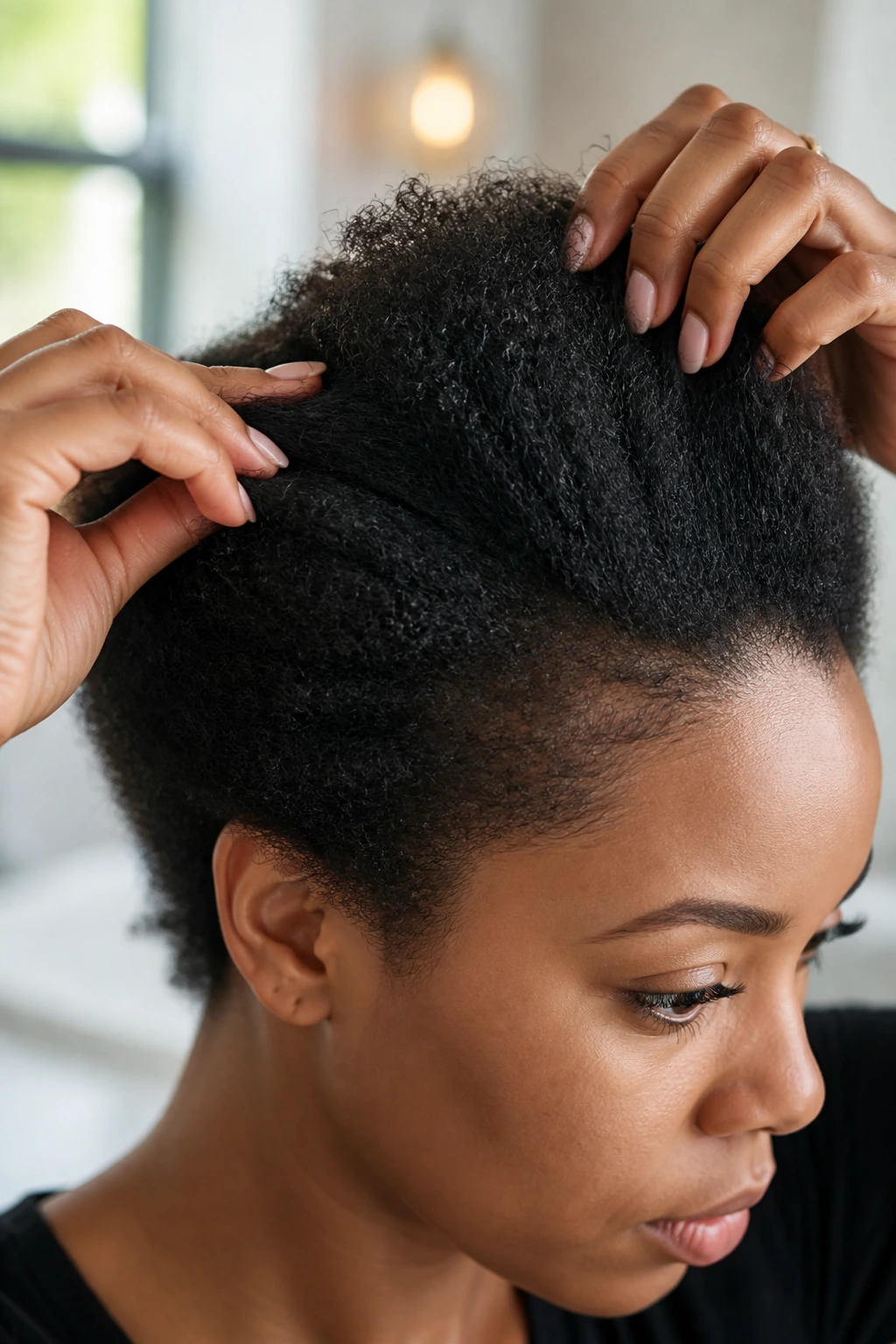
The biggest mistake is sizing the braid by the extension hair and forgetting the real base underneath. Your natural hair needs to be stretched, detangled, and strong enough to hold a small grip without snapping or puffing loose at the root. If your shrinkage is heavy, judge the braid plan after stretching, not before. A fresh blowout on low heat or a careful banding stretch can change what’s possible in a very real way.
A good rule of thumb is simple:
- About 2 to 3 inches stretched: micro, petite, crown, and faux-hawk styles tend to sit best.
- About 3 to 4 inches stretched: bob lengths, side sweeps, half-up looks, and medium braids start making sense.
- About 4 to 5 inches stretched: ponytails, buns, fuller parts, and slightly larger feed-ins usually feel easier to manage.
Short hair also likes lightweight extension hair. Heavy, shiny packs can make the first few inches feel stuffed. Pre-stretched braiding hair usually behaves better, and it gives the braid a softer finish at the ends. That tiny choice saves a lot of tugging later.
1. Chin-Length Knotless Bob
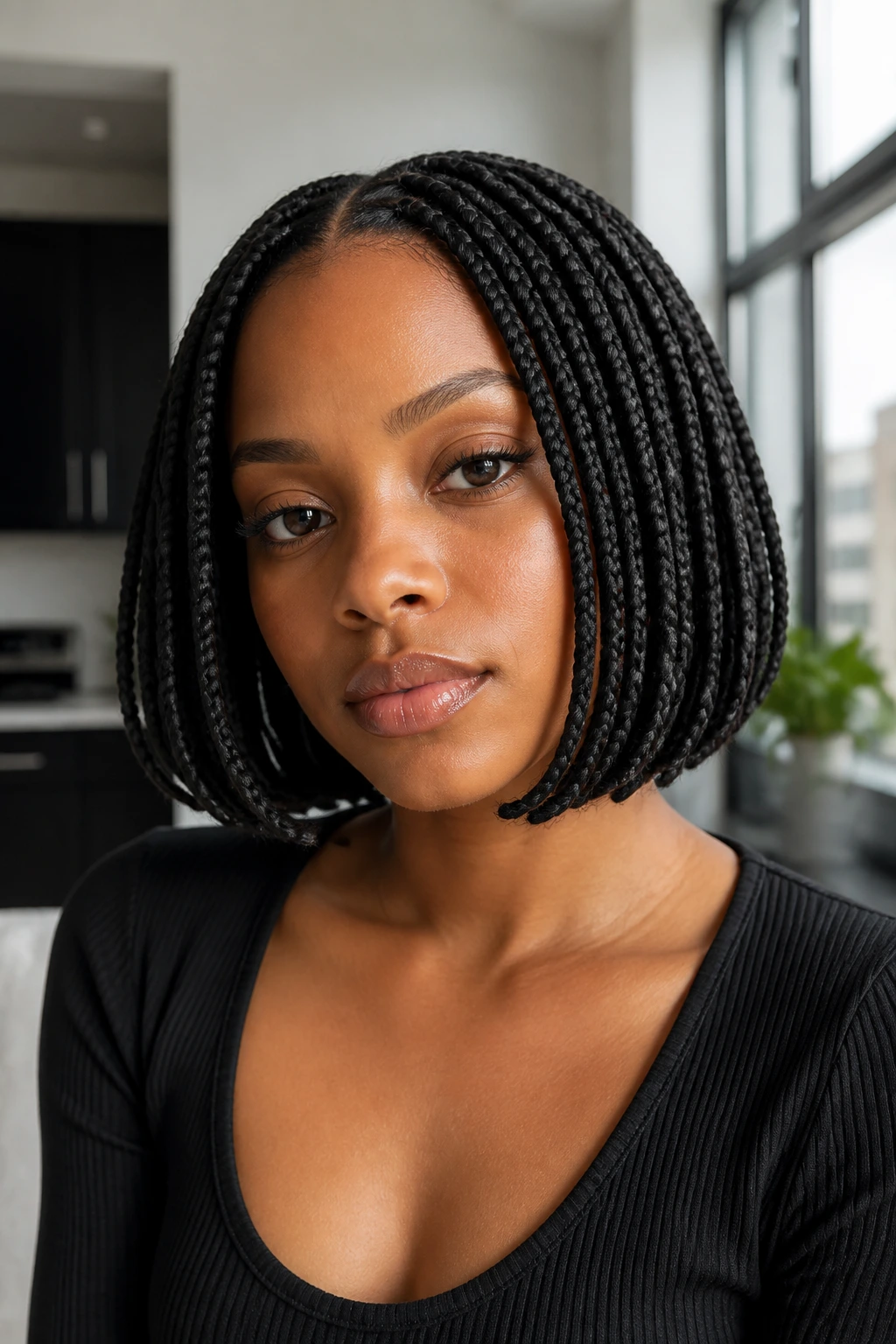
A chin-length knotless bob is the style I reach for when short hair needs structure more than drama. The length sits close to the jawline, so the braid weight feels centered instead of dragging into the shoulders. That makes it one of the cleanest choices for hair that is only a few inches long.
Why it works on short hair
- The shorter finish keeps the braid from looking top-heavy.
- The chin line gives the style a clear shape, even if your own hair is tapered.
- A light mousse pass at the end keeps the bob from fraying out into a fuzzed-up halo.
Ask for slim-to-medium feed-ins at the root, not a thick chunk of hair all at once. That first inch should look neat and flat, not swollen. I’m fond of this look on people who want a polished braid style without a ton of extra length hanging around their neck.
2. Triangle-Part Knotless Bob
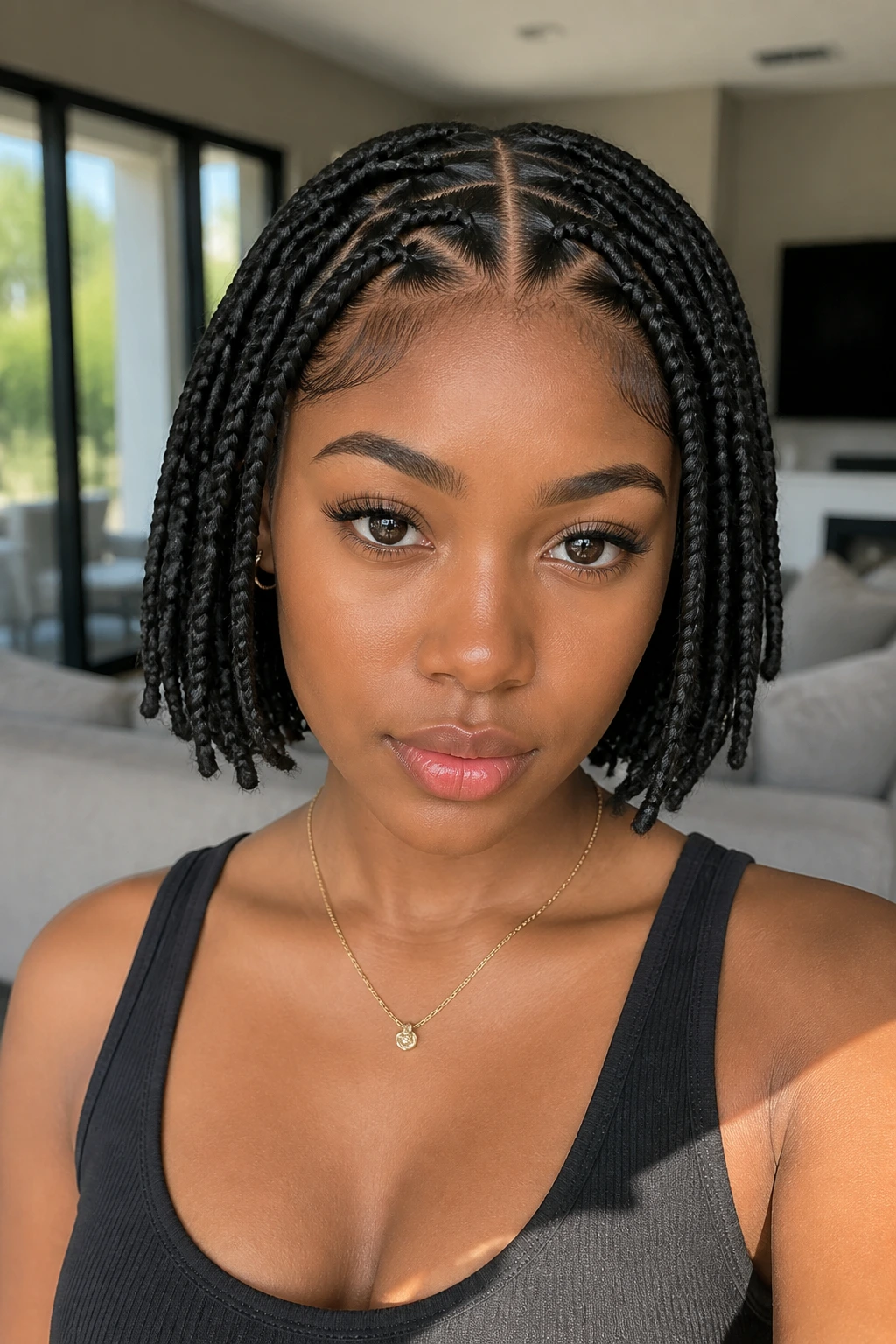
Triangle parts change the whole mood. Instead of the usual box pattern, each part reads like a small geometric choice, and that matters on short hair because the scalp design becomes part of the style.
This one works especially well if your natural hair is dense or grows in different directions at the crown. The triangle shape helps the parts look intentional even when the braid length is modest. Keep the sections crisp and small enough that the base lies flat, or the triangles lose their shape after the first day.
I like triangle parts with a bob length because the geometry stays visible where people can actually see it. The style looks thoughtful from the front and clean from the side. If you want a braid set that looks a little more styled than standard square parting, this is the one to ask for.
3. Side-Part Swoop Braids
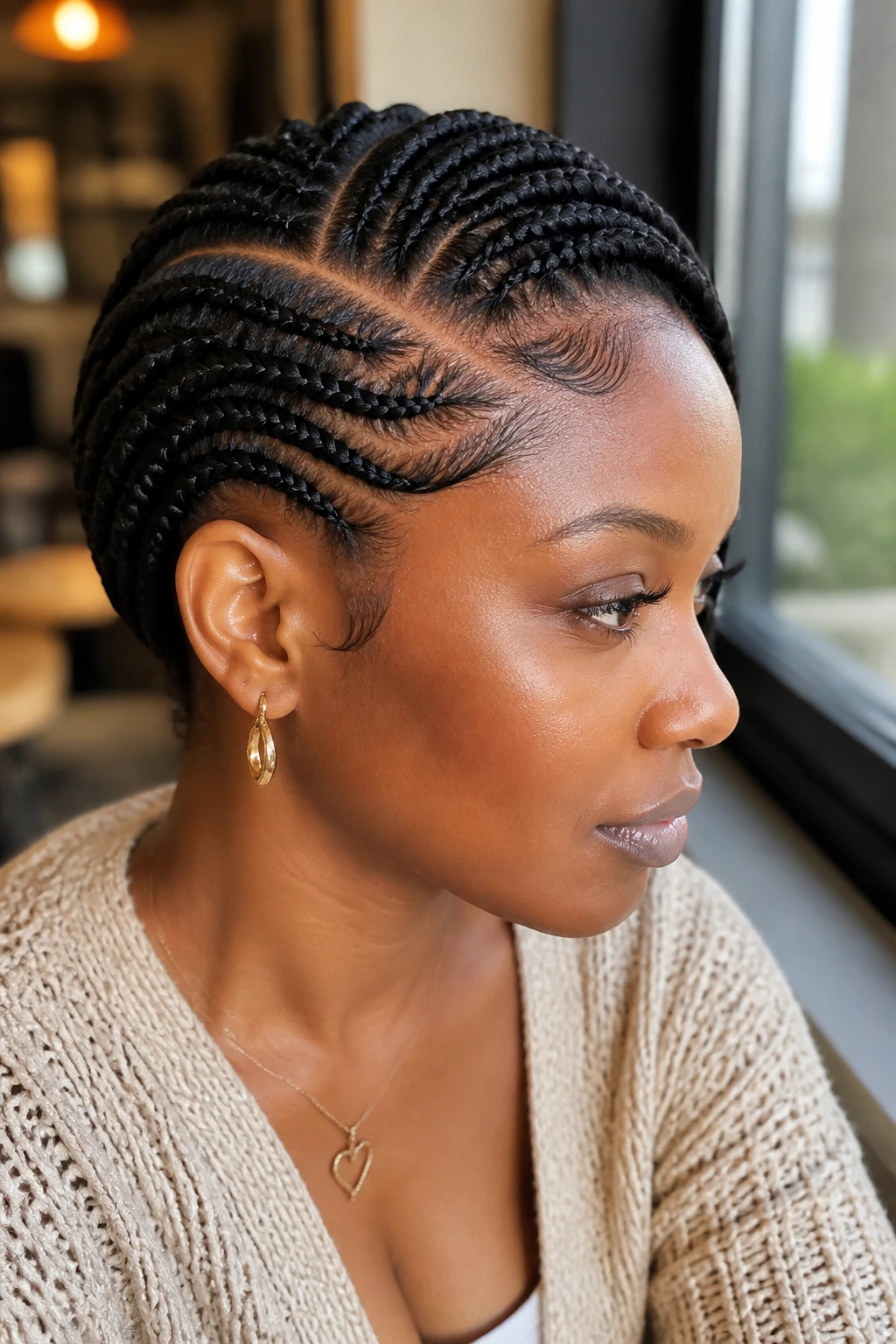
Can a side part rescue short braids? Yes. A deep side part sends the eye diagonally across the head, which makes the style feel longer and softer without adding a single extra inch of braid.
This is a good move if your hairline is fuller on one side or if your crown has a stubborn cowlick. The sweep gives the front section somewhere to go. Keep the heavier side balanced, though. If too much extension hair gets packed on the swooping side, the root can feel bulky and the braid starts to tilt.
4. Half-Up Knotless Ponytail
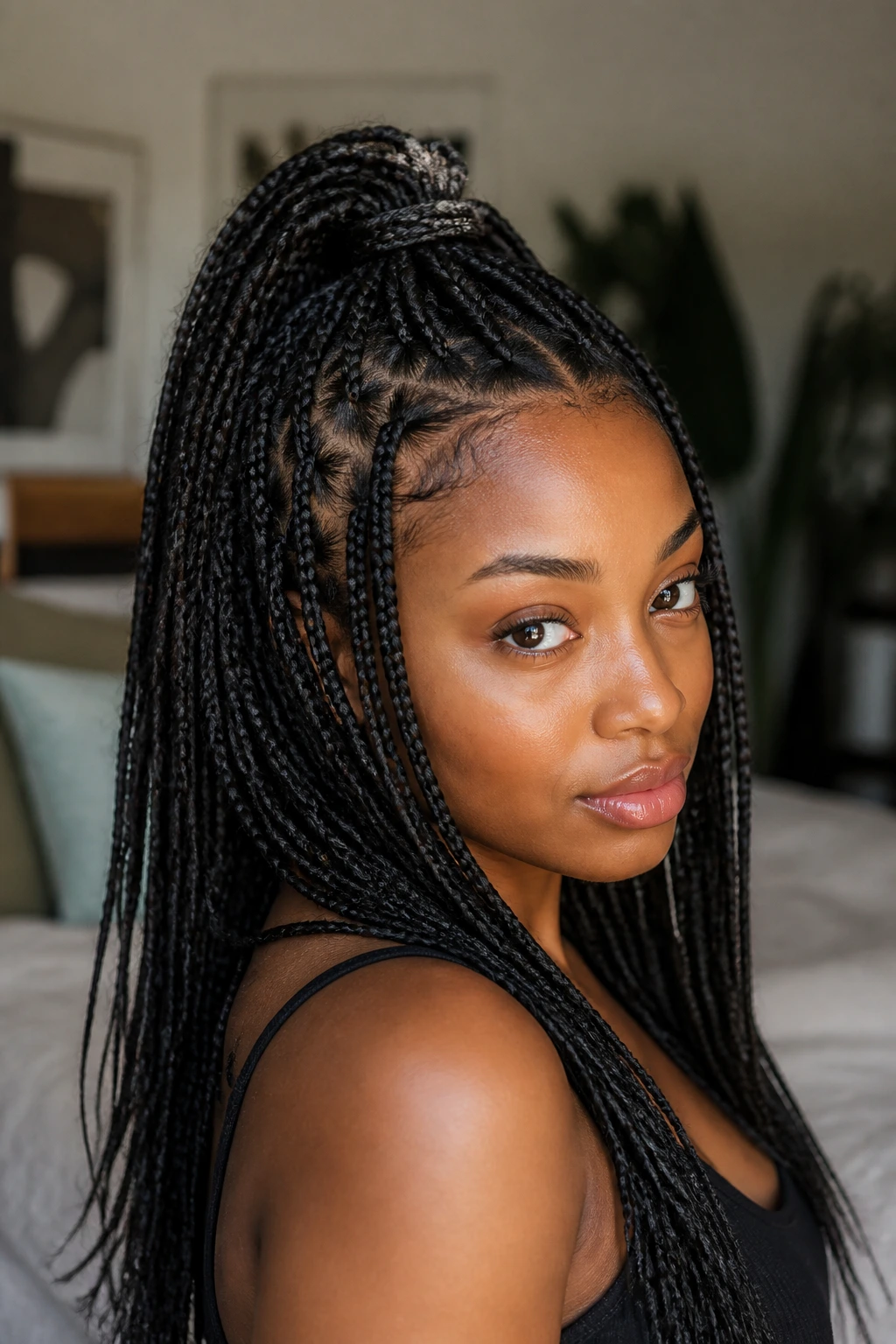
Half-up knotless braids solve the “braids in my face” problem fast. The top section gets pulled into a small ponytail or knot, while the bottom braids stay loose and easy to wear.
This style is kinder to short hair than a full high ponytail because it doesn’t ask every braid to hold weight at once. I like it when the hair is just long enough for a bob but the wearer still wants the lift of an updo. Use a snag-free elastic and keep the top section smooth. A crooked half-up ponytail looks rushed in a way that a simple loose set never does.
5. Curly-End Knotless Braids
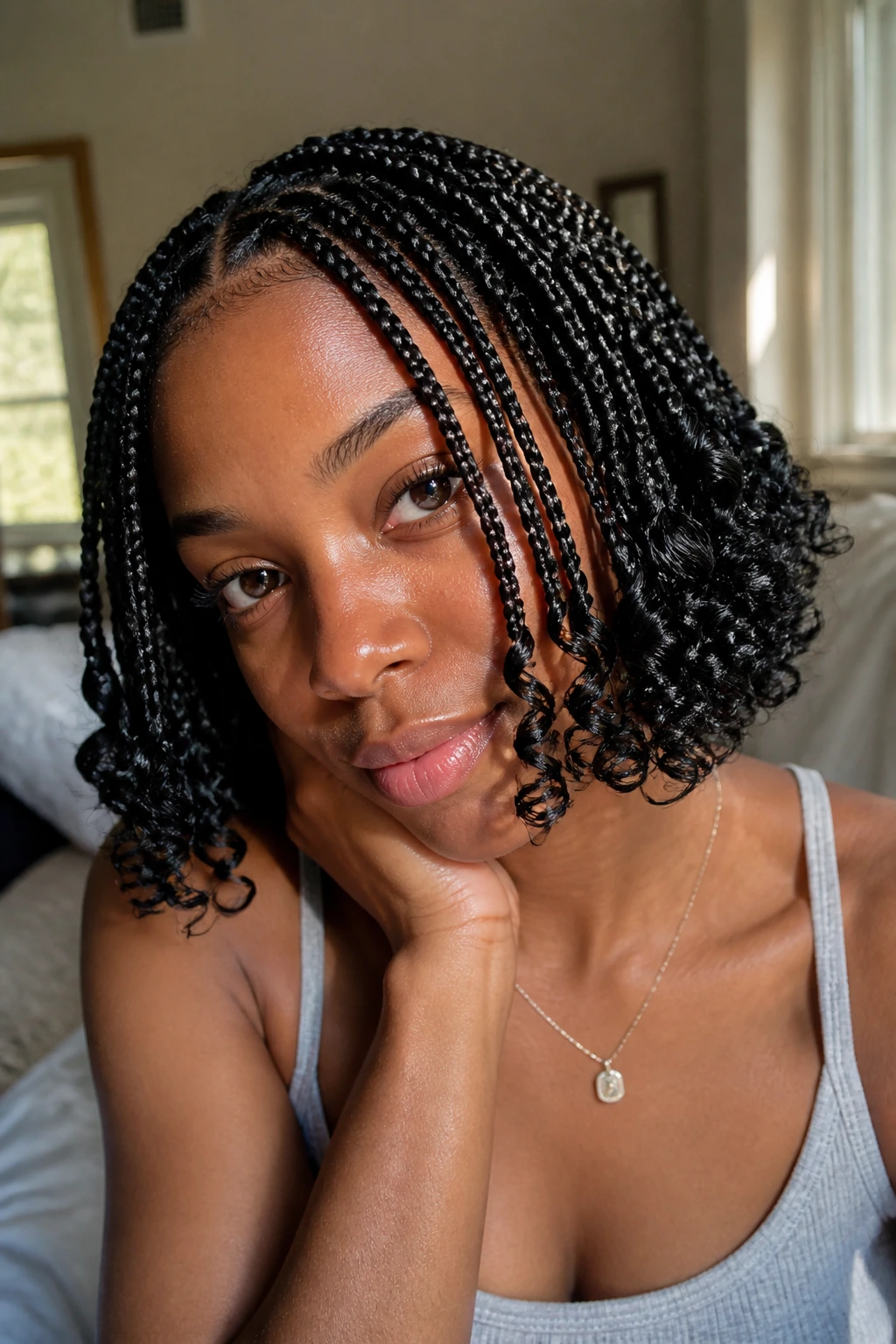
Curly ends are the easiest way to make short knotless braids look softer. Once the braid drops just past chin length or lands in a neat bob, the curled tips add movement without depending on long hanging hair.
The trick is setting the ends properly. If the braiding hair is synthetic and heat-safe, hot water on the ends followed by rod-setting gives a cleaner curl than letting them air dry in a twist. Let the curls cool fully before removing the rods. Pull them out too early and they puff in odd places.
For short hair, this finish works because the curl takes up visual space where your own length ends. The braid can stay compact at the root and still feel finished.
6. Goddess Knotless Braids
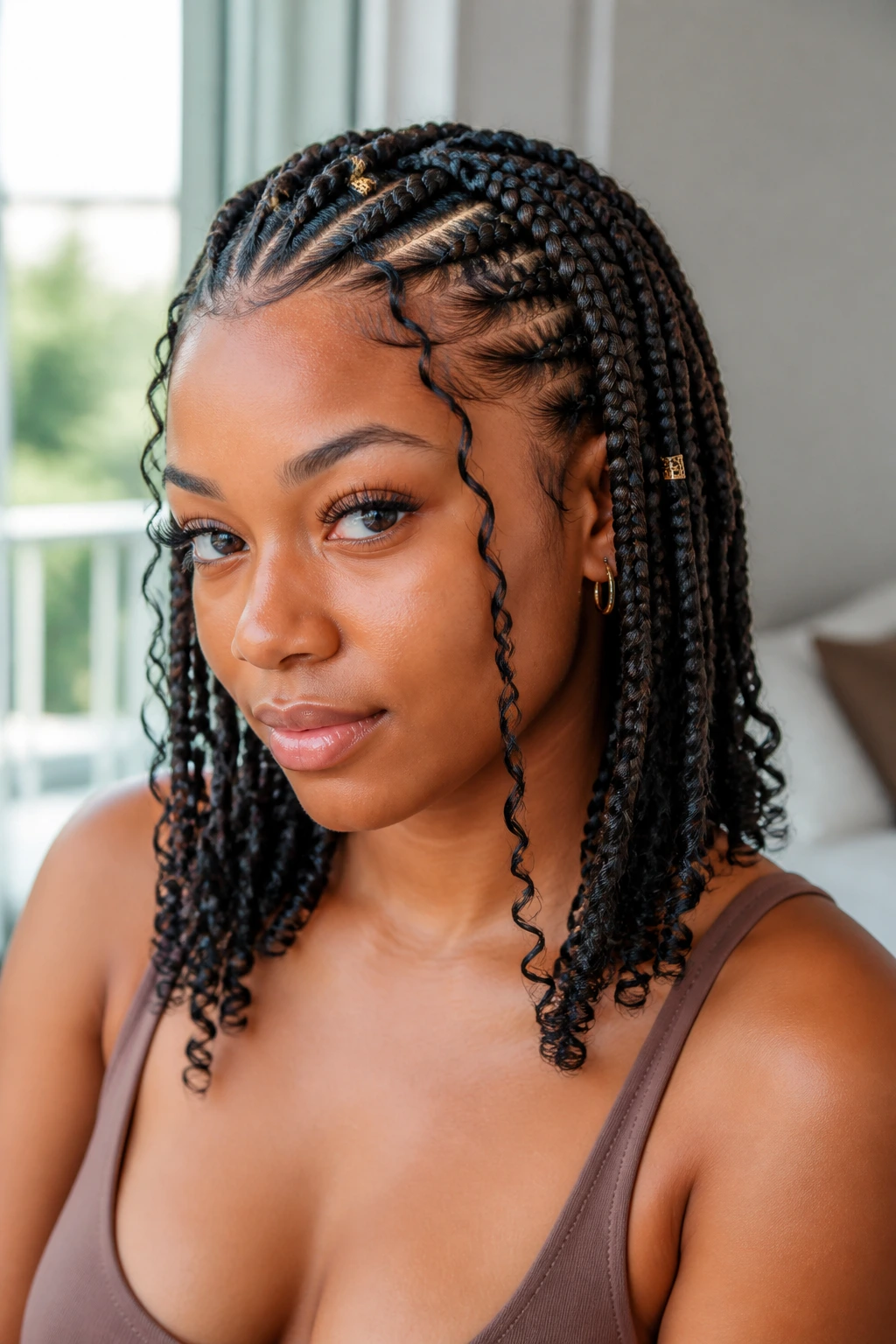
Goddess pieces are the braids I reach for when I want movement. A few loose curly strands woven through the set soften the look, and on short hair they keep the style from feeling too severe.
The key is restraint. If you leave too many loose pieces on a short base, the style can frizz fast and start looking messy before the braids themselves have time to settle. I’d keep the loose curls concentrated near the front and maybe a few scattered through the top layer. That keeps the style airy without turning it into a tangle trap.
7. Jumbo Knotless Braids
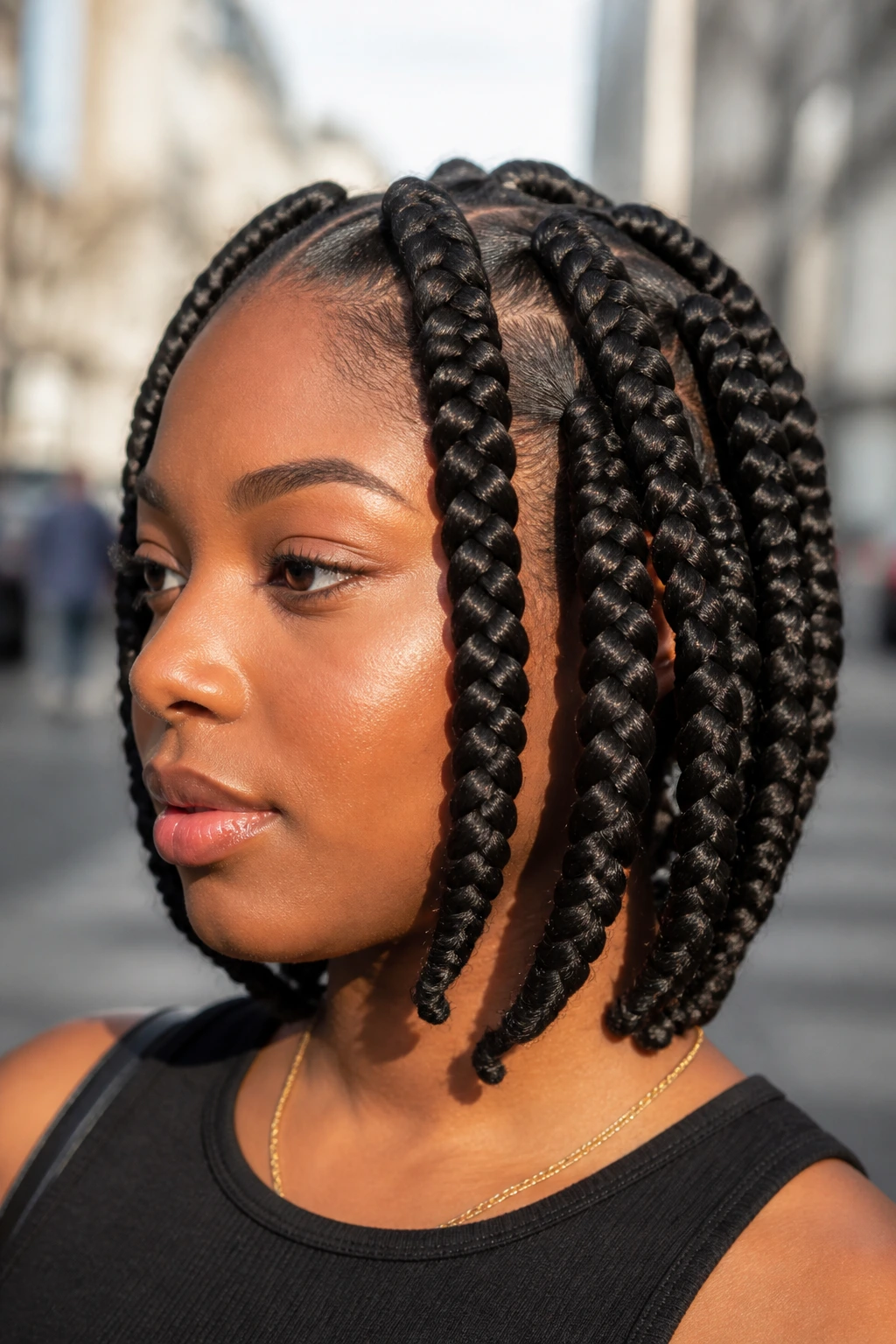
Jumbo knotless braids are not for every short head, and that’s the point. When the sections are thick enough, the style installs faster and gives a bold shape that reads from across the room.
They work best on short natural hair that’s dense and stretched well. If the roots are fine or fragile, jumbo sections can feel too heavy. Ask for fewer but cleaner parts, and keep the feed-in gradual. A lumped-up jumbo root is the thing that makes people swear off the style forever.
Used well, this look is striking and simple. Used badly, it tugs. Hard.
8. Medium Knotless Braids
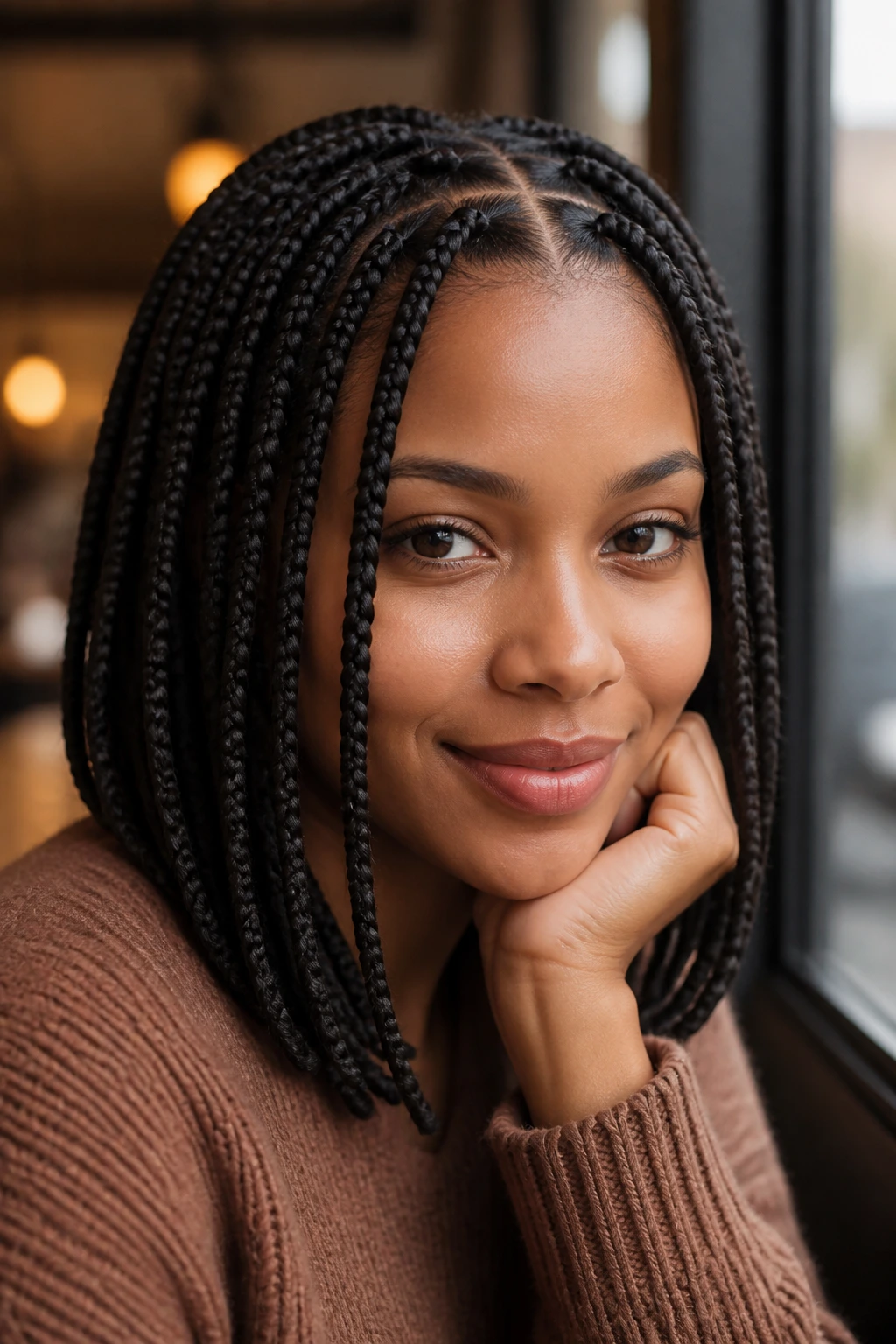
Medium braids sit in the sweet spot. They’re smaller than jumbo, larger than micro, and that balance matters when your hair is short but not super sparse.
I like medium knotless braids for people who want an everyday style that won’t monopolize the chair or disappear into the scalp. The parting is easy to maintain, the roots stay flatter than with jumbo pieces, and the style can be worn down, half-up, or pinned back without fuss.
If you can’t decide between “tiny and delicate” and “big and bold,” medium is usually the answer.
9. Micro Knotless Braids
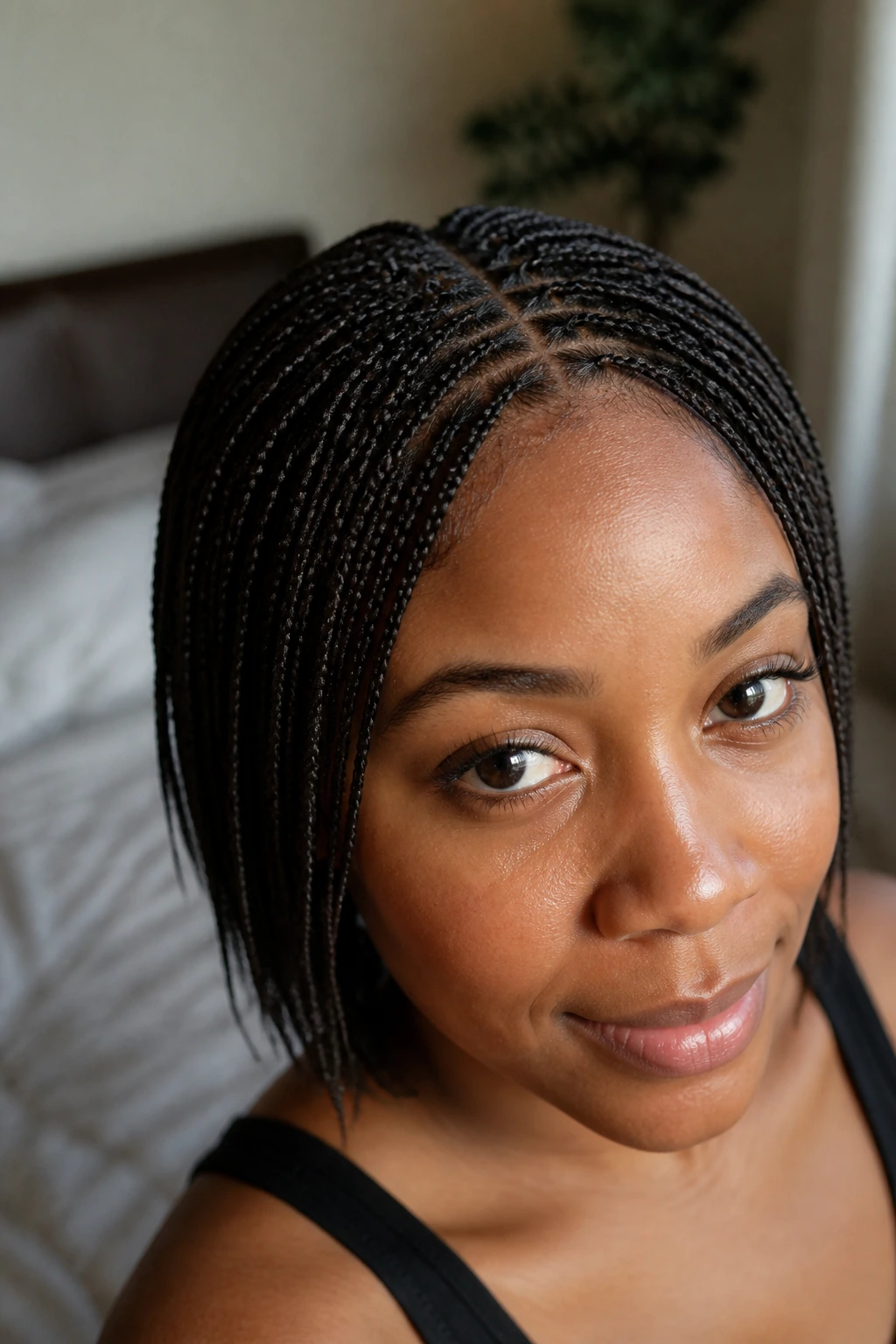
Micro braids on short hair are a patience test. They take more time, more sectioning, and more care at the scalp, but they give you the most styling room once they’re done.
The reason they work so well on short natural hair is simple: the smaller the section, the less pressure on each strand of your own hair. That said, they do ask for maintenance. A tiny braid line can show buildup fast if the scalp routine gets sloppy. Keep product light, and don’t pack heavy grease at the base trying to make them last longer. That usually backfires.
Best when you want flexibility
Micro knotless braids are the style I’d choose if you love ponytails, half-up styles, and neat parting more than big visual bulk. They’re not the fastest option, but they do give short hair a lot of room to move.
10. Zig-Zag Part Knotless Braids
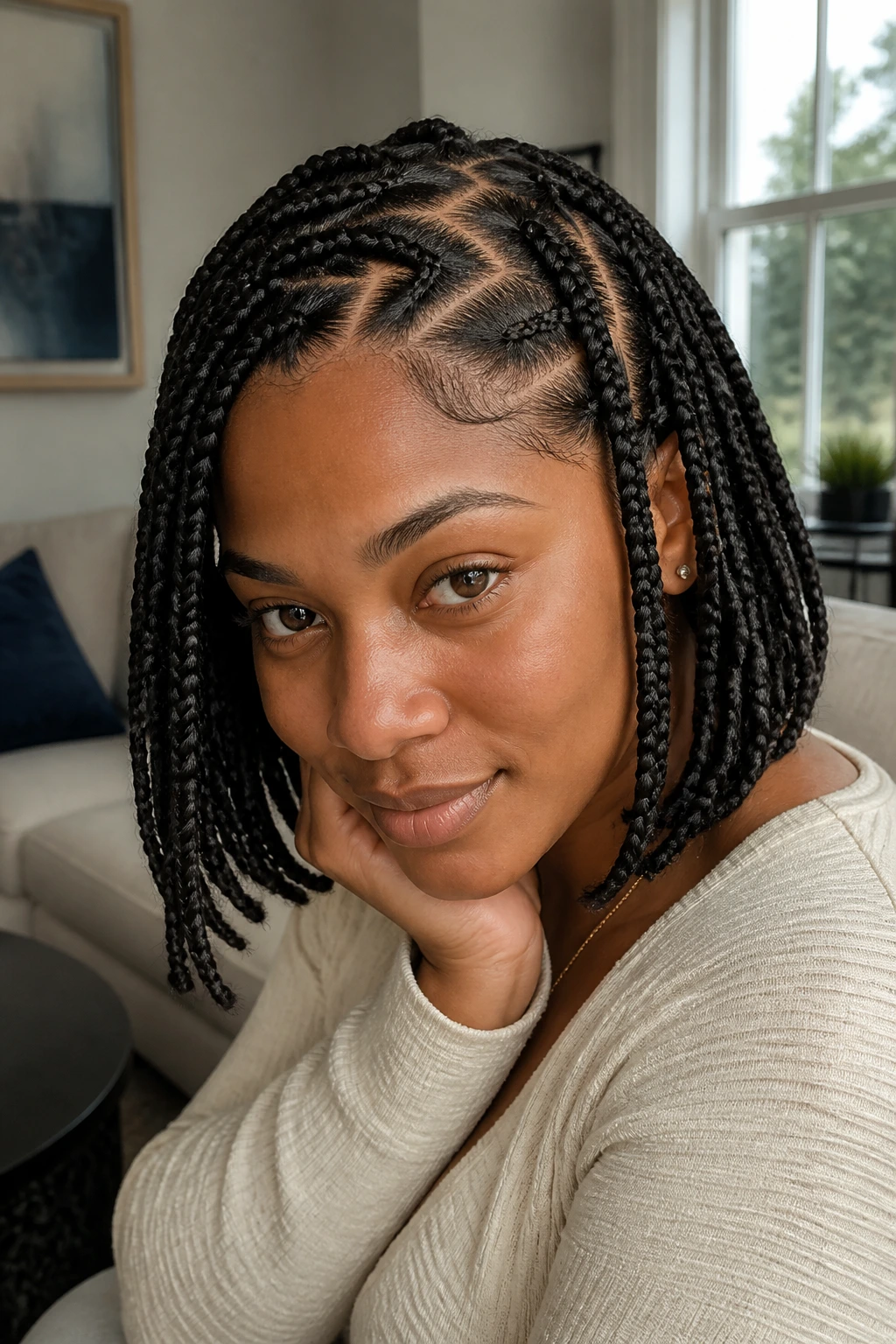
Zig-zag parts do more visual work than people expect. The parting pattern itself becomes the feature, so even short braids read as styled and deliberate.
This is one of my favorite ways to make a simple braid set feel less plain. The zig-zag lines distract from uneven shrinkage and give the scalp a little motion before the braids even move. Keep the lines sharp, but not so tiny that the braider has to carve the scalp like a maze. A clean zig-zag is better than an overcomplicated one.
11. Diamond-Part Knotless Braids
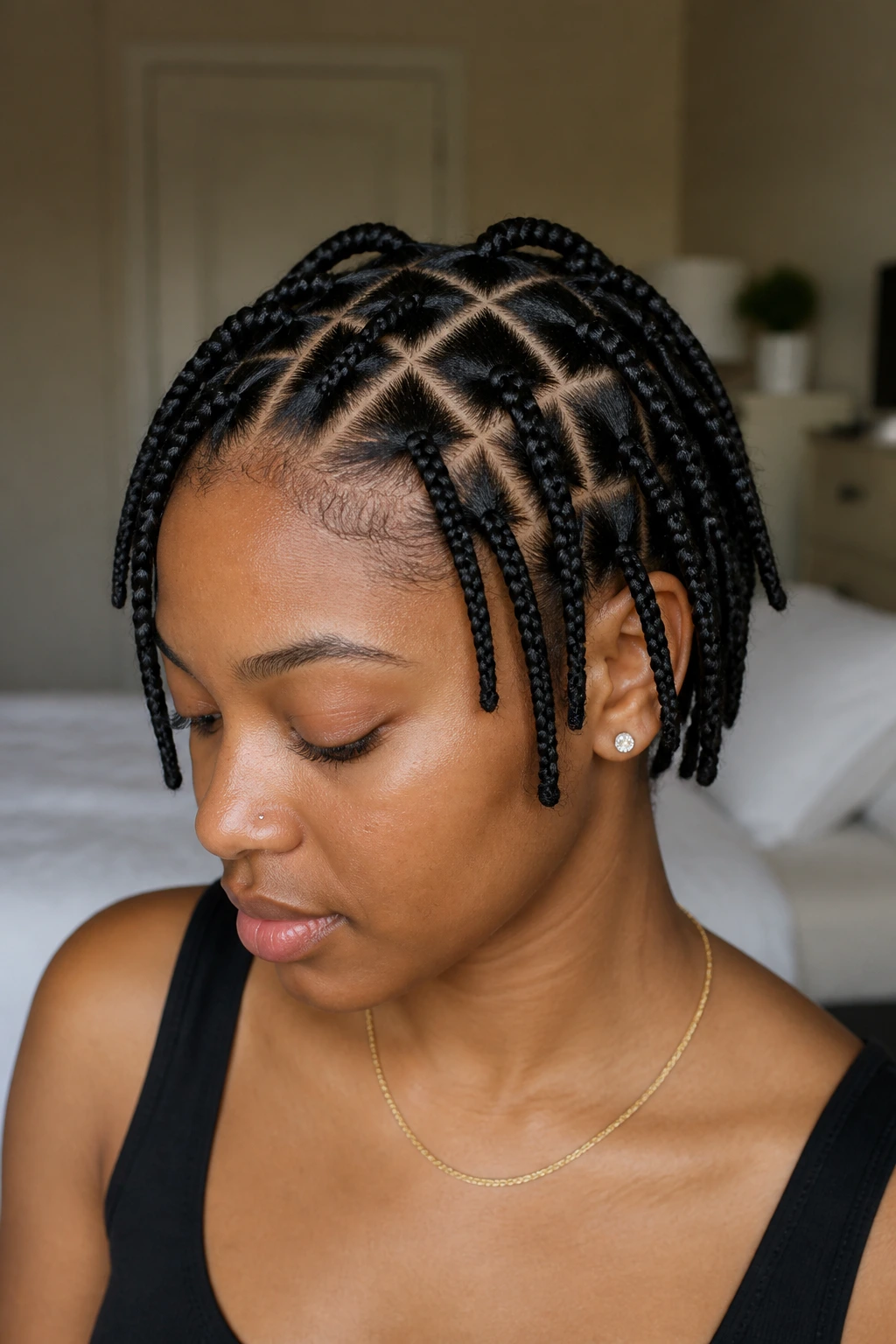
Diamond parts are the neat freak’s answer to short braids. They look crisp, symmetrical, and just a little dressier than square parts, especially when the hair is short enough that the parting is visible from every angle.
I like this shape with a middle part or a slight offset part, because the diamonds keep the style from feeling too flat. The braid sections should be exact. If the diamonds are sloppy, the whole set looks uneven. If they’re clean, the style has a finished, almost tailored look.
12. Beaded Knotless Braids
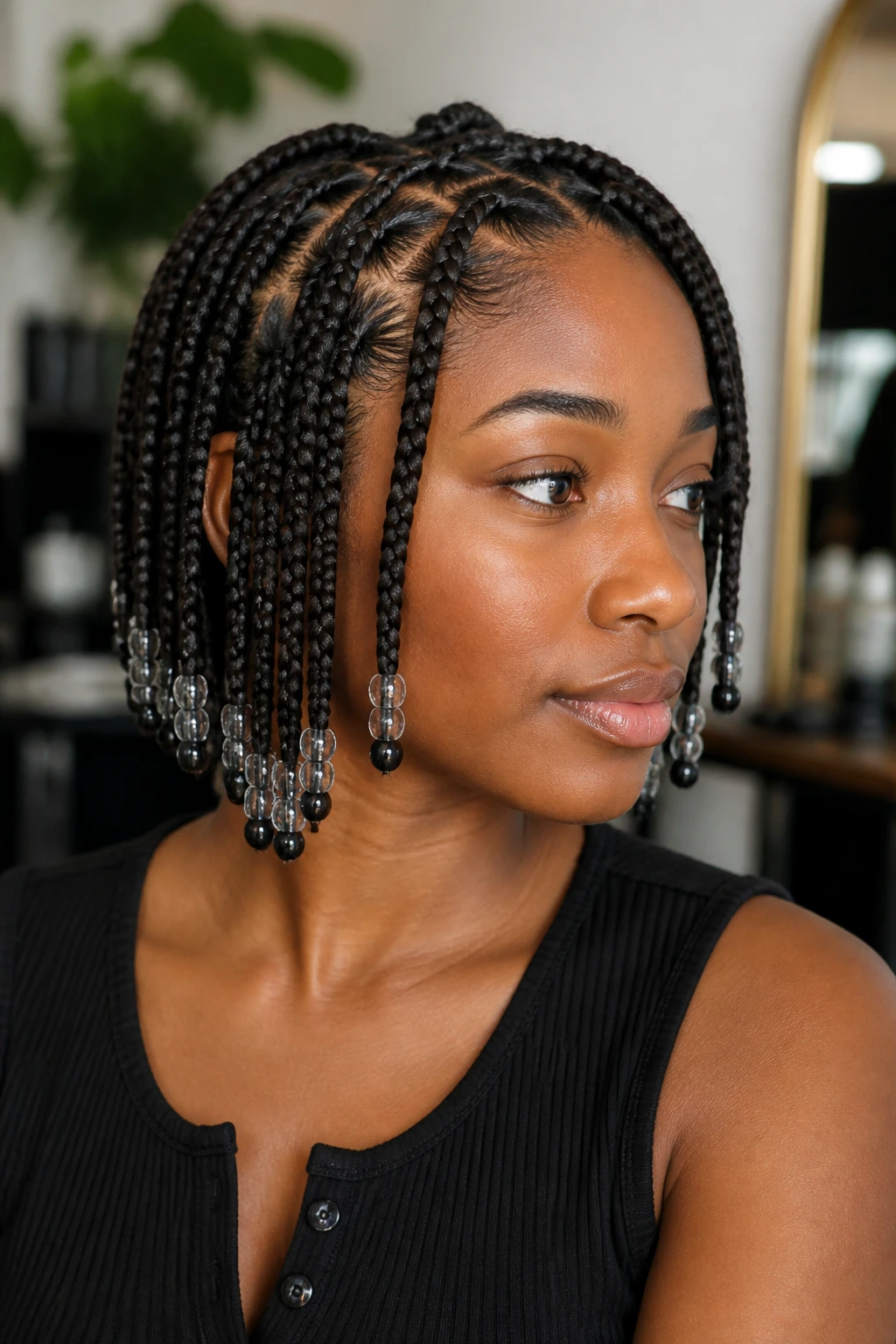
A few beads can change the sound and the swing. On short natural hair, beads work best near the ends, where they add weight and movement without dragging the root.
Don’t overdo them. Three to five small beads on a braid is usually enough unless you want a deliberately loud, playful finish. I’d skip heavy glass beads on very short braids because they can pull the ends down awkwardly. Lightweight acrylic, wood, or small resin beads are easier to live with.
This style is especially useful if your braids are chin-length or shorter and you want them to feel fuller at the bottom.
13. Fulani-Inspired Knotless Braids
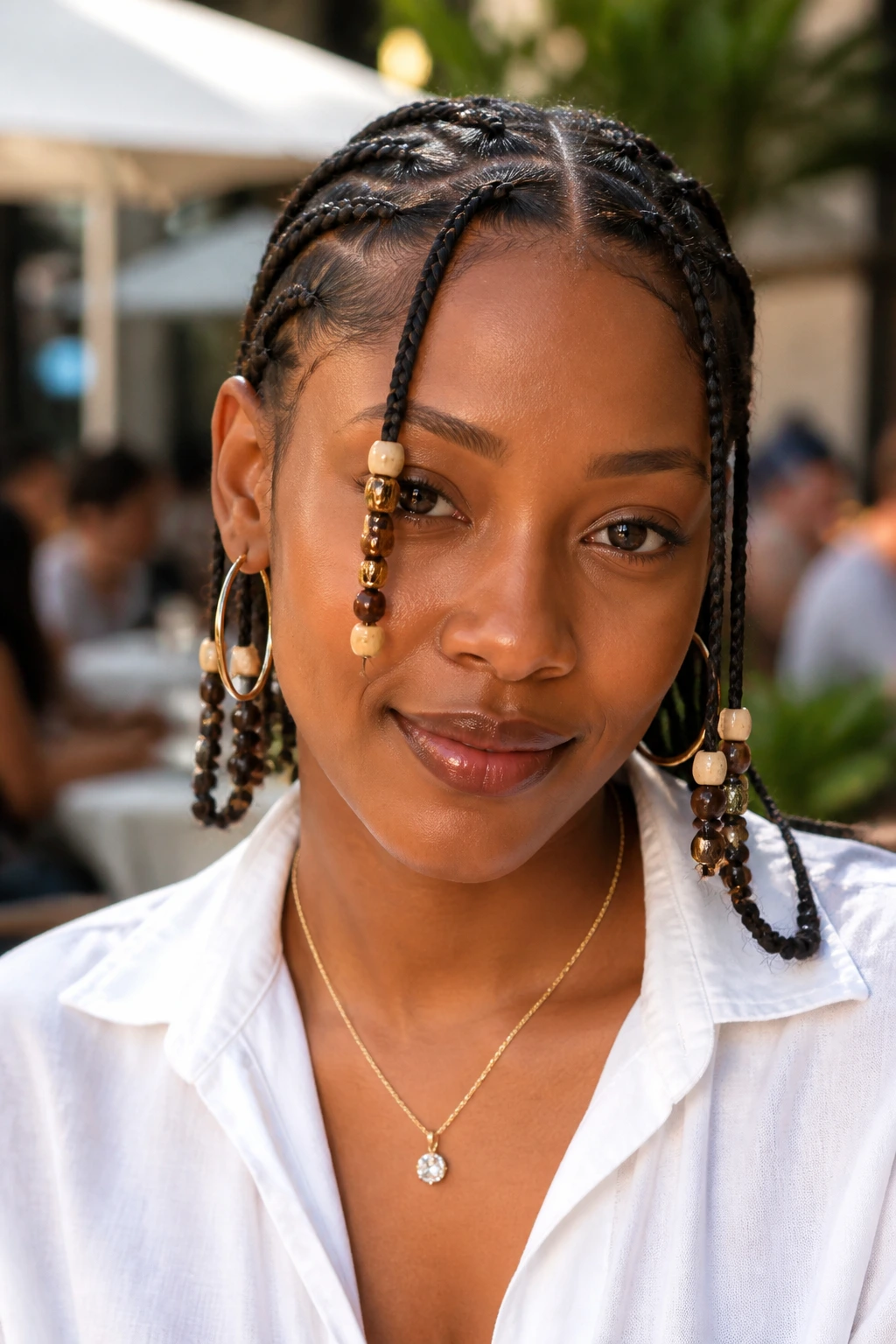
Fulani-inspired braids make short hair look intentional from the front. The center track, side braids, and bead placement create shape even when the overall length stays modest.
This style shines when the front rows are given the most attention. A single center braid with a few braids falling on each side can frame the face beautifully on short natural hair. Add beads to one or two front pieces, not every braid in sight. That keeps the look balanced instead of overloaded.
It’s a good choice if you want something rooted in pattern and detail, not just braid length.
14. Lemonade Knotless Braids
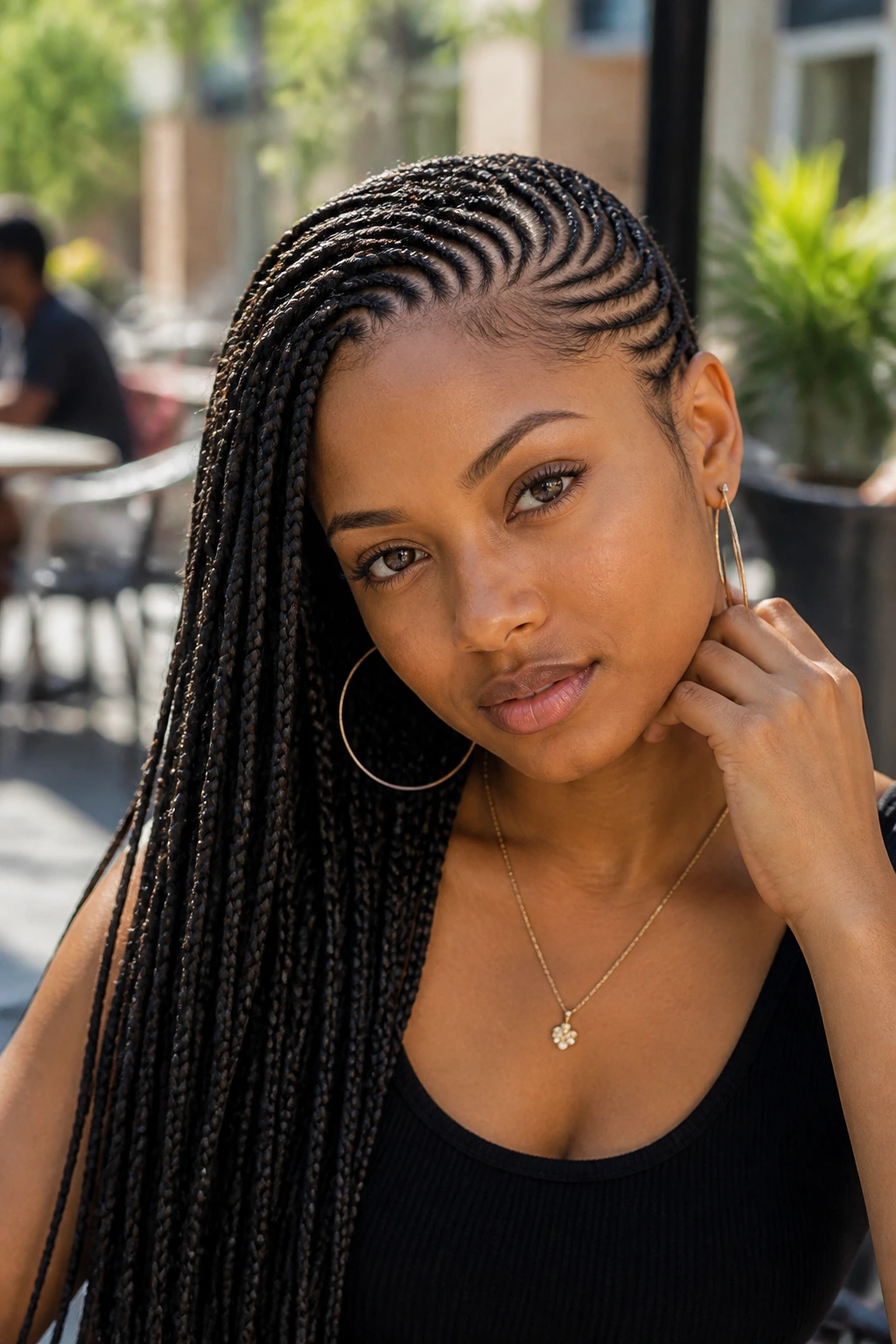
Lemonade braids pull everything to one side, which is exactly why they flatter a short cut. The sweep creates the illusion of length, and the side-fall keeps the style sleek around the face.
The catch is tension. The temple area can get irritated if the side part is pulled too hard or if the braids are packed too tightly against the scalp. Ask for a soft feed-in at the hairline and a clean diagonal line that follows the head, not a hard yank across it. Done right, this style has a long line that feels sharp without being stiff.
15. Knotless Faux Hawk
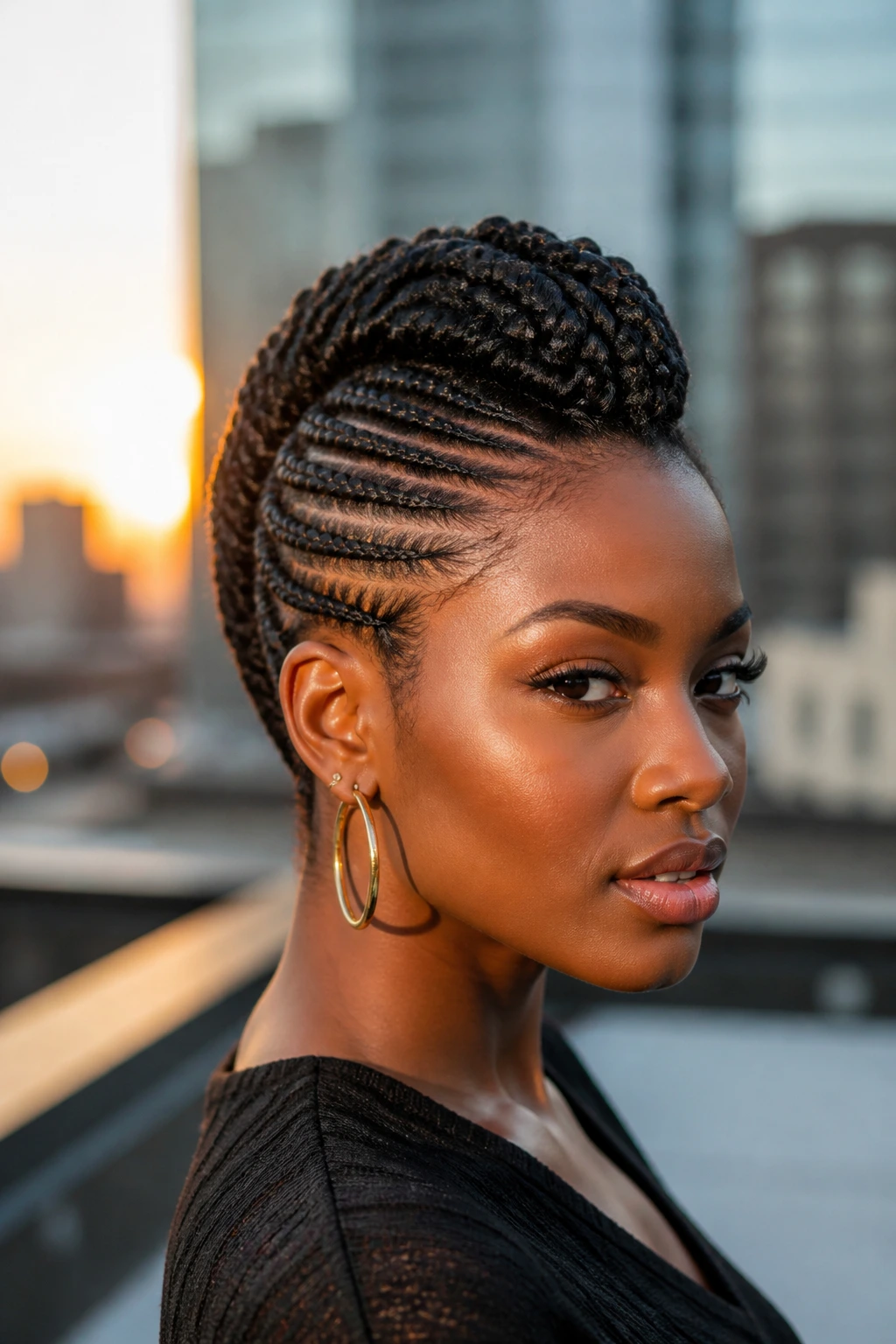
A faux hawk solves the “I want drama but not length” problem. The sides are braided flatter and the center row gets lifted, so short hair turns into shape and height instead of just hanging down.
This is one of the few styles where short hair almost gets an advantage. You do not need long braid tails for the silhouette to work. The center section carries the visual energy, and the sides stay close to the scalp. If you want a look that feels bolder than a bob but less fussy than a full updo, this is a strong pick.
16. Braided Crown Updo
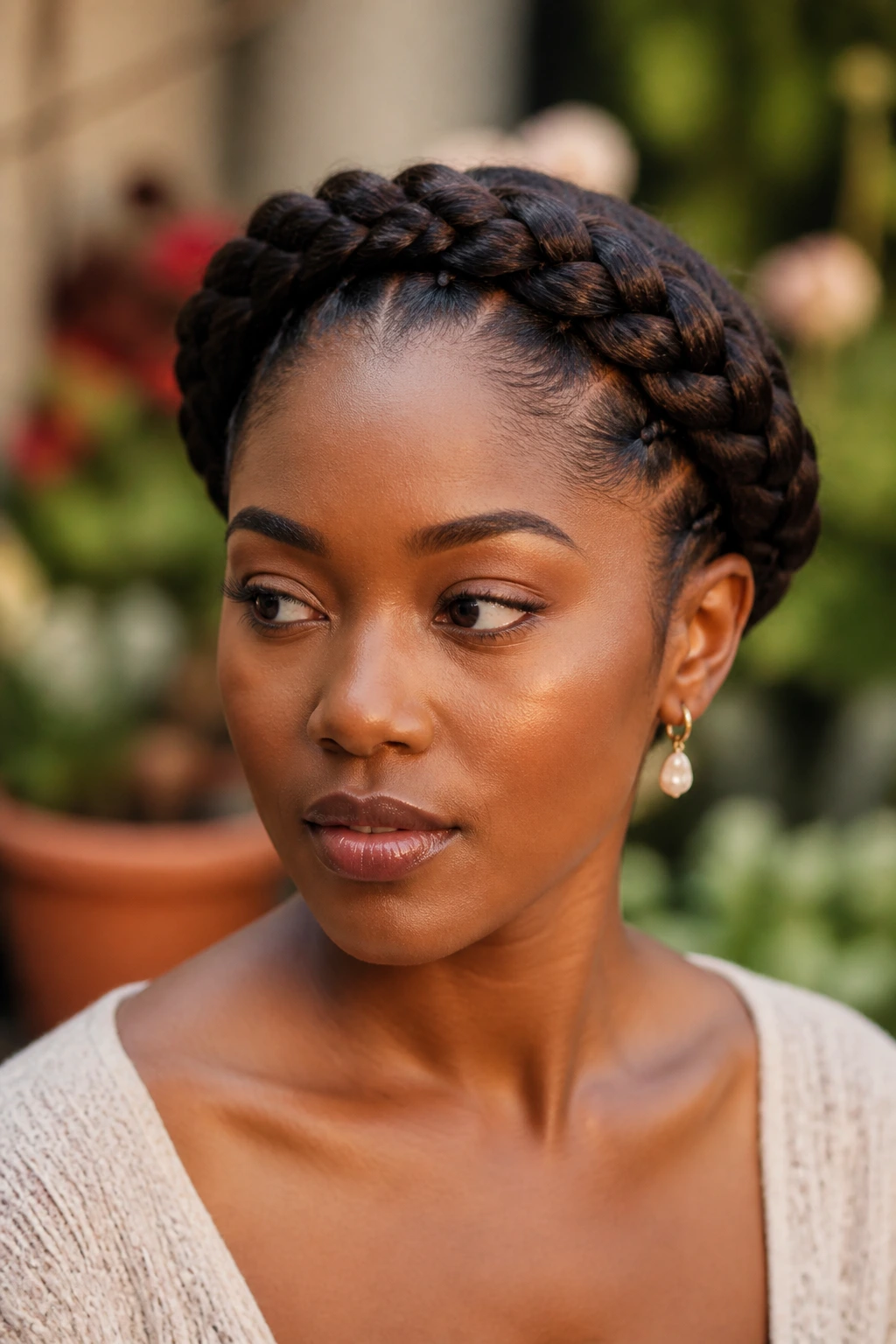
A crown updo turns short knotless braids into something neat and off the neck. The braid ends get wrapped, tucked, or pinned into a circle around the head, which keeps the silhouette tidy and lets the face do the talking.
I like this one for warm days, dressier events, and anyone who gets sick of braids brushing the collar. Short hair actually helps here, because there’s less extra length to stuff into the crown. Use bobby pins that match your braid color if you’re pinning the ends down. Silver pins on dark braids can look obvious in a way most people don’t want.
17. Space Bun Knotless Braids
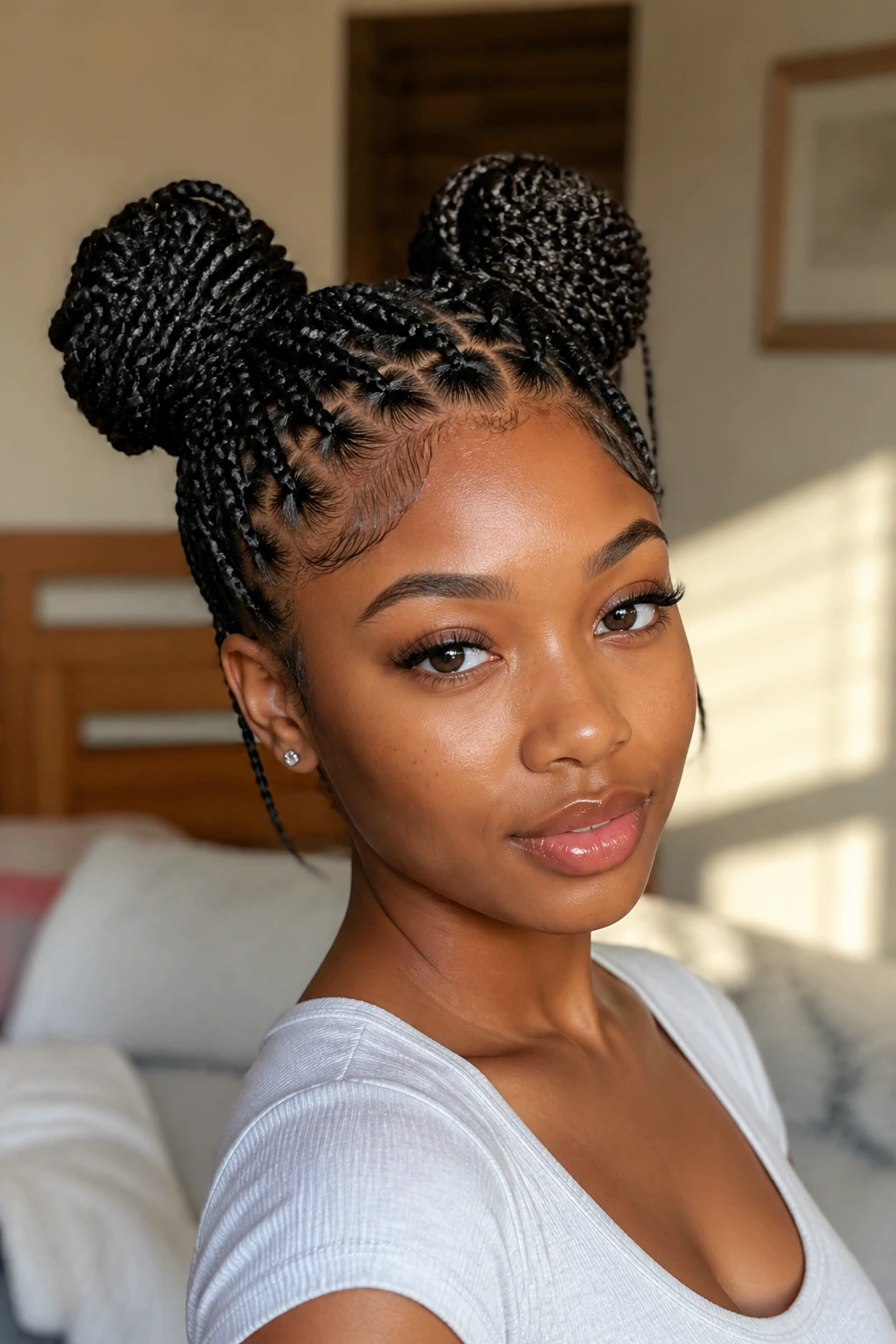
Space buns are playful, yes, but they also keep the weight up and away from the neck. On short hair, they work best when the braids are medium-small and the buns are placed high enough to feel balanced.
This is the style I’d pick when a regular ponytail feels too plain. Two buns split the weight, which keeps the style from sagging on short roots. If the braids are too thick, the buns can look lopsided by midday. Keep the sectioning clean, and don’t try to cram every braid into one tiny bun unless you want a puffball effect.
18. Layered Face-Framing Knotless Braids
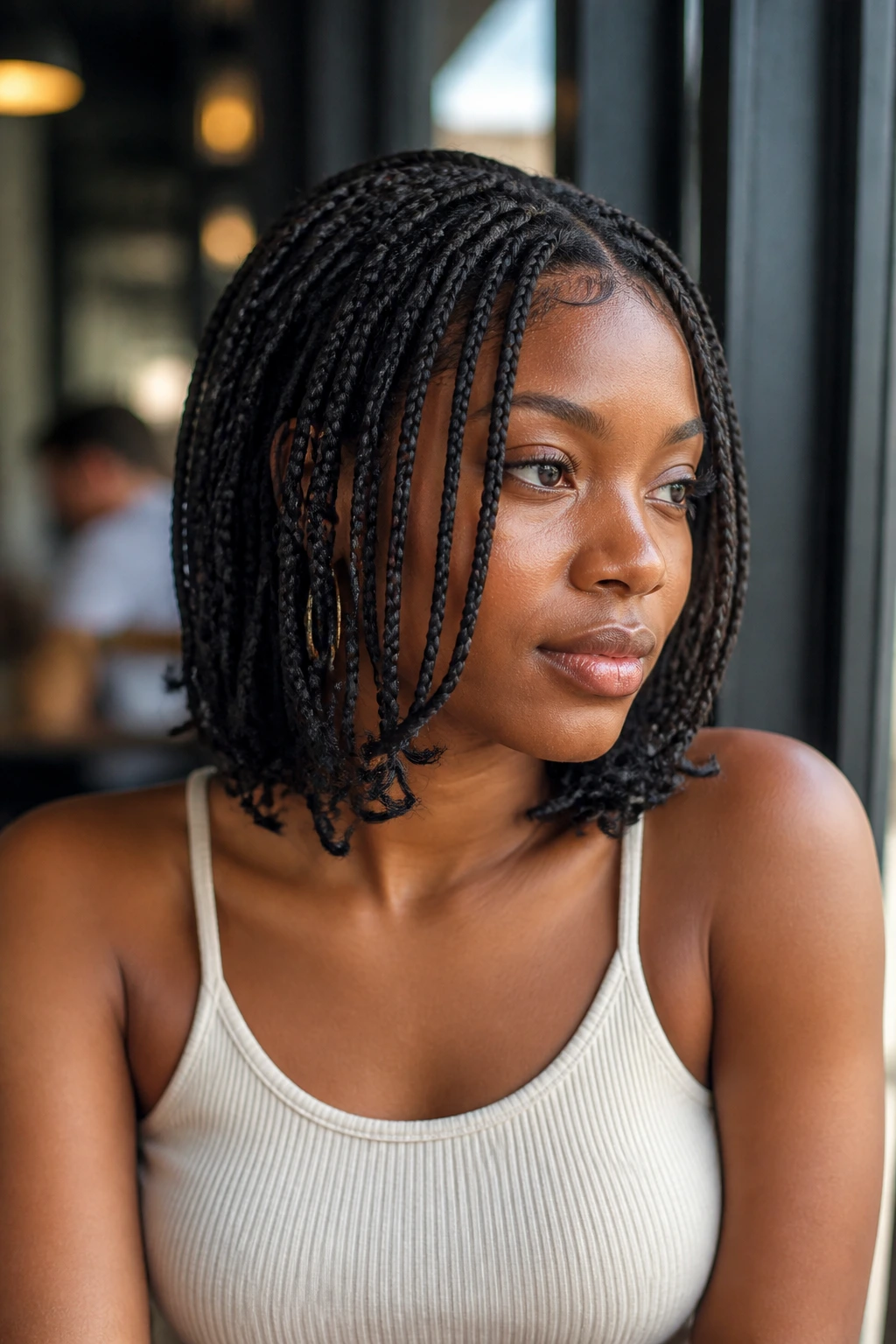
Face-framing layers make short braids look less boxy. A few shorter braids near the cheeks, with slightly longer pieces toward the back, create motion around the face and a softer outline overall.
This works especially well on round or heart-shaped faces because the shorter front pieces break up the straight braid line. The style does not need to be dramatic to work. Even a small difference in braid length — say, a couple of inches between the front and back rows — can change the whole balance. I’d keep the front pieces light and avoid stuffing them with too much extension hair.
19. Rubber-Band Section Knotless Braids
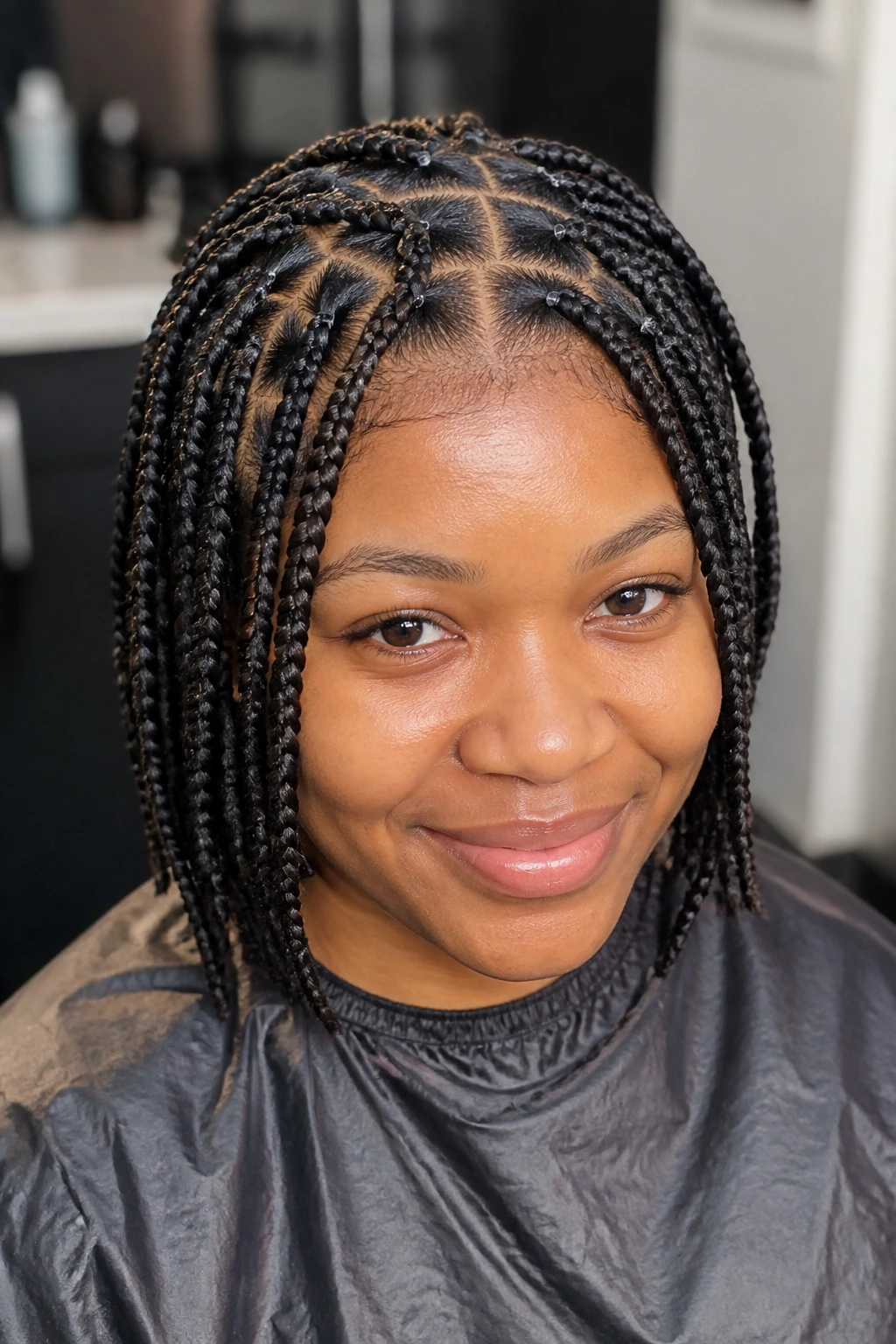
Rubber bands can help the parting hold, but they need a light touch. On short natural hair, this style is useful when the hair is slippery or when the braider wants the sections to stay put while feeding in hair.
The upside is neatness. The downside is tension, so the bands should be snug, not strangling the root. I like this approach for people who are new to braids and want the parting to stay visible from install to takedown. If the bands are too tight, you’ll feel it before the style even settles. That’s your sign to loosen the setup.
20. High Knotless Ponytail
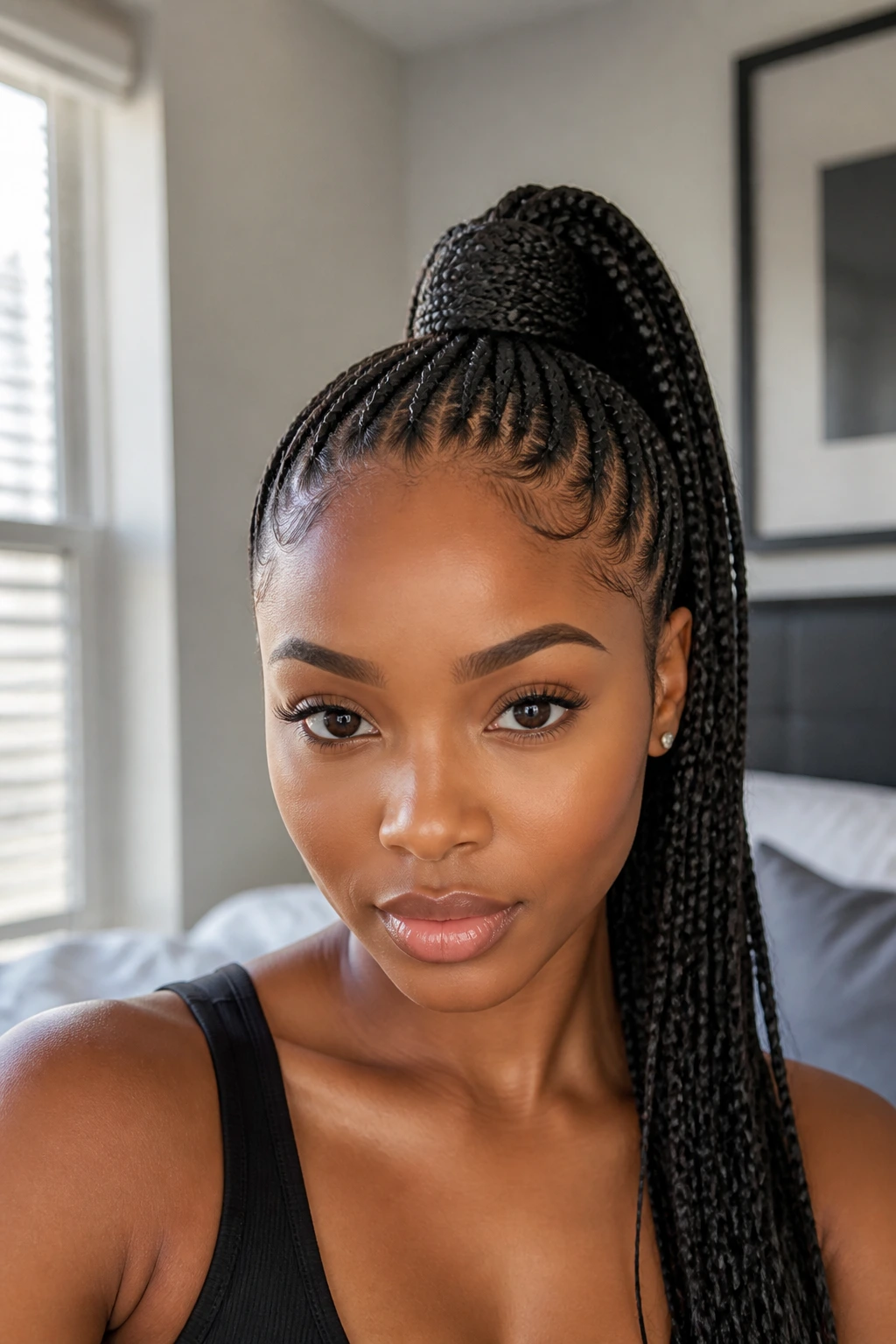
A high ponytail is the quickest way to show off clean feed-ins. The whole set gathers upward, which makes short braids look sharper and gives the face a lifted frame.
This style does ask for a solid crown. If the hair on top is very short, the ponytail can slide or swell at the base. That’s why I prefer it when the top sections are at least moderately stretched and the braid count isn’t too heavy. A sleek wrap around the base keeps the finish tidy. A thick, lumpy ponytail holder does the opposite.
21. Asymmetrical Knotless Lob
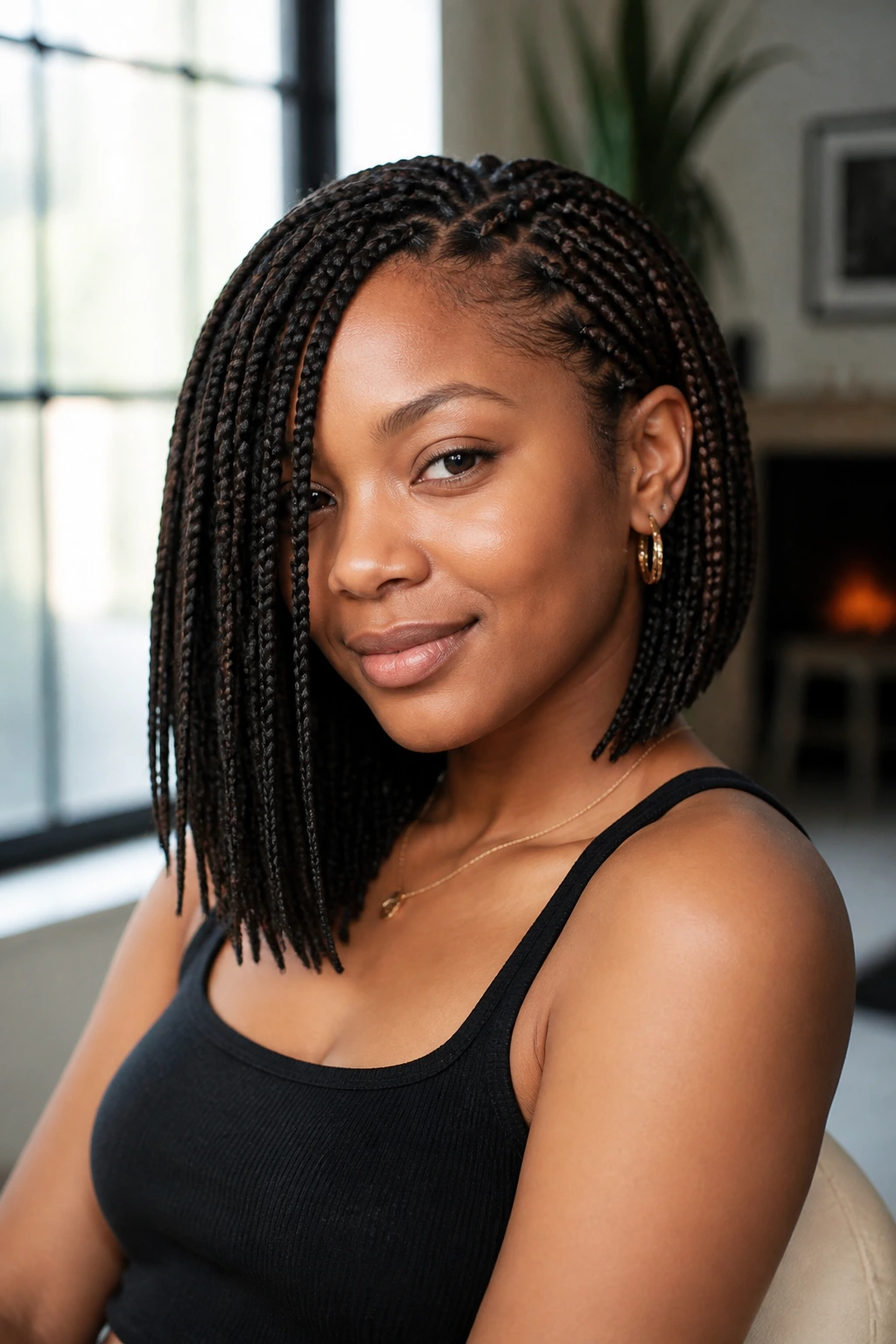
An asymmetrical lob keeps the silhouette from looking too even or stiff. One side hangs slightly longer or fuller than the other, which brings movement to a short braid set that might otherwise feel boxy.
I like this cut-inspired braid shape when the natural hair has taper or the wearer wants something a little less expected. It doesn’t need to be dramatic. A small difference in side length is enough. The trick is consistency: whichever side is longer needs to look intentionally longer, not accidentally uneven.
22. Flipped-Under Knotless Braids
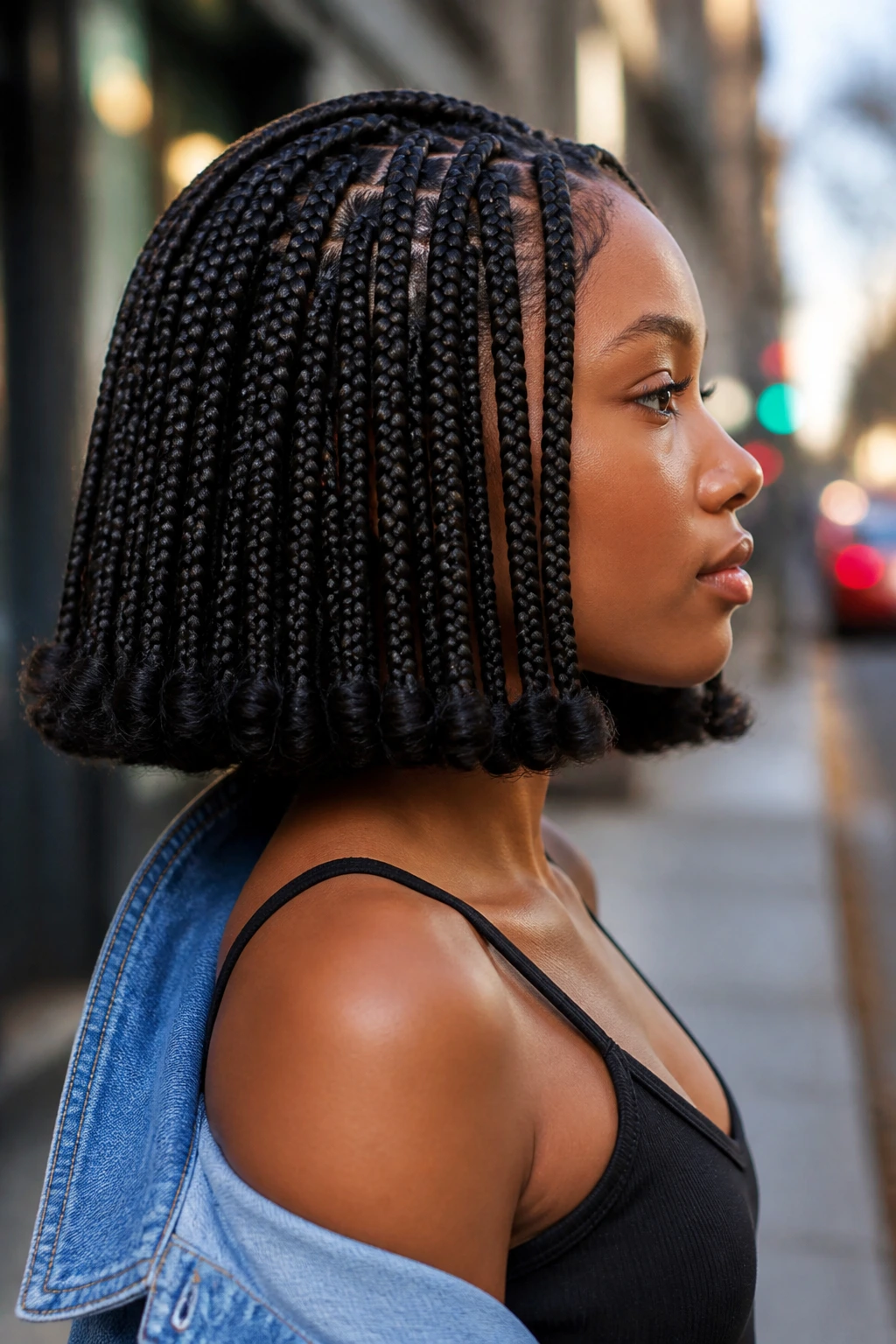
Flipped-under ends give short braids a cleaner finish than loose straight tips. The ends curl or bend inward, which creates a neat curve at the bottom of the bob or lob.
This is one of my favorite finishes for short hair because it makes the style look finished from every angle. The bend can come from hot water setting, flexi rods, or a wrapped overnight set depending on the hair used. Let the ends cool before you touch them. Warm synthetic hair that gets disturbed too early tends to lose the shape.
23. Crisscross-Part Knotless Braids
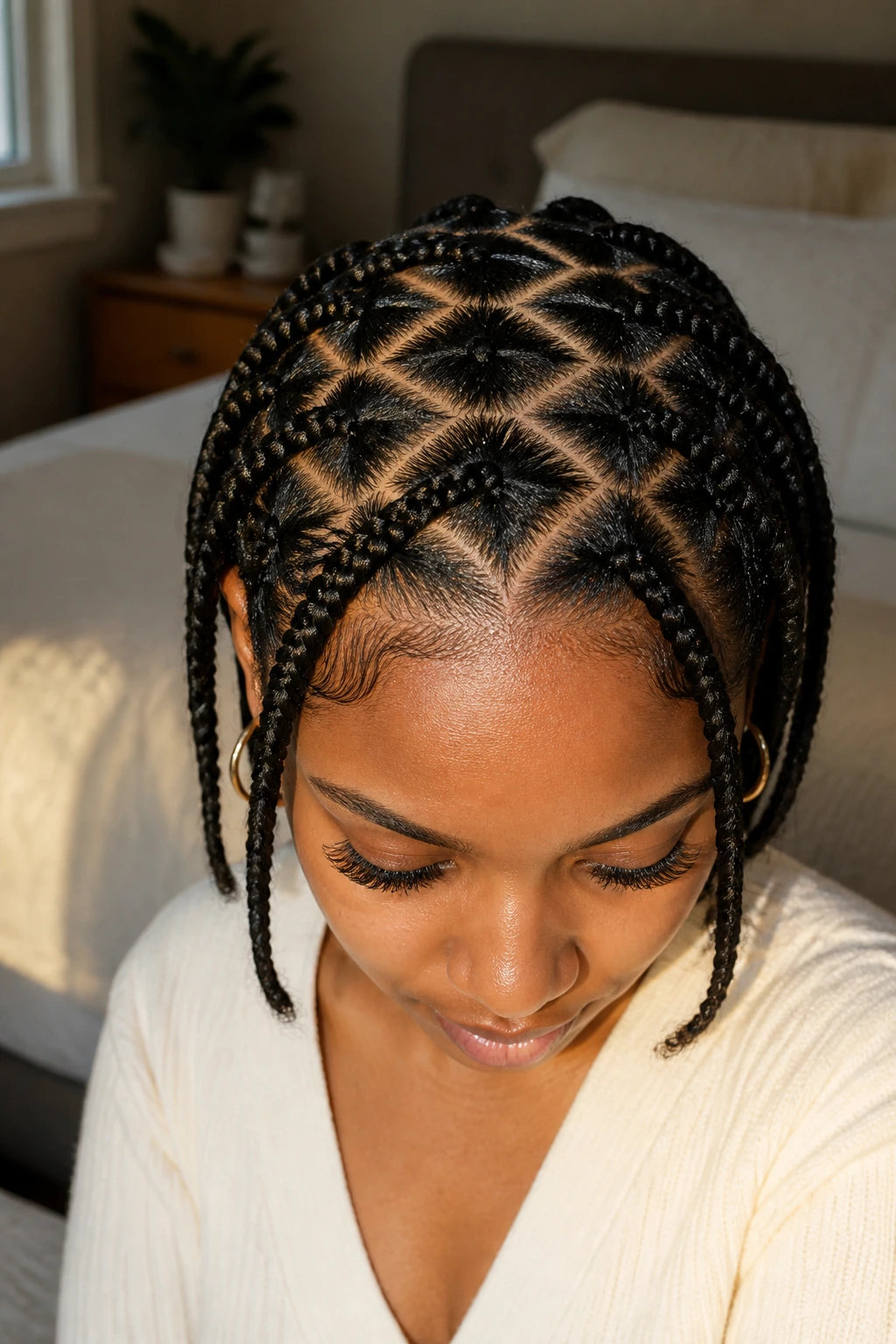
Crisscross parts make the scalp pattern interesting before the braids even move. The lines cross and overlap in a woven layout, which gives short hair a more detailed front and crown.
This style is useful when you want your install to read as design, not just length. It can be especially good for short hair because the parting becomes a focal point. Keep the crisscross clean and moderate. If the lines get too busy, the scalp can look crowded, and the whole thing loses the crisp feel that makes it good.
24. Colored-Accent Knotless Braids
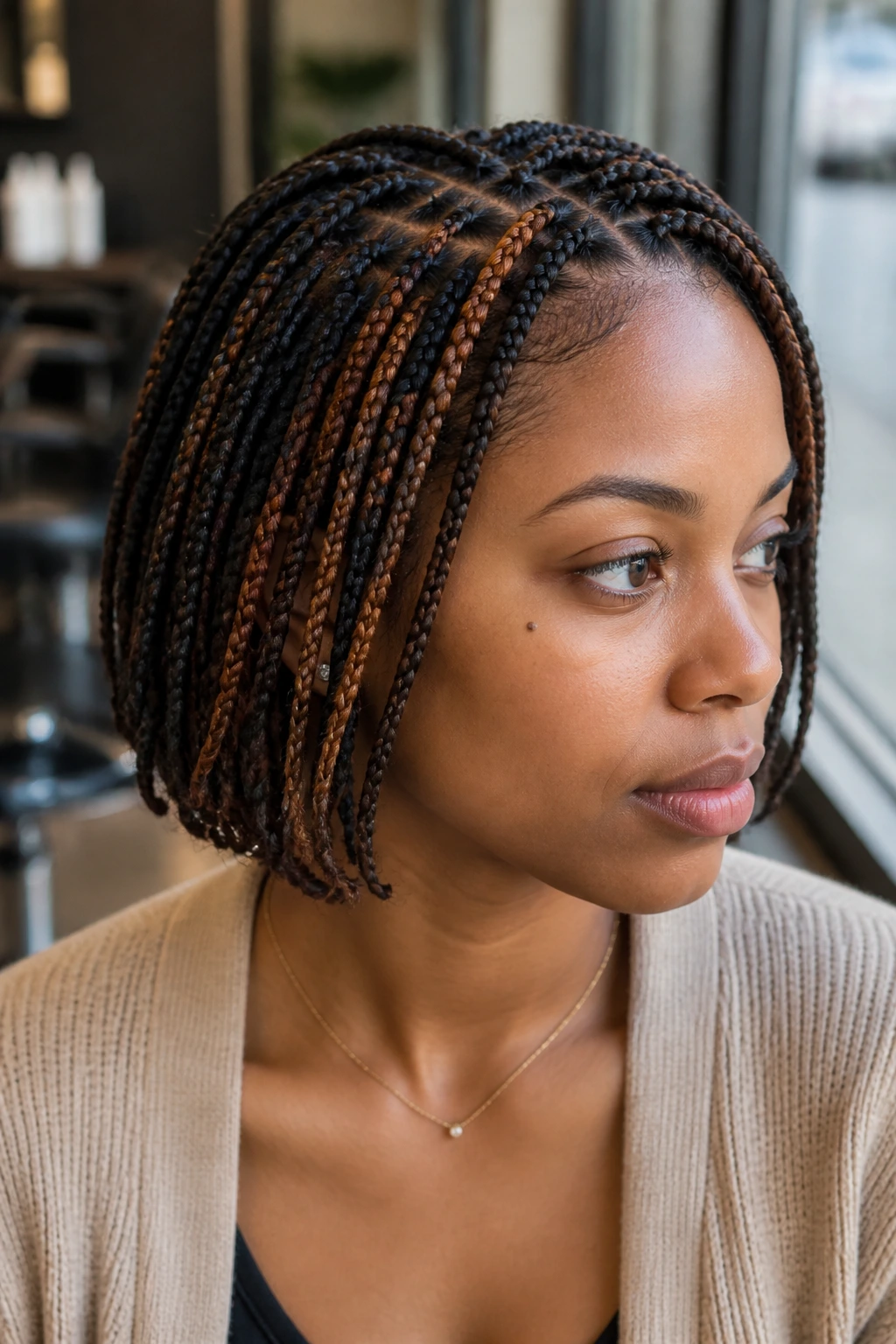
Color does not have to mean neon or drama. A few packs of brown, burgundy, honey, or copper extension hair can warm up a short braid set and make the shape look richer against natural coils.
This works best when the accent color is placed on the front rows or mixed lightly through the whole head. If you use too much, the style can start looking loud in a way that fights the haircut. I’m partial to soft brown and auburn accents because they add contrast without stealing the show. On short hair, subtle color usually ages better than a heavy color block.
25. Thread-Wrapped Knotless Braids
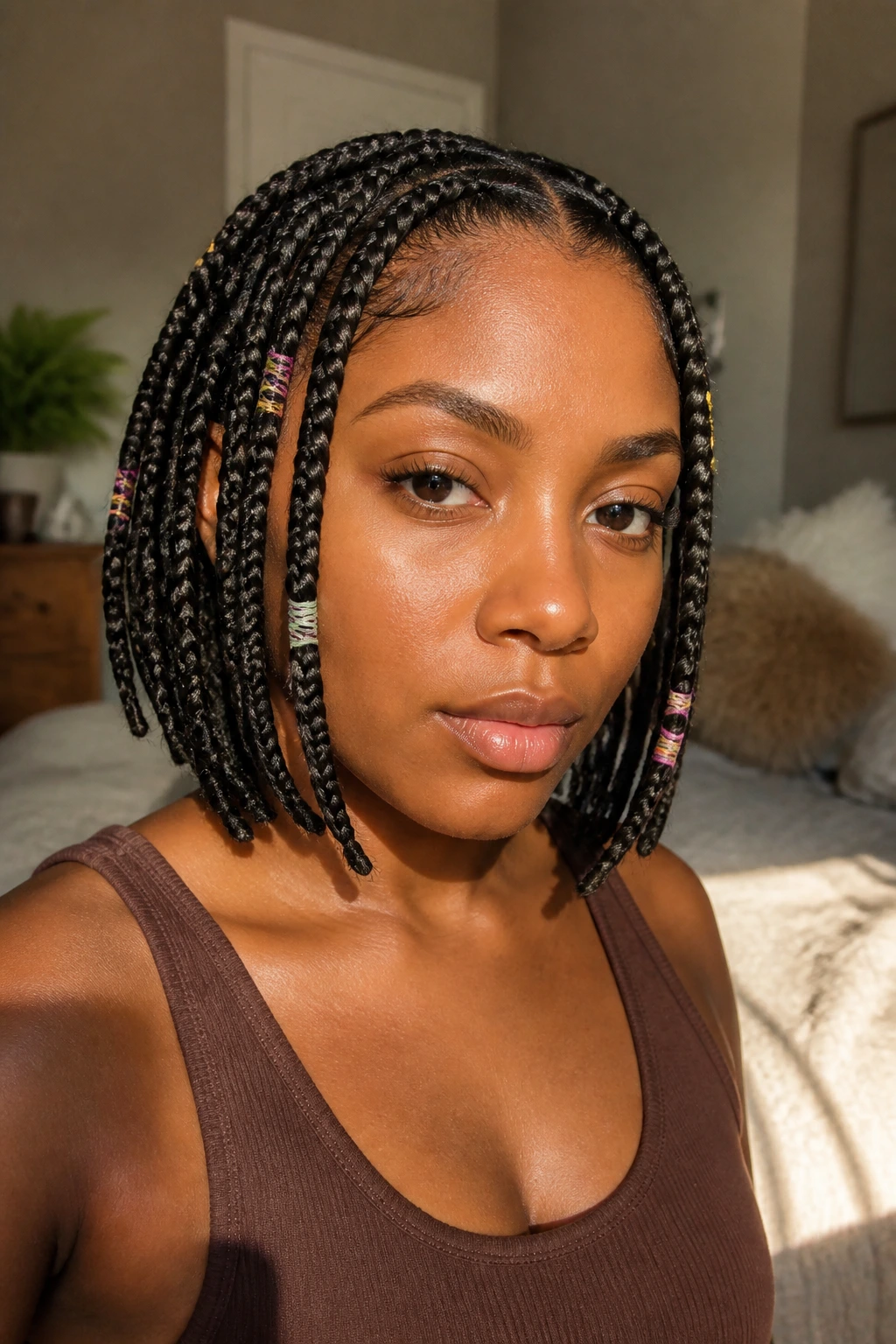
Thread wrapping is one of the cheapest ways to add personality. Wrap a few braids with color near the ends or midlength, and the whole style starts feeling custom.
I would not wrap every braid. That can get heavy and tangled fast, especially on short styles where the braid length is already limited. Two or three wrapped braids are enough to create a rhythm. The thread should sit snug, not saw into the braid. If it starts shifting, it’s too loose. If it dents the braid, it’s too tight.
26. Cuffed Knotless Braids
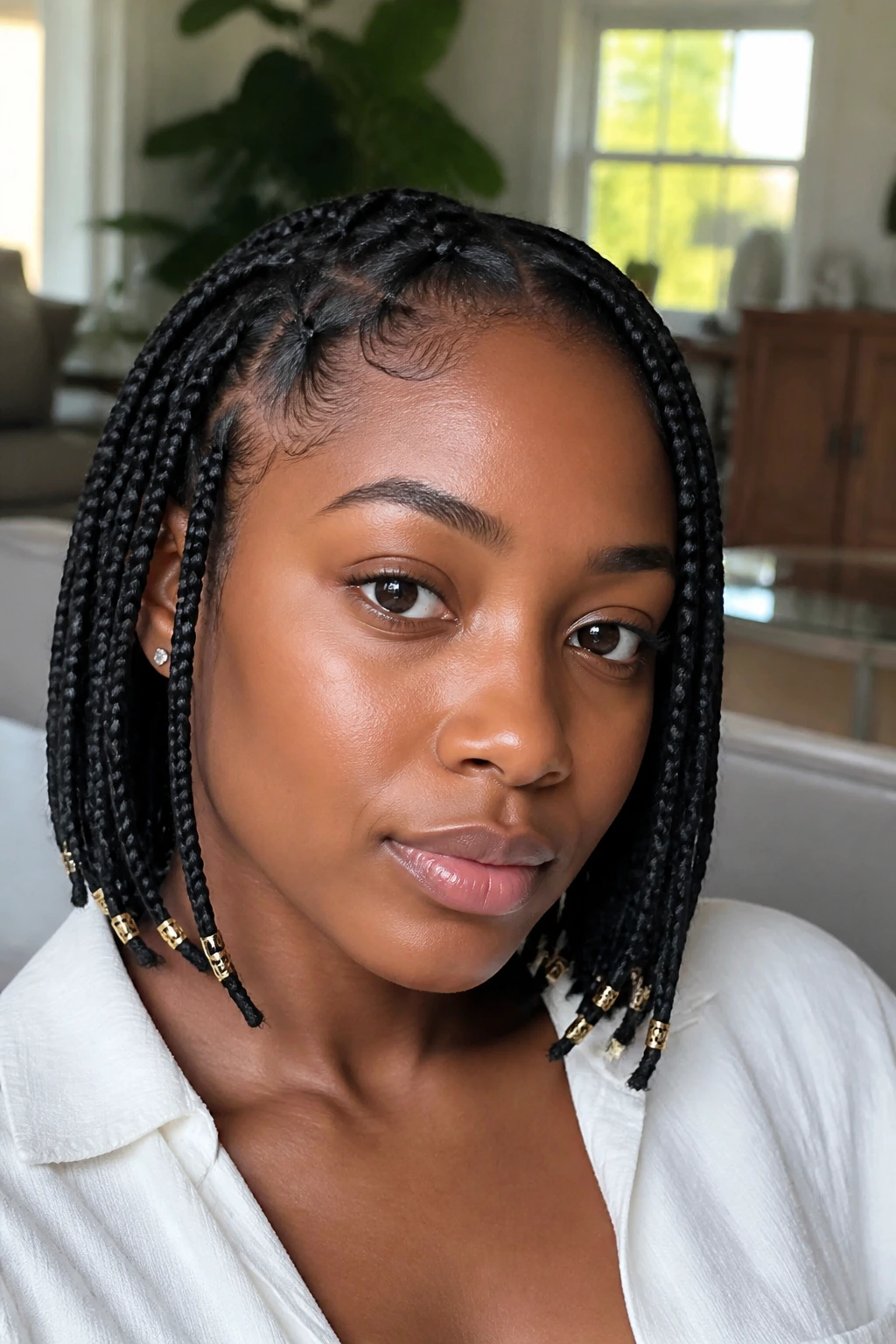
Cuffs are tiny, but they change how the braid reads. They break up the smooth line, add a little shine, and look especially good on short braids where every detail sits close to the face.
Space matters here. Too many cuffs can turn the style noisy. I like a few placed near the ends or grouped on the front pieces, where they catch the eye first. Small shells or cuffs with a matte finish often look better on short hair than giant shiny rings. The goal is accent, not ornament overload.
27. Tapered Nape Knotless Braids
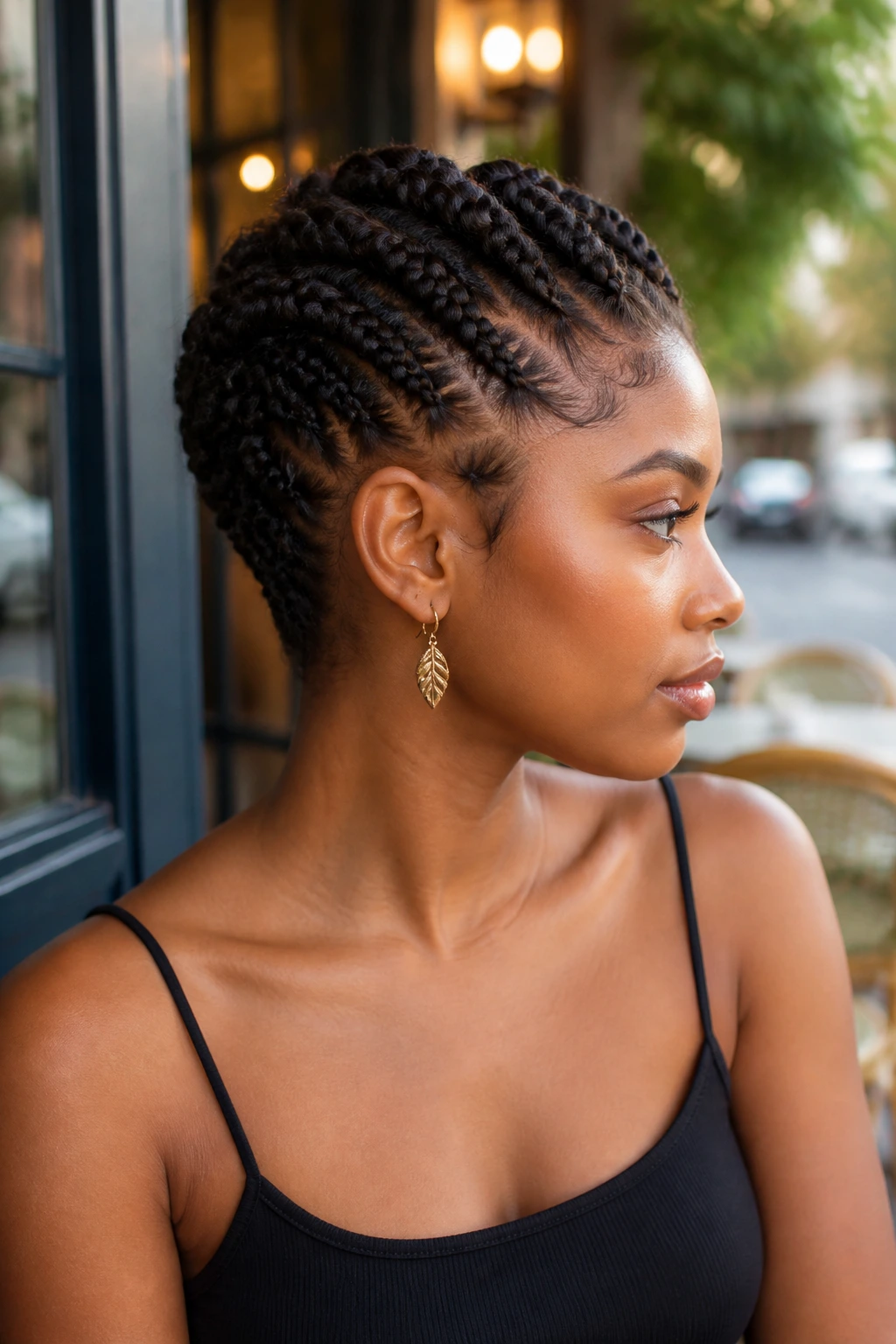
A tapered cut changes where the braids can sit. Instead of forcing the style into a single uniform shape, tapered nape braids follow the natural fade or shape around the neckline and sides.
This is a smart choice for people with a fade, a low taper, or a haircut that already has a strong outline. The braid pattern can stay fuller on top and lighter where the hair is shortest. That keeps the style balanced. If the braids fight the taper, the whole head looks forced. If they follow it, the cut and the braids start working together.
28. Braided Mohawk with Curly Ends
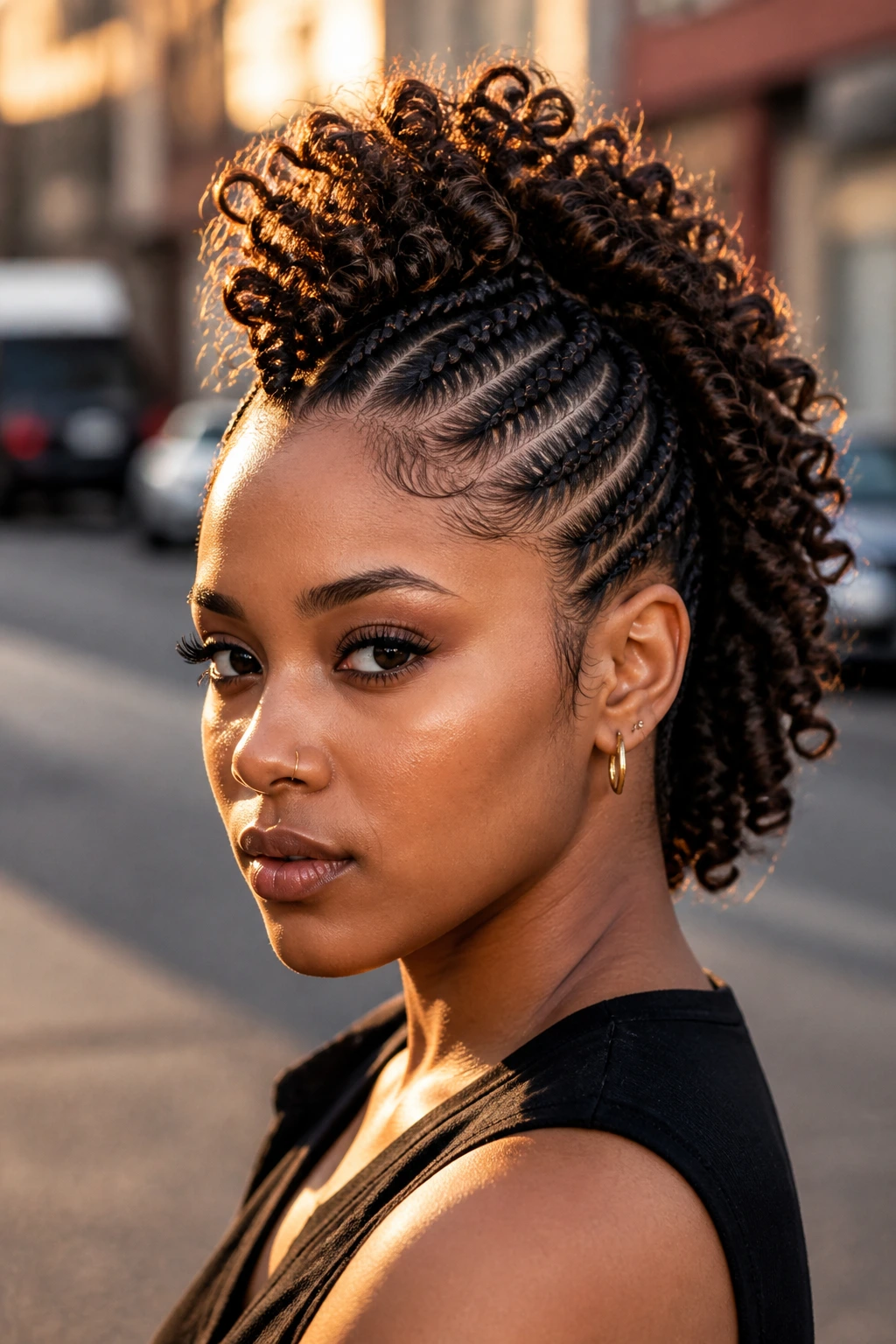
A braided mohawk gives short natural hair a sharper outline than almost any other style. The sides stay low, the center row rises, and the curly ends soften the top so it does not feel too severe.
This one is perfect when you want attitude without length. The shape carries the style. Ask for a clean center row, controlled side braids, and ends that are curled or tucked just enough to give movement. A mohawk on short hair can look bold in the best way, but only if the sides stay neat. A fuzzy side panel ruins the whole silhouette.
How to Keep Knotless Braids Comfortable on Short Hair
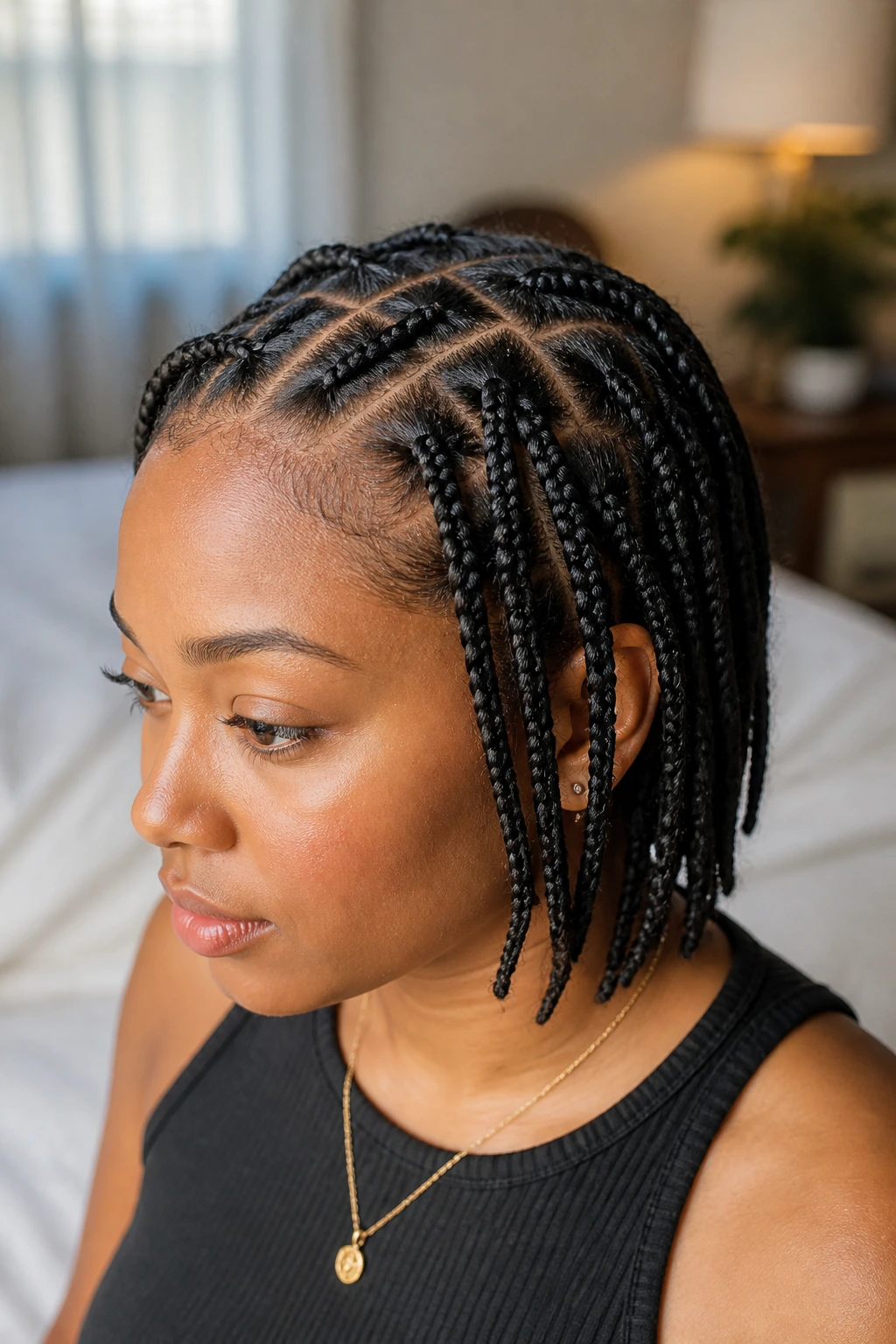
Short hair needs a slower, cleaner install than people often expect. The feed-in should happen in stages, not in one heavy first section. I like to think of the root as a landing strip: if the braid lands flat, the rest of the style usually behaves. If the base feels thick or twisted from the start, the tension tends to show up by day two.
Parting size: match the braid section to the density of the hair, not the look you saved on your phone. A small part on fine short hair is safer than a chunky section that makes the root hump.
Product load: use enough leave-in to soften the hair before braiding, then stop. Heavy creams, thick oils, and waxy edge products build up fast on short roots.
Edge comfort: if the temples feel hot or tight during install, say something immediately. Braids should feel secure, not pinched.
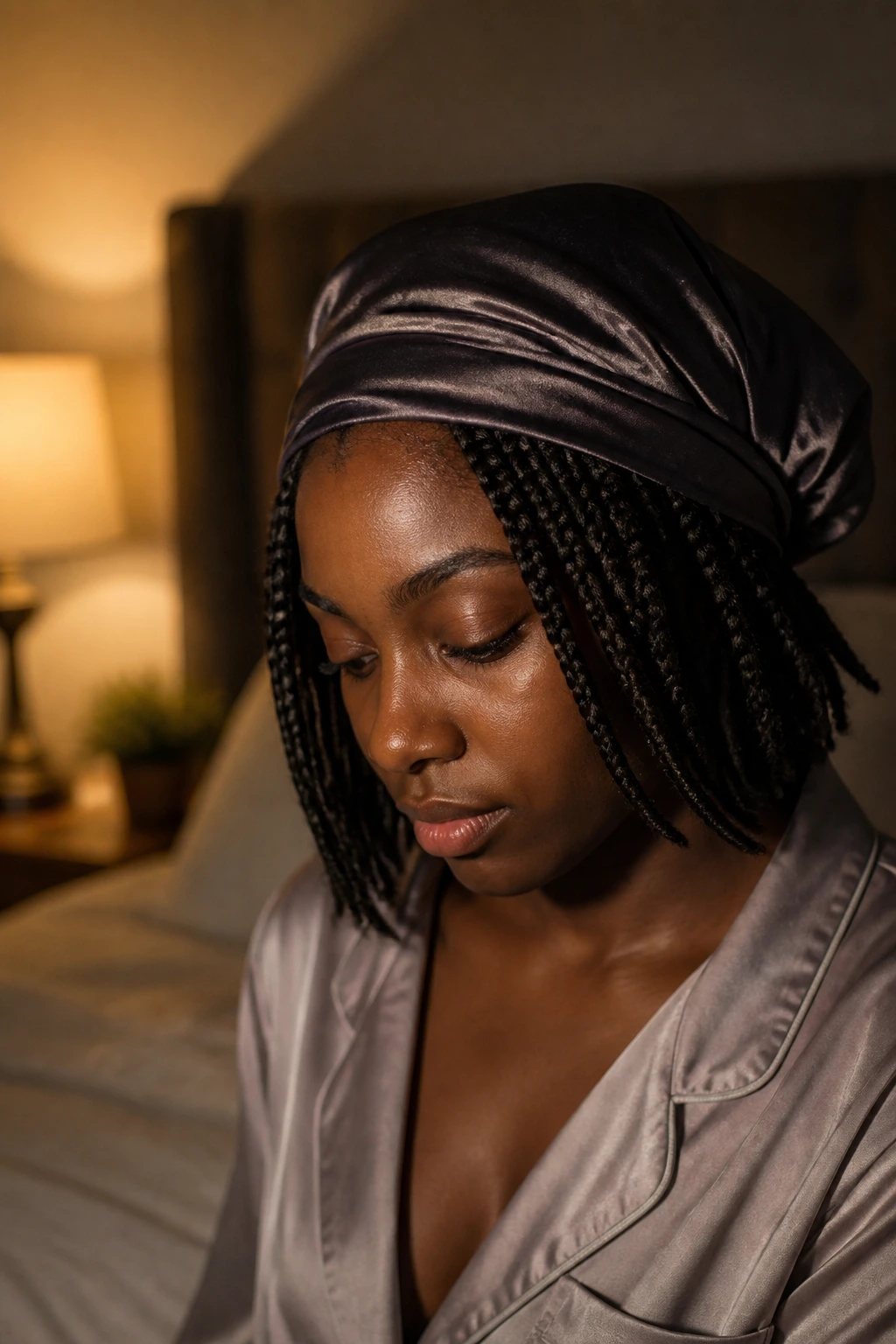
Night care: a satin scarf or bonnet keeps the braid surface smooth and helps the roots keep their shape. Cotton pillowcases rough up the surface and make short styles look older than they are.
The Mistakes That Make Short Braids Look Rushed
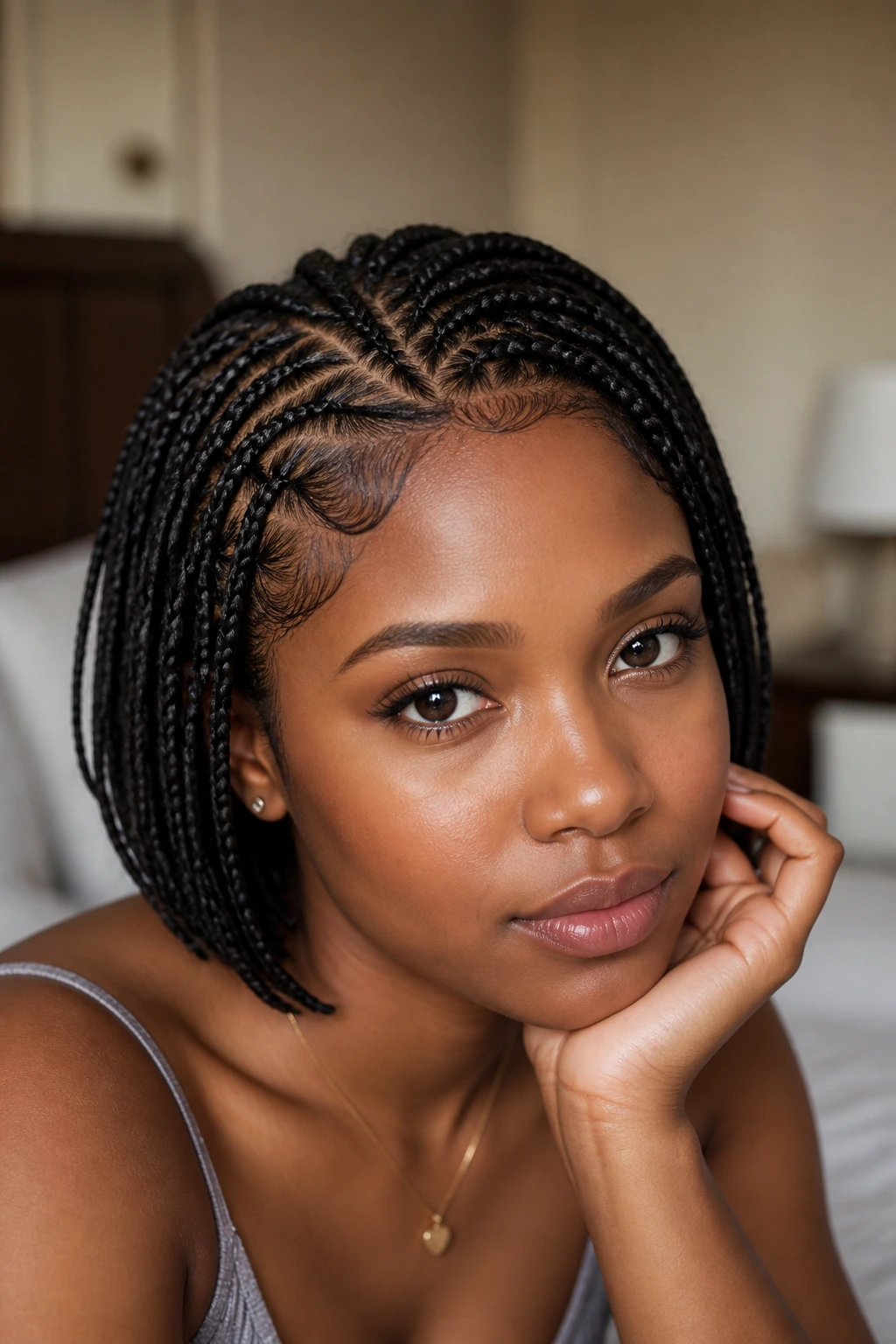
The first mistake is making the braids too thick for the hair underneath. Short hair cannot hide a swollen base. You’ll see it right away, especially at the crown and the temples. The fix is smaller feed-ins and a cleaner grip at the root.
Another common error is skipping the stretch. If the hair is still coily and shrunken when the braid starts, the style can puff at the base and slip faster. A low-heat blow-dry, banding, or a careful stretch gives the braid more to hold.
Heavy product is a sneaky problem. Thick oils and creamy stylers make the scalp look shiny for a minute, then leave a dull film that traps lint. Keep the install products light, and save heavier moisture for after the braids are in, if the scalp can handle it.
The last one is not drying the braids fully after washing or hot-water setting. Damp roots on short hair are a fast road to odor, frizz, and weak hold. Dry the scalp all the way through. All the way.
Five Ways to Change the Finish Without Starting Over
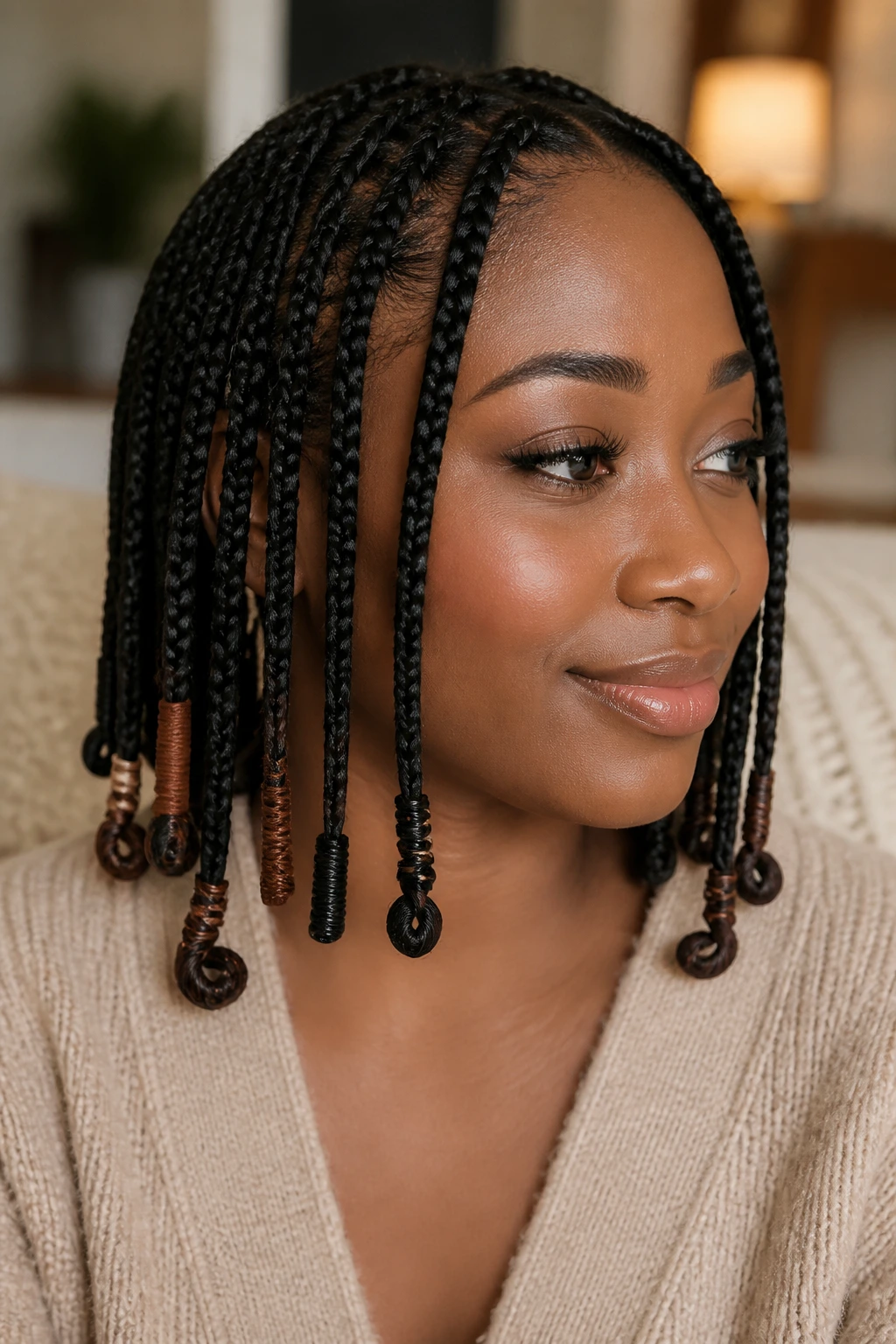
Curly-Ends Refresh: Re-set only the ends with rods and warm water if the braid length is fine but the tips look tired. This is the easiest fix for a bob that has lost its shape.
Accessory Pass: Add cuffs, a few beads, or a slim thread wrap to the front rows. Small accents change the mood without adding weight.
Side-Part Shift: Move the front section to a deeper side part and pin one side back. A style can feel new just from a different direction.
Low-Bun Edit: Gather the braids into a low knot or folded bun at the nape when you want the look to feel neater. This is handy for short braids that are just long enough to hold.
Mousse and Wrap: Smooth the surface with a light mousse, then wrap the hairline with a silk scarf for 10 to 15 minutes. That little reset helps the braid pattern sit flatter.
Essential Tools and Supplies
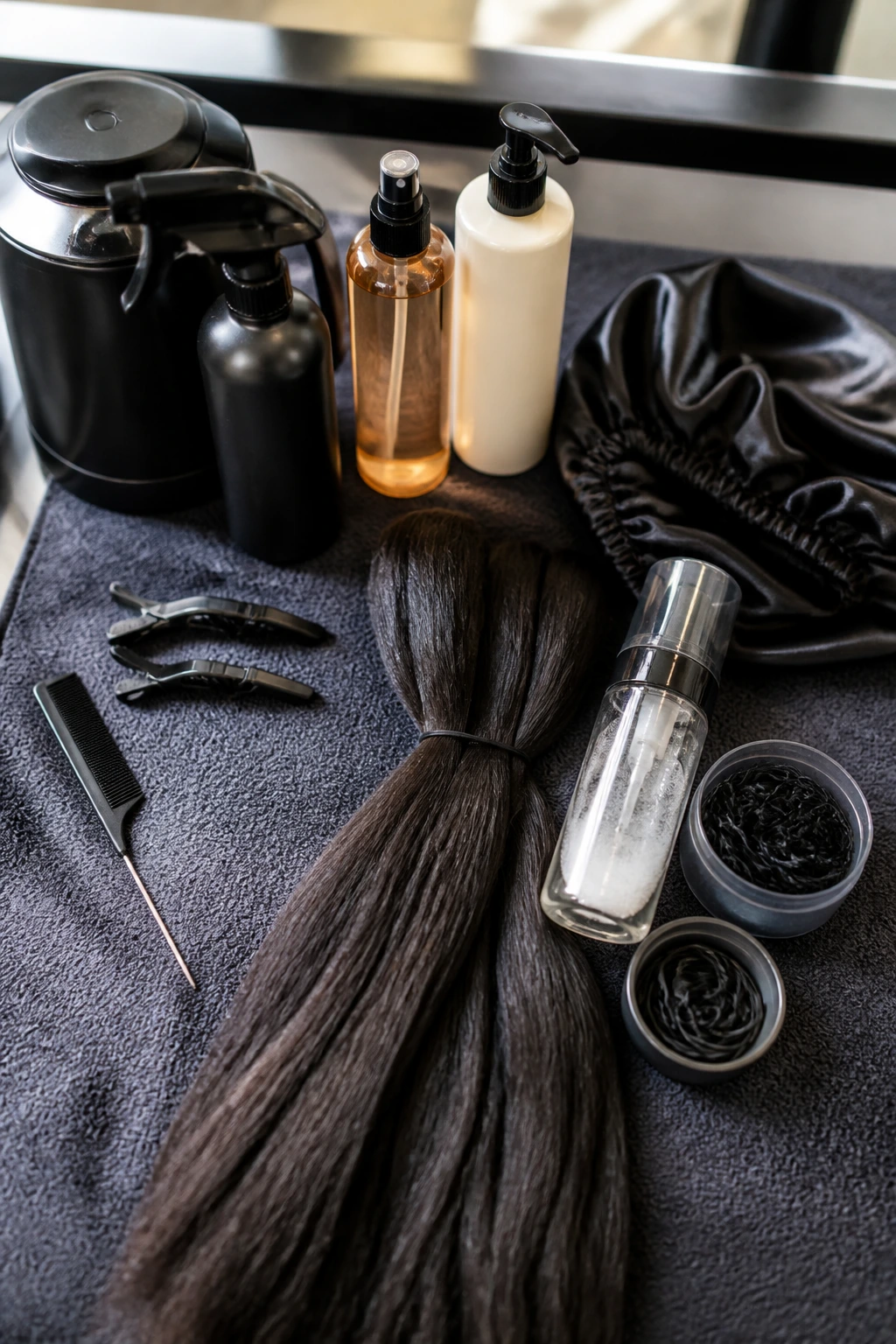
- Rat-tail comb: For clean parting lines and sharp sections, especially on short roots.
- Hair clips: To keep unfinished rows out of the way while you braid.
- Spray bottle with water or leave-in mix: Helps stretch and soften natural hair before the install.
- Lightweight leave-in conditioner: Use a small amount so the hair feels pliable, not coated.
- Pre-stretched braiding hair: Softer at the ends and easier to feed into short roots.
- Mousse or foam wrap lotion: Helps tame flyaways and set bob-length finishes.
- Hot water-safe bowl or kettle: Needed for curled or sealed synthetic ends.
- Satin scarf or bonnet: Keeps the style neat overnight and protects the parting.
- Small elastics or snag-free bands: Useful for ponytails, half-up styles, and rubber-band sectioning.
- Bobby pins and braid cuffs: Optional, but handy for updos, crowns, and accessory styles.
Night Care, Wash Days, and Take-Down Timing
Short knotless styles usually stay happiest for about 4 to 6 weeks, with the shorter end of that range feeling safer on very fine or very short hair. If the roots start looking swollen, the scalp feels sore, or the parts stop lying flat, take that as a sign to book removal sooner rather than later.
Washing is still possible. Use diluted shampoo or a nozzle bottle to target the scalp, then press the suds through with your fingertips instead of scrubbing hard. Rinse thoroughly. Damp braids on short hair can hold water longer than people expect, so dry the roots completely with a fan, hood dryer, or a long cool-air session before you wrap them back up.
At night, keep the braid surface smooth with a satin scarf or bonnet. If the style has curls at the ends, you may need to re-rod the tips or mist them lightly and reset them every so often. That little bit of upkeep keeps the bob from turning into a fuzzy triangle.
Frequently Asked Questions
How short is too short for knotless braids?
There isn’t one magic number, but hair closer to 2 inches stretched is where the install gets more delicate. The shorter and softer the base, the smaller and lighter the sections should be.
Do knotless braids work on tapered or faded cuts?
Yes, and some of the best short styles are built around a taper. The trick is to let the braid pattern follow the cut instead of forcing a uniform shape across the whole head.
Which braid size is safest for very short natural hair?
Smaller and medium-small sections usually put less stress on the root. Huge sections look faster in photos, but they’re the ones most likely to feel bulky on short strands.
Can I wash my scalp with knotless braids in?
Yes. Use a diluted cleanser, focus on the scalp, and rinse well so residue doesn’t settle at the root. Drying fully matters more on short hair than people think.
Why do my braids puff up so fast at the roots?
Usually it’s a mix of shrinkage, too much product, and not enough stretch before install. If the hair wasn’t fully prepped, the root will try to expand the minute humidity or sweat hits it.
Are knotless braids better than regular box braids for short hair?
Often, yes. The feed-in base is lighter and usually more comfortable, which matters a lot when there isn’t much length to cushion the scalp.
Can I put beads or cuffs on very short braids?
You can, but keep the accents light. A few small pieces on the front rows or ends are usually enough; too many heavy accessories can drag the style down.
What if the ends keep slipping out?
That usually means the braid size is too large for the length, or the extension hair is being added too quickly. Smaller sections and a slower feed-in usually solve it.
How do I stop short braids from looking stiff?
Softness comes from the finish. Use a clean part, a light mousse pass, and either curled ends, a side sweep, or a few face-framing pieces so the style has movement.
Styles That Age Well
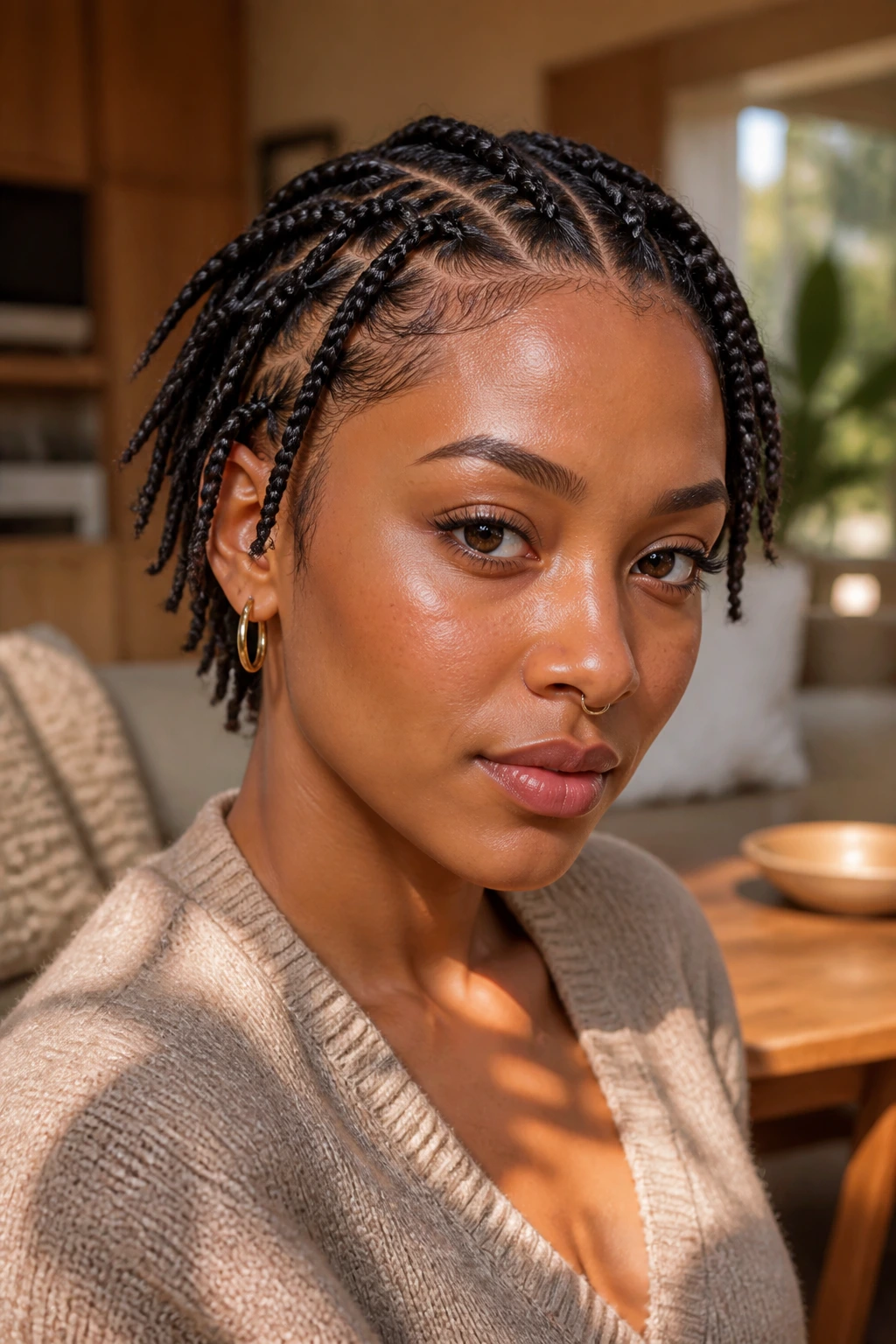
The best short braid styles are the ones that still look calm when the roots start to grow. That’s why I keep coming back to clean parting, sensible braid size, and finishes that suit the hair you actually have instead of the photo you wanted to copy. Short natural hair does not need to look longer than it is. It needs to look well handled.
Pick the shape first. Then pick the braid size. Then, if you want the extra polish, add the curls, the beads, the cuffs, or the side sweep. That order matters more than people admit, and it’s usually the difference between a style that sits neatly for weeks and one that starts arguing with your scalp by day three.