



Fine hair does not need more drama; it needs a haircut that stops the ends from vanishing the minute the humidity climbs. And if your face is oval, you’ve got a strange little advantage: the shape can wear a lot of lengths, parts, and fringes without fighting the bone structure. That combo makes summer haircuts for fine hair and oval faces more interesting than people assume. The wrong cut can still fall flat by lunch. The right one keeps a little lift at the crown, a clean line at the edge, and enough movement that the whole thing still looks alive when the air feels damp.
What matters here is not just “short” or “layered.” It’s where the weight lands. Fine hair can look fuller when the perimeter is crisp, but it can also look better with a few carefully placed internal layers that remove bulk without turning the ends wispy. Oval faces can handle a center part, a side sweep, a chin-length bob, or a soft fringe, so the real question becomes: how do you want the haircut to behave when you’re sweating, air-drying, or skipping the blowout?
A good summer cut should make your hair feel lighter without making it look sparse. That’s the sweet spot. And once you start looking at it that way, the options open up fast.
Why You’ll Love This Collection
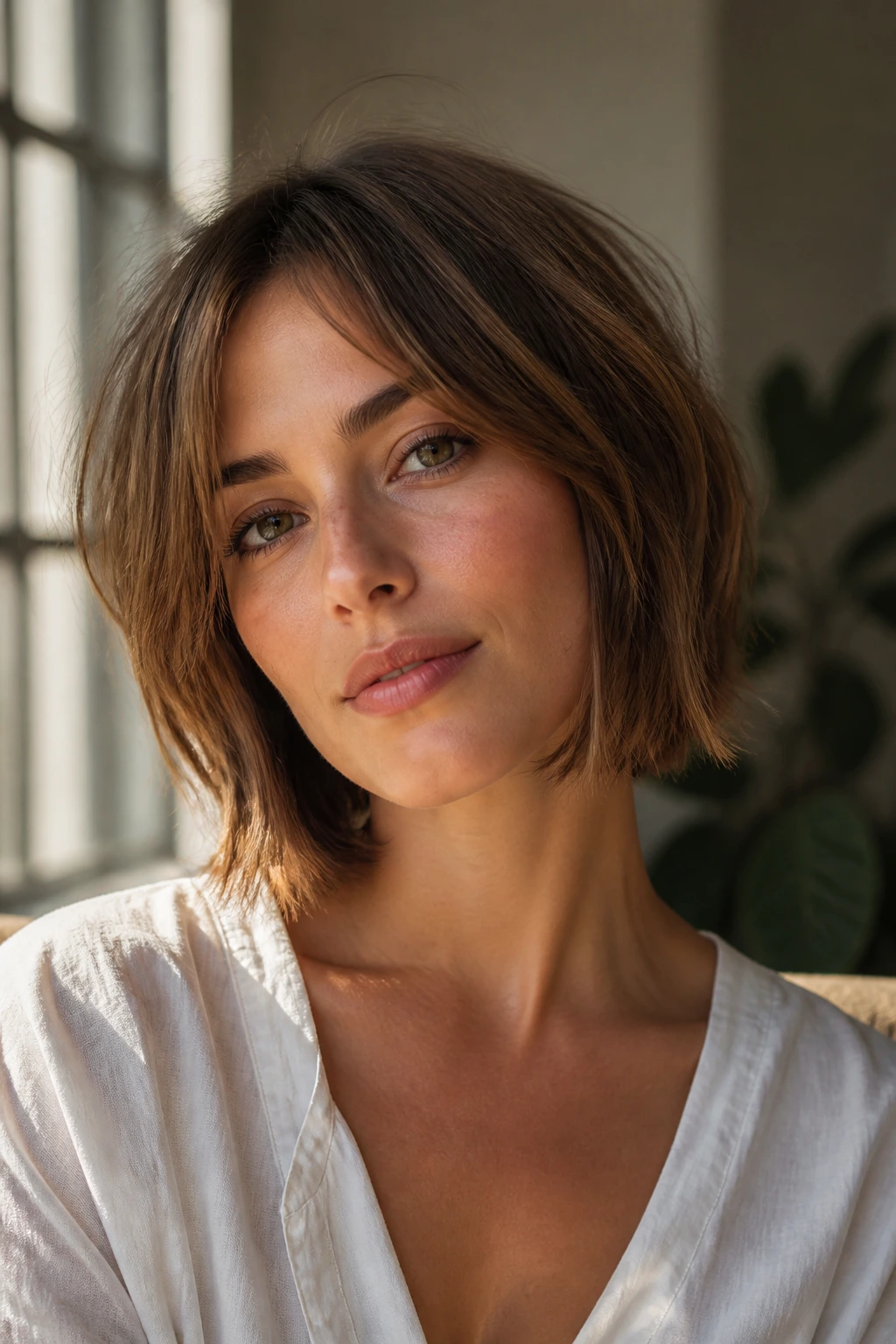
- Built for fine strands: These cuts keep the outline clean or add lift in the right places, so the ends look thicker instead of stringy.
- Friendly to oval faces: Oval faces can wear shorter bobs, soft fringes, and center parts without needing heavy contouring from the haircut itself.
- Made for warm weather: Several of these styles dry fast, sit off the neck, or keep weight away from the bottom half of the hair, which matters when heat and humidity get pushy.
- Flexible on styling: A lot of these can go sleek, piecey, or softly undone depending on whether you reach for mousse, a round brush, or nothing at all.
- Low-friction grow-out: The stronger shapes here still look deliberate after a few weeks, which is a relief if you hate that awkward in-between phase.
- Good with or without bangs: If you like curtain bangs, bottleneck bangs, or no fringe at all, there’s room to work that in without wrecking the balance.
1. Chin-Length Blunt Bob
A chin-length blunt bob is the haircut equivalent of a clean hem on a good T-shirt. It does not need much decoration. On fine hair, that straight edge makes the ends look denser, and on an oval face it lands in a place that feels balanced instead of fussy.
Why this cut earns its keep
The trick is the perimeter. When the bottom line is one length, the hair reads as fuller because the eye sees a solid edge instead of wispy layers tapering out. That matters even more in warm weather, when fine hair tends to frizz at the ends and collapse at the crown at the same time.
- Keep it right at the chin or a half-inch below if you want the jaw to look a little sharper.
- Ask for minimal internal layering so the bulk stays where you want it.
- A center part gives a clean, modern look; a soft side part adds a little lift if your roots go flat fast.
Best for: hair that feels thin at the ends but not necessarily sparse everywhere.
Skip the razor: it can make the outline too soft and airy, which is not what this cut is doing.
Styling tip: Blow-dry with a round brush, then bend the ends under just slightly. That tiny inward curve is what keeps the bob from looking severe.
2. Collarbone Lob with Invisible Layers
This is the cut for people who want length without the dead-weight look that fine hair can get past the shoulders. A collarbone lob sits in that sweet spot where you can tuck it, wave it, pin it back, or let it swing around your face without the whole style disappearing.
What makes it different
Invisible layers are the reason this works. They remove a little weight from the inside of the shape, not the edge, so the hair moves without looking chopped up. You still get a solid outline at the collarbone, which is where fine hair often looks best because the shape feels airy but not stringy.
How to wear it
A loose wave from mid-length down makes the ends look fuller, especially if you mist a light texture spray before scrunching. If you wear it straight, keep the finish sleek and let the collarbone length do the work. That line gives the hair enough presence on its own.
This is one of the easiest warm-weather cuts to live with. It won’t cling to your neck the way longer hair does, and it still gives you enough length for a ponytail on the days you cannot be bothered.
3. Curtain-Bang Lob
Why does this cut keep showing up? Because it solves two problems at once: it gives fine hair a bit of movement at the front, and it breaks up the face in a way that flatters an oval shape without boxing it in. Curtain bangs do not sit like a heavy wall. They split, bend, and slide, which is exactly why they work here.
The length should hit somewhere between the cheekbone and the mouth corner when dry, with the longest pieces blending into the lob. Too short, and the fringe takes over. Too long, and you lose the point of the shape. The best version feels soft around the eyes and open at the center, almost like the haircut is exhaling.
How to use it
Blow-dry the bangs first with a small round brush or a vent brush, lifting at the root and curving the ends away from the face. If you let them air-dry in random directions, you’ll spend the rest of the morning fighting them. Not worth it.
This cut also behaves well when the rest of the hair is slightly undone. The bangs give structure even if the ends are a little rough from a day in humidity.
4. French Bob with Soft Texture
A French bob is short enough to feel fresh, but not so short that it turns severe. On fine hair, the charm comes from keeping the bottom line around the jaw and letting the texture look a little lived-in rather than over-polished. It’s the kind of cut that looks good with lipstick, sunglasses, and a wind-blown shirt collar. Very specific, yes. Also accurate.
The best version for oval faces usually sits just below the cheekbone or right at the jaw. That keeps the face from looking overexposed while still showing the bone structure. If the texture is too heavily razored, the ends can fray. A softer point-cut finish is better.
What to ask for: a blunt-ish outline with a touch of broken texture through the ends.
What to avoid: too many short layers around the crown. Fine hair does not need extra holes in the shape.
A little cream or light pomade on the ends gives the bob that slightly separated look people want from this cut. Keep the product off the roots.
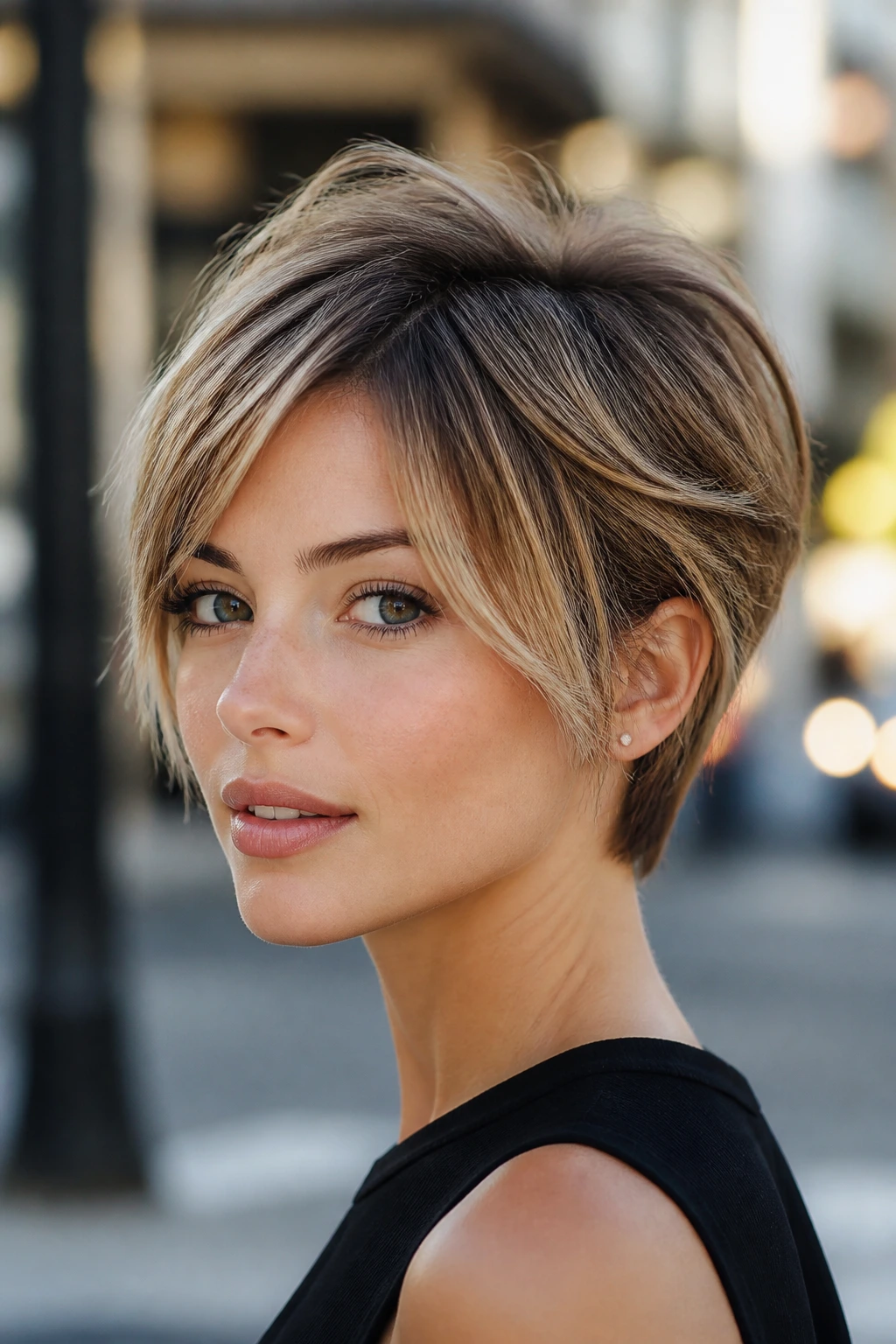
5. Bixie Cut
The bixie is the middle ground that usually sounds risky and ends up being practical. It gives you pixie energy up top and bob energy around the face, which means it can add lift without forcing you into a full short crop. For fine hair, that top-heavy structure is the point. You want the crown to stand up a bit while the nape stays neat.
It also works well on oval faces because the shape doesn’t have to do a lot of correction. You can keep the fringe soft, sweep the front pieces to the side, or let the top fall forward in a piecey way. It all depends on how much styling you want to do before coffee.
The bixie is not the cut for someone who hates touching their hair. It likes a quick blast of mousse at the roots and a little finger styling. But if you want a cut that looks intentional in heat and still leaves enough hair to play with, this one earns a spot.
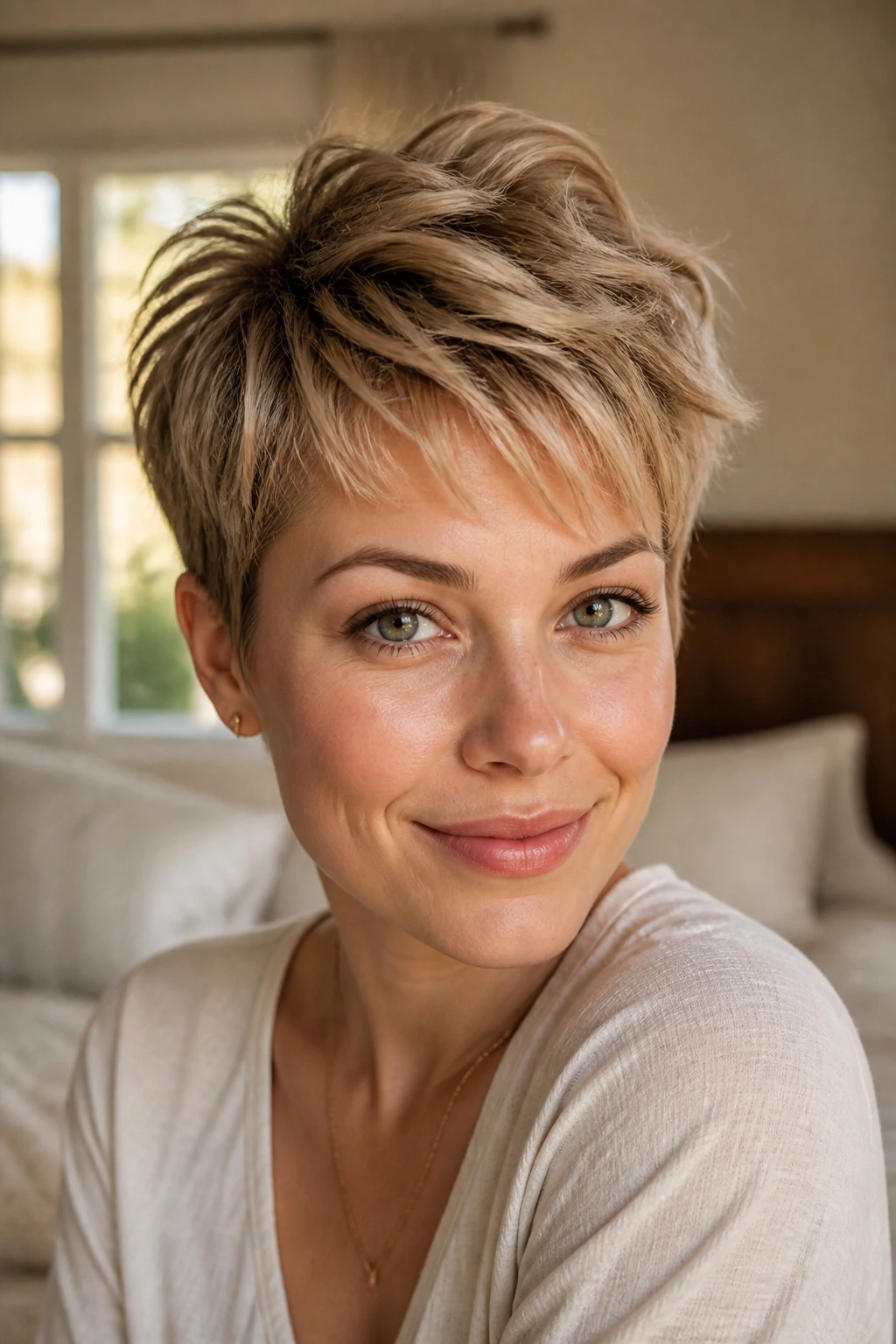
6. Feathered Pixie Crop
A feathered pixie crop is softer than the sharp, ultra-short version people picture when they hear “pixie.” The feathering matters. It gives the hair a bit of lift around the temples and crown, which is where fine hair can otherwise lie very close to the scalp and look thinner than it is.
On an oval face, a pixie crop can show off the forehead and cheekbones without making the face feel longer than it is. The key is to leave enough length on top to create movement. If the top is cut too flat, the shape goes dead fast.
What to watch for
- Ask for soft tapering at the sides, not a hard buzzed edge.
- Keep the top at least 1.5 to 3 inches long so you have something to style.
- A little height at the front often looks better than a straight-up spike.
A dab of lightweight mousse or styling cream is usually enough. This cut should look touched, not shellacked.
7. Shaggy Lob
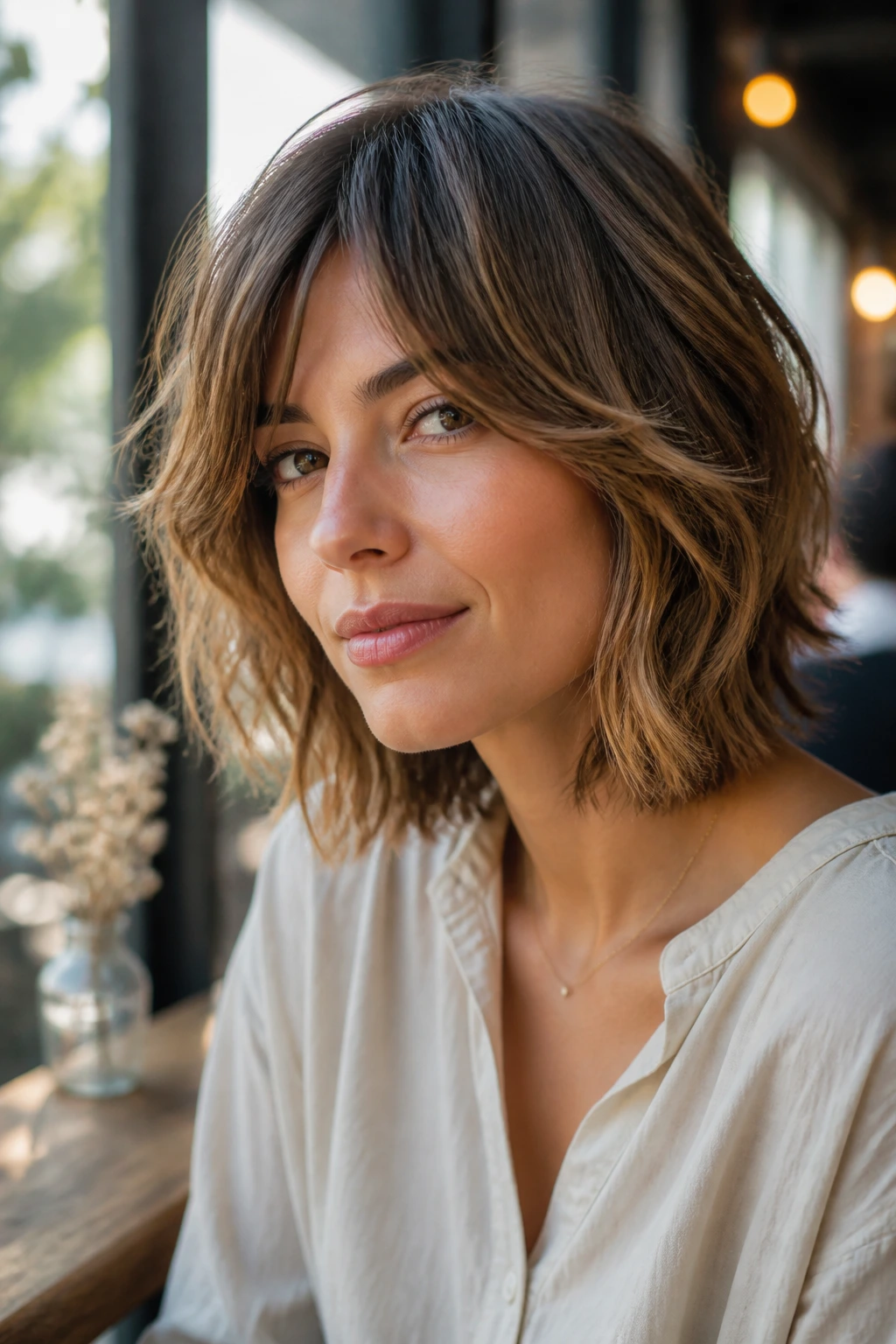
The shaggy lob is for hair that has at least a hint of natural bend. If your fine hair has a wave that wakes up after a shower, this shape gives it a place to go. The layers are soft and staggered, usually concentrated around the mid-lengths and ends, so the hair can move without collapsing into one flat sheet.
This cut looks casual, but it’s doing a lot of work. The broken layers stop the hair from hanging like a curtain, and the collarbone length keeps the ends from looking too sparse. Oval faces get a nice bit of frame around the cheek and jaw area without needing a heavy fringe.
The best version is not over-chopped. That’s the danger. Too many short layers, and the cut can look airy in a bad way. Keep the layers long enough that the bottom still feels full. A sea-salt spray is fine, but a mousse gives better support if your hair tends to go limp by noon.
8. Rounded Side-Part Bob
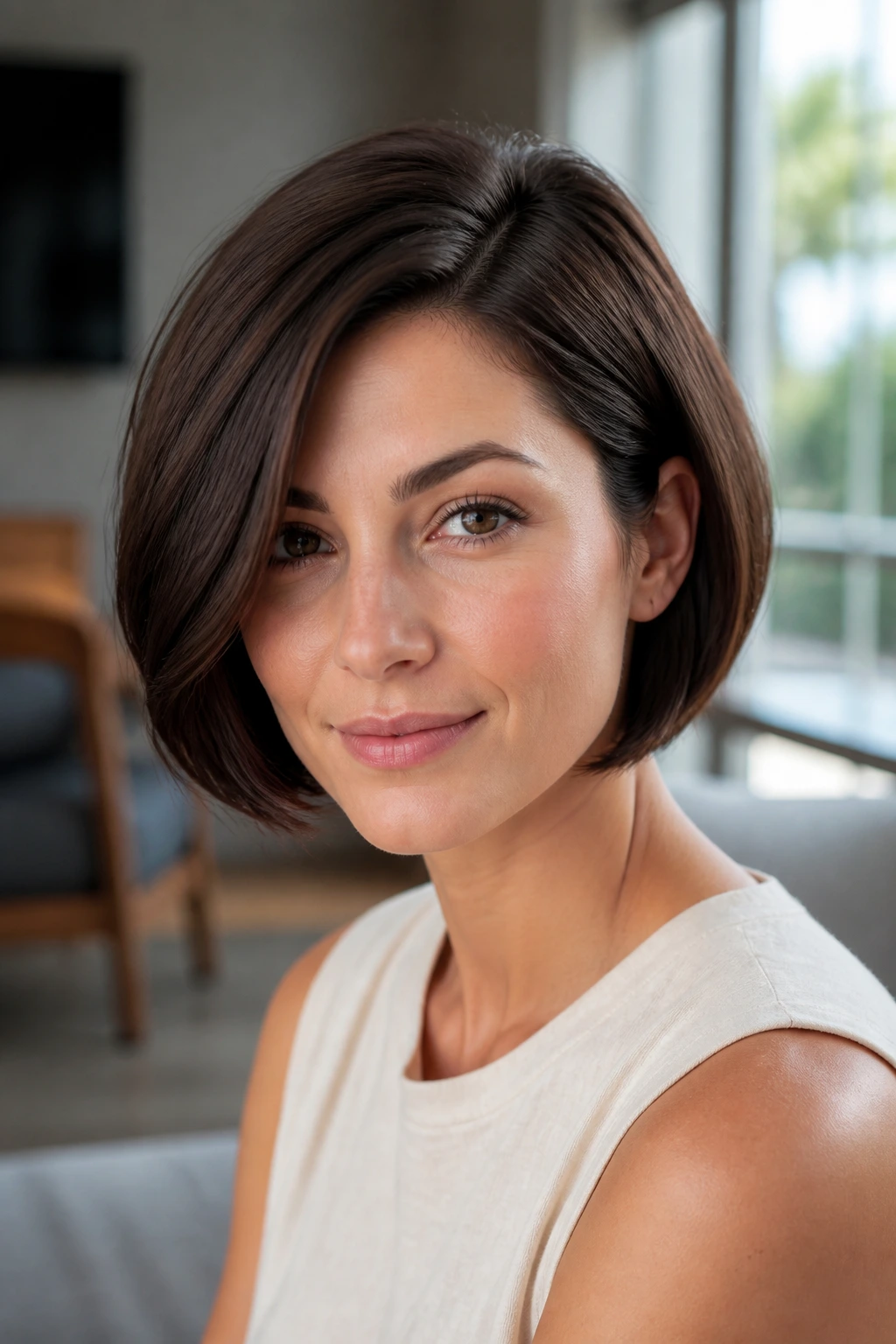
A side part can do a surprising amount of heavy lifting on fine hair. It creates an instant lift at the root, especially if your hair usually splits itself flat down the center. A rounded bob uses that extra lift and curves the shape slightly toward the face, which is a nice fit for oval features.
The outline should not be puffy. That’s the mistake. You want a gentle roundness through the midsection and a crisp enough edge at the bottom that the hair still looks dense. This is a good choice if you want a bob that feels a little softer than a blunt version but more structured than a shag.
Quick facts:
- Best length: jaw to just below the chin
- Best part: deep side part or soft off-center part
- Best finish: smooth with a slight bend at the ends
It’s also a good cut for days when you need polish fast. A quick blow-dry with a paddle brush and a tiny bit of shine spray goes a long way.
9. Invisible-Layer Midi
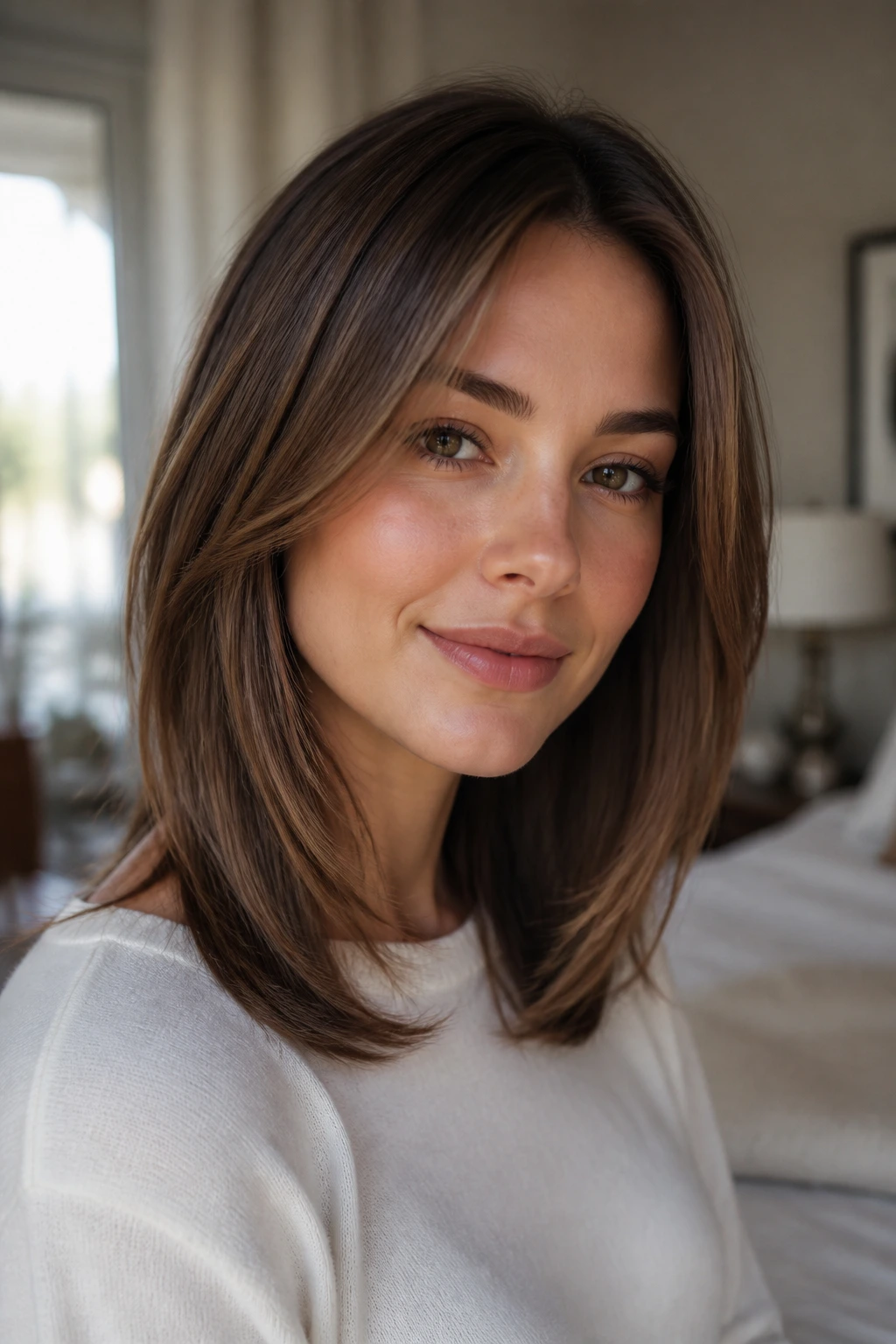
Want to keep your length and still stop the hair from looking flat? The invisible-layer midi is the answer that makes practical sense. The cut stays around the shoulders or just below, but the internal layers are removed in a way that doesn’t show as obvious steps. The surface still reads as full.
This is especially useful for fine hair because long length can pull the hair downward and make the ends look see-through. Invisible layers lighten the inside of the shape so the top doesn’t collapse as quickly. Oval faces benefit because the length softens the face without dragging everything down past the collarbone.
Why it works in warm weather
Long hair can get sticky at the neck. This cut moves a little more freely, so it’s less likely to cling. You can still pin it, braid it, or twist it up. And when you wear it down, it doesn’t look like it’s been parked on your shoulders all day.
Ask for the layers to be cut with a light hand. Too much layering and the “invisible” part stops being invisible.
10. Tucked-Under Bob
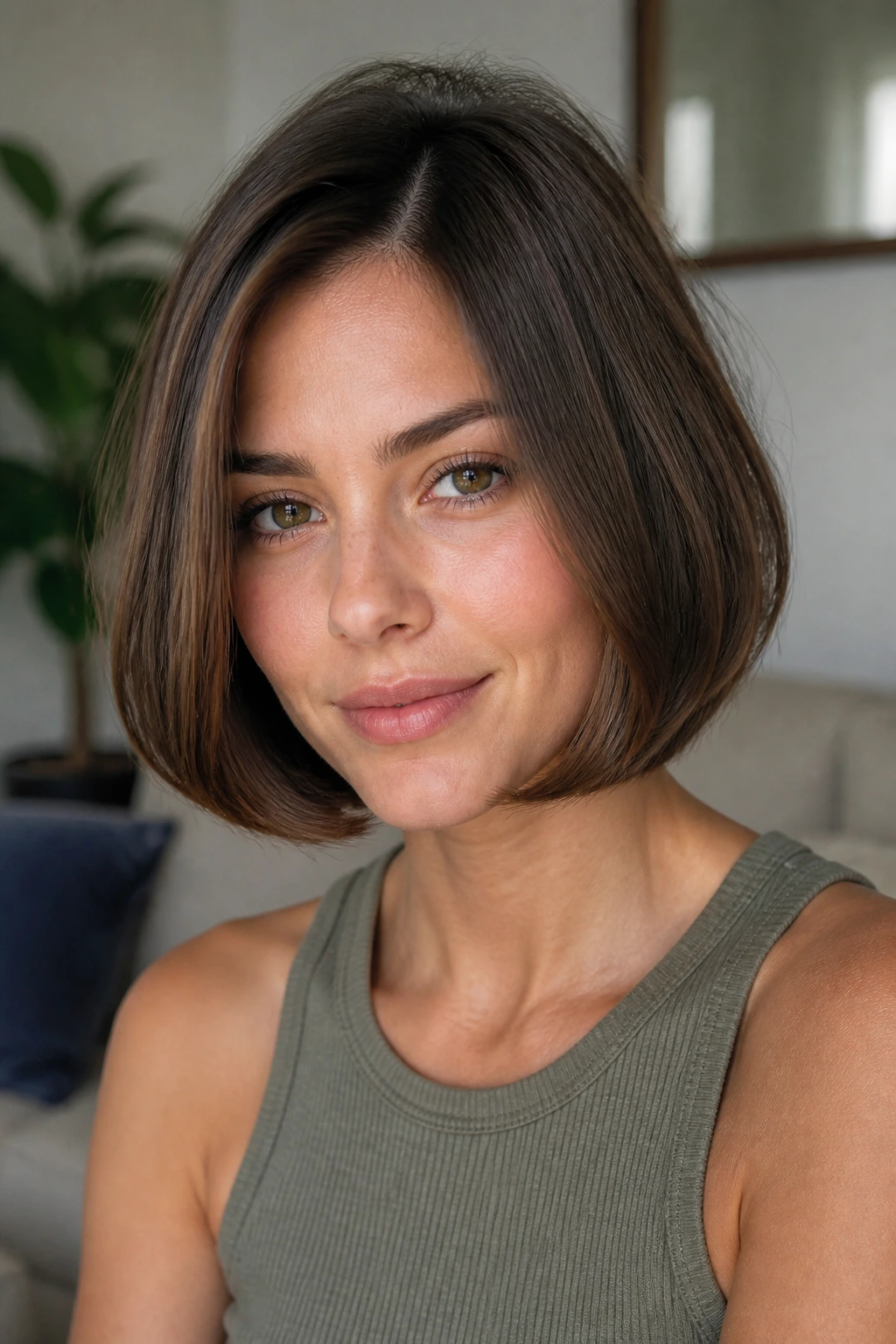
A tucked-under bob is one of those cuts that looks simple until you notice how much shape it’s holding. The ends curve in slightly, almost like they’ve been trained to fold around the jaw. On fine hair, that inward bend gives the illusion of density because the perimeter stays compact.
This is a strong choice if you want a bob that feels neat rather than edgy. Oval faces can wear it well because the curve lands near the jawline without making the face look longer. It’s especially nice if your hair has a little natural straightness and doesn’t fight a blow-dry.
The style depends on the finish. A round brush or a blow-dry brush makes it easy, but even a quick pass with a flat iron on the last inch of hair can create the tuck. Keep it subtle. If the bend is too dramatic, the bob starts looking helmet-like, and nobody needs that.
11. Bottleneck-Bang Cut
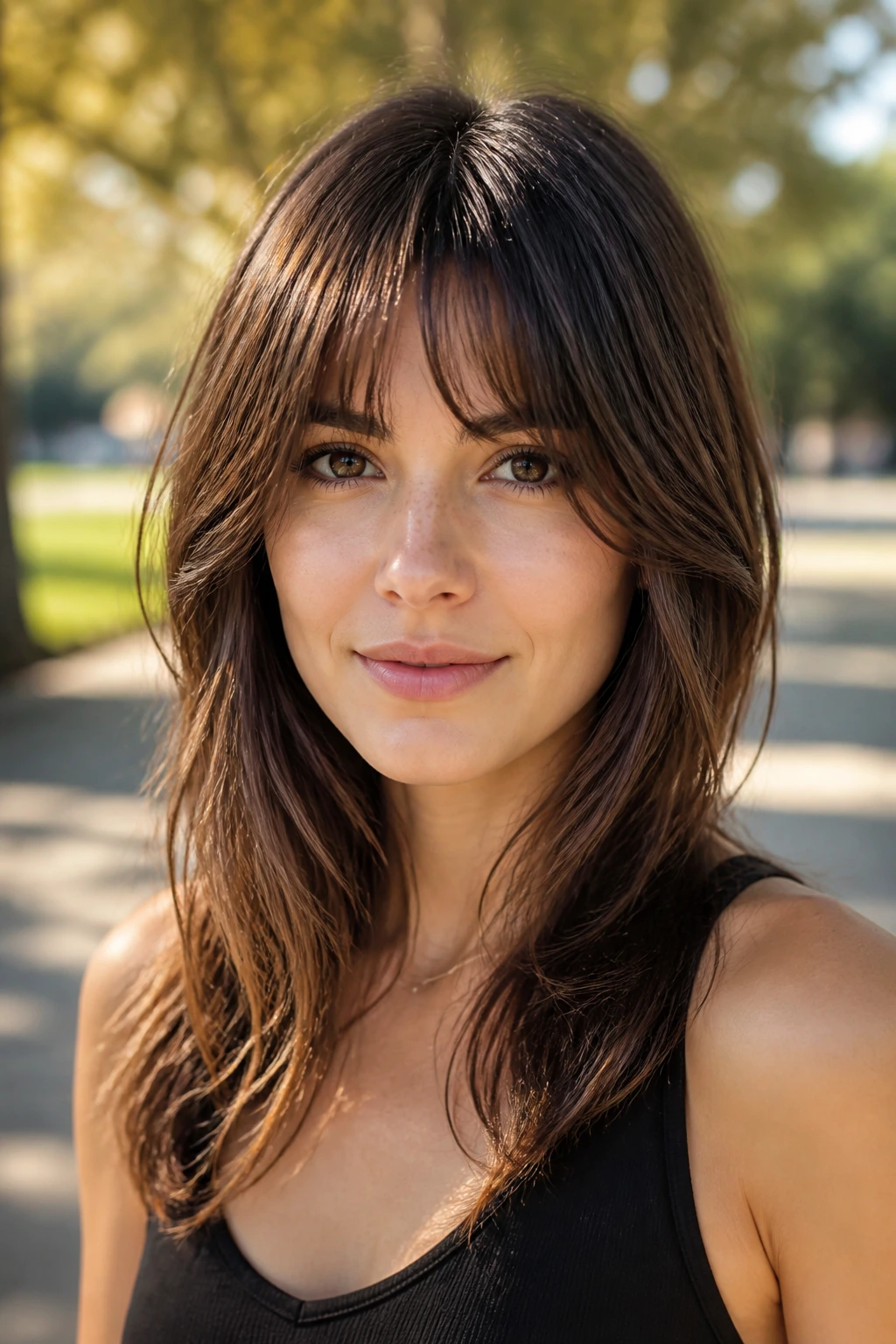
Why do bottleneck bangs work so well on fine hair? They give you fringe without swallowing the whole forehead. The center stays a touch shorter, the sides open longer toward the cheekbones, and the whole thing creates a soft frame that plays nicely with an oval face.
This shape is useful because it adds density where the eye wants to land first. Fine hair often loses interest around the front if the bangs are cut too heavy or too wispy. Bottleneck bangs split the difference. They have enough presence to matter, but they still let light through.
A little root spray and a round brush make the shape behave. If your hairline has cowlicks, ask for the bangs to be cut with your natural part in mind. That tiny detail saves a lot of morning frustration.
Best paired with: a lob, a midi cut, or a soft bob.
Not ideal if: you want a zero-maintenance fringe. Bangs are a small commitment. They always are.
12. Airy Shoulder Cut
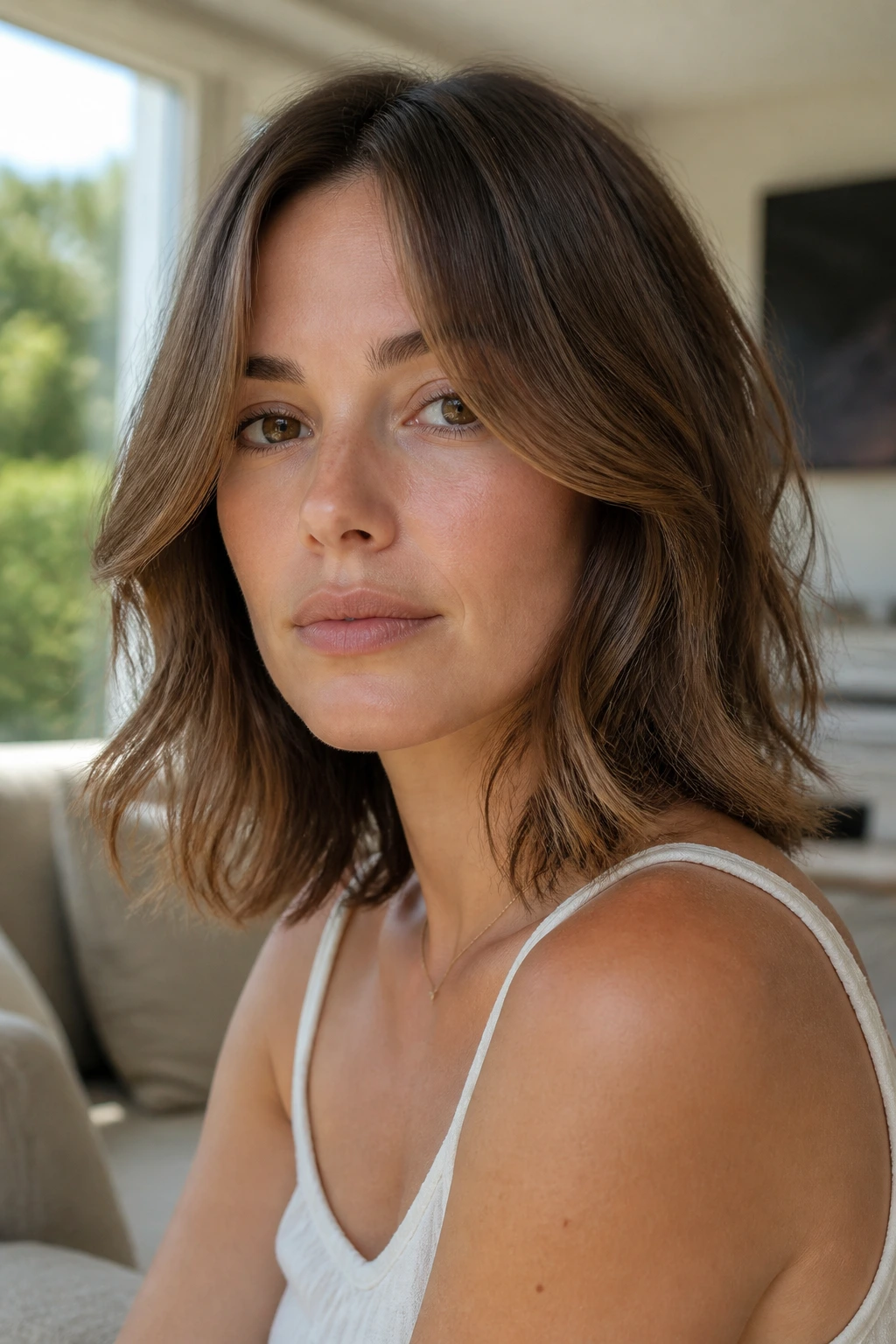
A shoulder-length cut can go limp fast on fine hair, which is why this version needs to be airy rather than heavy. The ends should be light enough to move, but not so layered that the whole style thins out. Think of it as a shoulder cut that still has a backbone.
Oval faces can wear this length without losing balance, especially if the front pieces graze the cheekbones and the back stays clean. It’s a good choice when you want to keep enough hair for a ponytail but hate the drag that long length creates in hot weather.
How it should feel
The best version feels light when you shake it out, not shrunken. If you run your fingers through it and the ends seem stringy, the cut was probably taken too far with the layers. You want movement, not gaps.
A few loose bends with a 1-inch iron can wake it up. Or leave it straight and use a lightweight volumizing spray at the roots. Either way, the shape should hold its line.
13. Sleek Center-Part Lob
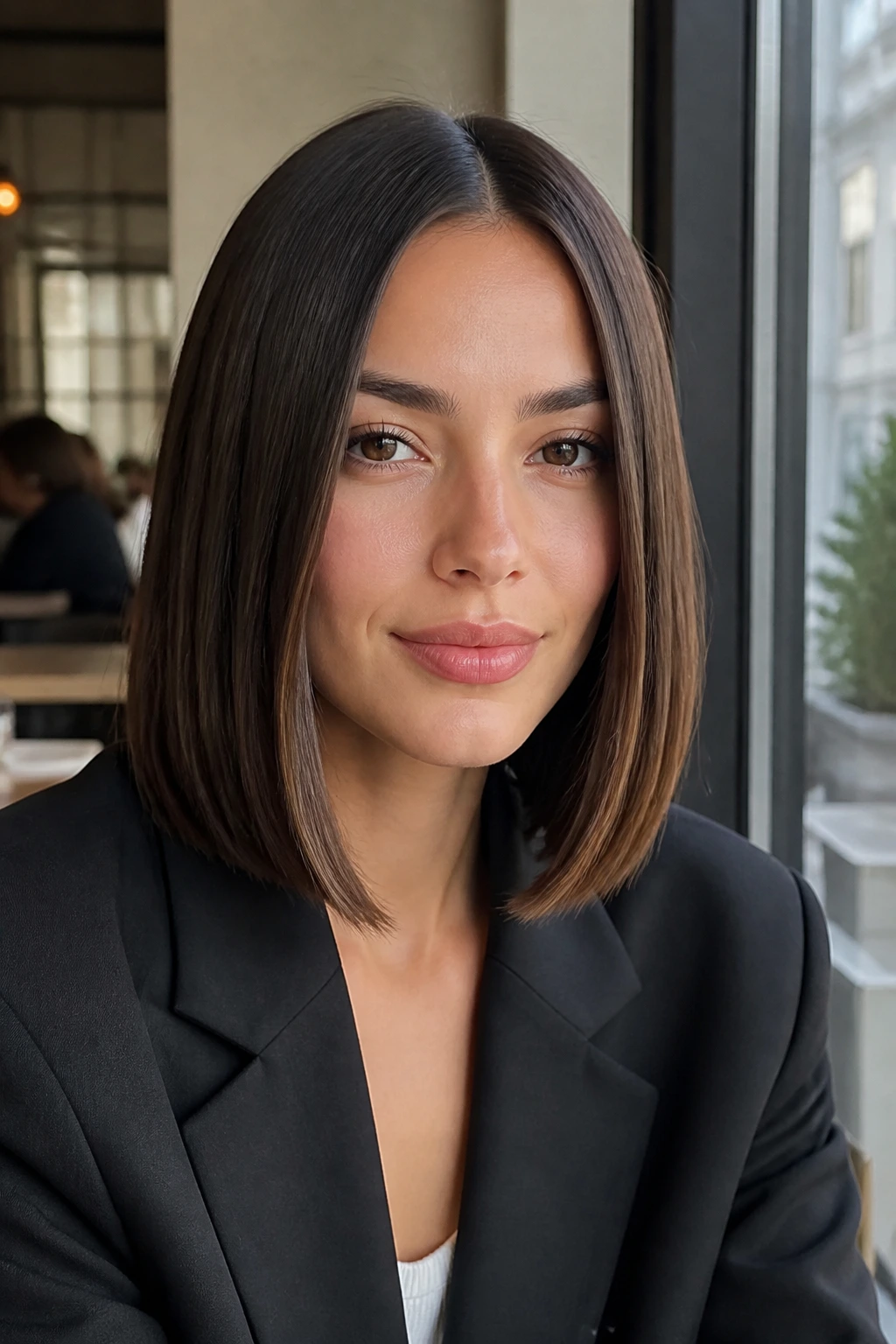
A sleek center-part lob is the quiet one on this list, and I mean that as a compliment. It does not chase texture or try to fake more hair than you have. It relies on a clean line, a disciplined part, and a length that hits around the collarbone to make fine hair look tidy and modern.
Oval faces can take the symmetry. That’s part of the appeal. The center part doesn’t fight the face; it lets the hair fall in a calm, even frame. The main risk is letting the ends go too thin. Keep the perimeter blunt enough that the cut still feels intentional.
This style tends to look best when the hair is straightened just enough to smooth the surface but not flattened into a board. A touch of serum on the ends keeps it from looking dry. If your hair is naturally very fine, this is one of the cuts that benefits from a little regular maintenance more than most.
14. Light Wolf Cut

A light wolf cut is not the shag’s wilder cousin if you keep it restrained. The “light” part matters. You want some lift through the crown, some shorter face-framing pieces, and a longer perimeter that keeps the shape from going ragged. On fine hair, a full-on wolf cut can get too sparse fast. This softer version avoids that trap.
The reason it can work for oval faces is the movement around the cheeks and jaw. It gives the face a little edge without swallowing it in layers. If your hair has bend or a loose wave, the style can look almost effortless. If your hair is pin-straight, you’ll need product and a little finger work.
Use it when…
- You want texture, but not a heavy shag.
- You like a piecey finish that can handle air-drying.
- You’re okay with a cut that looks best with some styling.
It’s not a lazy haircut. It just has a more relaxed attitude than a blunt bob.
15. Mini Shag
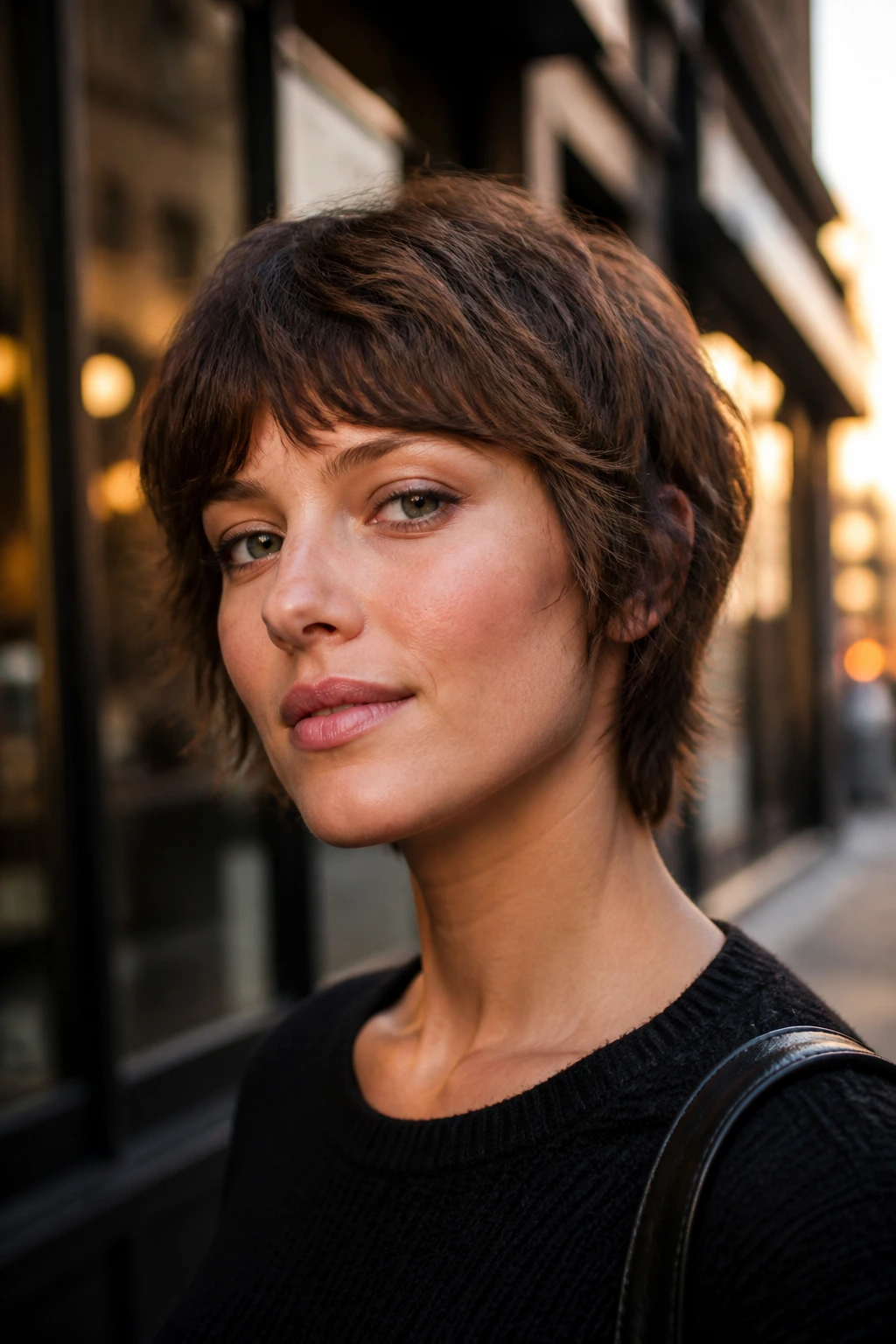
A mini shag keeps the spirit of a shag but trims the excess. That makes it much easier to wear on fine hair. The layers are shorter around the crown and cheekbones, but the overall shape stays close enough to the head that it doesn’t break apart. For oval faces, the result is soft but not shapeless.
This cut has a bit of attitude. Not a lot. Just enough to keep it from feeling polite. It’s good for people who want movement on top and around the face without going all the way into a dramatic mullet zone. The best versions usually sit around the chin to neck area and use texture in small doses.
If your hair gets a little bigger when it dries, even better. If it dries flat, use a diffuser or scrunching cream and let the pieces separate on their own. Don’t over-brush it. That’s the fastest way to erase the whole point.
16. Long Face-Framing Cut
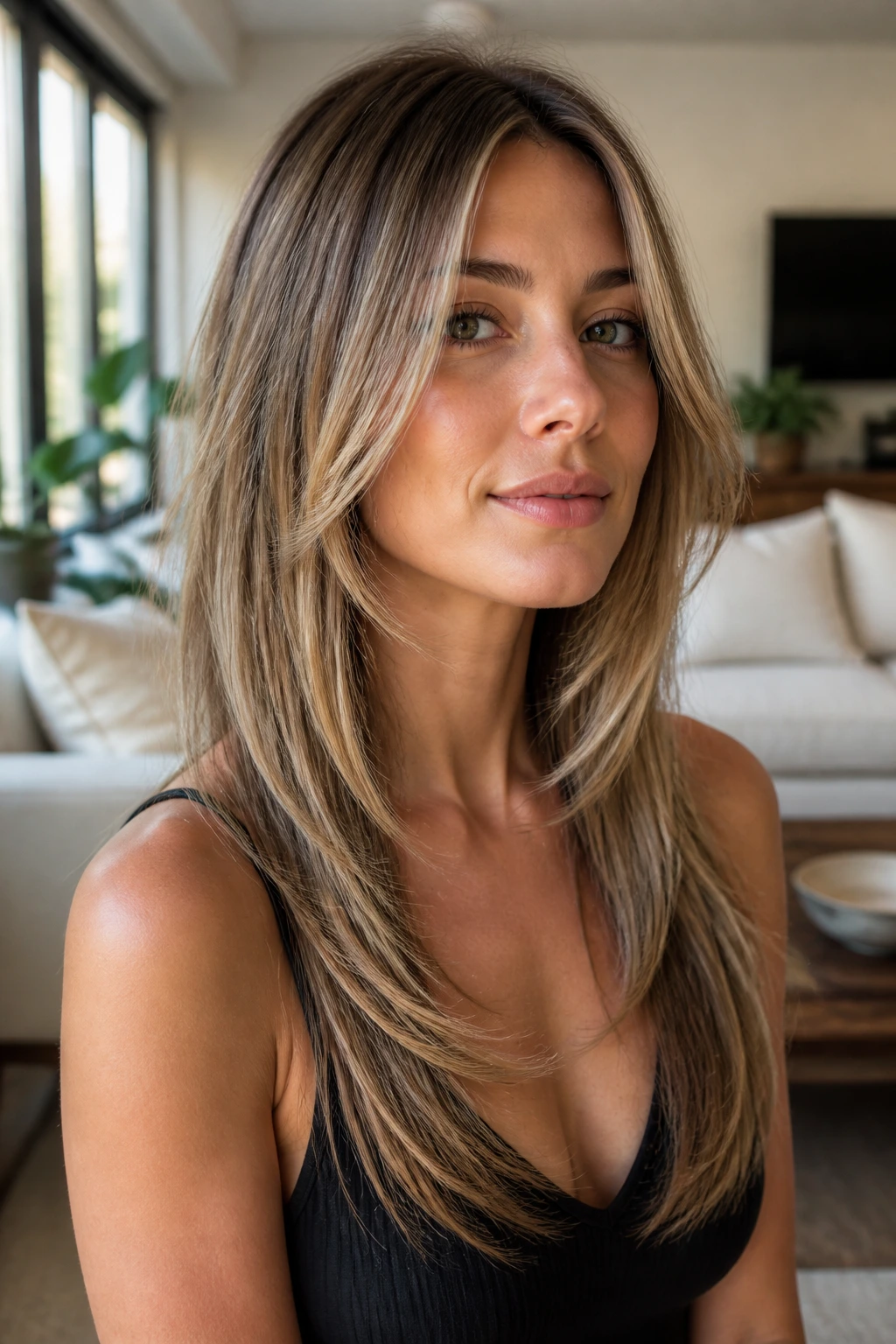
Sometimes the right answer is to keep the length and move the focus. A long face-framing cut leaves most of the hair intact but carves out front pieces that start around the cheekbone and slide down toward the collarbone. Fine hair benefits because the back keeps its weight, while the front gets the shape that makes the haircut feel finished.
Oval faces are easy to work with here, which is why this cut is so useful. It can soften a center part, break up a long line, or create a little motion around the jaw without changing the whole silhouette. It’s the haircut for people who want a refresh but don’t want to lose length.
The face-framing pieces should not be too short unless you want to commit to styling them every day. Keep them long enough to tuck behind the ear or blend into a ponytail. That gives you flexibility when the weather is sticky and you need your hair off your neck fast.
17. Jawline Bob with Micro Fringe
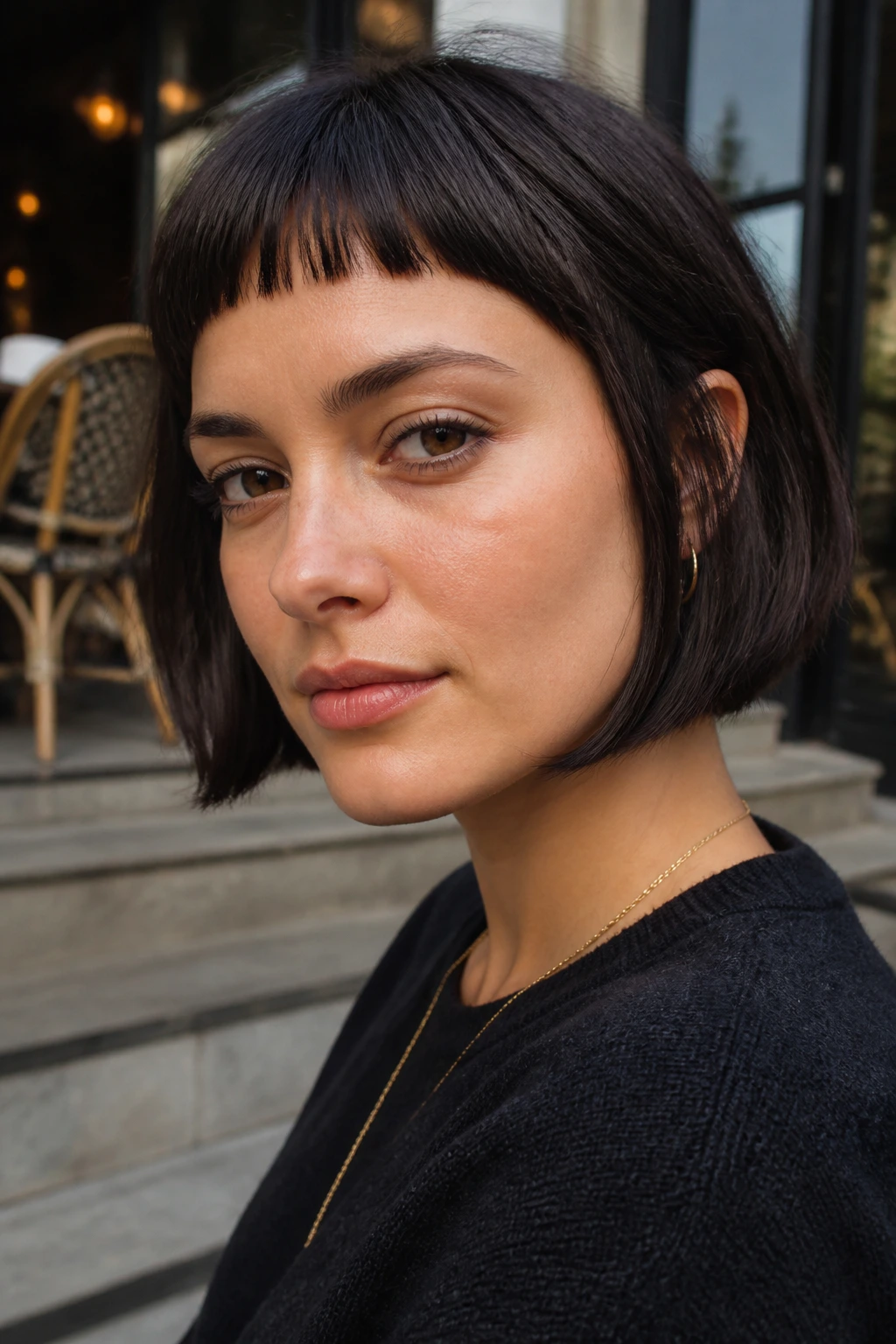
A jawline bob with a micro fringe is a bold little cut, and it works because the geometry is clean. Fine hair likes structure, and the jawline length keeps the outline compact. The micro fringe adds a sharp front edge that draws attention upward, which can be striking on an oval face.
This is not the shy version of a bob. It’s the one with opinions. The fringe is short enough that it will grow fast and need attention, so this cut is better if you don’t mind regular trims. When it’s done right, though, the shape looks crisp and modern without needing much volume.
A little styling paste through the fringe can stop it from separating into random wisps. The rest of the bob should stay smooth and close to the head. If you want a cut that feels clean in heat and doesn’t rely on length for impact, this one has real presence.
18. Piecey Crop
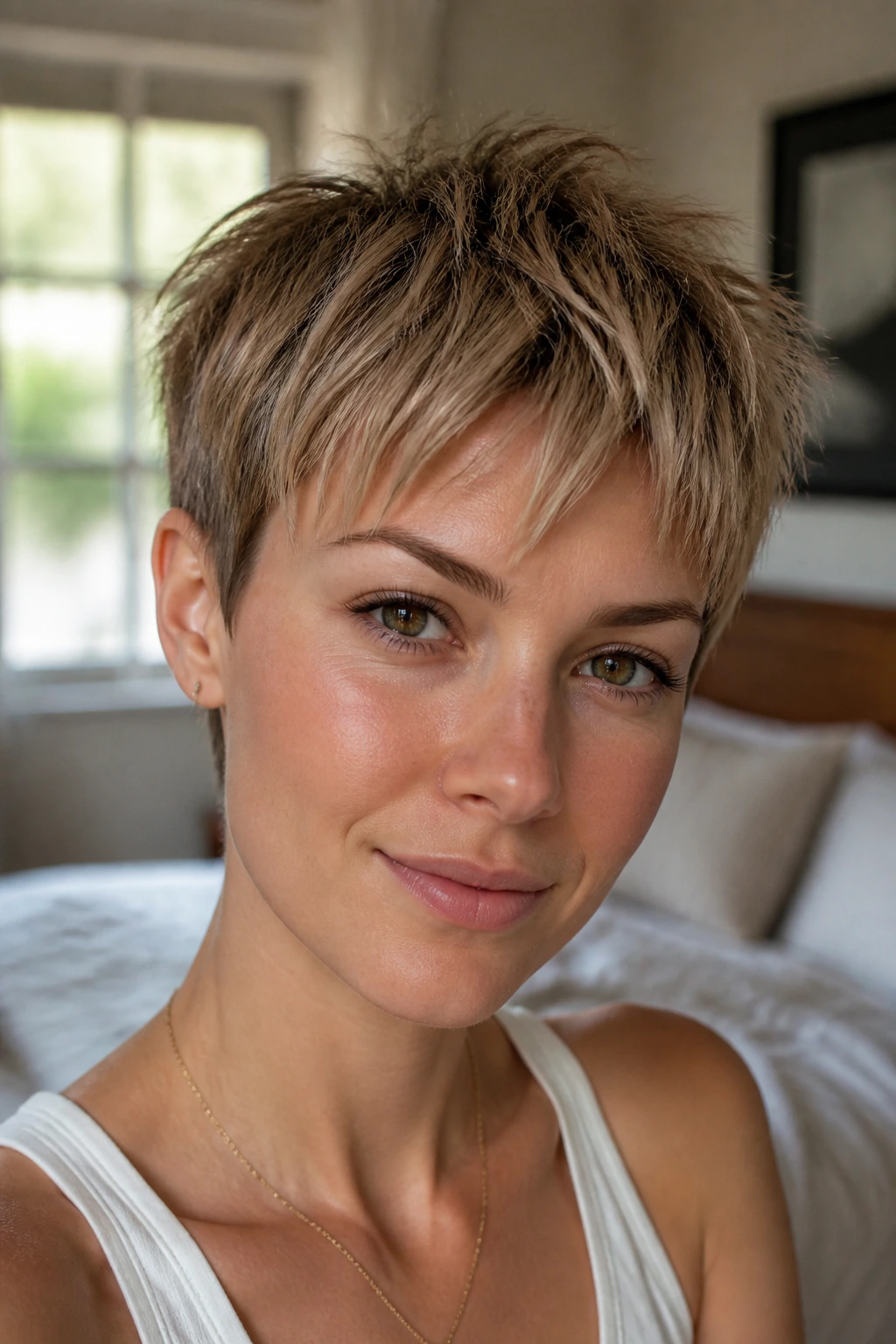
A piecey crop is the most stripped-down shape here, and that can be a gift for fine hair. The crop keeps everything short enough that the strands do not have to support much length, while the piecey finish gives the hair separation and movement. On oval faces, the result can feel sharp, playful, or a little androgynous depending on how you style the top.
The best thing about this cut is that it does not need to pretend to be full. It just needs texture. A little mousse, a touch of paste, and some fingers to break it up are usually enough. If your hair is extremely fine, this may be the easiest way to get lift without fighting gravity all day.
It also dries fast. That matters more than people admit. In warm weather, a cut that is done in ten minutes and still looks like hair rather than an apology is worth considering.
Why These Cuts Work on Fine Hair Without Fighting Your Face Shape

Fine hair and oval faces sound easy on paper, but the pairing only works when the cut respects both the strand and the shape. Fine hair needs either a clean perimeter or carefully placed internal support; it does not love random thinning or too many short layers that leave the ends looking see-through. Oval faces, meanwhile, do not need heavy correction. They can handle a center part, a fringe, a jaw-length bob, or a collarbone lob, which gives the stylist room to choose a shape based on hair behavior instead of face-balancing panic.
That matters in warm weather. Hair that hangs too long and too soft tends to stick to the neck, especially once humidity gets into the room. Hair that’s too layered can puff at the top and fray at the ends. The cuts in this list are trying to avoid both problems. They either hold a line at the edge or keep enough internal movement to stop the hair from sinking into a flat sheet.
Fine hair is also more honest than dense hair. It shows the haircut immediately. Good or bad. There’s no hiding behind bulk. Which is annoying, frankly, but it also means a strong shape reads fast and looks intentional with less effort.
The part that gets ignored
A lot of people talk about “volume” and forget that volume without shape just becomes fluff. The better goal is lift with a clean edge. That’s what makes these cuts look polished even when they’re slightly undone.
The Tools That Keep Fine Hair From Going Limp
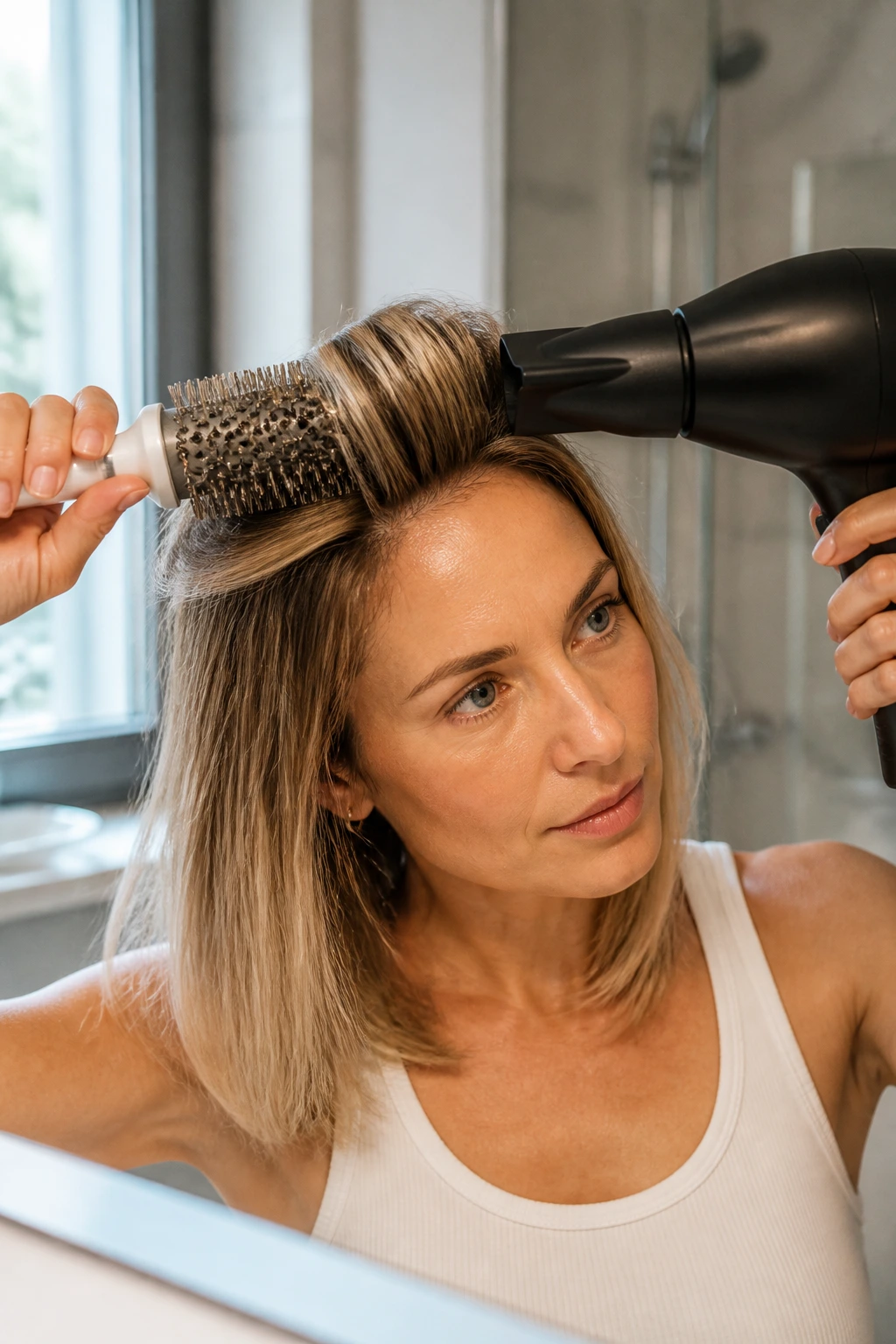
- A blow dryer with a nozzle: The nozzle directs airflow so the roots lift instead of getting blasted every which way.
- A small round brush: Best for curtain bangs, tucked-under bobs, and any cut that needs a little bend at the ends.
- A vent brush: Faster than a round brush when you need volume without a full blowout.
- Lightweight mousse: Gives fine hair support at the roots without the sticky feel of heavy creams.
- Dry shampoo: Useful on day two when the crown starts to collapse and the roots lose grip.
- Texturizing spray: Good for piecey crops, shags, and lobs that need a bit of separation.
- Tail comb: Helpful for clean parts and for lifting small sections at the crown.
- Flat iron or heated brush: Optional, but handy if you want to smooth the perimeter or tuck the ends under.
- Duckbill clips: Great for setting lift at the root while the hair cools.
- Light shine serum: Use the tiniest amount on the ends. Too much and the hair goes flat in five minutes.
What to Tell Your Stylist Before the Shears Open
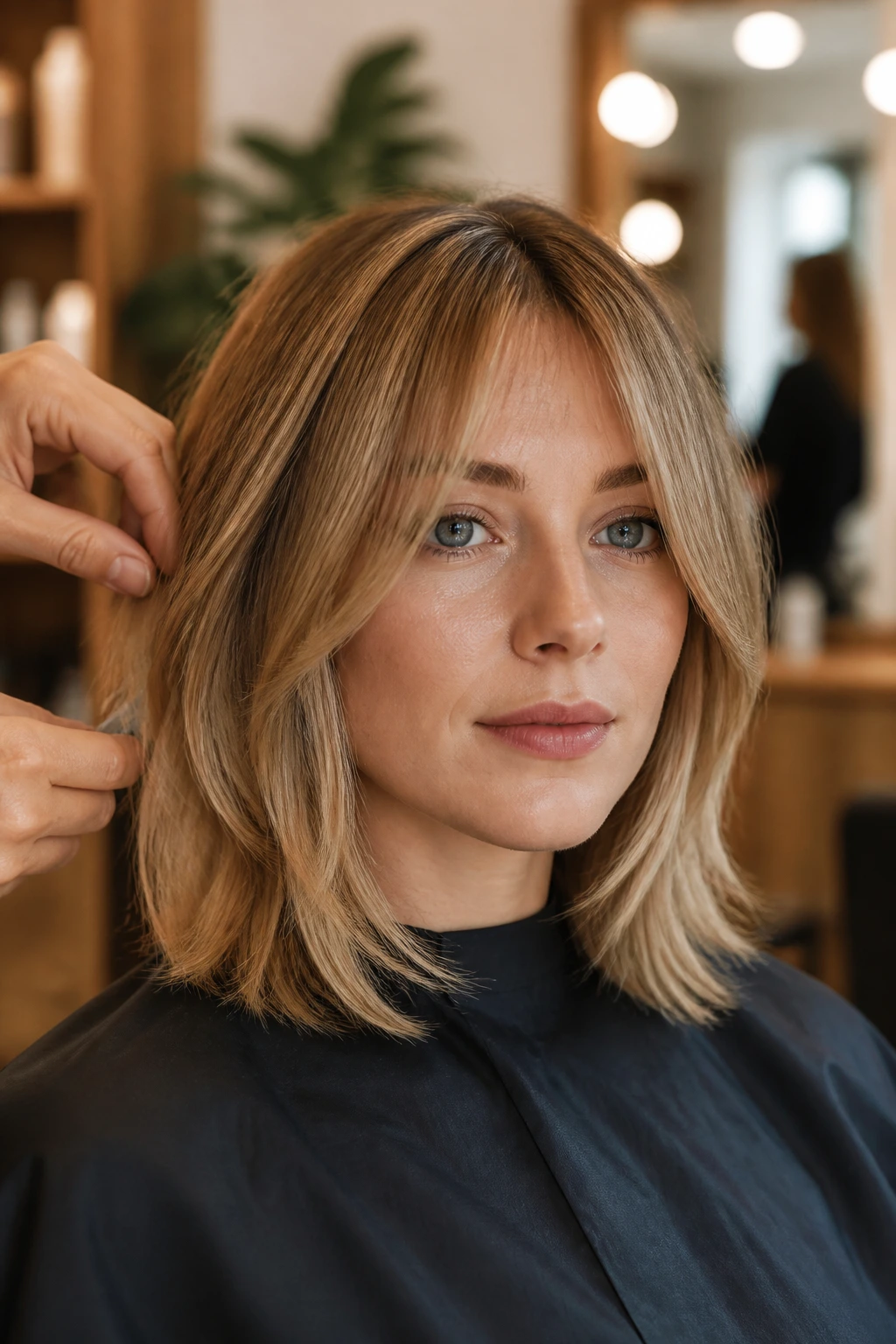
Bring photos, yes. But also bring language. Photos tell the stylist the shape you like; words tell them how your hair behaves when nobody is watching. If your fine hair falls flat by midday, say that. If your waves puff in humidity, say that too. The same haircut can be cut in a smarter or worse way depending on whether the person holding the shears knows where your hair gives up.
The biggest distinction to make is between fine hair and thin density. Fine means the strand itself is small. Thin density means fewer hairs on the head. You can have one without the other, and the cut should change based on which one you mean. Fine strands often do better with a blunt edge or soft internal shaping. Sparse density usually needs less layering and more preserved perimeter.
Ask whether the cut is being shaped wet or dry, because that matters for cowlicks and natural fall. Ask if the stylist plans to use point cutting instead of thinning shears. On fine hair, thinning shears can chew holes through the ends faster than people expect. You want controlled removal, not texture for texture’s sake.
A simple script helps
Try: “I want movement, but I don’t want the ends to look wispy. Keep the perimeter strong and take weight out only where it won’t show.” That’s the kind of instruction a good stylist can use.
How to Wear These Cuts on Hot, Busy Days

Polished: If you have ten extra minutes, start with root mousse at the crown, blow-dry in small sections, and finish with the ends tucked under or lightly bent. That works especially well for the blunt bob, tucked-under bob, and sleek lob. Clean line. Low fuss.
Undone: Air-dry cuts like the shaggy lob, mini shag, and light wolf cut need a little scrunching cream or texture spray while the hair is damp. Twist a few front pieces around your fingers as they dry. Not every strand needs to be controlled. In fact, that’s the point.
Fastest option: For a bixie, pixie crop, or piecey crop, dry the roots first, then work a pea-size amount of paste through the top with your hands. Keep it off the sides unless you want the shape to collapse. Short hair gets greasy fast if you use too much product. A tiny bit goes far.
Humidity backup: When the air gets sticky, the best move is not more product. It’s less. Use dry shampoo at the roots, then re-set the part and smooth the outer layer with a brush. That usually rescues a flat lob or bob faster than starting over.
Small Tweaks That Make Fine Hair Look Denser
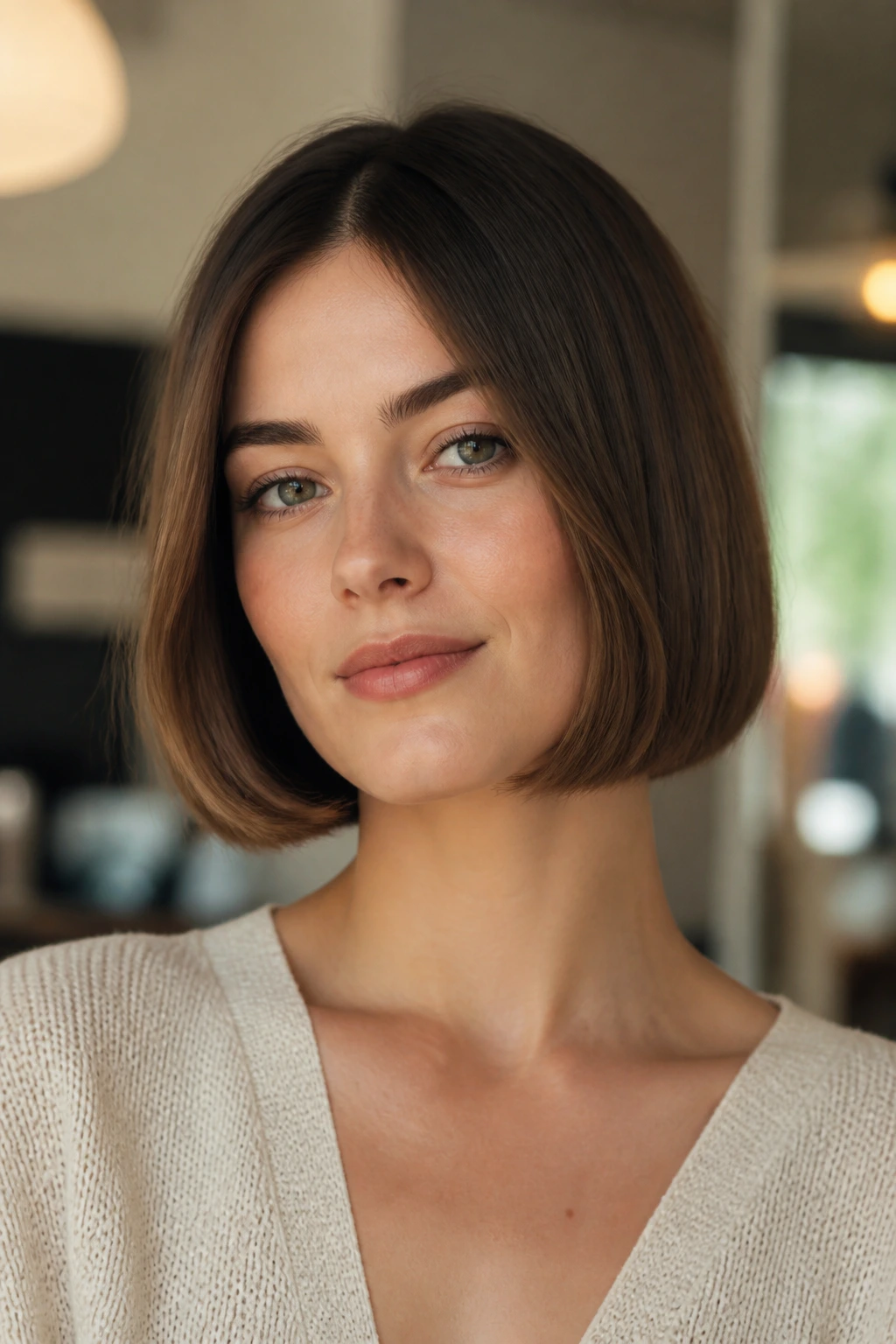
Root Lift: A little root-lifting spray at the crown can change the whole profile of a bob or lob. Spray under the top layer, not all over, then dry that area first so it sets with a little memory.
Texture Boost: If the ends look too soft, a quick pass with a flat iron at the last inch can create a small bend that makes the perimeter look thicker. It’s subtle. That’s the point.
Part Shift: Moving a center part half an inch to the side often gives fine hair more life than any product. The root lift starts immediately, and the whole style looks less pinned down.
Face-Framing: Keep the front pieces long enough to sit on the cheekbone or jaw. Shorter isn’t always better. On oval faces, the right frame can sharpen the look without stealing length from the rest of the hair.
Accessory Move: A slim headband, a side clip, or even sunglasses pushed into the hair can train the front pieces into a better shape. It sounds trivial. It works.
The Mistakes That Flatten the Whole Look
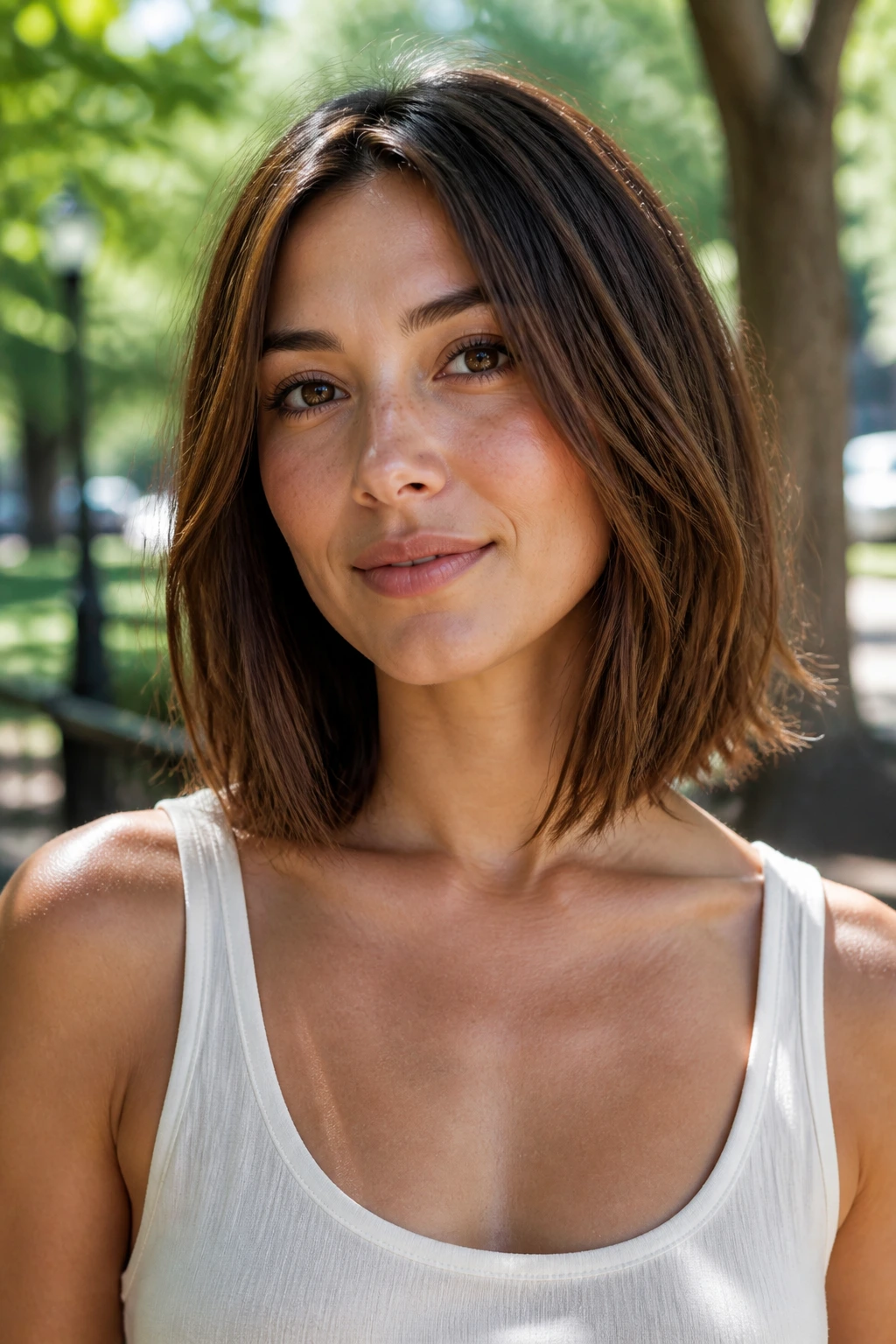
The first mistake is over-layering. Fine hair can look lighter with layers, but too many of them leave the ends skinny and the silhouette broken. The fix is a stronger perimeter and softer internal removal. If the haircut looks airy in the salon chair, it may look exposed once you wash it at home.
Another common problem is cutting too much length off at the crown while keeping the ends light. That makes the top collapse and the bottom fray. You want balance, not a haircut that removes weight from every direction at once. That is how hair gets mushy.
People also ask for too much texturizing because they think texture equals volume. Sometimes it does. Often it just means the hair separates in odd places. On fine hair, texture should be deliberate and usually hidden inside the shape, not shredded all over the surface.
And then there’s the bangs problem. Heavy fringe on fine hair can steal density from the front and make the rest of the hair look smaller. If you want bangs, keep them light, split, or soft around the edges. If you want a strong blunt fringe, accept that it will need more upkeep than you think.
Ways to Bend These Cuts to Your Routine

The No-Styling Version: Best for the collarbone lob, invisible-layer midi, and long face-framing cut. Ask for shapes that still look neat when air-dried and keep the layers long enough to settle on their own.
The More-Texture Version: Works for the shaggy lob, mini shag, and light wolf cut. Add mousse and a diffuser, or let the hair dry with scrunched-in cream if you want a piecey finish.
The Fringe-First Version: Ideal for curtain bangs, bottleneck bangs, or micro fringe. Keep the fringe as the main event and let the rest of the cut stay quieter.
The Sleeker Version: Best for the blunt bob, tucked-under bob, and center-part lob. Use a blow-dry brush or flat iron to keep the perimeter clean and the surface smooth.
The Grow-Out-Friendly Version: If you hate trims, lean toward the shoulder cut, collarbone lob, or long face-framing cut. They hold their shape longer and don’t turn chaotic the minute they gain an inch.
Keeping the Shape Between Salon Visits

Fine hair does not hide a bad grow-out very well, so maintenance matters. A blunt bob usually wants a trim every 5 to 7 weeks if you care about the line staying sharp. Pixies and bixies often need attention every 4 to 6 weeks because the top loses its shape faster than the length does. Curtain bangs and bottleneck bangs can need a tiny cleanup even sooner, around 2 to 4 weeks, depending on how fast your hair grows and how much they sit in your eyes.
Between appointments, resist the urge to “fix” the cut by adding more layers with a razor or thinning tool at home. That is how a decent shape turns into shredded ends. If the front is too long, pin it. If the crown goes flat, use dry shampoo at the roots and re-part the hair while it’s still a little warm from your hands.
Overnight care helps too. A loose clip at the crown, a silk pillowcase, or a soft scrunchie can stop the front from getting squashed into one side. For lobs and bobs, sleeping with the ends tucked behind your ears for a few minutes before bed can sometimes help train the curve. Oddly specific. Also effective.
Questions People Ask Before They Book
Can fine hair really pull off short hair?
Yes, if the shape is clean. A chin-length bob, bixie, or feathered pixie can look fuller on fine hair than a long cut that’s hanging on by the ends. The haircut has to keep a strong edge, though.
Are layers good for fine hair or bad for it?
Both, depending on where they land. Soft internal layers can help movement and stop the hair from looking like one flat sheet. Too many short layers can make the ends look transparent.
What’s the safest haircut if I don’t want to style much?
A blunt bob, collarbone lob, or long face-framing cut is usually safer than a shag or pixie. Those shapes keep their outline even when they air-dry a little messy.
Will bangs make my face look shorter?
Usually, yes, if they’re cut well. Curtain bangs and bottleneck bangs often flatter oval faces because they open in the middle and keep some air around the eyes and cheekbones. Heavy blunt bangs are a bigger commitment.
How do I keep a bob from looking flat by noon?
Start with root mousse, blow-dry the roots first, and keep dry shampoo in play on day two. Also, don’t overload the ends with oil. Fine hair does not need much.
Is a center part always best for an oval face?
Nope. Oval faces can handle center parts, but a side part often gives fine hair a quicker lift. If the center part makes your roots lie too close to the scalp, move it a little and see what happens.
What should I avoid if my hair gets stringy at the bottom?
Long layers that start too high are a common culprit. So are heavy thinning shears. Keep the perimeter stronger and ask for less removal through the lower half.
Can I air-dry these cuts and still look put together?
Some of them, yes. The shaggy lob, mini shag, and long face-framing cut are the most air-dry friendly. Blunt bobs and tucked-under bobs usually need a little help if you want the ends to sit neatly.
A Shape That Keeps Its Edge
The best haircut for fine hair is rarely the most complicated one. It’s the one that knows where to stop. That’s why these shapes work so well for oval faces in warm weather: they leave enough structure to make the hair look fuller, but they don’t pile on so much layering that the ends vanish.
If you take one thing from all this, take this: ask for shape first, texture second. Fine hair needs a plan, not a pile of random scissors cuts. And when the outline is right, even a simple bob or lob can look sharper, cleaner, and much more expensive than it has any right to.
Bring a photo, talk about your styling habits, and choose the version that matches how much effort you’re actually willing to give it. The right cut is the one that still looks like itself when the day gets warm and your hair decides to have opinions.