



The fastest way to make brunette highlights for deep skin tones look expensive is to stop chasing pale blonde and start respecting warmth. Caramel, bronze, copper, mahogany, honey, and amber sit on rich brown hair like late sunlight on polished wood. Push the tone too cool and the whole thing goes flat. Push it too light and the hair starts to look striped instead of dimensional.
That’s why the best versions are all about contrast you can actually live with. On deep brown hair, a few well-placed ribbons often do more than a full head of bright streaks, especially when the undertones echo what’s already in the skin — gold, red, neutral, or even a touch of olive. The trick is not “more light.” It’s better light.
And texture changes everything. A highlight that looks soft on straight hair can disappear in coils. A color that looks subtle in a braid-out can flare up under a silk press. Good brunette highlighting on deep skin isn’t one size fits all, and frankly, that’s the fun of it.
Why These Brunette Highlights Earn Their Keep
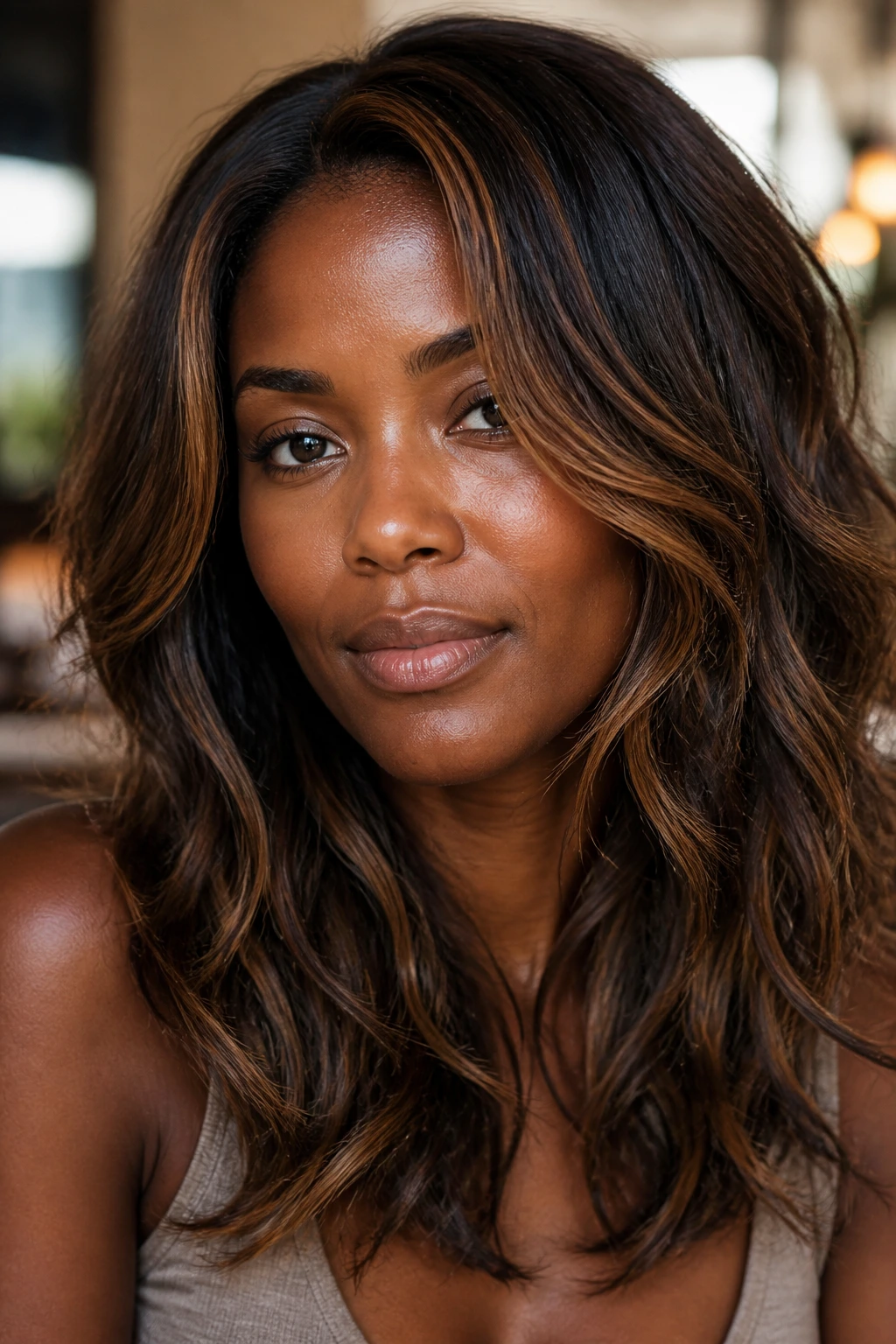
-
Warmth that makes sense: Caramel, honey, copper, and bronze echo the gold and red notes many deep complexions already carry, so the color looks joined to the face instead of sitting on top of it.
-
Contrast you can control: Most of these shades lift only 2 to 4 levels from the base, which is enough to show movement without turning dark hair into a high-maintenance striping project.
-
Texture-friendly placement: Wider ribbons show up beautifully on curls and coils, while finer babylights keep straight hair from looking chunky at the part.
-
Grow-out that behaves: Root shadow, balayage, and foilyage soften the line at the scalp, so you don’t get that harsh “I need a correction” stripe after a few weeks.
-
Room for personality: You can go soft with mocha and chestnut or louder with copper and amber. Same brunette base. Very different mood.
-
A lot of these wear well in real life: Indoors, outdoors, on day-three hair, with or without heat styling — the right brown highlight still shows movement.
1. Caramel Ribbon Balayage
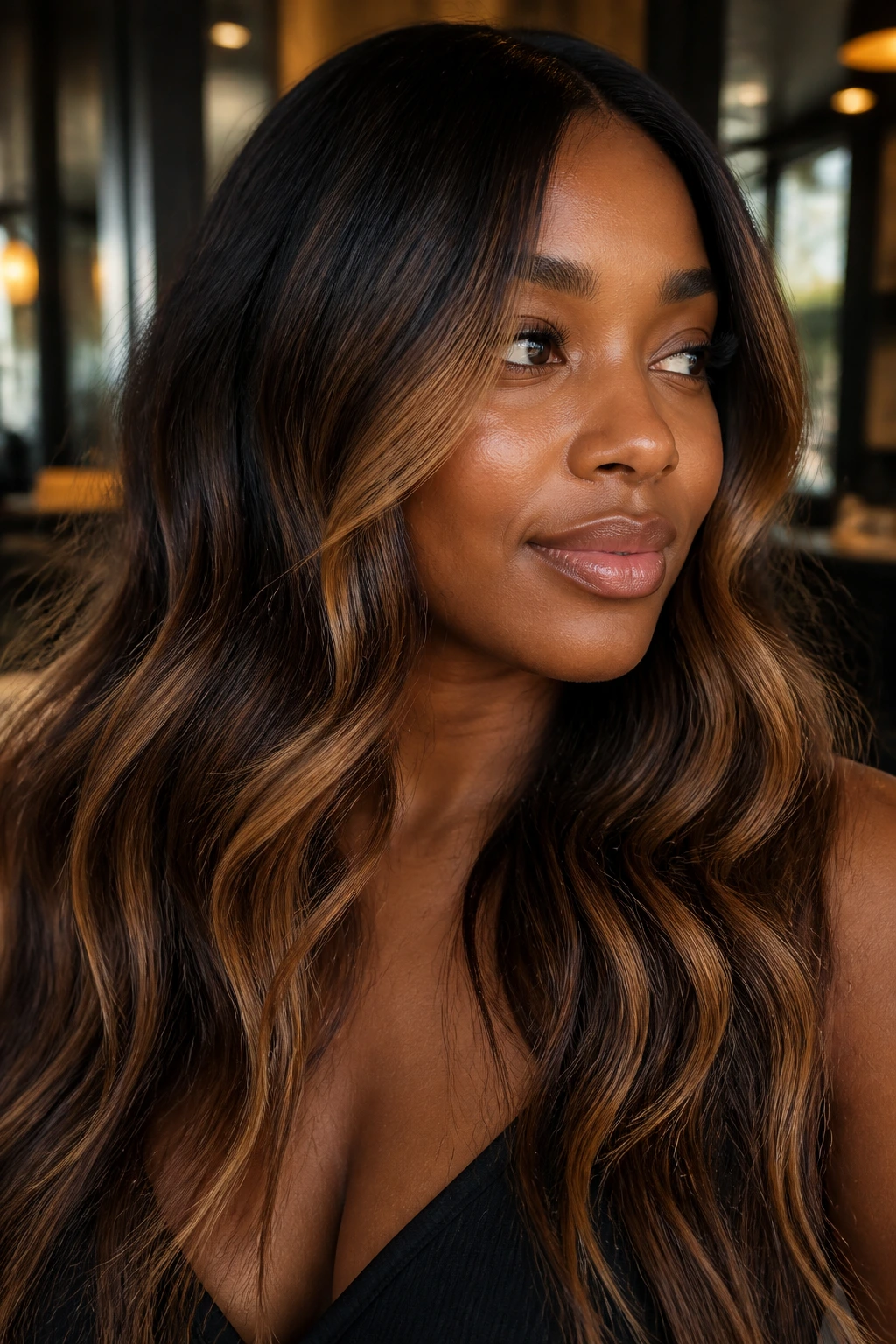
Caramel ribbon balayage is the shade most people think of when they picture flattering brunette highlights on deep skin, and there’s a reason it keeps showing up. The warm, buttery ribbons sit between chestnut and honey, which gives the hair a sun-kissed look without making the contrast feel harsh.
Why it flatters deep skin
The gold in caramel plays nicely with warm and neutral undertones, especially on medium-to-dark brown bases. Ask for the ribbons to start mid-length and stay a touch deeper near the root so the color moves when you turn your head instead of reading like a stripe.
- Keep the lightness around 2 to 3 levels above your base for a soft finish.
- Ask for a warm beige-caramel gloss if the lift comes out too yellow.
- Best on wavy, curly, and coily textures because the ribbons catch the bend in the hair.
Pro tip: Caramel looks richer when the ends stay a little deeper than the face frame.
2. Honey Balayage on Dark Brown Hair
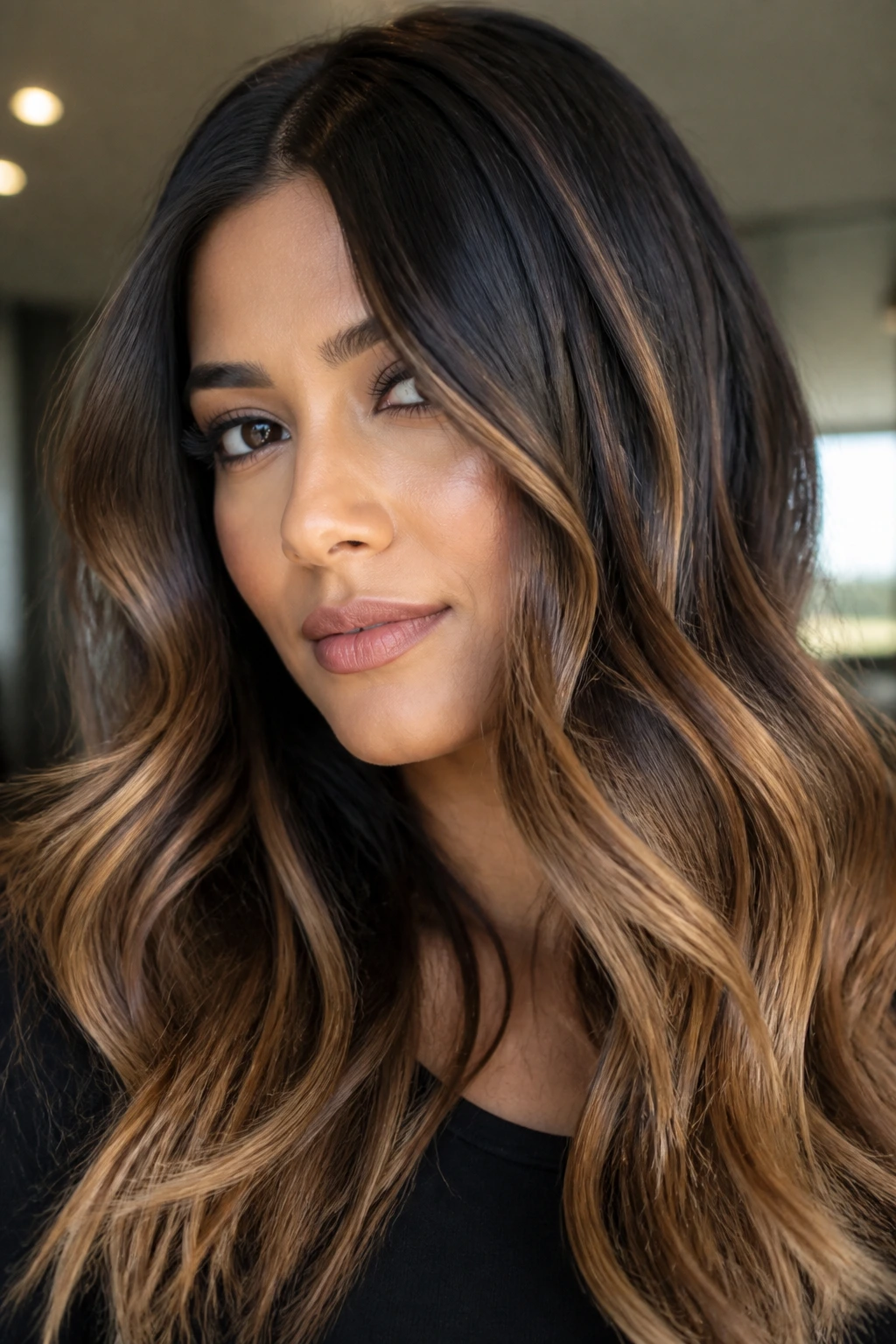
Honey balayage is the easiest way to wake up dark brown hair without pushing it into blonde territory. It’s warm, slightly golden, and less red than caramel, which makes it a good fit if your skin has a golden or neutral cast.
What I like about honey on deep skin is the way it catches indoor light. Under fluorescent lights it can look soft and polished; outside, it takes on a brighter glow without screaming for attention. That balance is harder to get than people expect.
If you want this to stay elegant instead of brassy, keep the base depth intact and let the honey live mostly through the mids and ends. Too much honey at the root can look flat fast. A rooted balayage with a demi gloss is the cleaner move.
3. Toffee Face-Framing Pieces
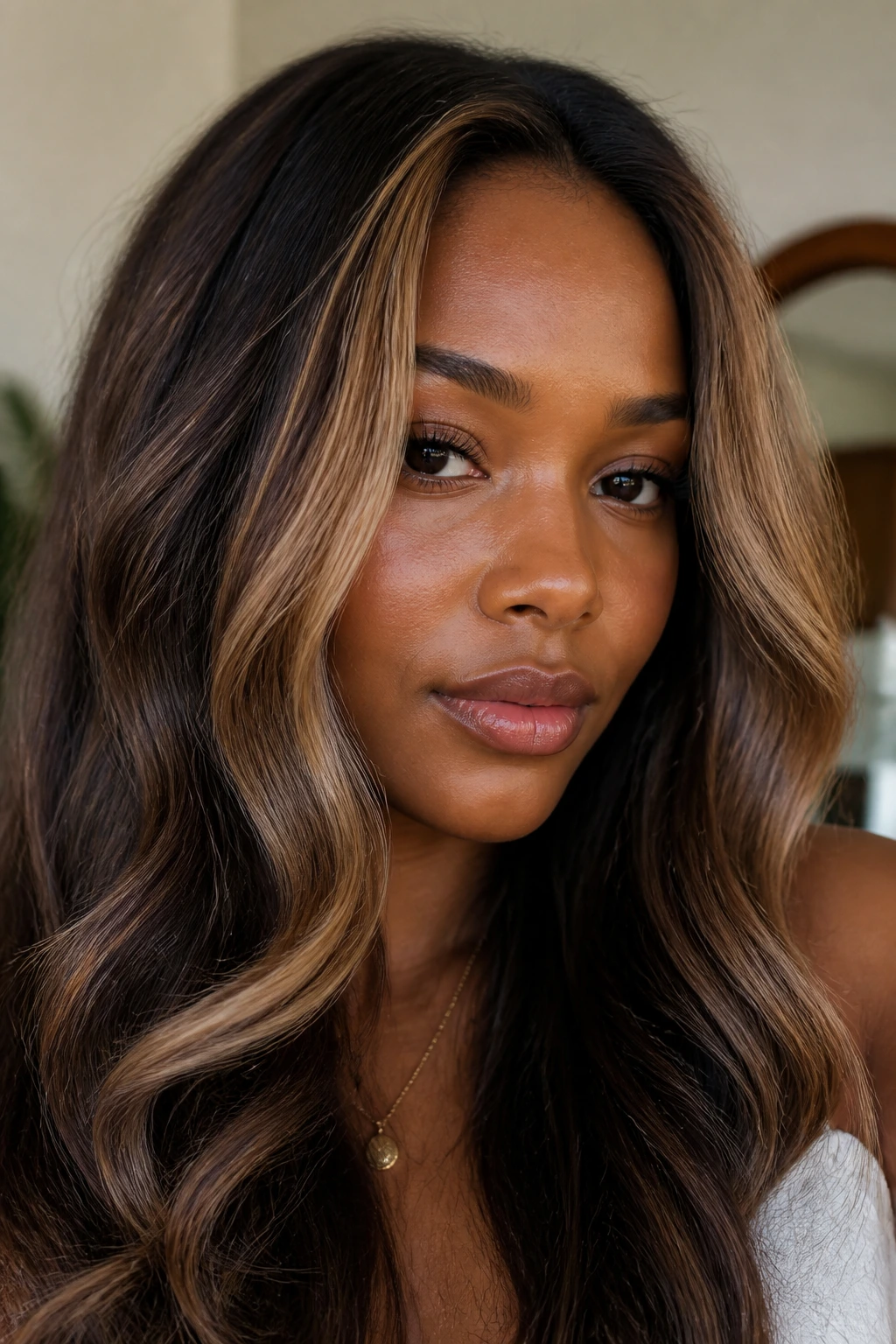
Why does a toffee money piece work so well on deep skin? Because the front of the hair is where the eye goes first, and a warm toffee band can lift the whole face without changing the rest of the head much at all.
How to ask for it
Ask for one to two chunky face-framing pieces on each side, painted or foiled to sit a little brighter than the rest of the hair. If your hair is curly, ask for the pieces to be wide enough that they still show once the curl pattern shrinks up.
You want the toffee to look like a highlight, not a beige stripe. Keep the tone warm, not icy. That one choice makes a huge difference on deeper complexions.
4. Chestnut Money Piece
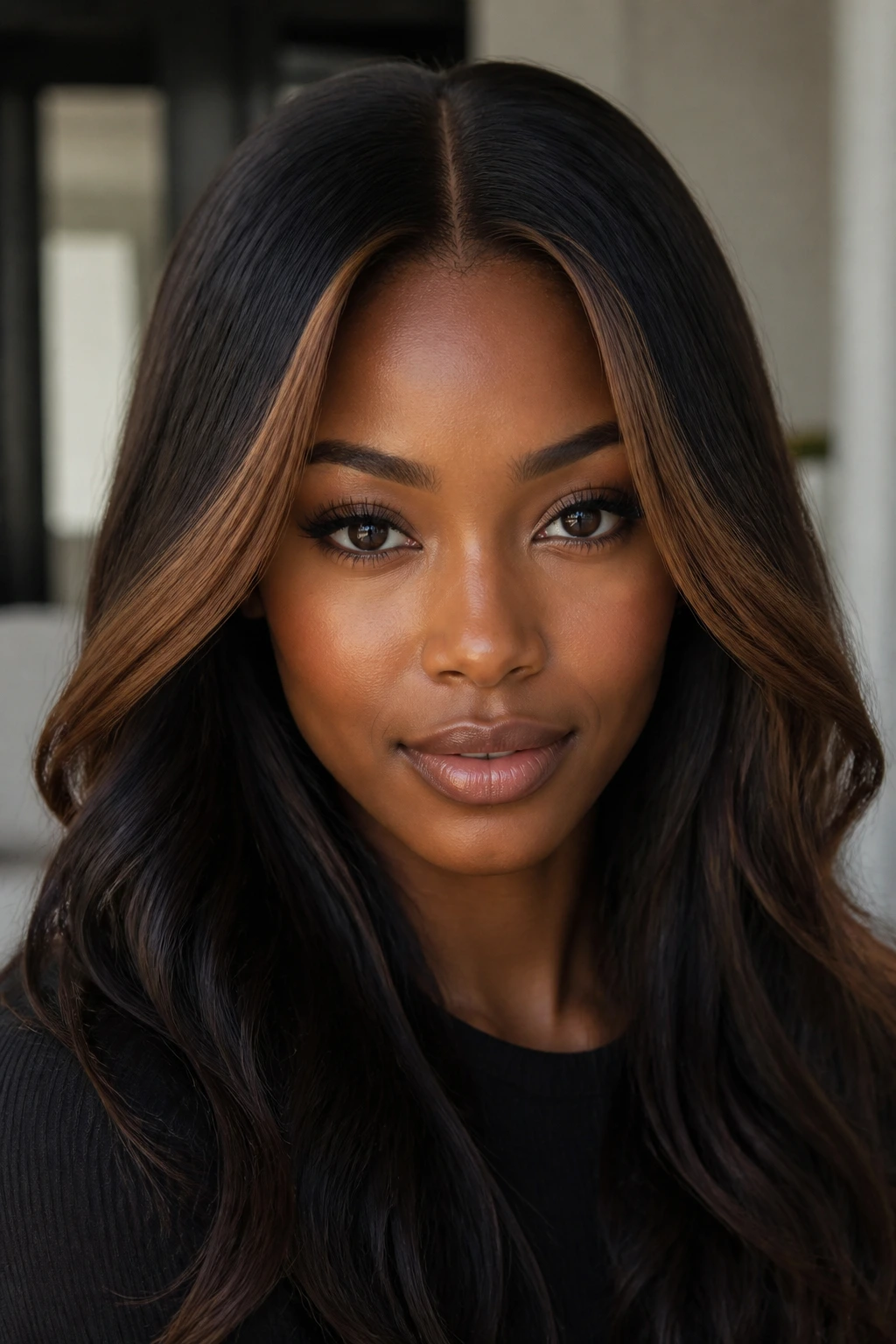
Picture a sleek ponytail, a center part, and one soft chestnut band falling along the cheekbone. That’s the appeal here. It’s quiet, but not boring, and it gives the face shape without changing the entire head of hair.
The chestnut money piece works best when the rest of the color stays closer to espresso or dark cocoa. That contrast gives the front panels room to breathe. If everything gets light at once, the whole look can lose the frame.
- Best for oval, heart, and round faces because the front pieces can soften or sharpen the shape.
- Keep the panel around ¾ inch to 1 inch wide.
- Choose a reddish chestnut if your skin runs warm, or a softer neutral chestnut if your undertone is more even.
The result is neat, wearable, and easy to recognize in a mirror from across the room. That matters more than people admit.
5. Espresso Babylights
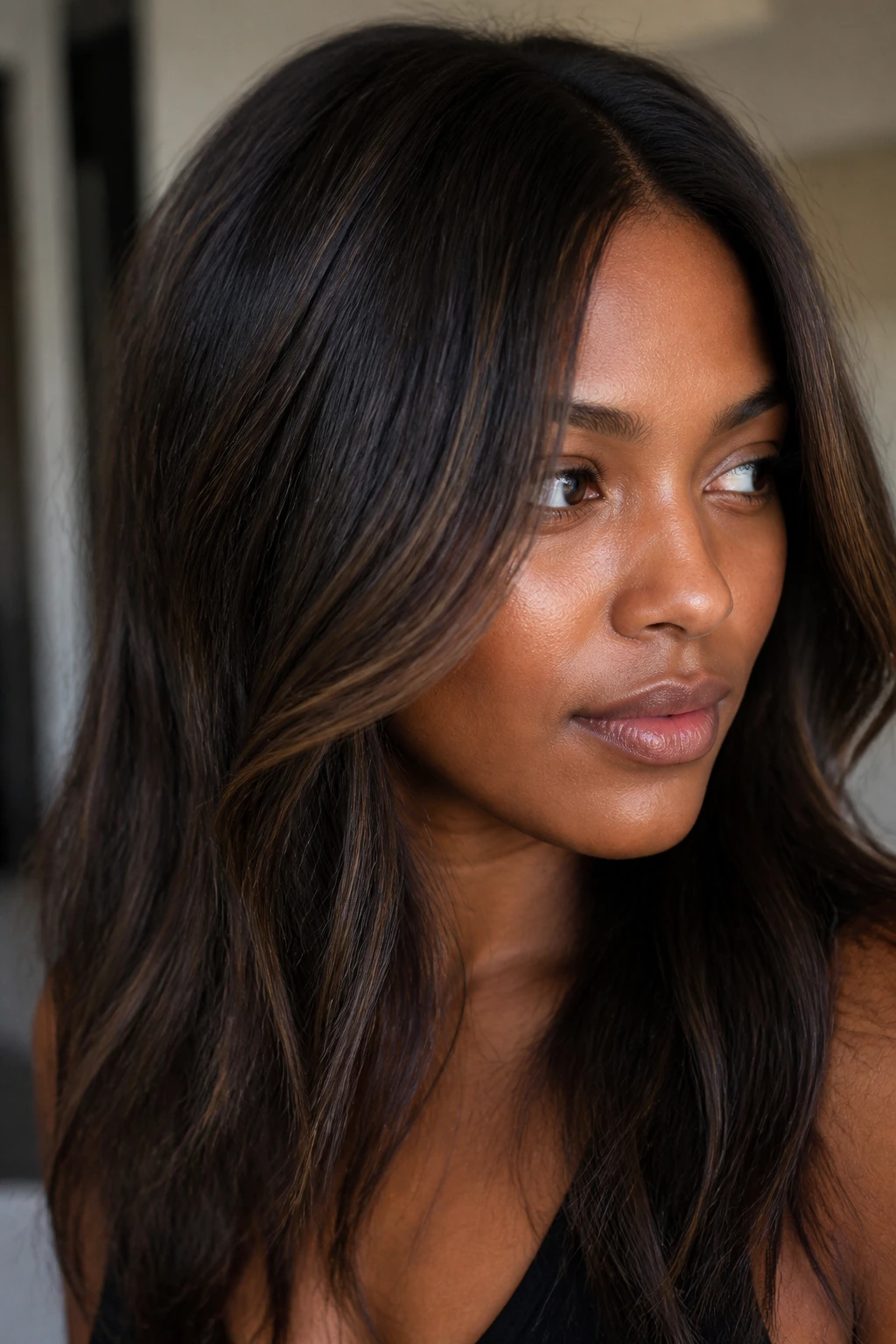
Espresso babylights are the most understated option on the list, and they’re there for a reason. Not every brunette highlight needs to announce itself. Sometimes the best move is a whisper: tiny, delicate strands a shade or two lighter than the base, just enough to break up a solid block of color.
On deep skin, babylights make the hair look expensive in motion. They’re especially good if you wear your hair straight a lot or like a smooth blowout, because the fine lines catch light in a way thicker pieces can’t. The effect is subtle enough that coworkers may not know what changed, only that your hair looks better.
This is also the safest choice if you’re nervous about commitment. Babylights grow out softly, blend easily, and don’t demand constant correction. That’s a very real advantage.
6. Bronze Foilyage
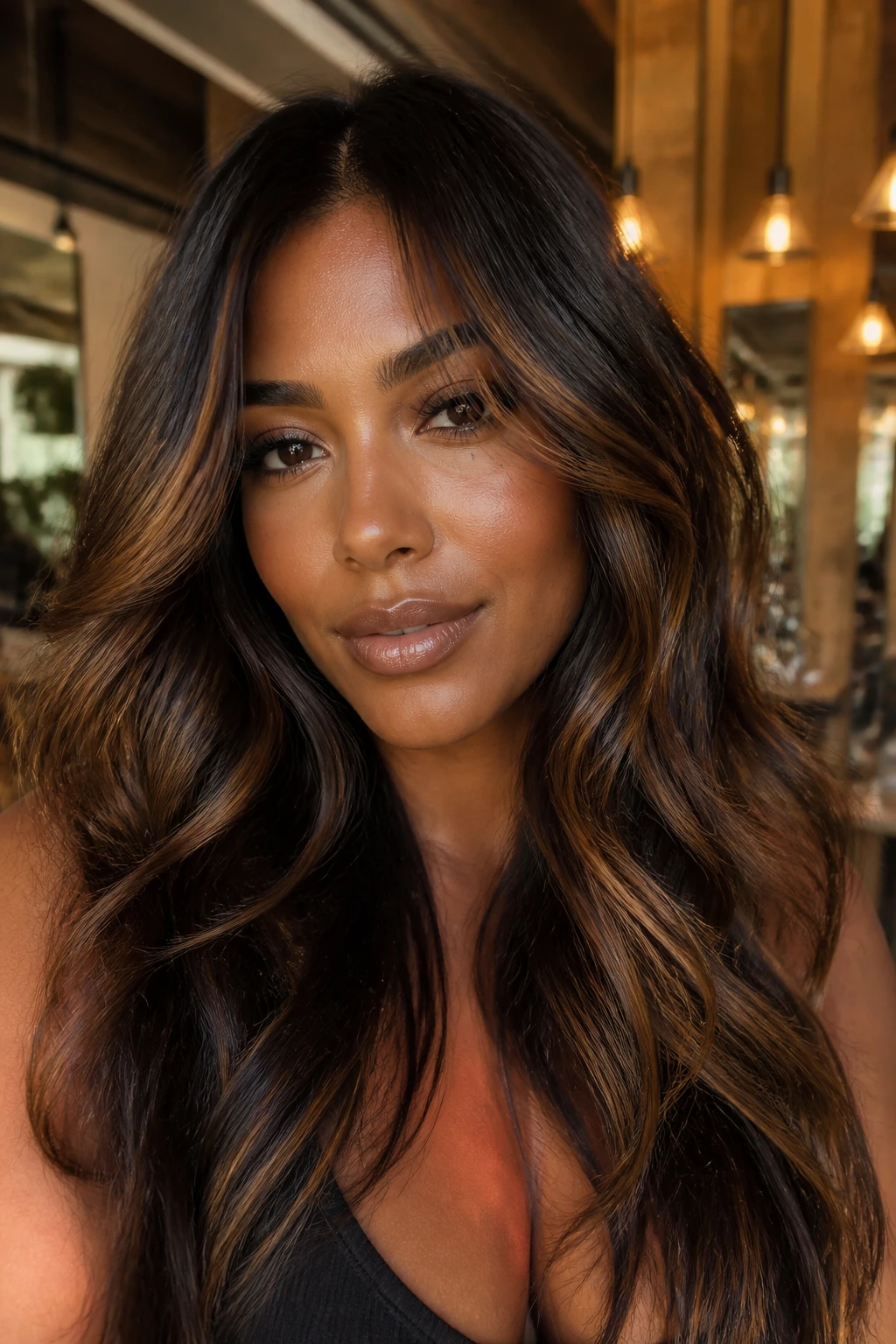
Bronze foilyage is the choice when caramel feels too sweet and blonde feels too loud. It sits in that middle zone — warm, metallic, and a little richer than the usual honey-brown look.
Unlike freehand balayage, foilyage gives the colorist more lift and more control, which matters on dense hair or curl patterns that need extra brightness to show up. The bronze tone itself is a good match for deep skin because it has enough warmth to feel alive, but enough brown to keep the finish grounded.
If your base is dark and resistant, this method tends to show better than hand-painting alone. It’s a sharper look, though. Not harsh. Sharp. There’s a difference.
7. Cinnamon Swirl Highlights
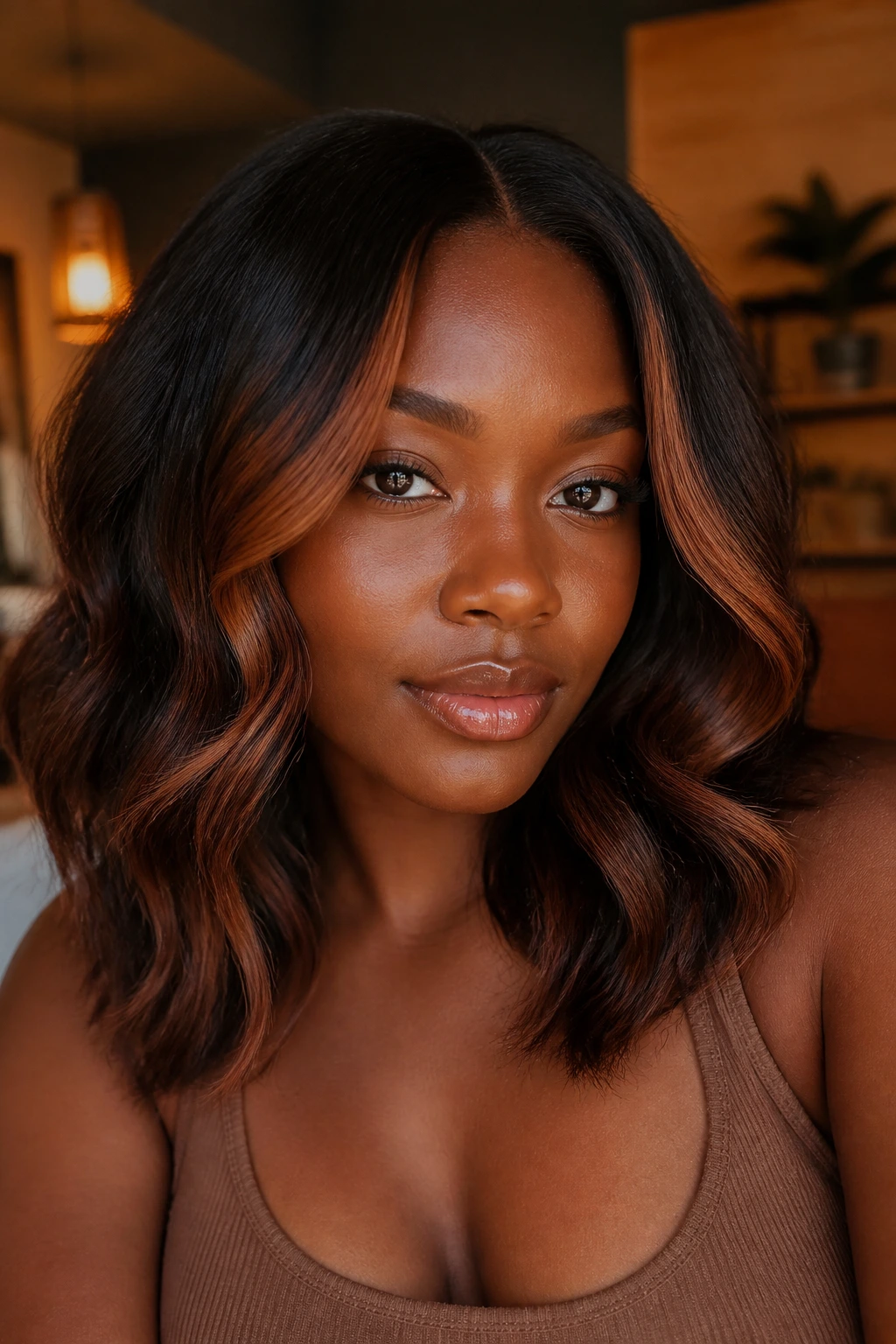
Cinnamon highlights bring a red-brown warmth that sits beautifully on deep skin, especially if your undertone leans golden, olive, or neutral. They’re not neon copper. They’re softer, spicier, and a little more grown-up.
What makes them work
Cinnamon reads as depth first, color second. That’s the sweet spot. On dark hair, the red note shows up when the light hits it, then slips back into brunette when you’re indoors.
- Best on layers and long bobs where the movement can show off the red-brown shift.
- Ask for a warm glaze after lightening so the red doesn’t go flat.
- Keep the highlights wider near the face, softer through the back.
Small warning: cinnamon can turn orange if the lift goes too far, so keep the lightening controlled.
8. Mocha Melt Balayage
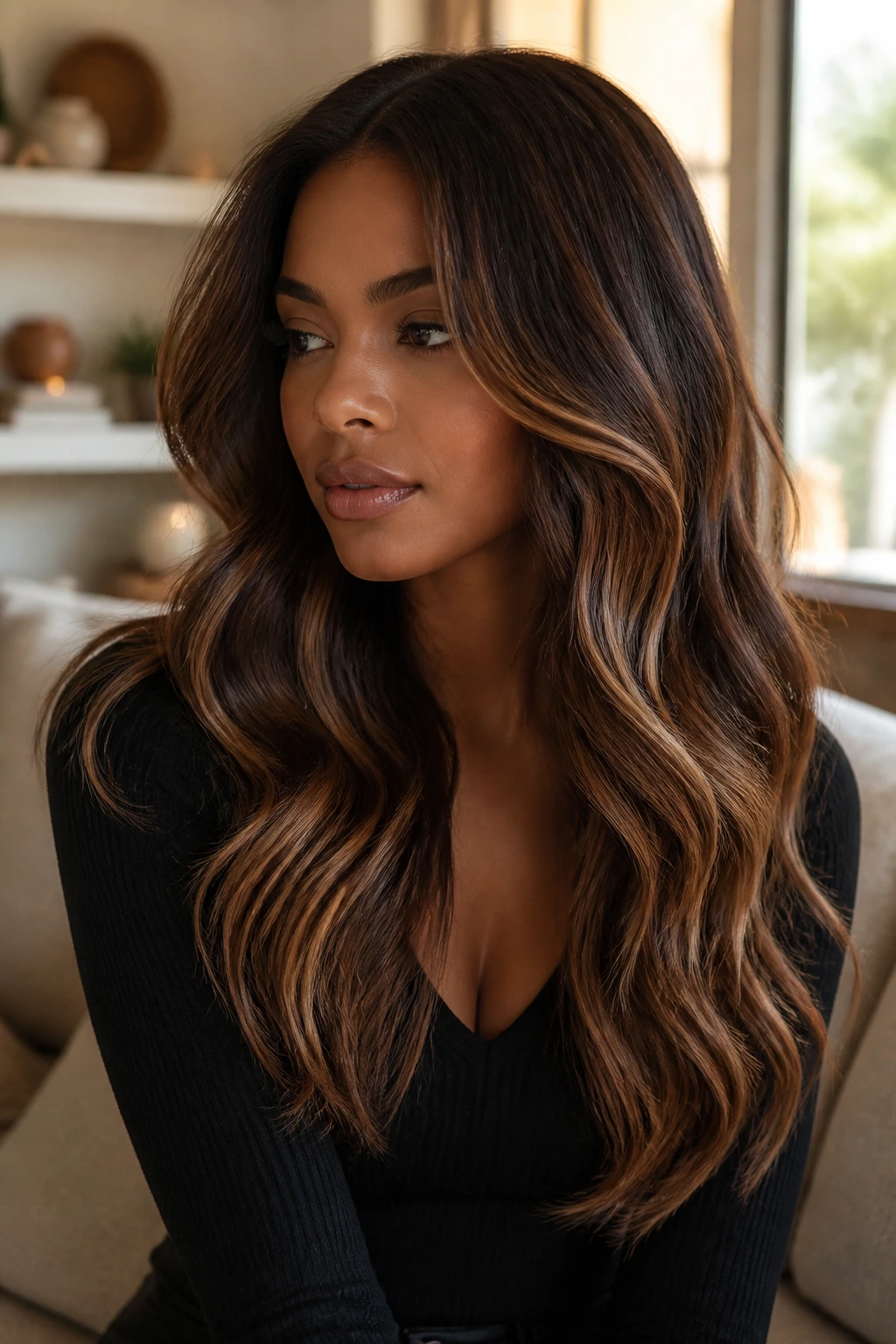
Mocha melt is the one I reach for when someone wants dimension but hates obvious highlights. The idea is simple: keep the root deep, melt into a softer mocha through the mids, and let the ends carry the lightest brown.
That gradual shift flatters deep skin because it doesn’t fight the natural richness of the base. Instead of saying, “Look, I colored my hair,” it says, “My hair catches light in a smarter way now.” Subtle? Yes. Boring? Not at all.
It also grows out cleanly. If you’re someone who doesn’t want to sit in a salon every month, mocha melt is one of the better bets on the menu.
9. Copper-Kissed Brunette
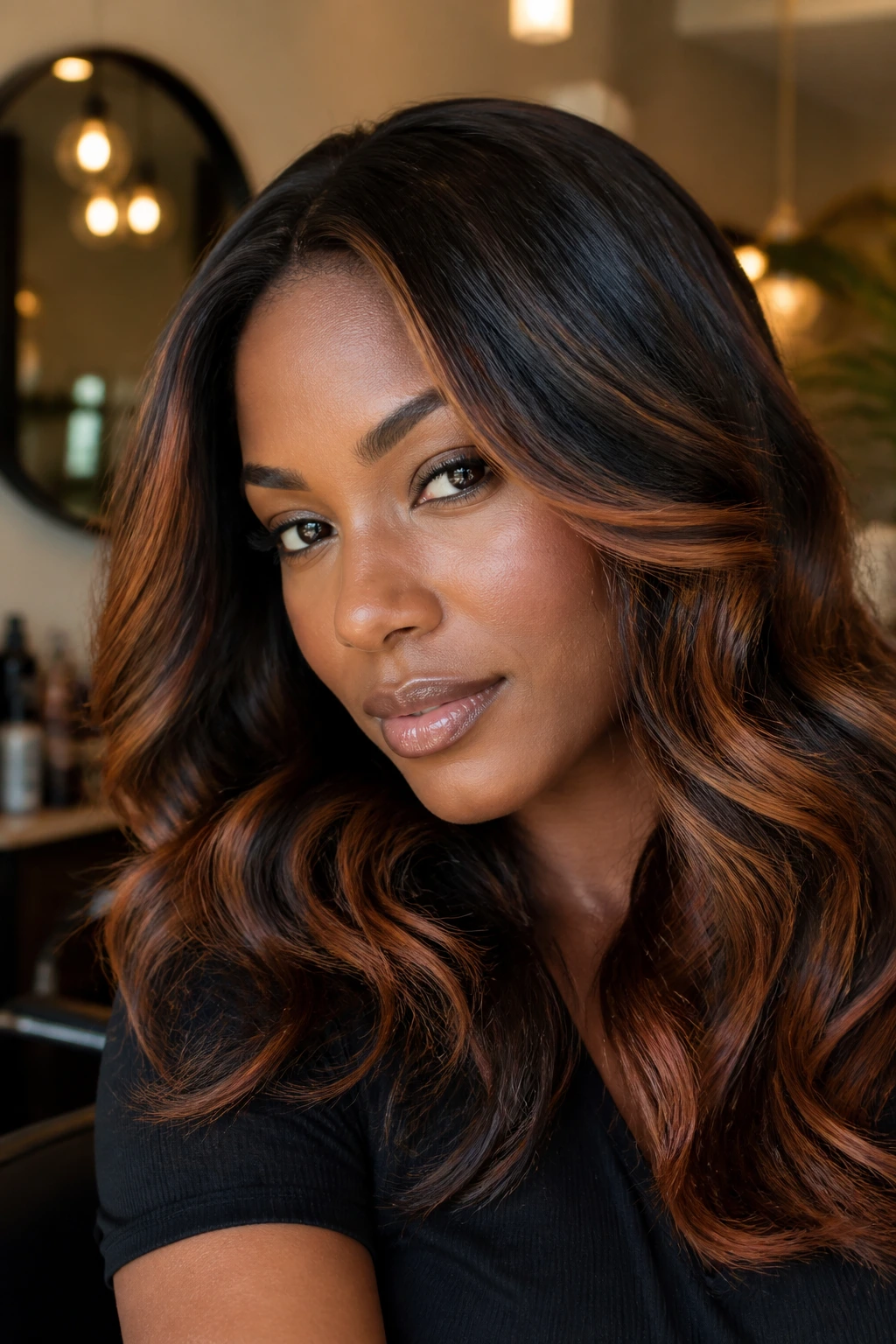
Can copper work on deep skin without looking loud? Absolutely — when it stays in the brown family and doesn’t jump straight into orange. That’s the difference between a flattering copper kiss and a color correction.
How to keep it soft
Choose copper ribbons that sit on a brunette base, not a full copper transformation. A few warm strands around the front and through the ends usually do the job. On deep skin, that tiny hit of warmth can light up the face in a way cool browns often don’t.
If your undertone is already warm, this one can look almost glowing. If you lean neutral, keep the copper deeper and more muted. The goal is spice, not traffic-cone brightness.
10. Auburn Ribbon Lights
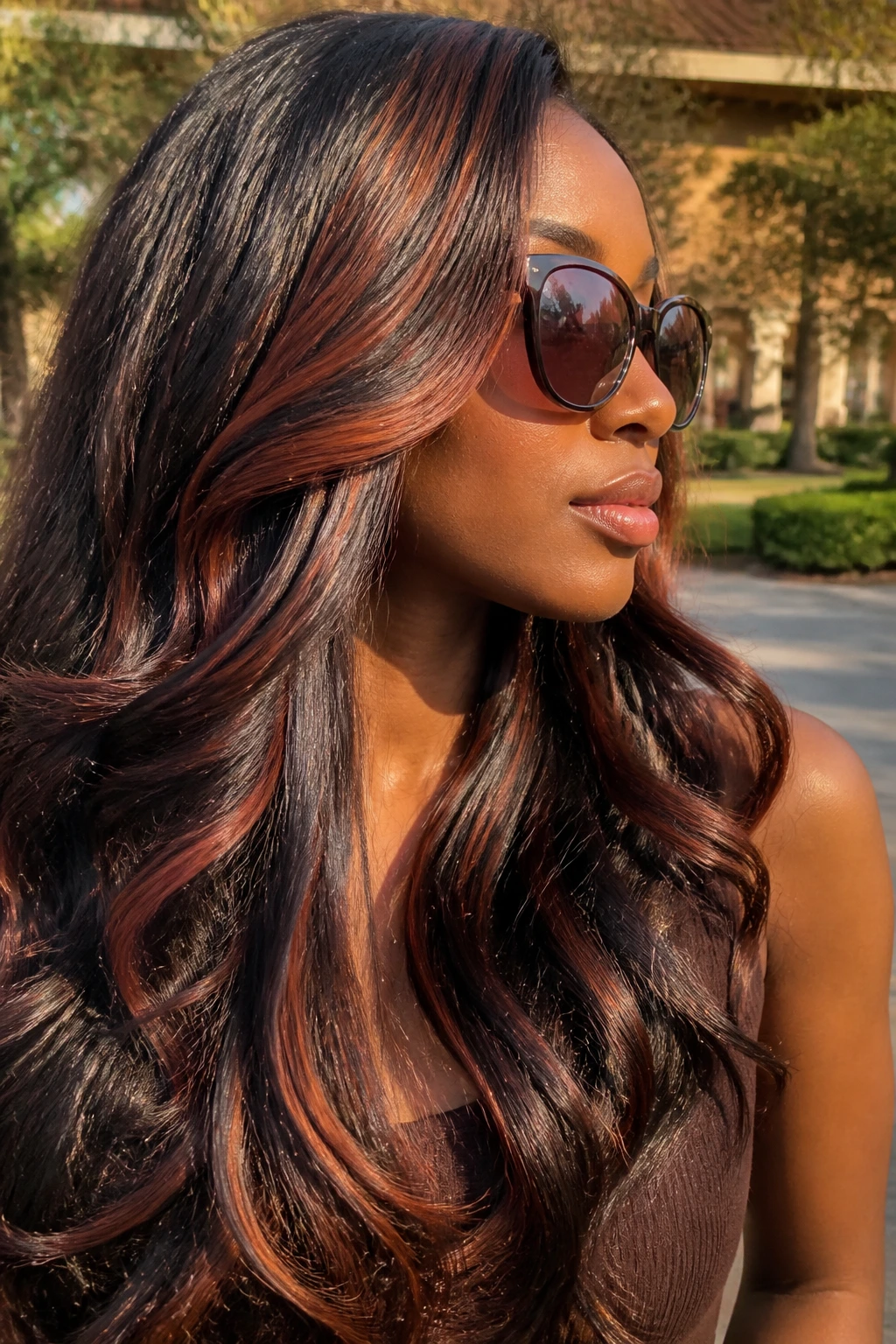
Auburn ribbon lights are for people who want their hair to look rich in daylight and even richer at sunset. The red-brown tone sits between chestnut and copper, which gives it a little extra depth compared with plain caramel.
Think of this as the friendlier version of red. It still brings warmth, but it doesn’t fight your skin for attention. On deep skin, auburn looks especially good when it’s painted in long ribbons that move with curls or waves.
- Best for thick hair that needs visible dimension.
- Ask for auburn pieces concentrated from ear level down if you want a softer face frame.
- Works well with twists, braid-outs, and blowouts because the color shows differently in each style.
11. Hazelnut Contour
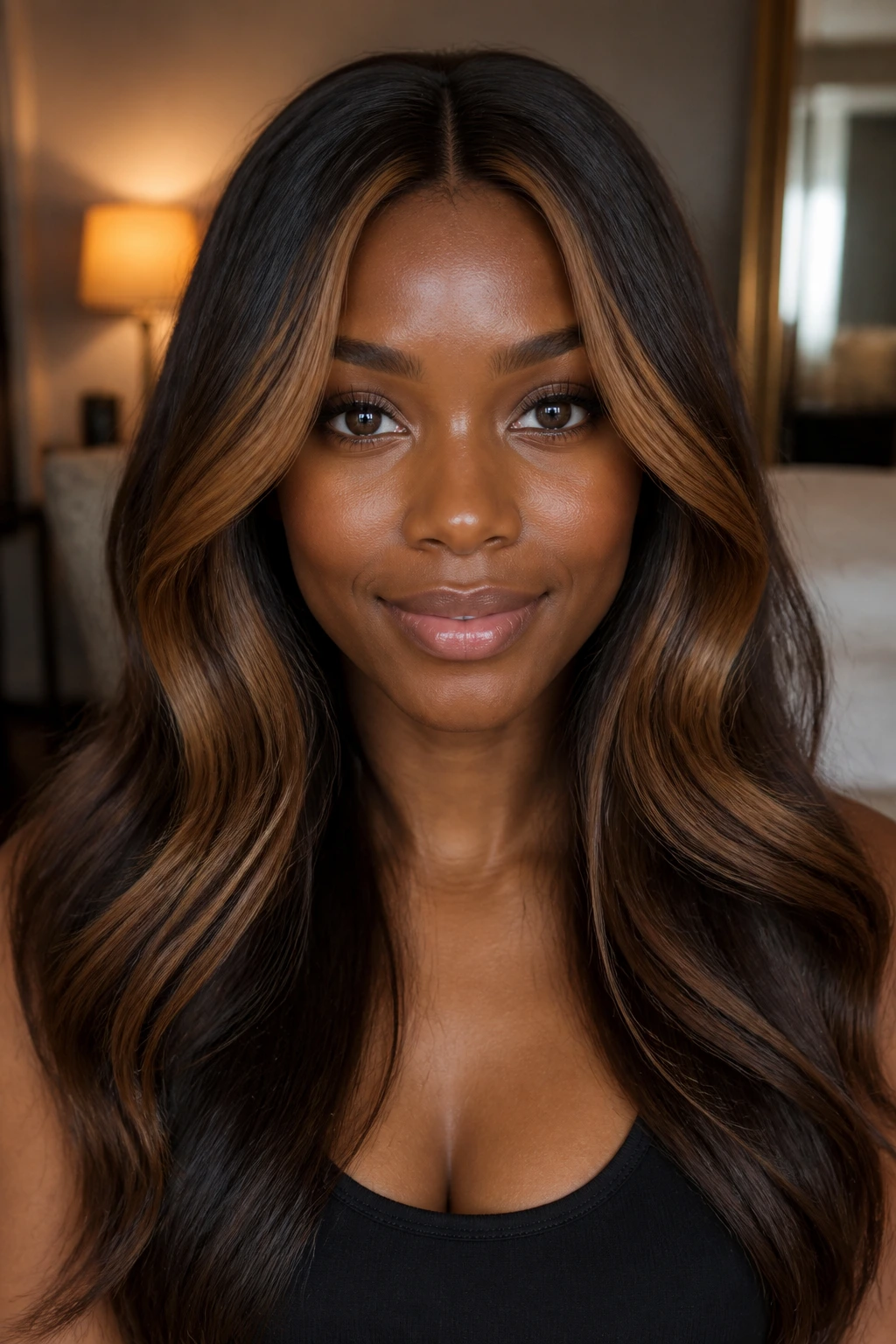
Hazelnut contour is all about placement. Instead of lightening the whole head, a colorist paints warmth around the face, temple area, and a few strategic layers near the crown. The result is less “highlighted hair” and more “better structure.”
That’s a strong move on deep skin because the color doesn’t need to be pale to matter. Hazelnut, with its brown-gold depth, gives shape without stealing the show from the face. It’s especially good on medium-length cuts, where the contour line can follow the shape of the hair.
Honestly, this is one of the most wearable options on the list. Not flashy. Just smart.
12. Walnut Peekaboo Panels
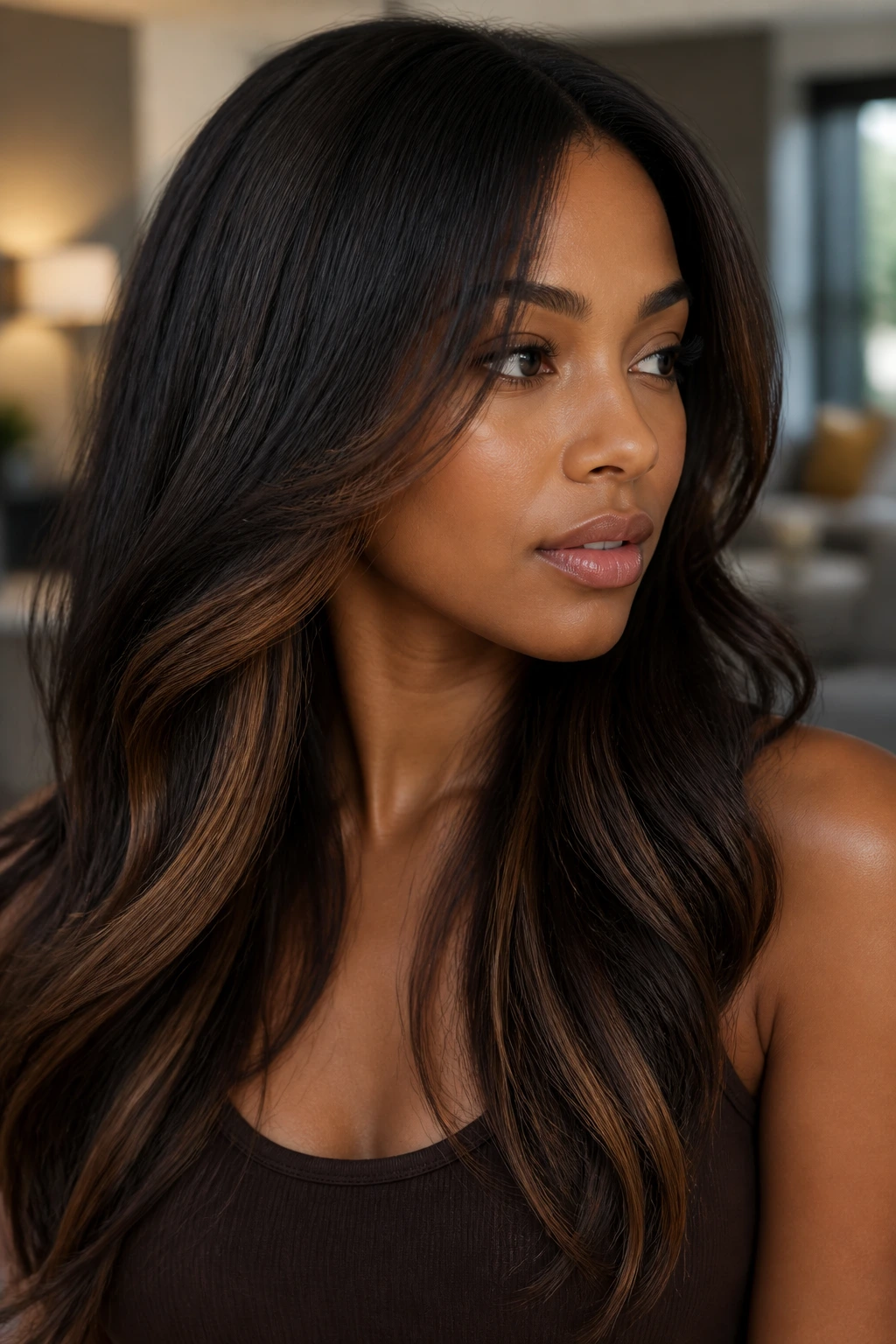
Unlike face-framing highlights, walnut peekaboo panels hide under the top layer and show up only when the hair moves. That makes them a good choice if you want dimension without changing the first thing everyone sees.
They’re especially nice on straightened styles, braids, or layered cuts where the top section parts enough to flash the lighter tone underneath. On deep skin, walnut keeps the color in a brown family, which helps the brightness feel intentional instead of disconnected.
If you like a little mystery in your hair color, this is the move. It’s the kind of detail that appears in motion, and then disappears again. Very useful. Very underrated.
13. Maple Brown Ends
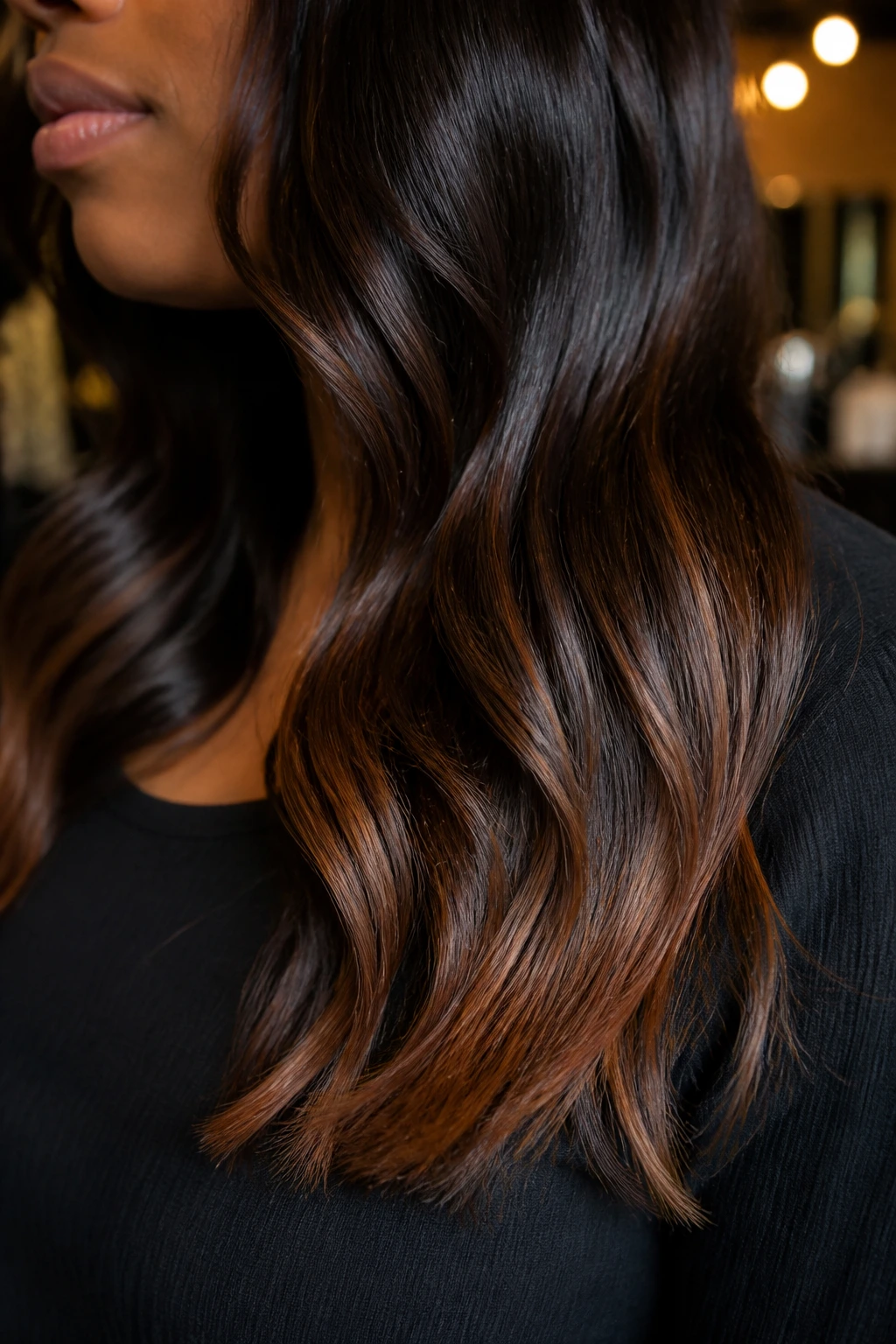
Maple brown ends change the silhouette of brunette hair without touching the root, which is why they work so well for people who want color but hate upkeep. The warmth sits mostly on the last few inches, so the hair still looks deep and glossy near the scalp.
Why this placement works
Ends-only brightness draws the eye downward and adds movement to a blunt cut. On deep skin, maple brown can read as soft gold-brown rather than blonde if the lightening stays controlled.
- Best for lob cuts, long layers, and curls with a defined finish.
- Keep the lift focused on the last 3 to 4 inches.
- Ask for a root shadow so the grow-out stays smooth.
My take: this is the easiest way to test lighter color without handing your whole head over to it.
14. Golden Chestnut Foilyage
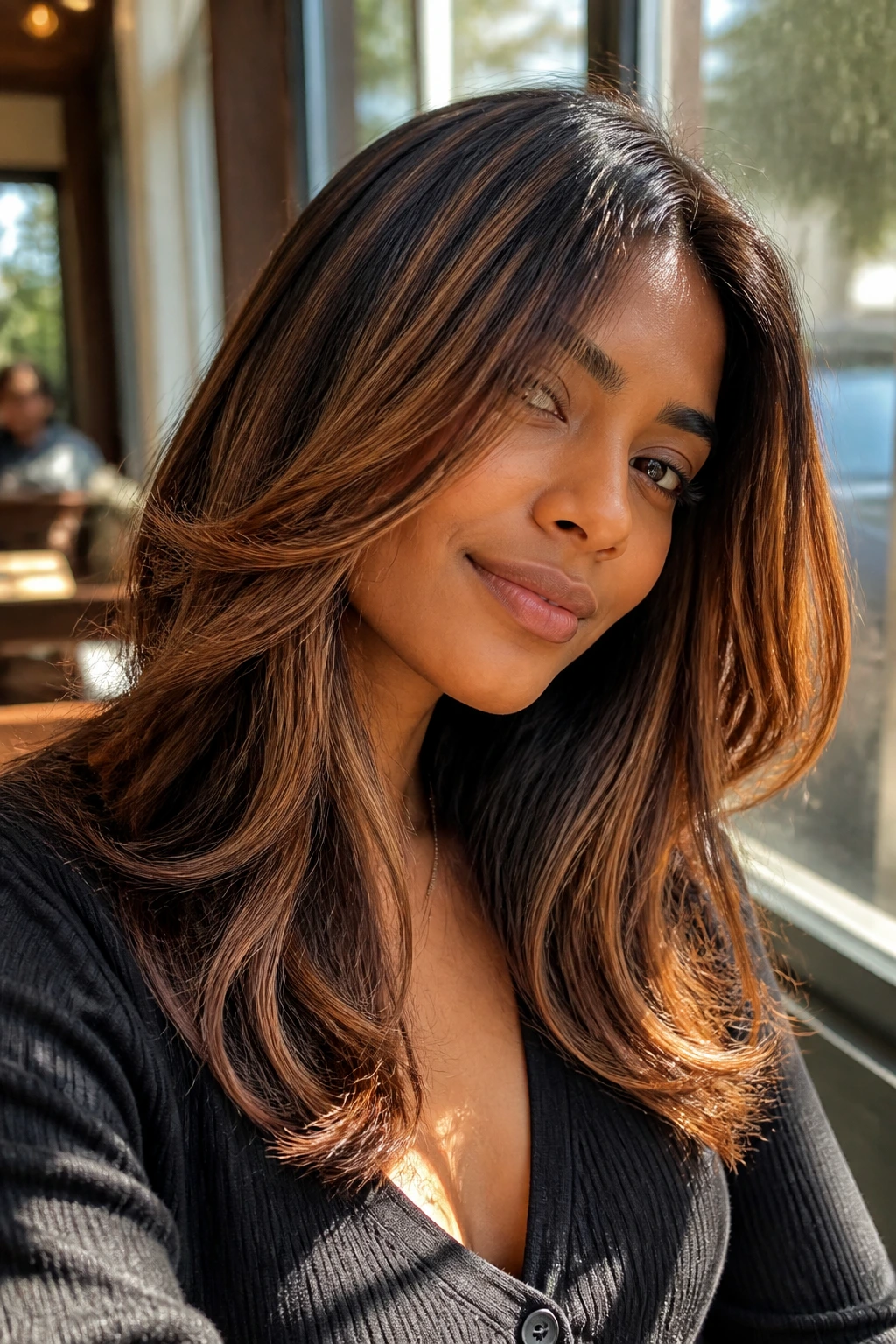
Foils matter here. A lot. Golden chestnut foilyage gets a cleaner, brighter lift than freehand painting, which is helpful if your hair is coarse, dense, or naturally resistant to color.
The golden chestnut tone sits right in the sweet spot for deep skin: warm enough to glow, brown enough to stay grounded. It can look especially good on layered cuts because the foils catch different sections at different heights, giving the color a bit of rhythm instead of one flat band.
If you want brightness you can actually see in photos and in daylight, this is one of the stronger choices. It’s a little more work than a soft balayage, but the payoff is obvious.
15. Cocoa Lowlights and Lights
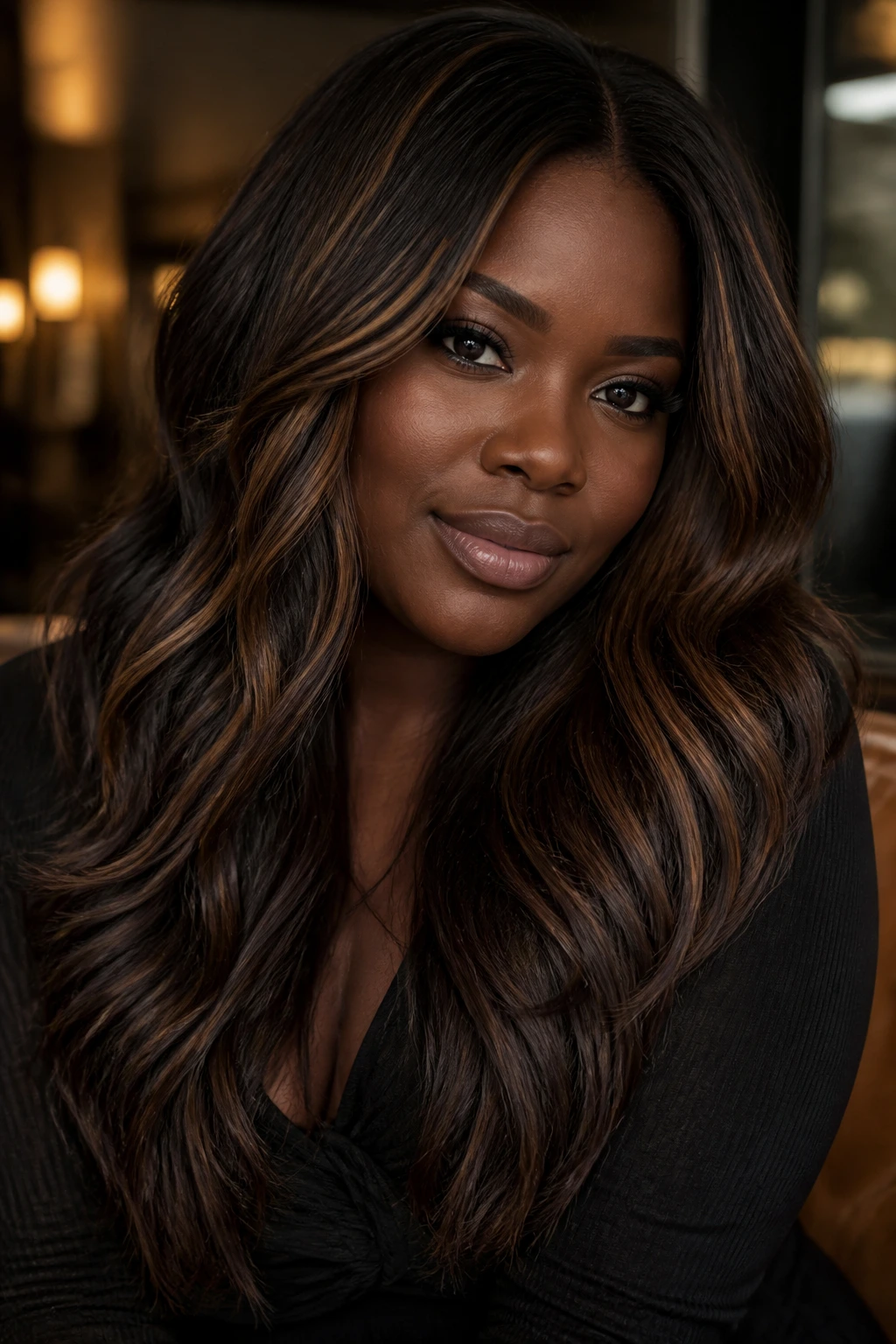
Why add darker pieces to a brunette highlight look? Because contrast gets richer when the base has places to rest. Cocoa lowlights and lights do that job beautifully.
How it changes the finish
The darker cocoa pieces keep the color from turning one-note, especially on hair that’s been lifted a few times already. On deep skin, that extra depth can make the lighter strands look shinier instead of washed out.
This combo is ideal if you’ve seen too much lightness flatten your natural color. It gives the eye a few different brown notes to read, which is why the hair suddenly looks fuller. Dimension, not just brightness, is what sells it.
16. Burnt Sugar Face Frame
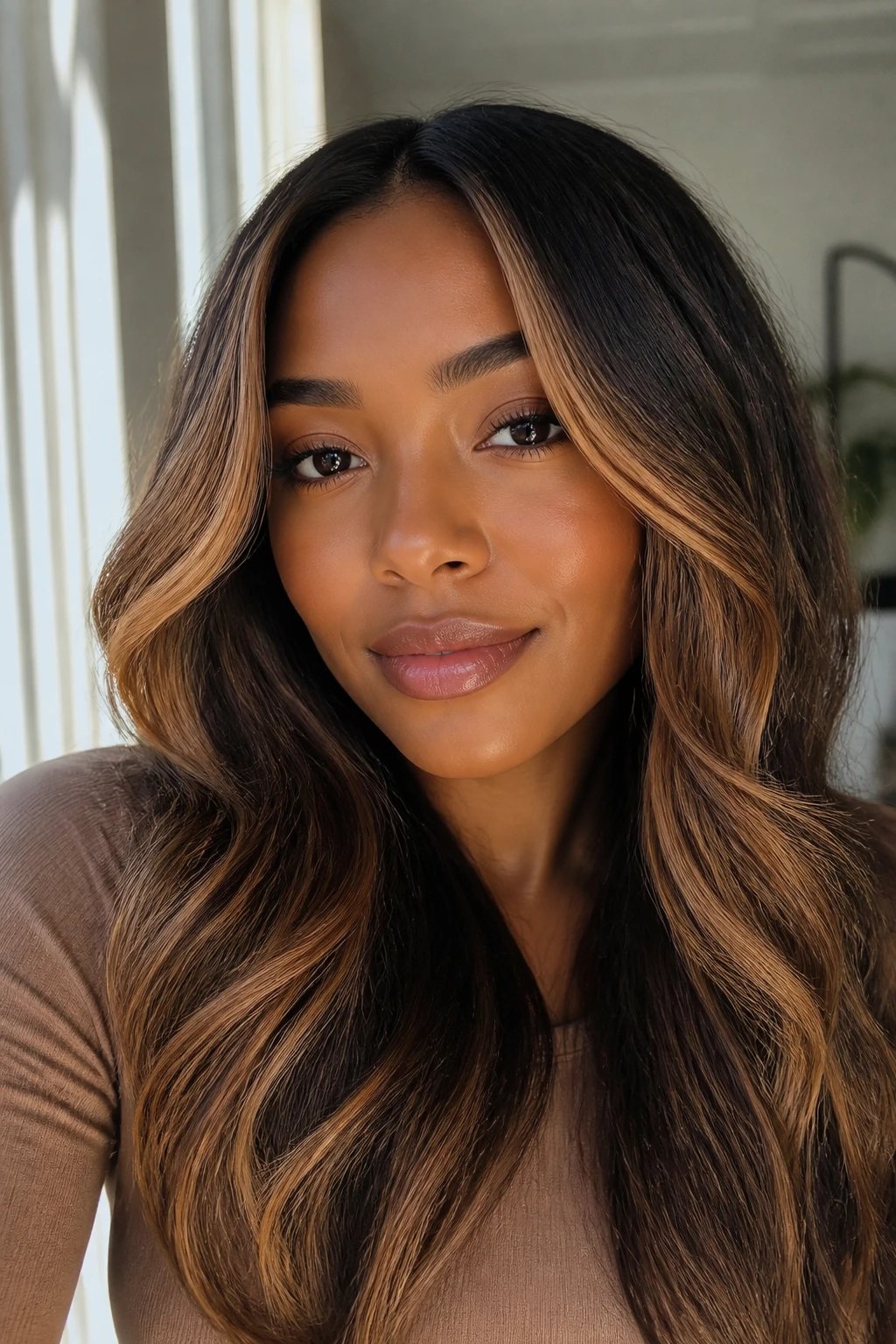
A burnt sugar face frame is the sharpest option on the list, and I mean that in a good way. The front pieces are brighter, more caramelized, and more deliberate than a soft money piece.
Picture the edge of sugar just turning amber in a pan. That’s the tone. It draws light to the cheekbones and brow area immediately, which can be a nice shortcut if you don’t want to color the entire head.
- Best if you wear your hair down a lot.
- Keep the front pieces slightly wider than a standard money piece.
- Pair with a deeper brunette root so the contrast feels polished.
This is the kind of highlight that looks great in a mirror and even better in daylight.
17. Mahogany Glossed Ribbons
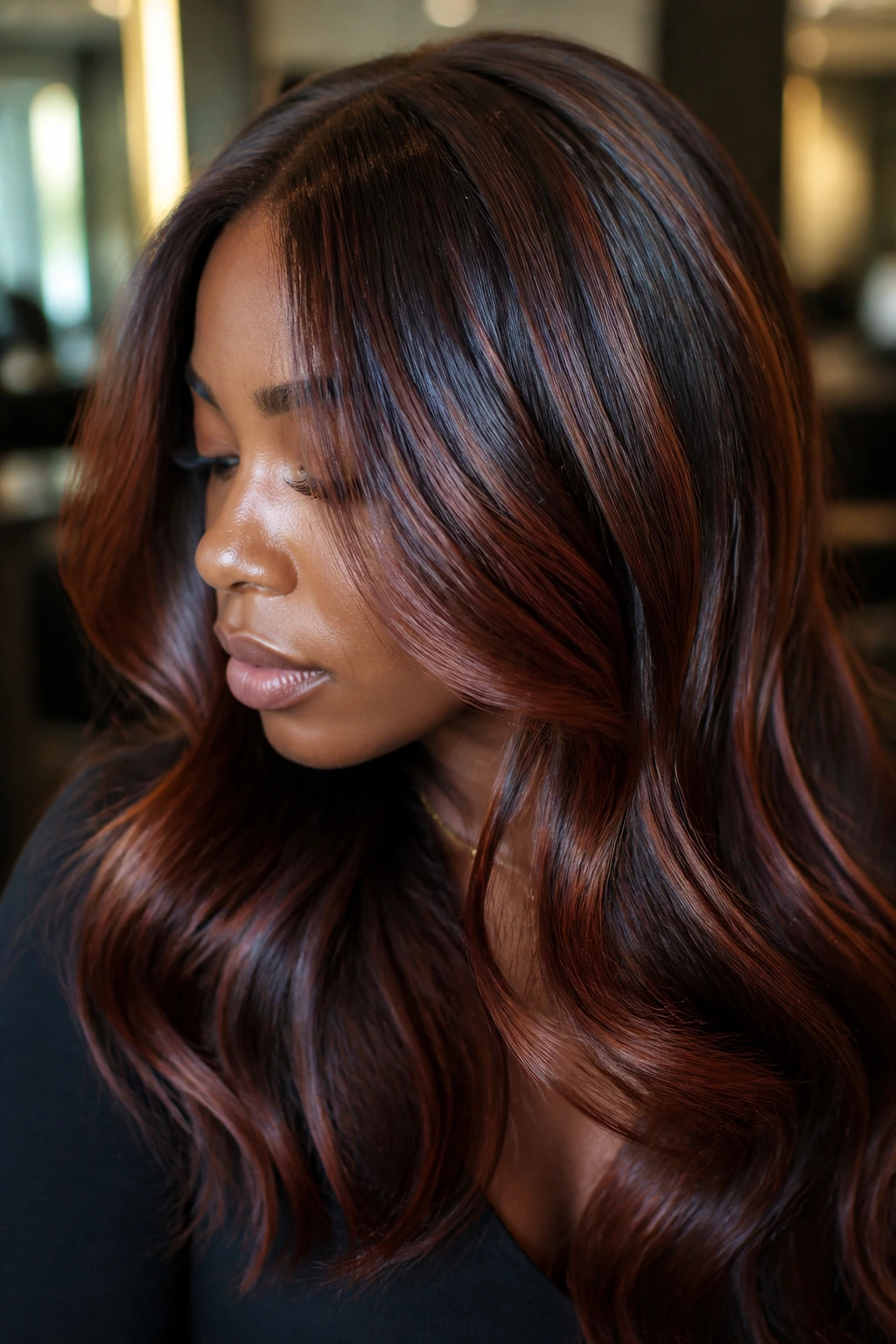
Mahogany ribbons are for the person who loves warmth but doesn’t want copper or gold to dominate the show. The red-brown note is deeper, moodier, and a little more refined than cinnamon or auburn.
A gloss matters here. Without it, mahogany can drift dull. With it, the ribbons look wet and rich, almost like polished wood after rain. That shine is a big part of the appeal on deep skin because it keeps the hair from looking flat under indoor lighting.
This shade also fades with grace. The red note softens before it turns ugly, which is more than I can say for a lot of brighter tones.
18. Butterscotch Balayage
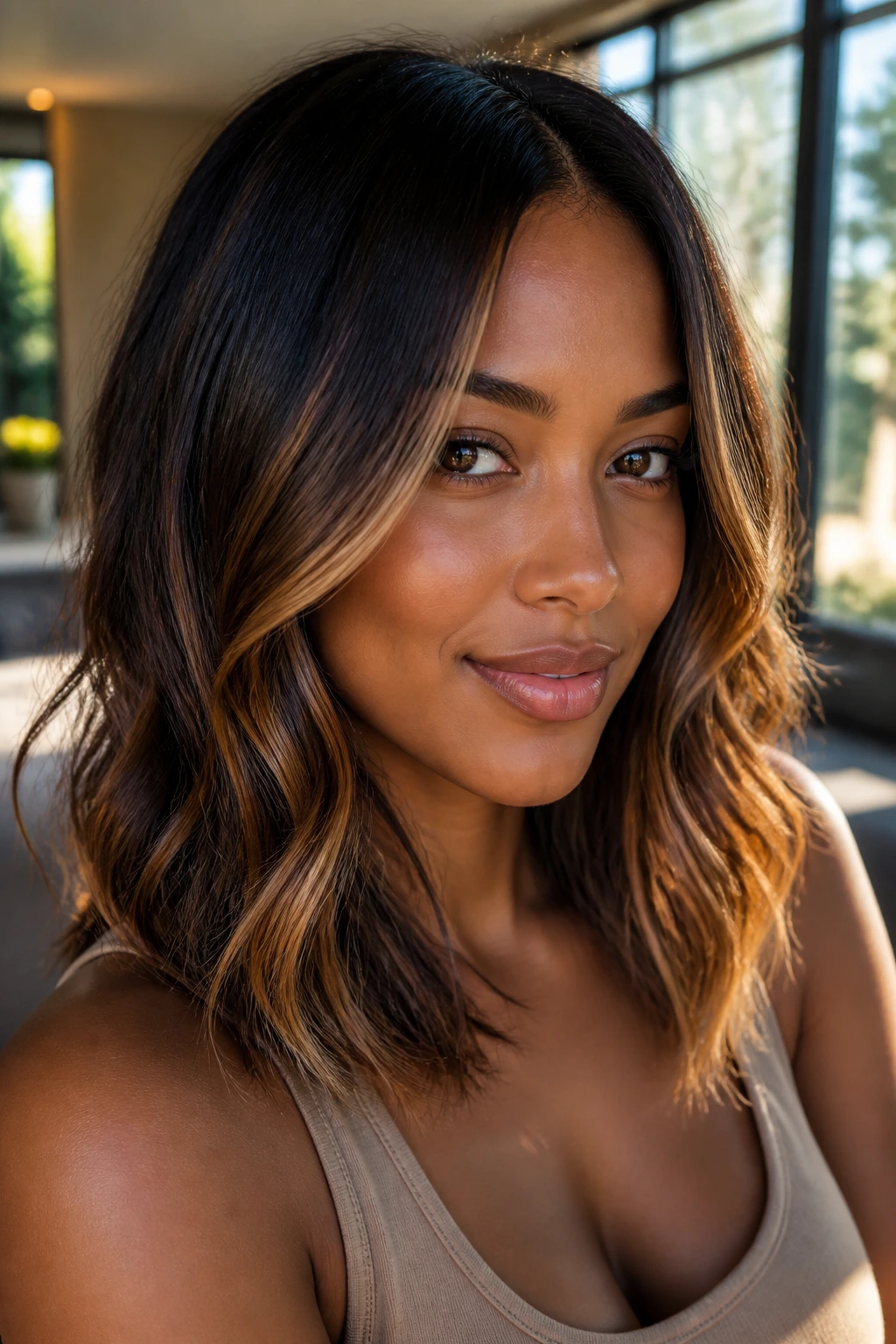
Butterscotch is lighter than caramel and a touch more golden, which gives it a sunnier finish on deep skin. It’s the right move if you want something visibly brighter but still warm enough to belong on a dark brunette base.
Unlike ash beige, butterscotch keeps the warmth alive. That matters. On deeper complexions, a pale, cool highlight can look disconnected fast; butterscotch stays in the same color family as the skin’s gold notes.
If you like a softer blonde-adjacent look without crossing into high contrast, this is a strong compromise. It’s bright, but not brittle-looking.
19. Clove Brown Slices
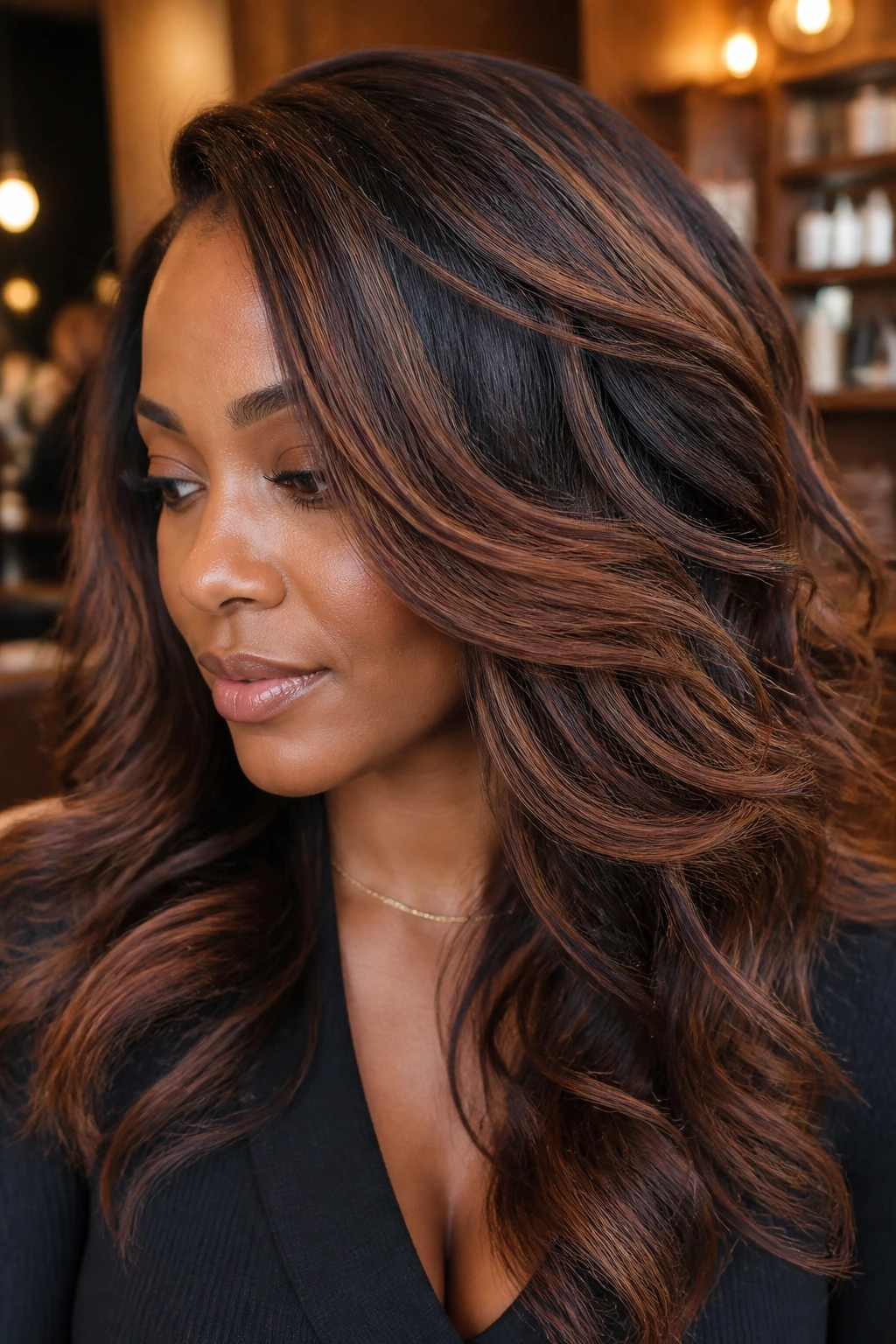
Clove brown slices sit between cinnamon and mahogany, which gives them a spicy, deeper-brown feel that doesn’t shout for attention. They’re thicker than babylights, so the color shows up more clearly in curls, twists, and layered blowouts.
What to ask for
Ask for medium-width slices painted around the face and through the upper layers, then softened with a brown gloss. That keeps the lighter pieces from feeling blocky. On deep skin, the clove tone adds warmth without tipping into orange.
- Best on medium to thick hair.
- Works well with side parts because the slices break up the line.
- Keep some deeper brown panels in the interior for contrast.
Good rule: if the highlight looks too obvious in the bowl, it’ll look cleaner once it’s glossed down.
20. Amber Tint Highlights
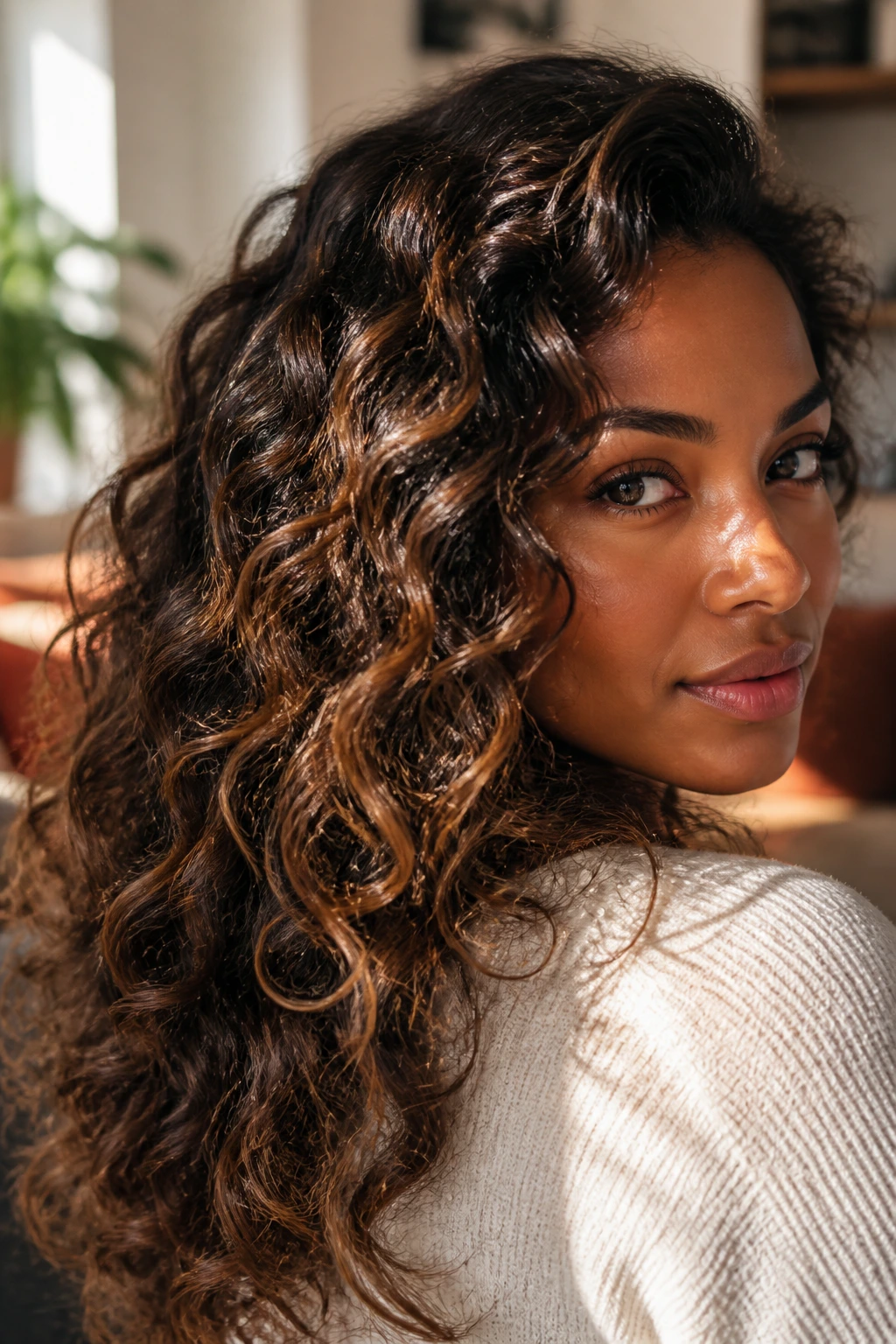
Amber tint highlights are one of the cleanest ways to add warmth without brass. They sit in that golden-brown zone that can make deep skin look more luminous, especially if your undertone leans warm or neutral.
The reason amber works is simple: it gives you brightness, but it still reads as brown. That means the color shows up in the hair before it overwhelms the whole look. On a curly or coily pattern, amber can flash in the bends, which is exactly where you want the eye to go.
If copper feels too red and honey feels too yellow, amber is the middle road. A very useful road.
21. Sable Dimension Layers
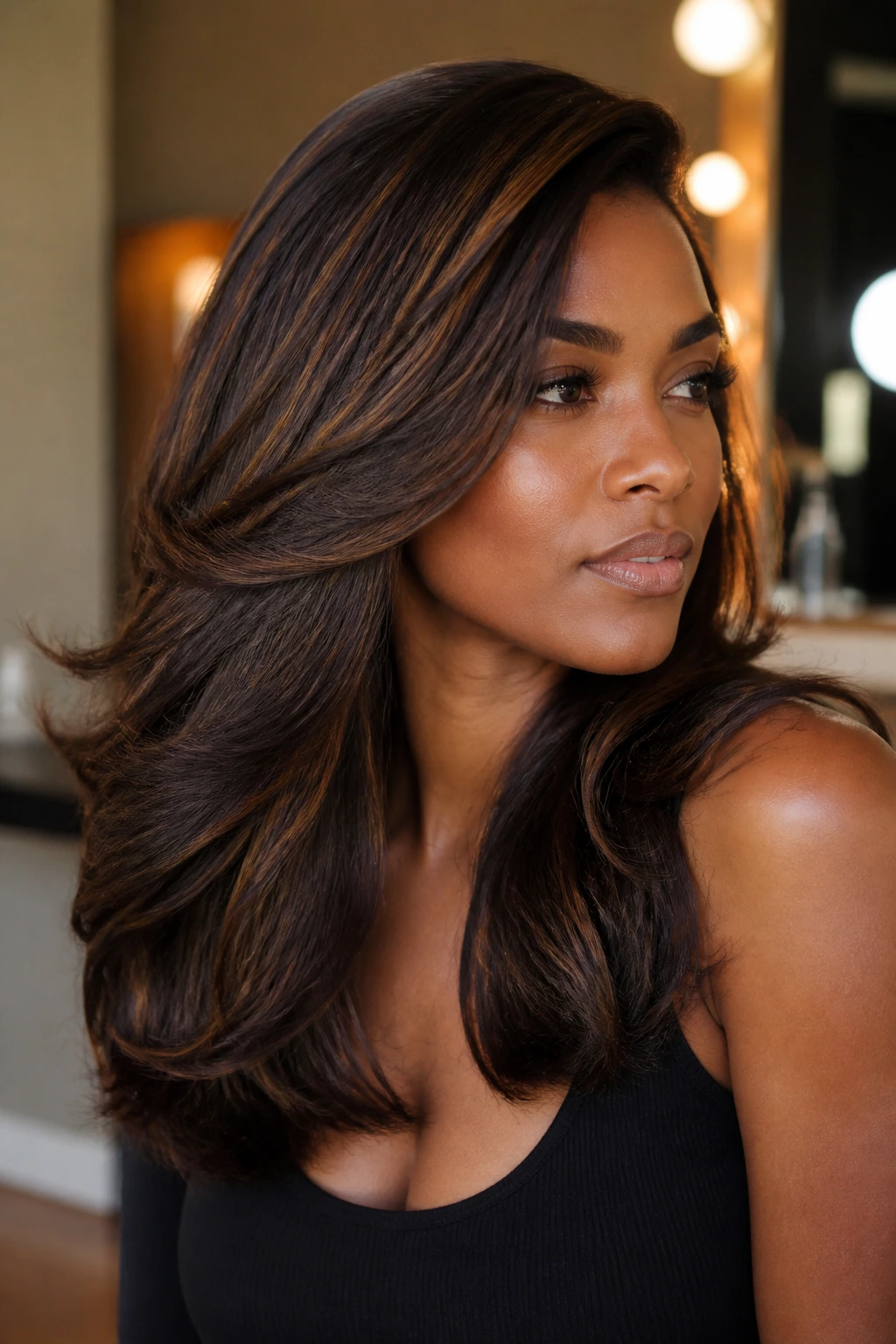
Can a highlight look almost invisible and still change everything? Yes. Sable dimension layers prove it. The color shift is tiny — just a shade or two — but the placement through the layers adds movement where flat hair would normally sit still.
How it works
Instead of lightening the top half heavily, the colorist works through the interior so the deeper sable base stays in play. On deep skin, that gives a polished, tonal finish that reads expensive without looking overworked.
This is a smart choice if you wear low buns, twist-outs, or sleek blowouts. The dimension shows when the hair moves, not when it’s pinned in place. That’s a neat trick.
22. Toasted Pecan Pieces
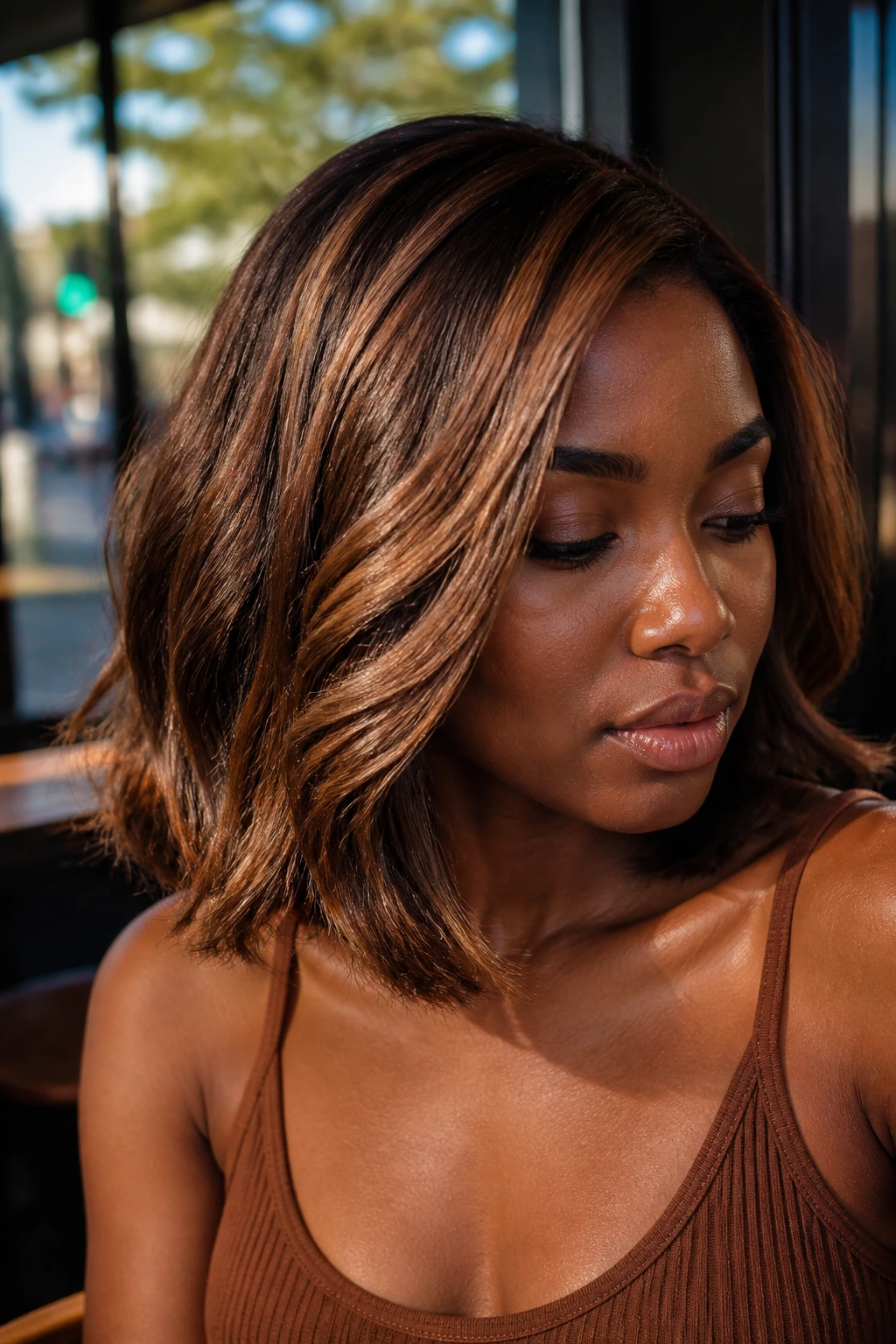
A shoulder-length cut with toasted pecan pieces can look almost sculpted. The warmth is nutty and brown-gold, which gives the hair a little lift without making it lean orange or beige.
The nice part is that pecan can be painted in medium-width sections, so it shows up even when the hair is dense or textured. Deep skin usually benefits from that kind of visible contrast, especially when the darker base stays strong near the scalp.
This is one of those shades that photographs differently depending on the angle. In direct light, the pecan comes forward. In shade, the brunette base takes over. That’s the kind of color work I like best.
23. Rosewood Brunette
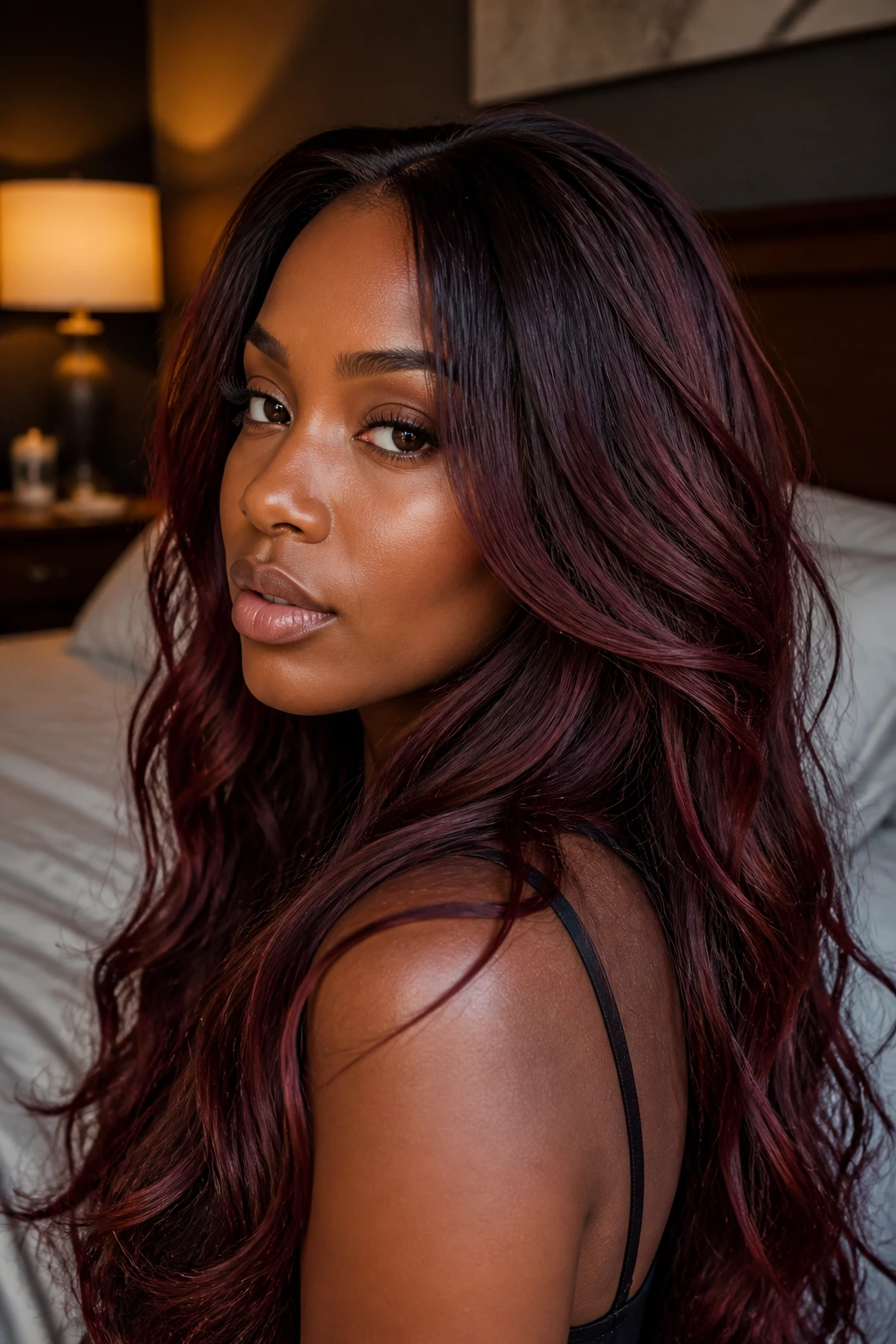
Rosewood is the oddball here, and I mean that with affection. It’s a brown shade with a muted berry-red edge, which makes it a smart pick if your skin has cool or neutral undertones and you want warmth without gold.
The color feels softer than copper and less brown than mahogany. On deep skin, that can be a very good thing. It gives the hair a slight wine note that looks especially nice against dark eyes and a clean center part.
You won’t see rosewood from every angle. That’s the point. It appears in motion, then slips back into brunette again.
24. Caramel Ombré Ends
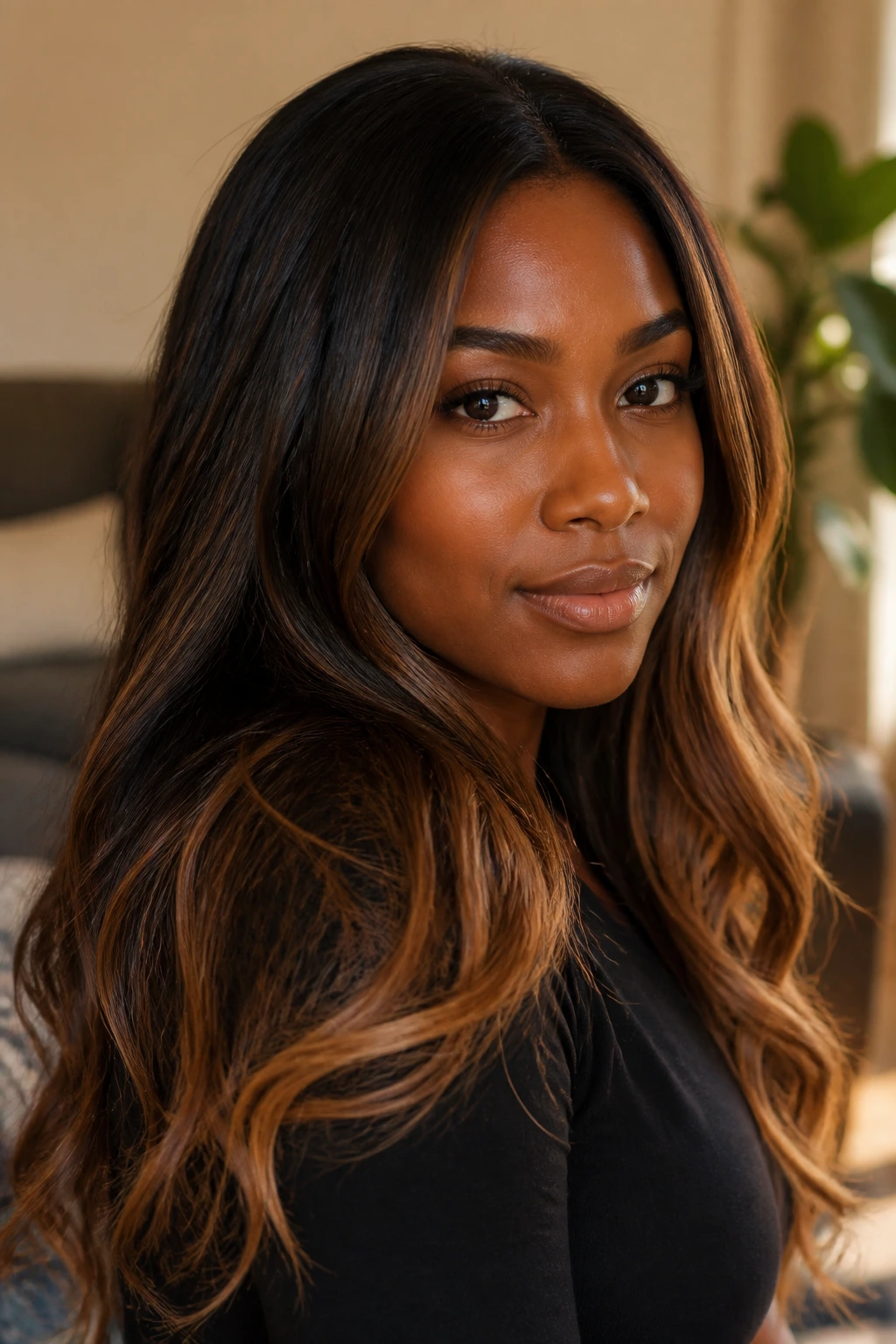
Caramel ombré ends are the low-maintenance cousin of full balayage. The root stays deep, the mid-lengths stay mostly brunette, and the lightest caramel lives on the bottom few inches.
Unlike a full highlight set, this keeps the face and crown grounded while still giving the hair movement. On deep skin, that matters because the contrast stays controlled. You get brightness where it counts — at the ends, where the eye expects a little fade anyway.
If you’re growing out old color or you like to stretch appointments, this is one of the safest ways to do it without losing interest in the hair.
25. Bronde Melt
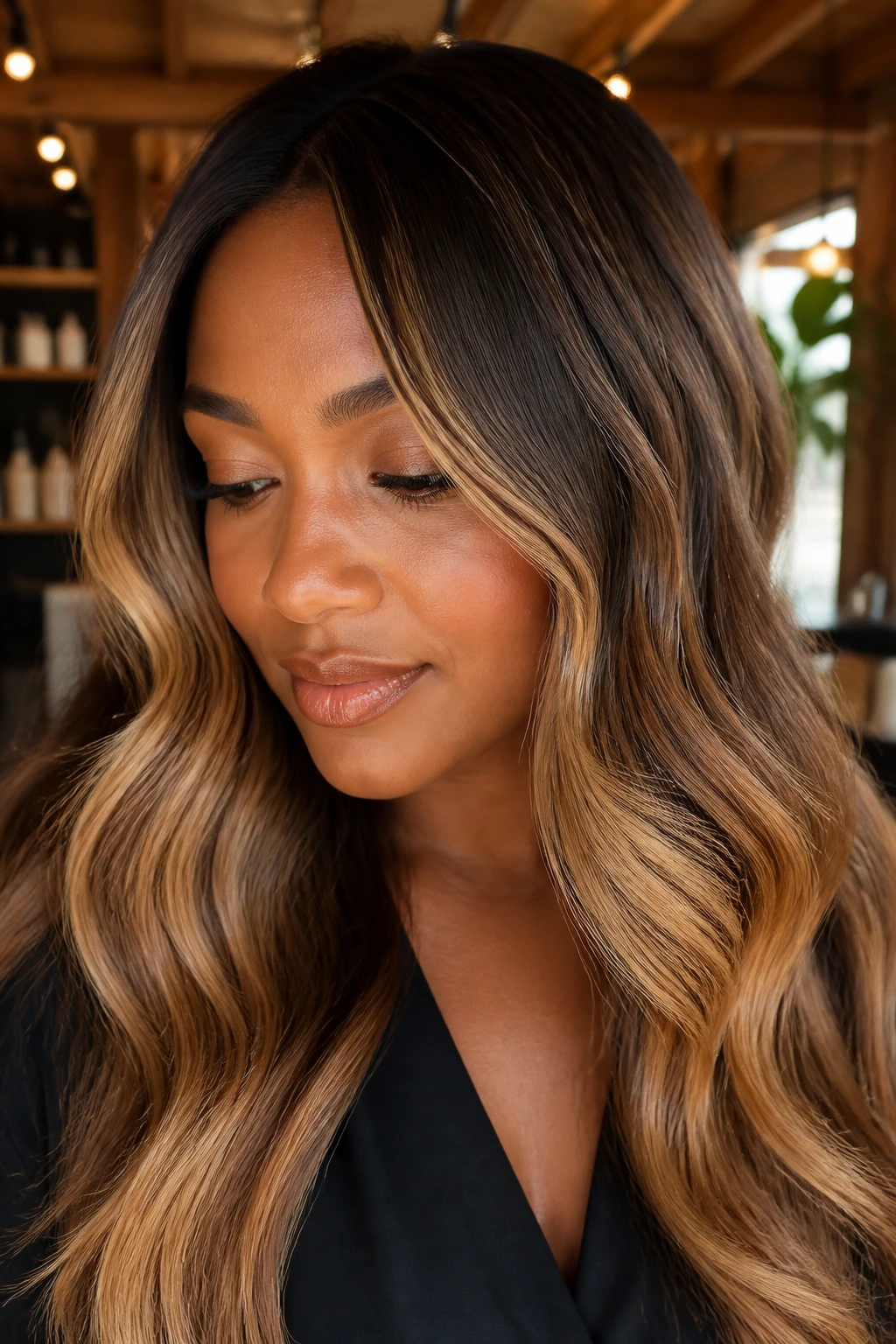
Bronde usually sounds like a lighter, softer move, but it can work on deep skin if the root shadow stays strong and the blonde notes stay warm. Without that darker base, bronde can look disconnected fast.
The version that works
Ask for a brunette melt that climbs gradually into beige-gold ends rather than a hard blonde shift. That keeps the color believable on deeper complexions. The warm root gives the lighter pieces something to sit against, which is what makes the whole thing look intentional.
- Best for people who want a more obvious lightening effect.
- Keep the transition slow and glossy.
- Avoid icy beige unless your undertones are genuinely cool.
My opinion: bronde is fine on deep skin, but only when the brunette part stays in charge.
26. Gingered Brown Highlights
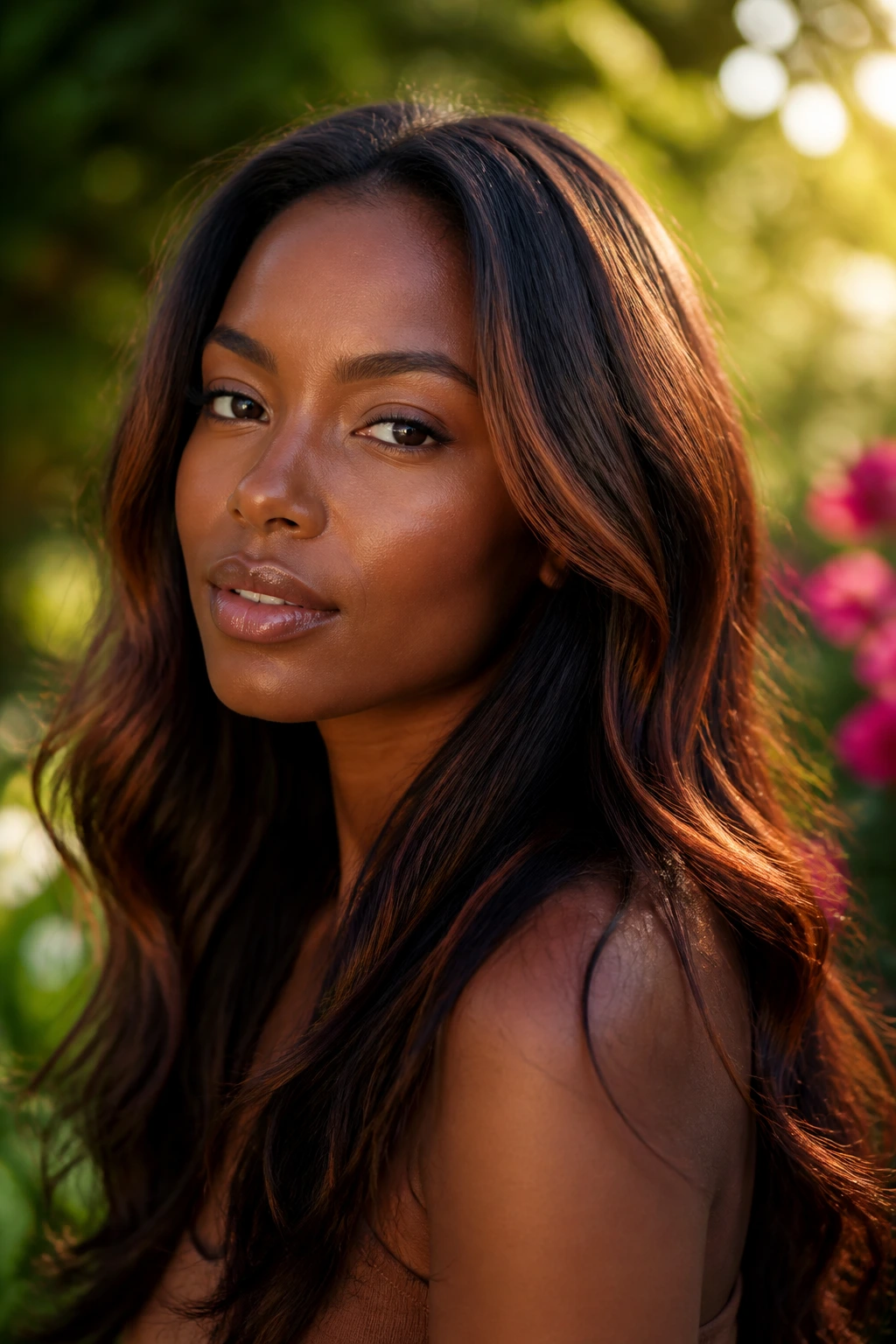
Gingered brown highlights are what happens when copper gets a softer edge. The tone is warm, spicy, and brown enough to avoid the neon problem that scares people off red tones.
That makes it a nice choice for deep skin with golden undertones. The ginger note catches light fast, which is useful if your hair tends to look all one color in the shade. A few well-placed strands can change that immediately.
This shade is also less common than caramel, so it has a little personality. Not a costume. Just a bit more spark.
27. Coffee Bean Lowlights
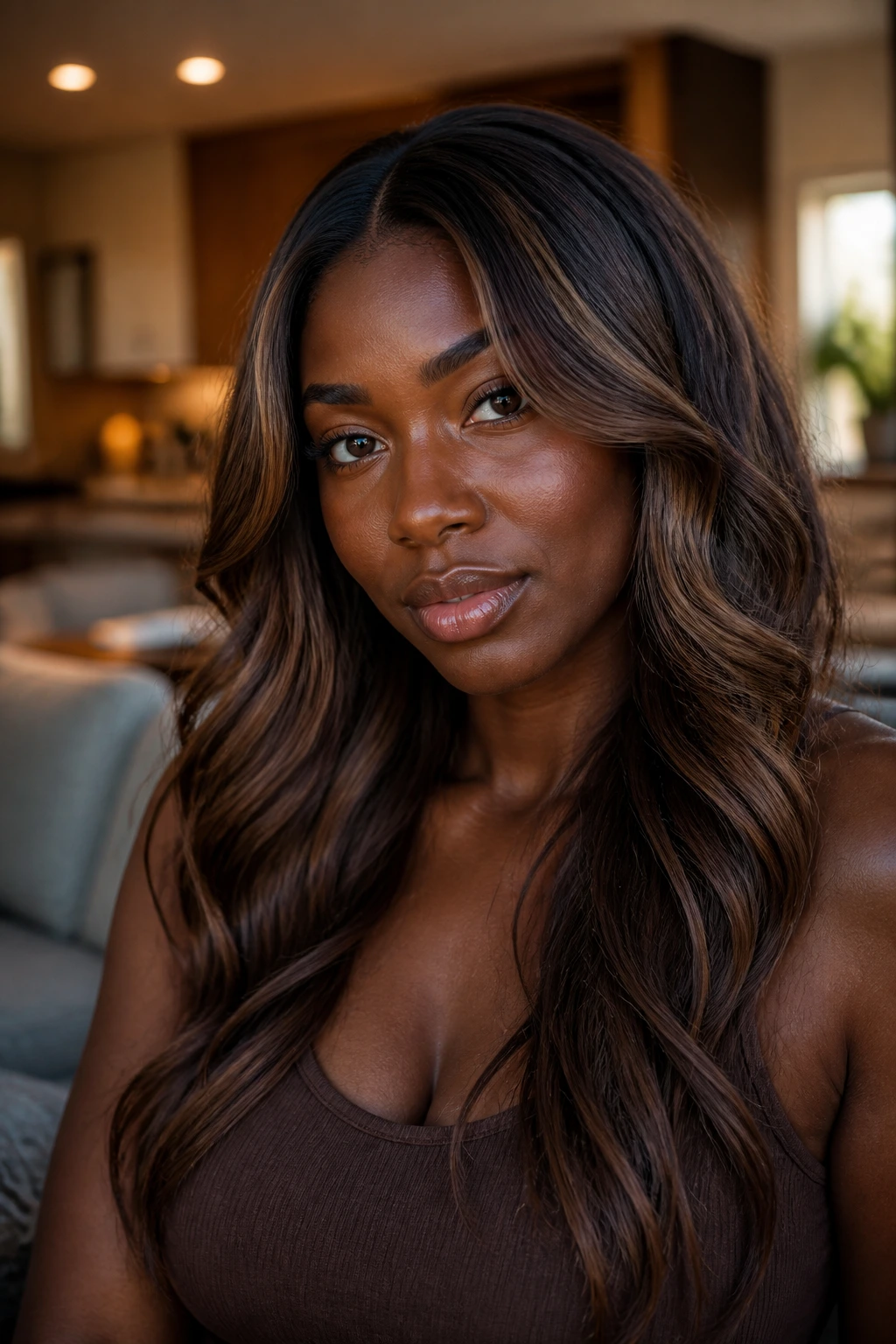
Why talk about lowlights in a highlights round-up? Because dark pieces can make the lighter ones look brighter, and coffee bean lowlights do that job better than almost anything else.
What they do
They rebuild depth where bleach has taken too much out of the hair. On deep skin, that depth helps the highlight shade stay rich instead of floating on top like a separate layer. It’s especially useful if you’ve gone too light in the past and need the color to feel grounded again.
Coffee bean lowlights are also a good fix for overly bright balayage. A few darker ribbons can calm the whole head down fast.
28. Bronze-Maple Sweep
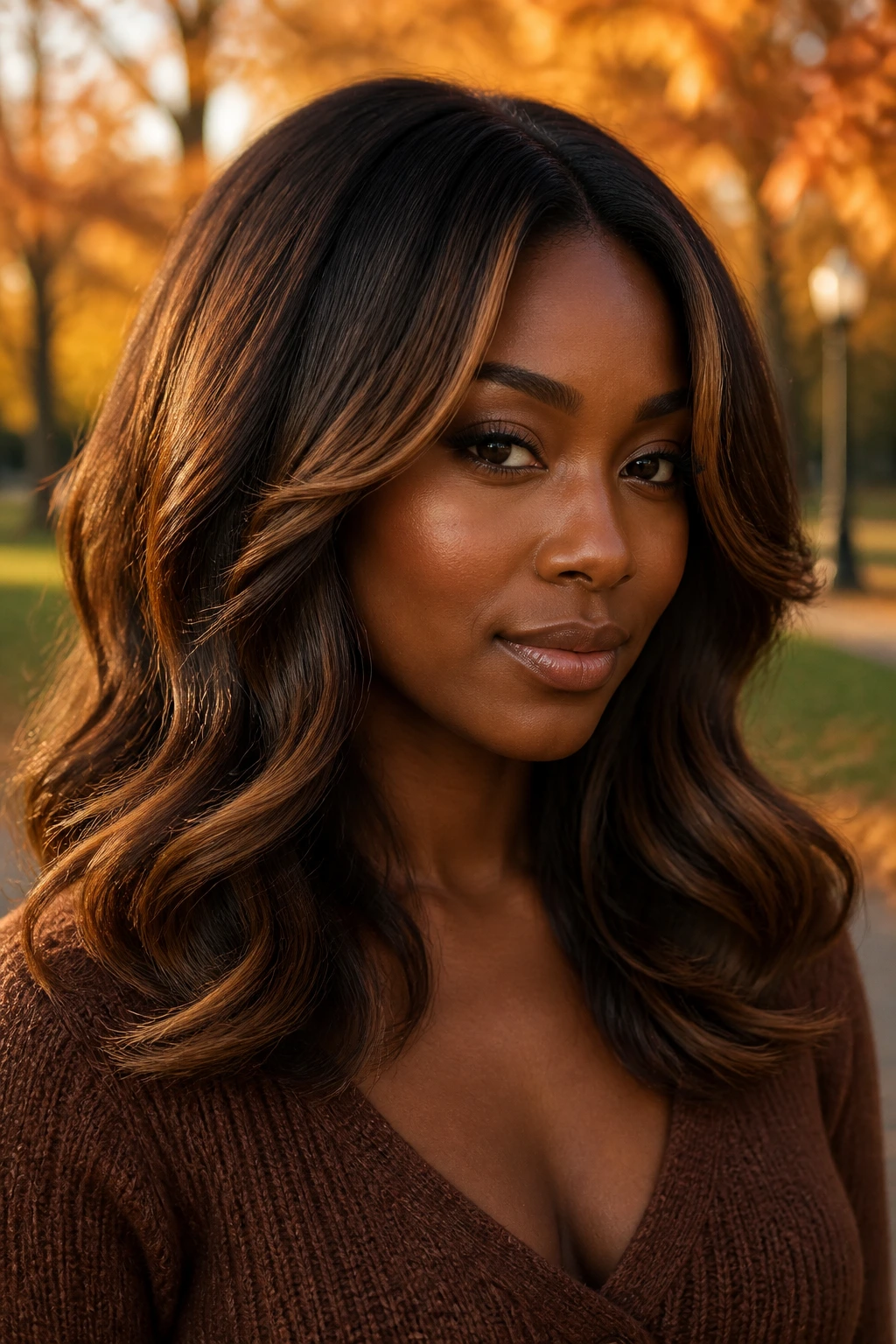
A bronze-maple sweep mixes two warm notes that play nicely together: the metallic shine of bronze and the brown-gold sweetness of maple. It’s a nice choice for layered hair because the two shades break up movement in a way that looks natural, not painted on.
The sweep matters as much as the color. You want the light to curve through the mid-lengths and ends, not sit in hard stripes. On deep skin, that fluid placement keeps the warmth rich instead of busy.
If your cut already has a lot going on, this is a smart color choice. The hair looks active without getting loud.
29. Plum Brown Veil
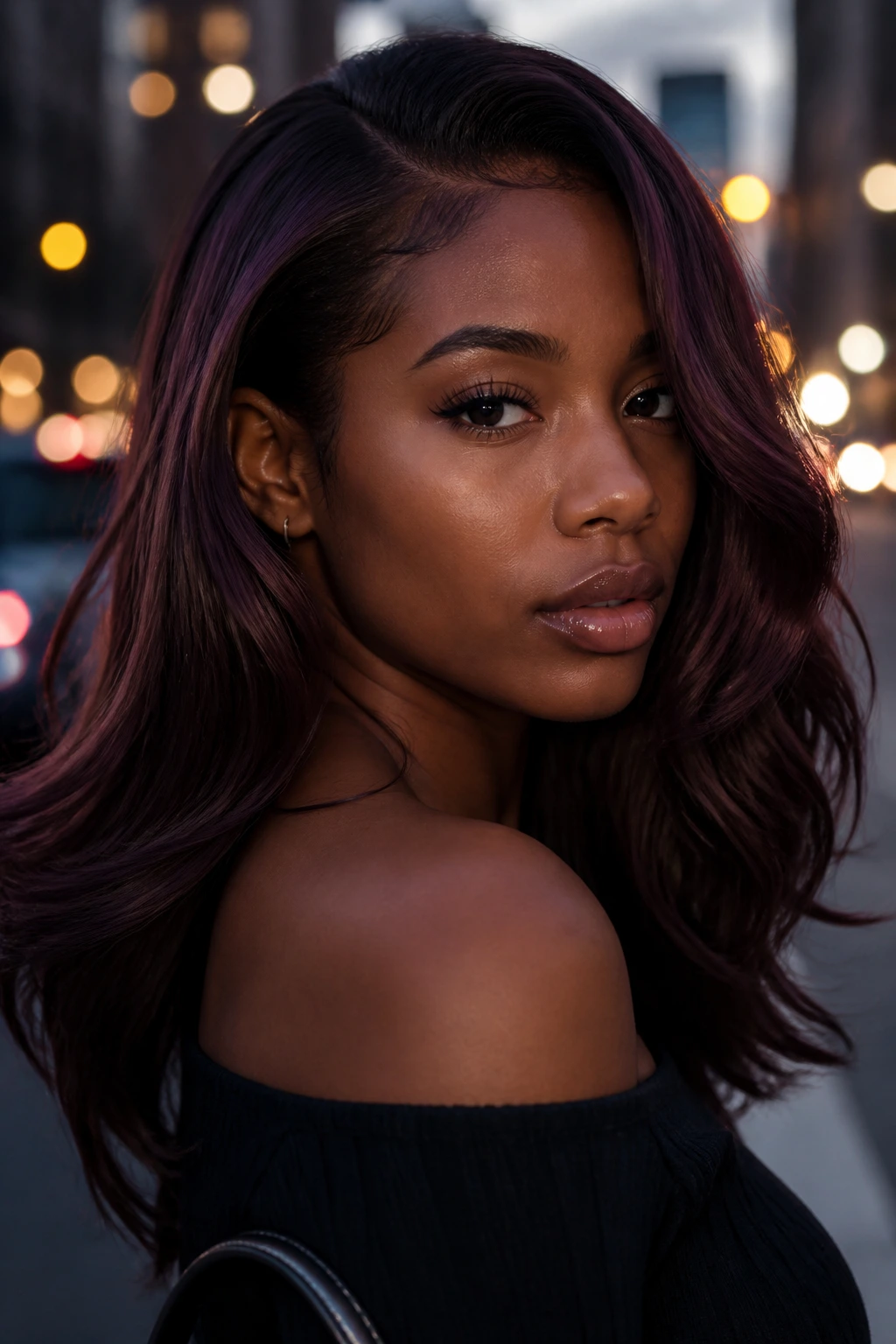
Plum brown is the cool cousin in the set, and it’s worth knowing about if warm tones don’t always sit right on your skin. The violet note is muted, so it still reads as brunette, just with a deeper edge.
On deep skin, plum brown can look elegant when it stays close to the base and shows up mostly in motion. It’s especially nice if you have neutral or cooler undertones, or if gold highlights tend to pull too yellow against your face.
This is not a loud plum. It’s more like a smoked version, which is the version I’d choose anyway.
30. Midnight Mocha Dimension
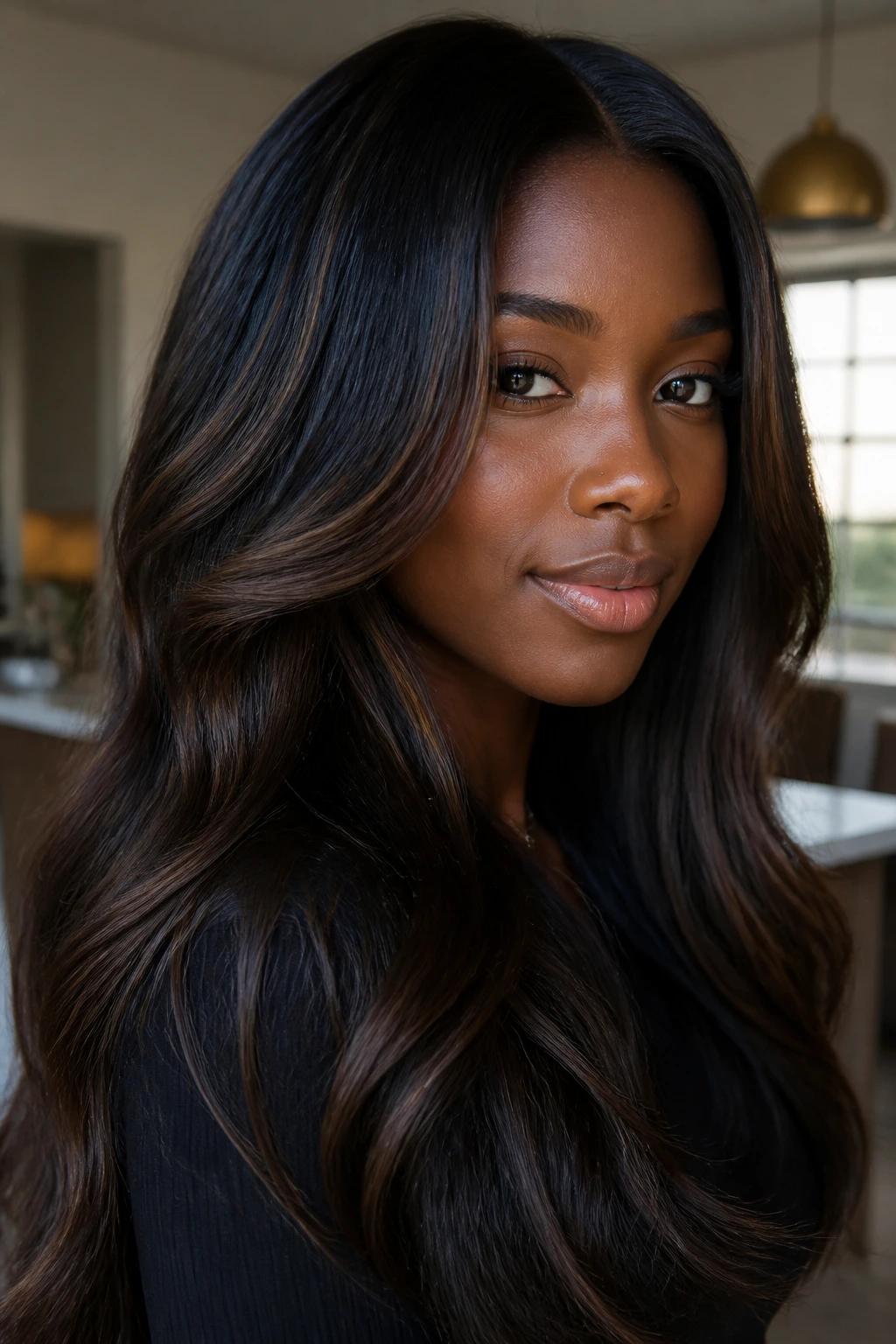
Midnight mocha dimension is for anyone who wants shine first and contrast second. The base stays very dark, the highlights stay close in tone, and the whole look depends on finish, placement, and movement instead of obvious lightness.
That’s why it works so well on deep skin. The hair still looks dark and rich, but it stops reading as a single block of color. A slight lift through the mids and ends gives the surface a glossy ripple when light hits it.
If you love low-contrast color and don’t want strangers clocking your hair from across the room, this is the quietest strong choice on the board.
Why Warm Brunette Shades Read So Well on Deep Skin
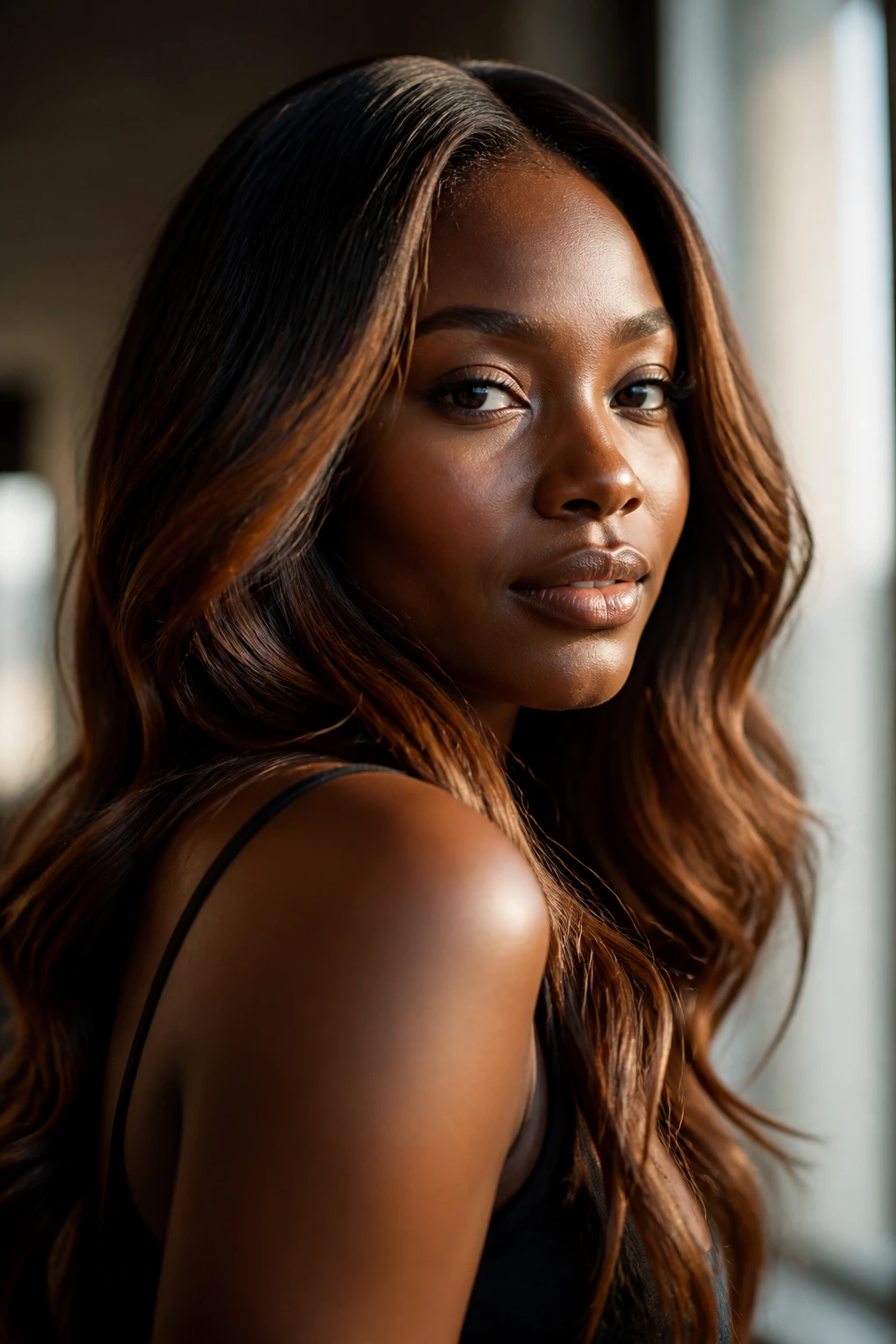
Deep skin often carries gold, red, olive, or neutral undertones underneath the surface. Warm brunette highlights echo those tones instead of fighting them, which is why caramel, bronze, honey, copper, and mahogany tend to look joined to the face rather than pasted on. Cool ash can work too, but it needs a careful hand. Too much of it and the hair can go chalky under daylight or gray under indoor bulbs.
The other thing people miss is contrast. A highlight does not need to be pale to matter. On deep brunette hair, a lift of 2 to 4 levels around the face often gives more visual payoff than pushing the entire head lighter. The eye notices movement, shine, and placement before it notices the number on the color chart.
Brunette color also behaves differently on texture. Coils and curls swallow some of the light, so a slightly wider ribbon can show up better than dozens of tiny threads. Straight hair does the opposite. Tiny babylights can keep the finish from looking striped. That’s why the same color name can look completely different on two heads.
What to Tell Your Colorist Before the Foils Go In
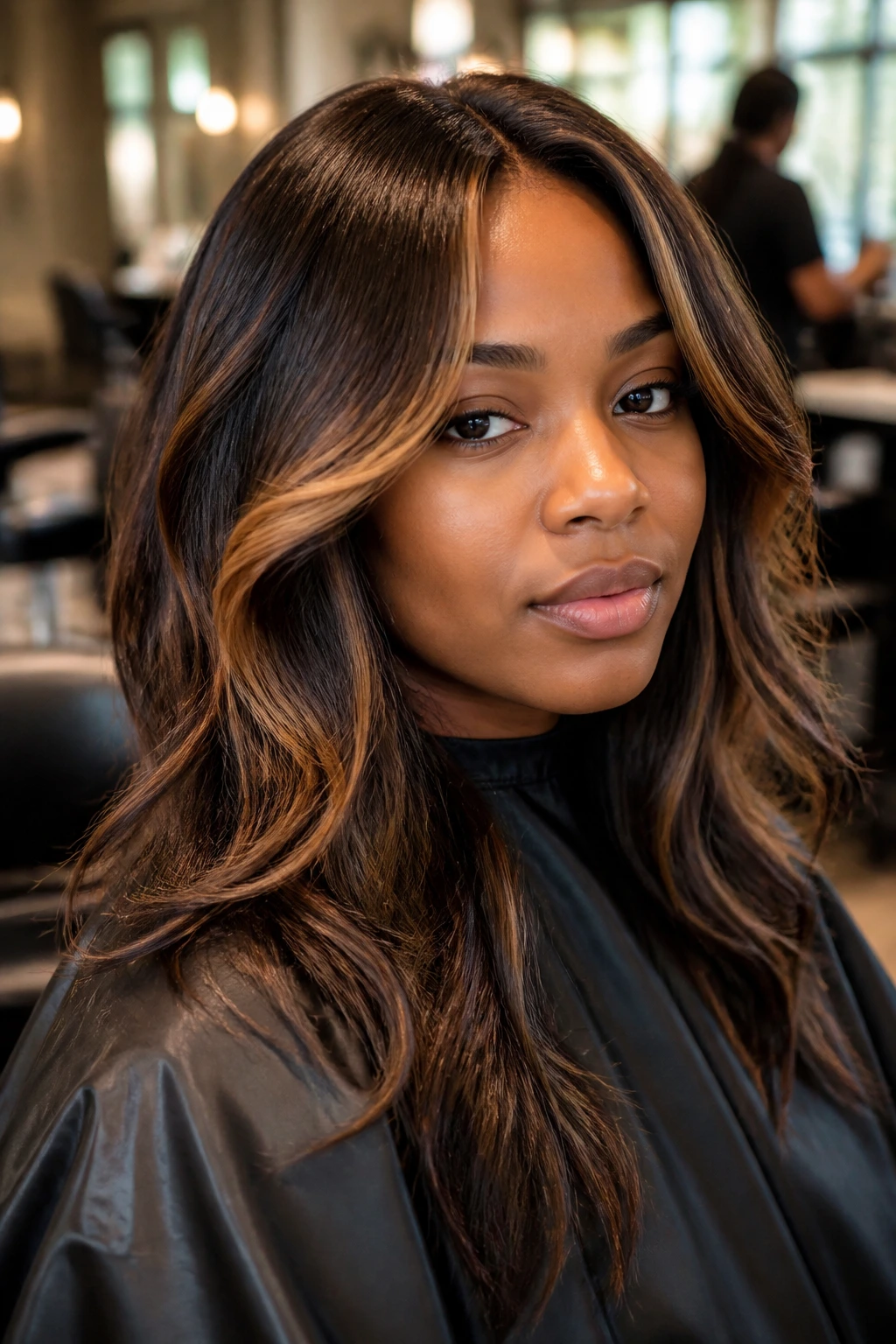
The most useful thing you can say at a consultation is not “make me blonde.” It’s “I want warmth, depth, and a grow-out that won’t look harsh.” That sentence gives a colorist a direction. Blonde does not.
Bring photos taken in daylight, not filtered selfies. One picture of the front, one of the back, and one of the finish you actually wear most often — braids, curls, silk press, twist-out, whatever that is. If your hair changes shape, the placement has to match the shape.
If you know your base level, say it. Level 4, level 5, level 6 — those numbers help more than “dark brown.” And if you know what you hate, say that too. No orange. No ash. No bright blonde pieces at the part. That kind of negative direction saves time and bad surprises.
A good consult should end with a plan for tone, placement, and maintenance. Not just color.
Essential Tools for a Smooth Salon Visit
-
Daylight inspiration photos: Bring 3 or 4 pictures that show the front, side, and back, ideally in natural light. Salon lighting can lie to you.
-
A note on your current color history: Bleach, box dye, henna, previous glosses — all of it matters because it changes how light the hair will lift.
-
Color-safe shampoo and conditioner: Use these after the appointment so the tone doesn’t wash out fast.
-
Heat protectant: If you blow-dry or flat-iron, this is non-negotiable. Look for one that can handle high heat without leaving the hair greasy.
-
Wide-tooth comb or detangling brush: Helpful for curls, waves, and anything that tangles when wet.
-
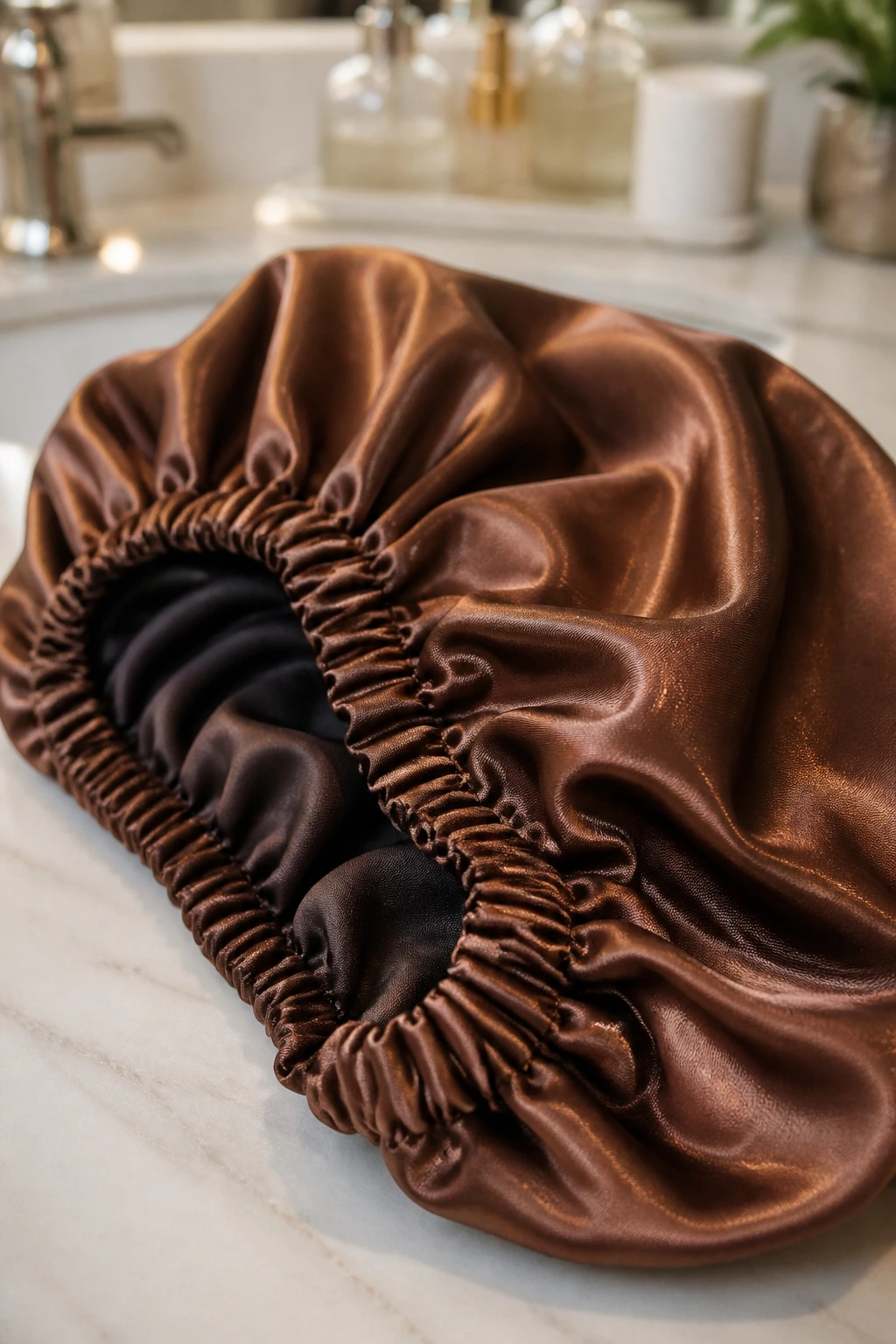
Satin bonnet or pillowcase: It keeps the highlighted pieces from roughing up overnight.
-
Microfiber towel or T-shirt: Less friction after washing means less frizz and less color fade at the surface.
-
Blue shampoo or gloss conditioner: Use sparingly and only when warm tones start drifting too orange.
Smart Shade and Booking Tips for Deep Skin Tones
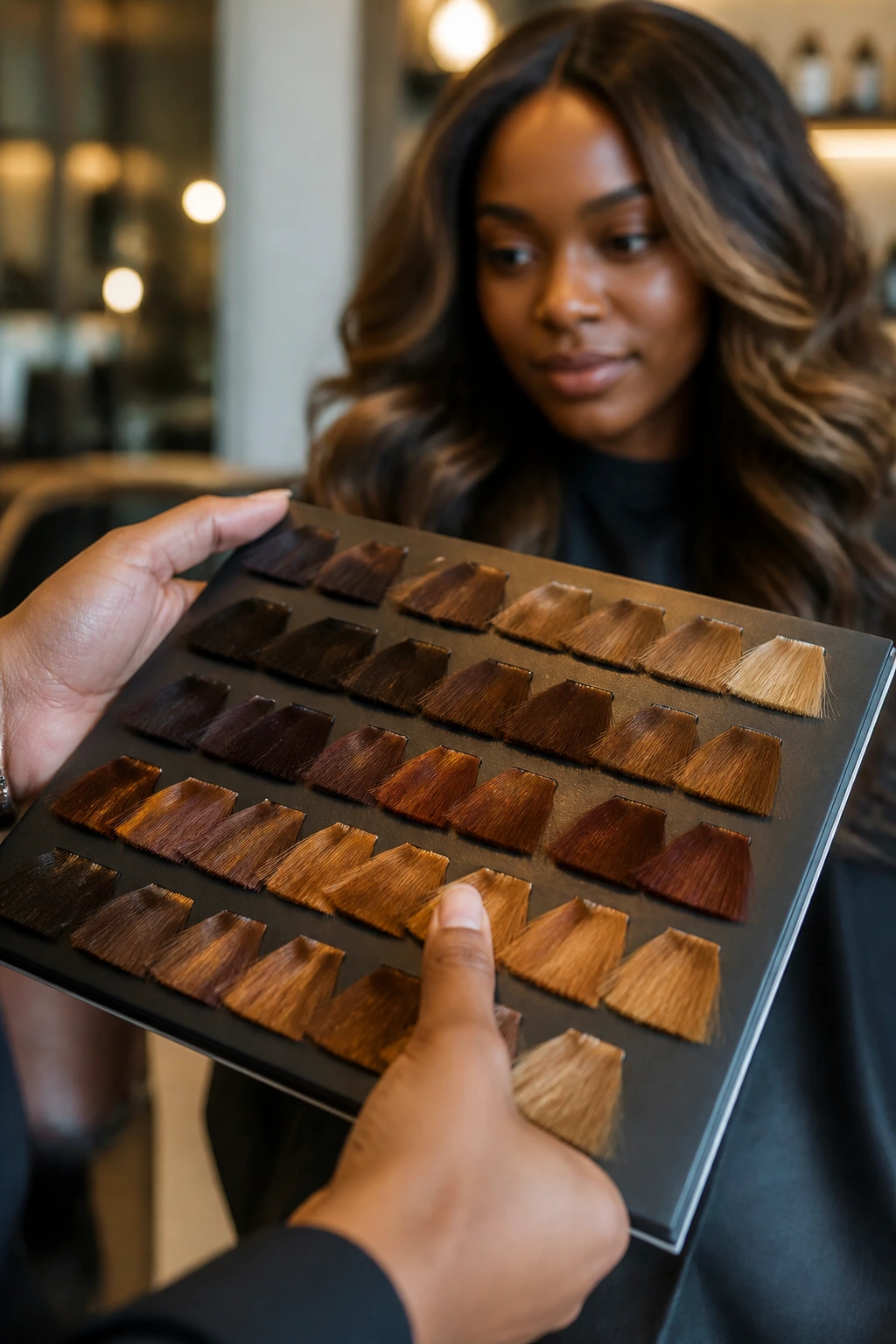
The smartest booking tip I can give you is this: ask for the tone first, not the trend. “Caramel balayage” tells a colorist more than “highlight me,” but “warm caramel with a deep root shadow” tells them even more. The root depth keeps the color believable on deep skin, and the warm middle tones keep it from reading dull.
If your skin leans golden, honey, bronze, and butterscotch usually make sense. If you lean neutral, chestnut, amber, and mahogany are safer bets. If your undertone is cooler, rosewood or muted plum-brown can be cleaner than pure gold. That doesn’t mean you can’t wear the warmer shades. It just means the gloss and placement need more thought.
Also: be honest about maintenance. If you’re not a salon-every-six-weeks person, do not book a high-contrast blonde look and pretend you’ll keep up. A softer balayage or a rooted melt will look better on you six weeks later than a dramatic color you can’t maintain.
How to Wear the Color in Curls, Waves, and Straight Hair
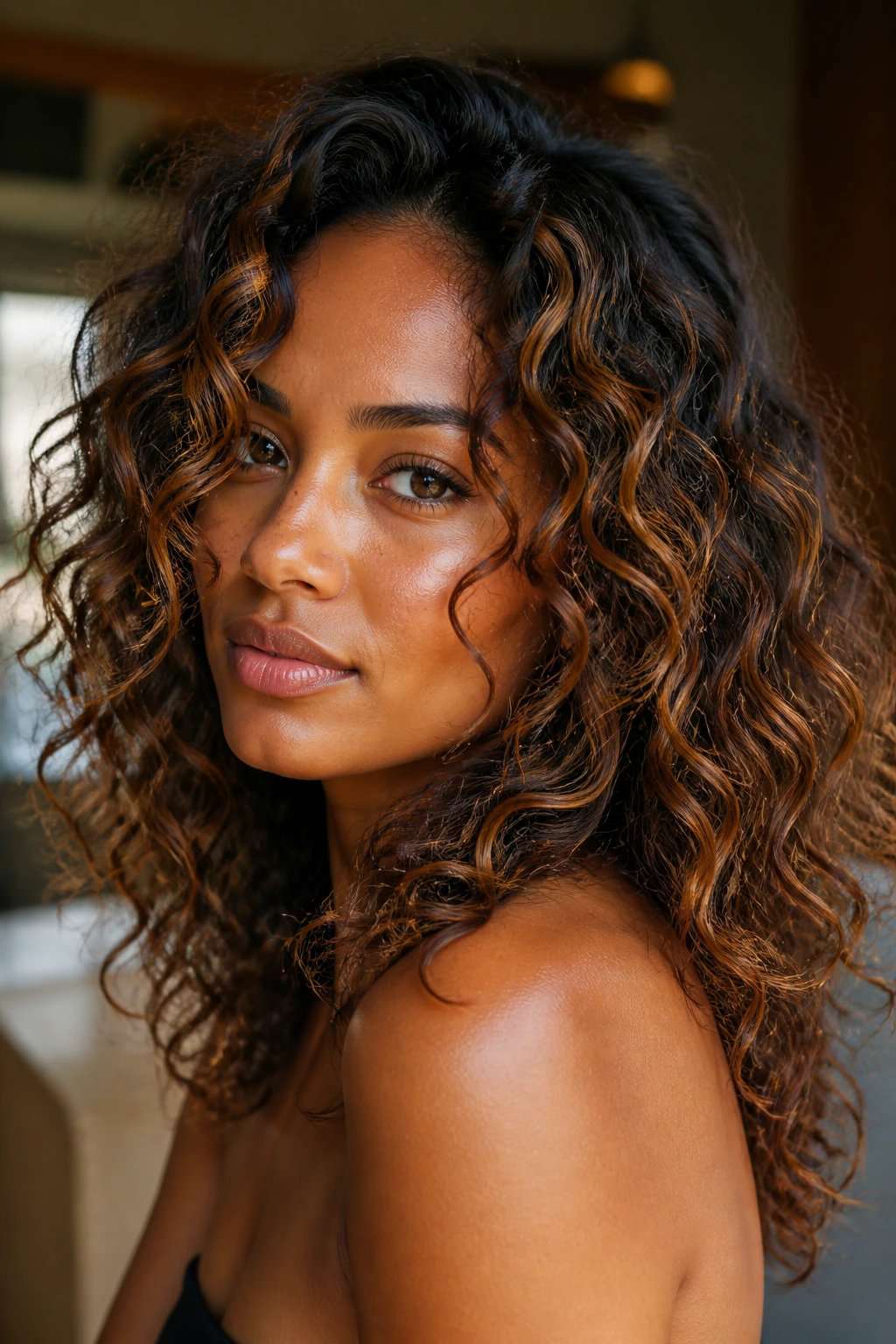
Straight hair: A smooth blowout shows every ribbon, so finer babylights and well-placed face-framing pieces usually look cleaner than chunky stripes. A soft bend at the ends keeps the color from looking too severe.
Waves and loose curls: This is where caramel, bronze, and cinnamon start showing off. The bends break the light into pieces, which makes the color look fuller than it really is. A 1-inch iron or a braid-out will usually show the dimension better than pin-straight styling.
Coils and tight curls: Wider painted sections tend to perform better because the curl pattern hides a lot of tiny work. Ask your colorist to place brightness where the curl clumps expose it — usually around the outer curve and near the face.
Updos and ponytails: Money pieces, contour highlights, and peekaboo panels matter more here than all-over lightness. If you wear your hair pulled back often, put the brightness where the style won’t hide it.
Finish: A little shine oil on the mids and ends makes the highlight tones read richer. Don’t drown the roots. That just makes the hair collapse.
Extra Tips for a Better Finish
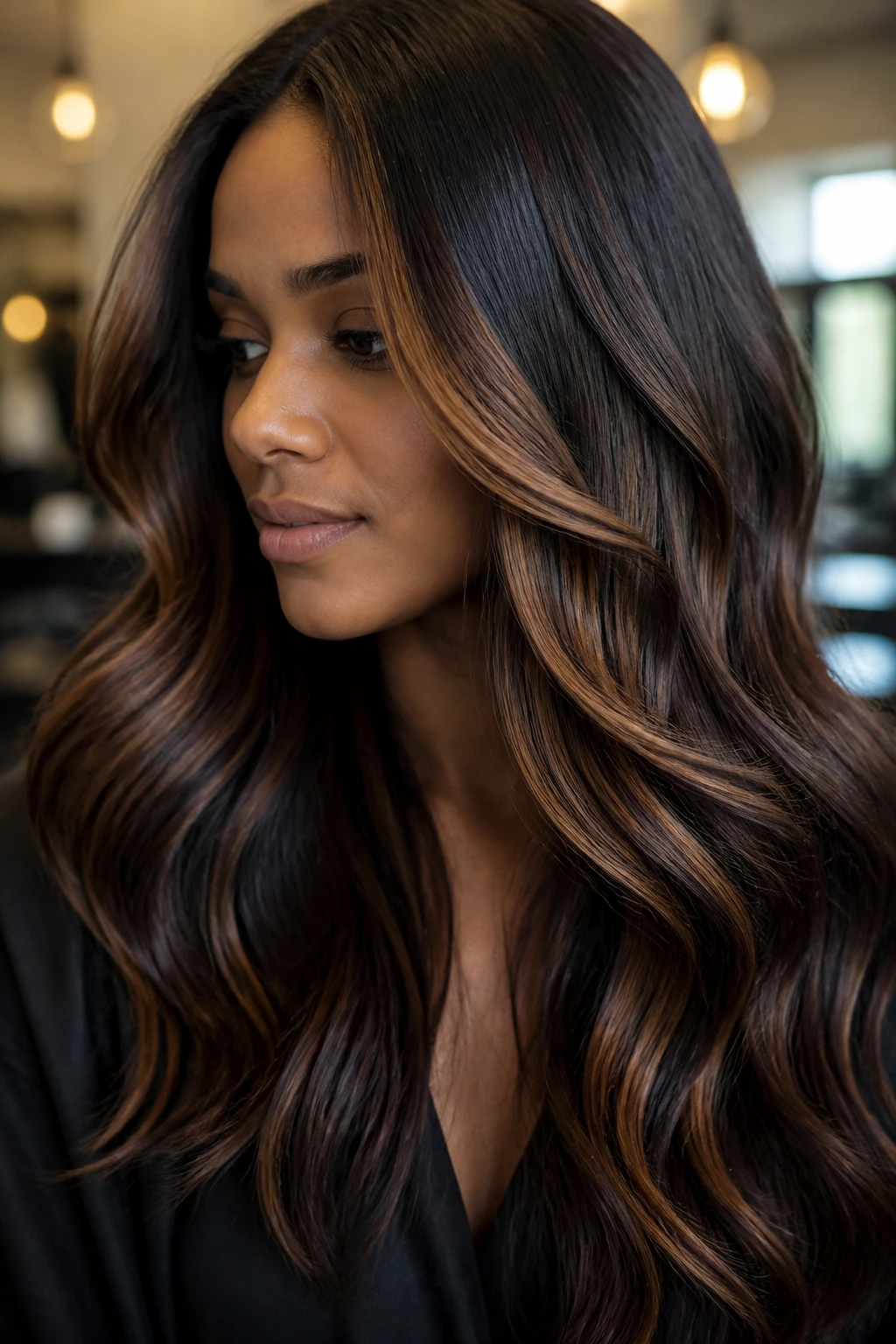
Color Boost: A clear or warm gloss after the lightening step makes a bigger difference than people expect. It smooths the cuticle, deepens the tone, and cuts the “brassy right after the salon” problem down fast.
Texture Boost: On curls and coils, ask the colorist to place the light where the hair naturally opens. That usually means fewer, larger ribbons instead of tiny scattered threads that disappear once the hair shrinks.
Make It Softer: Keep a shadow root one to two levels deeper than the lightened pieces. You’ll get better grow-out, and the highlight won’t look like it starts from nowhere.
Make It Bolder: Add one brighter money piece at the front and keep the rest of the hair quieter. That gives you a hit of brightness without turning the whole head into a maintenance project.
Serving Suggestions: A silk press, a soft wave, or a chunky braid-out will show these shades in different ways. Try changing the part once in a while; the color often looks fuller from an off-center part than from the same center line every day.
Keeping the Tone Fresh Between Appointments
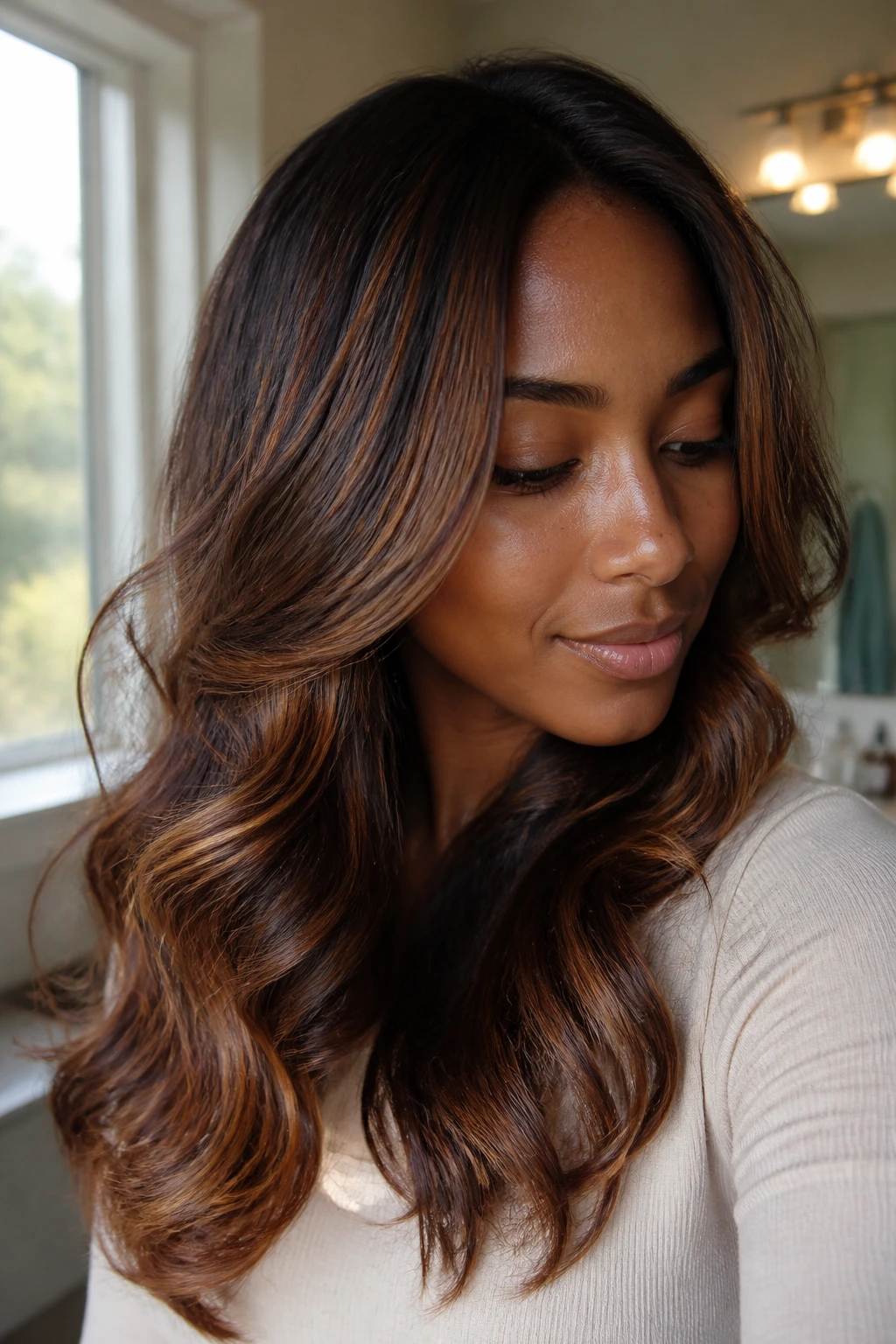
The first 48 hours after coloring matter more than people think. If you can avoid shampooing right away, do it. The cuticle settles a bit, and the tone holds better when the hair isn’t washed hard on day one. After that, wash with a color-safe shampoo no more than a few times a week unless your scalp says otherwise.
Warm brunette highlights usually stay happy with a gloss refresh every 6 to 8 weeks. If the hair starts to lean orange, use a blue shampoo sparingly — once every 1 or 2 weeks, not every wash. Purple shampoo is better if you have lighter caramel or honey pieces that start to yellow, but heavy use can mute the warmth that makes these shades work on deep skin.
For the ends, a moisturizing mask every 7 to 10 days helps keep the lighter pieces from getting crunchy. If you blow-dry often, use heat protectant every single time. Not “most times.” Every time.
As for salon visits, a full lightening refresh often stretches to 8 to 12 weeks if the root is deep and the placement is soft. A gloss, though, may be worth slipping in sooner if the tone starts to drift.
Variations and Adaptations to Try
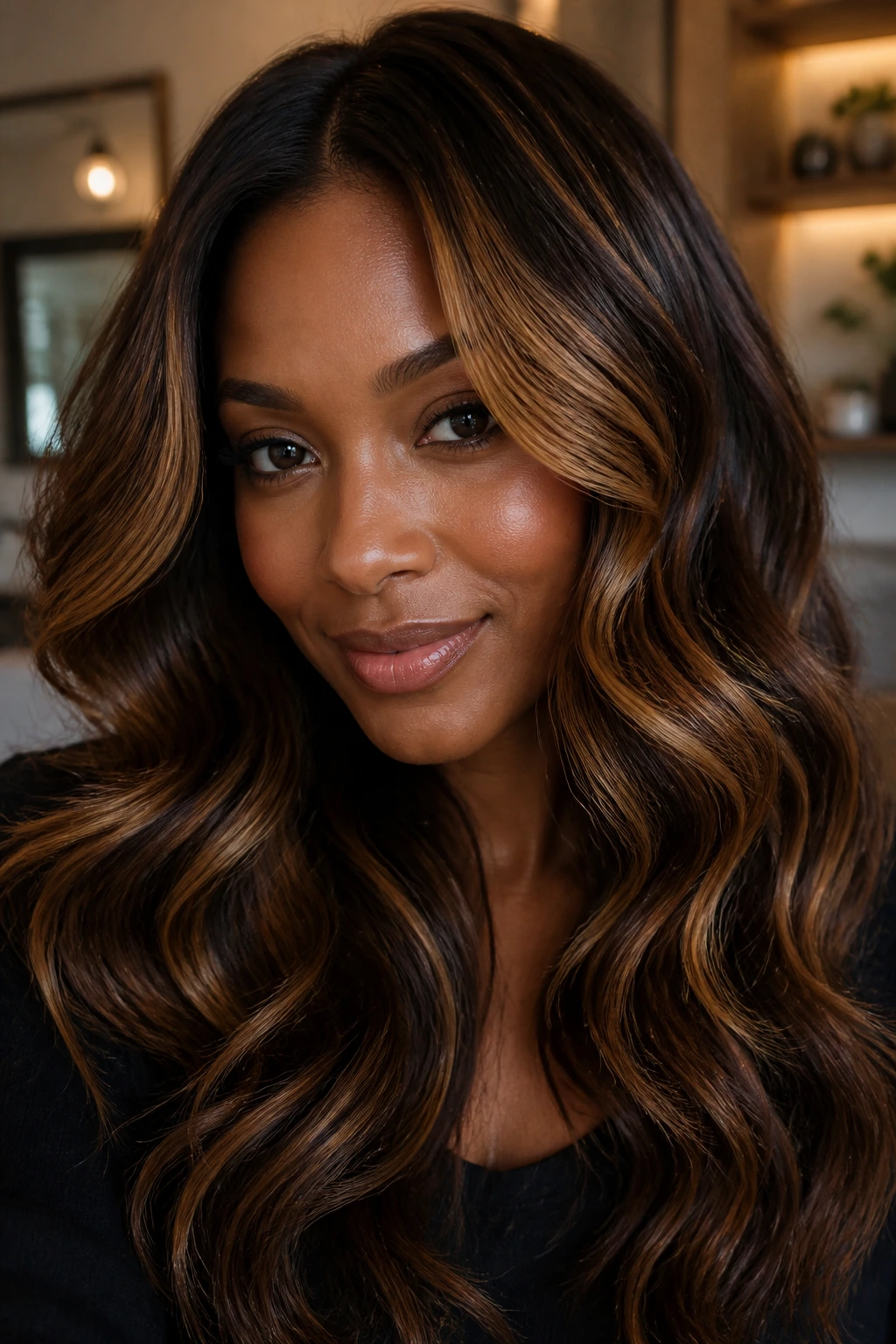
Soft Root Shadow: Keep the root deeper and let the lighter color start below the part line. This is the cleanest option if you want lower upkeep and a softer grow-out.
Bold Money-Piece Pop: Push the front panels brighter and keep the rest of the hair subdued. It’s a good fit if you wear your hair down often and want the color to show up in photos.
Coily Ribbon Placement: Use wider painted sections on curls and coils so the highlight survives shrinkage. Tiny streaks disappear fast in textured hair; broader ribbons stay visible.
Red-Brown Shift: Move the tone toward auburn, cinnamon, or mahogany if gold doesn’t suit your undertone. That warmer red family can look rich and dimensional without turning orange.
Cool Brown Veil: If gold tends to fight your complexion, ask for rosewood or plum-brown tones instead. They keep the brunette base intact while giving the color a softer edge.
Gloss-Only Brunette: If you do not want lightening at all, a demi gloss in caramel-brown, amber-brown, or mahogany can fake some of the effect. It won’t lift the hair, but it can add shine and tonal depth.
Mistakes That Flatten the Whole Look
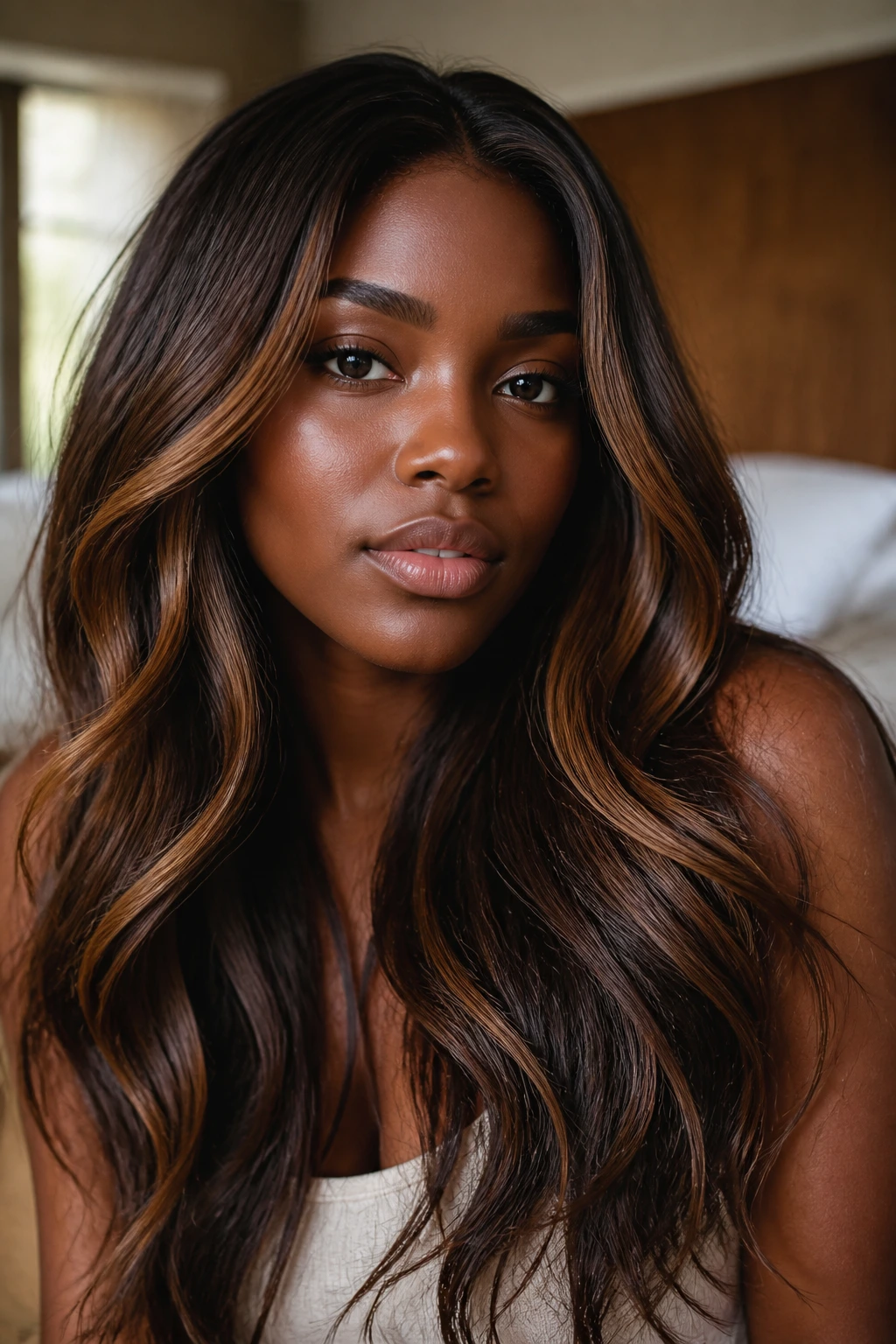
Going too ash too fast: Ash can look dusty on deep skin, especially under indoor lighting. If the hair starts to look gray-brown instead of warm and rich, the fix is a warmer gloss, not more lightening.
Choosing blonde before brunette: A lot of people ask for “highlights” and mean pale blonde. On deep skin, that can break the balance unless the base stays strong and the colorist has a very steady hand. Better to start with caramel, bronze, or honey.
Over-lighting the ends: If the ends go too pale, they can look dry even when they’re healthy. Keep the lift controlled and use a deeper lowlight underneath to bring back depth.
Ignoring texture: Tiny babylights can vanish in coils, while oversized panels can look stripy on fine straight hair. The placement has to fit the hair pattern.
Skipping gloss: Lightened brunette hair without a gloss often looks raw for the first week and dull after that. A quick tone refresh changes that fast.
Frequently Asked Questions
What brunette highlight shade looks best on deep skin tones?
Warm shades usually lead the pack: caramel, honey, bronze, chestnut, copper, and mahogany. If your undertone is cooler, rosewood or muted plum-brown can work better than gold.
Are caramel highlights better than honey highlights?
Neither is automatically better. Caramel is deeper and warmer, while honey is brighter and a little more golden. Caramel usually blends more easily on dark brown hair; honey gives a sunnier finish.
Can deep skin pull off ash brown highlights?
Yes, but ash needs a careful hand. Too much cool tone can make the color look flat or dusty, so it usually works best as a small accent rather than the main event.
How light should brunette highlights be on deep hair?
Often 2 to 4 levels lighter than the base is enough. That range gives visible movement without forcing the color into a high-maintenance blonde zone.
What if my hair is curly or coily?
Ask for wider ribbons, not tiny scattered strands. Texture hides small work, so placement matters more than the exact number of pieces.
How often do brunette highlights need a gloss?
Most warm brunette tones benefit from a gloss every 6 to 8 weeks, sooner if the hair starts turning orange or dull. A gloss can restore shine without re-lightening the hair.
Can I do these at home?
You can maintain a gloss or tone at home, but actual highlighting on dark hair is where things get tricky. Uneven lift shows quickly on deep skin, especially around the face, so salon placement is usually safer.
What if the highlights turn orange?
Use a blue shampoo lightly, not every wash, and book a gloss or toner if the warmth gets too loud. Orange usually means the hair needs tone control, not another round of bleach.
The Shades That Stay Interesting
The reason brunette highlights work so well on deep skin is that they respect what’s already there. They don’t fight the base. They sharpen it. A warm ribbon here, a softer panel there, a gloss that keeps the tone rich — that’s usually enough to make the hair look fuller, shinier, and more intentional without losing the depth that makes brunette hair beautiful in the first place.
If you’re choosing between soft and bold, start with the version that gives you room to live in the color. You can always go brighter later. What’s hard to fix is a highlight that goes too far, too fast and can’t find its way back to brown.