



Blonde updos with money piece highlights have a neat little trick: the hair can be pinned, twisted, braided, and still keep the face lit up from the front. That matters more than people admit. A full updo can turn heavy or a little stern fast, especially when the neckline is bare and the dress has sharp lines. But those lighter front strands change the whole read of the style. They soften the edges, catch light near the cheekbones, and keep the look from disappearing into one solid block of color.
I’ve always liked that contrast. A polished bun with a bright frame around the face feels deliberate, not stiff. A messy twist with a pale ribbon of hair at the temple feels relaxed, not sloppy. And if the blonde is well placed — not stripey, not too chunky, not sitting too far back from the hairline — the style does the quiet work of making skin look fresher and features look more defined. That is the real reason money piece highlights keep showing up in special-occasion hair. They pull focus exactly where you want it.
There’s a lot of room here, too. Some of these looks are sleek enough for a black-tie evening. Others hold up at a courthouse ceremony, a school dance, a rehearsal dinner, or a dressy brunch where you want your hair off your neck but still interesting from the front. The key is choosing the right shape, the right finish, and the right amount of softness around those highlighted pieces. Once you see how much those front strands change the mood, the rest starts making sense.
Why These Blonde Updos Feel Special Instead of Stiff
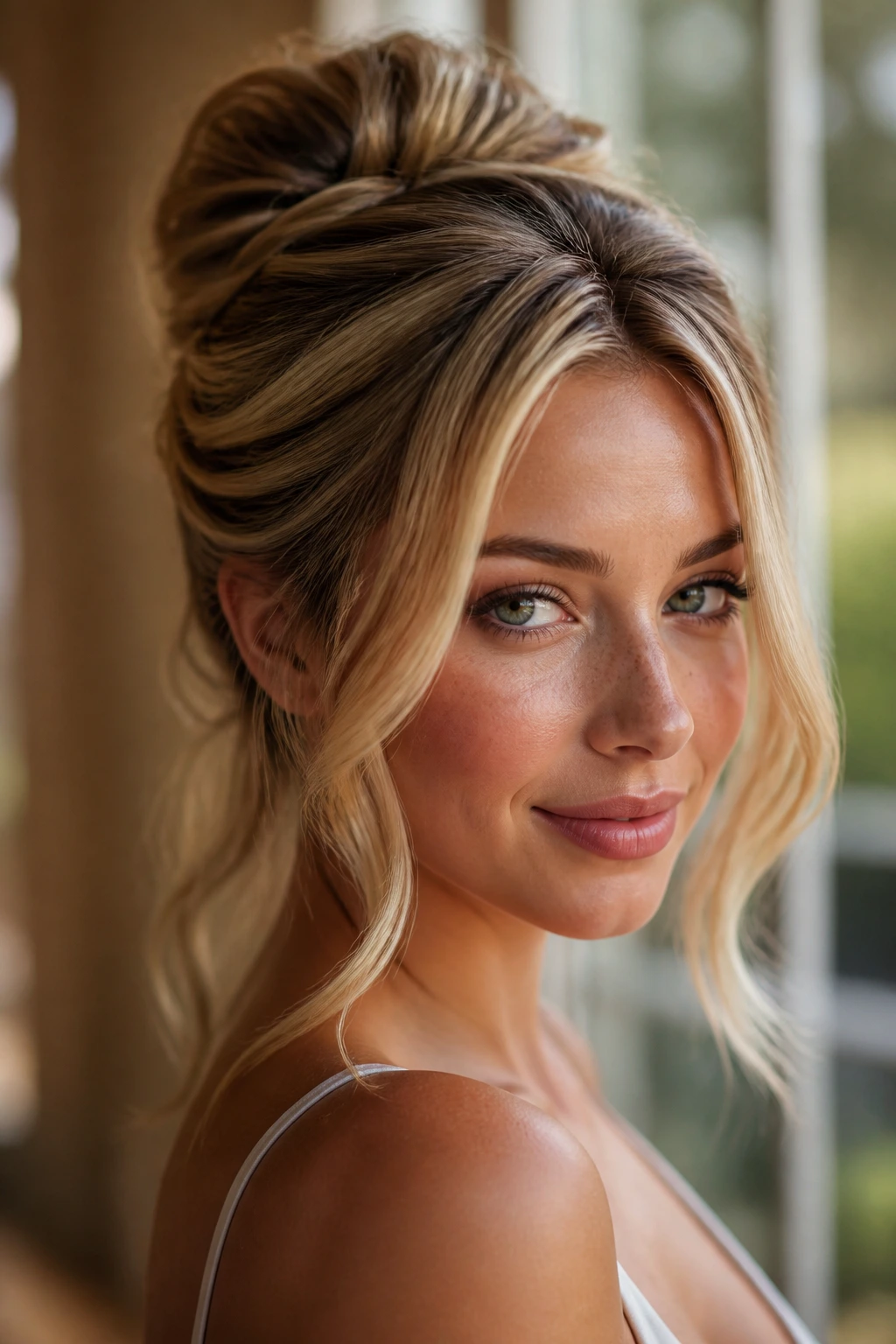
- The front pieces do the framing work: Two soft blonde strands at the temples can do more for the whole hairstyle than a pile of extra pins at the back.
- The color stays visible even when the hair is up: Money piece highlights keep the blonde dimension right around the face, where people actually notice it.
- The styles work with different necklines: A low bun under a square neck, a high knot with a halter, or a twisted nape style with a strapless dress all read differently.
- There’s room for texture or polish: You can go sleek, airy, braided, or pin-curled without losing the face-brightening effect.
- They photograph with more depth: The lighter front sections create movement around the eyes and cheekbones, which keeps the updo from looking flat in flash or soft indoor light.
1. Sleek Low Chignon with Face-Framing Pieces
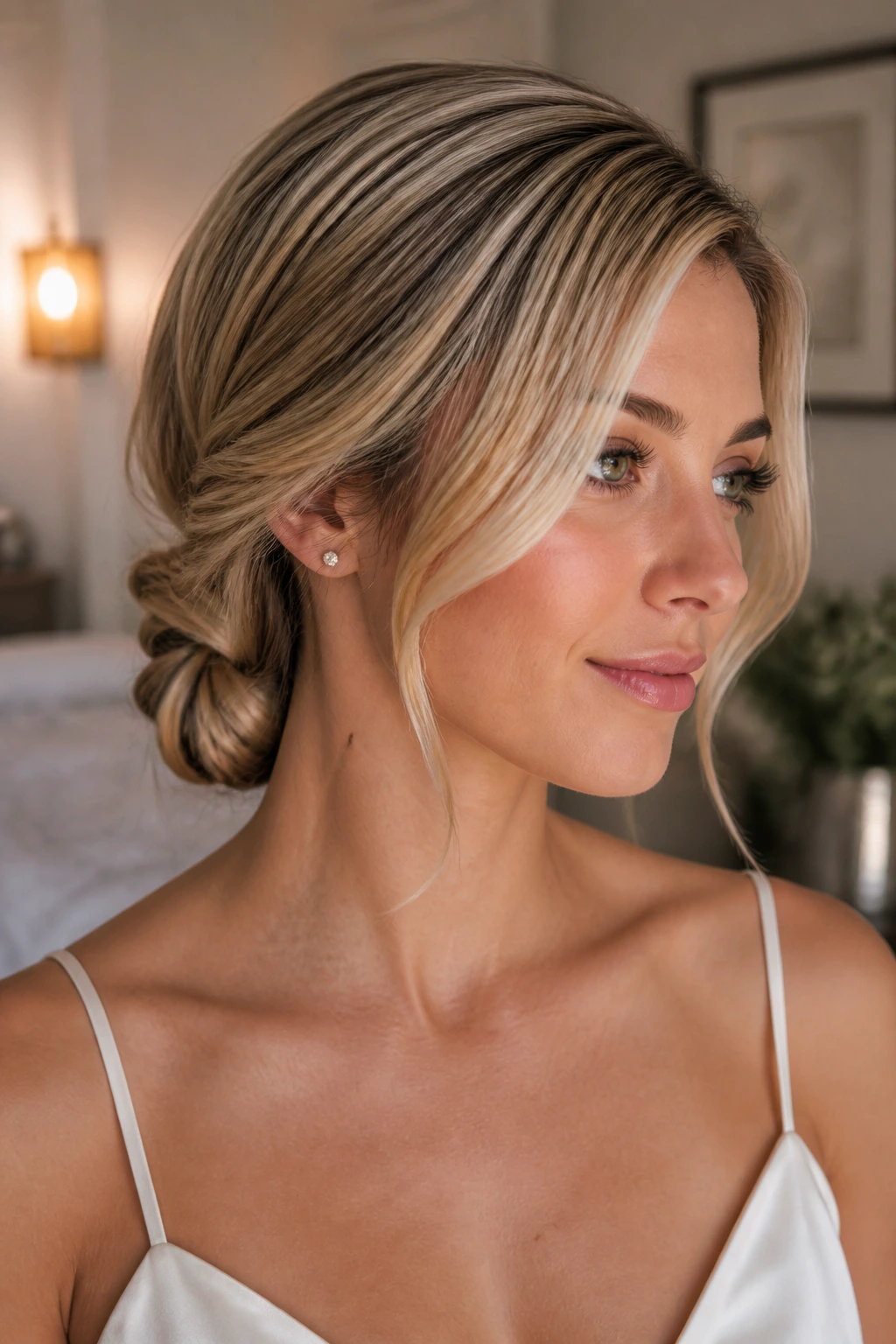
A low chignon is the sort of style that looks calm from the front and controlled from the side, which is exactly why the money pieces matter here. Pull the rest of the hair smooth, then leave the blonde front sections loose enough to bend in a soft curve toward the jaw. If you tuck them too tightly, the whole thing turns severe. Too loose, and the shape loses its clean line.
Why it works
The nape placement keeps the silhouette neat, while the bright front pieces stop the style from feeling closed in. I like this one for formal dinners and wedding guest hair because it sits close to the head and won’t compete with a dress that already has texture. A fine-tooth comb and a little shine spray are enough; don’t overload it with product or the blonde pieces will look greasy under lights.
Best with: center parts, off-shoulder necklines, and earrings that need room to show.
Watch for: loose layers slipping free at the ears. Two crossed bobby pins solve that fast.
2. Soft French Twist with Swept Front Pieces
A French twist has a built-in elegance that never needs much help, but the blonde money pieces make the shape less formal and more human. The front strands should be swept back with a slight bend, not lacquered flat against the head. That tiny bend keeps the twist from looking like it belongs in a boardroom.
You want the twist to rise cleanly along the back of the head, then tuck under with a few invisible pins. Leave the face-framing pieces out until the end, curl them away from the face with a 1-inch iron, and brush them once so they fall in a smoother line. If the hair is very fine, a little texture spray at the roots gives the twist something to hold on to.
This is the one I’d pick for a formal portrait session. It reads expensive without shouting about it.
3. Braided Crown Bun with Curled Fronts
Braids and money piece highlights are friends. Always have been. The braid adds pattern, and the lighter front strands keep all that pattern from feeling crowded around the hairline. In this version, braid the hair around the crown, then gather the lengths into a bun at the nape or slightly off-center.
The front pieces should stay free and softly curled, because the braid already gives you enough structure. If those blonde strands are too rigid, the whole look starts to feel costume-like. I prefer a looser braid here — not pancake-flat, not tight enough to show every scalp line — because the braid’s edges should look soft when they wrap behind the ear.
How to place the front pieces
- Curl them away from the face in one smooth pass.
- Brush the curl once so it becomes a bend, not a ringlet.
- Pin the braid just behind the ear if it tries to lift.
A jeweled comb at the bun works well, but I’d skip anything too large. The braid already brings the detail.
4. High Knot with Curtain-Style Money Pieces
A high knot puts the face front and center, so the highlighted front pieces have to do a little extra work. Split them like curtain bangs, even if they’re not true bangs, and let them arc around the cheeks before joining the bun’s clean lift. That softens the top-heavy shape.
This is a smart choice when the dress has an open back or when you want the hair off the neck completely. It can read playful or polished depending on how smooth you make the crown. I like a tight base with a slightly undone knot at the top; that contrast keeps the style from looking too stiff. If your blonde highlights are very icy, a smooth high knot can look sharp in a good way. If they’re warmer, a few loose wisps around the ears balance the tone.
5. Twisted Nape Knot with a Side Part
A side part changes everything. It gives the face-framing highlights a direction, and that direction makes the knot feel intentional instead of tossed up. Twist the back hair into a low knot at the nape, then let the highlighted front pieces sweep from the deeper side part into the cheek area.
I like this style on second-day hair because a little grip helps the twist stay put. Freshly washed hair can be too slippery, especially if the blonde sections are finer than the rest. A tiny amount of mousse at the roots, then a cool blow-dry, gives the knot a better base.
The result is quiet, but not plain. If you want one style in this whole collection that works for a dress with a dramatic neckline but still leaves some softness in the front, this is the one.
6. Pearl-Pinned Side Bun with Glossy Pieces
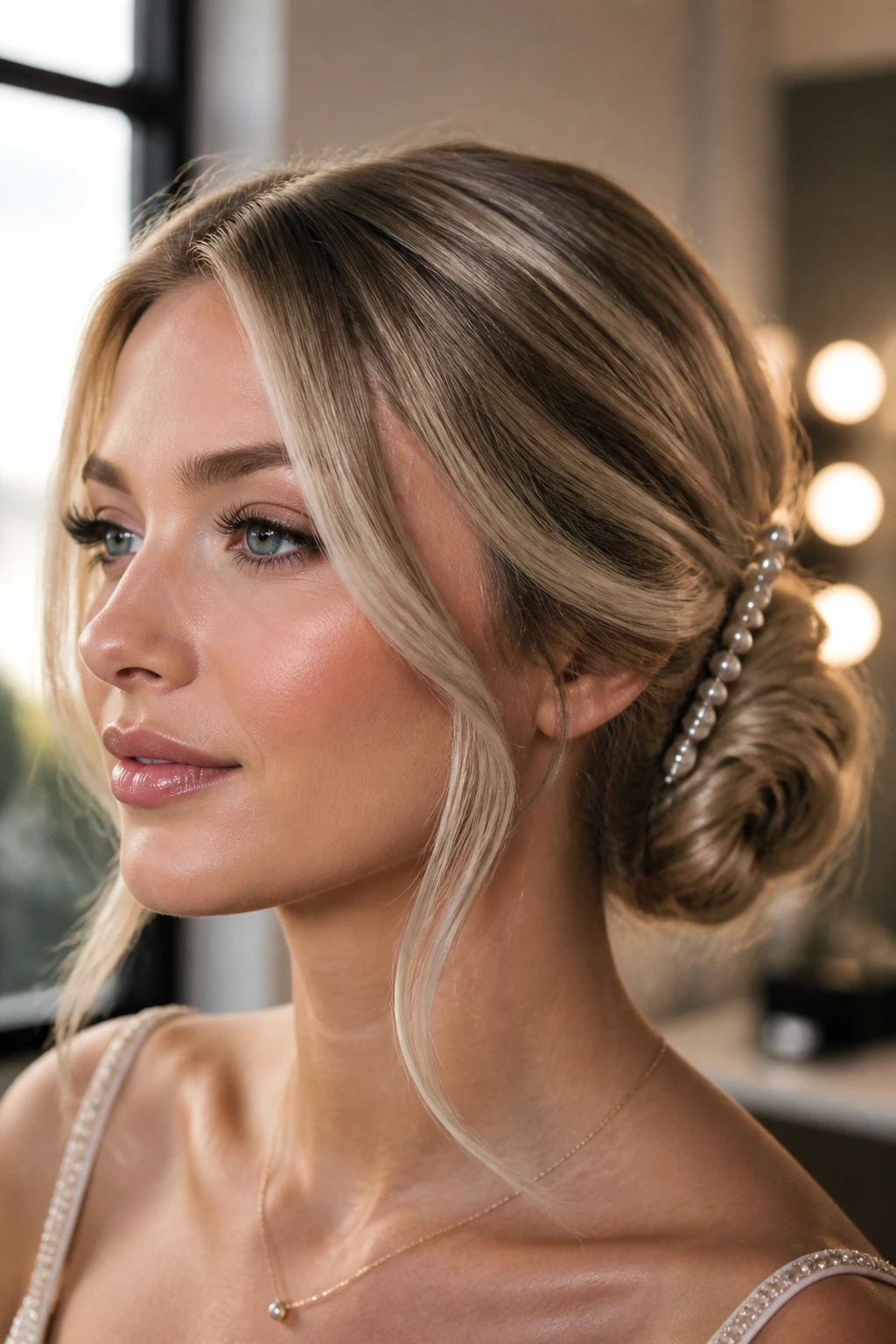
Side buns can go very old-school if you’re not careful. Pearl pins keep this version from feeling dated, and the money piece highlights make the shape look lighter. Sweep the hair low and to one side, then build the bun just behind the ear or slightly below it so the front pieces can fall in a controlled curve.
The glossy finish matters here. A little shine cream on the top layer — not the ends, just the top — helps the blonde reflect light without turning stringy. Leave the front pieces smooth and let them skim the cheekbones. That line is what keeps the style elegant.
This one works especially well with satin, silk, or anything that already has a clean surface. You do not need a huge accessory. A few pearl pins placed in a short line is enough.
7. Bubble Ponytail Updo
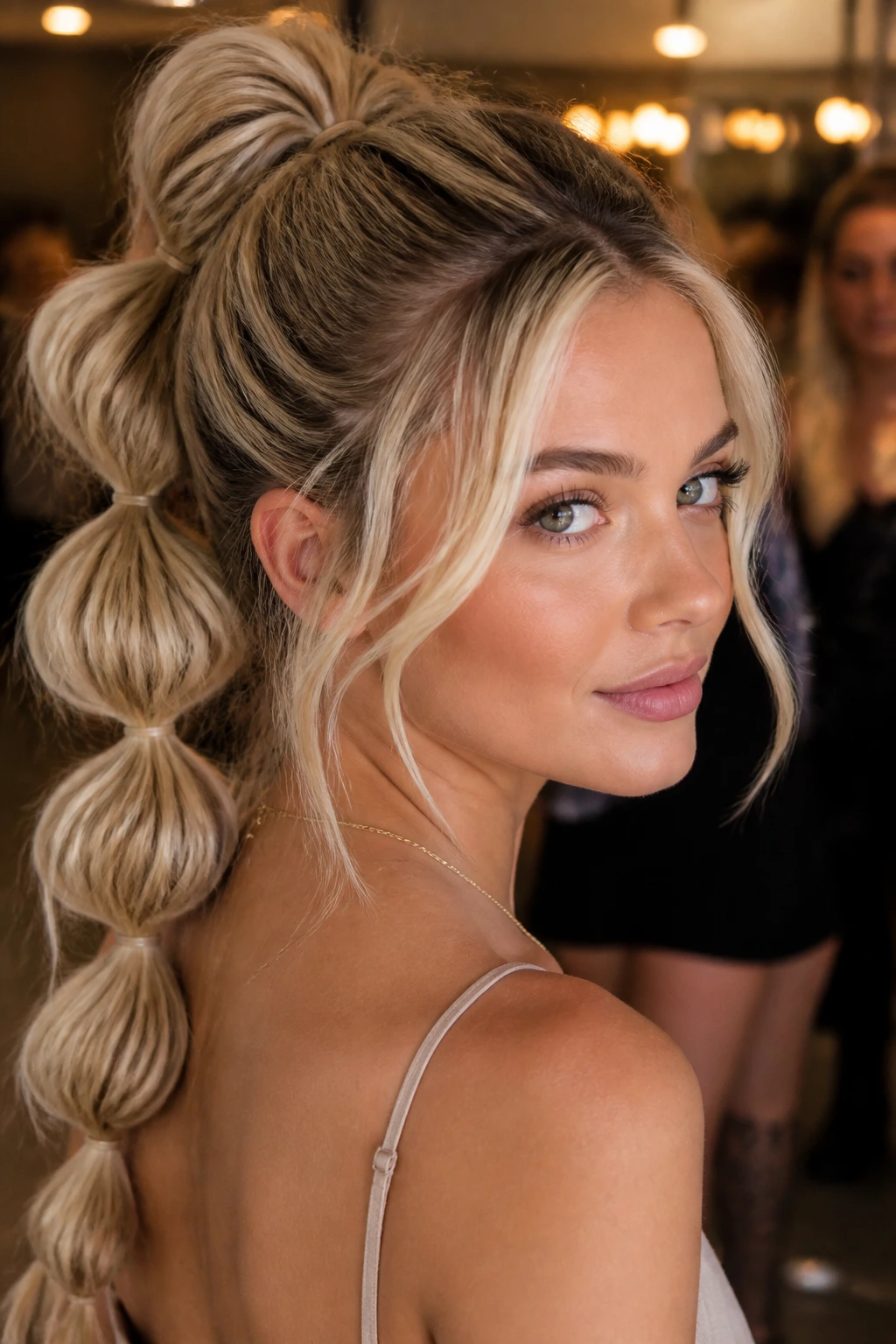
This one has a little more attitude. Start with a ponytail, add elastic ties every few inches, then pinch each section to create the “bubble” effect before tucking the length into a rolled base or wrapped knot. The blonde money pieces are useful because they break up the shape near the face and make the style feel less sporty.
The front sections should stay loose and lightly waved. If they’re too straight, the bubbles can look a bit harsh against the face. If they’re curled too tight, the whole style feels younger than it needs to. Aim for soft movement and let the bubbles carry the energy at the back.
Quick details
- Best for medium to long hair.
- Strong elastic ties matter.
- Hide the base with a wrapped strand if you want a cleaner finish.
It’s a strong pick for prom or a dance where you want something fun but still neat enough to last through movement.
8. Halo Braid Bun with Soft Edges
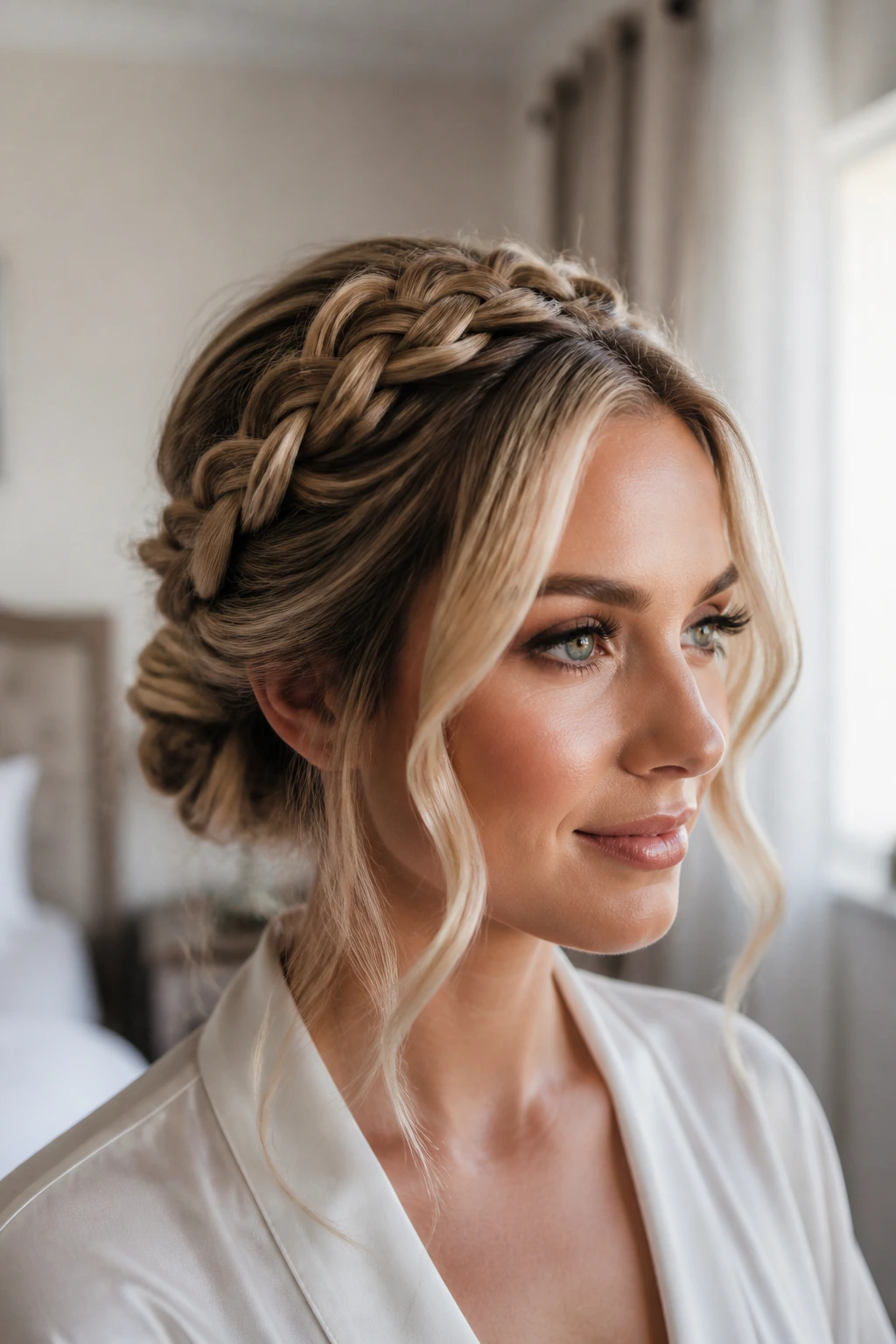
A halo braid wraps the hairline in one clean loop, and that makes the blonde face-framing pieces feel almost like a border. The look is lovely when the braid is not pulled too tight. If you pancake it a bit, the braid gets wider and the money pieces feel more blended into the style.
I’d keep the bun low and small here so the crown braid stays the star. The front pieces can be curled away from the face, then softened with one pass of fingers, not a brush. Brush them and they can lose their shape fast.
This is one of the few styles in the list that can handle a little romantic looseness without falling apart. If your hair tends to frizz at the edges, a satin scarf during prep helps more than another layer of hairspray.
9. Textured Messy Bun with Wispy Tendrils
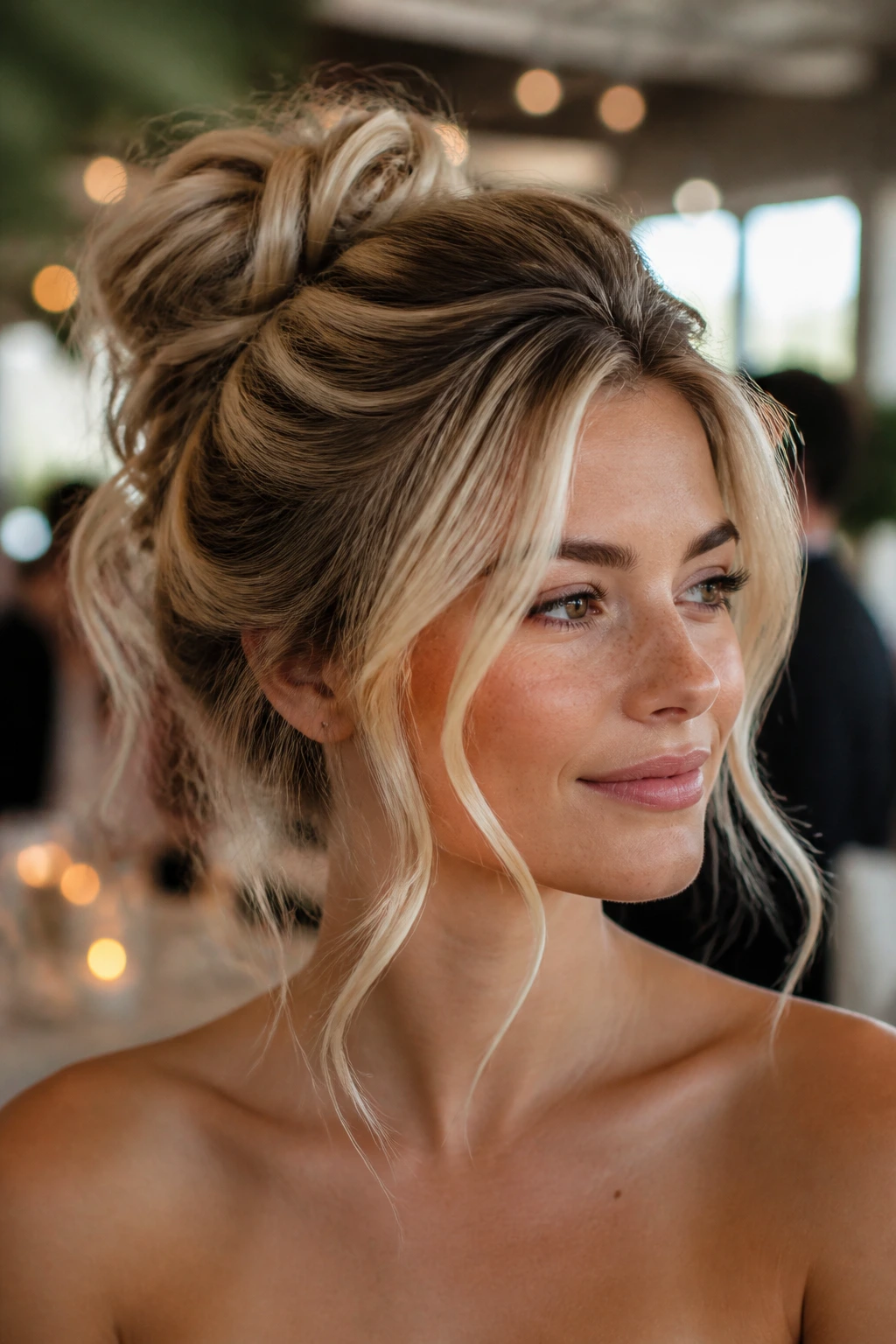
There’s a fine line between “softly undone” and “I gave up.” The money piece highlights keep this bun on the right side of that line. Pull the bun into a textured, slightly raised knot and leave the front strands wispy, especially near the temples.
The trick is keeping the crown tidy while letting the bun itself look airy. Use dry shampoo or texture spray at the roots, then twist the lengths loosely and pin from different directions. Don’t smooth the bun too much. The loose shape is the point.
I like this for events that are dressy but not formal-formal — showers, graduation dinners, engagement parties, that sort of thing. The front pieces should be the softest part of the look, and the bun should carry a bit of grit.
10. Faux Bob with Hidden Pins and Loose Fronts
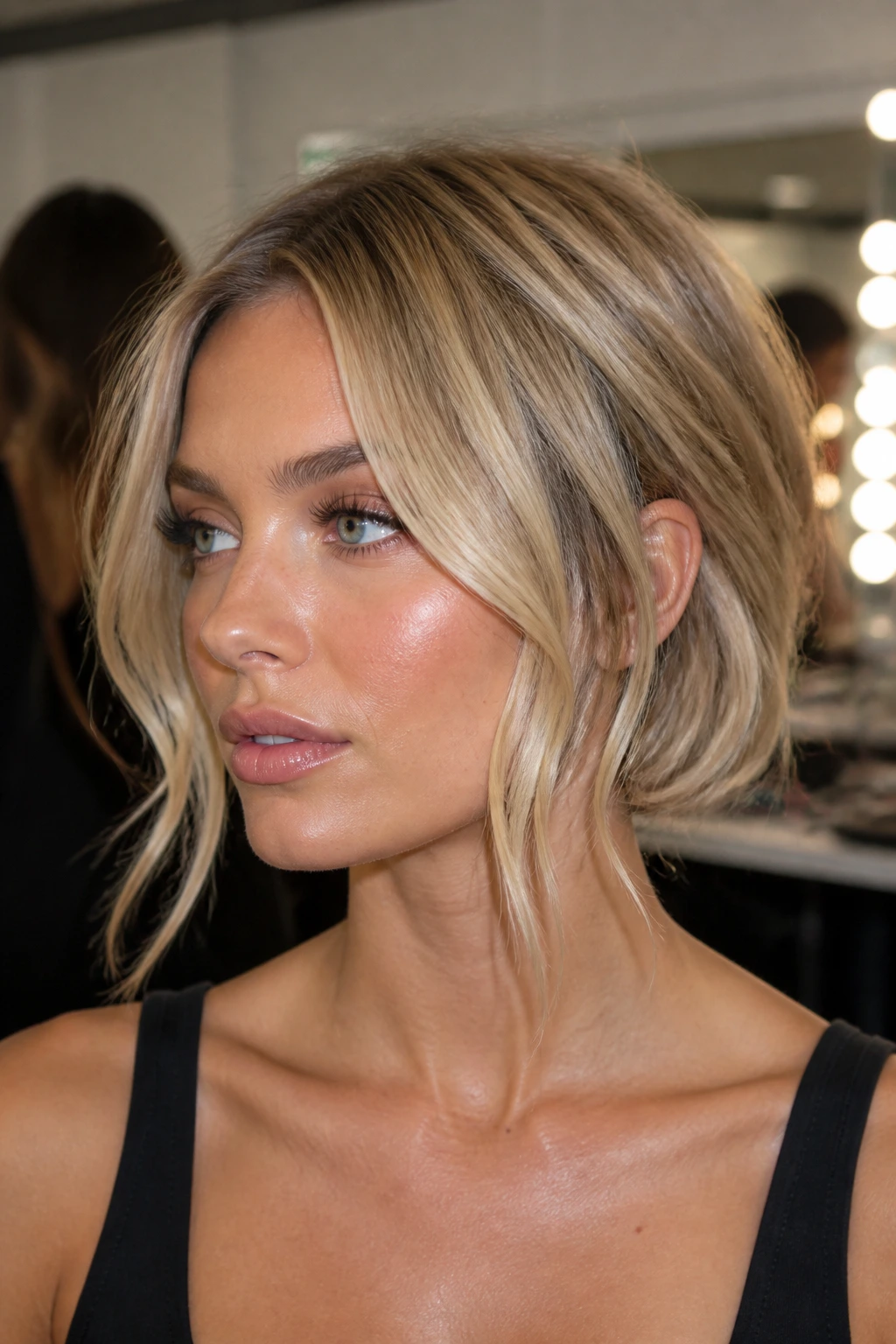
A faux bob is pure theater, in the best way. Long hair gets tucked and pinned under itself so it lands around the shoulders like a short cut, and the blonde money pieces keep the front lively instead of boxy. If the front sections are left just a little longer than the rest, the illusion feels more natural.
This works best when the ends are curled inward before pinning. Straight ends can poke out in odd places and give the game away. A handful of hidden bobby pins at the nape, plus a light mist of flexible hairspray, keeps the shape from collapsing when you turn your head.
The appeal here is obvious: it looks different without requiring a real haircut. That’s useful when you want the event hair to feel memorable but not permanent.
11. Rope-Braid Crown Bun with a Clean Part
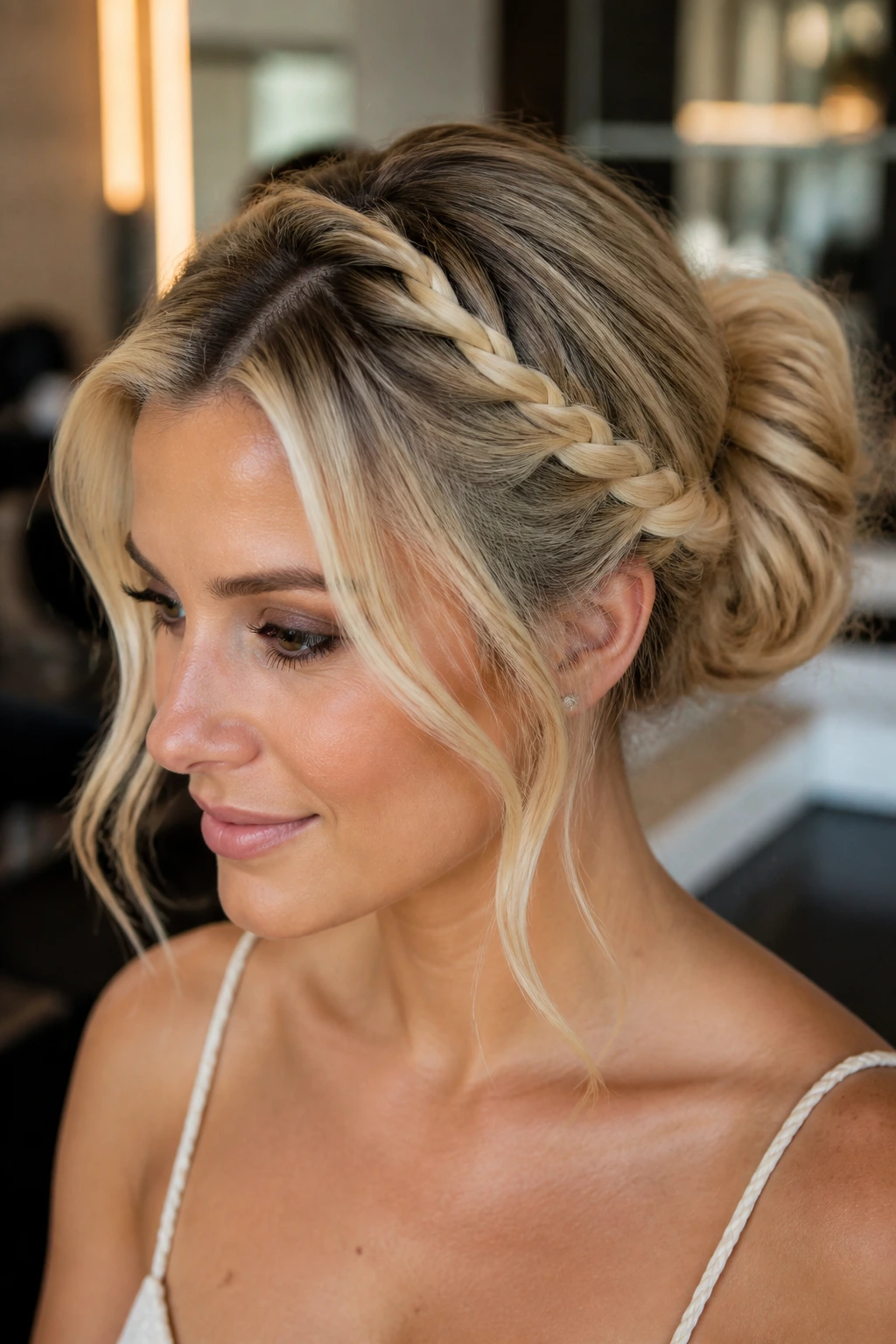
Rope braids have a sleeker, more polished finish than standard braids, which makes them a good match for glossy blonde hair. Part the hair cleanly, rope-braid both sides toward the crown, then twist the remaining length into a bun at the back. The money pieces should stay visible along the front edges, not swallowed by the braids.
I prefer this on hair that has a little natural wave or grip. Super-slippery hair needs some texture powder at the roots before braiding, or the ropes will loosen too fast. The style has enough geometry already, so the face-framing pieces should stay smooth and soft.
It’s a good option when you want the front to look neat but not severe. The braid pattern does the work, and the blonde pieces keep the face open.
12. Sculpted Shell Bun for Formal Nights
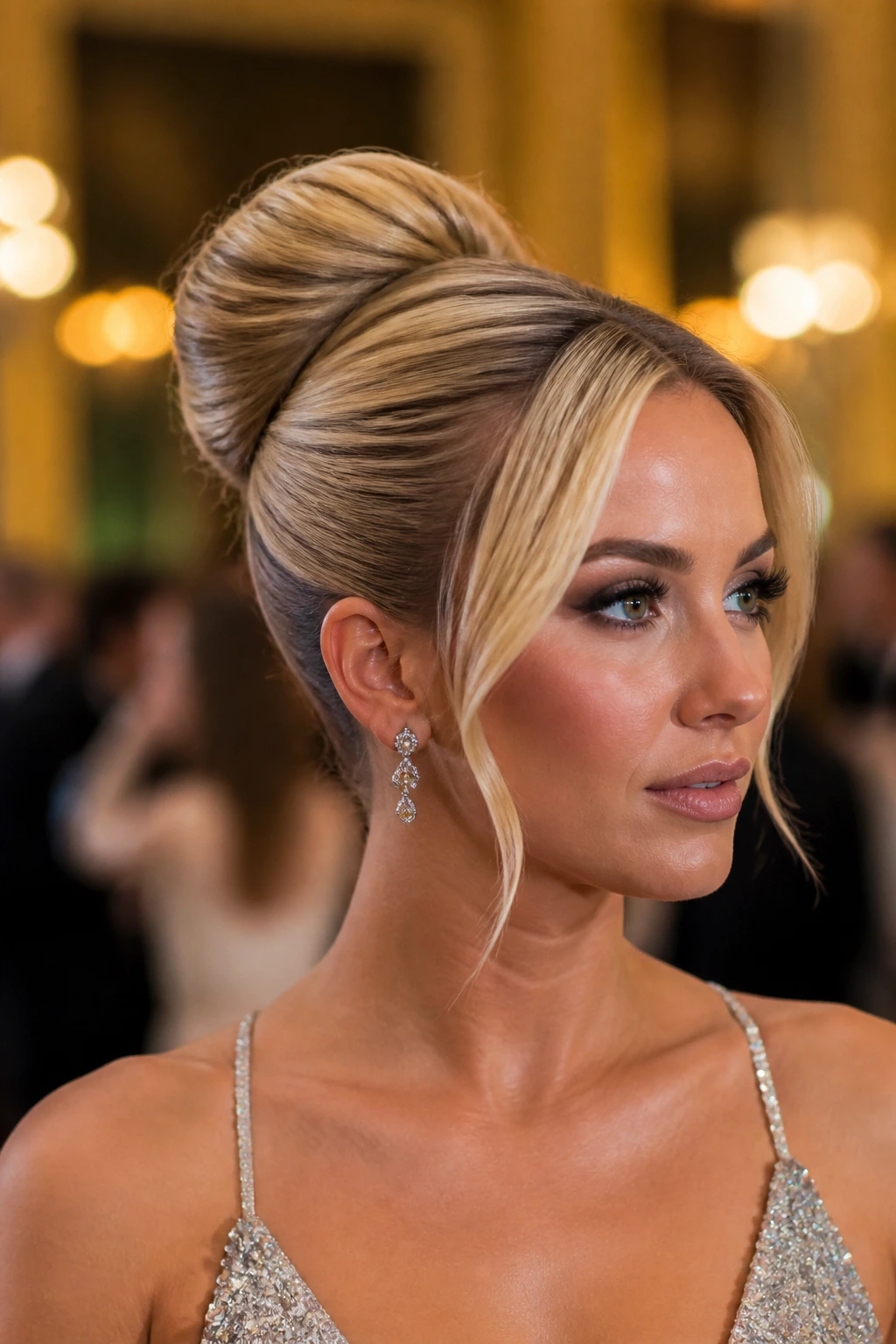
A shell bun has that rolled, curved shape that sits close to the head and looks almost carved. It’s one of the more formal blonde updos here, and the money piece highlights are what keep it from feeling too rigid. Let the front sections fall in a controlled sweep, then curl the ends inward so the face gets a soft frame.
The shell shape wants precision. Use pins that match your hair color, and tuck the ends tightly so the curve reads clean from the side. A side part works beautifully with this one, especially if the highlighted front strand is a bit brighter than the rest of the blonde. That contrast gives the style depth under indoor lights.
This is the one I’d choose for a gala, a formal wedding, or any event where the dress is already doing a lot of talking.
13. Half-Up Twisted Knot with Open Ends
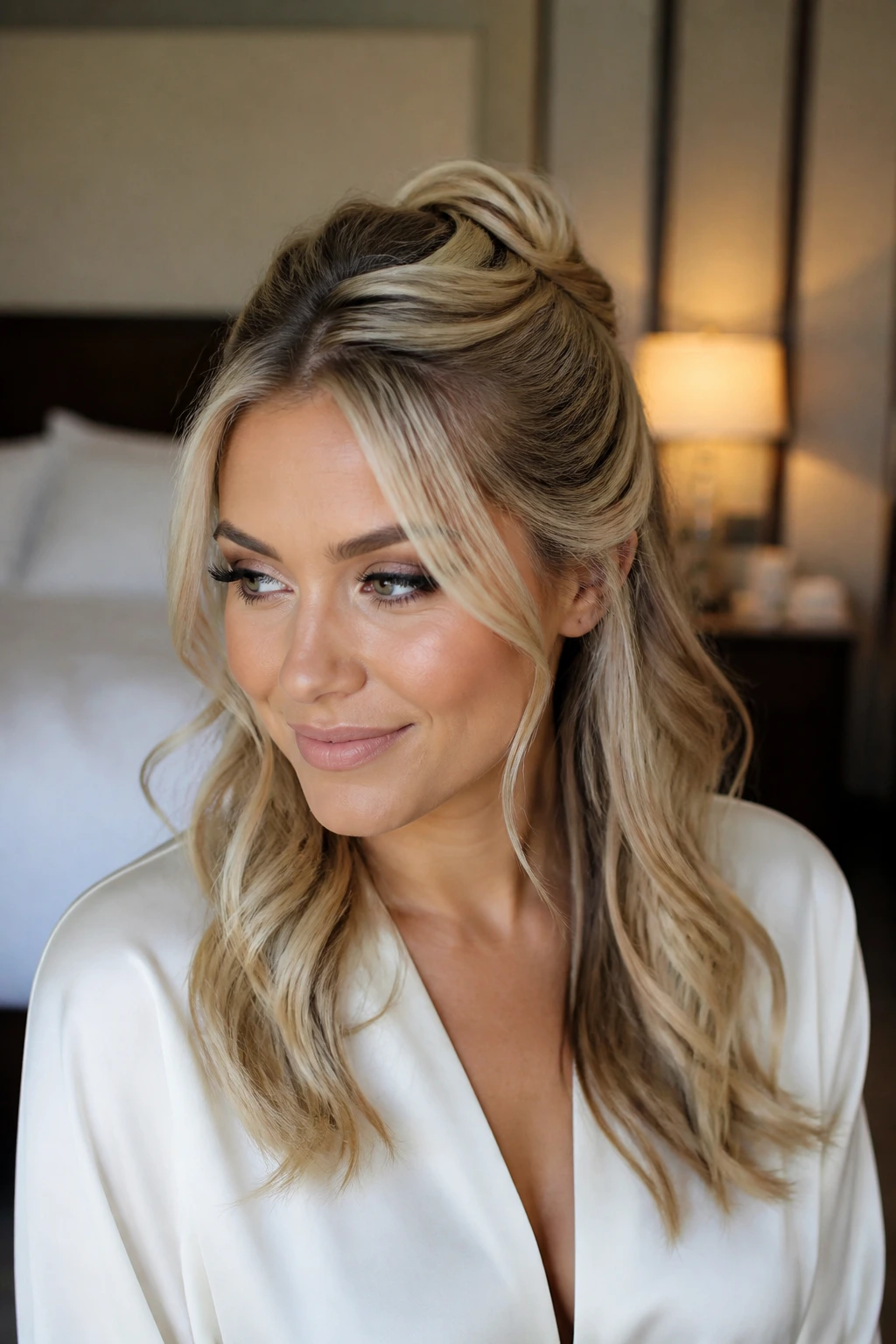
Not every special-day style needs to trap every strand. A half-up twisted knot keeps some length down, which gives the blonde money pieces room to connect the top and the rest of the hair. The twist sits at the crown or just below it, while the rest of the hair falls in loose waves.
The face-framing pieces should be the first thing you style. Curl them away from the face, then let them drift into the longer hair so the line feels soft. If you skip that step, the top knot can look detached from the rest of the style.
This is a good middle ground for people who don’t like fully pinned hair. You get lift, shape, and a little breathing room at the neck.
14. Double Braid Low Bun with Defined Sides
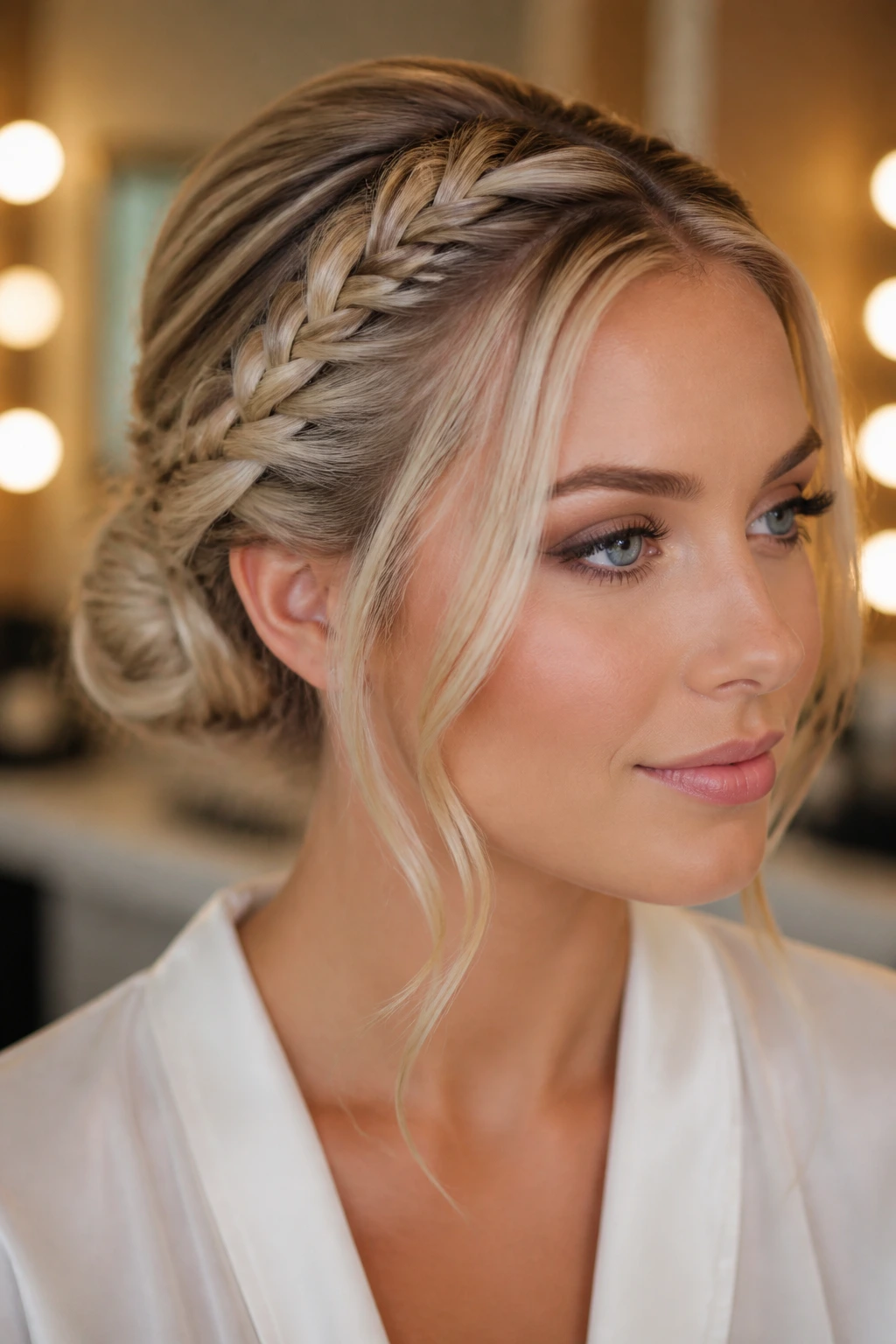
Two braids feeding into one low bun give the style a little more rhythm than a single braid ever could. Part the hair into two sections, braid them low and close to the head, then wrap the ends into a compact bun. The highlighted front pieces should stay smooth and just slightly curved, not curled into spirals.
What I like about this one is the balance. The braids create structure, the bun keeps the back tidy, and the money pieces make the face stay bright. It looks especially good on blonde hair with dimension, because the braid pattern shows off the lighter and darker strands in motion.
A little edge control or smoothing cream near the hairline helps if the hair is frizzy. Keep it light. Heavy cream makes the braid edges collapse.
15. Voluminous Top Knot with Feathered Fringe
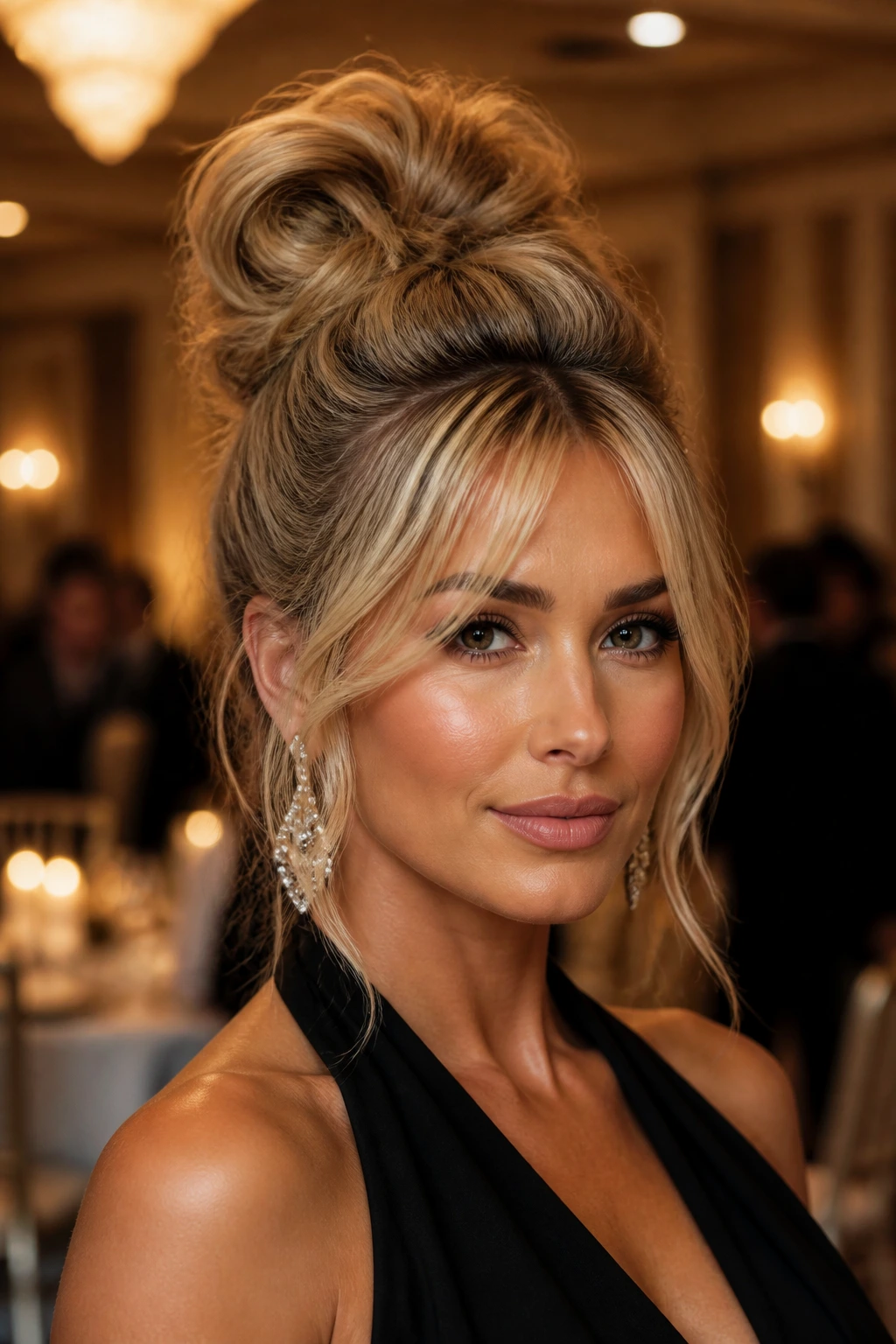
A top knot can go basic fast, but not when the front pieces are feathered and the crown has real lift. Tease the roots lightly, gather the hair high, and wrap the knot so it sits full instead of flat. Then let the money pieces skim the face in narrow, airy sections.
The fringe effect matters. You want the front to move when you turn your head. That movement gives the high knot a softer finish and keeps the look from becoming too gym-hair-adjacent. It’s a strong style for shorter dresses or clean column gowns because it adds height above the neckline.
If your hair is fine, a hair donut or mesh support under the knot helps the shape last. For thick hair, pin from the inside so the knot does not sag by the end of the night.
16. Gibson Tuck with Blonde Dimension
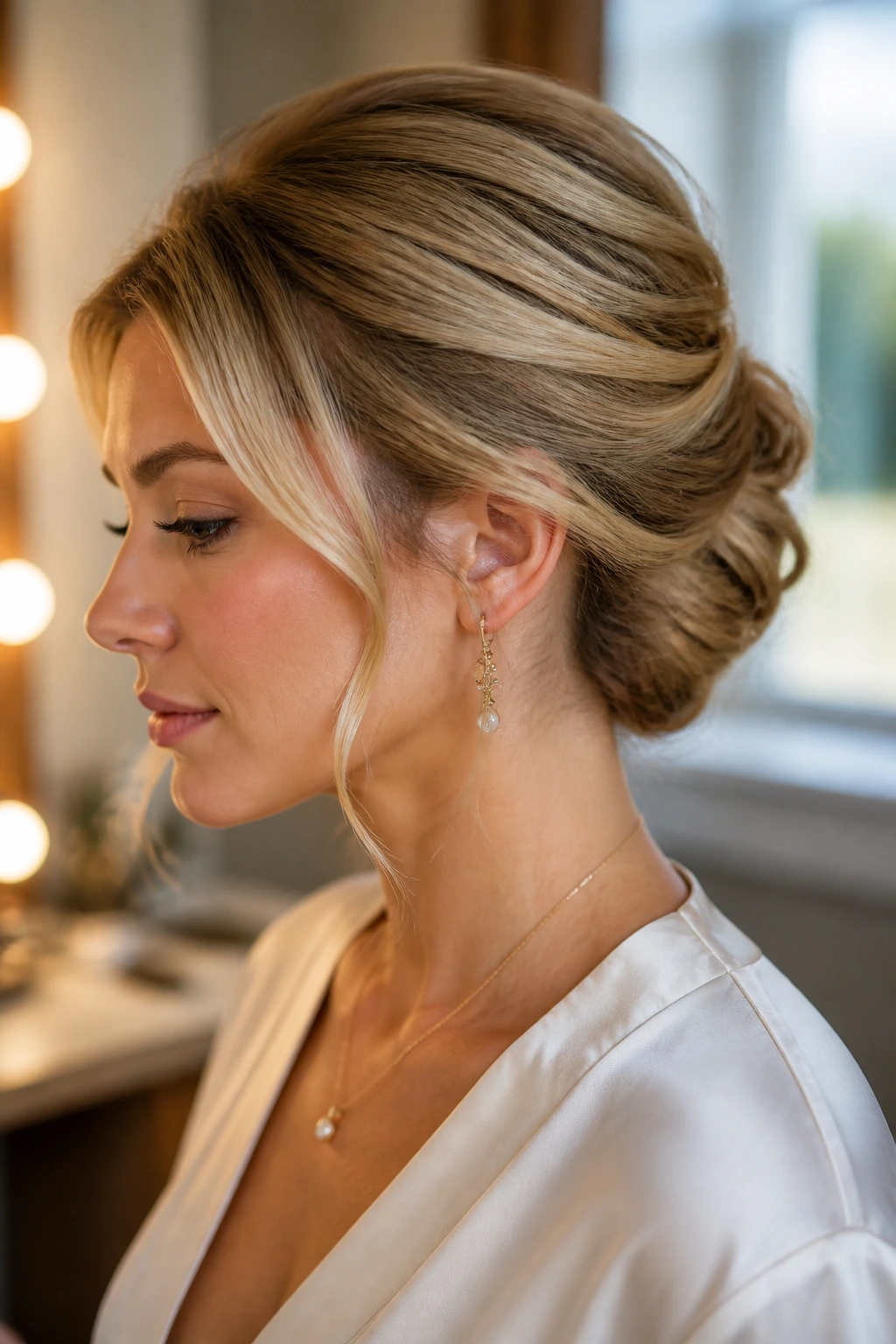
A Gibson tuck is old-fashioned in a nice way, and the highlighted front strands give it a fresher edge. The hair folds into itself along the nape, creating that tucked roll that looks neat but not stiff. The money pieces should stay visible around the temples before they join the tuck, so the front line does not disappear.
This style is one of my favorites for medium-length hair because it gives you structure without needing a huge amount of length. It also works when the blonde has multiple tones; the tuck shows those shades as the hair folds, especially near the part.
Keep the roll secure with U-pins if the hair is thick. Thin hair can use a little padding at the nape to keep the tuck from flattening out.
17. Waterfall Braid into a Low Bun
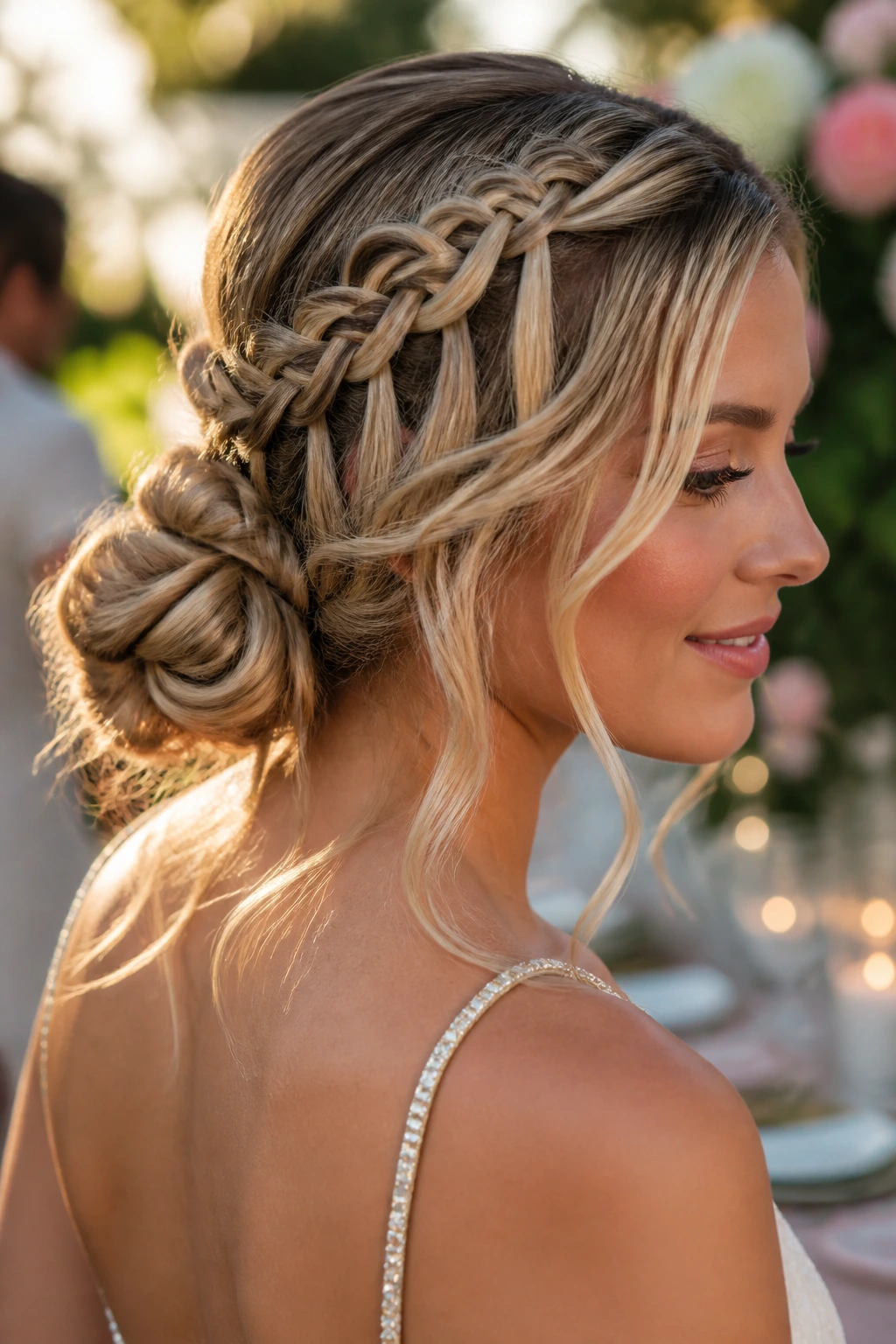
A waterfall braid gives you movement before the hair ever reaches the bun. The dropped sections create soft lines along the side of the head, and the money pieces make those lines brighter. Finish the braid into a low bun so the style has a pretty, layered feel rather than a hard stop.
This one does best when the hair has a loose wave through the lengths. Pin-straight hair can make the waterfall pieces look choppy. A quick bend with a curling wand solves that. I’d also keep the front strands slightly curved away from the face rather than pulled straight back; otherwise the waterfall effect loses its softness.
It’s a lovely pick for events that lean romantic. You get detail without a lot of ornament, which is a nice change.
18. Wrapped Ponytail Chignon with Gloss Finish
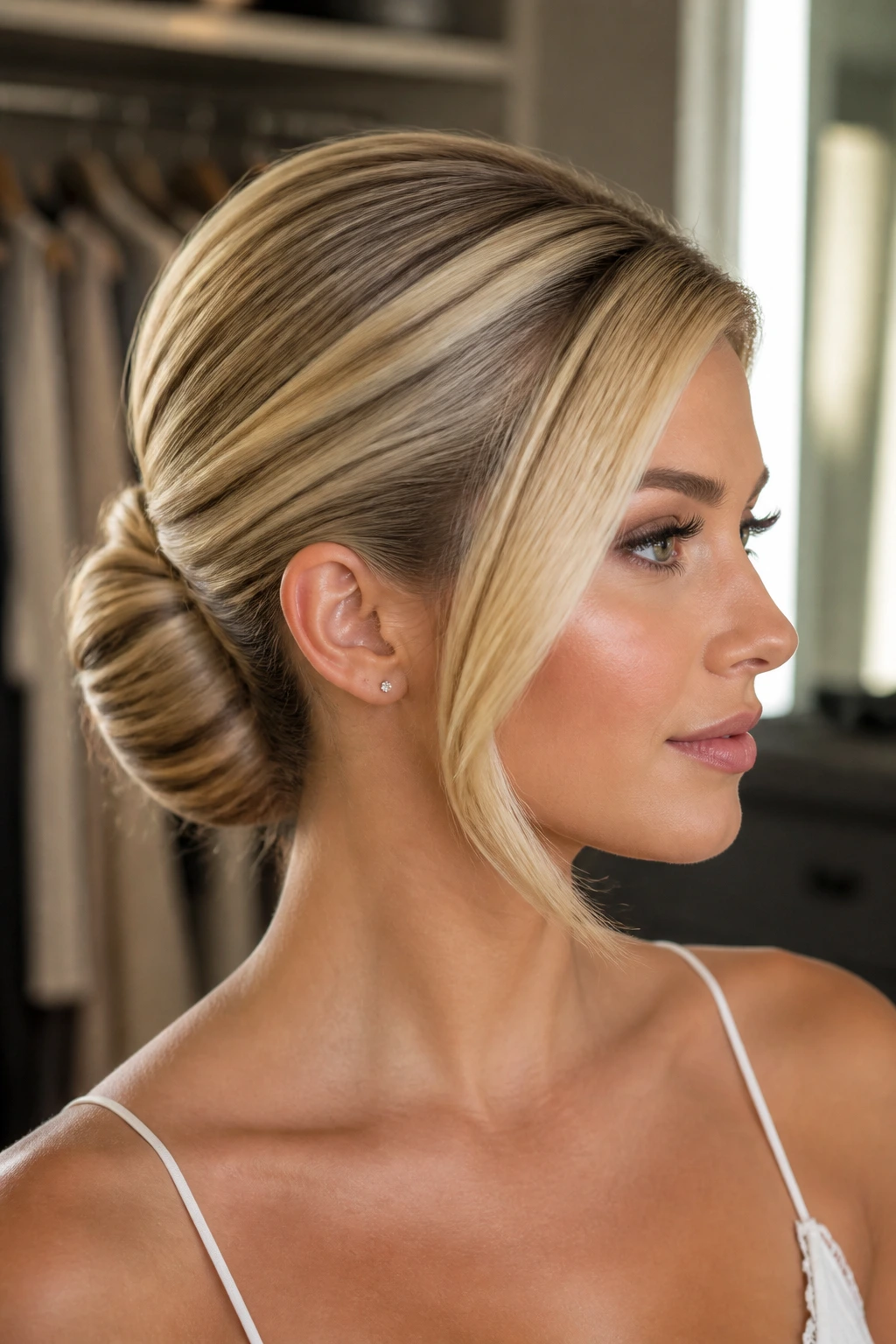
Think of this as the polished cousin of the low ponytail. Pull the hair back into a ponytail, wrap the length around the base, then tuck the ends under into a chignon. The blonde front pieces stay smooth and sleek, which makes the shine finish matter a lot.
A touch of gloss spray on the outer layer helps the color reflect light, especially if the blonde has warm undertones. The front pieces should be carefully combed so they fall in one clean sweep. If they’re too broken up, the style loses its line.
This is a strong choice when you want something that looks refined but not fussy. It stays close to the head and works with almost any neckline.
19. Pin-Curled Vintage Updo with Side Sweep
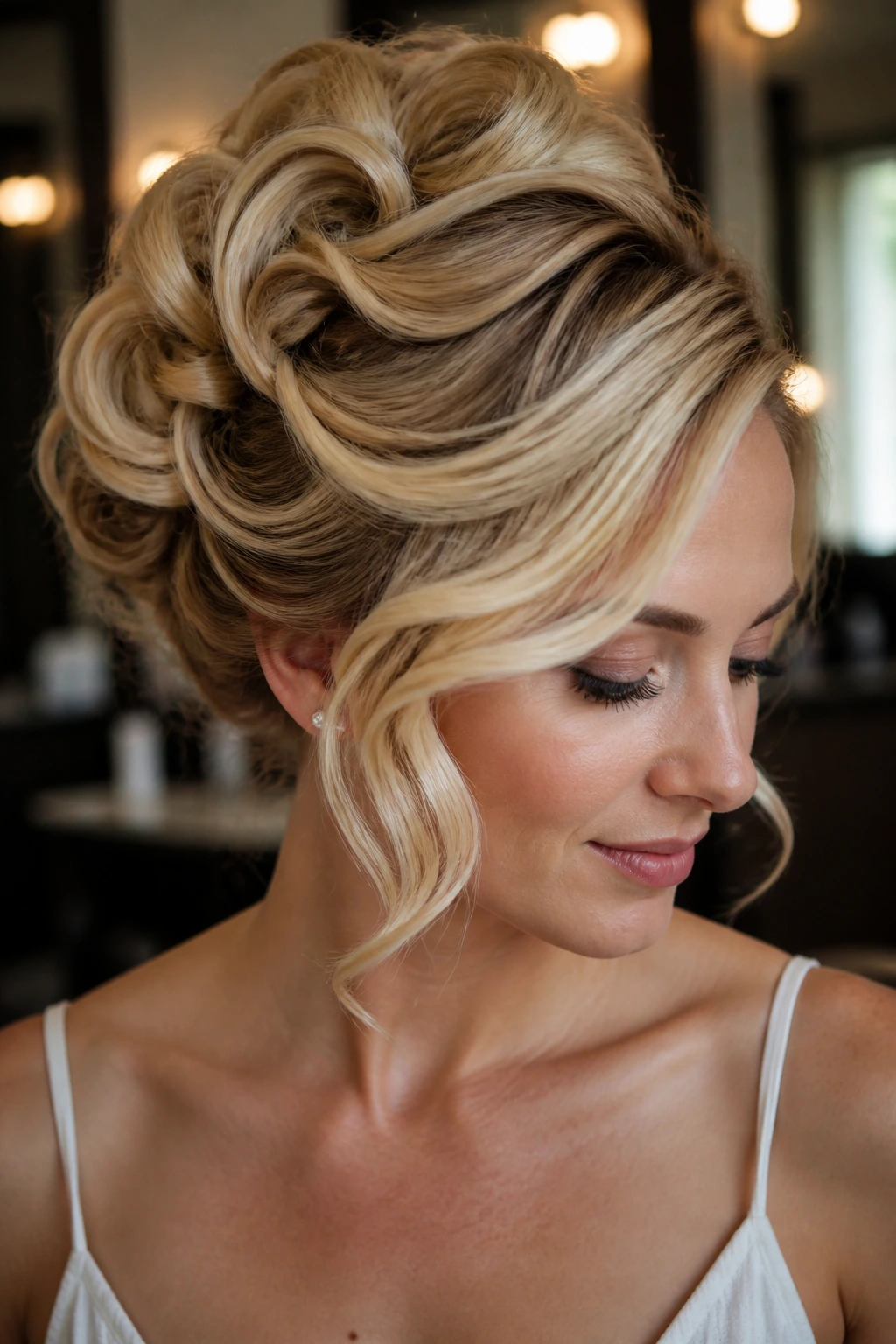
Pin curls bring a little retro drama, and the money pieces are what keep that drama from turning heavy. Set the front sections into soft curves, pin each curl flat while it cools, then arrange the back into a tucked updo. A deep side sweep at the front keeps the face open.
The styling here takes patience. Let the curls cool all the way before you loosen them or they’ll collapse into waves. A light mist of hairspray on each curl before pinning helps the shape last. Once the curls are set, brush them only if you want a softer finish; otherwise, leave the structure visible.
I like this for themed events, formal dinners, or when the dress calls for a little old-Hollywood energy. The highlighted front pieces make the vintage shape read lighter.
20. Braided Mohawk Bun with Lift at the Crown
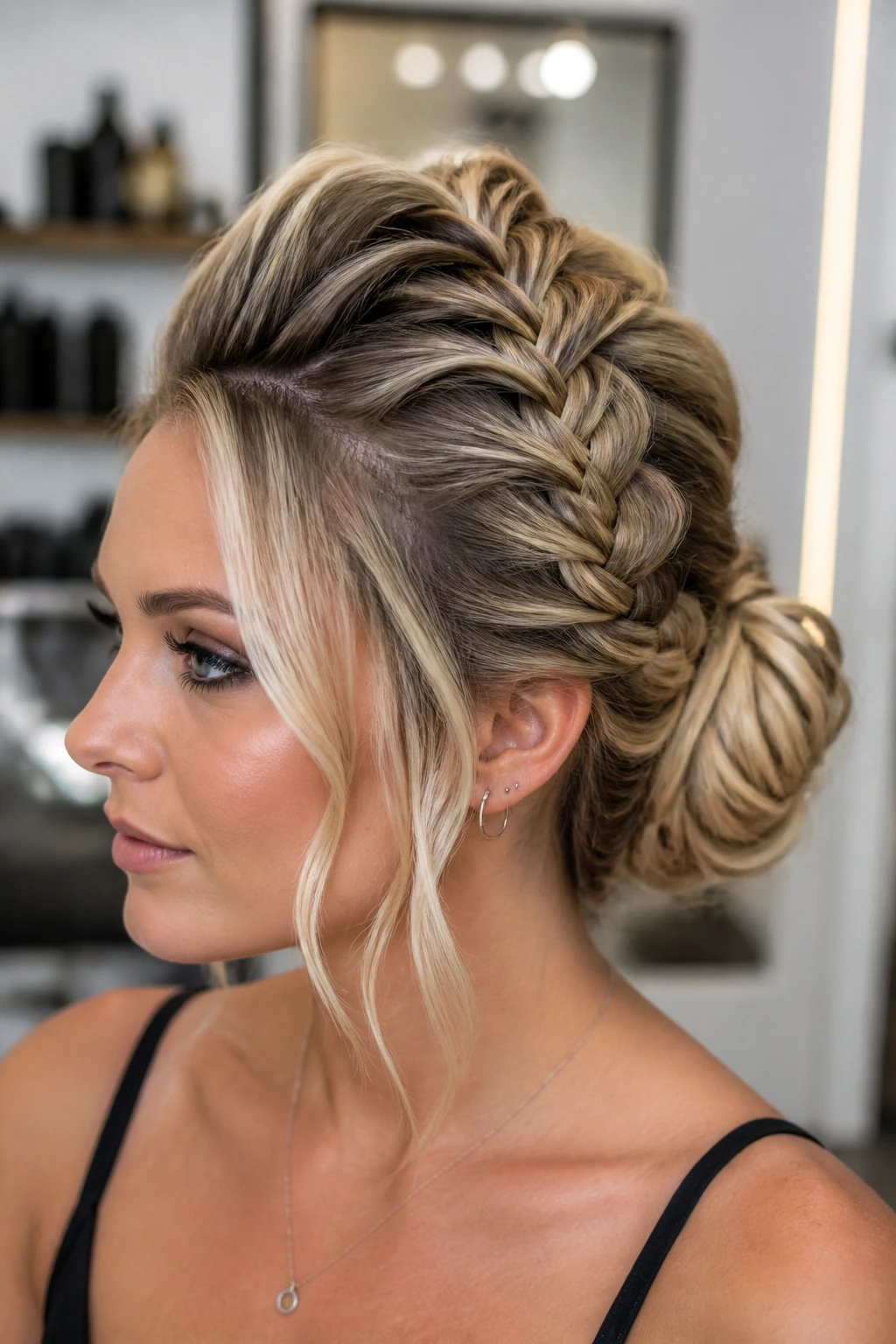
This one has edge. Braid or twist the center section from the forehead back, build height through the crown, and gather the rest into a bun or folded knot at the nape. The money pieces sit on either side of the braid, which keeps the style from looking too strict.
The lift is the point, so don’t flatten the top with too much brushing. A little backcombing at the roots helps, then smooth only the outer layer. The highlighted front strands should stay clean and curved, because they soften the dramatic center line.
This is a good pick if the dress is simple and you want the hair to carry more personality. It can look athletic, glam, or sharp depending on the finish.
21. Knotted Low Updo with Clean Center Part
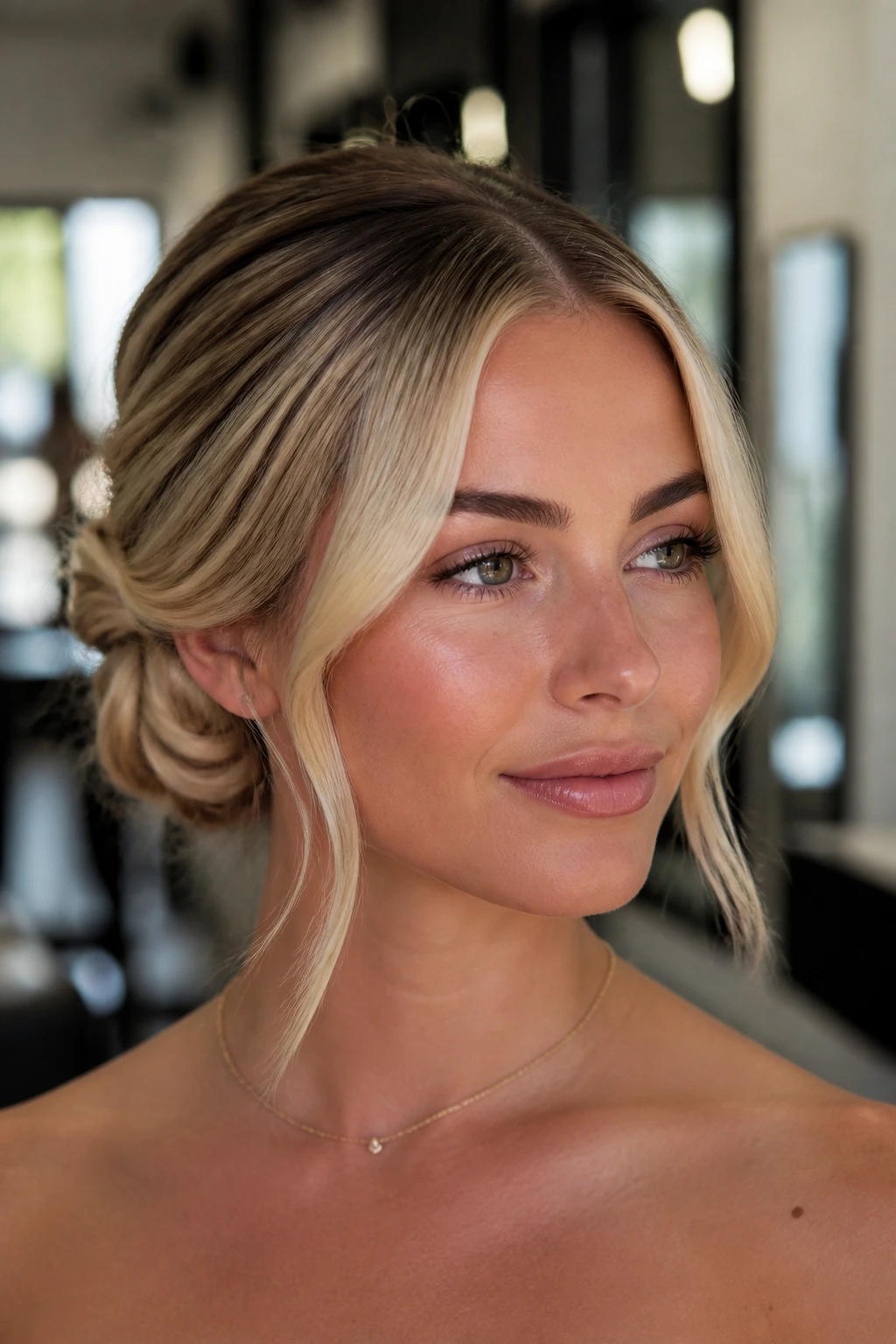
A center part gives this style a little modern tension. Split the hair, knot or twist the two sides low at the back, then pin the remaining length into an understated updo at the nape. The blonde pieces should frame the face evenly so the middle part feels balanced, not severe.
I like this one because it feels current without chasing anything flashy. The knot detail keeps the back interesting, while the front remains calm and bright. If the money pieces are slightly lighter than the rest of the blonde, the part stands out in a good way.
Use small pins tucked close to the scalp. Big pins can break the clean line and make the knot look bulky.
22. Deep-Side Chignon with Soft S-Bends
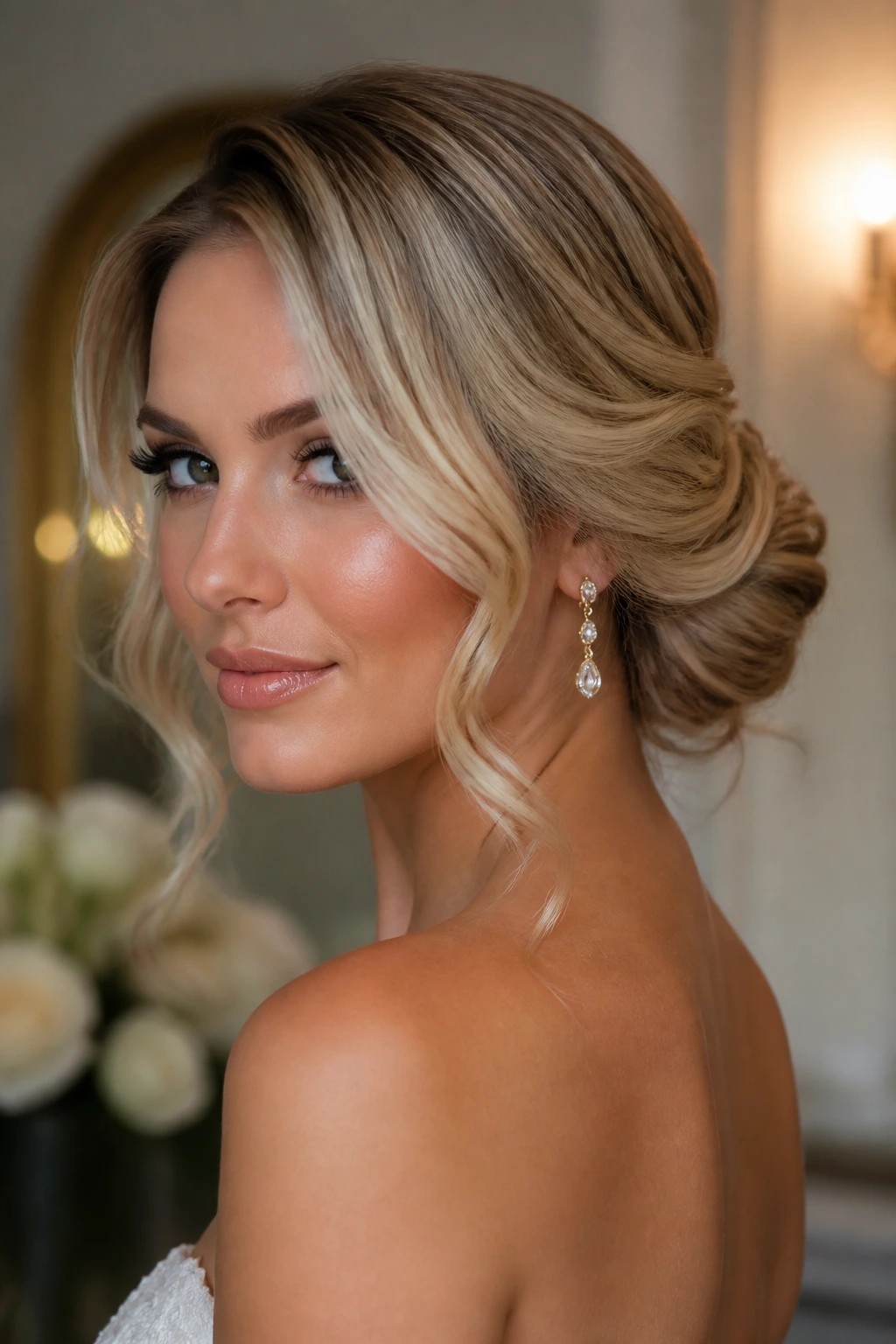
A deep side part gives blonde hair a little drama before the updo even starts. Sweep the hair to one side, create a low chignon, and let the face-framing strands fall in soft S-bends that skim the cheek and jaw. That curve is what keeps the style from feeling too formal.
This one is excellent if you like your hair to look soft around the face but still controlled at the back. The side part naturally shows off the money pieces, especially if one side is a touch brighter. I’d use a curling iron with a wider barrel here — about 1.25 inches — because the S-bend should look smooth, not tight.
If you want earrings to stand out, this shape leaves plenty of room for them. Nice trade-off.
23. Milkmaid Braid Bun with Face Brighteners
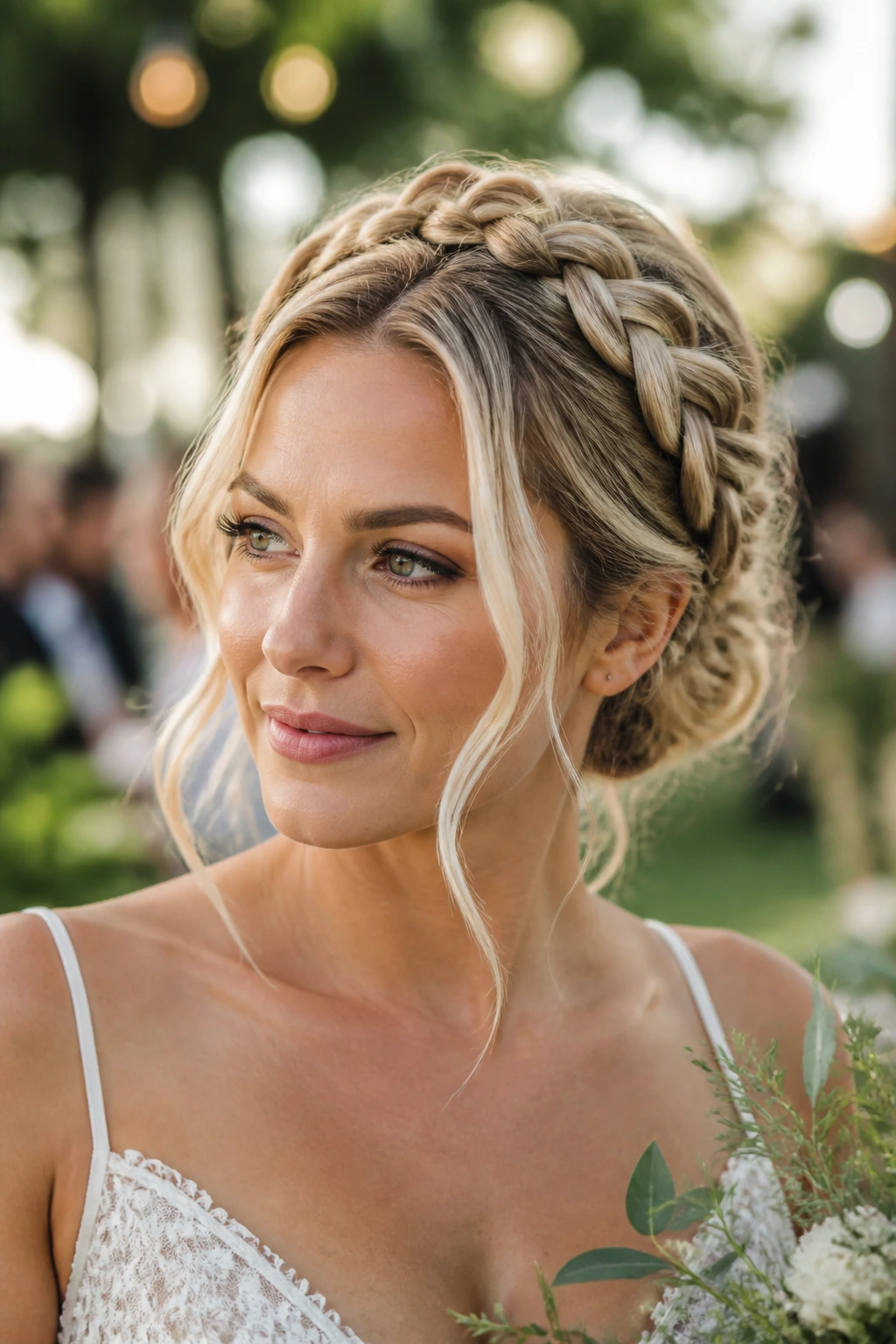
Milkmaid braids can go sweet very fast, so the blonde face-framing pieces help ground them. Braid across the head like a crown, then tuck the ends into a small bun or pin them under the braid line. Keep the front sections a little loose so the style doesn’t feel too precious.
This is one of those looks that works best with a bit of texture. Clean, slippery hair makes the braids slide, and the money pieces can’t save a braid that keeps loosening. Add dry shampoo or texturizing spray before you start, especially near the hairline.
I’d choose this for outdoor ceremonies or daytime events where you want something softer than a classic updo. It has a little storybook feel, but not in a costume way.
24. Rolled Twist Updo with Satin Shine
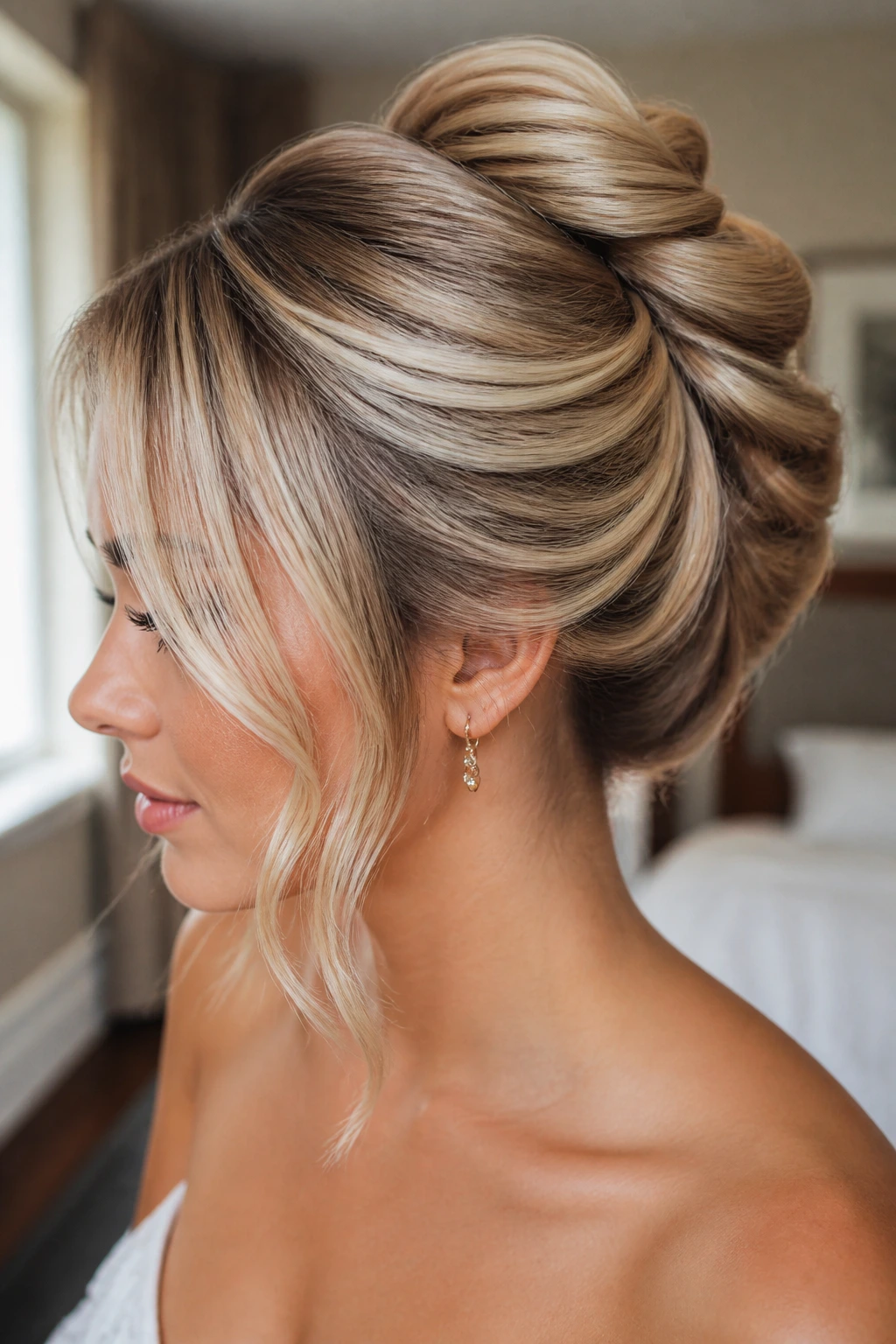
Rolls are underrated. They create a smooth, sculpted finish that looks expensive when the hair has a healthy shine. With blonde money piece highlights, the shape gets a little more dimension because the lighter pieces catch on each roll instead of fading into the background.
The best version of this style uses two or three rolled sections pinned into each other at the back. The front pieces should be brushed sleek, then curved slightly away from the face. If you want the style to feel less formal, leave a few shorter strands at the temples loose.
A satin-finish spray works better than anything sticky here. Too much hold will make the rolls look chalky, and blonde hair shows that faster than darker shades do.
25. Crown Twist Updo with an Open Neckline
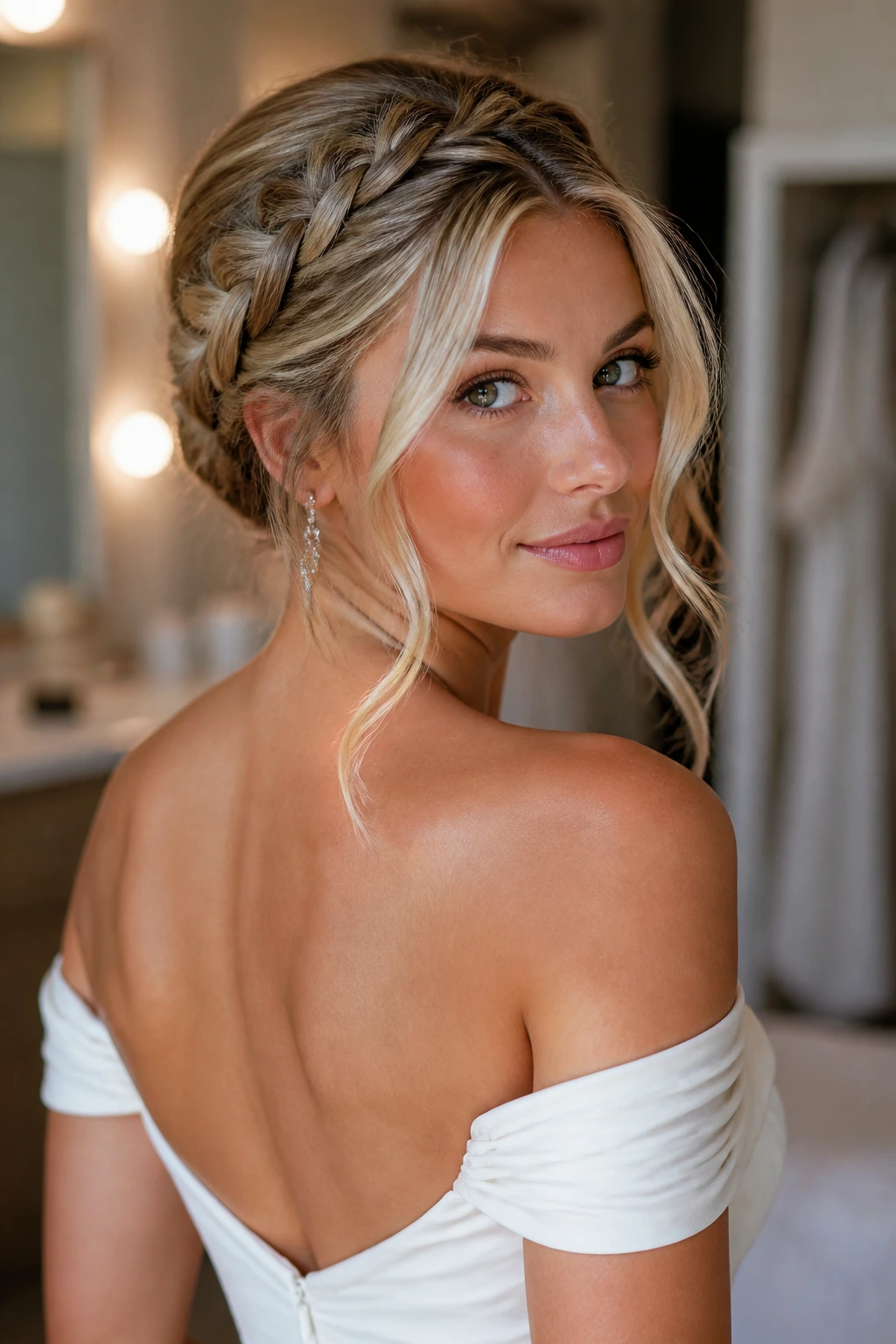
A crown twist wraps the upper hairline and keeps the nape open, which is useful if the dress has straps or a high neckline. The highlighted front sections sit right where the twist starts, so they act like a bright border around the face.
This one is less about perfection and more about shape. Twist the sides back, cross them into the crown, and pin them low enough that the head still looks elongated. If the money pieces are curled softly away from the face, they make the twist feel lighter and less helmet-like.
The open neck detail is the best part. It leaves room for a collar, necklace, or bare skin, depending on the outfit. Clean, simple, and not boring.
26. Teased Prom Puff with Hidden Anchors
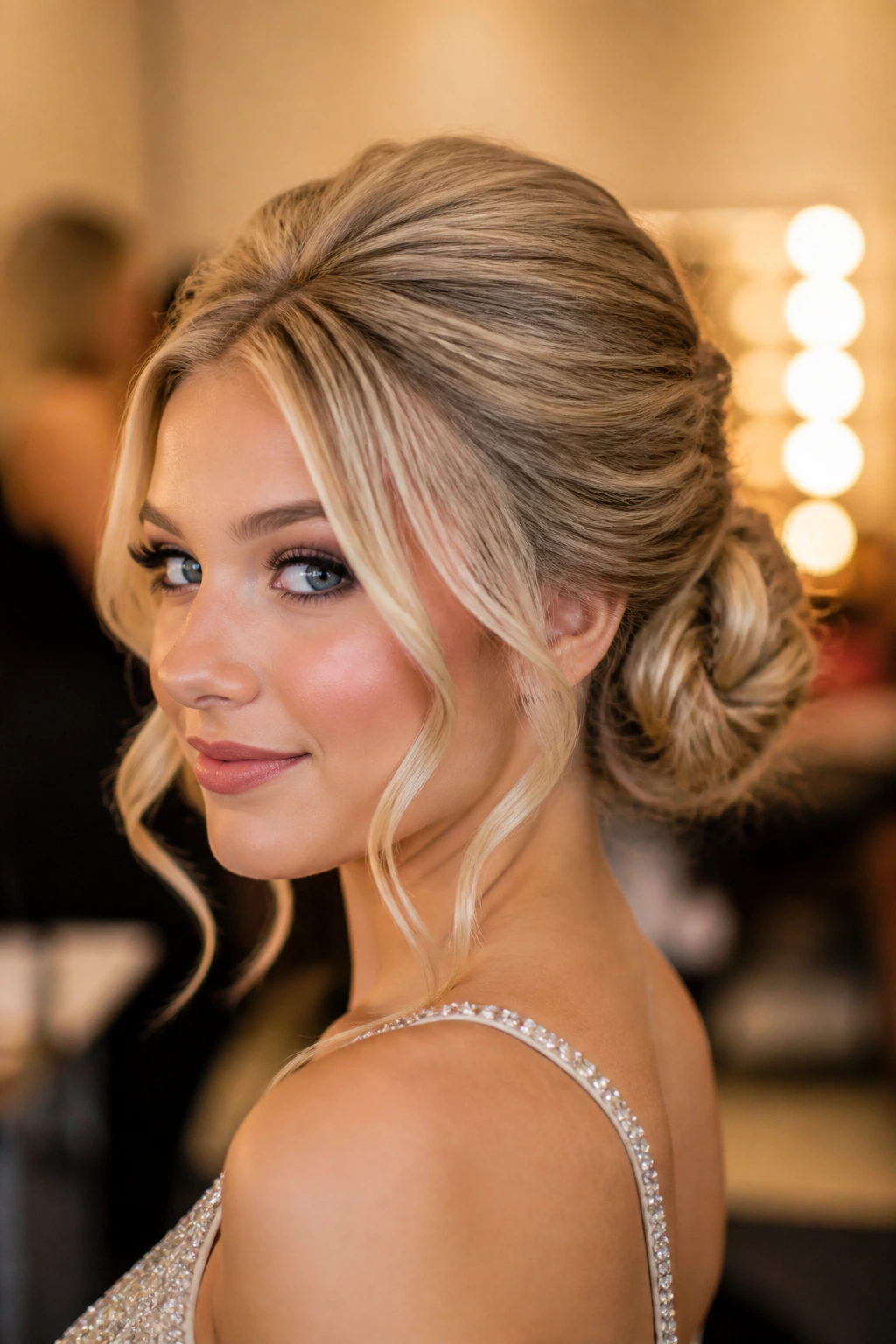
A little height changes the whole mood. Tease the crown, smooth the outer layer, and build a soft puff before pinning the rest into a low bun or tucked shape. The money piece highlights should stay bright and curved, because they balance the volume on top.
This is the style for someone who wants lift without the full drama of a bouffant. The roots need grip, so a powder or texture spray at the base helps. If the blonde front pieces are too flat, the crown can look disconnected from the face. Keep them soft and let them blend into the puff line.
It’s a good prom or dance look because it holds shape on a long night. Use plenty of pins, but hide them under the smooth outer layer.
27. Bow Bun with Sparkly Clips
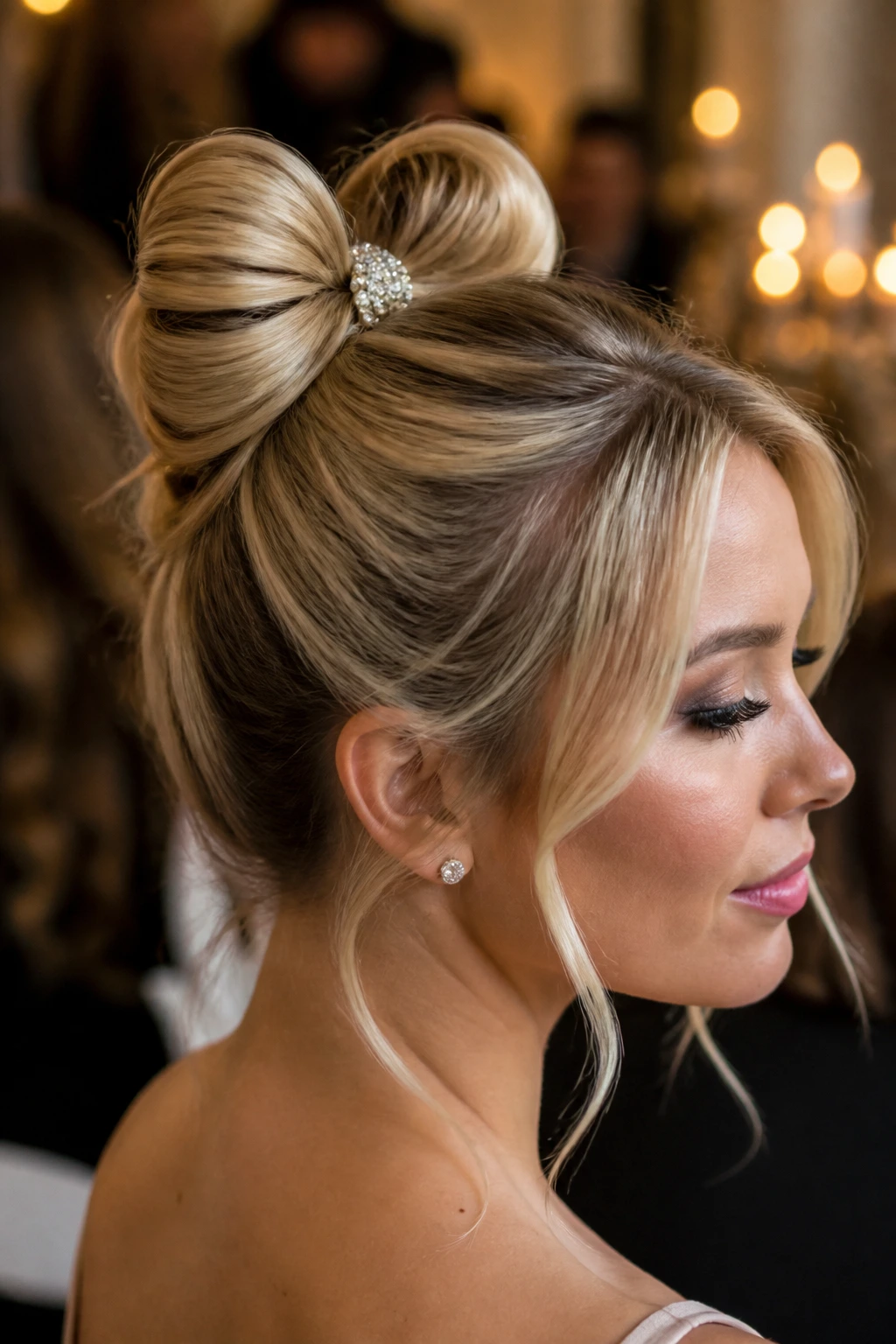
A bow bun can be playful or dressy depending on how neat you make the loops. Form the hair into two rounded loops, then pin the center tight so the shape reads like a bow. The highlighted front strands keep the style from looking too cutesy.
I’d use this when the event calls for something a little more fun — a reception, a milestone birthday, a polished party look. The money pieces should stay airy and not too curled. Straightened with a slight bend is enough. The bow is the centerpiece, so the face-framing blonde should support it, not fight it.
A couple of small sparkly clips near the base can help, but don’t overdo it. One detail is plenty.
28. Dutch Braid Bun with Sleek Sides
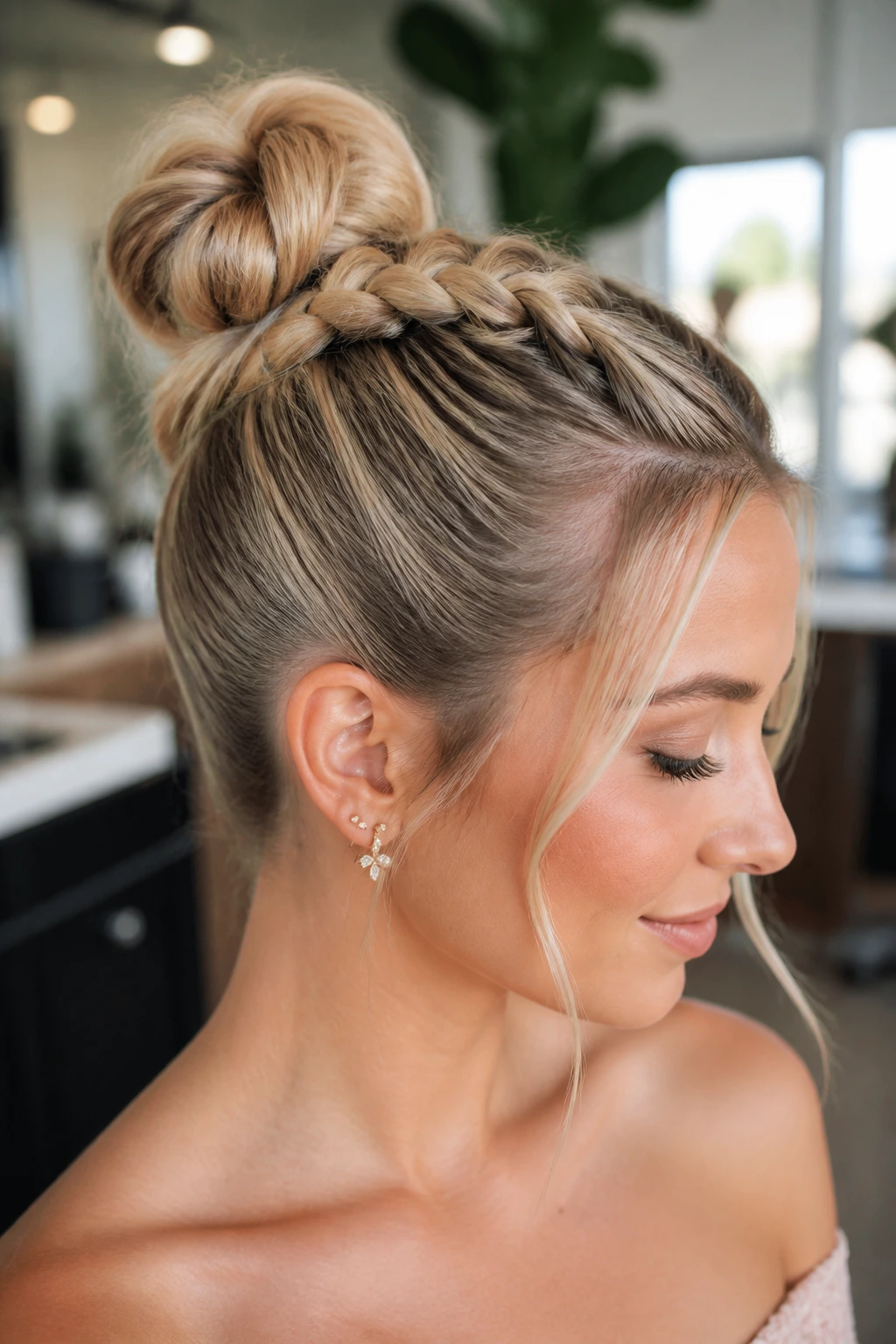
A Dutch braid sits on top of the hair rather than sinking into it, which gives the style visible structure. Braid from the hairline down the center or off to one side, then gather the rest into a bun. Keep the sides sleek so the blonde money pieces remain the brightest thing near the face.
This style has a cleaner, more defined feel than a loose braid bun. It’s a smart choice for thick hair because the braid controls bulk without flattening everything. The face-framing sections should stay smooth, maybe with a slight inward bend at the ends.
If the braid starts to puff too much, pinch the sides gently after you secure it. That opens the pattern and makes the braid look fuller without turning frizzy.
29. Curly Textured Updo with Bright Front Spirals
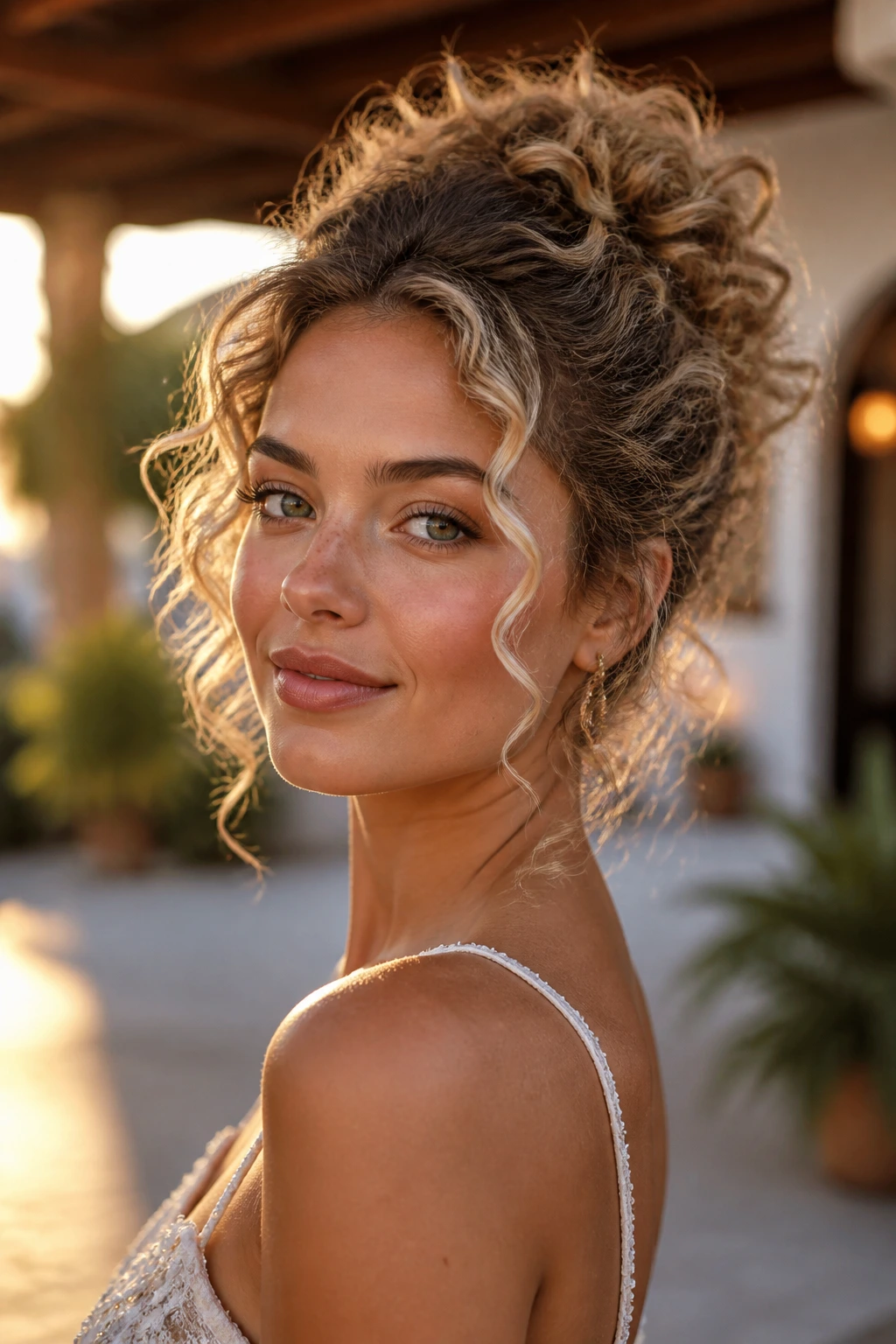
Curly hair deserves its own version. Keep the natural texture, lift the curls into a pinned updo, and let the money pieces curl into brighter spirals around the face. The front should not be forced flat. That kills the shape.
Use curl cream or a light gel on damp hair, then diffuse before pinning the lengths up. Leave the highlighted front pieces out until the end so they keep their spring. If the curls are very tight, separate them with oiled fingertips rather than a brush. The look should feel alive, not deflated.
I love this one for people who want the hair to look like it belongs to them, not to a styling demo. It’s elegant, but the texture keeps it honest.
30. Minimalist Nape Twist with a Middle Part
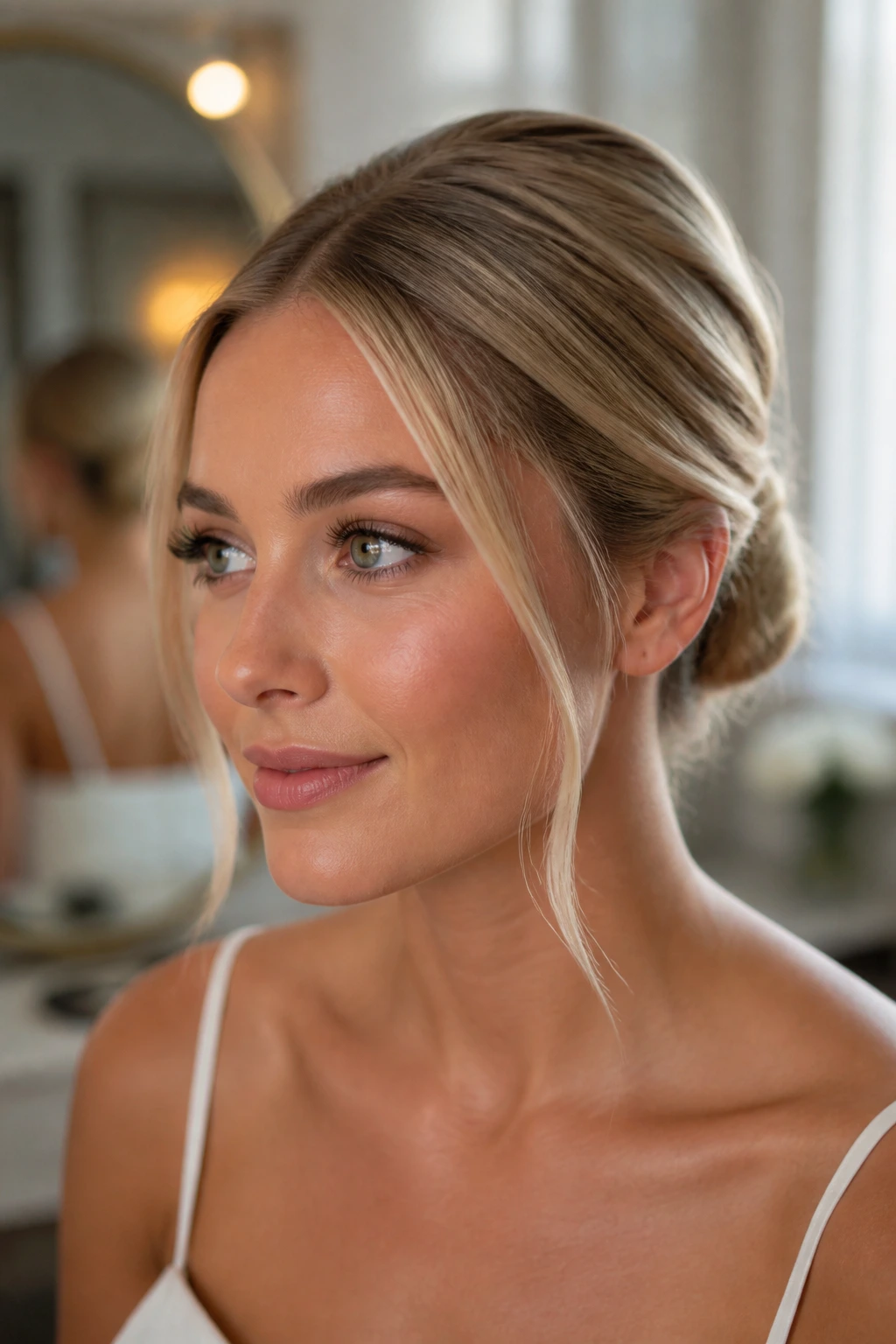
A minimalist nape twist is the quietest style in the collection, and that’s exactly why it works. Part the hair in the middle, smooth the front sections back, and twist the length into a low, tidy finish at the nape. The money piece highlights stay visible as two clean strokes along the face.
There’s almost no fuss here. That is the point. If the dress has structure, texture, or strong lines, a minimal twist lets the outfit breathe. The blonde front pieces keep the style from feeling flat, especially if they’re a shade lighter than the rest of the blonde.
Use a strong grip pin at the twist and keep the crown smooth. The look is quiet, but not empty.
Why Blonde Money Pieces Change the Shape of an Updo
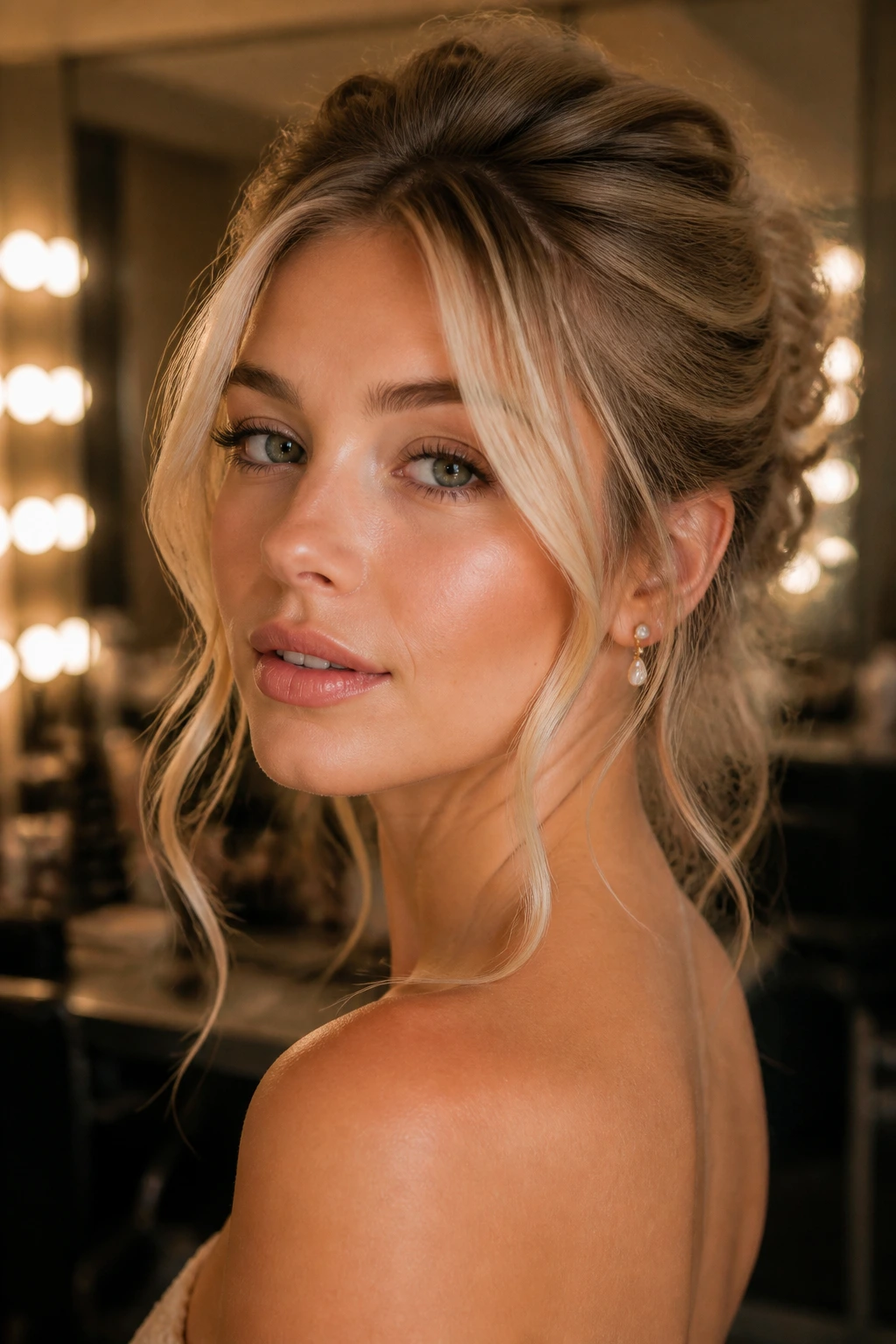
Money piece highlights do more than add brightness. They change the geometry of the whole hairstyle. When the length is pinned back, the eye goes straight to the face, the jawline, and the hairline — and that’s where the lighter pieces do their best work. They break up the solid block of color, soften the edges of a bun or twist, and keep the style from looking too closed-in.
The placement matters as much as the shade. Blonde pieces that start too far back lose the effect. Pieces that are too thick can look stripey, especially on very pale hair. The sweet spot is usually a soft face frame that starts near the temple and moves toward the cheekbone or jaw, depending on the cut. Honey blonde, beige blonde, icy blonde, and buttery blonde all work differently in updos, and that difference shows more once the rest of the hair is pinned away.
There’s also a practical side. The lighter front sections help you see the shape of the style in dim rooms, under camera flash, and against dark clothing. They keep a bun from disappearing into the back of the head. That’s a small thing until you’re standing under warm event lighting and realize your hair finally has depth from every angle.
Essential Styling Tools for These Looks
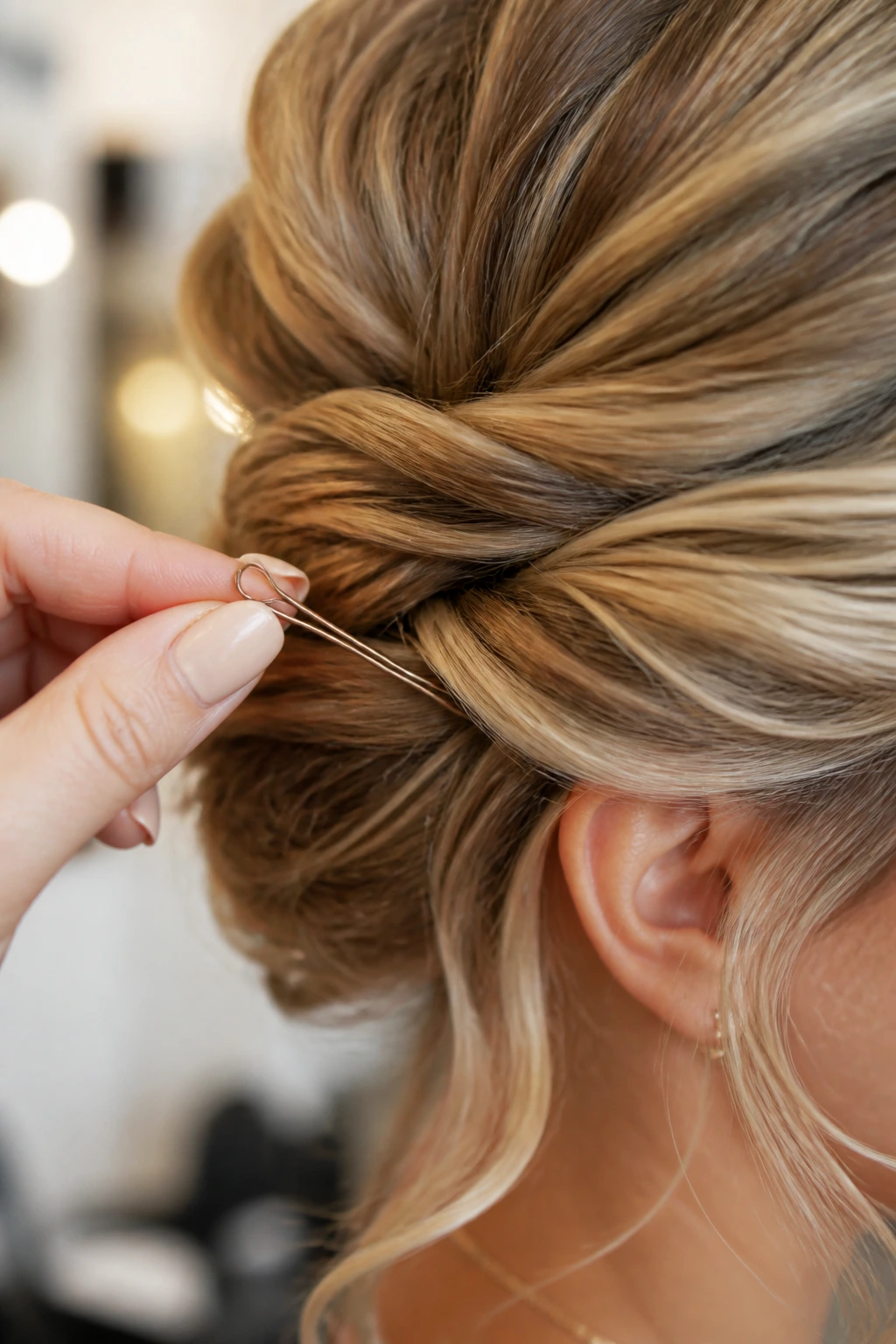
- Rat-tail comb: Use it for crisp parts, sectioning, and clean twist lines near the hairline.
- Boar-bristle or smoothing brush: Best for sleek buns, French twists, and any style where the outer layer needs to lie flat.
- 1-inch curling iron or wand: Ideal for bending the money pieces away from the face without making tight ringlets.
- U-pins and bobby pins in hair-matched shades: U-pins hold bun shapes; bobby pins control the front and hide loose ends.
- Texturizing spray or dry shampoo: Gives fine hair enough grip to braid, twist, and pin without slipping.
- Strong-hold hairspray and flexible-hold hairspray: Strong hold sets the structure; flexible hold keeps front pieces movable.
- Mini elastics: Useful for bubble ponytails, braids, and pre-tying sections before pinning.
- Hair donut or small padding insert: Helps build volume in top knots and rounded buns without piling on pins.
- Shine spray or light serum: Use sparingly on the outer layer to keep blonde color reflective, not oily.
- Sectioning clips: Keep the money pieces separate while you shape the back, which saves time and reduces flyaways.
Smart Shopping and Color-Matching Tips
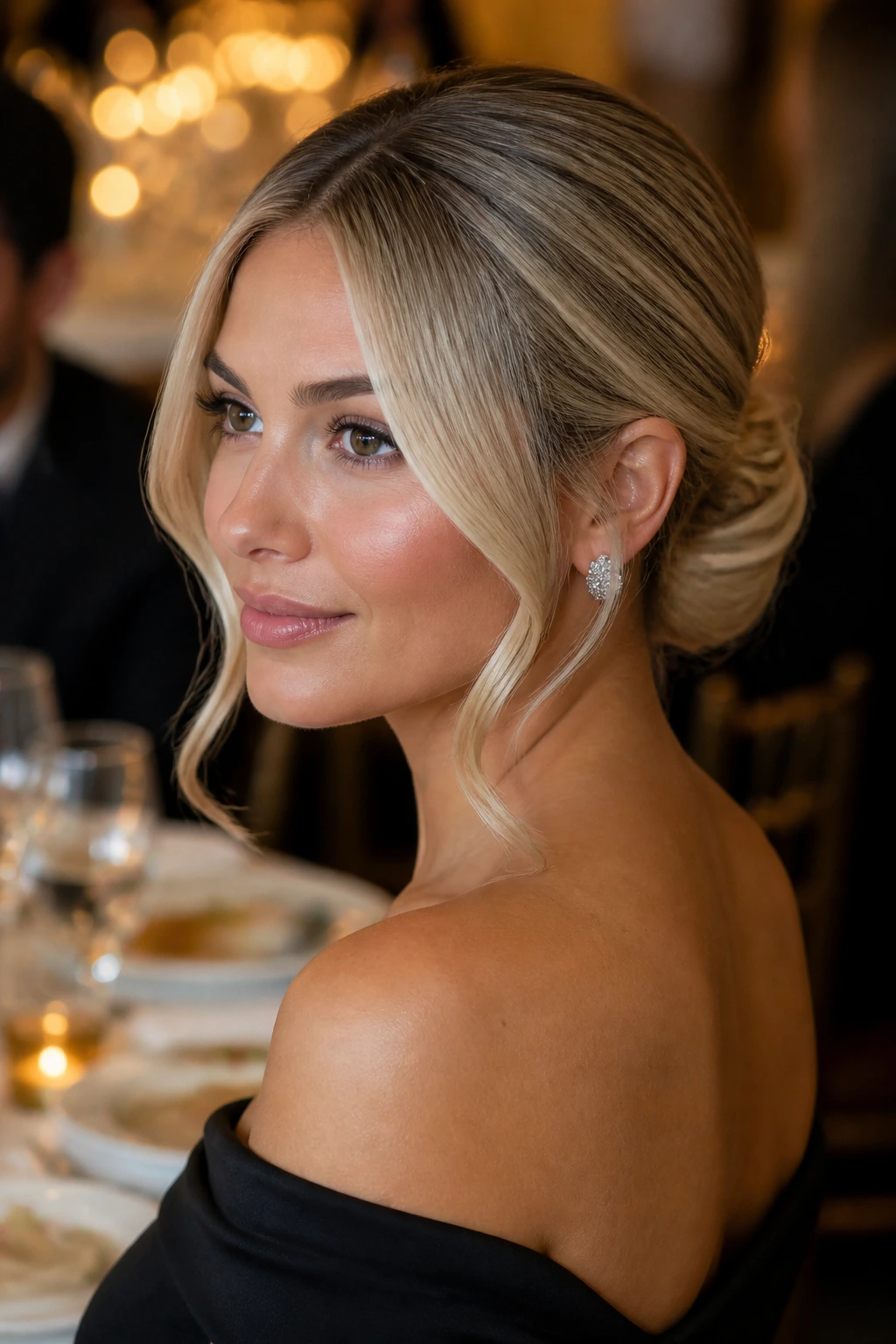
Blonde updos look best when the color story makes sense. If the money pieces are icy and the rest of the hair is warmer, the contrast can be striking — or awkward — depending on the event and the rest of the style. I usually like a clean tonal match for polished buns and a little more contrast for textured or braided looks. Beige blonde and soft honey blonde tend to blend easily. Very platinum front pieces need smoother styling so they don’t look like they were dropped in from another haircut.
Accessories matter just as much. Buy bobby pins that match your root shade, not the lightest blonde in your hair. Mismatched pins are the first thing that shows up in a mirror close-up. If you’re using pearl pins, crystal combs, or ribbon ties, choose one accent and stop there. Piling on three different embellishments makes even a good updo look confused.
Hair prep products matter too. Fine hair usually needs dry shampoo or texture spray before pinning; thick or coarse hair often needs smoothing cream at the surface and a stronger pin hold underneath. If your blonde tends to go brassy, use a purple shampoo a few days before the event, not the morning of it. Freshly toned hair can be a little too cool and flat right after rinsing, while hair that’s been over-toned can look dull. I like to style money pieces when the blonde still has a little warmth and shine, not a washed-out gray cast.
How to Wear These Updos for Different Events
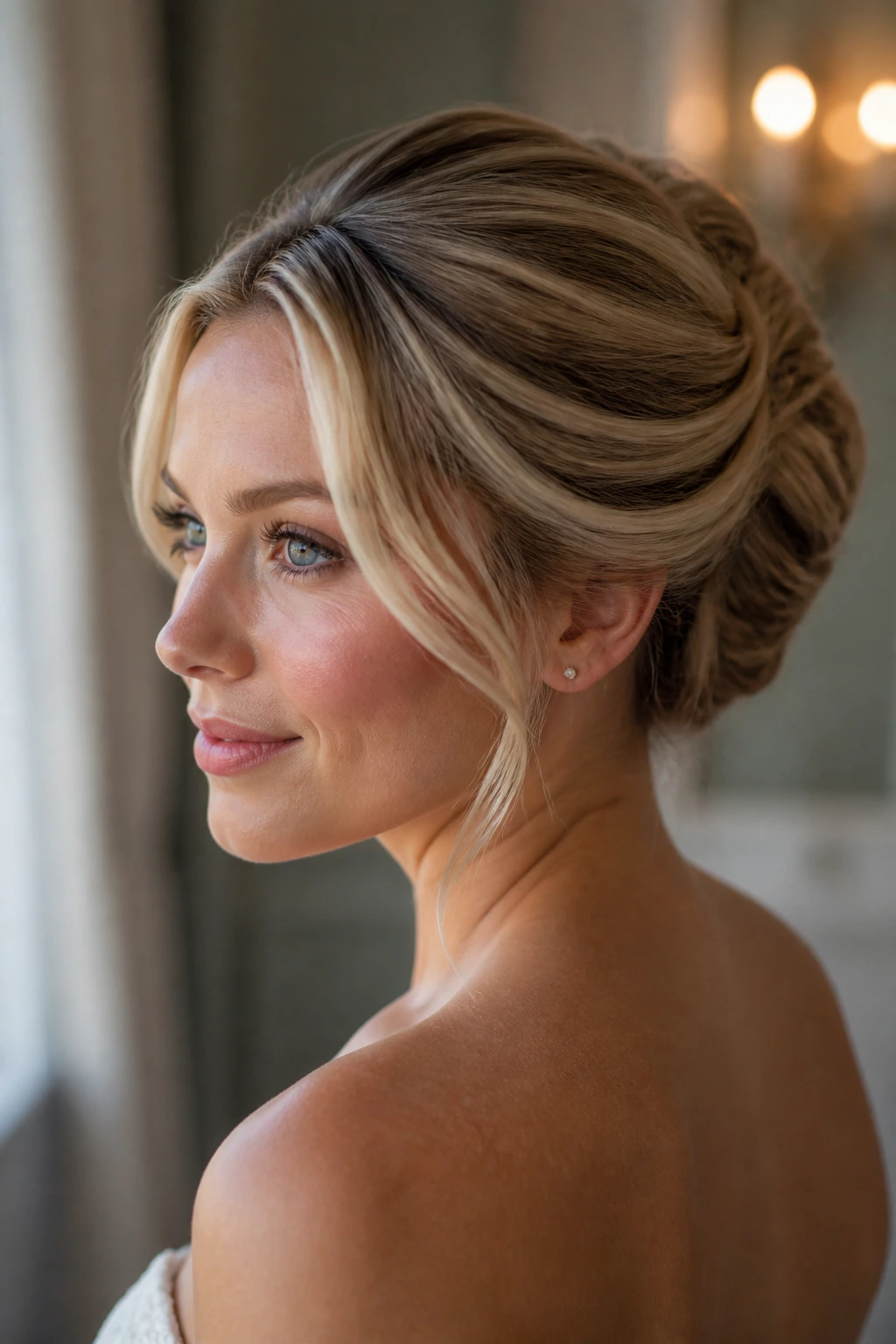
Presentation: Keep the front pieces deliberate. Curved away from the face, they look formal; brushed into a soft bend, they look relaxed. The back can be tight, loose, braided, or twisted, but the money pieces should always feel placed on purpose.
Accessories: Pearl pins, slim rhinestone combs, satin ribbons, and a single floral clip all work, but each changes the mood fast. Pearl details suit low buns and French twists. Sparkly combs belong in smoother styles. Ribbon works best when the braid or knot is already simple.
Outfit Pairing: A high knot goes well with plunging or open-neck dresses because it keeps the neckline clear. Low chignons and nape twists sit nicely with square necks, off-shoulder gowns, or back details that need space. If the outfit is busy, keep the hairline clean. If the dress is minimal, let the braid, curl, or twist have a little more texture.
Occasion Fit: Weddings, proms, gala nights, rehearsal dinners, graduations, and formal portraits all call for different levels of polish. A sleek shell bun looks right at a black-tie event. A messy bun with bright front pieces suits a party with movement. A braided halo bun is comfortable for long ceremonies because it stays put and doesn’t crowd the face.
Additional Tips and Shine Boosters
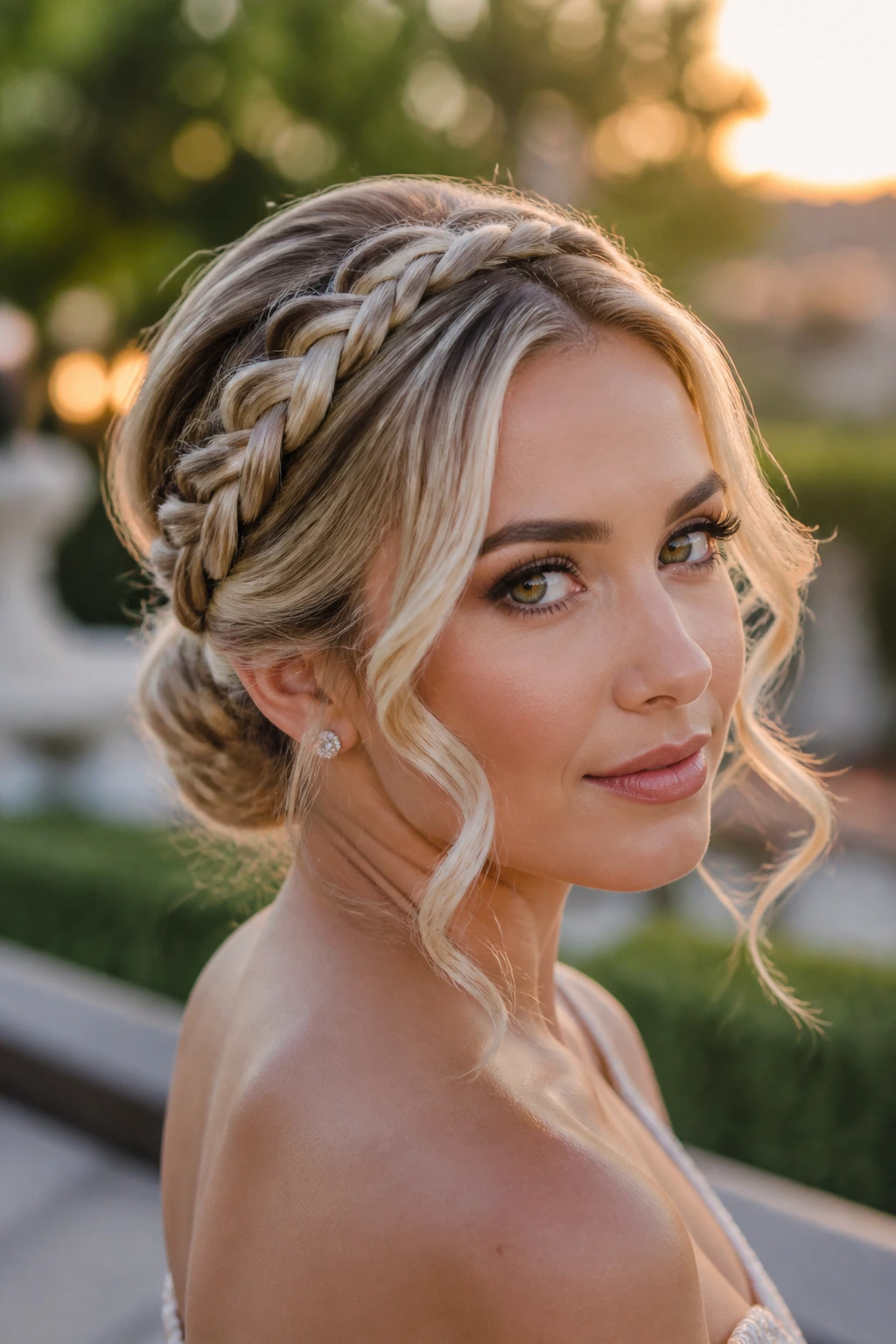
Flavor Enhancement: A pea-sized amount of shine cream along the crown can make blonde strands look smoother under light, but keep it away from the money pieces themselves or they’ll separate and look greasy.
Customization: If the event runs long, pin the face-framing pieces in a soft wave instead of leaving them loose. You get the same bright frame with less risk of frizz by hour six.
Serving Suggestions: Pair pearl pins with smooth styles, crystal clips with braided or twisted shapes, and satin ribbons with half-up looks. One accent is enough. More than that starts to fight the hair.
Make-It-Yours: For fine hair, build the crown with a small pad or light teasing before you pin. For thick hair, split the bun into two layers so the weight sits closer to the head. For curly hair, keep the texture visible and let the money pieces curl naturally; don’t iron the life out of them.
A tiny detail I love: switch the direction of the front curl on each side. That small asymmetry keeps the face frame from looking stamped on.
How to Keep Blonde Updos with Money Piece Highlights in Place
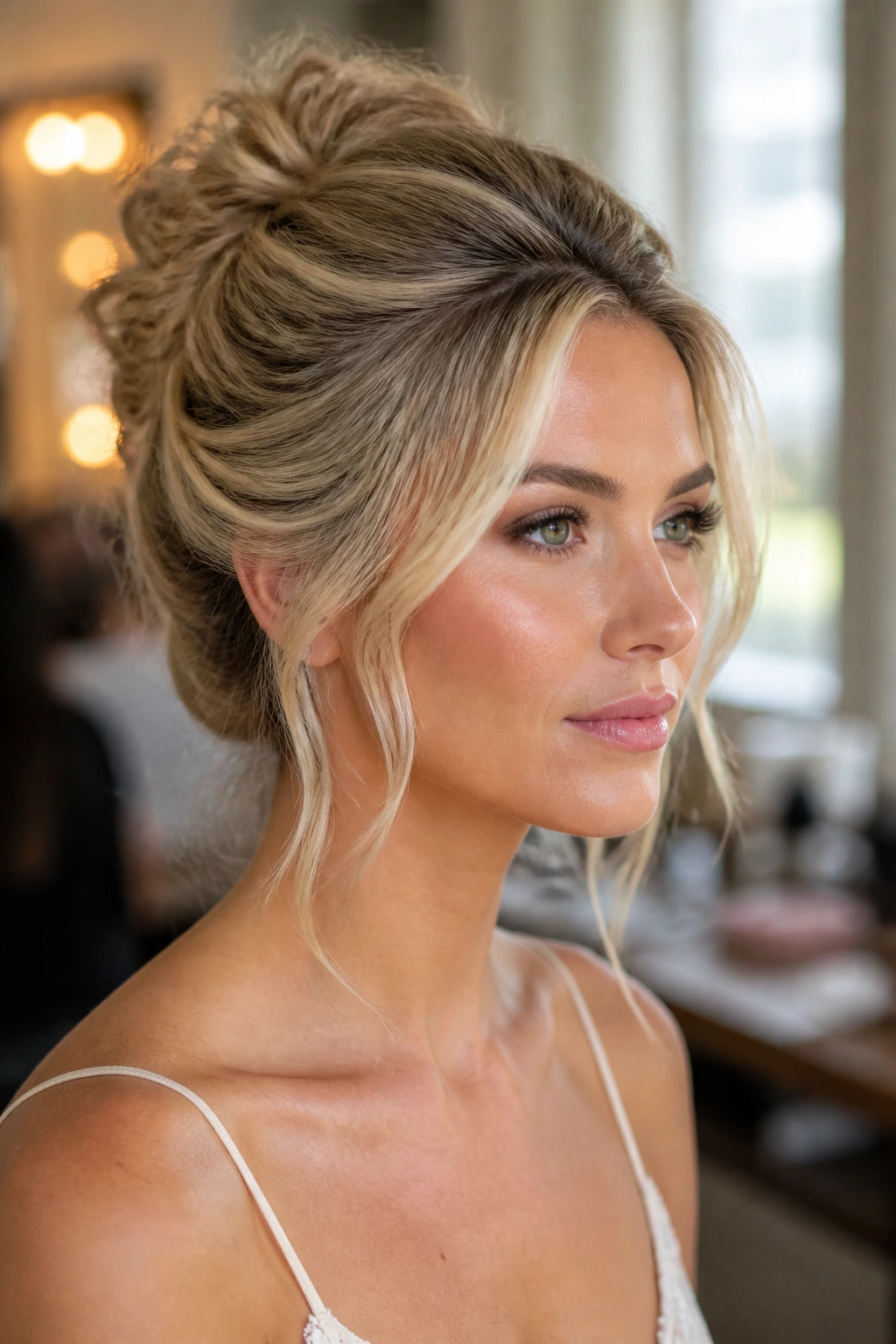
These styles can last a long time, but only if the prep is honest. Start with hair that has enough grip. Bone-clean hair is slippery; hair that’s a day or two old usually pins better. If you need the updo to hold through a ceremony, photos, dinner, and dancing, build it on hair that’s had dry shampoo or light texture spray worked through the roots first.
The money pieces need their own check before you leave the house. They should move when you turn your head, not stick to your cheek like wet paper. If the front strands collapse, re-curl them for 20 seconds with a low-heat tool, let them cool, and then brush them once with your fingers. That usually fixes the shape faster than restarting the whole style.
For make-ahead styling, set the curls or twists, pin the shape, then let the hair cool completely before you touch it again. If you’re doing the look the night before, sleep with a silk scarf or bonnet and use a couple of crossed pins on the looser sections. In the morning, only refresh the front pieces and the crown. Pulling the entire updo apart is how good hair days become rescue jobs.
Carry a small kit if the event is long: 4 bobby pins, 2 U-pins, a travel hairspray, and one mini comb. That’s enough for most touch-ups without dragging a whole bathroom drawer to the venue.
Variations and Adaptations to Try
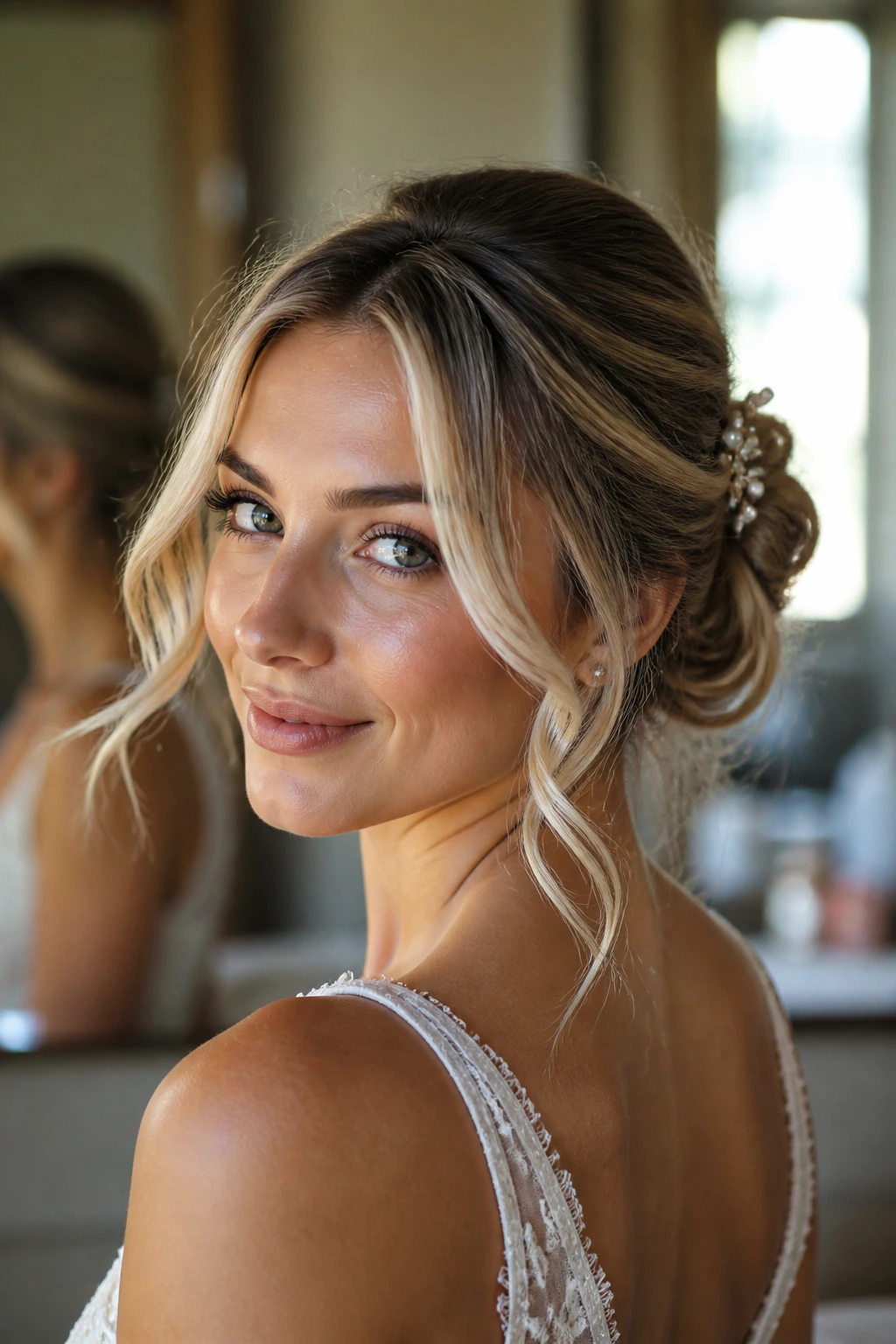
Soft Bridal Version: Keep the bun low, leave the money pieces in loose S-bends, and add pearl pins or a comb at one side. It reads romantic without turning fussy.
Short-Hair Adaptation: If the hair barely reaches the nape, build a pinned faux updo with curls tucked underneath. The face-framing highlights still do the visual work, even when the back is more compact.
Curly-Texture Version: Let the curls keep their pattern and pin the lengths in a loose shape at the back. The money pieces should be defined but not straightened, which keeps the style feeling alive.
Extra-Sleek Editorial Version: Use a center part, a smoothing brush, and a high-shine finish for a more graphic look. This works especially well with shell buns, low knots, and wrapped chignons.
High-Volume Version: Tease the crown lightly, then pin the bun or twist a little higher than usual. The face-framing strands soften the extra height so it doesn’t look too dramatic.
Low-Heat Protective Version: Set the front pieces with rollers or pin curls instead of a hot iron. The blonde still bends beautifully, and the hair takes less heat damage before a long event.
Common Mistakes to Avoid
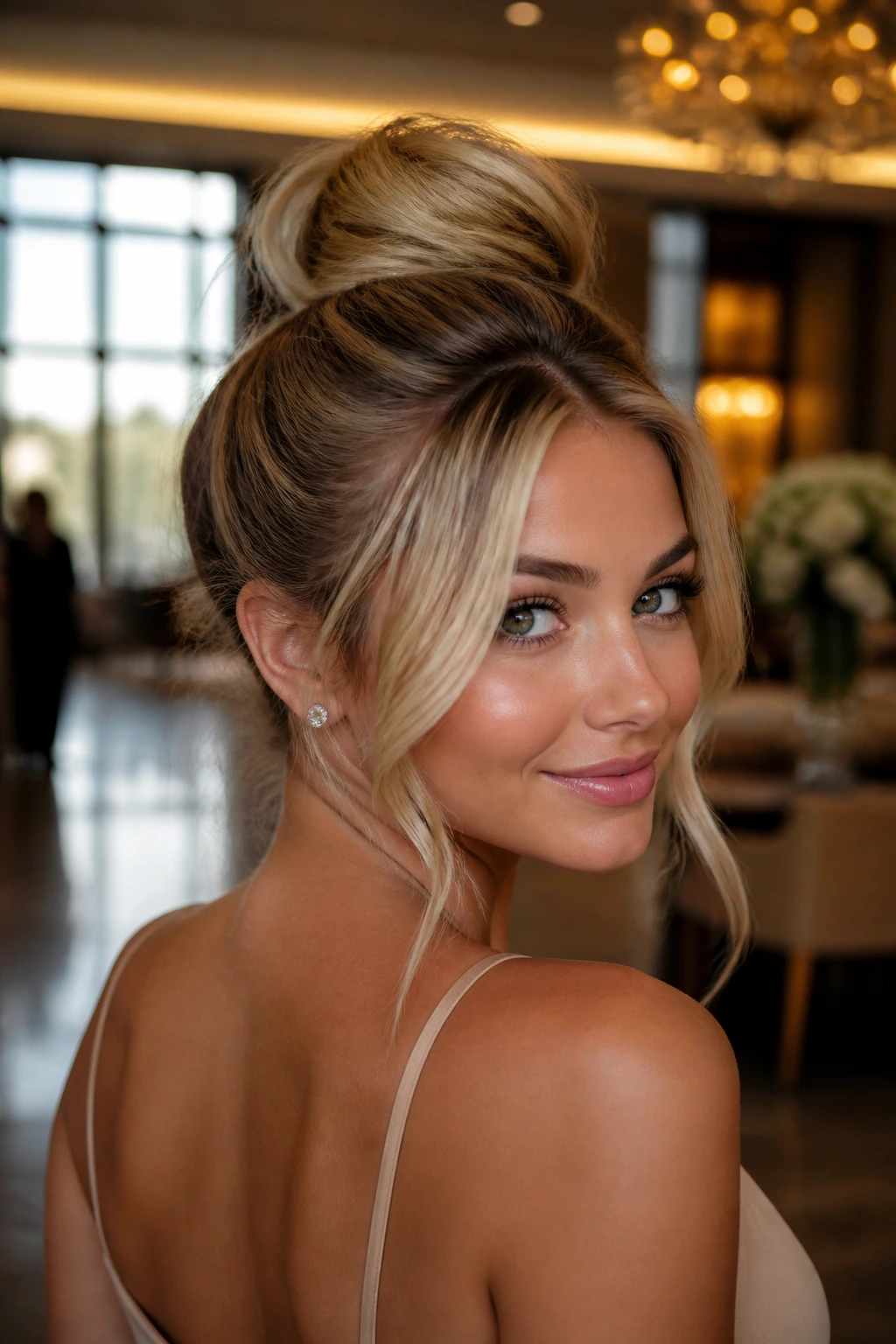
Pinning the money pieces too tightly: If the front strands are glued flat to the head, the whole look turns harsh. Leave a small bend or wave so they can frame the face instead of disappearing into the scalp line.
Using too much shine product: Blonde hair shows oil fast. A drop too much at the crown can make the style look stringy, especially under indoor lights. Keep shine spray on the outer surface, not the roots.
Forgetting about hair texture before you start: Clean, silky hair is a nightmare for braids and twists. Add texture first, or the pins will slide while you’re still getting dressed.
Building the bun too low or too wide for the neckline: A low chignon can be perfect, but if the dress already has heavy detail at the back, a wide bun can crowd it. Match the shape to the outfit, not the mirror alone.
Leaving the front pieces as an afterthought: The money pieces are the whole reason these blonde updos read so well. Style them first, then build the rest of the updo around them.
Frequently Asked Questions
Do money piece highlights work with every blonde updo?
Most of the time, yes. The key is scale: a sleek French twist needs softer front pieces, while a messy bun can handle more texture and movement. If the front highlights are very chunky, they may work better with looser styles than with the sharpest buns.
What curl pattern looks best on the face-framing pieces?
A soft bend usually looks better than a tight curl. Curling away from the face with a 1-inch iron and brushing it out once gives a cleaner line, especially around low buns, knots, and twists.
Can short hair still pull off these styles?
Absolutely. Shorter hair often works best in faux updos, tucked rolls, and half-up twists. The front highlights still matter even if the back uses padding, pins, or a hidden hair net.
How do I keep a blonde updo from slipping if my hair is fine?
Start with texture spray or dry shampoo, then pin in layers instead of trying to hold the whole shape with two or three pins. Fine hair needs grip at the roots and support inside the bun, not a heavy layer of hairspray on top.
Should the money piece be curled toward or away from the face?
Away from the face is the safer choice for most special-occasion styles because it opens the cheekbones and keeps the front from closing in. If you want a softer, more romantic effect, curl one side away and let the other fall into a looser bend.
What if my highlights look brassy next to the updo?
A toning shampoo a few days before the event can calm that down, but don’t overdo it right before styling. Too much toning can make blonde look flat. A little warmth is often better than a gray, over-processed finish.
Can I sleep in the style if I need it to last into the next day?
A low bun, tucked twist, or pinned chignon can survive overnight if it’s secured well and covered with a silk scarf or bonnet. Loose tendrils and softer curls may need a quick refresh in the morning, so keep a curling iron or low-heat wand ready.
Do these styles work with bangs?
Yes, but the bangs need to be part of the plan. Curtain bangs can blend into the money pieces, while blunt bangs usually push the style in a more graphic direction. Either way, the front should look intentional, not accidental.
A Face-Framing Finish That Lasts
The best thing about these blonde updos is that they don’t ask you to choose between polish and softness. The updo gives shape, lift, and staying power. The money piece highlights keep the face alive inside that shape. That combination is what makes the style feel right for special occasions instead of merely “done.”
If there’s one habit worth keeping, it’s this: style the front pieces first. Once those are sitting in the right curve, the bun, braid, twist, or knot has a much easier job. The whole look falls into place faster, and it looks better from every angle — especially the one people see first.