



Curly bobs for oval faces with money piece highlights can look polished in one salon chair and awkward in the next, and the difference usually comes down to three things: where the length stops, how much width sits at the cheeks, and whether those bright front pieces are placed with any thought at all. Get those right, and the whole cut wakes up. Get them wrong, and the highlight sits there like a sticker on the front of your hair.
Oval faces are merciful. That’s the nice part. The trick is not to treat that as permission to do anything. A curly bob still needs shape, especially because curls shrink, puff, and move in ways straight hair never will. The money piece has to do a little work, too. It should bring light to the eyes and brow line, then fold back into the curl pattern without screaming for attention from six blocks away.
What I like most about this combination is that it gives you room to play. You can go rounded or choppy, chin-length or collarbone-skimming, glossy or undone, warm caramel or cool beige. The face shape stays balanced, while the front brightness keeps the cut from disappearing into a dark cloud of curls. That’s the sweet spot.
Why These Curly Bob Ideas Keep Winning
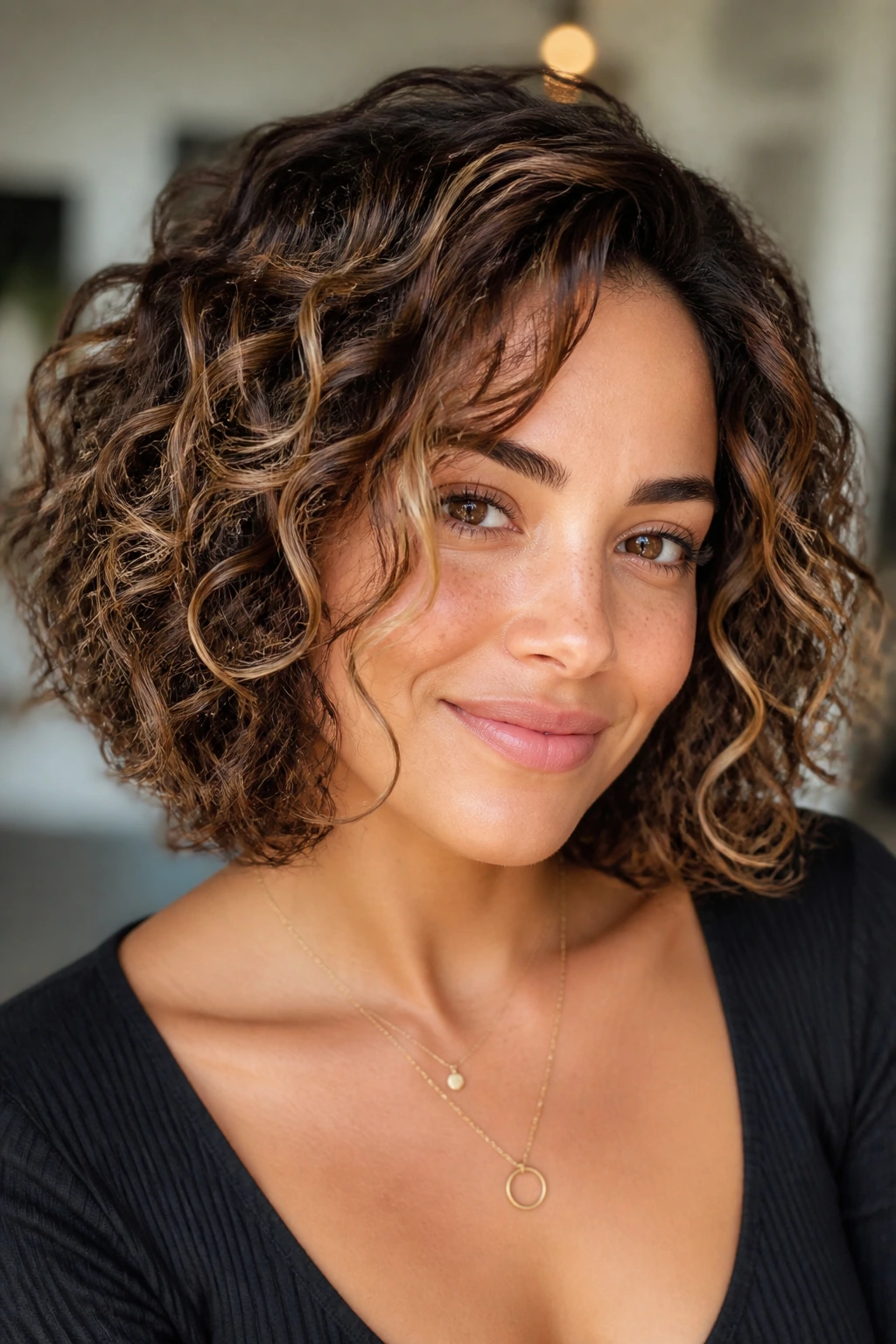
- Oval-face balance: The length can sit at the chin, jaw, or just above the shoulders without throwing the proportions off, which means you can choose shape first and color second.
- Money piece payoff: Bright front ribbons pull the eye toward the cheekbones and eyes, so the bob looks deliberate instead of flat around the hairline.
- Curl-friendly structure: Layers, not blunt heaviness, keep the curl pattern springy and stop the ends from turning into a dense little triangle.
- Color that shows through movement: On curly hair, face-framing highlights shift as the curls move, so the color reads from more than one angle.
- Low-drama flexibility: You can wear these cuts defined, brushed out, or diffused, and the shape still holds its line.
- Easy to personalize: Warm, cool, chunky, narrow, subtle, bright — the same bob can lean soft or dramatic with a few placement tweaks.
1. Chin-Length Curly Bob with Caramel Money Piece
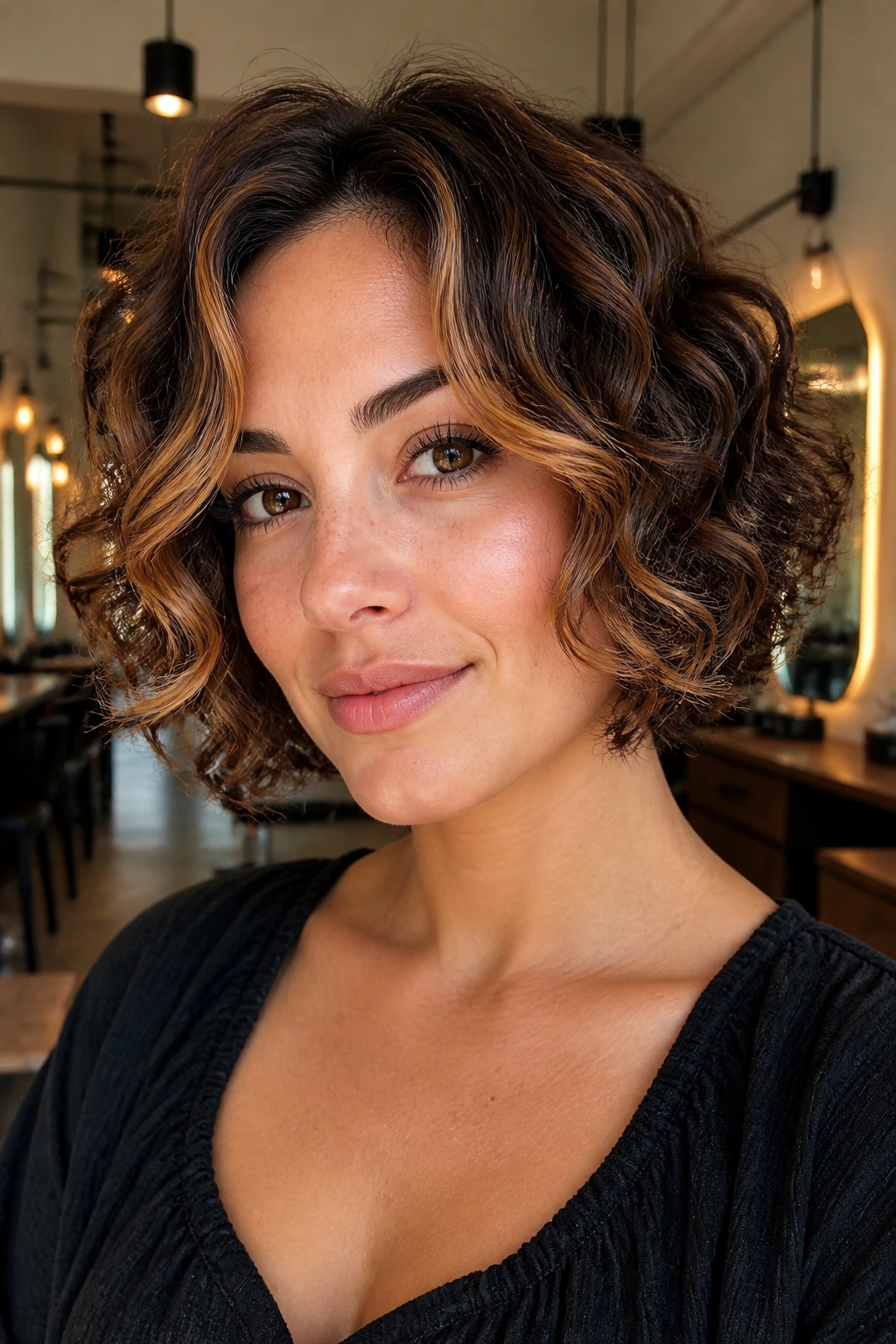
A chin-length curly bob is one of those cuts that looks far more intentional than people expect. On an oval face, it lands right at the point where the jaw starts to matter, which gives the curls a clean edge instead of letting them float too long and shapeless. The caramel money piece around the front softens the look and keeps the cut from going heavy near the temples.
This version works best when the curls are medium-sized and a little springy. The front highlight should start just above the cheekbone, not buried back near the crown. That placement matters. Too far back and you lose the face-framing effect; too wide and the whole front reads stripey instead of woven through the curls.
A collarbone necklace, a side part, and a bit of root lift can make this shape even stronger. It’s a bob that likes movement. Still. It does not like being weighed down with too much cream.
2. Rounded French Bob with Beige Blonde Face Frame
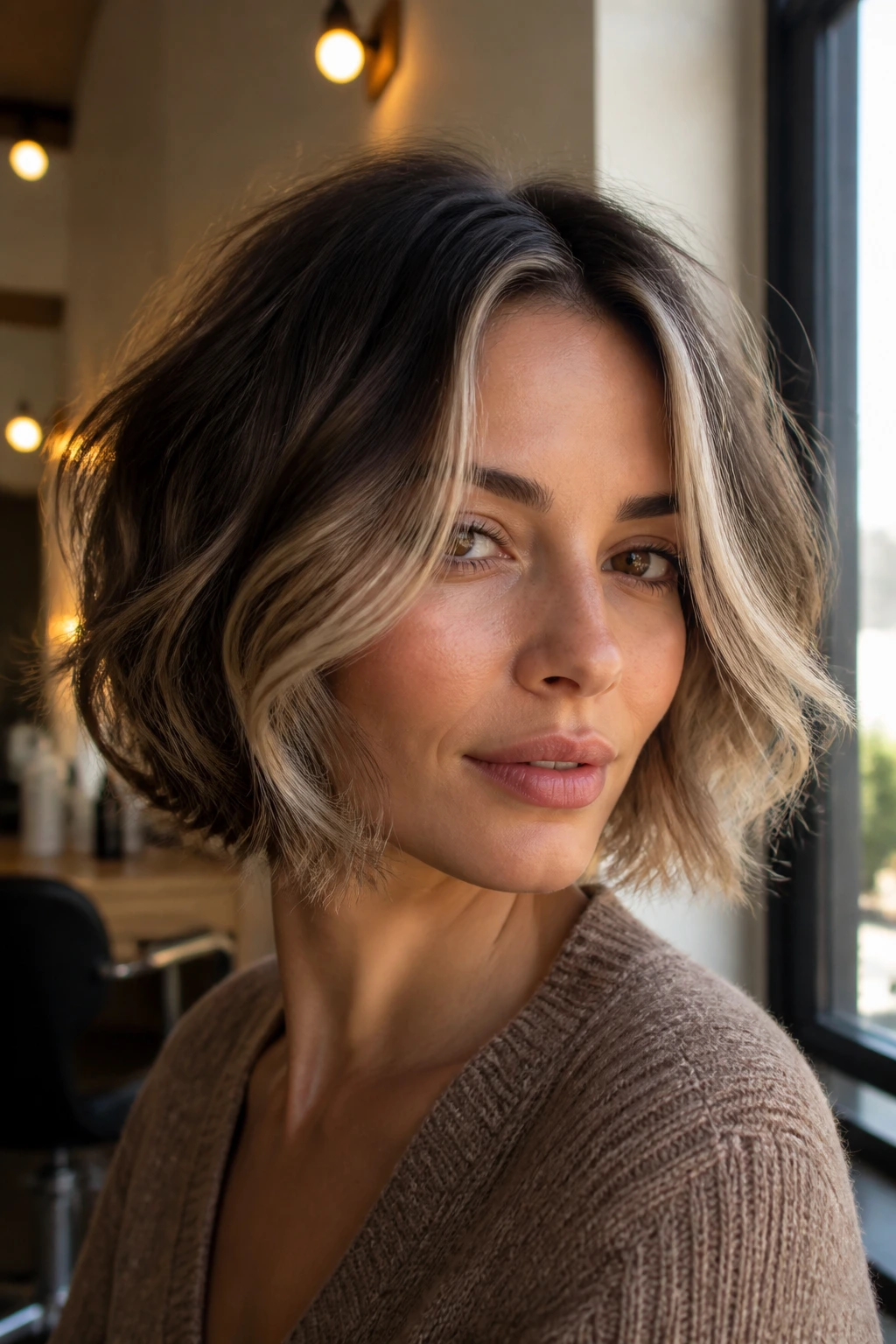
Why does this shape feel so expensive-looking on oval faces? Because the curve is doing half the work. A rounded French bob keeps the volume tucked in close to the cheeks and ears, which makes the face feel softly enclosed rather than stretched. Add a beige blonde money piece and the whole cut turns from sweet to sharp in a nice way.
Why It Works
The French bob usually sits shorter than a classic bob, often around the cheek or just under the ear. On curly hair, that shorter length gives the curl enough room to spring without collapsing the shape. The beige front strands are cooler than caramel, so they read cleaner next to darker brunette bases. That contrast looks especially good when the curls are diffused to a soft halo instead of combed into stiffness.
Keep the front highlight narrow. Two slim ribbons are usually enough. If you go too chunky here, the bob can start to look like two bright curtains instead of part of the haircut.
3. Side-Part Curly Bob with Honey Ribbon Highlights
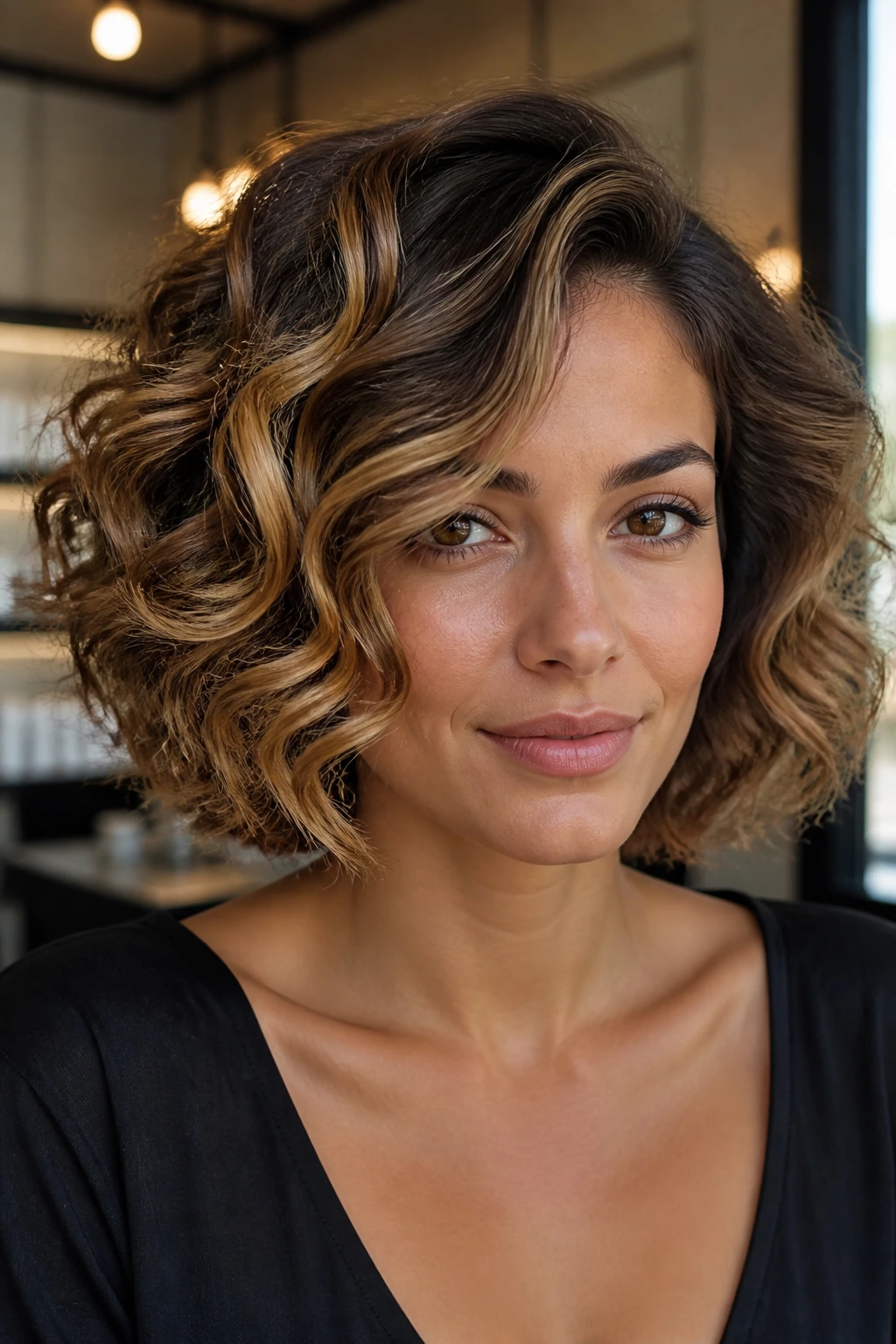
A deep side part changes everything. It gives the curls a little sweep, a little drama, and just enough asymmetry to keep an oval face from reading too symmetrical. The honey ribbon highlight makes the front side feel lifted, especially when the curl clumps are a bit larger and more defined.
This is one of my favorite options for people who want brightness without committing to a heavy blonde front. Honey has a way of looking sun-touched rather than bleached. On darker curly hair, it lands softly, and on medium brunettes it keeps the whole bob from looking muddy near the part line.
The best version of this cut leaves one side slightly fuller. Not lopsided. Just fuller. That subtle imbalance gives the highlight somewhere to live. Without it, the color can feel pasted on.
4. Stacked Curly Bob with Espresso Roots and Light Front Pieces
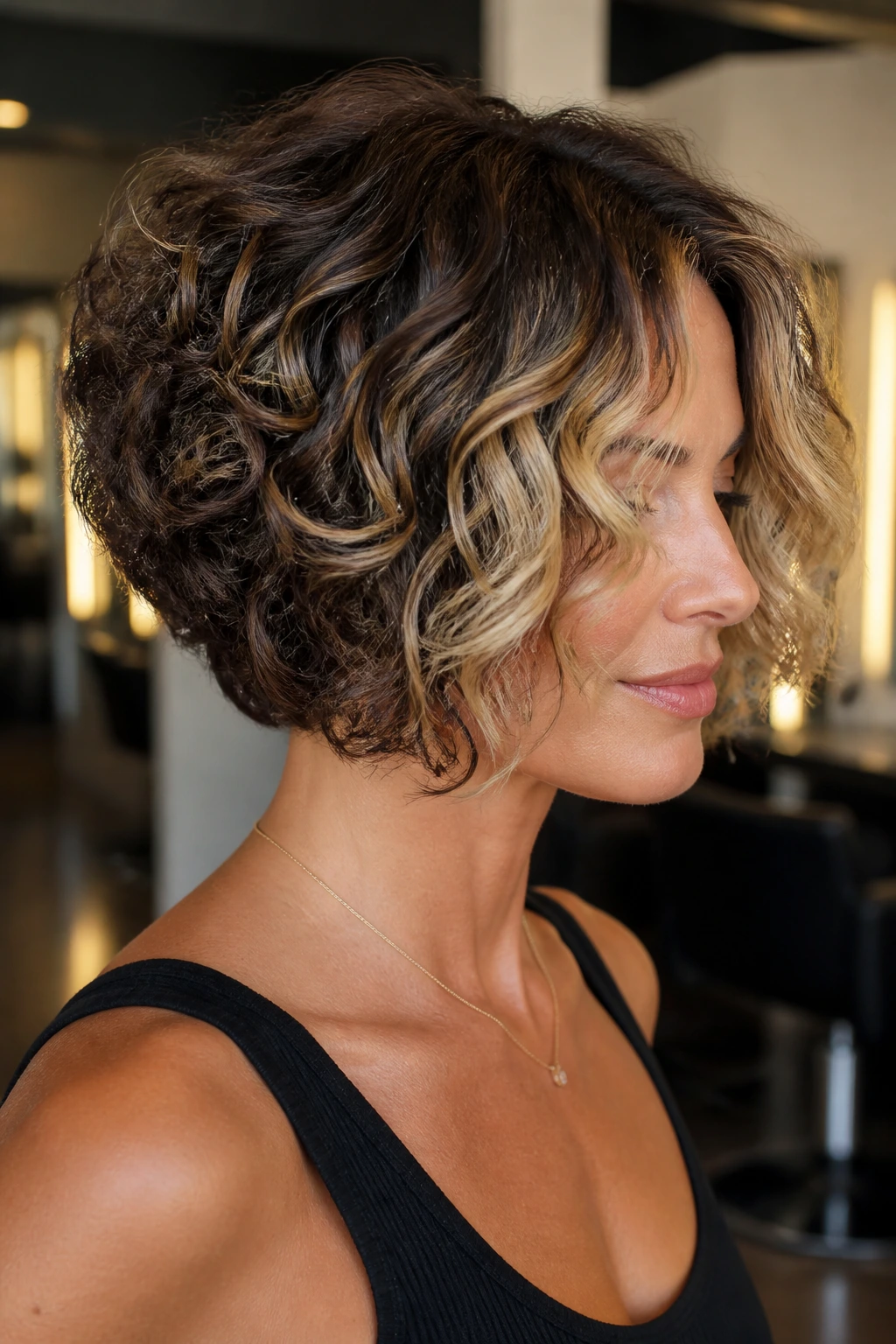
If your curls are dense and you want real shape at the back, a stacked bob earns its keep. The nape sits shorter, the crown gets lift, and the silhouette rises instead of spreading out. For oval faces, that upward shape can be a smart move because it keeps the cheeks from looking swallowed by width.
The espresso roots are part of the point here. Darker depth under the bright money piece makes the front strands look brighter, not just lighter. I prefer this when the curl pattern is loose to medium, because the stacked layers need enough bounce to show. Otherwise the back can sit too close to the head and lose its profile.
A bright front strip near the eyebrow line finishes the job. It should feel like a frame, not a spotlight.
5. Shaggy Curly Bob with Copper Money Piece
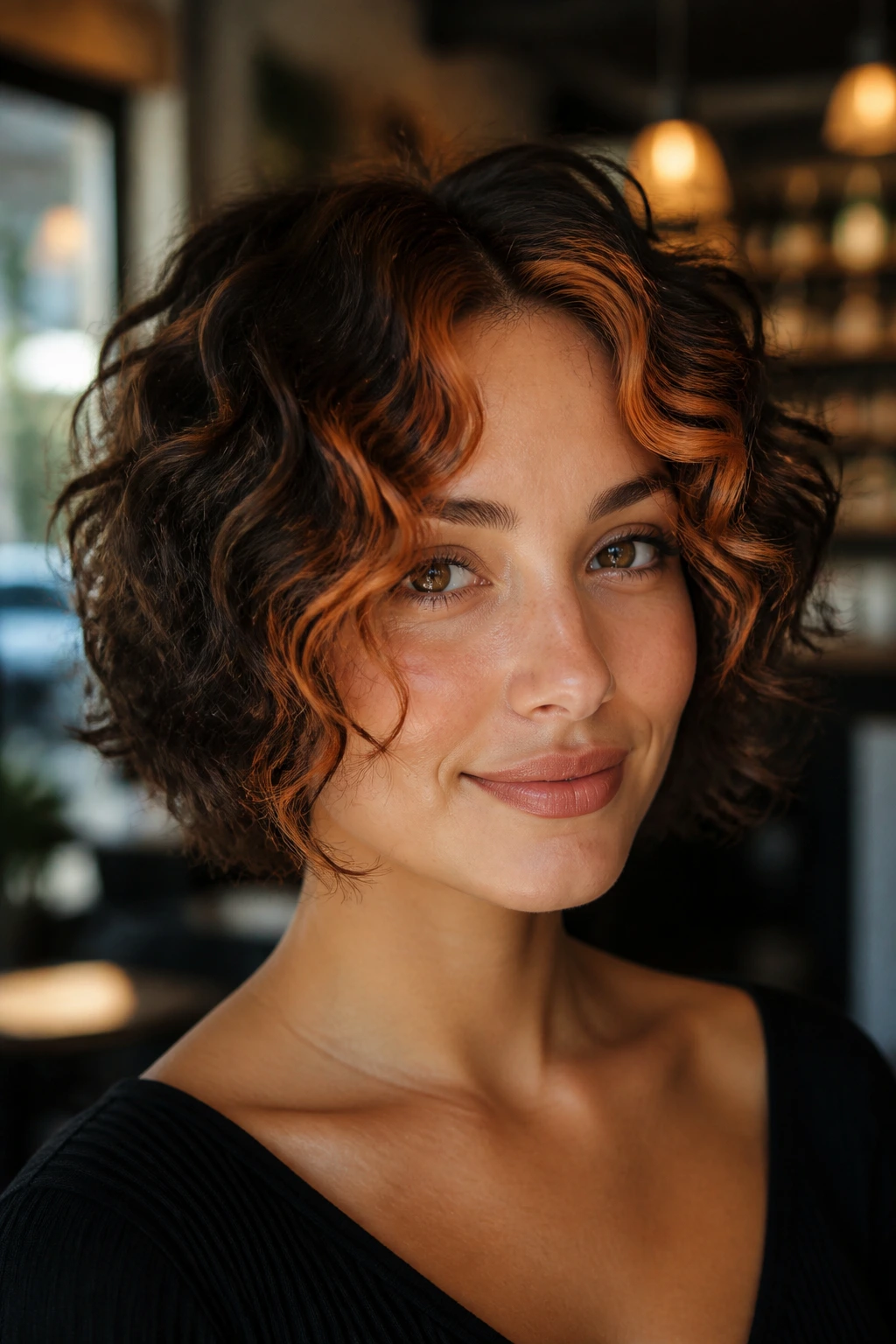
Copper on curly hair has attitude without looking loud if you keep the shape shaggy and light. The uneven ends and face-framing layers make the curl fall in pieces, which is exactly what keeps the color from overwhelming the cut. On an oval face, that broken-up shape adds texture around the lower half without changing the natural balance of the face.
What Makes It Different
The shaggy bob does not need perfect symmetry. In fact, it looks better when it isn’t trying to behave. The copper money piece should land just ahead of the cheekbone and carry into the curl’s bend, so the brighter strand looks like it belongs there. If the front highlight is too straight or too wide, it fights the movement instead of following it.
This one suits people who don’t want a polished salon finish every morning. A little mousse, a diffuser, and a few scrunched pieces are enough. The cut does the rest.
6. Asymmetrical Curly Bob with Platinum Front Slice
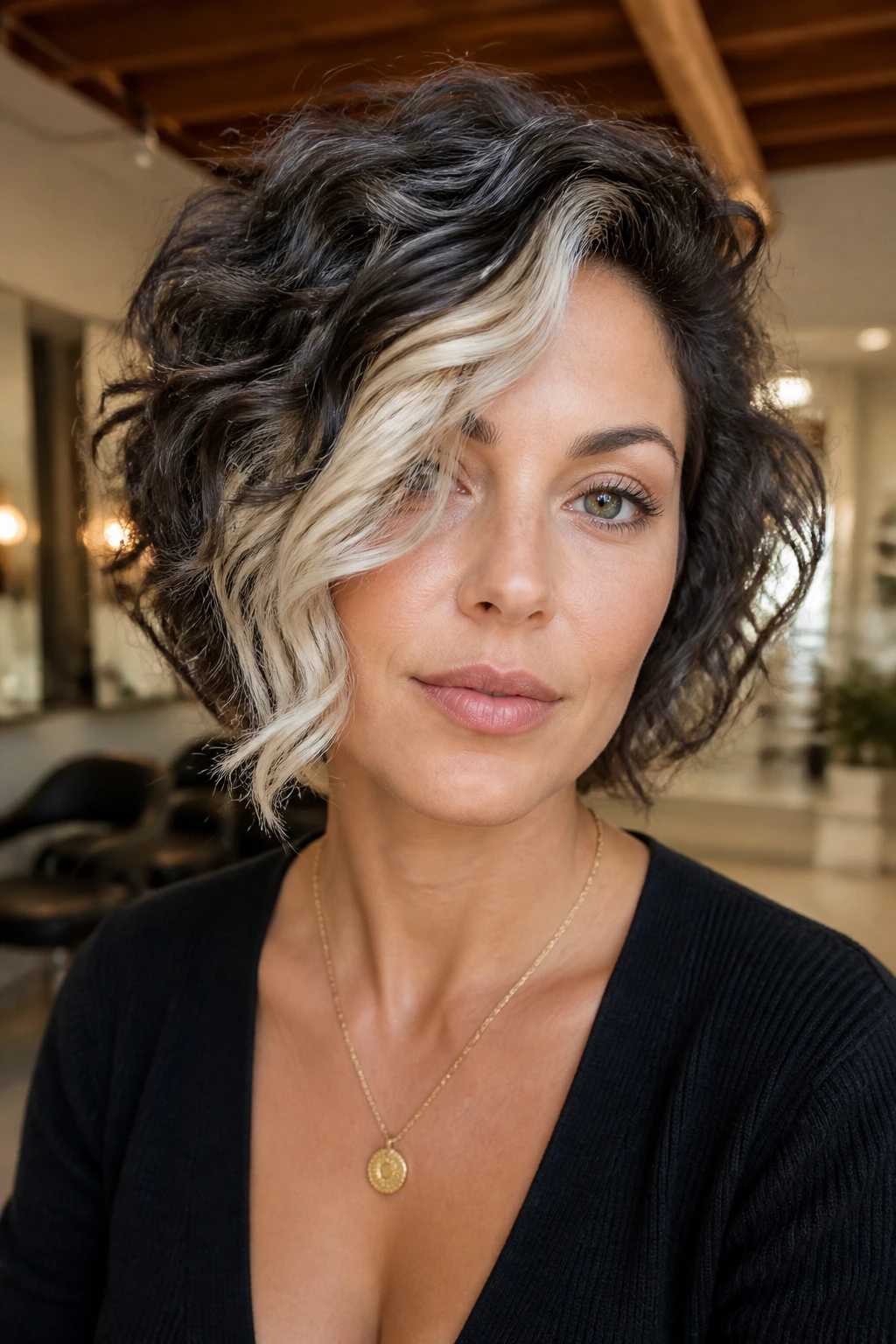
Some people hear “asymmetrical” and think it means dramatic beyond reason. Not here. A slight difference in length — maybe a half inch, maybe a full inch — gives the bob a cleaner angle and keeps the curl mass from settling into a box. On oval faces, that tilt can feel fresh because it interrupts the vertical line just enough.
The platinum front slice is the risky part, and also the fun part. It works best on darker bases where the contrast feels deliberate. If your curls are loose and shiny, the platinum strip lands like a bright line through the front and pulls the eyes upward. On tighter curls, ask for a softer root blend so the light piece doesn’t look disconnected.
This cut likes confidence. It also likes toner maintenance. Platinum is not a lazy color.
7. Ringlet Bob with Soft Babylights
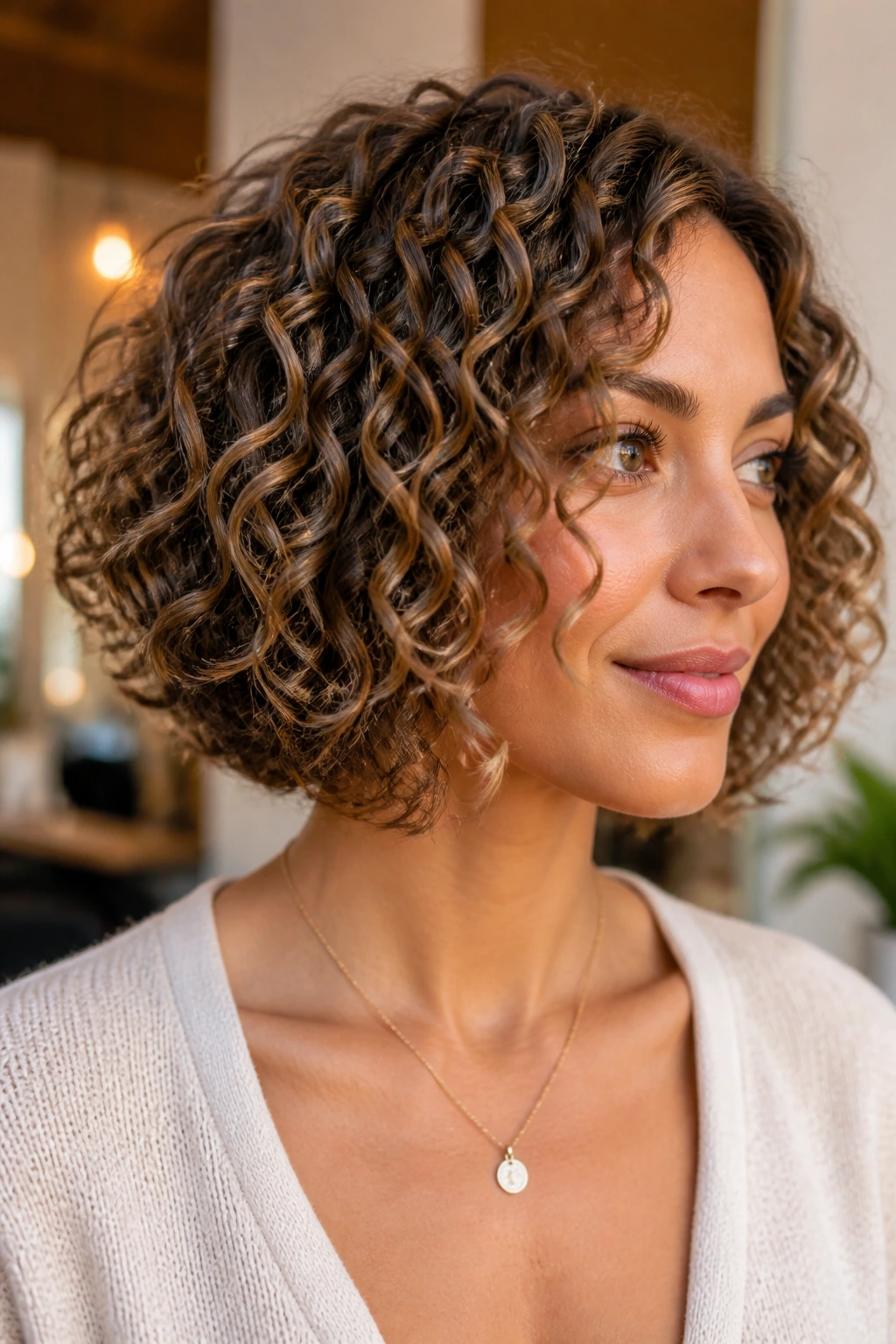
Tight, springy ringlets need a different approach than loose waves. They already carry a lot of shape, so the bob should be cut to let the curls stack without turning top-heavy. A ringlet bob often sits at the jaw or just below it, with layers that remove bulk from the sides.
Babylights are the quiet hero here. They’re thin enough to weave through the curl pattern without making each strand look painted. On an oval face, the softness keeps the focus on the eyes and mouth rather than the volume of the hair itself. That can be a relief if you do not want the front of your hair to shout.
This is a good cut for people who like dimension more than contrast. It looks richer in motion than it does on a flat hanger shot, which is exactly why ringlets make it shine.
8. Air-Dried Curly Bob with Sunlit Balayage

Air-drying changes the whole mood of a bob. The shape gets looser, the curls separate a little more, and the balayage pieces melt into the texture instead of sitting on top of it. For oval faces, that softness is useful because it keeps the cut from looking too severe around the cheekbones.
The sunlit balayage should be painted through the outer curve of the curls, not just the top layer. That way, when the bob sways, you keep seeing little shifts of light through the shape. It feels more natural than a single strip at the front, especially if your curls are medium porosity and hold color well.
I’d keep the roots deeper here. A rooted base gives the bright pieces something to sit against, which matters a lot when the hair is short. Without that contrast, the curl pattern can blur the color into one pale mass.
9. Wet-Look Curly Bob with Glossy Dark Base
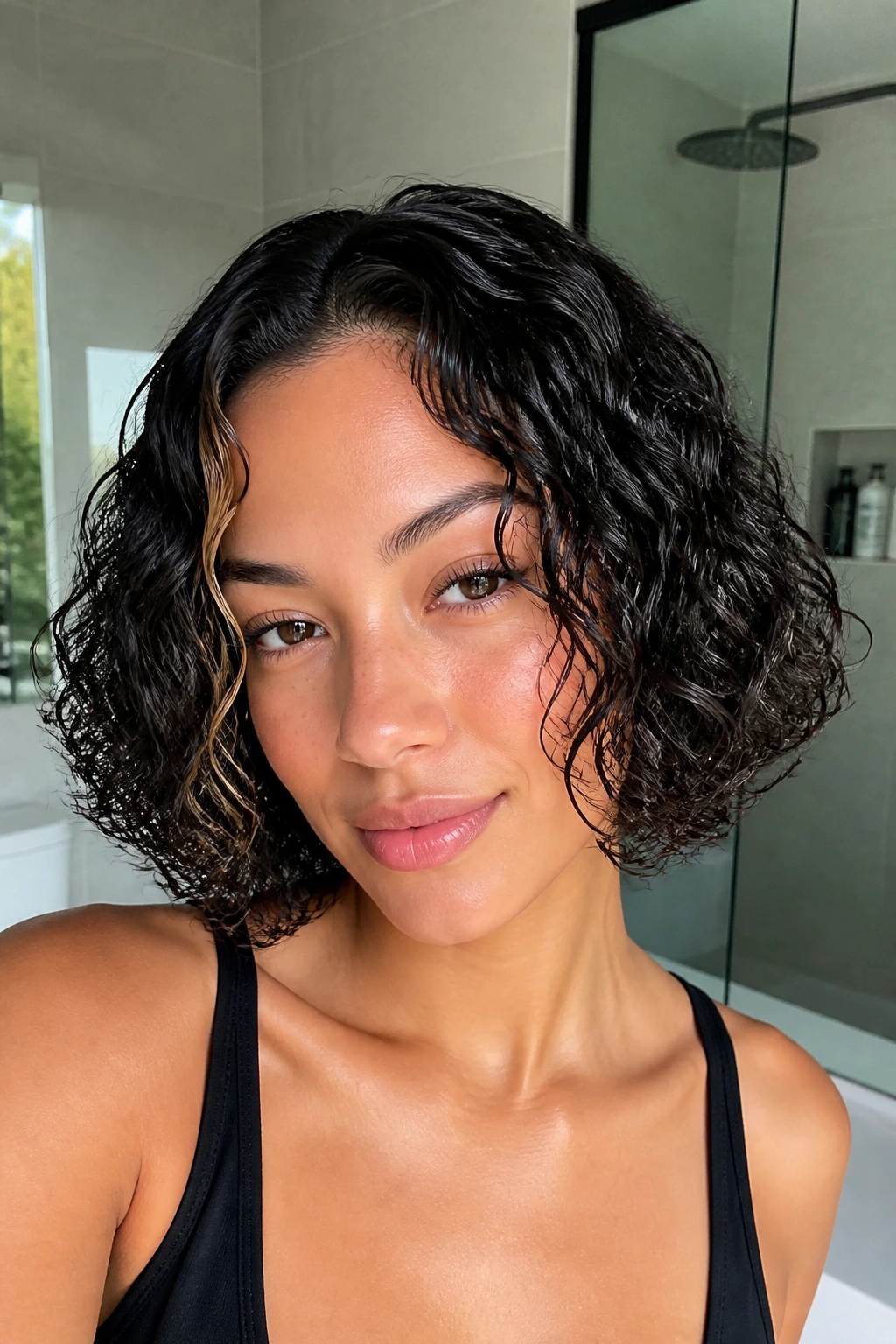
Not every curly bob needs to look airy. A wet-look finish can turn a short curly cut into something sharper and more deliberate, especially when the base color is deep brown or black. On oval faces, the high shine draws the eye to the center of the face, and the money piece adds just enough break in the darkness so the hair does not read as one block.
This works best for tighter curl patterns or waves that clump nicely. The front highlight should be glossy, not chunky. I like a warm beige or soft bronze here, because it catches enough light to matter without flattening the richness of the base.
Use gel sparingly if your curls tend to frizz at the ends. The mistake is making the whole head look slick. You want controlled. Not helmeted.
10. Blunt Curly Bob with Thin Money Piece
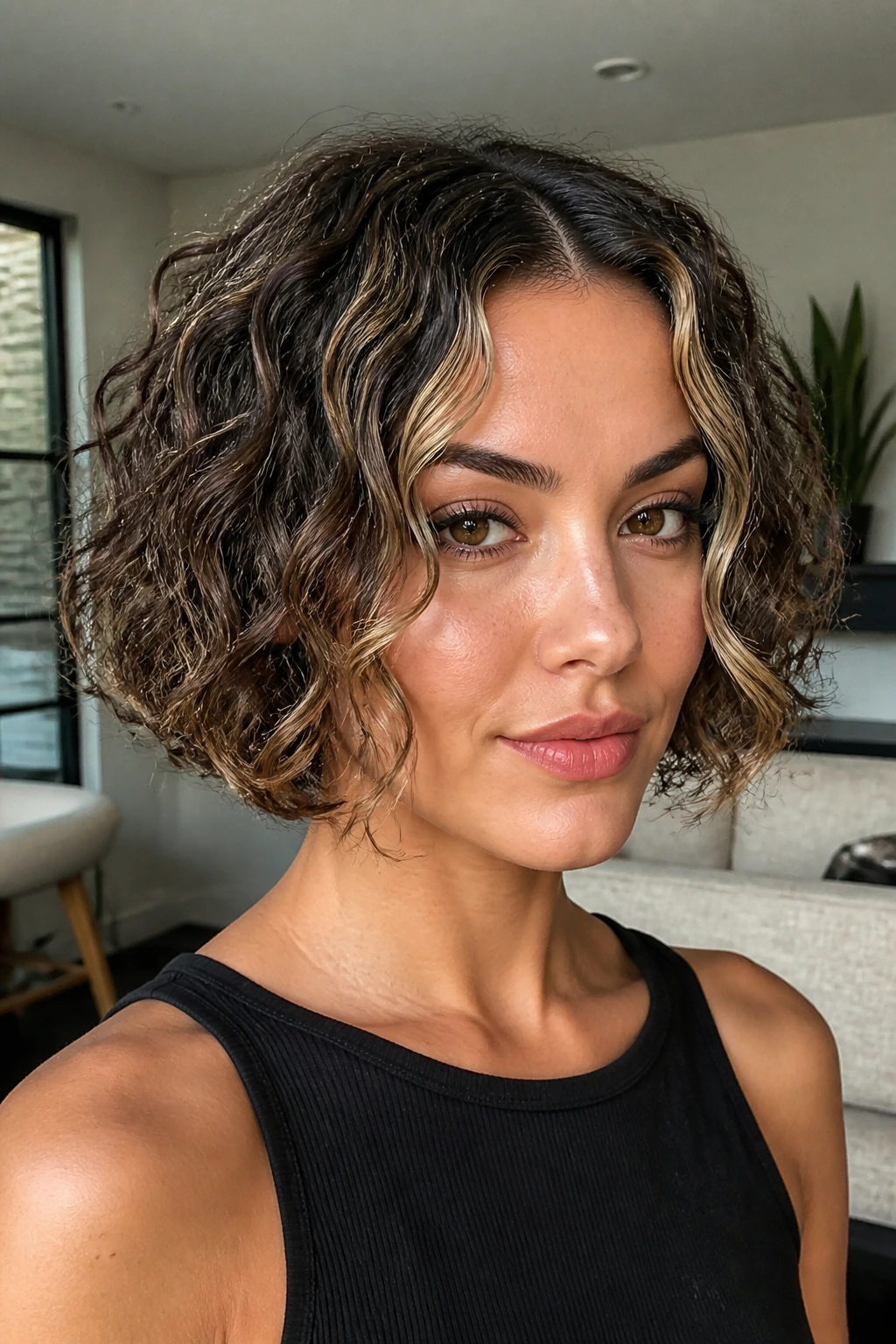
A blunt curly bob sounds counterintuitive until you see it on the right curl pattern. If the ends are cut with a clean line but the curls themselves are soft, you get shape without losing movement. On oval faces, the blunt edge can make the jawline look crisp, which is useful if your curls naturally expand outward.
The thin money piece is the detail that keeps this from feeling severe. One narrow highlight on each side, kept close to the face, gives the cut a little lift. It should be subtle enough that you notice the brightness before you notice the stripe.
This is a strong option for finer curly hair. Too many layers can make fine curls look flimsy, while a blunt perimeter gives them a more solid edge. The front pieces do the brightening work.
11. Collarbone Bob with Cinnamon Face Frame
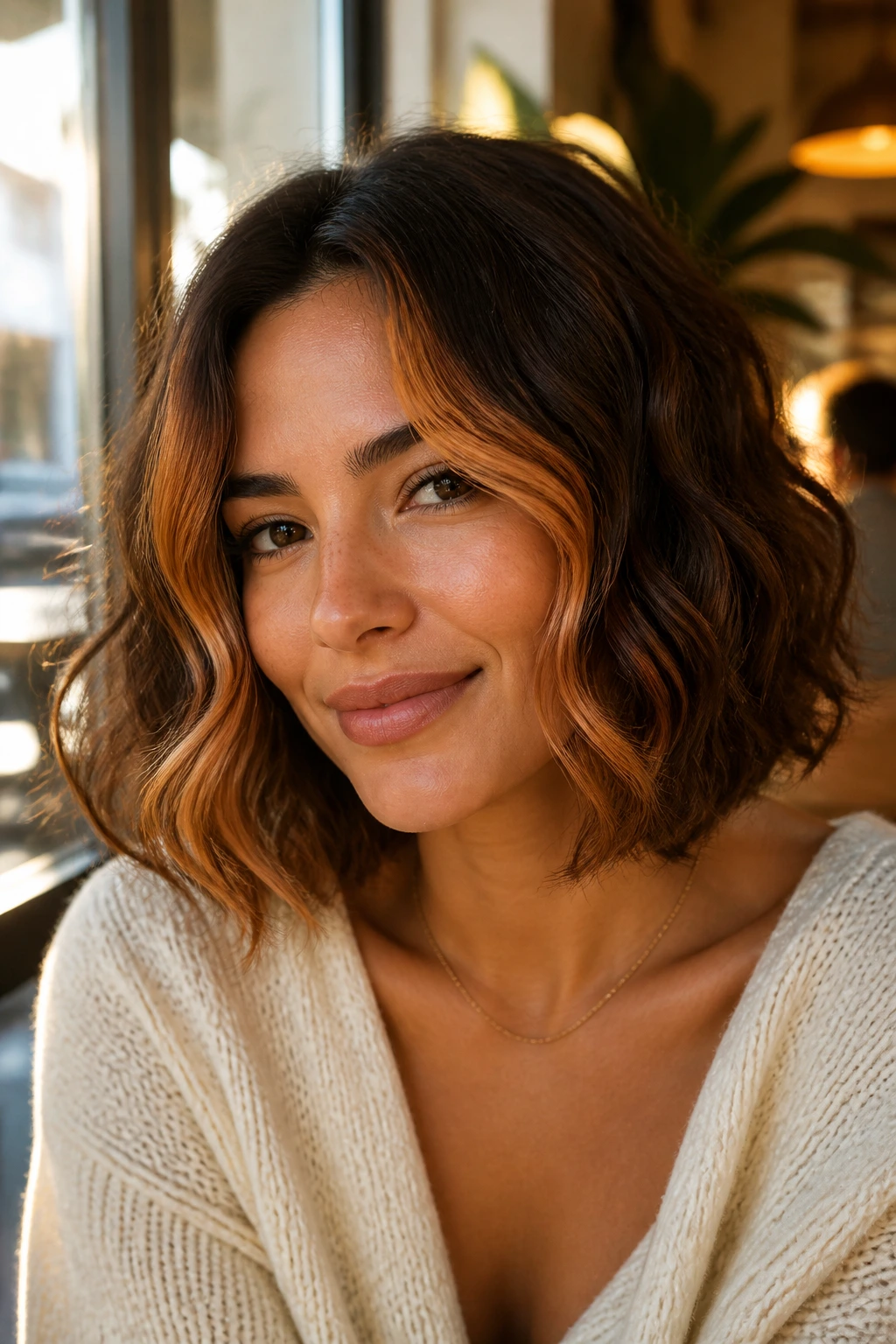
The collarbone bob sits in that sweet middle ground where a bob starts to feel longer and more relaxed. For oval faces, this length can be a nice shift if chin-length cuts feel too exposed. It still reads as a bob, but the extra inches let the curls fall with more weight and less puff.
Cinnamon is one of the better face-framing shades for brunettes because it has warmth without turning orange. The front strips should be placed where the curls bend toward the cheeks. That position makes the highlight visible even when the hair is moving.
A center part works well if your curls are evenly balanced. A soft off-center part gives the cinnamon pieces more room to show. Either way, keep the color placement narrow enough that the curls still look like curls first and color second.
12. Curtain-Bang Bob with Bright Highlight Strip
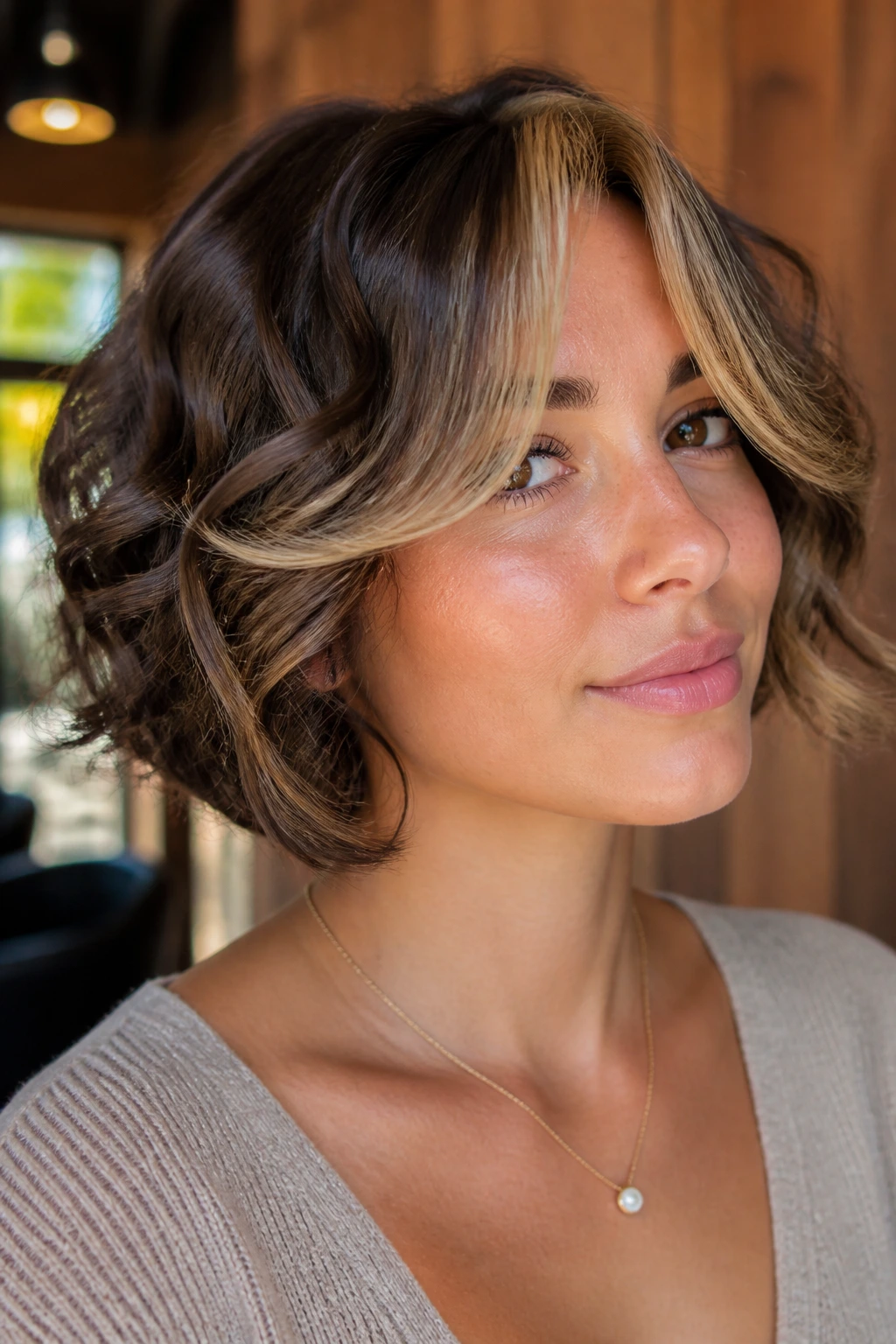
Curtain bangs can be tricky on curly hair, but when they’re cut long enough to split naturally, they flatter oval faces with almost no argument. The bangs open in the center, skim the sides of the forehead, and blend into a bob that stays soft around the temples. Add a bright highlight strip through the fringe area and the whole cut gets instant lift.
Best for
- Loose curls and waves: The fringe will separate cleanly instead of fusing into one shape.
- Medium-density hair: You need enough body for the bangs to sit with the bob, not sit on top of it.
- People who like movement at the front: The split fringe gives you that little swing around the eyes.
The highlight strip should be blended at the roots if you want a softer result. If you prefer contrast, keep the base deeper and let the brighter pieces show near the brow line.
13. Grown-Out Bob with Root Shadow and Warm Ends
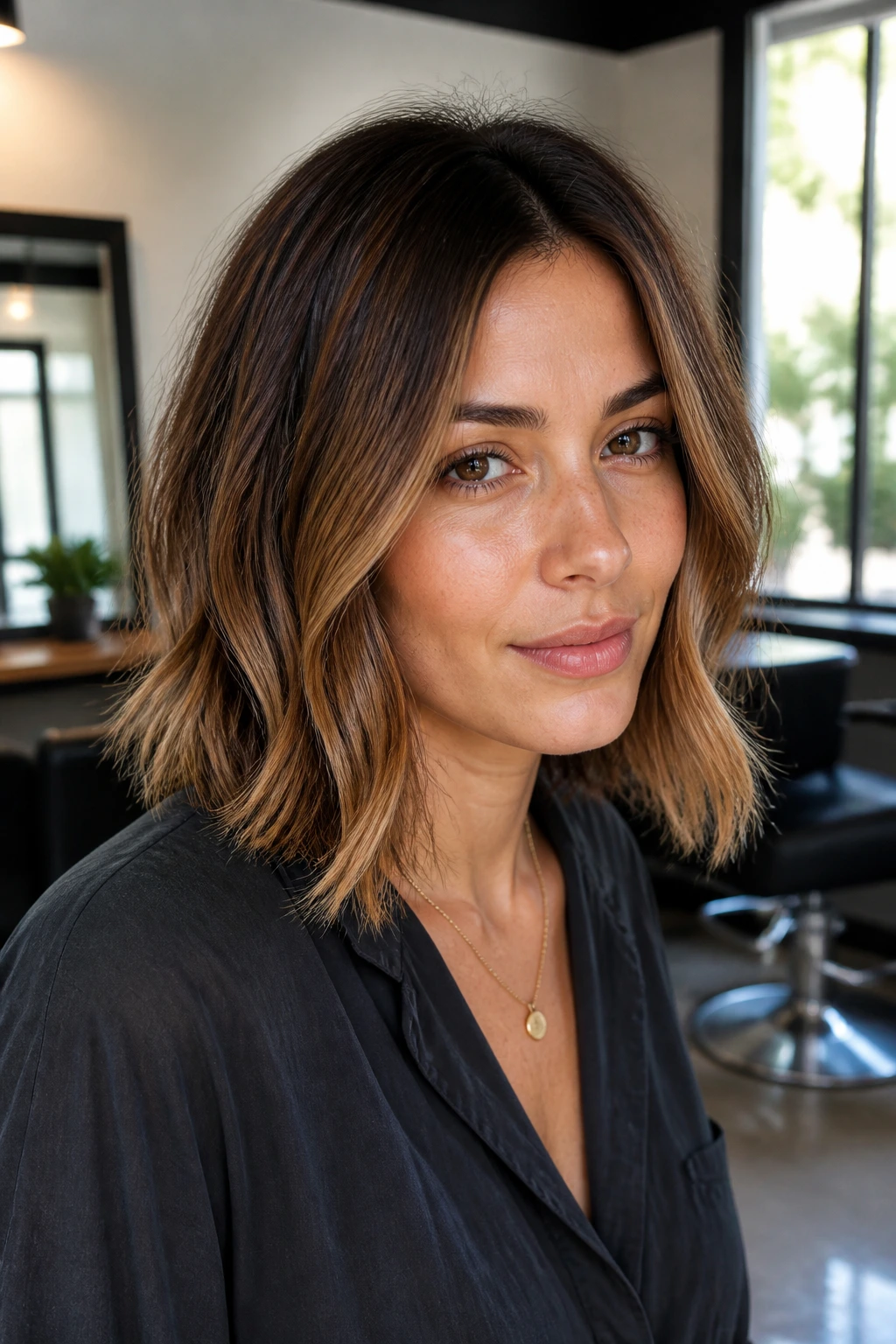
A grown-out bob is for the person who wants polish without chasing the salon every few weeks. The root shadow makes the color transition softer, which is useful on curly hair because the curls already break up hard lines. On an oval face, the slightly longer, relaxed shape keeps the head from looking too round or too cropped.
Warm ends — honey, amber, light chestnut — work nicely when the base is darker. The bright front pieces do not have to be the palest thing on the head. They just have to be the most noticeable. That little rule saves a lot of color mistakes.
This is one of those styles that improves as it grows. A bonus, not a bug.
14. Tapered Curly Bob with Side-Swept Fringe
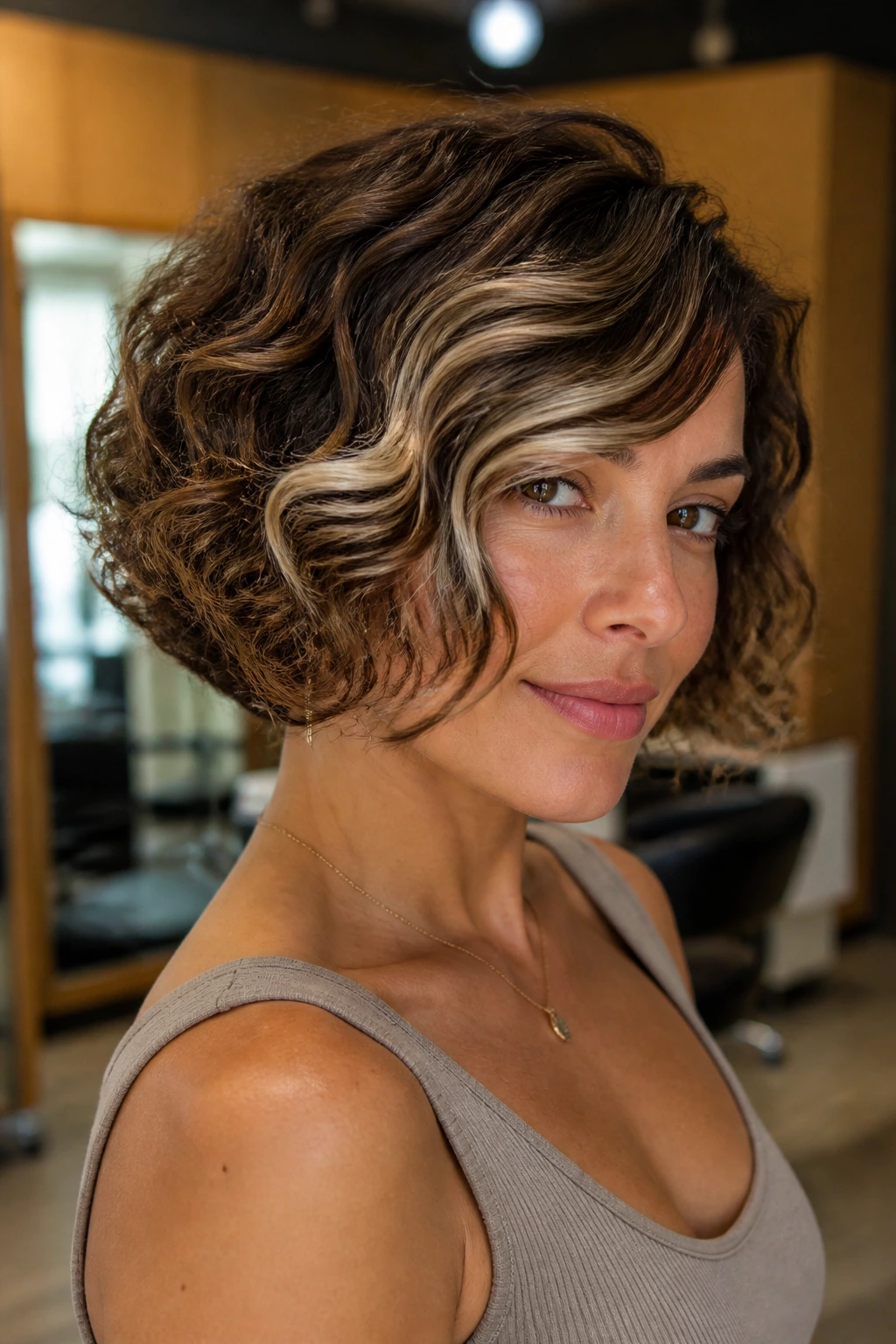
A tapered bob narrows toward the nape and keeps more width through the mid-lengths, which can be a smart shape if your curls tend to flare at the bottom. On oval faces, the taper gives the overall silhouette a cleaner line, and the side-swept fringe keeps the front from looking rigid.
The money piece should follow the direction of the fringe instead of fighting it. If the fringe sweeps left, the brighter strand should sit just ahead of that sweep so the color feels attached to the motion. That tiny detail matters more than people think.
This cut is good for thick curls that need removing at the sides. It can also make a heavy bob feel lighter without sacrificing shape. No fluff. Just better balance.
15. Vintage Curly Bob with High-Contrast Front Lights
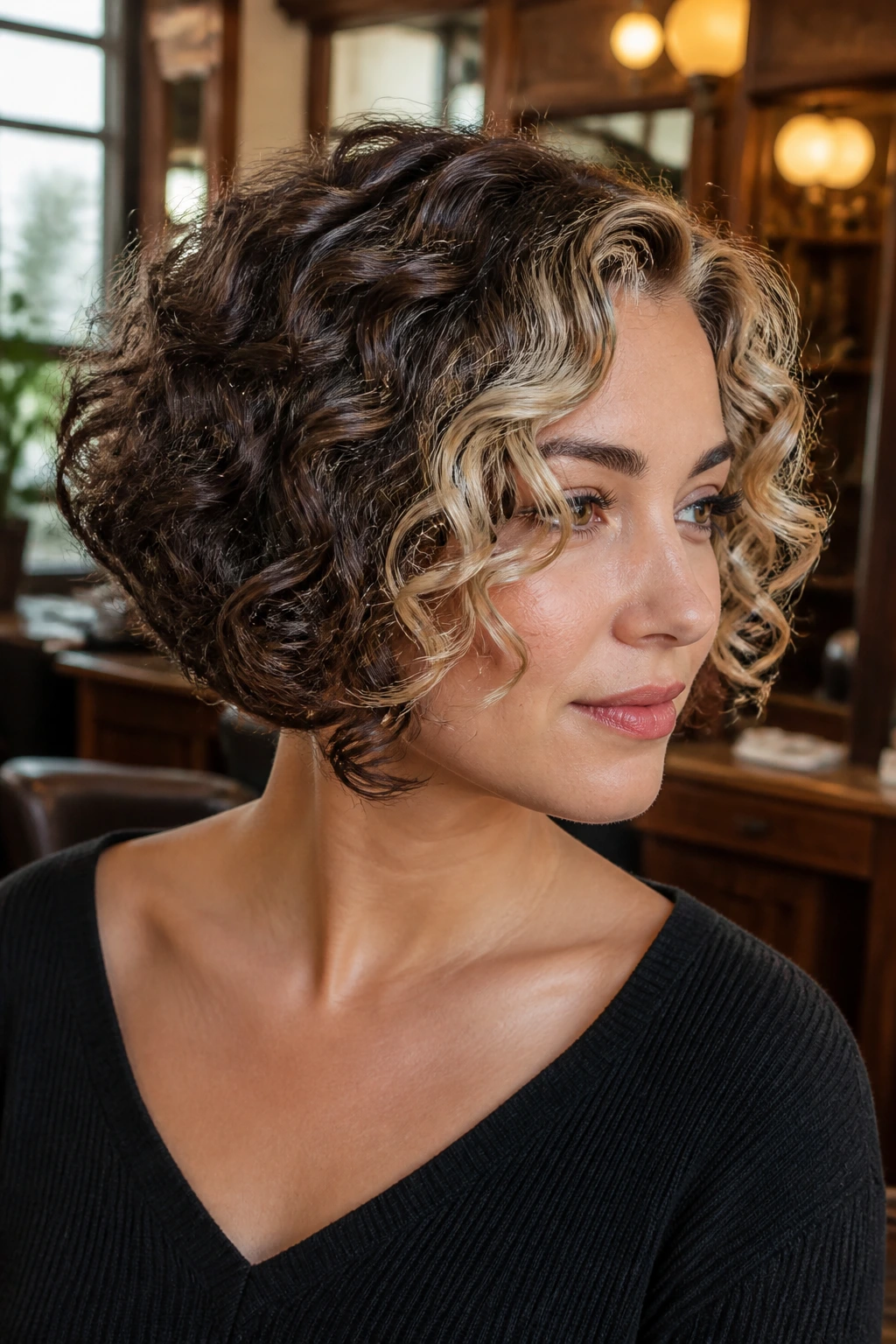
There’s a reason old-school curly bobs keep returning. They make a face look framed, not buried. This version leans into a fuller crown, rounded sides, and a bit of retro bounce through the ends. On an oval face, that shape can feel playful without tipping into costume territory.
The high-contrast front lights are the old-Hollywood part of the equation. Think bright enough to notice, but still blended enough that the curl clumps carry the color. I like this best on darker brunette or black bases, where the front brightness has a real job to do.
It’s a bold choice, yes. But it’s also practical when you want the front of your hair to do more than disappear into the rest of the cut.
16. Tousled Bob with Honey Lowlights
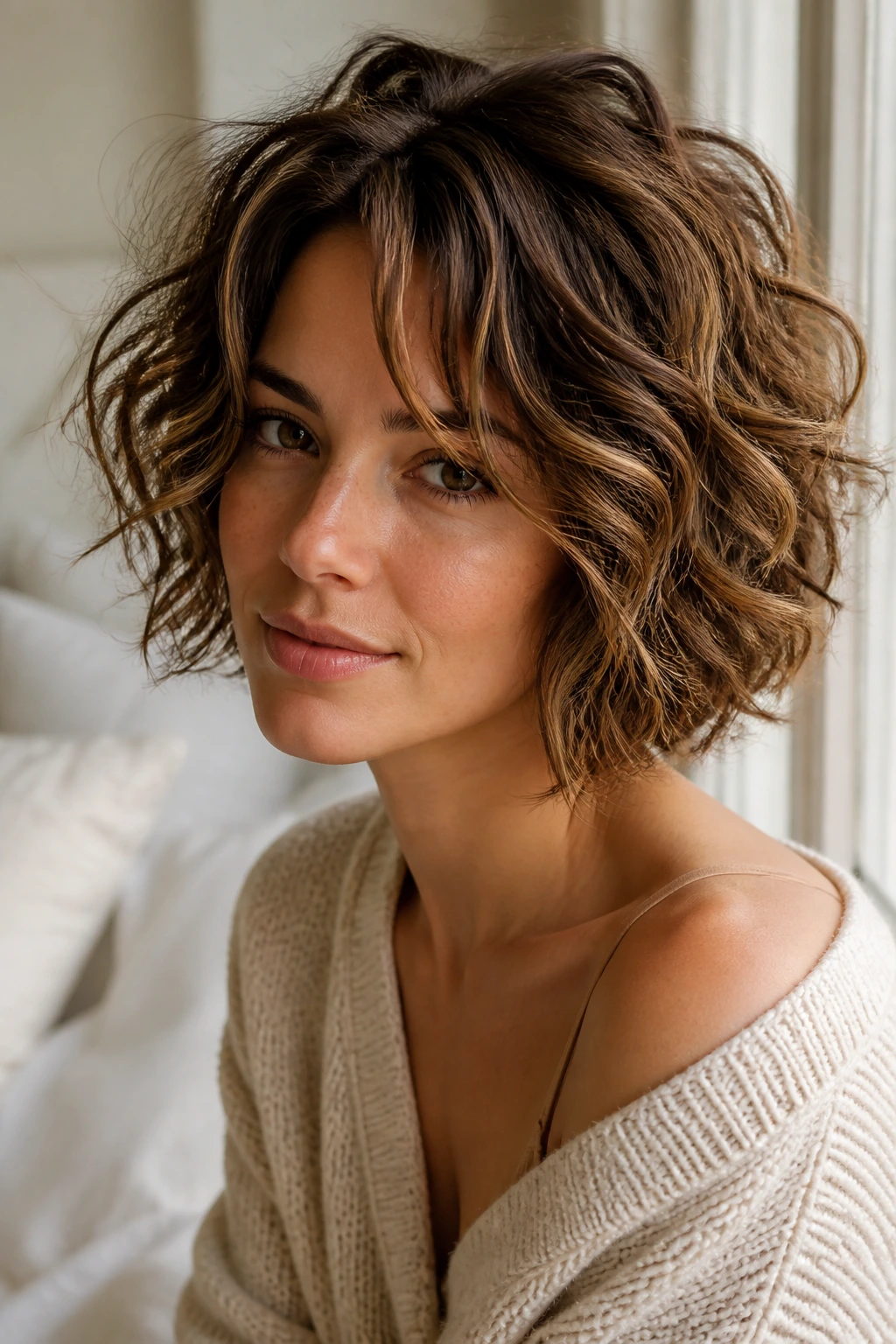
Most people talk about highlights and ignore lowlights, which is a mistake. A tousled curly bob needs some darker ribbons tucked inside the shape or the whole thing can turn puffy and one-note. Honey lowlights bring back depth, especially if your natural color is already light or medium brown.
On oval faces, the tousled texture softens the edges just enough to keep the cut casual. The money piece here should be more restrained. You want brightness at the front, but the lowlights around the crown and underlayers should keep the bob from floating away from your head.
This is a good choice if you hate maintenance but still want dimension. Lowlights tend to grow out less dramatically than a full lightening job. That matters.
17. Salt-and-Pepper Curly Bob with Silver Money Piece
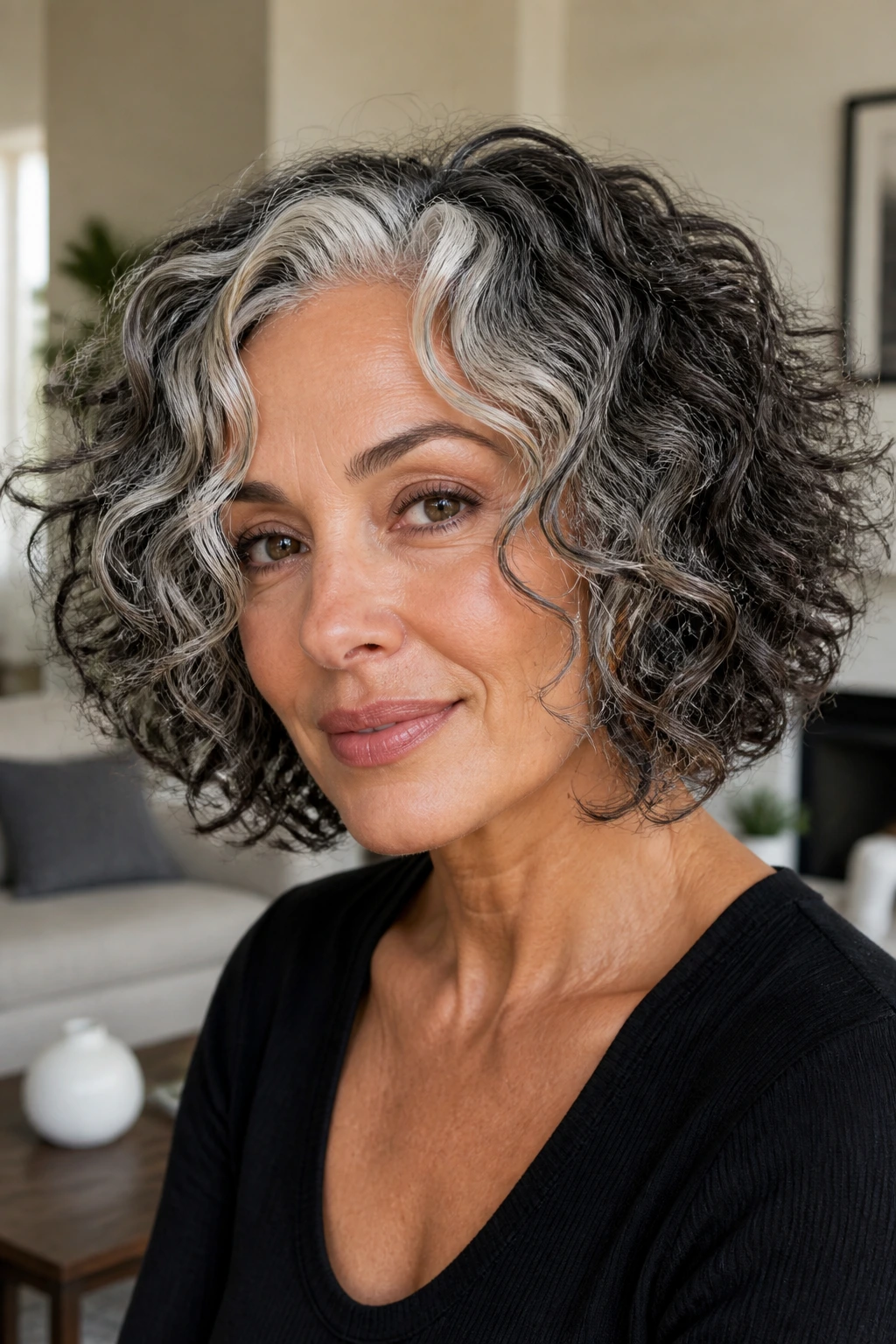
Silver strands in a salt-and-pepper bob are not an apology. They’re the main feature. A short curly shape lets the natural gray read with intention, while the silver money piece at the front gives the whole cut a crisp line. On oval faces, this contrast can look sharp and elegant without needing much styling at all.
The key is placement. Put the bright front piece where it can sit beside the forehead and temple, not buried inside the curl mass. If the silver is too thin, it disappears. If it’s too wide, it can look like a streak instead of a face frame.
This style is especially strong when the curls are left a little loose and touchable. Over-sculpting it kills the best part.
18. Deep Side-Part Bob with Dimensional Brunette Ribbons

A deep side part changes the whole geometry of a bob. It gives one side lift, one side sweep, and enough asymmetry to stop an oval face from reading too centered. The dimensional brunette ribbons keep the cut from turning flat, especially if your base is dark and your curls tend to absorb light.
This look is less about loud contrast and more about depth. The front ribbons should be a shade or two lighter than the base, not seven shades lighter. That keeps the face frame believable. On curly hair, believable is often better than dramatic.
I like this one for office days and low-key evenings because it does not need perfect styling. A finger-tousled part and a light gloss can carry it.
19. Round Curly Bob with Peach Blonde Frame
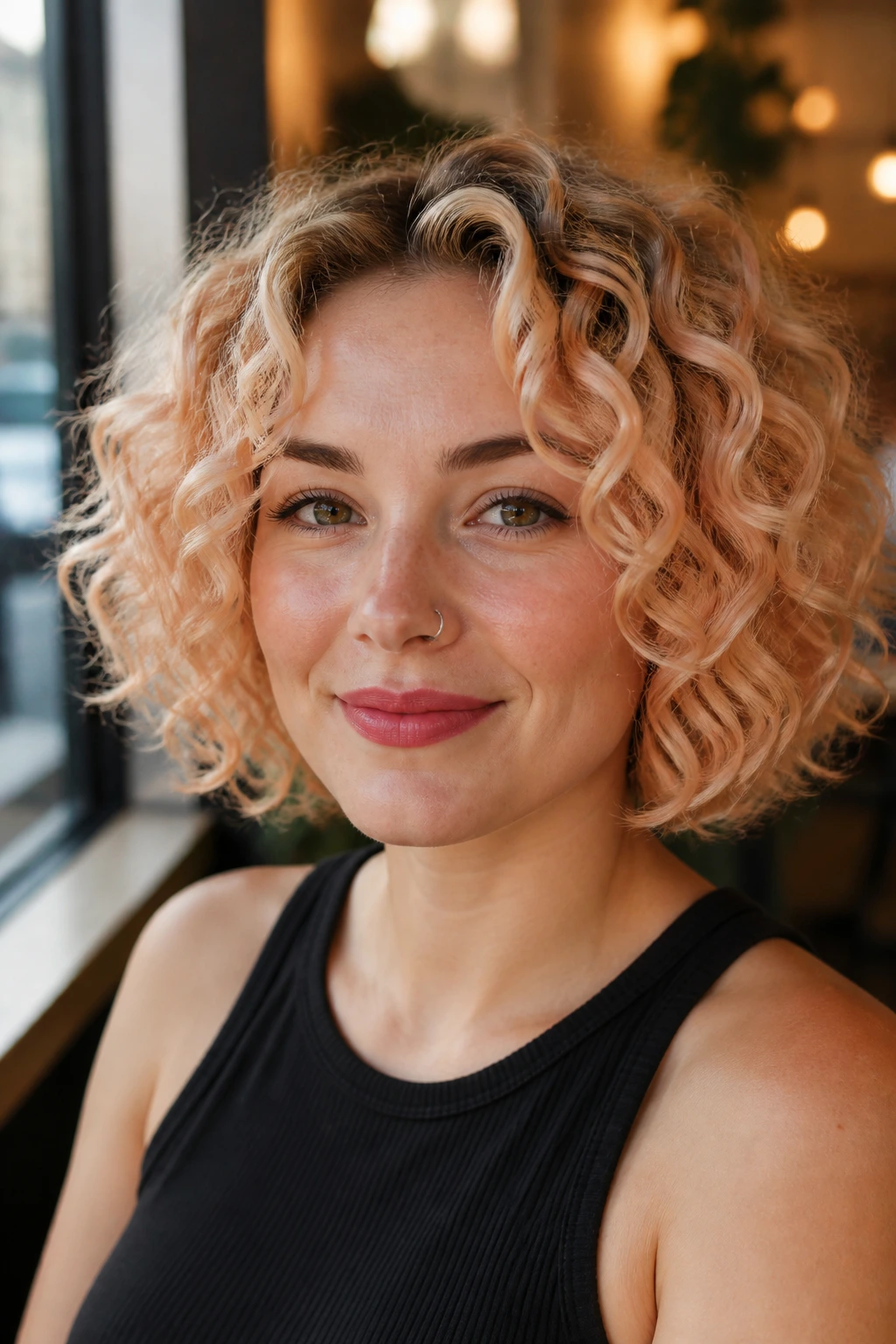
A round bob gives curls room to bloom out in a controlled way. It’s a little fuller through the sides and slightly tucked at the bottom, which keeps the silhouette soft. For oval faces, that roundness can feel especially flattering because it fills the space without stretching the face lengthwise.
Peach blonde is unusual enough to stand out but soft enough not to yell over the curls. It reads warmer than beige and gentler than copper. The front pieces should be painted so they wrap around the face instead of hanging in two straight sections, because round bobs depend on curve.
This is one of the few colors that can make a curly bob feel airy and playful at the same time. Hard to fake that.
20. Tight Coil Bob with Chunky Face Frame
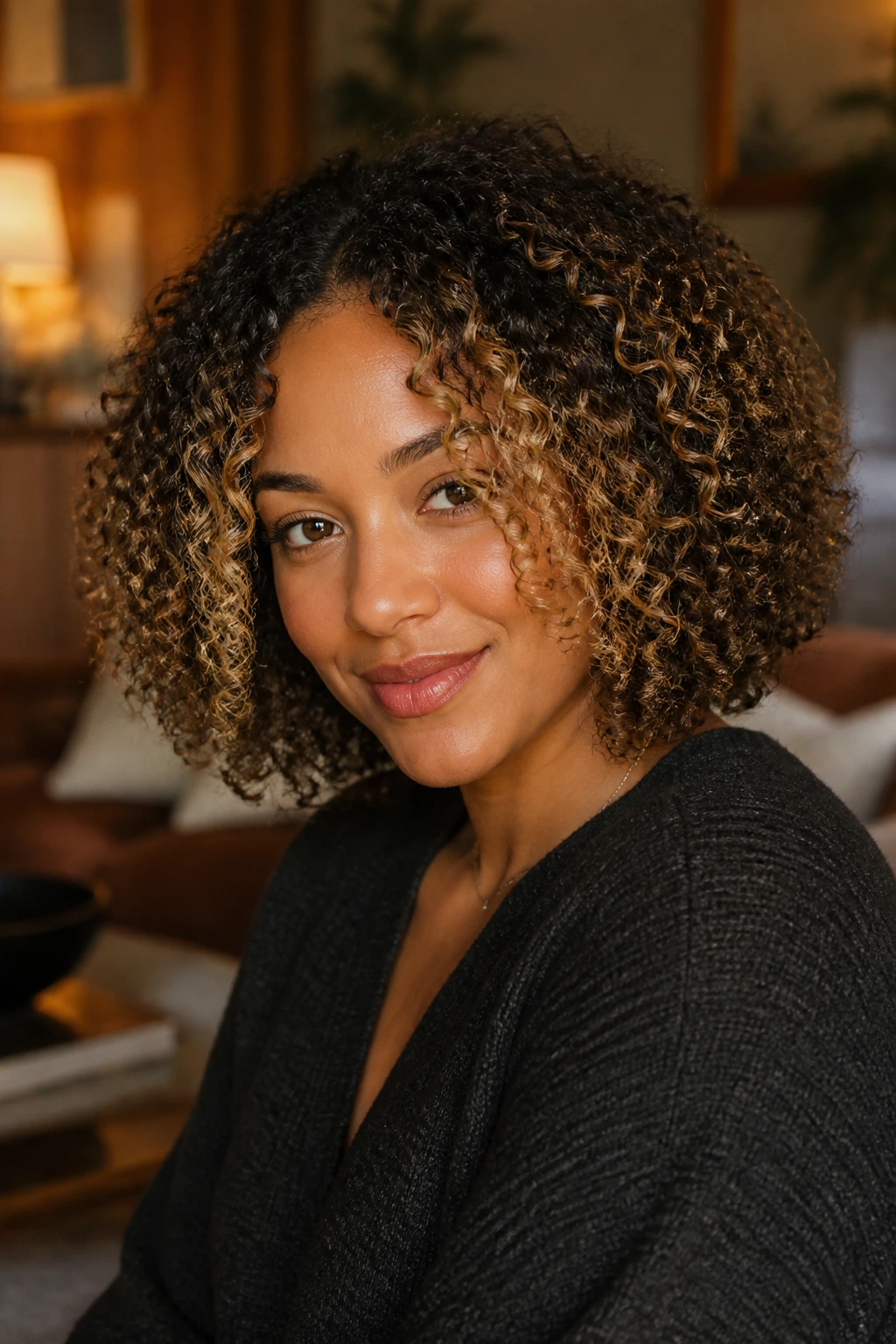
Tight coils need room. They also need a cut that respects shrinkage, because a bob can wind up much shorter than expected once the hair dries. A coil bob with a slightly longer perimeter gives the curls a chance to stack without ballooning too high on the sides.
Chunky face-framing pieces work here if they’re blended well into the coil pattern. The brighter strands should be thick enough to show through the density of the hair, or they disappear. On oval faces, that front brightness can lift the whole shape, especially if the coils sit near the jawline.
This is not the place for timid color. Coily hair can hold a strong face frame and still look balanced. The trick is blending the base around it.
21. Voluminous Bob with Chestnut Lowlights
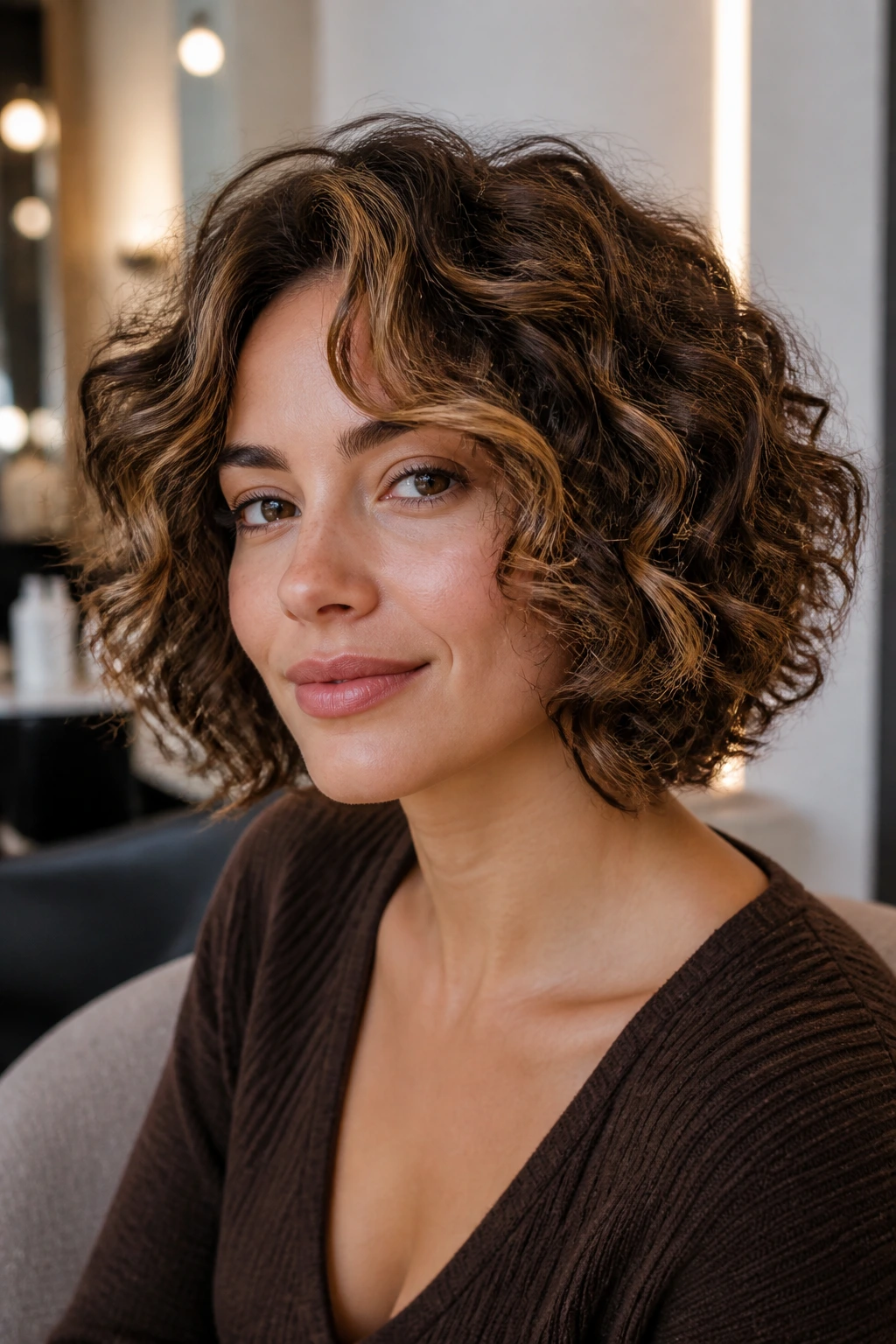
Big curls need contrast. Without it, a voluminous bob can become one large rounded shape with no detail in the middle. Chestnut lowlights add that missing depth, especially around the crown and underneath the top layer. On an oval face, the added shadow keeps the volume from making the face look too soft all around.
The money piece here should be warm and controlled. A chestnut-to-caramel shift near the front reads richer than pure blonde and sits well against fuller curls. If your hair is very dense, ask for a few more lowlights than you think you need. Dense curls swallow color.
This look is for people who want body, not neatness. There’s a difference.
22. Mushroom Curly Bob with Soft Ash Beige Money Piece
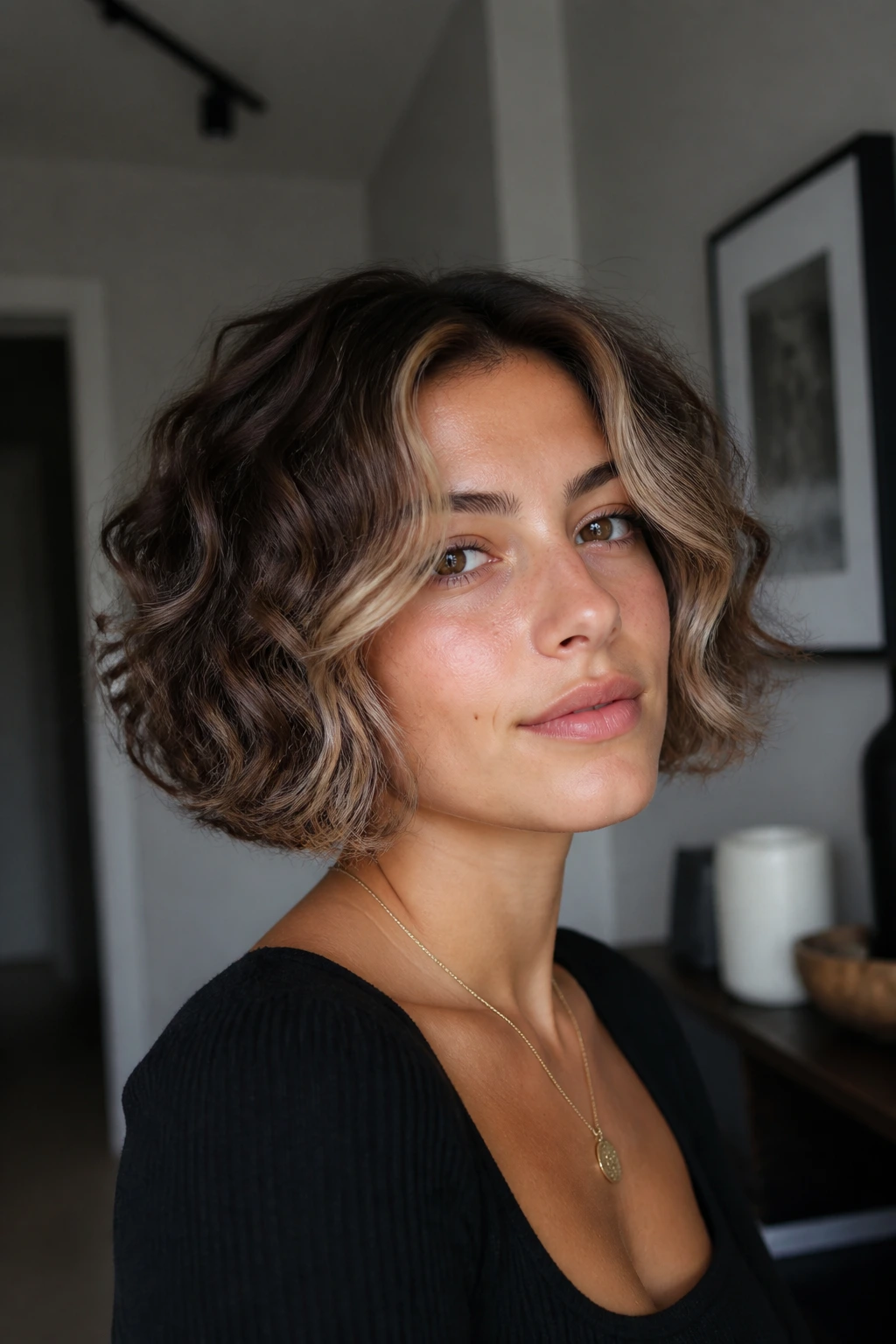
Cool-toned brunettes often look best with ash beige rather than gold. A mushroom-colored curly bob — those smoky browns and muted taupes — has a calm, modern feel, and the ash beige money piece keeps it from going flat. On oval faces, that softness works because it doesn’t add width where you don’t want it.
The highlight should be fine, not chunky. The whole point is to brighten the front without disturbing the cool base. If you have warm undertones in your skin, keep the beige a touch softer so the contrast doesn’t turn chalky.
This cut also grows out gracefully. Cool brunettes are kinder than people think.
23. Layered Bob with Cherry Cola Shine
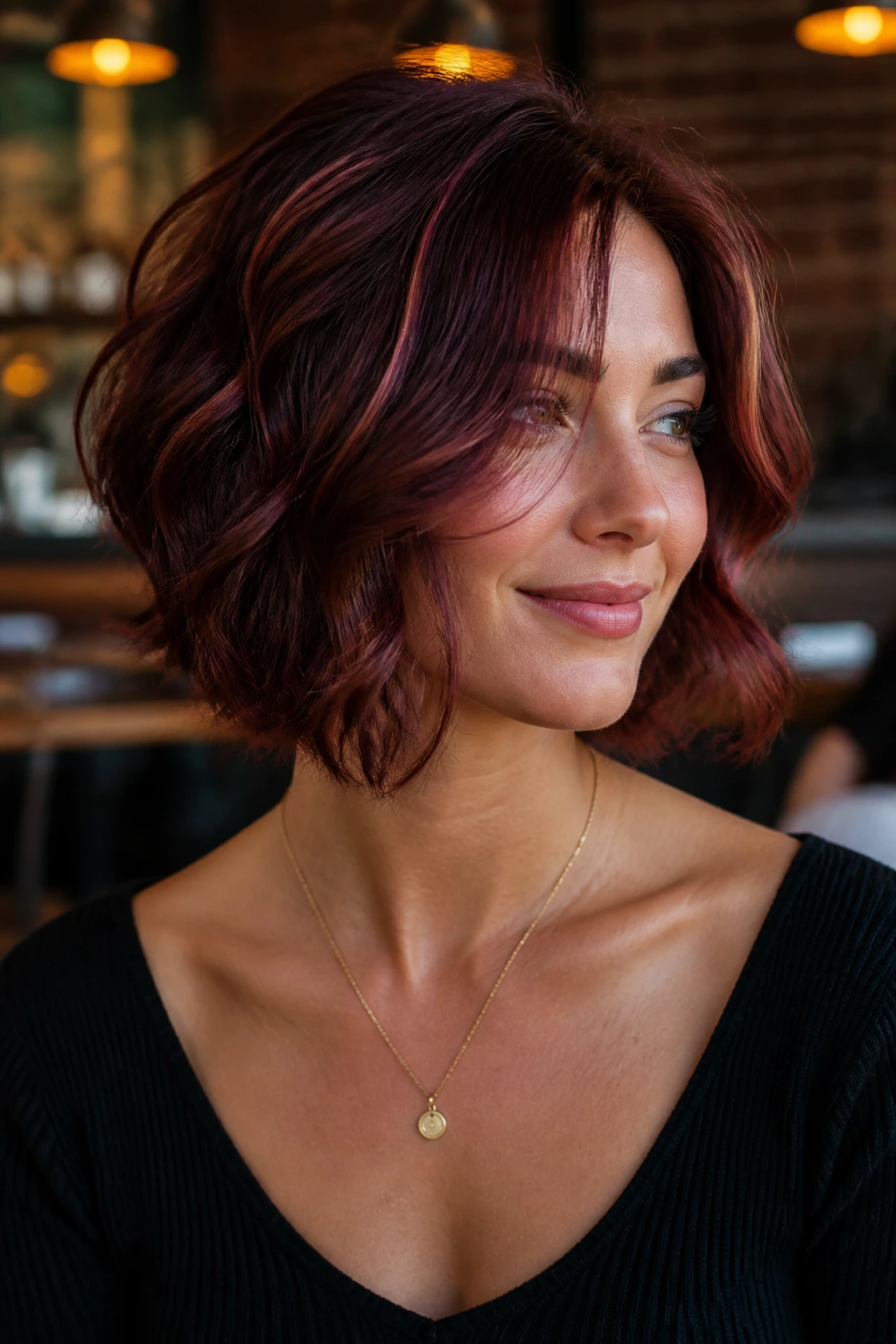
Cherry cola color is one of my favorite ways to make curly hair look richer without leaning too warm or too cool. The dark base, red-brown depth, and bright front pieces all work together when the bob has enough layers to expose them. Oval faces can handle this easily because the shape stays balanced while the color does the talking.
The money piece should sit where the cherry tones are strongest, usually around the front curl cluster and the top of the cheek. That way, the bright front strands pick up the red-brown undertone instead of fighting it. Layers help because they stop the color from getting trapped in one thick curtain.
This one is especially good in dim light. The red tone shows up in a way flat brown never will.
24. Mini Shag Bob with Warm Cinnamon Frame
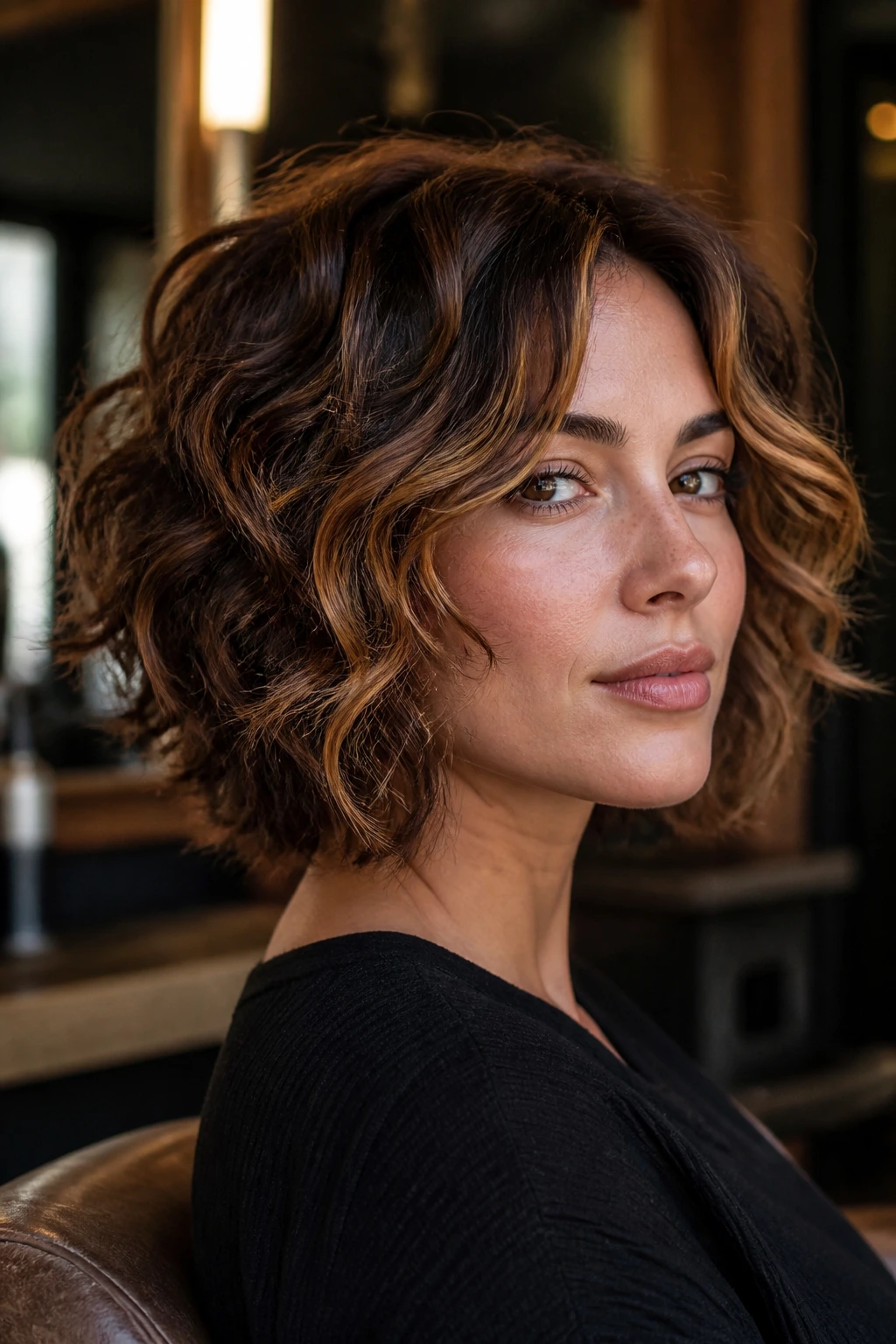
A mini shag gives you the best part of a shag haircut without the full mullet-ish edge some people hate. The layers are short, the ends are feathered, and the shape stays lively around the face. For oval faces, that looseness can be flattering because it keeps the cut from looking too finished or too severe.
Warm cinnamon around the front softens the whole thing. The money piece should not be a single slice so much as a set of woven lighter strands that follow the curl direction. That makes the front frame feel blended into the shag, not pasted on after the cut was already done.
This is the haircut for people who want movement first and polish second. I respect that. It usually looks better for it.
25. Bright Oval-Face Curly Bob with Narrow Money Piece
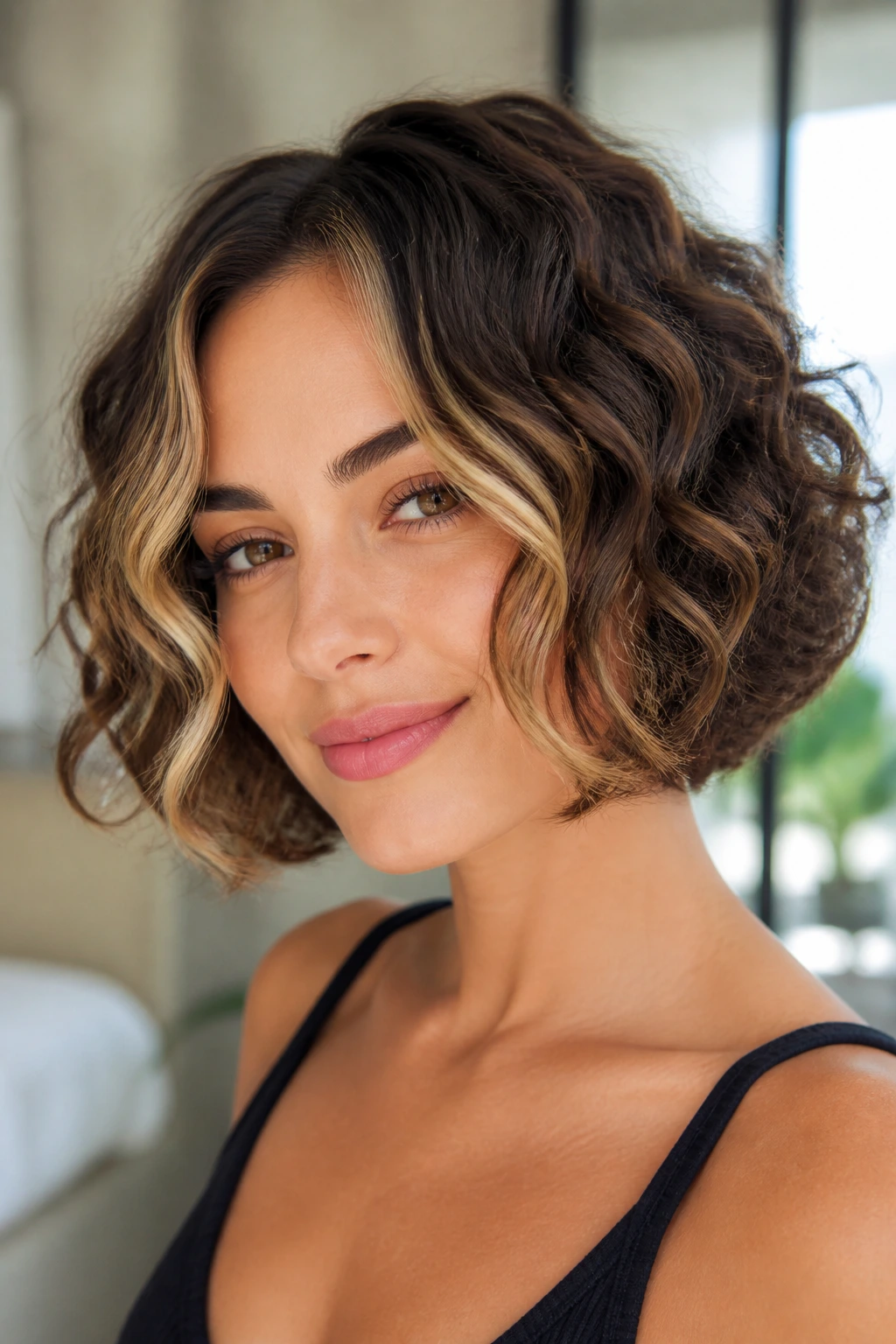
If you want the cleanest, most face-opening version of the whole idea, this is it. A compact curly bob with a narrow money piece can make the eyes seem brighter and the cheekbones more pronounced without adding bulk. On oval faces, the proportions stay easy because the length doesn’t fight the natural shape.
What to Ask For
- A bob that stops between the jaw and chin: Short enough to feel modern, long enough to keep curl movement.
- Two narrow front light pieces: Bright, but not wide enough to read as stripes.
- Soft layers through the crown: Enough lift to stop the bob from falling flat after day one.
- A gloss or toner that matches your base: So the front pieces feel connected, not separate.
This version is the most straightforward one in the bunch, which is why it works. No trick, no fuss. Just a clean cut and a bright front that knows its job.
Why the Shape and Color Work So Well Together
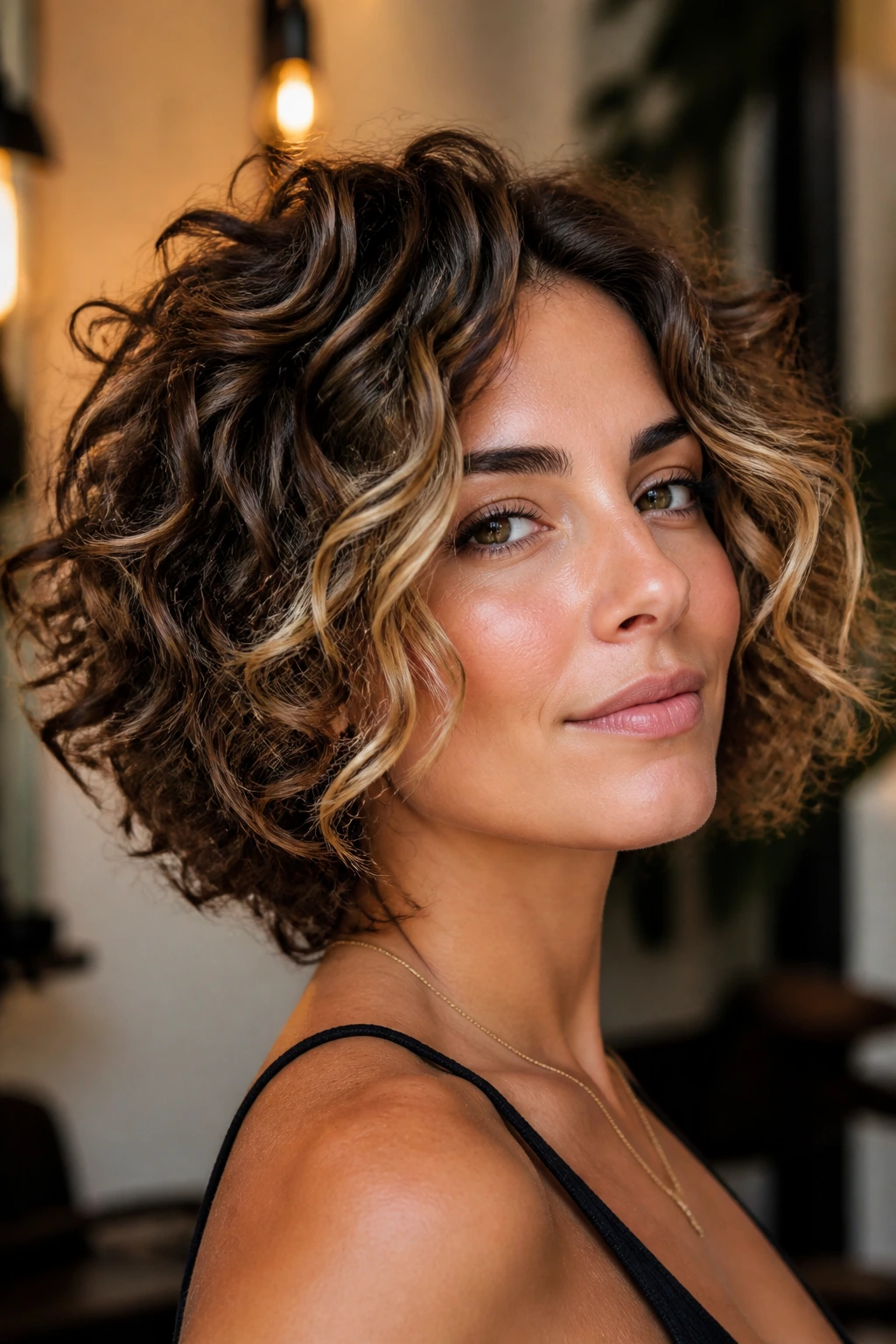
Curly bobs and money piece highlights make sense on oval faces because they solve each other’s weak spots. The bob gives the curls a boundary. The front brightness gives the cut a focal point. Put those two together and you stop the hair from either swallowing the face or drifting off into formless volume.
Oval faces can handle a lot, but they still benefit from direction. A jaw-length line, a curled-under edge, a stacked nape, or a side sweep all change how the eye moves across the face. The money piece adds a second layer of direction by pulling attention up toward the eyes. That’s why these styles feel balanced even when they’re playful.
Curly hair also changes the math. A highlight placement that looks narrow on a flat swatch can spread once the curl opens. A bob that seems almost too short when wet may land exactly where it should once it dries. That is why I always trust a cut map more than a vague “we’ll see how it goes” plan. Curls do not reward vagueness.
The Tools That Make Styling Easier
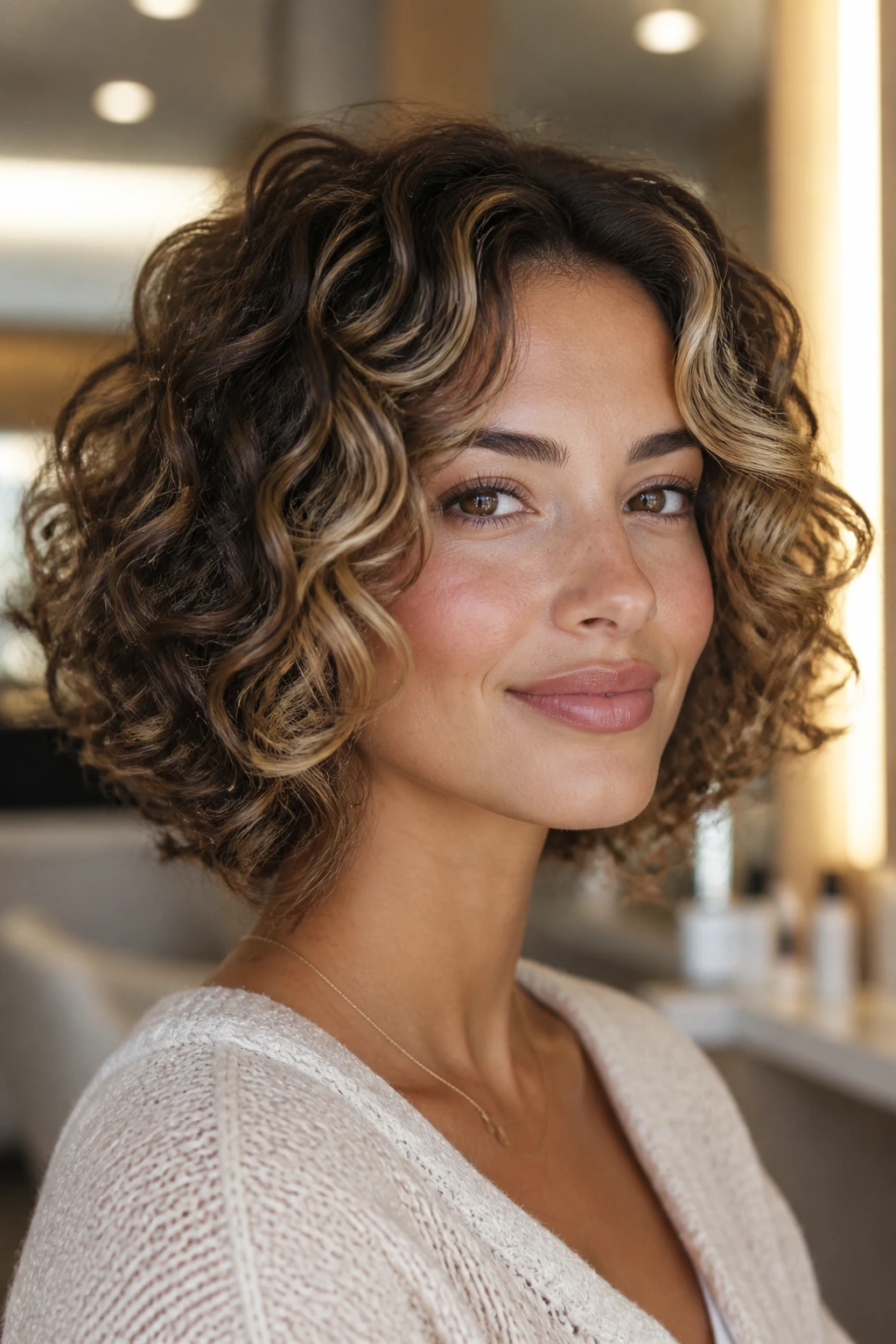
You do not need a drawer full of gadgets. You need the right few.
- Diffuser attachment: Helps curls dry with shape and less frizz than rough air-drying alone.
- Wide-tooth comb: Lets you detangle without pulling apart curl clumps.
- Tail comb: Useful for clean center or side parts when you want the money piece placed on purpose.
- Curl cream or light mousse: Cream gives slip; mousse gives lift. Short bobs usually like one or the other, not a heavy pile of both.
- Microfiber towel or cotton T-shirt: Cuts down on frizz when you scrunch out water.
- Heat protectant: Needed if you diffuse with heat or touch up the front pieces with a tool.
- Color-safe shampoo and conditioner: Keeps the money piece from fading into dull brass.
- Deep conditioner or mask: Useful if the highlight lightened the front too much and the curls need softness back.
How to Style and Wear These Looks
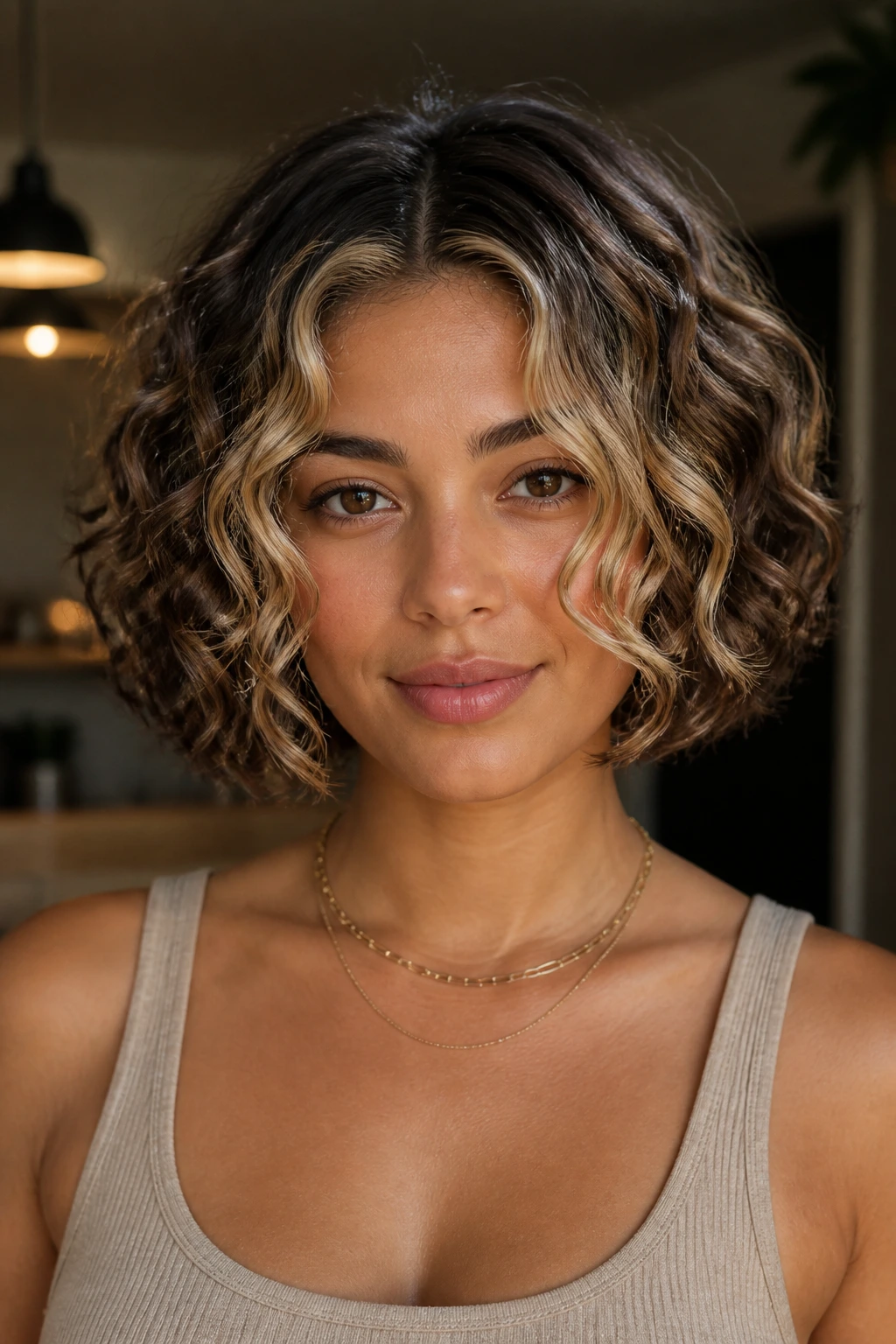
Finish: Decide whether you want the bob to look defined, brushed out, or somewhere in the middle. A defined finish shows off the money piece lines; a softer finish blends the color into the curl pattern and reads more relaxed.
Parting: A center part gives oval faces a clean, balanced line. A deep side part adds lift and makes the front highlight feel more dramatic. If your roots flatten easily, change the part every few washes so one side does not collapse.
Accessories: Small hoops, narrow sunglasses, and open necklines keep the face frame visible. High collars can crowd the bob and hide the parting line, which is a shame if the color work is the best part.
Occasions: Chin-length and rounded versions feel sharper for workdays. Shaggy, asymmetrical, and tousled versions lean more casual. The cut you choose should match how much styling you want to do before leaving the house.
Smart Shopping and Color Tips for the Salon Chair
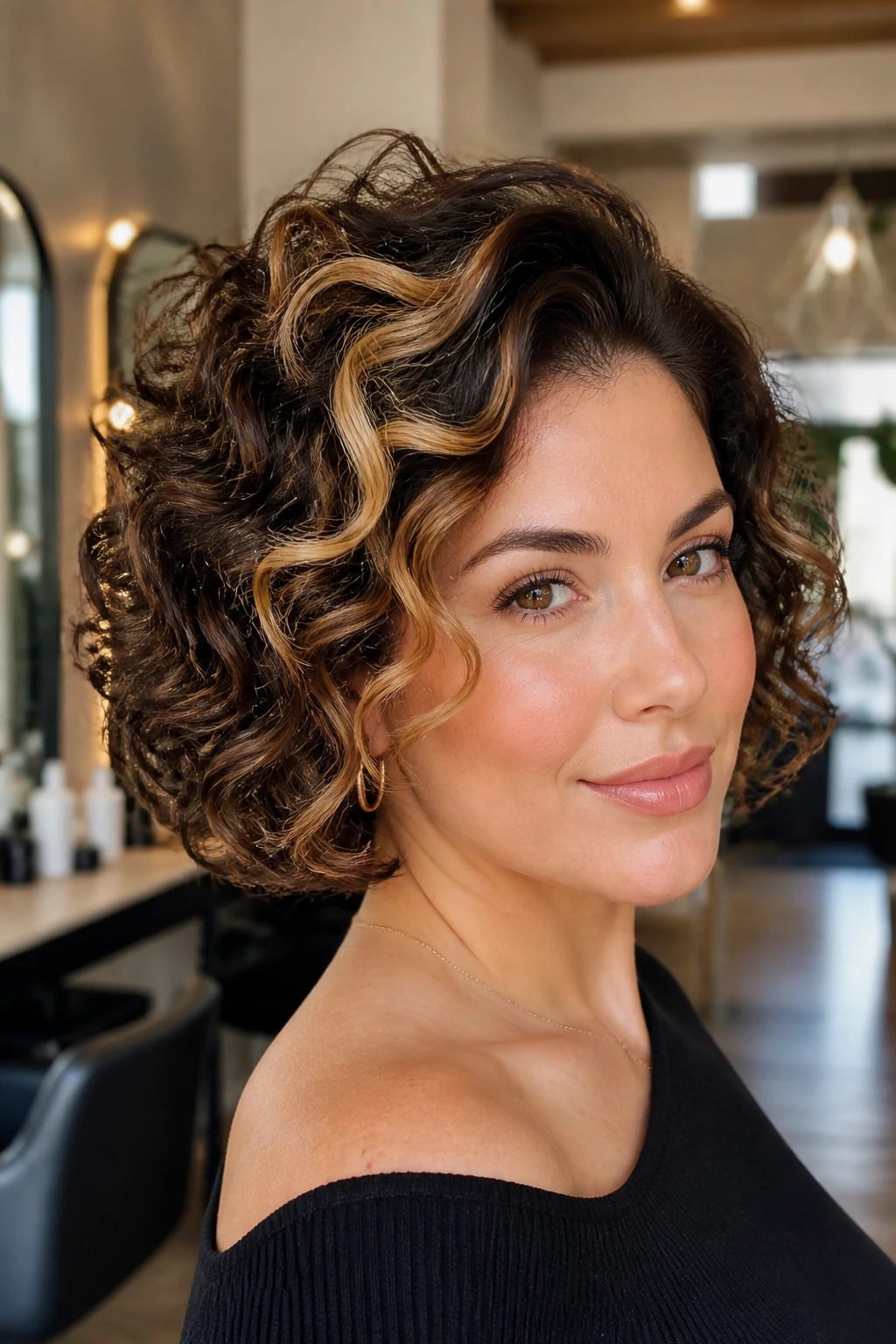
Bring pictures, yes, but bring the right ones. Curly bobs live or die by curl density, shrinkage, and part placement, so a photo of straight hair with a money piece does not tell the whole story. Ask your stylist to look at your natural curl pattern dry, if possible. Wet curls lie.
For the color, think in ribbons, not slabs. A narrow face frame works best when the brightest strands are placed where the curl bends around the eyes and cheeks. On most curly bobs for oval faces, that means the color begins just in front of the temple and carries downward through the front spiral, not across the whole front half of the head. If you want softer dimension, ask for lowlights one shade deeper than your base under the top layer. That keeps the bob from puffing outward into one bright shape.
Tone matters more than people realize. Warm brunettes usually look richer with caramel, honey, copper, or cinnamon. Cool brunettes tend to like beige, ash beige, or soft mushroom tones. If your hair is dark and dense, a very pale blonde money piece can work, but it needs careful blending at the root or it starts to look pasted on. And if your curls are tight, ask how much the section will shrink once dry. That number changes everything.
Additional Tips and Brightening Tricks
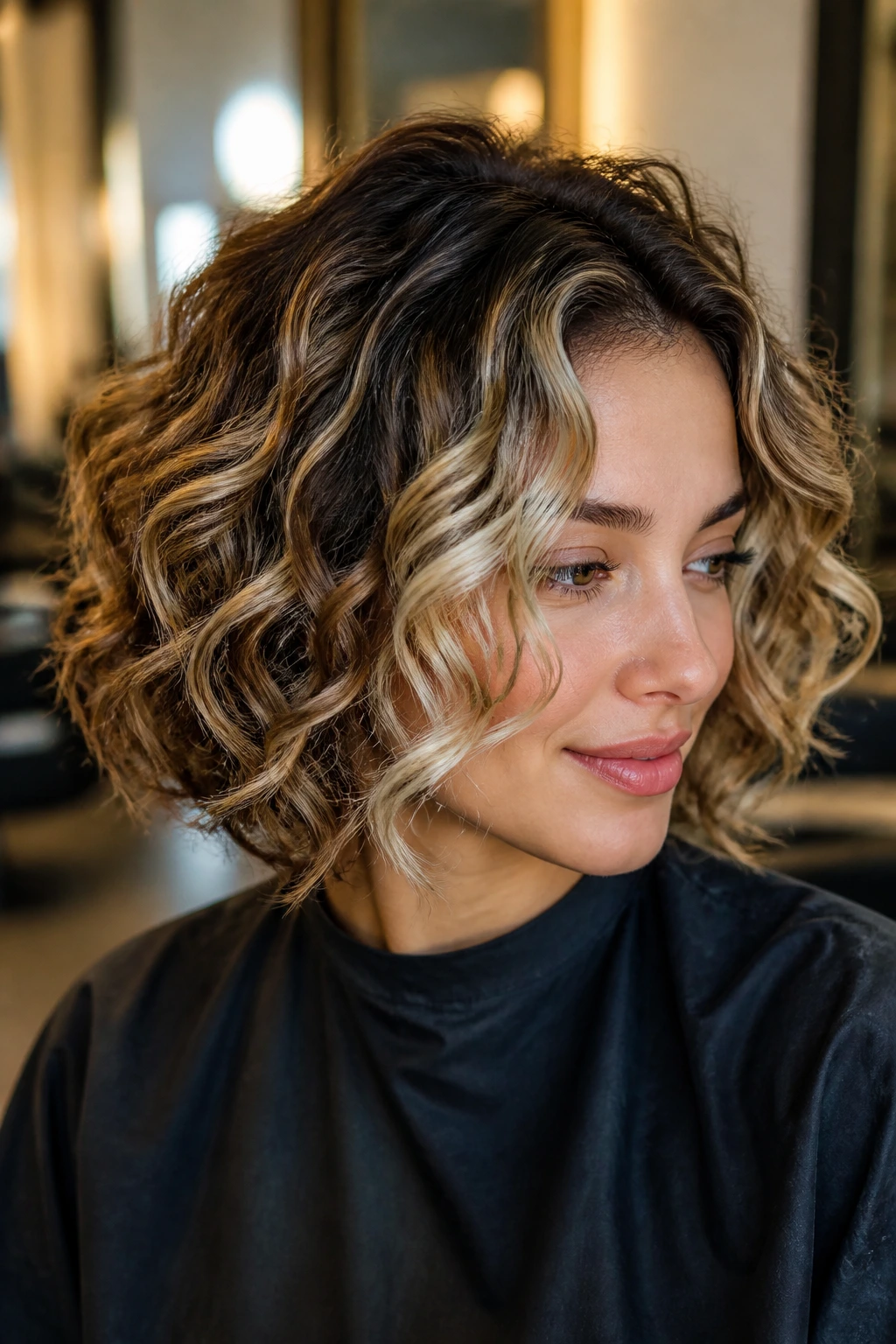
Brightness: If the front piece feels too loud after the first wash, use a color-depositing gloss or toner rather than trying to “fix” it with extra heat. Heat can dry out the front curl faster than the rest of the bob, and then the money piece looks rough instead of clean.
Texture: A tiny amount of mousse at the roots can keep the front from falling into your forehead. Too much cream near the face makes the highlight disappear under weight.
Placement: Ask for the brightest part of the money piece to sit around the cheekbone or eyebrow line. That spot frames the face without dragging the eye too low.
Make-It-Yours: If you wear glasses, keep the front light a shade softer so the frame of your glasses and the frame of your hair do not compete. If you like a bolder look, widen the front ribbons slightly and keep the underlayer darker for contrast.
Common Mistakes That Flatten the Look
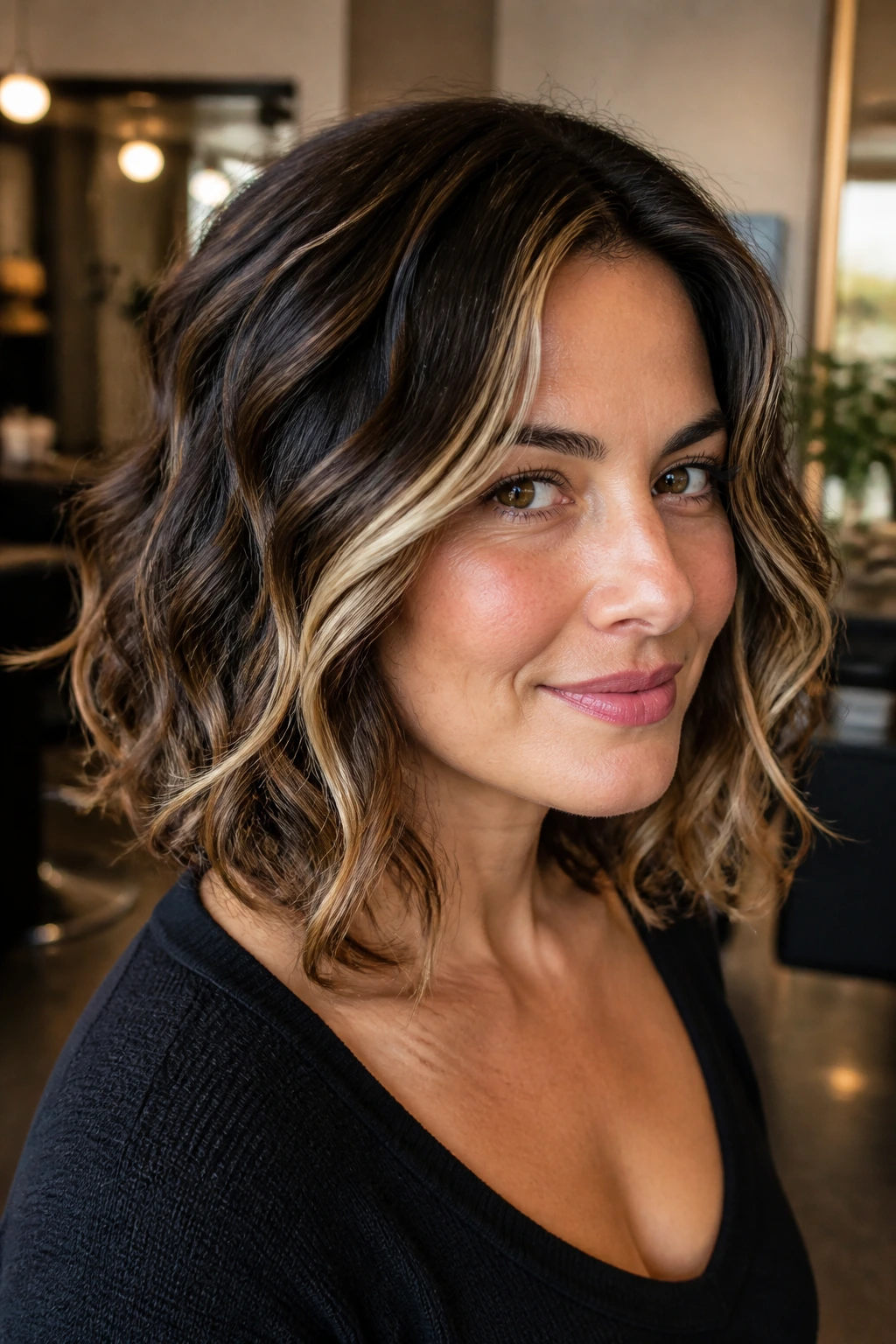
The first mistake is placing the money piece too far back. When that happens, the front of the bob loses its job and the hair just looks lighter in the wrong spot. The fix is simple: move the highlight closer to the face line, not the crown.
The second mistake is cutting the bob too blunt on dense curls. The shape turns bulky at the sides and the front highlight has no room to breathe. Ask for internal layers or a softer perimeter so the curls can stack instead of balloon.
The third mistake is ignoring shrinkage. A bob that feels safe when wet can end up two inches shorter than planned after it dries. That matters a lot on oval faces, where the length is part of the balance.
The fourth mistake is overloading the front with product. Heavy cream or oil can make the brightest pieces sit limp against the forehead. Keep the front lighter, let the curls clump, and stop before the hair starts looking coated.
The fifth mistake is skipping lowlights when the base is already bright. Without depth, the whole style can go flat and wide. A few darker ribbons underneath give the bob something to stand on.
Variations and Adaptations to Try
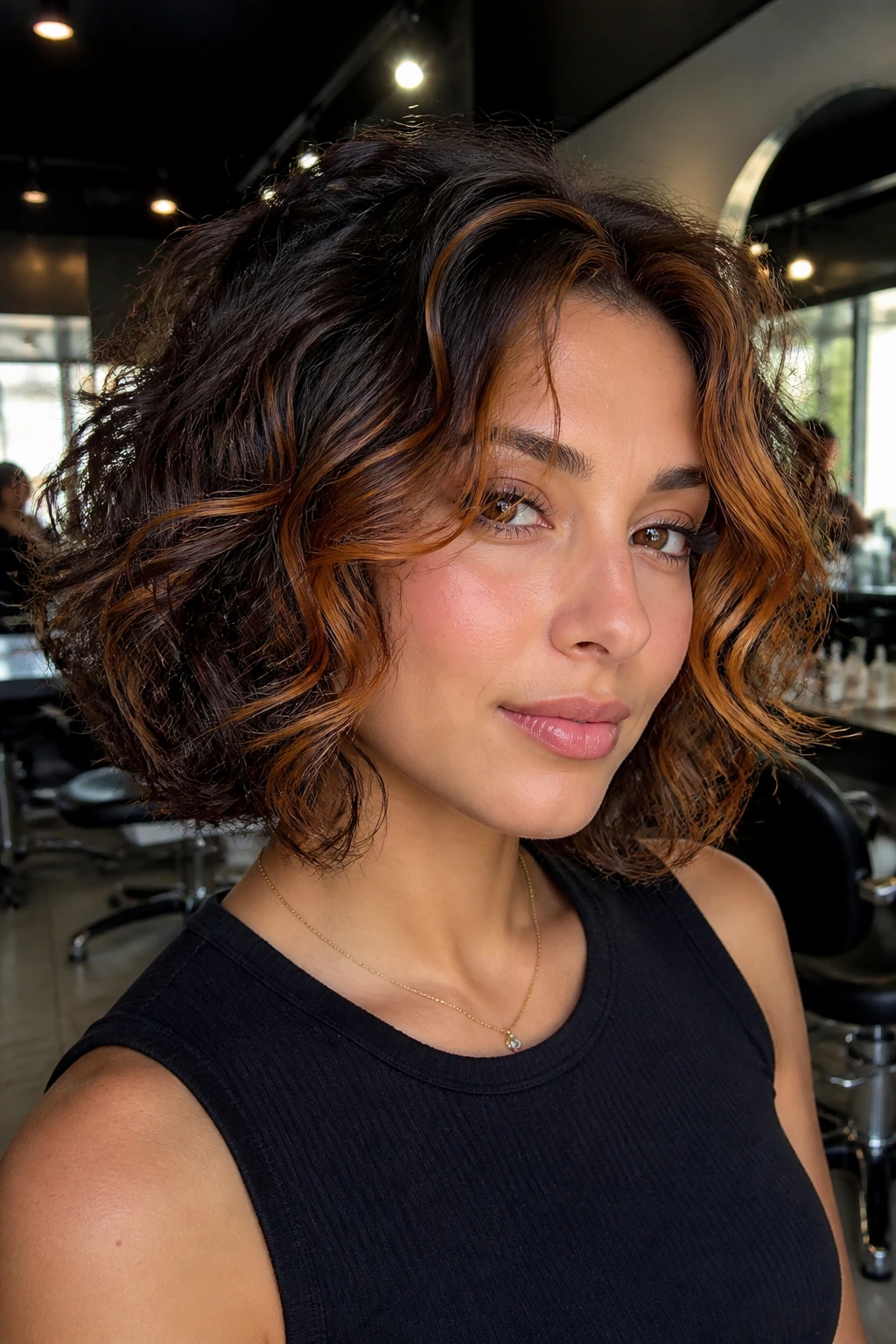
Soft-Caramel Everyday Version: Keep the bob chin-length and use a narrow caramel money piece with no bleach-heavy contrast. This works well if you want easy grow-out and a front frame that doesn’t need constant toner appointments.
Cool-Beige Editorial Version: Swap the warm tones for beige or ash beige front lights and keep the base slightly smoky. The result reads cleaner and sharper, especially on darker brunettes with cool undertones.
Copper Glow Version: Add copper or cinnamon to the front curls and let the rest of the bob stay brunette. This one has more warmth and a little more personality, which helps when your hair tends to disappear in winter light.
Rooted Blonde Contrast Version: Keep the base dark and ask for a brighter, rooted money piece with soft lowlights under the top layer. That creates visible contrast without forcing the whole head blonde.
Low-Maintenance Grow-Out Version: Choose a collarbone length with a soft side part and babylight-thin face frame. It grows out more cleanly and still looks intentional when the front pieces fade a little.
Maintenance, Refreshes, and Grow-Out
Curly bobs need regular trims because the shape can lose its line quickly. For most curl patterns, a shape check every 8 to 12 weeks keeps the bob from turning into a triangle or a puffball. If your curls are tighter or your hair is very dense, you may want the outline cleaned up a bit sooner.
Color maintenance depends on how bright you go at the front. A soft caramel or honey frame usually fades more gracefully than platinum or ash beige, which means less toning and fewer emergency gloss visits. If the front pieces lighten fast, use a color-safe shampoo, wash less often, and avoid very hot water. Hot water strips tone faster than people expect.
For styling, refresh the front pieces first. That’s the part everyone sees. A mist of water, a little curl cream, and a quick scrunch usually revive the front better than soaking the whole head again. If you diffuse, keep the dryer moving and stop before the roots get dry and the ends get crunchy. Crunch is not a look here.
Frequently Asked Questions
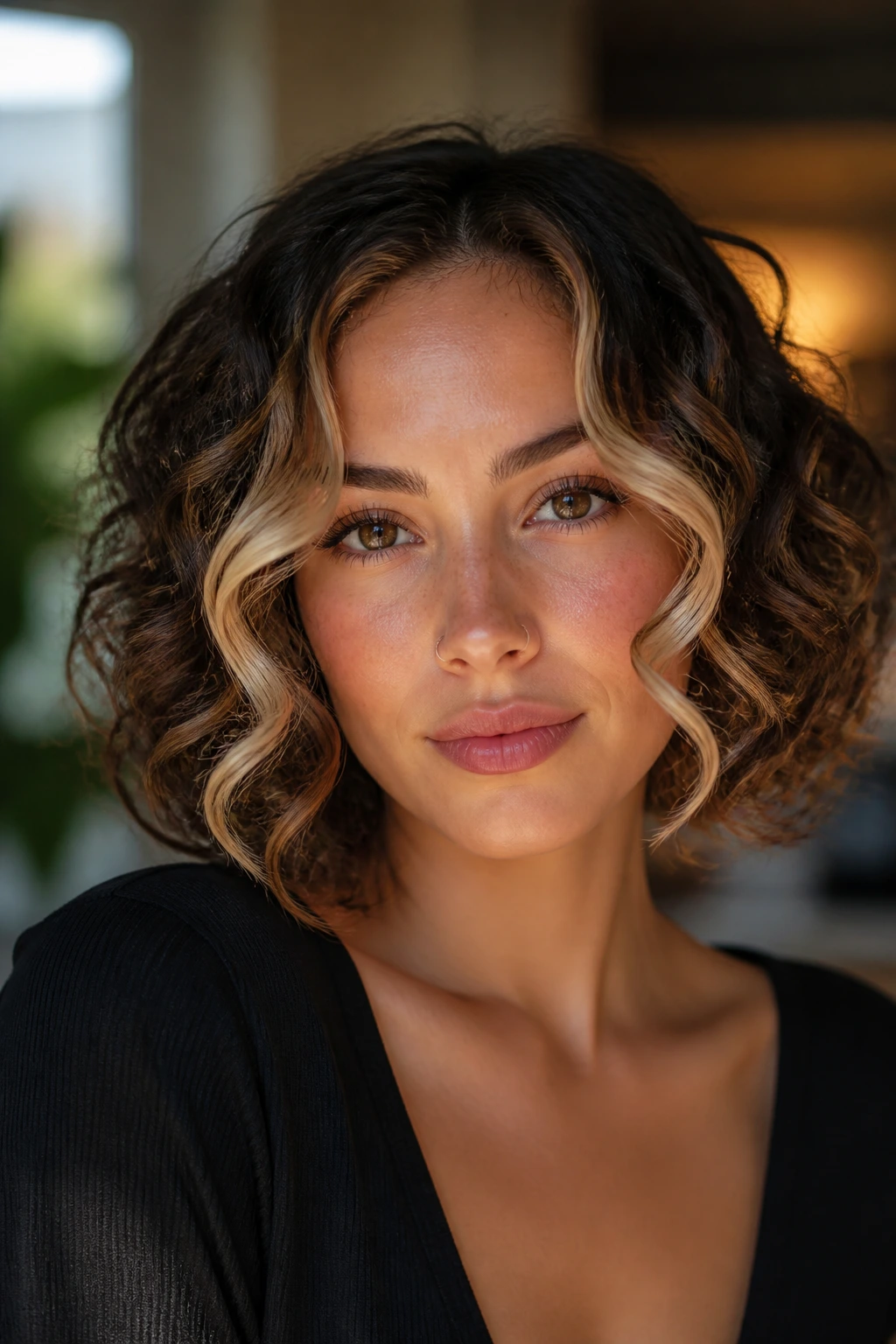
Do curly bobs actually suit oval faces, or is that just salon talk?
They suit oval faces for a simple reason: the proportions are already flexible, so the bob can frame without fighting the shape. The trick is picking the right length and not letting the curl volume spread too wide at the sides.
How wide should the money piece be on curly hair?
Usually narrower than people think. On curls, the strands expand visually, so a small highlight section can look much bigger once dry. Ask for a slim face frame first, then build up only if you want more contrast.
Can I do this with tight curls or coils?
Yes, but the cut needs room for shrinkage. Leave the perimeter longer than you would on loose curls, and make sure the brightest pieces are woven through the front where they’ll still be visible once the curl closes up.
Is a center part or side part better for oval faces?
Both can work. A center part gives a clean, balanced line, while a side part adds lift and a little movement at the front. If your money piece is the main event, a side part often shows it off faster.
What if the highlights look stripey instead of blended?
That usually means the sections were too wide or the toner was too stark for the base. The fix is to soften the root area, add a few lowlights, or narrow the front ribbons so they sit inside the curl pattern instead of on top of it.
How often do the highlights need touch-ups?
That depends on how bright you go. Warm caramel and honey can stretch longer between appointments; platinum and cool beige usually need more attention if you want them clean. Root shadowing helps extend the life of the color.
Can I wear this cut without heat styling?
Absolutely. In fact, many of these bobs look better when air-dried or diffused lightly. A bob with a good cut line and smart highlight placement should hold its shape without being forced into submission.
Will this style work if my hair is thin?
Yes, but the layers should be lighter and the color placement softer. Thin curly hair often looks fuller with a blunt-ish outline and a narrow face frame, not with heavy slicing that removes too much body.
Soft Lines, Bright Fronts
The best curly bobs for oval faces with money piece highlights do one thing well: they keep the face open while giving the curls a shape that feels deliberate. Nothing about the cut should look accidental. The length, the front brightness, and the curl pattern need to argue with each other just enough to make the whole thing interesting.
If you’re taking one idea from all of this, make it placement. Not just color. Not just length. Placement. A few inches can change the entire mood of a bob, and on curls, those inches matter more than most stylists admit out loud. Bring a reference, talk about your curl shrinkage, and keep the front pieces close to the face where they can do some actual work.