



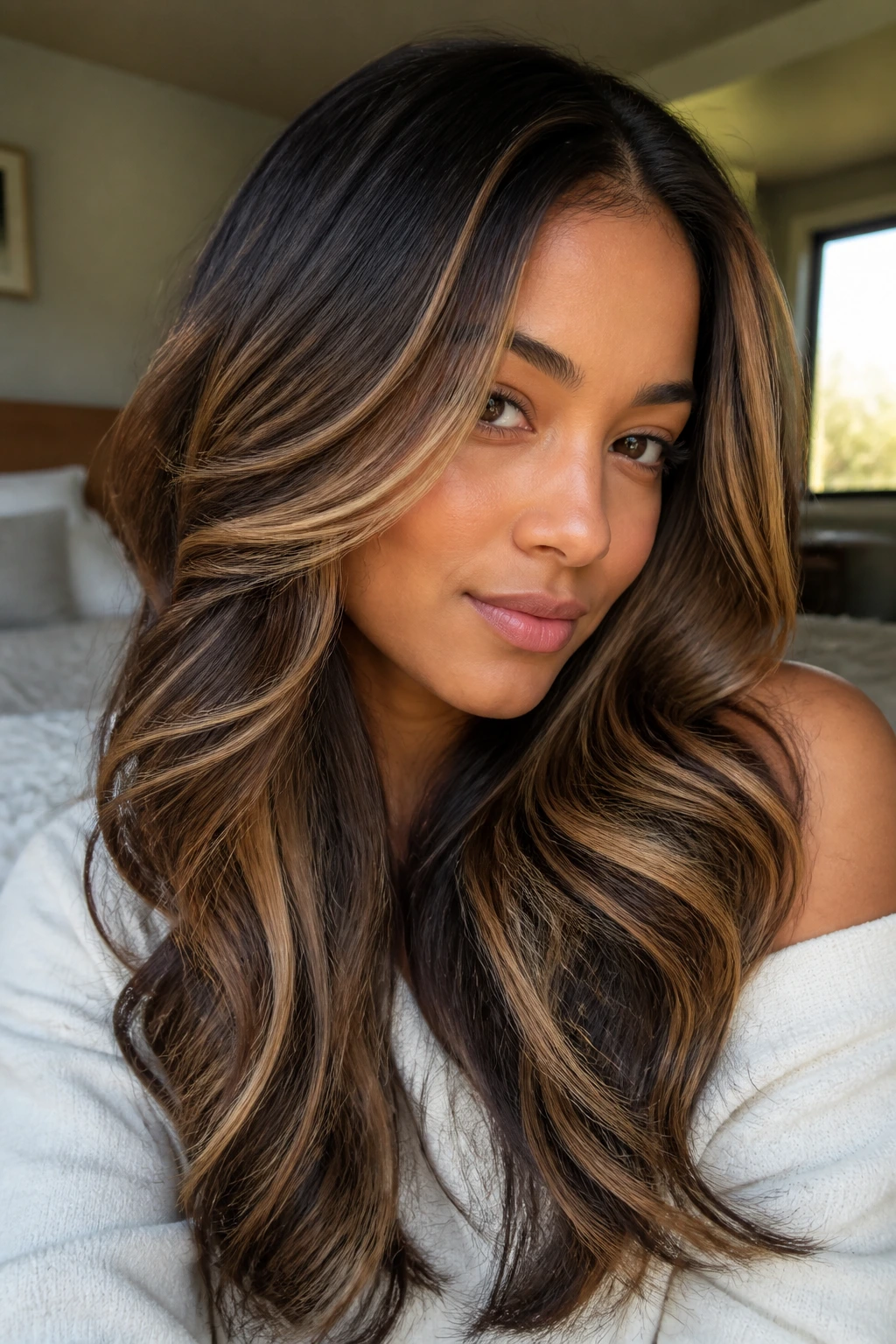
Fancy hairstyles for thick hair with caramel highlights have a built-in advantage: the color does half the visual work before you’ve even touched a curling iron. Thick hair gives shape, weight, and staying power. Caramel ribbons give that shape movement. Put them together and you get styles that look deliberate instead of puffy, glossy instead of flat, and expensive-looking without needing a dozen styling tricks.
The part people miss is this: dense hair does not want to behave like fine hair. If you try to flatten it, you usually lose the very thing that makes it special. The better move is to lean into the heft, then break up the mass with twists, braids, bends, and pinned sections that let the lighter strands show through. Caramel highlights are especially good at this because they catch along the curves of a braid or the edges of a chignon, where the eye naturally lands.
There’s also a practical side. Thick hair can hold a shape through dinner, dancing, or a long day of being on display, but only if the style is anchored properly. Loose curls, tight knots, half-up loops, and polished ponytails all behave differently on dense hair, and the right choice depends on how much shine, height, and movement you want. A style can be fancy without being fussy. That’s the sweet spot.
Why This Collection Feels Different on Thick, Highlighted Hair
-
Thick hair gives these styles structure: Buns, braids, and waves need a little body to look full instead of thinly spread out, and dense hair keeps the shape from collapsing.
-
Caramel highlights show the twist pattern: The lighter strands trace braids, coils, and curls in a way that one-tone dark hair often can’t, so every turn looks more defined.
-
The styles are built for hold, not fluff: These looks rely on pins, anchors, and tension in the right places, which matters when your hair has enough weight to pull itself down.
-
There’s room for polish and movement at the same time: Thick hair can go sleek at the crown and still have a soft, touchable finish through the lengths.
-
You can dress them up or tone them down fast: Swap a satin ribbon for a clear elastic, or trade brushed-out waves for tighter curls, and the whole feel changes.
-
They work with the color you already have: Caramel highlights don’t need to be hidden under a style; they should sit on top of the braid line, around the face, or at the curve of the bun.
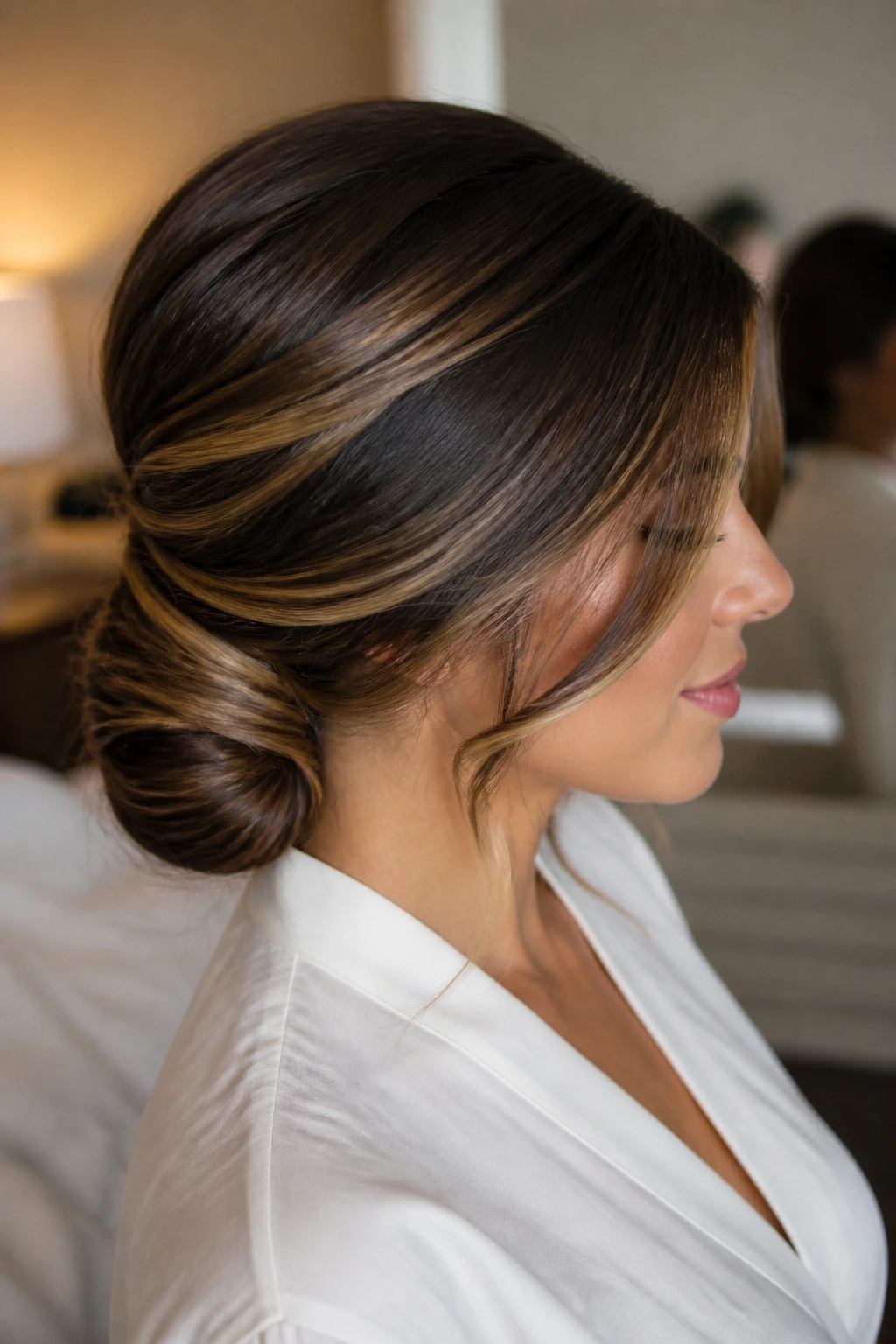
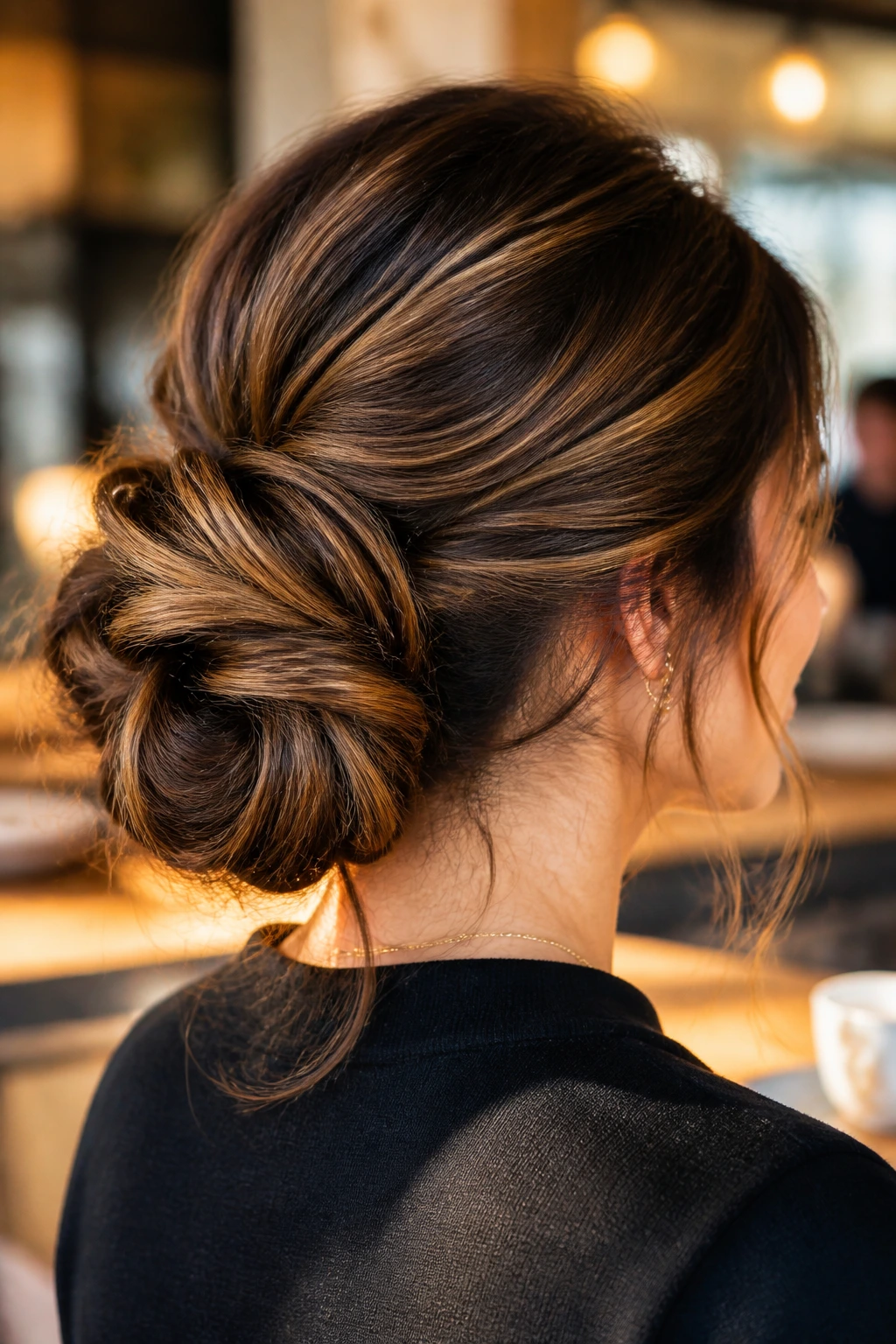
1. Polished Low Chignon with Side-Swept Face Pieces
This is the style I’d hand to someone who wants the room to notice the hair first and the effort second. A low chignon sits heavy enough to tame thick strands, while the side-swept pieces keep the face from looking boxed in. The caramel highlights curve through the knot like thin ribbons of toffee, which is exactly why this style feels dressed-up instead of stiff.
Why It Works for Dense Hair
The low placement keeps the weight at the nape, where thick hair is easiest to control. A little smoothness at the crown makes the chignon look clean, but the loose face pieces stop it from reading as severe.
- Keep the crown brushed flat with a light mist of hairspray.
- Twist the lengths loosely before pinning; tight twisting makes the bun bulky.
- Leave two front sections about 1 inch wide so the caramel catches light along the cheekbones.
Best move: pin the chignon with crossed bobby pins, not one lonely pin. Thick hair will win that fight.
2. Soft Hollywood Waves with a Deep Side Part
Caramel highlights and brushed-out waves are a natural pair. The wave pattern gives the color a path to follow, and the side part builds enough drama to make thick hair feel intentional rather than heavy. It’s one of those styles that looks even better after the curl has softened a little.
The trick is direction. Curl everything away from the face on the heavier side, let the other side fall a bit flatter, then brush only after the hair is fully cool. That cooling time matters. Skip it and the wave pattern stretches out before it sets.
On thick hair, I like a 1¼-inch iron and medium sections, about 1½ inches wide. Smaller sections just create too much curl density, and thick hair does not need more density. It needs shape.
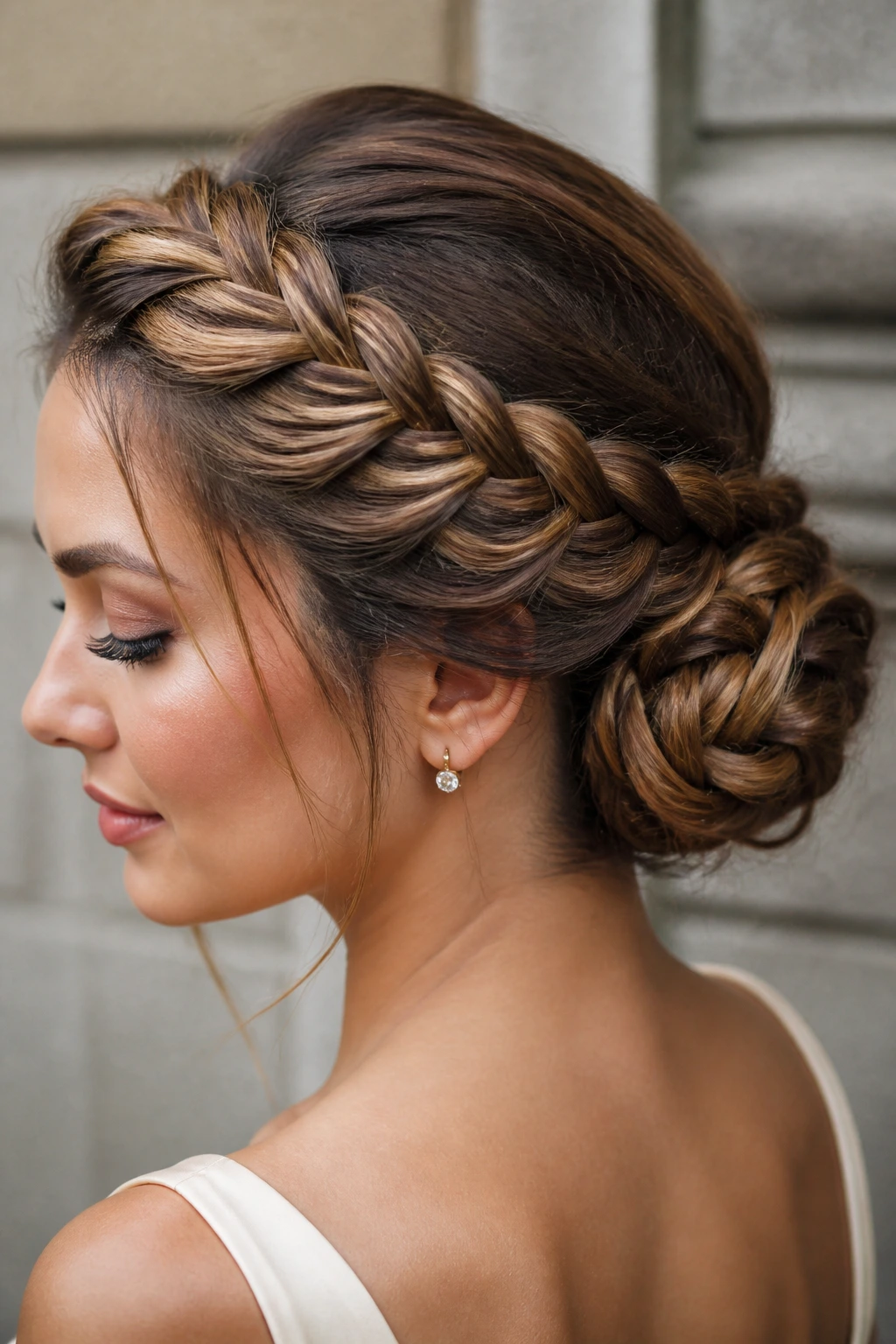
3. Braided Crown Bun
Why does this style look so polished on thick hair? Because the braid acts like a built-in border. It frames the head, gives the caramel highlights a clear track to follow, and keeps the bun from swallowing all the visual interest.
How to Place the Braid
Start the braid just behind the temples, not too far back, or you lose the crown effect. If your hair is very dense, use a Dutch braid instead of a French braid; the raised shape stays visible better against thick strands.
- Braid with medium tension so the sections stay defined.
- Wrap the remaining lengths into a bun at the nape or slightly higher if you want more lift.
- Pull a few small loops out of the braid after pinning. Not too many. You want dimension, not chaos.
The caramel pieces will sit beautifully along the ridges of the braid, especially if the highlights are concentrated around the outer layers.
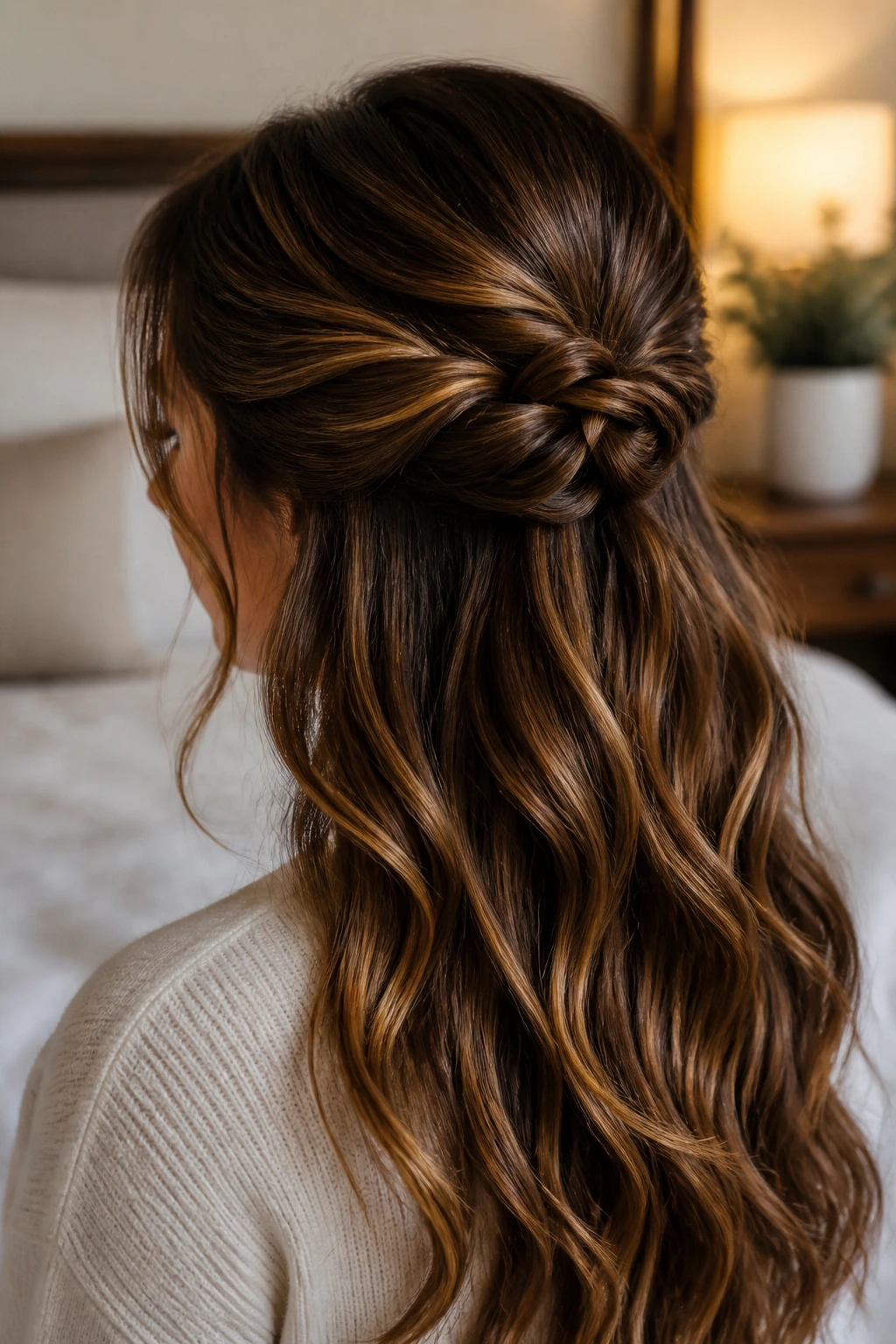
4. Twisted Half-Up Knot
If you want your hair off your neck but still want the length to show, this is the one. The top section gets twisted into a knot at the back of the head, while the rest spills down in loose waves or straight lengths. On thick hair, the knot looks full without needing padding, which is one reason it photographs so cleanly.
The best part is how the color moves. Caramel highlights peek through the twist itself, then repeat through the loose lengths below, so the whole style feels connected. I prefer this with slightly textured hair rather than pin-straight hair, because a touch of grit helps the knot stay put.
One-inch twists are enough. Bigger sections get lumpy, smaller ones disappear into the bulk.
5. Sleek High Ponytail with Wrapped Base
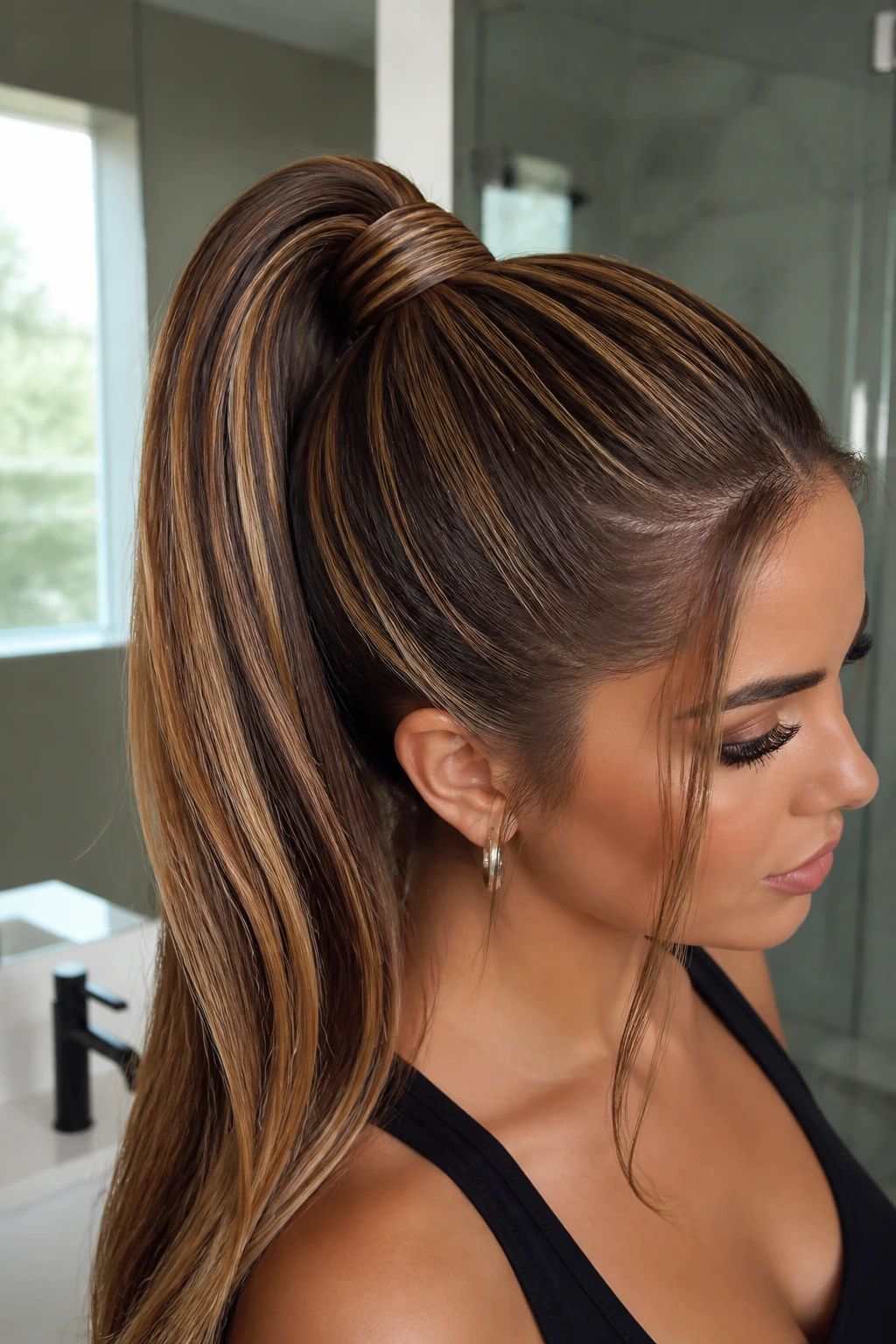
A high ponytail only looks simple until you try it on thick hair and realize how much work it takes to make it sleek. The payoff is worth it. Lift at the crown gives the ponytail attitude, the wrapped base hides the elastic, and the caramel highlights swing through the length like moving lines of color.
The key is tension. Use a boar-bristle brush to pull the hair upward in sections, not all at once. That keeps the crown smooth without creating those weird bumps that show up in bright light. Then wrap a small strand around the base and pin it under the ponytail with a U-pin.
This style works especially well when the highlights are placed through the ends, because the tail itself becomes the focal point. Thick hair gives it enough mass to look sculpted rather than skinny.
6. Big Blowout with Flipped Ends
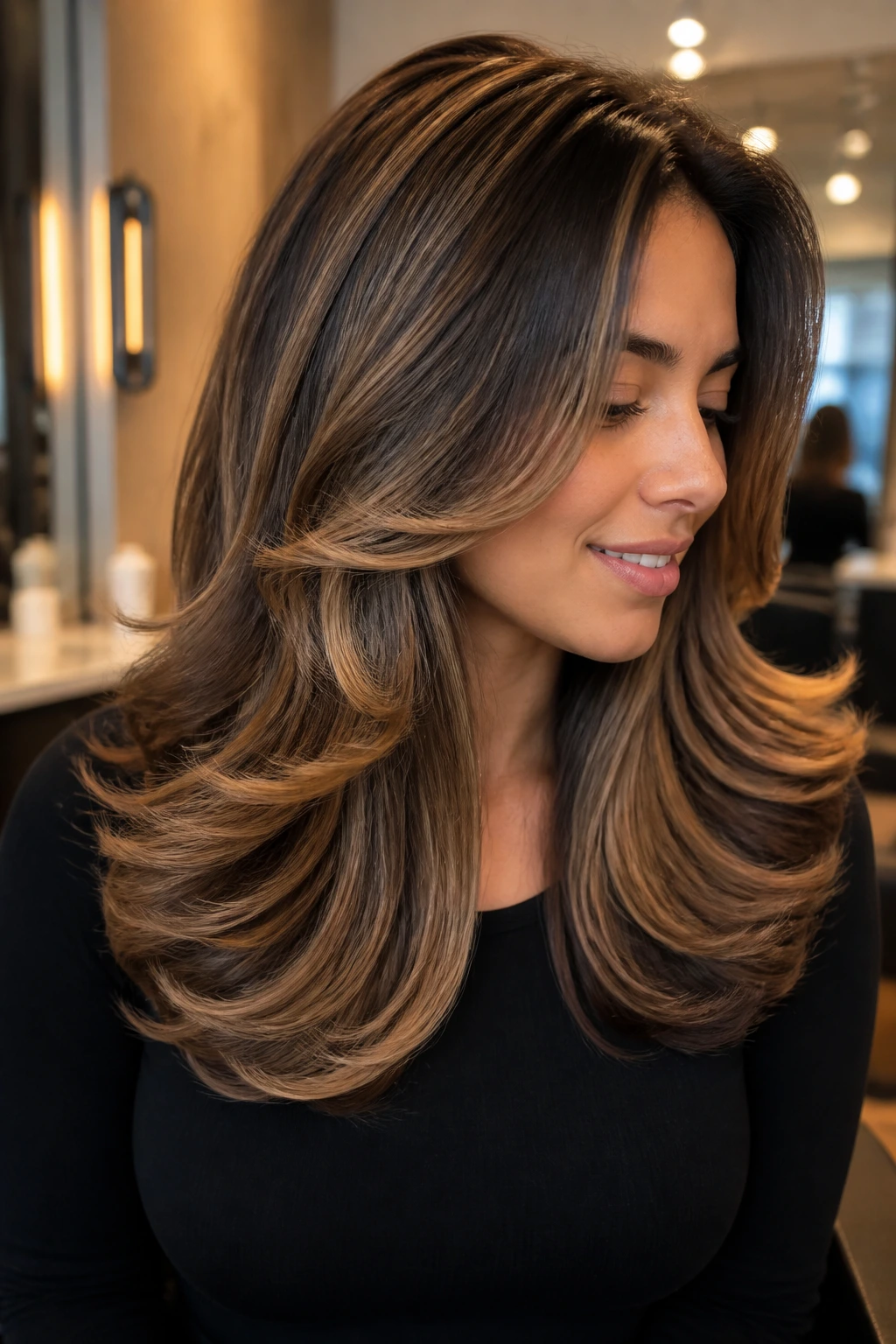
This is the style for people who want movement more than structure. A proper blowout makes thick hair feel lighter without removing the body that makes it special, and the flipped ends give the whole look a finished edge. Caramel highlights look especially good here because every bend catches the lighter pieces in a different place.
What Makes It Different
Unlike pin-straight hair, a blowout on thick strands needs tension and patience. Work with a round brush and a concentrator nozzle, drying each section until it feels smooth and warm, not damp. If you stop early, the root volume falls and the ends puff out.
I like to finish with a large-barrel round brush on the front pieces so they curve away from the face. That keeps the style from turning blunt.
Who It’s Best For
This suits shoulder-length to long thick hair, especially if the color is distributed in ribbons through the mid-lengths. The caramel pieces show best when the hair has clean separation, not when every strand is crushed flat.
7. French Twist with Soft Lift
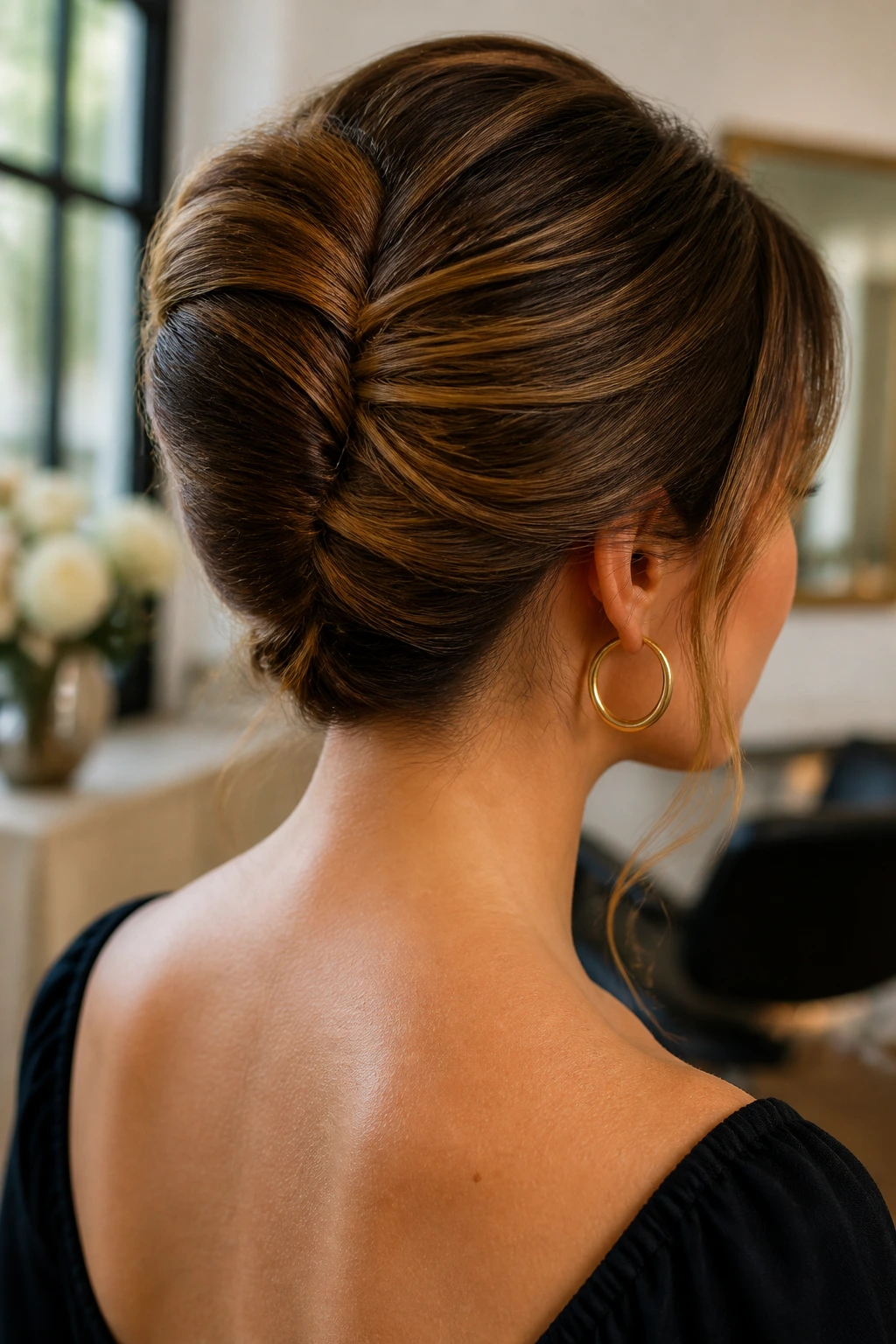
A French twist can go too formal fast, which is why thick hair is helpful here. It has enough density to fill the twist without needing too much padding, and the caramel highlights soften the vertical line so it doesn’t feel too severe. The style is elegant, yes, but it also has real grip.
Backcomb the crown lightly before you sweep the hair in. Lightly. A little lift helps the twist sit against the head instead of looking pasted on. Then roll the hair upward and tuck the ends in with long pins placed vertically.
The finish should be smooth at the sides and airy at the top. If the caramel pieces are visible near the twist seam, even better. That tiny flash of color is what keeps the style from feeling too hard.
8. One-Side Boho Braid
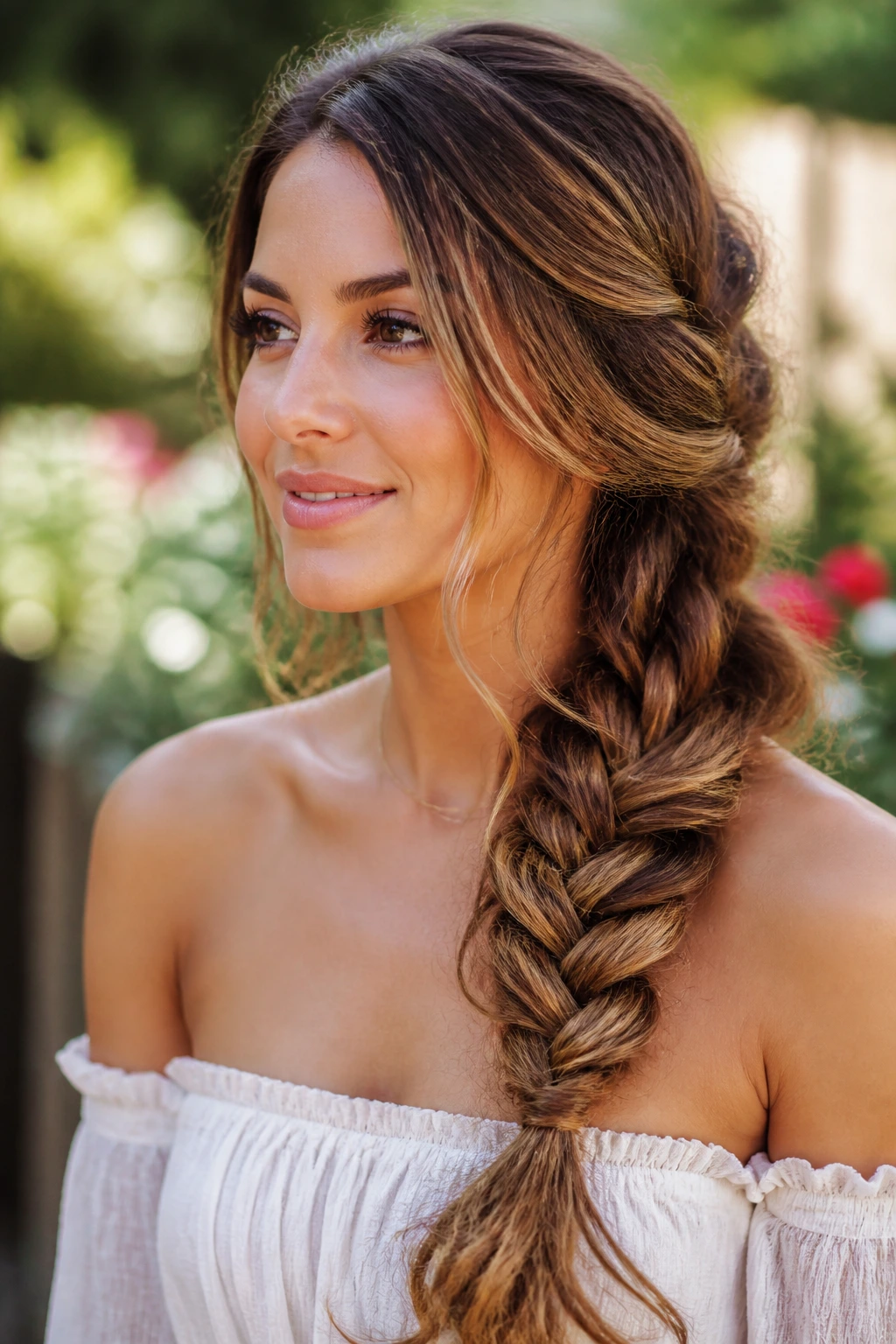
This is the one I’d choose when I want thick hair to look soft without losing structure. A braid draped over one shoulder lets the length show while keeping the bulk controlled, and the caramel highlights make every plait stand out in a way that plain brown hair just can’t match.
A loose three-strand braid works, but a fishtail braid shows the color more sharply because the sections are thinner and more repeated. Pull the braid wider after you finish it. Not enough to destroy the pattern, just enough to make the braid look full and airy.
The look gets better if you leave a few face-framing strands out and curl them separately. That small break in the line keeps the braid from feeling too rigid.
9. Bubble Half-Up Ponytail
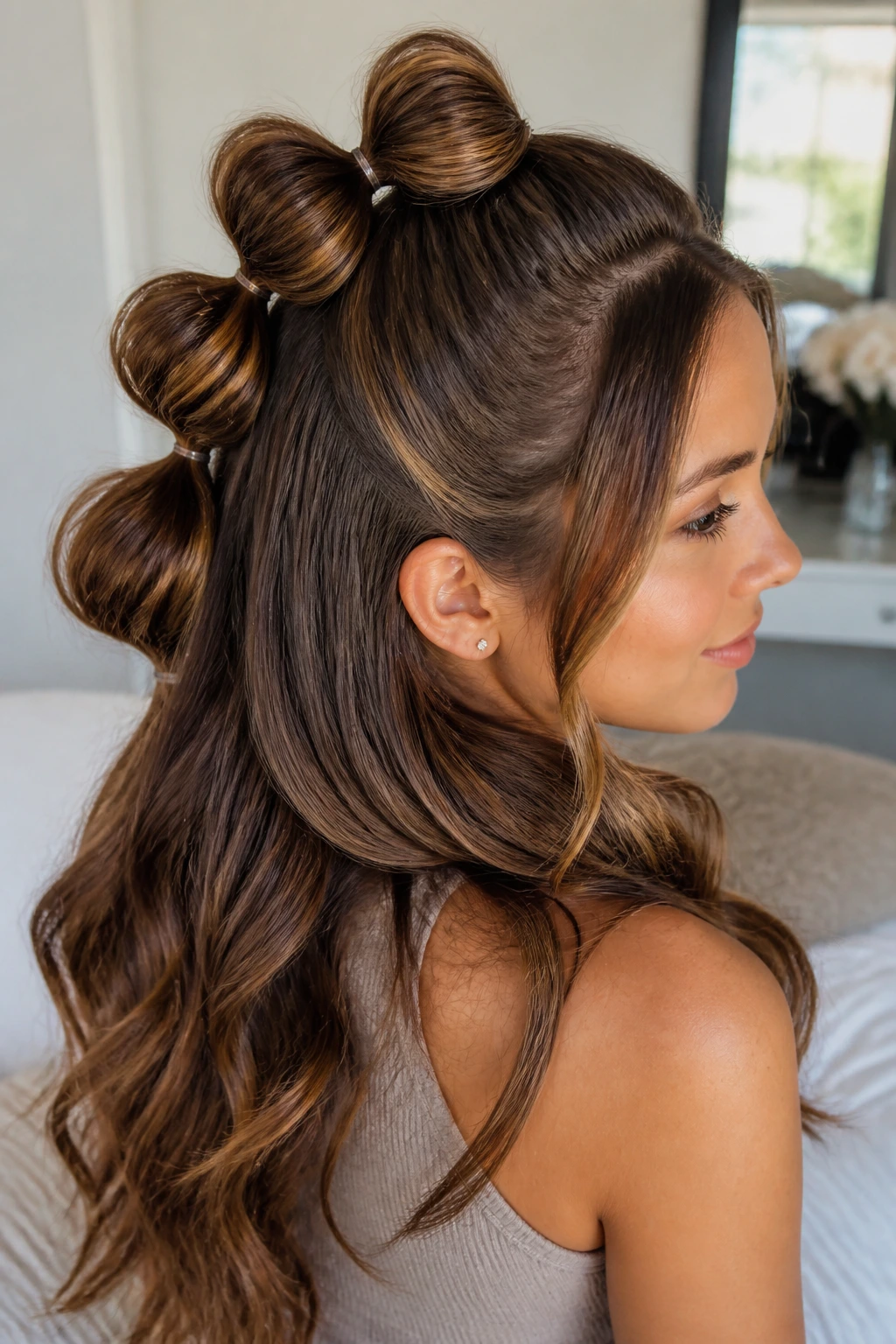
What gives a bubble ponytail that dressed-up feel instead of a gym-hair vibe? Sectioning. That’s the whole trick. The half-up portion lifts the crown, the bubbles create visible shape, and the loose bottom section shows off the caramel highlights in a more relaxed way than a full updo would.
How to Build the Bubbles
Tie the half-up section with a clear elastic, then add more elastics every 1½ to 2 inches down the length. Gently tug each section outward until it rounds into a bubble. Thick hair is helpful here because each bubble gets real volume instead of collapsing into a thin tube.
- Use a smoothing cream at the crown so the top looks polished.
- Mist the tail lightly with flexible-hold spray before shaping the bubbles.
- Leave the bottom hair curled or waved if you want more movement.
The color works beautifully because the highlights catch on the rounded edges of each bubble. The shape does half the styling for you.
10. Curly Top Knot with Loose Tendrils
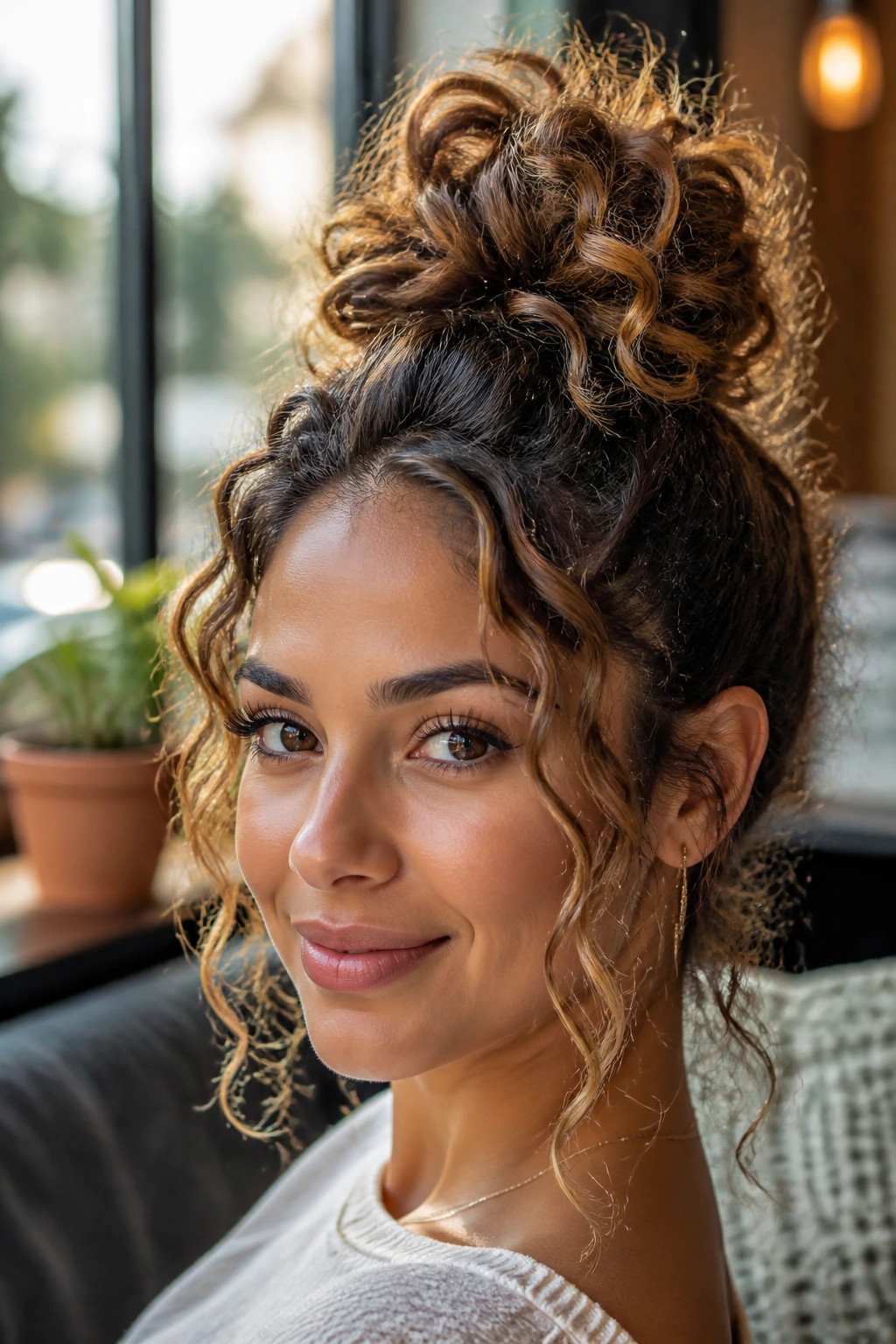
There’s something smart about a top knot on thick hair. It gets the weight up and off the neck, but it still looks full enough to feel deliberate. Add loose tendrils around the face and the caramel highlights start doing that lovely thing where they break up the shadow near the cheeks.
The best version of this style is not a tight knot shoved on top of the head. It should sit just high enough to look lifted, with the ends tucked in but not smashed flat. If your hair is very dense, twist the hair into a coil before wrapping it so the knot holds together with fewer pins.
Leave two or three tendrils out, curl them away from the face, and keep them soft. Too many tendrils starts to look messy. A few is enough.
11. Waterfall Braid into Loose Curls
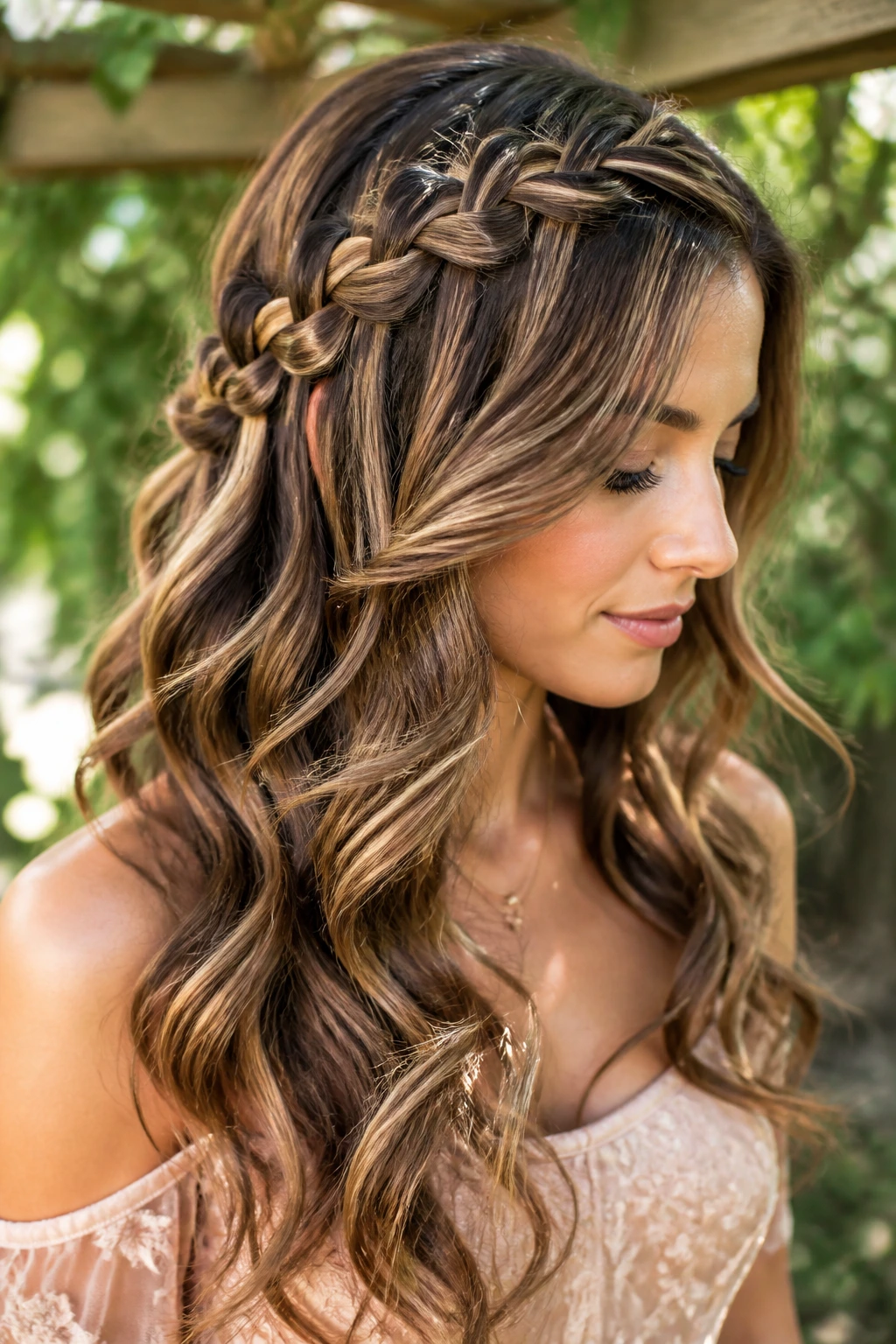
A waterfall braid is one of the few braid styles that can handle thick hair without looking overloaded. The dropped sections let the caramel highlights spill through in little flashes, which is exactly what makes this style feel romantic instead of heavy. You get structure at the top and softness through the lengths.
The braid works best on hair that has a little texture already. Clean, slippery hair can be stubborn, and thick hair that’s too fresh from washing may shed the braid faster than you want. I like to add a tiny bit of dry shampoo or texturizing spray before starting.
The loose curls below should be brushed only lightly. You want movement, not one giant puff. If the braid is centered too low, the whole style loses its cascade effect, so keep it at eyebrow level or slightly above.
12. Claw-Clip French Roll
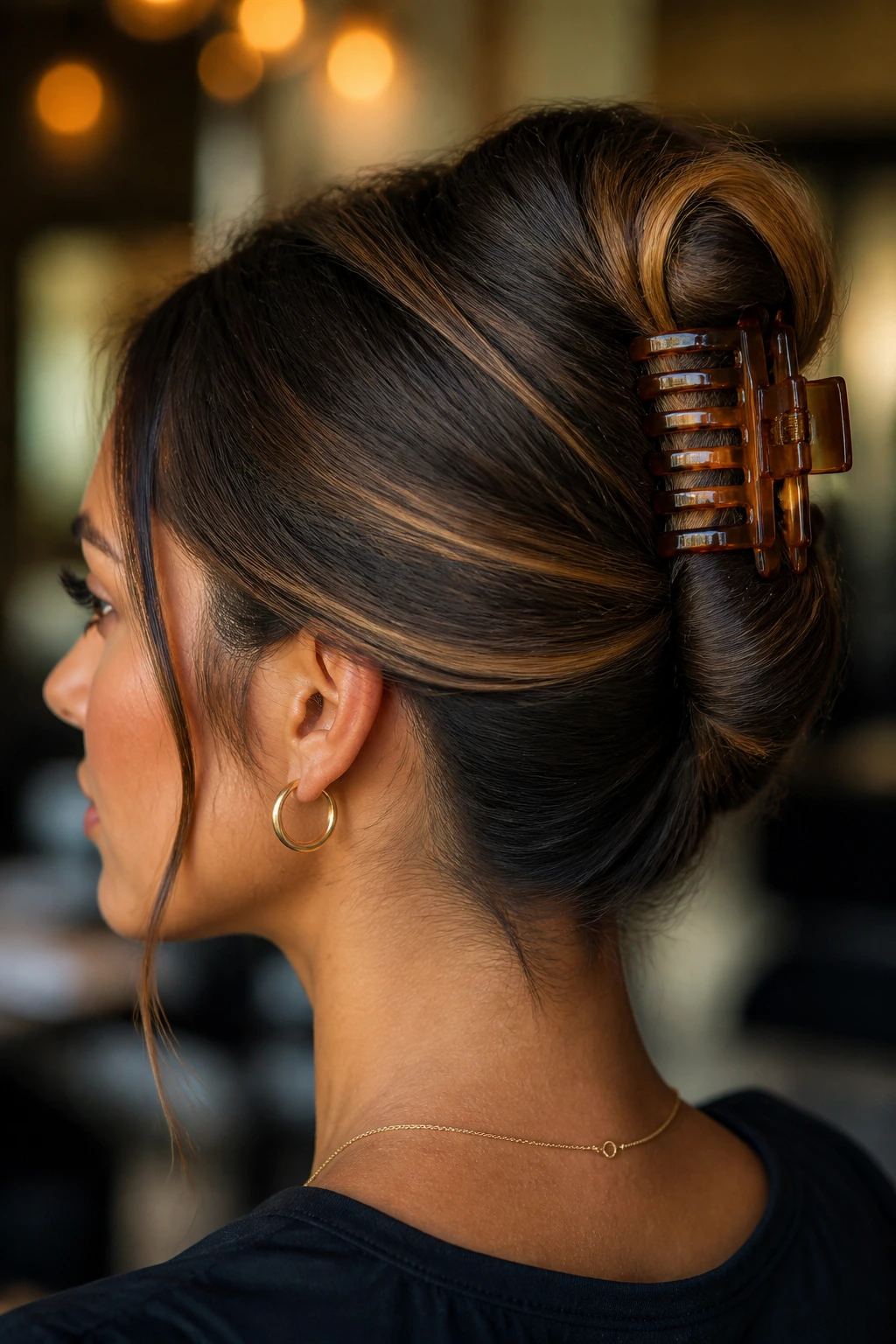
This is proof that a clip can look dressed up if the hair is rolled the right way. Thick hair gives the French roll enough body to fill a large claw clip without looking pinched, and the caramel highlights peek out in a way that feels relaxed but still polished.
Unlike a rigid pinned roll, this one has a little give. That makes it useful for medium to long thick hair that wants to escape tight styles. Sweep the hair upward, twist once, then fold the length down into the clip so some of the ends remain hidden and some can soften the shape.
A large clip matters here. If the teeth are too short, thick hair pushes it open by dinnertime.
13. Side-Swept Fishtail Braid
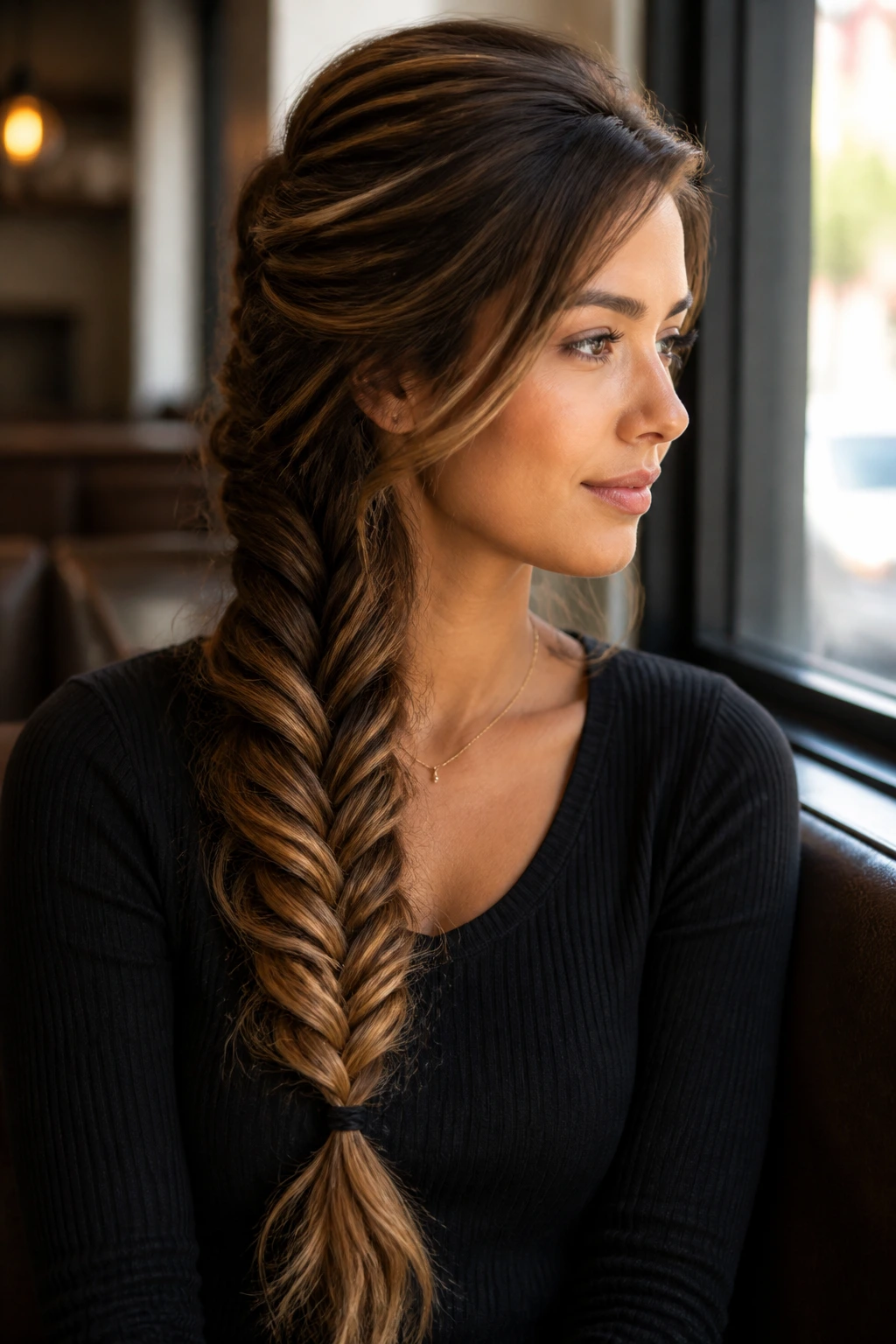
A side fishtail braid is one of the best ways to show off caramel highlights without asking the hair to be perfectly controlled. The braid’s small sections make the color read almost like woven thread, and thick hair gives the plait enough thickness to look dramatic from the side.
What to Watch For
Keep the braid slightly loose at the crown so the shape doesn’t pull too tight against the head. Thick hair can handle more structure, but a fishtail looks better when it has a little softness around the top.
- Start the braid at the nape and sweep it toward one shoulder.
- Pull apart the outer edges after braiding to widen the pattern.
- Secure the end with a small elastic, then wrap a tiny strand over it for a cleaner finish.
The caramel ribbons become visible in alternating sections, which is the whole point. On a one-tone base, the braid can disappear into itself. Here, it stays readable.
14. Sculpted Low Ponytail with Curled Lengths
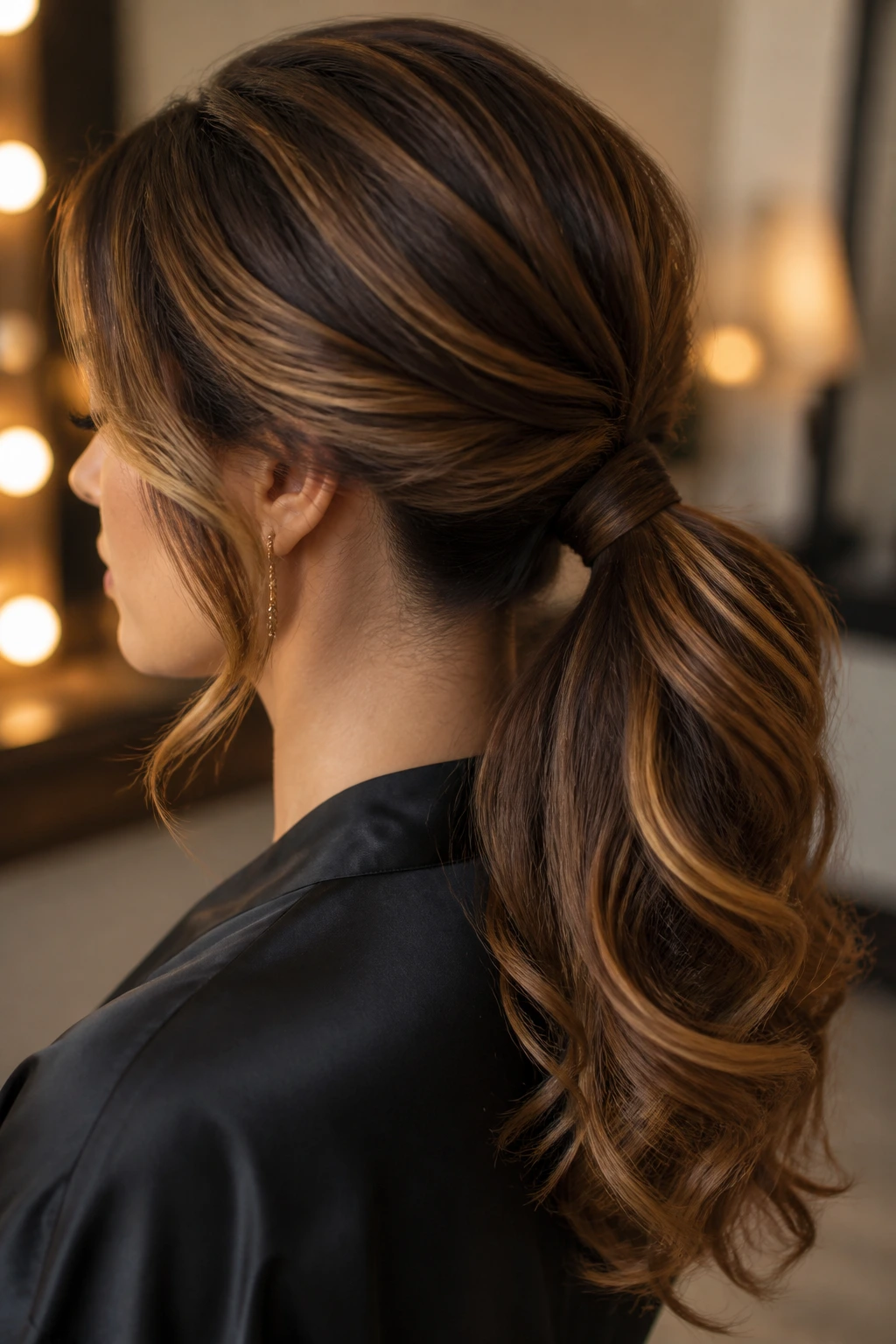
A low ponytail is only boring when it’s done without shape. On thick hair, it can become one of the most elegant styles in the room if you keep the crown smooth, the base hidden, and the lengths softly curled. Caramel highlights are especially good here because they show every bend in the ponytail.
Start by creating a little lift at the crown with a backcomb or root clip, then smooth the outer layer over it. The tail itself can be curled in broad bends rather than tight spirals; that gives the style a more expensive finish. Wrap a one-inch strand around the elastic and pin it underneath.
This style works well with both warm and neutral caramel because the movement does the work. The ponytail swings, and the color follows.
15. Rope-Braid Halo Bun
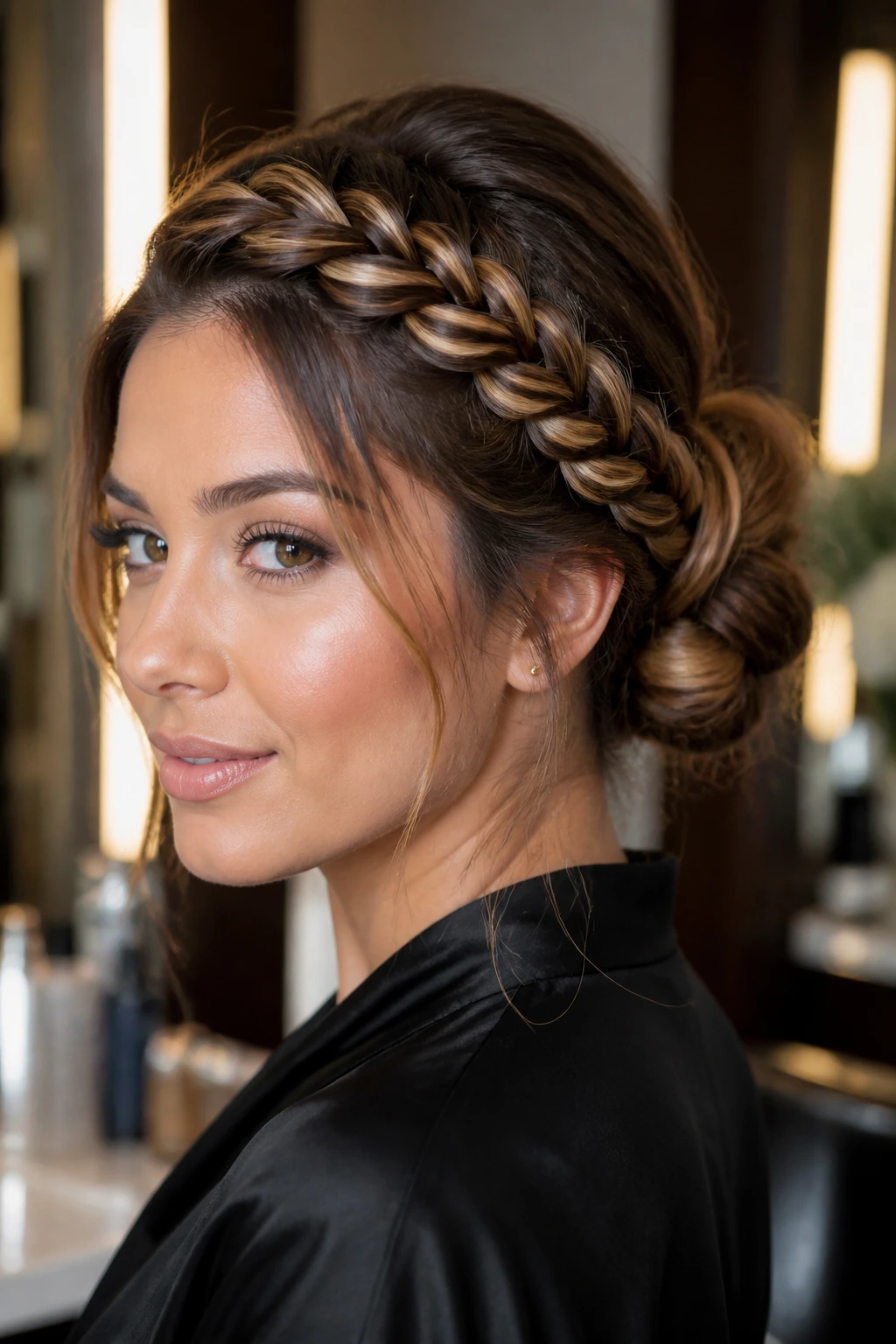
Why does a halo style stay interesting on thick hair? Because the rope braid creates a clear line around the head, and the bun at the back balances it without eating the whole shape. It’s one of the most useful looks for people who want their hair up, but not severe.
How to Keep the Halo from Sliding
Twist each side section tightly before wrapping it around the head. Rope braids grip better than loose twists, and thick hair has enough weight to hold the halo in place if the pins are crossed in the direction of the braid.
- Place the halo braid just above the ears for the cleanest frame.
- Pin every 2 inches as you wrap it so the shape doesn’t drift.
- Keep the bun lower and softer if the crown already has a lot of volume.
The caramel highlights trace the arc of the halo and make the style look more intricate than it really is.
16. Brushed-Out Glam Curls
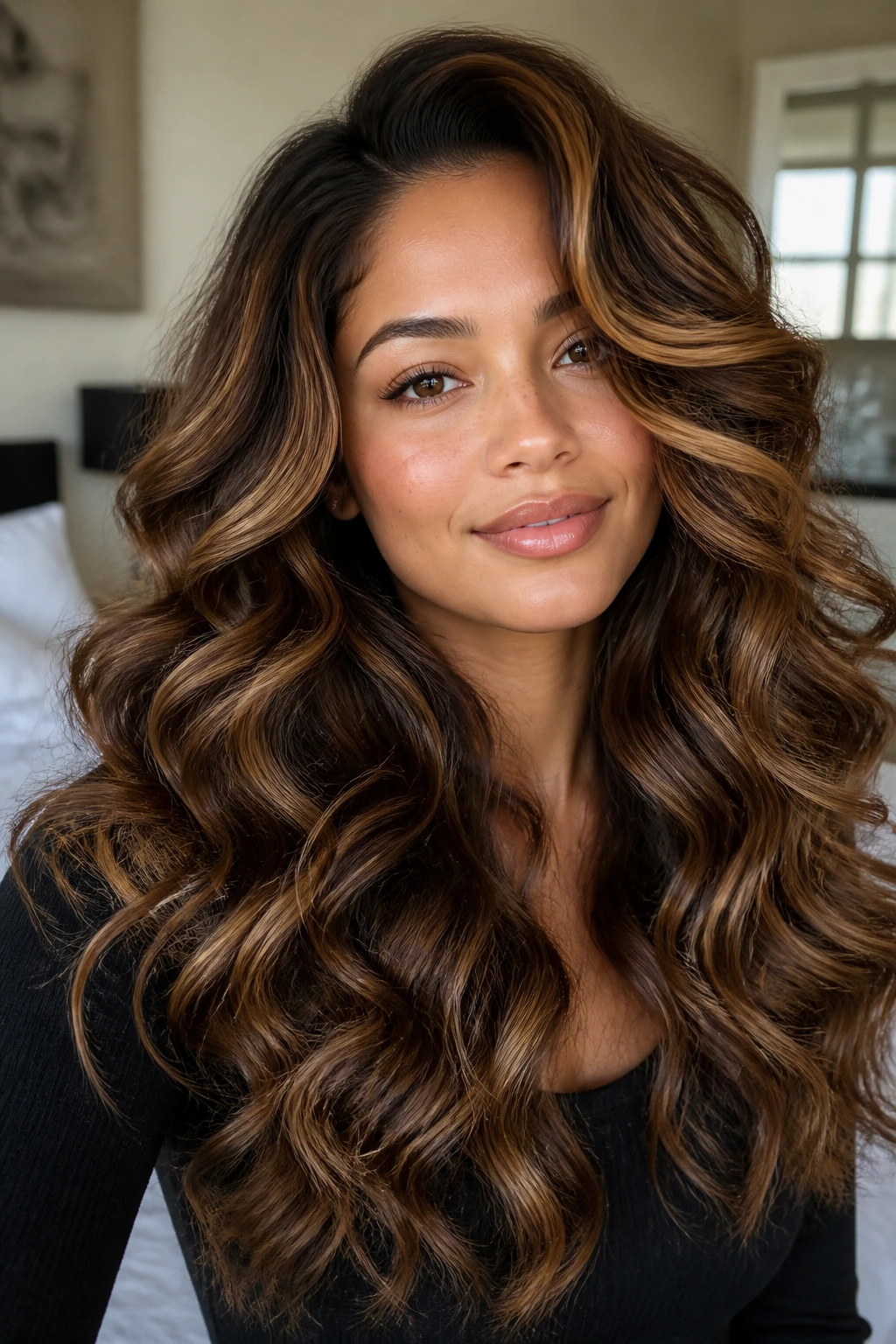
This is the style that looks richest when the hair has plenty of density to begin with. Thick hair holds a curl long enough to set it, then releases into a soft wave when brushed out. The caramel highlights scatter through the curls and give the whole style depth from root to tip.
The trick is to curl in consistent sections, let each one cool fully, and then brush with a boar-bristle brush or wide paddle brush. Not a fine comb. That would turn the style into a frizzy mess. Finish with a light mist of shine spray, focusing on mid-lengths and ends, never the scalp.
If you want the curls to last through a long evening, pin each freshly curled section flat against the head while it cools. It’s old-school, and it works.
17. Wrapped Low Bun with Braided Base
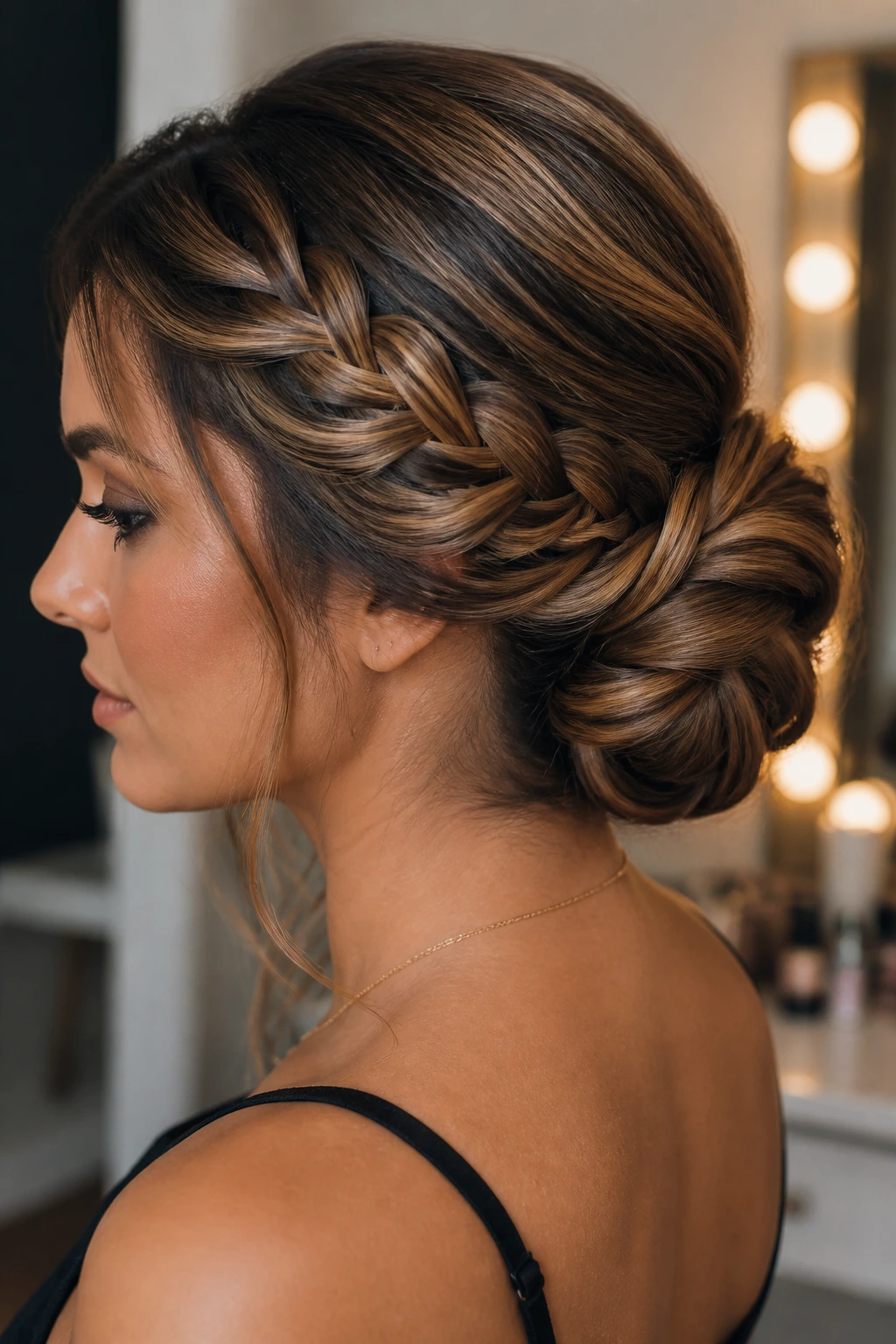
A wrapped bun with a braid underneath gives thick hair two layers of structure. The braid creates grip, the bun gives polish, and the caramel highlights follow the woven base in a way that makes the whole thing feel rich instead of bulky. It’s especially good for formal events where you want the back of the head to look as finished as the front.
The braid should be snug but not tiny. A wide braid under a small bun looks mismatched on thick hair. Wrap the bun just above the braid seam, then tuck the ends under with long pins so the finish looks clean from every angle.
This is one of those styles that improves the more you soften it a little. Pull a few narrow strands around the face, maybe one at the nape, and let the highlights show there.
18. Ribbon-Tied Half-Up Bow
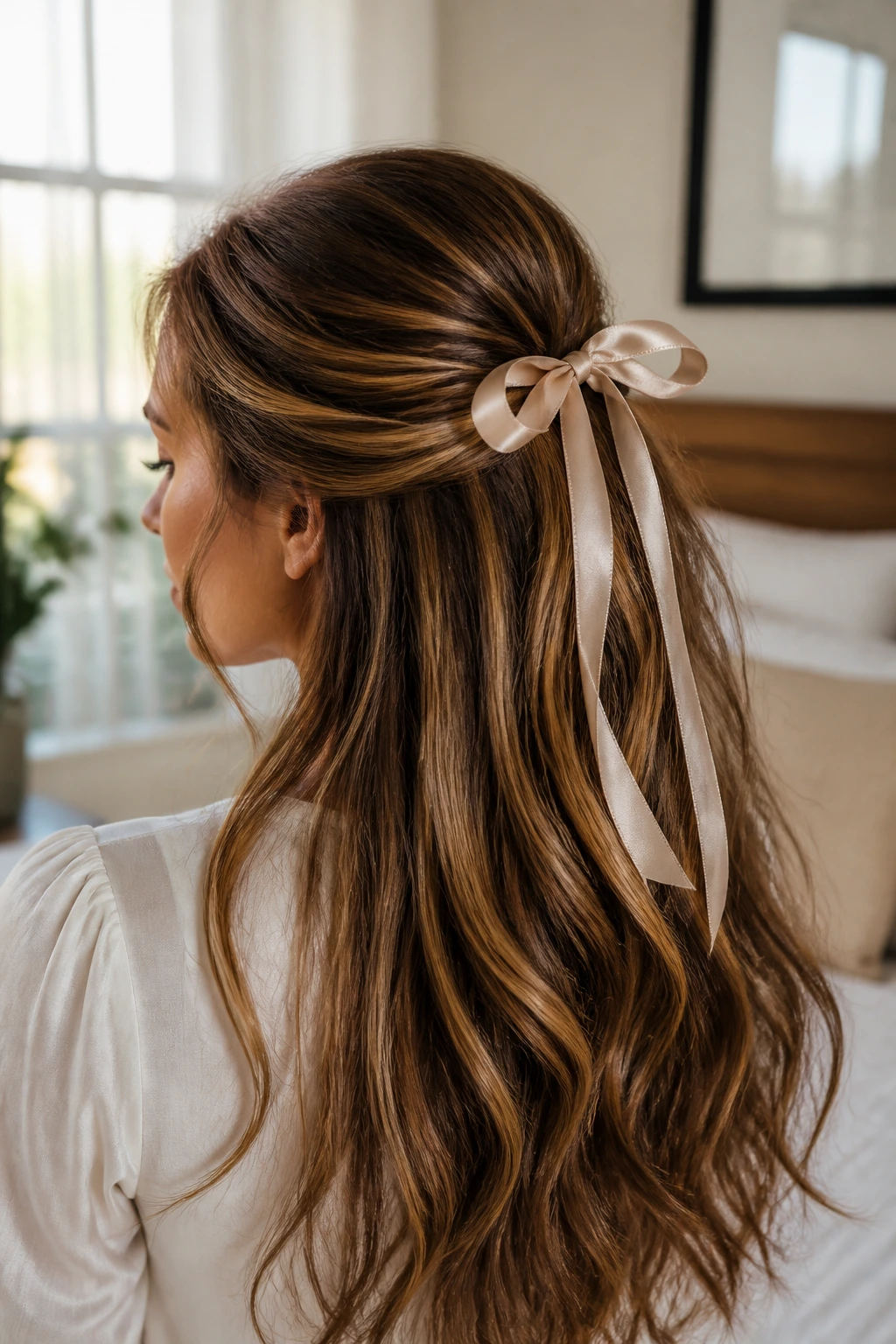
This is the rare fancy style that feels playful instead of severe. A ribbon-tied half-up bow works best when thick hair already has some softness in the lengths, because the bow becomes the centerpiece while the rest of the hair frames it. Caramel highlights make the satin or velvet ribbon stand out even more, especially if you choose a shade that either matches or sharply contrasts the warmth of the color.
Unlike a giant updo, this one leaves the bottom half free, so the hair still moves. That matters. The bow should sit at the back of the crown, not too high, or it starts looking like a costume piece.
Use a narrow ribbon if the hair is very dense; thick hair can swallow a wide one. A slim ribbon keeps the shape visible.
19. High Braided Ponytail
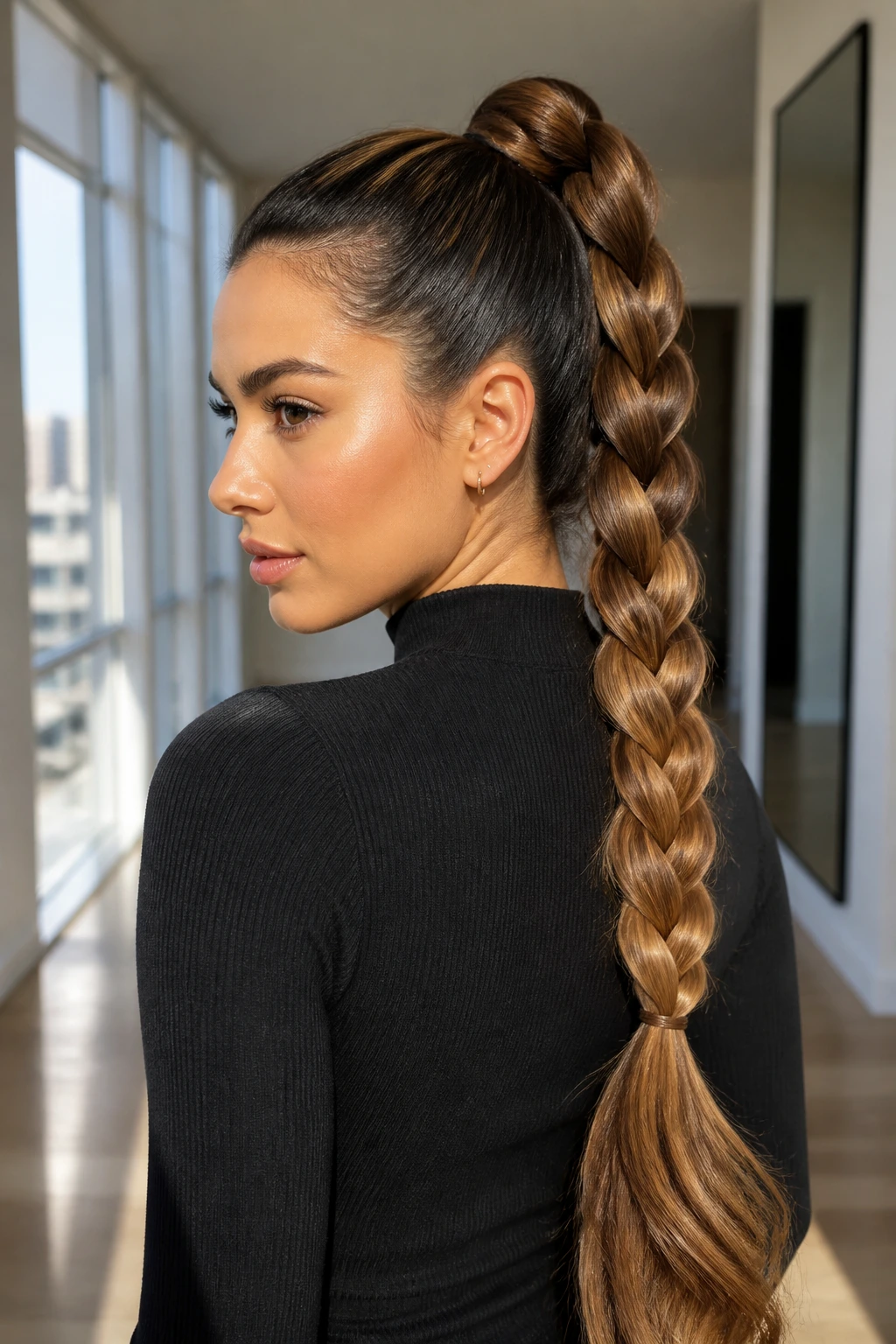
A high braided ponytail gives thick hair a lot of personality with very little wasted motion. The roots are sleek, the braid is long and controlled, and the caramel highlights become more visible the farther the braid travels down the back. It’s the kind of style that feels sporty and formal at the same time.
Why It Stands Up So Well
The ponytail base gives the braid lift before the length gets pulled down by its own weight. That’s the difference between a limp braid and one that stands out from the head. Add a little texturizing spray before braiding if the hair is too silky.
- Pull the crown tight, then stop. Over-smoothing removes shape.
- Braid the ponytail in a classic three-strand pattern or a rope braid if you want a cleaner line.
- Wrap the elastic with a strand from the tail for a cleaner base.
On thick hair, the braid looks substantial enough to read from across the room. That’s the point.
20. Center-Part Blowout with Curtain Pieces
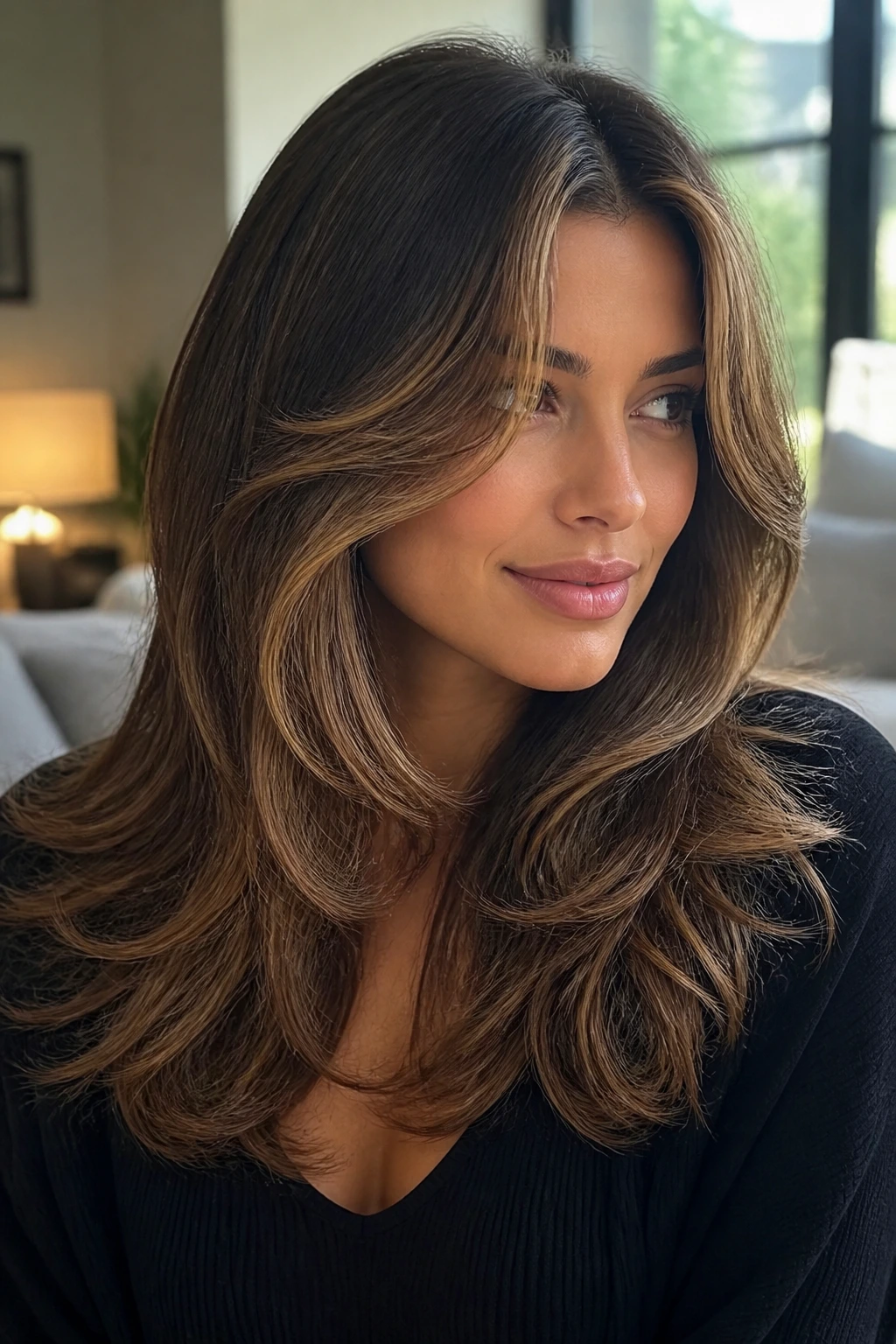
A center part can be unforgiving when the hair is too flat, but on thick hair with caramel highlights, it does something better: it turns the front pieces into a frame. The blowout creates soft width, the curtain pieces open the face, and the color sits exactly where light tends to fall first.
The front sections should be blown back and then curved outward with a round brush. Keep the roots lifted for a few seconds with the brush before letting them cool. That little pause makes the style last longer than just blasting the hair dry and hoping for the best.
If the highlights are concentrated around the front, this style pays them back immediately. It’s simple, but not plain.
21. Twisted Halo Half-Up
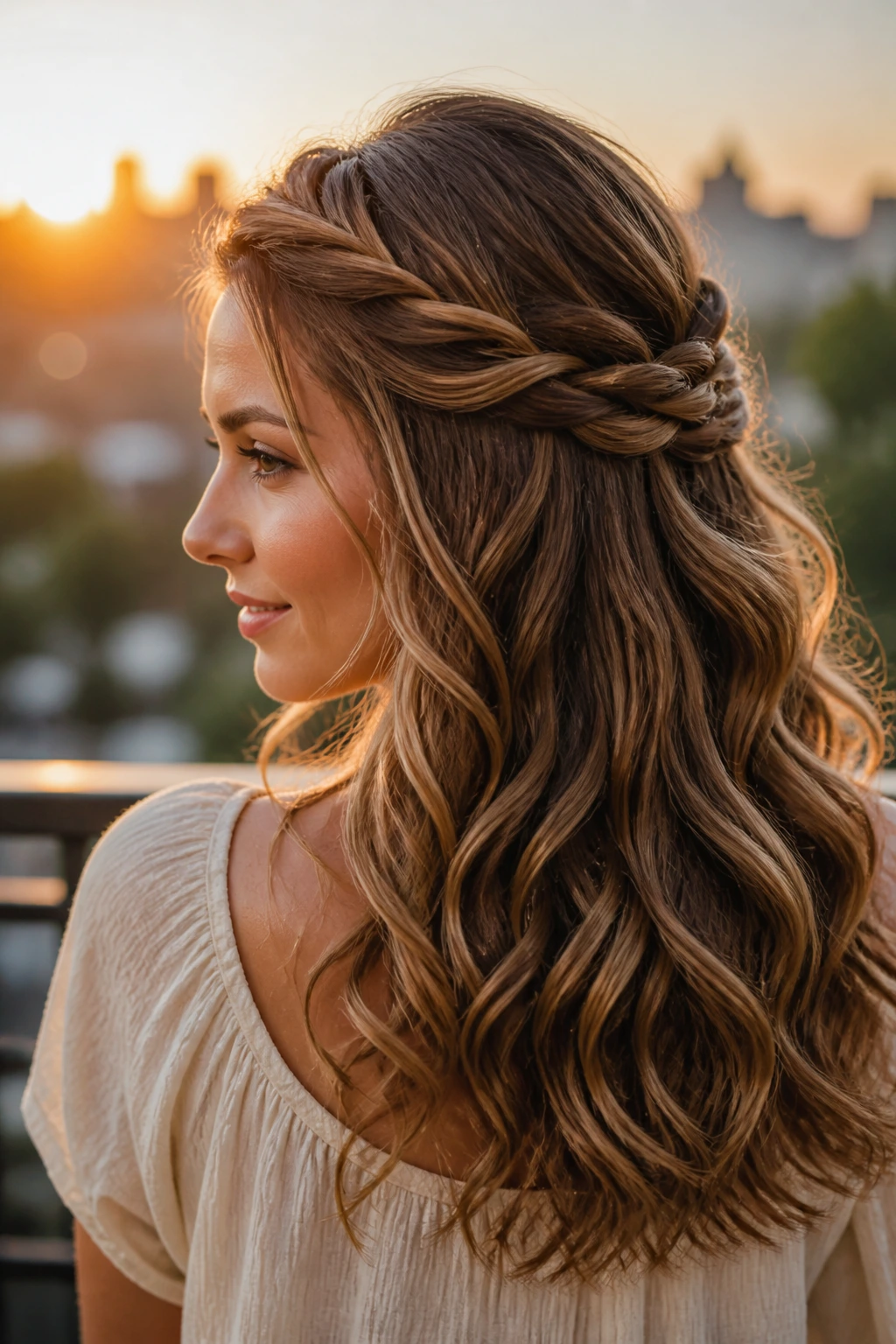
Why does a halo half-up feel so finished on thick hair? Because the twists stay visible. A couple of chunky sections pulled from the temples and pinned across the back create a soft crown line, and the loose lengths below keep the look from going too formal.
The best part is how the caramel pieces catch in the twist itself. If the color is placed around the face or near the top layers, the twists read like woven threads instead of solid rope. That gives the style depth even before you curl the ends.
Keep the twists loose enough to stay rounded. If they’re pulled too tight, the whole top of the head can go flat. And thick hair already knows how to be heavy; you do not need to help it.
22. Low Bubble Bun Cluster
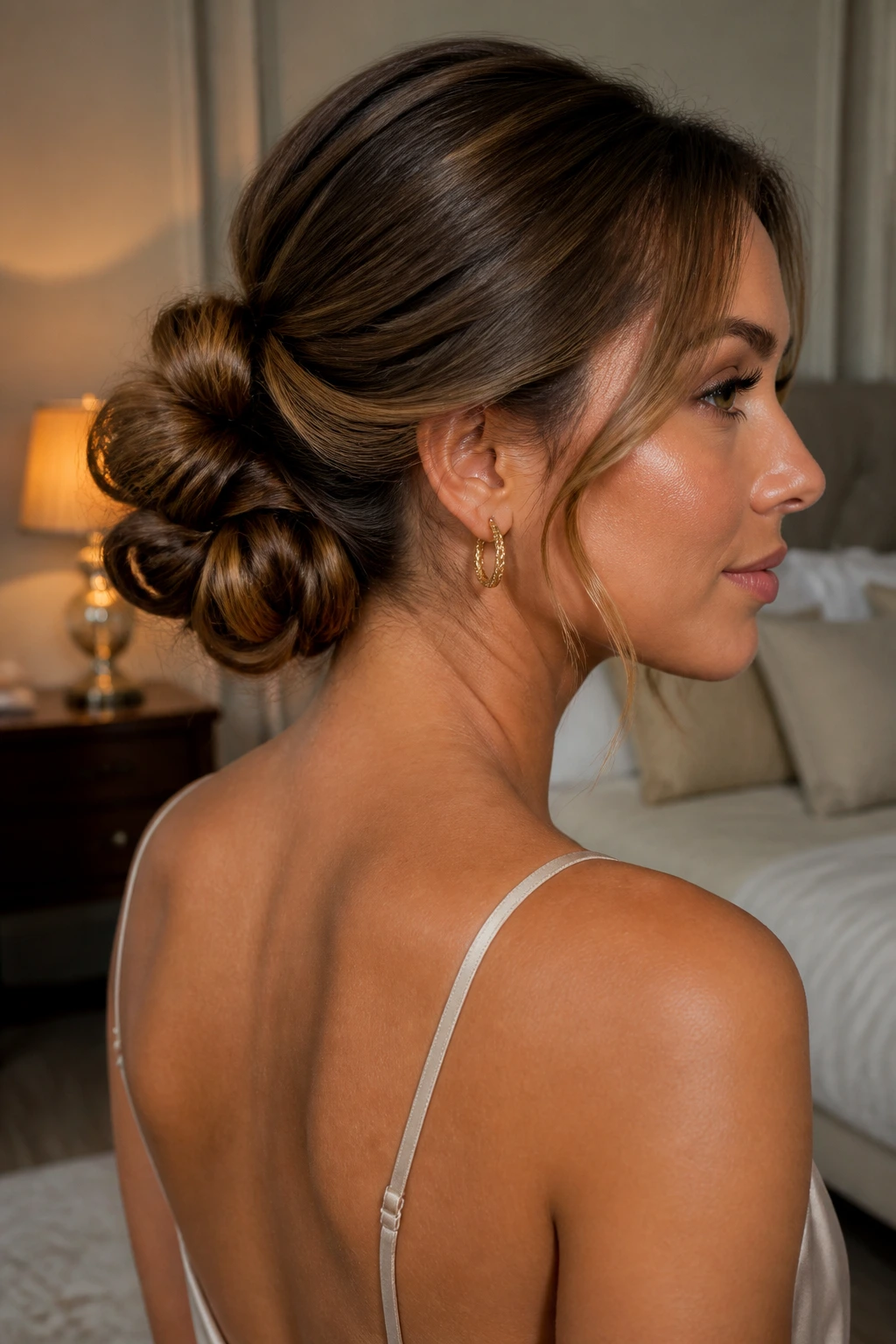
This style is a little unexpected, which is part of the appeal. Instead of one bun, you build several small bubbled sections at the nape and tuck them into a clustered shape. Thick hair gives each bubble enough body to look deliberate, and the caramel highlights break up the rounded forms so the style doesn’t become one big brown lump.
I like this for hair that’s long and very dense, because the extra weight helps the clusters stay in place once they’re pinned. Start with one low ponytail, add elastics down the length every inch or so, puff each section, then fold the whole line into a compact bun shape.
It reads dressy without being severe. That’s a nice balance, and hard to fake.
23. Side Bun with Braided Accent
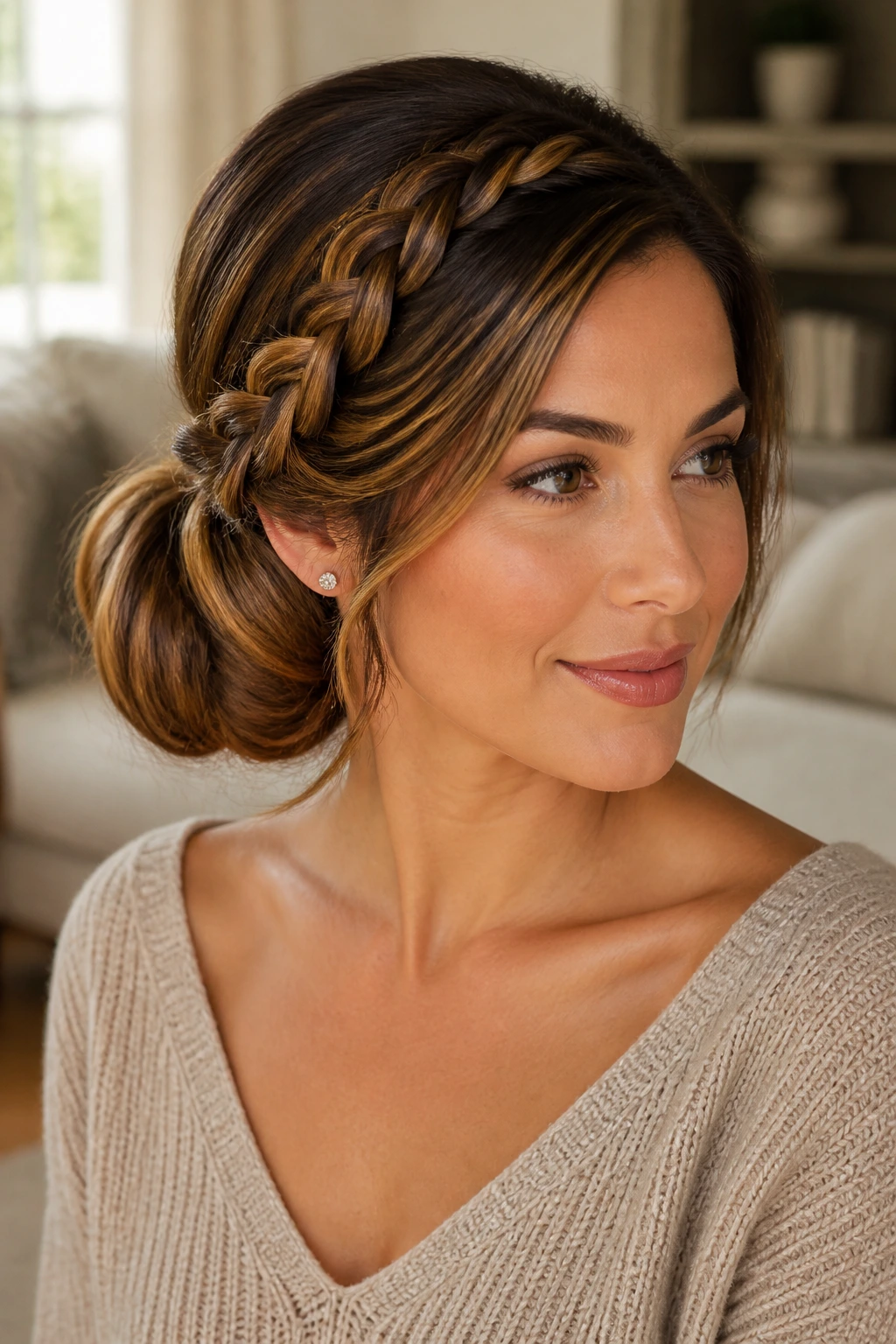
A side bun works because asymmetry softens thick hair. Instead of letting all the volume sit in one place at the back, you move the focus to one side and add a braid across the nape or temple to give the shape a cleaner line. Caramel highlights are useful here because they make the braid stand out from the bun without needing extra accessories.
The bun should sit low and slightly off-center, not right on the ear. That keeps the style elegant rather than fussy. A small braid feeding into the bun gives the whole thing a more finished edge, and it helps anchor any shorter layers that want to escape.
If you want it to feel softer, leave one curled strand near the cheek. That single piece changes the whole mood.
24. Pinned Crown with Cascading Mermaid Waves
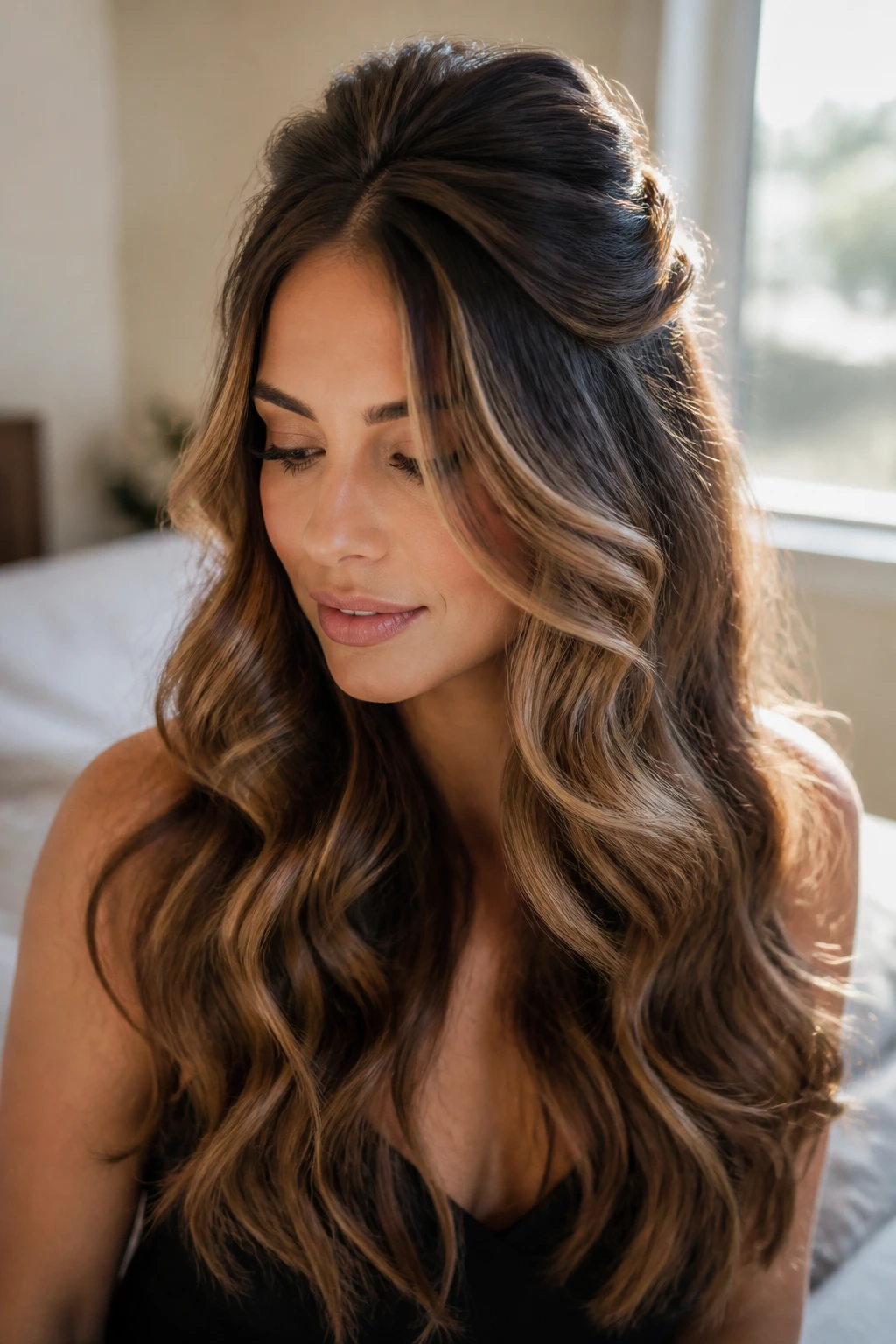
This is the sweet spot between formal and loose. The top section is pinned back into a crown-like shape, while the rest falls into long waves that show off the caramel highlights in long, easy lines. Thick hair gives the style enough heft that the waves don’t disappear by the time you leave the house.
Unlike a full updo, this one leaves the length visible. Unlike fully loose waves, it gets the front sections out of the way. That’s a useful trade if you want face-framing control without losing movement.
The crown pins should be hidden beneath a slight lift at the roots. Keep the waves brushed enough to blend, but not so much that they turn into a cloud.
25. Luxe Braid-Into-Bun Hybrid
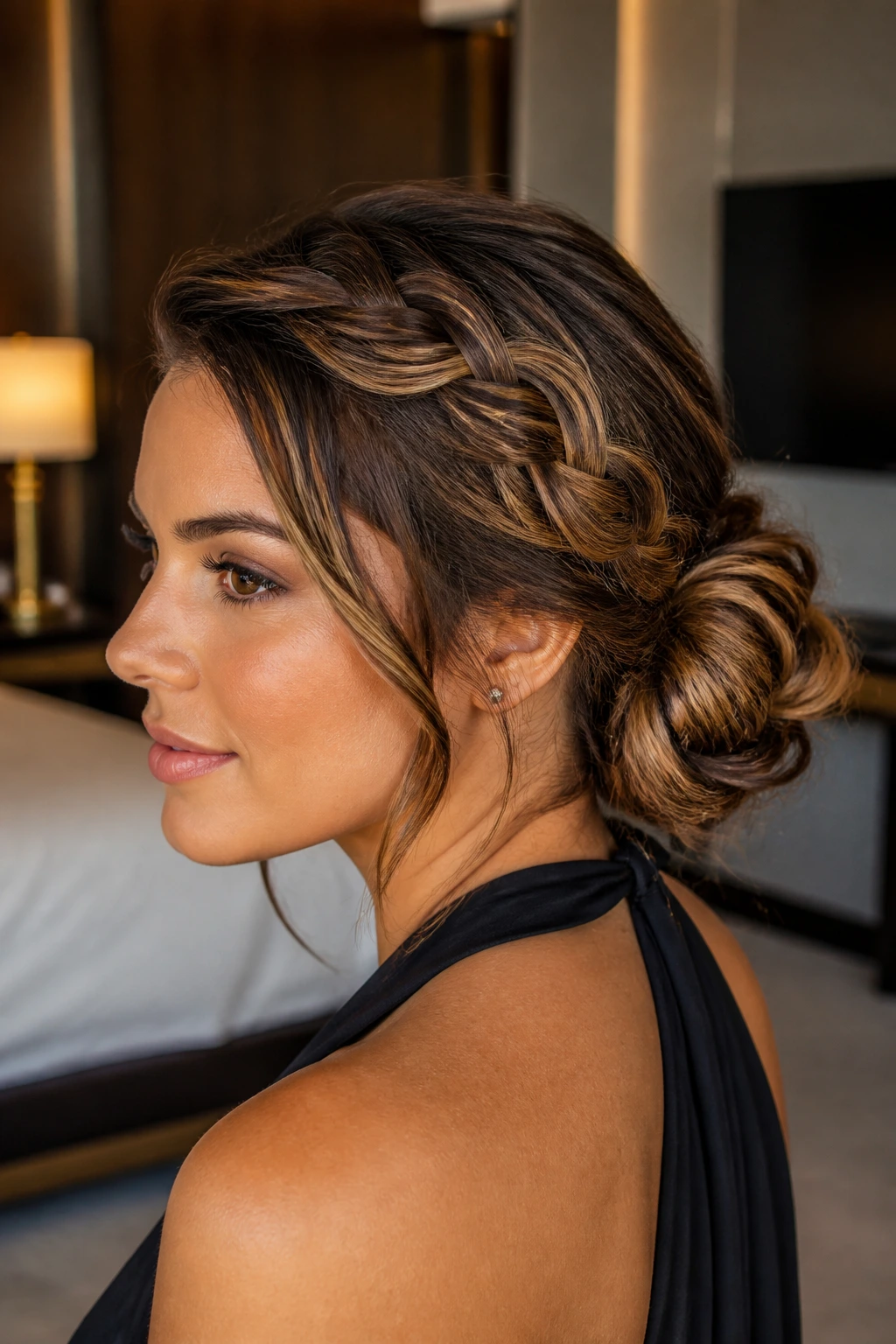
This is the grand finale style. It starts with a braid or two, then folds into a bun that feels structured without being tight, which is exactly where thick hair tends to look strongest. The caramel highlights snake through the braid first, then soften as they disappear into the bun, so the color has a beginning, middle, and finish.
What Makes It Special
A braid-into-bun hybrid gives you the control of an updo and the texture of a loose braid. That combination is hard to beat when the hair is dense and the event calls for something more finished than a simple knot.
- Keep the braid visible on one side of the head so the color stays on display.
- Wrap the bun low or mid-low, depending on how much neck you want to show.
- Pull the outer braid edges gently after pinning for a fuller shape.
If you only pick one style for a formal event, this is the one that makes thick hair look intentional from every angle.
Why Thick Hair and Caramel Highlights Work So Well Together
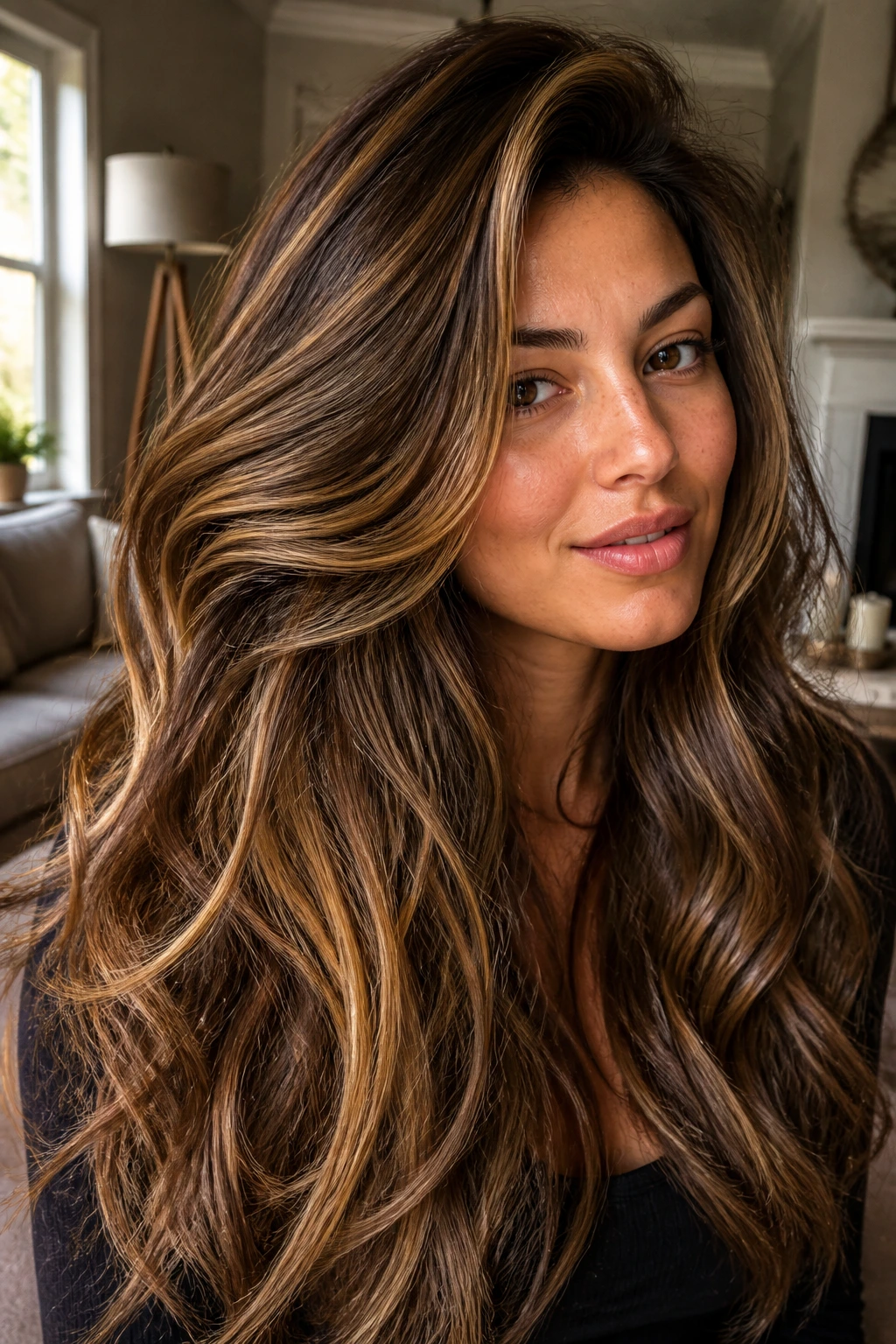
Thick hair has a kind of built-in drama, but it needs a shape so the volume does something useful. That’s where these styles earn their keep. Braids get clearer. Buns look fuller. Waves hold their bend instead of sagging flat by dinner. The density becomes an asset once you stop trying to shrink it.
Caramel highlights matter because they interrupt the mass. On one-color hair, a bun can blur into a solid shape. On highlighted hair, the lighter strands travel through the fold, across the twist, or around the curl and give the eye a path to follow. That’s why these styles feel richer when the color placement is thoughtful. Face-framing pieces, top layers, and ends do the most work.
The other thing thick hair does well is hold a boundary. A loose twist on fine hair can look wispy in a minute. On dense hair, the same twist keeps its body. That means you can use cleaner lines, larger braids, and more polished finishes without losing softness. The result is a style that looks styled, not flattened.
Essential Tools for These Looks
-
Rat-tail comb: Helps carve clean parts and section thick hair without snagging the top layer.
-
Boar-bristle brush: Smooths the crown and ponytail base better than a plastic brush, especially on dense hair.
-
Sectioning clips: Keep the rest of the hair out of the way while you work one quadrant at a time.
-
Long bobby pins and U-pins: Thick hair needs longer pins with real grip; the short ones slide out.
-
Clear elastics: Best for ponytails, bubbles, and half-up styles where you want the tie to disappear.
-
Strong-hold hairspray: Use it to set the shape after the style is in place, not before you’ve finished moving sections.
-
Heat protectant spray: Non-negotiable if you’re curling or blow-drying; thick hair can handle heat, but the color still needs protection.
-
1¼-inch curling iron or wand: A reliable size for brushed-out waves, loose curls, and polished ends.
-
Round brush: Useful for blowouts, side-swept front pieces, and smoothing the ends under or out.
-
Texturizing spray: Gives braids and twists enough grip to stay put without turning crunchy.
-
Shine serum or light oil: Use a tiny amount on mids and ends so the caramel highlights read glossy instead of dry.
-
Large claw clip: Handy for French rolls and quick dress-up styles when you want an elegant hold with less pinning.
Smart Product and Shade Choices for Caramel Highlights
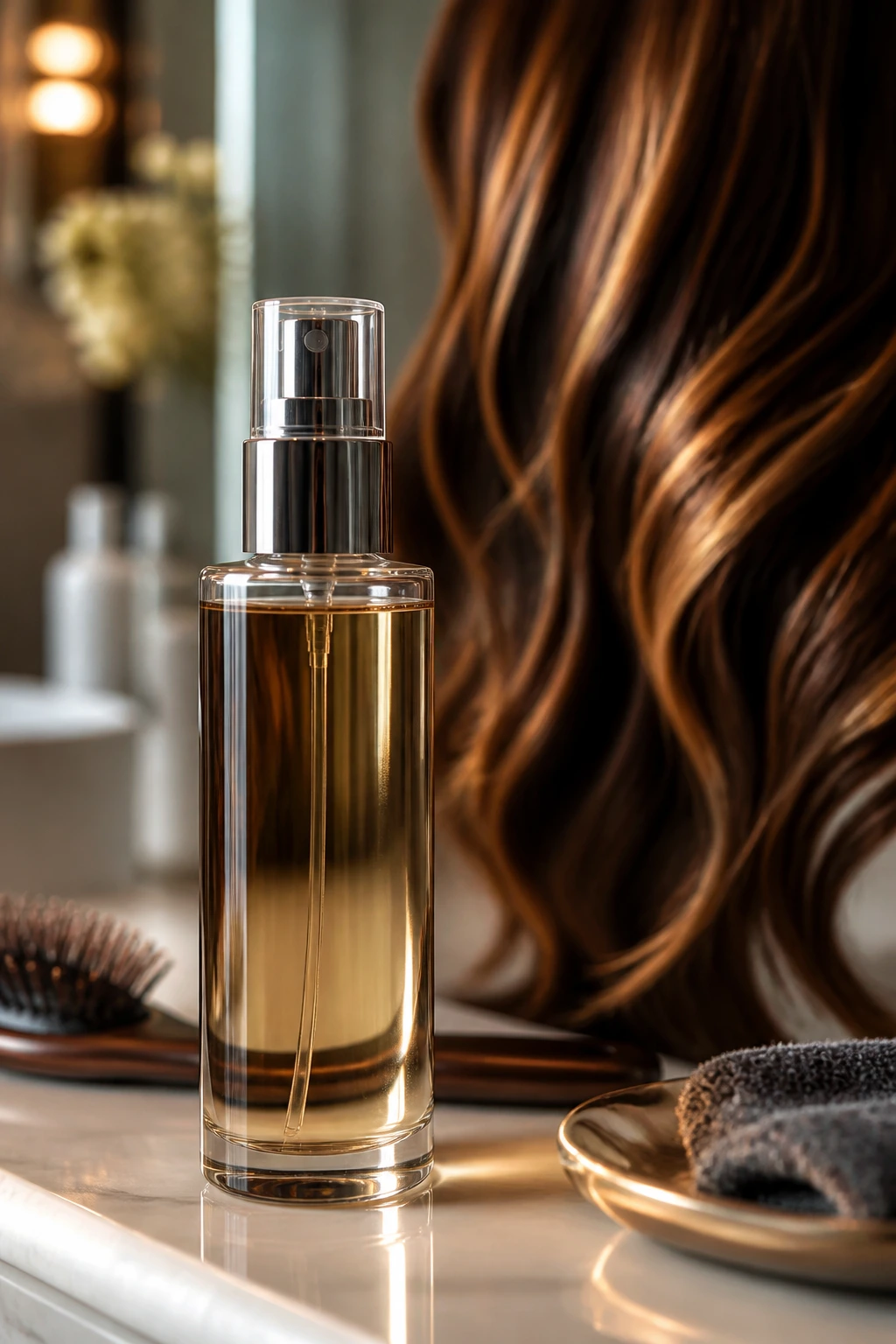
Thick hair eats product in a way fine hair never will, so the first rule is simple: start smaller than you think you need. A dime-sized amount of smoothing cream can become a lot when you spread it through dense hair section by section. Put the bulk of the product in the mids and ends, where frizz and dryness show up first, and keep the roots lighter unless the style truly needs sleek control.
For warm caramel highlights, I prefer a shine spray or glossing mist over anything heavy or greasy. Heavy oils can make the lighter pieces look dull and separate the style in odd clumps, especially under indoor light. If the highlights have yellow or orange tones you do not like, use a toning shampoo sparingly rather than at every wash. Too much can drain the warmth out of caramel and make it look flat.
Humidity-resistant mousse, flexible-hold spray, and a smoothing cream with a little slip are the workhorses here. They let the hair move while still keeping braids and waves readable. Avoid anything that makes thick hair sticky from root to tip; once that happens, the style starts to collapse into itself.
If you’re choosing new color placement, ask for caramel ribbons around the face, in the top layers, and through the ends. Those are the places that show best in formal styling. Deep interior highlights disappear under an updo. Great for depth, less useful if you want the style to show them off.
How to Make the Style Stay Put Through a Long Evening
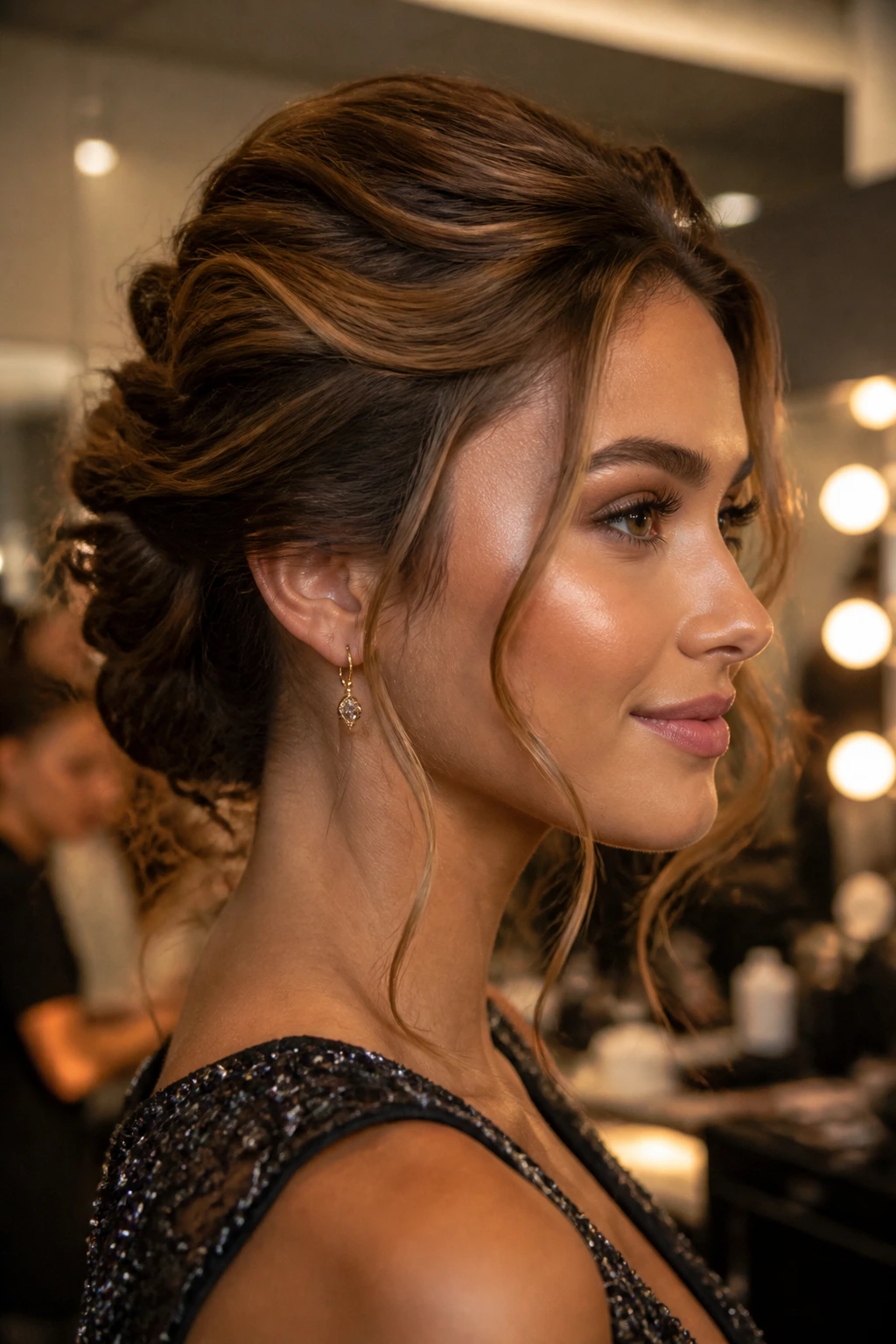
Prep the base first. Thick hair behaves better when the roots have a little grip, so a light mist of dry shampoo or volumizing spray at the crown can save you from flat spots later. On freshly washed hair, a bit of mousse through the mids helps the length hold a curl or braid shape instead of slipping loose.
Anchor the style where the weight sits. That usually means the nape, the crown, or the base of a ponytail. Use crossed bobby pins in an X pattern, and push them in against the direction of the twist or braid. Straight pins in straight hair tend to slide. X-pattern pins bite.
Let heat set completely. If you curl thick hair, give each section time to cool before touching it. Ten minutes is good; fifteen is better if your room is warm. A curl that feels warm and soft is still changing shape.
Finish after the shape is final. Hairspray should lock the structure, not replace it. Spray from about 10 to 12 inches away so you get a fine mist rather than a wet patch that weighs the hair down. Then smooth only the pieces that need it. Too much touching means frizz, and thick hair never needs help making itself bigger.
Carry one tiny rescue kit. Two extra pins, one travel spray, and one clear elastic are enough. That’s all you usually need.
Common Mistakes That Flatten the Shape or Hide the Color
-
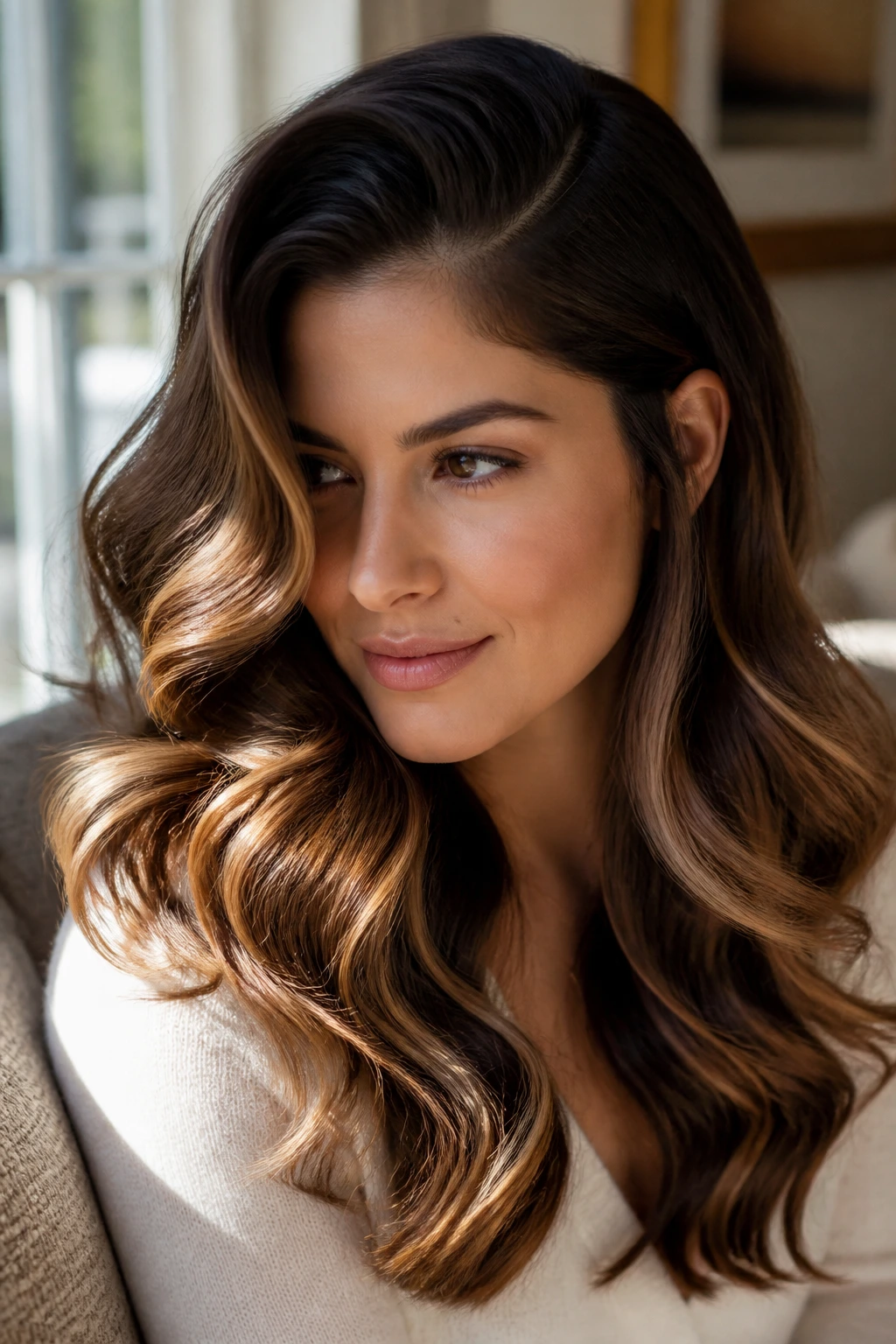
Smoothing the crown too hard: The hair ends up helmet-flat, and the caramel highlights disappear under the top layer. Fix it by leaving a little lift at the roots and brushing only the outer surface.
-
Using curls that are too tight: Thick hair turns into a dense, springy mass instead of soft waves. Choose larger sections and brush once the curls are fully cool if you want a dressier finish.
-
Loading product at the roots: Heavy oil or cream near the scalp makes the hair look greasy and can cause the style to slip. Keep shine products on the mids and ends, where the color actually shows.
-
Skipping sectioning: Trying to twist or braid the whole head at once leads to uneven tension and hidden bumps. Work in quadrants. It takes longer, but the finish is cleaner.
-
Choosing weak pins or tiny elastics: Thick hair will pull them out, sometimes in an hour. Use long pins, strong elastics, and hidden anchors that can take a little weight.
-
Hiding the highlights under the back layer: If all the caramel is tucked inside the style, you lose the whole point. Pull some lighter pieces toward the surface before you pin, braid, or wrap.
Variations and Adaptations to Try
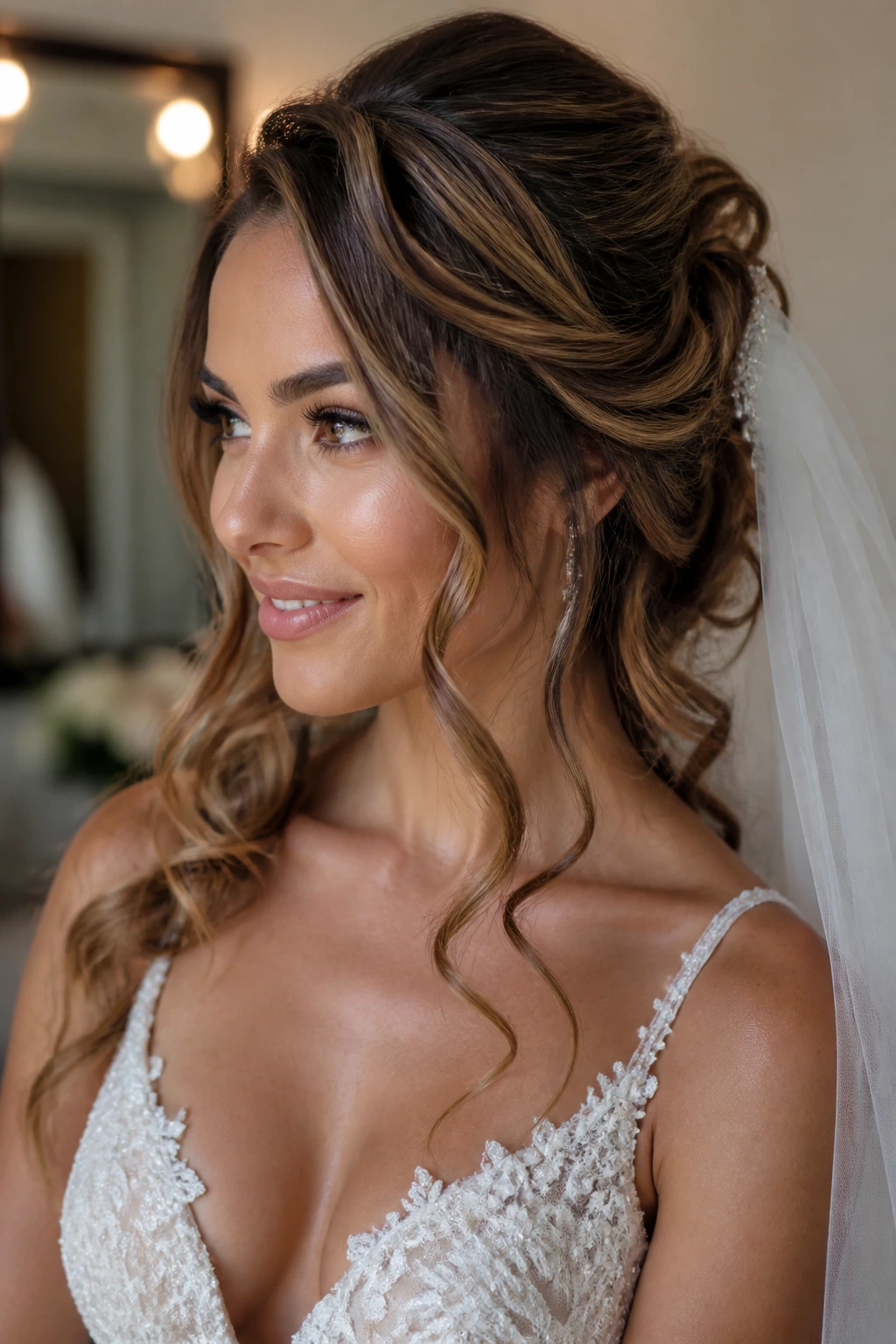
Softer Bridal Finish
Swap the tightest pieces for looser twists, add one extra face-framing curl on each side, and keep the crown smooth but not flat. This is the version that works best with veils, pearl pins, or a dress with a detailed neckline.
Office-Ready Polish
Choose a lower ponytail, a cleaner chignon, or a clipped French roll with less volume at the crown. The caramel highlights still show, but the style stays neat enough for a workday, a dinner meeting, or a long event where you do not want to fuss with your hair.
Heat-Free Texture
Use braids, overnight twists, or a roller set instead of hot tools. Thick hair often holds a heat-free wave well, and the caramel pieces look soft and piecey instead of glossy and perfect. It’s a good option when the ends need a break.
Extra-Gloss Evening Version
Add a light glossing mist at the very end and focus on the visible curves of the style: braid ridges, bun edges, and the front pieces. This version is useful when the lighting is low and you want the color to read clearly from the front.
Shorter-Length Workaround
If your hair stops at the shoulders, choose the halo braid, side bun, or half-up knot versions. They rely more on shape than on length, which keeps them from falling apart halfway through pinning.
How to Keep Thick Hair and Caramel Highlights Looking Fresh
Most of these styles look best on day one, but plenty of them can be stretched into day two if you treat them gently. For braids, buns, and half-up styles, sleep with a silk scarf, silk bonnet, or loose silk wrap to keep the surface from frizzing. A regular cotton pillowcase will rough up the cuticle faster than most people expect, and highlighted ends show that roughness first.
Curly and waved styles need a little more care. If you want to wear them again, pin the curls loosely into two or three large sections before sleep rather than piling them on top of your head. In the morning, shake the roots, mist the mids with a curl refresher or very light water spray, and rework only the front pieces that matter most. That keeps the style from turning into a frizz cloud.
Dry shampoo helps on thick hair, but use it before the roots are greasy, not after they’ve become heavy. A light application at the crown on the second day is enough for most styles. Too much product makes the hair chalky and can dull the caramel tones.
Heat-styled looks usually last one strong wear, sometimes two if the humidity is kind. Braids and pinned updos can go longer. If the highlights start to look dry, skip another round of hot tools and use a gloss mist or a pea-sized amount of serum on the ends instead.
Frequently Asked Questions
Which hairstyles show caramel highlights the best?
Braids, brushed-out waves, and half-up styles usually show the color most clearly because they expose the lighter pieces on the outside of the shape. Updos can show highlights too, but only if the lighter strands are brought to the surface before pinning.
Can I do these styles if my thick hair is layered?
Yes, but the shorter layers need extra help. Use texture spray, a little backcombing, or a few hidden pins to keep layers from poking out of buns and twists. Face-framing layers actually help many of these styles look softer.
Do I need heat for these looks?
No. Braids, twists, and halo styles can be done on air-dried hair with enough texture product for grip. If your hair is very silky, a light dry shampoo or mousse before styling usually helps more than heat does.
What if my hair is too heavy for a high ponytail?
Go lower. A sculpted low ponytail or low bun will hold better and still look finished. If you want lift at the crown, create it with a little root support first instead of pulling the whole style up by brute force.
How do I keep the caramel from looking dull in formal styles?
Keep shine product on the visible lengths, not the roots, and avoid coating the hair with too much dry shampoo. If the color is warm caramel, a glossing mist usually makes it look richer than a heavy oil.
Are these styles okay for humid weather?
Some hold better than others. Braids, buns, and sculpted ponytails usually handle humidity more easily than brushed-out curls. If you know the air will be damp, choose a style with pins and anchors rather than one that depends on soft, loose movement.
How do I stop thick hair from puffing at the crown?
Smooth the top layer with a boar-bristle brush, but leave a little controlled lift underneath. A touch of mousse or smoothing cream at the crown helps, and a firm final spray locks the shape without crushing it.
Can I make these look dressy without a lot of accessories?
Absolutely. Caramel highlights already add enough visual detail in braids, twists, and curls. Clean parting, good pin placement, and one well-placed strand wrap around a ponytail usually do more than a pile of hair jewelry.
Which styles are easiest to refresh the next day?
Braids, side buns, and half-up twists are the most forgiving. You can loosen a braid, add one or two pins, and revive the face-framing pieces without starting over. Loose curls take more work, which is why I usually save those for the day I need them most.
The Styles That Hold Their Shape
Thick hair does not need to be minimized to look elegant. It needs direction. Once you give it that—through a braid line, a clean bun, a polished ponytail, or a wave pattern that actually has room to move—the whole thing starts working in your favor.
Caramel highlights help more than people give them credit for. They break up the mass, reveal the shape, and keep formal styles from turning into one heavy block of color. That’s why these looks keep making sense: they use the density, they show the color, and they don’t pretend thick hair should behave like anything else.
Pick the style that matches the day, the neckline, and how much movement you want left in the hair. Then pin it properly, leave a little air where it counts, and let the caramel pieces do their job.