



The quickest way to make brown highlights for medium skin tones with thin hair look expensive is not to go lighter. It’s to go smarter. A thin head of hair can go flat fast when the color is too chunky, too blonde, or too high-contrast. Brown dimension avoids that trap. It keeps the strands looking like one sheet of hair instead of a few visible ribbons sitting on top of a scalp.
Medium skin gives you room to play, which is the fun part. Golden, olive, neutral, and peach-leaning undertones can all wear brown highlights well, but the shade has to sit in the right lane. Too ashy on warm skin can look dusty. Too coppery on olive skin can read orange. The sweet spot is usually a brown that has a clear undertone, not one that tries to do everything at once.
Thin hair changes the rules again. You do not want thick zebra stripes or giant balayage panels. You want fine foils, narrow babylights, soft root shadows, and enough depth left behind so the hair still looks dense when it’s tucked behind one ear. That small detail matters more than the trendiest color name on the menu.
Why This Collection Works for Medium Skin and Fine Hair
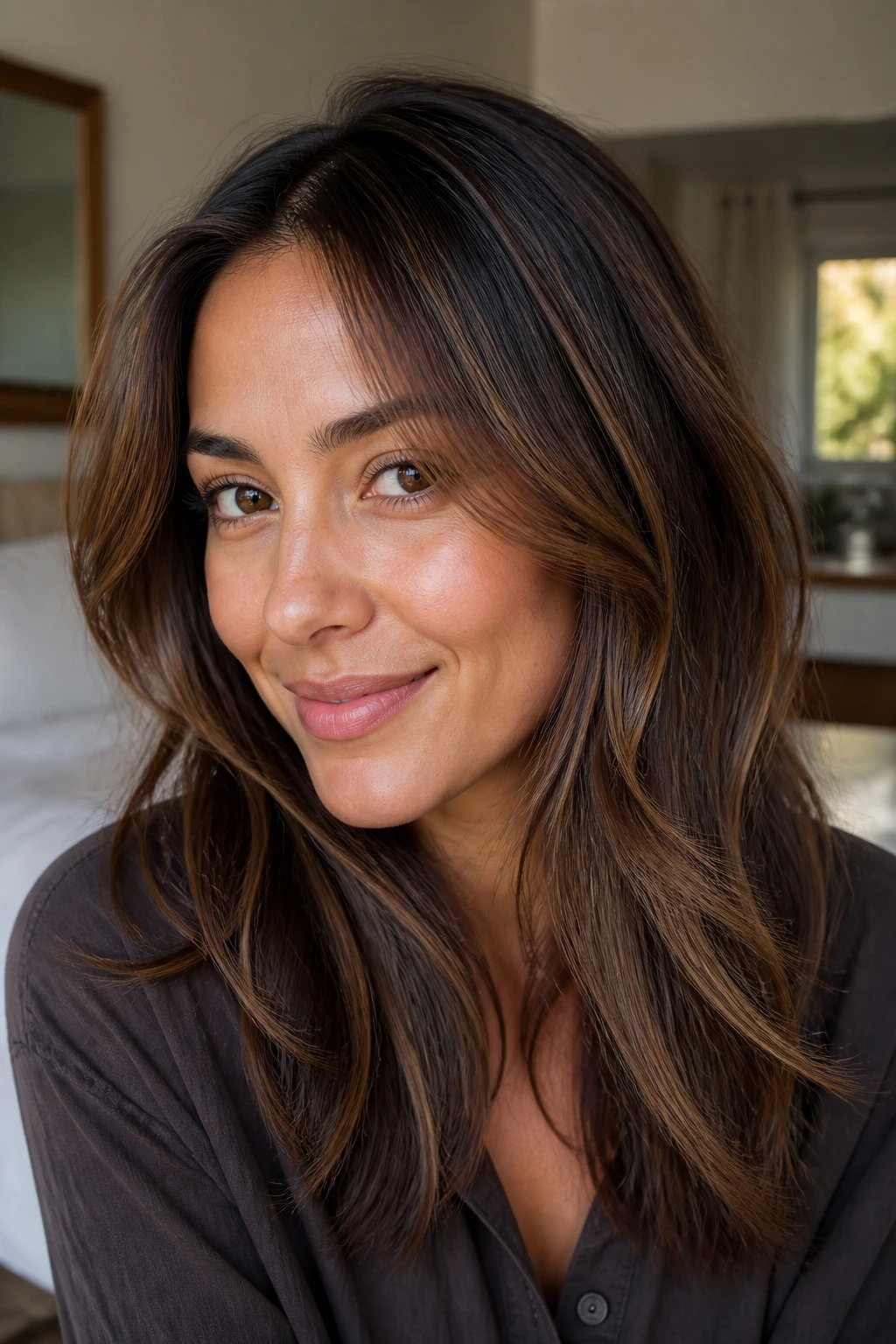
- Dimension Without Striping: These looks use small, controlled pieces of brown so the hair keeps its visual weight instead of looking sliced apart.
- Tone-Friendly Color Choices: You’ll see warm caramel, cool mushroom, smoky taupe, and rich chestnut options, which makes matching medium skin undertones much easier.
- Flatteringly Soft Grow-Out: Many of these placements stay close to the base color at the root, so regrowth doesn’t create a hard line across the part.
- More Movement at the Ends: Fine hair often needs help showing texture, and the right brown highlights make the ends catch light without making them look see-through.
- Salon-Ready Ideas: These aren’t vague “bronde” suggestions. They’re specific looks you can point to, describe, or screenshot without guessing what the colorist meant.
1. Caramel Babylights at the Hairline
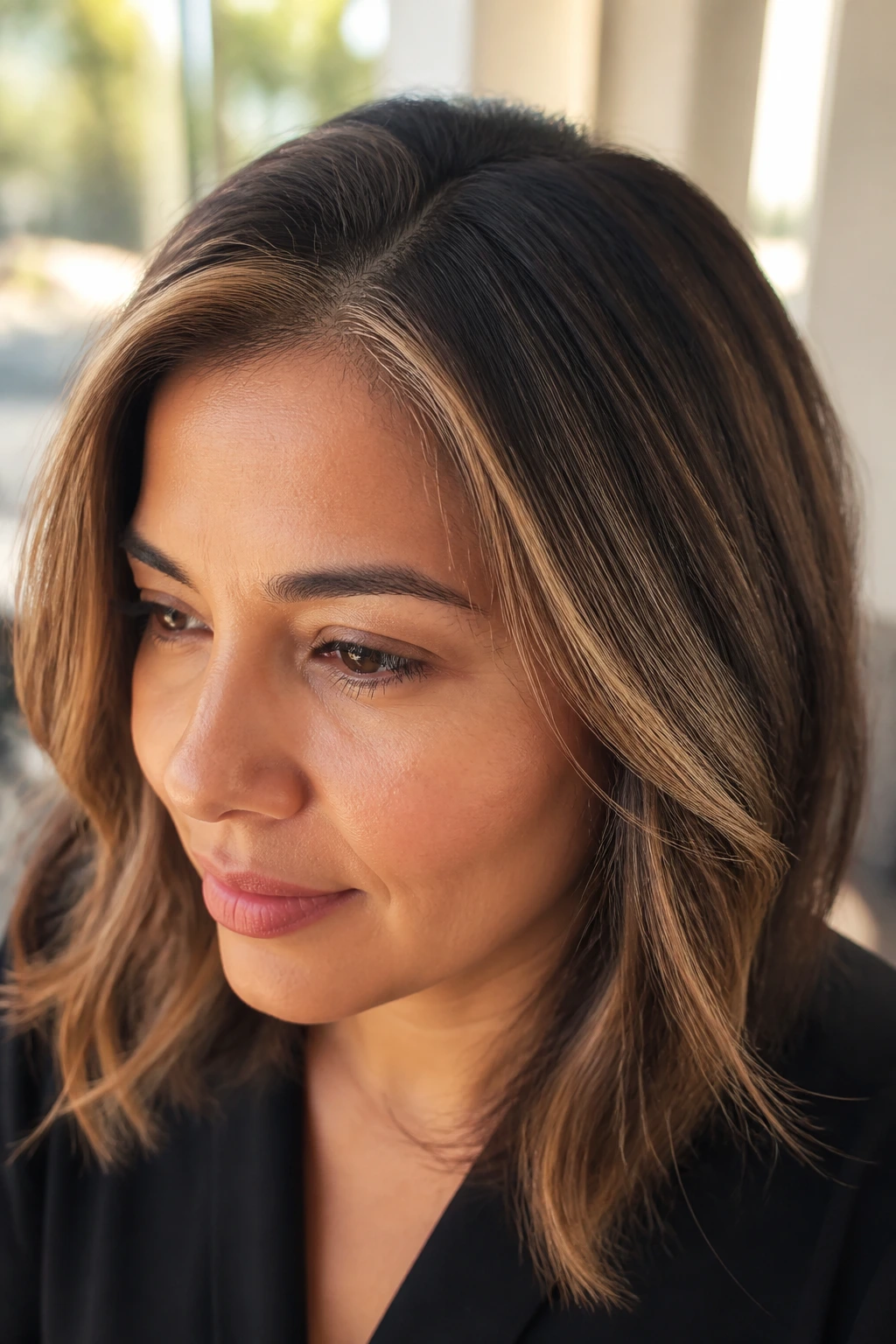
Caramel babylights are one of the safest places to start if you want a brown-highlighted look that still feels soft. The strands are thin enough to avoid that chunky, early-2000s streak effect, and the caramel tone warms up medium skin without fighting it. On thin hair, the real win is near the face, where the light pieces lift the whole cut without exposing the scalp in the crown.
What to Ask For
- Micro-foils no wider than a few millimeters.
- A caramel tone about one level lighter than your base, not a loud blonde.
- The brightest placement around the temples and first inch of the hairline.
This look works especially well if your skin has golden or peach undertones. The color adds a tiny bit of warmth around the face, which keeps medium skin from looking washed out under harsh indoor light. It’s subtle, but not shy.
If your hair is very fine, keep the lightest pieces concentrated at the front and leave the underlayer deeper. That contrast gives the illusion of fullness where people actually look first.
2. Chestnut Money Piece with Soft Depth
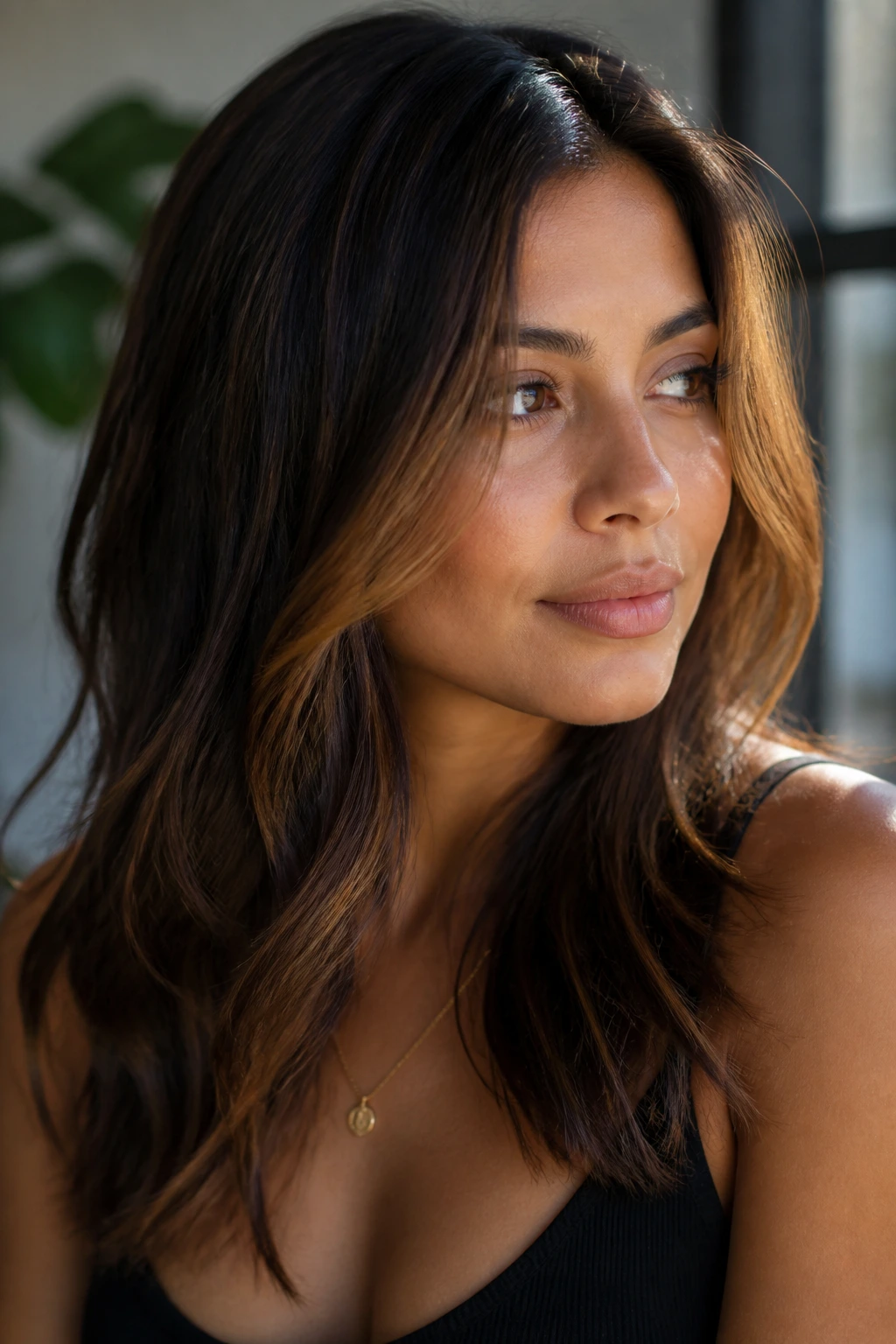
Chestnut around the face gives medium skin a richer frame than blonde money pieces ever will. It has enough warmth to flatter golden undertones, but it still reads brown, which matters when the rest of the hair is thin. A lighter chestnut piece right at the cheekbone can make the hairline look fuller in photos and in mirror light.
The trick here is placement, not brightness. Ask for the front sections to be slightly lighter and a touch warmer than the rest of the color, then keep the back more grounded. That way the eye lands on the face first, not on gaps in density.
This is the kind of highlight that looks especially good when the hair is worn down and tucked behind one ear. The contrast is there, but it doesn’t scream. It just makes the face look more awake.
3. Mocha Ribbon Balayage That Starts Below the Cheekbones
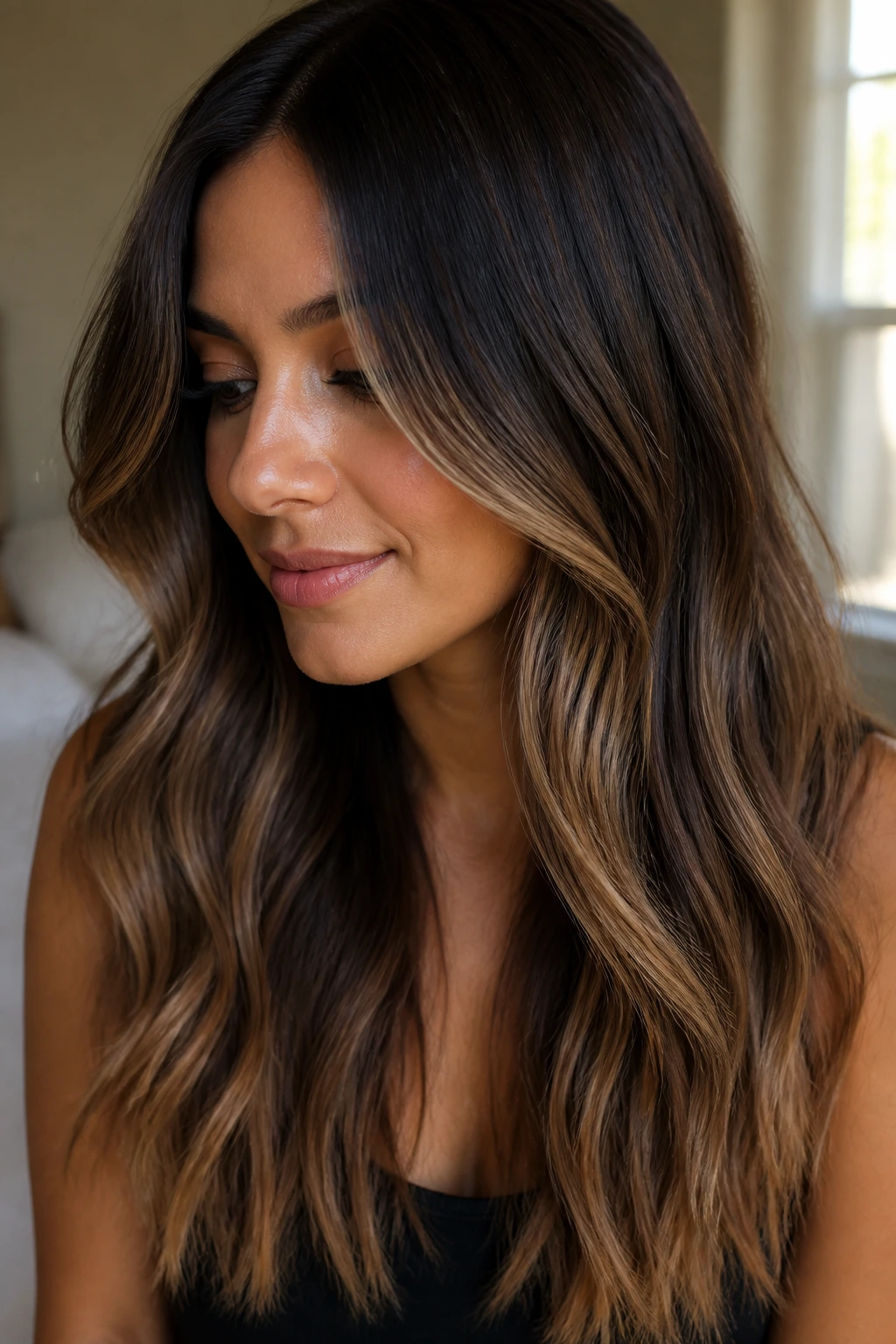
Why does mocha work so well on medium skin? Because it sits in that deep, creamy middle zone—dark enough to keep fine hair looking full, light enough to show movement. The ribbons start low, usually below the cheekbones, so the crown stays richer and denser.
That matters. Thin hair often looks best when the brightest sections are not parked at the root. If you open the whole top layer, you lose body. Mocha ribbons keep the top smooth and grounded, then wake up the mid-lengths when the hair moves.
Ask for long, painted pieces rather than thick stripes. The goal is a soft sweep, not a patched look. On a wavy blowout, this color has a nice shadow-to-light shift that makes the hair feel thicker than it actually is.
4. Mushroom Brown Foilayage for Cool-Undertone Medium Skin
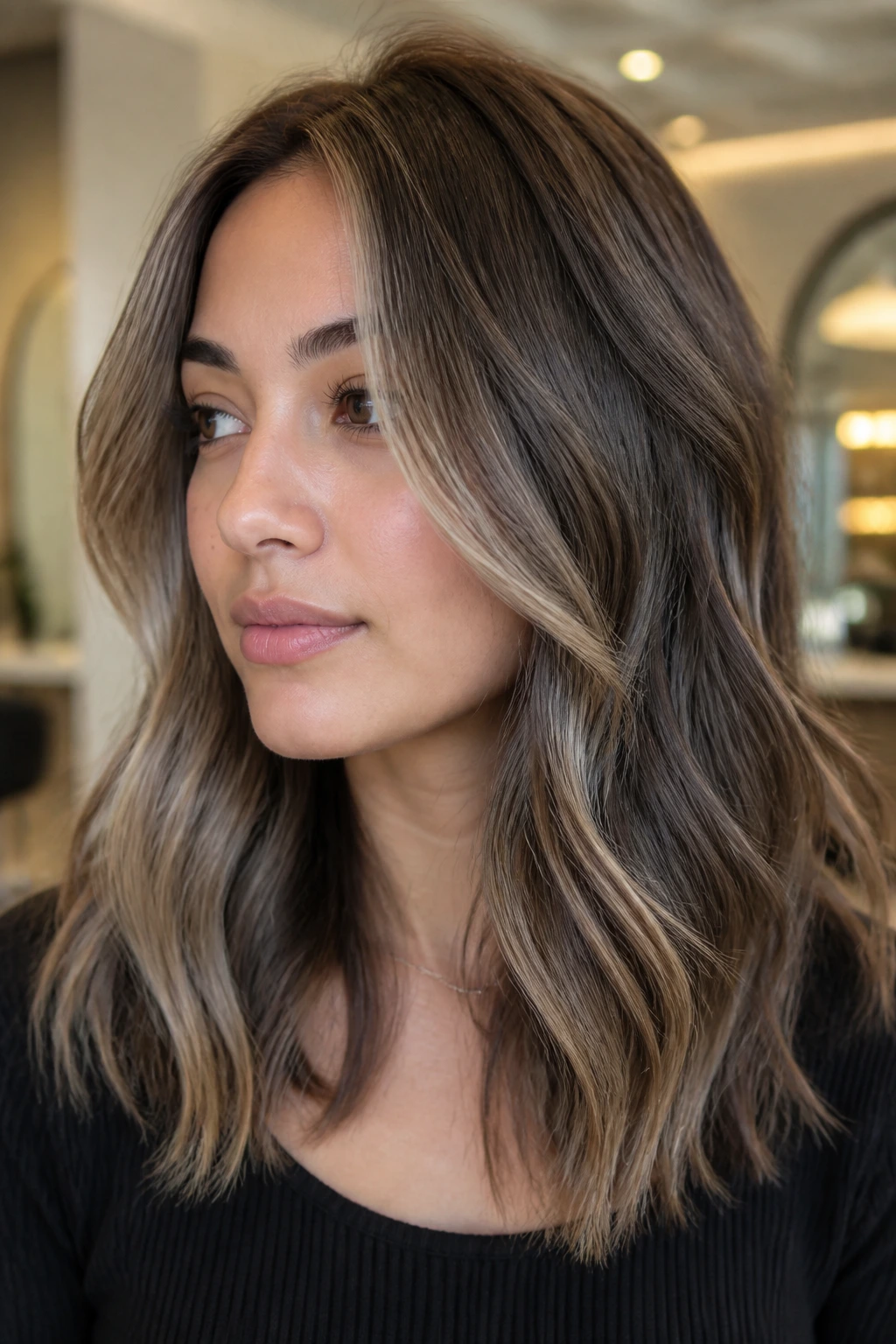
Mushroom brown has a muted, smoky edge that does something useful on medium olive or neutral skin: it stops the color from turning too golden. If your skin goes a little green under too much warmth, this is the brown family that keeps the whole look balanced.
Foilayage helps here because the highlights can lift more cleanly than open-air balayage, which is useful on thin hair when you want controlled brightness. The result is a soft, ashy spread through the mids and ends, not a harsh band at the top.
This look feels a little more editorial than caramel, but it’s still wearable every day. It’s especially good if you like straight styles or loose bends, because the cool tone shows through the movement instead of disappearing into it.
5. Toffee Ends with a Root Shadow
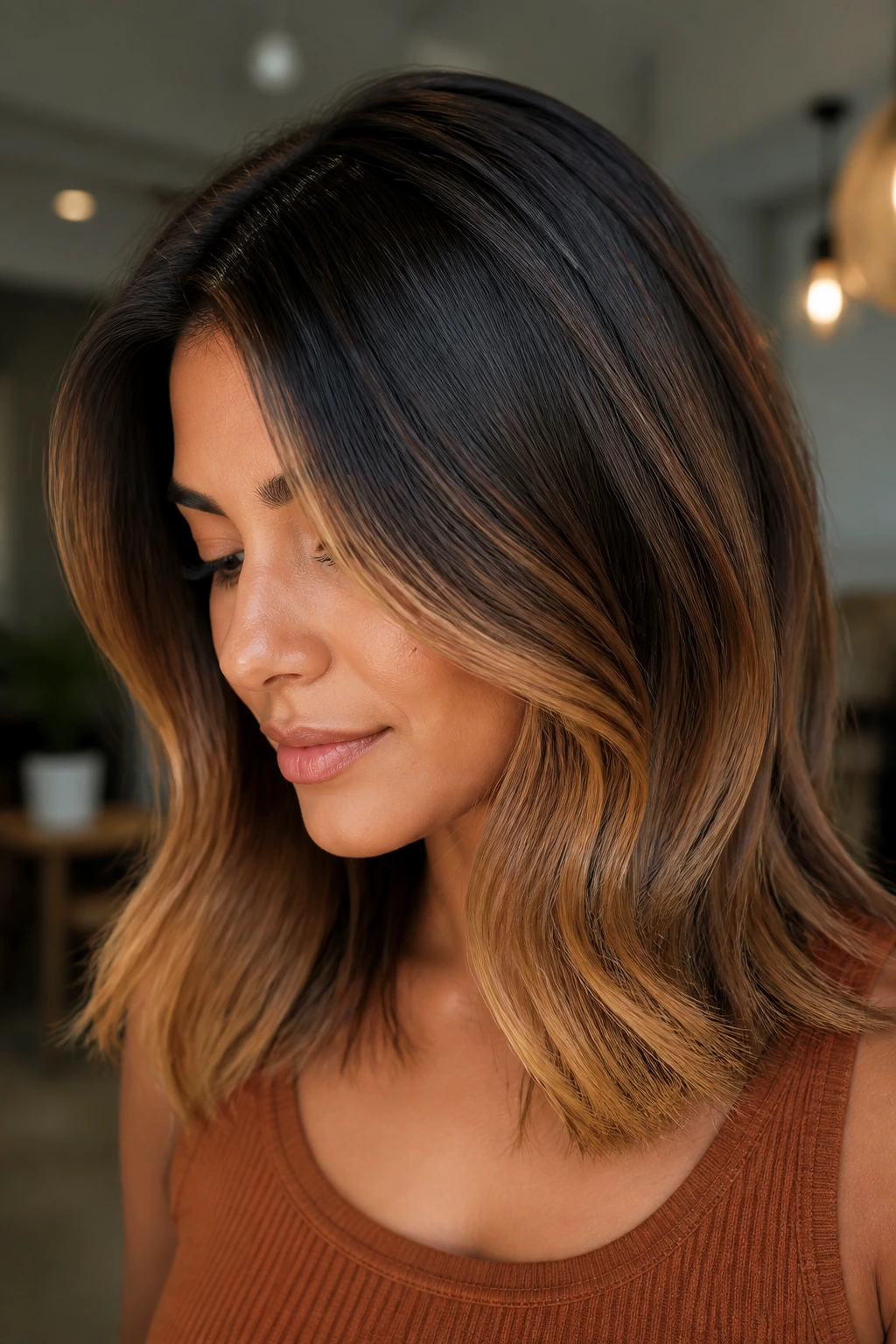
Toffee is the brown that leans creamy and warm without crossing over into obvious copper. Put it on the ends, keep a shadow at the root, and thin hair suddenly has a better shape. The root shadow gives the impression of density, while the lighter ends keep the cut from looking flat and heavy.
That balance is the whole point. A root-to-toffee melt works beautifully on medium skin that has a warm or neutral base, because the color looks lived-in rather than painted on. It also buys you some breathing room between appointments, which is useful if you hate seeing regrowth every couple of weeks.
The cut matters here too. Long layers show the gradient better than one blunt line. Without that, the toffee can pool at the bottom and make the hair look weighed down.
6. Walnut Lowlights Woven Through a Lighter Base
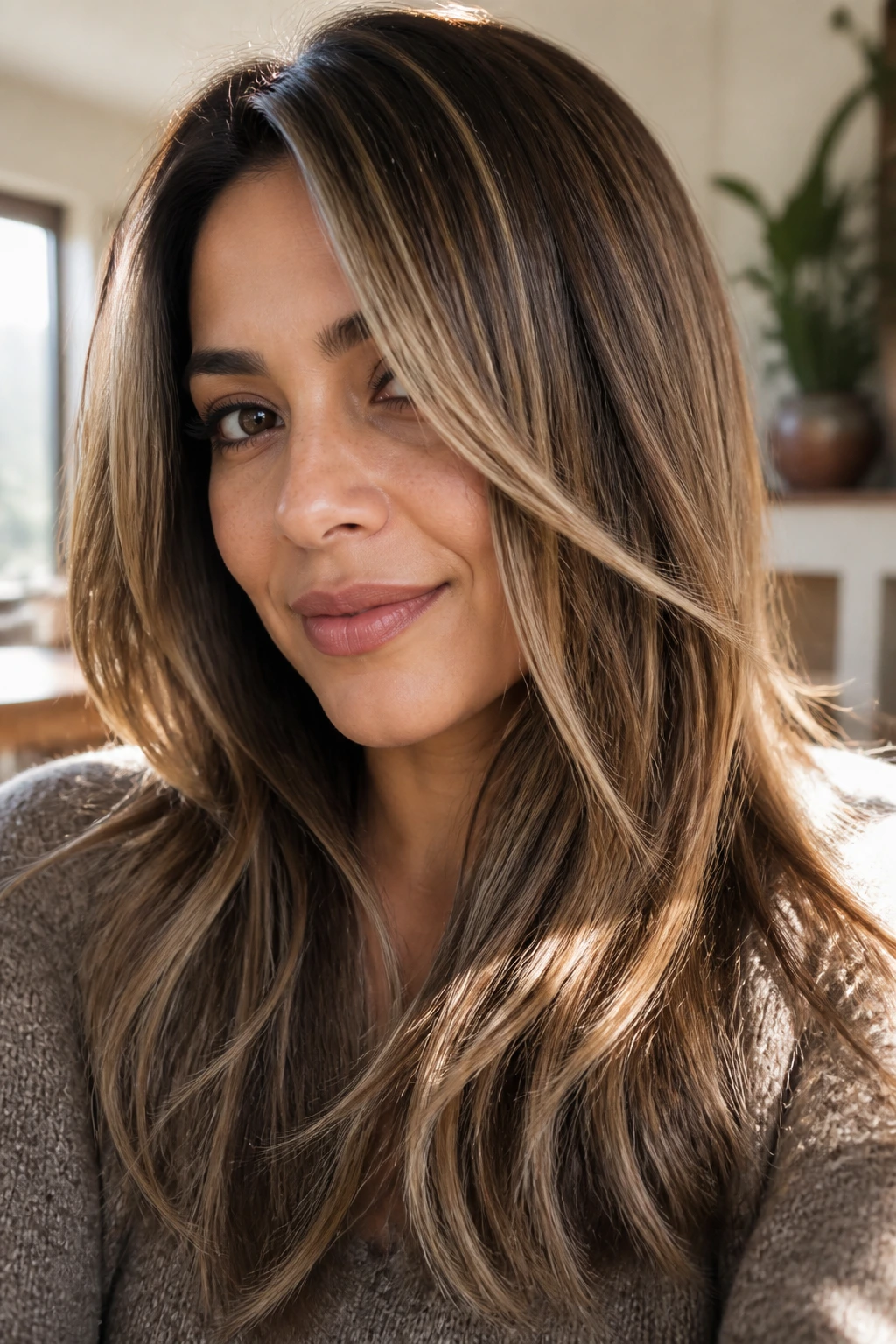
Lowlights deserve more love than they get. Walnut strands dropped into lighter brown hair can make thin hair look fuller because they create shadows between the brighter pieces. That shadow is not a flaw. It’s the illusion.
Why It Helps Fine Hair
Walnut lowlights work like contour for hair. They sit underneath the surface, so the outer layer still catches light, but the color underneath keeps the sheet from looking translucent. On medium skin, walnut reads rich and polished, especially if your undertone leans neutral or golden.
Ask for lowlights that are no darker than two levels below your base unless you want a stronger contrast. Too deep, and the pieces can look like separate lines instead of part of one color family.
This is one of my favorite choices for fine hair that has a lot of breakage at the ends. The darker pieces hide uneven density in a way blonde highlights never can.
7. Cinnamon Brown Melt with a Soft Glow
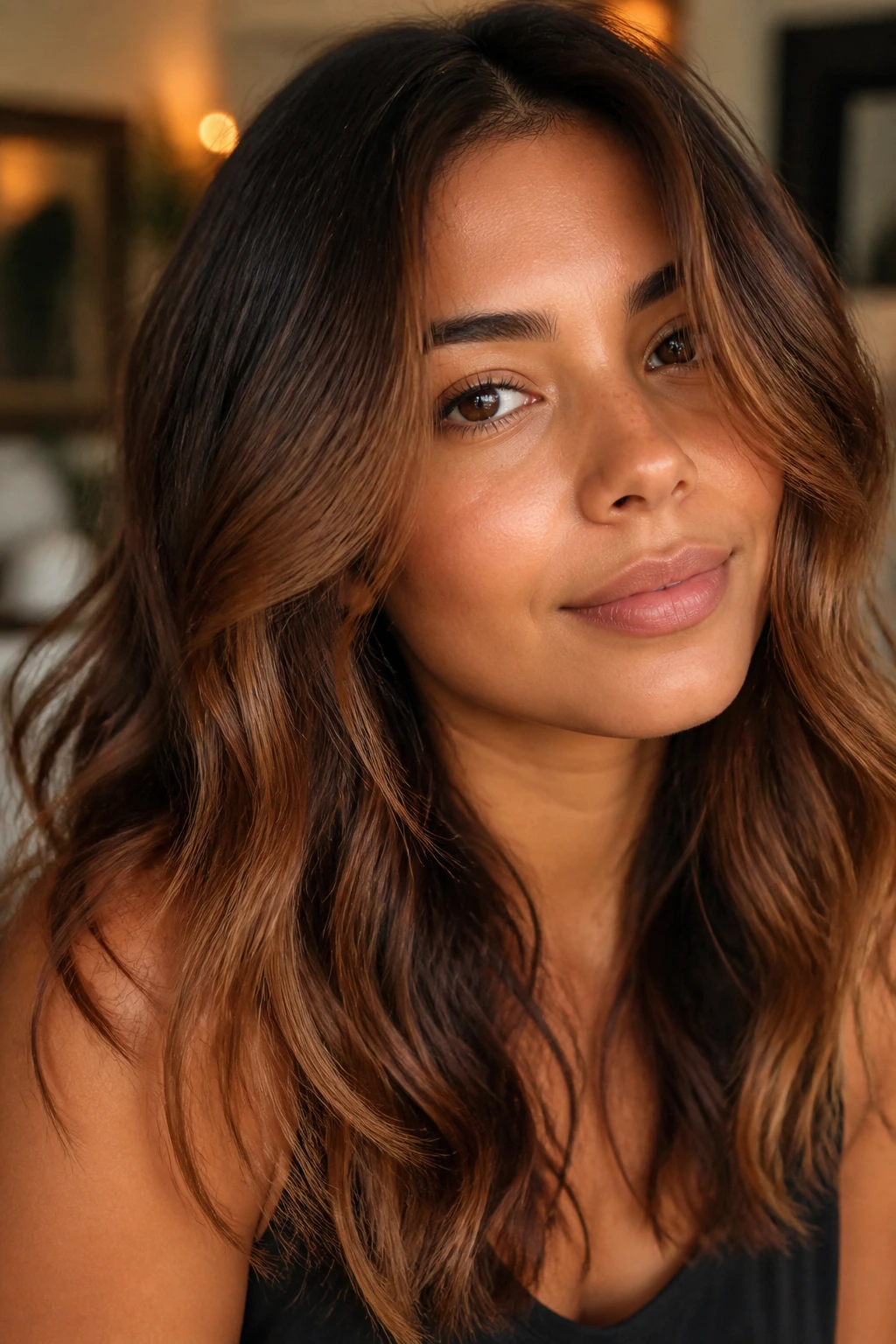
Cinnamon brown is the warmer cousin in this group, and it flatters medium skin with peach, gold, or warm olive undertones. The best versions don’t look red. They look like brown that has been warmed by a little spice and sunlight.
A melt, not a stripe, is the move here. You want the color to transition from a deeper root into cinnamon mids and ends so the hair keeps its shape. Thin hair often looks better when the shift is gradual, because hard lines expose where the hair is sparse.
This shade has a nice effect in loose curls. The warmer pieces catch the curve of the wave and give the hair a fuller outline. Straight, it reads sleek. Curled, it reads plush.
8. Hazelnut Micro-Highlights for Nearly Invisible Dimension
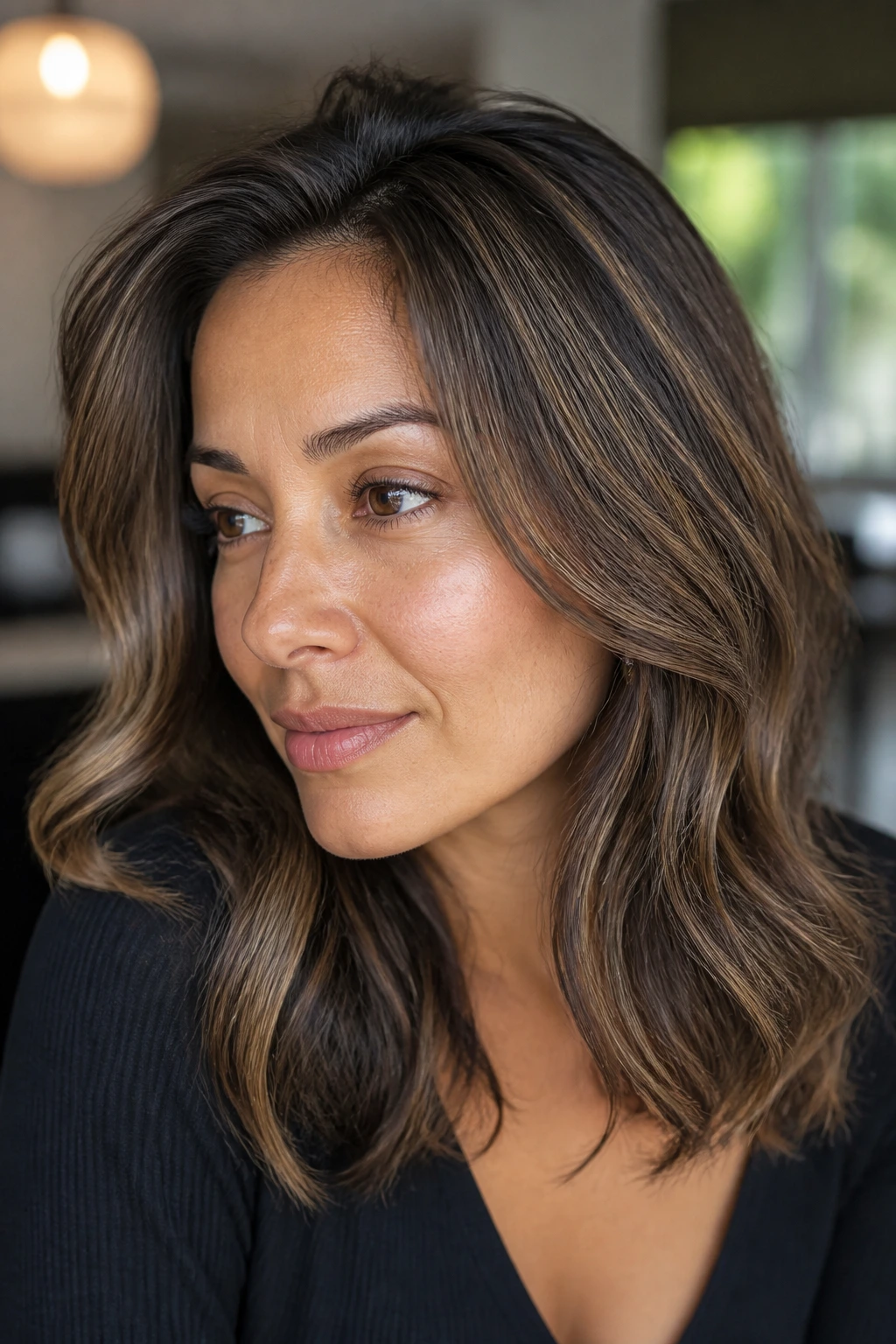
If you want the kind of highlight that makes people say your hair looks “good” without being able to point at one obvious streak, hazelnut micro-highlights do that job. They sit close to the base, so the overall color still feels brunette, but the finish has movement.
On thin hair, this is a smart move because the pieces are small enough to avoid scalp show-through. The color adds texture instead of volume through contrast. Medium skin benefits because hazelnut has enough warmth to soften the face, but not so much warmth that it tips orange.
This is one of the quietest looks in the whole set. It’s also one of the hardest to mess up if you hate dramatic color. The shine comes from density and placement, not from brightness.
9. Espresso Underlayer with a Lighter Top Sheet
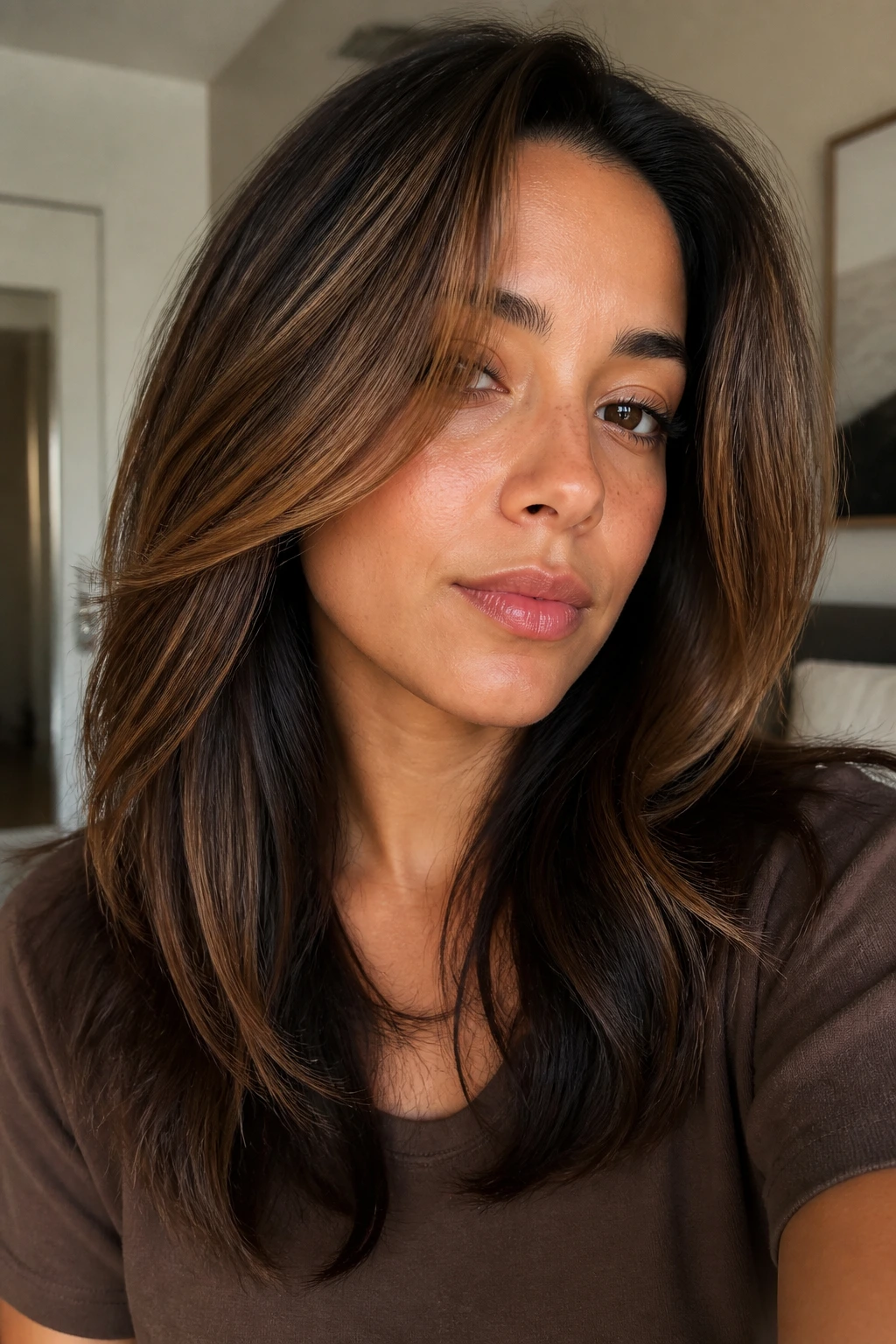
Ever notice how some fine hair looks fuller when you can’t see the whole underneath? That’s the idea here. Espresso underlayers stay deep and rich, while the top sheet gets a few lighter brown pieces. The hair looks layered even when the cut is simple.
This is especially good if your hair is shoulder length or longer. The hidden darkness underneath creates a base, and the lighter top layer keeps the color from going flat. Medium skin with neutral undertones handles this combo well because the espresso anchors the look without pulling the face red or orange.
A blunt cut plus espresso underlayers can be a little unforgiving. Add some movement—soft layers, a bend at the ends, even a slight flip—and the color shows its best side.
10. Cocoa Contour Highlights Around the Cheekbones
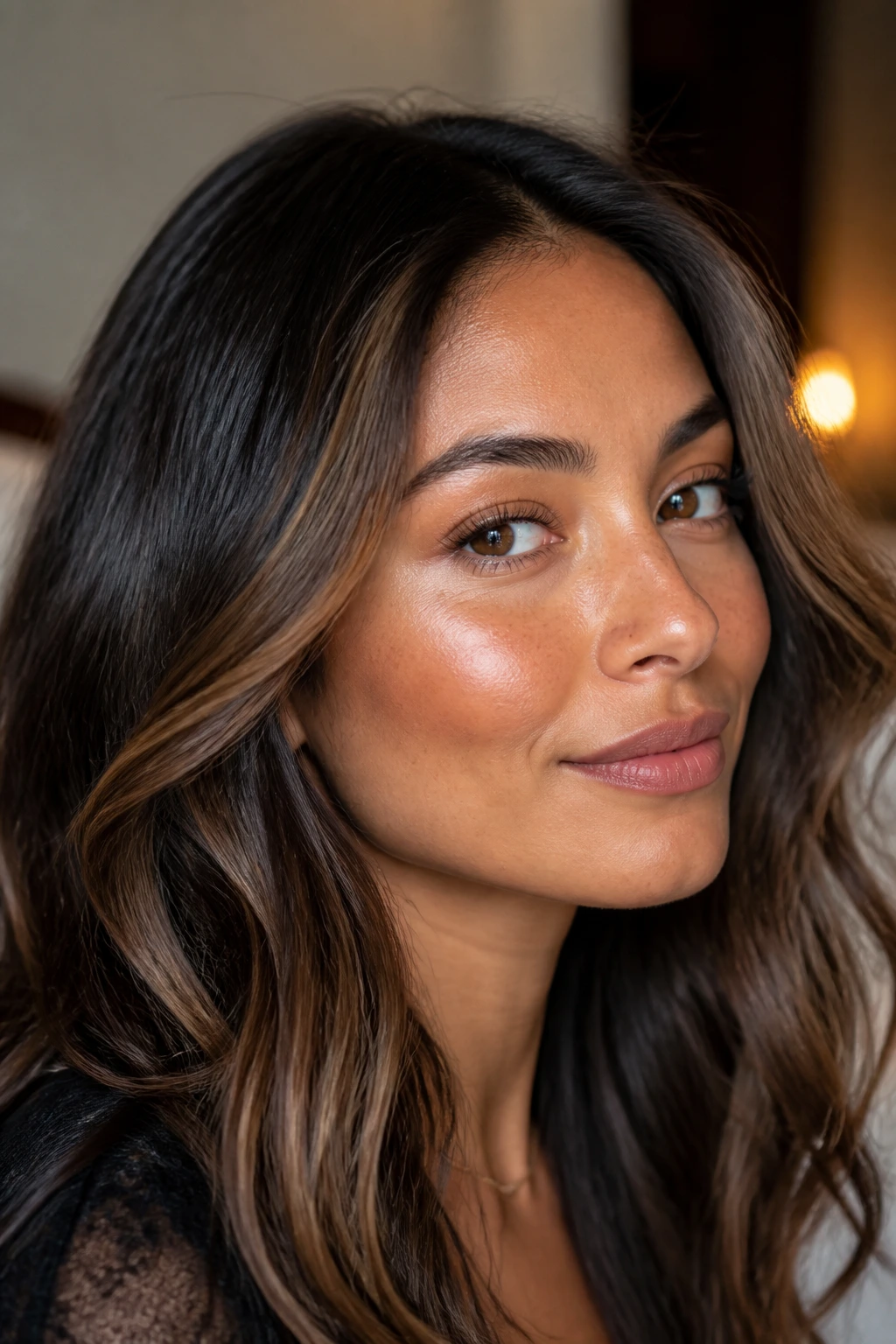
Cocoa contour highlights are all about shaping. Instead of brightening the whole head, the lighter cocoa pieces sit around the cheekbones, jawline, and outer layers to lift the face. Medium skin loves this because the warmth sits close to the complexion, not far away from it.
This is a good choice if your hair is fine and you wear it loose most of the time. You get the perception of body where the color shifts around the face, but the crown stays grounded. That makes the hairline look less sparse.
Ask your colorist to keep the contour pieces soft and elongated, not chunky. The moment those front pieces get thick, the look stops reading as contour and starts reading as stripes.
11. Taupe Babylights for Olive and Neutral Skin
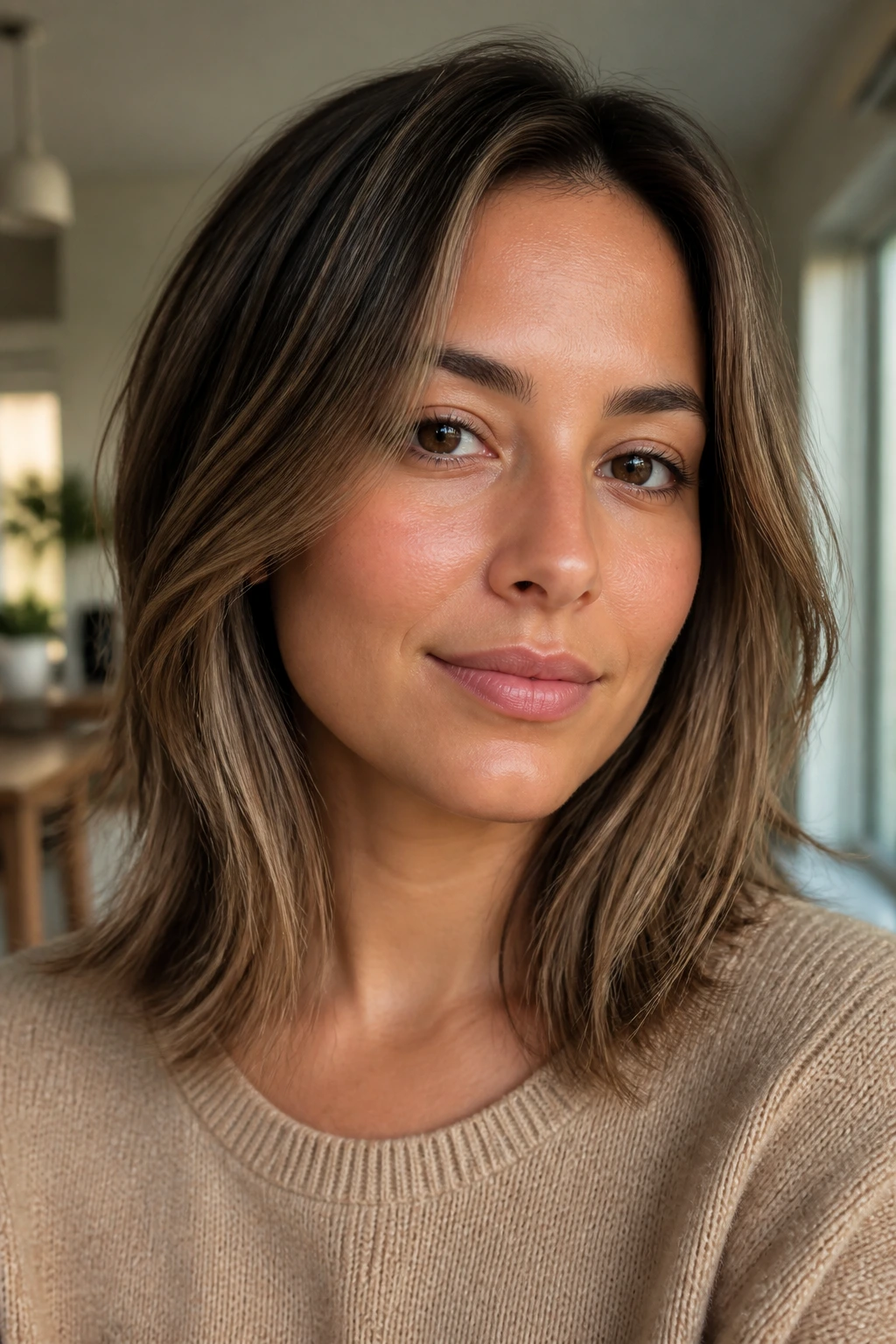
Taupe is the brown that knows how to keep its distance. It has enough ash to calm down warm brassiness, but it still lives in the brown family, so it doesn’t wash out medium skin the way a pale blonde can. On olive or neutral undertones, taupe babylights look cool, smooth, and slightly smoky.
The Small Detail That Matters
The highlight should be thin enough to blur into the base from a few feet away. If you can count every strand, the effect gets too busy for thin hair. A soft taupe glaze over babylights keeps the ends looking polished rather than dry.
This is a good choice if your hair gets orange fast. Taupe holds the warmth in check without needing a heavy toner every week. It’s neat, low-drama, and just enough.
12. Bronze Brown Peekaboo Panels Under the Top Layer
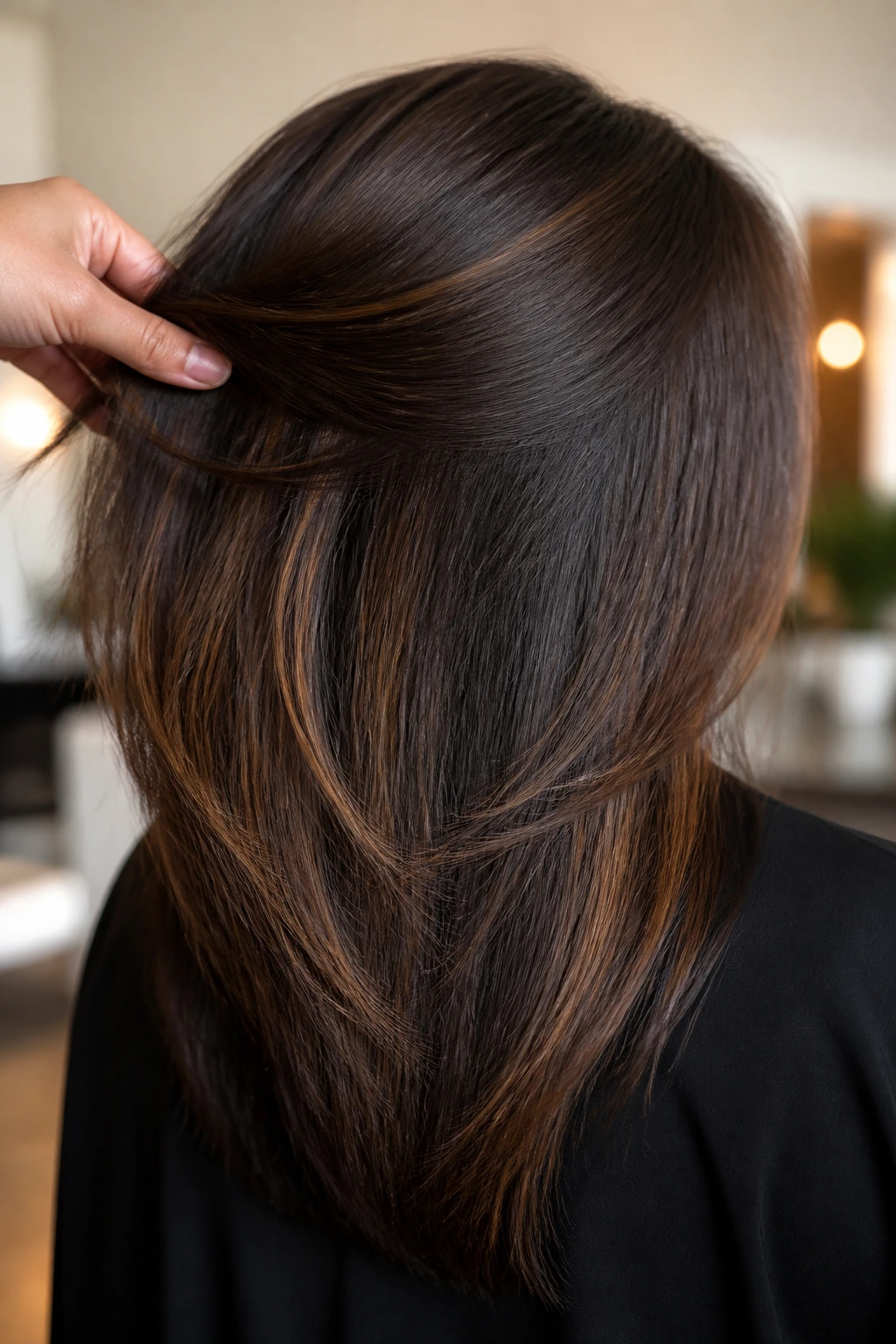
Peekaboo color is underrated for fine hair because it keeps the top surface calm. Bronze brown panels underneath give you movement when the hair swings, but they don’t announce themselves all day long. That can be a relief if you like richer color without the maintenance of visible bright pieces.
Medium skin with golden undertones wears bronze easily. The warmth echoes the skin instead of competing with it. If your hair is thin, the hidden placement is useful because the top sheet remains visually dense while the underside does the interesting work.
Wear this with a half-up style, and the color peeks out in the back. Wear it straight, and the bronze flashes when the light moves across the ends. It’s a small effect. That’s why it works.
13. Maple Brown Slices for a Soft Autumn Feel
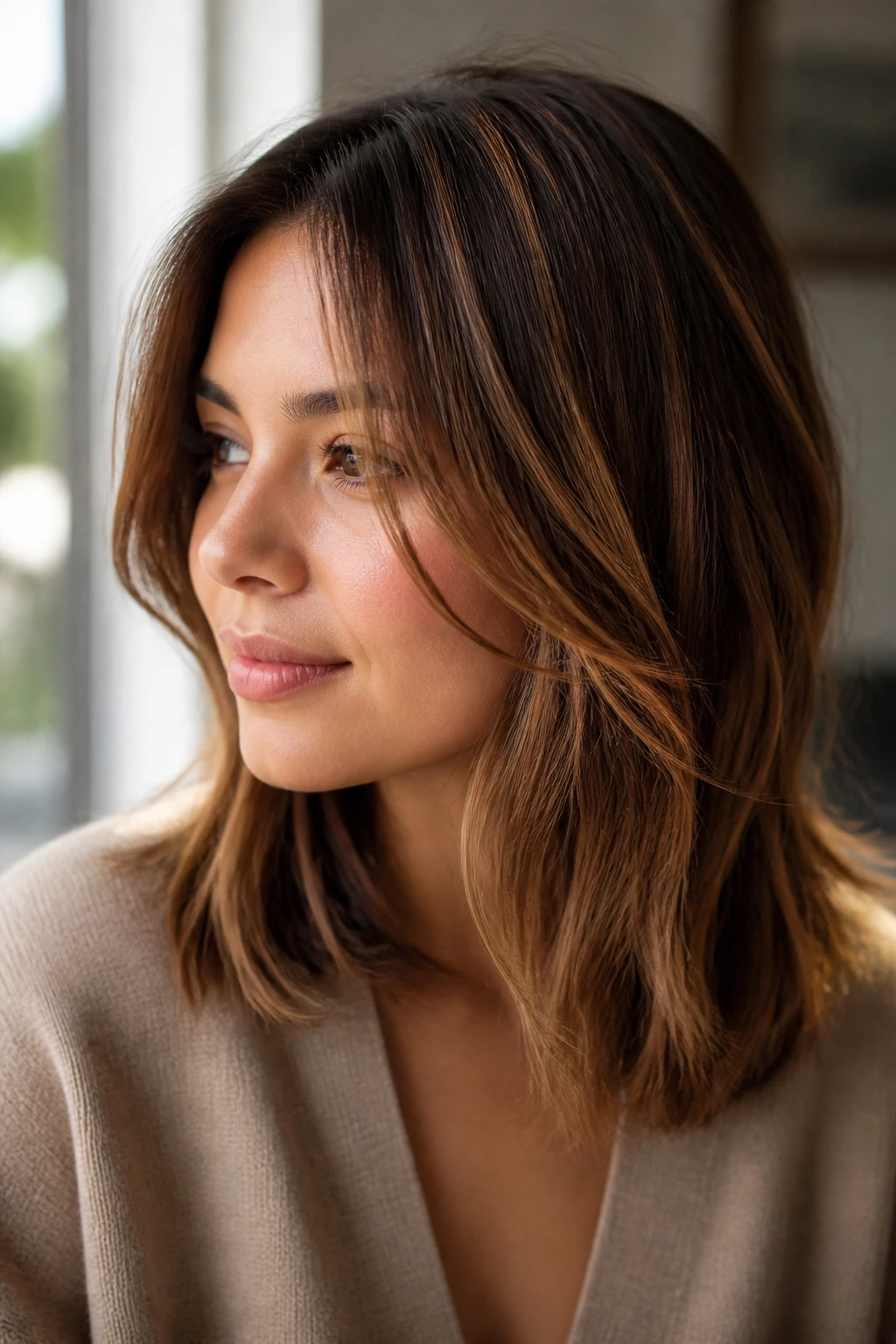
Maple brown has that slightly toasted sweetness that sits well on medium skin, especially if your undertone leans warm. The slices here are broader than babylights but still narrow enough to avoid chunky contrast. Think controlled, not loud.
This style is useful when thin hair needs a little more visible texture. The slices create patterns of light and dark, which makes layers read more clearly. Without them, a fine cut can blur into one flat shape.
The best version keeps the brightest pieces near the mids and face, then fades them out toward the ends. That keeps the bottom from looking stringy. On a textured blowout, maple highlights look fuller than they do on pin-straight hair, so add a soft bend if you want the color to come alive.
14. Sable Ribbons Through a Center Part
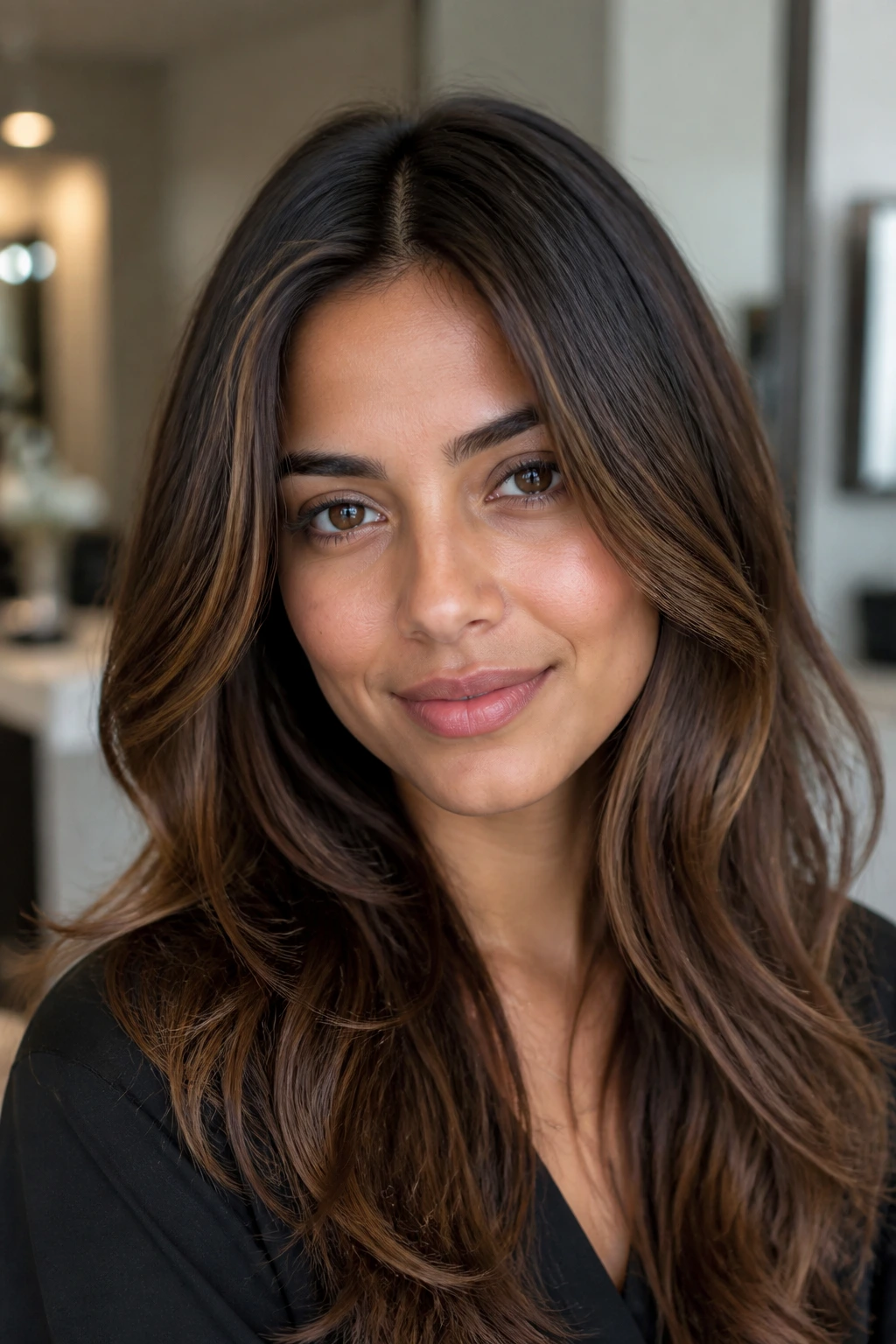
Sable brown is deeper than chestnut and softer than espresso. Put it in ribbon form through a center-parted cut, and you get depth without the heavy blocky look that can drag down fine hair. Medium skin with neutral undertones wears this especially well because the color reads rich, not muddy.
The center part gives the ribbons a clean path, which helps the highlights show without needing a lot of brightness. That’s good news for thin hair. You do not need a lot of lift to get dimension; you need the lift in the right place.
This look is for someone who likes polish more than contrast. It looks expensive in a very calm way, and it grows out with less drama than a stronger caramel weave.
15. Latte Foilayage with a Soft Beige Finish
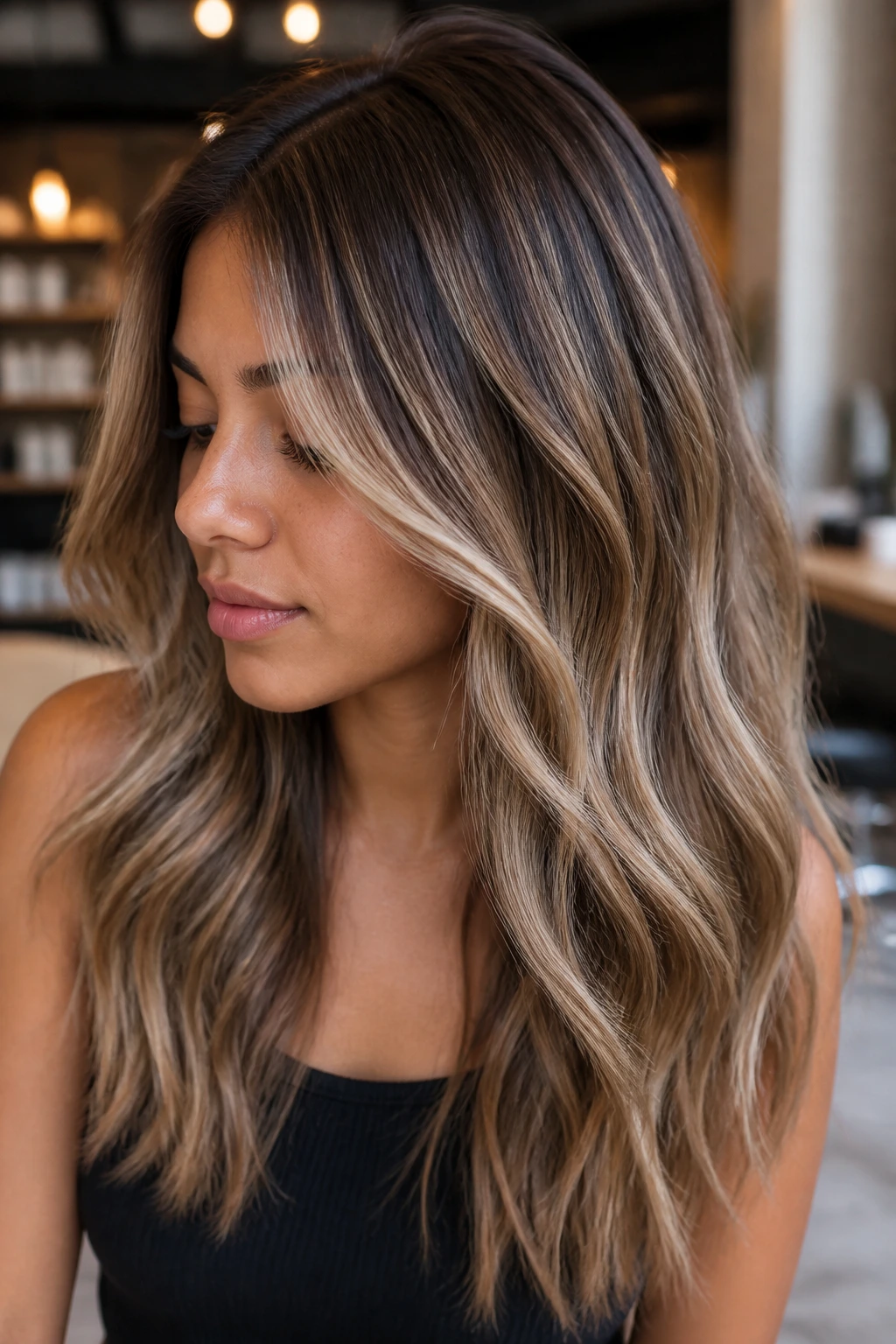
Latte brown lives between warm and cool, which is why it works on a wide range of medium skin tones. It has that beige-creamy feel without tipping blonde, and foilayage gives it a smoother blend than traditional streaky foils.
The placement matters most on thin hair. Keep the brightest latte pieces on the outer layers and around the crown, then let the interior stay a shade deeper. That way the hair still reads as thick from the side, but the surface catches enough light to show movement.
This is one of the easiest shades to wear if you change your part a lot. The highlight pattern isn’t tied to one side, so it looks balanced whether the hair is tucked, parted down the middle, or swept back.
16. Chestnut Root Melt with a Deeper Base
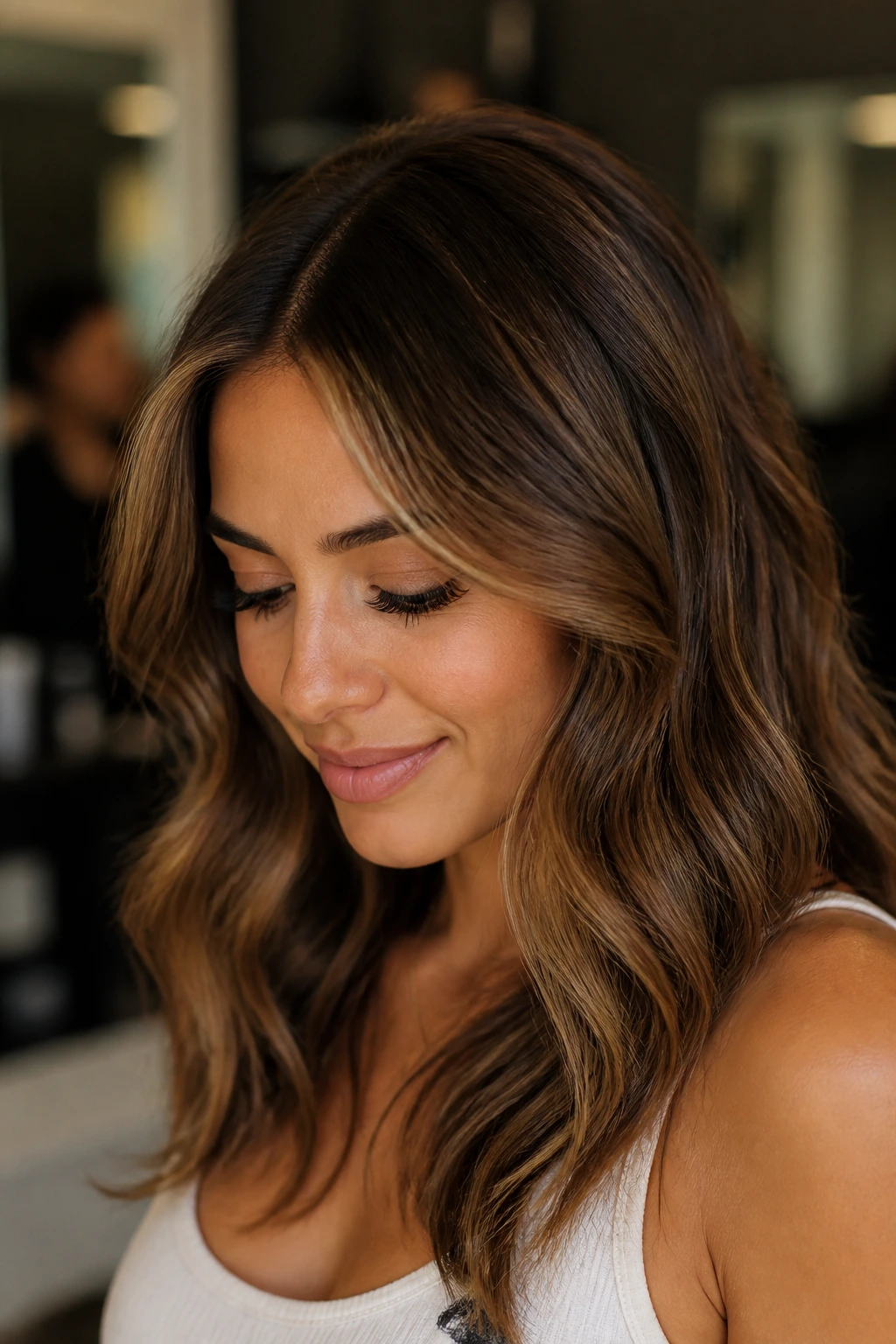
A chestnut root melt is a smart move when your hair is thin because it keeps the roots looking full while softening the transition into lighter brown mids. The color is not trying to be bright from the scalp down. It starts grounded and opens slowly.
What to Ask For
- Keep the root one shade deeper than the mids.
- Ask for a demi-permanent gloss on the lighter areas.
- Leave the brightest pieces around the front and upper crown.
Medium skin usually likes this look because chestnut has enough warmth to stay flattering, but not so much warmth that it gets coppery. The result is soft and layered, which is exactly what fine hair needs when it starts to look wispy at the ends.
17. Auburn-Brown Accents for Warm Medium Skin
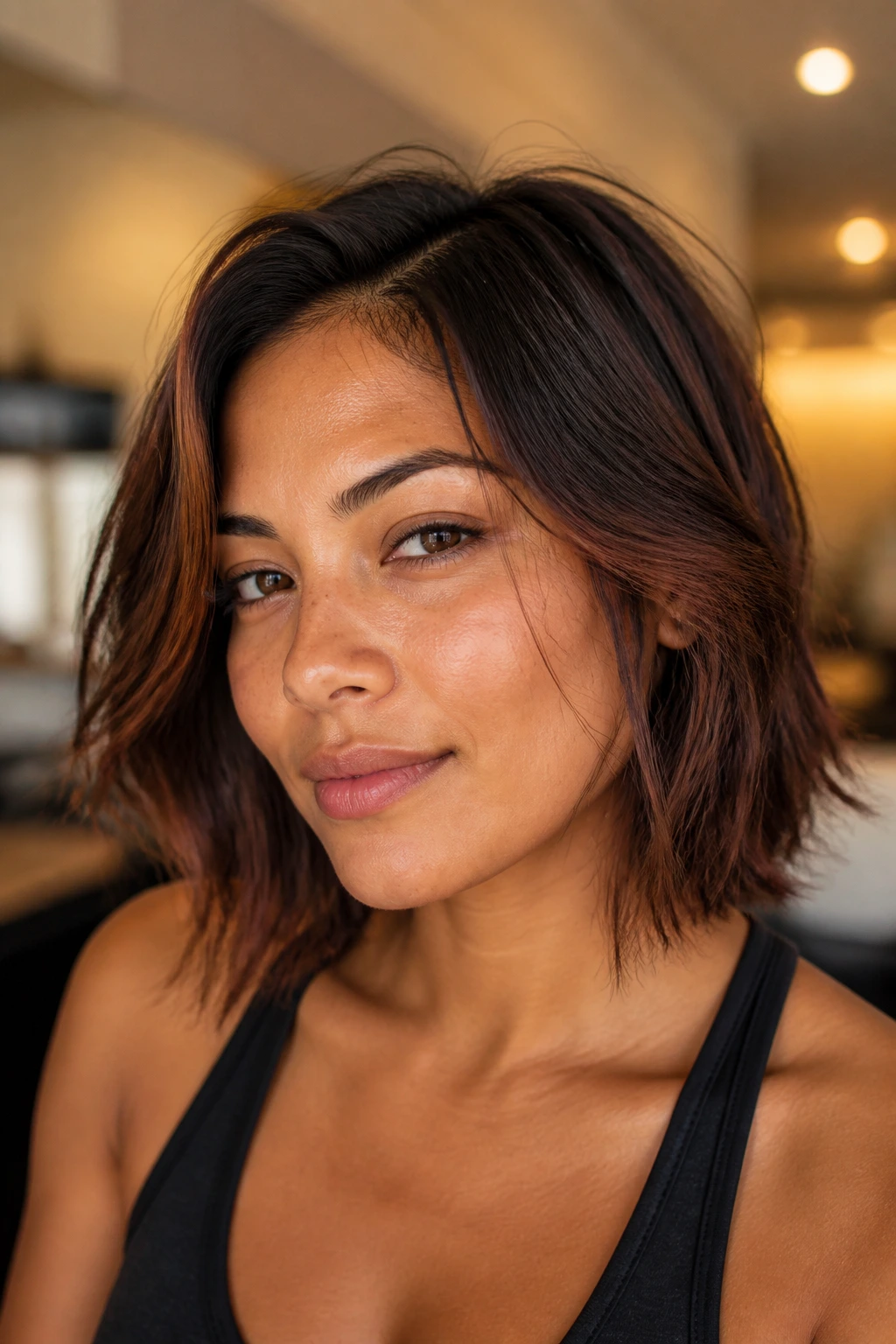
Auburn-brown sits on the warmer edge of brown, and that can be lovely on medium skin with gold or peach undertones. The key is restraint. You want accents, not a full red-brown takeover.
Thin hair can actually handle a little warmth better than people think, as long as the pieces stay fine. The warmth makes the texture visible. The hairline and ends get a slight glow, which is useful if your natural brown tends to look flat under indoor lighting.
This is a good choice if you like your brunette shades with a little personality. It has more spark than mocha, but it still belongs to the brown family. Keep the highlights scattered and narrow so the look doesn’t collapse into one loud ribbon.
18. Carob Face-Framing Panels That Stay Close to the Base
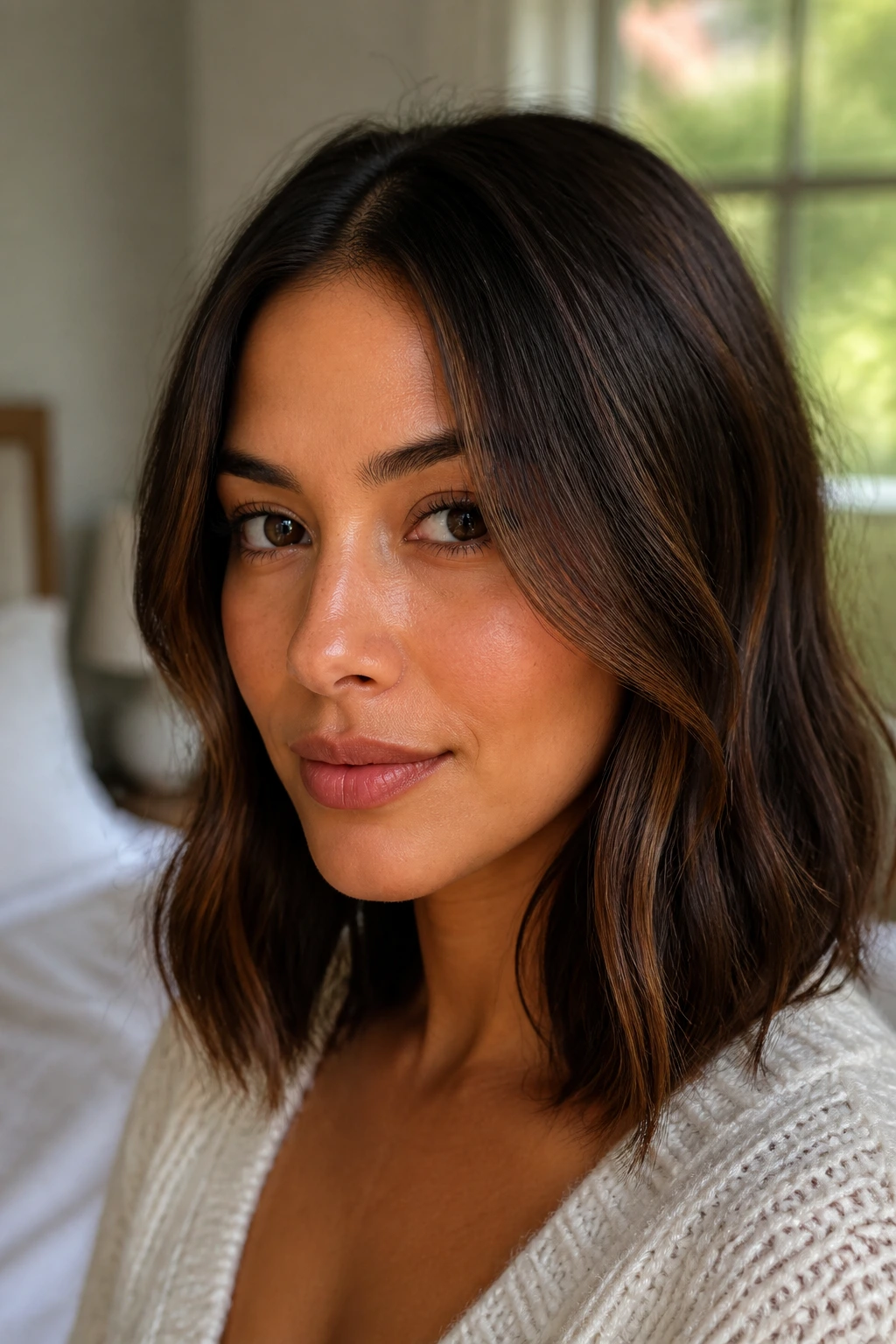
Carob is deep, earthy, and a little bit sweet in tone. Around the face, it gives medium skin a strong frame without creating the bright halo effect that can make thin hair look less dense. The panels stay close to the base, which is the whole point.
This works well if you usually wear your hair straight or in low waves. The color shows best when the front pieces move away from the face, revealing a bit of contrast against the skin. On medium complexions, carob sits comfortably near neutral and warm undertones.
I like this look on shoulder-length cuts. The panels can start near the cheekbones and taper as they go down, which keeps the face bright while the rest of the head stays believable and thick.
19. Taupe Brown Babylights for a Cooler Finish
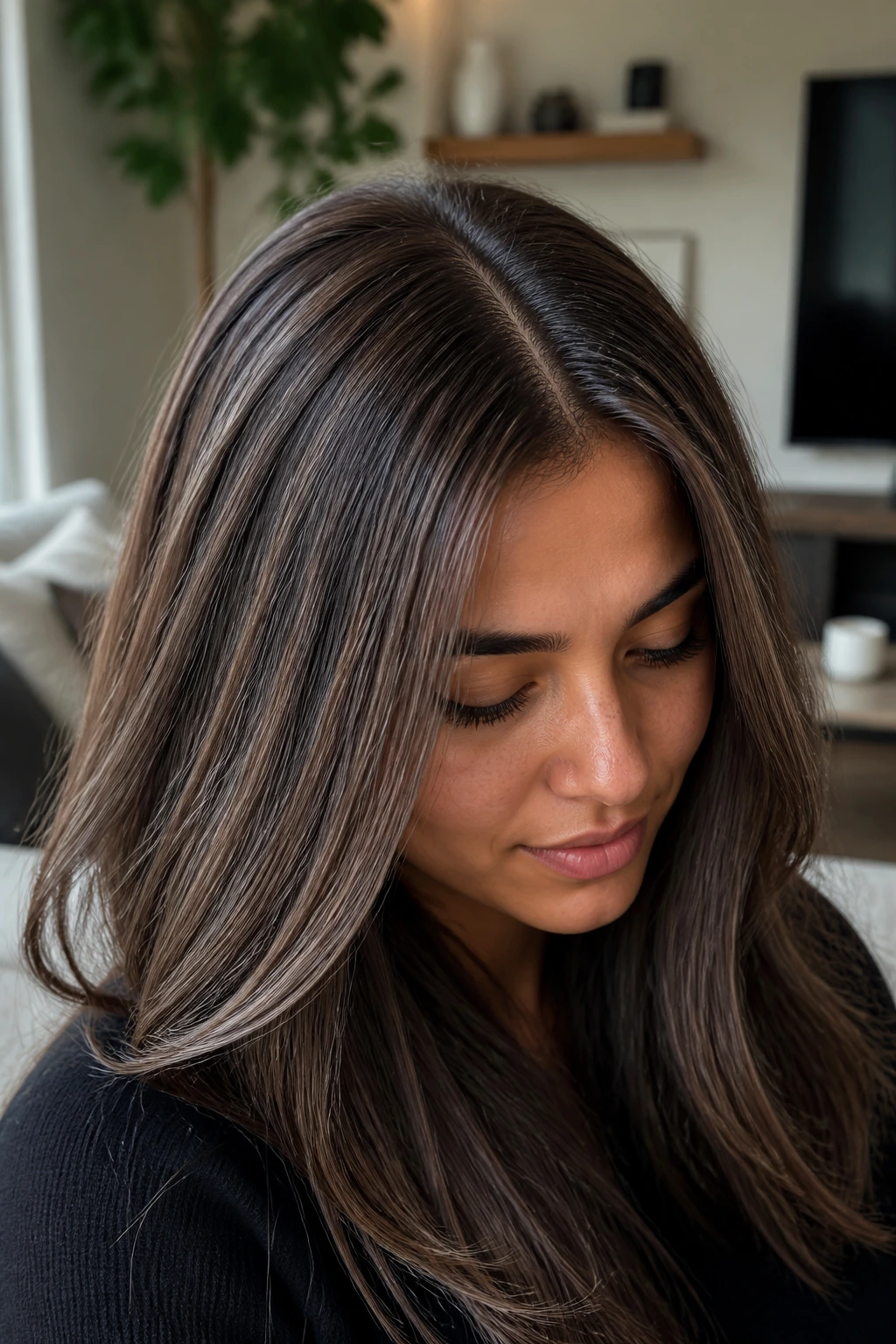
Taupe brown babylights are for the person who likes their brunette a little muted, a little smoky, and not at all orange. Medium skin with olive undertones often handles this beautifully because the ash keeps the complexion from looking too yellow.
Fine hair benefits from babylights because the strands are feather-thin. They create sheen instead of obvious stripes. That sheen is what makes the hair look more populated, especially near the part line.
This shade is also useful if you hate frequent toner appointments. It does need care, but the muted finish can age gracefully between salon visits. The important part is keeping the tone soft, not letting it go gray and dull.
20. Honeyed Brown Lowlights for Soft Contrast
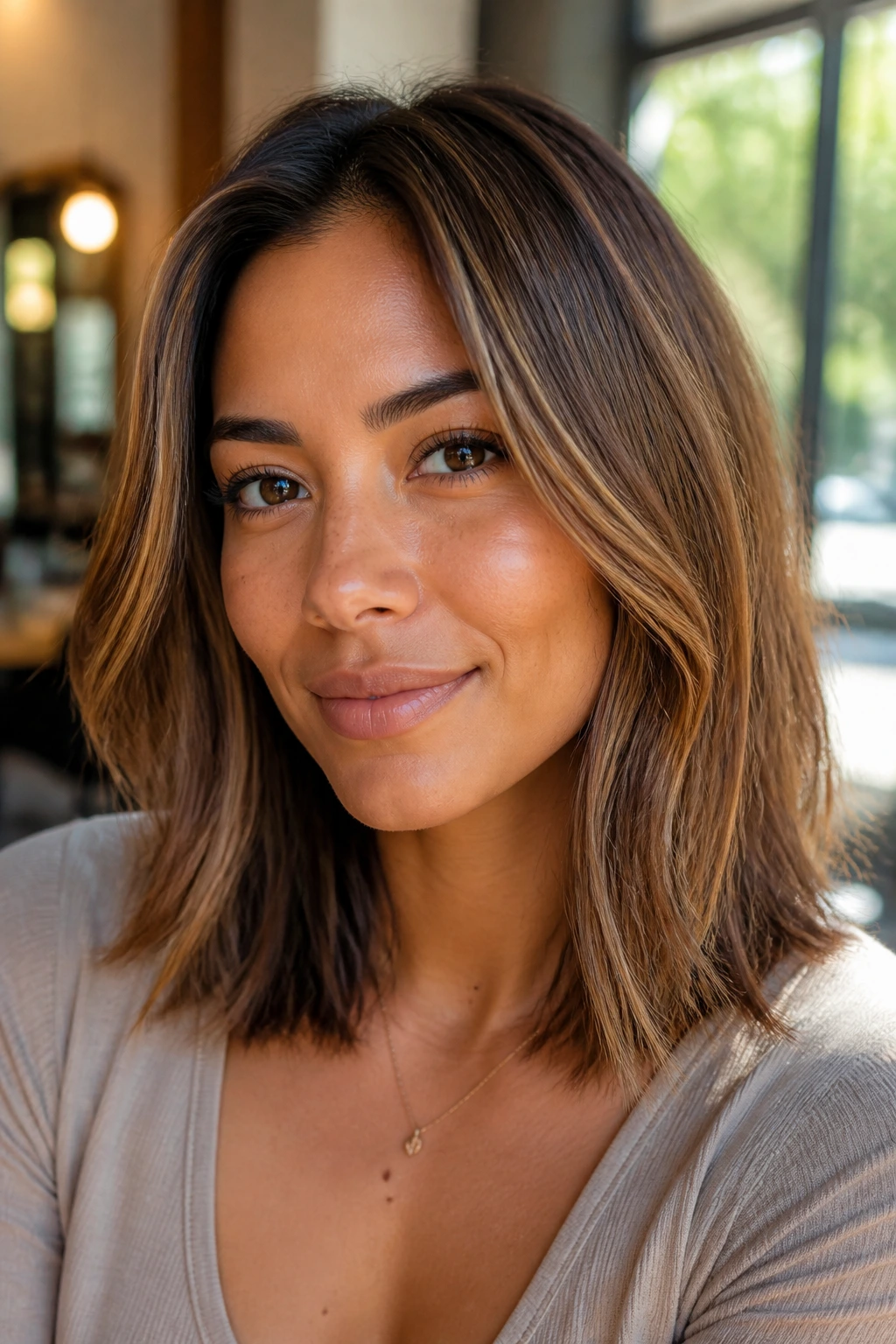
Honeyed brown lowlights do something sneaky: they deepen the overall color just enough to make the lighter pieces look brighter. That contrast is useful on thin hair because the eye sees more layers, even if the actual hair density hasn’t changed.
Medium skin with warm undertones tends to like this a lot. The honey note keeps the brown from feeling harsh. It also helps if your hair has gone too light in the past and started to look patchy around the ends.
Ask for lowlights that weave through the mids, not just the bottom layer. If they sit only underneath, the effect can disappear once the hair is styled. Spread them through the visible section and the whole cut looks more solid.
21. Toasted Almond Money Piece with Long Face Layers
Toasted almond sits in that sweet spot between beige and brown. Around the face, it softens medium skin without draining color from the complexion. Pair it with long face layers, and you get movement that thin hair usually needs badly.
Salon Notes Worth Saying Out Loud
- Keep the face pieces one or two shades lighter, not five.
- Blend them into the front layers so the color doesn’t stop abruptly.
- Leave the crown deeper so the cut keeps its shape.
The best thing about this look is the way it behaves in motion. A ponytail still shows the money piece, and loose hair gets a soft frame that doesn’t look disconnected from the rest of the head.
22. Tobacco Brown Dimension Through the Mid-Lengths
Tobacco brown is deeper and smokier than caramel, with a slightly earthy tone that flatters medium skin better than people expect. It has enough richness to work on thin hair, because the darker base keeps the mids from looking sparse.
This color is especially good if you want brown highlights without obvious brightness. The dimension comes from the shift between tobacco and the natural base, not from a high level of lift. That keeps the hair looking fuller from root to end.
It’s a grown-up color in the best sense. Nothing flashy. Just enough movement that the cut catches light when you turn your head.
23. Mink Underlights for Hidden Depth
Mink underlights stay tucked under the top layer, which makes them a strong choice for thin hair that needs body more than sparkle. The top surface remains rich and dense, while the underside gives off a little contrast when the hair moves.
Medium skin with cool-neutral undertones can wear mink easily because the shade is deep, soft, and slightly smoky. It does not fight the complexion. It sits beside it.
This is a good option if you often wear clips, twists, or half-up styles. The hidden color shows up in a flash rather than all day, which keeps the look refined and a little unexpected.
24. Beige-Brown Melt for a Soft, Polished Finish
Beige-brown is one of those shades that looks simple until you see it in motion. On medium skin, it can warm the face without turning brassy, and on thin hair, the melt keeps the color from breaking into obvious bands.
The finish should be smooth from root to end. No harsh line. No sudden jump. That smoothness helps the hair look like a single full surface rather than a set of different pieces. If your hair is naturally fine, this matters more than another two shades of lift.
This one works across a lot of medium skin undertones, which is why stylists keep coming back to it. It’s not boring. It’s calibrated.
25. Dark Chocolate Highlights That Only Show in the Light
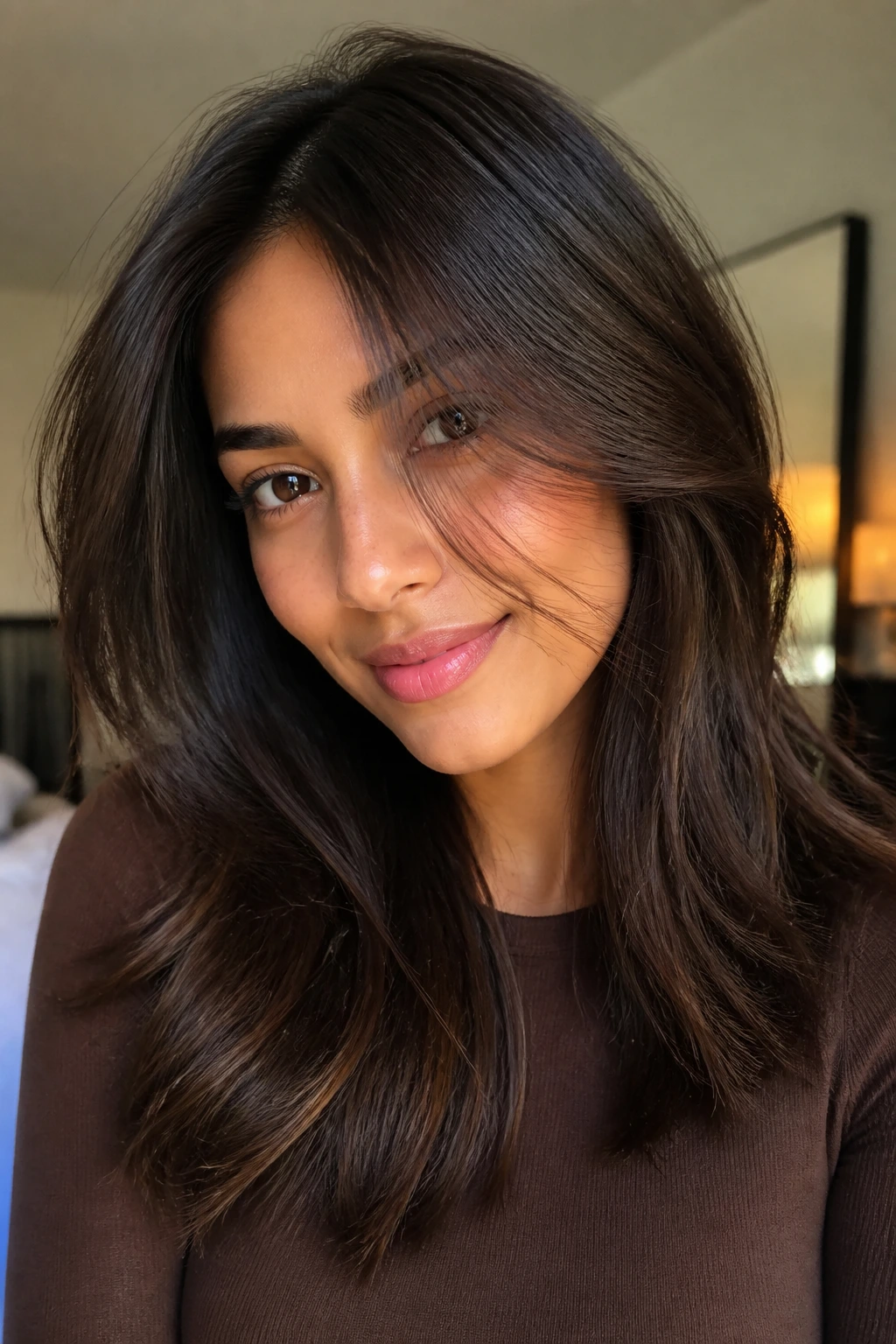
Dark chocolate highlights sound almost too subtle, and that’s exactly why they work. On medium skin and thin hair, a near-tone-on-tone shift can give you depth without exposing gaps in density. You see the color when the light hits it. Otherwise, it just reads as richer hair.
That restraint is useful. Thin hair doesn’t always need a louder color story; it needs a stronger one. Dark chocolate pieces woven through a brunette base can give the illusion of thickness, especially when the cut has soft ends and a clean silhouette.
If you want the least obvious option in the whole set, start here. It keeps the hair full, the tone polished, and the grow-out easy to live with.
Why Brown Dimension Looks Fuller Than One Flat Shade
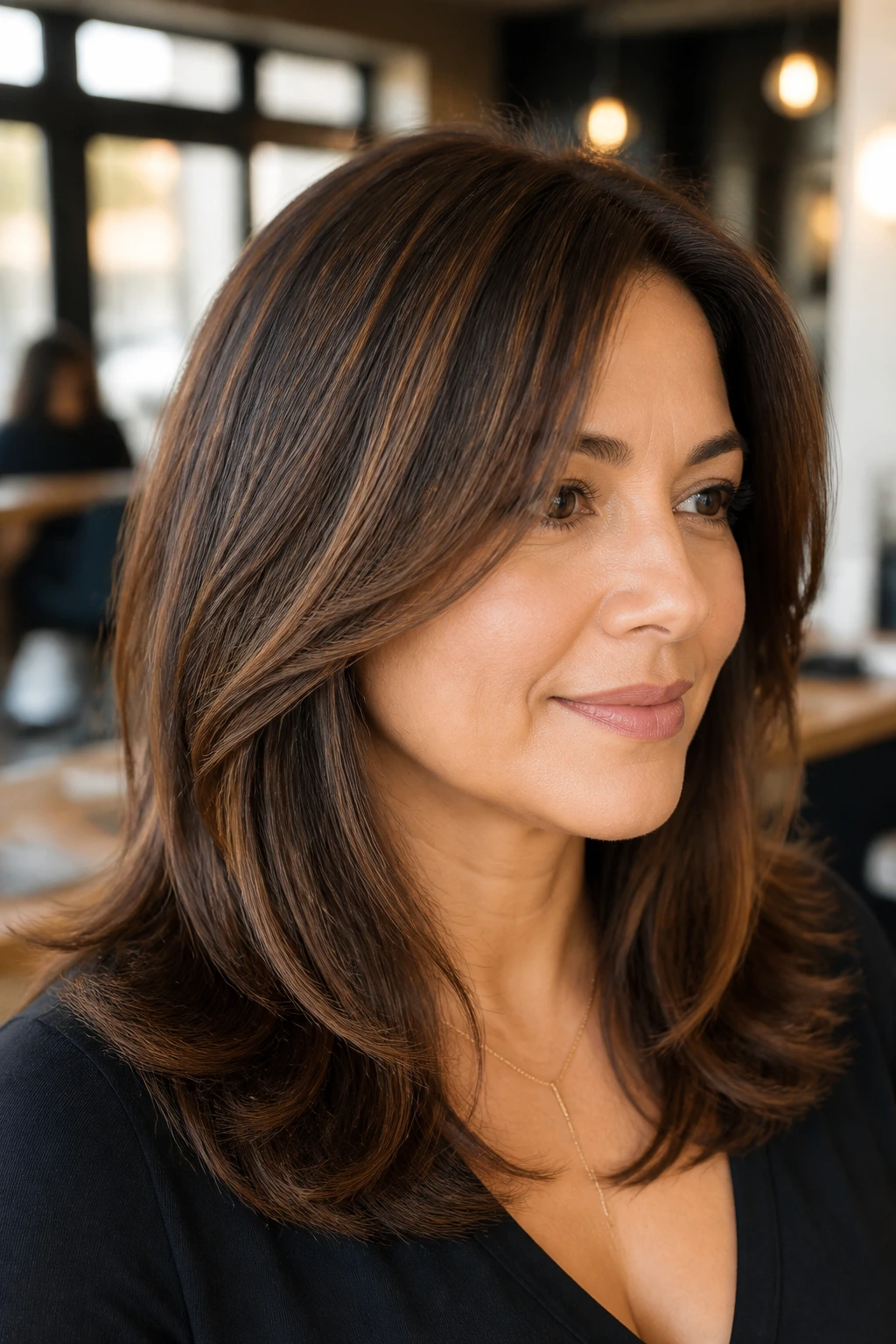
Fine hair and a single-process color can be a rough match. Flat color makes every strand read the same width, and when the light hits, the scalp can show through faster than you’d like. Brown highlights fix that by creating tiny shifts in depth across the head.
The eye sees contrast before it sees density. That’s the useful trick. A few warmer ribbons near the face, a few deeper lowlights in the interior, and a shadowed root can make the hair feel thicker even when the actual number of strands hasn’t changed.
There’s a reason colorists often stay within one or two levels of the base for thin hair. Bigger jumps look pretty on social media, but in real life they can make the ends look stringy. Narrow movement is kinder. It also grows out better.
How to Match Brown Highlights to Medium Skin Undertones
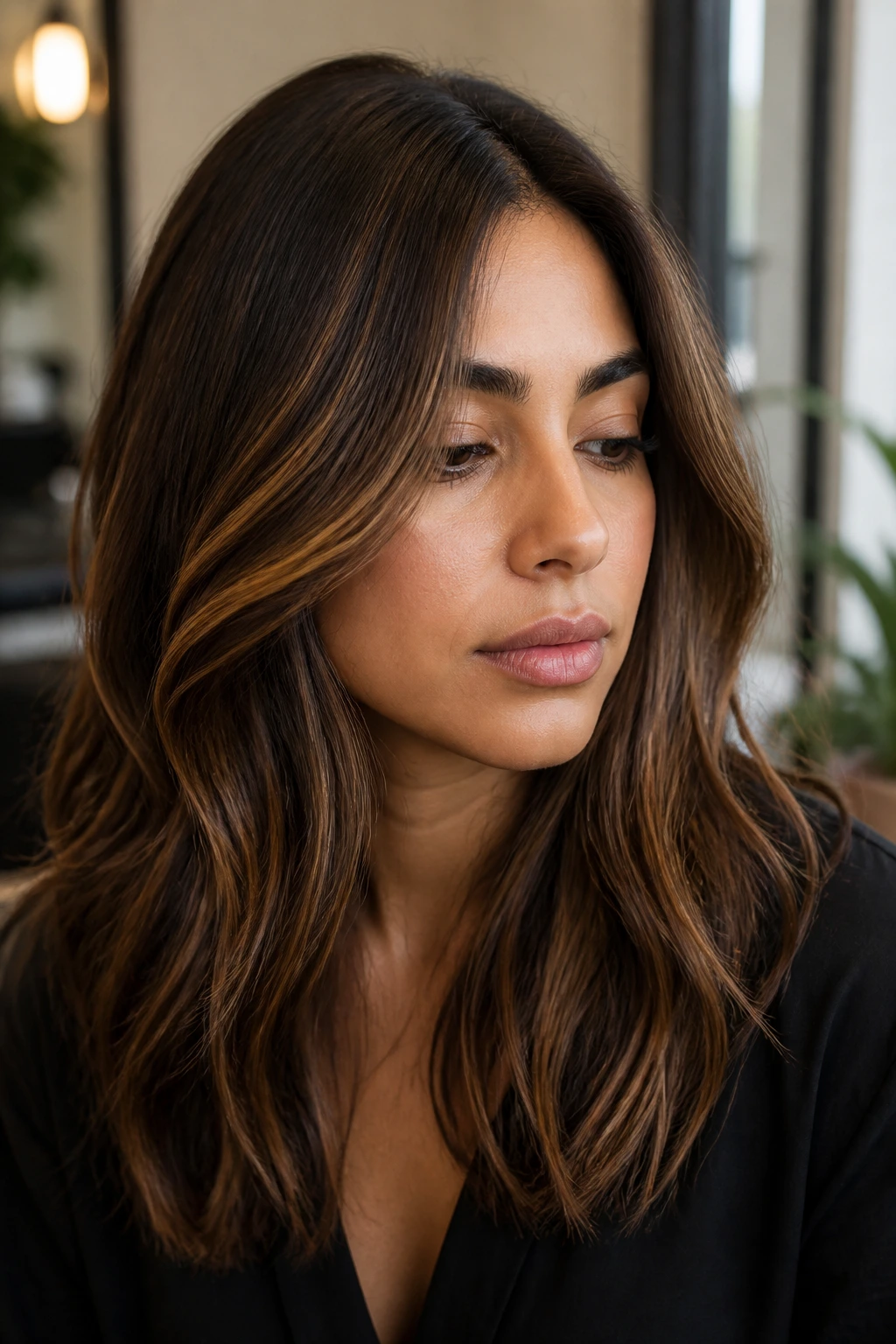
Medium skin is not one shade, and that’s where people go wrong. Golden medium skin usually likes caramel, toffee, chestnut, and bronze. Olive medium skin often looks best with mushroom, taupe, mink, or soft mocha. Neutral medium skin can wear the widest range, which is why you’ll see both warm and cool ideas in this list.
If your skin turns yellow under too much warmth, lean cooler. If it looks gray next to ash, lean warmer. If you’ve never been sure, bring two reference photos to the salon: one warmer, one cooler. The mirror under salon lighting can lie.
The other thing to watch is contrast. Thin hair generally looks better when the brown highlight shade stays relatively close to the base. That doesn’t mean boring. It means believable. Believable hair usually looks thicker.
The Salon Words That Make the Appointment Easier
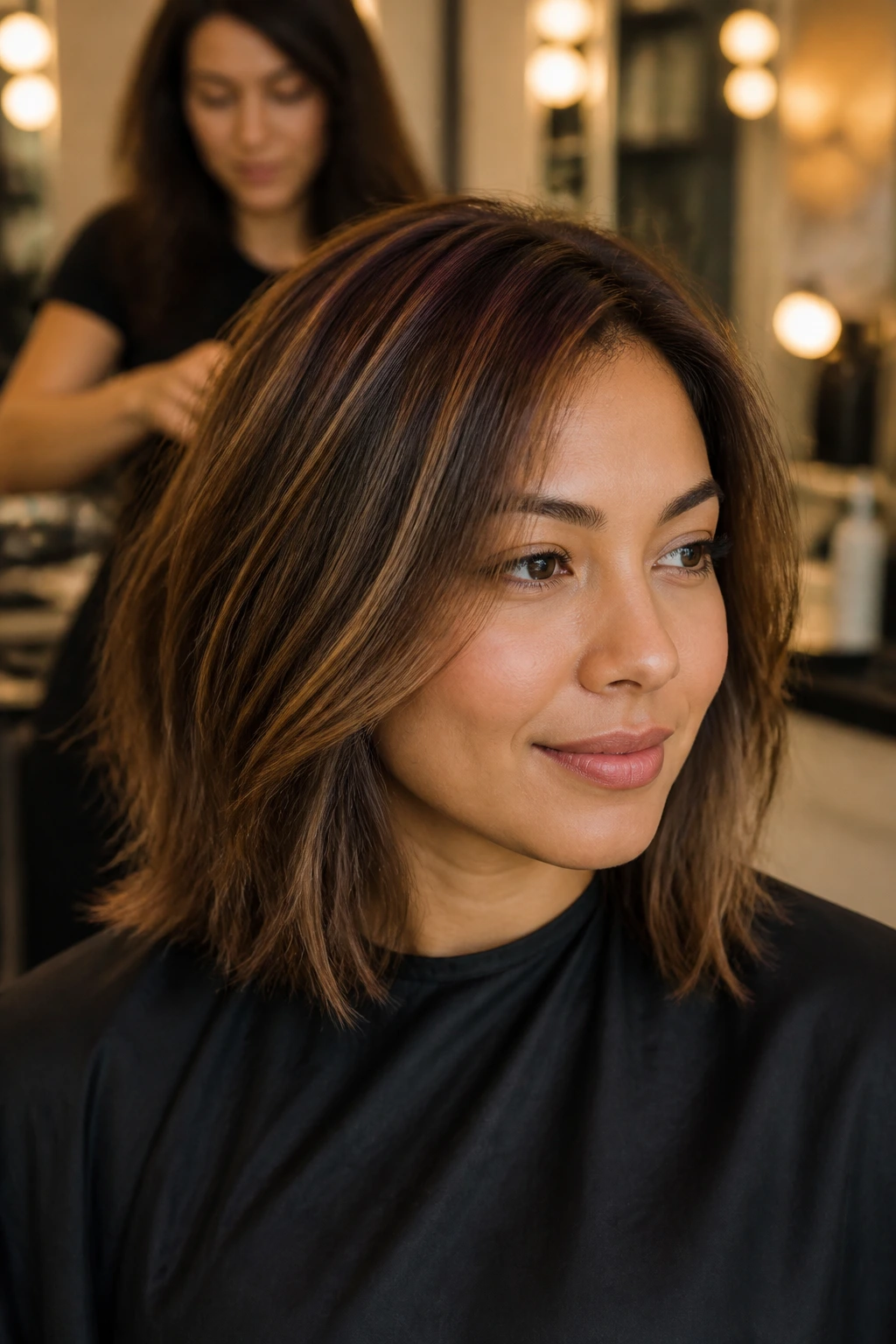
“Brown highlights” is a start, not a plan. A better appointment includes a few useful phrases: babylights, root shadow, money piece, foilayage, lowlights, and gloss. Those words tell the colorist where the brightness should sit and how soft the edges need to be.
Bring photos, but bring the right kind. Screenshots in bad bathroom lighting are almost useless. Look for images taken near a window, with the hair worn the way you usually wear yours. If you straight-blow-dry your hair every day, a loose-wave inspo photo may give you the wrong placement idea.
Tell them if your hair is fine, not just thin. Fine strands lift faster, and that changes how quickly warm or orange tones can show up. A good colorist will adjust the formula and keep the lightening controlled. If they don’t ask about density, they’re missing the part that matters most.
Tools, Products, and Setup That Help the Look Hold
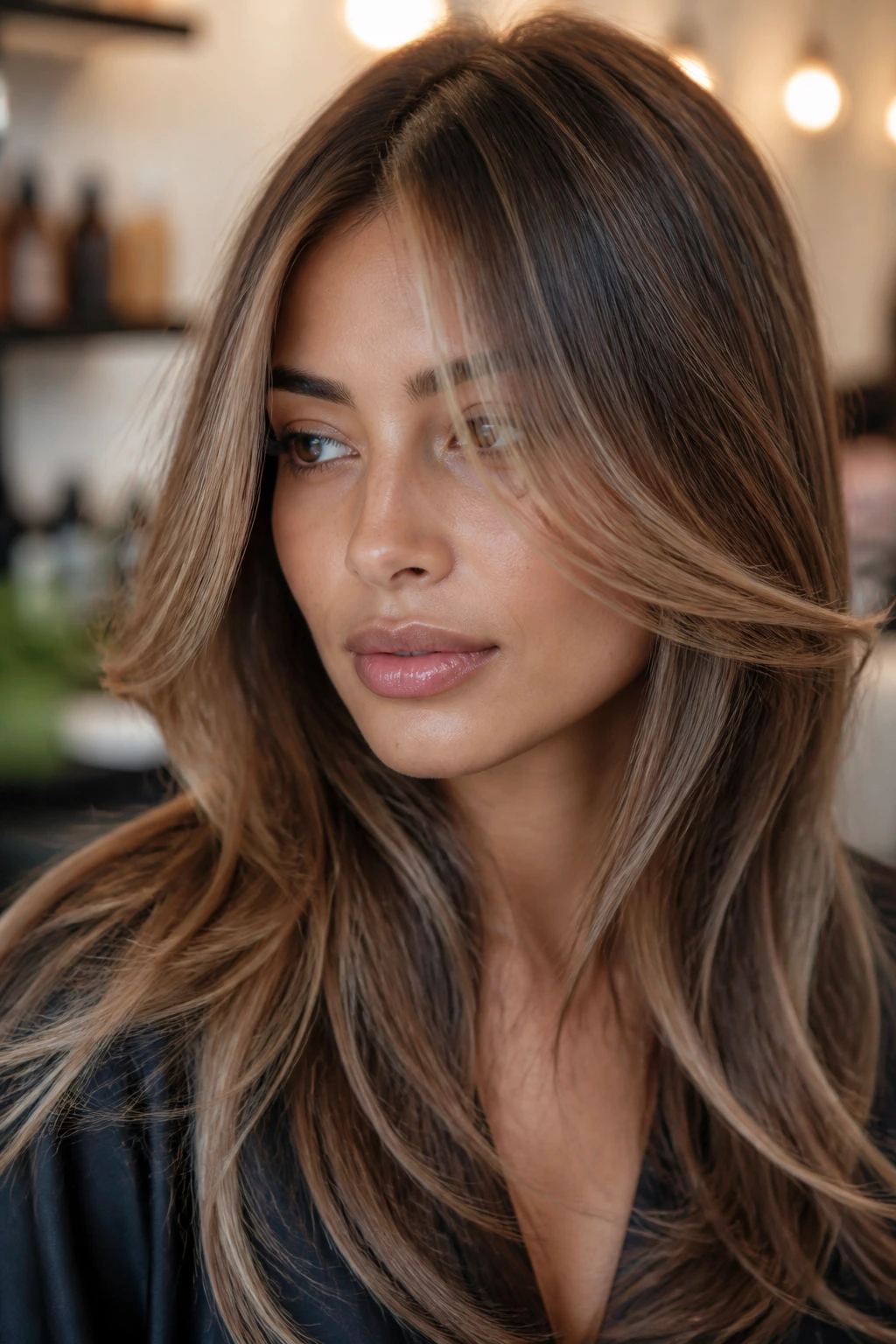
- Color-safe shampoo: Use one that cleans without stripping the gloss off the brown pieces in the first few washes.
- Moisturizing conditioner: Fine hair still needs slip, but keep the formula light so the roots don’t collapse.
- Heat protectant spray: Brown highlights show damage fast when the ends get rough, so this is not optional if you blow-dry often.
- Round brush or blow-dry brush: Lift at the roots matters. Flat blowouts make thin hair look thinner.
- Wide-tooth comb: Better than a rough brush on wet hair, especially after coloring.
- Root-lift mousse or spray: A small amount at the crown can make the dimension show instead of sinking.
- Gloss or toner appointment notes: Not a tool you buy, but absolutely part of the maintenance kit.
- Silk or satin pillowcase: Reduces friction, which helps the lighter pieces keep their smooth edge.
How to Style Brown Highlights So Fine Hair Looks Fuller
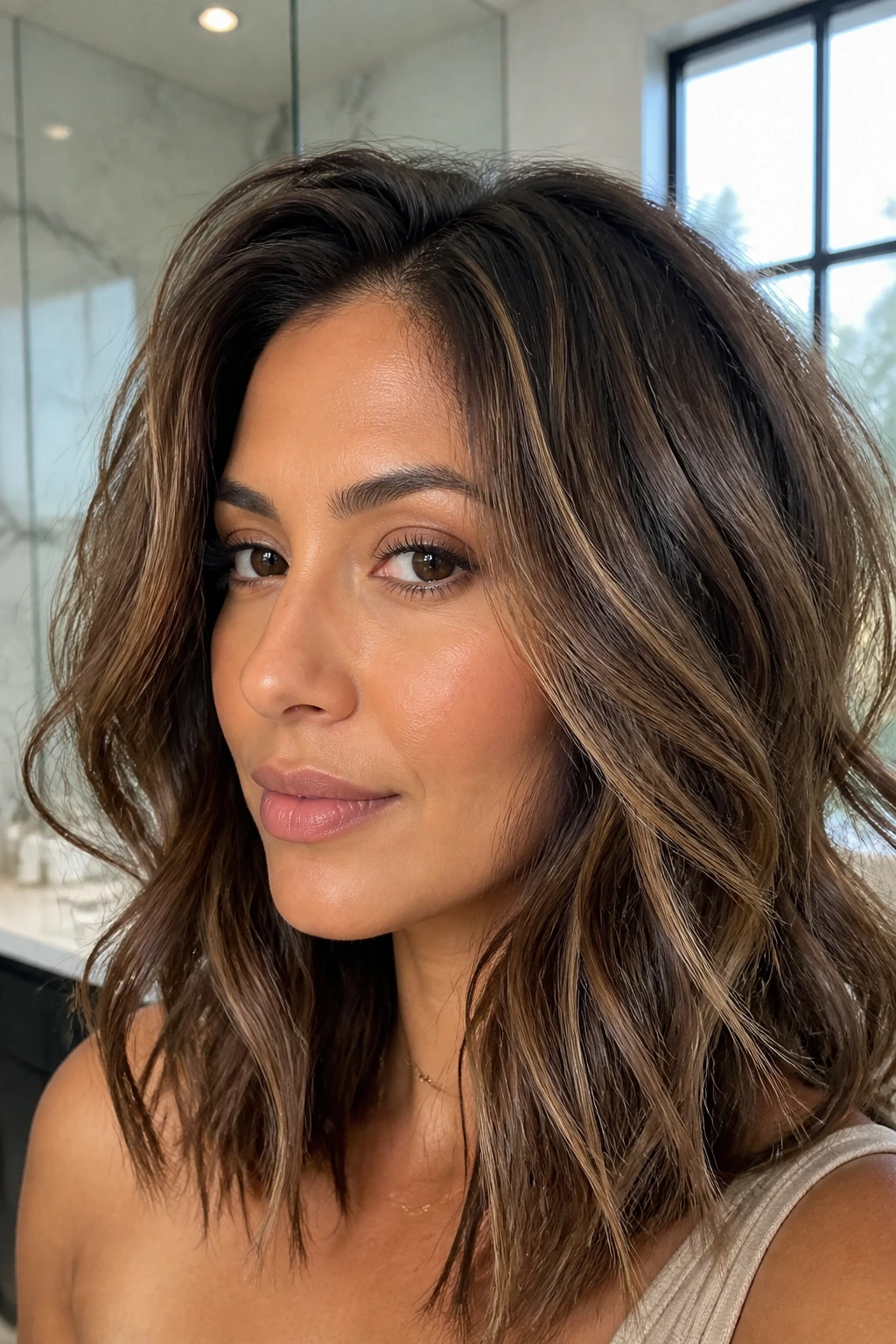
Volume starts at the root, not the ends. If the hair is flat at the scalp, the color loses half its job. A quick round-brush blow-dry with the nozzle aimed upward at the roots does more for thin hair than heavy products ever will. Keep the brush moving, then cool each section for a few seconds before releasing it.
Soft bends beat tight curls on this kind of color. A 1-inch iron or a flat iron wave gives the brown pieces enough movement to catch light without separating them into skinny tendrils. Too much curl can expose the ends and make the density problem worse.
Finishing products should be light. A pea-sized amount of serum on the mid-lengths is usually enough. If the hair starts to look shiny at the roots but dull at the ends, the styling product is in the wrong place.
Common Mistakes That Flatten the Look
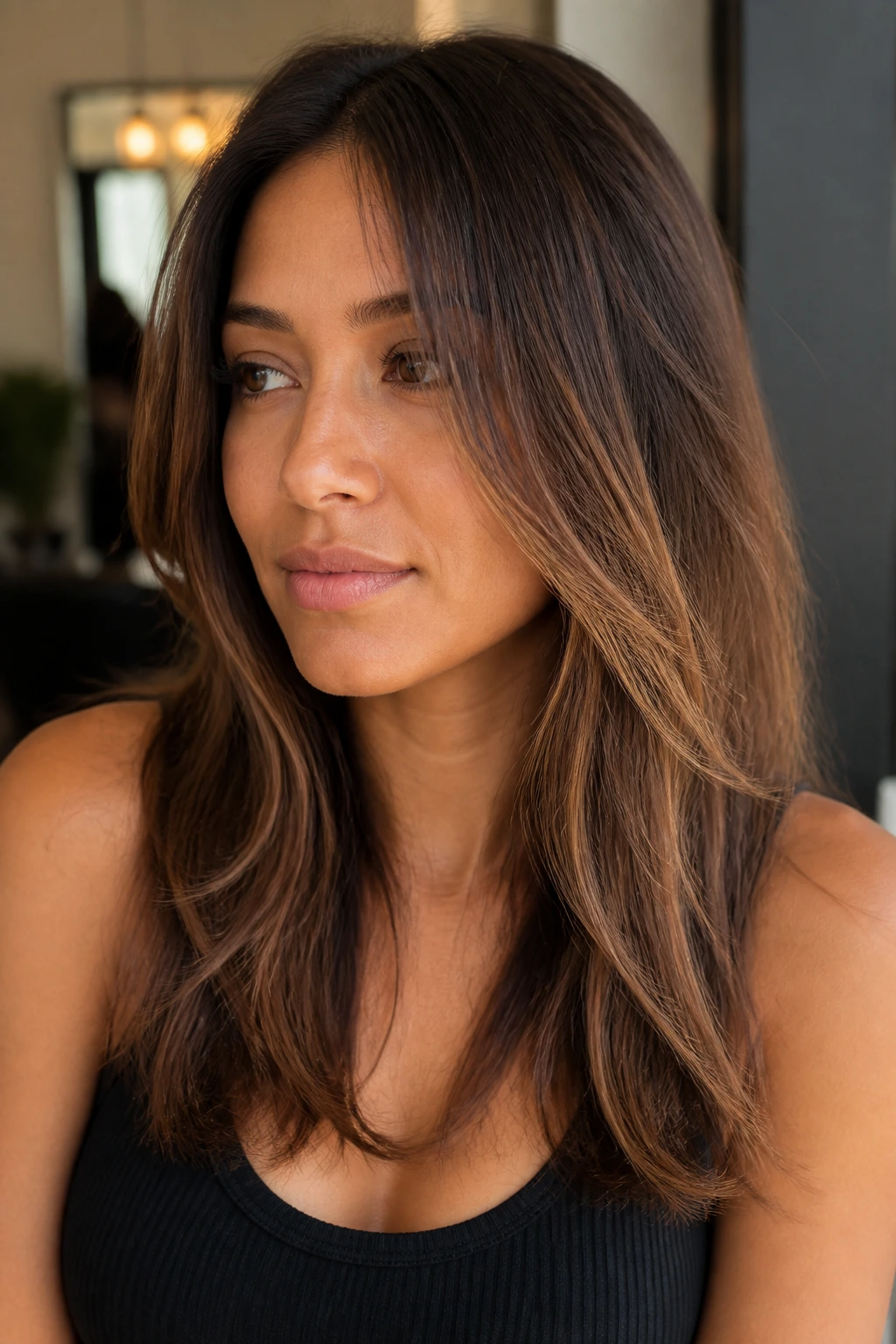
The first mistake is going too light. Platinum or pale beige can look airy in theory and stringy in practice. On thin hair, the contrast can expose every scalp line. Staying in the brown family usually reads fuller.
The second mistake is chunkiness. Thick highlights make the hair look separated, not thicker. Fine foils and babylights keep the blend soft. If you can spot every streak from across the room, the placement is too bold for this hair type.
The third mistake is ignoring the undertone of the skin. Warm caramel on olive skin can go orange. Cool ash on golden skin can look dull. Shade choice matters more than people admit.
A fourth problem shows up at styling time. Heavy oils, thick creams, and too much leave-in can drag the roots flat. Fine hair does not need a lot of product. It needs the right product in the right place.
Variations and Alternate Placements to Try
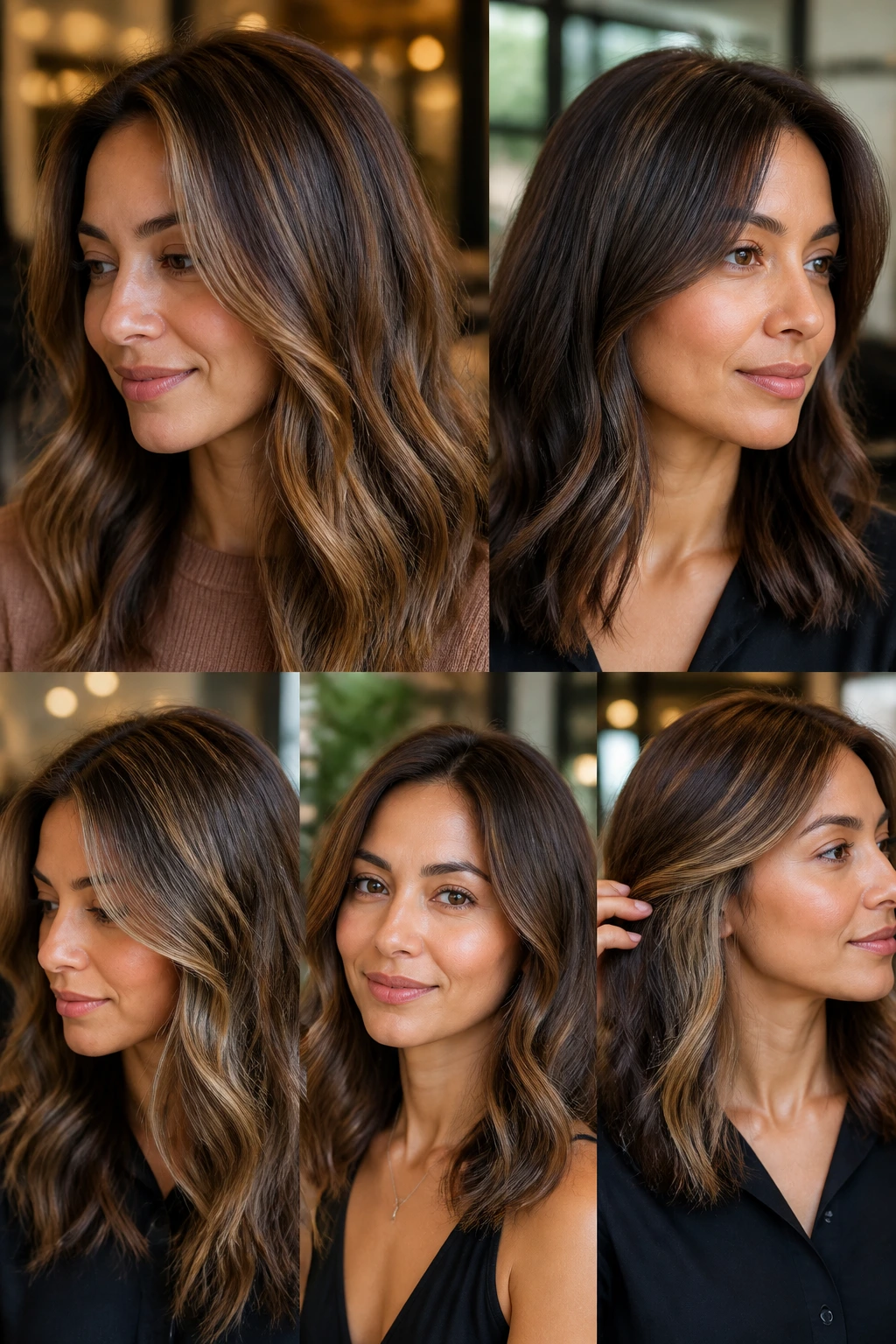
Face-Frame Only: If you want the smallest possible change, keep the brown brightness around the front layers and leave the rest close to your base.
Rooted Balayage: Start darker at the root and let the brown lift appear in the mids and ends. This gives the most grow-out comfort.
Hidden Underlights: Place darker or lighter brown pieces underneath the top layer for movement that only shows when the hair moves.
Gloss-Only Dimension: Skip visible highlights and use a rich brown gloss to deepen the tone. It’s subtle, but on fine hair it can make the hair look smoother and fuller.
Warm-to-Cool Melt: Blend caramel near the face into taupe or mushroom through the ends if your skin changes tone between seasons or you just like softer contrast.
Keeping Brown Highlights Fresh Between Appointments
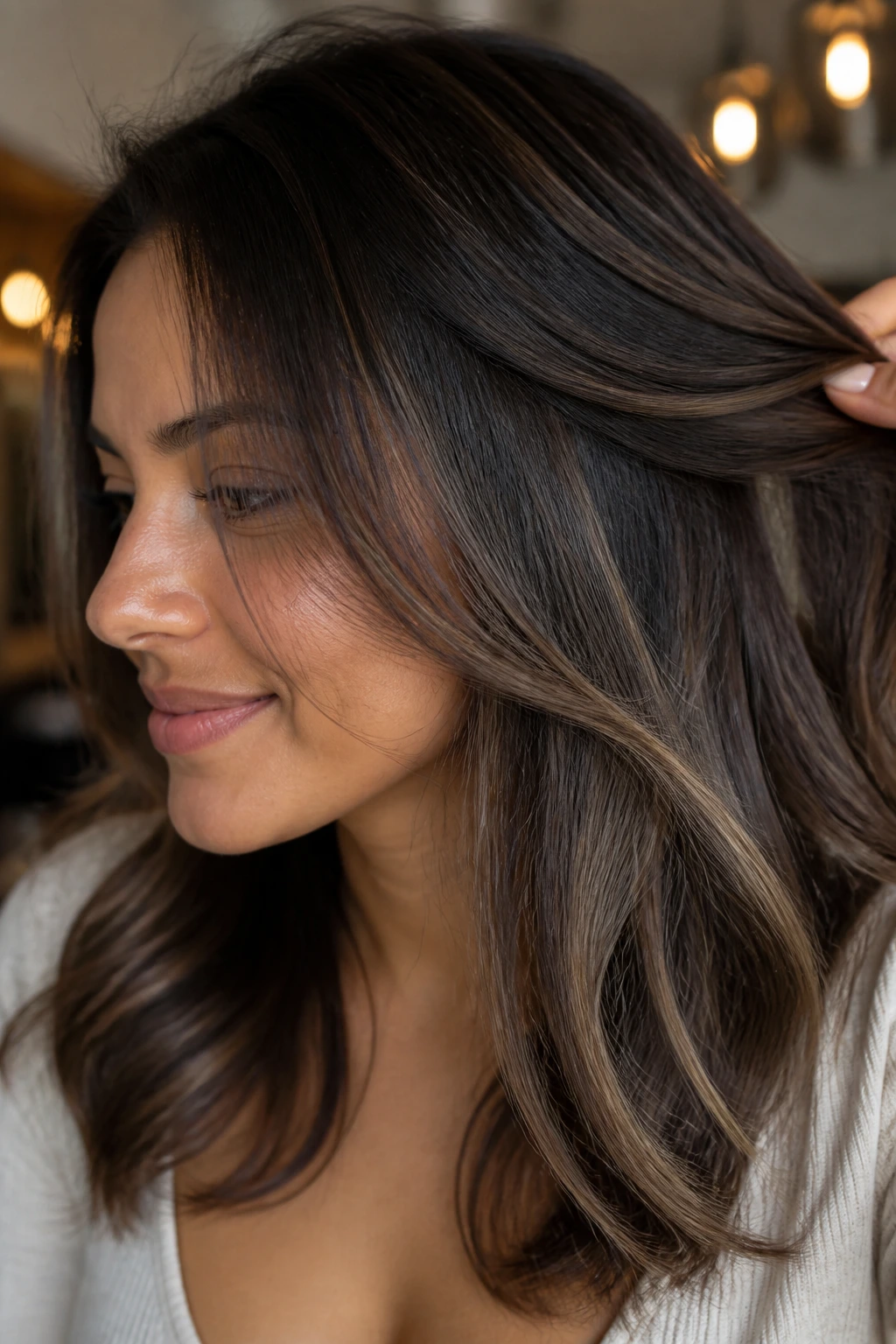
Brown highlights usually hold their shape better than lighter blonde work, but they still need upkeep. A gloss every 6 to 8 weeks keeps the tone from turning flat or muddy. If your shade leans warm, the gloss can keep it from going brassy. If it leans cool, it helps stop it from looking dusty.
Most highlight placements can be refreshed every 8 to 12 weeks, depending on how fast your hair grows and how close the color sits to the root. Thin hair often shows regrowth sooner because there’s less bulk to hide it, so a soft root shadow can be useful between visits.
At home, wash less often if you can. Two to three shampoos a week is usually enough for color longevity, and dry shampoo can help on the off days without stripping the tone. If the hair starts feeling rough, focus conditioner on the mid-lengths and ends only. The root needs lift. The ends need softness.
Questions People Ask Before Booking Brown Highlights
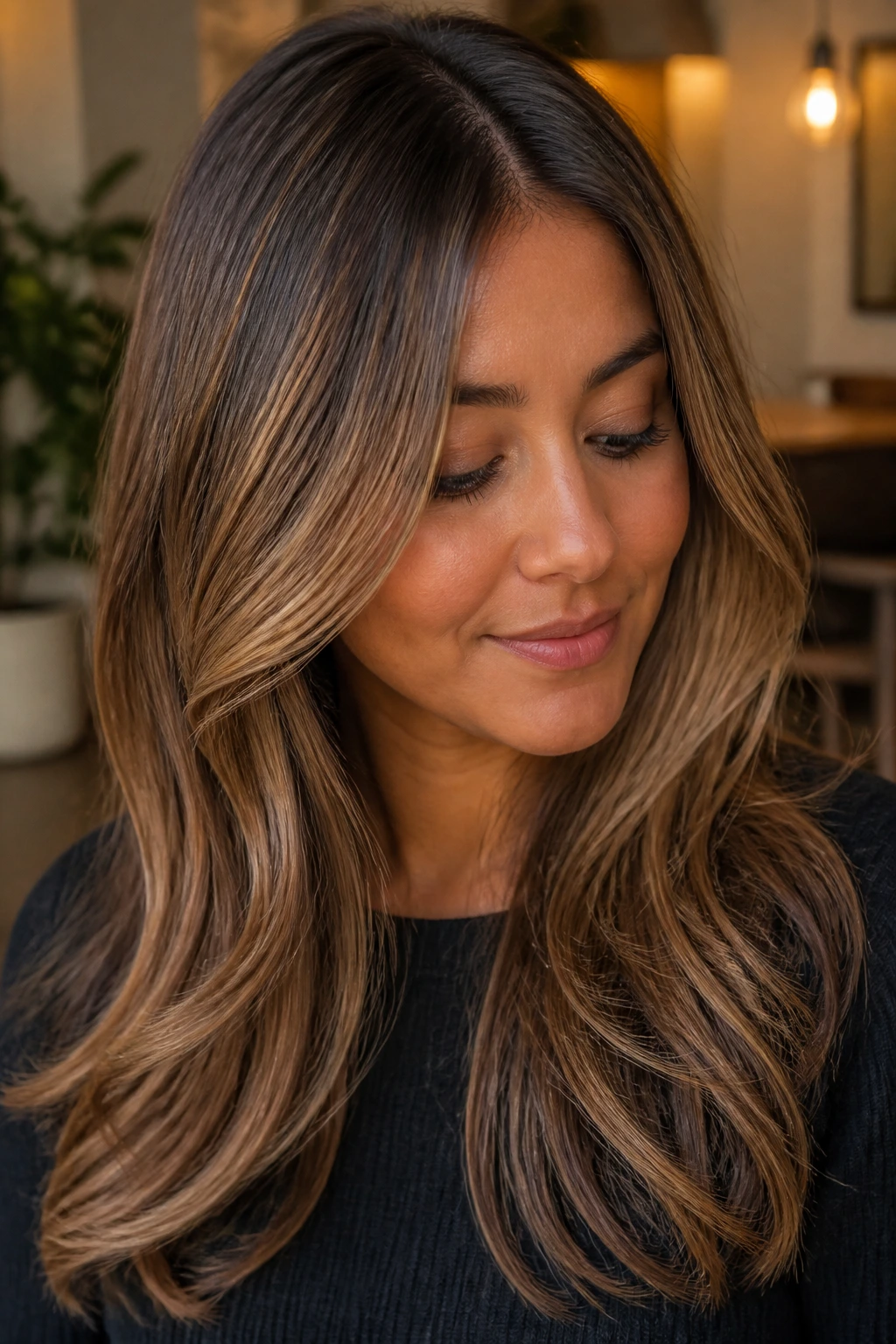
Will brown highlights make thin hair look thinner?
Not if the placement is soft. Fine babylights, lowlights, and root shadows usually make thin hair look fuller because they add depth without breaking the surface into wide stripes.
What brown shade works best on medium skin with olive undertones?
Mushroom brown, taupe brown, mink, and cool mocha are the usual starting points. They keep olive skin from looking too yellow or too red.
Can I do highlights if my hair is already fragile?
Yes, but the lightening should stay gentle and controlled. Ask for fewer pieces, finer sections, and a glossed finish instead of aggressive lift.
Are caramel highlights too warm for medium skin?
Not by default. Caramel is one of the easiest browns for golden and peachy medium skin. On olive skin, it may need a cooler gloss to keep it from turning orange.
How do I ask for more fullness instead of more brightness?
Say you want dimension, not stripes, and tell the colorist you’d rather keep the hair looking dense than super light. That usually shifts the plan toward babylights, lowlights, and shadow roots.
Do brown highlights work on straight hair?
Absolutely. Straight hair shows the placement more clearly, so the narrowness of the highlights matters even more. A soft gloss can keep the finish smooth.
What if my highlights look patchy at home?
That usually means the contrast is too strong or the tone has faded unevenly. A salon gloss can soften the edges, but patchy lift is harder to fix than patchy tone, which is why careful placement matters from the start.
A Softer Kind of Brightness
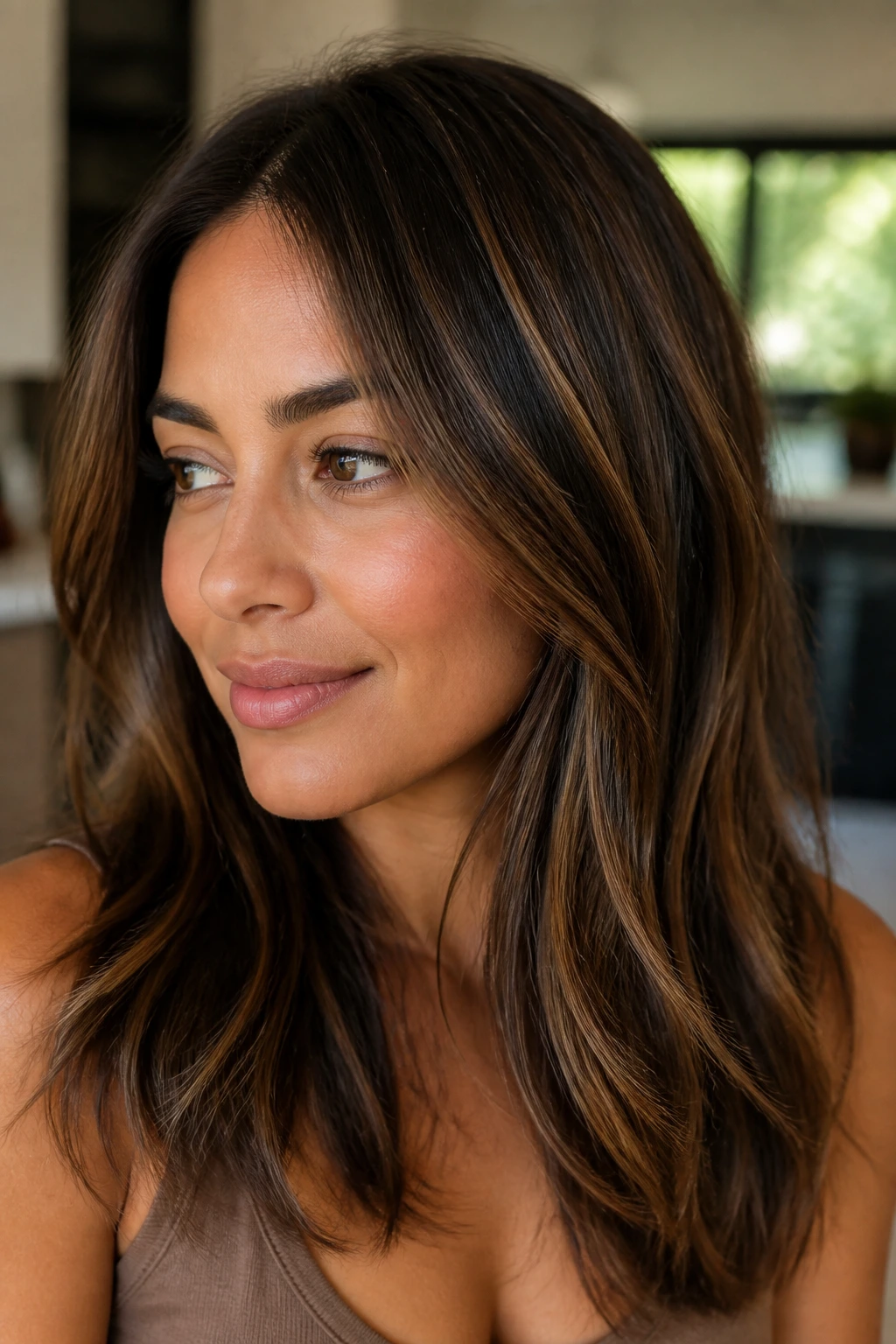
Brown highlights do not have to shout to change the whole head of hair. On medium skin, the right brown tone can warm the face, sharpen the cut, and keep thin hair from looking see-through at the ends. That’s a better trade than chasing a loud blonde that only looks good from one angle.
The strongest looks in this set all do the same thing in different ways: they keep the base rich, place brightness with intention, and leave enough depth behind for the hair to look like hair, not lace. That’s the move worth repeating. Next time you sit in the chair, ask for brown dimension that supports the density you already have, and let the color do its quiet work.