



Caramel brunette balayage looks richest on deep skin when the lighter pieces behave like reflected light, not like stripes trying to get attention. The best versions have a toasted, almost drinkable warmth to them—think toffee, maple, honey-brown, bronze, and soft amber—laid over a brunette base that still feels substantial at the root.
That balance matters more than people admit. Push the blonde too high and the look can turn chalky or stripey against deeper complexions. Keep it too dark and the dimension vanishes under indoor lighting, which is a shame because the whole point is that little shift in tone when you turn your head and the hair catches the light for half a second.
The styles that work best on deep skin tones tend to do one of three things: brighten the face with a controlled money piece, keep the lightness low and ribboned through the mids and ends, or use a soft ombré that lets the brunette base stay dominant. Different hair textures change the equation a little—coils, curls, waves, and straight hair all hold color differently—but the same rule keeps winning: the caramel should look expensive because it belongs there, not because it’s screaming for attention.
Why This Collection Feels Different
Soft contrast, not harsh streaks: The looks below lean into hand-painted placement and shadow roots, so the lightness reads as movement instead of lines.
Deep-skin-friendly tones: I’m keeping the caramel in the toffee, bronze, maple, and honey-brown lane, which tends to flatter rich complexions better than pale beige blonde.
Low-commitment options included: Some ideas grow out quietly for months, while others give you a brighter front piece or a more obvious ombré if you want a little drama.
Texture-aware placement: A few of these are built for coils and curls, where the same color can look entirely different once the hair bends and stacks.
Salon language you can use: Every look has a practical angle—where the brightness should sit, how much contrast to ask for, and what kind of toner keeps the caramel from going orange.
Why Caramel Brunette Balayage Flatters Deep Skin Tones
The reason this color family works so well on deeper complexions is simple: the warmth in the hair and the warmth in the skin talk to each other instead of fighting for space. Caramel is not one note. It can lean beige, golden, bronze, maple, or even a little coppery, and each version changes how the face reads.
On deep skin, the nicest results usually come from lightness that sits one to three levels above the base. That gives you reflection without making the hair look thin or over-processed. If you go much lighter than that, the pieces can start to separate visually, especially on straight hair or on tighter curl patterns where contrast shows fast.
Undertone matters, too. Golden and red undertones in the skin usually welcome honey, toffee, and bronze caramel. Cooler or neutral undertones tend to look cleaner with mocha-caramel, chestnut, or beige caramel that has a softer finish. I like this approach because it keeps the color from reading brassy in the wrong way—there’s warmth, but it still feels controlled.
Placement does a lot of the heavy lifting. The best balayage on deep skin tends to brighten around the face, float through the mid-lengths, and finish with a little more lightness at the ends. That shape creates depth near the roots and glow where you actually want it: at the cheekbones, around the jaw, and through the movement of the hair.
How to Talk to Your Colorist About Caramel Brunette Balayage
A good consultation saves you from the most annoying kind of salon disappointment: leaving with hair that is technically lighter, but not in the right places. Bring two or three reference photos, and make sure at least one of them matches your hair length and texture. A curly caramel bob and a straight caramel waist-length style do not behave the same way.
Be specific about the finish you want. If you like contrast, say you want a brighter face frame and softer ends. If you want subtle dimension, ask for fine ribbons painted through the mid-lengths with a deeper root shadow. A root shadow is just that darker band near the scalp that keeps the grow-out smooth and stops the lightness from looking pasted on.
Here’s the part people forget: mention toner. Caramel can be glossy and warm, or it can drift into orange if the toner is too weak or the wrong shade. Ask whether your look should lean beige, golden, bronze, or chestnut, and let the colorist tell you where your hair will realistically lift. Hair that has been box-colored, relaxed, or heavily heat-styled often needs a more conservative plan.
If your hair is curly or coily, ask where the painted pieces will sit once the hair is in its natural shape. That tiny detail matters. A highlight placed on a stretched curl can disappear when the curl springs back, and nobody wants to pay for color they can’t see.
1. Toasted Cinnamon Ribbons
This is the look I’d hand to someone who wants warmth without losing depth at the root. Thin cinnamon-toned ribbons are painted through the mid-lengths and ends, with the brightest pieces sitting just below the cheekbone area so the face gets a soft lift when the hair moves.
Where It Works Best
The placement is forgiving on long waves, medium layers, and thick hair that already has some natural bend. Deep skin tones with golden undertones usually love this one because the warmth echoes the complexion instead of sitting on top of it like a sticker.
Ask for a level-7 or level-8 caramel ribbon, not a pale blonde stripe. That difference is huge. The look should feel warm and silky, with a shadow root that stays noticeably darker so the cinnamon pieces have something rich to sit against.
2. Honey Money Piece Glow
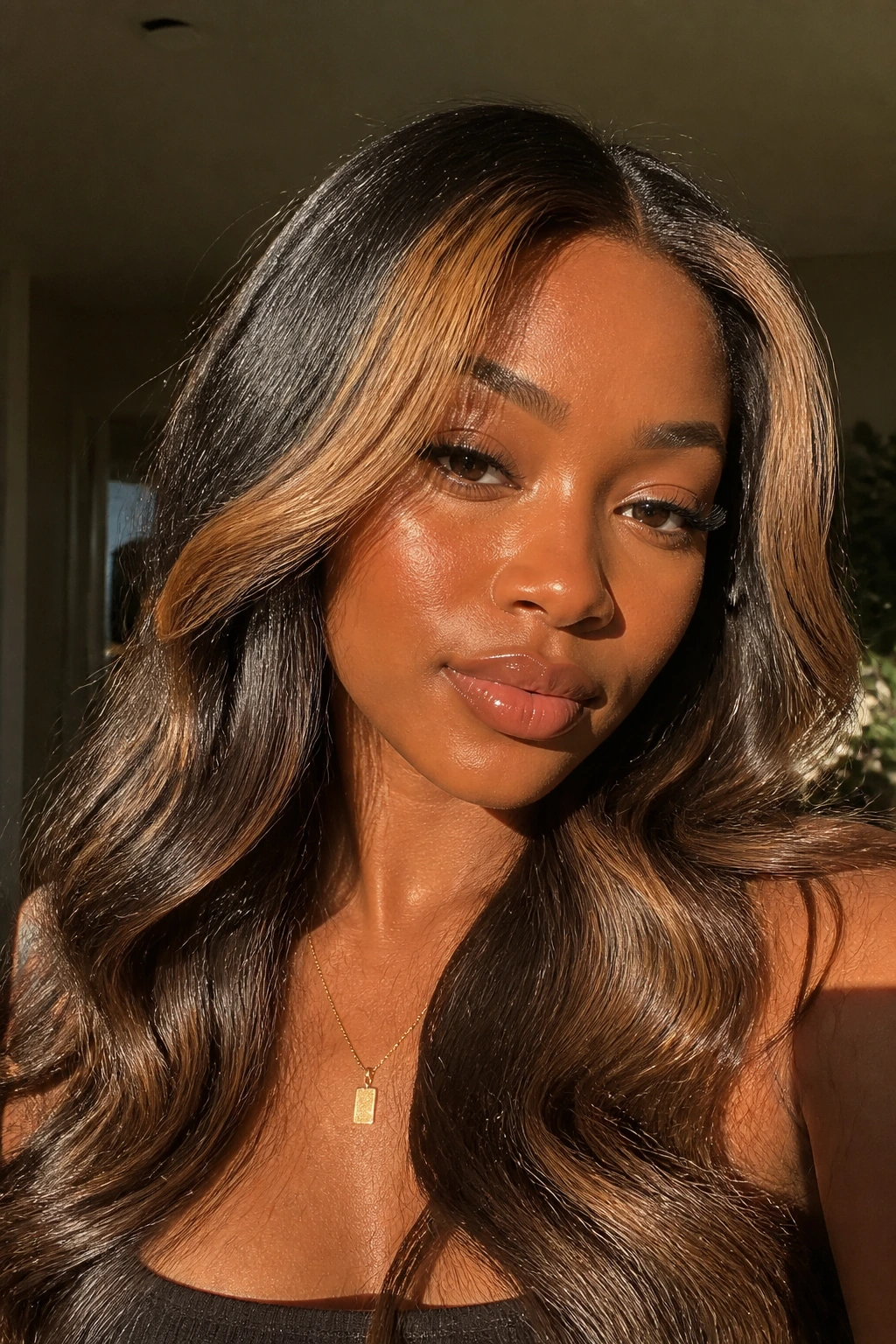
A money piece can go wrong fast if the front sections are too thick or too pale. Done right, though, it’s the fastest way to pull light around the face without changing the whole head, and deep skin tones often wear that contrast really well when the tone stays honey-brown instead of yellow.
The best version uses a narrow, bright panel right at the front hairline, then lets the rest of the balayage stay softer and a little darker. That keeps the face-framing pieces from looking like two isolated streaks. I prefer this on layered cuts and soft blowouts because the front section gets a little lift every time the hair sweeps back.
If you want a bolder finish, ask for the money piece to be one full shade lighter than the surrounding caramel. If you want something quieter, have the colorist blur the root area and keep the brightness only from cheekbone to ends.
3. Mocha Melt With Soft Ends
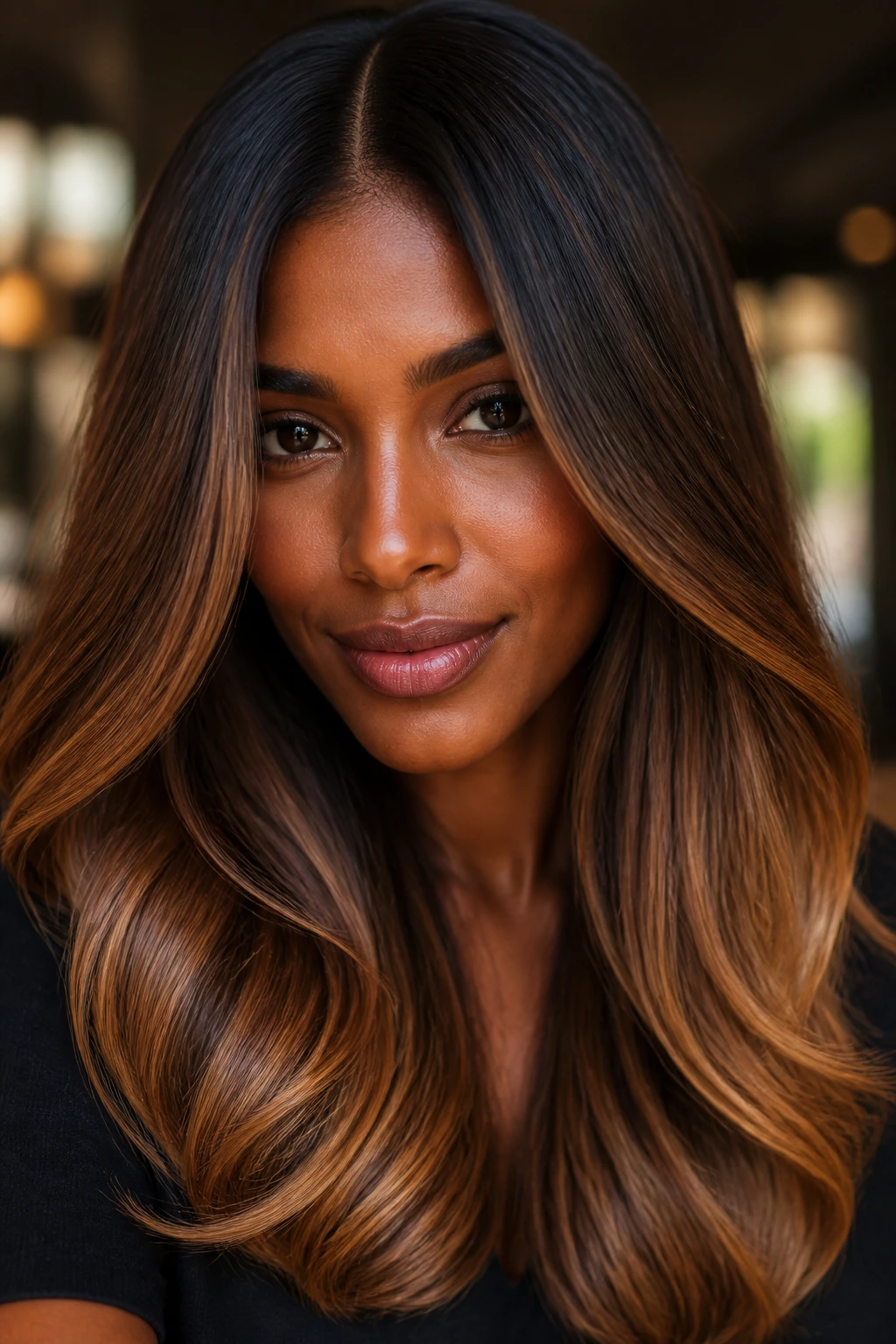
A mocha melt is the calmest option in the bunch, and that’s not a bad thing. The color moves from deep brunette at the roots into a milkier caramel at the ends, but the change stays slow enough that you never see a hard line.
This one shines on straight hair and soft bends because the gradient becomes more obvious when the light hits the surface. On deep skin, the mocha base keeps the hair looking rich while the warmer ends add just enough lift to keep everything from sinking visually.
If your natural shade is already dark, this is a smart first balayage. Ask your colorist for a low-contrast blend with a demi-permanent gloss on the ends after lightening. The result should look like the hair got warmer and glossier, not like it was aggressively highlighted.
4. Bronze-Laced Curls
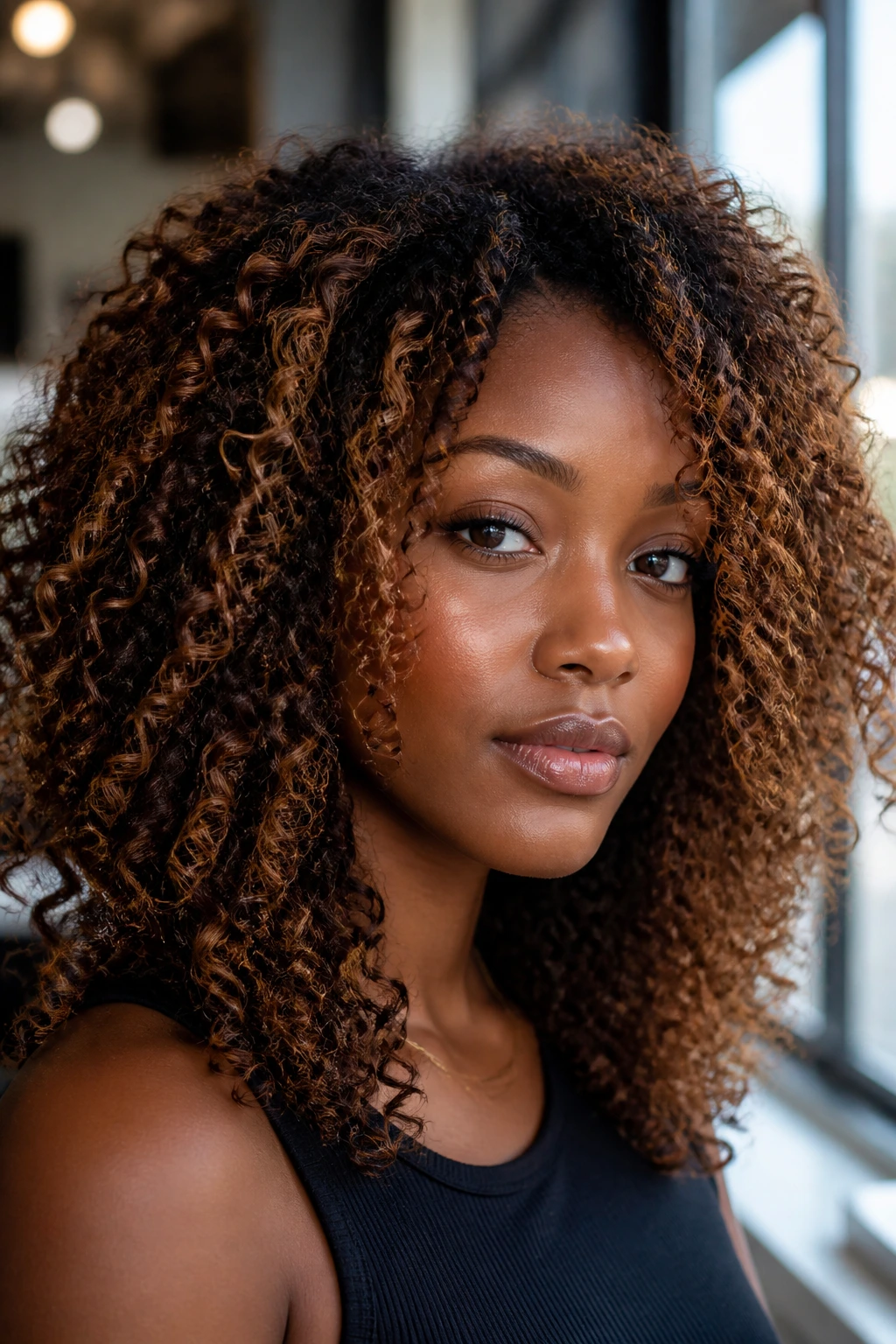
Curly hair takes caramel differently. The color wraps around the curl pattern, so a few well-placed bronze ribbons can do more than a full head of lighter pieces ever could.
Curl Placement Matters Here
Ask for the highlights to be painted where the curls separate and catch light—not every curl, not every layer, and definitely not too close together. Bronze and amber tones are especially kind to deep skin because they sit between gold and brown, which keeps the curls looking dimensional instead of frosted.
A stylist who understands curls will usually paint the hair while it’s stretched enough to see the pattern, then let the coils contract to check the final placement. That step matters. If the color lands in the wrong place, the curl can hide it completely, and you end up with a lot of work that only shows in the mirror at one angle.
5. Espresso Shadow Root Sweep
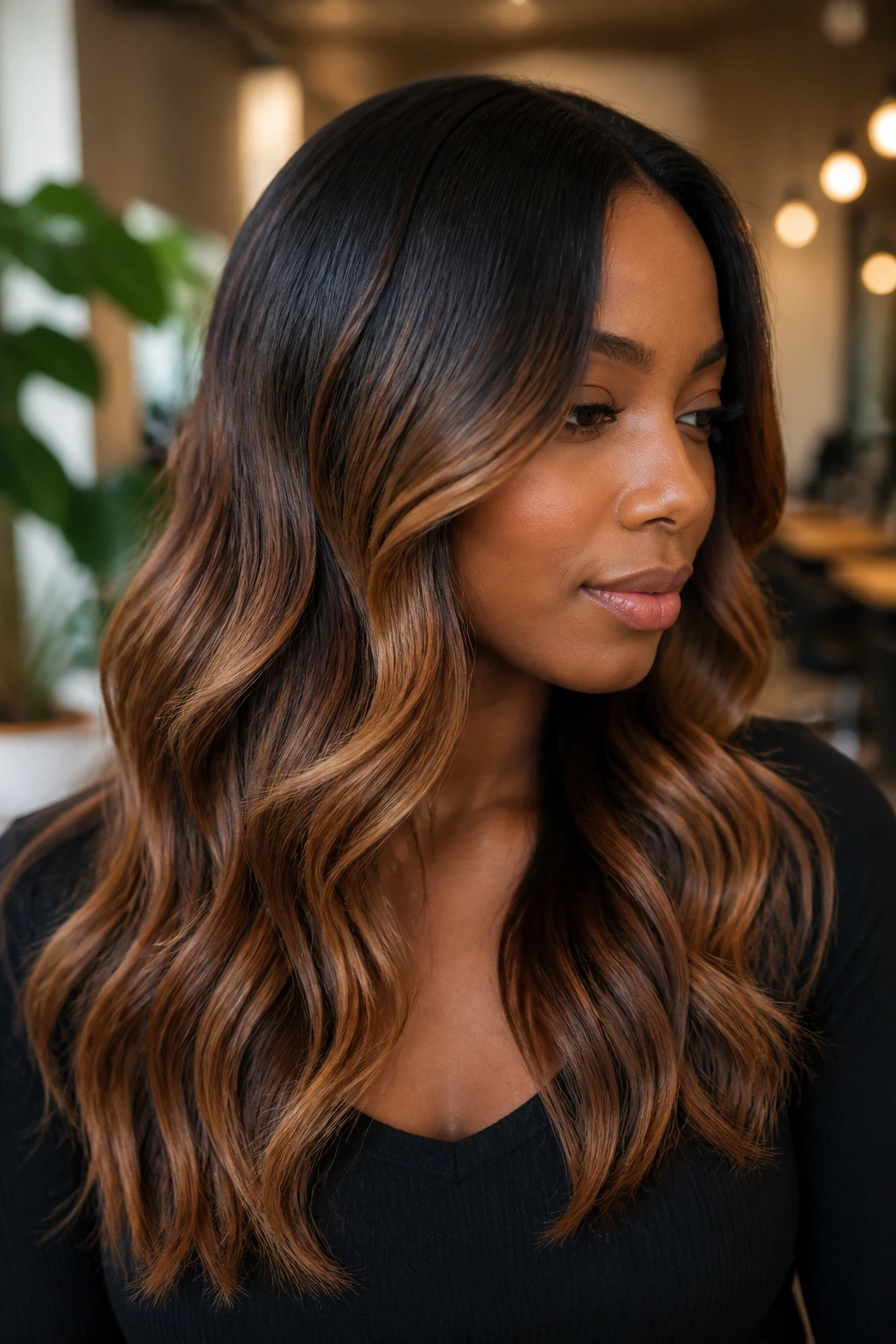
This is the low-maintenance pick for people who want lighter hair but do not want to think about roots every few weeks. The espresso shadow root stays dark for a good stretch near the scalp, then the caramel sweep starts lower down and gets a little brighter as it reaches the ends.
The result is polished and grounded at the same time. On deep skin, that darker root keeps the face from getting washed out, which is one of the reasons this style wears so well over time. It also gives you room to grow out the color without the top of the head turning muddy.
I like this on long layers, loose curls, and shoulder-length cuts with movement. If your hair is very straight, ask for a few extra ribbons near the front so the top doesn’t read too flat.
6. Maple Ends on Layered Hair
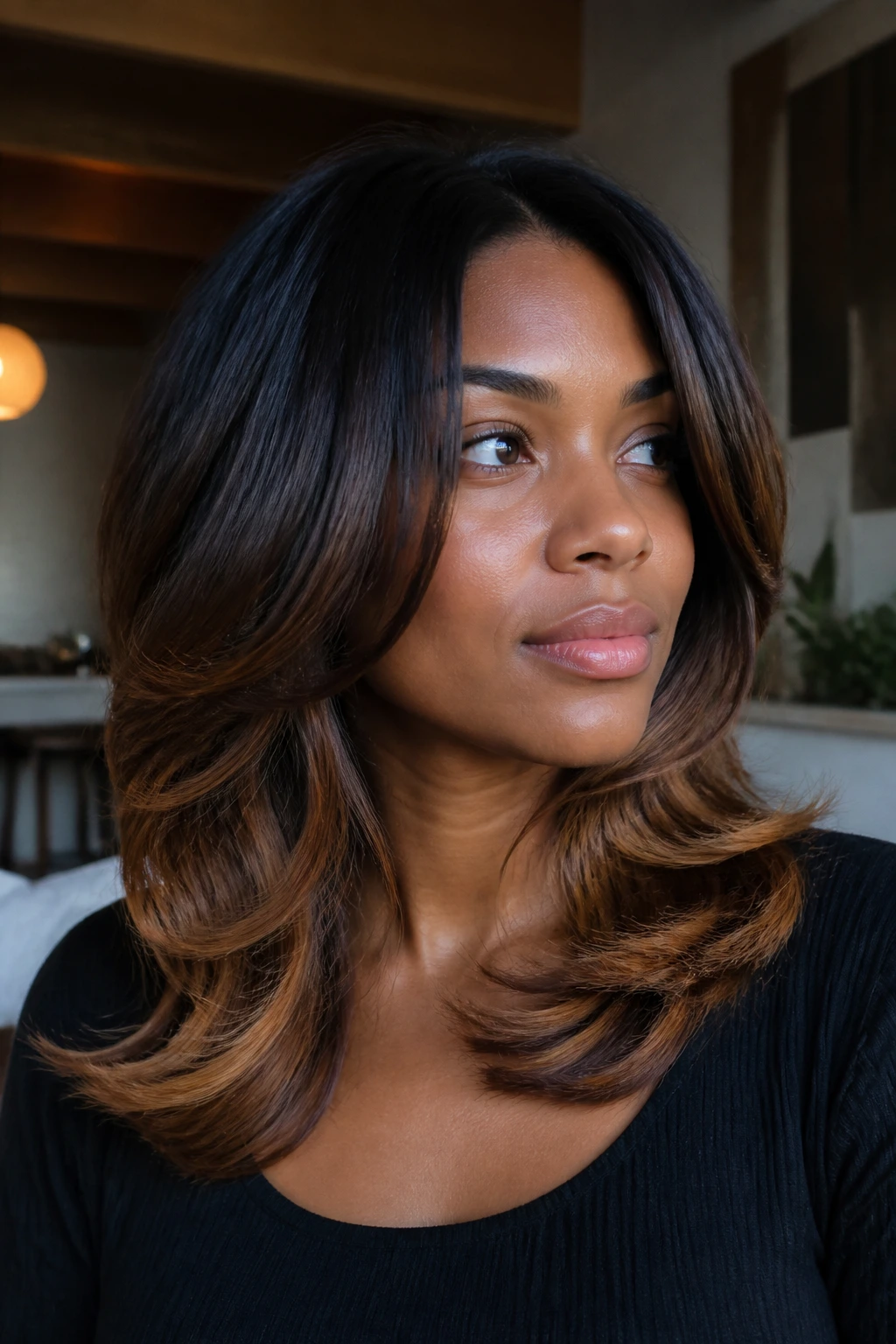
Layered hair gives you room to let the ends do the talking. Maple-colored ends—warm, slightly toasted, not yellow—add brightness where the cut naturally flips and swings.
Why the Ends Do the Work
Because the layers already create movement, the lightness doesn’t need to be everywhere. You can keep the root and upper mids darker, then let the lighter caramel collect on the final few inches. That approach looks especially good on deep skin because the warmth sits at the edges of the silhouette, where it feels intentional rather than busy.
Ask for soft painting through the last 3 to 5 inches, with a gentle glaze that keeps the maple tone shiny. If the ends are too pale, they’ll look dusty. That’s the trap with this kind of look. The caramel should glow, not dry out.
7. Butterscotch Bob
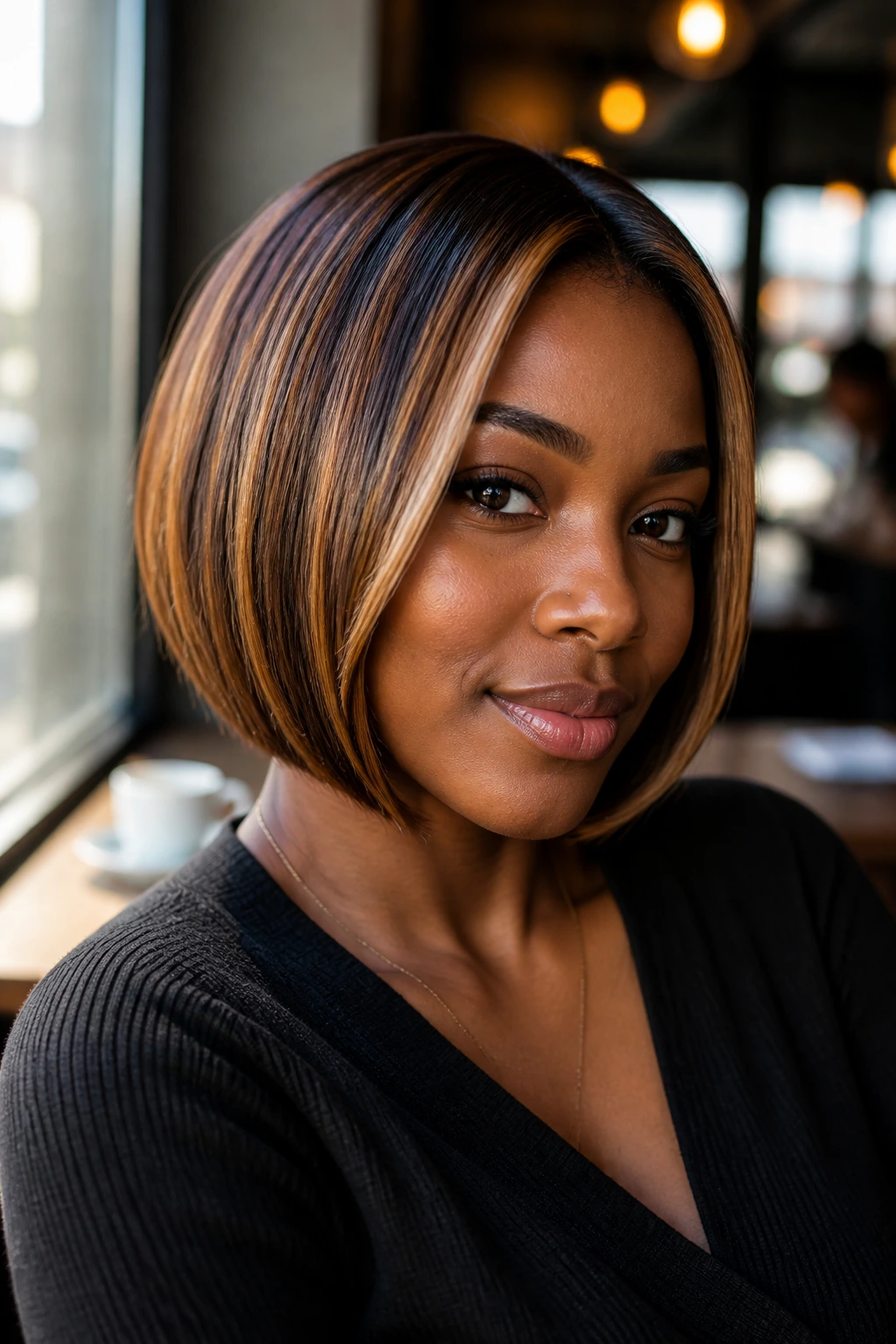
A bob can carry more contrast than people think, but only if the highlights are fine and placed with some restraint. Butterscotch tones on a bob should be petite and close together, especially around the front pieces and the top layers.
The shorter the cut, the less room there is for heavy balayage to breathe. That means the color needs to be precise. On deep skin, a buttery caramel bob can look sharp and clean when the tone stays warm and the root stays rich. It can also turn stripey if the pieces are too wide, so I’d keep the ribbons narrow and the gloss warm.
This is one of the best looks for someone who likes a neat outline around the face. A bob already gives structure; the caramel just softens the edges a little.
8. Chocolate Chip Micro-Ribbons
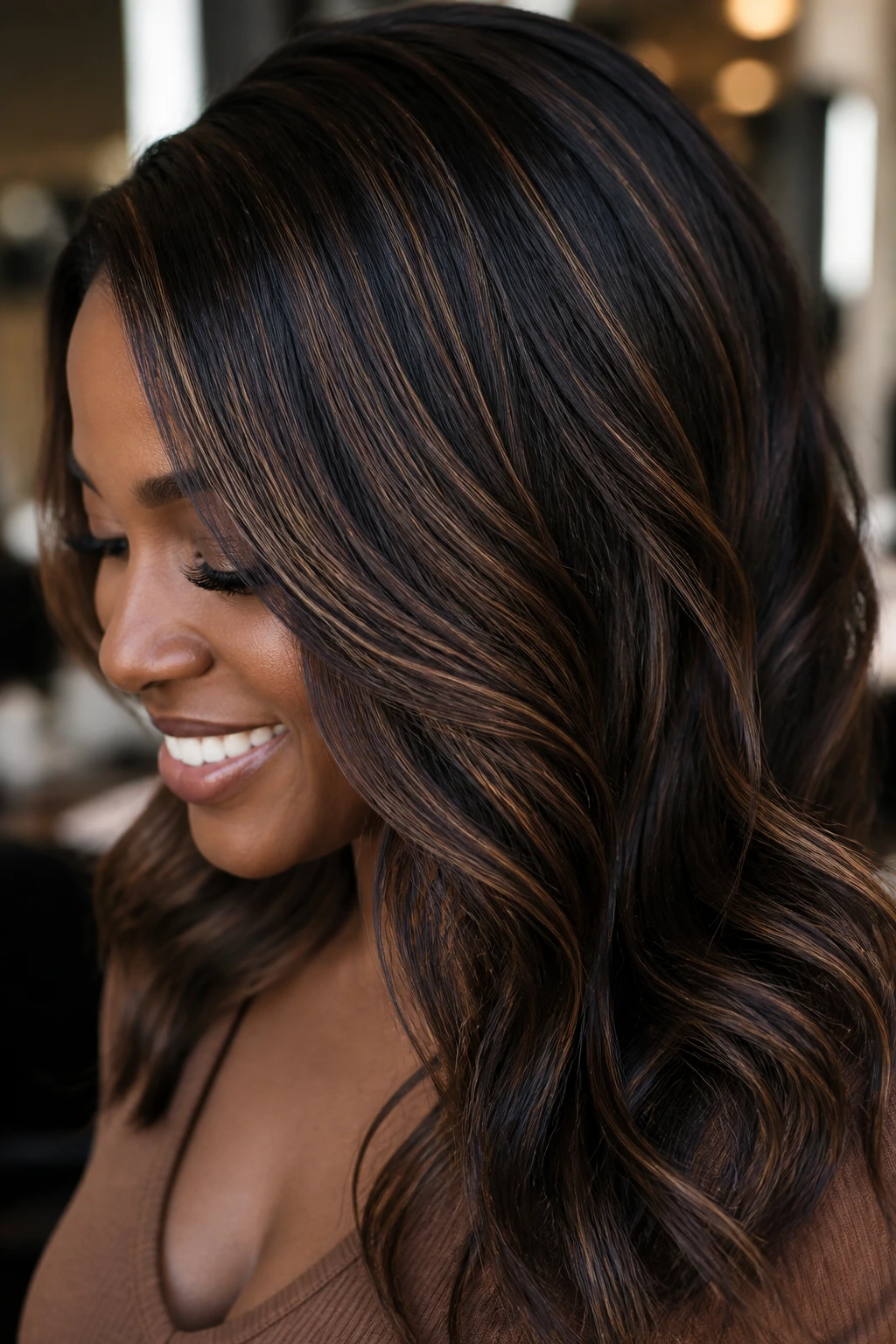
Micro-ribbons are for people who want dimension that shows up in motion, not from across the room. Tiny caramel threads are painted throughout a deep brown base, almost like the hair has been dusted with warmth.
The effect is especially nice on deep skin because the color doesn’t compete with the complexion. It just adds a little shimmer. Under indoor light, the hair looks richer; outside, those narrow ribbons give you a soft shift without making the hair look streaky.
Tiny Pieces, Big Payoff
This style takes a careful hand, which is why I like it more in the chair than on a mood board. The pieces should be narrow enough that you can’t point to one and call it a highlight. If you can do that, the placement is probably too obvious.
The end result is good for professionals, students, or anyone who wants polished dimension without the maintenance of a brighter balayage.
9. Warm Toffee Veil
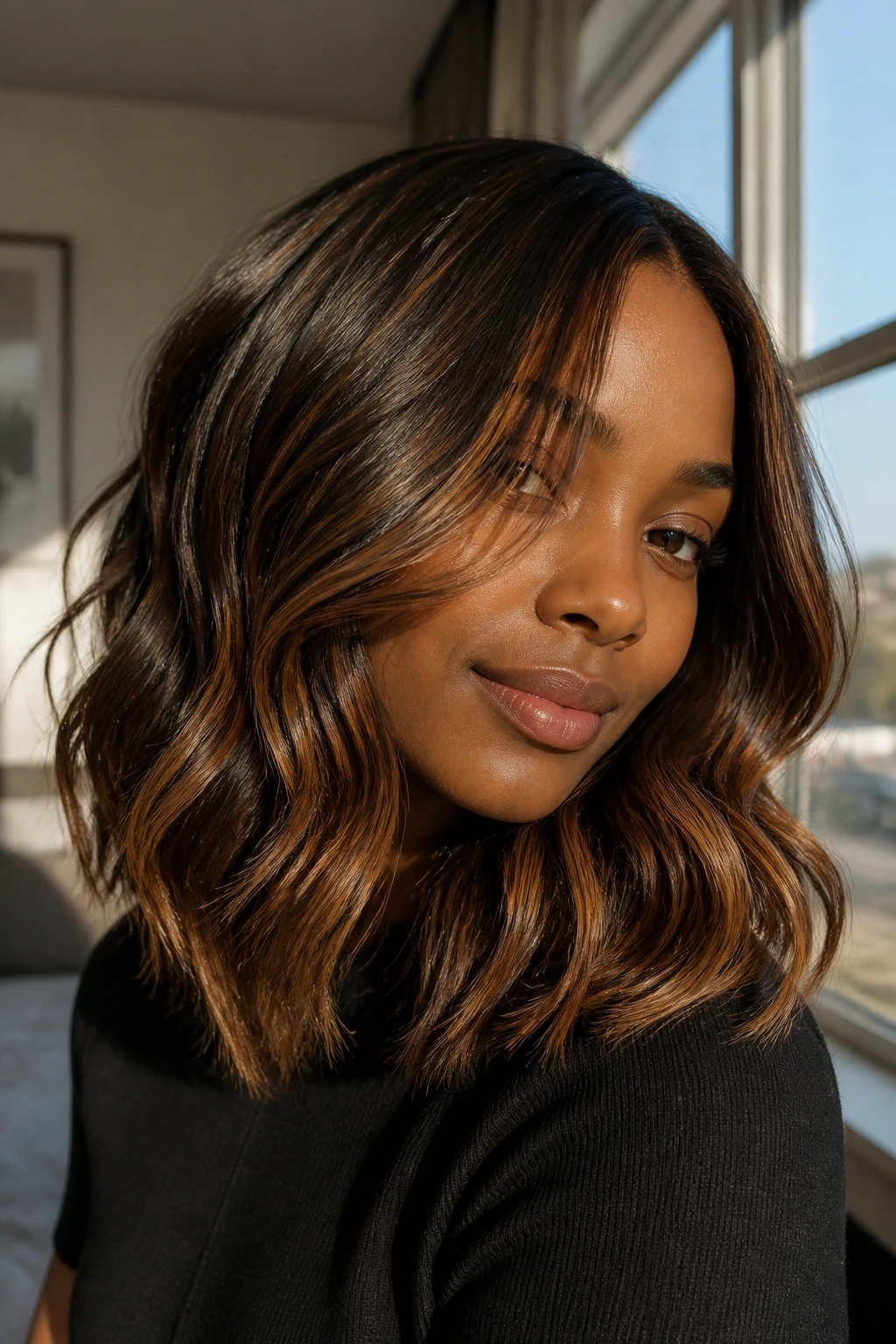
A toffee veil is one of those color jobs that looks quiet until the light moves. Then it wakes up. The caramel is spread softly through the surface layers, almost like a thin warm glaze over the brunette base.
This is a smart pick for medium-length hair that falls somewhere between shoulder and chest level. The veil effect gives you depth from the top and warmth through the outer layers, so you do not need a heavy face frame to make it work. On deep skin, the warm toffee tone can look especially good when it lands beside a golden highlighter or a glossy lip—small thing, big payoff.
Placement Notes
- Keep the brightest pieces in the outer canopy, not buried underneath.
- Ask for a gloss that leans toffee-beige, not copper-orange.
- Let the root stay soft and darker by at least 1 to 2 shades.
- Style with a round brush or loose wave so the ribbons separate a bit.
10. Golden Halo Balayage
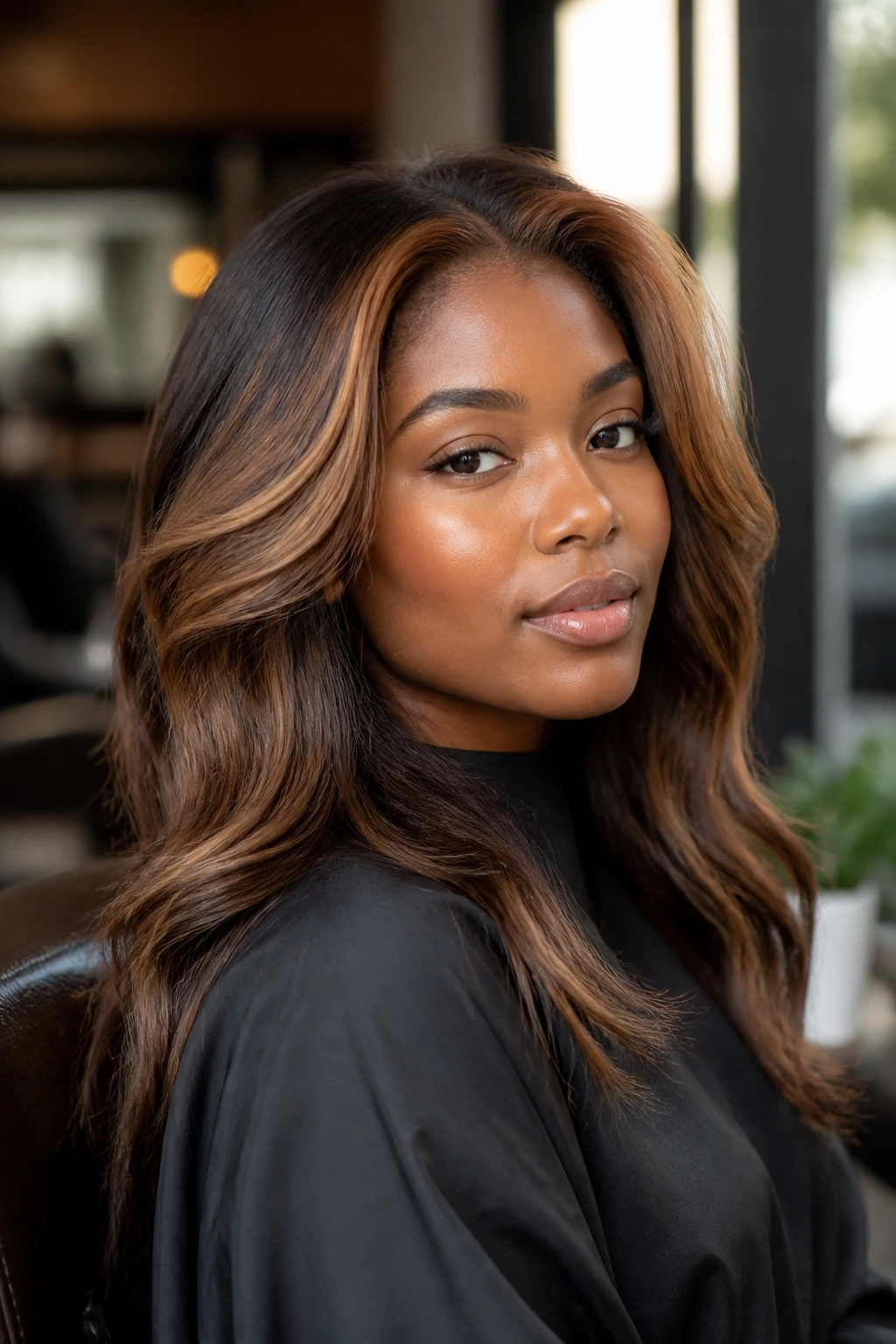
A halo placement circles the perimeter where the eye naturally goes first: hairline, temples, and upper outer layers. That makes it one of the most face-brightening caramel brunette balayage ideas for deep skin tones, especially if you want light where it actually shows up in photos and real life.
The trick is to keep the halo diffuse. No hard line at the part. No bright stripe sitting on the scalp. The lightness should feather from the crown into the sides, then melt into the brunette underneath. I like this on blowouts because the movement reveals the shape, but it also works on curls that open up around the face.
If you want a fuller glow, ask for a few extra painted pieces around the nape and the underlayers. That stops the top from looking too isolated.
11. Cinnamon Copper Blend
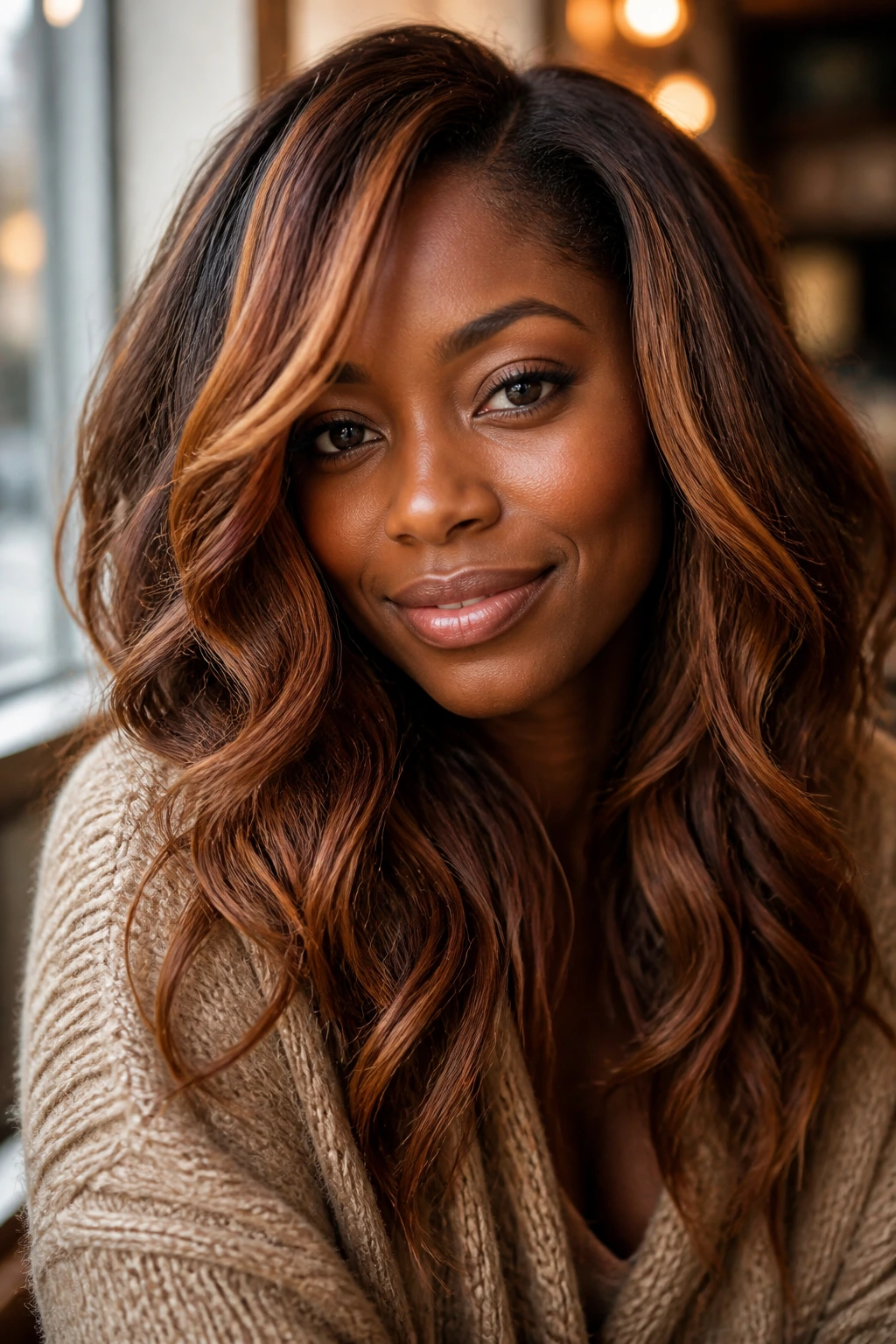
Some deep skin tones can take a little more red in the caramel, and that’s where cinnamon copper shines. It adds spice without crossing into neon territory, which is a relief because orange hair and brown skin can be a messy match when the toner is off.
This version works best when the base remains brunette and the lighter pieces lean reddish-gold rather than pure gold. The warmth can bring out gold jewelry, warm makeup, and the natural richness in deeper complexions. On wavy or curly hair, the color has a little extra flash because the bends catch the copper tone from different angles.
I’d keep this one away from very pale ends. You want cinnamon, not pumpkin.
12. Hazelnut Peekaboo Pieces
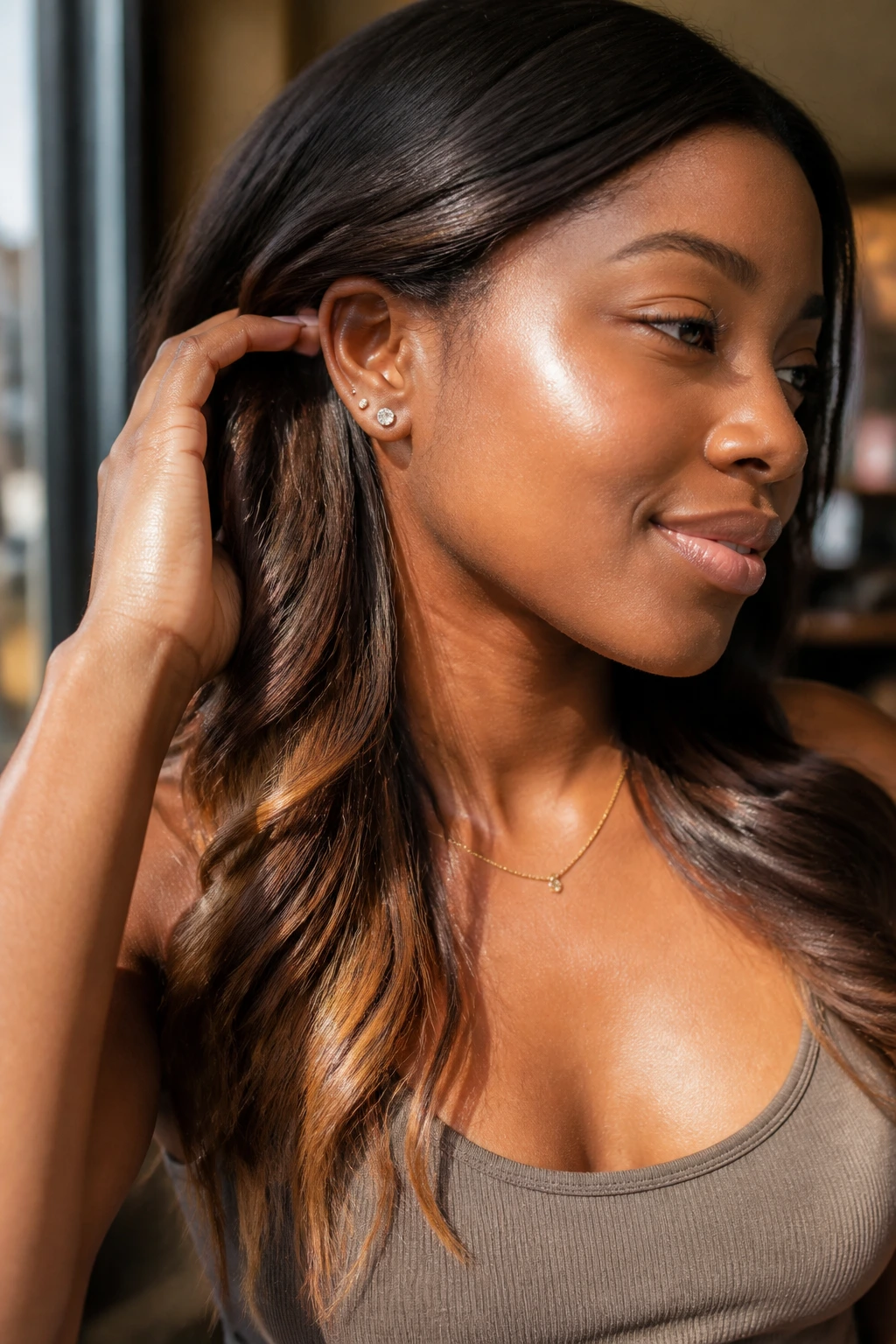
Peekaboo color is for the person who likes having a secret. Hazelnut pieces sit in the underlayers, where they show when the hair moves, swings, or gets tucked behind the ear.
That hidden placement makes this a good low-drama option for deep skin tones. The brunette top layer stays dominant, so the skin never fights a loud front section. Instead, the warmth appears in flashes, which feels more playful than obvious.
This is also one of the better choices if you wear your hair up a lot. A bun, claw clip, or half-up style will reveal those hazelnut layers in a way that looks deliberate. Ask the colorist to keep the underlayer softer and slightly lighter than the surface—nothing chunky, nothing high-contrast.
13. Latte Lift on Straight Hair
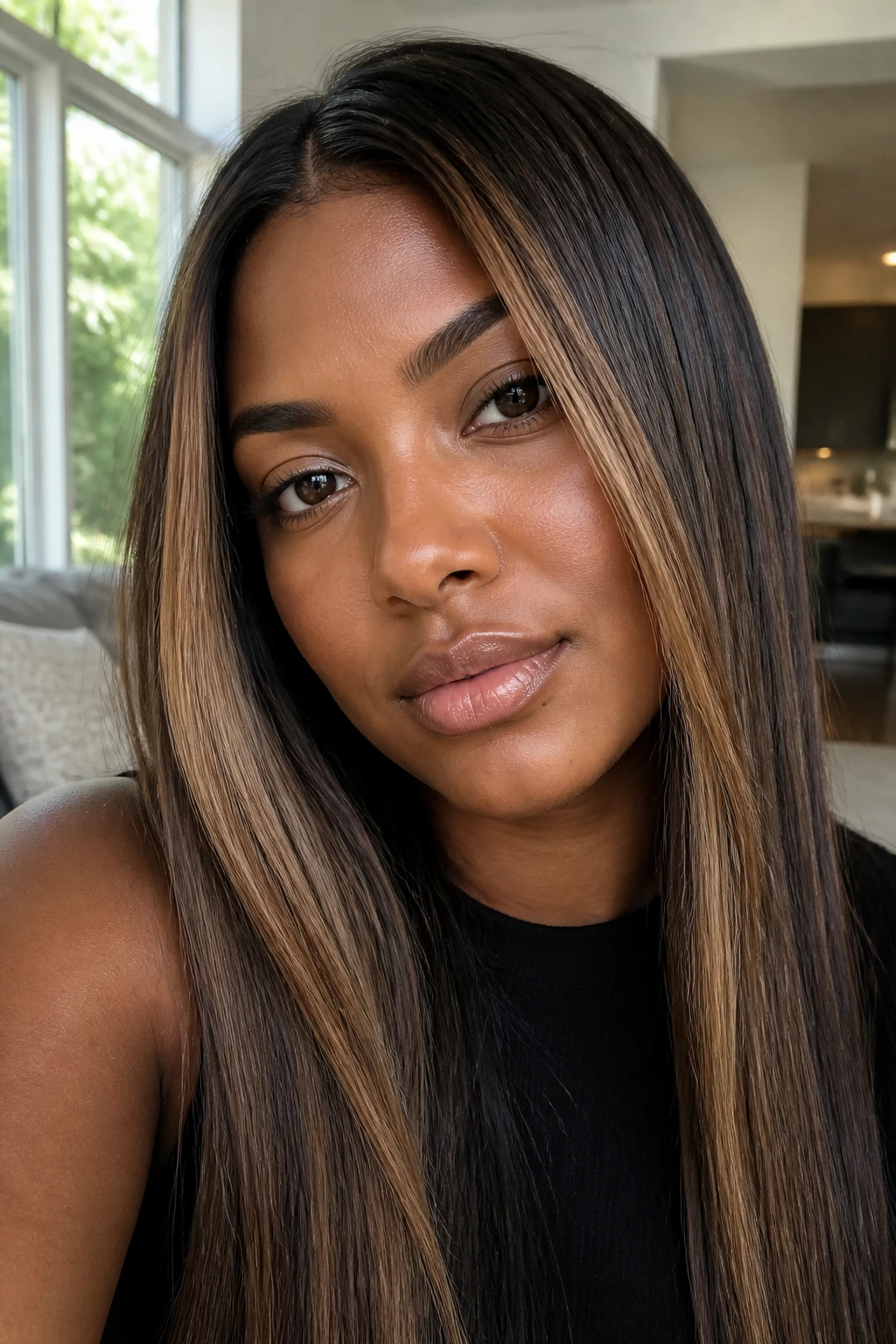
Straight hair is honest. It shows every line, every ribbon, every decision. That is why a latte lift needs narrow, carefully blurred placement, or it can look like someone drew on the hair with a marker.
The best latte lift keeps the base deep and the caramel airy, almost like steam rising through coffee. On deep skin, the look reads clean when the warm pieces are placed around the face and through the lower mids instead of all over the top. A slightly beige gloss helps keep the caramel soft rather than orange.
If you wear your hair straight most of the time, this is a smart one. The color has to do more visual work when there’s less wave to break it up.
14. Amber Contour Highlights
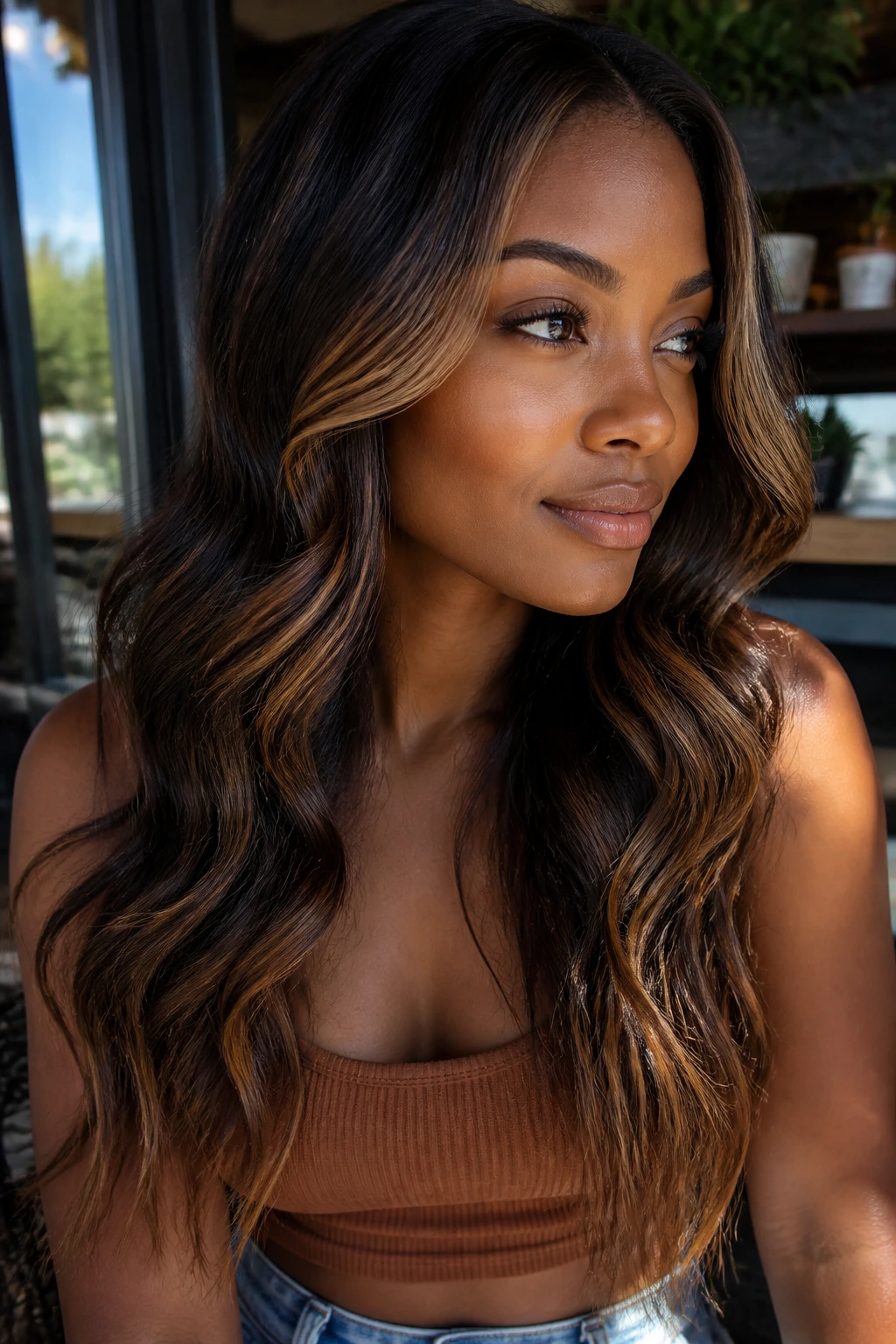
Think of this as hair contouring, but without the gimmick. Amber highlights are painted where light would naturally land around the face—temples, cheekbone line, and the outer curve of the part—so the color frames the features without needing a full bright makeover.
That contour effect is especially flattering on deep skin because it adds lift in a controlled way. The amber tone should stay warm and glossy, not yellow. And the placement should be soft enough that you can still see the brunette base through it.
I like this version on layered cuts, side parts, and longer bangs. It gives shape fast. If your hair tends to fall flat at the roots, ask for a little extra lift through the top layer so the contour doesn’t disappear once the hair settles.
15. Deep Cocoa With Caramel Glaze
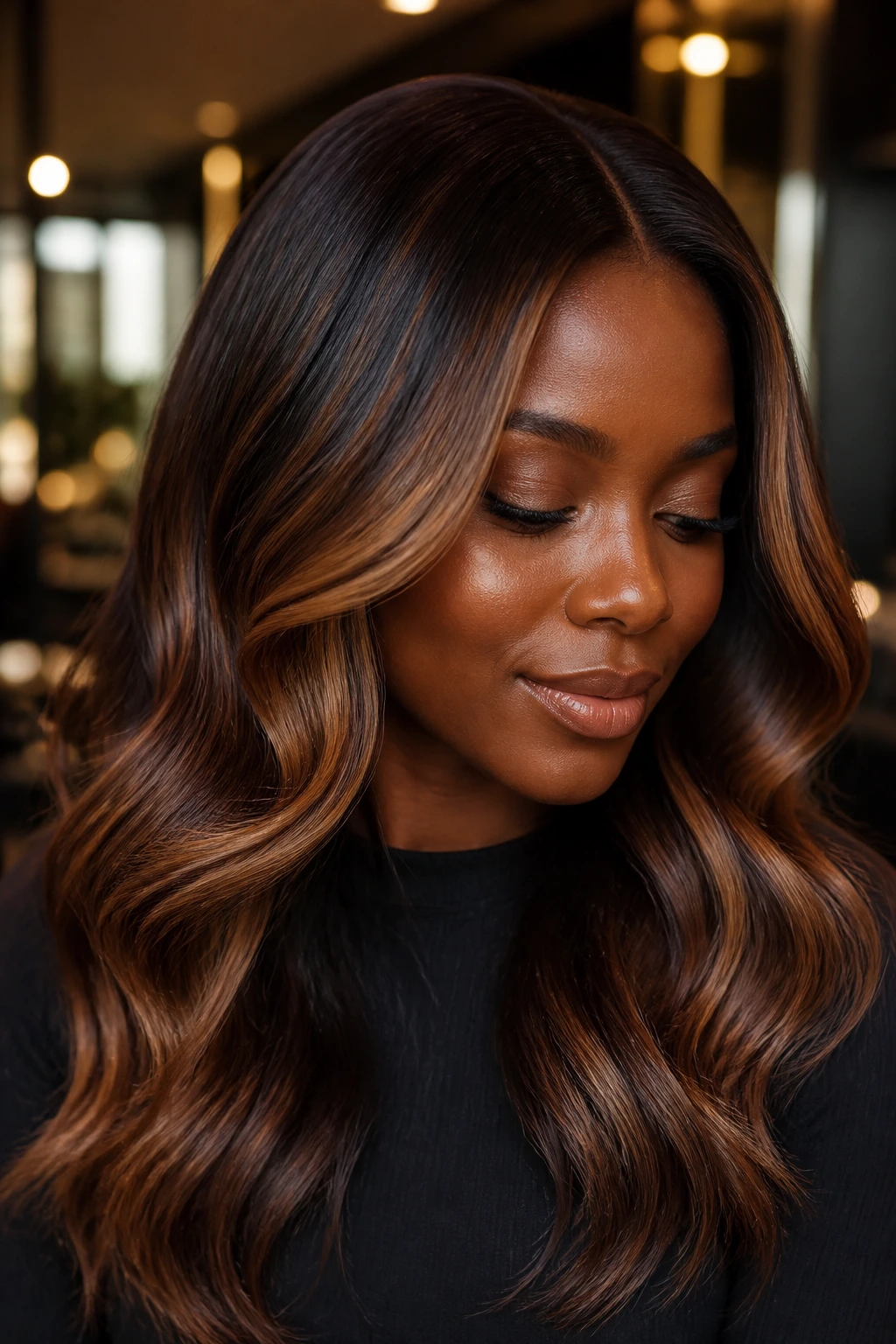
This is the most polished look in the group. The base stays deep cocoa, and the caramel shows up as a glaze rather than obvious streaks, which gives the hair a wet, reflective finish that looks expensive without trying too hard.
It’s especially strong on deep skin because the overall value of the hair stays rich. There’s no giant jump from dark to light. Instead, the caramel appears as a soft sheen across the surface and a brighter note at the ends. The effect is subtle in a way that still gets noticed.
If your hair is already healthy and glossy, this one can be a knockout. If it’s dry or porous, ask for a treatment after lightening so the glaze sits on a smoother surface. Dry hair drinks up toner fast and can dull the tone.
16. Burnt Sugar Ombre
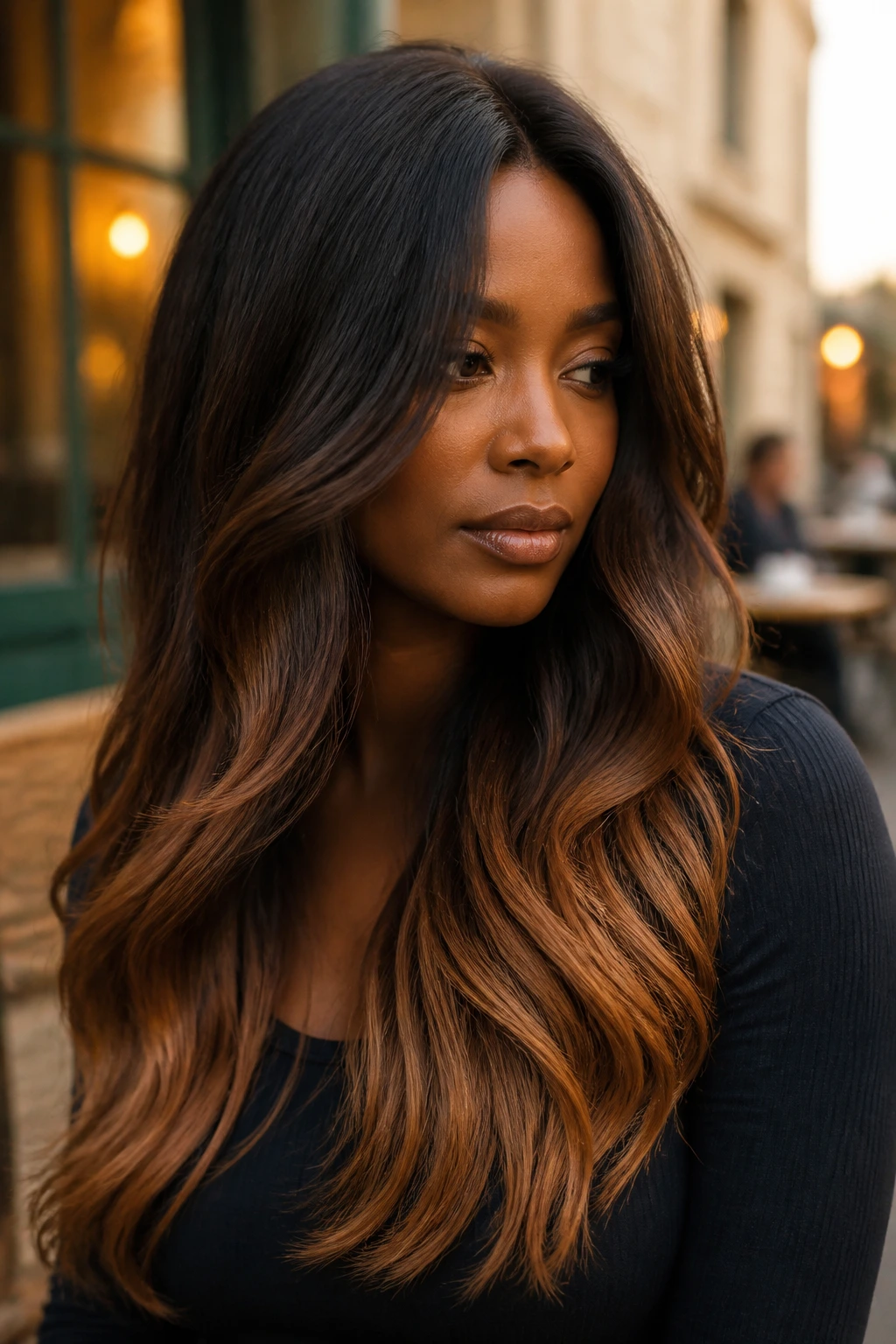
Ombre still works when it’s done with restraint. Burnt sugar ombre keeps the roots and mid-lengths rich, then lets the ends drift into a deeper caramel that feels toasted rather than blonde.
This is a good fit for longer hair because the gradient needs room to unfold. On deep skin, the darker top section keeps the overall look anchored, while the lighter ends add that little flash you get when hair moves against a dark jacket or a simple neckline.
I prefer this when the transition is soft enough that you can’t find the exact start of the lightness. If you can spot the line from across the room, it’s too harsh. The magic here is that the ends glow, but the color never feels chopped.
17. Sanded Caramel on Coils
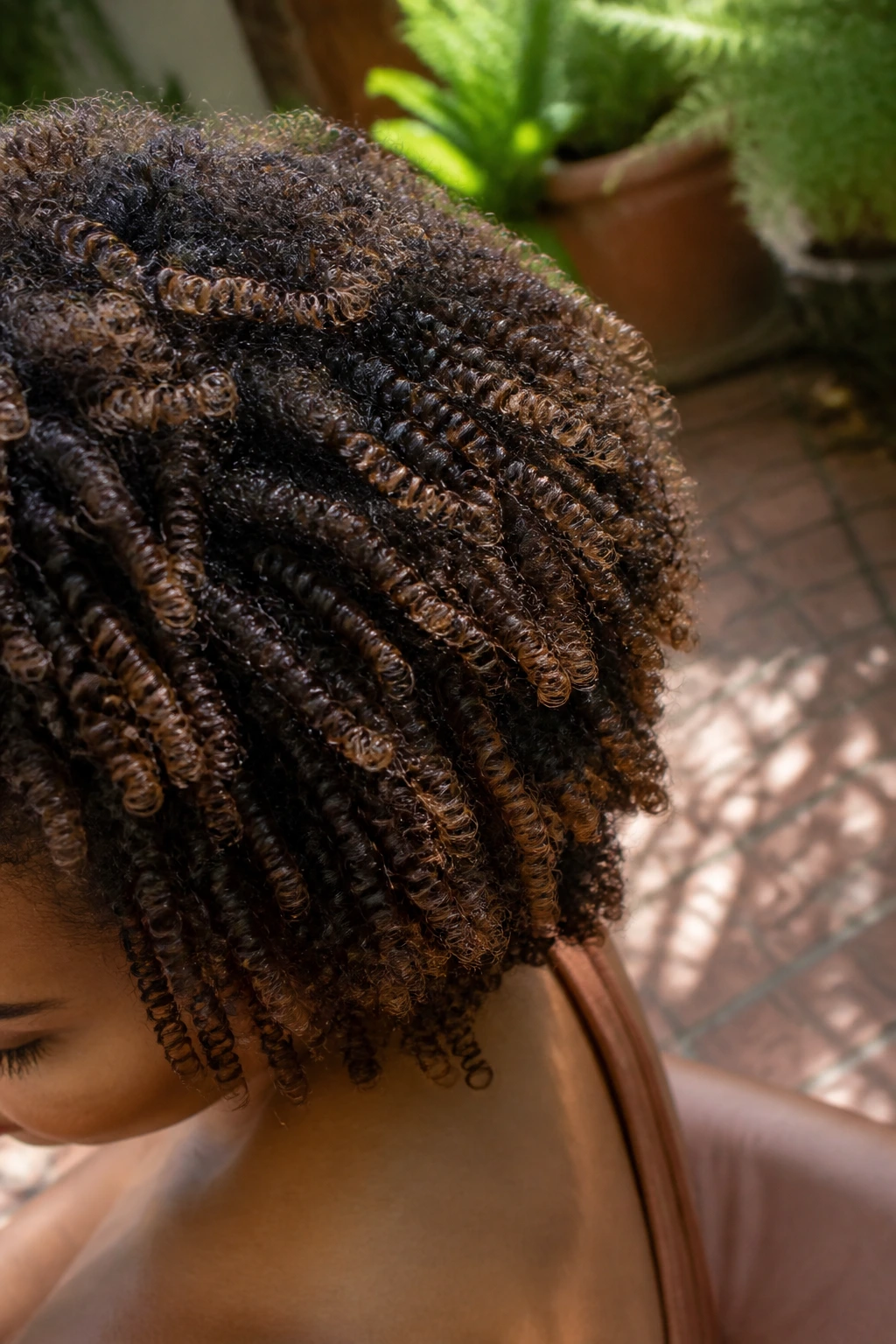
Coils and tight curls hold light differently, so a sanded caramel tone can be a nicer choice than a loud gold. The finish is softer, a little beige, and grounded enough that it doesn’t sit on top of the texture like frosting.
How the Tone Sits in the Curl
The color should live inside the shape of the coil, not just on the outer layer. That means the stylist needs to paint where the curl opens and bends, then check the result once the hair contracts. If they skip that part, the color can vanish into the pattern or turn patchy.
This look is gorgeous on deep skin because it gives depth and light at the same time. The sanded caramel keeps the texture the star, which is where I think this style belongs anyway.
18. Mahogany-Caramel Contrast
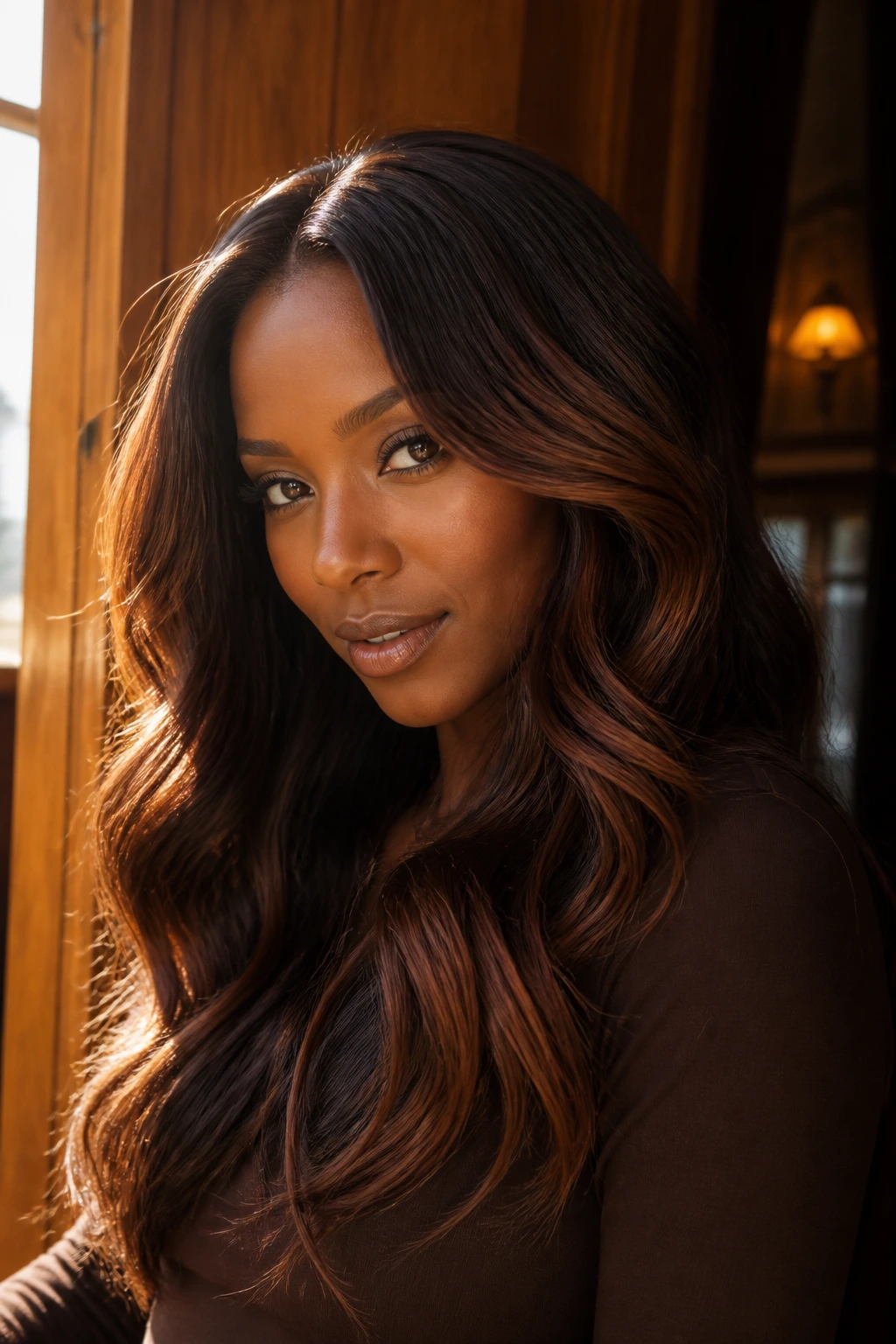
Mahogany and caramel together create a richer, darker version of the trend. The base gets a little red-brown warmth, and the lighter pieces stay in the caramel lane, so the whole head feels plush instead of bright.
This works well on deep skin tones that can carry a strong warm palette. The red-brown depth makes the skin look even richer, and the caramel pieces add just enough movement to keep the hair from looking heavy. It’s especially good if you like your hair to look thick.
Ask for the mahogany to stay deeper at the root and in the underside layers. Then let the caramel live on the surface and through the ends. That split keeps the color dimensional from every angle.
19. Ribboned Lob With Face Framing
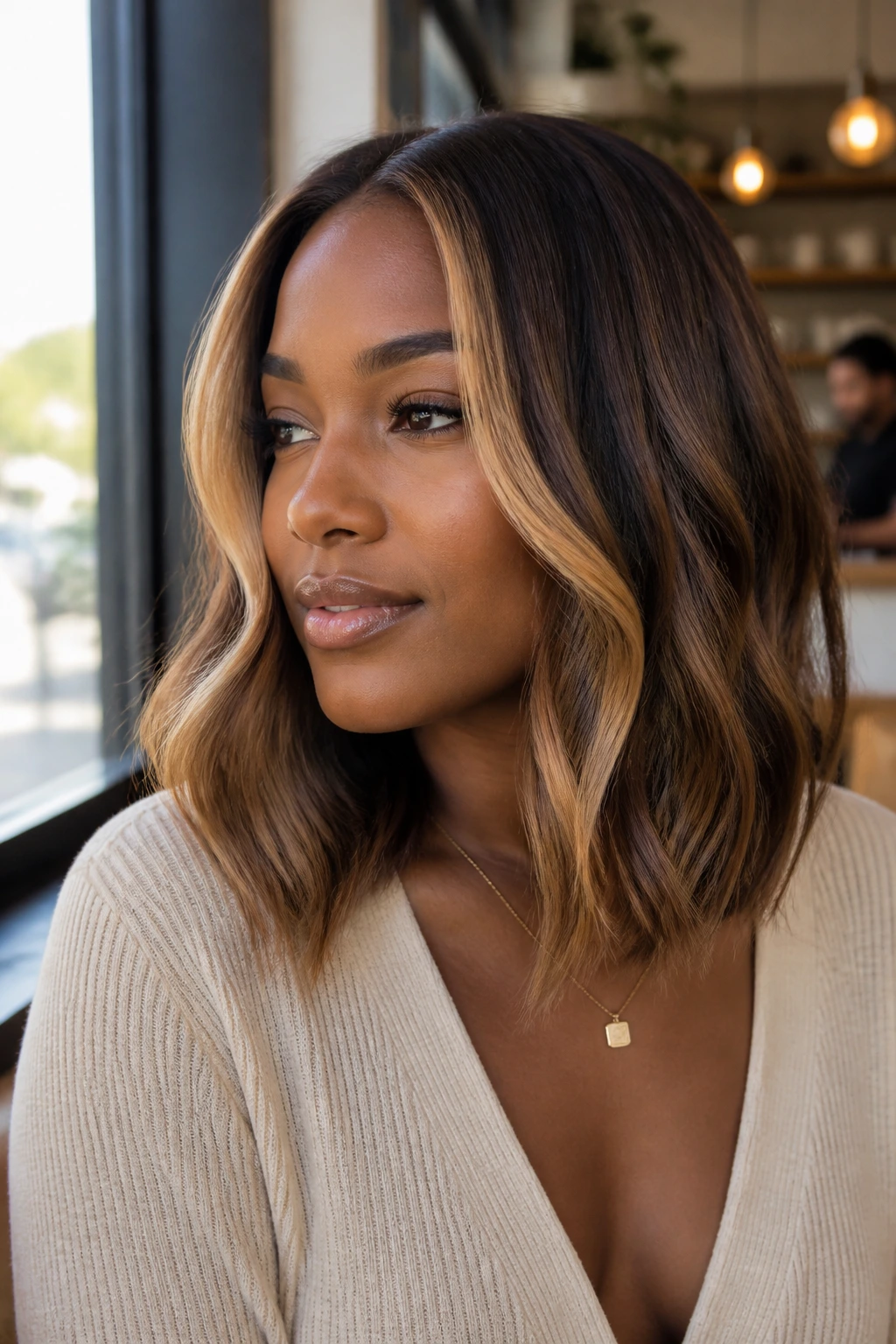
A lob gives you enough length for color to move, but not so much that the hair swallows the highlights. Ribboning the front sections and a few mid-length layers is often enough to make the whole cut feel lighter.
The face-framing pieces should be the brightest part of the look, with the rest of the caramel staying softer and more scattered. On deep skin, that setup gives you a nice lift near the face and a rich brunette body through the rest of the cut. It’s tidy. It’s flattering. It grows out without a fight.
If you wear a center part, ask the colorist to keep the front ribbons balanced on both sides. If you wear a side part, they can make one side slightly brighter to match the shape you usually use.
20. Soft Bronzed Balayage
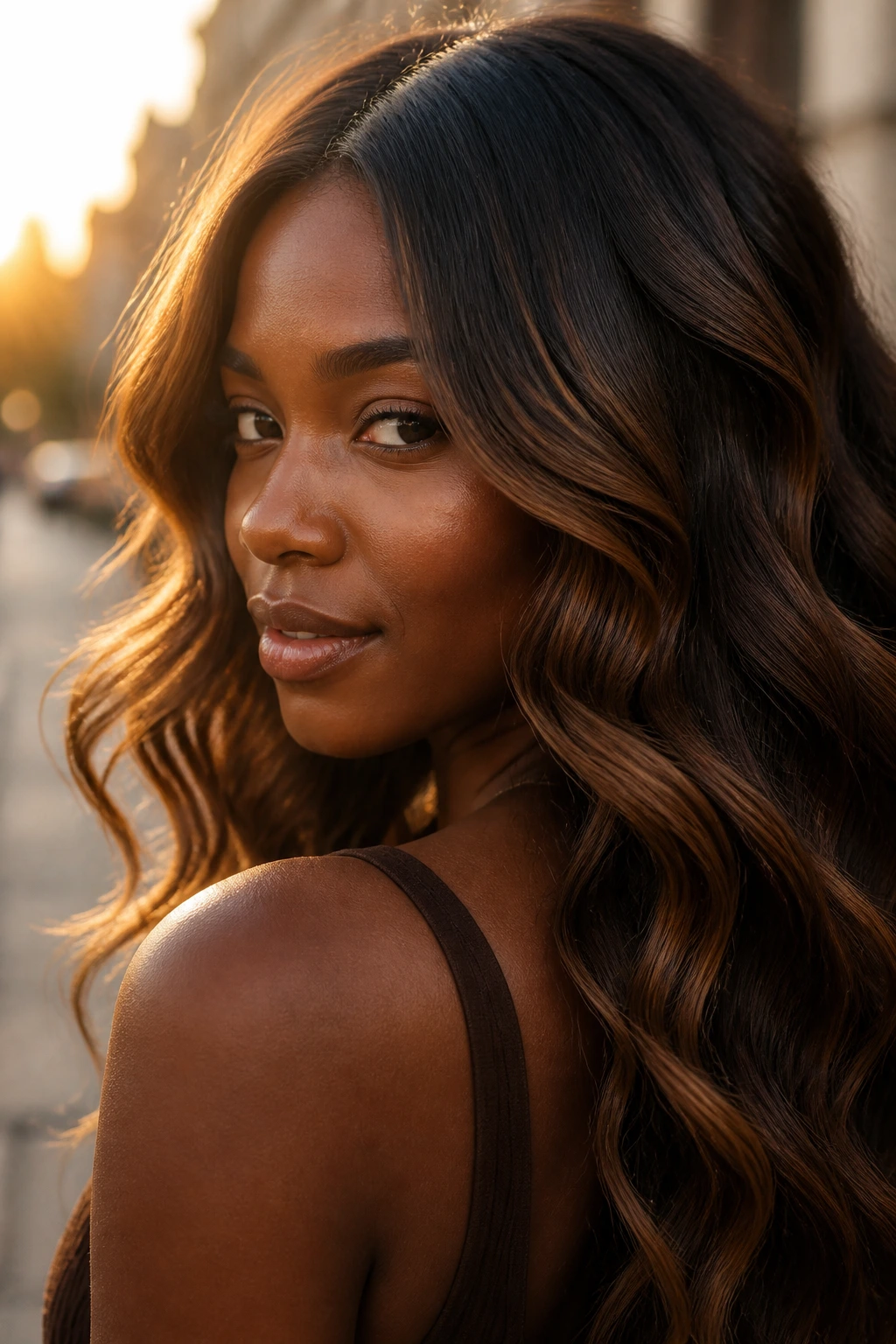
Bronze sits in a useful middle ground. It’s not gold, not brown, not copper. That makes it one of the easiest caramel brunette balayage choices for deep skin tones that need warmth but not too much sweetness.
The best bronze balayage has a brushed-metal look in the light and a brown softness in shade. That dual behavior is why I like it on wavy hair and on blowouts. It never looks flat because the bronze tone changes as the hair turns. If your undertones are neutral, bronze is often a safe bet. If your undertones are warm, it still works, but keep the toner a touch beige so it does not get too orange.
21. Velvet Brown Dimension
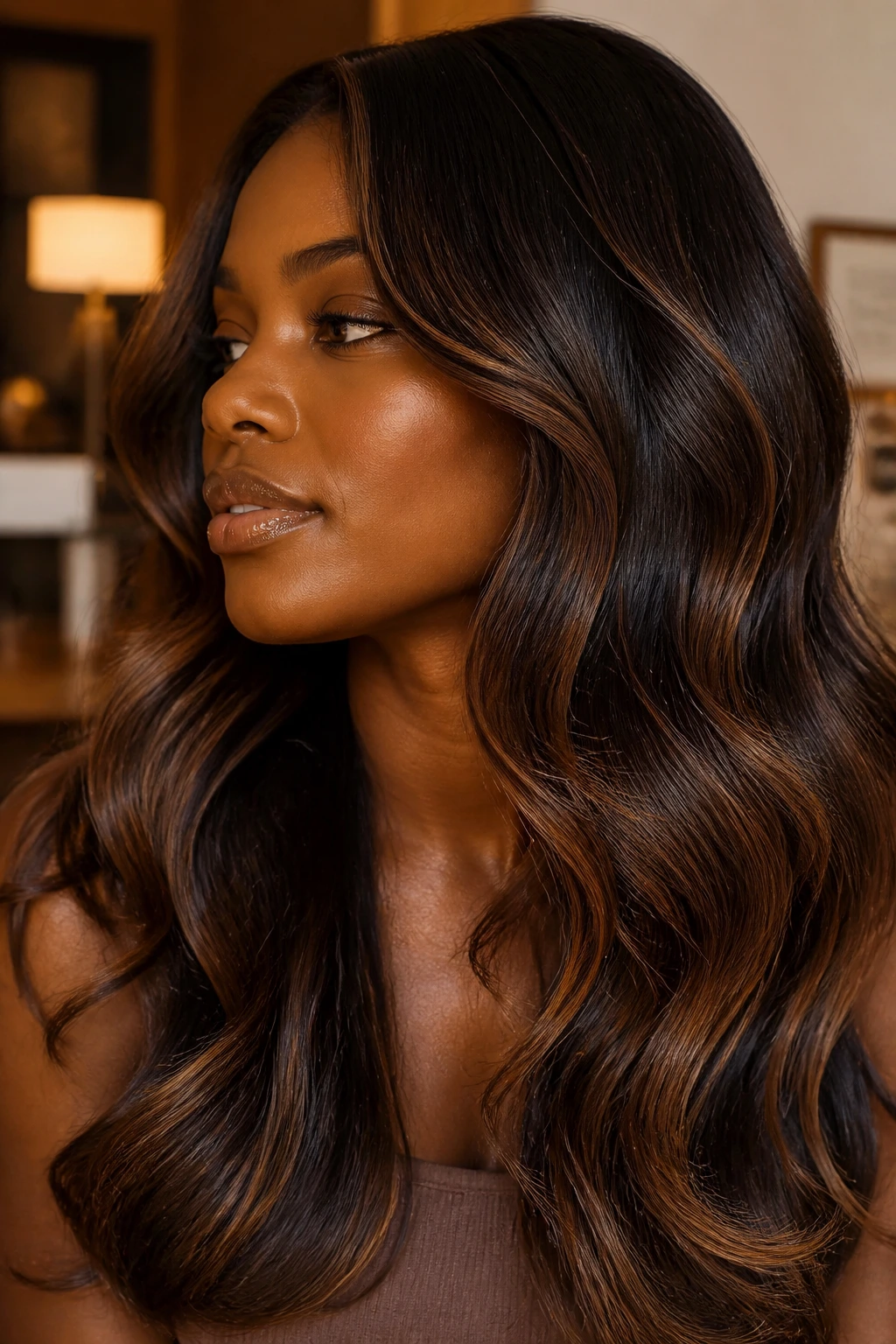
Not everyone wants a visible highlight, and frankly, some people are smarter to avoid it. Velvet brown dimension uses very soft caramel notes to deepen the natural sheen rather than announce the color change.
Why It Never Looks Flat
The caramel pieces are so fine that they read like light on fabric. That’s the whole point. On deep skin, this kind of subtlety can look stronger than a heavy highlight job because the hair remains lush and dark, but the finish still shifts in the sun or under lamps.
This is my pick for someone who wants a brown that feels expensive and easy to wear to work, dinner, or a weekend out. You know the hair got color, but no one can pin it down from ten feet away.
22. Chestnut Melt With Baby Lights
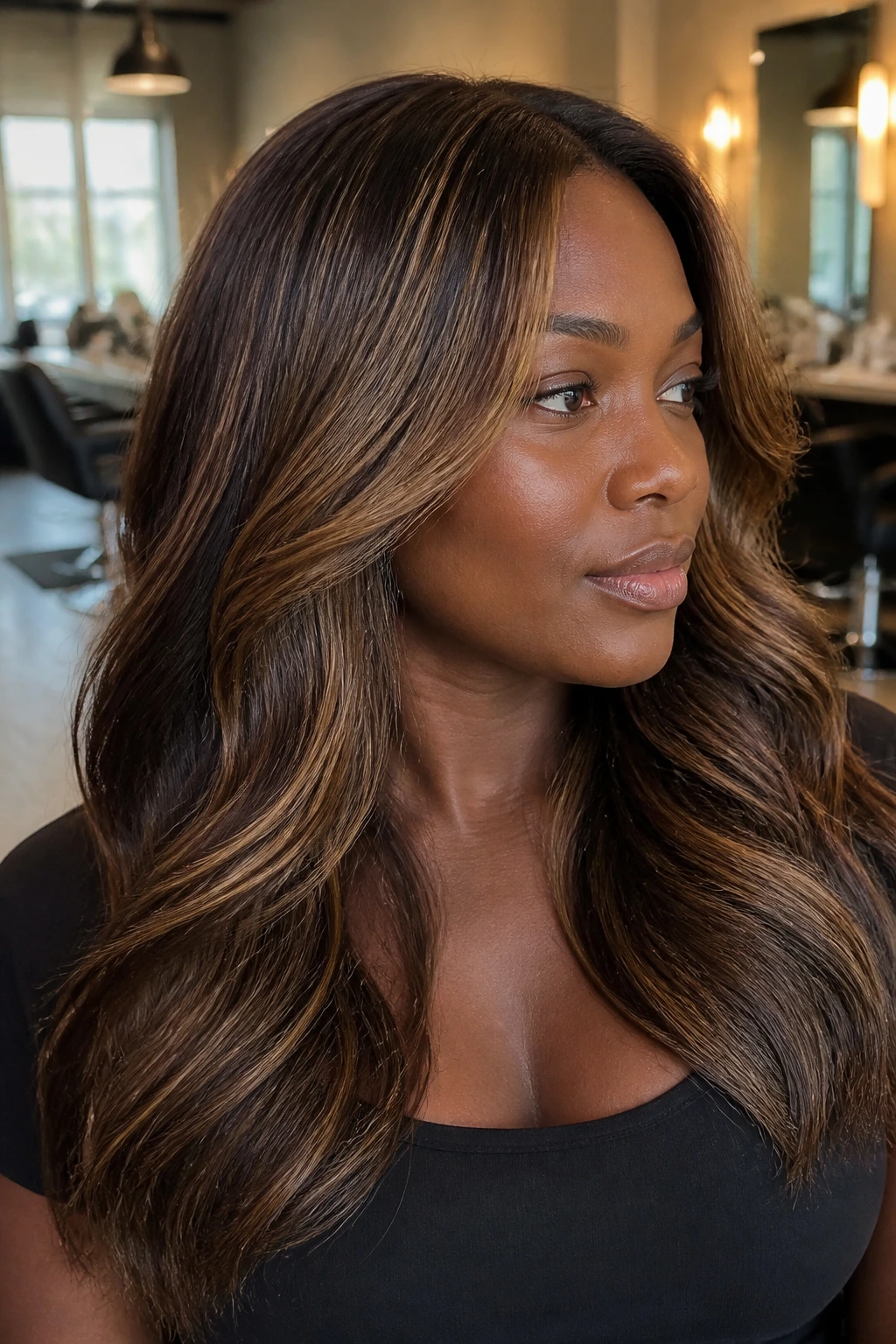
Baby lights are tiny, foiled or painted highlights that soften the overall effect. Chestnut melt with baby lights keeps those pieces so fine that they disappear into the surface, which makes the hair look dense and glossy instead of streaky.
Deep skin tones usually benefit from this because the chestnut base stays dominant while the lighter notes live closer to the crown and around the part. If you’ve never colored your hair before, this is a sensible first step. It lifts the look without forcing a dramatic change.
The finish is best when the highlights are diffused near the roots and slightly brighter at the ends. That little shift gives you the sense of a melt, not a hard reset.
23. Spiced Toffee Ends
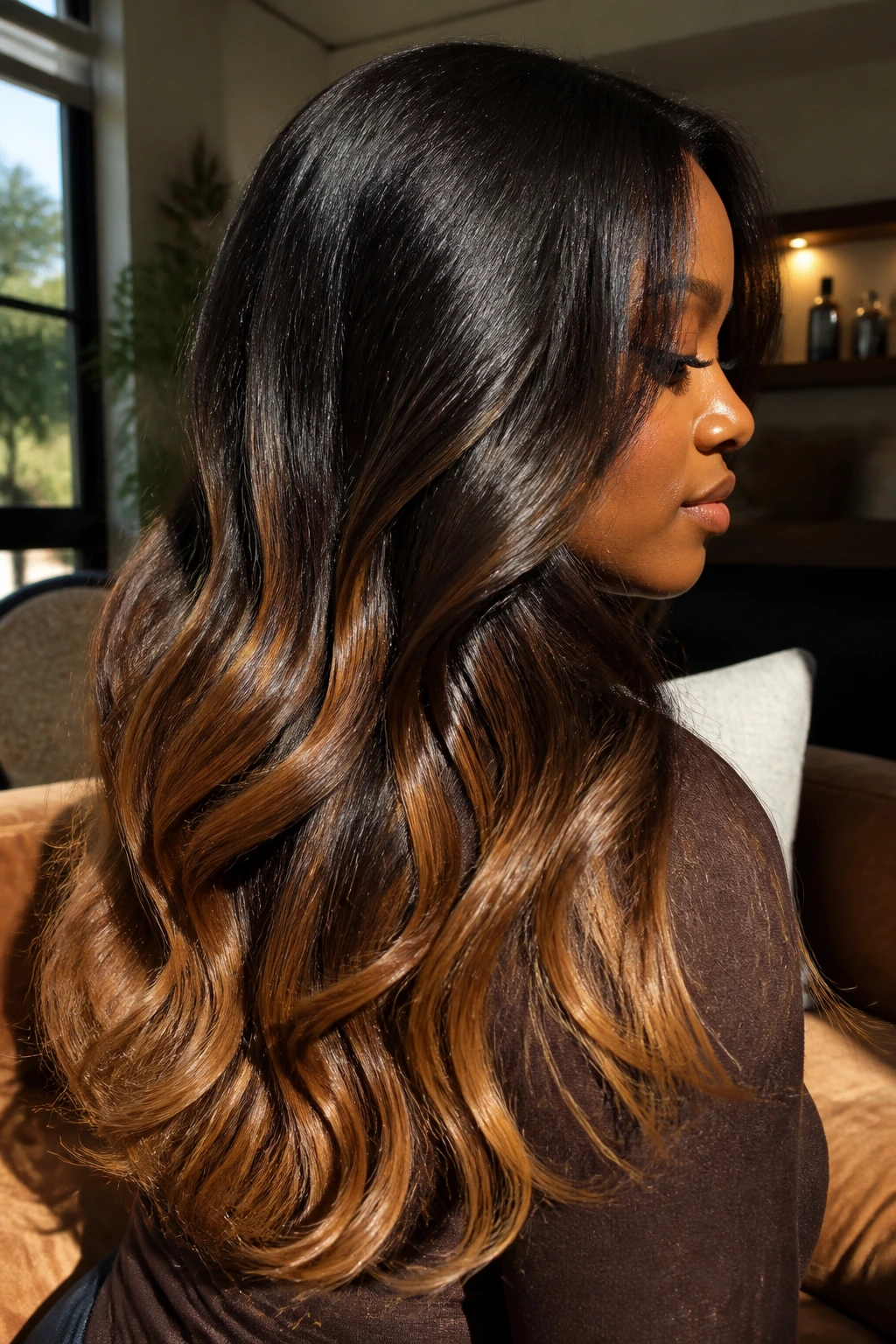
When the ends carry the color, the haircut gets all the movement. Spiced toffee ends do exactly that: the brunette stays rich through the top, then the lower half warms into a spicy caramel that catches light in sways and flips.
This works best on long hair or on cuts with enough length to show a gradual shift. On deep skin, the warm toffee tone can make the hair look more alive, especially if the rest of the color is kept sober and dark. It’s a good choice for someone who wants a noticeable change without changing the root area much.
A soft wave or bend helps, because the ends need motion to show off. Dead-straight hair can flatten the effect a little.
24. Cocoa Curtain Balayage
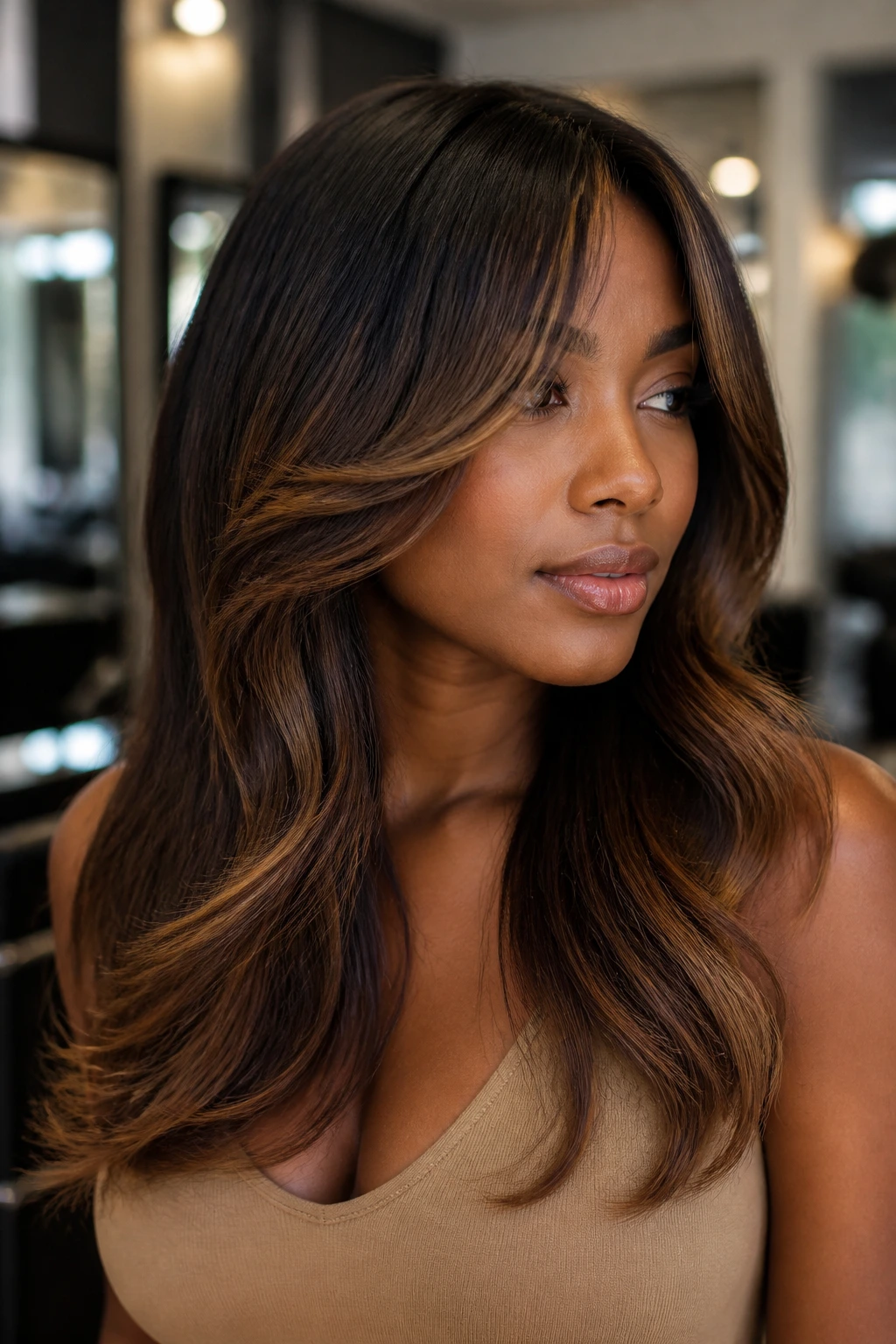
Curtain bangs change the whole color conversation. If you have them, the brightest caramel should frame the bangs and slide into the front lengths so the color feels integrated rather than pasted on.
The cocoa base keeps the look grounded, while the curtain fringe gets a little lift around the eyes and cheekbones. On deep skin, that positioning matters because it gives the face a warm halo right where people look first. It’s one of the more flattering ways to wear lighter pieces without going all in on bright blonde.
Ask for the bangs to be a touch lighter than the rest of the front sections, but not so much that they separate from the haircut. They should fold into the rest of the style, not sit on top of it.
25. Caramel Halo on a Deep Brunette Base
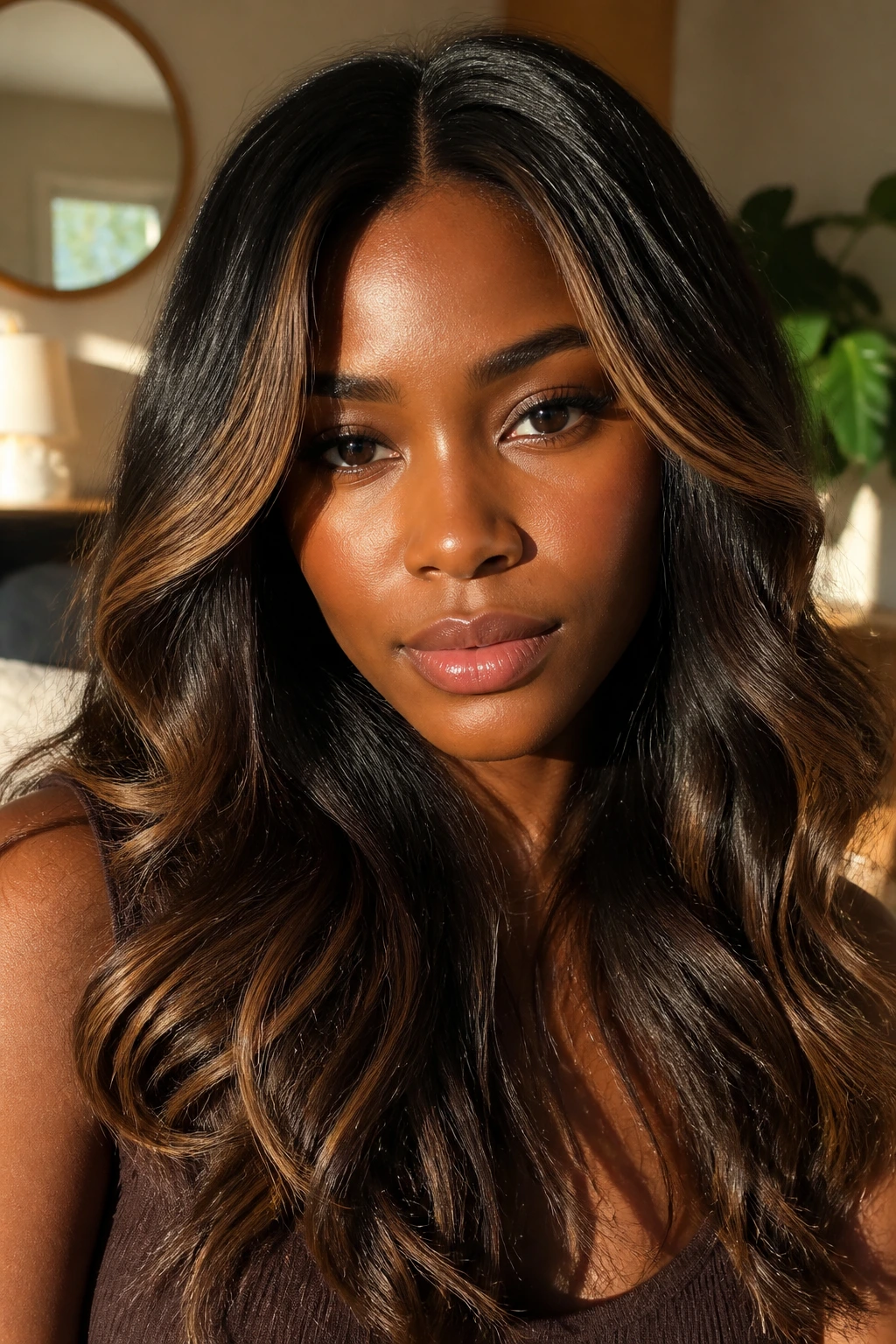
If I had to pick one showpiece style for deep skin tones, this would be near the top of the pile. The brunette base stays deep and plush, while the caramel forms a halo around the face and outer layers, so the whole style glows instead of just highlighting one spot.
The Shape That Sells It
The halo should curve around the hairline and follow the top contour of the head, then drift into softer pieces through the lengths. That shape keeps the brightness visible from the front and side without making the crown too pale. On deep complexions, the effect is rich and lifted at the same time.
This is the version I’d recommend to someone who wants people to notice the hair before they notice the technique. It feels complete. Not busy. Just finished.
How to Talk to Your Colorist Without Guesswork
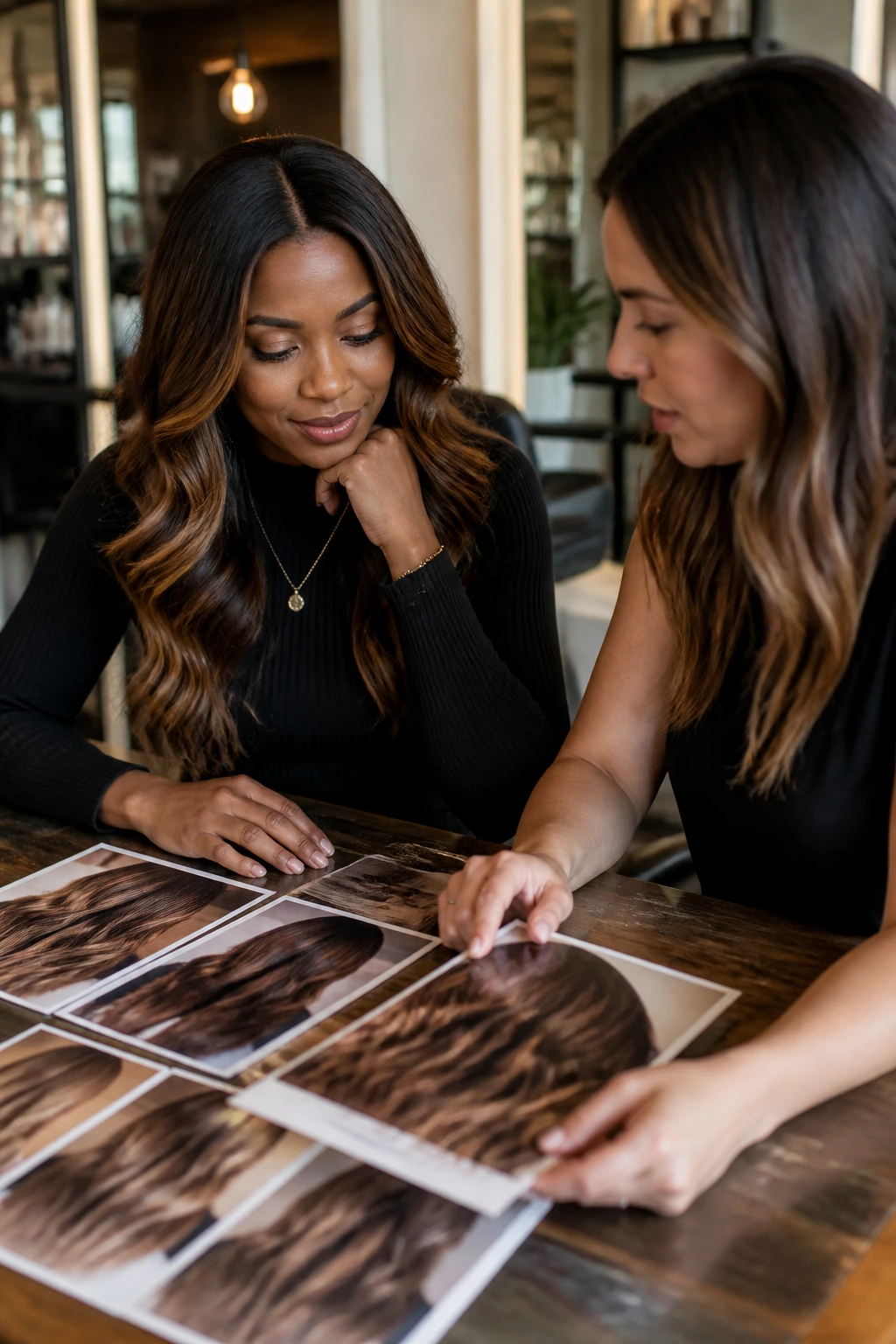
Bring reference photos, but bring the right ones. A photo of a model with a different curl pattern, base color, and lighting setup can send a consultation off the rails fast. Pick images that match your cut and your hair texture, then show the colorist what you like about each one—brightness at the front, warmth in the mids, or a darker root that keeps the grow-out soft.
Say how much contrast you want. That matters more than the word “caramel.” Some people want a near-brown gloss with a little gold in the ends. Others want the honey money piece to stand out every time they step into daylight. Those are different jobs.
Ask three practical questions: how much lightness can your hair safely handle, how the toner will be chosen, and how the grow-out will look after six to eight weeks. If your hair has been color-treated before, ask whether a strand test makes sense. If your hair is curly or coily, ask how the shape will look once it’s styled in its natural texture.
A colorist worth listening to will talk about level, tone, placement, and maintenance—not just “warm” and “bright.” Those four words are the whole game.
Essential Tools for Maintaining the Finish
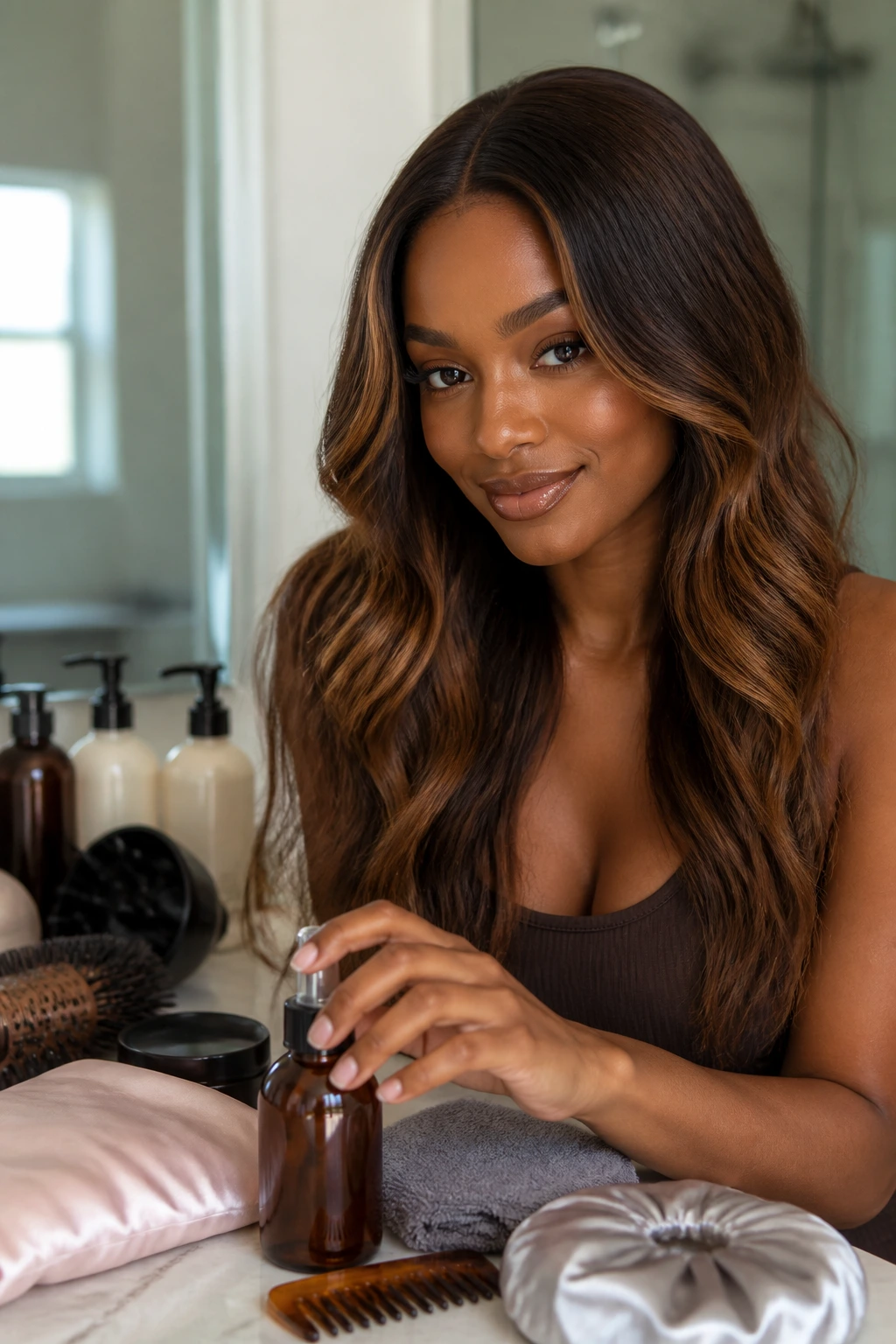
- Sulfate-free shampoo: Keeps the caramel from fading and stripping too fast.
- Color-safe conditioner: Helps the lighter pieces stay soft instead of dry and fuzzy.
- Heat protectant spray: Necessary if you blow-dry, curl, or flat-iron at all.
- Wide-tooth comb: Better than yanking through wet lightened hair with a fine brush.
- Microfiber towel or T-shirt: Cuts down on friction, which matters once the hair is lightened.
- Glossing serum: A few drops on the mids and ends keep the caramel shiny.
- Deep-conditioning mask: Use it weekly if the hair was lifted more than one level.
- Round brush or diffuser: Pick the tool that matches your texture; don’t fight the hair you have.
- Silk or satin pillowcase: Helps the surface stay smooth overnight.
- Shower cap or rinse cap: Useful on days when you’re only cleansing the scalp and protecting the lengths.
Smart Shopping and Product Tips
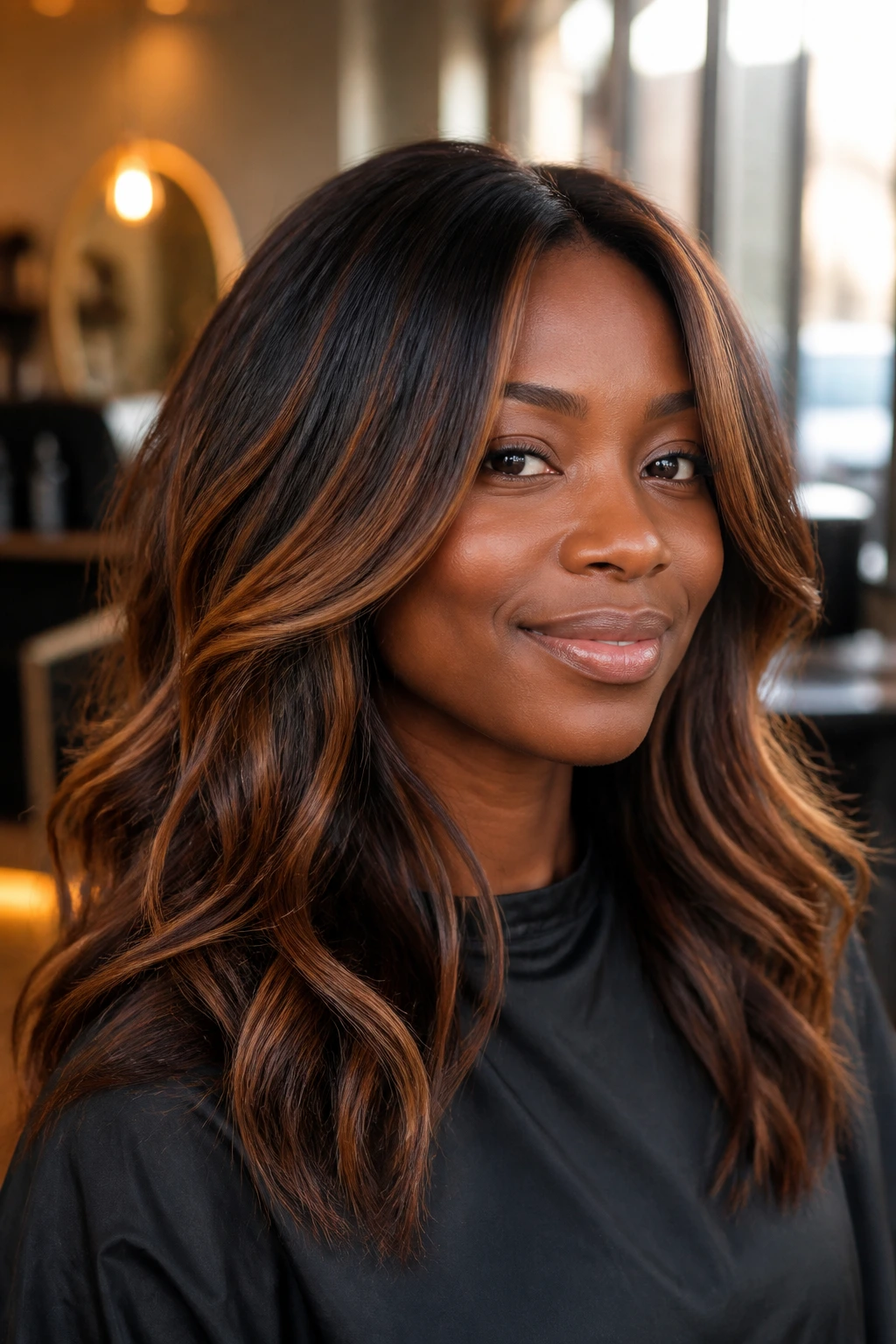
If you’re buying hair care for caramel brunette balayage, look past the bottle claims and read the texture of the product. Thick, buttery masks can be great on coarse or curly hair, but they can sit heavy on fine strands and make the color look dull by day two. Lighter creams, leave-ins, and glossing sprays are often enough for smoother hair types.
Choose a shampoo that cleans without squeaking the hair dry. That squeaky-clean feeling is usually a sign that the cuticle got stripped a little too hard. For caramel tones, that matters because stripped hair tends to pick up odd brass or flatness faster. A sulfate-free formula helps, but so does not overwashing in the first place.
If your caramel has gone too orange, a blue-based gloss or blue shampoo may help more than purple shampoo. Purple is better for yellow tones. Blue handles orange and copper shift. Use either one lightly—once every one to two weeks is plenty for most people, and leaving it on too long can make the hair look muddy.
One more thing: if your hair is porous from past color or heat, a bond-building treatment can be worth the shelf space. Porous hair grabs toner fast and loses it just as fast, which is why some caramel looks perfect for ten days and then goes dull. The treatment won’t fix everything, but it can make the color behave more evenly.
How to Style It So the Caramel Reads Rich
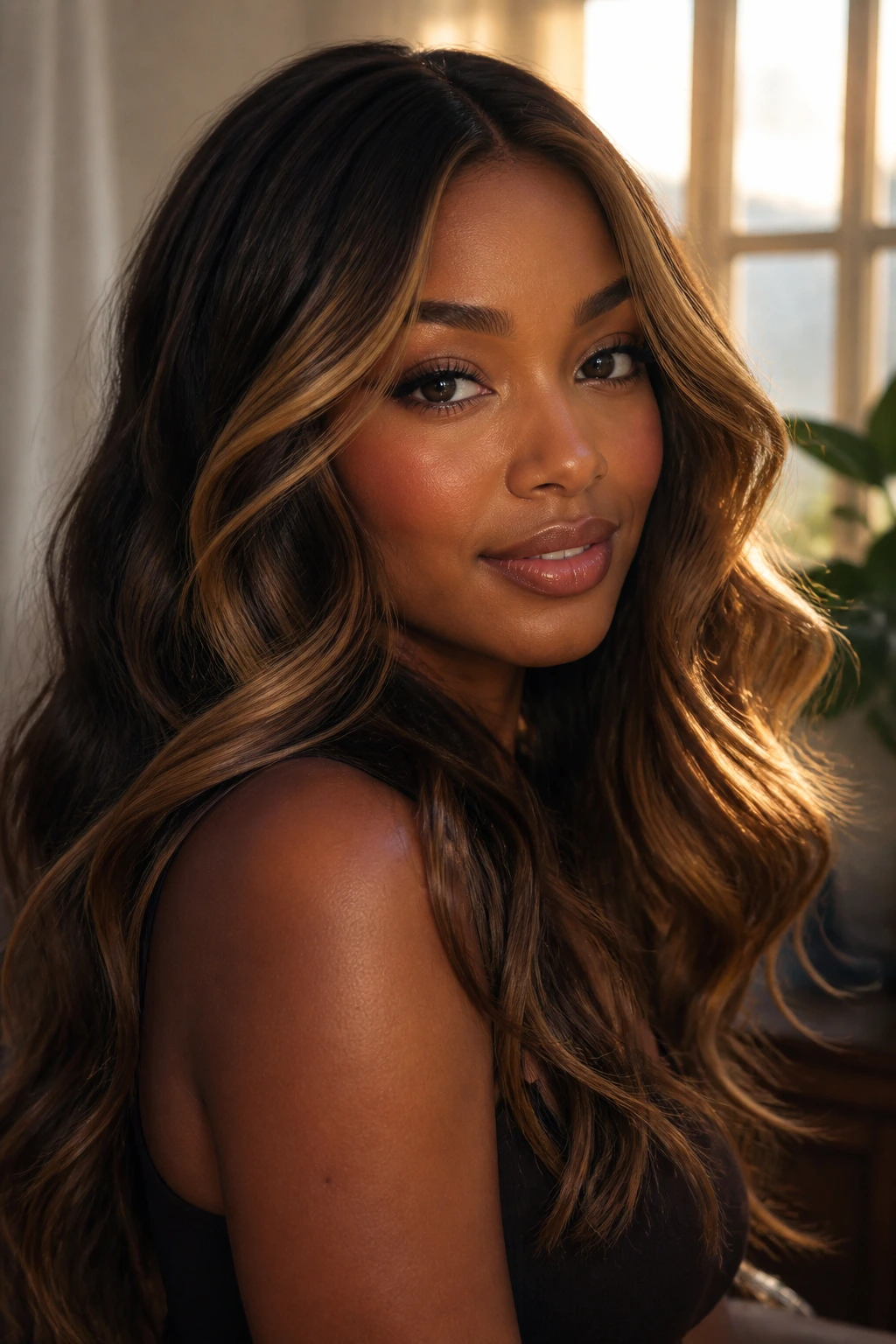
Placement: Curl away from the face if you want the money piece and halo pieces to show; curl toward the face if you want a softer veil and less contrast.
Heat setting: Keep hot tools around 300°F to 350°F unless your hair is very coarse. Lifting the heat higher than that is how caramel ends start to look dry at the edges.
Finish: Use a light shine serum on the mids and ends, not the scalp. Too much oil near the roots kills the dimension and makes the color flatten out under light.
Texture choice: A loose wave usually shows balayage better than a stiff, polished curl. The bends open up the ribbons. If you wear your hair straight, ask for narrower placement so the color doesn’t look blocky.
Night care: Pineapple curls, loose braids, or a satin wrap help the lighter pieces stay smooth overnight. Friction is the enemy here. It roughs up the finish fast.
Common Mistakes That Flatten the Dimension
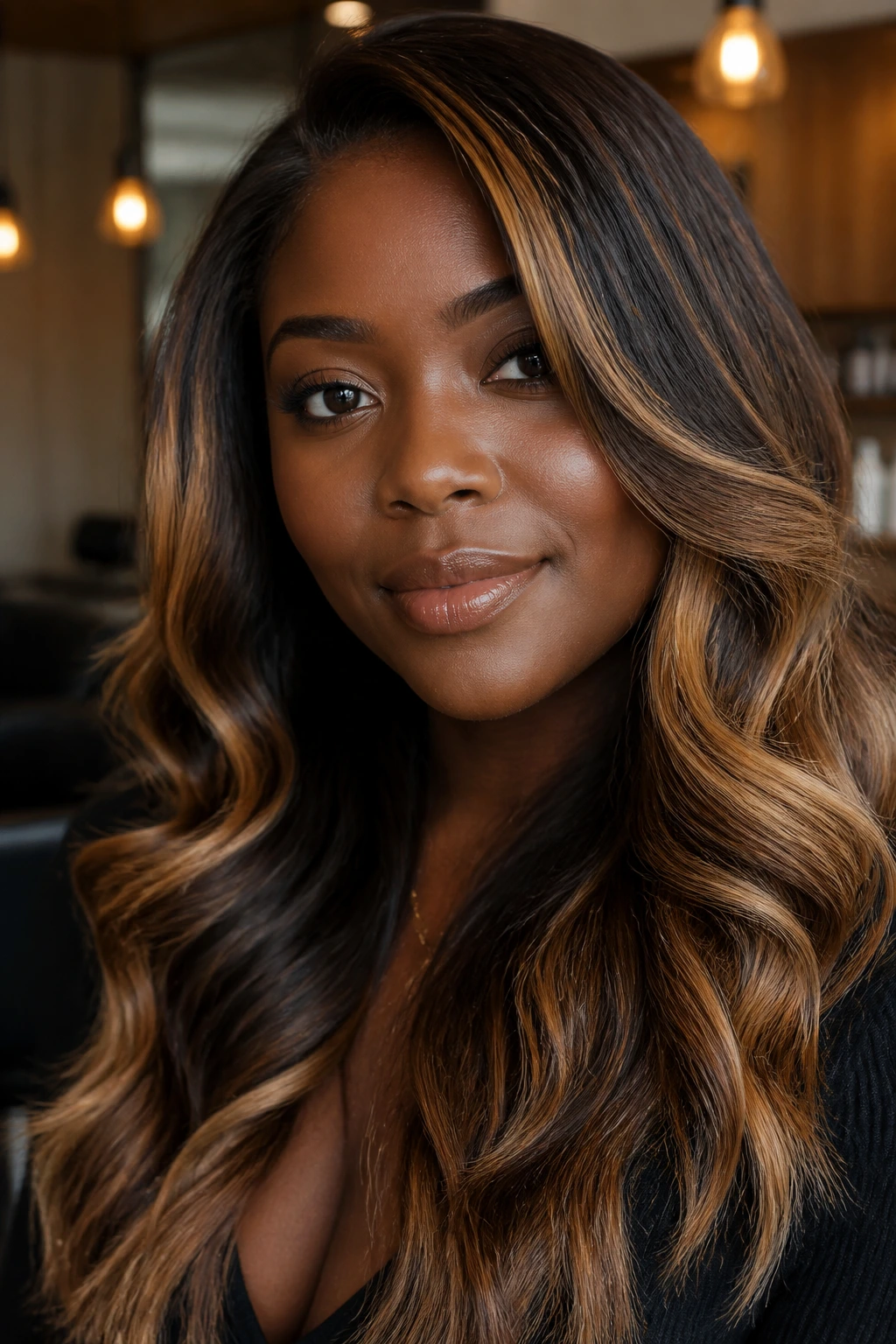
The first mistake is going too light too fast. On deep skin, pale caramel can look disconnected if there isn’t enough brunette left to anchor it. The fix is simple: keep the root deeper, lift less aggressively, and let the toner do some of the work.
The second mistake is using one thick highlight instead of several fine ones. Big stripes can be dramatic, but they often look harsh against rich complexions unless the whole cut is designed for that level of contrast. Fine ribbons usually age better and look cleaner.
A third problem is brass left unchecked. If the caramel shifts orange, the whole look can start fighting the skin instead of flattering it. Use the right gloss for the undertone you have, and don’t assume purple shampoo can solve every warm tone—it can’t.
Another one: hiding all the bright pieces under the top layer. That’s a waste of money. Balayage needs surface visibility, especially around the face and crown. If every caramel strand lives underneath, you only see the color when you flip your head over in the mirror.
And then there’s over-styling. Heavy oils, too much edge control near the part, or a rough flat iron pass can press the dimension flat. The hair needs some air in it.
Variations and Adaptations to Try
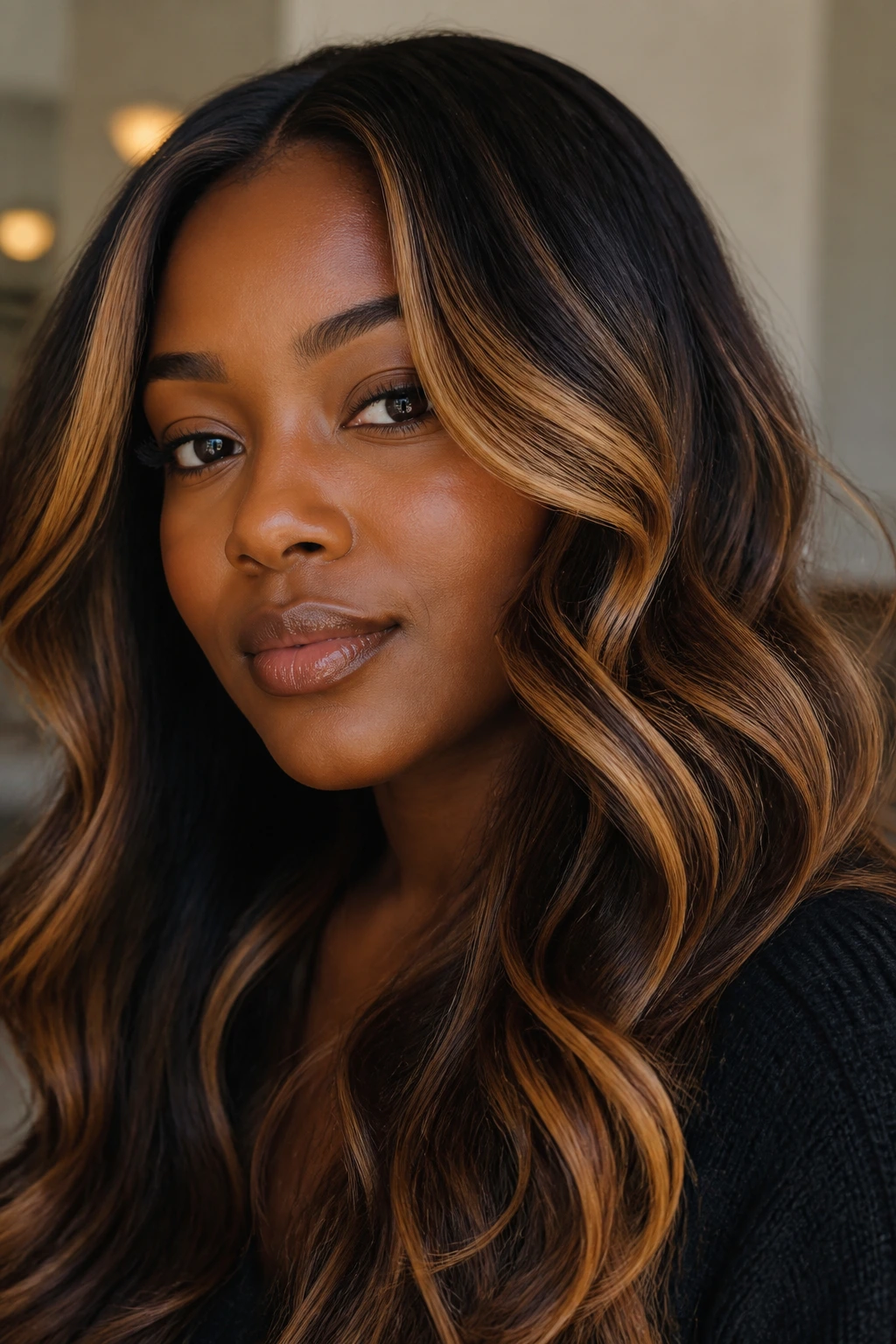
Toffee Warm-Up: Ask for a slightly warmer gloss with toffee and honey notes if your skin has golden undertones and you want the color to look sunlit rather than neutral.
Smoky Mocha Melt: Choose this if you want less gold and more depth. The caramel stays beige-mocha, which works well when you like a rich, muted finish.
Bright Halo Switch: Keep the base soft but increase the brightness around the face by one shade. That creates a stronger frame without lifting the entire head.
Curly Ribbon Refresh: For curls and coils, replace wide painted sections with narrow ribbons that sit inside the curl pattern. The texture does the rest.
Ombré Fade: If low maintenance is the goal, push the lightness lower and keep the top darker. The grow-out stays softer, and the ends do the visual lifting.
Keeping the Tone Fresh Between Salon Visits
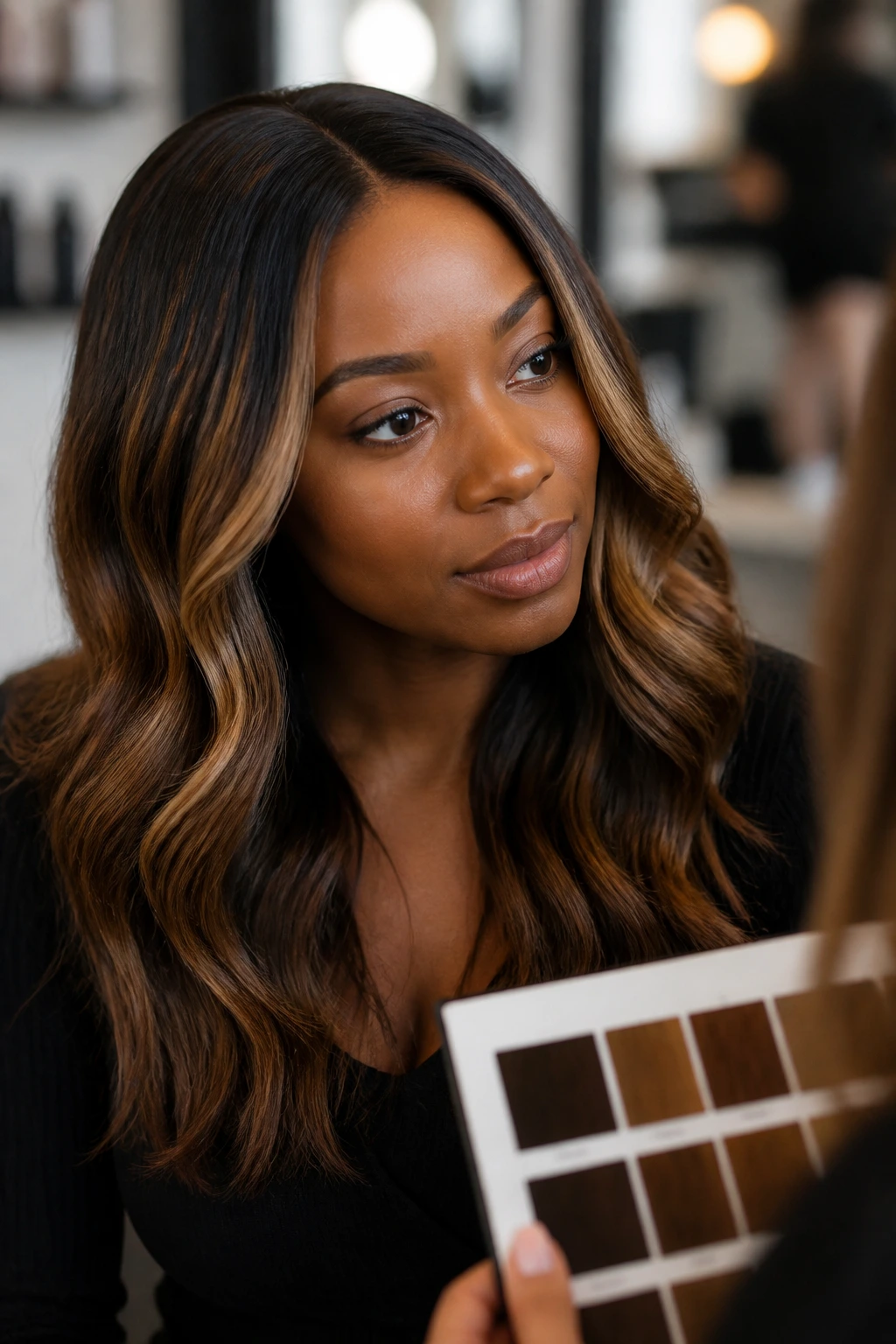
Wash less often than you think. Two to three shampoos a week is enough for most caramel balayage hair, and some textures do better with even less. Every time you cleanse, you rinse a little tone away, so stretching washes helps the color hold its warmth.
Use a gloss or toner refresh every 6 to 8 weeks if the caramel starts looking dull. If your root shadow is strong and you like a lived-in finish, you can often stretch that longer. The signs that it’s time are easy to spot: the ends start looking flat, the warm notes get murky, or the face frame loses its punch.
Deep-condition once a week, especially if the hair was lifted more than one level. Keep the mask on the mids and ends for 5 to 10 minutes, then rinse well. On the days you use a hot tool, apply heat protectant before drying and a tiny bit of serum after.
If the hair turns too orange, use a blue shampoo or blue gloss sparingly. If it turns too yellow, a violet product may help. Don’t leave either one on too long. A minute or two is often enough, and some hair types need even less.
Swimming, sun, and hot tool abuse are the quickest ways to make caramel look tired. A UV spray, a swim cap, or even just wetting the hair with clean water before a pool session can save you a headache later. Small habits. Big difference.
Frequently Asked Questions
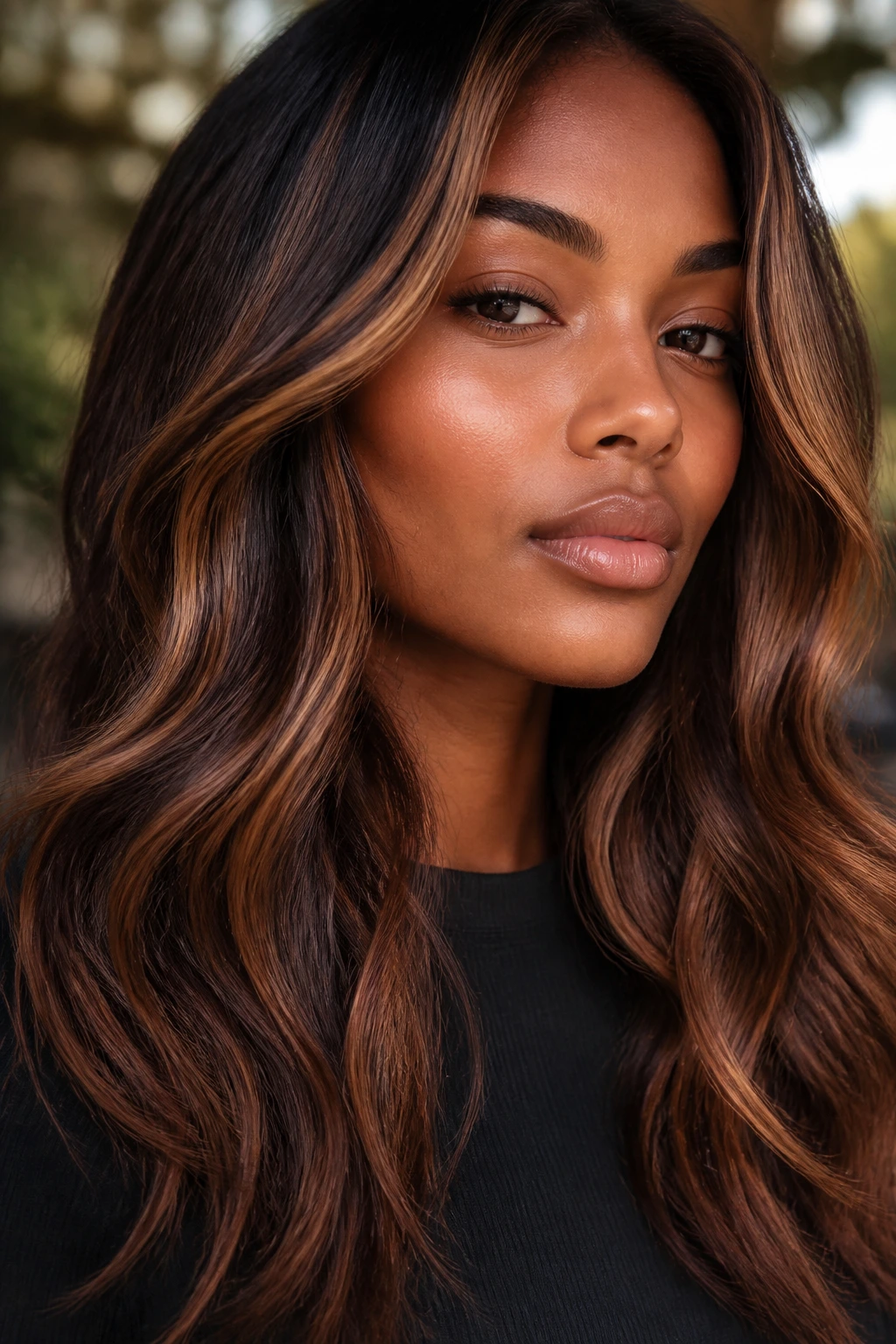
Will caramel brunette balayage work on very dark hair?
Yes, but the lightness usually needs to stay subtle at first. Very dark hair often looks best with ribbons that are one to two levels lighter than the base, plus a warm gloss that keeps the contrast soft.
Can deep skin tones wear ash caramel?
They can, but ash needs to be handled carefully. Too much ash can make the hair look flat or dull against rich skin, so I’d lean toward beige-ash or mocha-beige instead of a gray-heavy tone.
How often does this color need touch-ups?
Most balayage grows out well for 8 to 12 weeks, sometimes longer if the root shadow is deep. Gloss refreshes usually happen sooner than highlight touch-ups, because toner fades before the paint line does.
What’s the difference between balayage and ombré here?
Balayage is painted, diffused, and usually more scattered through the hair. Ombré moves more gradually from dark roots to lighter ends. A lot of these looks borrow pieces from both, which is why they feel soft.
Will this damage curls or coils?
Any lightening can dry the hair a bit, but curls and coils can handle balayage well when the pieces are placed carefully and the aftercare is solid. The real issue is over-lightening too much of the hair, not the technique itself.
How do I ask for a caramel money piece without getting stripes?
Ask for a narrow face frame that starts softly near the hairline and blends into softer ribbons through the front sections. Mention that you want brightness, not a harsh outline.
Can I do caramel balayage at home?
I wouldn’t recommend it for deep skin if you want the tone to look polished. Caramel is easy to turn orange, patchy, or too light, and correcting that costs more than doing it right the first time.
Why does my caramel turn brassy so quickly?
Usually because the hair was lifted too warm, the toner was too weak, or the hair is porous from previous color. A gloss refresh and the right shampoo can help, but the first formula matters most.
Warm Brown That Grows Out Softly
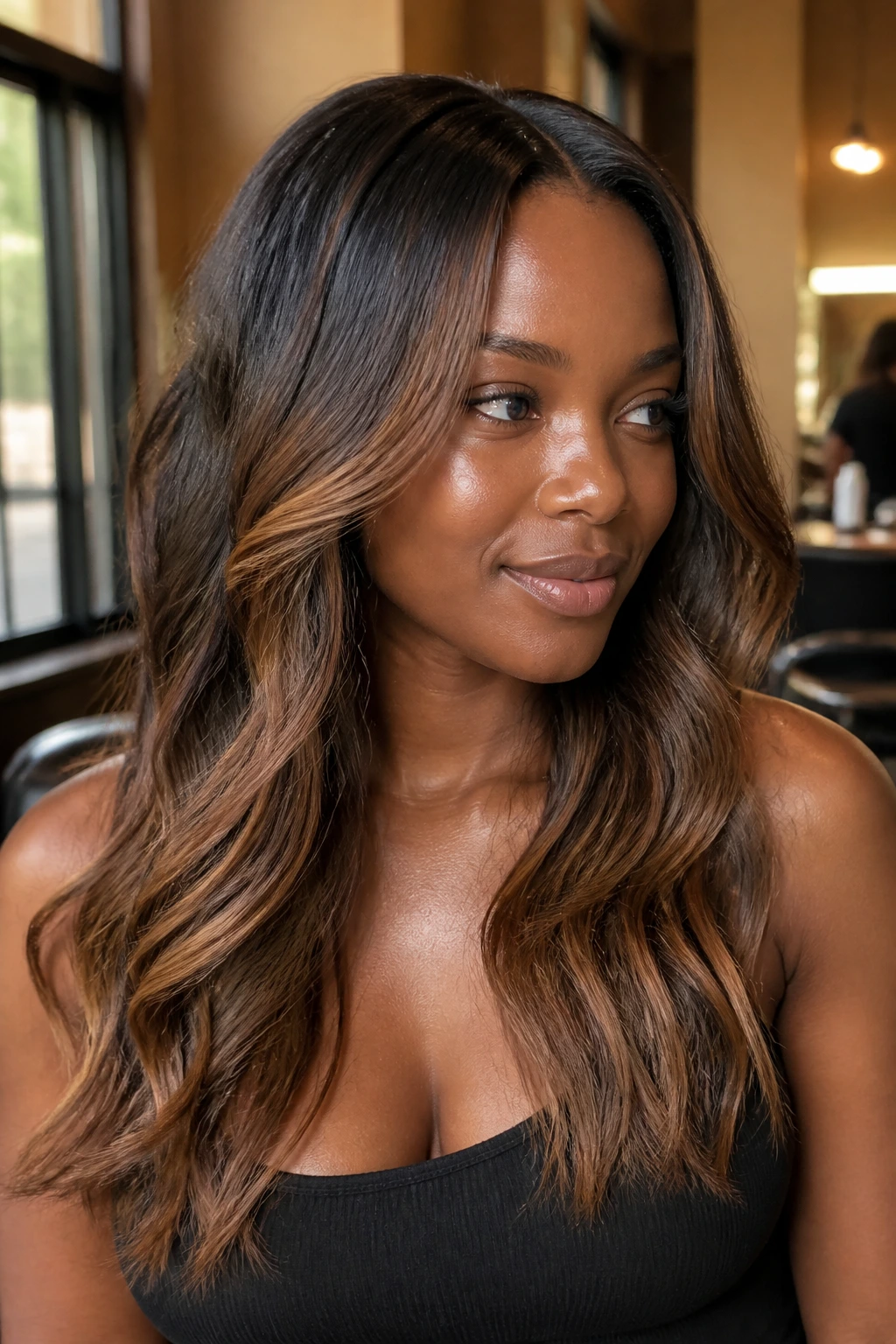
The best caramel brunette balayage for deep skin tones doesn’t fight the complexion. It sits inside it. That’s why the strongest looks in this collection keep the brunette base alive, choose caramel shades with actual warmth, and place the lightness where the eye already goes—around the face, through the ends, and across the moving surface of the hair.
If you’re taking one idea to the salon, bring the one that matches your texture and your maintenance habits, not just the one that looks loudest in a photo. A softer ribbon can do more for deep skin than a bright stripe ever will, and the grow-out will thank you for it.
Pick the version that feels like your hair, only warmer, shinier, and a little more alive.