



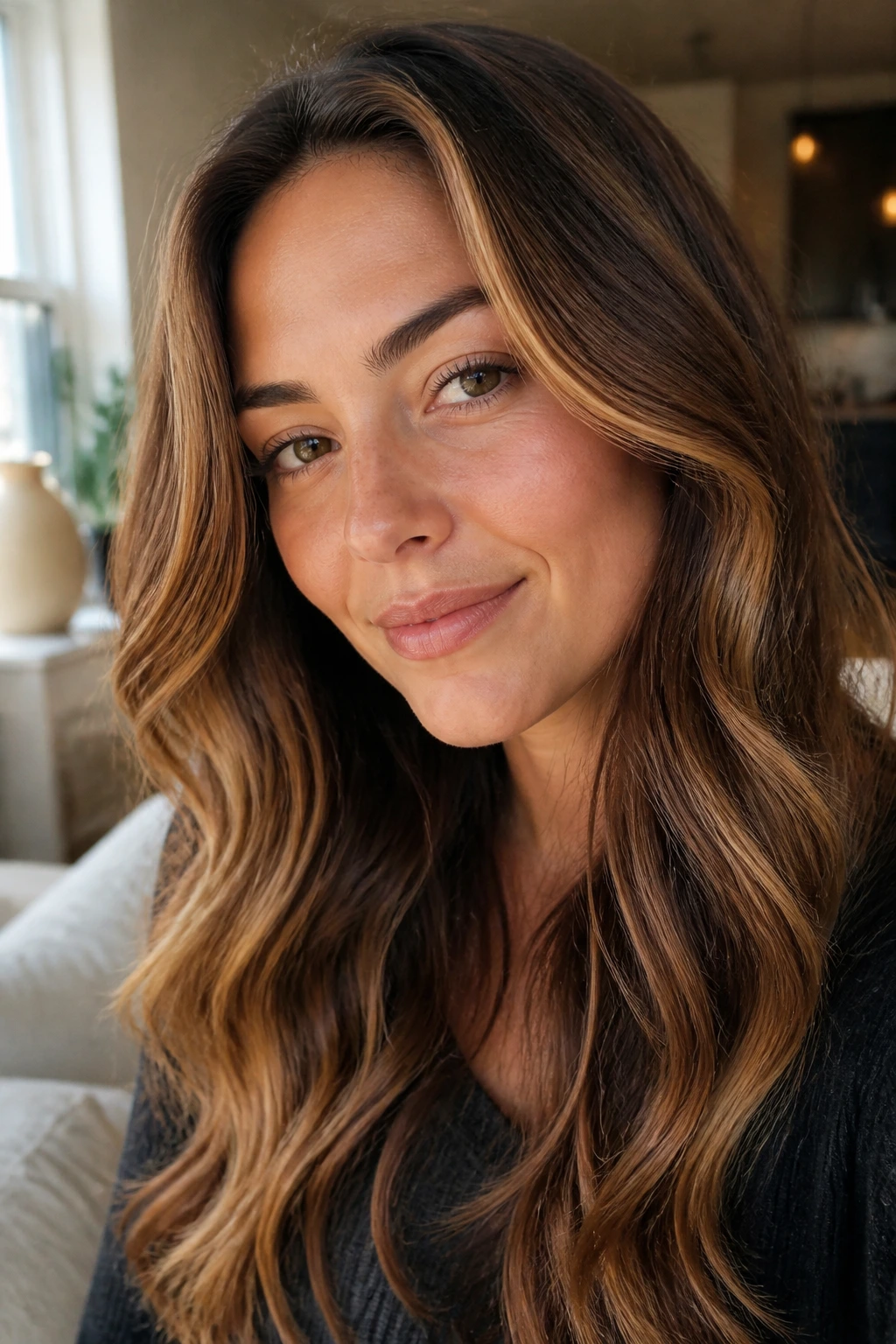
Brunette natural highlights for warm skin tones work best when they look like sunlight got lost in your hair, not like somebody drew stripes across it with a marker. The difference usually comes down to tone more than lightness. A gold-caramel ribbon on a deep brown base can wake up peachy, golden, and olive skin in a way that pale beige often cannot.
That’s the part people miss. Warm skin usually wants warmth back: honey, amber, bronze, toffee, soft copper, maple, and those in-between shades that feel expensive in daylight because they don’t fight the face. The trick is keeping enough depth at the root and enough softness around the face so the color moves, but never shouts.
And yes, placement matters just as much as pigment. A few babylights around the crown can look delicate on fine hair, while thicker painted ribbons can keep dense or curly hair from turning into one dark block. The best brunette dimension has shape. It has shadow. It has a little mess to it, which is why it looks so real.
Why These Warm Brunette Highlight Ideas Work So Well
-
Gold and copper echo warm skin: caramel, honey, bronze, and amber share the same undertone family as peach, tan, and olive skin, so the color reads as glow instead of contrast.
-
The grow-out is softer: balayage, babylights, and root-smudged ribbons leave a blurred transition, which keeps the regrowth from looking harsh after a few weeks.
-
Texture gets a boost: waves and curls show off warm ribbons better than a flat, one-tone brunette base, because the lighter pieces catch in the bends.
-
You can stay subtle: you do not need blonde to get dimension; a lift of only two or three levels can create movement without changing your whole identity.
-
Face framing does a lot of work: a warm money piece or soft contour highlight can brighten the eyes and cheekbones before the rest of the hair ever changes.
How to Choose a Warm Highlight Tone That Flatters Your Skin
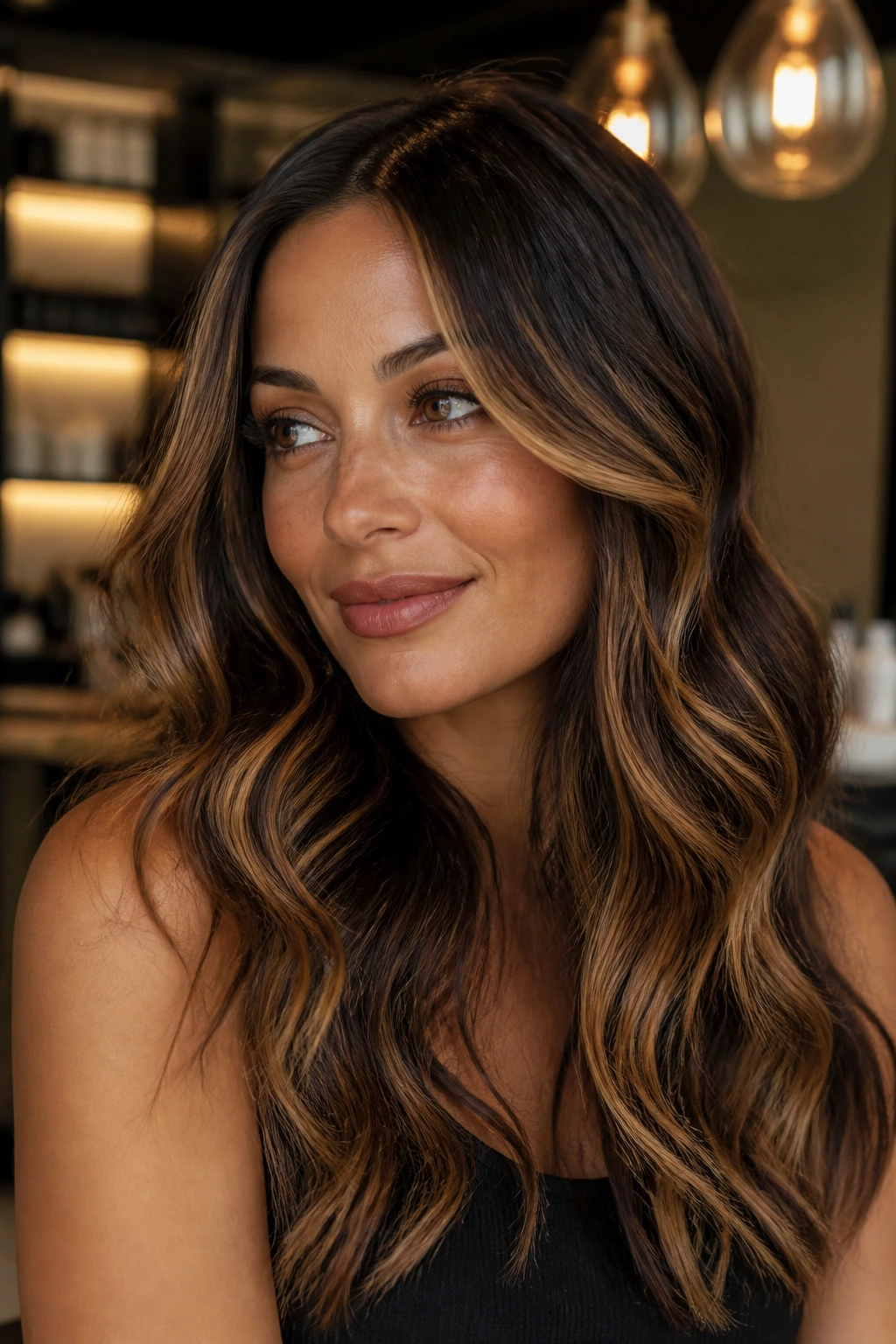
Warm skin does not mean one single color family. Peachy skin can love honey. Golden skin often likes caramel or maple. Olive-warm skin can take bronze, walnut, and even a little copper without looking loud. The real question is how much red, gold, and beige you want to see when the light hits.
Gold, Honey, and Caramel
Gold is the quietest choice. It gives brunette hair that soft “I spent time outside” feeling without pushing the color into red territory. Honey and caramel sit a little lower and richer, which is why they’re such a safe answer for medium brunettes and darker bases.
Copper, Amber, and Maple
Copper has more energy. Amber sits between gold and red, while maple leans brown-gold with a warmer edge. These shades are better when your skin likes richer tones, or when your hair needs a bit more personality than plain blonde streaks can give.
Bronze and Walnut
Bronze is the grown-up option. Walnut is even subtler. Both keep depth inside the hair, which matters if your brunette base is naturally dark or your hair is dense enough to swallow light pieces. A few bronze ribbons can do more than a whole head of pale highlights.
1. Caramel Ribbon Balayage on a Chestnut Base
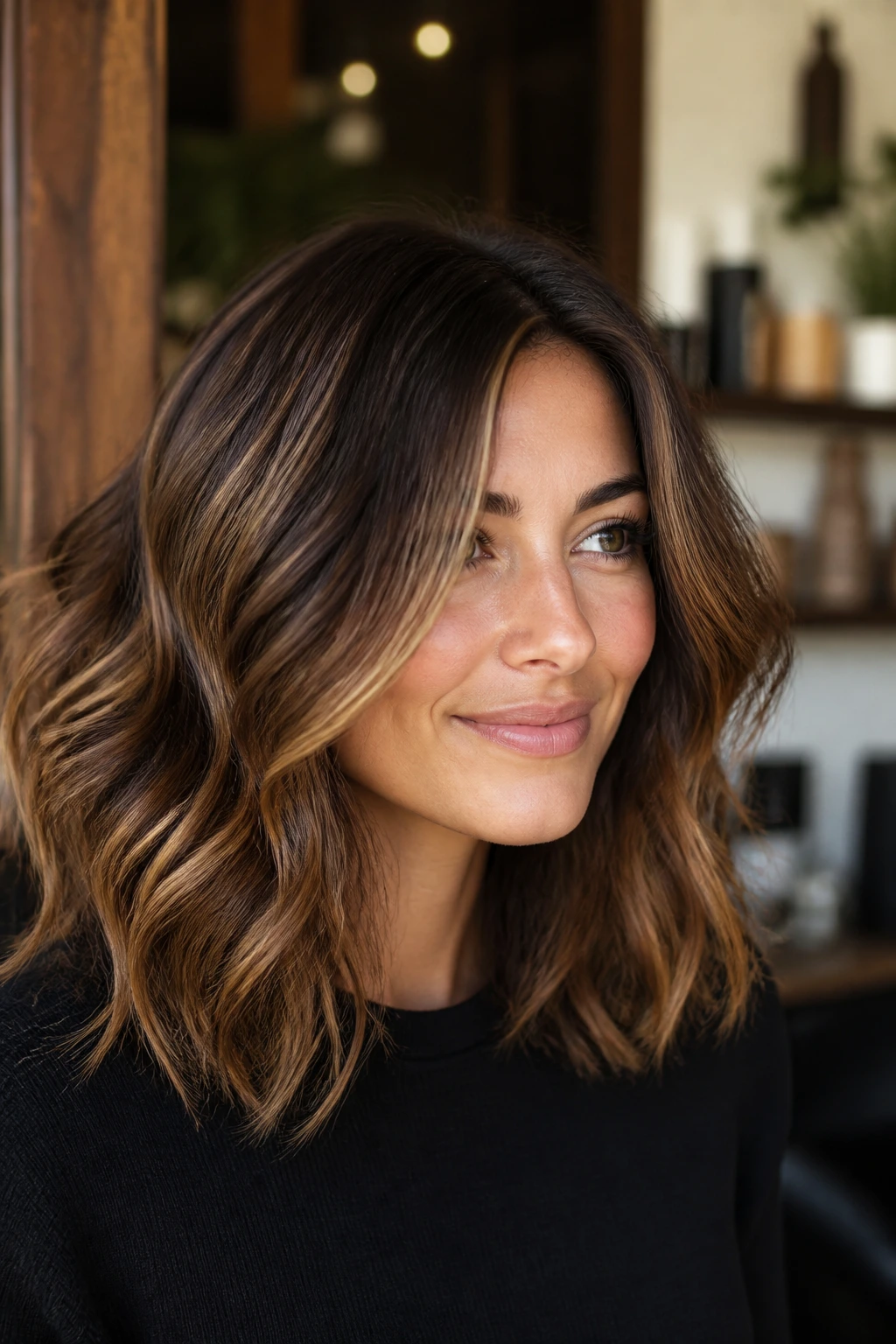
Caramel ribbon balayage is the classic answer for brunette hair that needs warmth without looking bleached. The ribbons sit mid-shaft through the ends, so the chestnut base still does most of the heavy lifting, while the lighter pieces move when you walk. On warm skin, that caramel reflects just enough gold to make the face look awake.
What to ask for
Ask for level 7 caramel ribbons painted by hand, with a soft root melt about one to two levels deeper than the lightest pieces. If your hair is medium-density, this placement keeps the color from turning into a block of light. If it’s fine, ask for fewer, wider ribbons.
Best for: shoulder-length waves, layered cuts, and anyone who wants dimension without a big color change.
Watch for: too many foils at the crown. That can make the top look streaky instead of blended.
2. Honey Babylights That Barely Announce Themselves
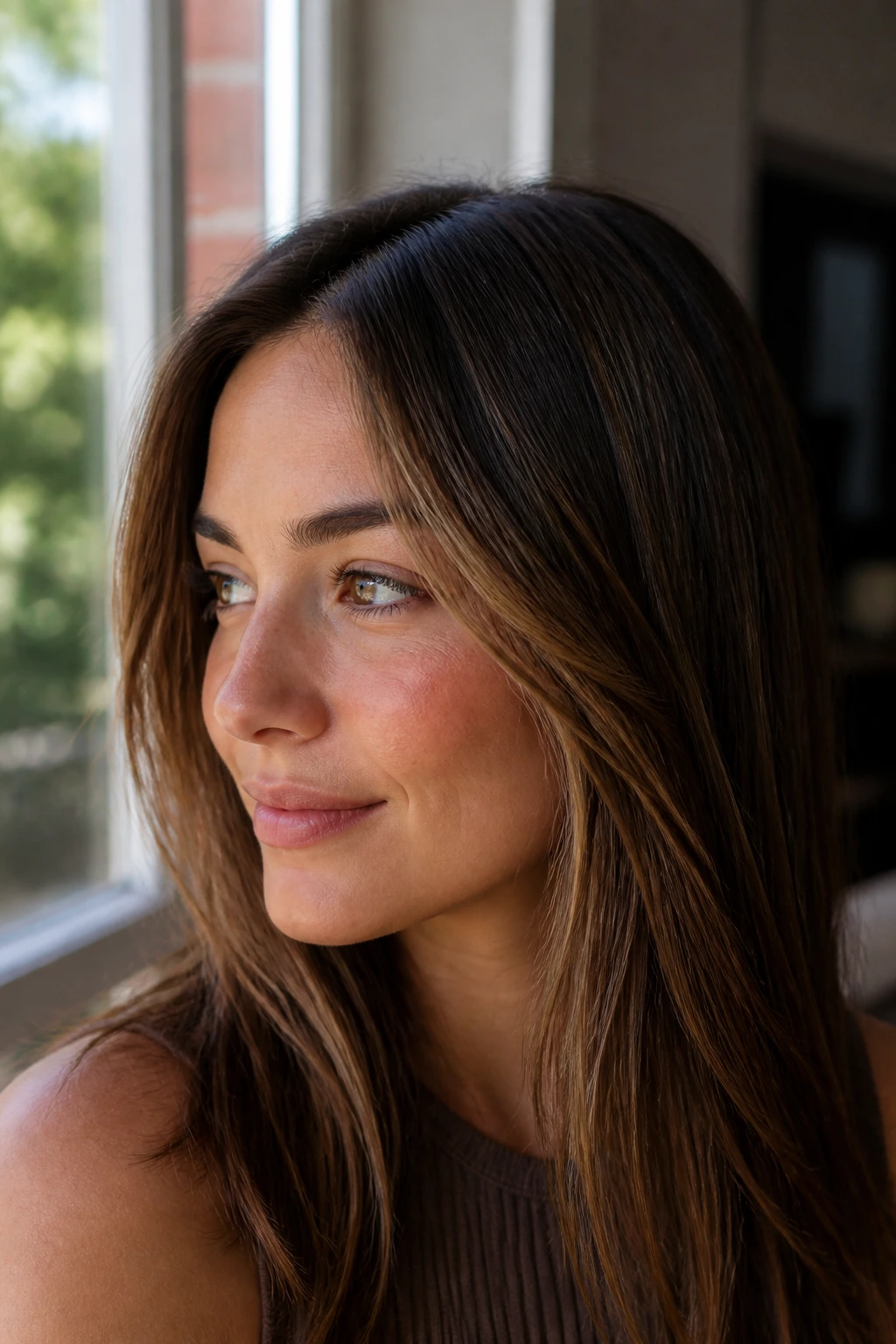
Honey babylights are tiny, woven highlights that sit in the hair like a sheen, not a stripe. They’re perfect if you want brunette natural highlights for warm skin tones but don’t want the color to look “done.” In daylight, the result is soft and glossy, almost like the hair got better lighting.
Babylights work because the pieces are so fine. They break up a dark brunette base just enough to show movement, especially around the part line and temples. A honey tone also keeps the effect warm instead of chalky.
Use this approach if you wear your hair straight often or if your hair is fine and tends to go flat with chunkier highlights. It grows out quietly, which is a blessing if you hate obvious regrowth. Keep the tone honey, not pale beige, and the whole head stays friendlier to warm skin.
3. Cinnamon Melt for Wavy Brunette Hair
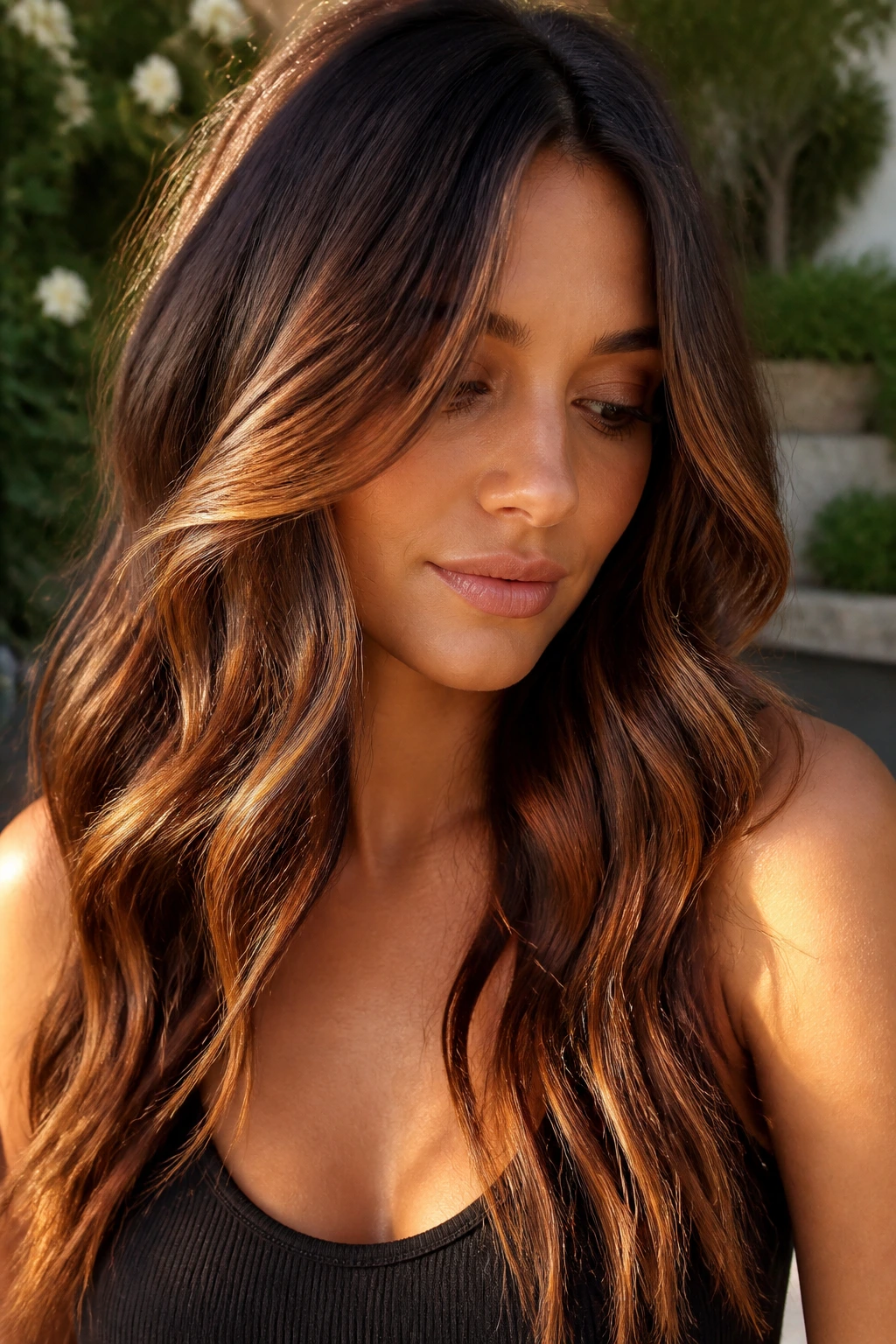
Why does cinnamon look so good on warm skin? Because it carries brown, gold, and a little red all at once. That mix gives brunette hair a richer edge without pushing it into bright auburn territory. On waves, cinnamon pieces appear and disappear as the hair moves, which is half the fun.
How it usually works
A good cinnamon melt starts with a brunette base that stays deep at the root. Then the colorist paints cinnamon and caramel through the mids and ends, often with a few darker lowlights underneath so the warmth does not flatten out. The final gloss should feel warm, not orange. That distinction matters.
If your hair has loose waves or a rough natural texture, this is one of the easiest ways to make the color look expensive without turning it dramatic. It is also a smart choice if you like warm makeup tones — terracotta blush, bronze shadow, or peach lips.
4. A Golden Money Piece That Brightens the Face First
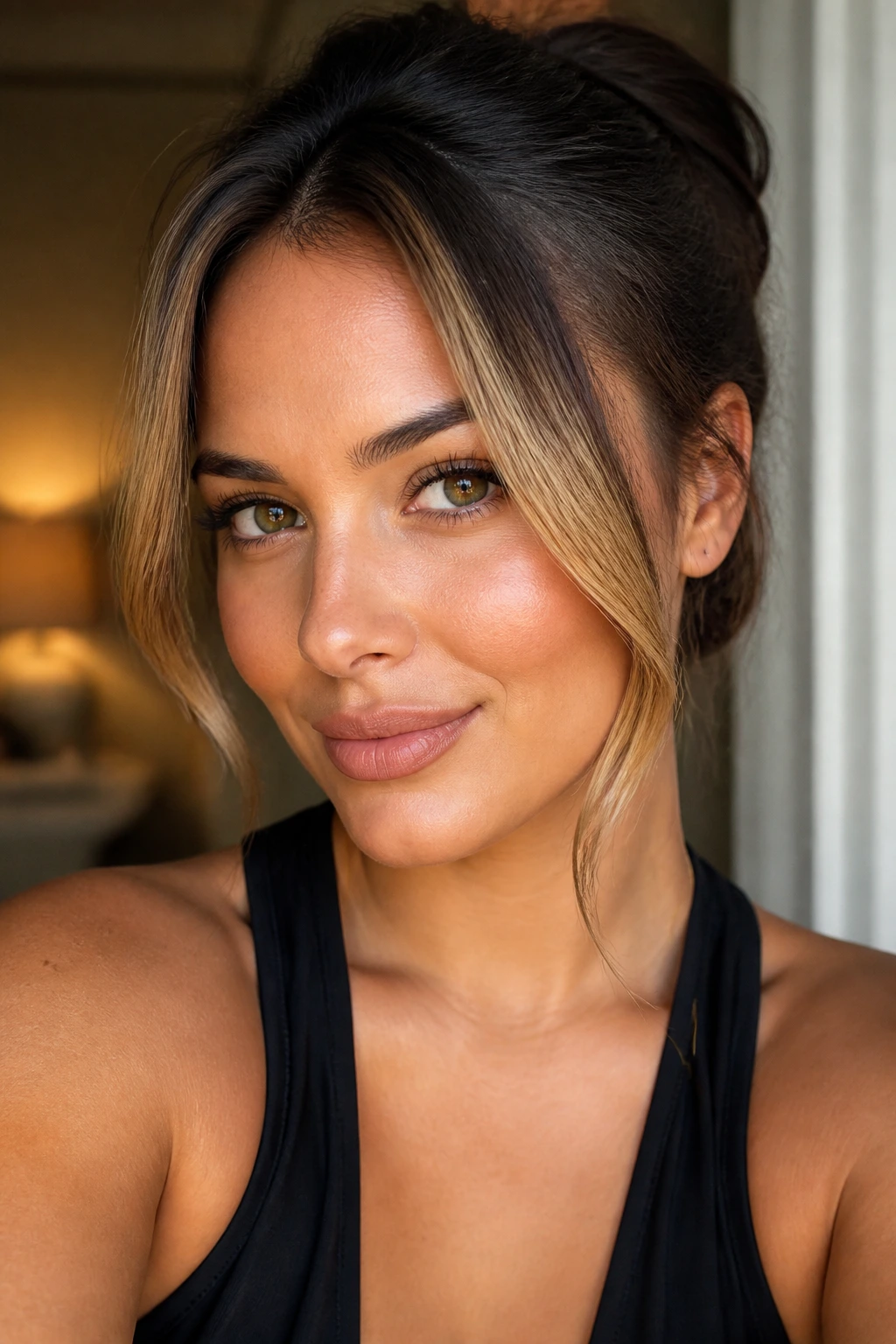
A warm money piece can do more than a full head of highlights if your goal is brightness around the eyes and cheekbones. The front section gets lifted a shade or two lighter than the rest, then toned toward gold so it never slides into icy blonde territory. It’s a small area, but it changes the whole read of the face.
I like this approach on dark brunettes who want something visible but not high-maintenance. Pull the hair back, and the highlight still shows. Wear it down, and it frames the face without forcing the whole head to compete with it.
A money piece works best when the rest of the color stays rich. If the front gets too light and the lengths stay too flat, the contrast can feel disconnected. Keep the front golden, the mid-lengths soft, and the ends just a touch brighter.
5. Toffee Ends on Long Brunette Layers
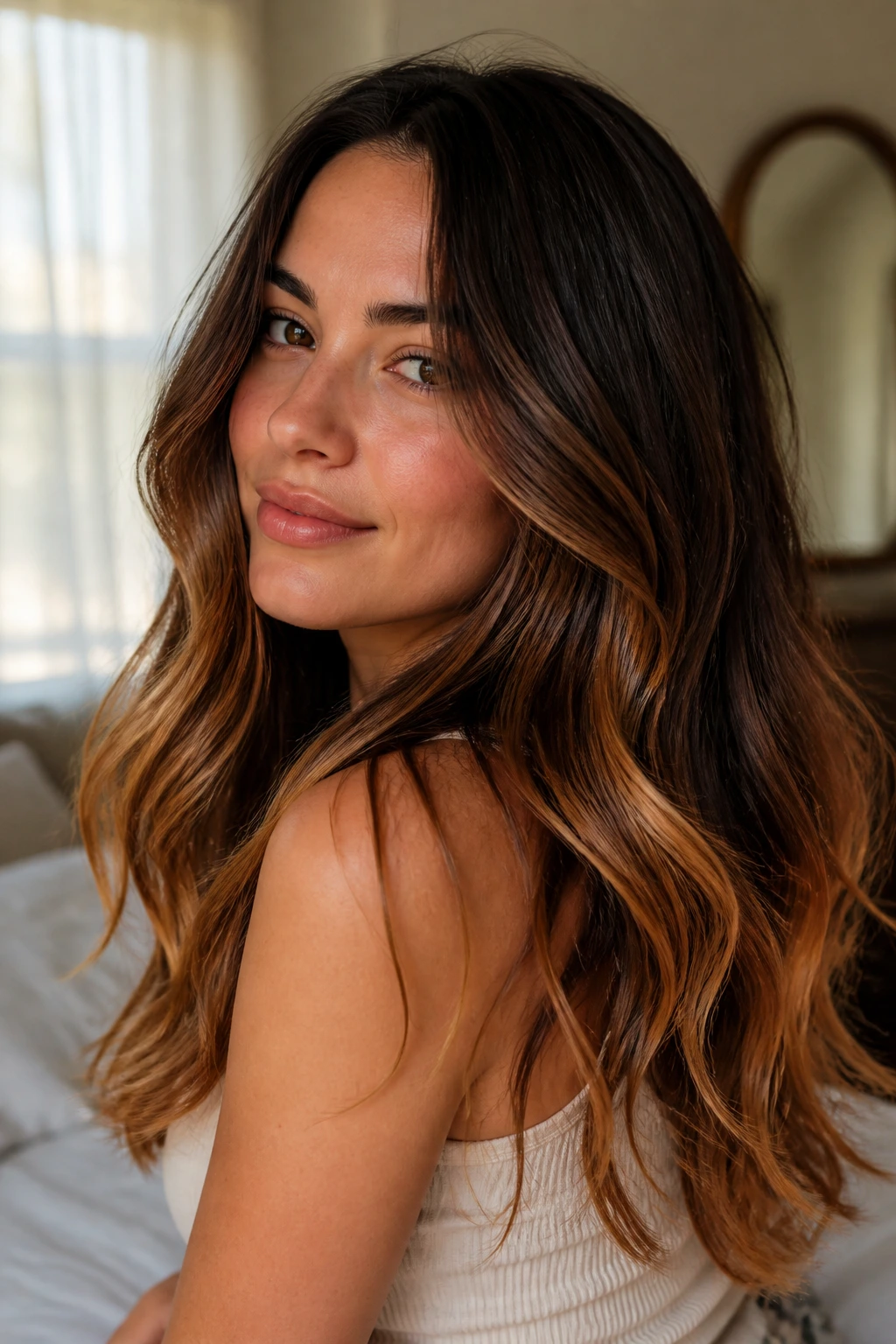
Toffee ends are for hair that needs movement without a harsh line near the root. The highlight is concentrated toward the lower half of the hair, which keeps the top darker and makes the color feel gradual rather than striped. On long layers, that placement lets the light catch the ends when they swing.
This is one of the easiest ways to keep warm skin looking fresh if you don’t want to maintain a bright face frame. Toffee sits between caramel and beige, so the result is soft and believable. It also plays well with a deep brunette base because it gives the ends shape without losing depth.
If your hair is long enough to curl or wave, the toffee pieces show up even more in the bends. If it’s straight, ask for a little more contrast near the bottom third so the color doesn’t disappear.
6. Bronze Gloss Balayage for an Espresso Base
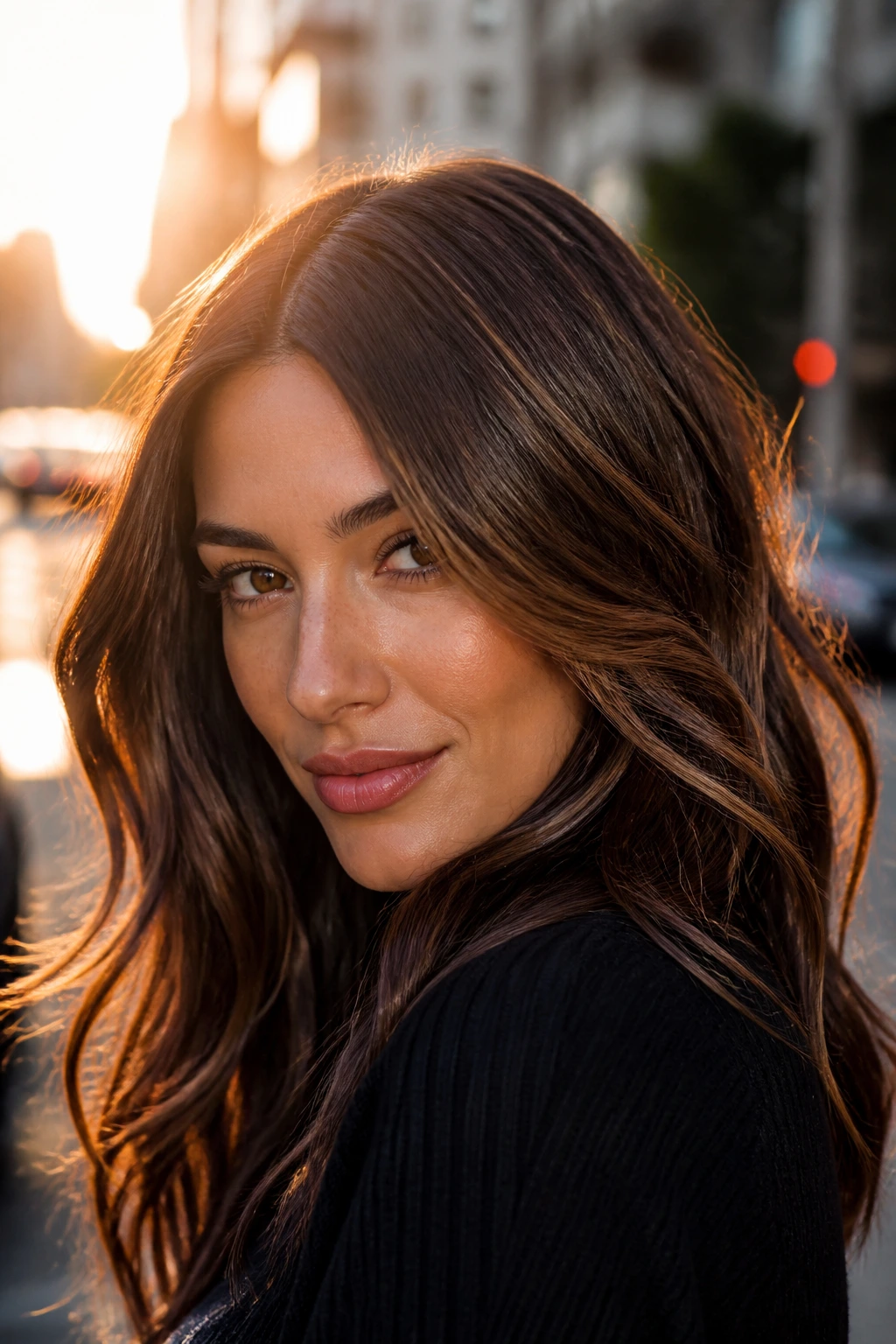
Bronze gloss balayage is for people who want shine more than lightness. Instead of chasing a pale highlight, the colorist lifts the hair modestly and then finishes with a bronze glaze that adds warmth and reflective depth. On an espresso base, that can look almost liquid in the right light.
This is the version I reach for when the hair is already dark and healthy-looking, and the client wants dimension without sacrificing richness. Bronze is not flat brown. It has enough warmth to keep warm skin from looking washed out, but it still reads polished and dark.
It’s also one of the better choices if your hair dislikes aggressive lifting. Ask for softer ribbons and a strong gloss finish. The whole point is movement, not contrast for its own sake.
7. Amber Ribbons That Move Through Straight Hair
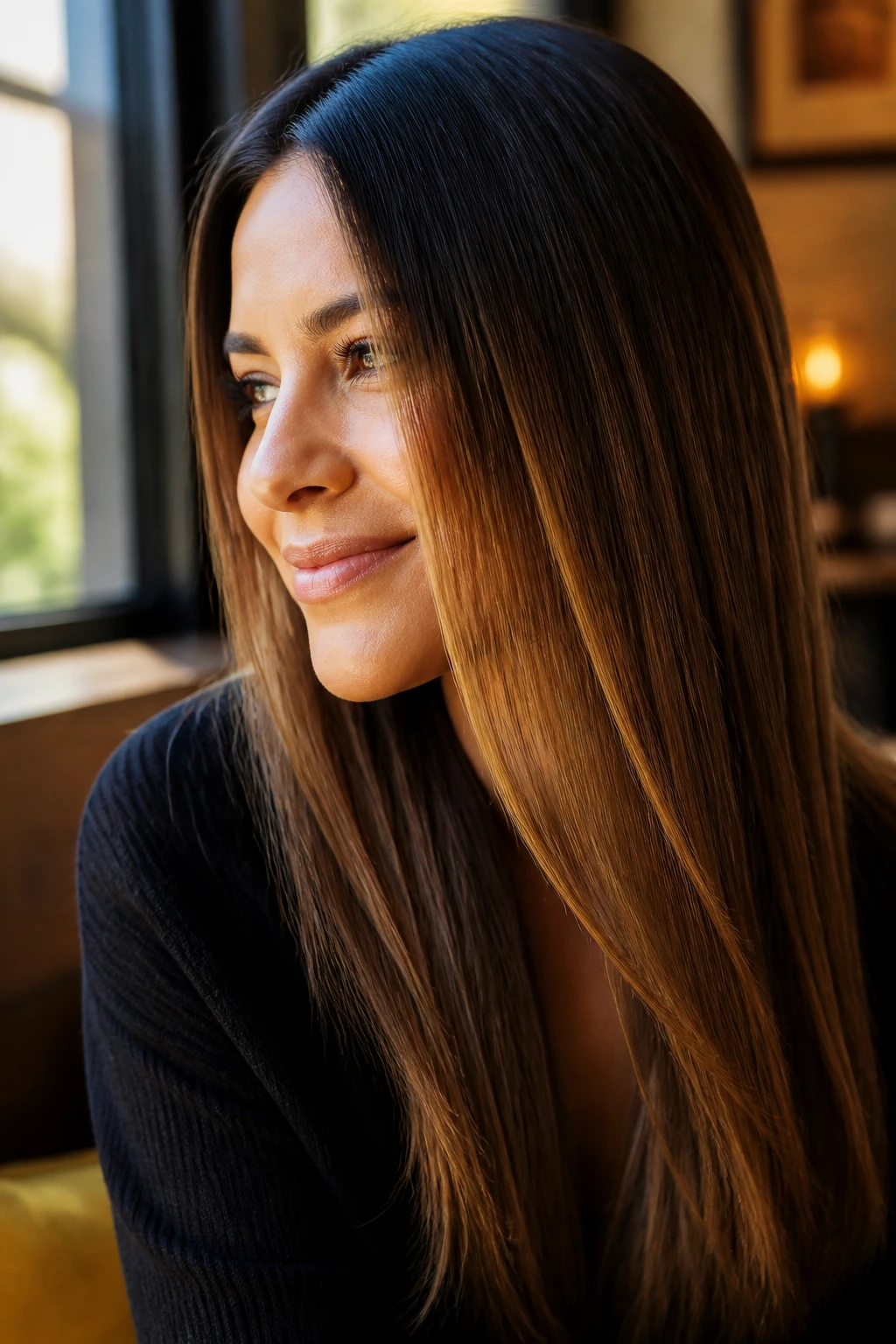
Straight hair can make highlights look harsher than they do on waves, which is why amber ribbons work so well here. Amber carries a warm golden-red note that keeps the pieces visible without screaming for attention. On straight styles, the color needs a little more width than babylights, or it can vanish.
The best amber placement usually starts around the cheekbone and continues through the mid-lengths. That gives the hair enough sparkle when it hangs flat. If the pieces are too scattered, the result can look busy instead of blended.
This is a strong choice for people with warmer eyes — hazel, amber, green-brown — because the color near the face ties the whole look together. Wear it with a center part for symmetry, or tuck one side back to show off the front.
8. Chestnut-to-Honey Ombré on Thick Hair
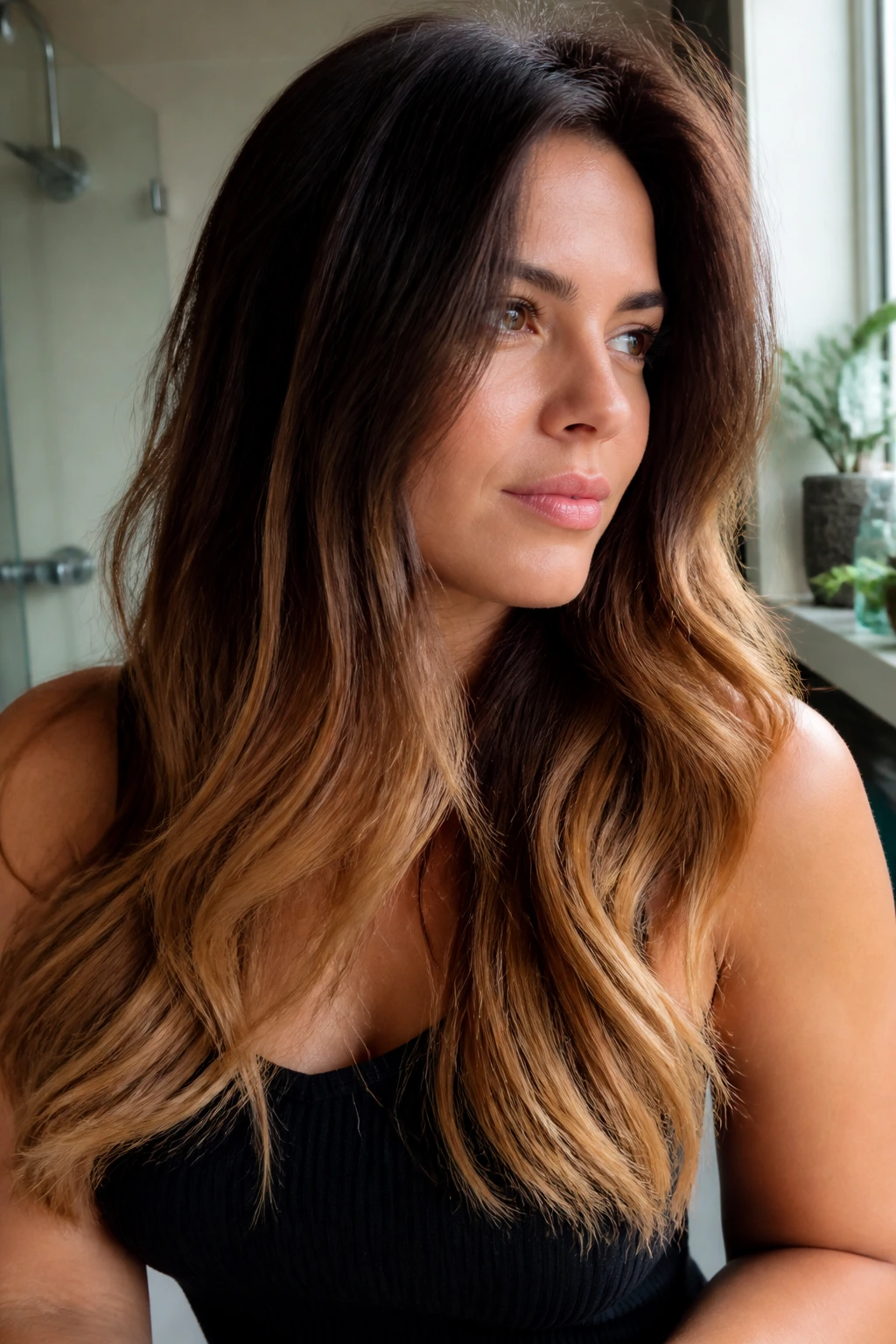
Thick hair handles ombré better than most textures because it can hold a long gradient without looking sparse. Chestnut-to-honey ombré keeps the root area rich and slowly slides into a warmer, lighter finish toward the ends. The transition needs to be long and soft, not obvious.
The honey should not start too high. That’s the mistake that makes ombré look dated. Keep the shift beginning below the chin on longer hair, or lower on mid-length cuts, so the result feels natural and not blocky.
Thick hair benefits from this because the weight at the bottom gives the lighter ends something to sit on. If your hair puffs out easily, a honey ombré can still work; just keep some deeper lowlights underneath so the shape stays controlled.
9. Maple Highlights on Shoulder-Length Cuts
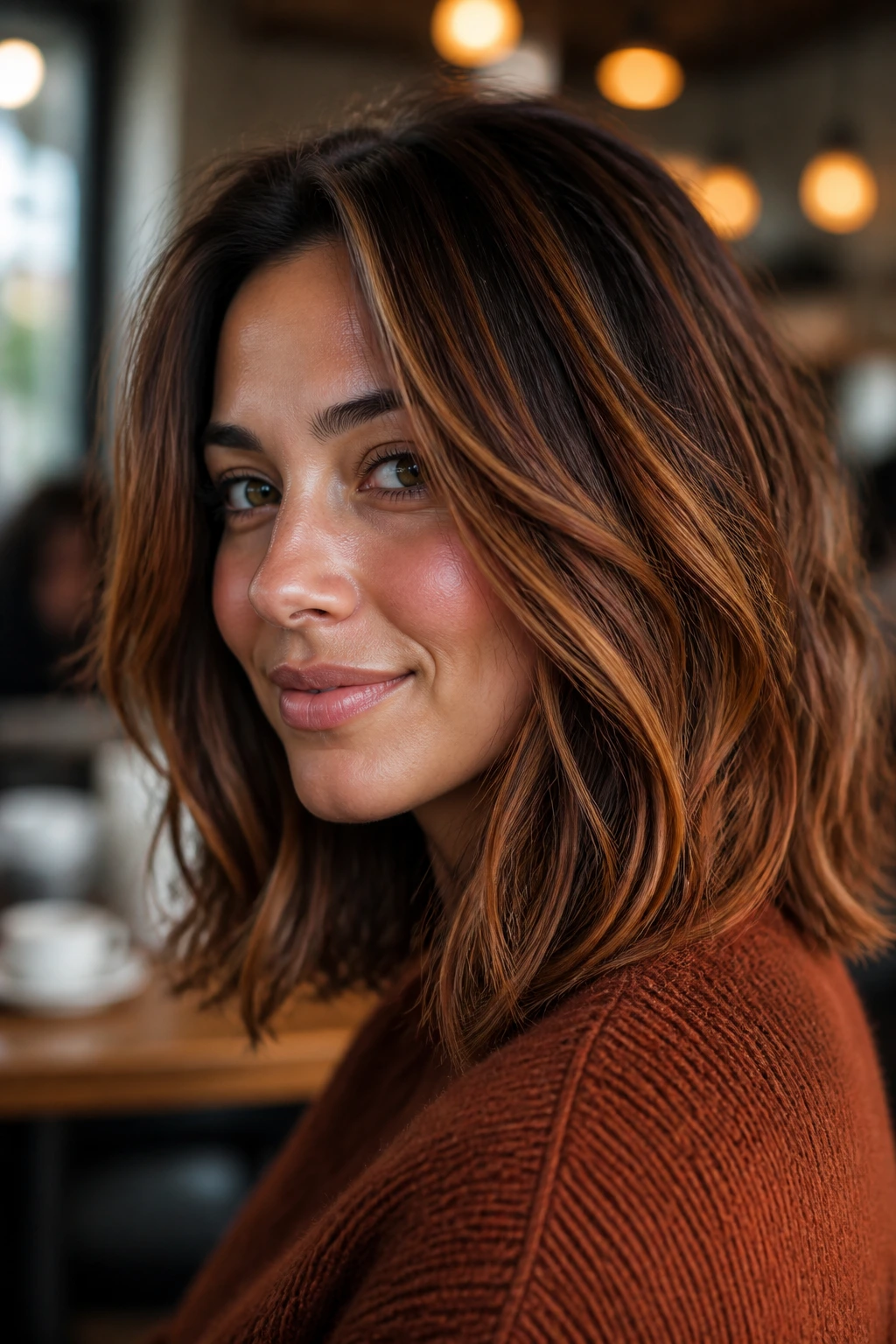
Shoulder-length cuts are a sweet spot for maple highlights because the color has enough room to show, but not so much hair that the result gets lost. Maple sits between caramel and auburn, which gives brunettes a warm lift that feels grounded. It’s a color with warmth in it, but no obvious red flash.
This style works especially well with a lob or blunt shoulder cut. The clean edge gives the maple pieces a frame, and the color keeps the cut from looking too heavy. Add a slight bend at the ends and the lighter ribbons pop in a way that feels deliberate.
If your skin leans golden or peach, maple can be one of the most flattering choices in the whole lineup. It doesn’t ask for a big maintenance schedule, and it grows out with more grace than brighter blonde tones.
10. Butterscotch Peekaboo Panels Under the Crown
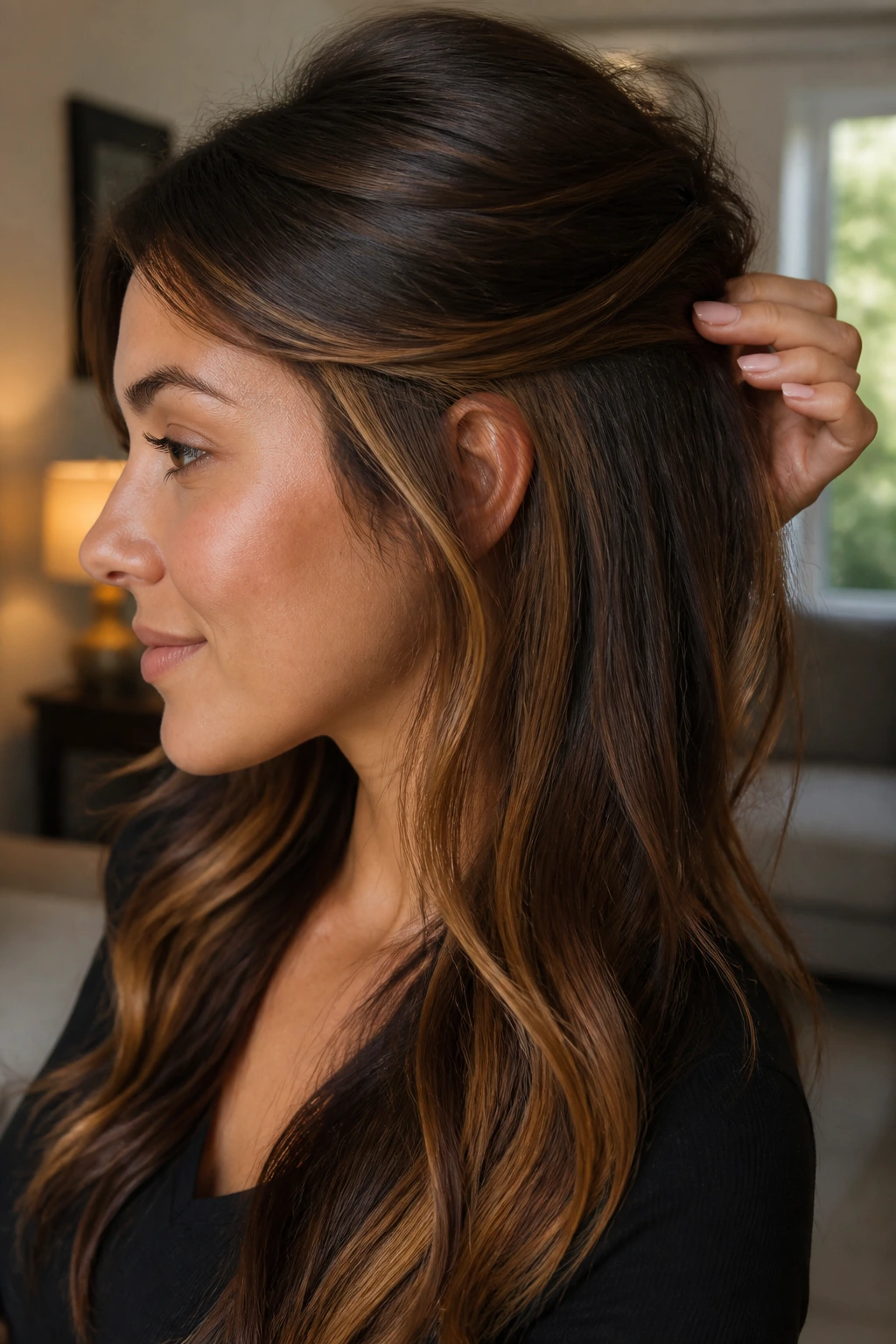
Peekaboo highlights are the fun cousin in the brunette family. The lightened panels hide under the top layer, then flash through when the hair moves, lifts, or gets tucked behind the ears. Butterscotch keeps the tone warm and creamy, which matters if you want playful color without a cold blonde stripe.
This is a smart move for anyone who has to stay somewhat conservative at work or wants their color to feel surprising rather than obvious. The panels can be placed under the crown or behind the temple, and a good cut will help them surface at the right moments.
Curly hair and layered hair both make this look easier to live with. The movement does half the styling for you. Keep the contrast moderate, or the hidden panels can look too stark the second you catch them in a mirror.
11. Hazelnut Babylights for Fine Hair
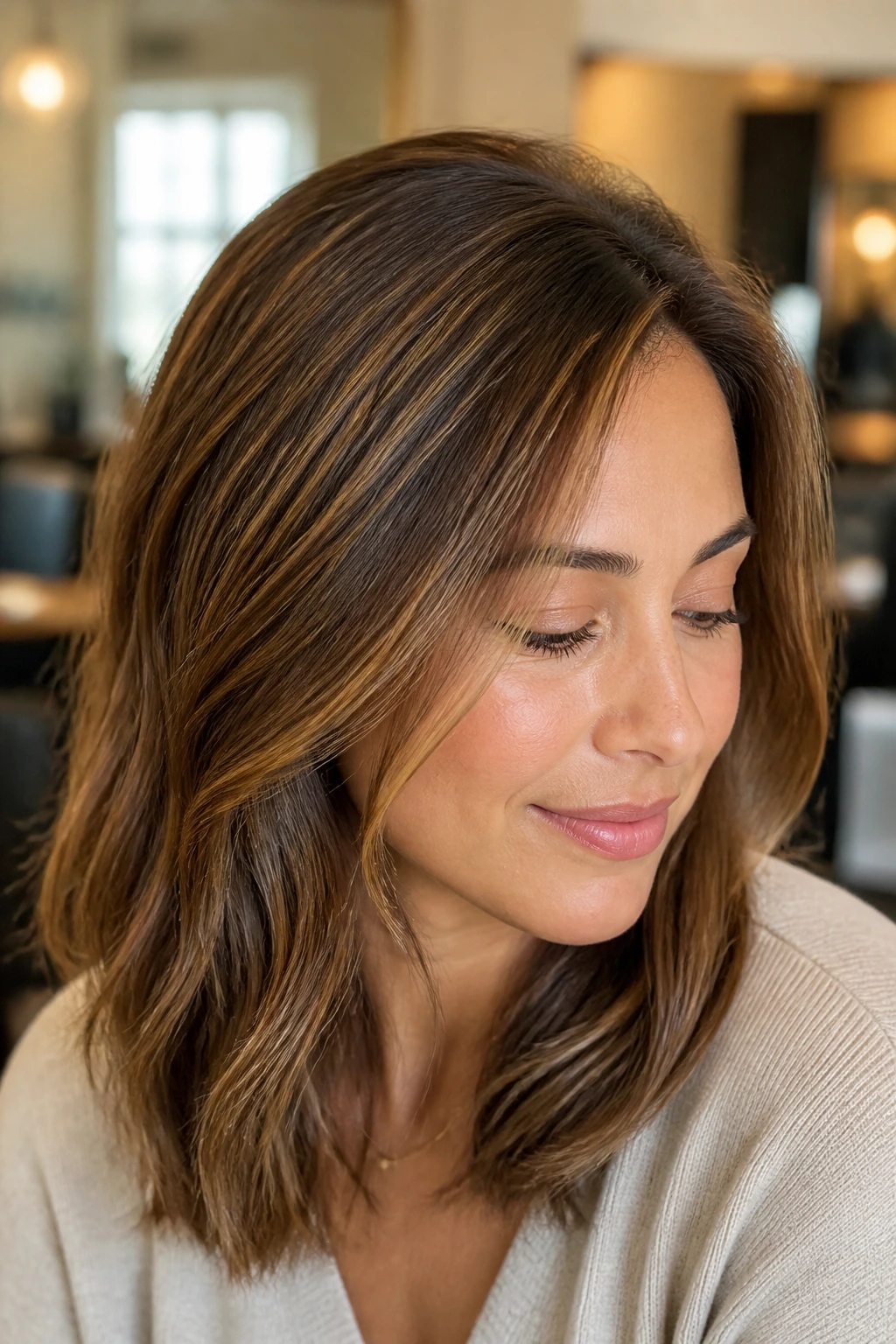
Fine hair loves hazelnut babylights because the highlight sits inside the hair instead of on top of it. Hazelnut is richer than blonde and a little softer than caramel, which makes it ideal if you want warmth without thin-looking ends. The tiny weave gives the hair a fuller, more textured look.
A lot of people with fine hair go too light too fast. That’s where the hair starts looking see-through. Hazelnut avoids that problem by staying within a narrow range of the brunette base. The result is shine, not striping.
Ask for lights around the part line, temples, and a few scattered pieces through the mid-lengths. That keeps the hair from reading flat under indoor light. A gloss finish matters here, because fine hair shows dullness fast.
12. Copper-Kissed Highlights That Wake Up Warm Skin
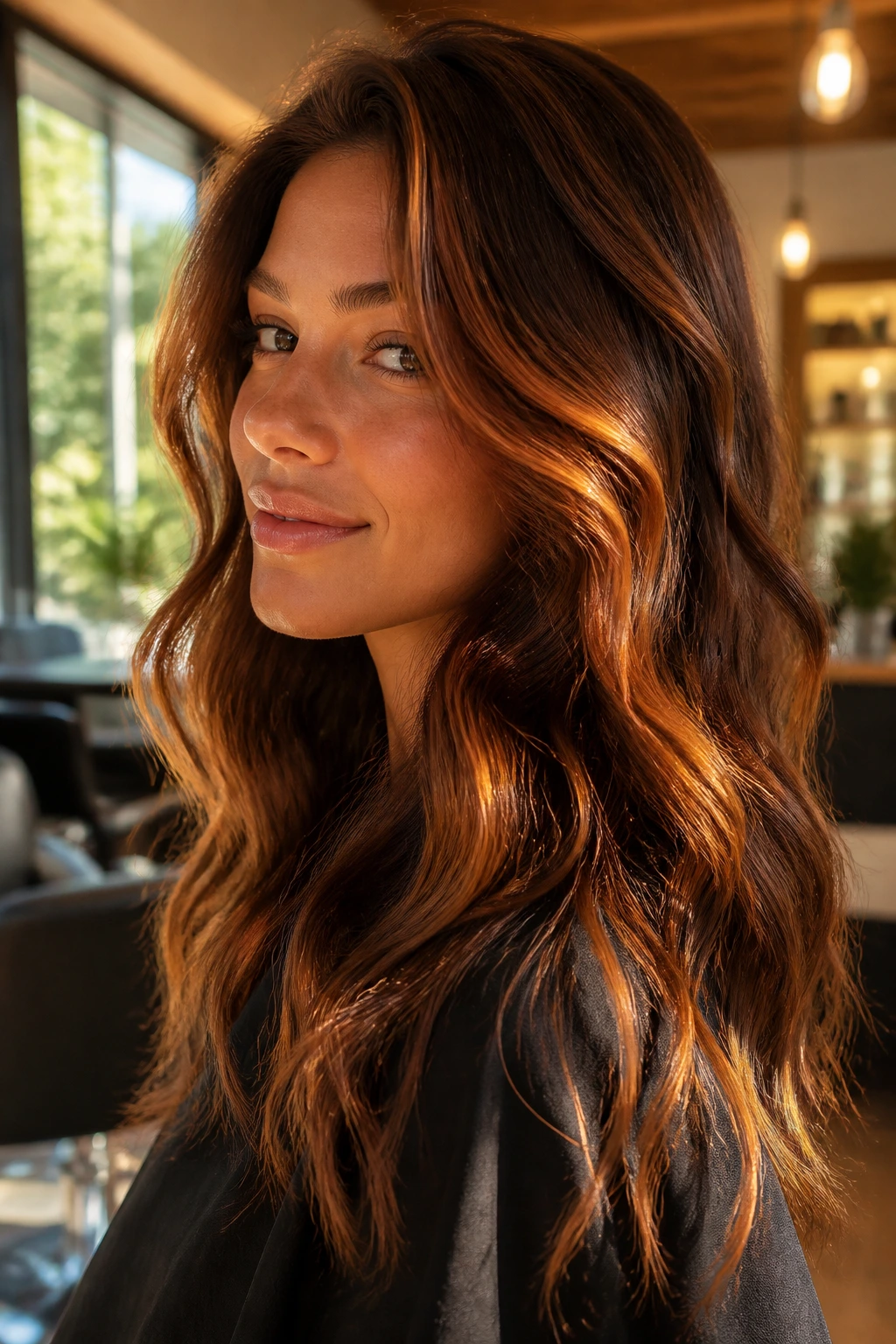
Copper-kissed highlights are a good fit when warm skin has freckles, peach undertones, or a natural glow that likes a little red in the hair. The trick is to keep the copper soft. You want a kiss of it, not a full red-head conversion unless that’s the goal.
This look tends to read best on brunettes with natural warmth already in the base. If your natural color has chestnut or auburn notes, copper highlights just deepen that family. If your brunette is very cool, the result can feel a little loud unless the copper is blended with gold.
I like this one on layered cuts and wavy textures because the copper catches in the bends. It’s a little more expressive than caramel, but still believable when done with restraint.
13. Warm Bronde Melt That Grows Out Quietly
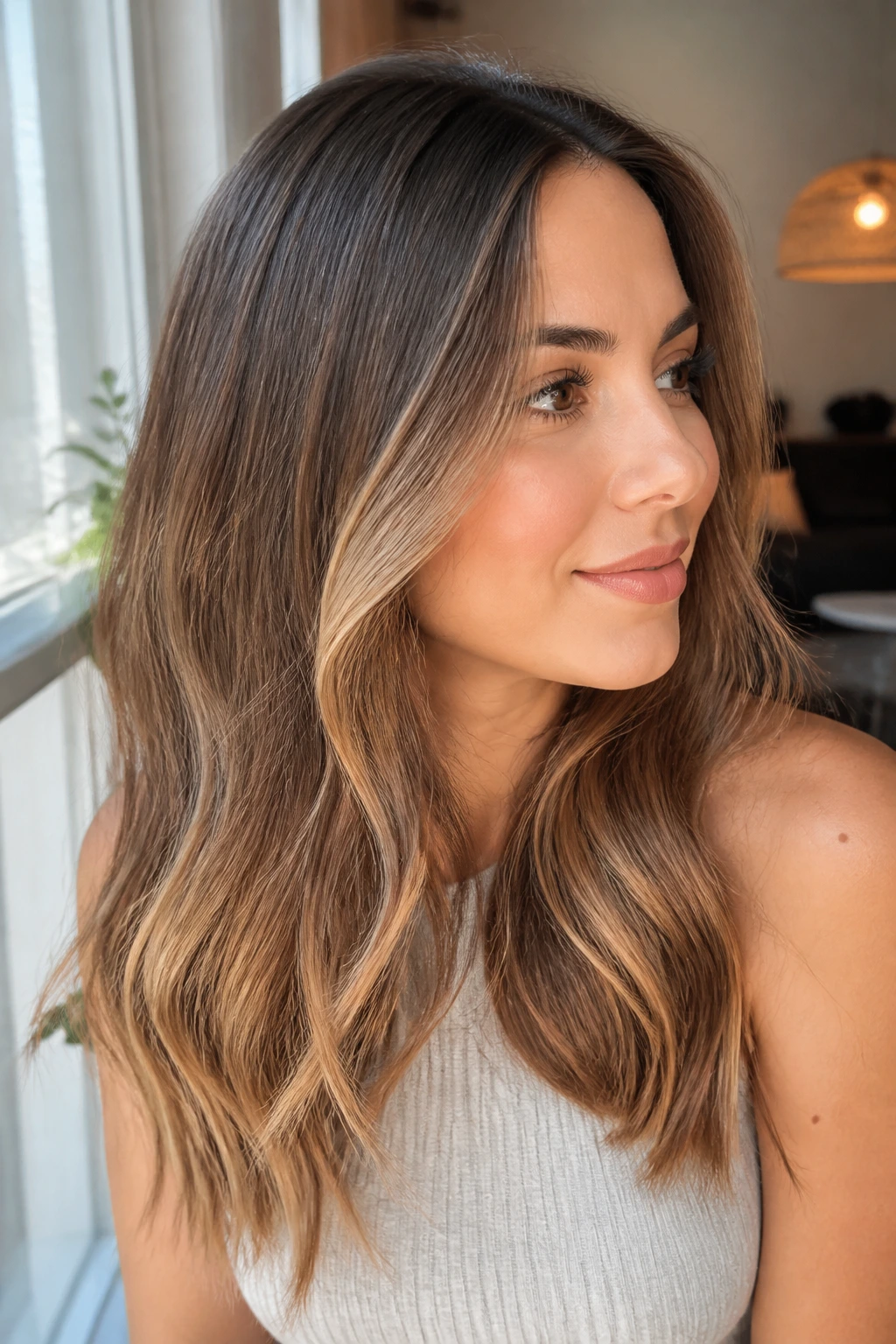
Bronde can go wrong when it turns too beige or too blonde. Warm bronde avoids that mess by staying rooted in brown and lifting only enough to create a soft glow. The melt is the point — dark brunette near the roots, then warm ribbons through the mids, then the lightest tone at the ends.
Why it works
Warm skin usually likes that middle ground. The color doesn’t fight the complexion, and the grow-out stays forgiving because the root is still dark enough to belong. If you want low maintenance, this is one of the safest bets on the list.
Ask for a warm gloss over the highlights so the finish stays golden rather than sandy. If the bronde is too cool, the whole head can look flat. A good warm bronde should feel like a brunette that spent a long afternoon in sunlight.
14. Toasted Almond Contouring Around a Lob
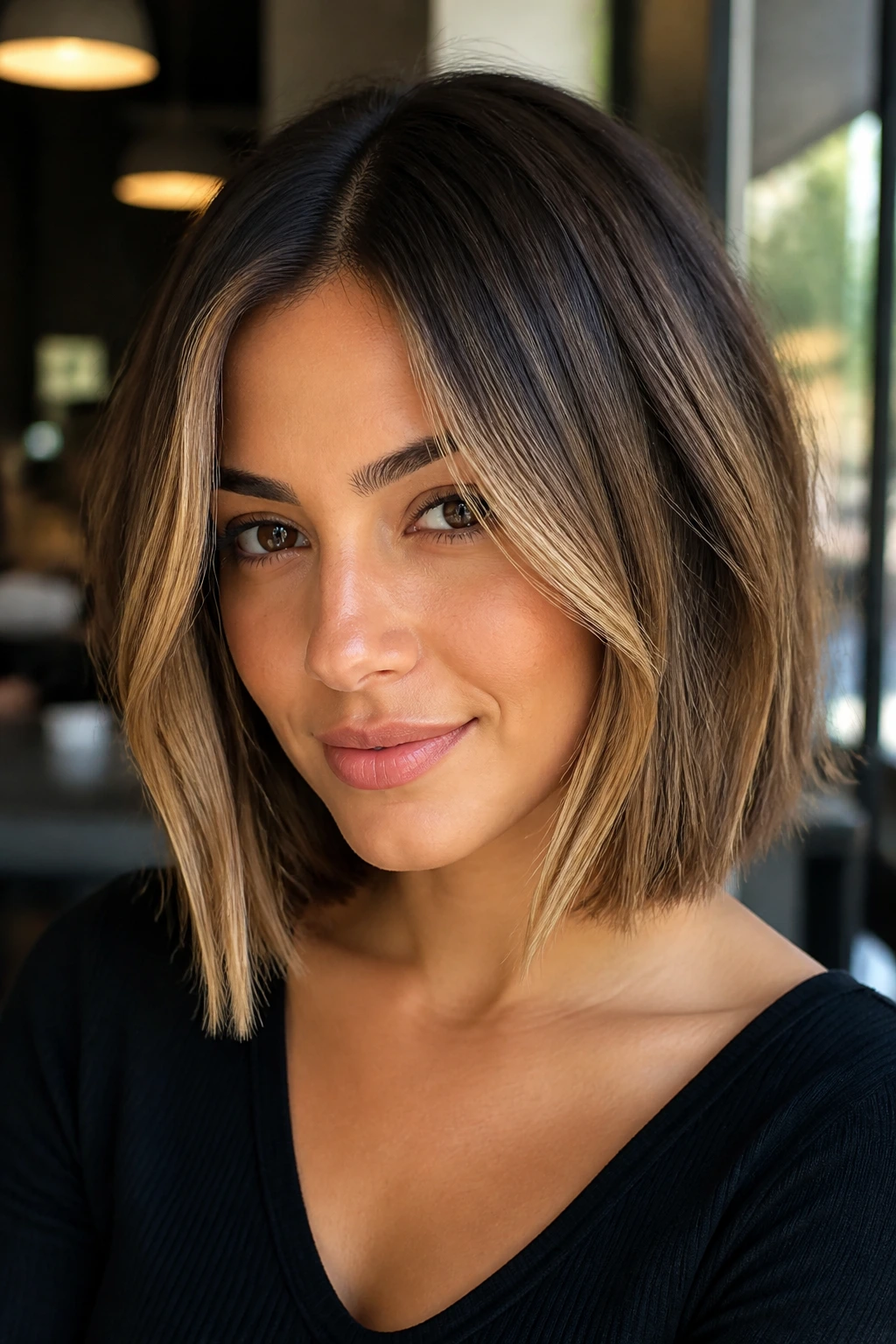
Toasted almond contouring uses lighter pieces in a way that follows the shape of the face, not just the surface of the hair. On a lob, that means brighter strands around the cheekbone and jaw, with softer lightness moving back through the sides. The result is more shape, less random color.
This is the type of highlight people notice without being able to name why. The cut looks neater. The face looks framed. Warm skin likes toasted almond because it stays in the gold-beige lane rather than going pale or ash-heavy.
If your lob is blunt, the contouring keeps it from feeling too boxy. If it’s layered, the highlight follows the movement and gives the ends some lift. It’s subtle, but not boring.
15. Biscotti Face Frame on Dark Brunette Hair
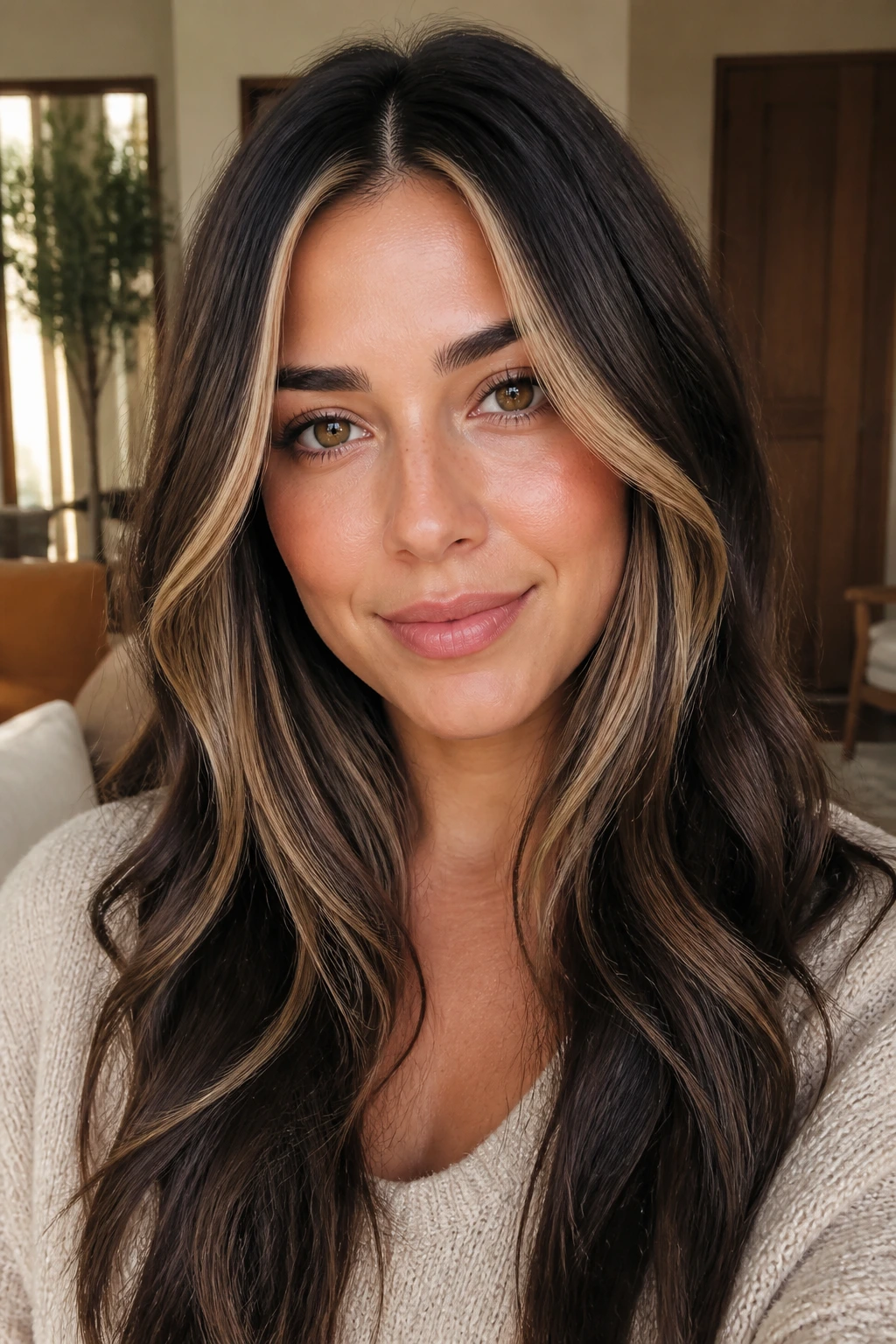
Biscotti has a creamy, warm-beige feel that works well when the base is deep brunette and you want the face to stand out more than the rest of the hair. The face frame should be soft and thin enough that it doesn’t look like a strip of blonde. Think glow, not spotlight.
This is a nice middle road for people who are nervous about a lot of lightness. The dark base stays in control, while the biscotti pieces brighten the front and the upper layers around the face. It pairs especially well with a center part and curtain bangs, because both leave room for the lighter pieces to show.
A good colorist will keep the biscuit tone warm, not chalky. That warmth matters on peachy or golden skin, where cool beige can start to look disconnected.
16. Mahogany-and-Caramel Dimension for Dense Hair
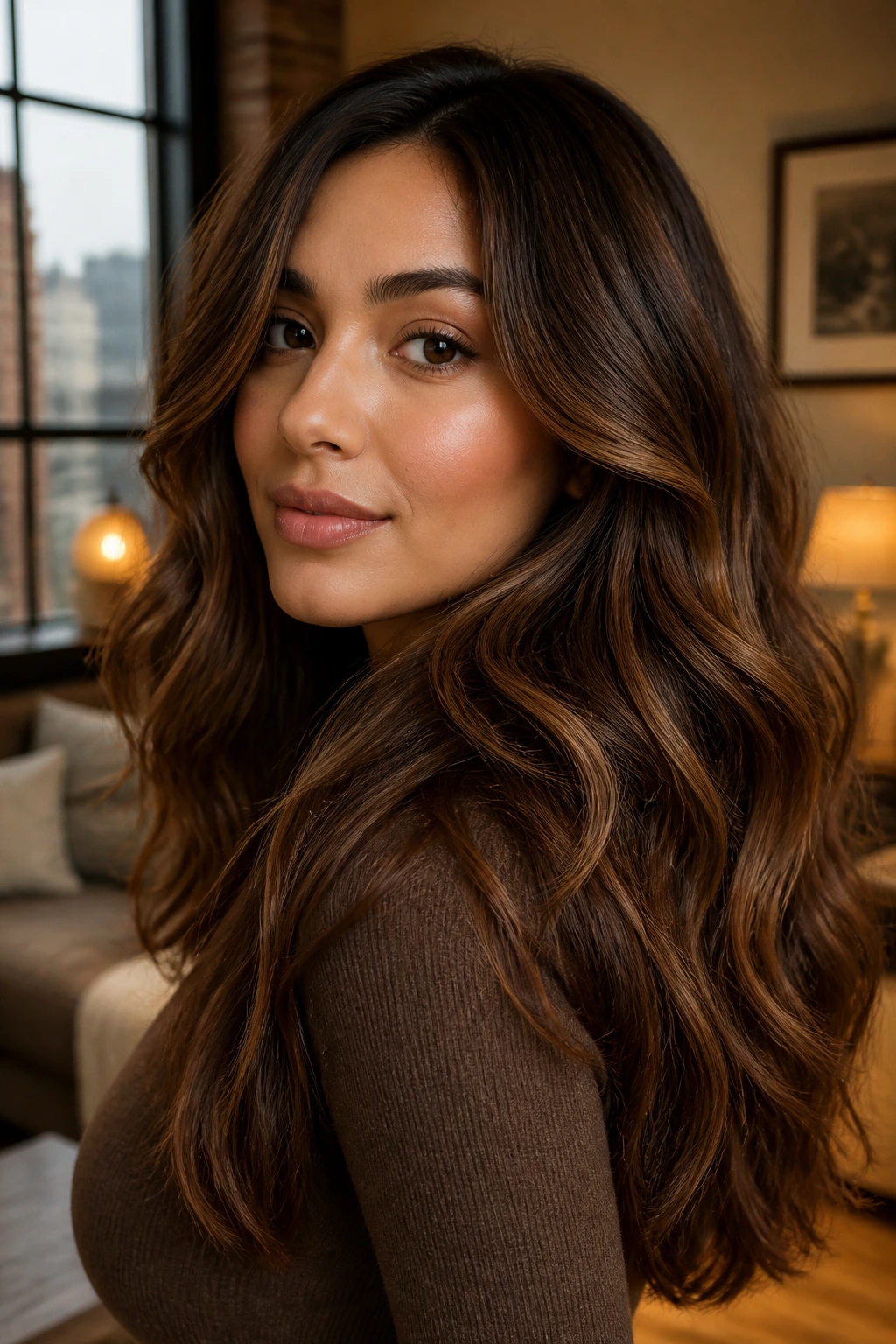
Dense hair can swallow light if you only add highlights. Mahogany lowlights fix that. Caramel ribbons lift the surface, while mahogany underneath keeps the hair from floating away from the head. The balance creates depth that you can actually see from a distance.
I like this combo when the goal is richness, not just brightness. Mahogany adds a wine-brown depth that sits beautifully against warm skin, and caramel gives the movement on top. On thick hair, the contrast between the two shades helps every layer read separately.
The best version uses both color families in a controlled way. Too much caramel and the hair starts looking streaky. Too much mahogany and the light pieces disappear. The magic is in the ratio.
17. Espresso Base with Champagne-Gold Veils
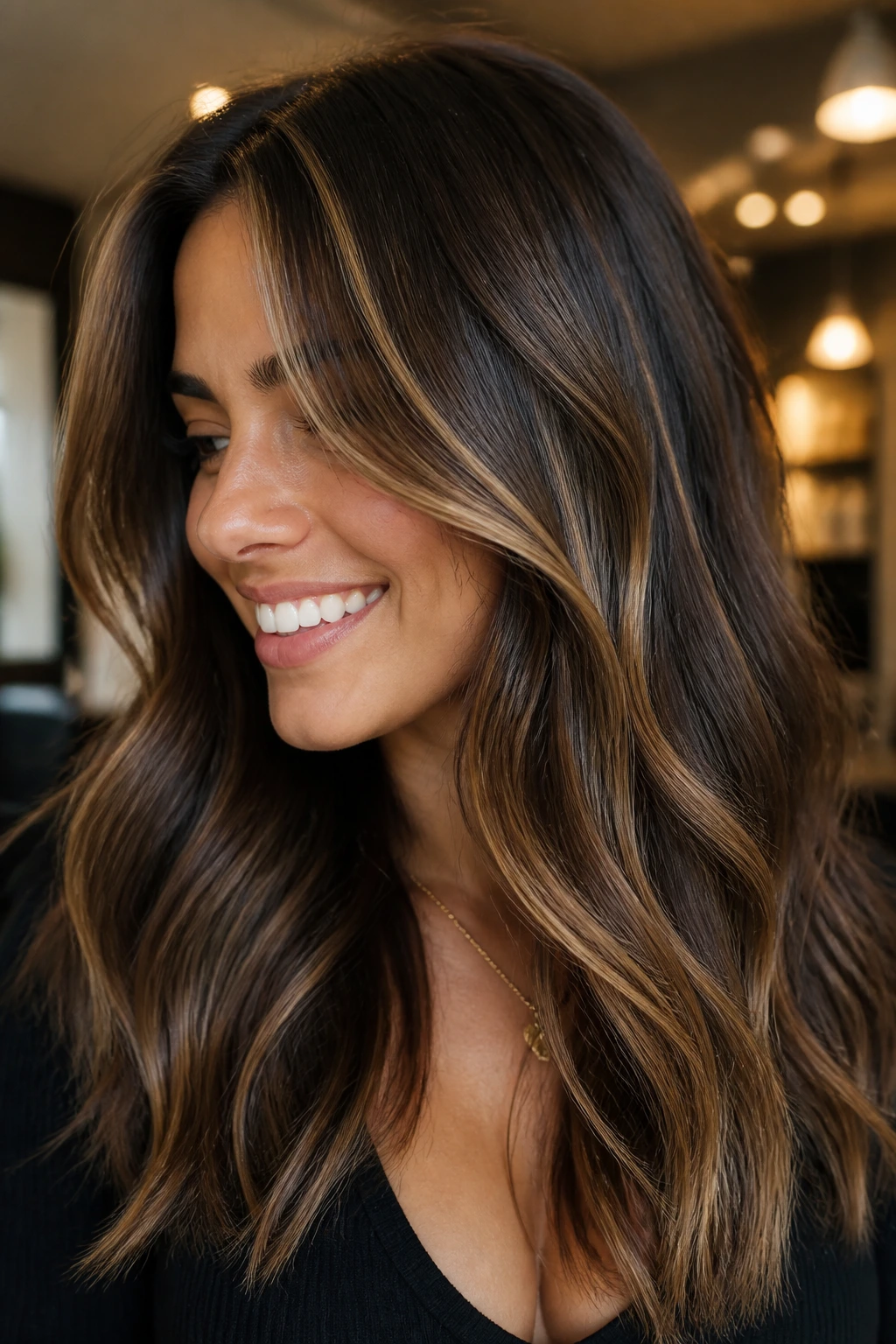
Champagne can go too cool, so the trick here is to keep it firmly in the gold lane. On an espresso brunette base, the lighter veils should be soft, thin, and scattered enough to feel like shimmer rather than stripes. The darker base does most of the visual work.
This suits people who want a polished result that still looks brunette first. The highlights catch on the surface, especially around the face and the top layer, but they do not take over the haircut. That restraint is why it flatters warm skin so well.
A shine spray or lightweight serum helps this look. The lighter pieces should reflect, not frizz out. If your hair tends to dry matte, this is one of those colors that benefits from a glossy finish every time you style it.
18. Sunlit Walnut Balayage for Soft Movement
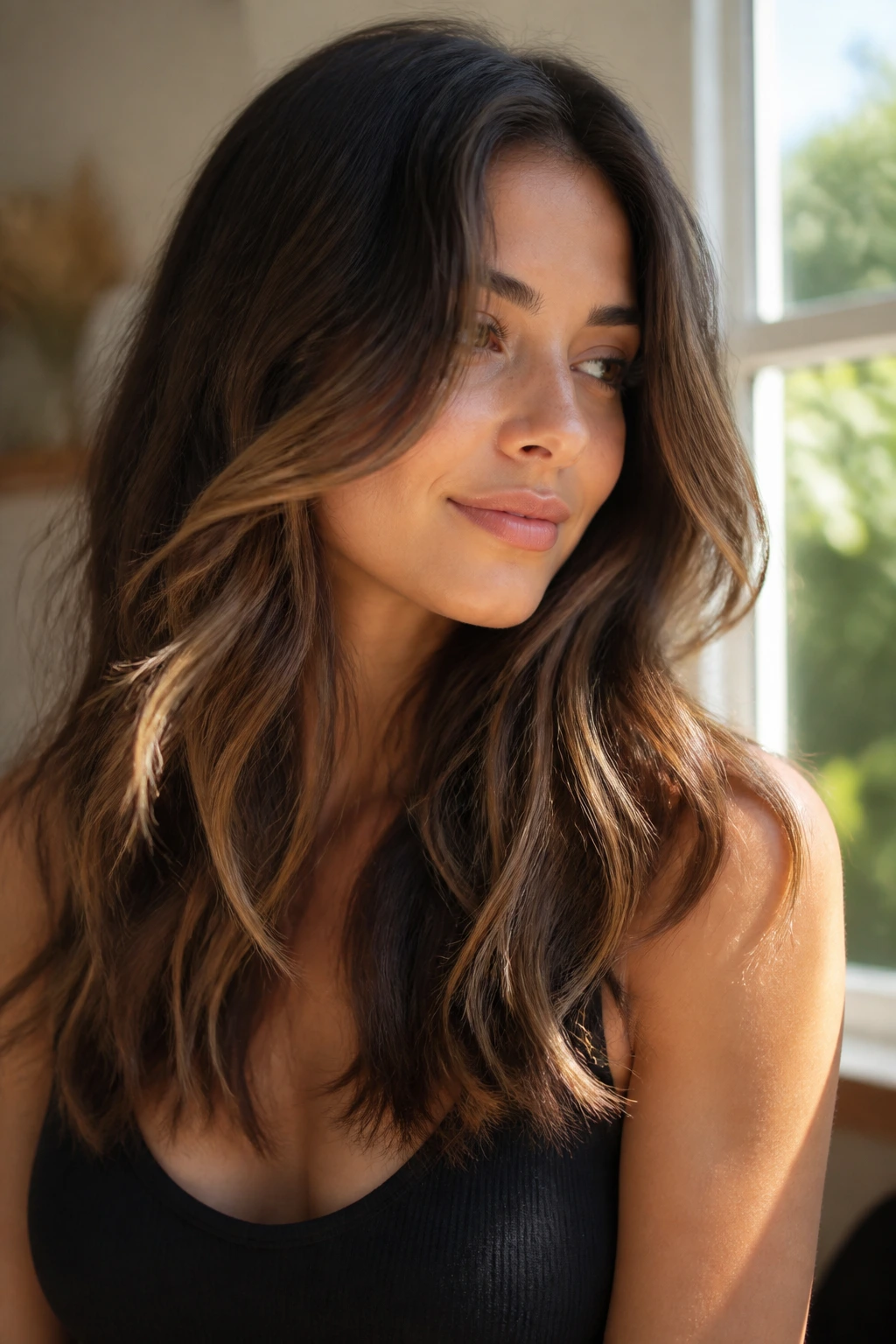
Walnut is one of the most underrated brunette tones because it sits between brown and gold without getting too sweet. Sunlit walnut balayage gives the hair warmth and movement while keeping the root area grounded. It’s low drama in the best way.
This one works on almost any texture, but it really shines on long layers or a medium-length cut with some bend. The painted pieces should be broad enough to show in motion and light enough to separate the layers. If you wear your hair often in a half-up style, the walnut tone shows up beautifully in the lifted sections.
Warm skin tones like this because walnut doesn’t cool the face down. It adds shape, and shape matters. Flat color never does much for a brunette cut.
19. Cinnamon-Sugar Micro-Highlights for First-Timers
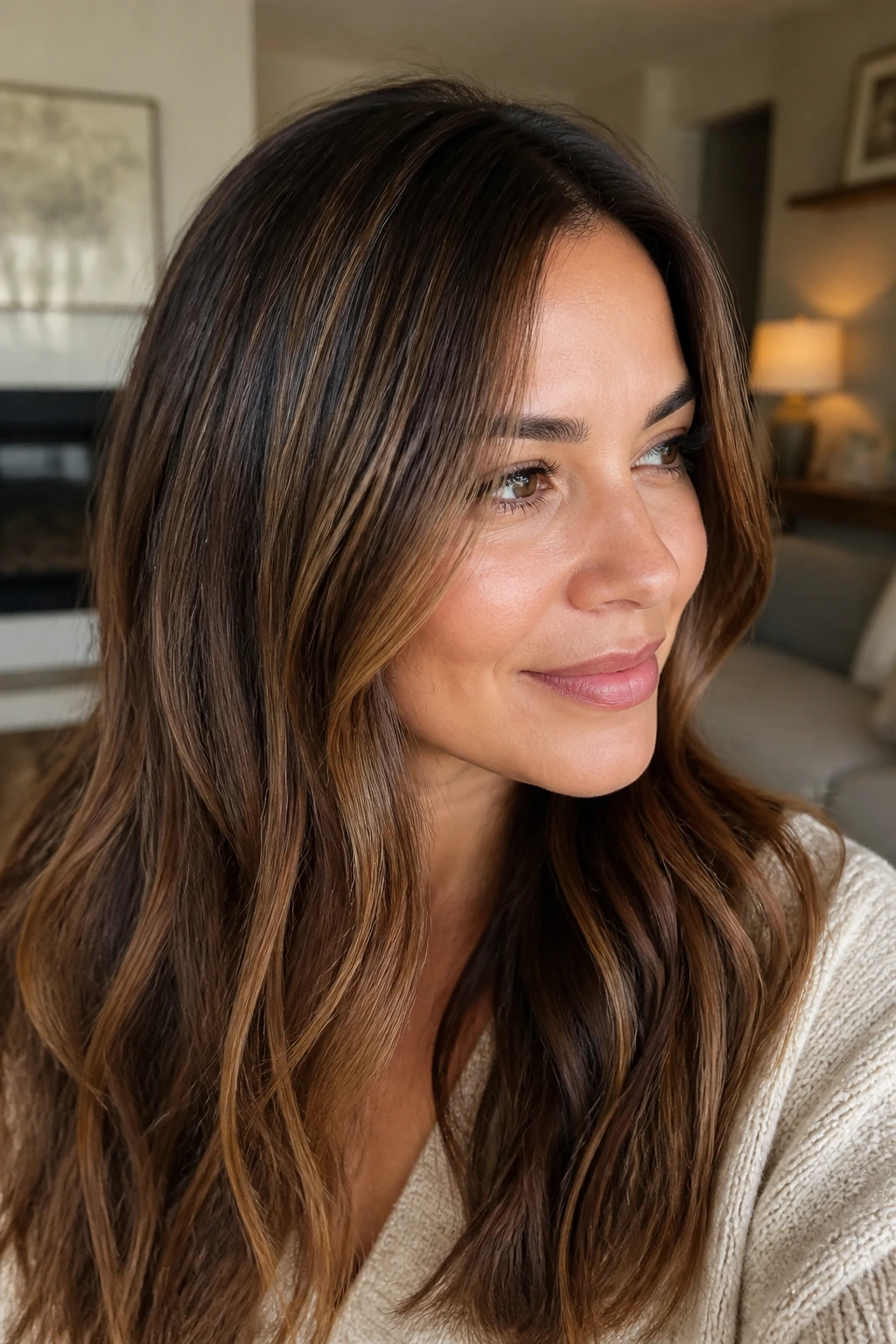
Cinnamon-sugar micro-highlights are for the person who wants to test the water before diving in. The pieces are tiny, the contrast is modest, and the tone stays within the warm brunette family. That means the hair looks fuller and softer, not obviously highlighted.
This is the easiest way to make a brunette base look more expensive without changing it much. The highlight size matters here more than the shade. Tiny woven pieces keep regrowth from shouting at you, and the cinnamon tone gives the hair a little warmth under indoor light.
If you are nervous about damage, this is a gentle place to begin. You still need good aftercare, but the lower contrast means less pressure to keep the color perfect every single week.
20. Burnished Bronze Ribbons for Curly Hair
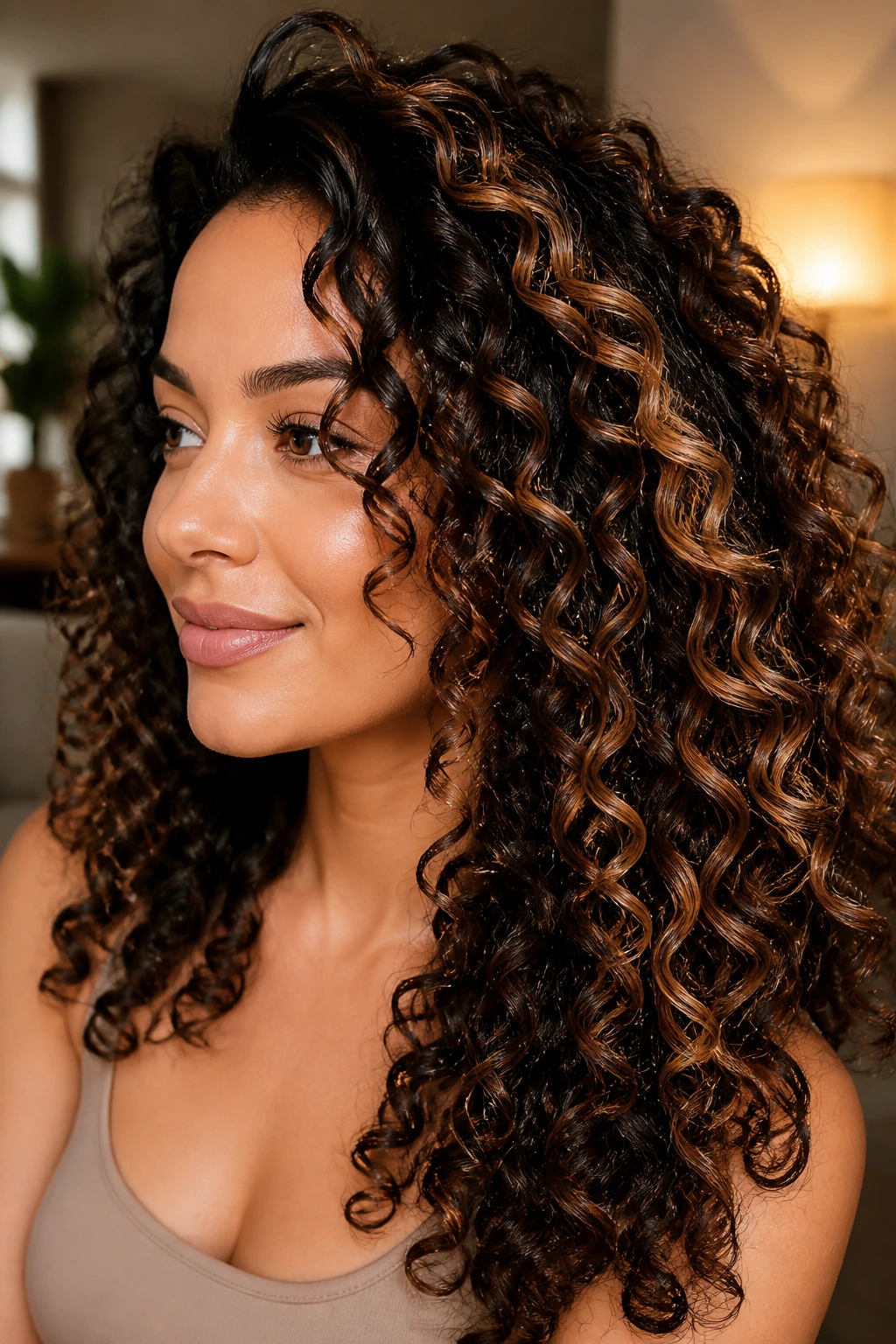
Curly hair likes bronze because the curl pattern breaks the color up naturally. Burnished bronze ribbons follow the bends and coils, so the light catches in pieces instead of sitting in one flat layer. The result is movement you can see from across the room.
The key is placement. Curly hair needs painted ribbons that respect the curl pattern, not tiny foils packed too close together. If the pieces land where the curl bends, the bronze shows in the high points and the depth remains inside the shape.
Warm skin benefits from that burnished finish because bronze gives dimension without pushing the color too light. The overall read is rich, not flashy. It’s one of the best choices if you want color that looks made for your texture instead of forced onto it.
21. Apricot Honey Pieces on Short Brunette Cuts
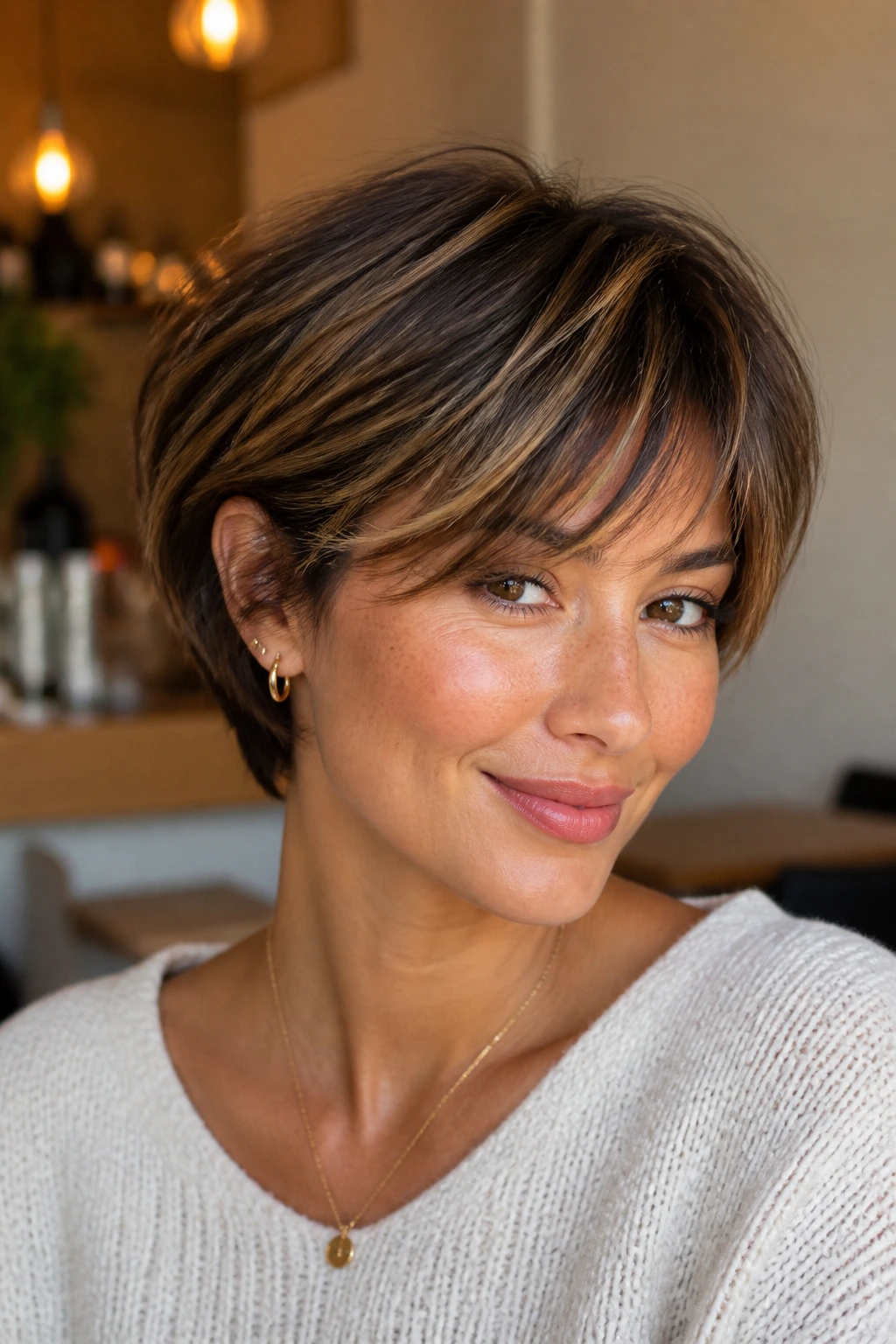
Short hair can look muddy if the highlights are too dark or too sparse. Apricot honey pieces fix that by adding warmth right where the cut needs definition. On pixies, bobs, or cropped layers, the lighter bits should sit around the crown, fringe, and top sections so the shape doesn’t collapse.
Apricot has a softer, fruitier warmth than copper, which makes it a neat fit for warm skin that likes glow but not a lot of red. Honey pulls the tone back toward gold. Together, they keep the cut lively.
I like this option for haircuts that rely on movement instead of length. A short style with apricot honey shows every piece of texture. If the cut is blunt, the highlights can soften the edge just enough.
22. Latte Swirl Balayage for a Neutral-Warm Finish
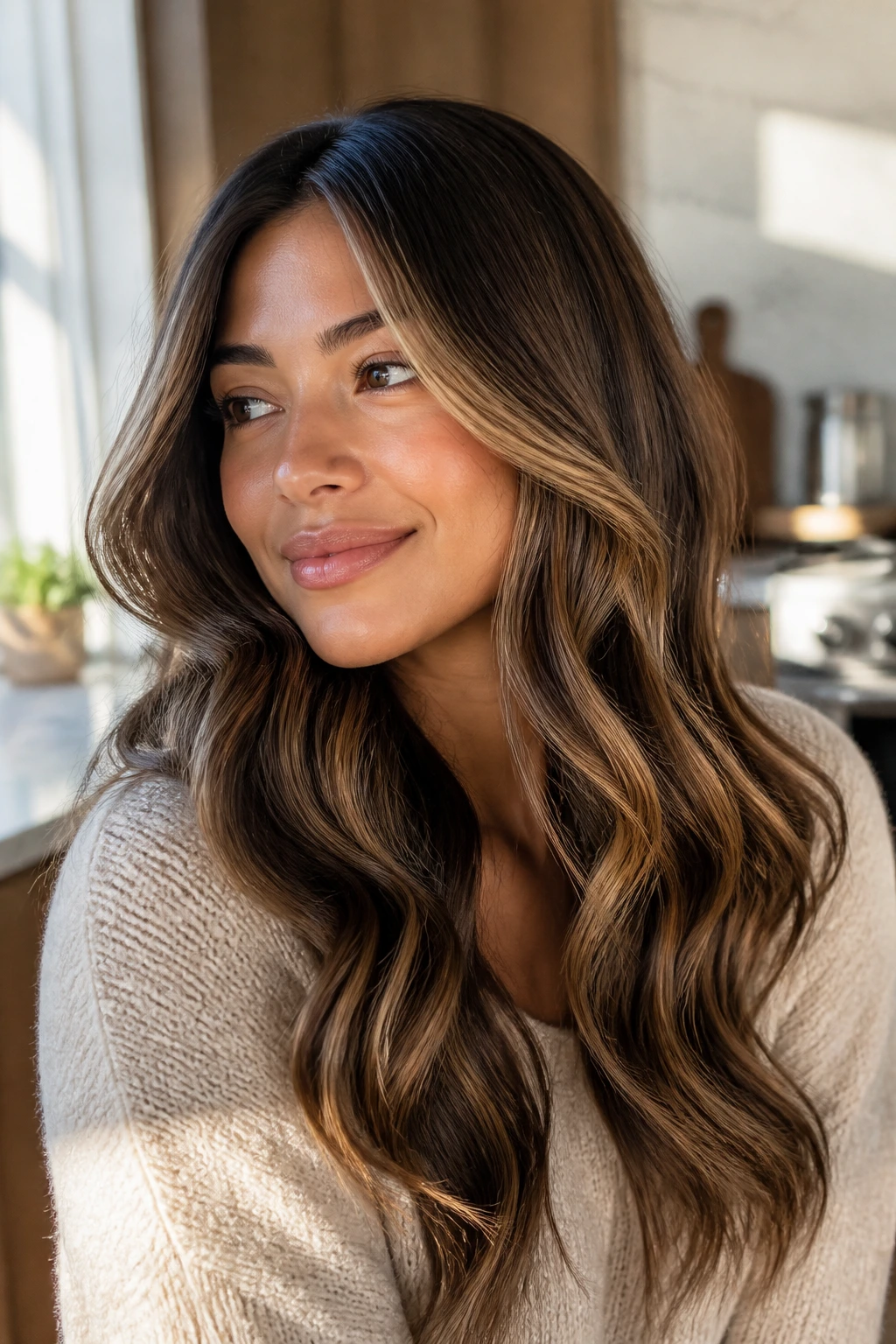
Latte swirl balayage is the version I’d hand to someone who says, “I want warmth, but I don’t want red.” It stays soft, creamy, and brown-forward. The lighter pieces live inside the hair like swirls in coffee rather than obvious bands.
This is a useful look for warm skin because it bridges the gap between caramel and beige without going stale. The overall effect is calm. The hair looks dimensional under daylight and office lighting, which is harder to pull off than people think.
Loose waves are the easiest way to show it off. On straight hair, the swirls need a little more contrast to stay visible. Keep the root area deep and the ends softly warm, and the whole thing stays believable.
23. Auburn Halo Highlights Around the Crown
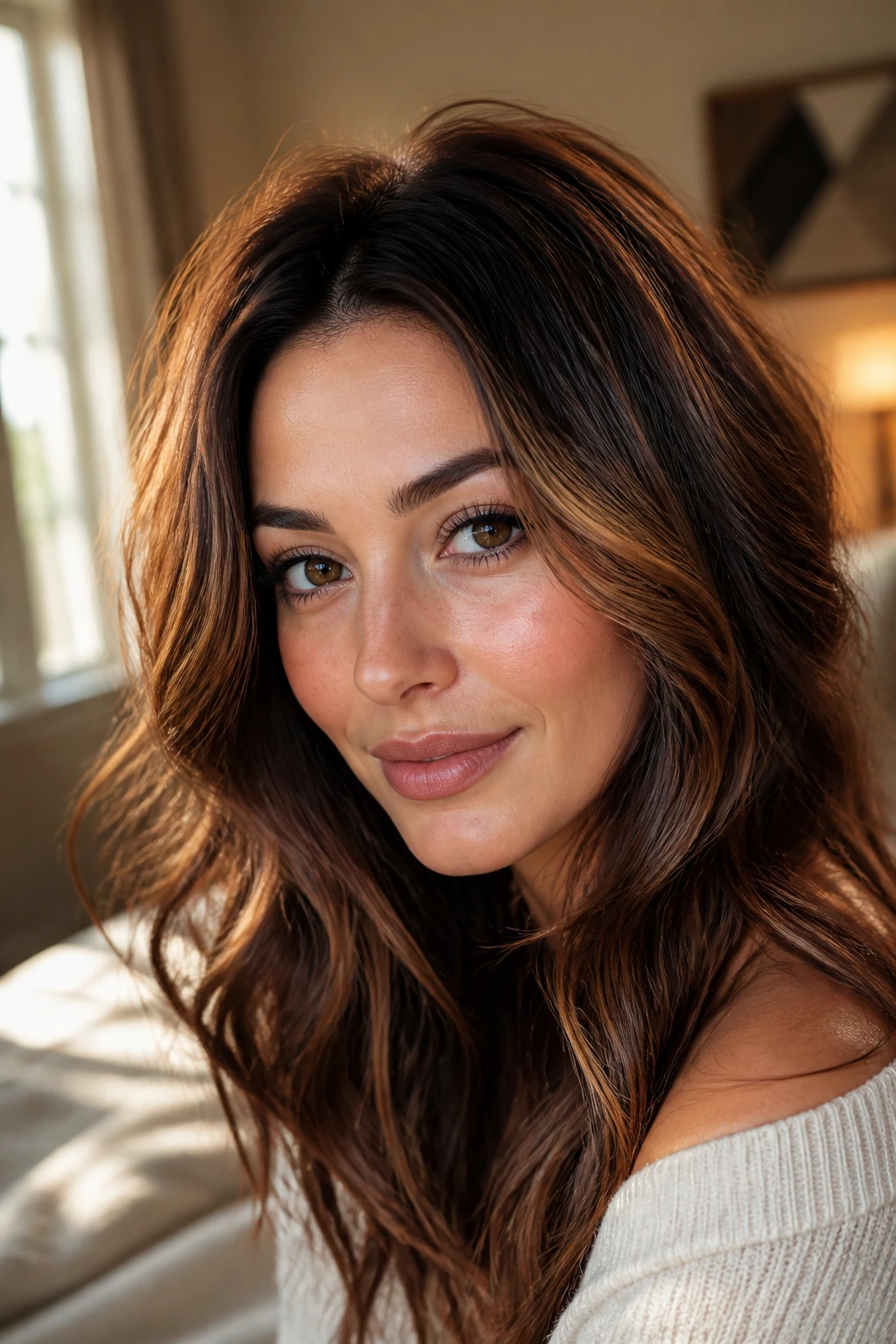
Auburn halo highlights bring warmth to the top and perimeter of the hair, which is a smart move if you want the color to frame the face from every angle. The halo placement creates a soft ring of brightness around the crown and outer layers, then lets the base stay darker inside.
This is one of the better choices if your brunette hair has a lot of volume. The lighter outer ring keeps the shape from swallowing the face. Auburn also gives warm skin a little more life than beige highlights do, especially when the complexion leans peach or golden.
Keep the auburn soft enough to blend with the brunette, not a separate color sitting on top. That’s what keeps the halo from looking costume-like. The whole point is warmth around the edges.
24. Mocha-to-Toffee Dimension for Long Layers
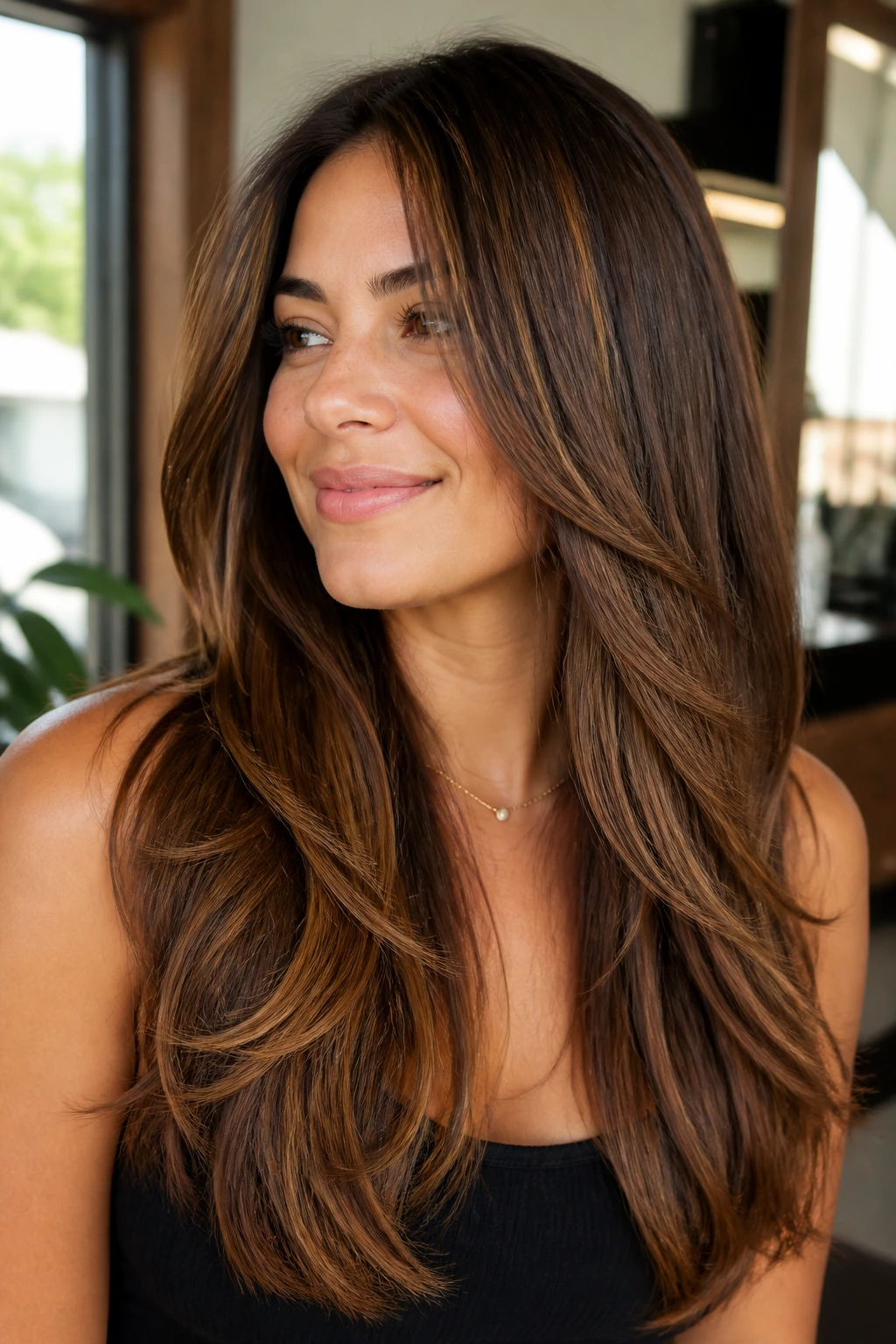
Long layers need a color story that moves with them. Mocha-to-toffee dimension starts rich at the top, then gradually slides into a warmer, lighter finish through the mids and ends. The result is depth at the scalp and brightness where the hair actually swings.
This style has the cleanest “natural but better” feel on the list. Mocha is dark enough to keep the base grounded, while toffee gives a soft, warm lift. If you like your brunette to still look brunette, this is a strong choice.
Layers matter here because they reveal the shift between dark and light. Without layers, the gradient can look hidden. With them, each section catches light a little differently, and the color starts doing the work for you.
25. Spiced Chestnut Glow for Olive-Warm Skin
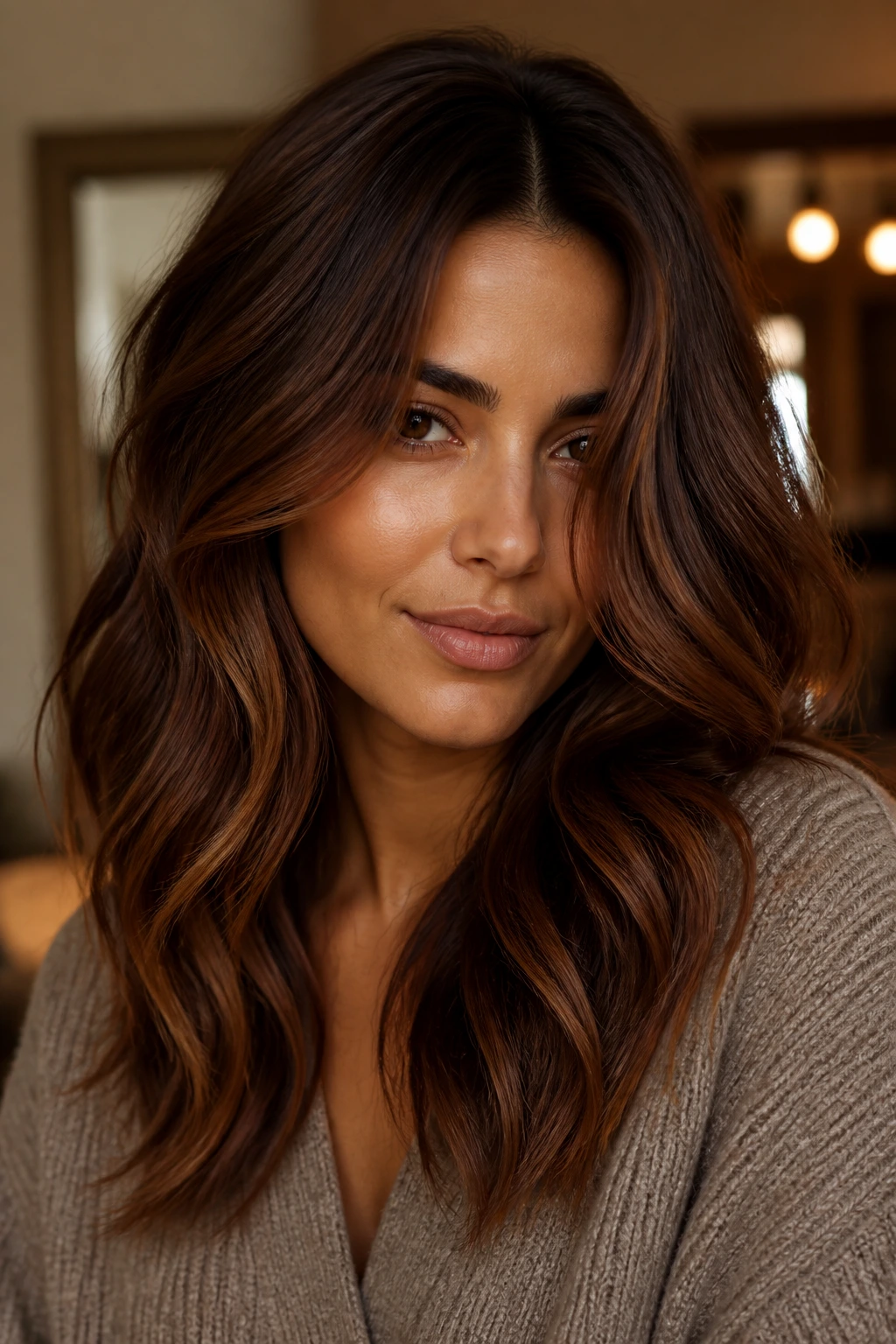
Some warm skin tones need less gold and more depth. Spiced chestnut glow keeps the color rich, with only a little warmth lifted through the surface. The tone sits deep enough that olive-warm skin doesn’t get overwhelmed by brightness.
This is a good answer if you’ve ever tried caramel highlights and felt like they were doing too much. Chestnut gives a red-brown base that stays elegant instead of sugary. A little spice in the gloss keeps the hair from flattening out.
The best versions are subtle around the part and stronger through the mids. That way the face gets a warm halo without turning the whole head into one light block. It’s restrained, but not dull.
26. Golden Walnut Lowlights and Highlights Together
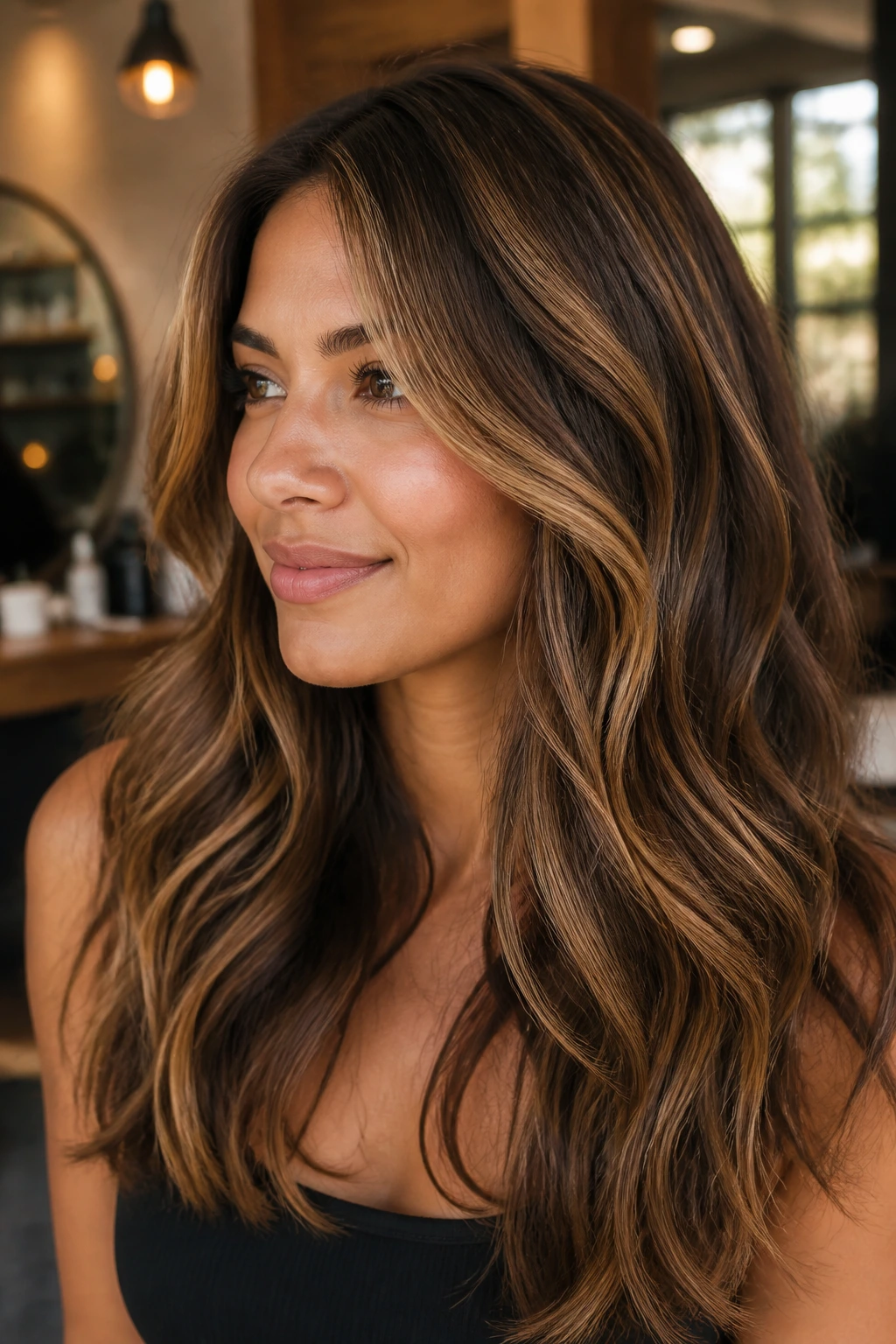
This is where lowlights earn their keep. Golden walnut highlights give you warmth and shine, while deeper walnut lowlights keep the lighter pieces from floating on top. The combination makes the hair look thicker and more dimensional, which is especially useful if your brunette base has gone too light or too flat.
Warm skin likes this mix because it stays inside the brown family. There’s light, but there’s also shadow. That shadow matters. Without it, warm highlights can blur into one wash of color and lose the structure that makes them flattering.
Ask your colorist to keep the lowlights soft and woven, not chunky. The goal is contrast with a soft edge. On dense or medium-thick hair, this combo can be one of the best ways to get a rich brunette finish without moving toward blonde.
27. Brushed Bronze Money Piece on a Dark Base
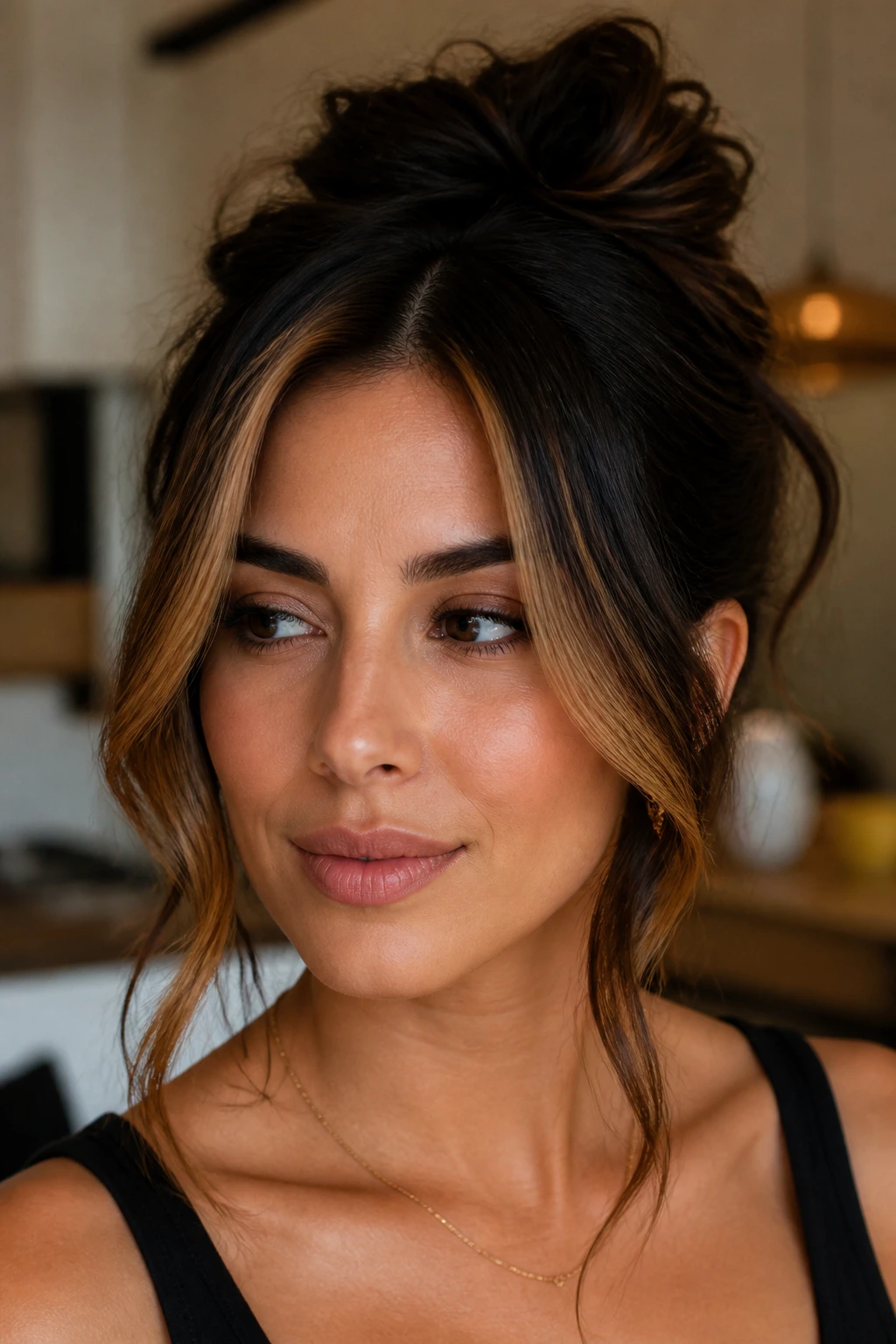
A brushed bronze money piece is a louder face frame, but it still belongs in the warm family. The bronze should be light enough to show around the face, then brushed back so the color lands in the front layers and part line. On a dark base, that contrast can be excellent if the tone stays warm.
This look is a good fit for people who wear their hair up a lot. A ponytail or clip still leaves the bronze visible around the front, so the color doesn’t disappear. If you like a bit of drama but do not want full-head lightening, this is a neat compromise.
The key is not to make the bronze icy or too pale. Warm skin wants the golden version. The second the tone goes flat beige, the face loses the lift you were probably after.
28. Toffee Swirl Highlights on Loose Waves
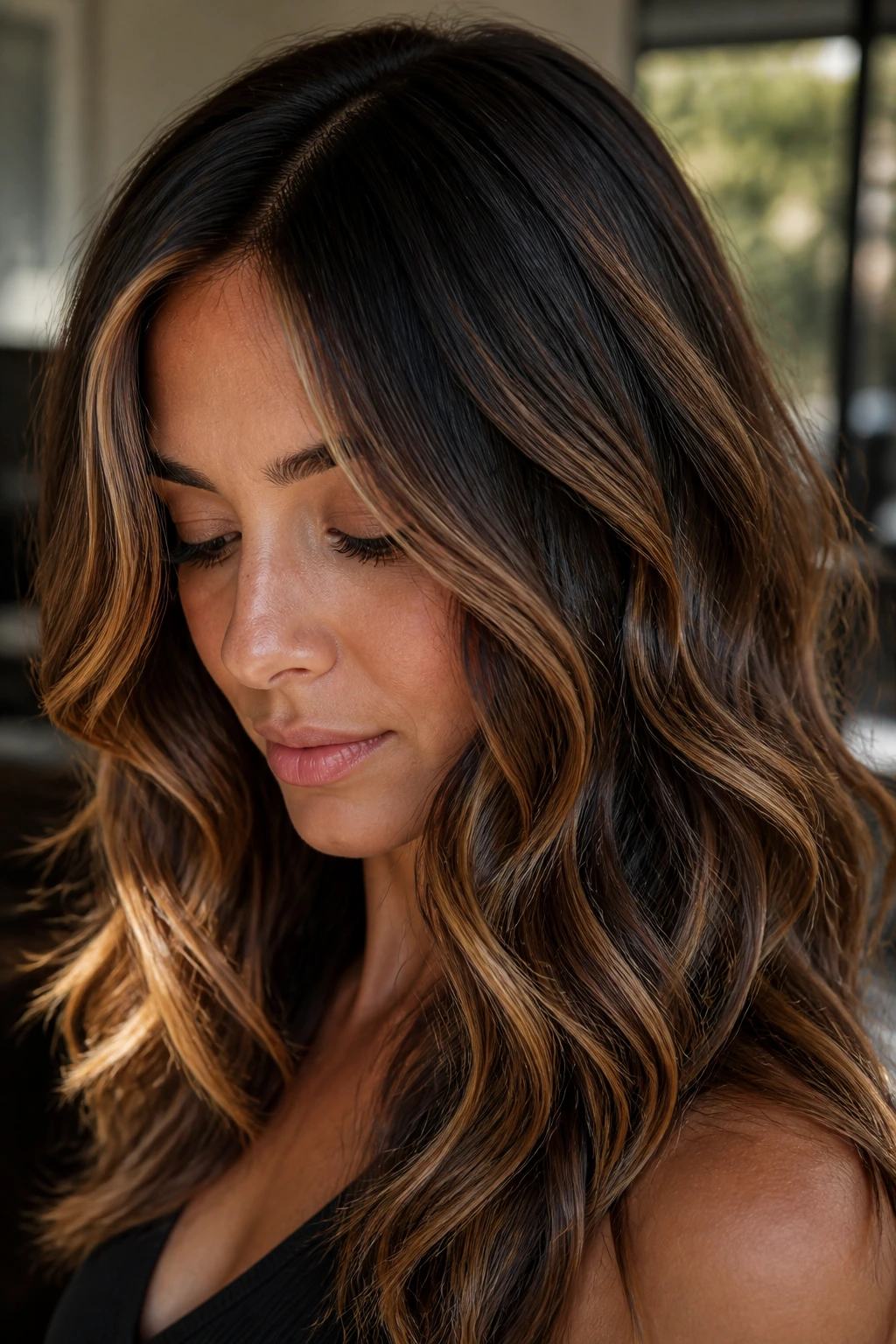
Toffee swirl highlights are made for soft waves because the light catches in curved lines instead of straight bands. The swirl placement keeps the highlights blended into the brunette base, which is why it looks so natural when the hair moves. It’s a small technique difference, but it changes everything.
This is a good choice if you want the hair to look fuller in motion. The toffee tone warms the face without taking over, and the wave pattern hides any hard edges. You can wear it with a center part, off-center part, or tucked behind one ear. It keeps working.
If your color tends to turn muddy, ask for a glaze that preserves the toffee warmth. That little finishing step matters more than most people realize.
29. Maple-Copper Ribbon Melt for Thick, Wavy Hair
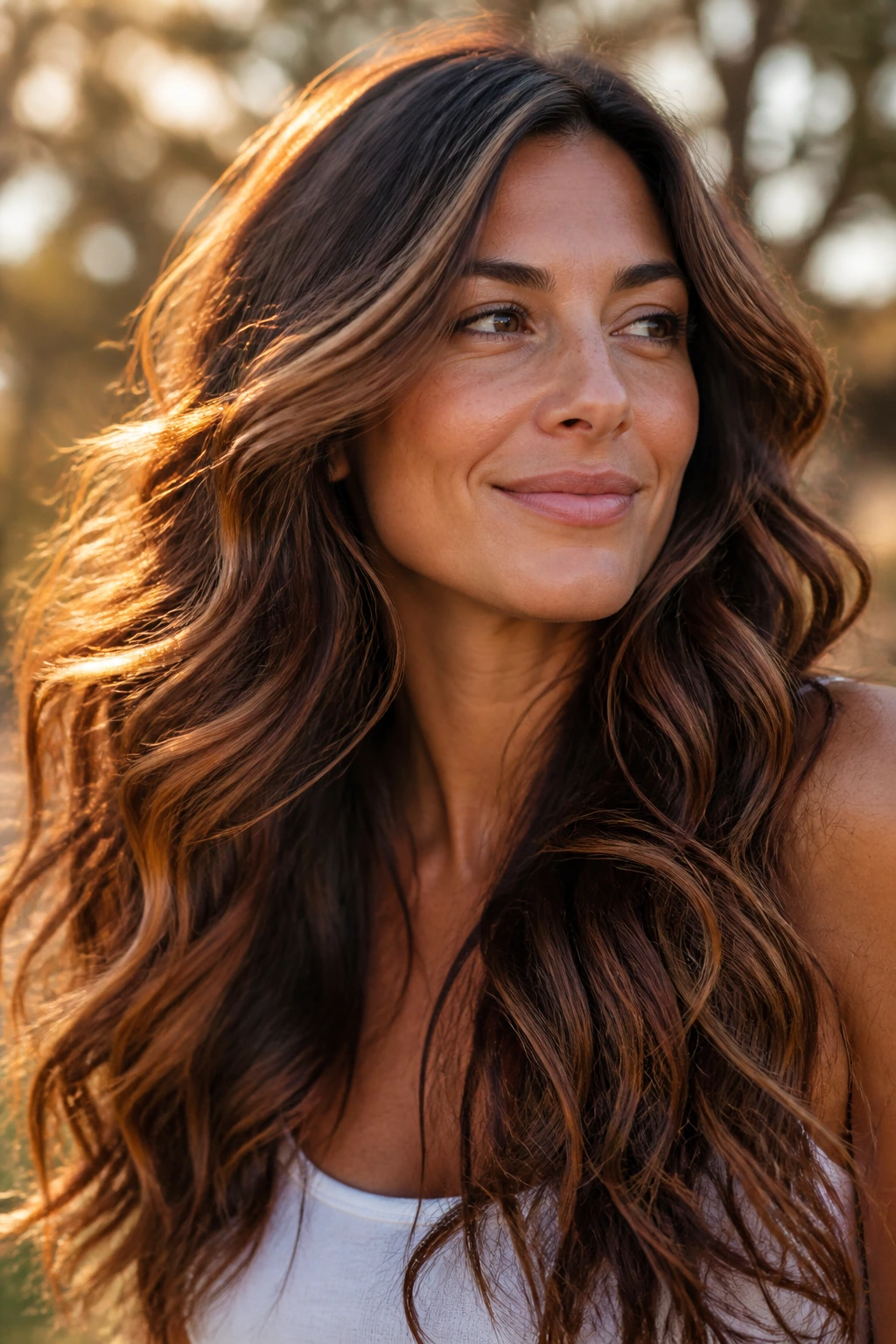
Thick, wavy hair can take a little more warmth, and maple-copper ribbon melt gives it exactly that. The ribbons should be hand-painted in broad sections so the waves can break them up naturally. A thinner application would disappear into the density.
Maple keeps the color brown-based. Copper gives it energy. Together, they make the hair look alive in motion. On warm skin, that combo feels especially good because it reflects the same warmth back into the face without looking flat or dusty.
This is one of the more expressive looks here, but it still reads natural if the root stays dark and the ribbons are scattered with intent. If you want a brunette color people notice without being able to name it, this gets close.
30. Soft Sable Bronde for the Most Natural Finish
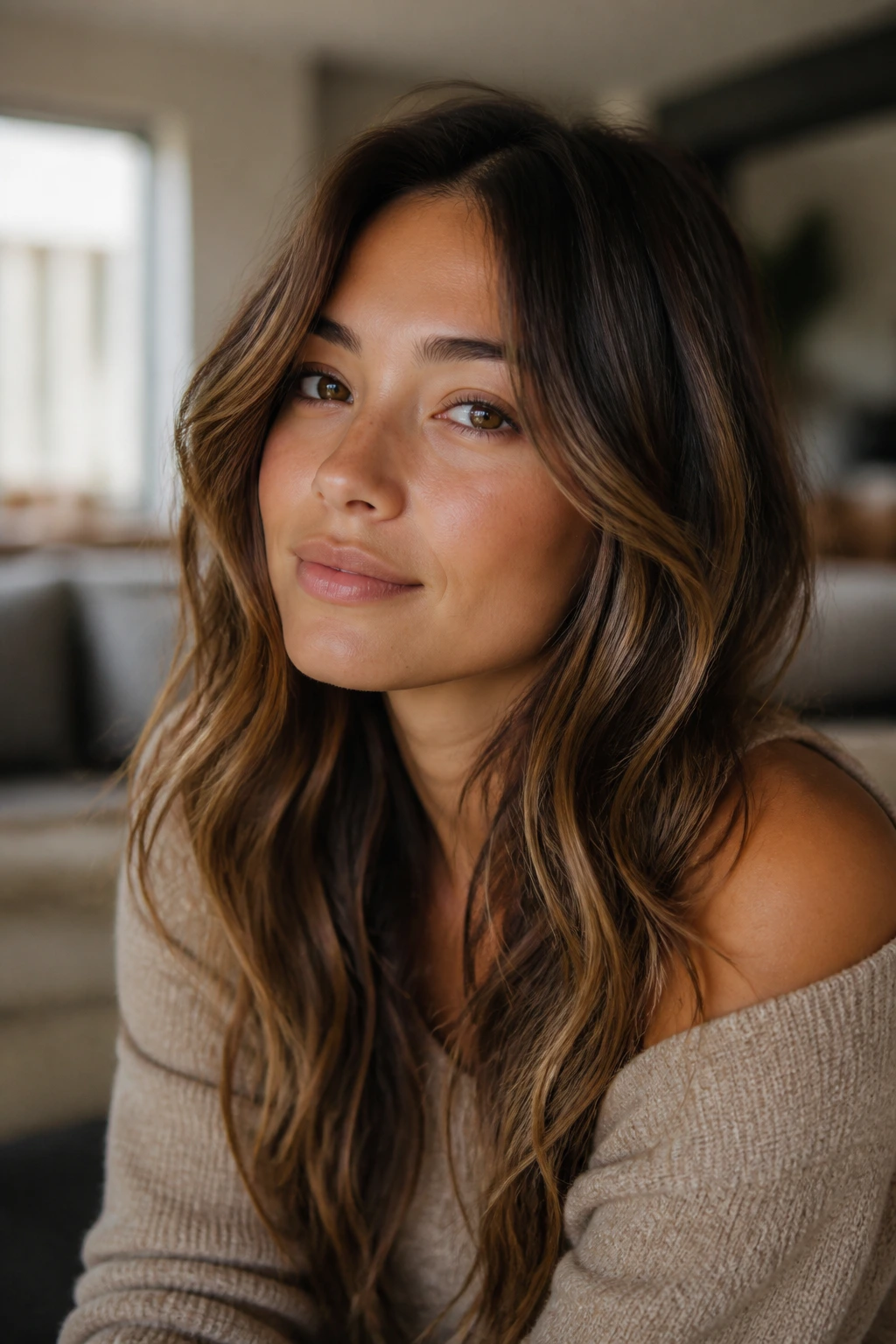
Soft sable bronde is the quietest finish in the bunch, and that’s the appeal. It keeps the brunette base in charge, then adds just enough light warmth to make the hair look soft and lived-in. Think of it as the least dramatic route to dimension.
This is the one to pick if you work in a conservative setting, wear minimal makeup, or simply want the hair to look like your hair on a very good day. The warmth should be gentle, the contrast should stay low, and the grow-out should almost disappear into the base.
A good sable bronde never tries to be blonde. That’s why it works so well on warm skin. It gives you the reflection, the movement, and the softness, while still leaving the brunette heart of the color alone.
How to Wear These Highlights So the Color Reads Right
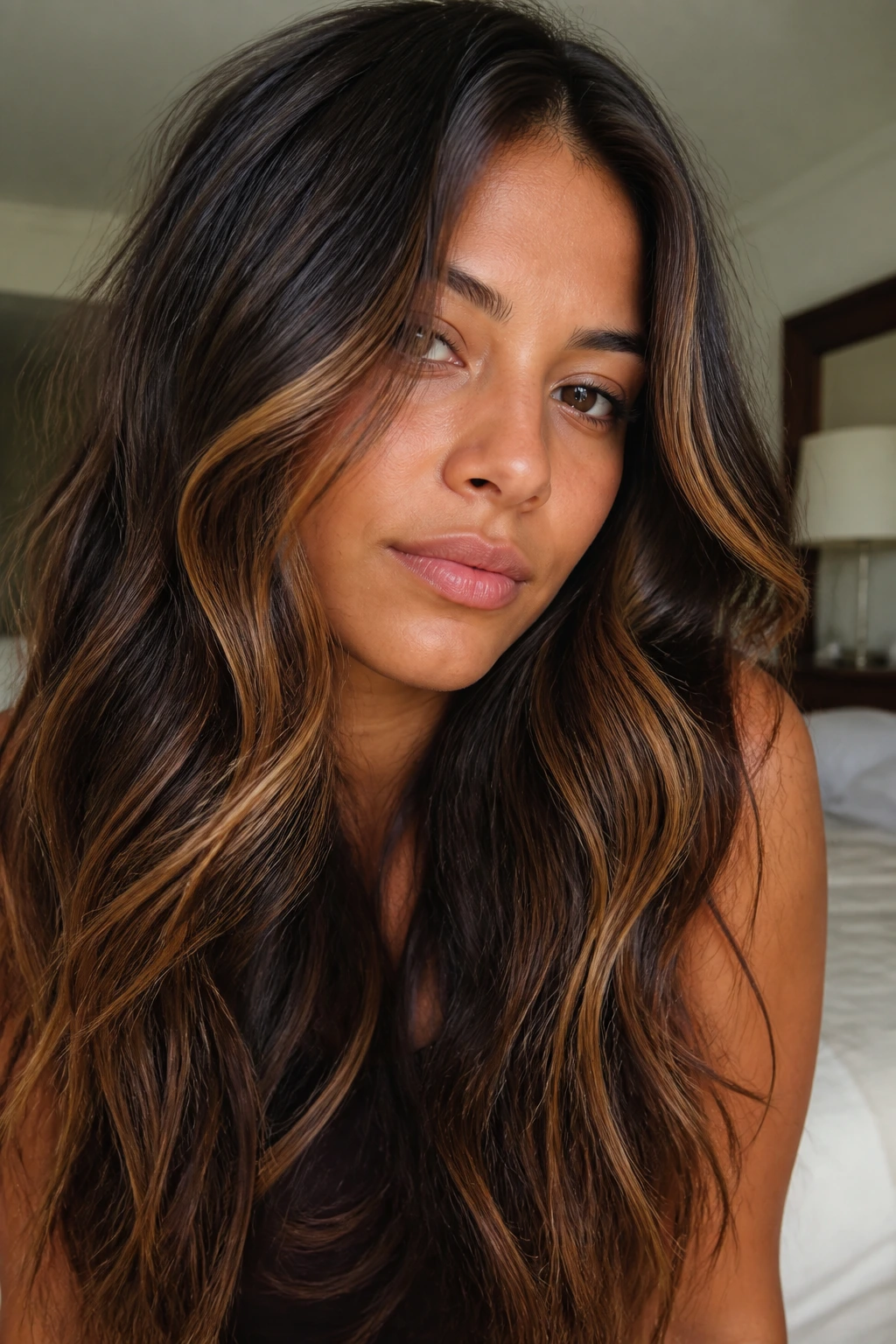
Presentation: Loose waves show the ribbons best, especially on caramel, toffee, and bronze looks. Straight styles make amber, honey, and money-piece highlights look sharper, so if you wear your hair smooth, ask for a softer blend around the part and temples.
Accompaniments: Curtain bangs, collarbone layers, and soft face-framing pieces all help warm highlights read as shape instead of random lightness. Curly hair needs painted placement that follows the bend of the curl, while blunt cuts usually need a touch more contrast so the dimension doesn’t disappear.
Portions: If you want the color to stay low-maintenance, keep the lighter pieces concentrated around the face and top layers. If you want a more obvious glow, spread the warmth through the mids and ends, but keep the root area deeper so the brunette still feels like the base color.
Finishing Touch: A pea-size serum or lightweight oil on the ends is enough. Heavy products can flatten the ribbons and mute the warm reflect that makes these looks work in the first place.
How to Brief Your Colorist Without Leaving Room for Guesswork
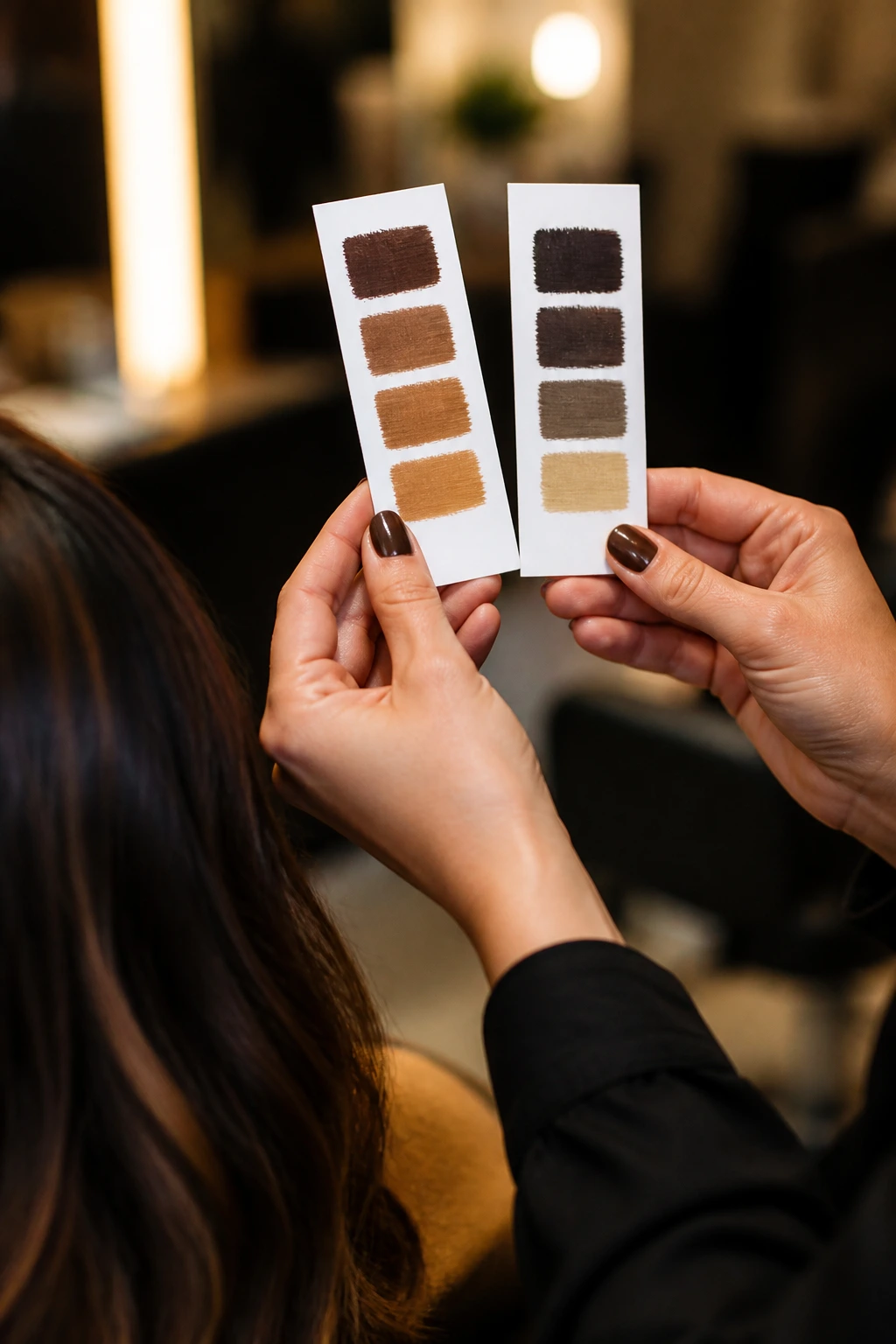
Bring photos. Two is better than one: a picture of the shade you want and a picture of the shade you do not want. Hair color is one of those places where vague words like “natural” or “warm” can mean six different things in the same chair, so it helps to show both the target and the line you do not want crossed.
Say how much lightness you can live with. A subtle balayage, a bright money piece, and a soft bronde melt all require different lift levels, toner choices, and maintenance schedules. If you want low upkeep, say that out loud. If you’re fine with a gloss refresh every few weeks, say that too.
Mention your base level if you know it, or at least your natural depth: dark brunette, medium brown, chestnut brown. That helps the colorist decide whether your highlight should sit one, two, or three levels lighter. For warm skin, it usually works better to stay within a narrower range and use gloss to dial the warmth in afterward.
And one more thing. Tell them what you hate about past color. If ash made your skin look tired, say so. If chunky foil lines felt too stripy, say that instead of hoping they’ll read your mind.
Tools and Products That Keep Warm Highlights Looking Soft
-
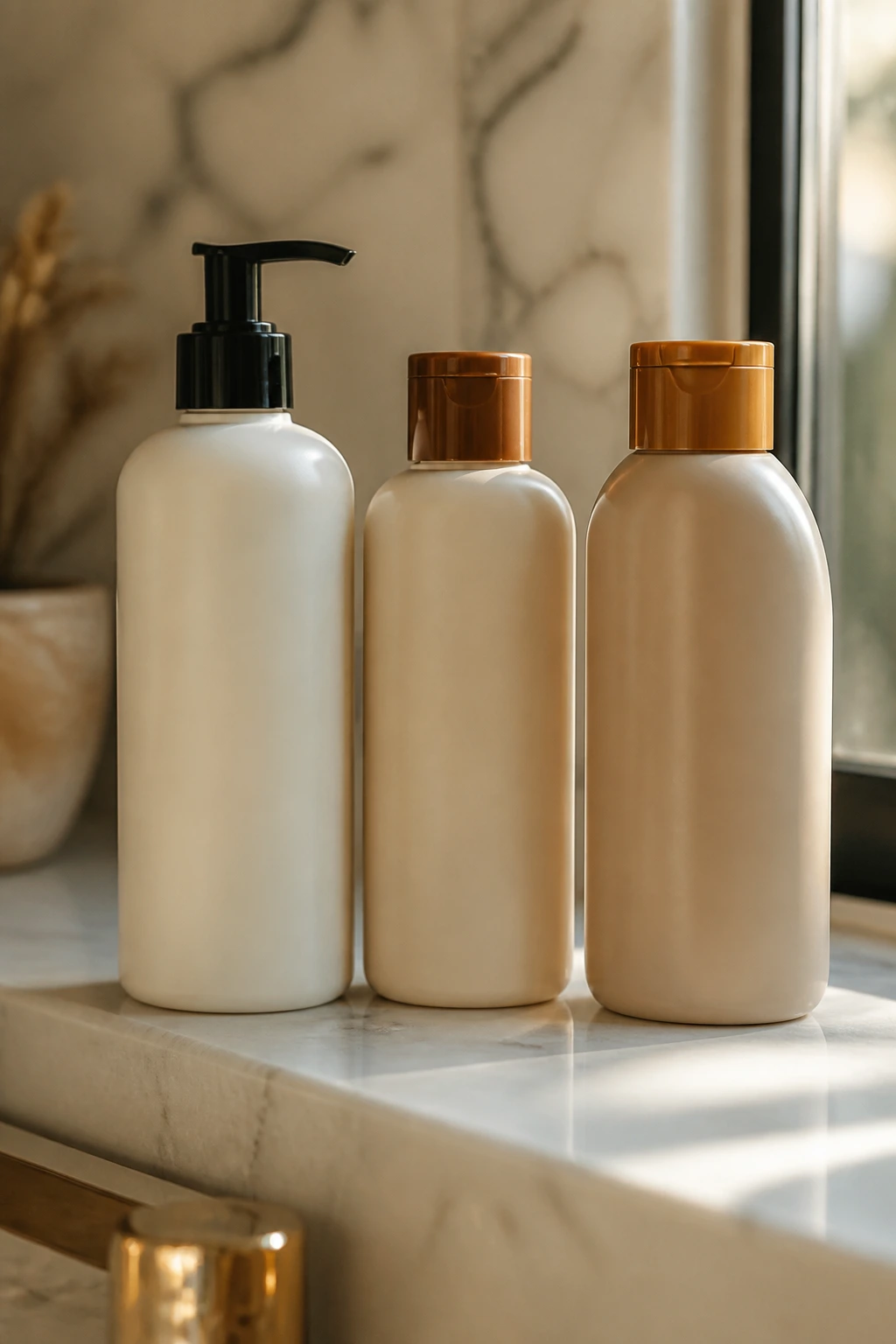
Color-safe shampoo: Keeps the warm tones from fading too fast and strips less gloss from the hair.
-
Color-safe conditioner or mask: Use it once or twice a week to keep the highlighted pieces from feeling dry at the ends.
-
Heat protectant spray: Essential if you use a blow-dryer, curling iron, or flat iron; warm highlights show dryness fast.
-
Wide-tooth comb: Safer than a brush on wet hair, especially if the colorist has lightened fine or curly strands.
-
Microfiber towel or soft cotton T-shirt: Reduces friction and helps wave patterns stay smooth.
-
Sectioning clips and tail comb: Useful if you style your part and face frame carefully at home.
-
Hair gloss or appointment with a salon gloss service: The easiest way to keep honey, caramel, and bronze from drifting dull.
-
Daylight photos on your phone: Not a beauty product, but one of the best resources you can bring to a color appointment.
Keeping Brunette Highlights Fresh Between Appointments
Warm brunette highlights usually hold their shape longer than bright blonde, but the gloss fades faster than people expect. A balayage or soft bronde can look good for eight to twelve weeks if the root stays blended and you’re not washing it every day. A brighter money piece or face frame may need a toner refresh around the four- to six-week mark if you want it to stay honey-gold instead of turning flat.
Washing matters. Two to three shampoos a week is enough for most highlighted brunettes, and lukewarm water is kinder than hot water when the goal is keeping the tone soft. If the ends feel rough, work conditioner through the last half of the hair and leave it on for at least three minutes. That tiny wait makes a difference.
Purple shampoo deserves caution here. A little can help if the highlights swing too orange, but using it every wash can mute the warmth that made the color flattering in the first place. For most warm brunette looks, once every couple of weeks is plenty — and sometimes not even that.
Heat and sun can dull the shine faster than the colorist did. Use heat protectant every time you blow-dry or curl, and if your hair spends a lot of time in bright sunlight, a hat or UV-protective hair spray is worth the trouble. It sounds fussy. It isn’t. It’s how warm highlights stay warm.
Common Mistakes That Make Warm Brunette Highlights Look Off
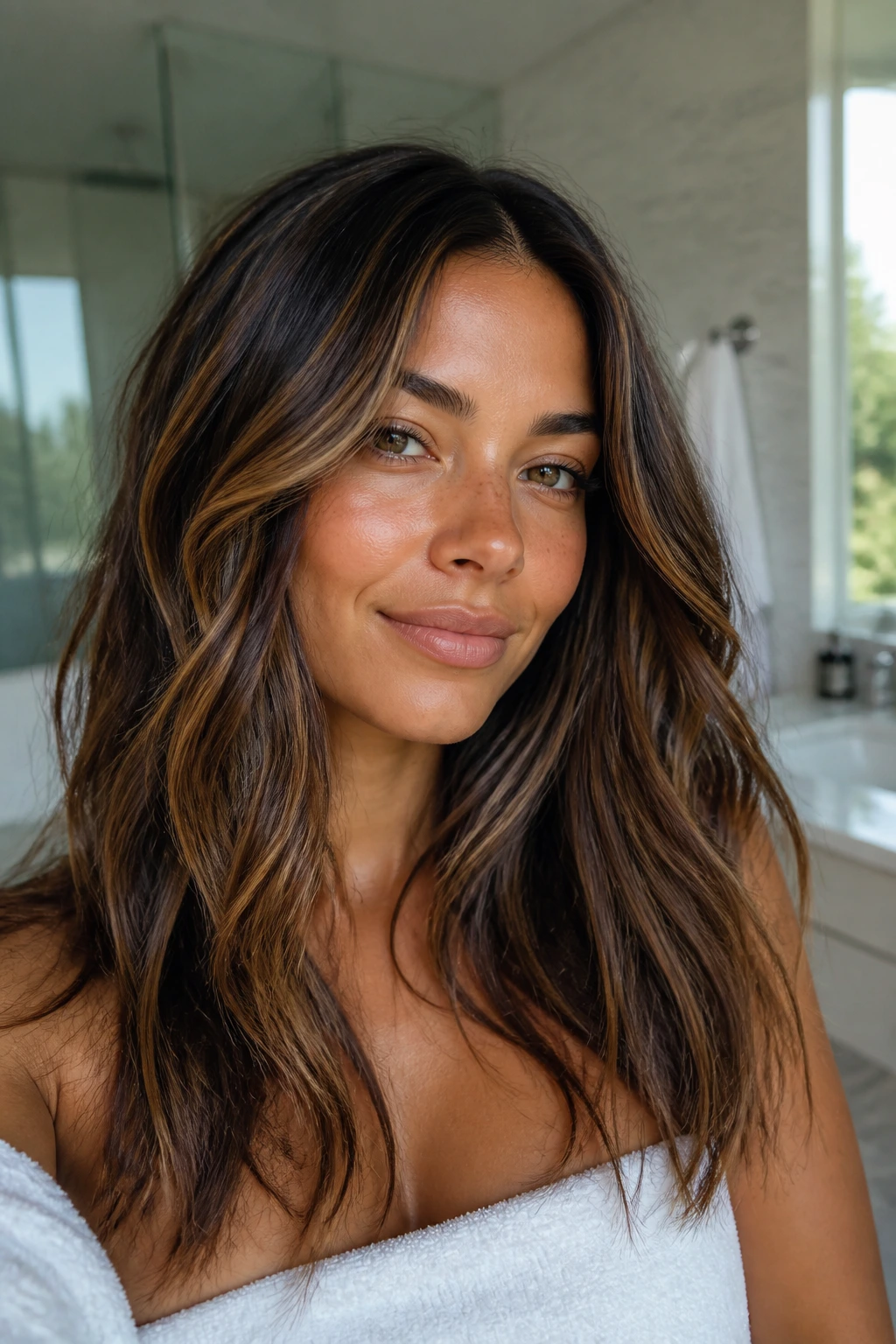
Choosing ash when you wanted warmth. Ash can be pretty, but on warm skin it often reads flat or a little tired if it’s too strong. The fix is simple: ask for gold, honey, caramel, bronze, or a gloss that softens any cool edge.
Going too light too fast. Dark brunette hair that jumps straight to pale blonde can look disconnected from warm skin and can also feel brittle at the ends. A slower lift — one to three levels — keeps the result believable and easier to grow out.
Skipping lowlights. A lot of brunette highlight jobs fail because the lighter pieces are doing all the work. Without some deeper strands underneath, the color can lose shape and look one-note. Lowlights give the highlights something to sit against.
Using purple shampoo like it’s a weekly habit. That’s fine for icy blonde. Warm brunette highlights need a lighter touch or they lose the honey and caramel reflect that makes them flattering. If brass shows up, tone it — don’t scrub the warmth out of the whole head.
Ignoring the cut. Highlights on a blunt, heavy shape can look much less interesting than the same color on a layered lob or soft waves. The haircut and the color need to talk to each other. If they don’t, the hair can look expensive in one place and flat in another.
Different Ways to Wear the Same Warm Highlight Idea
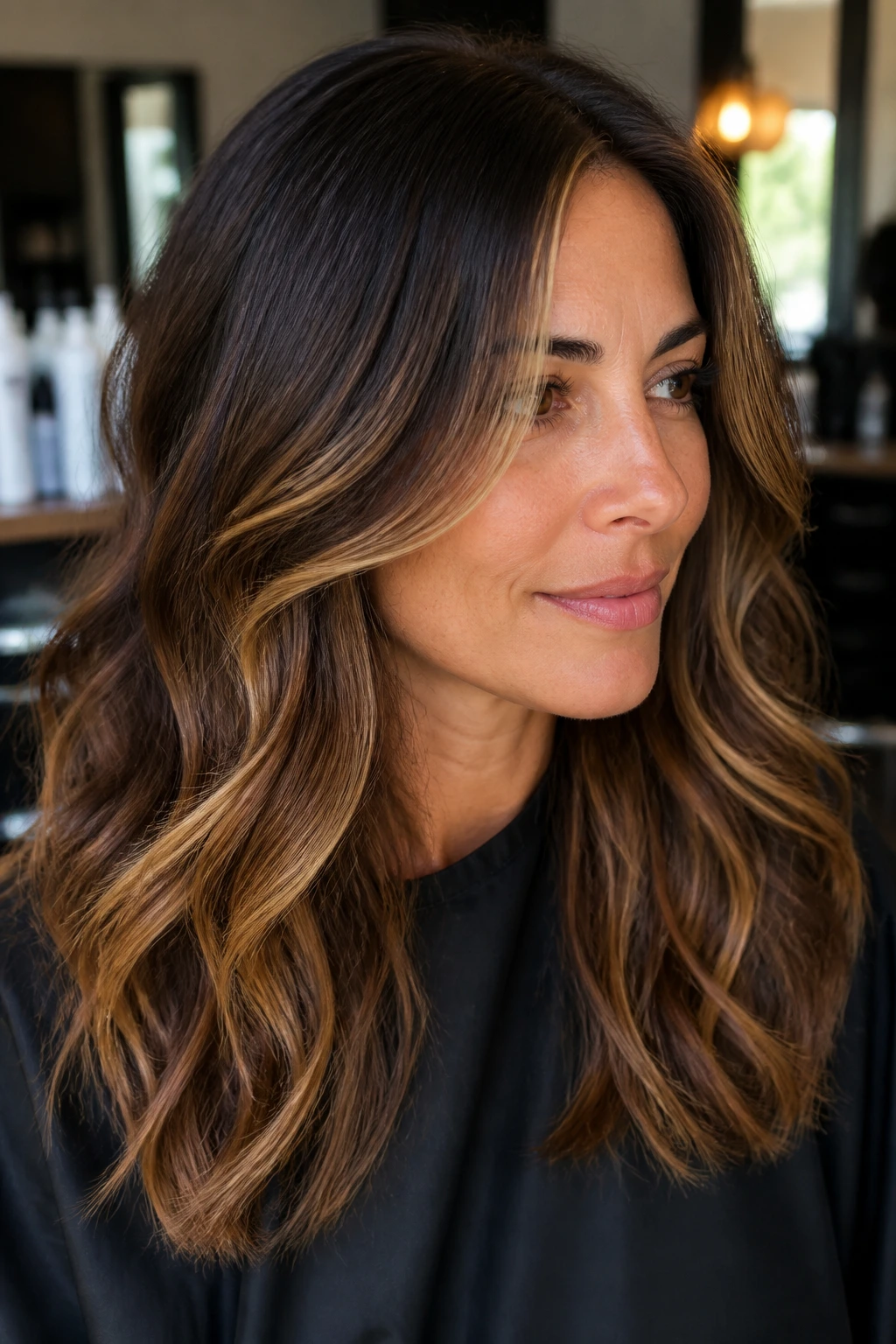
Barely-There Glow: Keep the highlights in babylight territory and stay close to your base color. This works well if your job or personal style leans understated, or if you want the hair to look polished rather than colorful.
Face-Frame Focus: Put the lightest pieces around the temples, cheekbones, and part line, then leave the rest deeper. It gives you brightness where the eye lands first and cuts down on maintenance at the back of the head.
Copper-Forward Version: If your skin likes a little red, lean into amber, cinnamon, or soft auburn rather than gold alone. The result is warmer, richer, and a bit more expressive, especially on wavy hair.
Gray-Softening Blend: Use a mix of lowlights and warm micro-highlights to blur early silver without making the whole head lighter. This is one of the best ways to keep dimension if your brunette base has started to shift at the temples.
Questions People Ask Before Booking Warm Brunette Highlights
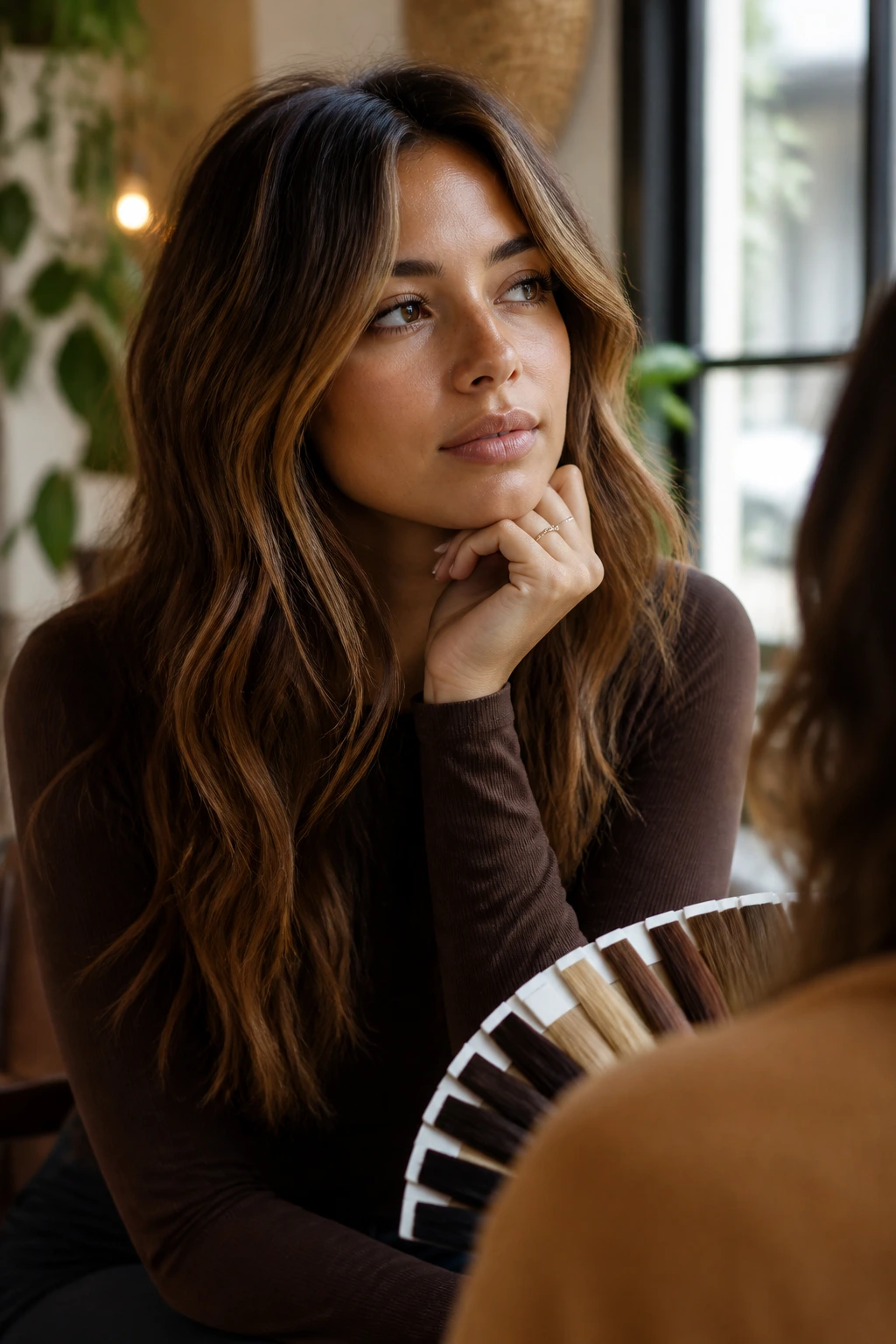
What highlight color looks best on warm skin with brunette hair?
Caramel, honey, bronze, amber, maple, and soft copper are usually the safest bets. They echo the warmth in the skin instead of cooling it down, which helps the complexion look brighter and less flat.
Are ash highlights always a bad idea on warm skin?
Not always. A tiny bit of beige or cool tone can work if the highlight is soft and the gloss leans warm afterward. The trouble starts when the whole head goes ashy and the face loses its natural glow.
Balayage or foils — which is better for a natural look?
Balayage usually gives the softest grow-out because the color is painted rather than packed into precise sections. Foils can still look natural if they’re woven finely, and some of the best brunette looks use both methods together.
How often will I need a touch-up?
A soft balayage may go eight to twelve weeks before it needs a real refresh, while a brighter money piece or face frame can need attention sooner. Toner is a separate thing; that may need a touch-up in four to six weeks if you want the warmth to stay clean.
Can dark brunette hair still look natural with highlights?
Yes, but the lift has to be controlled. If the base is very dark, caramel, bronze, or amber ribbons often look better than pale blonde because they keep enough depth to belong to the natural hair.
Will highlights damage my hair a lot?
Any lightening changes the hair structure a bit. Good aftercare, a careful lift, and bond-building treatments can keep it from feeling rough, but dry ends are part of the game if you go lighter. That’s why maintenance matters.
What if the highlights turn orange?
That usually means the tone needs balancing, not that the whole look is ruined. A salon gloss or toner can pull the color back toward gold, beige, or bronze depending on the result you want. Do not reach for heavy purple shampoo first if you still want warmth.
Do warm brunette highlights work on curly hair?
They can look excellent on curls because the bends show the ribbons naturally. The trick is placement: thicker painted pieces and well-placed lowlights usually work better than tiny foils that get lost in the curl pattern.
The Soft Glow That Still Looks Like You
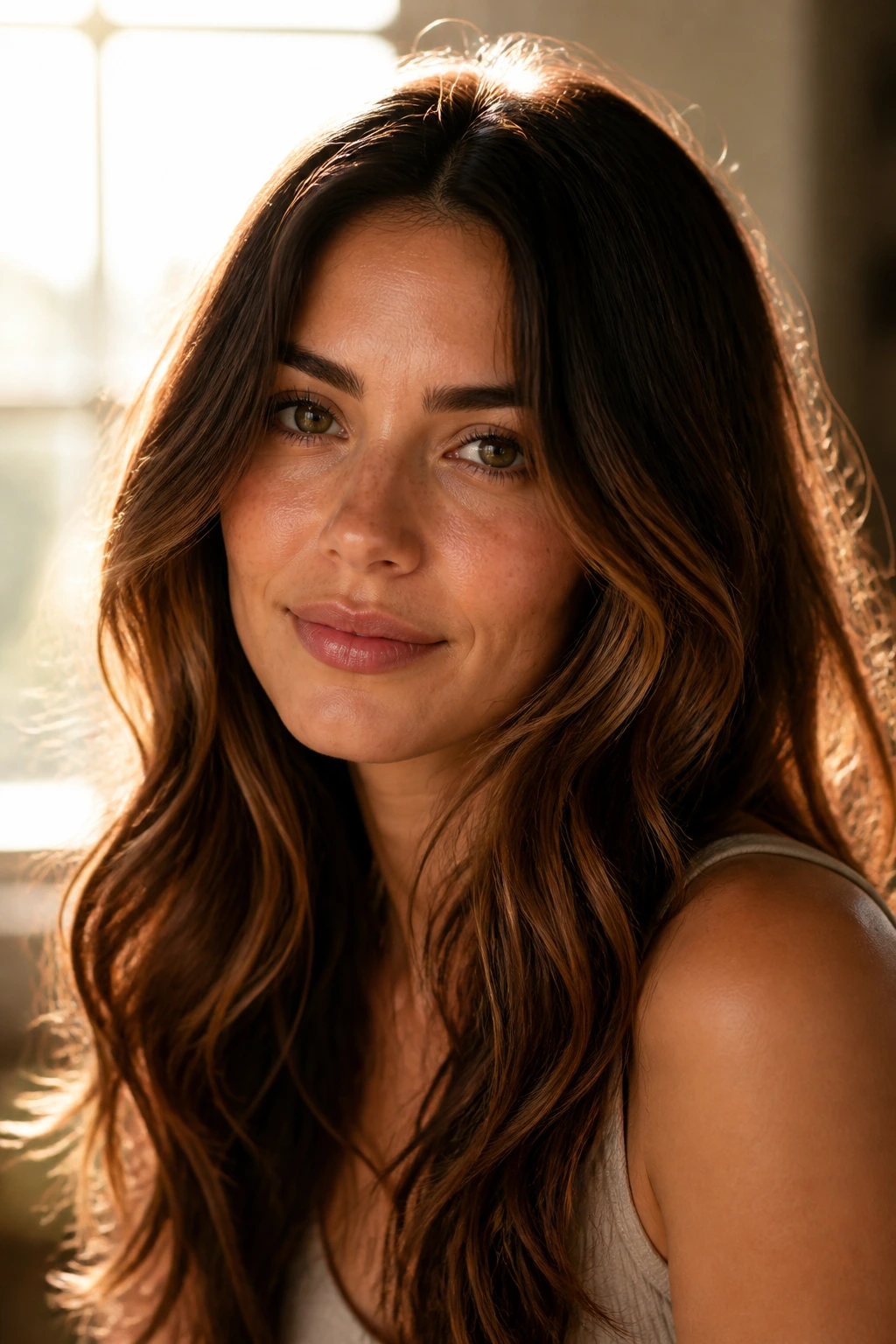
The nicest brunette highlights do not make your hair look borrowed. They make it look more awake, more textured, more like the light found it on a good day. That’s the real appeal of warm tones on warm skin: the color never has to fight the face to get attention.
Start with the family of shade that feels closest to your own undertone — caramel, honey, bronze, amber, or maple — then decide how visible you want the movement to be. A few soft ribbons can be enough. So can a louder money piece, if the rest of the hair stays rich and grounded.
And if you want the color to age well, keep the gloss warm, the maintenance realistic, and the contrast honest. That’s the version of brunette brightness that keeps making sense every time you catch it in the mirror.