



A braided wig can look flawless on a hanger and still feel wrong the minute it lands on your head. That matters even more when the hair underneath is fine, because fine strands and delicate edges will tell the truth fast. If the cap is too tight, the braids are too dense, or the front is packed with hardware, you feel it by noon.
Braided wigs for Black women with fine hair work best when the unit does three things at once: spreads weight well, keeps the hairline calm, and gives the braids room to move without dragging the cap backward. That sounds simple. It isn’t, really. A lot of braided wigs look heavy because the beauty shot only shows the braid pattern; the part you feel is the cap, the density, the length, and the contact points at the temples and nape.
Fine hair is not the enemy here. Bad balance is. A shoulder-grazing knotless unit with a soft band can feel easy all day, while a waist-length style packed with beads and tight combs can start acting like a helmet within an hour. The best choices are usually the ones that look calm from the front and stay calm from the inside too.
Why These Braided Wigs Make Sense for Fine Hair
-
Less pull at the hairline: The right braided wig holds with an adjustable band or wig grip instead of leaning hard on combs that dig into tender edges.
-
Weight that sits where it should: Shorter braid lengths, flatter roots, and a less crowded cap keep the unit from sliding back and making your scalp do extra work.
-
Shape without bulk: Knotless starts, feed-in roots, and smart parting can give the braids a full look without stuffing the cap with more fiber than you need.
-
Less daily manipulation: Once the cap is fitted, you can put the wig on, smooth the lace, and go. That’s a real benefit when you do not want to braid your own hair tightly every few weeks.
-
More room for fragile spots: If your temples are thin or your edges get sore easily, a glueless unit with the right band is kinder than a style that presses on the same two places every time.
-
Easy to read from across the room: A good braided wig does not need to shout. The parting, braid size, and length do the talking for you.
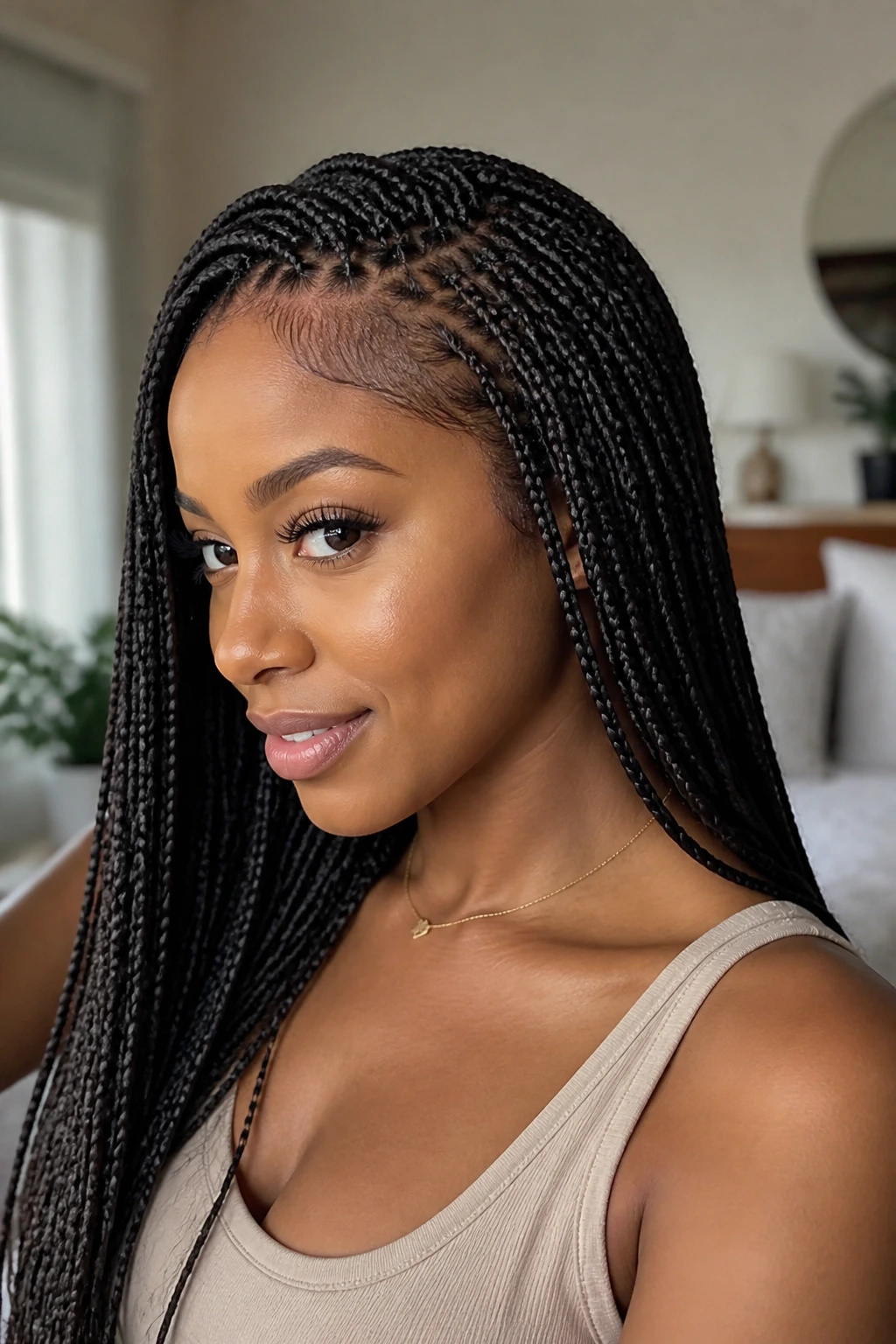
1. Knotless Box Braid Wig with a Soft Center Part
This is the first braided wig I’d point to for Black women with fine hair because it behaves like a style that understands weight. The knotless start removes the chunky root look you get from some synthetic braid units, and the center part keeps the whole thing visually steady instead of lopsided. A shoulder-length or collarbone-length version tends to sit cleaner than a waist-length one, and that difference is easy to feel after a full day.
Why It Works for Fine Hair
Knotless braids spread the look of the braid root so the front doesn’t feel packed. That matters if your natural hairline is delicate or your density is lower on top. The middle part also helps balance the cap, which means fewer little shifts and less tugging at the temples.
What to Watch for
Look for a unit with an adjustable elastic band and a breathable cap. If the vendor shows a very thick braid bundle at the crown, the wig may look pretty but feel heavy. I’d skip unnecessary combs at the temples; on fine hair, they usually add more pressure than value.
Best use case: everyday wear, errands, work, and any day when you want braids that stay neat without feeling stiff.
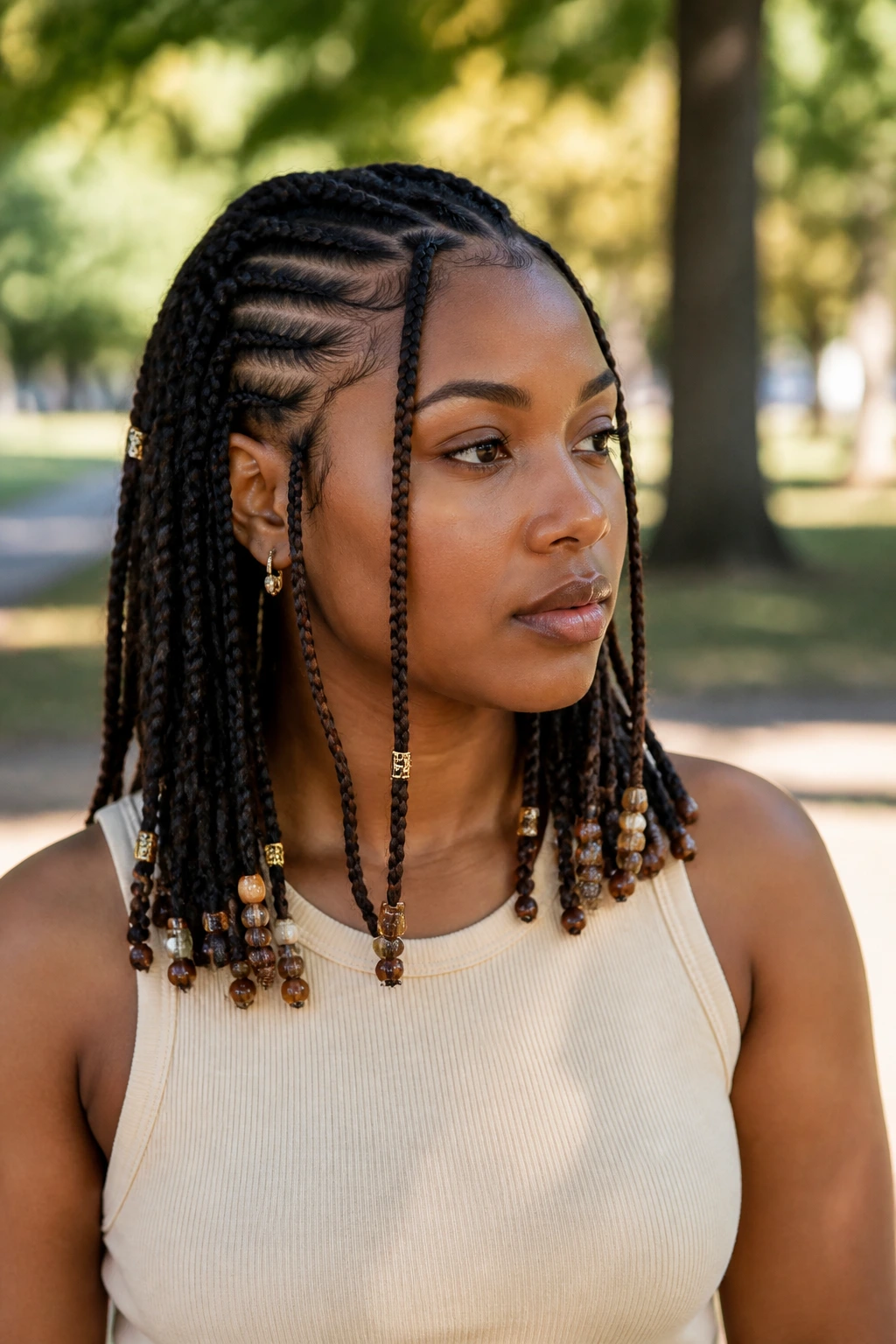
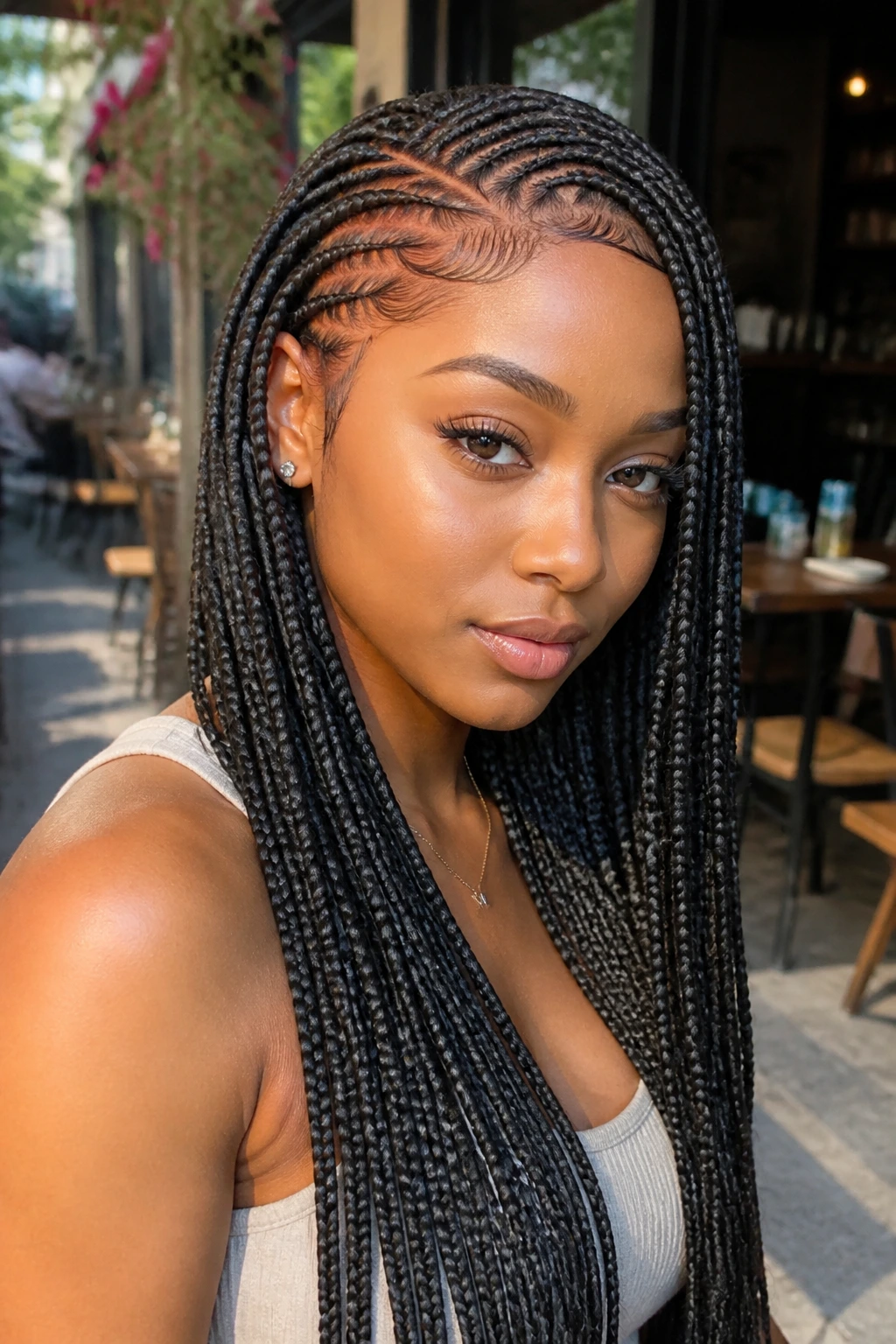
2. Shoulder-Length Fulani Braids with Side Cornrows
Fulani braids bring a nice mix of structure and movement, and that combination can be gentle on fine hair when the length stays moderate. The side cornrows lay close to the scalp, which lowers the visual bulk around the front, while the hanging braids give you that signature braided look without sending a waterfall of fiber down your back. If you want personality without a giant unit, this is a smart lane.
The parting matters here. A clean center strip or a slightly off-center layout keeps the scalp pattern intentional, and the style doesn’t depend on sheer braid count to make an impression. That’s useful when you want your wig to look full enough for photos but not so crowded that your head feels wrapped.
A few beads at the ends can be lovely. Too many beads are a different story. They add surprise weight, especially near the face, and that’s the last place you want extra drag if your hairline is sensitive.
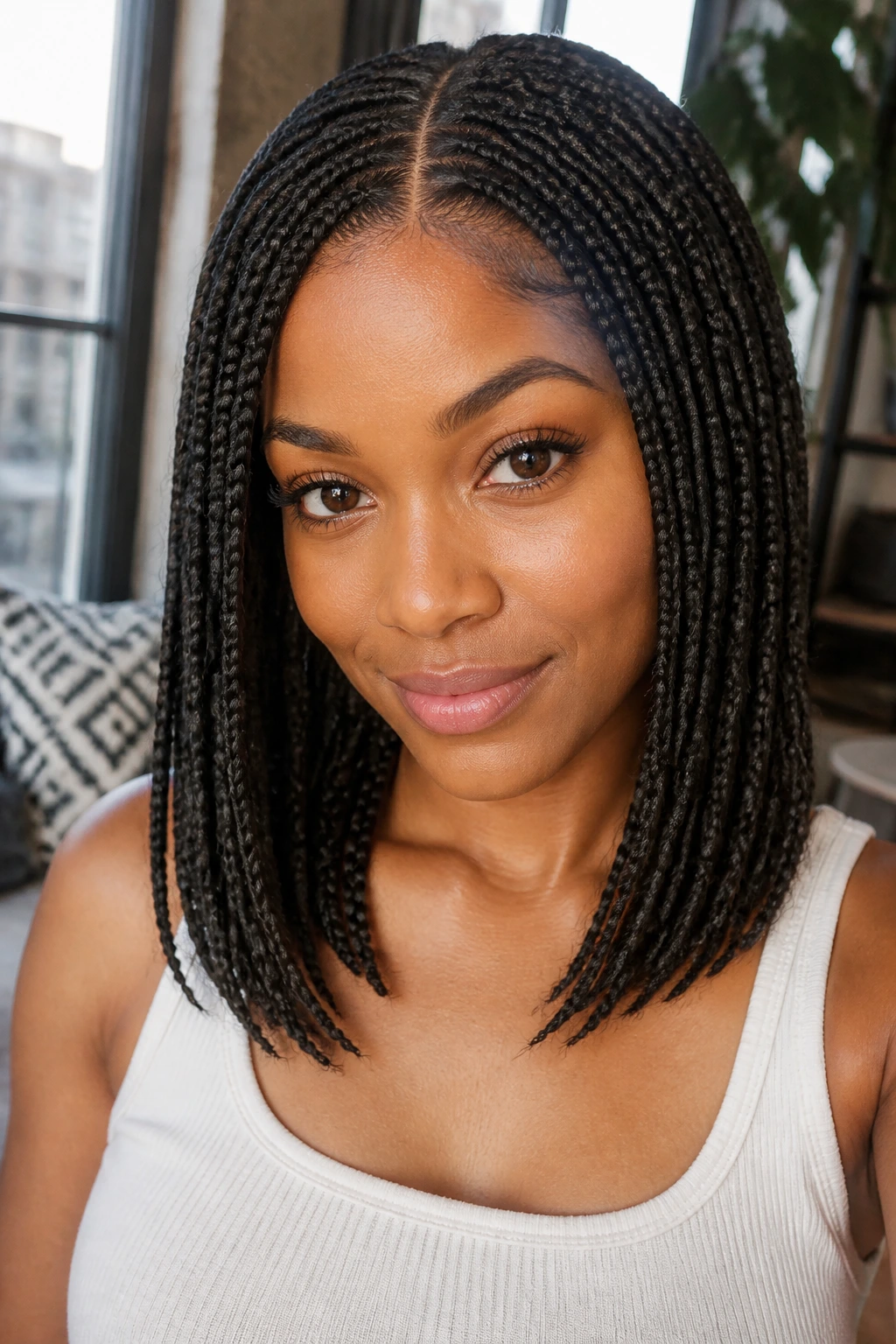
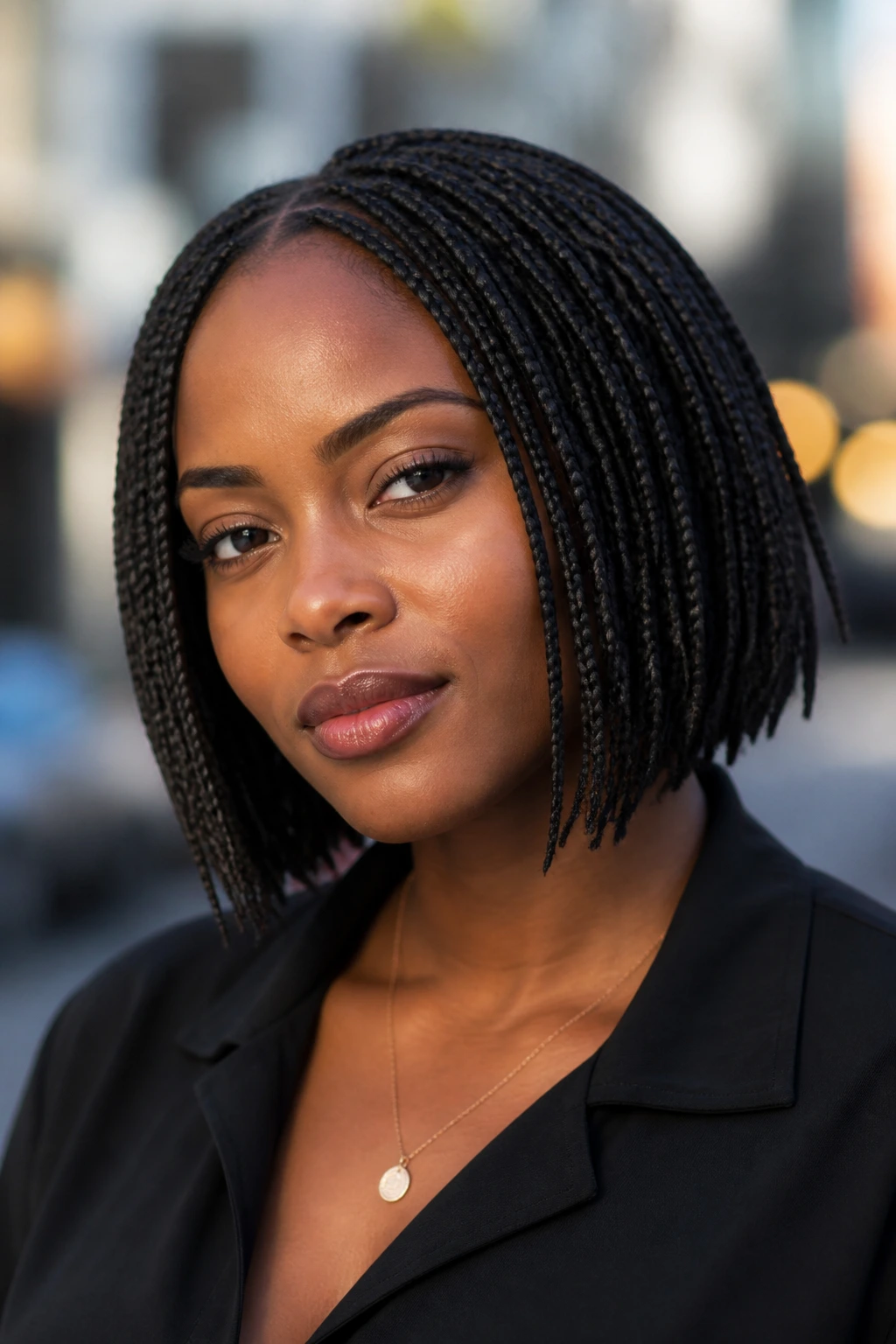
3. Chin-Length Braided Bob with Tapered Ends
A braided bob is one of the easiest places to live if you have fine hair and do not want a lot of swinging length. The shorter shape stays close to the head, which means less pulling at the nape and fewer strands catching on collars, scarf edges, or coat zippers. It also gives you that crisp, polished look without asking the cap to support long braids all day.
The tapered ends matter more than people think. A blunt bob with thick, abrupt ends can look boxy fast, while tapered braid ends soften the silhouette and keep the style from reading like a block. If you wear glasses or earrings often, this shape plays nicely because the braids do not crowd your shoulders.
I like this one for travel. It packs better, tangles less, and comes back to shape faster after you pull it out of a tote bag. That sounds small until you’ve spent ten minutes trying to unkink long braid ends in a bathroom mirror.
4. Lemonade Braids on a Glueless Cap
If you like a deep side sweep, lemonade braids can be a very good match for fine hair because they shift the weight away from the center line. The style has a built-in sense of motion, which means you don’t need a lot of extra density to make it look finished. A glueless cap helps even more, since the fit depends on an elastic band and the cap shape rather than a bunch of hard contact points.
The side part is doing real work here. It opens the face, breaks up the top of the wig, and gives your hairline a little visual rest. That matters when you want your wig to sit low and calm instead of perched high with a lot of front tension.
Do not overdo the front lace with thick gel. Lemonade braids already have enough shape. A thin, neat lace melt is cleaner, and on fine hair the difference between “laid” and “crusted” is about three products too many.
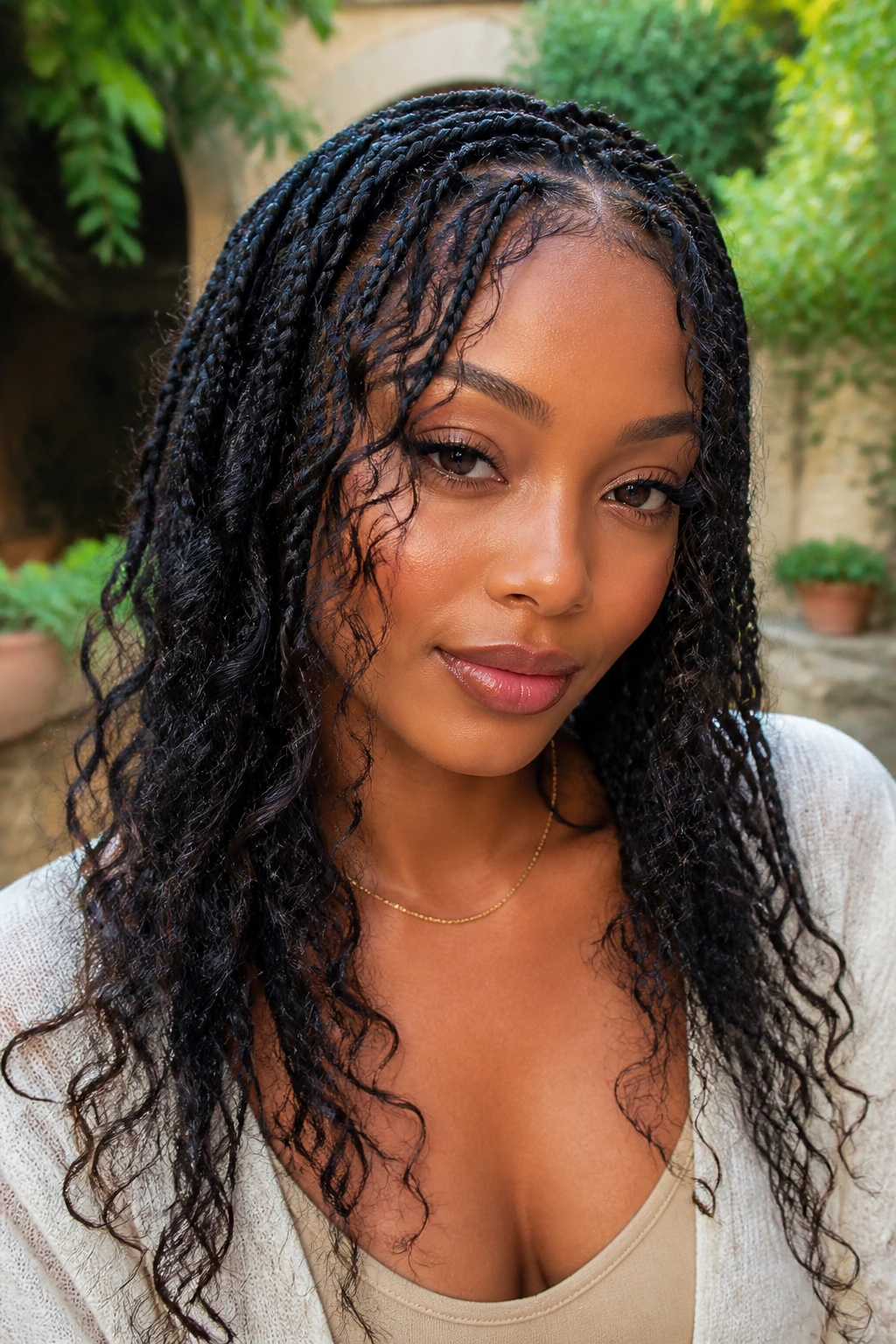
5. Boho Knotless Braids with Loose Curly Pieces
Boho braids can look airy in a way that helps fine hair, especially if the wig is built with a light hand. The loose curls break up the braid block, so the whole style reads softer and less dense than a row of perfectly uniform braids. That softness is the trick. Fine hair usually looks better in braid wigs that have a little movement, not a giant stiff curtain.
The catch is maintenance. Loose curly pieces love friction, and friction loves frizz. If the unit is overloaded with curls, it will get fuzzy fast and start looking tired before the braids themselves are anywhere near done. A few curly strands near the front and at the ends are enough. You do not need a shag pile.
I’d reach for this style when I want softness around the face. It sits somewhere between polished and relaxed, and that middle ground is often where fine hair looks most natural under a wig.
6. Micro Braids on a Small-Cap Build
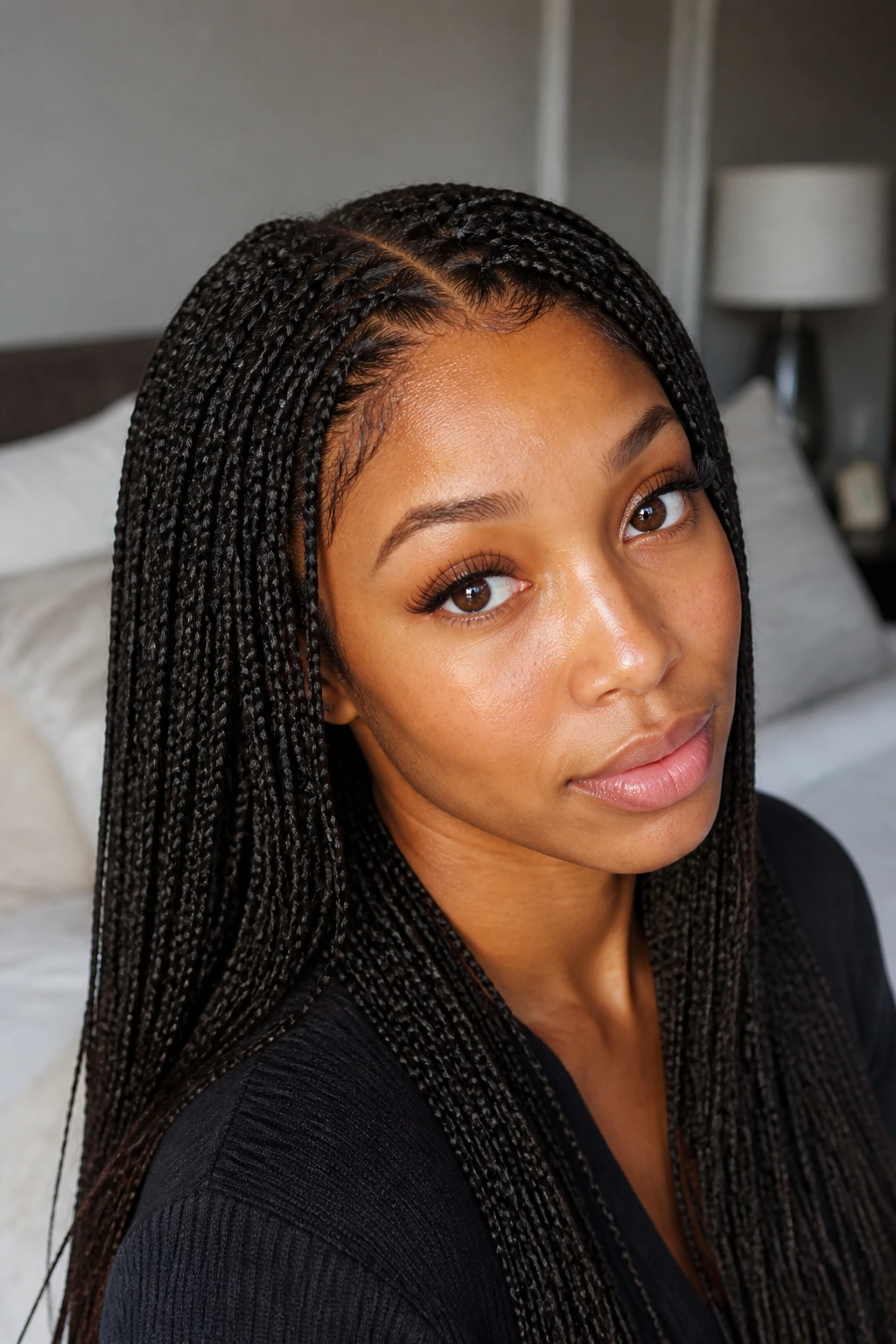
Micro braids can be beautiful on a wig, but for fine hair the cap construction matters more than the braid count. A well-built small-cap unit with micro braids can look airy and detailed without feeling like a lump of fiber on your head. The problem is that some micro braid wigs are packed so tightly that they trap heat, tug at the front, and turn into a marathon by midafternoon.
If you choose this style, look at the inside structure before you fall for the braid pattern. Fewer rows, a breathable cap, and a moderate length—think shoulder to mid-back rather than waist—make a real difference. Micro braids are visually light but physically sneaky; they can weigh more than they appear because there are so many strands.
This is not the first style I’d recommend to someone brand new to braided wigs. It is the one I’d choose when I want detail and don’t mind a little extra care, because the payoff is that refined, tiny-braid texture that reads elegant without looking loud.
7. Side-Swept Cornrow Braids with a Deep Part
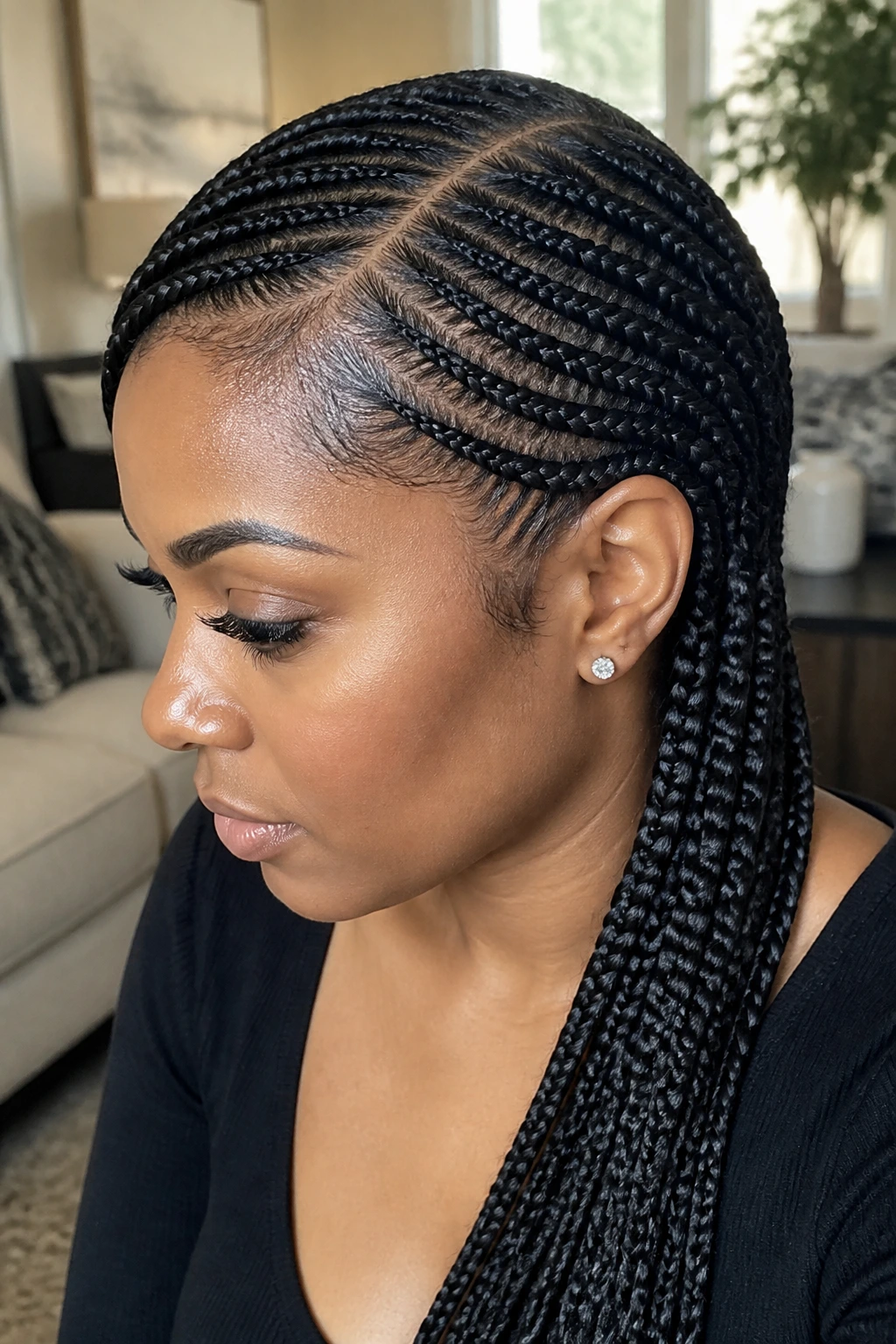
What makes this style useful is how close it sits to the scalp. Side-swept cornrow braids keep the profile flatter than hanging braid styles, and that flatter profile is easier on fine hair because it doesn’t pile a lot of visual mass at the crown. The deep part gives the unit shape, but the rest of it stays neat and controlled.
This is the braided wig version of a clean blazer. It has line, structure, and enough movement to keep it from looking severe. If you wear glasses, this one is especially comfortable because the front does not keep bumping into your frames.
A deep part also helps if your own hair density is low at the crown. Instead of trying to force a full middle part, the style works with asymmetry. That’s the smarter play. Less pressure. Better fit.
8. Triangle-Part Box Braids with Clean Geometry
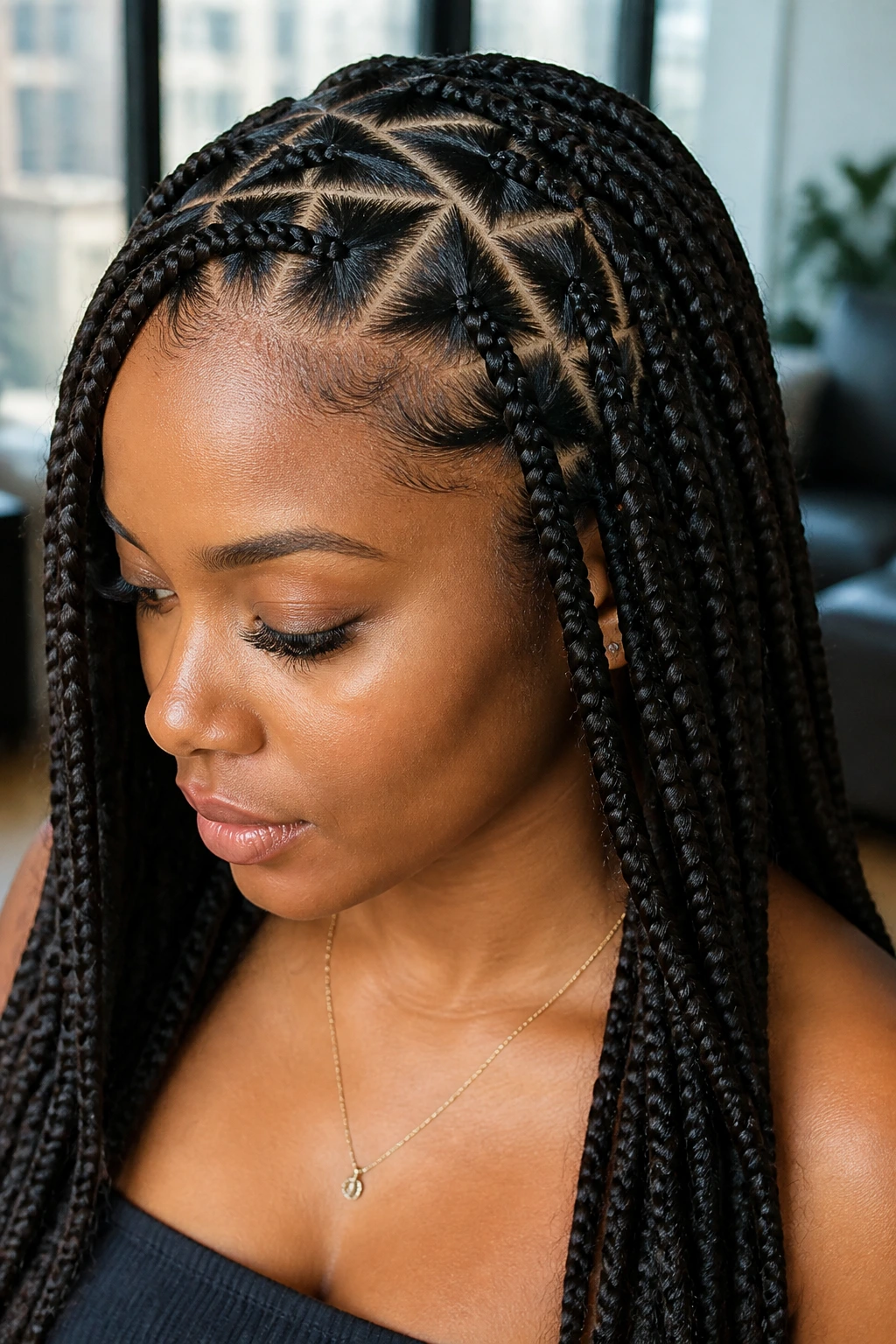
Triangle parts do something clever: they make the scalp pattern interesting enough that the braid count doesn’t need to be excessive. For fine hair, that’s gold. The style looks deliberate even when the braids themselves are moderate in size, and the geometry pulls the eye across the head instead of down to the density of the unit.
The parting pattern also gives you a little visual texture at the root, which keeps the wig from reading flat. I like this style for people who want box braids but don’t want that traditional grid to feel too plain. It has edge without extra weight. That’s a rare combination.
If you’re shopping, look for triangles that are neat and evenly spaced, not tiny triangles everywhere just to show off. More parting detail can add time and friction. The sweet spot is a pattern you can actually see, not a pattern so busy that the cap starts feeling crowded.
9. Half-Up Braided Ponytail Wig
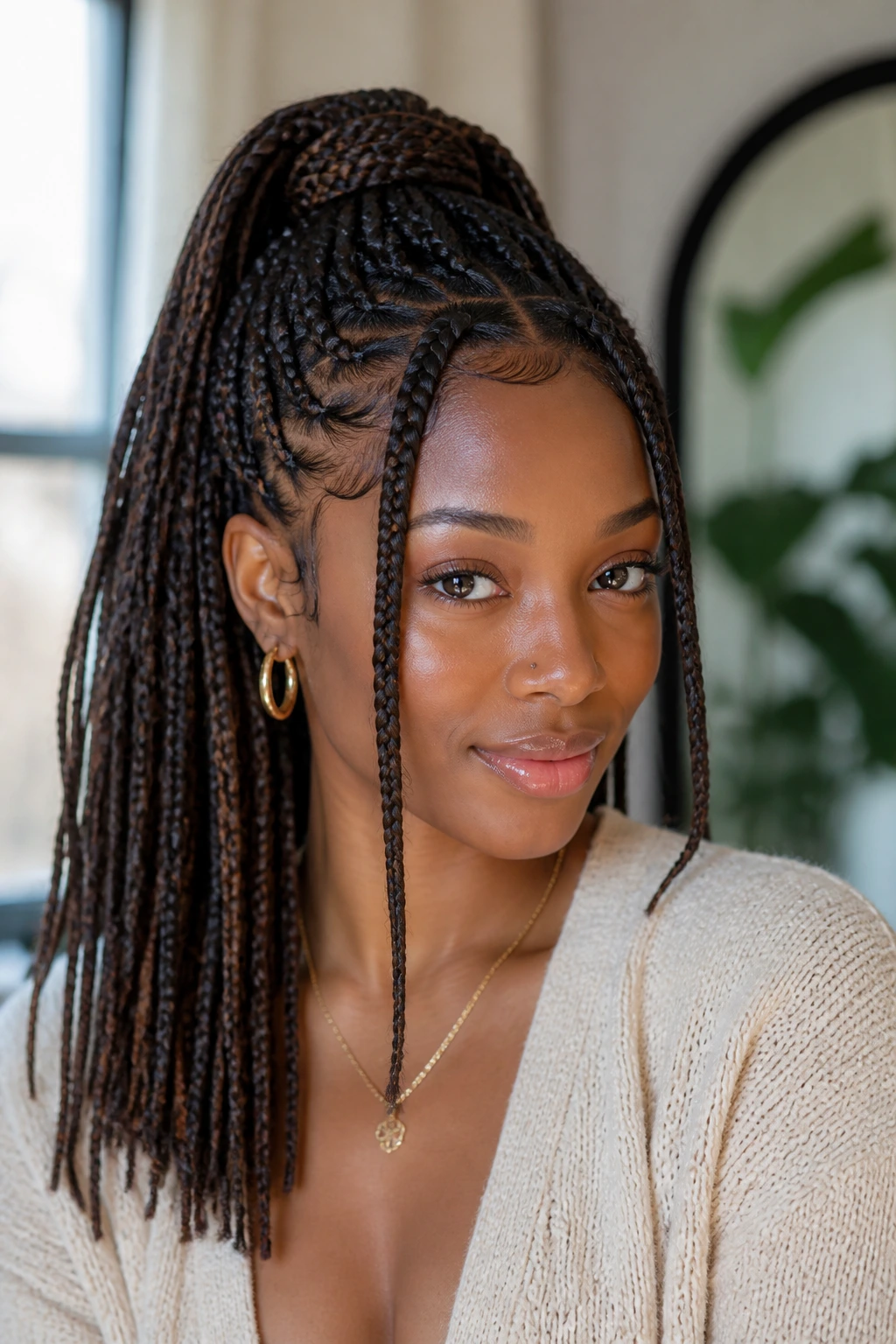
A half-up braided ponytail is one of those styles that looks like work but behaves like a shortcut when the cap is built well. The front gets lifted, which opens the face, and the back stays loose enough to keep the style from feeling pinned down. For fine hair, that balance can be very flattering because it gives height without asking the entire wig to carry the same amount of weight.
The danger is the ponytail base. If it’s too tight or mounted too high, the crown starts feeling pulled back, and that’s a fast route to discomfort. The best versions use a secure but soft attachment point and a cap that does the gripping, not your scalp.
I like this for events where you want your hair off your face but still want the length to show. It has a little more drama than a plain center-part braid wig, and a little less strain than a full, long braid unit hanging from the front edge.
10. Faux Loc and Braid Hybrid Wig
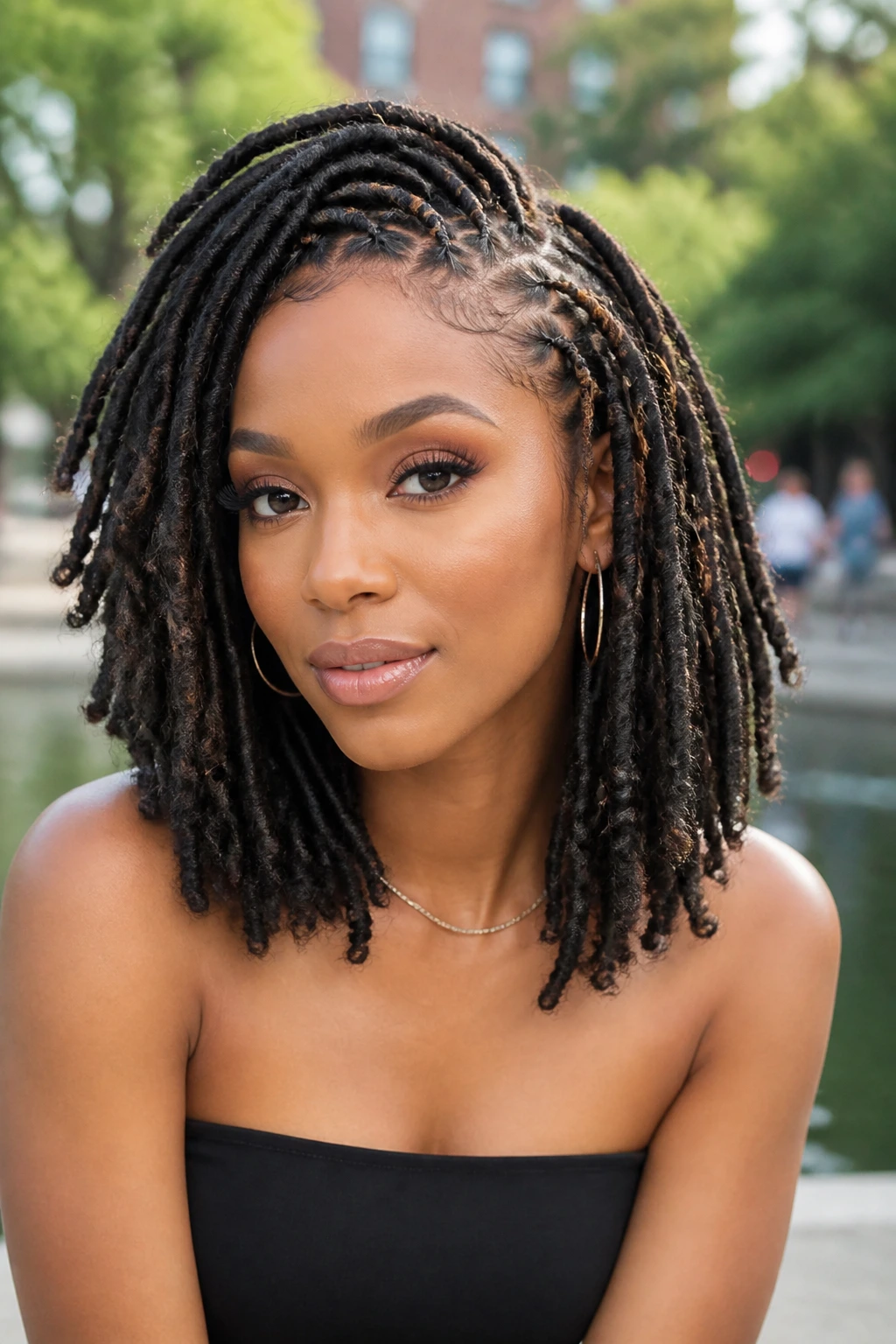
This one works because it breaks the visual block. A faux loc and braid hybrid wig mixes textures, so your eye sees movement rather than one giant mass of identical braids. For Black women with fine hair, that can be a relief. The style looks full, but the cap often feels less crowded than a dense braid-only unit of the same length.
The hybrid texture also changes how the weight falls. Loc pieces spread their presence differently than tight braids, which can make the wig feel more balanced if the maker didn’t overload the front. Keep an eye on length, though. Long loc-braid hybrids can swing more than you expect, and the shoulder area is usually where they start to annoy you.
This is the style I’d pick when I want a little edge and do not want to look like I copied the same braid pattern everybody else is wearing. It has shape, texture, and a bit of grit.
11. Beaded Tribal Braids with a Center Strip
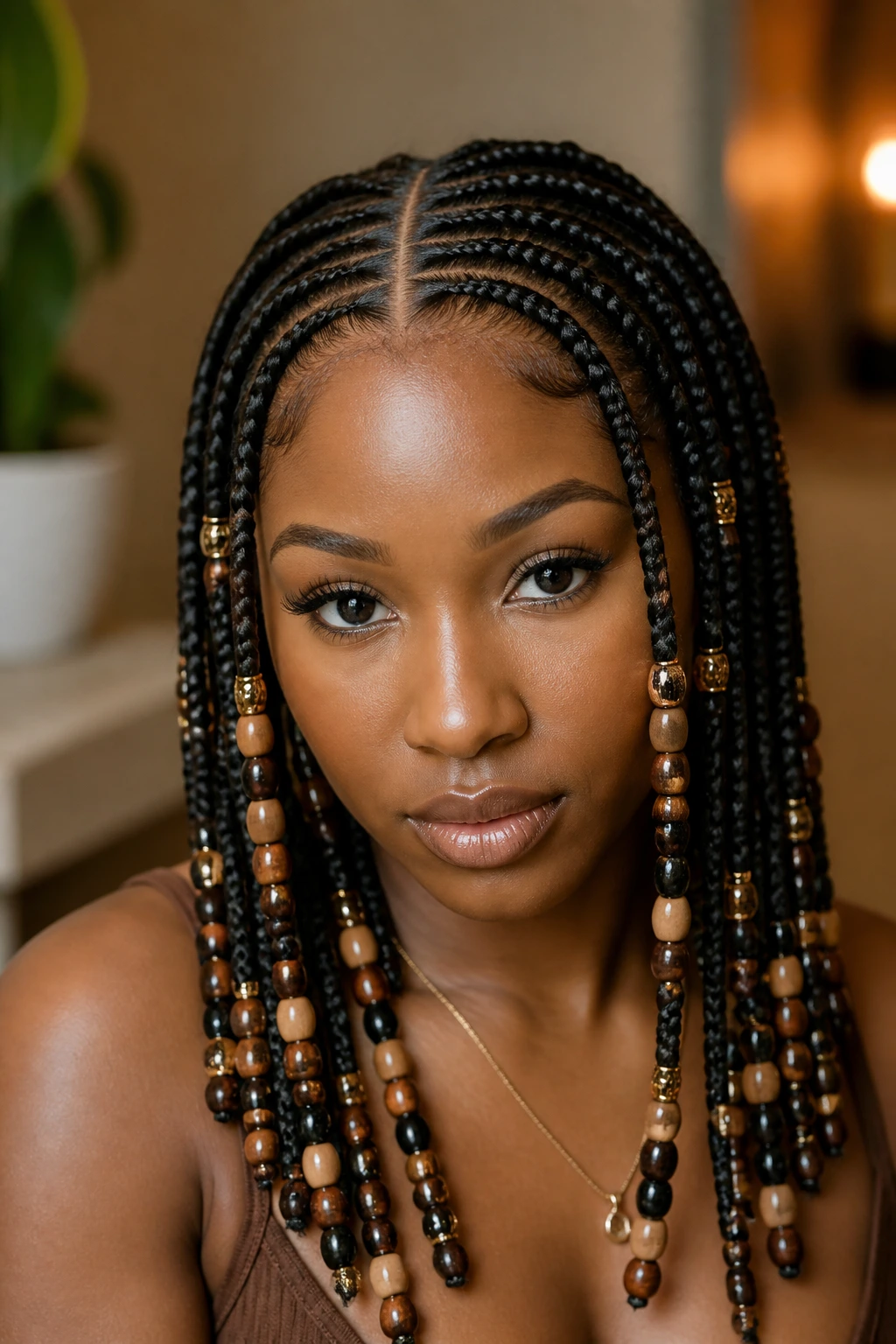
Beads change the story fast. They add sound, movement, and personality, but they also add weight in small bursts, which is why this style only works well for fine hair when the bead choice is smart. Lightweight acrylic or wood beads are friendlier than heavy metal pieces, and spacing them out keeps the front from getting dragged down.
The center strip helps calm the overall look. It creates a clean line through the middle so the braids and beads can do the rest without turning into visual chaos. That matters on a wig, because too much happening near the face makes the unit feel busier than it needs to be.
I would keep the beading subtle if your edges are tender. One or two bead rows near the ends can be enough. You get the cultural nod and the movement without turning the wig into a weighted headpiece.
12. Face-Framing Accent Braids with Tendrils
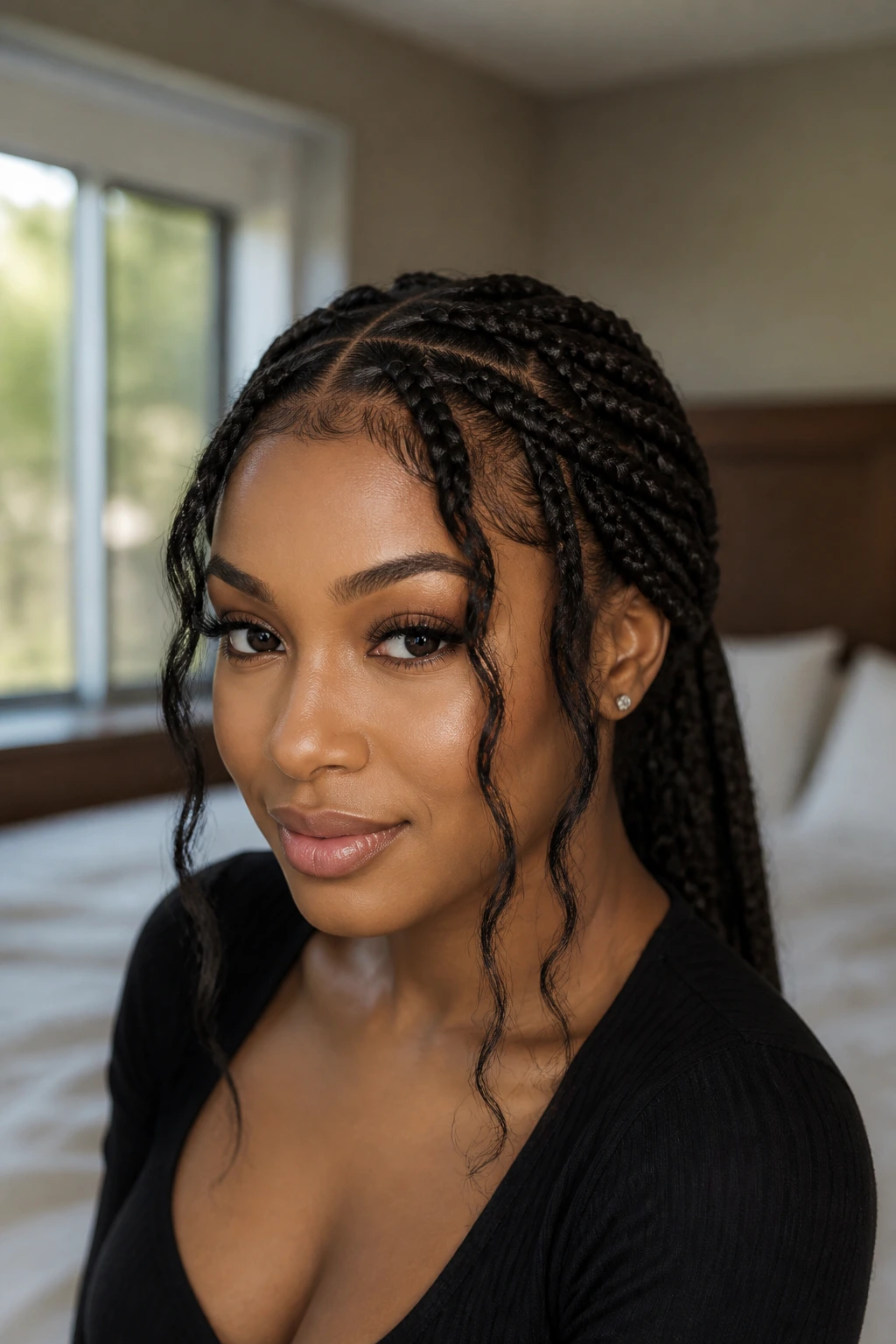
This style is a little softer around the edges, and that softness can be useful when your own hair is fine and you don’t want a hard frame around the face. The accent braids sit where they need to, while a few tendrils or lighter pieces break up the front and keep the wig from looking too severe. It’s a gentler read.
The trick is restraint. Too many loose pieces and the style starts drifting toward fussy. A couple of face-framing strands, maybe some curled ends, and a neat braid pattern in the back are enough. You’re after softness, not mess.
This is a good option if you wear soft makeup, hoop earrings, or glasses. The front detail doesn’t fight those things. It works with them. That’s one of the overlooked pleasures of a well-made braid wig.
13. Honey-Brown Feed-In Braids
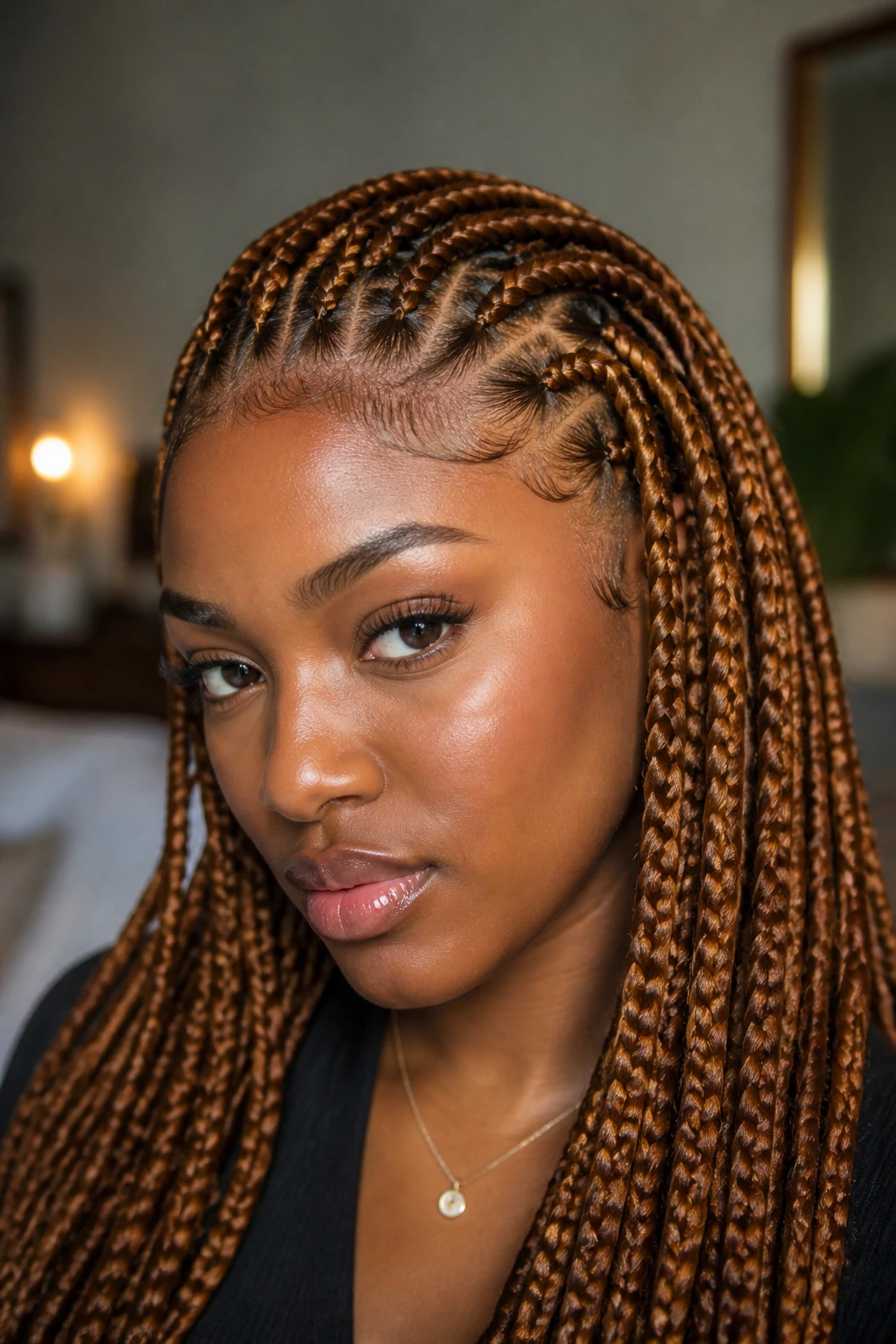
Color can make a braided wig feel lighter before you even put it on. Honey-brown feed-in braids do that well because the warm tone softens the overall block of the style, and the feed-in root technique lays flatter than a bulkier start. For fine hair, that flatter root is a practical win, not just a pretty one.
The best version is one where the lighter tone sits near the face or through select braids instead of covering the whole unit in a loud color block. That gives you dimension without making the style feel visually heavy. If your skin tone likes warm highlights, the effect is especially good around the cheeks and jawline.
I’d choose this when I want the braid pattern to stay classic but the finish to have a little glow. It reads polished from across the room and still feels easy enough to wear with a plain T-shirt.
14. Jumbo Braids with Lightweight Ends

Jumbo braids are a smart choice when you want fewer individual plaits and a unit that does not feel overbuilt. The larger braid size means there’s less total fiber on the cap, which can be a gift for fine hair as long as the braids are not stretched to a ridiculous length. Shoulder to mid-back is the range I trust most here.
The ends matter again. Heavy, blunt, overlong jumbo braids start swinging against the shoulders and pulling the wig backward. Keep the ends sealed cleanly and the length sensible, and the style stays easy.
This one has a blunt honesty to it. It looks intentional. It doesn’t try to hide how much braid you’re wearing, which is part of why it can feel calmer than a micro braid unit that is working too hard.
15. HD Lace Braided Wig with an Invisible Hairline
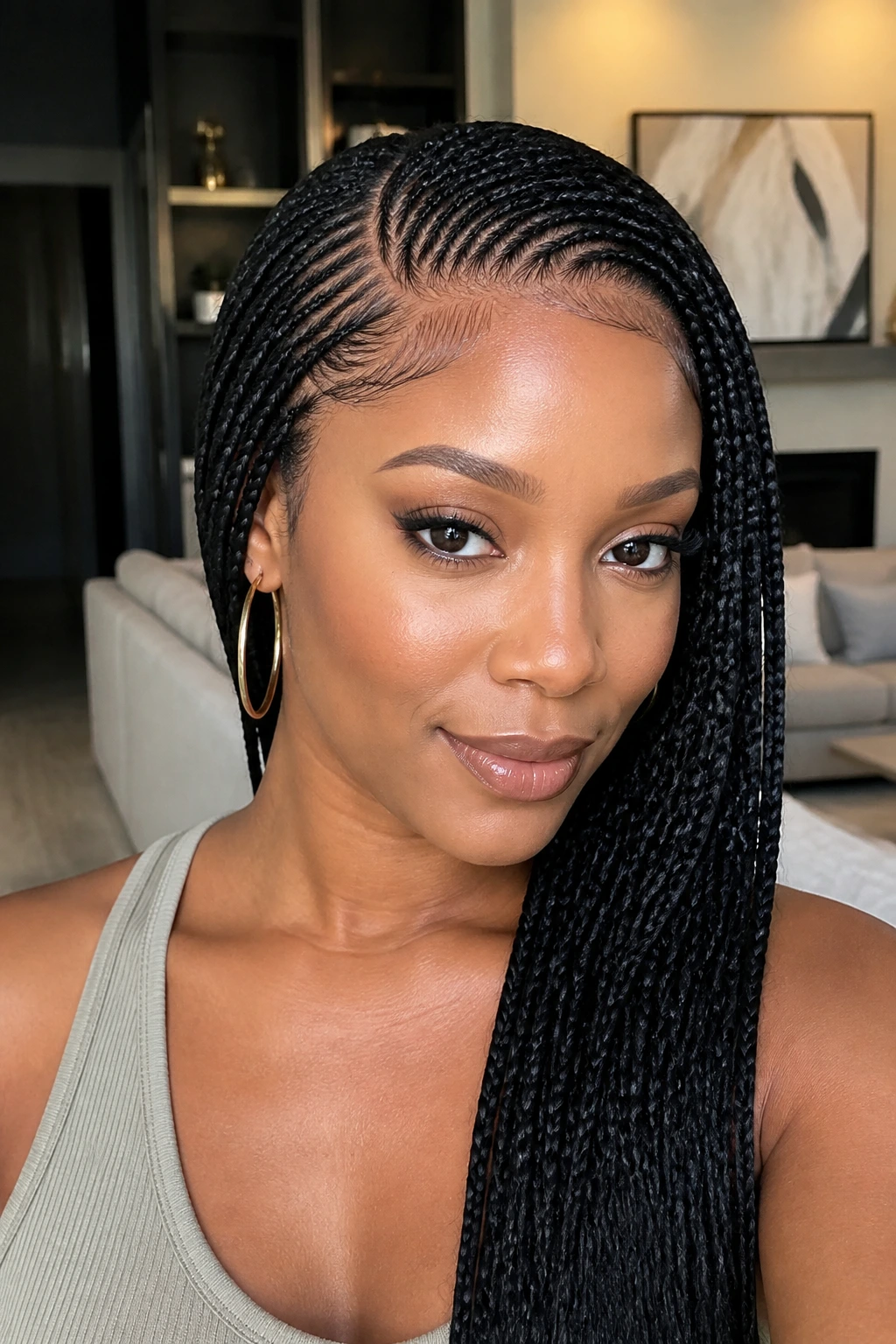
If you care a lot about the front, HD lace can make a braided wig look cleaner than almost anything else in the category. The hairline disappears more easily, so the rest of the wig can sit a touch farther back from fragile edges without looking obvious. That matters when your own hairline needs room.
The catch is that HD lace is delicate. It tears faster than a sturdier lace front if you yank on it, and it likes gentle handling during storage. You also want to avoid piling on glue just because the lace is fine; fine lace and heavy adhesive is a bad marriage.
This is the style for someone who wants polish and is willing to take care of the front edge. If the cap is glueless and the braid density is moderate, it can be one of the most comfortable options in the whole group.
The Fit Details That Matter More Than Braid Size
The biggest mistake people make with braided wigs for Black women with fine hair is shopping by braid pattern alone. Pretty braids are not enough. The cap, the band, the length, and the placement of the weight decide whether the wig feels wearable after the first hour or starts nagging at your temples before lunch.
A good fit spreads pressure instead of concentrating it. That usually means an adjustable elastic band at the back, a cap that matches your head circumference closely, and a front edge that does not press hard into the hairline. If your own hair is fine, or your edges are already tender, I’d take a softer cap over extra braid density every single time.
The inside contact points are worth inspecting too. Some units come with combs at the temples and nape, and they are not always your friend. If you have fragile spots, use the combs sparingly or skip them altogether and rely on the wig grip and band. That wider band of contact usually feels better than two tiny teeth digging into the same thin area day after day.
Length changes the whole mood. A 16-inch braided wig tends to behave differently from a 28-inch one, even if the braid style is identical. Longer braids swing more, snag more, and create more pull when you move your head. Shorter units are not boring. They’re usually smarter.
Essential Equipment for These Styles
-
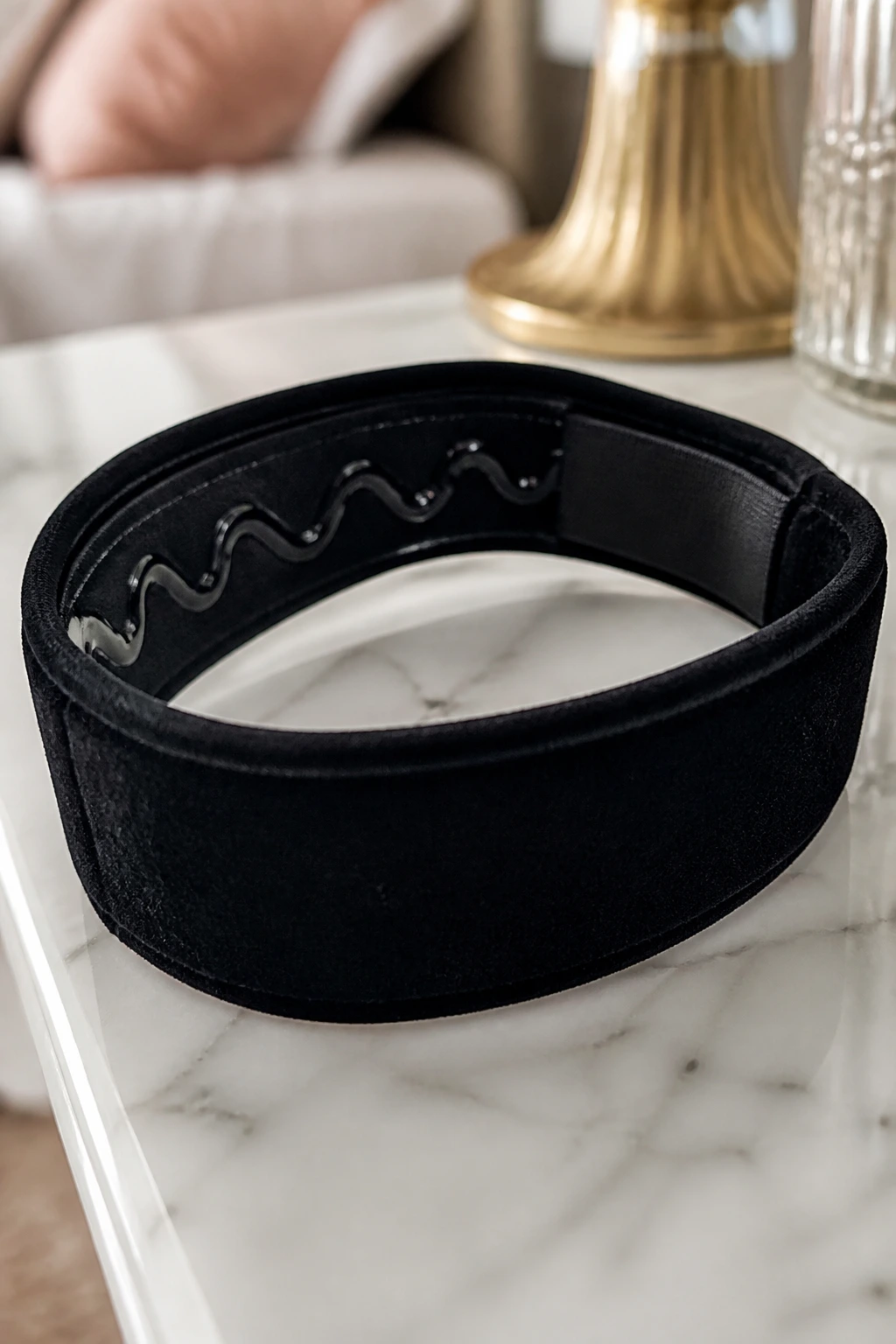
Wig grip or velvet band: Spreads pressure across a wider strip and helps a glueless braided wig stay put without cutting into the hairline.
-
Adjustable elastic strap: The real anchor in most comfortable braid wigs; it matters more than the decorative part.
-
Rat-tail comb: Useful for cleaning up the parting and pressing the lace into place without roughing up the hairline.
-
Lace tint or powder: Helps the front blend if the lace is lighter than your skin tone; use a light hand so the part doesn’t look dusty.
-
Small edge brush: Keeps baby hairs neat if the style uses them, but you do not need a heavy hand here.
-
Satin scarf or bonnet: Protects the front edge and keeps braid surfaces from rubbing rough during storage or overnight wear.
-
Wig stand or mannequin head: Keeps the braid pattern from getting crushed when the unit is off your head.
-
Silk or satin storage bag: Good for travel or long-term storage, especially if the braids have beads or curly pieces.
-
Alcohol-free lace cleaner: Helpful for removing residue from glue, gel, or powder without drying out the lace.
-
Small scissors or eyebrow trimmer: Only for tiny lace cleanup; the point is precision, not hacking at the front.
Smart Shopping and Fit Tips for Fine Hair
Start with the inside of the wig, not the front photo. A shiny braid pattern can hide a cap that’s too tight, too hot, or too crowded. Look for product photos that show the lace front, the parting, and the inside band. If a seller only shows one glamorous angle, I get suspicious fast.
Cap size matters more than a lot of people think. If you have a smaller head, a medium cap with an adjustable strap can still work, but the band has to do the heavy lifting without cinching the temples. If your head is larger, do not force a small cap because the braids look cute. That’s how the front starts sliding and the nape starts creeping upward.
Length is the next big thing. Shoulder-length and collarbone-length units are easier on fine hair because they do not drag as much. Once you get into long braid territory, the weight multiplies fast. A 24-inch braid wig can feel dramatically heavier than an 18-inch one even when the braid size is the same.
Synthetic fibers are the common choice for braided wigs, and they make sense because they hold shape well. Human-hair braided wigs can move better, but they usually need more care and cost more. For fine hair, the question isn’t only fiber type; it’s whether the wig’s weight and front tension are kind enough to wear often.
Check for density by looking at the crown and the perimeter. If the roots are bulky and the front is packed with braid bundles, the wig may look luxurious and still wear like a weight vest. That’s especially true with styles that use beads, locs, or very long lengths. The vendors rarely say “this will feel heavy.” You have to read the picture.
How to Wear a Braided Wig Without Fighting Your Hairline
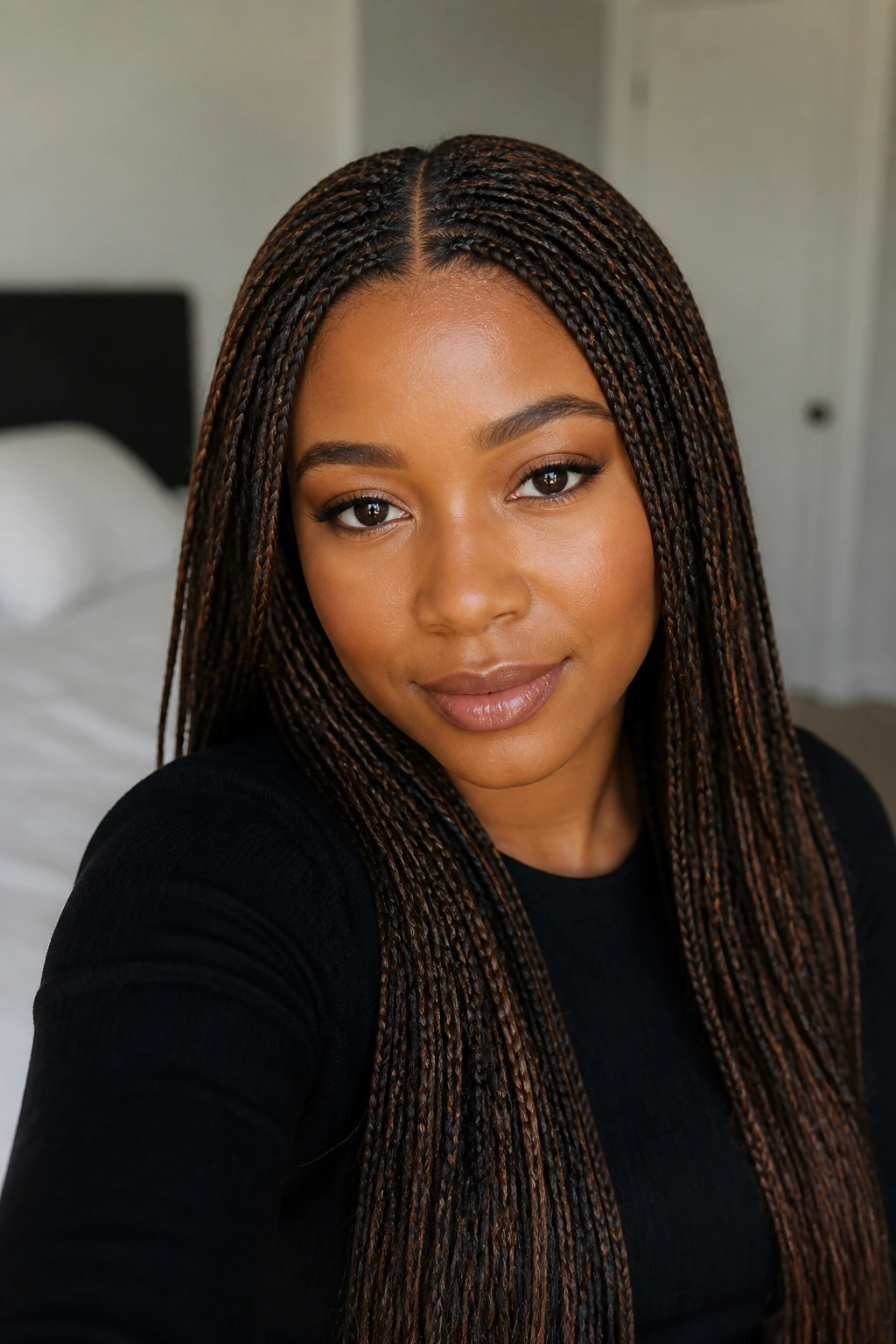
Presentation: A center part gives a calm, symmetrical frame, while a deep side part shifts pressure off the middle if your crown is sparse or sensitive. Keep the first inch at the temples neat, not plastered flat with product, and let the braid pattern do the visual work.
Accompaniments: Simple hoops, a clean neckline, and one accessory at a time usually look better than piling on everything at once. A scarf, a bold earring, and a loud necklace can crowd the style and make the head area feel busier than it needs to be.
Portions: Shoulder-length and collarbone-length units are the sweet spot for many fine-haired wearers. If you go long, choose fewer, thicker braids rather than an ultra-dense micro style, because the total drag on the cap stays more manageable.
Beverage Pairing: Keep a bottle of water or a mug of tea near the mirror while you fit the wig. You will probably spend more time adjusting the band and lace than you expect, and patience is the difference between a clean fit and a sore hairline.
Small Tweaks That Make the Style Feel Like Yours
Color Lift: A few honey-brown or burgundy braids near the face can soften a heavy-looking unit without changing the whole wig. Warm tones are especially useful if the braids feel a little flat under indoor light.
Parting Trick: Swap a center part for a deep side part when your crown needs breathing room. The style instantly feels less rigid, and the shift can take pressure off the front edge.
Accessory Move: Use two or three cuffs, not twelve. Small metal pieces near the ends can look intentional; too many at once start adding weight and noise that the wig does not need.
Texture Balance: If the unit is all braids and feels too severe, choose a version with a few tendrils, curly pieces, or soft ends. That little break in texture keeps the look from turning blocky.
Make-It-Yours: If your edges are tender, skip hard combs, keep the lace melt light, and rely on a wig grip plus elastic band. If you wear glasses, slim the temple area so the arms don’t catch on the braid base every time you move.
How to Store, Refresh, and Keep the Braids Looking Neat
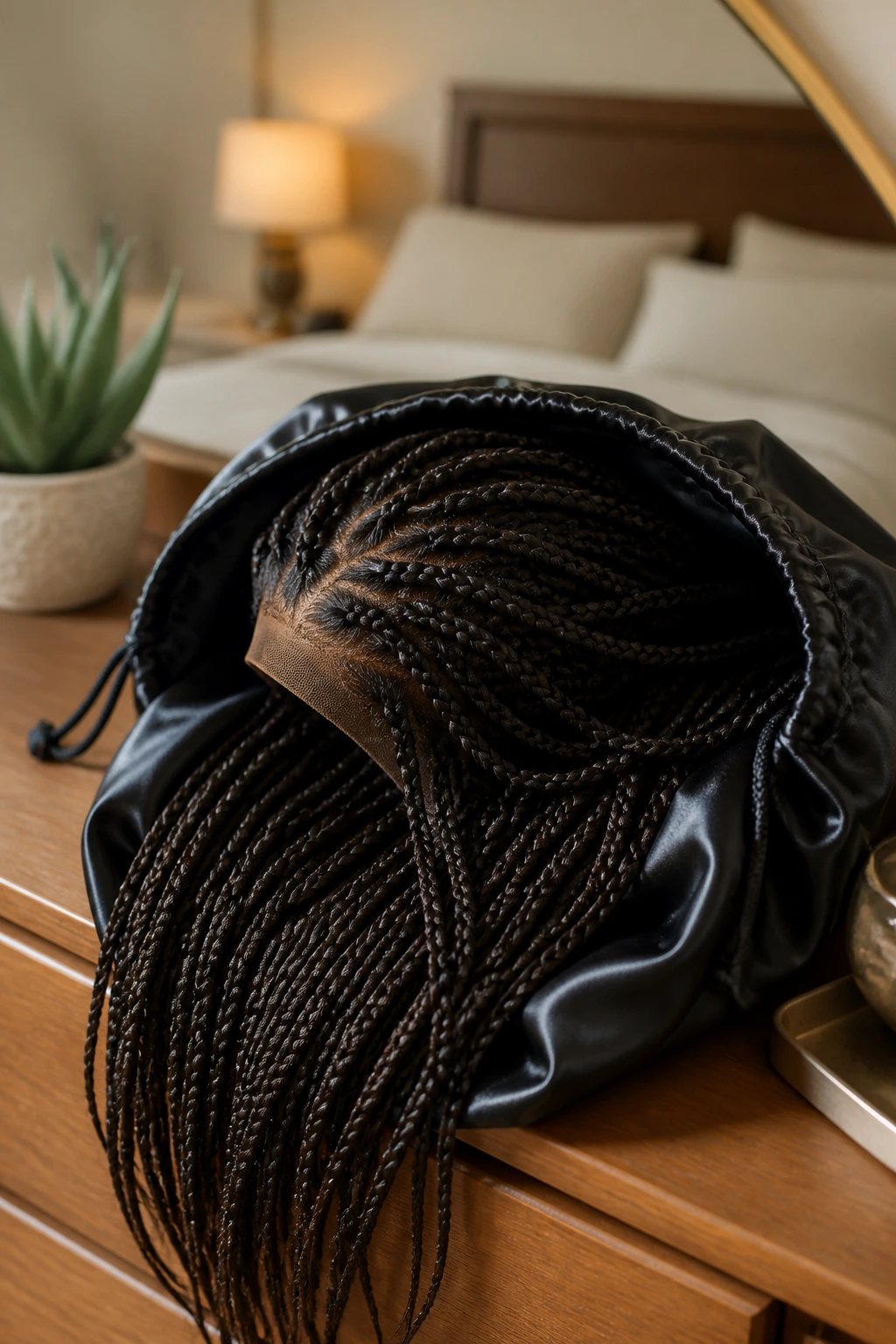
Braided wigs last longer when they are stored like something worth keeping, not shoved into a drawer and forgotten. After each wear, place the wig on a stand or mannequin head so the braids keep their shape. If you do not have room for that, lay it in a satin or silk bag and keep the lengths loosely coiled, not folded into a sharp bend.
Let the cap dry before you store it. Sweat trapped at the base of a braided wig gets unpleasant fast, especially with synthetic fiber. A quick wipe of the inside cap with a barely damp cloth and a gentle cleanser is enough after a long wear day. If you used glue, powder, or edge control, clean the lace front carefully so residue does not build up at the hairline.
Every 8 to 10 wears, inspect the elastic band, the lace edge, and the first row of braids. Loose ends at the root are a sign to tighten the band, not to yank the whole wig harder onto your head. If the style uses beads, make sure they are not scratching the lace or pressing into the cap during storage.
Synthetic braided wigs should stay away from high heat unless the manufacturer says the fiber can handle it. Steam can warp some ends fast. Human-hair versions can take a little more handling, but even then, the braided structure is not supposed to be treated like loose hair. Keep conditioner off the roots and use it sparingly on the ends only if the style needs it.
Common Mistakes That Make a Braided Wig Feel Heavy or Tight
-
Buying by length alone: Long braids look impressive online, then start pulling backward the minute you wear them. Check the cap weight and density, not just the braid length.
-
Ignoring the cap size: If the wig rides up behind the ears or squeezes at the temples, the size is wrong. A better band or a larger cap is the fix, not more glue.
-
Using hard combs at tender spots: Temple combs can be useful, but on fine hair they often create the exact pressure you were trying to avoid. Rely on the elastic band and wig grip first.
-
Adding too many beads or metal accents: The style can go from crisp to annoying very quickly. Lightweight beads near the ends are safer than heavy pieces near the front.
-
Packing on product at the lace: Heavy gel or thick glue makes the front stiff, itchy, and harder to clean. A thin, careful melt is cleaner and usually looks better too.
-
Storing the wig folded in half: That leaves a hard kink in the braid pattern and can flatten the front. A stand or loose coil keeps the unit ready to wear.
Variations and Adaptations to Try
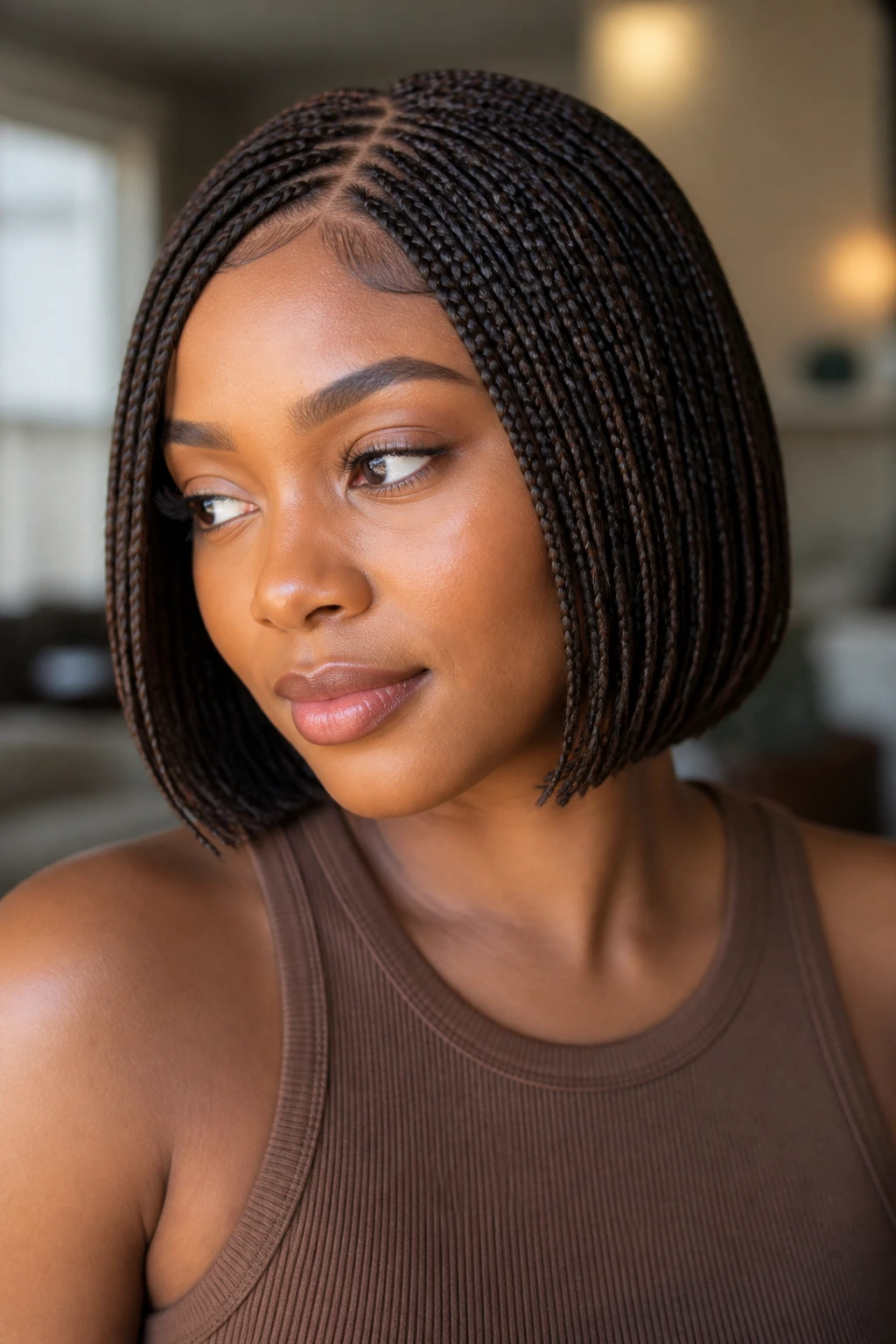
The Soft Everyday Bob: Take a chin-length braided bob and keep the part simple, the ends tapered, and the accessories minimal. This is the easiest version to wear repeatedly if your hairline wants a break.
The Face-Opening Side Sweep: Use a lemonade or deep side-part layout with fewer braids at the front and a glueless band. It gives you movement and lift without piling extra tension on the center of the scalp.
The Color-Warmed Frame: Blend honey-brown, chestnut, or burgundy braids near the face and keep the rest darker. The color contrast softens the braid block and can make a modest-density wig look fuller.
The Sensitive-Scalp Build: Choose a unit with no temple combs, a breathable cap, and a soft elastic band. This is the one to pick if your edges are already thin or you know hard contact points bother you.
The Statement-Length Version: Go long, but only with a moderate braid count and lightweight ends. If you want waist-length drama, the wig has to earn it with a very good cap or it starts feeling like a chore.
Frequently Asked Questions
How do I know if a braided wig is too heavy for fine hair?
If the front keeps sliding back, the temples feel warm or sore, or the nape lifts every time you turn your head, the unit is too heavy or too crowded. A good fit should feel present, not pressing.
Should I pick synthetic or human-hair braided wigs?
Synthetic braided wigs are usually lighter on the wallet and hold the braid shape better. Human-hair versions move more naturally, but they need more care and usually cost more, so they make sense if you want a longer-term unit and you don’t mind upkeep.
Do I need to braid my own hair tightly underneath?
No. For fine hair, tight cornrows are often overkill. Loose flat twists or gentle braids underneath a wig cap can be kinder, especially if your edges are already tender.
What braided wig style is the easiest on a sensitive hairline?
A shoulder-length knotless box braid wig with a soft band is usually the safest place to start. The length stays manageable, and the knotless roots keep the front from feeling crowded.
How do I keep the wig from sliding back during the day?
Use a velvet wig grip under the cap, adjust the elastic strap at the back, and keep the front contact points light. If the cap still moves, the size may be off rather than the styling.
Can I sleep in a braided wig?
You can, but I wouldn’t make a habit of it. The braids rub, the lace gets stressed, and the cap can stretch faster. If you must sleep in it, wrap the front with a satin scarf and keep the unit on a stand as soon as you wake up.
What if the braid ends frizz faster than the rest of the wig?
That’s common, especially on boho styles and synthetic fibers. Trim only the worst strays, keep heat away from the ends, and avoid rough pillowcase contact by storing the wig properly at night.
Are beads too much for fine hair?
Not if you keep them light and sparse. Acrylic or wood beads near the ends are far kinder than heavy metal pieces near the roots, which can drag the front down and make the wig feel off-balance.
The Braided Wig That Fits
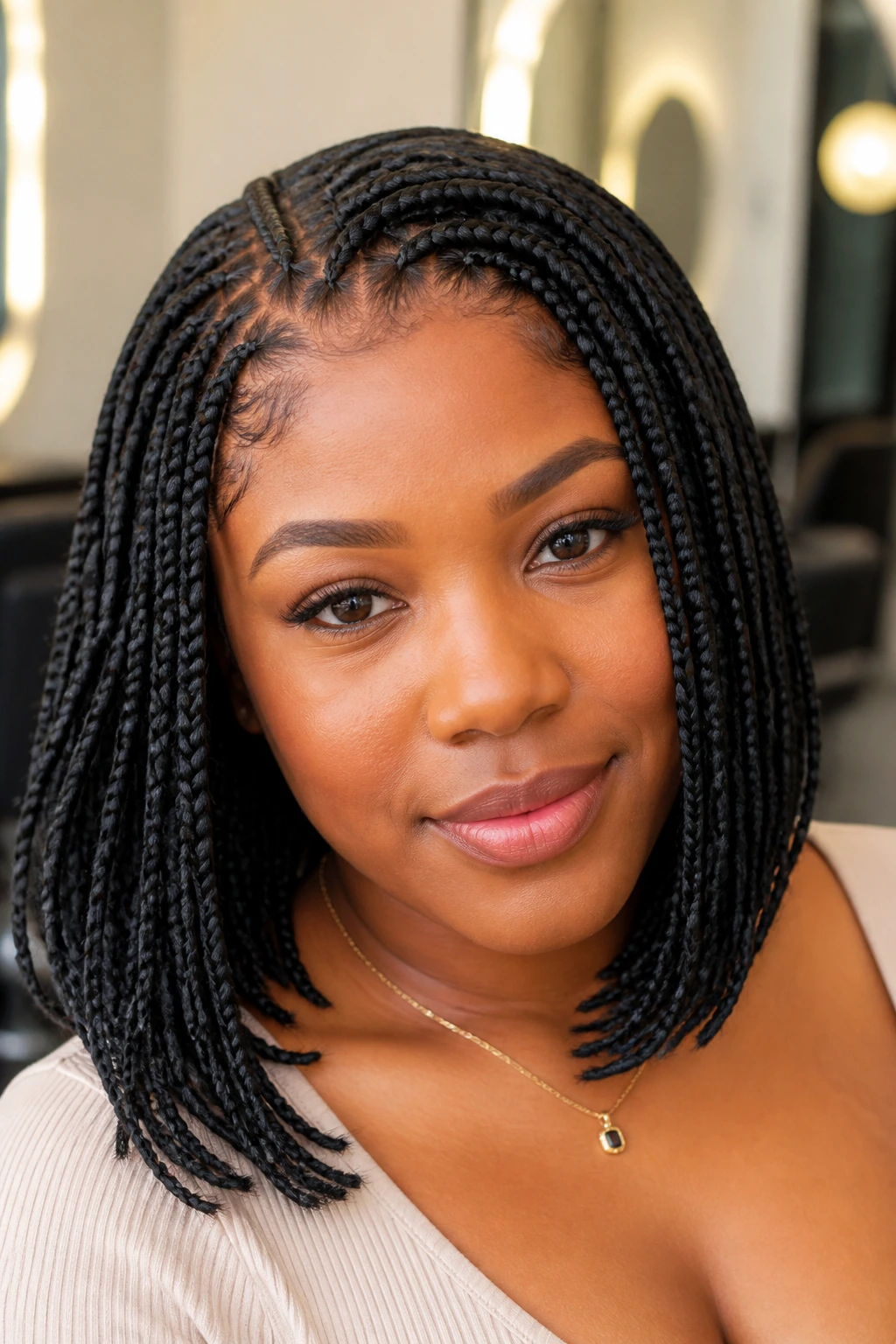
The best braided wig for fine hair is not the one with the most braids or the longest fall. It is the one that leaves your temples quiet, your cap steady, and your mirror check boring in the best possible way. You want to put it on and stop thinking about it.
That usually means choosing a braid style for the way it wears, not just the way it photographs. A shoulder-length knotless unit, a clean bob, a glueless side part, or a soft Fulani layout can do more for comfort than a giant dense style ever will. Start with the fit, then chase the drama.
Pick one that feels balanced the first time you adjust the strap, and you’ll know fast whether the style is a keeper.