



Auburn highlights on dark, thick hair do something most color jobs can’t pull off cleanly: they move. A deep brunette base can swallow timid color in a heartbeat, but the right auburn ribbon—copper at the front, mahogany through the lengths, cinnamon where the light hits—keeps showing up every time the hair swings.
Thick hair changes the whole equation. A few delicate foils tucked under a heavy curtain of strands can disappear completely, and that’s where a lot of highlight jobs go wrong. On dense hair, placement matters as much as shade. Sometimes more.
The sweet spot sits between too subtle and too loud. You want enough warmth to wake up the base, enough contrast to survive the density, and enough variation that the color looks lived-in instead of painted on. Once you understand how auburn behaves on dark hair with thickness to it, the options open up fast—and a few of them are much smarter than the usual bright-copper answer.
Why This Collection Stands Out
-
Thick-hair visibility: These looks are built with enough contrast and placement density that the color still reads through a heavy cut, not just in a mirror under bright salon lights.
-
Dark-base friendly: The shades lean from cinnamon to mahogany to wine, so there’s something here for level-3 black-brown hair, deep chocolate brunettes, and everything between.
-
Low-regret grow-out: A lot of these placements blur as they grow, which matters when your hair is thick and the regrowth line can look harsher than expected.
-
Face-framing payoff: Dark, dense hair often hides detail in the back; these ideas make sure the front pieces do the heavy lifting.
-
Styling versatility: Some versions lean glossy and polished, others lean lived-in and dimensional, so you can match the color to your haircut instead of forcing one formula on every head of hair.
-
Salon-friendly wording: Each look is described the way a stylist can actually use it at the chair—ribbons, panels, melts, underlights, money pieces, glosses—because vague language gets you vague results.
1. Soft Cinnamon Ribbons
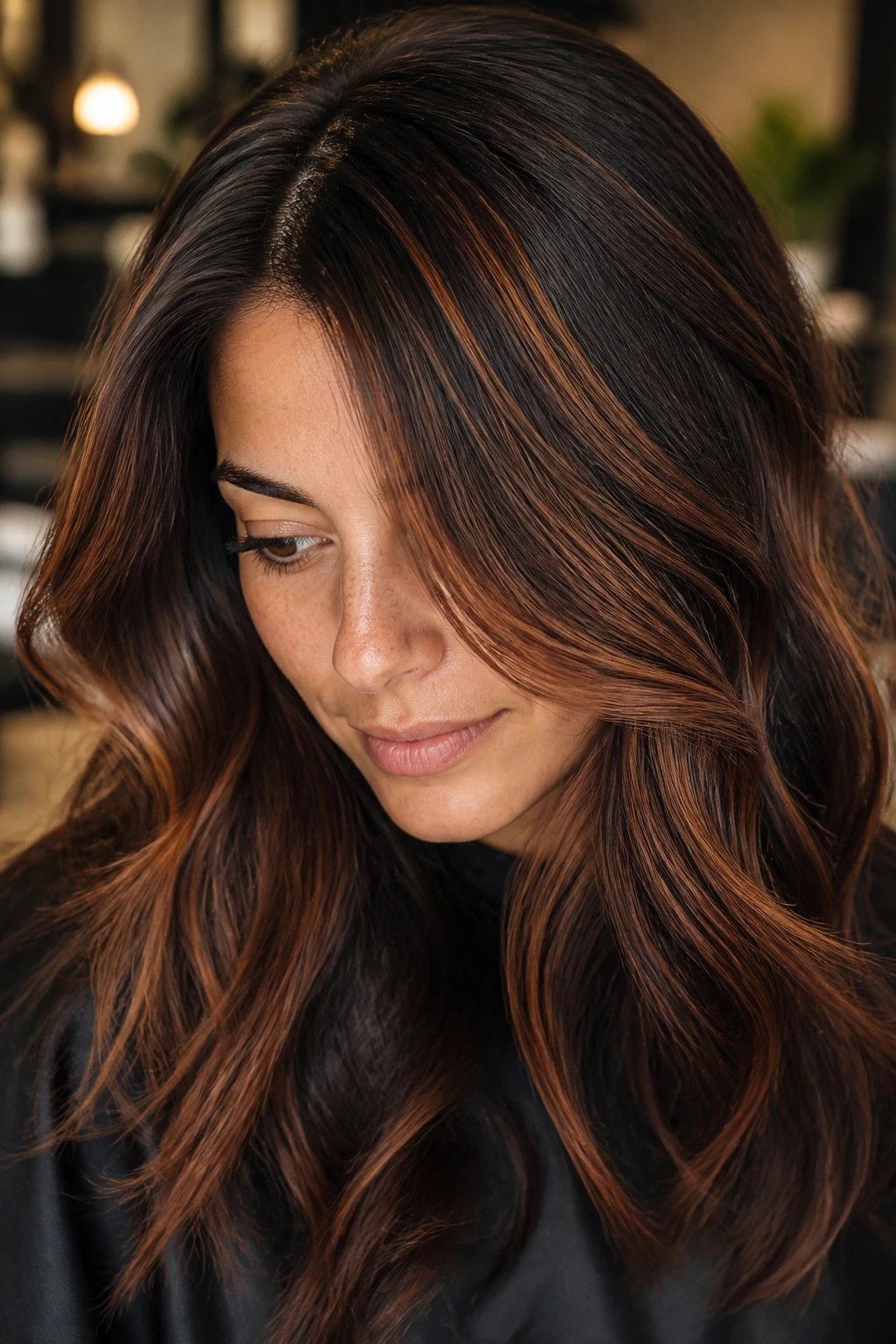
Soft cinnamon ribbons are the quietest way to bring auburn into dark hair, and on thick hair that restraint is a strength. The warmth sits a little above a deep brunette base, so the pieces show without screaming for attention.
Why It Works on Dense Hair
Thick hair hides fine color when the placement is too sparse. Wider ribbons through the top layer, temple area, and just behind the part give the eye something to catch, especially when the hair moves.
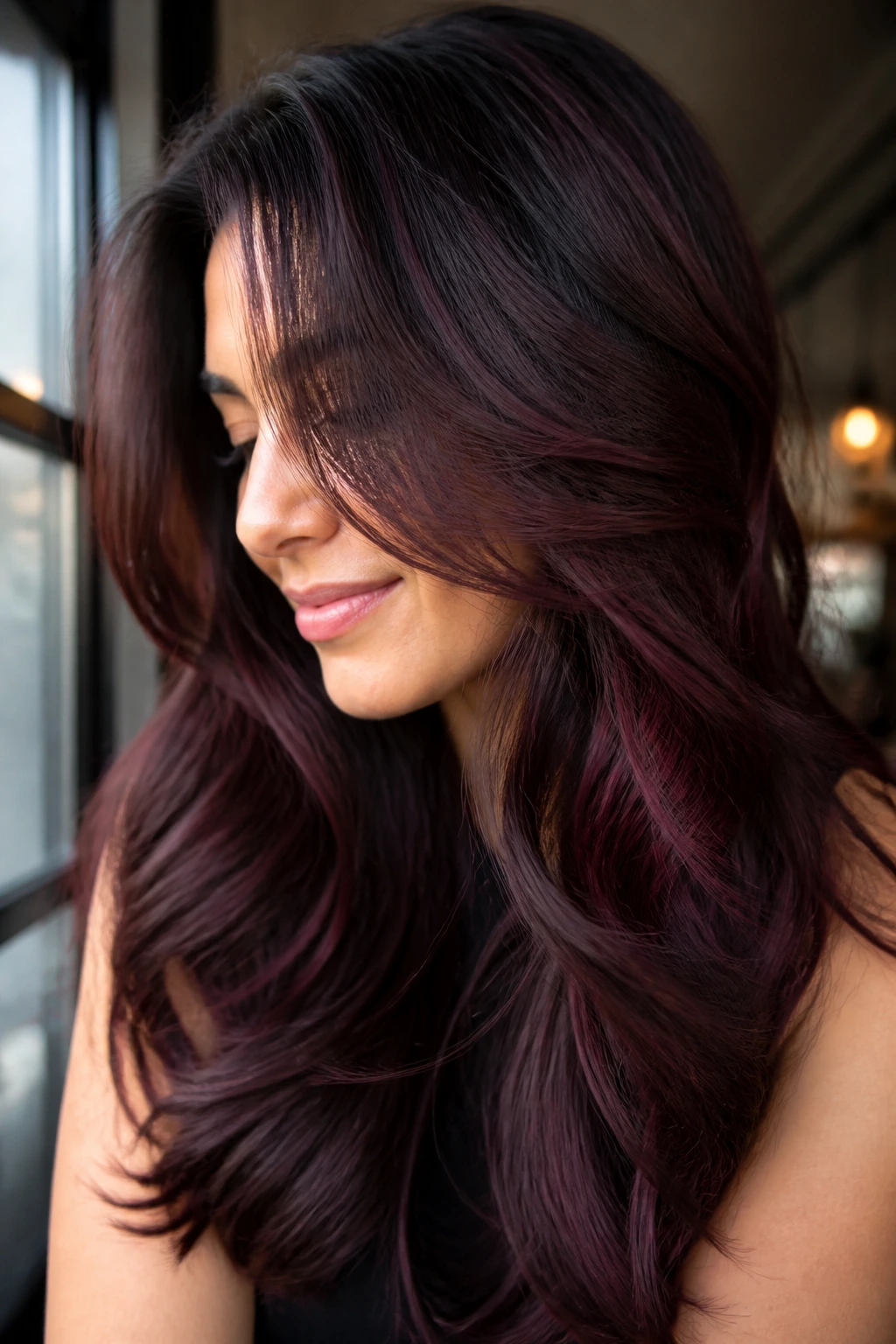
Ask for woven foils or a soft balayage with a few brighter slices around the face. That keeps the result from looking buried under the canopy.
- Best for: dark brown hair that needs warmth without a red-heavy look.
- Best placement: surface layers, part line, and front panels.
- Watch out for: foils hidden only underneath; they vanish fast in thick hair.
Tiny tip: A clear gloss every 4 to 6 weeks keeps cinnamon from turning flat and dusty.
2. Copper Money Piece
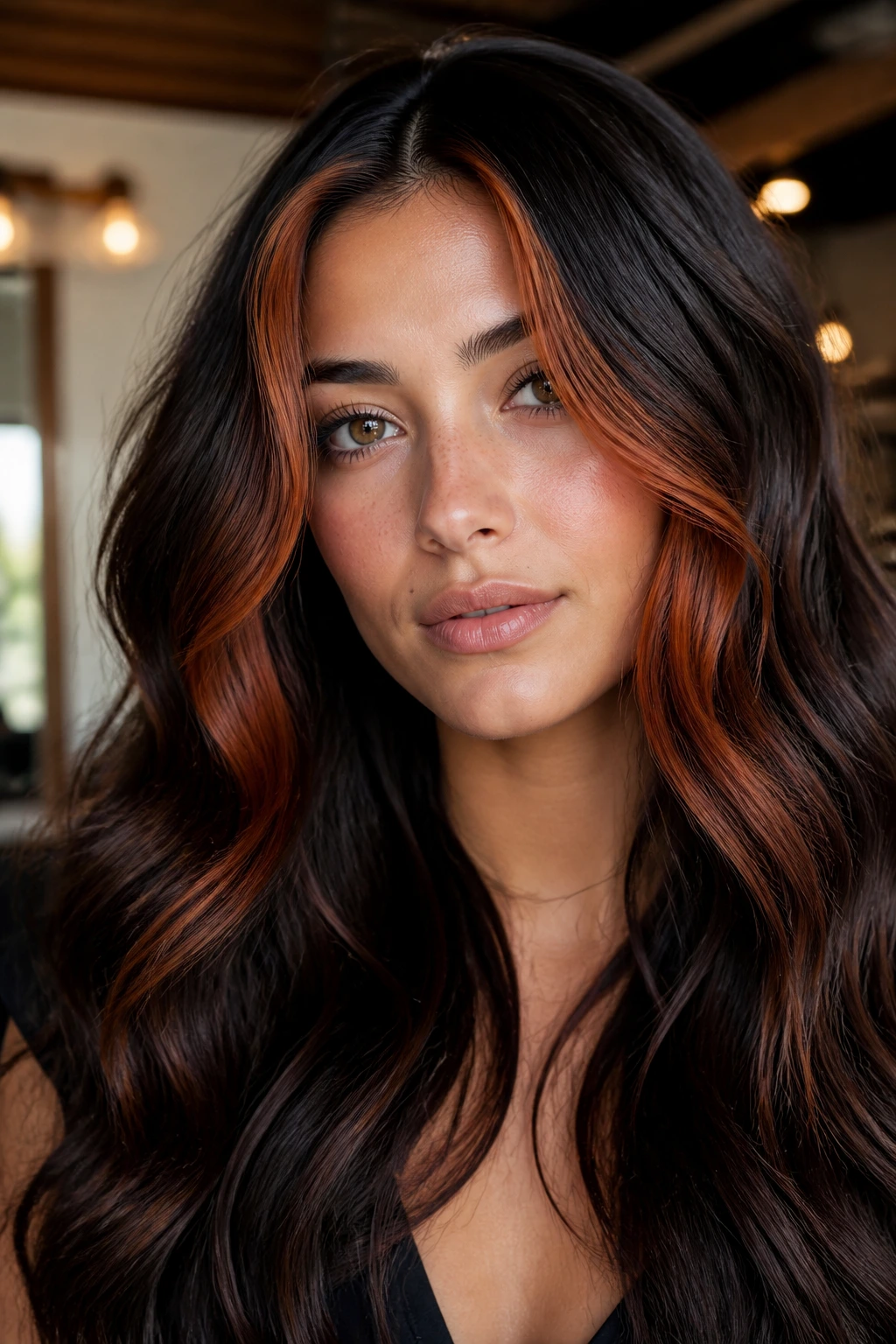
A copper money piece is blunt in the best way. It frames the face, wakes up a dark base fast, and gives thick hair a point of light right where people actually look.
This is the move if you want a visible change without coloring the whole head. On dense hair, the face frame does a lot of work, because it breaks up all that darkness before the eye even gets to the lengths.
It also buys you flexibility. Wear it smooth and it reads polished; wear it with loose bends and the copper flickers harder. That little front section can carry the whole look when the rest stays quieter.
3. Mahogany Balayage
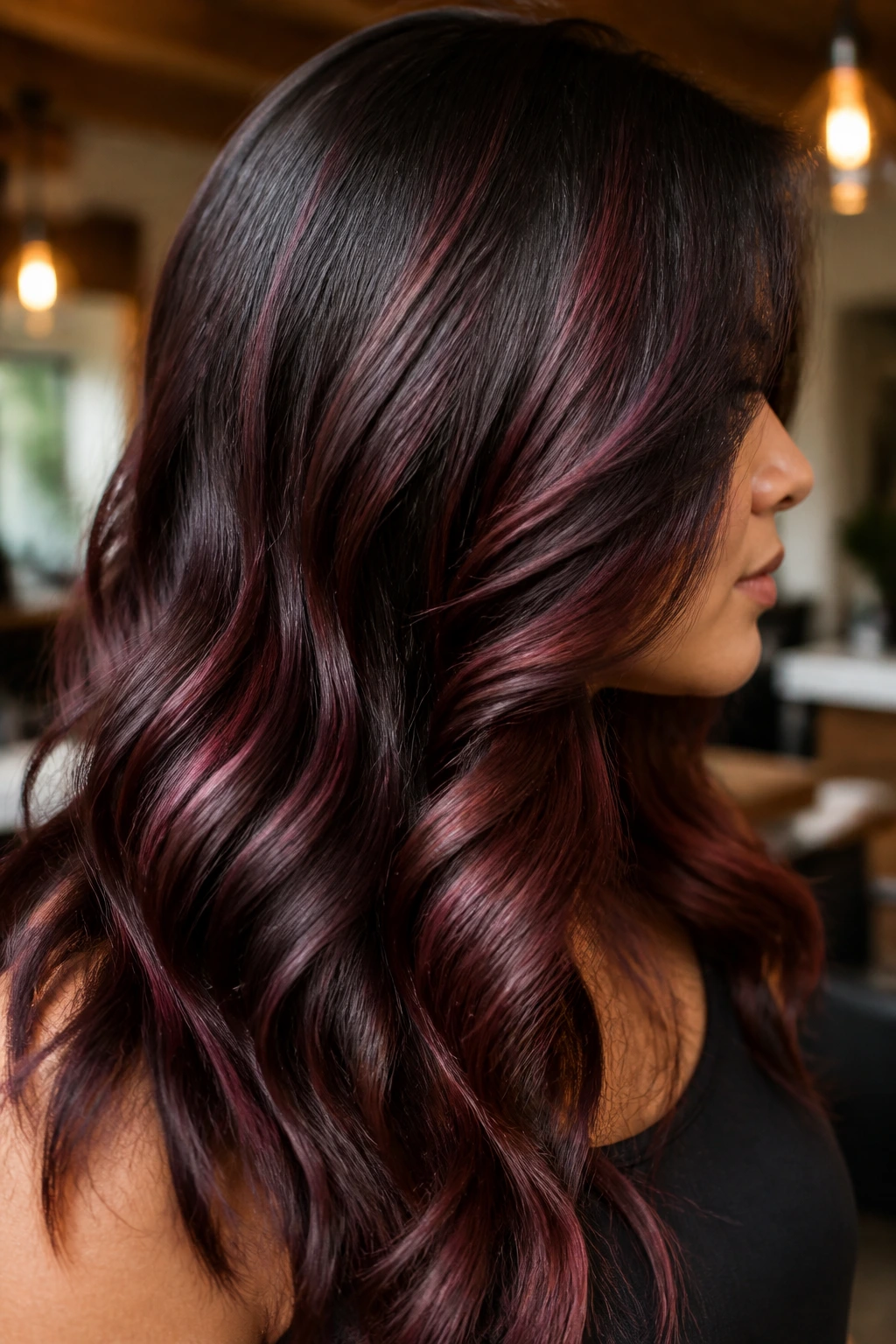
Why does mahogany look richer than bright copper on some dark heads? Because it holds closer to the base color, so the contrast is deeper and less obvious at first glance.
On thick hair, that depth is useful. A mahogany balayage can slide through the mid-lengths and ends without fighting the natural bulk of the hair, and the color still shows because red-brown catches light differently from neutral brown.
How to Use It
Ask for blurred balayage starting below the cheekbone or around the collarbone, then keep the ends one shade lighter than the root area. That gives you dimension without turning the whole head into one flat red tone.
- Works well on very dark brunettes.
- Plays nicely with blunt ends and heavy layers.
- Needs a gloss refresh more than a harsh root touch-up.
4. Peekaboo Auburn Panels
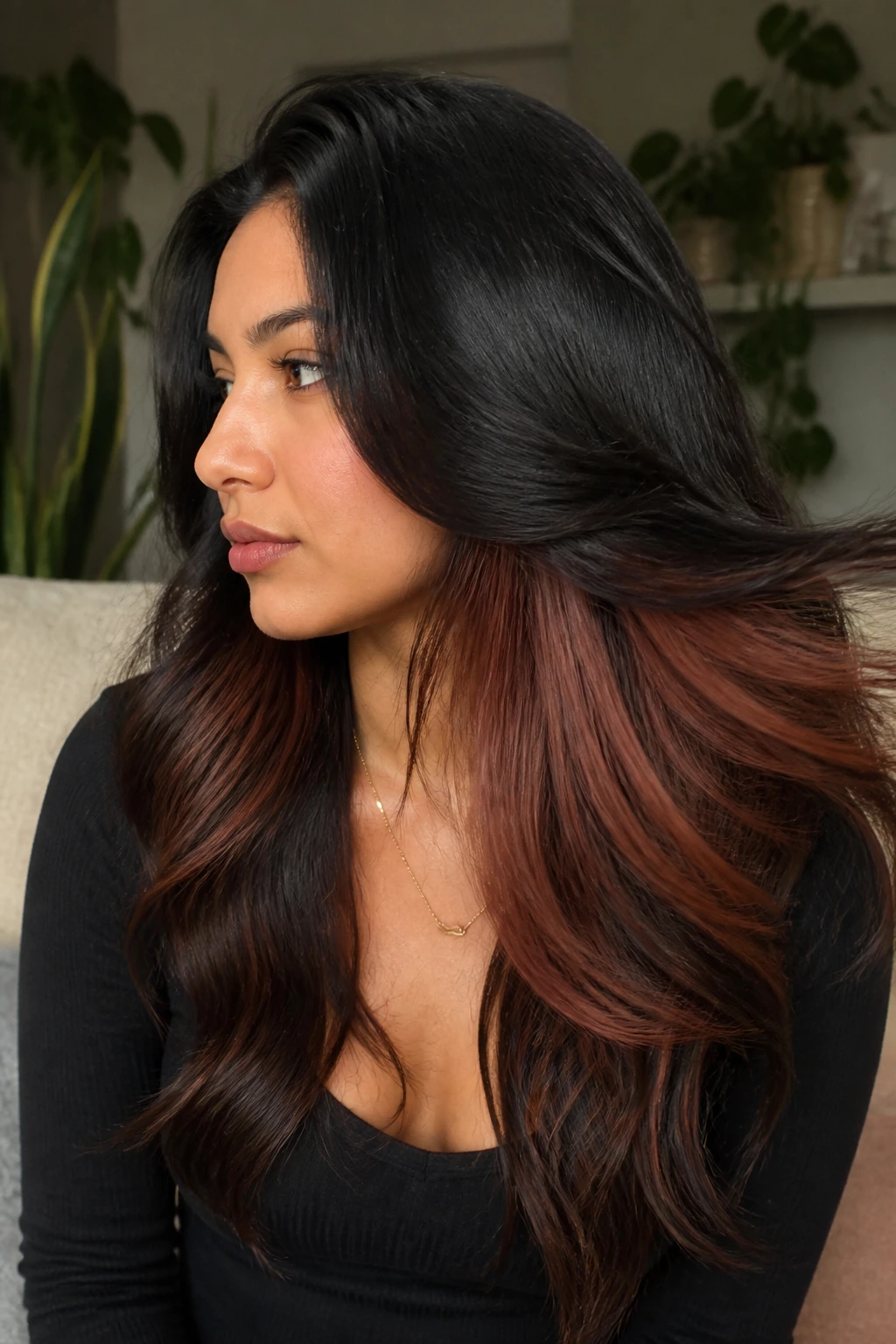
If you tie your hair up a lot, peekaboo auburn is smarter than all-over brightness. The color sits under the surface, so it shows in ponytails, braids, twists, and those accidental half-up looks that happen on busy mornings.
Thick hair is actually a good match here because it gives the hidden panels enough cover to stay dramatic when they’re tucked away. You get that flash of auburn without giving up the depth of the dark base.
This is a nice choice for anyone who likes contrast but doesn’t want the maintenance of a fully bright crown. The trick is making the panels wide enough to be seen when the hair moves. Too narrow, and they disappear.
5. Chestnut-to-Auburn Melt
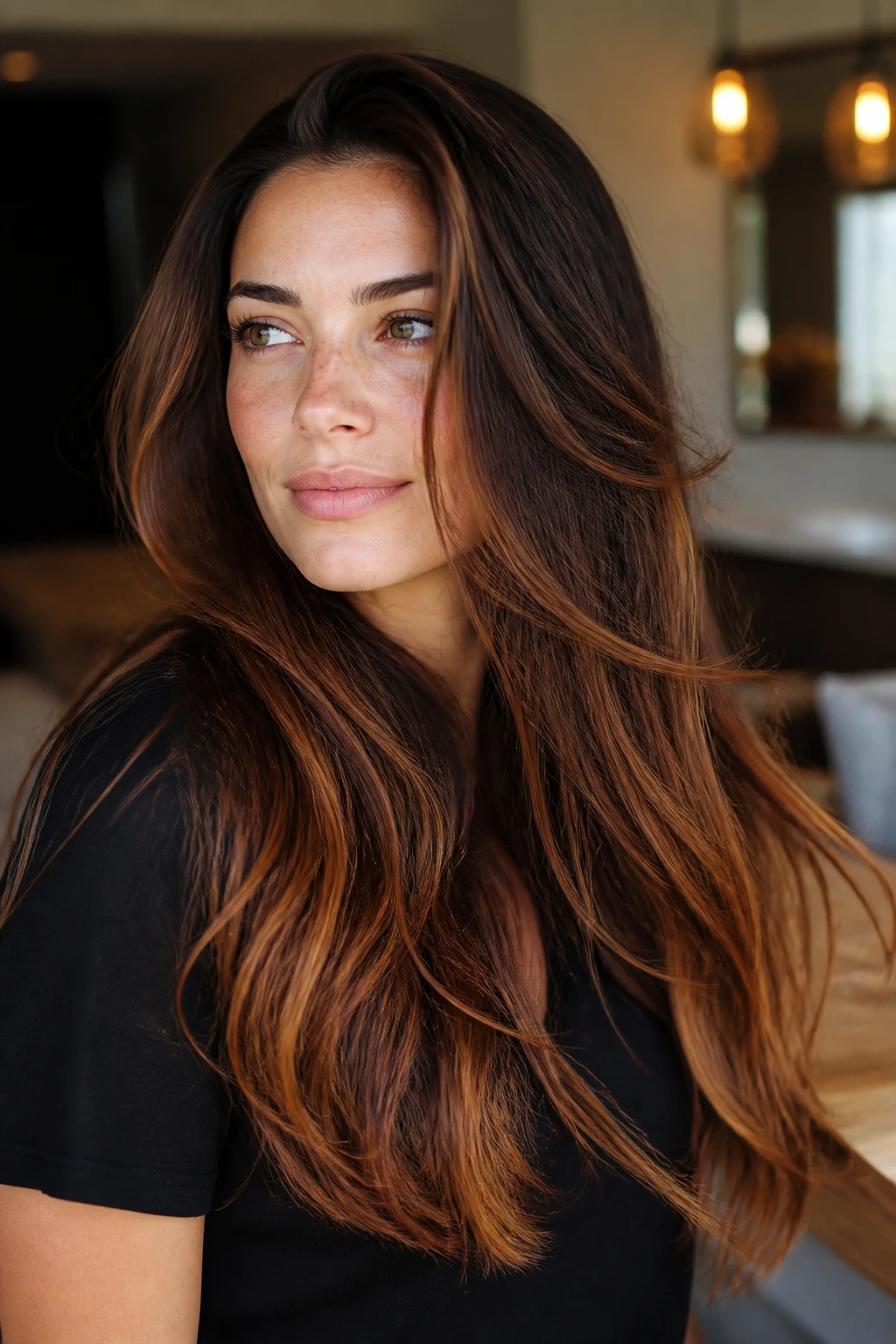
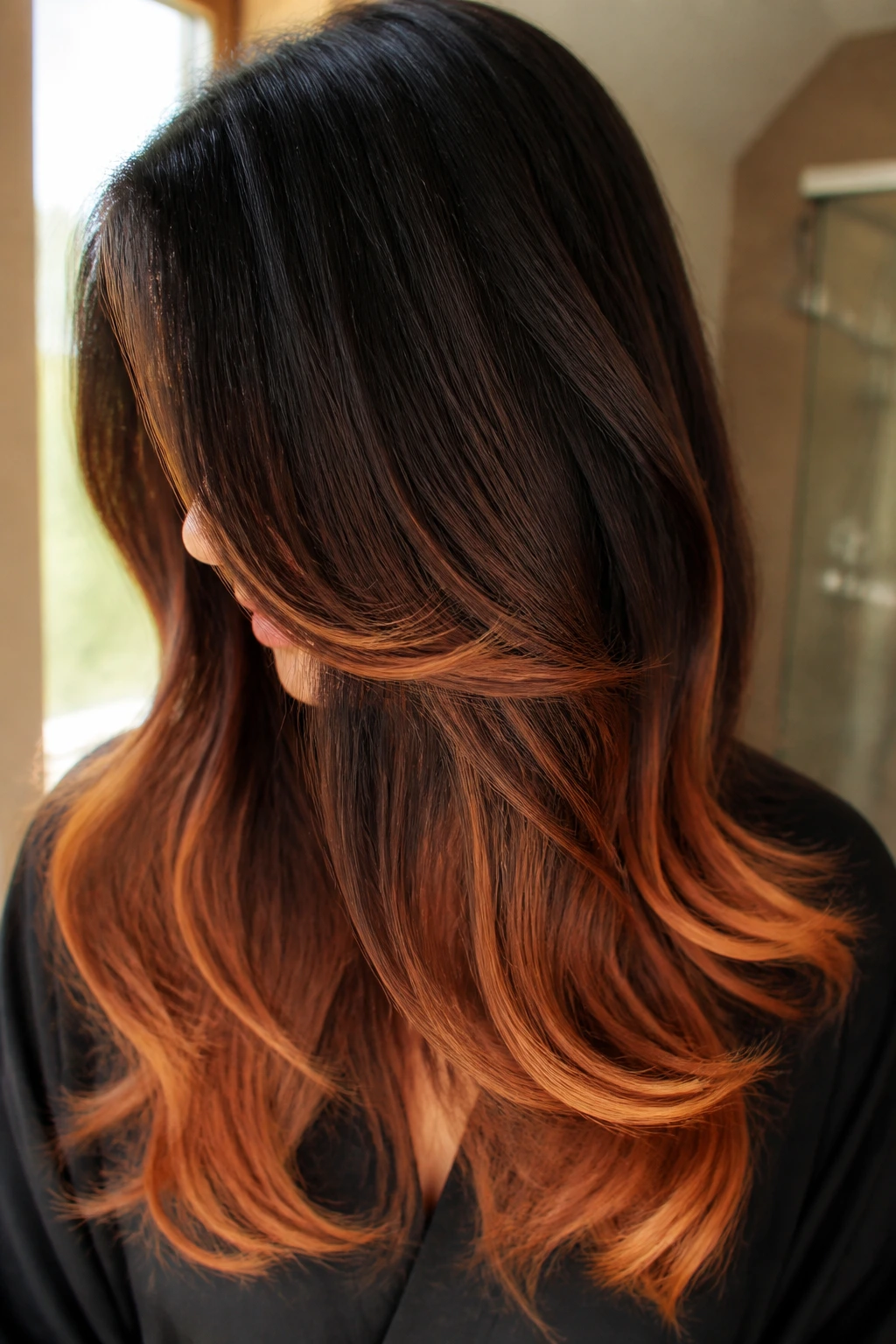
Chestnut-to-auburn melt is the version I reach for when someone wants warmth that looks expensive rather than fiery. The color starts near the natural brunette base, then softens into a red-brown that glows instead of shouting.
On thick hair, that gradient does a lot of heavy lifting. Dense strands can make color blocks look harsh; a melt lets the eye travel through the hair instead of stopping at one hard line.
The best version keeps the root area soft and the ends a touch brighter. If the hair is long, that fade creates a pretty effect in movement, especially when the cut has layers that separate the color.
6. Chunky Ember Ribbons
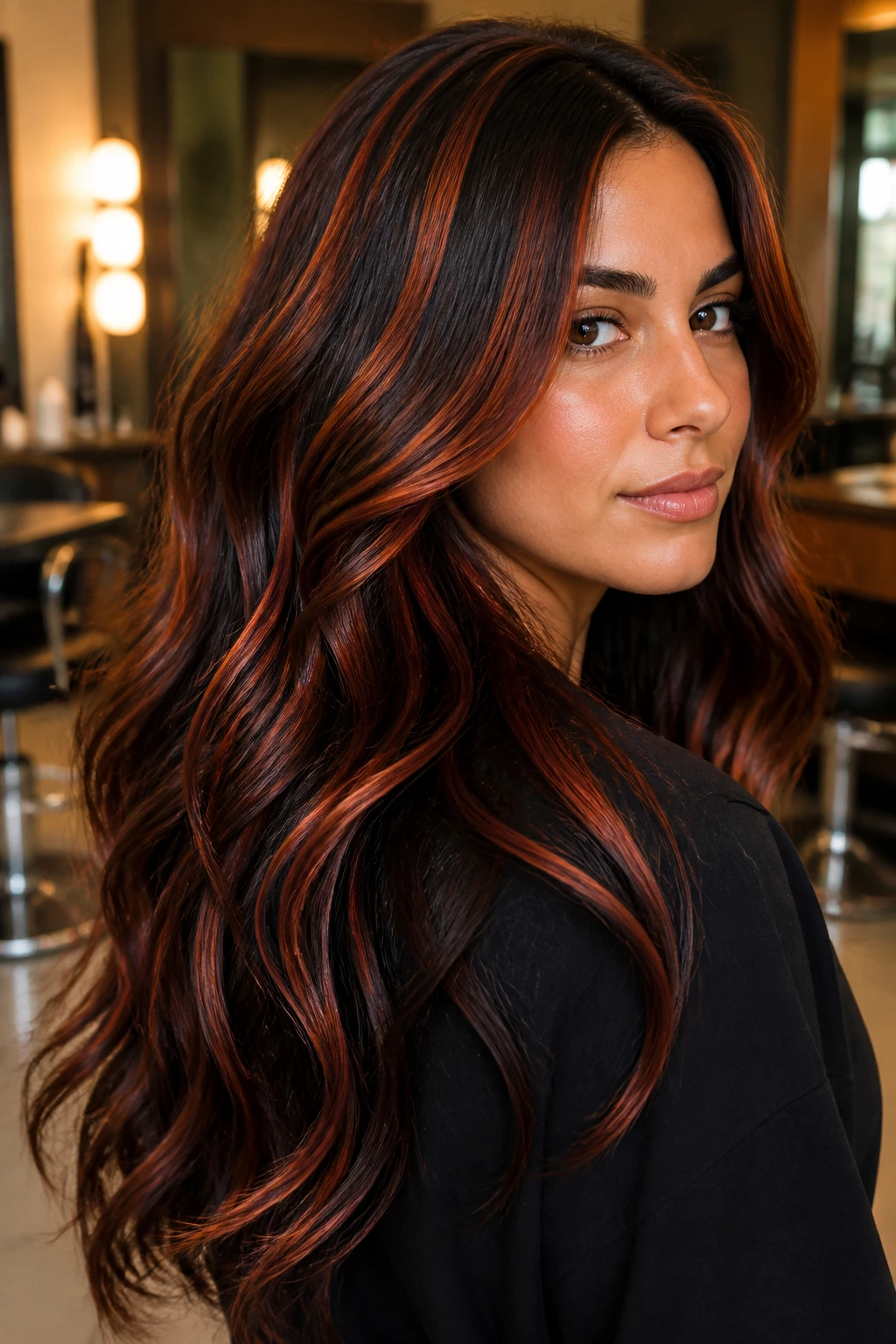
Chunky ember ribbons are for people who think babylights are too shy. Thick hair can carry larger slices of copper-red beautifully, because the density keeps the ribbons from looking scattered or skinny.
Unlike ultra-fine highlights, chunky ribbons show their shape. You see the pattern in the hair. You also see the contrast faster, which matters if your base is dark and you don’t want to lean on heavy bleaching just to make a point.
Best request? A few intentional slices around the face, crown, and upper back sections, with the rest kept softer. That balance keeps the look modern instead of stripy.
7. Auburn Babylights
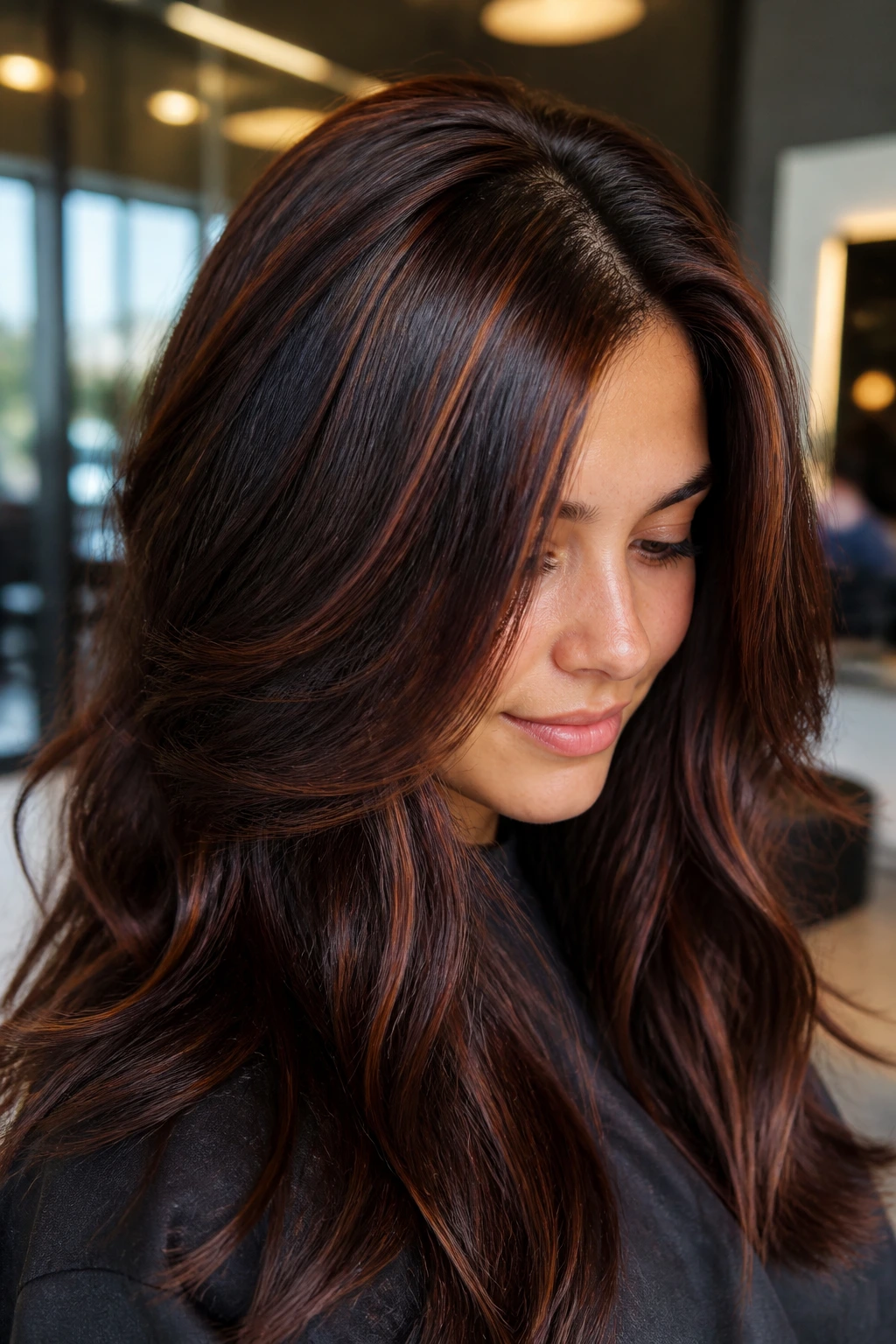
Babylights sound delicate, and they are, but on thick hair they need more presence than people expect. A handful of tiny foils won’t cut it if the hair is dense from root to ends.
The point here is not to be loud. It’s to make the dark base shimmer when the light moves across it. That means packing the babylights closer together on the top layer and around the part line, where they’ll actually be seen.
What Makes Them Different
They’re best for someone who wants auburn to feel like a texture, not a headline. Think soft copper threads, not chunks.
- Best on: thick straight or wavy brunettes.
- Ask for: dense placement on the top half of the head.
- Skip if: you want a very obvious color shift.
8. Caramel-Copper Mix
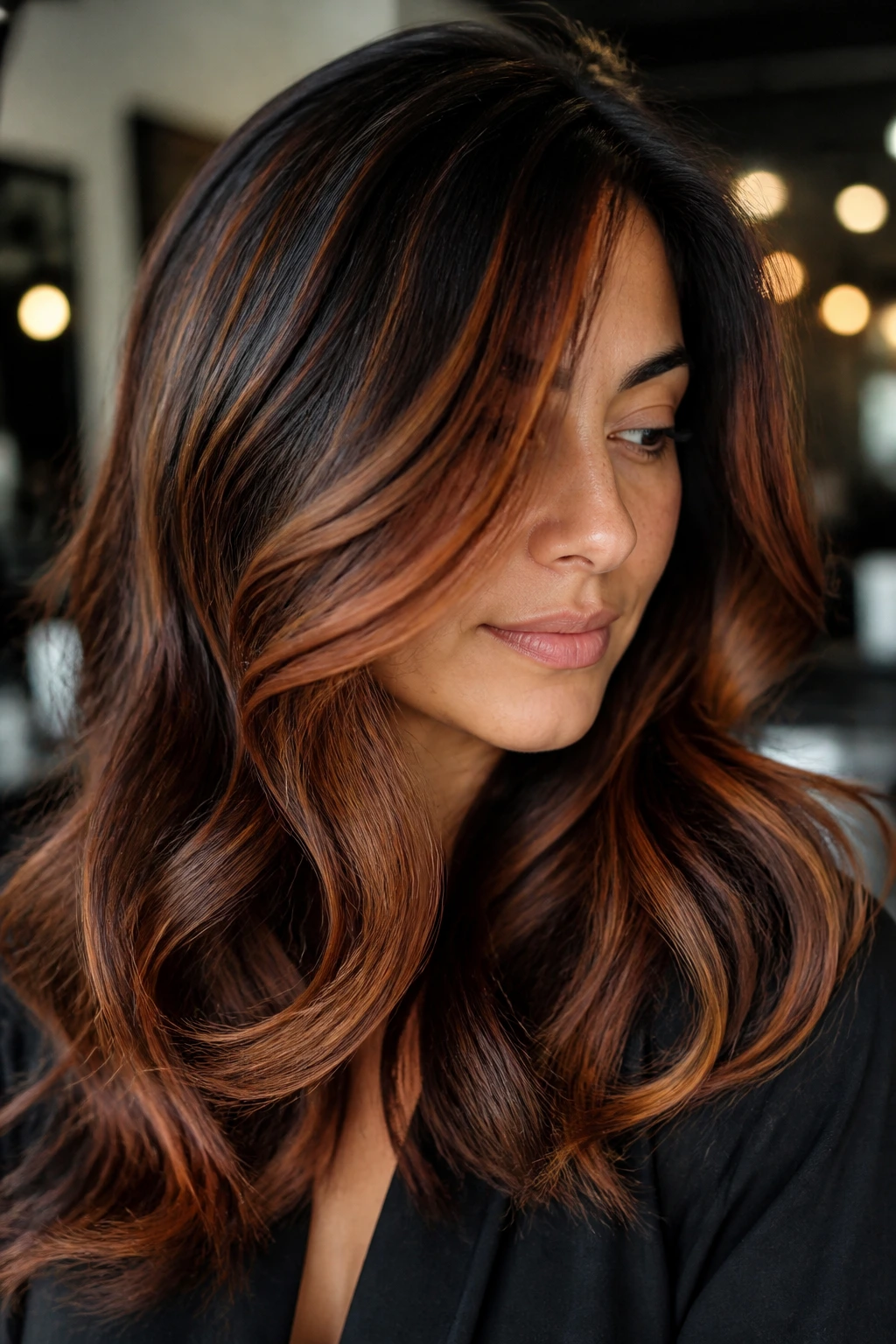
Pure copper can be a little sharp on some dark bases. Mix in caramel and the whole thing softens, which is often the better move when thick hair already brings a lot of visual weight.
This blend works because caramel acts like a bridge between brunette and auburn. The result is warmer than chestnut, but less red than true copper. On a dense cut, that middle ground keeps the color from looking like it’s sitting on top of the hair.
It’s a good match for layered cuts and long bobs, where the mix of tones can break up a lot of hair without making it look busy. The color reads smoother in motion than in a still photo. That’s the real test.
9. Cherry Cola Dimension
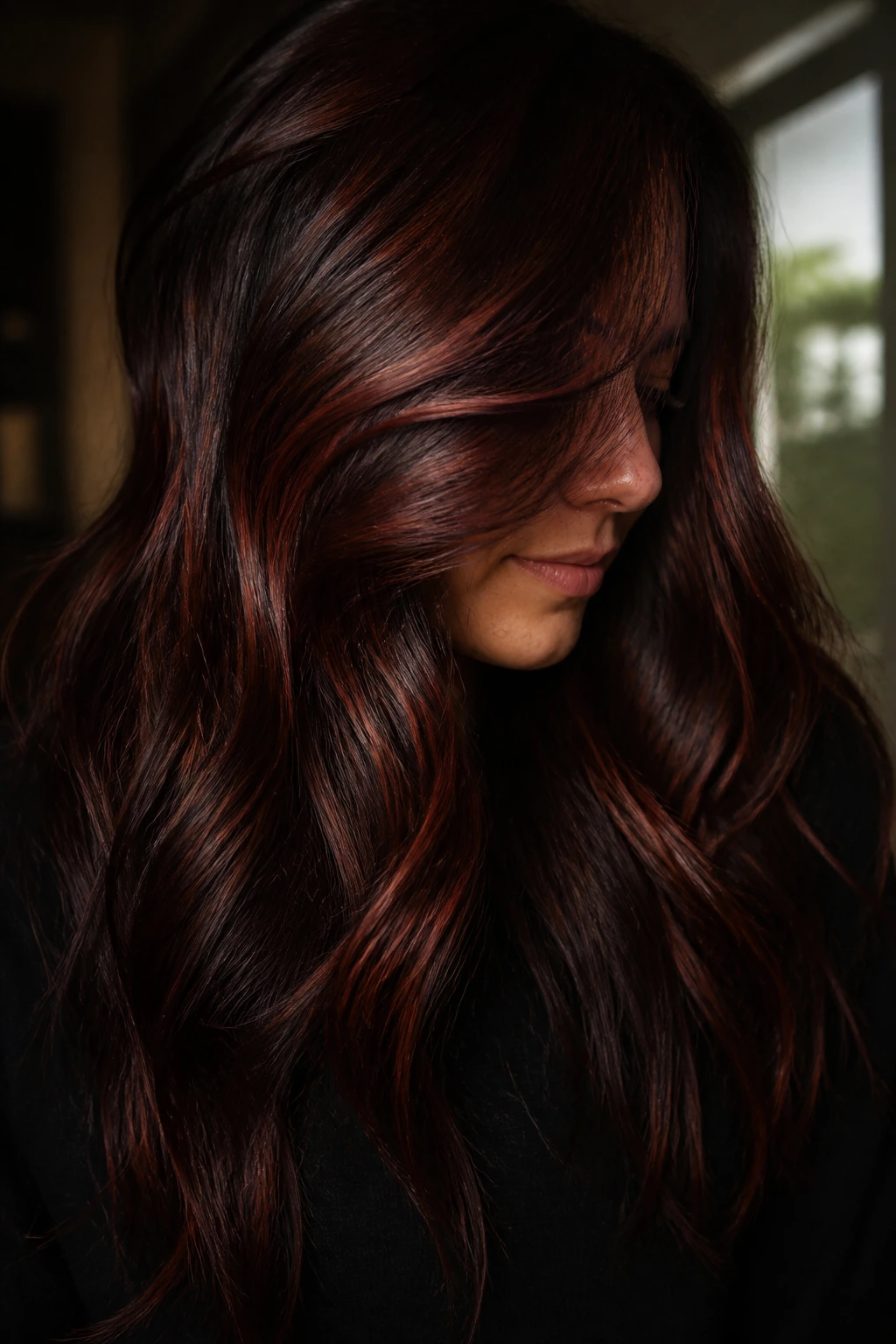
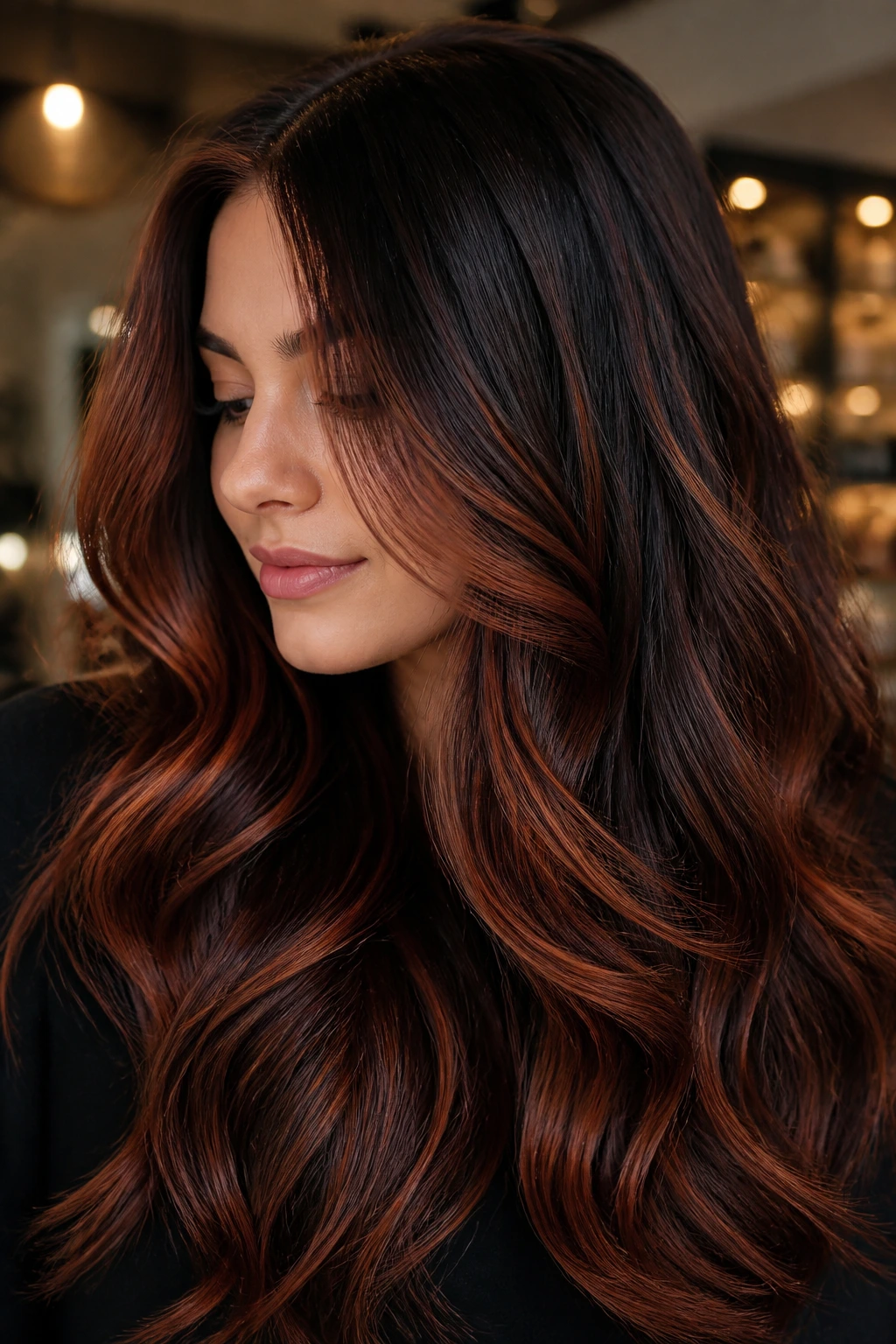
Cherry cola dimension has more depth than most people expect from a red-based look. It leans brown, then pulls wine-red or cherry tones when the light hits it.
Thick dark hair loves this because the darker red tones don’t have to fight the base. They sit inside it. The contrast is there, but it’s moody instead of bright, which is a useful distinction if your skin tone runs cool or neutral.
Ask for a dimensional formula, not a solid red. A few darker lowlights keep the whole head from going flat, and the auburn pieces stand out better when they have something deep to sit against.
10. Cinnamon Gloss Ends
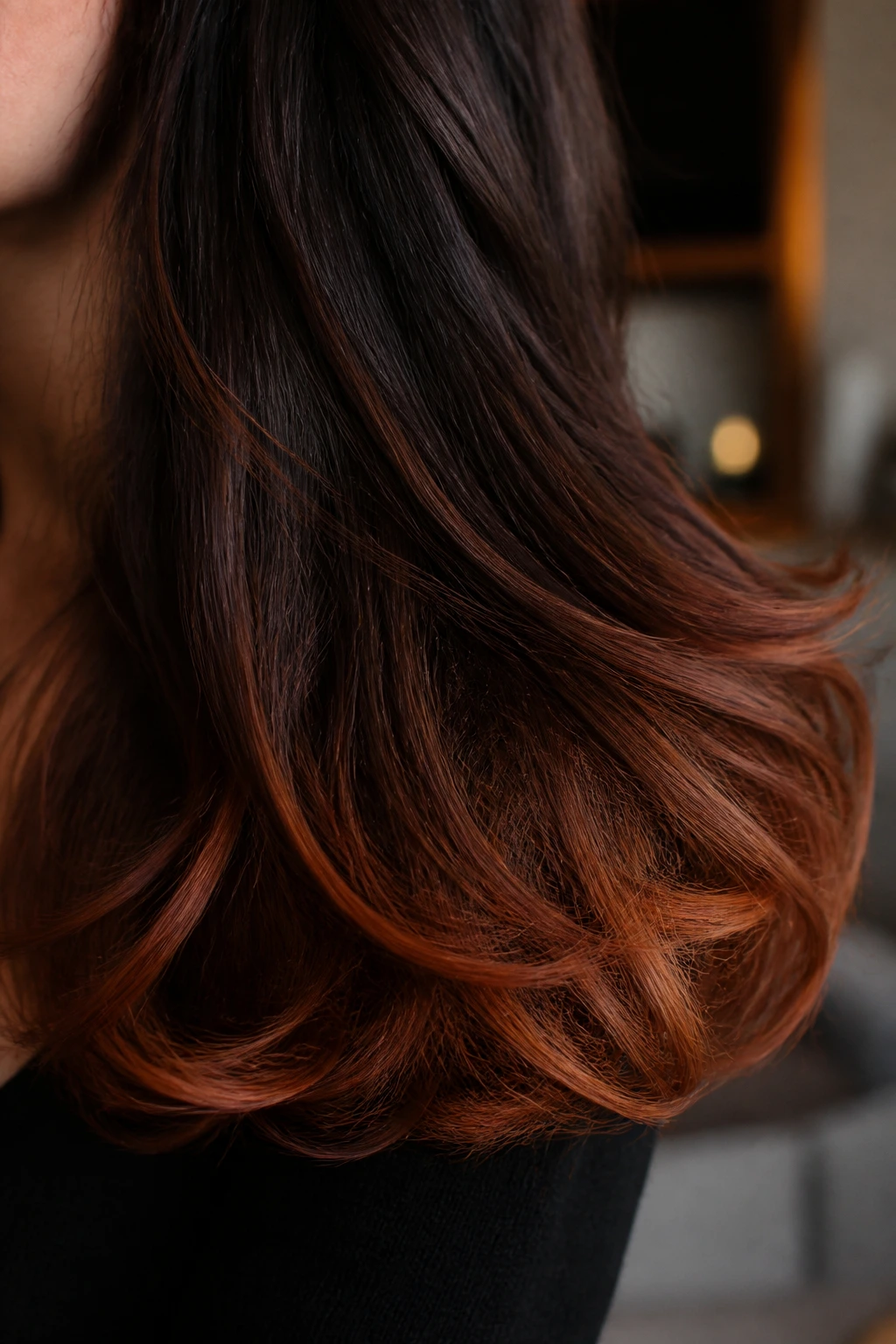
What if you want auburn, but only a little? Cinnamon gloss ends give you the easiest entry point. The warmth stays concentrated on the lower half of the hair, where it catches movement without changing the whole head.
This is a nice pick for thick hair because the ends often look heavy unless they’re broken up with color. A gloss or demi-permanent glaze can add a warm sheen without the maintenance of a full highlight pattern.
It also grows out quietly. That matters more than people admit. Dense hair can make regrowth look chunkier than expected, and a glossed end zone avoids that hard line.
11. Sunlit Copper Layers
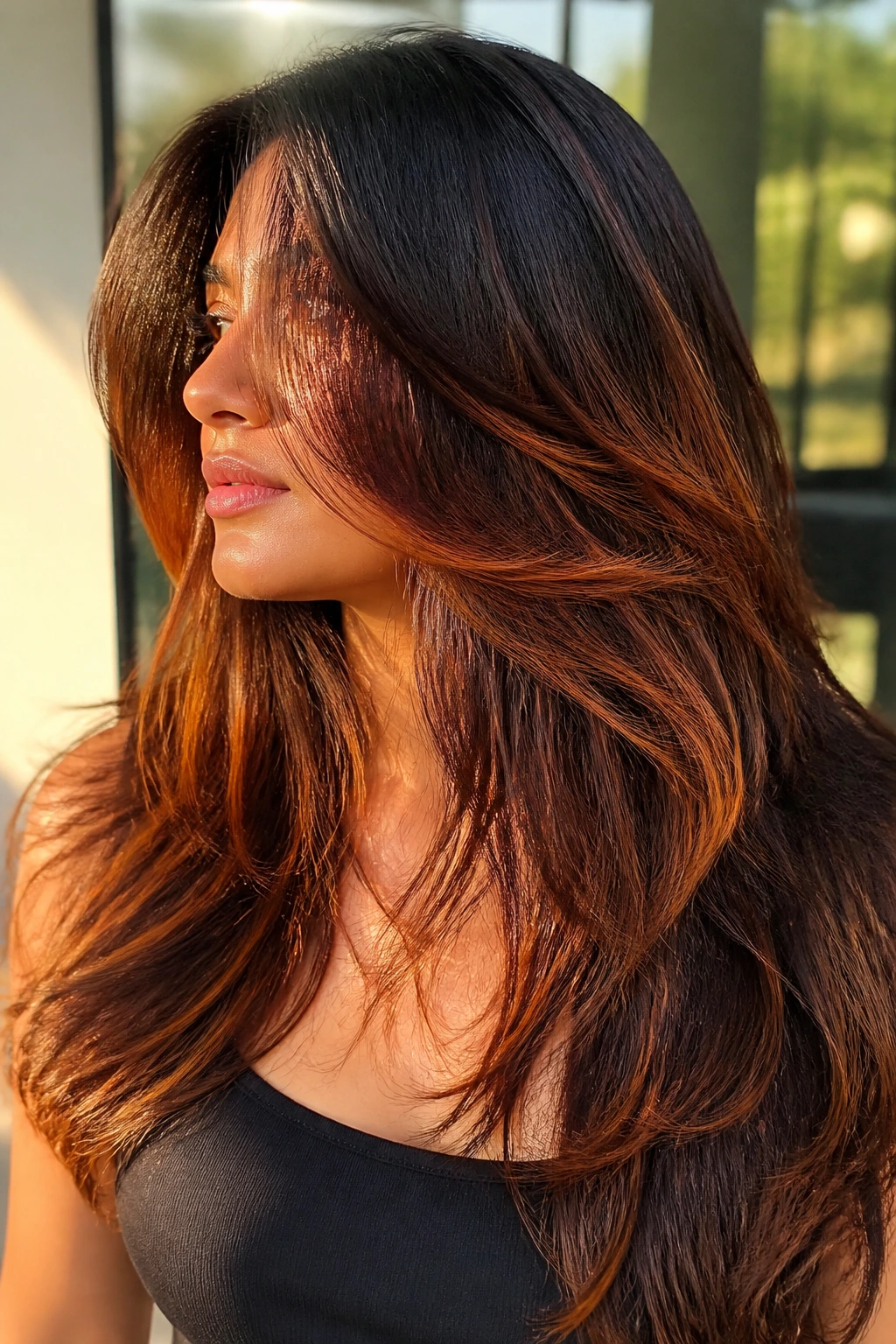
Sunlit copper layers work best when the brightest pieces live where the light naturally lands: top layer, outer curves, and around the shoulders. That’s the whole point. You don’t need brightness buried in the underlayers if no one sees it.
On thick hair, this placement keeps the color from disappearing inside the mass. The outer layer does the showing, while the darker interior keeps the look grounded.
It also makes styling easier. A blowout or loose wave is enough. You don’t need elaborate curling to prove the color exists.
12. Auburn Underlights
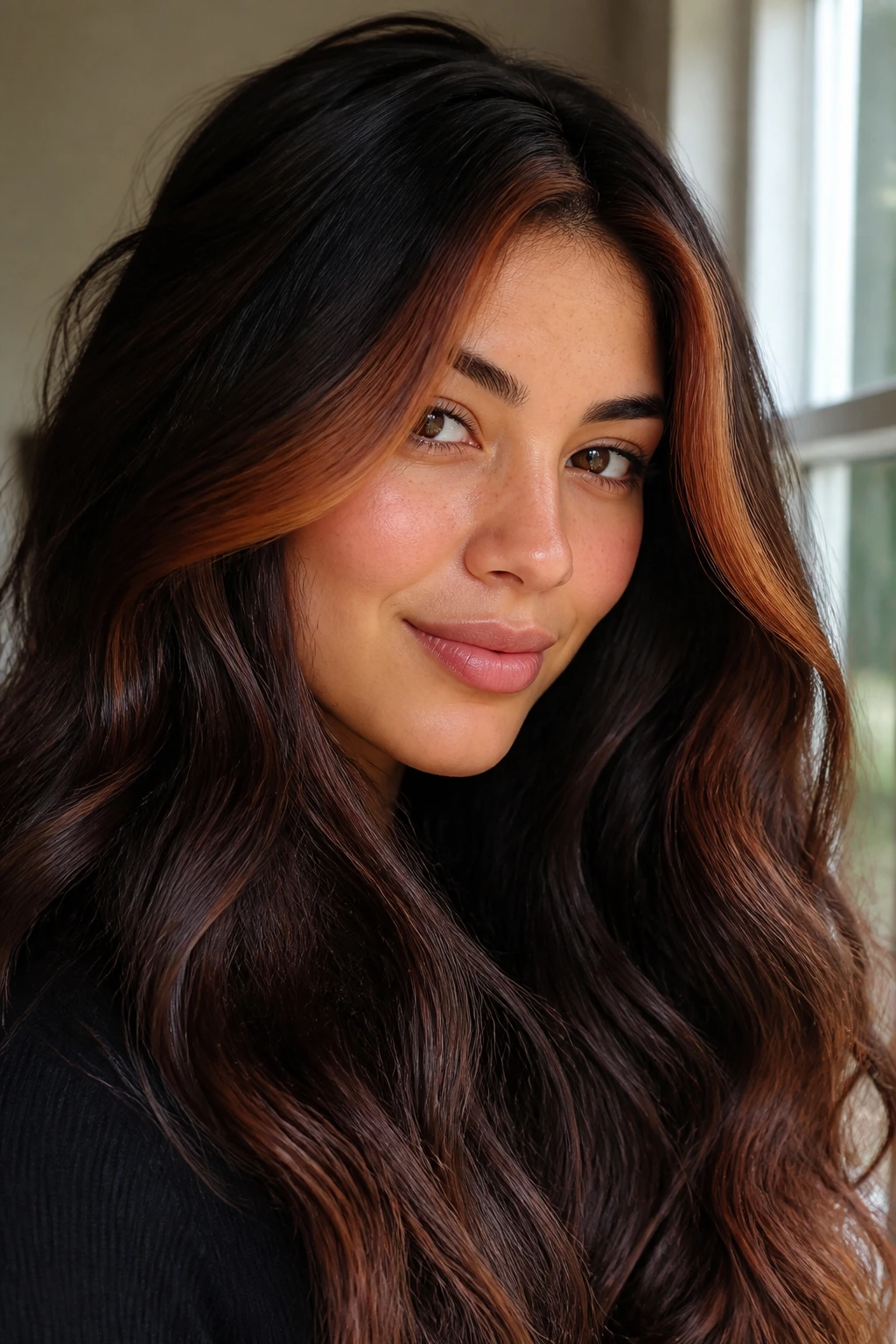
Underlights are the opposite of the obvious money piece. The brighter auburn sits below the top layer, so the hair looks mostly brunette until it shifts, flips, or gets pulled back.
That hidden contrast is especially good for thick hair because the top layer can stay dark and glossy while the auburn creates surprise underneath. It reads a little more editorial than a standard highlight job, but not in a fussy way.
Braids, buns, and half-up styles make this placement fun. You see the color in pieces instead of all at once, which is exactly what gives it depth.
13. Brick Red Panels
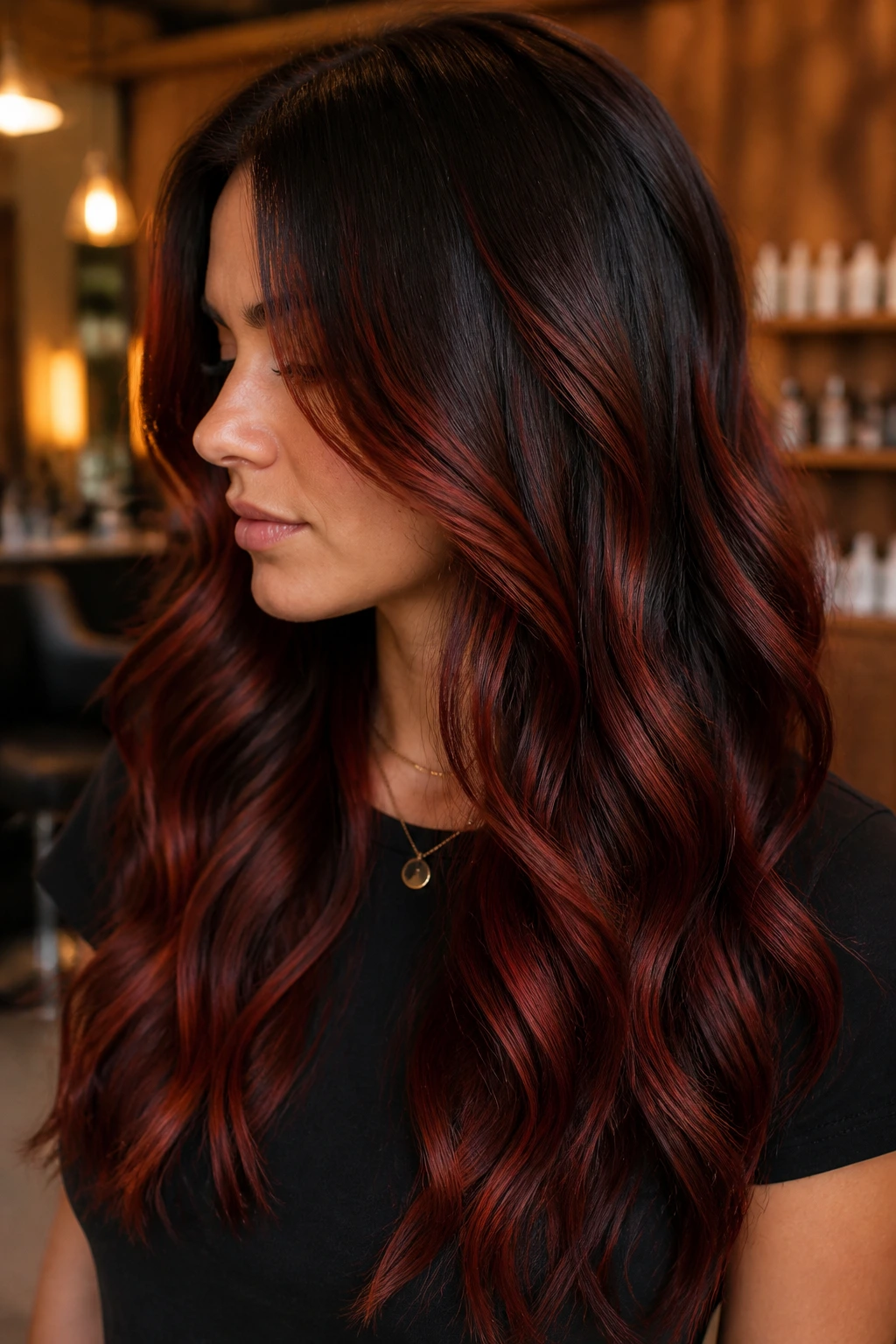
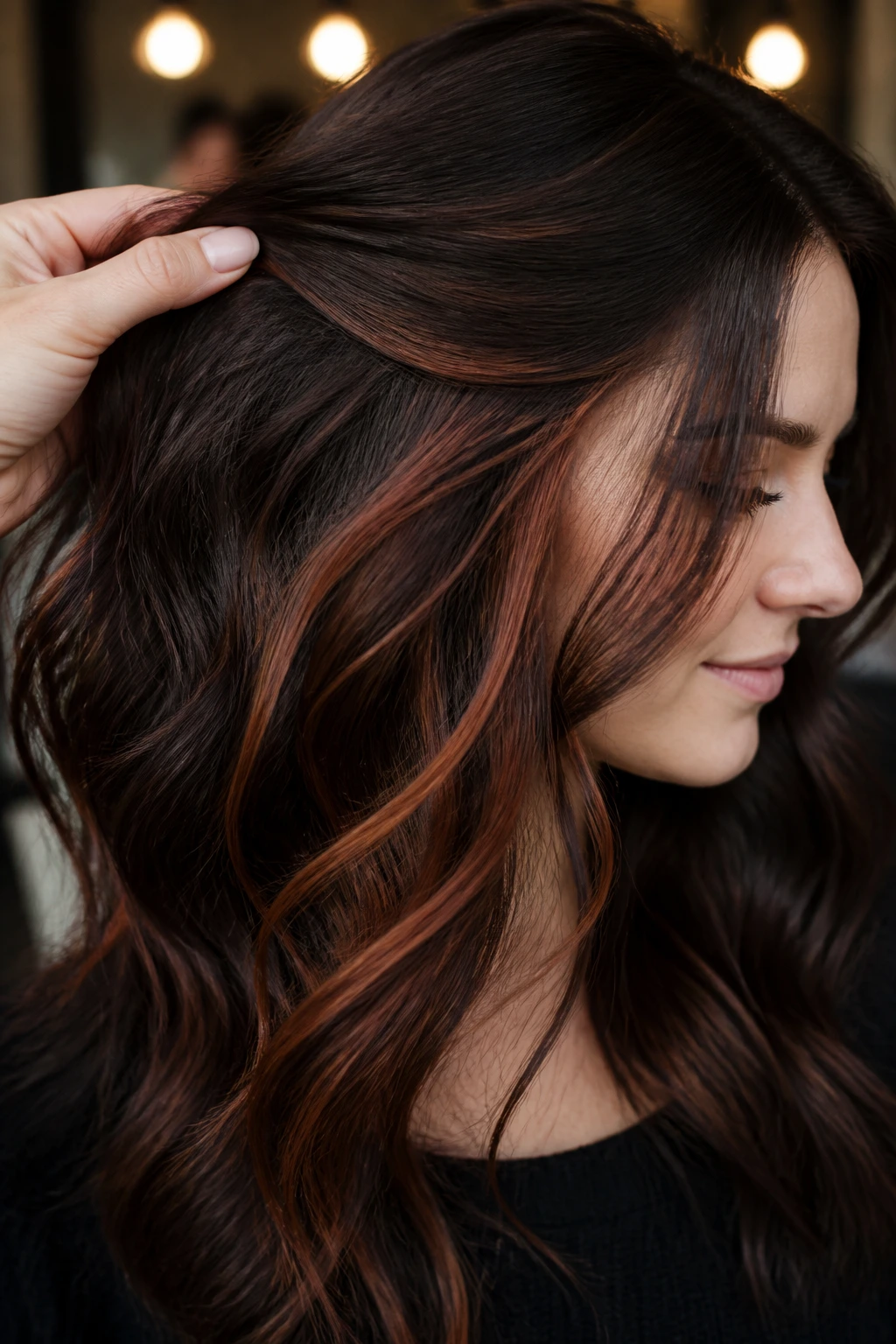
Brick red is for someone who wants the red to be unmistakable. It sits deeper and earthier than copper, with a bit of that baked-clay feel that looks strong against a dark brunette base.
Thick hair handles this well because the density keeps the panels from looking sparse or accidental. A few solid sections through the mid-lengths can add shape to the haircut, especially if the ends are blunt or heavy.
This is not the shy option. It looks best when the colorist leaves enough brunette between the panels so the red has room to breathe.
14. Auburn on Curly Thick Hair
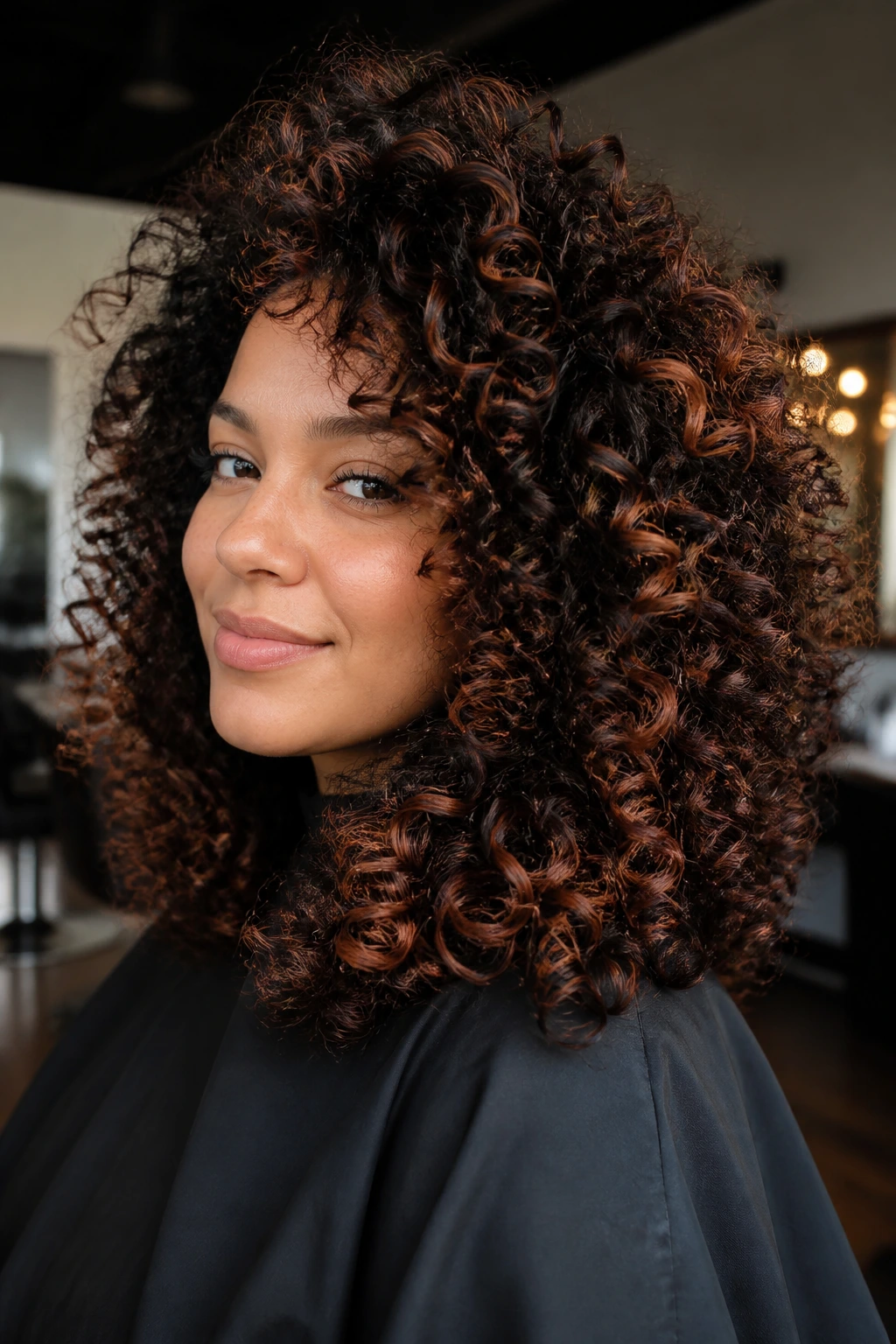
Curly thick hair changes the game again. The curl pattern breaks up color, so auburn highlights need to follow the way the hair coils, not just the way it lies wet in the chair.
That’s why this look works best when the highlights are painted where the curl clumps separate and bend. The red shows up in arcs, which looks far more natural than one straight foil line that disappears once the hair dries.
Placement That Makes Sense
Ask for strategic brightness around the outer curl ring, face frame, and crown. Too much color inside the curl mass gets lost.
A curl-by-curl approach takes longer. Worth it.
15. Sleek Auburn on Straight Hair
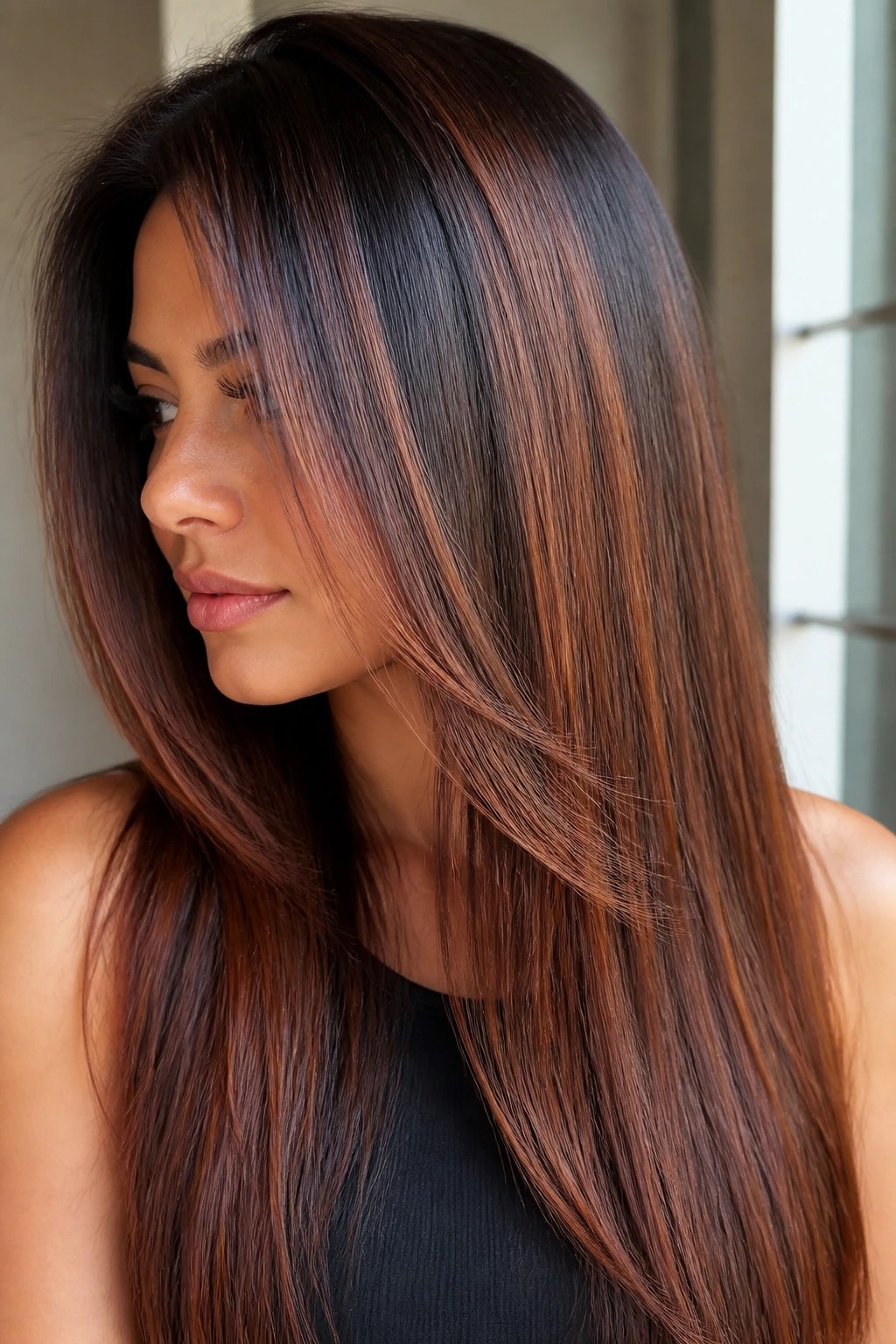
Straight, thick hair can be the hardest canvas for auburn because every line shows. That sounds like a problem, but it’s really a placement problem, not a color problem.
The safest move is diffused highlights with a few bolder slices. If the pieces are too skinny and too regular, the result turns stripey fast. Straight hair reflects light cleanly, so the auburn has to be woven with a little softness.
This version looks best when the cut has movement—long layers, soft ends, or a blunt shape with internal texture. Otherwise the color can sit there like a pattern instead of a finish.
16. Curtain Bang Money Piece
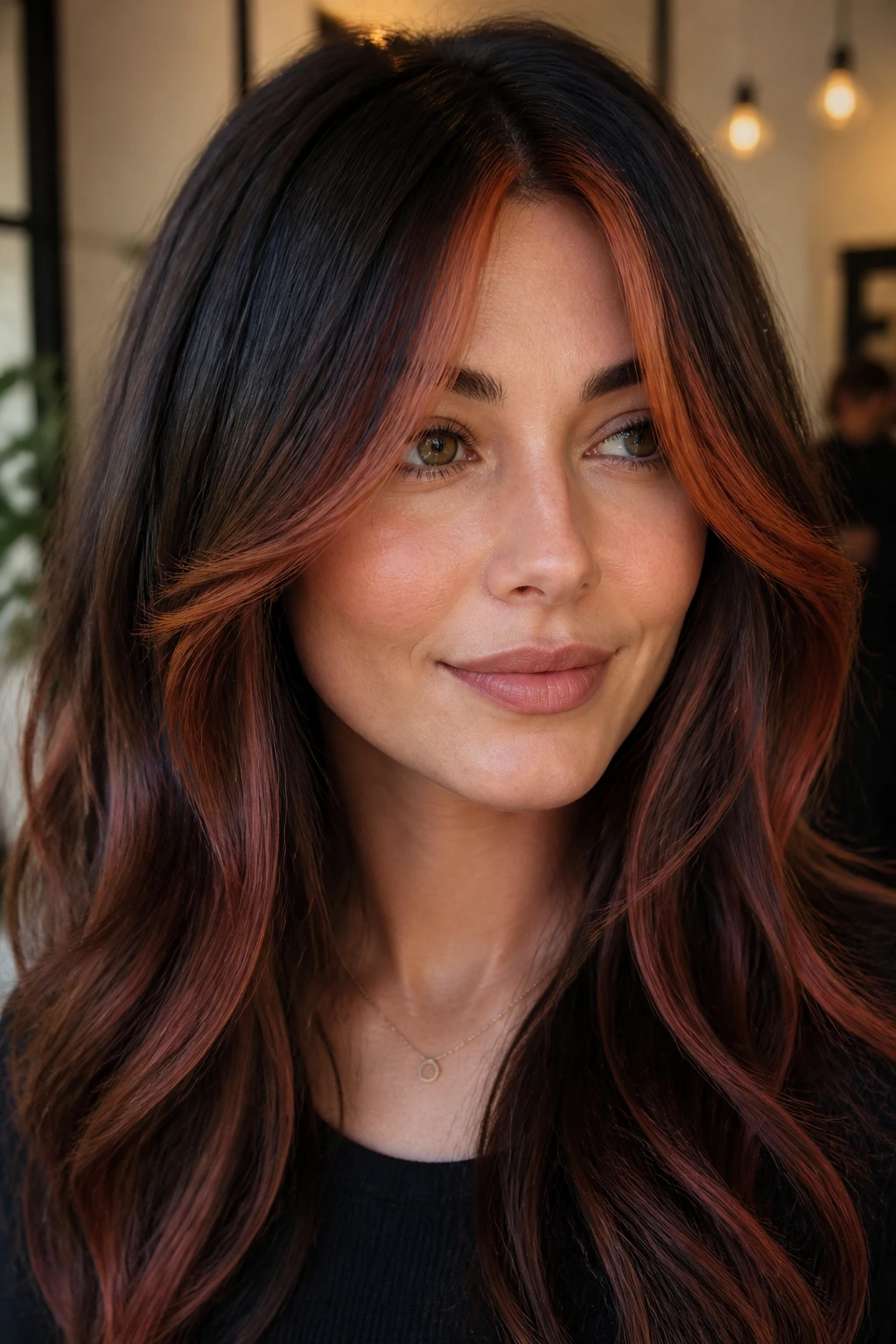
Curtain bangs give auburn highlights a built-in stage. The color around the fringe lifts the whole face, and thick hair gives the bangs enough body to hold the shape.
The money piece should be brighter than the rest, but not neon. A soft copper or cinnamon-red works better than a hard orange because it blends into the length when the bangs fall away from the face.
This is one of the easiest ways to make a darker head of hair feel lighter without changing the entire perimeter. It’s quick, visible, and forgiving when it grows.
17. Mid-Length Auburn Balayage
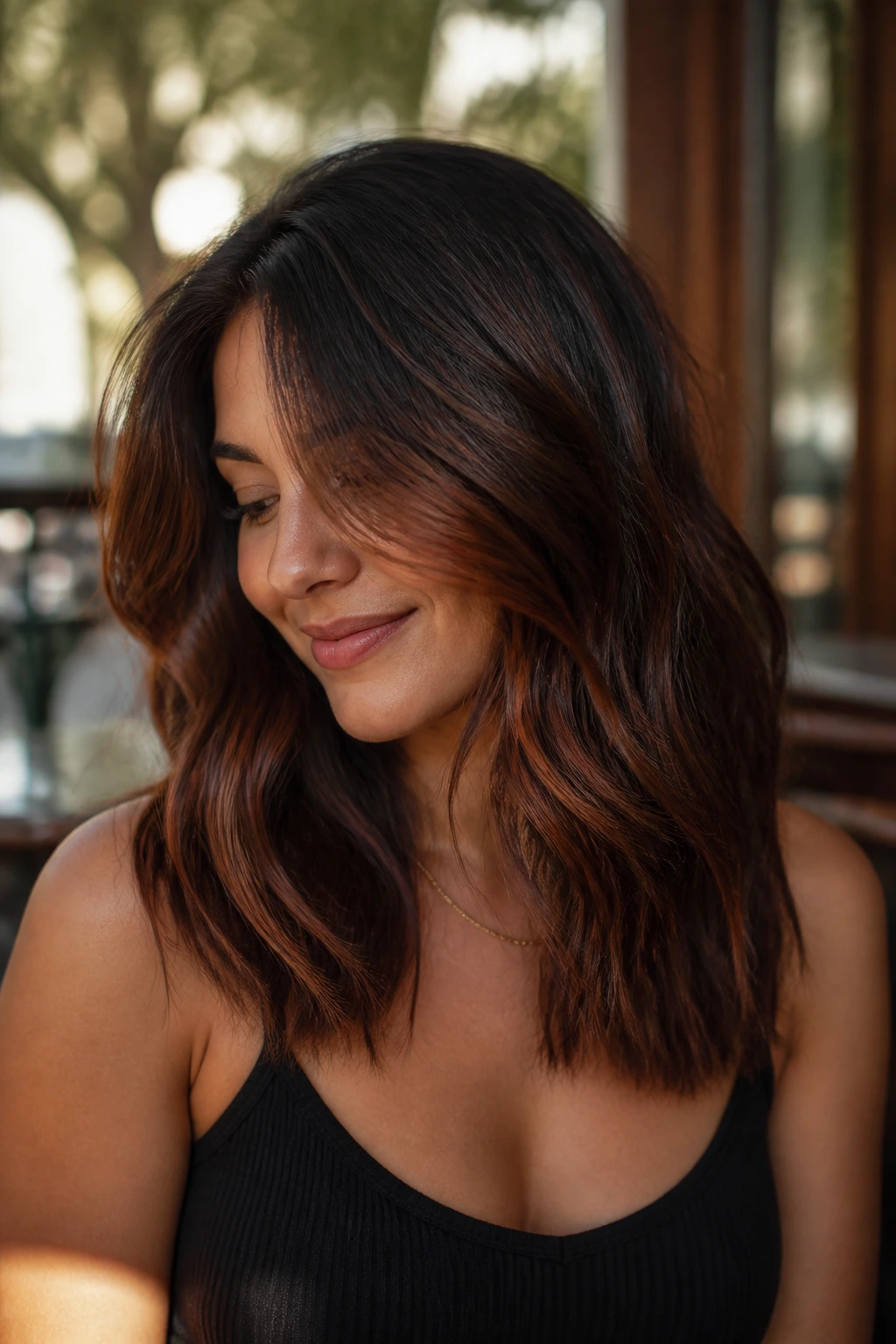
Mid-length balayage is the sensible choice when you want dimension without overworking the roots. The color starts a little below the scalp, which keeps maintenance sane and gives thick hair a softer silhouette.
Because the highlight begins lower, the length becomes the focus. That’s useful on dense hair, where the root area can already feel heavy. Auburn through the mid-lengths pulls the eye down and makes the cut look more fluid.
If you wear your hair down most days, this placement reads especially well in motion. It’s a quiet color job until the hair swings, which is part of its appeal.
18. Crown Lights at the Part
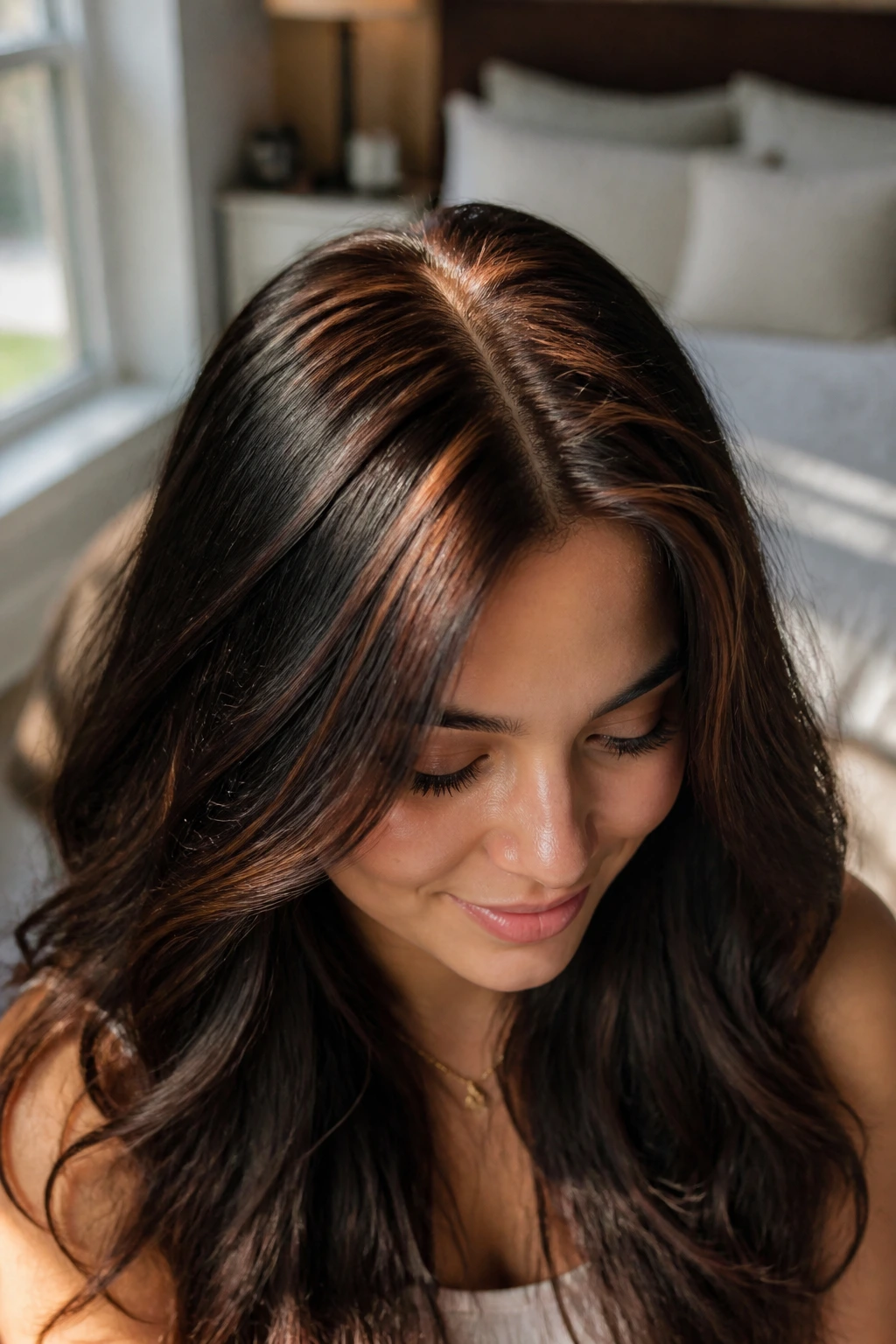
The part line gets more sun than people realize, and that makes it a smart place to concentrate auburn brightness. Thin streaks or a few strategic foils at the crown can wake up the entire head.
On thick hair, this is one of the few places where fine detail actually shows. The top layer is visible from every angle, so even small color changes make a difference there.
It’s a good maintenance-friendly option too. You can refresh the crown without touching the full length, which saves time and keeps the darker underneath layers intact.
19. Smoky Auburn Lowlights
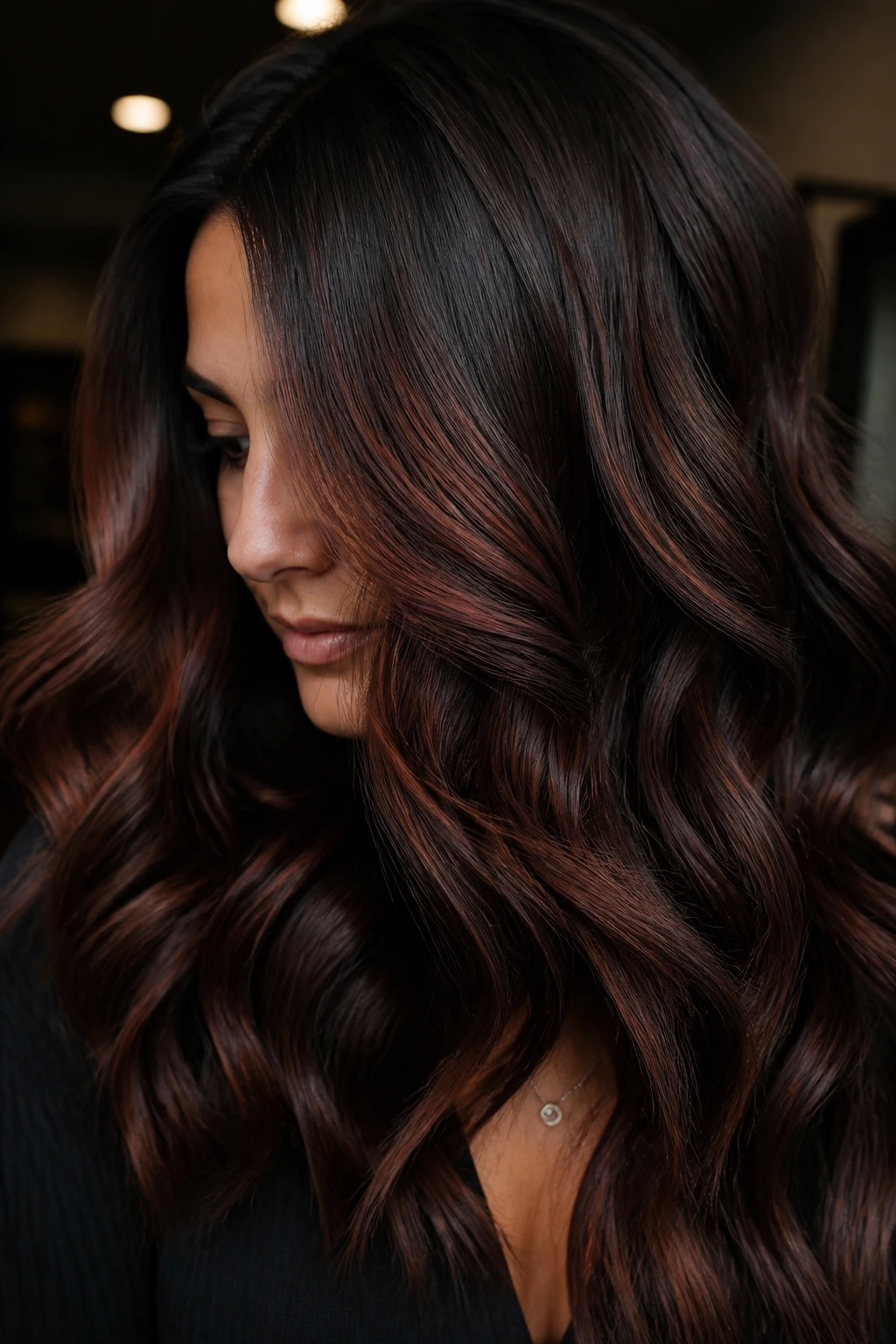
Auburn highlights get more interesting when you add lowlights. Smoky lowlights deepen the base and make the warmer pieces stand out without looking cartoonish.
This is especially helpful on thick hair that has started to look one-note. A few darker ribbons through the interior create depth, and the auburn then reads richer because it has a shadow to sit against.
Why It’s Worth Asking For
It’s not about making the hair darker for no reason. It’s about giving the light pieces contrast so they don’t blur into the brunette base.
- Great if your hair tends to puff visually.
- Good for keeping red tones from looking too bright.
- Helpful when you want dimension that survives air-drying.
20. Wine-Toned Auburn Accents
Can auburn go cooler? Absolutely. Wine-toned accents lean toward burgundy and merlot, and they’re a smart pick if bright copper feels off against your skin or wardrobe.
On dark thick hair, wine tones look elegant in a slightly heavier way. The color is still warm enough to read as auburn-adjacent, but the deeper red keeps the whole look grounded.
I like this version on long, layered hair because the pieces catch in the bends of the cut. It’s a quieter kind of drama. Less spark, more depth.
21. Firelight Copper Ends
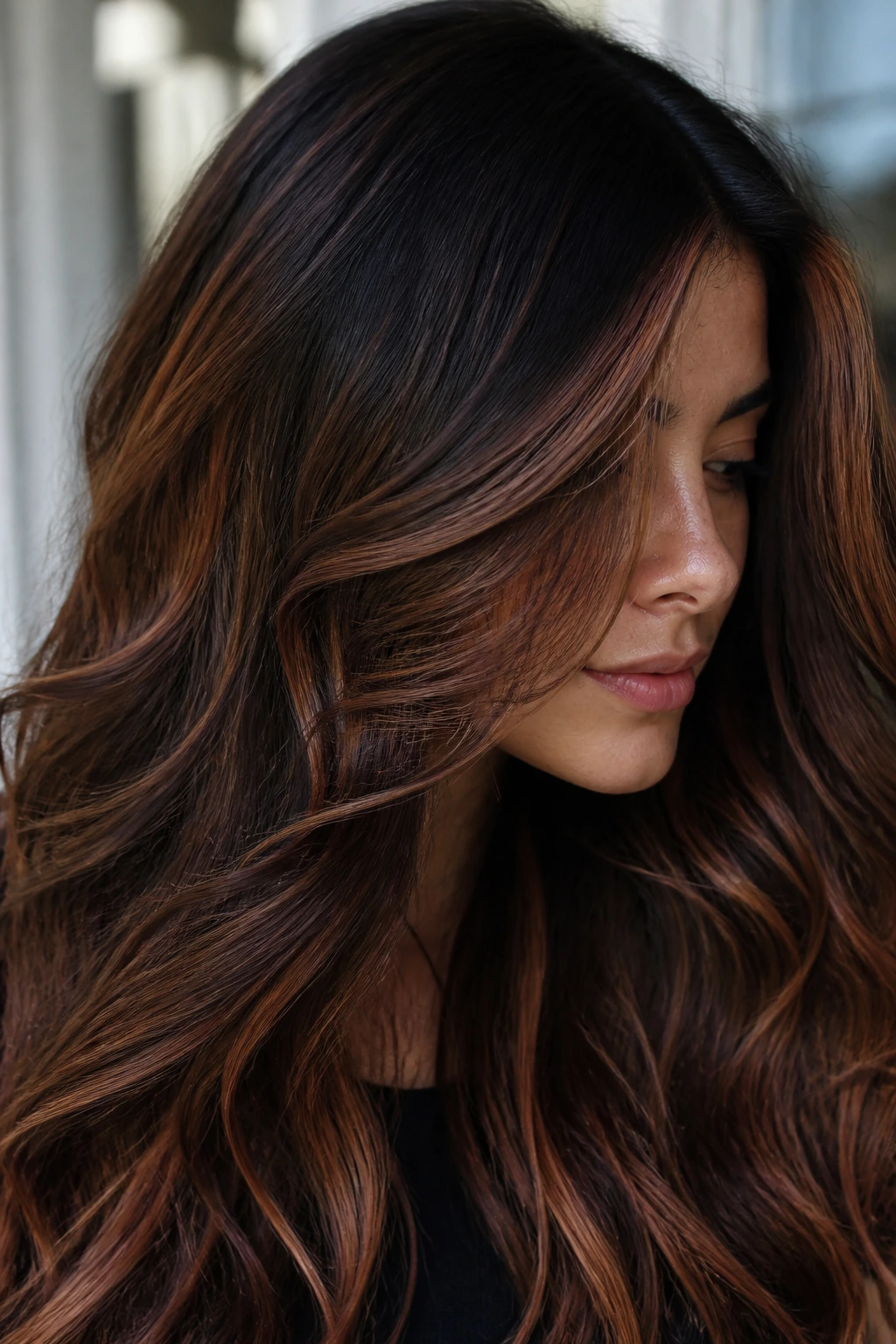
Firelight copper ends are all about the last few inches of the hair. That makes them a good fit for thick lengths that need a little lift without changing the roots or crown.
The ends are where damage and dullness usually show first anyway, so a bright copper finish can disguise heaviness and make the whole cut feel cleaner. Done right, the color looks like it’s glowing from the bottom up.
This version needs healthy ends. If they’re frayed, the light copper will make that obvious. Trim first, color second.
22. Soft Auburn Veil
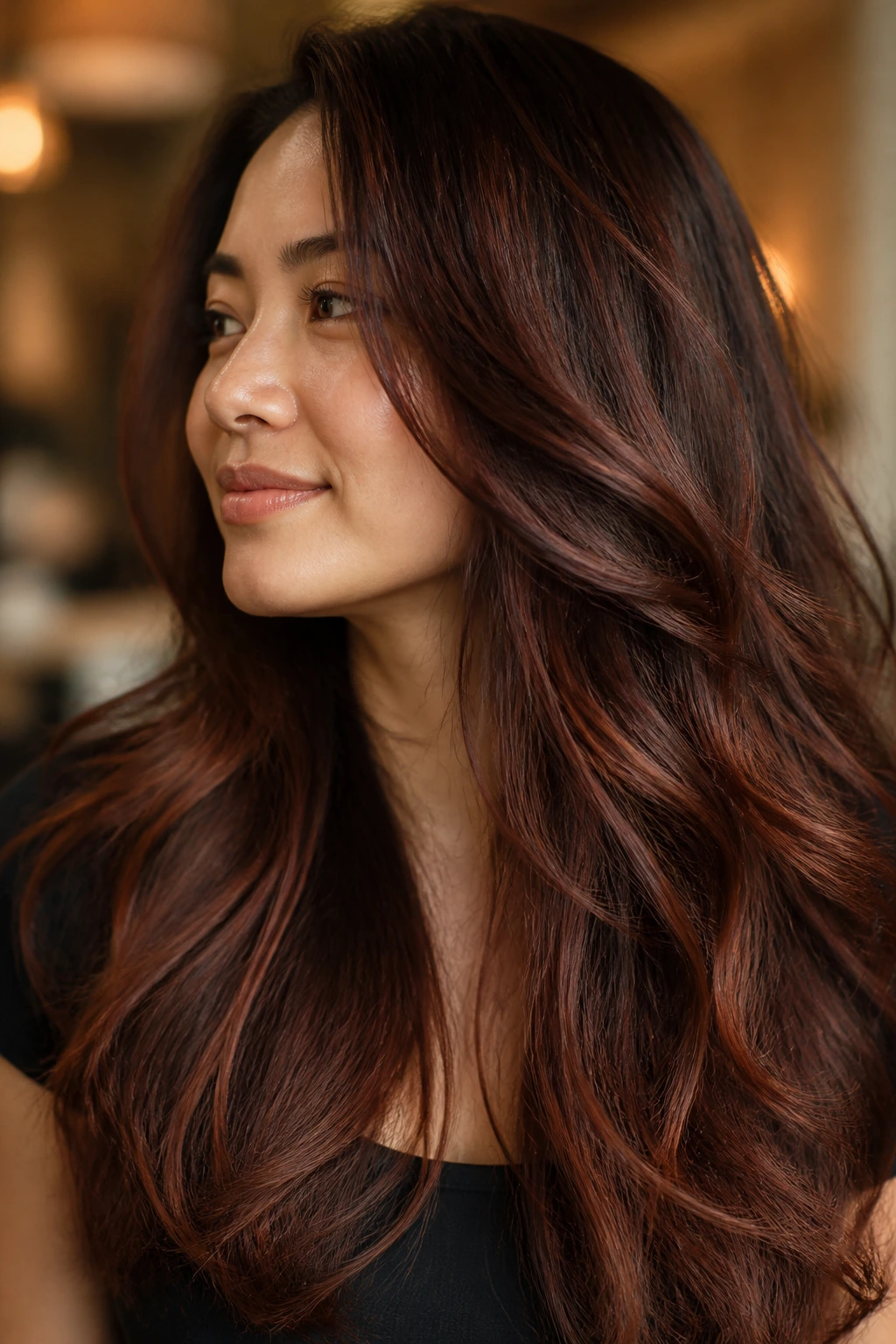
Soft auburn veil is the ultra-wearable choice. It doesn’t ask the base to become red; it just tints the darkness with a warm cast that comes forward when the light shifts.
Thick hair benefits from this kind of softening because the surface can pick up color while the inside stays rich and dark. You get dimension without a hard highlight map.
It’s a good option for first-timers or anyone who wants the color to feel expensive and quiet. The kind of thing people notice only after they stand close.
23. Toffee Auburn Blend
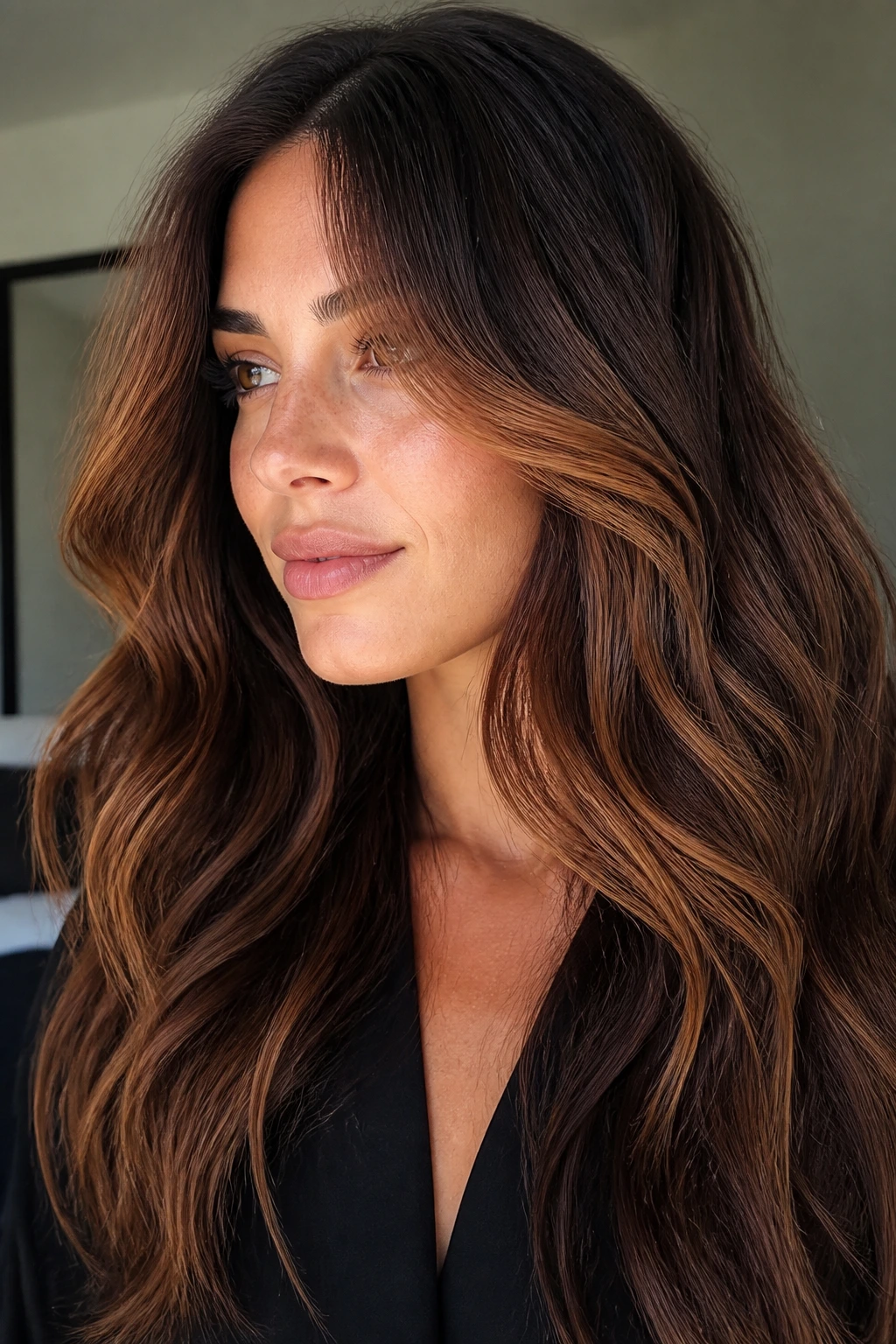
Toffee auburn sits between brown and red in a way that makes sense for people who don’t want their highlights to announce themselves from across the room. The warmth is there, but the brown keeps it wearable.
This blend works particularly well on thick hair because it uses depth instead of sharp contrast. The eye reads the movement first, then the color details, which is a nicer experience than seeing a few loud streaks and nothing else.
It also ages well as it grows out. The brown keeps the roots from looking harsh, and the auburn keeps the lengths from going dull.
24. Chunky 90s Auburn Streaks
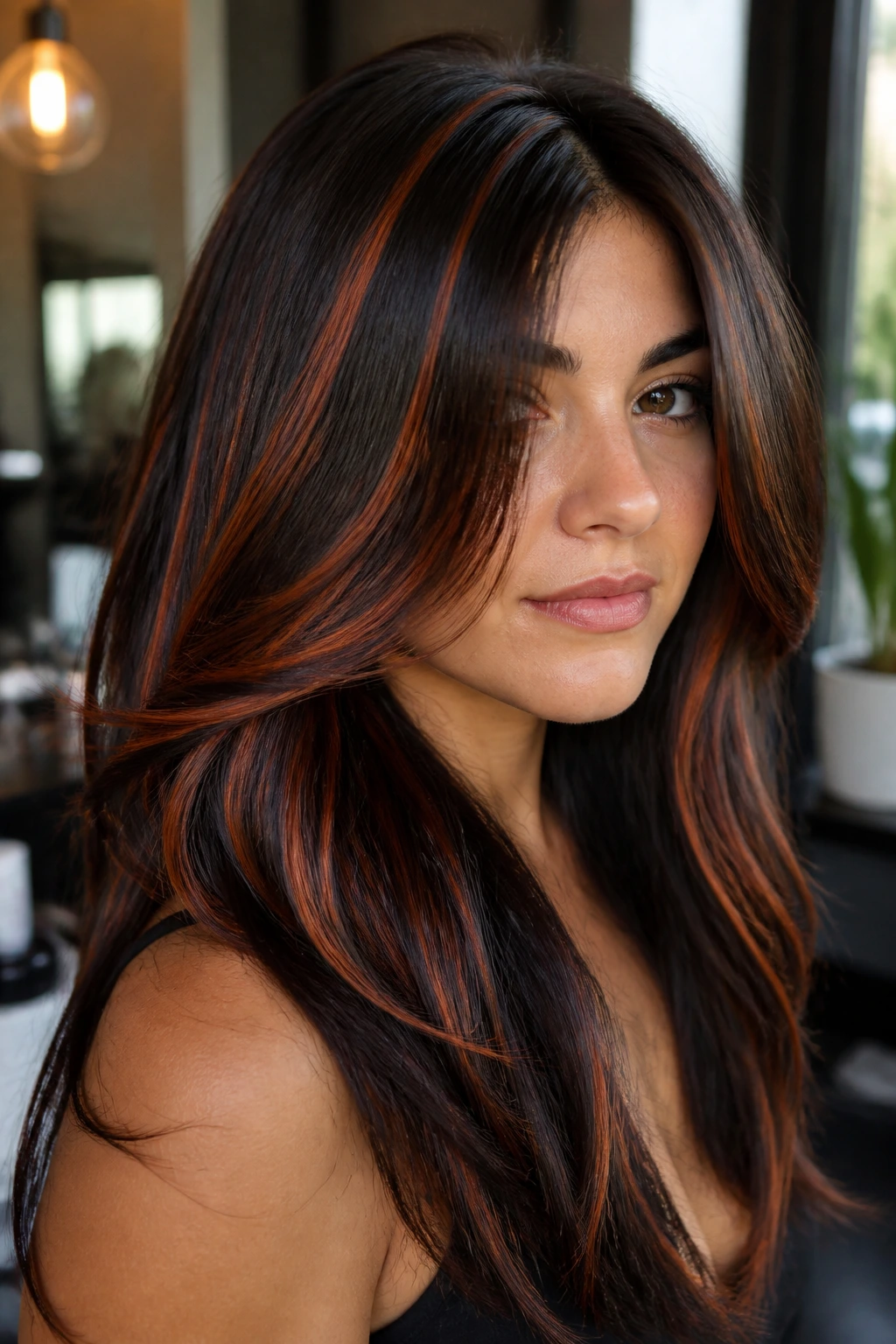
Chunky auburn streaks sound dated until you see them in the right haircut. Then they look intentional, graphic, and kind of cool in a way that fine highlights can’t fake.
Thick hair is one of the few textures that can carry chunky placement without looking thin or patchy. The density supports the pattern. That’s the difference.
If you want this look to feel modern, keep the base glossy and the streaks placed with some space between them. Too many chunky pieces and it turns busy fast.
25. Full-Dimension Auburn Mosaic
Full-dimension auburn mosaic is the richest version of the whole family. It mixes highlights, lowlights, face frame pieces, and a few deeper brown-red sections so the hair never sits in one flat tone.
On thick dark hair, this is the look that makes the most sense if you want depth everywhere. The color shifts as the hair moves because no single piece has to do all the work.
Who It’s Best For
It’s for someone who wears their hair down a lot, wants the color seen from every angle, and doesn’t mind a more involved salon visit.
That said, it’s still not a hard red. The brunette base stays visible. It just has more life in it now.
Why Thick Dark Hair Changes the Highlighting Game
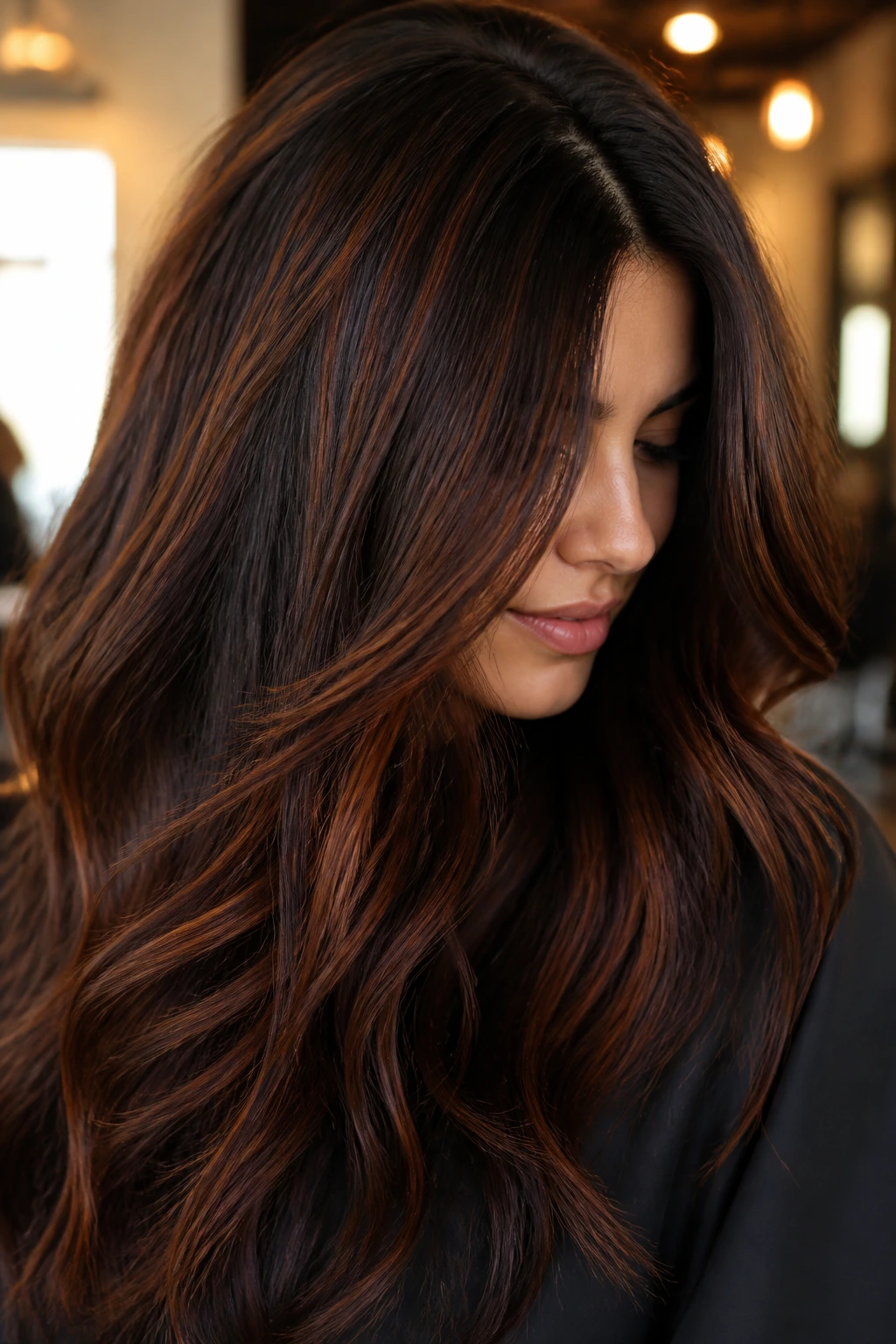
Dense dark hair does not behave like fine light hair, and pretending otherwise is how you end up with a color job that only looks good in the chair. The main issue is coverage. Thick strands stack on each other, so a highlight can disappear under the top layer unless it’s placed where the eye actually travels: part line, face frame, crown, and the outer bends of the cut.
Texture matters too. Coarser hair often lifts more slowly and can resist color in the middle of the strand, which means the same auburn formula may read brighter at the ends and duller near the root. That’s why stylists often use a mix of weaving, slicing, and balayage rather than one method alone. On thick hair, precision beats volume.
There’s also a visual trick here that people miss. Thick hair already gives you fullness, so the color should add movement, not bulk. A few carefully spaced auburn pieces can make the hair look lighter and more fluid even when the cut itself stays heavy.
And yes, the grow-out is different. Heavy hair can make roots seem more obvious simply because there’s more of everything. A soft blend at the base, or a gloss that sits close to the natural level, usually wears better than a hard line of bright copper.
Essential Tools for Auburn Color Placement
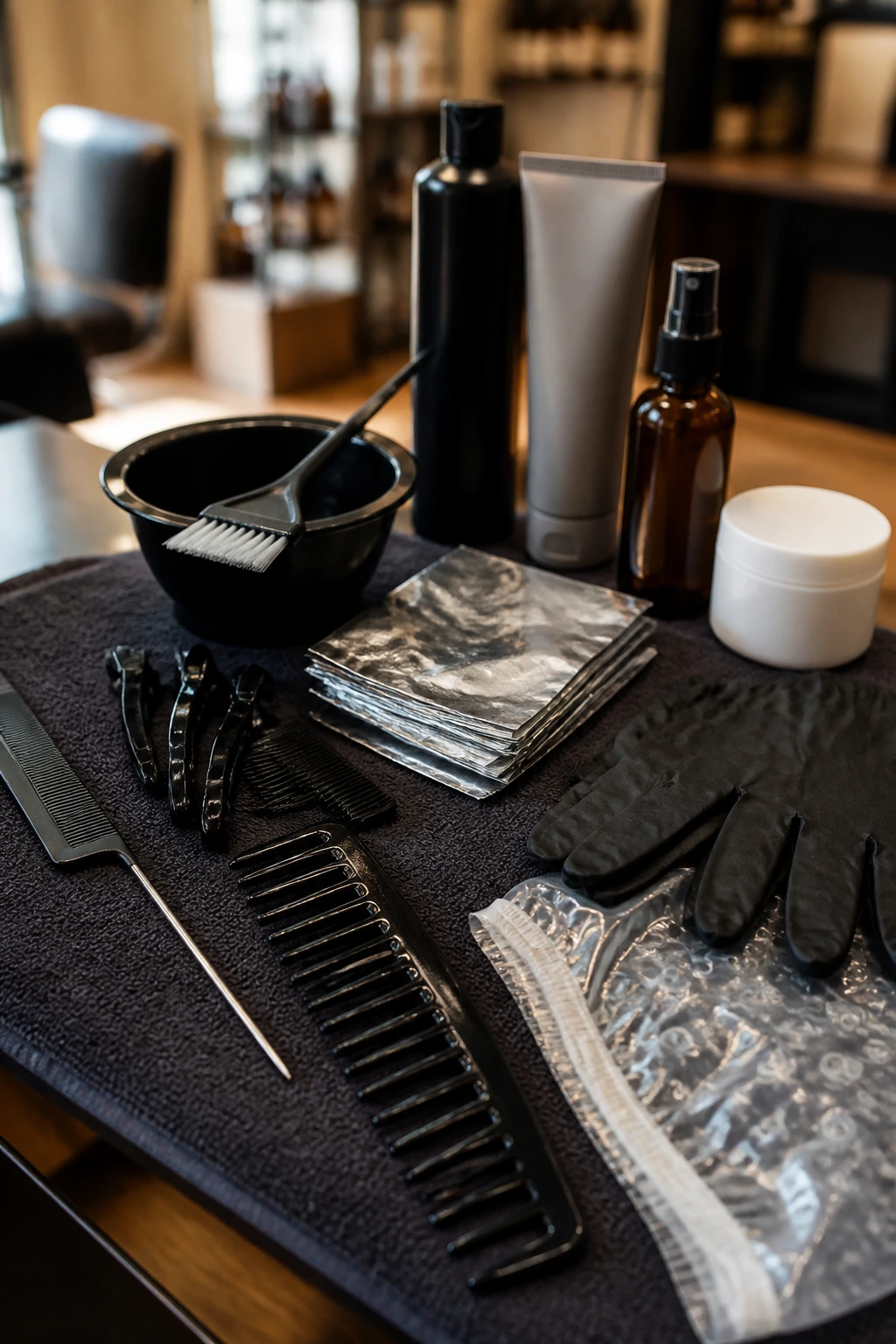
- Tail comb: Useful for clean sections, especially when you’re asking for a dense weave or a precise money piece.
- Sectioning clips: Thick hair needs more clips than most people expect; four won’t hold it well.
- Tint brush and bowl: For glosses, toners, and root smudges that soften the transition.
- Foils or balayage board: Foils lift faster and brighter, while a board gives cleaner painted ribbons.
- Gloves: Color stains hands fast, and auburn pigments can cling longer than you think.
- Color-safe shampoo and conditioner: Keeps the red-brown tone from fading into dull brown.
- Wide-tooth comb: Helps detangle thick hair without roughing up the cuticle.
- Heat protectant: Lightened hair in particular needs this before blow-drying or flat-ironing.
- Shower cap or processing cap: Helpful for glosses and demi-permanent color when warmth matters.
- Bond-repair treatment: Worth having if the hair is pre-lightened, coarse, or prone to dryness.
Picking the Right Auburn Shade for Dark Hair
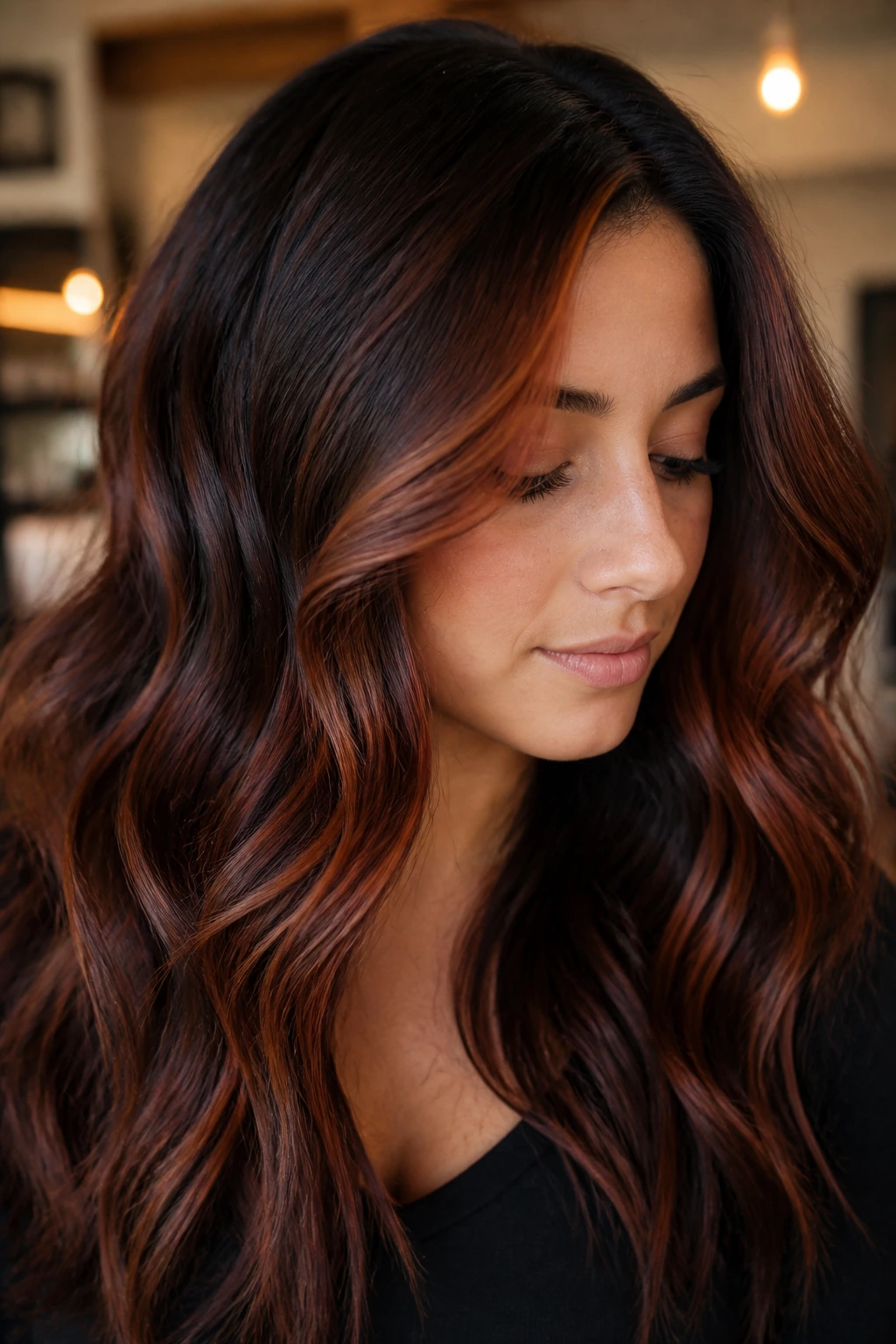
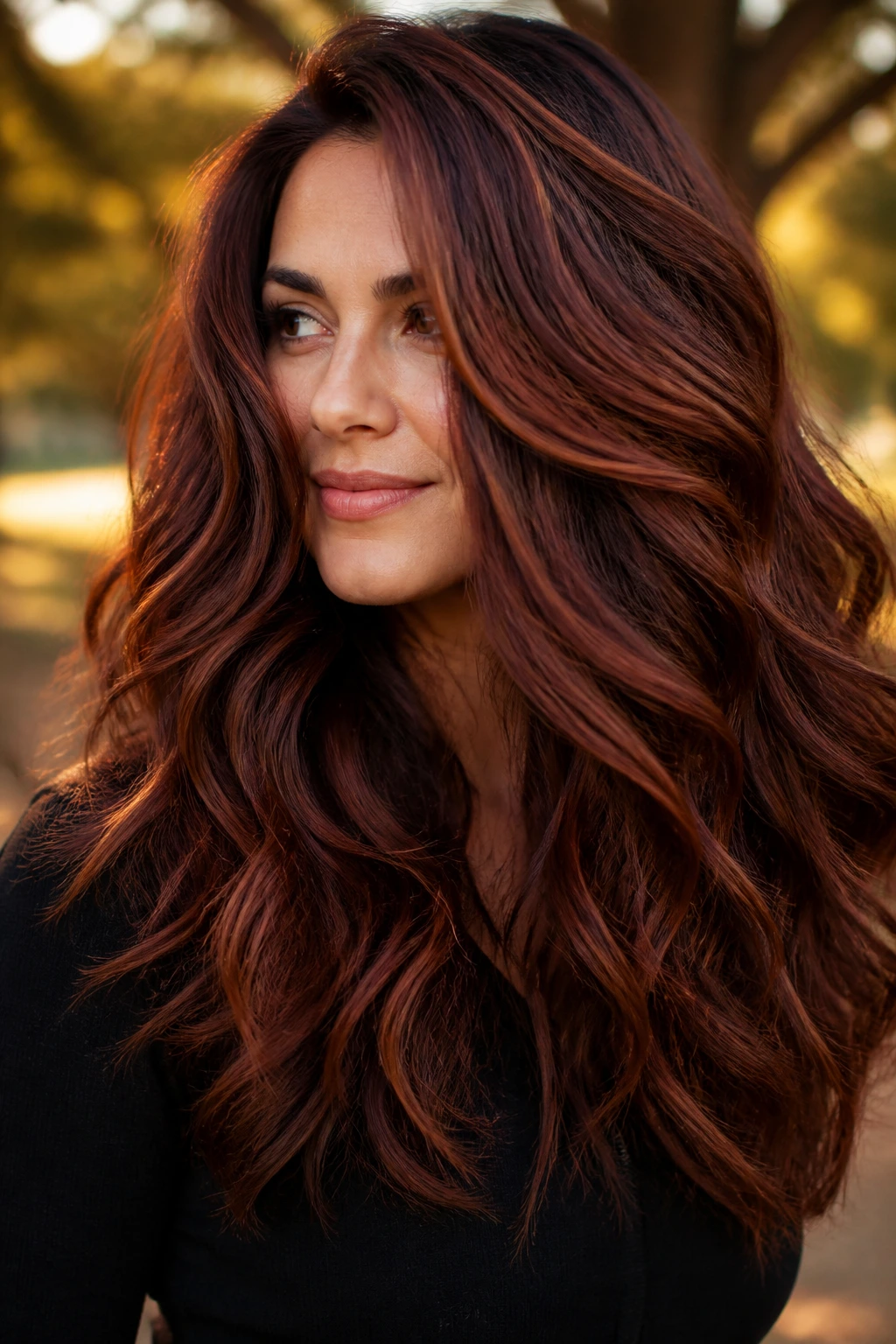
Not every auburn is the same animal. A dark brunette base can handle a copper-heavy shade, but it may need a little lift first if you want the red to show. If the hair sits closer to level 2 or 3, a mahogany, cherry cola, or toffee auburn often looks better than a bright orange-red, because the deeper tones live comfortably inside the base color instead of sitting on top of it.
Warm and cool undertones matter, but not in the overcomplicated way people sometimes make them sound. If your skin leans peach, olive, or golden, copper and cinnamon usually wake things up. If you’re cooler or more neutral, mahogany, wine, and cherry cola tend to look less harsh. That said, thick hair can carry a wider shade range because the density keeps the color from reading too thin.
Porosity matters too. Coarse or stubborn hair may need a slightly stronger lift on the first pass, while porous ends can grab red fast and go too bright. That’s why a strand test is worth the time. It shows you whether the auburn lands as warm brown, true copper, or a darker red-brown before the whole head is committed.
How to Wear Auburn Highlights So They Show Up
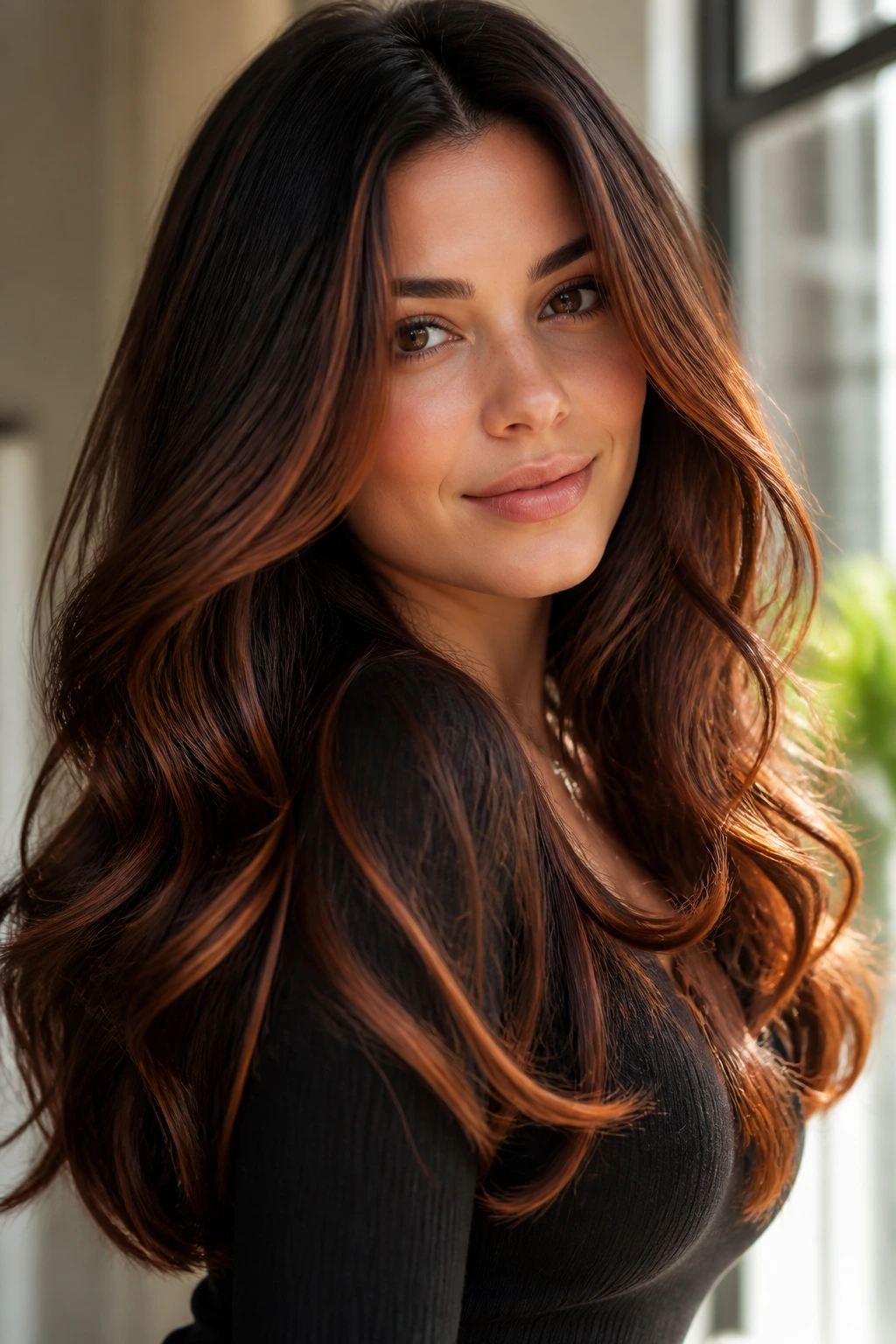
Presentation: Loose bends, a round-brush blowout, and a soft half-up style show auburn fastest because they let the color catch on curves. Straightened hair can work too, but it asks for cleaner placement since every line shows.
Accompaniments: Long layers, curtain bangs, a deep side part, and soft face-framing pieces all help thick hair show the color instead of hiding it. A blunt one-length cut can still work, but it usually needs more deliberate highlight placement near the surface.
Intensity: If you want subtle, ask for a partial head with brighter pieces around the face and crown. If you want something bolder, a full balayage with a few larger slices through the mid-lengths keeps the color from disappearing into the base.
Best Match: Earth-toned makeup, warm blush, and rich lip colors tend to make auburn look deeper. Black clothing can make copper pop; cream, camel, and olive soften it.
Extra Tricks That Make the Color Read Better
Placement Trick: Put the brightest auburn where light already hits—part line, temples, top layer, and the outer curve of the ends. Thick hair hides color fast, so the visible zones need the strongest pieces.
Tone Trick: If your base is very dark, ask for an auburn family shade first and a brighter copper only in the face frame. That keeps the job from turning into a red slab.
Styling Trick: A glossed blowout usually shows more dimension than tight curls. Tight curls can eat the ribbon pattern unless the pieces are placed with the curl shape in mind.
Make-It-Yours: For low maintenance, choose balayage or underlights. For more drama, ask for a money piece and a few chunky slices through the crown.
Keeping Auburn Bright on Dark, Thick Hair
Auburn fades with heat, hard water, and too-frequent washing. That’s not glamorous, but it’s the truth. Dark thick hair can hide fade better than fine hair, yet red pigments still slide out faster than brown ones, especially if the hair was lightened first.
Wash with lukewarm water. Hot water opens the cuticle too much and knocks red tone loose faster than people expect. A sulfate-free shampoo helps, and if the hair is colored with a demi or gloss, washing two or three times a week is usually kinder than daily shampooing. Dry shampoo can buy you a day or two between washes without roughing up the color.
Maintenance depends on the placement. A face frame or money piece may need a refresh every 6 to 8 weeks if you want it bright. Balayage and underlights can stretch longer, often 10 to 14 weeks, because the grow-out is softer. Glosses usually fit somewhere in between, around 4 to 6 weeks if you want the tone to stay lively.
Heat styling matters too. Thick hair often gets hit with more heat because people are trying to bend it into shape, and that’s when auburn gets dull. Use a protectant every single time. Boring advice, but the kind that works.
Easy Variations and Alternate Auburn Directions
Copper Flame Frame: Push the money piece brighter and keep the rest of the hair deep brunette. This gives you visible warmth without a full color commitment.
Mahogany Smoke: Use a deeper red-brown with lowlights through the interior. Good for cooler skin tones and anyone who wants auburn to feel moody rather than bright.
Cherry Cola Melt: Blend burgundy and brunette through the mids and ends. It’s rich, low-contrast, and especially nice on thicker hair with layers.
Toffee Glow: Stay mostly brown, then thread in soft auburn and caramel. This is the easiest version to wear if you want warmth but not a red-heavy result.
Chunky Retro Streaks: Use larger, separated ribbons for a 90s feel. Thick hair can handle the spacing, and the look holds up better when styled with movement.
Common Mistakes That Flatten the Look
-
Not enough contrast: If the auburn sits too close to your natural base, it vanishes in thick hair. The fix is a slightly lighter ribbon or a more strategic face frame.
-
Highlights placed too low: Color buried under the top layer may look fine when wet and disappear when dry. Ask for surface placement through the crown and outer lengths.
-
Too much orange, not enough brown: Bright copper on a very dark base can turn loud fast. If you want wearable auburn, keep some brown or mahogany in the formula.
-
Ignoring hair density: Thick hair needs more sections, not just more product. Big panels and even spacing help the color read cleanly.
-
Skipping gloss maintenance: Auburn tones fade into muddy brown if you never refresh them. A clear or tinted gloss keeps the red-brown alive.
-
Flat-ironing the life out of it: Repeated high heat makes auburn look dry and dull. Lower the temperature and use protectant. Every time.
Frequently Asked Questions
Will auburn highlights show on very dark brown hair?
Yes, but the placement and tone matter. On very dark hair, deeper auburns like mahogany, cherry cola, or toffee-red usually show more naturally than bright copper unless the hair is lifted first.
Are highlights or balayage better for thick hair?
Balayage gives a softer grow-out and works well when you want movement through the mid-lengths. Foils are better when you need stronger brightness, especially around the face or part line.
How many highlights does thick hair need?
More than most people think. Thick hair can hide color fast, so a few scattered pieces usually won’t be enough unless the look is meant to be very subtle.
Can I get auburn without bleach?
Sometimes. If your hair is already a medium brunette, a gloss or demi-permanent auburn can add warmth without pre-lightening. On very dark hair, though, bleach or a gentle lift is usually needed if you want the red to show clearly.
What auburn tone works best with cool skin?
Mahogany, cherry cola, and smoky auburn usually sit better than bright copper. They keep the warmth, but the red is deeper and less orange.
How do I stop auburn from turning brassy?
Use color-safe shampoo, lower the water temperature, and refresh with a gloss or toner before the tone gets too faded. Hard water and hot styling tools speed up brass and dullness.
Does thick curly hair need a different highlight pattern?
Yes. The color should follow the curl pattern, not just a straight sectioning grid. If the highlights ignore the curls, they can disappear when the hair shrinks and bends.
What haircut shows auburn best on thick hair?
Long layers, curtain bangs, and soft face-framing pieces usually show the color best because they break up the mass of hair. A blunt cut can still work, but it needs more deliberate placement near the surface.
Auburn That Feels Built Into the Hair
The strongest auburn looks on dark, thick hair are the ones that seem to live inside the hair instead of sitting on top of it. A copper money piece can do that. So can a mahogany melt, a set of chunky ember ribbons, or a soft cinnamon veil that only wakes up when the light moves.
That’s the real trick here: thick hair wants enough color to be seen, but not so little that it disappears. Once the placement lines up with the density, the whole head starts to move differently. The dark base stays rich. The auburn starts doing its job.
And when it’s done well, the color doesn’t look new for long. It looks like it belongs there.