



Brunette caramel highlights for dark hair work because they stay in the same family as the base color. That sounds small. It isn’t.
A good caramel placement doesn’t erase the brunette underneath. It warms it, loosens it, and gives dark hair a little motion when it swings past the shoulders or catches light near the cheekbones. The trick is knowing how much lift to ask for. Too little, and the highlights read brown-on-brown and disappear. Too much, and the whole thing drifts into blonde territory, which is a different mood entirely.
That’s why caramel is such a smart color lane for dark hair. It can be soft and smoky, honeyed and bright, chestnut-rich, or beige and neutral, depending on how far the lightener lifts and where the colorist places the pieces. I like that range. A lot. It gives you options without forcing you to throw away the depth that makes dark brunette hair look thick and glossy in the first place.
Why These Caramel Highlights Feel Right on Dark Hair
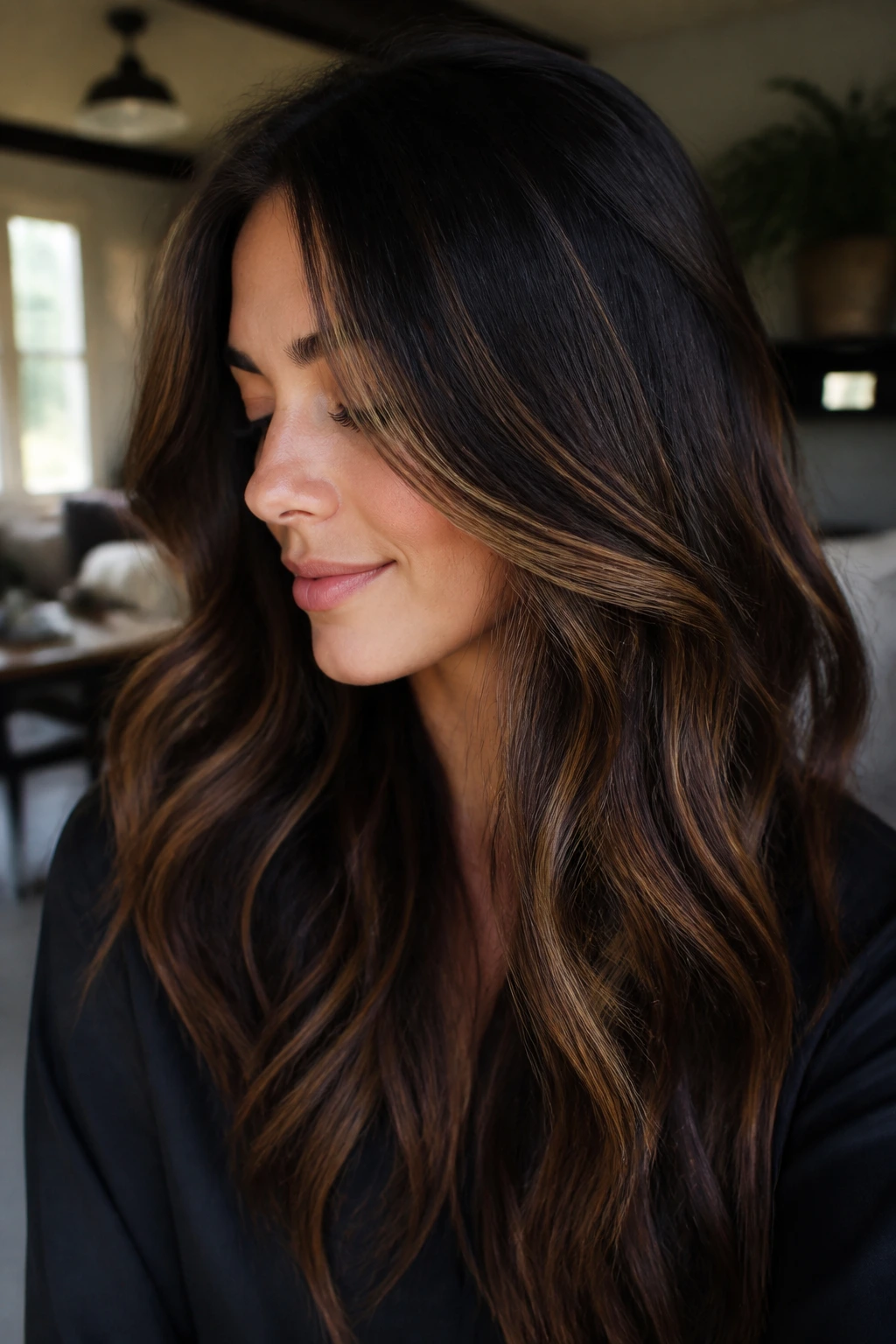
- Soft Contrast: Caramel sits close enough to brunette that the grow-out line stays softer, which means the color looks intentional even after the first few weeks.
- Undertone Control: You can lean warm with honey and toffee or keep it cooler with beige and smoky caramel, so the result matches your skin tone instead of fighting it.
- Shape From Light: A few brighter ribbons around the face or crown can make layers, curls, and waves look more defined without needing a dramatic cut.
- Lower-Regret Brightening: If you decide you want a little less light later, caramel is easier to dial back than pale blonde on dark hair.
- Texture Boost: Dark hair can look flat under indoor light. Caramel pieces break up that solid block of color and give the hair movement, especially when it’s styled with bends or a soft wave.
- Flexible Maintenance: Some versions need touch-ups every few months, while others grow out quietly and only need a gloss to stay rich.
1. Fine Face-Framing Caramel Ribbons
A few narrow ribbons around the face can change the entire read of dark hair. They catch the cheekbone area first, which is exactly where you want brightness if you like your brunette to stay deep everywhere else. On long layers, this looks polished without feeling heavy.
Why It Works
The front pieces get the most light, so you do not need a lot of them to get an effect. A level 7 beige caramel near the hairline gives enough contrast to wake up the face, while the darker length behind it keeps the style grounded. It’s a small move with a big payoff.
- Best on medium to long dark hair with soft layers.
- Ask for 2-4 thin foils or painted pieces on each side.
- Keep the root soft so the ribbon looks blended, not striped.
- Tip: place the brightest strand right next to the cheekbone, not all the way back at the temple.
2. Soft Balayage Through the Mid-Lengths
If you want the color to feel lived-in from day one, mid-length balayage is the calmest place to start. The highlights sit below the roots, so the dark brunette stays rich at the top and the caramel unfolds as the hair moves down the length.
That placement is kind to busy schedules. The regrowth line is less obvious, and the grow-out usually looks deliberate rather than accidental. On layered hair, the painted pieces show up in motion; on one-length cuts, they read smoother and a little more modern.
3. Chestnut-Caramel Money Piece
Want a brighter front without turning the whole head lighter? Use a money piece. Chestnut caramel is a smart pick here because it brings warmth without screaming blonde, and it looks especially good when the rest of the hair stays close to espresso or dark chocolate.
What to Ask For
Tell your colorist you want a strong but not icy face frame, lifted enough to show caramel in daylight, then softened with a gloss so it doesn’t look brassy. The money piece should connect to the rest of the hair, not float on top of it.
- Best for ponytails, half-ups, and blunt cuts.
- Works nicely with side parts and middle parts.
- Pro move: keep a few softer strands beside the main money piece so it doesn’t look like a single stripe.
4. Espresso Base with Toffee Ends
This is the one for anyone who likes contrast but hates anything that looks too “done.” The roots stay very dark—espresso, almost black-brown in some light—then the ends drift into toffee. It feels natural because the lightest color lives where hair usually thins out visually anyway.
The effect is longer-looking hair. Seriously. When the bottom third gets a little brighter, the whole shape feels stretched and airy, especially on long straight hair or loose waves. It’s also a useful choice if you want caramel highlights for dark hair without a lot of foils near the crown.
5. Warm Honey Veil on Long Layers
Honey caramel on long layers gives the hair that soft, golden lift people usually wish would happen by accident. It doesn’t need chunky contrast. It just needs enough warmth to show the shape of the cut as the layers fall over one another.
Best For Movement
Layers do the work here. Every bend in the hair reveals a different strip of color, so the highlights look fuller when the hair is curled and a little more subtle when it’s straight. That’s the charm of it.
- Choose this if you like a brighter brunette that still reads warm.
- Keep the pieces thin around the ends so the layers do not look choppy.
- Note: honey caramel can go yellow if it’s lifted too far, so a soft beige gloss helps.
6. Bronze-Caramel Babylights
Babylights are tiny for a reason. They’re meant to mimic the faint, sun-faded lines you’d get after a lot of outdoor time, not the broad streaks from a heavy highlight job. On dark hair, bronze-caramel babylights can make the whole head shimmer without looking obvious from across the room.
I love this option on people who are nervous about commitment. The placement is fine enough that it won’t hijack the base color, and the bronze note keeps it from going flat or too gold. If you want a “people notice the shine before they notice the color” result, this is the lane.
7. Dark Chocolate Base with Cinnamon Glow
Here’s the thing: not every caramel needs to look sweet and golden. A cinnamon-leaning caramel can sit just a little redder, which is useful if your dark hair leans warm already or if your skin looks better beside copper-brown tones.
The glow should be subtle. If it turns orange, the shade is too loud; if it turns muddy, it’s too cool. The sweet spot is a rich brown ribbon with a faint spice note—think dark chocolate with a warm edge. It reads expensive in the quietest possible way.
8. Caramel Peekaboo Panels
Peekaboo panels are for people who want the fun part hidden under the top layer. You get caramel when the hair swings, tucks behind an ear, or goes up. Otherwise, the top keeps the look restrained and brunette.
This is a nice compromise if you work in a setting where bright money pieces feel like too much. The hidden placement lets you try color drama without making it the first thing anyone sees. You can go a shade brighter here than you would on the surface, too, because the top hair will mute it slightly.
9. Smoky Caramel Melt
Smoky caramel is what happens when you take the warmth down a notch and lean into beige, taupe, and soft mocha instead of golden honey. It’s still caramel, but the sugar is less obvious. The result is cleaner on dark hair that tends to grab red or orange too fast.
This version works well when you want dimension, not brightness. It fades more gracefully than warmer caramel because the tones stay close to brunette. If your favorite clothes are black, cream, gray, or deep olive, this may be the easiest caramel family to wear.
10. Mushroom Brunette with Beige-Caramel Threads
Mushroom brunette gets a bad rap from people who think cool brown means flat brown. It doesn’t, at least not when the highlights are placed as thin beige-caramel threads. The base stays smoky and deep, while the lighter strands add a cold-to-warm contrast that feels expensive and modern.
This is one of my favorite choices for someone who hates gold. The trick is keeping the caramel neutral, not yellow, and letting the cooler base do most of the visual work. The color reads especially well on straight hair because the contrast shows in long, clean lines.
11. Curled Ribbon Highlights
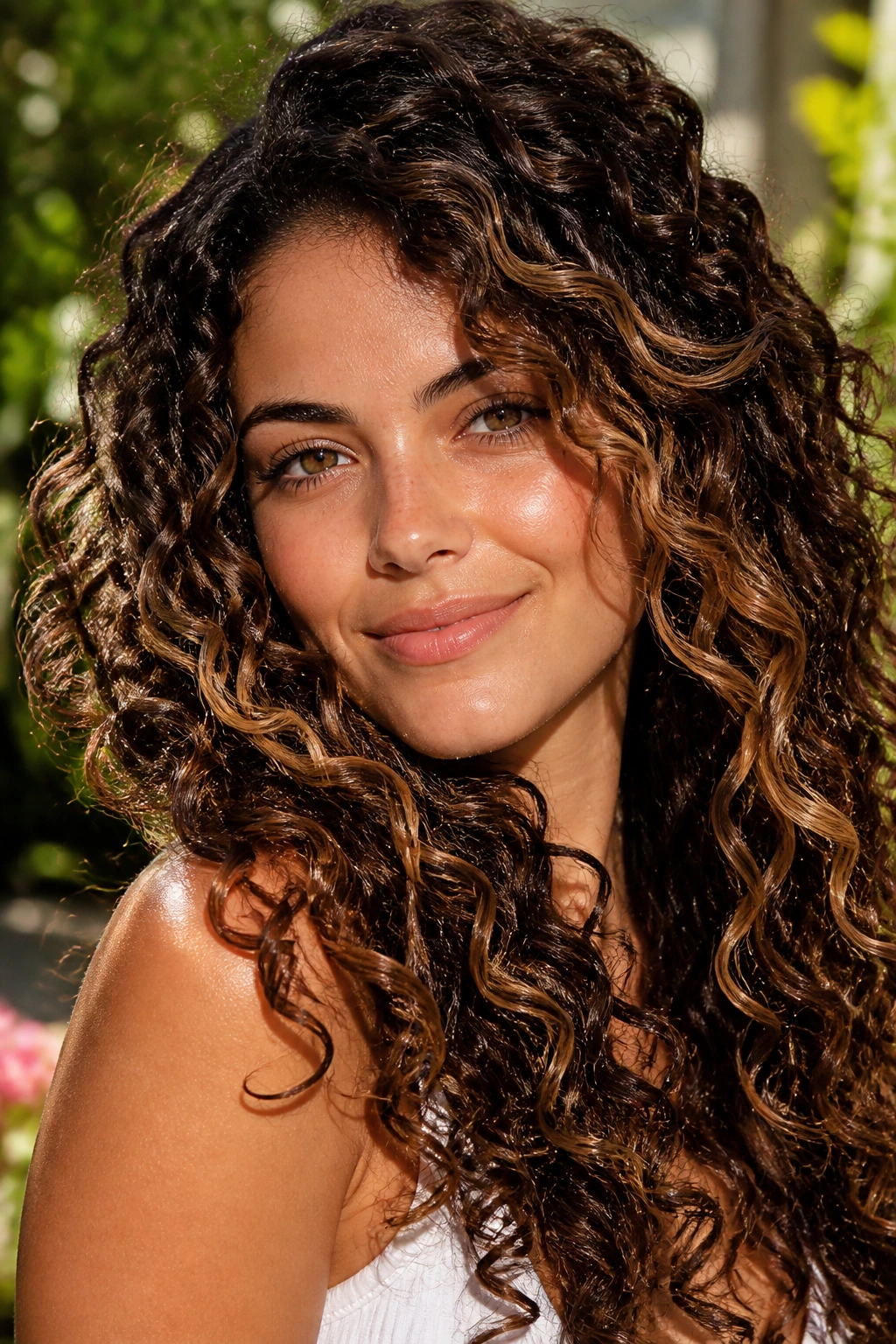
Curled ribbon highlights are all about how the hair bends. On dark hair, a ribbon that looks quiet when straight can become much more visible once the iron or rollers create S-shaped movement. That’s why this placement is built for texture.
Why Curly and Wavy Hair Changes the Map
A curl pattern exposes the inside and outside of each bend, which means the light pieces pop in different places every time the hair moves. You do not need as many bright pieces as you would on straight hair. A few well-placed ribbons are enough.
- Ask for highlights that follow the curl pattern, not one straight sectioning map.
- Keep the brightest strands around the outer curve of the curl.
- Tip: too many foils can make curls look striped, so thin placement usually wins here.
12. Layered Bob with Caramel Flickers
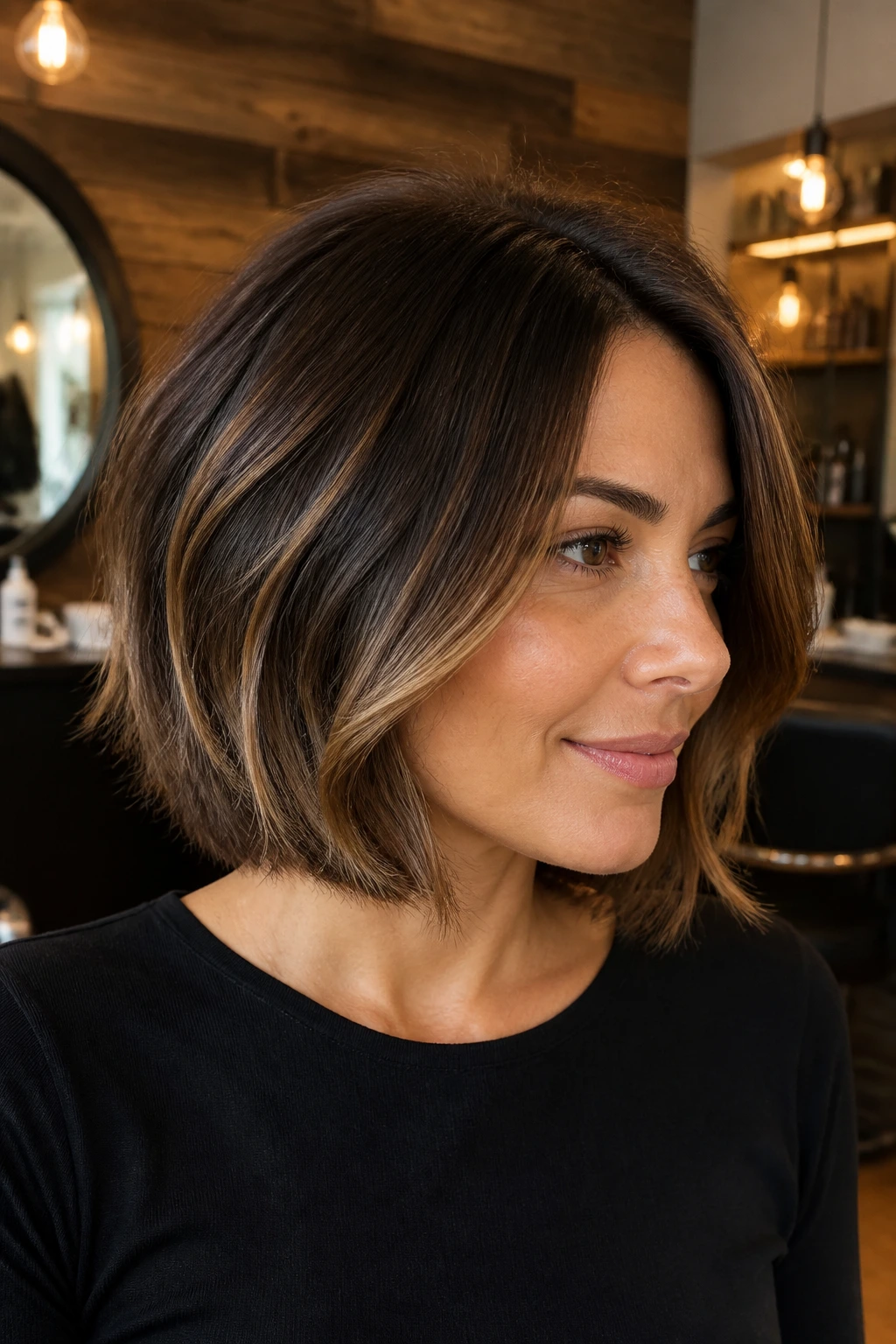
A bob does not need a lot of color to look interesting. In fact, a heavy highlight job on a shorter cut can start to look busy fast. Caramel flickers—small, spaced pieces—give the bob movement without making it feel crowded.
The face line is where the work happens. A few brighter strands near the jaw and one or two near the crown can make a dark bob look sharper and less blocky. I like this on blunt bobs, especially if you style them with a soft bend rather than pin-straight.
13. Wavy Lob with Toasted Caramel
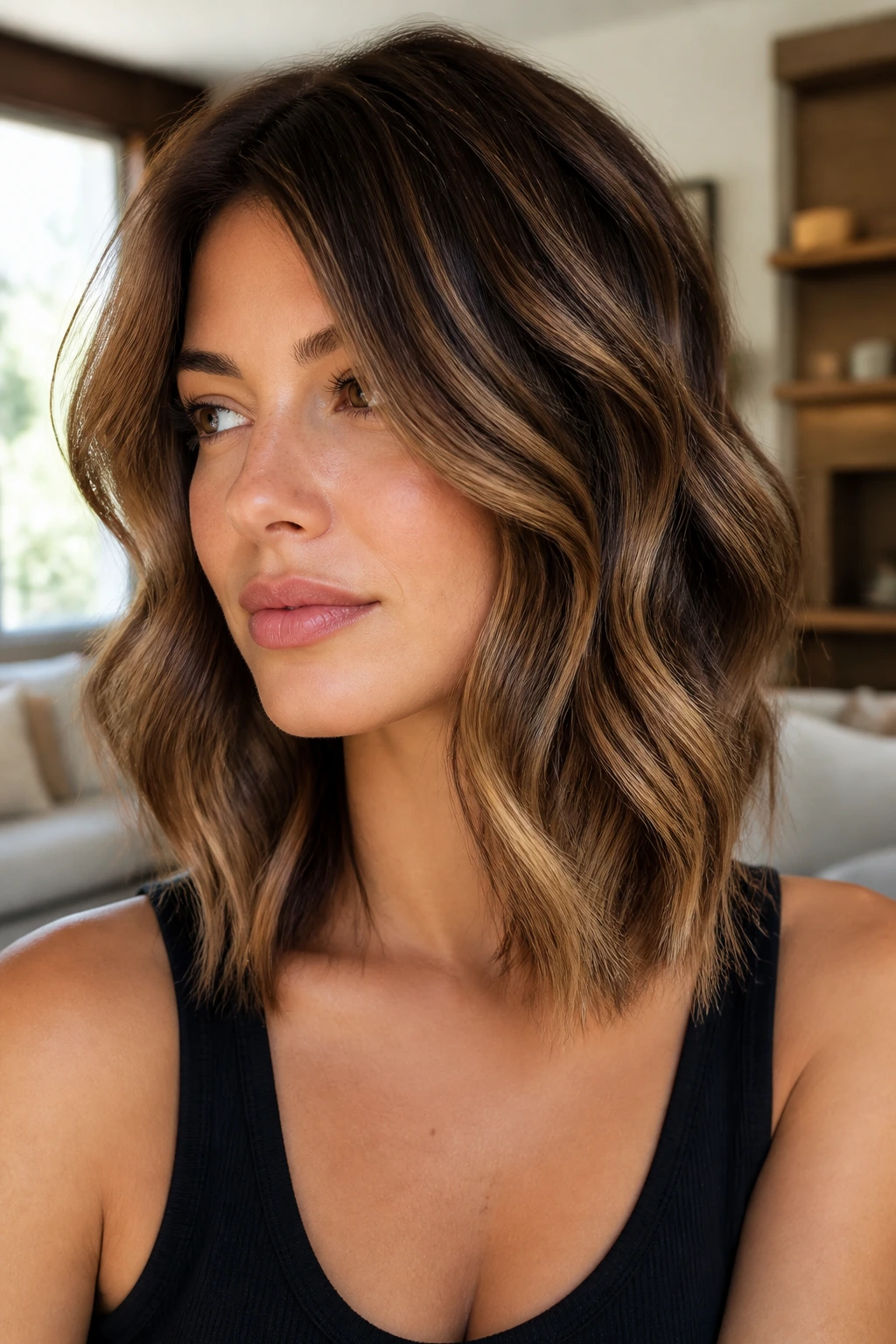
A lob is where caramel highlights really get to show off. It has enough length for the color to stretch, but not so much that the pieces disappear into the rest of the hair. Toasted caramel sits in that very usable middle ground between blonde and brown.
What Makes It Different
The waves do half the styling for you. Each bend lifts a strip of caramel forward, so the color seems deeper than it is and more dimensional than a single gloss could ever make it. That’s why this works so well for medium-density hair.
If you want a version that still looks brunette in low light, keep the ends only one to two shades lighter than the mid-lengths. The whole point is movement, not shock value.
14. Chunky Caramel Accents
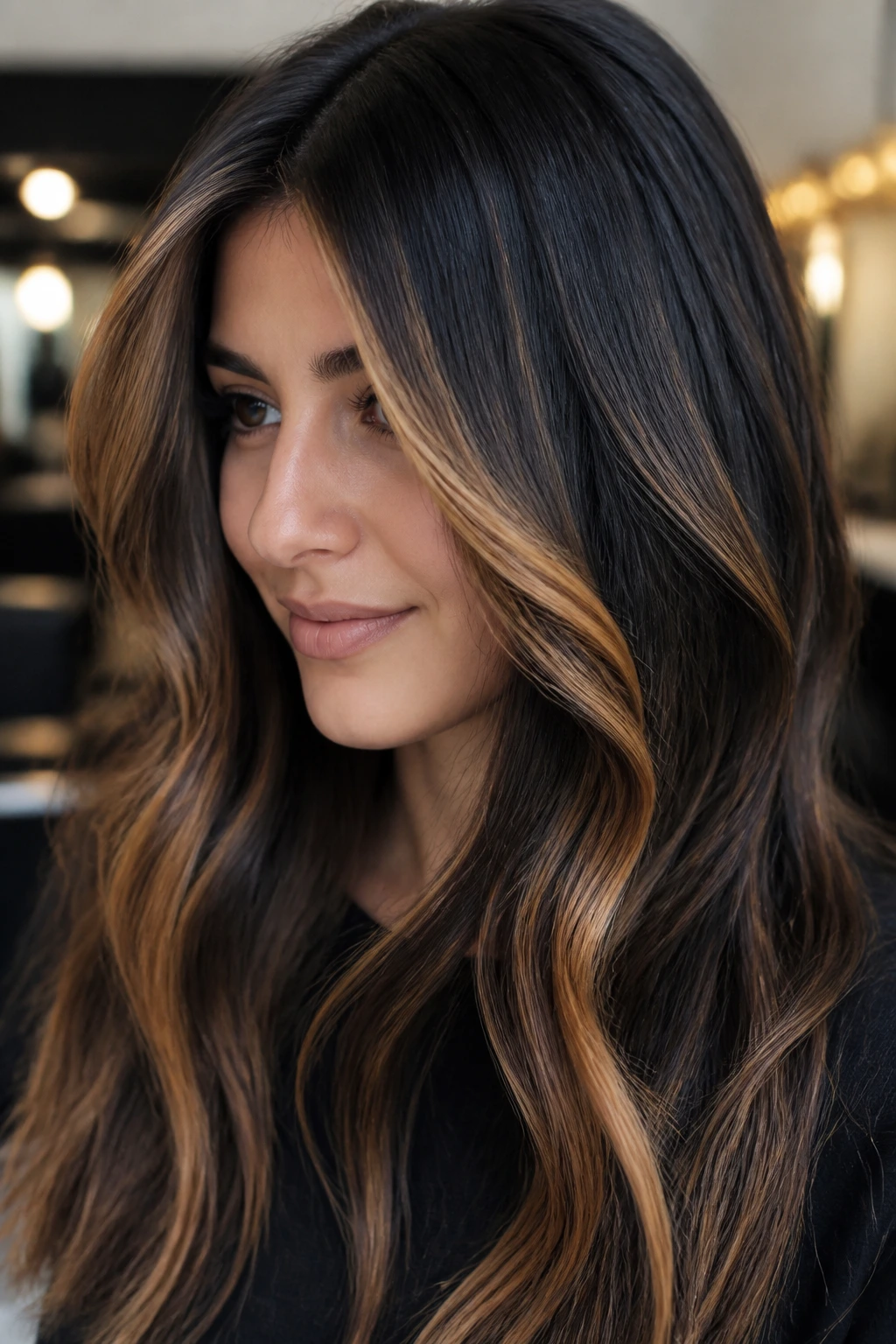
Chunky accents are back whenever people get tired of whisper-thin color. On dark hair, a few broader caramel sections can look bold in a way that still respects the brunette base. The contrast is obvious, but it works best when the pieces are placed with intention—around the front, through a visible layer, or under a flip of hair.
This look needs confidence and a clean haircut. If the cut is shapeless, chunky highlights can look random. If the cut has clear lines, though, the color suddenly feels graphic and deliberate. It’s a stronger statement than babylights, and that’s the whole point.
15. Melted Root Smudge
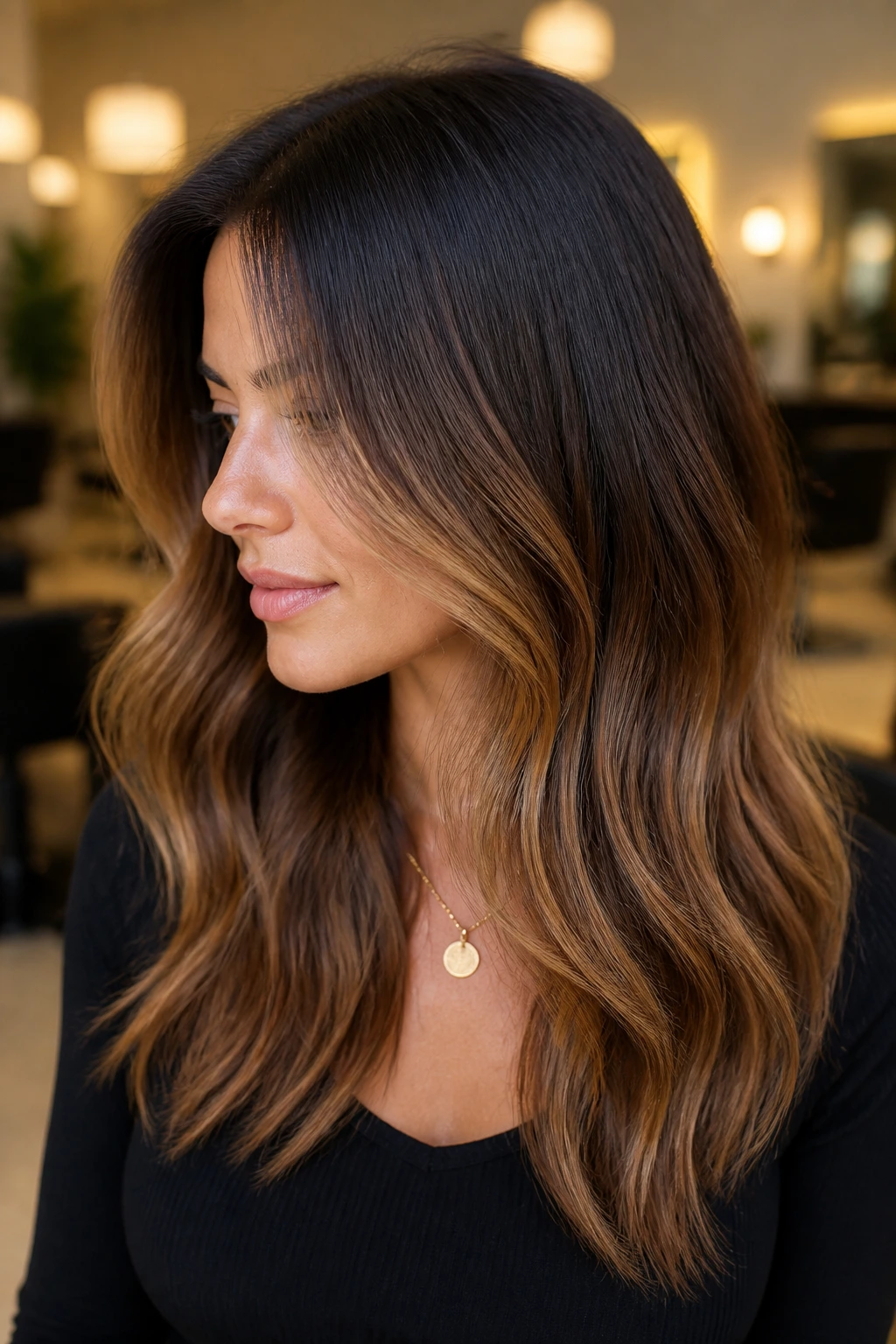
A root smudge is your friend if you want the grow-out to disappear into the haircut instead of screaming for attention. The darker root melts into caramel through the mid-lengths, so the whole thing looks softly blended from the start. No hard line. No obvious restart point.
This is one of the most practical brunette caramel looks on dark hair because it buys you time between salon visits. It also keeps the top of the head rich, which many people underestimate until they see how flat lighter roots can look next to dark brows. The dark-to-caramel fade keeps the shape grounded.
16. Auburn-Caramel Blend
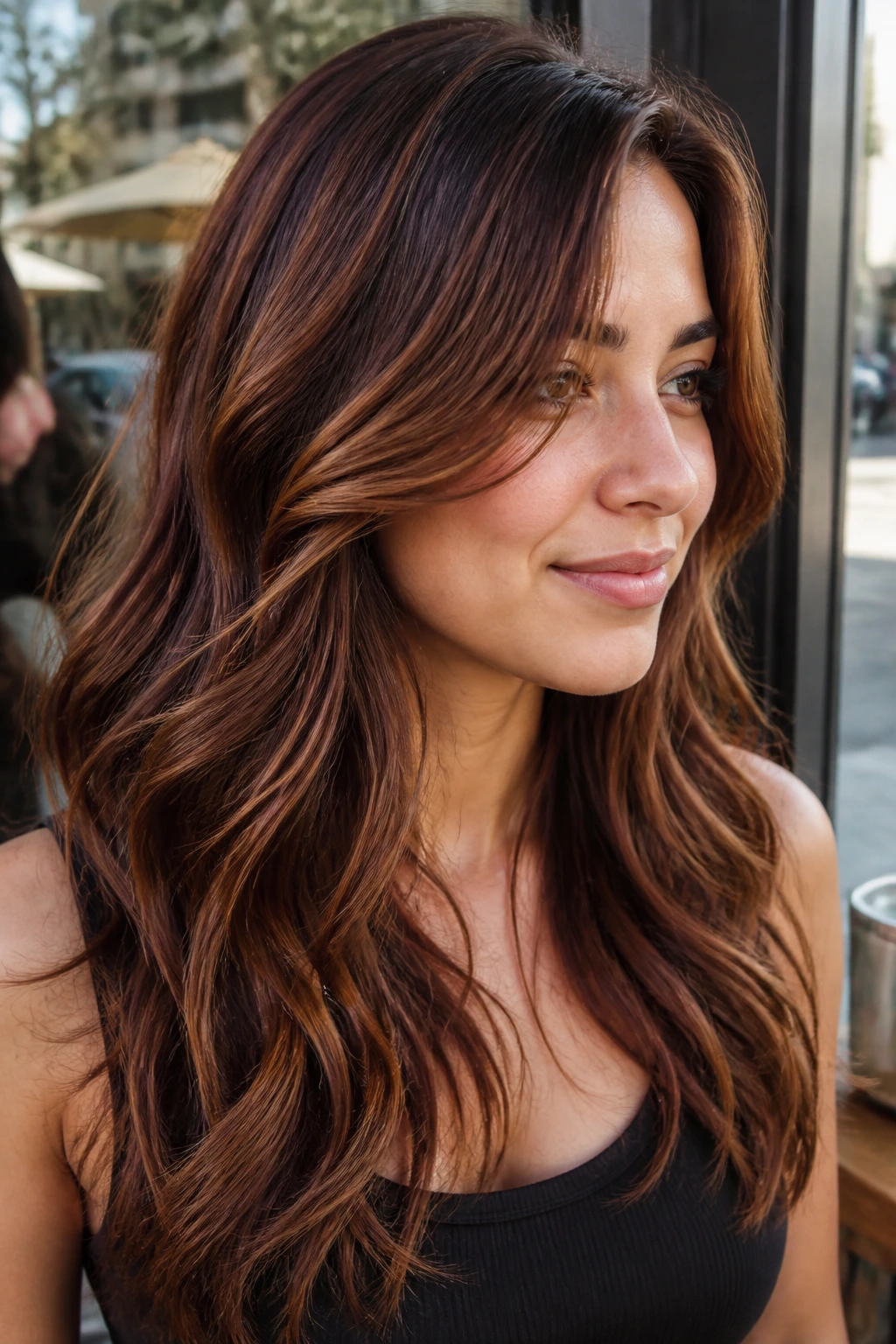
Auburn caramel has a little fire in it. Not copper-red fire—just enough red warmth to make the highlights feel cozy and rich. On dark hair, that warmth can be a lifesaver if golden caramel alone tends to go flat or greenish against your undertones.
When to Pick It
Choose this if your skin already likes warm shades, or if your wardrobe lives in camel, rust, olive, and deep brown. The red-brown note makes the highlights feel less sandy and more autumnal, even outside any particular season. The result is soft, but not sleepy.
- Best for warm brunettes and natural red-brown bases.
- Ask for auburn mixed with a level 7 caramel gloss.
- Note: too much red can overpower the brunette, so keep the blend brown-first.
17. Sandy Caramel Ends
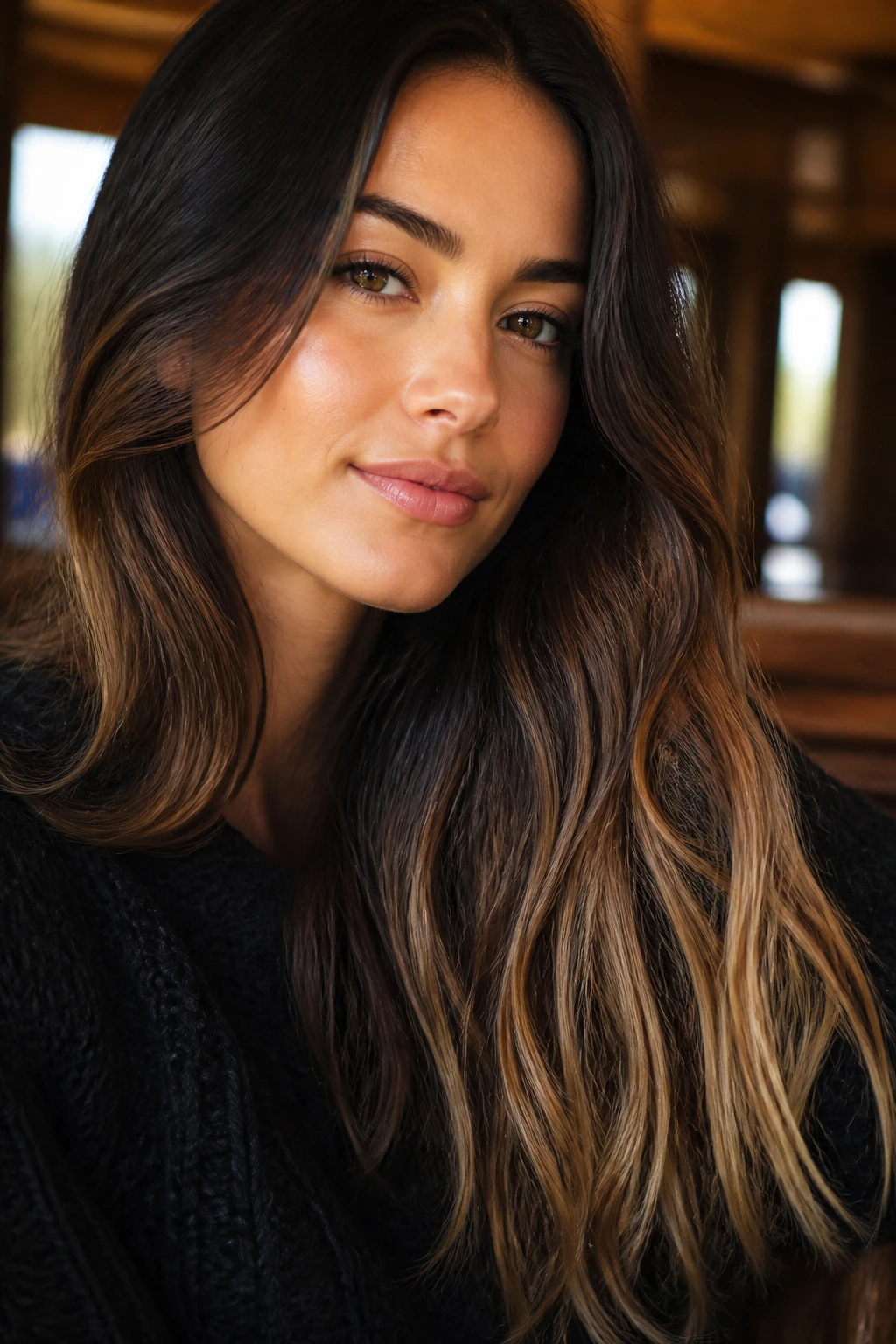
Sandy caramel at the ends gives dark hair a worn-in, sun-soft feel without pushing the shade too high. It’s cooler than honey and lighter than mocha, which makes it useful if you want brightness that doesn’t shout. The ends carry the color, while the roots and mid-lengths stay deep.
This kind of placement is easiest to live with on hair that already has some length. Short hair can lose the fade too quickly. On long hair, though, the sandy finish creates a gentle blur that makes the cut look less heavy at the bottom.
18. Glossy Smokeless Caramel
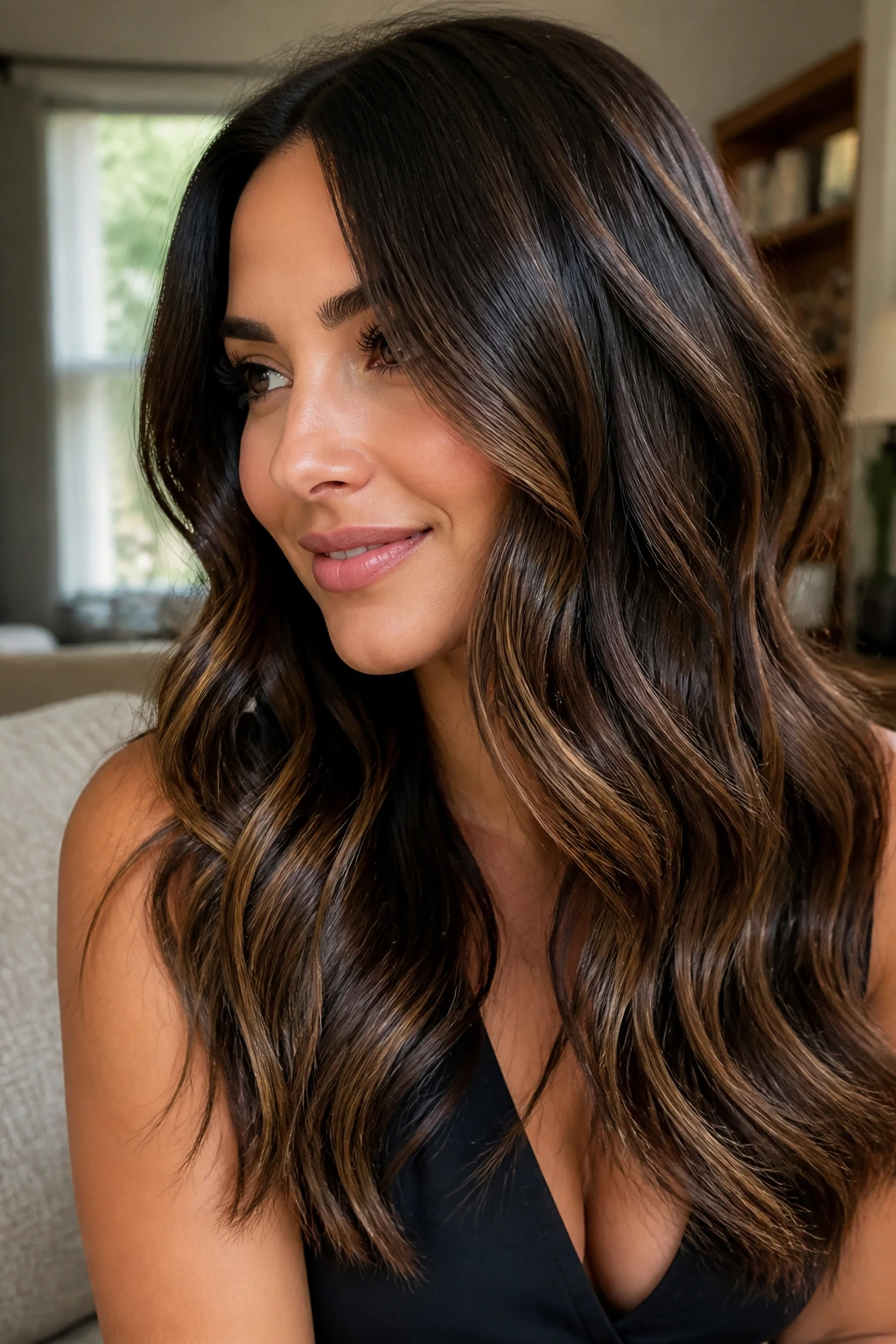
Some caramel looks lean warm. This one leans polished. A glossy finish pulls the tone together so the highlights don’t look dusty or rough, which is a common problem when dark hair is lifted but not toned cleanly. You want caramel you can almost see reflected back at you.
That shine matters. Dark hair already has a lot of visual weight, and a gloss helps the lighter pieces read as intentional light rather than dry damage. If you’ve ever looked at a highlight job and thought the color was fine but the hair itself looked tired, this is the fix.
19. Cinnamon-Spice Balayage
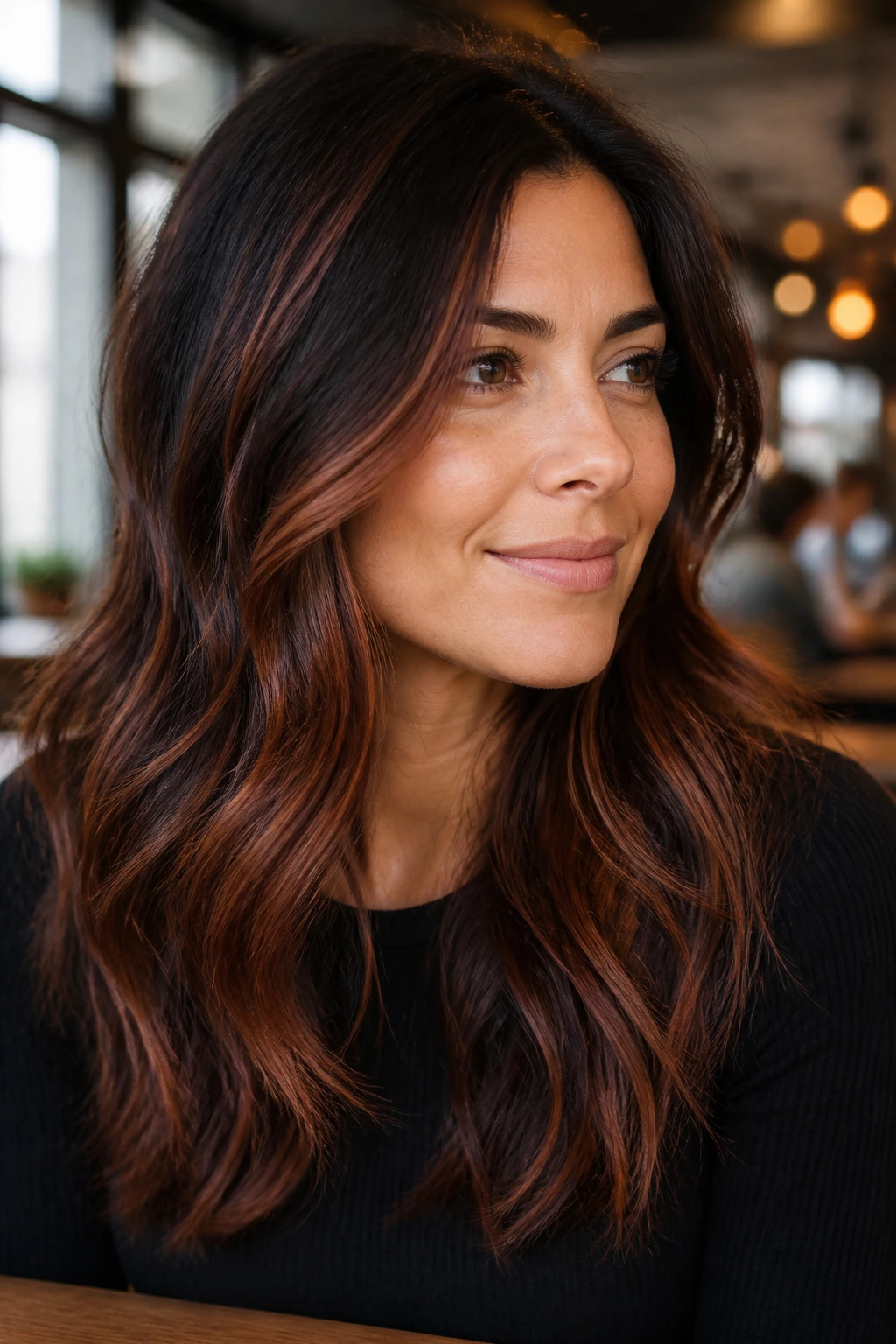
Cinnamon-spice balayage adds warmth without sliding into full copper. It’s the kind of caramel that shows best in movement and under softer light, where the brown-red undertones can breathe a little. On a dark base, that makes the entire style feel more dimensional than a plain beige lift.
The nice part is the balance. It flatters people who want warmth but do not want yellow. It also pairs well with textured ends, because the spice tones show up in waves and curls without looking streaky.
20. Caramel Around the Crown
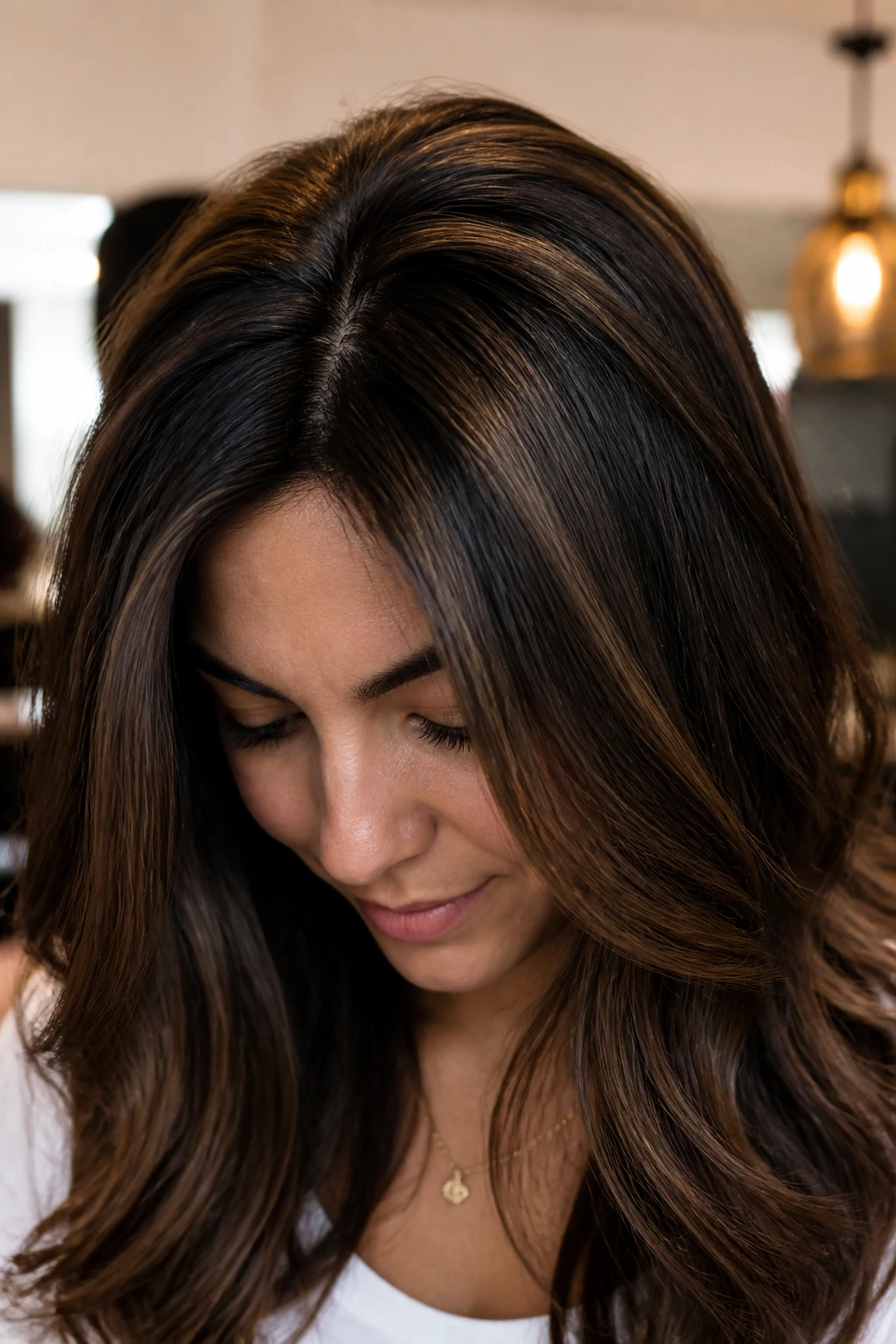
Most people focus on the front pieces and forget the crown. That’s a mistake if your hair lies flat there or if the top of your head tends to look heavier than the ends. A few caramel pieces around the crown can brighten the whole silhouette and make the style feel more lifted.
Best For Flat Roots
If you wear your hair pulled back often, crown brightness is a smart move because it shows even in ponytails and buns. It also keeps the color from feeling front-loaded, which can happen when all the lighter pieces live around the face.
- Ask for fine sections around the crown and part line.
- Keep the brightness soft so it does not look like a sun patch.
- Tip: this placement looks especially good on layered cuts with a little height at the top.
21. Face-Centering Bright Pieces
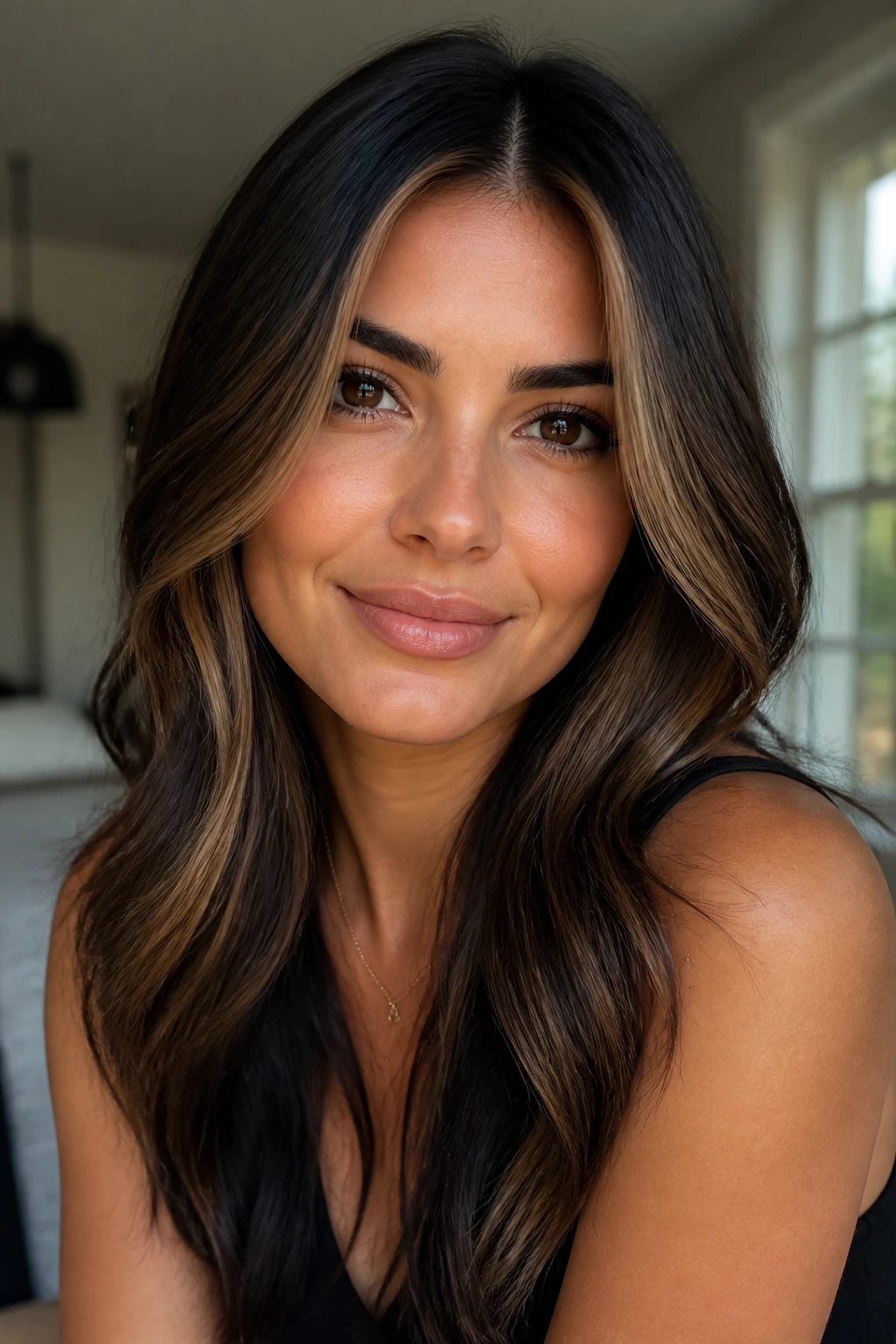
This one starts near the middle of the face frame instead of hugging the outer edge. The result is a more centered, deliberate brightness that works well with middle parts. It gives the face a clean frame without drawing all the attention to the far front.
A lot of people use highlights to brighten the ends and forget the part line. But the area nearest the part is where the eye lands first, so a few caramel pieces there do a lot of work. It’s a smart choice if you like tidy, symmetrical color.
22. Soft Ombré on Dark Brown Hair
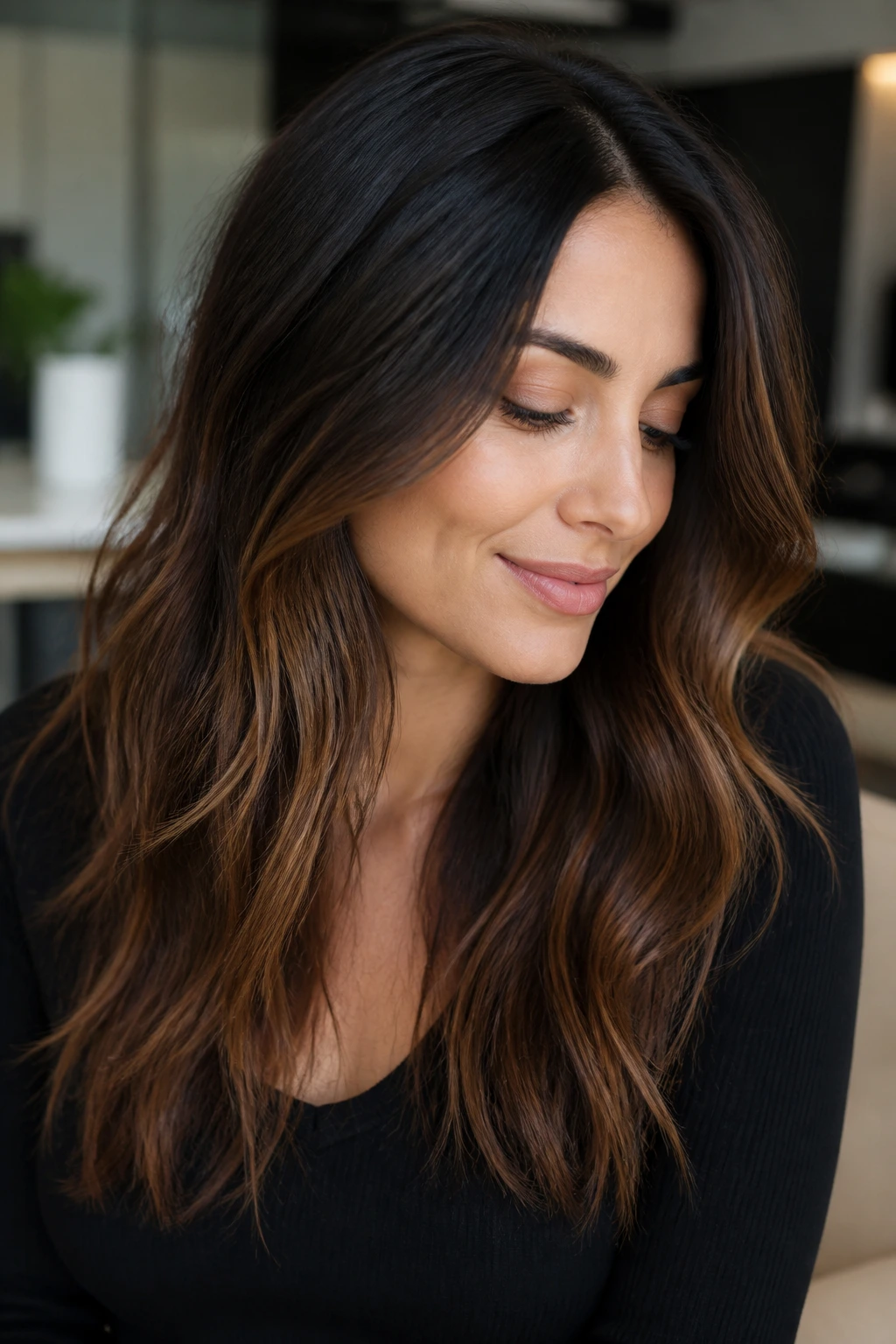
Ombré is the slowest fade in this whole set, and that can be a good thing. Dark brown at the roots melts into caramel through the lower half of the hair, with no hard line and no obvious stripe of brightness. It’s understated, but not dull.
The reason it works on dark hair is the gradual shift. Your eyes can follow the color change, which makes the hair look longer and the ends look softer. If you keep a few lowlights inside the fade, the whole thing gets even richer.
23. Sunlit Caramel on Natural Curls
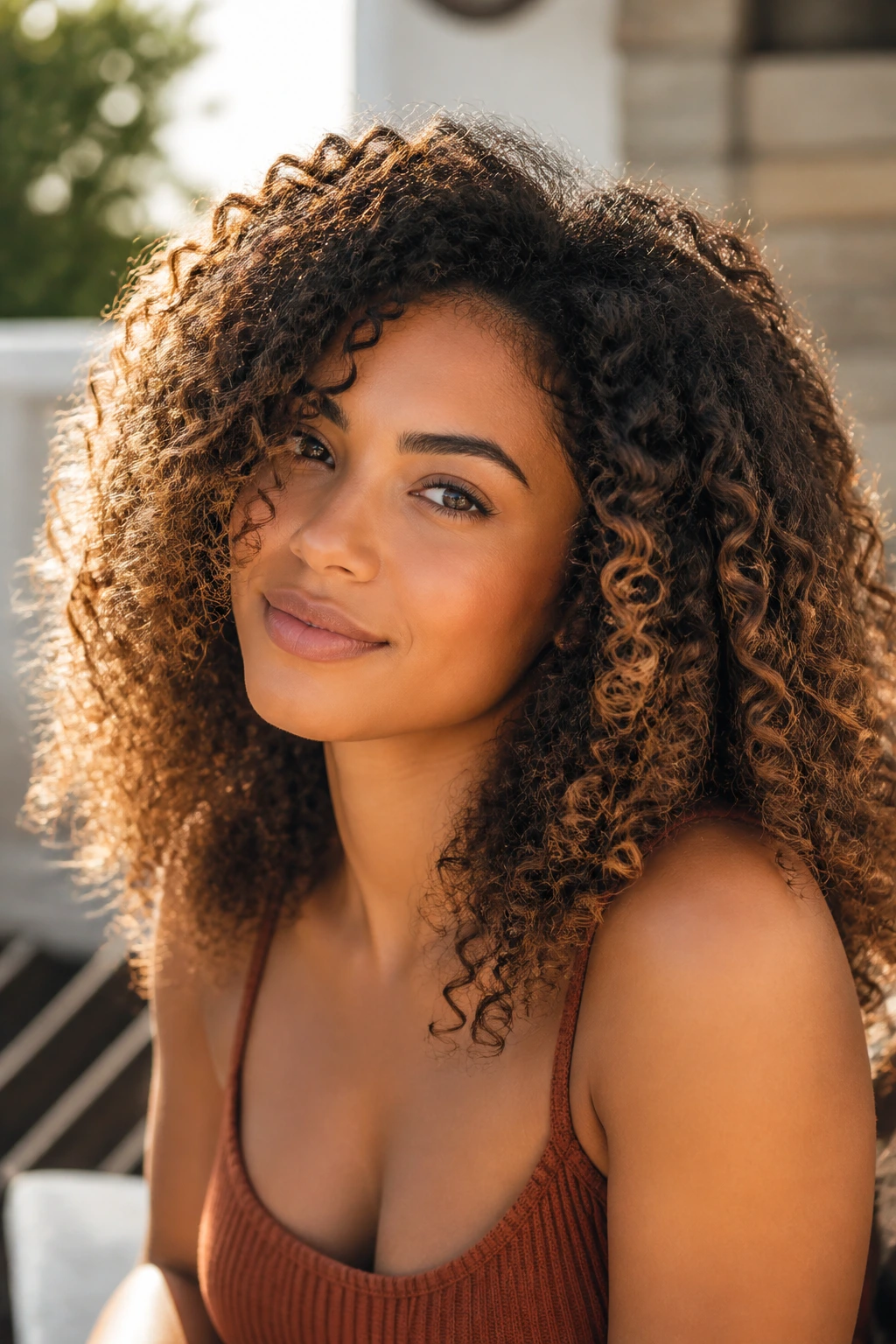
Curly hair does not need the same highlight map as straight hair. A curl cluster creates its own shadows, so the caramel should sit where the curls can reveal it naturally—usually around the outer ring, the face, and a few interior pieces that peek through as the hair moves.
The best curly caramel is never stripy. It bends with the pattern instead of cutting across it. That means the highlights should be placed with the curl in mind, not just the sectioning chart. Done well, the color looks like sunlight got stuck in the curl pattern and decided to stay.
24. Cool Caramel with Ash Brown Depth
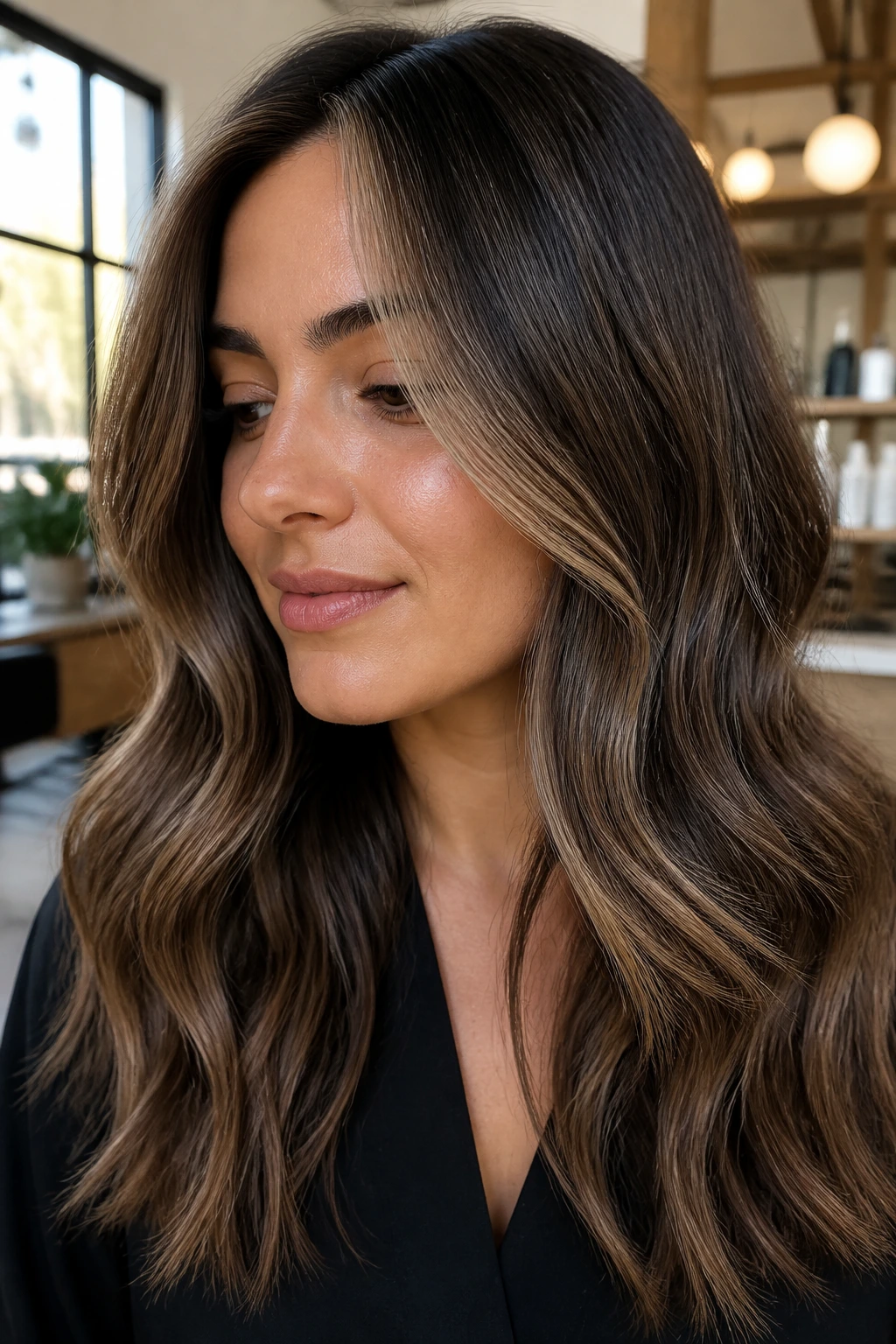
Cool caramel can be a relief if warm tones tend to dominate your hair. The ash brown depth underneath keeps the highlights from reading orange, while the caramel threads give enough warmth to stay flattering on dark bases. It’s a controlled look.
Why It Stands Out
The contrast is softer than golden caramel but sharper than plain brown. That makes it a nice fit for someone who likes brown hair to look expensive, not reddish. It also keeps the hair looking polished between glosses because the cooler undertone resists brass a little better.
- Best if your skin leans neutral or cool.
- Ask for beige-caramel highlights with an ash-brown shadow root.
- Note: too much ash can make the hair look dull, so keep some warmth in the gloss.
25. Golden Latte Highlights
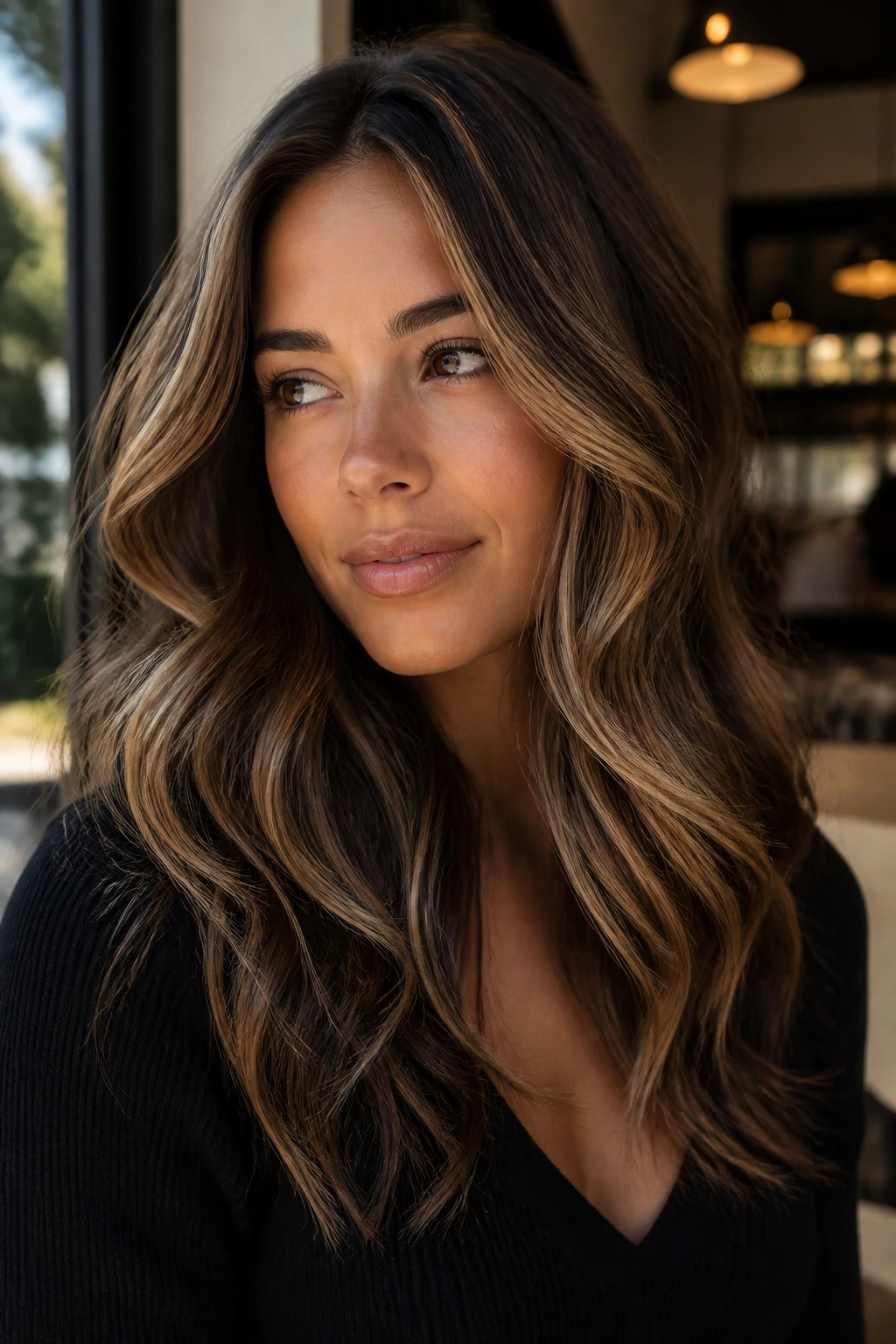
Golden latte caramel is creamy, warm, and a little soft around the edges. It’s lighter than chestnut caramel, but not so pale that it stops reading brunette. On dark hair, it gives the shine of a warm cup of coffee with milk—steady, smooth, and easy to wear.
This look is good when you want brightness that flatters rather than shocks. The color should skim the surface of the hair, especially around the front and the top layers, while the lower sections remain deeper. That gives the style a layered glow instead of a flat highlight block.
26. Caramel Underpainting
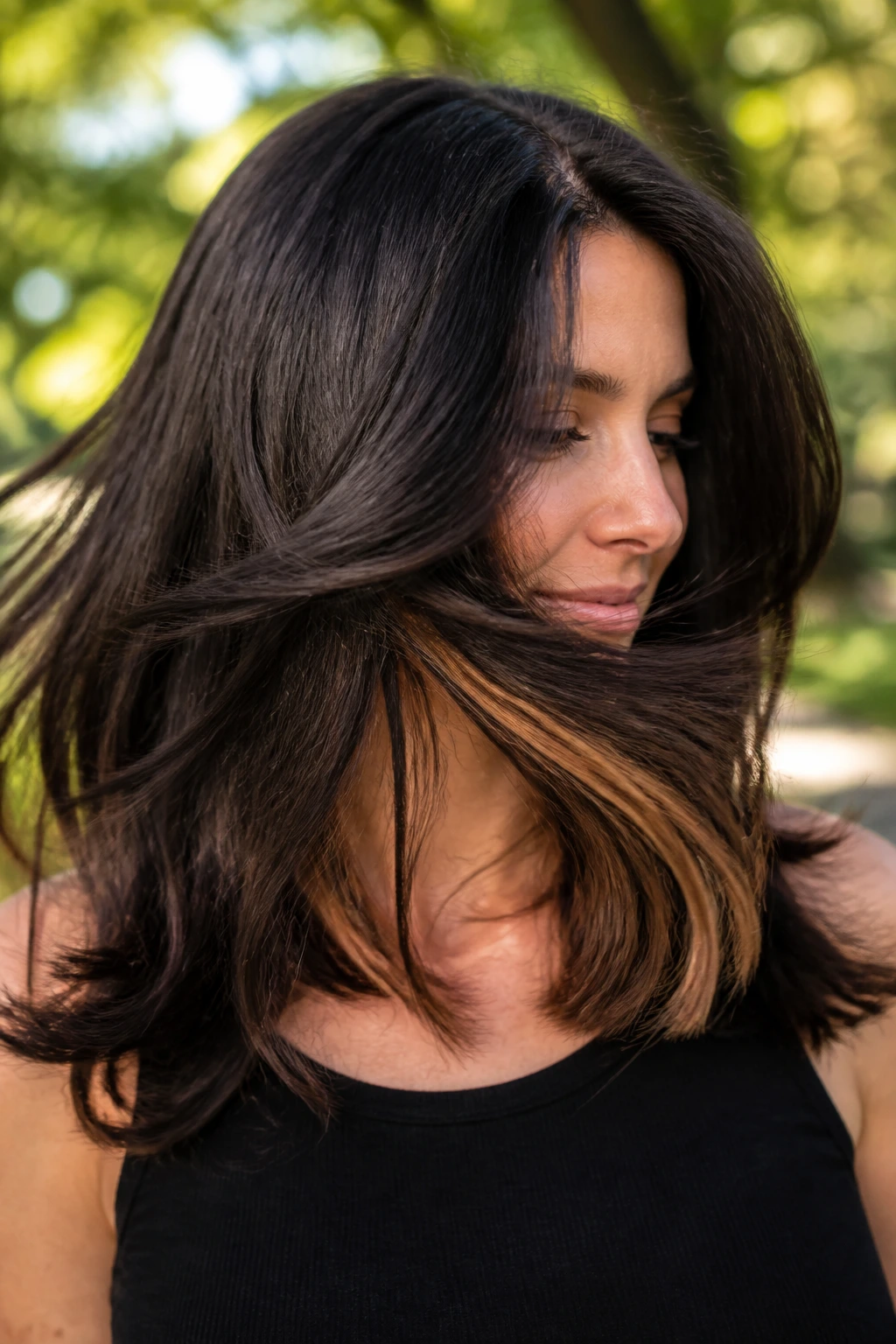
Underpainting is the quiet person at the party who still gets noticed. The caramel lives beneath the top layer, so the color shows when the hair moves, when the wind catches it, or when you tuck the top half behind your ear. From the front, it can still look mostly brunette.
Best Kept for Movement
This is a clever choice for people who like a secret with their color. The top layer protects the light pieces a bit, and the hidden placement gives the hair depth from underneath, which is especially nice on thick or heavy hair.
- Ask for lighter pieces under the top canopy and around the nape.
- Keep surface pieces minimal so the underlayer can peek through.
- Tip: underpainting and waves are a strong pair; straight hair hides the effect more.
27. Dimensional Caramel and Mocha Mix
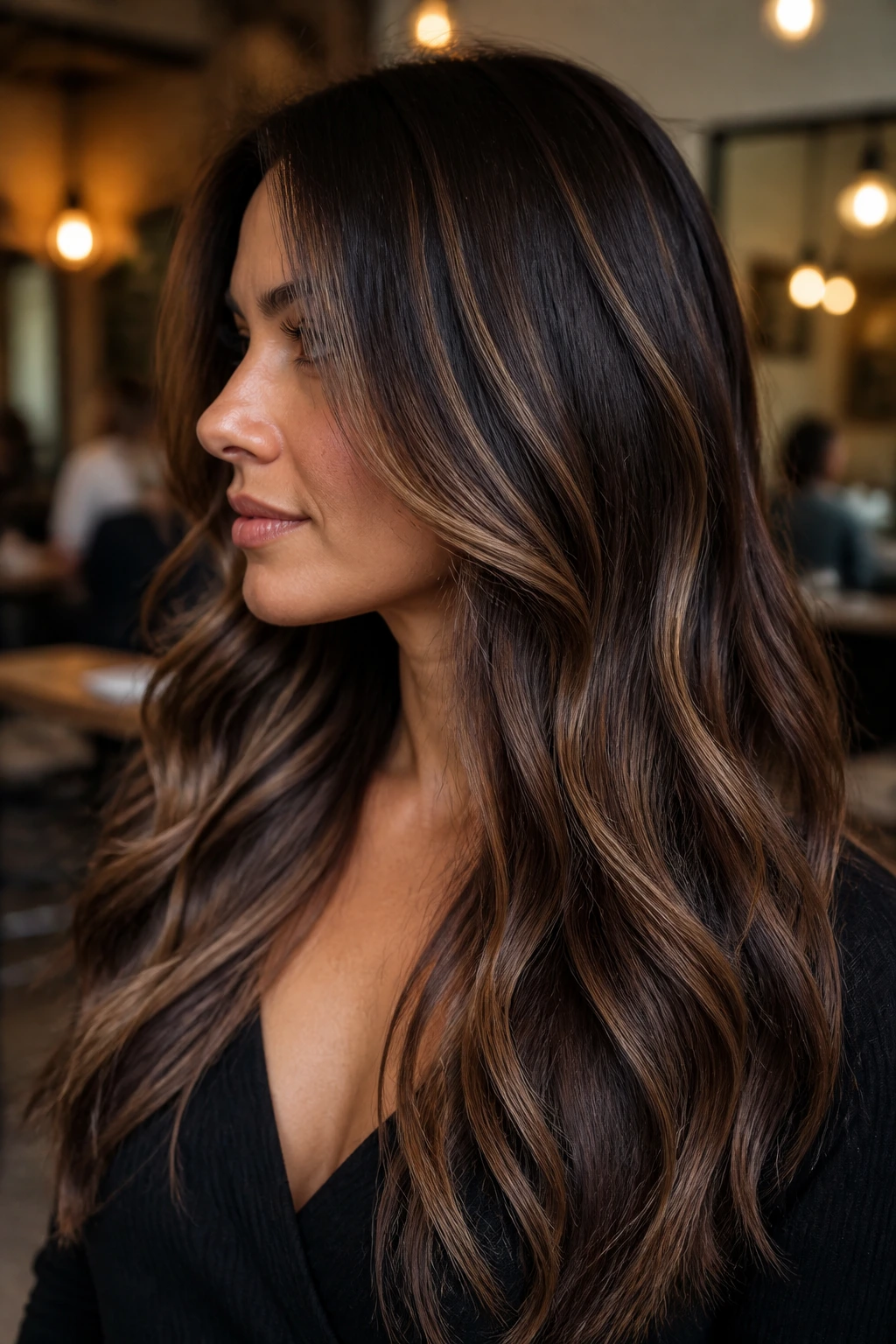
Highlight-only hair can look a little thirsty if the contrast is too clean. A mocha-and-caramel mix fixes that by giving the darker ribbons a job. The lowlights make the caramel appear brighter, and the caramel keeps the mocha from looking too heavy.
That back-and-forth is why this version is one of the richest options for dark brunettes. It builds depth from both directions. If you like hair that looks expensive in low light and even better outside, this mix is worth a serious look.
28. Beige Caramel on Thick Hair
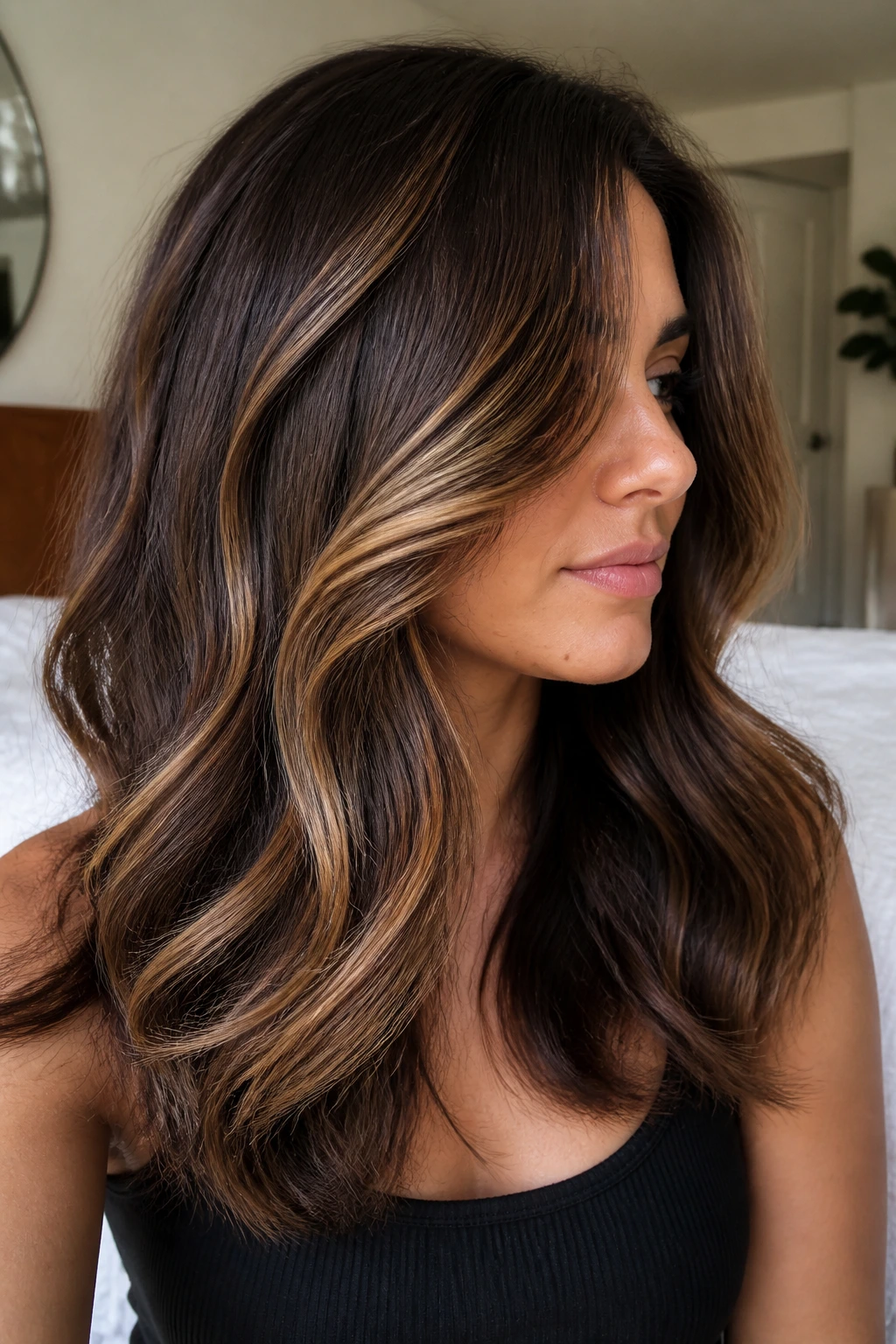
Thick hair can swallow color if the placement is too timid. Beige caramel helps because it adds visible contrast without turning the head into a patchwork of stripes. The lighter pieces can be a little broader here, especially through the mid-lengths, so the dimension still shows beneath all that density.
How to Keep It Soft
The goal is breakup, not clutter. Thick hair already carries a lot of visual weight, so the highlights should loosen that heaviness without leaving obvious gaps. A softer beige tone keeps the color elegant and stops the pattern from looking choppy.
- Use a few wider ribbons rather than too many tiny ones.
- Leave some depth near the roots for contrast.
- Note: this is one of the best setups for layered thick hair because the cut and color can work together.
29. Warm Brown with Caramel Flicks at the Ends
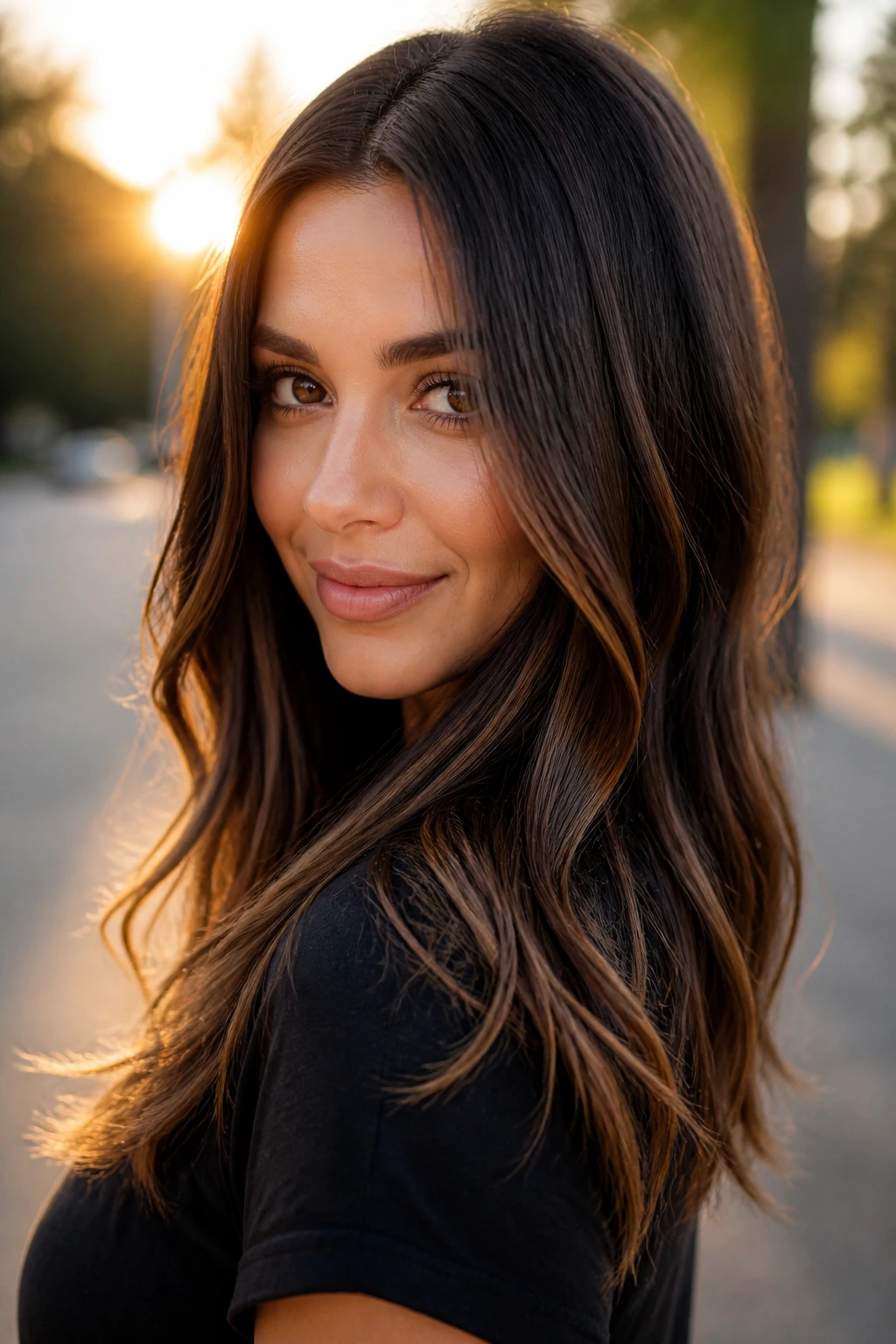
If you want the safest possible entry into caramel highlights for dark hair, start low. Put the brightness toward the ends, let the upper half stay brown, and use a soft caramel flick rather than a big color statement. It’s subtle, but not invisible.
This version is especially kind to hair that’s been colored before. The ends are usually the first place where a lighter tone makes sense, and the shape stays rich near the roots. It’s also a good choice if you wear your hair up a lot, because the lower brightness still shows when the hair falls back down.
30. Velvet Caramel Gloss
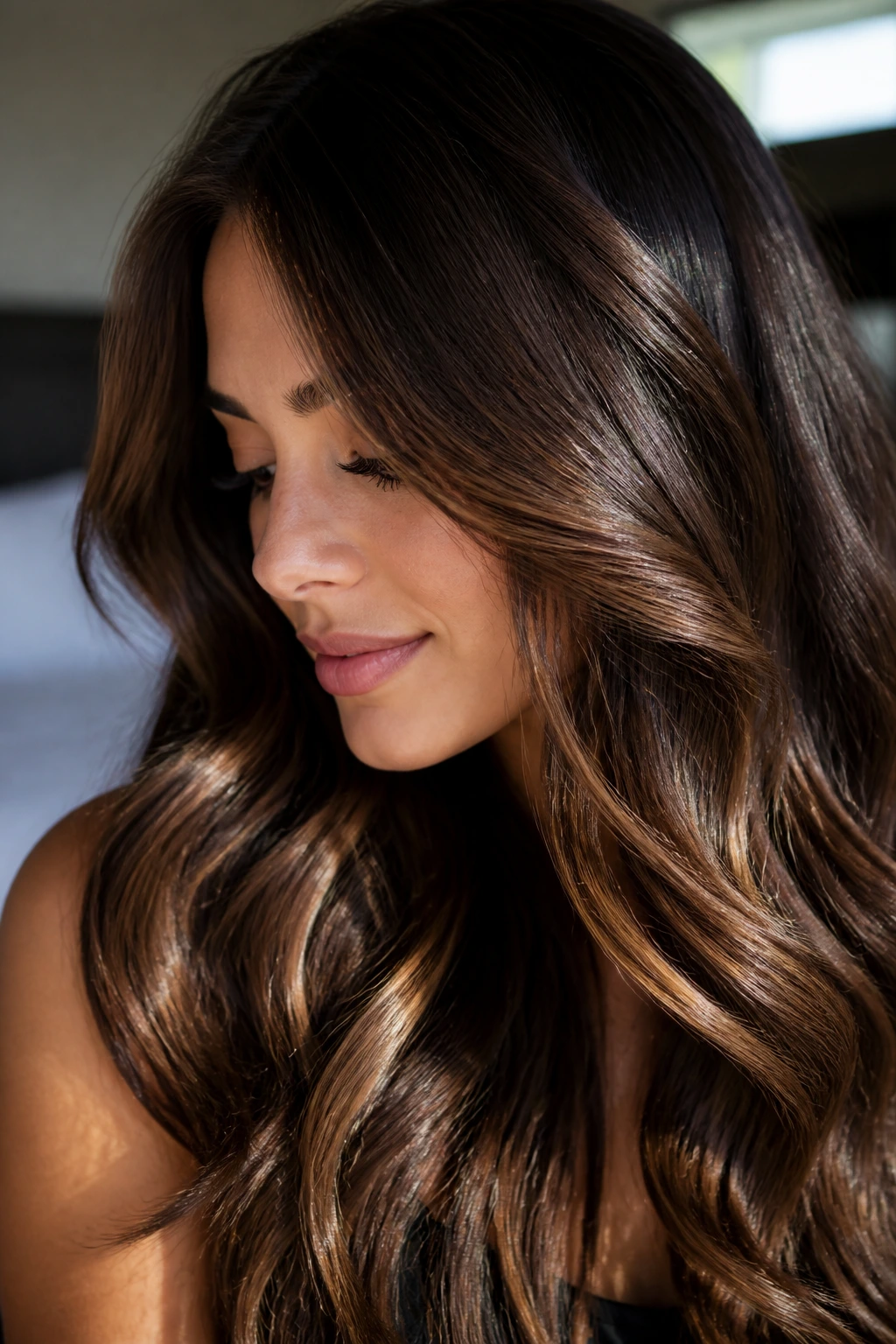
Velvet caramel is all about finish. The shade itself can sit between beige, honey, and soft bronze, but the gloss pulls the whole look together so it feels smooth and reflective instead of dry or gritty. On dark hair, that kind of finish matters more than people think.
The best part is how quiet it looks. Not bland. Quiet. The brunette still leads, but the caramel gives it a soft gleam that shows in sunlight and indoor light alike. If you want dark hair that looks polished without looking obviously highlighted, this is the version I’d put at the top of the stack.
Why Placement Changes the Whole Mood
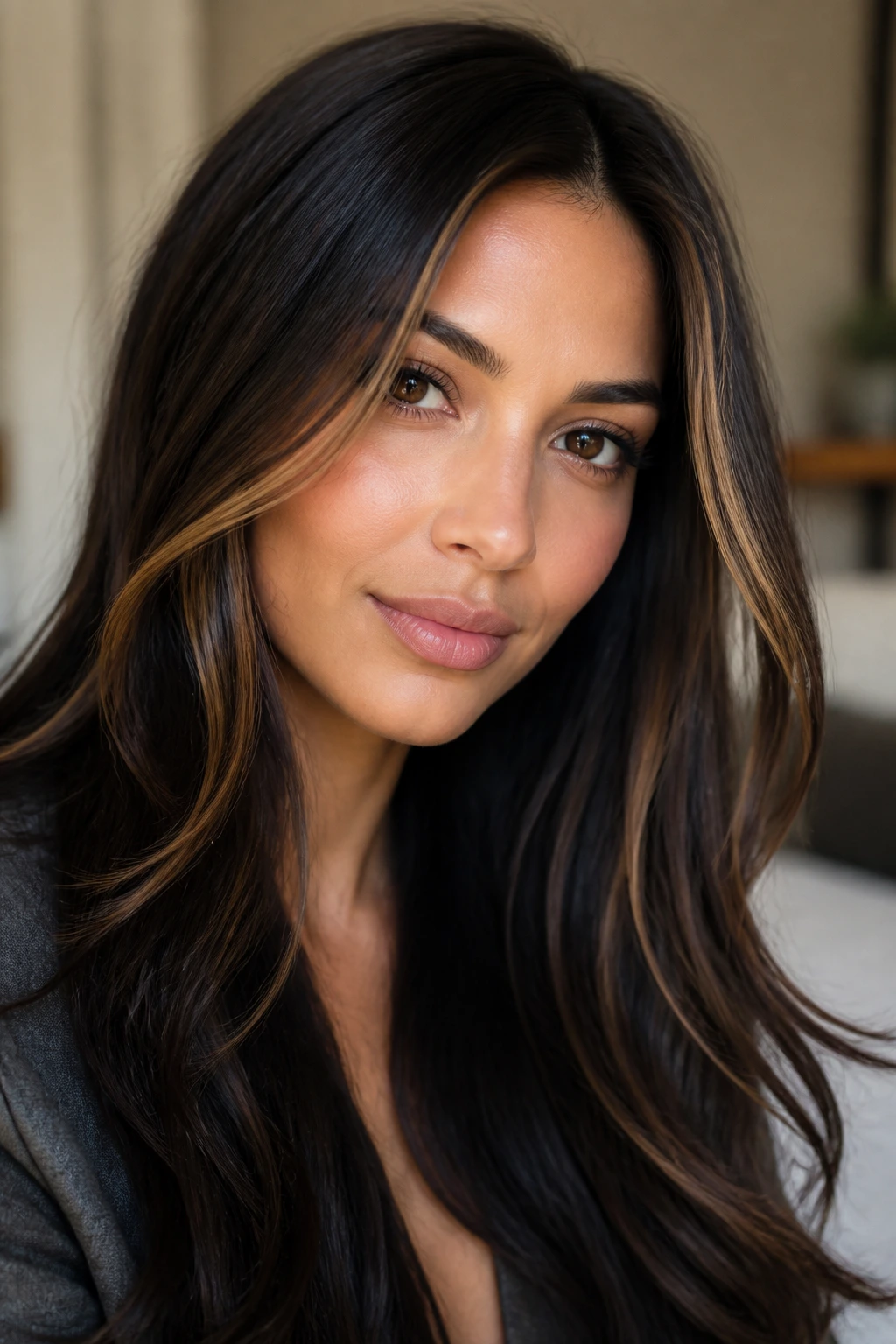
Placement is the difference between “nice brown hair” and “that hair has shape.” A caramel tone can land in ten different moods depending on whether it sits at the hairline, the crown, the mid-lengths, or underneath the surface. Near the face, it brightens skin and softens strong lines. Through the mid-lengths, it breaks up bulk and gives movement to straight or dense hair. Hidden underneath, it adds flicker without changing the first impression.
Dark hair has a lot of visual weight, which is part of why it looks so glossy when it’s cared for. But that same weight can make the whole style feel solid, almost too solid, if there’s no light movement anywhere. Caramel solves that by creating contrast inside the brown family. You do not need blonde to get lift. You need a clear plan for where the eye should go first.
The sweetest-looking caramel highlights for dark hair usually mix a few things at once: a richer root, a lighter ribbon near the face, and enough depth in the underside to keep the style from looking washed out. That balance is what makes brunette caramel reads so much more wearable than a high-contrast blonde job on the same base.
Essential Tools for Caramel Highlight Sessions
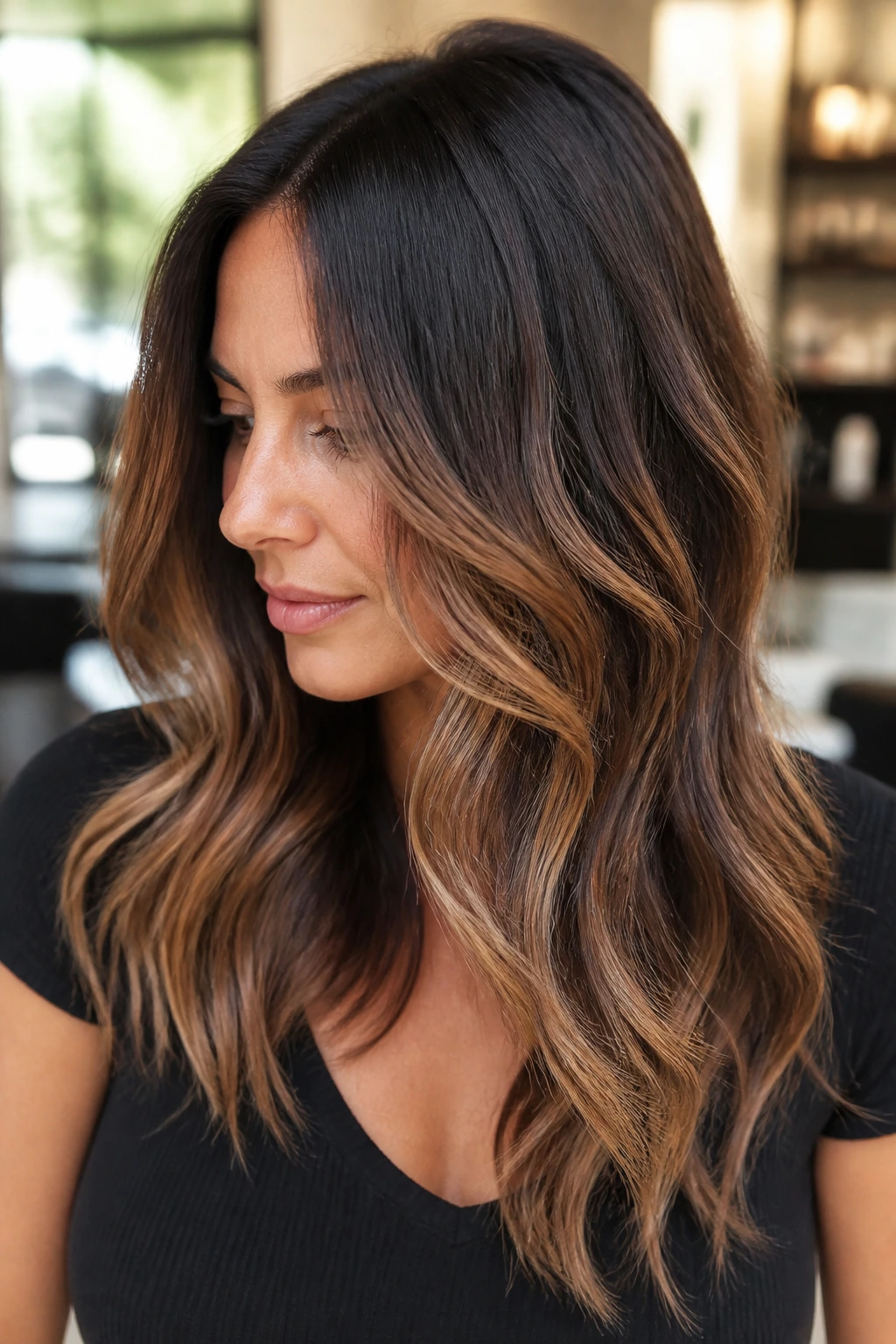
- Tail comb: useful for clean sectioning and for separating face-framing pieces without disturbing the rest of the hair.
- Sectioning clips: keep the sections neat so the highlight pattern stays even, especially on thick or curly hair.
- Tint brush and bowl: a must for mixing gloss, toner, or lightener evenly; a stiff brush gives more control at the root.
- Foils or balayage board: foils help with stronger lift, while a board supports painted balayage and foilyage work.
- Lightener and developer: the lift level matters more than the label; dark hair often needs careful pre-lightening to reach true caramel.
- Bond builder: helpful when the hair has been colored before or feels fragile at the ends.
- Gloss or toner: this is where caramel gets its final tone—beige, honey, bronze, or smoky.
- Color-safe shampoo and conditioner: keeps the shade from fading too fast and helps the hair stay smooth after lightening.
- Heat protectant: mandatory if you blow-dry or curl often; highlights show damage faster than one-tone hair.
- Wide-tooth comb or detangling brush: useful after washing, when the highlighted pieces can snag if you rush.
Choosing the Right Caramel Tone for Your Base
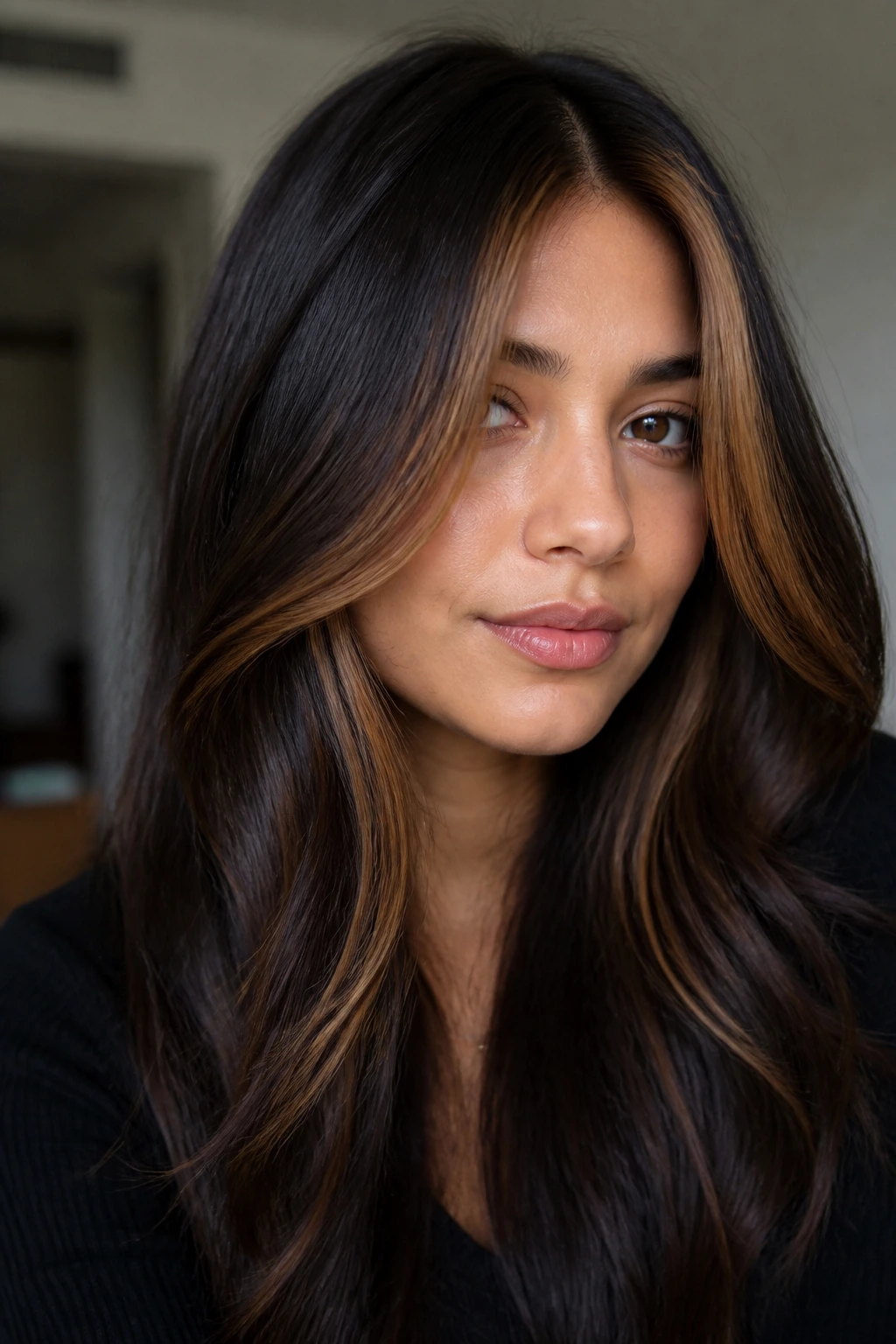
Dark hair is not one single base, and that’s where a lot of at-home color advice falls apart. A level 2 black-brown, a level 4 deep brunette, and a level 5 medium brunette all take caramel differently. The deeper the base, the more deliberate the lift has to be if you want the caramel to show in natural light instead of only under bathroom bulbs.
The old rule still holds: if you want caramel to look like caramel, not muddy brown, you usually need the lightened pieces to land around level 7 or 8 before toning. That lift exposes the orange-gold underlayer in the hair, which is then nudged into beige, honey, toffee, or bronze. Stop too early and the result can read flat. Push too far and you lose the brunette anchor. Hair history matters too. If the hair already has box dye, permanent dark color, or a lot of heat damage, the tone can grab unevenly.
I’m opinionated about one thing here: do not choose the tone before you know the base condition. Porous ends can pull warmer than roots. Very dark virgin hair can need a stronger plan than a previously colored brunette. If you can, do a strand test. It tells you more than a mood board ever will.
How to Wear Them Straight, Wavy, and Curly
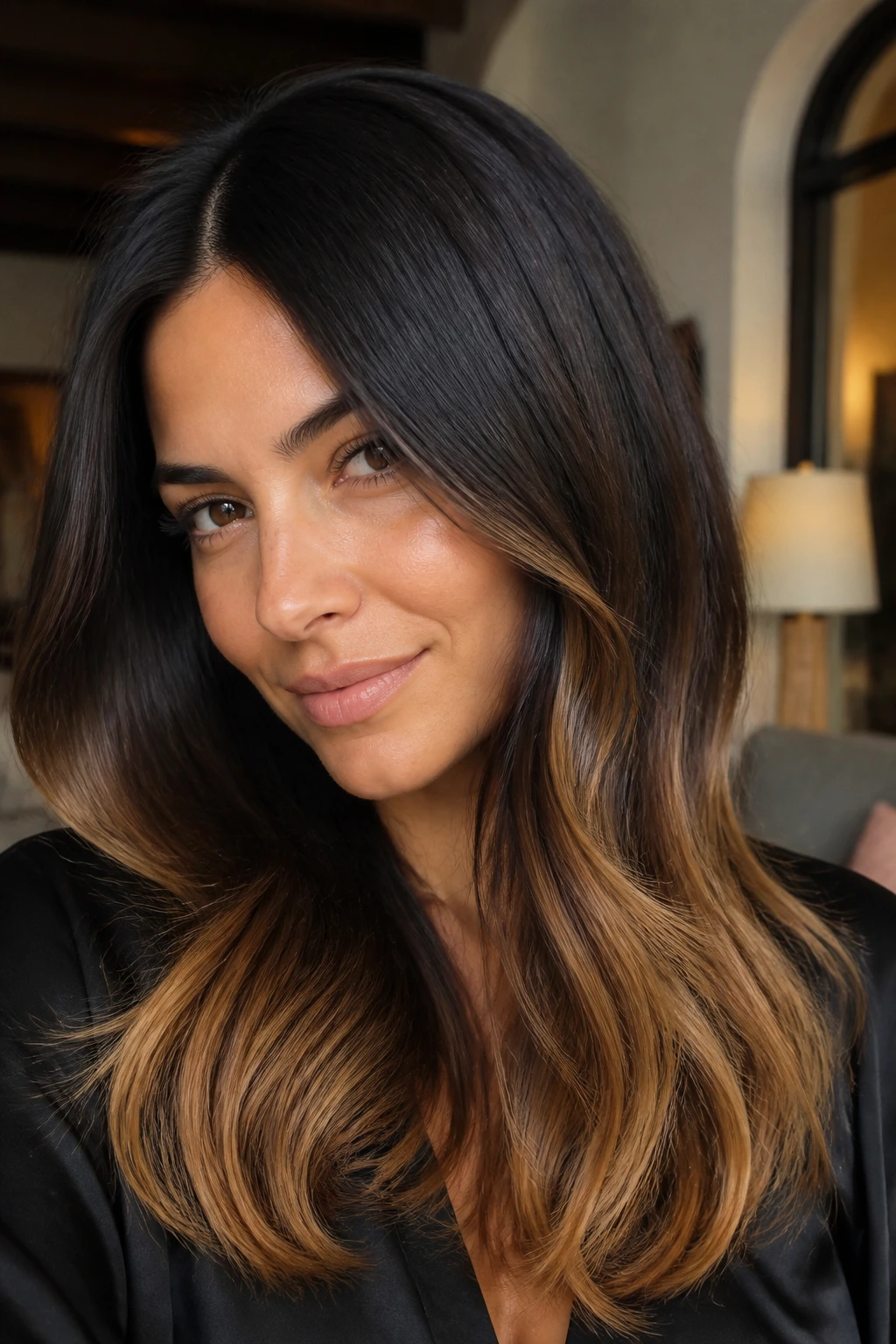
Straight Hair:
Straight styles show the cleanest lines, so fine ribbons and money pieces read sharply here. If you wear your hair sleek, keep the contrast controlled and the gloss strong; blunt ends plus caramel ribbons can look chic fast, but they can also expose sloppy placement.
Loose Waves:
Waves are the easiest place for caramel to shine because each bend catches a different piece of light. Painted balayage, ombré, and ribbon highlights all look fuller once the hair is waved, which is why so many colorists place the brightest pieces where they’ll move.
Natural Curls:
Curls need highlight placement that respects the spiral. Too much striping and the pattern breaks up; too little and the color disappears. Caramel pieces placed around the halo, inside select curls, and near the outer curve usually give the richest result.
Updos and Ponytails:
If your hair spends a lot of time tied back, think about the crown, hairline, and the pieces that will still show from the front. That’s where the color has to work hardest. A front-loaded highlight plan can look beautiful in a ponytail even when the rest of the color is quiet.
Extra Ways to Bring Out the Dimension
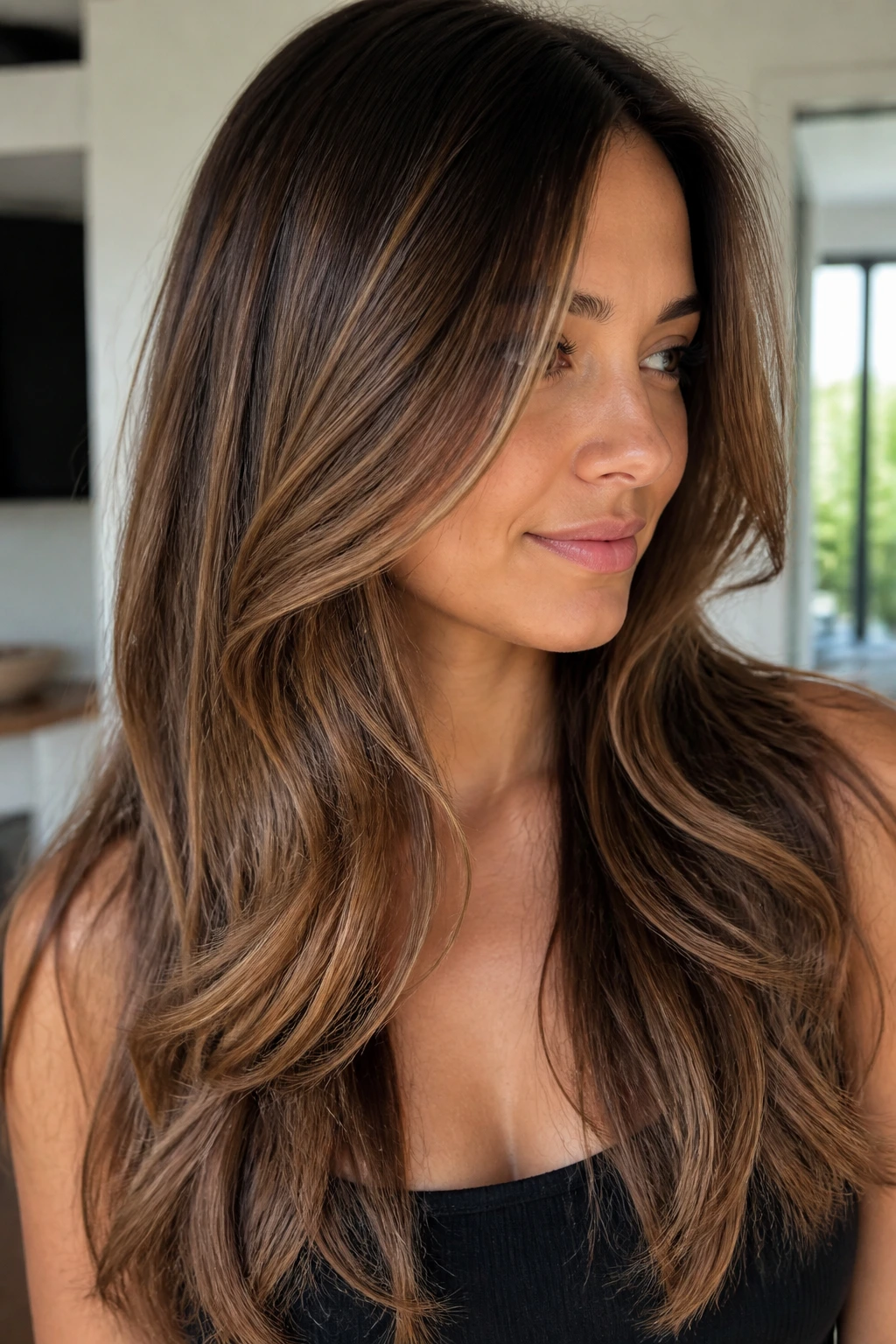
Gloss Boost:
A clear or lightly tinted gloss every few weeks keeps caramel from drying out into a dull brown. On highlighted dark hair, shine is half the story.
Contrast Control:
A few lowlights under the surface can keep the caramel from floating too brightly on top. This matters on thick hair and on jobs with a lot of light pieces.
Texture Trick:
A haircut with layers, face framing, or soft interior texturizing helps the color show up from different angles. Flat one-length hair can hide a lot of work.
Make-It-Yours:
If you want the look softer, keep the caramel close to beige or mocha. If you want more warmth, push it toward honey or auburn. There’s room in the family.
Tone, Refresh, and Grow-Out Care
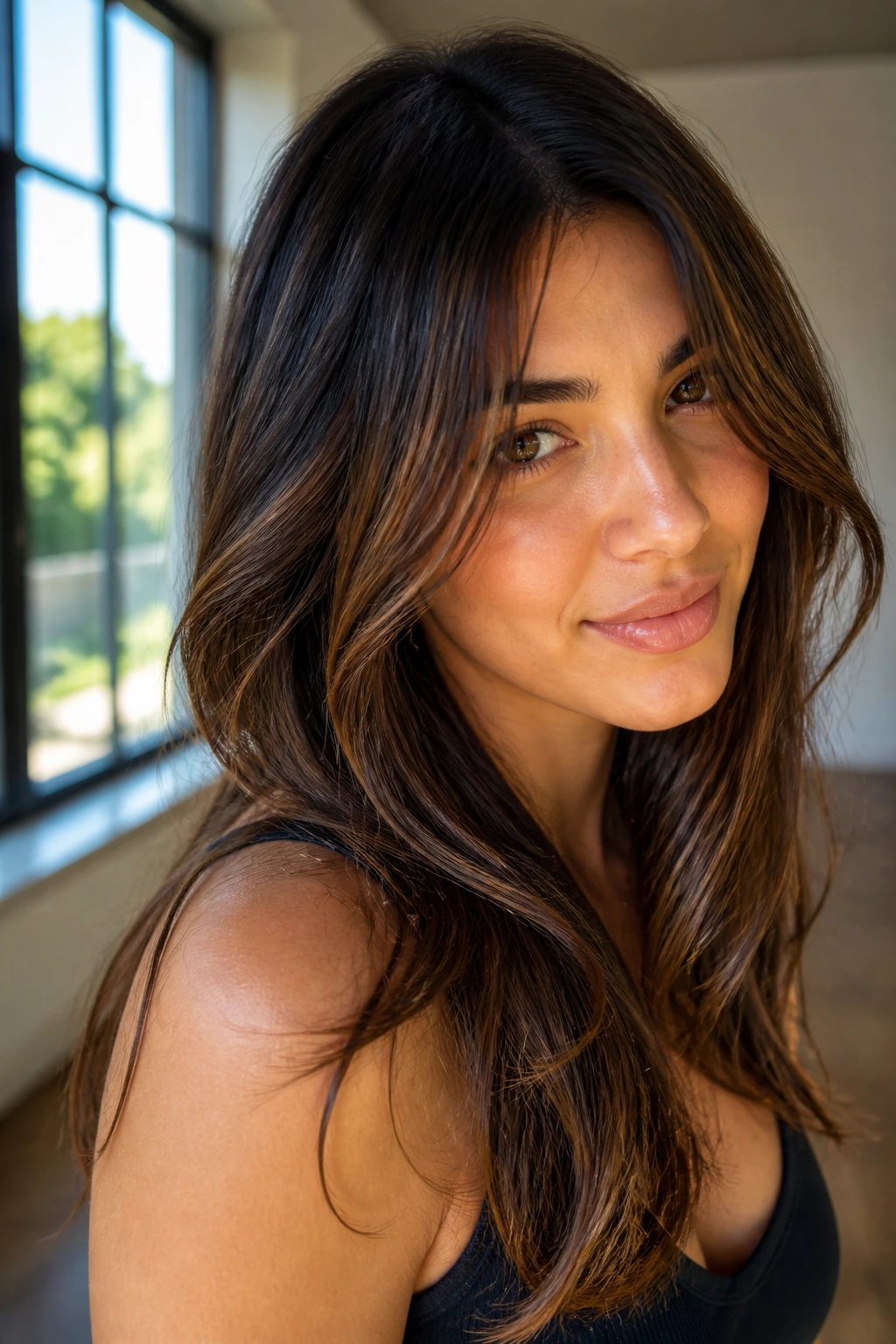
Caramel highlights on dark hair need maintenance, but not all maintenance looks the same. Some versions hold for months with only a gloss. Others, especially brighter money pieces or heavy face-framing, need attention sooner because they sit where the sun and styling tools hit first.
A useful rhythm is this: gloss or toner refresh every 4 to 6 weeks if the caramel leans warm or brass-prone, partial highlight touch-ups around 8 to 12 weeks for more obvious placements, and a full reassessment every 12 to 16 weeks if the color is built with balayage or a rooted fade. Hair that has been lifted more than once may need more bond care and less frequent hot-tool use. If the tone turns too yellow, a violet or blue-violet product can help, but use it sparingly; overdoing it can make caramel look dull and dusty instead of rich.
Wash day matters too. Use cooler water on the highlighted pieces, keep shampoo on the scalp and let the lather rinse through the ends, and do not blast the hair with high heat every single time. Caramel is one of those colors that looks expensive when the hair itself looks smooth. The second the ends get rough, the whole illusion breaks.
Variations and Adaptations to Try
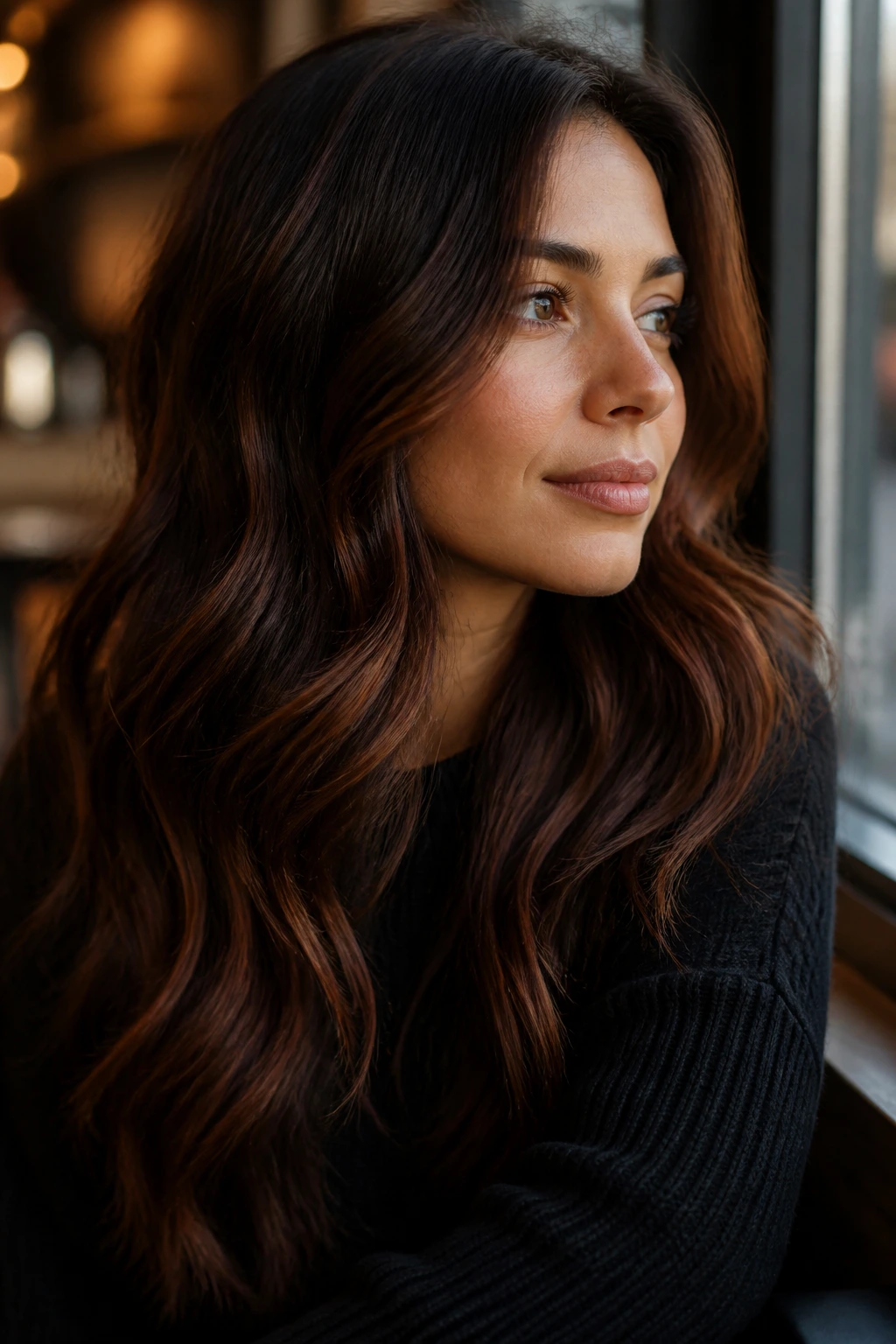
Honey Halo:
This version keeps the brightest caramel around the face and top layers, with the ends staying a little deeper. It’s a clean choice if you want your brunette to feel lighter but still rooted.
Mocha Melt:
A mocha melt pushes the highlights darker and softer, with the caramel hovering closer to beige than gold. It suits people who want dimension first and brightness second.
Copper Caramel Swirl:
Add a little copper warmth to the caramel if your skin loves red-brown tones. The result is richer and more autumn-toned, especially on dark bases with warm undertones.
Curly Ribbon Set:
For curls, use fewer but more intentional ribbons that follow the pattern of the coil. The goal is movement, not a striped effect.
Low-Maintenance Root Shadow:
A darker root shadow keeps the top natural-looking while the highlights live through the lengths and ends. Great if you hate seeing a hard line every few weeks.
High-Contrast Money Piece:
Keep the front brighter and the rest of the hair quieter. This one works when you want the color to announce itself fast and look dramatic in ponytails or loose waves.
Common Mistakes to Avoid
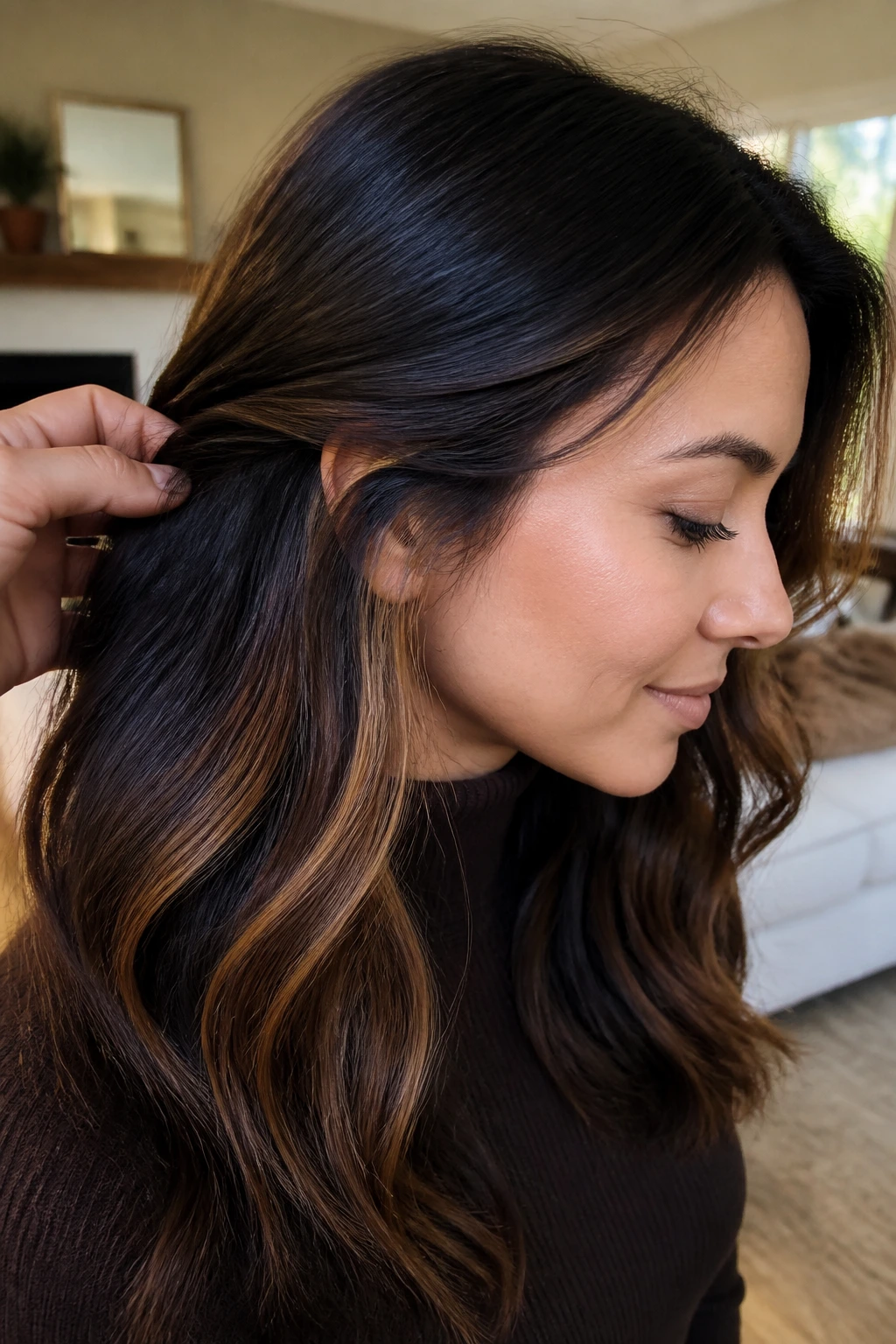
The biggest mistake is choosing a caramel that is too light for the base. On dark hair, that usually creates a blonde streak effect instead of a brunette highlight effect. The fix is to stop around level 7 or 8, then tone into beige, honey, bronze, or toffee depending on how warm you want the result to feel.
Another problem is ignoring undertone. Dark hair can throw orange when lightened, and if that orange is not toned properly, the result looks brassy or harsh. Warm caramel should still look brown first. If it looks like citrus, the toner or gloss is off.
People also overload the front and leave the rest of the head untouched. That can make the color feel disconnected, especially on blunt cuts. A better move is to connect the front pieces to the mid-lengths with a few softer strands so the eye travels naturally.
Skipping a gloss is a quiet mistake that shows up fast. Freshly lifted hair can look dry even when the color is nice, and dryness steals the richness that caramel needs. A gloss smooths the tone and makes the highlights look intentional.
Finally, do not forget previous color. Box dye, old permanent brown, and henna all change the way lightener behaves. If the hair history is messy, the plan should be slower, not louder.
Frequently Asked Questions
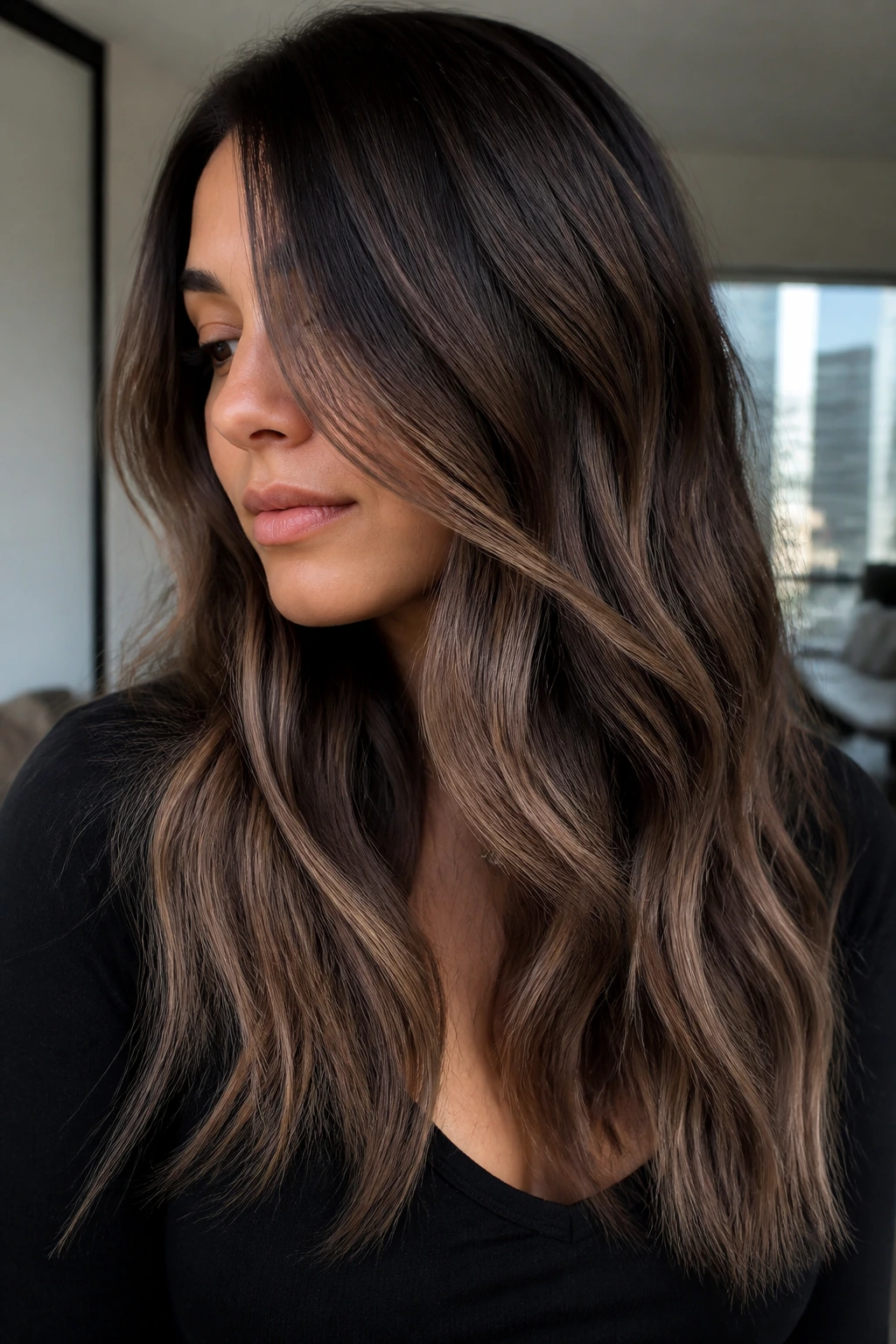
Will caramel highlights show on very dark brown hair?
Yes, but they need enough lift to stand apart from the base. On very dark brown hair, caramel usually reads best when the highlighted pieces reach a warm level 7 or 8 before toning.
Can I get caramel highlights without bleach?
Sometimes, if your hair is only a bit darker than the target tone and you want a subtle result. On deep brunette or near-black hair, a lightener is usually needed if you want true caramel rather than just a brown gloss.
What’s better for dark hair: balayage or foils?
Balayage gives a softer, more blended grow-out, while foils give stronger lift and a brighter finish. If you want a subtle brunette shift, balayage is often the calmer choice. If you want the caramel to show clearly on a dark base, foils may be the better tool.
How often do caramel highlights need touch-ups?
It depends on placement. Face-framing pieces and brighter money pieces often need a refresh sooner, while rooted balayage can stay pretty for longer. A gloss every 4 to 6 weeks and a highlight refresh every 8 to 12 weeks is a solid rhythm for many people.
Why did my caramel turn orange?
The hair probably lifted into the warm orange-red stage and wasn’t toned enough afterward. That’s common on dark hair. The fix is a properly matched toner or gloss, not just more shampoo.
Can curly hair wear caramel highlights without looking stripey?
Absolutely, as long as the placement follows the curl pattern. Thin ribbons around the halo and a few interior pieces usually look far better than broad, straight sections that ignore the shape of the curl.
Are caramel highlights high-maintenance?
They can be, but not always. A rooted balayage or soft ombré is easier to live with than bright face pieces, and a gloss can keep the tone rich without a full color appointment.
What if I want the color warmer later?
That’s one of the nicer things about caramel—you can lean it more honey, toffee, or auburn at the next gloss or refresh. You do not need to change the whole head to shift the mood.
Caramel Balance
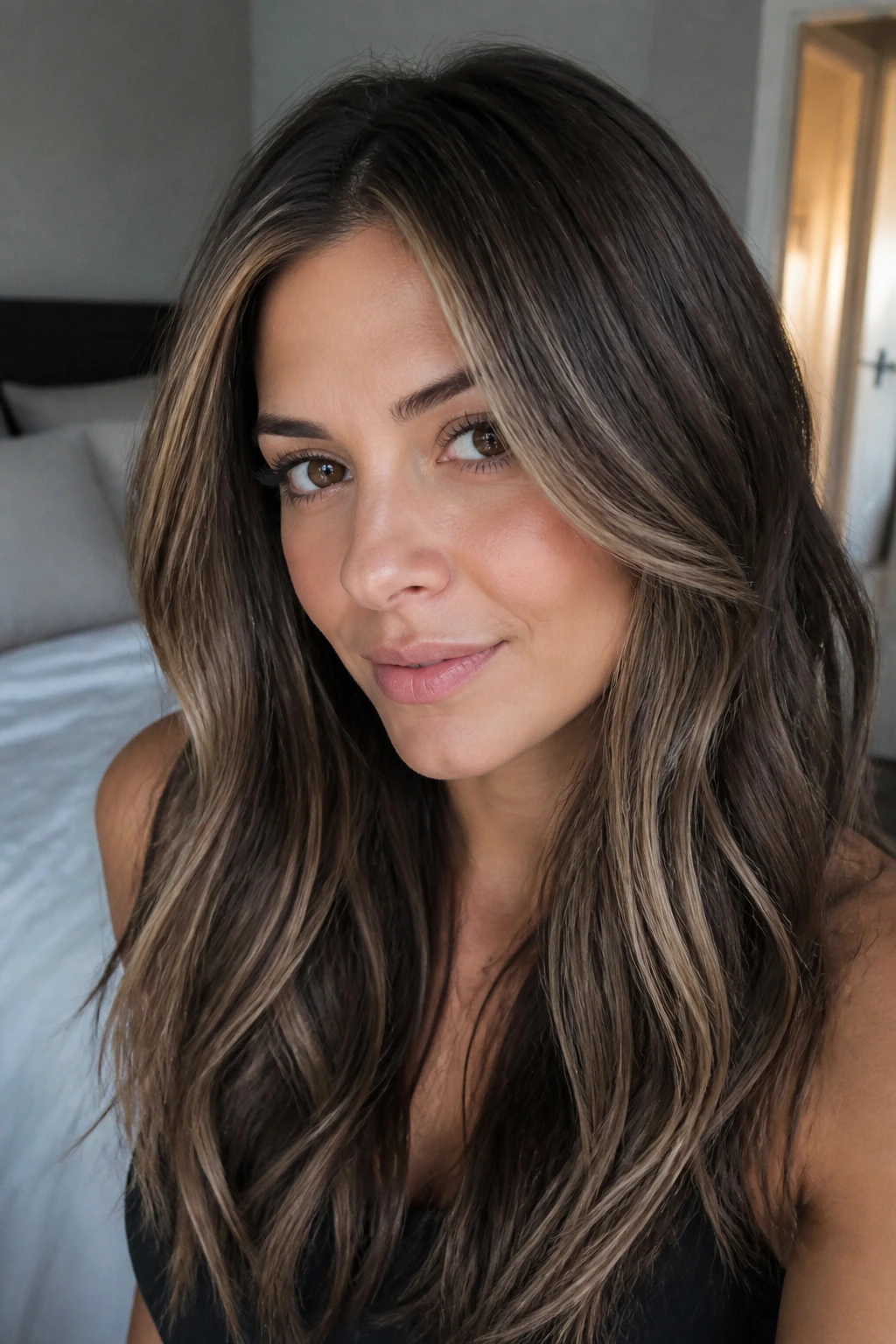
The nicest brunette caramel highlights for dark hair are the ones that still let the brunette breathe. They brighten the face, soften the ends, and keep the base deep enough to look rich in daylight and indoors. That balance is what makes the color feel wearable instead of trendy for the sake of it.
If you’re choosing between two versions, pick the one that protects the base the most. You can always add more light later. It’s much harder to put depth back once the brunette has been lifted too far, and that’s the part people tend to learn the hard way.