



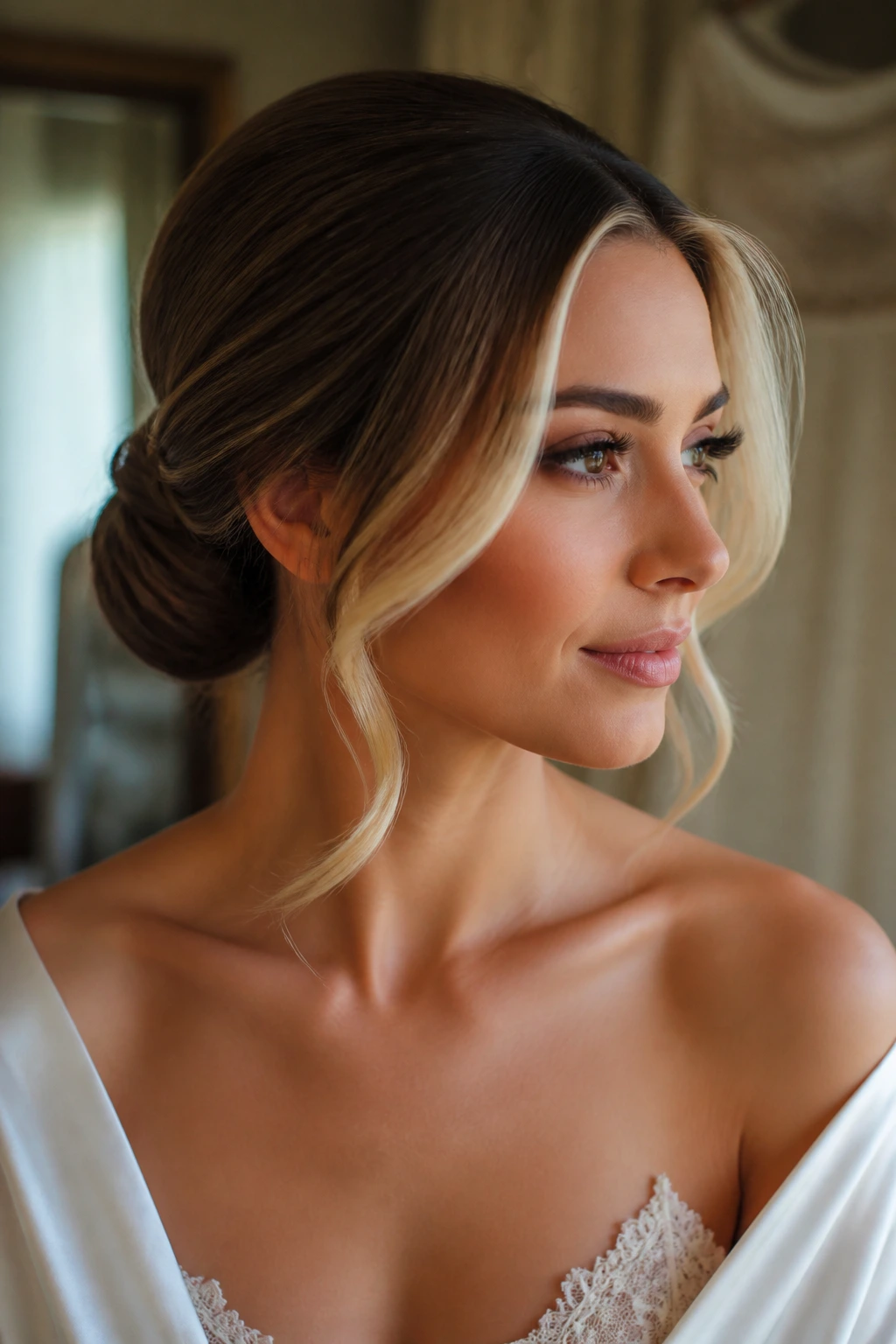
A low bun can disappear in a bad photo. Add a bright money piece, and suddenly the whole shape wakes up.
That’s the real trick with wedding hair that sits at the nape: it gives the face-framing color room to do its job. The brighter front strands don’t need a huge amount of height to matter. They just need a clean part, a controlled bend, and a hairstyle that doesn’t swallow them under a veil pin or a fistful of hairspray.
Too many bridal styles flatten the front and then wonder why the color looks dull. A low shape changes the whole equation. It lets the lighter pieces stay visible around the cheekbones, catch side light, and soften the line between the face and the rest of the updo. And that matters more than people think. In photos, the difference between “nice bun” and “this looks finished” is often one curl that was placed on purpose instead of left to chance.
Why These Low Wedding Hairdos Earn Their Keep
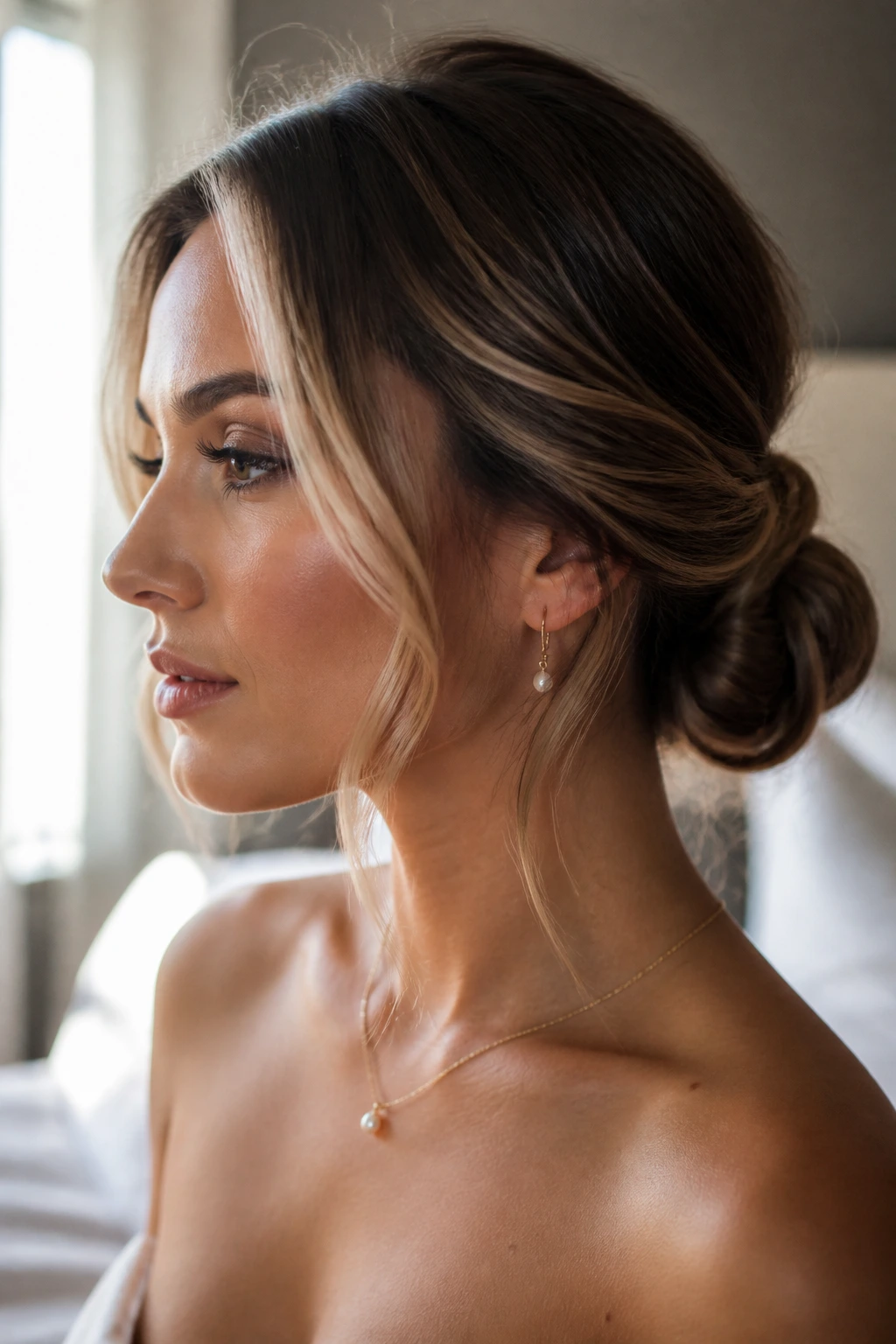
-
The front color still shows: Low placement keeps the money piece near the face, so the lighter strands read in profile instead of vanishing behind the crown.
-
The back of the head stays clean: A nape-level bun gives veils, combs, and pins a stable base without crowding the top of the hairstyle.
-
The shape works with more necklines: Low hair leaves room for open backs, square necks, and off-the-shoulder dresses that would fight a tall, bulky updo.
-
The style can stay soft or sharp: You can push it sleek for black-tie rooms or leave texture in the front pieces for something gentler.
-
The color contrast does real work: Money piece highlights against deeper lowlights and a smooth low bun create dimension without needing a giant curl set.
-
The style tends to hold up through long events: Hair pinned low usually survives better than a top-heavy style when you add dancing, hugging, and a veil.
1. Sleek Low Chignon With Bright Money Piece Swoops
A polished chignon at the nape gives the front color room to breathe. The lighter face-framing pieces stay visible because they’re brushed into a soft inward curve, not shoved straight back under the bun. That little curve matters. It stops the front from looking stiff and makes the whole style feel more deliberate.
Why the Money Piece Still Reads
The slick crown creates contrast. If your money piece is blonde, caramel, or copper, it stands out more against the smooth, darker base when the rest of the hair is tucked low. I like this one for satin gowns and earrings that need a clean backdrop.
- Best on straight or lightly waved hair
- Works well when the front pieces reach at least the chin
- Keep the bun small and tight so the face-framing strands stay the star
Tiny detail: Use a flat iron on the front pieces only, then bend the ends inward with the iron’s edge. That soft turn keeps the highlight from hanging like a strip.
2. Soft Twisted Bun With Loose Front Waves
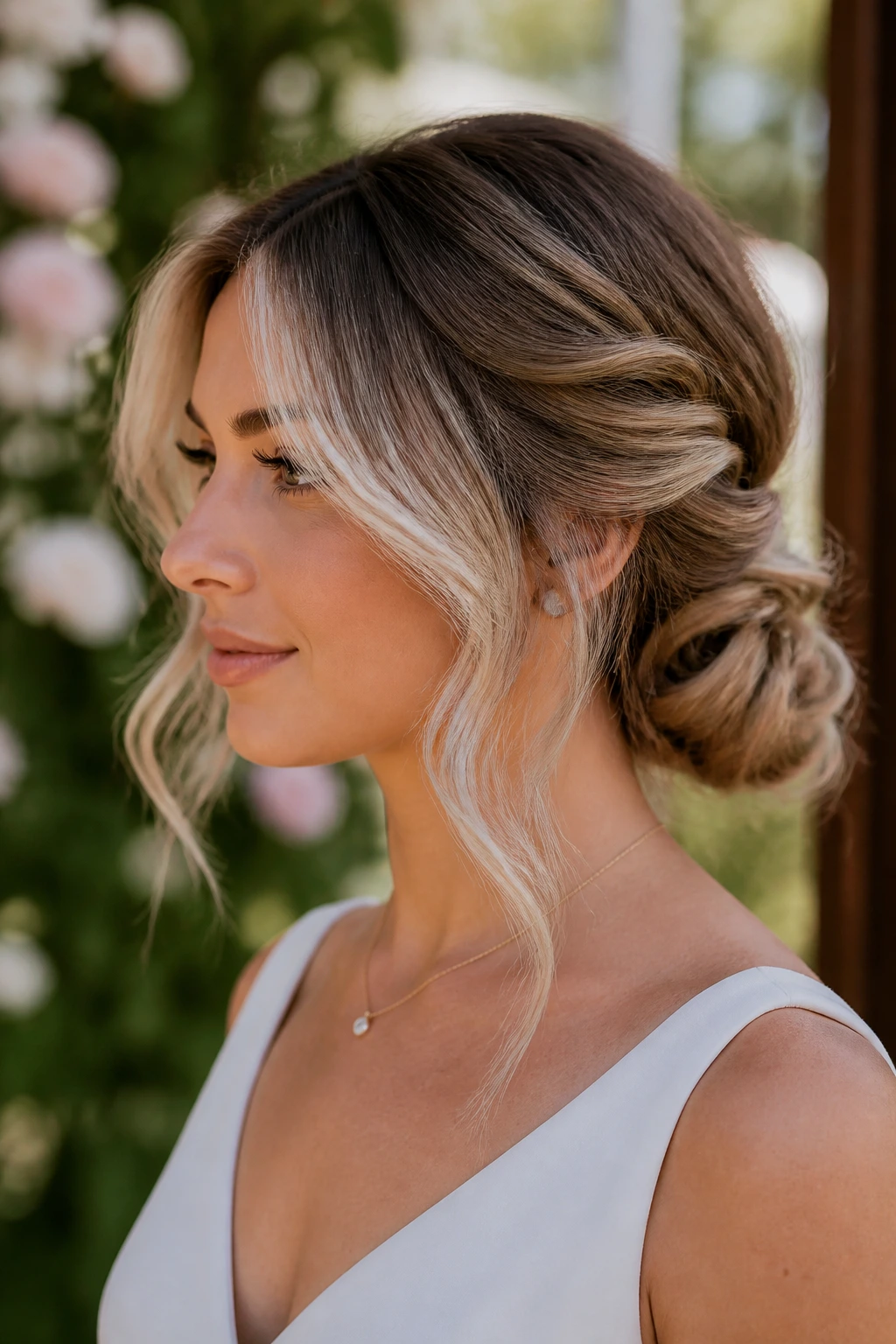
This one has more movement, less polish, and a nicer feel if your dress already has strong structure. The twists at the nape look relaxed, but they still hold their shape if you pin them from underneath and mist each section before you fold it in. The money piece can wave away from the face instead of being tucked tight.
A style like this suits hair that already wants to bend. If your front highlights have a little wave, let them keep it. Don’t brush them into obedience. That’s how you end up with a wedding style that looks sprayed to death.
The result is softer at the temples and more open around the cheeks. It’s a better match for garden ceremonies, lace sleeves, and anything that feels a touch less formal than a red-carpet bun.
3. Center-Part Low Knot With Clean Sides
Why does a center part make a low knot look so tidy? Because it gives the money piece a frame instead of a fight. The bright front panels fall evenly on both sides, and the low knot sits like a punctuation mark at the nape.
That symmetry is a gift if your dress has a square neckline or a straight bust line. It keeps the eye moving down the center of the face, then back to the knot and the back of the gown. Nothing floats off in a random direction.
Best Way to Wear It
Keep the side sections smooth, but not pasted flat. A touch of bend near the jaw keeps the highlight from looking harsh. If you wear statement earrings, this is one of the safest low styles in the bunch.
4. Braided Low Bun With Woven Front Highlights
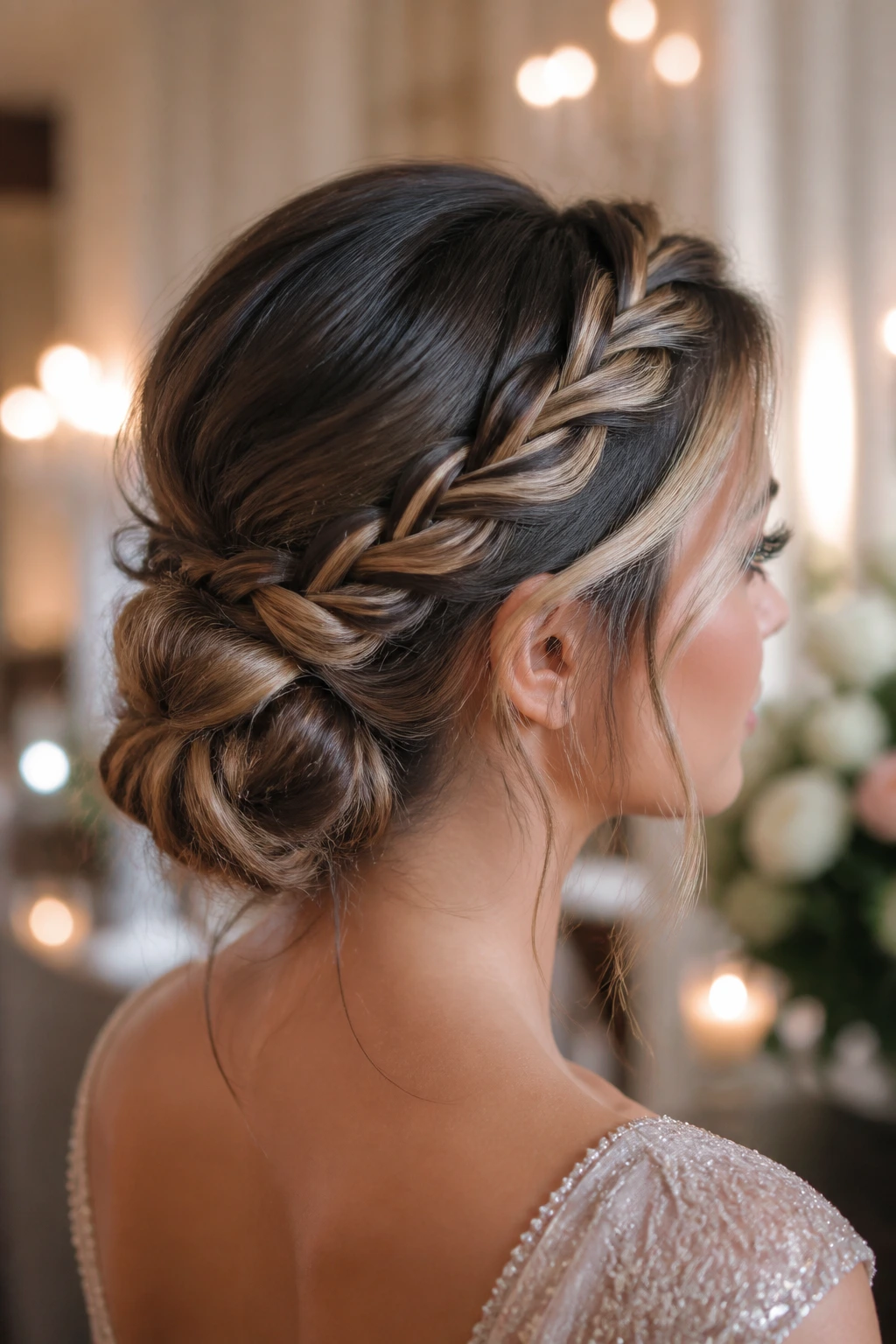
Picture a braid running from the temple into a low bun, with the brighter front pieces tucked into the weave like ribbons. That’s the appeal here. The braid gives structure, while the money piece adds motion right where the face needs it most.
This is one of those styles that looks more detailed than it is. The braid creates a built-in path for the color, so the lighter strands don’t feel like they were added as an afterthought. They become part of the shape.
- Best for medium to thick hair
- Nice choice if you want texture without big volume
- Works with pearl pins or a small comb placed just above the bun
The braid also helps if your hair has layers that like to escape. It keeps the front clean, but not severe.
5. Romantic Low French Twist With Airy Pieces
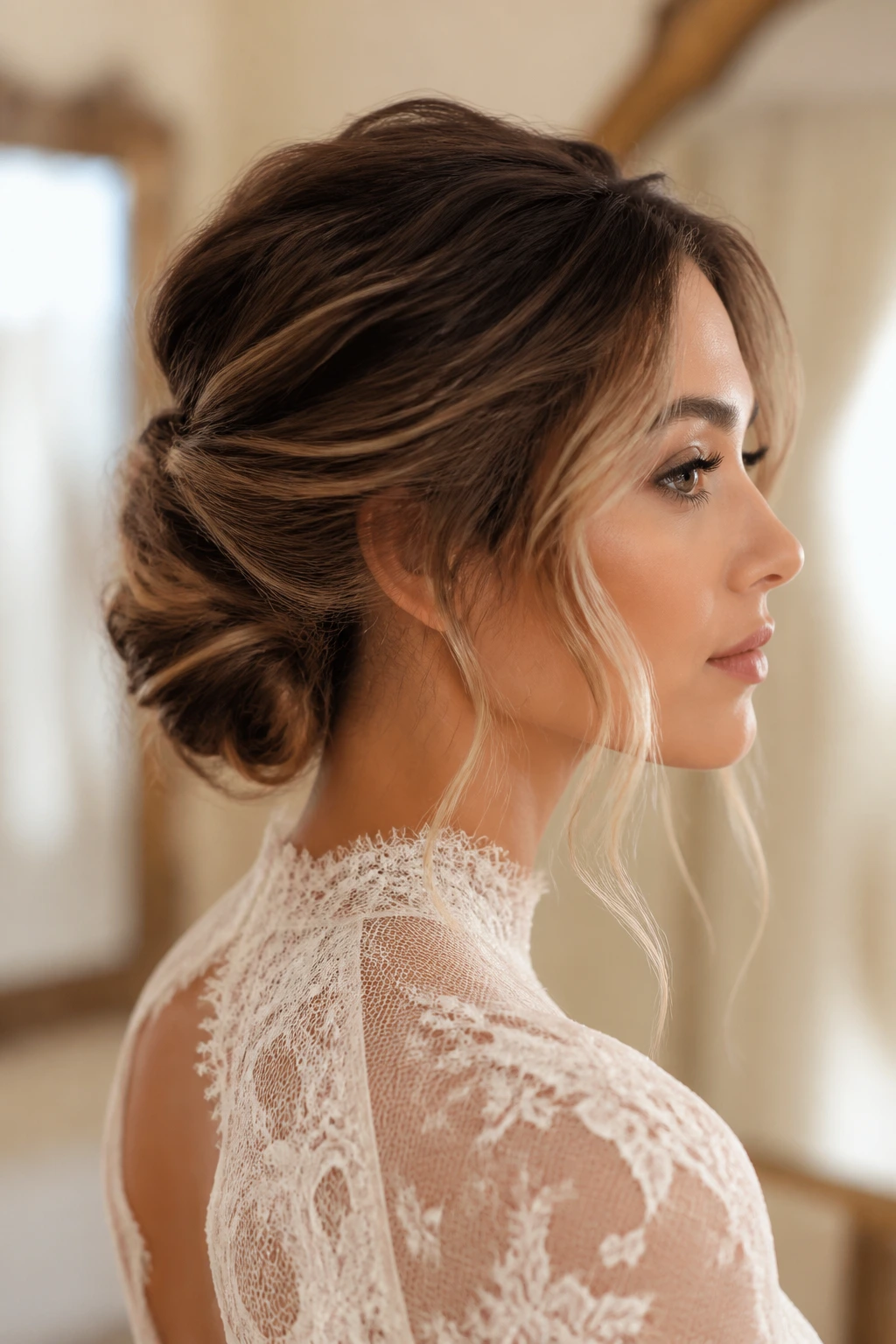
A low French twist feels a little old-school in the best way. At the nape, the roll gives the back of the style a vertical line, while the front pieces can be left in loose bends that soften the cheekbones. If the money piece is bright, this is one of the prettiest ways to show it off without making the whole style look overworked.
I like this version when the dress has lace, beadwork, or a high neckline. The twist holds the shape, and the front pieces stop it from feeling too formal. It’s a nice split between discipline and softness.
You do need enough length to pin the roll cleanly. If the hair is too short, the twist starts to look forced. And forced hair always shows.
6. Wrapped Low Ponytail With a Polished Crown
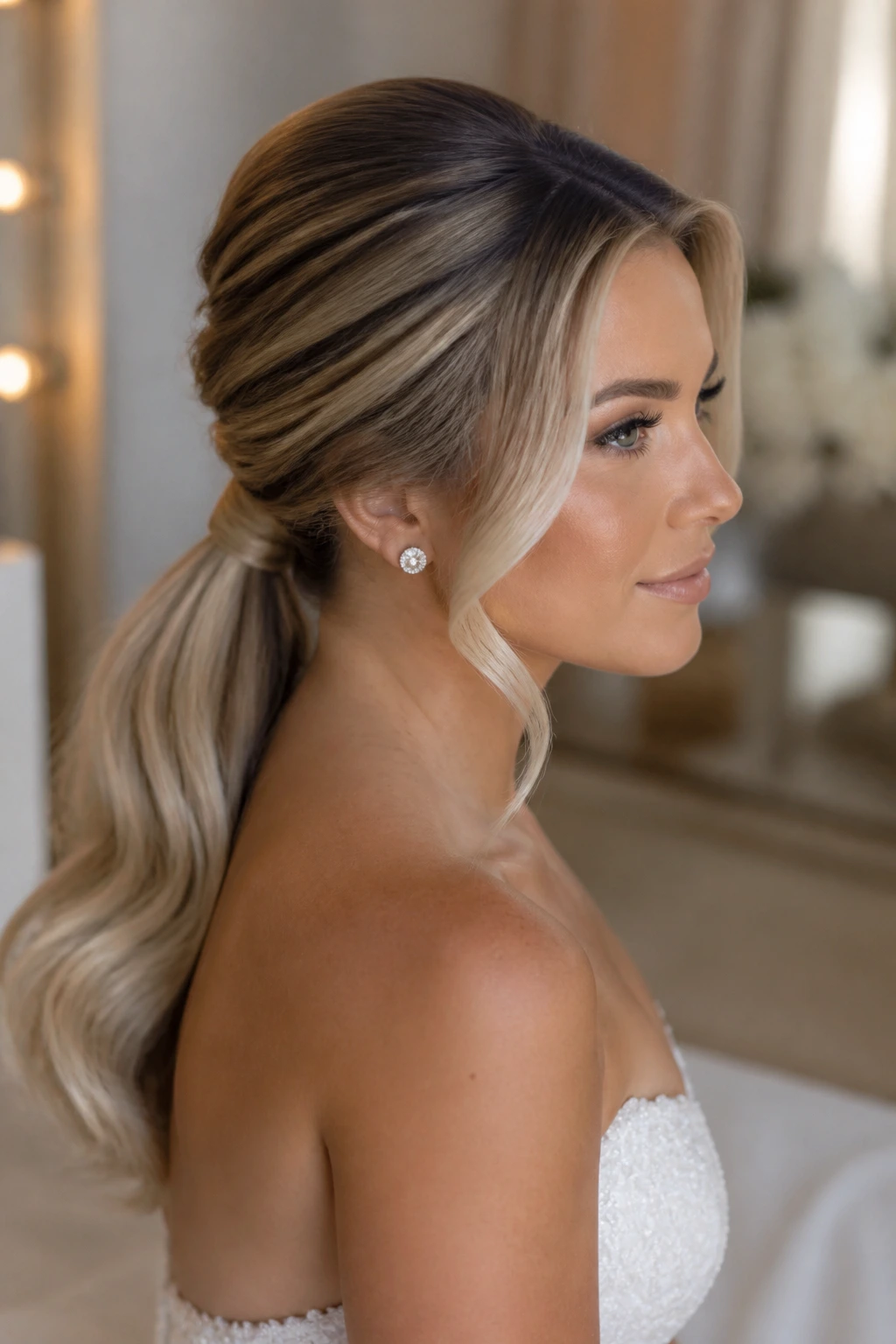
A low ponytail can be more bridal than people give it credit for. Wrapped neatly at the base, with a smooth crown and a curved front section, it looks sleek but not severe. The money piece sits where it can move a little, which matters because a ponytail looks flat the second it loses movement.
Unlike a bun, this style keeps the ends visible. That’s the appeal. If the hair has a healthy shine and the front highlights have a glossy bend, the ponytail feels clean and modern rather than casual.
This one is best for brides who don’t want a hidden shape at the back. The ponytail line is visible in photos, and that can be a strength if the dress has a low back or a dramatic train.
7. Bubble Low Ponytail With Pearl Pins
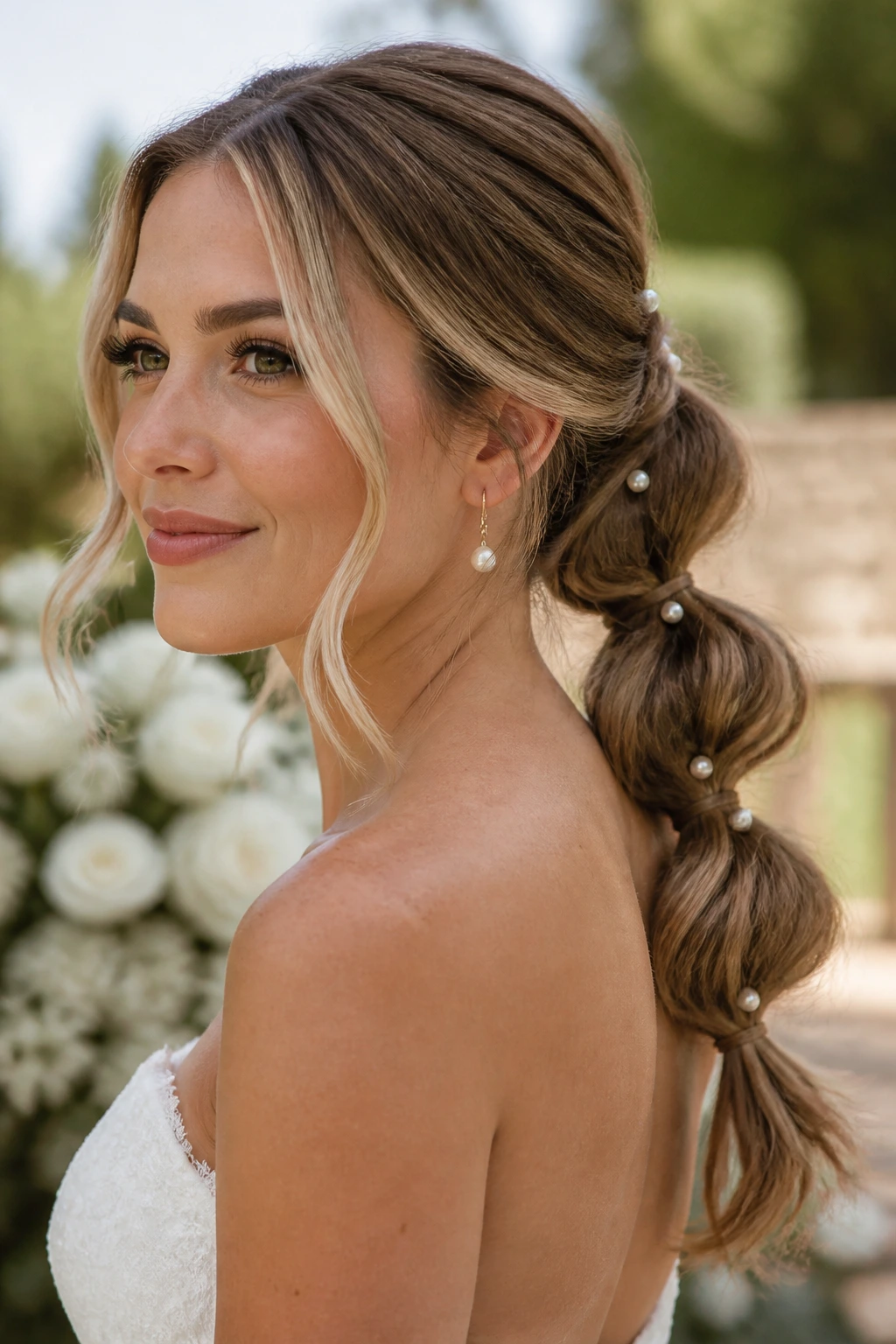
A bubble ponytail is a little more fashion-forward, and the low placement keeps it from looking costume-like. The sections create soft round shapes, and the money piece stays in view because the front pieces are usually left loose or gently bent at the jaw.
What Makes It Work
The bubbles add structure to hair that might otherwise hang limp by the second hour of the reception. They also give you room for small pearl pins between sections, which reads very bridal without turning the whole head into a jewelry display.
- Best for longer hair
- Holds especially well on thicker textures
- Keep the bubbles even, not tiny and crowded
- Let the front pieces sit slightly forward, not pasted behind the ears
Pro move: Spray each elastic lightly before tightening it. That gives the ponytail more grip and keeps the sections from sliding apart.
8. Side-Part Sculpted Bun With Face-Framing Bend
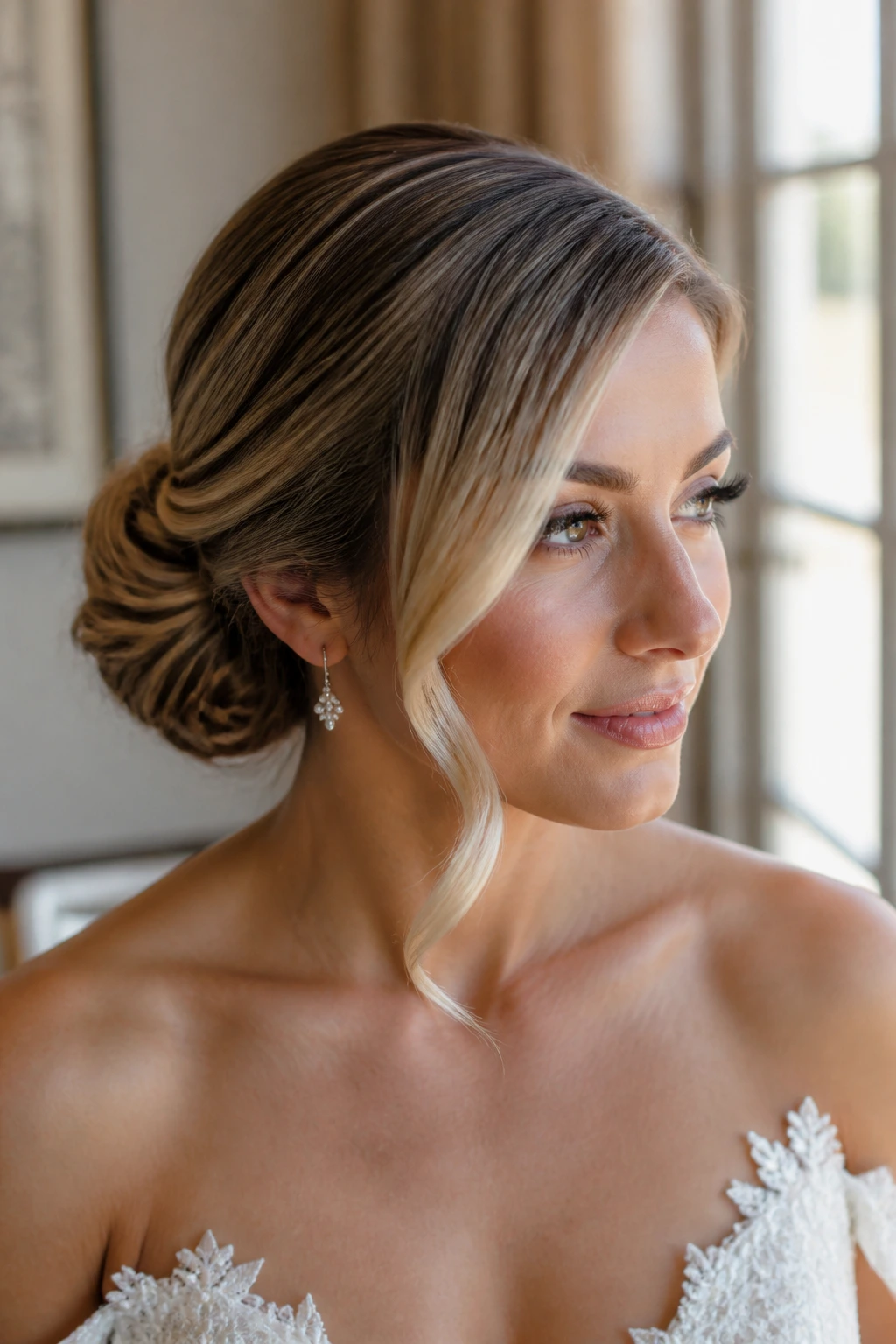
A deep side part changes everything. It gives one money piece more room to sweep across the face, and that asymmetry can be more flattering than a center part if your features are strong or your dress has one-shoulder lines. The bun stays low and sculpted, but the front doesn’t feel stiff.
This is the style I reach for when a bride wants a clean shape but hates anything too symmetrical. The part creates motion before the bun even starts. Then the front highlight follows that line and softens it.
Wear it with drop earrings, not giant shoulder-grazers. The hairstyle already has enough movement. Let the jewelry be sharp and the hair stay smooth.
9. Low Gibson Tuck With Soft Tendrils
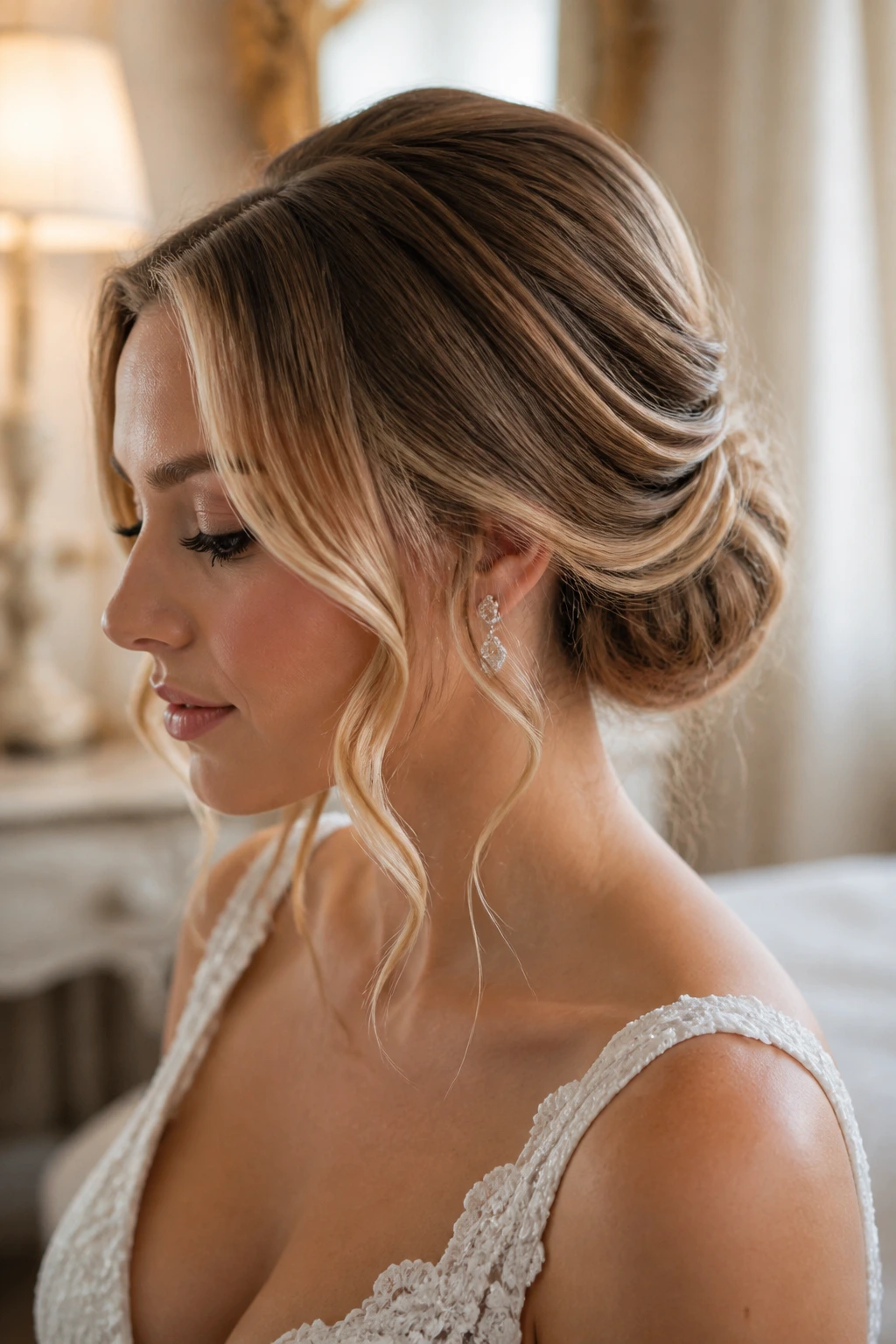
Why does the Gibson tuck still look good? Because it rolls the hair under instead of stacking it high. That keeps the back neat and gives the money piece a chance to sit lightly around the face instead of fighting a bulky crown.
The style has a vintage feel, but it doesn’t have to look dated. The trick is to keep the front strands loose enough that they move when you turn your head. A tiny bend at the ends is enough. You do not need full curls everywhere.
Where the Money Piece Lands
Let the front pieces sit just below the cheekbone. If they’re too short, the tuck looks busy. If they’re too long, they drag the face down. Somewhere in the middle is the sweet spot.
10. Textured Low Bun With Wispy Money Pieces
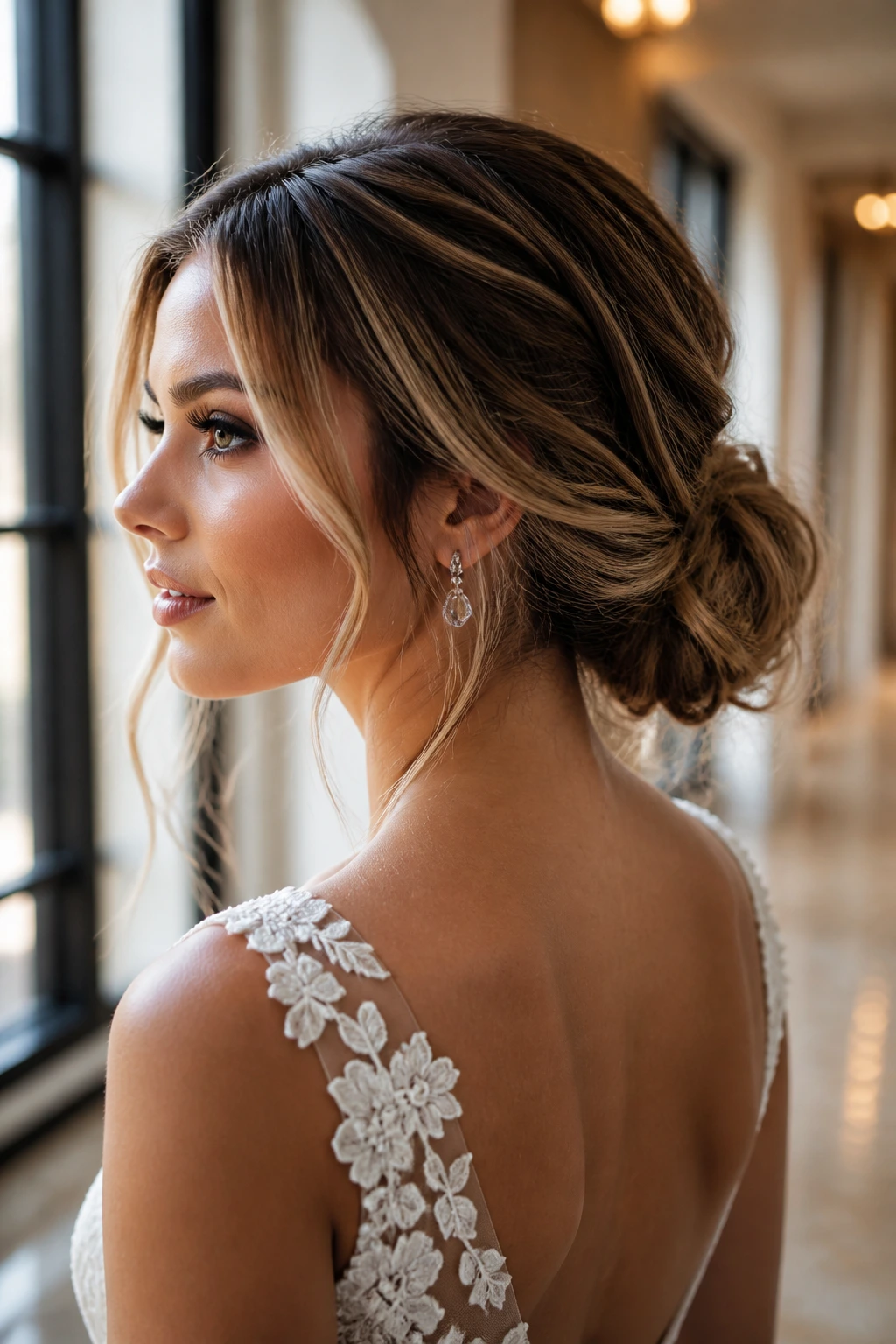
A textured bun can go wrong fast if you confuse “airy” with “messy.” The good version has separated pieces, a little grit at the root, and front highlights that stay visible without looking frizzy. That contrast is what makes the style photograph well from the side.
This is a smart choice for wavy hair, or for straight hair that takes texture spray well. The bun can be loose, but it should still have shape. Think folded and pinned, not thrown together.
The money piece works best when it’s left a bit softer than the rest of the hair. That gives the face a lighter outline, especially if the bridal makeup is strong around the eyes.
11. Crown Braid Leading Into a Low Bun
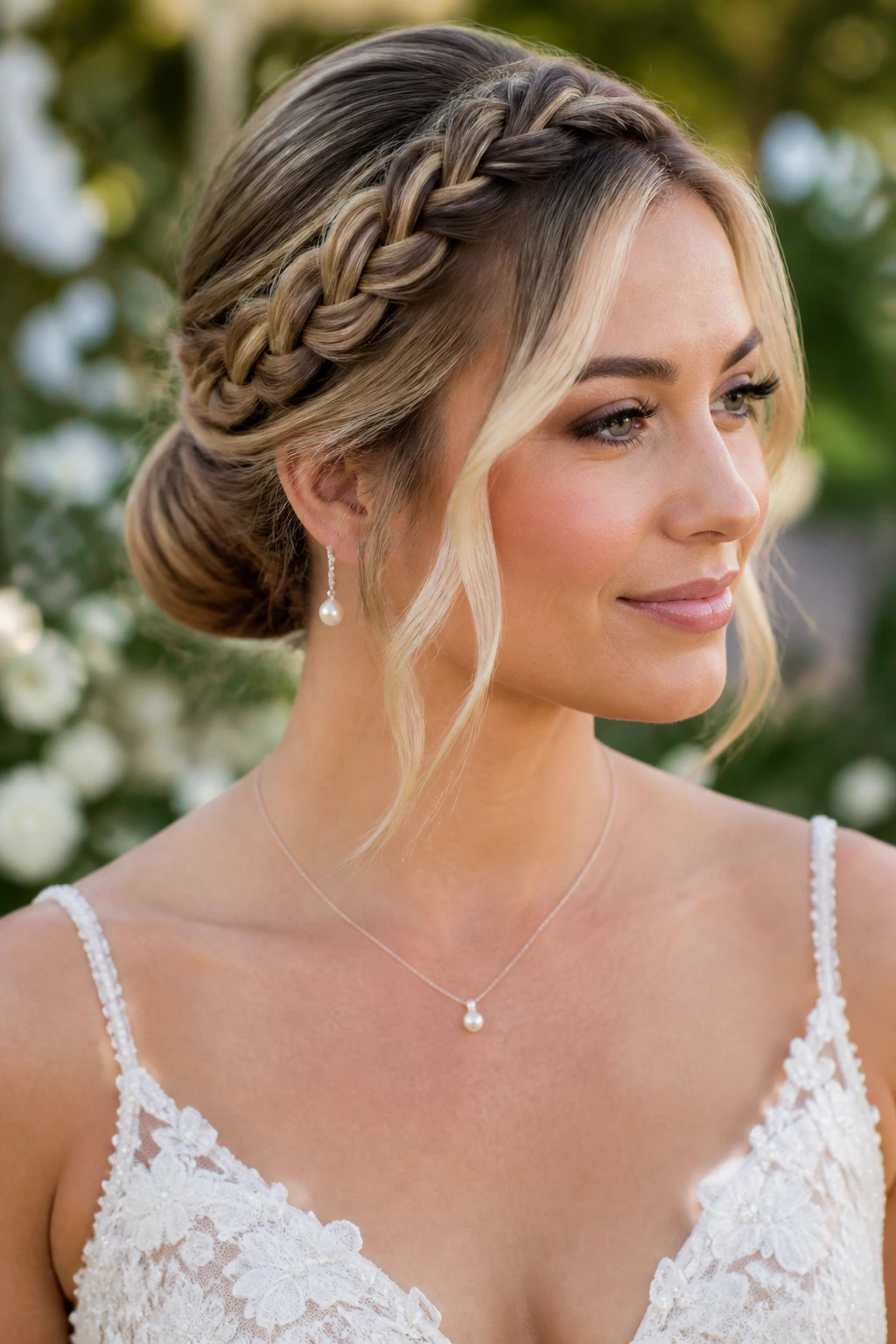
A braid running along the hairline gives the front color a lane to travel in. Instead of hiding the money piece, this style threads it into the braid and then settles everything into a low bun at the nape. The result feels detailed without looking overbuilt.
I like this one for outdoor ceremonies and dresses with open shoulders. The braid keeps the front from getting too loose in wind, and the low bun stops the whole thing from climbing up the head. That low anchor makes a difference.
Purely practical detail: pin the braid as you go. Don’t wait until the end and hope it behaves. Hair with highlights often looks thicker in front than it does in the mirror, and the braid needs a little extra grip.
12. Rope-Twist Low Updo With Glossy Ends
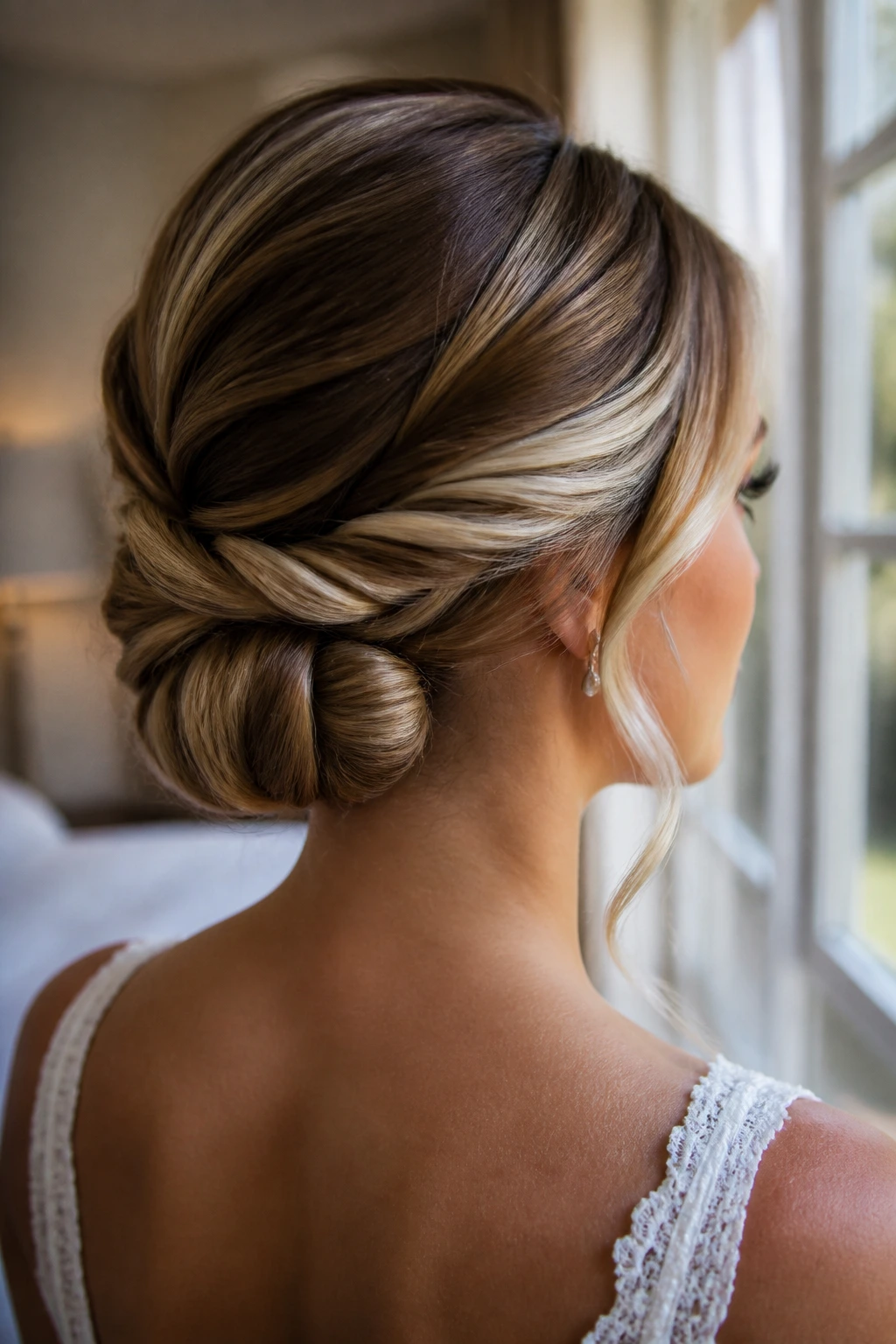
A rope twist is cleaner than a braid and a bit softer than a French twist. Twisting two sections around each other gives the style a smooth, almost ribboned look, which is nice when the front highlights are warm and reflective. The ends stay tucked low, so nothing fights the neckline.
Compared with a standard bun, this style gives you a little more shine on the back of the head. That can be useful if the dress is simple and the hair needs to carry more of the visual weight.
If your hair is slippery, prep the roots with texture spray and twist smaller sections than you think you need. Big rope twists look impressive in theory and wobble in real life.
13. Knot-Over-Knot Bun With Hidden Pins
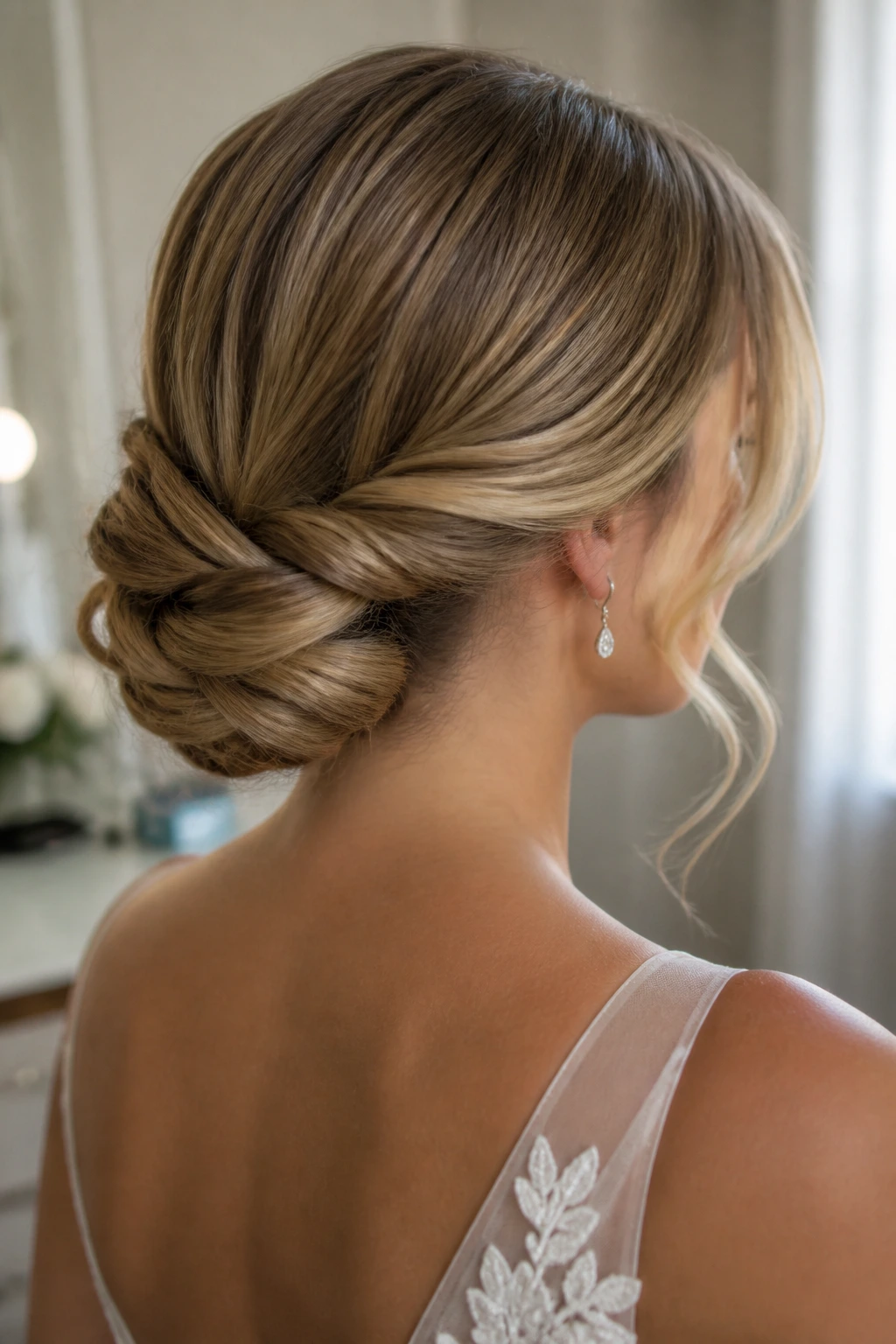
A knot-over-knot bun sounds fussy, but it’s mostly just strategic folding. Sections are looped over one another at the nape, then pinned so the structure looks sculpted from the outside. The brighter front pieces stay soft, which keeps the style from turning into a hard shell.
Why It Suits Thick Hair
Thicker hair needs a style that can hold weight without swelling up. This one does that. The knots compress the bulk, and the pins hide inside the folds instead of sitting out like little metal markers.
- Best for dense or coarse hair
- Good when the front pieces are at least shoulder length
- Use long U-pins for grip, not tiny bobby pins
- Let the money piece stay slightly looser than the rest
Small warning: If you over-tighten the knots, the whole look loses its shape and starts to feel puffy at the sides.
14. Deep Side-Part Low Bun With a Smooth Finish
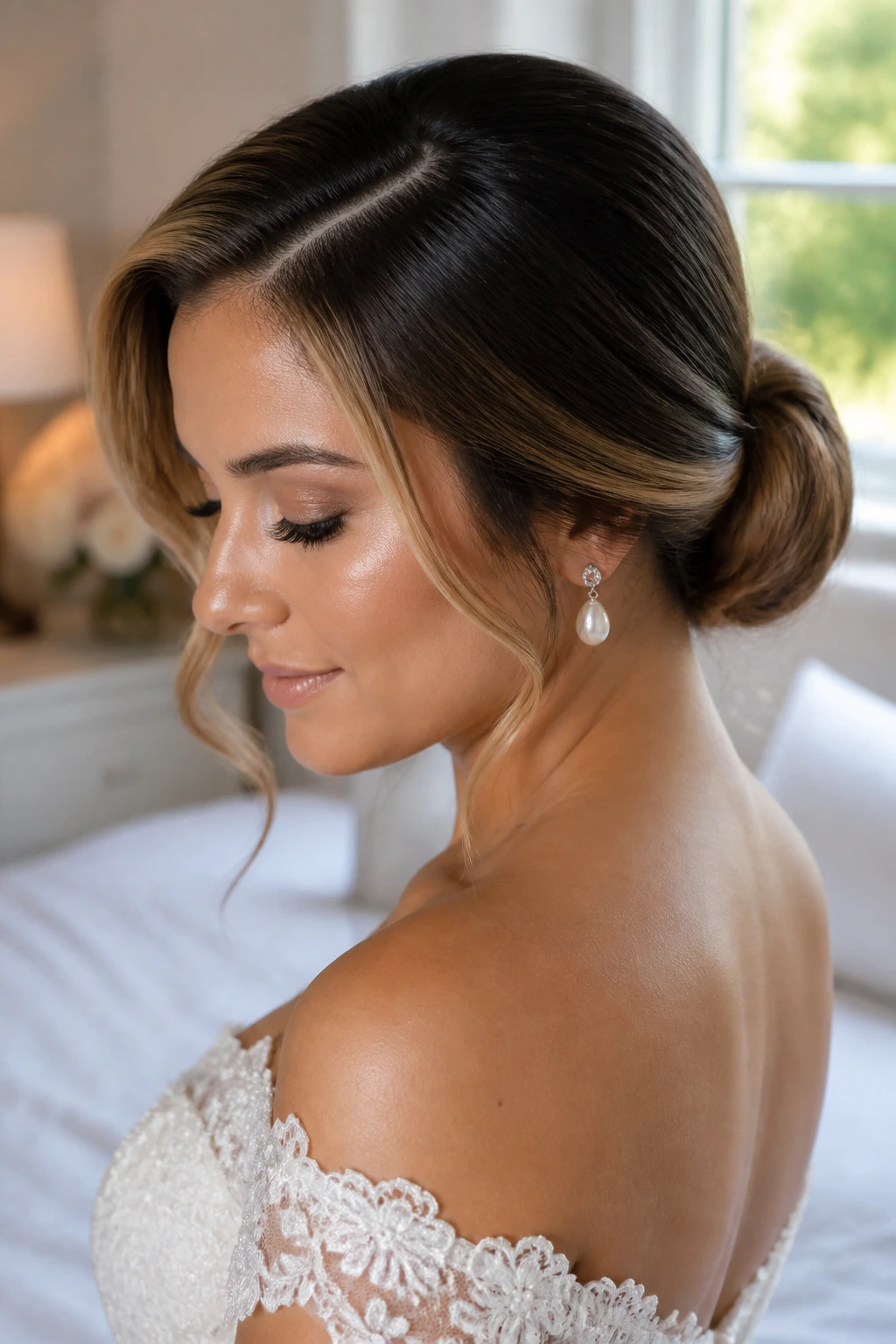
A deep side part brings drama without height. That’s useful if you want the highlight to show from the front but you don’t want the crown to get tall or bulky. The sweep across the forehead makes the money piece look intentional, almost like a built-in accessory.
This style is especially good when the dress has a clean silhouette. There’s no competing texture. The bun sits low and smooth, and the side sweep does the work of softening the face.
It also flatters bold makeup. A strong lip or defined eye can handle the sleekness. If you’re wearing a simpler makeup look, leave a little movement in the front so the hair doesn’t look too controlled.
15. Voluminous Low Bun With a Teased Crown
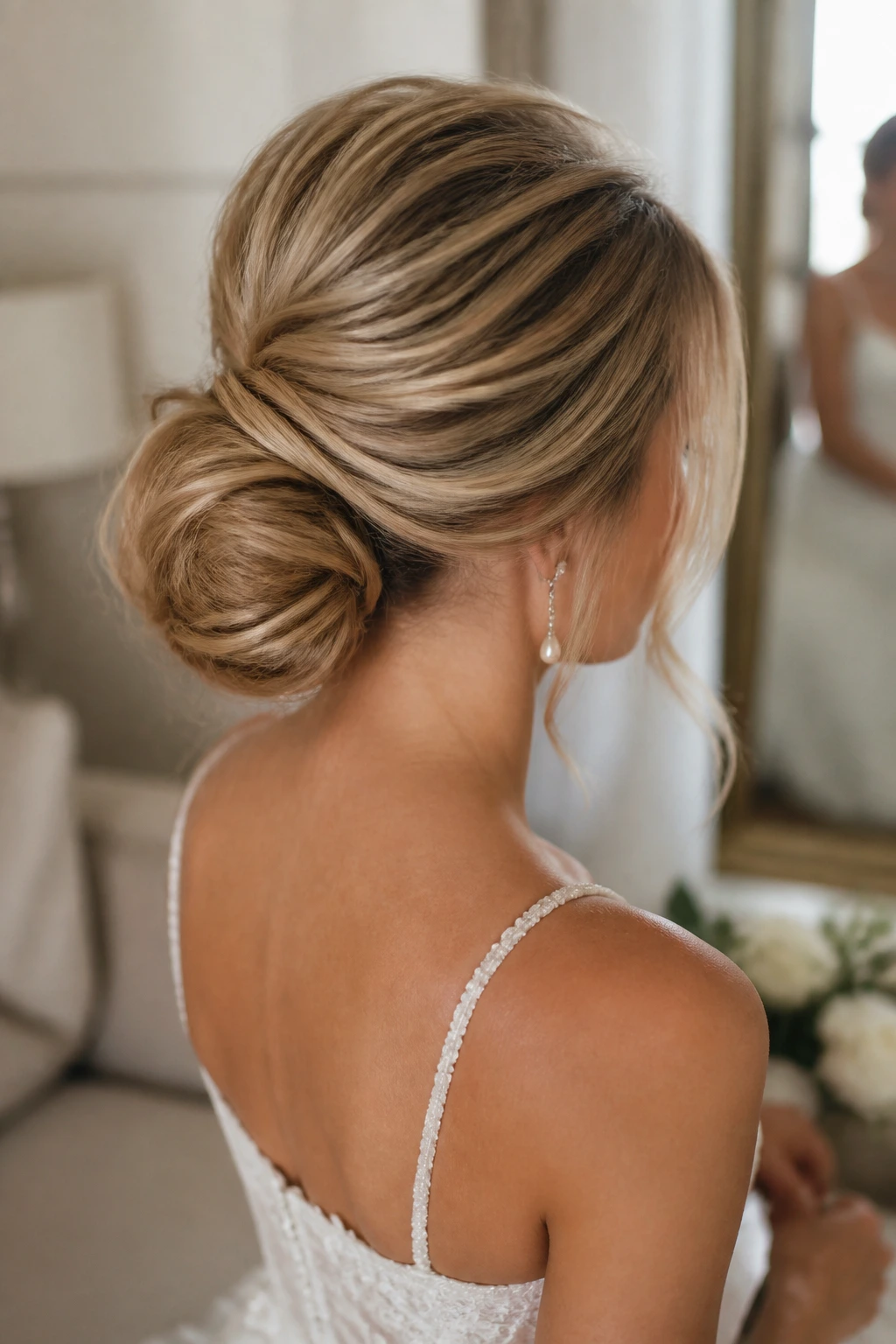
What changes when the crown is lifted a little? The whole head looks more balanced. A low bun can feel too compact on some faces, and a bit of lift at the back of the crown keeps the money piece from being the only visual point.
This is one of my favorites for brides with fine hair who still want a fuller shape. Tease only the hidden sections, then smooth the top layer over them. That way the silhouette looks soft, not puffy.
Where to Put the Volume
Keep the lift behind the part and before the bun. Don’t build it all the way at the top of the head. That starts to fight the idea of a low style, and the result can look top-heavy.
16. Chignon With a Hidden Braid Base
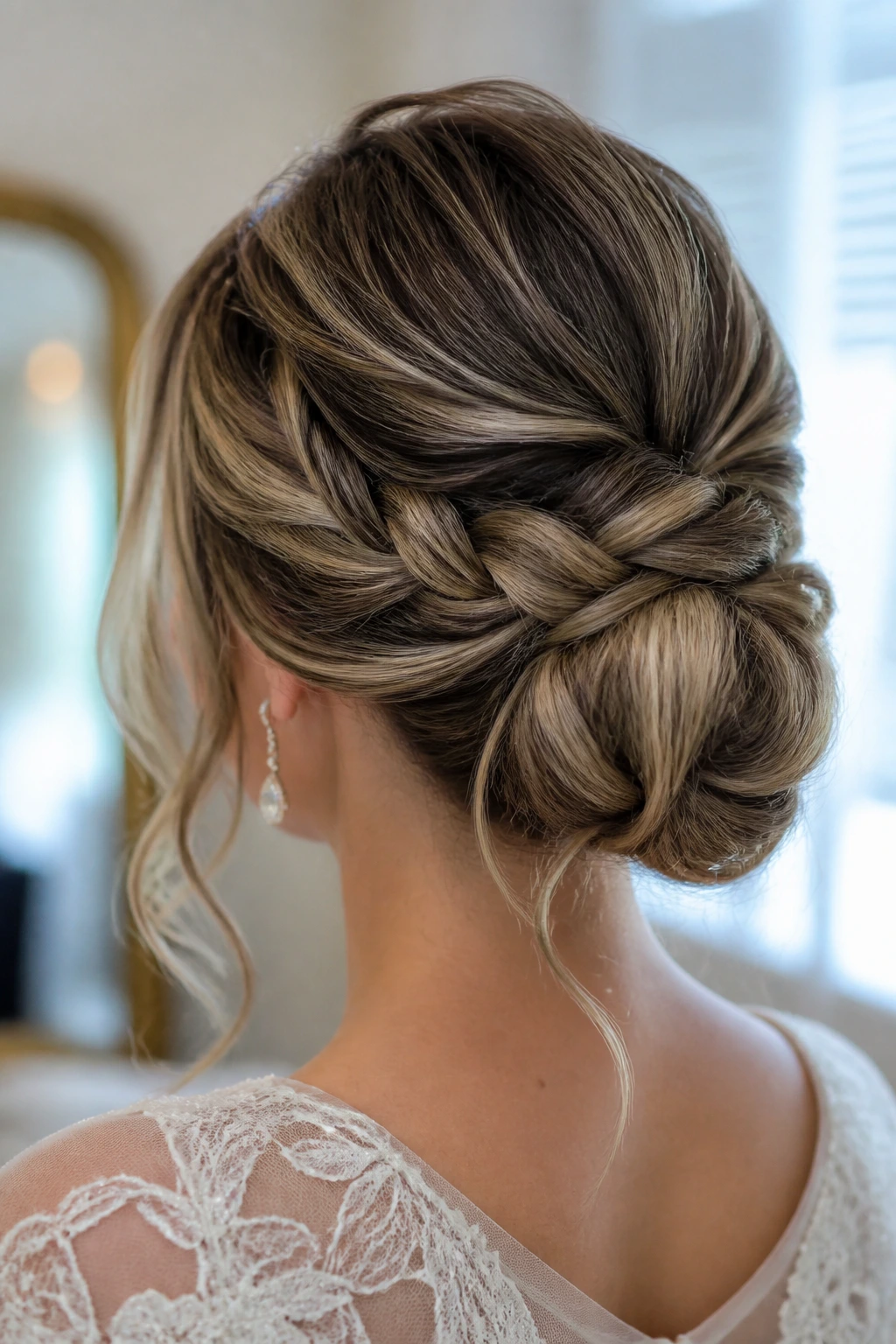
Here’s a style that looks simple and hides a lot of work. A braid close to the scalp becomes the base, then the ends are wrapped into a chignon. The front pieces stay free enough to show the lighter color, while the braid underneath gives the bun something to cling to.
That hidden braid matters more than people think. It keeps the bun from sliding, especially on hair that has been smoothed with serum. It also adds a bit of texture where you can’t see it directly, which makes the whole style hold better in humid air.
This is a smart option if you want the front to stay soft but the back to feel secure. It’s tidy without being severe.
17. Low Ponytail Wrapped in Silk Ribbon
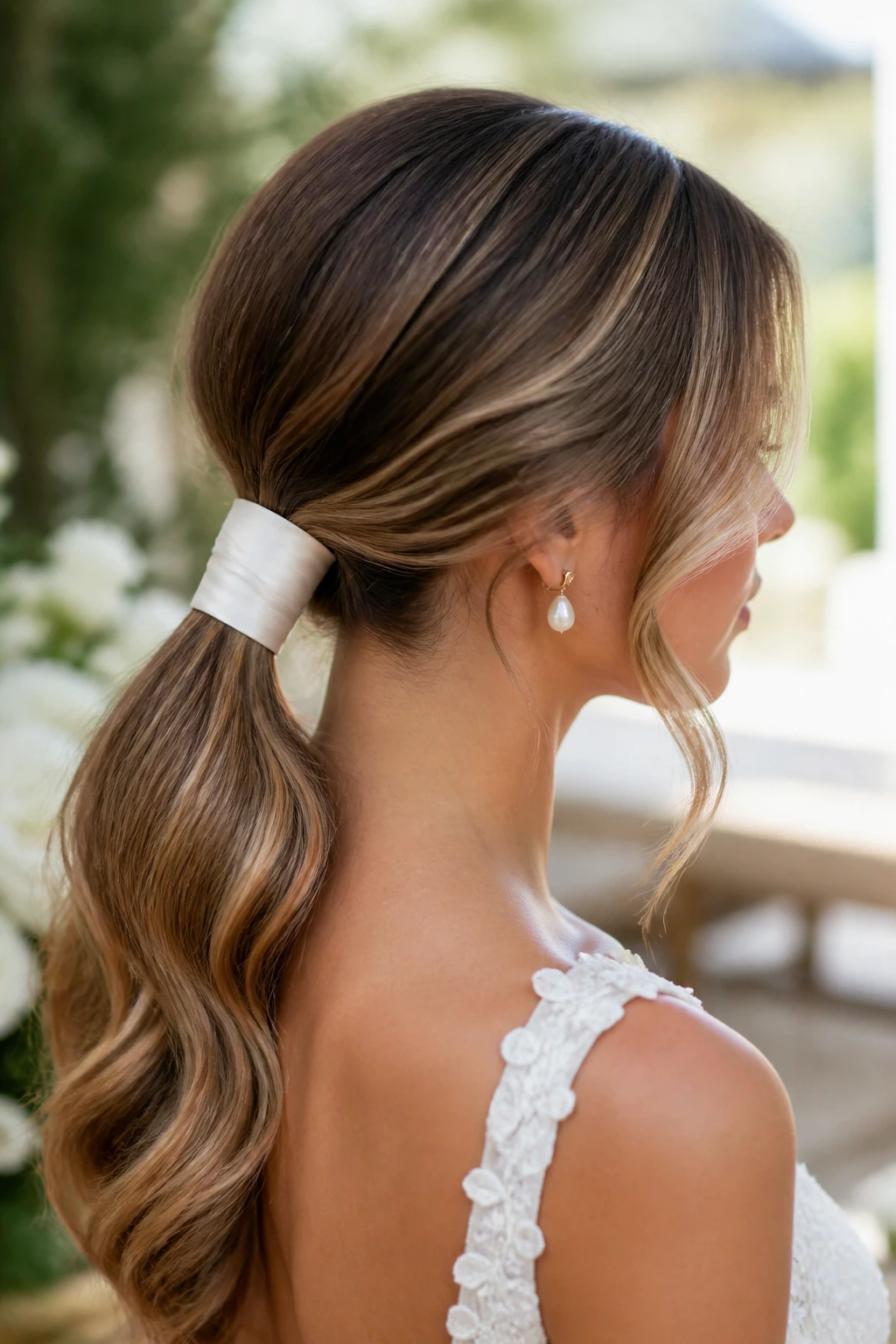
A silk ribbon changes the mood fast. It softens the line of a low ponytail, and it gives the money piece a gentle contrast instead of a hard one. The front strands can stay softly curved, while the ribbon at the base makes the style feel finished.
I like this for brides who want something elegant without much structure. The ribbon can echo the dress fabric, or it can pick up a bouquet color if you want a small thread of cohesion.
The trick is not to choose a ribbon that’s too shiny or too stiff. A soft matte ribbon usually looks better in person. It sits flatter at the base and doesn’t compete with the highlights.
18. Messy Low Bun With Soft Volume
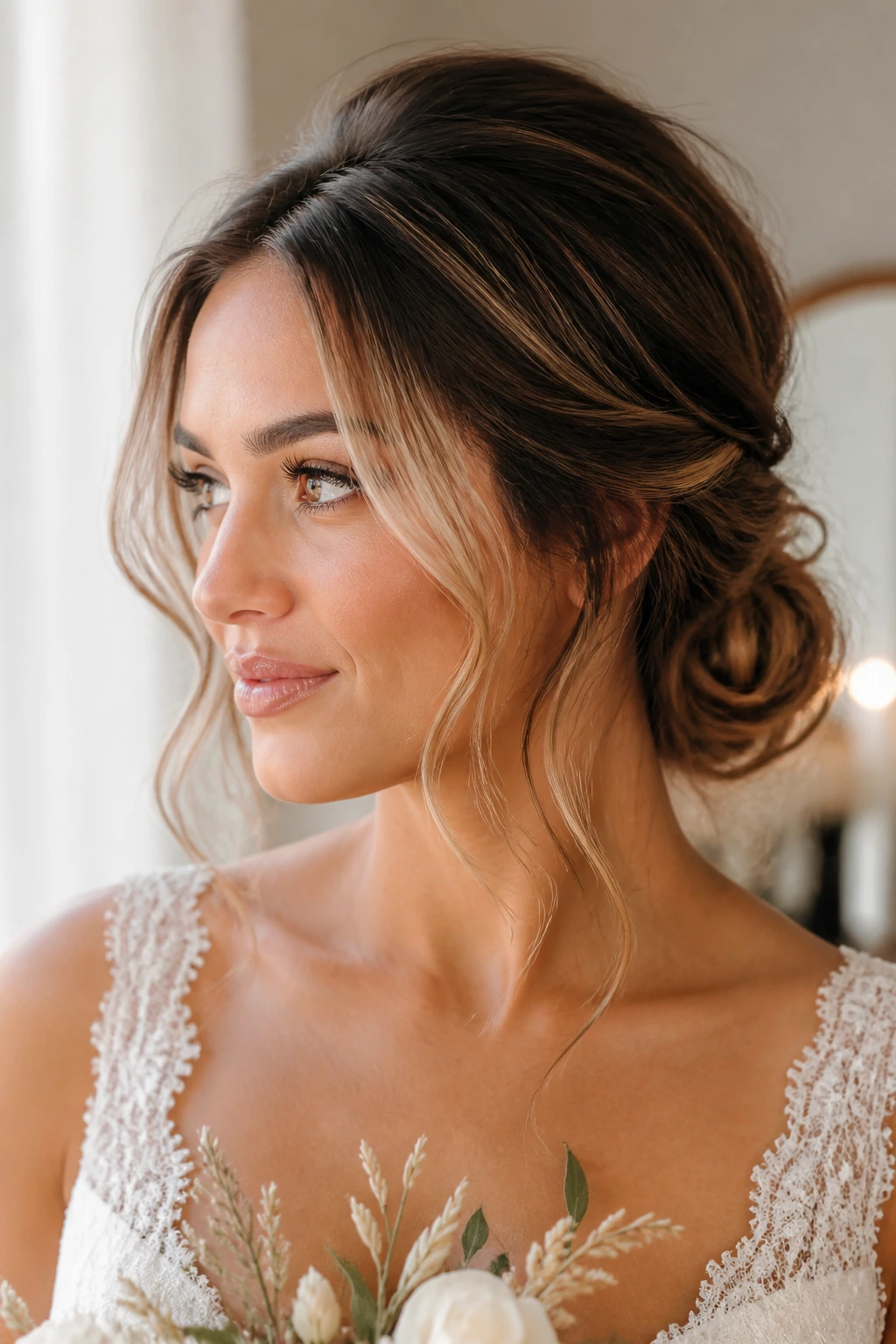
A messy low bun only works if it still looks chosen. The bun should have lifted pieces, not random loops that escaped while you were rushing. The money piece helps here because it gives the front of the style a clear shape even when the back is relaxed.
Unlike a sleek bun, this version depends on texture. Wavy and curly hair often handles it best, because the strands already want to bend and separate. Straight hair can do it too, but it needs more texture spray than most people use.
This is the one for brides who dislike anything too polished. It feels less formal, but it still belongs in a wedding setting when the front is framed well.
19. Low Twist Bun With a Decorative Comb
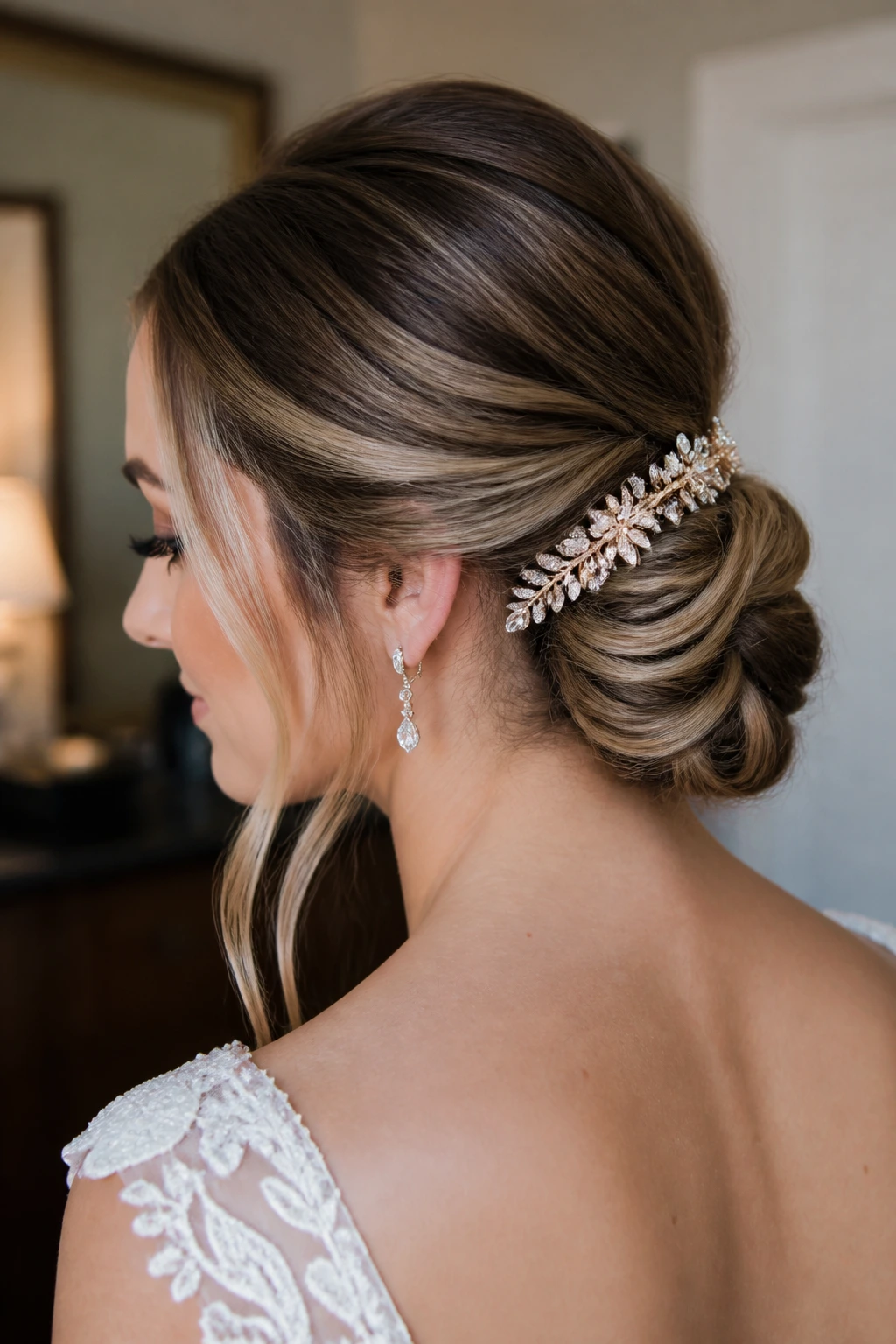
A low twist bun is one of the easiest ways to make a bridal comb look like it belongs there. The twist gives the comb a surface to grip, and the money piece stays visible because the front hair is usually parted and guided into the bun instead of scraped hard back.
Best Placement for the Comb
Place the comb slightly off center, above the twist instead of dead in the middle. That keeps it from flattening the front pieces and gives the lightened strands a little breathing room.
- Works well with pearl or crystal combs
- Best when the hair has a smooth root and a soft bend through the ends
- Keep the comb angled, not shoved straight in
- Use pins behind the comb so it does not wobble
Quick note: If the comb is heavy, test it before the wedding day. Some pieces pull harder than they look.
20. Low French Roll With Curved Face-Framing Pieces
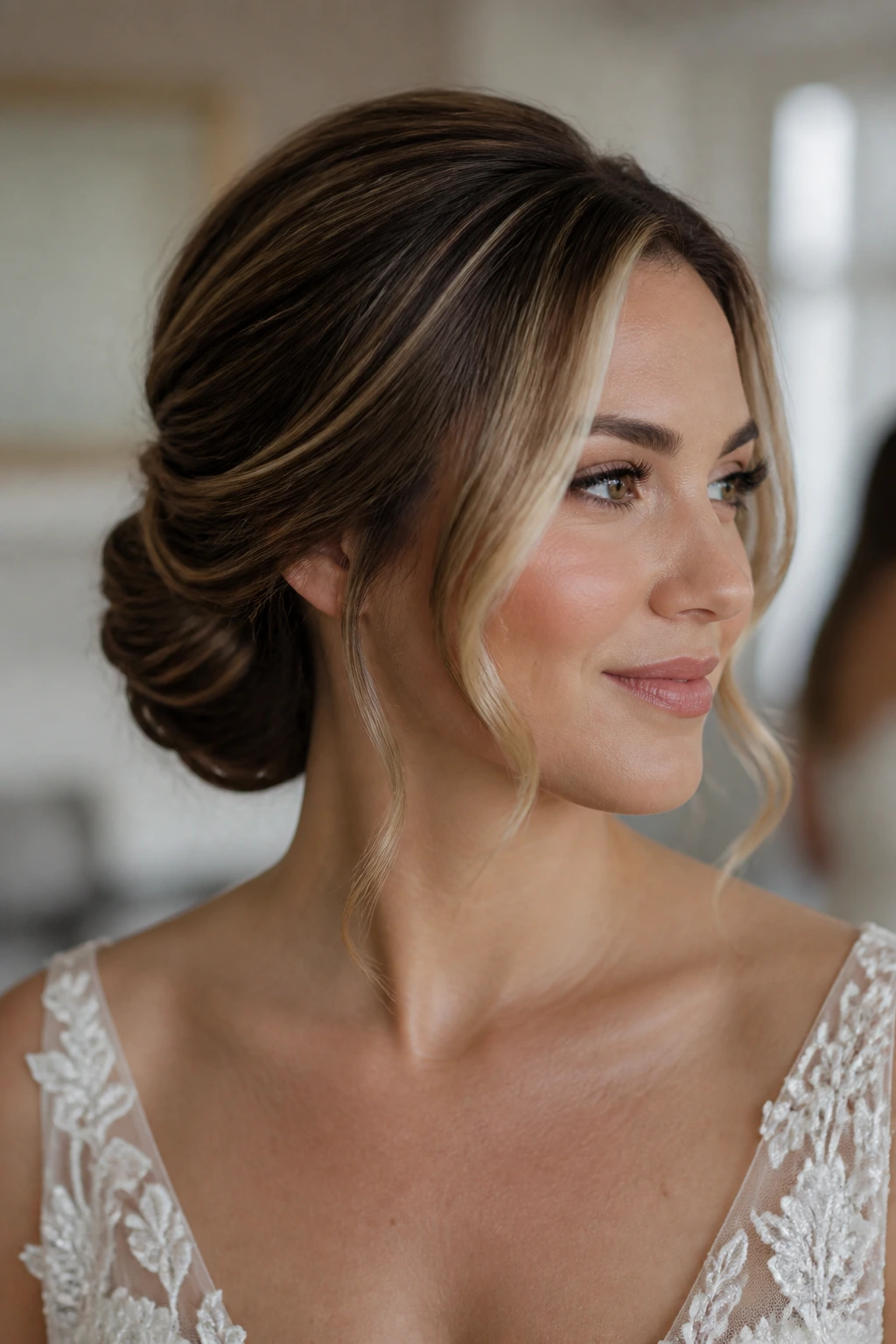
A French roll doesn’t have to be stiff. The lower version feels softer because it sits closer to the nape and gives the front pieces space to curve around the jaw. That lets the money piece show without turning the style into a retro costume.
Compared with a low chignon, the roll reads a little more vertical and tidy. Compared with a loose bun, it feels more controlled. I’d pick it for a bride who likes clean lines and wants the highlight to play a supporting role, not steal the whole show.
If the hair is very fine, leave a touch more width in the roll so it doesn’t look like a small cylinder stuck at the back of the head.
21. Spiral Low Bun With Jeweled Pins
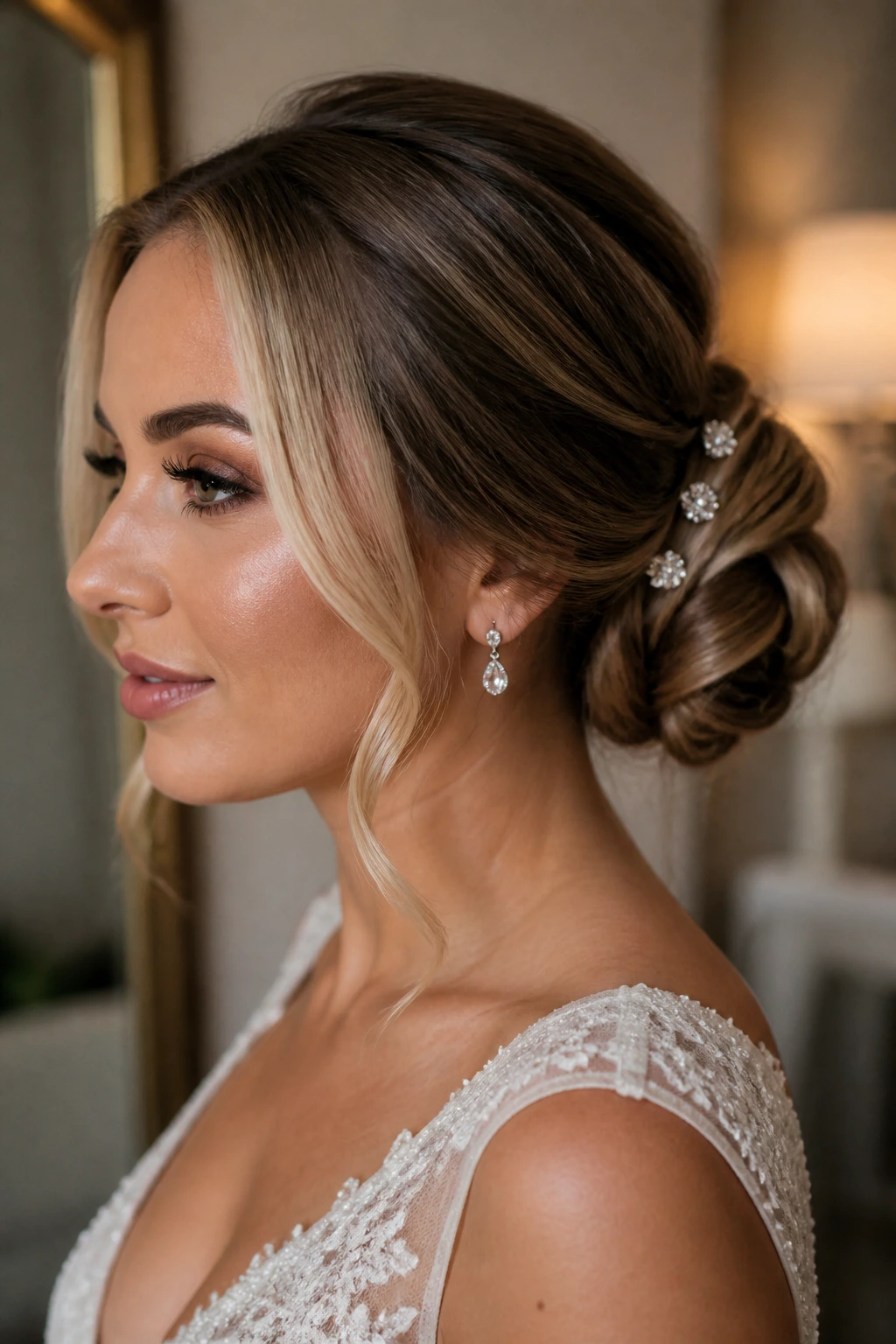
Why does a spiral bun feel special? Because you can see the path of the hair. Each section winds around the center, and that motion pairs nicely with a money piece that’s been curled into a face-framing bend.
The pins are part of the look here. A few jeweled pins at the outer curve of the spiral can draw the eye down toward the bun without crowding the front. That keeps the brighter pieces up front from being swallowed by too much sparkle at the back.
How to Use It
Keep the spiral compact. If it gets too wide, the style starts to look like a flattened shell instead of a bun. A clean spiral with a few deliberate pins is sharper, and the highlights read better from the side.
22. Basket-Weave Low Bun With Sleek Sides
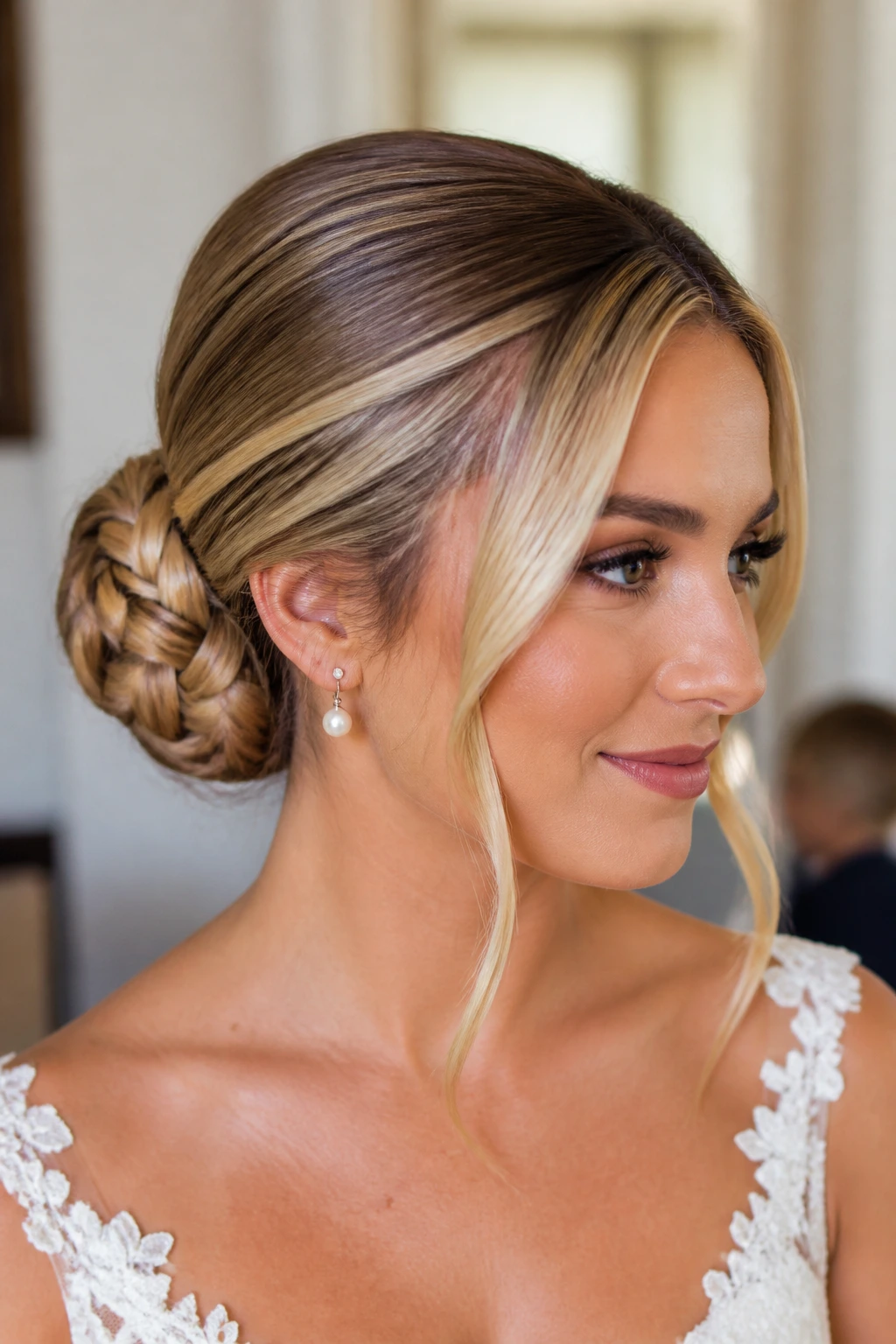
A basket-weave bun is one of the few styles that can handle a lot of hair without turning bulky. The crossing sections make the back interesting, while the sleek sides keep the money piece in a clean frame.
This one has a lot of structure. That’s useful if your dress is plain and you want the hair to do more visual work. The weave gives the back texture, but the front stays smooth enough for the face-framing color to stand out.
It’s also a good answer for long hair that refuses to stay tucked. The woven pattern locks the sections in place more reliably than a loose twist.
23. Side Chignon With Dropped Waves
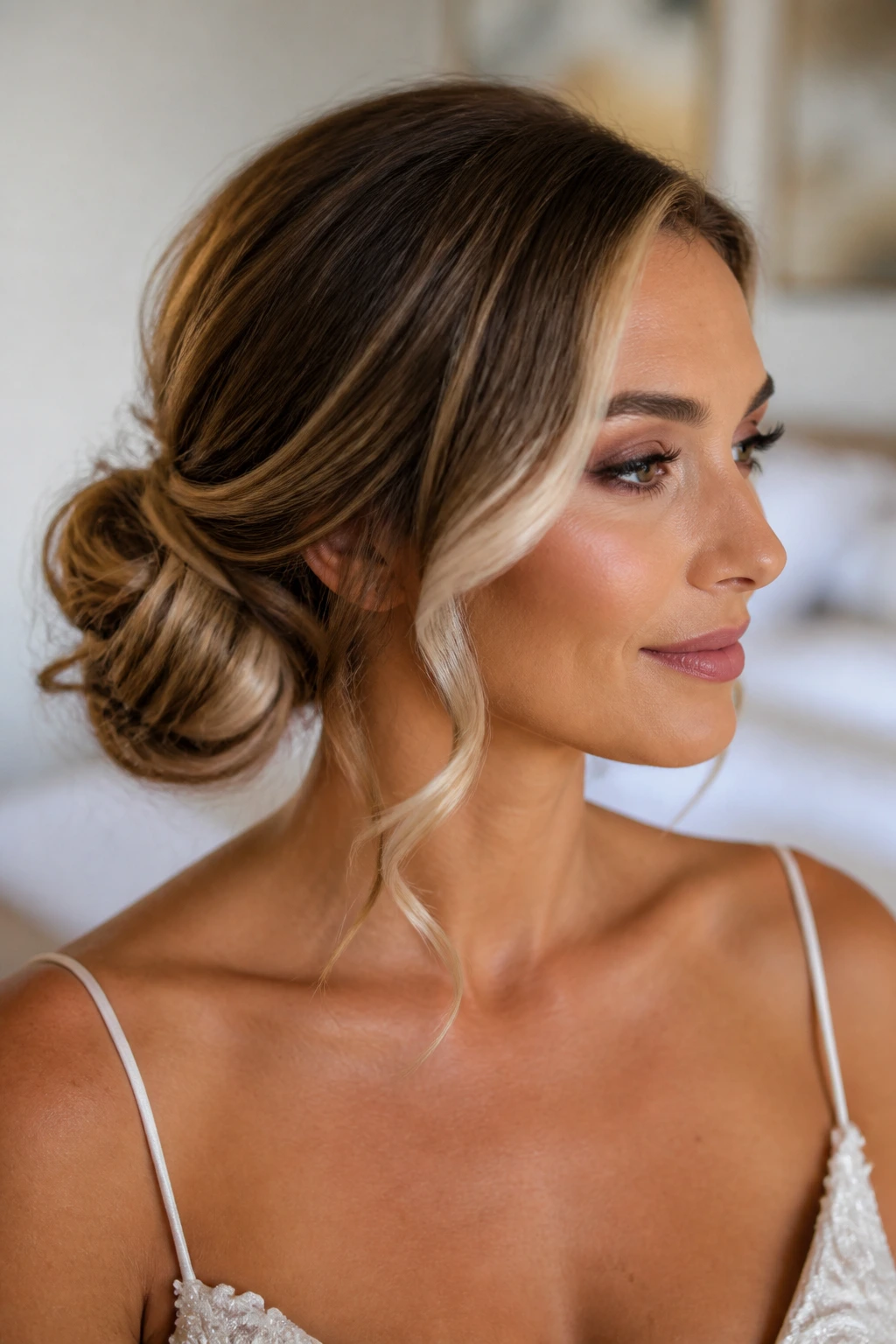
A side chignon gives the hair a little asymmetry, and the dropped waves near the face make the money piece feel softer. The bun sits low and to one side, which is flattering when the neckline or jewelry already has some movement built in.
I like this style when the dress has one shoulder or a neckline that isn’t perfectly centered. The hair can echo that shape instead of fighting it. The lighter strands near the face break up the structure and keep the style from looking too formal.
If you want this one to last, tuck the side waves into a gentle bend rather than leaving them fully loose. That keeps them from going stringy before the cake cutting.
24. Low Bun With Curtain Bang Money Pieces
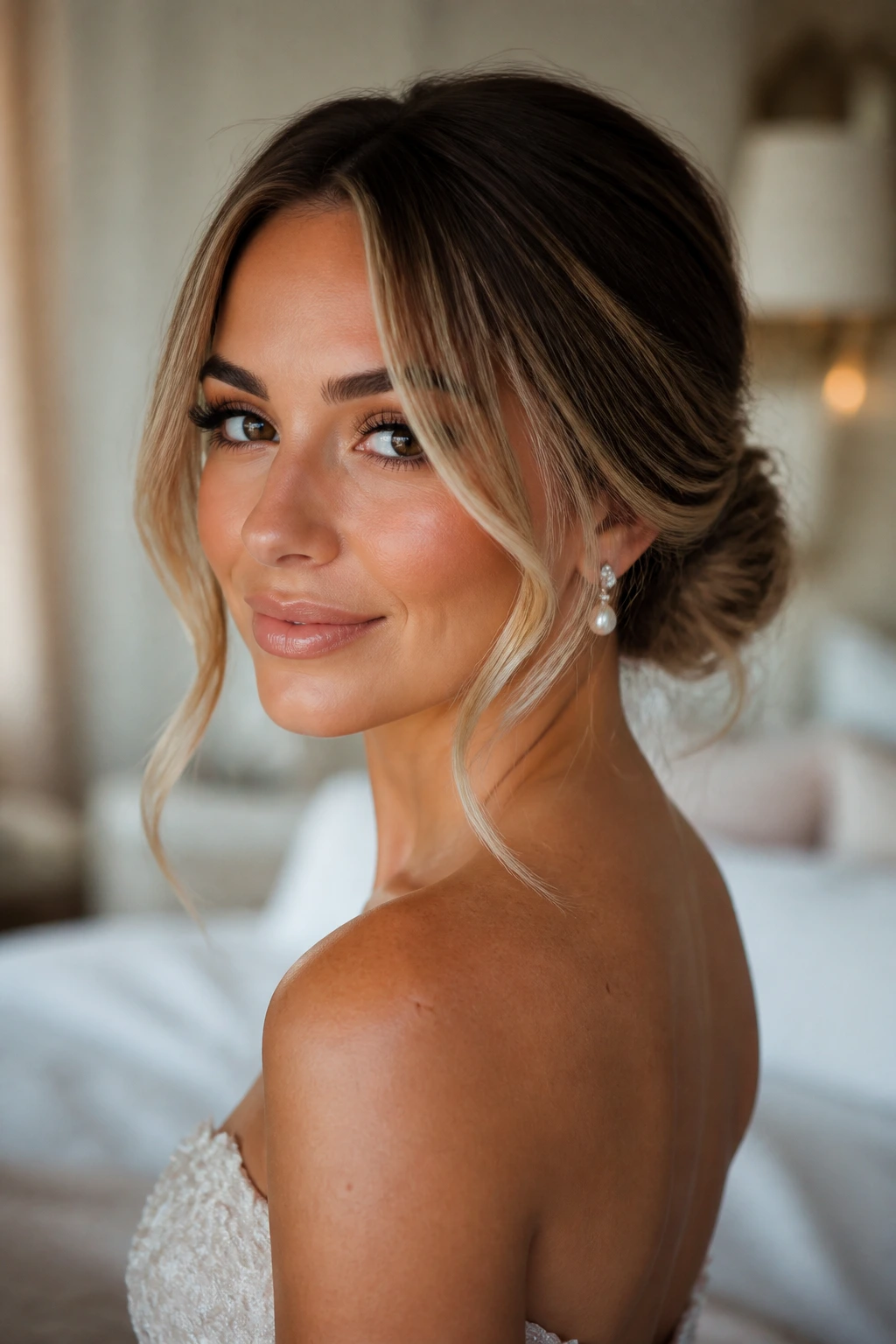
A low bun with curtain-bang length front pieces gives you more room to play. The money piece sits like a draped frame instead of a tucked strand, which is handy if your highlights start higher up around the forehead.
This style is a smart fit for brides with shorter face-framing layers. Those pieces can be shaped away from the cheeks and still feel soft. The bun at the back stays modest, which lets the front take on a bigger visual role.
Compared with a center-part knot, this version feels less strict. It’s a little more romantic, and the front pieces can move when you turn your head.
25. Short-Hair Low Knot With Tucked Ends
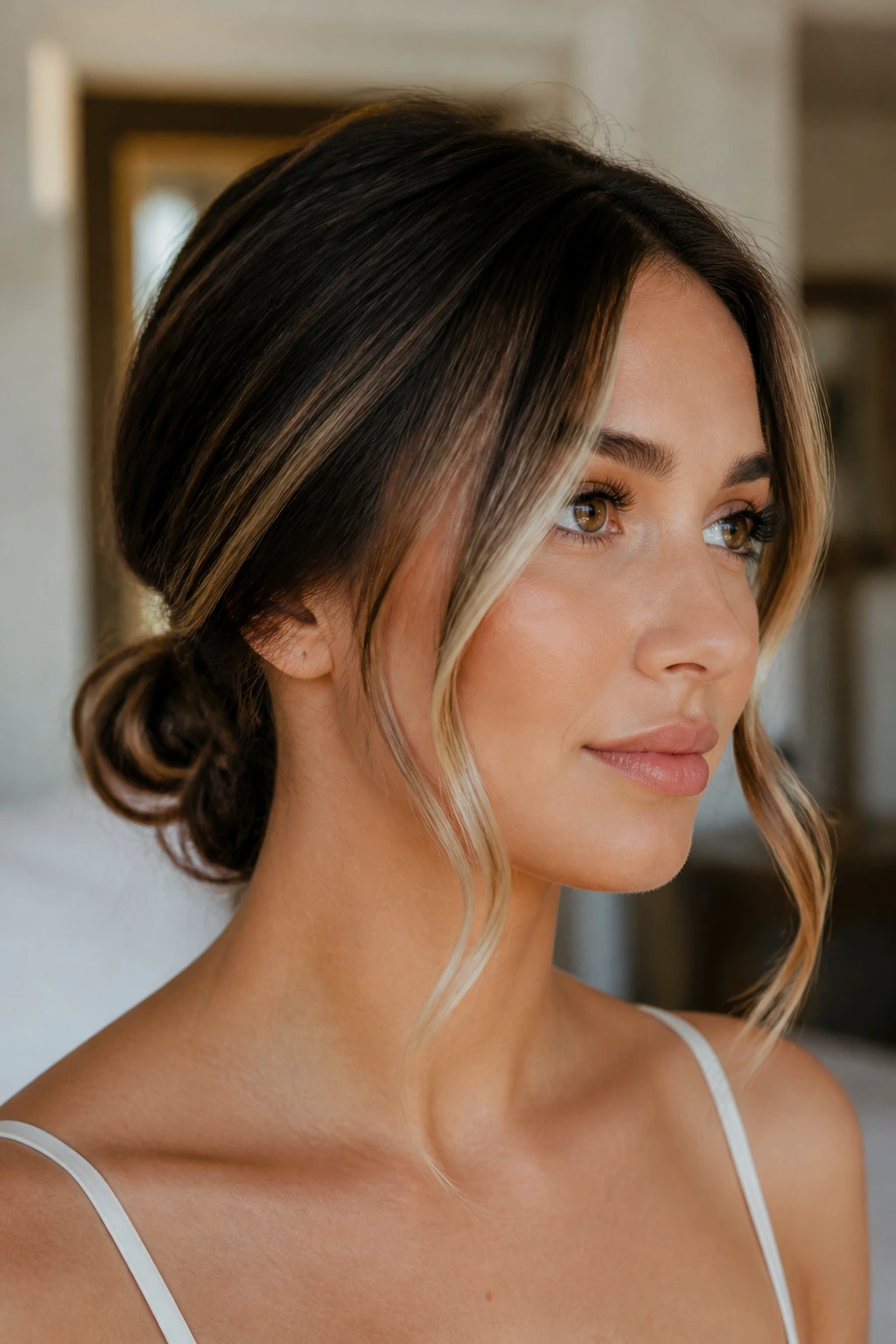
Can short hair do a low wedding style? Yes, if the knot is built from pinned sections rather than forced into a shape it can’t hold. A lob or collarbone-length cut can make a very pretty low knot, especially when the money piece is allowed to sit in front like a soft frame.
What Helps This One Work
You need a strong prep base. Dry texture spray, a few hidden pins, and sometimes a small padding piece help the knot look full enough for the setting.
- Best for bob, lob, or shoulder-length hair
- Use pins that match the darkest root color
- Keep the front pieces loose enough to curve, not hang straight
- A tiny braid at the side can hide shorter layers
Do not over-smooth the hair. Shorter lengths need grip, and too much serum turns the style into a slippery mess.
26. Bridal Low Ponytail With a Soft Bend
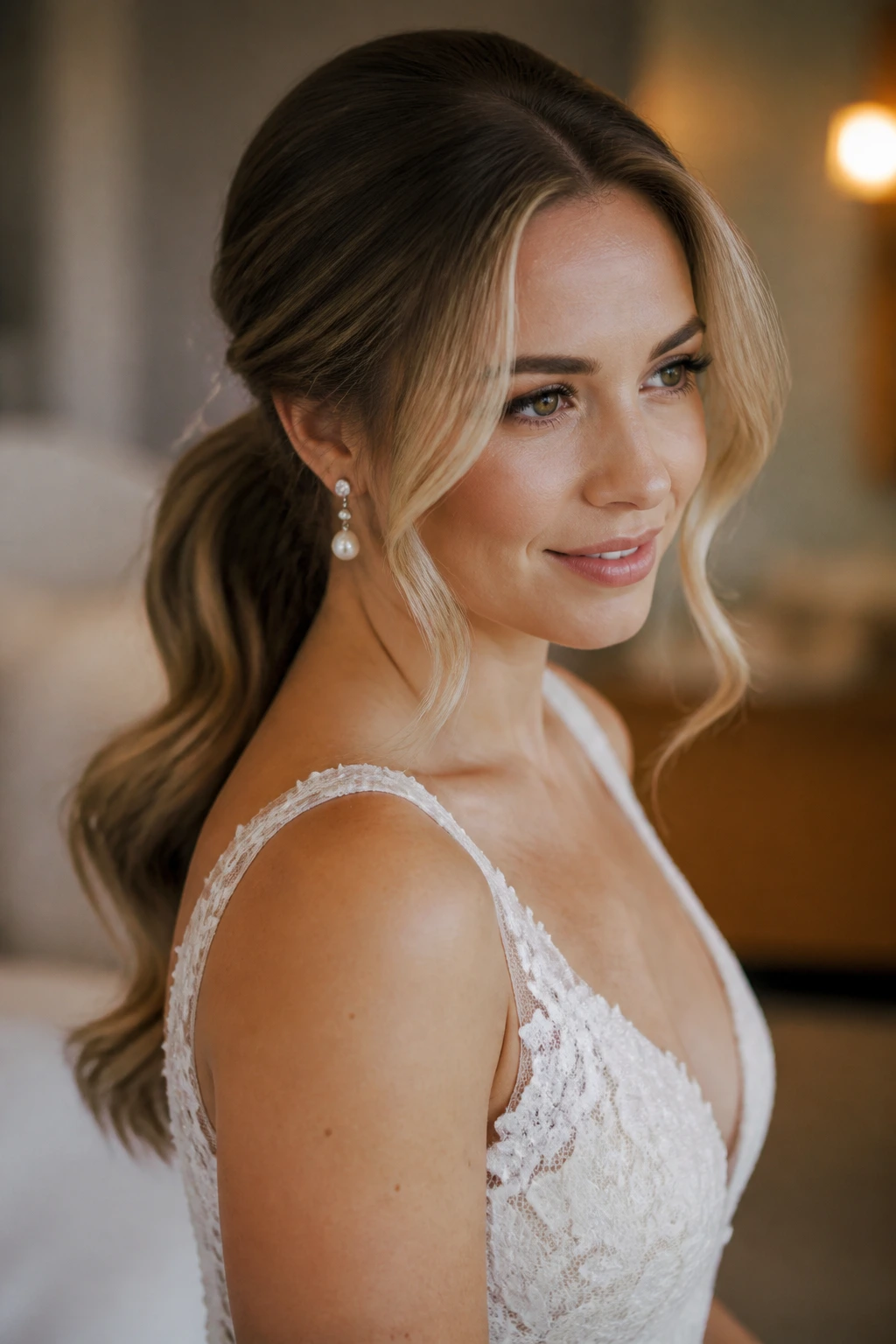
A low ponytail can look sharp or soft, and this version leans soft. The ends get a gentle bend, not tight curls, so the shape keeps moving without looking too done. The money piece sits around the face and stays visible from the front and three-quarter view.
This is a strong choice if the dress already has a lot of detail. A beaded bodice, a dramatic back, or a strong veil can make a full updo feel crowded. A low ponytail keeps the hair present but not bossy.
I’d use a wrap of hair around the elastic and a little shine spray on the finished tail. That keeps the style from reading too casual.
27. Rose Bun Made From Coiled Sections
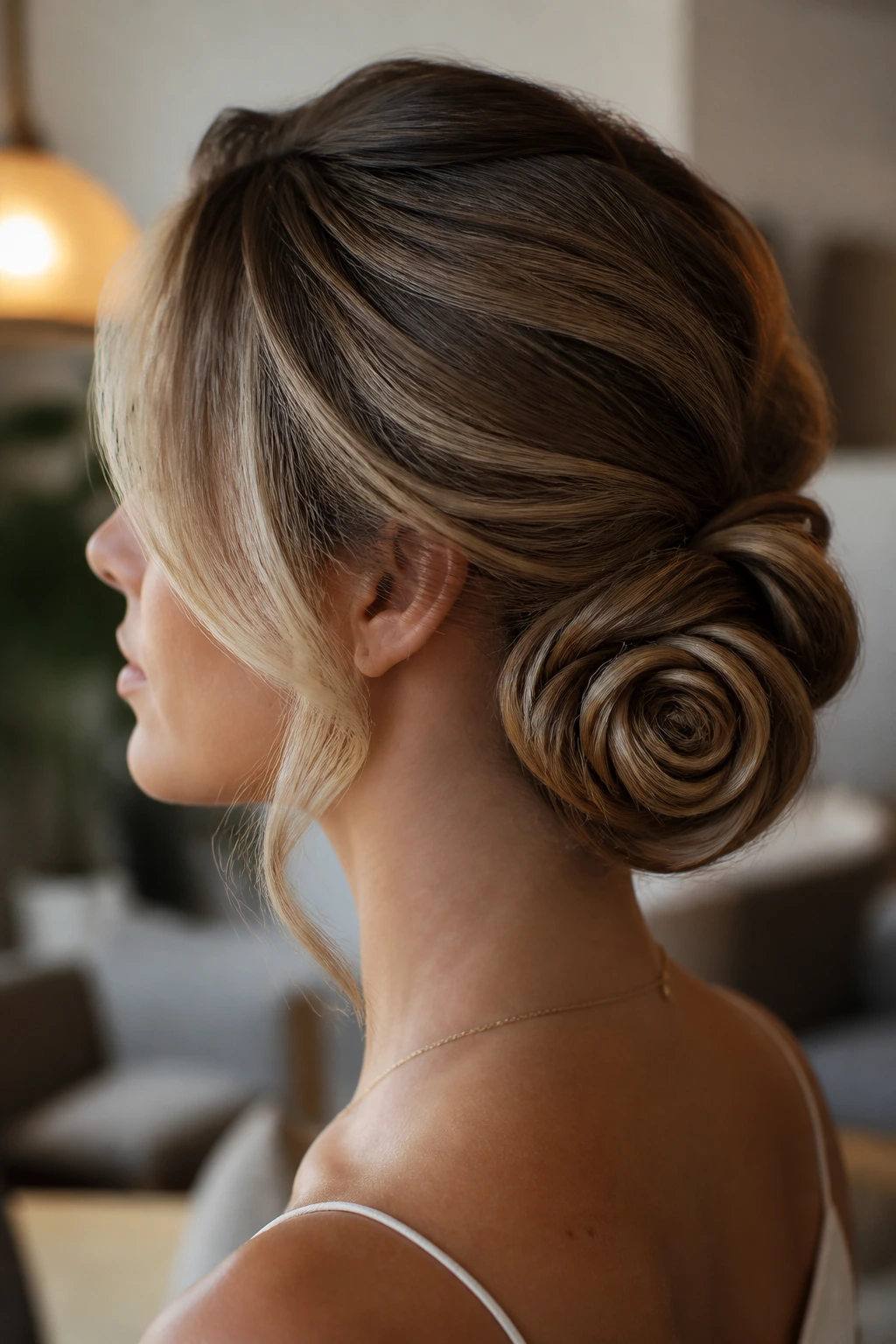
A rose bun is one of those styles that sounds fancier than it is. Hair is coiled in sections so it looks like overlapping petals at the nape. The front money piece can stay loose and softly curved, which keeps the whole style from feeling too tight or graphic.
Why does it work? The spiral shape adds interest without adding height. That matters if you want the back to feel decorated but not heavy. The style also handles reflective highlights well because each coil catches light at a slightly different angle.
Best Use
This is a nice choice for romantic dresses, softer veils, and makeup that leans glowy rather than severe. The bun itself is the detail. Everything else should stay calm.
28. Halo Twist Low Updo With Floating Front Pieces
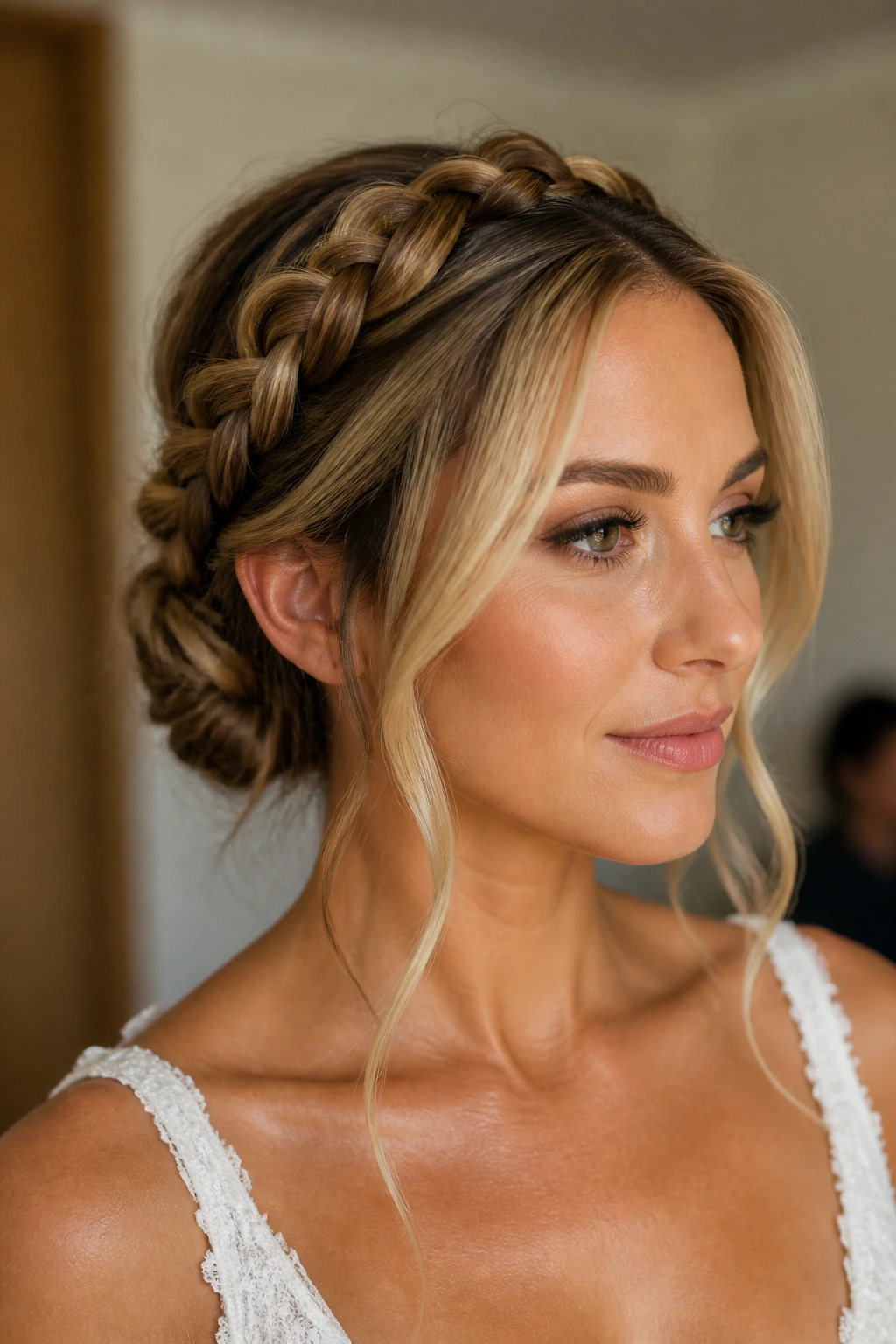
A halo twist that ends low gives you a framed crown without a towering shape. The twists run around the head, then settle into a low finish at the nape. The front pieces stay floating enough to show the money piece, which keeps the style from looking sealed shut.
This is the one I’d choose when the hair needs a bit of romance but not too much looseness. It has more outline than a messy bun and more softness than a sleek chignon. That middle ground is useful.
The Final Read
If you want the highlights to be visible from the aisle, leave the front pieces slightly farther forward than you think you should. The face frame should soften the cheeks, not disappear behind the ears.
Why Low Placement Makes the Color Look Intentional
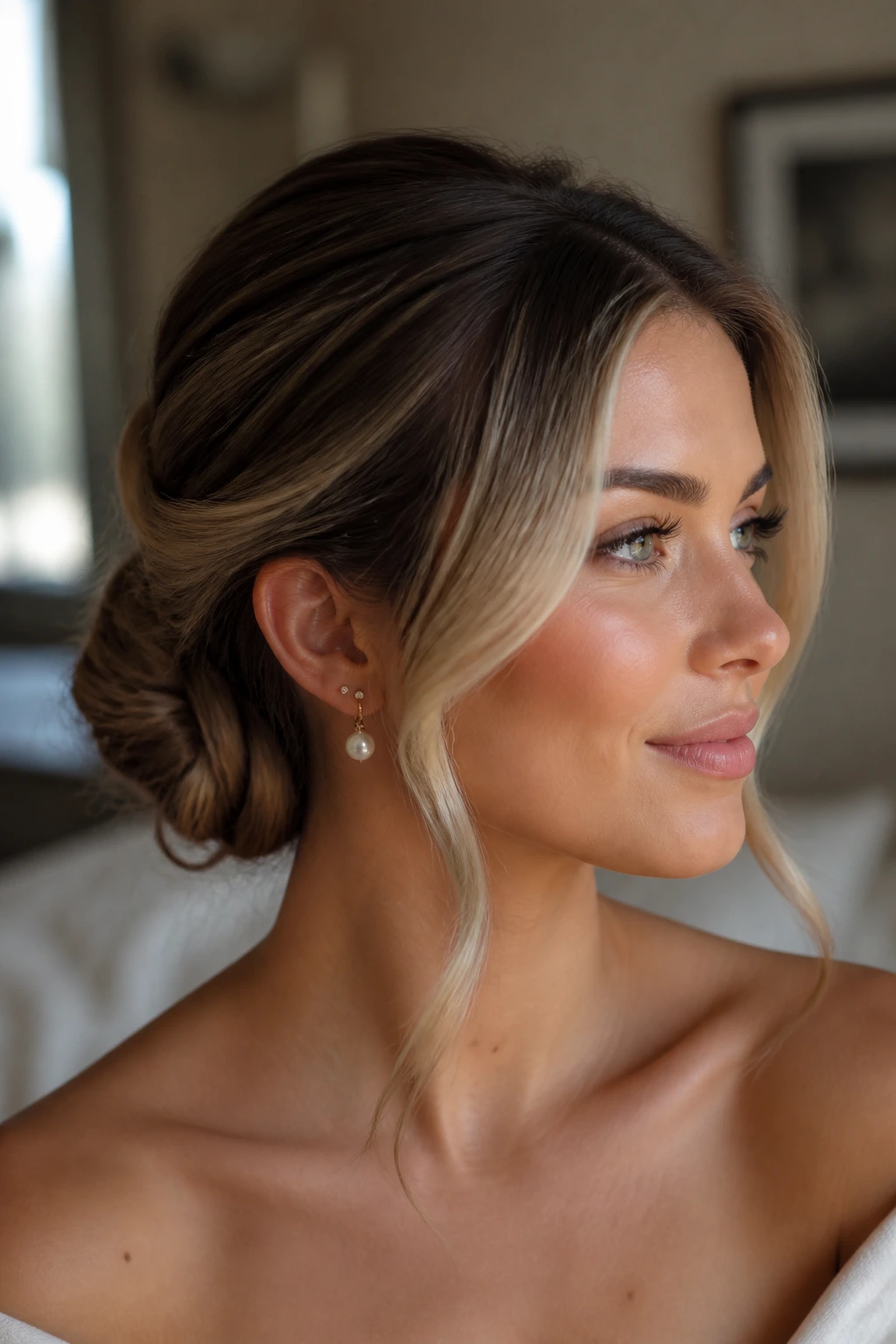
Low wedding hair works with money piece highlights because the face-framing color gets a clear lane. It can sit beside the cheekbone, curve near the jaw, or skim past the veil line without being crushed by crown volume. That’s the whole game.
The nape is a quieter place for hair, and that quietness helps. The eye goes first to the face, then to the front streaks, and only after that does it settle on the bun, knot, braid, or roll. If the back is busy and the front is blurred, the style loses its shape. If the back stays controlled, the lighter strands feel deliberate.
There’s also a practical side. Low styles usually play nicer with veils, shoulder details, and heavier earrings because they leave the top of the head open. That gives the money piece room to stay visible in motion and in close-up photos. A bright front panel that disappears every time you turn your head is wasted color. A low style fixes that.
Essential Tools for These Low Wedding Hairdos
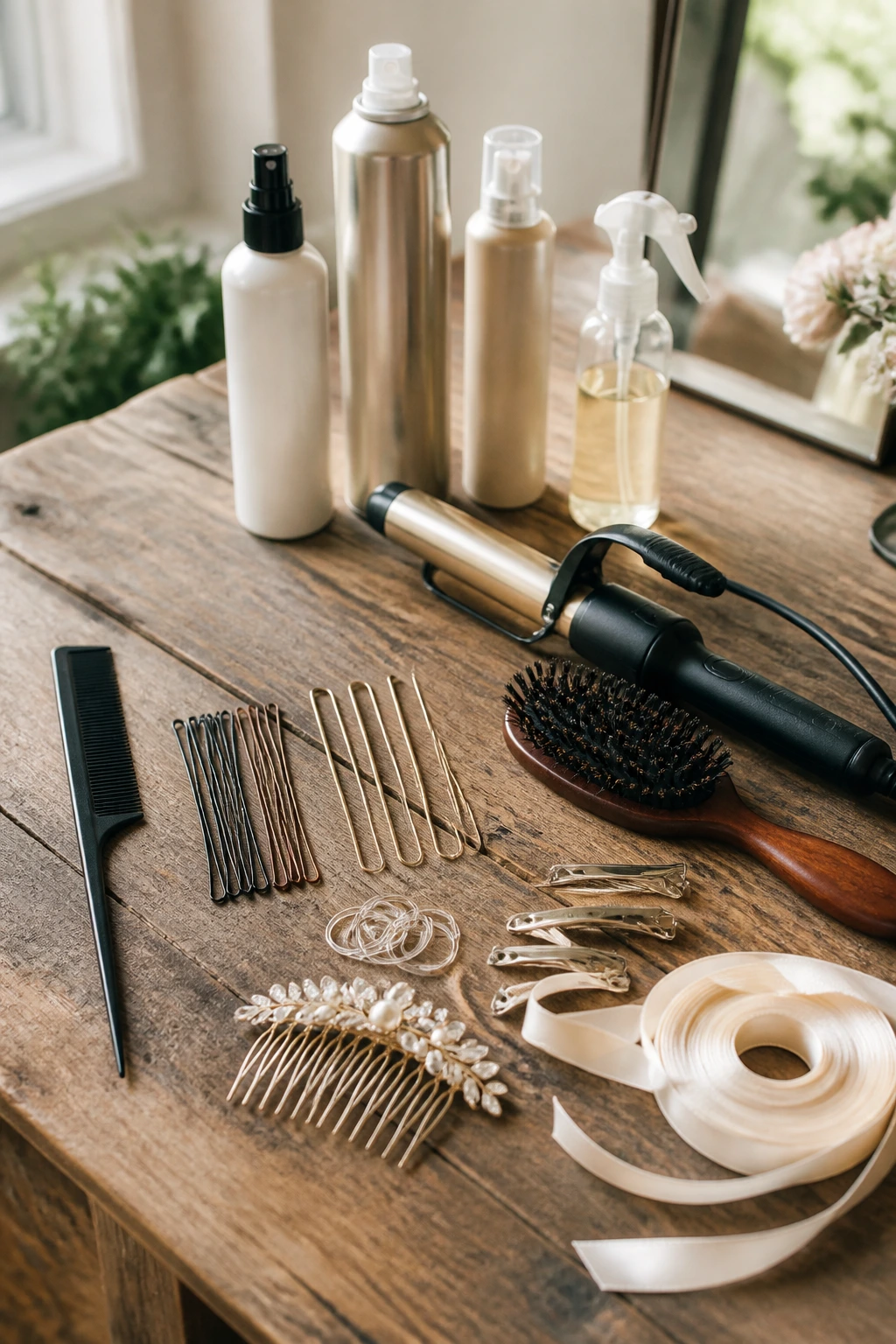
- Tail comb: Keeps the part clean and helps place the money piece where you want it.
- Bobby pins in hair-matching shades: Disappear better than shiny metal pins, especially in darker hair.
- Long U-pins: Useful for buns, twists, and rolled shapes that need real grip.
- Strong-hold hairspray: Holds the front pieces without turning them into helmet hair.
- Heat protectant spray: Matters if you’re bending the money piece with a flat iron or wand.
- 1-inch curling iron or wand: Useful for soft front bends and face-framing waves.
- Boar-bristle brush: Smooths the crown without making it puff up.
- Texture spray or dry shampoo: Gives fine hair enough grip to stay pinned.
- Mini clear elastics: Handy for bubble ponytails, hidden sections, and braided bases.
- Small duckbill clips: Keep sections separated while you build the shape.
- Decorative comb or pins: Best added after the structure is secure, not before.
- Silk ribbon or veil comb: If you’re using one, bring it to the trial. The weight changes the whole balance.
Smart Product Picks for Smooth Hold and Soft Shine
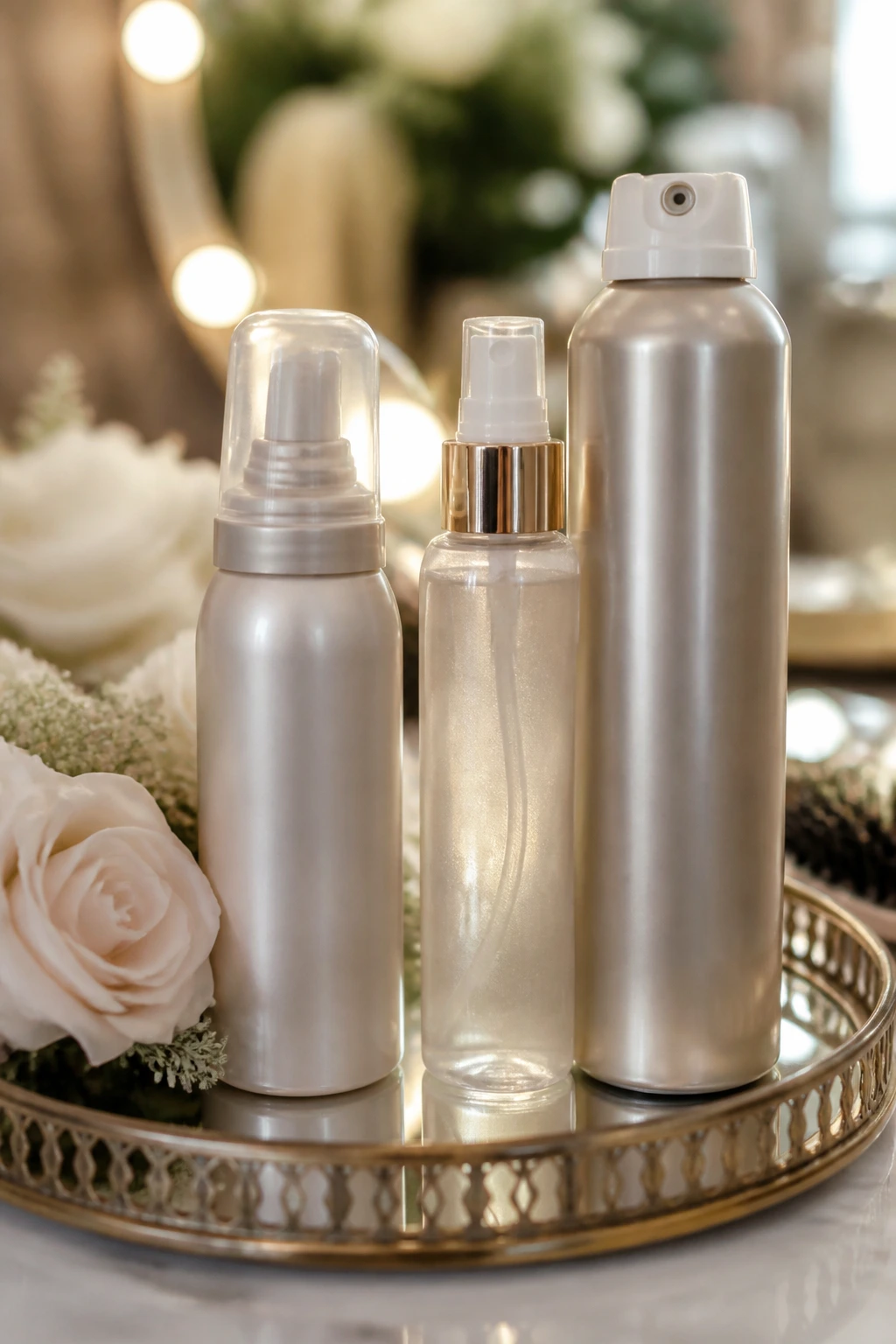
The product list for bridal hair can get bloated fast. Most of it is unnecessary. What you actually need is grip at the roots, a little slip for shaping, and enough hold to keep the money piece from flopping into your eyes after an hour of dancing.
Fine hair usually wants a light mousse at the roots, texture spray through the mid-lengths, and a flexible hairspray at the end. Thick or coarse hair often needs more control up front, so a smoothing cream, a stronger pin set, and a firm spray make more sense. If the hair is very slippery, skip heavy oils near the crown. They feel nice for about ten minutes and then turn every pin into a suggestion.
I’m also picky about shine products. A tiny bit of serum on the front pieces is useful; too much makes the highlights look greasy in flash photography. Put the shine where the light will hit, not all over the scalp. And if the money piece is pale blonde, a little shine goes a long way. If it’s caramel or copper, you can usually push the gloss a touch farther without losing the shape.
Bring everything to the trial. Don’t assume the stylist has your exact pin color, veil comb, or ribbon width. Bridal hair is one of those places where a three-dollar detail changes the result more than a forty-dollar bottle ever will.
How to Pair These Low Styles With Veils, Earrings, and Necklines
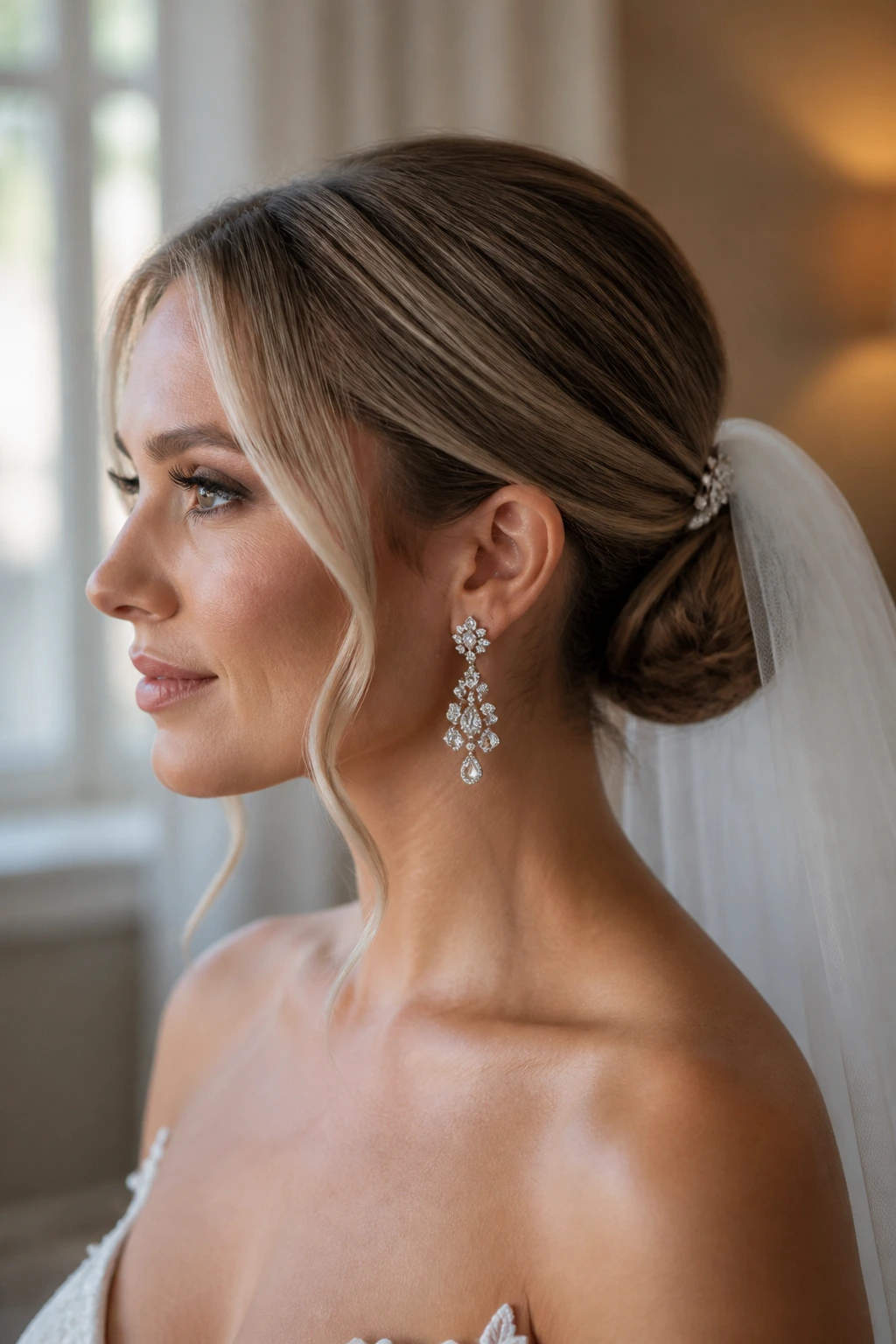
Veils:
A veil sits best when the bun or twist has a clean anchor. For longer veils, place the comb just above the knot or chignon so the fabric falls without crushing the low shape. For a blusher, you may want the front pieces a little softer so the veil can lift and settle without snagging on stiff curls.
Earrings:
If the hairstyle sits low and sleek, earrings can do more work. Chandelier or drop earrings look sharp with center parts and smooth buns, while smaller studs make sense if the hair already has braided detail or a decorative comb. I’d avoid pairing an overloaded bun with huge earrings unless the dress is very plain.
Necklines:
Open backs, strapless gowns, and square necklines usually love a low bun because the nape stays visible. One-shoulder dresses often look better with a side chignon or a deep side part so the hair echoes the dress line. High necks can still work, but the bun should stay compact and the money piece should be soft, not dramatic.
Money Piece Placement:
Keep the brighter front strands curved toward the cheekbones, not pinned flat behind the ears. That’s the difference between a face frame and a forgettable strip of color. If the highlight is very bright, let it sit a little forward and use the veil or earrings to balance it.
Additional Styling Moves That Make the Color Read Better
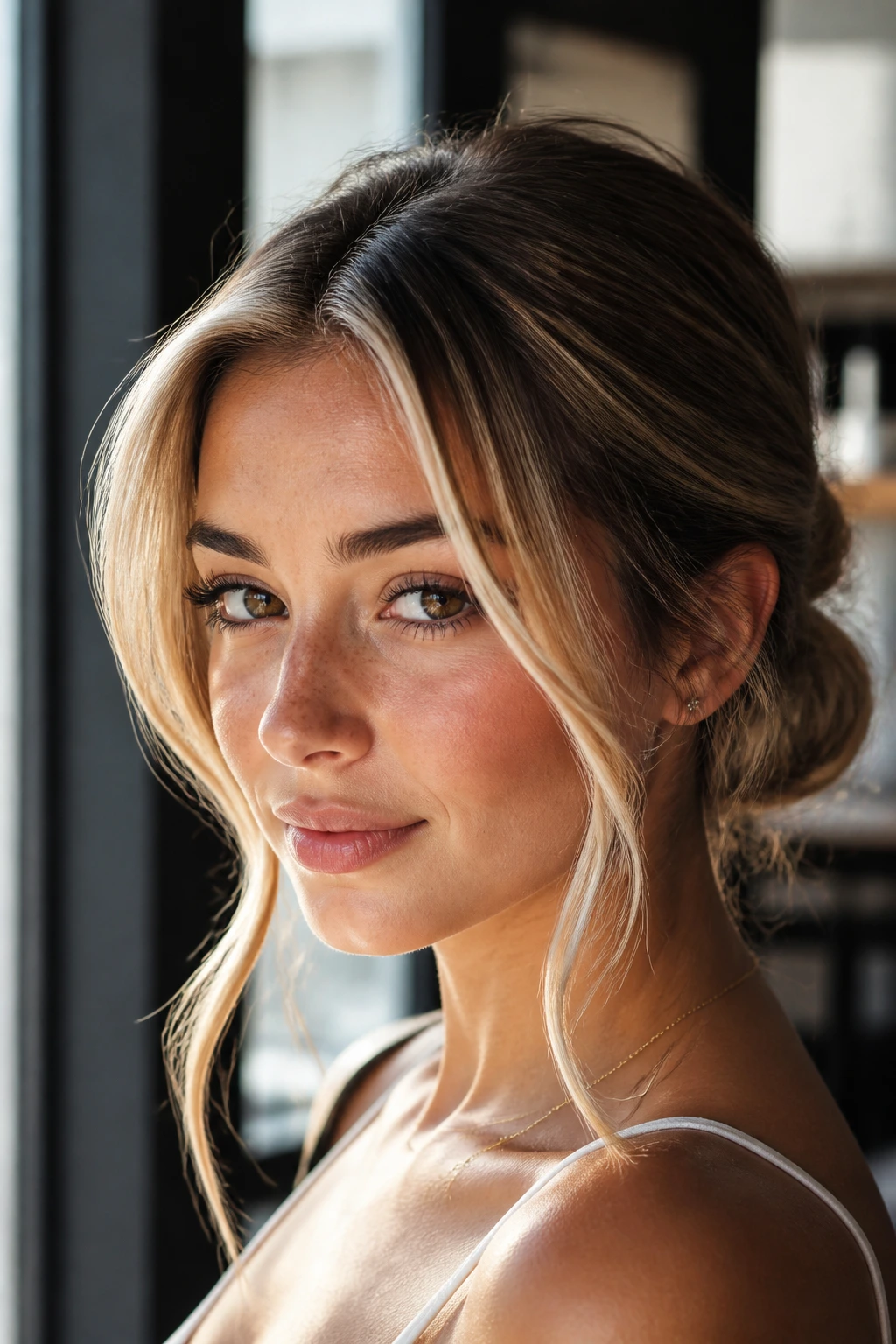
Shine Control:
Use shine products where the light hits first: the front pieces, the outer curve of the bun, and the top layer near the part. Skip the scalp itself. If the roots look slick, the highlights lose contrast and the whole style looks heavy.
Texture Control:
For very straight hair, a touch of wave in the money piece helps the color show dimension. For curly hair, define the curl pattern near the face but don’t crush it into a hard shape. The goal is shape, not perfection.
Color Play:
If your money piece is bright blonde, a soft bend away from the face keeps it from looking stripey. If it’s caramel or copper, let it curve more loosely so the warmer tone can catch light. And if the hair has deep lowlights under the top layer, keep the bun compact so that contrast stays visible.
Make-It-Yours:
Minimalist brides can skip sparkle and let the shape do the talking. Romantic brides can add a comb or a few pins. If you like a softer finish, pull a little more hair from the temple. If you prefer something sharper, keep the front tighter and let the bun carry the detail.
Make the Style Last From Trial Run to Last Dance
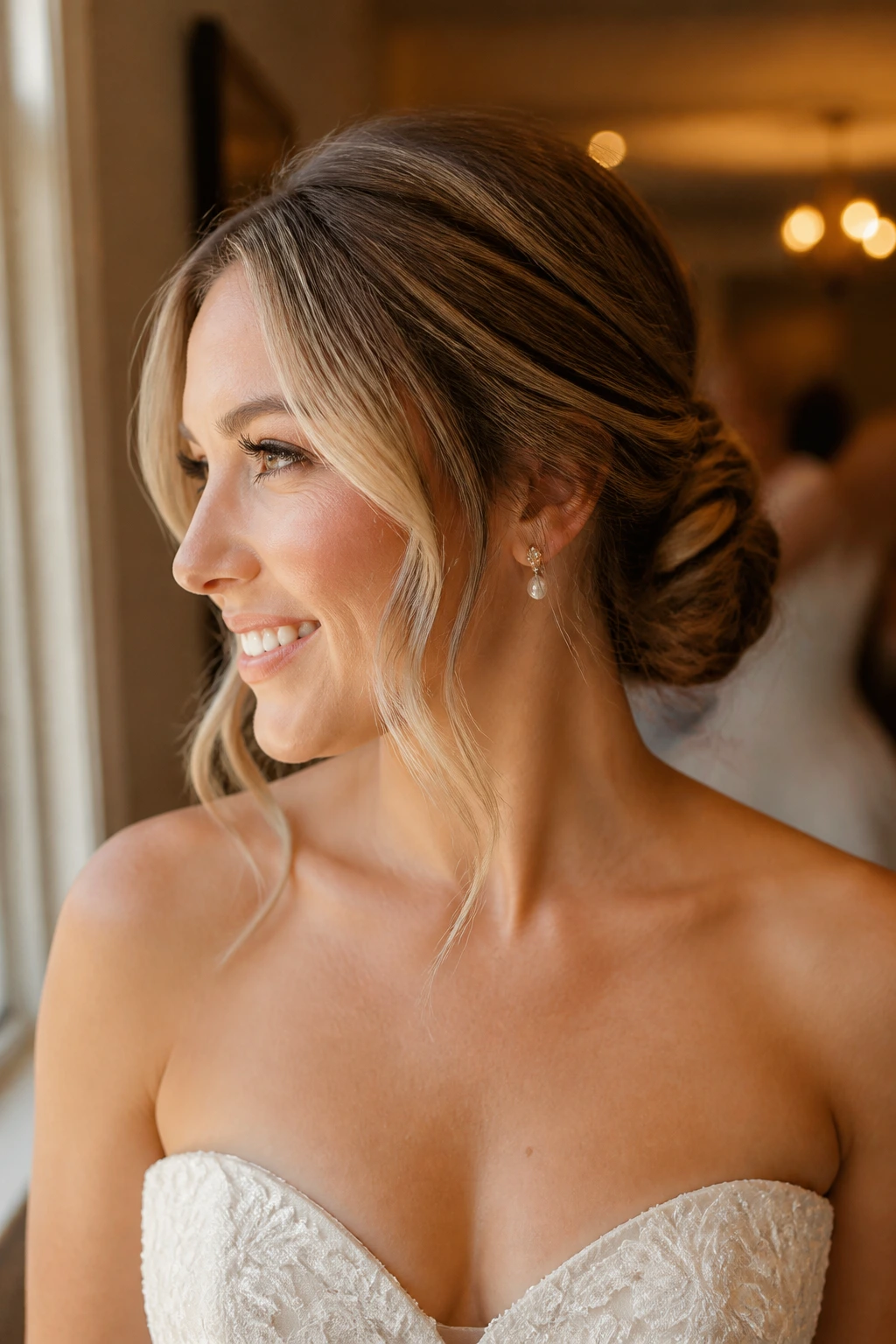
A wedding hairstyle should not be a one-hour event. It has to survive the ceremony, the photos, the hugging, the dinner, and the moment when somebody decides to spin you on the dance floor. Low styles handle that better when the prep is done in the right order.
The day before, wash only if your hair gets greasy fast. Clean hair can be too slippery for a low updo, especially if you have fine strands. A little natural texture gives pins something to hold. If your hair is very soft, a dry shampoo mist at the roots the night before helps more than spraying it in the morning.
On the morning of, set the front pieces first. Those money-piece strands are the first ones to tell on you if they’re rushed. Heat them, bend them, let them cool in place, then build the bun or knot around them. If you’re using a veil, clip it on during the trial so you know whether the front needs to sit slightly farther forward.
During the event, keep a small touch-up kit nearby: 4 to 6 bobby pins, a travel hairspray, a mini comb, and a few blotting papers. If the front pieces start to separate, smooth them with your hands first. A brush can overdo it fast. After the reception, remove pins one by one and don’t yank the coil or twist apart while it’s still sprayed stiff. That’s how breakage happens.
Common Mistakes That Flatten the Highlight or Spoil the Shape
Mistake 1: Brushing the money piece too far back.
The front color vanishes and the face looks bare. Keep the pieces slightly forward, then curve the ends instead of forcing them behind the ears.
Mistake 2: Using too much oil or serum.
The hair goes limp, the pins slide, and the highlights start to look greasy in flash photos. Use a tiny amount only on the surface, and keep it away from the roots.
Mistake 3: Building the bun too high.
A high placement steals the quiet, low shape that makes these styles work. Set the knot or chignon at the nape, then let the front pieces carry the brightness.
Mistake 4: Forgetting the veil or comb at the trial.
Accessories change the balance. A bun that looks perfect alone can shift once a veil comb is added, especially if the hair is fine.
Mistake 5: Making the front pieces too thin.
If the money piece is separated into tiny wisps, it stops reading as a frame and starts looking accidental. Keep the sections full enough to show the color band.
Mistake 6: Over-spraying the ends.
The hair gets crunchy and the bends stop moving. Hold spray is useful, but the front pieces should still have a little flexibility.
Variations and Style Swaps Worth Trying
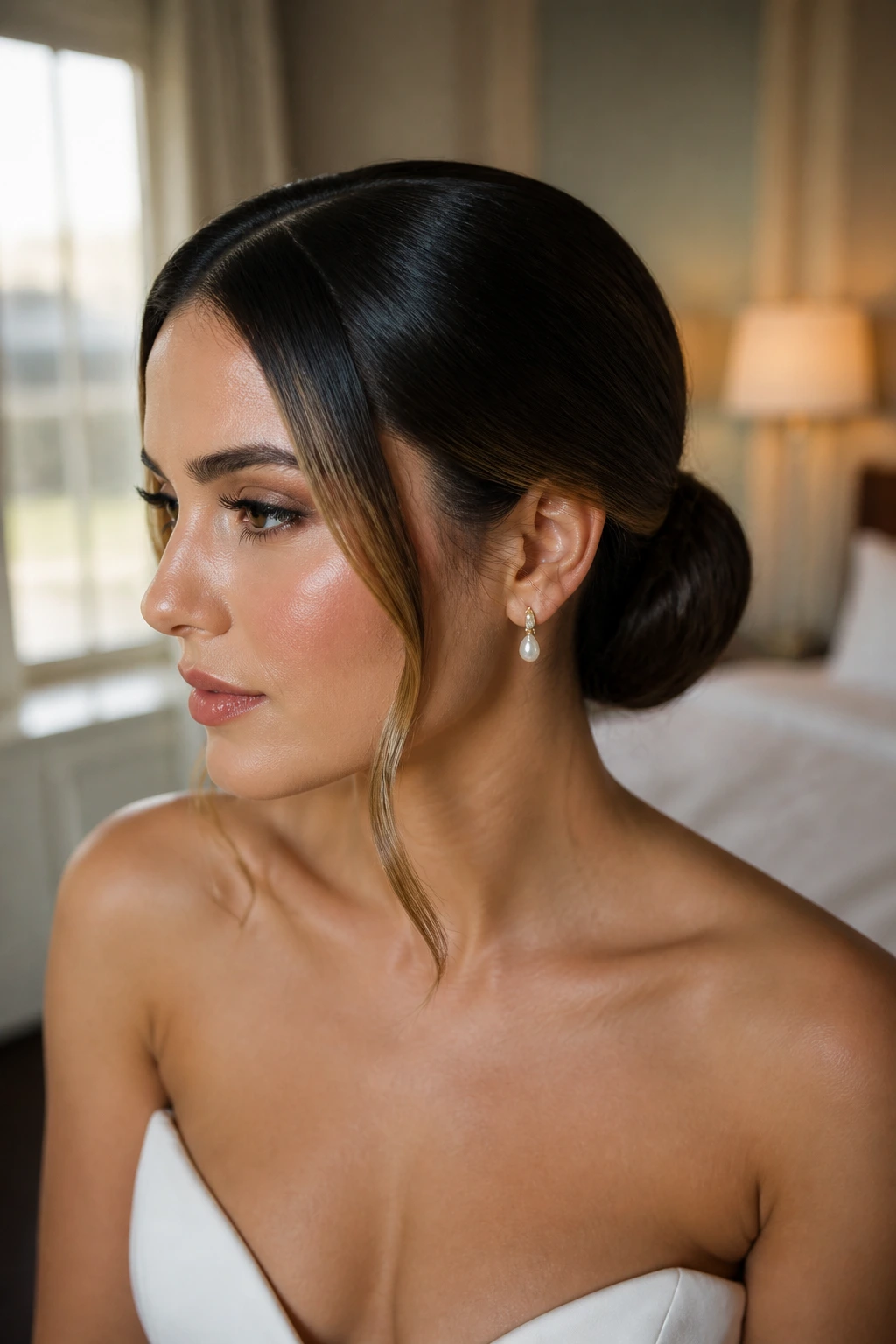
Glass-Smooth Black-Tie Finish:
Choose a sleek chignon, deep side part, and strong shine spray. This version suits satin gowns and sharper makeup. Keep the front highlight smooth and curved, not loose.
Soft Garden Version:
Use a twisted bun, looser front waves, and a few airy tendrils. This version looks better with lace, linen, or dresses that have movement in the fabric. It also survives a little breeze without falling apart.
Curly-Hair Version:
Let the curls near the face stay defined, then pin the back into a low knot or tucked bun. Curl pattern matters more than perfect smoothness here. The money piece looks richer when the curls keep their shape.
Short-Hair Fallback:
Use a low knot with hidden padding, tiny braids, and pins matched to the darker root color. The front pieces do most of the visual work, so keep them soft and visible. A short style can look polished if the edges are clean.
Humidity-Proof Version:
Choose a braided base, stronger pins, and a firmer spray. Keep the front pieces a little looser than you think so they don’t puff out the second the air gets damp. Texture is your friend here.
Vintage-Inspired Version:
Try a Gibson tuck, French roll, or rose bun with pearl pins. This works especially well with classic gowns and red lips. The front highlight should be curved, not sharply curled, so the style feels modern enough to wear.
What Goes Wrong When Low Wedding Hair Looks Flat
The most common failure is a style that gets too controlled. Hair gets brushed smooth, sprayed hard, and pinned close to the head until all the shine and color variation disappears. The money piece needs a little movement or it reads like a stripe instead of a frame.
Another problem is overloading the back. Brides sometimes ask for braids, twists, pearls, combs, and a heavy veil in the same section of hair. The result is clutter, not elegance. One focal point is enough. Two, if they’re quiet. More than that, and the eye has nowhere to rest.
A third issue is ignoring hair texture. Fine hair needs grip. Thick hair needs shape control. Curly hair needs definition, not flattening. If the stylist uses the same product load on every head, the style will behave differently once the room heats up and the day gets moving. That’s where the trial run earns its keep.
Frequently Asked Questions
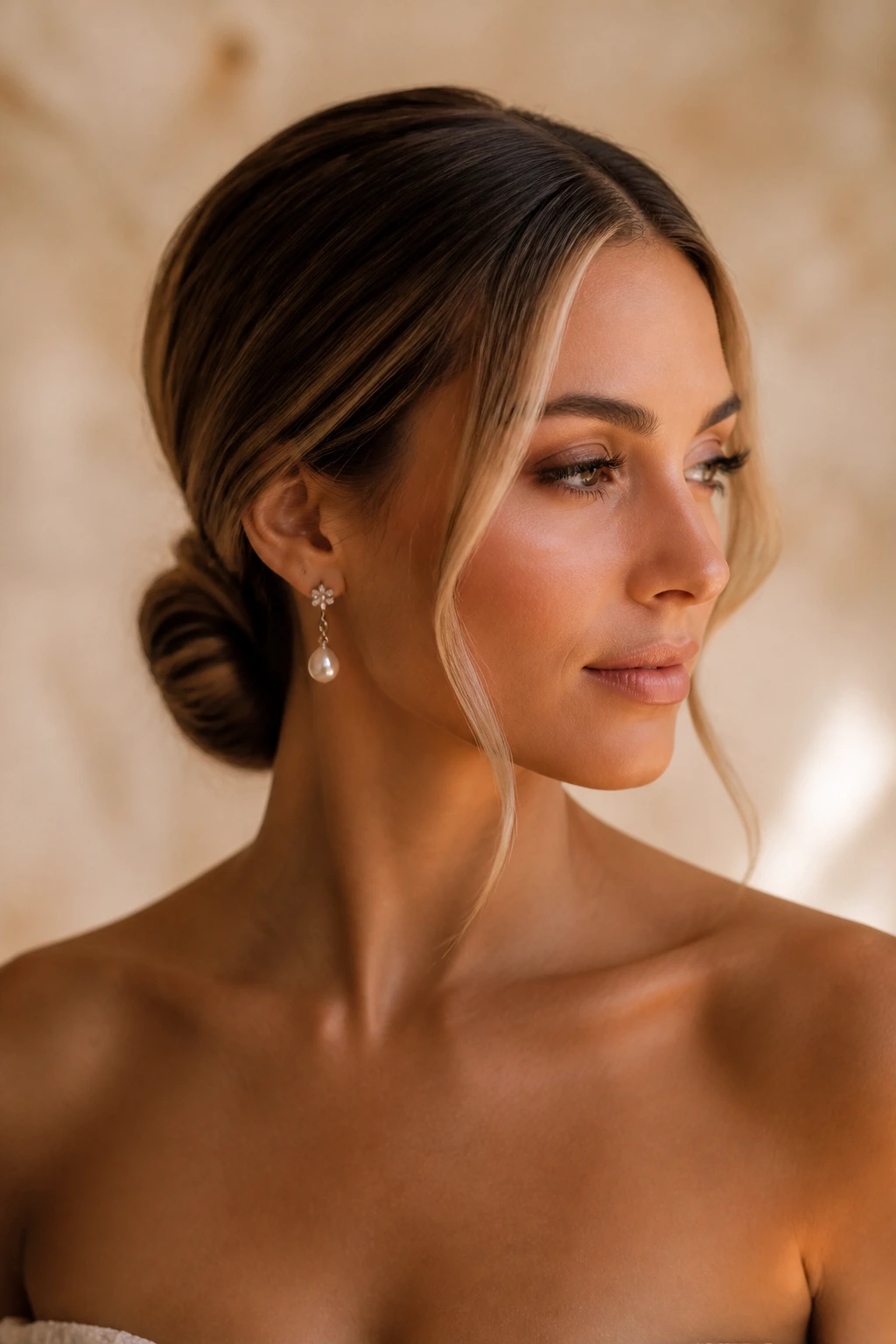
Will a money piece still show in a low bun or chignon?
Yes, if the front pieces are shaped on purpose. The highlight disappears when it’s brushed straight back and pinned too tightly, but it stands out when the strands are curved around the face or left in a soft side sweep.
Should wedding hair be washed the same day?
Usually not if your hair is fine or slippery. Hair with a little natural texture tends to hold pins better. If your scalp gets oily quickly, wash the day before and use a light dry shampoo at the roots.
Can these low styles work with a veil?
Absolutely. In fact, low buns and knots often hold veil combs more securely than high styles. The only catch is placement: bring the veil to the trial so the stylist can see exactly where the comb sits against the bun.
What if my hair is too short for a bun?
A bob or lob can still work. Use a low knot, hidden padding, or a tucked twist, and let the money piece stay soft in front. Shorter hair usually needs more pins and more planning, not a different dream.
Do these styles work for curly hair?
Yes, and some look better on curls than on straight hair. A curly money piece near the face gives the style texture and depth, especially in low buns and side chignons. The key is to define the curl pattern before pinning the back.
How do I keep the front pieces from frizzing up?
Prep them with heat protectant, a small amount of smoothing cream, and a light bend from a flat iron or wand. Then let them cool before touching them again. Hot hair changes shape if you keep fussing with it.
Can I wear big earrings with a low wedding hairstyle?
You can, but the hairstyle should stay simpler. A sleek chignon or center-part knot works better with statement earrings than a braid-heavy bun. If the hair already has a lot going on, smaller earrings usually look cleaner.
What if the money piece is very blonde or very warm?
Treat it like the main feature near the face. Keep the front pieces polished, not overloaded with product, so the color stays crisp. Warm copper or honey tones look especially good with soft waves; icy blonde often looks sharper in a sleek style.
A Low Style That Lets the Color Speak
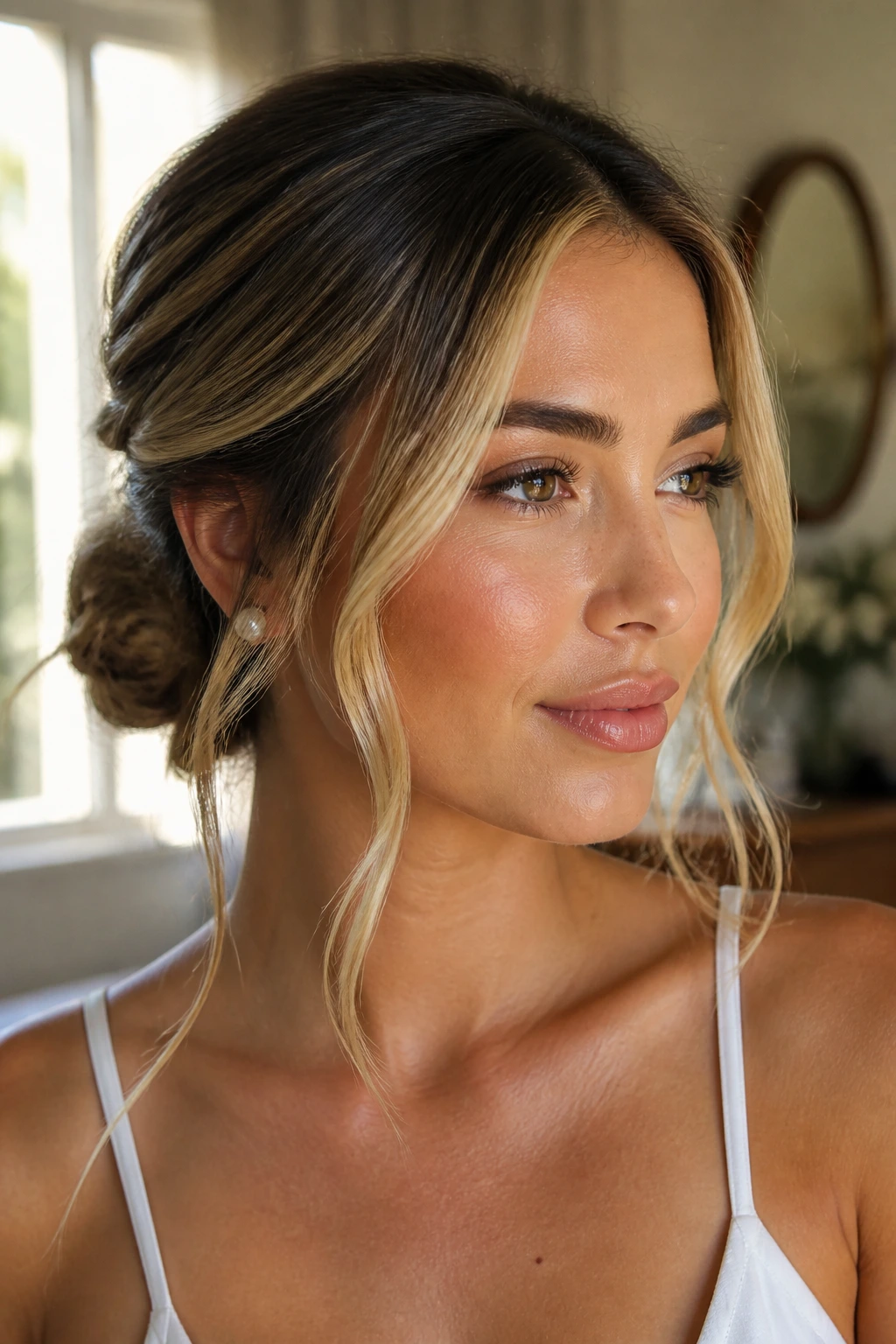
The best low wedding hairdos don’t hide the money piece. They give it a place to breathe. That can mean a clean chignon, a soft twist, a side part, or a ribboned ponytail. The shape changes, but the idea stays the same: keep the face-framing color visible and let the back stay calm.
That’s why these styles work so well for weddings. They hold up in photos, they sit neatly with veils and earrings, and they don’t fight the dress. If the highlights are the part you love most, give them a frame worth noticing. Then keep the rest of the style disciplined enough to let that frame do its job.