



Brown balayage is one of those color choices that looks quietly smart when it’s done well. On fine hair, it can add the illusion of density without turning the ends wispy, and on warm skin tones it brings out the gold in the face instead of fighting it. The right brown doesn’t shout. It sits in the hair like a soft shadow that catches light when you move.
Fine hair changes the rules. Chunky highlights can make the strands look separated, and overly cool browns can turn muddy against peach, golden, or olive undertones. The good versions keep the depth at the root, paint in thin ribbons through the top layer, and stop the lightening before the hair starts looking see-through.
That’s the part people often miss: placement matters more than drama. A caramel ribbon in the right spot can do more for the face than four inches of lightened ends. A chestnut gloss can make a blunt bob look twice as full. And once you start looking at brown balayage through that lens, the options get a lot more interesting.
Why These Brown Balayage Ideas Work So Well Together
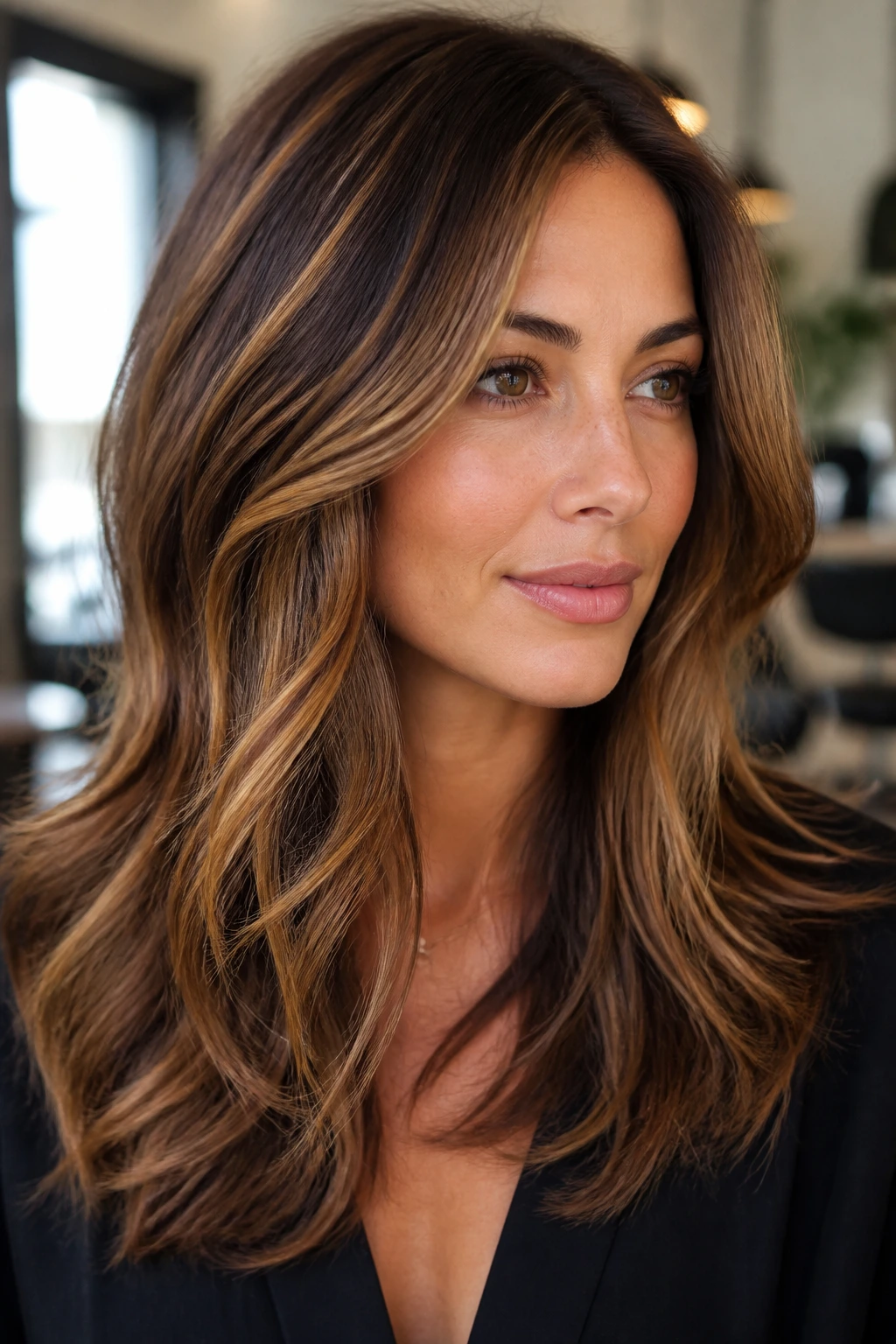
-
Fine-Hair Friendly Dimension: Thin painted ribbons and soft root shadows keep the hair from looking sliced apart, which matters when each strand already has less visual weight.
-
Warm-Skin Harmony: Caramel, chestnut, toffee, bronze, and honey-brown shades sit naturally against golden and peach undertones, so the color looks like it belongs on the face.
-
Low-Contrast Grow-Out: Hand-painted brown balayage grows out softer than hard highlight lines, and that softer line is a gift if you do not want your parting to announce every appointment.
-
Fuller Ends, Not See-Through Ends: The best versions keep the lightest pieces slightly above the very tips, which helps the ends still look dense.
-
Style That Moves: These shades show up best in bends, waves, bobs, lobs, and layered cuts, where the color can break up flat surfaces.
-
Salon-Friendly Flexibility: You can go subtle with micro-lights or richer with bronze and cinnamon notes, which means the same family of shades works across different comfort levels.
1. Caramel Ribbon Balayage
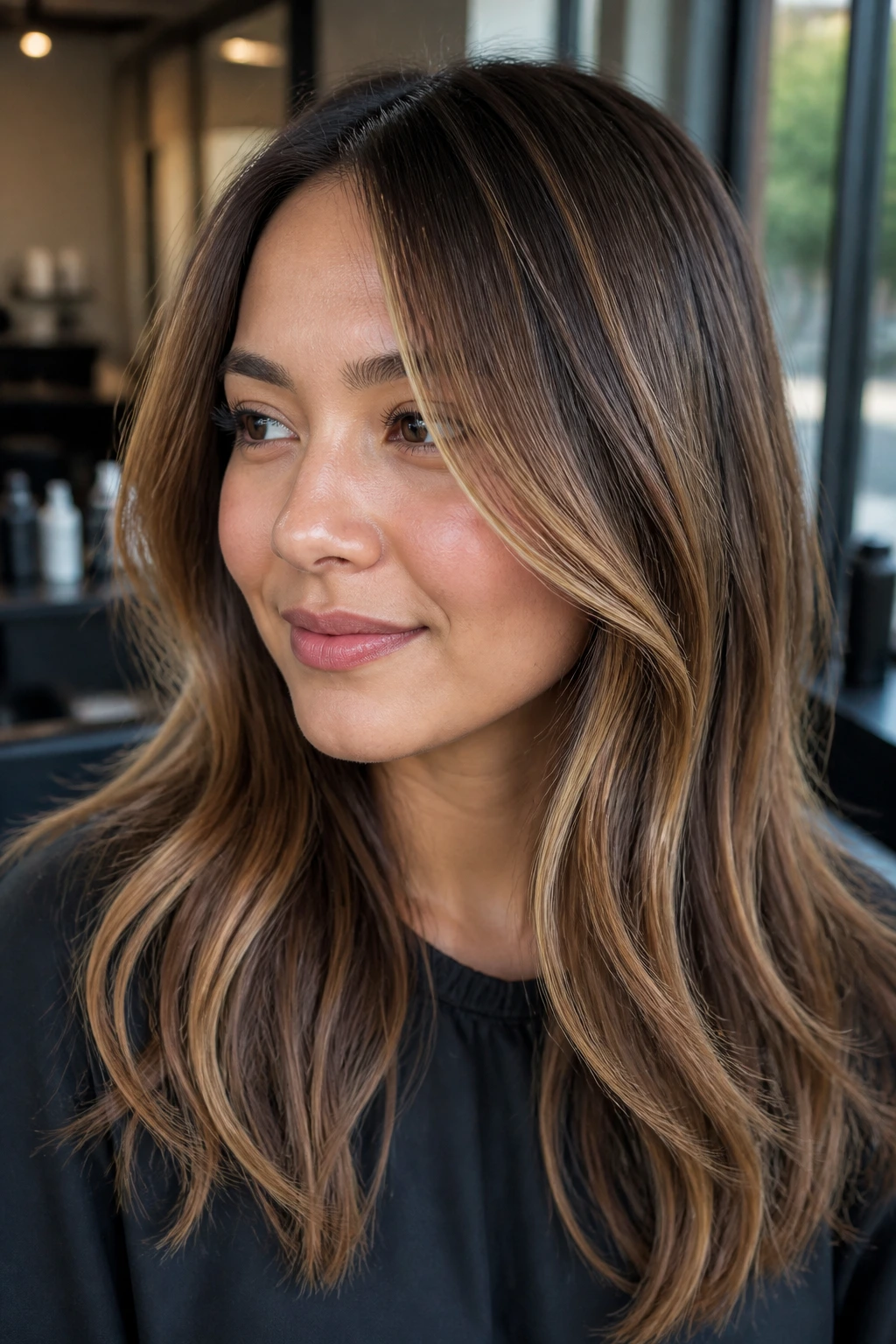
Caramel ribbon balayage is the color I reach for first when someone wants warmth without turning the whole head golden. The ribbons are thin and painted through the top layer, then tucked around the face so they show when the hair bends. On fine hair, that’s the difference between dimension and a streaky mess.
It flatters warm skin because caramel has a soft amber cast that sits beside peach and gold undertones instead of against them. Ask for the lightest pieces to stay one to two levels lighter than your base. Any brighter and the ends can start looking scraggly.
Why It Stays So Wearable
The color reads rich, not loud. That matters. Caramel gives movement in a blowout or a loose wave, but it still looks believable when you wear your hair straight.
If your hair is very fine, keep the lightest ribbons near the cheeks and mid-lengths. The bottom inch can stay deeper so the ends still look full.
2. Chestnut Glow With a Soft Root Shadow
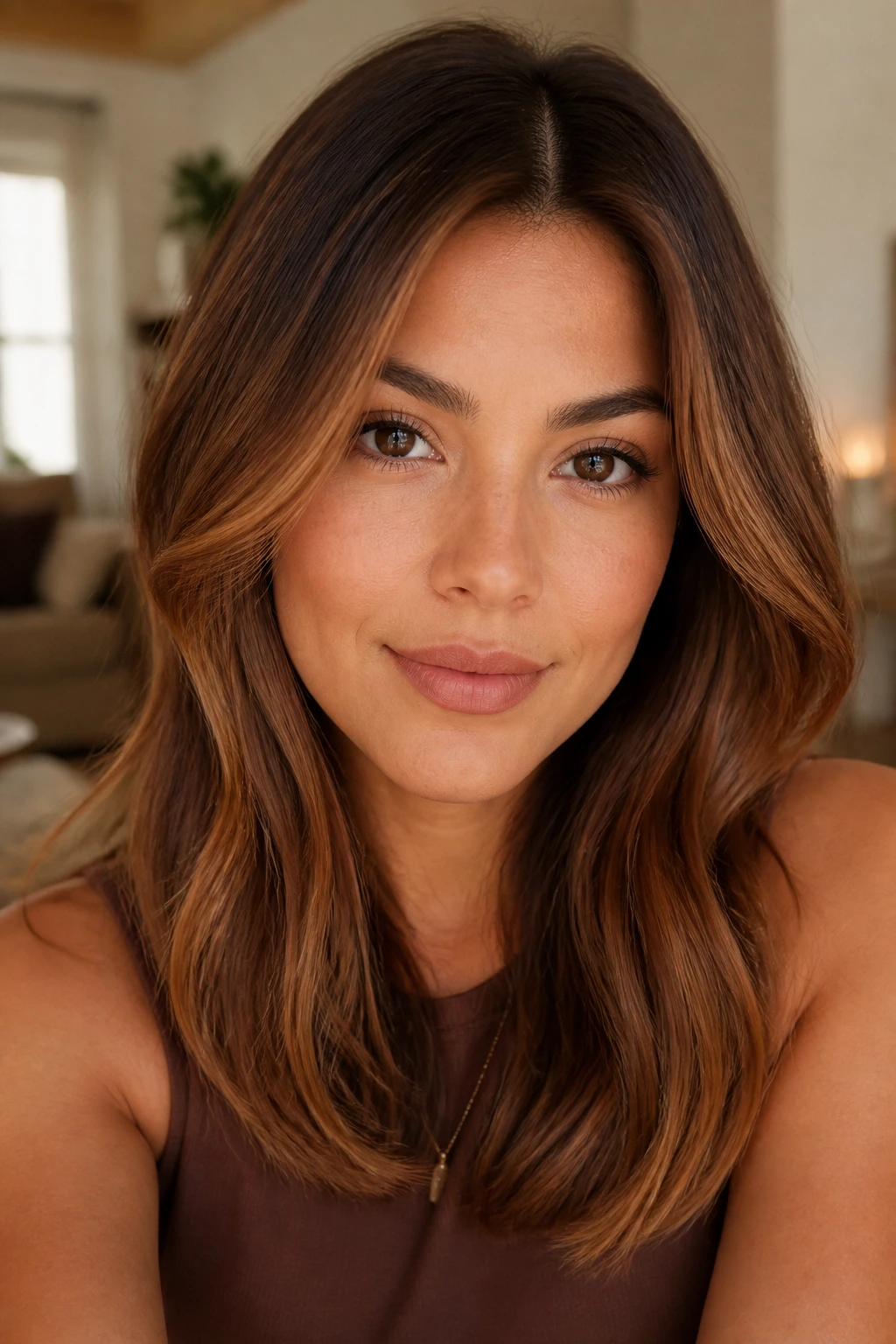
Want depth without the heavy look of one solid brunette block? Chestnut with a soft root shadow does that better than most brunettes. The root stays a shade deeper, then the chestnut opens through the mids in a soft sweep that never looks carved.
This is a strong choice for warm skin because chestnut carries a brown-red warmth that makes the face look alive, not flat. On fine hair, the shadow root matters even more. It gives the crown a little visual lift and keeps the scalp area from looking thin.
What Makes It Different
The root isn’t there to hide grow-out alone. It holds the shape of the haircut. That small bit of darkness near the scalp makes the rest of the color read fuller, especially on straight or slightly wavy textures.
Ask your colorist to keep the transition soft, not stripey. Chestnut should feel like a glow under the surface, not a separate color sitting on top.
3. Toffee Face-Framing Pieces
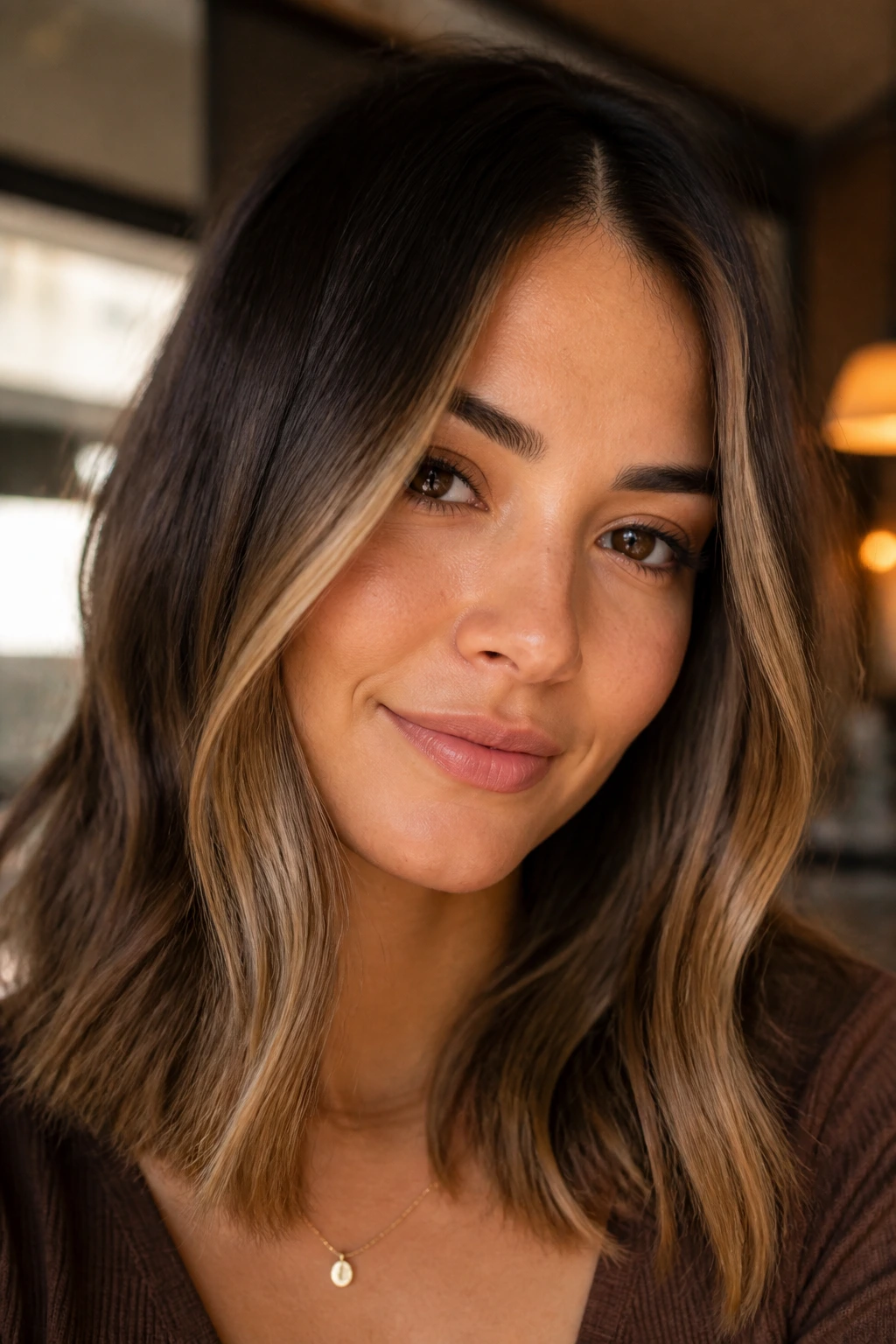
Toffee around the face is the move when you want the fastest payoff with the least risk. Two or four brighter slices near the cheekbone can wake up warm skin in a way that a full-head lightening job never quite manages, and they leave the rest of the hair looking dense.
This works especially well on fine hair because you are not asking the whole head to carry brightness. The face-framing pieces do the talking; the rest stays darker and supports them.
- Ask for two to six painted pieces per side.
- Keep them thin enough that you can see the base color through them.
- Start the lighter section just below the cheekbone if you want softness.
- If your hair is shoulder length or shorter, stop the brightest part above the ends.
That last point matters. If the lightening runs all the way down on fine hair, the whole style can start looking thin.
4. Hazelnut Melt on a Lob
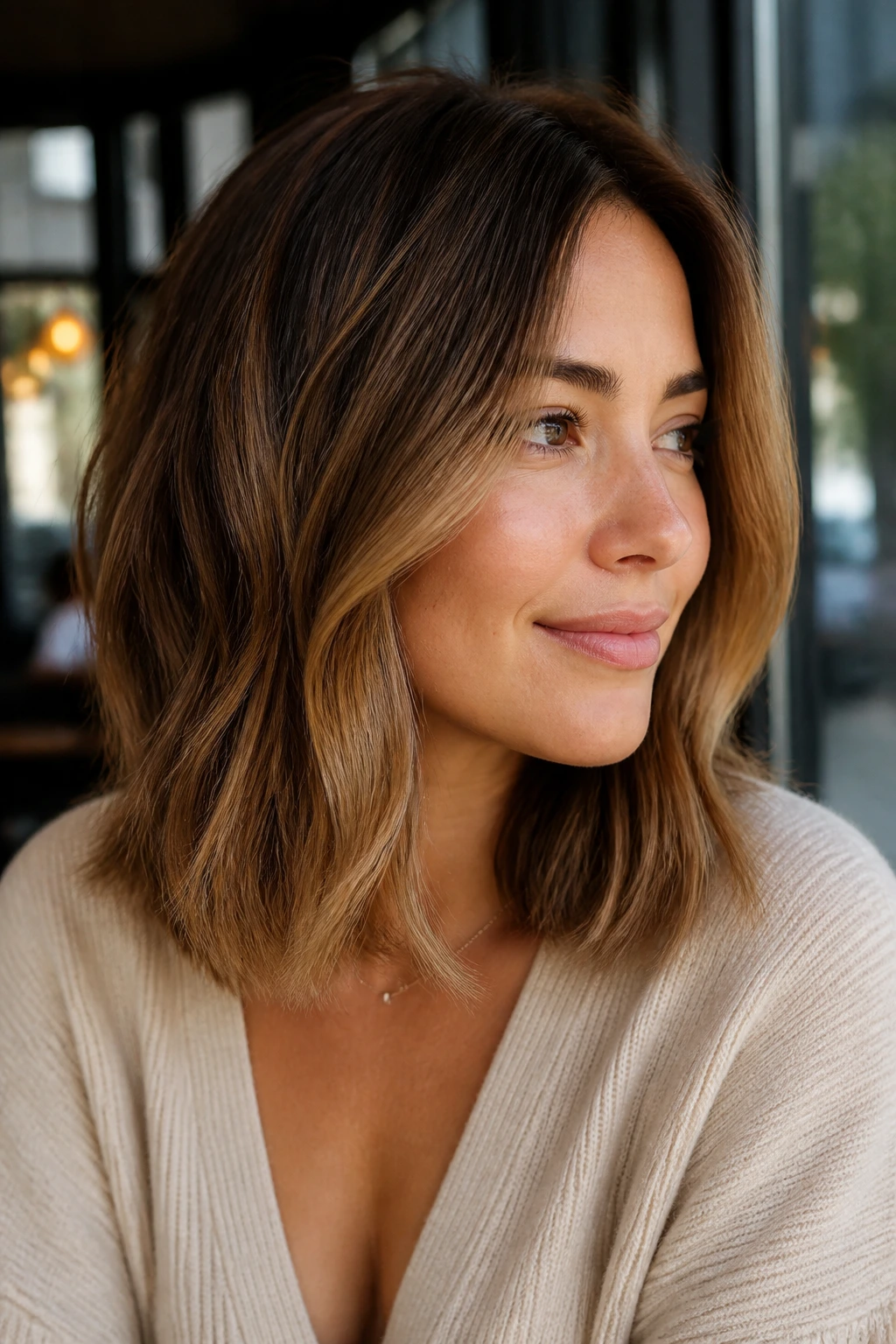
A lob gives hazelnut balayage a clean frame. The blunt ends hold their shape, and the hazelnut pieces bring in enough warmth to keep the cut from looking like one flat sheet. That combination is one reason I like this look on finer strands.
The shade sits nicely on warm skin because hazelnut has a brown-gold softness that avoids the orange cast of some caramel tones. It feels polished without turning stiff. If your hair is mostly straight, keep the lightest bits through the middle third and let the ends stay a touch deeper.
Why It Reads Fuller
A lob already creates a heavier visual line at the bottom. Hazelnut color builds on that line instead of breaking it apart. The result is tidy, not flimsy.
If you wear a center part, ask for slightly brighter pieces at the front corners. It stops the cut from looking too severe.
5. Cinnamon Brown Balayage
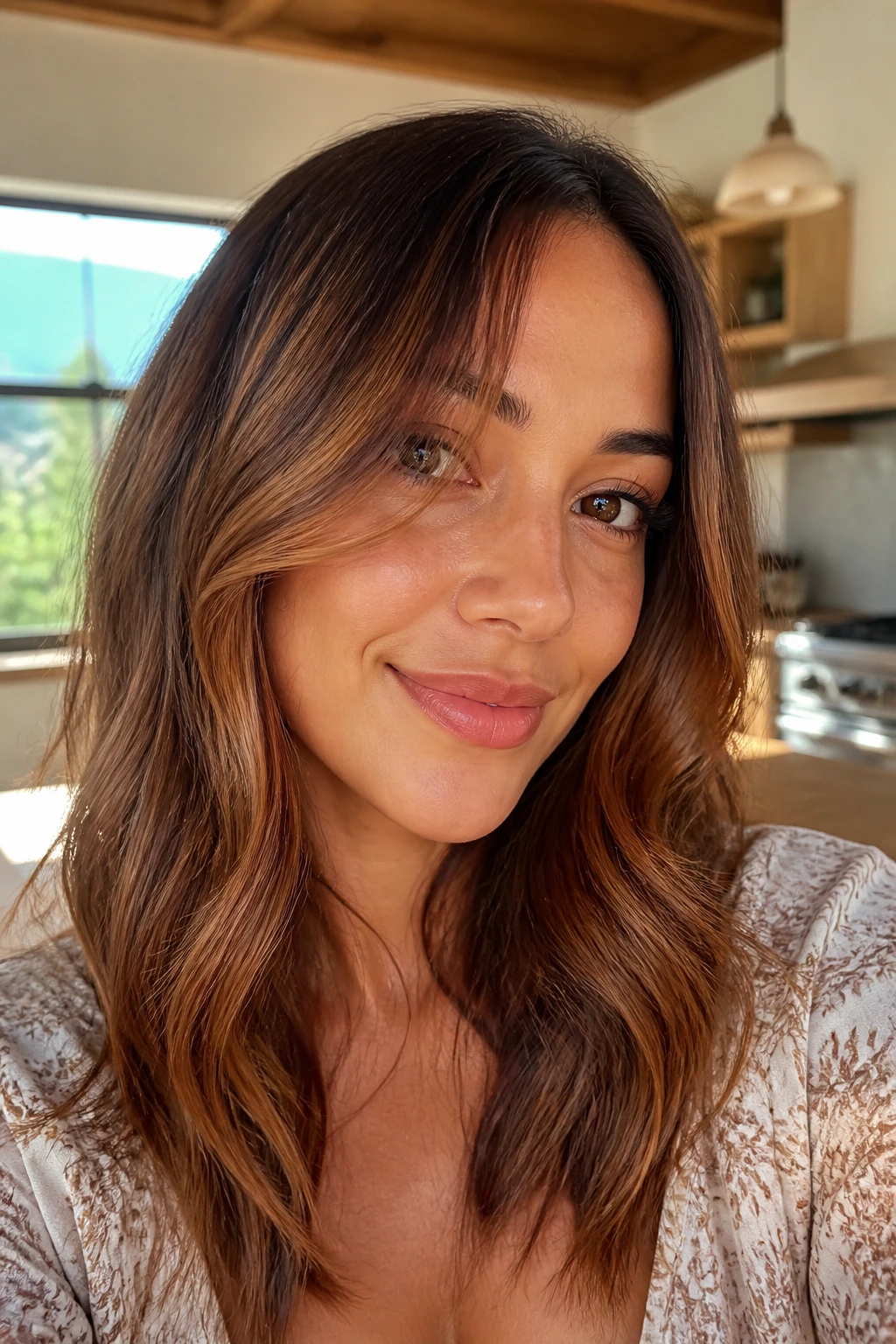
Cinnamon brown has enough warmth to flatter golden skin, but it still reads brown first, copper second. That’s what makes it so useful. It gives warmth without committing to red-red, and on fine hair it keeps the finish from going flat and dull.
This is one of the better choices if your natural brown tends to swallow light. Cinnamon catches the eye in a way plain chestnut doesn’t always do. Just keep the lightening soft. Thick cinnamon panels can look busy fast.
A glaze at the end helps here. Ask for a demi-permanent gloss in cinnamon-brown or warm copper-brown. It gives the hair that faint spice tone without making the color look painted on.
6. Mocha Micro-Balayage
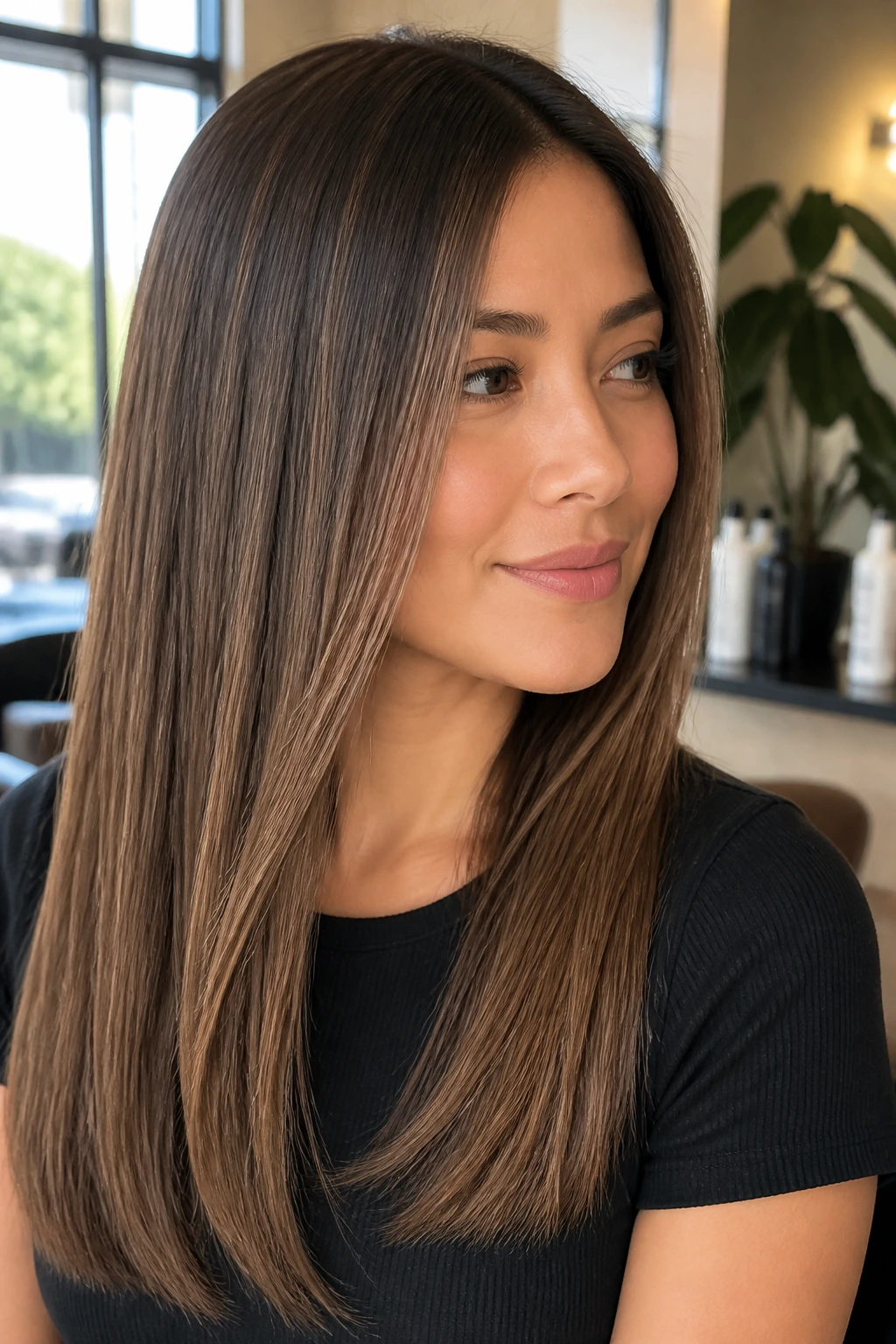
Mocha micro-balayage is the quiet one in the bunch, and I mean that as a compliment. The ribbons are so fine they almost disappear until the hair moves, which is exactly why they work on straight or fine textures. You get the illusion of depth without obvious color blocks.
Why It Works on Fine Hair
Micro-painting lets the light reflect in smaller flashes. That keeps the surface of the hair from looking patchy, which can happen when fine strands are over-lightened in bigger sections.
Warm skin takes mocha well when the brown has a soft milk-chocolate edge rather than a cool espresso finish. Ask for the lightest pieces only through the surface layer and the area around the part. That tiny bit of brightness is enough.
7. Honeyed Brunette Waves
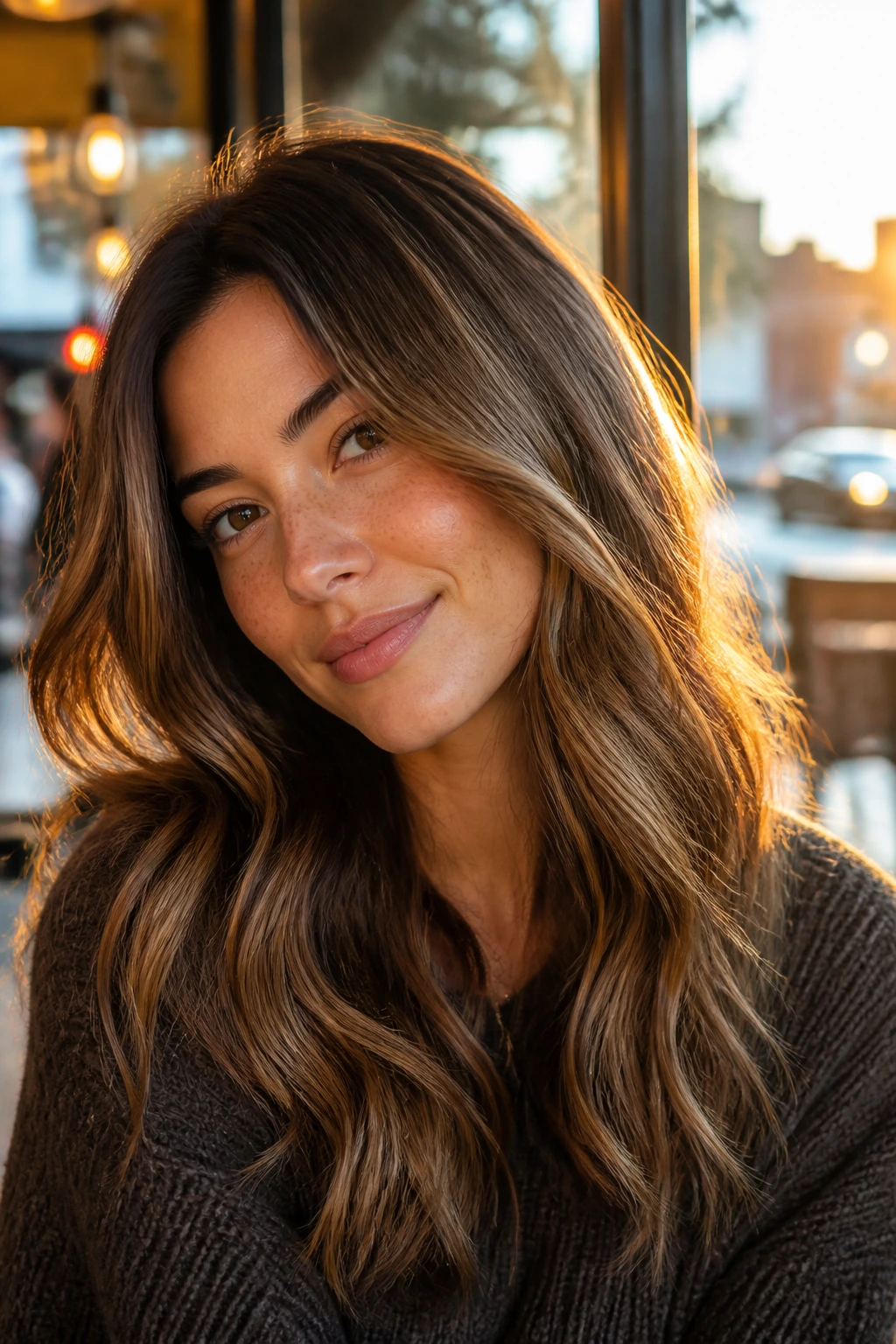
Honeyed brunette waves are for the person who wants the hair to look sun-touched without turning blonde. The warm honey bits sit inside a brunette base, and on soft waves they break up the surface in a way that makes the hair feel denser.
This is a good match for warm skin because honey brings the same golden note the complexion already has. The trick is placement. More color near the top and around the face, less at the very ends. If you flood the tips with honey, fine hair can start looking straggly.
A loose wave or a bend from a flat iron helps the shade do its work. Honey is not a static color. It needs movement.
8. Walnut Balayage for Straight Fine Hair
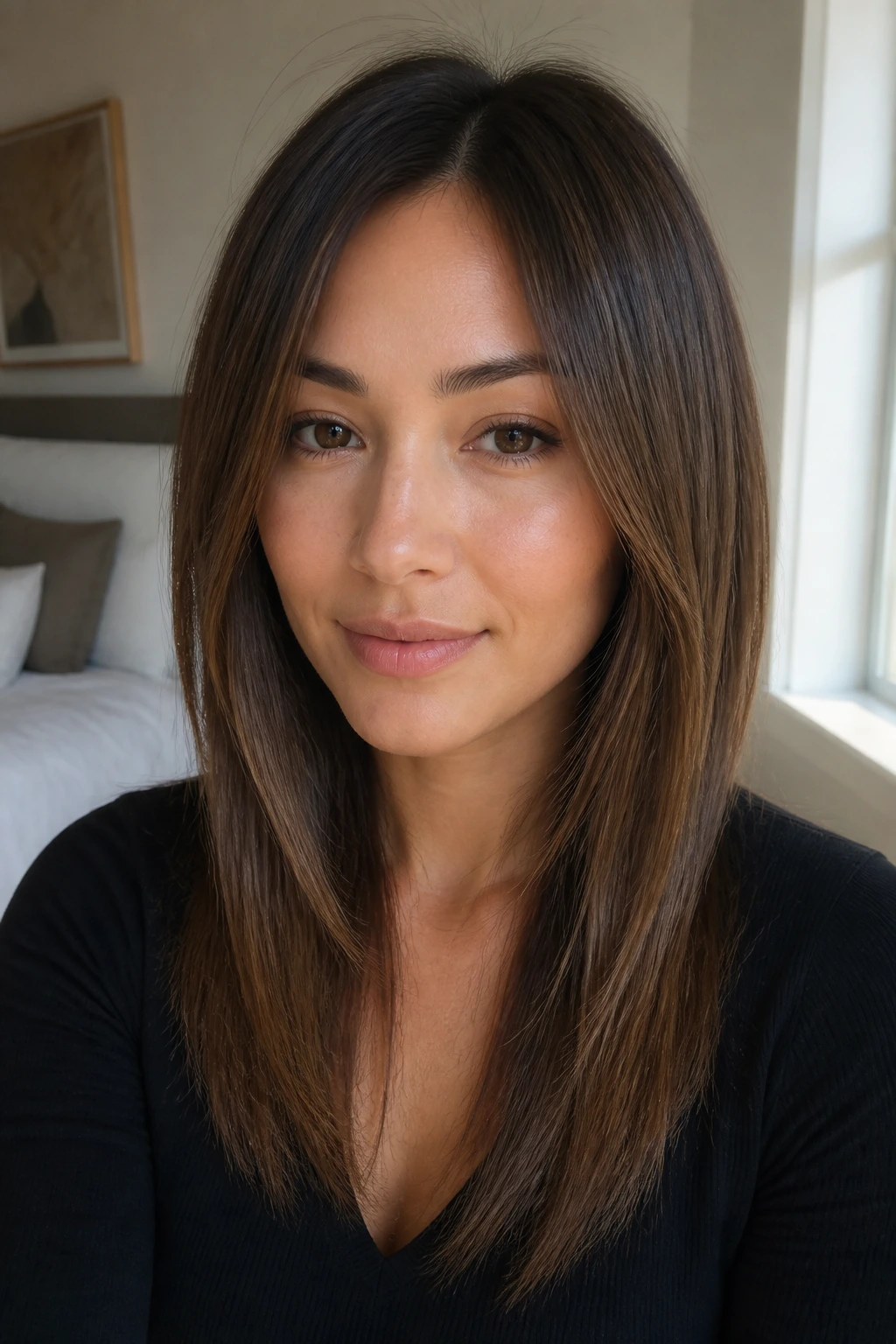
Straight fine hair is not the easiest canvas for balayage. Every stripe shows. Walnut avoids that problem by staying deeper and more blended, with just enough lift to keep the hair from looking like one dark sheet.
The strength of walnut is restraint. It works on warm skin because the brown is earthy and soft, not gray or ash. It also makes straight hair look thicker because the color changes are subtle. If you want a bigger contrast, keep it around the face only.
How to Ask for It
Ask for hand-painted pieces that start low and stay narrow. No chunky foils. No thick blonde strips. If the colorist teases the section lightly before painting, even better; the grow-out stays soft and the finish looks less printed.
9. Maple Brown Contour
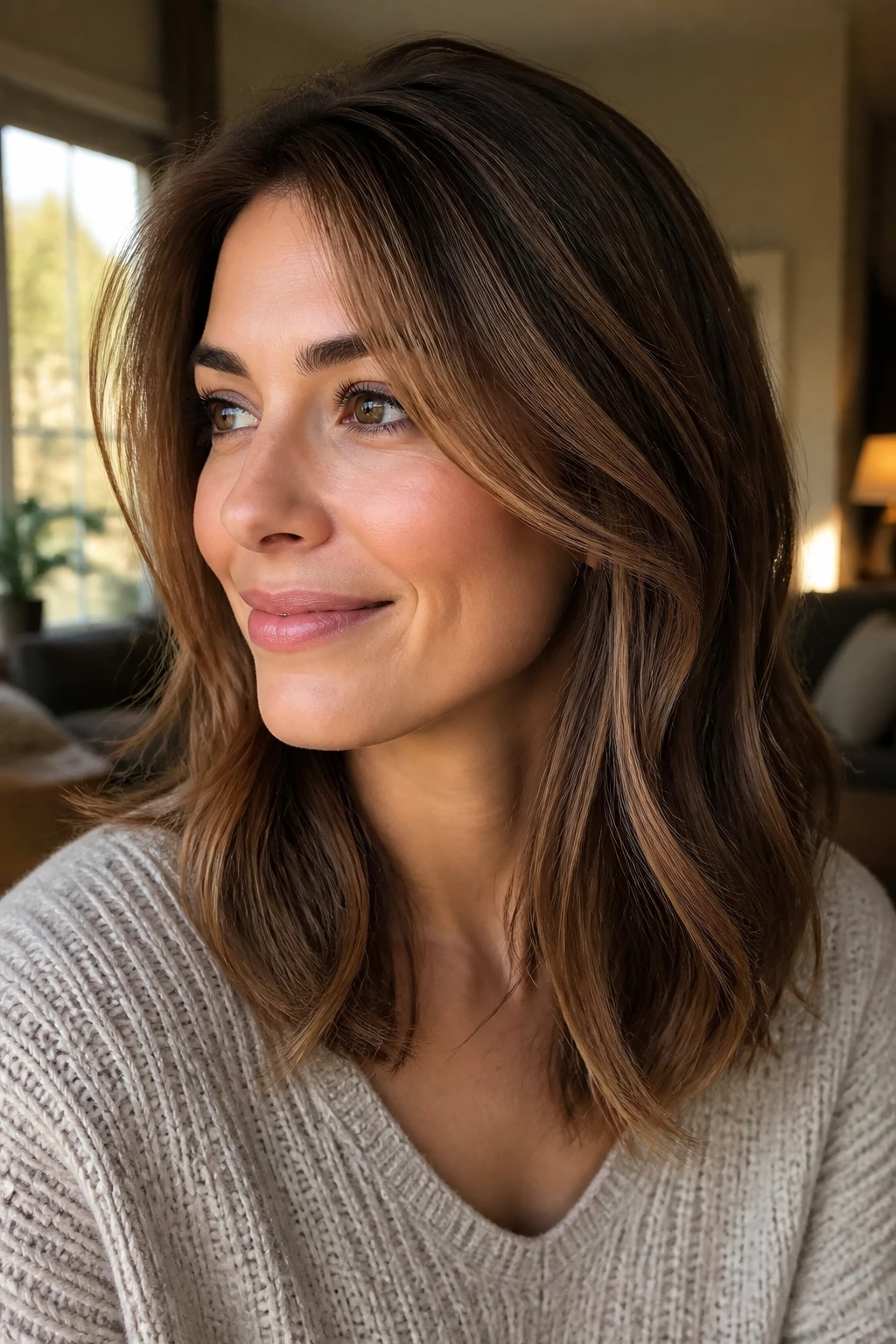
Maple brown contouring is less about all-over color and more about shape. The lighter brown pieces follow the hairline, the cheekbone area, and the outer curve of the head, which gives the face a gentle frame without making the whole style feel busy.
Warm skin tends to love maple because it carries a syrupy gold-brown tone rather than a cool beige one. Fine hair benefits because the brighter pieces stay concentrated where they matter most. The inner layers keep their depth.
If you wear glasses, this placement is especially nice. The frames and the face-framing color work together instead of competing. That’s a small thing, but it changes how the whole haircut reads.
10. Cocoa and Bronze Dimension
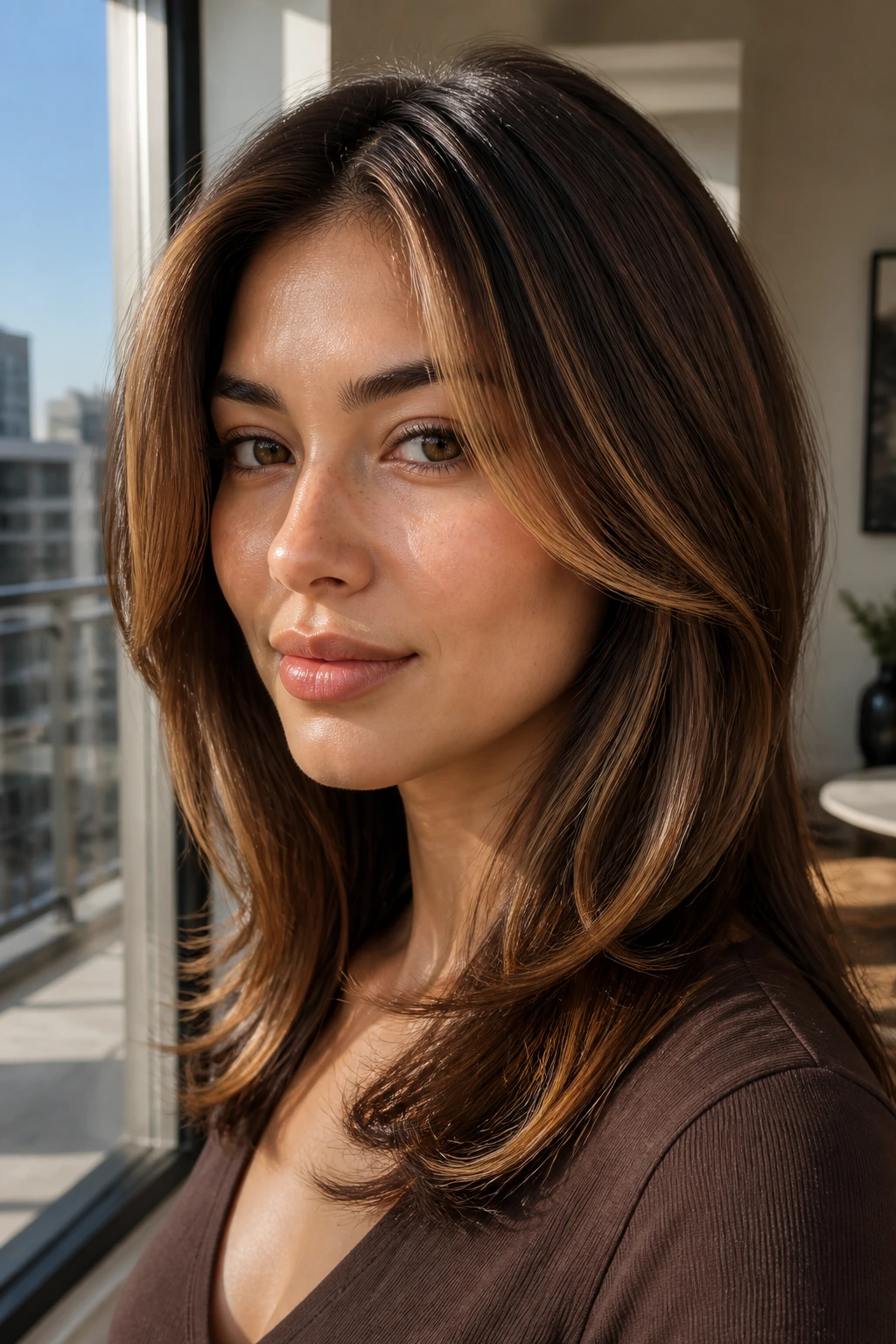
Cocoa and bronze is a prettier pairing than people expect. Cocoa gives the base some depth, while bronze brings a warm reflective finish that looks alive in daylight. On fine hair, this mix is useful because bronze doesn’t have to be super light to read.
Here’s the thing: you do not need a lot of brightness for this to work. A few bronze ribbons at the crown and around the front can change the whole head. The rest stays cocoa-deep, which keeps the hair from losing body.
If your skin runs golden or olive, this duo is especially flattering. It keeps the face warm while still giving the hair a slight shimmer. It’s understated in the best sense—not sleepy, just controlled.
11. Coffee-Bean Balayage With a Gloss Finish
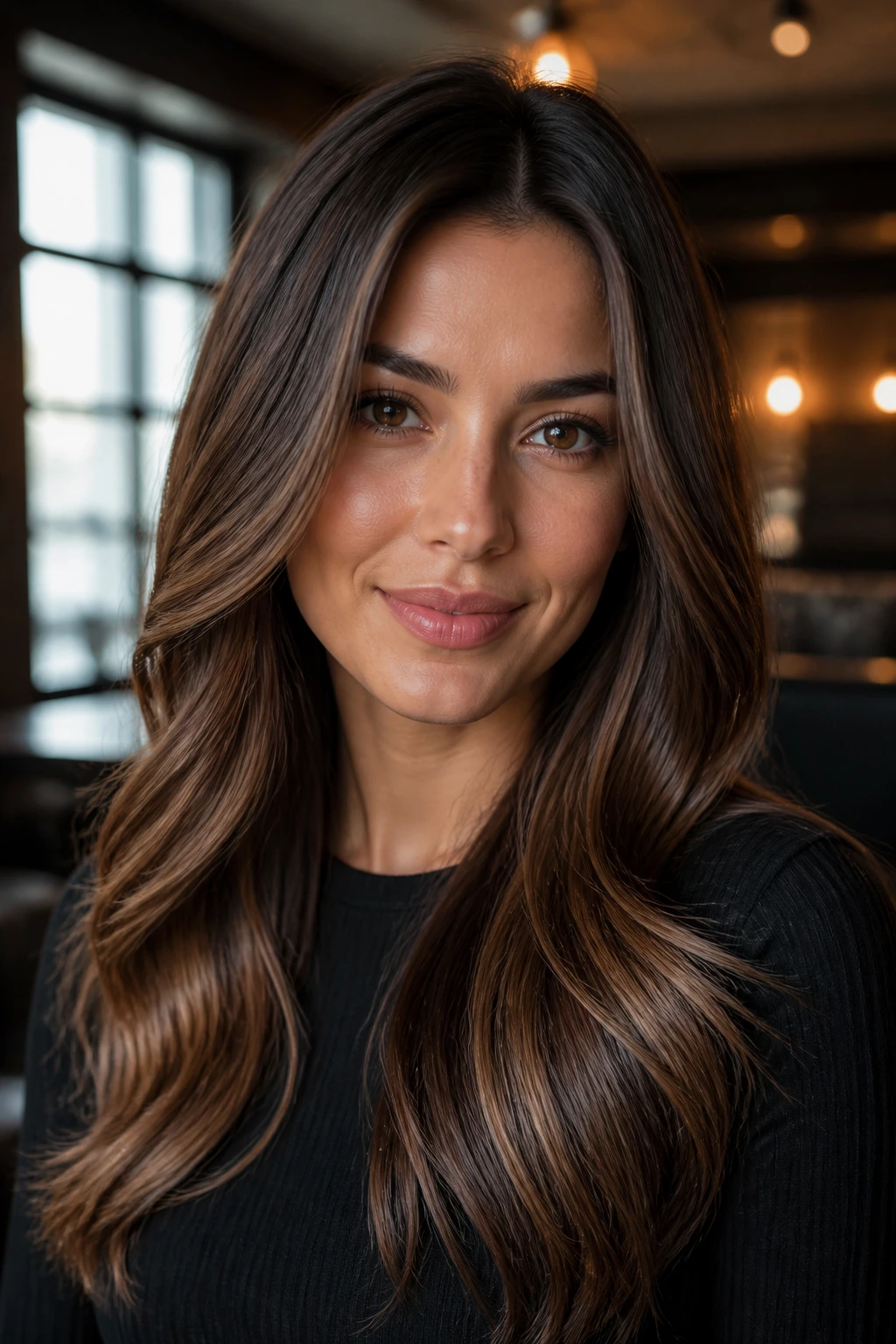
Coffee-bean balayage sounds dark, and it should. The base stays rich, almost espresso at the roots, then a glossed brunette lightens through the mids by a shade or two. On fine hair, that shine is doing a lot of the heavy lifting.
The Shine Trick
A gloss is not a cute extra here. It’s the whole reason the color looks expensive instead of flat. Fine hair tends to show dryness fast, and a demi-permanent glaze smooths the surface so the brown reflects light more evenly.
Warm skin handles coffee-brown well when the undertone stays warm, not smoky. Ask for a soft mocha or roasted-chestnut finish, then keep the brightest pieces only where the hair naturally bends.
12. Amber Brown Ends
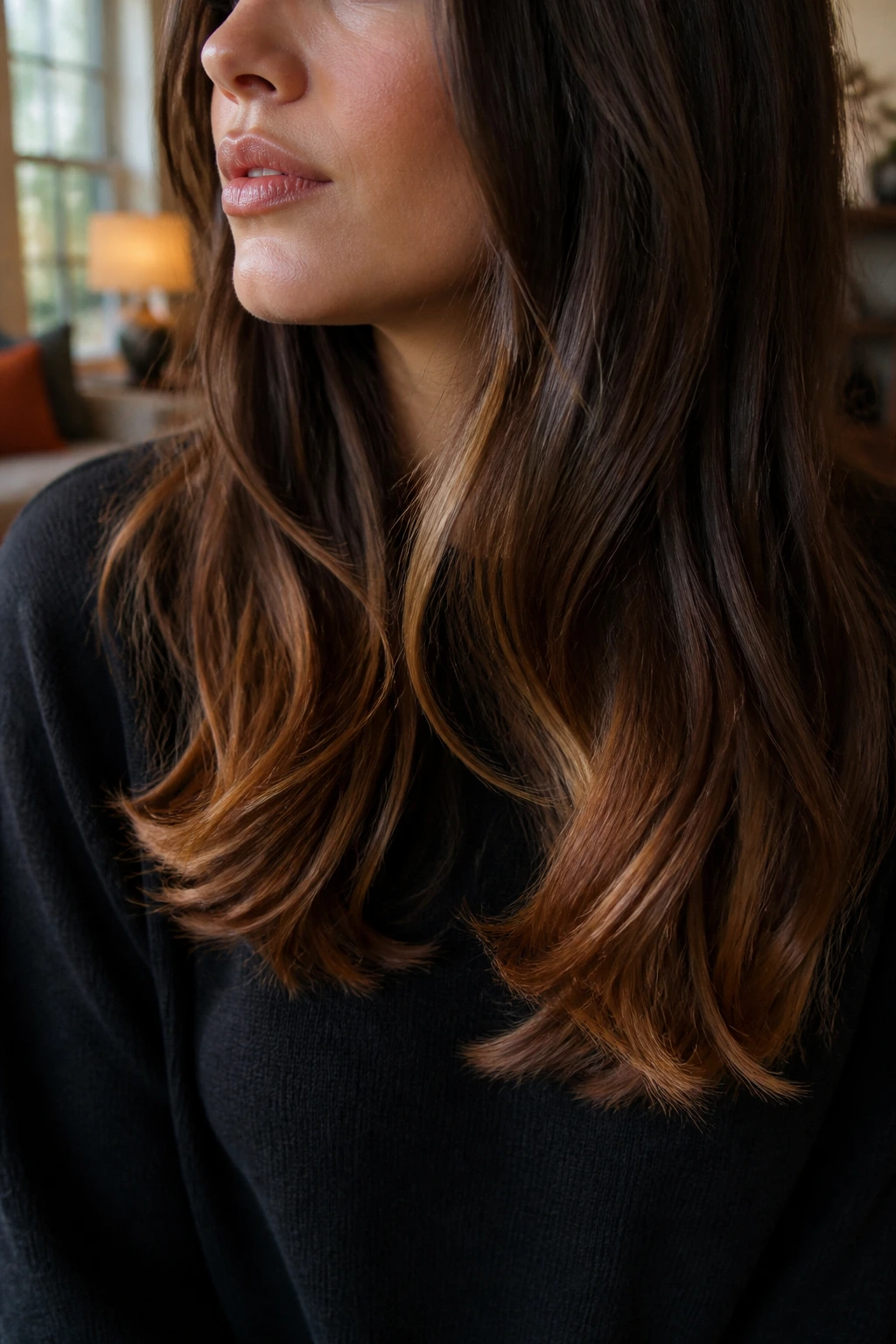
Amber brown ends are for someone who wants a little glow at the bottom without bleaching the whole length. The roots and mids stay brunette, then the ends pick up a warmer amber tone that looks almost lit from inside.
That can be a smart move for fine hair because the density stays up top, where it belongs. The ends get interest, but they do not get overworked. If your hair is shoulder length or longer, this placement creates a soft taper that reads elegant instead of thin.
Warm skin likes amber because it sits near gold and honey on the color wheel. The face and hair feel like they belong to the same warm family.
13. Toasted Almond Balayage
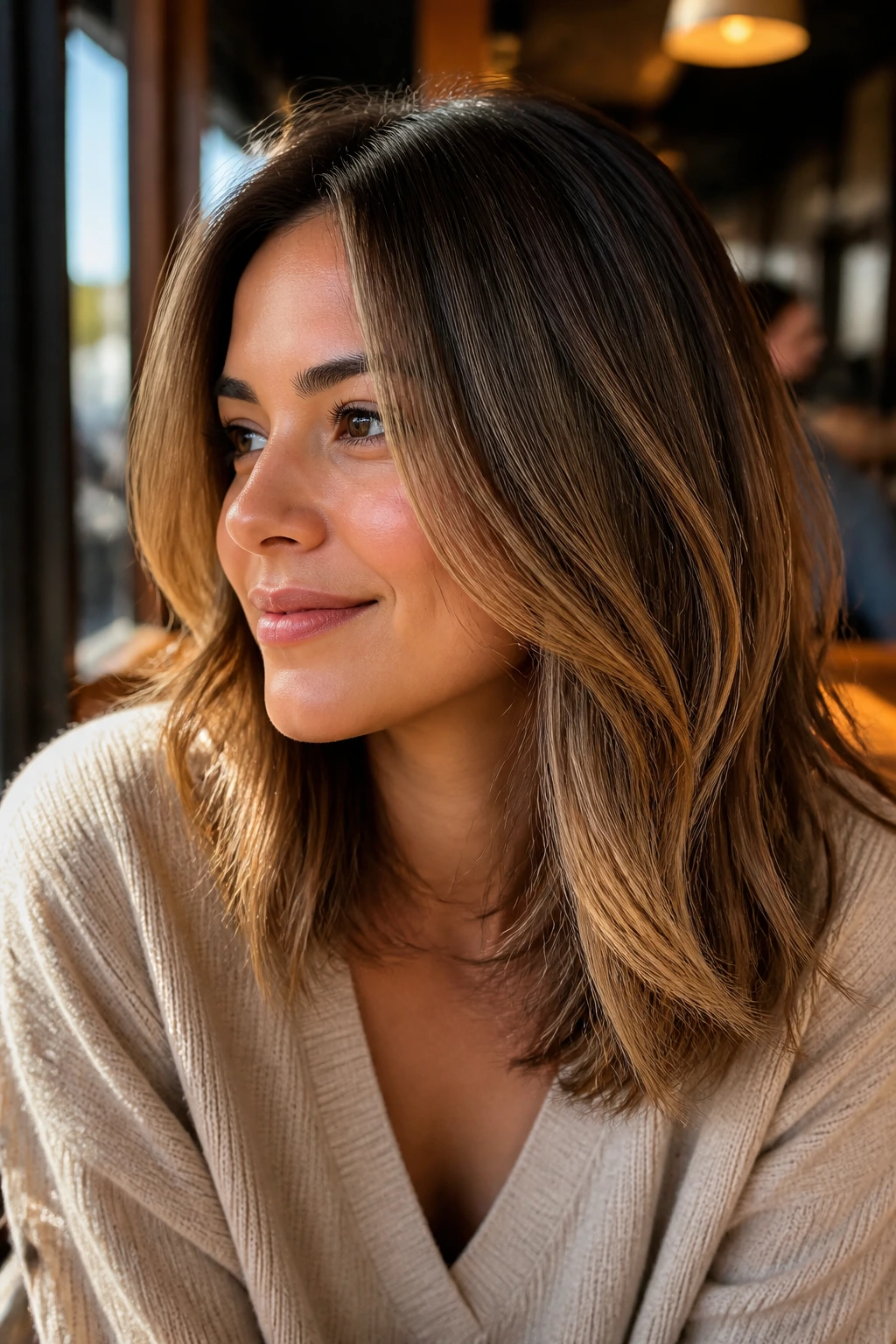
Toasted almond is one of the easiest browns to wear if you want warmth without leaning orange. It sits between beige-brown and golden-brown, which means it can flatter a lot of warm complexions without demanding a dramatic hair change.
On fine hair, the value here is subtlety. The pieces are light enough to show movement, but not so light that they break up the shape of the cut. If your hair is layered, toasted almond can catch the ends of the layers and make them look airy without making them look sparse.
A warm beige toner is usually better here than an ash one. Ash can pull the whole look dull, especially against skin with peach or gold in it.
14. Espresso Root Melt Into Milk Chocolate
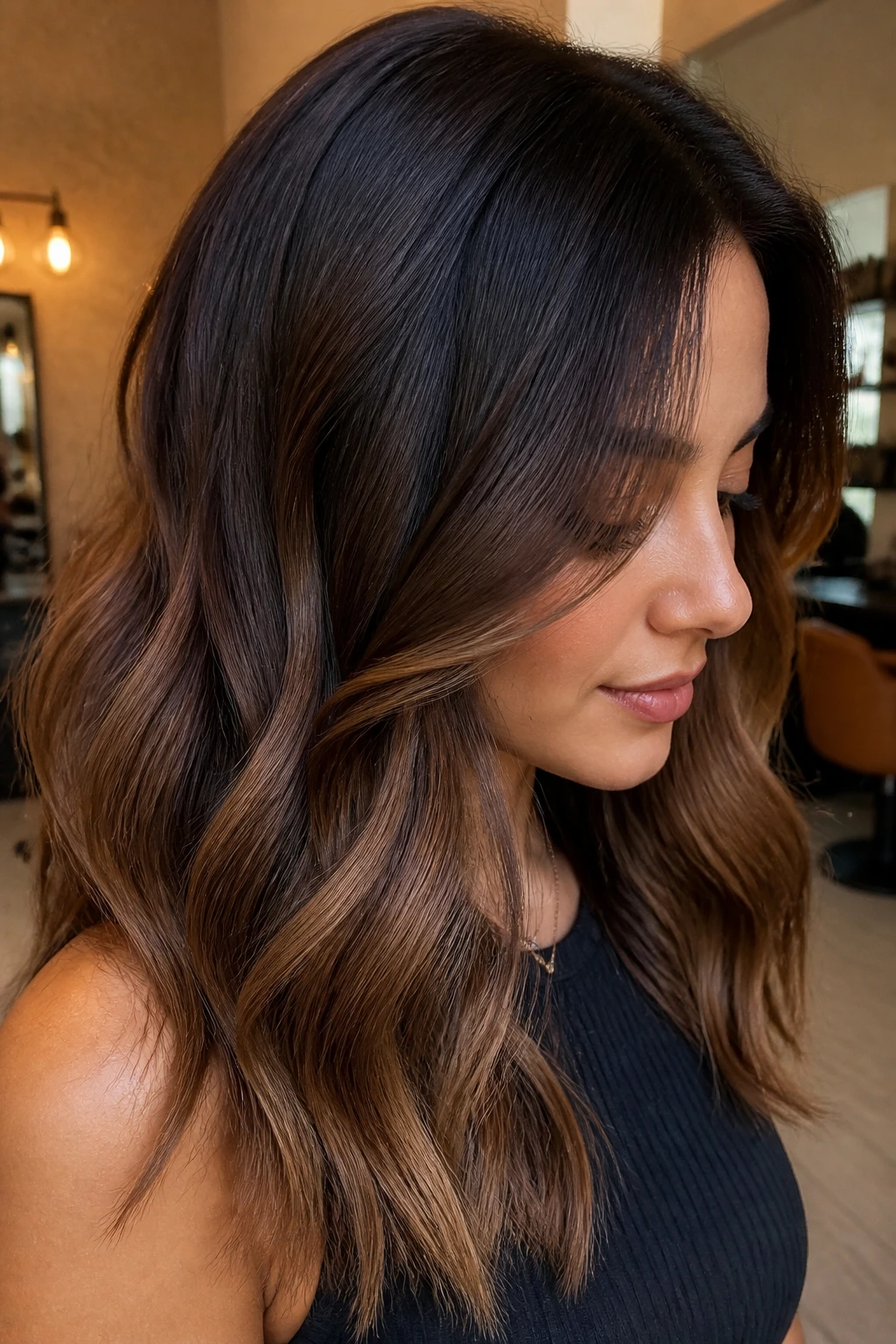
This is the version I like for people who want depth at the scalp and softness at the ends. Espresso at the root gives the hair some visual weight, then milk chocolate through the mids keeps it from going too dark and heavy.
Fine hair benefits from that root melt because it makes the crown appear fuller. The lighter mids keep the style from feeling helmet-like. That balance is the whole point.
It also grows out well. The line between the darker root and the lighter brown is blurred, not outlined. If you want a low-maintenance brunette that still has movement, this is one of the best places to start.
15. Brown Sugar Babylights
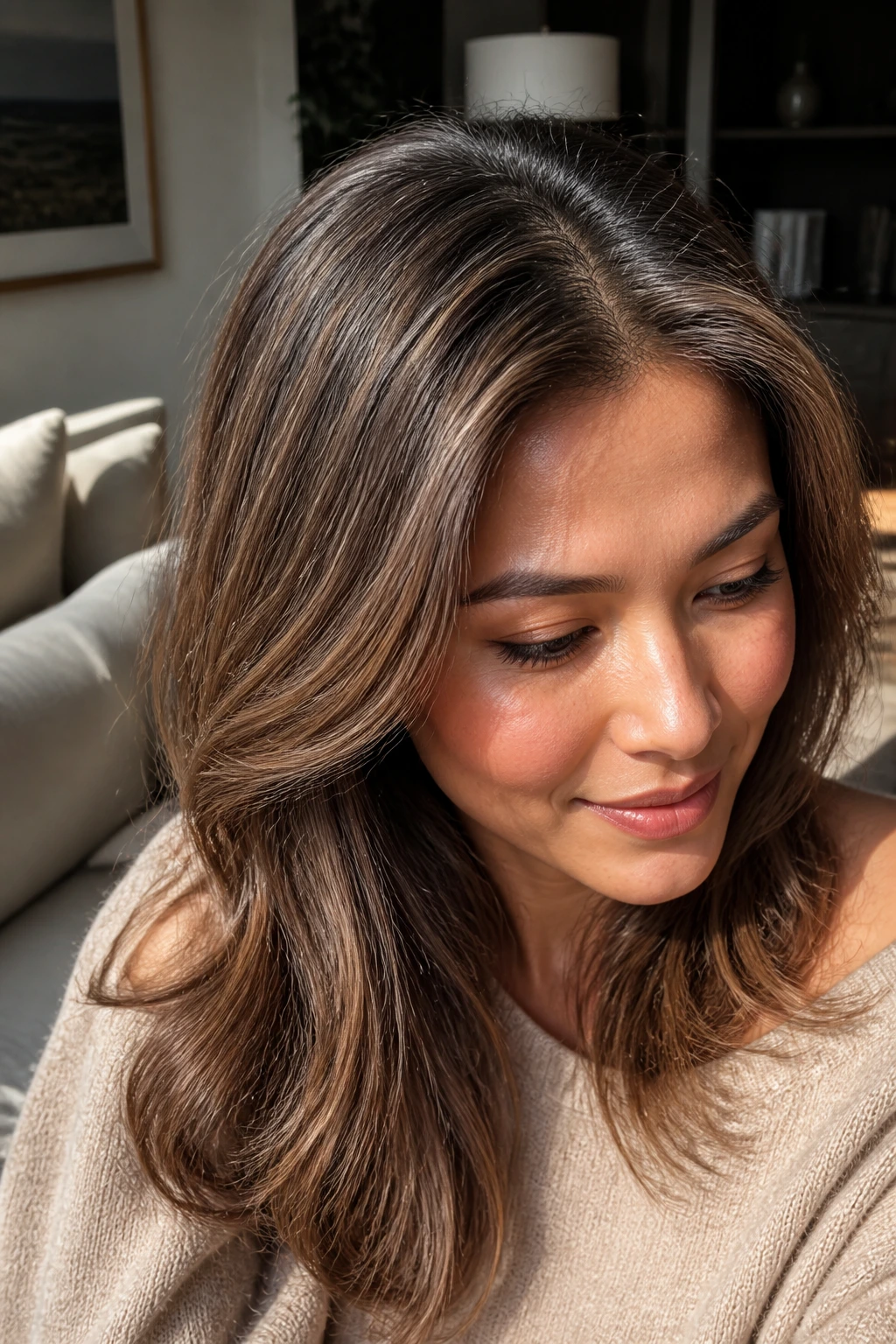
Brown sugar babylights are tiny, soft, and much more useful than the name sounds. The lightened strands are fine enough that they almost disappear until the light catches them, which is exactly what fine hair needs.
The color works on warm skin because brown sugar has that faint golden-brown sweetness without becoming pale. The look is strongest around the part and at the hairline, where the smallest highlight can change the whole face shape.
You can wear this with a blowout, but it shines on hair that has a little bend. A pin-straight finish can make any micro-highlight look more obvious than you want. Soft texture keeps it classy.
16. Auburn-Brown Whisper
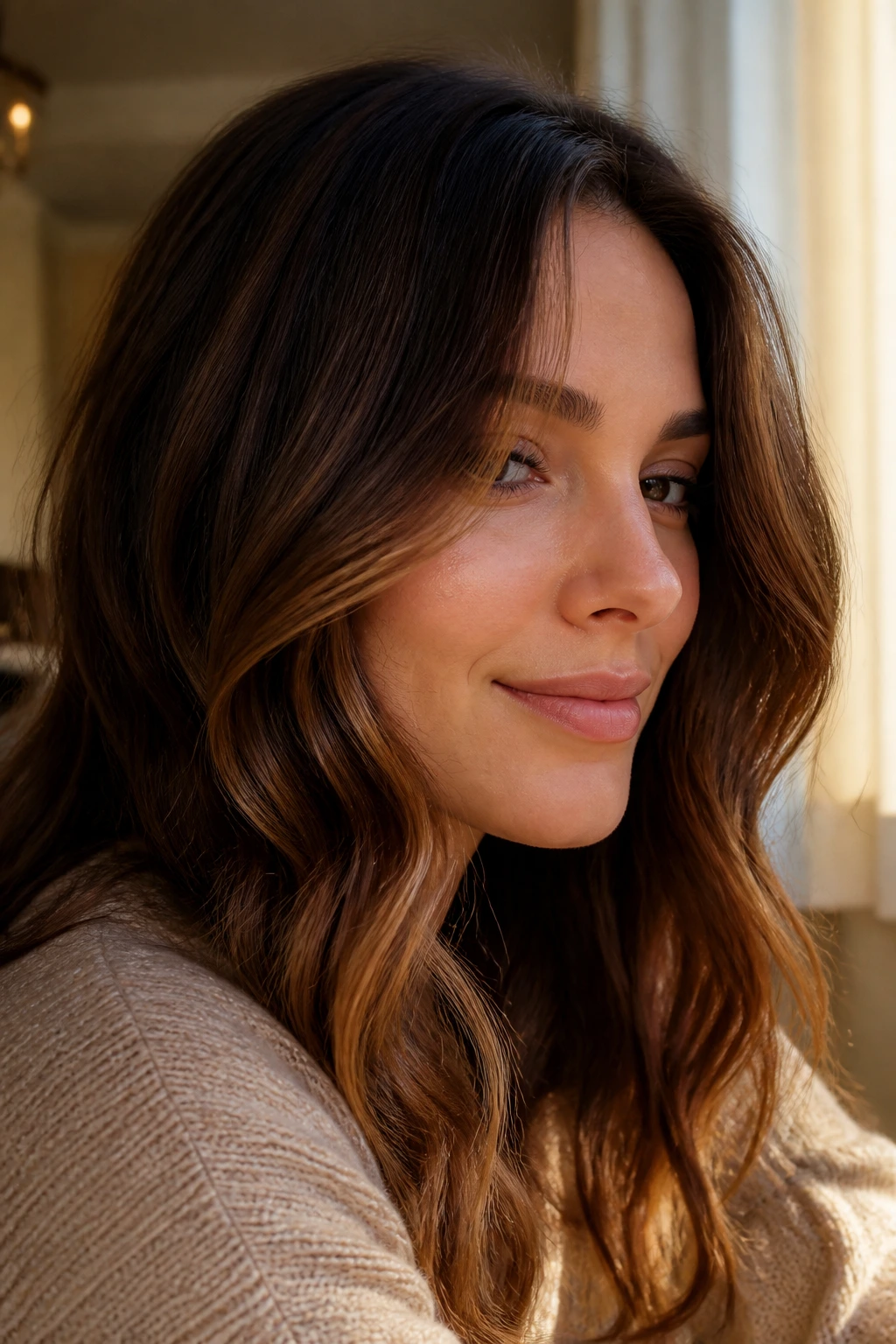
Auburn-brown is what happens when you want warmth that feels a little more alive than plain chestnut. The red note stays soft, almost like a whisper under the brown rather than a full red conversion. On warm skin, that can be gorgeous.
The key is restraint. Too much auburn and the color starts reading copper. Too little and you lose the point. Fine hair usually does best with the auburn placed through the face frame and upper mids, where it can warm the complexion without overwhelming the whole head.
If your natural brown looks dull in winter light or indoor light, this is a useful fix. The red-brown note keeps the hair from falling flat.
17. Pecan Veil Balayage
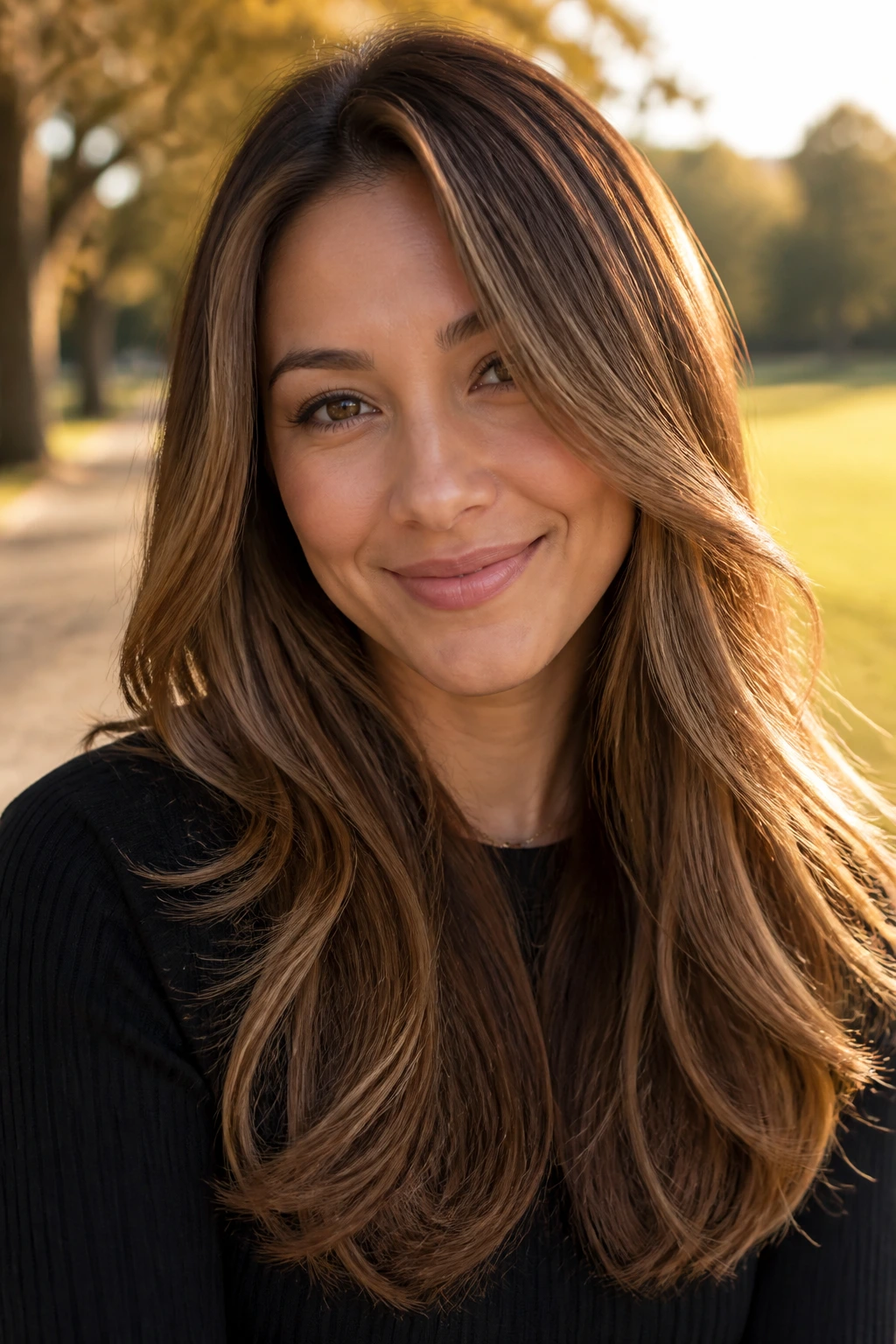
Pecan veil balayage is one of the softer, airier options in the whole group. The color is painted like a thin veil over the surface rather than a heavy highlight pattern, so it preserves the look of thickness on fine hair.
That softness flatters warm skin by adding gentle light, not a lot of contrast. Think pecan shell, warm walnut, and a little toasted sugar mixed together. Nothing harsh. Nothing stripe-like.
It’s a smart pick if you wear long layers. The movement in the cut gives the color somewhere to land, and the veil effect keeps the ends from getting too transparent.
18. Sienna Sweep
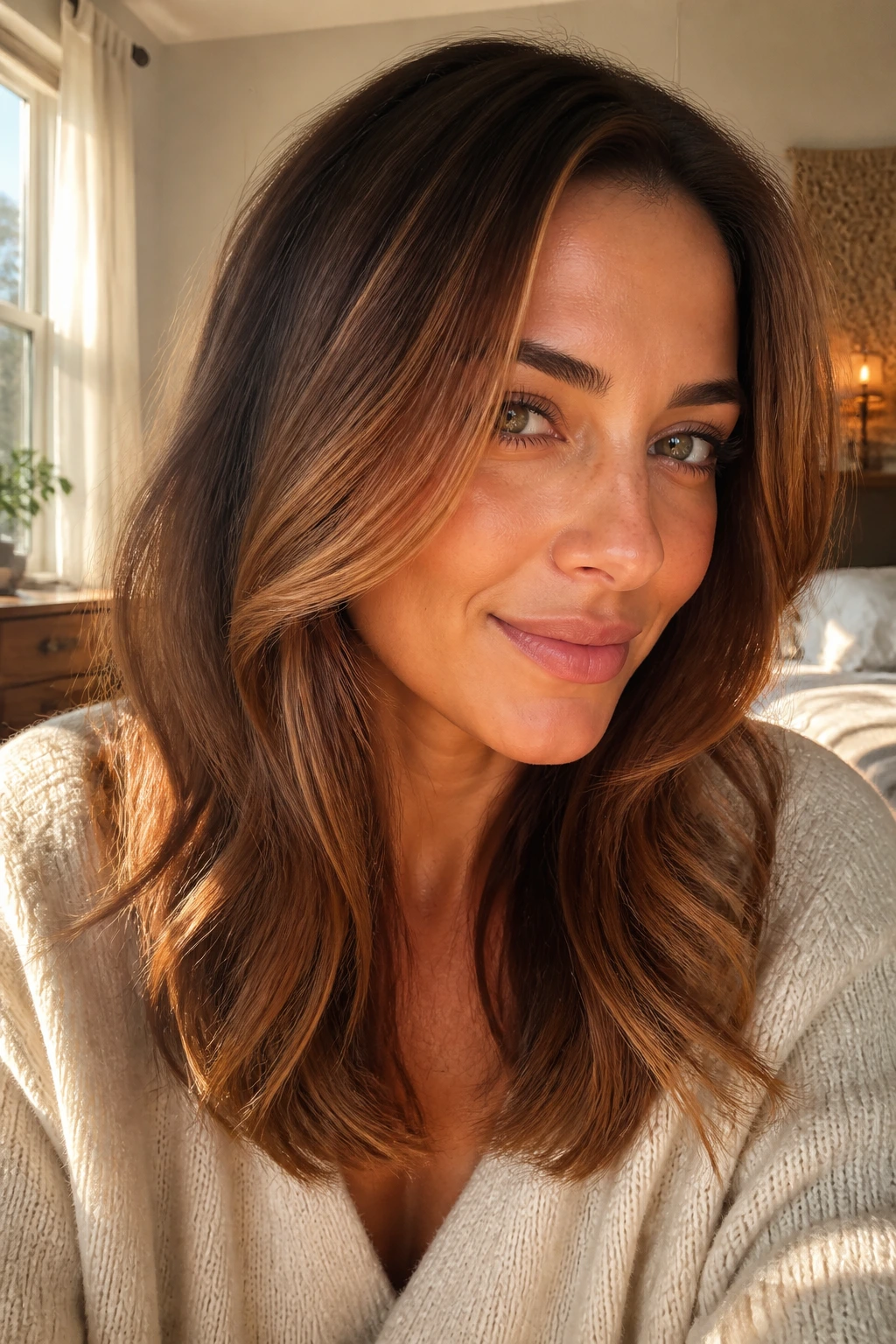
Sienna sweep is richer and a little more painterly than some of the other browns here. The warmth sits in the mid-lengths and around the front, then sweeps back through the hair so the face gets a glow without needing a high-contrast piece.
If you have freckles, golden skin, or a tan undertone that always seems to disappear under cooler color, sienna is worth a look. Fine hair likes it because the darker base keeps the body intact while the warmer ends do the brightening.
The Placement That Matters
Keep the sweep broad, not chunky. One soft panel around the face and a few thinner pieces through the upper mids are enough. The color should feel brushed on, not stamped in.
19. Cappuccino Balayage on Long Layers
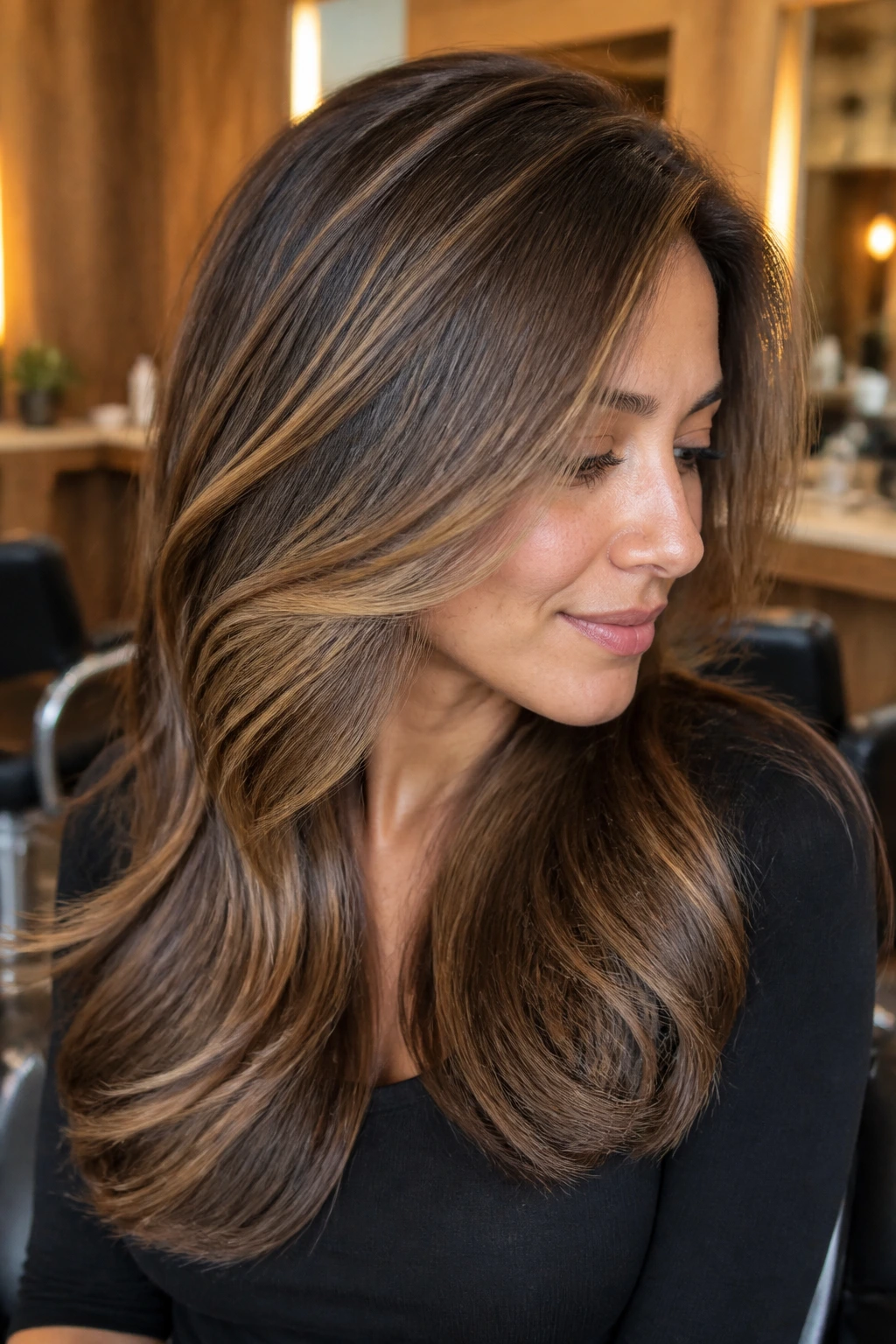
Cappuccino is a lovely word, but the real draw is the blend of creamy brown and deeper coffee tones. On long layers, the mix creates visible movement without needing a lot of lightening, which fine hair often cannot tolerate.
This look flatters warm skin because cappuccino leans warm and creamy rather than smoky. The layers break the color into bands of motion, so every swing of the hair reveals a slightly different brown.
If your hair is long and fine, do not overlight the very ends. Let the last inch stay richer. Otherwise, the length can start to look frayed under indoor lighting.
20. Golden Chestnut Frames
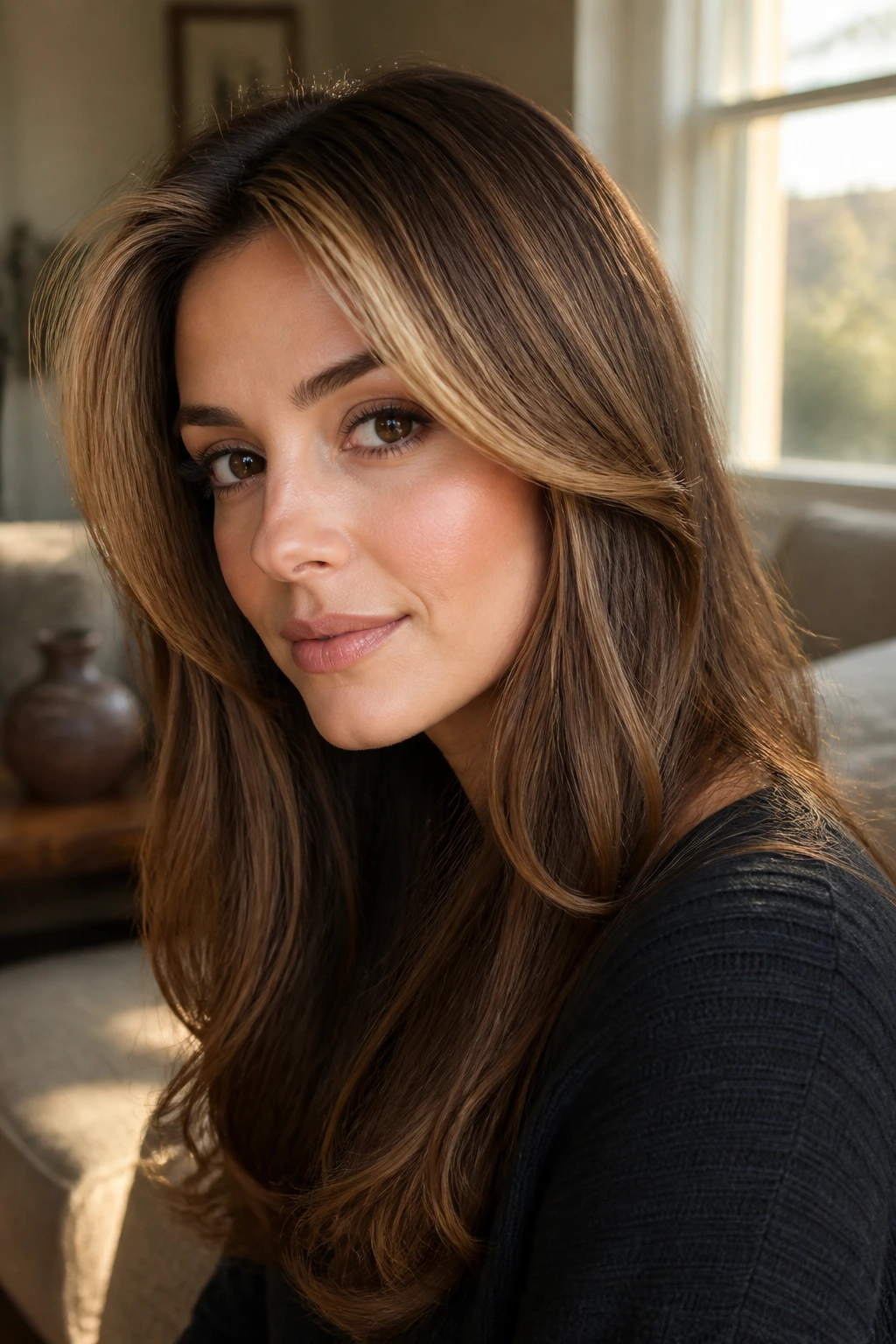
Golden chestnut frames the face in a way that feels almost tailored. The bright pieces stay close to the temples, cheekbones, and front hairline, while the rest of the chestnut base remains deeper. That ratio matters on fine hair.
Warm skin loves golden chestnut because it brings both gold and brown to the face in one move. It also works well with a middle part or a loose side part, since the brighter frames shift slightly depending on how you wear it.
If you want color that shows up in photos without needing a dramatic change, this is a safe bet. The warm contrast reads clearly, but the hair still looks full.
21. Bronze Cocoa Balayage
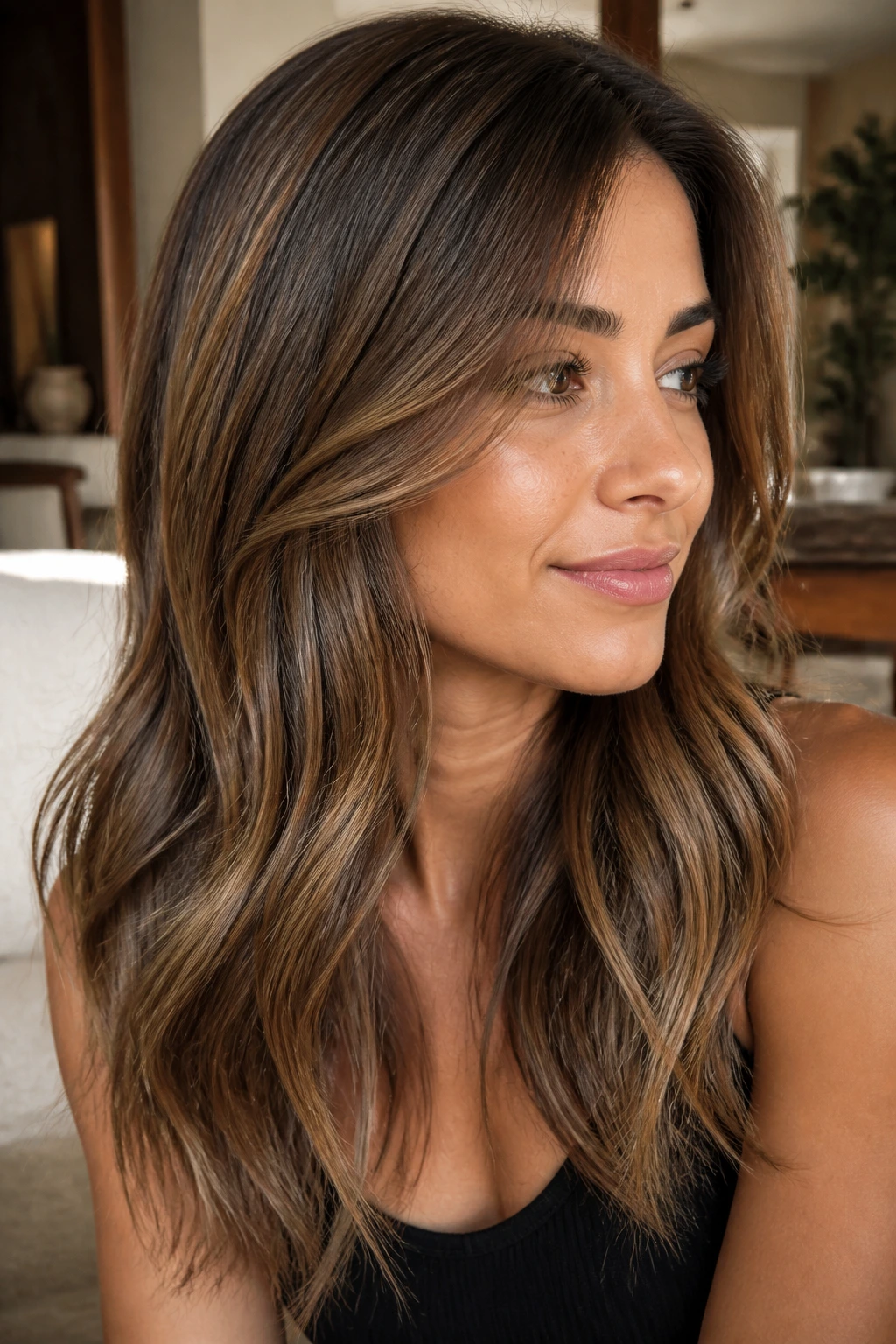
Bronze cocoa sits in that sweet middle ground between rich brunette and luminous brown. The bronze note gives the hair a reflective edge, and the cocoa base keeps it grounded. That combination is especially kind to fine hair because it avoids the flatness that comes from one-dimensional brown.
Warm skin gets a lot from bronze. It can wake up the complexion faster than a neutral brown and feels less obvious than caramel. If your natural color is dark brown, this is a gentle step into dimension.
A few bronze pieces around the crown and top layer are enough. You do not need to paint the whole head. In fact, overdoing it makes the hair look thinner, not brighter.
22. Rich Mocha With Airy Ends
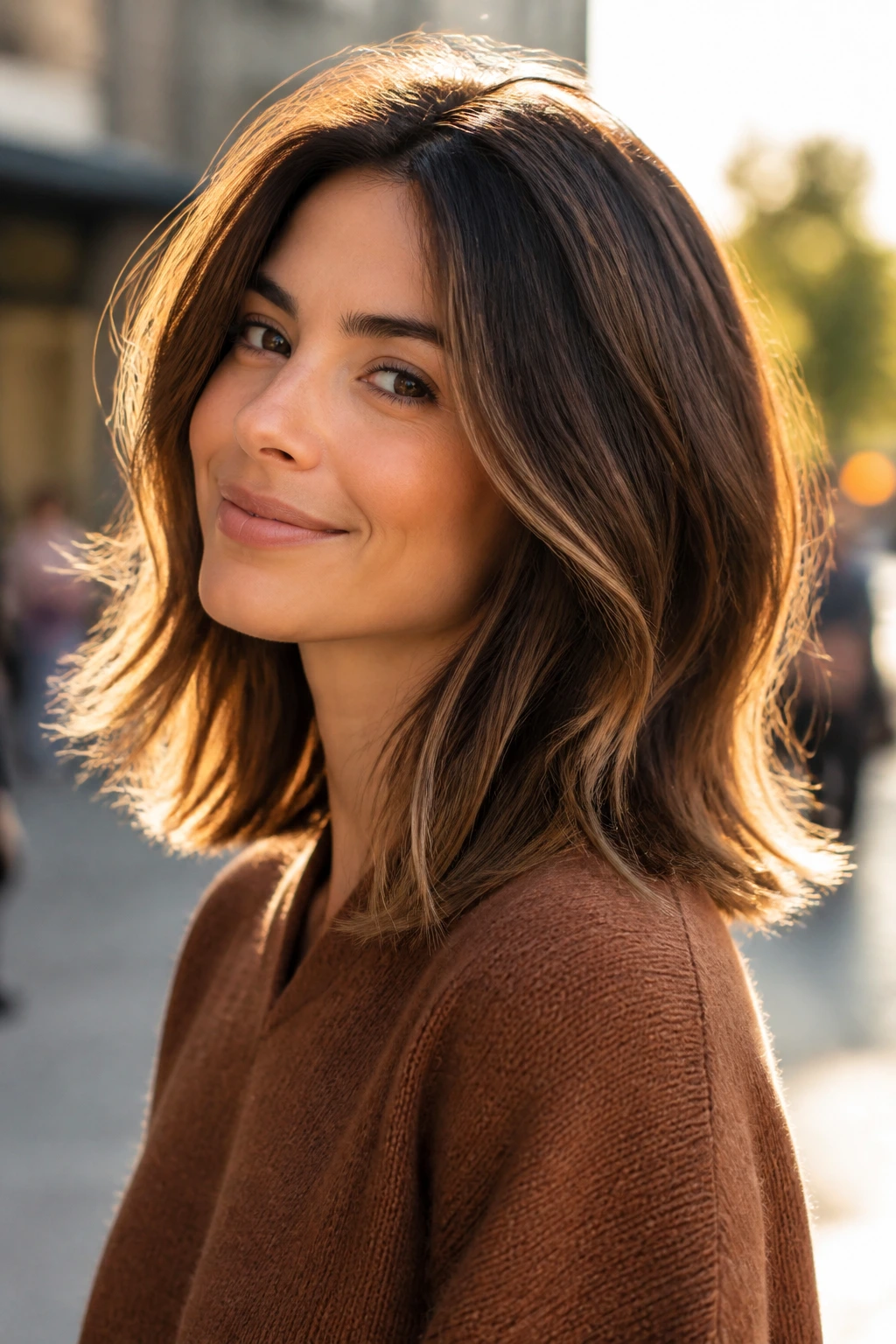
Rich mocha is where you go when you want the color to feel deep but not heavy. The roots stay mocha-dark, then the lighter brown ends are airy and soft, almost feathered. On fine hair, that preserved density at the top is a huge advantage.
Warm skin tones like the richness because mocha has depth, not ash. If the ends are lifted too high, the look turns wispy fast, so keep the lightening soft and narrow. The style should feel like a gradual breath, not a fade into nothing.
This is especially nice on shoulder-length cuts. There’s enough length to show the color shift, but not so much that the ends get lost.
23. Butterscotch Brown Balayage
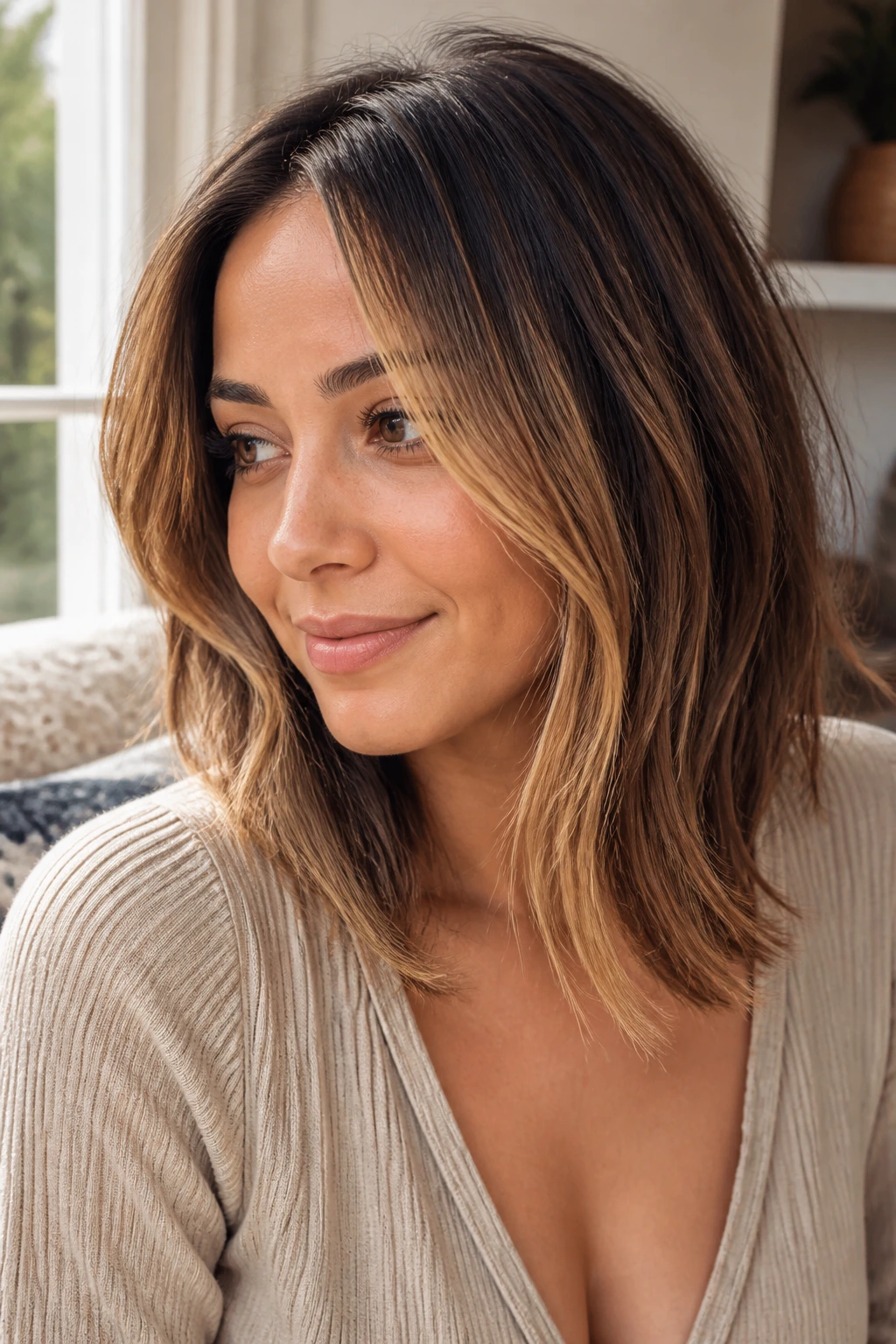
Butterscotch is brighter than a lot of the browns here, and that’s exactly why it has to be handled carefully. On warm skin, it can look gorgeous. The golden note plays up the complexion and gives fine hair a lively surface.
The catch is placement. Butterscotch works best in thin threads, not wide bands. Fine hair can look stringy if too much brightness sits on the ends, so keep the color mostly on the surface and around the face.
If you like a sunnier brunette, this is the lively option. Just don’t push it into blonde territory. The brown base is what keeps the hair looking full.
24. Soft Walnut Ombre
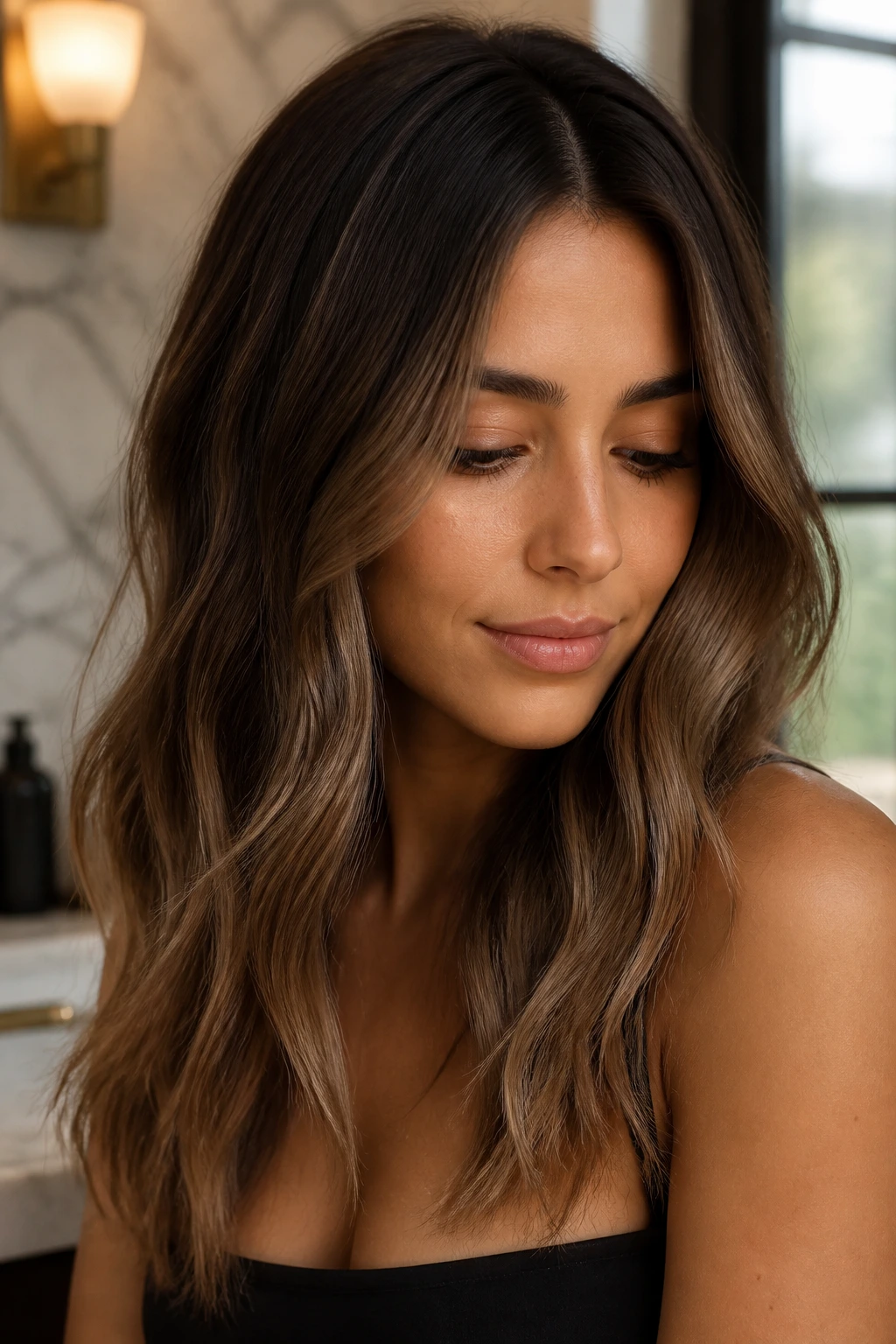
Soft walnut ombre is a more gradual version of the usual dark-to-light fade. Instead of a hard change, the brown moves slowly from deeper walnut at the roots to a slightly lighter brown through the lengths. That gentleness is why it works on finer hair.
Warm skin handles walnut well when the tone stays earthy and warm rather than gray. The ombre shape adds movement, but because the shift is soft, the ends don’t look chopped off or thin.
This is a useful choice if you want lower upkeep. The grow-out is easy to live with, and the transition line stays blurred for a long time.
25. Deep Brunette With Sunlit Caramel Tips
Deep brunette with sunlit caramel tips is the last stop on this list because it is one of the easiest ways to stay brown while still getting some brightness. The base remains rich and dense, and the tips pick up a whisper of caramel that catches the light when the hair moves.
On warm skin, the caramel keeps the face open without taking over the whole head. On fine hair, keeping the lightest color at the very tips is a smart compromise. You get dimension where people notice it, but the bulk of the length still reads full.
If you want one color that sits between classic brunette and soft sun-kissed warmth, this is the cleanest version. It’s simple. It works.
Why Brown Balayage Makes Fine Hair Look Fuller
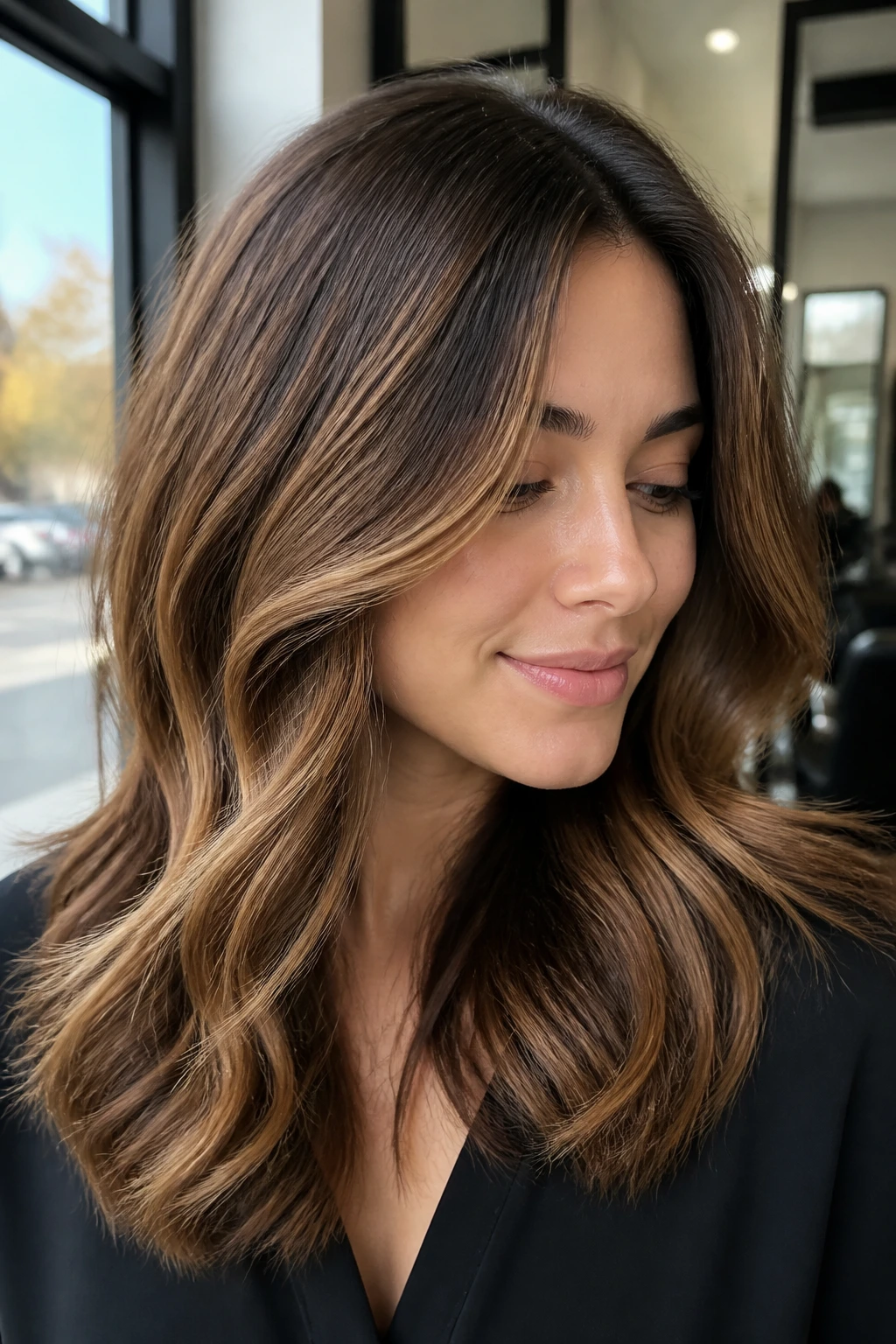
The reason these shades work is not magic, and it is not just tone. Fine hair needs depth at the root and controlled brightness through the mids because the eye reads contrast as texture. A flat one-tone brown can make the hair look like one smooth sheet, while a carefully painted brunette with a soft lift in the right places gives the illusion of movement.
The warmer shades help too. Caramel, chestnut, amber, bronze, and honey do something cool browns usually do not: they reflect light in a way that feels soft instead of dull. Against warm skin, that reflection looks like it belongs there. Against fine hair, it keeps the shape from disappearing.
There is also a practical side. Hand-painted brown balayage tends to grow out with less visible line than classic foils, and that softer grow-out is easier to live with when your hair is already delicate. Fewer harsh touch-ups. Fewer obvious stripes. Less chance of the ends looking depleted.
What to Bring to the Salon Chair
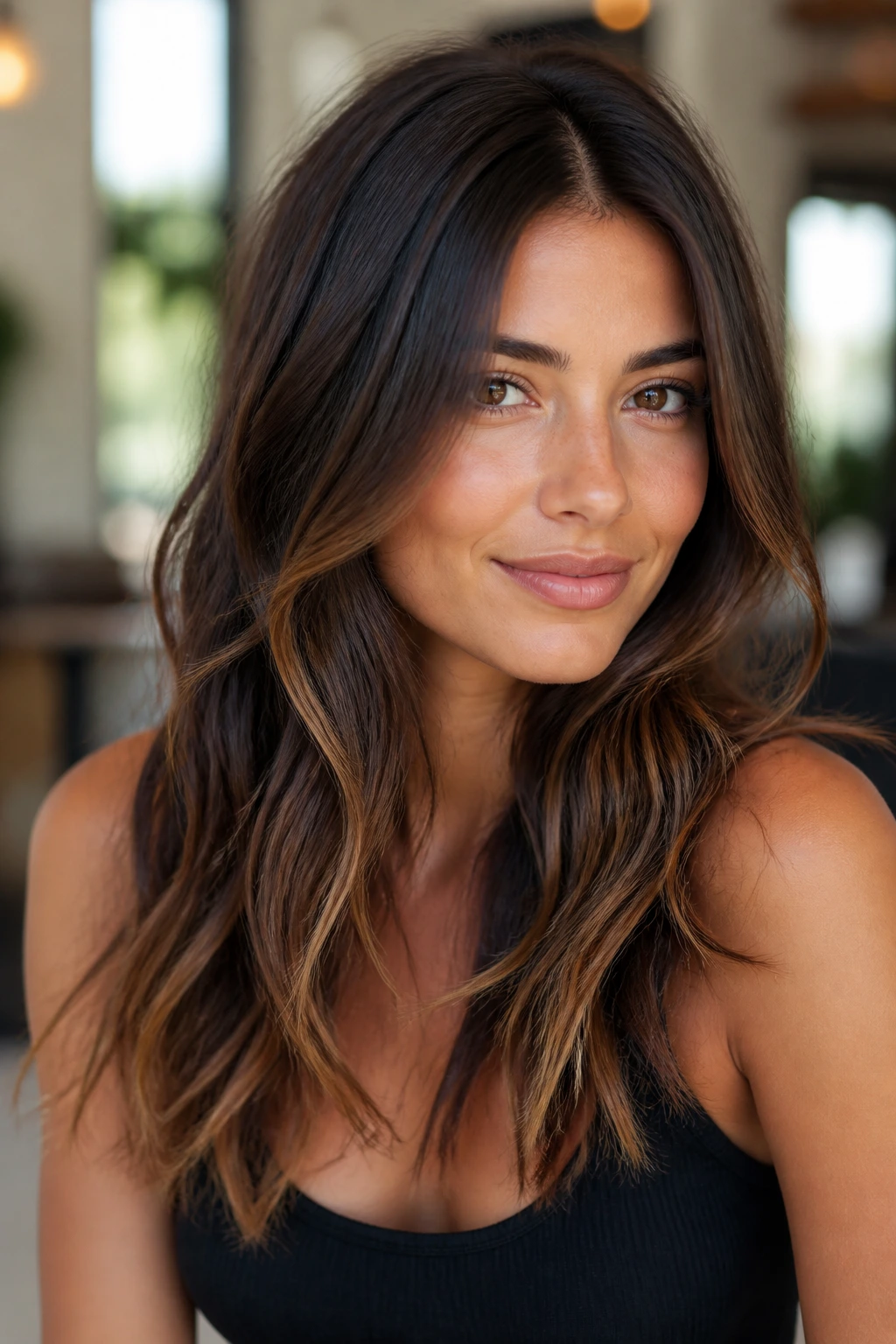
A good color appointment starts before the first bowl is mixed. Bring two or three photos, but pick them for different reasons. One should show the tone you want. Another should show the placement. Those are not always the same picture.
- A clear photo in daylight: Indoor salon lights can make a brown look warmer or darker than it really is.
- A cut photo you like: Fine hair changes shape with the haircut, and a lob, layers, or blunt bob will affect how the balayage sits.
- Your current hair history: If you’ve used box dye, henna, dark glosses, or repeated heat, say so. That changes what is safe.
- A note on upkeep: Tell the colorist whether you want a gloss refresh every 6 to 8 weeks or something softer that can drift longer.
- A few “do not” photos: This saves time. If you hate chunky stripes, show that up front.
- A clean middle part photo and a side part photo: Placement can look different depending on how you wear your hair.
The cleaner the brief, the fewer surprises.
Choosing the Right Brown Tone for Warm Undertones
Warm skin usually looks best with brown shades that have gold, amber, copper, or toasted notes. That does not mean everything has to look orange. It means the brown should feel alive rather than muddy. A good chestnut has warmth. A good mocha has a soft creaminess. A good caramel has enough depth to stay brunette.
If your skin leans peach or golden, caramel, honey, and butterscotch pieces can wake up the face fast. If your undertone is more olive-gold, bronze, walnut, and cocoa often behave better because they hold richness without going yellow. And if you like a little red in the mix, cinnamon and auburn-brown can be lovely, as long as the red stays under control.
Fine hair changes the tone decision too. The lighter and warmer you go, the more careful the placement should be. Too many bright pieces, and the style starts looking sparse. Better to keep the color concentrated around the face, the crown, and the top layer, then leave the lower lengths deeper.
How to Wear These Browns So the Dimension Shows
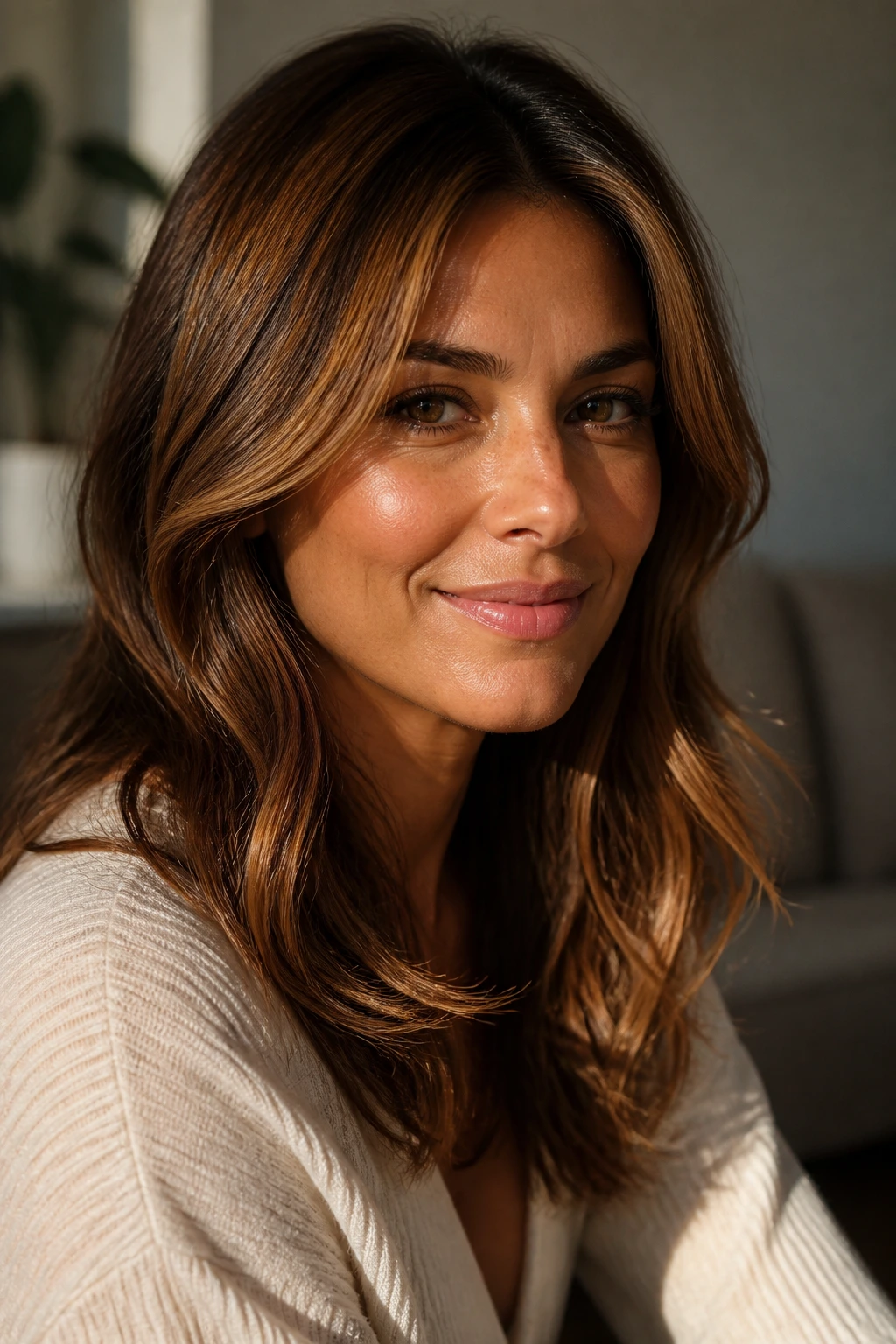
Presentation: Soft waves, a smooth blowout, or a bend through the mids lets the ribbons catch light. A dead-straight finish can hide the color work, which is a shame when the placement is good.
Accompaniments: These shades look strongest with a haircut that has shape—curtain bangs, a blunt lob, long layers, or a polished bob. Warm makeup helps too: peach blush, terracotta lips, and a little gold jewelry keep the whole look cohesive.
Portions: On fine hair, less can be more. Ask for the lightest color to cover roughly the top third and the face frame, while the lower lengths stay darker and denser. That keeps the ends from reading thin.
Beverage Pairing: No literal drink here. Think in color terms instead: cream, camel, rust, olive, and warm white clothing will keep the shade from looking disconnected from the rest of your look.
Extra Ways to Warm Up the Shade Without Overdoing It
Tone Enhancement: A demi-permanent gloss in caramel, chestnut, or honey can soften the color every 6 to 8 weeks without stripping the hair. On fine strands, that’s usually kinder than repeated strong lifting.
Customization: If you want more pop, brighten only the face frame and the top layer. If you want less contrast, keep the balayage one level lighter than the base and let the warmth come from the gloss instead of the lift.
Serving Suggestions: In hair terms, the finishing moves matter. A side tuck, a loose bend from a 1.25-inch iron, or a bit of texture spray through the mids will show off the color far better than heavy product.
Make-It-Yours: Very warm skin can handle golden caramel and amber. Slightly neutral warm skin often looks better with chestnut, mocha, or walnut, which keeps the result rich instead of yellow.
Keeping the Color Soft Between Appointments
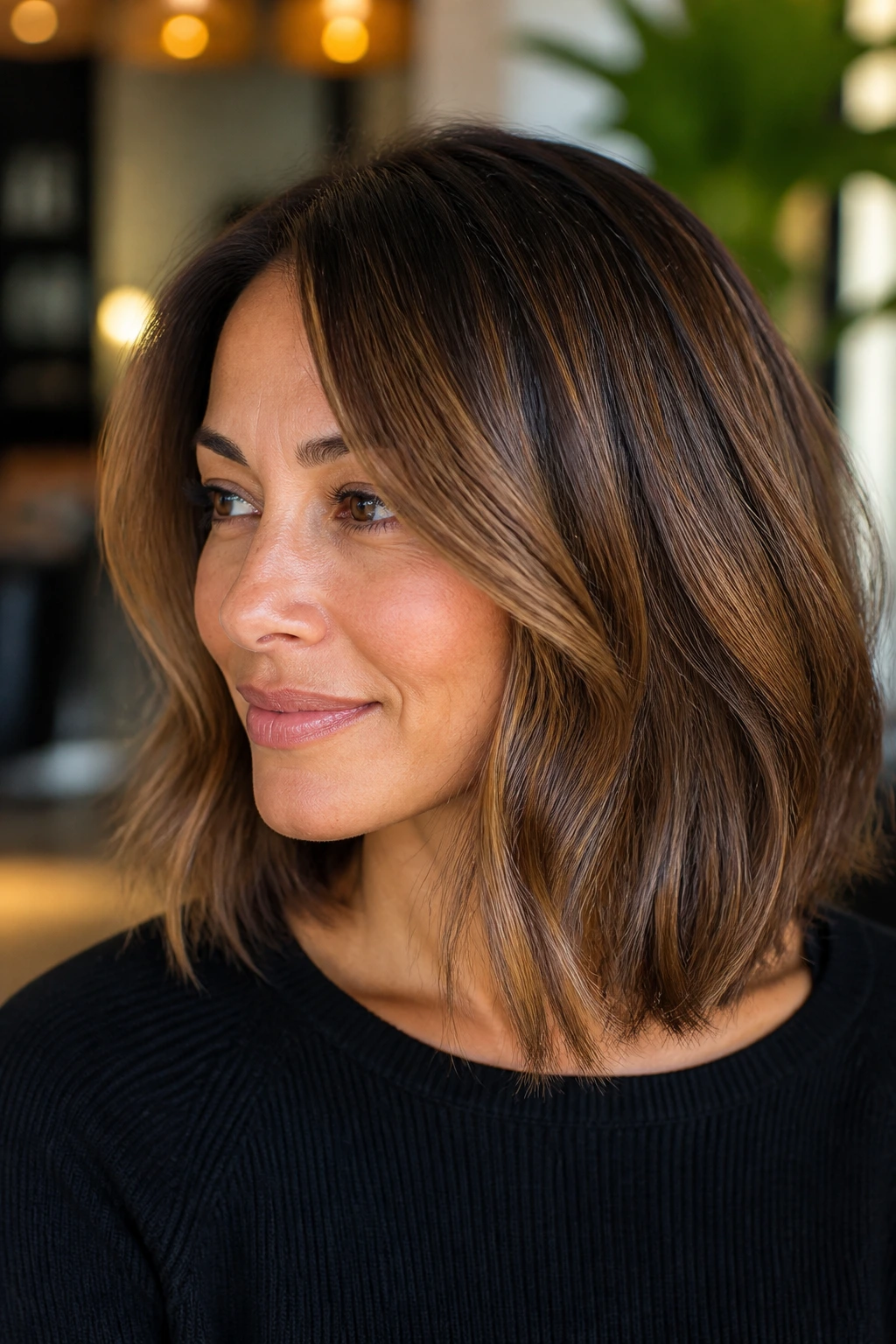
Brown balayage on fine hair usually looks best when you don’t fuss with it too much. Wash two or three times a week if you can, and use a color-safe shampoo that won’t strip the gloss out in a hurry. Fine hair gets weighed down fast, so use conditioner on the mids and ends only.
If your color leans caramel or honey, a blue shampoo once every one to two weeks can help if brass shows up. Use it sparingly. One wash is often enough. Too much and the color can lose its warmth and start looking dusty.
Most people can stretch a gloss refresh to about 6 to 8 weeks and a deeper balayage revisit to 10 to 14 weeks, depending on how much lift they had in the first place. Trims every 8 to 10 weeks help more than people expect. Fine hair keeps its shape better when the ends are tidy.
At night, a silk pillowcase or loose scrunchie prevents friction. That small habit matters. Fuzzy ends steal the softness from even the prettiest color.
Essential Tools and Resources
- Inspiration photos in natural light: These show the true tone far better than salon mirrors or filtered screenshots.
- Color-safe shampoo: Keeps the brown and gloss from washing out too fast.
- Lightweight conditioner: Fine hair needs slip on the ends, not heavy cream at the roots.
- Heat protectant spray: A must if you use a blow dryer, curling iron, or flat iron.
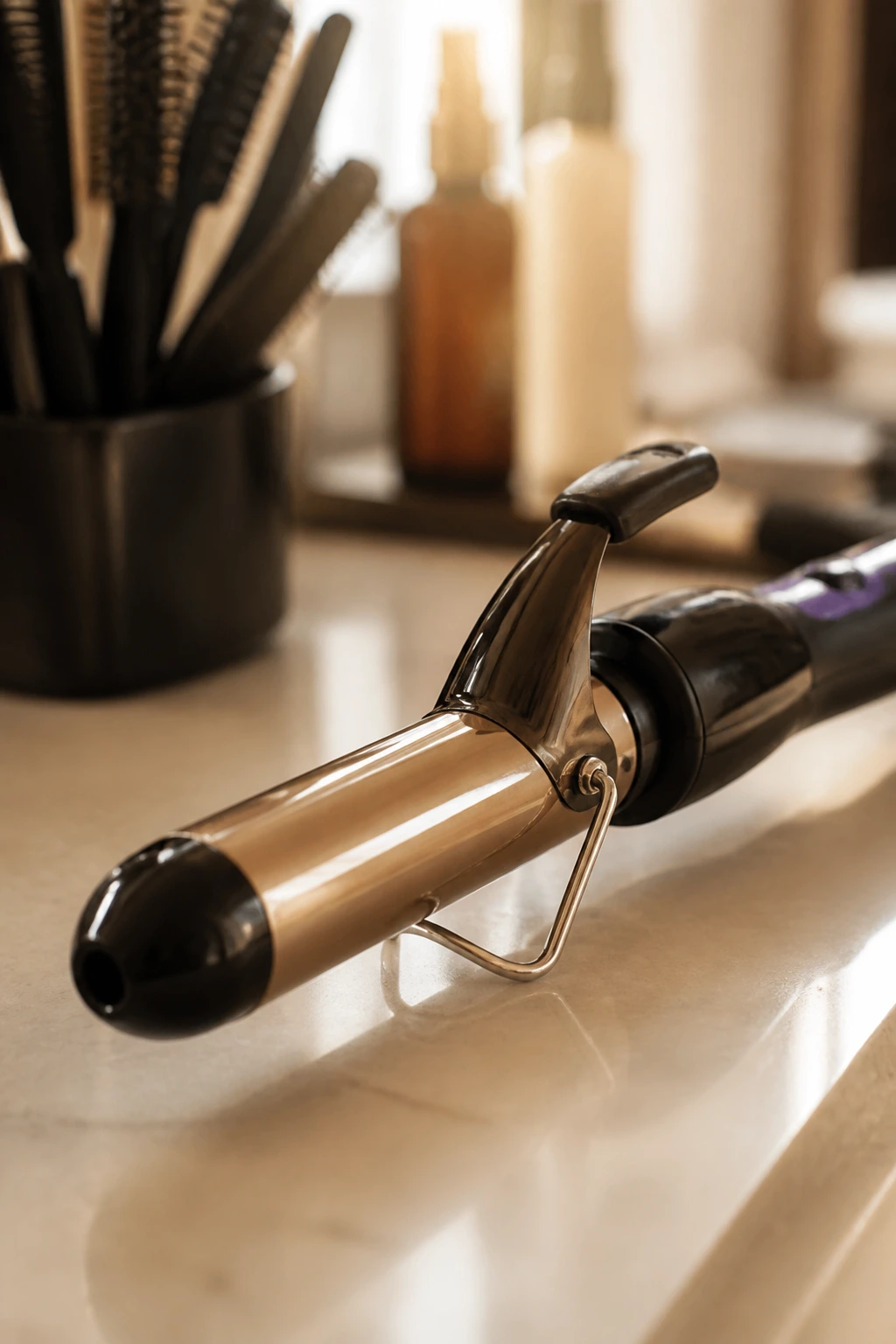
- 1.25-inch curling iron or wand: Helps brown balayage show its ribbons in loose bends.
- Wide-tooth comb: Less breakage when hair is damp.
- Sectioning clips: Useful for at-home styling and for any maintenance gloss work.
- Silk pillowcase or bonnet: Cuts down friction and keeps ends smoother.
- Lightweight root-lift mousse: Helpful when the crown needs a little height.
- Demi-permanent gloss or toner: Best for keeping caramel, chestnut, or honey tones fresh without overprocessing.
Common Mistakes That Flatten the Finish
The first mistake is going too light. On fine hair, heavy blonde contrast can make the ends look see-through, especially if the base is already soft. Keep most of the lift within one to two levels of the natural brown unless you have a lot of density.
The second mistake is choosing an ash tone when the skin is warm. That cool brown can make peach and gold undertones look tired. If your face lights up with cream, terracotta, or gold jewelry, your hair probably wants caramel, chestnut, bronze, or honey—not smoke.
The third mistake is painting thick sections. Big stripes are unforgiving on fine hair because they expose the weave of the lightener. Micro-ribbons, baby-lights, and soft surface painting usually look better.
The fourth mistake is forgetting the root shadow. Without it, the top can look sparse and the whole style loses structure. A deeper root gives the eye a place to rest.
The fifth mistake is overloading the hair with heavy oils or creamy serums. Fine strands get limp fast. Apply the product to the last few inches, not the scalp.
Variations and Adaptations Worth Trying
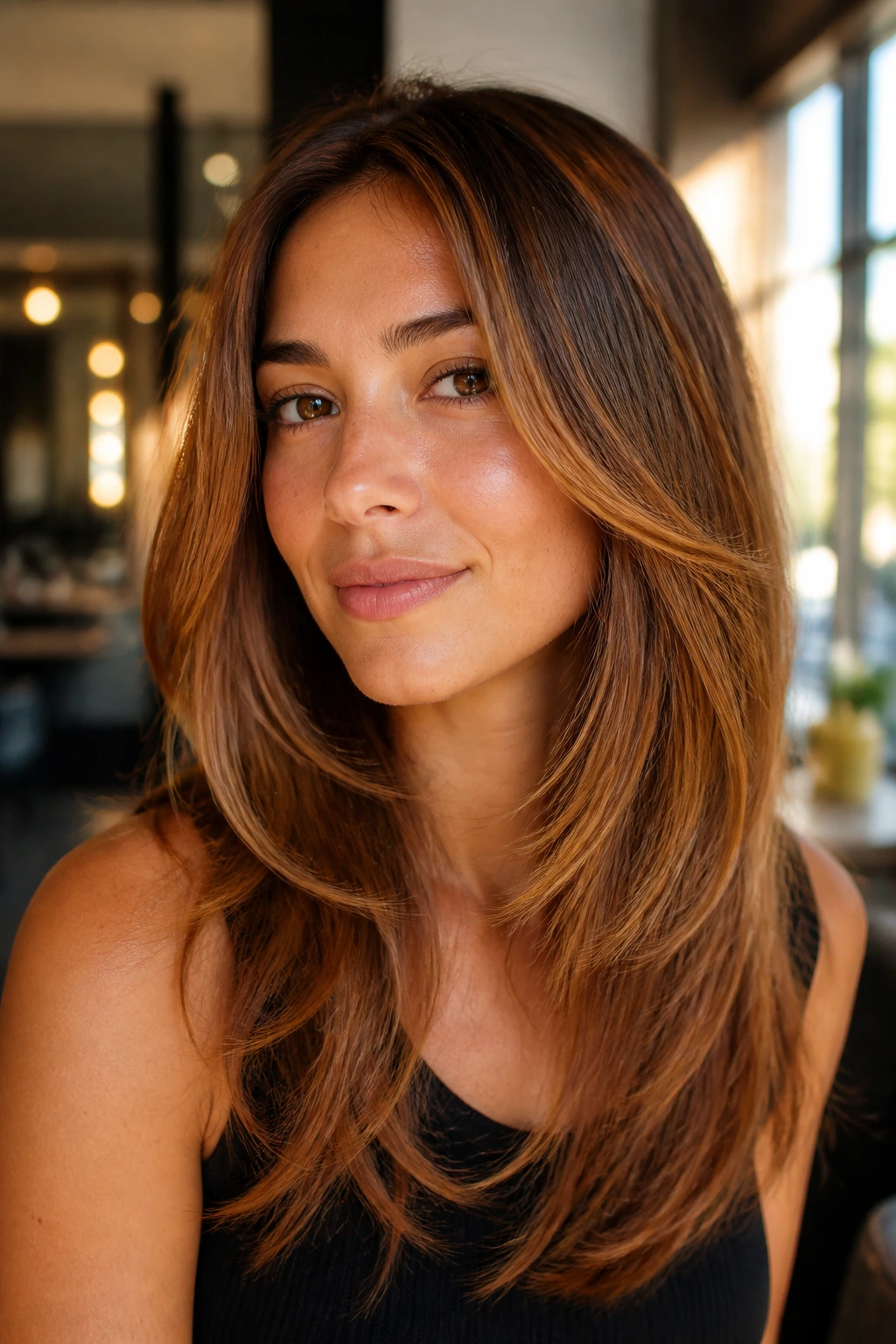
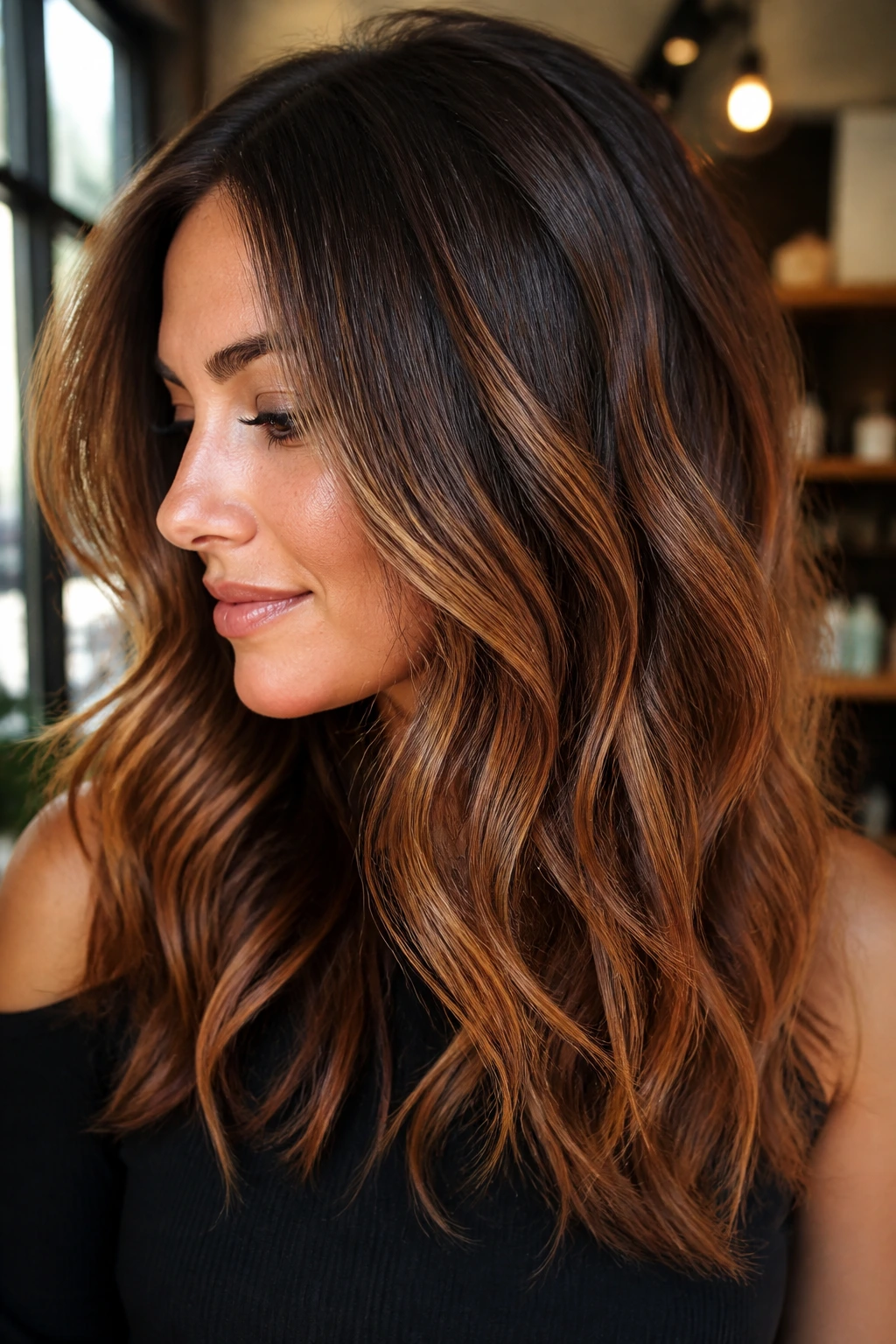
Copper-Kissed Caramel: Add a whisper of copper to a caramel balayage if your skin runs peachy and warm. Keep the copper soft, not bright red, or the tone can take over.
Low-Contrast Latte Melt: This one stays within a shade or two of the base, which is ideal if your hair is very fine or prone to breakage. It looks richer than flat brown without calling attention to itself.
Airy Babylight Brunette: Use ultra-fine lights around the part and hairline. This works best on straight hair or delicate waves where chunky placement would look too obvious.
Curly Cocoa Halo: Concentrate the lighter brown pieces on the outer layer of curls so the halo of color appears as the curls move. The inside stays deeper, which keeps volume looking strong.
Blunt Bob Bronde-leaning Brown: Keep the balayage subtle and centered around the front pieces. A blunt line needs weight, not a lot of lightness, or it starts to look thin.
Warm Bronze Refresh: If your brunette starts to feel flat after a few weeks, a bronze gloss can wake it back up without a full color change. That’s a useful maintenance trick when you want warmth, not contrast.
Brown Balayage Questions People Ask Most
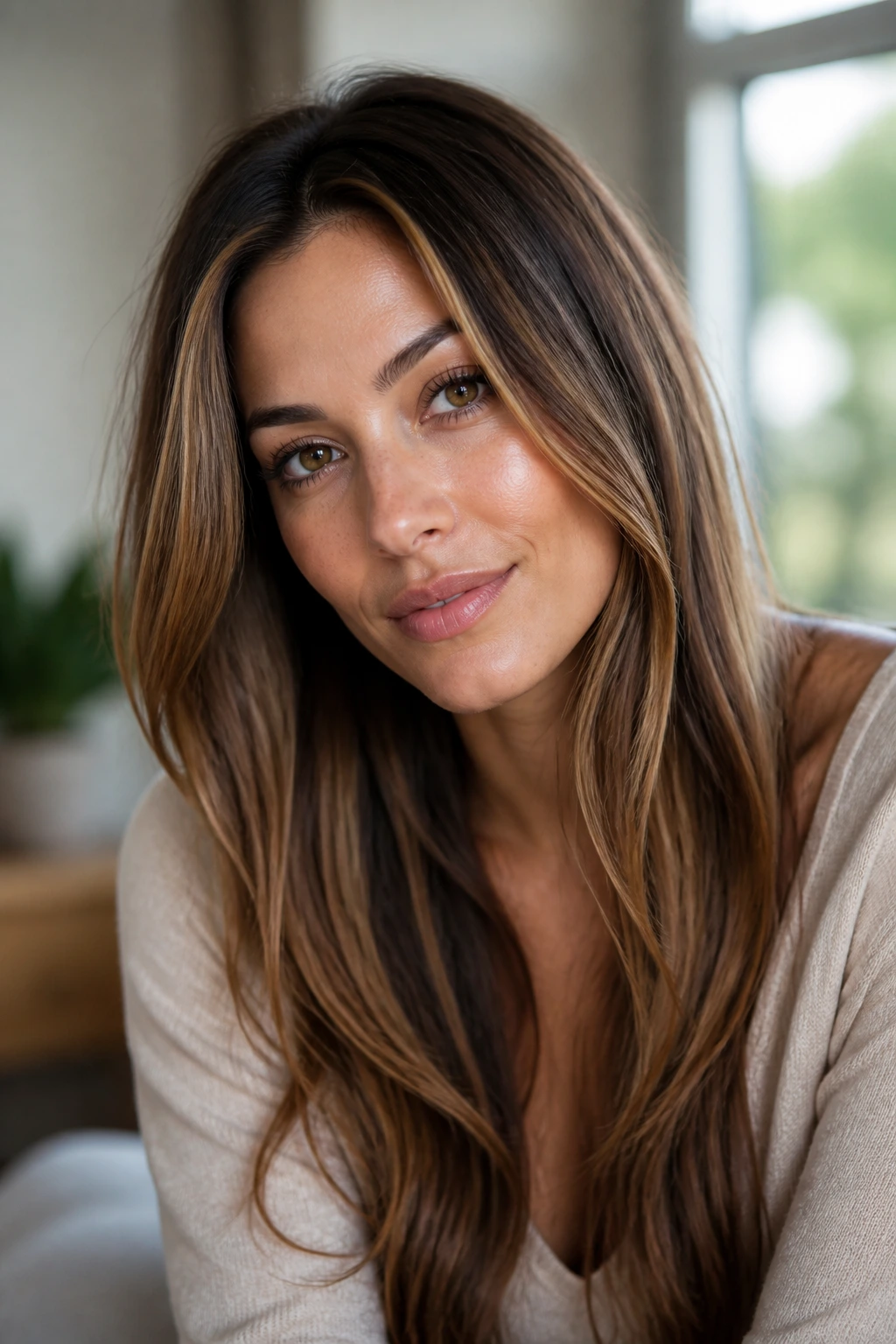
Will brown balayage make fine hair look thinner?
It can, if the placement is too chunky or the ends are lifted too much. The safer route is thin ribbons, a soft root shadow, and deeper ends so the hair keeps its visual weight.
What brown shade flatters warm skin the most?
Caramel, chestnut, honey, bronze, and amber-brown are the usual winners. They carry enough warmth to sit naturally against golden or peach undertones without turning brassy.
Is balayage or ombre better for fine hair?
Balayage is usually kinder because the transition is softer and the lightness can stay concentrated where the hair has more body. Ombre can work, but it often needs a careful hand so the ends do not look too light and sparse.
How much of my hair should be lightened if it’s fine?
Less than most people think. A good starting point is the face frame, the top layer, and a few ribbons through the mids, leaving the lower lengths deeper.
Can I get brown balayage on dark brown hair without bleach?
Sometimes, but the change will be subtle. A gloss or demi-permanent color can add warmth and shine, while true lighter ribbons usually need some lift.
How often do I need to refresh the tone?
A gloss every 6 to 8 weeks keeps caramel, chestnut, and honey tones clean. If you want to stretch appointments, ask for a softer base and less contrast from the start.
What if my hair turns orange or brassy?
Use a blue shampoo once a week or less, not every wash. If the brass is strong, a salon gloss can reset the tone better than piling on more shampoo.
Do layers help this color on fine hair?
They can, if the layers are soft and not overcut. A blunt bob or a long layered cut both work; the real question is whether the haircut gives the color a shape to sit on.
Can I wear brown balayage straight, or does it need waves?
You can wear it straight, but the dimension shows more clearly in bends or a blowout. Straight styles do better when the placement is subtle and the color is glossed well.
What should I tell my colorist if I want something low-maintenance?
Ask for a soft root shadow, thin hand-painted ribbons, and a tone no more than two levels lighter than your base. That gives you grow-out that stays neat for longer.
A Softer Way to Go Brighter
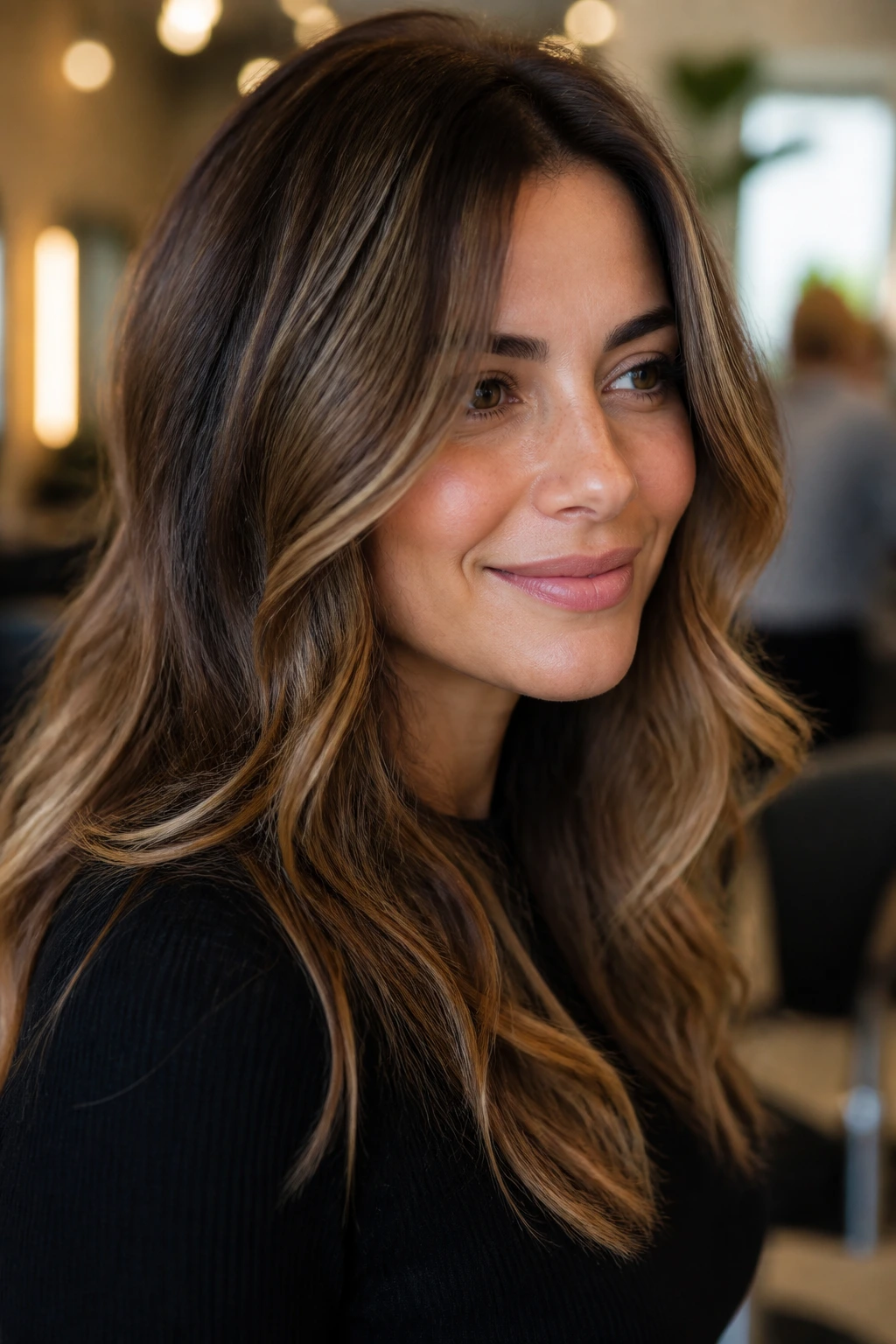
The best brown balayage for warm skin and fine hair does not need to look dramatic to matter. A few caramel ribbons in the right place, a chestnut root shadow, or a warm bronze gloss can change how full the hair feels the moment you turn your head. That is the part worth chasing.
If you’re bringing this to a salon, keep your brief simple: tone, placement, and upkeep. Those three choices shape the result far more than any trendy name ever will. And if you already have the color, the real work is in the gloss, the trim, and the way you style it on a normal Tuesday morning.