



Braided hairstyles for natural hair with lowlights have a specific kind of charm that flat color never quite reaches. The braid pattern already gives you line and movement; the lowlights bring in that deeper, shadowed tone that makes each plait look more defined when it swings, twists, or catches side light. On coily and curly hair, that matters. A lot. Without that darker variation, braids can read as one solid block from across the room.
I like lowlights more than bright streaks for braids because they behave better over time. A chestnut strand tucked into a knotless braid, or a mahogany ribbon running through cornrows, still looks deliberate when the roots grow out and the fresh install starts to loosen around week four or five. The whole style keeps its shape longer, and the color transition feels less abrupt. That’s a small thing until you’ve had braids that looked amazing on day one and a little too loud by day ten.
The smartest versions are usually the quietest ones. Not boring. Quiet. One or two shades deeper than your base, placed where the eye naturally lands, and used with enough restraint that the braid itself still does the talking. Some of the styles below lean sleek and close to the scalp. Others are loose, chunky, and soft around the face. A few are the kind you wear when you want people to notice the color without being able to explain why the whole style feels richer. That’s the sweet spot, and it shows up fast.
Why This Collection Feels Different on Natural Hair
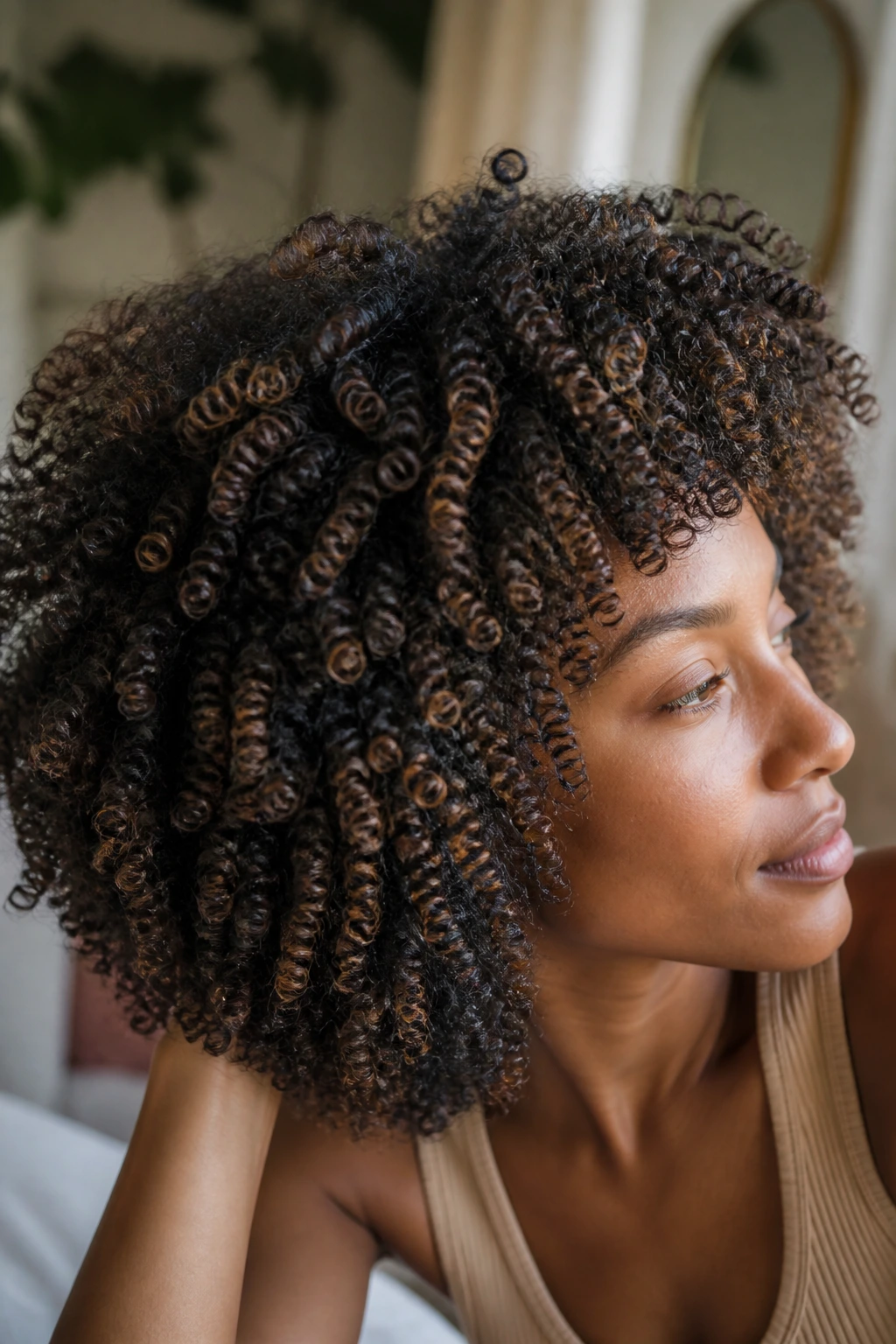
Soft contrast: Lowlights break up the braid pattern without turning the hair into stripes, so the texture still reads clearly on natural curls and coils.
Less awkward grow-out: Deeper shades near your base color stay tidy longer, which helps when your roots puff a little or your parting starts to loosen.
Better shape from the side: Braids show their color most at the curve of the plait, not head-on, and lowlights make that curve look cleaner.
Color without bleaching your hair: A lot of these looks can be built with pre-colored braiding hair or temporary color pieces, which keeps your natural strands out of the bleach bowl.
Works with protective styling: Knotless braids, feed-ins, and updos all gain a little more depth when the darker pieces are placed with purpose instead of scattered everywhere.
Easy to match to your wardrobe: Espresso, cocoa, walnut, mahogany, and plum lowlights sit nicely with denim, cream, black, olive, and gold jewelry, which is why these styles don’t fight your clothes.
1. Knotless Box Braids with Chestnut Lowlights
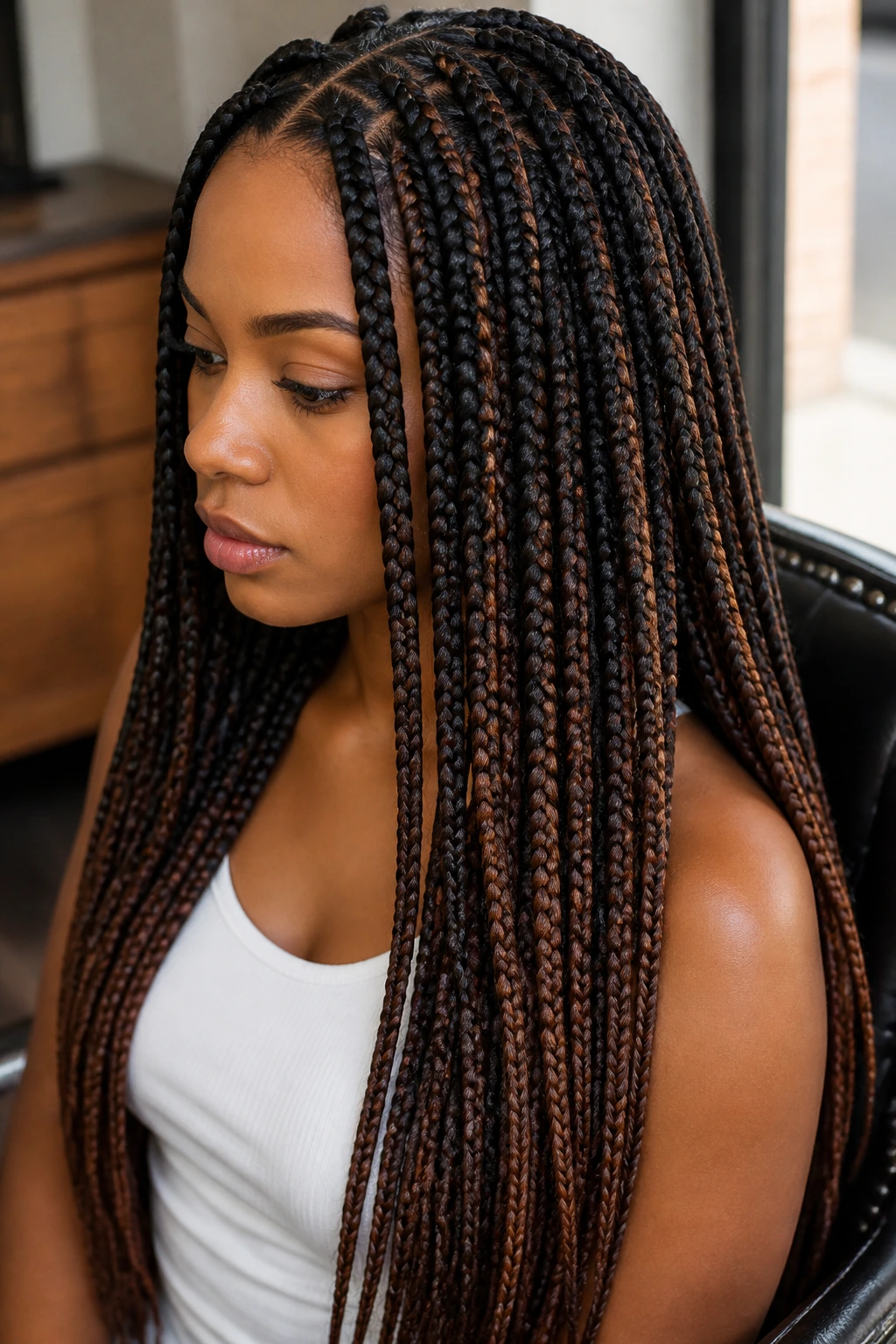
Knotless box braids are already kind to the scalp, and chestnut lowlights make them look a little softer around the edges. The first thing you notice is how the color slides through the braid instead of sitting on top of it. On natural hair, that matters because the braid already has enough texture; it does not need loud color to feel finished.
The trick is to keep the lowlights woven through the mid-lengths and ends rather than dumping them at the root. That keeps the install from looking patchy when the parting grows out. I also like chestnut more than brighter brown here, because it stays warm without shouting over the braid pattern.
If your hair is dense, this style gives you enough visual movement without adding weight. If your hair is finer, the knotless start keeps the base from feeling bulky. Either way, the lowlights do the quiet work. The braid still looks neat from a distance, but up close it has that soft, warm depth that plain black braids can miss.
2. Feed-In Cornrows with Espresso Ribbons
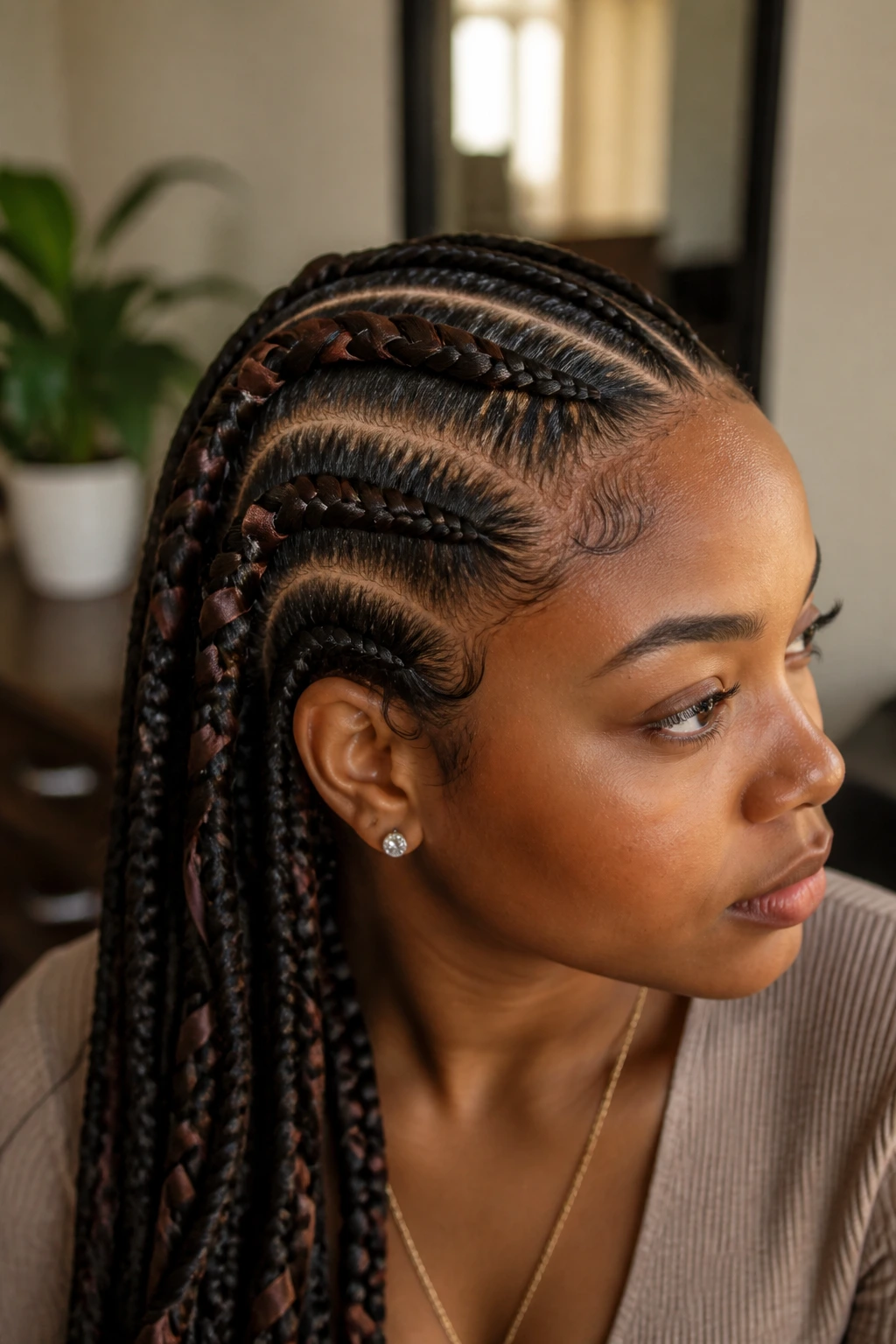
Feed-in cornrows and lowlights make a tidy pair. The scalp pattern stays crisp, and the espresso strands slide through each row like thin ribbons, which keeps the style from reading too flat under bright light. I reach for this look when I want something that looks intentional from the front and still has movement from the side.
Because feed-ins build gradually, the lowlights can be placed with a little more control. You can keep them close to the center rows or run them through the outer cornrows only, depending on how much contrast you want. That small placement decision changes the whole mood. More espresso near the temple? Softer. More through the center? Sharper.
This is a good style if you wear helmets, headphones, or hats often, because the braids lie close and the darker strands hide a little wear better than pale color does. The finish stays clean longer if you mist the scalp lightly and smooth the rows with a braid mousse every few days.
3. Fulani Braids with Mahogany Beads
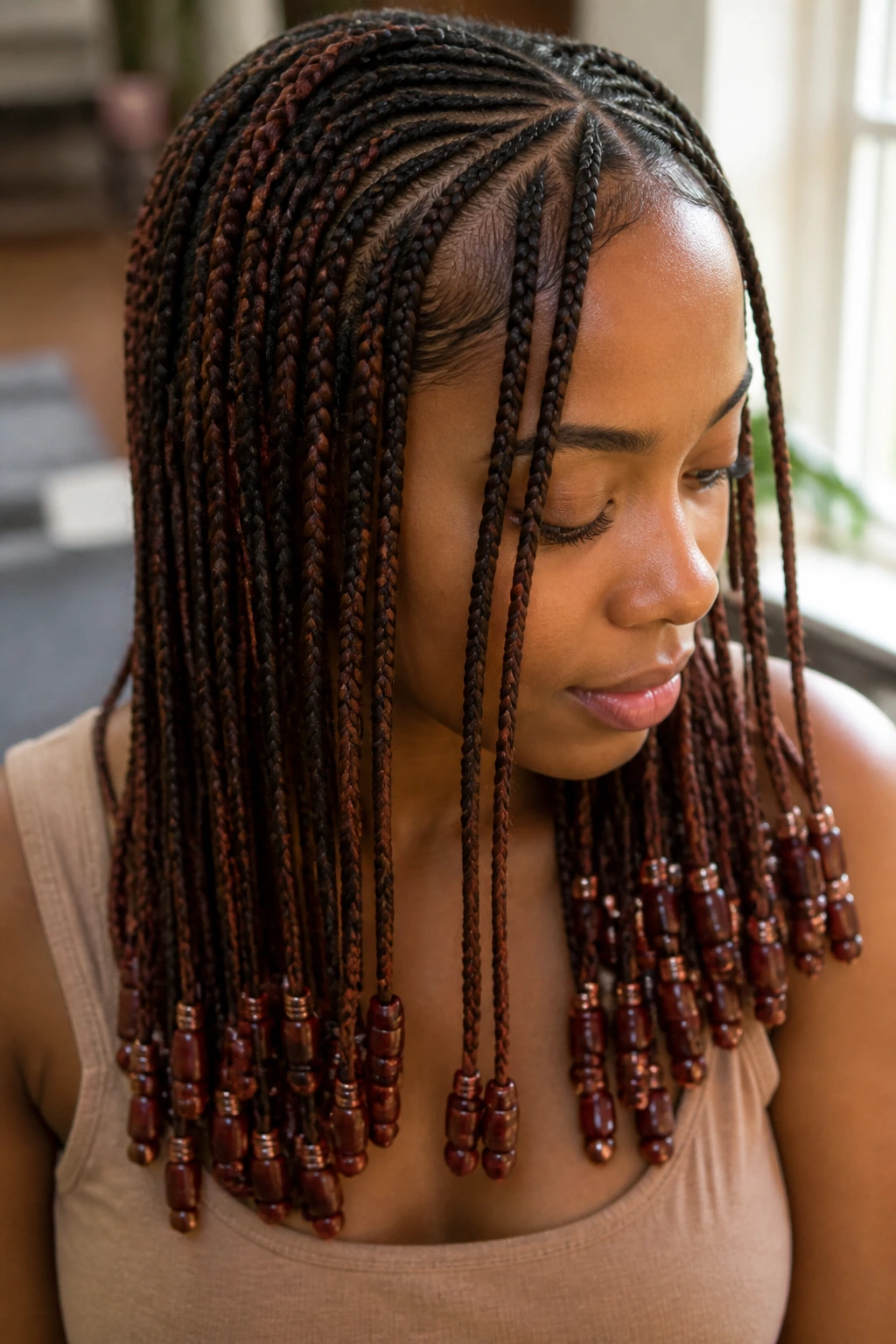
Fulani braids already have that carved, face-framing shape that makes the color placement feel important. Mahogany lowlights bring warmth without turning the look loud, and the beads at the ends give the darker strands a little extra movement. When the braids swing, the color shift shows in pieces, not all at once, which is exactly why this style works.
I like this one when the front braid or center braid needs a little drama but the rest of the head should stay balanced. Mahogany sits between brown and red, so it reads rich without going cherry-bright. If your natural hair is dark, that extra tone helps the braid pattern stand out in photographs and in daylight, where flat black can disappear.
The beads matter more than people think. Wooden, bronze, or matte gold beads look better here than glossy plastic, because they don’t compete with the lowlights. Keep the front sections a touch tighter than the back so the parts stay clean around the hairline.
4. Lemonade Braids with Plum Underlayers
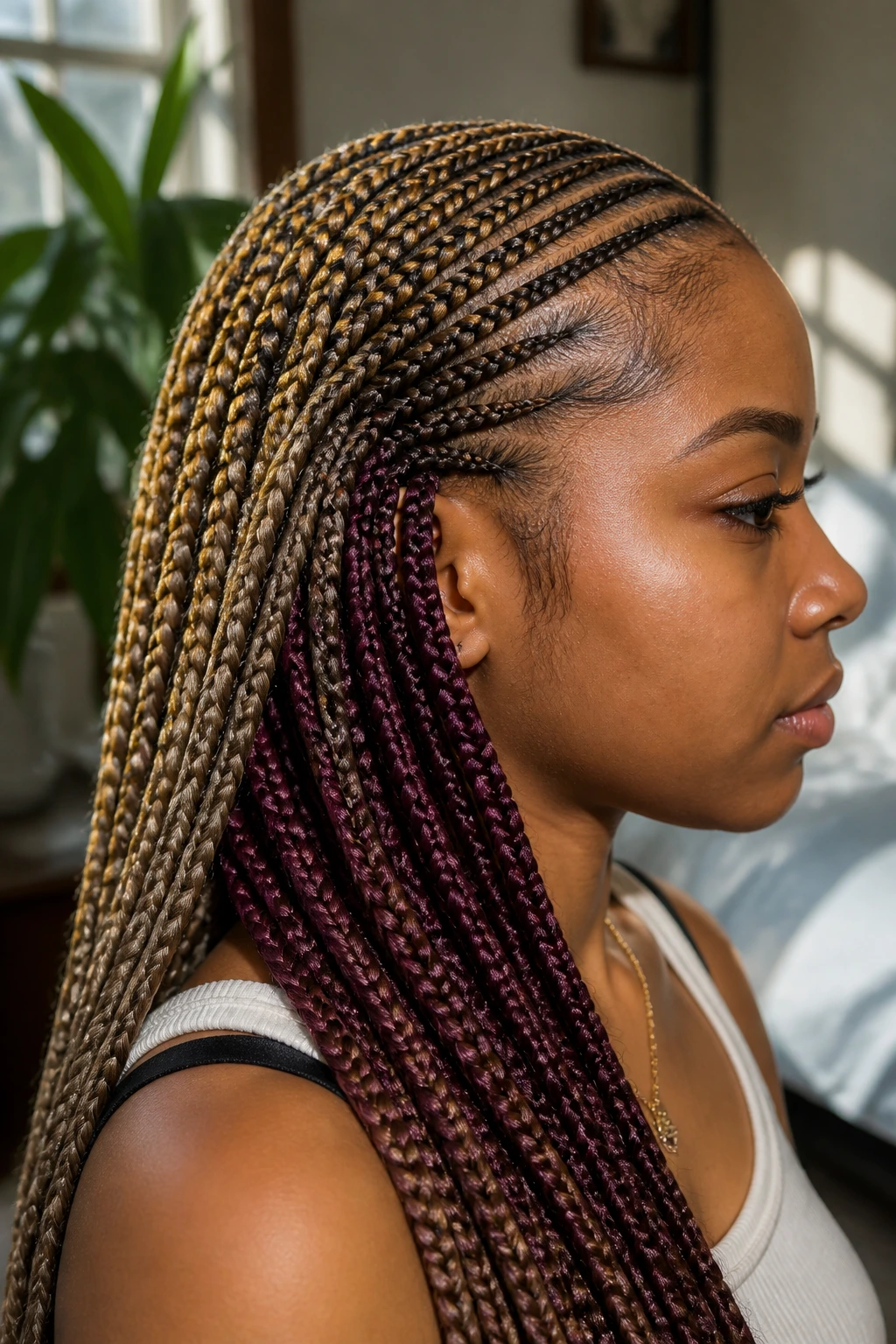
Lemonade braids look sharp on their own, but plum lowlights tucked underneath make the style move in a more interesting way. The side sweep leaves a little room for color to peek out when the braids flip over your shoulder or catch wind. That hidden placement is the whole point. You get color without turning the style into a loud block.
Plum works especially well if your base is dark brown or black and you want something deeper than auburn but less expected than plain brown. It adds a cool note under the warmth of the braid pattern. The style reads sleek at first glance, then changes once the braids shift. That second look is what keeps it from feeling flat.
I’d keep the lowlights closer to the underside and the back half of the braids, then leave the front pieces cleaner. That way the parting stays sharp and the color feels like a reveal instead of a filter.
5. Boho Braids with Cocoa Curls
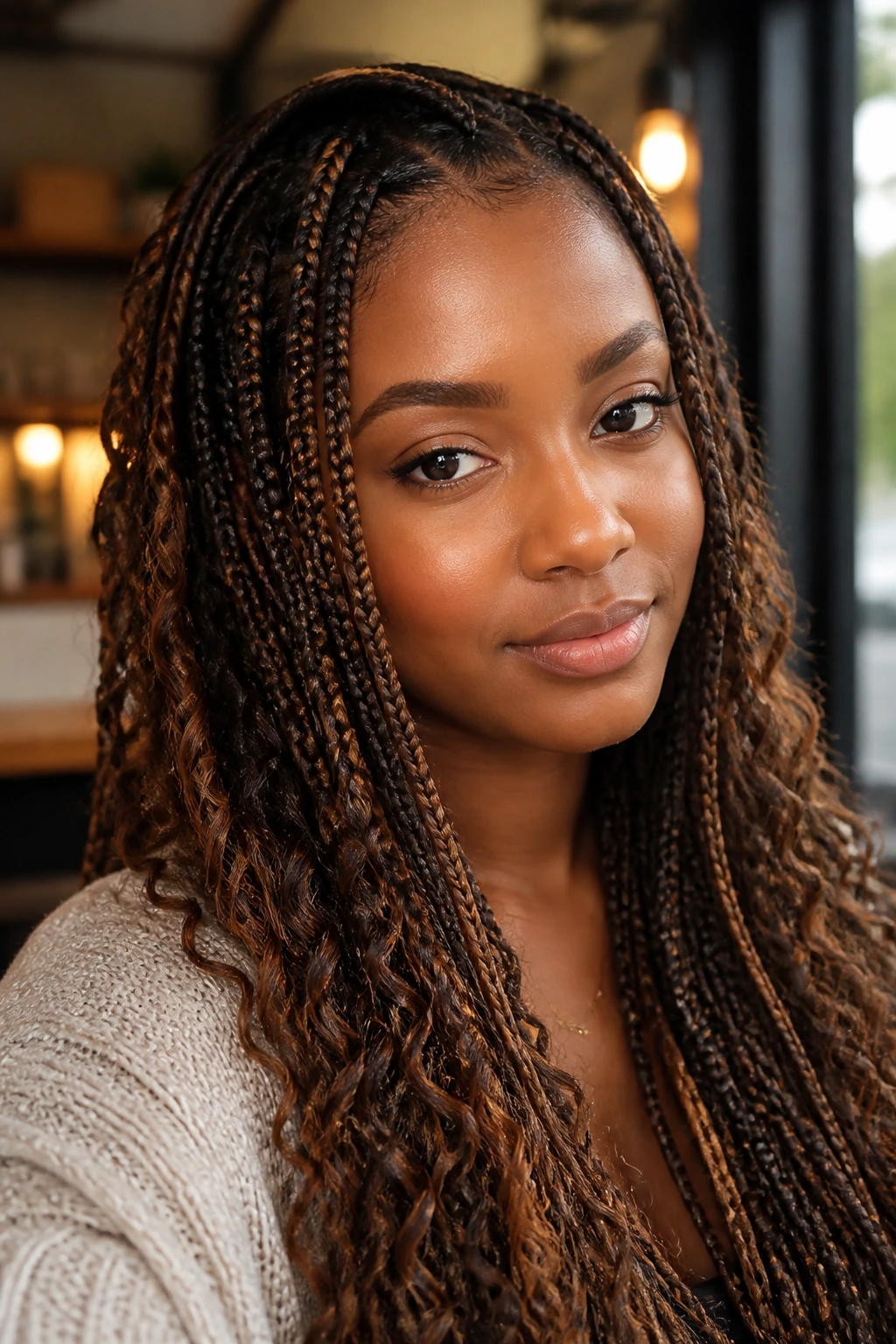
Boho braids can get messy fast if the curl pieces are too light or too many. Cocoa lowlights help fix that. They ground the loose curls and make the braided sections feel like they belong to the same style, not two separate ideas stitched together. The result is softer, but not fuzzy.
The loose strands around the braid ends need a little more care than a standard box braid, so cocoa is a smart color choice. It hides frizz better and keeps the overall look calm when the curls start to separate. I like this style when the goal is movement and touchability, not a glassy, rigid finish.
Keep the braid base neat, then let the curled pieces carry the softness. A light mousse on the loose sections every few days helps a lot. Too much product will make the ends go limp, and that ruins the point. You want the curls to bounce, not cling.
6. Goddess Braids with Walnut Feed-Ins
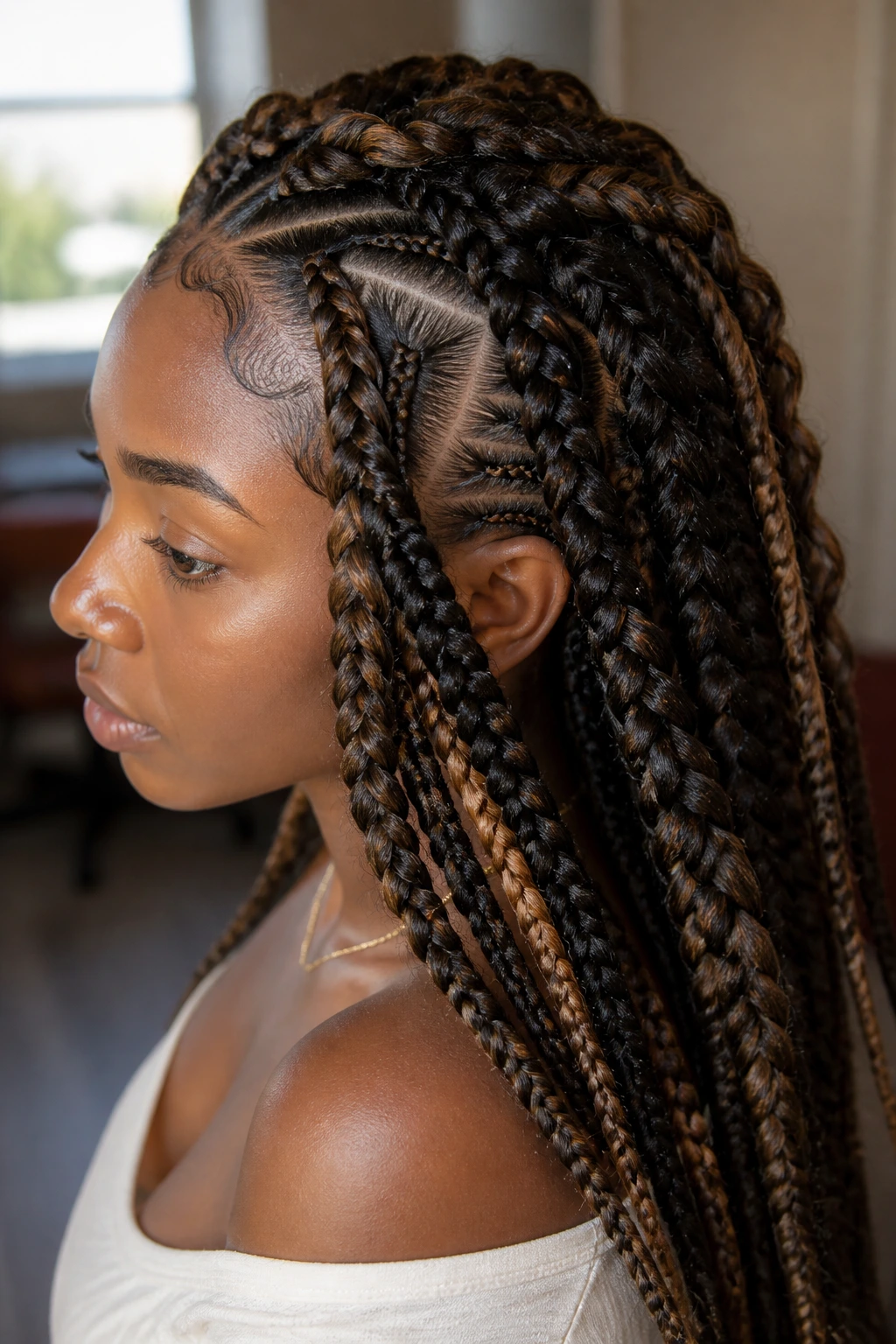
Goddess braids look best when the lowlights are placed with restraint, and walnut is one of the easiest colors to use that way. The feed-ins give you thickness at the start, then the deeper tone works through the braid body so the whole style doesn’t blur into one heavy line. That’s the risk with goddess braids: they can look thick but not especially interesting if the color is too uniform.
Walnut lowlights are a nice match for medium-to-dark natural hair because they stay in the same family, just a touch deeper and softer at the same time. If your hair is already dark, this keeps the braid shape readable without using a harsh contrast. If your hair is medium brown, it gives you a little more depth at the nape and along the curves.
This is one of those styles that looks better when the sections are a little varied in size. Not random. Varied. A thicker front braid, a smaller braid beside it, then a deeper walnut strand threading through the center section. That little imbalance keeps the style alive.
7. Stitch Braids with Auburn Panels
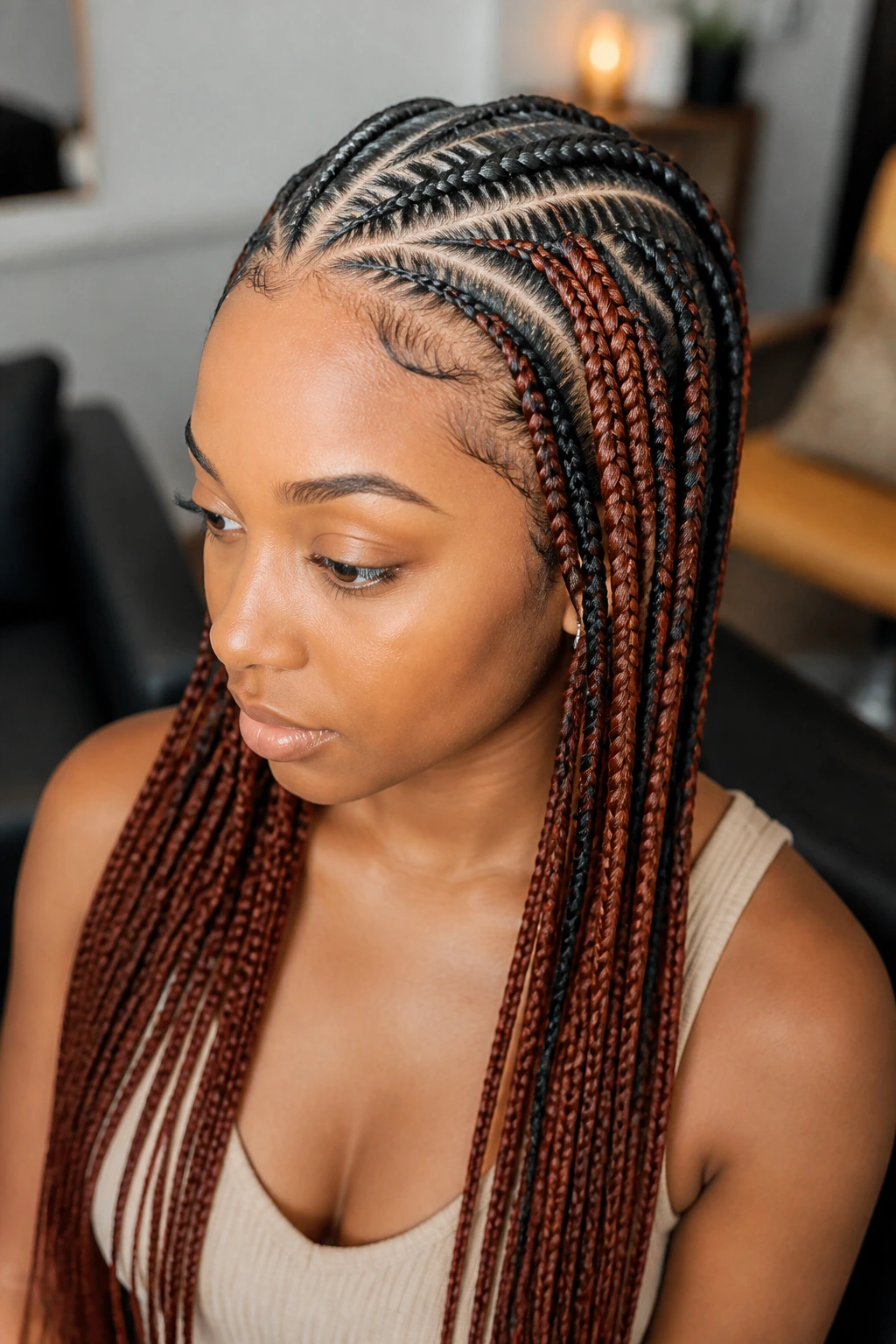
Stitch braids have that straight, graphic look that lowlights can sharpen rather than soften. Auburn panels tucked into the stitch sections create clean color blocks, and the braid parting does half the work for you. You do not need a lot of color here. A few well-placed auburn strands are enough.
The best version of this style keeps the stitch lines crisp and the lowlights focused in the longer lengths. Too much auburn near the scalp can muddy the line work. Put the color where the braids drop and move. That’s where the contrast shows. It’s a small detail, but it changes the whole read.
If your hairline is sensitive, ask for gentle tension at the front rows. Stitch braids can get tight fast, especially if the stylist is pulling for a super-sleek finish. Auburn won’t save a braid that hurts. Clean parting and comfortable tension matter more than the shade does.
8. Crown Braid Updo with Deep Brown Shadow
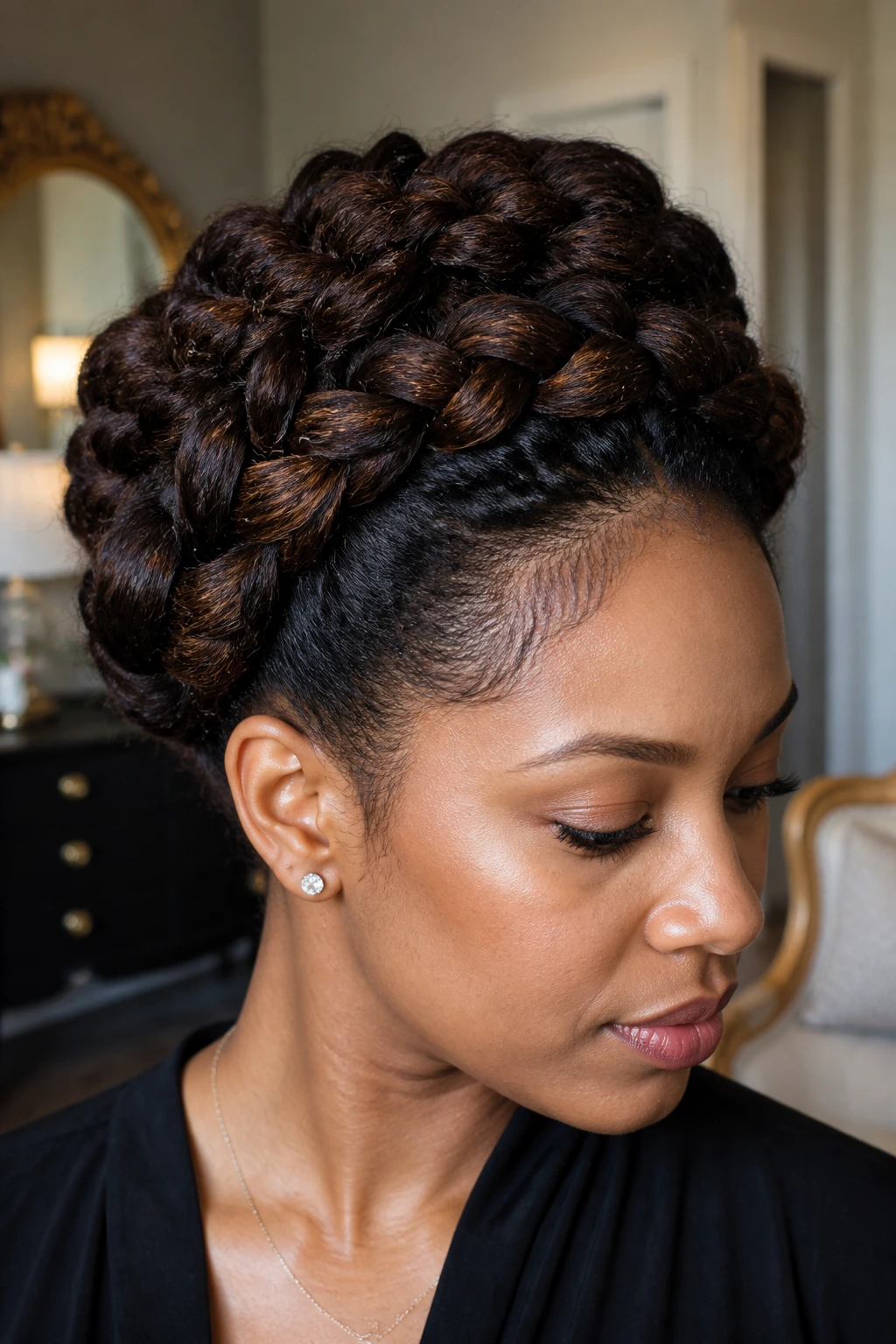
A crown braid updo can look elegant in a way that almost feels severe if the color is all one tone. Deep brown lowlights fix that. They sit in the curves of the braid and keep the crown from flattening out visually. The style gains a little depth every time the braid crosses over itself.
What I like most here is the way the lowlights hide and reveal themselves as the braid wraps around the head. The darker pieces are not front-and-center, but they show up at the bends, which gives the whole updo a more layered look. That kind of styling is useful for formal settings, work, or any day you want your hair pulled up without losing interest.
A smooth edge, a few pins, and a small amount of shine spray are enough. Don’t drench it. If the crown braid gets too slick, the shape starts to look hard instead of polished.
9. Braided Bob with Smoky Mocha Lowlights
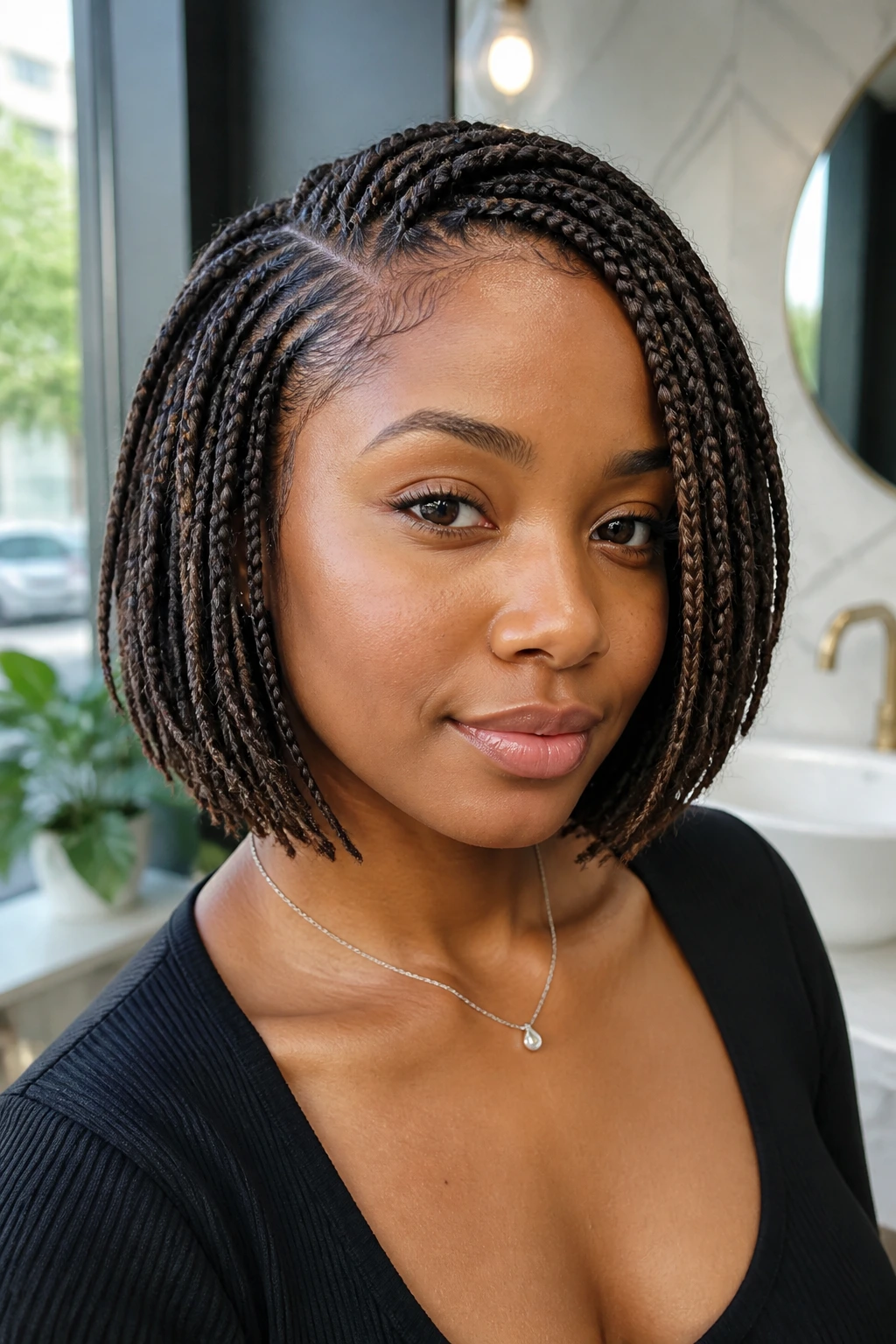
Braided bobs are one of my favorite places to use lowlights because the shorter length makes every shade choice obvious. Smoky mocha gives the bob a fuller, denser look without making it bulky. The color sits just deep enough to stop the ends from looking thin or stringy, which is a common problem with shorter braided styles.
This cut works especially well if you like neck-grazing braids that feel lighter in daily wear. The lowlights help the bob look intentional, not like a shortened version of something larger. There’s a difference. A braided bob should feel designed for the length it has, and smoky mocha makes that easier.
I’d keep the ends neat and the parting clean. Because the style is shorter, any frizz or uneven color placement shows faster. A small brush, a bit of mousse, and a satin scarf at night go a long way here.
10. Triangle-Part Box Braids with Cinnamon Depth
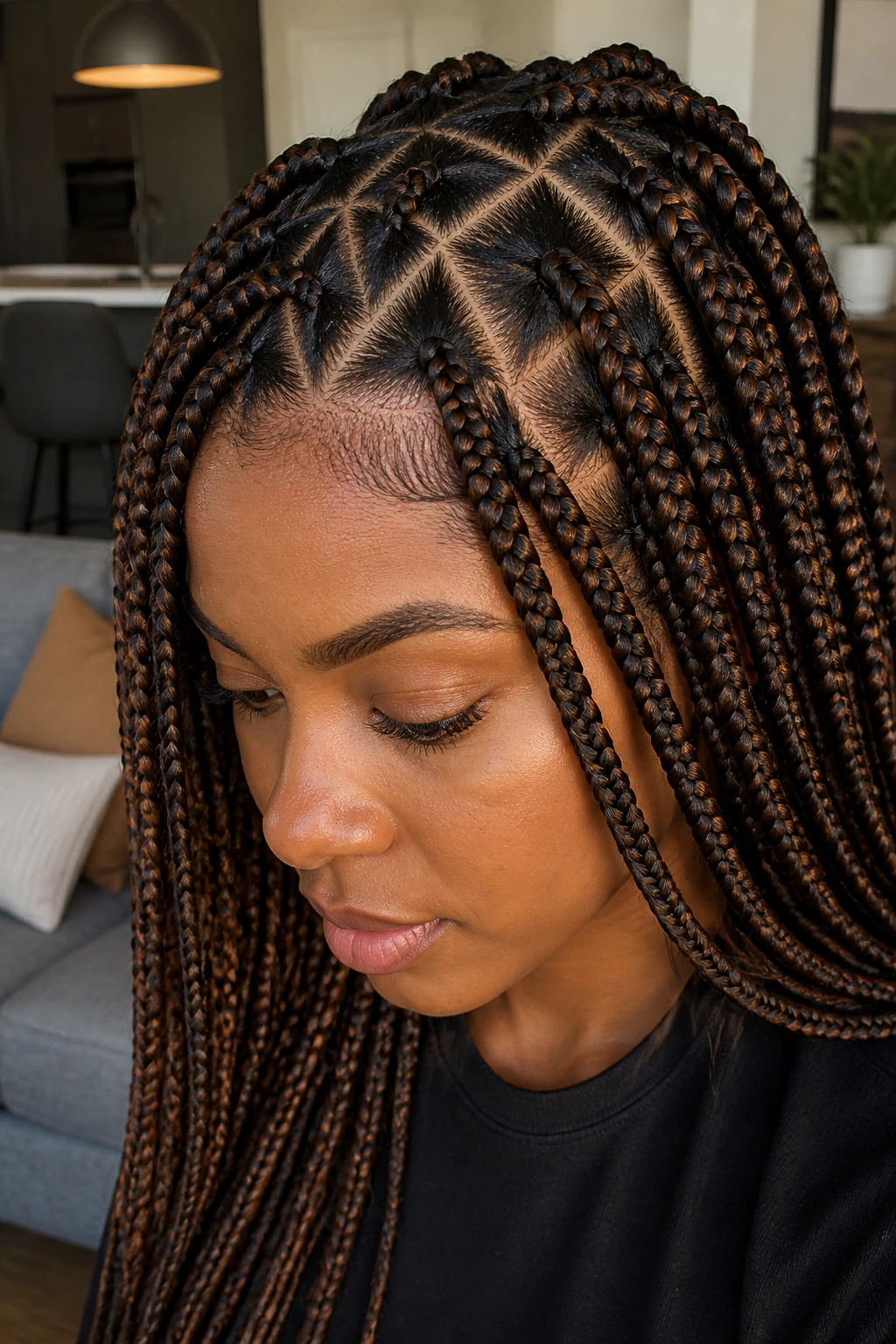
Triangle parts are for people who like a little geometry in their style. Cinnamon lowlights bring warmth to all those angled sections, and the contrast between the parting and the braid color makes the scalp look more deliberate. It’s a small visual trick, but it works.
The nice thing about cinnamon is that it keeps the look from turning muddy. On dark natural hair, warm lowlights can get lost if they’re too close to black. Cinnamon holds its own, especially when the braids are medium-sized and the parts are crisp. The triangle shape gives the color a place to sit.
I like this style best when the braids are kept uniform in size and the lowlights are distributed with a light hand. Too many cinnamon pieces in every braid and the effect goes flat. A few placed where the braid curves is enough.
11. Zigzag Feed-In Braids with Chestnut Slices
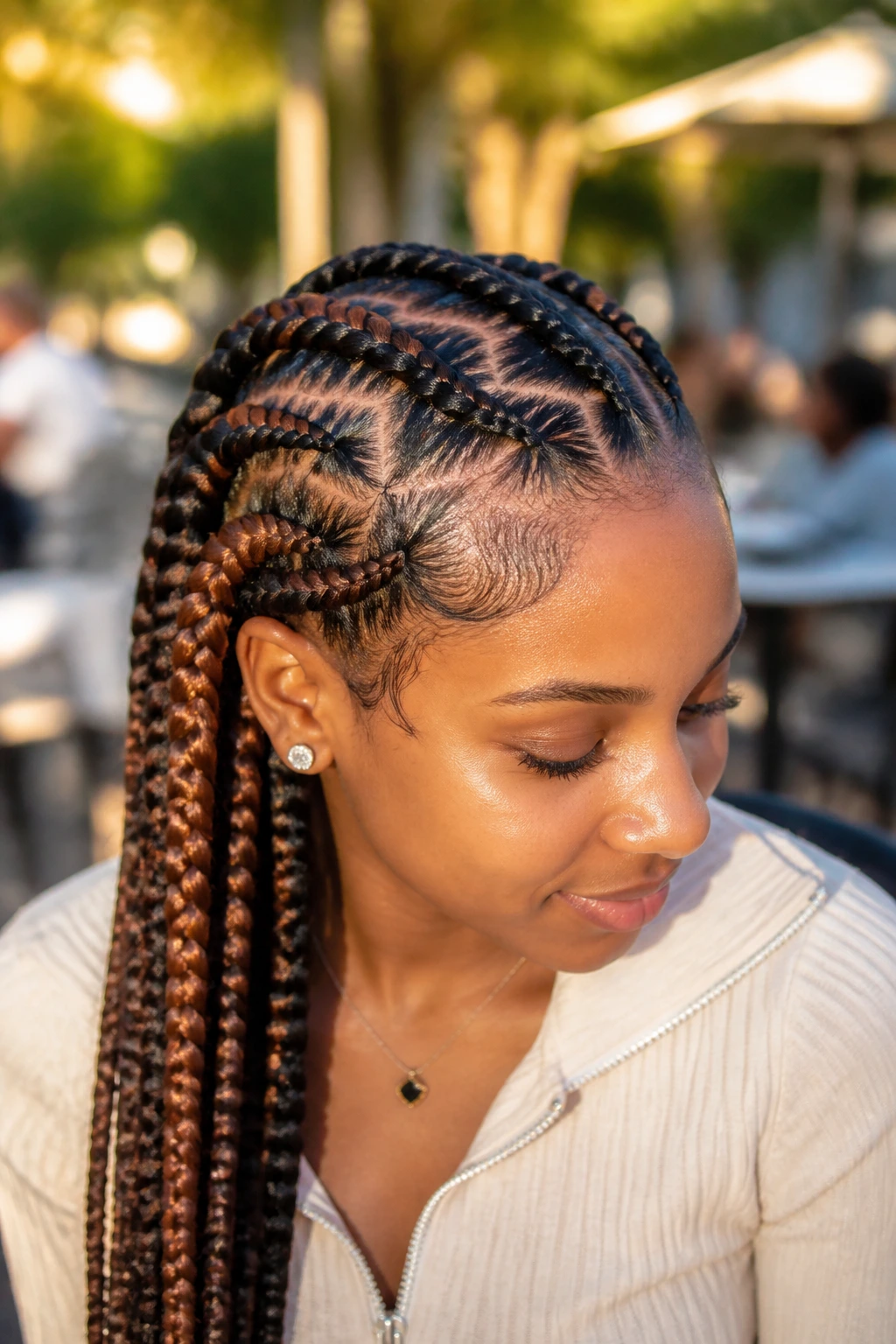
Zigzag parts already have a little attitude, so chestnut lowlights can be used in thin slices rather than broad bands. That keeps the look playful and clean at the same time. The zigzag pattern catches the eye first; the color comes in second, which is exactly how it should work.
This style is good if you want something sharper than a straight-back feed-in but still easy to wear for several weeks. The chestnut sections soften the graphic parting, especially around the temples. They keep the braid rows from looking too severe, which can happen when a lot of feed-in styles lean hard into the scalp pattern.
Ask for precise sectioning. Zigzag parts expose more of the scalp than straight parts do, so the rows need to be neat or the whole thing starts looking busy. Clean parting plus a warm lowlight is a better combo than chasing more color.
12. Half-Up, Half-Down Braids with Burgundy Underlayers
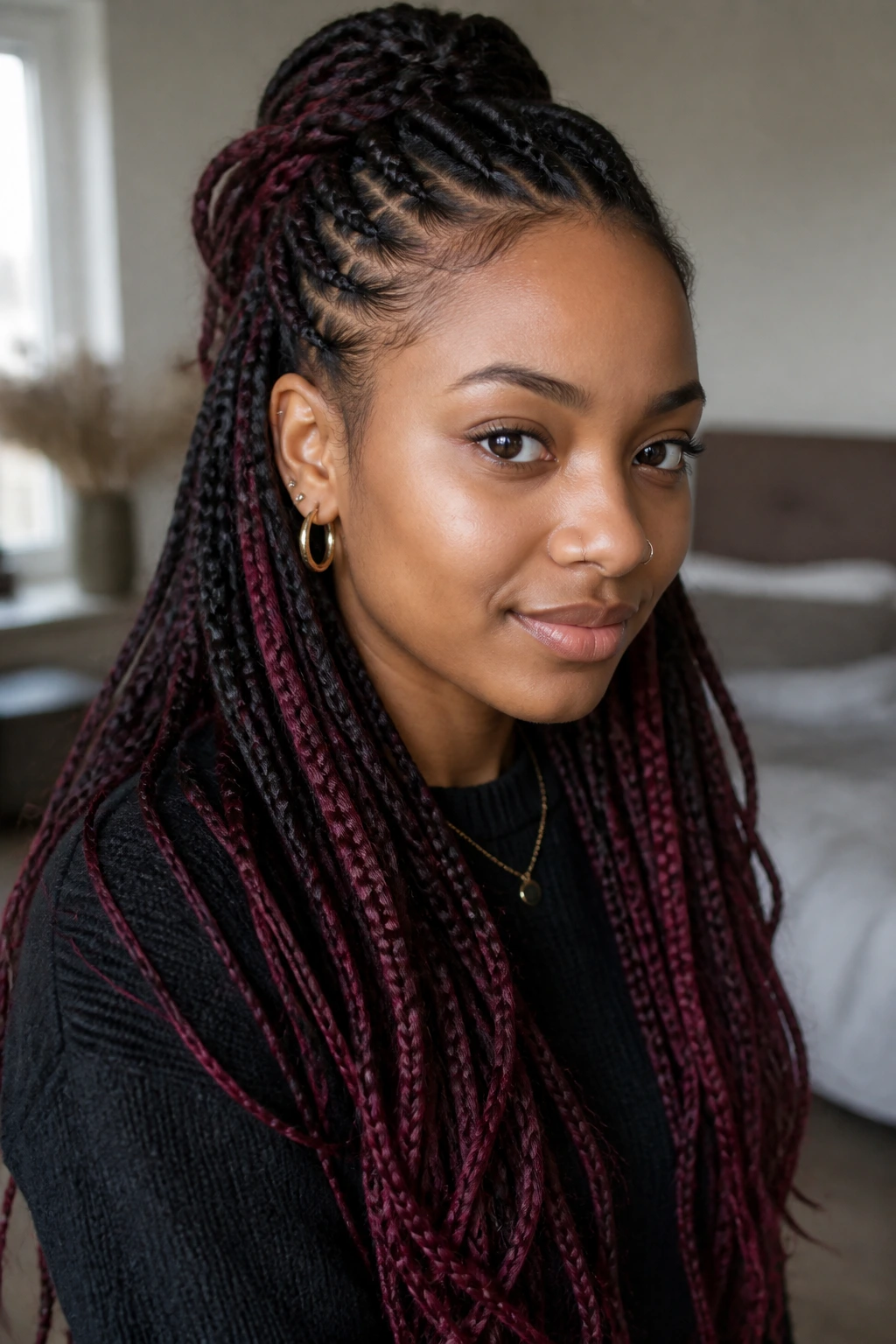
Half-up, half-down braids with burgundy underlayers give you two moods in one style. The top sits neat and pulled away from the face, while the lower section carries the color and movement. Burgundy works well because it stays rich under indoor light and looks deeper, almost wine-dark, outside.
The underlayer placement is what saves this style from looking obvious. If the burgundy sits only in the top braids, it can feel loud in a way that wears on you. Hidden underneath, it becomes a reveal. When you turn your head or sweep the hair to one side, the color comes through in a controlled way.
This style is good for people who like a top knot or half pony but still want length left down. The up section shows the structure. The down section shows the shade. Keep the top a little tighter than the lower braids so the silhouette stays balanced.
13. Jumbo Braids with Cocoa Channels
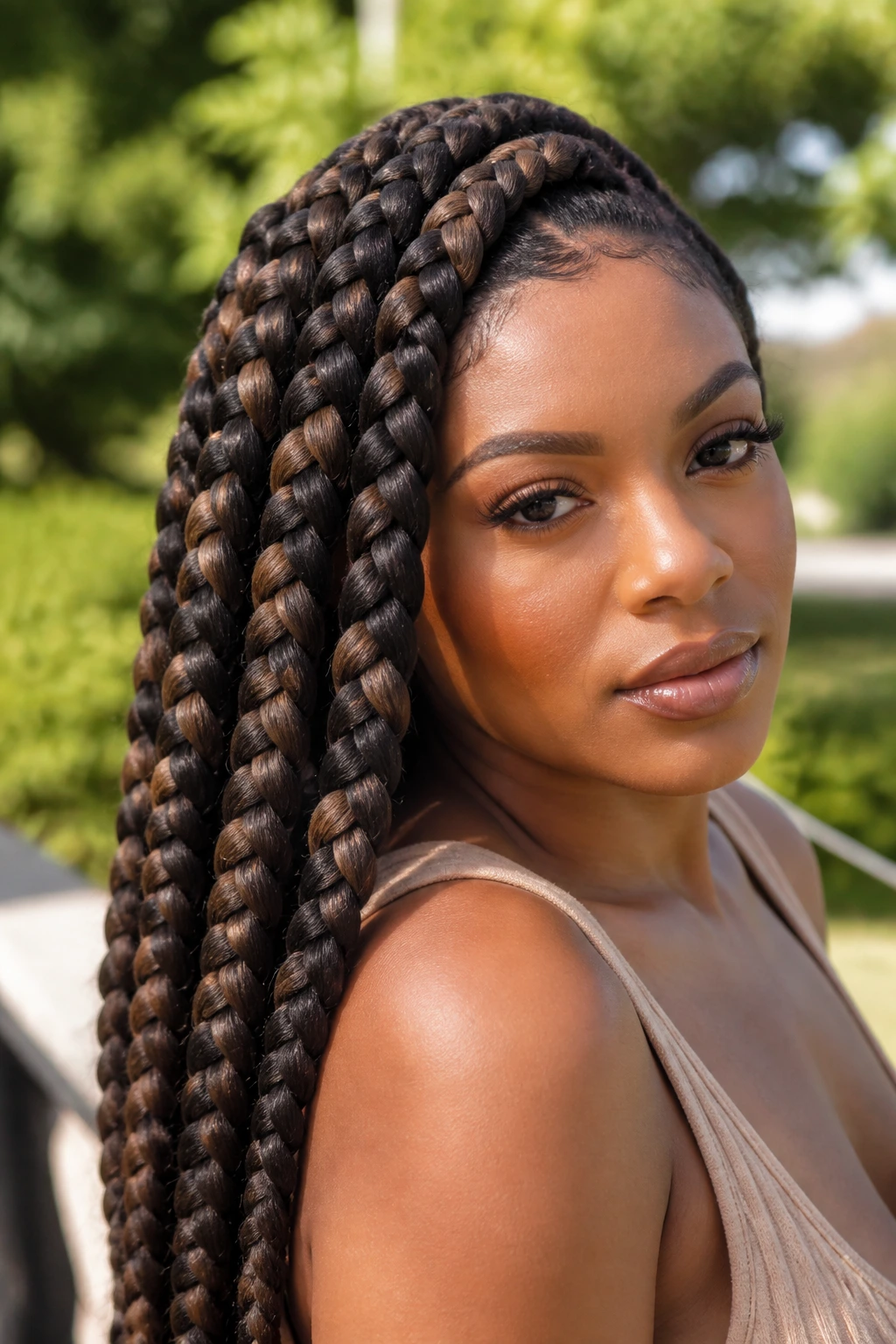
Jumbo braids are heavy-looking by nature, so cocoa lowlights help break up the weight. They create channels through the braid mass, almost like dark lines running through a thicker rope. Without them, jumbo braids can read as one big shape. With them, the braid has more life.
This style is also faster to install than micro braids or tiny box braids, which matters if you don’t want to sit for hours. The cocoa pieces make the larger size look more deliberate. I especially like this on thicker natural hair, where the braid can support the size without feeling overbuilt.
The one thing to watch is tension. Jumbo braids can be pulled too tight in the name of neatness, and that’s a bad trade. Keep the scalp comfortable, especially around the edges, or the style will age badly before the color even has time to show.
14. Micro Braids with Dark Mocha Threads
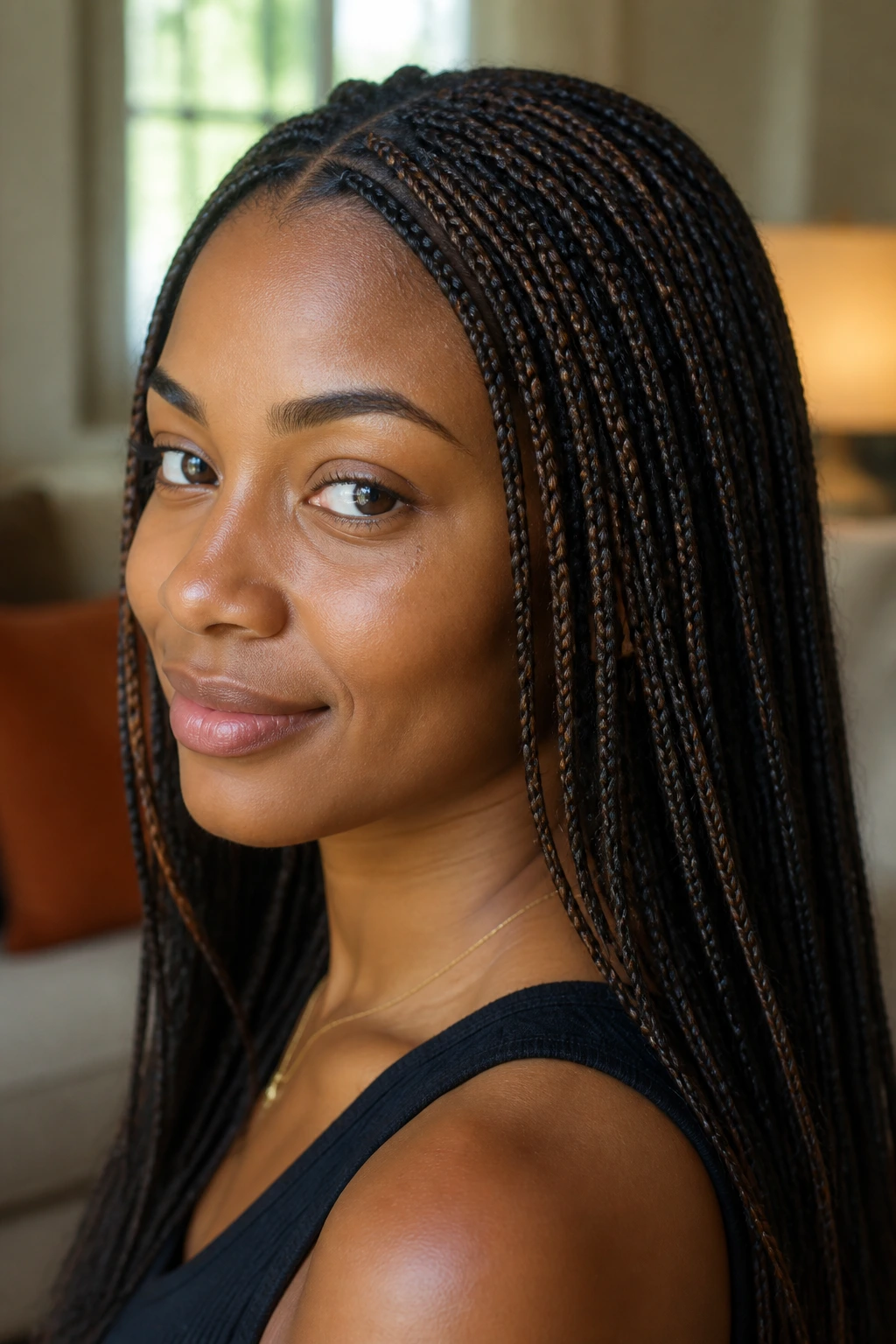
Micro braids are a long-game style. Dark mocha threads woven through them keep the whole look from becoming a single dark curtain. Because the braids are tiny, the color change is subtle at first, then more visible once the hair moves or separates a little. That slow reveal is part of the appeal.
If you want a style that can live with you for weeks, maybe longer with careful upkeep, micro braids offer a lot of visual detail. The dark mocha lowlights help the tiny braid pattern stand out instead of disappearing into the base color. It’s a useful choice when you like fine texture and you don’t want the style to feel visually loud.
This is not the style I’d choose if I wanted the fastest install. It takes time. It also rewards patient sectioning and a careful finish. If the parts wander, the lowlights will show every mistake.
15. Braided Ponytail with Mahogany Sweep
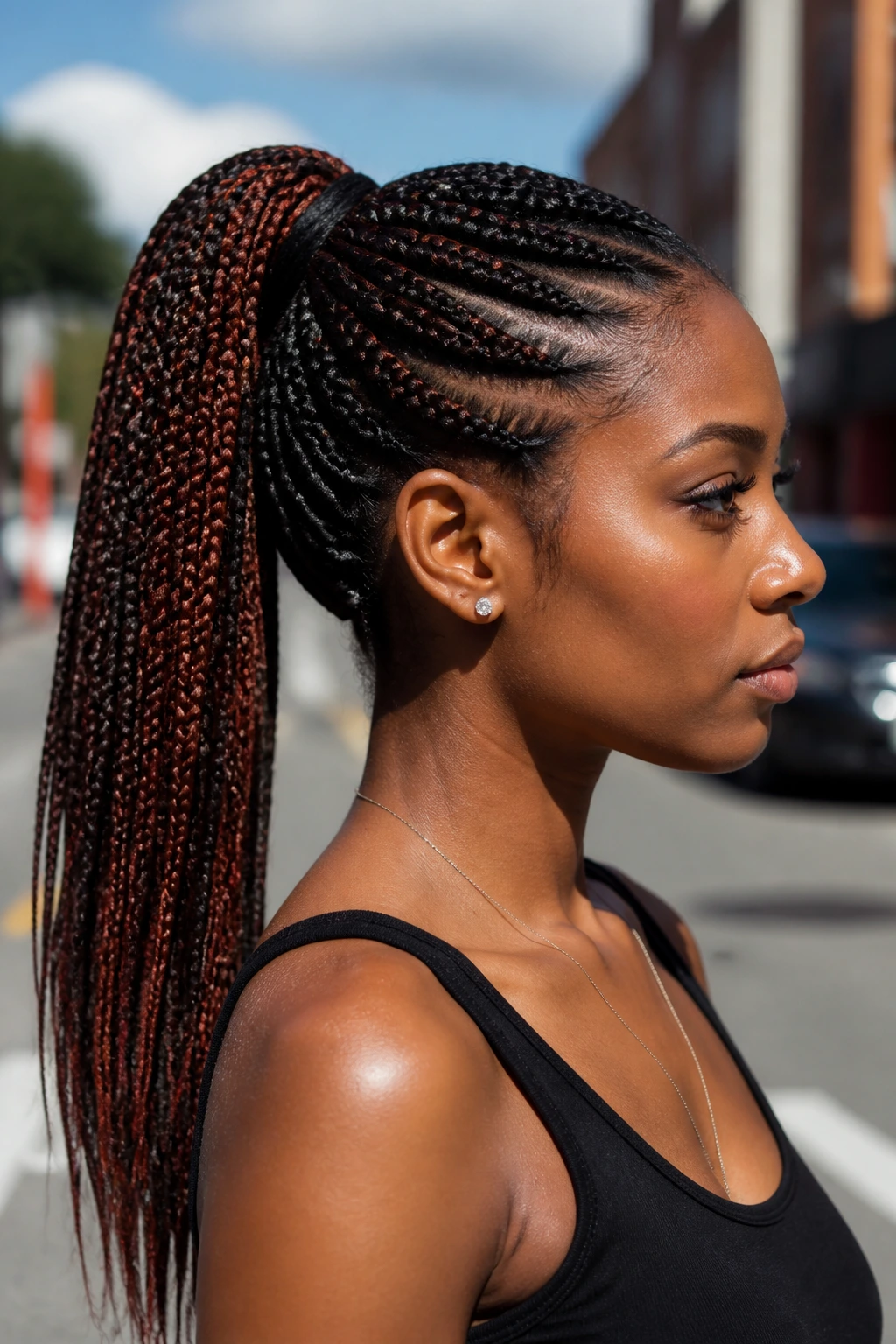
A braided ponytail is all about lift, and mahogany lowlights make the sweep of the ponytail look fuller. The color shows best where the braids collect and arc backward, which is why this style feels dynamic even when the base is simple. It’s clean. It moves.
The ponytail position changes the whole mood. High and tight looks athletic. Mid-height with a little looseness around the crown looks softer. Mahogany gives both versions a warmer finish, especially on dark natural hair where a single-shade braid can feel too severe up top.
I like this style when I need something that stays off the shoulders but still has enough length to read as a statement. Wrap a small braid around the base if you want the tie hidden. That little step cleans up the whole silhouette.
16. Halo Braid with Taupe Brown Accents
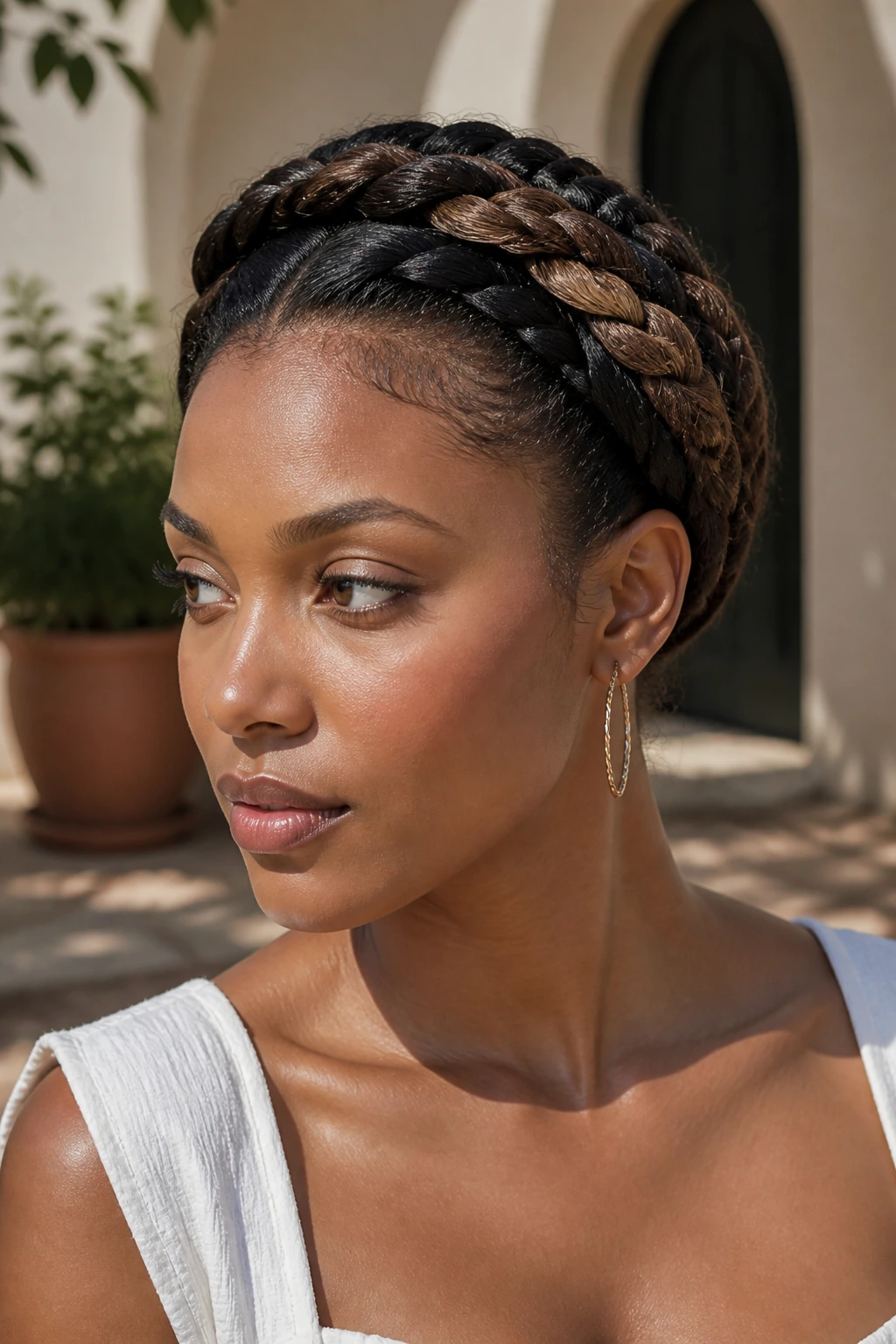
A halo braid asks a lot of the color because the braid loops around the head in one continuous line. Taupe brown accents soften that line without stealing attention from the shape itself. The result is less rigid than a solid dark braid, but still quiet enough for an understated look.
Taupe works well when you want a low-contrast finish that still has depth in daylight. It’s a useful shade for people whose natural hair sits somewhere between dark brown and black, because it doesn’t fight the base. It simply breaks up the surface a little. That matters in a halo braid, where the curve can flatten if everything is one tone.
This style sits close to the head, so comfort counts. Keep the braid path smooth, especially behind the ears and across the nape. A halo braid that pinches will not stay flattering for long, no matter how good the color is.
17. Double Braids with Cherry-Cola Lowlights
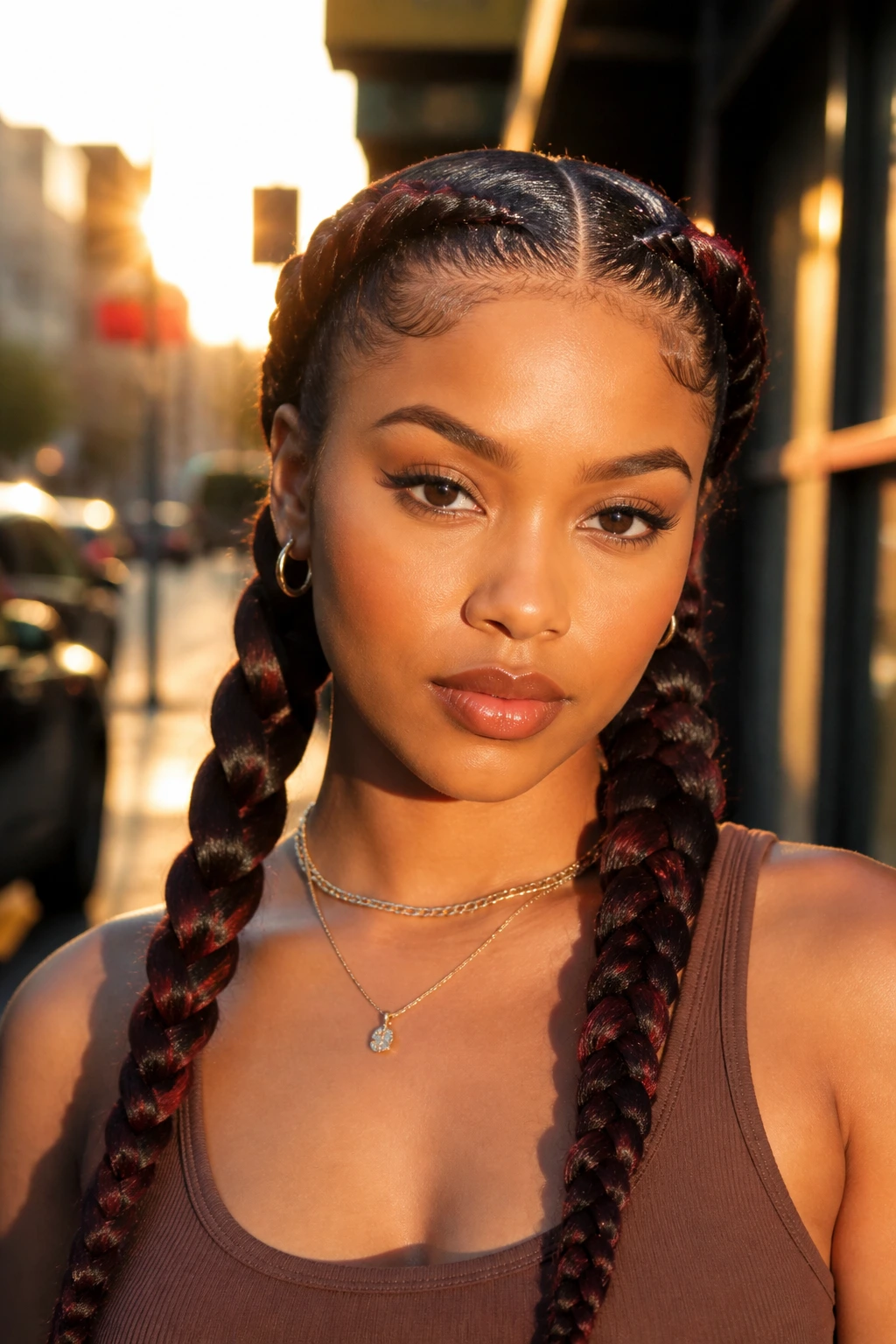
Two long braids can look almost plain if the color is flat. Cherry-cola lowlights change that fast. The shade is deep enough to stay elegant, but it has enough red-brown in it to catch light when the braids swing forward. You get a little surprise every time the hair moves.
I like this style because it is low effort once installed and still has personality. The two-braid shape already gives you symmetry; the lowlights prevent the look from feeling too predictable. If your wardrobe leans simple — black tees, denim, clean sneakers — this is the kind of hair that carries the visual work.
A center part keeps the symmetry strong, but you can shift it slightly if your face likes a softer frame. Keep the braids a touch longer than collarbone length if you want the color to show more fully. Short versions lose some of the effect.
18. Mohawk Braids with Smoky Plum Strands
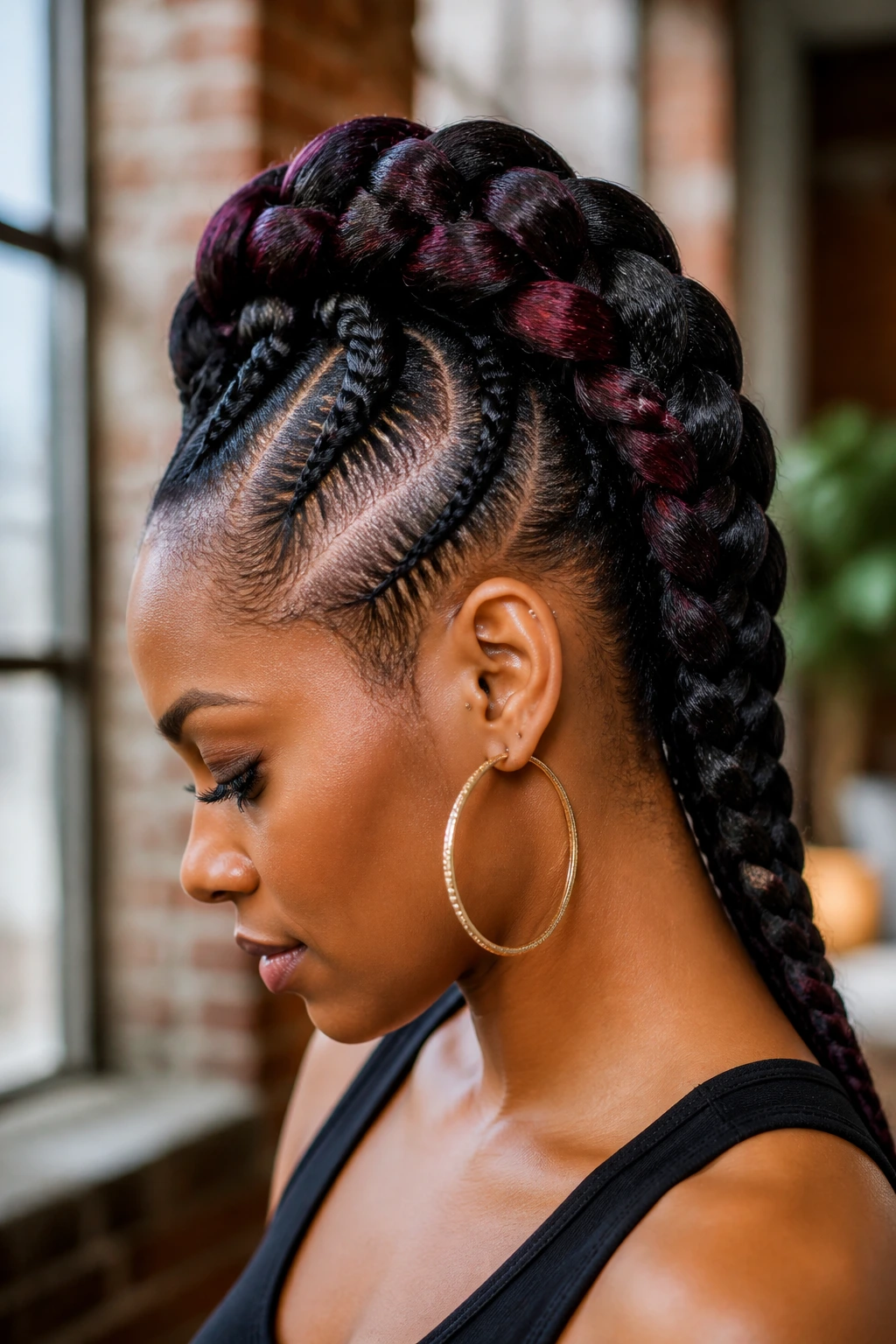
Mohawk braids carry drama by design, so smoky plum lowlights fit the shape better than a brighter, flashier color would. The center ridge gives the hair height, and the plum pieces run through that height like shadow. It looks a little sharper than the average braid style and a little less predictable, too.
This is a good choice when you want the sides to stay neat and the center to carry the mood. If the lowlights are placed mostly through the mohawk section, the style reads layered without becoming busy. The color becomes a line of movement down the head, which is exactly what the shape needs.
Keep the side sections tidy and the center braids consistent in thickness. The shape itself is already doing enough. If the sections wander, the plum lowlights won’t save it.
19. Side-Swept Goddess Braids with Walnut Ends
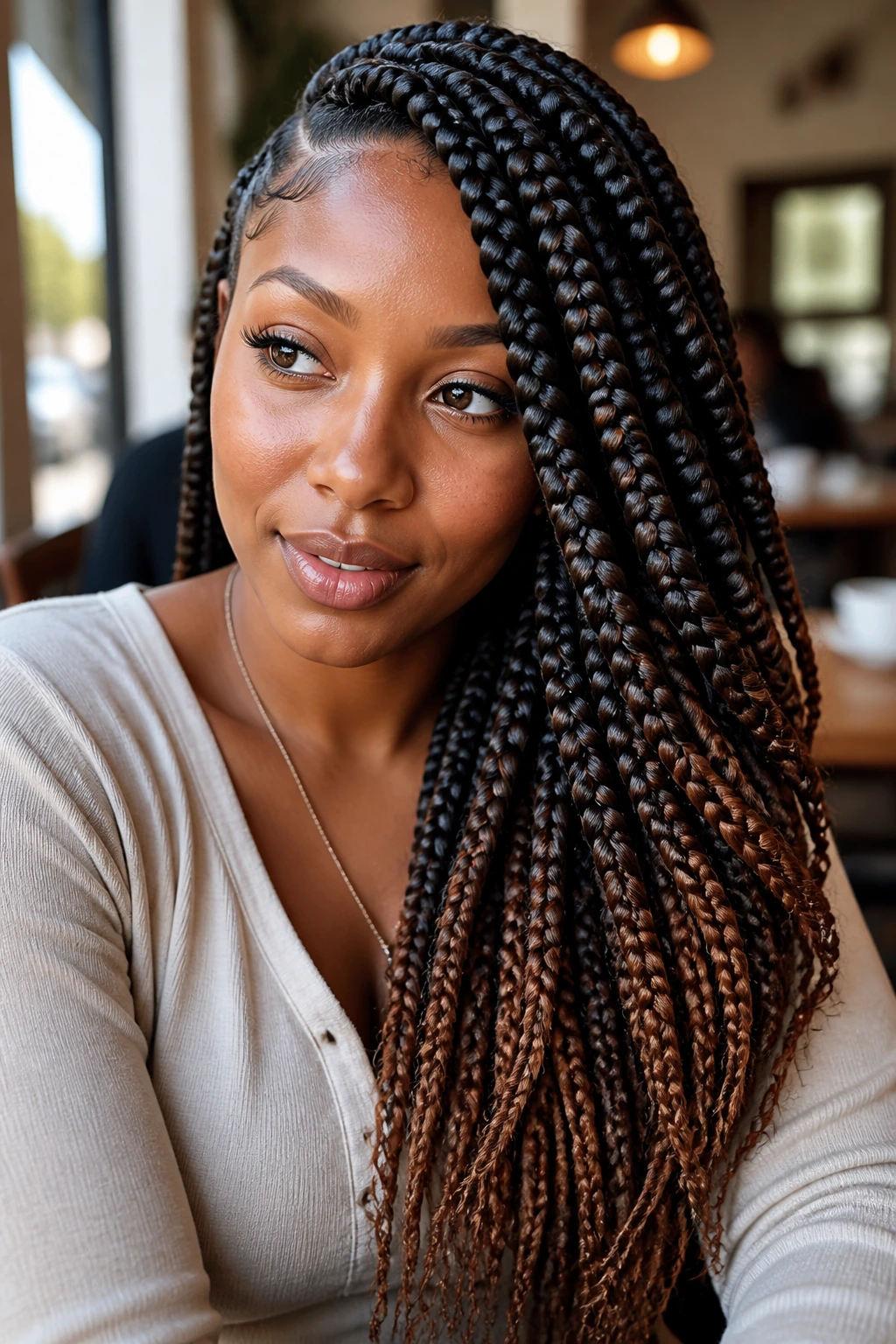
Side-swept goddess braids have a softer energy than a straight-back style, and walnut ends keep them from looking too airy. The darker ends anchor the braid, so the sweep feels finished instead of flimsy. That is the detail people miss with side-swept styles: the end color matters more than you think.
Walnut lowlights are especially good when the braids start near the part line and then fan out over one shoulder. The color shift helps the shape read from top to bottom. You get a darker base, then a slightly deeper finish at the ends, which keeps the whole style from floating away visually.
I’d use this for events, dinner plans, or any day you want your braids to feel a little dressed up without extra accessories. A few cuffs near the front are enough. More than that and the braid loses its clean line.
20. Braided Bun with Deep Brown Underlayers
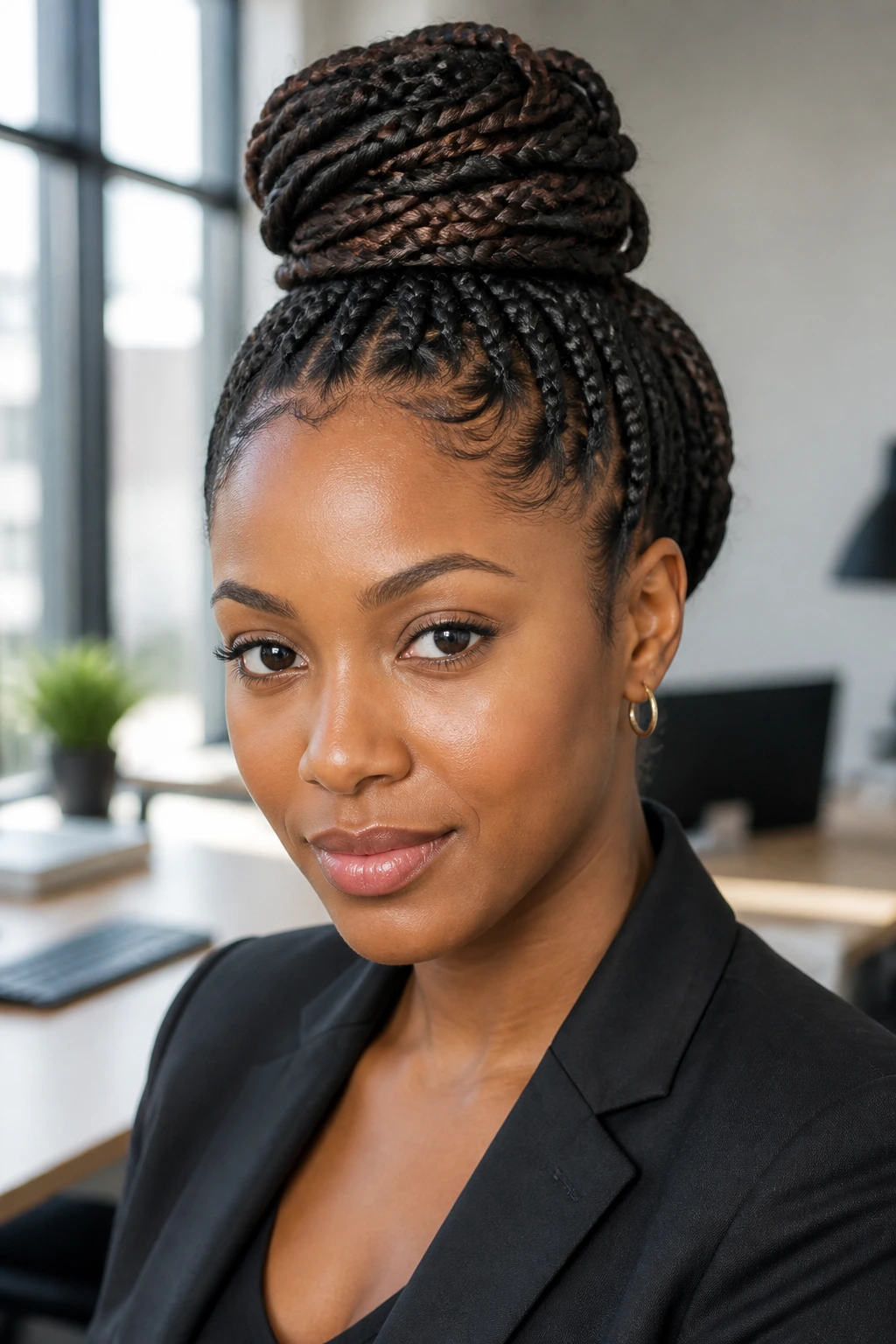
A braided bun can feel a little severe unless something softens the base. Deep brown underlayers do that job well. When the bun is gathered high or low, the darker pieces show at the nape and around the twist, which keeps the style from going stiff.
This is one of those styles that looks neat in an office and still makes sense after hours. The bun shape does the practical work. The lowlights make sure the style still has depth when it’s pulled back tight. That combination is useful if you wear braids for convenience but still care about how the hair reads from every angle.
Pins matter here. Use enough to secure the bun, but don’t cram them in so hard that the shape gets lumpy. The underlayers should look blended, not stuffed.
21. Butterfly Braids with Cinnamon Lowlights
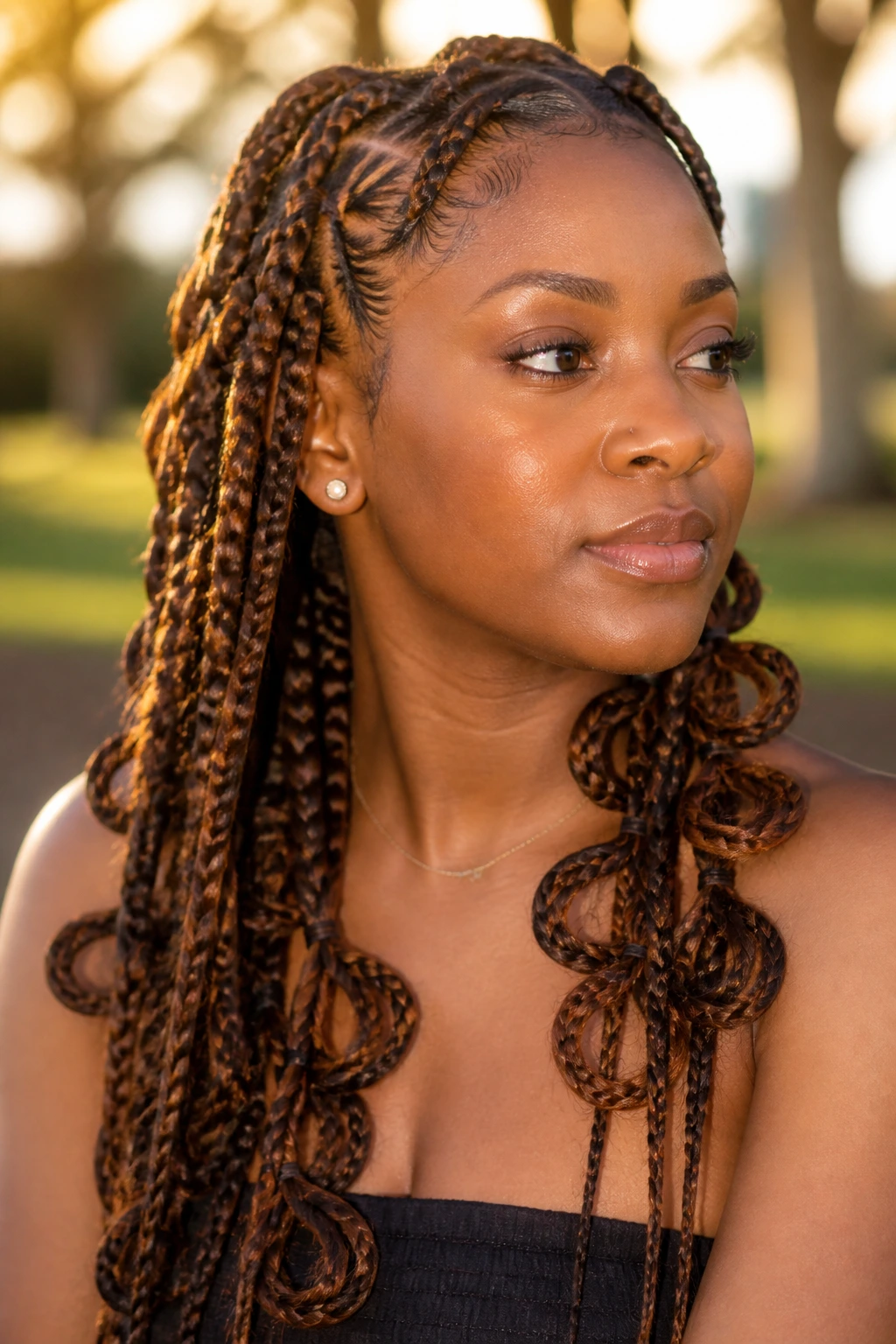
Butterfly braids like texture, and cinnamon lowlights help create it. The loops and soft pull-through sections need color that can catch at the folds, or the style can go a little dull. Cinnamon gives you warmth without turning the whole braid into a highlight-heavy look.
I like this style when someone wants a fuller braid that still has a soft edge. The lowlights make the loops more visible, especially if the braid is oversized. Because butterfly braids already have a bit of looseness, the cinnamon pieces prevent them from looking washed out at the edges.
Keep the loops even and avoid over-stretching the strands. If the braid is pulled too tight before the butterfly sections are formed, the whole thing loses that airy shape. The lowlights work best when the folds are visible.
22. TWA Mini Braids with Espresso Pieces
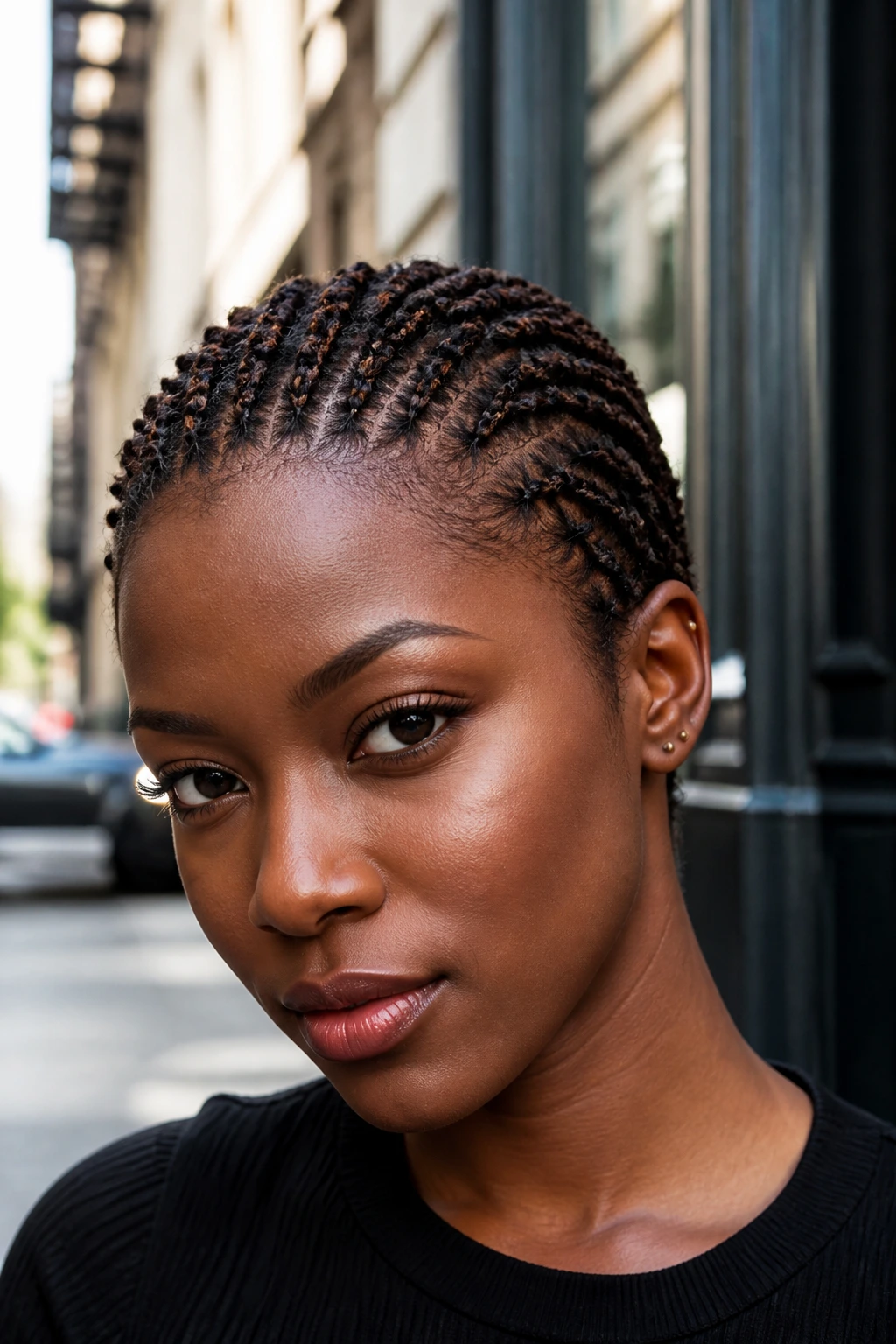
TWA mini braids are tiny, close, and detailed, which means the lowlight placement has to be precise. Espresso pieces do exactly that. They sit inside the small braids and create shadow on a short length of hair, where a brighter shade would look too obvious and maybe a little awkward.
This style is a good option if your hair is shorter and you want braids that respect the shape you already have instead of trying to stretch it into something else. The espresso strands make the mini braids feel intentional, not like a compromise. They also help the style look more uniform when the hair shrinks up a little after a few days.
The main thing here is sectioning. Mini braids need clean parts, and short hair shows every crooked line. Keep the rows neat and let the color stay subtle.
23. French Curl Braids with Chocolate Depth
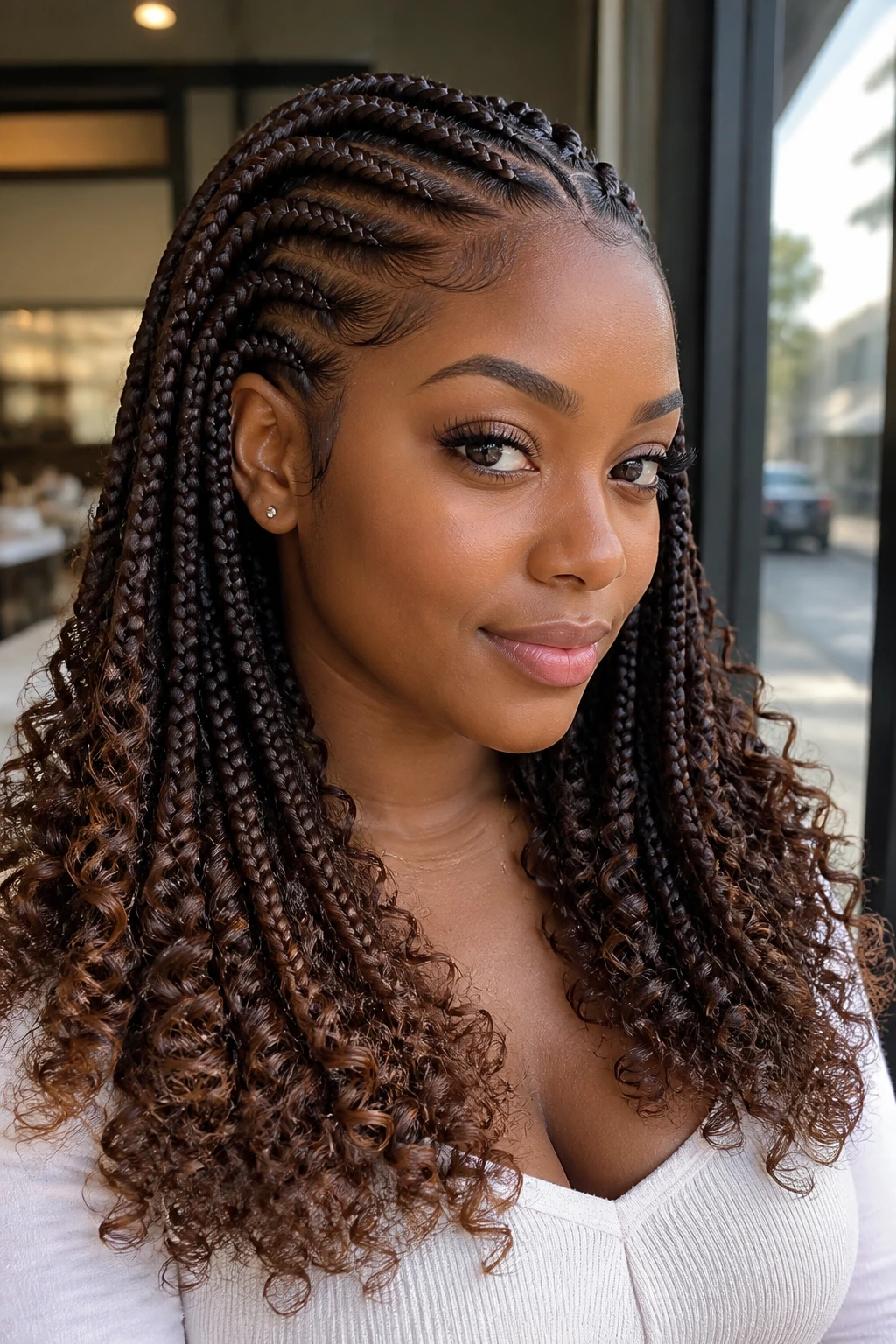
French curl braids have movement built in, so chocolate lowlights help anchor all that swing. The curl at the ends catches the light first, then the darker braid body sets the base. That contrast gives the style a softer finish than plain black braids with curls usually have.
Chocolate is a smart color here because it shows through the braided section without crowding the curl pattern. If the ends are too dramatic and the braid body is too flat, the style feels split in two. Chocolate keeps the braid and curl connected. That connection matters.
Use a light foam wrap or mousse to keep the curls defined, but don’t soak them. Wet curls at the end of braids can stretch unevenly and drag the whole style down. Chocolate lowlights look best when the curl ends stay springy.
24. Ghana Braids with Subtle Coffee Bands
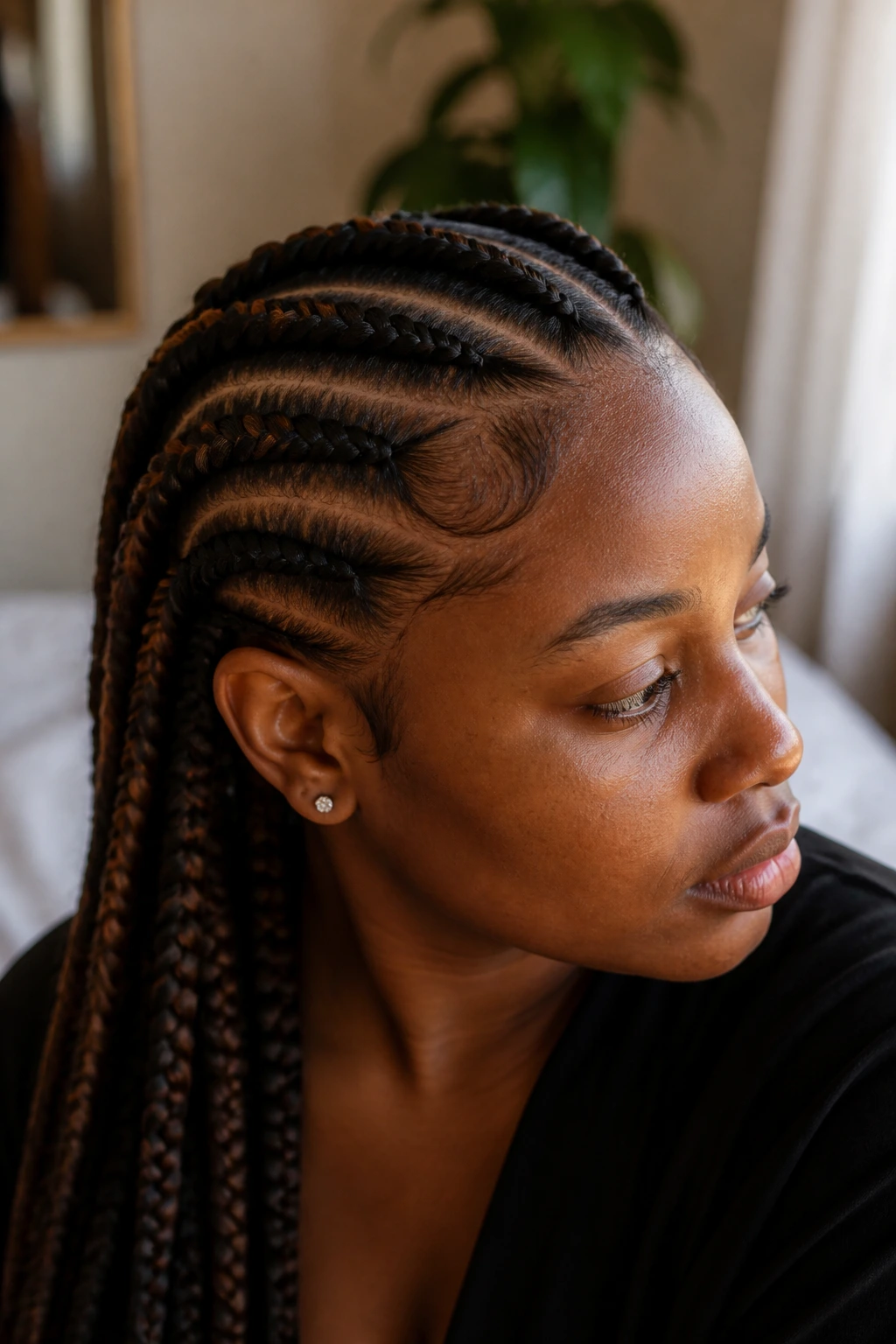
Ghana braids are thick, sculpted, and close to the scalp, which makes them a strong match for subtle coffee bands. The feed-in structure lets the color build gradually, so the lowlights appear in smooth transitions rather than hard strips. That keeps the braid shape elegant.
I like this one when someone wants a polished scalp style that still has warmth. Coffee bands are deep enough to show on dark natural hair, but they don’t interrupt the braid rhythm. They sit inside the structure. That’s the point. The braid stays the star, and the color supports it from behind.
Keep the sections even and the feeding gradual. Ghana braids look rough fast if the thickness jumps too sharply between rows. The lowlights should feel like part of the braid’s architecture, not decoration slapped on top.
25. Tribal Braids with Rich Brown Contrast
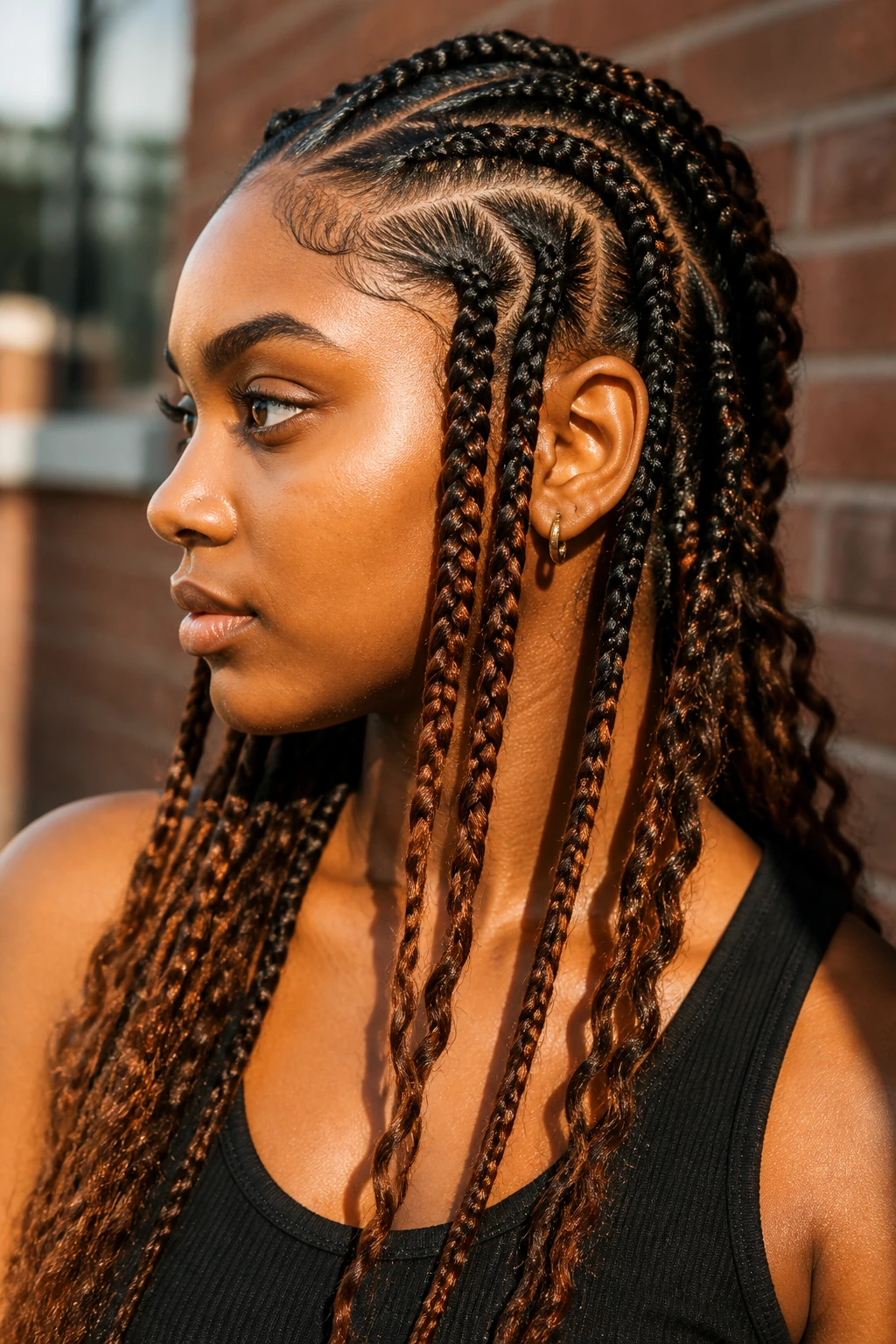
Tribal braids are one of the easiest places to make lowlights look intentional. The style usually mixes cornrows, feed-ins, and hanging braids, which gives you different surfaces for the color to sit on. Rich brown contrast works because it ties those pieces together without flattening the whole head.
This is the style I’d choose if I wanted the most visual variety in one install. You can place the deeper brown mostly in the hanging braids, then let the cornrows stay closer to the base tone. That balance keeps the scalp pattern clean and lets the length carry the color story.
Be picky about placement. Tribal braids can go from elegant to busy fast if every braid gets the same treatment. Let one section be darker, one section stay cleaner, and one section carry the movement. That unevenness is what gives the style life.
Why Braids and Lowlights Work So Well on Natural Hair
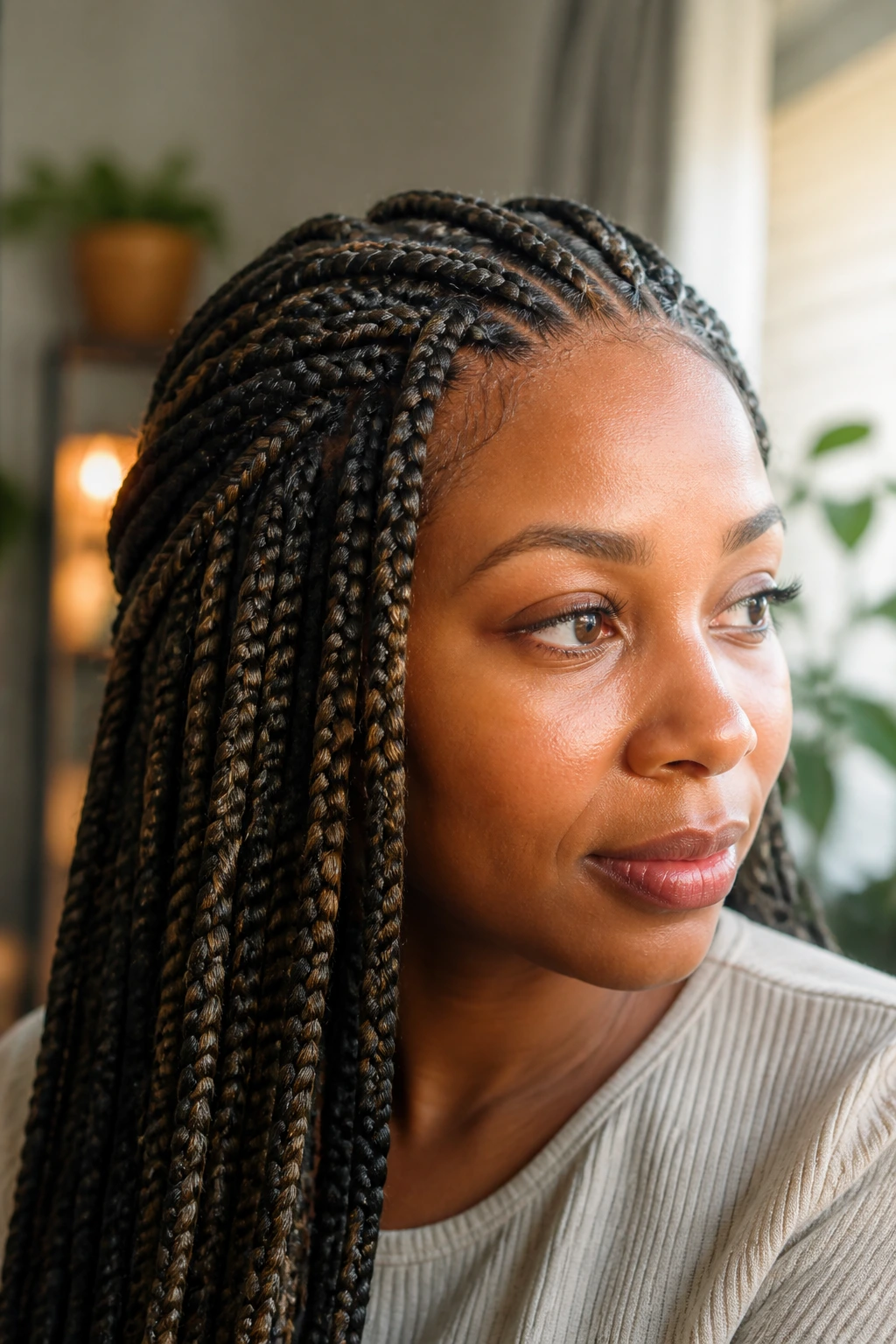
Braids give lowlights a structure to cling to, and natural hair gives the braids a shape that never looks totally flat. That combination is why this pairing works better than a lot of color ideas that depend on loose curls or straight blowouts. Braids have edges, crossings, and turns. Those turns catch the darker strands in a way that feels natural rather than painted on.
There’s also a practical piece people skip over. On natural hair, a braid install already changes the way the hair sits and moves, so adding lowlights can either sharpen the look or muddy it. The difference is placement. Put the deeper pieces where the braid bends, where the part opens, or where the style drapes over the shoulder, and the color will read richer. Scatter them without a plan, and the braid loses focus.
I’m also a fan of lowlights because they wear more gracefully than brighter color. A few weeks into an install, the roots puff, the edges soften, and the shape starts to relax. Deep brown, walnut, plum, and cocoa shades still make sense at that stage. That’s the real test.
Essential Tools, Hair Products, and Accessories
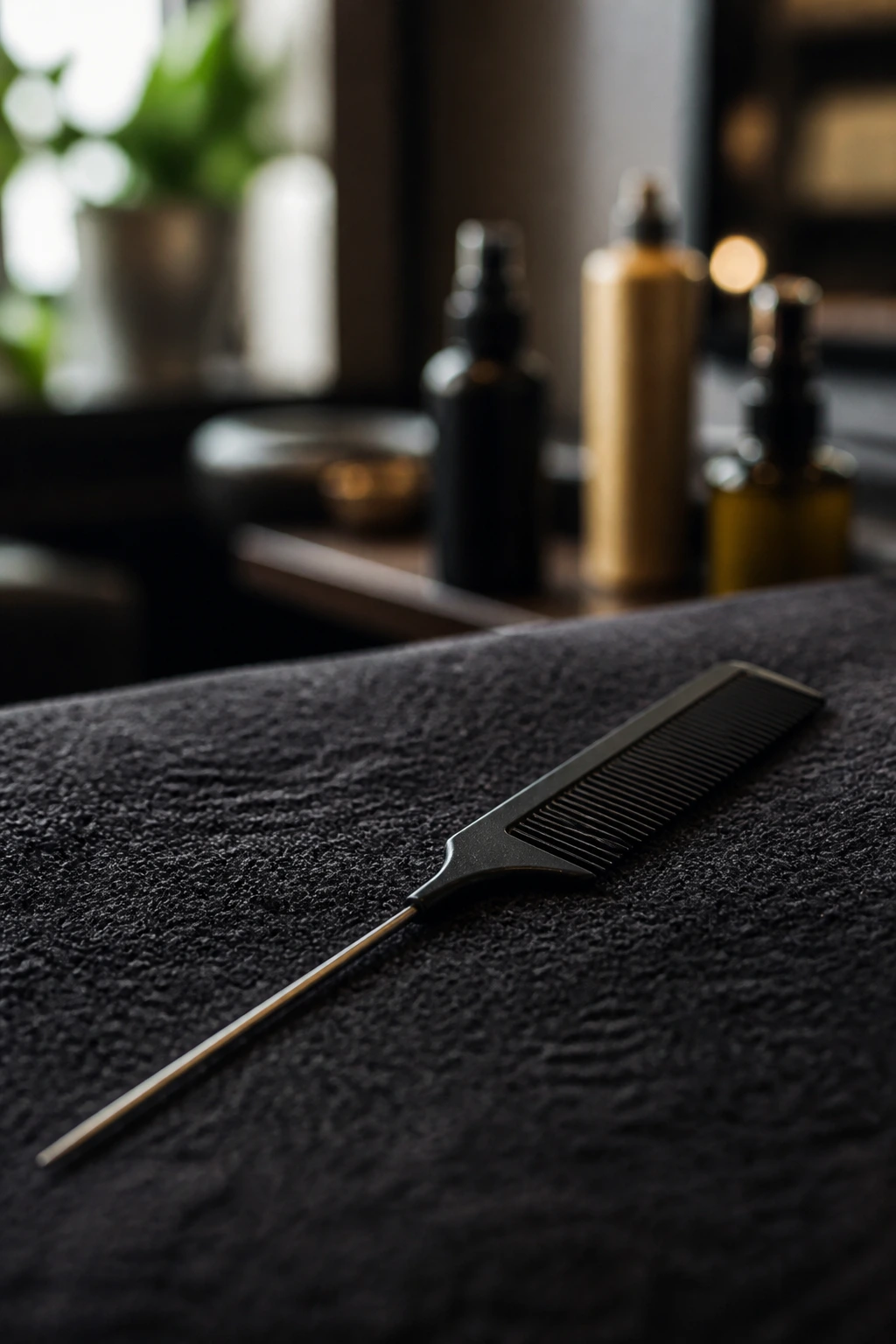
You do not need a huge kit, but the right tools save time and tension. Braids with lowlights look better when the parting is neat and the prep is done well, because color shows every uneven section.
- Rat-tail comb: The thin point helps with crisp parts, especially for feed-ins, stitch braids, and triangle sections.
- Sectioning clips: Keep the rest of the hair out of your way while you braid one section at a time.
- Detangling brush or wide-tooth comb: Use it on stretched, conditioned hair so you’re not ripping through knots.
- Leave-in conditioner: A light layer before braiding helps the hair stay supple without making it slippery.
- Braiding gel or edge control: Use a small amount at the roots only; too much turns the scalp greasy fast.
- Pre-stretched braiding hair: This saves time and gives a smoother finish, especially for knotless, box, and goddess styles.
- Extension hair in lowlight shades: Look for espresso, chestnut, walnut, cocoa, mahogany, plum, or burgundy depending on the look.
- Foam wrap mousse: Good for smoothing frizz and setting the braid surface without stiffening it.
- Silk or satin scarf/bonnet: This protects the install at night and keeps the color pieces from roughing up.
- Light scalp oil or applicator tip bottle: A little oil on the scalp every few days is enough; you don’t need a greasy head.
Choosing Lowlight Shades That Fit Your Base Color
The easiest mistake with lowlights is picking a shade that sits too far from your natural base. On dark brown or black hair, that usually means the braid ends up reading as one chunky color block instead of a layered style. I usually think in terms of one or two steps deeper, warmer, or cooler than the base, not a full leap away from it.
If your hair is deep brown, chestnut, walnut, cocoa, and mahogany usually work well because they still feel related to the base. If your hair is black, espresso, smoky brown, and deep plum keep the contrast visible without looking harsh. For lighter natural hair, coffee, cinnamon, or dark auburn can give you more noticeable movement. The goal is to keep the braid pattern visible in daylight and under indoor lighting.
Texture matters too. If you’re using synthetic braiding hair, choose a finish that matches your own hair as closely as possible. Too shiny and the lowlight pieces stand out in a cheap way. Too matte and the braid can look dusty. A soft, natural-looking sheen is the sweet spot.
How to Wear These Braids Day to Day
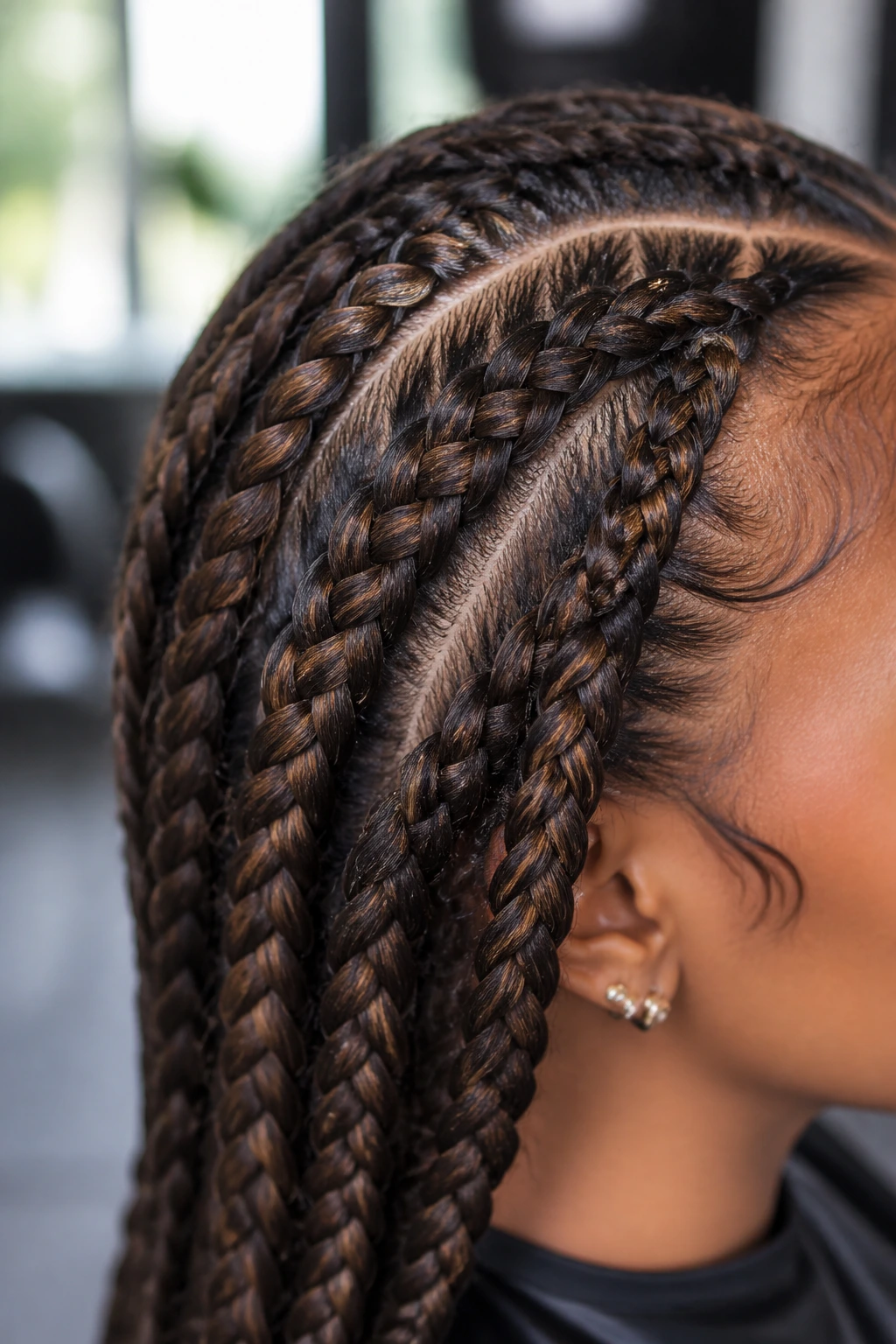
Presentation: Keep the parting clean and the edges soft when the lowlights are subtle; if the color is deeper and more visible, let a few face-framing pieces sit loose so the movement shows.
Accessories: Gold cuffs, matte beads, and wooden rings suit deeper lowlights better than bright plastic clips. The hardware should support the color, not fight it.
Outfits: Cream knits, black tops, denim, olive, chocolate brown, and rust all sit nicely beside chestnut, cocoa, and mahogany tones. If the braids have plum or burgundy pieces, a simple black outfit gives the color room to show.
Wear time: Most of these styles sit well for 4 to 8 weeks, depending on braid size, tension, and how well you keep the scalp clean. Smaller braids usually hold shape longer. Bigger braids need touch-ups sooner.
Extra Tips for Cleaner Parting and Better Color Placement
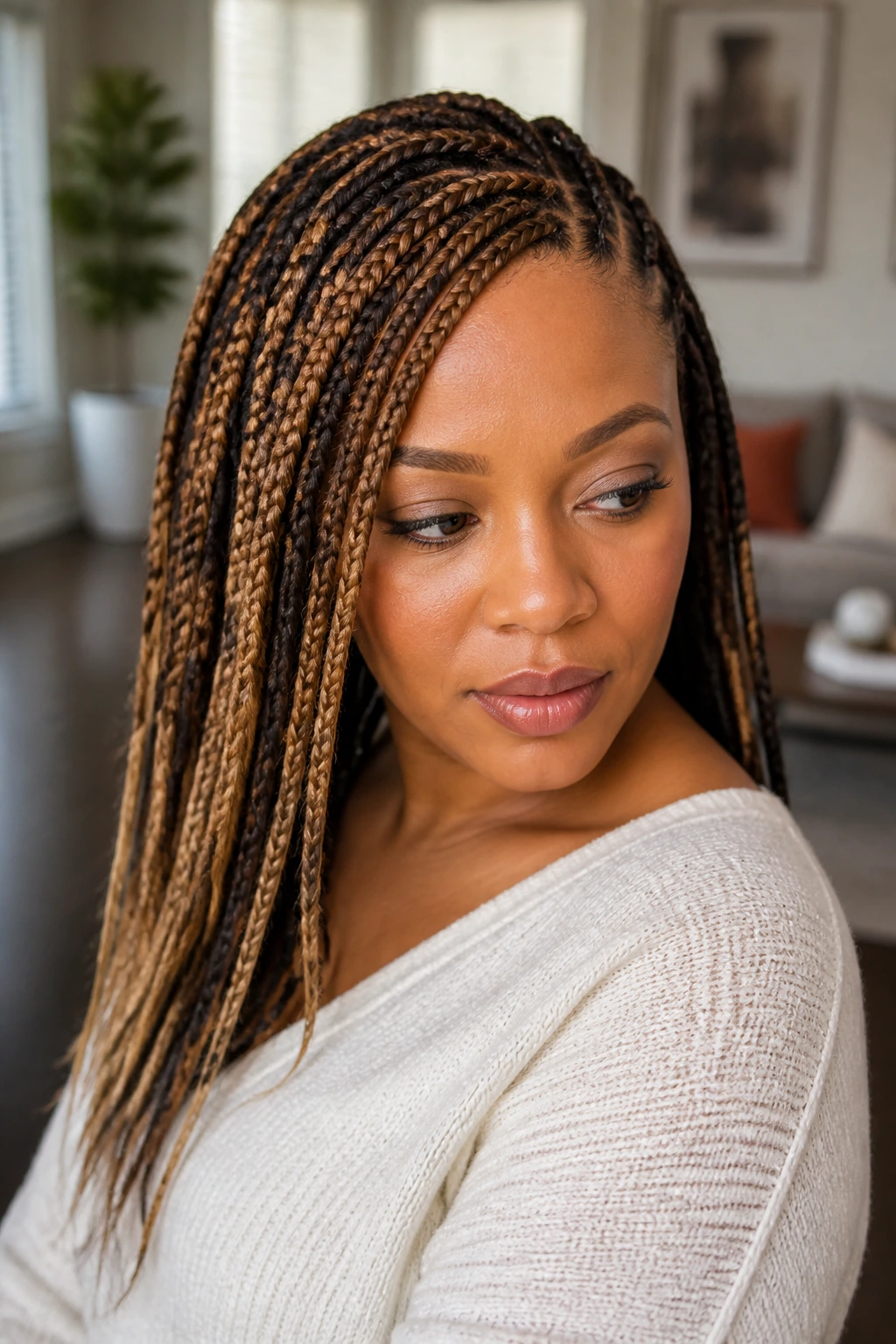
Color placement: Put the deepest pieces where the braids bend, swing, or frame the face. That’s where the lowlights show up best. Don’t waste the best shade on a section that stays hidden under a bun.
Texture matching: If your own hair has a soft sheen, choose extension hair that isn’t too glossy. That mismatch shows fast, especially in the front rows.
Root control: A light gel or mousse at the roots keeps parts crisp during the first week. Use a little, not a helmet’s worth. The scalp should still breathe.
Make it yours: If you want a quieter look, keep the lowlights under the top layer only. If you want more movement, thread them through the hanging lengths and the face-framing pieces. Same style. Different read.
Common Mistakes That Flatten the Whole Look
The first mistake is choosing a lowlight that is too close to your base color or too far away from it. If it’s too close, the braid looks flat and the color disappears. If it’s too far, the style can turn streaky in a way that fights the natural texture. The fix is to test the shade against your base in daylight before you commit.
Another problem is packing the lowlights into every braid evenly. That sounds balanced, but it usually makes the whole head look repetitive. Better to place the deeper tones in panels, ends, underlayers, or face-framing sections. Let the color move instead of plastering it everywhere.
Tight braiding is a big one. Beautiful parting means nothing if your scalp feels pinched by day two. If you see bumps, soreness, or edges starting to protest, the install is too tight. Ask for looser tension at the hairline and the nape. The style should sit on your head, not fight it.
Finally, people often skip maintenance because the color itself looks “done.” It isn’t. The braids still need night wrapping, scalp care, and a bit of mousse when frizz shows up. That upkeep keeps the lowlights clean instead of fuzzy.
Variations and Adaptations Worth Trying
Soft Everyday Version: Keep the lowlights close to chestnut, walnut, or mocha, and place them mostly in the lengths. This works well if you want a style that fits the office, errands, and dinner without changing the color story.
Bolder Plum Mix: Add smoky plum or burgundy pieces in the back half of the braids only. The front stays cleaner, the back gets the color, and the style looks more interesting when it moves.
Low-Tension Protective Version: Choose knotless, feed-in, or jumbo sections with lowlights threaded through the mids and ends. This keeps the scalp calmer while still giving you the deeper tone.
Short-Length Version: Try a braided bob, halo braid, or crown style with subtle espresso or smoky brown lowlights. Short braids show color fast, so keep the contrast controlled.
Statement Version: Mix jumbo braids, stitch braids, or tribal braids with richer mahogany and cherry-cola tones. The braid pattern carries enough structure to support stronger contrast without looking crowded.
Maintenance, Refreshing, and Take-Down Care
Braids with lowlights need the same basic care as any protective style, but color placement changes how quickly frizz becomes visible. Wrap the hair every night with a silk or satin scarf. If the style is long or has loose curls, use a bonnet that actually covers the ends, not one that squeezes the roots and leaves the back exposed.
Clean the scalp every 5 to 7 days with a light oil or a diluted scalp cleanser if your scalp gets itchy. Don’t soak the braids. A damp cloth along the parting can do more good than a heavy wash. If the style starts to puff at the root, a small amount of mousse on the braid surface helps reset the finish.
When it’s time to take the braids down, go slowly. Cut only the extension hair, not the natural hair underneath, then unravel in sections and detangle before washing. If you used a deeper lowlight shade with synthetic hair, check the ends carefully; dark fibers can hide in the natural hair if you rush. A patient takedown saves more hair than almost anything else.
Frequently Asked Questions
Do I have to dye my natural hair to get braided hairstyles with lowlights?
No. A lot of the best lowlight looks come from pre-colored braiding hair or added extension pieces, which keeps your natural hair untouched. If you do color your own hair, keep it gentle and get it done by someone who understands textured hair.
What lowlight colors look best on dark natural hair?
Espresso, walnut, chestnut, cocoa, mahogany, smoky plum, and deep auburn all work well. The best shade is usually one or two steps away from your base, not five, because the braid pattern still needs room to show.
Can I wear lowlights in knotless braids?
Yes, and knotless braids are one of the best places to use them. The smooth root makes the color transition cleaner, and the style grows out in a softer way than a tied knot braid.
Will lowlights damage my hair?
Not if they’re added with extension hair or done as a gentle color service on healthy strands. The bigger risk usually comes from tension, poor takedown, or aggressive bleach, not from the idea of lowlights itself.
How long do these braided styles usually last?
Most sit neatly for 4 to 8 weeks, depending on braid size, scalp care, and how fast your hair grows. Smaller braids and clean parting usually keep their shape longer. Very large braids tend to loosen sooner.
What if the color looks too dark once the braids are installed?
That’s usually a placement problem, not a color problem. Pull some of the deeper pieces into the lengths, leave a few front sections lighter, or add a warmer bead or cuff near the face to break up the darkness.
Can I mix lowlights with curls or beads?
Yes, and that’s often where the style gets interesting. Just keep the extras in one lane or the other: if the braids are already busy with curls, use simple beads; if the braids are clean and sleek, you can add more visible hardware.
How do I keep the braids from frizzing too fast?
Wrap at night, avoid over-oiling the scalp, and use mousse sparingly on the braid surface when needed. Frizz shows up faster on lighter or shinier hair, so deeper lowlights can help hide some of it, but they won’t replace maintenance.
Braids That Keep the Color Moving
The best braided hairstyles for natural hair with lowlights do one thing well: they keep the braid pattern readable while giving the color room to breathe. That’s why the darker shades in this collection stay interesting longer than a flat single-tone install. They work with the shape, the shrinkage, and the wear pattern instead of fighting them.
If you’re choosing one of these styles, think about where your hair naturally moves. Around the face? At the ends? At the nape? That’s where the lowlights should live. Put the depth where the eye lands, and the whole style starts to feel considered instead of random.