



Bronde balayage for brunettes with face-framing layers has a very specific kind of magic: the hair still reads brown at the root, but the front pieces catch enough light to wake up the whole face. The color is quieter than full blonde highlights, and that’s the point. A good bronde placement doesn’t fight your base; it works with the brown, then steals a little attention near the cheekbone and jaw.
That balance is why this look keeps showing up on dark blondes, medium brunettes, chestnut bases, and deep espresso hair. The lighter pieces do more than add brightness. They shape the cut. A well-placed money piece can make curtain layers fall with more movement, and a soft balayage can keep thick hair from looking like one heavy block from root to end.
The tricky part is that “bronde” covers a lot of ground. Mushroom and ash tones live on one end, honey and caramel on the other, and the best version for you depends on how warm your brunette base already is, where your layers start, and how much contrast you can actually wear without the front stripe taking over. The good news is that there’s room to play. A lot of room.
Why These Bronde Looks Work So Well
- The brunette base stays visible: You still get depth at the root, which keeps the color from looking washed out or over-lightened.
- Face-framing layers do real work: The brightest ribbons sit where your hair bends around the face, so the color shows even when the rest of the hair is tucked back.
- Grow-out looks softer: Balayage and shadow root placement blur the regrowth line, which matters when you don’t want a harsh stripe at the part.
- Warm and cool tones both fit: Caramel, honey, beige, taupe, and mushroom all live in the bronde family if the placement is right.
- It flatters straight, wavy, and curly hair: The same palette can look sleek, beachy, or plush depending on the finish you choose.
How to Pick the Right Bronde Tone Before the Scissors Come Out
The fastest way to miss on this look is to choose the color before you think about the cut. A chestnut base with long curtain layers can hold more caramel than a fine espresso bob. A cool medium brown with soft face-framing pieces can wear beige or mushroom tones without tipping orange, while a very deep brunette usually needs a softer lift near the front so the contrast doesn’t shout.
Base level matters. If your hair sits around a level 4 or 5, the prettiest bronde often lives one to three shades lighter, not six. That smaller jump keeps the ribbons believable. Once you push too far past your natural depth, the look starts reading blonde highlights instead of bronde balayage for brunettes with face-framing layers.
The layer start matters too. Ask where the first bright piece will begin. I like it at cheekbone level for round faces, a touch lower for square jaws, and a little fuller around the mouth or collarbone if the front needs more movement. Short face-framing pieces need a narrower highlight, or the whole thing turns stripey.
Tone should match your undertone. Warm brunette hair usually likes honey, caramel, biscuit, or soft bronze. Cooler brunette hair tends to sit better with mushroom, taupe, ash beige, or smoky mocha. If you’re not sure, ask for a gloss rather than a hard toner, because gloss keeps the shine and gives the color a softer finish.
1. Soft Mushroom Bronde with Center Curtain Layers
Mushroom bronde has that cool, suede-like finish that keeps brunette hair looking expensive without pushing it into icy territory. The center curtain layers open the face just enough that the beige ribbons sit around the eyes and mouth, which is where they do the most good.
Why It Works on Medium Brunettes
A cool beige ribbon looks richest when the root stays one shade deeper. Ask for the brightest pieces to start around the cheekbone and fade by the collarbone; that keeps the front soft, not striped. On straight or slightly wavy hair, this shade looks clean because the light pieces travel in one smooth line when the hair is blown out.
- Best for level 5-6 brunettes who want low contrast.
- Ask for a soft shadow root, not a hard melt.
- Keep the front layers at lip to collarbone length so the color has room to bend.
Small detail, big payoff: finish with a beige gloss, not a silver one. Too much ash can flatten the shine.
2. Caramel Money Piece on Chestnut Brunette Layers
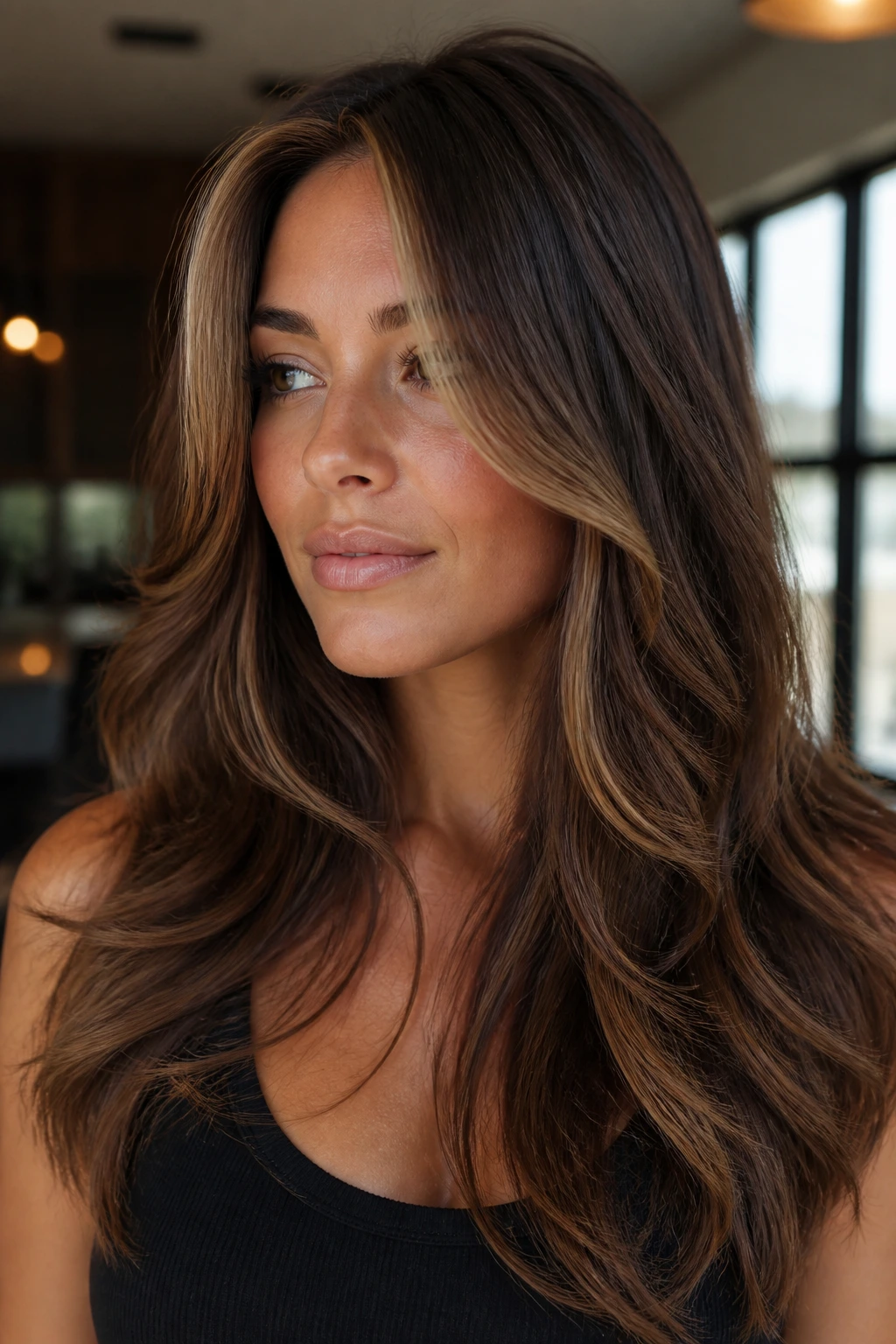
Why does a single caramel ribbon around the face change chestnut hair so much? Because the eye reads brightness at the perimeter first. The rest of the hair can stay rich and brown, but the front pieces pull the whole cut forward, especially when the layers start at the cheekbone and sweep past the jaw.
Where This Version Feels Best
Chestnut bases already carry warmth, so caramel pieces do not have to fight the hair. They settle in fast. I like this on medium to long layers with a middle part, because the front pieces can drape like curtains instead of sticking out like streaks.
- The highlight should be narrow at the root and wider through the mid-lengths.
- A 1- to 2-inch face frame is enough; don’t overdo it.
- Works well if you wear your hair loose more than tied up.
Stylist note: ask for a softened money piece, not a bright block. That one word changes everything.
3. Toffee Ribbons with Butterfly Ends
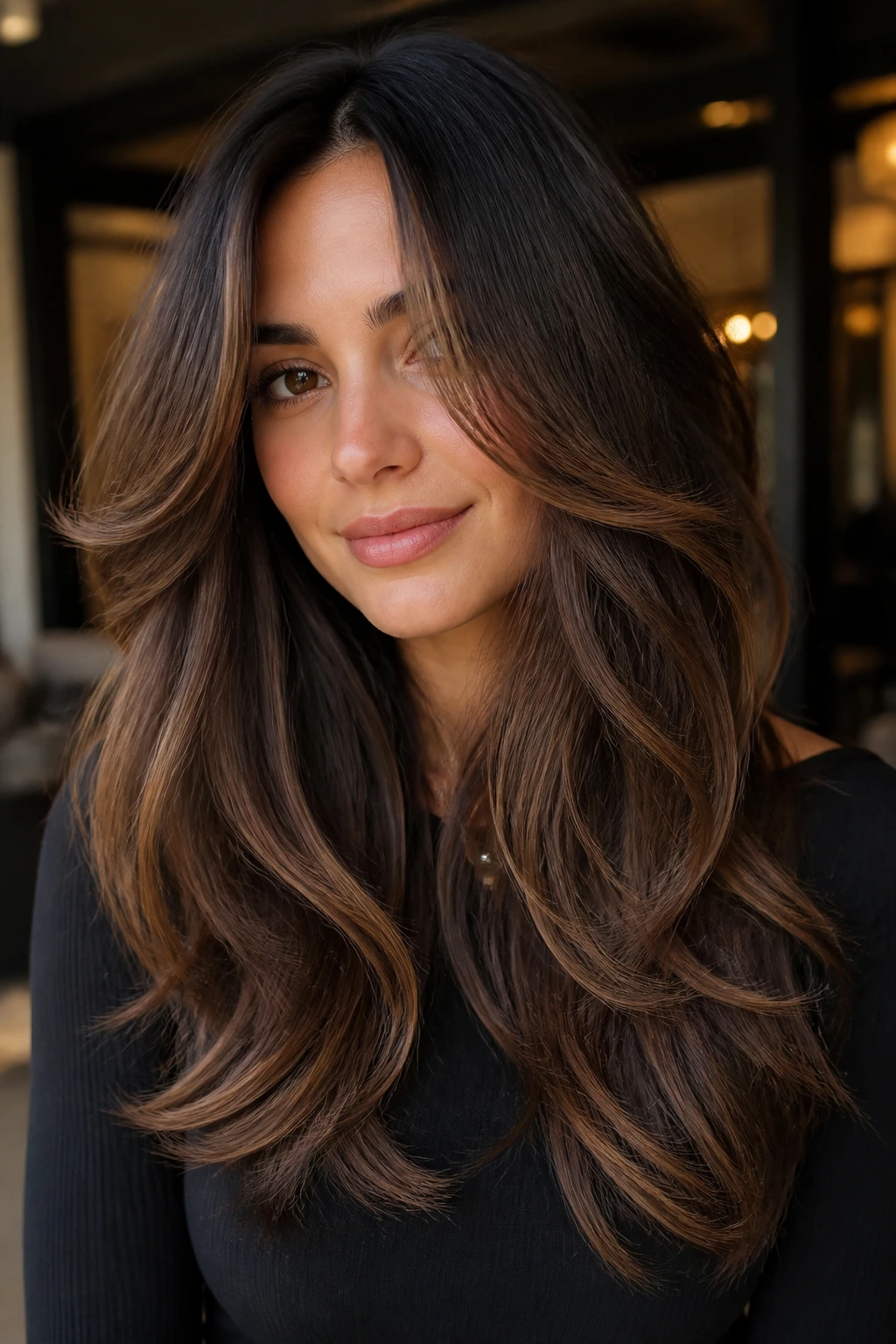
Picture thick brunette hair pulled halfway back, with the front layers lifting away from the face and the ends swinging in separate pieces instead of one blunt sheet. That’s where toffee balayage earns its keep. The warm ribbons break up density and make butterfly layers look intentional instead of just heavily layered.
These tones are especially good when the hair has some natural wave or body. The lighter pieces catch on the bends, so the movement looks built in, not styled into place. If you’re wearing long face-framing layers, ask for the brightness to live mostly from the cheekbone down; too much light at the root can make the front look busy.
Best match: thicker brunettes who want movement without losing richness.
Avoid: chunky panels that start too high at the part. On this cut, the color should drop through the layers, not sit on top of them.
A soft toffee gloss keeps the whole shape warm and plush. Too cool, and you lose the cozy effect.
4. Ash Bronde Melt with Grown-Out Roots
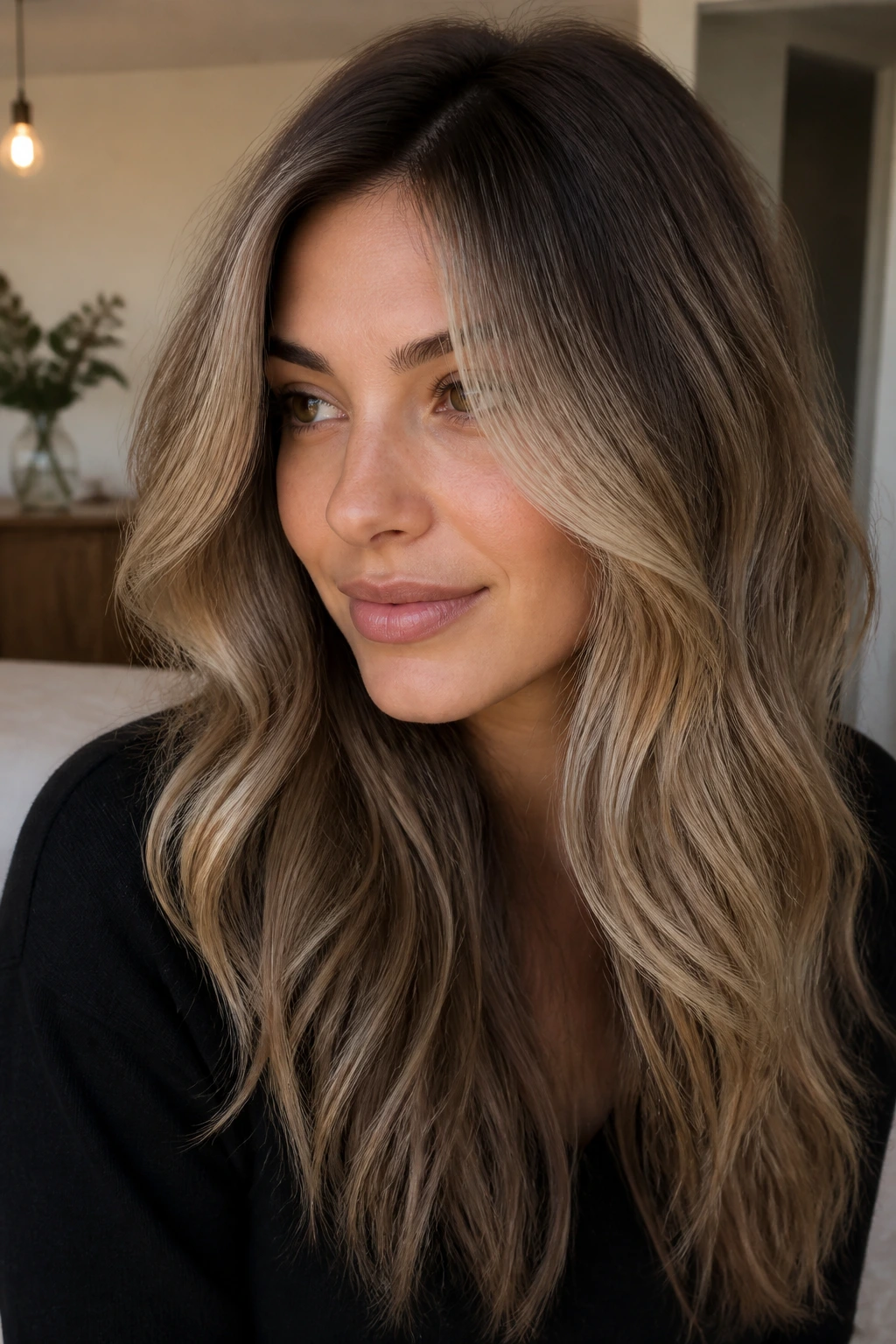
Unlike a high-contrast balayage, an ash bronde melt keeps the highlight from shouting. The root stays a grounded brunette, the mid-lengths soften into taupe-beige, and the face frame is bright enough to lift the eyes without looking pasted on.
This is one of the most forgiving options for people who hate obvious regrowth. The dark root gives you a long runway. The lighter pieces can grow for weeks before they look disconnected, especially when the front layers are long enough to mix with the rest of the hair.
What Makes It Read Expensive
It’s the blur. Not the blonde. The best version has no hard line at the root and no chunky band near the cheekbone. Ask for the front pieces to be feathered through the ends so they fade instead of stopping at one blunt point.
If your skin leans cool or neutral, this is the bronde I’d point you toward first. It keeps the color elegant without tipping warm.
5. Honey Beige Balayage with Wispy Face Framing
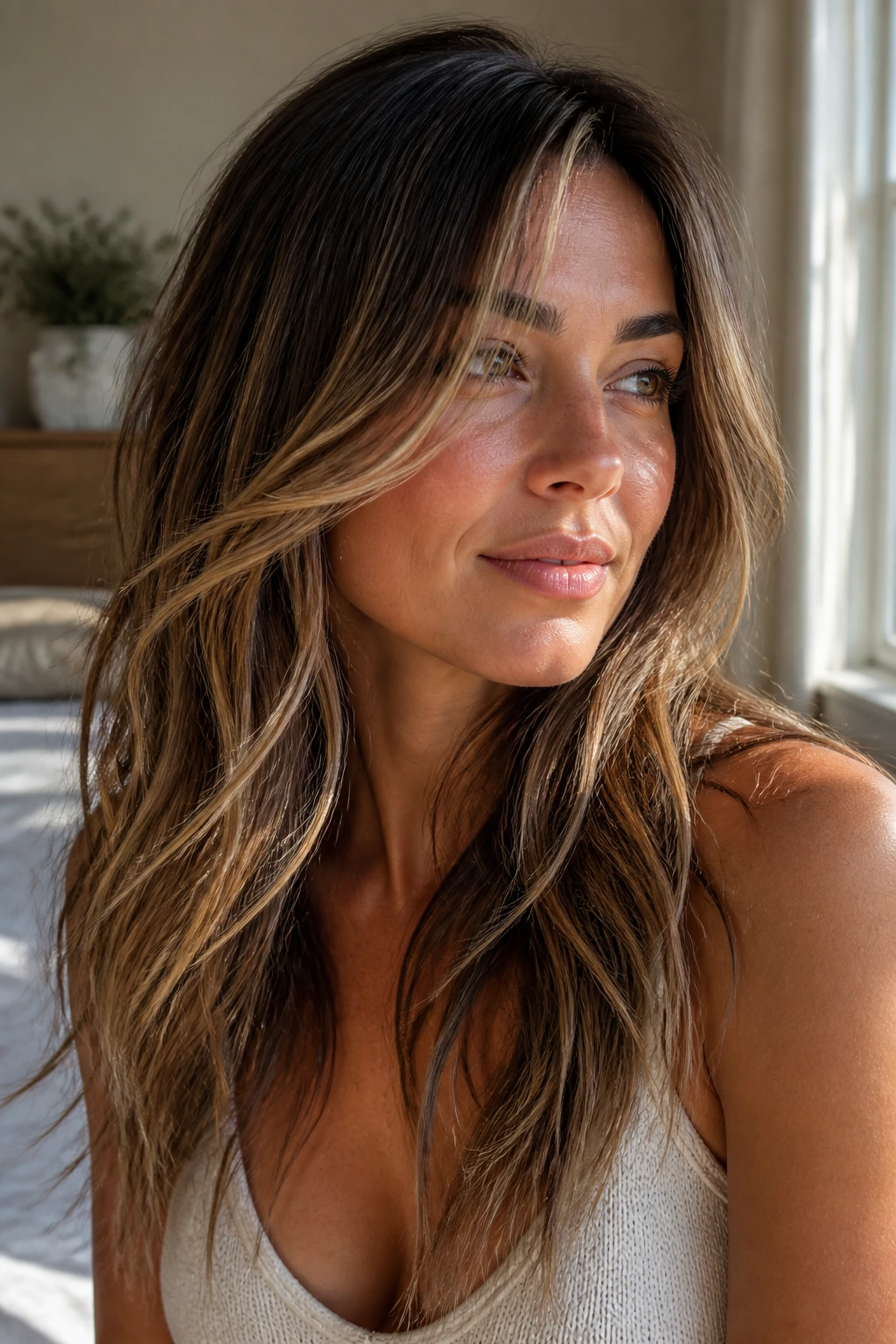
The first thing you notice is the shine. Honey beige ribbons sit on brown hair the way sunlight lands on polished wood — not bright, not pale, just soft enough to move when the hair moves. Wispy layers around the face make that effect read even lighter because the strands separate instead of hanging as one heavy panel.
This version suits finer hair especially well. Heavy highlights can make fine brunettes look thinner at the ends, but wispy face framing keeps the lift close to the face, where it matters. If you wear a side part, ask for the brightest strand to sit just off the part line so it doesn’t get lost when your hair shifts.
Best for: round and heart-shaped faces that need a little vertical movement.
Best shade family: honey, beige-gold, and soft vanilla-brown.
A quick blow-dry with a round brush makes this look more polished. On air-dried hair, it reads more casual and sun-kissed.
6. Chocolate Cherry Bronde with Soft Front Layers
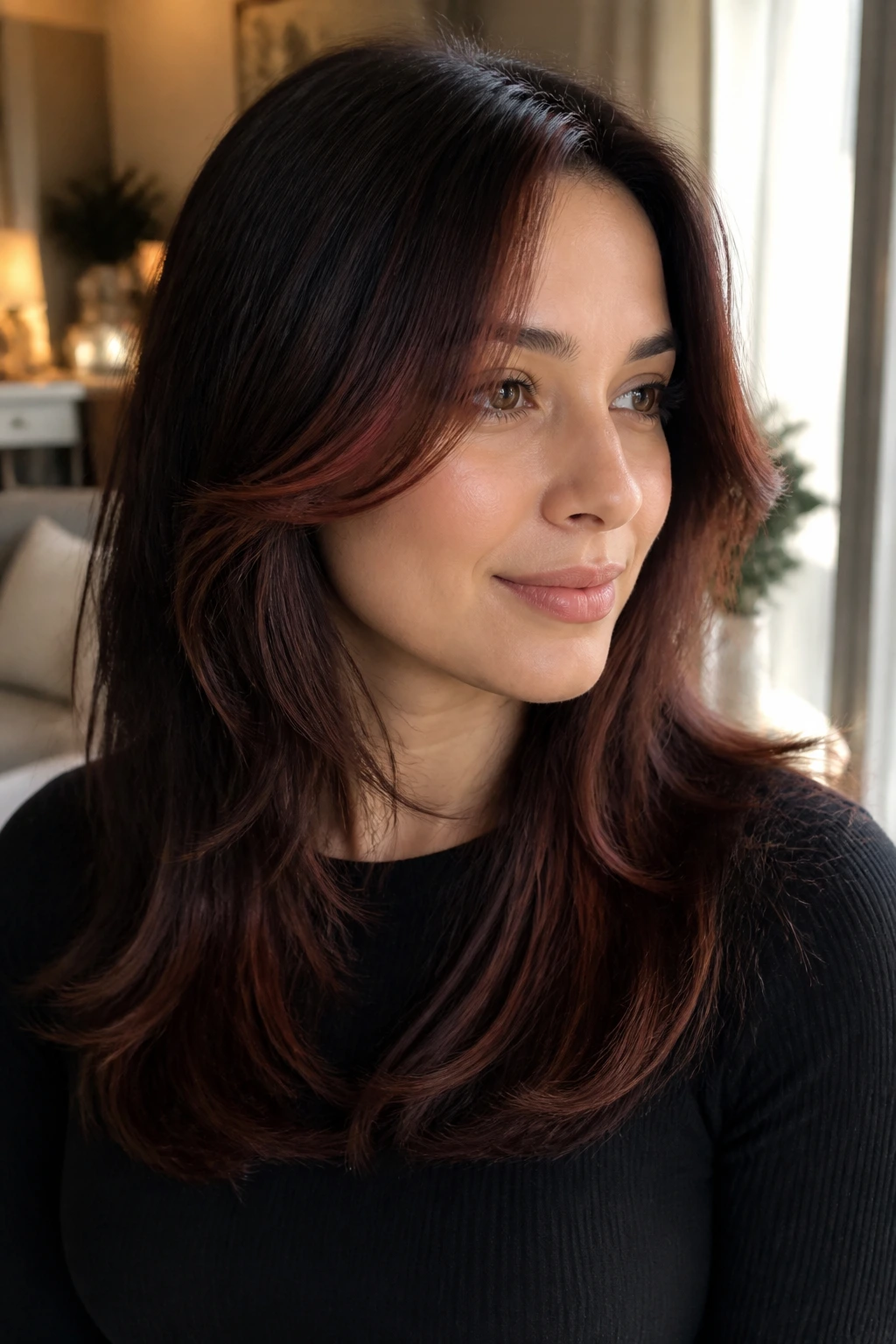
Warm brunettes do not have to go blonde to look lifted. Chocolate cherry bronde keeps the base deep and rich, then adds a red-brown glow that shows up most at the front and through the bends of the layers.
This is the color I like when the hair already has warmth and you don’t want to fight it. The cherry note keeps the brown from looking muddy, especially if your natural hair leans auburn or mahogany in daylight. Front layers that start at the cheekbone and taper toward the collarbone give the color room to catch the light.
Why it works: the red-brown undertone makes the brunette base look richer, not flatter.
Who should try it: anyone who wants dimension without the maintenance of pale highlights.
Watch for: if the cherry goes too red at the ends, the result can look more copper than bronde. A neutral gloss reins it in.
This is a good choice for fall-friendly warmth without the usual orange trap.
7. Sunlit Espresso Balayage with Long Sweeping Layers
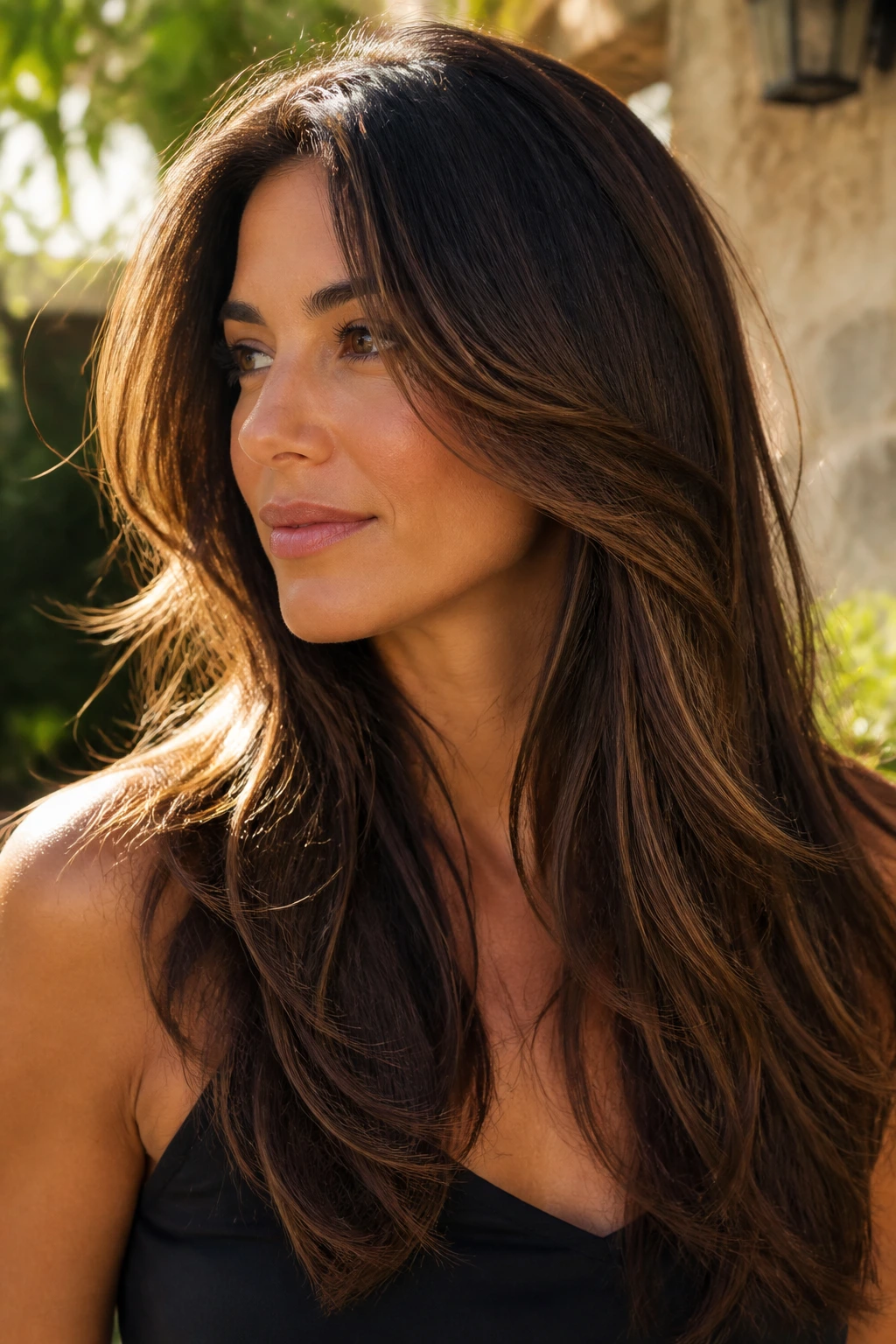
A deep espresso base with just a few lighter ribbons can look more luxurious than a big blonde transformation, and I mean that honestly. The magic is in restraint. Long sweeping layers let the brighter pieces travel from cheekbone to chest without looking chopped up.
This version works best when you want movement but not drama. The highlight pieces should be sparse near the scalp and more noticeable from mid-length to end. That way, the hair still reads dark first and bright second. On long straight hair, this keeps the finish sleek. On waves, it gives the kind of broken-up dimension that looks good even on a rushed day.
A soft caramel or biscuit gloss keeps the espresso from going flat. If the front pieces are too pale, they’ll fight the depth of the base. Keep the lift a little shy of blonde and the whole look stays grounded.
8. Beige Mocha Bronde for Collarbone Cuts
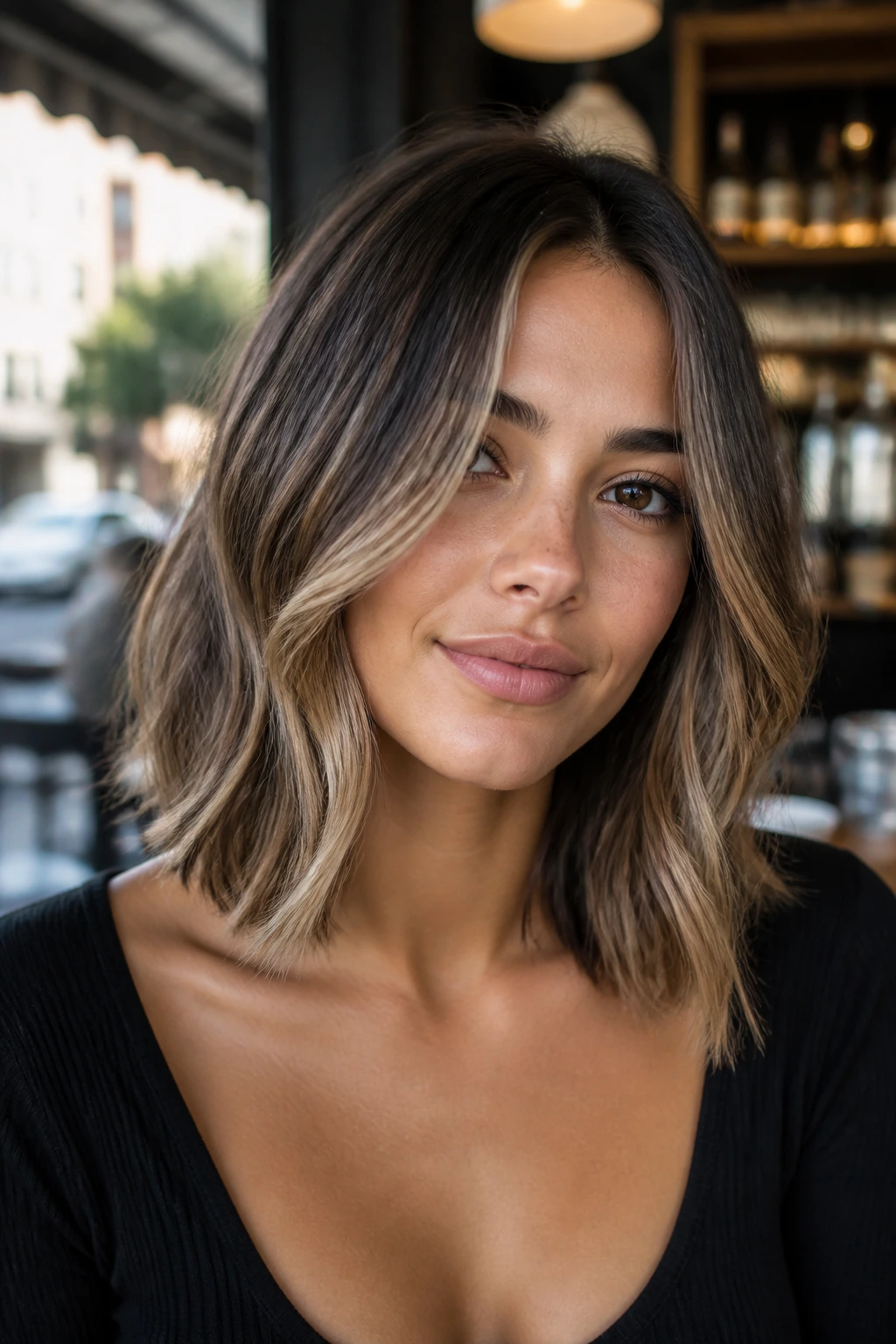
Shoulder-length hair is a different animal. There’s less room for a long fade, so the balayage has to work harder and the face-framing layers need to do more lifting. Beige mocha bronde handles that well because the color sits right in the middle — light enough to wake up the cut, dark enough to keep the shape clean.
A Cut That Likes This Shade
A collarbone-length lob with face-framing layers looks especially good when the front pieces swing past the jaw. The lighter ribbons make the line of the cut look sharper, not heavier. If the layers are too short, the color can get noisy around the face. If they’re too long, the brightness disappears into the rest of the hair.
- Ask for a softer front taper, not a blunt edge.
- Keep the beige tones muted if your base is already warm.
- Blow-dry with the ends tucked under for a more polished finish.
My opinion: this is one of the easiest bronde looks to live with if you don’t want long-hair maintenance.
9. Cinnamon Swirl Highlights with Chunkier Face Frame
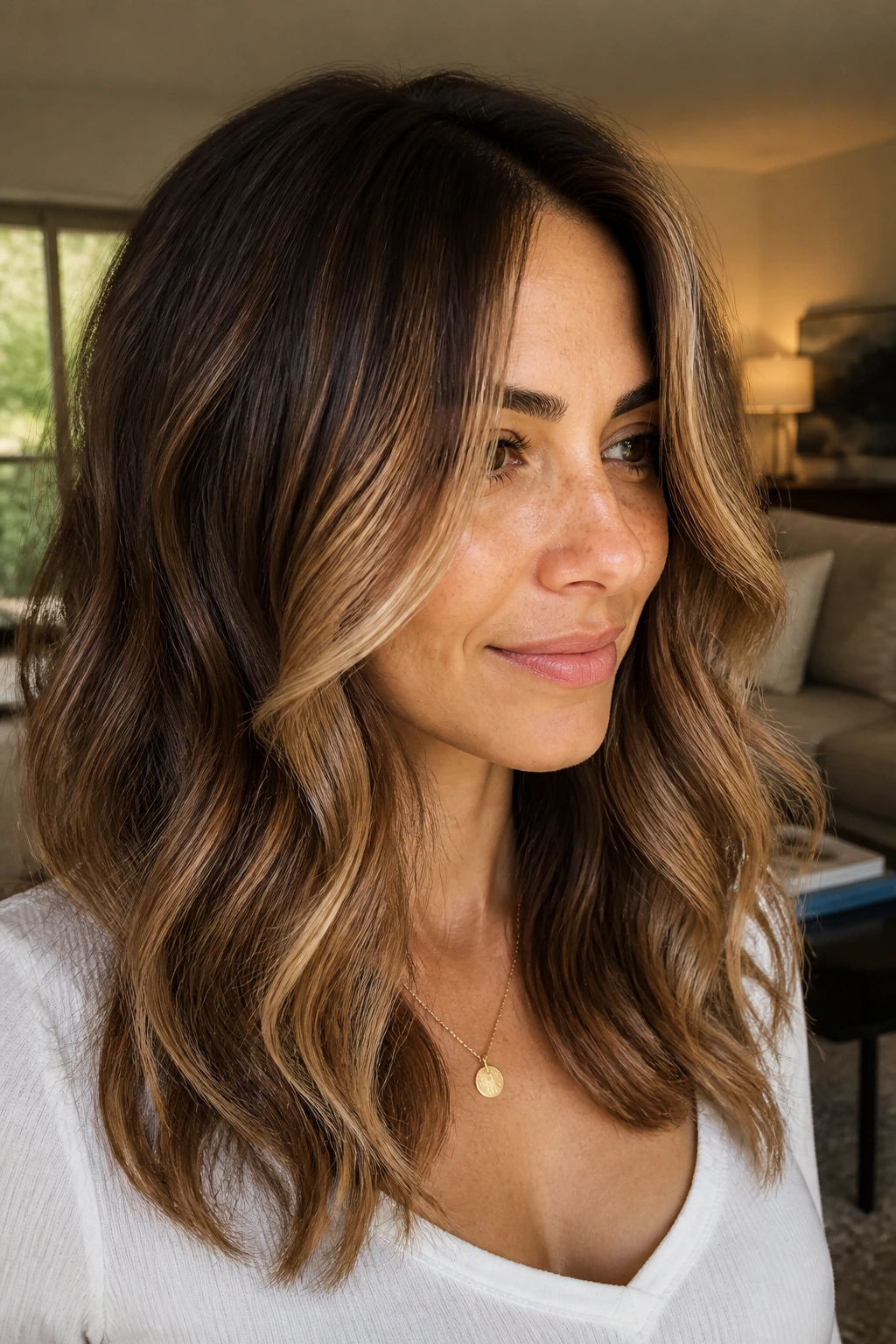
A little contrast can be a good thing. Cinnamon swirl bronde uses thicker face-framing pieces than the softer looks above, and that’s exactly why it works on brunettes who want the front to show up from across the room.
The key is balance. The face frame should be chunkier, yes, but not blocky. You still want the pieces to move with the layers, not sit like painted stripes. This is a smart choice if you wear soft waves or curls, because the dimension breaks up the highlight and makes the color look fuller.
How to Wear It
If your face-framing layers are long enough to hit the cheek and jaw, this color can look bold without feeling harsh. Keep the rest of the balayage softer and more diffused through the back. That contrast stops the front from taking over the whole head.
One rule: if the money piece is thick, the rest of the highlights should be quieter. Otherwise the whole style starts to feel busy.
10. Cool Taupe Bronde for Medium Brunettes
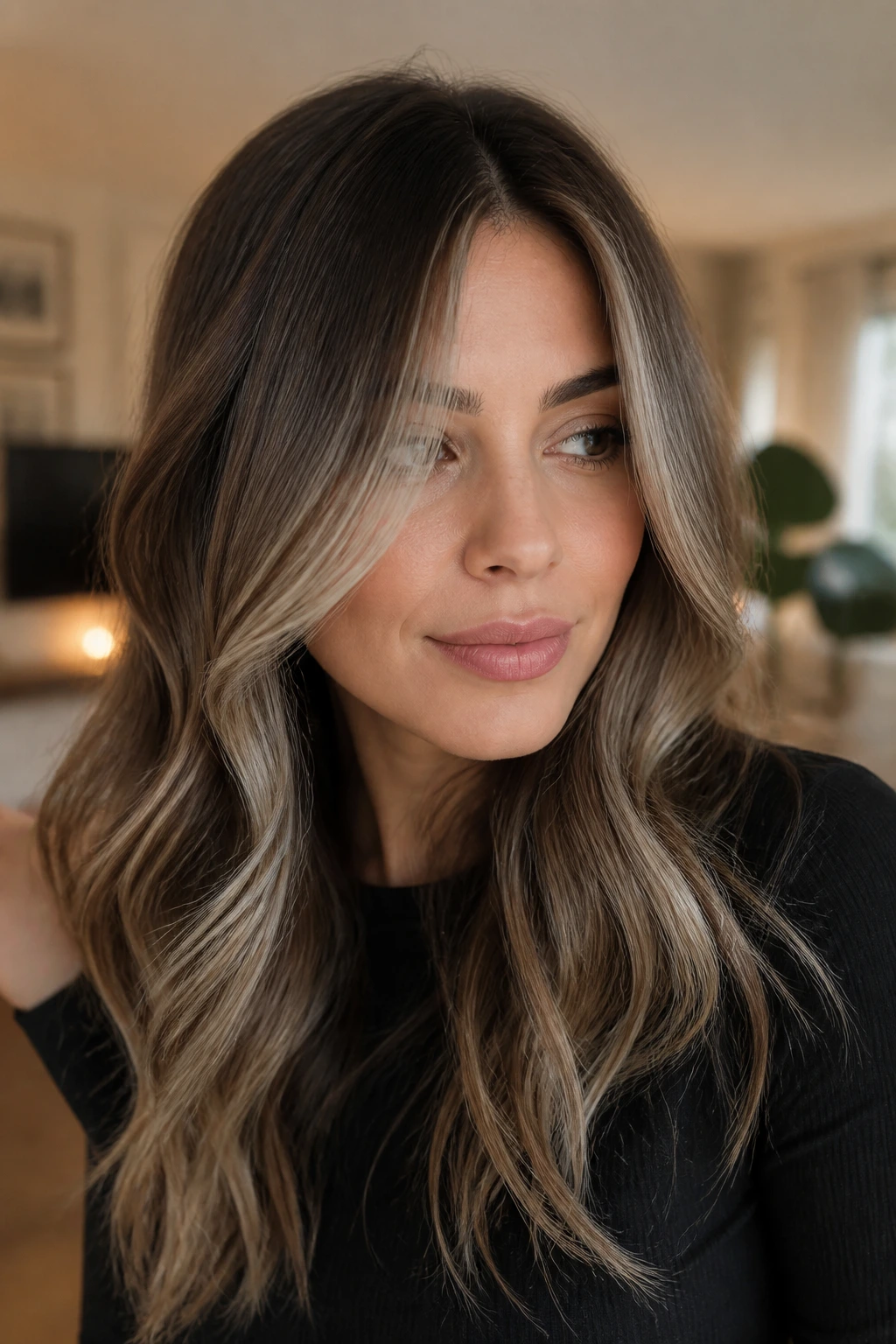
If brass has burned you before, taupe bronde is the safer lane. It keeps the brunette base intact and gives you that smoky beige finish that reads polished instead of sugary. The face-framing layers are where this tone matters most, because cool ribbons around the face can sharpen the cut in a very clean way.
This version suits medium brunettes who want a soft lift without golden warmth. A center part makes the front pieces fall like a curtain; a side part makes the taupe catch more light on one side, which can be a nice trick if your hair is flat near the temple.
What to Ask For
Tell your colorist you want a beige-taupe finish, not a pale ash blonde result. Those are not the same thing, and that one difference decides whether the hair looks soft or chalky. Keep the root a shade or two deeper than the longest front pieces.
A quick gloss every few weeks keeps the taupe from fading into dull brown.
11. Golden Biscuit Balayage with Rounded Fringe
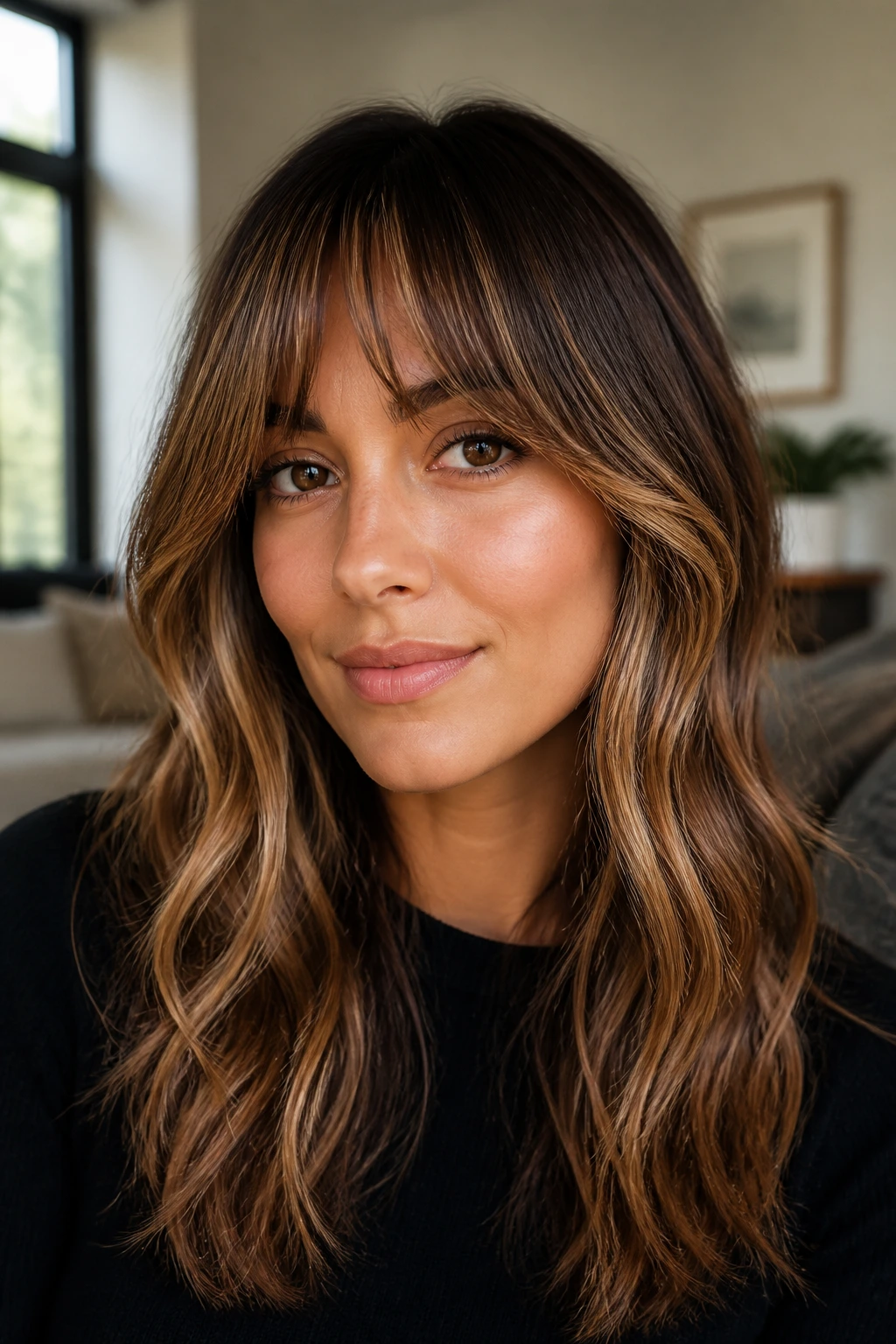
The rounded fringe changes the whole mood. Instead of curtain pieces that split right down the middle, you get a softer curve around the forehead and temples, and the golden biscuit highlights follow that shape like warm light on a window frame.
This is a smart match for brunettes who want movement close to the eyes. The fringe and face-framing layers work together, so the color does not need to do all the lifting alone. If your hair is fine, the lighter front pieces can make the fringe look fuller. If your hair is thick, the curve of the fringe keeps the front from feeling heavy.
Best feature: the shade photographs as warm and soft without turning orange.
Stylist note: keep the brightest pieces just below the root shadow so the fringe stays soft at the scalp.
A lot of people overthink this one. They shouldn’t. The haircut does half the job.
12. Bronze-to-Bronde Melt with Invisible Layers
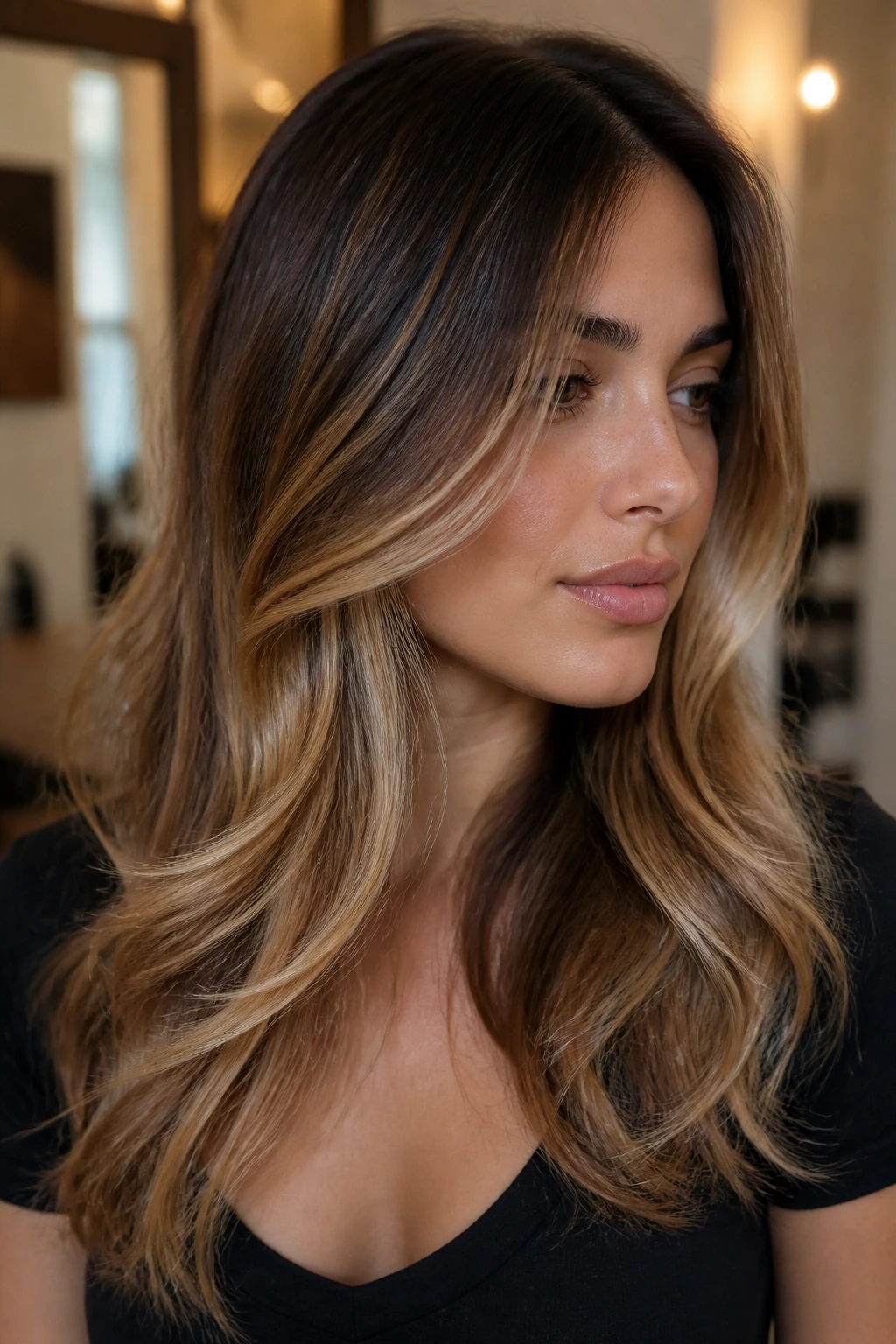
Bronze-to-bronde reads best when the color changes slowly enough that you only catch it as the hair moves. That’s where invisible layers earn their keep. The cut removes weight inside the shape, so the front pieces can float without looking chopped to bits.
The Science Behind the Shape
A bronze base gives the brunette warmth and depth. The brighter pieces sit a little lower and a little thinner than a classic money piece, which keeps the look from tipping into obvious blonde. On dark hair, that subtle shift can look richer than a high-contrast stripe.
- Best when you want dimension from every angle, not just the front.
- Ask for internal layers that don’t break the outer line too much.
- Keep the gloss warm enough to show bronze, not copper.
My take: this is one of the best options for thick hair that tends to look blocky after a fresh cut.
13. Walnut Brown Balayage with Soft S-Curls
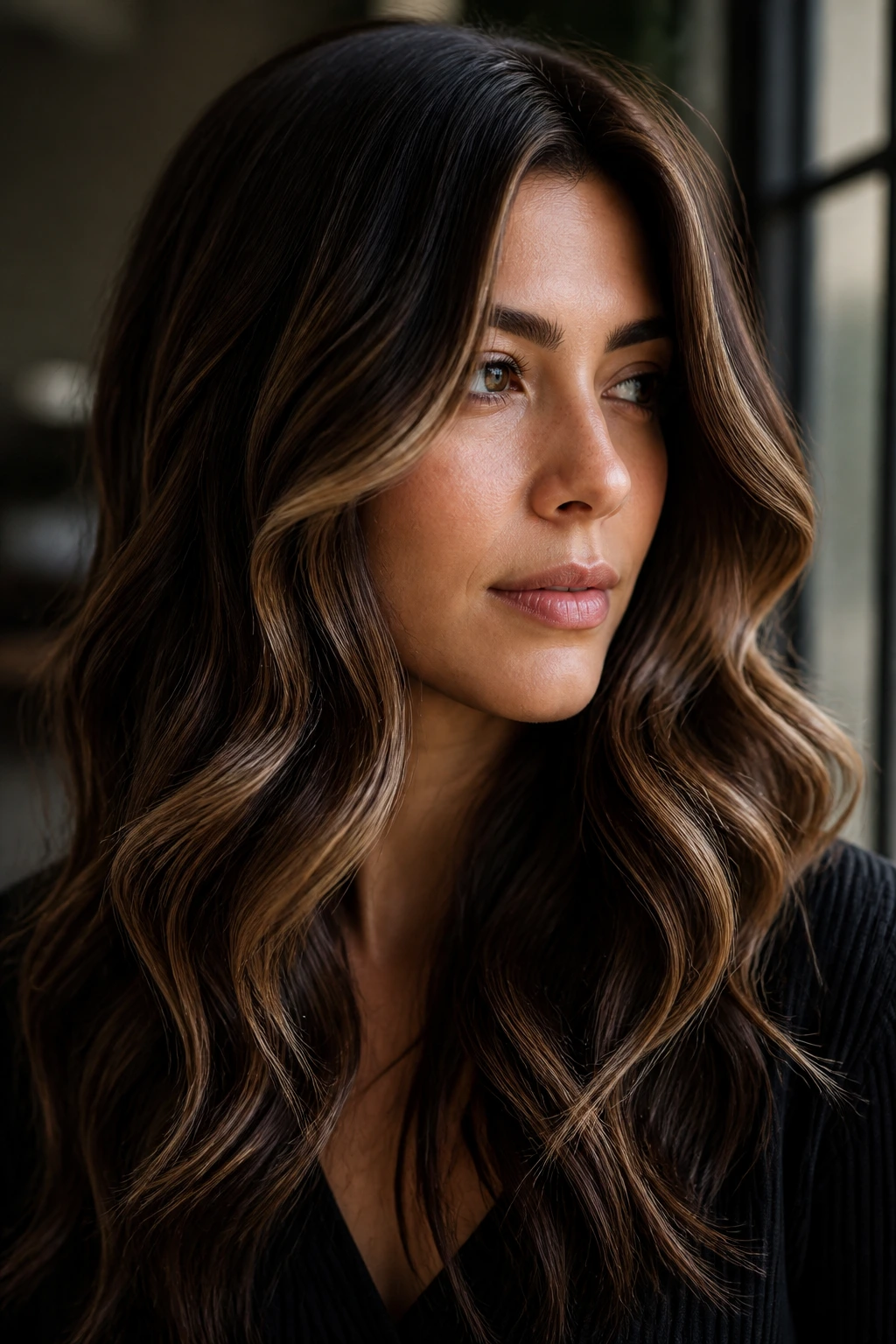
A walnut brown base with a few lighter ribbons in S-curls has this lived-in, slightly undone feel that some people spend a lot of time trying to fake. The face-framing layers are the quiet part here. They curve around the cheek and neck, so the lighter pieces catch the bend instead of looking painted on.
If your hair has some natural wave, don’t fight it. Let the bend show. The bronde will look more dimensional when the strands don’t sit perfectly straight. I especially like this on medium-length hair because the curls keep the front pieces from disappearing into the rest of the hair.
Quick rule: the lighter pieces should follow the S-curve, not sit on top of it.
That’s what keeps the finish from looking stripey.
14. Sandalwood Bronde for Thick, Heavy Hair
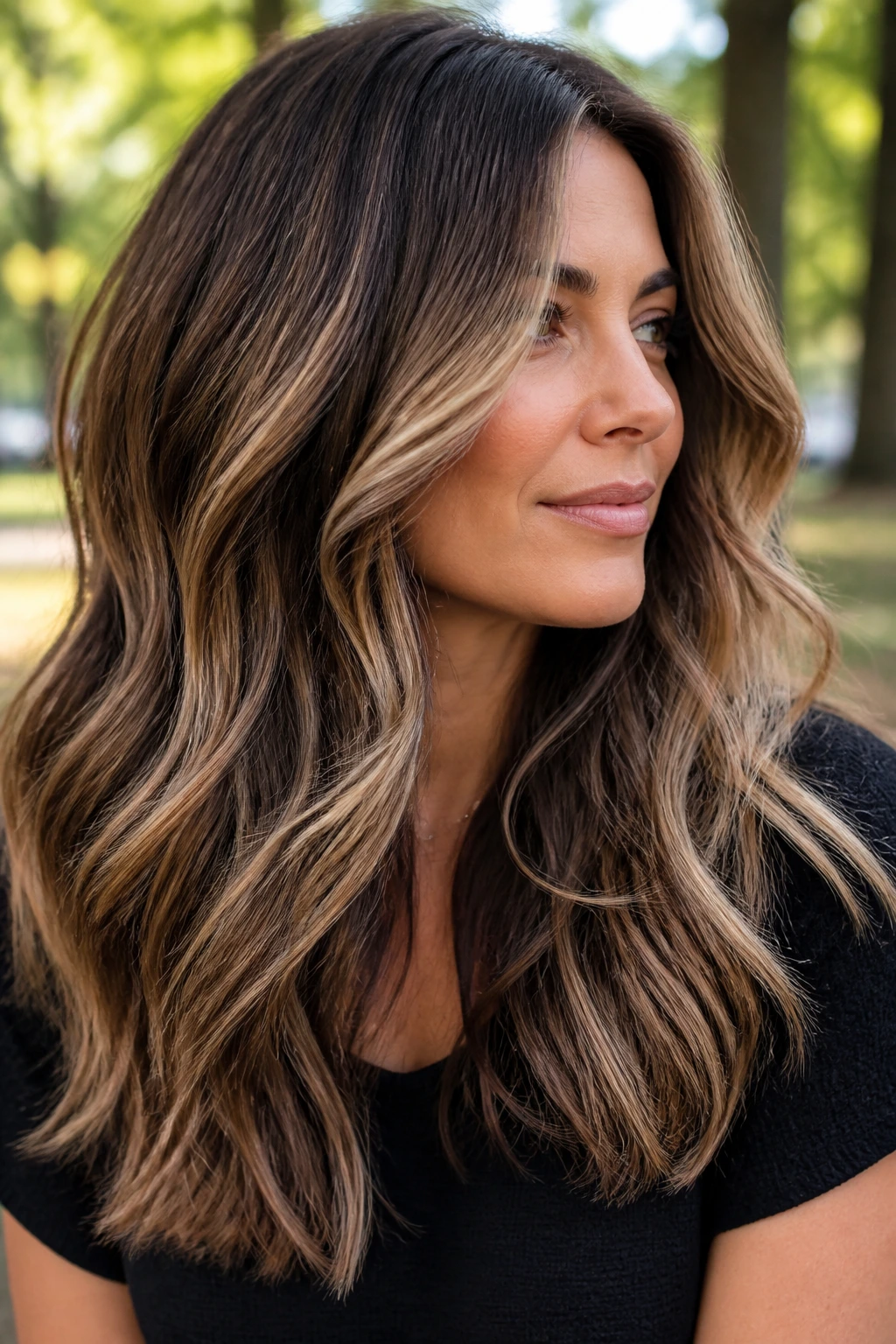
Thick hair can eat color for breakfast. Put too little brightness in it and nobody notices. Put too much, and the whole head starts looking patchy. Sandalwood bronde sits in the middle, using warm beige and soft tan ribbons to break up density without turning the ends pale.
The face-framing layers need to be a touch longer here. Short front layers can puff out on thick hair, especially if the cut has a lot of body. Longer pieces that fall from cheekbone to collarbone keep the color moving through the shape rather than sitting on top of it.
Best on: long, layered brunettes who want softness around the jaw.
Best approach: ask your stylist to keep the brightest pieces focused around the perimeter and the top layer, not buried deep inside the hair.
Thick hair loves this kind of restraint. It looks fuller, not lighter.
15. Maple Cream Face Frame on Dark Brunettes
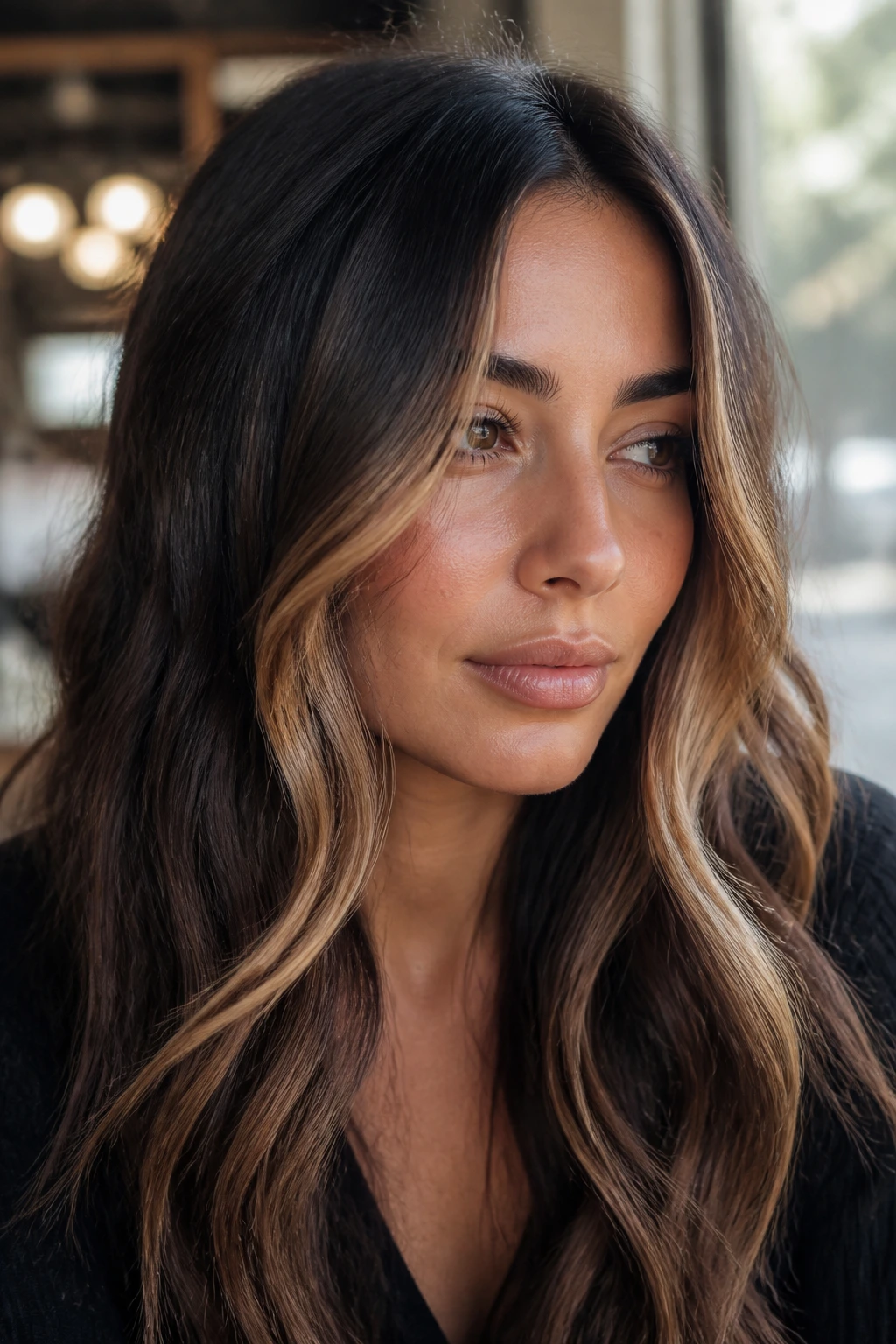
Can deep brunettes wear bronde without losing their darkness? Absolutely, if the lift is narrow and placed where the hair naturally bends. Maple cream face framing does that well. The base stays dark and rich. The front pieces land a few shades lighter, enough to wake up the cut but not enough to erase the brunette identity.
This look works best when the face-framing layers start lower, around the nose or mouth, instead of right at the crown. That keeps the bright pieces from clashing with the root. If you have dark brown or near-black hair, this is the version I’d trust first.
The trick is keeping the cream note soft. Too much yellow and the front looks brassy. Too much ash and it disappears into the base. Maple sits in the middle, which is where most brunettes live comfortably.
16. Smoky Beige Bronde with Airy Layers
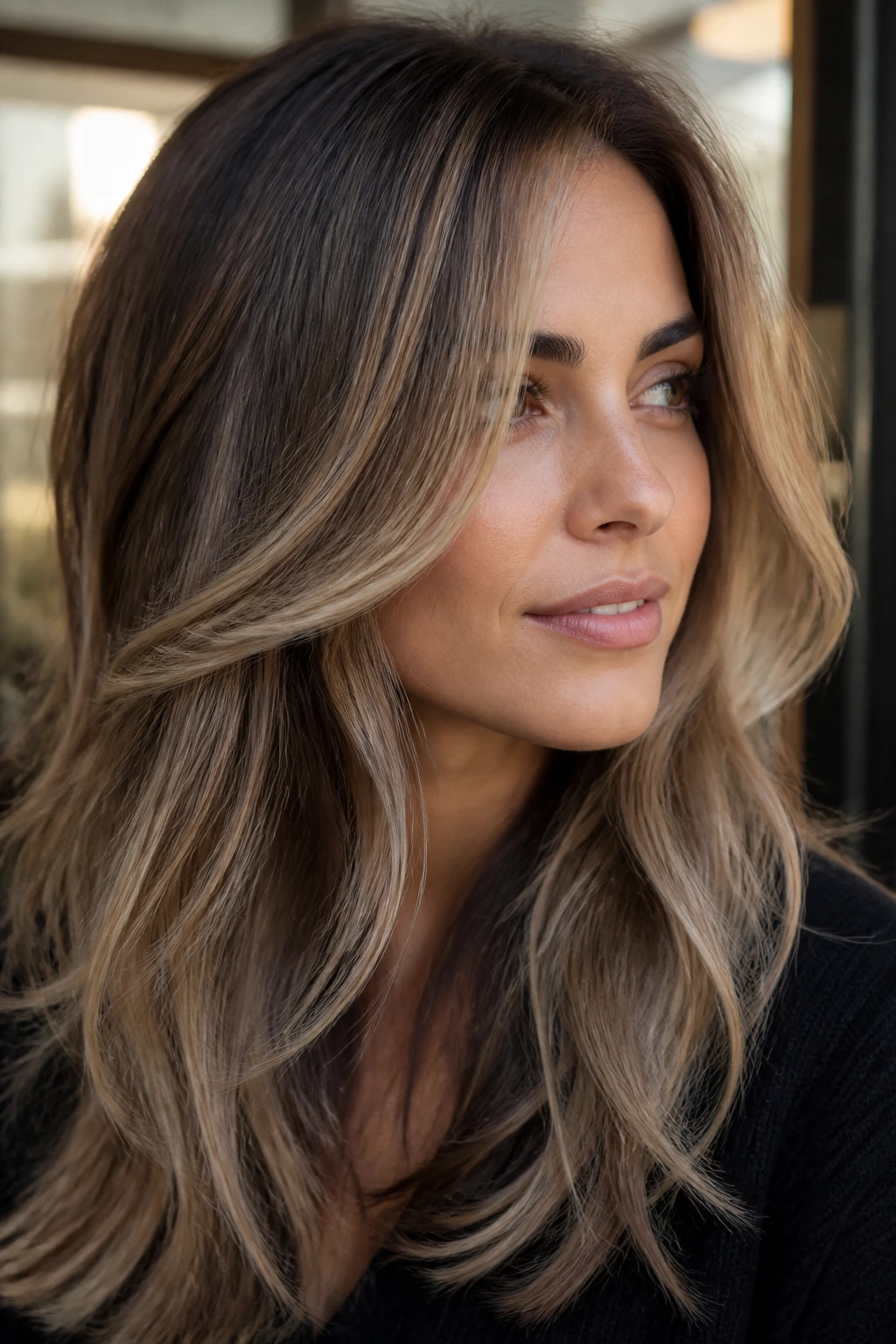
Smoky beige has a softer voice than ash, and that matters on brunette hair. The result is cool enough to stay modern, but not so pale that it looks chalked onto the front of the head. Airy layers around the face help the lighter ribbons separate and flick out a little at the ends.
This is one of those shades that looks even better after the first week, when the toner settles and the front stops reading freshly done. It’s particularly good if your hair is shoulder-length or longer and you don’t want the brightness to dominate the whole look.
Why I like it: the smoky tone keeps the color from going orange between appointments.
One caveat: if your base is very warm, this can look a bit muddy unless the gloss is chosen carefully.
Ask for beige with a whisper of smoke, not full ash. The difference is subtle in the bowl and obvious on the head.
17. Honeyed Espresso with Minimal Lift
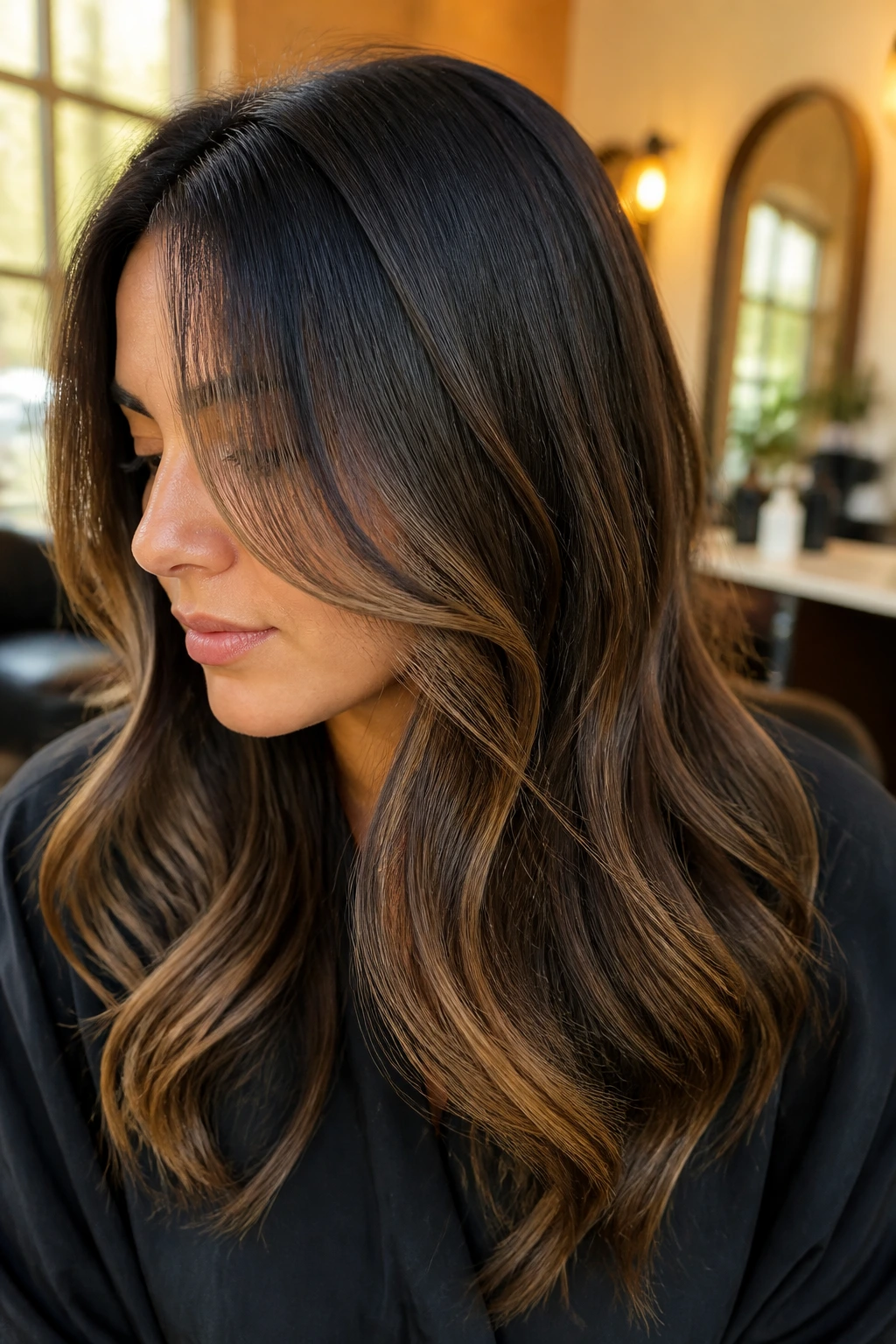
Some people want brightness without announcing it. Honeyed espresso is for them. The base stays dark, glossy, and almost reflective, while the lightest pieces sit in the face frame and mid-lengths like a sun flare that didn’t try too hard.
This version makes the most sense when your haircut is already clean. The layers need to fall well, because the color is not doing all the heavy lifting. A sharp front shape and a soft honey gloss keep the look modern. If the cut is blunt and the color is too subtle, the hair can look one-note. If the cut is layered and the color is restrained, it reads polished in that easy, unforced way people notice.
The face frame should be one to two shades lighter than the rest. That’s enough. More than that and it starts to lose the espresso effect.
18. Bronde Lob with Peekaboo Brightening
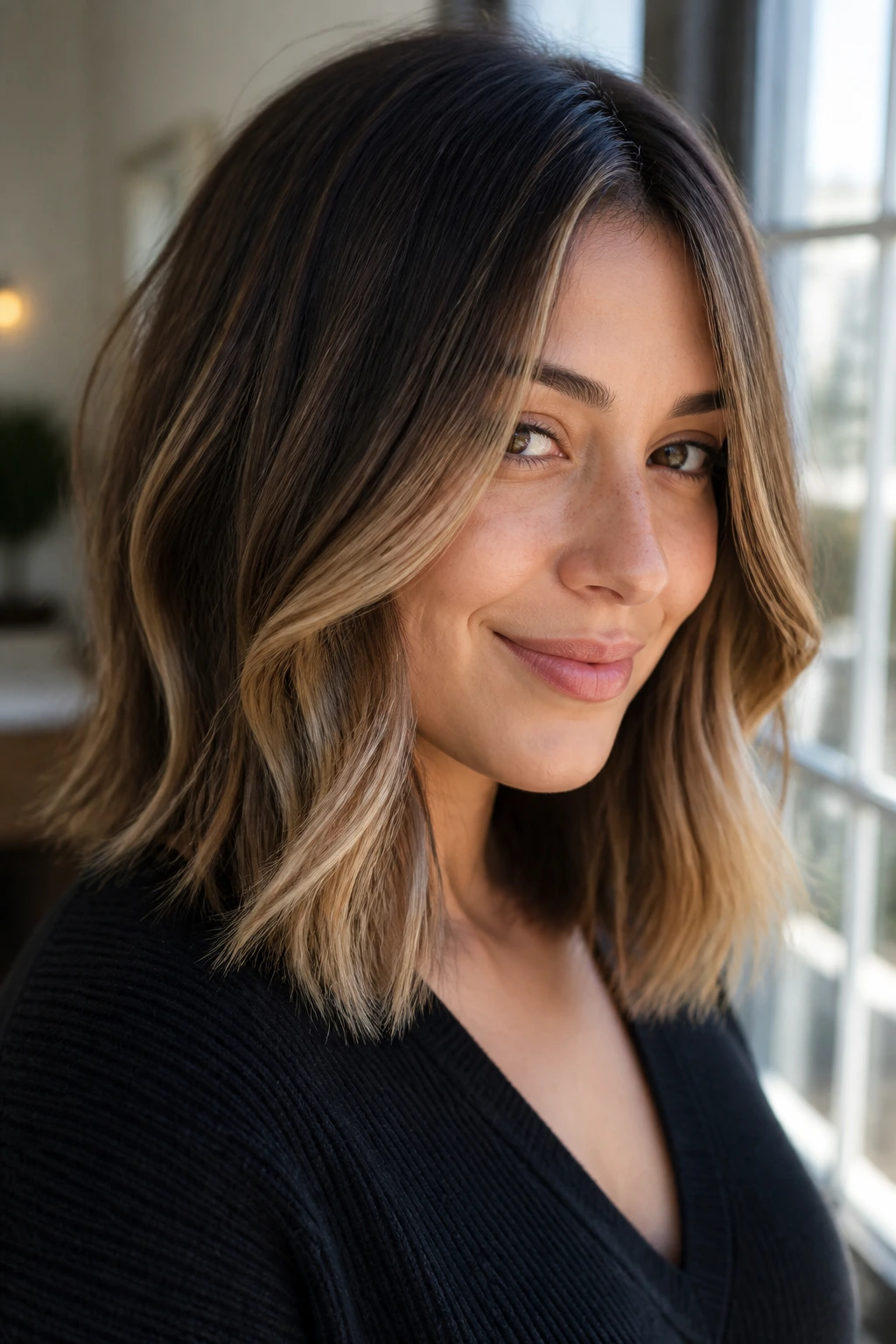
A lob changes how bronde sits because there’s less length for the color to melt through. Peekaboo brightening solves that by placing lighter pieces just under the top layer and around the front, so the hair catches light when it moves instead of broadcasting the highlights all the time.
This is a sharp choice if you wear your hair tucked behind one ear a lot. The hidden brightness peeks through when the hair shifts, and the face-framing layers keep the front from feeling square. It’s also a good option when you want dimension but your hair doesn’t love aggressive bleaching.
A lob with this kind of color benefits from a slight bend at the ends. Stick-straight hair can make the bright pieces read harsher than they are. A soft bevel or wave smooths them out.
19. Beige Caramel Curls with Layered Ends
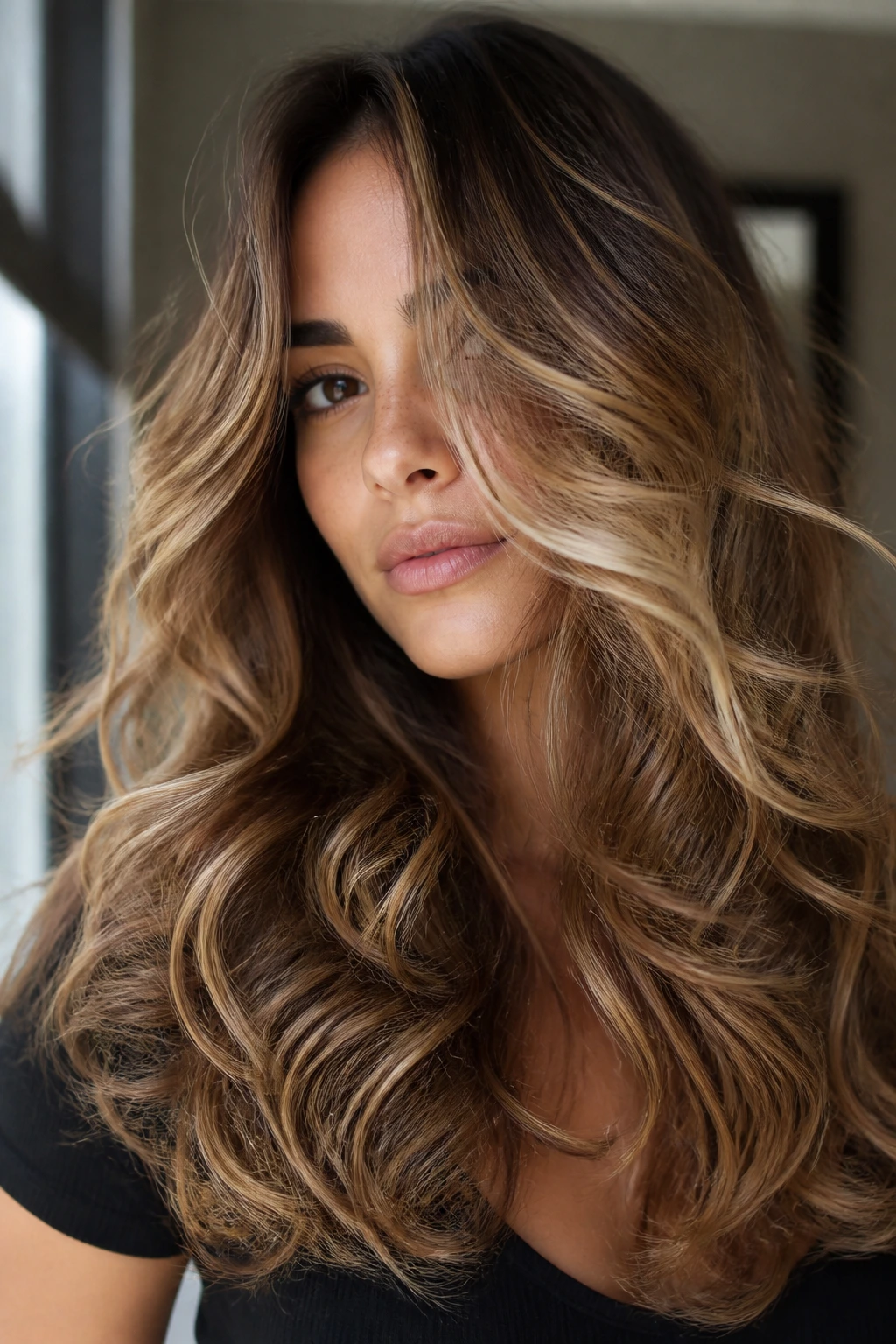
The color looks warmer once the curls start moving. Beige caramel ribbons wrap around each bend, so the hair doesn’t just look highlighted — it looks textured. Layered ends keep the curl pattern from forming one thick, bottom-heavy shape, which is a common problem on brunette curly hair.
What to Watch For
Do not place the lightest pieces only on the top curl layer. The inner curls need some brightness too, or the color looks pasted on from above. Face-framing layers should be long enough to spring back without puffing out around the cheekbones.
- Better for loose curls and spiral waves than tight ringlets.
- Ask for a softer front blend, not a single bright stripe.
- Use a diffuser to keep the curl clump intact.
Tiny detail that matters: caramel glosses can fade fast on curly hair, so a color-safe conditioner is not optional.
20. Rooty Mocha Balayage with Subtle Contrast
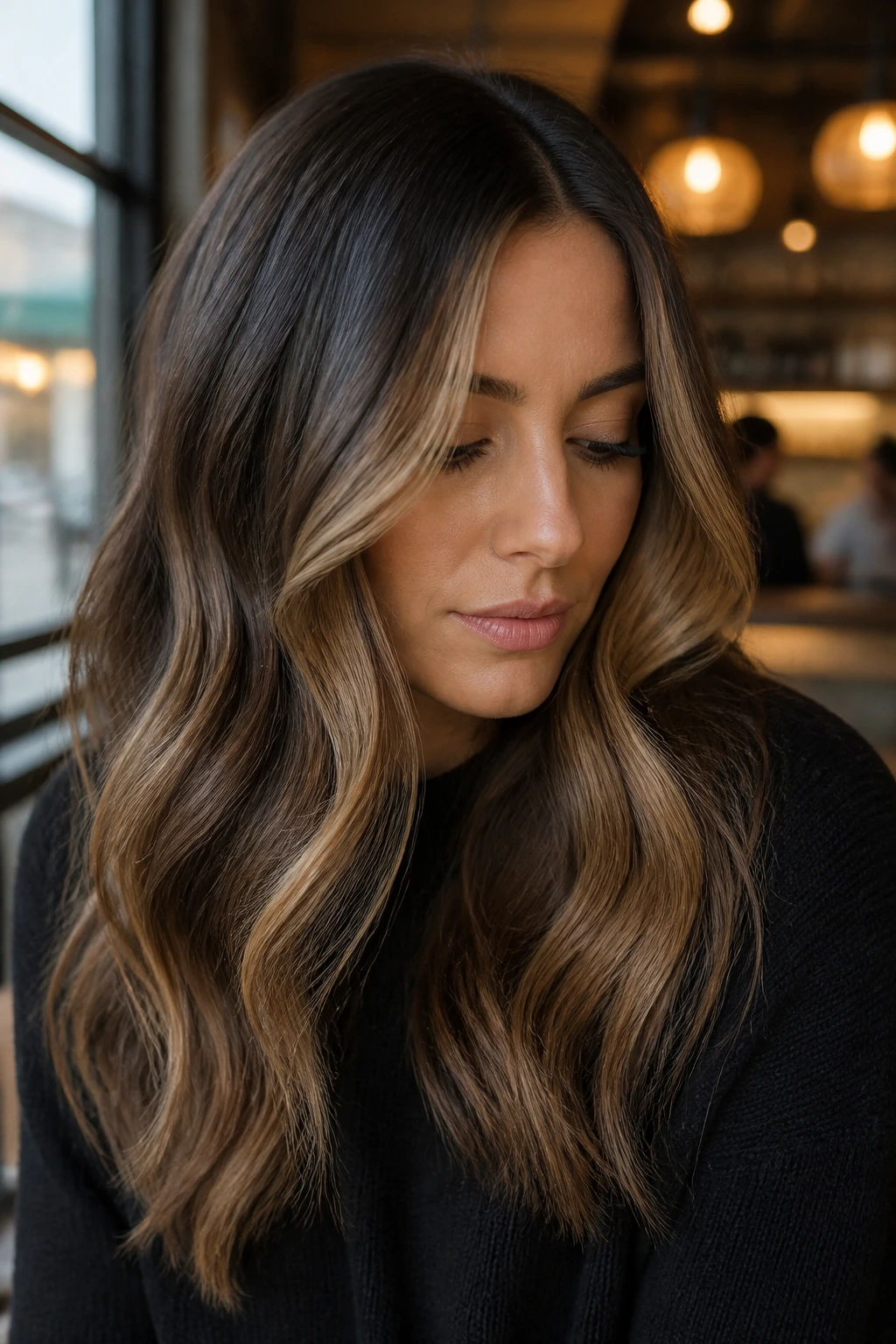
The root is the whole point here. A rooty mocha bronde keeps the top dark on purpose and lets the face-framing layers carry the brightness. That creates a grounded look that grows out gracefully and still gives the front pieces enough lift to matter.
Why It Works So Well
A brunette base with subtle contrast doesn’t ask the color to do too much. You get dimension where you need it and darkness where you want it. The shape of the cut becomes clearer because the lighter bits trace the layer line instead of covering it.
If your hair grows fast, this is one of the safest choices. The regrowth line stays soft for longer, which means fewer anxious mirror checks. And yes, that matters.
Best for: people who want to go lighter without losing the brunette feel.
Best finish: a neutral mocha gloss with a soft face frame.
21. Champagne Bronde with Feathered Curtain Pieces
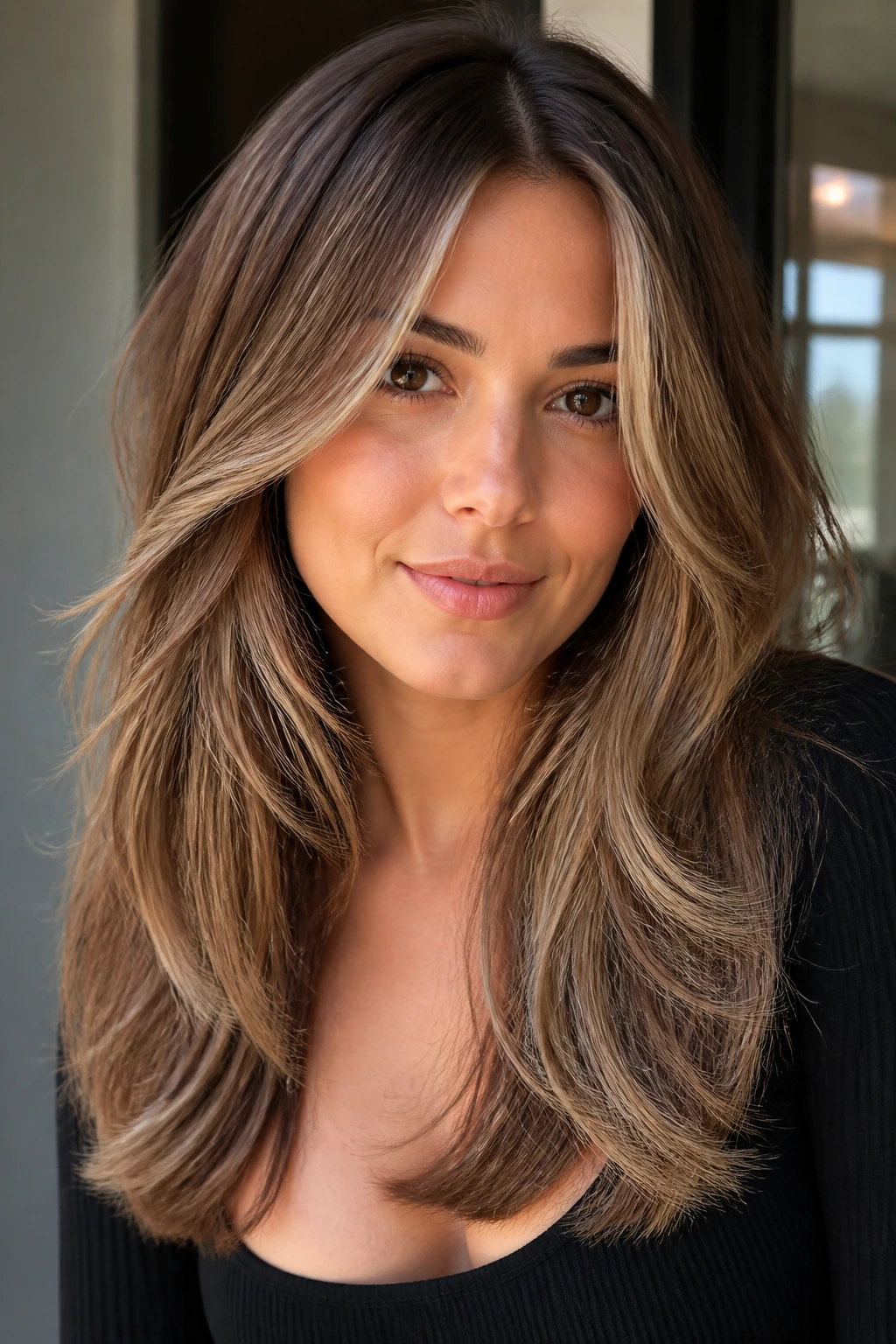
Champagne bronde can look too pale if the placement is careless. On brunette hair, feathered curtain pieces keep it softer. The lighter tone lives mainly at the ends and along the bend of the front layers, which keeps the color airy instead of flat.
This look has a little more polish than the warmer options. It works especially well with center-parted hair and layered blowouts because the feathered pieces fan out around the face. If you want the front to look brighter in photos but still wearable in daylight, this is a smart middle path.
I’d avoid making the money piece too thick here. Champagne tones get loud fast. A slim, feathered ribbon does more good than a big slab of blonde.
22. Cocoa Swirl Balayage with Side-Swept Layers
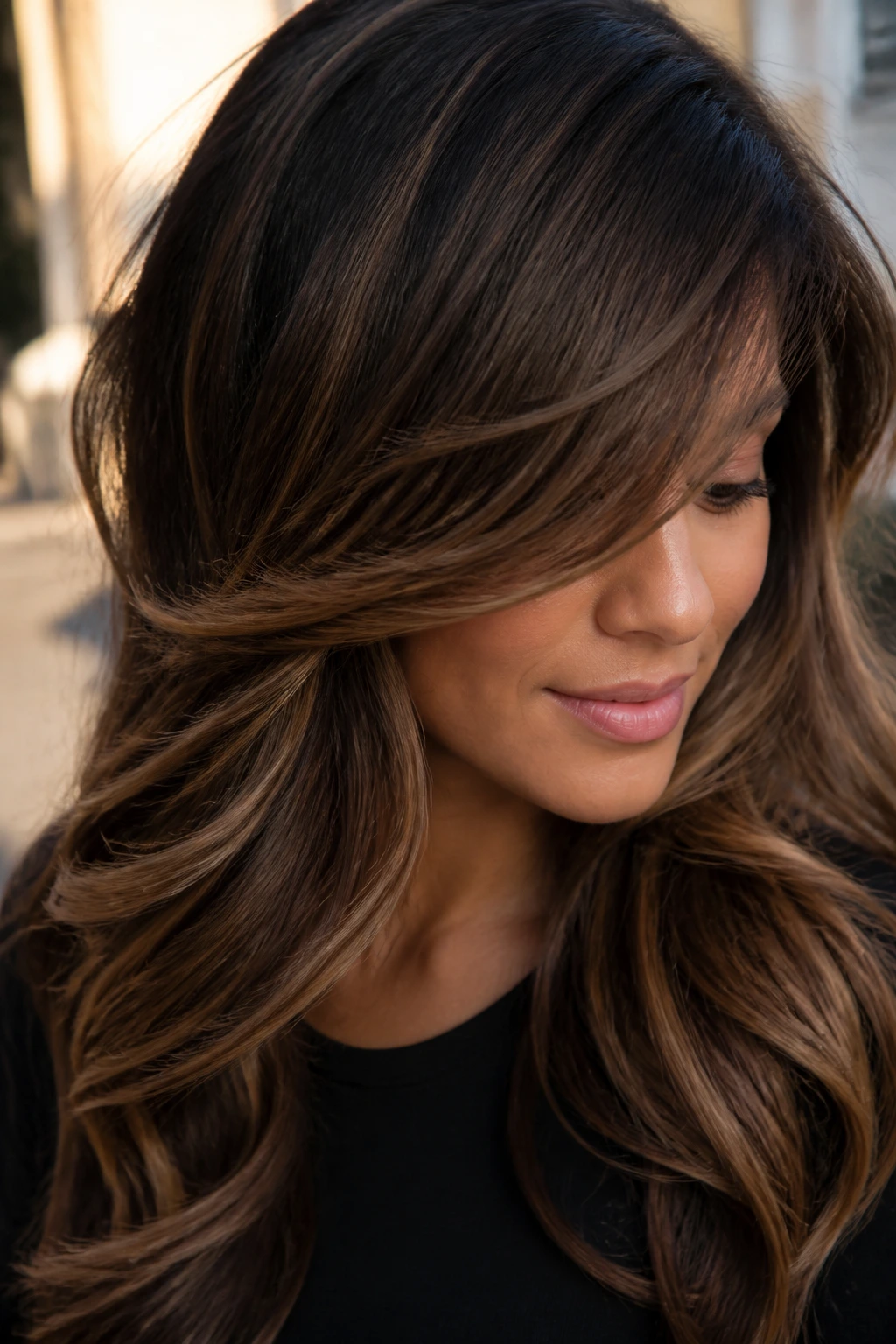
A side part gives cocoa swirl balayage a completely different attitude. The front layer sweeps across the forehead, the lighter pieces gather on one side, and the whole style feels a little more dramatic without losing its brunette root.
This is one of my favorite ways to work with a strong jawline or a longer face. The side sweep breaks the symmetry just enough to soften the shape. If your hair is naturally straight, a little bend at the front helps the highlight sit in place. If your hair is wavy, the side sweep can look almost too easy — in a good way.
The cocoa tone should stay rich. If it goes too light, the sweep loses its depth. Keep the brightest pieces under the top layer and let them show through rather than sit on top.
23. Chestnut Honey Blend for Deep Brunettes
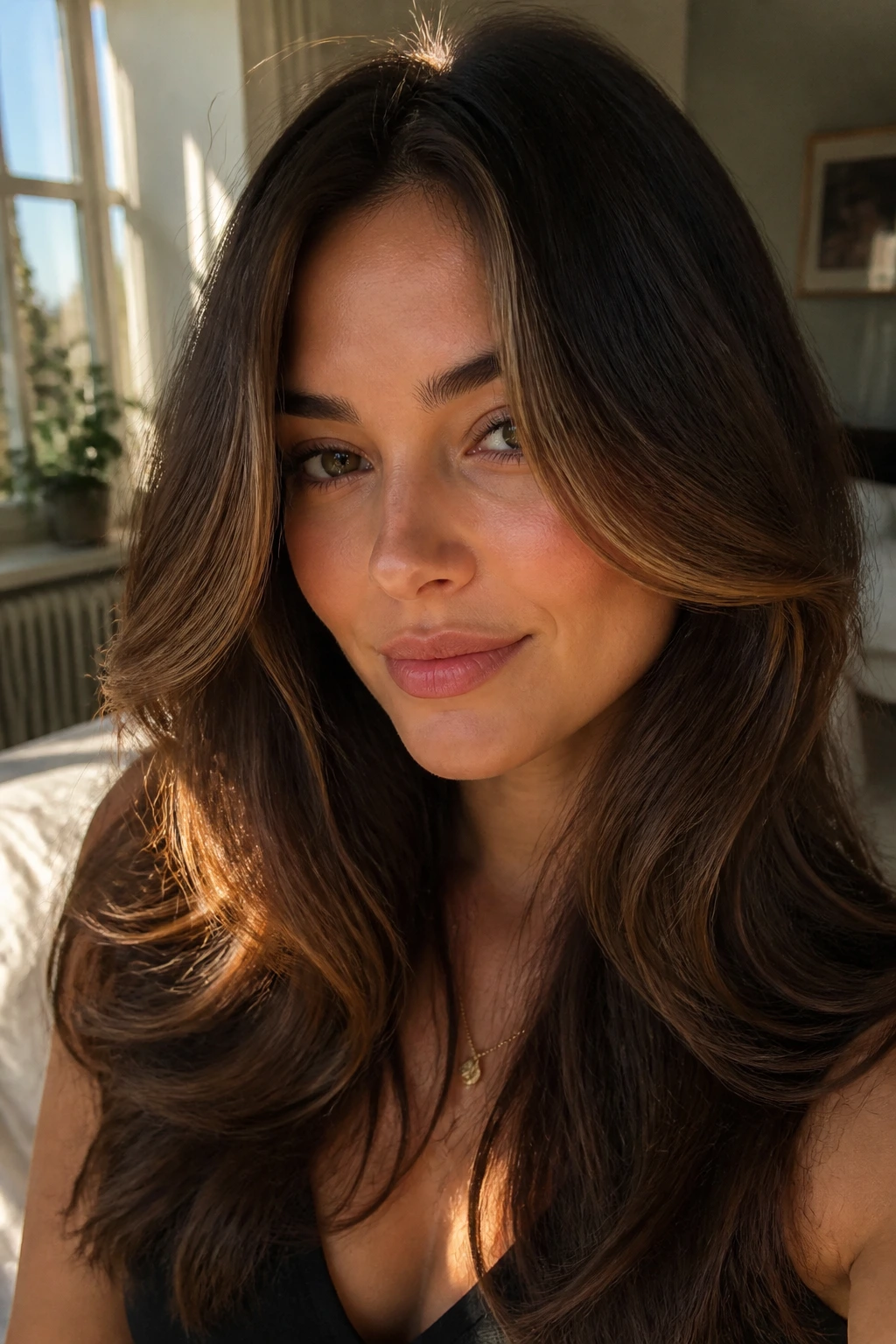
Deep brunettes often need warmth more than brightness. Chestnut honey does that job without forcing the hair into blonde territory. The result is a shiny, layered brunette that looks richer in sunlight and stays soft in shade.
The face-framing layers matter here because they keep the honey pieces visible. If the layers are too long and too heavy, the color can disappear into the base. If the layers are shaped around the cheekbones and collarbone, the brightness lands right where you want it.
This is a strong choice if your natural hair leans very dark but you still want movement around the face. It’s also one of the easiest ways to bring warmth back into hair that’s been toned too cool for too long.
24. Vanilla Latte Bronde with Sculpted Layers
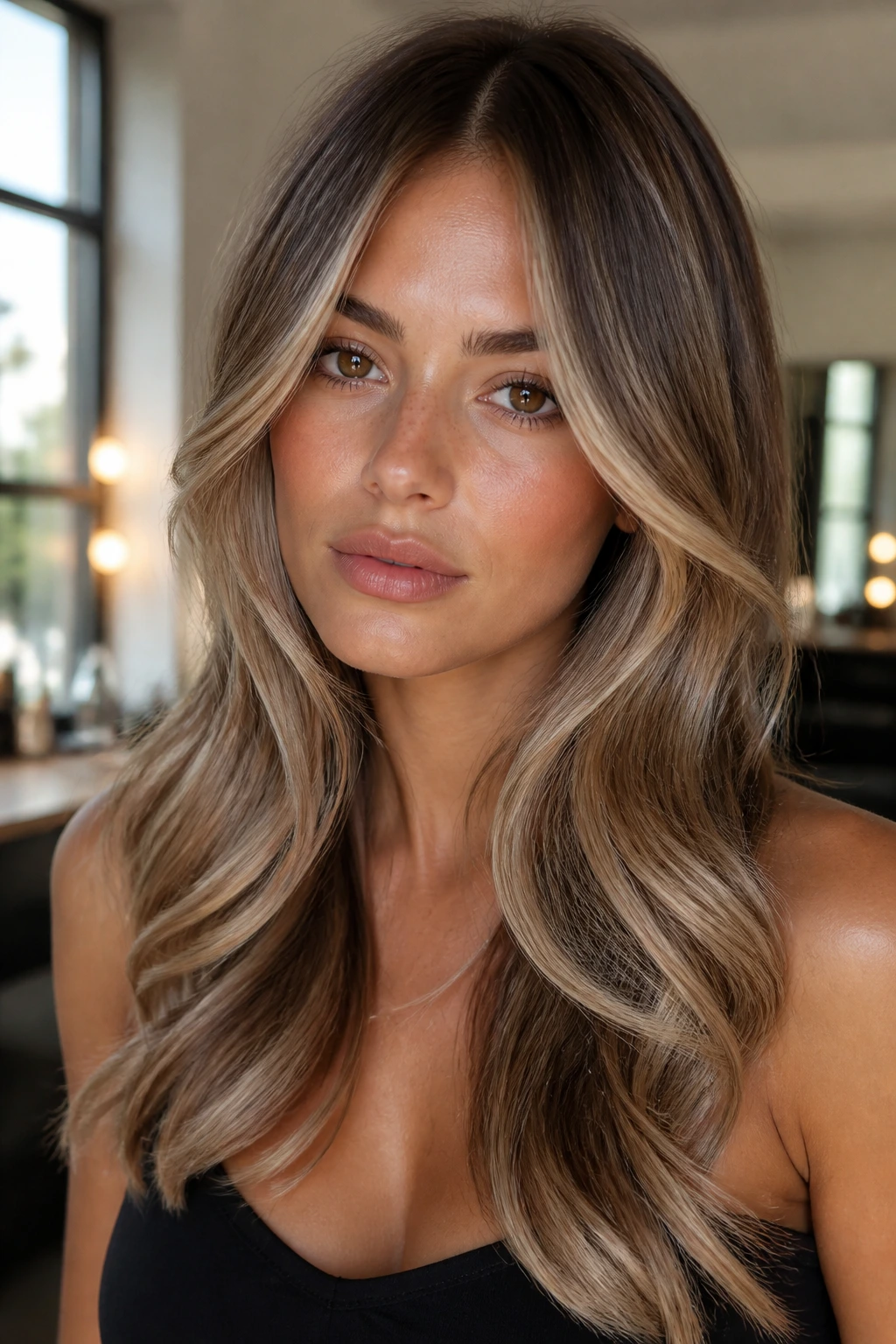
Why does vanilla latte bronde look so clean on sculpted layers? Because the haircut gives the color a frame. The brighter beige pieces fall along the layer edges, and the darker base underneath makes the light look intentional instead of accidental.
This is the version for someone who wants brightness with shape. The layers should be cut so the front pieces curve inward around the face and then soften through the ends. That sculpted movement lets the lighter ribbons show in a controlled way.
Best Way to Wear It
A smooth blowout brings out the shape fastest. A loose wave makes the vanilla tone feel softer. Either way, keep the root shaded and the front pieces narrow enough to move with the cut, not against it.
If your brunette base is medium rather than dark, this is one of the prettiest bronde ideas on the list.
25. Soft Ember Bronde with Lived-In Shine
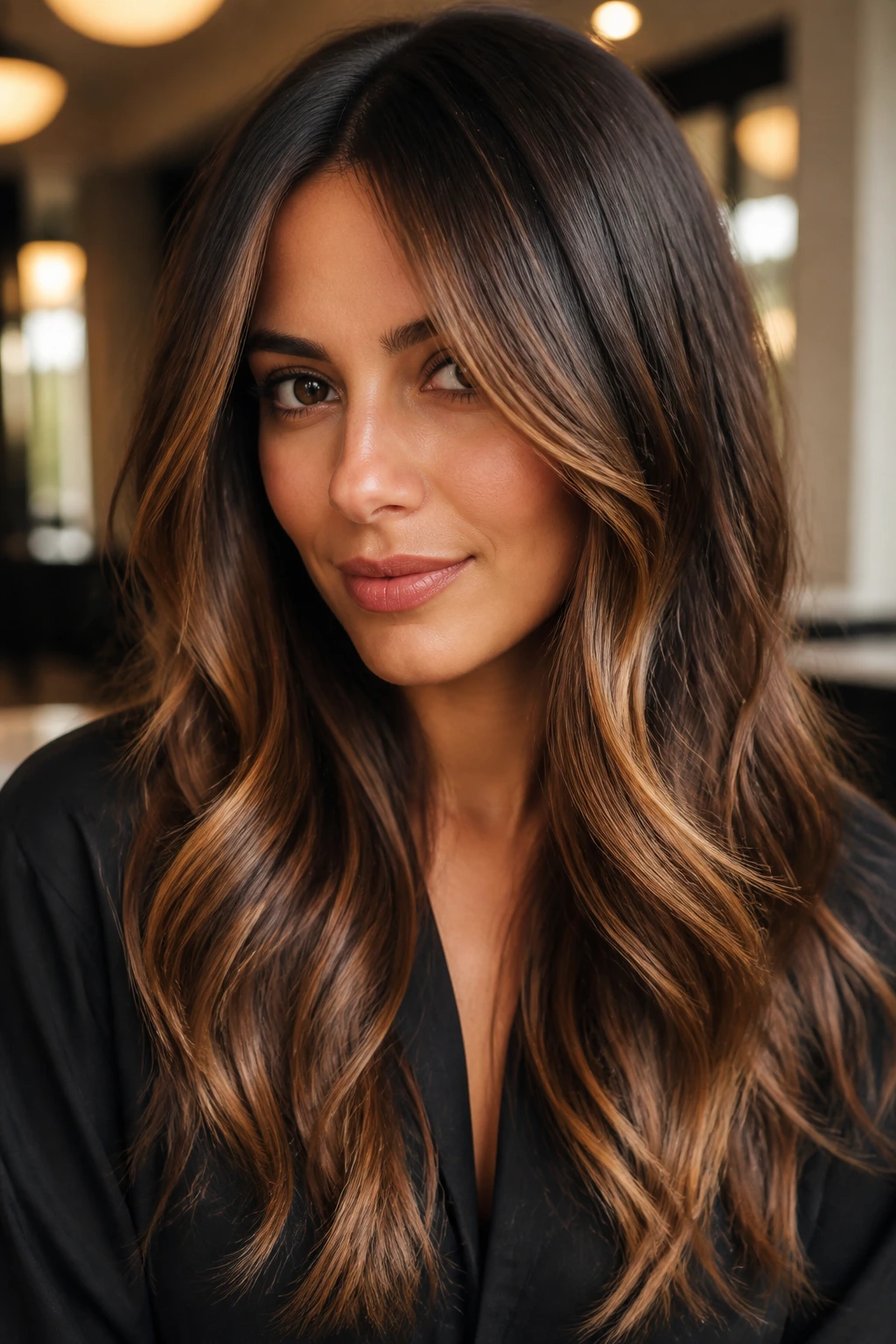
Soft ember bronde has warmth, but it does not look orange. That’s the difference. The brunette base stays deep, the highlight threads glow with a faint copper-beige cast, and the face-framing layers catch the shine so the color feels alive instead of static.
I like this on hair that needs a little warmth around the face and a little motion through the ends. The look can read subtle indoors and brighter outdoors, which is a nice trick if you want one color to handle a lot of different lighting. The layers around the face should be soft, not choppy, so the ember tone can feather through them.
Final note on this one: if you love warmth but hate brass, ask for ember with a neutral gloss. That keeps the shine and loses the yellowness.
Why Bronde Balayage Feels Softer Than Full Highlights
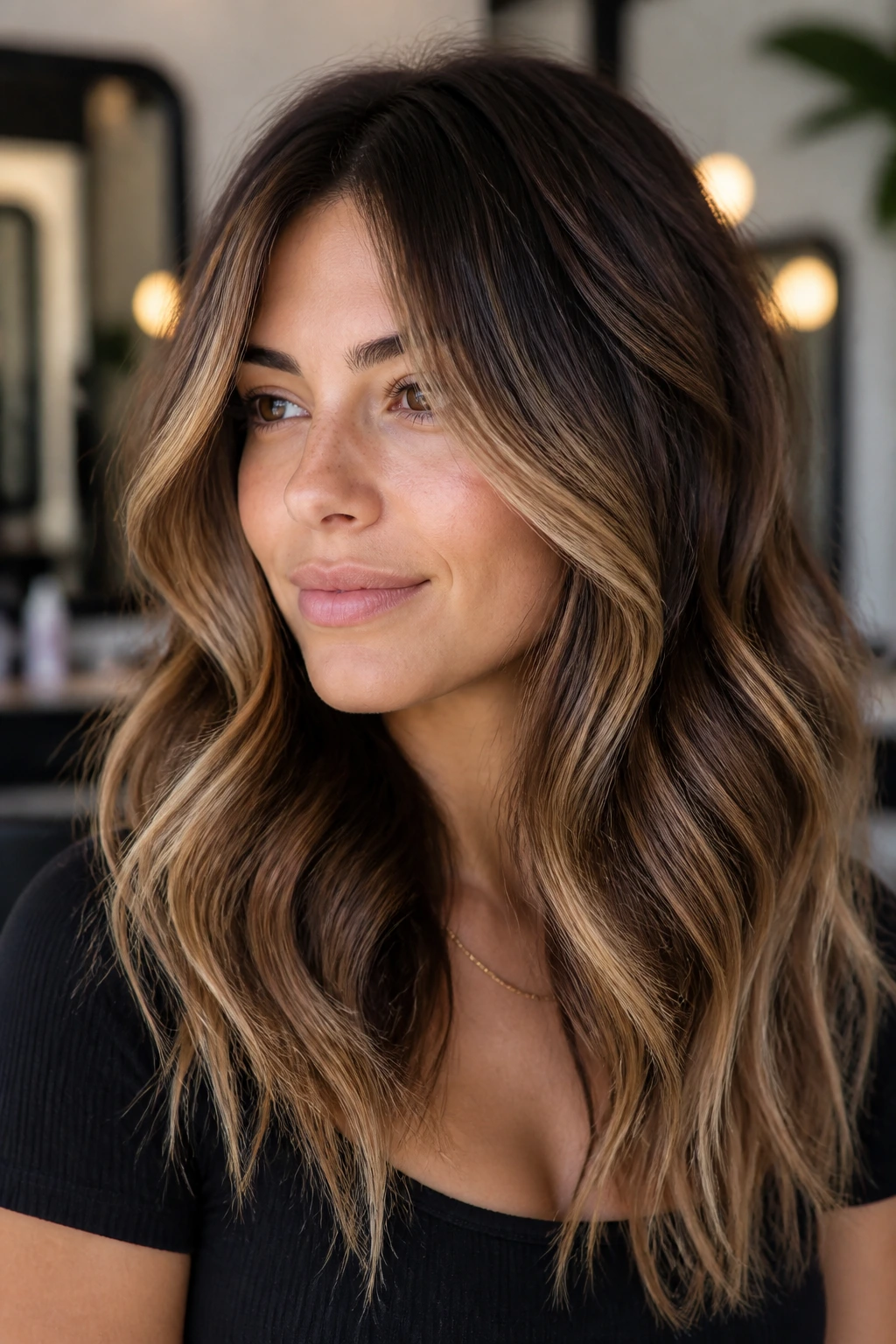
Bronde works on brunettes because the contrast stays controlled. Full highlights often start too high or go too pale too fast, which can leave dark hair looking like it’s wearing a wig cap of blonde. Bronde keeps more brunette in the room. That matters.
The softest versions use three things at once: a darker root, a diffused mid-length transition, and a lighter frame around the face. When those parts line up, the color doesn’t sit in obvious stripes. It folds into the cut. That is why a few painted pieces around the cheekbone can matter more than a whole head of pale foils.
Root depth keeps the hair grounded. If the base stays a shade or two deeper than the lightest pieces, the color reads dimensional instead of flat. The face frame gives the eye a place to land. That one bright section near the front can make the rest of the hair look shinier, even if it only changed by a small amount.
And there’s another reason this pairing works so well: brunettes often hold warmth at the root and coolness at the ends differently from blondes. A gloss can fine-tune both, which makes bronde balayage for brunettes with face-framing layers a lot easier to adapt than a rigid highlight pattern.
How to Match Face-Framing Layers to Your Bone Structure
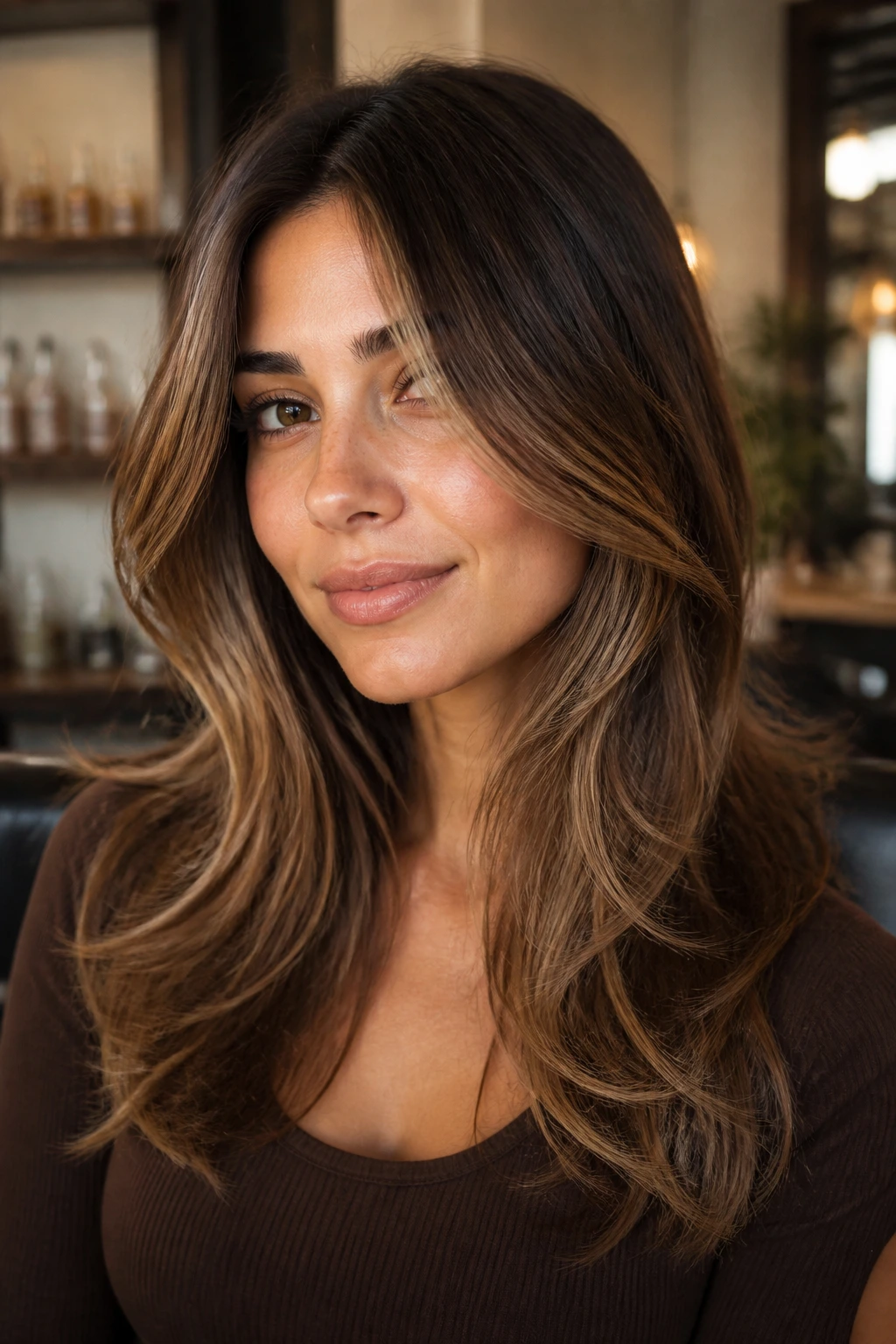
The color only looks as good as the cut underneath it. That sounds obvious, but people still ignore it and then wonder why the money piece feels off. A bright front ribbon has to sit where your hair naturally bends around your face. If it doesn’t, the color looks like it landed in the wrong place.
Round faces usually do well with face-framing layers that start a little below the cheekbone and taper past the jaw. That vertical line helps stretch the face visually. Square faces often look softer with curved pieces that begin around the cheekbone and sweep forward instead of outward. You want movement, not a hard frame.
Long faces can wear a fuller front section or curtain pieces that land around the cheek and mouth, because that breaks up the vertical line. Heart-shaped faces usually like a gentler width at the cheekbone and a softer taper through the chin area, especially when the hair is worn with a center part.
Thick hair needs the front layers to be a little longer than you think. Otherwise the pieces puff up and steal space from the color. Fine hair, on the other hand, can handle a slightly shorter face frame if the goal is lift and the ends are kept airy. The point is not to copy a photo exactly. It is to match the cut to the way your own hair falls.
What to Bring to the Color Appointment
The best bronde job usually starts with a good conversation, not a brush. Bring photos, yes, but bring the right photos. A picture of a very pale blonde on waist-length hair won’t help much if your own hair is a shoulder-length level 5 with a side part. Show your colorist something close to your base, your length, and your part.
- Daylight photos of your current hair: Natural light shows warmth and old color better than bathroom lighting.
- One photo of the front pieces you like: The face frame is the part most people feel strongest about.
- A note on past color: Box dye, henna, red gloss, or dark permanent color all change the lift.
- A picture of your usual styling pattern: Center part, side part, blowout, curls, ponytail — it matters.
- A clear yes or no on warmth: Honey, caramel, beige, ash, mushroom, copper-brown. Pick a lane.
- A heat protectant and color-safe shampoo at home: The style looks better if you don’t rough it up between visits.
If you already know your hair is prone to brass, say so. If your front pieces tend to over-lighten, say that too. Those small details save a lot of regret later.
Keeping the Tone Fresh Between Visits
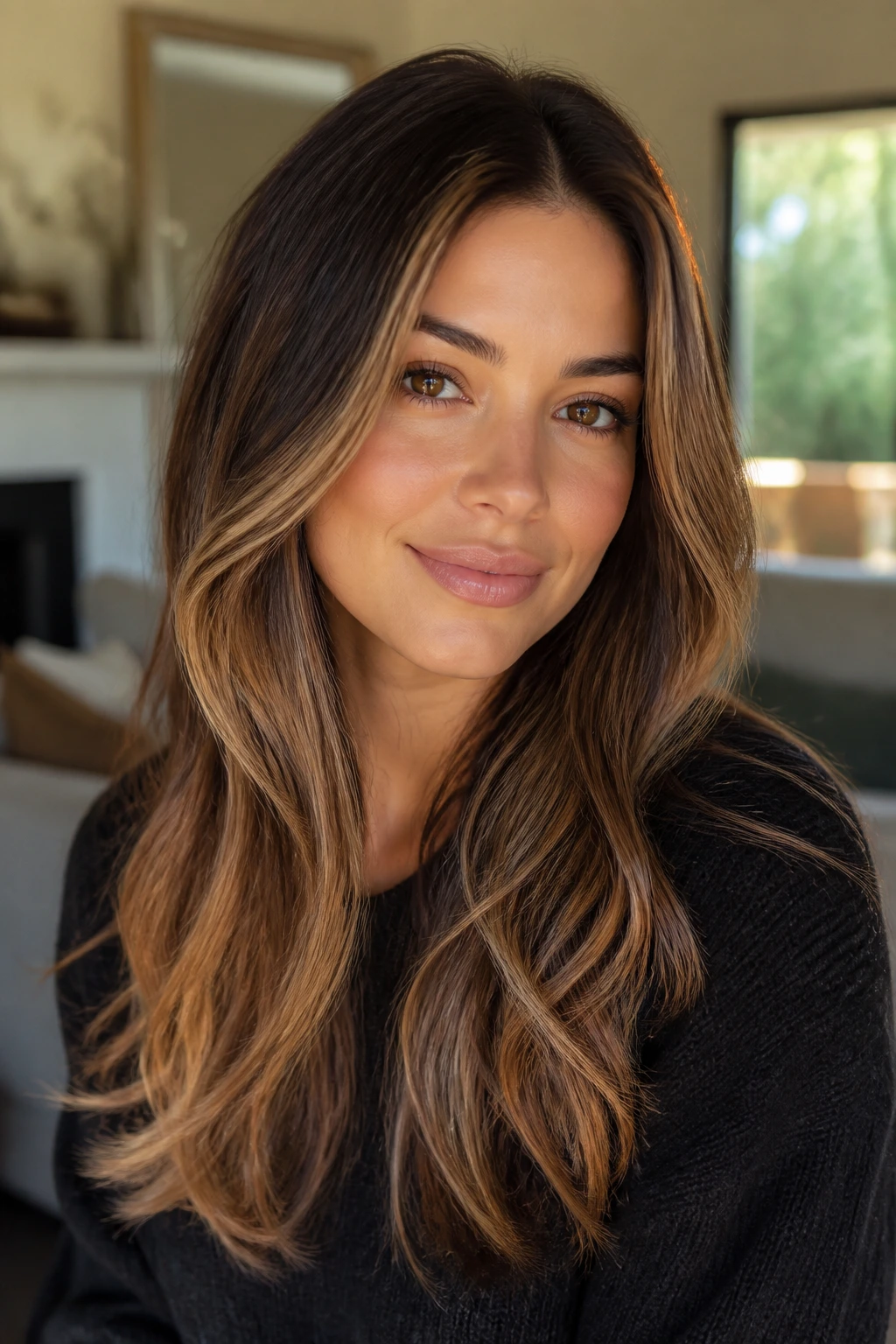
Bronde grows out better than a lot of color work, but it still needs care. The front pieces are the first to look dry because they’re exposed to the sun, heat tools, and constant touching. That means maintenance is less about panic and more about steady habits.
Use a color-safe shampoo and conditioner most washes. If your bronde leans cool, a blue or purple shampoo once every one to two weeks can keep the brass from creeping in, but don’t use it so often that the hair goes dull. Warm bronde usually needs less toning and more shine, so a light glossing conditioner or color mask can do more good than purple shampoo.
Gloss schedule: every 6 to 8 weeks is a solid rhythm for most brunettes. That keeps the face frame glossy and the tone from drifting too far yellow or muddy. Trim schedule: the layers usually need a refresh every 8 to 12 weeks so the front doesn’t lose shape. Balayage refresh: many brunettes can go 10 to 14 weeks before they need the painted pieces touched up, sometimes longer if the root shadow is soft.
Heat matters too. Keep the dryer and curling iron from roasting the front pieces. A heat protectant is not optional here. The lighter hair around the face shows dryness first, and once it starts looking rough, the whole color reads cheaper.
Common Mistakes That Make the Color Look Stripey
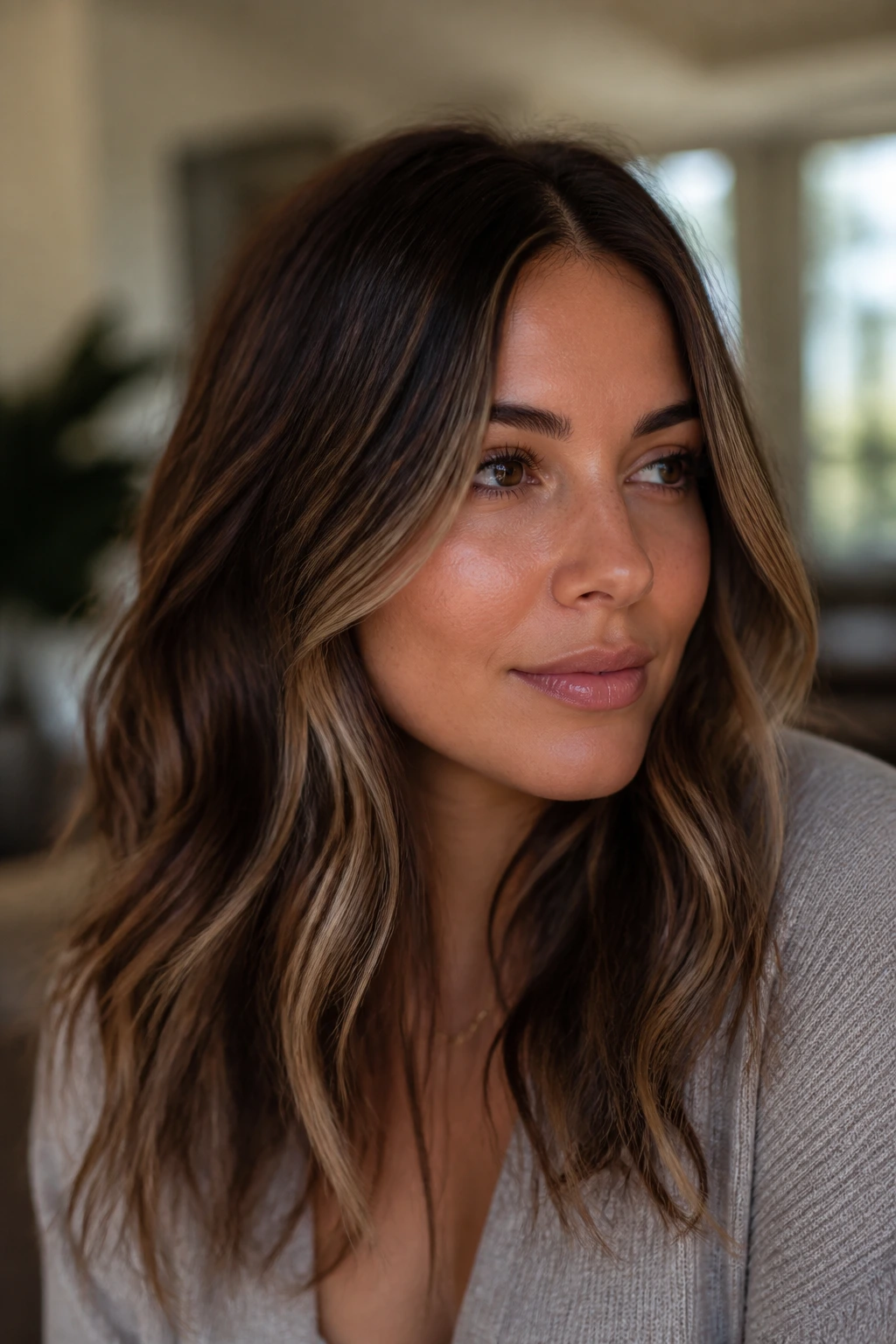
The easiest way to ruin this look is to over-lighten the front. A money piece that starts too high or runs too wide can turn into a stripe, especially on straight hair. The fix is simple: keep the brightest section narrower near the part and let it widen only as it drops toward the cheek and jaw.
Another mistake is tone mismatch. Warm highlights on a cool brunette base can go orange; ash highlights on a warm base can look smoky in a bad way, almost dusty. If that happens, the gloss was chosen wrong for the undertone. Ask for beige, honey, mocha, or mushroom with a specific finish instead of saying you want “just lighter.”
Skipping the cut is a classic mistake. Long face-framing color with no shape underneath often falls flat. The layers have to move. If they don’t, the balayage has nowhere to show off. A blunt line at the front can swallow even beautiful color.
Another miss: trying to make the whole head equally bright. Bronde works because it has contrast. If every section gets the same level of lift, the brunette depth disappears and the style loses the thing that makes it look rich.
Variations and Adaptations to Try
Cool Mushroom Drift
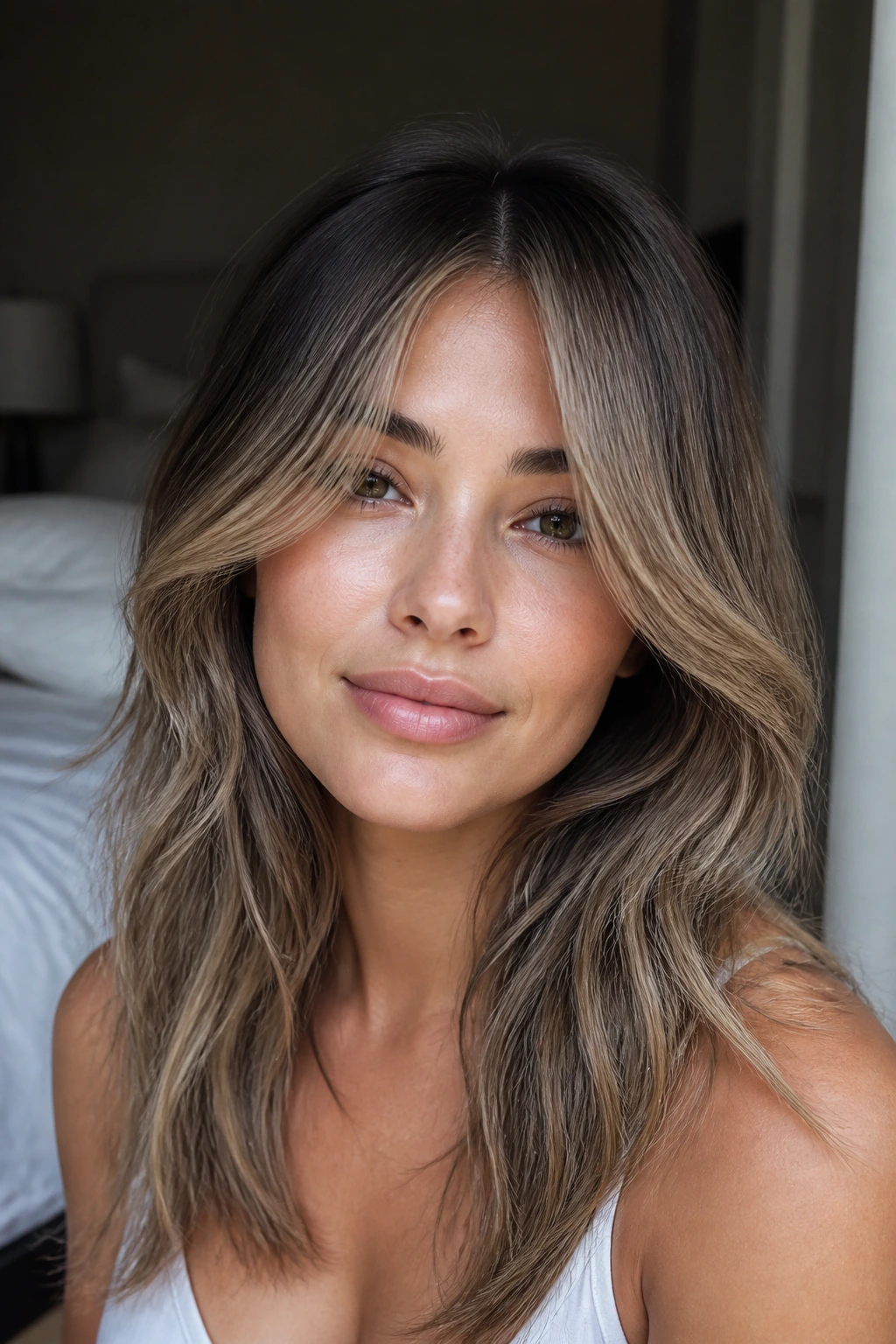
Use taupe, ash beige, and a soft root shadow if your skin tone leans neutral or cool. This version keeps the brightness subtle and works well when you do not want the front to feel warm.
Honey-Caramel Lift
This is the warmer cousin. Ask for honey through the mids and caramel at the face frame, especially if your base already has chestnut or golden tones. It’s a strong match for wavy hair and warm complexions.
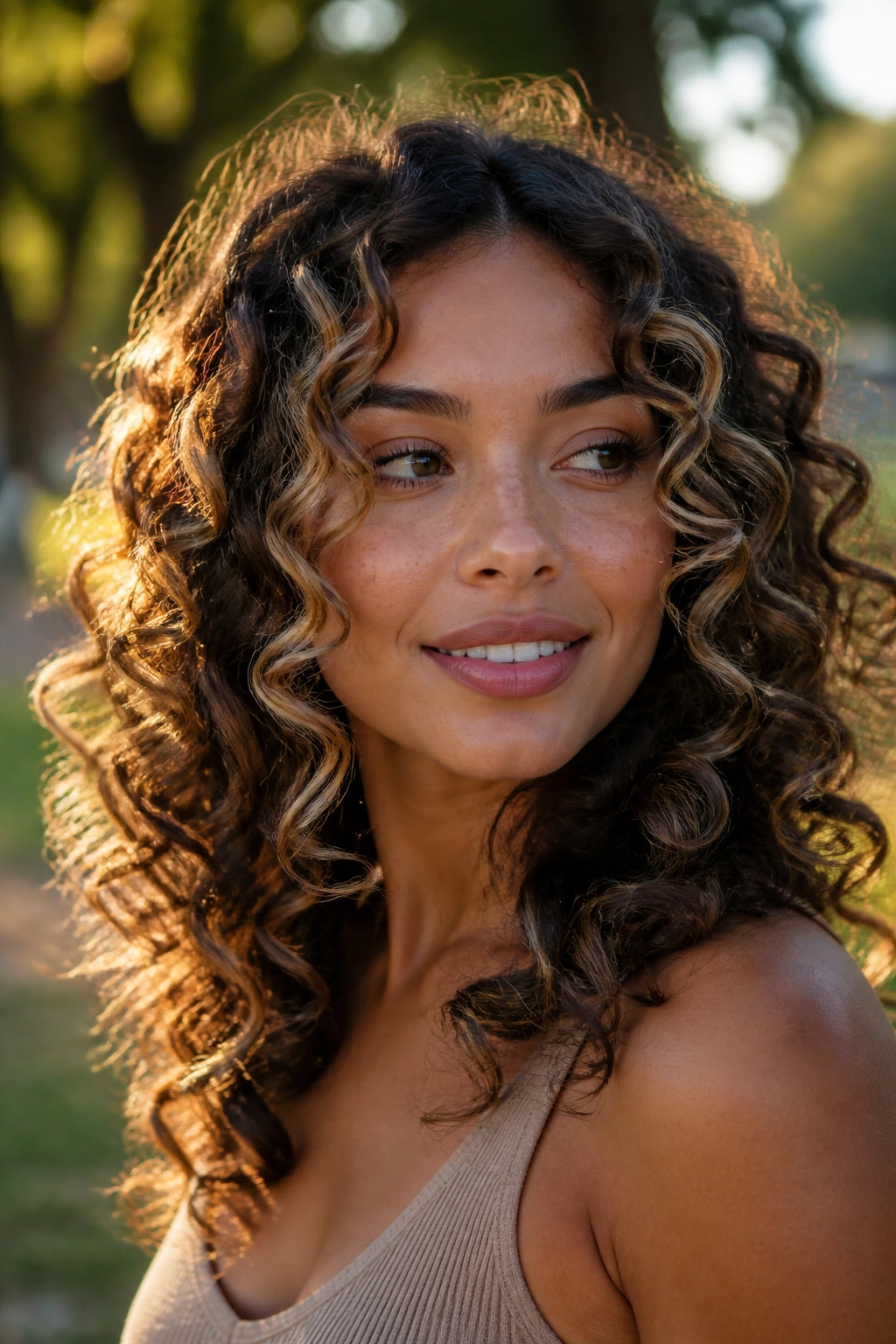
Curly Halo Bronde
Place the brightest pieces around the outer curl line and keep the front layers long enough to spring instead of puff. This adaptation gives curly brunettes light around the face without turning the whole cut into a block of highlights.
Short-Lob Bronde
If your hair sits at the collarbone, keep the highlights tighter to the front and more diffused through the back. A lob needs a slimmer face frame because there’s less length for the color to fade through.
Deep Brunette Minimal Lift
For very dark hair, keep the lift restrained and let the face frame do the talking. A small shift toward maple, bronze, or honey can be enough. The whole point is to wake the cut up, not erase the brunette.
Frequently Asked Questions About Bronde Balayage on Brunettes
How light can brunette hair go and still look like bronde?
Usually one to three shades lighter than the base is the sweet spot. Once the front pieces go several levels lighter, the style starts reading more blonde than bronde, especially in daylight.
Do face-framing layers need to be cut before the color?
Not always, but the colorist should know exactly where the layers will land. If the front is getting reshaped, that information changes where the brightest ribbons should sit.
Can I do this without bleach?
If your hair is already a medium brown with old warmth in it, a gloss or subtle lift might be enough. Dark brunettes usually need some lightening for the front pieces to show, even if it’s gentle.
Will bronde balayage make fine hair look thinner?
Not if the placement is right. Thin, bright ribbons near the face can actually make fine hair look fuller because the contrast gives the eye more to read. The problem is too many heavy highlights through the ends.
How often do I need to tone it?
Most people can stretch toning to 6 to 8 weeks, sometimes longer. Cool shades may need a little more help if hard water or heat tools pull brass back in.
What if my highlights turn orange?
That usually means the lift was warm or the toner faded too fast. A blue shampoo can help on a short-term basis, but the real fix is a salon gloss matched to your undertone.
Does this work on curly hair?
Yes, and curly hair often makes bronde look better because the color shows up on different curls at different angles. The placement needs to be looser and more dimensional, not painted in straight lines.
What should I ask for if I want soft front pieces, not a harsh money piece?
Say you want a narrow, feathered face frame that starts around the cheekbone and blends into the layers. That wording helps avoid the bright block that can dominate the whole cut.
The Brunette Shade That Still Feels Like You
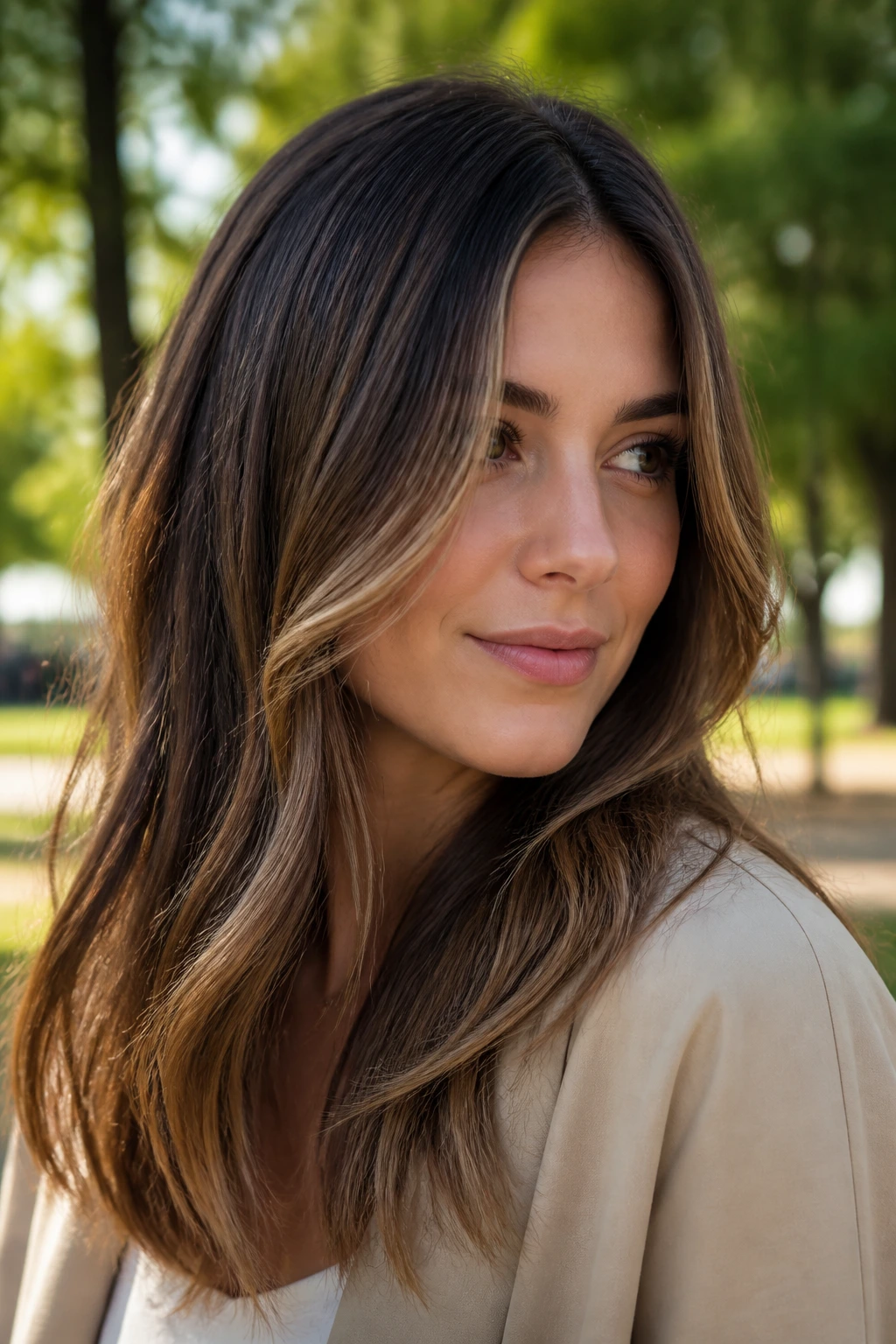
The best bronde never tries to erase the brunette under it. It keeps the brown, then lets a little light sneak through the front where your haircut already wants movement. That’s why the face-framing layers matter so much. They give the color a path.
If you want a version that grows out softly, reads rich in natural light, and still gives the face a lifted edge, this is the lane to stay in. Choose the tone that fits your undertone, keep the brightest pieces close to the front, and let the cut do some of the work. The result is quieter than a full blonde transformation, but in my opinion, that’s exactly why it lasts.
A good bronde on brunette hair looks like the hair has been spending time outside, not like it went through a complete identity change. That’s the version worth taking to your colorist next.