



Cool skin tones can make brunette bob lowlights look polished in a way warm, coppery browns never quite manage. The catch is that a bob shows every stripe of color. On a blunt chin-length cut, one bad ribbon can look like a marker line; one good ribbon, tucked under the surface, gives the hair that smoky depth that makes people lean in a little.
I like lowlights on brunettes with cool undertones because they do something highlights often can’t: they add shape without stealing shine. Ash brown, mushroom brown, blue-black, plum-brown, and cool mocha sit more cleanly against pink, rosy, or blue-leaning skin. They also behave better as the cut grows out, which matters more than most salon conversations admit.
If you’ve ever left the chair with a brunette bob that read orange in daylight, you already know the trap. The good versions are quieter, darker, and more deliberate, and they let the haircut do the talking.
Why These Brunette Bob Lowlights Work on Cool Skin Tones
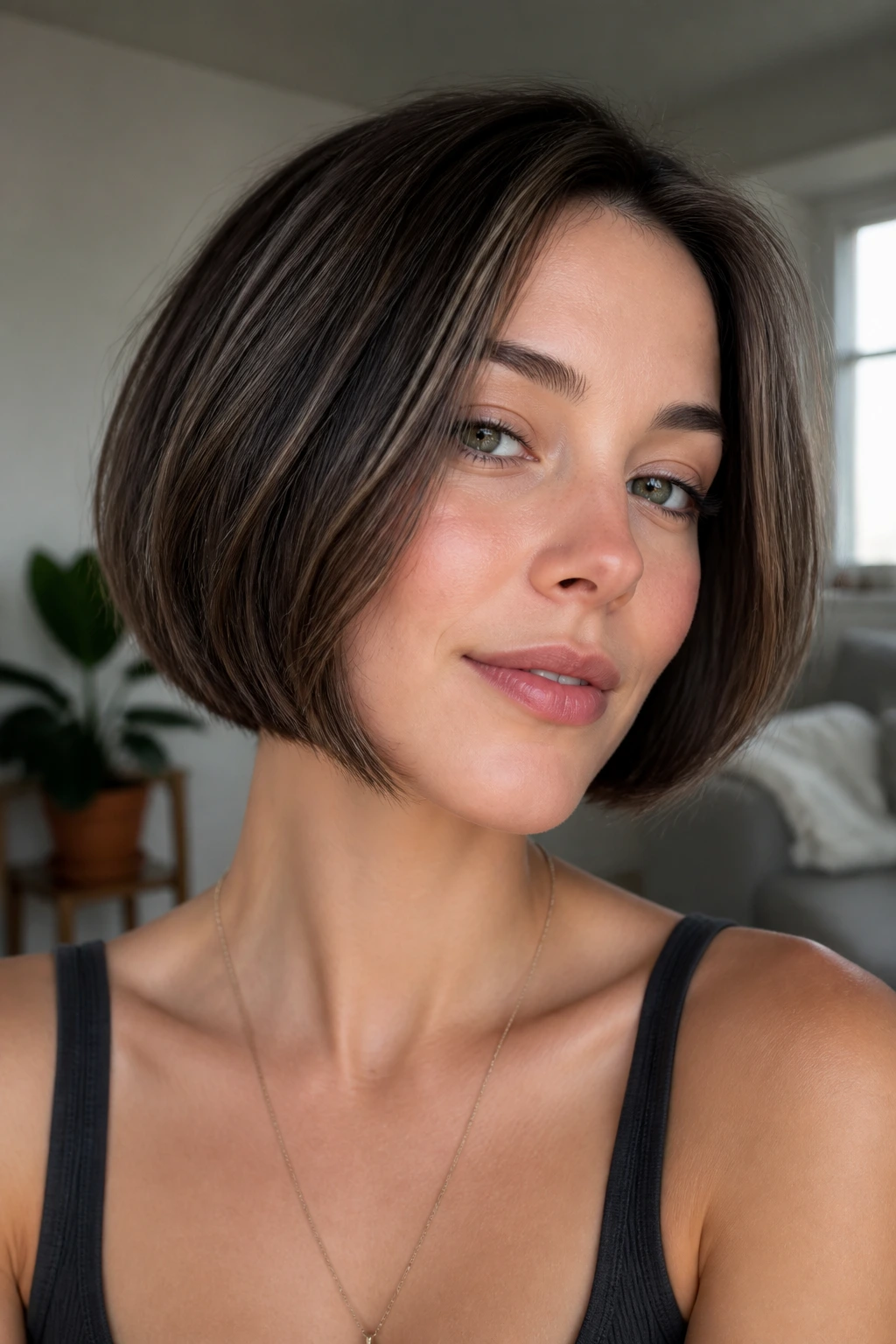
- Cool undertones stay cleaner: Ash, mushroom, slate, and blue-violet browns don’t pull the face yellow the way golden brown can.
- Bobs need shape, not noise: A one-length bob can look flat fast, and lowlights carve in depth without making the cut busy.
- Fine hair gets more body: Tiny darker threads make the ends look fuller, especially on chin-length and French bobs.
- Thick hair looks less heavy: Interior shadows stop a dense bob from turning into one solid block of color.
- Grow-out is kinder: Deeper pieces melt away more softly than chunky highlights, so you can stretch salon visits a little farther.
- The style reads expensive without trying too hard: Not because of the buzzword—because the color has restraint, and restraint looks better on short hair than spectacle ever does.
1. Smoky Espresso Veil
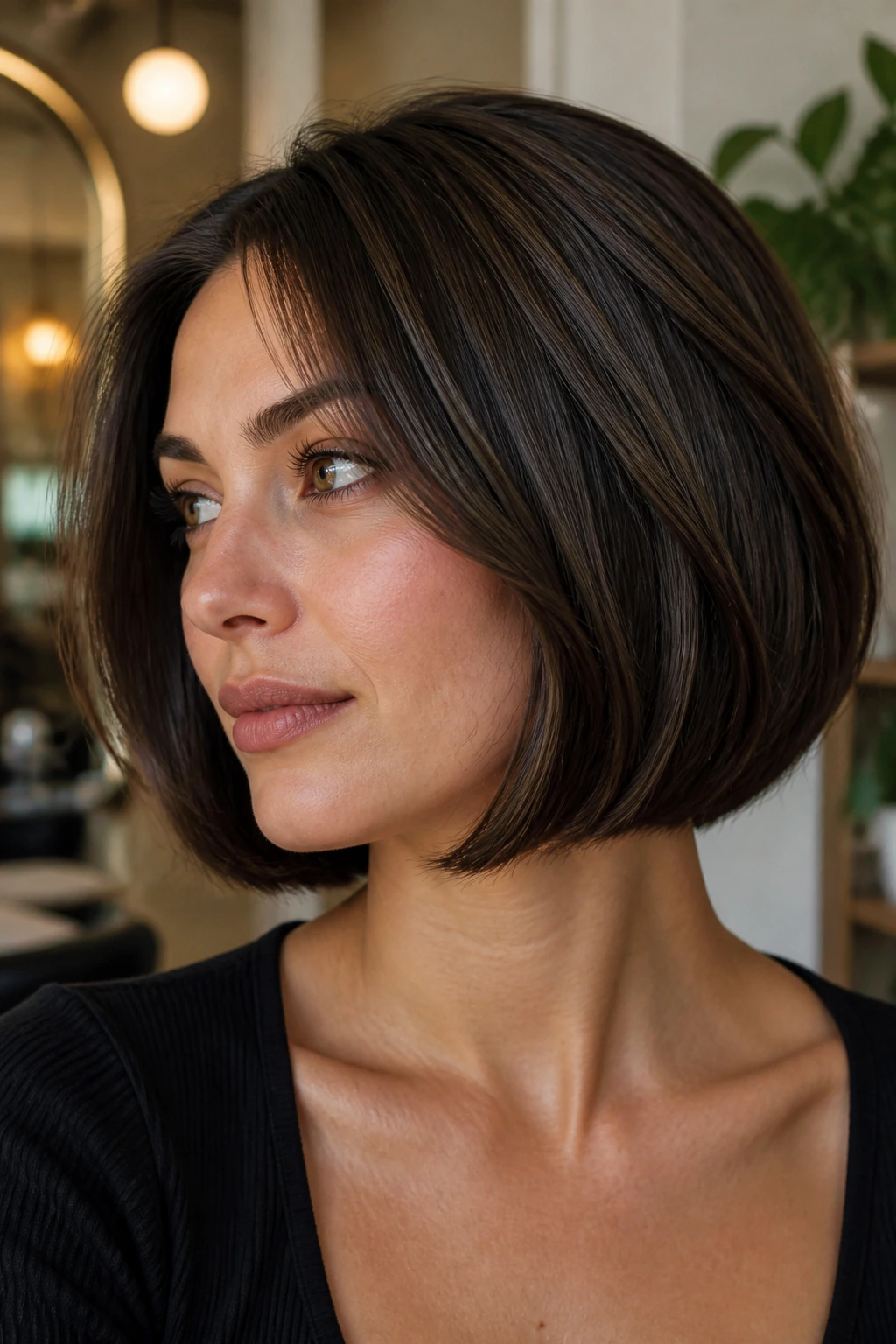
Smoky espresso is the move when you want a brunette bob to look deeper, not darker for the sake of it. The color sits one or two levels under a medium brown base, so the effect is a soft veil rather than a stripey contrast. On cool skin, that restraint matters. The finish stays sleek instead of reddish.
Why It Flatters a Cool Bob
The shade has enough depth to give a blunt bob some shape, but it still keeps the face open. I like it best when the colorist places the darker ribbons under the top layer and around the nape, where they show when the hair swings. That small placement trick keeps the cut from looking flat from the front.
- Best for chin-length and French bobs
- Works well on fine hair that needs visual thickness
- Ask for demi-permanent color, not permanent black-brown
My take: if your base is already a neutral brown, this is one of the safest lowlight choices in the whole group.
2. Mushroom Brown Ribbons
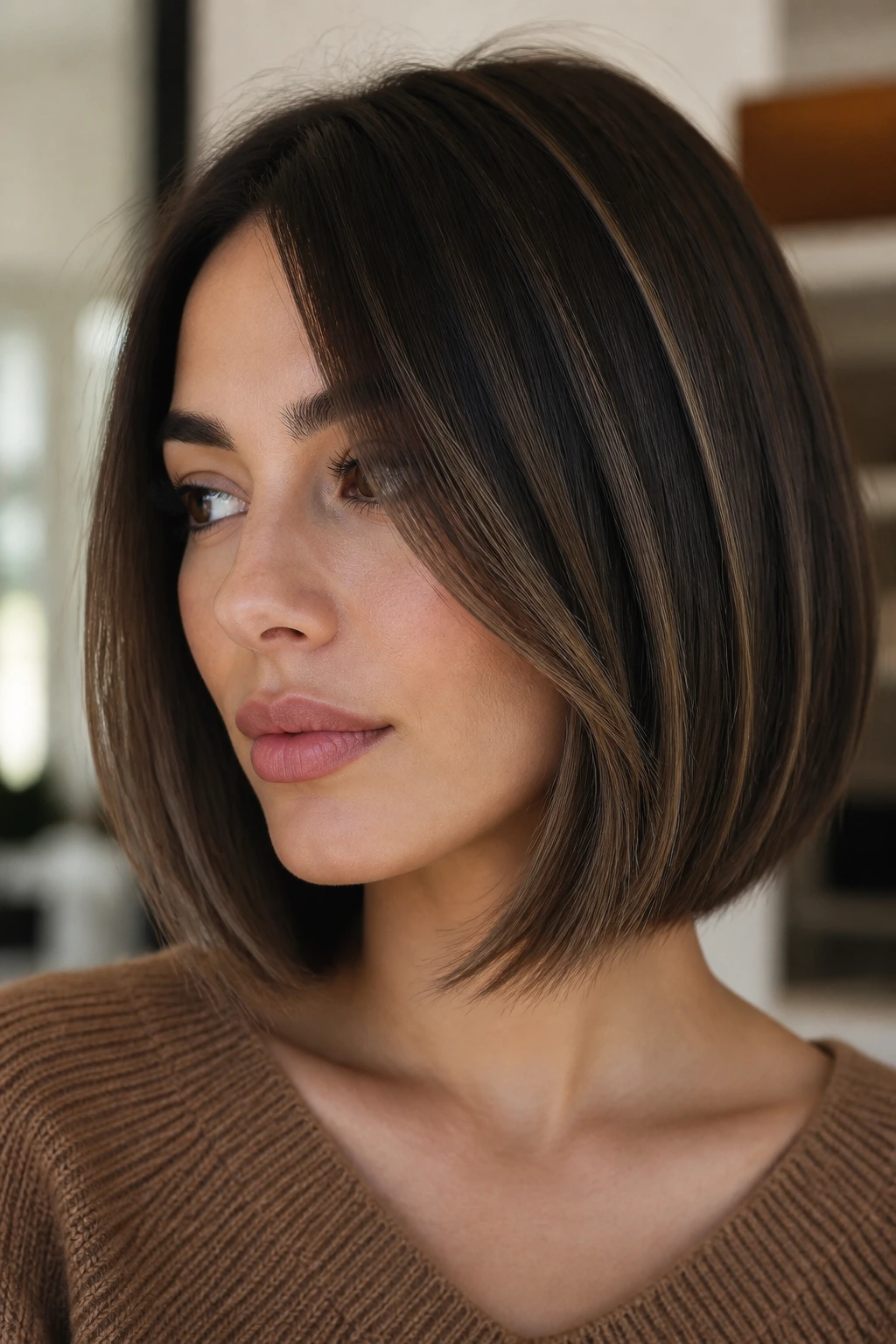
Mushroom brown is the shade I reach for when someone says, “I want brunette, but I don’t want warmth.” It has that gray-beige cast that plays nicely with cool skin tones and gives a bob a soft, modern haze. On straight hair, the ribbons look tailored. On wavy hair, they feel even more dimensional.
The key is placement. Too many mushroom pieces near the surface can make the cut look dusty, so the better version hides most of the depth in the interior and around the lower half of the bob. That keeps the ends from reading see-through without turning the whole style murky.
3. Ash Mocha Babylights
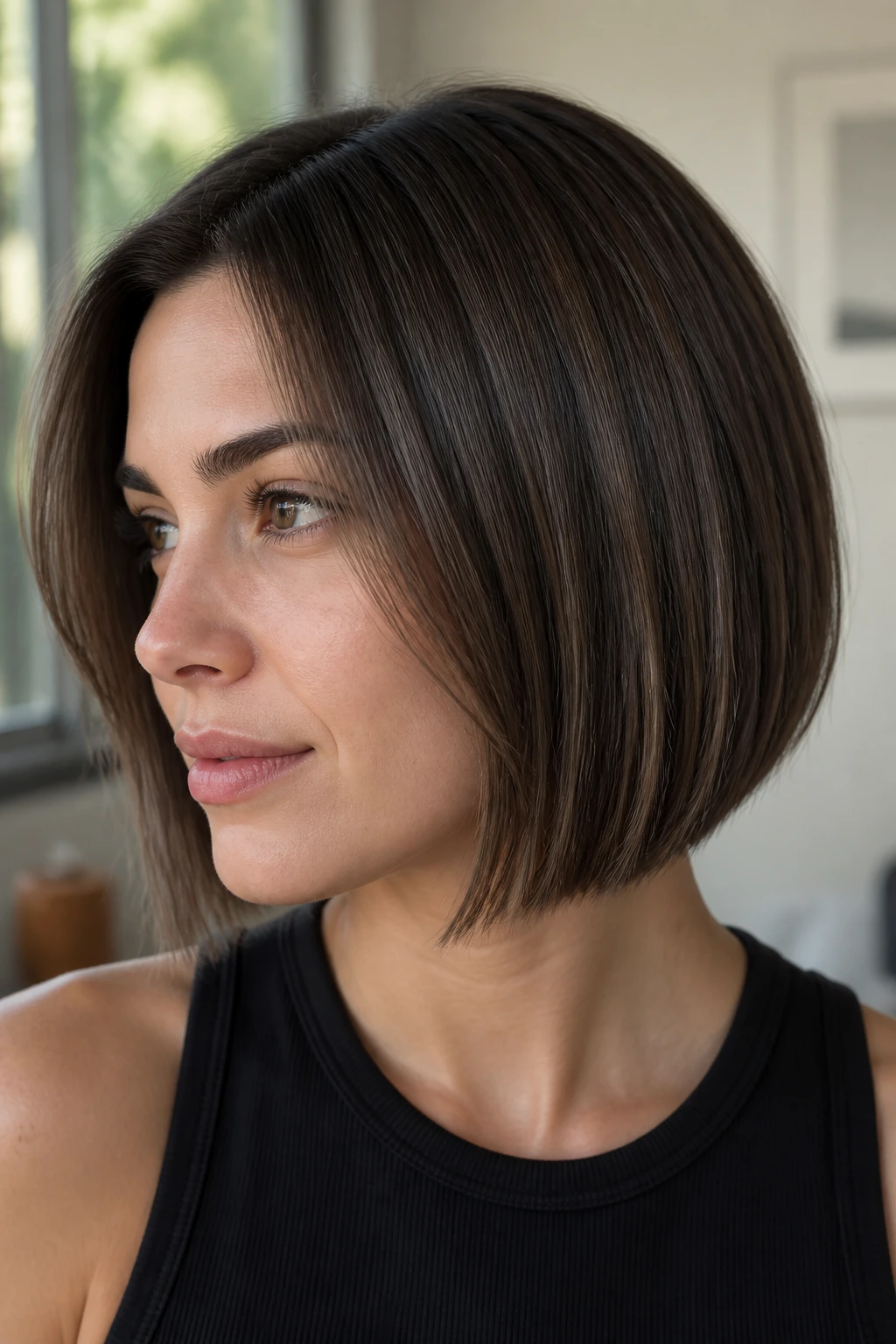
Can babylights count as lowlights? In a brunette bob, yes—when they’re darker than the base and painted with a whisper-light hand. Ash mocha babylights are tiny, feathered pieces that break up a solid brunette without announcing themselves. They’re especially good if you want your bob to move a little in daylight but still look professional in a mirror.
How to Use Them
The best version is barely visible until the hair shifts. Think micro-contrast, not streaks. Ask for pieces around the crown and through the mid-lengths, then keep the perimeter cleaner so the shape of the bob stays crisp. On cool skin, this shade avoids the orange tinge that can make a short cut look cheap fast.
4. Blue-Black Underlights
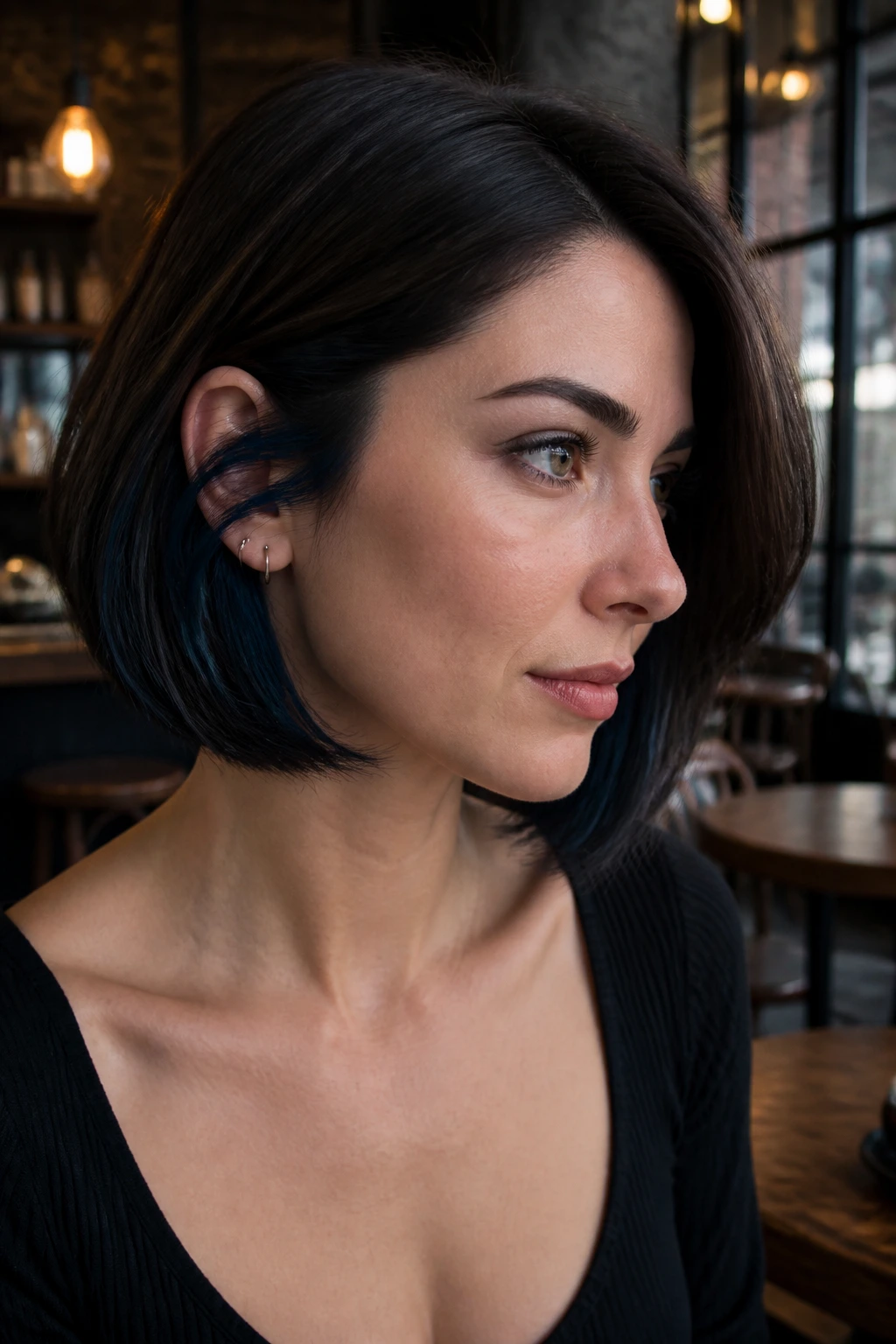
A blue-black underlight is not for people who want “soft.” It’s for people who like their brunette with a little edge. The color reads nearly black indoors, but outside it shows that blue sheen that flatters cool skin and keeps the face from looking ruddy. On a bob, the effect is dramatic in a controlled way.
The smartest placement is underneath the top layer, where the darker pieces peek through when the hair tucks behind the ears or flips at the jawline. That hidden dimension keeps the look moody without turning the whole bob into a helmet. If your haircut is blunt, this is a strong choice; if it’s highly layered, it can get busy fast.
5. Charcoal Contour Pieces
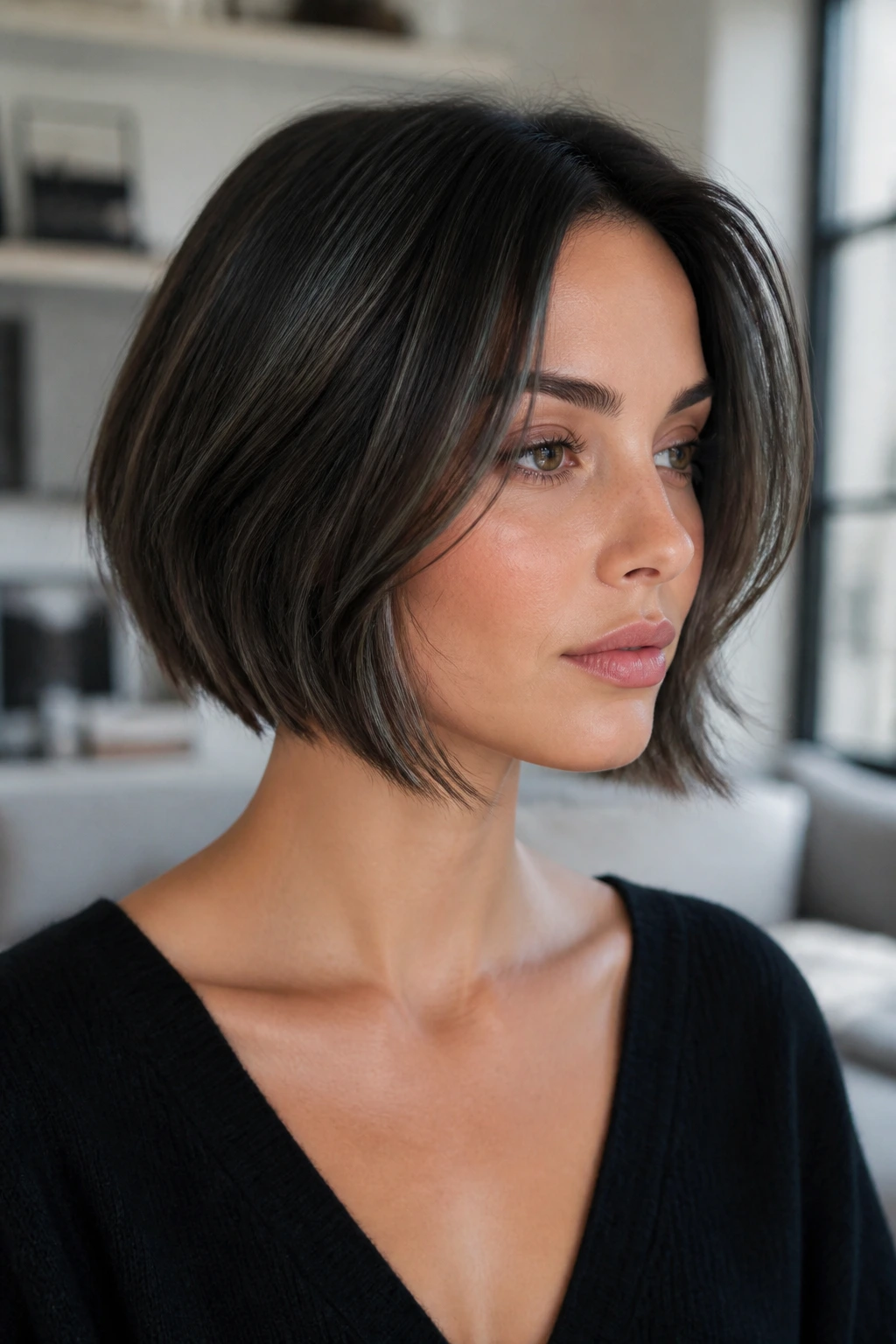
Charcoal lowlights are what you use when you want the bob to look sculpted. The shade is cooler and softer than true black, so it gives depth without hardening the face. On cool skin, it can make cheekbones look a little more defined, which is why I like it around the front and along the lower edges of the cut.
You do need restraint. A few contour pieces around the cheekbone and jawline are enough. If the colorist runs charcoal too high through the crown, the bob can lose its shape and feel heavy. The whole point is to frame, not bury.
6. Cool Chestnut Depth
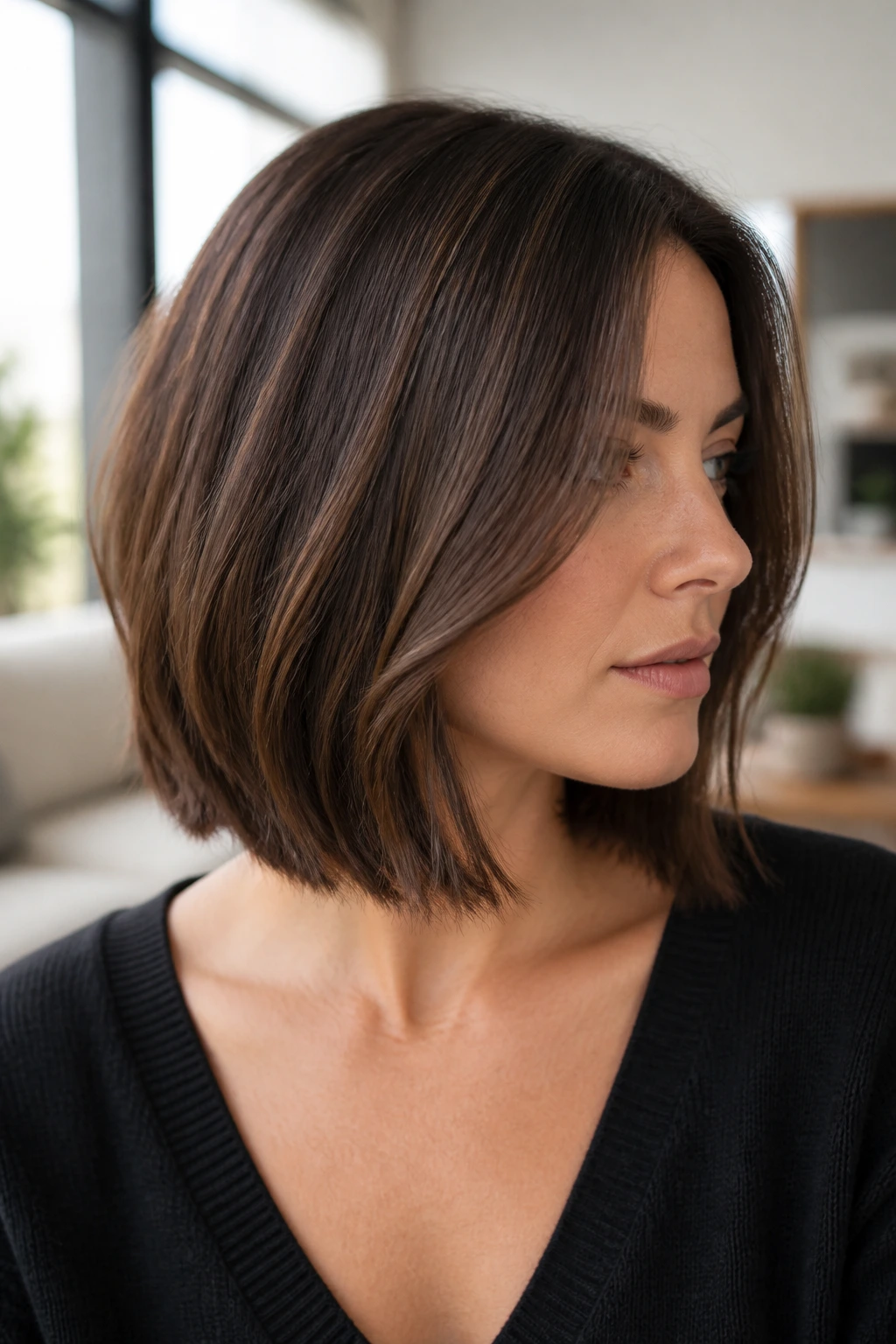
Chestnut usually sounds warm, which is exactly why people get nervous about it. But a cool chestnut—more brown than red, more smoke than cinnamon—can look excellent on cool undertones. It adds richness to a brunette bob without the copper flare that fights pink skin.
What Makes It Different
This shade works best on shoulder-grazing bobs and long bobs, where there’s enough length for the deeper pieces to move. It’s less about drama and more about making the hair look healthy and finished. If your natural color sits around level 5 or 6, this is a neat way to add dimension without crossing into warm territory.
7. Soft Taupe Shadow
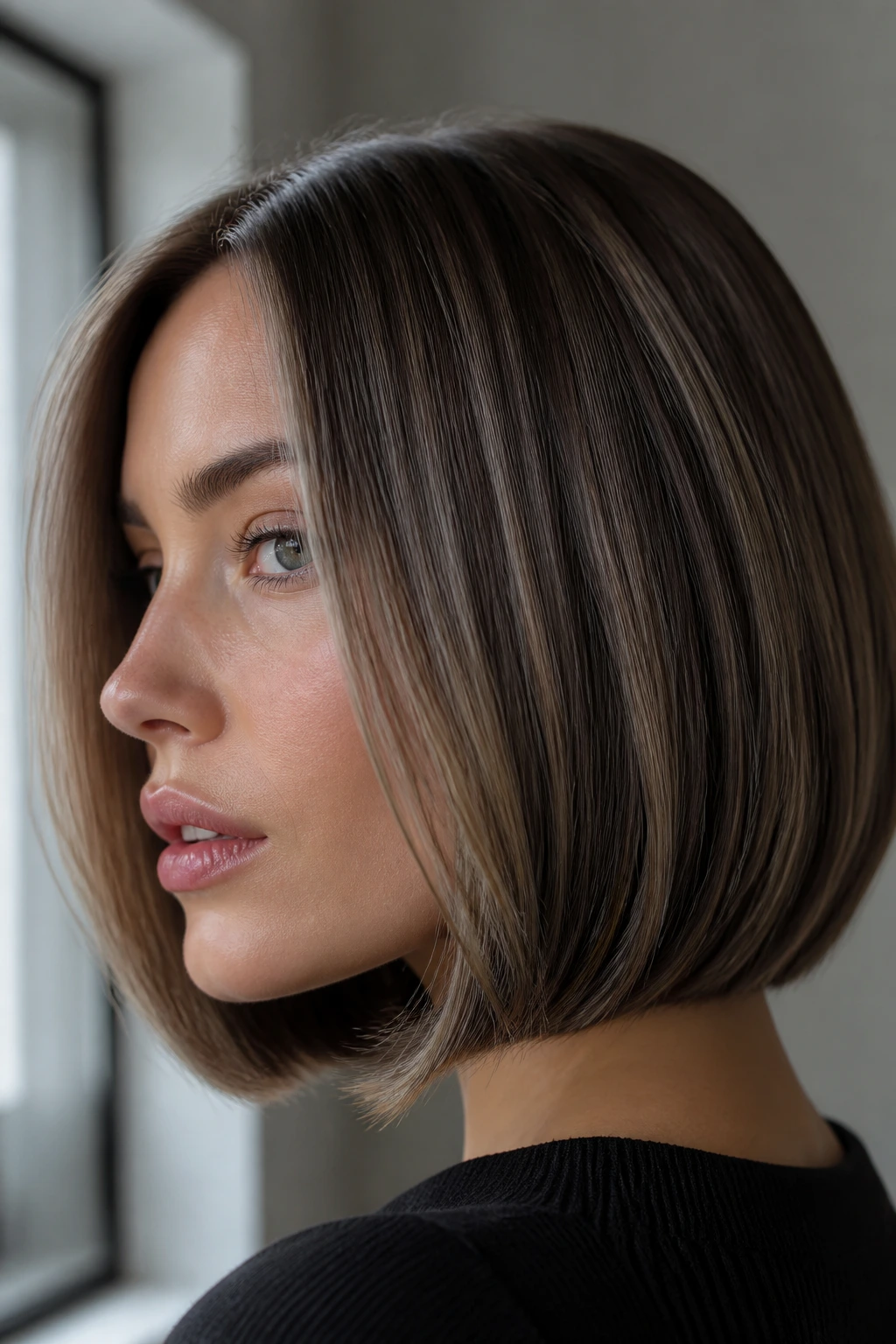
Soft taupe is a lowlight for people who want the bob to look expensive but not flashy. It sits in that odd little space between brown and gray, and on cool skin it looks especially clean. I like it on sleek bobs with minimal layering because the color does the work the cut isn’t doing.
The finish is subtle enough that it can almost pass as natural variation, which is a useful trick if you don’t want anyone clocking your color appointment from across the room. Put it through the interior and lower mid-lengths, then leave the surface a touch lighter. That contrast is what makes the shape breathe.
8. Dark Truffle Micro-Lowlights
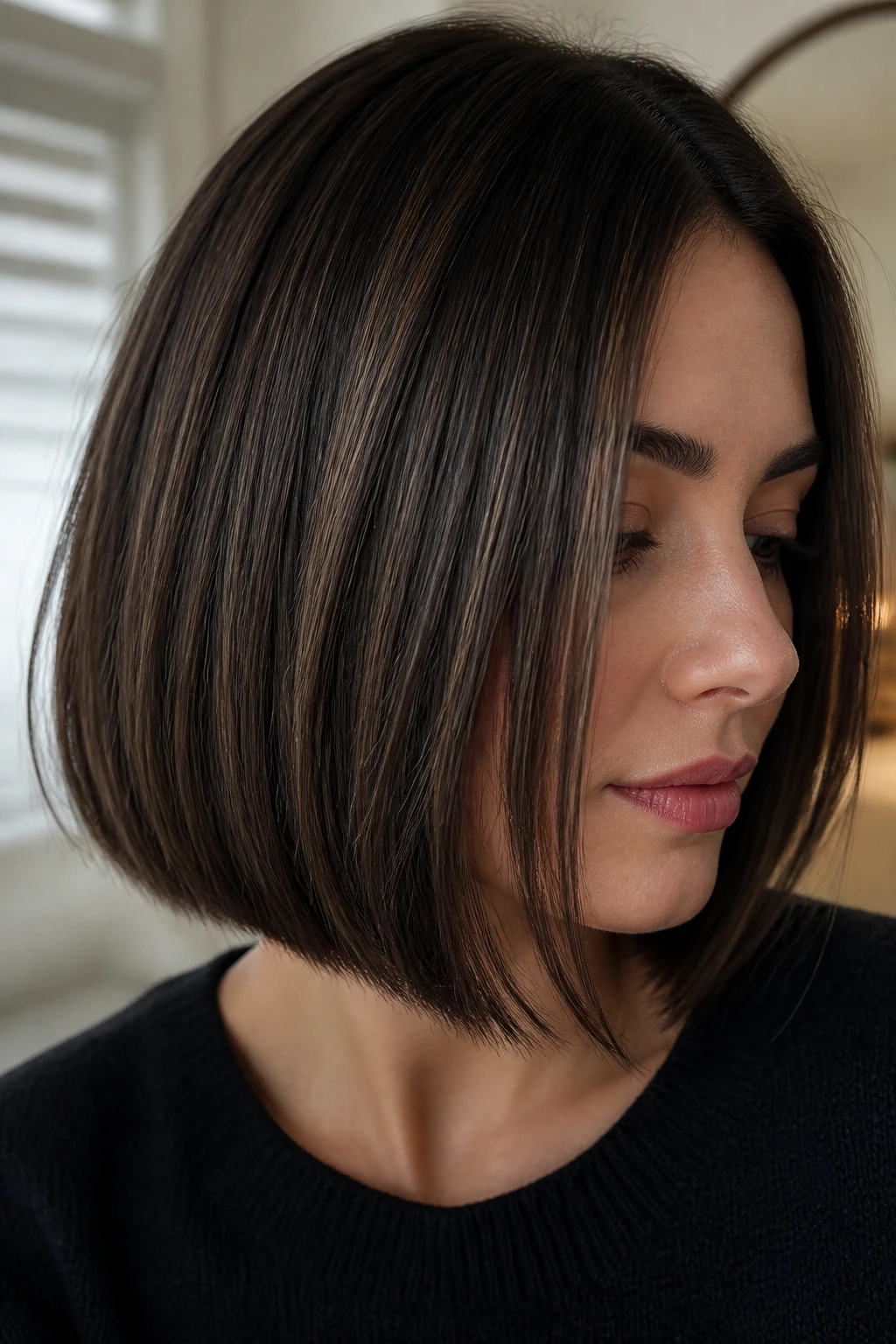
Dark truffle is the shade for brunettes who like contrast but don’t want it loud. It’s deeper than mocha, softer than black, and it has that cool cocoa finish that sits well next to rosy skin. On a bob, micro-lowlights in this tone can make the hair look denser at the ends, which is half the battle with shorter cuts.
The trick is size. Tiny, repeated pieces beat chunky foils here. You want the eye to register texture, not stripes. Best on fine to medium hair, and especially good when the bob is cut with a blunt bottom line.
9. Slate Brown Peekaboo Panels
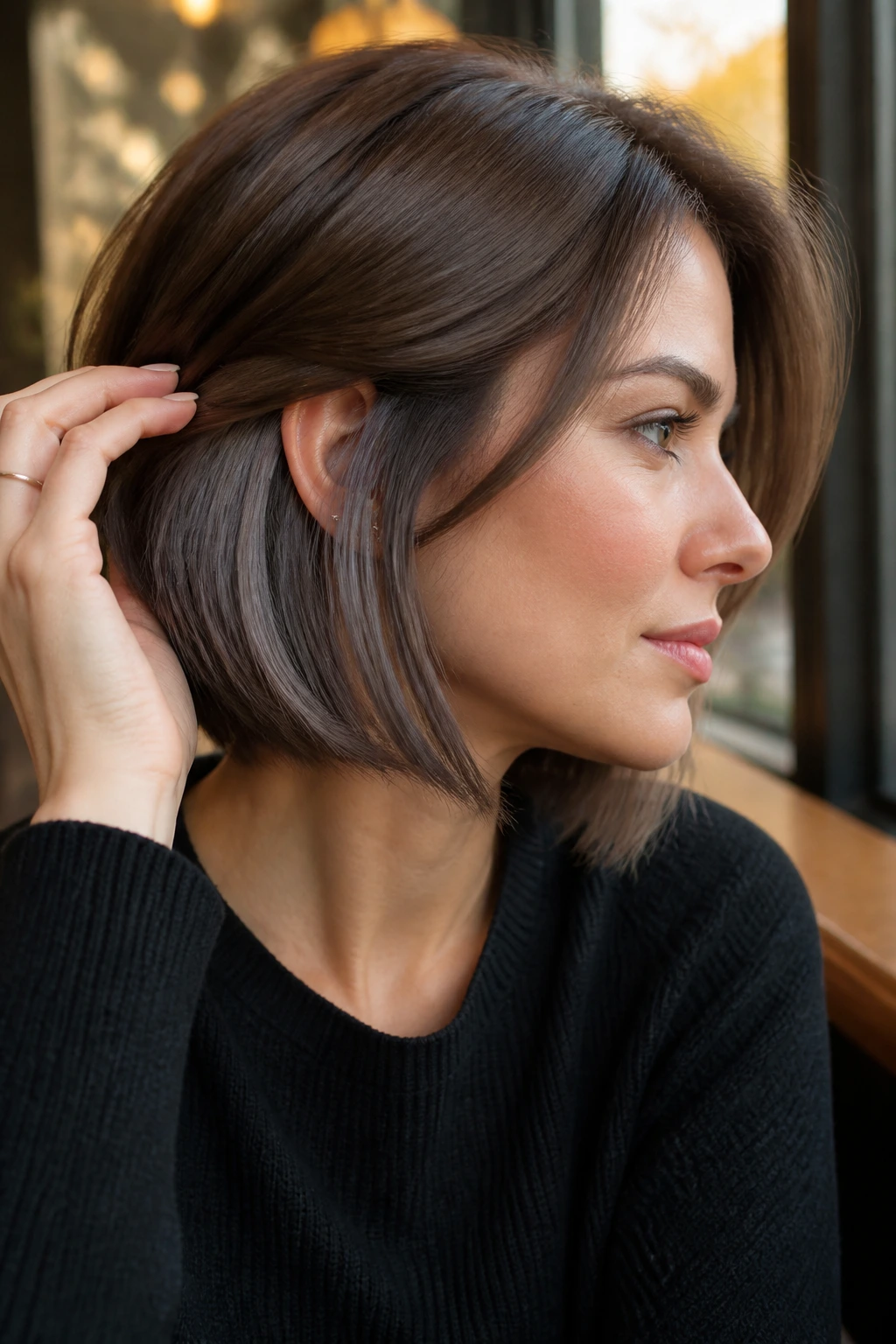
Slate brown is one of those shades that sounds understated and then somehow ends up looking far more interesting than expected. It has a smoky, slightly cool finish, almost like brown dusted with graphite. On a bob, peekaboo panels in slate brown add hidden movement every time the hair tucks behind the ear.
That hidden placement matters. A peekaboo effect lets the top layer stay clean while the inside carries the depth. It’s a smart choice for cool skin if you want dimension without creating the heavy bands that can make short hair look boxy.
Best For
- Angled bobs
- Side-parted bobs
- Hair that falls flat at the crown
10. Plum-Brown Undertones
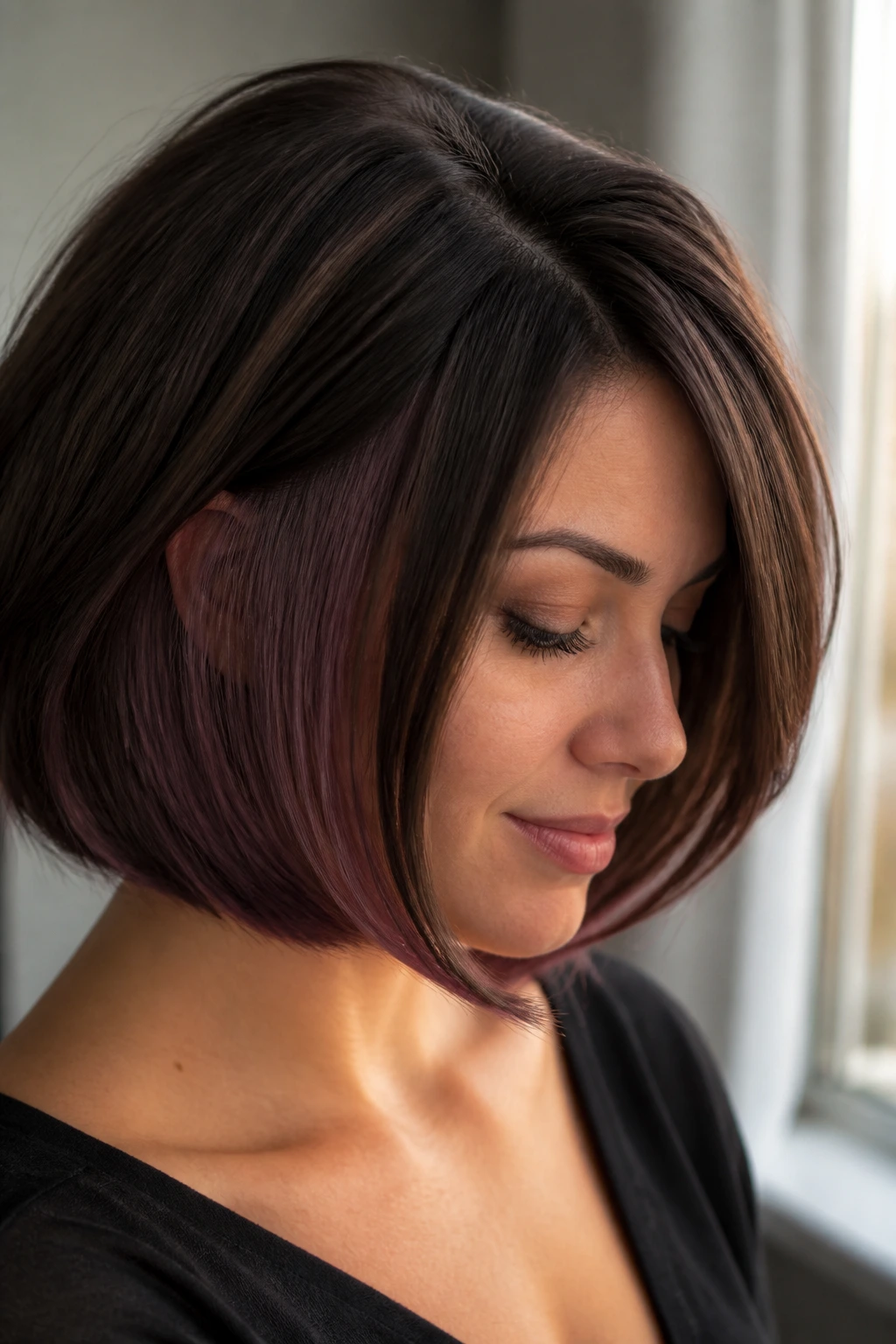
Plum-brown is for the person who wants brunette with a cool twist that isn’t icy. The violet note keeps the color in the cool family, and on fair or pink-toned skin it can make the whole face look less flushed. It’s one of the few darker shades that feels playful without turning red.
I like this best as an underlayer or a soft interior shadow. On a bob, too much plum can read theatrical if it sits on the surface. Keep it tucked under the shape, and the effect is richer, almost like the hair has a secret when it moves.
11. Graphite End Painting
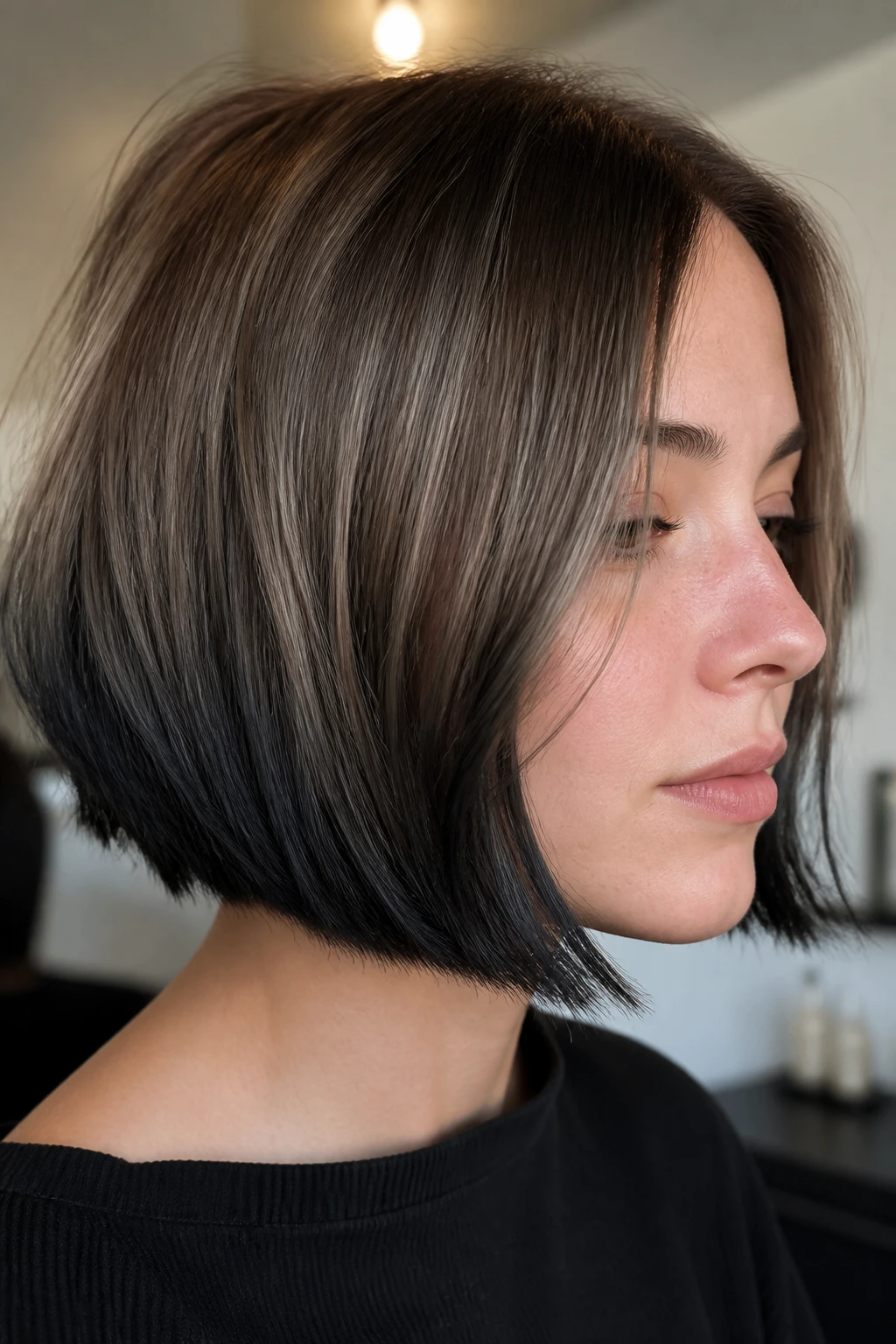
Graphite end painting does exactly what the name suggests: it darkens the ends of the bob in a very targeted way. That can sound small, but on short hair it changes everything. A lighter base with graphite-painted ends makes the cut look sharper and more deliberate, especially when the perimeter needs a little weight.
This is one of my favorite choices for cool skin because the tone stays clean and dry, not red-brown. It also works well on bobs that have been texturized with point cutting. The darker ends keep the layers from scattering visually.
12. Sable Root Smudge
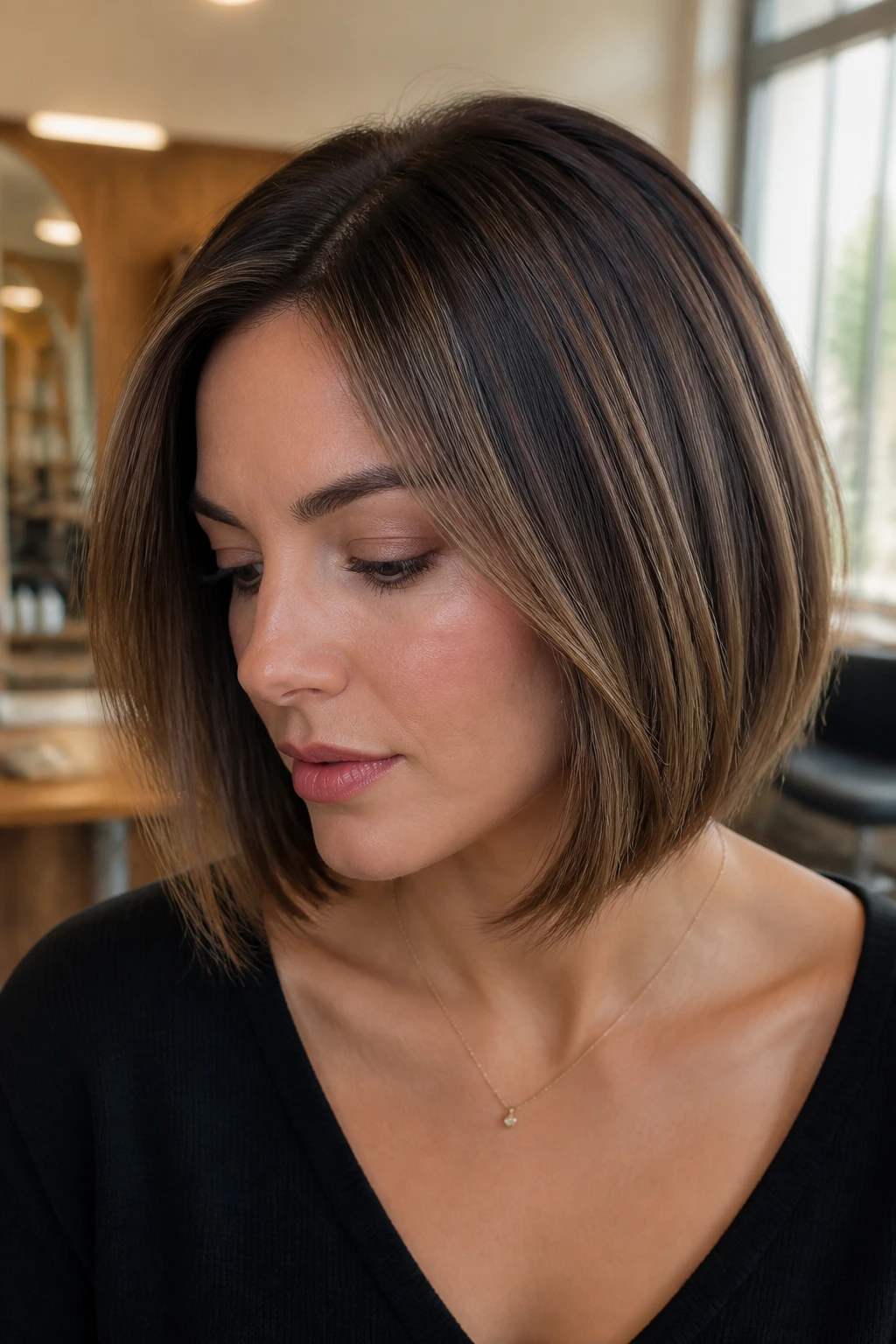
A sable root smudge is a quiet fix for anyone who wants the salon look to last longer than two washes. The darker root shadow softens the transition from scalp to mid-length, which is useful on a bob because the cut exposes the part and hairline more than longer hair does. On cool skin, sable reads neutral enough to stay polished.
The best part is how it grows out. There’s no harsh line. The color just loosens a little and keeps looking intentional, which is exactly what you want if your schedule is not built around constant touch-ups.
13. Reverse Money Piece
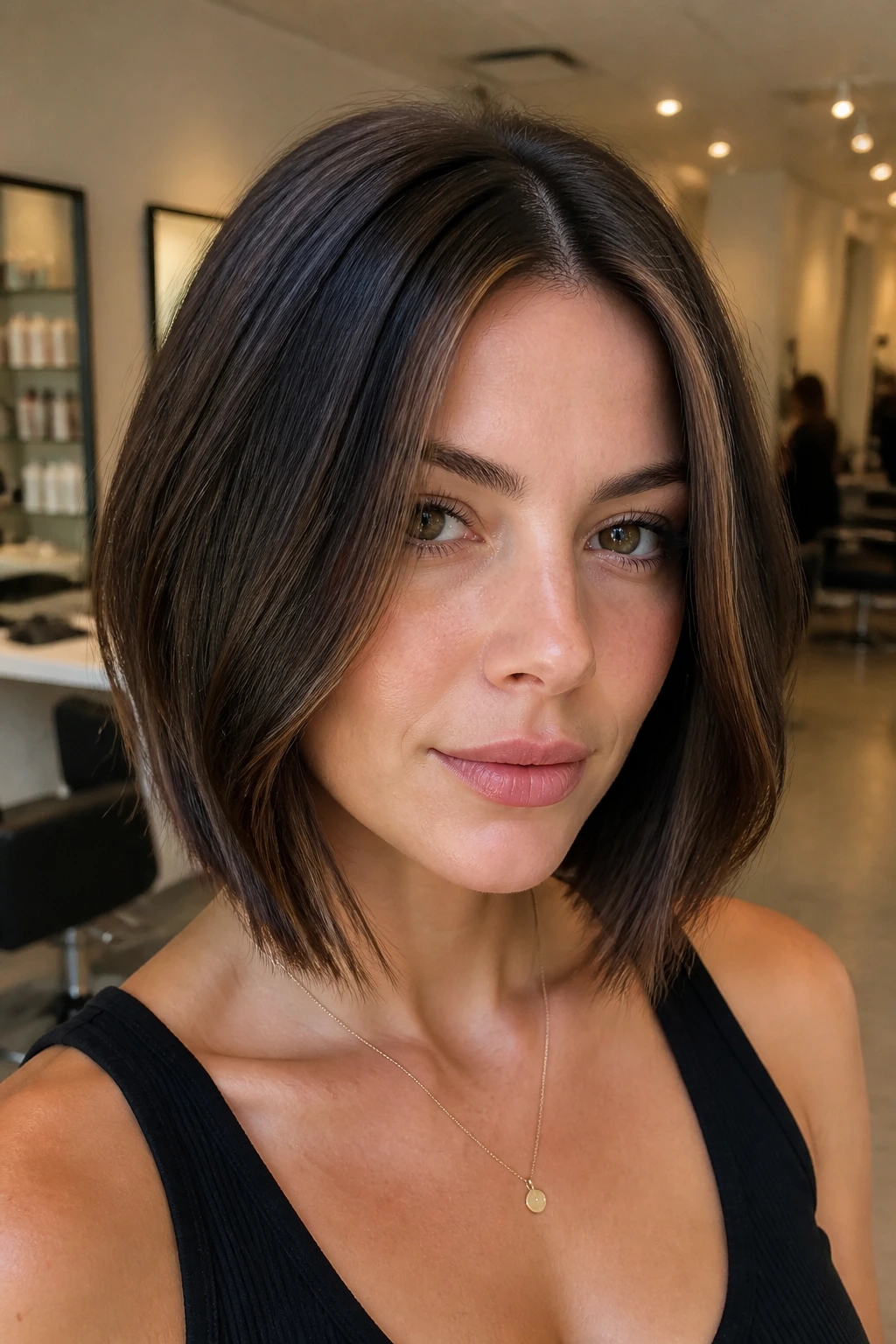
A reverse money piece sounds dramatic, but on a brunette bob it’s actually a smart little trick. Instead of lightening the front pieces, you deepen them slightly so the face gets framed by cool brown shadow. That can make blue eyes and pink-toned skin pop in a very understated way.
Why It Works
The front corners of the bob are where the eye lands first. If those strands are a shade deeper than the rest, the haircut gains shape without needing more layering. It’s a good option when you want a face-framing effect but don’t want the maintenance or brightness of a traditional money piece.
14. French Bob with Ash Veil
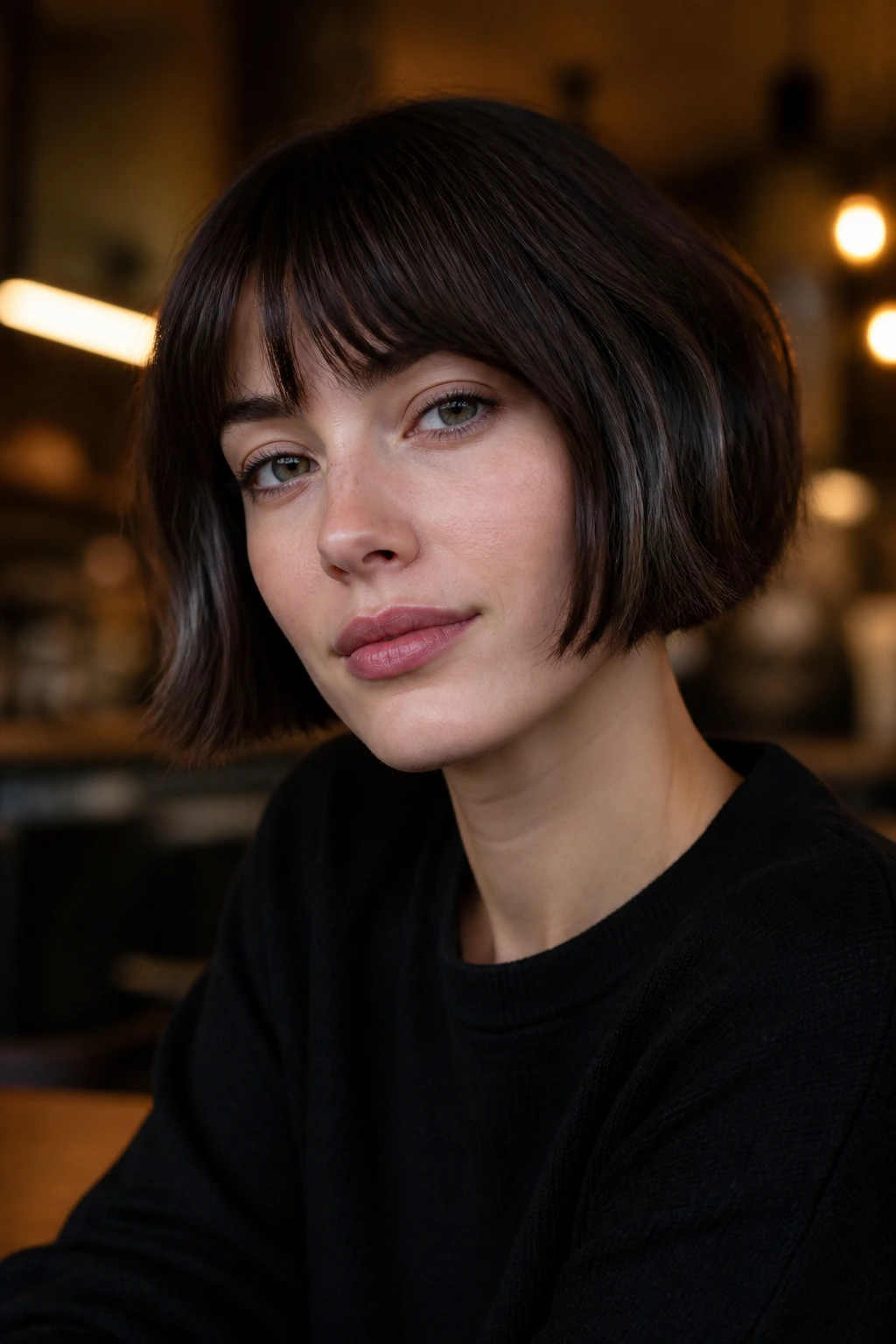
A French bob already has attitude, so it doesn’t need much help. Add an ash veil—soft, cool lowlights through the interior—and the whole cut looks like it belongs in a good café with bad lighting. That muted dimension flatters cool skin because it never tilts orange.
The best version keeps the fringe clean and the lowlights tucked just under the surface. That way the shape stays crisp, but the surface doesn’t look flat. If you like a bob that feels tailored rather than overworked, this is a strong one.
15. Italian Bob with Espresso Depth
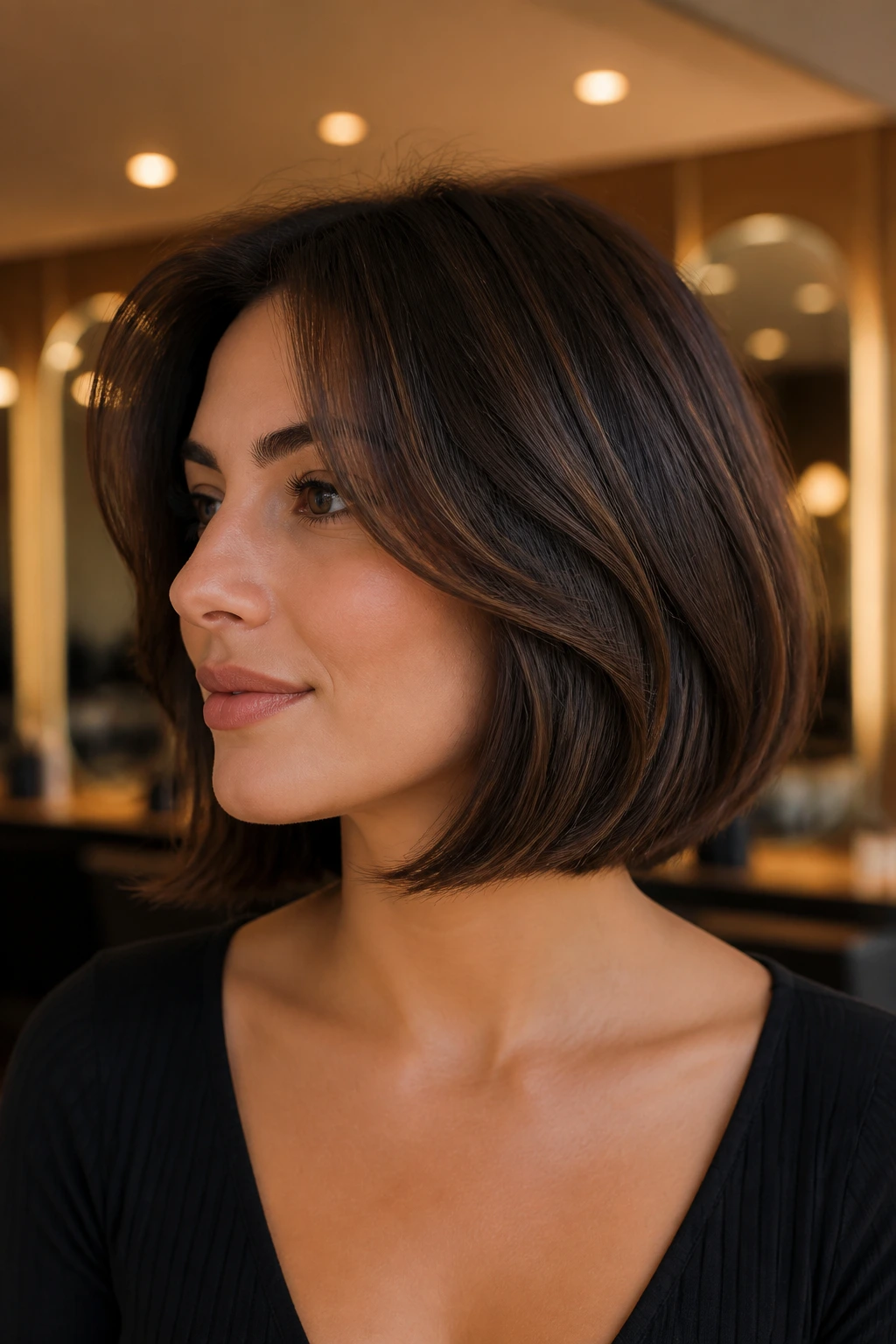
The Italian bob has fullness built in, and espresso depth reinforces that shape instead of fighting it. The darker pieces create a glossy, heavy-looking base that looks especially good on cool undertones. I like this when the cut has a slight bend and a lot of movement at the ends.
How to Wear It
Ask for the lowlights to be placed mostly through the mid-shaft and underneath the crown. That gives the bob body without turning the top into one dark cap. The result is polished, a little glamorous, and far less severe than straight-up dark brown.
16. Curly Bob with Smoke-and-Mocha Mix
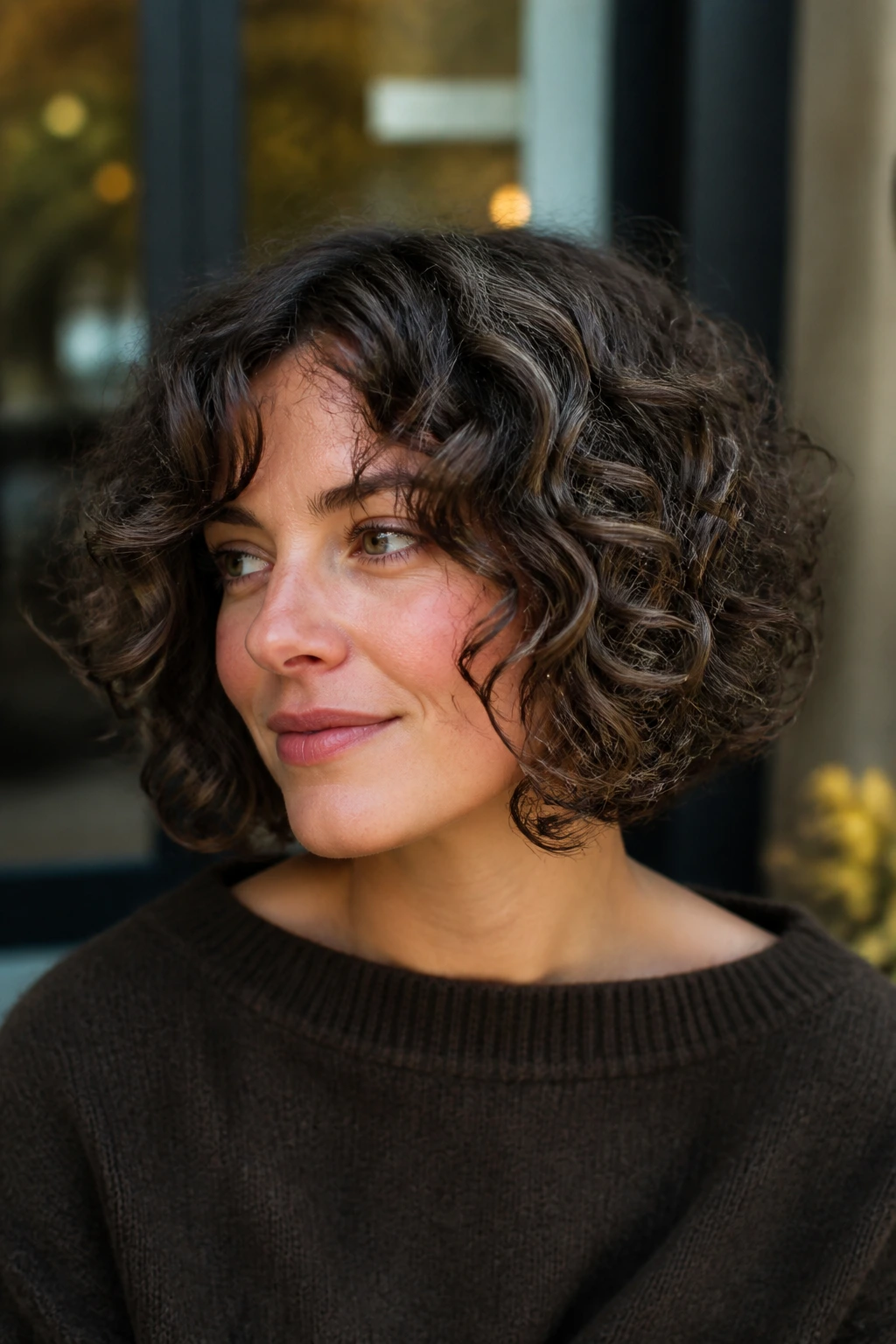
Curly bobs can eat color if the placement is wrong. That’s why a smoke-and-mocha mix works so well: the lowlights sink into the curl pattern and show up as shadow, not stripes. On cool skin, the cooler brown keeps the texture from reading orange in bright light.
The best part is movement. Every curl picks up the darker pieces differently, so the hair looks fuller from almost every angle. If your bob is curly or wavy, ask for painted panels rather than rigid foil blocks. The curl needs room to breathe.
17. Blunt Bob with Shadowed Perimeter
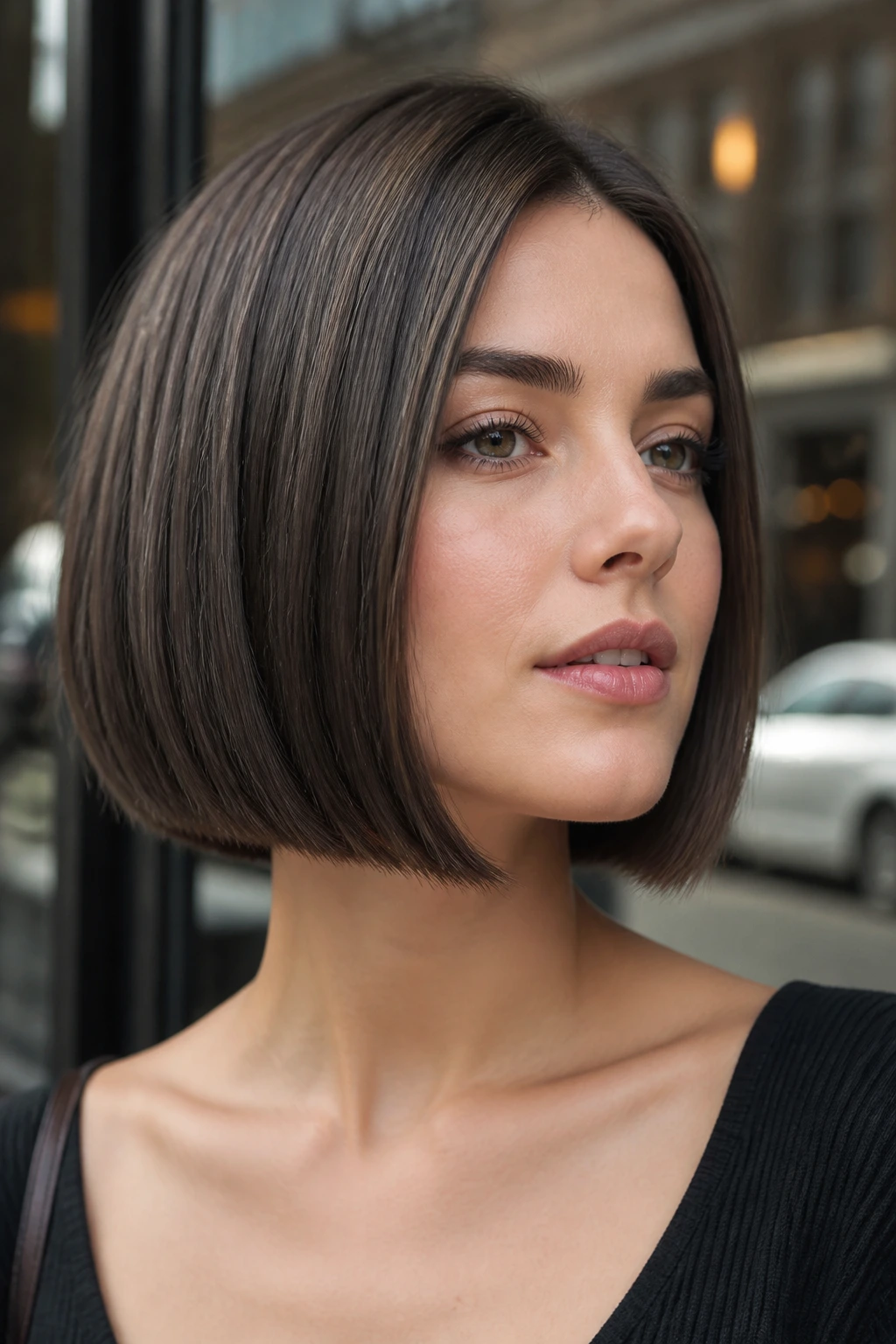
A blunt bob and shadowed perimeter are a beautiful pair. The cut gives you a strong line; the lowlights make it feel richer and less severe. Cool skin tones benefit here because the shadow sits in the brown family without turning reddish at the edges.
This look works because the perimeter is the thing everyone sees. Darkening it slightly creates a frame around the face and makes the ends look thicker. It’s subtle, but on a blunt bob, subtle is the entire point.
18. Choppy Bob with Feathery Lowlights
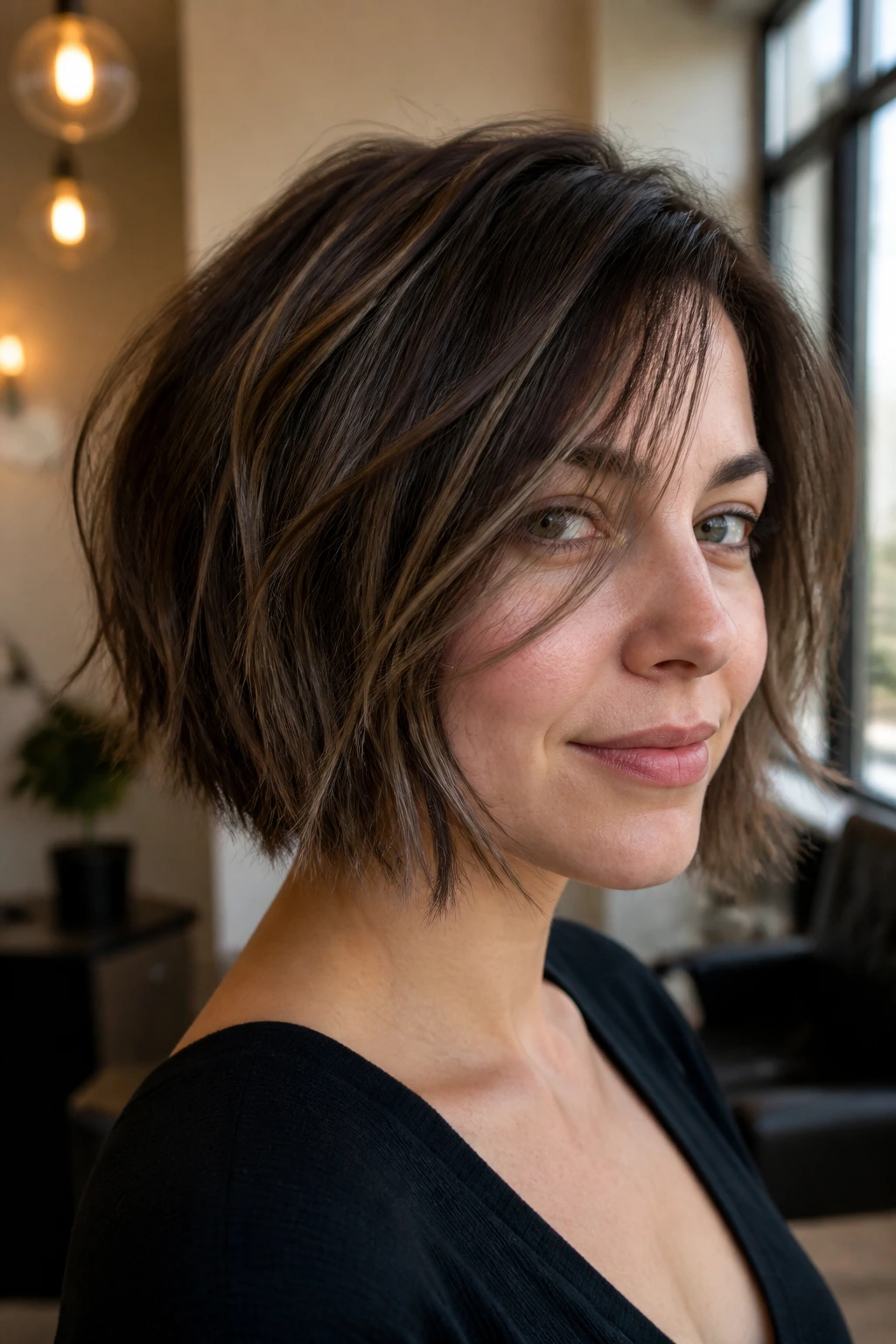
Choppy bobs can turn messy fast if the color is too flat. Feathery lowlights keep the cut from looking disconnected, because the darker pieces travel with the texture instead of against it. On cool skin, ash-brown and smoky mocha threads are the safest bets.
Unlike the blunt styles, this one can handle a little more variation in placement. Let the color slip through the interior layers and a bit around the face. The cut already has movement, so the lowlights just need to echo it.
19. Angled Bob with Jawline Depth
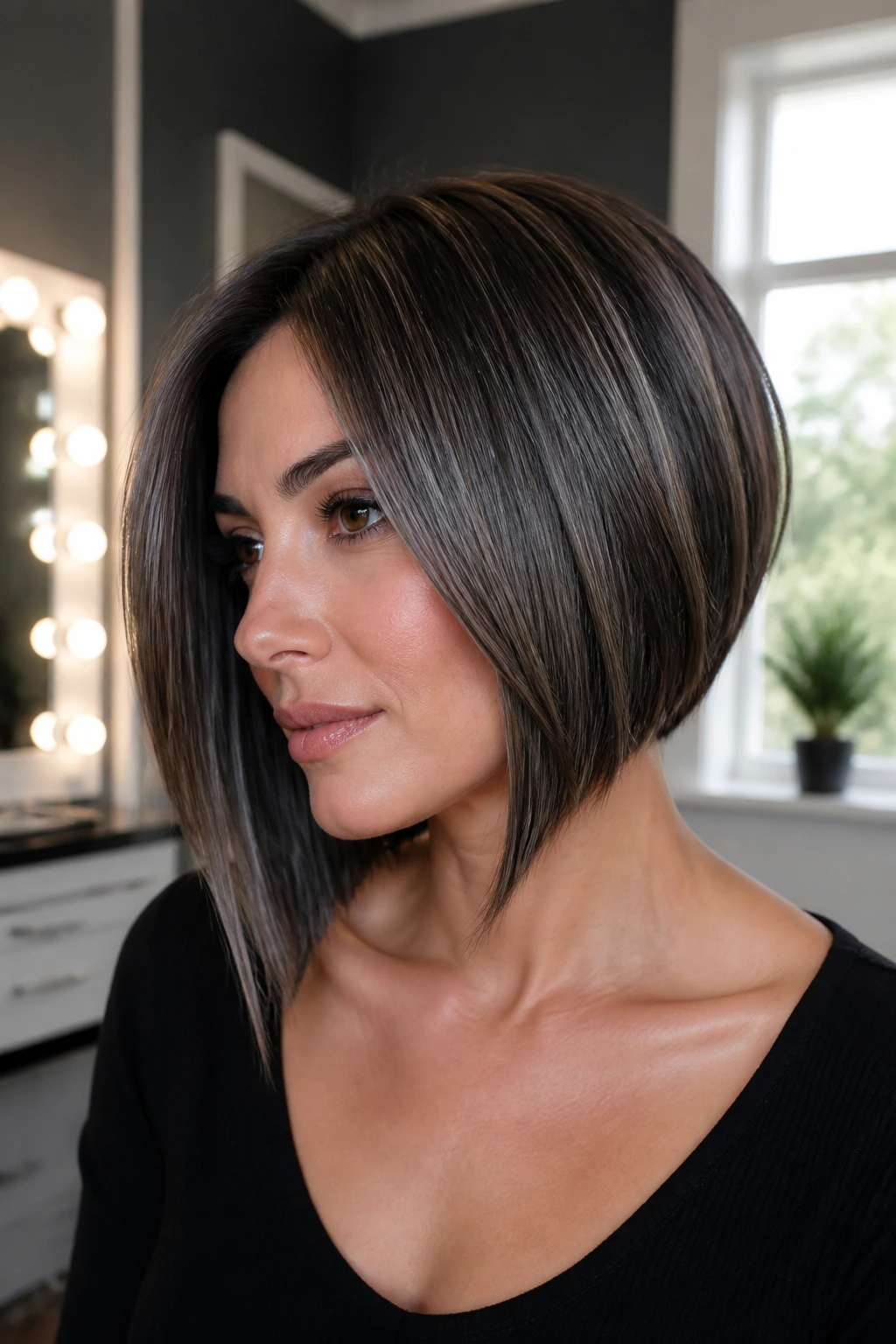
An angled bob gets a lot of its power from the line running toward the jaw. Deeper brunette pieces near the front corners make that line look even cleaner. On cool skin, the tone should stay in ash or graphite territory so the face doesn’t pick up unwanted warmth.
What to Watch For
If the front is too dark, the bob can drag the face downward. If it’s too light, the angle disappears. The sweet spot is a cool brown that adds shadow right where the haircut needs it and nowhere else. That’s the whole trick.
20. Graduated Bob with Cool Brown Paneling
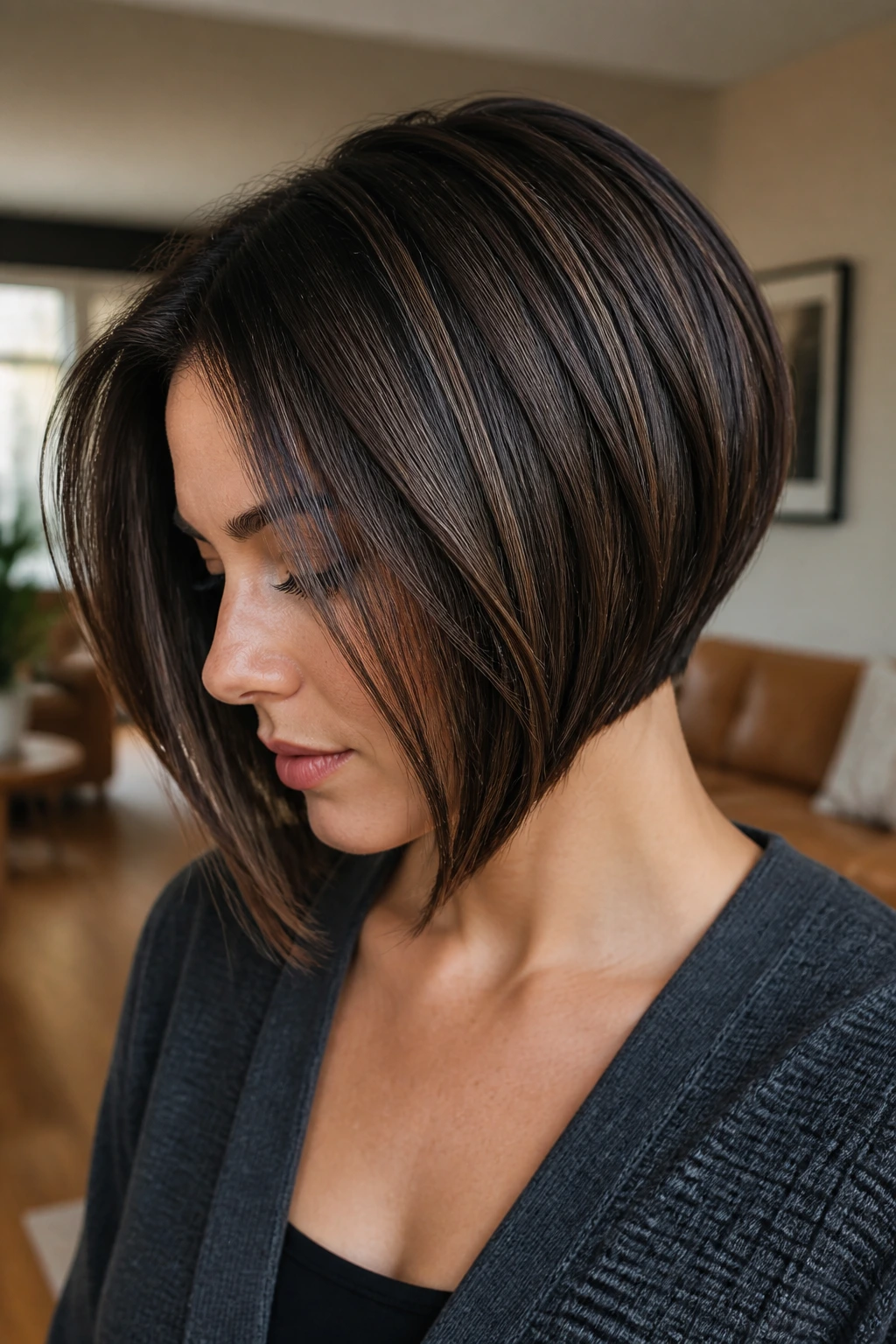
A graduated bob has stacked shape in the back, and that gives the colorist room to play. Cool brown paneling through the nape and lower crown emphasizes the graduation without making the top bulky. The result is tidy, full, and very good at showing off the neckline.
I like this look for cooler skin tones because the tones stay discreet. You see dimension before you see color, and that’s a nicer effect on a short cut. It looks constructed, not painted.
21. Collarbone Bob with Mushroom Melt
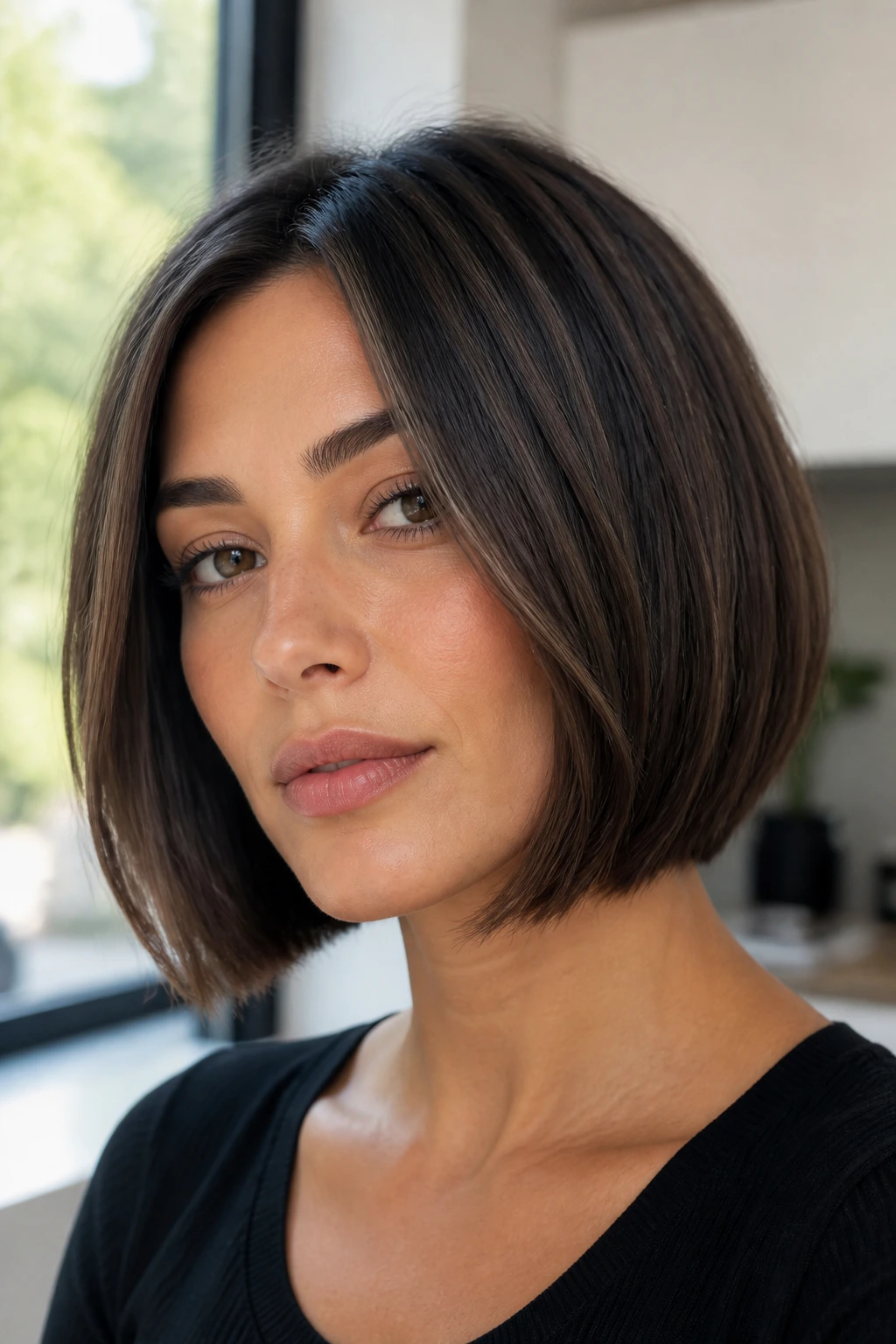
A collarbone bob has enough length for a color melt to actually matter. Mushroom brown lowlights blend from the upper layers into the ends, which keeps the hair from feeling chopped off at one point. On cool skin, that soft gray-brown mix keeps the whole style quiet and cohesive.
This is the version I’d recommend if you want some movement but don’t want the maintenance of high contrast. The mushroom shade gives the mid-lengths a soft blur, and the ends keep their shape instead of looking stringy.
22. Chin-Length Bob with Ash Lace
Ash lace is my nickname for very fine, delicate lowlights that look almost like shadow stitching through the hair. On a chin-length bob, that tiny placement matters because every strand is visible. Cool skin benefits from the ash tone, which avoids the rusty cast that can show up fast on short hair.
The style is especially good if you like a bob that looks airy. There’s depth, but it doesn’t feel heavy. It’s a smart way to make a short brunette cut look expensive without making the color obvious.
23. Pixie Bob with Deep Brunette Contours
A pixie bob needs a different kind of color map because the haircut sits so close to the head. Deep brunette contours around the sides and nape give the shape definition without swallowing it. On cool skin, keep the shade neutral-cool and avoid red bias, which can look harsh on a shorter cut.
Best Use Case
This is a strong move if your hair is fine and you want the cut to look fuller. The darker contour pieces create the illusion of thickness where the hair lies flat. It’s a small trick, but short hair lives and dies by small tricks.
24. Wavy Bob with Nape Shadow
Waves need room to move, and a nape shadow gives them that room. By keeping the deepest brown underneath, the top layer stays soft while the underside adds weight. On cool skin, the shadow should lean smoky rather than chocolatey, so the face stays clean.
This is one of those styles that looks better from the side than people expect. The bob swings, the darker underside peeks out, and suddenly the whole shape feels more alive. The color never shouts. It just does the job.
25. Gray-Blending Cool Lowlights
If you’re blending gray into brunette, cool lowlights are the least fussy path. Ash brown, slate, and mushroom tones help the silver strands look deliberate instead of random. On a bob, that matters because the shorter cut shows the transition at the temple and hairline right away.
Why It’s Worth Considering
You don’t need to hide every gray strand to make the color work. Sometimes the better move is to weave in enough cool depth that the silver reads as part of the finish. That gives the bob a softer grow-out and a more natural-looking texture.
26. Violet-Brown Brunette Lowlights
Violet-brown is a clever choice when cool skin needs a little richness without warmth. The violet note keeps the brunette in cool territory, and the finish can make the hair look glossy under indoor light. On a bob, that subtle purple-brown undertone keeps the cut from falling flat.
I like this on people who get bored fast with straight ash brown. It’s still wearable, still cool, but it has a little more personality. Keep the placement restrained and it reads refined; go too heavy, and it can feel theatrical.
27. Soft Brunette Lowlights for Fine Hair
Fine hair on a bob can look sparse at the ends, which is why soft lowlights matter more than people think. Slightly darker strands create the illusion of density without forcing the cut into heavier layers. Cool skin tones usually do best with ash mocha or taupe, not warm chestnut.
The important thing is spacing. If the pieces are packed too tightly, the whole bob starts to look muddy. Leave some lighter brunette between the shadows and the cut keeps its air.
28. Dense Brunette Lowlights for Thick Hair
Thick hair is a different animal. Dense brunette lowlights help break up bulk, especially around the back and lower sides of a bob. On cool skin, I’d stick with smoky espresso or graphite brown so the hair stays crisp instead of brassy.
Where to Place Them
Focus on the interior and the underside first. That lets the top layer reflect light while the hidden sections build depth. The bob ends up looking lighter in movement, even if the color is actually deeper.
29. High-Contrast Brunette Bob Lowlights
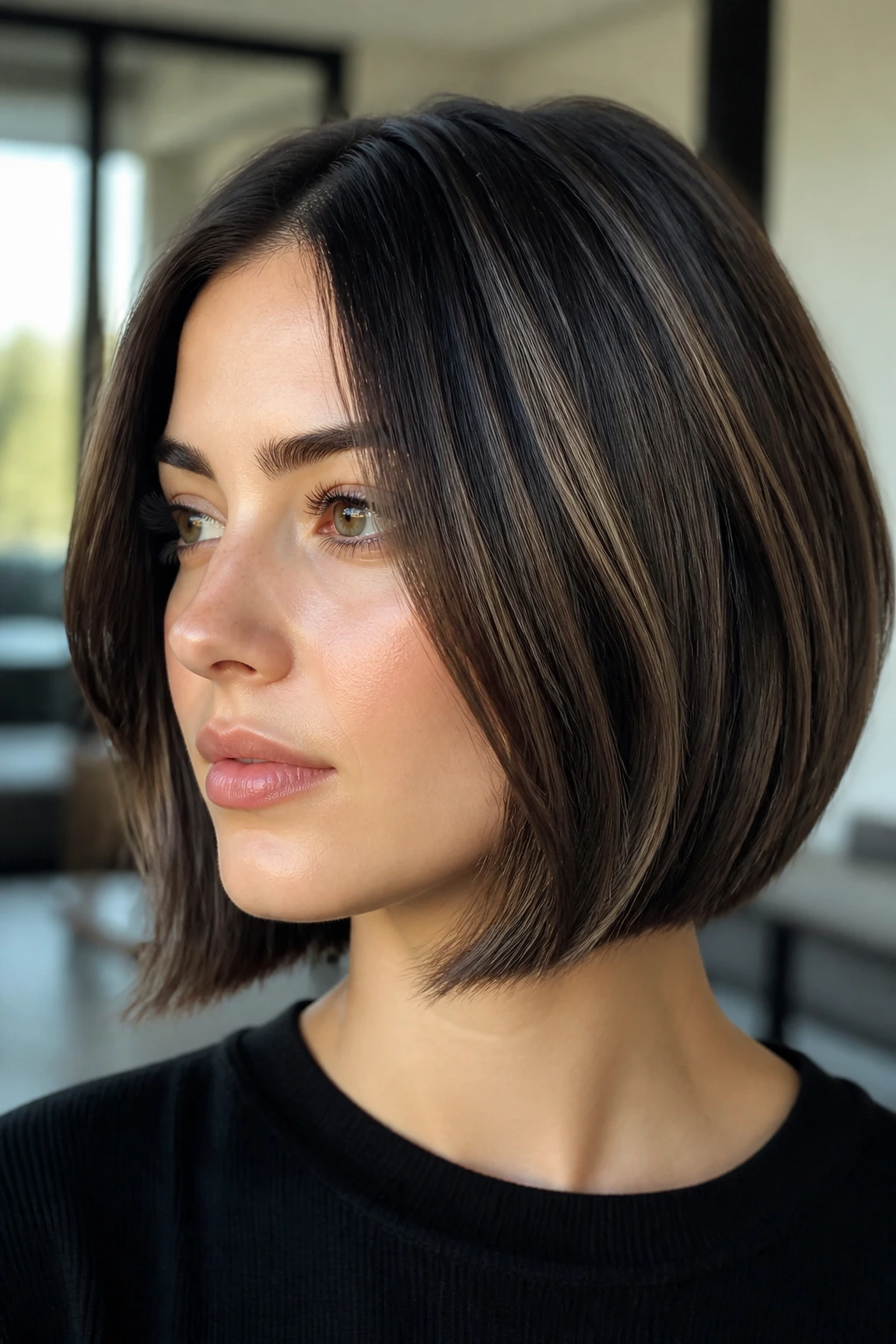
Sometimes subtle isn’t the answer. High-contrast lowlights can make a brunette bob look sharper, especially if the base color is already medium brown and cool. The contrast should still stay within the cool family—think espresso against mushroom brunette, not mahogany against beige.
This look is best when the cut itself is simple. A clean line gives the contrast a place to land. If the haircut is already heavily layered, the color can feel too busy, and nobody needs that.
30. Low-Maintenance Dimensional Brunette Bob
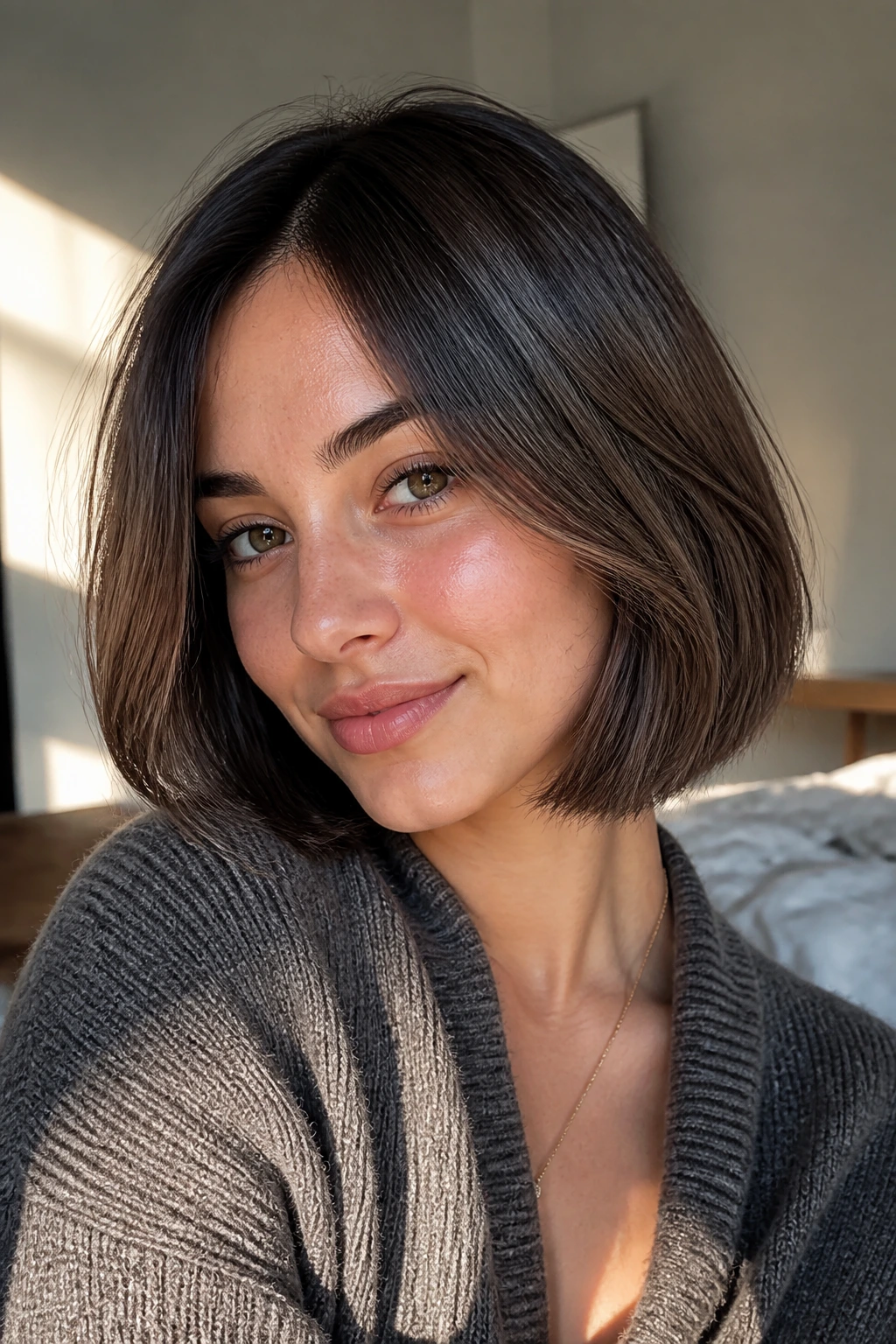
Low-maintenance doesn’t mean boring. It means the lowlights are placed so they grow out softly and keep the bob looking intentional between salon visits. A cool brunette base with mushroom, ash, or soft mocha depth is the easiest version to live with.
That’s the one I’d recommend if you want good hair without constant check-ins. It fades gracefully, it sits well against cool skin, and it doesn’t demand perfect styling every morning. A little bend at the ends is enough.
Getting the Tone Right Without Ending Up Too Warm
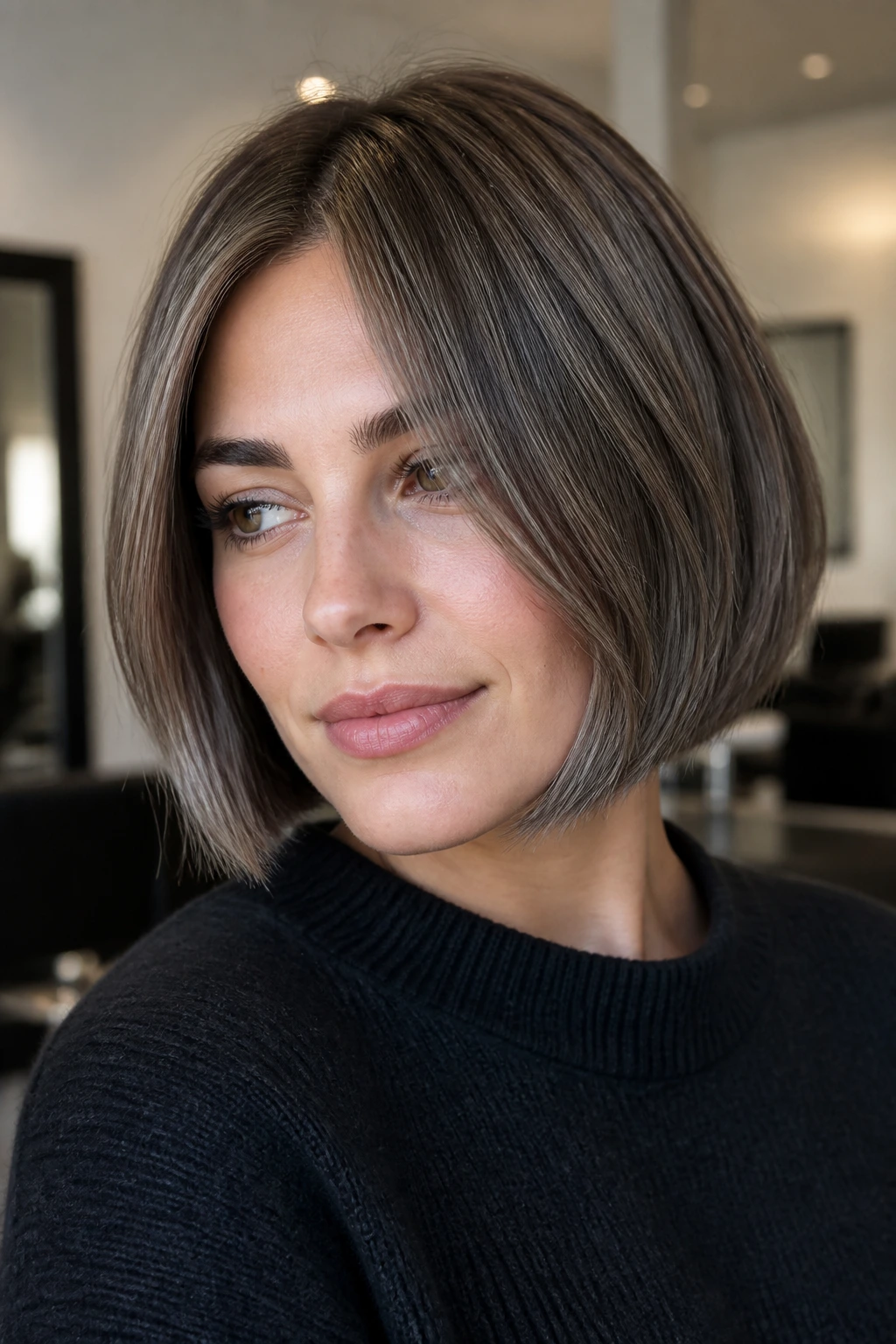
The fastest way to ruin brunette lowlights on cool skin is to let red or gold sneak in where it doesn’t belong. That’s why the conversation with your colorist matters more than the photo you bring. Say the words ash, mushroom, smoky, graphite, or blue-violet if that’s the lane you want. Those words do more than “cool brunette.”
Ask for placement as much as tone. On a bob, where the darker strands sit changes the whole shape. Underpainting, nape shadowing, and a soft root smudge often look better than streaks on the top layer, because the haircut already has a clear outline. You’re trying to deepen the geometry, not draw stripes on it.
And one more thing. A bob that is too dark from root to ends can swallow cool skin, especially if your complexion is fair or rosy. Keep some light at the surface, keep the darkest pieces inside, and let the cut breathe.
Tools That Help the Shade Look Intentional
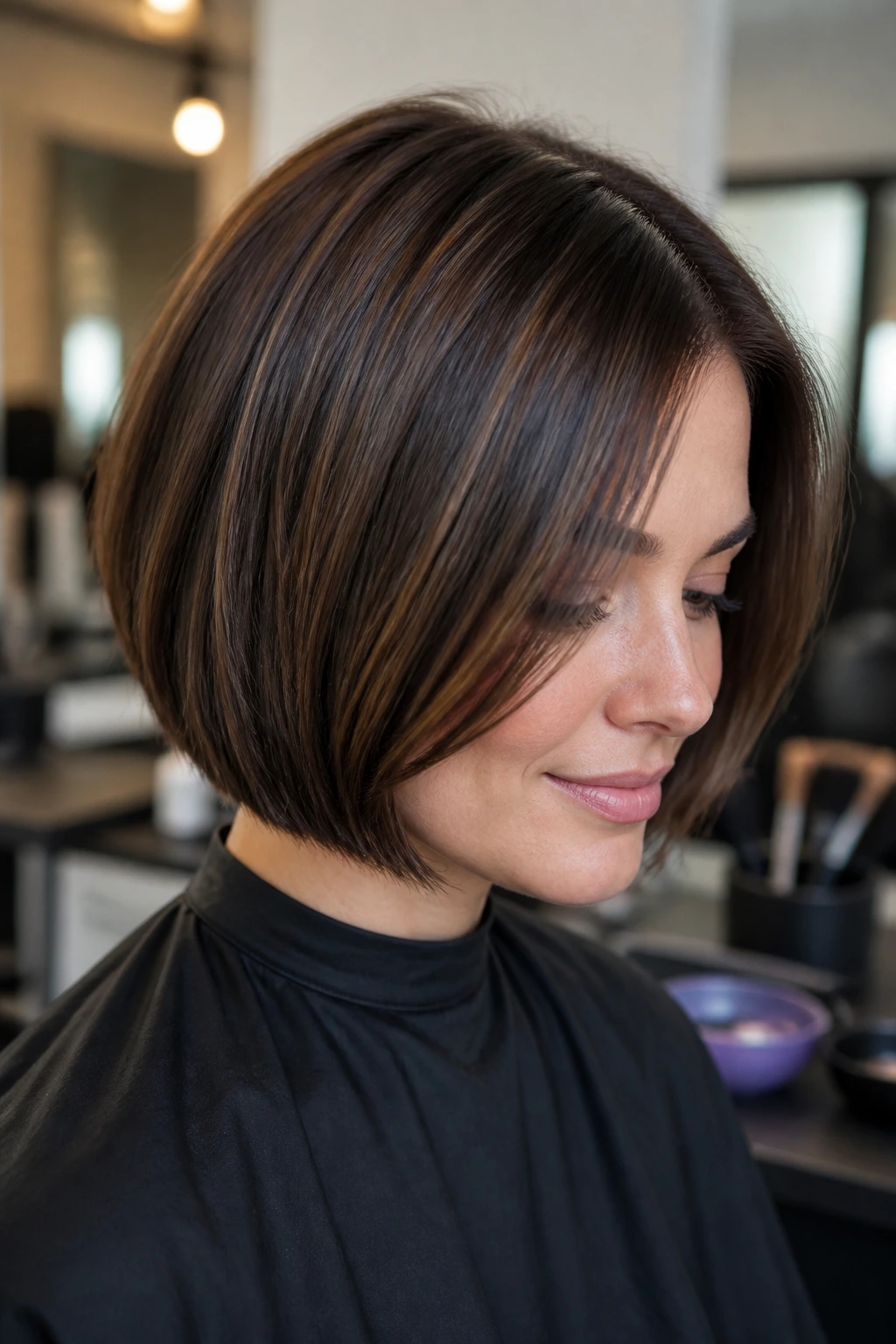
- Reference photos with the same haircut length: A shoulder-length color photo won’t tell your colorist how a chin-length bob should be shaded.
- A good color-safe shampoo: Sulfate-free formulas help preserve cooler brunette tones longer and keep the bob from drying out at the ends.
- Blue toning shampoo or mask: Use this sparingly if the brunette starts drifting orange or red; blue tones cancel warmth more cleanly than purple on brunette hair.
- A lightweight conditioner: Heavy creams can flatten a bob at the roots, so stick with something that smooths without coating.
- Heat protectant spray: Flat irons and round brushes can pull warmth from the hair if you skip this step and overheat the strands.
- Microfiber towel or soft tee: Rough drying can fluff up the cuticle and make the color look dull.
- Sectioning clips and a tint brush: Handy if you’re doing gloss maintenance or applying a toning mask at home.
- Wide-tooth comb: Better than a brush on wet hair, especially if the bob has waves or curls.
How to Brief Your Colorist Without Ending Up Too Warm
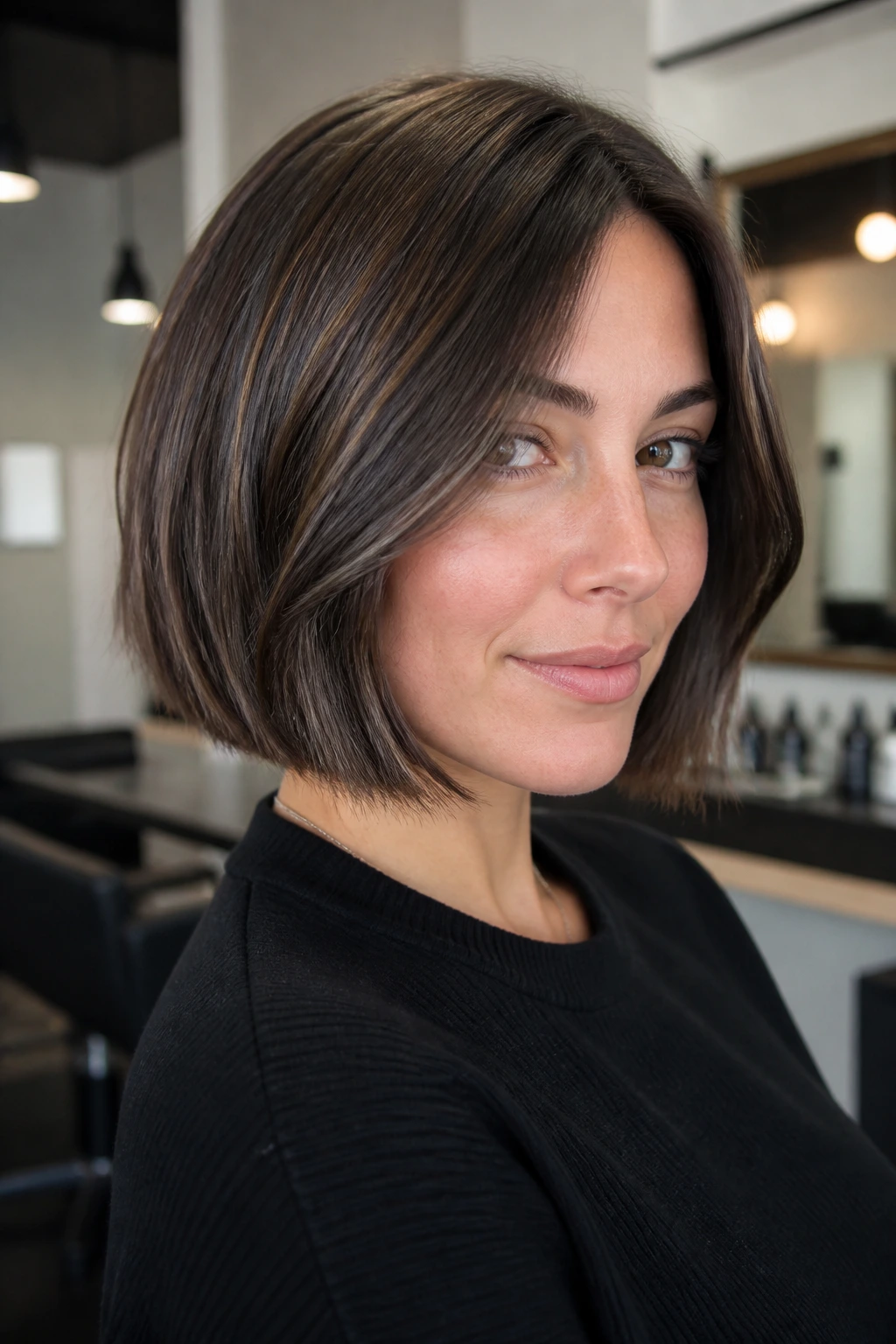
Start with the base level. Tell the stylist how dark your current brunette is and where you want the depth to land—one level deeper, two levels deeper, or just enough to create shape. That matters more than saying “cool brown,” because “cool” means different things to different hands.
Name the placement. If you want the bob to look fuller at the nape or more sculpted at the jaw, say that. Interior lowlights, face-framing shadows, and perimeter darkening all do different jobs, and a bob exposes those differences fast. A decent photo helps, but a photo of the same haircut helps more.
Ask about the finish. Demi-permanent lowlights usually keep the result softer and less harsh than permanent color. If your hair tends to grab warmth, ask whether a cool gloss after the color would help lock the tone in place. That tiny extra step can be the difference between smoky brown and accidental copper.
Keeping Brunette Bob Lowlights Cool Between Salon Visits
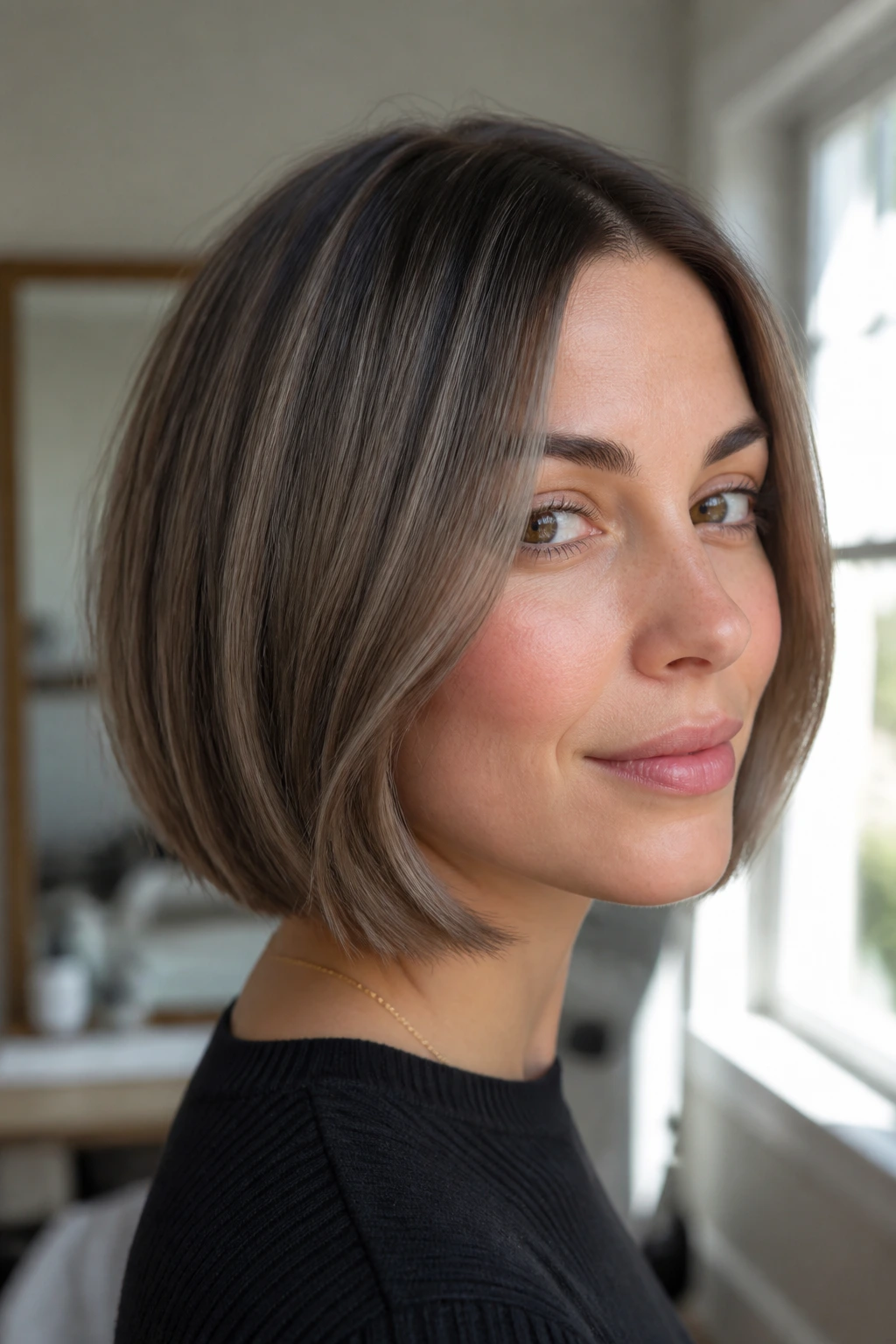
Brunette lowlights on a bob hold up best when you don’t wash them into the drain every other day. Two to three washes a week is a good target for most people, and a dry shampoo at the roots can buy you another day without flattening the shape. The ends usually need more moisture than the root area, so keep conditioner off the scalp and focus it from mid-length to the tips.
A cool-toned gloss every 4 to 6 weeks keeps ash, mushroom, and smoky browns from drifting warm. If your hair starts looking reddish in bright daylight, a blue toning shampoo once every 1 to 2 weeks can steady it out. Don’t leave toner products on forever; brunette hair can turn dull if you overdo them.
Heat matters too. Flat iron passes and high round-brush heat can pull brown tones toward brass. Use a heat protectant every time, keep the tool moving, and finish with a cool blast from the dryer if you want the bob to look shinier at the surface.
Common Mistakes That Make Brunette Bob Lowlights Miss the Mark
- Going too warm: Chocolate, caramel, and chestnut sound safe, but on cool skin they can turn orange or red in daylight. Ask for ash, smoke, mushroom, graphite, or blue-violet undertones instead.
- Making the lowlights too dark: If the pieces are nearly black, the bob can lose softness and look heavy. One or two levels deeper than your base is usually enough.
- Putting all the depth on top: Bob hair needs interior shadow more than surface stripes. If the top layer is overloaded, the style starts to look busy rather than dimensional.
- Ignoring the cut shape: A blunt bob, angled bob, and curly bob all need different placement. The color should follow the haircut’s lines, not fight them.
- Skipping the gloss: A lot of brunettes blame the lowlight shade when the real problem is dull finish. A cool gloss can sharpen the tone without changing the whole color plan.
- Using the wrong reference photo: A layered lob on a warm blonde base tells your colorist almost nothing about what to do on a cool-toned brunette bob. Bring something closer to your actual cut and texture.
Variations and Alternate Takes on the Look
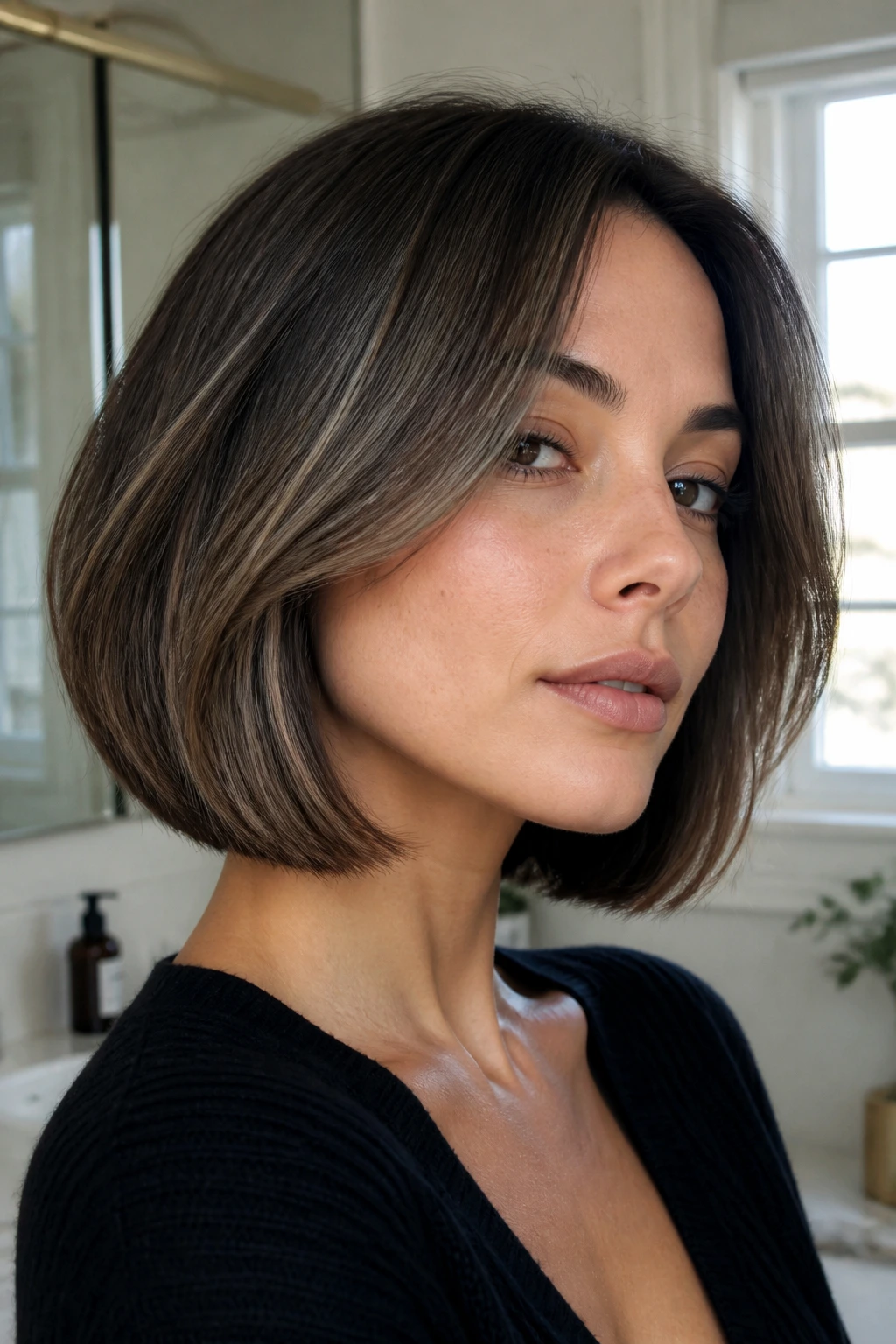
- Soft Fog Blend: This is the quietest version, built from ash mocha, taupe, and mushroom tones that blur into the base. It suits people who want almost no contrast, just a softer and fuller bob.
- Smoke-Ring Contrast: Here, the darker pieces sit a little deeper and read more clearly around the underside and perimeter. It’s the better choice if your bob is simple and you want the color to do more of the talking.
- Gray-Blend Cool Brunette: Perfect for transitioning silver or white strands without a harsh line. The ash tones help the gray look intentional, and the bob keeps the grow-out neat around the hairline.
- Texture-Mapped Curl Version: For curly or wavy bobs, the lowlights are painted to follow the curl pattern instead of fighting it. That keeps the depth visible when the hair moves.
- Low-Maintenance Shadow Root: If you want fewer salon visits, ask for a soft root shadow that melts into the lowlights. The style grows out gently and gives the bob a lived-in finish without looking sloppy.
Frequently Asked Questions
What brunette lowlight shades are best for cool skin tones?
Ash brown, mushroom brown, smoky mocha, slate, graphite, and blue-violet brunettes tend to flatter cool skin best. They keep the complexion from looking sallow and avoid the orange-red cast that can show up fast in short hair.
Will lowlights make my bob look thinner?
Not if they’re placed well. Fine hair usually looks fuller with tiny darker pieces, and thick hair often looks less bulky when the interior is broken up with shadow.
Can I do brunette bob lowlights if I already have highlights?
Yes, and that’s often where lowlights help most. They can calm down a bright bob, add depth near the nape, and make the overall color look more balanced.
How often do brunette lowlights need to be refreshed?
A gloss or toner may need attention every 4 to 6 weeks if your hair pulls warm. The lowlight placement itself usually lasts longer, often 8 to 12 weeks, depending on how fast your hair grows and how much contrast you started with.
Do cool brunette lowlights work on curly bobs?
They do, but the placement needs to follow the curl pattern. Painted panels and interior shadows usually work better than rigid foil lines because curls need space to show dimension.
What if my brunette is already too warm?
A cool gloss or a corrective lowlight plan can pull the color back into the right family. Ask for ash or smoke rather than anything with red, gold, or copper in the name.
Can lowlights cover gray on a bob?
They can blend gray, but they won’t erase it completely. The better approach is to weave cool brunette pieces around the gray so the transition looks soft and deliberate.
Is a blunt bob or layered bob better for lowlights?
Both can work, but they behave differently. A blunt bob shows every placement choice, so the color needs to be clean; a layered bob can handle more movement and a slightly messier paint pattern.
The Cleanest Way to Wear Brunette on a Bob
A brunette bob with cool lowlights works because it respects the haircut instead of fighting it. The color adds shape where the cut needs shadow, keeps the tone clean against cool skin, and makes short hair look fuller without a lot of obvious effort. That balance is the whole point.
The best versions are the ones that look slightly different in daylight than they do indoors, but never rusty. If you keep the shade cool, the placement thoughtful, and the contrast controlled, the bob stays sharp for weeks. And when it starts to grow out, it still looks like a plan.