



Dark hair doesn’t need to be pushed to platinum to look bright. The prettiest brunette blonde highlights for dark hair usually sit a few levels above the base — enough to catch light, not enough to turn the whole head into a high-maintenance bleach job.
That matters because deep brown hair holds onto warm pigment. Lift it too fast and you get orange, copper, or a hazy gold that can look flat under indoor light. Lift it too cool and you can end up with a dusty tone that never quite feels expensive. The best blonde pieces on dark hair respect what the base wants to do, then steer it.
And that’s the real trick here: not every blonde needs to shout. Some of the best looks are quiet at first glance, then suddenly alive when the hair moves. A few are soft and ribboned. Others are bold enough to frame the face from across the room. All of them can work on dark hair if the tone and placement are doing their jobs.
Why This Mix of Light and Dark Works So Well
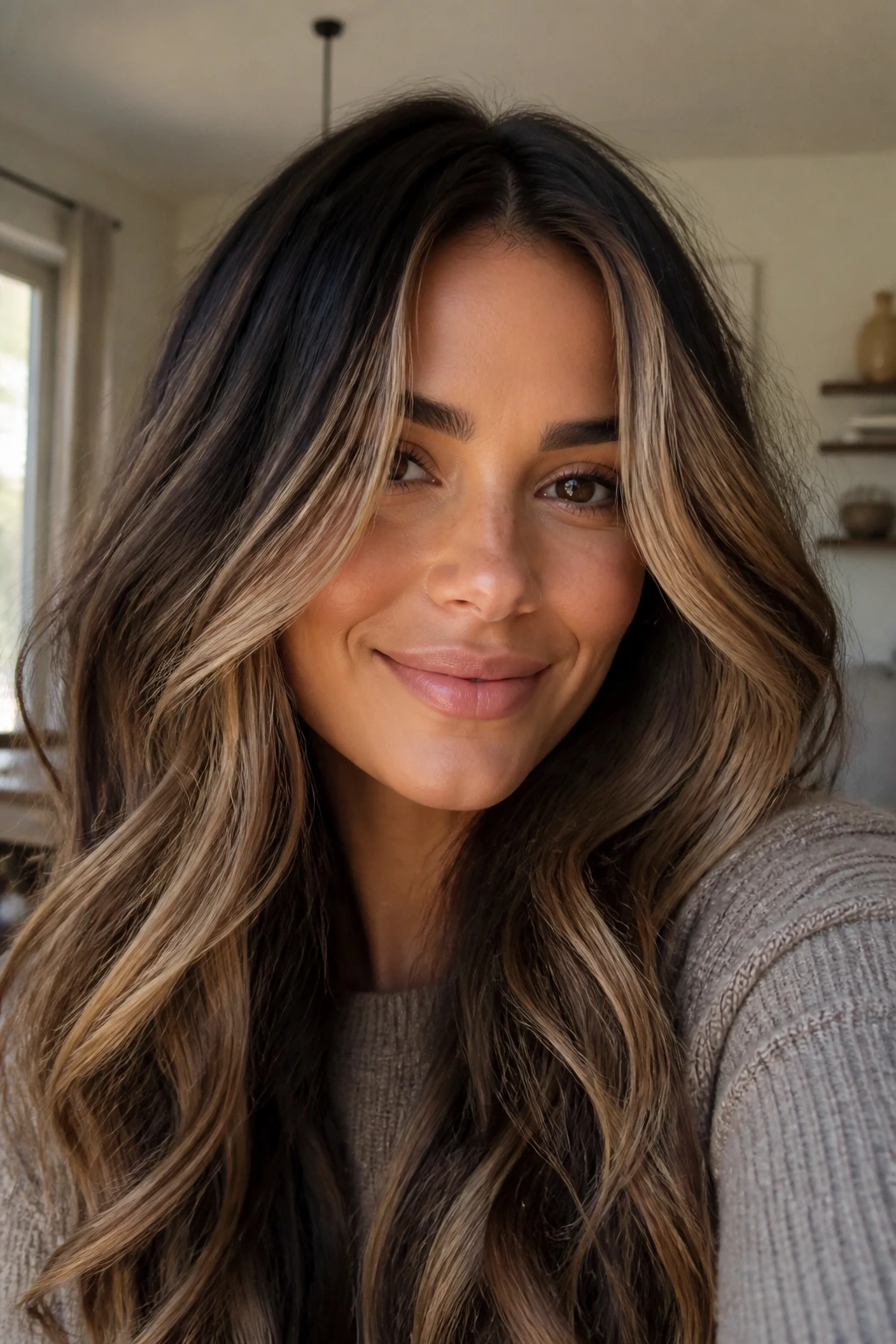
- Contrast is the whole point: Dark brown or near-black hair gives blonde pieces a stronger edge, so even a few slim highlights can read clearly without flooding the head with light.
- Grow-out stays softer: When the roots are left deeper, the color line doesn’t hit you all at once. That means fewer harsh stripes at the crown and less panic six weeks later.
- Placement changes the haircut: Bright pieces around the face, crown, or ends change how the cut sits, which is why the same blonde can look sleek on a bob and airy on long layers.
- Warm and cool blondes behave differently: Honey, caramel, beige, ash, and champagne each sit on dark hair in their own way, and the undertone matters more than people think.
- Texture changes everything: Waves make ribbon highlights look expensive. Straight hair shows off crisp placement. Curls need highlights mapped to the curl pattern or the color disappears into the bend.
1. Soft Caramel Ribbons
Soft caramel ribbons are the easiest place to start if your dark hair has never seen much light before. The color sits in that sweet zone where it looks like sunlight, not bleach.
Ask for thin, scattered pieces through the mid-lengths and a little brightness around the face. On layered hair, these ribbons move when you walk. On straight hair, they make the cut look polished instead of flat.
Why It Works
Caramel sits nicely on level 4 to 5 brunettes because it keeps some warmth from the underlying pigment. That warmth is your friend here. It keeps the blonde from looking chalky against a dark base.
Best for: shoulder-length cuts, soft waves, and anyone who wants a visible change without a hard contrast line.
Tip: keep the root area one shade deeper so the whole thing grows out like a fade, not a stripe.
2. Honey Veil Balayage
Honey is the shade that makes dark hair look sun-touched instead of processed. It has enough gold to show up, but it still feels lived-in.
A veil of honey balayage works best when the lightest pieces are painted through the outer layer and ends, then feathered around the front. The result is softer than a foil-heavy blonde and less likely to look busy when the hair is down.
Why It Works
The honey tone sits above brunette depth without fighting it. That means the color looks intentional even if you only catch a few strands at a time.
It’s a good choice if your hair already leans warm. Cool-toned brunettes can wear it too, but a beige glaze keeps it from going orange.
What to Ask For
- Hand-painted pieces through the mids and ends
- A warm beige or honey gloss
- A softer frame around the cheekbone area
3. Face-Framing Money Piece
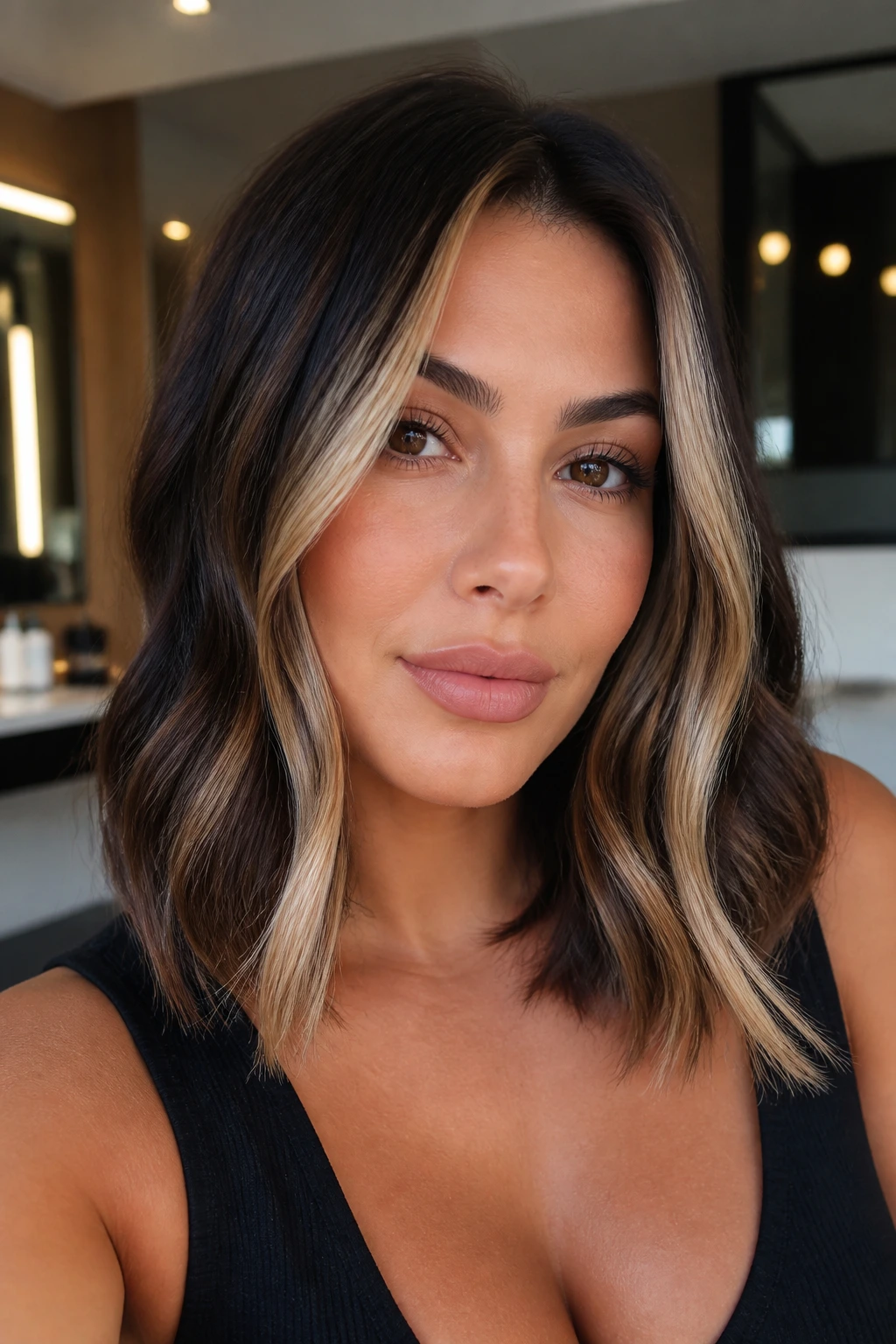
Nothing wakes up dark hair faster than a bright money piece at the front. One or two stronger panels near the face can do more than a full head of faint highlights.
The key is restraint. Keep the front pieces lighter than the rest, but let the back stay deeper so the contrast has somewhere to land. That way the face frame looks bold, not detached.
4. Ash Beige Babylights
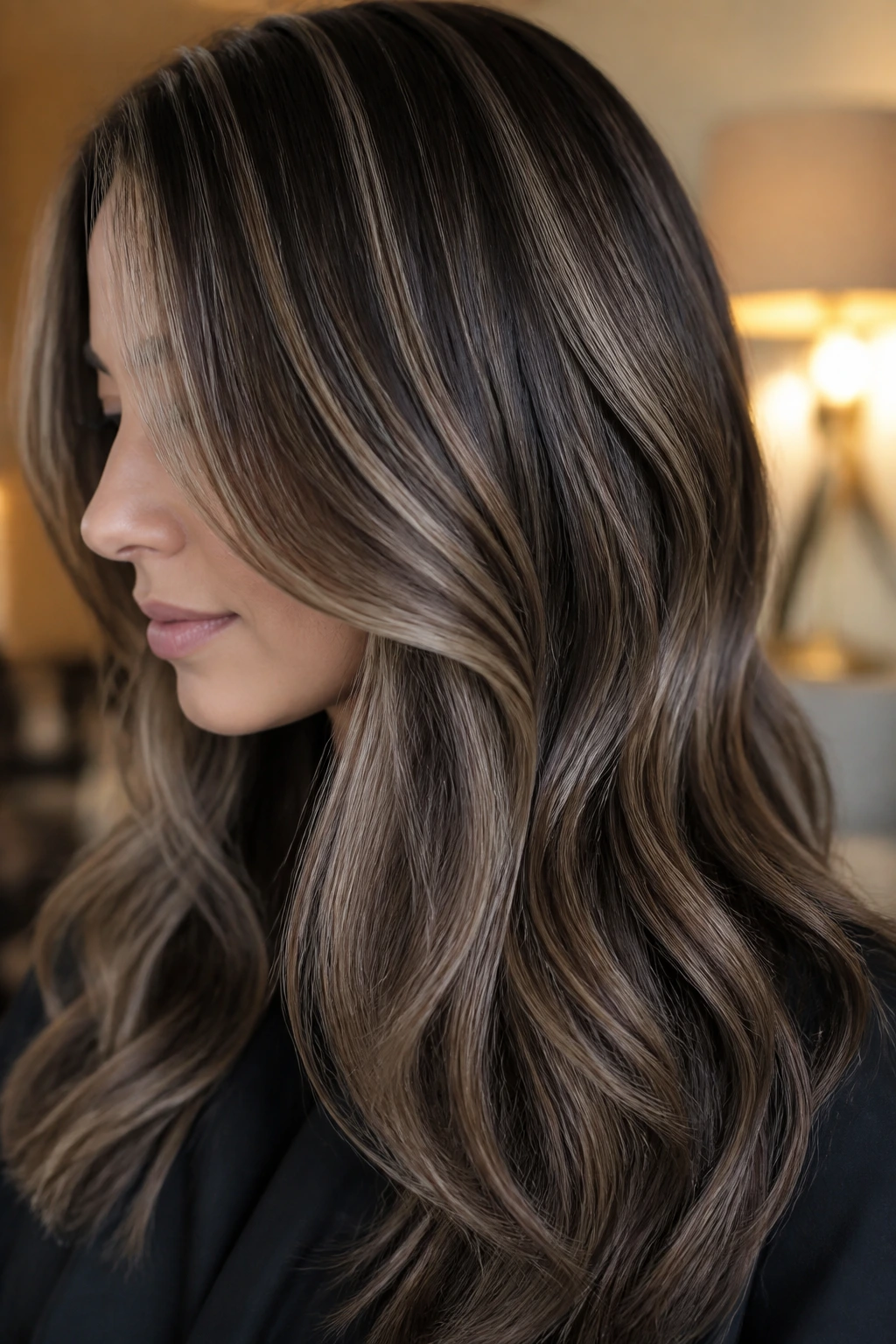
If you hate warm blonde, ash beige babylights are the answer that doesn’t feel icy or harsh. They’re tiny, fine, and much more believable on dark hair than a full head of pale blonde.
Babylights work because they imitate natural lightening — the kind that happens strand by strand, not section by section. The finished look is quiet. Almost sneaky.
What Makes It Different
The cool-beige tone helps tone down brass without turning the hair gray. That’s important on darker bases, where overly cool blonde can look dusty.
Best on: finer hair, long layers, and anyone who wants highlights that only really show when the hair moves.
Watch for: if your base is very dark, the highlights may need a second appointment to get pale enough for true ash beige.
5. Mushroom Bronde Melt
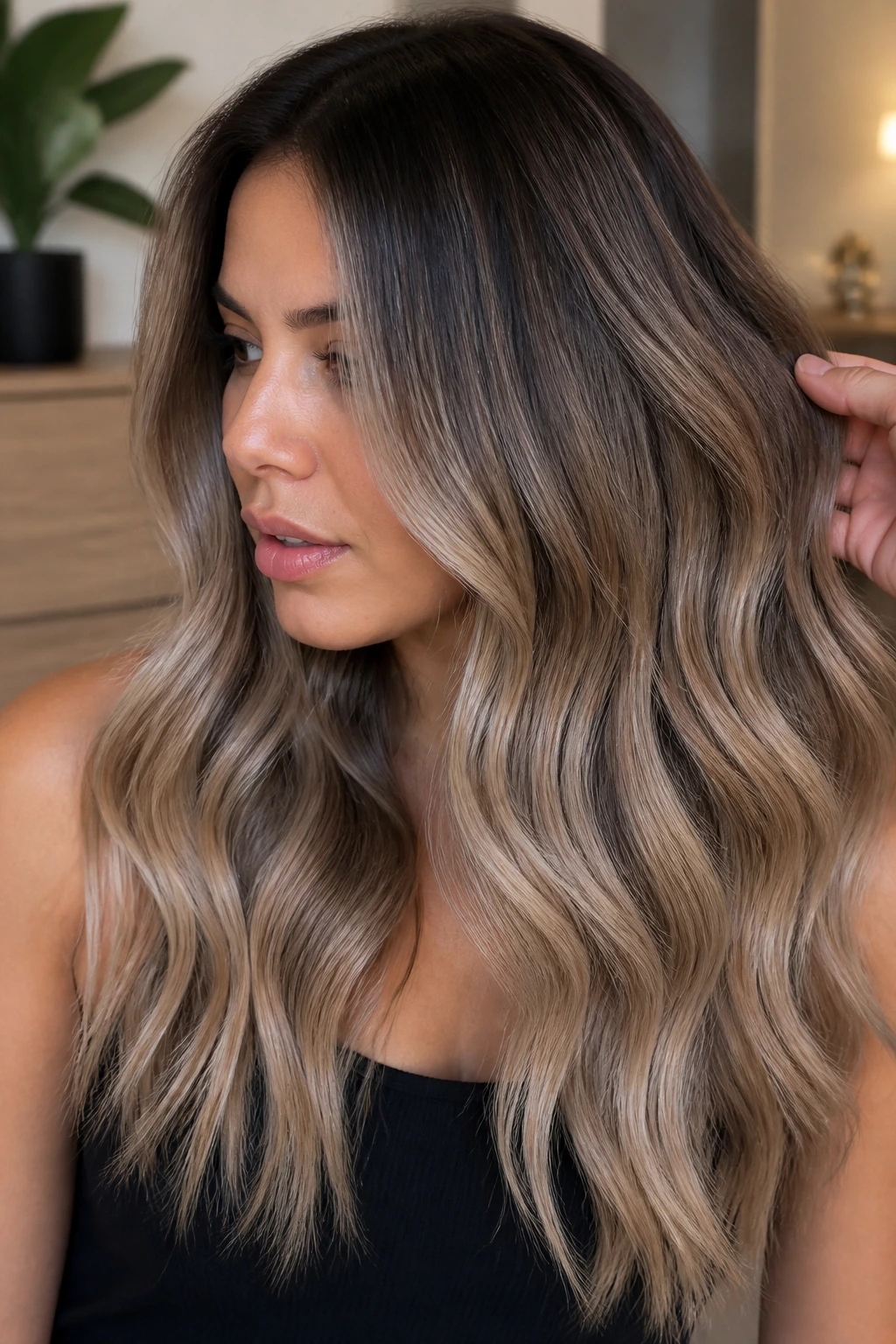
Mushroom bronde is for people who want the blonde to feel grown-up, not sugary. It leans smoky, taupe, and soft beige all at once.
This look melts from a deeper root into muted blonde mids, which makes it a dream on dark hair that tends to go orange. The tone isn’t loud. That’s the charm. It reads expensive because it doesn’t scream for attention.
Best for
- natural brunettes who want low contrast
- cool or neutral skin tones
- shoulder-length cuts with movement
A good mushroom melt should look like the color belongs to your hair, not pasted on top of it. If the blonde starts looking too silver, ask for more beige in the toner.
6. Toffee Ribbon Layers
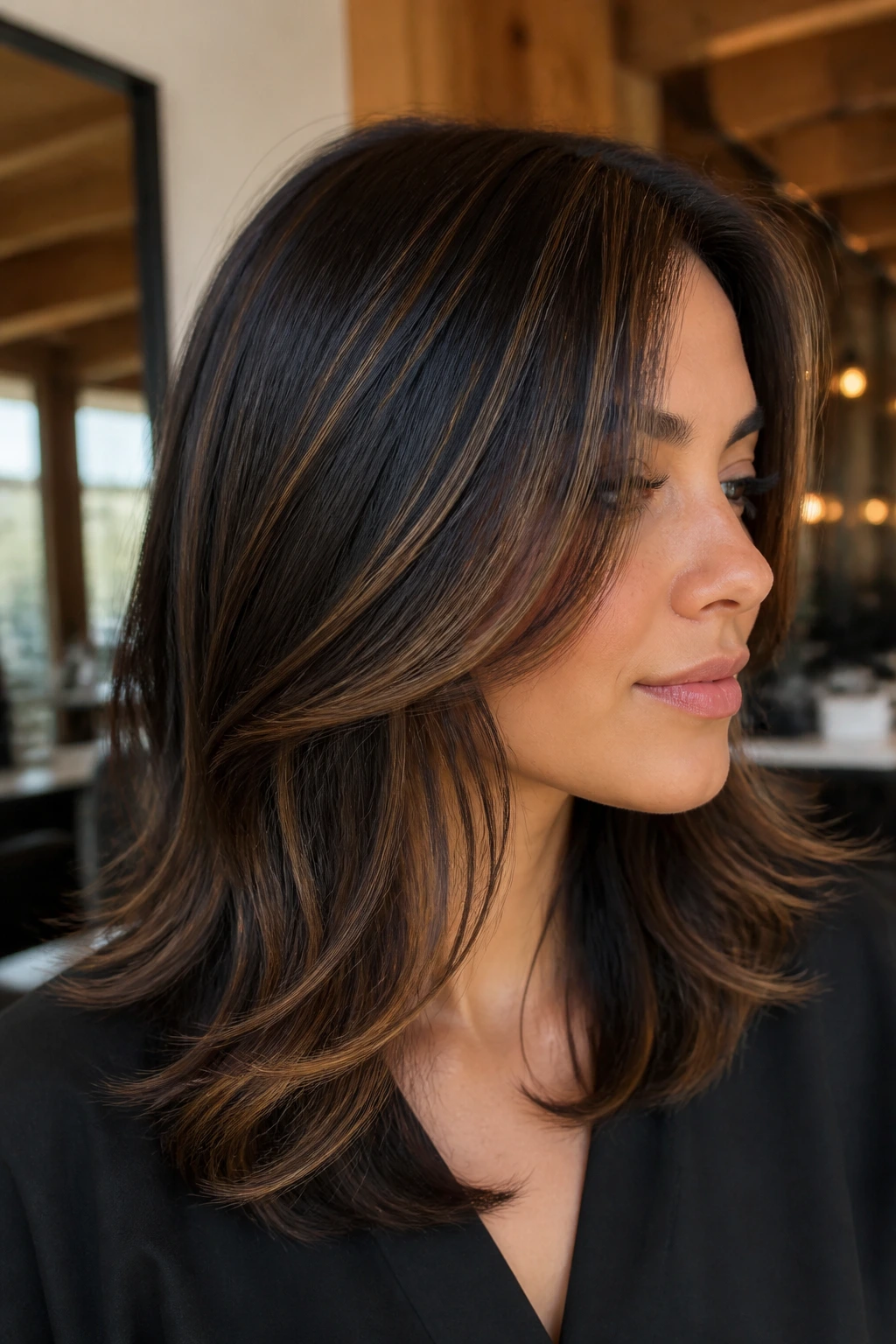
Toffee ribbons are richer and a little sweeter than caramel, with a deeper gold-brown cast that flatters dark bases fast. They’re also easier to wear than a brighter blonde if you wear your hair mostly straight.
Placed through layered cuts, the ribbons trace the shape of the haircut. That matters. A blunt block of color can flatten a long cut, while thin toffee pieces give it lift without making the ends look thin.
How to think about it
If your hair is dense, ask for more spacing between the foils so the color doesn’t blur. If it’s fine, fewer but brighter ribbons tend to show better.
7. Cinnamon Latte Streaks
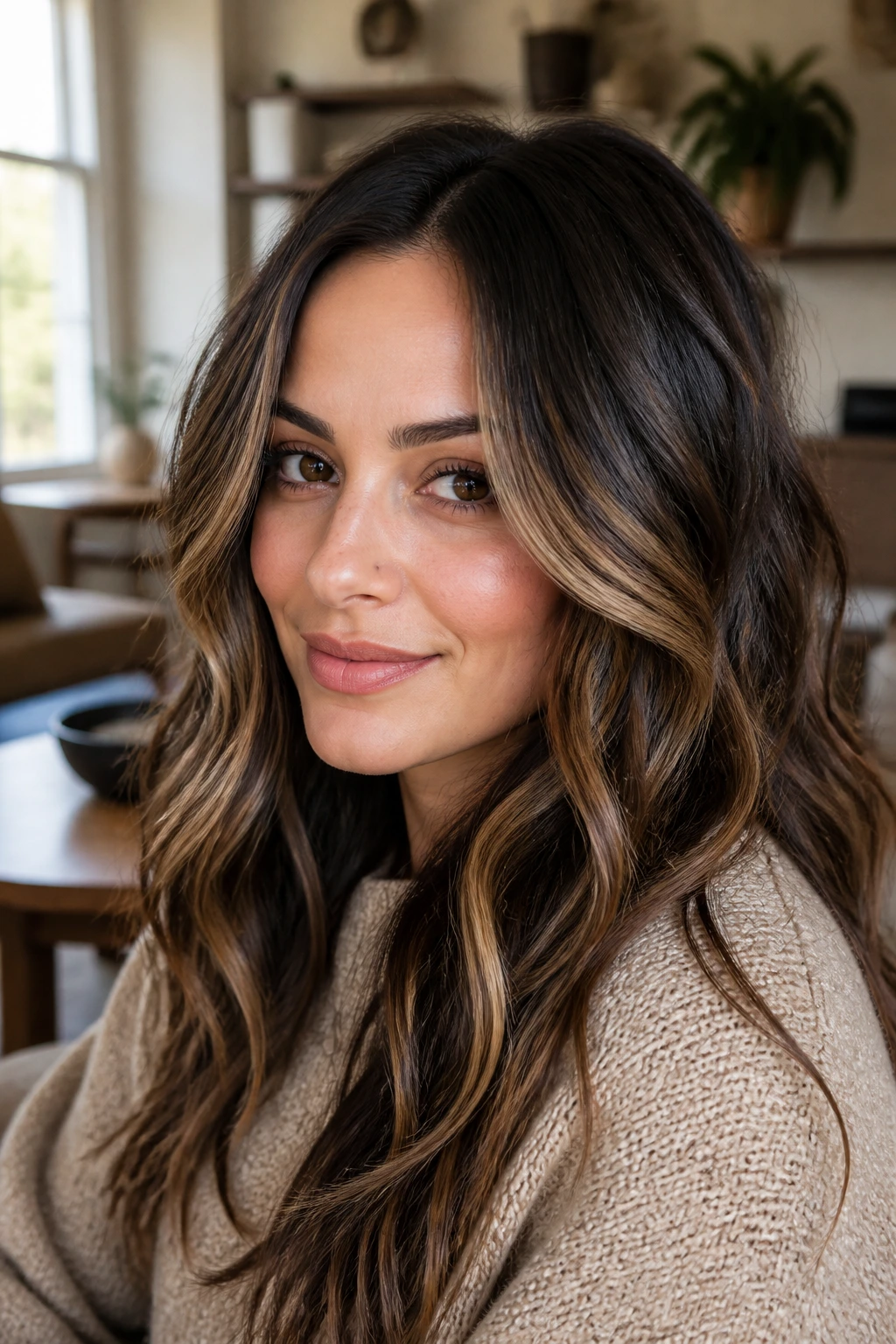
Cinnamon latte streaks bring a warm, spiced glow to dark hair. The blonde isn’t pale; it’s creamy, golden, and a little toasted at the edges.
This is one of my favorite looks for wavy hair because the light catches the bends and the warm tones keep the base from looking harsh. It feels cozy without being dull. And yes, that matters.
H3: Where It Looks Best
On mid-length cuts, place the lighter strands from temple to collarbone. On longer hair, keep the brightest points around the face and top layer so the color doesn’t disappear at the ends.
Tip: skip an ash toner here unless your hair pulls very red. Cinnamon works because it keeps some warmth.
8. Chunky 90s Contrast
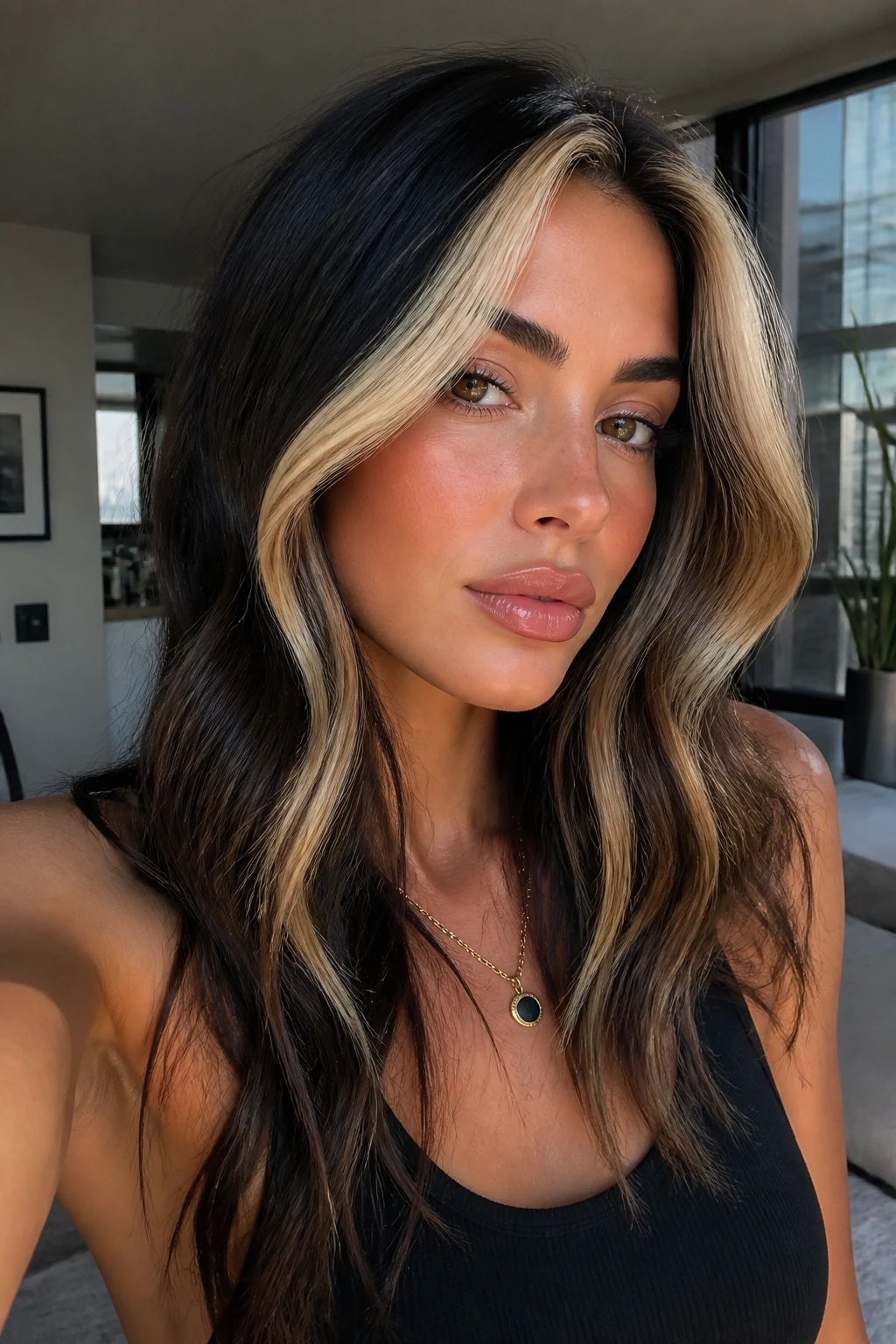
Chunky highlights are back because they do one thing no subtle look can do: they make a statement from ten feet away. On dark hair, the contrast is sharp, graphic, and a little nostalgic.
The trick is keeping the pattern clean. Fewer, thicker blonde sections around the face and crown can look cool. Random thick pieces everywhere? That tends to look dated fast.
Quick check
- Use a bold money piece
- Keep the back more blended
- Ask for a soft root to stop it from looking blocky
This style is best if you wear blowouts, claw clips, or straight hair with a bit of bend at the ends. It needs shape to make sense.
9. Bronze Glow Balayage
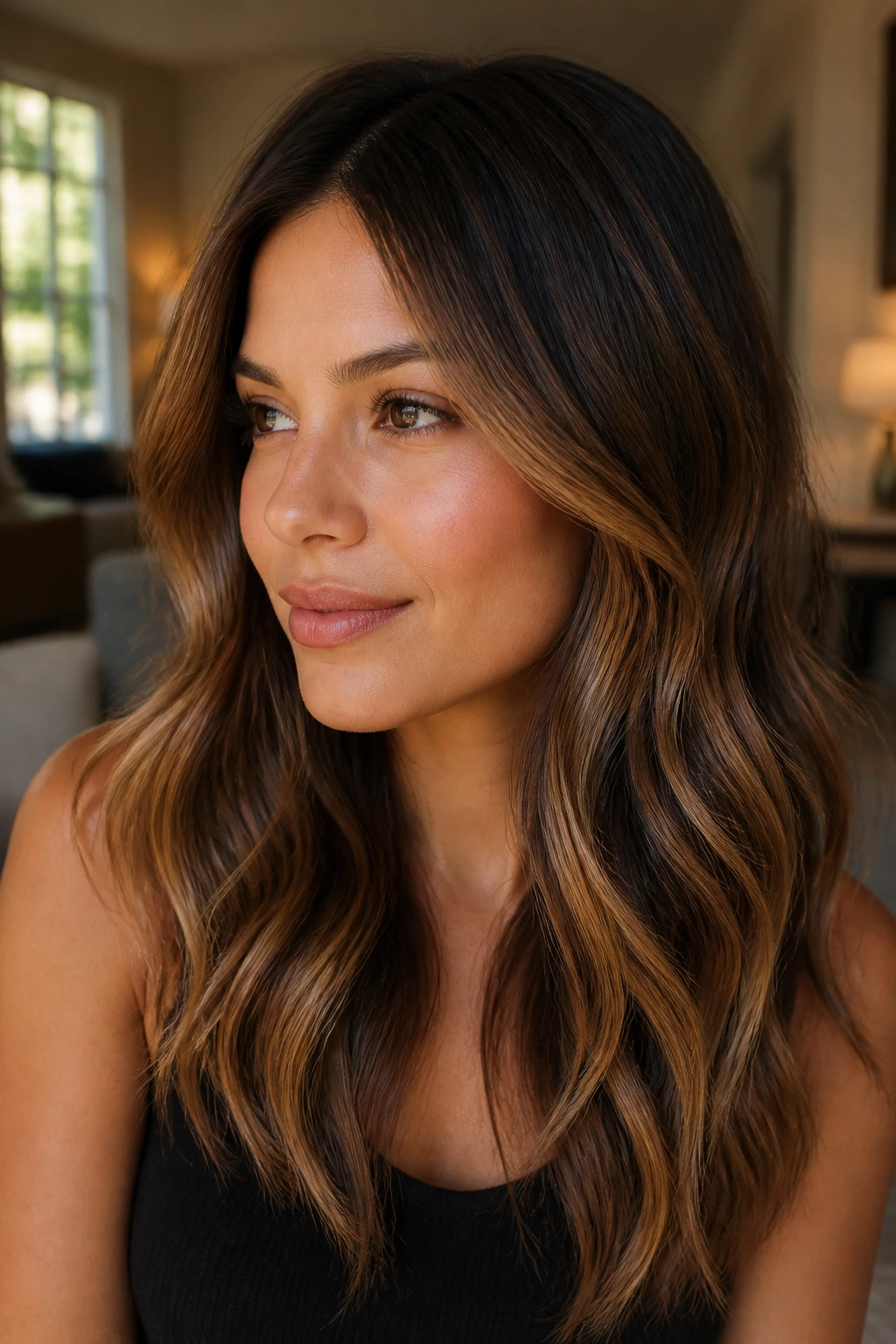
Bronze glow balayage sits between brunette and blonde in a way that feels natural on dark hair. It has enough metallic warmth to reflect light, but it doesn’t go yellow.
The warmth makes it forgiving. If your base is level 5 or darker, bronze can brighten the mids without demanding a total lift to pale blonde. That means less stress on the hair and less toner drama later.
Why It Works
Bronze shades blend with dark roots better than icy blondes. You see the shimmer first, the color second. That’s why it works so well on thick hair, where too much pale blonde can turn patchy.
10. Beige Foilayage
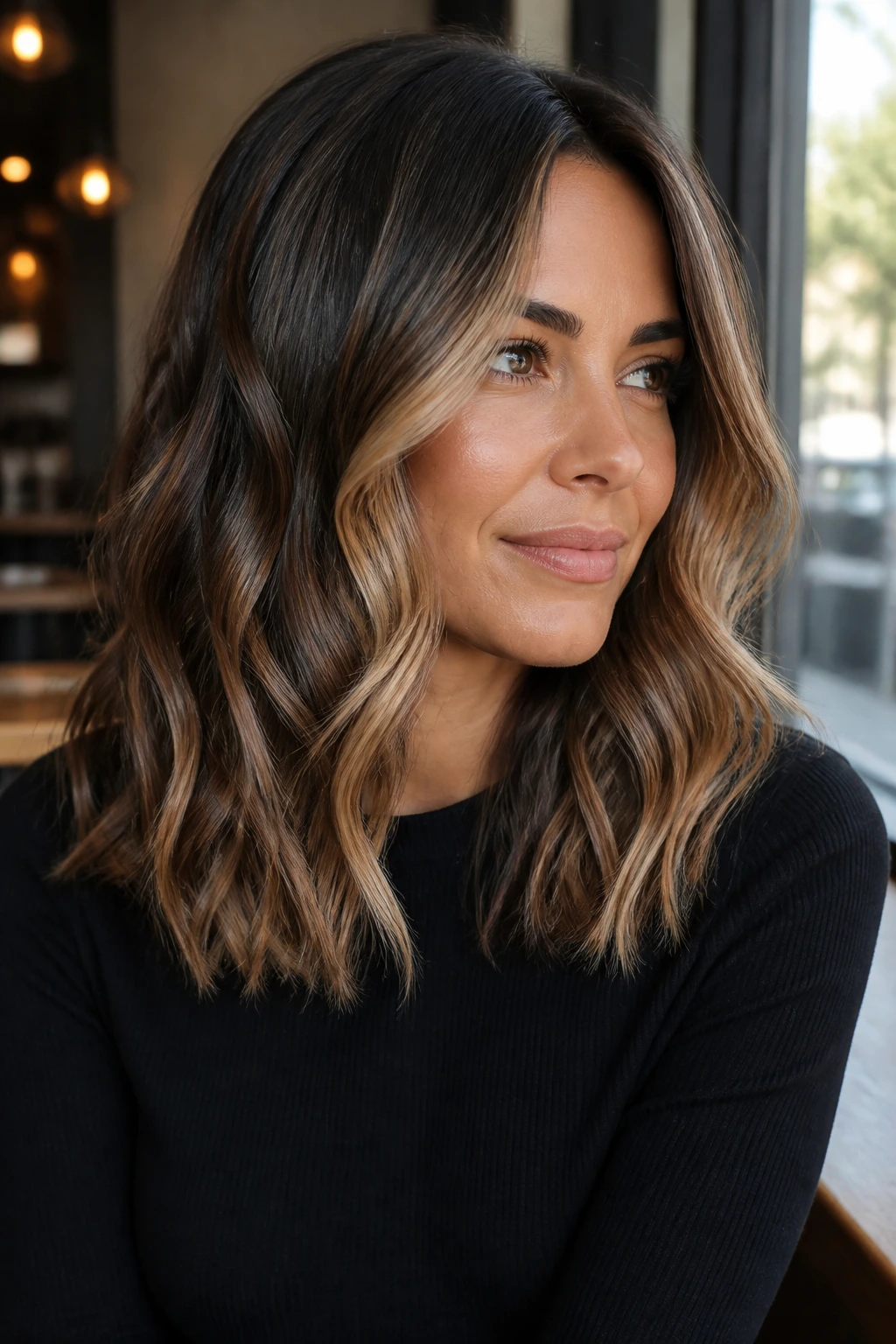
Beige foilayage gives you the lift of foils with the softer spread of balayage. On dark hair, that combination is gold.
The beige tone keeps the result from turning brassy, and the foilayage method gives you more control over where the brightness lands. You get stronger pieces at the front and crown, then softer light through the ends.
A good match for:
- long layers
- medium to thick hair
- anyone who wants dimension from roots to ends
If you like a finished look that still grows out gracefully, this is one of the smartest options on the list.
11. Chestnut-to-Blonde Melt
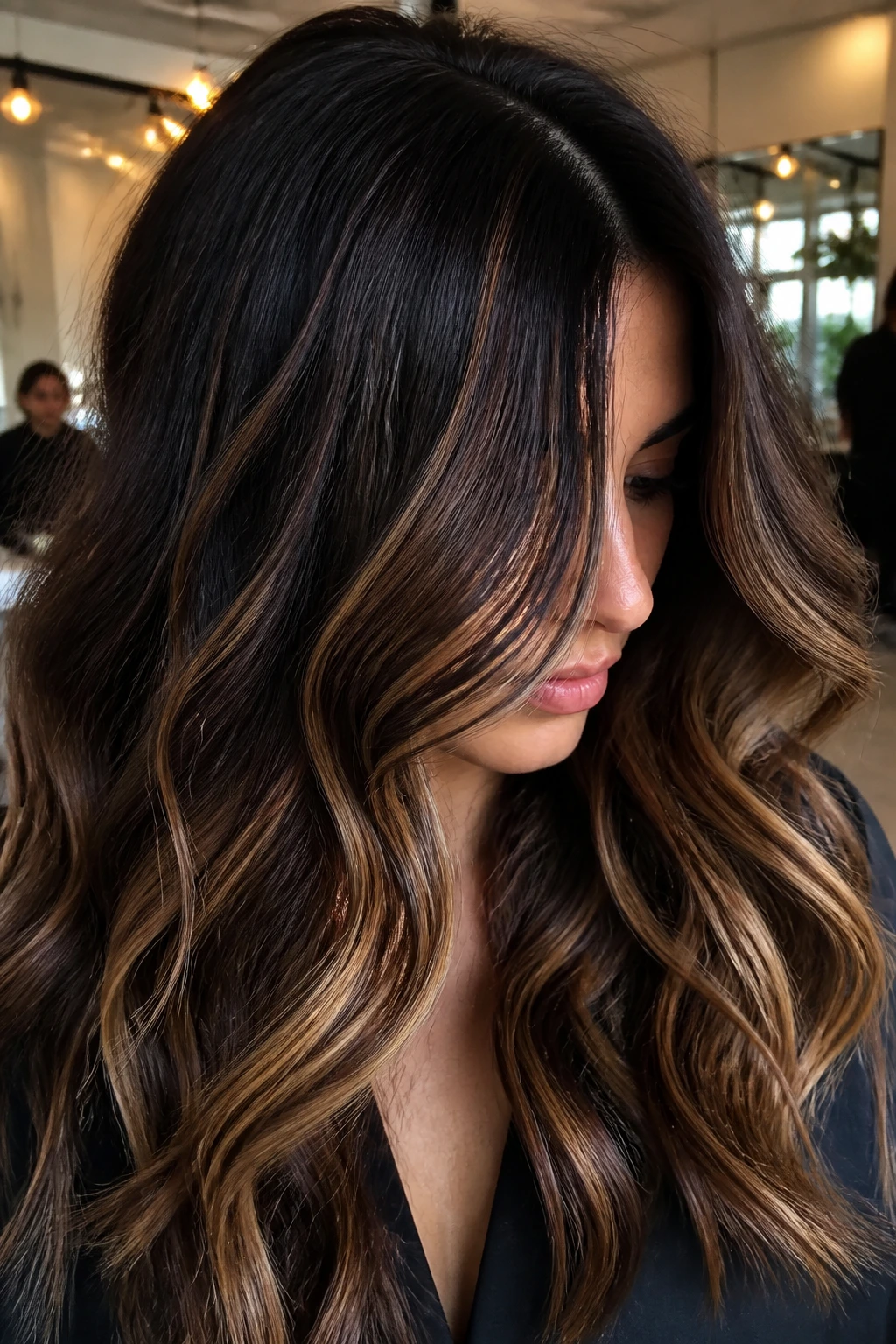
Chestnut-to-blonde melt is all about a smooth fade. The roots stay rich chestnut, then the mids drift into warm beige blonde and the ends land a touch lighter.
That kind of shift is especially flattering on dark hair with lots of body. The depth at the root keeps the color grounded, and the lighter ends stop the style from looking heavy.
What to ask for
A root shadow, a soft mid-length transition, and ends that are only one or two levels lighter than the face frame. No hard line. None.
12. Espresso Peekaboo Panels
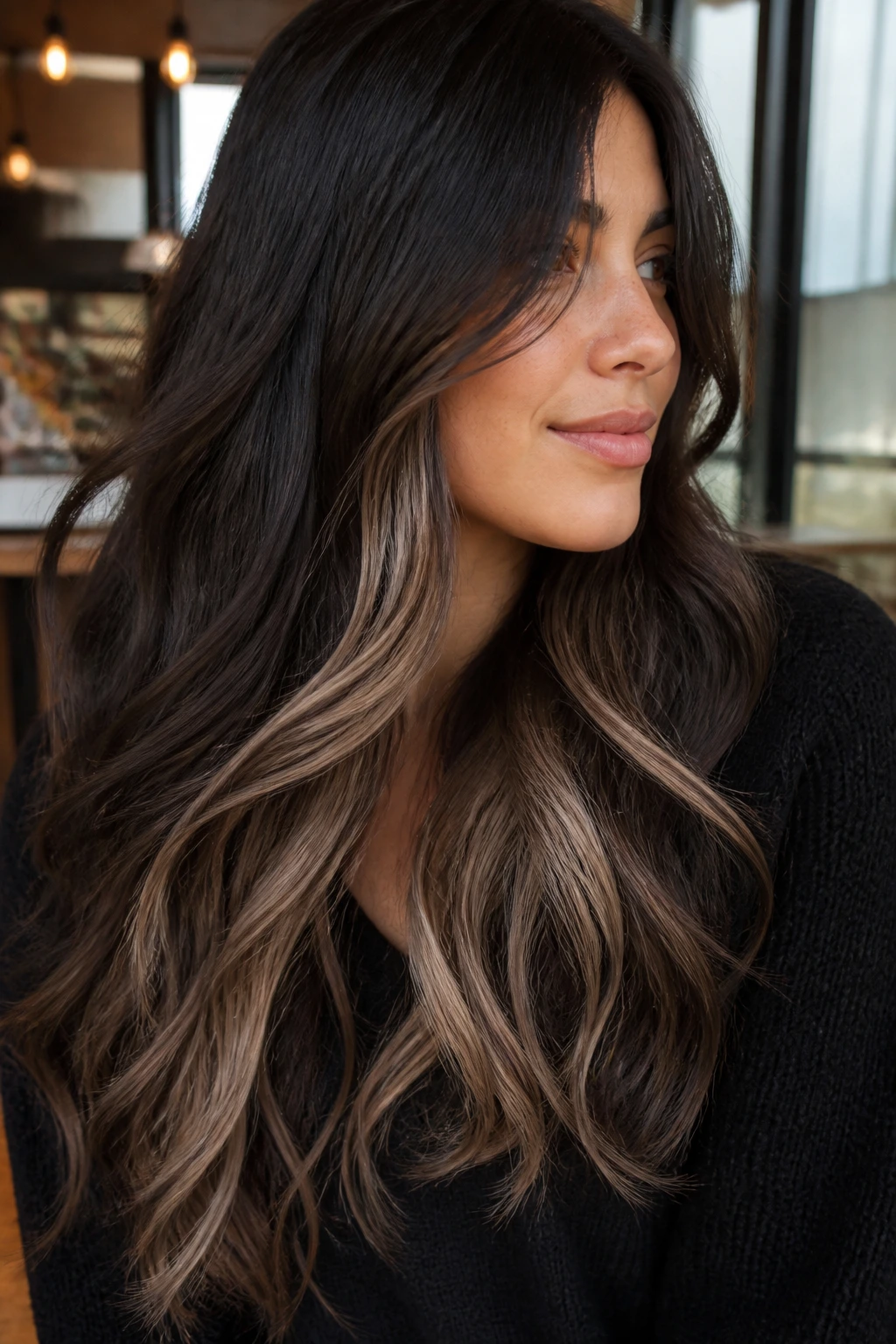
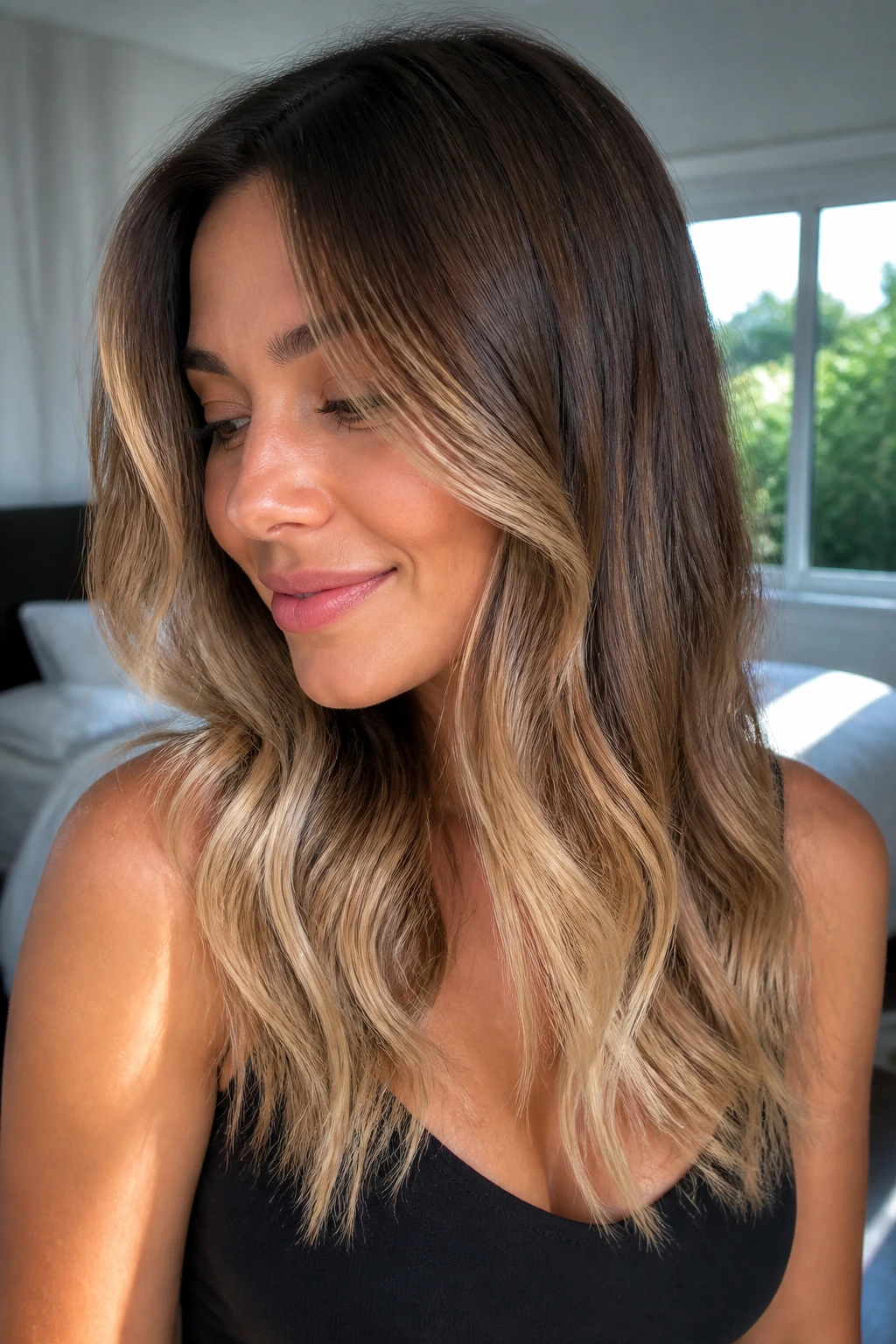
Peekaboo panels are for anyone who wants blonde without committing to seeing it all day, every day. The color hides under the top layer, then flashes when the hair swings or gets tucked behind the ear.
On dark hair, this works because the contrast feels deliberate. The top layer keeps the look polished. The hidden blonde keeps it interesting.
Best when you want:
- color that shows in movement
- lower upkeep than a full-head blonde
- a little drama without a lot of surface brightness
It’s also a strong choice for curly or wavy hair, since the hidden panels pop when the hair separates.
13. Smoky Ash Highlights
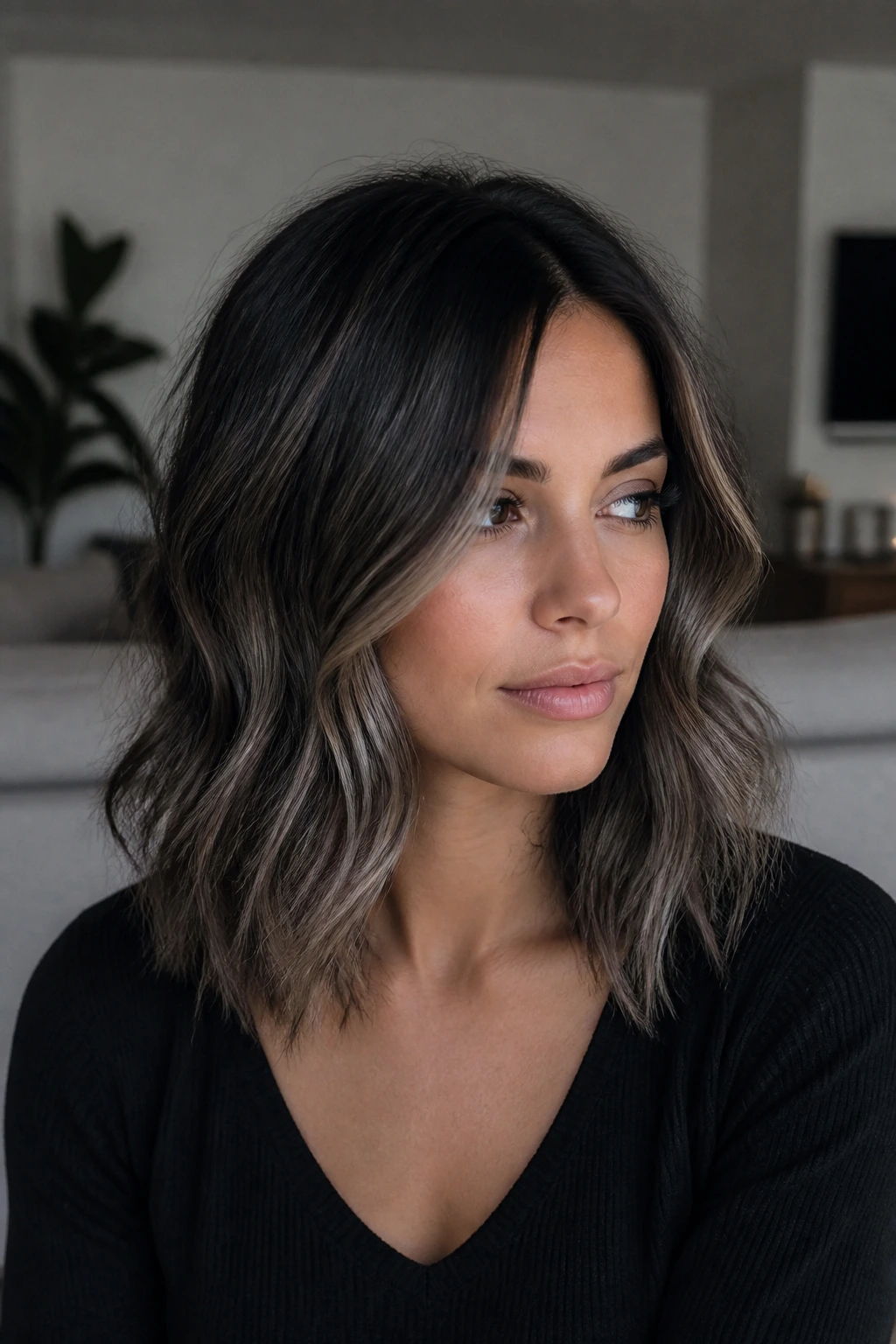
Smoky ash highlights are cooler, softer, and a bit more muted than bright beige blonde. They’re excellent if you’re trying to avoid gold at all costs.
The trick is not pushing the tone too far into gray. Dark hair can make ash look flat if the lift is weak. You want pale enough pieces to hold the cool tone, not beige-beige-beige all the way through.
How to wear it
A shoulder-length cut with loose bends usually shows this best. Straight hair can make ash highlights look more obvious and graphic.
14. Golden Foil Brightening
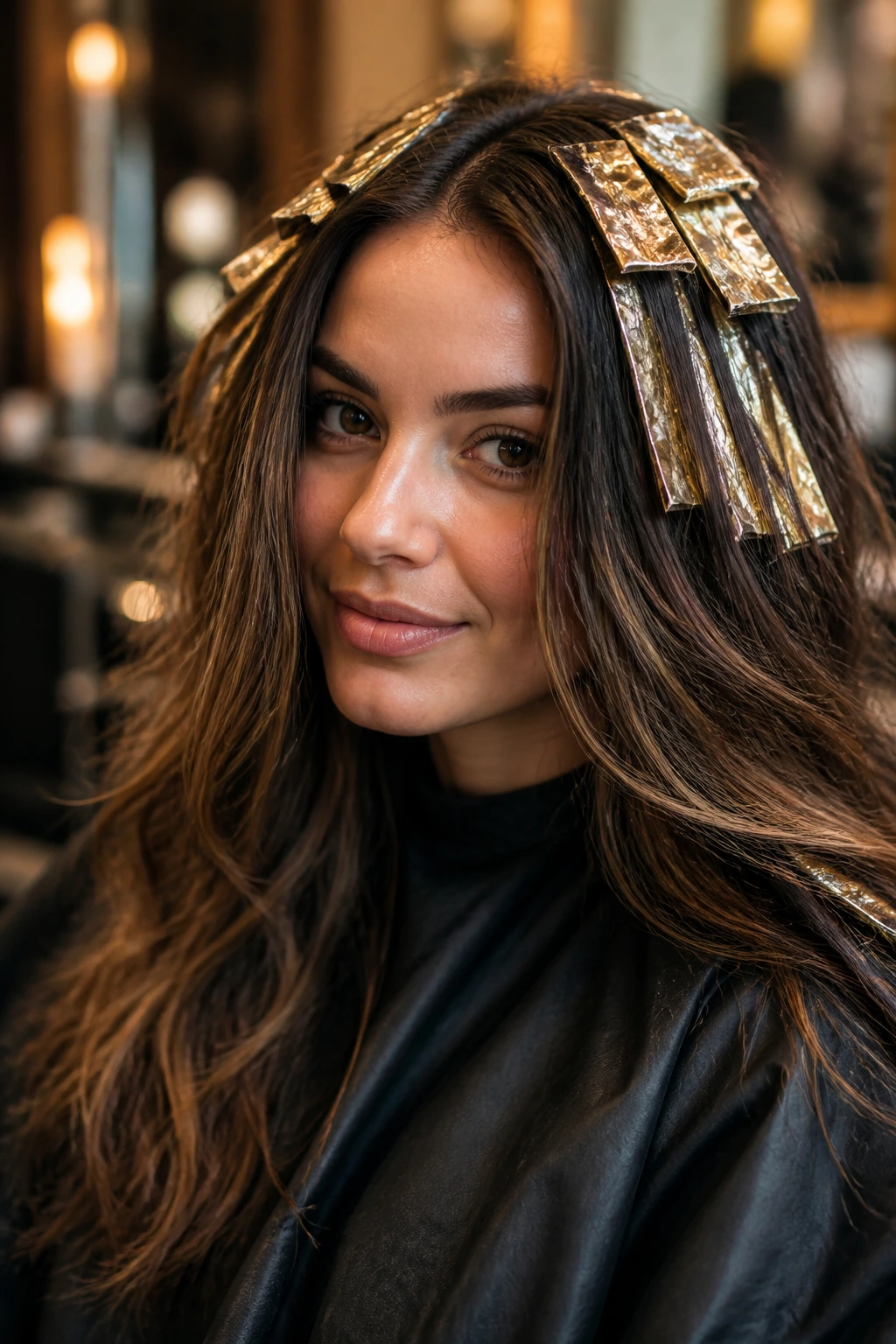
Golden foil brightening is the classic “I want to look lighter, not blonde-blonde” move. It brings warmth and shine to dark hair without erasing the brunette base.
Because the pieces are placed in foils, the lift tends to be a little stronger and more controlled. That matters if your hair is resistant and usually refuses to brighten evenly.
The feel
This look is glossy. Not sleepy, not beige, glossy. If your hair naturally leans warm, golden foil brightening usually looks more believable than cooler shades.
15. Sandy Bronde Melt
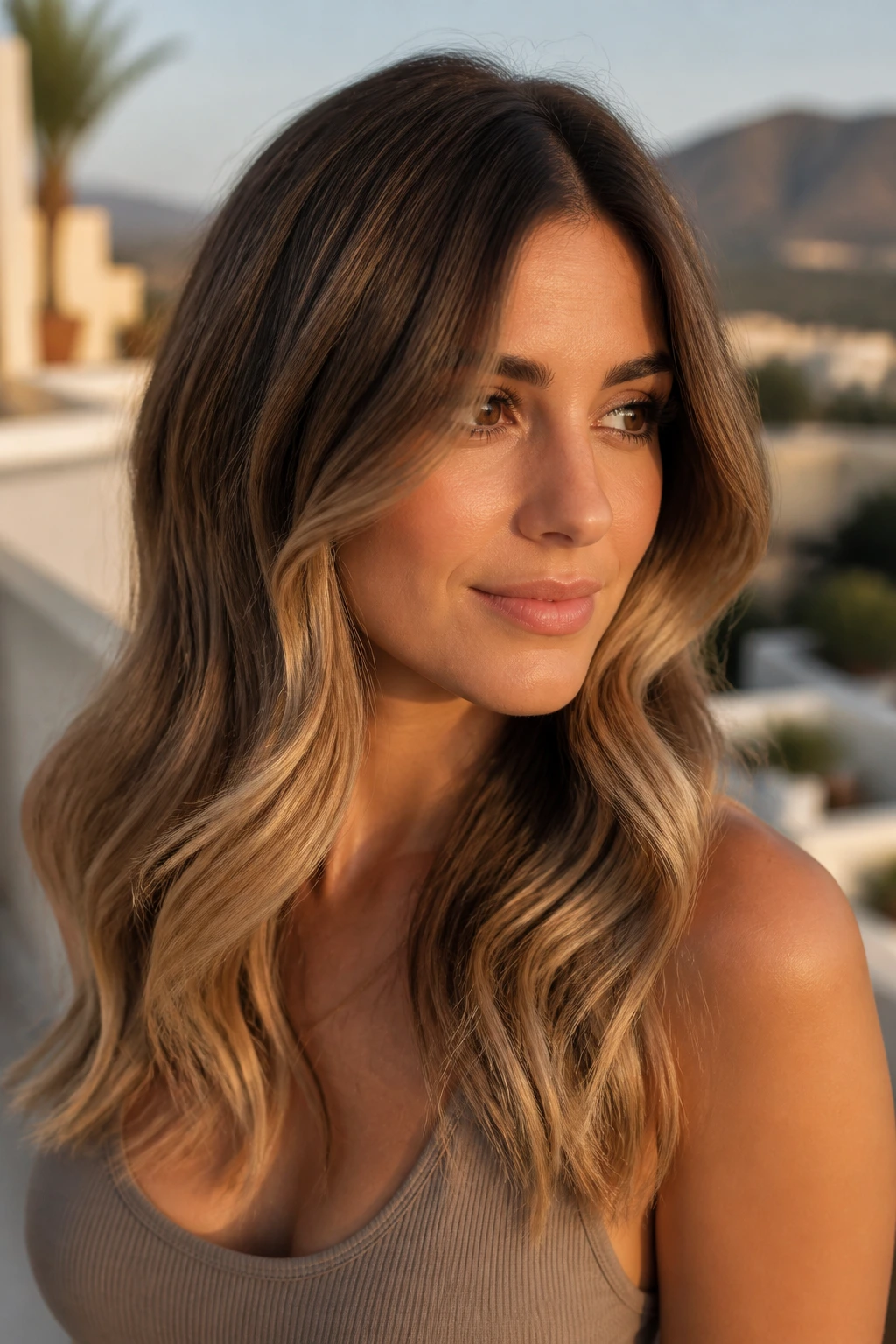
Sandy bronde is a nice middle ground if you keep changing your mind about going lighter. It has a little brunette, a little blonde, and just enough beige to keep it from going muddy.
This is one of those styles that looks different in every light, which is exactly why people love it. Outside, it reads sunlit. Indoors, it settles back into a soft brunette-blonde mix.
H3: Best for low-drama color
If you want something you can wear for months without feeling overdone, this is a strong pick. Ask for a root shadow and softly feathered ends so the transition stays blurred.
16. Dimensional Ribbon Lights
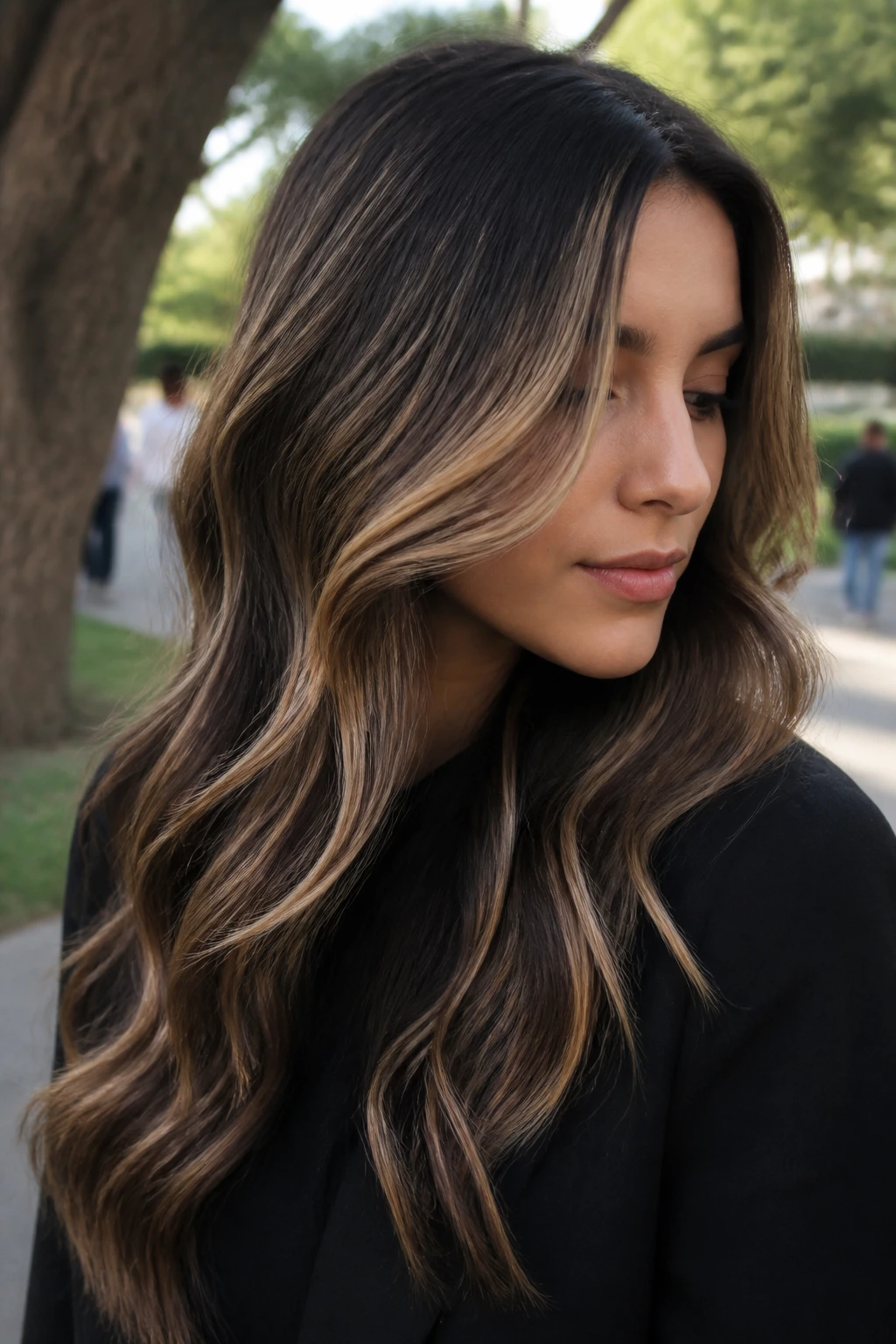
Dimensional ribbon lights are built for movement. Instead of one flat tone, the hair has alternating bands of light and depth that shift when you turn your head.
That movement is what saves dark hair from looking blocky after lightening. With the right placement, the blonde doesn’t sit on top. It runs through the cut.
- Layered hair: lets the ribbons separate and show
- Wavy styling: makes the contrast look richer
- Dense hair: needs more spacing so the pieces don’t blur together
If you’ve ever felt like highlights disappeared once your hair dried, this style fixes that.
17. Walnut and Wheat Balayage
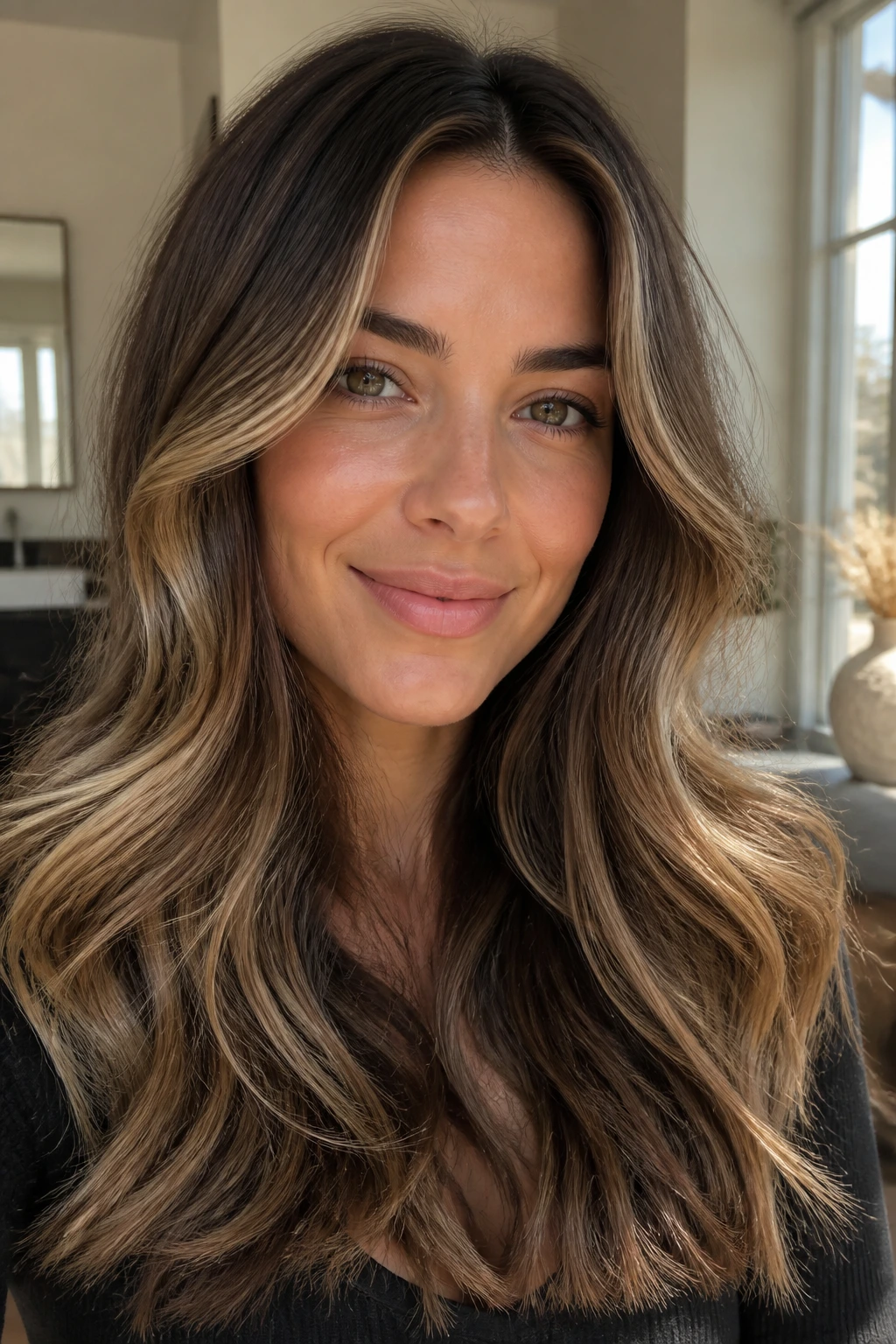
Walnut and wheat sounds like a bakery menu, but the color combo is excellent on dark hair. Walnut keeps the base deep and earthy. Wheat brings in a soft, pale warmth through the mids.
The effect is subtle in the best way. You notice the dimension before you notice the blonde, which is usually a sign that the placement is doing its job.
Compare it to caramel
Caramel usually reads warmer and richer. Walnut and wheat feels drier, softer, and a bit more natural. If you want a sun-faded look rather than a glossy one, this is the better call.
18. Buttercream Ends
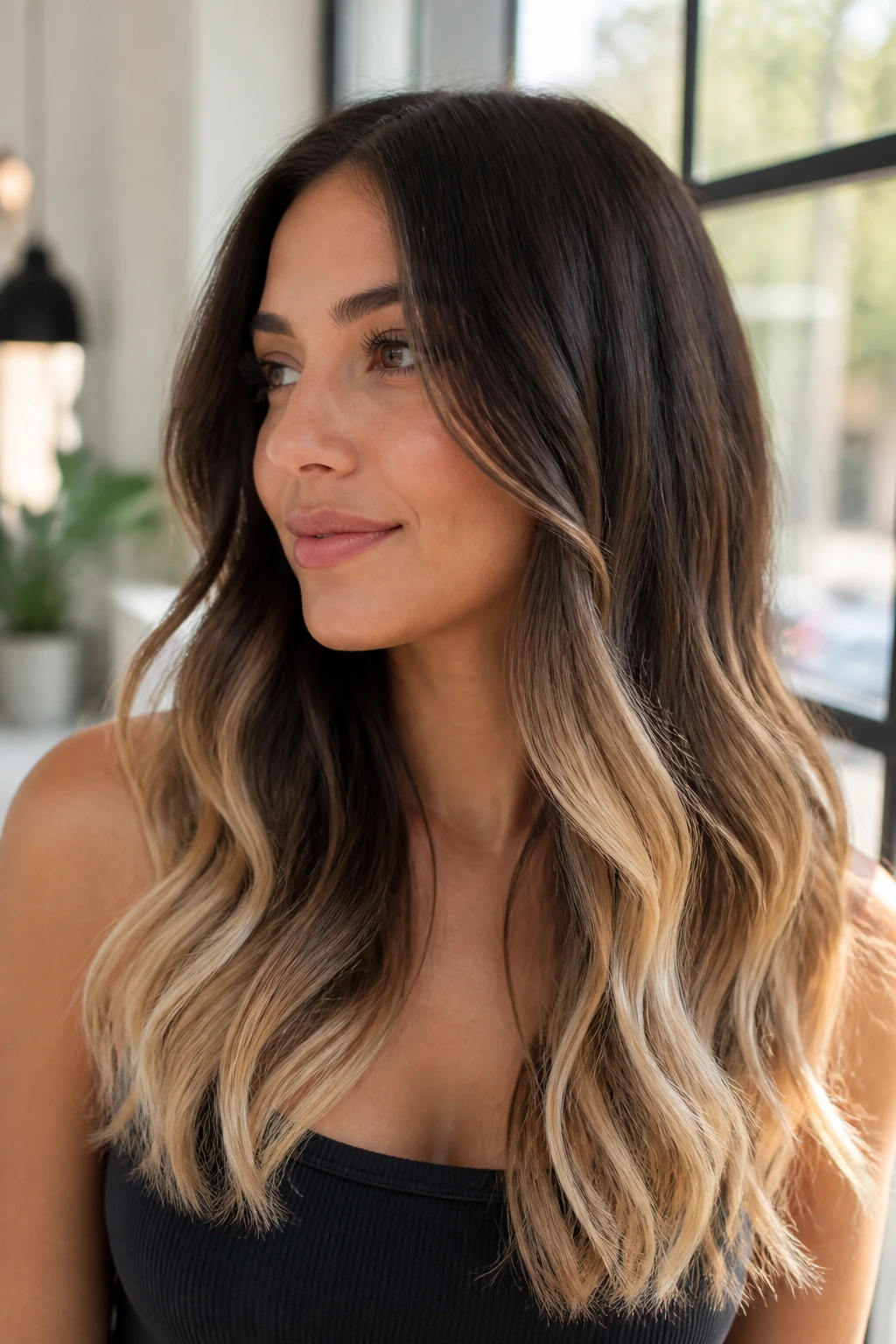
Buttercream ends are for people who want the bright part of the blonde lower down, where it can swing and move. The roots stay brunette, the mids soften, and the ends turn creamy and light.
This placement keeps the face from looking too striped. It also works well if your haircut has a lot of texture at the bottom. The ends do the showing off.
Watch the lift
If the ends are over-lightened, they can look thin and dry. Ask for enough brightness to show, not enough to strip the last bit of dimension from the tips.
19. Subtle Sunkissed Tips
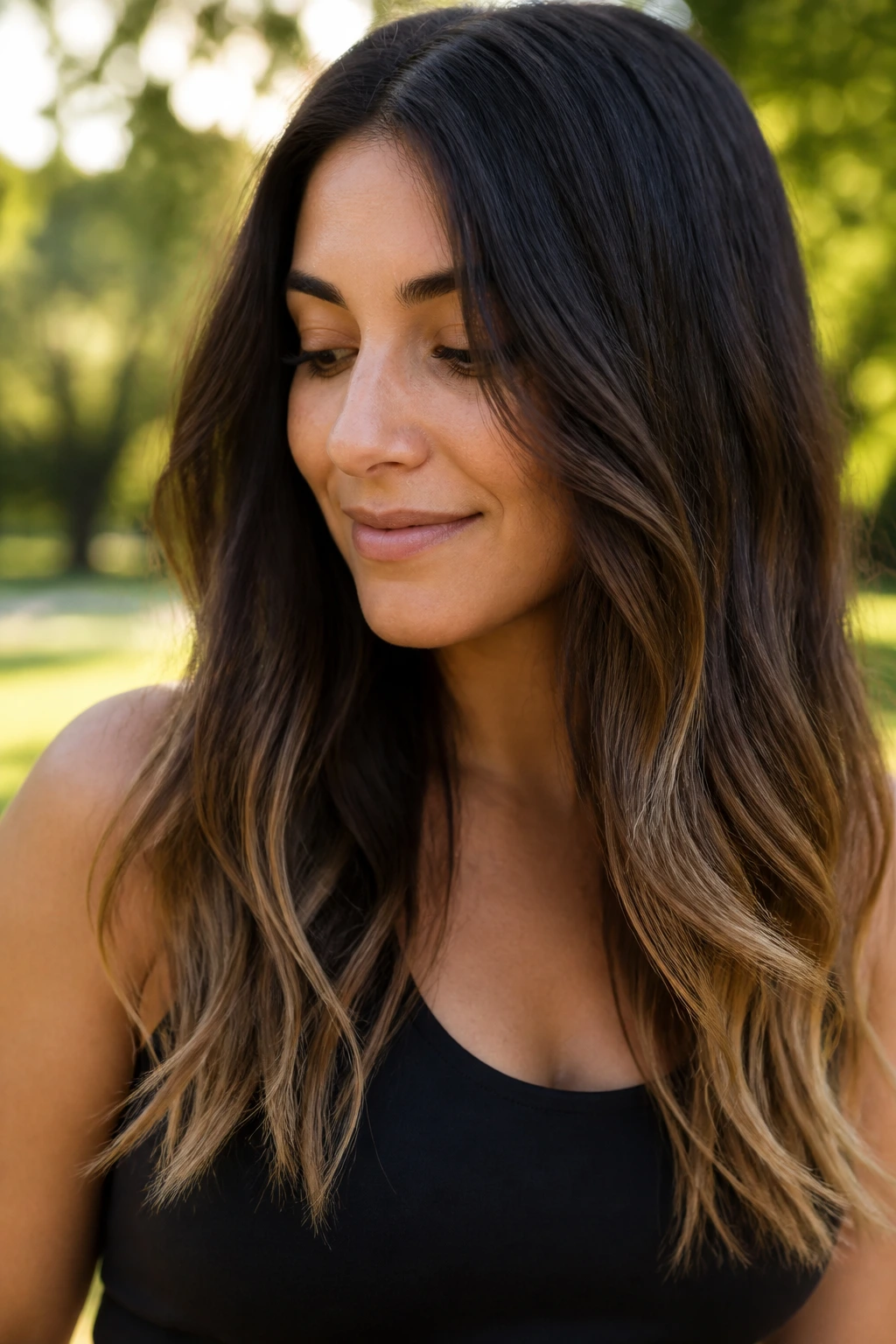
Sunkissed tips are the quietest look in the bunch, and that’s exactly why they earn their keep. A soft touch of blonde at the very ends can freshen dark hair without changing your whole identity.
It works because the eye tends to notice the movement first. The light tips catch that movement and make the hair feel longer, lighter, and less dense at the bottom.
Best on
- long waves
- layered cuts
- people who air-dry a lot
If you want a minimal change that still feels intentional, start here.
20. High-Contrast Contour Highlights
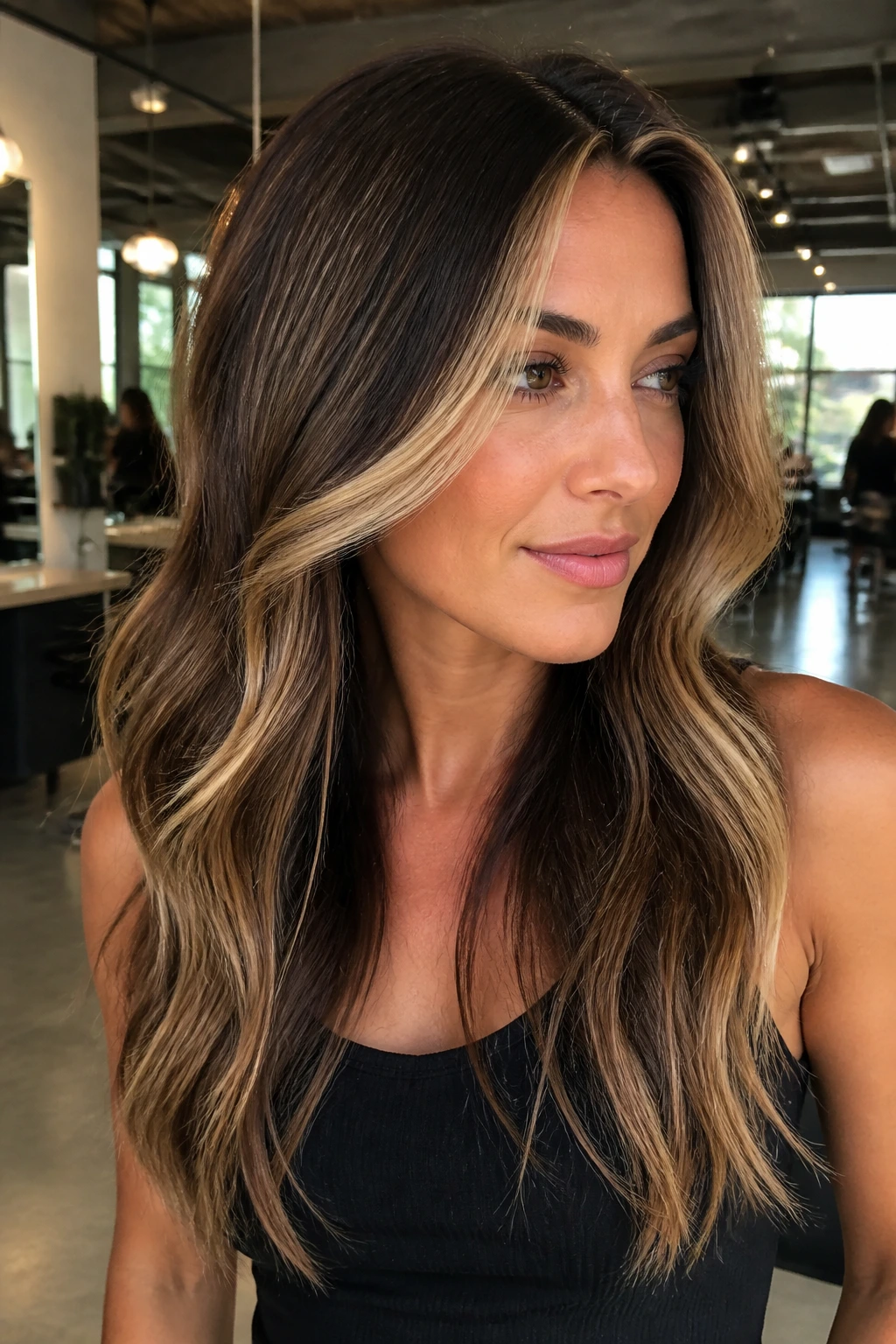
High-contrast contour highlights are the dramatic version of face framing. The front pieces are brighter, the surrounding hair is deeper, and the whole face gets outlined by color.
This is one of the strongest styles for shaping the face visually. Bright pieces placed near the cheekbones and jaw can make a cut feel sharper, especially on long hair or a blunt lob.
What to ask for
A brighter front money piece, a rooted transition through the top, and less light through the back. If every section is equally bright, you lose the contour effect fast.
21. Cool Champagne Veil
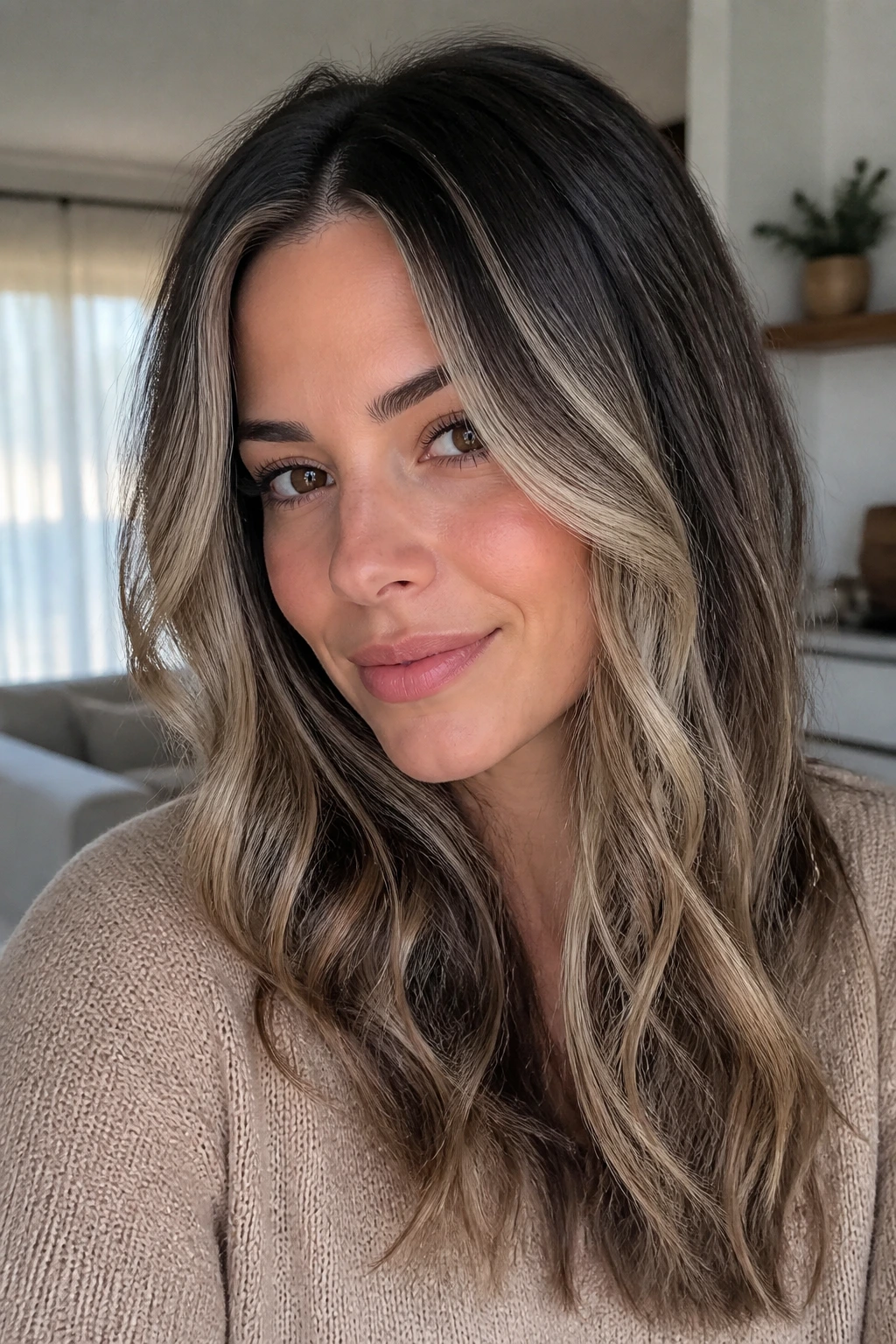
Champagne blonde is softer than platinum and more polished than yellow gold. On dark hair, it gives you that pale, airy finish without looking icy enough to fight the base.
The trick is in the veil. The blonde should be scattered, airy, and lifted enough to keep the tone crisp. If the lightening stops too soon, champagne can drift beige or even dull.
H3: Best paired with
A center part, clean blowout, and soft layers around the face. It also works on straight hair because the pale tone reflects more evenly across the surface.
22. Curly Beige Pop
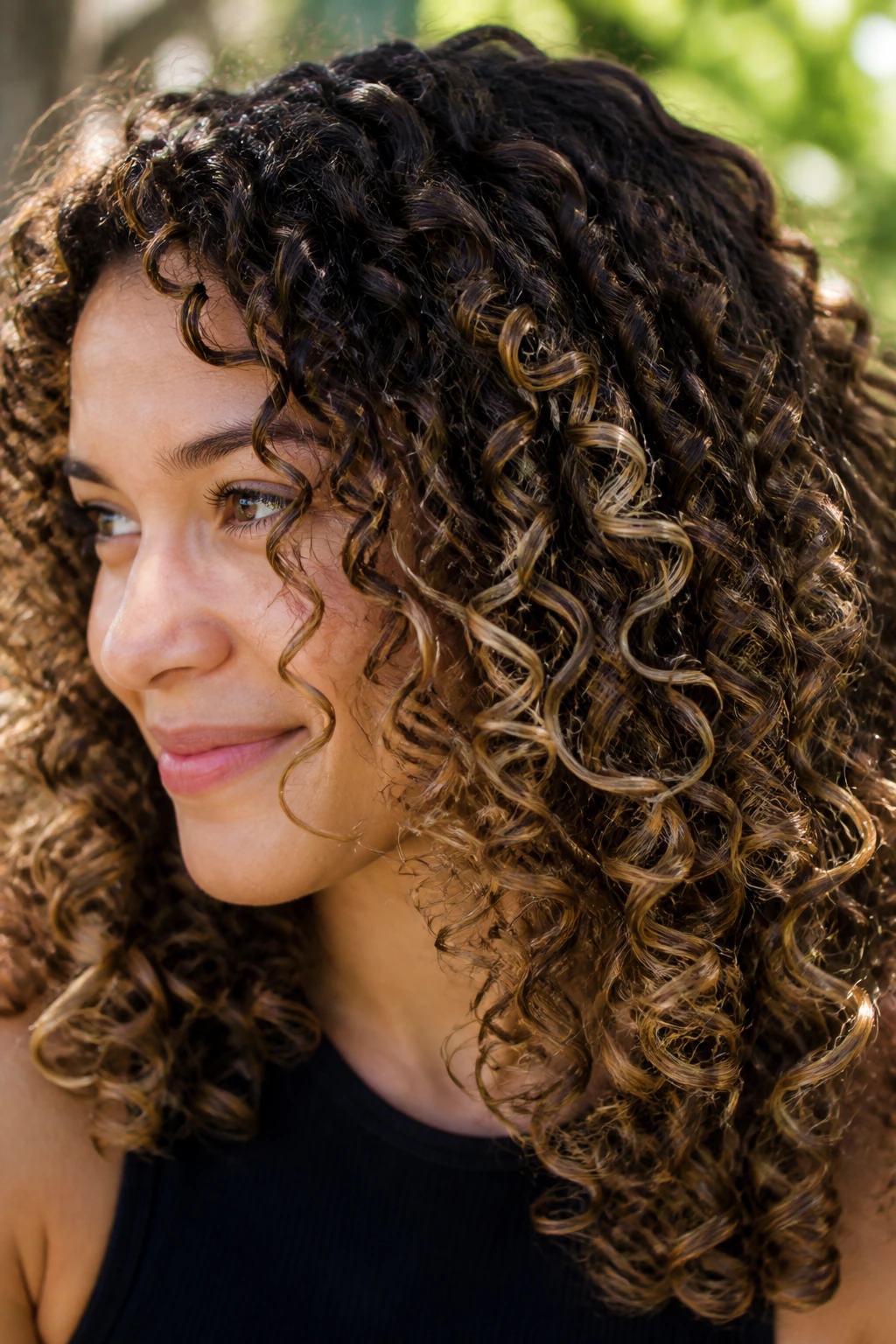
Curly hair needs its highlights placed with the curl pattern in mind, or the brightness gets lost. Curly beige pop does that well by putting lighter pieces where the curls separate and stack.
The beige tone is smart here because it keeps the curl pattern soft and dimensional. Too much ash can make curls look shadowy. Too much gold can look loud.
Why it works on curls
The light catches the outer curve of each ringlet. That creates tiny flashes of blonde instead of one flat streak. Much better.
23. Long Layered Caramel Panels
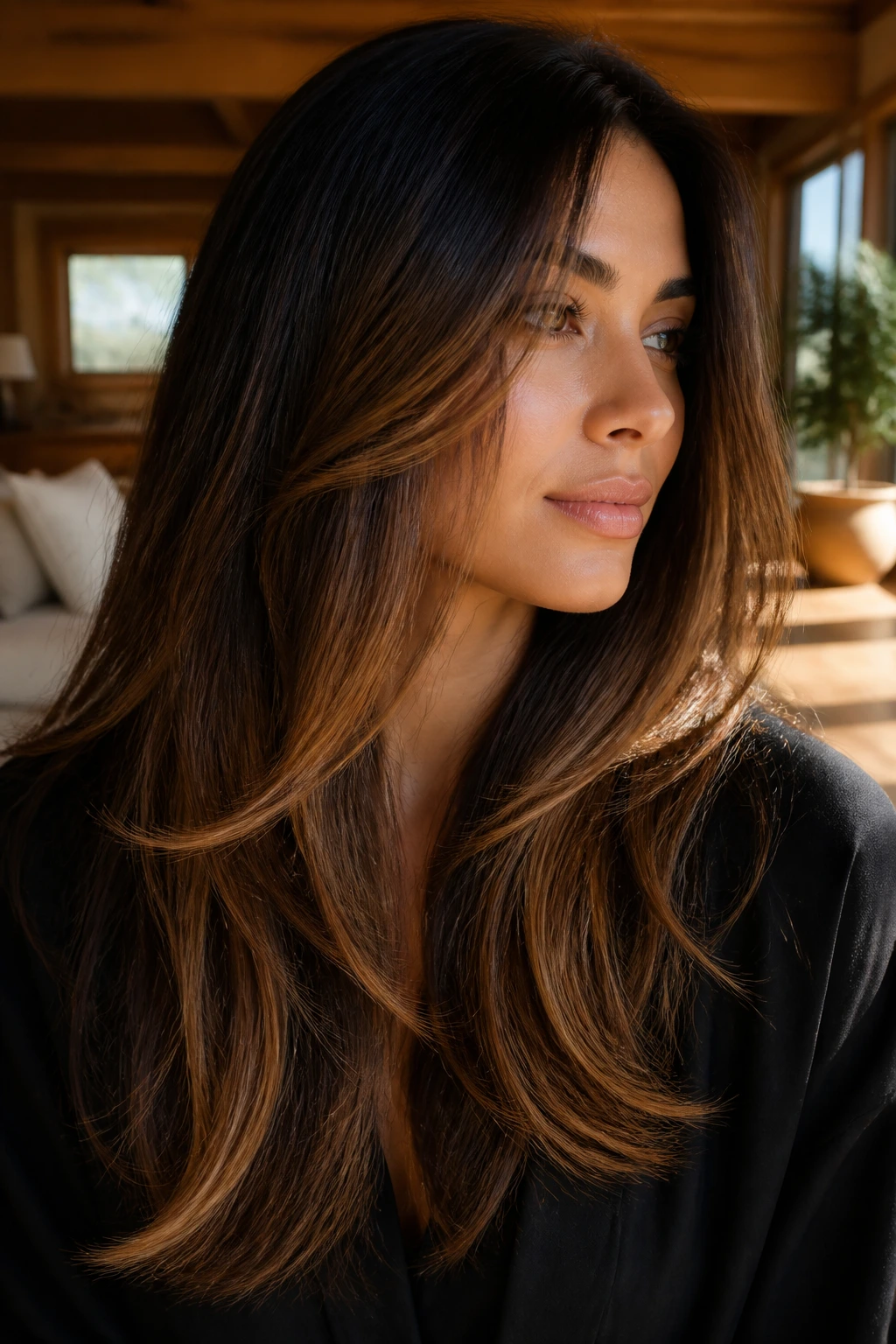
Long layers give you room for wider pieces of color, and caramel panels use that space well. The blonde travels down the hair in visible sheets, which makes the length feel fuller and more expensive-looking.
This is not a whisper of a highlight. It is a deliberate swath of brightness, but the caramel tone keeps it wearable on a dark base.
Best for:
- long hair with movement
- thick strands
- anyone who wears curls or large bends
If your hair tends to hide fine babylights, bigger caramel panels will show up better.
24. Short Bob Brightening Strands
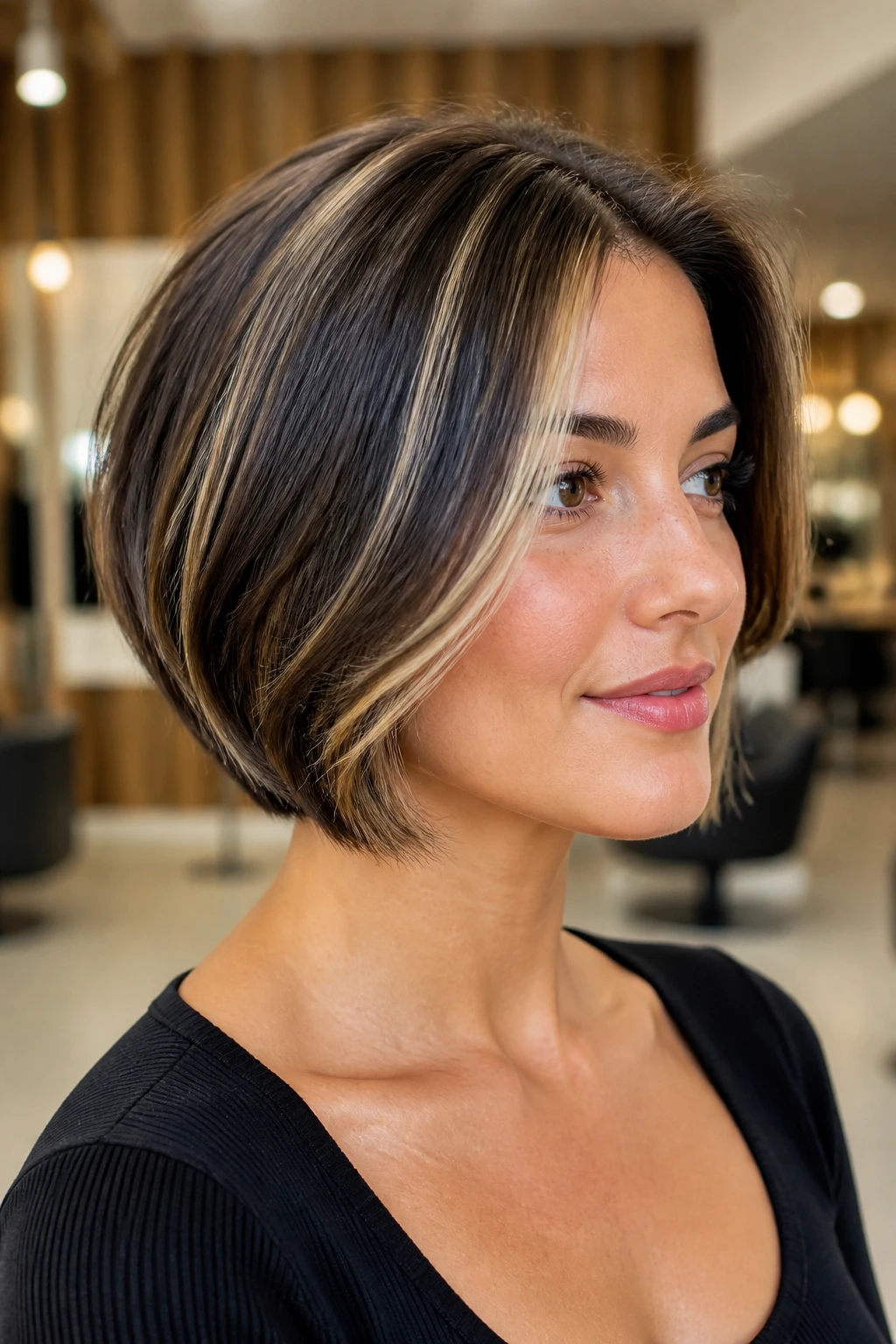
A bob needs a different highlight strategy because there’s less length for the color to stretch. Short bob brightening strands are placed to make the cut look crisp, not cluttered.
A few well-placed blonde strands around the front and crown can break up a dark bob fast. The result is clean and punchy. No extra fluff needed.
The catch
Do not overload a bob with too many light pieces. The shape can get busy in a hurry. Keep the pattern lean and let the haircut do some of the work.
25. Deep Side Part Highlights
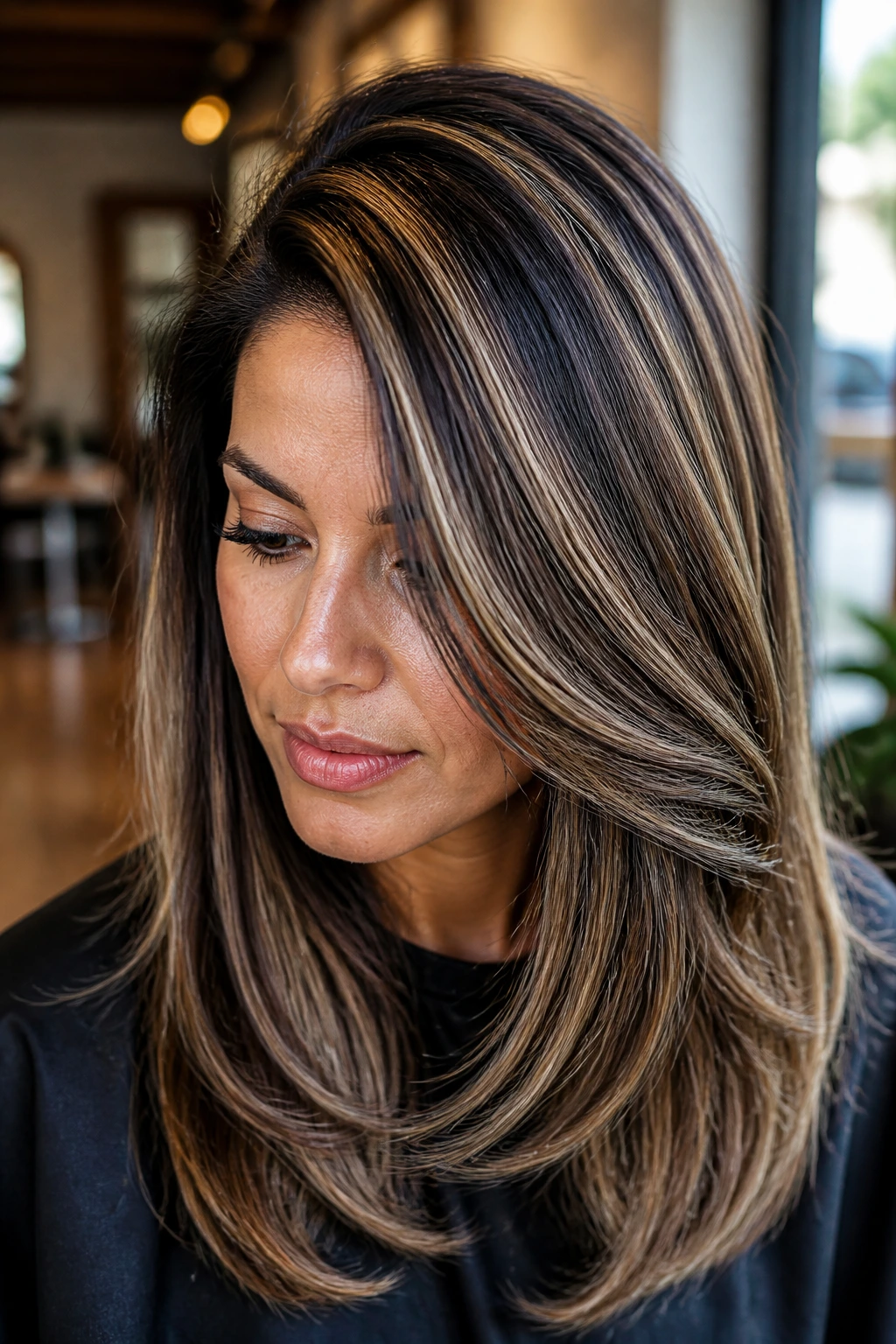
A deep side part changes where the eye lands, so the highlights can follow suit. Putting more brightness along the heavier side of the part creates instant drama without needing more color everywhere.
This is a smart move if you like changing your part now and then. The blonde reads differently depending on how you wear it, which keeps the style from feeling stuck.
What makes it useful
It gives you two looks in one. Sleeker and more dramatic on a side part, softer and more balanced on a center part.
26. Vanilla Cream Ends
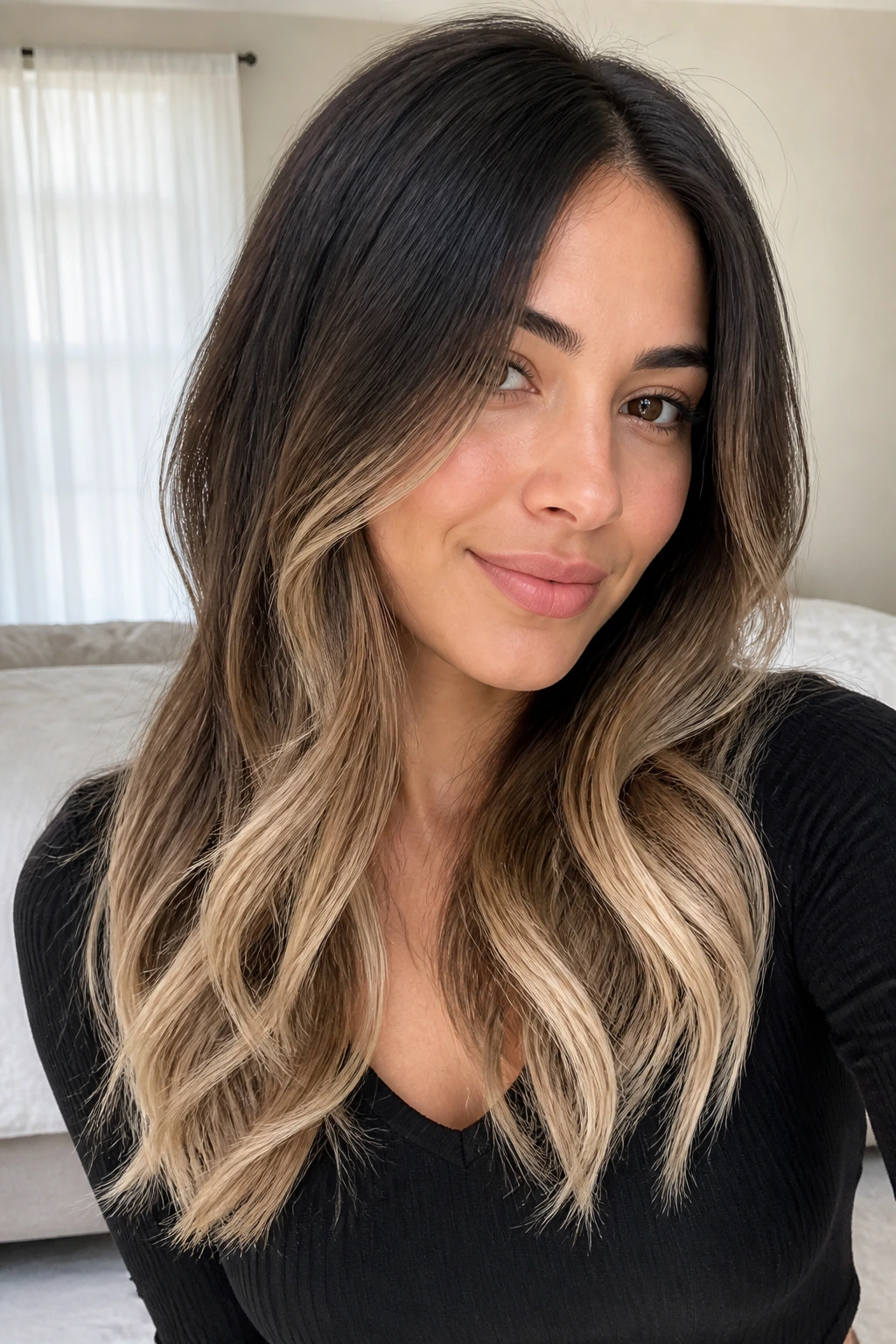
Vanilla cream ends are softer and a little sweeter than buttercream. The tone sits between beige and pale gold, which keeps dark hair from looking too stark at the bottom.
The brightest part stays low, so the roots can remain deep and natural. That makes the color easier to grow out and easier to live with on busy weeks when a salon visit is not happening.
Best if you want:
- bright ends without a bright crown
- a soft finish on straight hair
- lighter movement in the lower half of the cut
27. Lived-In Root Shadow Blonde
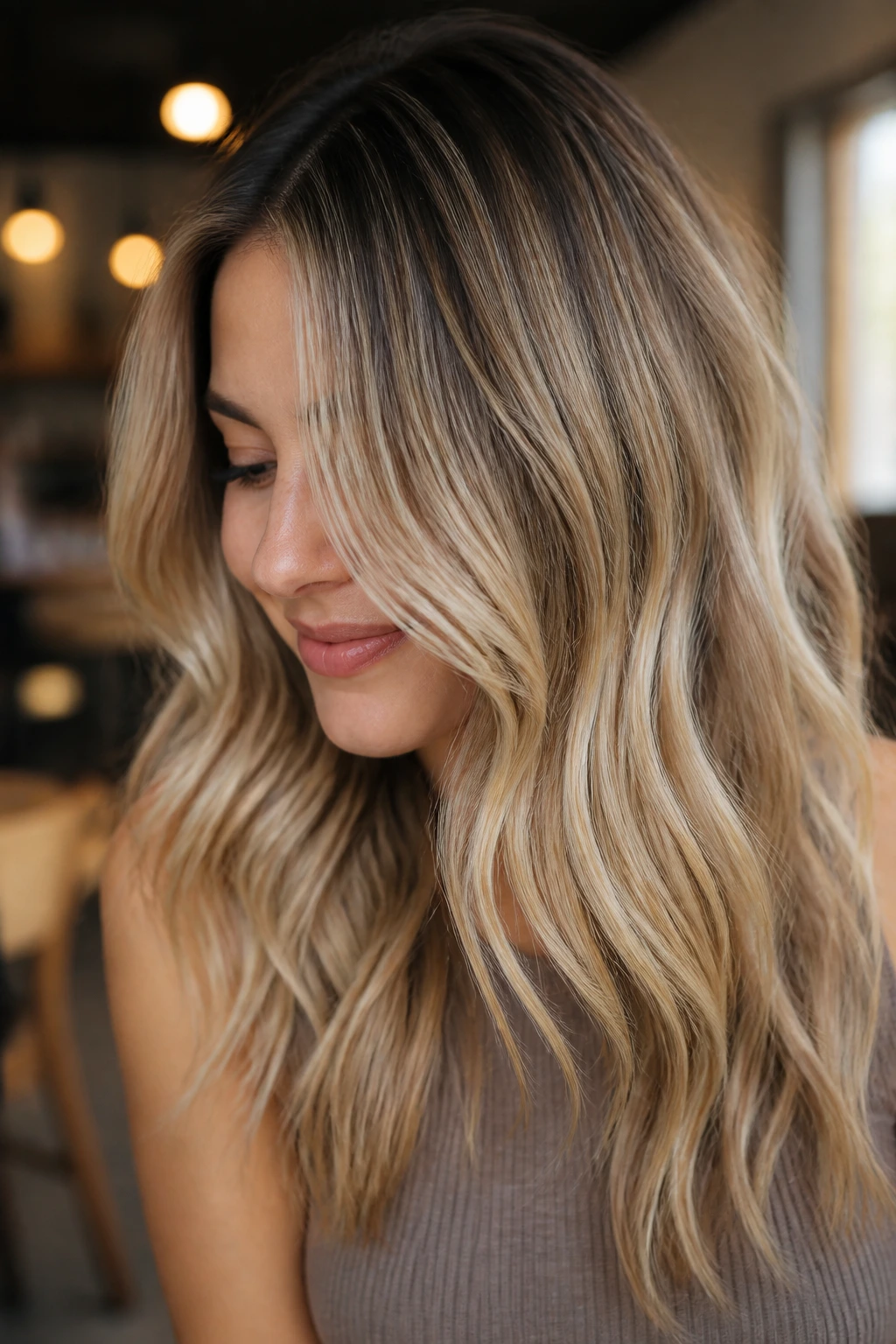
This is the low-maintenance favorite. The root stays darker on purpose, and the blonde begins a little lower so the grow-out looks blurred from day one.
On dark hair, that shadow is what makes the blonde believable. Without it, lighter pieces can sit on top like stripes. With it, the whole thing blends into one long gradient.
Why people keep coming back to it
It buys you time. And not a tiny bit of time — enough that the color can still look deliberate even after several weeks of regrowth.
28. Chestnut Halo Highlights
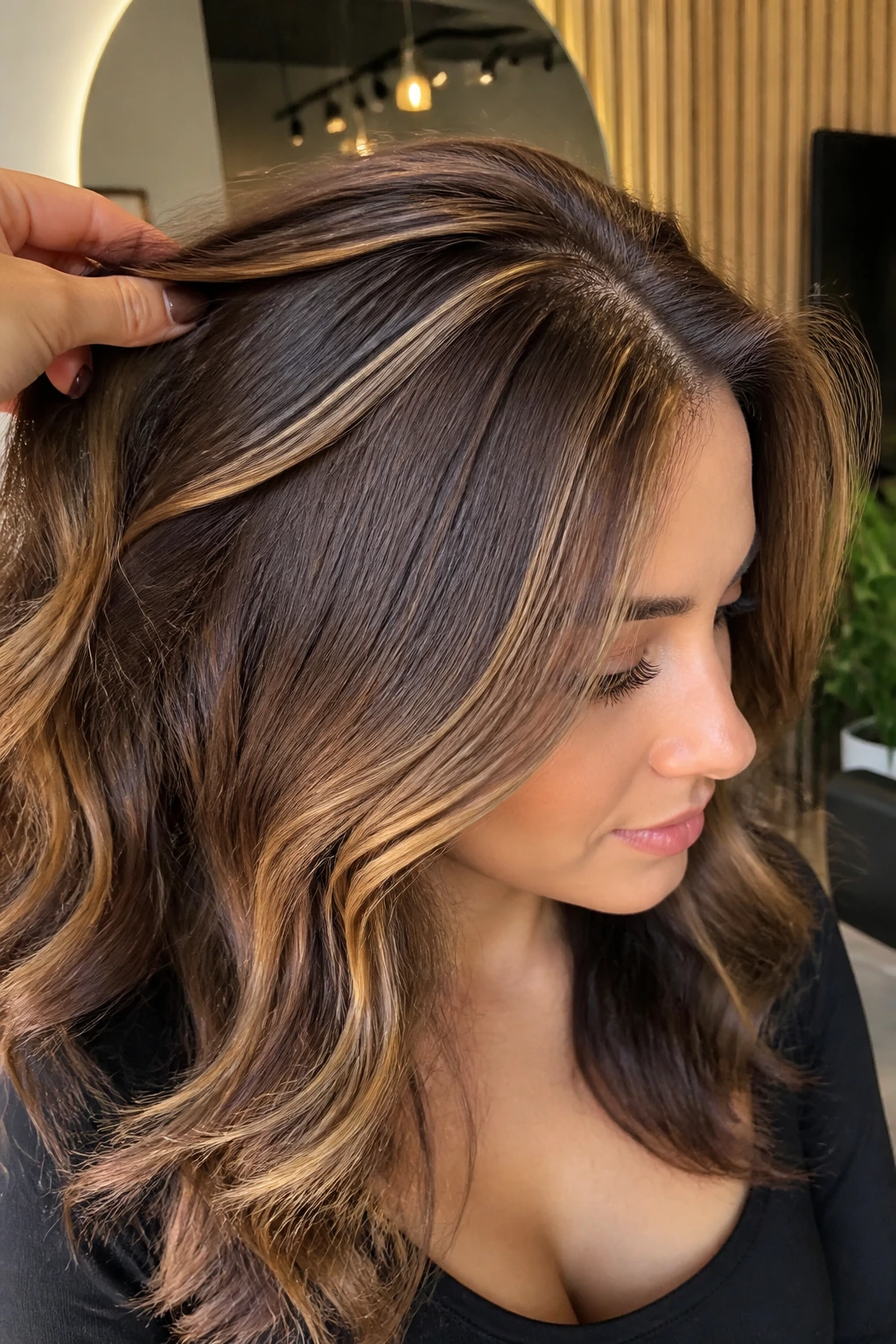
Halo highlights wrap brightness around the top and outer curve of the head, which is why they look so pretty in ponytails and half-up styles. The chestnut base keeps everything grounded.
The halo effect works especially well if you like volume at the crown. The lighter pieces create a soft lift there, while the deeper interior keeps the style from going flat.
Best for
- updos and ponytails
- medium to long hair
- people who want light where the eye naturally goes
29. Twisted Partial Balayage
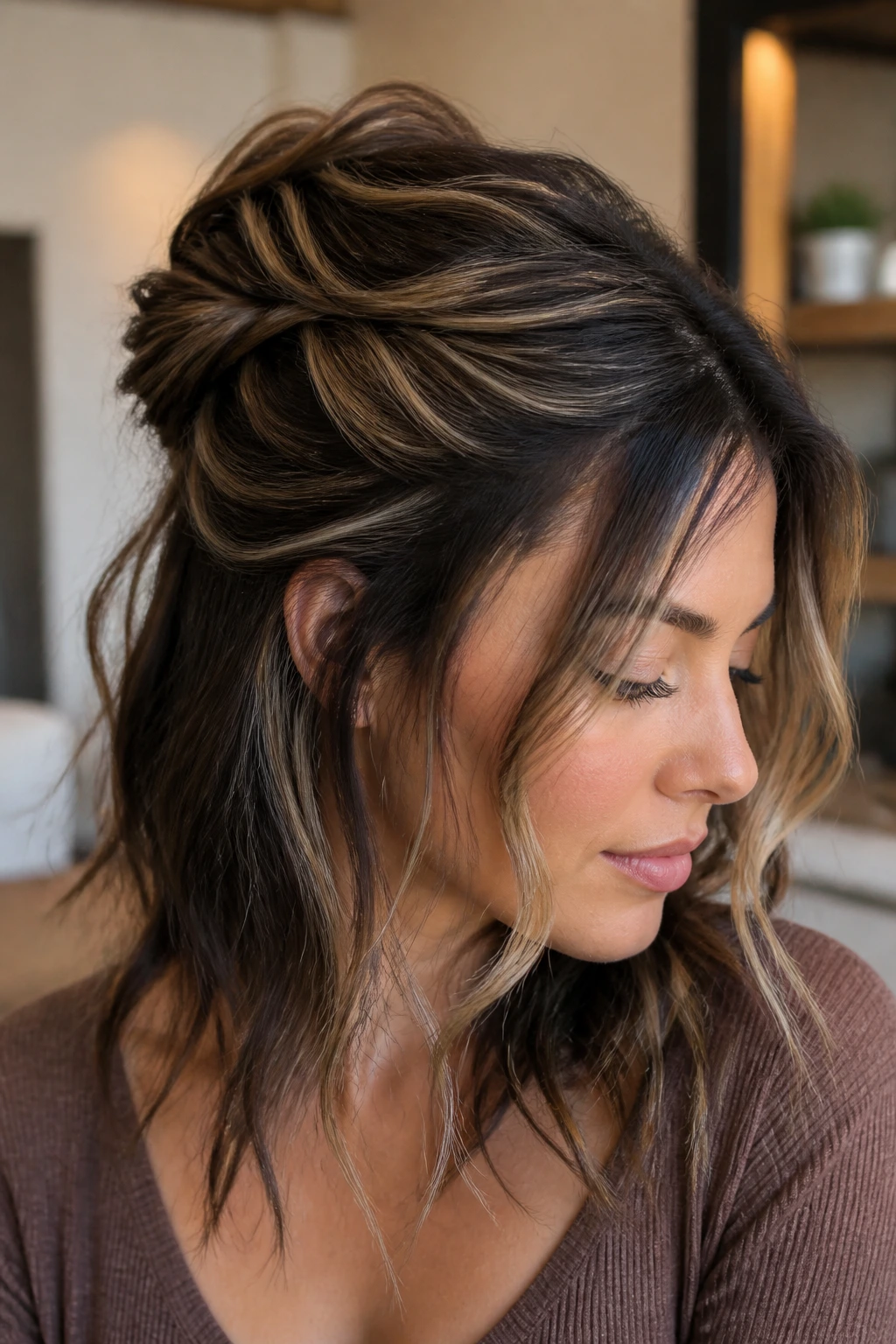
Twisted partial balayage is a smart way to color dark hair if you do not want the whole head lightened. The brighter pieces are concentrated through the visible top layer and front sections, then left softer underneath.
That gives you color that shows in twists, buns, braids, and waves. It’s a practical option, which sounds boring until you realize how often you actually wear your hair up.
The payoff
You get dimension where people see it most, and less processing where they don’t. That’s not a compromise. It’s a better use of the hair.
30. Ultra-Fine Micro Highlights
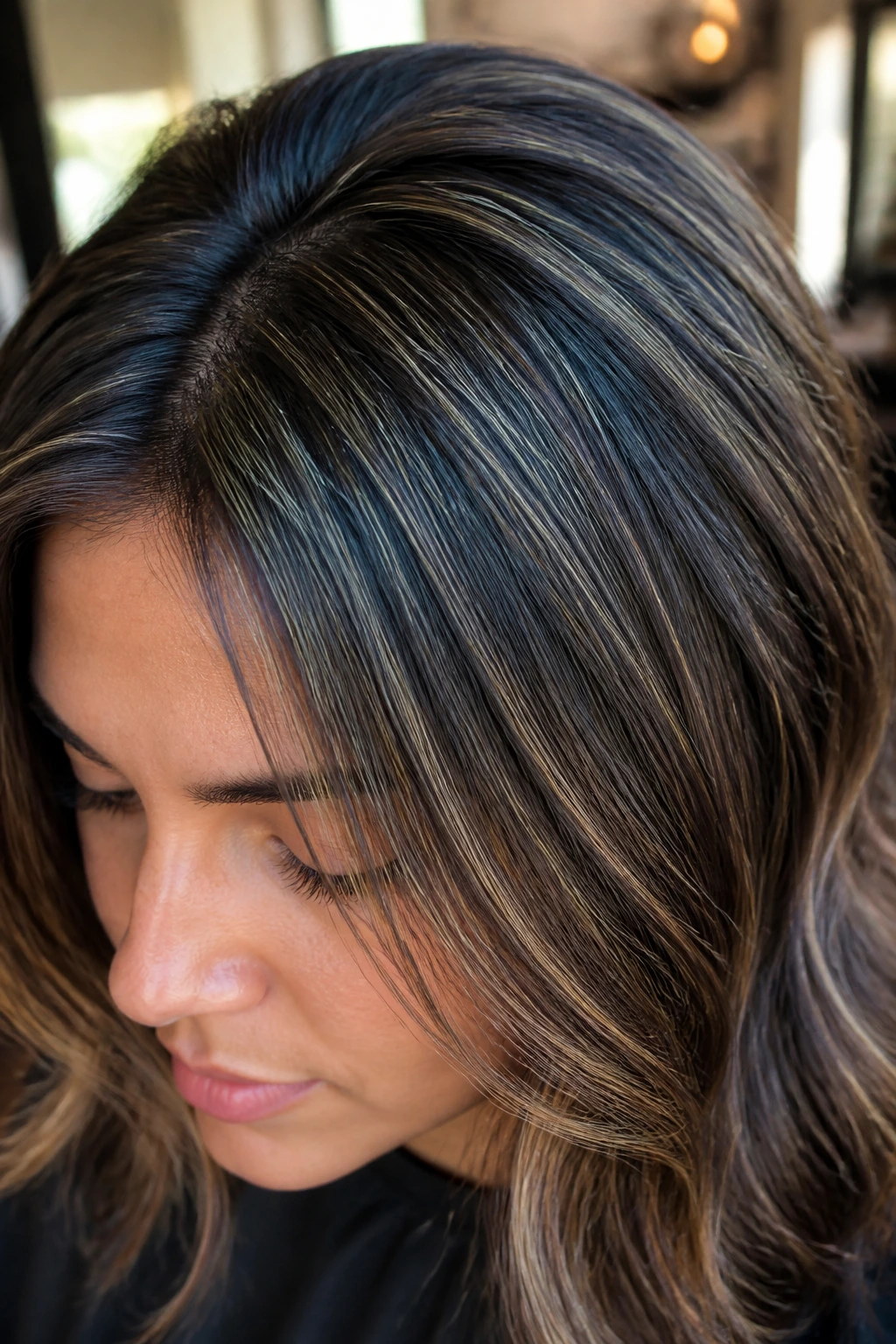
Ultra-fine micro highlights are for people who want the blonde to disappear into the brunette until the light hits it. The pieces are tiny, close together, and carefully blended so the effect feels more like texture than streaks.
On dark hair, this is a quietly impressive look. It makes the base look richer and the surface look lighter at the same time, which is a neat trick when the goal is dimension, not drama.
Why it works
Micro highlights keep the hair from reading as one solid block. They also grow out softly, especially if the toner is kept beige rather than overly cool.
How Dark Hair Lifts Into Blonde Without Looking Hollow
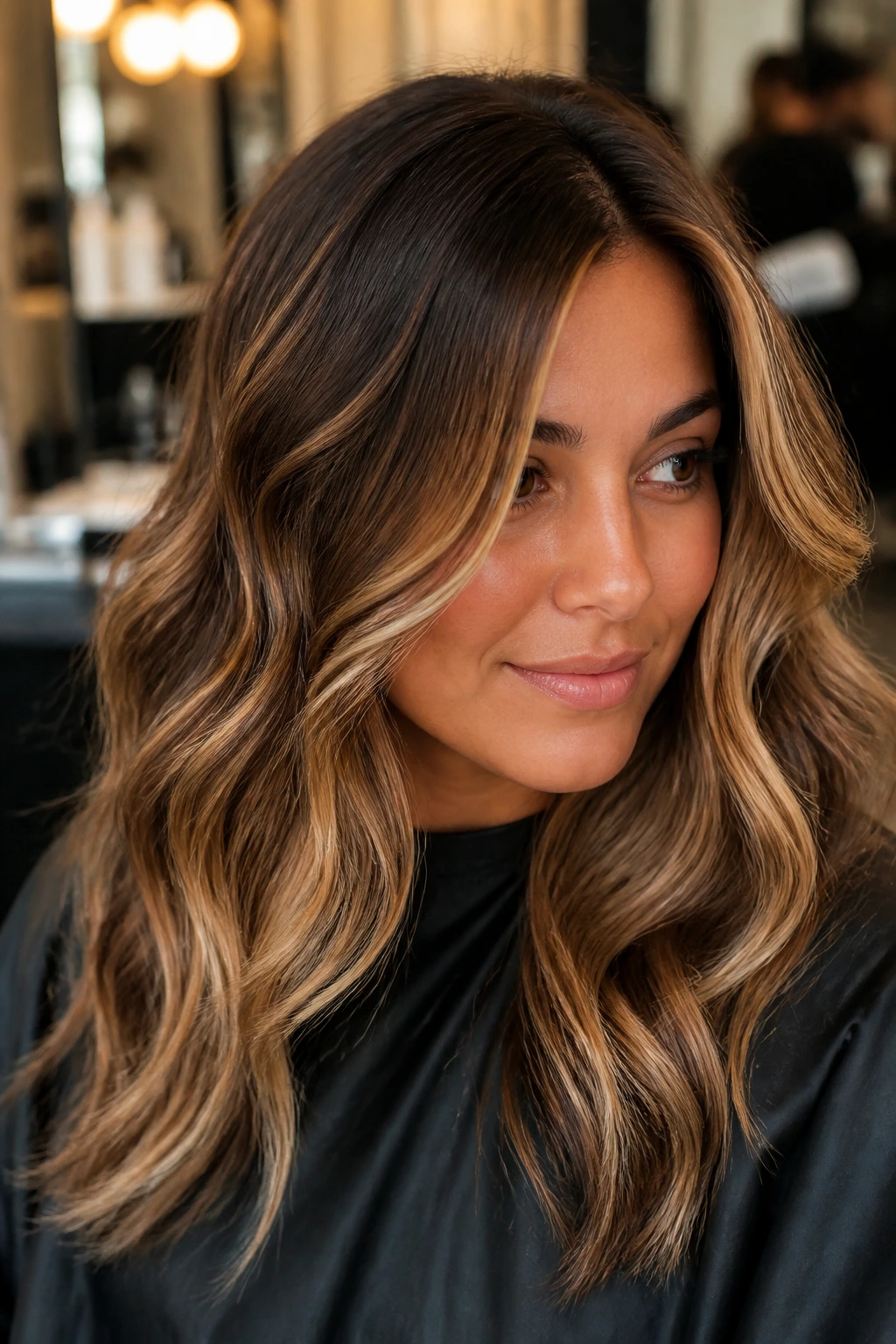
Dark hair can take blonde beautifully, but it doesn’t lift in a straight line. The underlying pigment shows up in stages — red, copper, orange, gold — and each stage changes how the final highlight reads.
That’s why the best brunette blonde highlights for dark hair usually leave some depth behind. If every strand is pushed too light, the hair can lose the shadows that make it look full. You end up with brightness, sure, but not much dimension. And dimension is the whole reason this look works.
Hair history matters here, too. Naturally dark hair often lifts more predictably than hair that’s been dyed black or dark brown with box color. If there’s old color sitting in the shaft, a color remover or a staged lightening approach may be needed before the blonde pieces can behave. That’s the part nobody likes hearing, but it saves a lot of disappointment later.
Tools and Products That Keep the Color Clean
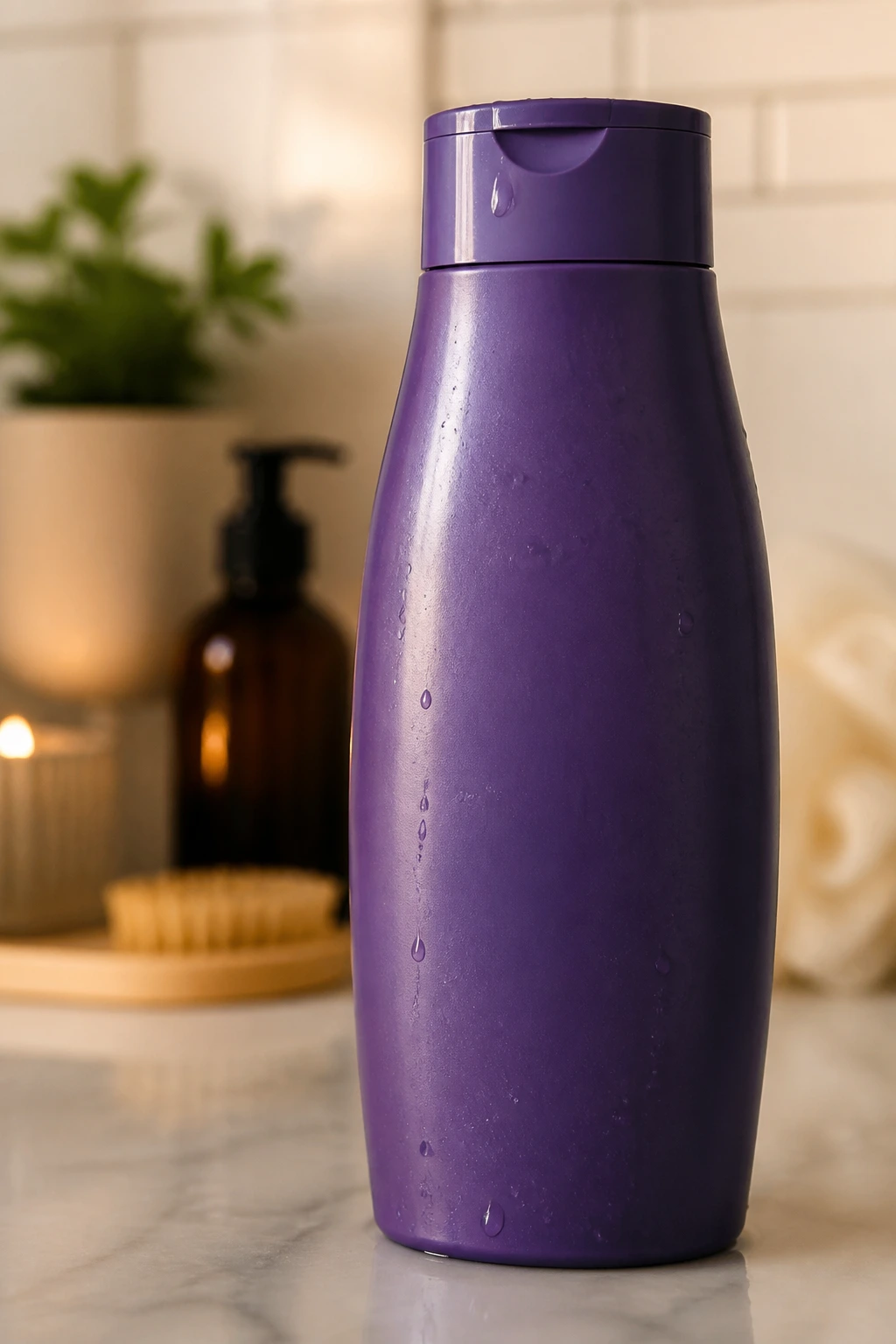
- Color-safe shampoo: A gentle shampoo keeps blonde pieces from fading fast and stops the dark base from looking dull.
- Purple shampoo: Use it once a week if your highlight tone leans ash, champagne, or cool beige. Leave it on too long and the blonde can go flat, so don’t get greedy.
- Moisture mask: Lightened hair needs slip. A mask with fatty alcohols or oils helps the ends feel less rough after washing.
- Bond-building treatment: If your hair was lifted more than a shade or two, a bond repair treatment helps it stay more flexible between appointments.
- Heat protectant: Straight irons and curling wands can cook highlighted sections faster than the darker base. Sprays that protect up to high heat are worth it.
- Microfiber towel: Less friction, less frizz. Simple.
- Wide-tooth comb: Useful on damp hair when the blonde pieces are more fragile and snap-prone.
- Gloss or glaze appointment: Not a product you use at home every day, but a salon gloss keeps tone honest and shine strong.
How to Ask for the Right Tone and Placement at the Salon
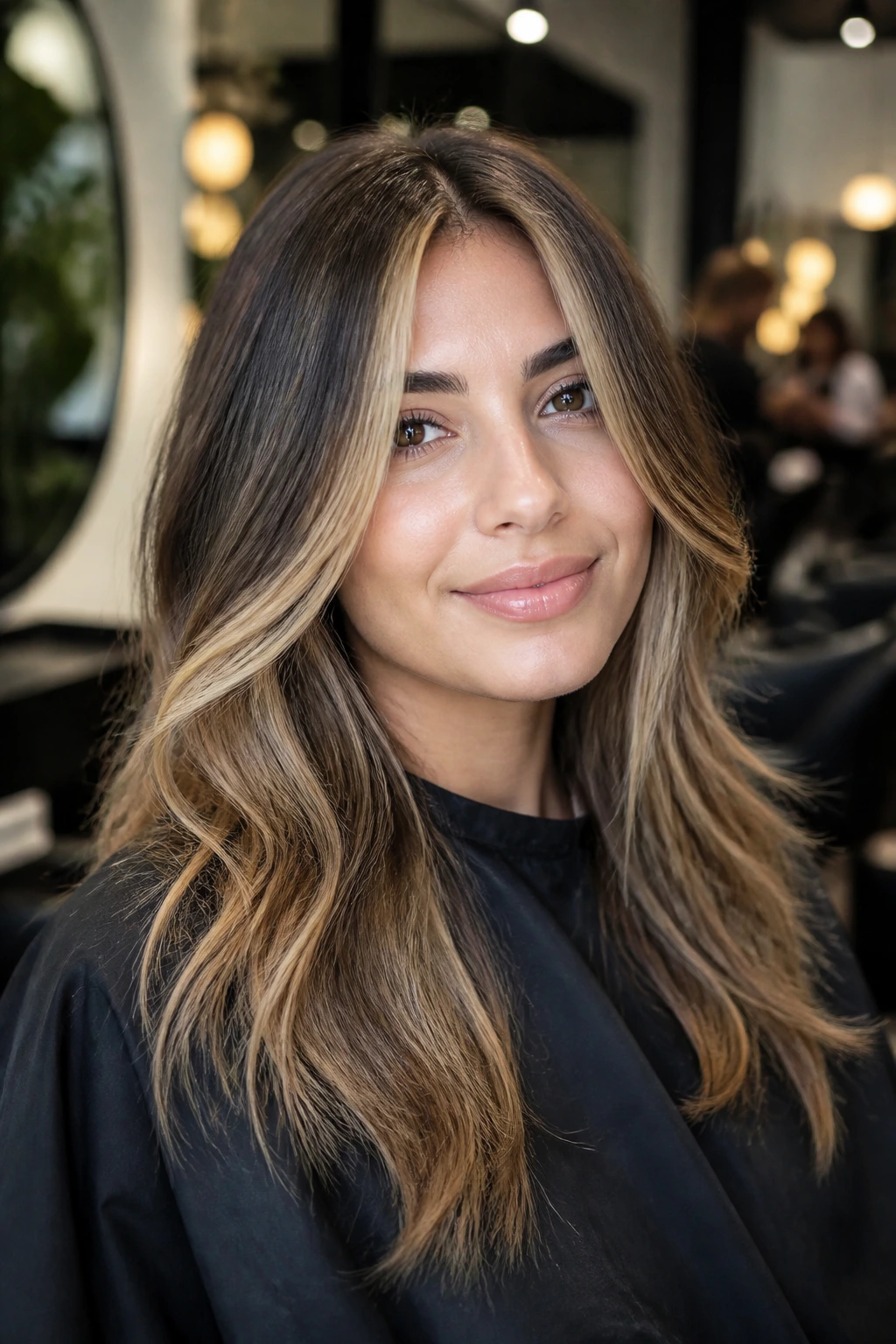
Bring pictures, yes. But bring pictures that show the hair in daylight and indoors, because dark hair highlights can look caramel in one room and beige in another. That matters more than people admit.
Tell your colorist how much contrast you want, not just “blonde.” Ask whether you want honey, beige, champagne, ash, or caramel. Those words point the toner in a useful direction. If you like a softer grow-out, mention a root shadow or lived-in blend. If you want brighter face-framing pieces, say that out loud and point to the exact sections you want lightened.
A good salon conversation also covers your history. Previously boxed, previously black, heat-damaged, or virgin hair all behave differently. If your hair has been darkened at home, say so. No drama, no shame, just facts. That one detail can change how much lift is safe in a single appointment.
How to Wear the Dimension Day to Day
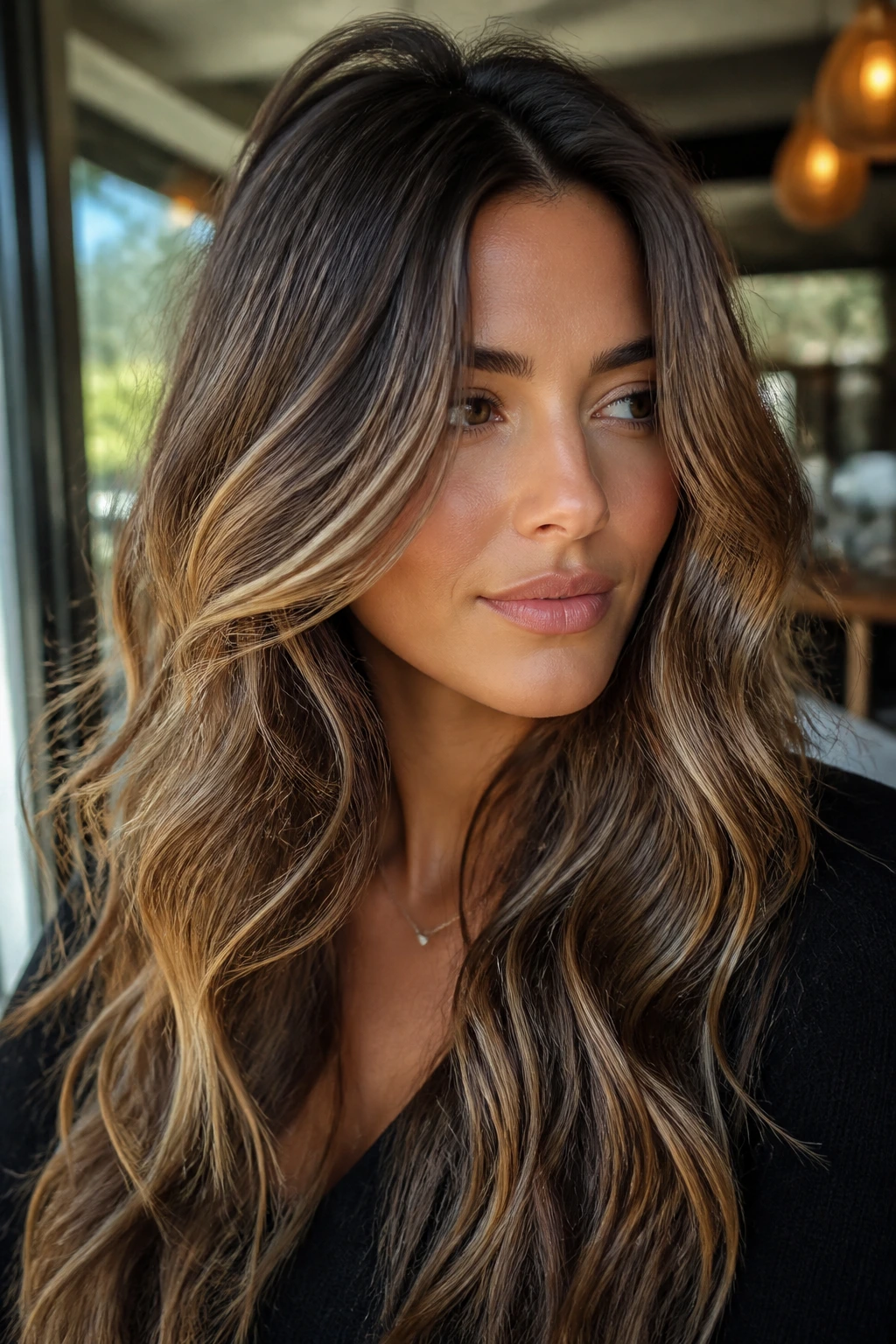
Presentation: Loose waves show the ribbons and panels best, because bends in the hair let the blonde and brunette separate. Straight blowouts make the color look sleeker and more polished. High ponytails and claw clips can expose hidden blonde in a way that makes the whole style feel fresh.
Pair With: Long layers, curtain bangs, blunt bobs, and side parts all change how the highlights read. A cut with some movement gives the blonde more room to show itself. Flat, one-length hair can still work, but it benefits from a few brighter face-frame pieces.
Amount: If you want subtle, keep the blonde mostly through the top layer, ends, and front. If you want more visible contrast, ask for brightness through the crown and the outer veil of hair. Too much blonde at once can flatten dark hair, so I’d rather see a few strong sections than an all-over haze.
Finish: A drop or two of hair oil on the ends, a shine spray through the mids, and a heat protectant before hot tools make a bigger difference than people think. Tiny habits. Big payoff.
Small Tweaks That Make the Color Feel Richer
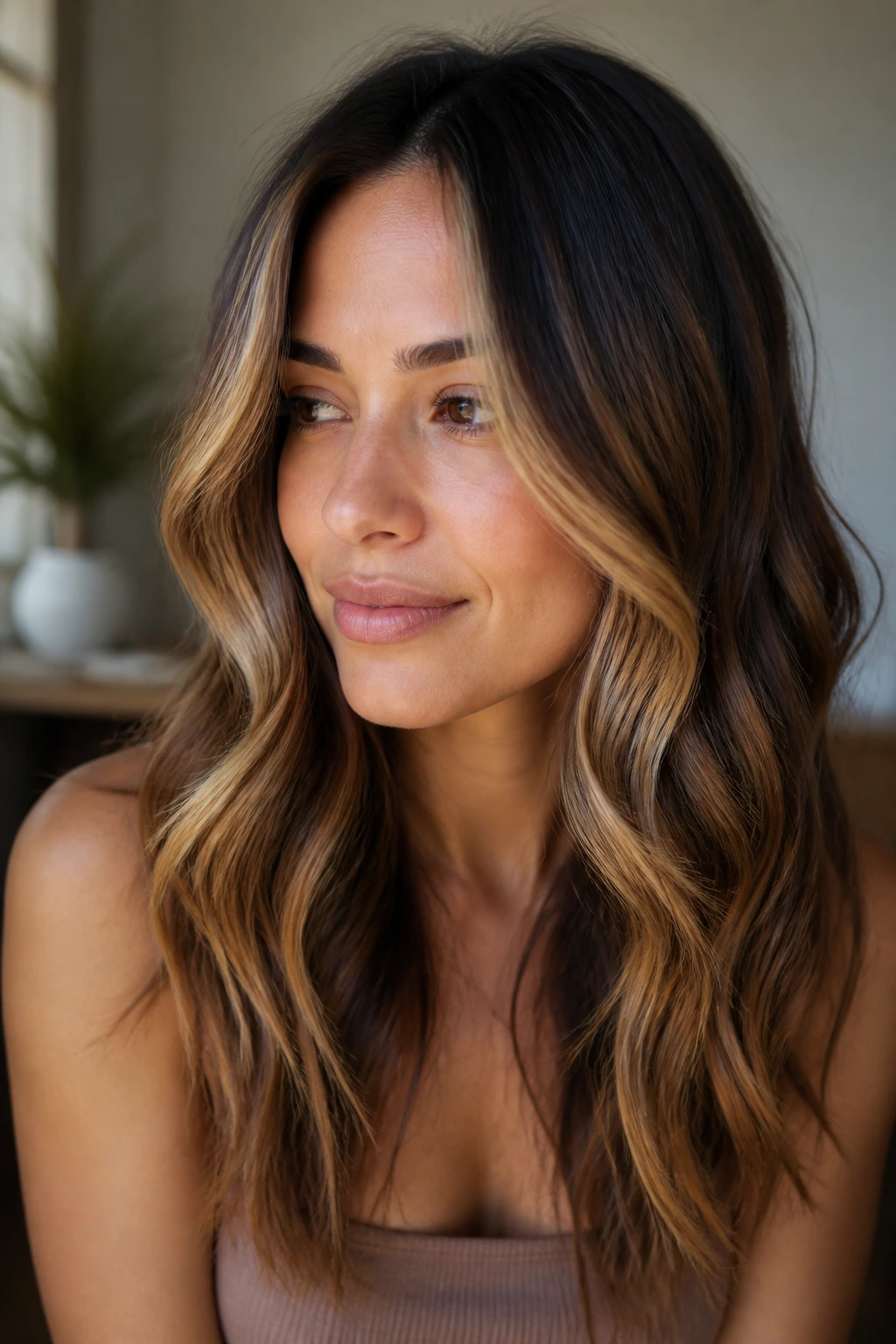
Glossing: A beige or soft gold gloss after lightening can calm brass without killing the warmth that makes brunette-blonde blends look alive. Ask for a glaze that suits your base, not one that forces it into a trend tone it doesn’t want.
Contrast Control: Not every section needs to lift the same amount. Leaving deeper pieces under the top layer makes the brighter strands look richer. That little shadow is what gives the color depth instead of sameness.
Texture: Rough-dry your hair a little before fully styling it if you want to see the dimension. On smooth, flat hair, the highlights can seem less obvious. A bend, a wave, or even a slight tuck behind one ear changes the whole read.
Make-It-Yours: Fine hair usually looks better with fewer, brighter pieces. Thick hair can handle more spacing and more variation. Curly hair needs placement mapped to the curl, not the section grid. Short hair likes cleaner, sharper pieces. Long hair can take a softer melt.
Common Highlight Mistakes on Dark Hair
- Going too light in one visit: Dark hair that’s pushed several levels in one session can look patchy, dry, or orange at the ends. The fix is staged lightening and a toner that respects the underlying pigment.
- Choosing the wrong blonde tone: A cool ash blonde on a warm brunette can look flat. A yellow-gold blonde on a naturally cool base can look brassy. Match the tone to the undertone, not to a photo you saved at random.
- Overloading the whole head: Too many bright pieces can erase the depth that makes dark hair look full. Leave some darkness in the interior and around the crown.
- Skipping maintenance: Lightened strands need more moisture and periodic toning. If the blonde turns dull or yellow, it usually needs glossing, not more shampoo panic.
- Ignoring your haircut: Highlights sit differently on a blunt lob, a shag, a bob, or long layers. Placement should follow the cut. If it doesn’t, the color can feel awkward even when the tone is right.
Variations and Alternatives to Try
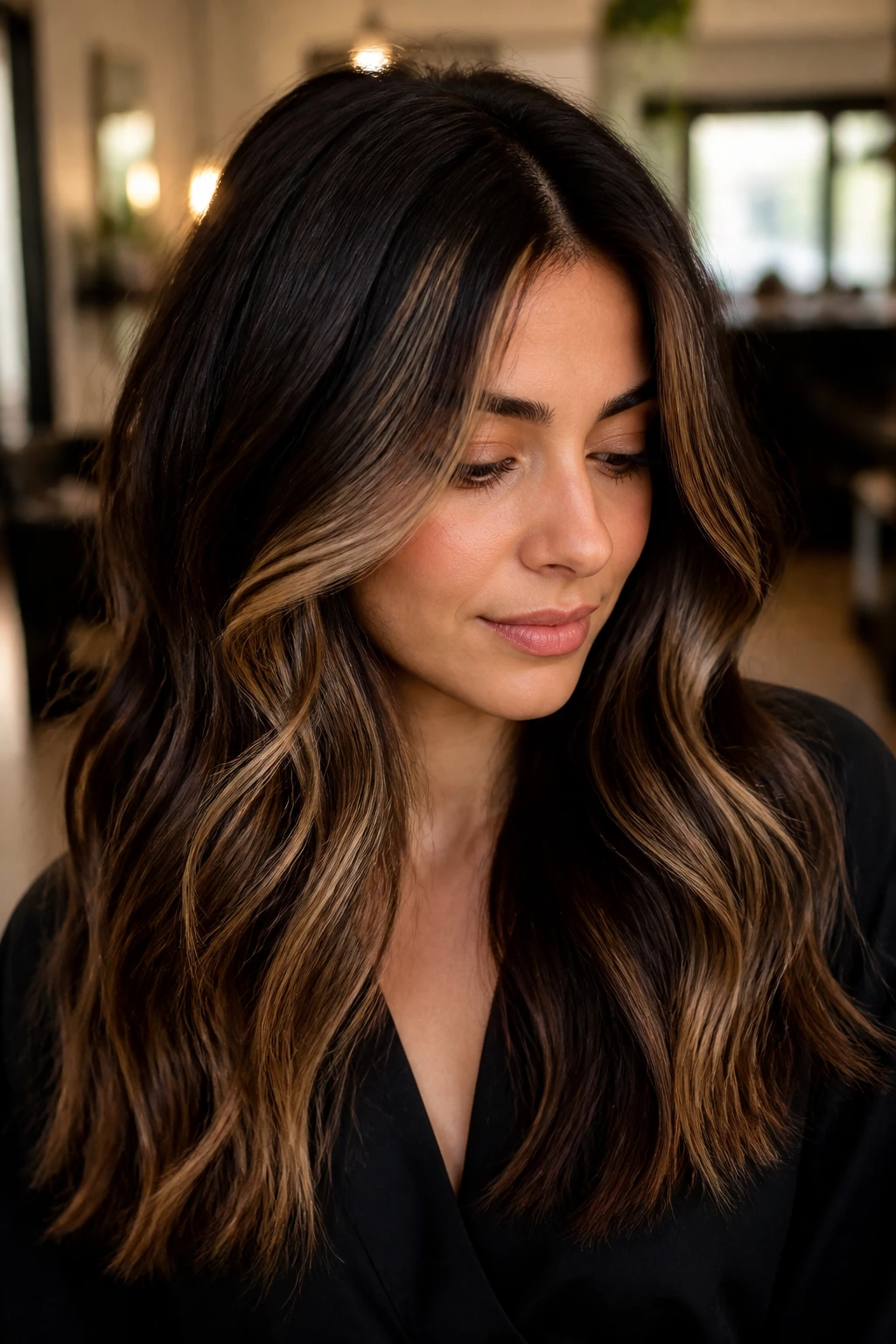
The Soft Start: If you’re nervous, begin with face-framing highlights and a few soft ribbons through the top layer. It gives you brightness without forcing you into a full blonde commitment.
The Cooler Edit: Swap honey and caramel for beige, ash beige, or champagne if your skin tone and wardrobe lean cool. The result feels cleaner and more refined on dark hair with a neutral or pink undertone.
The Curly Map: Curly and coily textures need highlights placed where the curl opens, not where a straight section would sit. That makes the blonde visible in the pattern instead of disappearing into it.
The High-Drama Version: Keep the base dark and add a stronger money piece, brighter crown sections, and lighter ends. This gives a sharper, more editorial look without taking the whole head pale.
The Low-Maintenance Blend: Ask for a deeper root shadow, softer mids, and only a few bright pieces around the face and tips. It grows out with less fuss and works well if you don’t live at the salon.
Frequently Asked Questions About Brunette Blonde Highlights for Dark Hair
How light can dark hair go in one appointment?
That depends on your starting point, past color, and hair health. Naturally dark virgin hair can sometimes lift 2-4 levels in a careful session, but previously colored hair usually needs more patience. Pushing harder than the hair can take is how you end up with breakage and uneven warmth.
What blonde shade looks best on dark brown hair?
Honey, caramel, beige, and champagne are the easiest shades to live with because they sit nicely over dark undertones. Cool ash can look beautiful too, but it usually needs stronger lift and a toner that stays on top of brass without turning the hair flat.
Do highlights damage dark hair more than light hair?
They can, because dark hair often needs more lift to reach a visible blonde. Damage depends less on the hair color itself and more on how much lightening it needs, how healthy it is to begin with, and whether bond care is used during and after the service.
Can I get this look without bleach?
Not if you want true blonde pieces on dark hair. Temporary color can add warmth or shine, but it won’t create real blonde contrast. If you want a safer first step, ask for a few soft caramel or honey pieces rather than a pale lift.
How often do these highlights need toning?
Most blonde pieces on dark hair benefit from a gloss every 4 to 8 weeks, depending on how warm or cool you want them to stay. Ashier looks need more tone maintenance, while honey and caramel versions can go longer between refreshes.
Will this work on curly hair?
Yes, and it can be gorgeous when the placement follows the curl pattern. The main mistake is highlighting curls as if they were straight, which hides the color inside the coil instead of letting it show on the surface.
Why does blonde go orange on dark hair?
Because dark hair carries warm pigment underneath, and lightening exposes it step by step. If the hair hasn’t been lifted enough, the orange stage is still sitting there under the toner. That’s not a failure of the color — it’s a signal that the hair needs more lift or a different tone strategy.
Can I ask for subtle highlights if I already have black hair?
Yes, but subtle on black hair still means some visible contrast. Thin babylights, a soft money piece, or partial balayage usually makes more sense than trying to force pale blonde everywhere. The darker the base, the more carefully the blonde has to be placed.
The Softest Kind of Bright
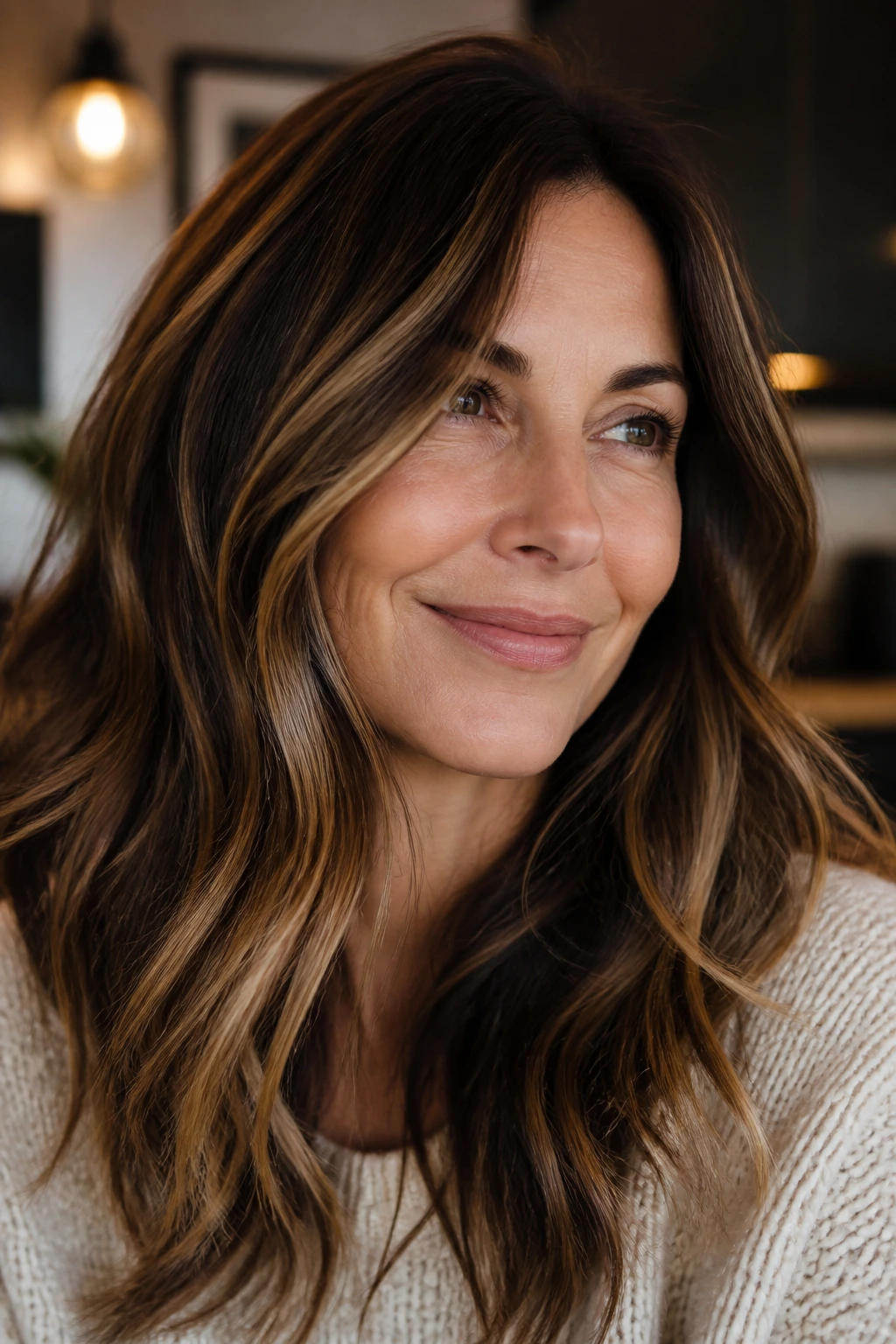
The nicest thing about brunette blonde highlights for dark hair is that they do not have to erase the brunette to make the blonde matter. The best versions keep the base alive, use warmth or coolness with intention, and let the highlights move instead of sitting there like stripes.
If you want the look to age well, think in layers: tone, placement, and upkeep. That’s the part that keeps a pretty color from turning into a project.
And if you’re still torn between soft caramel, smoky beige, or a bolder money piece, start with the version that fits how you actually wear your hair most days. That one tends to win.