



Rose gold and white can look soft, icy, or expensive on fair skin—and the difference usually comes down to where the white lands. Put it too bluntly against a pale face and the hair can start wearing you instead of the other way around. So the trick is not simply going lighter. It’s choosing the right balance of pearl, blush, champagne, and clean white so the color has shape.
That balance is what makes this combination worth paying attention to. On fair skin, the usual blonde rules shift a little. A heavy golden blonde can pull brassy fast, while a flat ash blonde can leave the face looking washed out. Rose gold white highlights sit in a sweeter middle ground: the pink softens the brightness, the white keeps the whole thing crisp, and the mix gives pale skin a little warmth without drifting into orange territory.
What I like most about this palette is that it doesn’t have to be loud to be noticeable. A few pearl ribbons through a beige blonde bob can change the whole read of the haircut. A stronger money piece with white around the face can make freckles pop, brighten blue or green eyes, and give fine hair a bit of shape that plain single-process color often misses. The good versions look painted, not striped. That’s the line.
Why This Palette Flatters Fair Skin
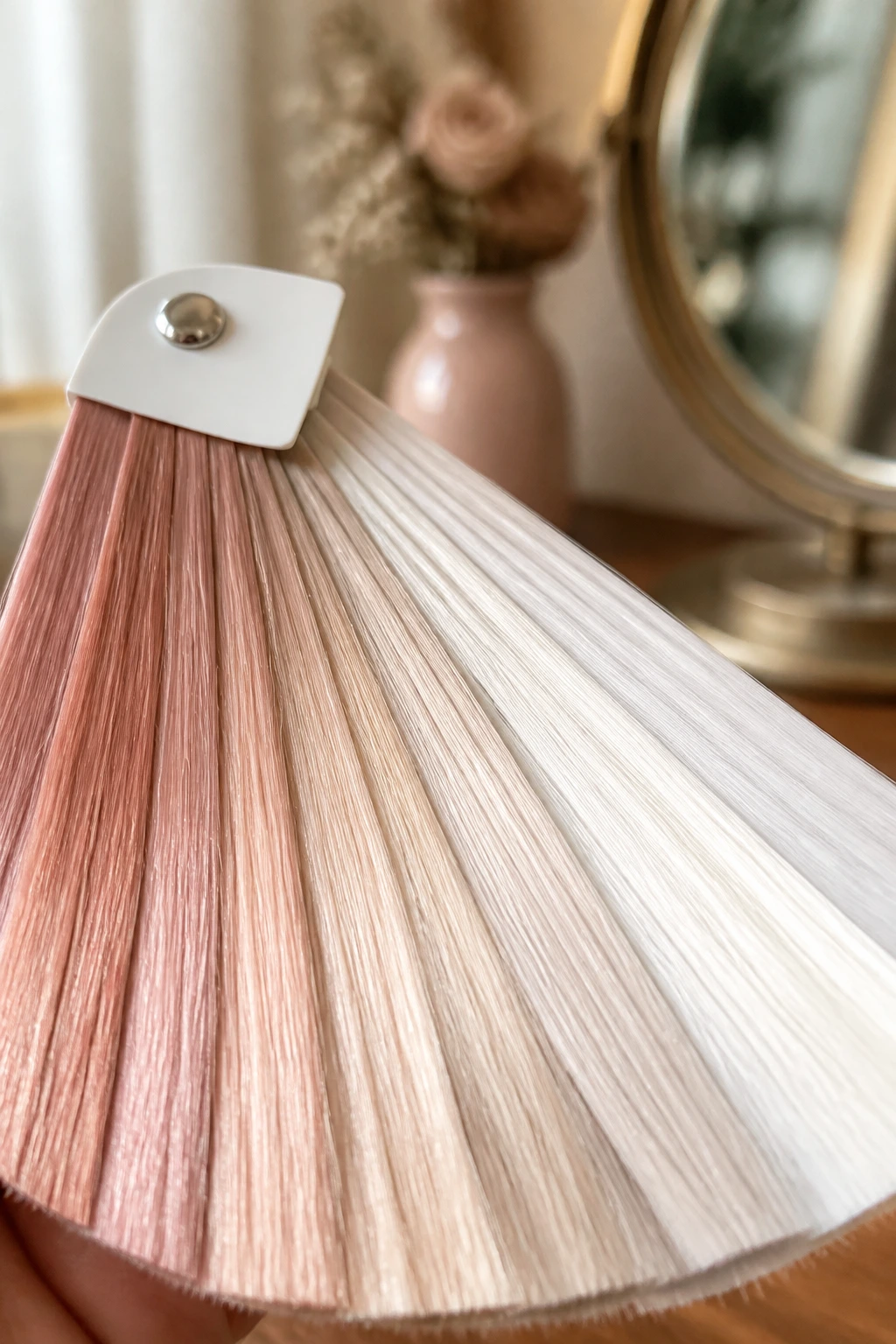
-
Soft contrast: White on fair skin can go chalky if it’s too harsh, but a rose-gold veil keeps the brightness from sitting flat against the face.
-
Flexible undertones: Cool, neutral, and warm fair skin all have a version that works; you just shift the rose from mauve to peach or champagne.
-
Better grow-out: When the root stays a little deeper, the highlights don’t announce themselves every time your hair moves.
-
Light-catching finish: Pearl and white pieces reflect light in waves and bends, which makes layered cuts look fuller without needing more color.
-
Easy to personalize: You can go whisper-soft with babylights or push it into fashion territory with wider slices and face-framing panels.
-
Less brass, more control: Rose-based toners help keep pale blonde from turning flat yellow, especially when the white is placed on the surface.
1. Pearl-Ribbon Balayage
Pearl-ribbon balayage is the version I reach for when someone wants movement first and drama second. The highlights are painted in slim ribbons, not chunky blocks, so the white and rose tones melt into a base that still reads soft from across the room. On fair skin, that matters. The contrast stays airy instead of turning stripey.
The rose should live in the midlengths and lower half, while the white gets saved for the bend of the wave and the ends. That placement keeps the face from looking overlit. If your skin leans pink or cool, ask for a pearl-rose gloss rather than a warm strawberry toner; it sits cleaner and won’t fight your undertone.
2. Champagne White Face Frame
A bright face frame changes the mood fast. Champagne white around the front sections gives fair skin a little lift, and the rose gold tucked behind it stops the brightness from feeling stark. It’s a good move if you wear your hair parted in the center or pulled half up, because those front pieces do most of the work.
I like this look on medium to long layers, where the money piece can fall past the cheekbone and into the collarbone line. Ask for the white to be feathered just enough that it doesn’t start as a hard line at the root. Too neat looks dated. A little blur at the scalp makes the grow-out cleaner and the whole thing easier to live with.
3. Rosé Money Piece with Cloudy Ends
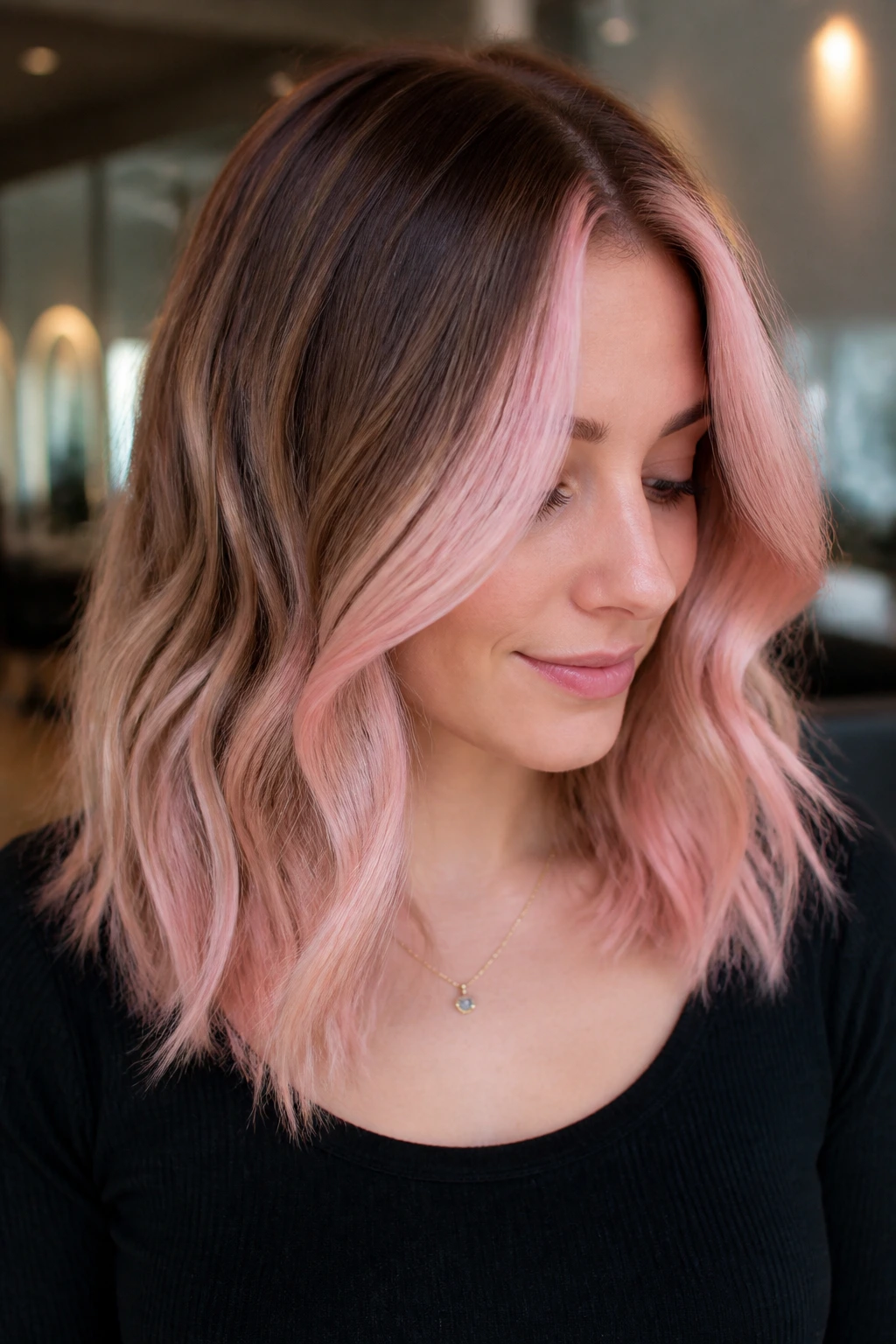
This one starts with a strong front highlight and then drifts into a softer, cloudier finish. The money piece is a pale rose-white blend, while the midlengths and ends keep a dusty pink cast that reads almost powdery in daylight. On fair skin, especially neutral undertones, that softness keeps the color from screaming “salon day” every time you take a selfie.
The ends matter more than people think. If the tips are too white, the whole look can break in two. Cloudy rose ends make the lightest pieces feel connected, which is why this style works so well on wavy hair. The bends catch the pigment, and the style looks expensive without needing much product.
4. Icy White Babylights Over Strawberry Blonde
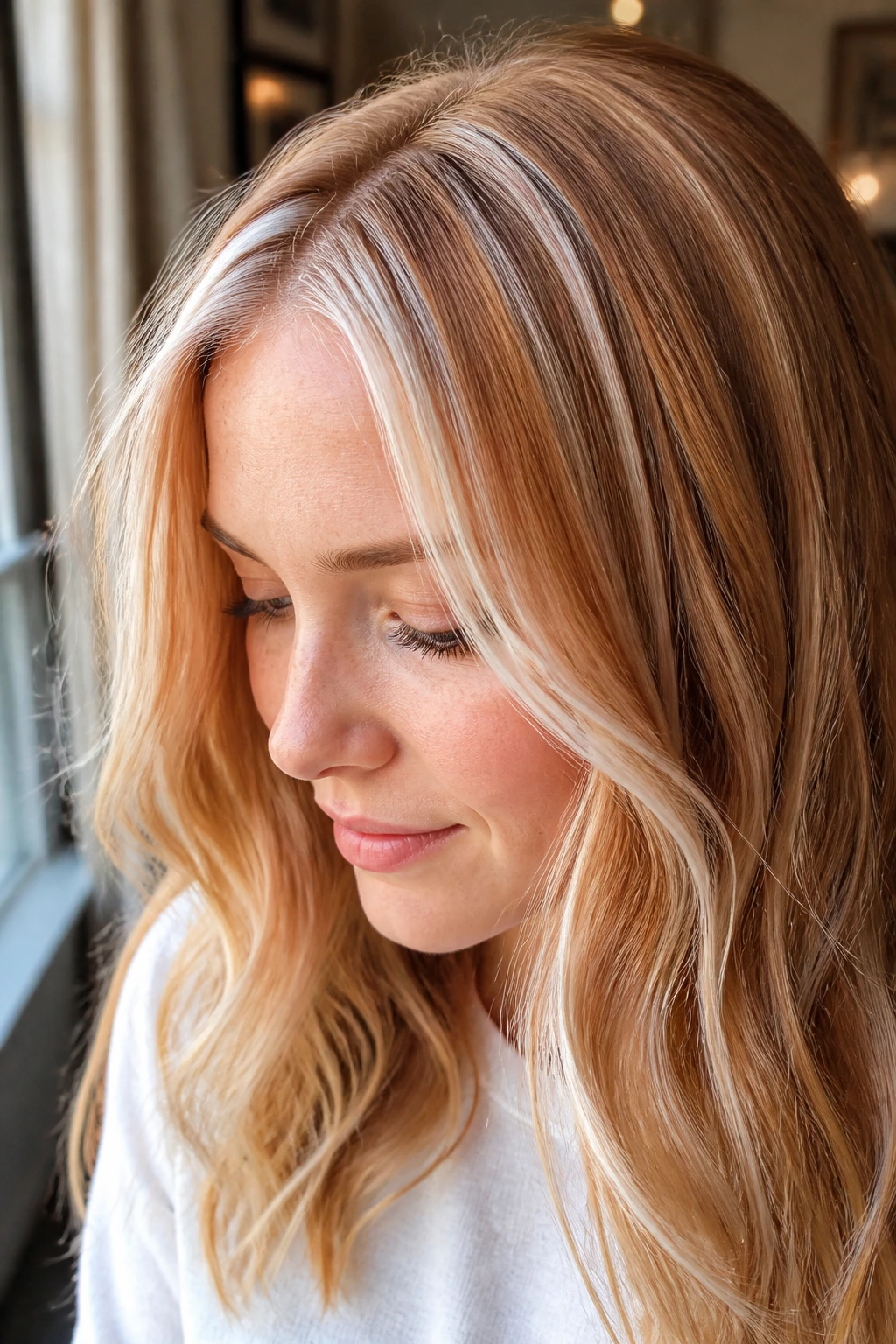
If your natural hair is already in the strawberry-blonde family, this is one of the cleanest paths into rose gold white highlights for fair skin. The base stays familiar, almost warm enough to feel like you, while ultra-fine white babylights sit on top and sharpen the shape. The result isn’t a full color change. It’s a brighter version of your own hair.
This look depends on restraint. Too many white strands and the strawberry note disappears; too much rose toner and the whole head can turn pastel in a way that feels costume-like. Keep the highlights tiny, close together, and mostly around the crown and hairline. On fair skin with freckles, this can be lovely. The color doesn’t compete with the face. It frames it.
5. Dusty Rose Foilyage
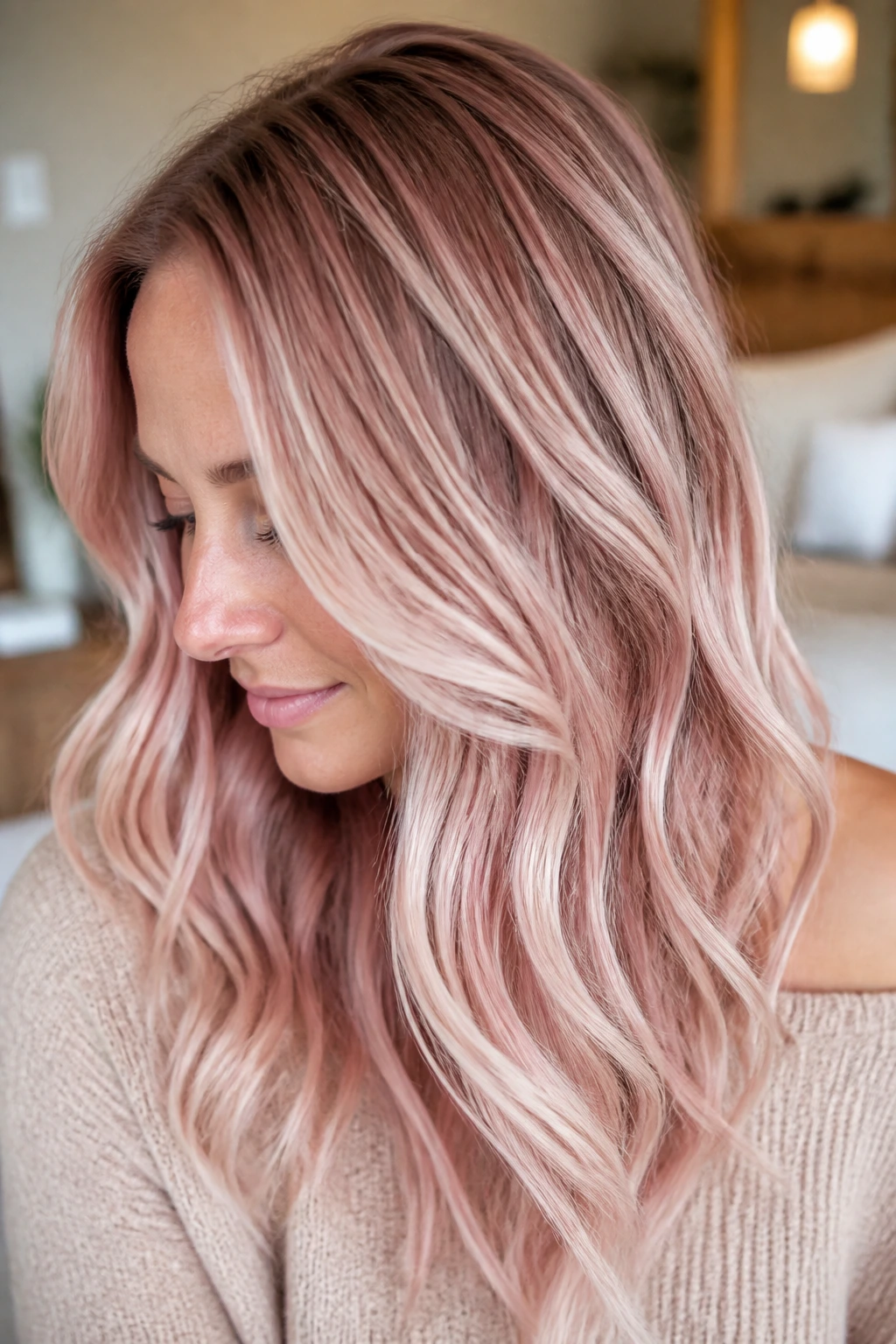
Foilyage gives you the brightness of foil work with the softer sweep of balayage. That’s useful when you want white pieces that actually pop but still need the rose gold to blur the edges. On fair skin, dusty rose tones can do a lot of heavy lifting because they soften the contrast between a light face and a very pale lift.
I’d choose this if your base is a dark blonde or light brown and you want the highlights visible without looking chunked. The foil placement lets the white reach level 10 in the sections that matter most, while the surrounding rose keeps the rest of the hair from turning brittle-looking. It’s a little more upkeep than a whisper-light balayage, but the payoff is cleaner brightness.
6. Frosted Blush Ombré
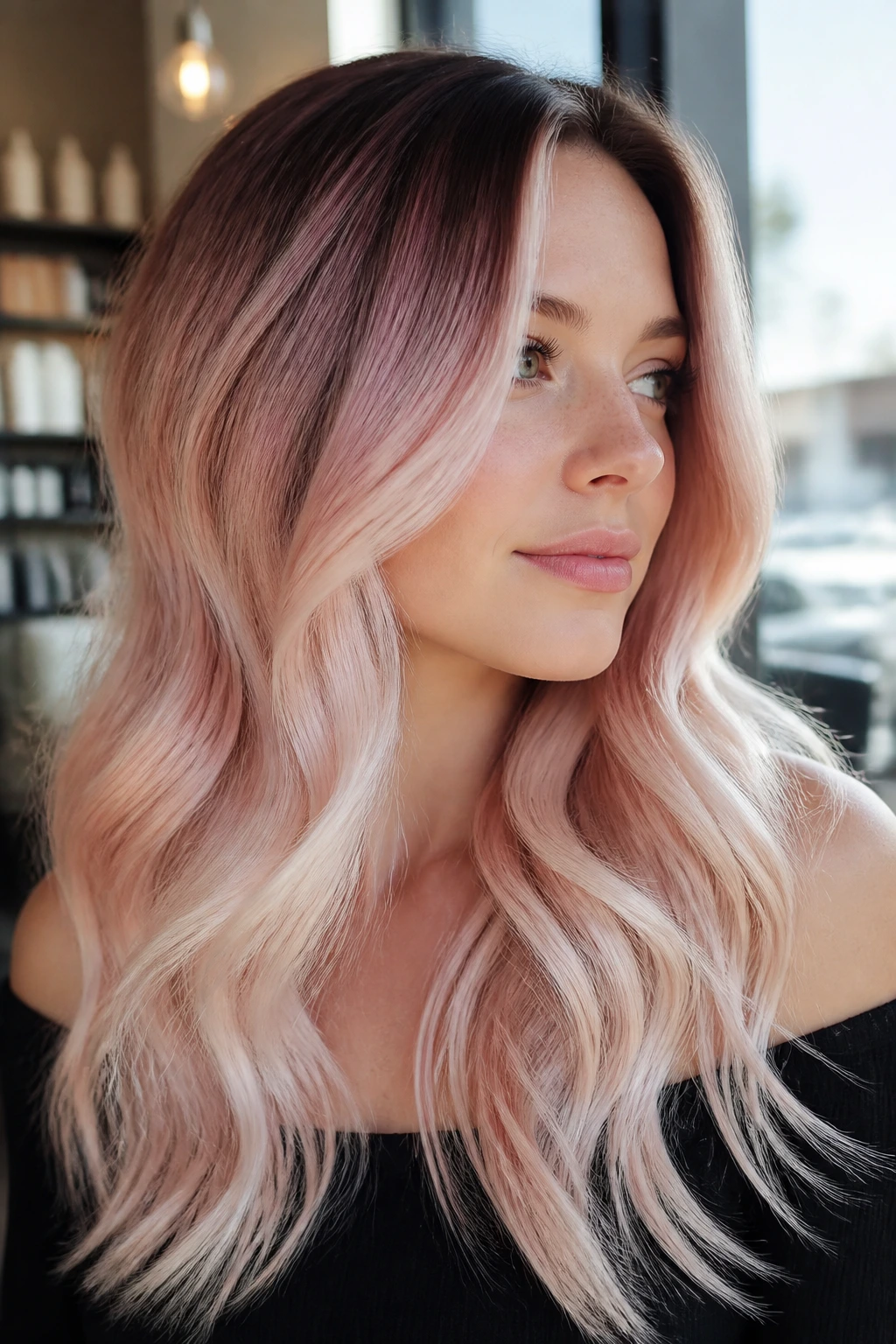
Ombré gets better when the transition isn’t too tidy. Frosted blush ombré starts a shade deeper at the roots, then slides into blush rose through the lengths, and finally lands on white ends that look dusted rather than bleached. On fair skin, the contrast keeps the face from disappearing into the hair.
This is a smart choice if you like a cooler wardrobe or wear a lot of black, gray, or white. The blush softens the starkness of the ends, so the hair still feels wearable. Ask your colorist to keep the root shadow narrow; a wide root on fair skin can look muddy fast. A thin one gives shape. That’s all it needs.
7. Soft Quartz Highlights on Beige Blonde
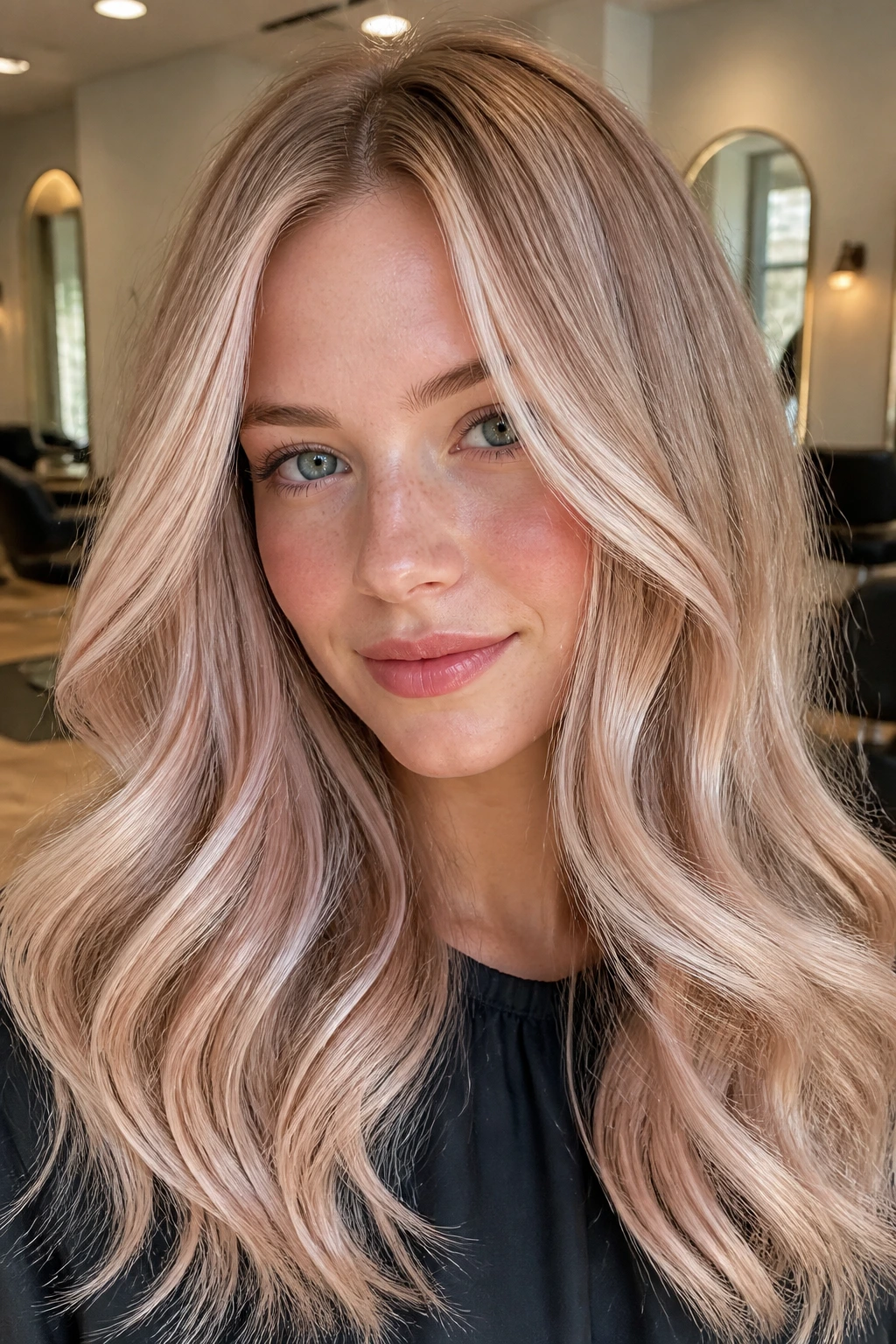
Soft quartz is for the person who wants the hair to look polished, not pastel-candy sweet. The base sits in a beige blonde lane, which means the white pieces don’t jump out too aggressively, and the rose gold arrives as a translucent glaze rather than a saturated pink. The overall effect is pale stone with a faint warm shine.
That matters on fair skin because beige blonde is one of the few blondes that can calm both redness and sallowness without flattening the face. If your undertone is neutral, this might be the easiest version on the list to wear every day. It looks especially good on straight or softly bent hair, where the tonal shifts are easier to see.
8. Opal Veil Highlights
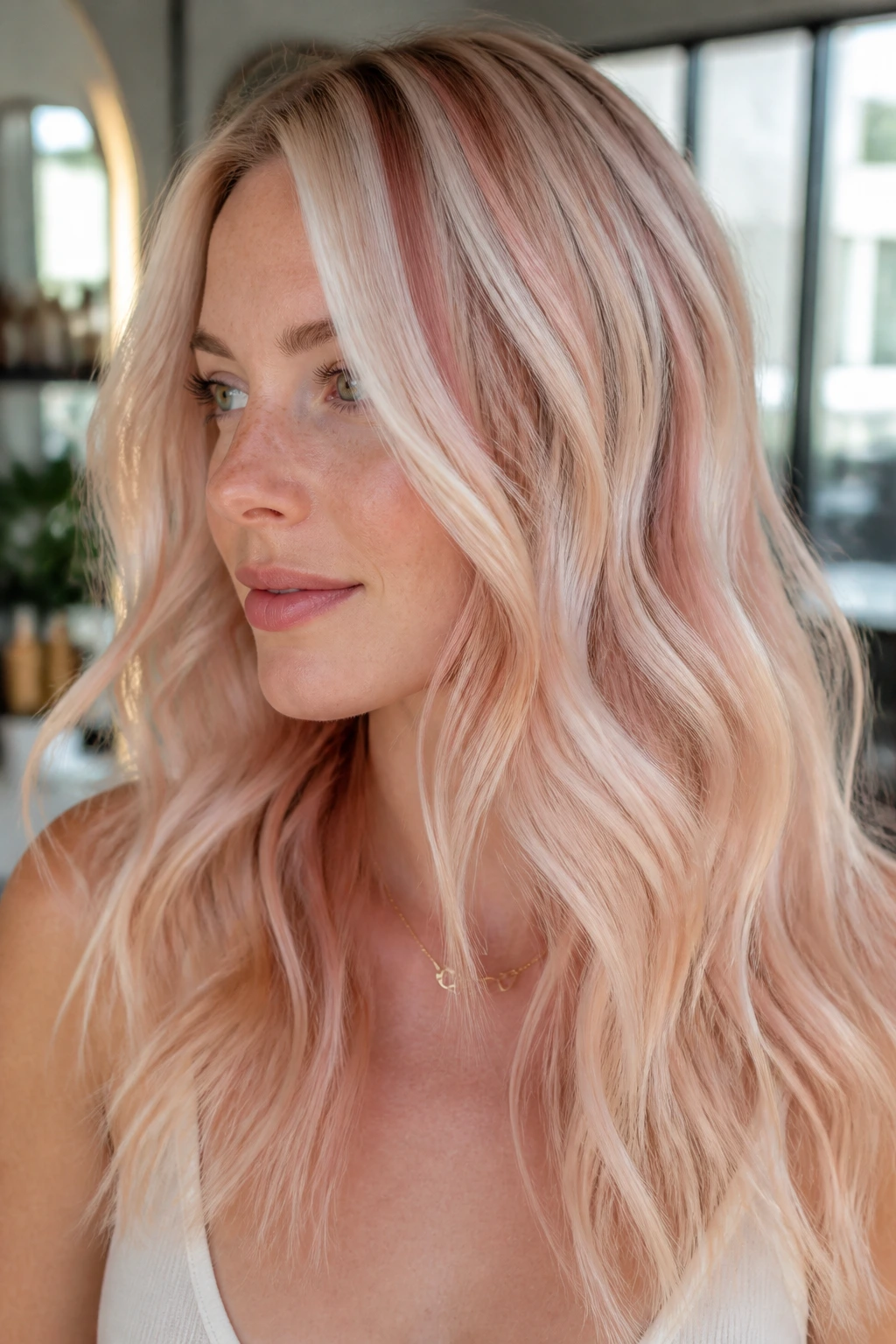
Opal hair is not one color. That’s the point. The best opal veil combines white, pearl, blush, and a whisper of beige so the surface shifts as the hair moves. On fair skin, that kind of tone play can be flattering because it keeps the hair luminous without depending on one bright shade to do all the work.
This works best on long layers or a softly textured lob. The pieces should be fine, almost mist-like, with a few brighter panels near the crown and around the temples. I’d avoid thick chunks here. Opal needs diffusion. If the highlight is too thick, the illusion breaks and you’re left with pale stripes instead of shimmer.
9. Cotton Candy Melt
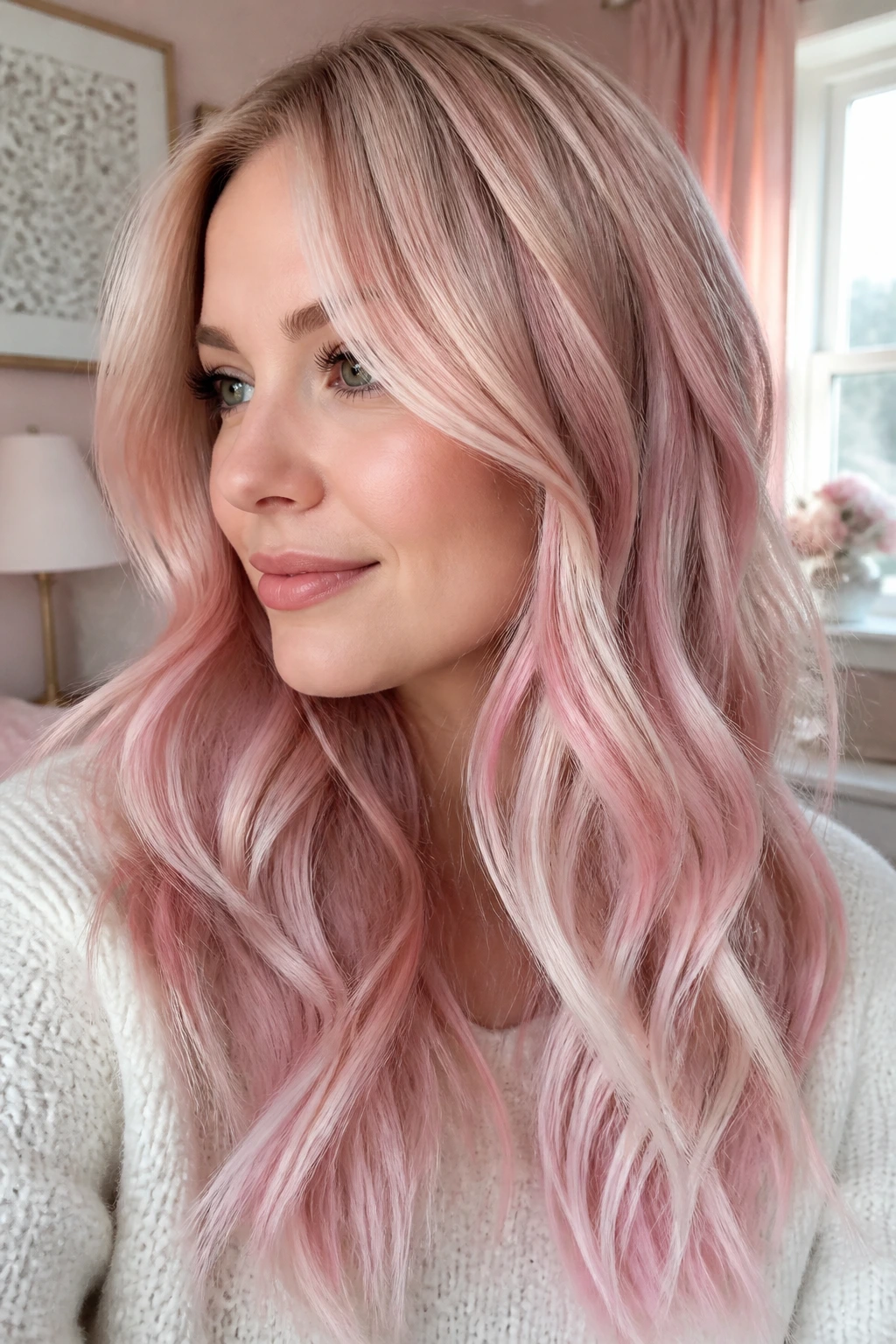
Cotton candy sounds playful, and it is, but the good version is more controlled than the name suggests. The roots stay a soft beige or pale blonde, the mids pick up rosy warmth, and the ends go pale white with a faint pink edge. On fair skin, especially warm-fair skin, that rose-pink blend can bring life back into a face that usually disappears under ash blonde.
The trick is to keep the rose translucent. You want a spun-sugar effect, not a bubblegum one. This look is strongest on soft waves because the bends separate the color zones just enough to show the melt. On pin-straight hair, it can feel flatter and a little more obvious.
10. Rose Gold Slice Highlights
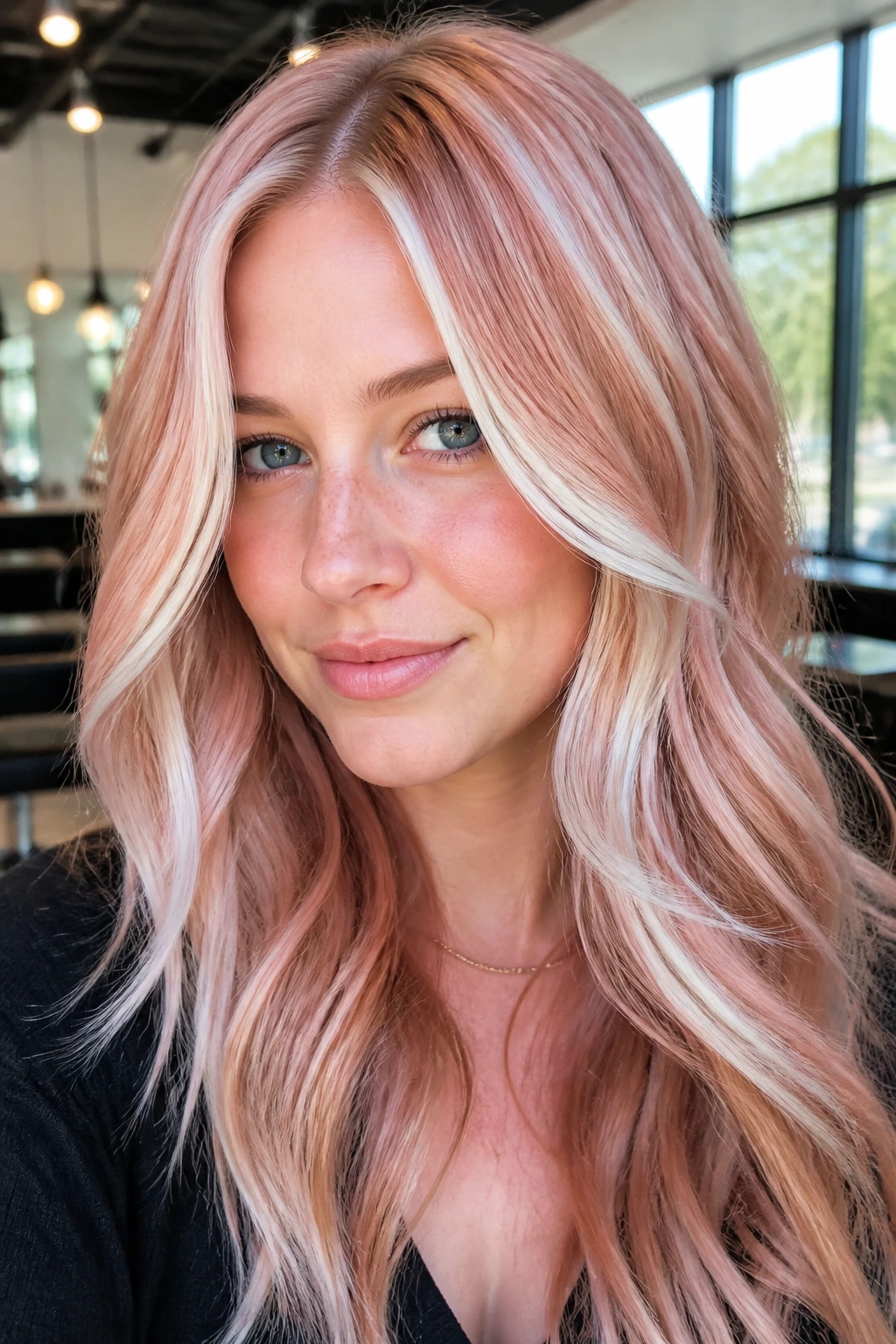
Sliced highlights are bolder, and I’m glad they still exist. When you want actual pattern—real movement, visible ribbons, a little edge—slice highlights deliver. Put rose gold slices between white ones, and fair skin gets a bright frame without losing warmth. The contrast is sharper, which suits straight hair and blunt cuts better than soft layers.
Ask for the white slices to sit mostly on the top half and around the front. Rose gold can fill the spaces underneath so the style doesn’t look too cold from the side. This version fades in a prettier way than chunky foil stripes because the pink softens the white as it grows. It’s not subtle. It is tidy, though. There’s a difference.
11. White Veil Balayage with Peach Toner
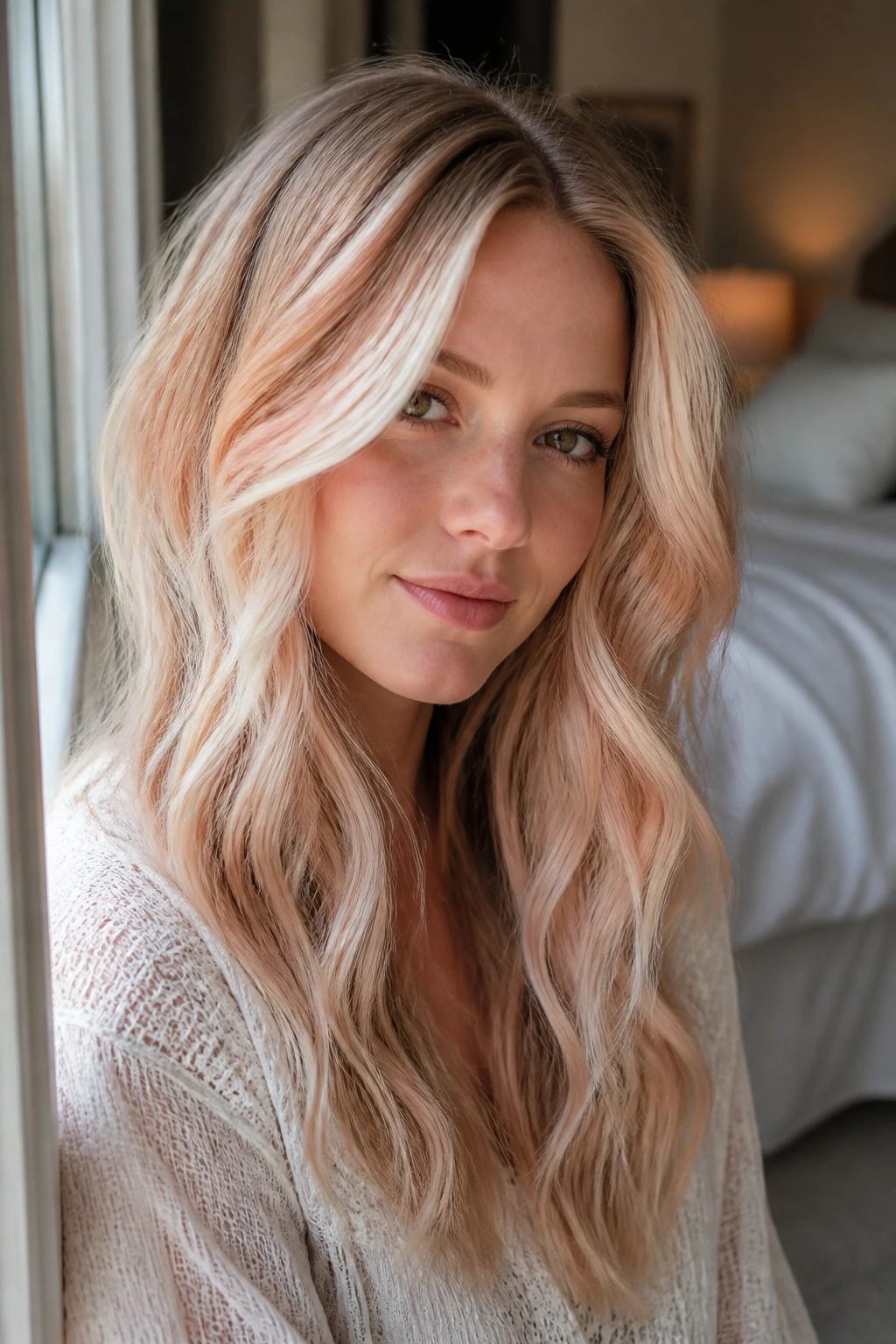
This is one of the most flattering choices for fair skin that leans slightly warm or freckled. The veil of white sits over a peach-toned blonde base, so the color never drops into blue-white territory. The warmth comes first; the brightness follows. That order matters.
Peach toner is a quieter cousin of rose gold, and it can be easier to wear if you dislike pink in your hair. I like this version on shoulder-length cuts, where the veil can float over the ends and around the face. If your hair is very fine, ask for micro-balayage rather than broad hand-painted strokes. The smaller sections give the veil a cleaner finish.
12. Blush Root Shadow
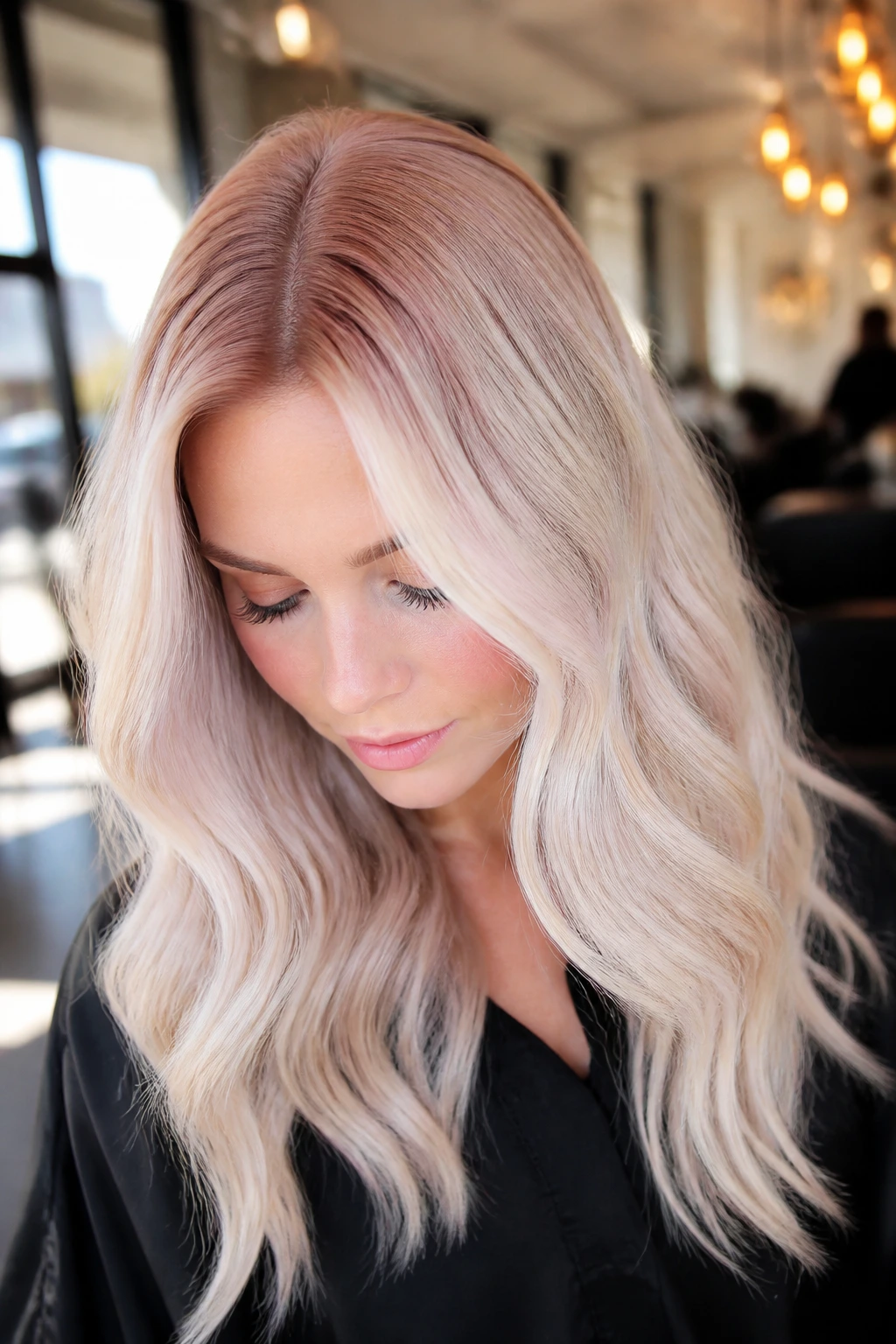
Root shadow sounds technical, but the effect is simple: a slightly deeper root gives the pale lengths somewhere to start. In blush root shadow, that root is smudged with a muted rose-brown or mauve blonde, then the rest of the hair shifts into white and pearl. For fair skin, this is a smart way to keep brightness from swallowing the face.
I like this when the client wants a softer grow-out or has a history of over-toned blondes. The root shadow helps the highlights look expensive for longer, because the line of demarcation never gets too sharp. It also gives the hair a little visual thickness near the scalp, which can help if the ends are lightened more than the crown.
13. Champagne Swirl Highlights
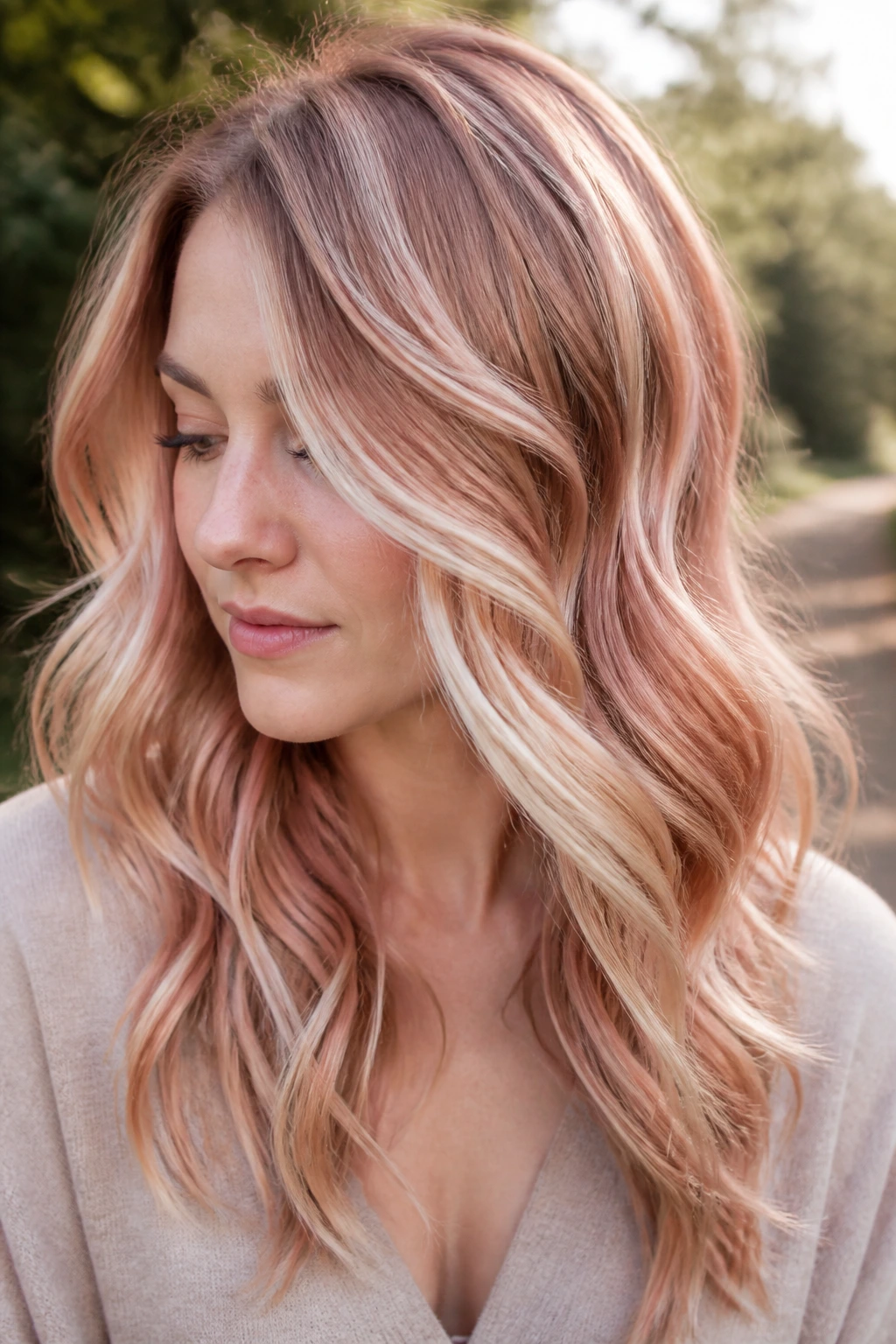
Champagne swirls are what you get when the highlights are placed to follow the bend of the cut, not fight it. The rose gold leans warm and creamy, while the white is used sparingly in the brighter turns. On fair skin, that warmth can be a gift, especially if the face has a bit of redness that cooler blondes tend to exaggerate.
This style looks best on loose waves and medium-long layers. The swirl effect needs motion. Straight hair can still wear it, but the placement has to be more precise or the color reads as patchy. If you want one of the more wearable rose gold white looks, this is a strong pick. It behaves well in daylight and doesn’t turn harsh under indoor lights.
14. Rose Quartz Halo
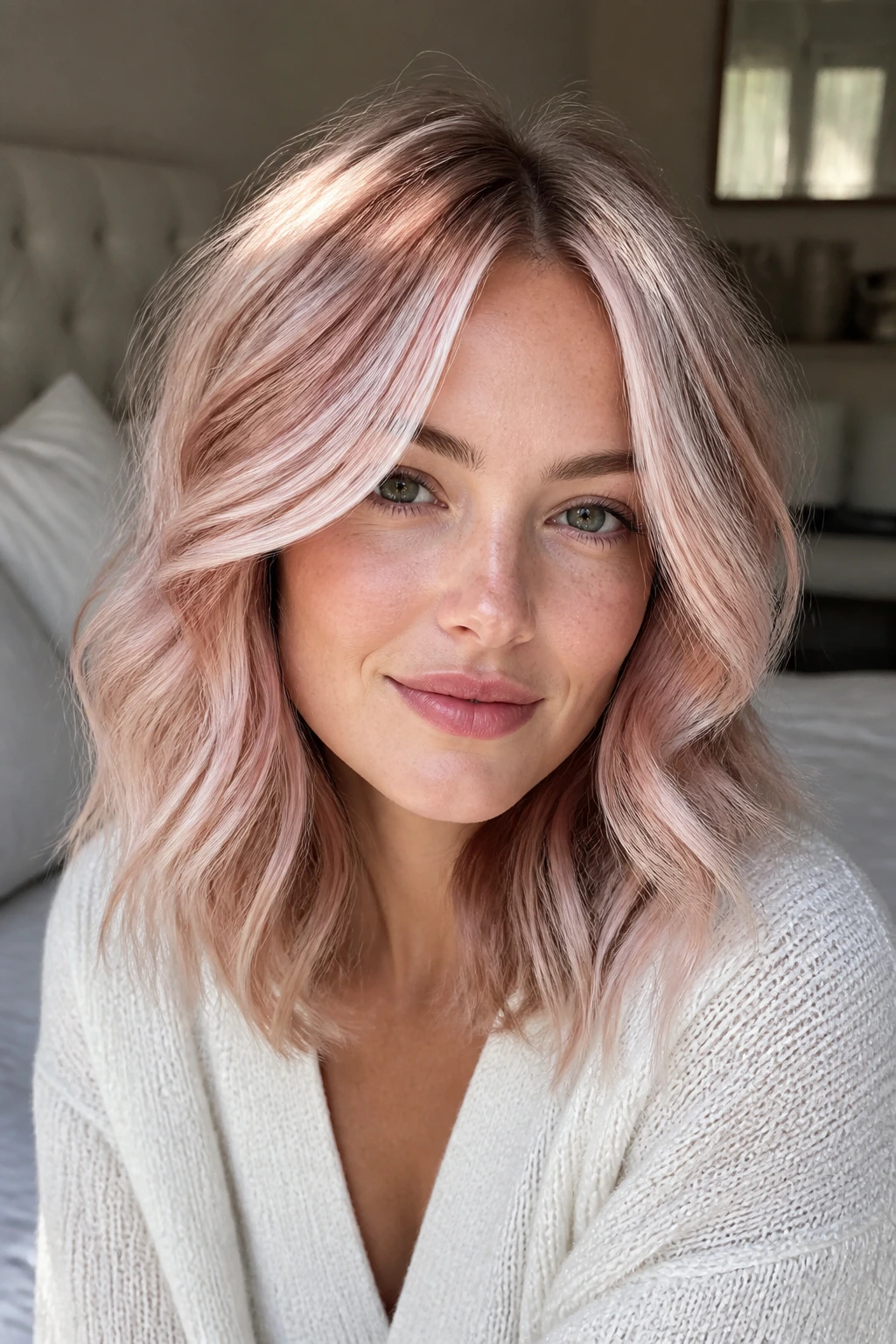
A halo highlight lives around the crown and upper sides, so the light hits where people notice first. In rose quartz, the halo is lifted to white at the brightest points, then glazed with a translucent rose that makes the whole thing feel soft. On fair skin, that ring of brightness can open the face in a way that heavy all-over blonde won’t.
This is a clever option for shorter cuts, bobs, and textured lobs. You don’t need huge amounts of lightener to get the effect; the placement does the work. Keep the interior of the hair a little deeper so the halo can stand out. Without that contrast, the look loses shape and starts to read as one pale mass. Nobody needs that.
15. Snow White Tip Lights
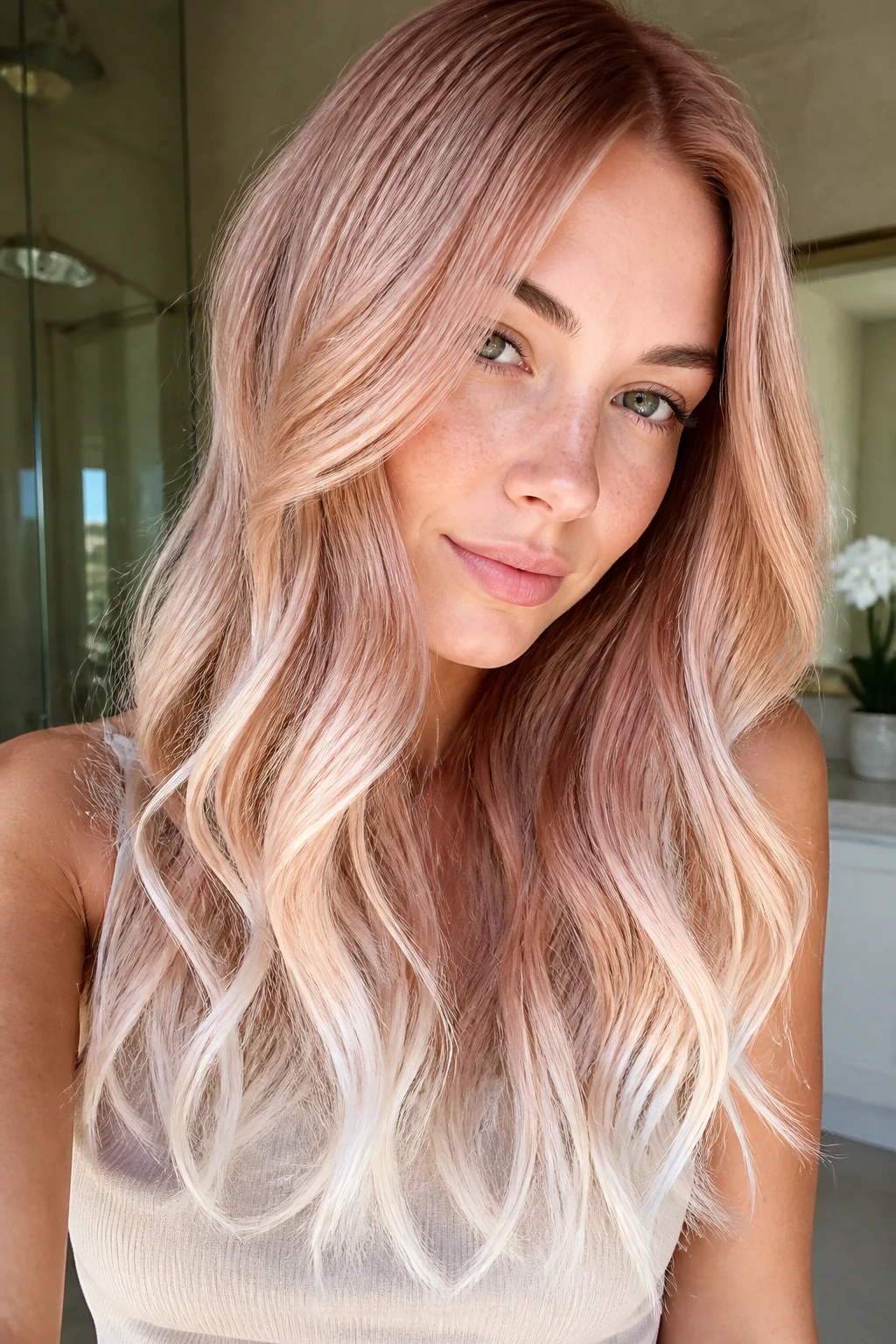
Tip lights are exactly what they sound like: the ends carry most of the brightness. In this version, the tips go snow white while the lengths hold a rose-gold haze. That makes the cut look longer and lighter at the bottom, which can be gorgeous on fair skin when the hair is already in the blonde family.
The reason I like this look is simple. It keeps the top from getting over-processed. The colorist can leave the scalp area calmer and spend the lifting power where the hair can tolerate it better. It’s also a good fit for layered hair, since the ends separate and show the color change. If your hair is fine or fragile, this is easier to maintain than full-head white.
16. Peach-Rose Ribbon Lights
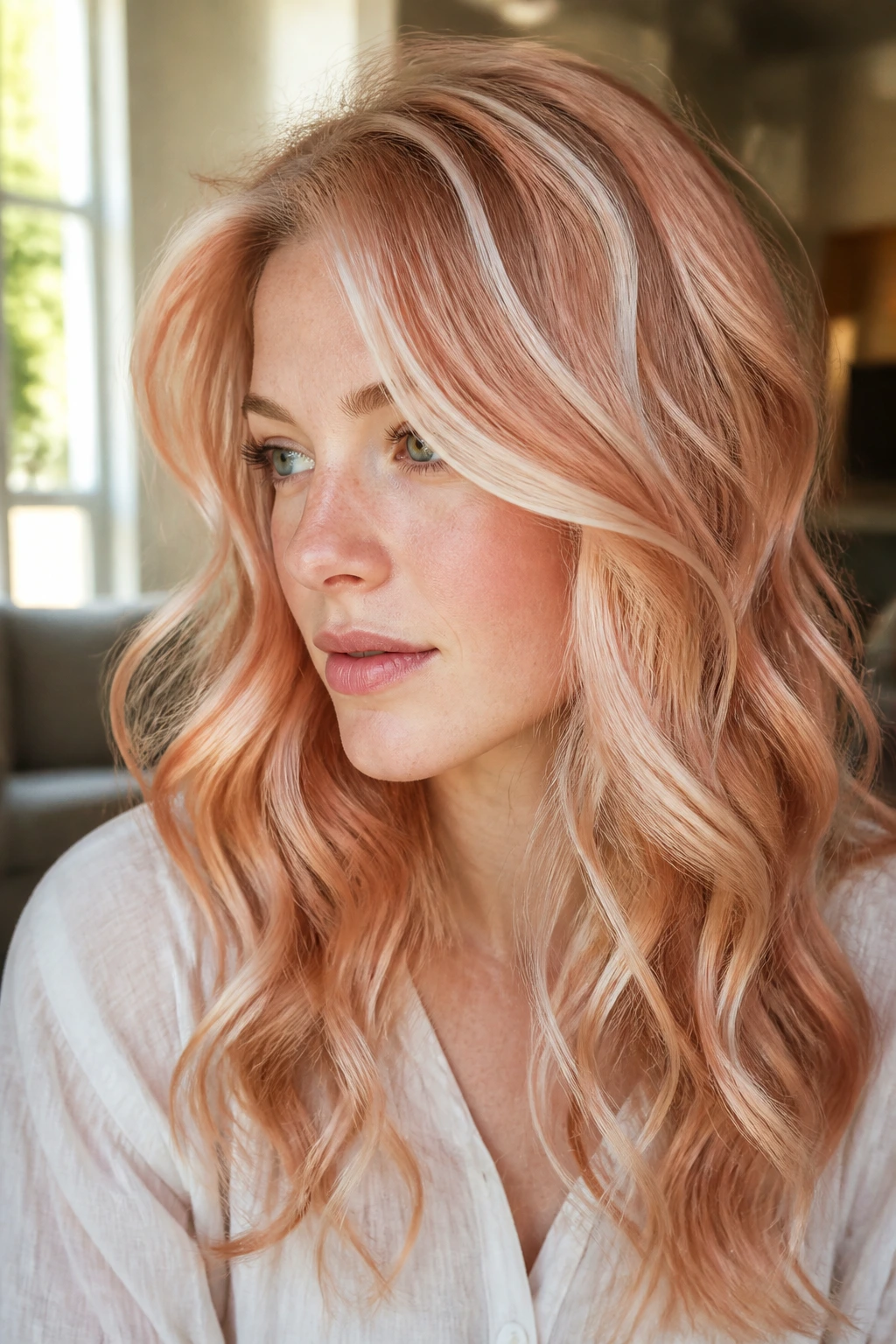
Peach-rose ribbon lights feel sunny without sliding into gold. The white highlights are narrow and placed like ribbons through a peachy rose base, which makes fair skin look fresh rather than flat. If you have warm-fair skin or a little natural peach in your cheeks, this can be one of the most flattering versions.
The color is especially nice on curls and brushed-out waves because the ribbons separate naturally. A curl will catch one shade, then another, and the hair looks deeper than it really is. Keep the peach soft. If it gets too orange, the whole thing starts to fight the white, and the look loses that clean, pale glow that makes it work in the first place.
17. Smoky Rosé Babylights
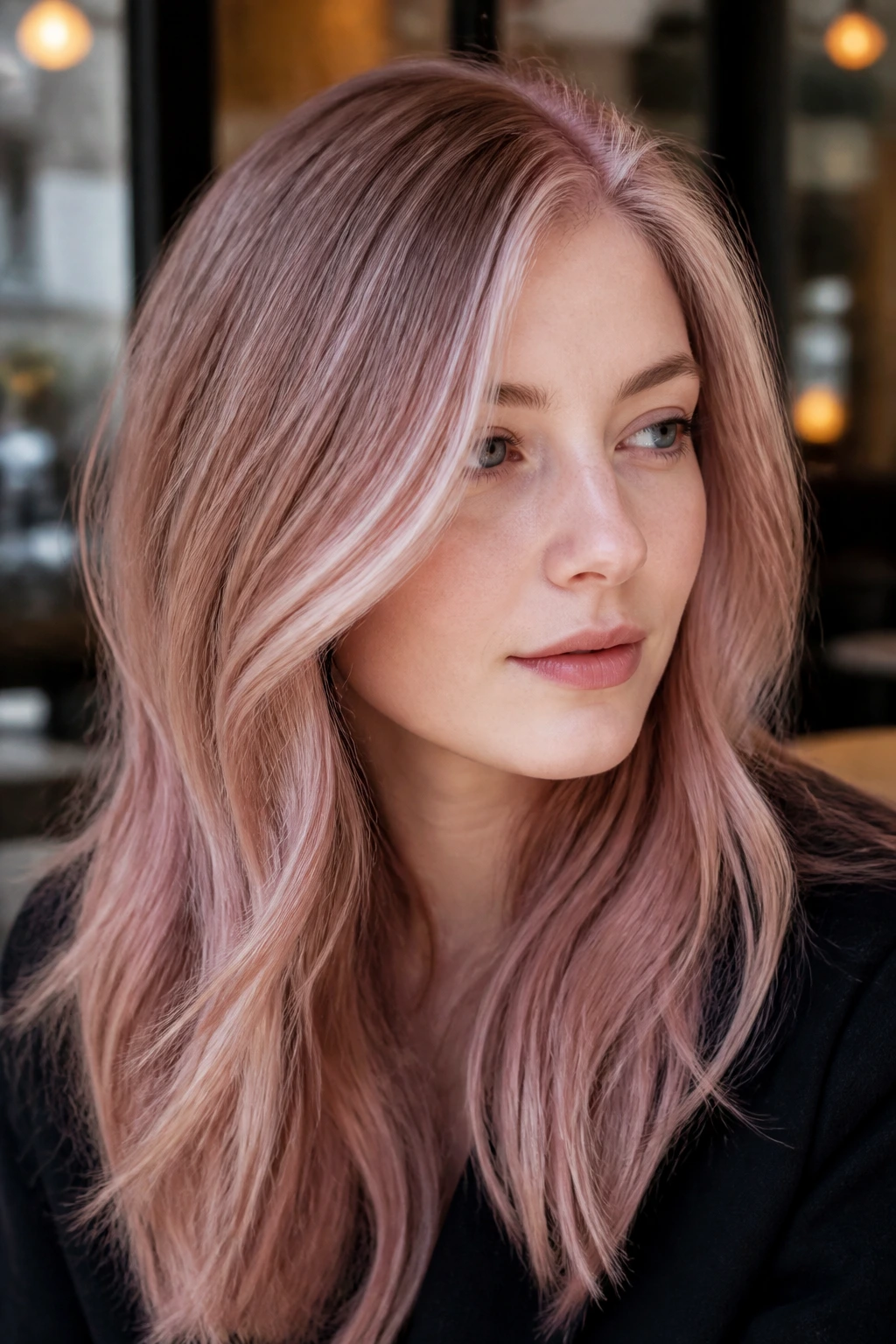
Smoky rosé is my favorite answer for anyone who wants pink in the hair but does not want sweet, sugary pink. The babylights are so fine they almost disappear until the light moves, and the rosy tone leans muted, almost brushed with taupe. On fair skin, that smoky cast can be far easier to wear than a bright rose gloss.
This version is especially good if your skin has a bit of pink already and you don’t want the hair to echo it too hard. Add a few white threads around the hairline and the whole thing sharpens up. Without them, smoky rosé can drift dull. With them, it feels intentional. That tiny contrast is doing more than it looks like it is.
18. Pearl Blonde with Pink Wash
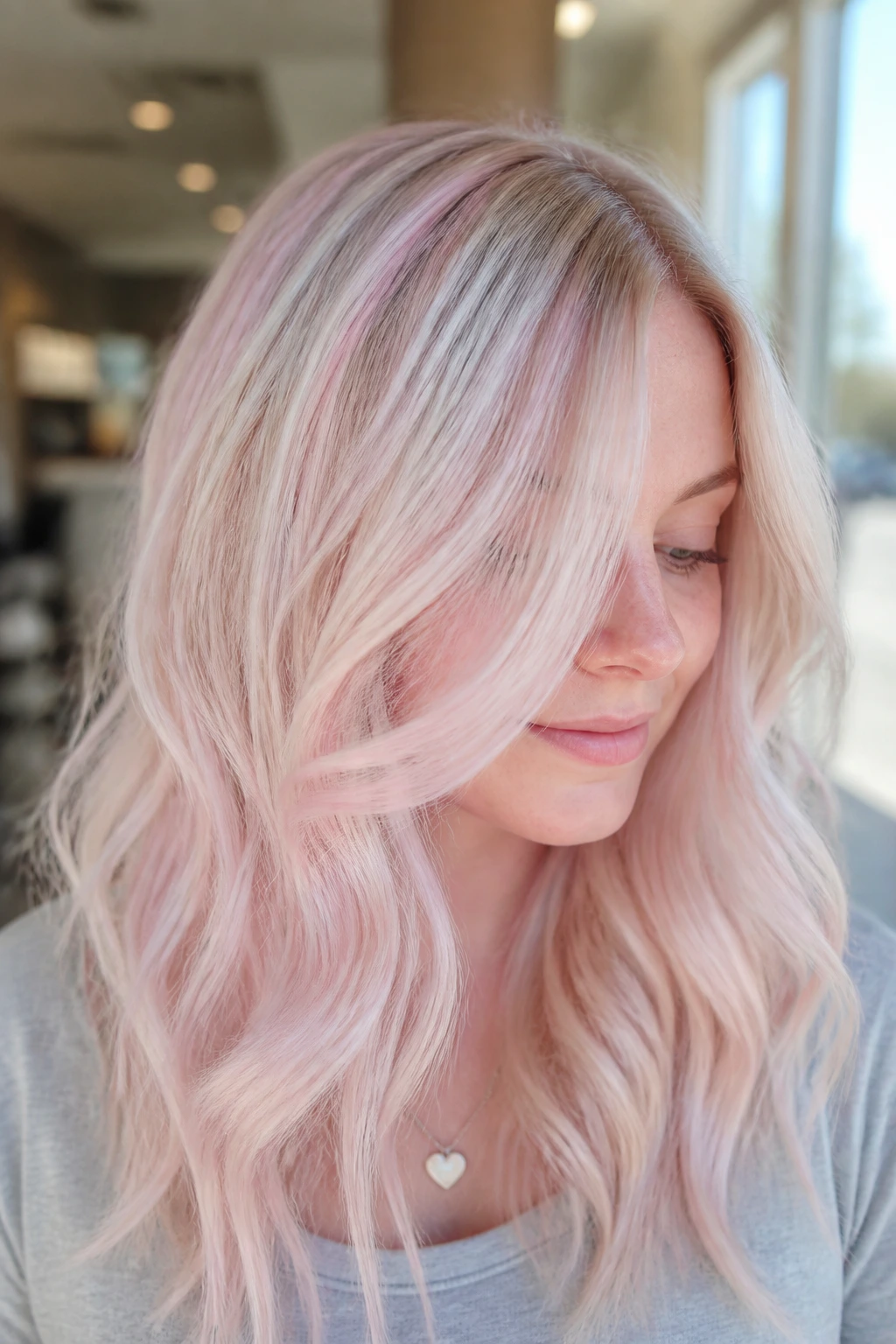
Pearl blonde is already half the job. Add a pink wash, and you get a hint of rose gold without coating the hair in color. This is one of the best options for very fair skin that needs softness more than saturation. The pearl keeps it bright; the wash keeps it human.
I’d call this the low-risk version of the trend. It fades gracefully because the pink is more like a gloss than a stain, and the white pieces remain clean. If your hair is porous, though, the pink wash can grab too hard on the lightest ends, so a strand test helps. Nobody wants pink marshmallow tips unless they asked for them.
19. Frozen Rose Contour Highlights
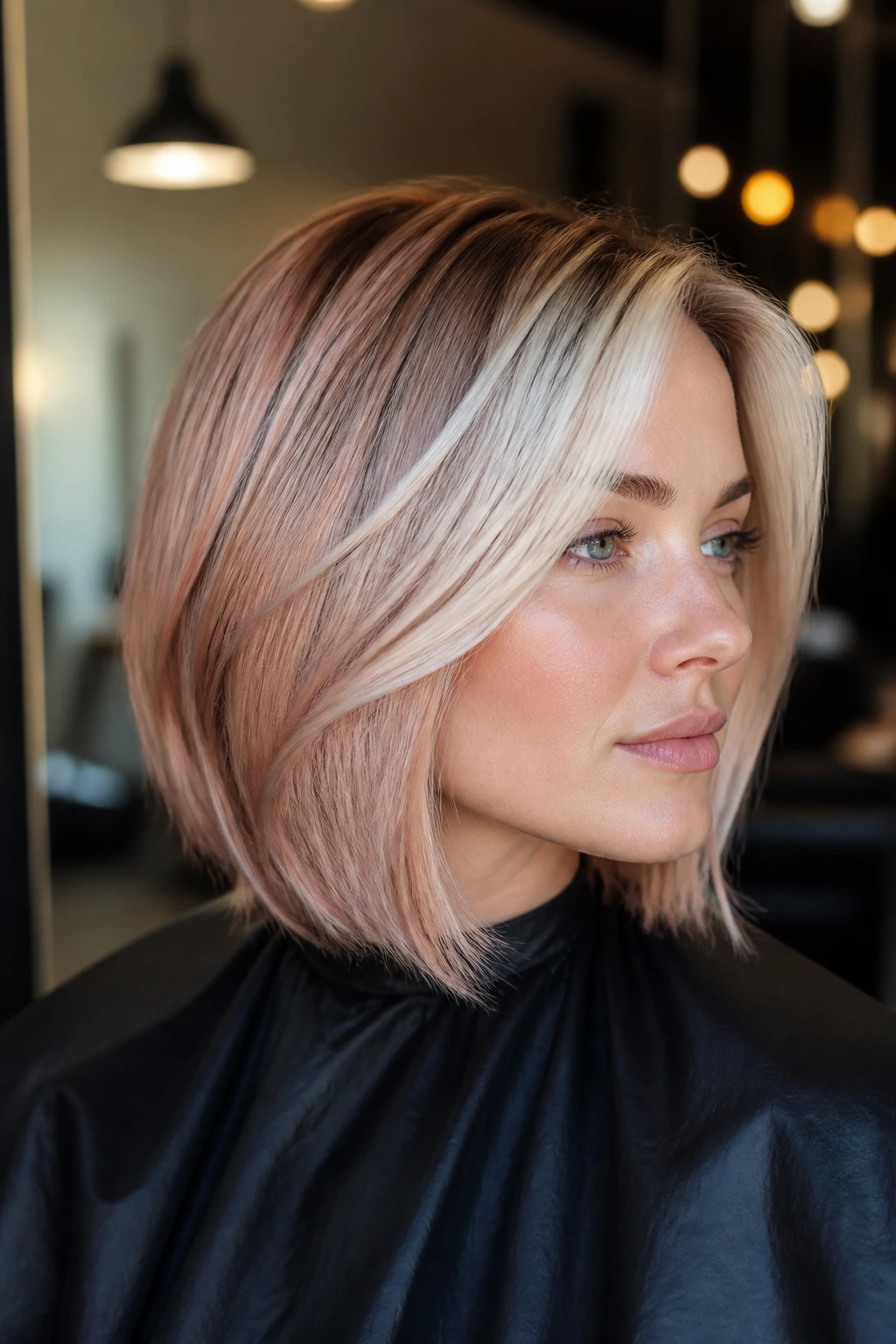
Contour highlights are built to shape the face. In frozen rose, the brightest white pieces sit where cheekbones, temples, and jawline would normally catch light, while the rose gold fills the softer outer sections. On fair skin, that placement can make the face look more defined without using makeup to do all the work.
This is a good choice if your haircut already has structure—bobs, lobs, layers around the face, curtain bangs. The highlights should work with the cut, not ignore it. Keep the rose tone cool enough that the white still feels sharp. If the rose gets too warm, the contour effect softens and the whole look becomes more blended than sculpted.
20. White Money Piece on Long Layers
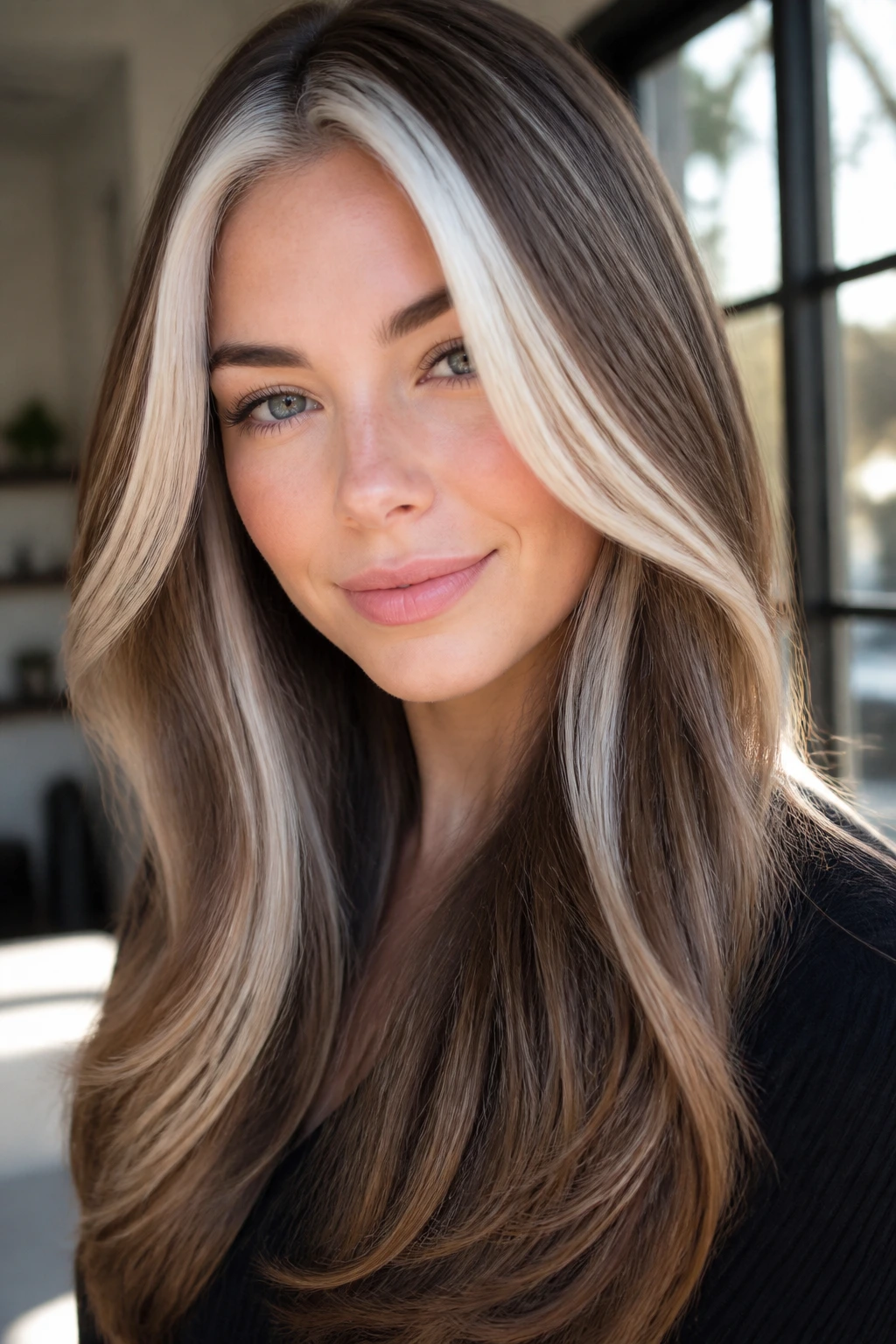
Long layers and a white money piece are a clean match. The front sections brighten the face, while the layers let the rest of the rose gold scatter through the hair in softer bands. On fair skin, especially if your features are delicate, this gives you brightness where it counts without needing a full head of lightener.
Ask for the money piece to be the palest section, then let the surrounding pieces stay one or two levels deeper. That depth change is what makes the face frame stand out. If everything is equally light, the eye stops seeing shape. If you keep the front a touch brighter, the whole cut feels more finished.
21. Rosé Glow on a Lob
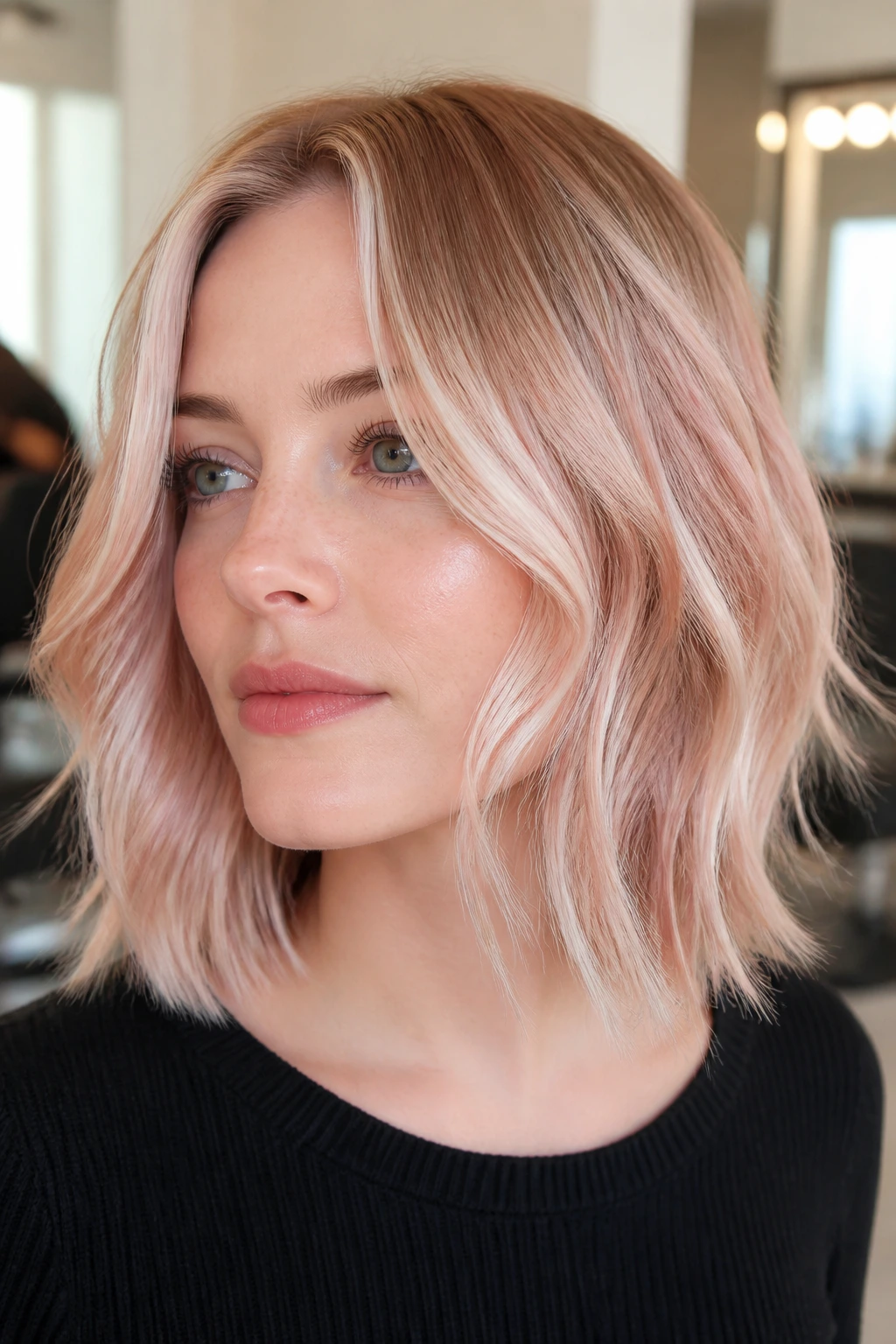
The lob is a little underrated for color. It gives you enough length to show dimension but not so much that the highlights disappear into the ends. In a rosé glow version, the hair sits between pink-beige and white pearl, with the lightest pieces concentrated around the outer curve of the bob. Fair skin tends to like this because the haircut itself does some of the framing.
This is one of the easiest styles to keep looking tidy. The cut edges make the white highlights pop, and the rose gold keeps the shape from feeling severe. If your hair is thick, this version removes some visual weight. If it’s fine, the glow can make it look fuller without adding volume in the old-school teased-hair way.
22. Vanilla Rose Waves
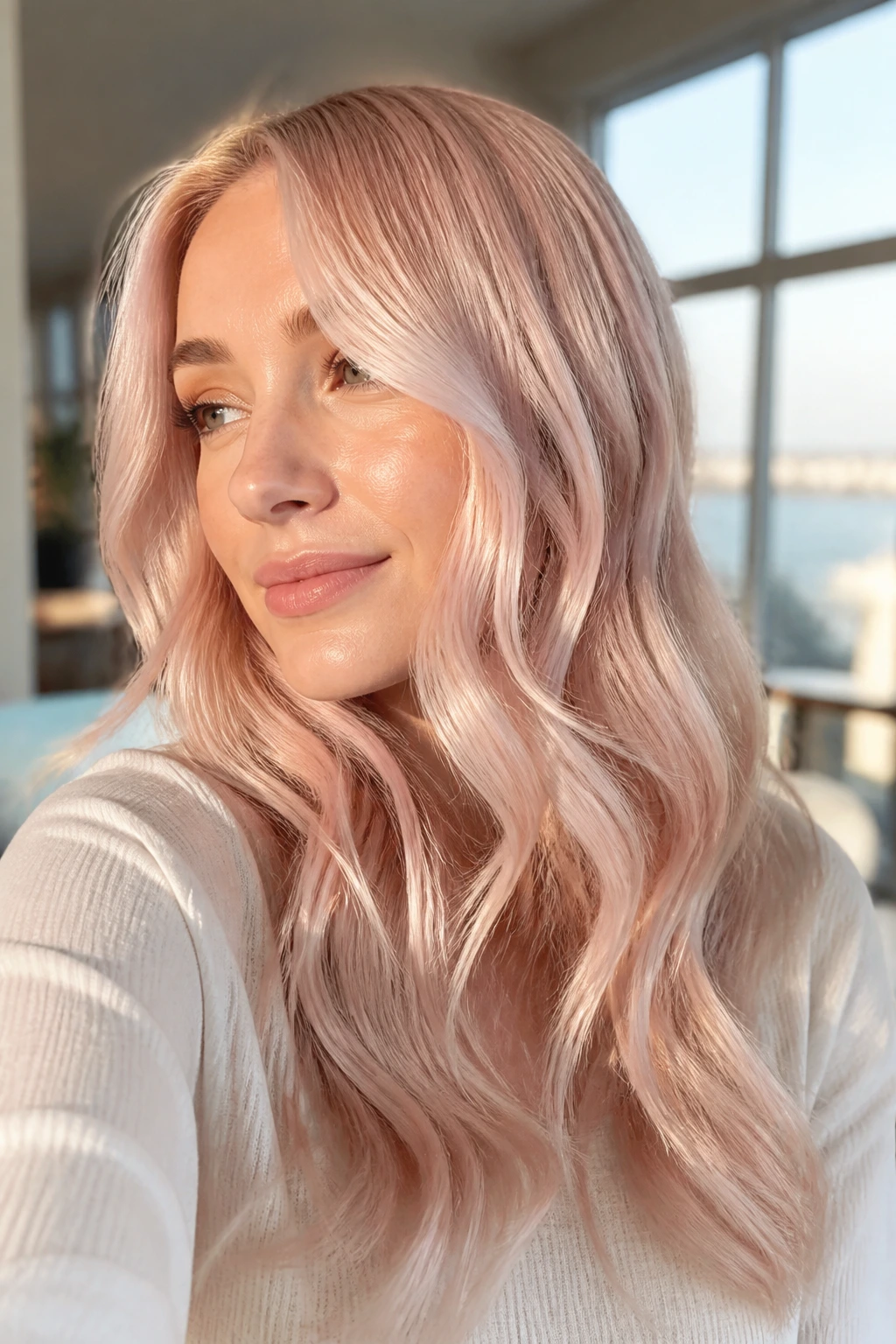
Vanilla rose is softer than rose gold and warmer than pearl blonde. That makes it a useful middle lane for fair skin, especially if you want the hair to read creamy rather than icy. The white highlights show up as bright threads inside the wave pattern, while the rose tint keeps the blonde from going flat.
I like this on hair that already has natural movement—soft bends, loose S-waves, a little texture from air-drying. The tones aren’t meant to fight for attention. They’re meant to shift with the light. If you straighten this look aggressively, some of the appeal disappears. The color still works, but the wave is doing half the storytelling.
23. Arctic Pearl Streaks
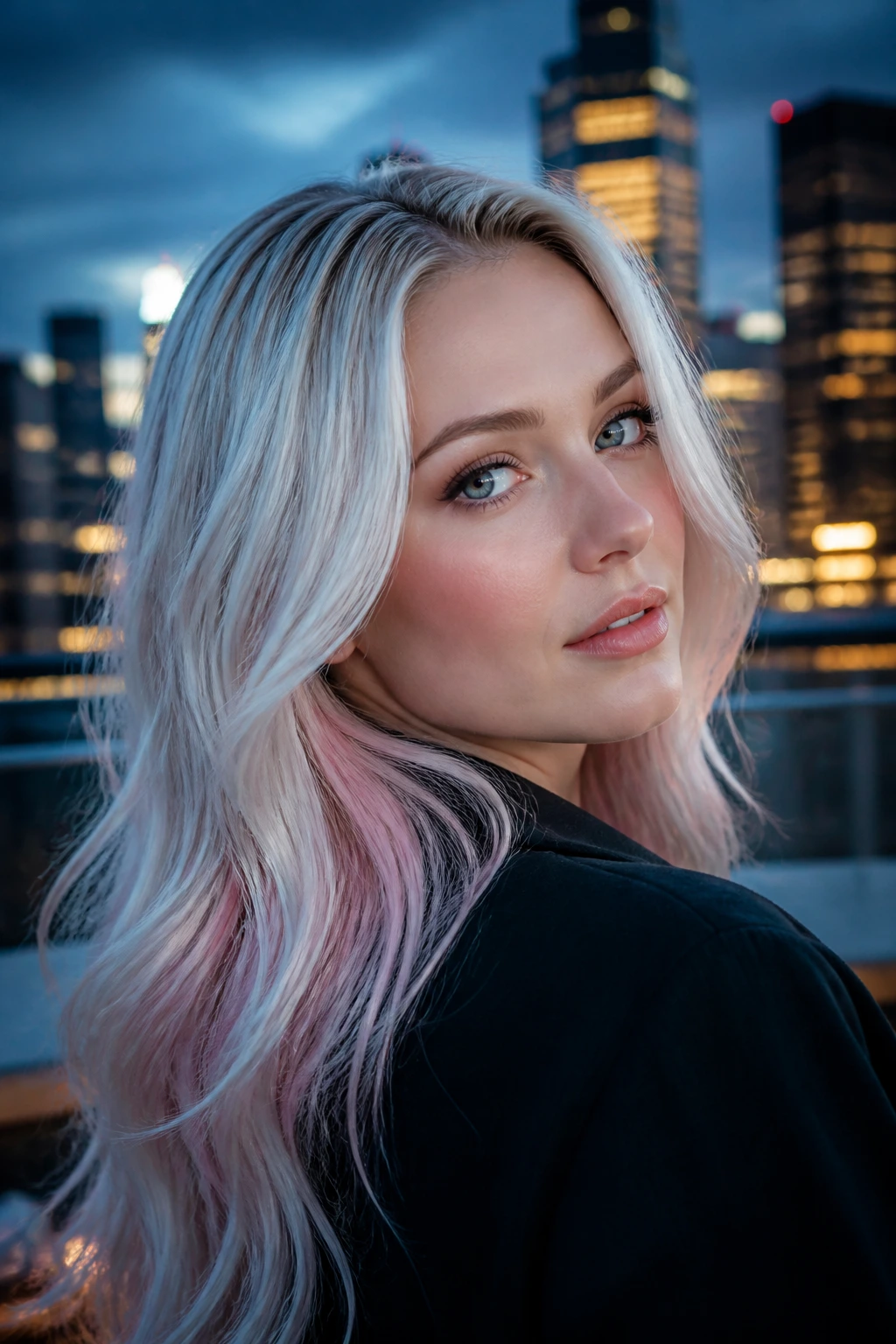
Arctic pearl is for the person who wants the white to be unmistakable. The streaks are cleaner, cooler, and brighter, with just enough rose-gold glazing underneath to keep fair skin from looking drained. This is the crispest look in the set, and it can be gorgeous on very pale complexions that suit high contrast.
The catch is maintenance. Pure icy pieces show yellow faster than softer champagne tones, so you need toning and careful washing. If you want this style, ask for the rose to sit under the white, not over it. That way the warmth stays hidden in the structure of the color rather than changing the surface into peach.
24. Soft Candy Floss Highlights
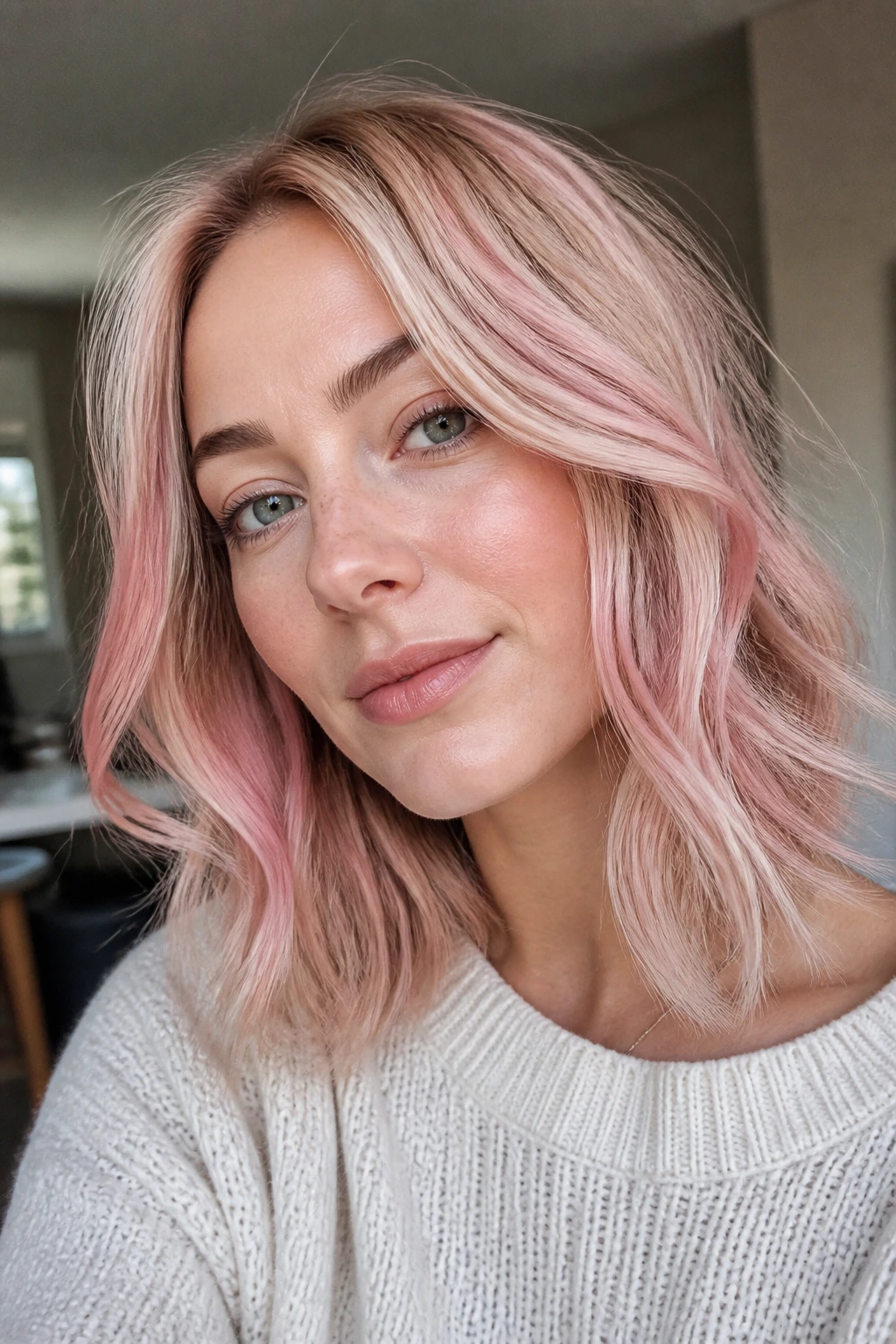
Candy floss can go wrong in about six ways, so the soft version is the one I’d trust. The highlights are airy, pale pink-white strands that stay translucent through the mids and slightly brighter at the ends. On fair skin, especially if you like a playful look, this can feel sweet without tipping into costume territory.
The key is scale. The strands should be thin, not blocky, and the pink should read as a glaze rather than a dye job. This works well on layered hair and on cuts with movement near the chin. If you’re the kind of person who wants your hair to look a little dreamy in natural light, this is the one that tends to hold up best.
25. Luminous Rose-Iced Blend
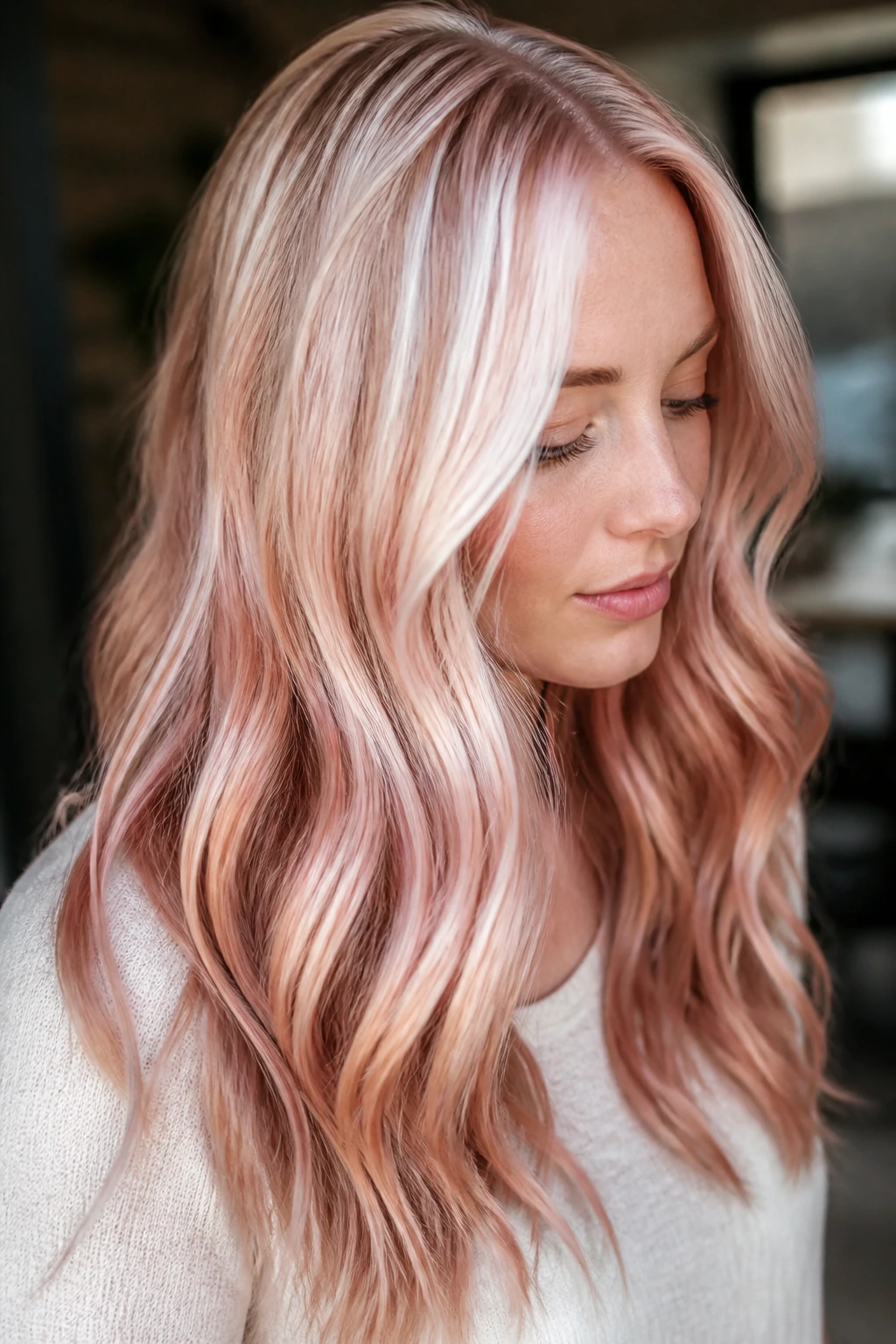
A rose-iced blend is what happens when the white and rose gold are balanced so evenly that neither one wins. The result is a luminous, pale finish that suits fair skin because it doesn’t lean too warm or too cold. It’s the easiest style here to call “polished” without making it sound stiff.
What gives this version its strength is the layering. The white pieces should sit on the surface, the rose gold should live just below them, and the base should stay a shade deeper so the dimensions stay visible. It’s subtle up close and bright at a distance. That’s a good sign. If a color only works in one lighting situation, it usually needs more thought.
How to Read Your Undertone Before You Pick a Shade
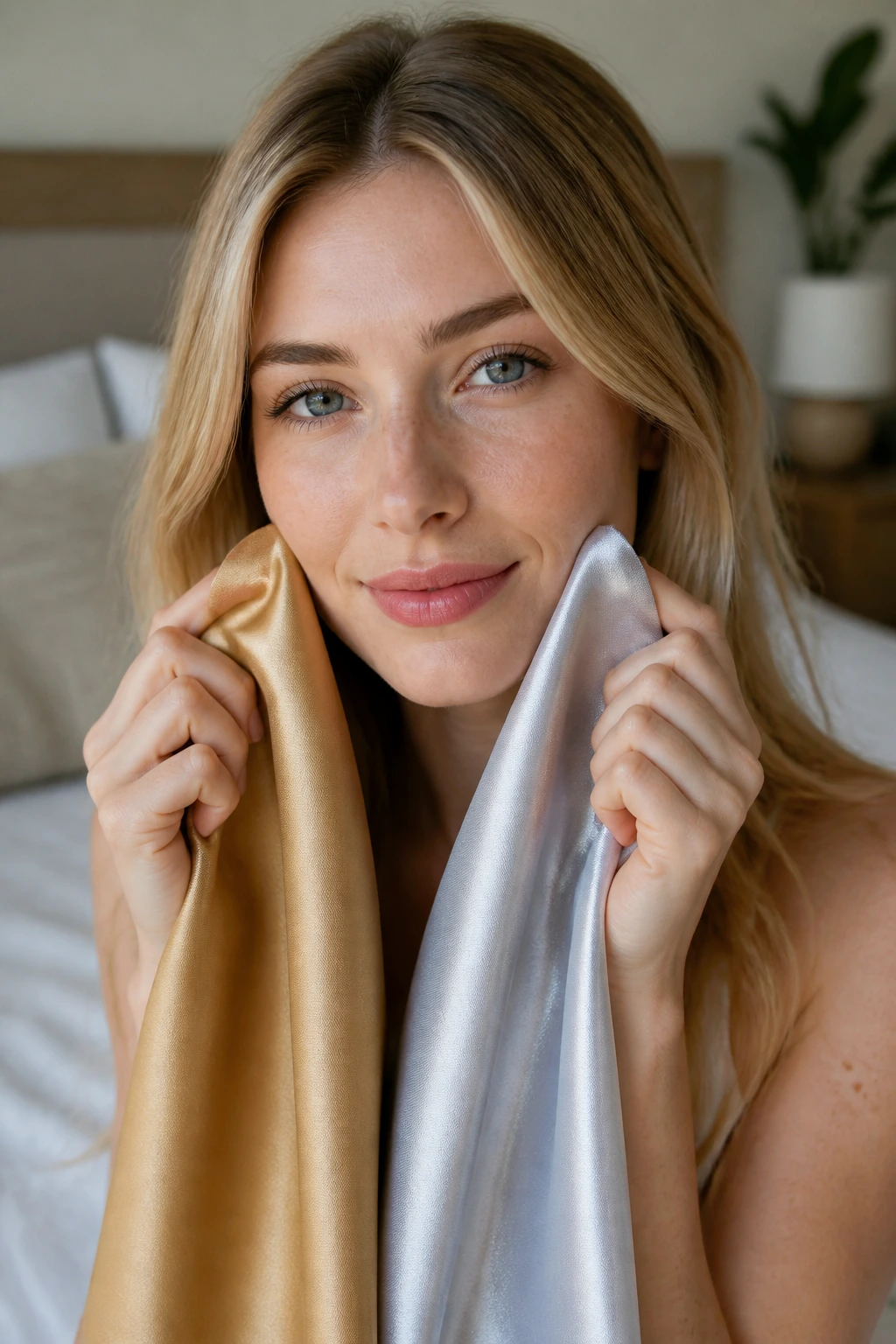
Fair skin is not one thing. Some faces tilt pink, some peach, some neutral-beige, and the wrong rose can make the difference painfully obvious. Cool fair skin usually looks best with pearl, opal, smoky rosé, or a mauve-leaning rose gold. Warm fair skin tends to hold up better with champagne, vanilla rose, or peach-rose blends that keep the hair from feeling too icy.
Neutral fair skin gets the widest lane. It can handle white highlights with either a beige rose or a soft champagne rose, and that’s why so many of the prettier examples in this family look balanced rather than heavily tinted. If you have freckles, visible redness, or very light brows, I’d keep the white pieces a little softer around the face and let the brighter bits live through the lengths.
The easiest test is this: hold a warm gold fabric and a cool silver one near your face in daylight, then look at how your skin reacts. If silver makes you look clearer, lean cooler in the hair. If gold gives your face more life, stay away from blue-white pieces and choose a peachier rose. It’s a small check, but it saves a lot of regret.
Tools and Products That Make This Color Easier to Wear
-
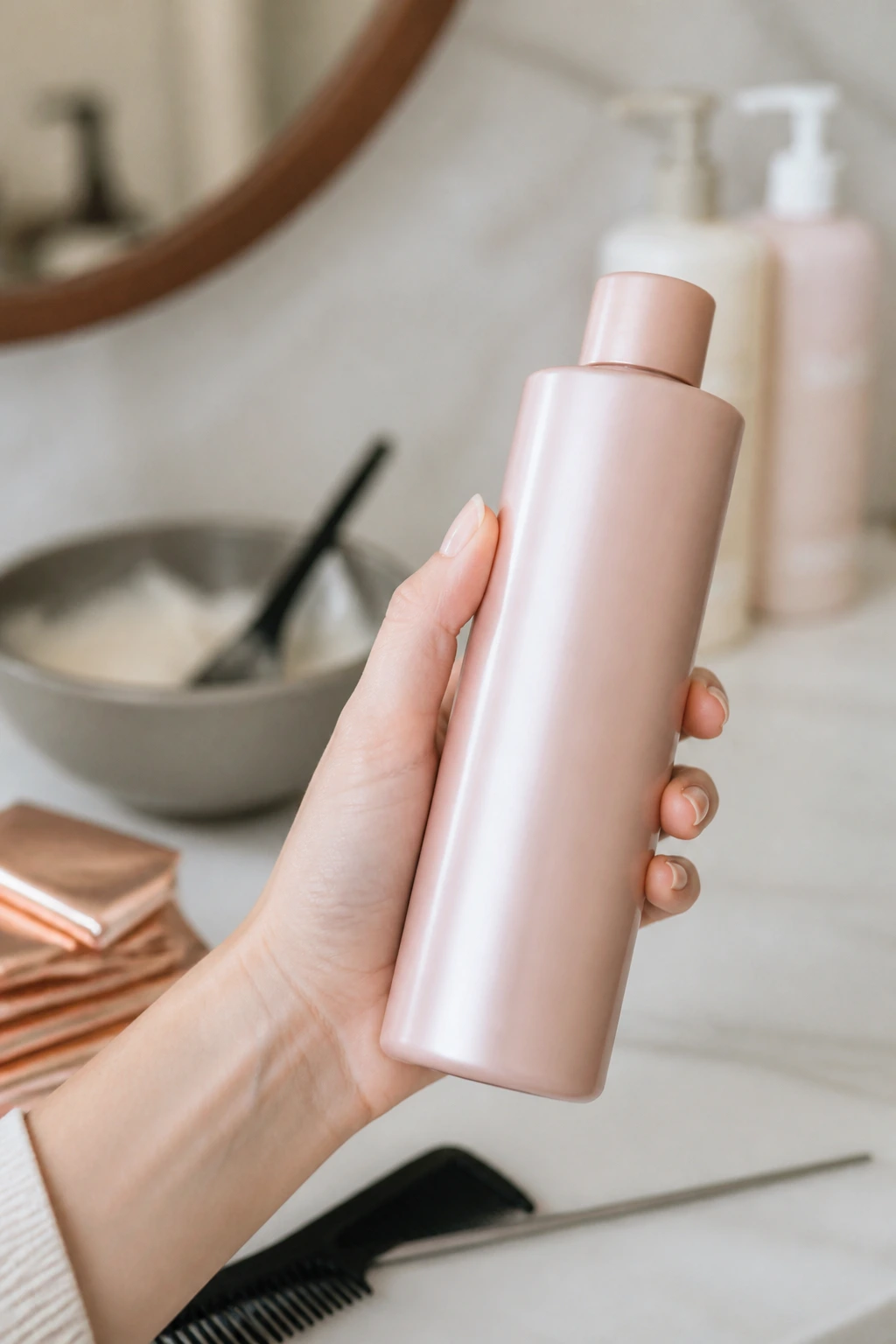
Tail comb and sectioning clips: Clean partings matter when you’re placing white pieces around the face or crown.
-
Foils or balayage board: Foils push lift higher; a board helps paint softer rose-gold ribbons without blotching.
-
Lightener and developer in the right strength: Fine, fair hair usually lifts fast, so low volume matters more than brute force.
-
Pearl, beige, violet, and rose toner options: The tone you choose after lightening decides whether the result feels icy, peachy, or dusty.
-
Bond builder: Bleached fair hair can feel fragile fast, and bond support helps keep the ends from snapping off.
-
Color-safe shampoo and mask: Sulfates and hot water strip the pink faster than people expect.
-
Gloves, bowl, brush, and a timer: Hair color is unforgiving when you wing it.
-
Heat protectant and a diffuser or blow-dryer with a nozzle: The finish changes a lot depending on how smooth or textured you wear it.
How to Keep the Rose Gold from Fading to Plain Blonde
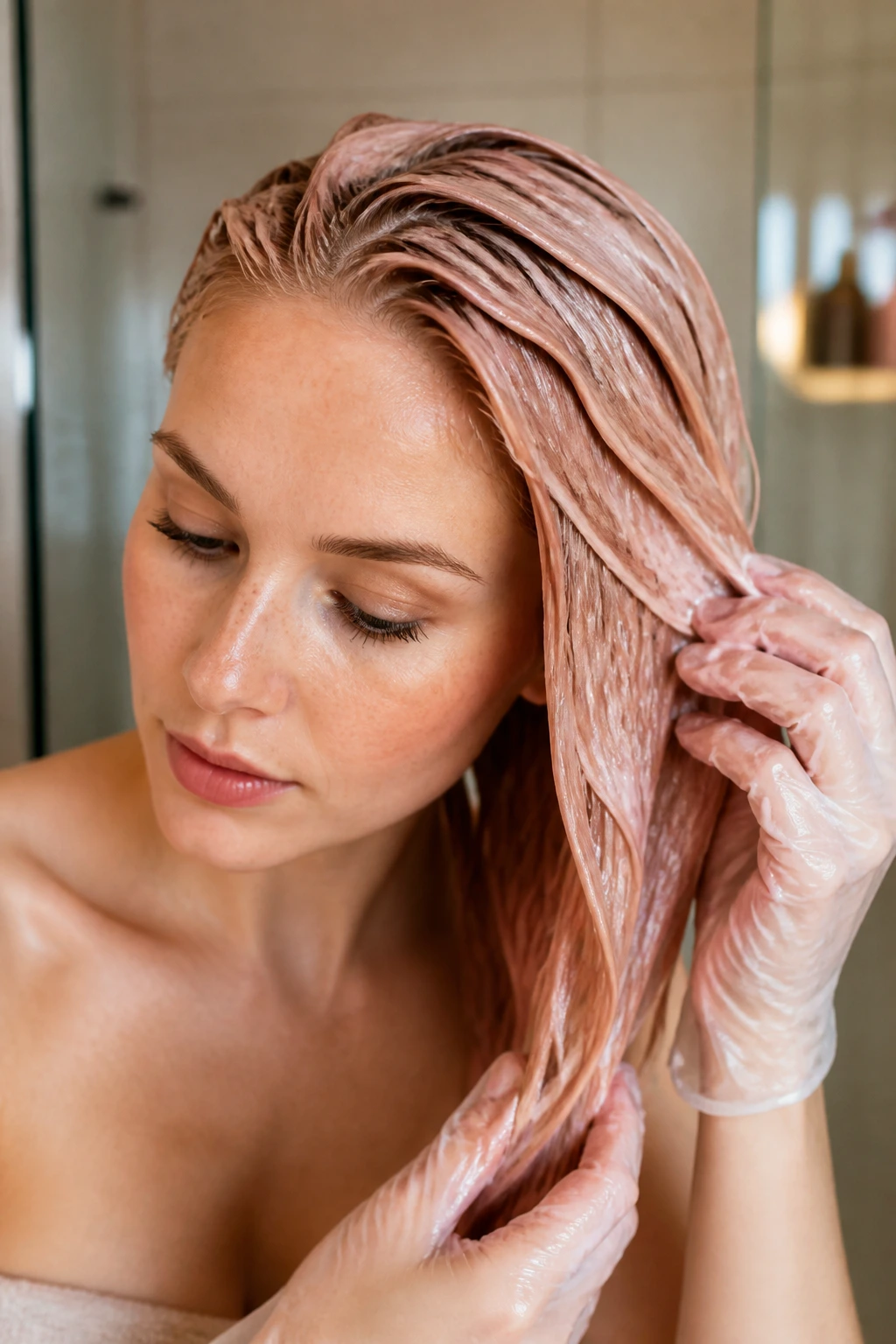
Rose gold fades faster than white. That’s the reality of it, and it’s why maintenance matters more than people think. The first thing to protect is the rose glaze, because once it slips away, the white can start to look sharper and a little harsher against fair skin. A sulfate-free shampoo, lukewarm water, and fewer wash days make a real difference.
Use purple shampoo only when the white pieces start to yellow, not as a routine every wash. Too much violet can dull the rose and leave the hair looking dusty in a bad way. Once a week is enough for most people, and some fine hair needs it even less. A color-depositing mask with a sheer rose tint can refresh the warmth every 2 to 4 weeks if your hair is porous.
Heat is another big one. Flat irons and curling wands turn light pink tones pale fast, especially above 375°F / 190°C. Keep heat protectant in the routine, and if the hair starts feeling rough at the ends, stop chasing shine with more heat. A gloss or toner every 4 to 6 weeks usually does more for the look than another round of styling ever will.
Common Mistakes That Flatten This Look
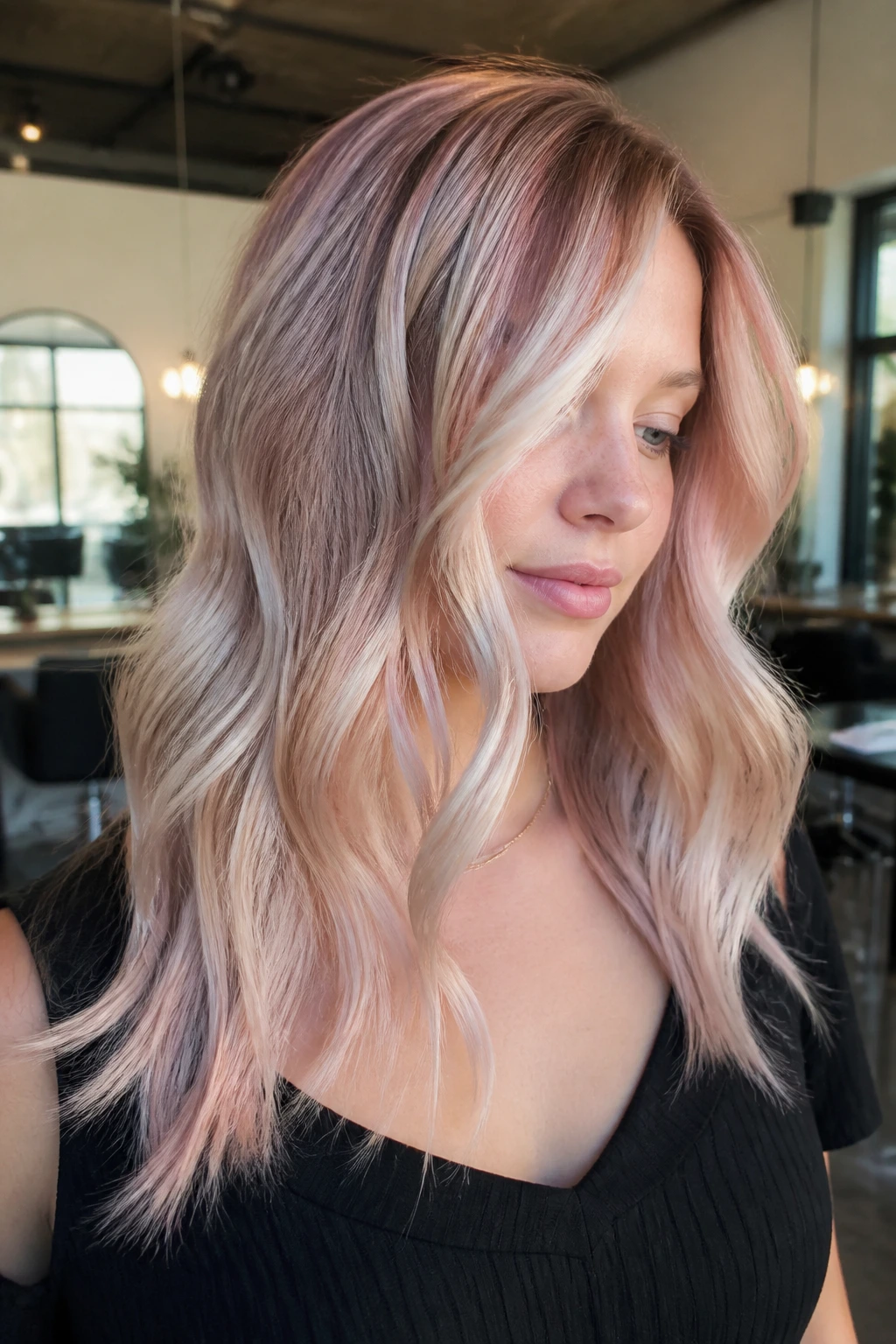
The first mistake is making the rose too opaque. If the pink shows up like frosting, it can turn the whole style childish and mask the white pieces. The fix is a sheer gloss, not a saturated toner, and a colorist who knows how to keep the pigment airy.
Another easy miss is placing all the white highlights evenly from root to tip. That sounds balanced, but on fair skin it often ends up looking flat. Better to brighten the face, crown, or ends and leave a little shadow elsewhere so the color has shape.
Too much purple shampoo is another trouble spot. It can mute the rose and leave the hair smoky in the wrong way. If the hair starts looking dull rather than icy, back off the violet and use a hydrating mask instead.
The last big one is ignoring damage. White highlights on already fragile hair need gentle lifting, and overlapping bleach on the same strands will make the ends chew-like. If the hair feels stretchy when wet or snaps when brushed, the color plan needs to slow down. Pretty color is not worth fried ends.
Variations Worth Trying
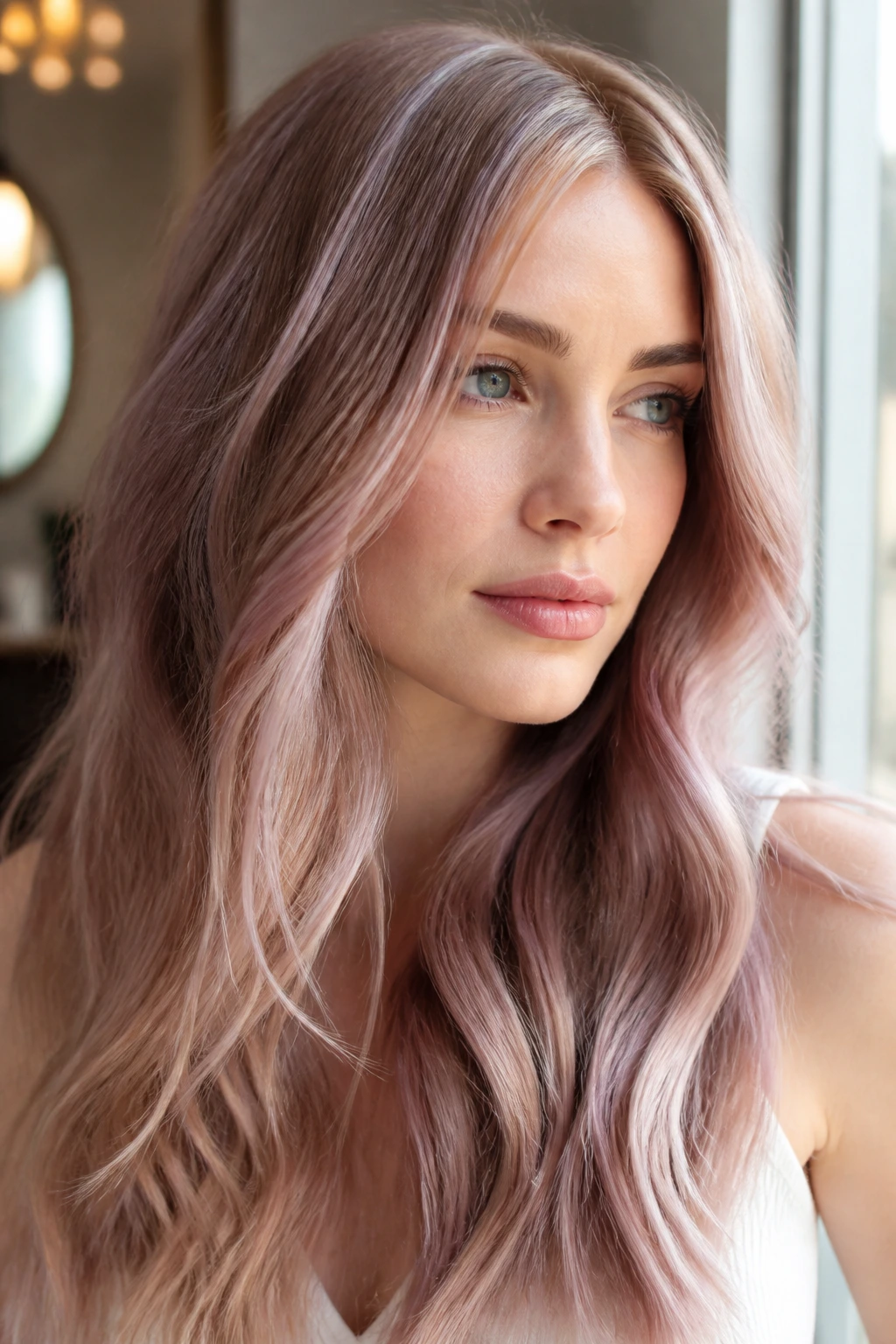
Cool Mauve Version:
If your skin is very pink or red, swap peach-rose tones for mauve and pearl. The result is cooler, cleaner, and less likely to fight your complexion. I’d use this on short cuts and polished waves where the tone can stay visible.
Peach Champagne Version:
For warm-fair skin or freckles, shift the rose toward peach and keep the white creamy rather than stark. The warmth gives the face a little glow, especially under soft indoor light. This version wears well on lobs and layered blondes.
Soft Grow-Out Version:
If you hate root lines, keep a deeper shadow root and place the white only through the mids and ends. The rose gold acts like a buffer, so the grow-out stays softer. It’s the easiest version to live with between salon visits.
High-Contrast Face Frame Version:
Keep most of the hair muted and let the front pieces go bright white with a blush glaze underneath. This gives you impact without committing the whole head to full lift. It suits long layers, curtain bangs, and center parts.
Curly-Hair Diffused Version:
On curls, spread the white into tiny ribbons and keep the rose more blended. Big block highlights can break up a curl pattern in a bad way, while finer placement lets the shape stay intact. The hair looks fuller, not striped.
Special Equipment for the Cleanest Result
-
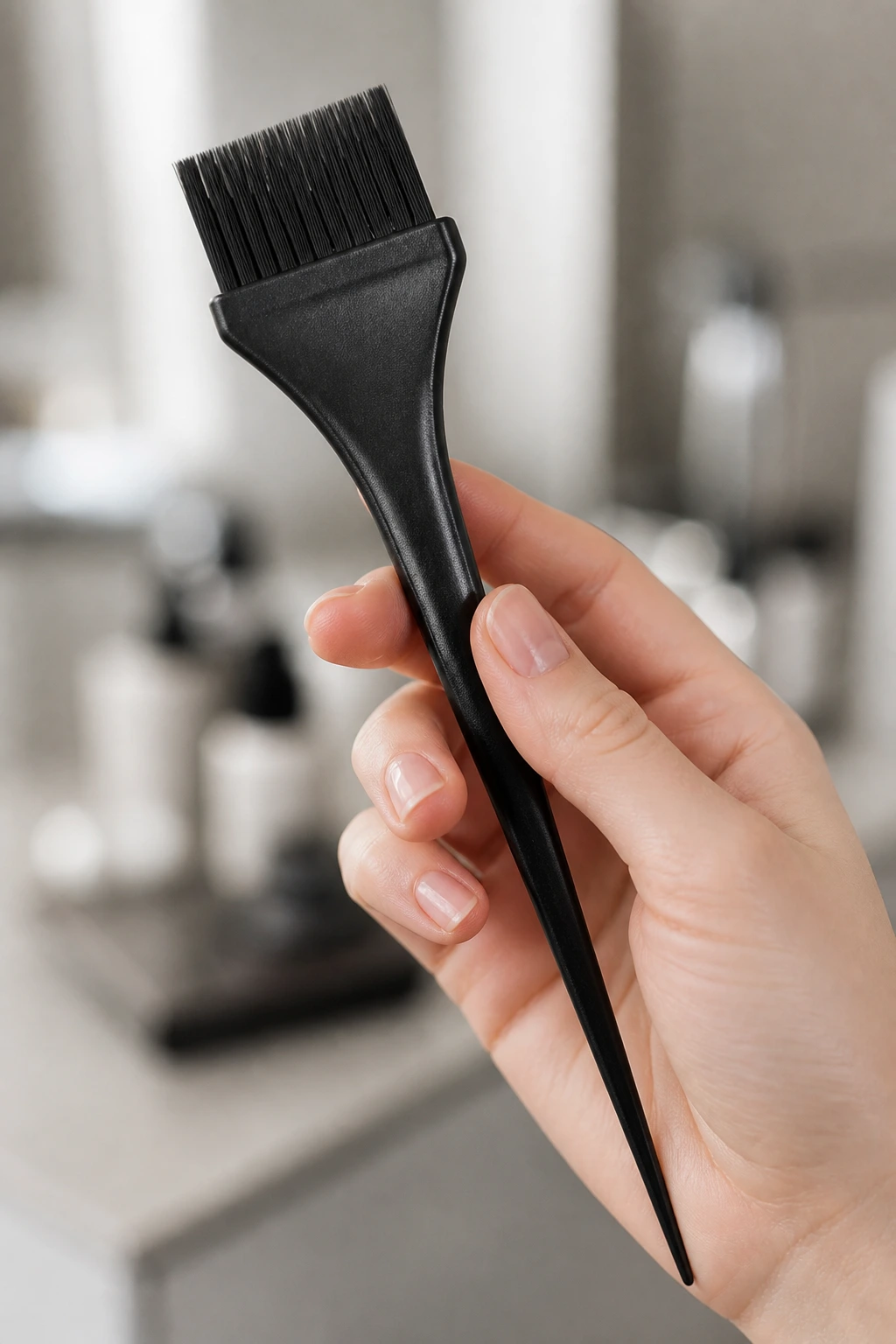
Fine-tooth tint brush: Helps place thin highlights where you want them instead of flooding the section.
-
Balayage board or foil sheets: Useful for brighter white panels and cleaner lift through darker sections.
-
Non-metal bowl: Keeps the toner or lightener from reacting before it hits the hair.
-
Sectioning clips: Four clean sections make the placement easier to control.
-
Microfiber towel: Cuts down friction when the hair is wet and toned.
-
Wide-tooth comb: Better than a brush when the hair is fragile after lightening.
-
Curling wand or round brush: Soft waves show off the rose-white blend better than flat, untouched hair.
Frequently Asked Questions
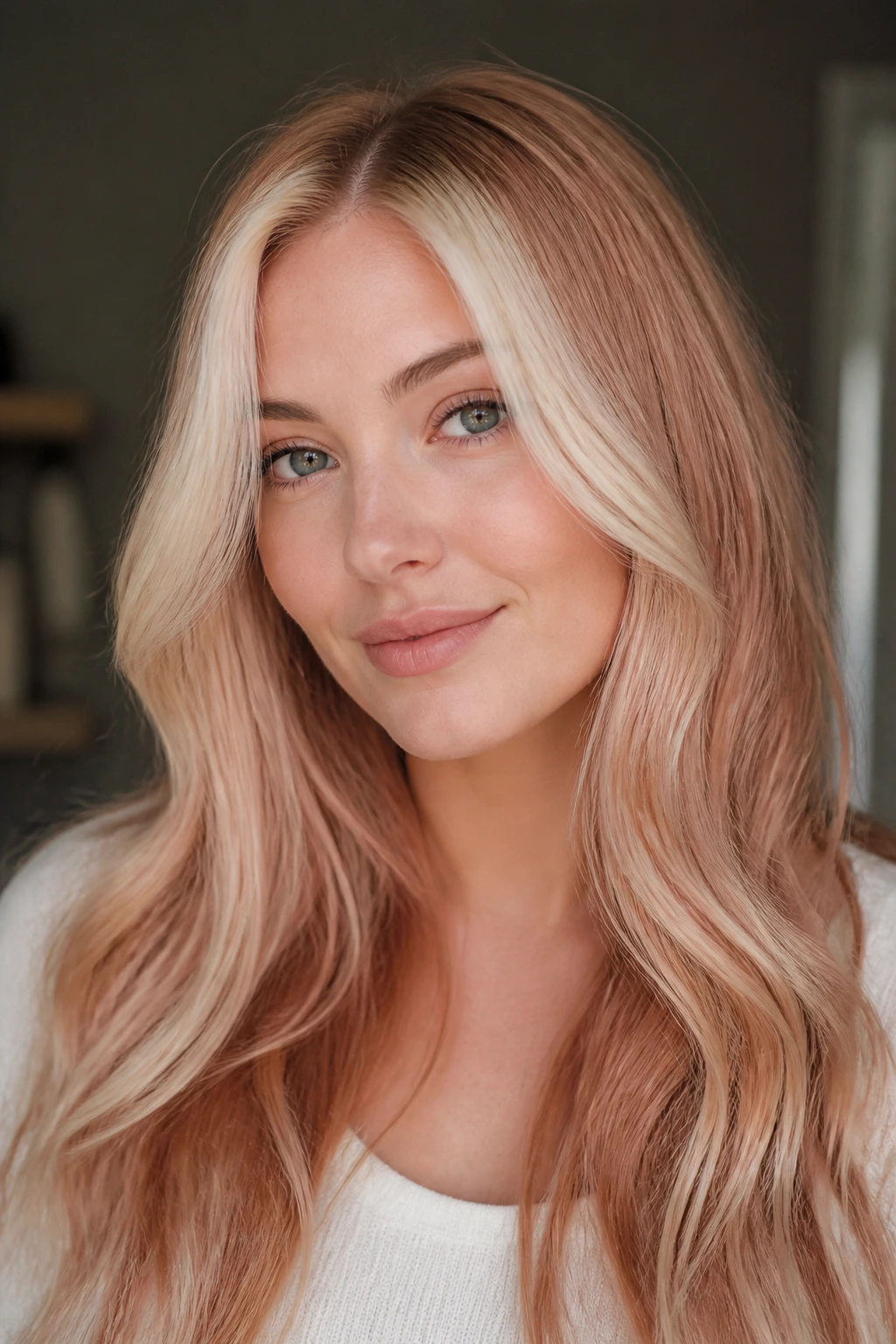
Which undertone on fair skin works best with rose gold white highlights?
Cool fair skin usually likes pearl, opal, and mauve-leaning rose. Warm fair skin tends to look calmer with champagne, peach-rose, or vanilla rose. Neutral fair skin can wear almost any of them, which is slightly unfair but convenient.
Will white highlights wash me out if my skin is very pale?
They can, if the white is too broad or too close to the scalp. Keeping the white in ribbons, foils, or face-framing pieces lets the color brighten the skin instead of flattening it. A little rose in the mix keeps the whole thing from turning stark.
Can this look work on dark blonde hair?
Yes, but it usually needs a staged process. Dark blonde can lift into rose gold white territory, though the white pieces may need foils and more than one toning step to look clean. If the hair is fragile, a softer champagne version is often smarter than pushing straight to icy white.
How often should I tone rose gold highlights?
Most people need a refresh every 4 to 6 weeks, though porous hair can lose the rose sooner. If the white starts yellowing, use a violet shampoo sparingly between glosses. If the rose fades first, a color-depositing mask usually helps more than another heavy toner.
Can I get this look without bleach?
Not if you want true white highlights. Rose glosses on their own can tint blonde hair, but the white pieces need lifting. On very light natural blonde, you may only need a mild lift and toner, though that still counts as lightening.
What’s better for this look: foils or balayage?
Foils give stronger lift and cleaner white pieces. Balayage gives a softer blend and a less obvious grow-out. If you want crisp contrast, use foils around the face and a softer hand through the lengths. If you want airy softness, balayage wins.
How do I keep the rose from turning brassy?
Use color-safe shampoo, limit hot water, and don’t overdo heat styling. Brass shows up faster when the rose toner fades and the white catches yellow, so a weekly mask and an occasional gloss are worth the trouble. Chlorine and sun can throw the tone off too, so those need protection.
What if the highlights look too pink after toning?
Wash once or twice with a gentle shampoo and follow with a plain conditioner, then give it a few days. Most rose tones soften quickly. If they stay too strong, the next salon gloss should lean pearl or beige instead of rosy, which pulls the color back into balance.
Soft Contrast That Holds Up
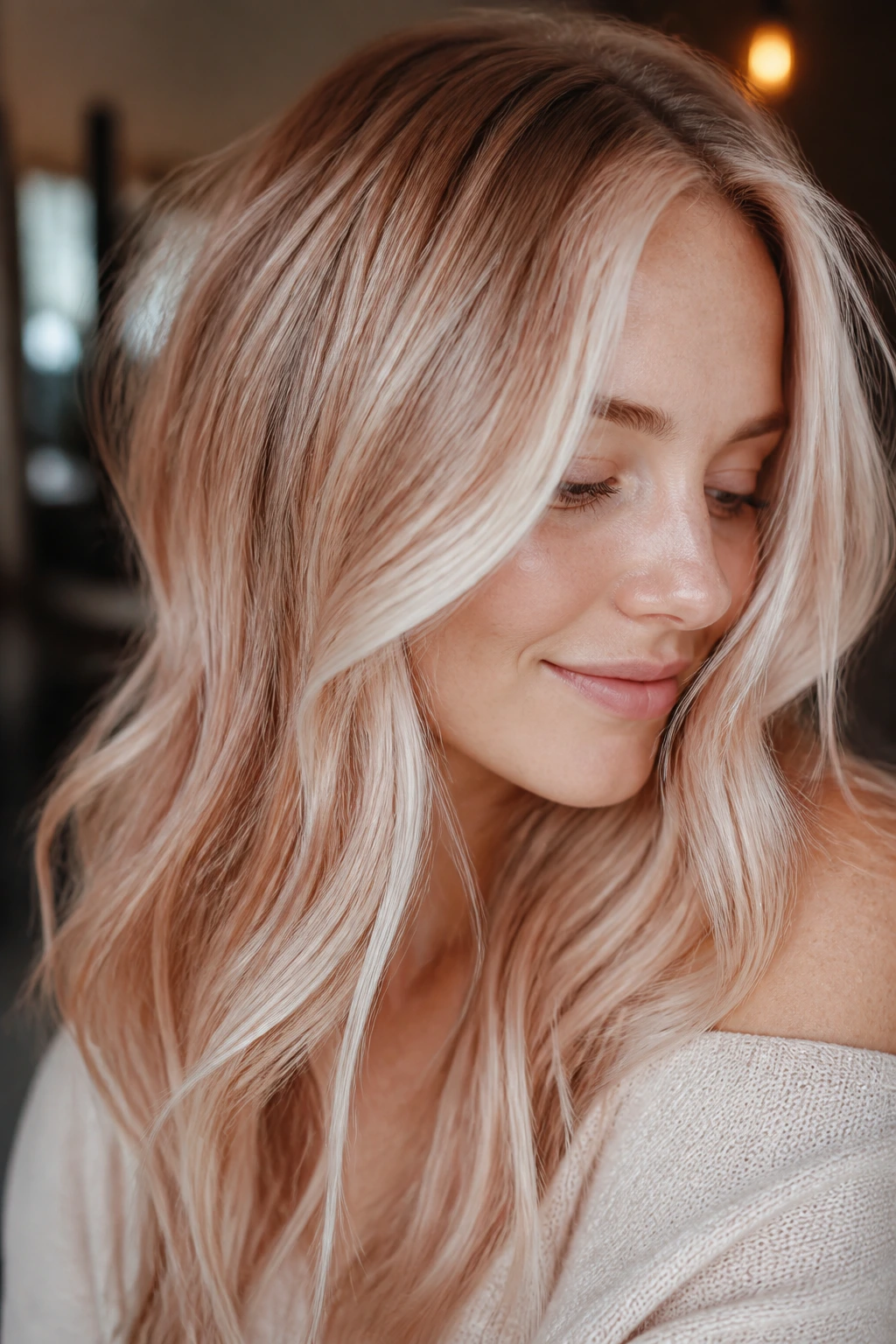
The nicest thing about rose gold white highlights on fair skin is that they don’t have to choose between bright and soft. The right version can do both at once. It can make pale skin look clearer, keep blondes from going flat, and add enough structure that the hair still looks interesting when it’s pulled back or tucked behind one ear.
I’d still pick the softer versions first if you’re unsure. Pearl ribbons, champagne face frames, and dusty rose veils age better on fair skin than hard white stripes ever will. Strong contrast has its place, but soft contrast is easier to wear on a Tuesday morning when you haven’t styled your hair and the light in the bathroom is doing you no favors.
If you’re taking the idea to a colorist, bring two or three photos with the same level of brightness and the same undertone family. That little bit of consistency helps more than people expect. The best rose gold white look is the one that still looks like you when the styling wears off.