



Dark hair can swallow delicate color for breakfast. Put a few skinny streaks on thick black or espresso hair, and they can disappear the second you blow it dry. Give those same strands wider ribbons — caramel, copper, beige, smoky blonde, even a little wine red — and the whole cut starts moving instead of sitting there like one heavy block.
That’s the real appeal of chunky highlights for dark hair with thick hair. Dense hair can carry width. It can handle contrast. It can also take a little drama without looking brittle or overworked, which is more than I can say for those whisper-thin highlights that vanish under a round-brush blowout.
There’s a catch, though. Chunky color can look stripy fast if the placement is lazy or the toner is wrong. Thick hair hides mistakes, then exposes them in the worst possible way once you tuck it behind your ears or catch it in daylight. So the styles below lean on what actually works on dense hair: wider sections, deliberate face framing, grounded roots, and colors that have enough depth to sit next to a dark base without fighting it.
Why These Chunky Highlight Ideas Work on Dense Dark Hair
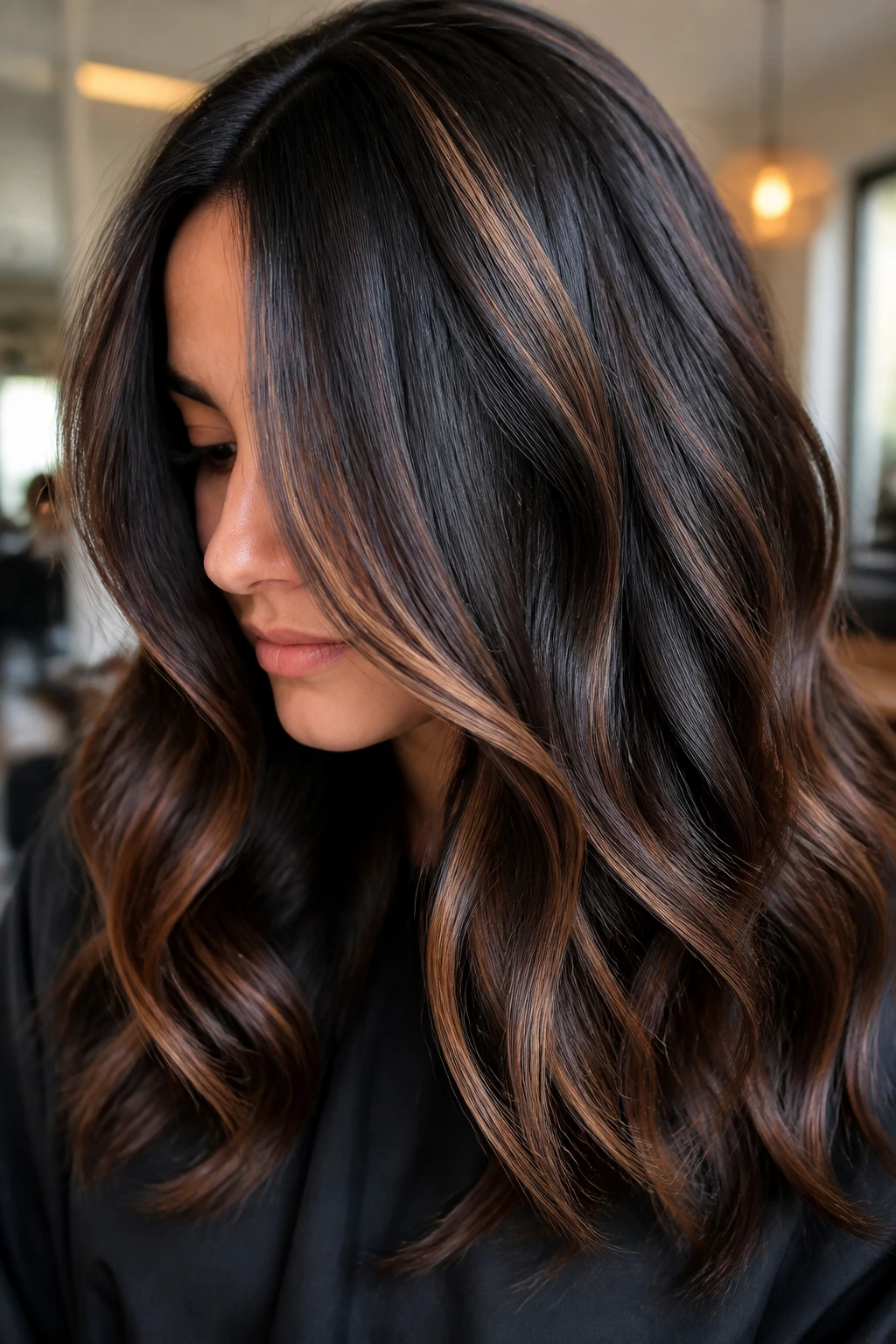
-
Wide ribbons show up on thick hair. A 1/2-inch to 1-inch panel reads clearly on dense strands, while baby-fine foils can vanish under all that hair.
-
Dark bases need contrast with a reason. The best looks use caramel, beige, copper, or ash in places where the eye naturally goes first — around the face, over the part, and through movement zones.
-
Placement matters more than brightness. A carefully placed money piece can do more than six random foils. Thick hair rewards direction.
-
Thick hair can hide lowlights, too. That means you can add depth back in after lightening so the color doesn’t look flat or stripey.
-
These looks grow out with more grace. Rooted panels, halo pieces, and underlayer streaks soften the line between salon visits, which is a blessing when your hair is dense and your roots are obvious.
How to Choose the Right Width, Lift, and Tone Before You Book
If your hair is thick, the first mistake is asking only for “blonde highlights.” That’s too vague. On dense dark hair, width, lift, and tone matter just as much as the shade name. A wide caramel ribbon in the right place can look richer than a pale blonde strip that’s been woven too fine to notice.
The sweet spot is usually a mix of broad panels and a few smaller slices. Around the face, color can be wider — even a full inch in some cuts — because those strands catch the eye first. In the back, the pieces can be a little narrower so the whole head doesn’t read as one giant zebra print. If your hair is coarse, expect it to need more processing time and a careful toner after lift. Coarse, dense strands often resist lightening in the middle, which is why some chunky highlights go orange at the center and pale at the edges.
Tone is where people get sloppy. Warm bases like espresso brown usually take caramel, toffee, bronze, or copper without a fight. Cooler brunettes can handle beige, mushroom, ash brown, and smoky blonde, but you need enough depth left in the shade so it doesn’t go chalky. If you like contrast, ask for a shadow root or lowlights to keep the color from floating away from the base.
1. Caramel Money Piece and Wide Side Ribbons
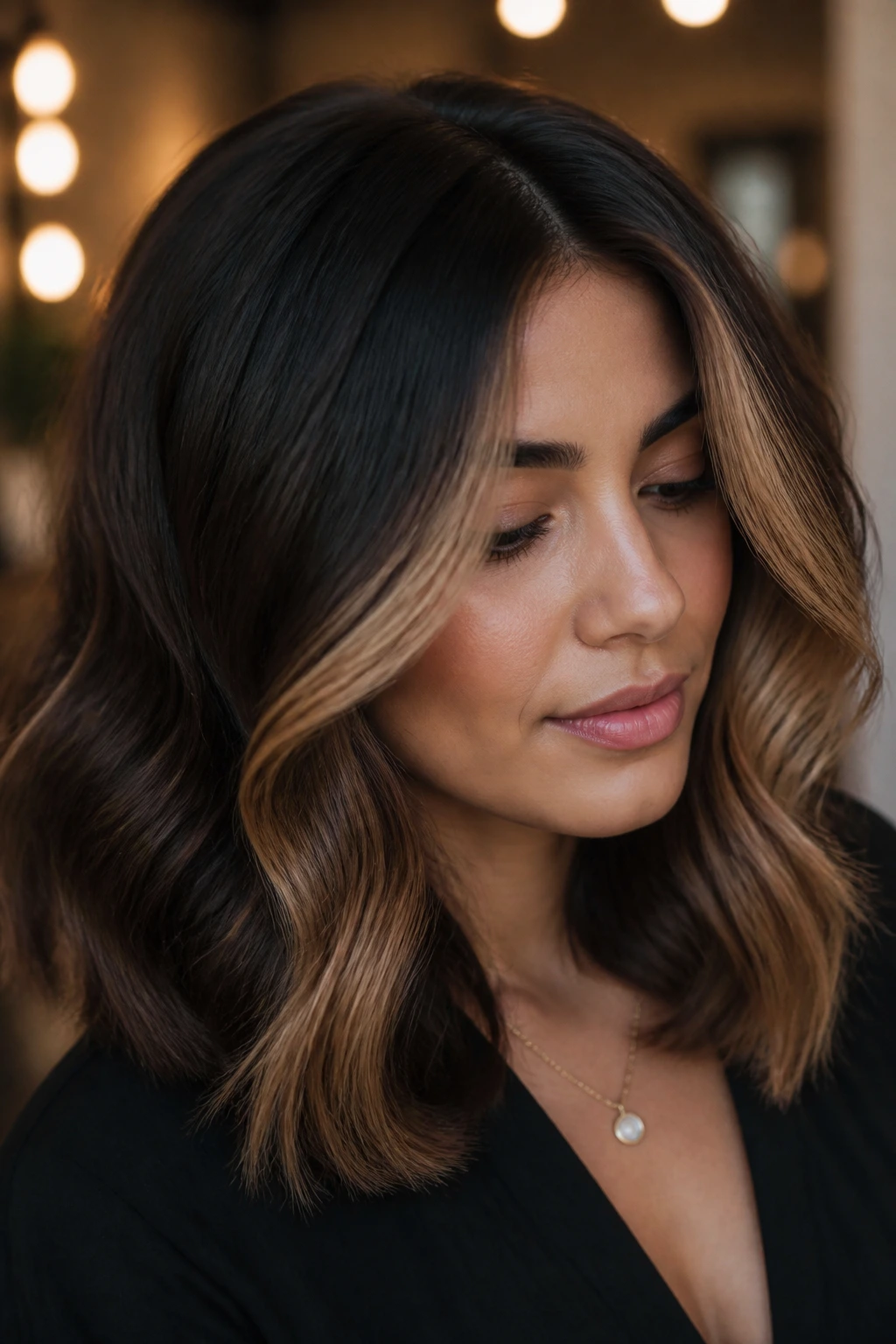
Start with the one that never really misses. A caramel money piece through the front hairline gives dark hair an instant frame, and the wider side ribbons keep the color from looking like a stray streak somebody forgot to finish. On thick hair, this works because the face-framing area carries enough hair density to hold a full block of light without looking thin or patchy.
I like this look on shoulder-length cuts and long layers. The color falls where the hair already moves — around the cheekbones, jaw, and collarbone — so every bend in the blowout shows a flash of caramel. Ask for a tone that sits between honey and toffee rather than a pale yellow blonde. That warmer middle ground looks cleaner against espresso or dark chocolate bases.
A hard line is the only thing to avoid. The front should have a soft enough blend at the root that the money piece feels deliberate, not pasted on. Thick hair gives you room to do that. Use it.
2. Toffee Midlength Panels with a Dark Root
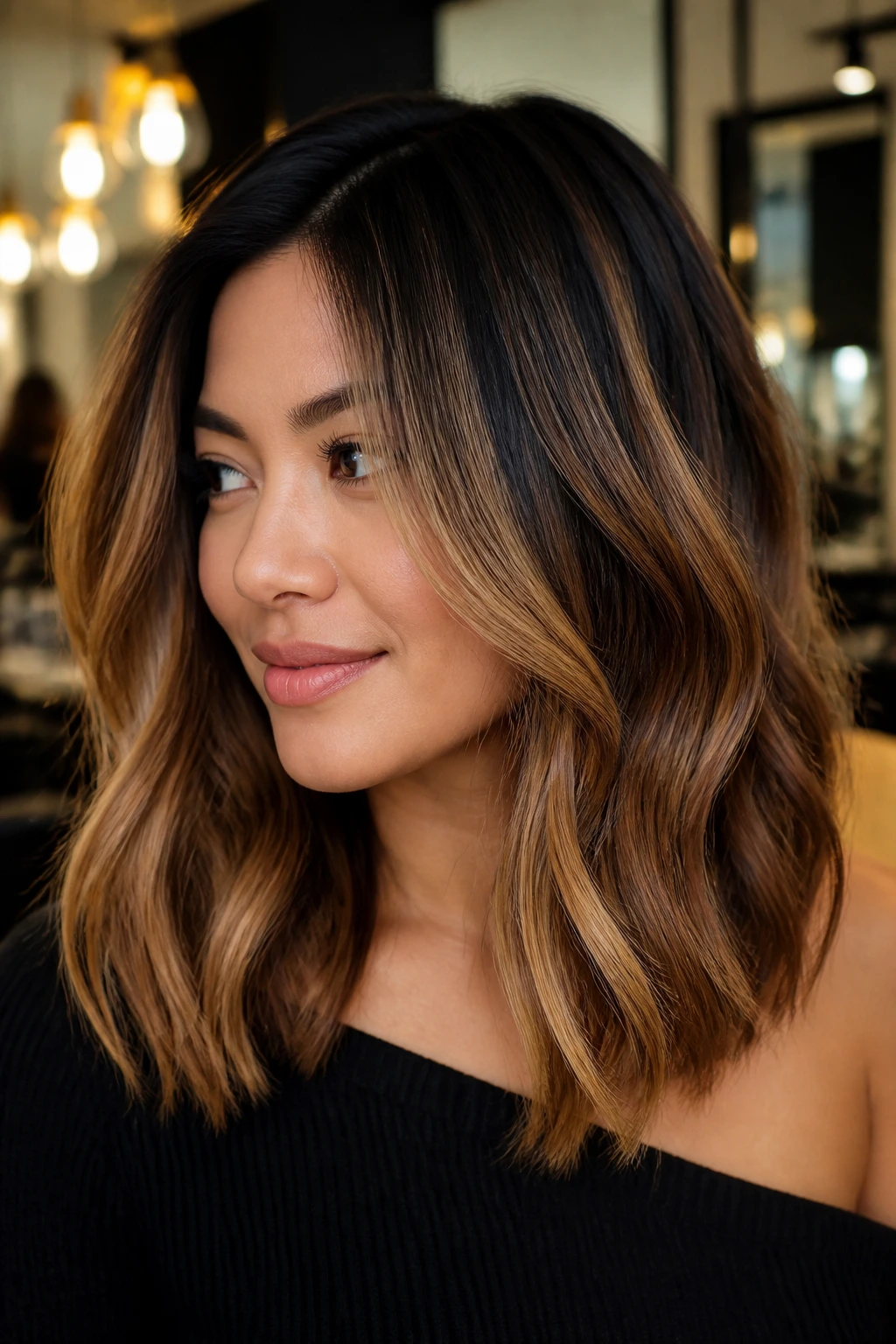
Why does this look so good on heavy hair? Because it breaks up the middle of the cut, not just the front. Toffee panels through the midlengths give dense dark hair a little breathing room, especially when the root stays deep and the ends stay darker than the brightest pieces.
This is the style I’d pick for someone who wears a lot of blowouts or loose bends. The panels show movement when the hair swings, but they do not shout from across the room. The effect is more expensive-looking than loud. Thick hair benefits from that. You get shape and depth without turning the whole head into a patchwork.
Ask for this if you want:
- A darker root that buys you time between salon visits.
- A warm beige-brown highlight instead of pale blonde.
- A cut that looks fuller, not thinner, after color.
- A style that still makes sense when worn straight.
This one is especially smart on layered lobs and long, blunt cuts. The panels sit in the body of the hair and make the cut feel less heavy.
3. Cinnamon Copper Swirls Through the Layers
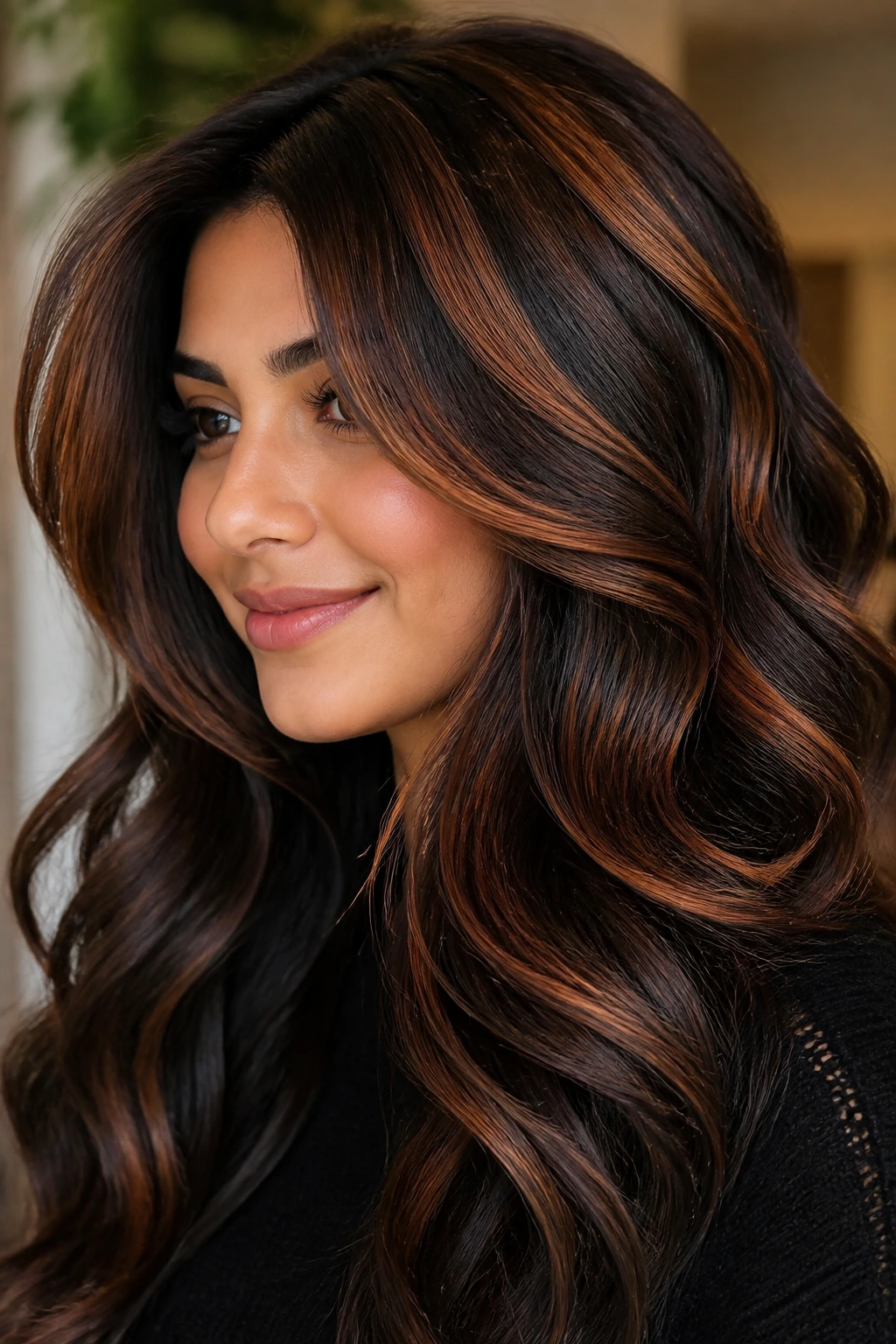
Cinnamon copper has a way of warming up dark hair without flattening it. On thick hair, the color reads like a swirl of spice through espresso strands — red-gold at the surface, deeper and richer underneath. It’s the kind of highlight that looks alive when the light hits it, which is why I keep coming back to it for dense brunette hair.
The trick is placement. Don’t scatter it everywhere. Put the copper in wide, curved sections through the top and around the face, then let the lower layers stay darker. Thick hair can carry that kind of contrast without feeling overloaded. If the whole head is lifted to the same warm level, the effect gets muddy. Keep the copper in chunks, and it stays clean.
This shade loves wave patterns. A 1-inch ribbon bent into a loose S-shape shows more color than ten thinner foils squeezed together. If your skin has golden or olive undertones, even better. Copper tends to wake up the complexion fast.
4. Chestnut Ribbons with Walnut Lowlights
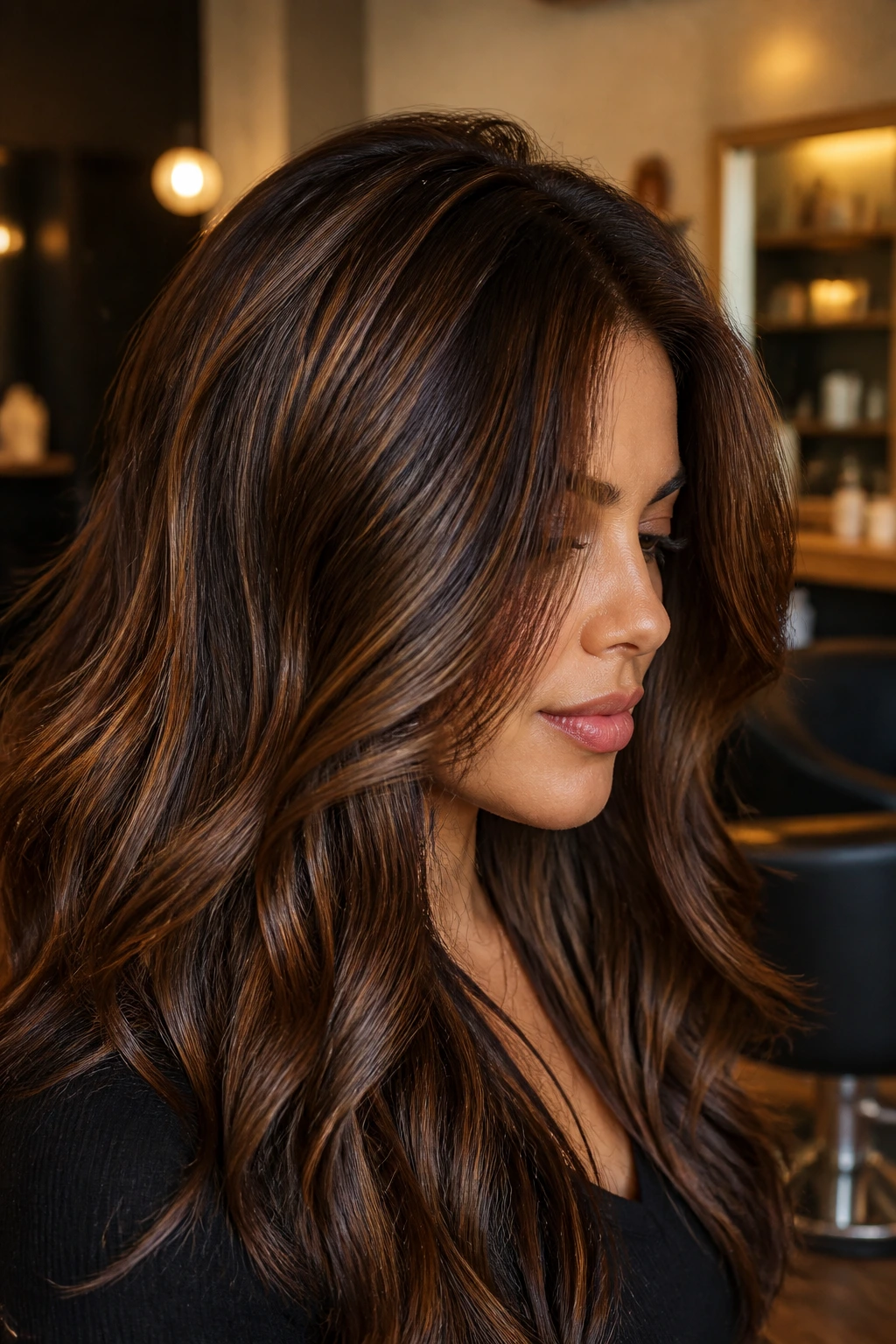
This is the one for people who like dimension more than brightness. Chestnut ribbons bring in warm brown lightness, while walnut lowlights tuck back into the darker sections and make the whole head look fuller. Thick hair often needs that depth restored after lightening, because all-over light panels can make dense strands look broad in a blunt way.
The visual effect is rich, not flashy. You can see the color when the hair moves, but you won’t get that striped, supermarket-barcode problem that can happen with chunky highlights if every piece is the same level. On dark hair, the lowlights do a lot of heavy lifting. They keep the highlighted pieces from floating too high off the base.
Best placement? Through the interior and at the crown, where thick hair builds most of its visual weight. If your haircut has layers, chestnut ribbons catch on the shorter pieces and walnut lowlights hold the longer lengths down. It’s a smart combination. Quiet, but not shy.
5. Beige Blonde Face Frame on Espresso Hair
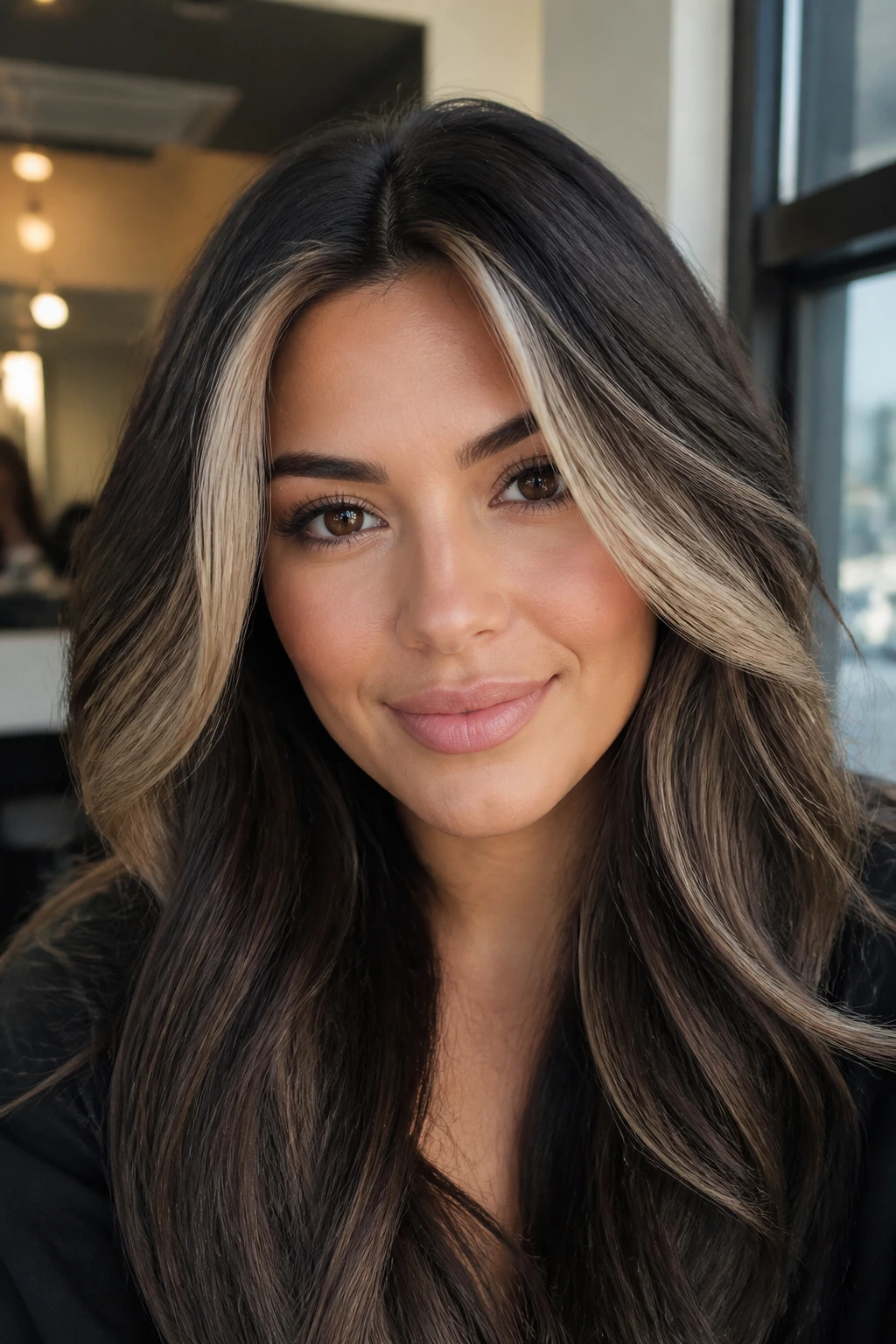
Beige blonde is the sweet spot when you want lightness without that icy, almost metallic look. Against espresso hair, a beige blonde face frame gives you brightness near the skin and keeps the rest of the hair grounded. Thick hair makes this work because the face-framing panels need enough width to stand out; skinny beige streaks can look accidental.
I’d ask for a softened root and a neutral toner here. Too much ash can make beige look gray. Too much gold can push it into brass. The middle path is cleaner. If your hair is very dark, the lift may stop at a deep gold first, then tone into beige later. That’s normal. Don’t force the process.
This style is especially useful if you wear your hair straight or in a sharp blowout. The contrast at the front changes the whole feel of the cut. Even if the rest of your hair stays mostly dark, the face frame gives the color a place to live.
6. Auburn Ends with a Soft Root Melt
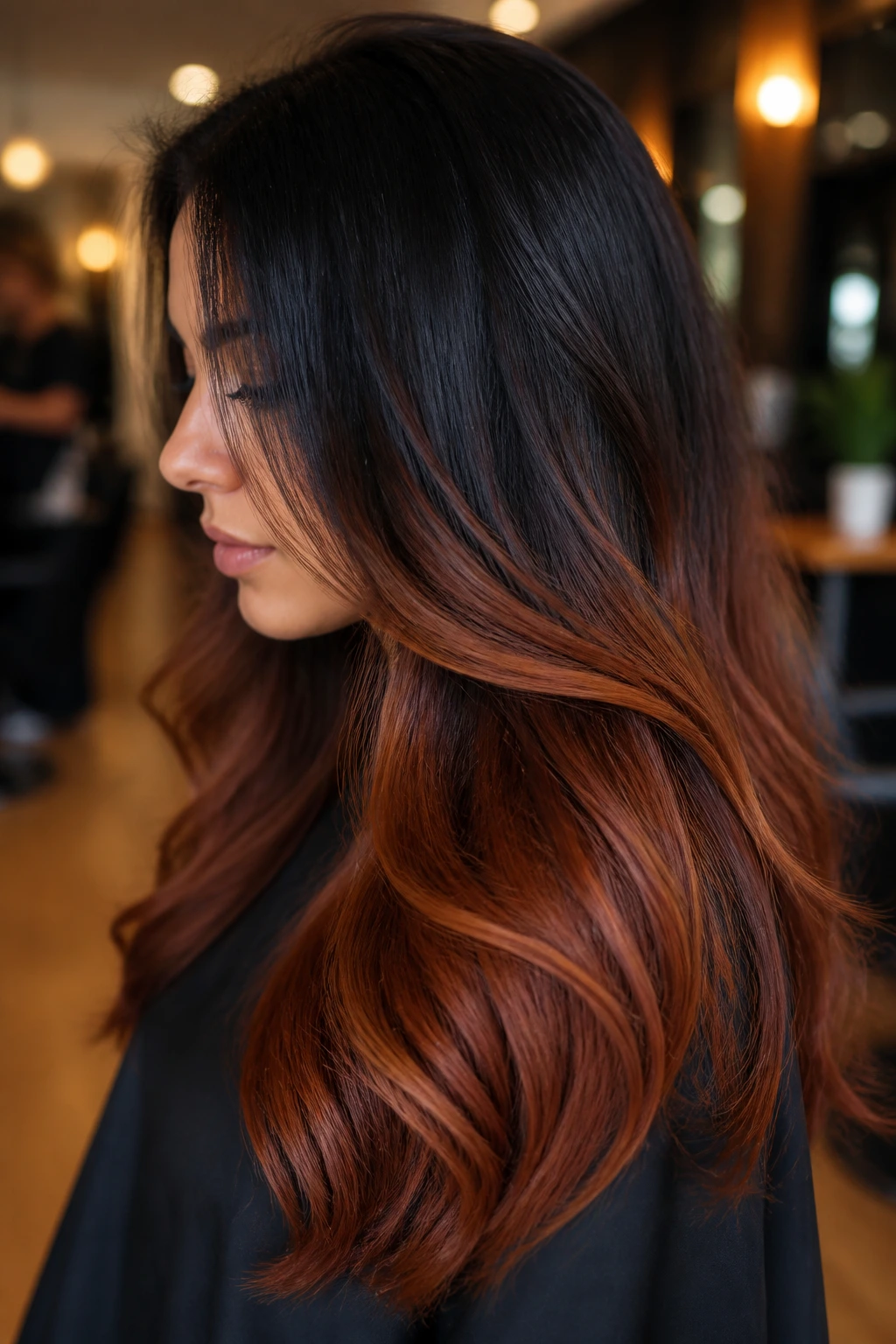
Auburn on the ends is one of the smartest ways to add chunkiness without lighting up the whole head. The root melt keeps the transition soft, then the bottom third of the hair shifts into a warm red-brown that looks almost lacquered on thick dark hair. It has a fall-through effect. Heavy, in a good way.
This works best on long layers or hair that hits the shoulder blades. The color needs length to breathe. On shorter hair, auburn ends can look too abrupt. On dense hair, though, the contrast is gorgeous because the darker top sections keep the color from reading costume-like. You get warmth without turning the entire base red.
If your natural hair is black-brown, auburn may need a few levels of lift first. That’s worth doing in foil sections so the tone stays controlled. Thick hair gives the color somewhere to hide between the layers, which makes the ends flash rather than glow all at once.
7. Mushroom Brown and Ash Beige Bands
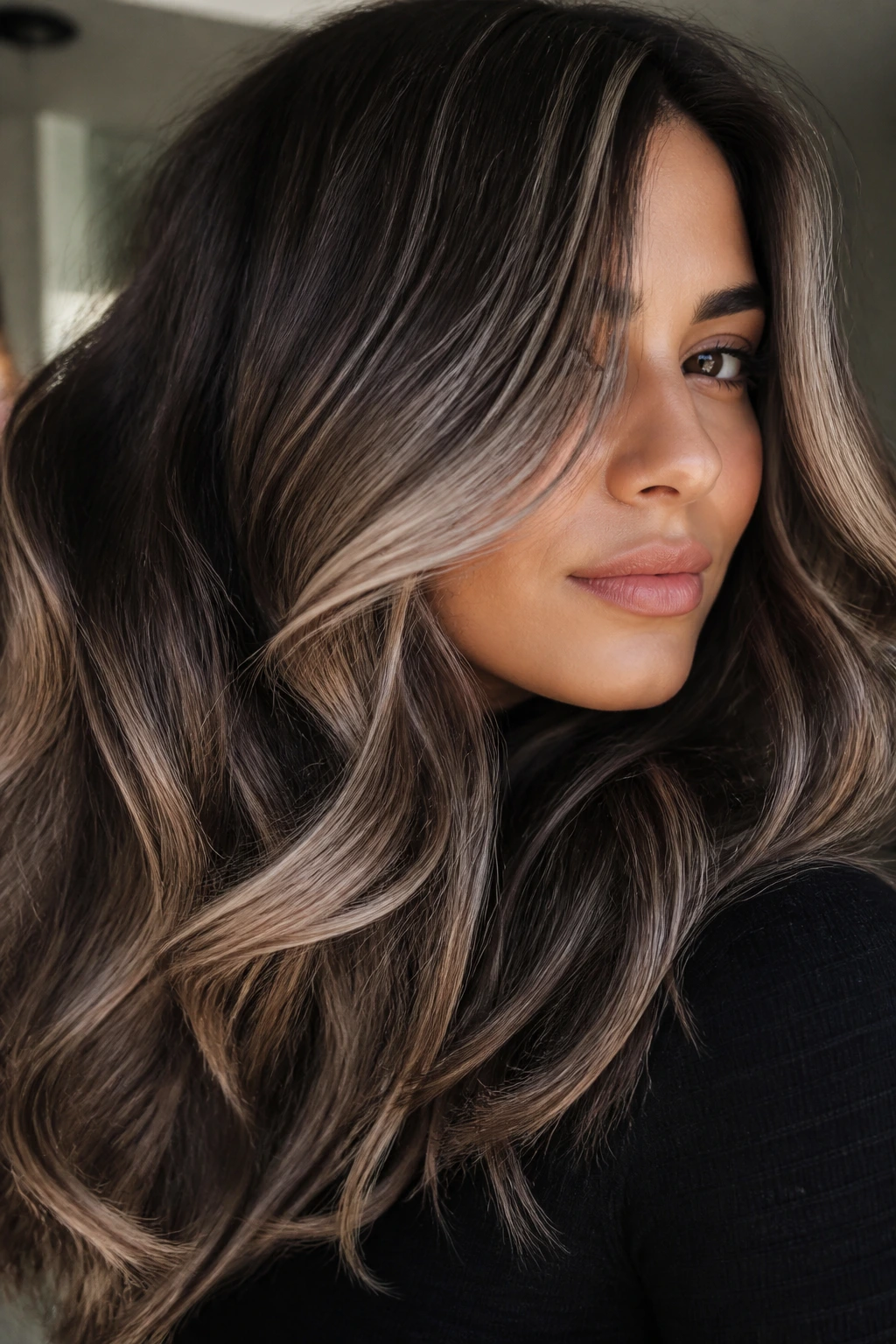
Cool brunettes should pay attention here. Mushroom brown bands with ash beige pieces give dark hair a smoky, earthy finish that feels grounded rather than bright. Thick hair suits this look because it can carry the cooler tonal shift without the color looking thin or washed out.
What makes it work is the contrast between the neutral brown and the pale ash beige. If both shades are too close, the result goes flat. If the beige is too light, it turns chalky. The sweet spot sits in the middle: soft, cool, and a little damp-looking in the best way. On curly or wavy thick hair, the bands show movement around the bend of each strand.
I like this style when someone wants dimension but not warmth. It’s especially good on dark brown bases with cooler skin undertones. The final effect is sleek, almost hushed, but still visibly highlighted. That’s rarer than people think.
8. Mocha Underlayer Streaks for Hidden Dimension
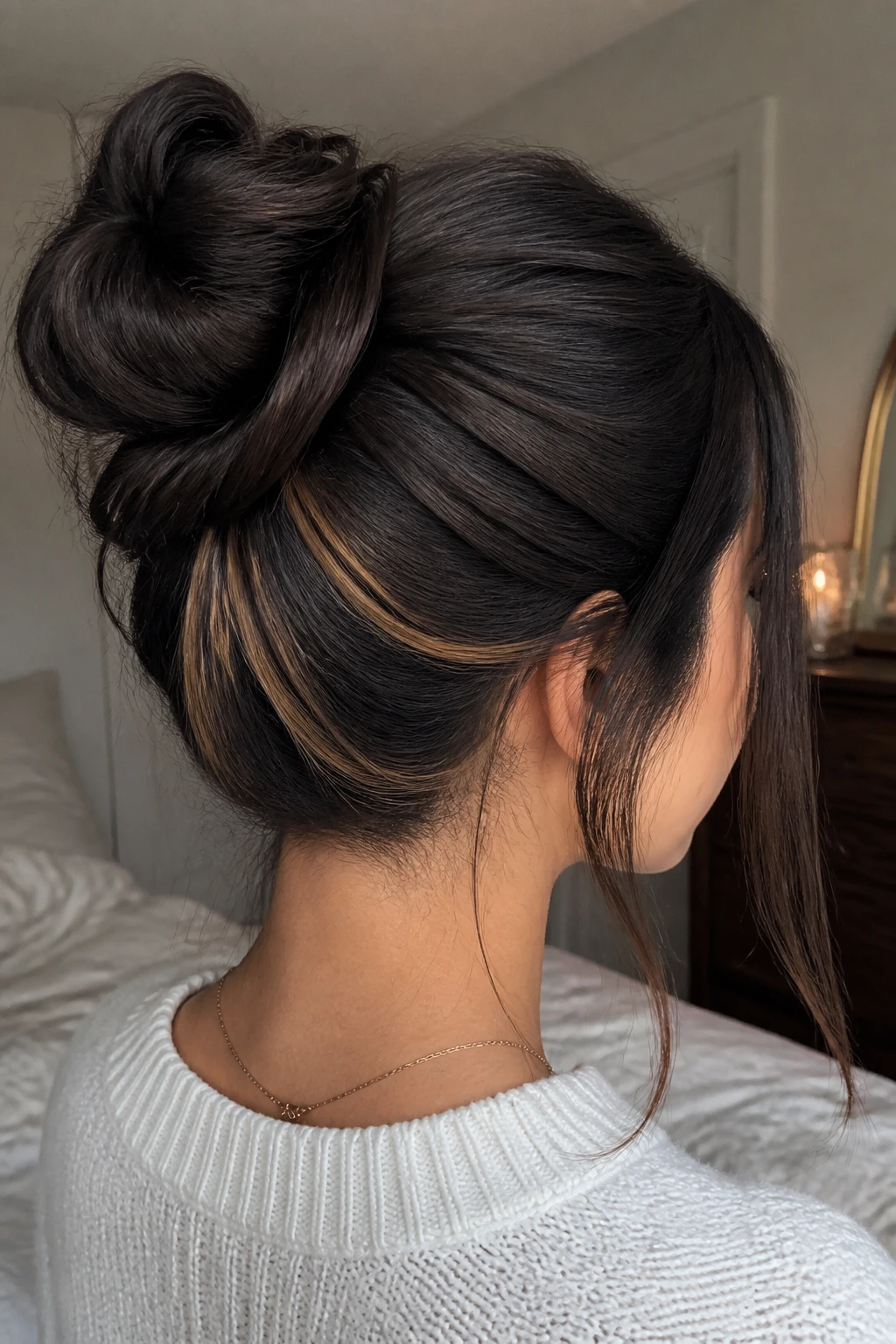
Not every highlight has to shout from the top. Mocha underlayer streaks are a great way to add dimension to thick dark hair without changing the outer look too much. The color sits underneath the top layer, so when the hair moves, ties back, or lifts in a breeze, you catch flashes of softer mocha.
This is a favorite placement for people who wear their hair up a lot. Buns, half-up clips, claw clips — the hidden color makes those styles look considered. Thick hair is ideal here because there’s enough density to cover the top layer and still let the underlayer shine through in pieces. Thin hair can’t hide color this way as convincingly.
Keep the mocha one or two levels lighter than the base, not a full blonde shift. The point is movement, not contrast overload. If you want more payoff, widen the panels near the nape and leave the crown darker. That keeps the top from looking busy.
9. Bronde Foilayage on a Thick Blowout
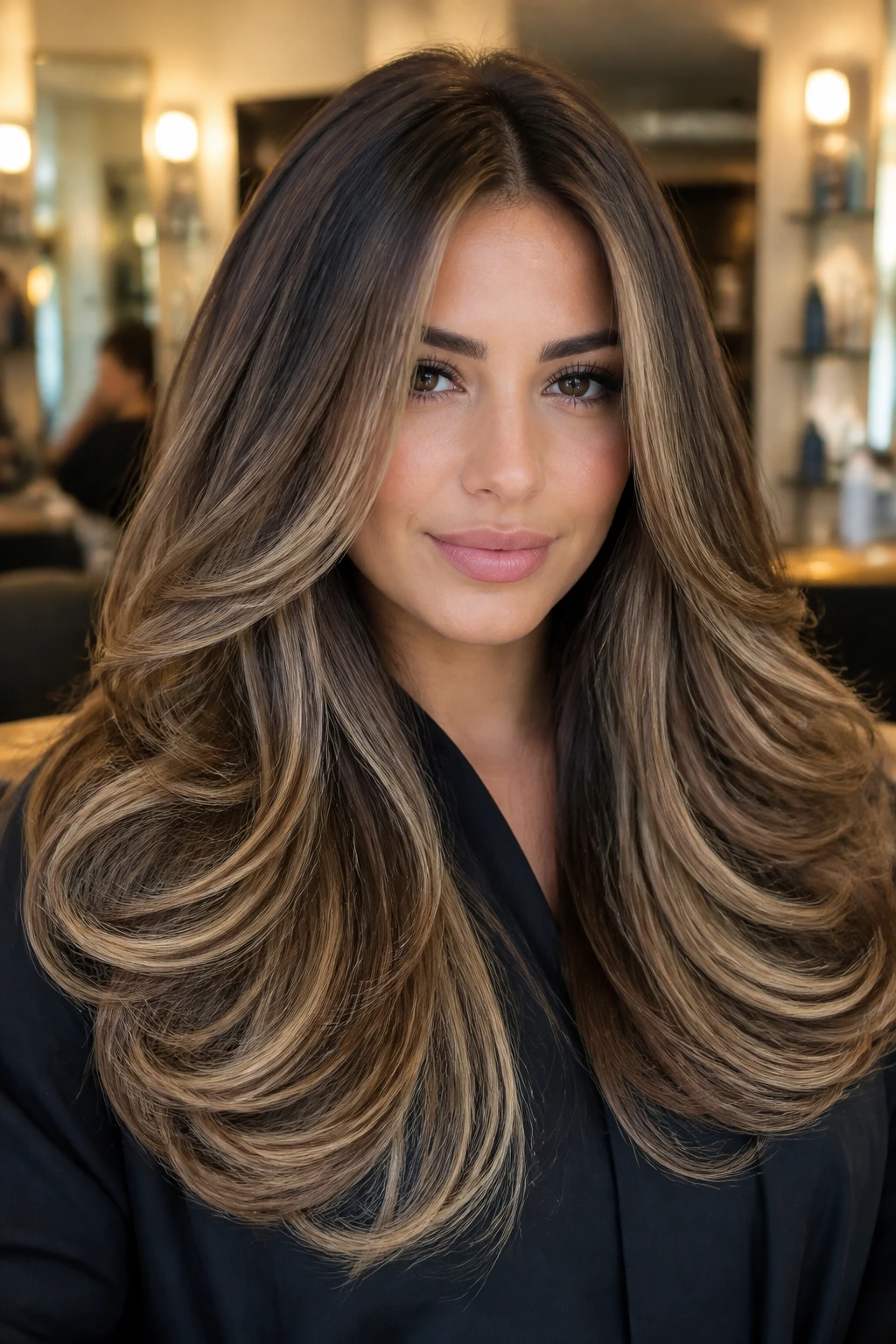
Bronde is one of those words that gets overused, but on thick dark hair it earns the label. Bronde foilayage mixes brown and blonde in a way that makes the hair look sun-touched without losing its base. On dense strands, foilayage helps because it gives lift where you want it and softness where you don’t.
This style is built for movement. The lighter pieces are usually a bit wider at the ends and softer through the mids, so the color feels swept through the hair rather than painted on top. Thick hair can hold that transition better than fine hair can. The body of the cut gives the color a place to show off.
If you wear big blowouts, this is a strong choice. The ribbons catch at the curve of the hair and give the whole style a long, cascading look. Ask for more contrast near the front if you want the color to read from the mirror; keep it softer at the back if you like a lived-in grow-out.
10. Smoky Ash Blonde Panels Along the Part
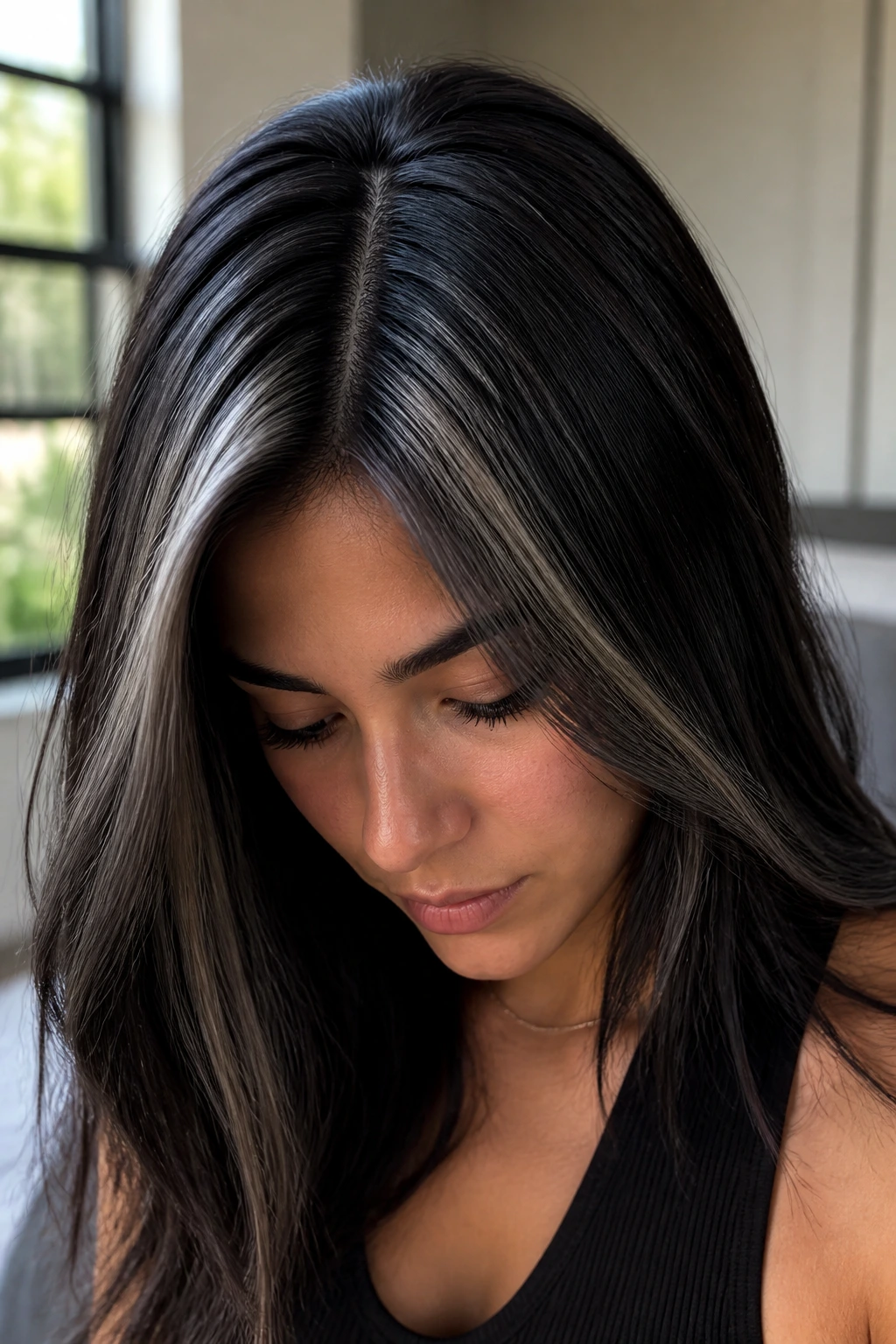
A deep dark base with smoky ash blonde panels along the part can look sharp in a way that surprises people. Thick hair is the reason it works. There’s enough density near the part for the light pieces to sit cleanly without disappearing into the rest of the cut.
I’d keep these panels bold and deliberate. Think wide slices, not whisper highlights. The ash blonde should lean soft and neutral, not silver-chalk cold. On very dark brunettes, a gloss after lightening keeps the pieces from going too bright or too flat. The part is doing the heavy lifting here, so the placement needs to be clean.
This look feels strongest on straight styles and structured waves. Every time the hair shifts, the contrast changes. That’s the fun of it. On thick hair, even a small change in parting can reveal a whole new stripe of color.
11. Deep Cherry Panels for Dark Brunette Hair
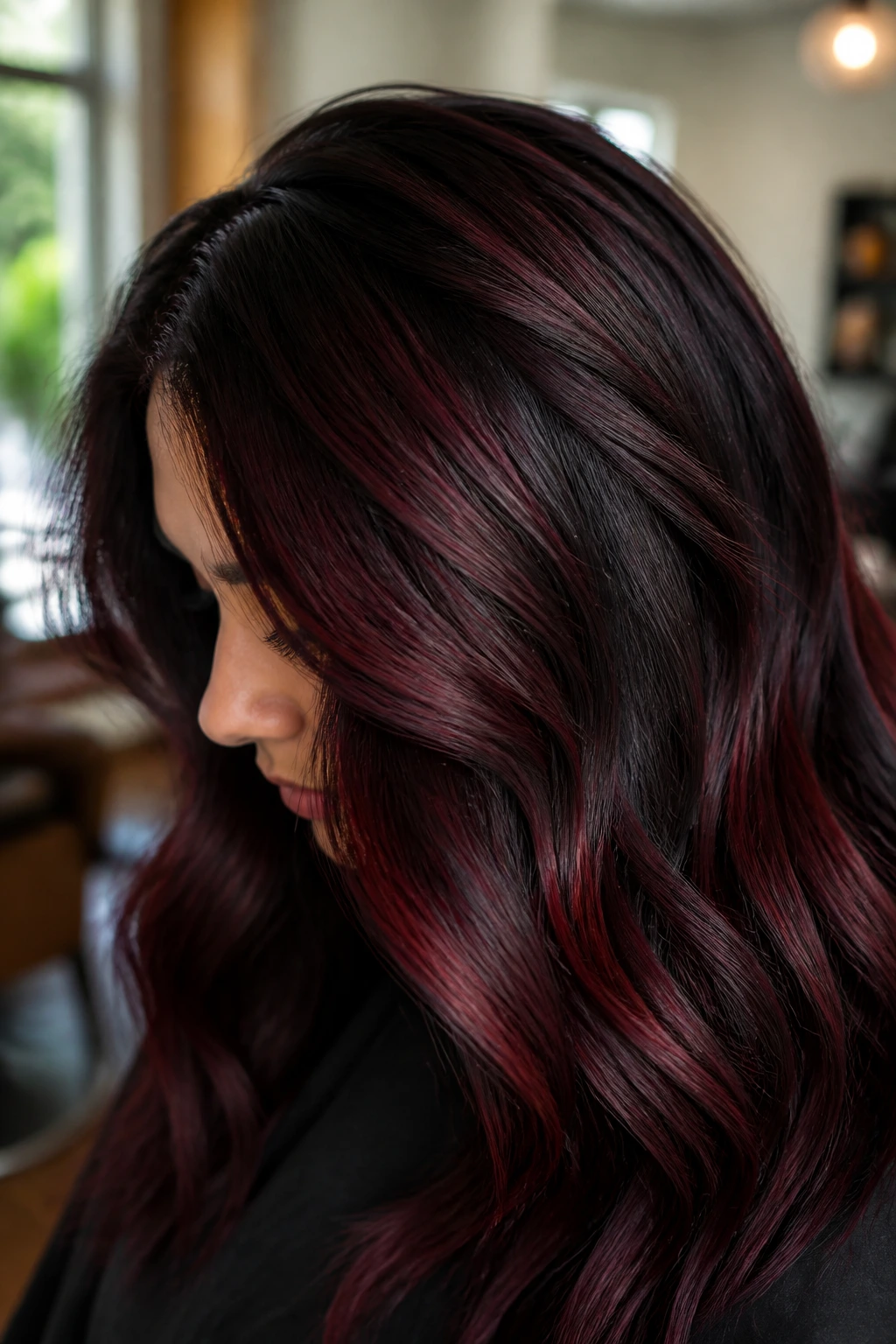
If you want a color that looks richer than blonde but still clearly highlighted, deep cherry panels are hard to beat. They sit somewhere between red wine and ripe plum, which gives dark hair a moody sheen without flattening into brown. Thick hair handles that saturation well. In fact, it needs it.
The key is keeping the red deep, not neon. Cherry panels that are too bright can look disconnected from a dark base, especially if the hair is coarse. Keep the panels wide enough to be seen and place them where the light naturally lands — the crown, the sides, and a few lower pieces that move when the hair sways. That creates flashes instead of blocks.
This is one of the best choices if you want a dramatic change without going blonde. It still feels wearable. And on thick hair, the depth of the red catches in a way that looks almost glossy, especially on a smooth blowout or a soft curl.
12. Walnut Highlights with Lowlights for Dense Hair
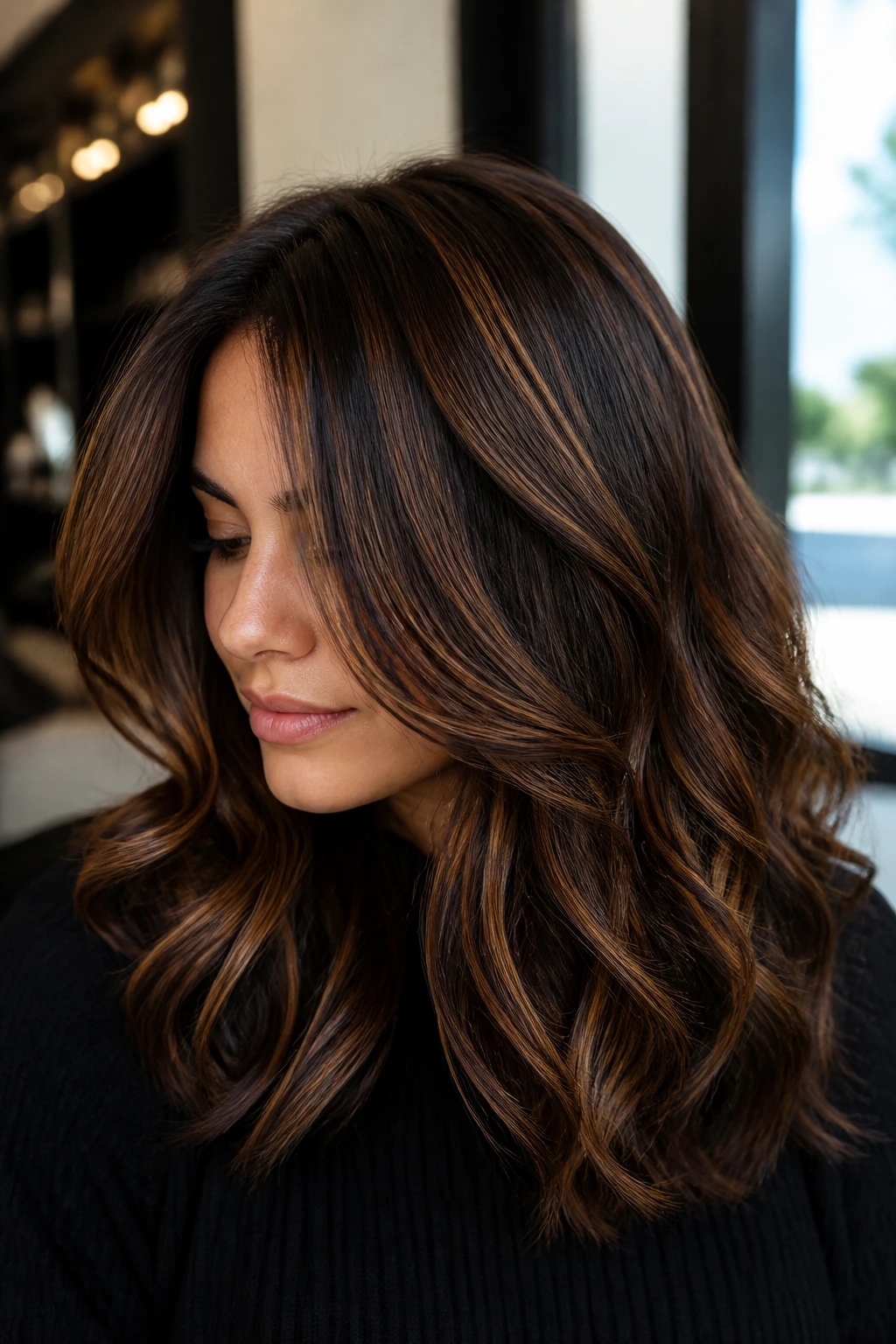
Some color stories need both light and dark to work, and this is one of them. Walnut highlights with lowlights keep thick dark hair from looking too solid after it’s colored. The lighter walnut pieces lift the surface, while the lowlights tuck back into the density and stop the color from spreading into one flat band.
This is the pick for people who say they want “dimension” but don’t always know what that means. Here, it means visible variation, but controlled. The highlights are warm brown, not blonde. That matters. Once you start lifting dense hair too far in every section, the whole shape can lose its weight. Walnut stays close enough to the base to keep the haircut feeling strong.
If your hair is layered, ask for the lowlights to sit slightly deeper in the interior. That way the top layer still glows when it moves, but the underneath keeps the whole head from getting too bright.
13. Peekaboo Plum Streaks Under the Top Layer
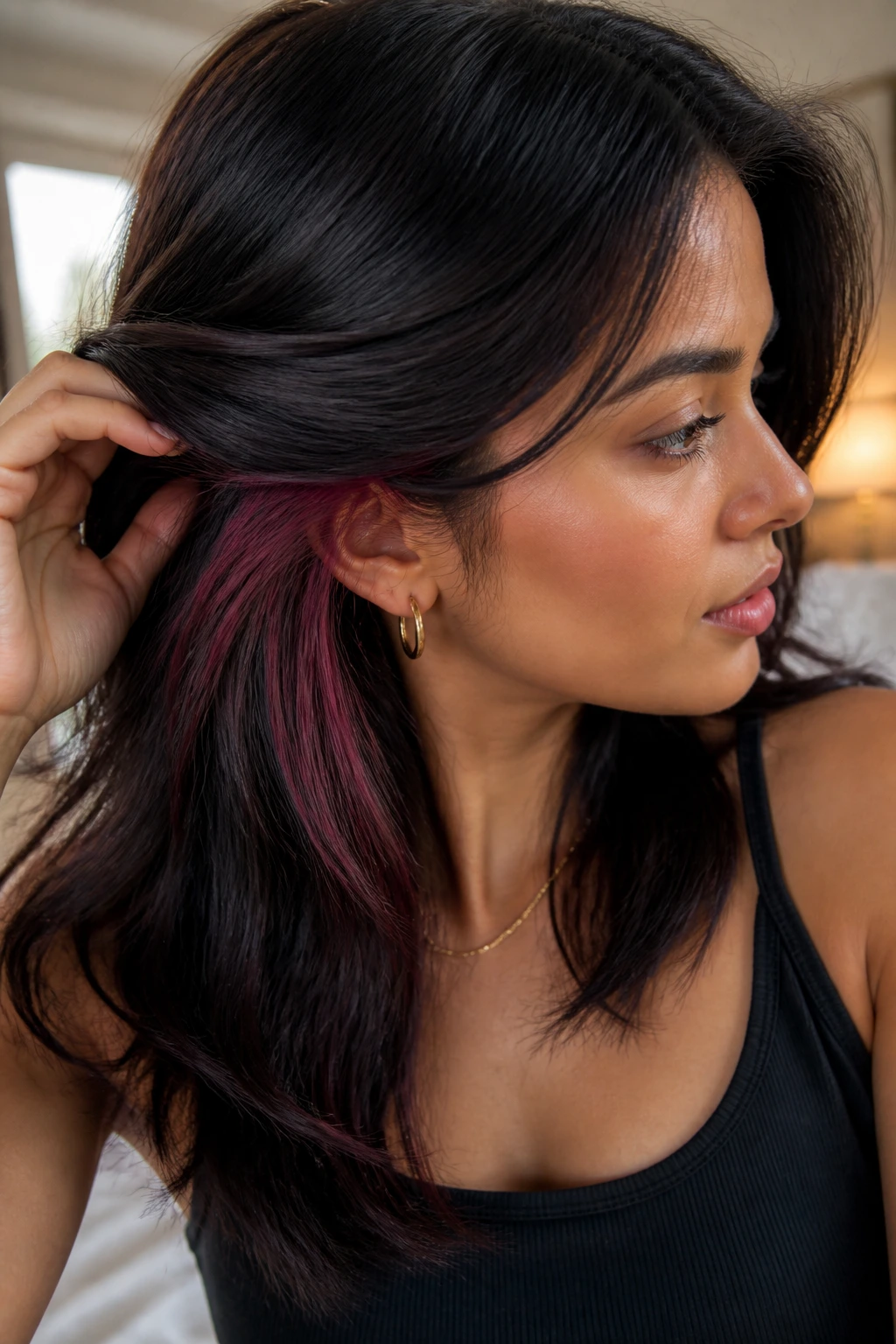
Want color that shows up in motion, not all the time? Peekaboo plum streaks are the answer. On thick dark hair, the top layer can hide them almost completely until the hair swings, gets clipped back, or is tucked behind the ear. Then the plum flashes through like a secret.
I like this approach because it is playful without shouting. Thick hair is perfect for it. There’s enough coverage on top to make the hidden color feel intentional, and enough movement underneath to let it appear when you want. The plum itself should stay deep — think berry wine, not bright violet — so it sits well beside dark brown or black hair.
This style is especially good if you work in a place where bright color feels like too much but you still want some personality. It also grows out with less drama because the panels are hidden under the top layer. Easy? No. Better than people expect? Yes.
14. Golden Halo Highlights Around the Crown
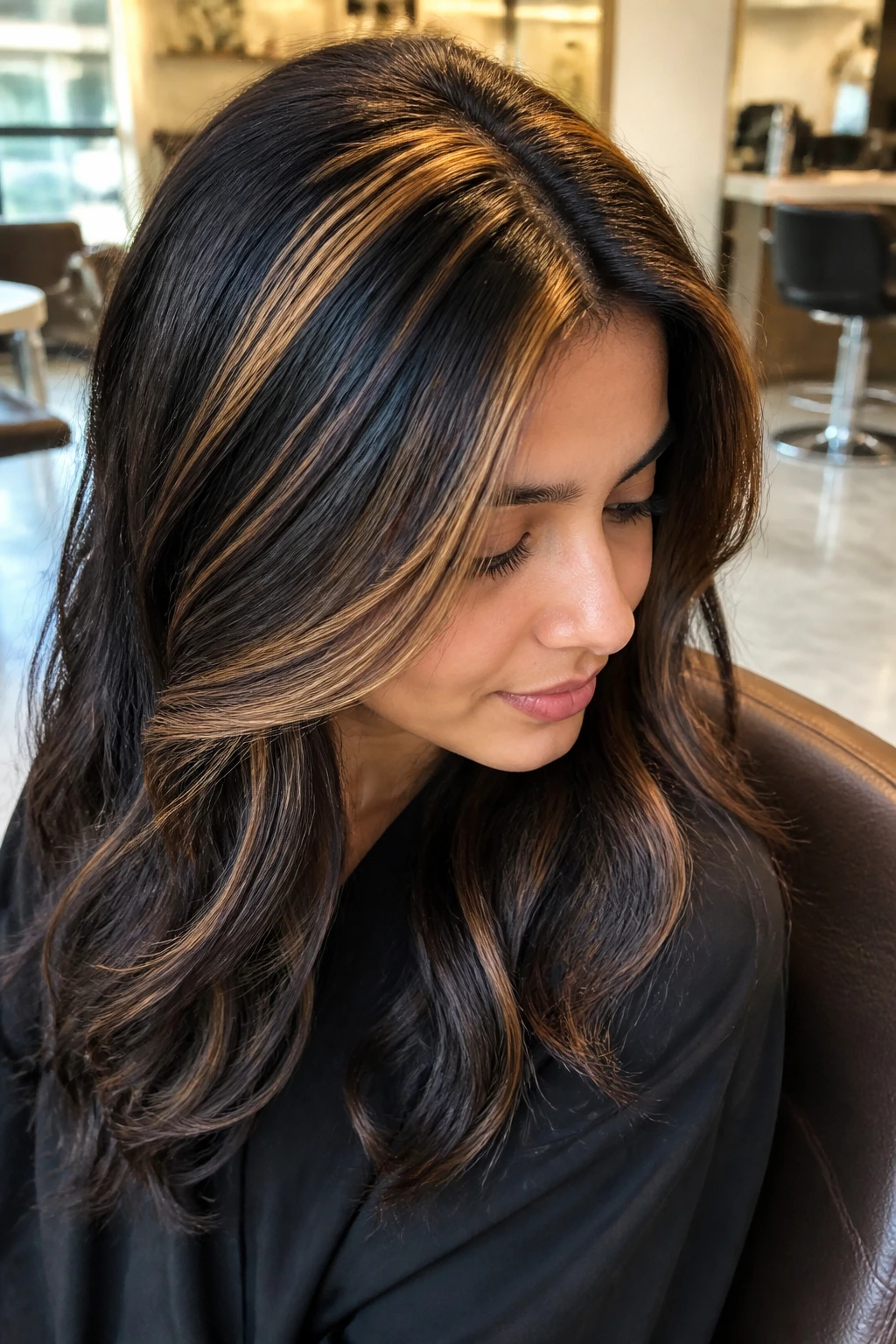
A golden halo of highlights around the crown does something thick hair needs badly: it creates lift at the top, where dense hair can feel heavy and flat. The color sits around the upper curve of the head and along the part, which gives the hair a brighter frame without bleaching the whole surface.
The tone should be warm and clean — gold, not yellow. On dark hair, that warmth reads rich instead of brassy when it’s placed well. If the crown is the heaviest part of your hair, this placement can make the whole style feel lighter even when the length stays dark. It’s a good trick for round-brush blowouts because the highlight catches where the hair curves.
This is not the look for someone who wants a hidden color story. It’s meant to show. But because the bright pieces stay concentrated at the top, the grow-out isn’t as harsh as an all-over blonde job.
15. Rooted Vanilla Blonde Panels with Shadow Roots
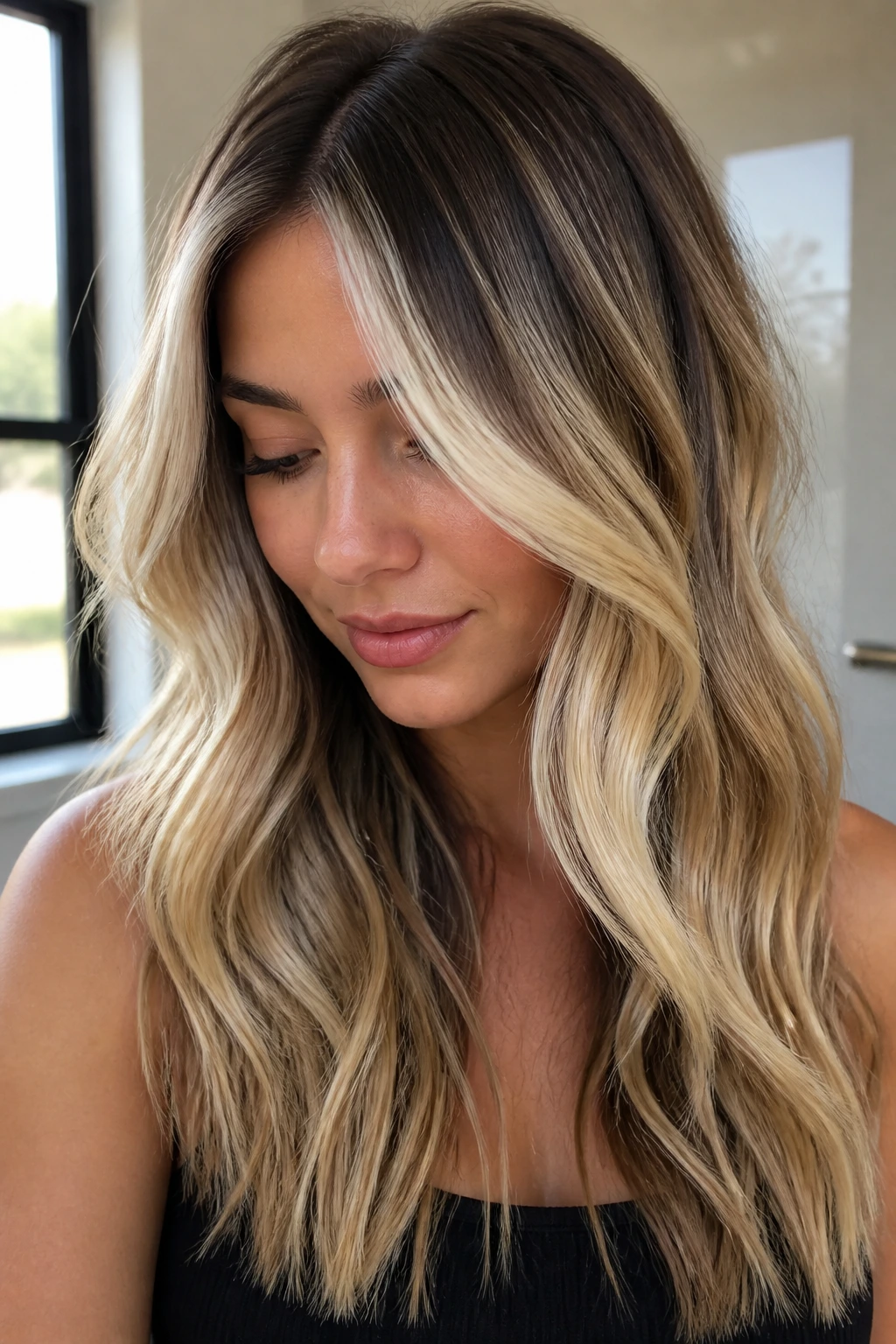
Vanilla blonde can go wrong fast on dark hair if it’s too icy. But with a rooted shadow base, it becomes one of the cleanest chunky highlight options for thick hair. The root keeps the color anchored, and the vanilla pieces give you that creamy brightness through the mids and ends.
This works best when the blonde is placed in broad panels, not fine slicing. Thick hair needs the width. The shadow root helps the transition, especially if your natural color is level 3 or 4 brown. Without that darker root, vanilla can float too far away from the base and look pasted on.
Wear this one with waves or a loose blowout. The creamy pieces catch at the bend and create a soft, almost frosting-like effect. I’d avoid making every panel the same brightness. Leave a few deeper sections in between so the blonde has somewhere to rest.
16. Espresso-and-Beige Zebra Stripes for Bold Contrast
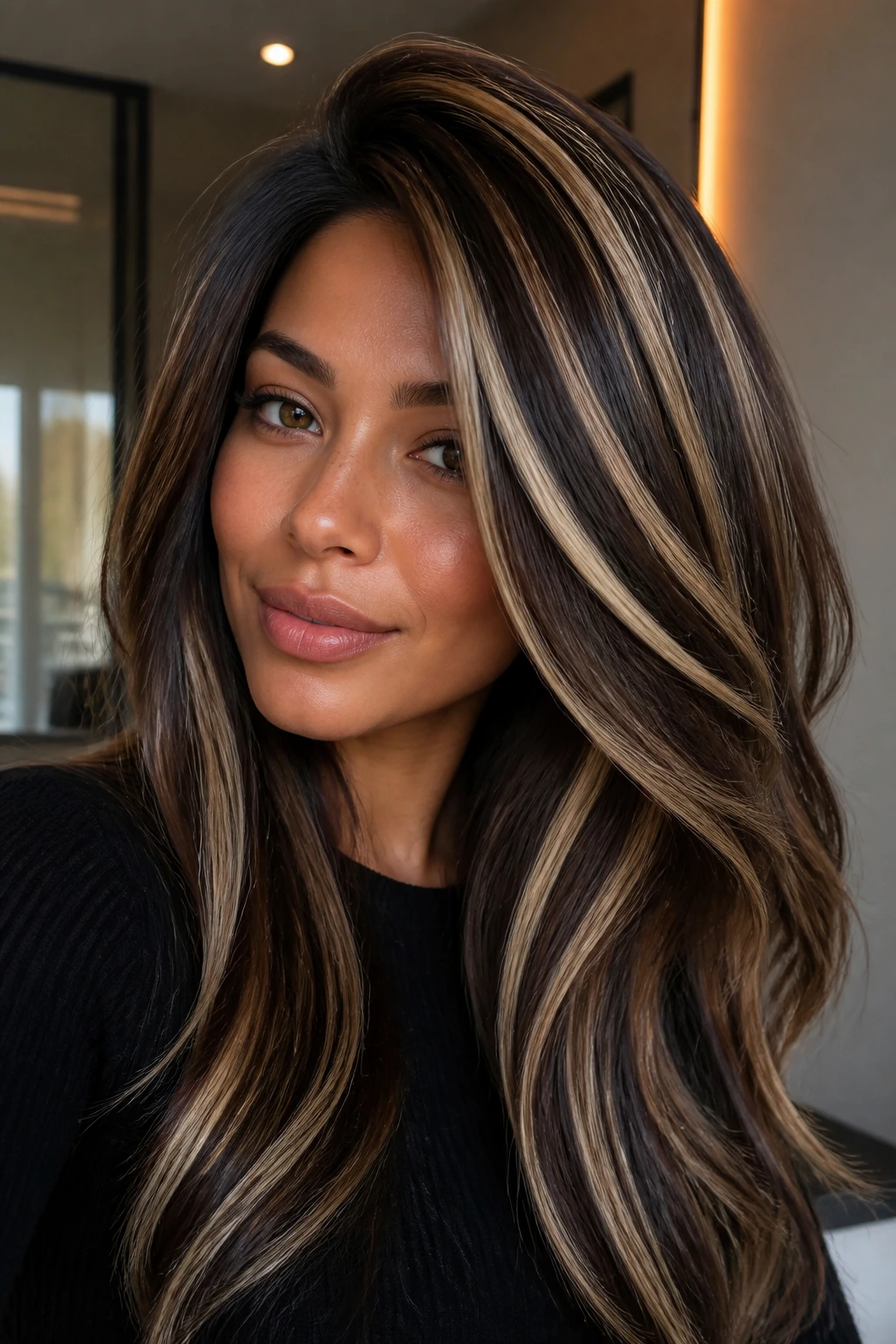
This one is not shy. Espresso-and-beige zebra stripes are the boldest look in the bunch, and thick hair is the only reason I’d recommend them so confidently. Dense strands can carry the contrast without breaking apart into visual noise. Fine hair usually can’t.
The trick is consistency. The stripes need to be wide enough to register as design, not randomness. Keep the beige soft and neutral so the look stays modern instead of costume-like. A dark espresso base helps ground the entire pattern. If the haircut has blunt ends or a heavy fringe, the stripes can look graphic in a good way.
This is the style for someone who wants the highlights to be the point, not a background detail. It looks strongest on sleek straight hair and big, polished blowouts. On textured hair, the stripes soften a little, which can be helpful if you want drama without a hard edge.
17. Copper Face-Frame Ribbons with Dark Ends
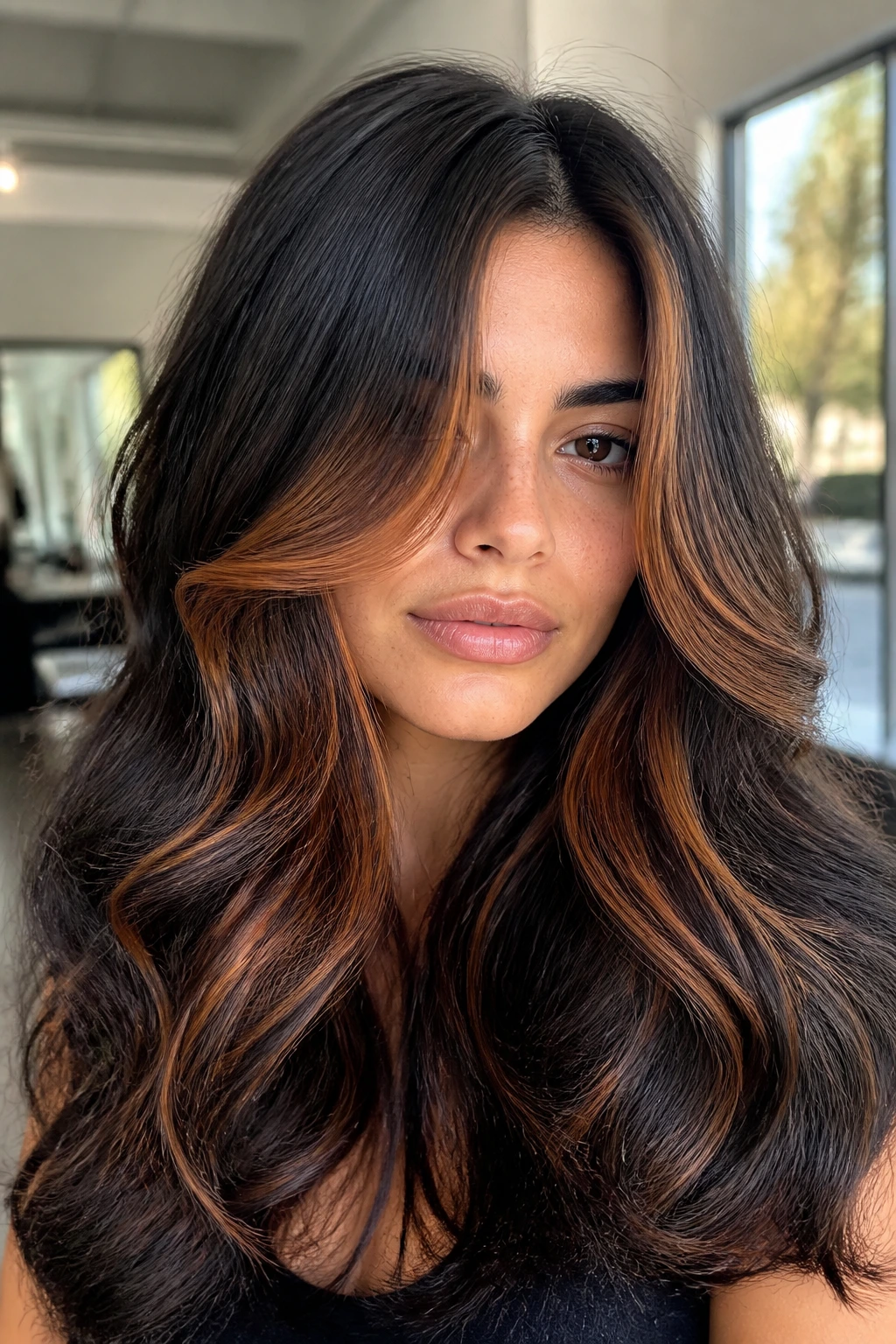
Copper around the face can wake up a dark base faster than almost anything else. With copper face-frame ribbons, the warmth sits right where the skin meets the hair, so the effect is immediate. Thick hair helps because the ribbons can be wide and still feel balanced against the rest of the head.
I’d keep the ends dark here. That contrast matters. If the whole head turns copper, the style loses its structure. The dark ends act like a frame inside the frame. They also make the face-framing pieces look brighter by comparison, which is one of those small color tricks that pays off more than it sounds like it should.
This is one of the best choices for olive, golden, and neutral skin tones. The copper can lean richer or redder depending on how bold you want to go. It’s a lively look. Not loud, just awake.
18. Buttercream Chunky Ends for Long Layers
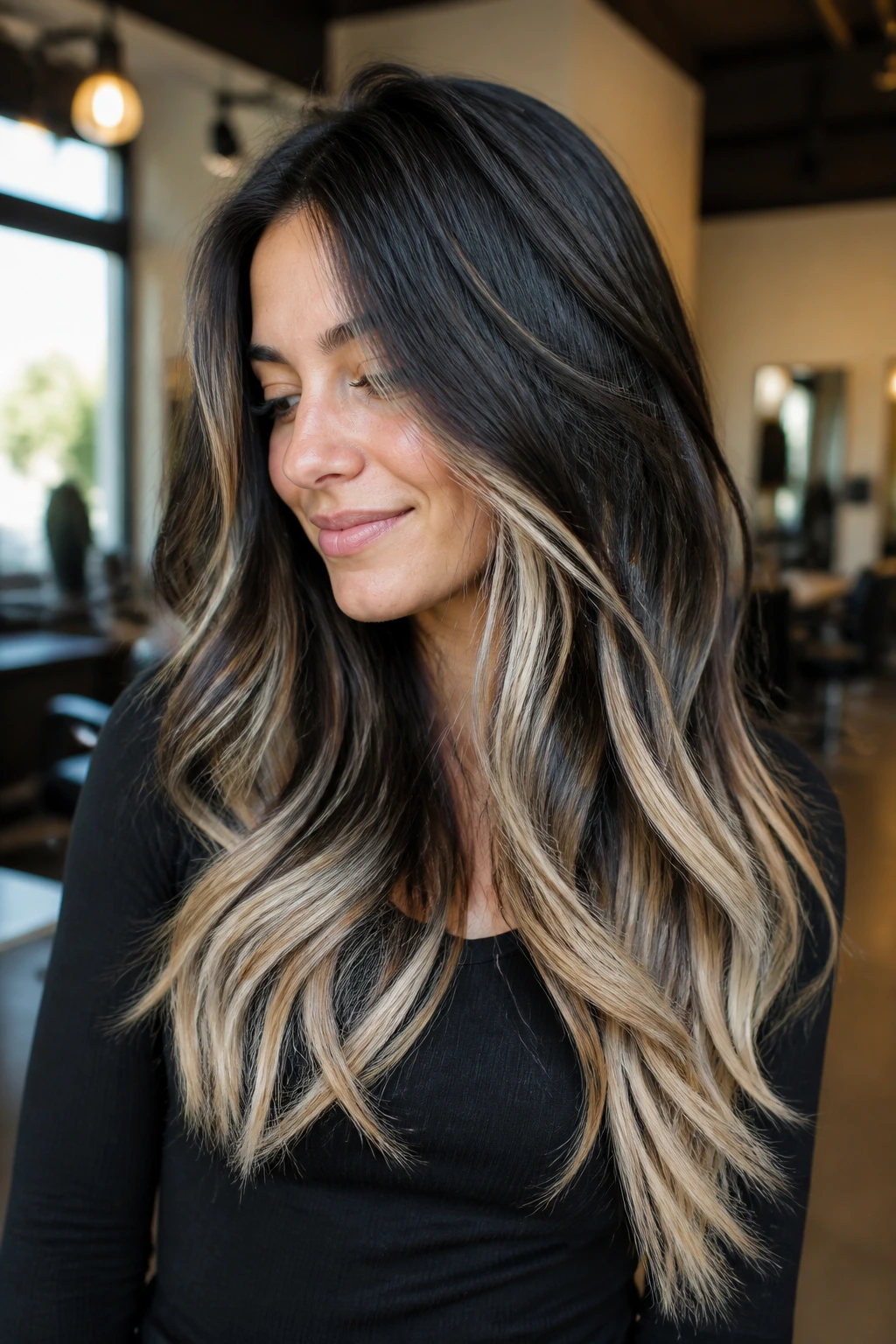
If your hair is long and thick, sometimes the smartest move is putting the lightest color at the ends only. Buttercream chunky ends give the lower half of the hair a creamy lift while leaving the top darker and stable. That keeps the whole head from looking overprocessed.
The effect is especially good on layered lengths, because the ends move more than the top. When the hair swings, the light pieces flash. When it’s pinned up, the darker root and mids keep the shape grounded. Thick hair can handle that heavy contrast at the bottom without losing body. In fact, it often looks better because the color prevents the ends from feeling like one dark weight.
Ask for a soft beige or buttercream tone, not a paper-white blonde. The goal is brightness with enough warmth to stay connected to the base. This one grows out gently, too, which is a nice bonus when you don’t want a root line screaming from six feet away.
19. Caramel Balayage Blocks on Curly Hair
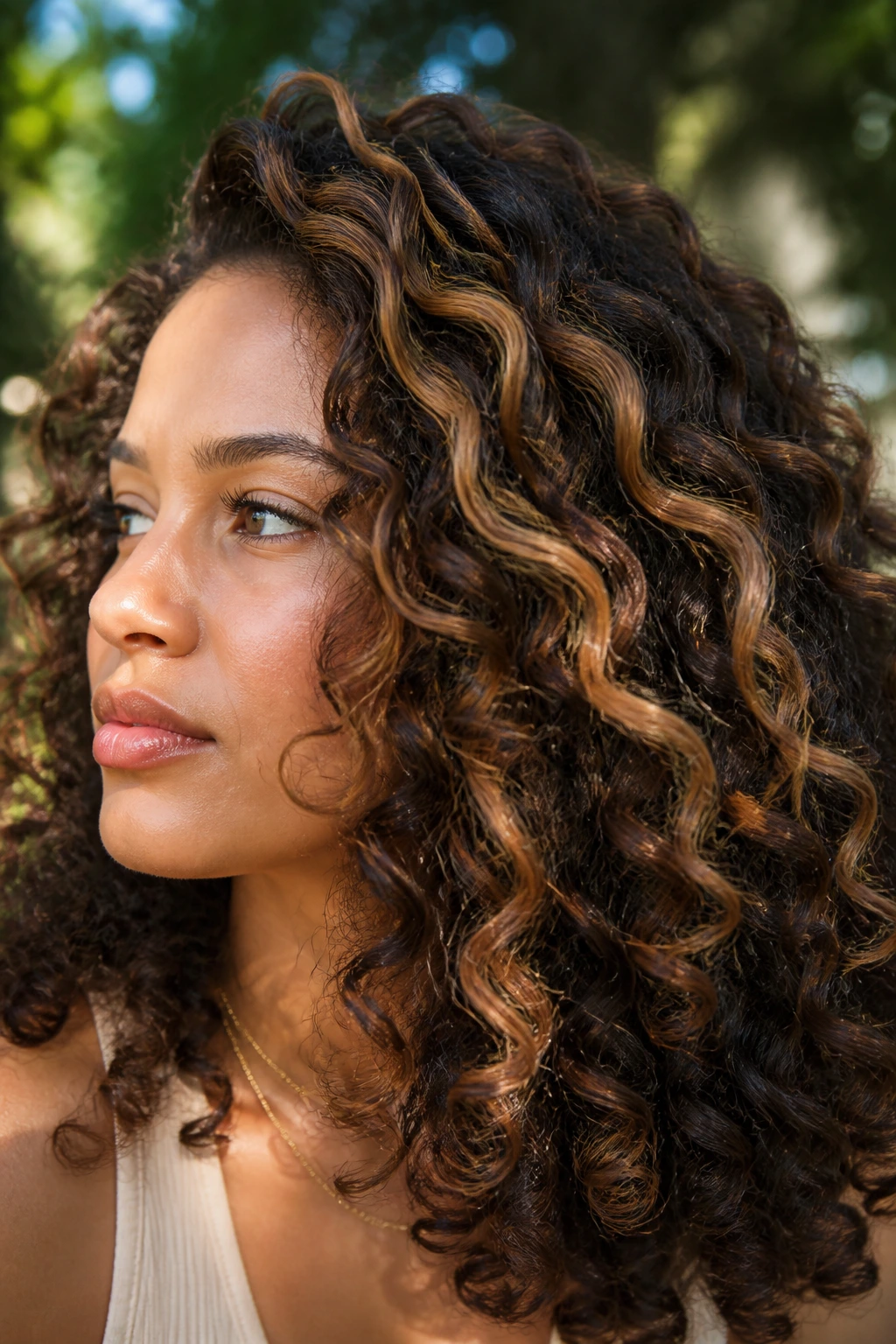
Curly thick hair needs a different eye. Caramel balayage blocks work because the curls already create their own pattern, so the color has to be broad enough to follow the shape. Skinny foils can disappear inside curls. Wider caramel blocks show up as the curls open and close.
The placement should follow the curl family, not fight it. Put lighter pieces where the ringlets naturally separate — usually around the outer curve of the hair, the front, and a few pieces near the crown. That way the highlights show when the curls are dry and defined. Thick curls can take color better than people think, but they do need saturation. If the lightener is sloppy, the curl pattern gets dry and fuzzy fast.
This is the look I’d choose if you want warmth and movement without a hard stripe. It also plays nicely with diffused volume. The caramel sits in the curl instead of on top of it.
20. Smoky Mocha Money Piece with Cool Tips
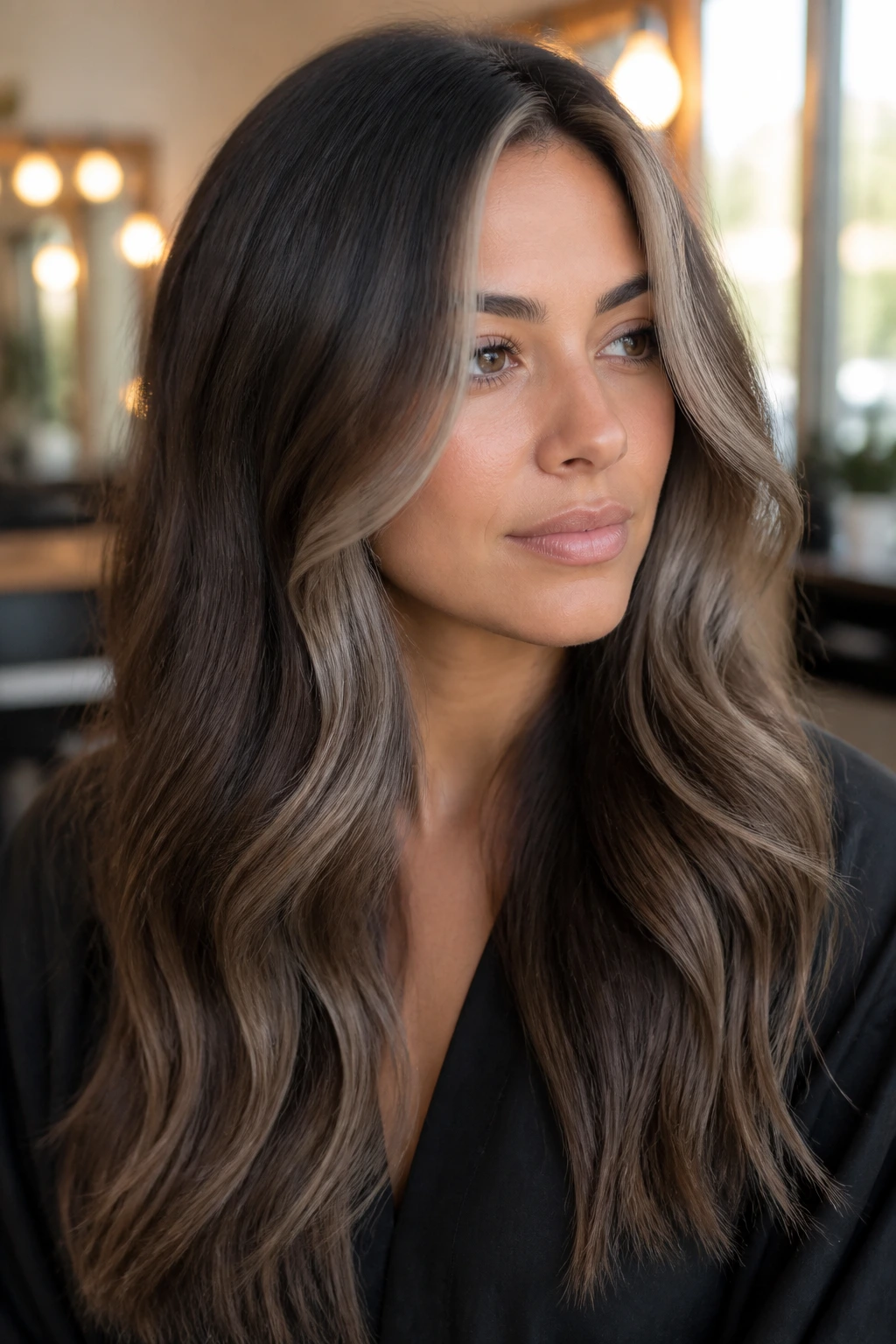
This one is subtle at first glance, then it stays in your head. A smoky mocha money piece brightens the front just enough, while the cool tips keep the color from drifting too warm. Thick hair gives the money piece enough width to be visible even when the rest of the cut is full and heavy.
The front should be slightly more lifted than the ends, but not blonde. Think smoky brown-beige at the face, then deeper mocha through the length. On dark hair, that kind of tonal shift is enough to break up the weight without calling too much attention to itself. It works especially well on layered cuts where the front pieces fall away from the face in a clean line.
This style suits people who want their highlights to feel tailored. It’s not flashy. It looks deliberate, which I like more than I like obvious color for the sake of obvious color.
21. Champagne Blonde Panels for a Creamy Finish
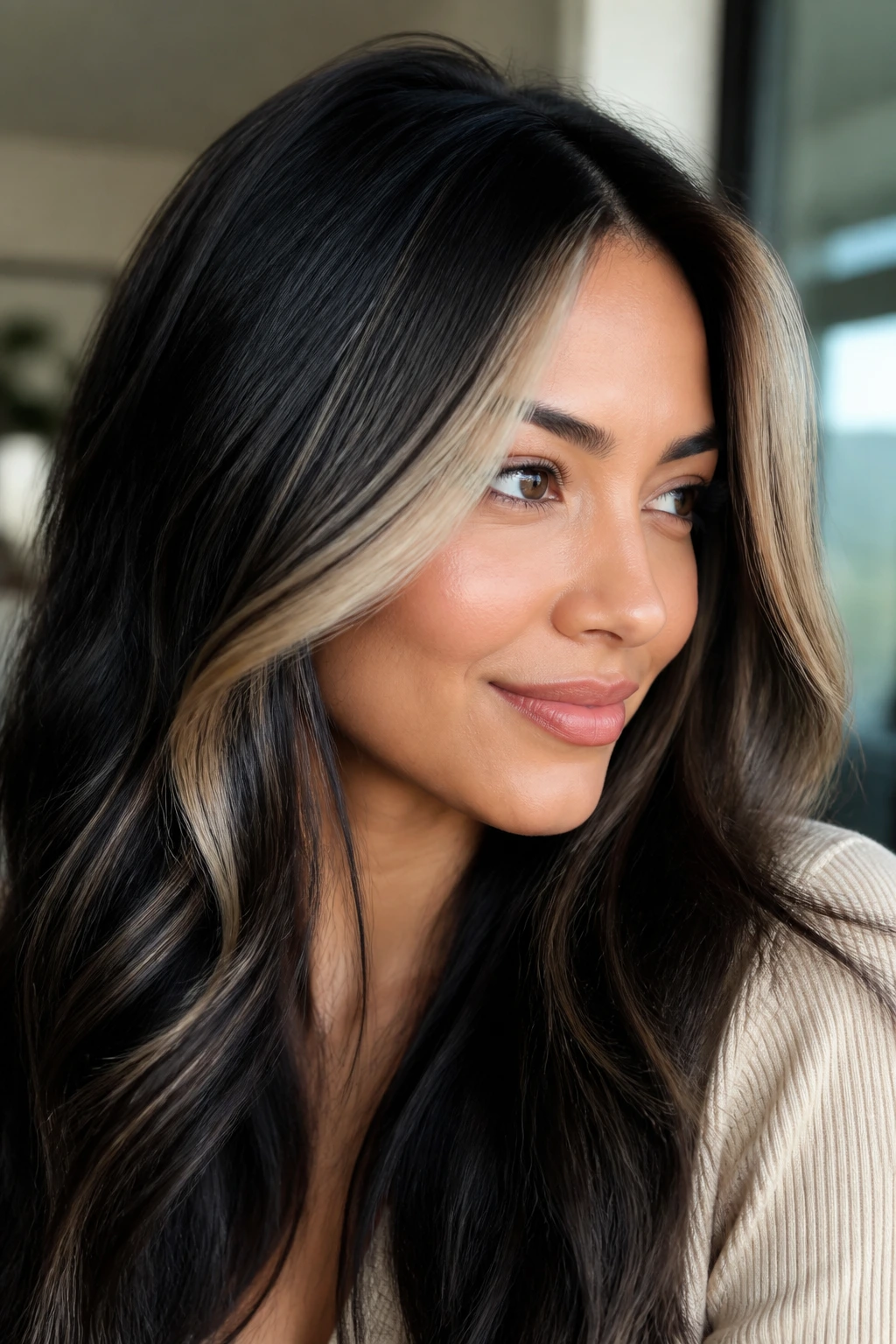
Champagne blonde is what I’d recommend when someone wants lightness but hates the look of harsh yellow blonde. On thick dark hair, champagne panels give you a creamy, soft brightness that still reads as highlight, not frosting. The key is staying neutral enough that the color doesn’t go muddy next to the base.
These panels should be wide and spaced with intention. Thick hair can carry that spacing. You want the champagne pieces to catch light in a few key places, not cover every inch. If you wear a side part, let the brighter pieces sit near the sweep of the part and around the cheekbones. That gives the color an easy entry point.
This look is especially nice on hair that’s blown out smooth. The panels show cleanly and make the cut look polished. It’s a softer cousin to the beige blonde ideas above, with a little more cream and a little less edge.
22. Golden Bronze Streaks on a Deep Brown Base
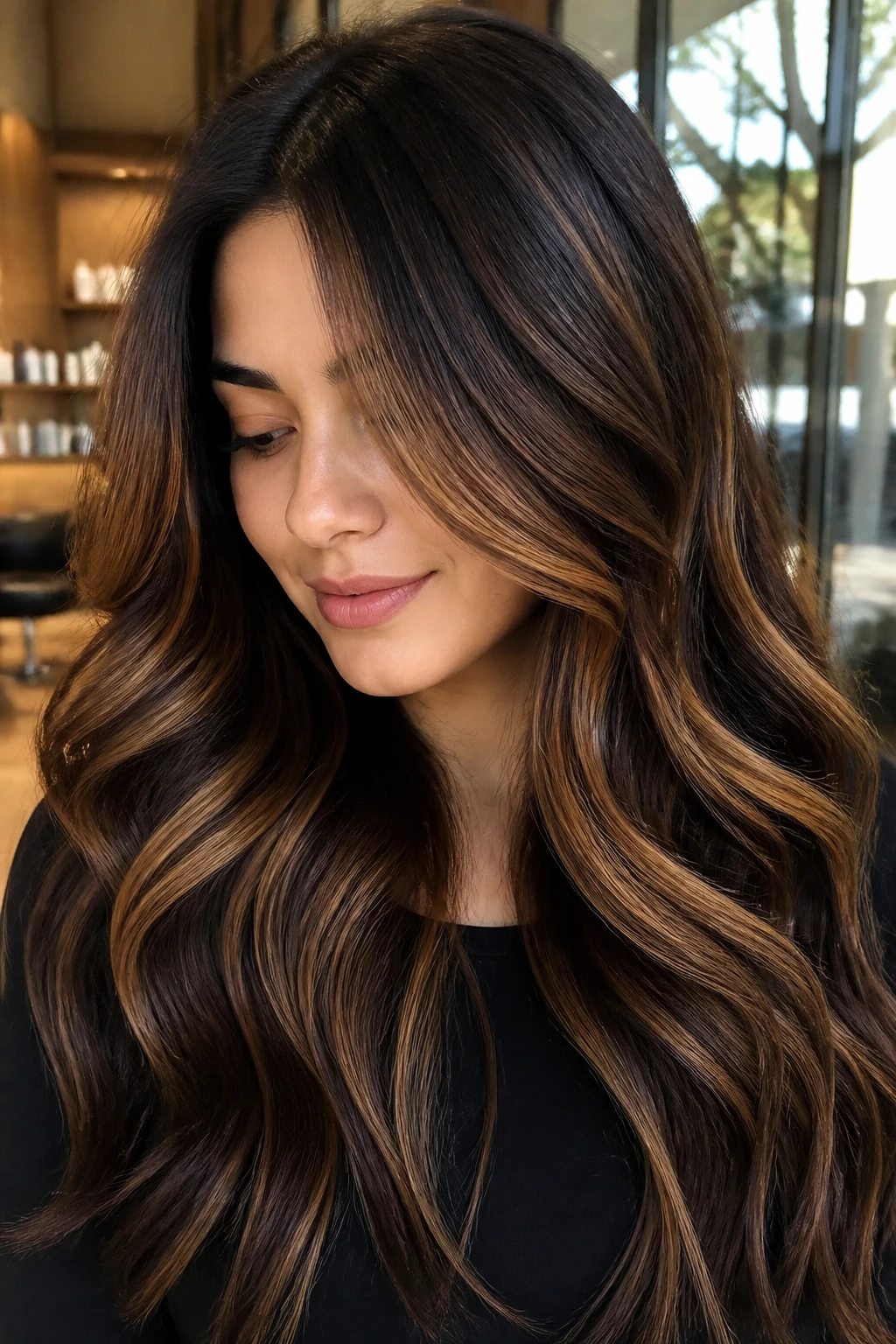
Golden bronze is one of the most forgiving shades for dark hair. It has enough warmth to read clearly, enough brown to stay anchored, and enough shine to make thick hair look expensive rather than overcolored. The streaks should be broad, almost ribbon-like, so they don’t vanish once the hair settles.
This is a very good option if your base is deep brown and you want the highlights to look sunlit without pushing into blonde. The bronze can be placed through the top, around the face, and in a few lower pieces to echo movement. On dense hair, that kind of variation keeps the style from feeling heavy.
I like this shade on straight, long layers and big curls alike. It catches light in both textures. The color is easy to love because it does not fight the base; it works with it.
23. Burgundy Peekaboo Pieces for a Wine-Red Flash
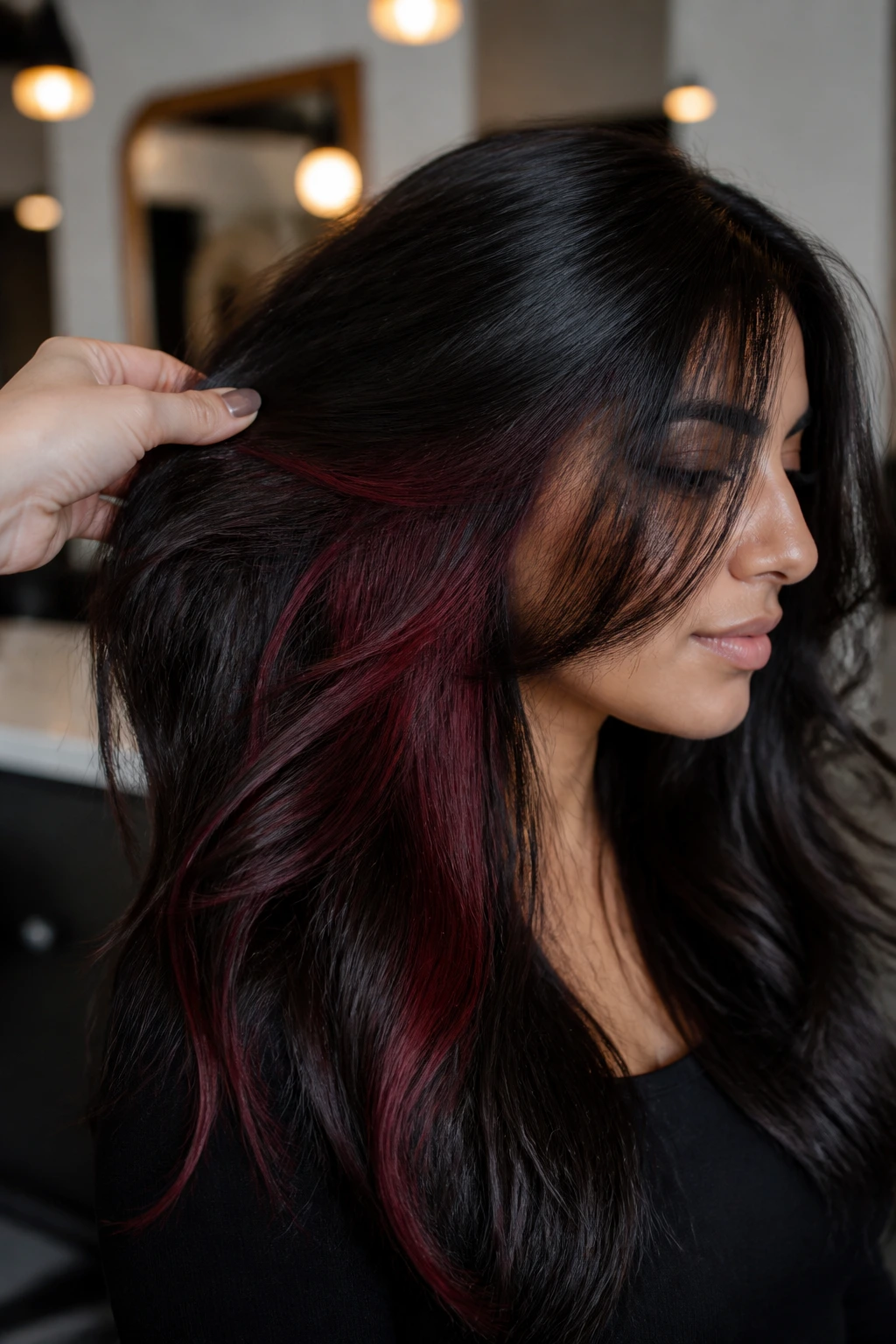
Burgundy peekaboo pieces are for the person who wants color with a little secret in it. They sit under the top layer and flash out when the hair lifts, bends, or gets clipped. On thick dark hair, the hidden placement matters because it keeps the burgundy deep and rich instead of sprawling all over the head.
The tone should stay in the wine range. Too much purple and it looks flat. Too much red and it can get loud in a hurry. Burgundy lands in the middle and plays well with a dark brunette base. If your hair has a natural wave, the movement will reveal the color in pieces, which is exactly the point.
This is a good choice when you want a darker alternative to copper or cherry. It still changes the mood of the hair, just in a more moody, tucked-away way.
24. Tiger-Eye Ribbons with Honey, Bronze, and Caramel
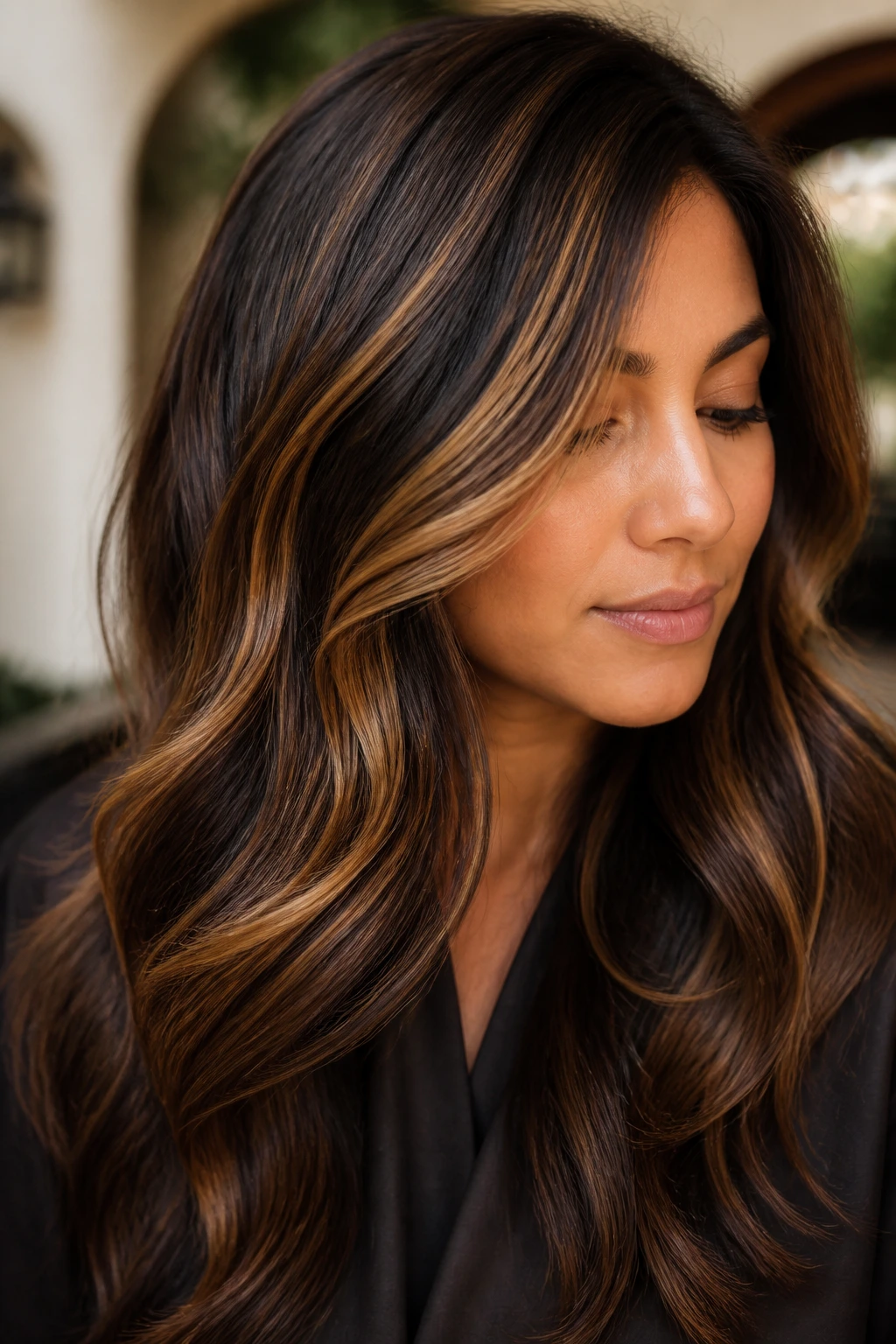
Tiger-eye hair has been around because it works. On thick dark hair, the mix of honey, bronze, and caramel ribbons creates a warm, stone-like effect that looks rich from every angle. The trick is to keep the colors distinct enough to show, but not so separate that they turn into three different heads of hair.
Placement should follow the cut. Put the brightest honey around the face and upper layers, let bronze sit through the mids, and use caramel to bridge the ends. Thick hair can hold this kind of layering without looking busy. In a finer texture, the pieces can blur together. Here, they stay visible.
I love this one for long hair that gets styled in waves. Each bend catches a different shade, so the color looks deeper than a single highlight tone ever could. It is warm, but not flat. That matters.
25. Multi-Tone Dimension Mix with Three Warm Shades
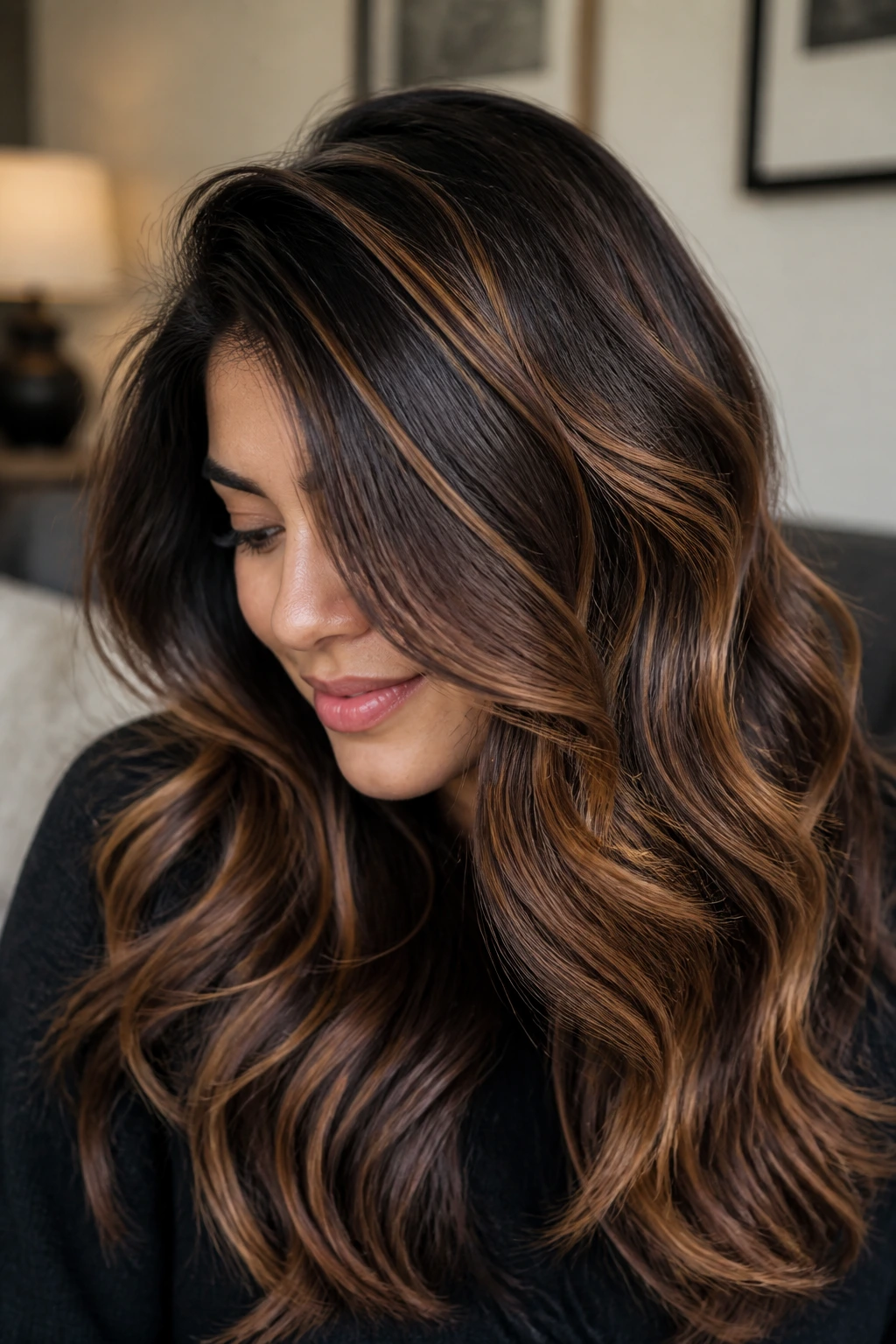
If you’ve got thick dark hair and you hate the idea of one-note color, this is the strongest finish of the lot. A multi-tone mix uses three warm shades — usually caramel, chestnut, and a lighter beige or gold — to keep the hair moving from root to tip. The whole thing feels richer because no single panel does all the work.
This is where thick hair really shines. Dense strands can handle shade variation without losing shape, and the contrast between the tones keeps the style from reading blocky. I’d avoid making every strand equally bright. Let one shade lead, one shade support, and one shade soften the transition. That’s what gives the hair depth instead of noise.
It’s the most flexible option here, too. You can steer it warmer, softer, or brighter depending on the tones you choose. If you like dimension but do not want a hard visual line, this is the one to ask about.
Why Thick Hair Makes Chunky Highlights Look Better, Not Worse
Thick hair gets blamed for “too much volume” all the time, which is a bit unfair. In color work, density is an advantage. A thicker head of hair gives wide highlights somewhere to live. The panels can be bold without looking like a mistake, and the darker pieces between them can do real work instead of getting lost.
The other thing dense hair does well is hide transitions. A softer root, a lowlight, a hidden panel under the top layer — all of that has more space to breathe. On fine hair, the same ideas can look noisy. On thick hair, they read as intention. That’s why chunky highlights often look more natural on dense dark hair than tiny weaving does. Weird, but true.
The flip side is maintenance. Thick hair can hide brass longer than fine hair, which means you sometimes don’t notice toner drift until the warm pieces suddenly look orange in daylight. So yes, thick hair gives you room. It also asks you to stay awake to what the color is doing underneath the shine.
Essential Tools and Color-Care Products Worth Having
-
Color-safe shampoo: Keeps the dark base from fading too fast and stops the highlighted pieces from drying out between washes.
-
Sulfate-free conditioner: Thick hair needs slip, especially once lightener has opened up the cuticle.
-
Purple or blue-toning shampoo: Purple helps blonde and beige pieces; blue is better when the highlights lean orange or coppery at the wrong moment.
-
Bond-building mask: Useful after any strong lift. It won’t fix bad color, but it helps the hair feel less crunchy.
-
Heat protectant spray: Thick hair often gets more heat styling, not less, because the shape needs help showing the color.
-
Wide-tooth comb: Gentle detangling matters once the highlights are in, especially around the face frame and underlayers.
-
Microfiber towel: Cuts down on frizz and keeps highlighted pieces from roughing up after the shower.
-
Gloss or glaze appointment: Not a tool, exactly, but a worthwhile part of the maintenance plan if your blonde, beige, or copper starts to drift.
-
Sectioning clips and a rat-tail comb: Handy if you’re doing a consultation at home and need to show the exact placement you want.
Smart Color and Product Choices That Keep the Look Clean
The biggest decision is not the shade name. It’s the tone family. Warm dark hair usually needs warm highlights — caramel, honey, bronze, copper, auburn. Cooler brunettes can handle beige, mushroom, ash brown, and smoky blonde, but the shade still needs depth. If the highlight is too pale for the base, it can look pasted on top of the hair instead of woven through it.
Product choice matters once the color is done. Thick highlighted hair often needs a conditioner with enough slip to detangle the ends without dragging through the roots. Heavy oils can be fine on the midlengths, but they can also dull the brightest panels if you use too much. I prefer a light leave-in on the ends and a heat protectant before blow-drying or ironing. That’s it. No need to plaster the whole head.
If you’re booking a salon service, bring a few references that show the placement, not just the shade. One photo with a heavy money piece, one with a rooted blonde, one with a hidden underlayer — that gives the colorist something useful to work from. Words alone are sloppy in a chair.
How to Style Chunky Highlights So the Contrast Shows
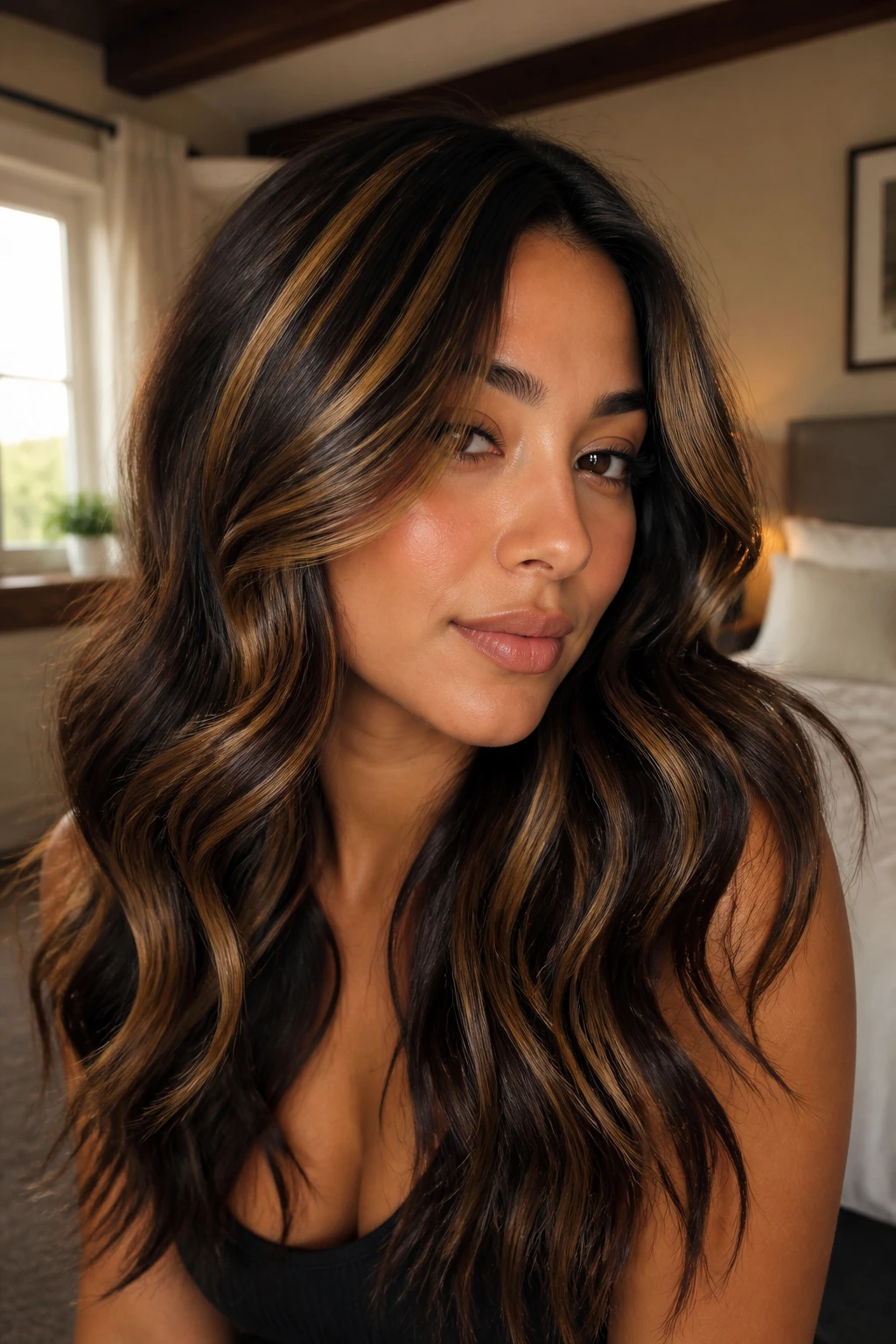
Loose waves: This is the easiest way to show wide ribbons on thick hair. The bends catch the light and keep the highlight from disappearing into the body of the hair.
A smooth blowout: Best for beige, champagne, and champagne-brown blends. The color reads cleanest when the cuticle is flat and the panels fall in one direction.
Half-up and clipped styles: Great for peekaboo color, underlayer streaks, and halo pieces. Thick hair has enough mass to lift and still leave color visible underneath.
Straight and polished: Best for zebra-like contrast, smoky ash panels, and sharp money pieces. Straight hair shows every placement choice, good and bad.
Big curls or diffused waves: Copper, auburn, bronze, and caramel all look fuller here. The curl pattern makes the chunky pieces feel integrated instead of blocky.
The main thing is this: don’t style dark highlighted thick hair in a way that hides the placement you paid for. If the color is all through the cut, let the hair move. If the color lives in the front or on the underlayer, style with enough lift to show it off.
Additional Tips and Shade Boosters
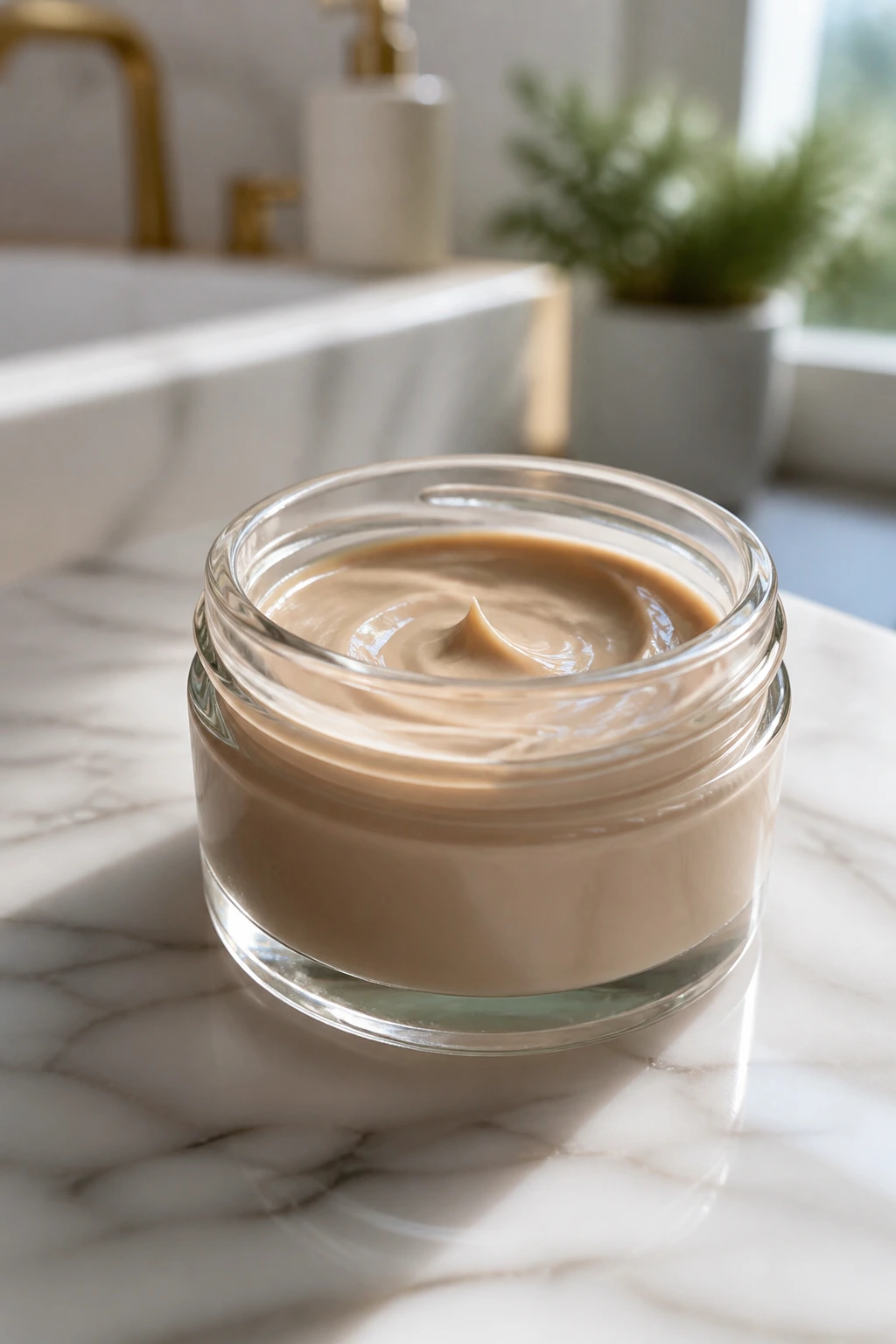
Tone Choice: If your highlights are meant to look creamy, keep the toner neutral and avoid over-ash. If they’re meant to look warm, let the gold sit. Fighting the undertone usually makes the color look muddy.
Placement: Ask for the brightest pieces where the hair moves first — around the face, over the part, and through the top layer. Thick hair can hide a lot, so good placement matters more than extra bleach.
Finish: A clear gloss can make caramel, bronze, and chestnut look fuller and less dry. On blonde pieces, a soft beige glaze keeps them from going flat.
For Depth: Don’t skip lowlights if the hair is very dense. They keep the highlights from floating on top like separate strips.
Make It Yours: If your style is blunt and heavy, use fewer but wider panels. If your cut is layered and airy, you can scatter the highlights a bit more and let the movement do the work.
Maintenance, Toning, and Grow-Out Care
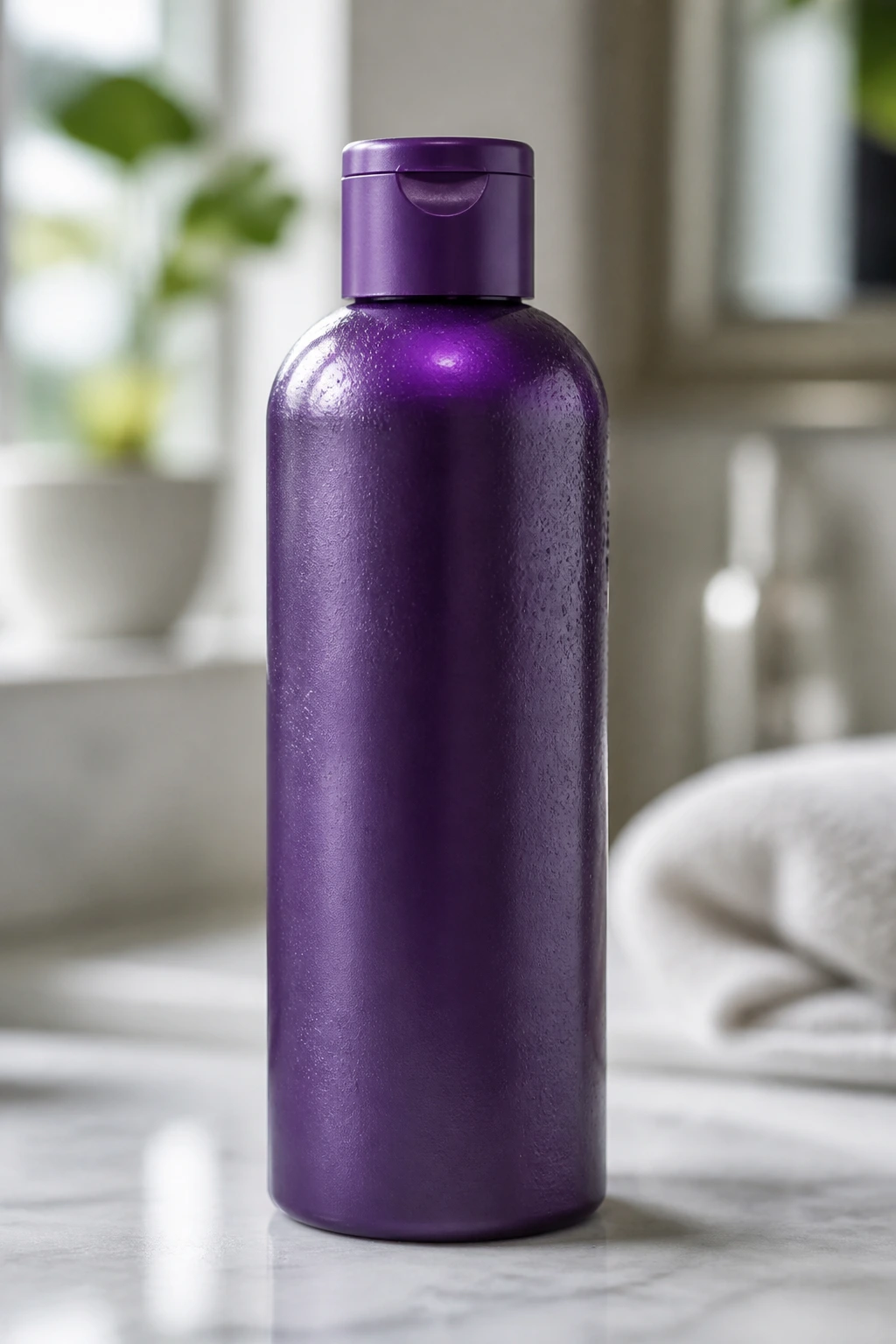
Chunky highlights on dark hair usually need toner every 6 to 8 weeks if the bright pieces are blonde, beige, or champagne. Warm colors like caramel, copper, and bronze can go a little longer, but they still lose their edge when shampoo and heat styling wear them down. Thick hair can hide fade, which sounds nice until the brass sneaks up on you.
Wash with cool or lukewarm water when you can. Hot water opens the cuticle faster and strips tone out of the light pieces. Use purple shampoo once a week on blonde or beige highlights, not every wash. If the highlights are copper or auburn, use a color-depositing mask made for red tones instead of purple shampoo, which can dull warmth.
Trim the ends every 8 to 10 weeks if your color lives low in the hair. Thick highlighted ends can start to look dry before the rest of the head does. If your style has a soft root melt, a salon gloss or refresh every 8 to 12 weeks keeps the grow-out soft instead of chunky in the wrong way. A good blowout will always make the color look better, but a clean gloss is what keeps it honest.
Variations and Adaptations to Try
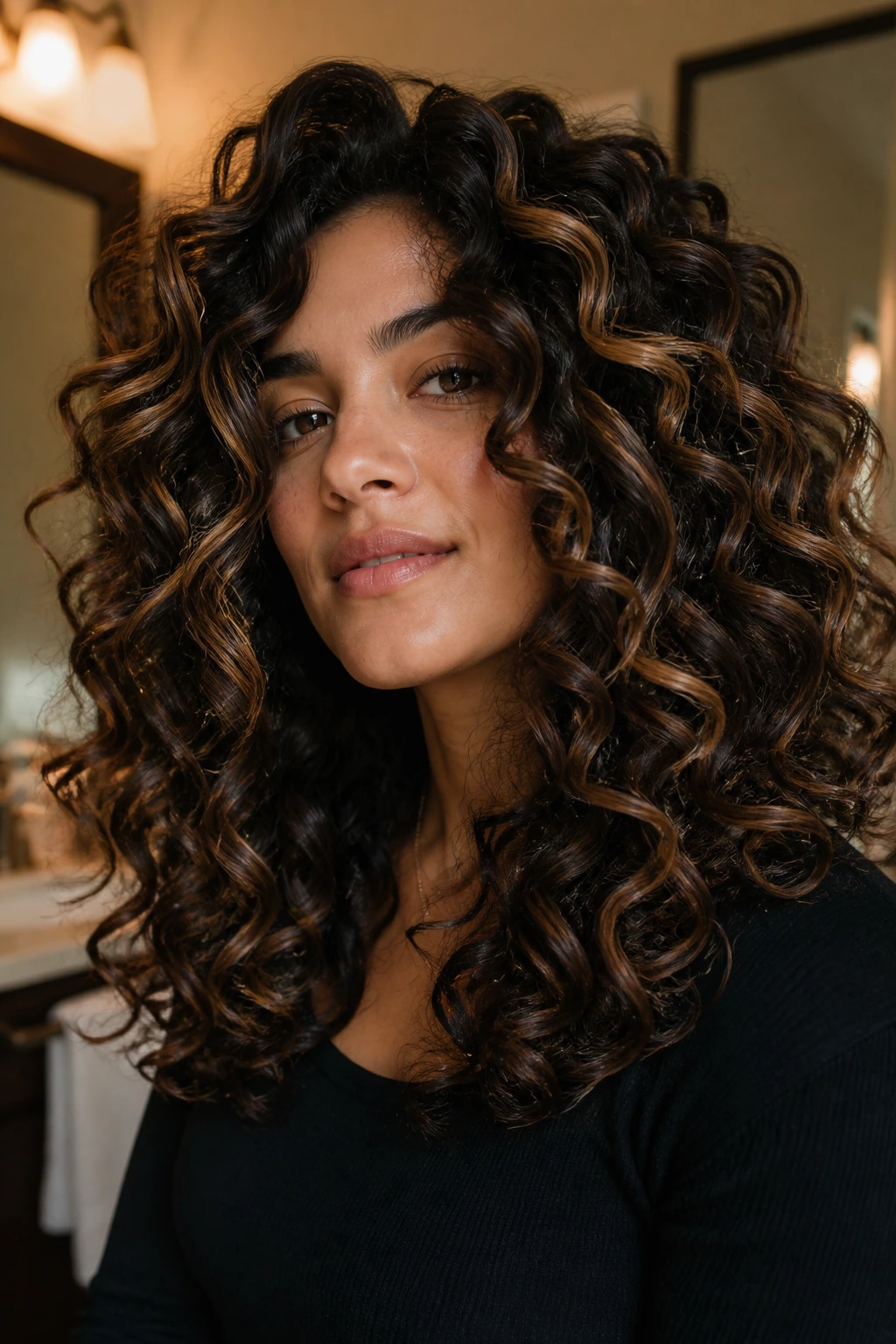
The Curly Coil Edit: If your hair is thick and curly, widen the highlighted pieces and place them where the curl clumps naturally separate. Narrow foils disappear inside curls. Bigger ribbons show the shape.
The Low-Maintenance Rooted Version: Keep the root darker and push the brightness into the mids and ends. This stretches the salon visit window and softens grow-out on dark bases.
The Cool Brunette Version: Swap caramel and bronze for mushroom, ash beige, and smoky brown. This works best if your skin leans cool or neutral and you don’t want warmth near the face.
The Warm Spice Version: Use copper, cinnamon, auburn, and golden brown together. Great for olive or golden undertones, and especially good if you want the color to look rich in indoor light.
The Bold Contrast Version: Ask for a stronger face frame and wider blocks through the top. This is the version for anyone who wants the highlights to read from across the room.
Common Mistakes That Make Chunky Highlights Look Patchy
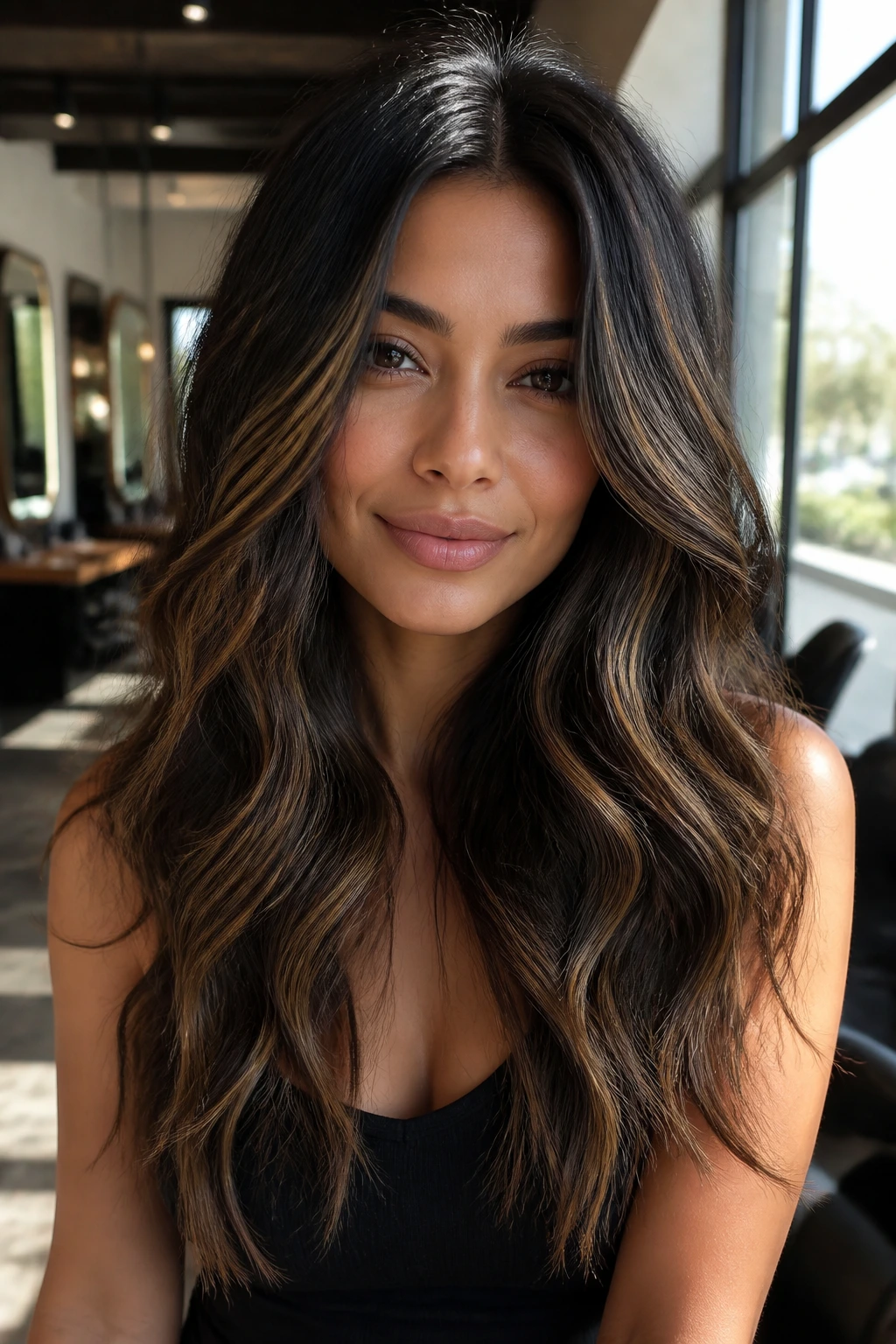
The first mistake is making every section the same width. Thick hair is not a coloring grid. If every ribbon is identical, the result looks stiff. Mix widths so the eye moves around the head.
Another common problem is lifting too light too fast. Dark hair often passes through orange-red before it gets pale, and forcing it past that stage can make the pieces hollow and dry. Better to stop at a warm blonde or beige and tone carefully than to chase a pale shade that the hair cannot hold.
People also skip lowlights and root depth. On dense hair, that can make the highlights float on top and leave the base looking flat. A little depth underneath gives the color somewhere to land.
Last one: choosing a tone that clashes with the base undertone. A muddy ash on a warm brunette base will look dull. A too-golden blonde on a cool black-brown base can turn brassy fast. Match the tone family first, then decide how bright you want to go.
Frequently Asked Questions
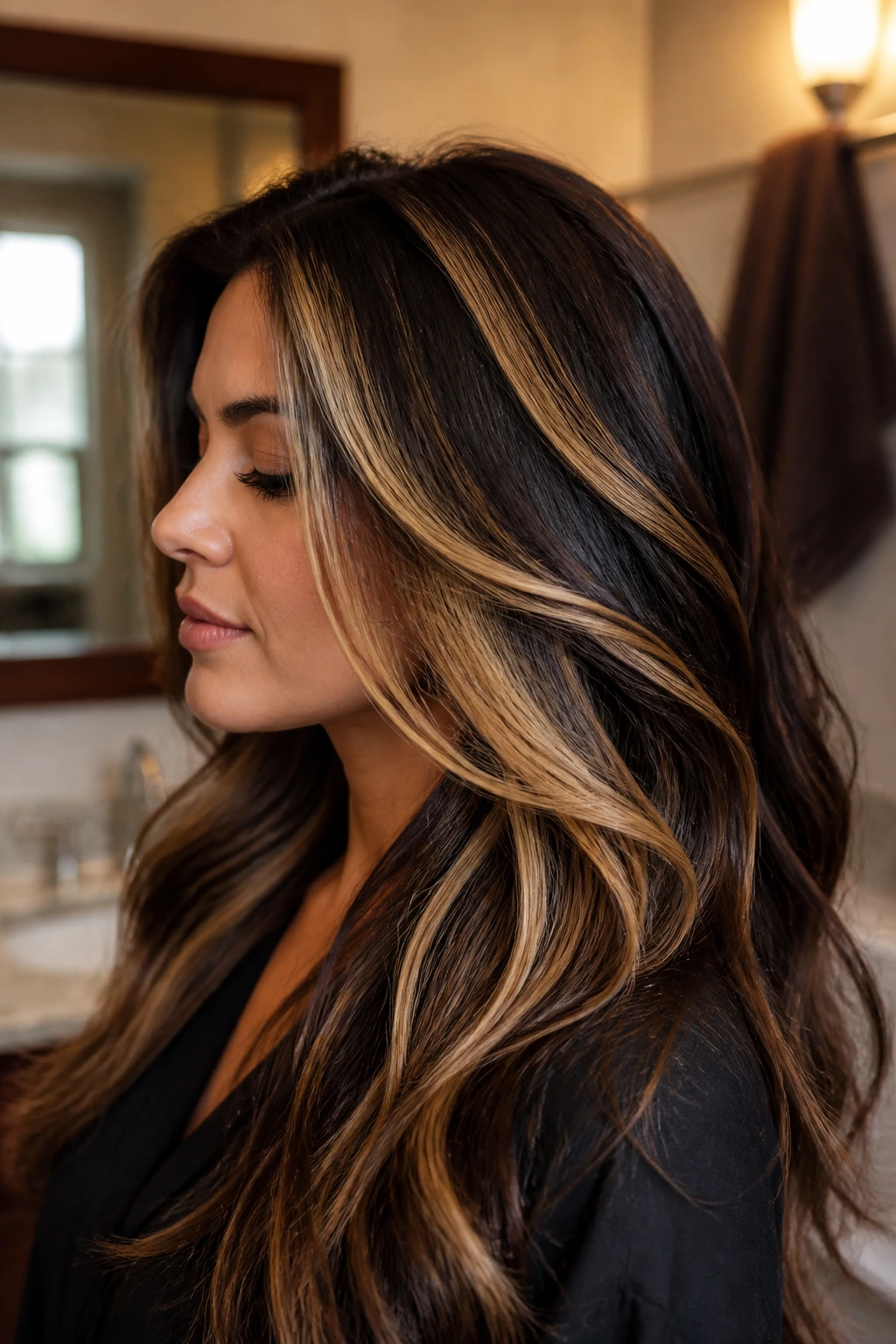
Can chunky highlights work on very dark brown or black hair?
Yes, but they usually need more planning. Very dark bases often need stronger lift, wider sections, and a toner afterward to keep the pieces from going orange or yellow. If you want low damage, stay in the caramel, bronze, or deep beige family instead of chasing icy blonde.
How wide should the highlights be on thick hair?
A good starting point is about 1/4 inch to 1 inch, depending on the placement. Around the face, wider pieces usually look better because the hair density is heavier there. In the back, the widths can be a little smaller so the overall look stays balanced.
Do chunky highlights make thick hair look thinner?
Not if they’re placed well. In fact, they often make thick hair look lighter and more shaped because the contrast breaks up the block of color. What causes the “thinner” look is over-lightening the whole head or skipping depth between the ribbons.
What if the highlights turn orange?
That usually means the hair lifted into the warm stage and stopped there. A blue-based toner can help if the orange is strong, while a beige or caramel gloss can soften a lighter warm result. If the pieces are very orange and dry, don’t keep bleaching over them at home. That usually makes things worse.
Are chunky highlights or balayage better for thick dark hair?
Chunky highlights are better if you want visible contrast and a defined color pattern. Balayage is softer and more blended. On thick hair, the two can work together well — chunky pieces at the front, softer painted ends through the length.
Can curly thick hair handle chunky highlights?
Absolutely. Curly hair often benefits from wider placement because the curl pattern breaks the color into movement. The important thing is saturation and sectioning; tiny foils can disappear in curls and leave the result uneven.
How often do chunky highlights need refreshing?
Bright blonde or beige pieces usually need a toner or gloss every 6 to 8 weeks. Warmer caramel and bronze shades can stretch a little longer, but if you use heat often, the tone can fade sooner. Rooted looks are easier to live with between appointments.
Should I add lowlights too?
If your hair is very dense, yes, probably. Lowlights keep the highlights from sitting on top like separate strips and make the cut look fuller in a controlled way. They’re especially useful for ash blonde, beige, and multi-tone looks.
Can I get this look without bleach?
On dark hair, not really if you want true light contrast. Color-only highlights can deepen or tint, but they won’t give you the lighter ribbons most people mean when they ask for chunky highlights. If you want warmth without bleach, copper and auburn deposits are the safer lane.
A Color Story That Gives Dark Hair Room to Move
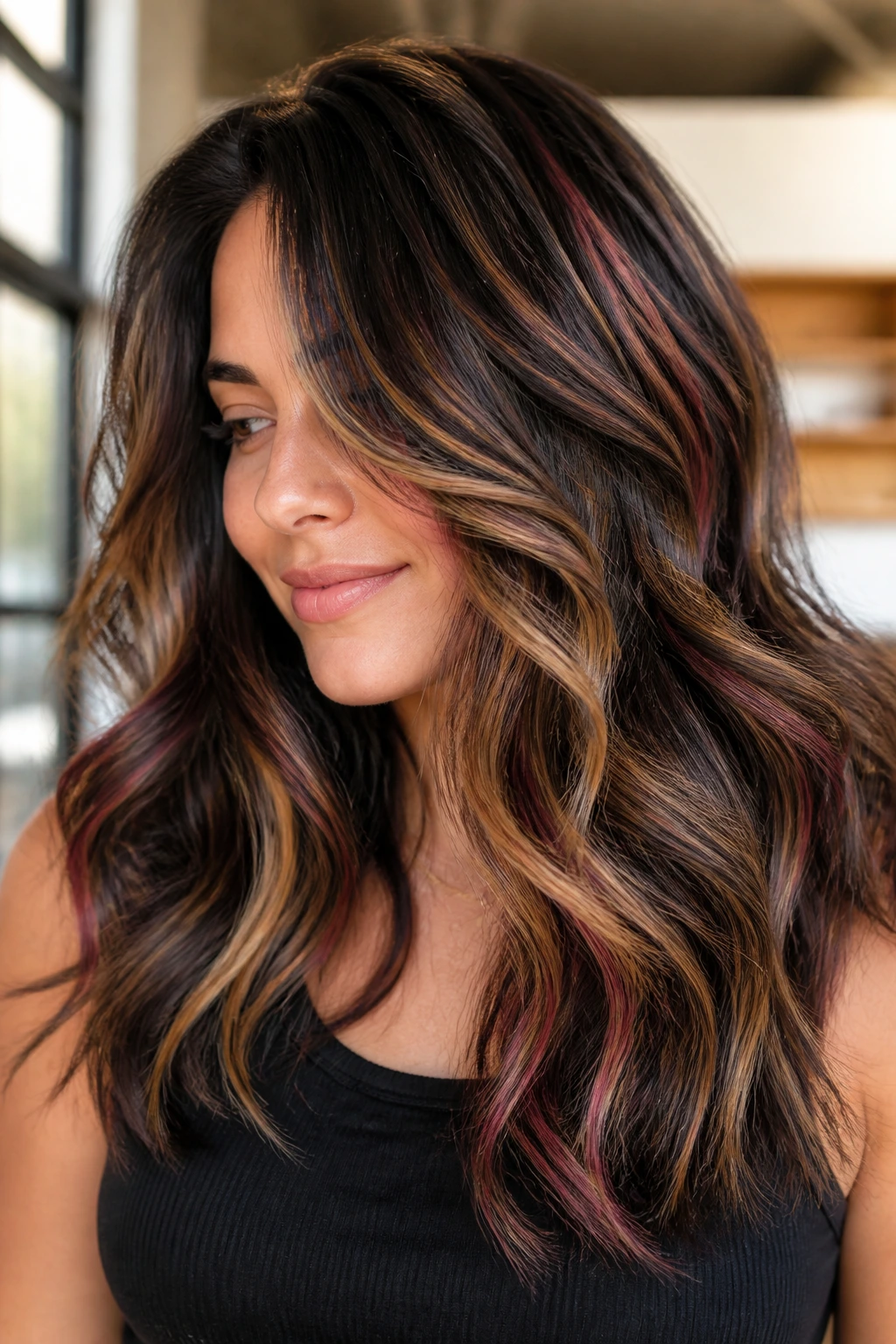
Chunky highlights work on thick dark hair because they respect what that hair already does well. They don’t fight density. They use it. Wider ribbons, stronger placement, and a tone that actually belongs next to the base will always beat random skinny streaks thrown in just to say the hair has highlights.
The best part is how many directions you can take it. Soft caramel. Smoky ash. Copper. Burgundy. Beige blonde. If you’re thoughtful about width and depth, dark hair with thickness stops looking heavy and starts looking deliberate, which is a better result than empty brightness ever gives you.