



Tan skin can make a highlight job look expensive or oddly flat, and the difference is usually just undertone and placement. The best highlighting techniques for tan skin do not fight the complexion; they echo the warmth, olive cast, or golden depth already there.
That is why a caramel ribbon on a wavy lob can look like late-afternoon sun while the same shade on the wrong base turns brassy by week two. A blunt bob wants a different map than a curly shag. A pixie crop needs light where the eye lands first; long layers need breaks of darkness so the shine has somewhere to live.
If you’ve ever wanted brightness without those obvious stripe marks, you’re in the right territory. Some of the looks below lean warm and glossy. Some go beige and quiet. A few bring in lowlights because tan skin often looks best when the hair has depth under the lighter pieces, not just above them.
Start with the shades that mirror your undertone, then pay attention to where the light sits.
Why These Looks Work on Tan Skin
-
Warm undertones love warm lights: Caramel, honey, bronze, and copper sit close to golden tan skin, so the result reads as glow instead of a hard stripe.
-
Neutral and olive tans need beige more than gold: Mushroom brown, bronde, and soft champagne keep the complexion clean when your skin already has a muted or slightly green cast.
-
Face-framing pieces do a lot of work: A money piece around the part and temples brightens the whole face faster than scattering tiny foils everywhere.
-
Depth matters as much as brightness: Lowlights and root shadow keep highlights from floating, which matters on thick, dark, or naturally dense hair.
-
Texture changes the read: The same caramel ribbon looks sharper on a blunt bob and softer on curls, so the haircut should be part of the color plan.
-
Growth out should be part of the plan: Tan skin tends to look best with color that softens at the root, not a harsh band that shows up two weeks later.
1. Caramel Balayage for Tan Skin on Long Beach Waves
Caramel balayage is the easy first pick when you want dimension that looks like it belongs there. On tan skin with gold or peach undertones, a level 7 caramel does something nice: it warms the face without making the hair read orange.
Why It Flatters Tan Skin
Balayage keeps the root soft, so the contrast stays believable. Ask for hand-painted placement through the midlengths and ends, then a brighter veil around the face if you want more lift near the cheeks. If your base is dark brown, a rich caramel keeps the whole thing grounded instead of frosted.
Quick Details
- Best on: long layers, oval faces, and medium-to-thick hair.
- Ask for: level 7 caramel with a soft root shadow.
- Style it with: a 1.25-inch curling iron and a quick brush-out for loose bends.
- Avoid: pale beige ends if your skin already runs warm; they can look a touch dry.
My take: If you want one color idea that rarely looks fussy on tan skin, start here.
2. Honey Babylights on a Layered Lob
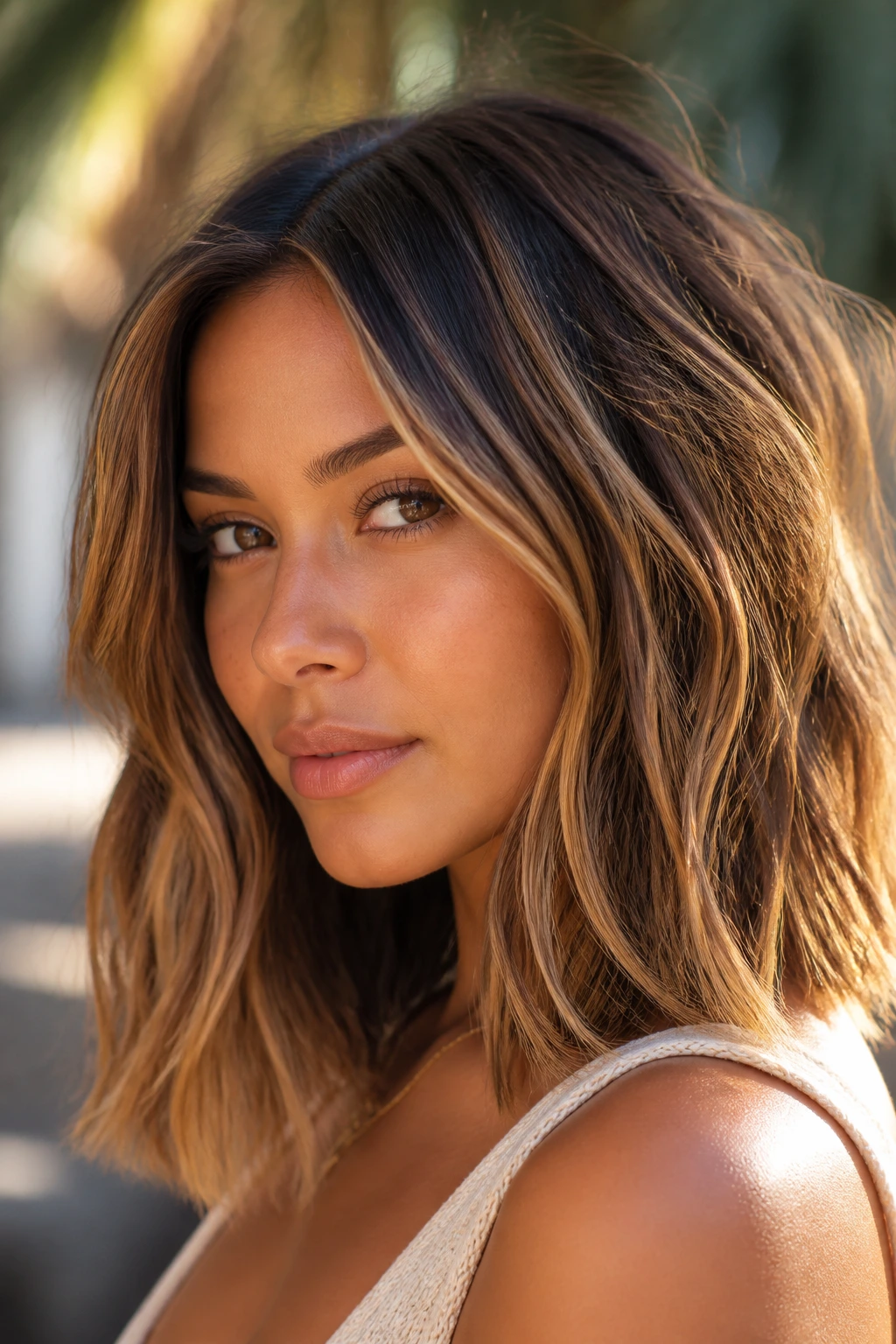
Babylights are tiny foils, and tiny is the point. On tan skin, they create that soft, woven shine you see in hair after a long day outdoors, minus the sun damage.
The trick is spacing. You want the light pieces close enough to move the eye, but not so dense that the lob loses its depth. On a layered cut, those micro-ribbons flick in and out of view as the hair swings, which keeps the color from looking static.
This is one of the better choices if you like a beige-gold finish but hate visible lines of demarcation. Ask for very fine sections, no wider than a pencil, and keep the toner honey-beige rather than icy. Too cool and the warmth of tan skin can get a little washed out.
3. Face-Framing Money Piece on a Sleek Blowout
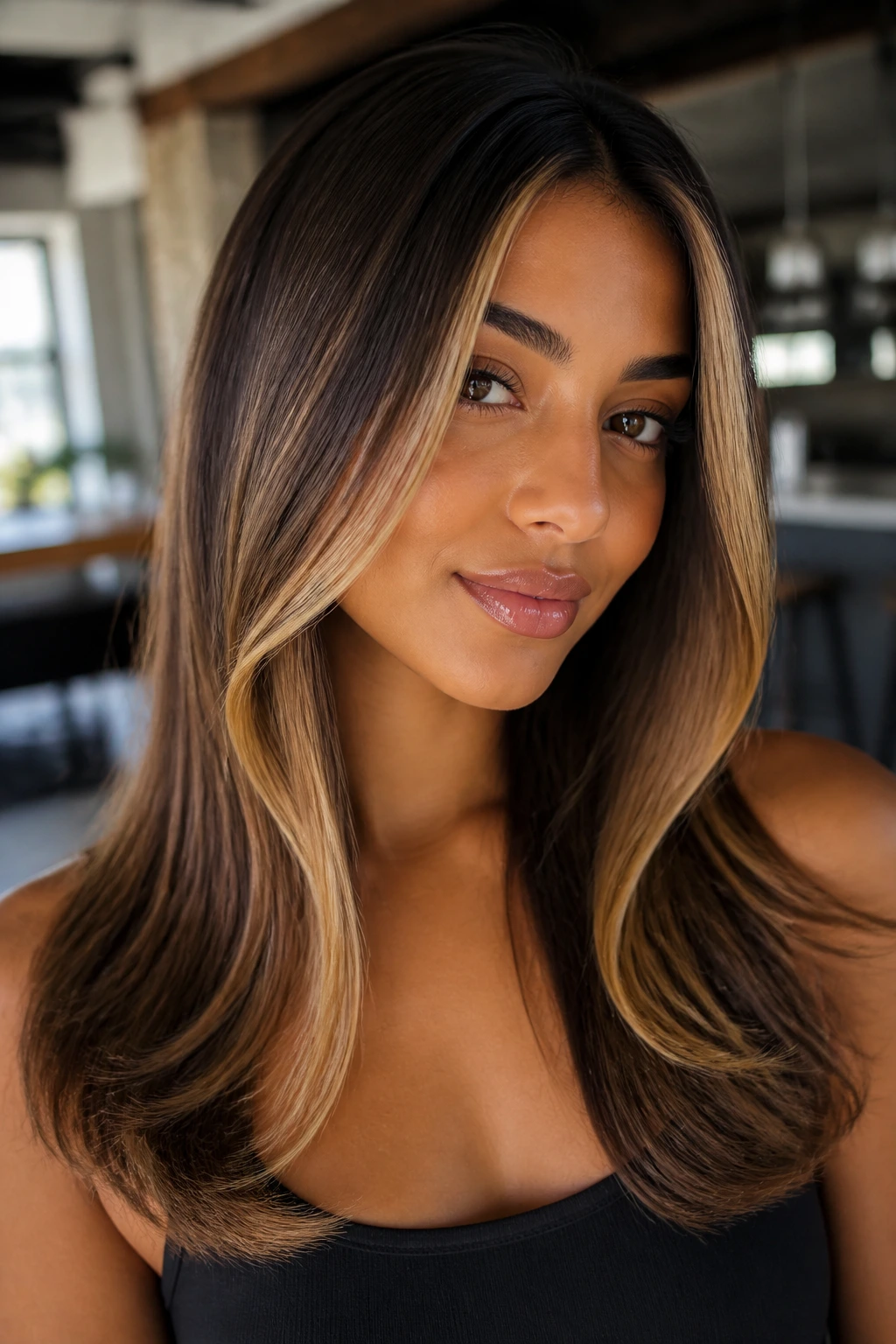
Why do money pieces look so different on tan skin? Because the contrast sits right next to the face, which means the shade has to flatter fast. There’s no hiding it in the back.
A sleek blowout makes this look sharper. The straightened length gives the face-framing pieces room to pop, especially if the stylist places them just off the part and a little heavier at the temple. Think two bright strokes, not a stripe across the forehead.
How to Wear It
- Keep the money piece one to two levels lighter than the rest of the highlights if you want it to feel polished.
- Ask for a soft root melt so the light pieces don’t stop dead at the scalp.
- Use a round brush and bend the ends under slightly; that keeps the contrast from feeling severe.
This is the look I’d pick for someone who wants a noticeable change without committing to a full-head lightening session.
4. Copper Ribbon Highlights on a Curly Shag
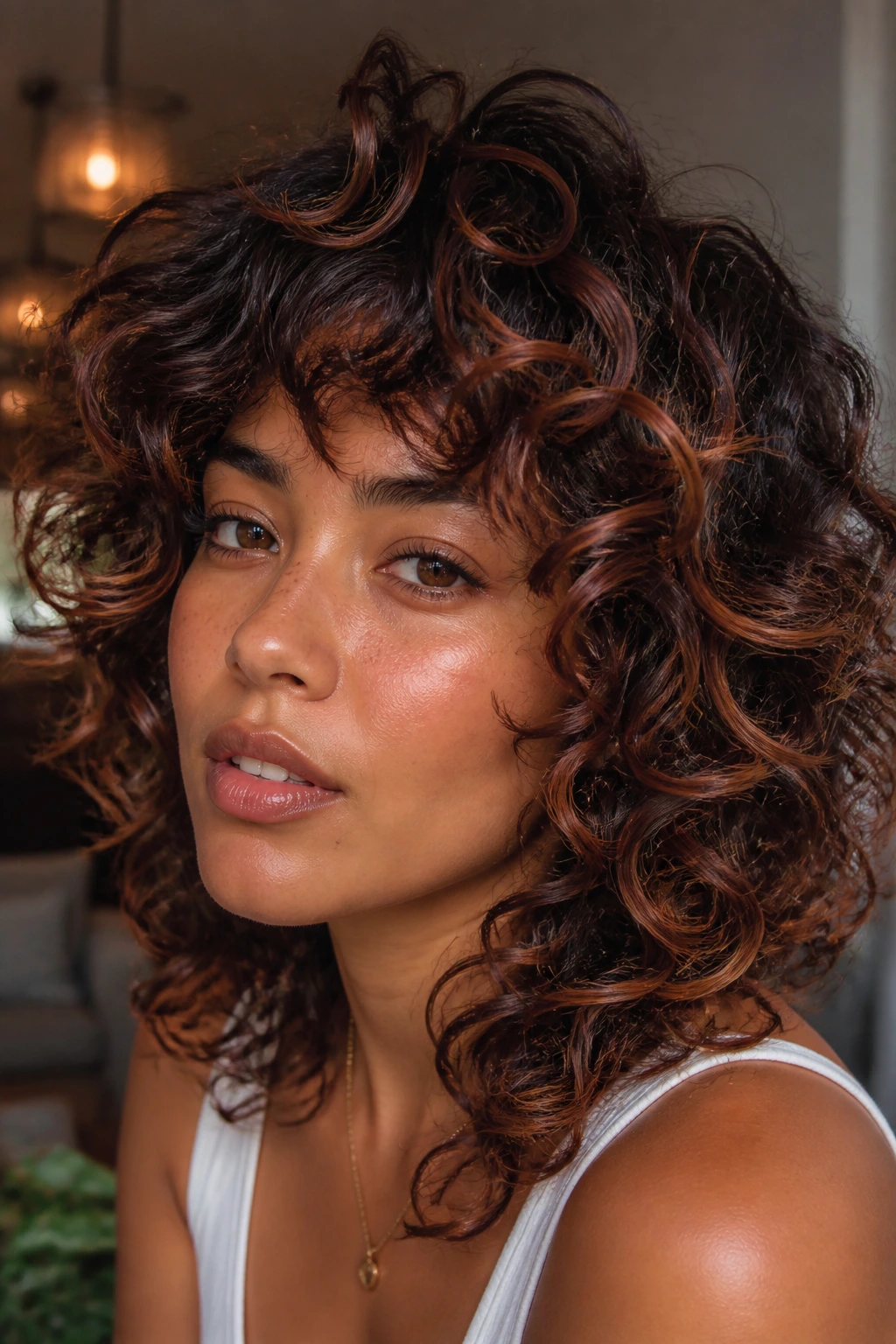
Copper on tan skin can be gorgeous, but it needs restraint. On a curly shag, the bend of the curl breaks the color into ribbons, which keeps the copper lively instead of loud.
The curl pattern does half the styling for you. Each coil catches a different slice of the light, so the color shifts as you move. On tighter curls, ask for paint that sits a touch higher on the strand, because curls shrink and hide color when they dry.
Use this look if your tan skin leans warm, peach, or golden. If your undertone is olive, go for copper-brown rather than true orange copper. That small shift makes the whole thing read richer.
5. Toffee Ombré on Waist-Length Layers
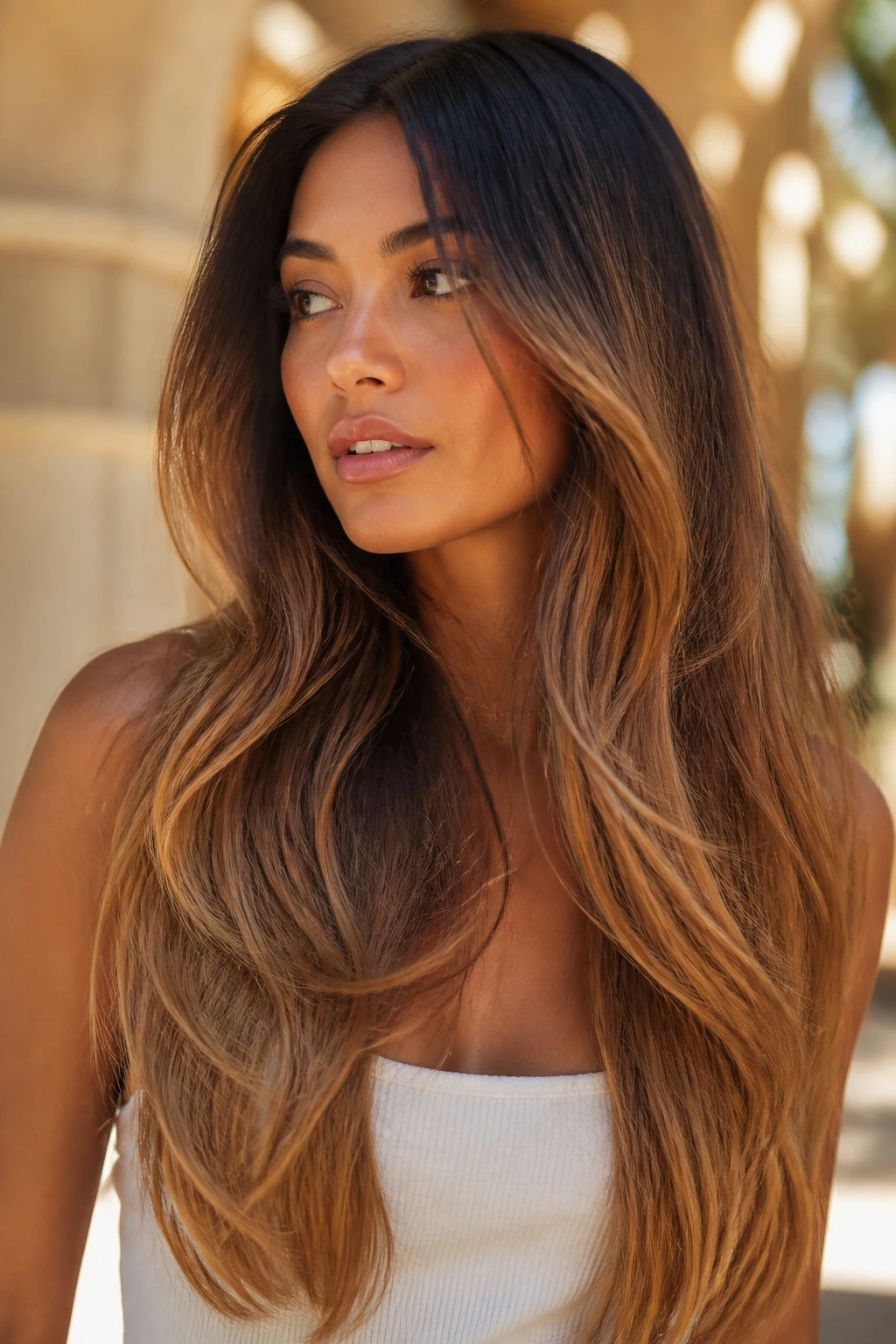
Toffee ombré is for people who want the ends to do the talking. The root stays darker, the midlengths open up, and the hair finishes in a soft toffee melt that feels less salon-perfect and more lived-in.
On tan skin, that darker base is useful. It frames the face and lets the lighter ends act like a warm halo instead of turning the hair into a single bright block. Waist-length layers help because ombré needs movement to keep the fade from looking heavy.
The best version keeps the transition gradual. No chunky line. No sudden jump from brunette to blonde. Ask for the lightest tone to land around level 8 or 9 if your skin is golden; stay around level 7 to 8 if you run deeper or more olive.
6. Bronde Weave on a Midlength Cut
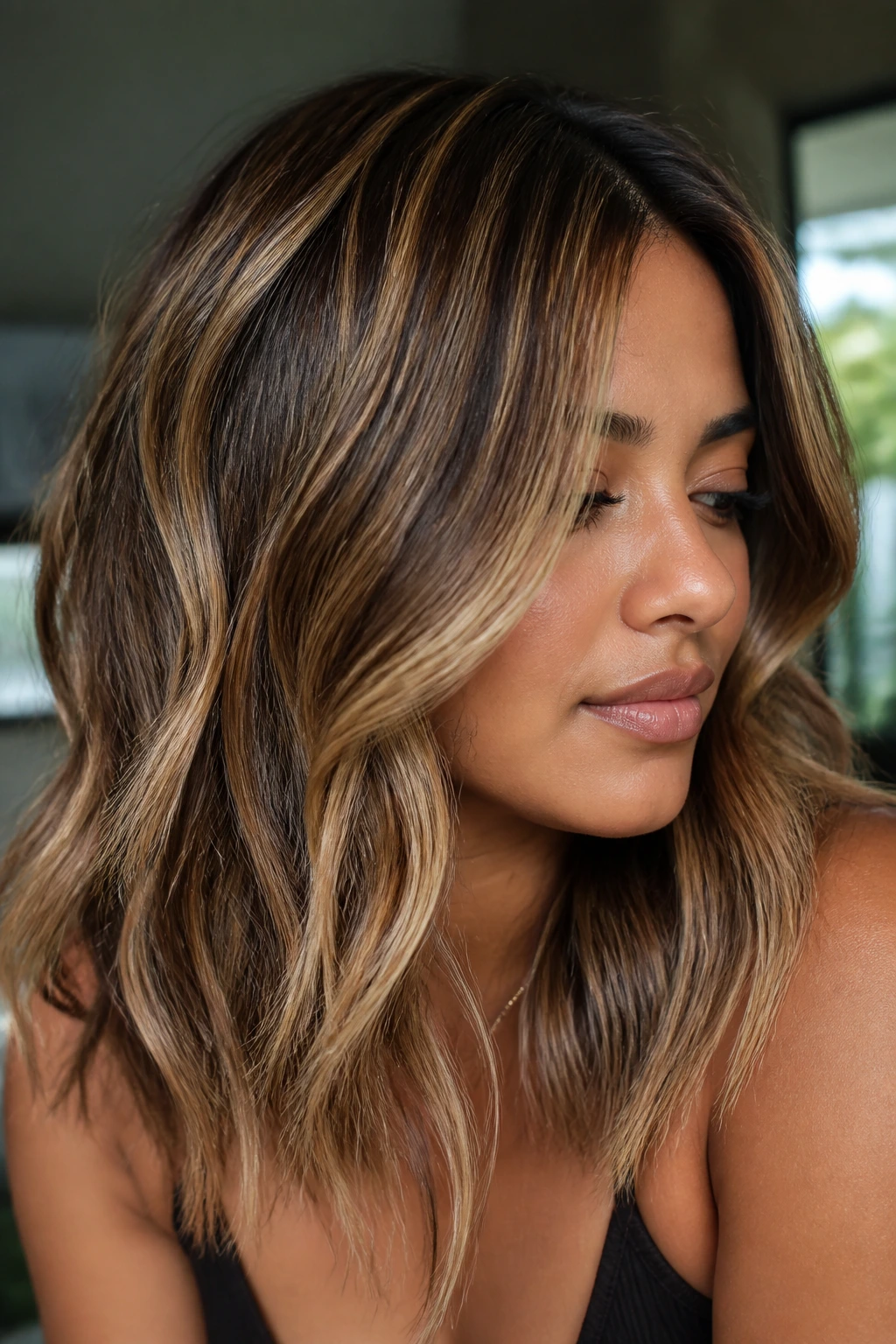
Bronde is the color middle lane, and I mean that in the best way. It gives tan skin brightness without the maintenance of a full blonde grow-out, and a midlength cut shows off the blend from every angle.
What makes this work is the weave itself. Instead of broad ribbons, the colorist alternates brown and blonde threads so the finish looks soft at the root and reflective through the mids. On a cut that sits around the collarbone, the movement prevents the color from looking muddy.
This is a smart pick if your natural hair is already between dark blonde and light brown. It is also one of the easier looks to live with, because the grow-out stays blurred. If you want polish without the upkeep of strong contrast, bronde does the job.
7. Golden Foilayage for Tan Skin and Butterfly Layers
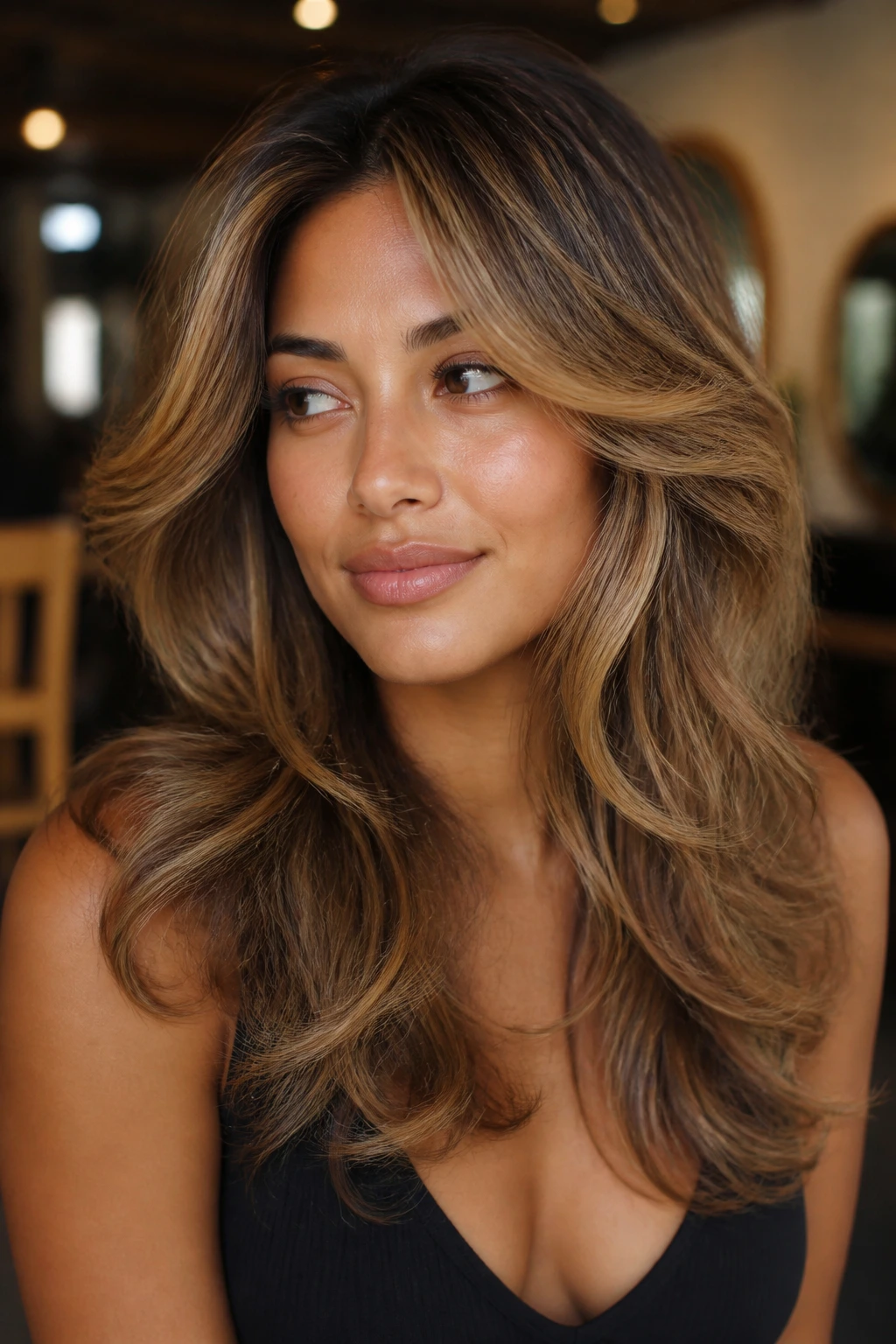
Foilayage sits between freehand balayage and classic foils, and that middle ground is useful. The foil adds lift; the hand-painting keeps the result soft. On tan skin, a golden foilayage gives you real brightness without the flat, stripy look some foil jobs can leave behind.
Butterfly layers make the color look bigger because the shorter face pieces lift away from the longer lengths. That’s where the gold shows best. Around the face, ask for a slightly denser placement, then let the rest feather out through the ends.
What to Ask For
- A golden beige toner, not a pale ash toner.
- Foils placed heavier near the crown and face.
- Soft ends with a little darkness left underneath so the color has depth.
- A blowout that lifts the layers away from the neck; that’s where the shine shows.
8. Cinnamon Gloss Highlights on a Straight Lob
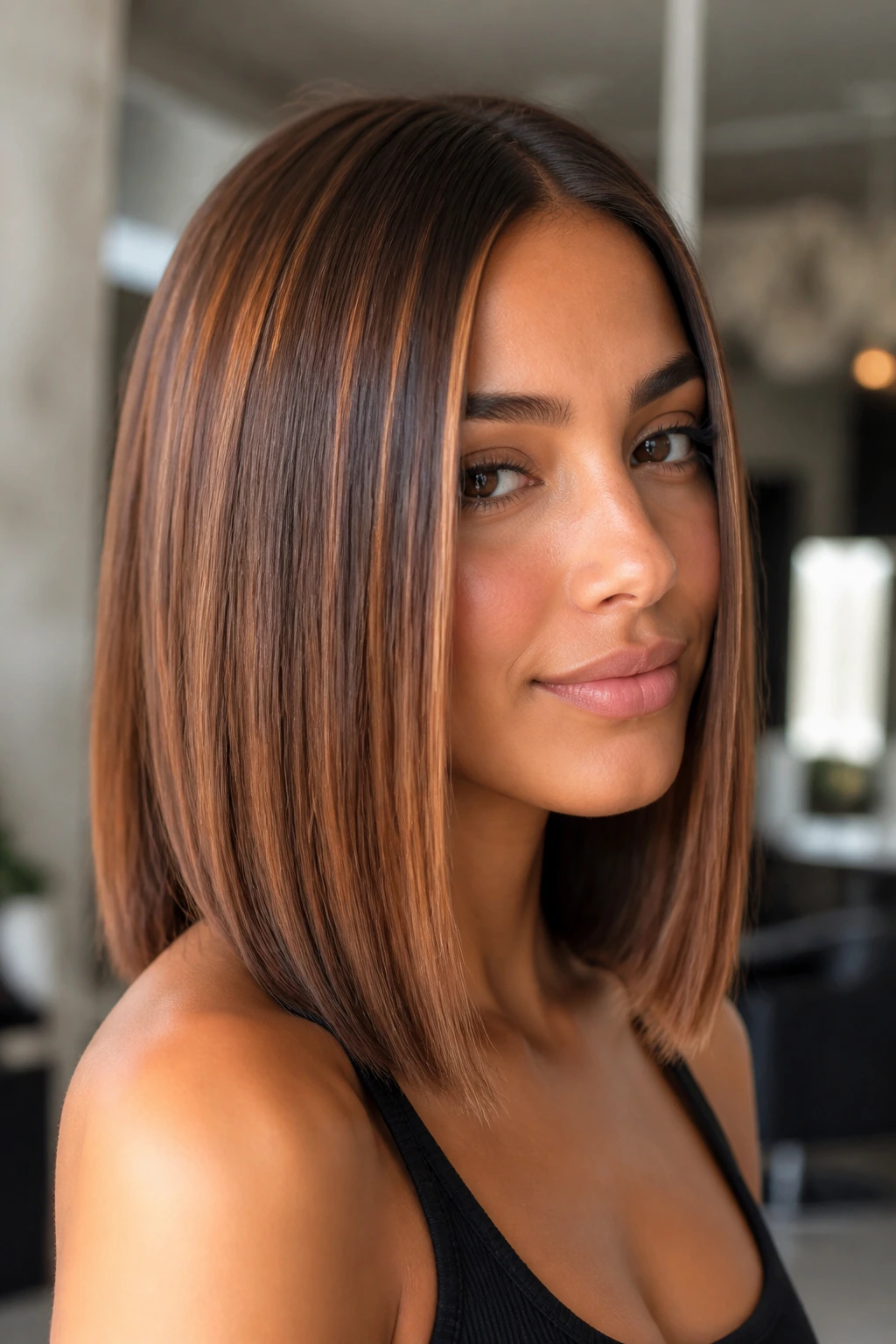
A straight lob is blunt, so the color has to carry the movement. Cinnamon gloss highlights do that by warming the surface without changing the base too much.
This look works because gloss sits on top of the hair and adds sheen first, color second. On tan skin, cinnamon reads like polished warmth rather than red. If your hair is already light enough, a tinted gloss can be all you need. If it’s darker, the stylist can paint a few lighter ribbons under the top layer so the gloss has something to catch.
Keep the shade in the brown-red family, not cherry. Cherry can fight tan skin; cinnamon usually blends in a better way. The result is sleek, shiny, and just a little spicy.
9. Mushroom Brown Lowlights with Beige Ribbons
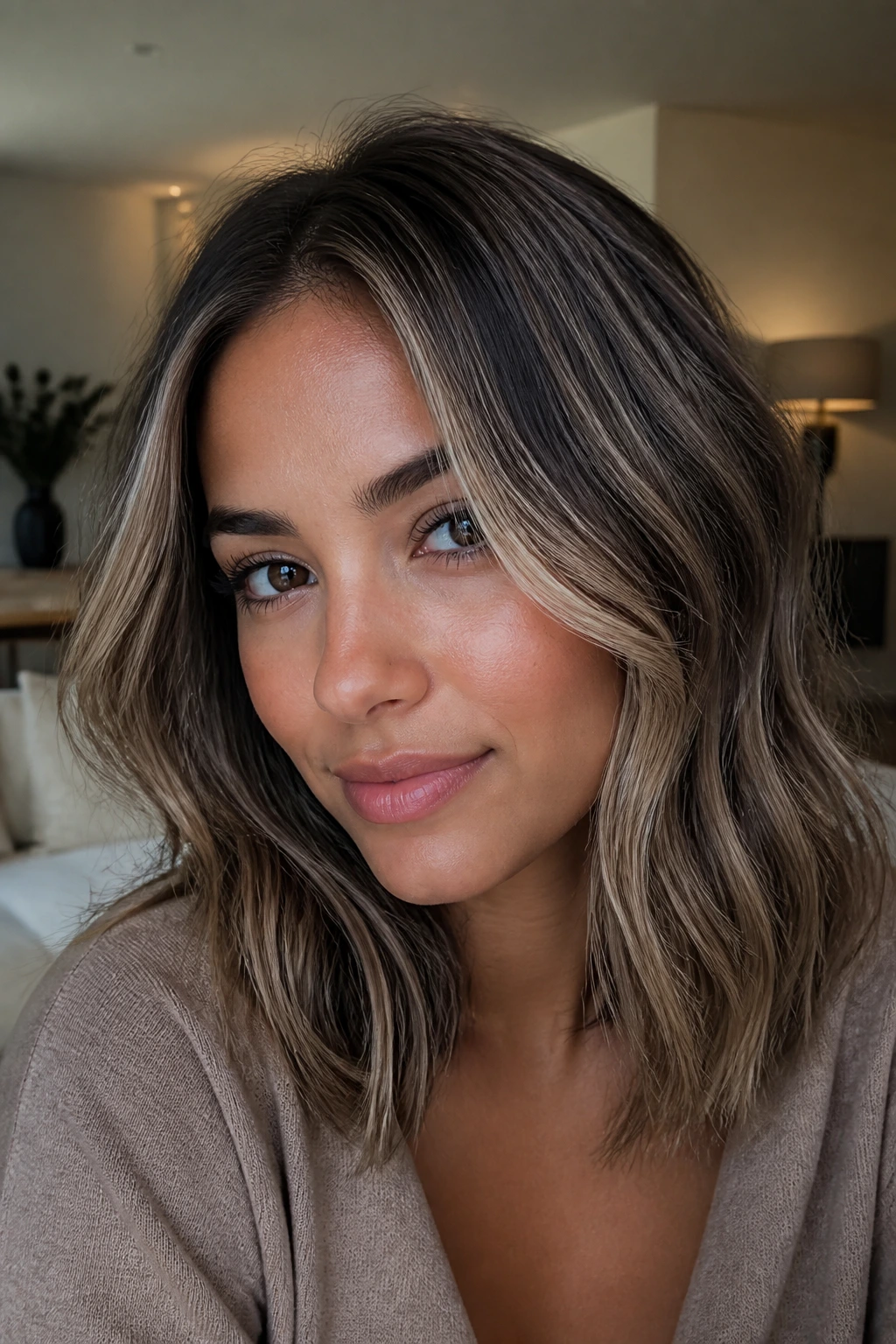
Not every tan-skin look needs more light. Sometimes the smartest move is adding shadow back in.
Mushroom brown lowlights are a good example. They cool down overly warm hair and give beige ribbons somewhere to sit, which keeps the whole head from turning brassy or too flat. On tan skin with neutral or olive undertones, this combo can look expensive in a very quiet way.
Use it if your hair has been lightened a few times and feels hollow at the ends. The lowlights bring back structure. The beige ribbons brighten the surface just enough, but the darker strands keep the color from floating.
This is one of those styles people overlook because it sounds less dramatic than blonde. It’s often the one that looks most natural in real life.
10. Sun-Kissed Partial Highlights on a Pixie Crop
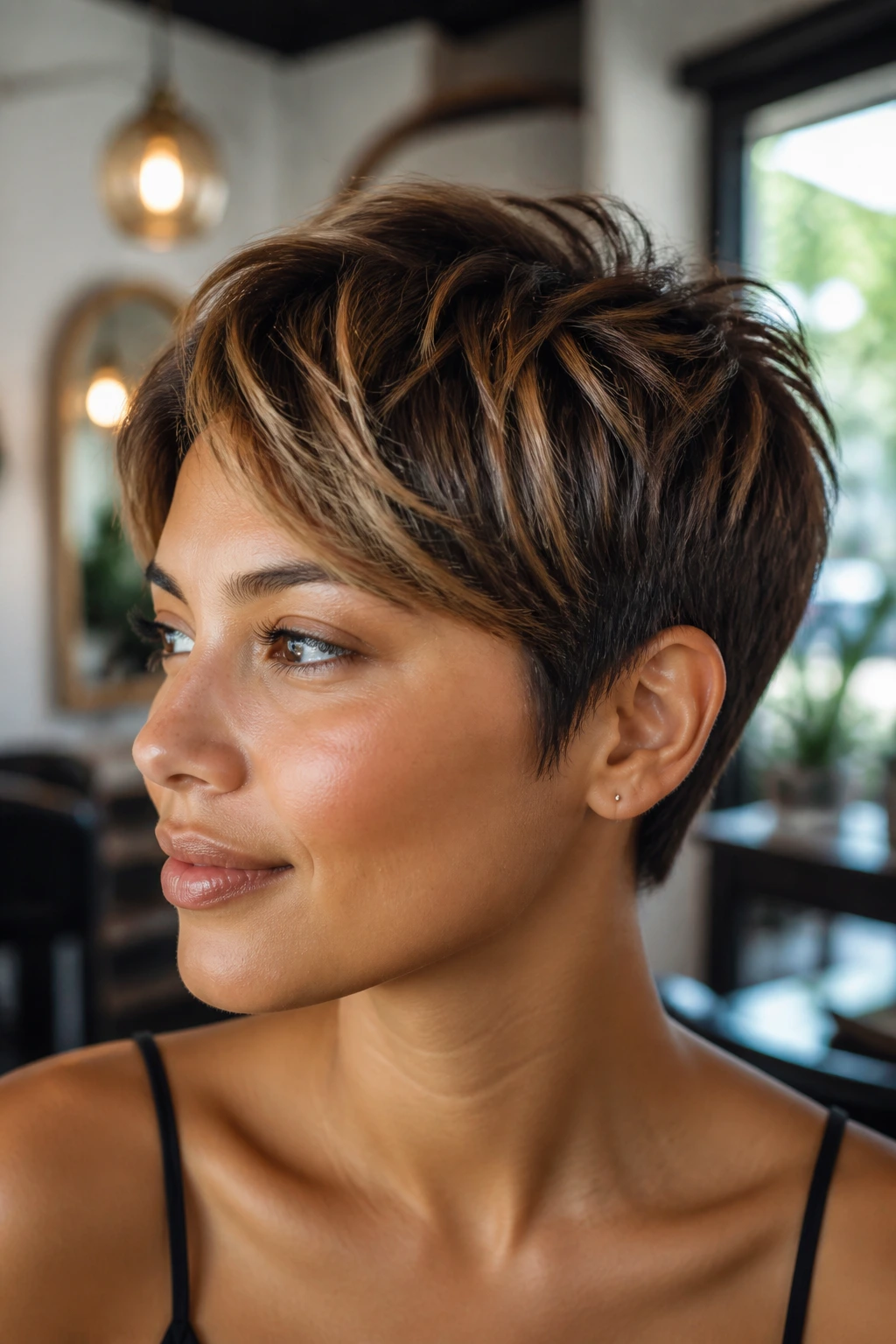
A pixie crop does not need a full head of highlights to read bright. In fact, too much light can make short hair look busy.
Partial highlights are better here. Place them around the crown, temple, and top layer where the eye lands first, then leave the nape a shade deeper so the cut keeps its shape. On tan skin, that small bit of lift around the hairline is enough to sharpen the face without turning the whole style into a helmet of light.
The style works best when the finish is slightly tousled. Finger-rake some paste or light cream through the top, then lift the front upward with your fingertips. The messy bits make the color look intentional.
11. Auburn Peekaboo Panels on Wavy Midi Hair
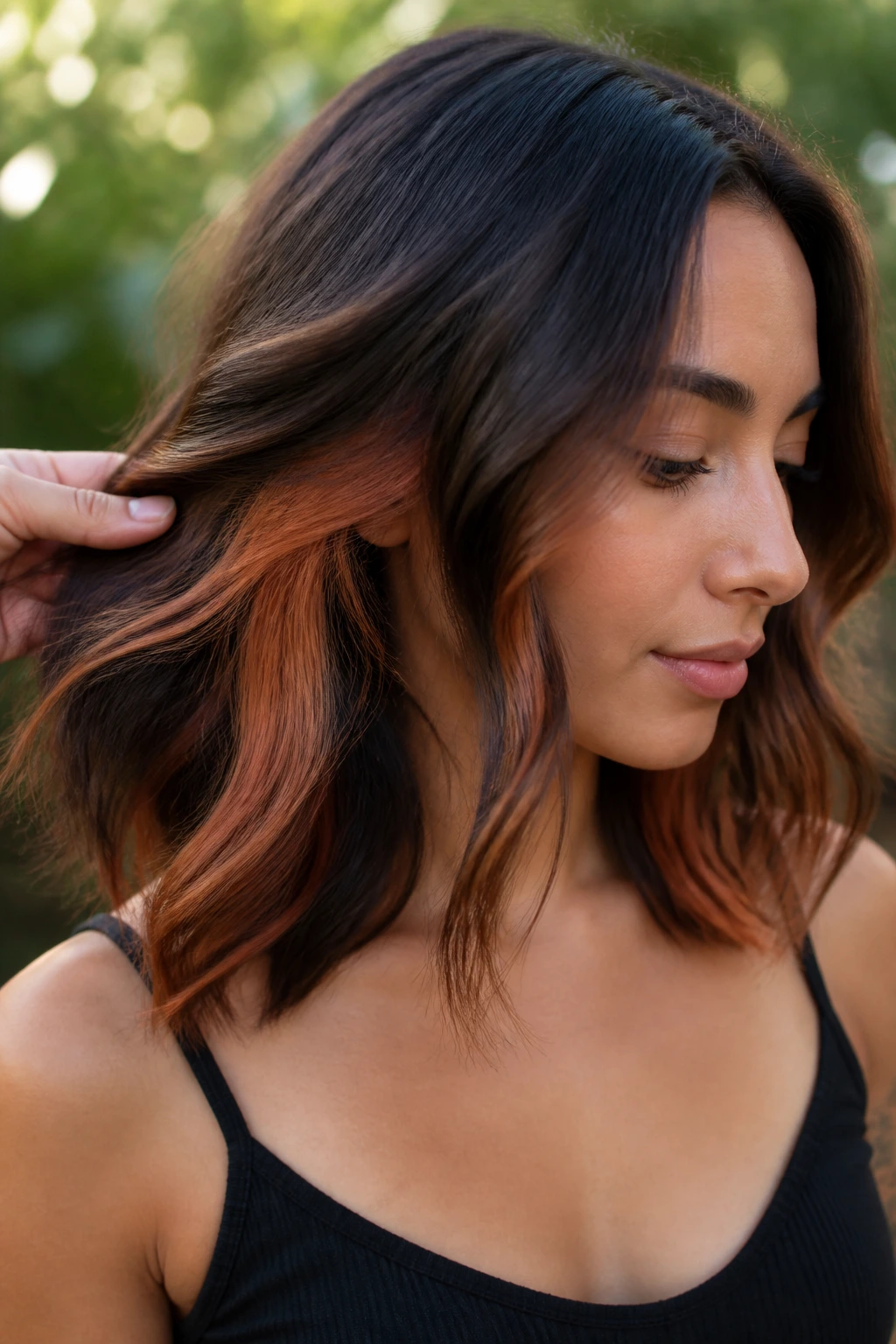
Peekaboo color is the fun one. It hides under the top layer, then flashes when the hair moves, which means you get surprise without shouting.
Auburn works especially well on tan skin if you want richness rather than brightness. The panels underneath a wavy midi cut keep the look dimensional, and the wave pattern reveals the auburn only in certain spots. That stops the color from looking heavy or too red.
This is a good choice if your office dress code or personal style leans conservative but you still want something with personality. Put the auburn under the back sections and around the inner layers; leave the surface closer to your natural shade or a soft brown.
The payoff is subtle at rest and expressive when the hair swings.
12. Soft Champagne Balayage on a Blunt Bob
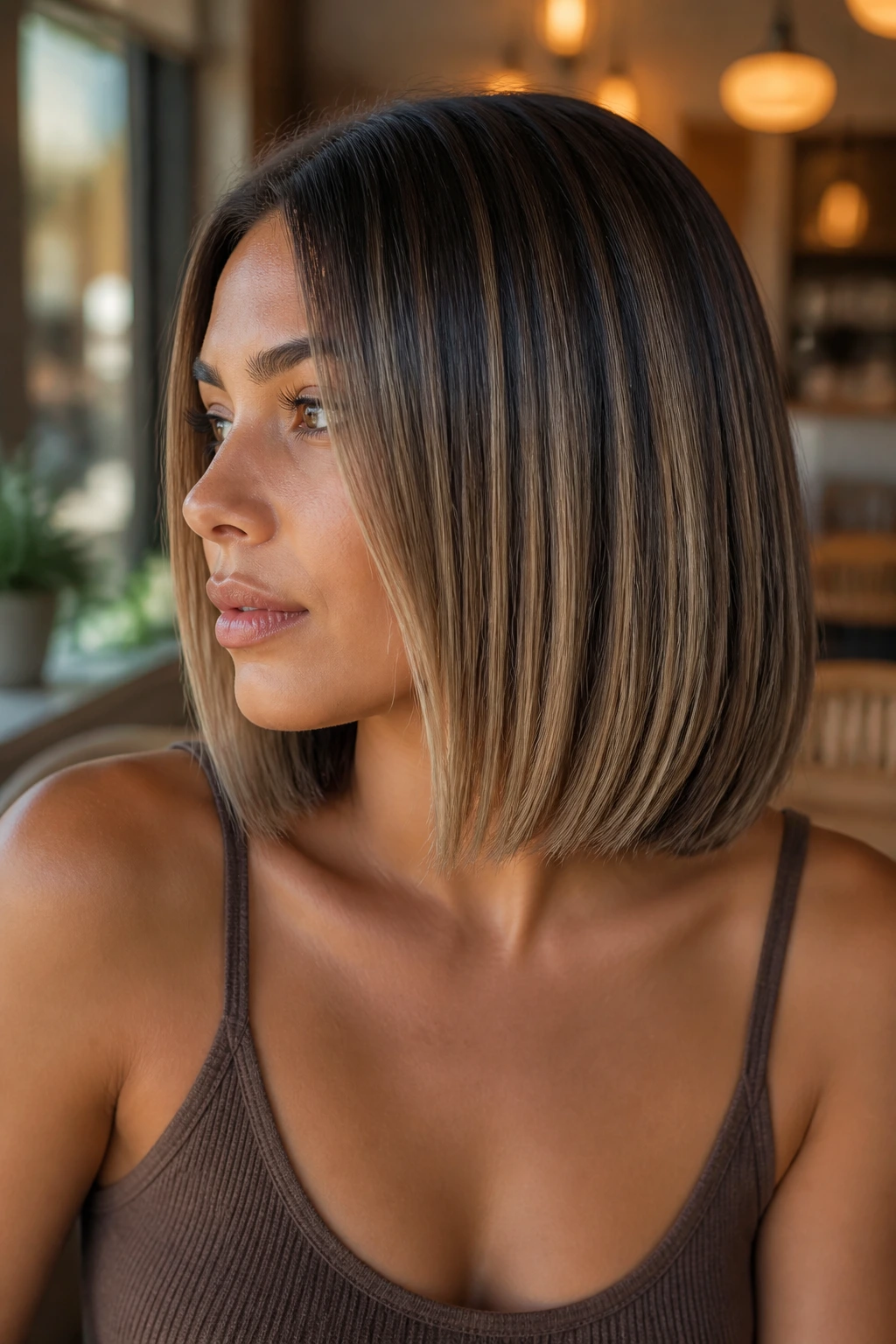
Champagne can be tricky on tan skin. Too icy and it starts to look thin. Kept soft, though, it gives a blunt bob that airy, expensive shine people chase and often miss.
The blunt edge is doing the heavy lifting here. It makes the light feel sharper than it would on a layered cut. A soft champagne balayage with a beige base keeps the result clean, especially if your skin is neutral or slightly olive.
The important part is not to overdo the lift. Ask for a champagne-beige tone, not white blonde. A few brighter pieces around the face are enough. On a bob, the hairline is already the visual focus, so the color should support the shape rather than steal from it.
13. Almond Foils on a Voluminous Blowout
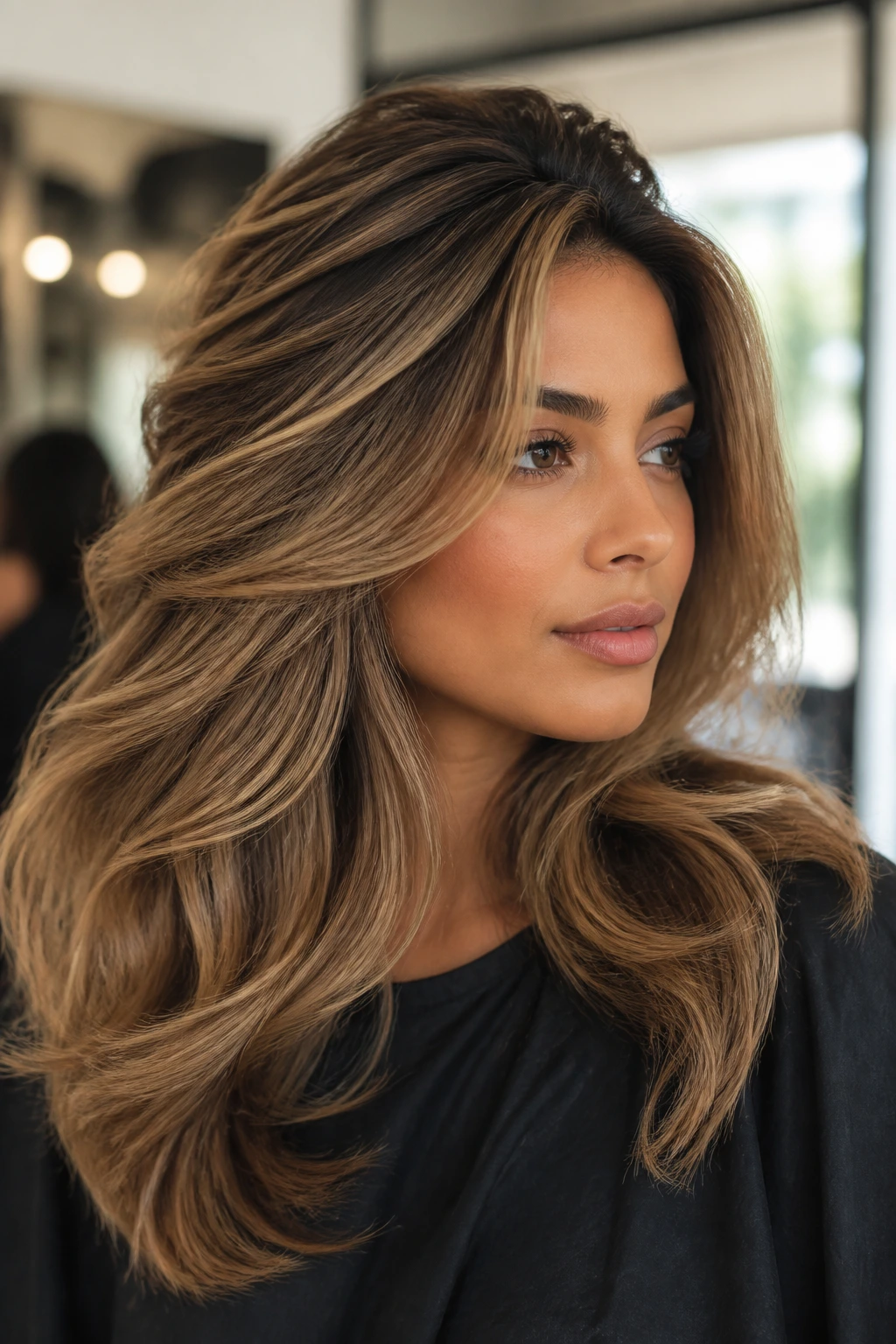
Do you want a look that has movement even when the hair is smooth? Almond foils do that.
The color sits in the warm brown-blonde range, which is a safe and pretty place for tan skin that leans golden. A voluminous blowout lets the foils separate from one another, so each ribbon shows its own shade instead of collapsing into one flat color mass. That detail matters more than people think.
How to Get the Most From It
Use slightly thicker foils at the crown and finer ones through the sides. That gives the top area some brightness without over-lightening the ends. Ask for a gloss in the almond or beige family if your hair tends to grab orange.
A round brush and a soft bend at the ends make this whole style come alive.
14. Buttery Blonde Money Pieces on Curtain Bangs
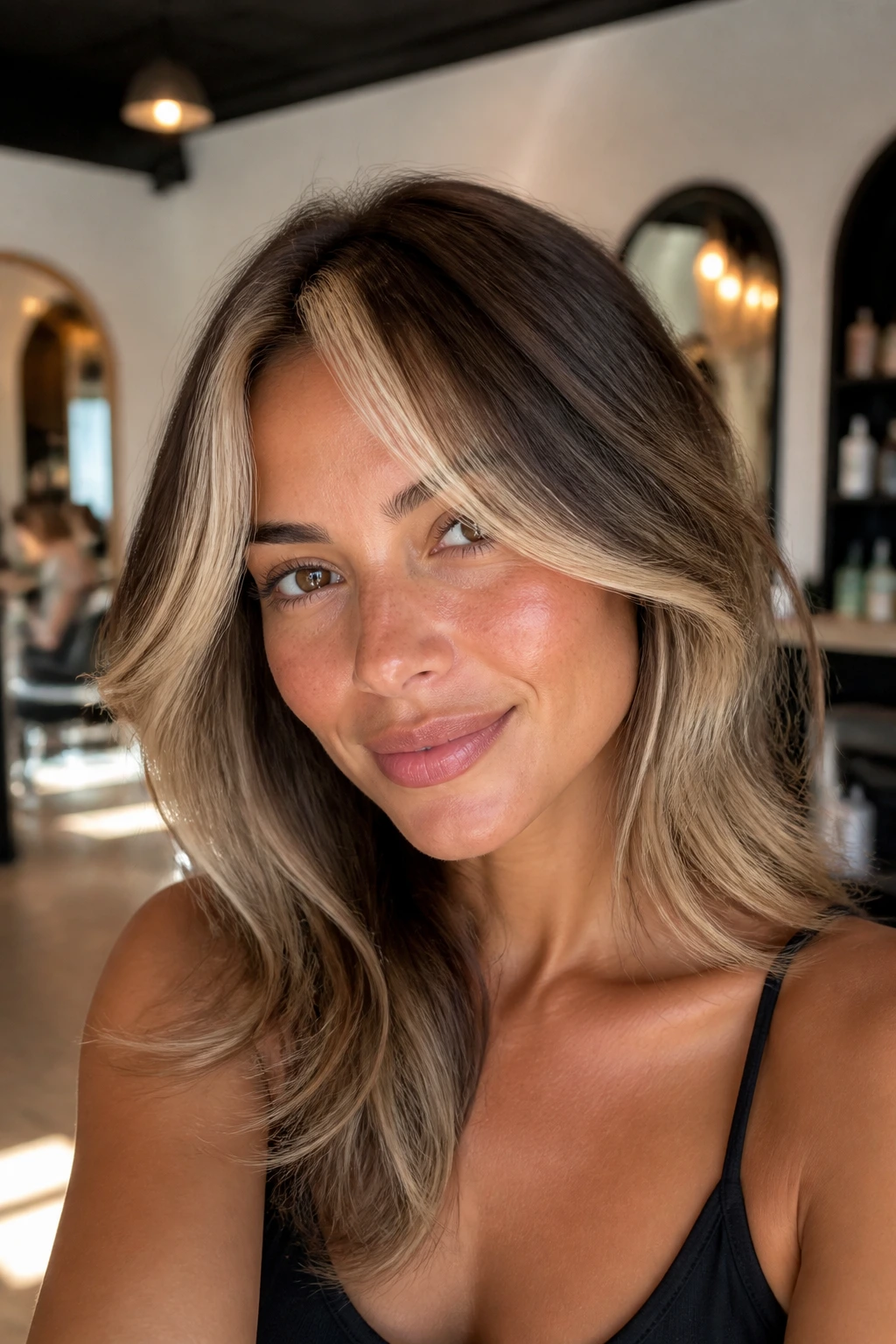
Curtain bangs change the math. They put the brightest hair right next to the eyes and cheekbones, which is why buttery blonde money pieces can be so flattering on tan skin.
The key is softness. The blonde should feel creamy, not icy. If the pieces are too pale, the bangs can look detached from the rest of the cut. But when the tone is warm and the placement is feathered, the result is fresh and face-brightening.
This look is useful if you want the effect of a full color change without lightening every inch of your head. Ask for a slightly denser piece at the part and let the curtain bangs carry the brightness downward. It’s a small area, but it changes the whole mood.
15. Rose Gold Veil Highlights on a Tousled Bob
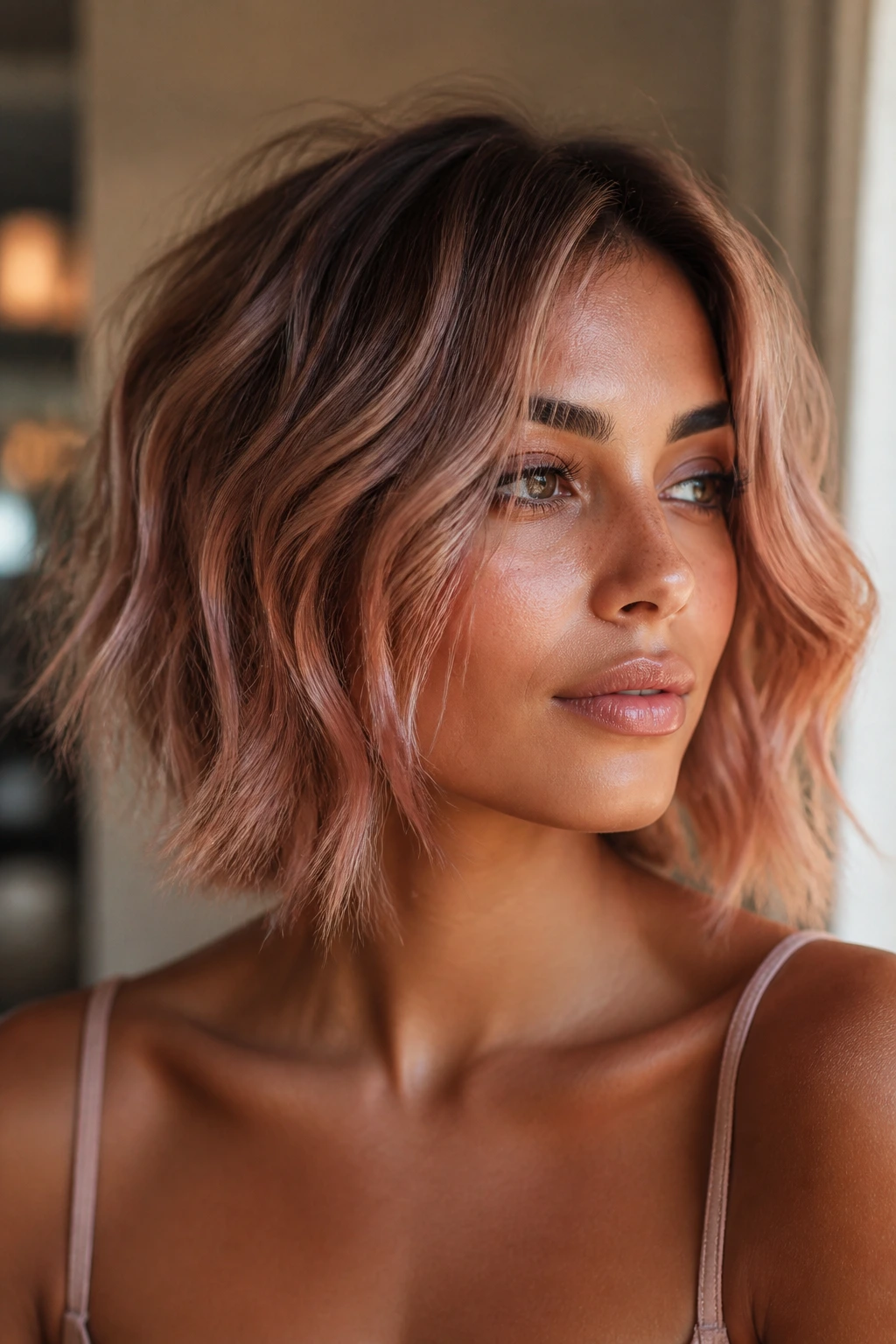
Rose gold is one of those shades that sounds risky and often isn’t, provided it stays muted. On tan skin with peach or neutral undertones, a rose gold veil can look soft, modern, and a little playful.
The bob matters because the texture keeps the color from reading like a flat tint. Tousled waves break the rose-gold tone into flashes of peach, beige, and pink. If the hair is too smooth, the color can feel more obvious than it should.
Keep the veil light. You want a hint of warmth, not bubblegum. A neutral brown base beneath the rose gold makes the color feel grounded.
16. Espresso Base with Caramel Curls on a Curly Cut
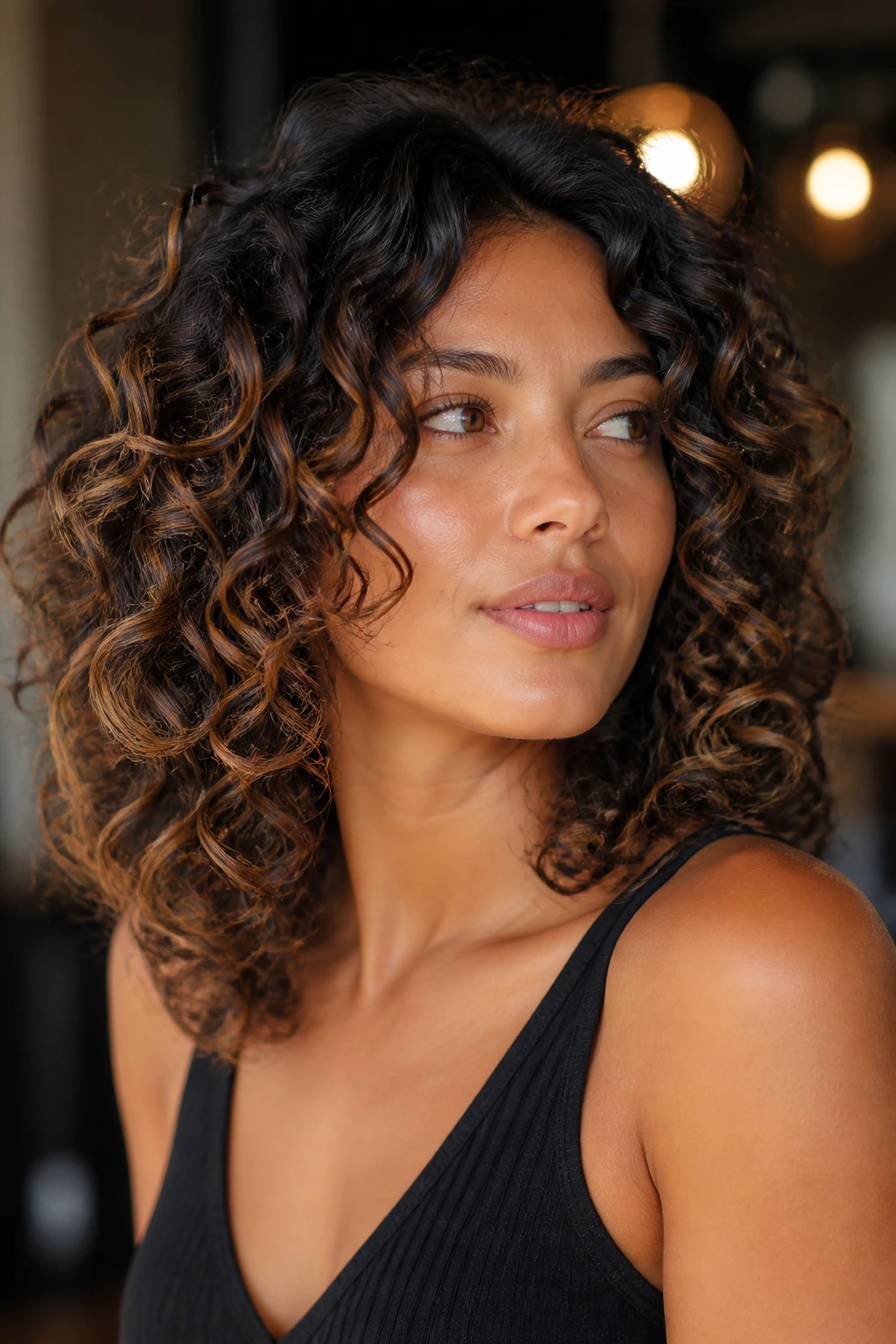
This one is all about contrast done right. A deep espresso base gives tan skin a rich frame, and the caramel curls on top show the pattern of the cut.
Curly hair benefits from contrast because the curl shape already creates movement. When the lighter pieces follow the spirals, the color looks natural instead of painted on. The espresso underneath keeps the curls from losing their edge, which is a common problem when too much light goes into a curly cut.
Ask the colorist to place the caramel where the curls open up the most, usually around the front and the outer halo. That way the brightest pieces land on the parts of the haircut people actually see.
If your hair is dense, this may be the most flattering route of all.
17. Chestnut Ribbons for Tan Skin on a Center-Parted Mullet
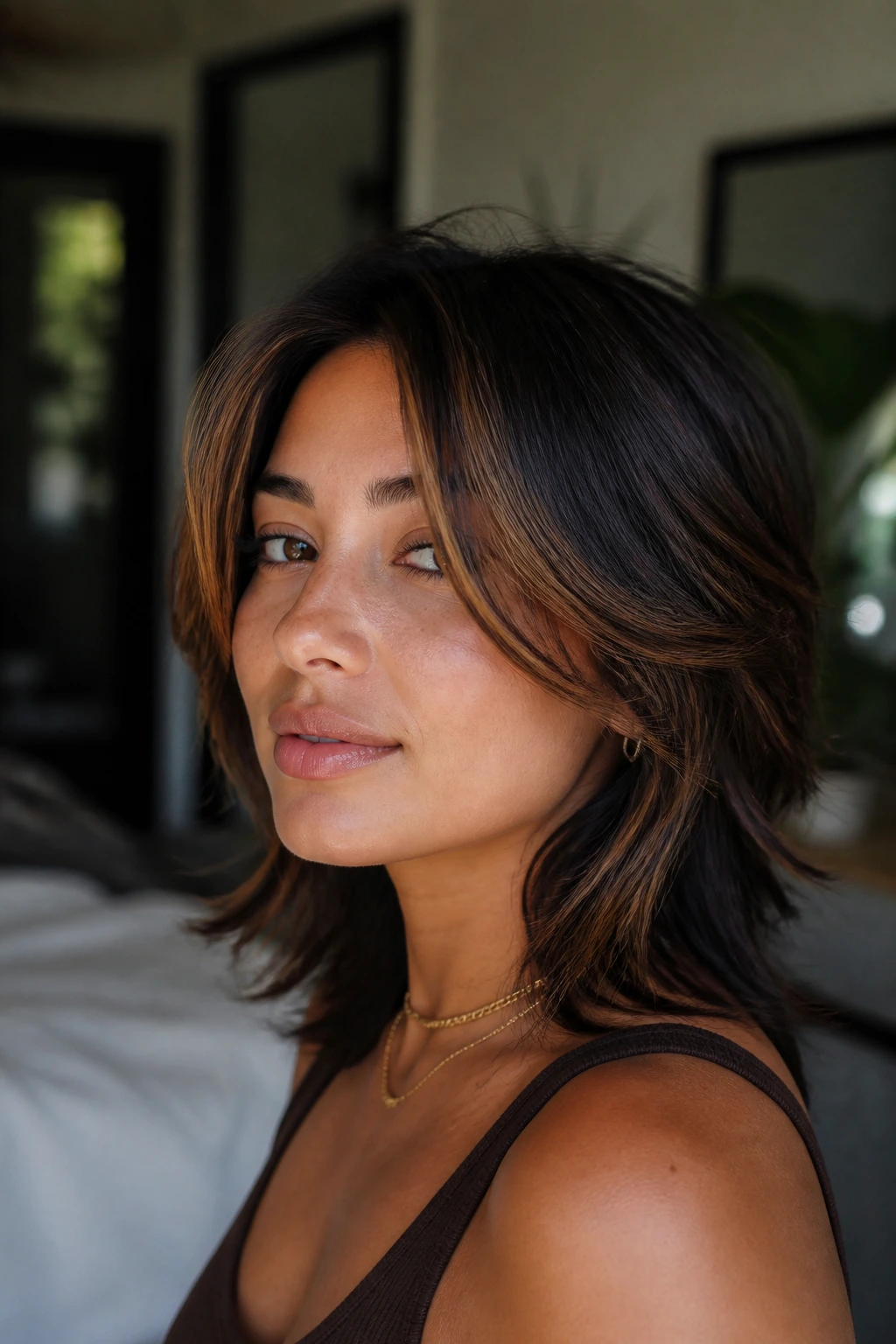
The mullet is not shy, so the color shouldn’t be either. Chestnut ribbons give the shape enough softness to keep it wearable.
A center part stretches the face in a clean line, and chestnut highlights along the front pieces keep that line from looking severe. On tan skin, chestnut sits in a useful middle zone: warm enough to glow, dark enough to stay grounded.
Why This Combination Works
- The shorter crown pieces show off the texture.
- The longer back section keeps the depth.
- Chestnut reflects light without turning gold-heavy.
- The center part lets the front pieces frame the cheeks instead of hiding them.
If you like a cut with attitude but don’t want bright blonde anywhere near it, this is a smart pairing.
18. Wheat Blonde Teasylights on Long Straight Hair
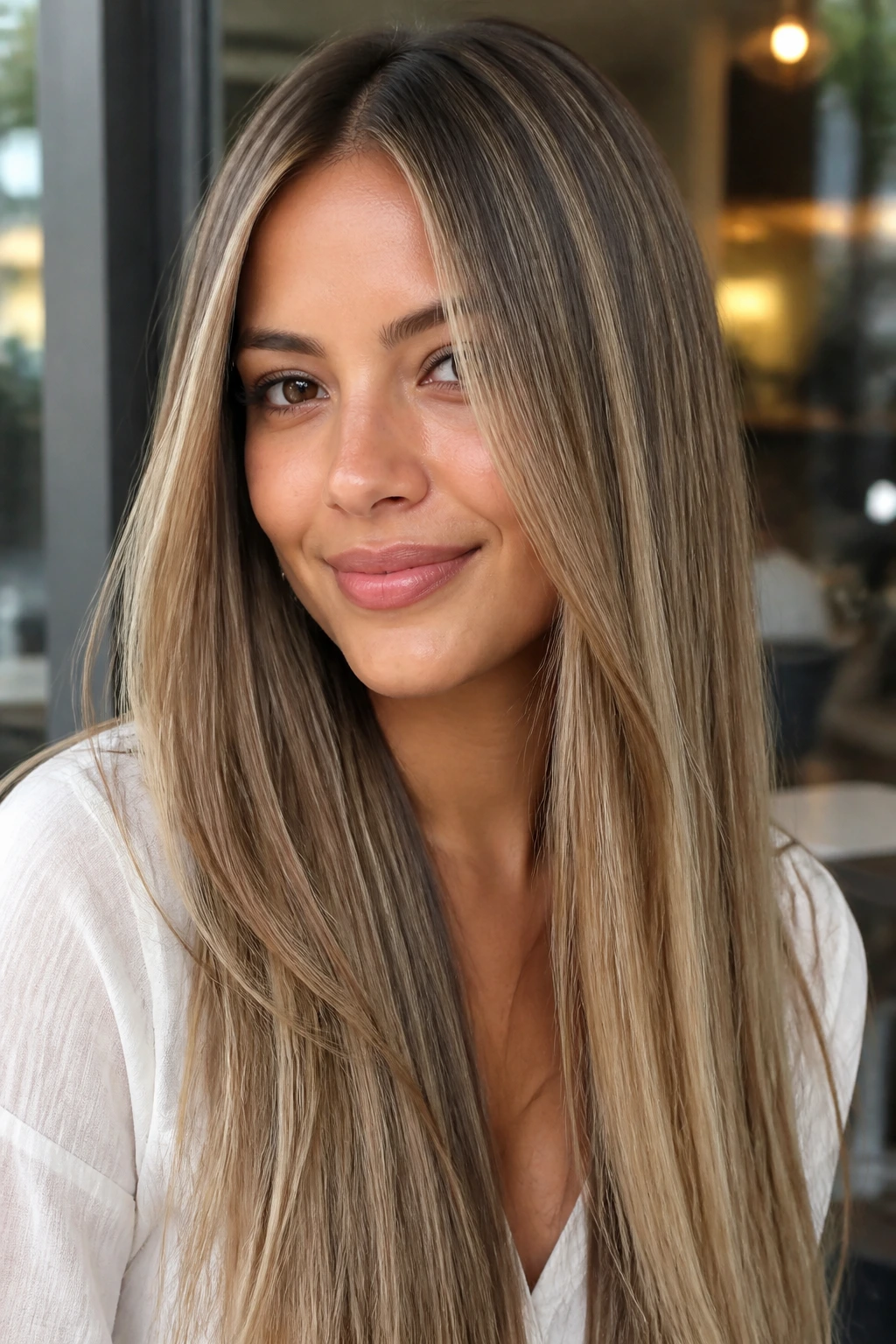
Why do teasylights often look better than broad highlights on long, straight hair? Because the weave is softer and the grow-out is less obvious.
Teasing the sections before foiling leaves a blurred root line, which matters on tan skin because it keeps the contrast from looking too carved out. Wheat blonde is a good tone here: not too ash, not too yellow, just enough lift to make straight lengths reflect light in a clean, even way.
This look is best if you want lightness but hate the chunky streak effect. The long straight finish shows every line, so the color placement has to be gentle. Ask for more weave at the surface and less underneath. That gives the hair movement when it falls forward or gets tucked behind the shoulder.
19. Bronze Dimension on a Braided Protective Style
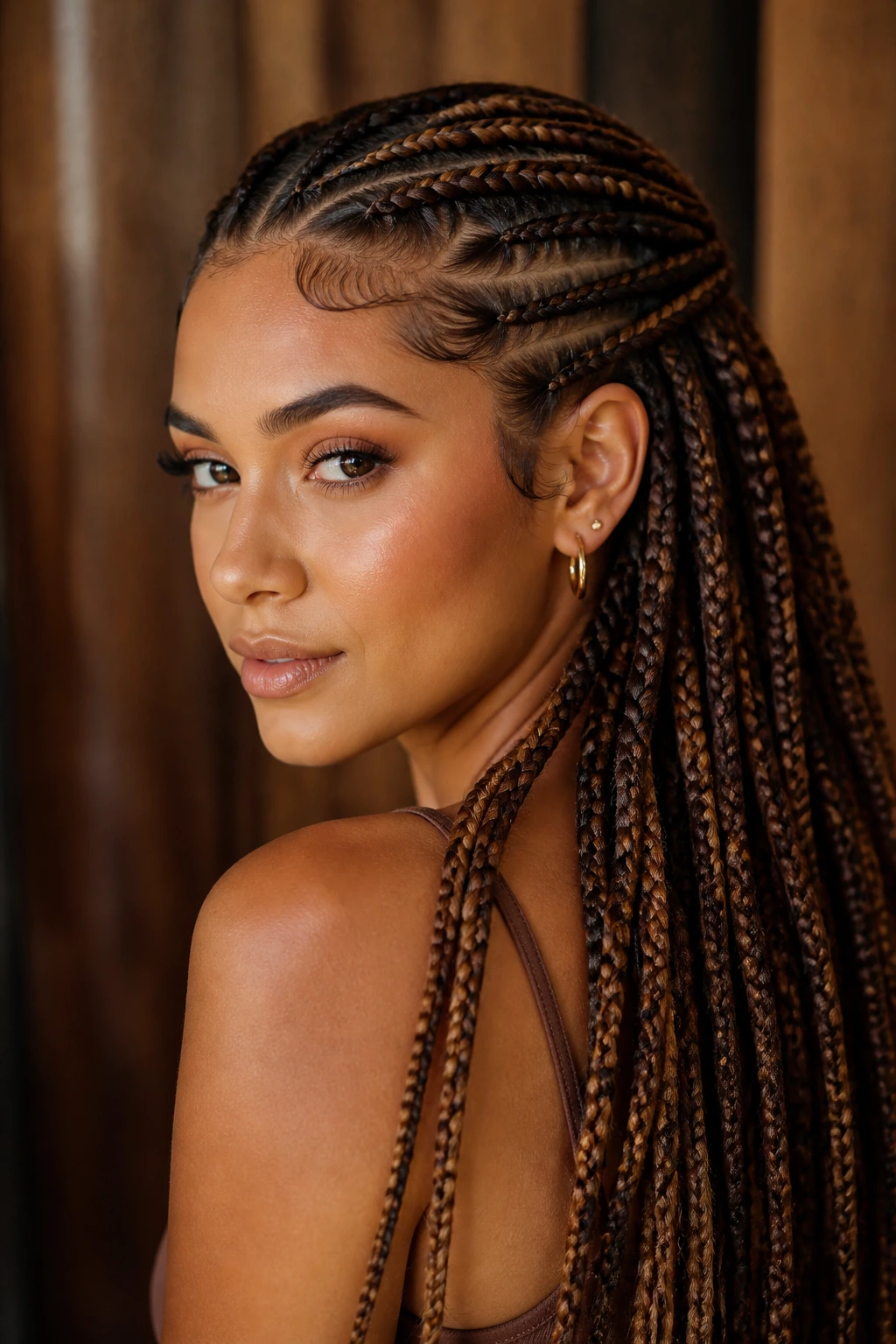
Braids and tan skin make a strong pair when the color is handled with care. Bronze dimension can be built into the braid hair itself, which keeps the look vibrant without stressing your natural strands.
The nice thing about bronze is that it sits between gold and brown. That middle note works across a wide range of tan undertones. Use it in feed-ins, knotless braids, or chunky plaits if you want the color to show in the pattern rather than as one flat shade.
Here’s the part people skip: choose two or three braid shades, not one. A coffee brown, a bronze, and a lighter caramel blend give the style depth and stop it from looking synthetic. If your natural hair is left out at the edges, keep those edges glossy so the contrast feels clean.
20. Sandy Beige Highlights on Soft Curls
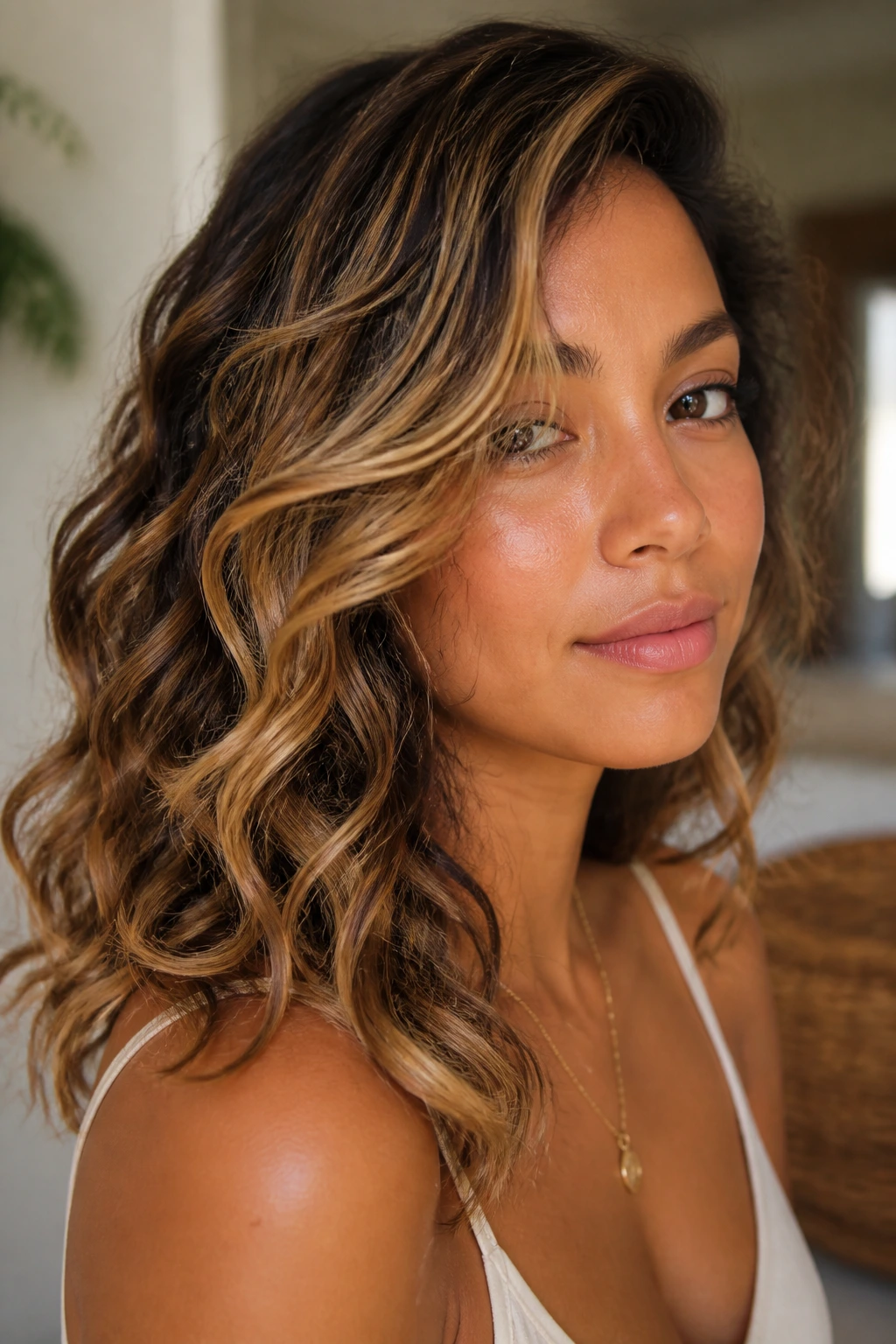
Sandy beige is the color you reach for when you want softness more than sparkle. On tan skin, it avoids the harshness that can come with very pale blonde, especially if your undertone is neutral.
Soft curls are the right partner because they blur the edges of the highlight. The color appears in ribbons, then melts back into the base as the curl falls. That rhythm is what keeps the style from looking too engineered.
Ask for the beige pieces to sit mostly on the outer curve of the curl pattern. If they’re buried too deep, you won’t see them. If they’re too high, the head can start looking light in a way that feels disconnected from the skin.
This is one of the quietest looks in the group, and that’s a compliment.
21. Mahogany Gloss on a Sleek Ponytail
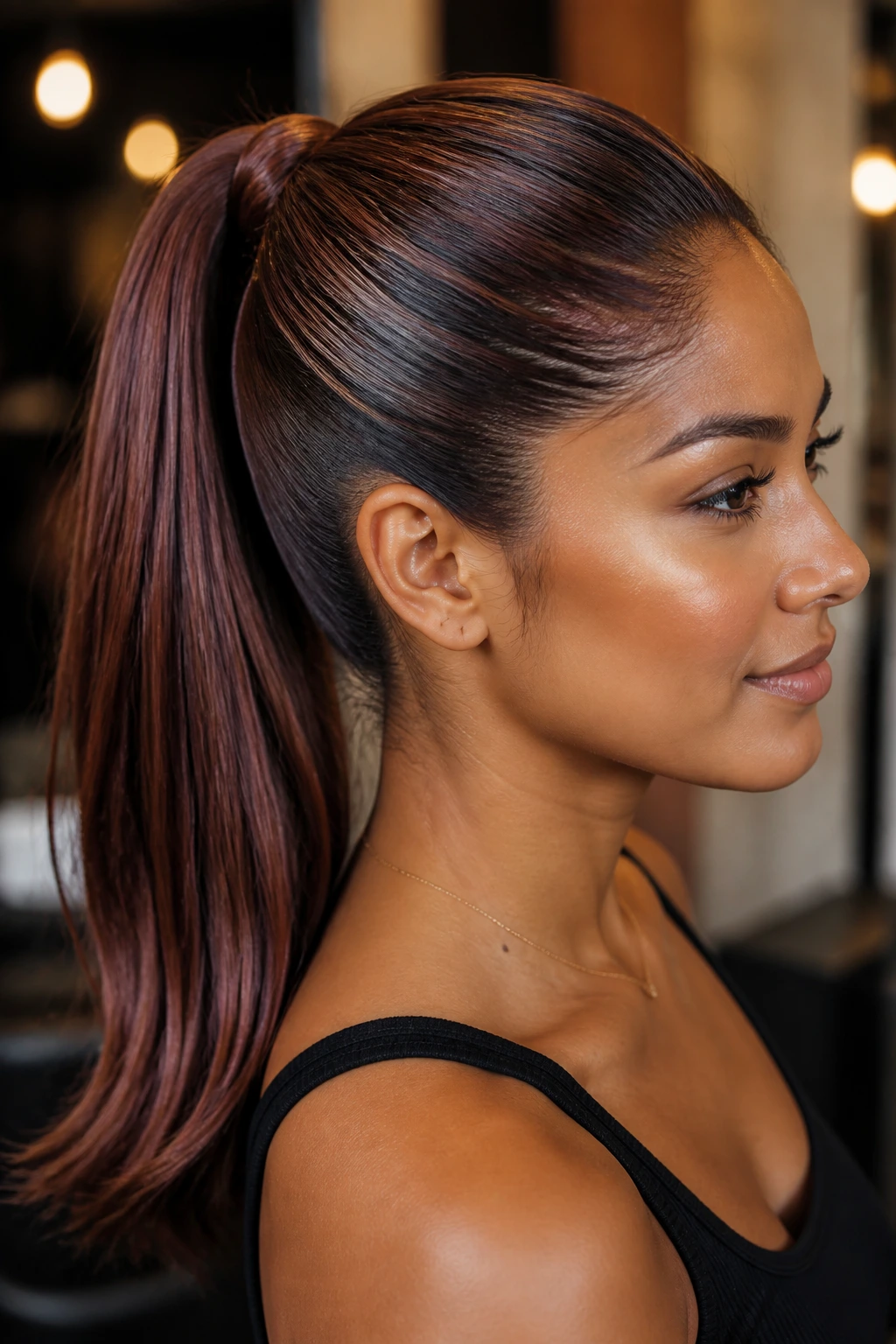
A sleek ponytail can make tan skin look incredibly clean, provided the color has some depth. Mahogany gloss does that job well.
The gloss adds a reddish-brown sheen that catches the light on the lengths and the tail itself. Because the style is pulled back, every bit of shine is visible. On tan skin, mahogany reads richer than plain brown and less abrupt than red.
It’s also one of the better choices if you wear your hair up a lot. The color shows in the ponytail, the wrap section, and the sides near the temples. Ask for a gloss rather than a full lighten-and-tone service if your goal is sheen, not major brightness.
If you want low maintenance with a little drama, this one earns its place.
22. Sunlight Foils on a Short Crop with Texture
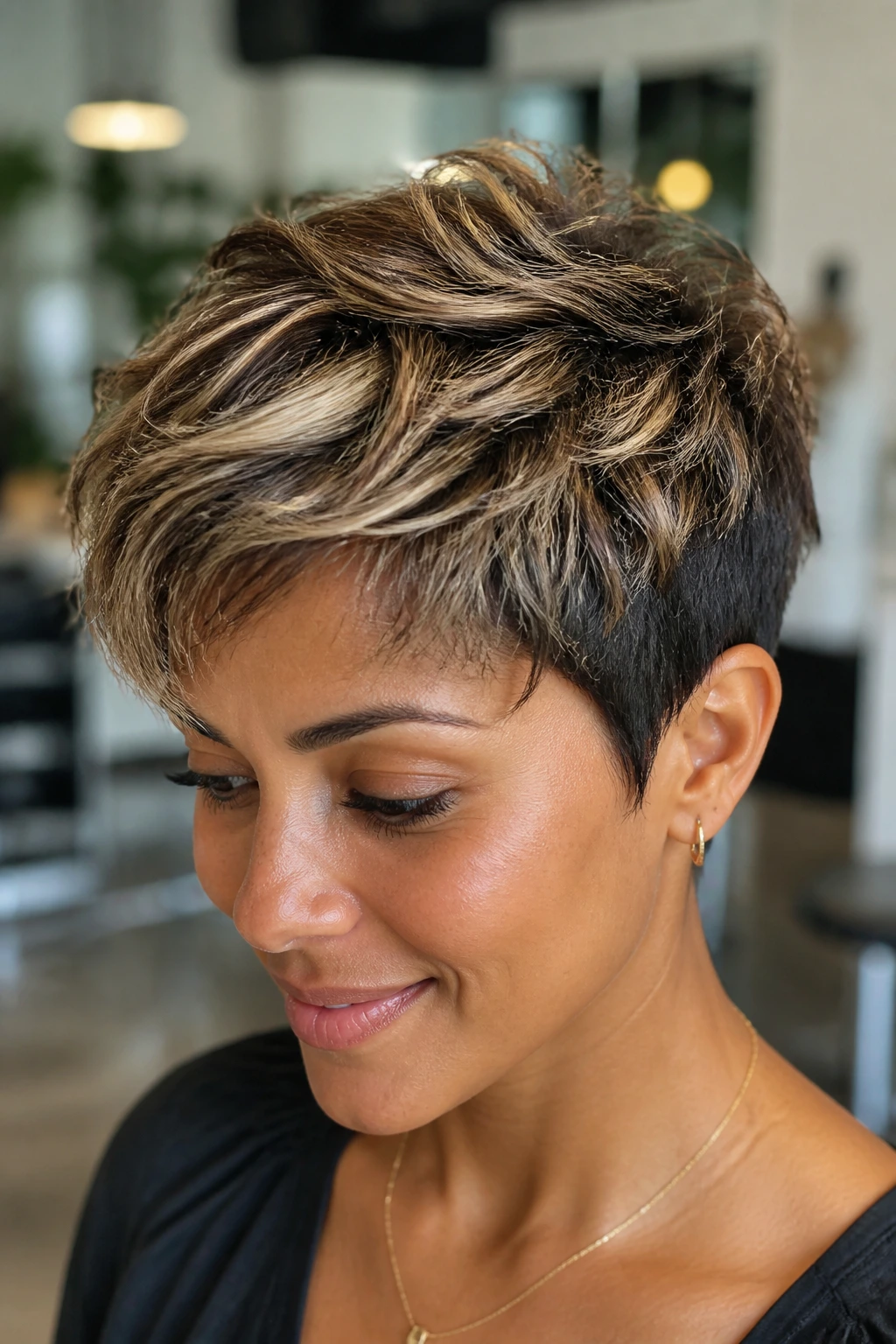
Short textured cuts can handle brighter foils than people expect. The trick is to keep the placement broken up so the light looks scattered, not painted on in one solid line.
Sunlight foils are narrow, irregular, and placed where the hair naturally lifts. On tan skin, that gives the face quick brightness without the need for very pale ends. The short length makes the result feel crisp, especially if the top has choppy texture.
What to Watch For
- Keep the foils fine and staggered.
- Leave some deeper pieces near the nape.
- Use a matte paste or light cream so the texture stays visible.
- Avoid too much lift on the fringe unless you want a bold, graphic result.
This is a good example of color and cut working together instead of competing.
23. Hazelnut Lowlights on Thick Layers
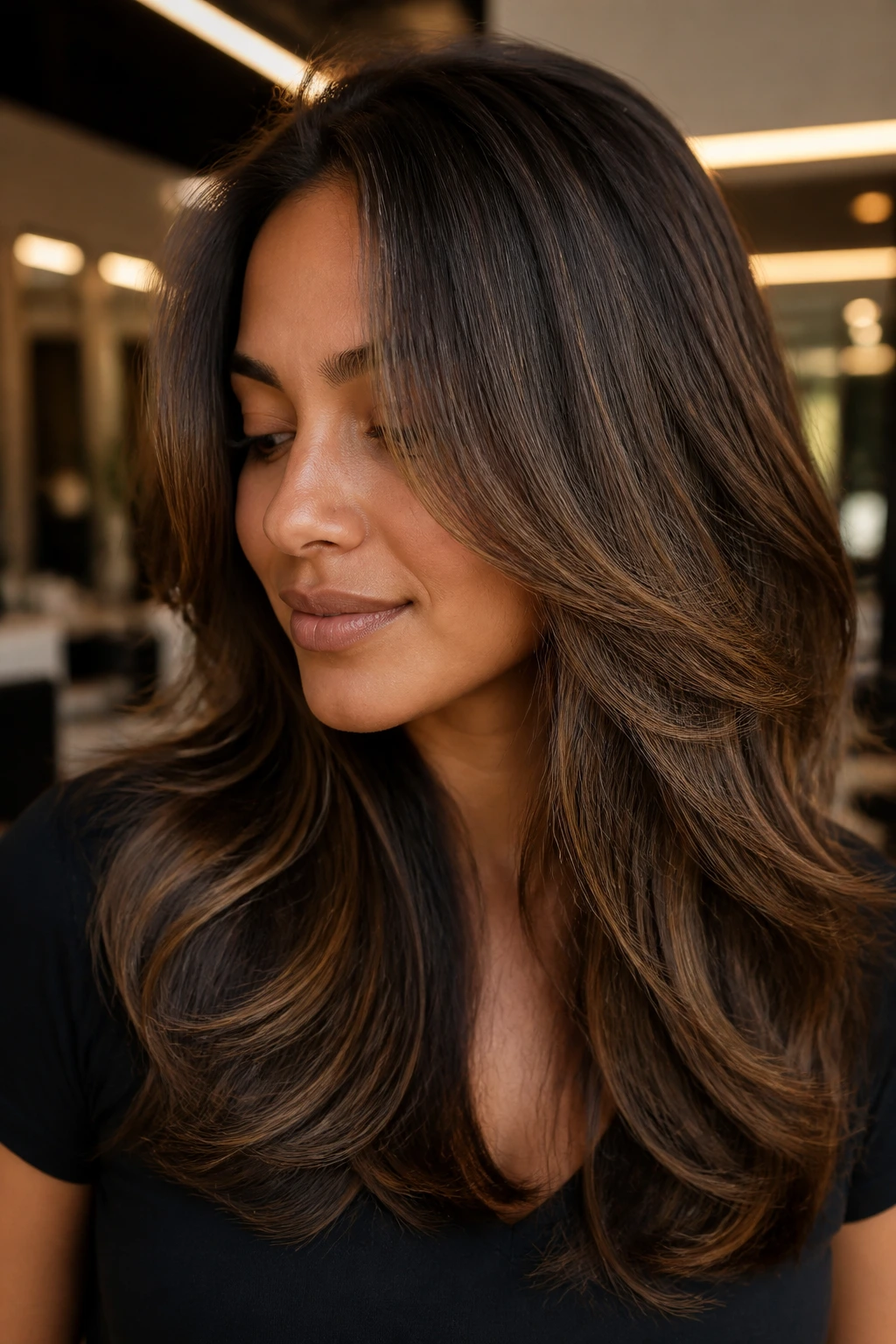
Thick hair can eat up highlight placement if you’re not careful. Hazelnut lowlights help solve that by putting the depth back in.
On tan skin, hazelnut is warm without going orange. It breaks up the mass of hair and makes the layers read more clearly, especially when the cut is long and heavy. A few lighter strands woven between the lowlights keep the result from feeling dark or flat.
I like this option for anyone who has gone too light in the past and wants to recover some richness. It also works when the hair is naturally dark but you want movement without a full brightness overhaul. Ask for the lowlights to be concentrated underneath and through the interior layers so the top still catches light.
24. Peach-Infused Highlights for Tan Skin on a Tapered Lob
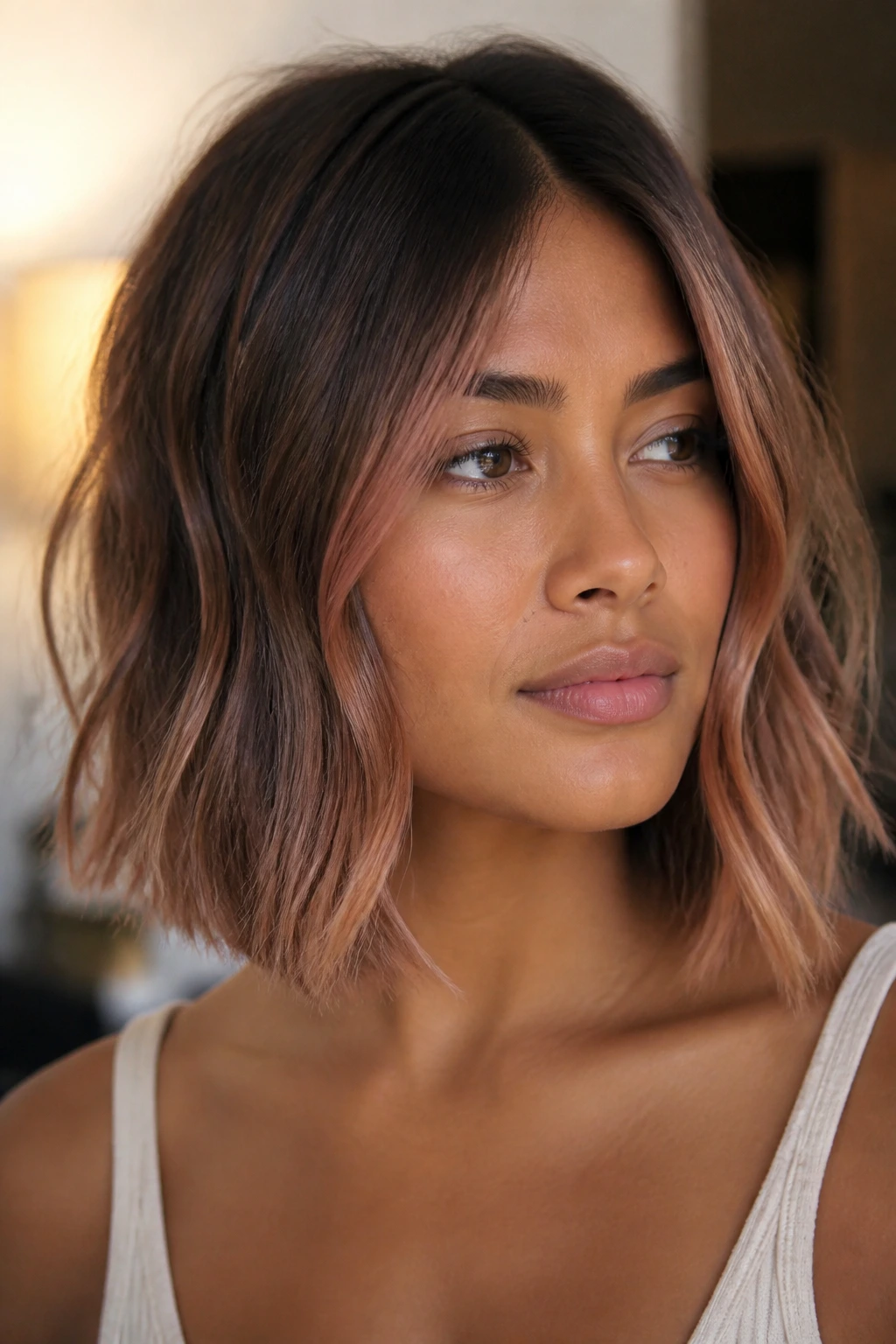
Peach is a tricky word, because it can sound louder than it needs to be. On tan skin, a peach-infused highlight works best when it stays soft and blended, not candy-bright.
The tapered lob gives the color shape. The shorter back and longer front create a natural fade, which helps the peach tone appear only where the hair swings. If your skin leans warm or peachy, this can look fresh without feeling juvenile.
Keep the base neutral brown or light brunette, then layer a peach-beige gloss over a few lighter ribbons. The effect should read as warmth first, color second. That little distinction matters. Hard peach can fight tan skin; muted peach usually doesn’t.
25. Vanilla Beige Balayage on Blow-Dried Layers
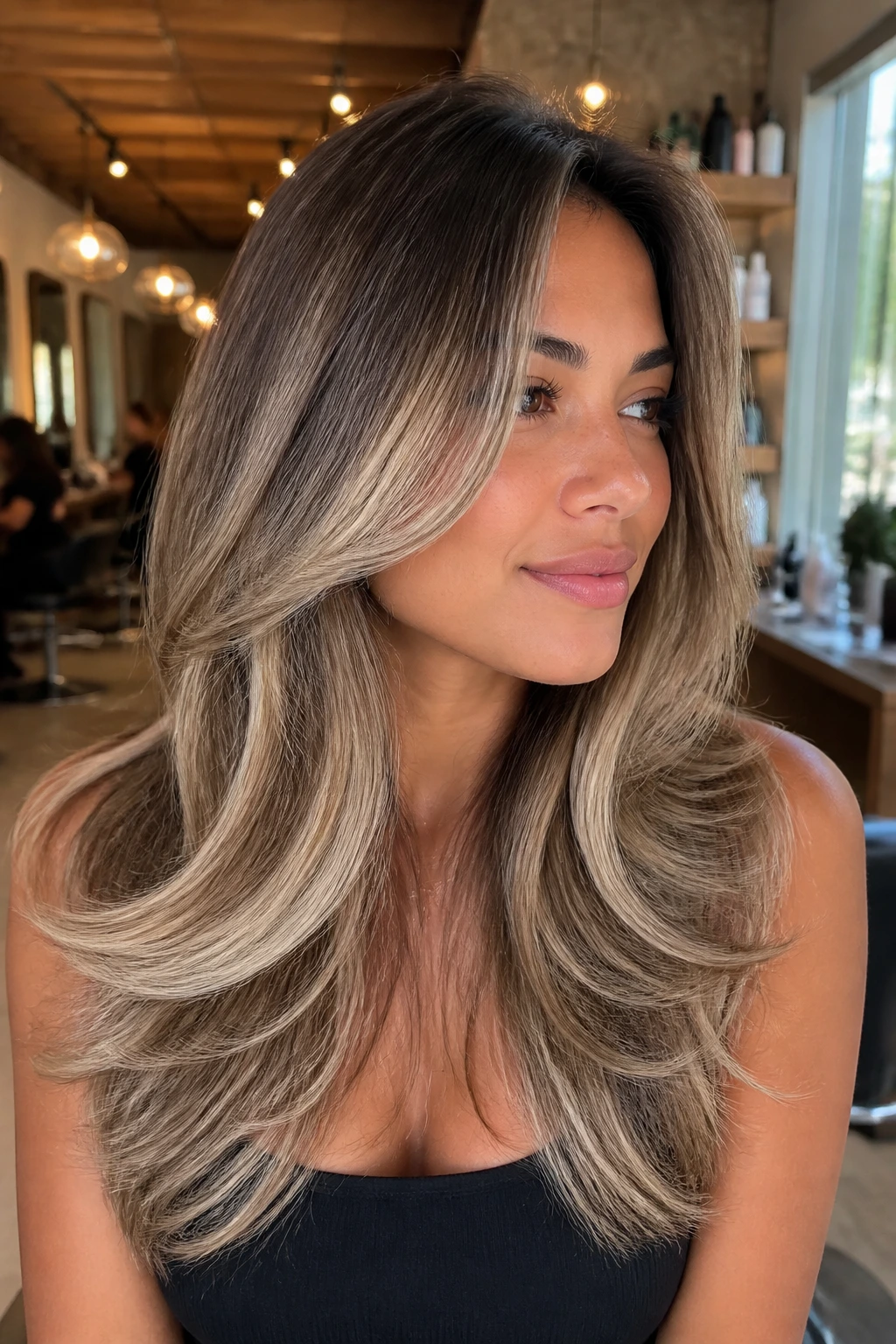
Vanilla beige is what I’d call the cleanest blonde in this group. It brightens tan skin without drifting too gold or too ash, which makes it useful for a wide range of undertones.
Blow-dried layers show it best because the movement separates the ribbons. The highlights sit in the bends and flips of the cut instead of blending into one block. Ask for soft hand-painted placement with a beige gloss at the end if your hair tends to go yellow.
A Good Rule of Thumb
If the hair starts looking stripey, the pieces are too wide. If the ends go chalky, the toner is too cool. Vanilla beige works when it stays smooth, creamy, and slightly warm — just enough to light up the face without stealing the show.
Why Placement Matters More Than Picking a Pretty Swatch
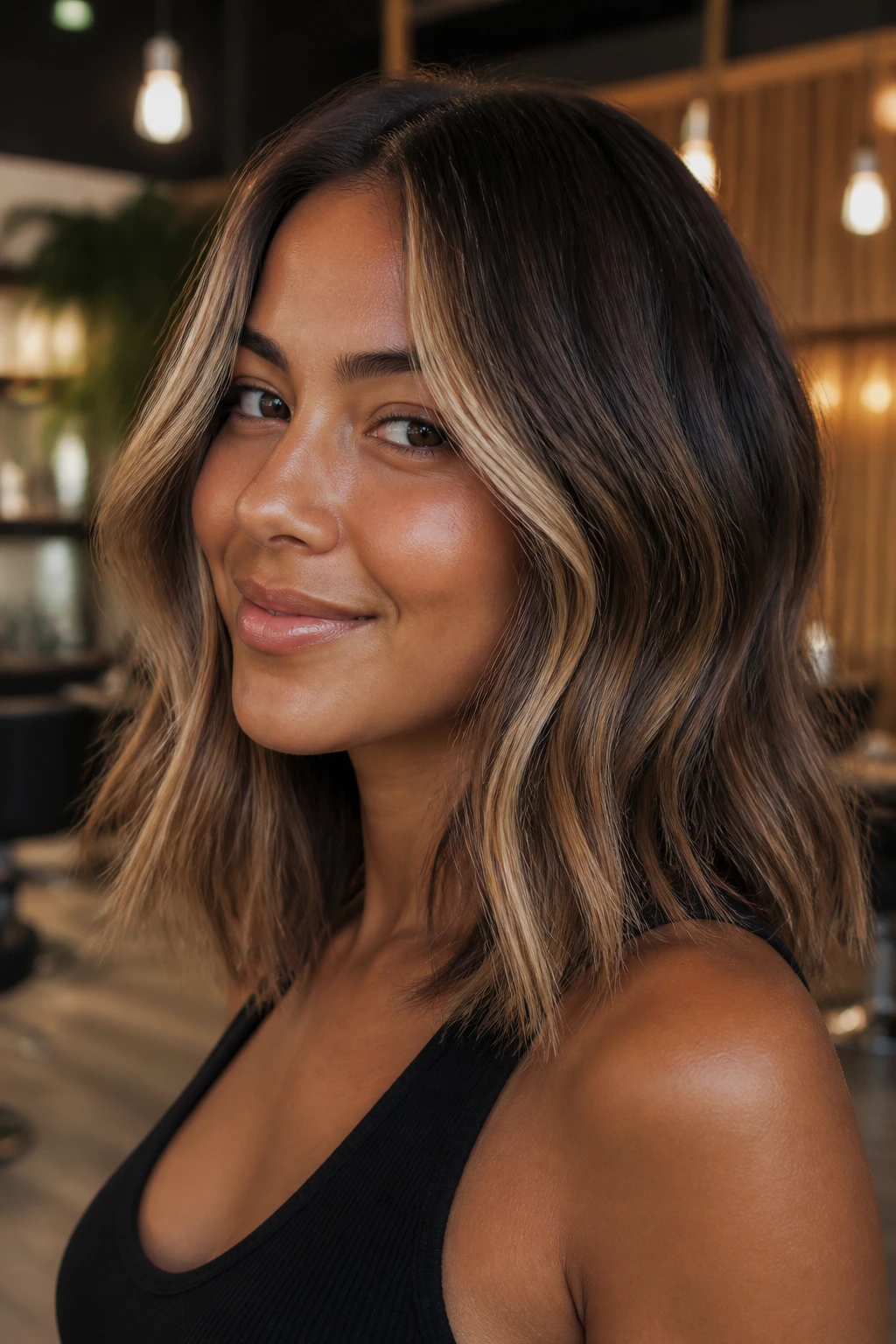
Tan skin is less forgiving of lazy placement than people think. The color can be lovely on a swatch card and still look awkward if it lands in the wrong place on the head. A few inches too low around the face, and the brightness misses the cheekbones. Too much light through the ends, and the hair can look worn out instead of dimensional.
That is why the haircut matters so much. A curly shag hides and reveals color in a completely different rhythm than a blunt bob. On straight hair, every line shows. On coils and waves, the same ribbon can disappear, then reappear a second later when the hair shifts. The colorist should work with that movement, not pretend it doesn’t exist.
Warm Tan, Neutral Tan, and Olive Tan
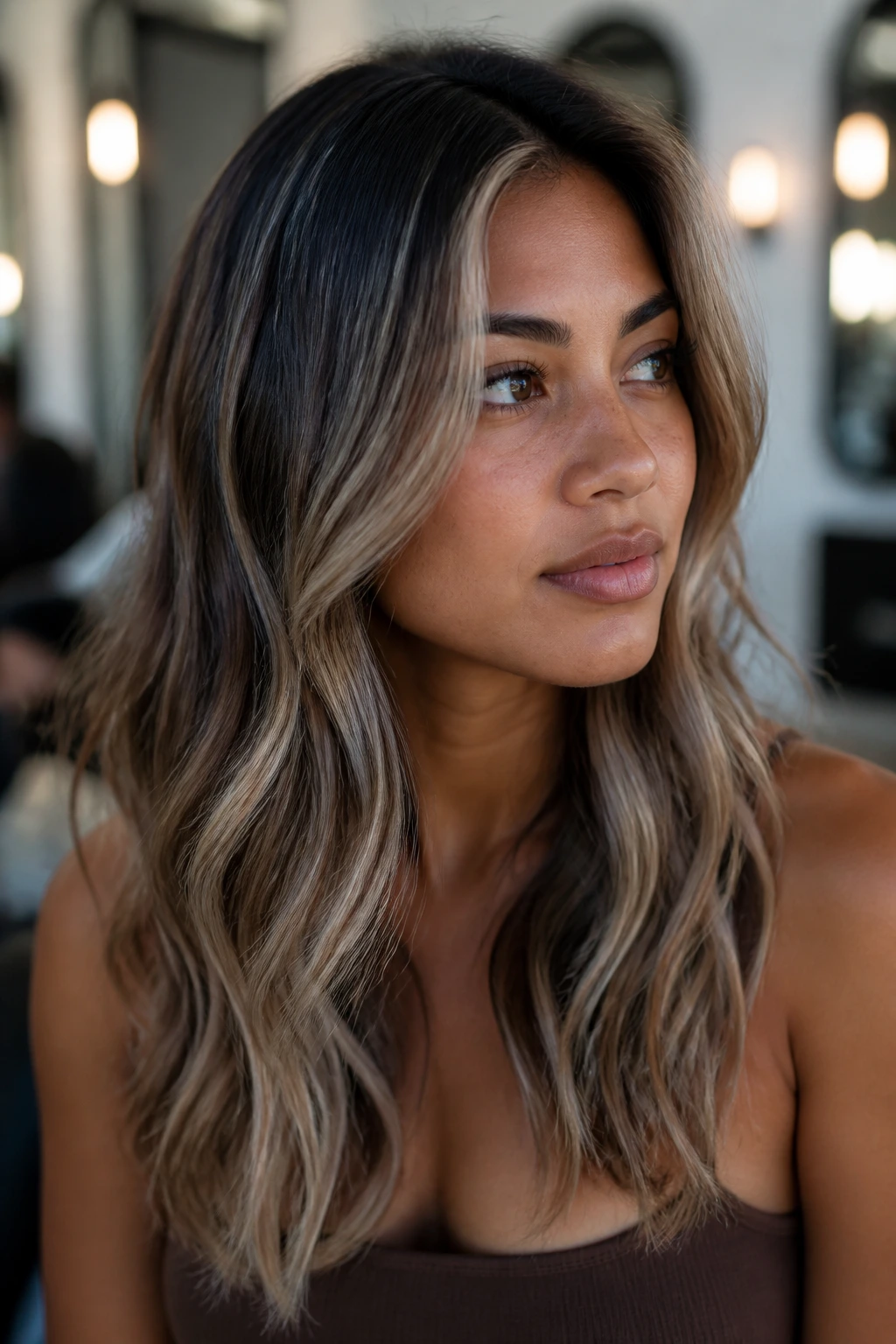
Warm tan skin usually likes caramel, honey, bronze, and copper-brown. Neutral tan skin can take beige blonde, mushroom, and champagne without looking drained. Olive tan skin often looks best with bronde, smoked beige, and soft chestnut because those shades don’t pull green or yellow against the skin.
The biggest mistake is assuming all tan skin wants the same thing. It doesn’t. One person can wear a golden money piece and look sunlit. Another needs a beige ribbon or the skin starts looking dull. Pay attention to the undertone first, then choose the shade family.
Why Texture Changes the Whole Result
Straight hair shows clean lines, so the highlight placement has to be precise. Wavy hair softens the transition, which is forgiving. Curly hair compresses color, so the light pieces need more space and usually a little more brightness than you’d expect once the curl dries and shrinks.
That’s the whole game. Shade matters, yes. Placement matters more.
Tools That Make These Colors Easier to Live With
- Color-safe shampoo: Keeps lighter pieces from fading out fast; sulfate-free formulas tend to be kinder to highlighted hair.
- Purple shampoo: Useful for blonde, champagne, and beige tones, but use it sparingly so tan skin doesn’t start looking flat.
- Blue shampoo: Better for orange or copper brass in brunette-based highlights.
- Deep conditioner or mask: Lightened ends need weekly moisture, especially if the color sits on long layers or curls.
- Heat protectant spray: Non-negotiable if you blow-dry or curl your hair; keep it on the midlengths and ends.
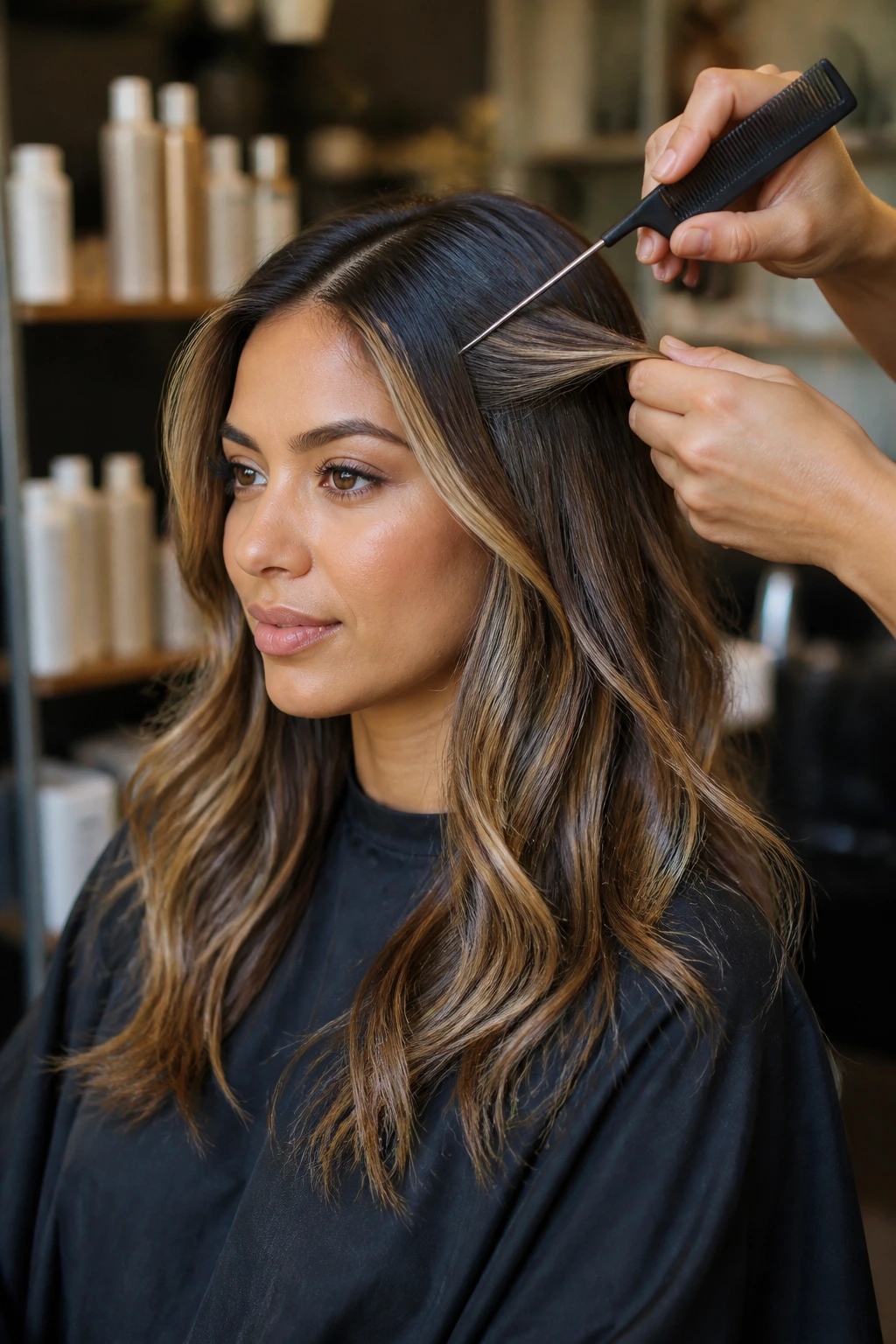
- Tail comb: Helps with clean parts when you’re sectioning for styling or at-home toning.
- Sectioning clips: Keeps the top and crown out of the way when you’re styling waves or blowouts.
- Blow dryer with nozzle: Gives a smoother finish and helps the highlight ribbons show up clearly.
- 1-inch and 1.25-inch curling irons or wands: Smaller barrels make the color look more woven; larger barrels show broad ribbons.
- Silk or satin pillowcase: Cuts down on friction, which matters when the ends have been lightened.
How to Choose the Shade and Product Without Guessing
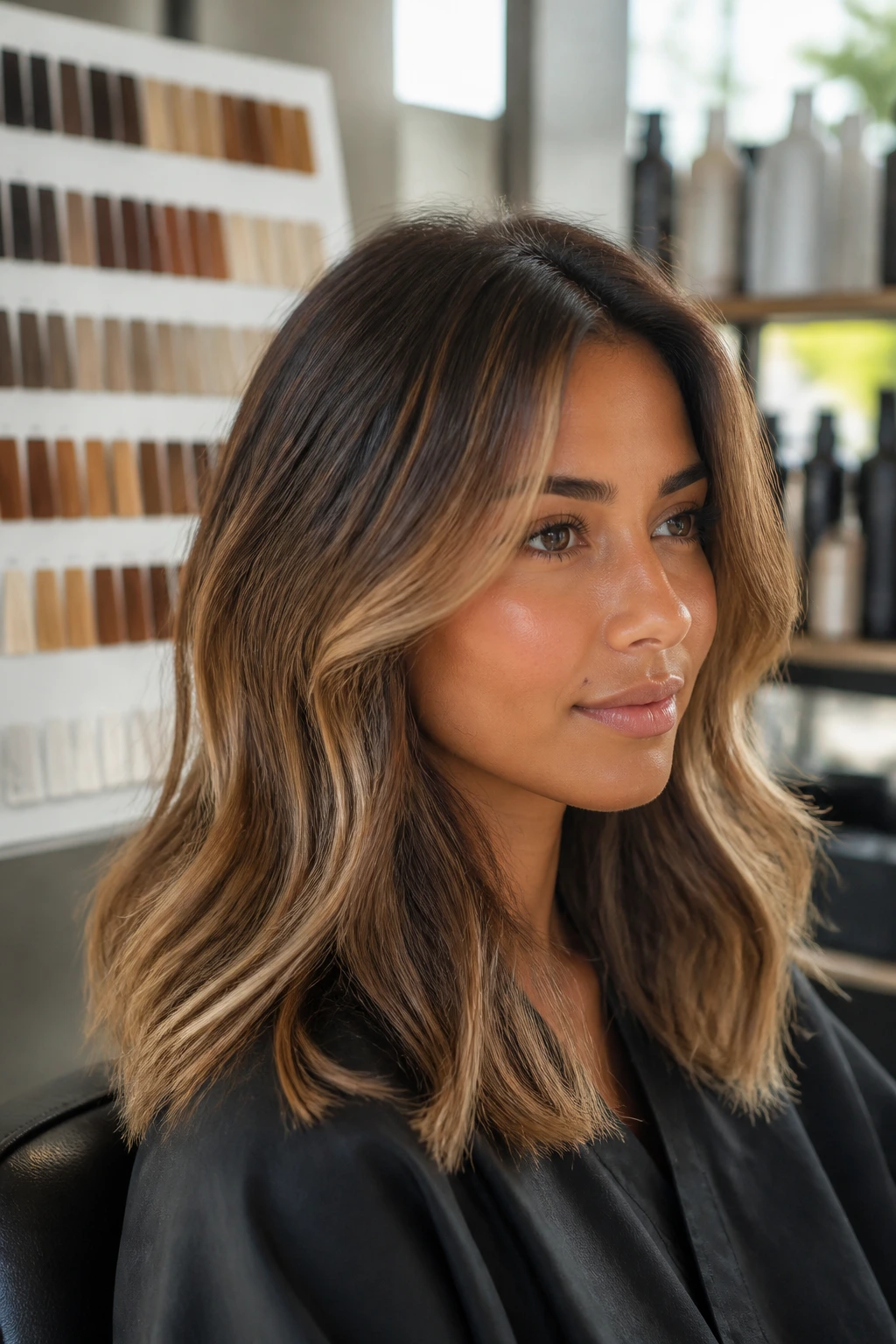
Bring photos, but bring the right ones. A filtered selfie on an app is useless. You want three references: one for the tone, one for the placement, and one for the finish. A caramel balayage on a curly shag is not the same thing as caramel balayage on long waves, and color charts do not always show the difference well.
Ask your colorist what level they’re targeting. Level 7 usually reads like caramel or dark blonde. Level 8 moves into honey and beige blonde. Level 9 gets champagne and vanilla territory. If your natural hair is dark brown, jumping from level 4 to level 9 in one appointment can be rough on the hair, so a softer target often looks better and wears better.
Porous hair grabs tone faster than healthy hair. That means a too-cool toner can make the ends look gray, especially against tan skin. A beige or soft gold gloss usually behaves better than a harsh ash toner. If your hair tends to turn orange, ask about blue-based toning for brunette highlights and a quick glaze refresh every few weeks.
And if you’re choosing at-home care, spend the money on the conditioner and heat protectant before you buy anything cute for the shower shelf. Pretty bottles are nice. Smooth ends are nicer.
How to Wear These Looks So the Color Shows
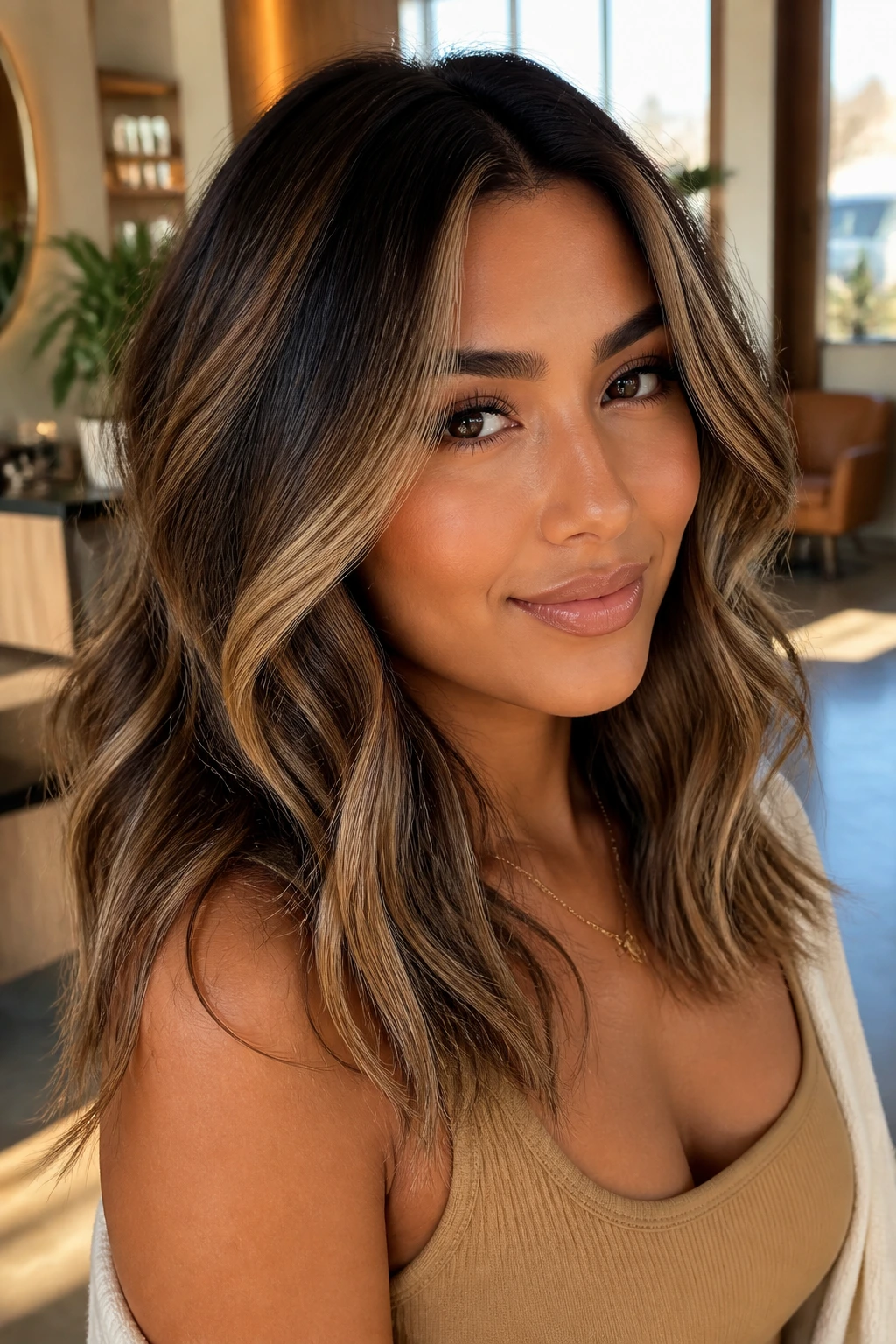
Presentation: Center parts show off money pieces and teasylights, while a soft side part lets balayage and lowlights sweep across the cheekbones. If you want the color to read clearly, bend the front sections away from the face with a round brush or curling iron.
Accompaniments: Warm-toned makeup helps, especially terracotta blush, bronze eyeshadow, peach lip, or gold jewelry. Tan skin with beige highlights can look a little washed out next to cool silver and gray clothing, so a cream, camel, olive, or rust top often does more for the whole look.
Portions: If you want a small change, ask for partial highlights around the hairline and crown only. If you want the color to show from every angle, request full-head foils, denser balayage, or a stronger lowlight pattern through the interior layers.
Beverage Pairing: Bring plain water, iced tea, or a cold coffee to the appointment. Foil sessions run long, and nobody wants sticky juice or a sugary drink near fresh toner and section clips.
Additional Tips and Color Boosters
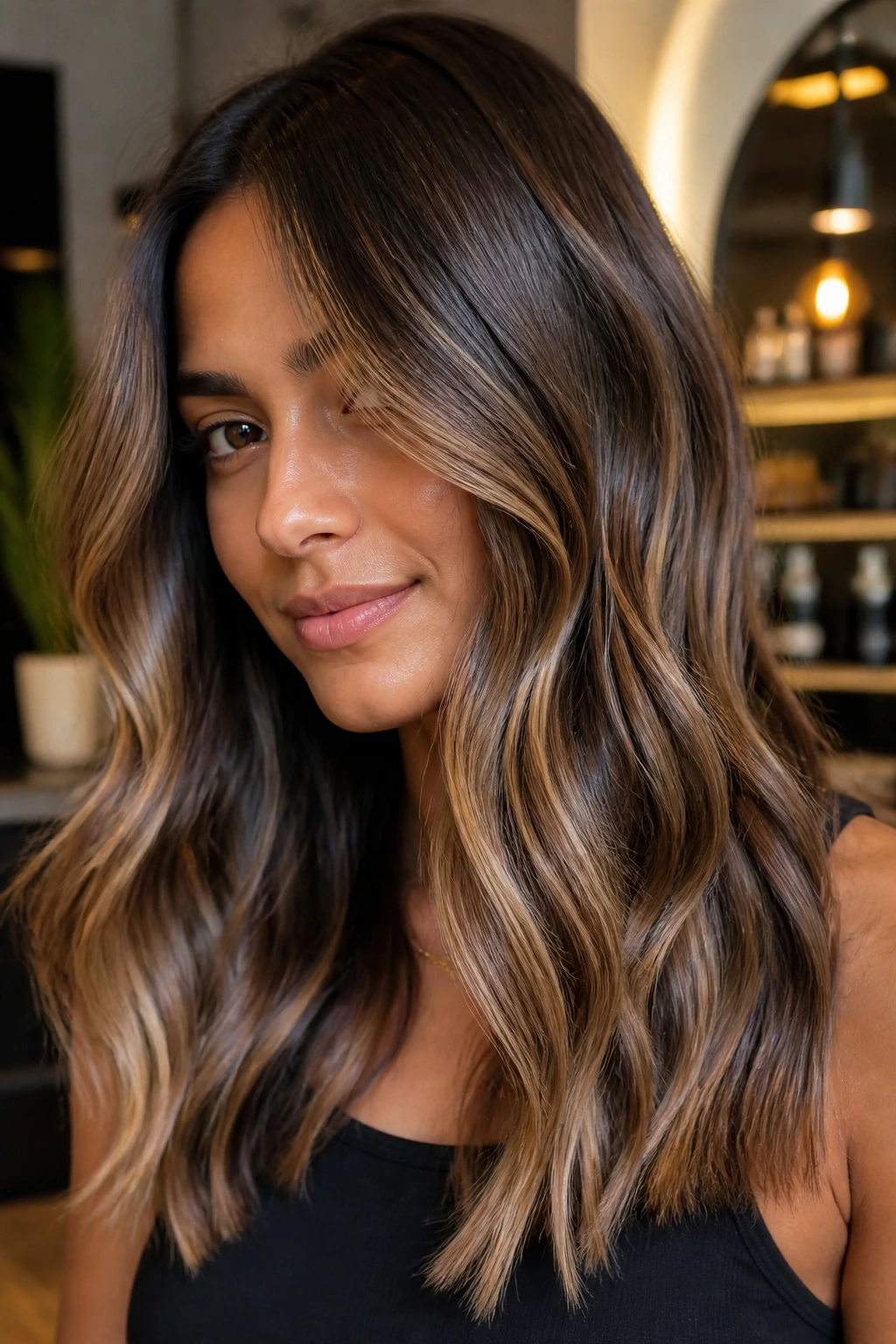
Tone Enhancement: A clear or beige gloss every 4 to 6 weeks keeps highlights from turning dry-looking. If your hair pulls brassy, ask for a gloss that is one half-step cooler than the highlight shade rather than jumping straight to silver.
Customization: Curly hair needs the lighter pieces placed higher than straight hair because the curl will spring up and hide color when it dries. On straight hair, the same placement can sit lower and look balanced.
Serving Suggestions: A bit of shine spray on the mids and ends shows off the ribbons, but keep it off the roots or the style can go limp fast. If you wear your hair up, leave a few face-framing pieces loose so the contrast doesn’t disappear.
Make-It-Yours: Golden tan skin usually loves caramel, honey, and copper-brown. Olive tan skin tends to look cleaner with beige, bronde, mushroom, or neutral chestnut. Deep tan skin can carry stronger contrast, but the light pieces still look better when they’re softened with a root melt.
Keeping Highlights Fresh Between Appointments
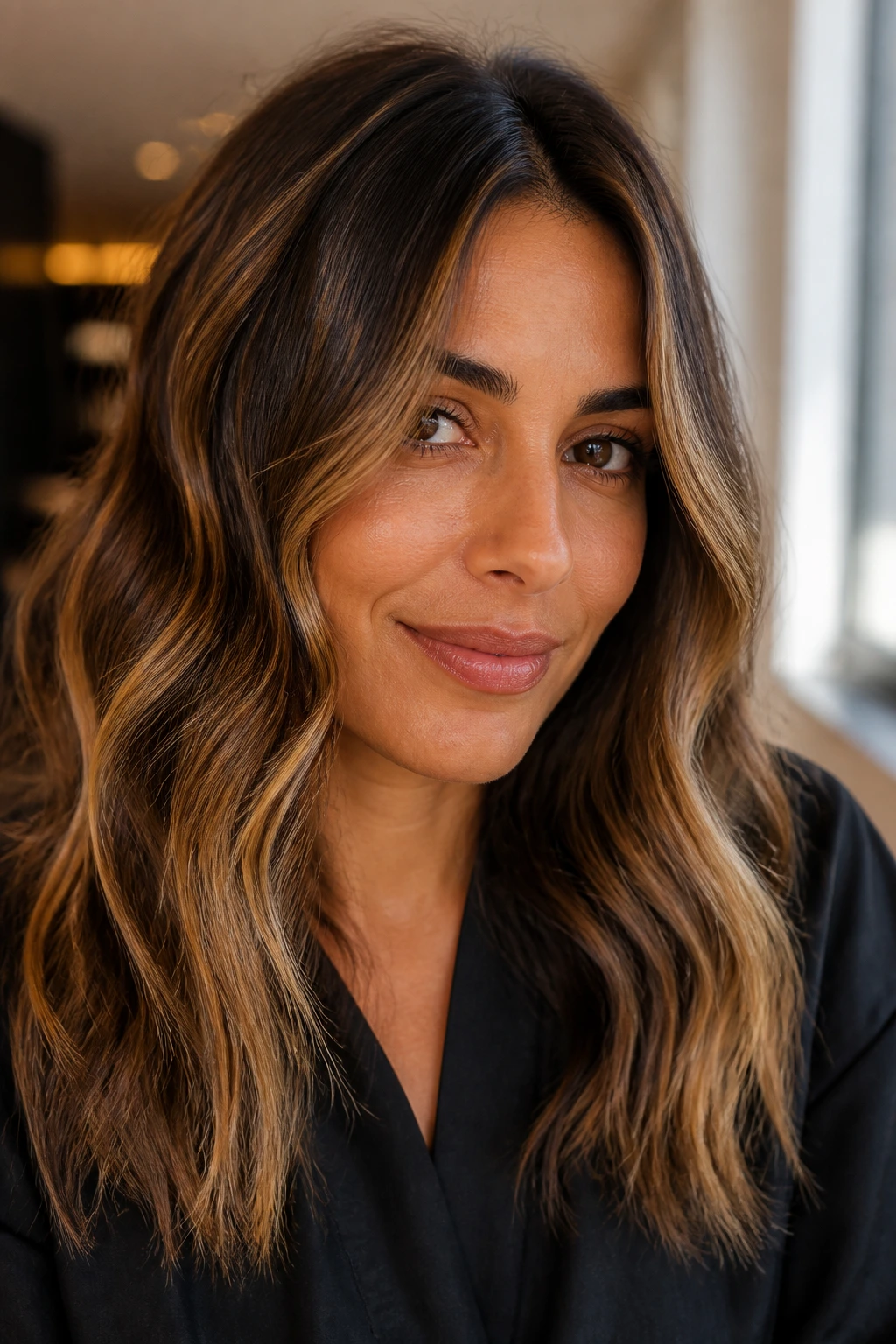
Think in time blocks, not wishful thinking. A color service is only the start.
After the appointment, wait 48 to 72 hours before the first shampoo if you can. That gives the cuticle time to settle and helps the toner hold on a little longer. Then wash two or three times a week instead of every day. Tan skin tends to look best when the highlights stay glossy, and daily washing burns through that shine fast.
Purple shampoo is useful, but not as a lifestyle. Use it once every 7 to 10 days on blonde, champagne, or beige pieces, and leave it on for only 1 to 3 minutes unless the stylist tells you otherwise. Blue shampoo is the move for orange brass in brunette-based color, but it works best in small doses too.
Deep-condition the midlengths and ends once a week. If your hair is curly or long, a mask with slip matters more than a fancy label. Lightened hair needs that softness, or the color starts looking frayed at the edges. Heat styling should stay around 300°F to 350°F, and finer highlighted hair usually does better at the lower end.
For touch-ups, partial highlights around the face can stretch 6 to 8 weeks. Full balayage or foil work often needs a gloss refresh or targeted clean-up closer to 8 to 12 weeks, depending on how fast your roots grow and how bright you went. If you keep the root shadow soft from the beginning, the grow-out stays prettier for longer. That part’s boring. It matters.
Variations and Adaptations to Try
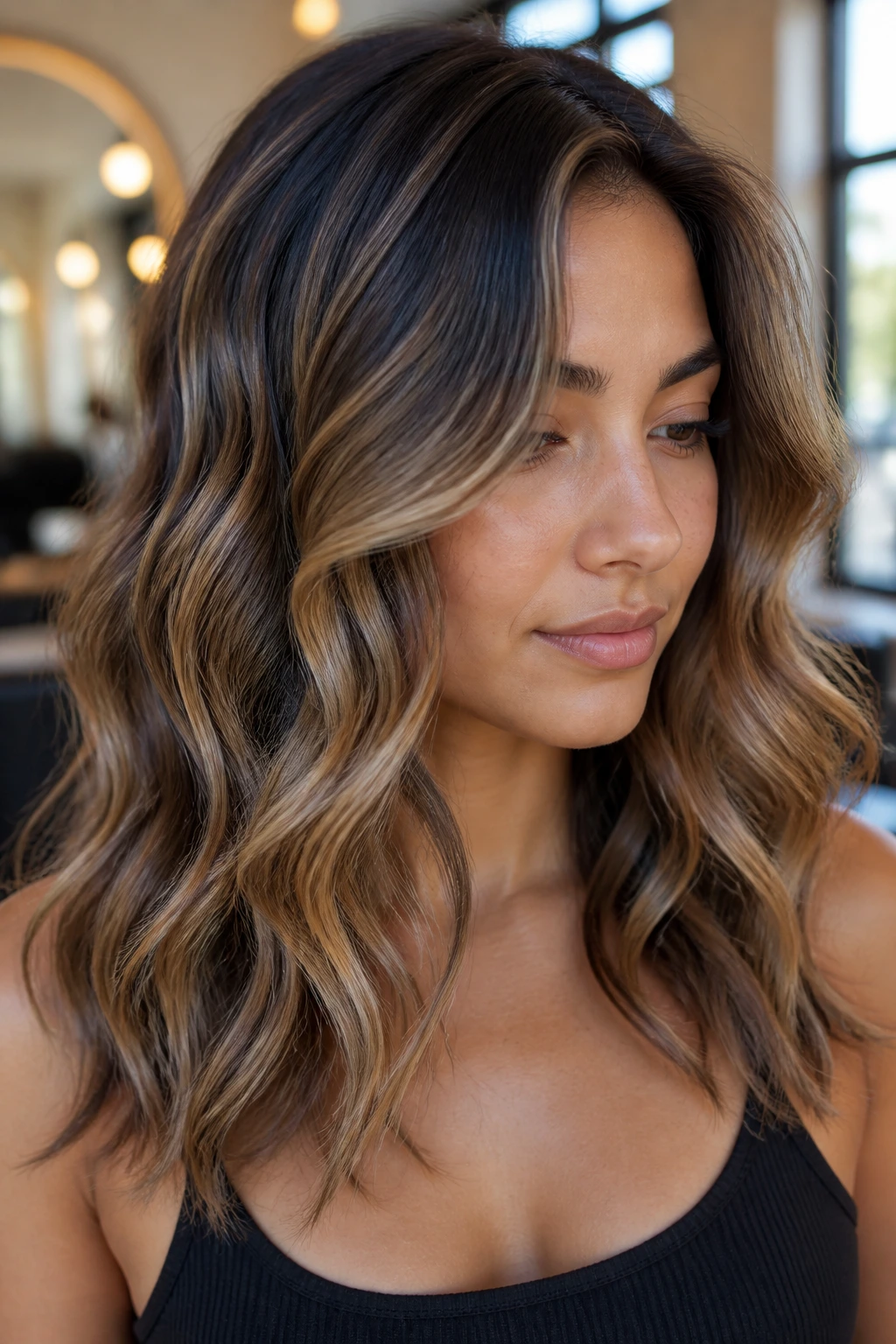
Warm Honey Map: If your tan skin leans golden, ask for caramel, honey, and bronze pieces concentrated around the face and crown. This keeps the overall effect bright while still looking like your hair, not a borrowed shade. It works especially well on waves and blowouts because the bends catch the warm tones.
Olive Beige Shift: For olive or neutral tan skin, swap gold-heavy highlights for beige, mushroom, and soft champagne. These shades stay cleaner against the skin and avoid the orange cast that can show up after a few washes. I’d use this on straight hair, bobs, and blunt cuts where the line needs to stay crisp.
Curly Ribbon Layout: On curls, ask for larger, more deliberate ribbons rather than tiny packed foils. The curl pattern breaks up the color, so a slightly bolder placement reads softer once dry. This works on shags, layered curls, and curly lobs that need movement.
Low-Commitment Glow: If you hate maintenance, go for partial highlights around the hairline and top layer only, then leave the underneath deeper. The grow-out is easier, and the whole look still brightens the face. This is the safest route if you only want to touch your hair every couple of months.
High-Contrast Brunette Lift: If your tan skin can handle more drama, keep the base dark and add honey or caramel ribbons that lift 2 to 3 levels higher. The contrast looks sharp on long waves, ponytails, and butterfly layers. It’s not subtle, and that’s the point.
Common Mistakes to Avoid
-
Choosing the shade from a filtered photo: A warm filter can make a pale blonde look wearable when it would actually wash your face out. Bring unfiltered references and ask what level the color really is.
-
Going too light too fast: Jumping several levels in one appointment can rough up the hair and leave tan skin looking disconnected from the color. A slower lift with a richer toner usually wears better.
-
Skipping lowlights on dark or dense hair: All-light, no-depth hair often looks flat after a week or two. A few lowlights or a root shadow give the highlights shape and keep the finish believable.
-
Using too much purple shampoo: Overdoing it can mute the warmth that makes tan skin glow. If the blonde starts looking gray or dull, cut back to once a week or less.
-
Ignoring the haircut: Highlights that look lovely on long layers can disappear on a blunt bob or turn noisy on a pixie. The cut should decide where the color gets placed.
Questions People Ask Before Booking
Can tan skin wear ash blonde highlights?
Yes, but the ash needs a soft hand. On olive or neutral tan skin, a beige-ash blend usually looks better than a hard, icy blonde that can drain the face.
What highlight shade looks best on warm tan skin?
Caramel, honey, bronze, and cinnamon-brown tend to flatter warm tan skin because they sit in the same temperature range. They brighten the face without creating a harsh contrast.
Is balayage or foil highlighting better for tan skin?
Balayage gives a softer grow-out, while foils give more lift and a brighter result. If you want subtle movement, balayage is easier to live with; if you want stronger brightness near the face, foils usually do more.
How often do highlights need to be toned?
Most tan-skin-friendly highlights hold up well with a gloss or toner refresh every 4 to 8 weeks, depending on porosity and how often you wash. If the color starts turning brassy, don’t wait until it looks faded to fix it.
What if my hair is dark brown and I want honey highlights?
You can get there, but it may take more than one session if you want to protect the hair. A colorist may lift first, then tone to honey or caramel so the result stays rich instead of orange.
Do highlights work on curly hair?
They do, but the placement needs to respect shrinkage and volume. Curly hair usually needs larger ribbons and a little more brightness than straight hair because the curl pattern hides part of the color.
How do I stop highlights from looking brassy on tan skin?
Ask for a toner that matches your undertone instead of reaching for the strongest ash possible, then use a targeted blue or purple shampoo only when needed. Too much toning can make the hair look dull, which is its own problem.
Which style shows highlights best: straight, waves, or curls?
Waves show the most obvious dimension, straight hair shows the cleanest placement, and curls show the most movement. If you want the color to read clearly with the least effort, loose waves are usually the easiest place to start.
The Glow That Stays in Balance
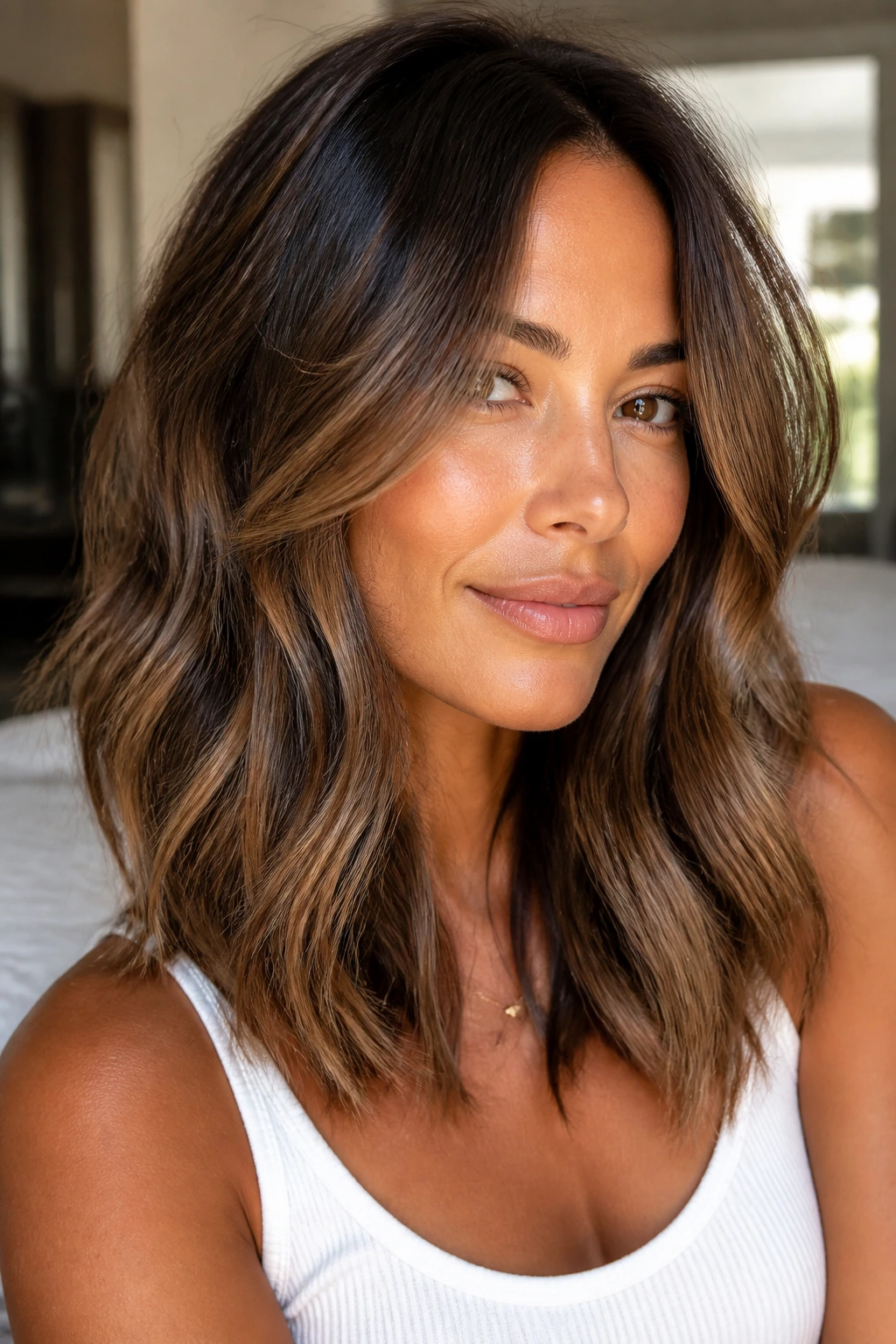
Tan skin does not need pale, icy brightness to look good. Most of the time, it looks better when the hair has some warmth, some depth, and a few pieces placed exactly where the face needs light.
That is the part people miss. A highlight shade can be beautiful on a swatch and flat on a head of hair if the undertone is wrong or the placement ignores the cut. Get those two things right, and even a simple caramel ribbon or beige babylight can look polished in a way that feels effortless without being lazy.
If you’re sitting between two options, trust the one that keeps your skin looking alive in daylight. That is usually the better hair color.