



Short haircuts for women over 50 with caramel highlights have a useful trick up their sleeve: they can make a cut look shaped even on the days when your hair refuses to cooperate. A pixie that used to feel a little severe suddenly gets softness at the temple. A bob that was tipping toward flat gets warmth right where the eye lands first.
Caramel sits in that sweet middle zone between blonde and brunette. It’s warm without turning loud, lighter without looking stripey, and rich enough to play nicely with silver threads, darker roots, and the little changes in texture that tend to show up over time. On short hair, that matters more than people think. You don’t have a lot of length to hide behind, so placement does the heavy lifting.
And placement is the whole story here. A few ribbons around the crown, a soft veil at the fringe, a touch through the sides, maybe a lowlight tucked underneath so the top doesn’t puff out like one solid block — that’s what gives a short cut movement. The best versions don’t scream “highlights.” They just make the haircut look alive.
Why Caramel Highlights Change Short Hair So Fast
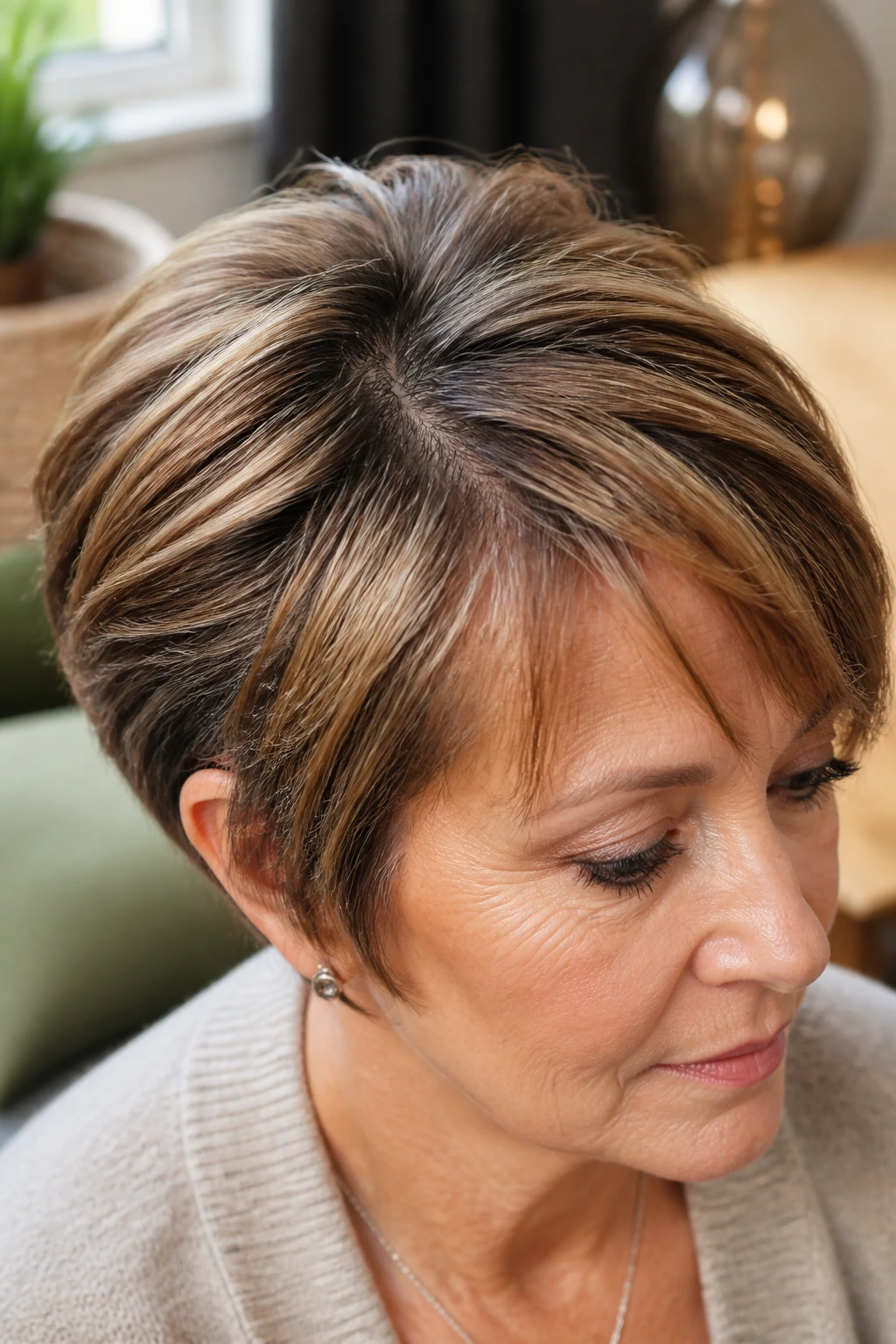
Soft regrowth line: Caramel sits close enough to brunette and silver that the grow-out looks gentler than pale blonde, which matters when you don’t want a harsh strip at the roots.
More shape, less bulk: A short cut with light pieces at the crown and front edge reads as layered even if the haircut itself is tidy and compact.
Better with gray: Caramel doesn’t fight gray hair the way icy tones sometimes do; it blends into salt-and-pepper strands and makes them look intentional instead of accidental.
Less work on the ends: Since the color is concentrated where the eye notices movement — around the face, top layer, and part line — you get a lifted effect without painting every inch of hair.
Easier to live with: A short style grows out fast, so a warm tonal highlight that softens over time is usually kinder than a high-contrast blonde stripe.
1. Feathered Pixie with Caramel Threading
A feathered pixie is the cut I reach for when the crown feels a little sparse and the sides need to stay tidy. The trick is in the top: ask for soft, separated layers that can be pushed forward, up, or to one side without collapsing. Caramel threading through those top pieces adds the sense of lift you wish the hair had on its own.
This works especially well on fine hair because the lighter pieces catch the light as soon as you add a little mousse or blow-dry the roots with a small round brush. Keep the sides close to the head and let the fringe stay slightly longer; that contrast makes the highlights look deliberate, not busy.
If your hair tends to lie flat by noon, this cut gives you more to work with than a blunt, even crop. It also wears well with glasses because the soft fringe keeps the frame line from feeling too hard.
2. Side-Swept Crop with Wispy Fringe
This is the cut for anyone who wants short hair without that crisp, stern outline that some crops can get. The side-swept fringe breaks up the forehead line, and the wispy texture keeps the whole shape light. Caramel belongs along the sweep of the fringe and just behind the part, where it can follow the movement instead of sitting in one obvious stripe.
The best version has a little bend near the front and a cleaner nape, so the haircut feels neat from the back and softer from the front. That contrast matters. If the top is too dense, the highlights get lost; if the fringe is too heavy, the face can look closed in.
I like this style for women who wear earrings, because the open shape around the ears and cheekbones gives the color a place to show off. It’s also one of the easiest short cuts to grow out without looking awkward.
3. Chin-Length Bob with Warm Face Framing
A chin-length bob earns its keep because it sits right at the jaw, where short hair can either sharpen the face or soften it. Caramel highlights around the front pieces do the softening job. Keep the rest of the bob closer to the base color, then brighten the first inch or two around the face and the very ends.
That placement keeps the cut from looking frosted. It also means the light follows the shape of the bob when you tuck one side behind the ear, which is a small thing until you do it and realize how much better it looks. Straight hair shows the line cleanly; loose waves make the color ripple.
This is a good bob if you want polish without a lot of fuss. A quick blow-dry with a flat brush and a small bend at the ends is enough. No one needs a salon-level finish every morning.
4. Stacked Bob with Caramel Underlights
Stacked bobs can go helmet-shaped if the color is too flat, and that’s where underlights help. By keeping the nape darker and sliding warmer caramel pieces through the layers above it, you get depth right where a stacked cut naturally lifts. The back looks full, but not puffy. Big difference.
The underlight placement is subtle from the front, which is the point. As the head turns, the lighter pieces peek out from beneath the top section and keep the haircut from reading as one hard shell. On thick hair, this is a gift. On medium-density hair, it creates the illusion of more dimension than the haircut actually has.
Ask for a clean stack in the back, then let the colorist paint the warmer tone through the middle layer and around the side front. That way, the warm pieces do what they’re supposed to do: move.
5. French Bob with a Soft Edge
The French bob has attitude, but the soft edge keeps it from feeling severe. Think jaw-skimming length, a little fullness through the sides, and a fringe that’s lighter than a blunt bang. Caramel here should look like a veil, not a stripe. Thin pieces around the fringe and cheekbone are usually enough.
What I like about this cut is the way it plays against silver strands. The warm color keeps the outline from going hard, and the short length keeps the whole thing from feeling fussy. If your hair naturally bends a little at the ends, even better. A French bob loves a slight wave and a touch of imperfection.
It also pairs well with bolder glasses or a strong lipstick. The haircut has enough shape to hold its own, but the caramel keeps the face open. That combination is hard to beat.
6. Tapered Pixie with Longer Crown
A tapered pixie is all about control at the sides and freedom at the top. The nape hugs the head, the temples stay neat, and the crown carries enough length to create lift. Caramel highlights belong on that longer crown section, especially where the hair turns direction. That’s where the light catches and the cut wakes up.
This style works if you like order. It’s not a tousled crop pretending to be effortless. It’s structured. You can blow-dry the top up and over, smooth the sides with a tiny bit of cream, and still have a cut that moves. The caramel makes the height visible, which matters more than people expect on a short style.
If your hair has a stubborn cowlick at the crown, this can still work. You just need a stylist who knows how to cut around it instead of against it.
7. Choppy Crop with a Chiseled Nape
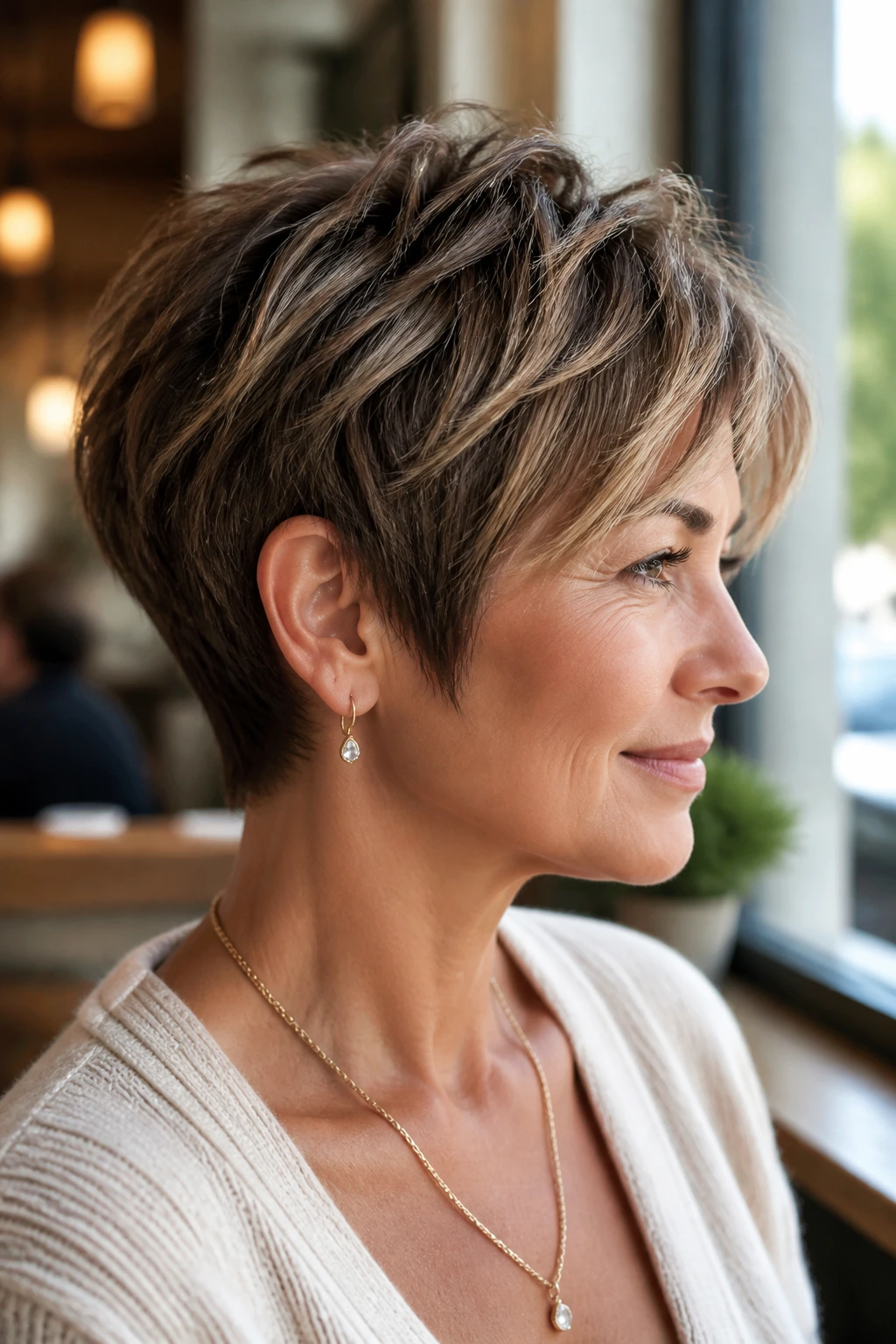
The choppy crop is for hair that needs movement cut into it. Thick strands can look boxy when they’re cut too neatly, and that’s where the broken, piecey ends help. Caramel should land on the edges of the texture — the tips, the face frame, the top layer — so each slice of hair has a little light catching it.
A chiseled nape keeps the back clean, which stops the style from becoming too fluffy around the neck. Up top, the rougher texture gives the highlight placement a place to live. I’d avoid big, chunky streaks here. Fine ribbons look better because they mirror the irregular shape of the cut.
This is one of those styles that looks best when it’s slightly undone. Not messy. Just not overpolished. A dab of styling paste and your fingers are enough.
8. Wavy Shag Bob with Ribbon Highlights
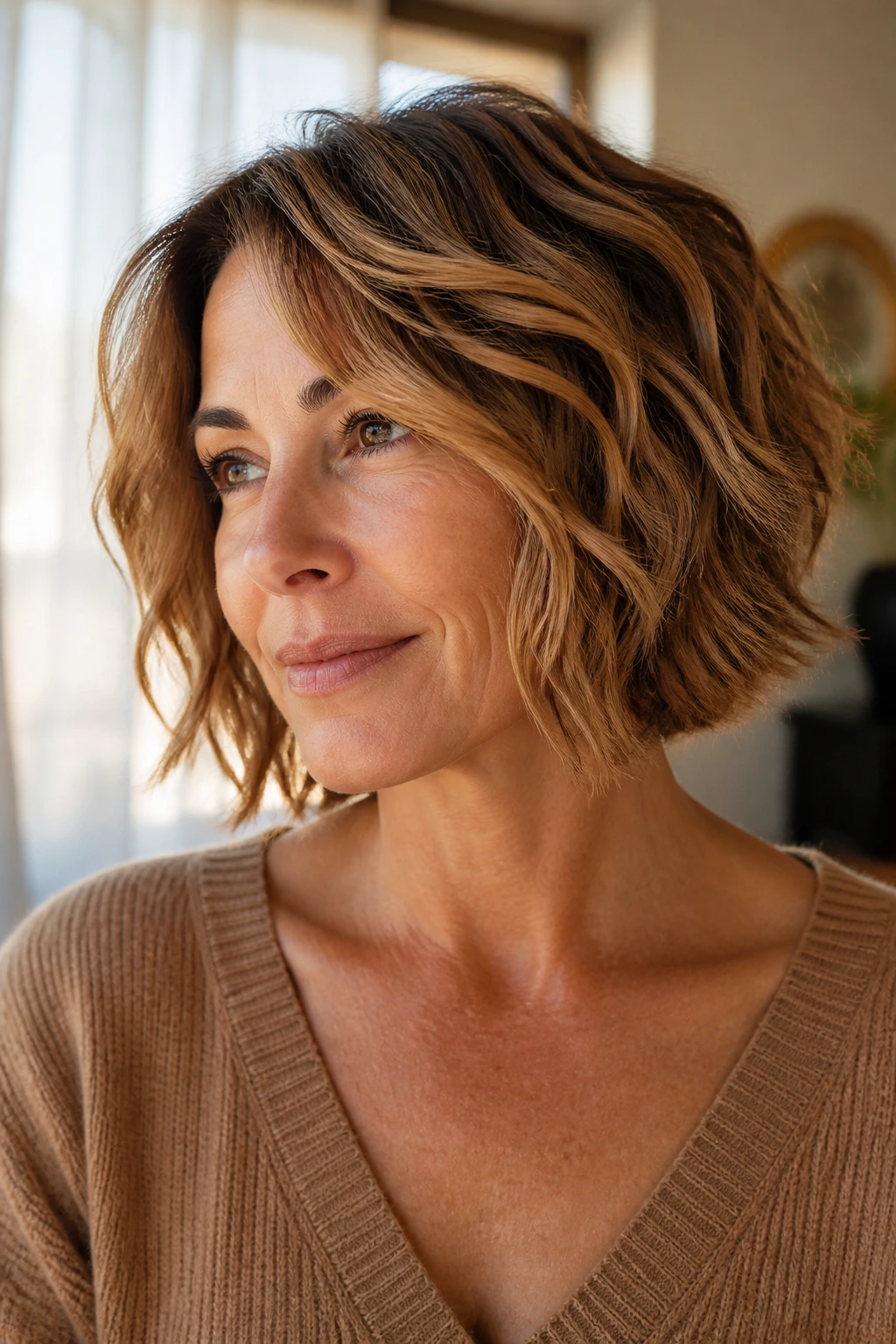
If your hair has a natural bend, a shag bob can feel like you finally stopped arguing with it. Layers keep the shape soft, and the wave pattern makes caramel ribbons show up in little flashes instead of one flat sweep. That’s what makes this cut feel alive.
The highlights should follow the movement, not fight it. A few ribbons near the crown, some through the mid-lengths, and a softer touch near the front is usually plenty. When the wave breaks, the color breaks with it. That’s the whole charm.
This cut is especially useful if your hair has changed texture and started refusing to lie as sleek as it used to. A shag bob doesn’t demand that kind of behavior. It works with bend, not against it.
9. Blunt Jaw Bob with Subtle Glow
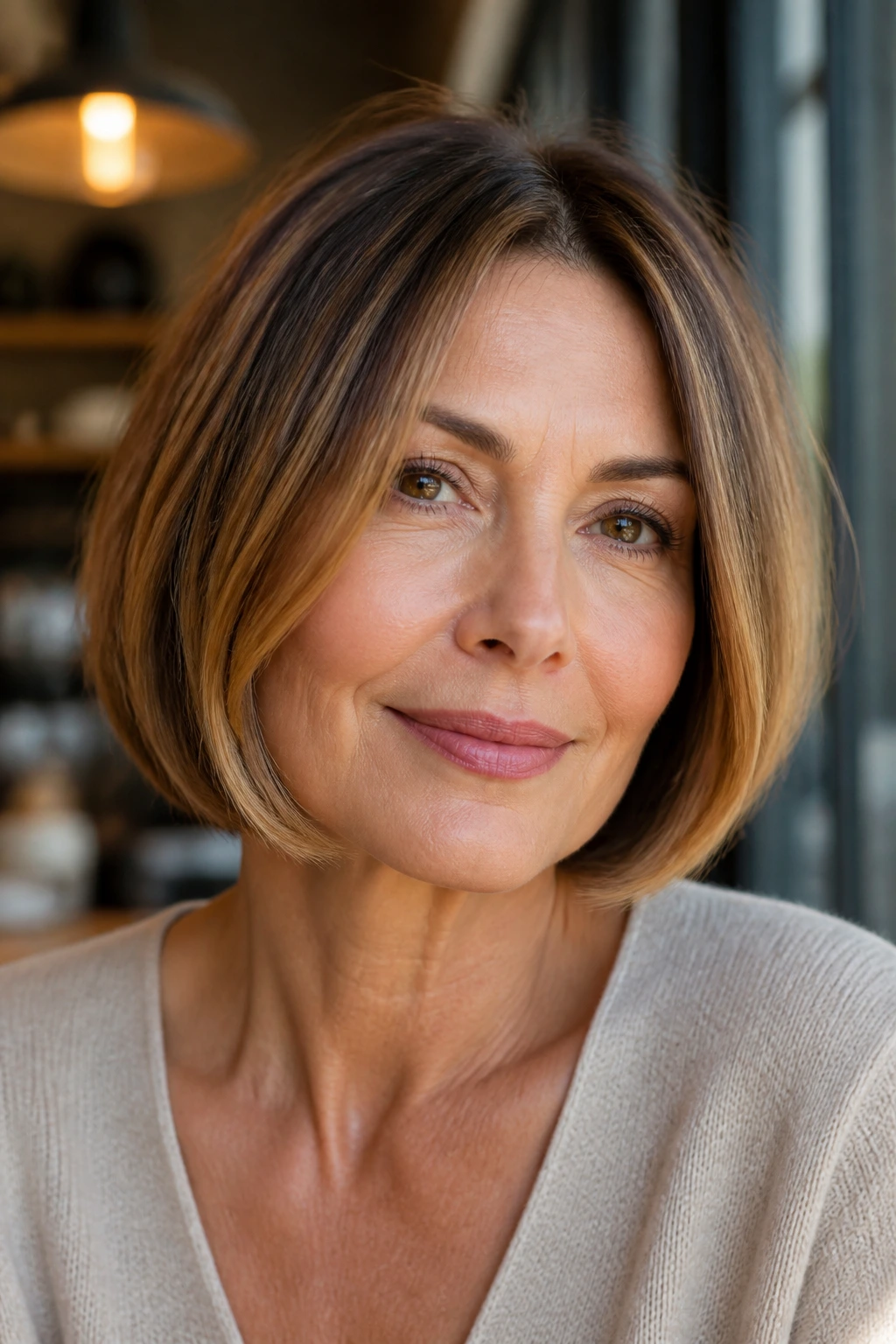
A blunt bob at the jaw sounds simple until you see how much difference a little color makes. Because the cut itself is clean and nearly one-length, the caramel has to stay subtle. Think glow, not stripes. Thin placement around the front and a whisper of warmth through the ends is usually enough.
This is a good choice if you like a sharper silhouette but don’t want the result to feel harsh. The color softens the line, especially if your base is dark blonde, light brown, or salt-and-pepper. On straight hair, the bob looks sleek. On hair with a slight bend, it gets just enough movement to avoid looking stiff.
There’s a reason this cut keeps showing up in real life and not just photos: it’s easy to maintain. And when the highlight work is restrained, the grow-out stays cleaner too.
10. Curly Crop with a Honey Halo
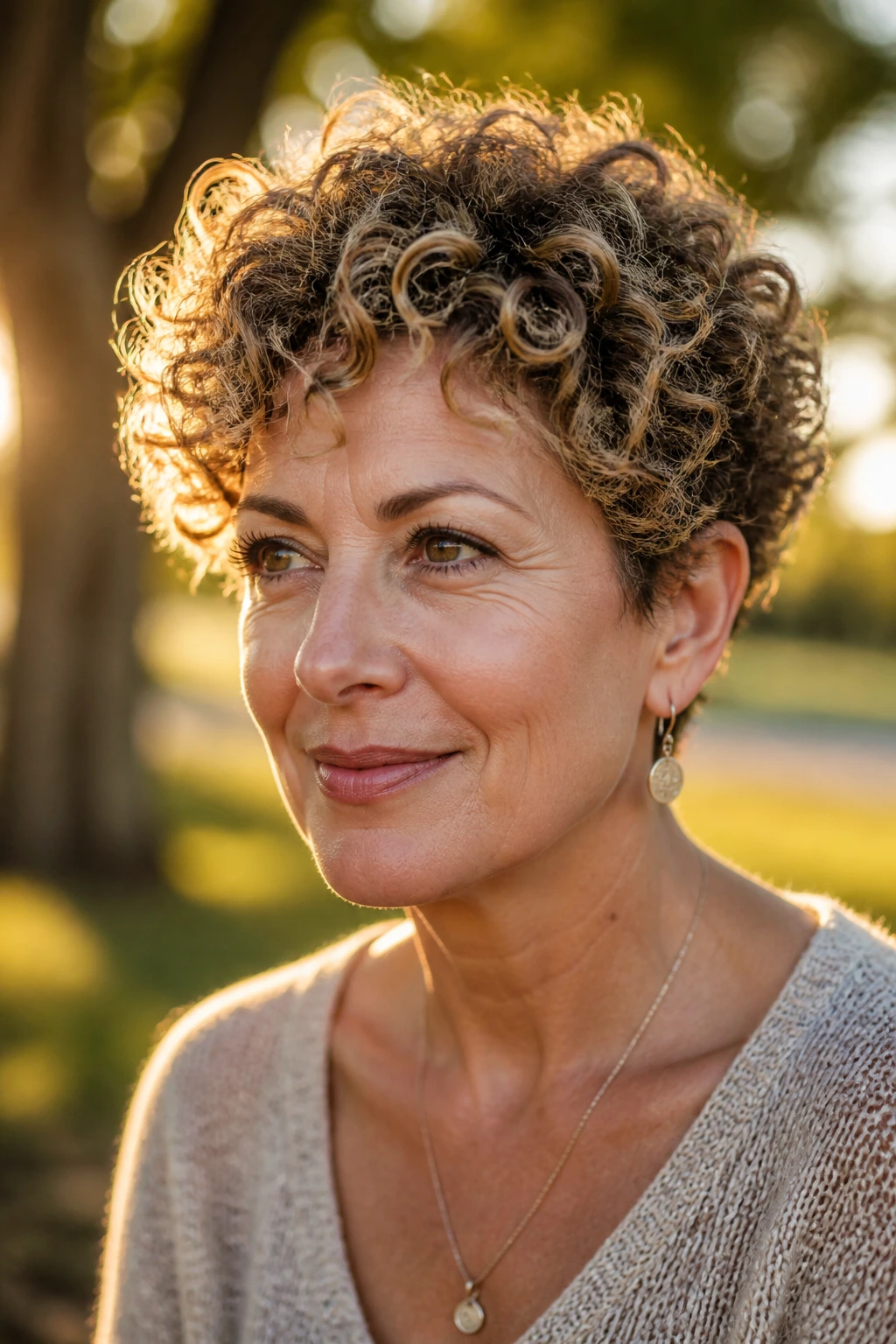
Curly hair needs a different approach. If the highlights are packed too close to the root, the curl pattern can frizz up and the color can look patchy. A honey-caramel halo — lighter pieces around the outer ring, face frame, and top curl layer — gives the hair brightness without breaking the coil.
The shape here should respect the curl, not force it. Keep the sides cropped enough to stay neat, then let the top hold its spring. The color should trace the curls the way sunlight would, catching the edges and leaving the deeper interior darker.
This is one of the best short cuts for women over 50 who want dimension without losing softness. A curly crop with warm highlights can make the face look brighter in one step, especially when the curls lift away from the cheekbones.
11. Asymmetrical Bob with a Side Sweep
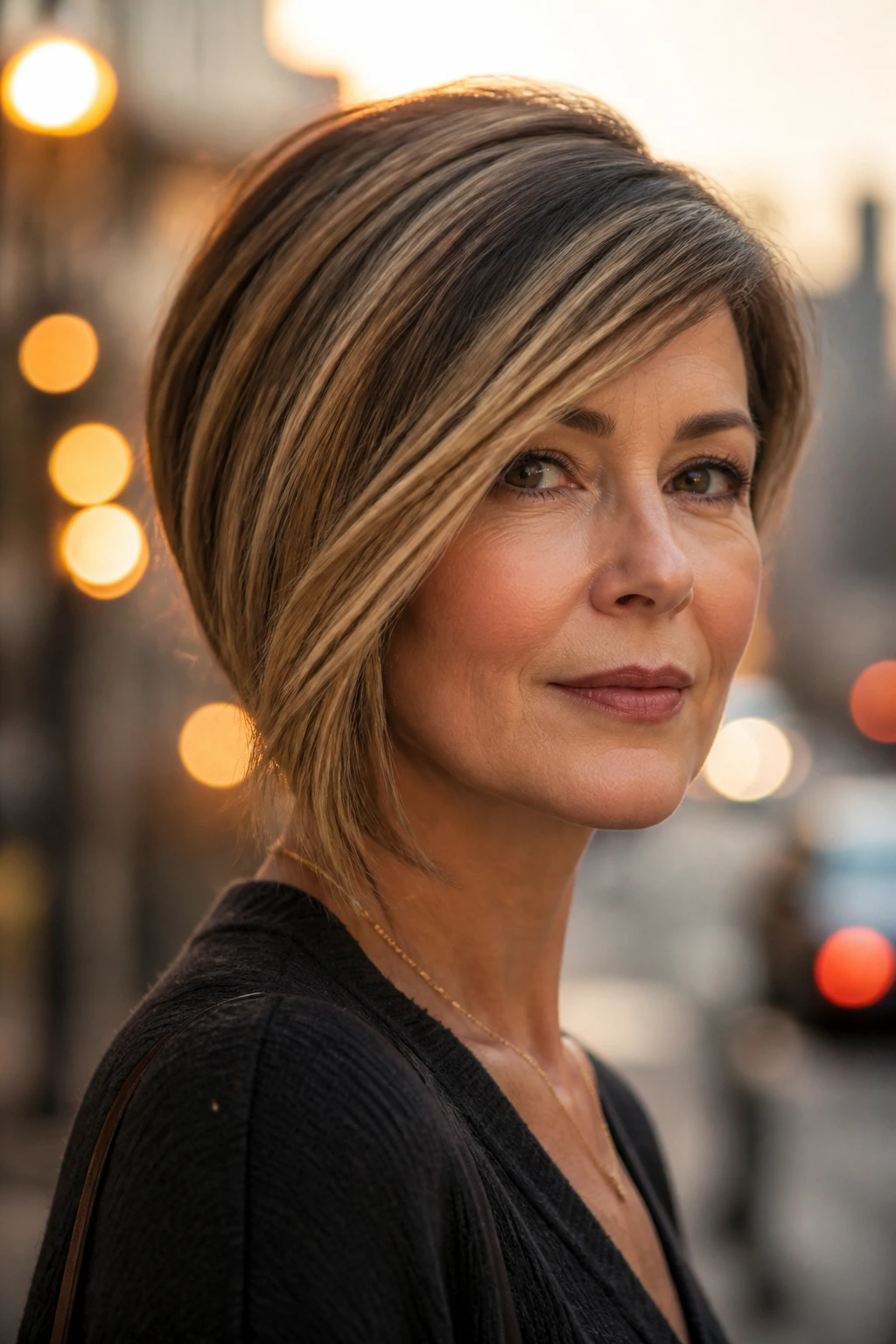
An asymmetrical bob brings motion even before the color goes in. One side sits a little longer, the part shifts off-center, and the whole cut gains a diagonal line that flatters the neck and jaw. Caramel highlights should follow that line, with more warmth on the longer side and a softer touch near the shorter one.
That lopsided balance is what keeps the style from going rigid. If the color is even everywhere, the geometry disappears. If the highlight placement tracks the sweep of the cut, the bob looks intentional and a bit modern without trying too hard.
This is a smart pick if one side of your hair naturally behaves better than the other. Instead of fighting it, the asymmetry uses it. That’s usually where the best haircuts come from anyway.
12. Layered Crop with Piecey Crown
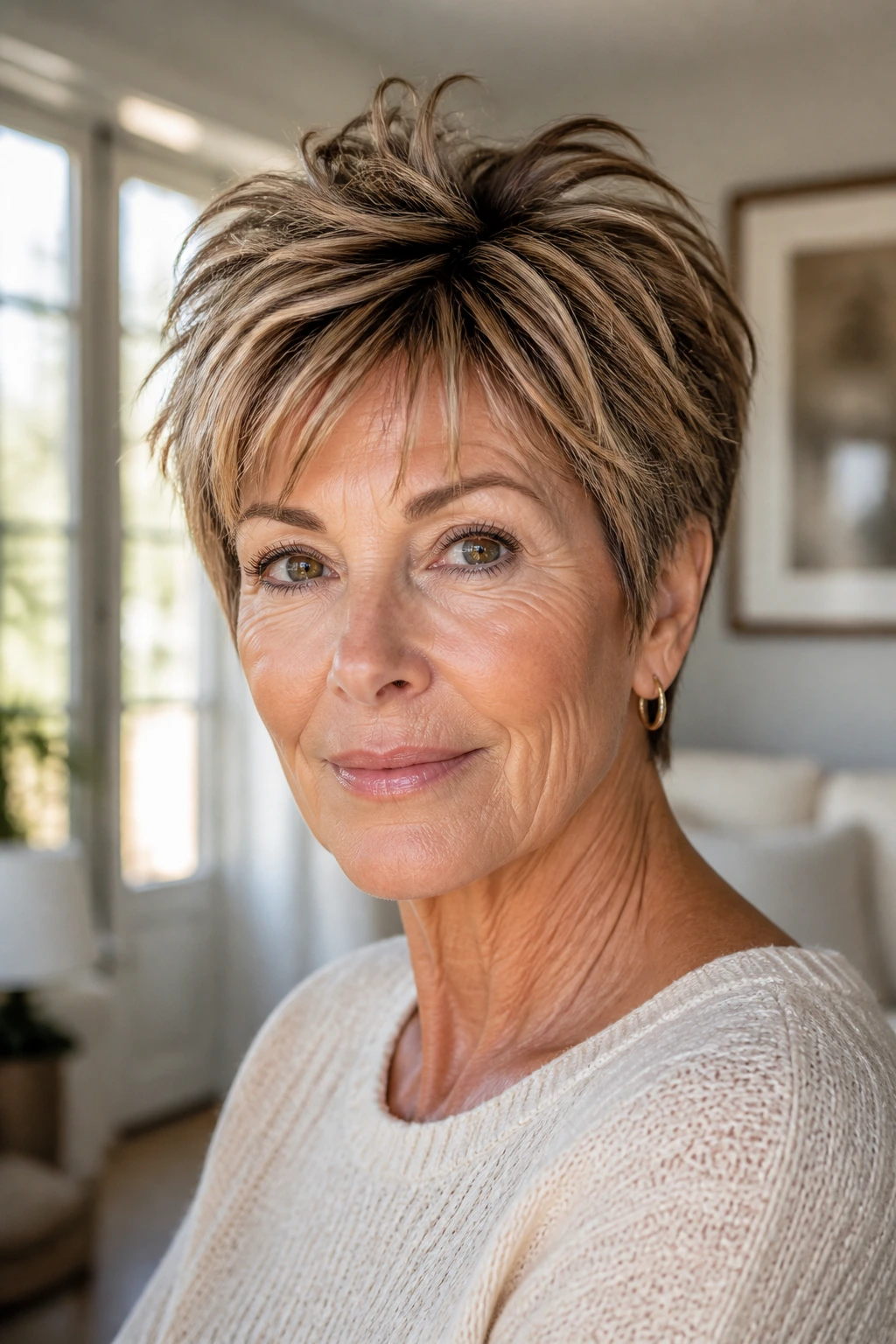
A layered crop works when you want lift without full pixie commitment. There’s enough length on top to style, but the sides stay short enough to keep the cut light. Caramel pieces at the crown and temples separate the layers so they don’t blur into one shape.
The word here is piecey. You want visible sections, not one smooth cap. That means a little texture cream, a quick finger twist while drying, and highlight placement that lands on the uppermost bends. If the color falls only underneath, you’ll lose the whole effect when the hair settles.
This cut is one of my favorites for hair that used to be thick and now feels a little smaller in diameter. The layers create lift, and the color makes that lift visible. Simple. Effective.
13. Undercut Pixie with Caramel Top
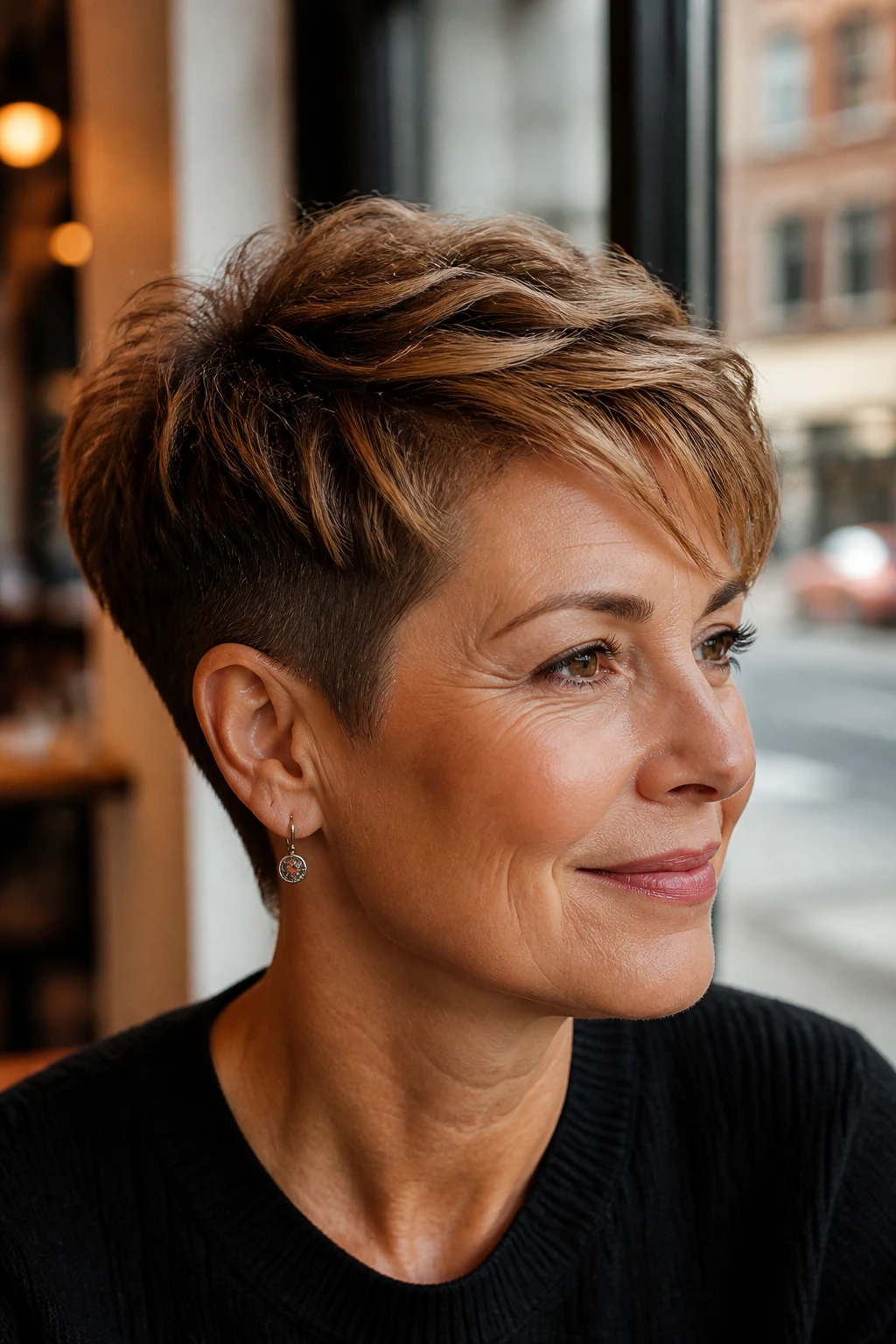
An undercut pixie can be sharp or soft depending on how the top is handled. Keep the sides and back close, then let the top stay longer so it can fall forward, rise up, or sweep sideways. Caramel belongs on that top section only, or mostly there, so the contrast between the cropped undercut and the warm top stays crisp.
This style has a little edge, but not in a costume-y way. It’s just practical if you want less bulk around the ears and neckline. The color does the balancing act, because a warm top keeps the close-cropped sides from feeling too stark.
If you wear makeup daily, this cut plays especially well with a defined brow or lip. It frames the face without swallowing it. And yes, it grows out better than people expect if the undercut is kept tidy.
14. Textured Mushroom Bob
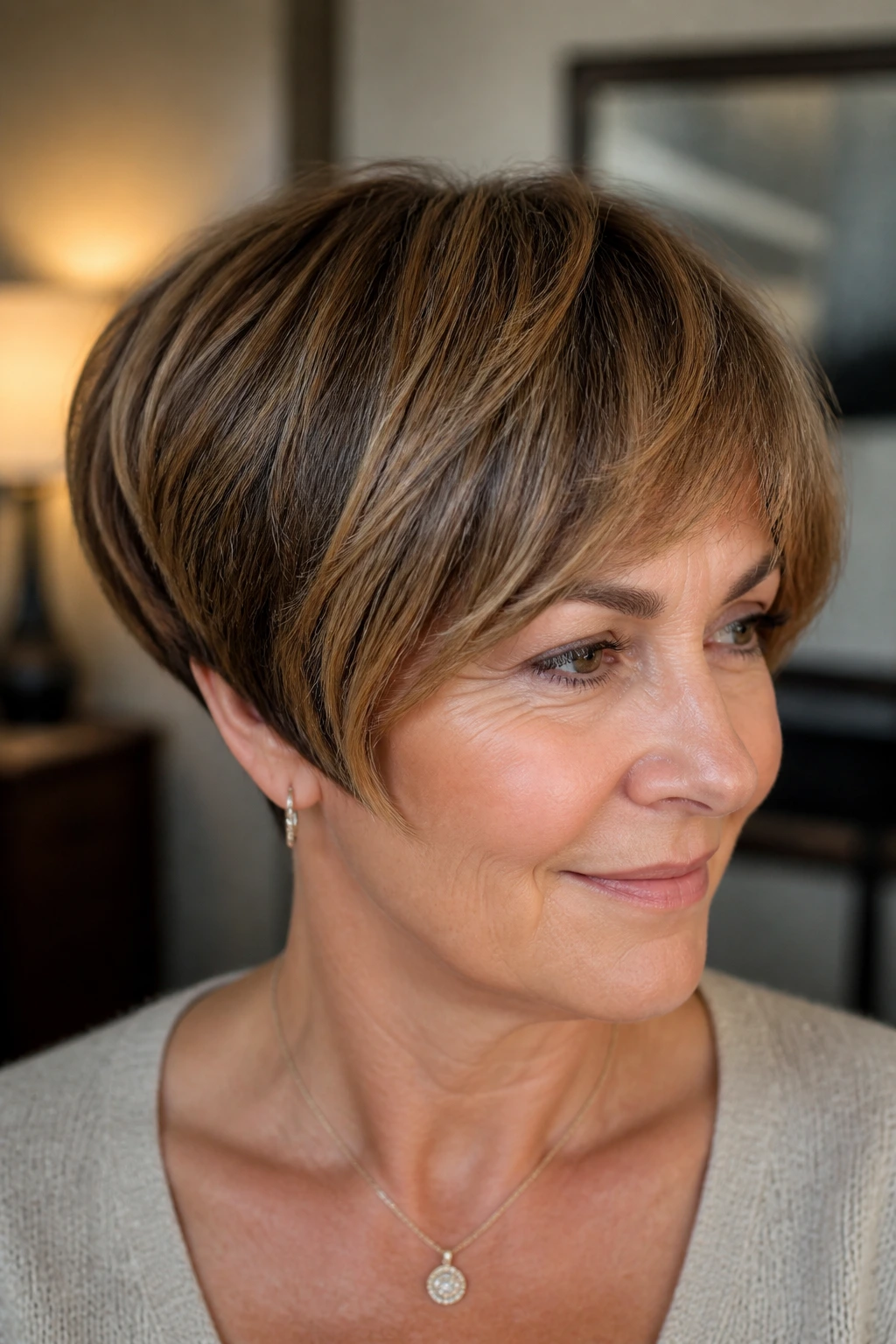
The mushroom bob has a rounded outline that can look very current when the texture is broken up a bit. Shorter in the back, fuller around the head, and softened through the perimeter — that’s the shape. Caramel should be tucked into the interior layers and around the front edge so the round silhouette doesn’t turn into a cap.
This is a good cut for dense hair that wants to puff out when it’s blunt. Texture removes weight; caramel gives the cut depth. Together, they stop the style from looking too solid.
It’s also a nice choice if you want a bob with a little attitude but not a lot of daily styling. A small round brush and a bend at the ends are enough.
15. Rounded Bob with Tucked Ends
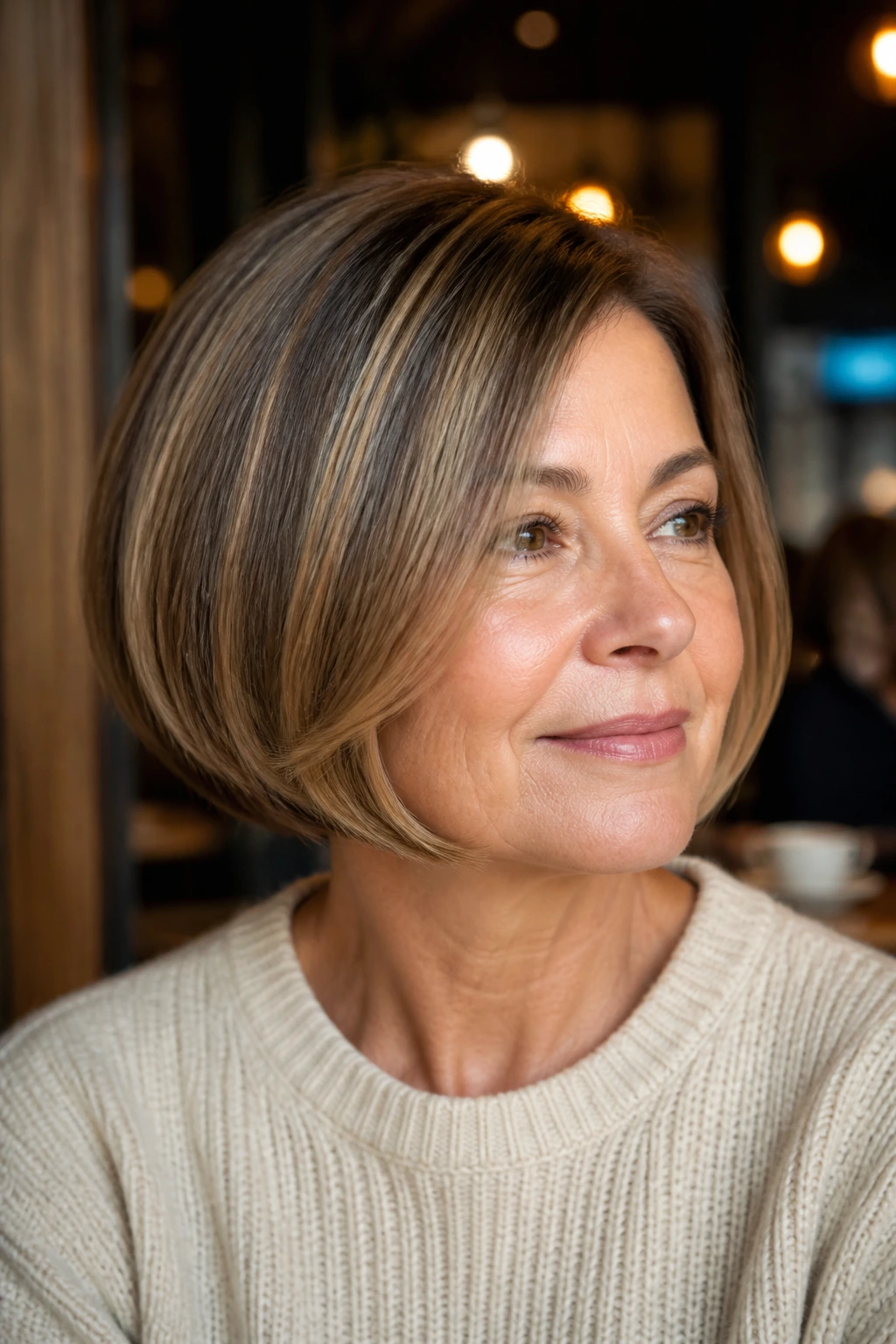
A rounded bob is quieter than a choppy crop, but it can be just as flattering. The ends curve inward, the silhouette hugs the head, and the line around the jaw feels soft instead of hard. Caramel highlights near the ear line and through the front curve keep the shape from getting too uniform.
This cut is good when you want your hair to look neat even after a long day. Tucked ends sit close to scarves, collars, and earrings without looking fussy. Add a warm glaze or lowlight underlayer and the bob gains depth without losing that clean outline.
I especially like this one on straight or slightly wavy hair that doesn’t want to hold a lot of texture. The shape does the work. The color keeps it from looking flat.
16. Chin-Grazing Shag with Wispy Bangs
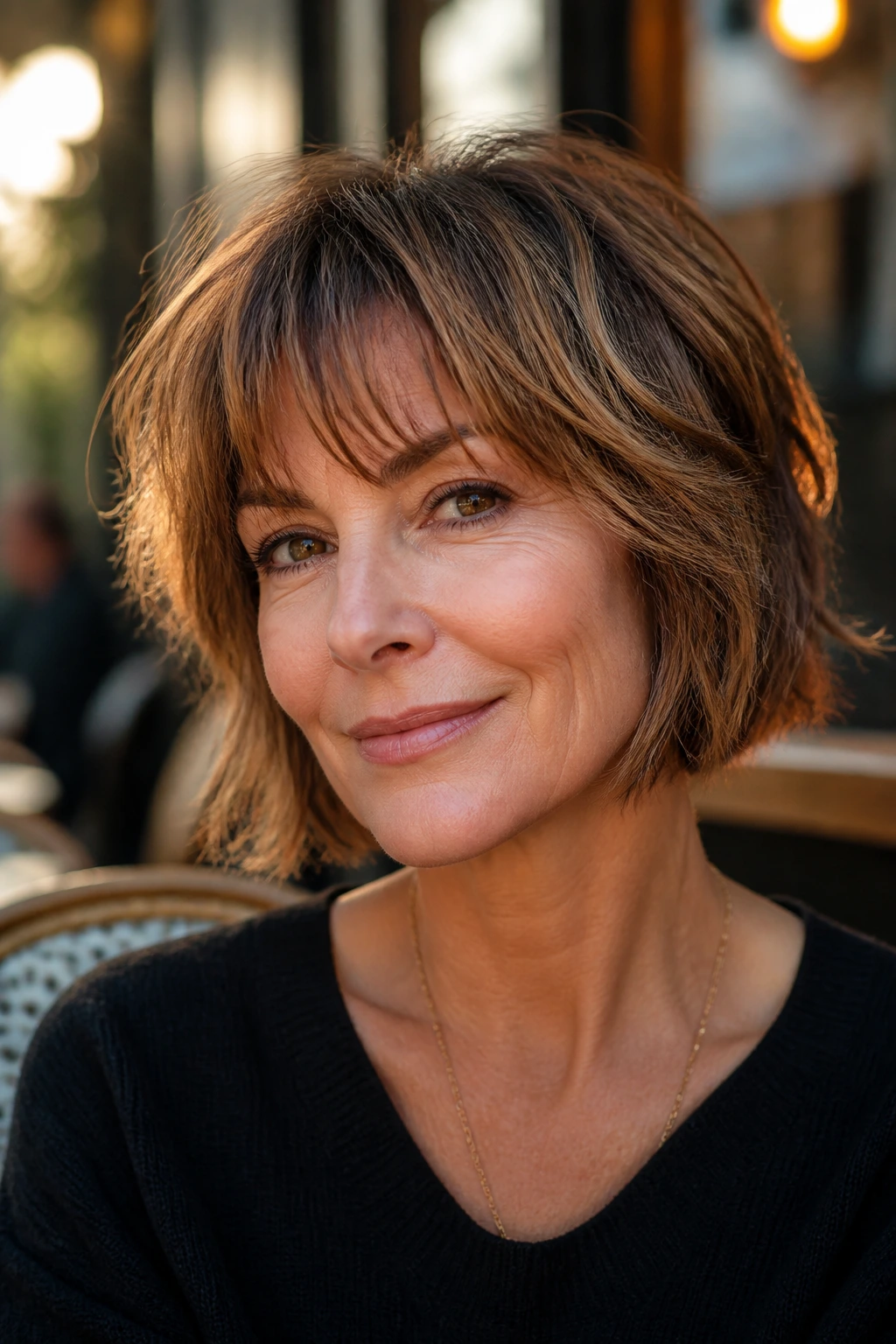
A chin-grazing shag gives you movement right away, and wispy bangs keep the forehead area open. The layers are short enough to create air, long enough to avoid a mullet edge, and the caramel can travel through the bangs, temples, and outer layers without looking overdone.
This is one of those cuts that benefits from a little mess. Not a bad mess. Just a lived-in one. If the layers flip a bit and the bangs split slightly, the shape still works. Caramel helps by catching the edges and making every bit of movement visible.
It’s a solid option if your hair texture has changed and you don’t want to fight it. The shag gives hair permission to move, which is usually more flattering than trying to force it smooth.
17. Soft Crop with Sideburn Length
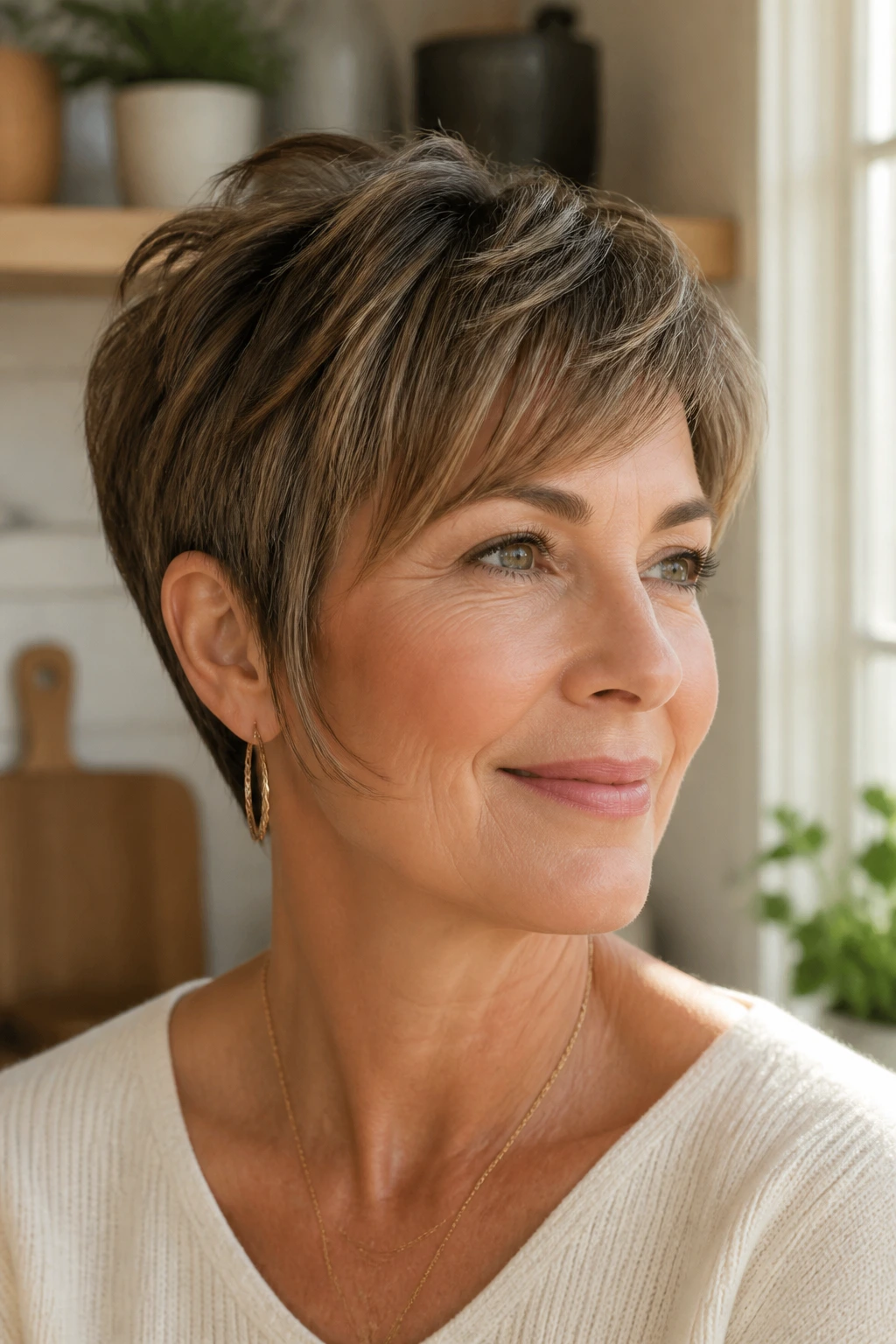
A soft crop with a little extra length at the sideburn area can do surprising things for the face. It keeps the ears from feeling exposed, gives glasses a softer landing place, and lets caramel framing pieces sit right where the cheek and jaw begin. That’s a smart spot for brightness.
The sides should stay tidy, but not clipped too tight. You want a gentle curve around the temples and a touch of fringe or face-framing length that can be tucked behind the ear when you want a cleaner look. The color supports that flexibility.
If your jawline feels stronger than you’d like, this cut takes the edge off without hiding your face. It’s neat. It’s easy. And the highlight placement does most of the visual lifting.
18. Graduated Bob with Crown Lift
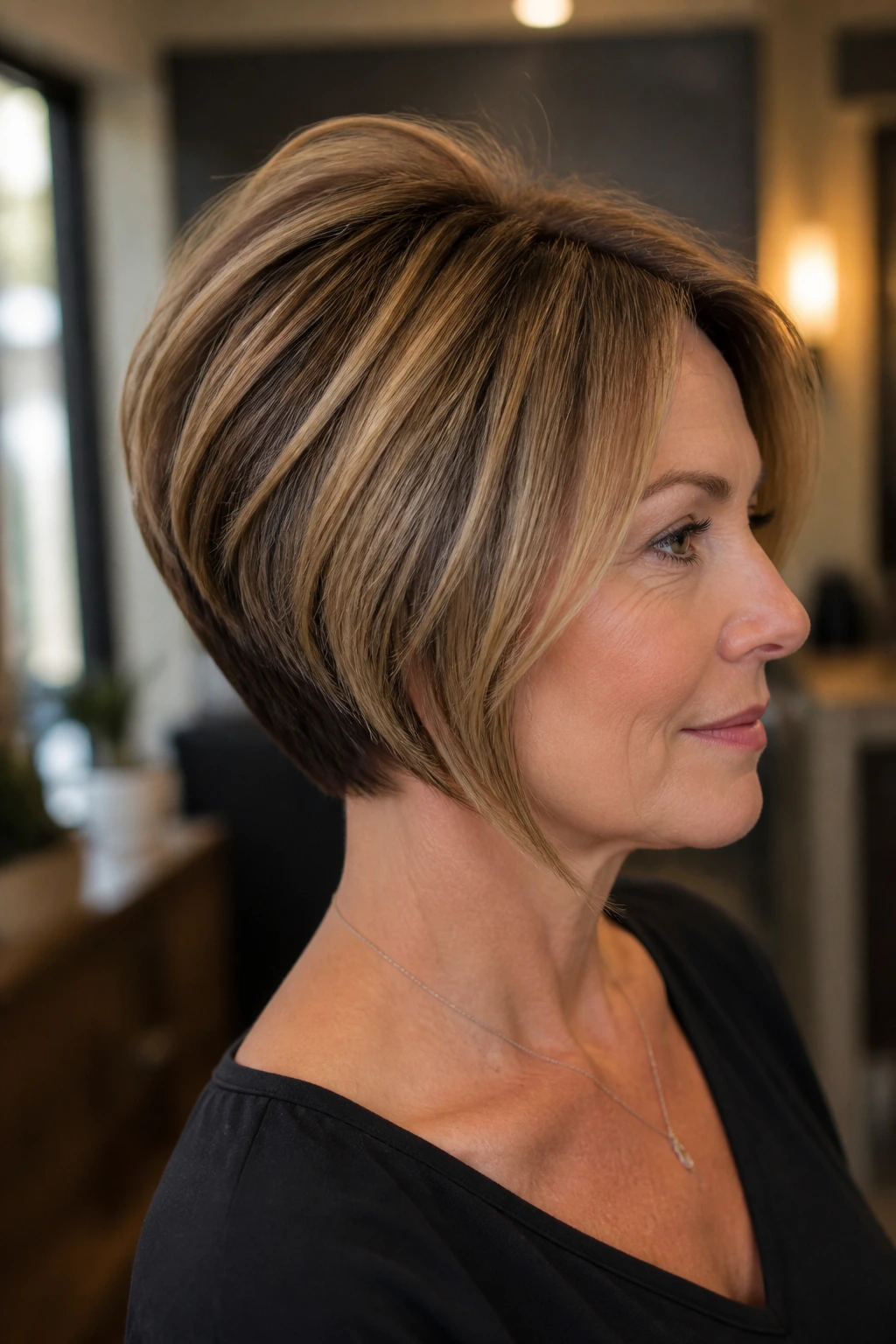
A graduated bob is all about the angle: shorter and tighter in the back, longer toward the front, with enough stacking to build lift at the crown. Caramel belongs on the top layers and around the front edge so the structure doesn’t disappear into one solid block.
This style is useful if you want the back to feel contained and the top to feel alive. The lift at the crown can make fine hair look fuller, especially when the color catches on the highest layer. A little lowlight underneath helps too, because contrast makes the shape easier to read.
It’s a clean haircut, but not a boring one. That’s the difference. The warm highlights keep the graduation from feeling too technical.
19. Messy Boyish Cut with Feminine Fringe
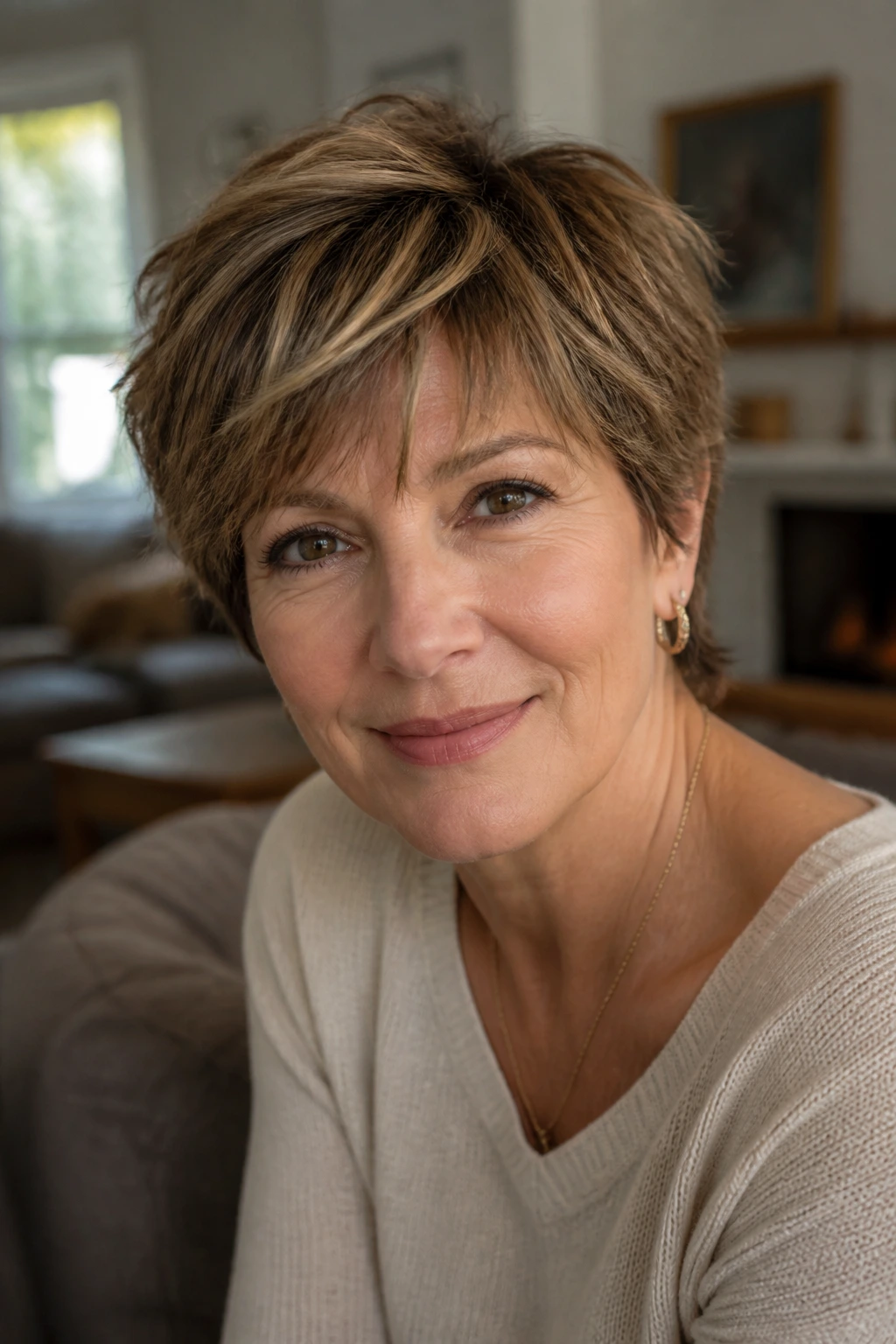
A boyish cut can go too plain if it’s cropped without softness. The fix is a fringe with a little movement — not a blunt band, more of a broken line that sits lightly on the forehead. Caramel belongs through the front and top, where it can keep the cut from reading as one short block.
This one is for people who like low fuss but don’t want the haircut to disappear. The texture should look touched, not shellacked. Finger-dried hair with a bit of paste is usually enough. Caramel helps the whole thing look intentional rather than accidental.
It’s also a nice choice if you’re tired of longer hair eating time and energy. Short, quick, and still feminine. That’s the draw.
20. Airy Razor Pixie
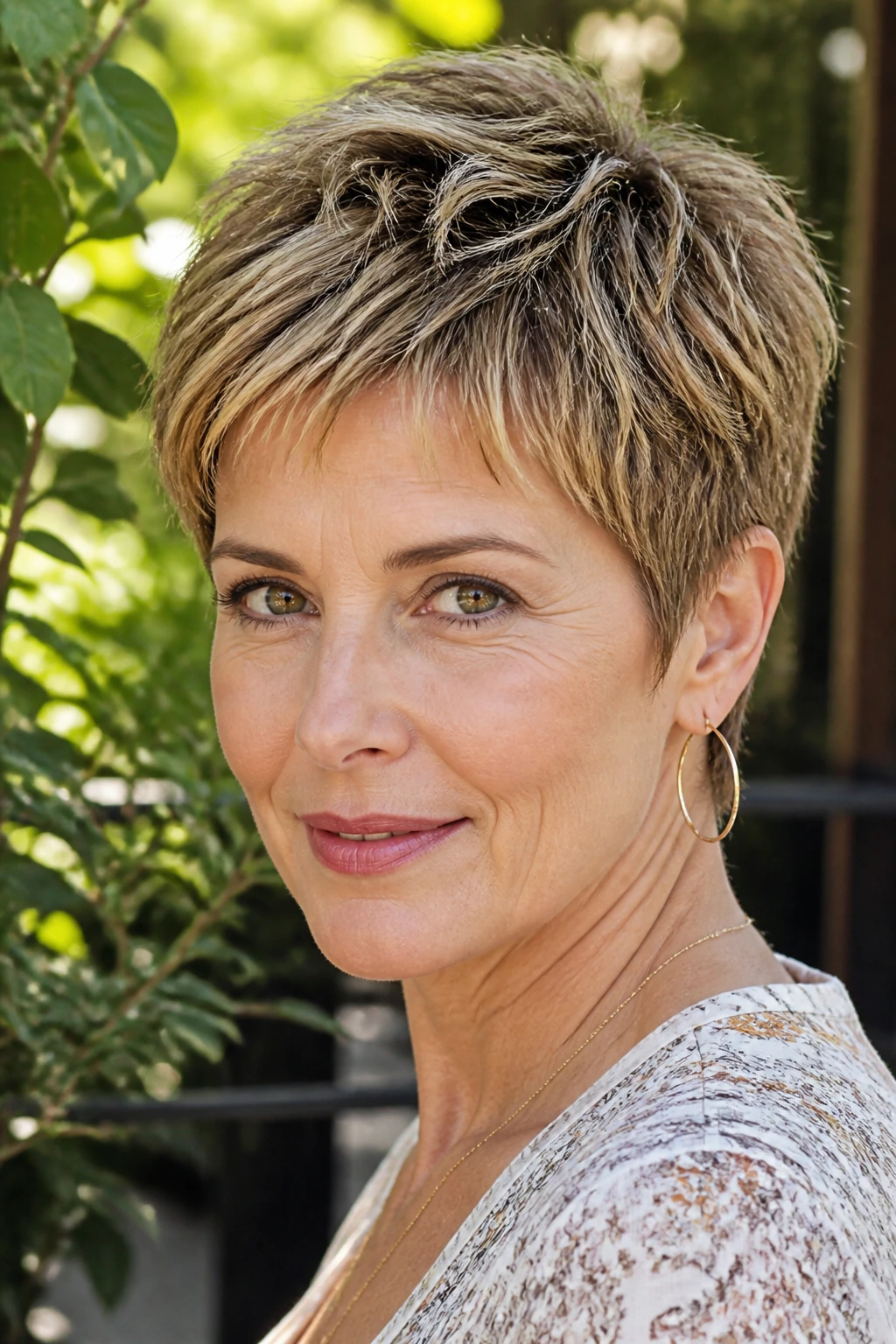
A razor pixie has a lighter edge than a scissor-cut version. The ends feel wispy, the movement is a little freer, and the overall shape looks softer around the ears and nape. Caramel highlights on the tips and upper layers make that airy texture more visible.
This cut suits hair that isn’t too fragile. Razor work can remove a lot of weight fast, which is useful on thick hair but less kind to strands that already feel dry. If your hair handles texture well, though, the result can be lovely: a soft shape with plenty of lift and just enough polish.
I’d keep the color placement narrow here. Fine ribbons beat chunky stripes every time. The cut already has movement; the highlights just need to echo it.
21. Neck-Length Bob with Light Ends
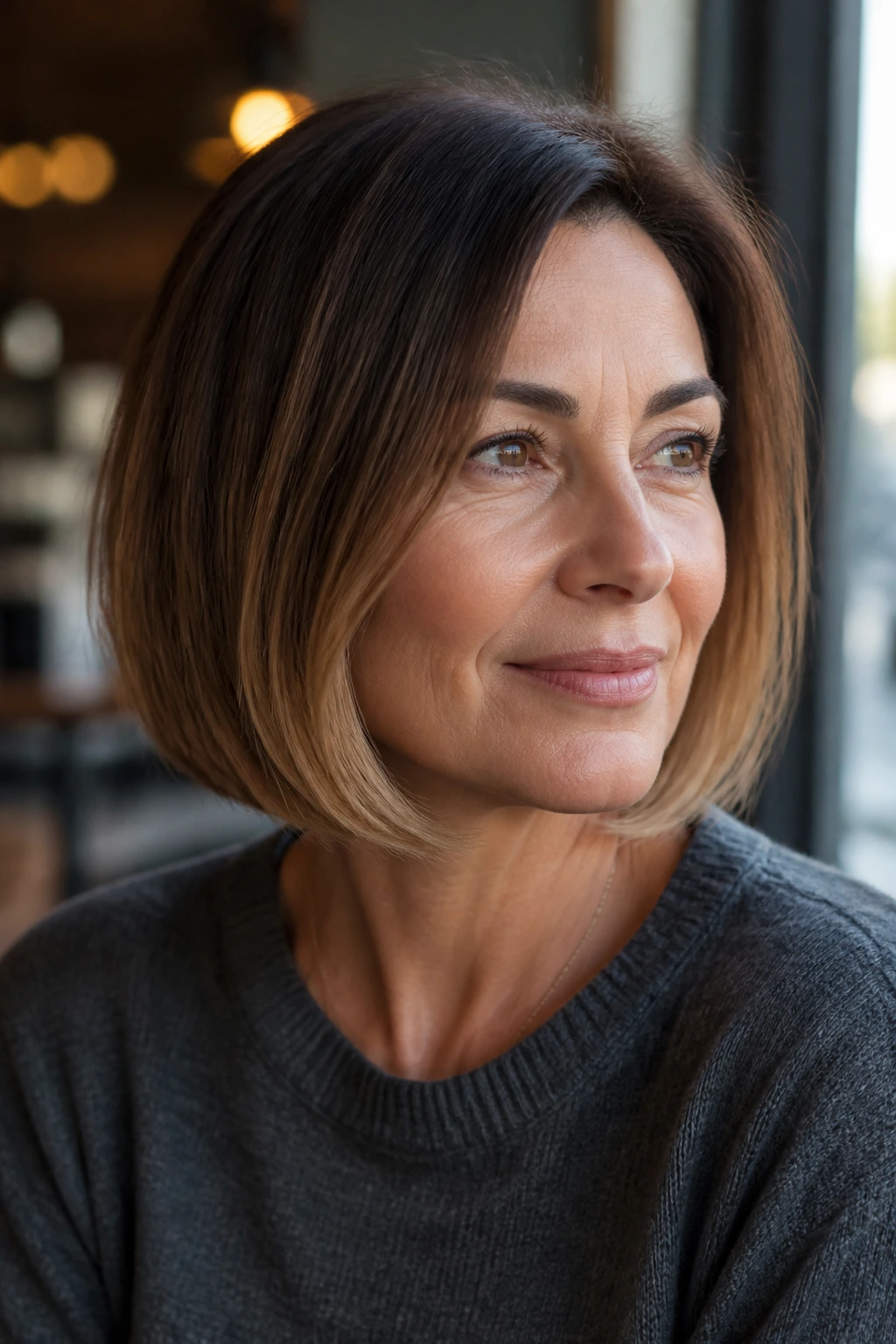
A neck-length bob sits in that useful middle place between short and not-quite-short. It gives you enough hair to tuck behind the ear, but not so much that the cut starts behaving like a long style. Caramel at the ends and through the lower third keeps the shape from feeling heavy.
This works especially well if you’re growing out a pixie or trimming down from a longer bob. It feels like a reset without being drastic. The lighter ends keep the eye moving down the line of the cut, which helps it look sleek and lifted at once.
If your neck gets warm easily or you like collars that sit close to the skin, this length is practical too. The hair stays off the nape without sacrificing softness.
22. Sculpted Pixie with Long Bangs
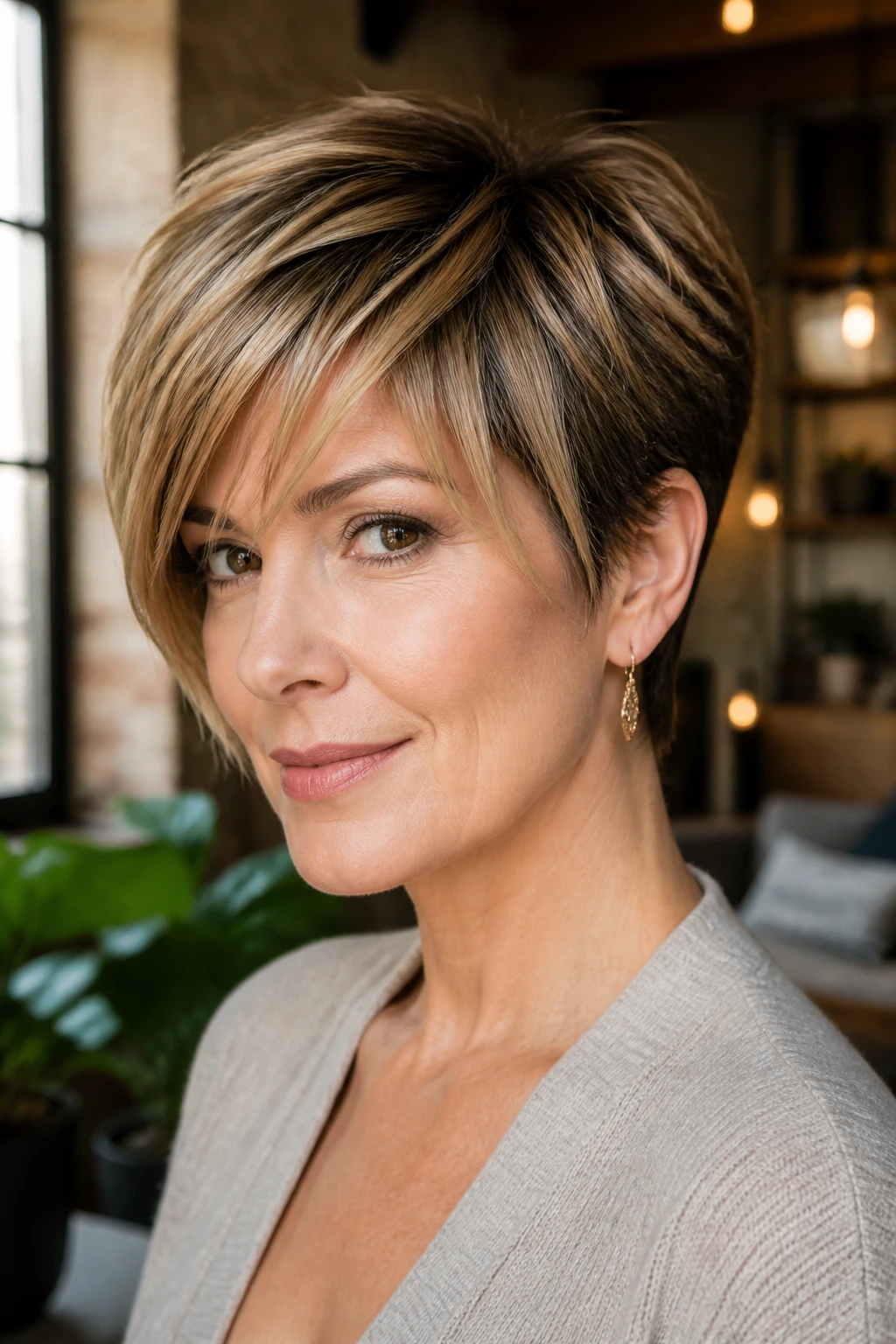
A sculpted pixie has a more tailored shape than the shaggy versions. The sides are neat, the crown is controlled, and the long bangs do the softening. Caramel should land mostly in those bangs and the top transition area so the cut keeps its clean outline while the front stays light.
This is a good choice if you like your hair to look considered. Not stiff. Considered. It can be styled sleek, swept, or slightly lifted, depending on how much time you want to spend. The highlights help the bangs move visually, which is useful when the rest of the cut is close to the head.
There’s a quiet confidence to this shape. It doesn’t shout. It just sits well.
23. Curly Taper with Defined Top
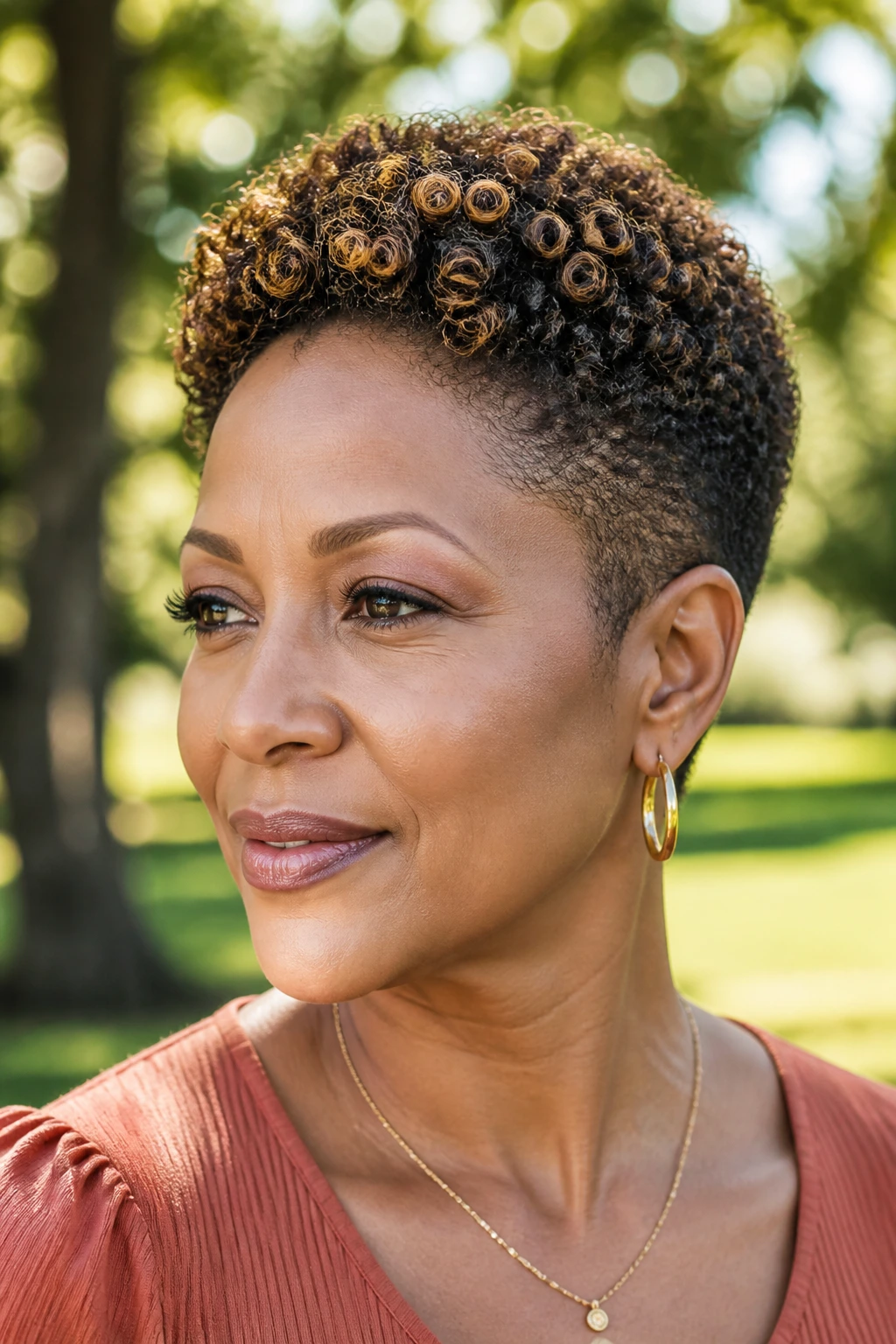
A curly taper keeps the sides and nape controlled while letting the top curls keep their spring. The highlight placement should follow the curls themselves, landing on the outer ring and the topmost coils instead of spreading evenly everywhere. That keeps the curl pattern readable.
This is where caramel does something useful that flat color can’t: it outlines the curl without flattening it. The result is dimension, not confusion. If your curls are tighter around the sides and looser on top, the tapered shape gives the whole cut a cleaner line.
It’s one of the best options for women who want a short style that respects texture. The cut does not fight the curl. The color doesn’t either.
24. Sleek Crop with Shadow Roots
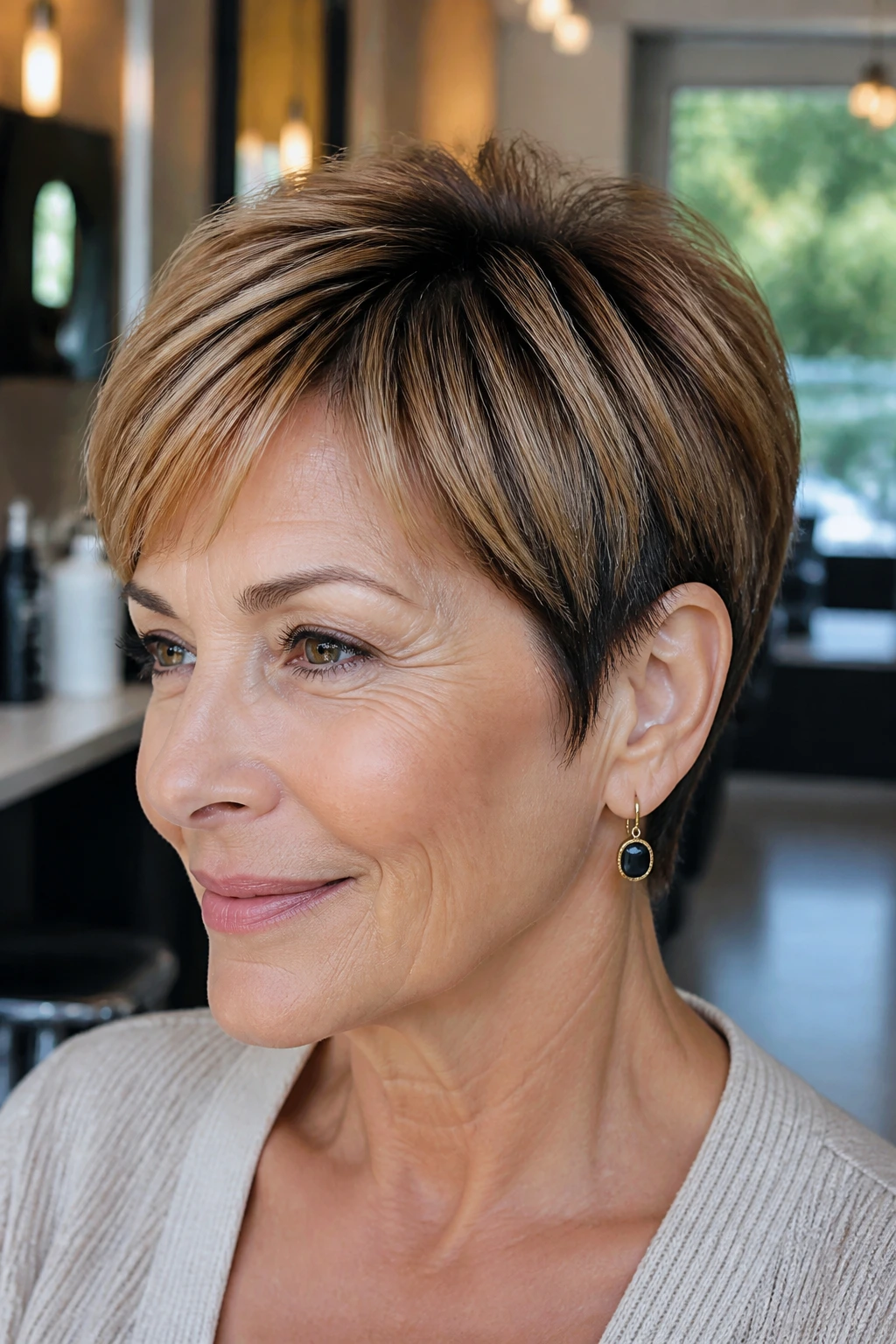
A sleek crop with shadow roots is for anyone who likes clean edges and low-contrast color. The darker root keeps the style grounded, while caramel pieces through the top and front add warmth where it matters most. That shadow at the base is useful when gray is starting to come in or when you want fewer obvious touch-ups.
This cut looks sharp with a blow-dryer and a flat brush, but it doesn’t need to be pin-straight. A little bend at the ends keeps it human. The caramel should sit on the surface of the cut, not in big blocks, so the smooth shape stays sleek.
It’s a smart answer for hair that gets puffy in humidity. The shadow root gives the color somewhere to rest, and the crop keeps the overall shape close to the head.
25. Salt-and-Pepper Bob with Caramel Veils
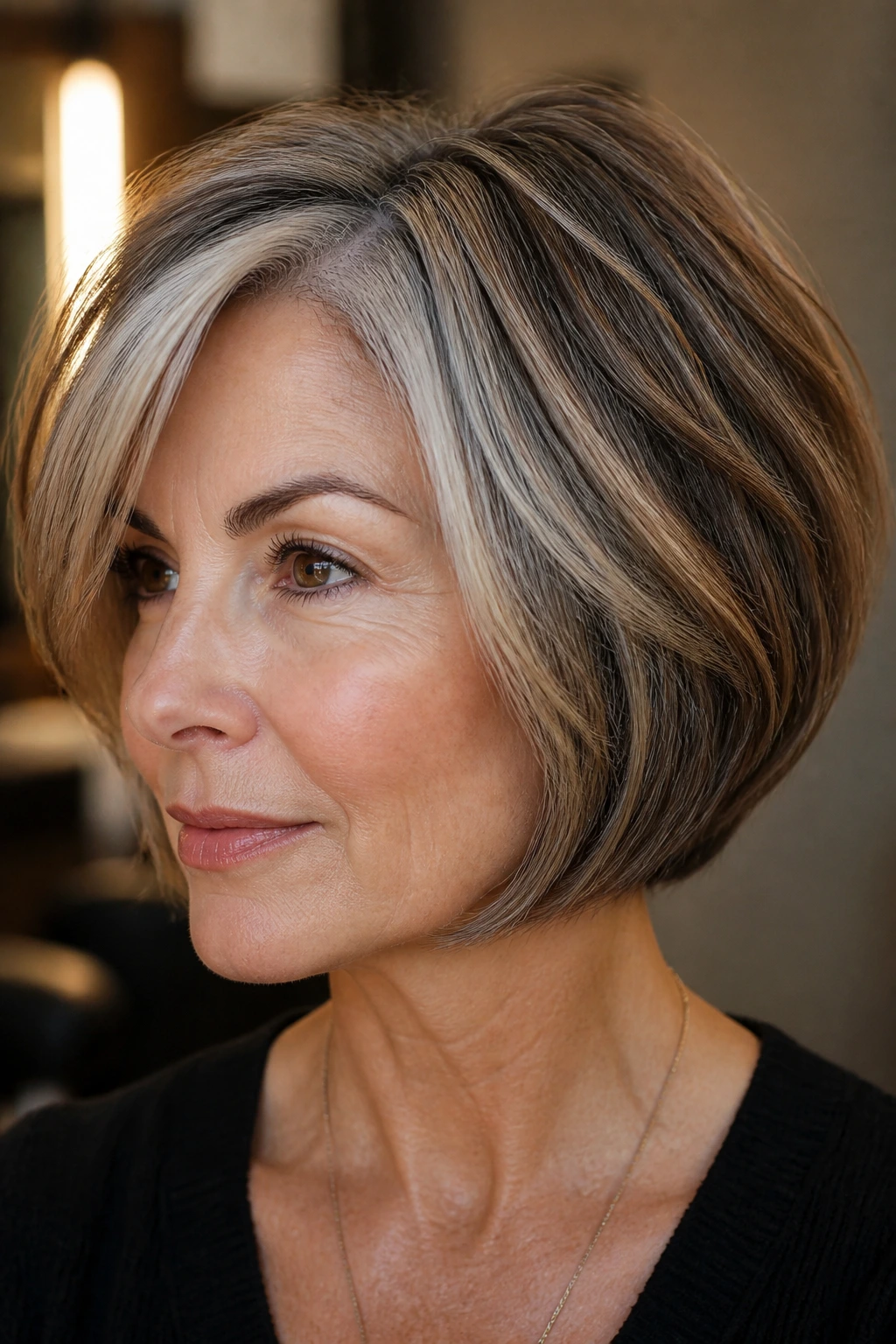
Salt-and-pepper hair does not need to be hidden. It needs to be handled well. A bob with caramel veils lets the silver remain part of the story while warming the darker strands around it. The key is softness: thin highlights at the front, a few through the top, and maybe a lowlight or two underneath so the gray doesn’t float on top of a pale base.
This is one of the most flattering short cuts for women over 50 because it respects what the hair already is. It doesn’t pretend the silver isn’t there. It just gives it better company.
If your natural color has become more mixed over time, this style can make the whole head look richer without making the roots feel like a problem. That’s the real win. The bob stays tidy. The color stays dimensional.
What Makes Caramel Highlights So Useful on Short Cuts
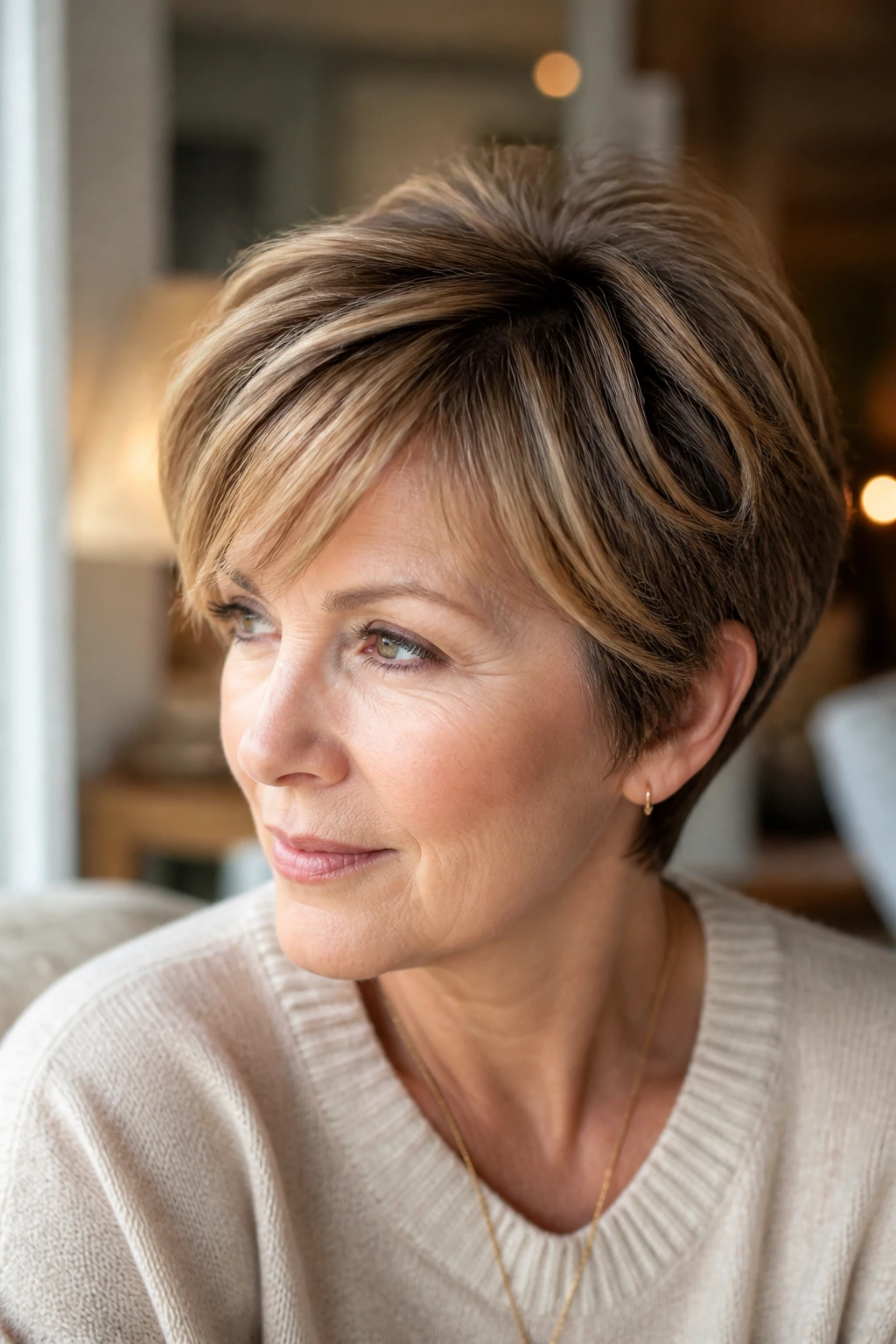
Caramel works on short hair because it changes how the cut reads from a few feet away. On a bob or pixie, the eye doesn’t wander through inches of length; it lands on the crown, the fringe, the jawline, and the temples. Warm pieces in those spots make the whole haircut feel better balanced.
The tone matters, too. Caramel is warmer than ash and less harsh than bright blonde, so it behaves well next to gray, brown, and dark blonde bases. If you go too light, short hair can start looking streaky fast. If you keep the placement soft and varied — a few ribbons here, a glaze there, a lowlight tucked underneath — the style keeps depth.
There’s also a practical angle. Short hair shows damage sooner, and heavy bleaching can be rough on fragile ends. A caramel approach usually stays more forgiving because the contrast is gentler and the color doesn’t need to be pushed to the lightest possible level. That makes it easier to grow out without the obvious line.
What to Ask for at the Salon Chair
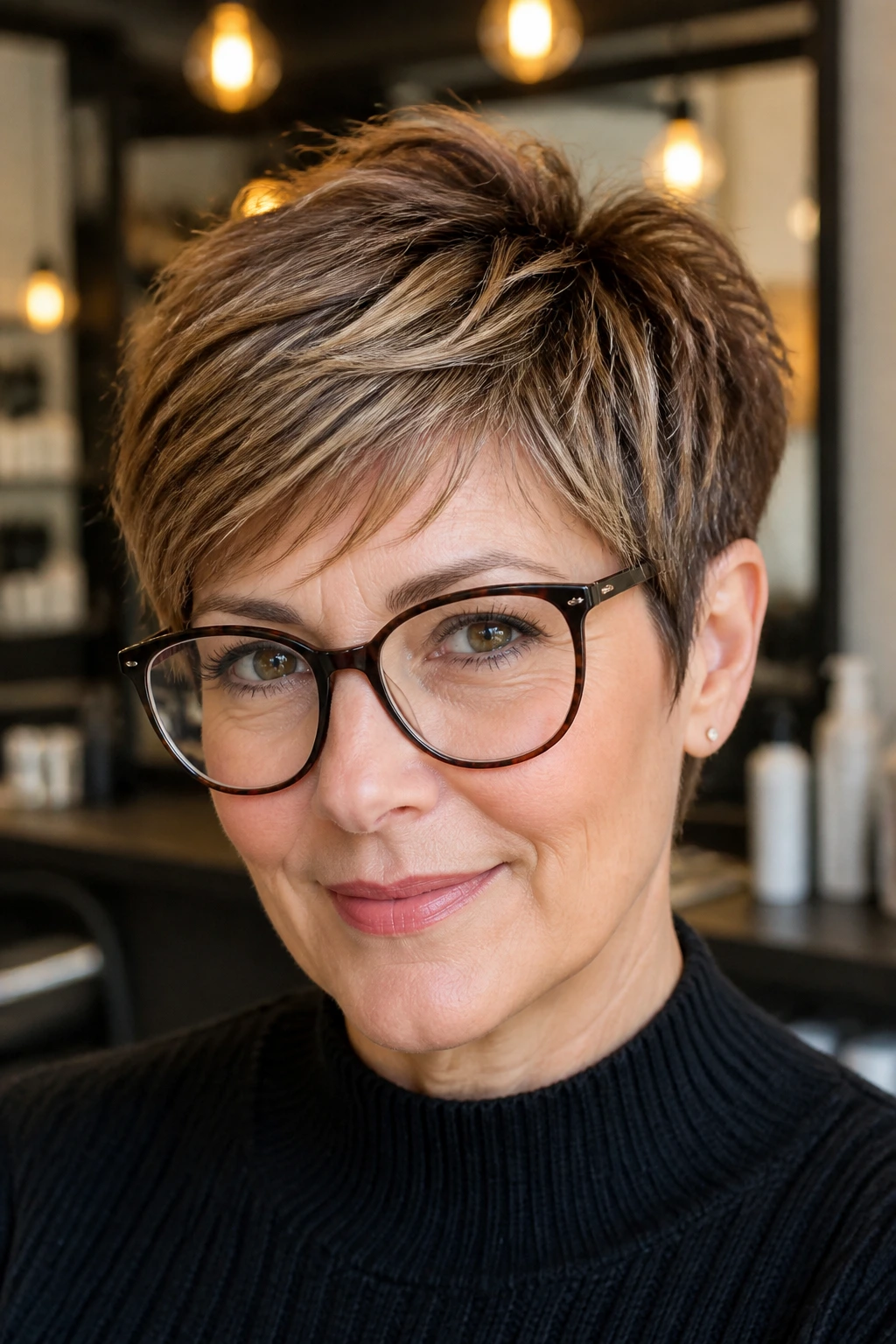
A good haircut starts with a clear conversation, and short hair is not the place to be vague. Bring a photo, sure, but also say what you care about: lift at the crown, softness around the face, less bulk at the nape, or a cleaner grow-out around the temples. That tells the stylist where the shape needs help.
Placement matters more than brightness. Ask for caramel highlights focused on the top layer, face frame, and part line if you want the cut to look lifted. Ask for lowlights underneath if your hair feels too flat or if your silver strands need depth around them.
A few useful phrases:
- “Keep the caramel soft, not stripey.”
- “I want the color to follow the haircut, not cover every section.”
- “Add brightness around the face and crown, but leave some depth underneath.”
- “I need this to grow out cleanly.”
If your hair is mostly gray, mention that upfront. A root shadow or a gentle lowlight can make the highlights sit better and keep the finish from looking chalky.
Tools and Products That Make Short Hair Easier
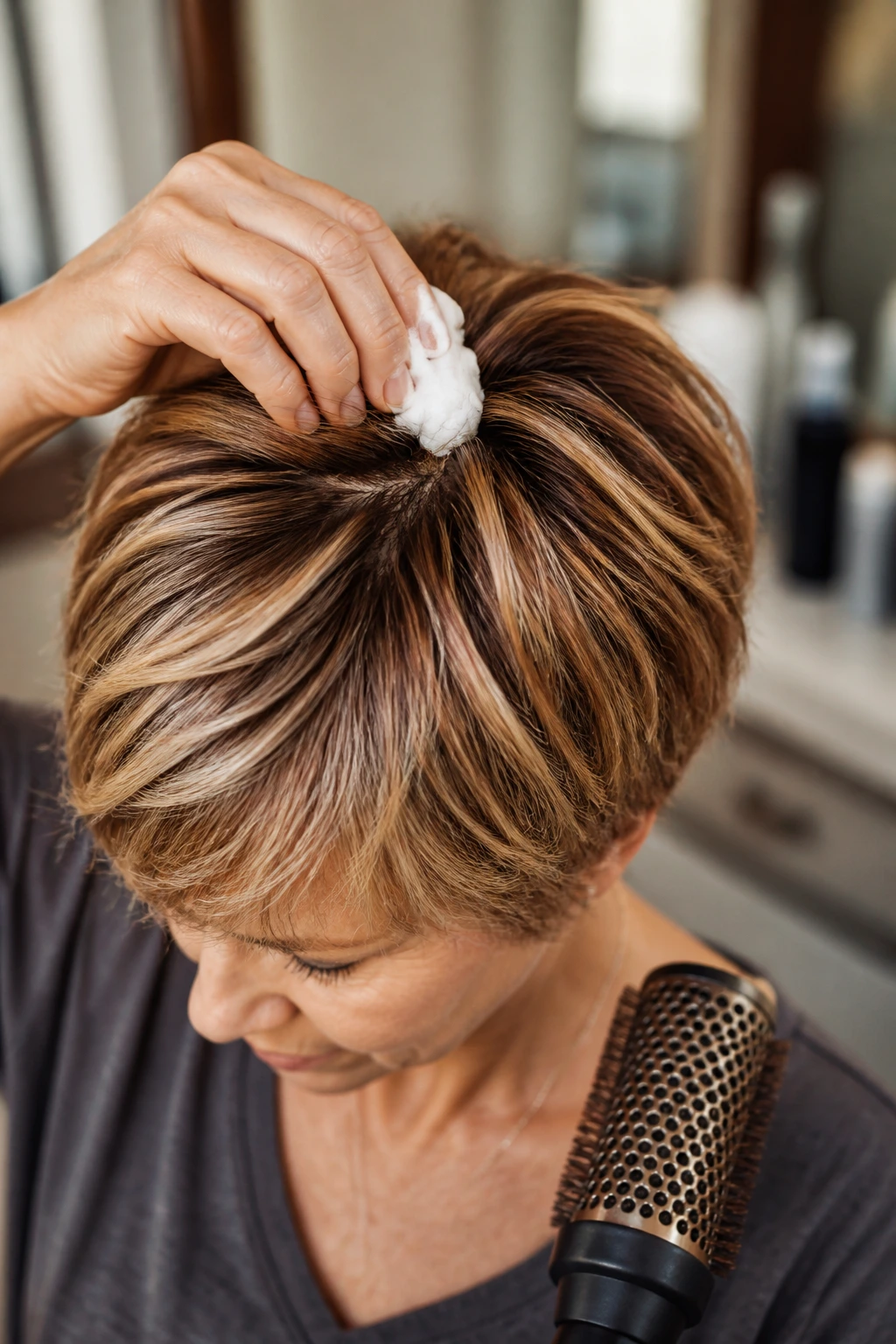
A short cut can look effortless, but only if you have the right handful of tools. You do not need a bathroom full of gadgets. You need the pieces that support shape, control frizz, and keep the caramel looking warm instead of dull.
- Fine-tooth tail comb: Handy for clean parts and for directing a fringe without overworking it.
- Small round brush, about 1 to 1.5 inches: Best for lifting the crown on pixies and giving bobs a soft bend.
- Blow-dryer with a nozzle attachment: The nozzle helps aim the air so the hair doesn’t puff in every direction.
- Light mousse or volumizing foam: Good for fine hair that needs root support without stickiness.
- Heat protectant spray: Short hair still burns, and highlighted ends need protection before a dryer or flat iron.
- Color-safe shampoo and conditioner: Keeps caramel from going muddy or brassy too quickly.
- Light styling cream or paste: One small scoop is enough for piecey crops and pixies.
- Diffuser: Useful if your short style is curly or wavy and you want the shape intact.
- Wide-tooth comb: Better than yanking through curls with a brush.
Heavy oils are the one thing I’d keep light. On short hair, too much oil hits the crown fast and makes the whole cut collapse.
How to Style These Cuts Without Making Them Stiff
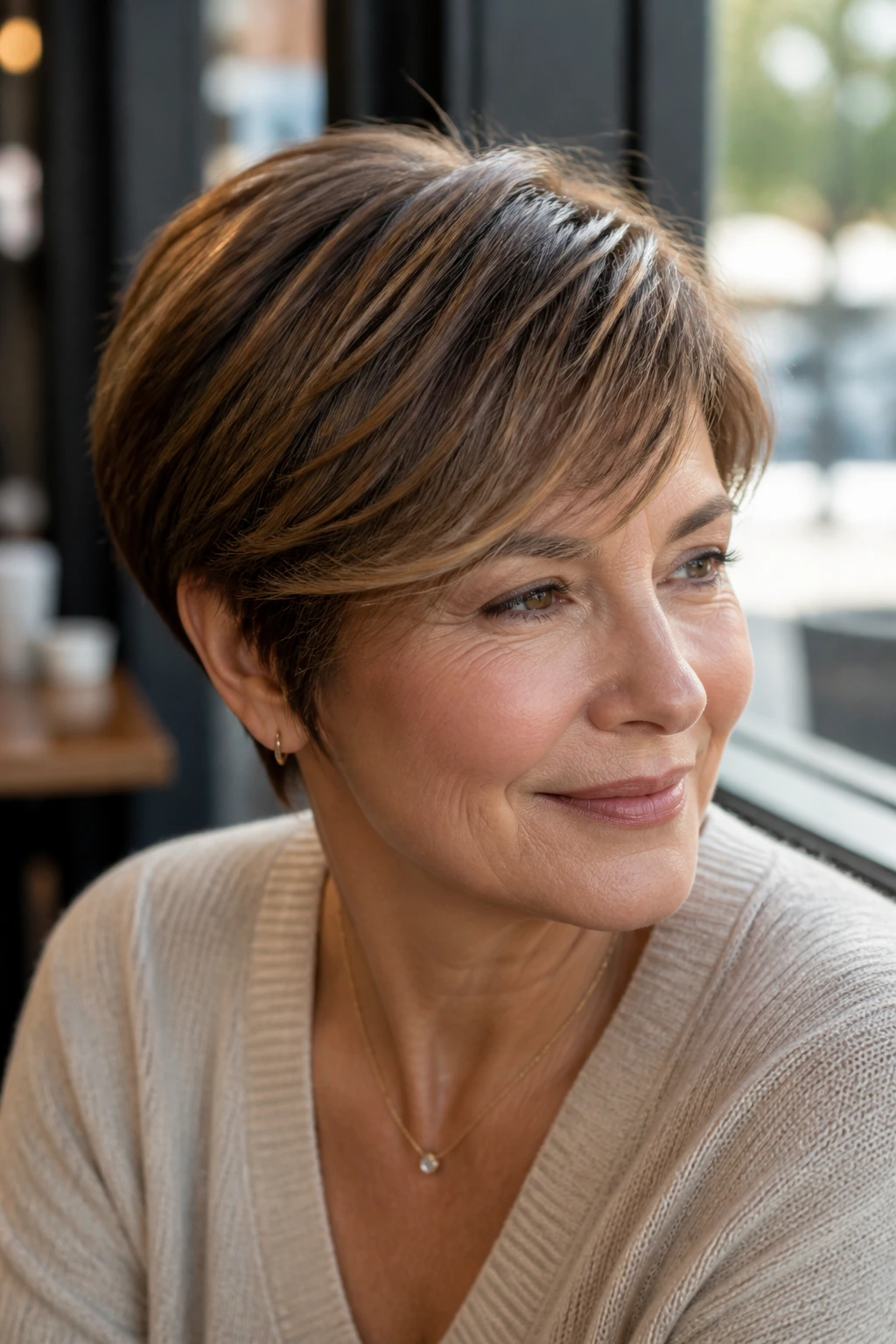
Short hair looks best when it moves a little. The goal is shape, not helmet. Start with a root-friendly product if your hair is fine — a small amount of mousse at the crown, blown in with the dryer pointed upward, does more than people think. If the cut is already dense, skip the heavy volumizer and work with a light cream instead.
Keep the ends soft. Once the hair is dry, warm a pea-size amount of paste or balm between your fingers and pinch the ends into place. That little bit of separation makes caramel highlights show up instead of disappearing into a solid block.
Use direction, not force. Push the fringe one way, tuck one side behind the ear, or bend the front pieces away from the face with the brush. The cut should look styled because of its shape, not because you spent 30 minutes fighting it.
Gloss matters. If your caramel starts turning dull, a clear gloss or color-refresh mask can bring the warmth back without changing the cut. That’s especially useful on short hair, where faded tone shows fast.
Mistakes That Make a Short Caramel Cut Look Tired
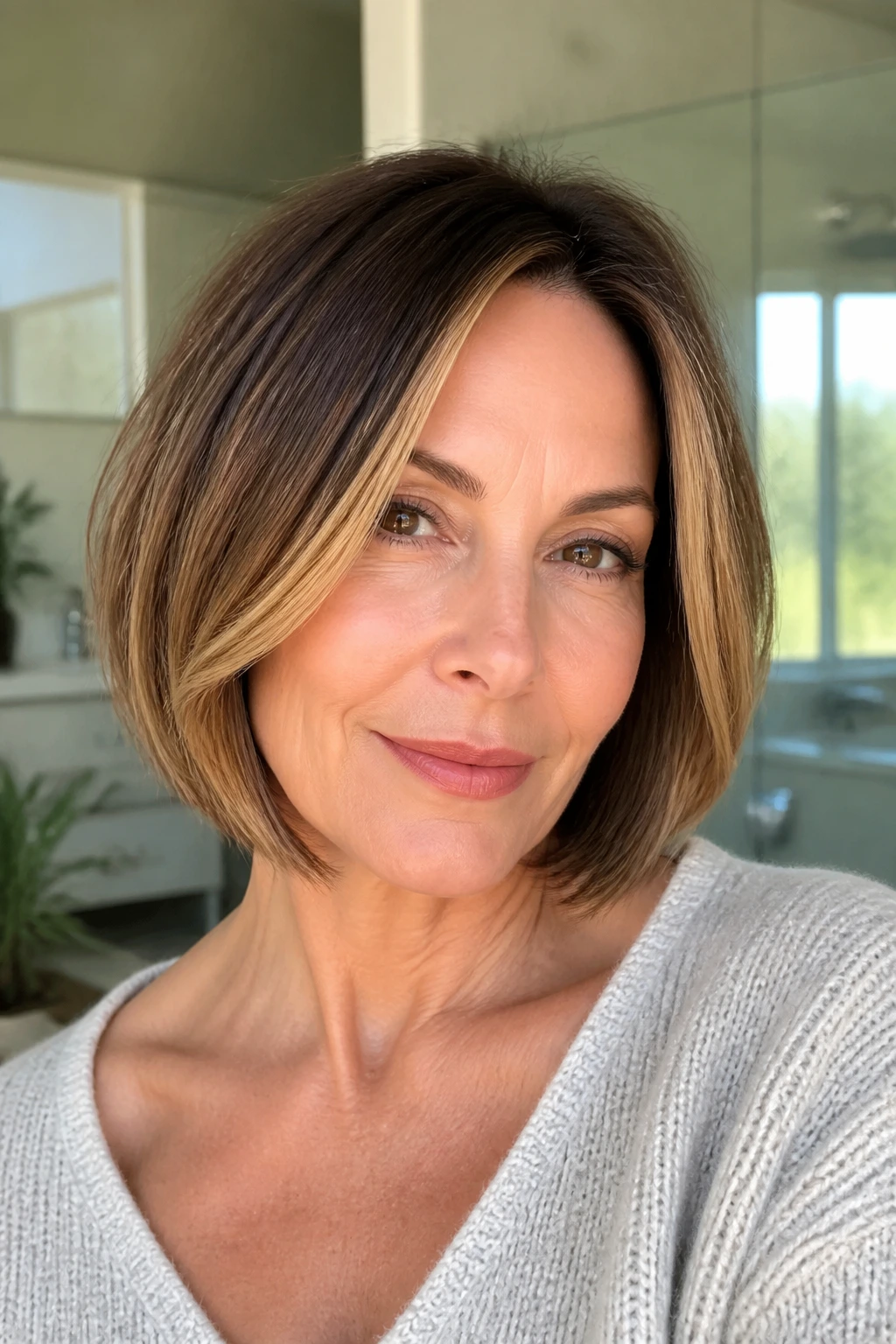
The first mistake is going too light. Platinum stripes on a short bob or pixie can look sharp for about five minutes, then they start fighting the base color and the silver. Caramel is warmer and easier to live with. If the goal is softness, chase softness.
Another common one: putting highlights only underneath. That sounds subtle, but on short hair it often means the top looks flat and the good color disappears unless you turn your head a certain way. Keep some warmth on the surface — especially around the part, fringe, and front corners.
Skipping trims is the silent problem. A pixie that grows for too long starts sagging around the ears and neck, and the highlight placement stops matching the cut. If the shape goes, the color goes with it.
And then there’s overstyling. Too much spray, too much heat, too much smoothing, and the highlights lose their movement. Short hair wants a little air. Let it have some.
Variations and Adjustments Worth Trying
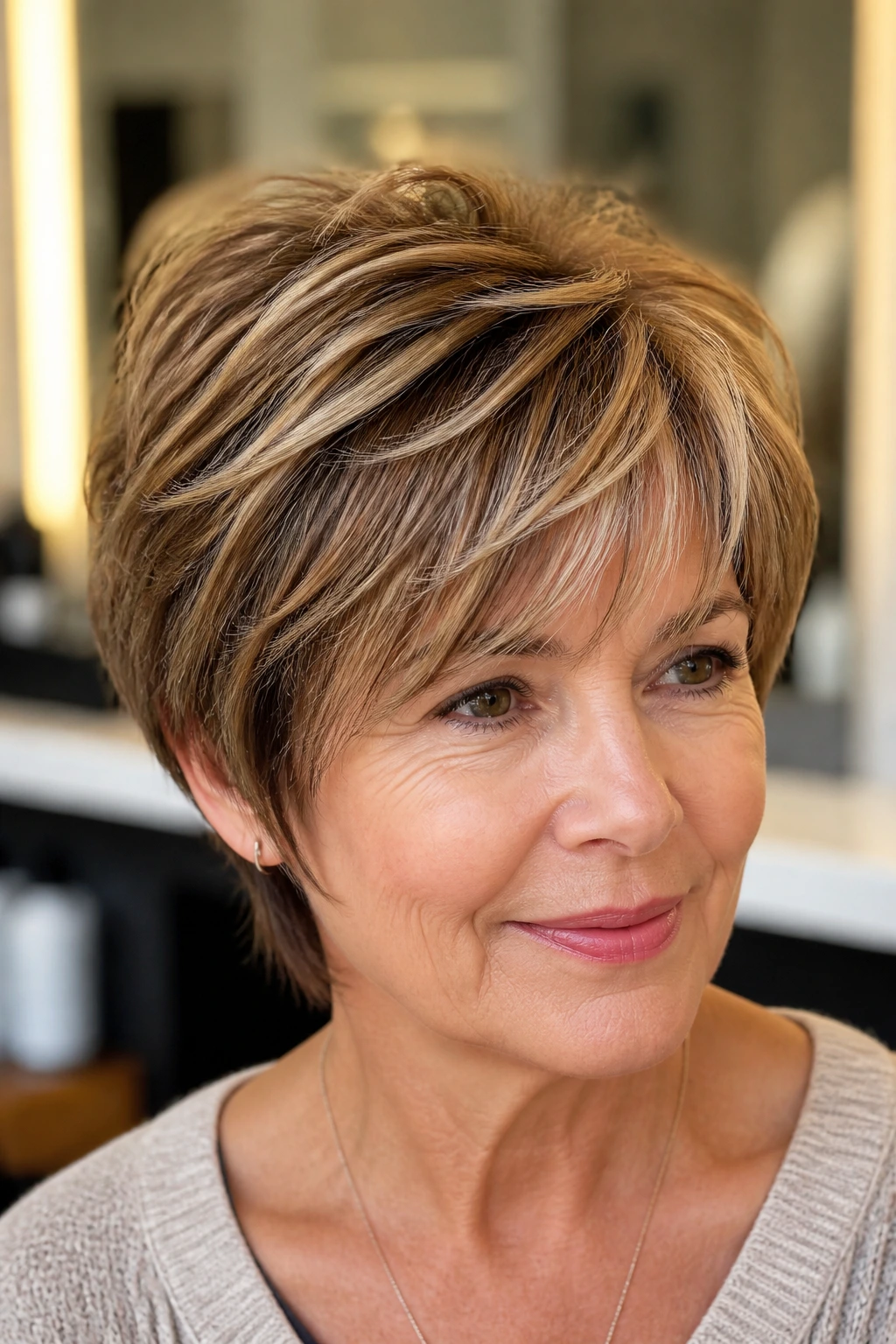
Soft Silver Blend: If your gray percentage is high, ask for caramel plus fine lowlights so the silver looks woven through, not sitting on top. This keeps the finish richer and less contrasty.
Warm Honey Drift: If your base is light brown or dark blonde, push the caramel a touch lighter and keep the placement thin. That gives the hair glow without jumping into obvious blonde.
Deeper Toffee Shadow: For darker brunettes, a richer caramel with a shadow root looks more natural than a pale stripe. It also grows out with less maintenance.
Curly Ribbon Placement: On curls and waves, ask for painted ribbons that follow the curl pattern instead of linear foils. The color moves with the texture, which is the whole point.
Low-Maintenance Root Melt: If you don’t want frequent touch-ups, let the root stay a shade deeper and blur the transition into the caramel. The grow-out looks softer and lasts longer.
Keeping the Cut and Color Fresh Between Appointments
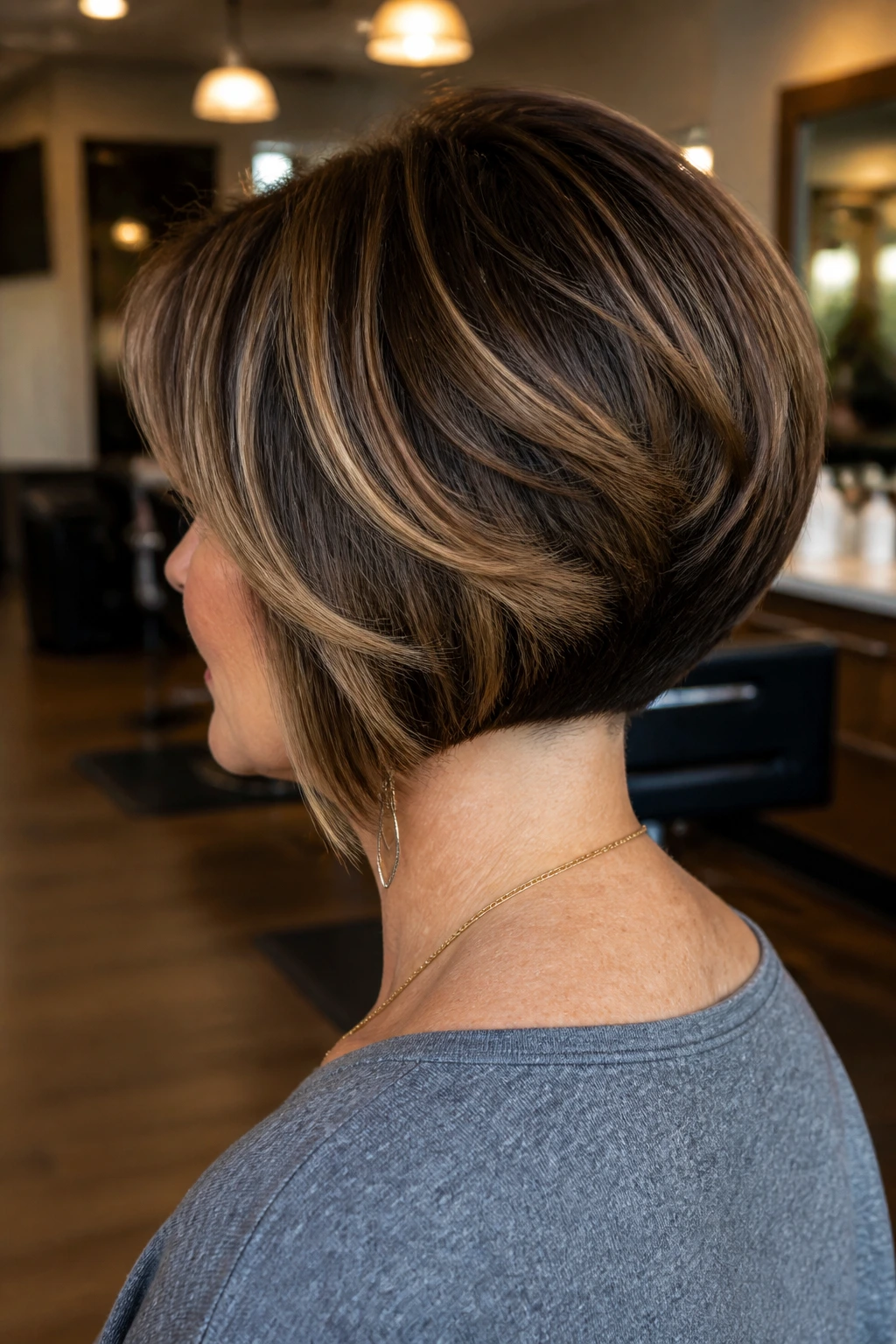
Short hair needs a rhythm. Pixies usually want a trim every 4 to 6 weeks if you care about the shape; bobs can often stretch to 6 to 8 weeks before they start tipping out of line. Once the neckline grows, the haircut changes faster than people expect.
Caramel color usually holds up better when you wash with cooler water and a gentle shampoo that doesn’t strip the tone. If the warmth starts to fade, a gloss or color-depositing mask can bring it back without another full highlight session. Use purple shampoo sparingly, if at all. Too much of it can make caramel look muddy.
At night, a satin pillowcase helps more than people admit. It cuts down on friction, which means less frizz around the fringe and fewer crushed bends in shorter layers. If your hair is curly, a loose bonnet or silk scarf can save the shape overnight. It’s one of those tiny habits that shows up in the mirror the next morning.
Frequently Asked Questions
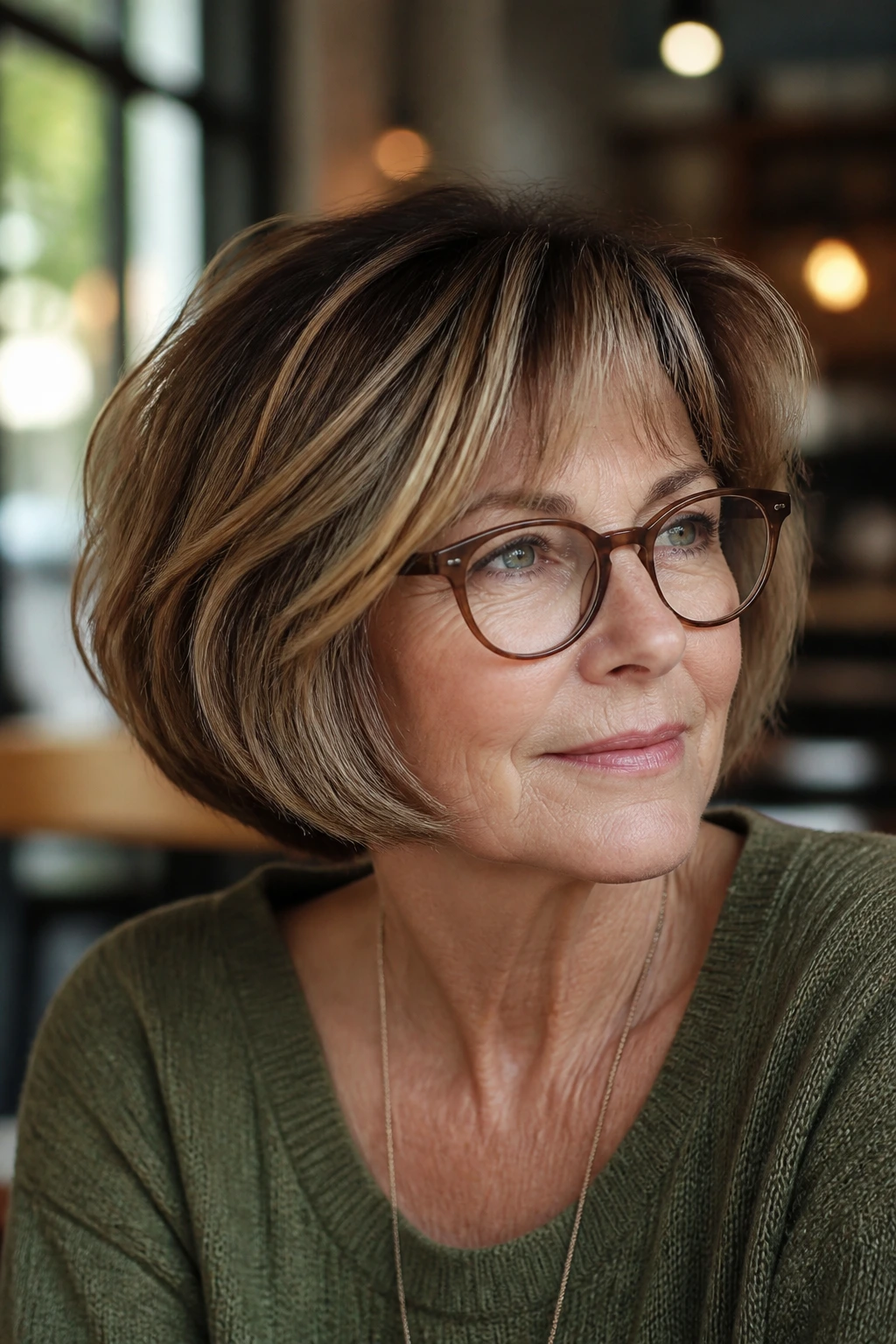
Which short haircut is best for fine hair over 50?
A feathered pixie, layered crop, or graduated bob usually gives fine hair the most lift without asking it to do too much. The right caramel placement at the crown makes the hair look fuller because the eye follows the lighter sections first.
Do caramel highlights blend gray better than blonde?
Usually, yes. Caramel sits closer to natural brunette and silver tones, so the regrowth and mixed strands look softer than a high-lift blonde stripe. It’s especially useful if your gray is still coming in unevenly.
How often do short caramel highlights need refreshing?
Most short styles look best with a gloss or tone refresh every 6 to 8 weeks, though that depends on how often you wash and heat-style. If the warmth starts looking flat or dull before the next trim, a color mask can stretch the finish a bit longer.
Can curly hair wear caramel highlights without getting frizzy?
Yes, if the color is placed with the curl pattern in mind. Highlighting the outer ring and top curls instead of flooding the roots helps keep the curl shape intact and avoids that puffy, broken look.
What if my caramel highlights turn orange?
That usually means the tone is too warm for your base or the color has faded unevenly. Ask for a softer beige-caramel gloss or a lowlight to cool the contrast a little. Purple shampoo won’t fix orange by itself.
Should I pick highlights or lowlights if my hair is mostly gray?
Both can help, but lowlights are the piece people forget. If your gray is bright and your base is light, lowlights give the highlights something to sit against, so the result looks richer and less washed out.
Will these cuts still work if I air-dry most days?
Yes, but choose a cut with built-in shape: a shag bob, textured crop, or soft pixie tends to air-dry better than a blunt, sleek bob. A little styling cream and the right part line can do a lot with very little effort.
Can I ask for caramel without bleach?
Sometimes, yes, depending on your base color. A glaze, tonal lift, or subtle balayage on lighter brown hair may be enough. Darker hair usually needs some lightening for caramel to show, but it doesn’t have to be pushed to the lightest blonde level.
Warm Dimension That Still Feels Like You
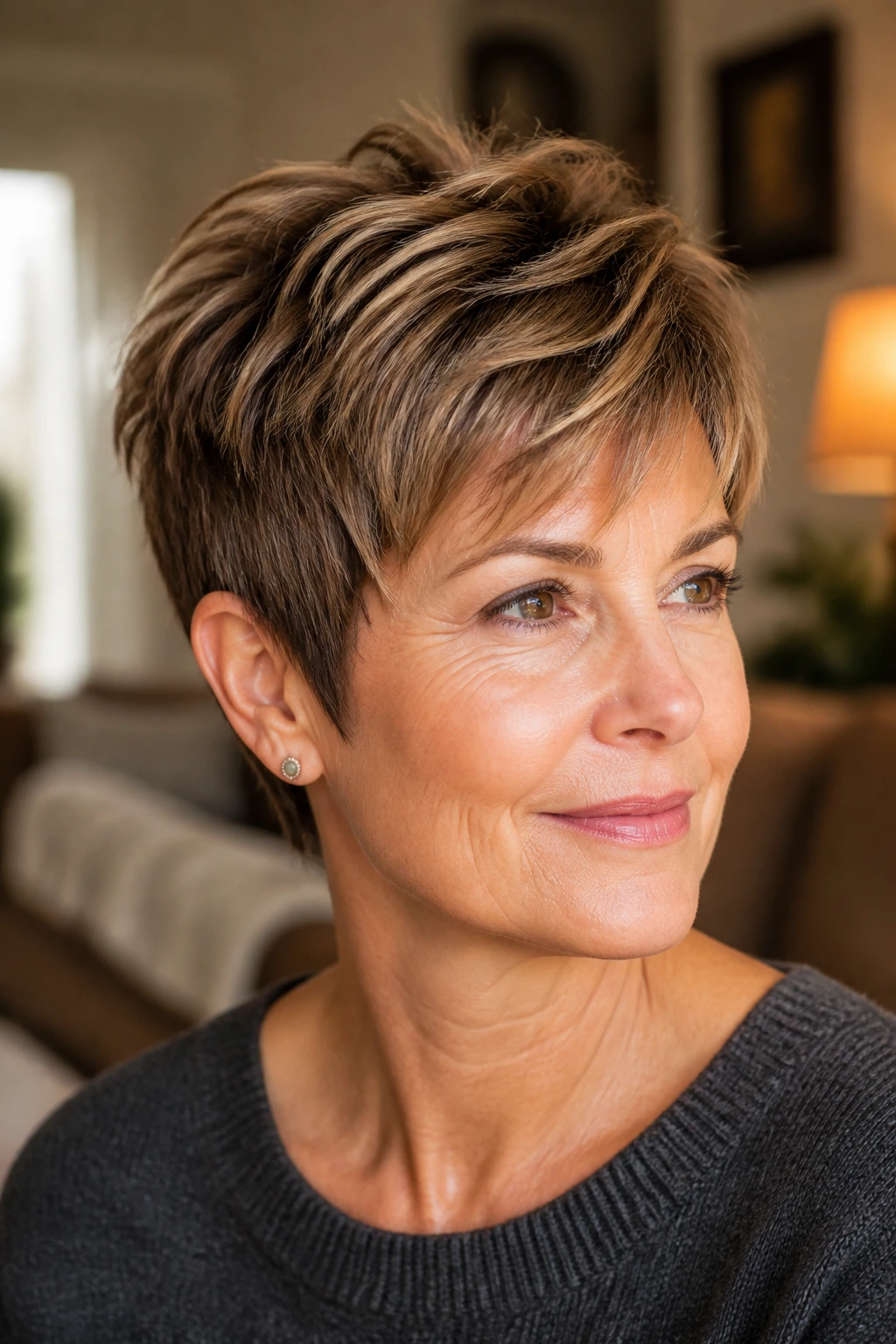
The best short haircuts for women over 50 with caramel highlights do something sneaky and useful: they make the haircut look intentional even when life is not cooperating. A clean shape, a warm ribbon at the right place, and a little depth underneath can turn a simple bob or pixie into something that feels finished.
I’d keep coming back to one rule: let the cut lead and let the color support it. When the highlight placement follows the line of the fringe, crown, jaw, or nape, the whole style looks calmer and more expensive — not in a flashy way, just in the way that makes you stop fussing with it.
Bring photos, ask for placement instead of brightness, and be honest about how much time you want to spend in front of the mirror. That’s where the good cuts start.