



Blonde short balayage for medium skin tones works best when the blonde is chosen like a makeup shade: a little warmth here, a little coolness there, and enough depth left underneath to keep the face from looking flat. That’s the part a lot of people miss. They chase brightness and forget that medium skin usually needs a blonde that frames the face instead of flooding it.
Short hair makes that decision even more visible. On a bob, lob, bixie, or pixie, every ribbon shows. Every toner choice shows. If the blonde is too yellow, the whole cut can look loud in the wrong way. If it’s too icy, medium skin can start to look tired or slightly gray. The sweet spot is a soft, controlled lightness that lets the haircut keep its shape.
That is why the best short balayage on medium skin usually has a shadow root, some face-framing brightness, and a tone that stays creamy rather than chalky. Some versions lean honey and butter. Others go beige, mushroom, or champagne. A few push into pearl or platinum, but even then the root needs to stay smart. The cut should still read as a cut. The color should support it, not swallow it.
Why These Looks Work So Well on Medium Skin
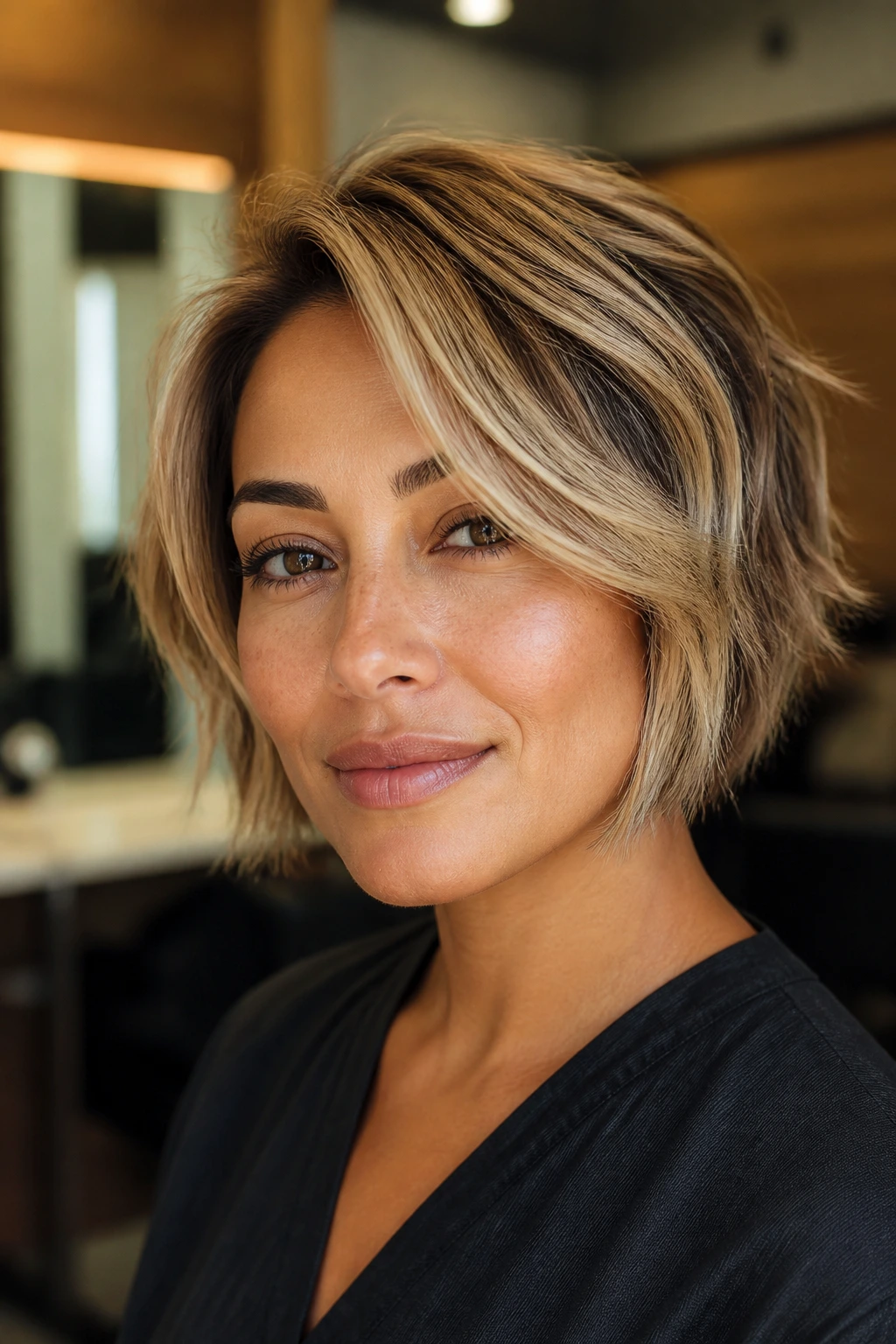
Balanced Contrast: Medium skin usually has enough depth to hold blonde, but not so much depth that the color can be slapped on carelessly. A soft balayage placement keeps the blonde near the cheekbones, crown, and ends where it lifts the face without turning the whole head into a block of light.
Short Hair Shows Intent: On shorter cuts, a few well-placed ribbons read richer than a full head of heavy highlights. You see the movement faster, and that makes tone choices matter more than raw brightness.
Grow-Out Looks Softer: A rooted balayage on a bob or pixie grows out with less obvious demarcation than foil highlights. That’s a gift if you don’t want a hard line sitting around your part.
Tone Does the Heavy Lifting: Honey, beige, mushroom, pearl, and champagne each tell a different story on medium skin. The undertone is the whole game.
Styling Changes the Mood: The same blonde can look polished with a round brush, relaxed with a texture spray, or sharp with a flat iron bend. Short hair gives you that range without much effort.
1. Honey Ribbon Bob
Honey ribbon balayage on a chin-length bob is one of the easiest ways to make medium skin glow without pushing the blonde too pale. The warm pieces sit like sunlight across the top layer, while the darker base keeps the cut from looking washed out. I like this on skin with gold or olive in it, especially when the hair is worn with a soft bend instead of a rigid wave.
The trick is to keep the ribbons thin around the front and a little denser toward the ends. That way the bob moves, but it doesn’t feel striped. A root that stays one to two levels deeper than the blonde keeps the whole thing calm.
2. Champagne-Dusted French Bob
Can a cooler blonde work on medium skin? Absolutely, if it stays creamy. This French bob keeps the crop close to the jaw and uses champagne balayage to give the hair a soft, polished sheen instead of a brassy shine. It suits neutral-leaning medium skin especially well.
What makes it stand out is the restraint. The color is lighter at the cheekbone and crown, then it melts back into a soft root shadow. Wear it with a side part and a loose tuck behind one ear, and the whole thing feels sharp without looking severe.
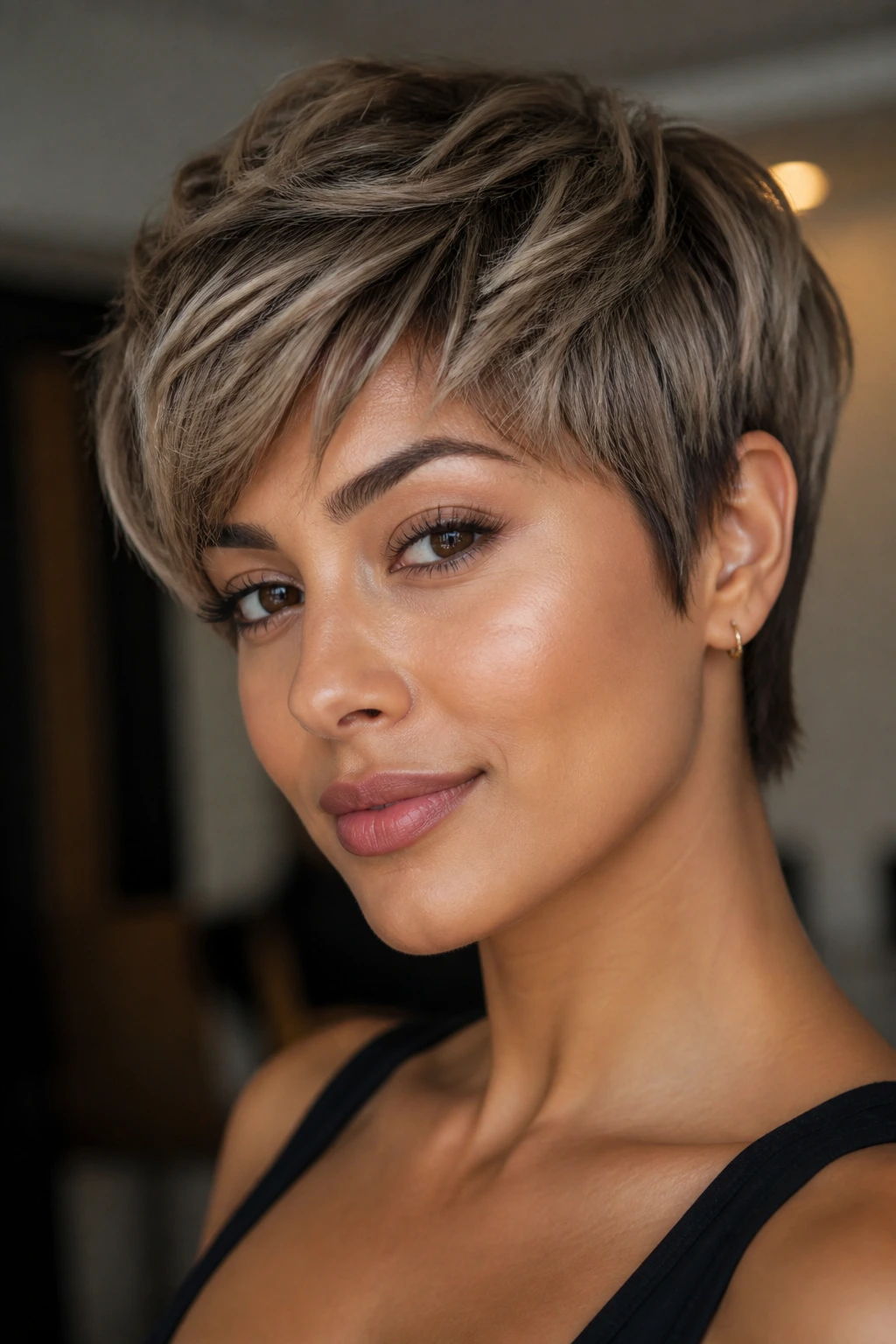
3. Mushroom Blonde Pixie
This is the quietest blonde in the group, and that’s not a bad thing. Mushroom blonde uses smoky beige and cool taupe tones, which can be a lifesaver if your medium skin leans olive and gets overwhelmed by gold. On a pixie, the color reads modern fast because the short layers pick up the light in little flashes.
I prefer this with texture on top and a little separation through the fringe. If the blonde goes too silvery, it can drift into flatness, so the beige note matters. Keep the root dark enough to show the shape of the cut.
4. Beige Money-Piece Lob
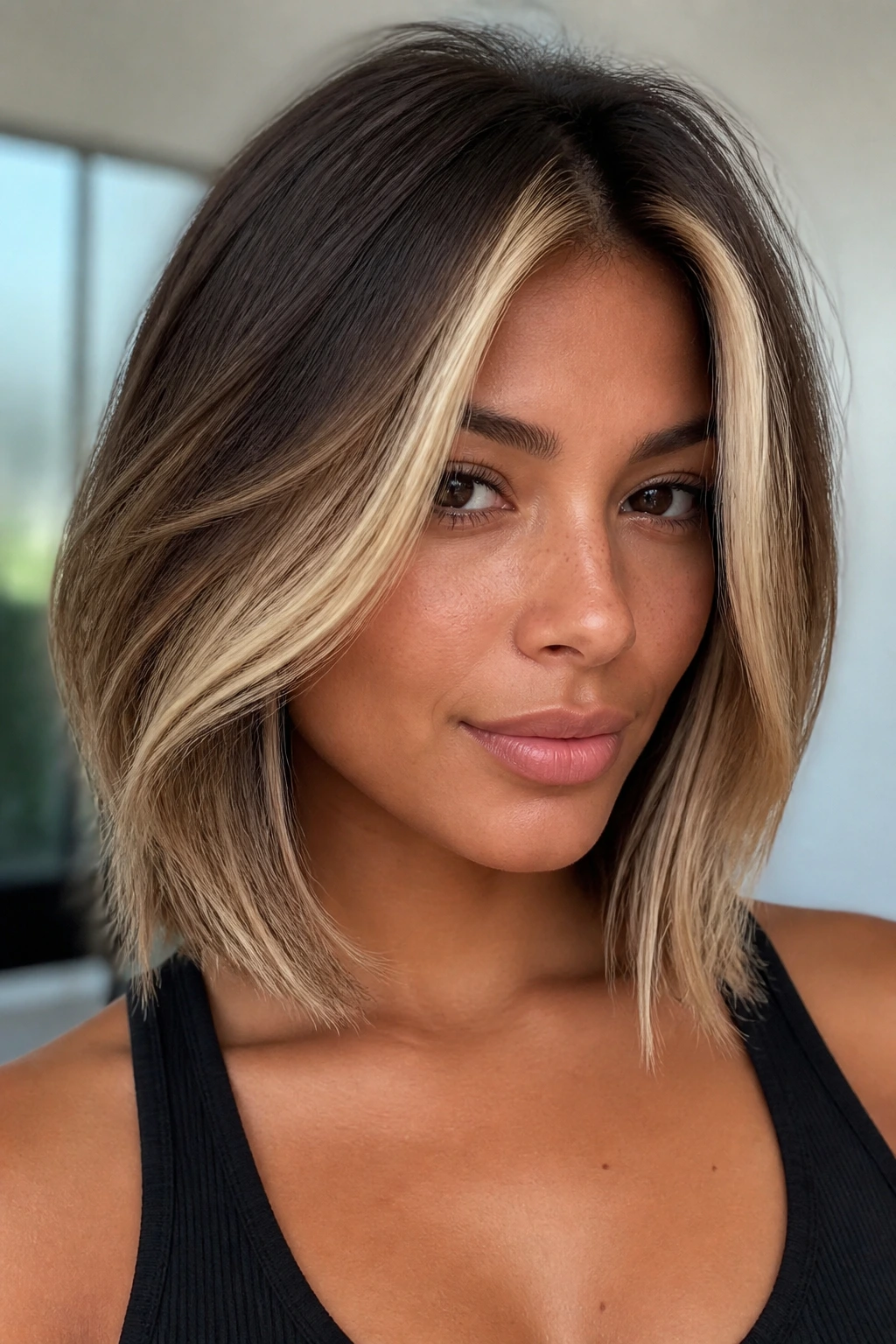
This one is for anyone who wants brightness near the face without bleaching the whole head. A collarbone-grazing lob gives the balayage room to stretch, and the beige money piece at the front pulls light toward the eyes and cheeks. On medium skin, that face frame can be the difference between “nice color” and “this actually lifts me.”
The base should stay soft and slightly deeper than the front. Beige is the useful middle ground here: not too gold, not too icy, not too flat. If you blow it out smooth, the front pieces do the talking.
5. Buttercream Curly Crop
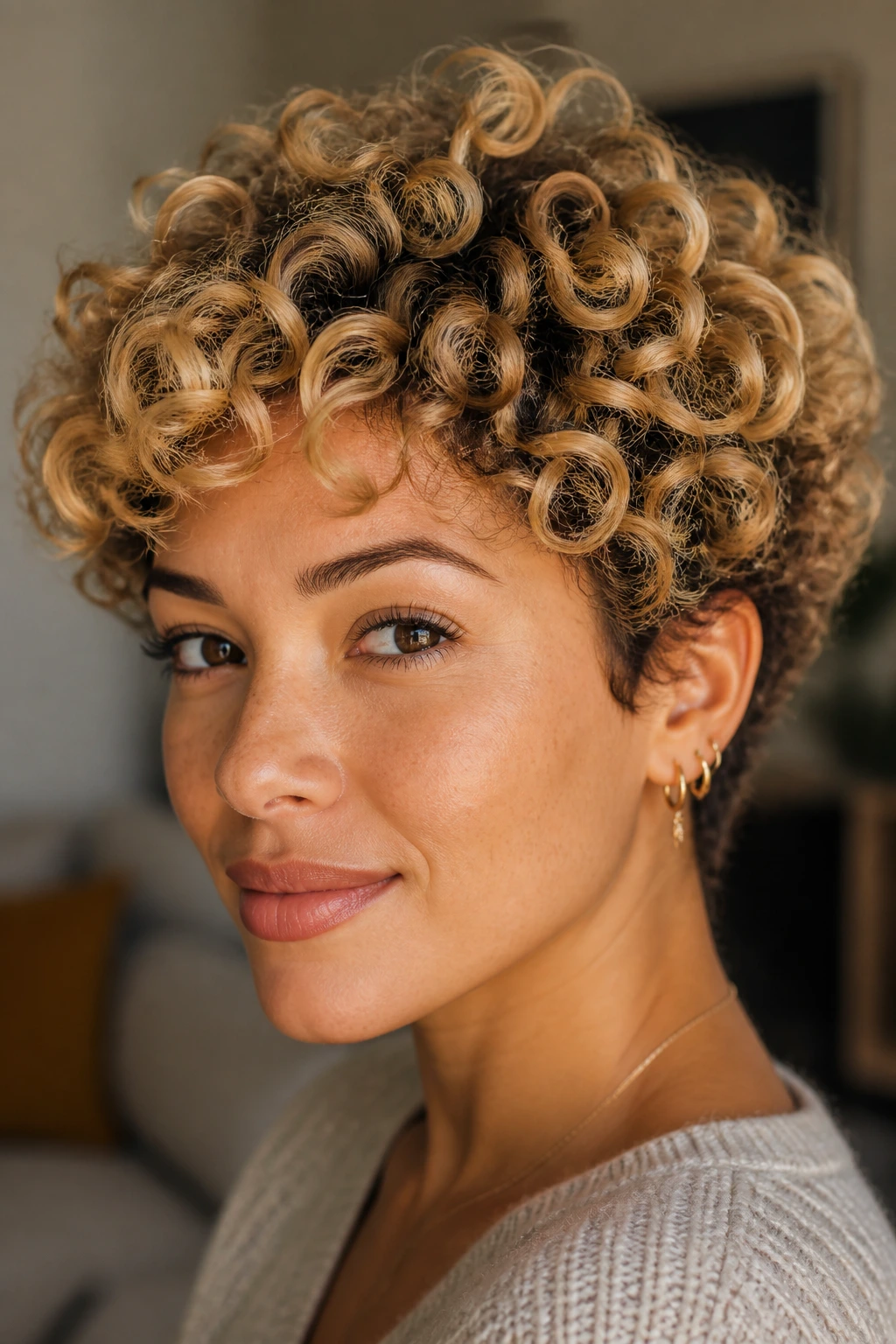
A curly crop with buttercream balayage has a softness that straight hair can’t fake. The blonde sits on the surface of the curls, so you get these little warm flashes instead of a solid painted block. On medium skin with warm undertones, buttercream keeps the face bright without making the curls look frosted.
The only real mistake here is over-lightening the interior. Leave depth between the curls and focus the brighter pieces on the crown and outer ring. That way the color moves when the curls move. It’s better when the roots stay visible.
6. Sandy Undercut Crop
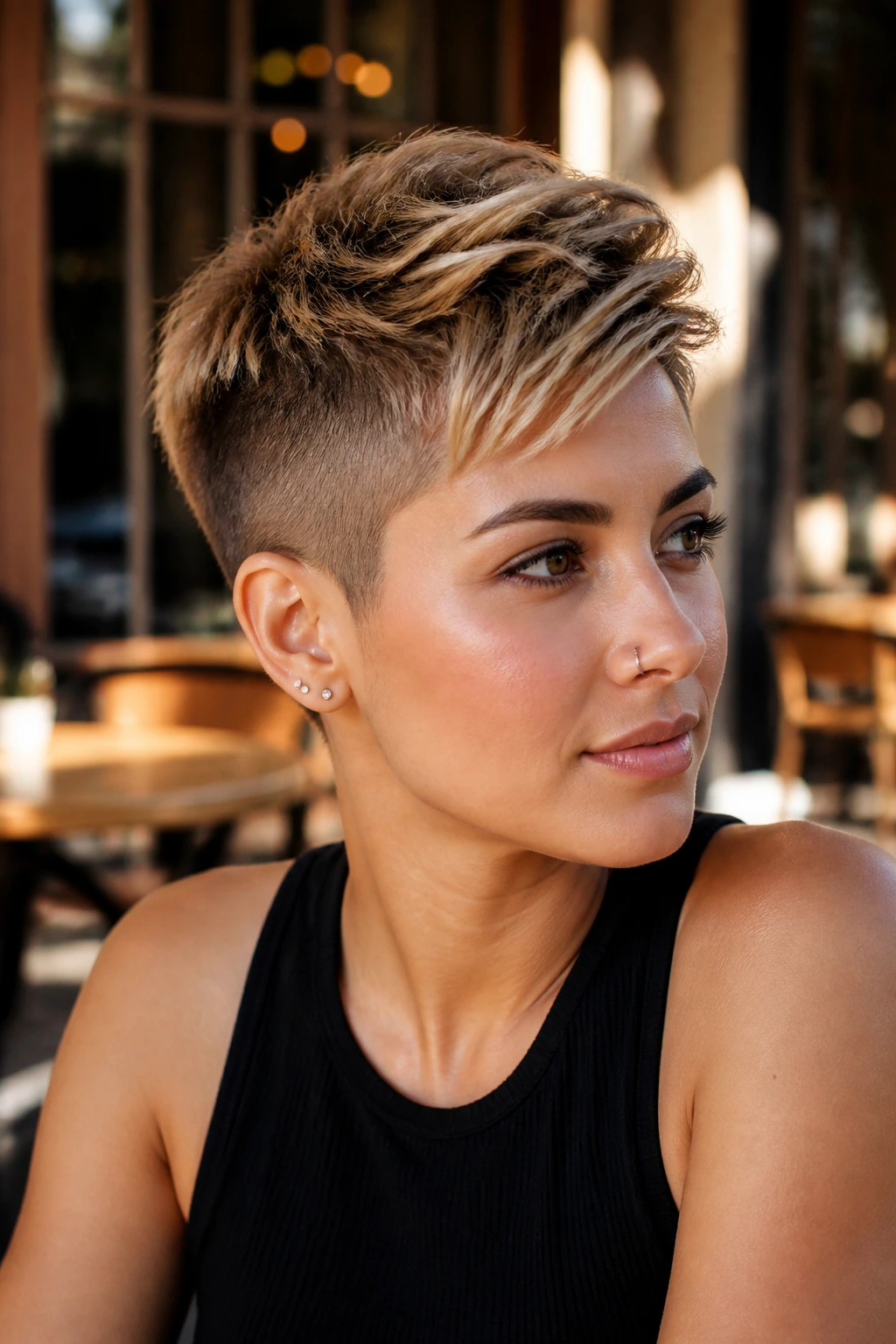
A sandy balayage on an undercut crop has edge, but it still feels wearable. The shaved or closely clipped sides keep the shape clean, while the longer top layers carry the blonde ribbons. Sandy beige is useful on medium skin because it sits in the middle of warm and cool.
This cut is best when the top is styled with a piecey paste or a matte cream. Too much shine makes the color look flatter than it is. A slightly tousled finish helps the blonde catch the light in broken, natural-looking pieces.
7. Vanilla Swirl Textured Bob
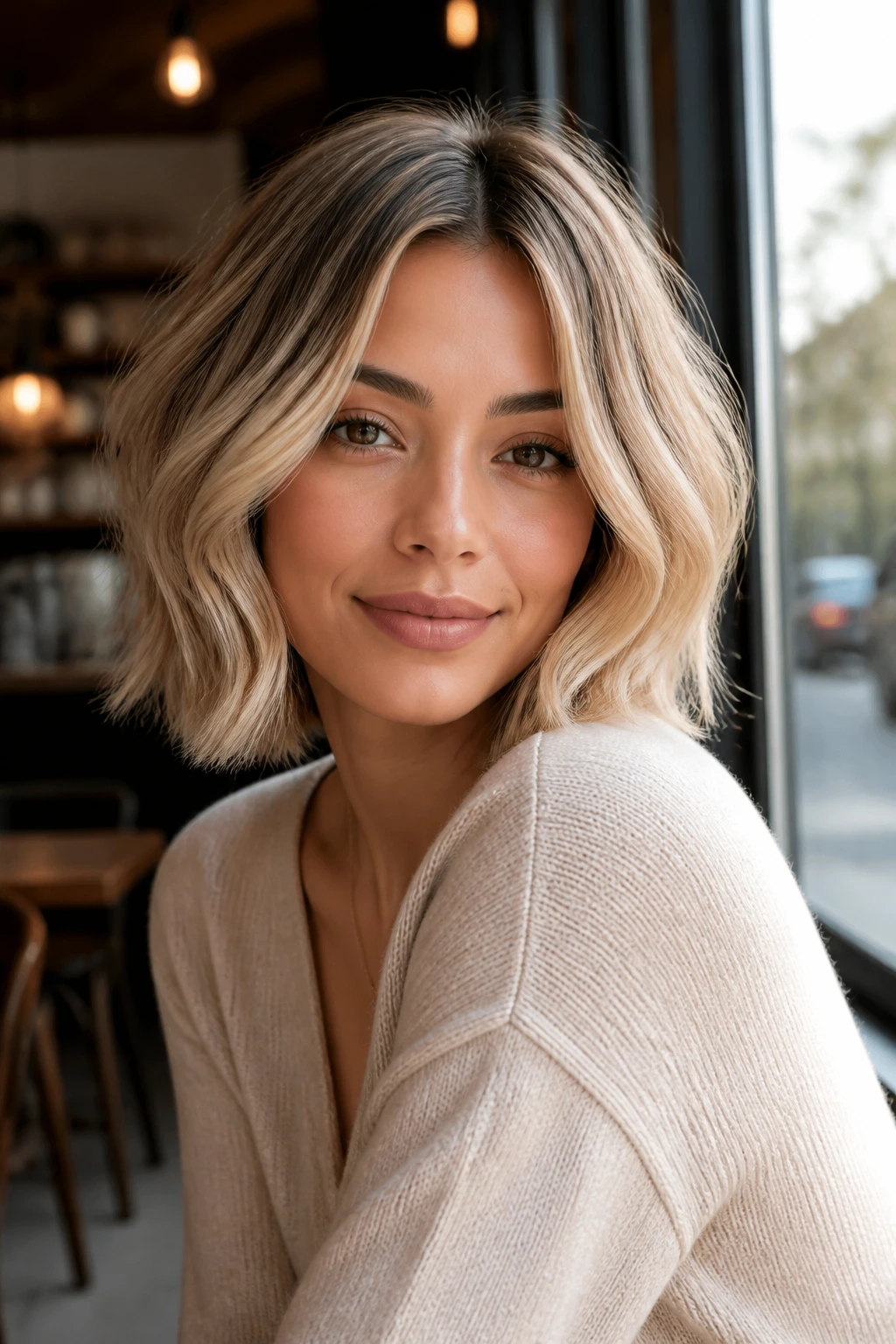
If honey feels too warm and ash feels too gray, vanilla is the middle lane. A vanilla swirl bob uses creamy blonde ribbons that are light enough to brighten medium skin but soft enough to stay believable. The texture matters here; the haircut needs a little roughness at the ends so the blonde doesn’t look pasted on.
I like this with a loose, undone wave and a center part. It keeps the bob casual, not over-styled. The blonde should be brighter through the top layers and gentler underneath, almost like the color is being stirred through the cut instead of painted on one level.
8. Caramel-Toned Short Shag
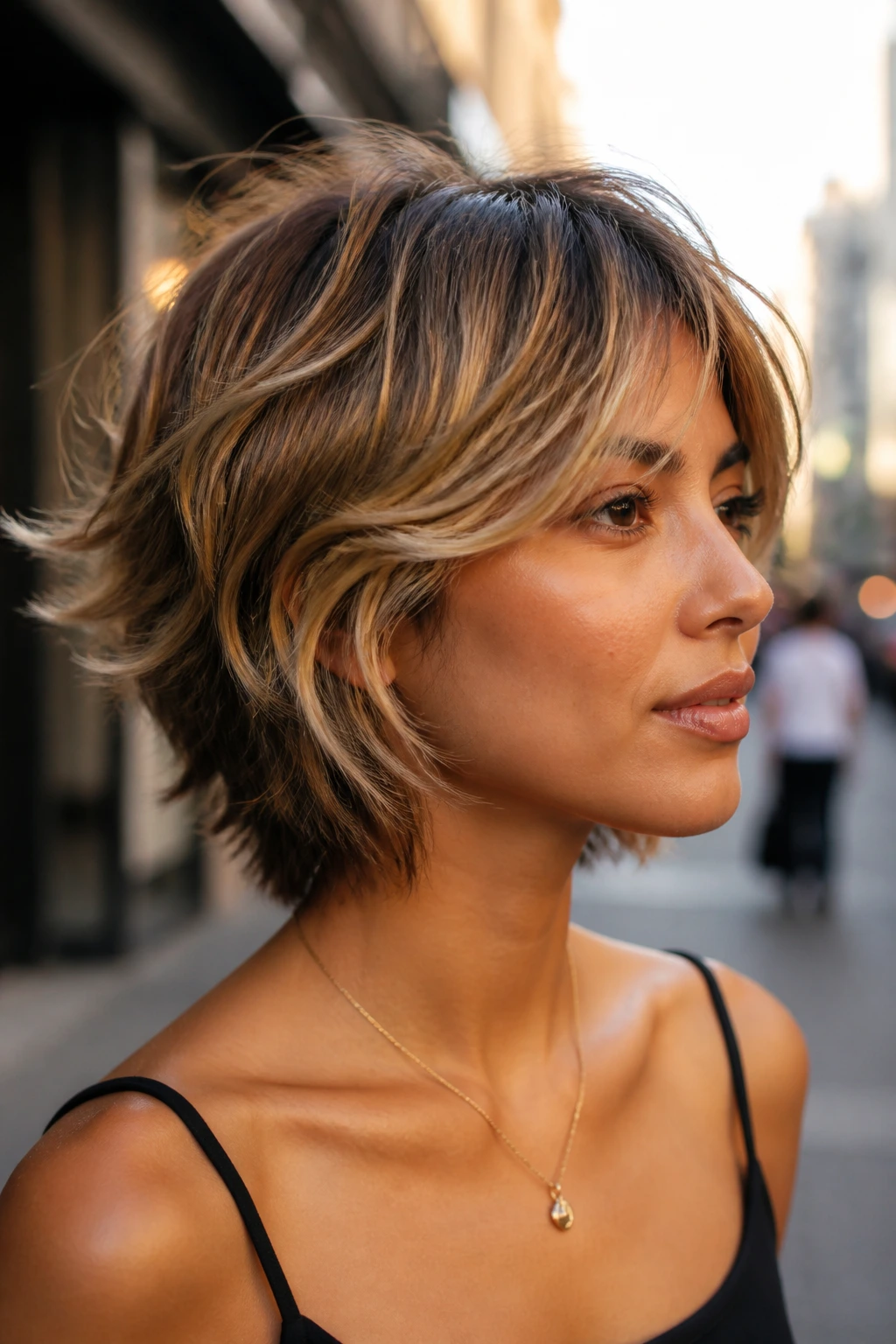
A short shag is one of the best cuts for balayage because the messy layers love dimension. Caramel-toned blonde ribbons sit inside the shag like little streaks of heat, which is especially good on medium skin with warmer undertones. You get movement without a harsh contrast line.
This look does not need perfection. It needs separation, air, and a little grit in the finish. If the color is too uniform, the shag loses its bite. Let the darker base stay visible around the nape and underlayers, because that’s what gives the blonde something to bounce against.
9. Ash Beige Blunt Bob
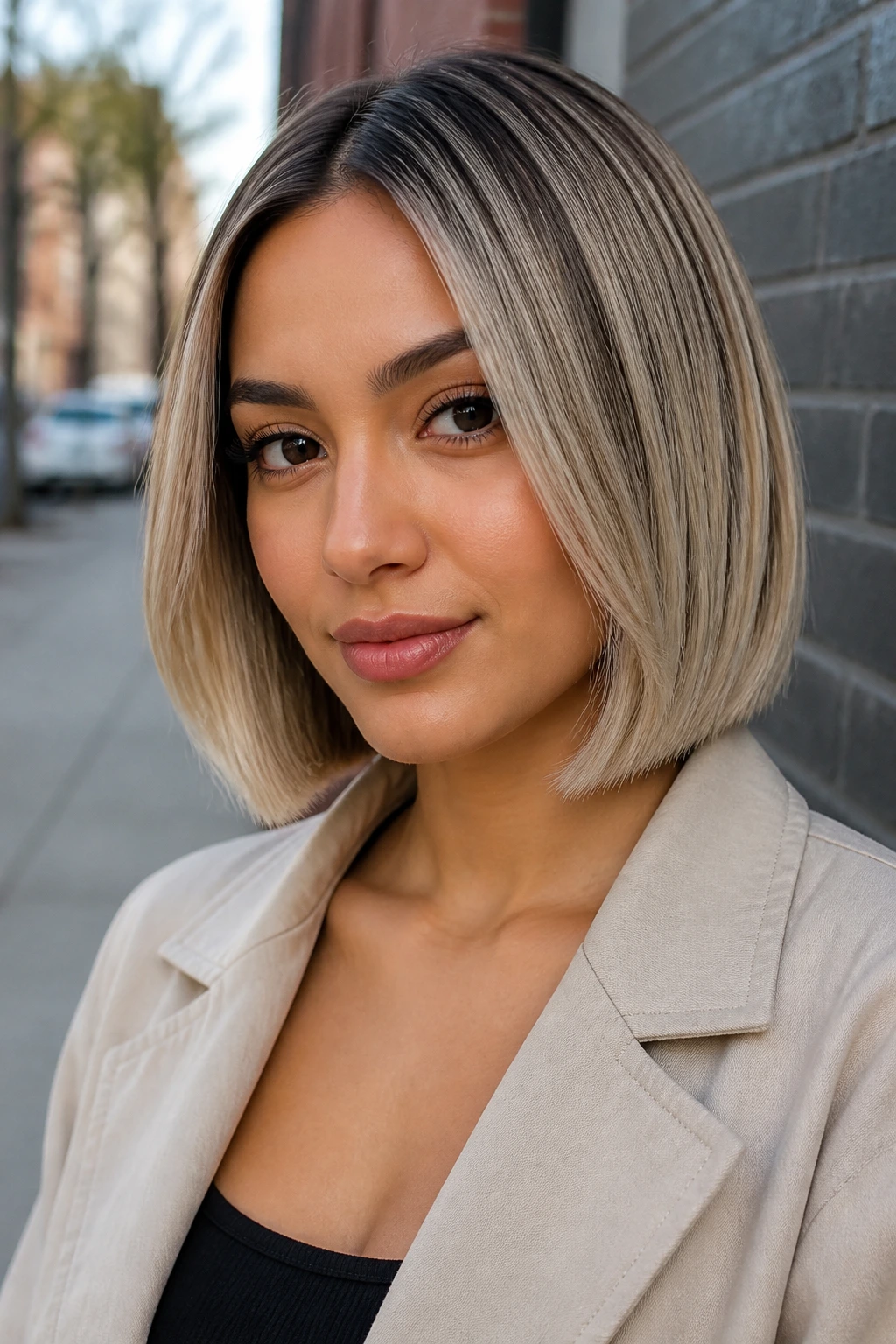
A blunt bob can take cooler blonde better than most short cuts because the line of the haircut does some of the visual work. Ash beige balayage gives medium skin a cleaner, more modern edge when the tone stays soft instead of icy. This is a good choice if brass bothers you and gold makes you feel too warm.
The best version has a root shadow and thin ribbons placed just off the part. That keeps the bob from looking like a solid helmet of color. Sharp ends plus soft tone is the whole point here.
10. Toasted Almond Wavy Lob
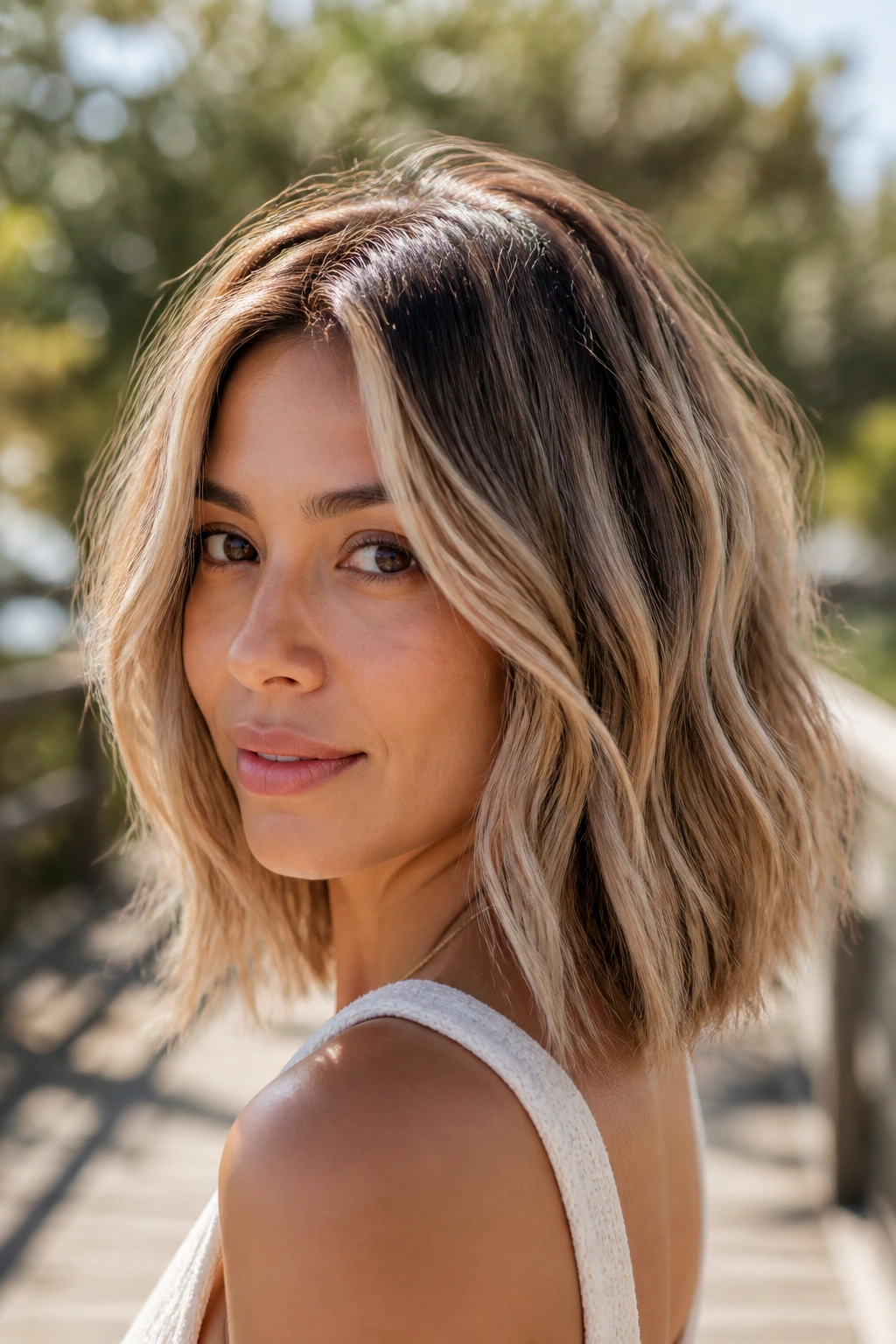
Toasted almond is the shade I reach for when someone wants blonde but not pale, bright blonde. On a wavy lob, it looks grounded and expensive without pretending to be low-maintenance in a fake way. Medium skin with golden undertones tends to love this because the warmth feels intentional, not yellow.
A few thicker pieces near the face help the color register in photos and daylight. The rest can stay feathery and diffused through the ends. If you want the cut to feel softer, let the front waves fall a little looser than the back.
11. Pearl Blonde Tapered Pixie
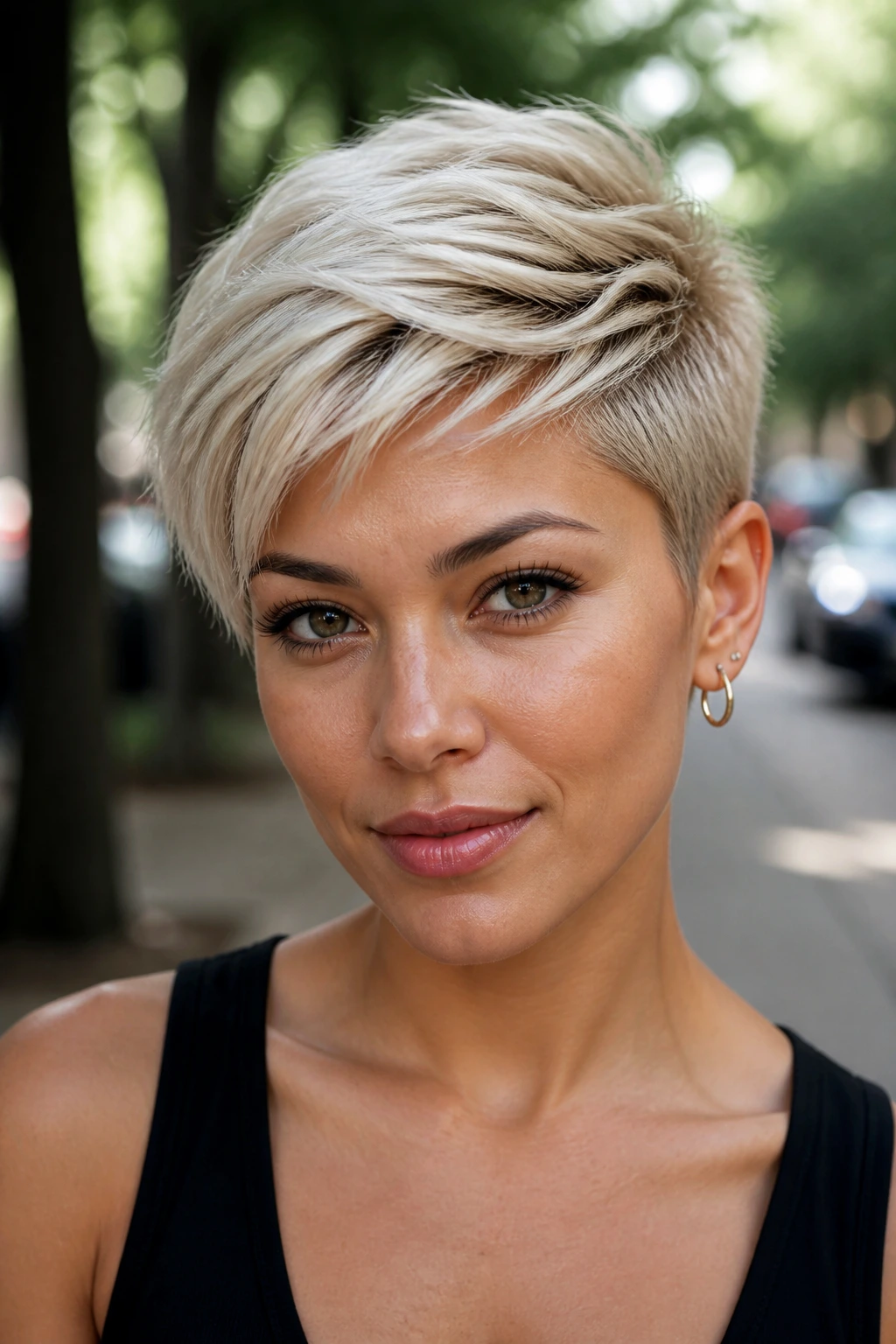
Pearl blonde has a clean, creamy brightness that can be gorgeous on medium skin when the base stays soft. On a tapered pixie, the long top and shorter sides create enough shape that the light blonde doesn’t swallow the face. It reads polished, but not fussy.
This one works best on neutral medium skin or skin that has a cool edge in natural light. Keep the toner beige-pearl rather than silver-white. The second it turns too icy, it starts fighting the complexion instead of lifting it.
12. Rooted Cream Curly Crop
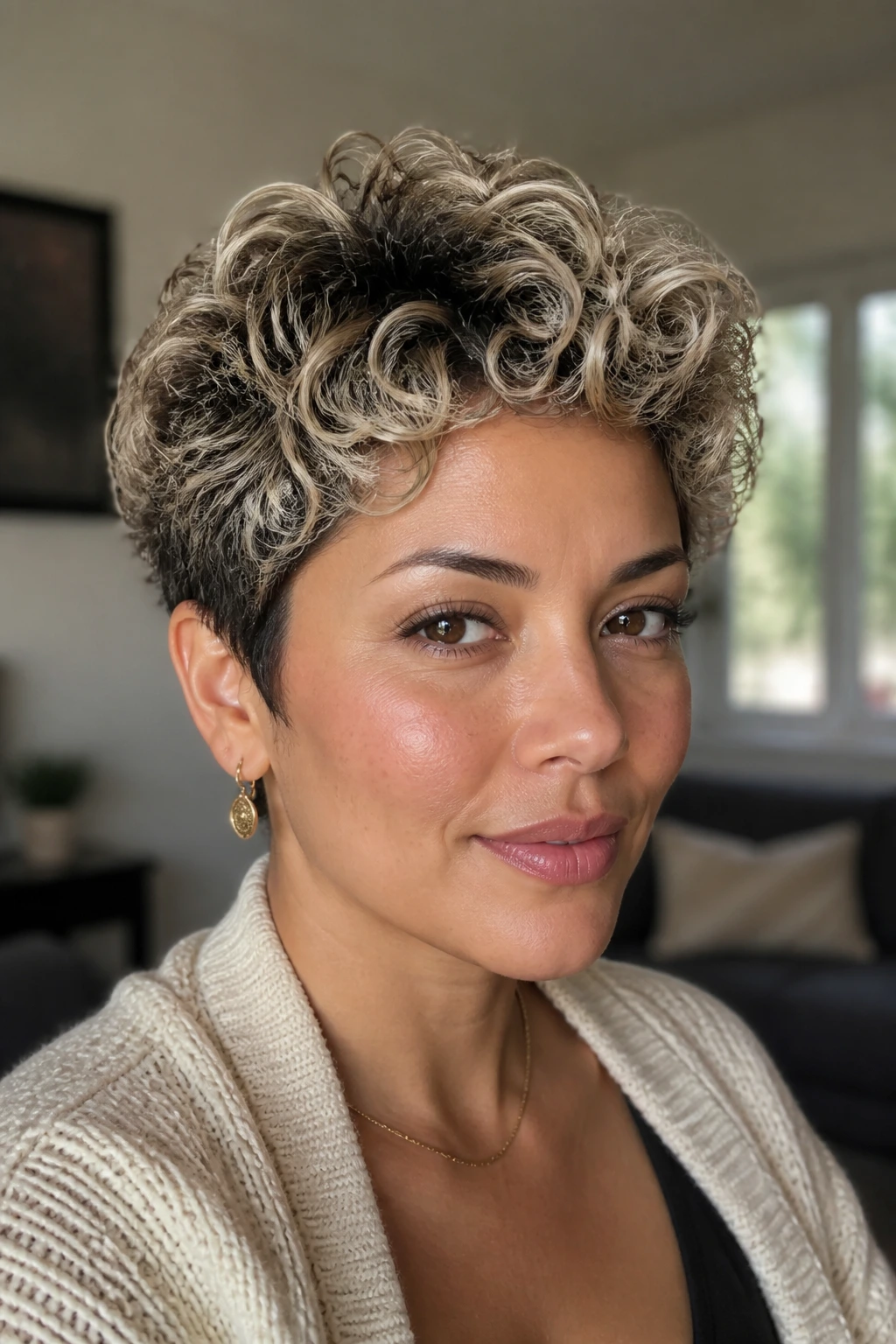
Curly crops wear rooted blonde well because the curl pattern already breaks up the color. Cream balayage on top of a deeper root gives medium skin a bright halo effect without making the whole shape look bleached. The root is part of the design here, not something to hide.
I’d keep the lightest pieces around the outer curves and the crown, then leave the inner curl mass a shade deeper. That contrast makes the curl definition look cleaner. It also buys you easier grow-out, which I always respect.
13. Sunlit Layered Bixie
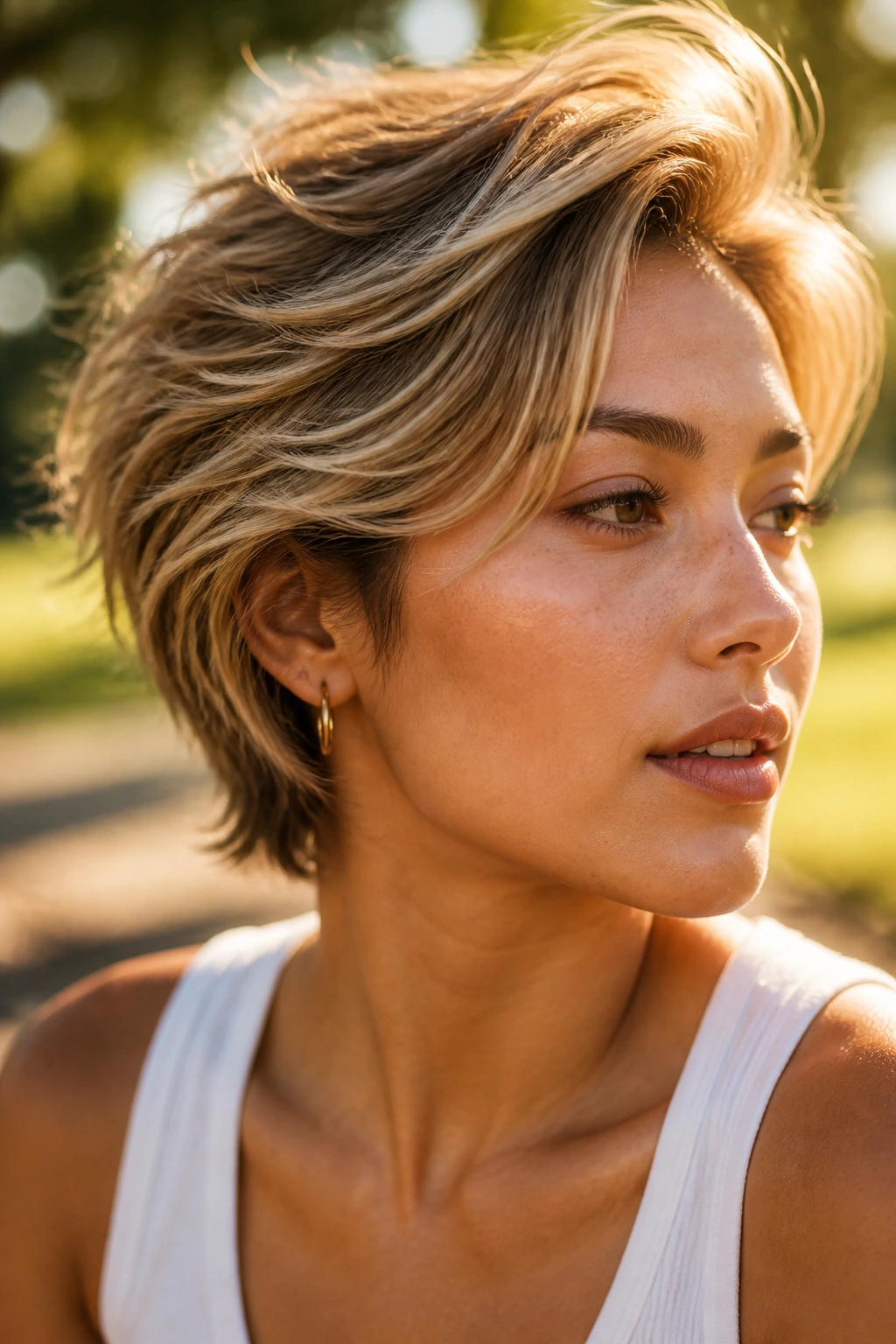
The bixie sits in that useful space between bob and pixie, which means it gives balayage enough length to show movement but not enough length to get boring. Sunlit blonde ribbons through the layers make medium skin look awake, especially when the hair is swept back from the face. This is one of the most forgiving cuts in the set.
The key is to keep the brightness uneven on purpose. A little more blonde at the temples, a little less at the nape, and a soft lift around the crown creates shape fast. It’s one of those styles that looks better the less you overthink it.
14. Dimensional Wheat Blonde Bob
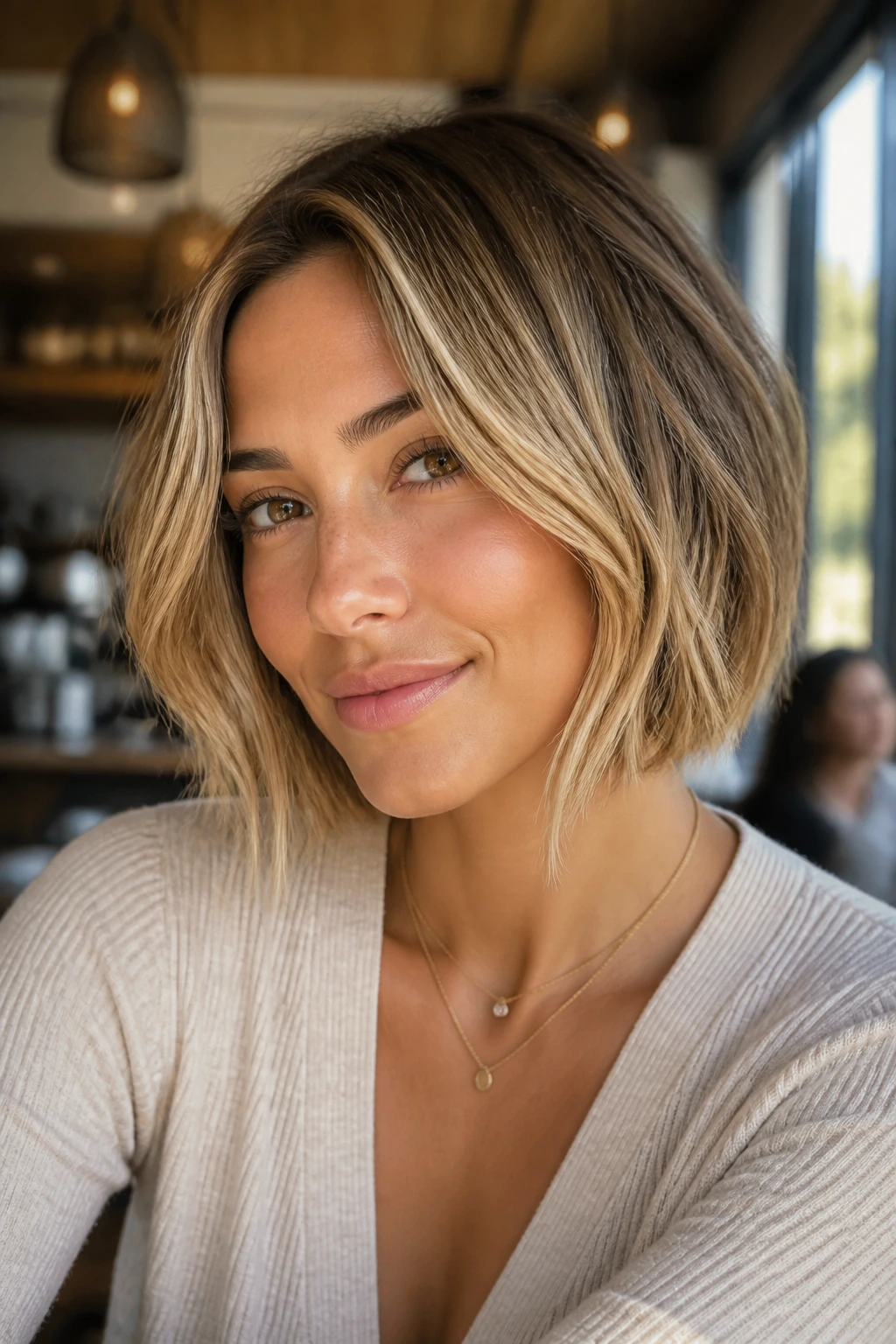
Wheat blonde lives between gold and beige, and that middle lane is flattering on a lot of medium skin tones. On a bob, the dimensional placement keeps the cut from looking solid or blocky. You want some brighter strands, yes, but you also want little seams of depth between them.
This is especially nice if your hair is naturally brown and you don’t want to fight the base too hard. Wheat blonde softens the grow-out and keeps the whole head feeling natural. A quick round-brush finish at the ends makes the lighter pieces pop without making them look thin.
15. Cool Champagne Flip Bob
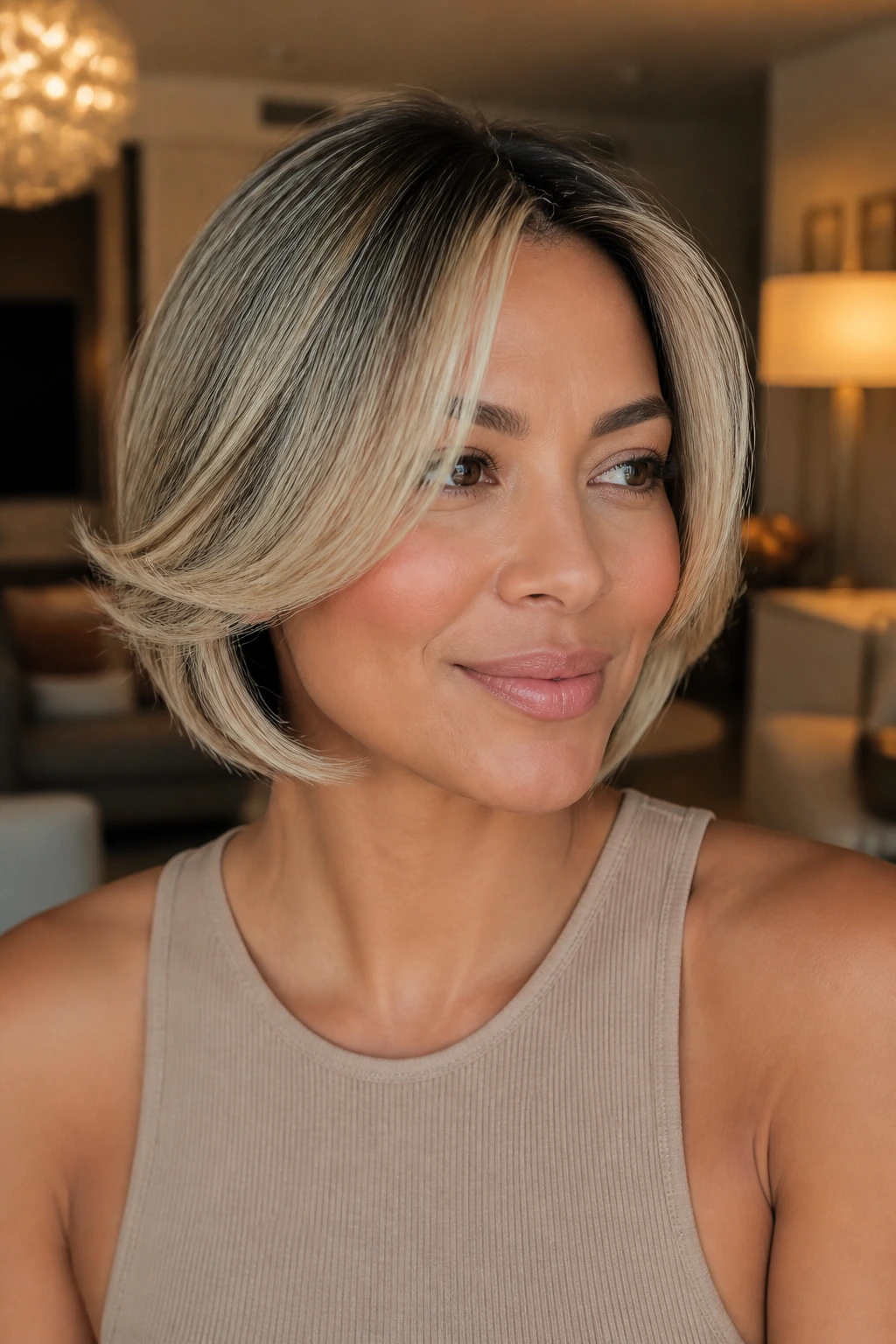
The flip at the ends changes everything here. A cool champagne balayage on a flipped bob looks lively because the edges catch light instead of just hanging straight. On medium skin, champagne gives enough brightness to lift the face while staying softer than a true platinum tone.
This cut loves a side part and a polished blowout. If the roots are kept a touch deeper, the blonde looks more expensive and less like a single-process color. I’d call this the best choice for someone who wants a little retro glamour without going full old Hollywood.
16. Bronzed Blonde Short Wolf Cut
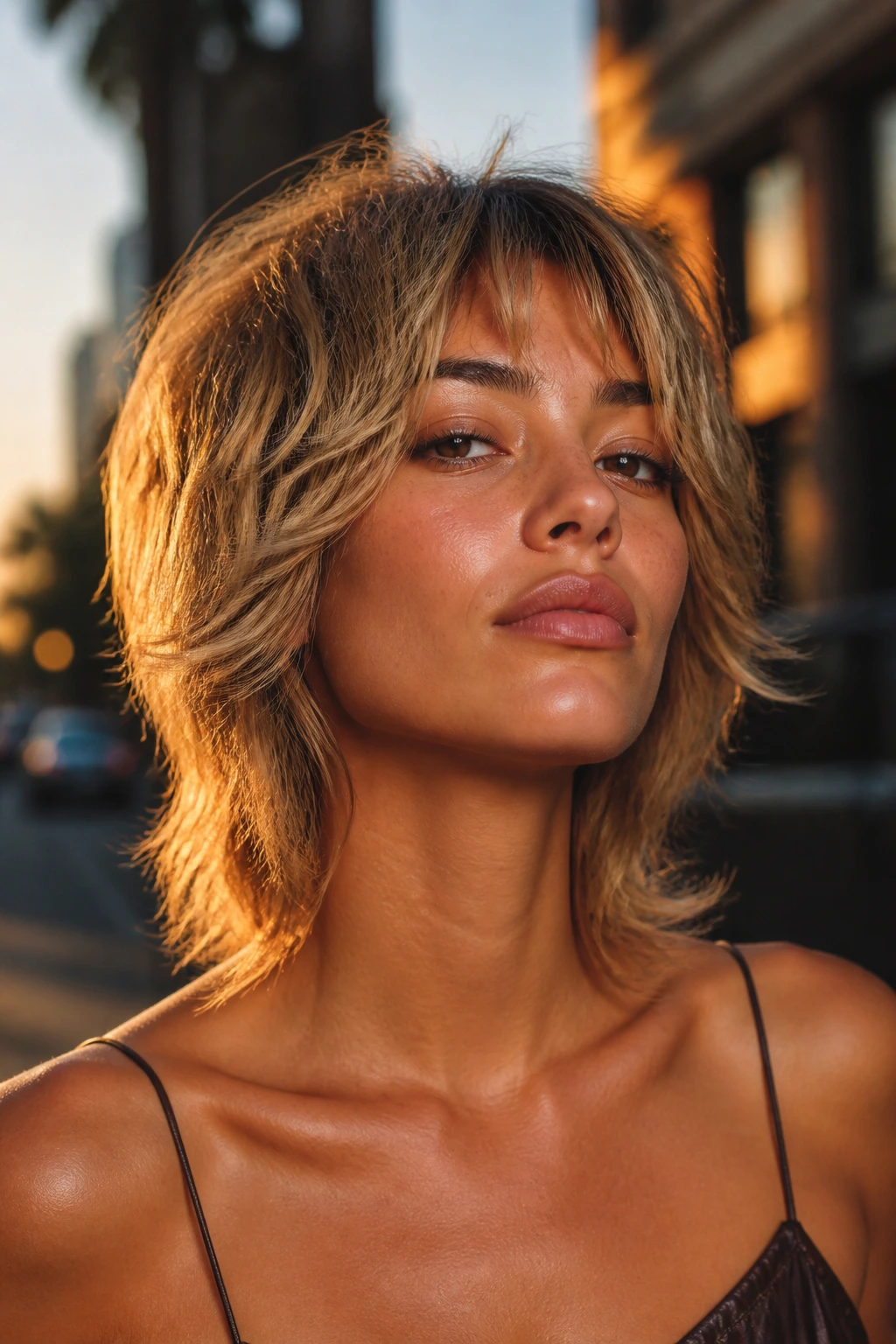
Bronzed blonde and a short wolf cut belong together. The chopped layers need grit, and bronzed balayage gives them that smoky, lived-in warmth. On medium skin, especially skin with olive or gold undertones, the bronze keeps the blonde from drifting too pale.
The face frame can be brighter, but the interior layers should stay mixed and messy. That unevenness is the point. If you like texture spray, this cut pays you back for using it. If you like neat, smooth hair, this probably isn’t your best match.
17. Soft Vanilla Razored Lob
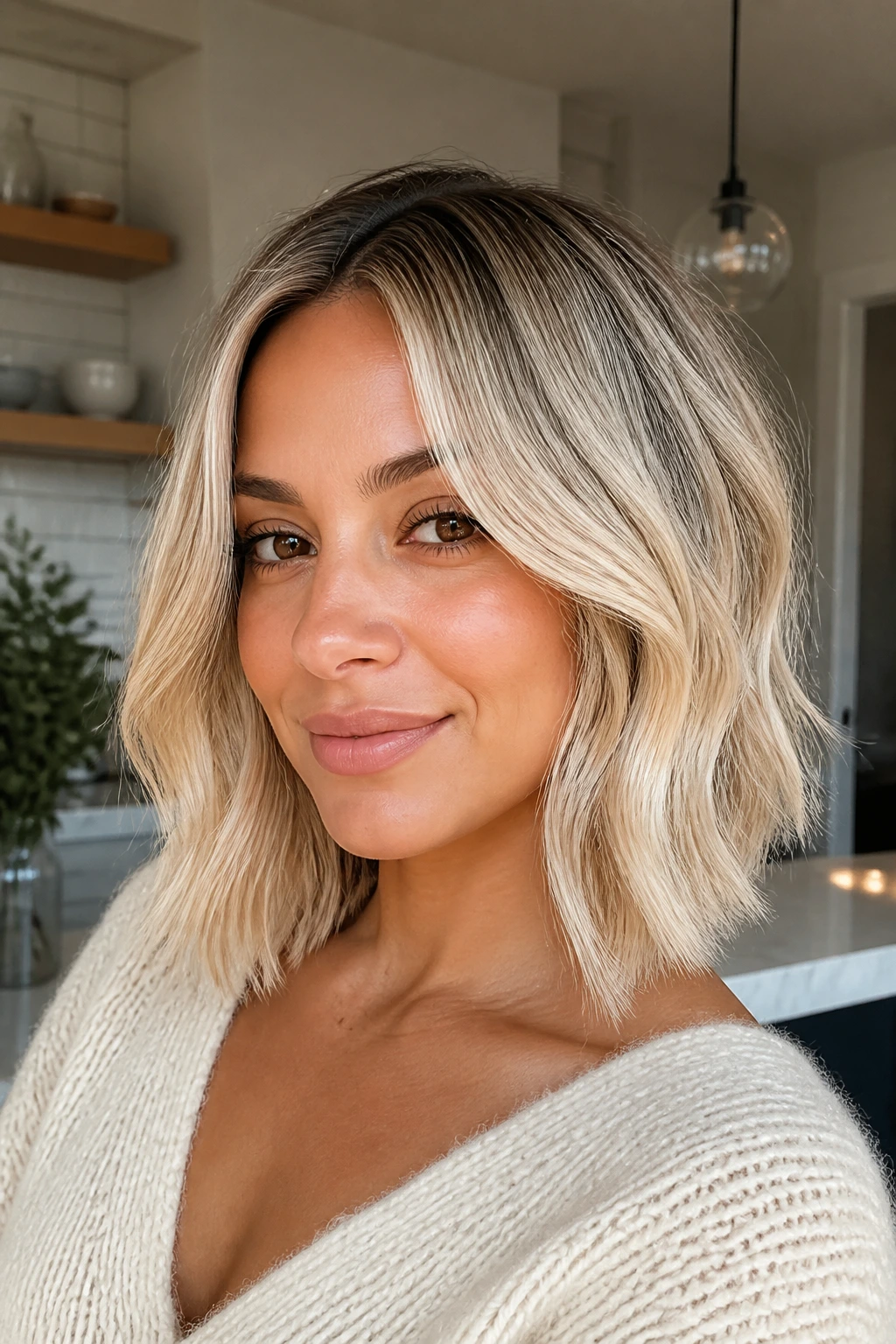
Razored ends keep vanilla blonde from looking too solid or heavy. On a lob, the blade-like texture through the perimeter makes the color feel light and airy, which is useful if your medium skin needs brightness without too much contrast. Vanilla is a good middle-tone blonde for people who don’t want gold, ash, or platinum fighting for attention.
This style works especially well with straight or softly bent hair. The highlight should be concentrated through the top and front, then broken up as it falls toward the ends. It’s a clean look, but not a stiff one.
18. Iced Beige Side-Part Crop
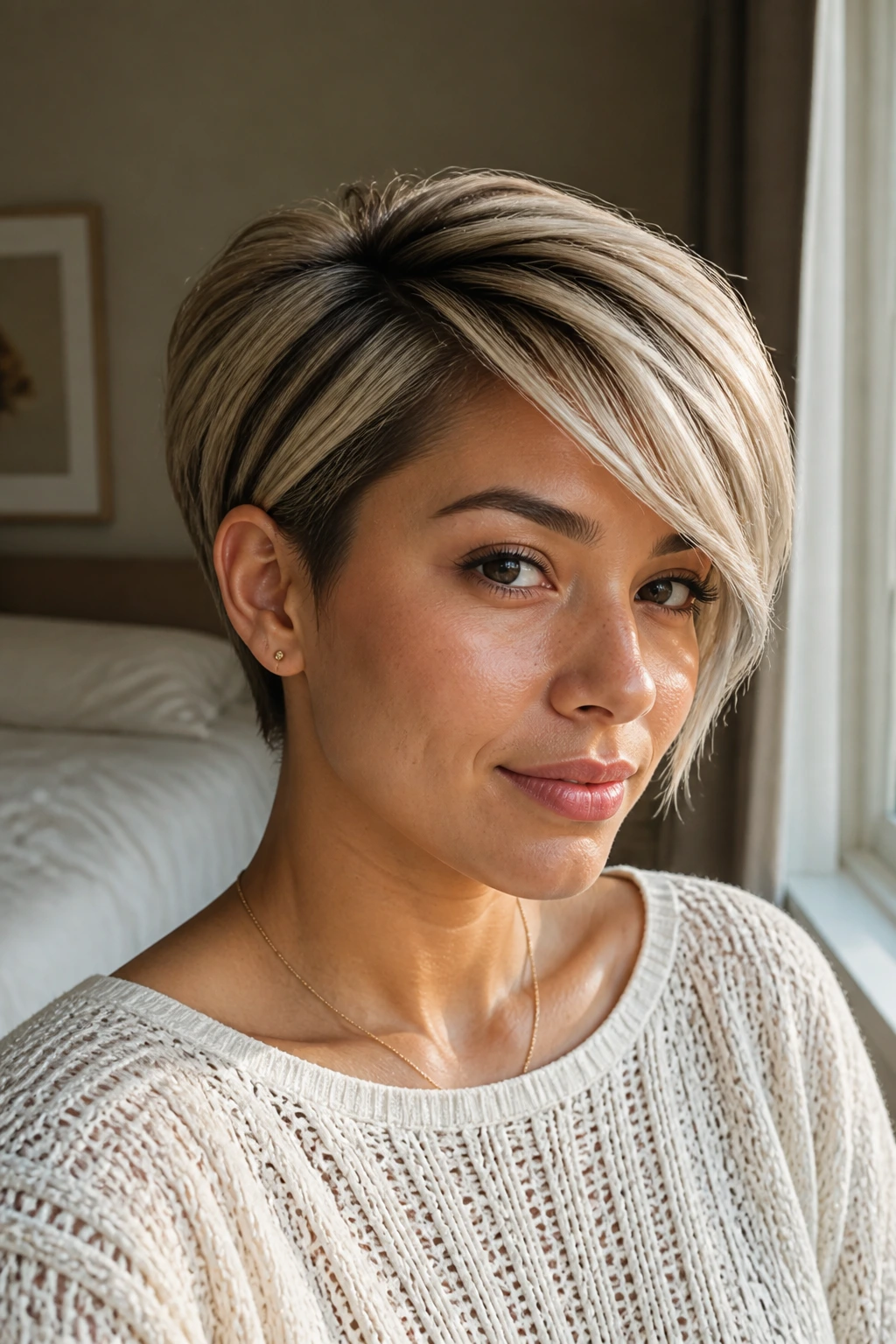
If your medium skin leans neutral or a little cool, iced beige gives lift without sliding into silver territory. A side-part crop lets that tone sweep across the forehead and around the temple, which is where a lot of flattering dimension lives on short hair. The color feels intentional fast.
I’d keep the blonde narrow and controlled here, not chunky. Too much pale color can flatten the cut. Side parts help because they create a diagonal line that gives the blonde somewhere to travel.
19. Golden Butter Crop with Curtain Bangs
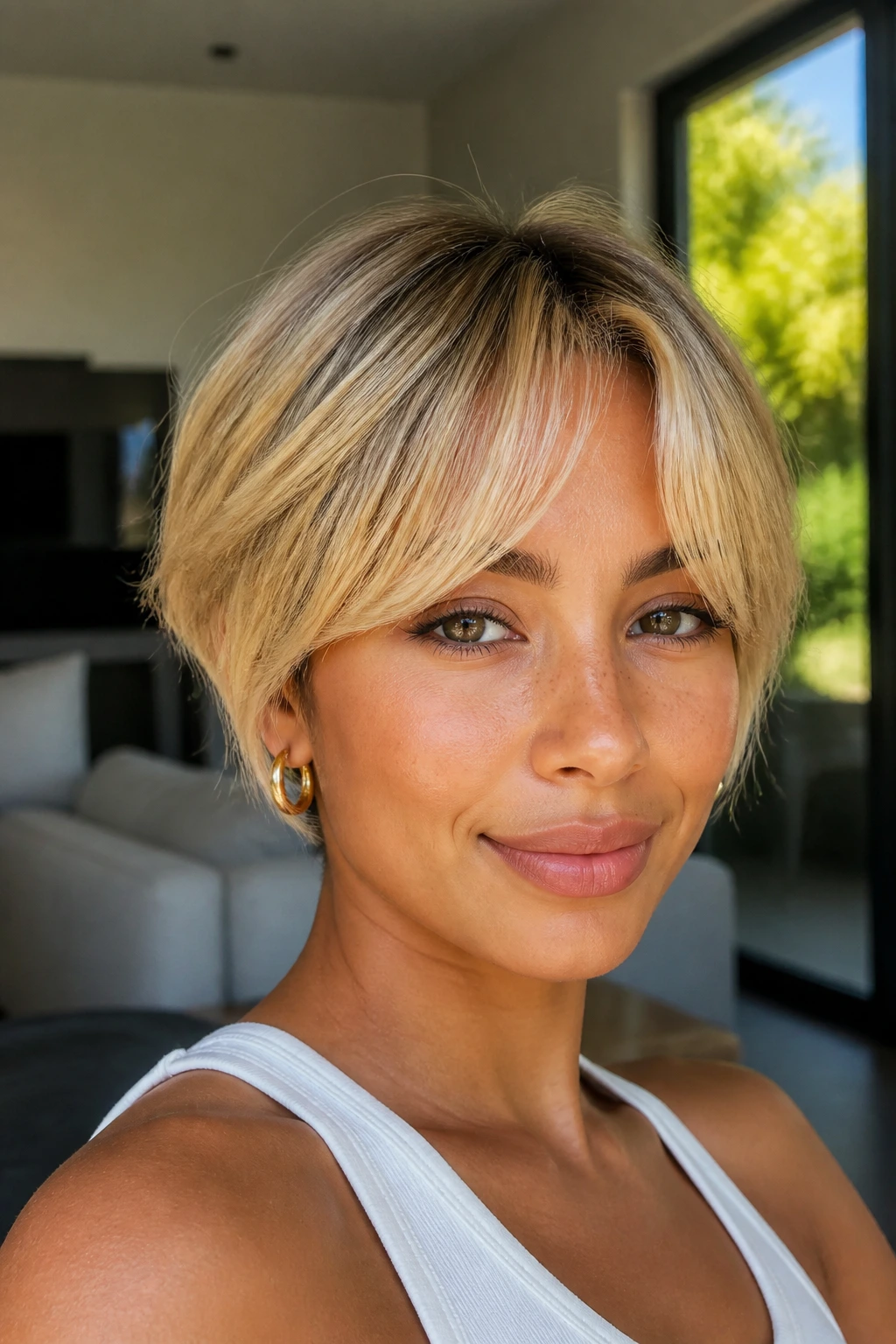
Curtain bangs are the whole point in this one. When they’re washed in golden butter balayage, they soften the face and draw attention upward in a way medium skin usually loves. The rest of the crop can stay a little deeper so the bangs do the talking.
This is a friendly, wearable blonde if you like warmth but don’t want the color to feel heavy. The blonde should be brightest where the bangs split and a little softer at the sides. That small shift keeps the style from getting too sweet.
20. Smoky Beige Angled Bob
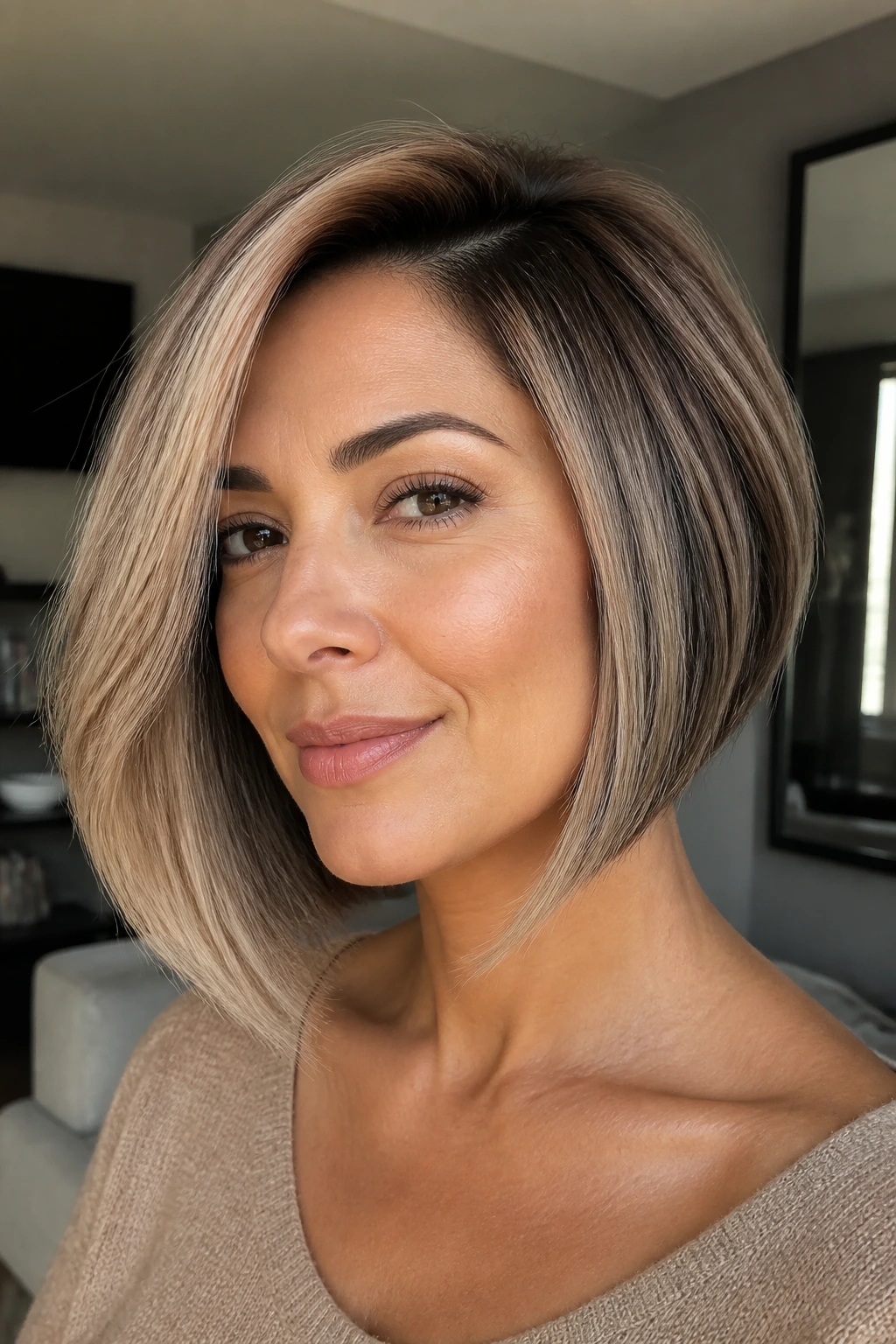
The angle gives the blonde direction, which matters more than people think. A smoky beige balayage on an angled bob creates a sleek line from back to front, and that line helps medium skin look more sculpted. It’s especially good if your jawline gets lost under softer cuts.
I like this look with smooth styling and a bit of root lift at the crown. The blonde can sit lighter near the front and more diffused in the back. You do not want the color to fight the geometry of the cut.
21. Creamsicle Pixie Bob
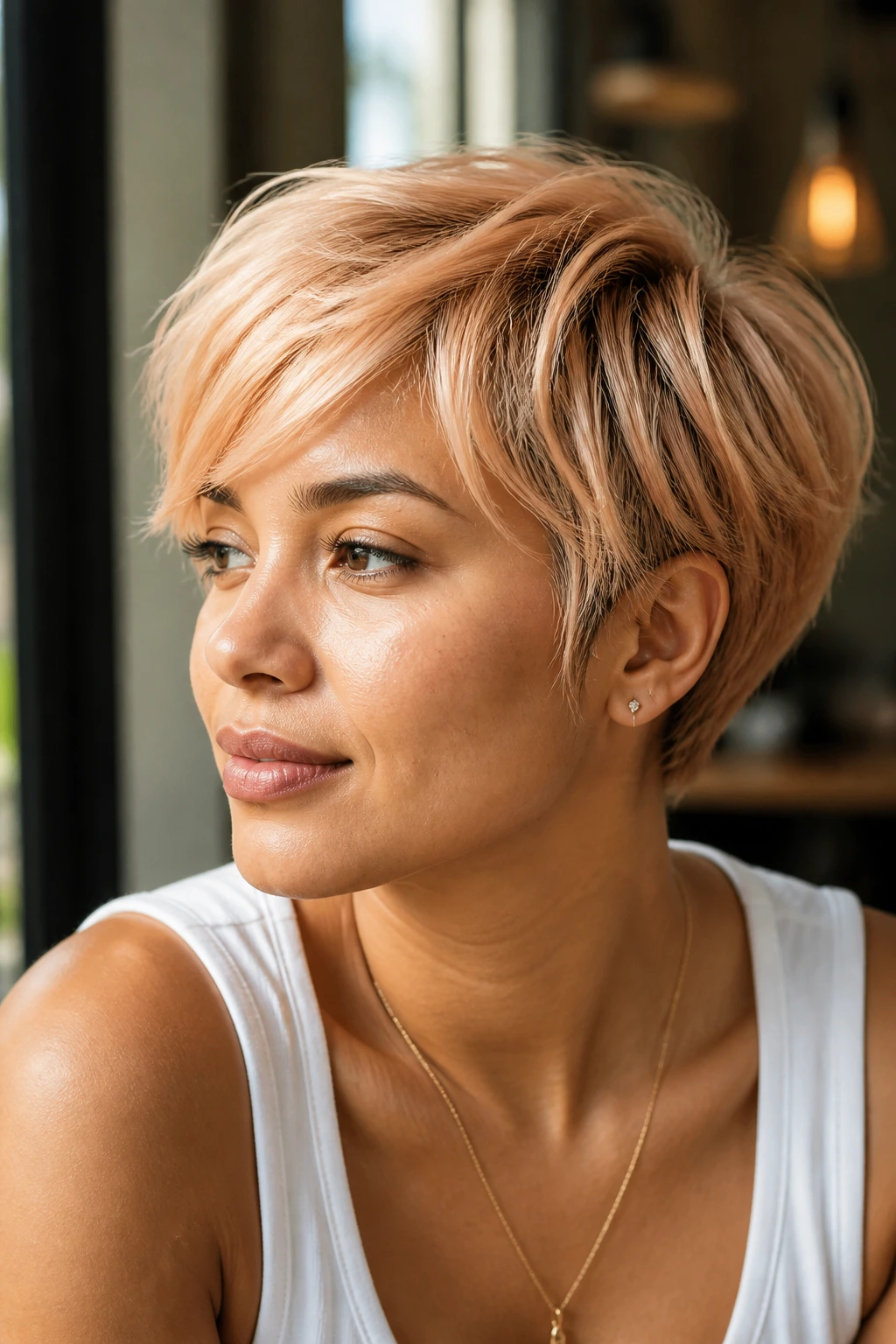
A pixie bob can take a playful blonde as long as the base stays soft. Creamsicle is the warmest, most cheerful blonde in this set, and it works best on medium skin with peach, golden, or neutral undertones. Think creamy blonde with a whisper of warmth, not orange.
Keep the color more concentrated around the crown and fringe area, where short hair gets the most visual lift. The finish should be airy, almost fluffy. If you smooth it down too much, you lose the fun of the cut.
22. Wheat and Honey Short Shag
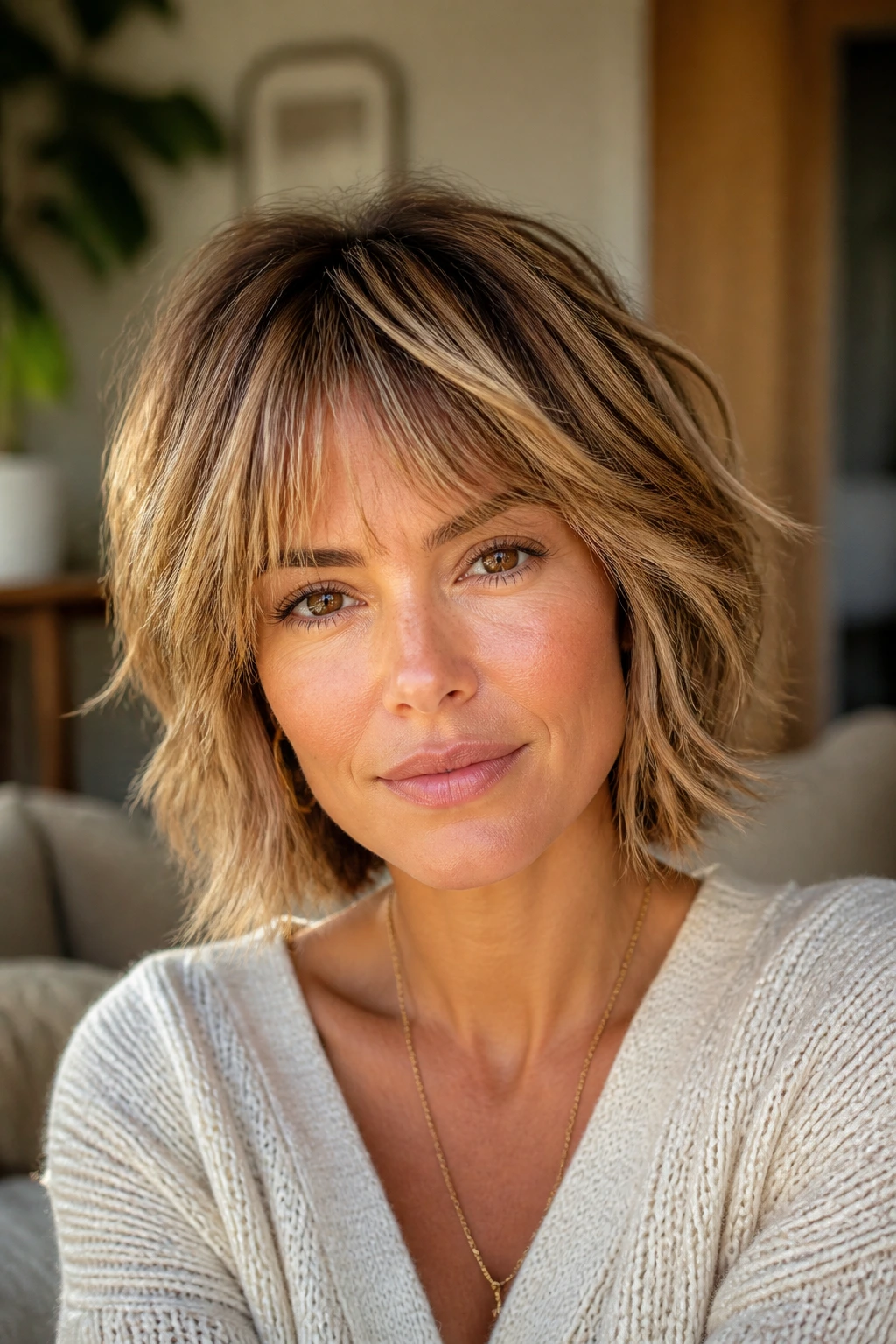
This is the friendliest, most lived-in option in the collection. Wheat and honey tones together give the shag depth and warmth, and the mix stops the color from looking flat or one-note. Medium skin tends to read healthy and easy next to this kind of tonal movement.
The beauty of this look is that it can be a little imperfect. A shag wants variation. Let the blonde pieces differ slightly in width, and let some ends stay darker. The whole thing looks better when it feels found, not engineered.
23. Platinum Veil Crop
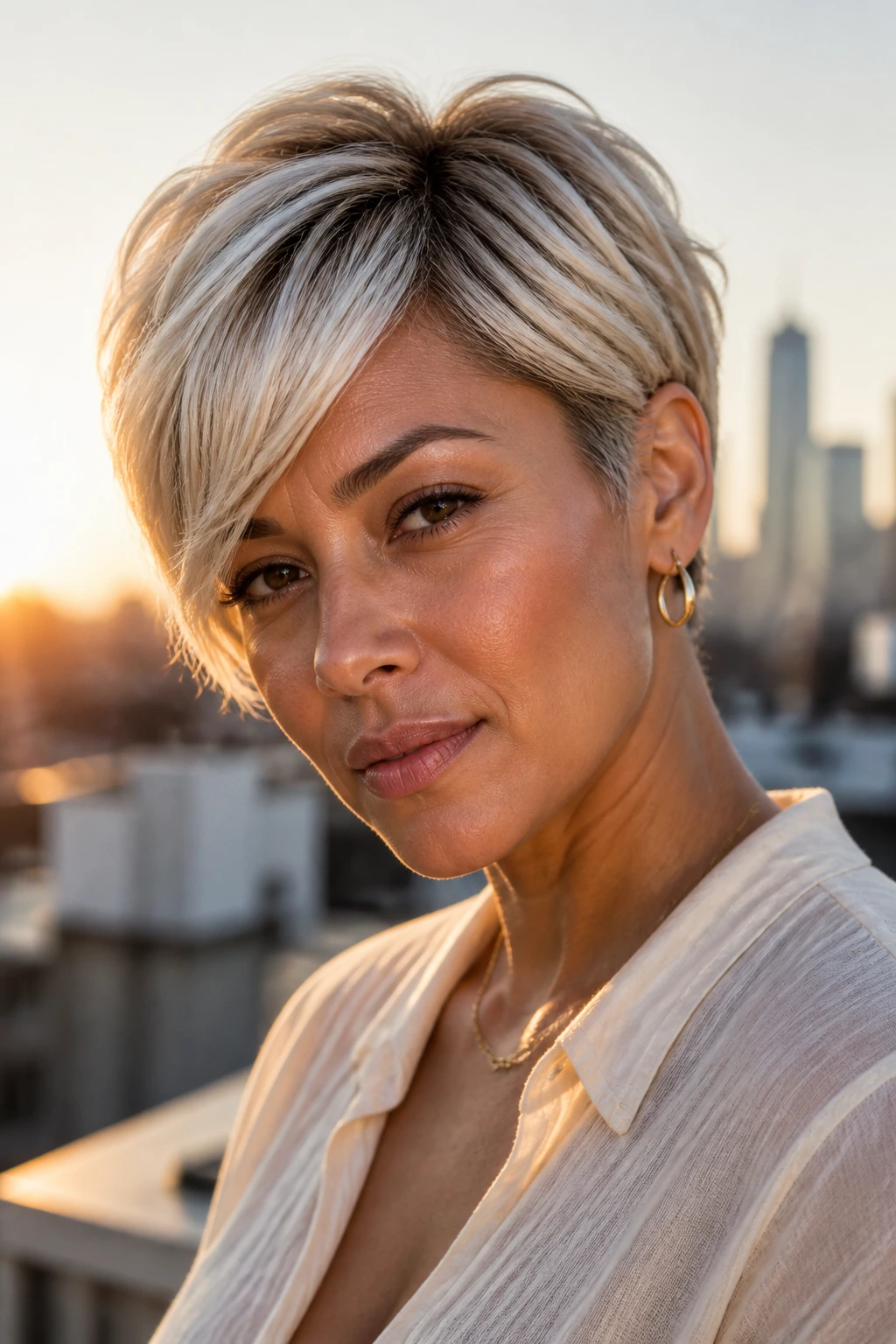
Platinum on short hair is a commitment, and I wouldn’t hand it out casually. But a veil of platinum — not an all-over blast — can look sharp on medium skin if the root stays deeper and the tone holds a soft, creamy undertone. This works best on neutral to cool-leaning skin that can carry high contrast.
The veil part matters. You want brightness in strategic places, not a helmet of white. If the cut has enough texture, the platinum reads modern instead of harsh. Keep the makeup soft and the finish airy, or the whole look can go a little severe.
24. Beige Balayage with Micro Bangs
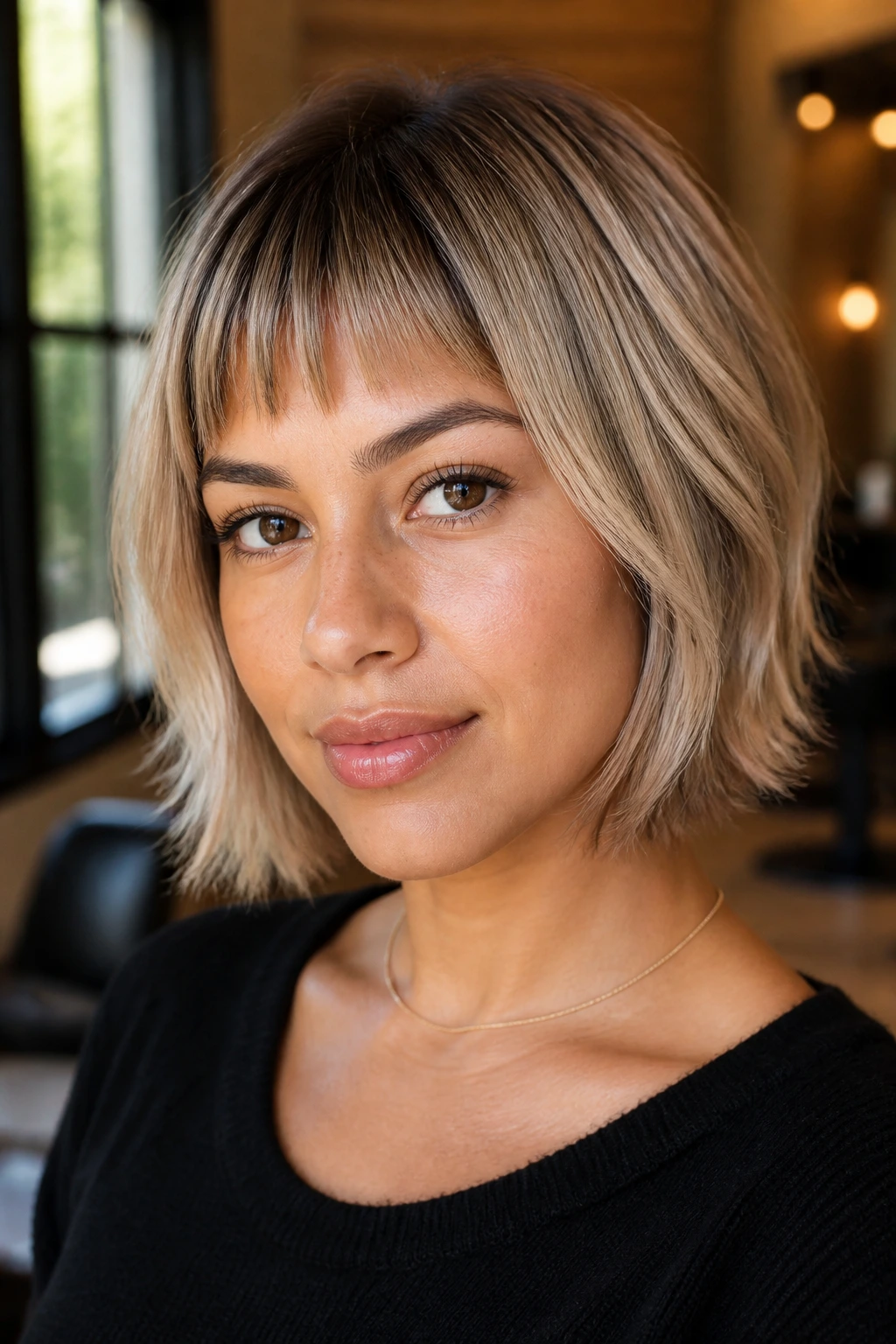
Micro bangs make the blonde look editorial rather than sweet. Beige balayage keeps the overall effect grounded, which matters because the fringe already brings a strong shape to the face. On medium skin, beige is useful because it doesn’t compete with the forehead or brow area.
This look is best when the color is slightly brighter above the ears and softer at the nape. That contrast keeps the tiny bangs from feeling disconnected from the rest of the cut. It’s a sharp style, but not a loud one.
25. Maple Blonde Collarbone Bob
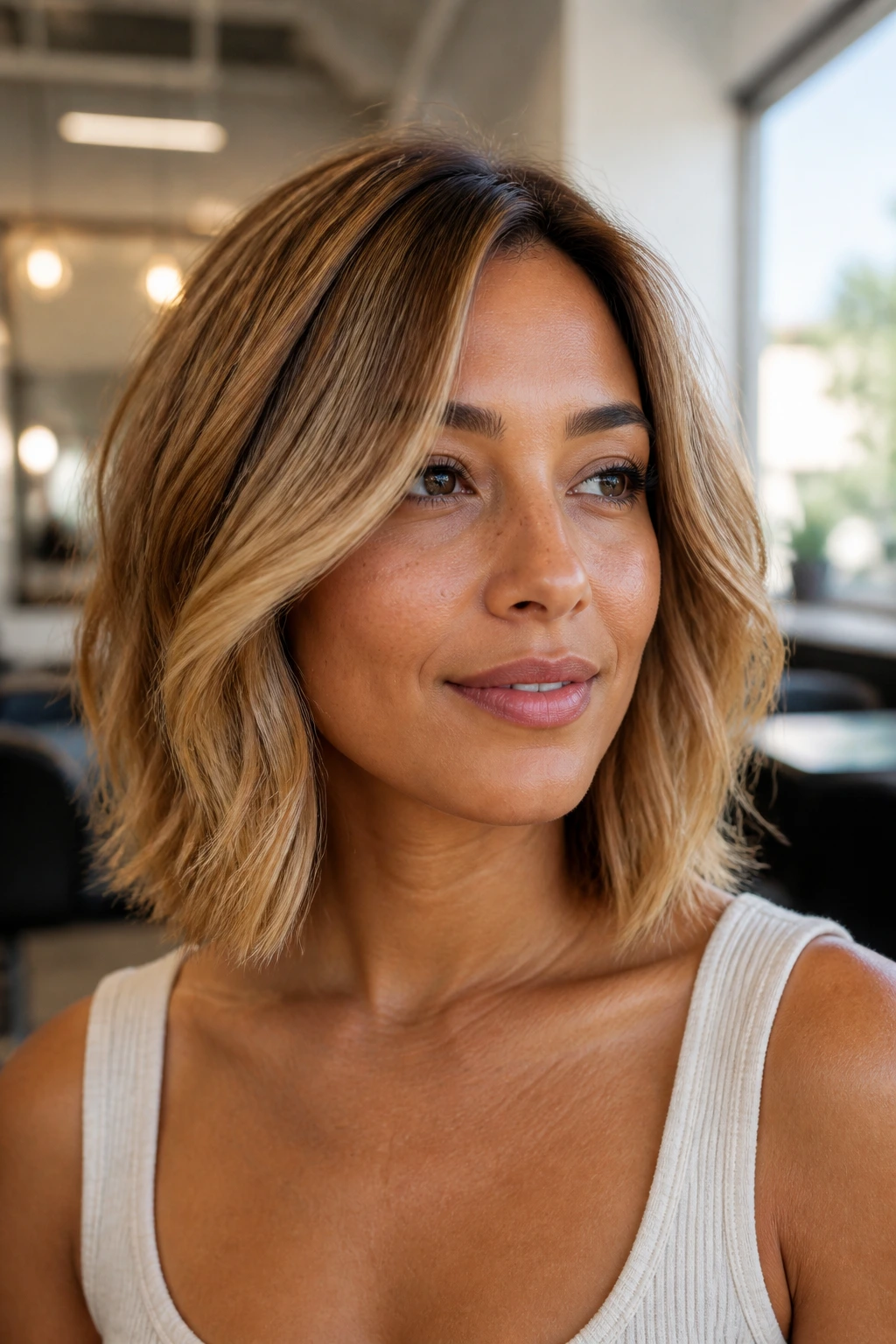
This is the easiest “I want short hair, but not too short” blonde in the set. Maple blonde has a warm, amber edge that flatters medium skin with gold or olive in it, and the collarbone length gives the balayage room to drift. It’s softer than a blunt bob and less fussy than a full lob.
The grow-out is kind, which is why I like it so much. You can keep the root dark enough to stay low-maintenance while still getting bright ends and a warm face frame. If someone asked me for one short blonde balayage that feels wearable across the widest range of medium skin tones, I’d start here.
Why Short Balayage Feels Better on Shorter Hair
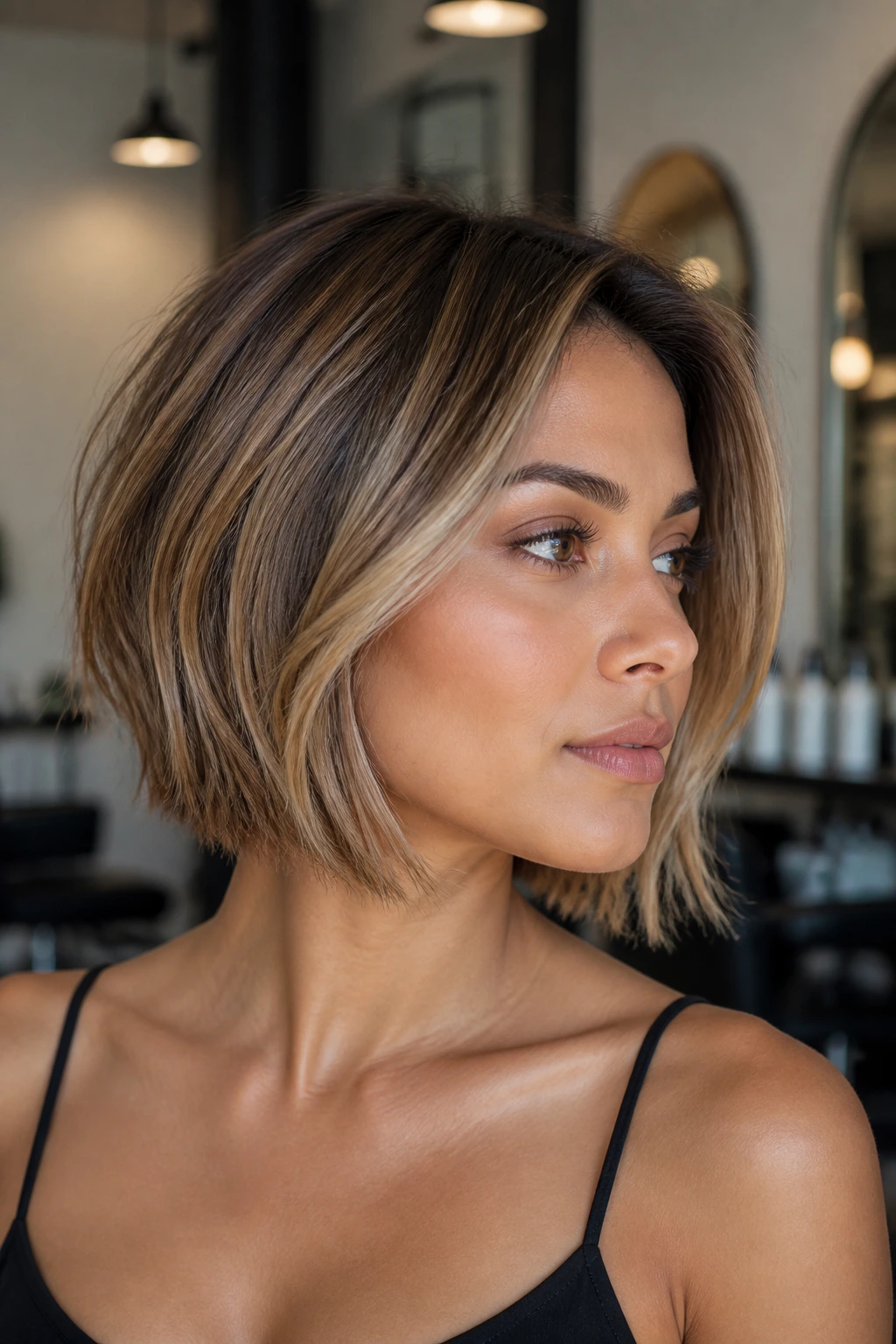
Short hair and balayage make sense together because the color has less distance to travel. On a bob, lob, bixie, or pixie, a few carefully painted ribbons can show shape faster than a whole head of foils ever could. That’s especially useful on medium skin, where the balance between brightness and depth matters more than raw lift.
A good short balayage usually keeps the root one or two shades deeper than the lightest pieces. That little bit of shadow does a lot. It lets the blonde pop without making the face look surrounded by bleach, which is a common problem when short cuts go too pale too quickly.
There’s also a practical angle people ignore. Shorter hair gets trimmed more often, so the color can be refreshed with a gloss or toner before the whole thing looks tired. The result is cleaner grow-out and less of that awkward stripe that shows up when heavy highlights sit too high on the head.
Essential Tools for Salon Visits and Home Styling
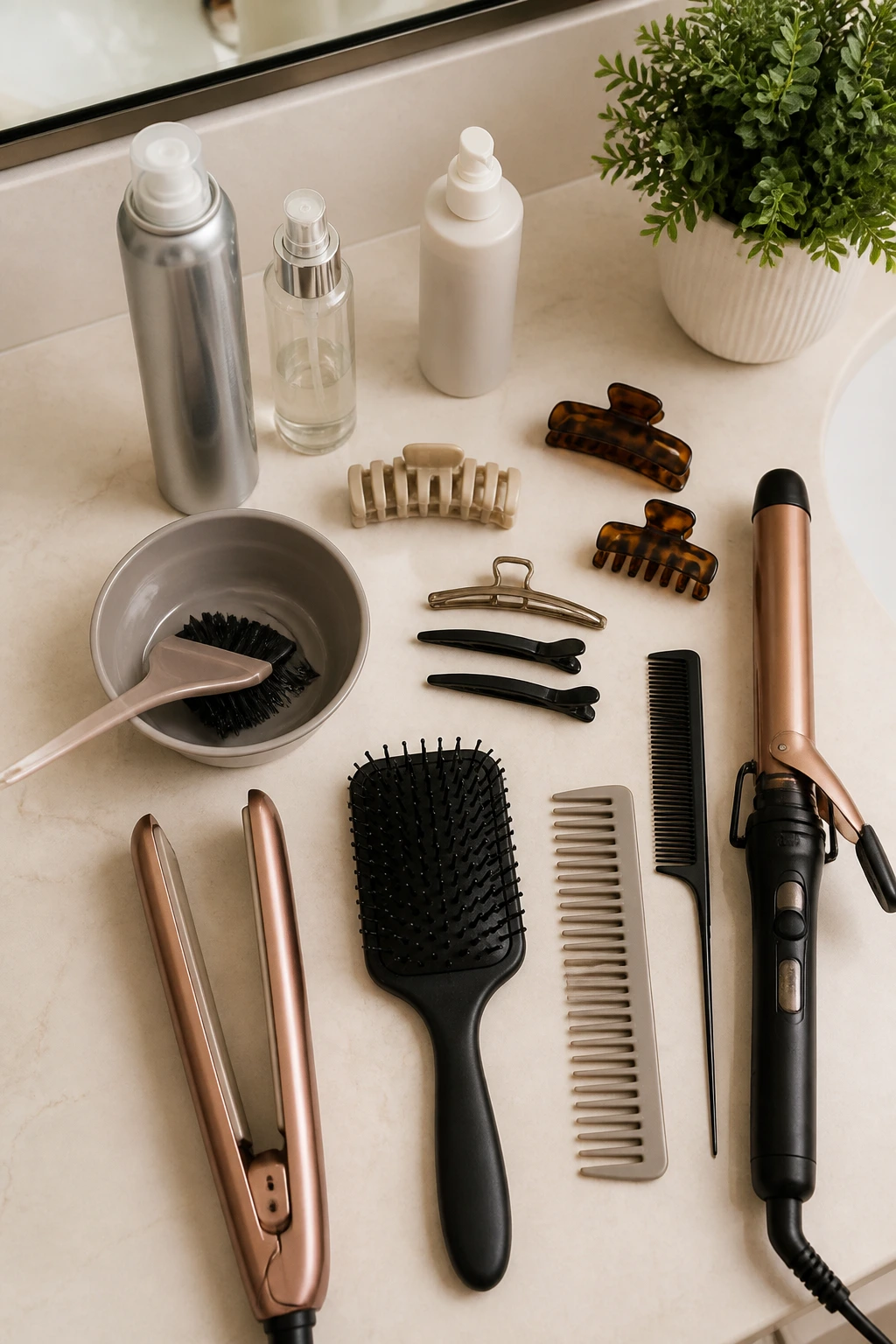
Reference Photos: Bring 3 to 5 photos that show both the color and the cut, because balayage on a bob looks nothing like balayage on a long wave.
Notes on Undertone: Keep a phone note with the words honey, beige, mushroom, champagne, pearl, or ash beige so you can say what you like without fumbling in the chair.
Color Brush and Clips: If you color at home with a pro, these keep the sections clean; if not, they still help with root clipping and parting when you style.
1-Inch Curling Iron or Wand: Short balayage comes alive with bends and S-waves, and a smaller barrel keeps the shape soft instead of pageant-y.
Round Brush: A medium round brush helps pull the front pieces under or away from the face, which changes how the blonde sits around the jaw.
Heat Protectant: Use this before any hot tool. Lightened hair fries faster than people want to believe, especially on the ends of a bob or lob.
Color-Safe Shampoo and Conditioner: Look for a gentle, sulfate-free pair so the toner doesn’t disappear after three washes.
Purple or Blue Shampoo: Purple is for yellow brass; blue helps if your blonde drifts orange. Do not use either every wash unless your hair likes to feel dry and flat.
Deep Mask: A weekly mask helps short lightened hair stay smooth, which matters because short ends dry out fast.
Choosing the Right Blonde Undertone for Your Skin
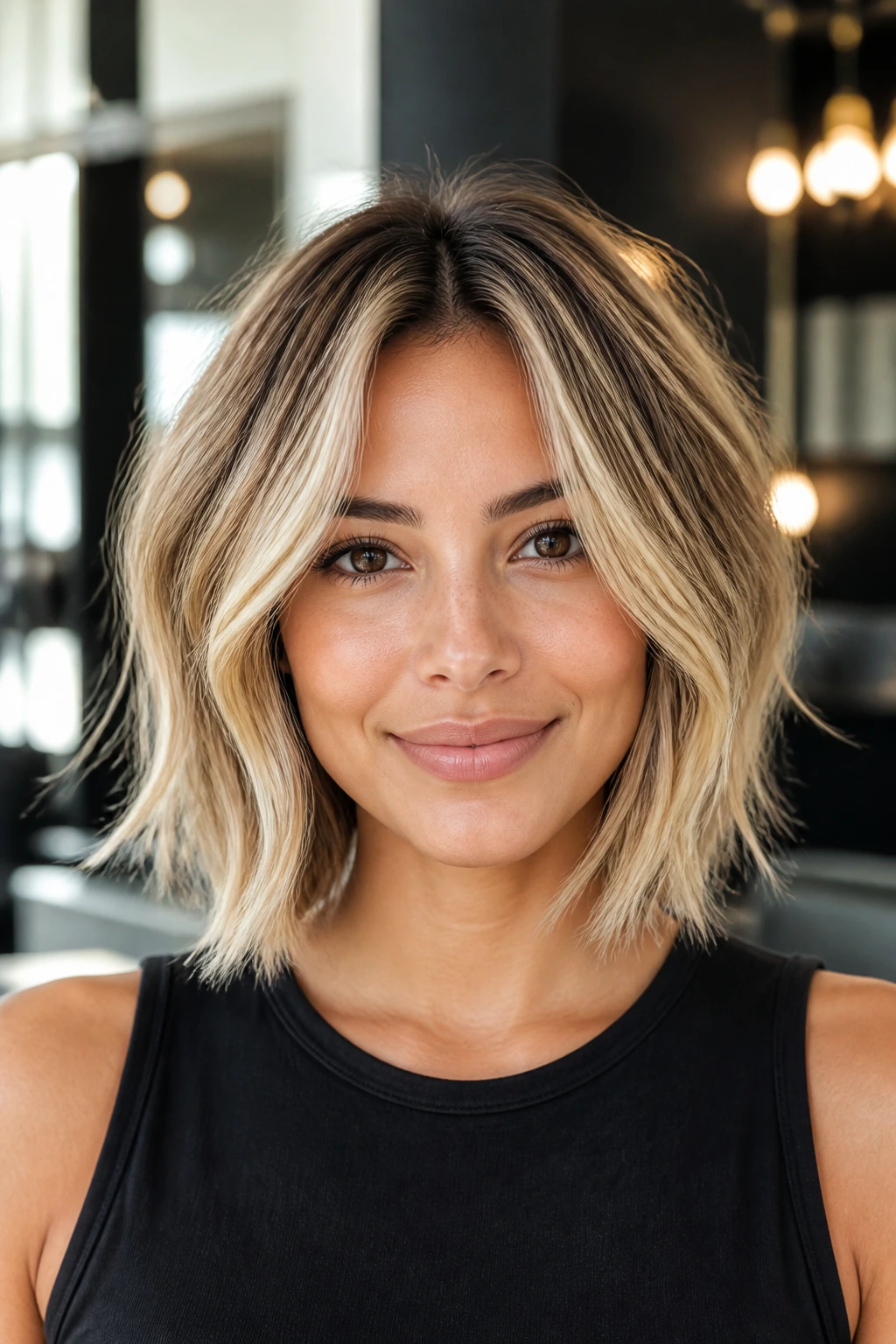
Warm Medium Skin: If your skin has gold, caramel, or peach in it, stay close to honey, butter, toasted almond, maple, and wheat. Those tones keep the complexion from looking sallow, which can happen when the blonde turns too beige or too icy. Warm skin usually looks healthiest when the blonde still has a little sun in it.
Olive or Neutral Medium Skin: Beige, mushroom, smoky beige, champagne, and soft vanilla are the safest places to start. Olive skin can get muddy under heavy gold, so I like blondes that stay creamy and restrained. A root shadow helps here too, because it keeps the blonde from floating away from the face.
Cool-Leaning Medium Skin: Pearl, ash beige, iced beige, and soft platinum can be excellent if the toner stays clean and not gray. The key is keeping some softness in the root and around the face frame. When the blonde is too white, it can steal warmth from the complexion and make the hair look more separate than connected.
When You’re Between Undertones: A beige blonde with one warm note and one cool note is usually the smartest answer. That could mean a honey-beige ribbon, a champagne gloss over a neutral base, or a mushroom toner softened with cream. The most wearable blondes on medium skin tend to be the ones that refuse to pick a single extreme.
How to Wear These Shades With Clothes, Makeup, and Occasion
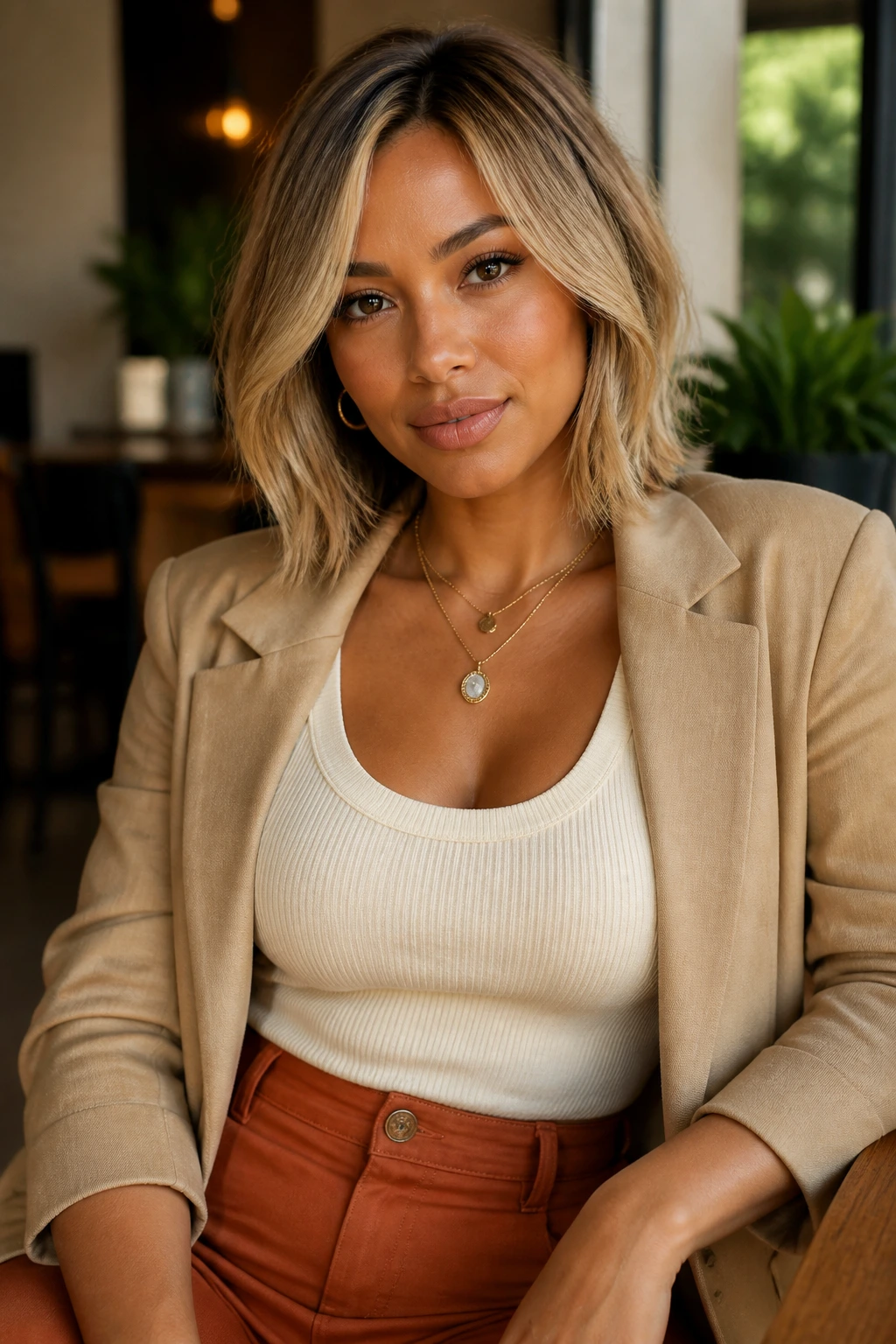
Face Frame: Keep the brightest pieces where your features need the most lift — usually at the temple, cheekbone, or just in front of the ear. Narrower face framing looks cleaner on pixies and bobs; a slightly wider ribbon works better on lobs and shaggy cuts.
Styling: Smooth styling gives short blonde balayage a polished edge, while loose bends and texture spray make the color feel softer and more casual. If your cut is blunt, a clean blowout helps. If your cut is layered, a rougher finish usually looks better.
Wardrobe Pairing: Honey and maple blondes sit well with cream, rust, olive, camel, and warm denim. Mushroom, ash beige, and pearl blondes look good next to black, slate, white, and cool navy. You do not need to match your clothes to your hair, but the wrong shirt color can make the undertone fight itself.
Best For: Some of these looks want everyday polish, others want a sharper mood. The French bob, champagne flip bob, and angled bob feel suited to cleaner outfits and simple earrings. The shag, wolf cut, and bixie can take a louder jacket, a bold lip, or a more casual tee and still hold their shape.
Extra Touches That Make the Color Look Better
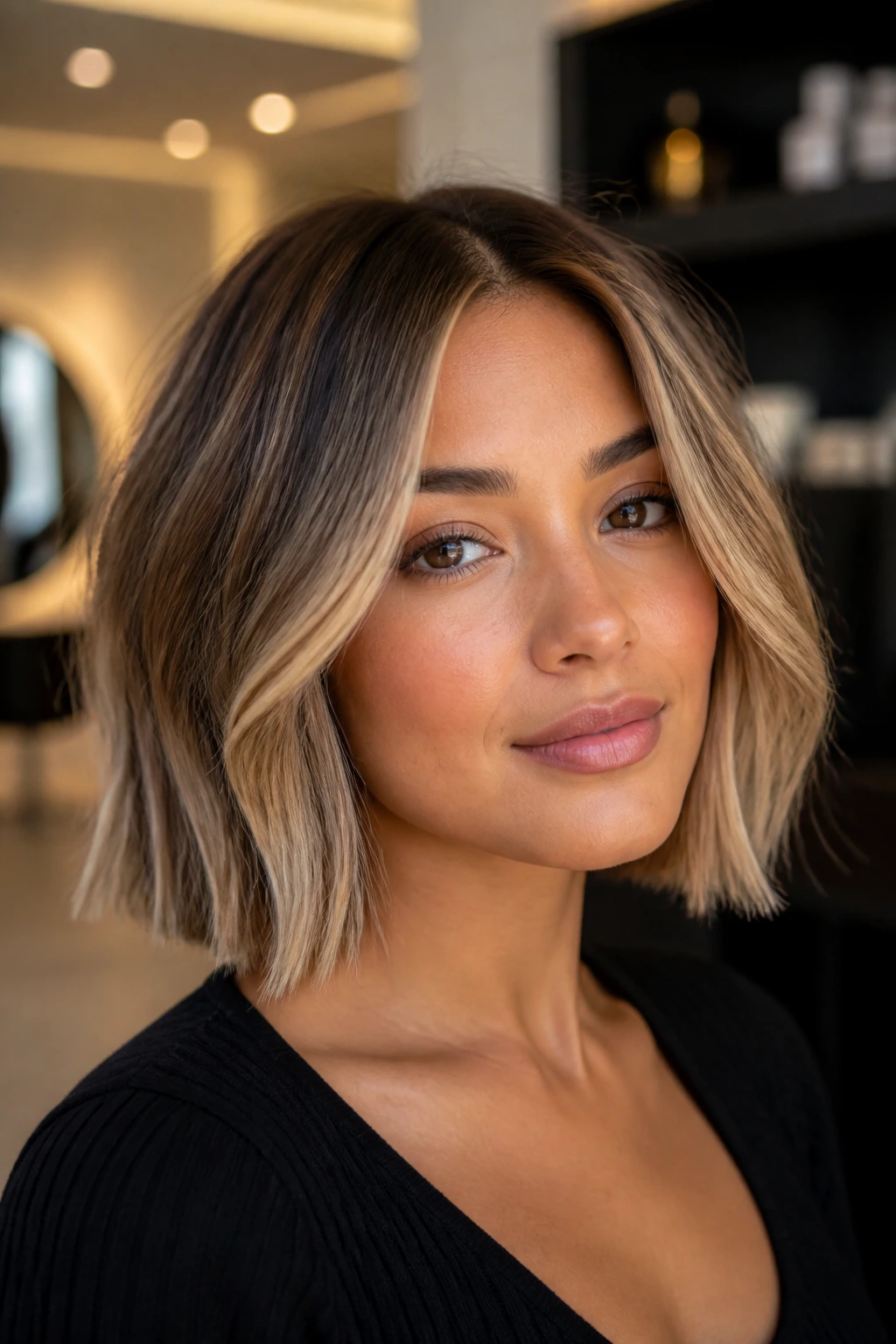
Color Booster: Ask for a gloss between major appointments. A beige or champagne gloss keeps the blonde creamy, which matters more on short hair because the ends show wear faster.
Customization: If your skin runs warm, add slightly brighter face-frame pieces and keep the interior blonde softer. If your skin leans cool or olive, ask for a root shadow and a more muted toner so the blonde doesn’t go gold in one wash.
Serving Suggestions: Gold hoops, a clean brow, and a peach or berry lip can make short blonde balayage look intentional fast. I also like a tiny bit of hair oil on the very ends of a bob or lob — not enough to flatten it, just enough to stop the lightened ends from looking dusty.
Make-It-Yours: Fine hair usually looks best with narrower ribbons and lighter texture spray. Thick hair needs more sectioning and a little more contrast at the root so the blonde doesn’t disappear inside the density. Curly hair benefits from placement on the outer curl surface, not buried deep where nobody sees it.
What Usually Goes Wrong With Short Blonde Balayage
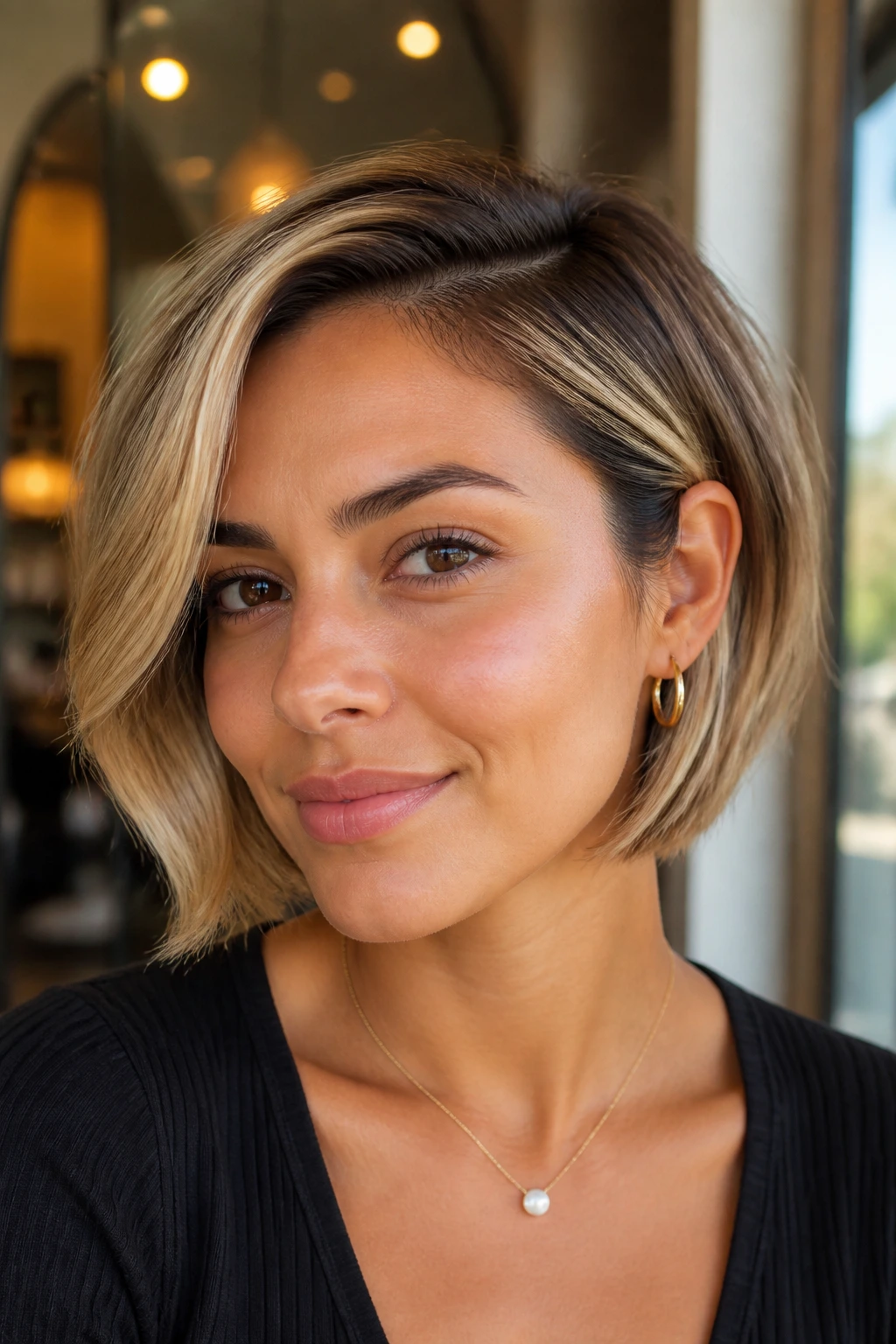
The first mistake is lifting everything too light, too close to the root. On medium skin, that can make the hair look detached from the face, like the color belongs to someone else. Keep the root a shade or two deeper and let the brightness live where the eye naturally goes.
Another common problem is picking a tone that fights the undertone of the skin. Too much gold can go brassy on some olive complexions. Too much ash can turn beige hair flat and tired on warm skin. The fix is not “blonder.” It’s more specific toner choice.
Then there’s placement. Short hair can’t hide bad sectioning. If the front is too heavy and the back is too dark, the whole cut feels lopsided. Balayage on a pixie or bob should follow the haircut’s shape, not ignore it.
Purple shampoo causes trouble too. A little keeps yellow down. Too much dries the hair and leaves a chalky cast, especially on beige or pearl blondes. Use it sparingly and balance it with a rich conditioner.
Finally, people forget the finish. Blonde on short hair needs movement, or it just sits there. A quick bend, a bit of root lift, or a small amount of texture cream can change the whole read of the color.
Variations and Adaptations Worth Trying
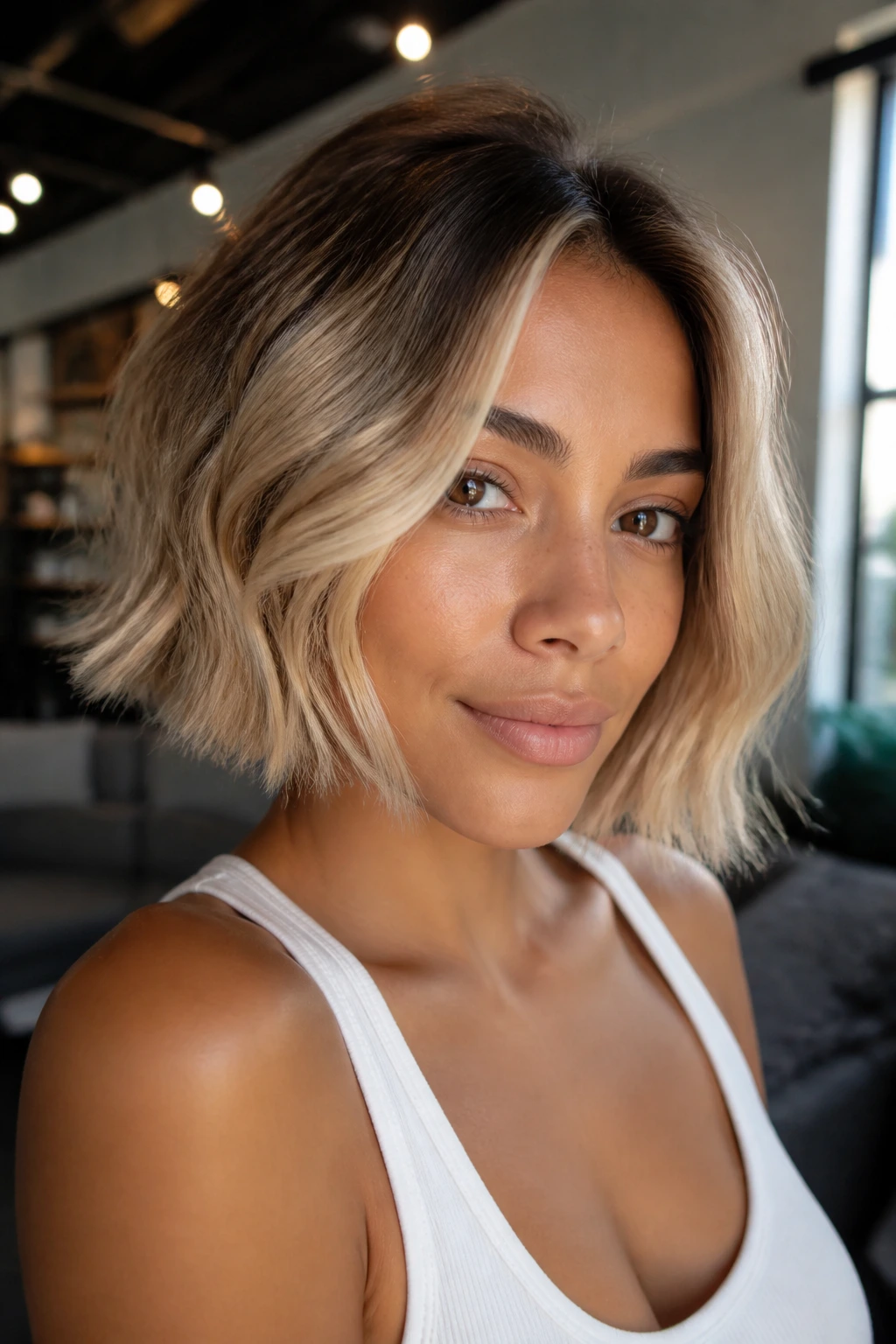
Honey-to-Beige Melt: Start with a warm root and fade into beige ends if you want something softer than pure honey. This is a good middle ground for medium skin that leans neither strongly warm nor strongly cool.
Smoky Olive Edit: Ask for a mushroom or smoky beige toner if your skin has an olive cast and gold tones make you look muddy. It keeps the blonde calm and expensive-looking instead of yellow.
Curly Crown Glow: On curls or coils, brighten only the outer crown and the face frame while leaving the interior darker. The result is softer, easier grow-out and better definition.
Money-Piece Drama: If you want more contrast, ask for a brighter front piece and leave the underlayers shadowed. That gives a bob or lob more edge without turning the whole head platinum.
Low-Maintenance Rooted Grow-Out: Keep the root visibly deeper and soften the lightest pieces around the ends. This version looks especially good if you hate salon upkeep and want the grow-out to blur instead of shout.
Care, Grow-Out, and Between-Appointment Maintenance
Right After Coloring
If your stylist tells you to wait before washing, follow that. A fresh gloss or toner settles better when you leave it alone for a bit, and lightened hair also needs a chance to stop feeling stripped. Use a soft towel, not a rough one, and avoid yanking on damp pieces around the face.
Weekly Routine
Wash two or three times a week if you can. Short blonde hair gets oily near the scalp fast, but the ends dry out faster than the roots get greasy, so the goal is a clean scalp and a protected mid-length. Use purple shampoo only when the blonde starts to look too yellow, usually every third or fourth wash for cooler blondes, less often for honey or maple shades.
A mask once a week helps more than most people think. Keep it mostly on mids and ends. If your hair is fine, use a lighter mask and rinse it out well so the bob doesn’t collapse.
Salon Rhythm
Glosses usually hold up well for 6 to 8 weeks before the tone starts to drift. Trims every 6 to 10 weeks keep bobs and pixies crisp, which matters because the shape is half the style. For longer short cuts like lobs and collarbone bobs, you can stretch that a bit, but don’t let the ends split and dull the blonde.
Heat styling should stay controlled. Use a protectant every time, and if your hair feels fragile, lower the iron heat before you decide the blonde “won’t hold.” It may be the temperature, not the hair. Humidity, chlorine, and hard water can also shift the tone, so a leave-in spray and a quick rinse after swimming help more than people expect.
Frequently Asked Questions
What blonde shade is safest for medium skin tones?
Beige, honey-beige, champagne, and wheat usually give the least trouble because they sit between warm and cool. If you’re unsure, ask for a soft root shadow and a gloss that keeps the blonde creamy instead of white.
Is balayage better than regular highlights on short hair?
For most short cuts, yes. Balayage follows the movement of the haircut and grows out with less of a hard line, while classic highlights can look chunkier if they’re placed too high or too evenly.
Can short blonde balayage work on curly hair?
It can, and it often looks better on curls than people expect. The key is surface placement on the outer curl pattern, not deep saturation through the interior, so the brightness shows without wrecking definition.
How often will I need a touch-up?
The color itself can often be refreshed every 6 to 8 weeks with a gloss, while the lightening process may only need attention every 8 to 12 weeks depending on how much contrast you want. Shorter cuts usually benefit from slightly more frequent trims so the blonde stays tied to the shape.
Will platinum blonde wash out medium skin?
It can, if it’s done from root to tip without enough shadow or tone control. A platinum veil or bright face frame often works better than full platinum because the skin still has something to anchor against.
How do I ask for this at the salon?
Bring photos of both the color and the cut, then point to the part you like most: the root, the face frame, the ends, or the overall tone. Saying “beige blonde with soft root shadow” is more useful than asking for “just blonde.”
Can dark brown hair be lifted into short balayage safely?
Yes, but it usually takes more than one appointment if you want a clean blonde without fried ends. Short hair can handle lift well, but the integrity of the ends matters more than speed, so a careful first session is smarter than forcing a pale blonde all at once.
Why does my blonde keep turning yellow?
Usually it’s one of three things: too much warmth in the toner, too much sun or heat, or not enough maintenance between washes. Swap in a gentler purple shampoo, use heat protectant, and ask for a toner that matches your undertone instead of fighting it.
The Blonde That Lets the Cut Do the Talking
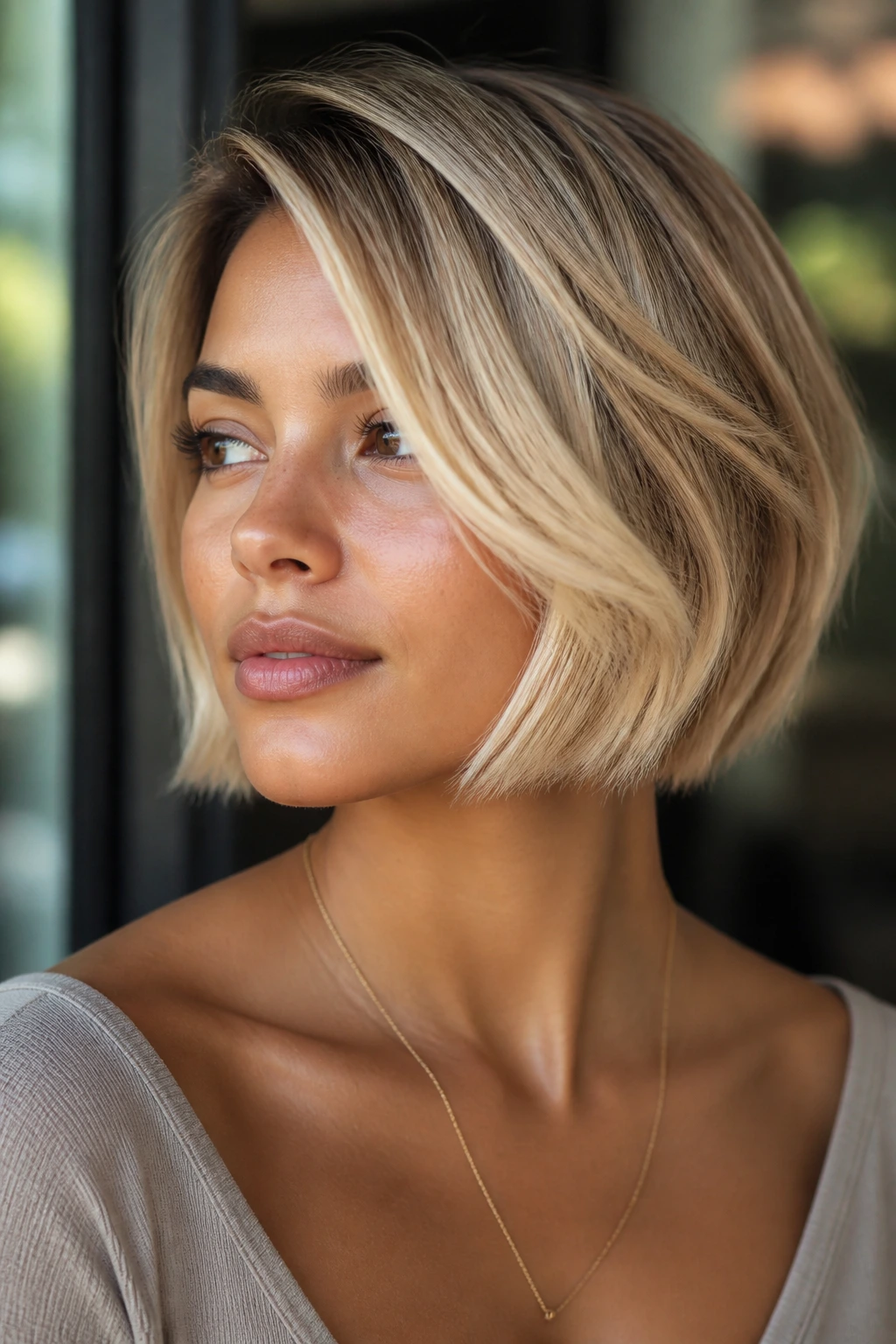
The strongest short blonde balayage looks don’t scream for attention. They frame the face, keep the root honest, and let the haircut stay visible. That’s why medium skin tones do so well with this style when the blonde is chosen with care instead of copied from a generic inspiration photo.
If you want the safest path, start with beige, honey-beige, or champagne. If you want something sharper, mushroom, ash beige, or pearl can work beautifully with the right root depth. Either way, the best result is the one that still looks like your haircut when the light changes and the room gets quieter.