



A curly shag can look like a breeze or a haircut that got into a fight with the mirror. The difference usually comes down to where the weight is removed, how the fringe is handled, and whether the color follows the curl pattern or fights it. That’s why thinning shag haircuts for curly hair with babylights are such a sharp combination when they’re done with some restraint: the layers open the shape, and the babylights give the curls something to catch as they move.
The bad version is easy to spot. It has a heavy bottom line, a puffed-up crown, and ends that look see-through after one too many passes with thinning shears. The good version feels lighter without looking hacked at. It keeps enough shape at the perimeter for the curls to stack, then slips in fine ribbons of color where the bends and coils can actually show them off.
I’ve always liked babylights on curly shags more than chunky highlights. Chunky strips can vanish inside a curl clump or turn too stripey once the hair dries. Babylights, on the other hand, can sit close to the surface, thread through the top layers, and make the whole cut feel more alive without shouting for attention. That balance is the whole point here, and it’s why these 22 looks are worth a closer look.
Why These Curly Shags With Babylights Stand Out
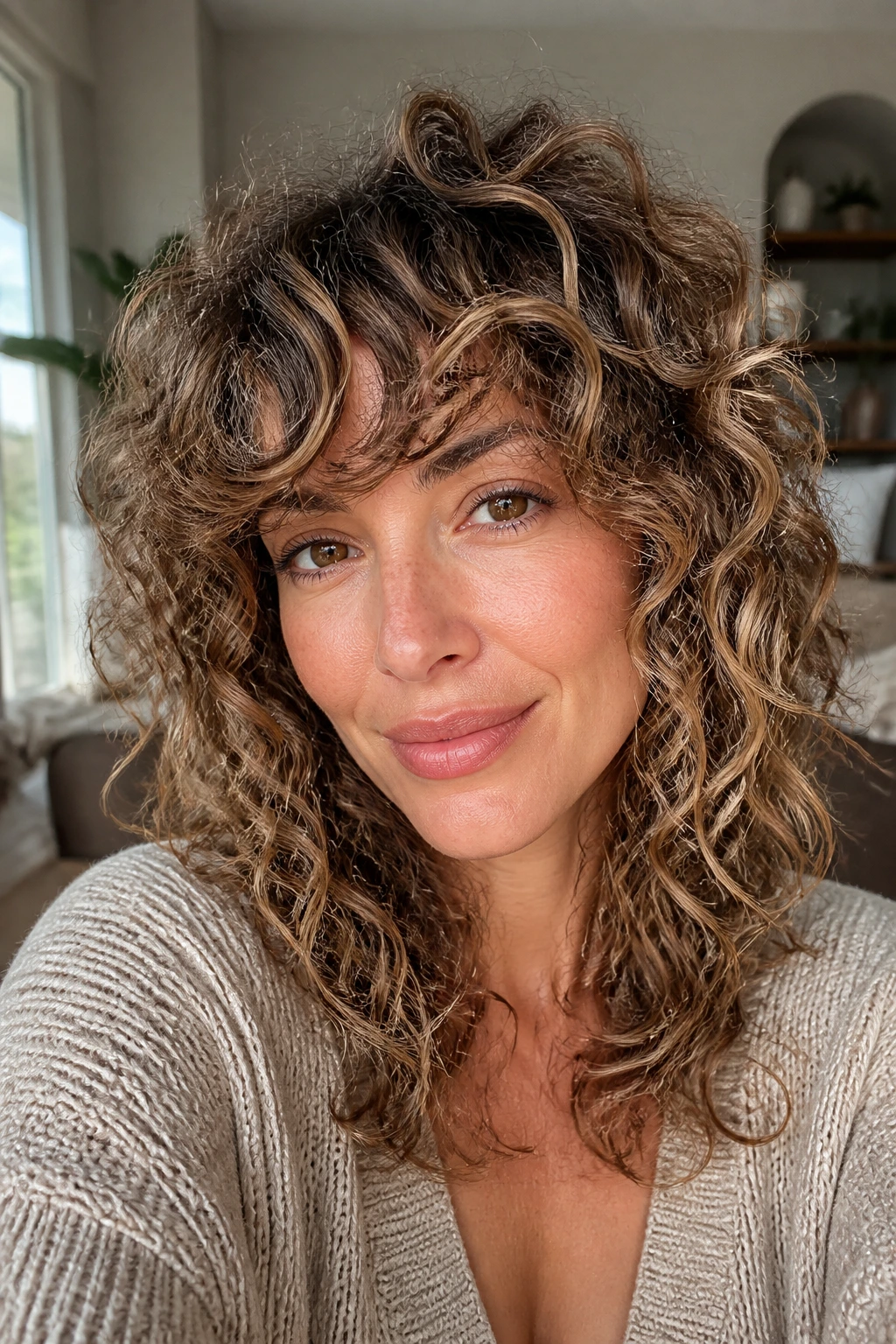
-
They fix the crown without stripping the ends: The best curly shag removes bulk where curls swell up, not from the brittle tips that need all the help they can get.
-
Babylights follow movement better than bold streaks: Fine weaves of light show up on the bends of a curl clump, so the color still reads after the hair dries and shrinks.
-
They work for both fine and dense curls: Fine curls need airy layers that don’t erase the outline; dense curls need enough internal removal to stop the triangle effect.
-
The shape grows out with less drama: A shag can soften over a few weeks and still look intentional, which is rare once you’re dealing with curl shrinkage and face-framing pieces.
-
They make styling easier, not busier: A good cut does half the work. You should not need six products and an hour with a diffuser just to find the haircut again.
1. Crown-Lifted Curly Shag with Honey Babylights
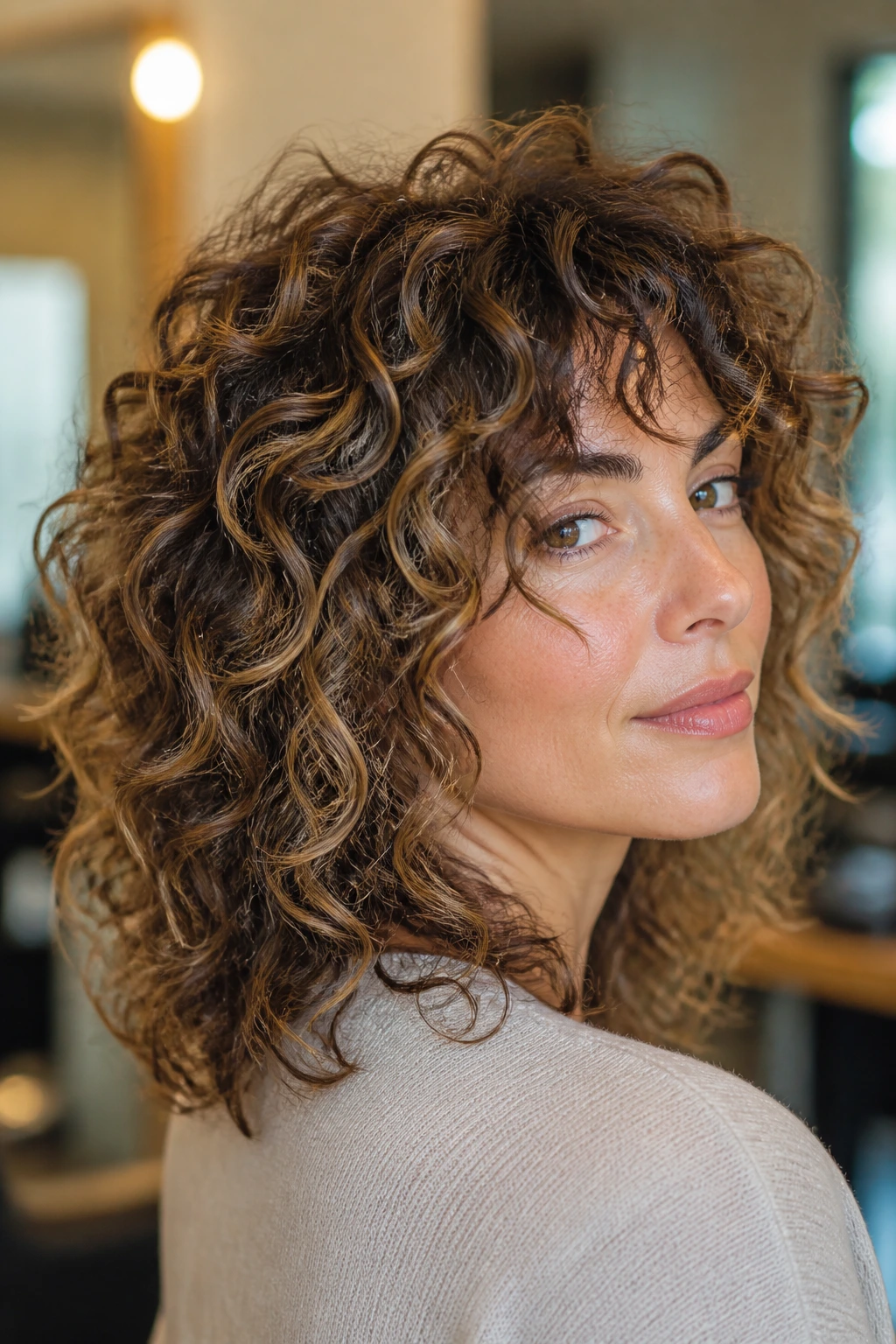
The best place to start is the crown, because that’s where curly hair collapses first. This version keeps the shortest layers high around the top back of the head, then drops the rest of the shape in soft, staggered steps so the silhouette stays open instead of boxy. Honey babylights are woven through the upper third of the head, especially around the part and temple area, which keeps the brightness visible without turning the cut into a stripey mess.
Why It Works on Smaller Curl Clumps
The crown lift stops the top from sitting flat while the lower lengths keep enough weight to hold their curl pattern. If you have fine or medium curls, that balance matters; too much internal thinning and the whole shape turns wispy fast. Honey tones are also forgiving on curls because they warm up the movement instead of competing with it.
- Shortest crown layers: about 1 to 2 inches shorter than the cheekbone pieces
- Babylight placement: top layers, temple sweep, and a little around the fringe
- Best for: 2C to 3B curls that need height without frizzing out
- Ask for: point-cut ends, not aggressive thinning shears
Pro tip: Have the colorist leave a soft shadow at the root. On curls, that tiny bit of depth makes the babylights look more blended when the hair springs up.
2. Soft Wolf Shag with Face-Framing Babylights
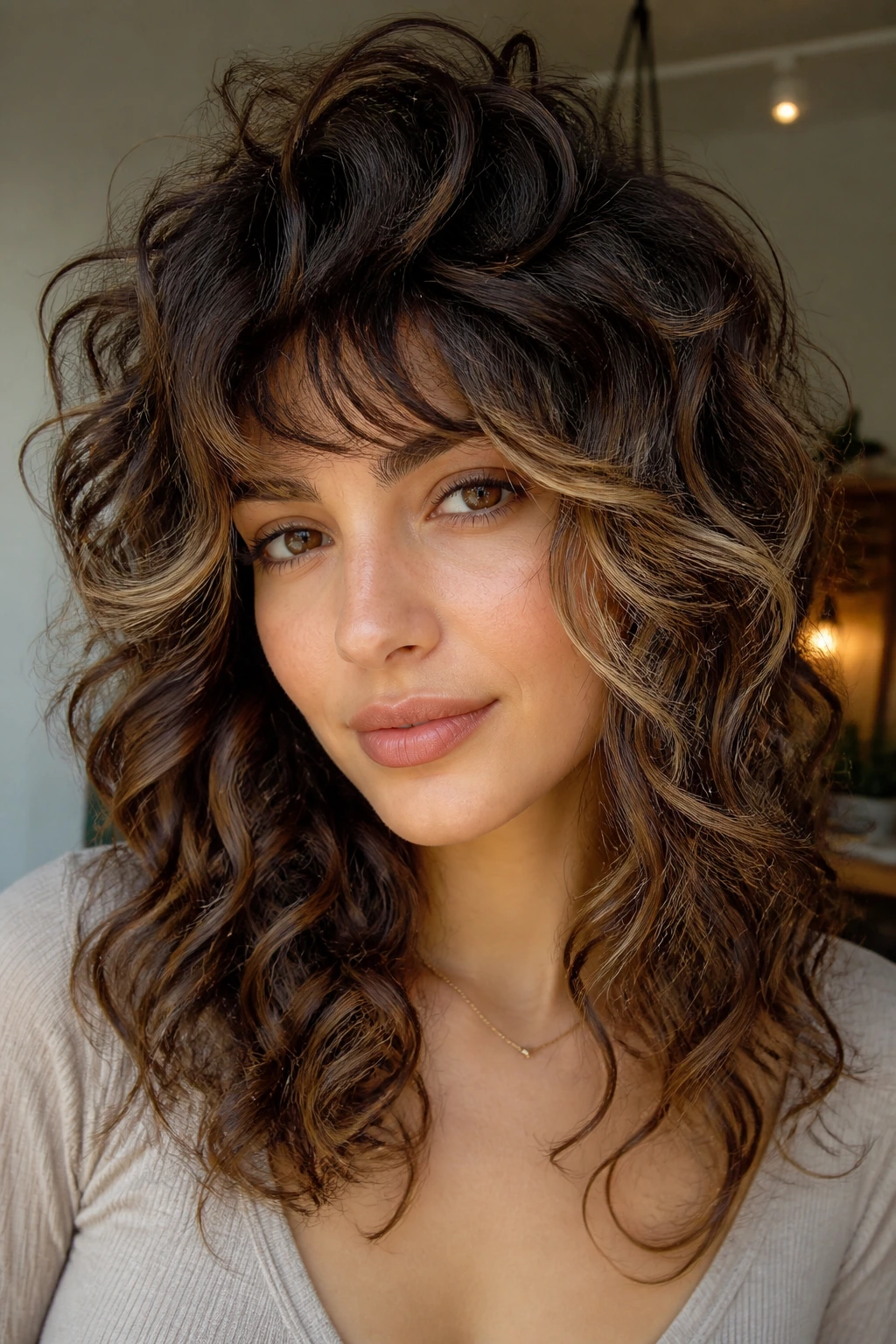
Most wolf cuts look a little too sharp on curly hair if the layers are taken too far. This softer version keeps the attitude but rounds off the edges, so the curls still stack neatly around the jaw and neck. Face-framing babylights start near the cheekbones and run down the front pieces, which means the light lands where people actually look first.
That placement matters. A curly wolf shag can get busy fast if every layer is bright, but a few fine highlights around the face are enough to break up the mass and keep the shape readable. It’s a good choice if your curls are medium to dense and you like a cut that feels slightly undone without tipping into chaos.
The other thing I like here is the contrast between the choppy top layers and the softer underlengths. It gives the haircut a little edge, but not that overworked “I asked for texture and got shredded ends” problem that happens more often than anyone likes to admit.
3. Rounded Midi Shag with Caramel Veil Babylights
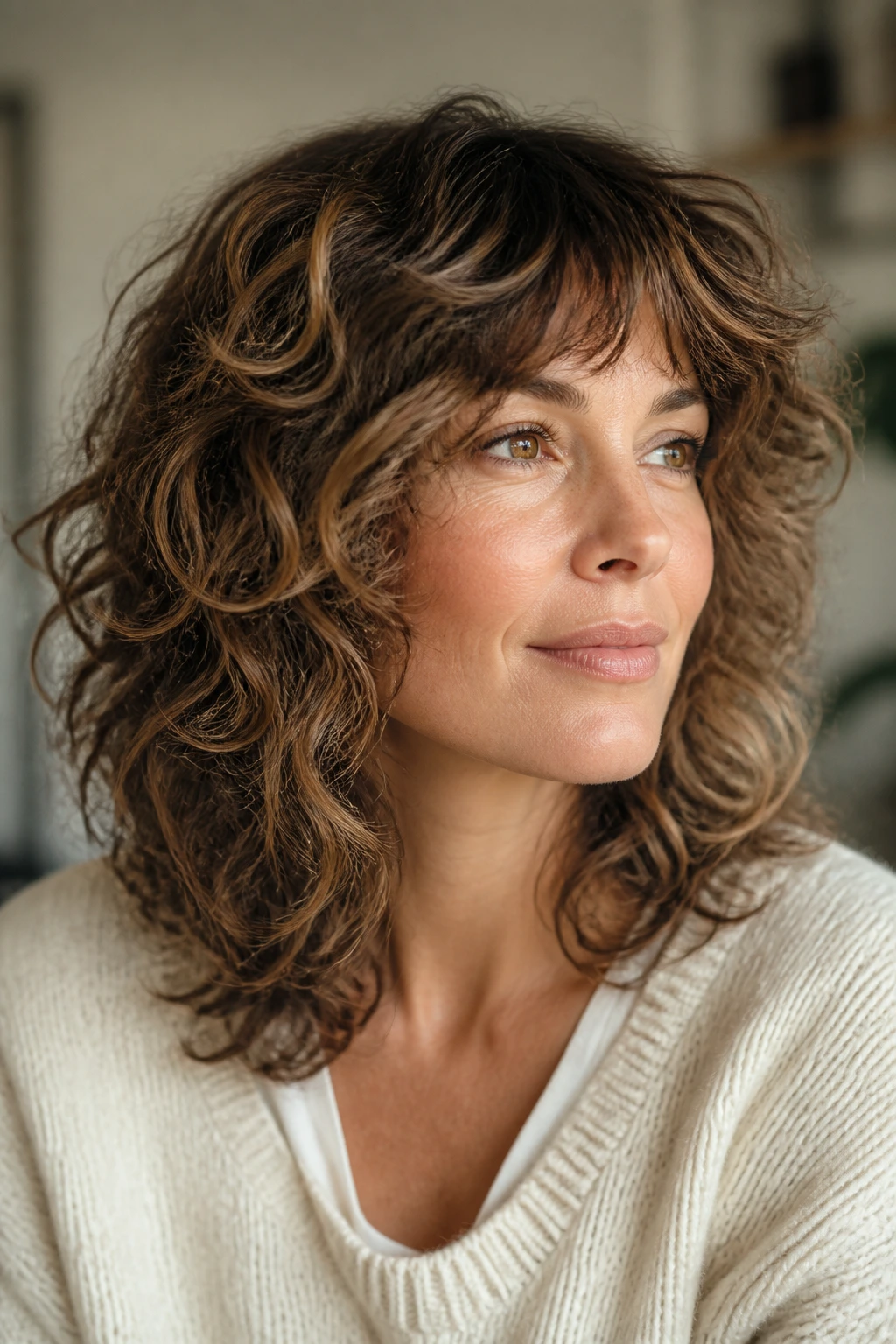
Why does shoulder-length hair play so nicely with a shag? Because it sits at that useful middle point where curls can bounce without ballooning. This midi version keeps the outline rounded, not square, which is a huge deal if your hair expands when it dries. The babylights are fine and caramel-toned, almost like a veil over the top layers rather than a loud streak.
What to Ask For at the Salon
Ask for the layers to begin around the lips or chin, then taper gently into the body of the hair. That keeps the cut from getting too short around the crown while still giving the front pieces enough movement to swing away from the face.
Who It Flatters Most
- Fine curls that need a little help appearing fuller
- Medium curls that lose shape below the shoulders
- Anyone who wants the shag effect without going short enough to commit hard
A midi shag is one of those cuts that looks calm from a distance and detailed up close. The caramel babylights help with that. They catch on the outer curl bends, then disappear into the folds when the hair settles, which is exactly the kind of soft contrast curly hair tends to like.
4. Short Pixie Shag with Micro Babylights
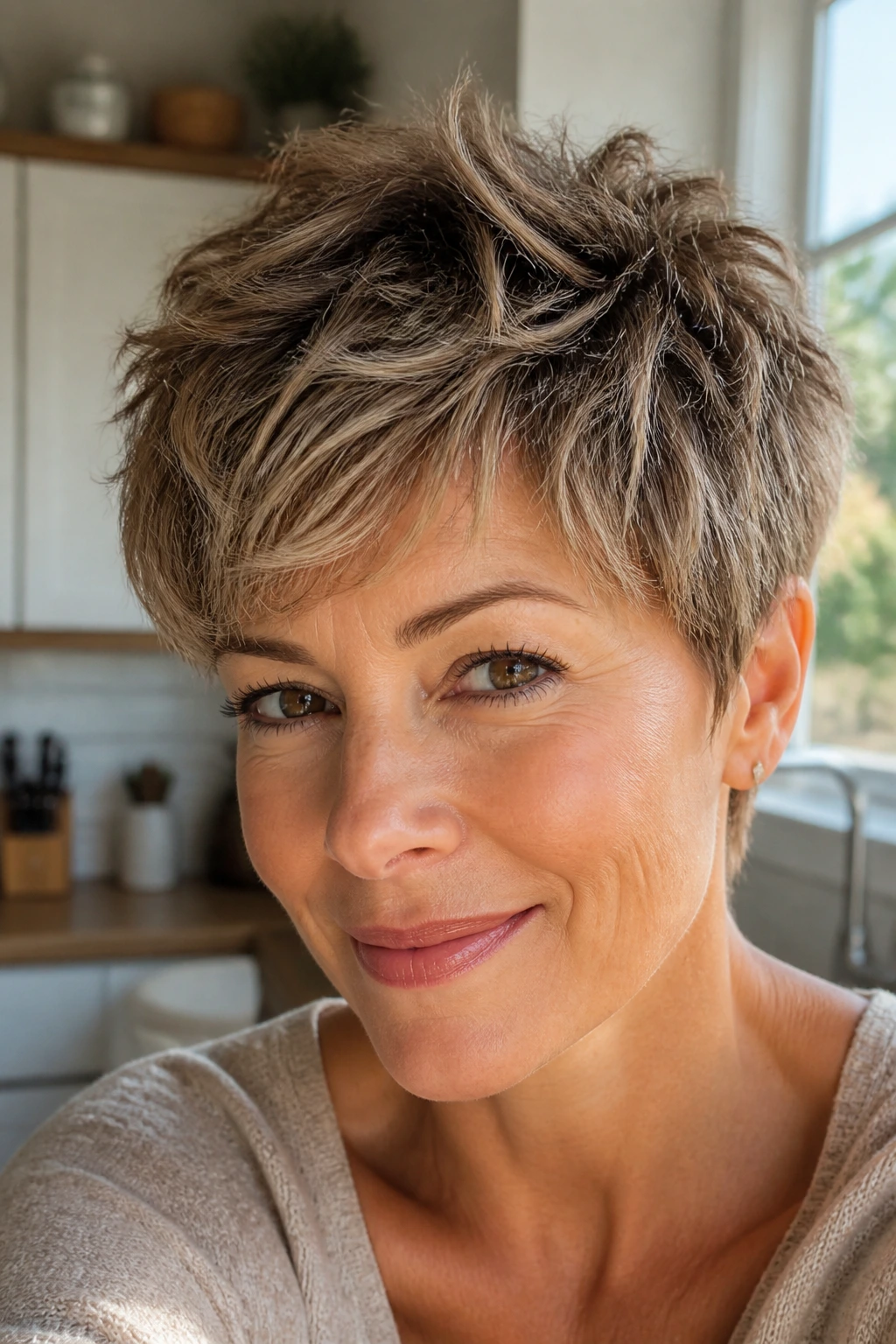
A short curly shag can look fantastic, but only when the shape is handled with some discipline. The trick is to keep the top longer than the nape, taper the back just enough to remove weight, and let the curls on top keep their spring. Micro babylights are the right color move here because bigger highlights can take over a cut this short and make it look busy.
This style works best when the curls are loose enough to create a little lift on their own. If the hair is very tight or very dense, the cut can get too round at the crown unless the stylist controls the volume carefully. I’d also keep the lighter pieces mostly on top and around the fringe. That’s where the movement is. That’s where the eye lands.
It’s a bold shape, no question. But it’s not a messy one when the layers are clean and the babylights are fine enough to read as shimmer instead of streaks.
5. Long Layered Curly Shag with Cinnamon Ends
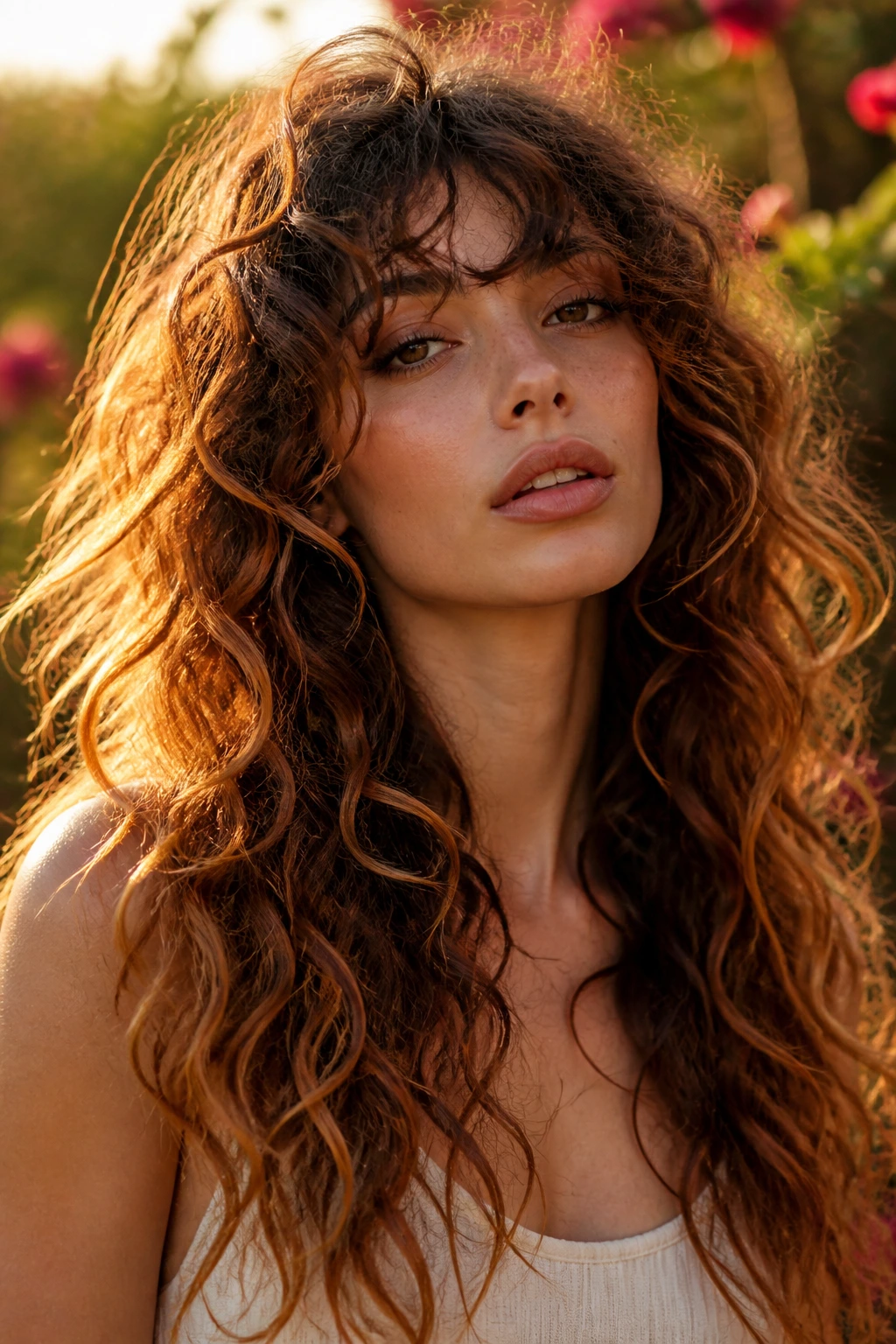
This is the version for someone who likes length but hates a heavy curtain of hair hanging off the shoulders. The layers start higher than they would in a regular long cut, but they don’t march all the way up the head. Instead, they create a soft cascade that lets the curls separate and move. Cinnamon babylights at the ends keep the lower half from disappearing into one dark block.
I like this one for thicker curls that need shape more than they need major length removal. The cut keeps enough bulk through the mid-lengths to stop the ends from going wispy, which is where a lot of longer shags go wrong. Too many layers and the last few inches look scraggly fast.
This is also one of the better choices if you’re growing out a shorter curl cut. The layers hide the awkward middle stage. The babylights help too, because the lighter ends create the illusion of more movement even when the curls are a little tired on day three.
6. Shoulder-Grazing Shag with Beige Babylight Ribbons
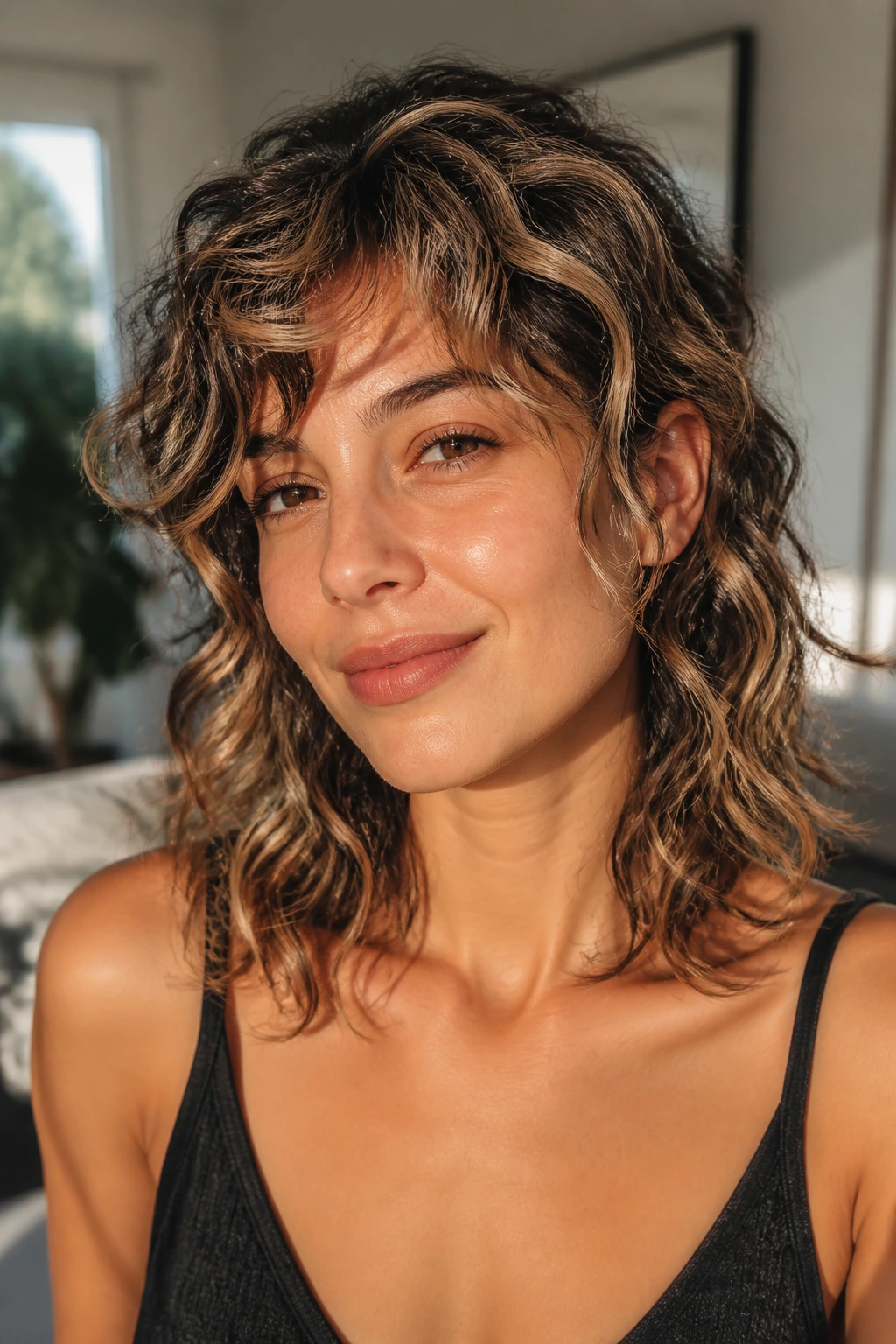
A shoulder-grazing shag gives curly hair enough length to tuck behind the ears, clip half up, or pile into a loose pineapple, but it still has enough lift to avoid the heavy pyramid shape. The beige babylights here are not loud. They run in thin ribbons through the outer layers, especially around the sides and the top panel, so the cut looks soft in daylight instead of frosted.
What makes this one work is the way the layers are spaced. They’re close enough to create movement, but not so close that the outline falls apart after a wash. If your curls are medium density and you want color that shows when the hair moves, this is a smart place to land.
I’d choose this over a shorter shag if your face framing pieces tend to spring up too much. The extra length gives the curls a little more gravity, and that means the babylights stay visible longer through the day instead of disappearing into a puff.
7. Curly Curtain-Bang Shag with Sand Beige Highlights
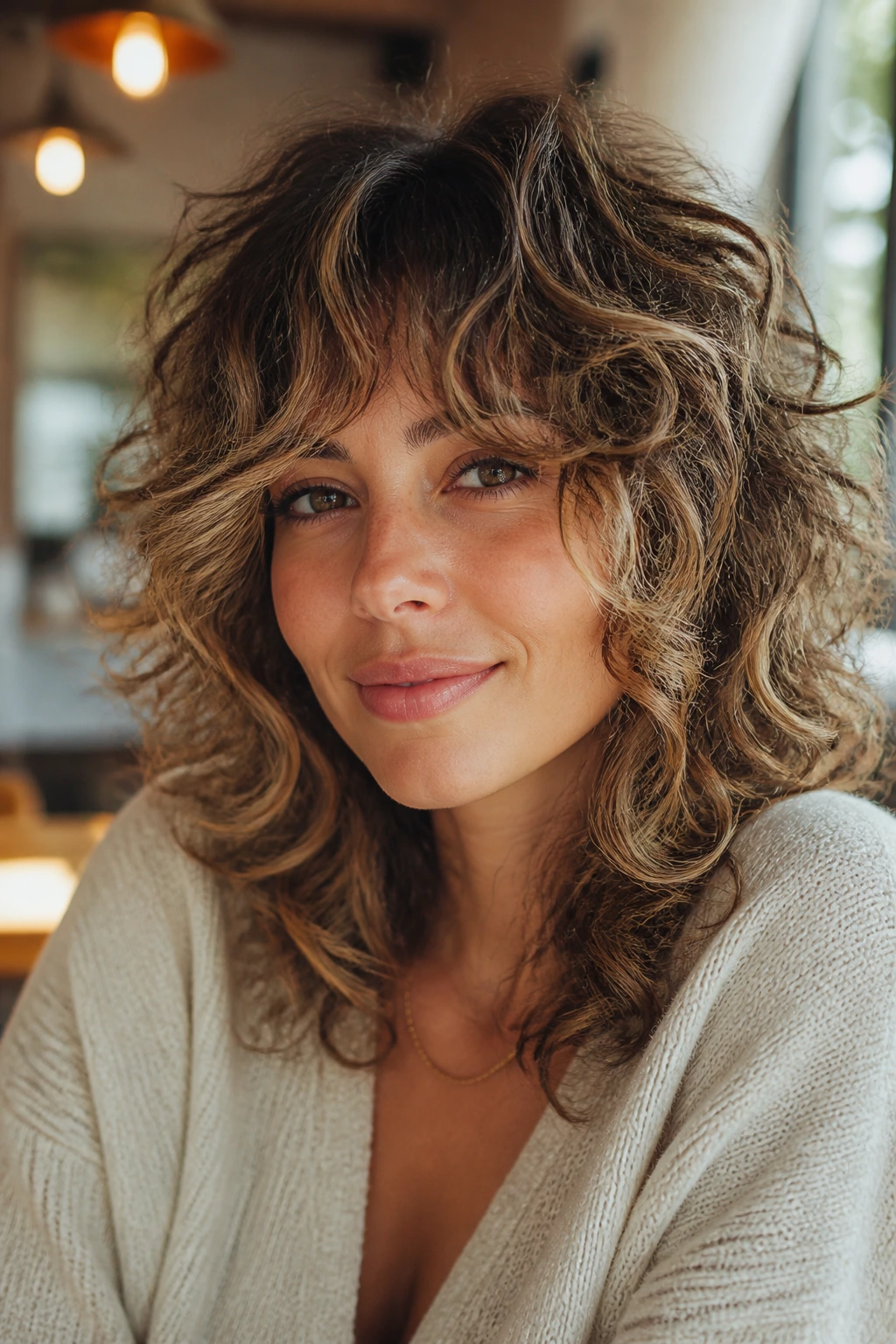
Curtain bangs can be a gift on curly hair, but only when the fringe is long enough to split instead of sitting like a wall across the forehead. This shag keeps the bang line soft and curved, with the front layers opening out from the center. Sand beige babylights are threaded through the fringe and the front sides, which is where they get the most face-framing payoff.
The color choice matters here because curtain bangs already create movement. If the babylights are too pale, the whole front can look disconnected from the rest of the cut. Sand beige stays soft against dark blondes and light brunettes, and it keeps the bang area from looking harsh once the curls dry and separate.
This shape works nicely for people who want a little structure around the face without a hard fringe. It’s airy. It moves. And when the front curl clumps fall right, it gives the whole haircut a lifted, easy rhythm.
8. Tapered Shag with Rooty Babylights
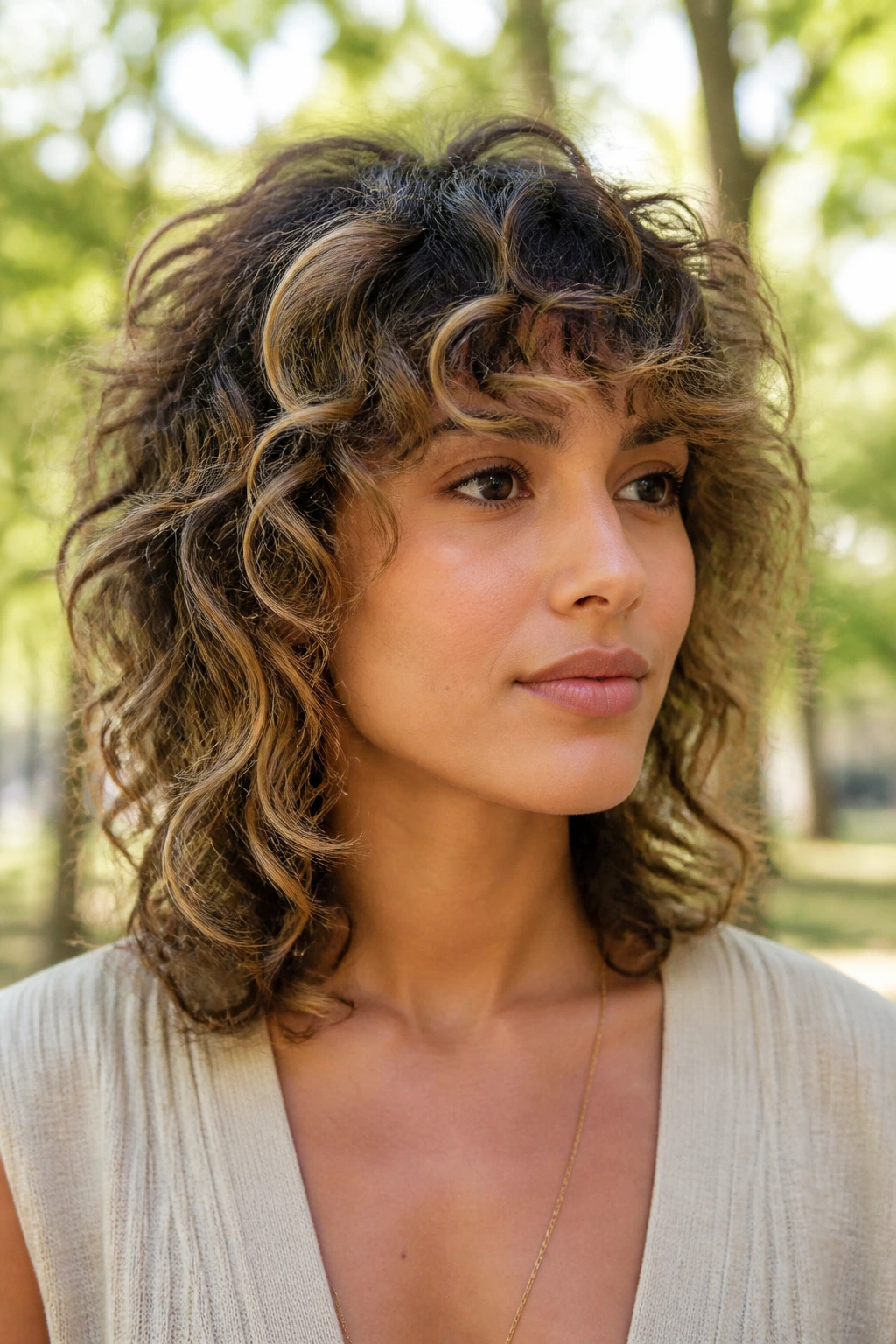
Why does a tapered shag look so clean on curly hair? Because the volume gets guided inward instead of puffing out in every direction. The sides are narrower, the crown is a touch fuller, and the back softens toward the nape. Rooty babylights help that shape because they keep the brightness from starting too high and making the scalp look busy.
Best for Hair That Lifts at the Sides
This cut is a good answer for people whose hair swells at the temples or around the jaw. The taper takes some of that width away, and the babylights keep the surface from looking flat.
Ask Your Stylist For
- Internal layering under the top veil
- Light taper at the side panels
- Babylights that begin a little off the scalp for depth
- A soft finish around the ears, not a hard line
A rooty babylight placement is underrated on curls. It lets the grow-out look softer, and it keeps the highlight pattern visible even when the curls bunch up after a few days.
9. Razor-Cut Shag with Warm Blonde Babylights
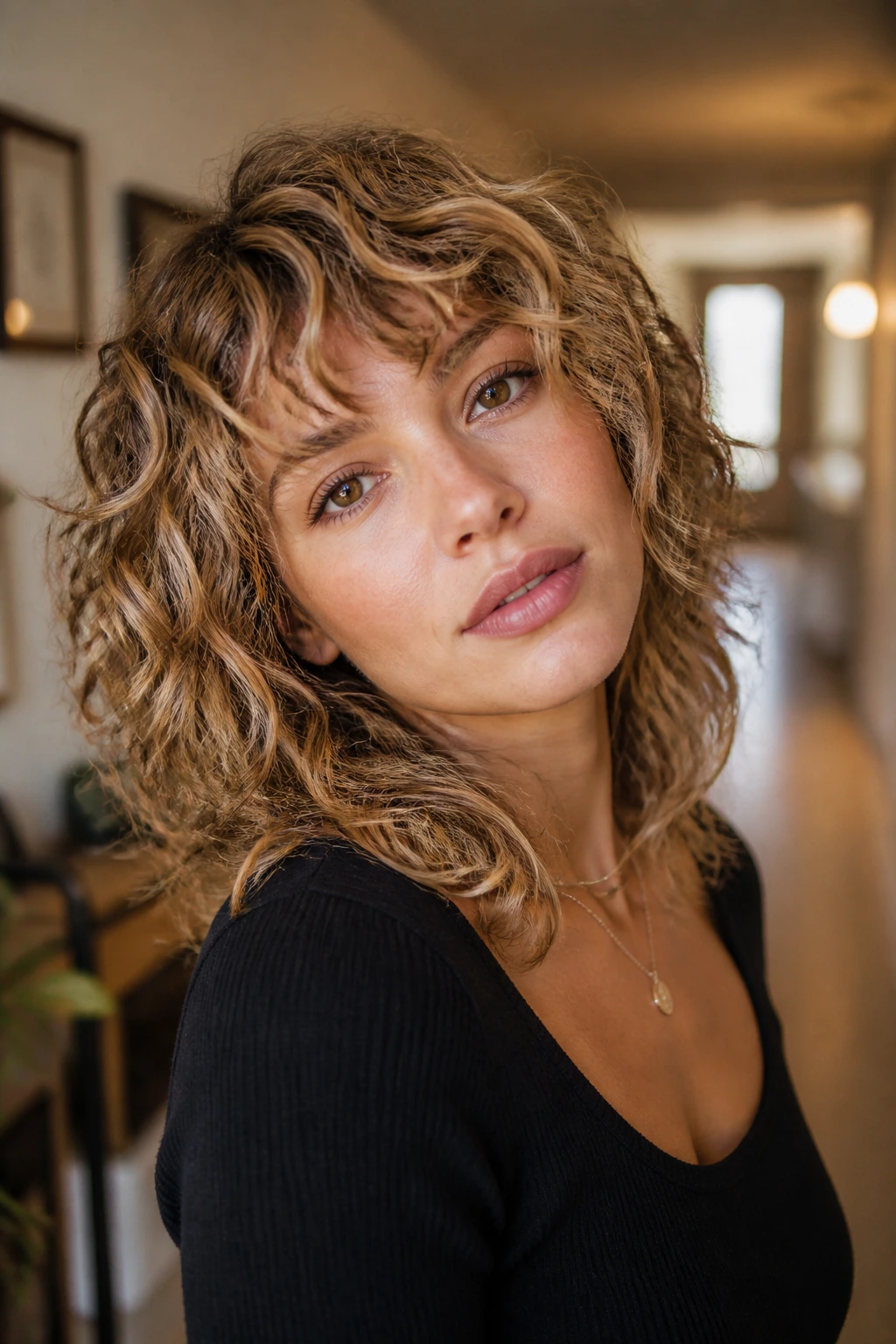
A razor cut on curly hair is not the move for everyone. If the stylist doesn’t know where the curl clump ends and the frizz zone begins, the haircut can turn fuzzy in a hurry. But on looser curls, a razor-cut shag can create a feathered, moving shape that scissor cutting sometimes misses. Warm blonde babylights soften the sharpness so the cut does not look too edgy or dry.
The key is moderation. The ends should look sliced, not shredded. The layers should release weight without leaving the perimeter too thin. A good razor shag has movement when it’s dry, but the curl still has enough body to hold together.
I’d only choose this if you like a looser, piecey finish and you’re willing to use a diffuser or a light curl cream to keep the ends from puffing. Done well, it has a kind of airy swing that straight cuts just can’t fake.
10. Heavy Fringe Shag with Soft Espresso Lights
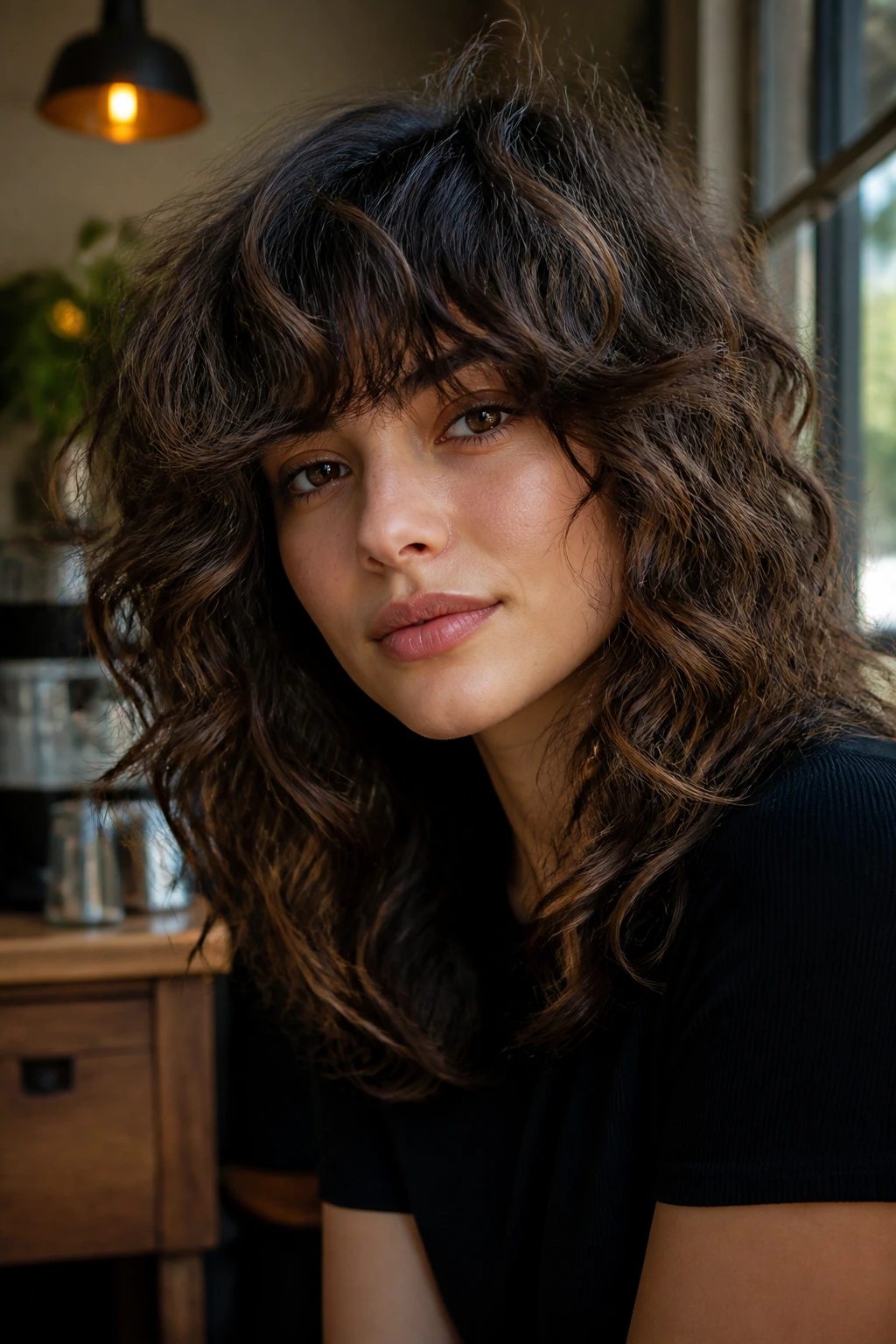
A heavy fringe on curly hair sounds risky, and sometimes it is. But when the fringe is cut with enough length to shrink up properly, it can anchor the whole haircut. The rest of the shag fans out from that front weight in soft layers. Soft espresso lights through the fringe and top sides stop the front from reading like one dark block.
This look works best on denser curls that can support a fuller bang. If your hair is fine, the fringe can dominate too much and leave the rest of the cut looking sparse. On thicker hair, though, the heavier front gives the face a frame and lets the babylights break up the surface just enough.
I like this one because it has a little old-school drama. Not costume drama. Just enough structure to feel deliberate. The babylights keep the fringe from going flat, which is always the risk with any heavier bang on curls.
11. DevaCut-Inspired Shag with Copper Babylights
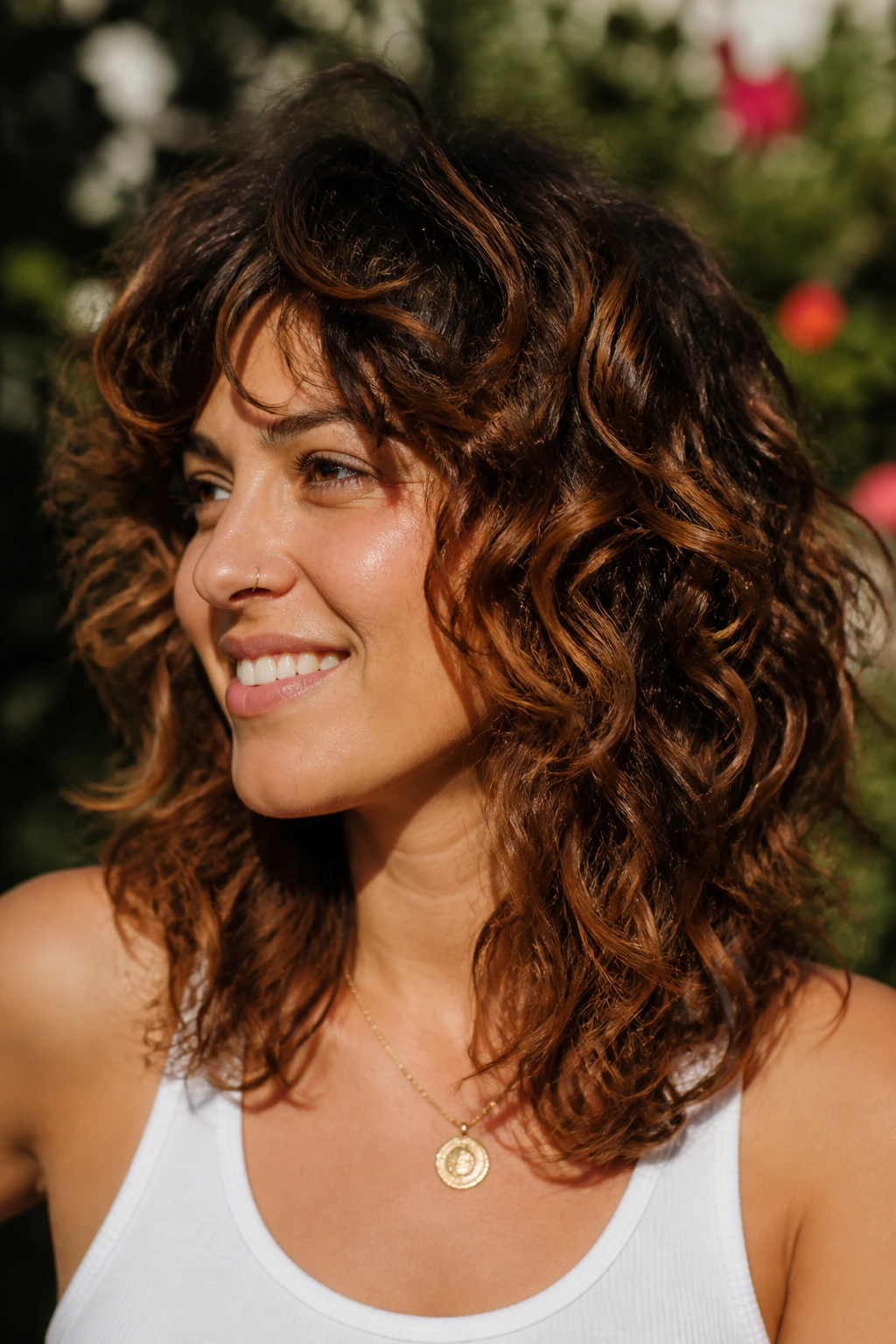
A DevaCut-inspired shag is built around the curl in its natural dry state, which is exactly why it works so well when the goal is shape without guesswork. The layers are carved curl by curl, so the silhouette respects how the hair actually falls instead of how it looks soaking wet and stretched out. Copper babylights are a strong match because they add warmth inside the curl pattern rather than sitting on top like a badge.
This cut is especially useful for people with mixed curl textures. You know the pattern: looser pieces around the hairline, tighter ones at the back, and a few stubborn sections that never seem to behave the same way twice. Dry cutting lets the stylist adjust to that reality instead of pretending the head is perfectly symmetrical. It isn’t.
Copper tones also flatter the natural movement of curls because they glow in small pockets of light. You don’t need a lot. A few well-placed babylights around the top and the front can change how the whole cut reads.
12. Bottleneck Bang Shag with Sunlit Balayage Babylights
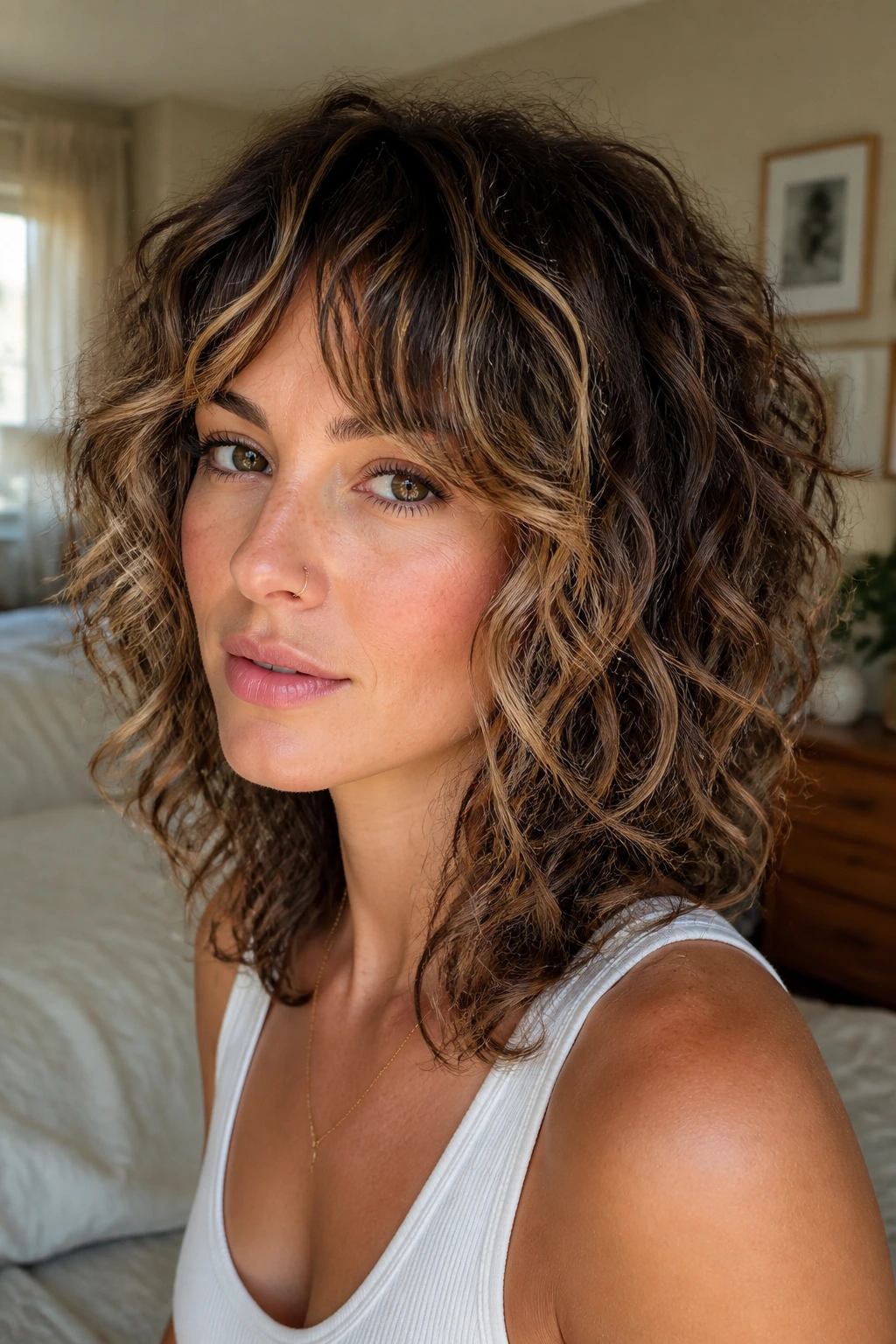
Bottleneck bangs sit in that sweet spot between a full fringe and curtain bangs, which makes them useful on curls that need face shape without a hard line. The middle stays shorter, the sides fall longer, and the whole bang opens out in a curve once it dries. Sunlit balayage babylights around the front and crown keep the fringe from looking heavy.
Why It Flatters Curly Hair
The center of the bang brings focus to the eyes, while the longer side pieces soften the cheeks and jaw. That shape matters if your curls tend to contract at the front and spread wider at the sides.
Ask For These Details
- Shorter middle fringe, longer outer fringe
- Babylights concentrated around the top surface and money-piece area
- Light internal layering through the sides
- A dry check after the first rough cut so the shrinkage is honest
The color should feel sun-touched, not striped. If the babylights are woven too thick, the bang area gets busy fast. Keep them fine, and the whole front looks airy.
13. Classic 70s Curly Shag with Toffee Ribbons
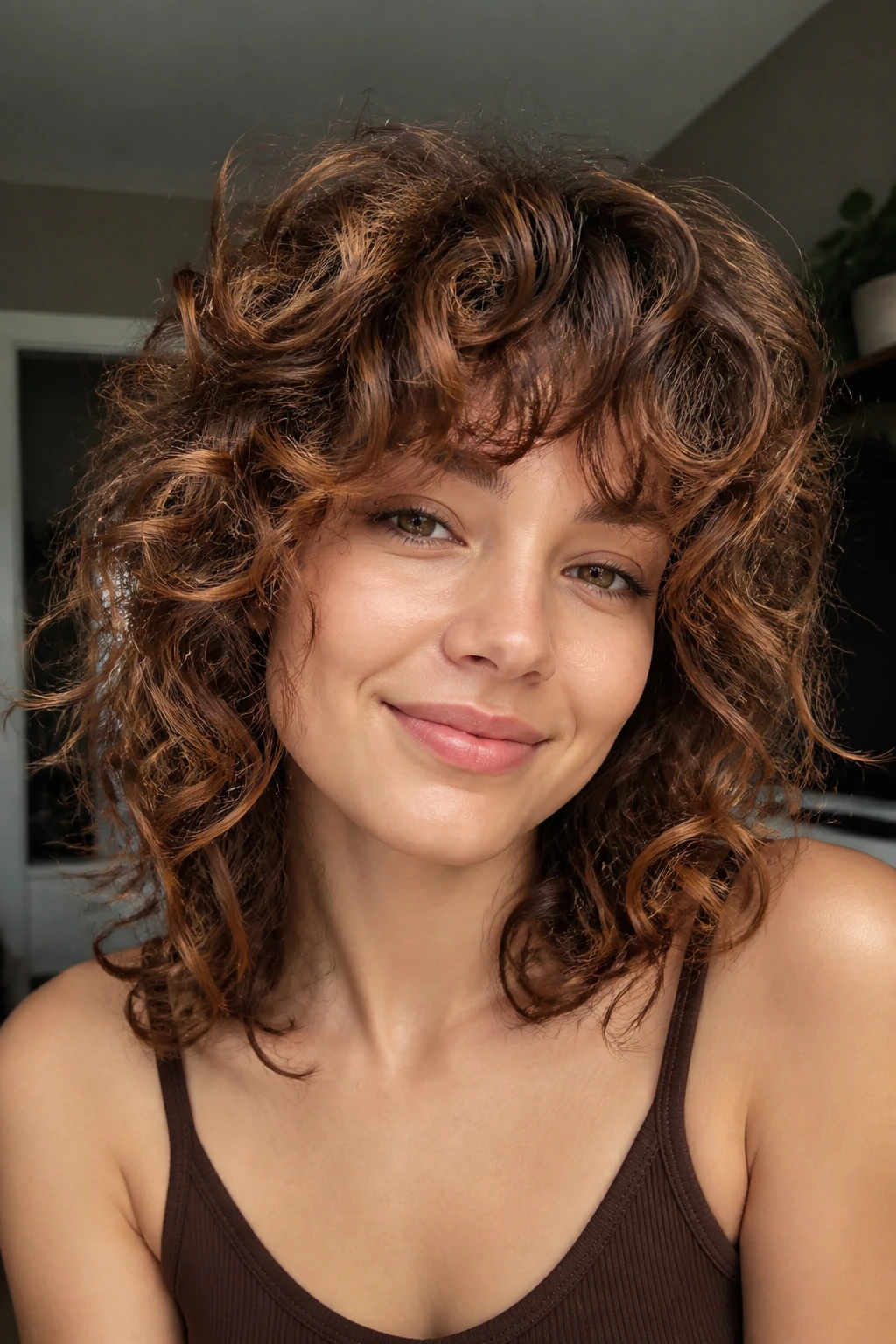
The classic 70s shag is rounder and more playful than the sharper wolf-crop versions people talk about now. It has a lifted crown, a feathered front, and layers that fall like steps rather than chops. Toffee ribbons woven through the top and front sides keep the cut warm and soft, which is a better match for curls than stark blonde streaks.
This one suits people who want movement without losing a sense of shape. The ends should still feel full. The front should still frame the face. It is not a shredded cut. It’s more like a curl-friendly version of the old feathered shag that actually understands shrinkage.
The reason I keep coming back to it is simple: it ages well. A grown-out 70s shag still has shape after six or eight weeks because the layers are built to soften. That makes it a smart option if you don’t want your hair to look “between cuts” the minute the salon blow-dry wears off.
14. Airy Lob Shag with Mushroom Blonde Babylights
A lob shag sits at that collarbone range where curls can still bounce, but the weight does not drag everything down. It’s one of the easiest lengths to wear when you want dimension without going short. Mushroom blonde babylights keep the tone soft and neutral, which is useful if you don’t want the brightness to fight the natural curl texture.
This version works well for hair that tends to spread wide at the bottom. The lob length gives the shape enough room to settle, while the shag layers keep the ends from looking blunt or helmet-like. That balance is the whole trick. Too much layer and the lob turns fluffy. Too little and it just hangs.
If you like to air-dry most of the time, this is one of the more forgiving options on the list. A little mousse, a diffuser pass for the roots, and you’re out the door. No heroics required.
15. Triangle-Busting Shag with Beige Ribbons
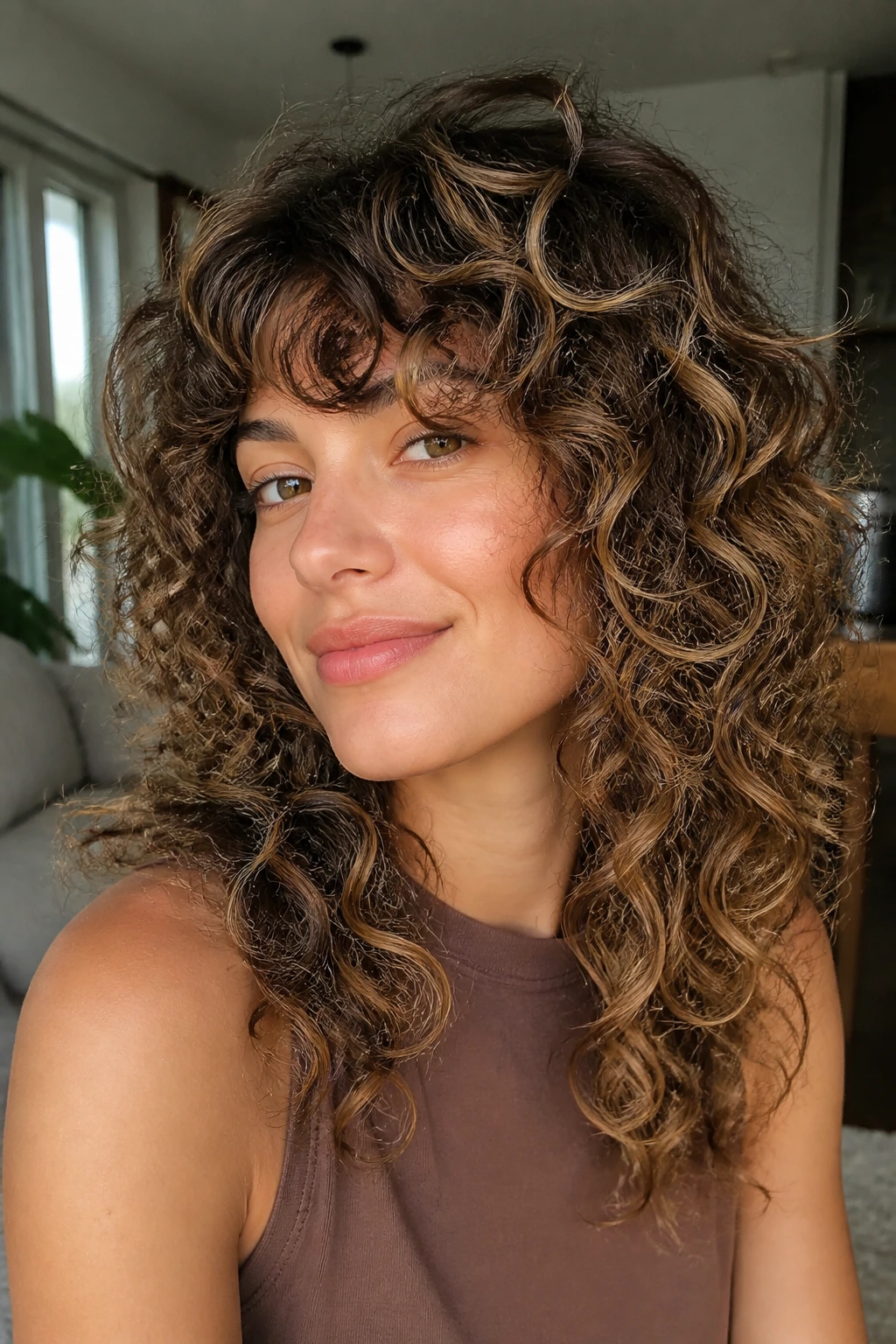
Triangle hair is what happens when the bottom gets too much weight and the top goes flat. On curly hair, it shows up fast. This shag fixes that by taking enough weight out of the sides and upper mid-lengths to keep the profile from flaring out at the jaw. Beige ribbons threaded through the top layers and front pieces stop the shape from going dull.
What I like about this cut is that it doesn’t demand a giant change in length. It’s about balance, not chopping everything off. A stylist can keep the length where you like it and still remove enough bulk to stop the base from turning into a shelf.
If you’ve ever stood in front of a mirror and thought, “why does my hair get wider as it gets longer?”, this is the kind of shape that answers that problem without turning the haircut into a different species.
16. Undercut Curly Shag with Hidden Babylights
An undercut changes the whole game for dense curls. It removes weight from the nape or lower back sections, which keeps the underneath from puffing out and swallowing the top. Hidden babylights are tucked under the outer layers, so they flash through when the curls move or when you pull the hair back.
This is one of the more playful options here. It’s also one of the most useful if your hair is heavy enough to make your neck feel trapped by noon. The undercut lightens the load. The shag layers soften the top. The hidden color adds a bit of surprise without making the whole look high-maintenance.
I’d choose this if you like a haircut that has a secret. Up front, it reads soft and curly. Then you twist it up or tuck it behind the ear, and the lighter underlayers show up. Good haircuts do that. They give you something extra without needing a new styling routine.
17. Low-Maintenance Wet-Look Shag with Fine Gold Babylights
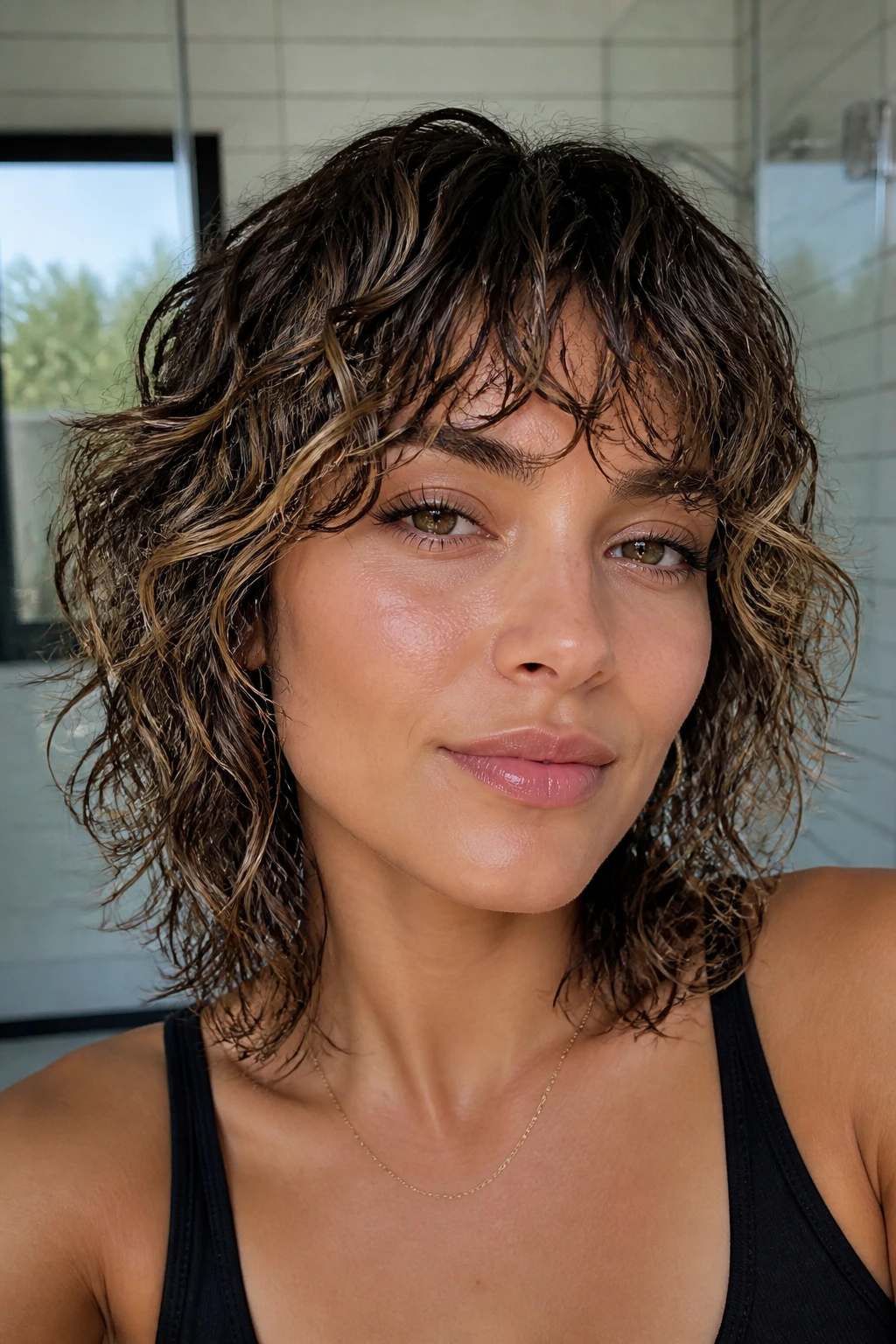
Why do some curly shags look better a little glossy than fluffy? Because the layers are cut to support definition, not volume for volume’s sake. This version keeps the layers smooth and the fringe long enough to clump cleanly, then leans into a wet-look finish with fine gold babylights that shimmer through the defined curls.
Best for People Who Like a Defined Finish
If you already use gel or foam and don’t mind a cast that gets scrunched out later, this cut will make sense fast. The babylights catch along the outer curls, so the shine reads stronger than it would on a matte, airy style.
The Maintenance Sweet Spot
- Wash and style every 2 to 4 days
- Use a gel or strong mousse for definition
- Keep the babylights fine so they don’t look chunky when the curls clump
- Diffuse only until the roots are set, not until the whole head is puffed dry
This is not the most casual shag on the list. It asks a little more from styling, but the payoff is a smooth, polished curl pattern that still feels soft.
18. Side-Parted Shag with Asymmetric Babylights
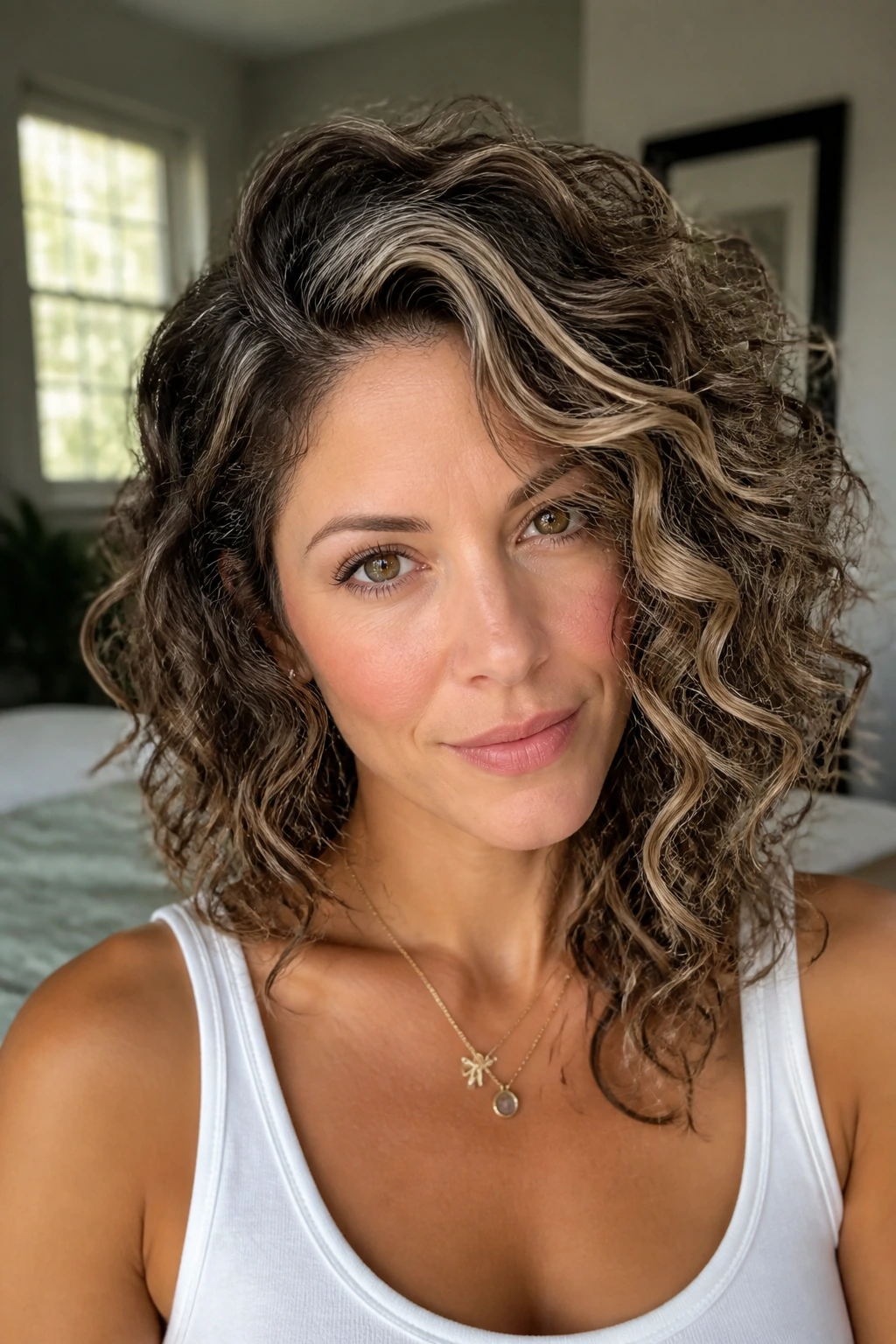
A side part changes the weight of a curly shag in a way that’s hard to fake with layers alone. It pushes one side up, lets the other side fall longer, and creates a little asymmetry that gives the haircut a lived-in feel. The babylights are placed more heavily on the front side and around the part, so the brighter pieces show where the hair lifts most.
This is a clever option if one side of your head grows flatter than the other or if you have a cowlick that keeps trying to set the agenda. A side part gives you some control over that. The babylights then exaggerate the shift, which makes the shape look intentional instead of accidental.
It’s a nice reminder that curly hair doesn’t have to be perfectly balanced to look finished. A little asymmetry often looks better. It feels less formal. More human.
19. High-Volume Halo Shag with Champagne Babylights
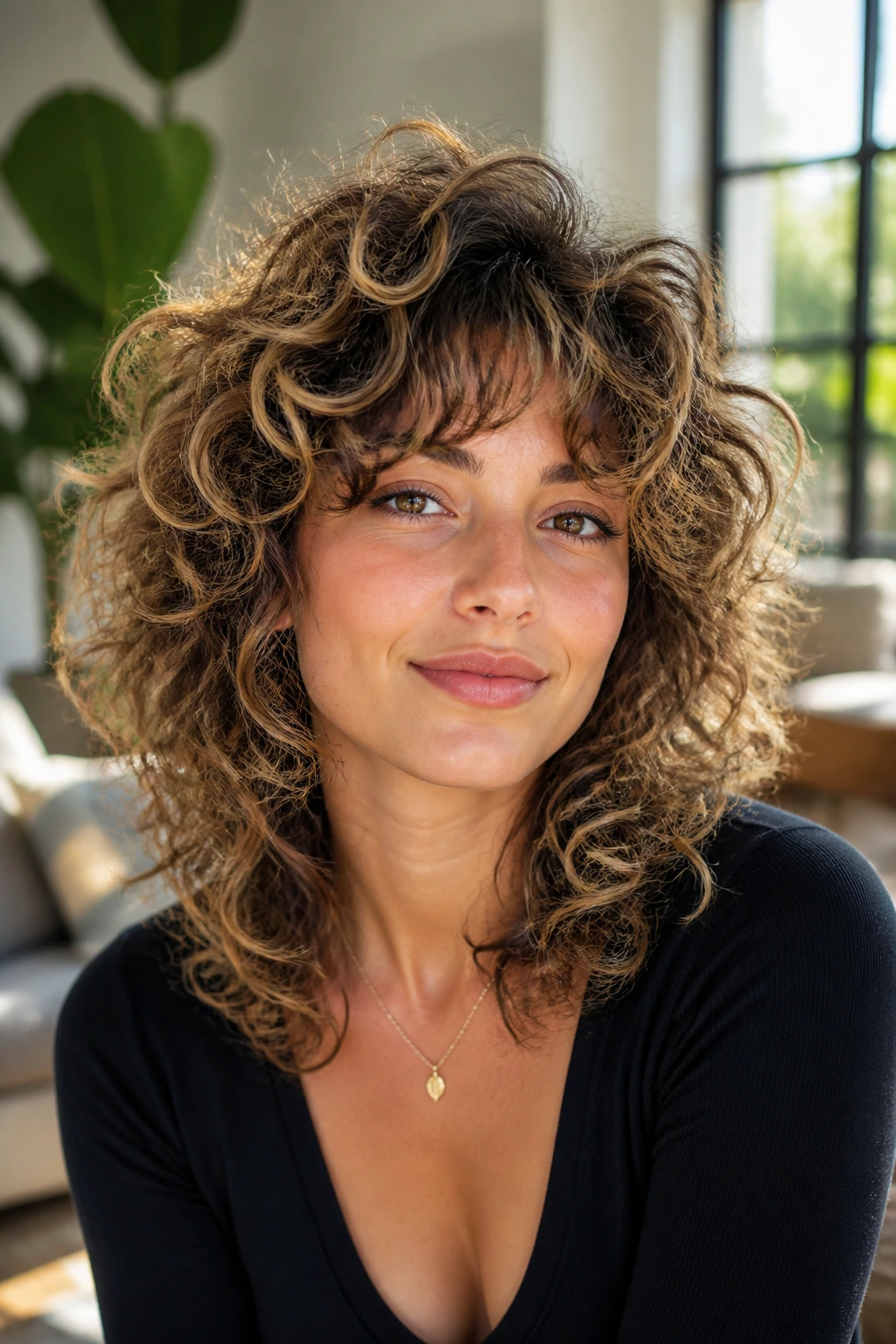
Not every curly shag needs to shrink down and behave. Some should lean into volume, and this is that version. The halo shape keeps the hair full around the head while the internal layers stop it from turning into a solid round puff. Champagne babylights are placed on the outer crown, front, and upper sides so the volume gets brightness without losing depth.
This cut suits people who like big hair and do not want to apologize for it. If your curls are dense, this can be a lovely way to shape them without shaving off the character. The trick is to keep the underneath controlled so the halo sits above the head instead of spreading out like a mushroom.
Champagne tones work well because they look airy against darker bases and soft against lighter brunettes. They keep the whole style feeling lighter, which matters when the silhouette itself already has a lot going on.
20. Frizz-Friendly Layered Shag with Soft Mocha Lights
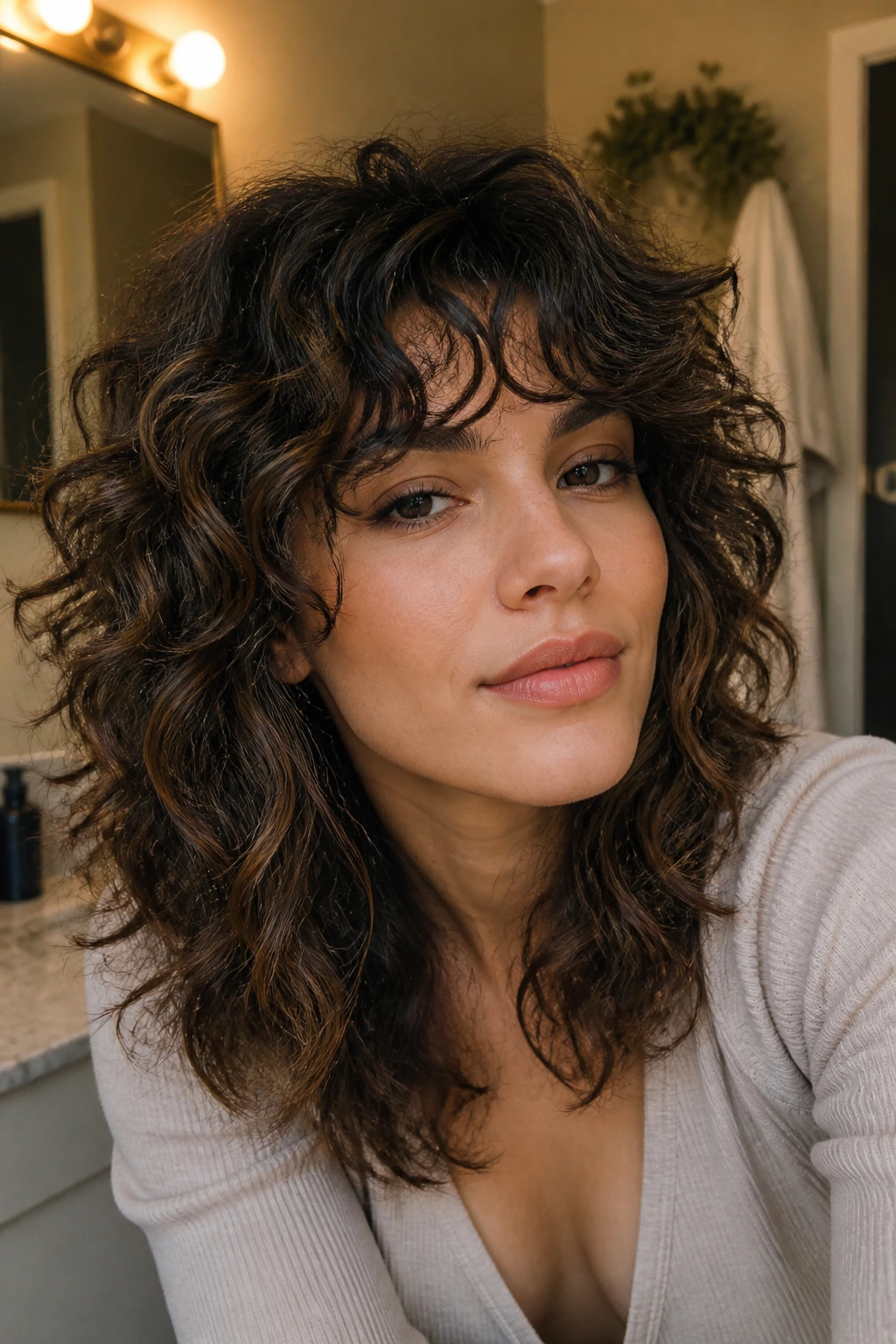
Humidity and curly shags have an interesting relationship. Some cuts puff. Some cut through it. This one leans toward control. The layers are soft rather than jagged, the ends are left with enough weight to hold together, and the babylights stay close to the base color with soft mocha tones that don’t scream for attention.
That low-contrast approach is useful if your curls frizz easily or your hair is coarse and thirsty by the end of the day. Too much contrast can make the frizz look more obvious. Softer babylights blend into the curl pattern and keep the hair from reading patchy when the weather turns stubborn.
I’d call this the stealth version of a shag. It still has movement. Still has shape. It just doesn’t try to win by sheer brightness. Sometimes that restraint is the smarter play.
21. Recession-Line Soft Shag with Crown-Diffused Babylights

Thin spots around the hairline or crown need a careful hand. Heavy layering can expose too much scalp, and bright highlights can make the sparse area look even more obvious. This soft shag keeps the front pieces longer, diffuses the layers through the crown, and places the babylights away from the most fragile-looking spots so the color lifts the shape without spotlighting the scalp.
What Makes It Smarter Than a Harsh Layered Cut
The front still frames the face, but the fringe is not hacked short. The crown gets movement through gentle layering instead of aggressive removal. And the color stays soft, which is a relief if you want dimension more than contrast.
A few things help here:
- Longer bang pieces that can be tucked or worn forward
- Babylights spread through the top surface, not clustered at the part
- Slightly fuller ends to keep the outline from going see-through
- A dry consultation before any major snipping
This is the version I’d point people toward when they want softness around the hairline, not a loud reshaping.
22. Grown-Out Shag with Lived-In Babylights
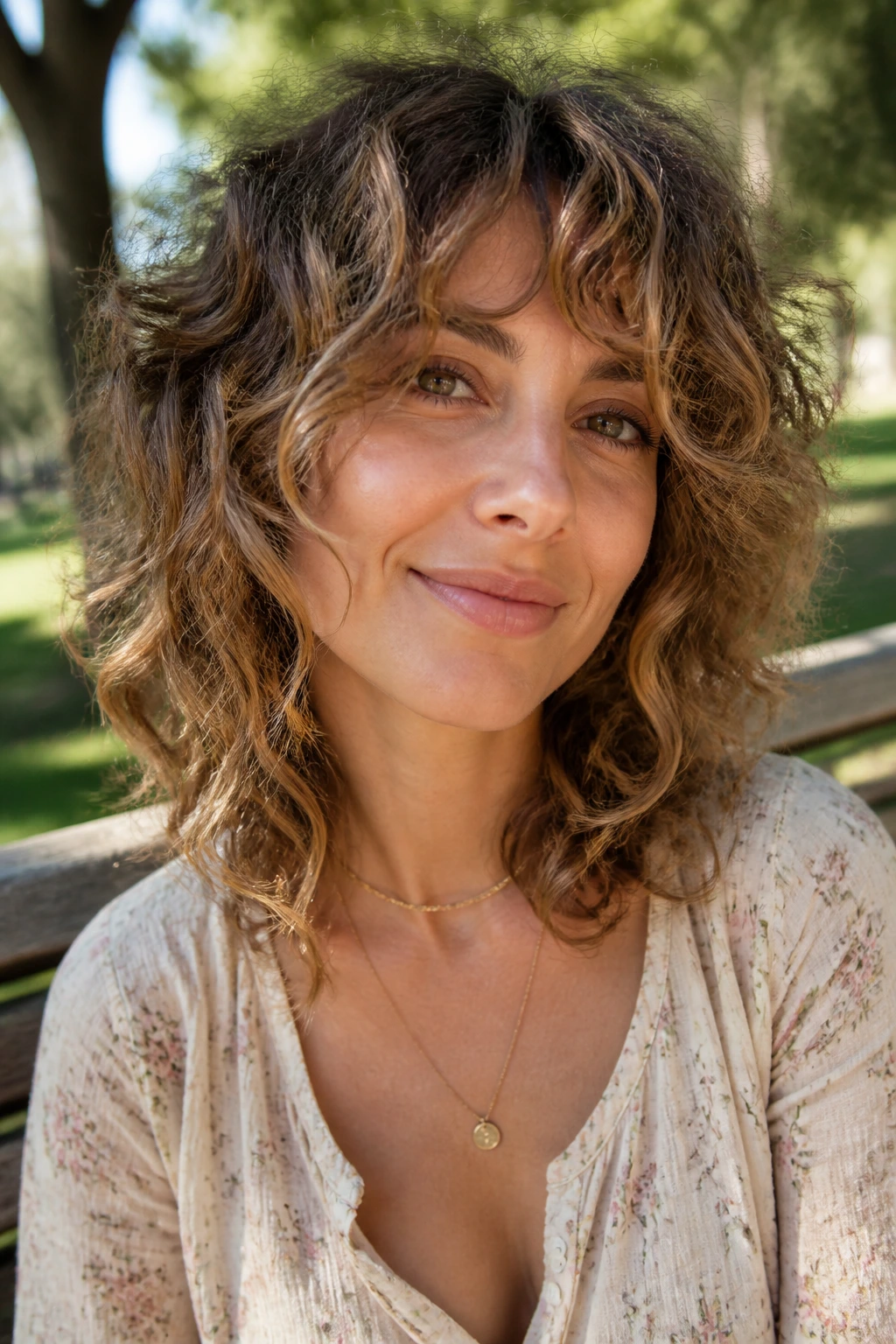
A grown-out shag can be a style, not a failure. That’s the part people forget. When the layers are spaced well, the haircut softens into itself instead of collapsing, and the babylights begin to blend into that lived-in movement in a way that looks calm, not neglected. The best versions have a rooty, slightly shadowed base and light pieces that sit in the curls rather than on top of them.
This is the one for people who don’t want to chase a perfect salon finish every morning. It plays nicely with second- or third-day curls. It grows out without a hard shelf line. And because the babylights are already blended, the regrowth doesn’t look abrupt.
It’s also the easiest of the 22 to keep feeling current without a lot of work. You get the shape of a shag, the softness of babylights, and a cut that doesn’t punish you for living your life between appointments.
Why Curly Shags and Babylights Work Better Together Than You’d Think
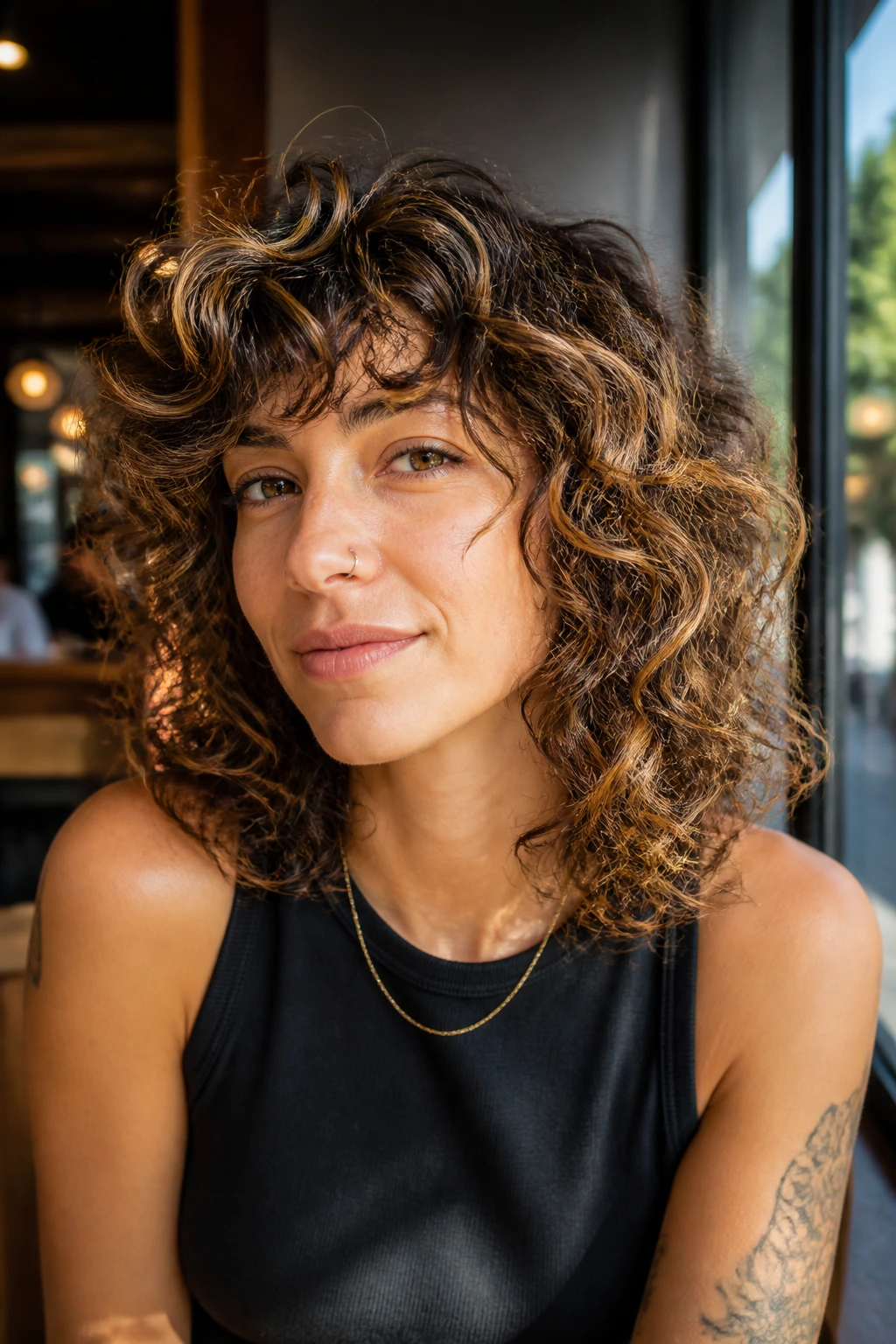
A curly shag is all about controlled loss of weight. That sounds unglamorous, but it’s the whole reason the cut works. Curls need room to spring, and they need enough structure that the spring doesn’t turn into a triangle. Babylights fit into that system because they don’t demand a giant flat surface to be seen. They can ride the curl pattern, which is where the real movement lives.
The best babylights on curly hair are often finer than people expect. Tiny weaves around the part, the fringe, and the top layers create more visual change than one chunky highlight panel hidden inside the mass. If the color is placed where the curl bends and the light hits, it reads all day long. If it’s buried too deep, you’re paying for brightness that the hair won’t show off.
I also like the way a shag keeps babylights from looking overly polished. Straight hair can make fine highlights look formal. Curly hair softens the whole thing. A few lighter curls around the face, a little brightness at the crown, and suddenly the haircut has depth without trying too hard. That’s the sweet spot.
Essential Tools for Cut Day and Wash Day
-
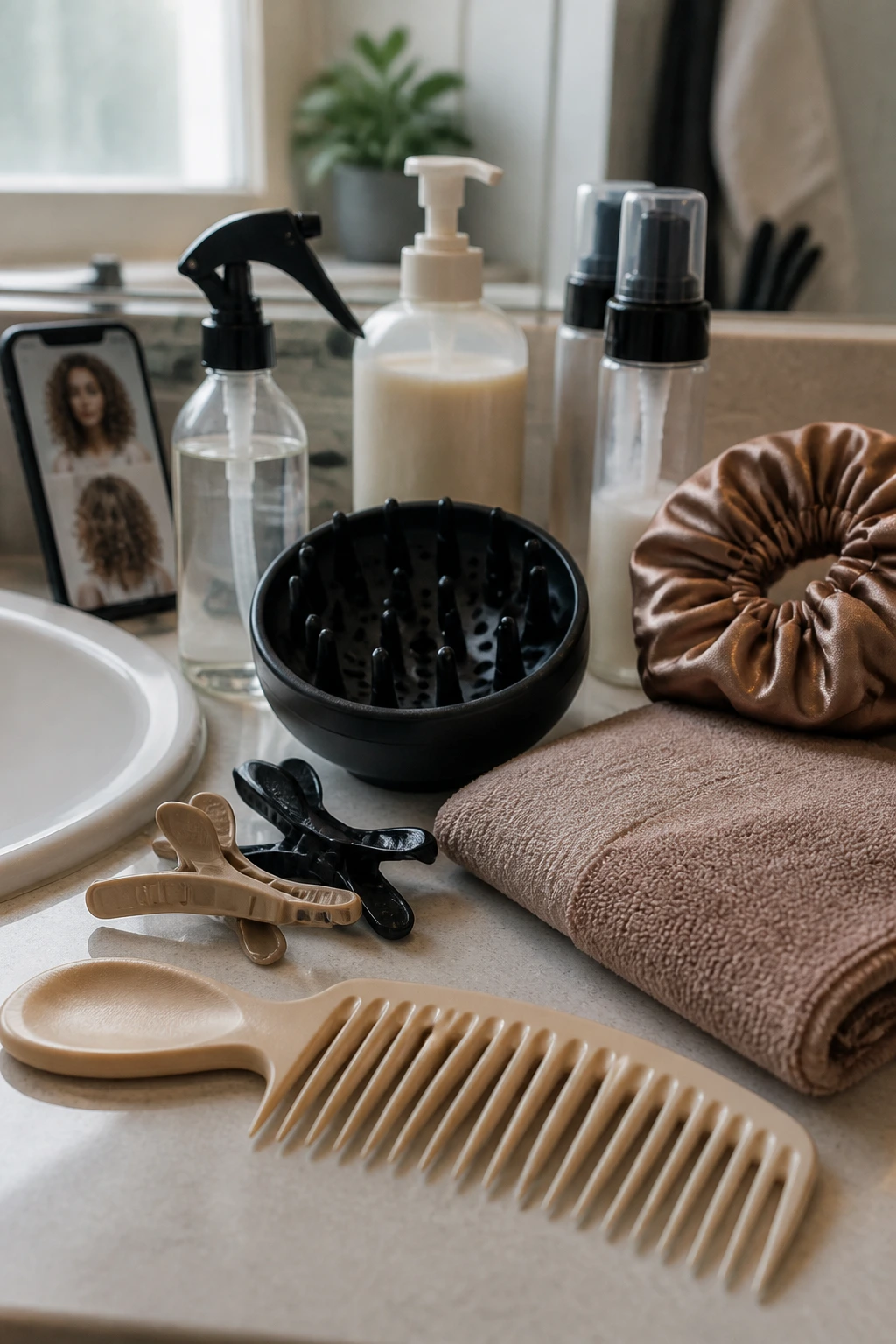
Wide-tooth comb: Best for detangling wet curls without tearing apart the clumps that the shag depends on.
-
Sectioning clips: Useful for wash-day styling and for keeping curl groups separated while you finger-coil or diffuse.
-
Spray bottle with water: A plain spray bottle is one of the cheapest ways to revive the shape on day two or day three without fully re-wetting the hair.
-
Microfiber towel or cotton T-shirt: These pull less moisture out of the hair than a rough bath towel, which matters when babylights sit on top of the curl pattern and need shine to show.
-
Curl cream or leave-in conditioner: Good for soft definition on air-dried cuts; use a small amount so the shag doesn’t get greasy at the crown.
-
Mousse or light gel: Better for keeping the curl clumps separate and holding the layers in place, especially if your shag is short or medium length.
-
Diffuser attachment: A diffuser helps set the top layers and keep the babylights visible without blasting the curl structure apart.
-
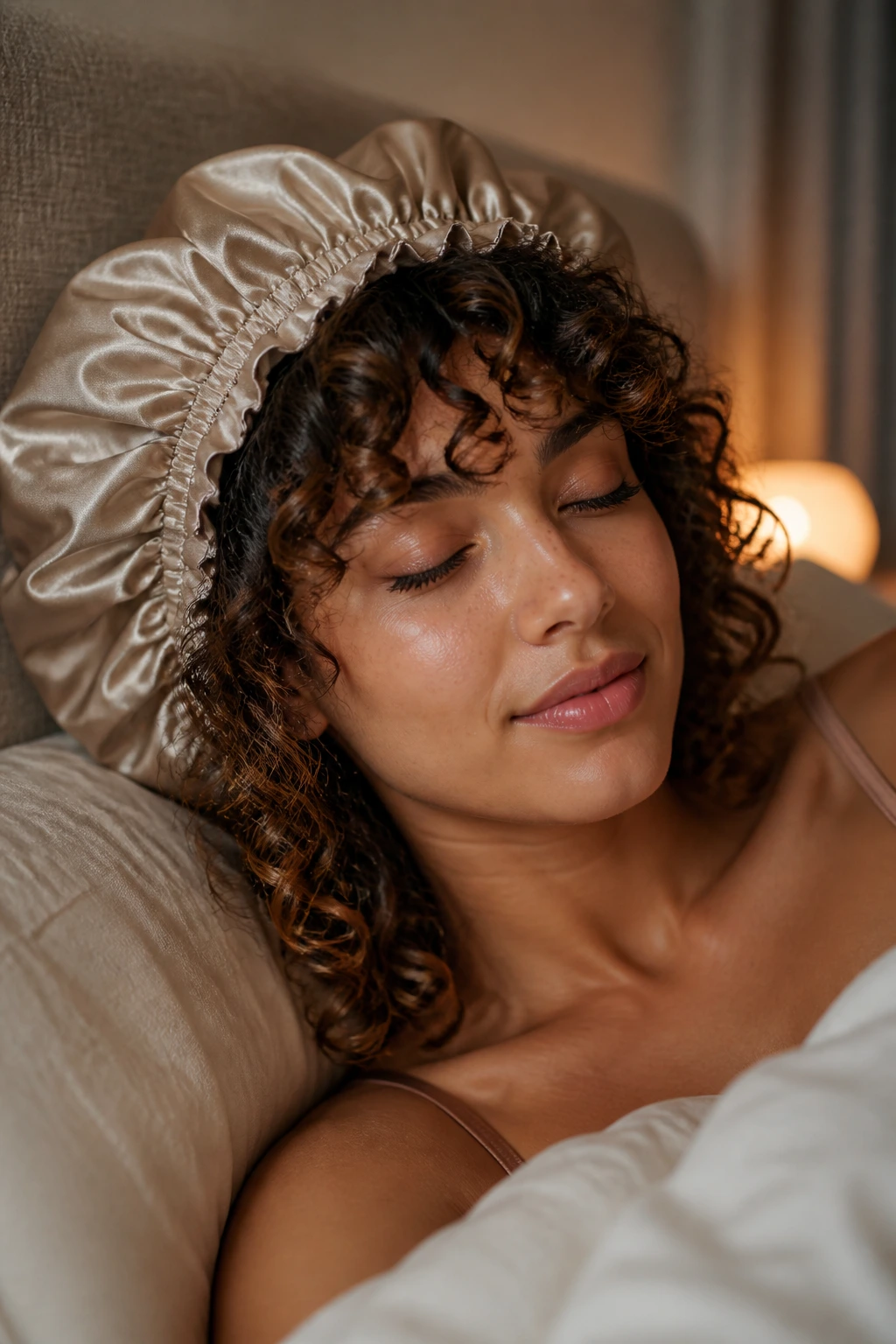
Satin bonnet or pillowcase: A small thing, but worth it. It keeps the fringe and crown from getting crushed while you sleep.
-
Reference photos on your phone: Probably the most important tool of all. One photo for the silhouette, one for the fringe, one for the color placement. Haircuts are easier when nobody has to guess.
How to Choose the Right Shape, Fringe, and Babylight Tone
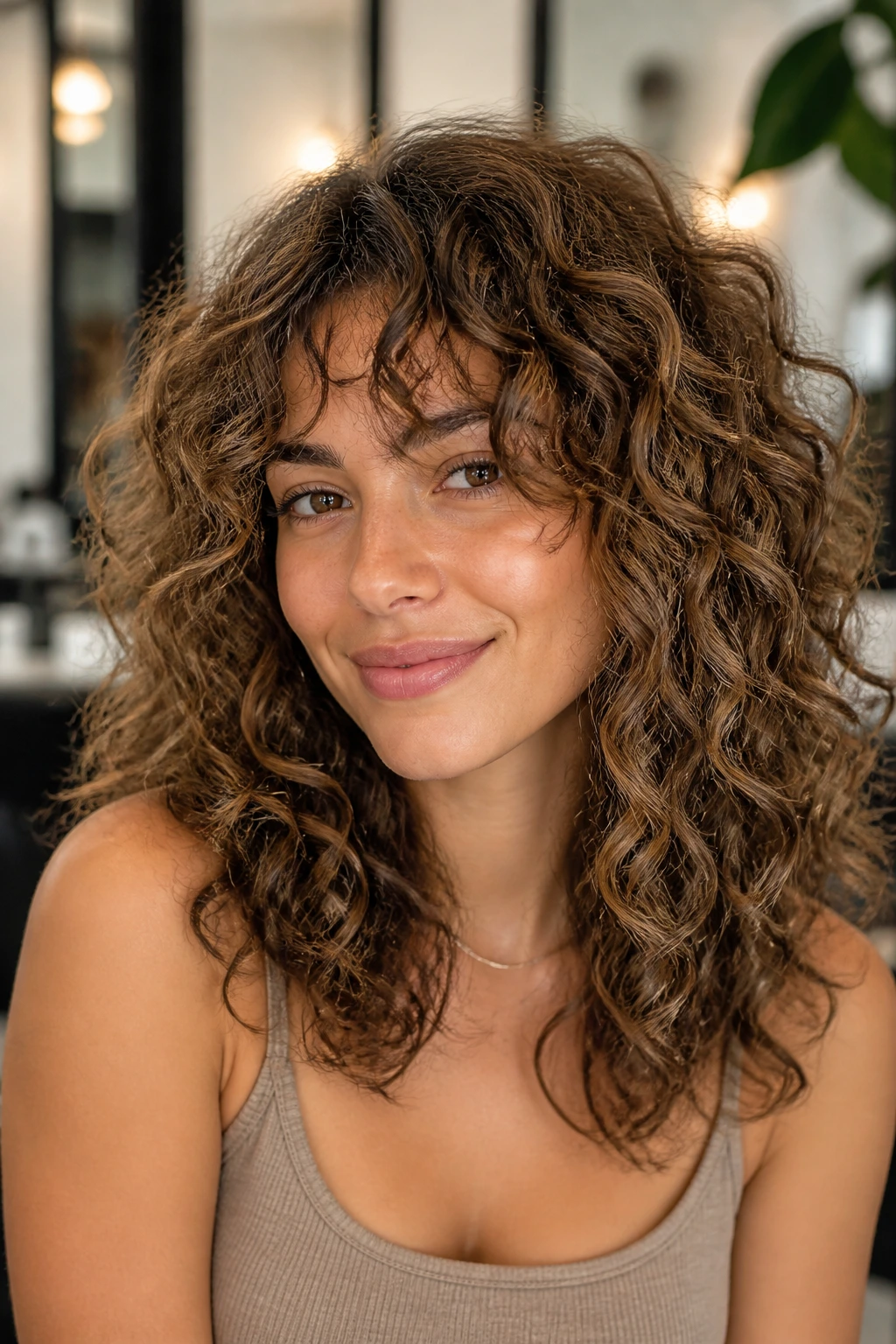
The shape should follow your curl density before it follows any trend. Fine curls usually look better with longer top layers and a softer fringe, because too much removal at the crown can make the scalp show through. Denser curls can take more layering and still keep a full outline. If your hair grows wide at the sides, look at the tapered, triangle-busting, or shoulder-grazing options. If the crown lies flat, the crown-lifted or halo shapes will do more work for you.
Fringe choice matters more than people think. Curtain bangs and bottleneck bangs are safer if you want flexibility, because they can split open on their own and still look deliberate. A heavy fringe can be gorgeous, but it needs the right curl pattern and a stylist who understands shrinkage. I’d be cautious with very short bangs on tight curls unless you’re ready to trim them often.
For babylight tone, go by base color and contrast level, not by whatever looks good on a straight-haired model. Honey and caramel are the easiest warm choices on brunettes. Beige, champagne, and mushroom blonde read softer and more neutral. Copper is beautiful on warm bases, but it can shout if the highlights are too broad. If your hair is already dry, ask for softer, finer weaving and a gloss that keeps the light pieces from getting brassy or brittle.
How to Wear and Style These Looks on a Real Morning
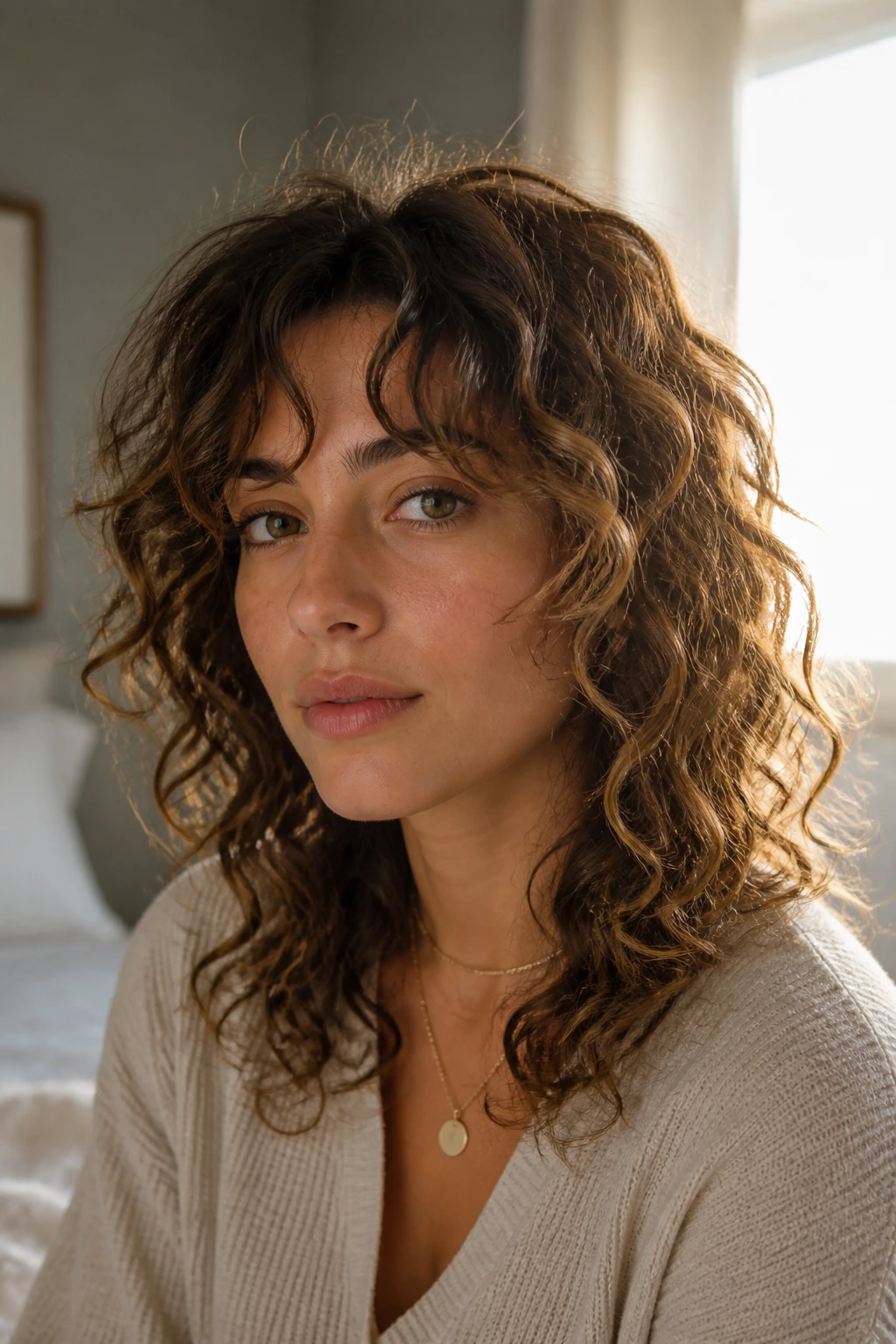
Parting: Center parts show off curtain bangs, bottleneck fringe, and symmetrical face-framing layers. Side parts lift the crown and help one side of the babylights catch light more aggressively, which is useful if your curls sit flat on one side.
Finish: Diffuse until the roots are mostly dry and the curl clumps feel set, then stop. Over-diffusing can puff up the outer layer and hide the babylights under frizz. If you air-dry, scrunch once at the start and then leave the hair alone.
Product pairing: Use a small amount of leave-in on the mid-lengths, then a mousse or gel at the roots and outer layers. Heavy oils and thick butters can bury the lighter pieces and make the shag look dull. I’d rather see a clean curl clump than a shiny, weighed-down one that never moves.
Best wear habits: These cuts look strongest when they’re touched with a finger and left alone. Flip one side behind the ear, clip the front away from the face, or wear a half-up twist. That small bit of movement helps the babylights do their job, which is to make the haircut feel dimensional without looking overworked.
Extra Styling Moves and Color Tweaks
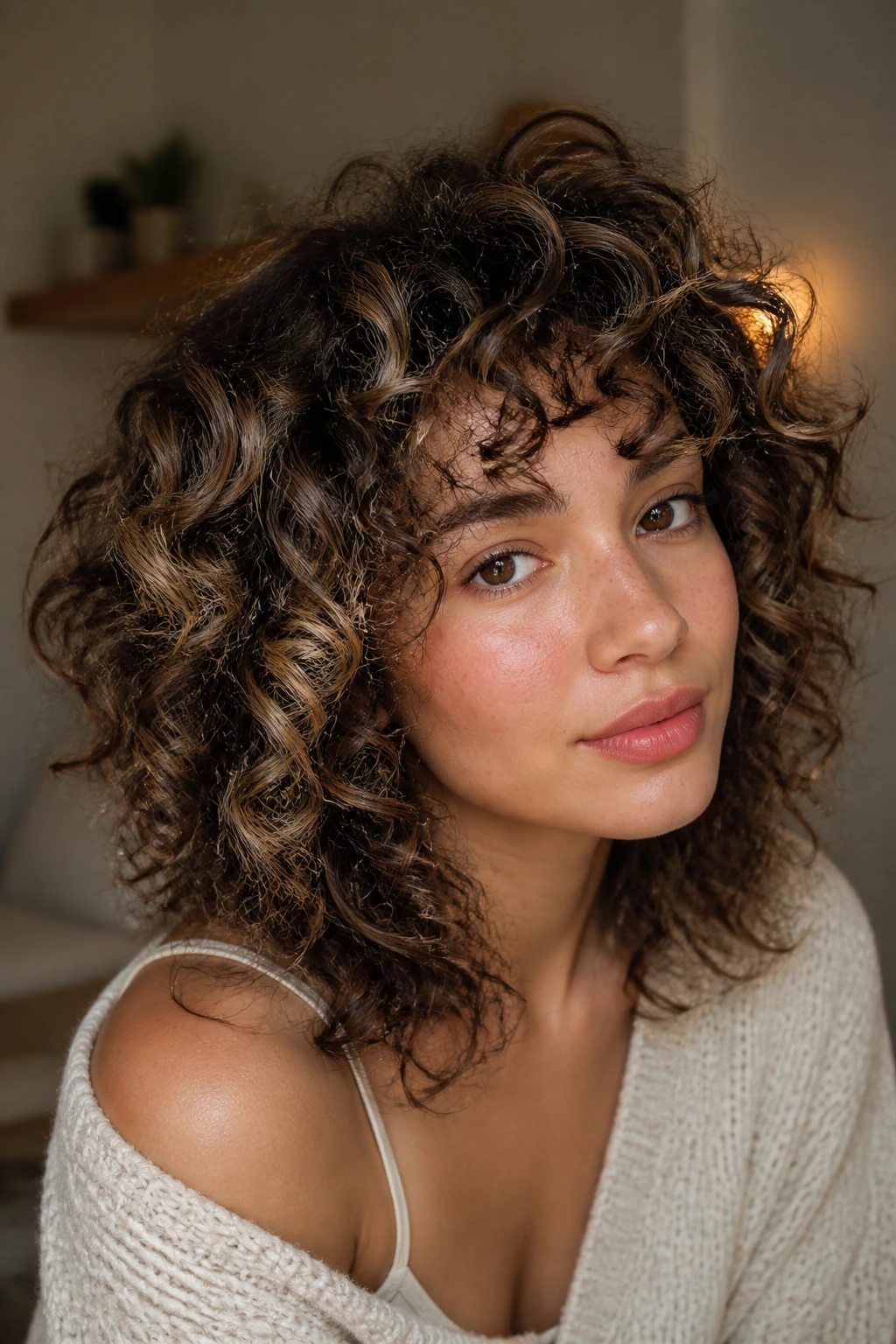
Texture Boost: If your curls go soft at the roots, use mousse before curl cream. Mousse gives the shag some lift without collapsing the top layers, which is where the babylights usually need to stay visible.
Color Lift: A clear or lightly tinted gloss every 6 to 8 weeks keeps the babylights crisp. On curly hair, toner can fade oddly because the curl pattern exposes and hides the color in little bursts, so a gloss helps the brightness stay even.
Customization: If your curls are coarse, ask for a few subtle lowlights under the top layer so the babylights don’t float too much. If your hair is fine, keep the light pieces micro-thin and avoid placing them all the way through the ends.
Serving Suggestions: Yes, hair can have garnish if you want to think about it that way. A face-framing clip, a tucked side section, or a soft pin at the temple changes how the babylights land in the light. Tiny details. Big difference.
Make-It-Yours: For a more relaxed look, keep the fringe longer and the highlights softer. For more edge, ask for slightly shorter top layers, tighter babylight weaving, and a more obvious difference between crown and length.
Keeping the Shape Between Appointments
Curly shags hold up better when you don’t sleep like a wild animal on them. A satin pillowcase or bonnet keeps the fringe and crown from getting flattened, and a loose pineapple or clip at the top of the head helps preserve the shape overnight. If the curls are fully dry before bed, you’ll wake up with less frizz and fewer weird bends near the part.
For day-two and day-three hair, a spray bottle and a pea-sized amount of leave-in are usually enough. Mist the hair lightly, scrunch the ends, and stop before the hair gets soaked. If the babylights start to look dull, a tiny bit of glossing serum on the outer layer is better than smearing oil through the whole head. Too much product at the roots will sink the shape.
Trims depend on the length. Short shags often need a shape refresh every 6 to 8 weeks. Shoulder-grazing and midi versions can usually go 8 to 12 weeks before the layers start to lose definition. Longer shags can stretch to about 12 to 14 weeks if the fringe still behaves. Babylights usually need a touch-up on the same rhythm as the cut if you want a fresh, blended finish; softer honey or caramel tones can stretch longer than high-contrast blonde.
Variations and Adaptations to Try
Fine-Curl Friendly Version: Keep the layers longer through the crown and use micro babylights instead of wider ribbons. That gives the hair motion without taking away the density it needs to look full.
Dense-Curl Bulk-Removal Version: Ask for deeper internal layers under the top veil and a slightly narrower perimeter at the sides. Pair it with babylights on the top third so the brightness sits where the shape opens.
Gray-Blend Version: Mix babylights with a few lowlights near the part and underneath. Gray curls often need depth as much as brightness, and the extra shadow keeps the blend from looking flat.
Copper Glow Version: Swap the honey or caramel pieces for warm copper babylights on auburn or deep brunette curls. The result is richer and less sun-bleached, which suits tighter or more textured patterns.
Low-Commitment Grow-Out Version: Keep the root shadow visible and place the babylights away from the scalp. It softens the regrowth line and gives you a cut that can stretch a little longer without looking neglected.
Common Mistakes to Avoid
-
Over-thinning the ends: If the curls look see-through after drying, the stylist went too far. Ask for shape removal through the middle and crown, not a stripped perimeter.
-
Placing babylights too deep: When the lighter pieces live only underneath the top layer, they disappear the second the curls dry. The fix is simple: keep the brightest pieces near the surface and around the face.
-
Cutting bangs without shrinkage in mind: Curly fringe that looks perfect wet can jump two inches shorter once it dries. Always have the bangs checked in their dry state before the final snip.
-
Loading heavy product onto the crown: Butter and thick oil at the roots collapse the lift that the shag is built on. Save richer products for the ends.
-
Ignoring density differences from one side to the other: A lot of curly heads are uneven. If one side is flatter or tighter, the cut should be adjusted. Symmetry on paper is not the same thing as symmetry on a head.
Frequently Asked Questions About Curly Shags and Babylights
Will a shag haircut make curly hair look thinner?
Not if it’s cut well. The right shag removes bulk where curls swell and keeps enough weight at the ends to preserve shape, which can actually make the hair look fuller and more defined.
Do babylights damage curly hair more than regular highlights?
Babylights are usually gentler in appearance because they’re woven more finely, but the lightening process is still lightening. If your curls are dry or porous, ask for a bond-building treatment and a softer contrast level.
Should curly shags be cut dry or wet?
Dry cutting is often the better choice because it shows the curl’s true length and shrinkage. Some stylists use a mix of dry and wet cutting, but a fully wet cut on curls can hide how the hair will sit once it dries.
What babylight color works best on dark brown curls?
Honey, caramel, and soft copper are the easiest choices because they show up without turning harsh. If you want a cooler result, beige or champagne can work, but the highlights should stay fine and blended.
How often do curly shags need trimming?
Short versions usually need a refresh every 6 to 8 weeks. Medium and long shags can go 8 to 12 weeks, sometimes a little longer if the layers are well placed and the fringe is forgiving.
Can I wear a curly shag with a side part if the cut was planned for a middle part?
Usually, yes. A side part can change the whole balance of the haircut, but that’s not a bad thing. It often helps lift the crown and makes the babylights show up differently.
What if my curls are tighter in back and looser in front?
That’s normal, and the cut should account for it. A good stylist will leave a little more length where the curls shrink harder and remove more weight where the front pieces need movement.
How do I keep the babylights from getting lost in frizz?
Keep the hair hydrated, but not coated. Use a light leave-in, define the curls with mousse or gel, and diffuse just enough to set the shape. Frizz spreads the color apart and makes the fine highlights harder to read.
Why These Shapes Keep Paying Off
A curly shag with babylights works because it respects two things at once: the way curls expand, and the way fine color catches movement. Get one of those wrong and the whole cut starts to wobble. Get both right and the hair feels lighter, brighter, and easier to wear without looking forced.
The smartest version is the one that matches your curl density and your patience. If you want softness, go for honey, caramel, or beige. If you want more edge, try a wolfier outline, a stronger fringe, or a hidden undercut. Pick the shape that makes your curls sit better on a normal Tuesday morning, not just the one that looks good in a salon mirror.
And if your hair has been stuck between too much bulk and too little shape, one of these shag ideas is probably the reset it’s been asking for.