



Beachy waves do a strange little favor for color: they break it into ribbons, flashes, and soft shadows instead of one flat sheet of hair. That’s why bold highlights for medium skin tones with beachy waves can look rich rather than harsh when the tone is right. The movement gives the color somewhere to live.
Medium skin is a broad category, which is exactly why one-size-fits-all blonde advice falls apart fast. Golden, olive, neutral, and slightly warm undertones each react differently to honey, bronze, copper, beige, and champagne. Put the wrong pale tone on the wrong base and the whole thing can look chalky. Put the right shade in the right placement, though, and the skin suddenly looks warmer, cheeks look a little lifted, and the waves get that glossy, sun-hit finish people keep trying to describe with vague words and never quite nail.
I’m a big believer in highlights that do more than brighten the ends. The best ones create movement around the face, keep enough depth at the root to avoid stripey separation, and make the wave pattern look intentional even when the hair is air-dried and a little imperfect. That’s the sweet spot. And that’s where the good stuff starts.
Why These Shades Keep Showing Up on Medium Skin
Golden undertones love warmth: Caramel, honey, bronze, amber, and copper sit close to the undertones many medium complexions already carry, so the color looks woven in rather than pasted on.
Beachy waves split the light: A loose bend makes a level 7 or 8 highlight read brighter than the same color would on straight hair, because every curve catches a different angle.
Depth matters more than people think: A root shadow or a few lowlights keep the lighter ribbons from turning stripey when the hair moves.
Face-framing pieces do a lot of work: A brighter section around the cheekbone and temple can pull attention upward without bleaching the whole head to the same pale level.
Gloss is part of the look: A toner or clear glaze every 6 to 8 weeks keeps warm blondes from turning orange and beige tones from going dull.
Placement beats sheer brightness: The most convincing color usually puts the light where hair naturally separates — around the crown, over the wave’s ridge, and near the front — instead of scattering pale strands everywhere.
1. Honey Caramel Balayage
Honey caramel is the shade I reach for when someone wants brightness without the blunt, stripy effect that can happen with heavy foils. On medium skin, it lands in that sweet band between gold and brown, which keeps the face looking warm and awake even when the hair is air-dried and a little messy.
Why It Flatters Medium Skin
A level 7 to 8 honey-caramel ribbon has enough warmth to support golden and neutral undertones, but not so much gold that it turns orange. The trick is keeping the base a shade or two deeper, then sweeping the lighter pieces through the mid-lengths and ends. Beachy waves make those caramel ribbons pop on every bend.
Ask for a soft balayage with a root smudge and a gloss in the same tonal family. If your hair is naturally dark brown, this is one of the easiest bold looks to grow out without a hard line at the scalp. It’s polished, but not stiff. That matters.
Ask for: a level 6 to 7 brunette base, hand-painted honey ribbons, and a caramel glaze on the ends.
Best on: medium skin with golden, peach, or warm-neutral undertones.
Watch for: highlights that start too close to the scalp. That’s how you lose the soft wave effect.
2. Cinnamon Ribbon Highlights
Cinnamon isn’t subtle, and that’s the whole point. The red-brown warmth gives medium skin a little extra glow, especially if your undertones lean olive or golden. On loose waves, the color reads like a warm spice trail through dark hair.
This shade works best when the red is muted, not fire-engine bright. Think brown sugar with a little heat, not neon copper. The best placement keeps cinnamon through the front panels and scattered pieces around the crown, then leaves the underside darker so the color has somewhere to breathe. Straight hair can make cinnamon look heavy. Waves save it.
I like this look on thicker hair because it breaks up density without making the cut look thin. And if you already wear bronzer, gold hoops, or terracotta lipstick, the whole palette starts to make sense fast.
Best Ways to Wear It
- Keep the base at level 4 to 5 so the cinnamon actually shows.
- Ask for ribbon-like placement, not tiny babylights.
- Pair it with long layers so the warm streaks move instead of sitting in one block.
3. Toffee Money Piece
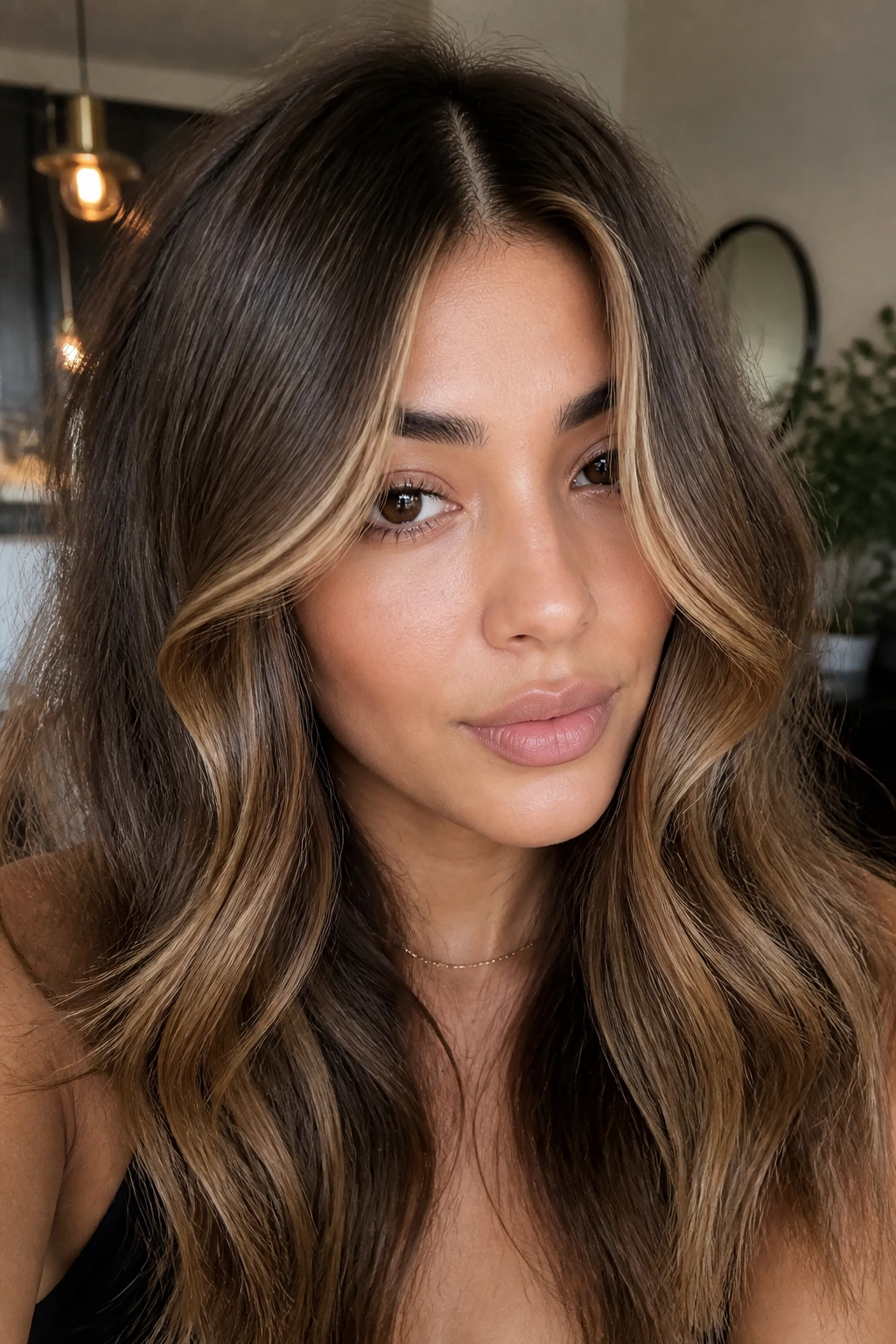
Want the fastest way to wake up beachy waves? Put the light where people look first. A toffee money piece does exactly that, framing the face with a lighter caramel-beige strand or two that sits just in front of the cheekbones.
This is a strong choice for medium skin because it brightens without turning the whole head pale. The contrast feels modern, but not harsh, especially if the rest of the hair stays one or two levels deeper. I like it best with a center part when the goal is symmetry, or a soft off-center part if you want the lighter pieces to sweep across one side of the face.
There’s a practical bonus here, too. You can keep the interior sections richer and lower maintenance while refreshing only the front pieces when they start to dull. That saves time. And money.
Ask for: face-framing foils that are one to two levels lighter than your base, plus a soft root shadow.
Best on: oval, heart, and round faces, since the brightness pulls attention upward.
Avoid: making the money piece too wide. A thick slab of blonde can drown out the wave pattern.
4. Bronze Foilyage
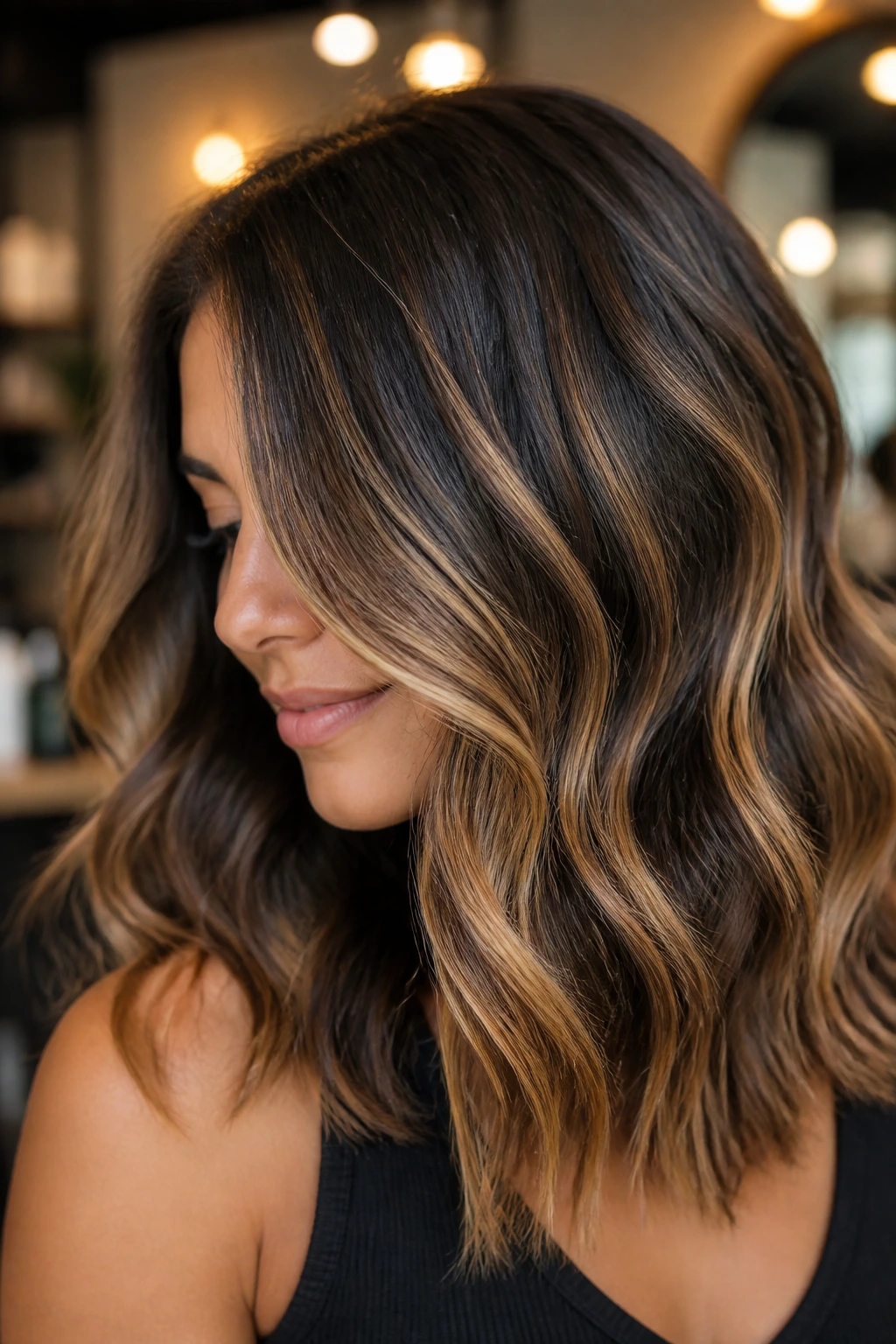
If your hair is dark brown and you want more contrast than a barely-there balayage can give, bronze foilyage is the move. It lifts brighter than hand-painted ends alone, but still keeps the color soft enough to look expensive rather than streaky.
Bronze is one of the best warm-metal shades for medium skin because it sits between brown and gold. That middle ground keeps the skin from looking washed out. On waves, bronze flashes in tiny hits of light, which is exactly what makes it feel dimensional instead of flat. The ends look sunlit; the mids keep their depth.
This one suits long layered cuts, especially when the hair has enough length for the lighter pieces to break apart into separate ribbons. Shorter cuts can wear it too, but the contrast needs to be placed carefully so the cut doesn’t look boxy.
What to Tell Your Colorist
- Lift the bronze sections with foils, then soften the line with balayage.
- Leave at least one darker ribbon underneath for depth.
- Finish with a warm beige or amber gloss, not ash.
5. Copper-Glaze Face Frame
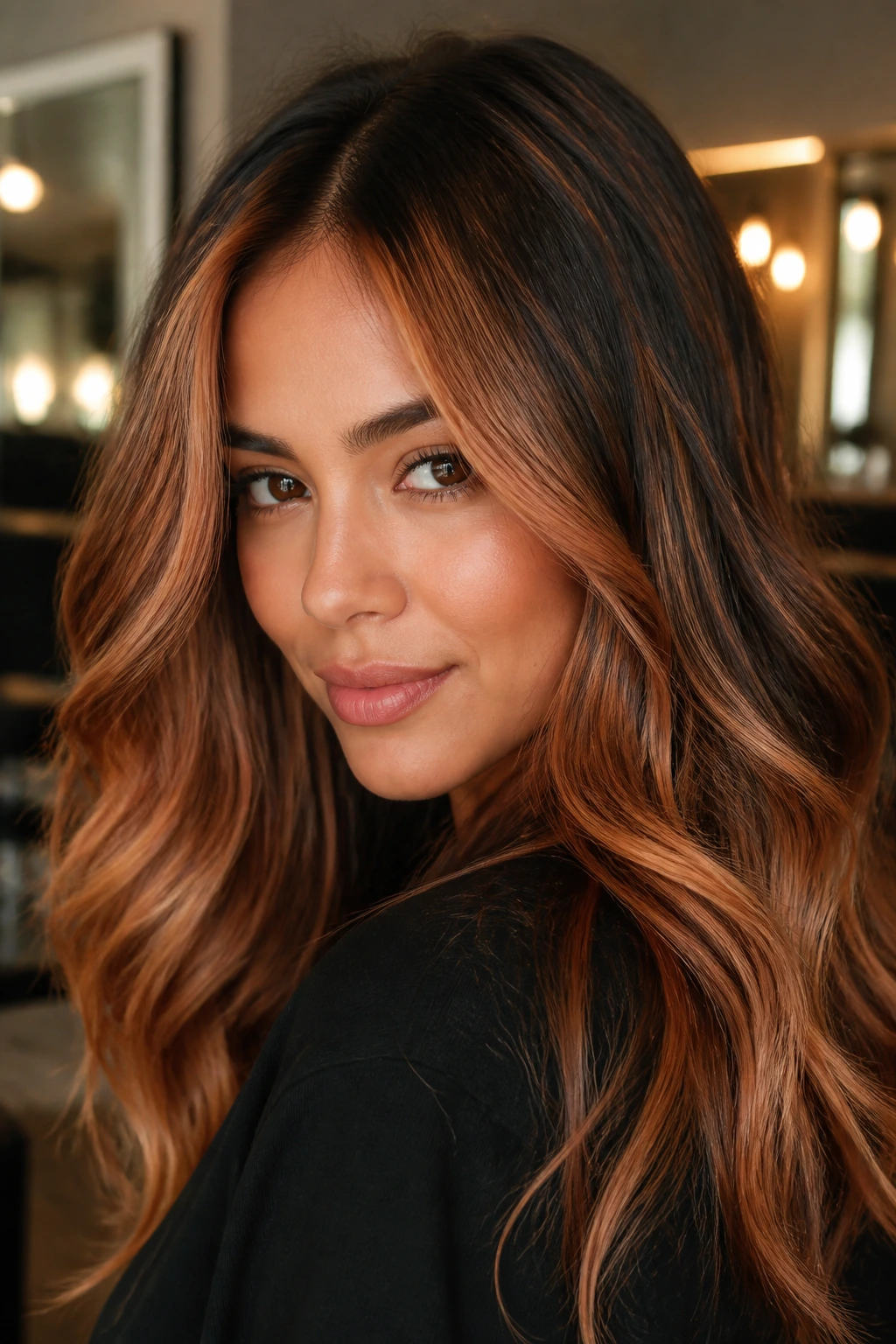
This is the look for someone who wants the front of the hair to do some talking. A copper-glaze face frame gives medium skin a sharper, brighter edge than honey or caramel, and it’s especially good on warm or neutral undertones.
Copper can go wrong fast if it’s too bright or too red. The version I like on beachy waves stays slightly brown at the root, then blooms into a burnished copper around the temples and front lengths. That keeps it wearable. It also stops the color from looking like a Halloween wig under indoor light, which, honestly, happens more often than people admit.
Because the front is the brightest area, the rest of the head can stay brunette, bronze, or chestnut. That contrast makes waves look thicker. When the hair bends, the copper catches the high points and the darker base fills in the shadows.
Best for: medium skin that runs warm-golden or neutral.
Works well with: curtain bangs, long layers, and shoulder-length cuts.
6. Butterscotch Babylights
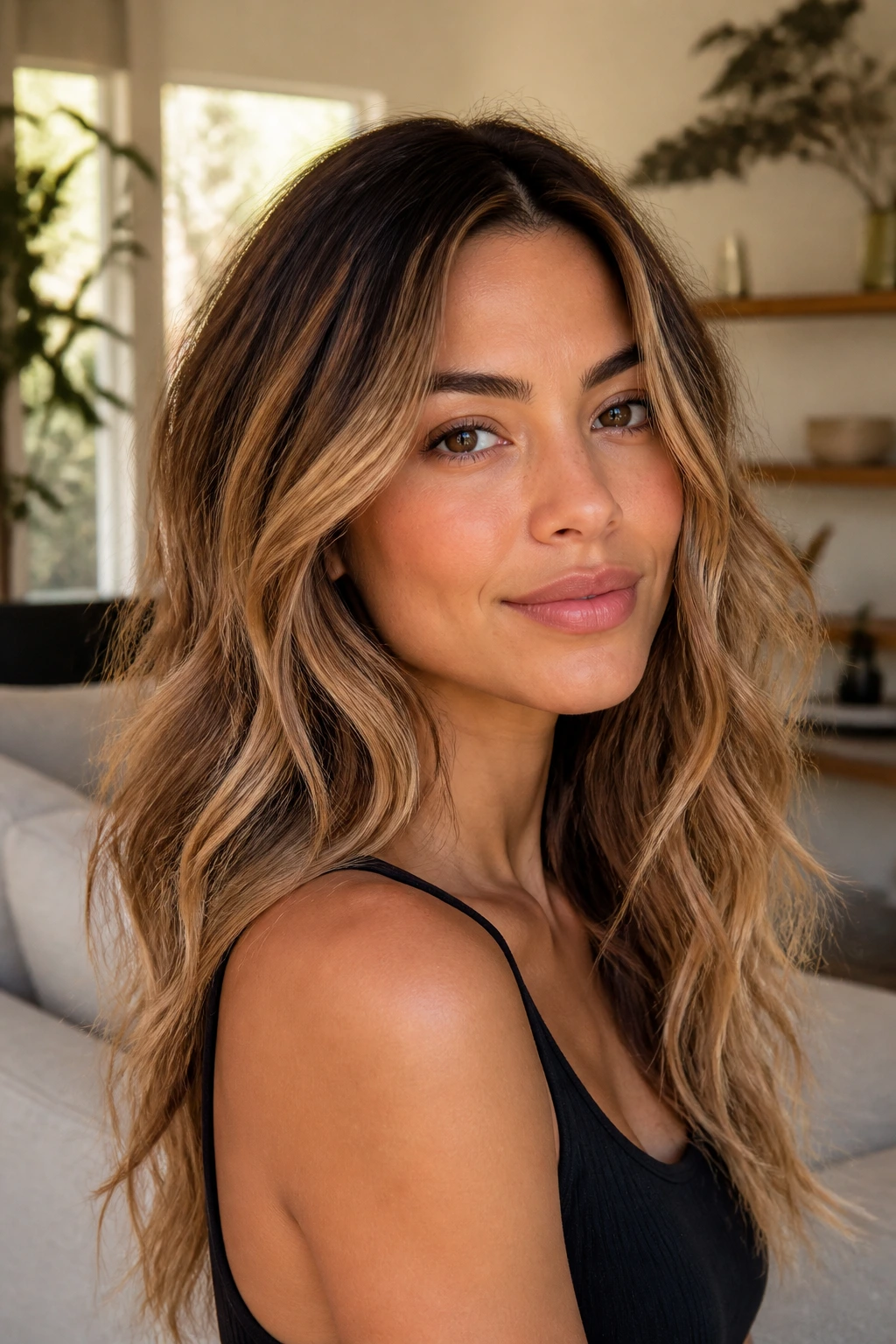
Butterscotch babylights are for someone who wants the hair to look sun-kissed, but with a bit more richness than pale blonde gives you. The strands are fine, soft, and closely placed, so the result looks like dozens of tiny reflections instead of a single bold stripe.
On medium skin, butterscotch is a safe bet because it stays warm without drifting orange. That matters. A lot of people ask for blonde and end up with something too yellow or too ash-heavy for their complexion. Butterscotch dodges both problems if the toner is done well.
Beachy waves make babylights look far more visible than straight hair does. Every bend catches a slightly different thread of color. The whole head ends up looking airy and dimensional, especially if your base is chestnut or soft brunette.
What Makes It Work
- The highlights stay fine enough to blend into the wave.
- A warm beige gloss keeps the tone creamy.
- It grows out with a soft edge, which means fewer salon panic moments.
7. Chestnut and Gold Ribbon Lights
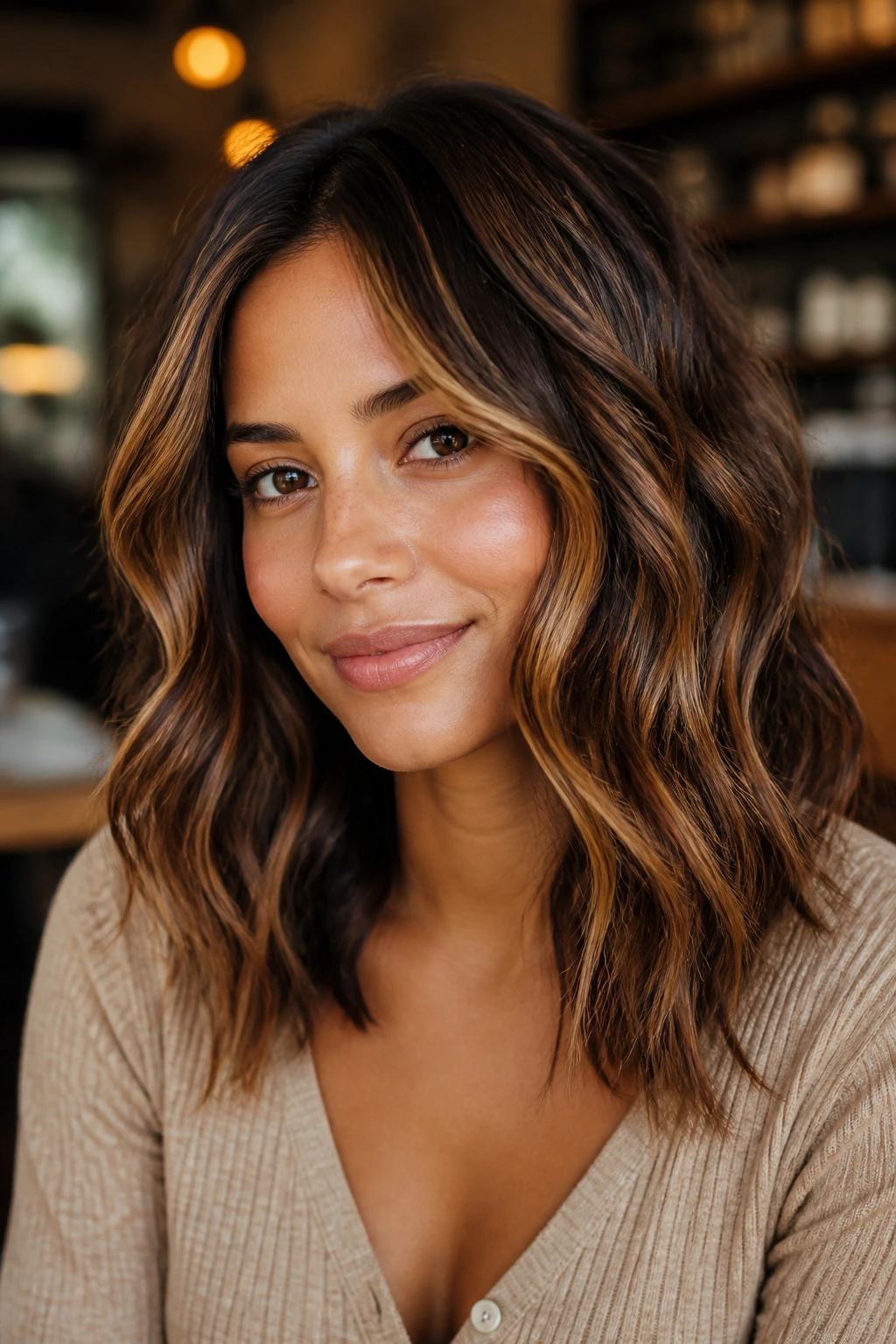
This is a classic brunette-plus-brightness combination, and I still think it beats an all-over blonde plan for most medium skin tones. Chestnut gives you the rich base; gold ribbon lights give you movement. Together, they read lush, not flat.
The reason it works so well is contrast. Too much gold and the hair loses depth. Too much chestnut and the waves disappear into one dark mass. But when the gold is placed in narrow ribbons through the mid-lengths and around the front, the hair looks thick and layered. Medium skin especially likes the warmth of that chestnut-gold pairing.
I’d ask for this when you want a noticeable change without going full blonde. It’s a good compromise for people who love brightness but hate high-maintenance roots. On beachy waves, the gold catches just enough light to show the cut, not just the color.
Best on: medium skin with warm or olive undertones.
Skip if: you want a cooler, ashier finish. This is a warm look, and it should stay that way.
8. Smoky Beige Bronde
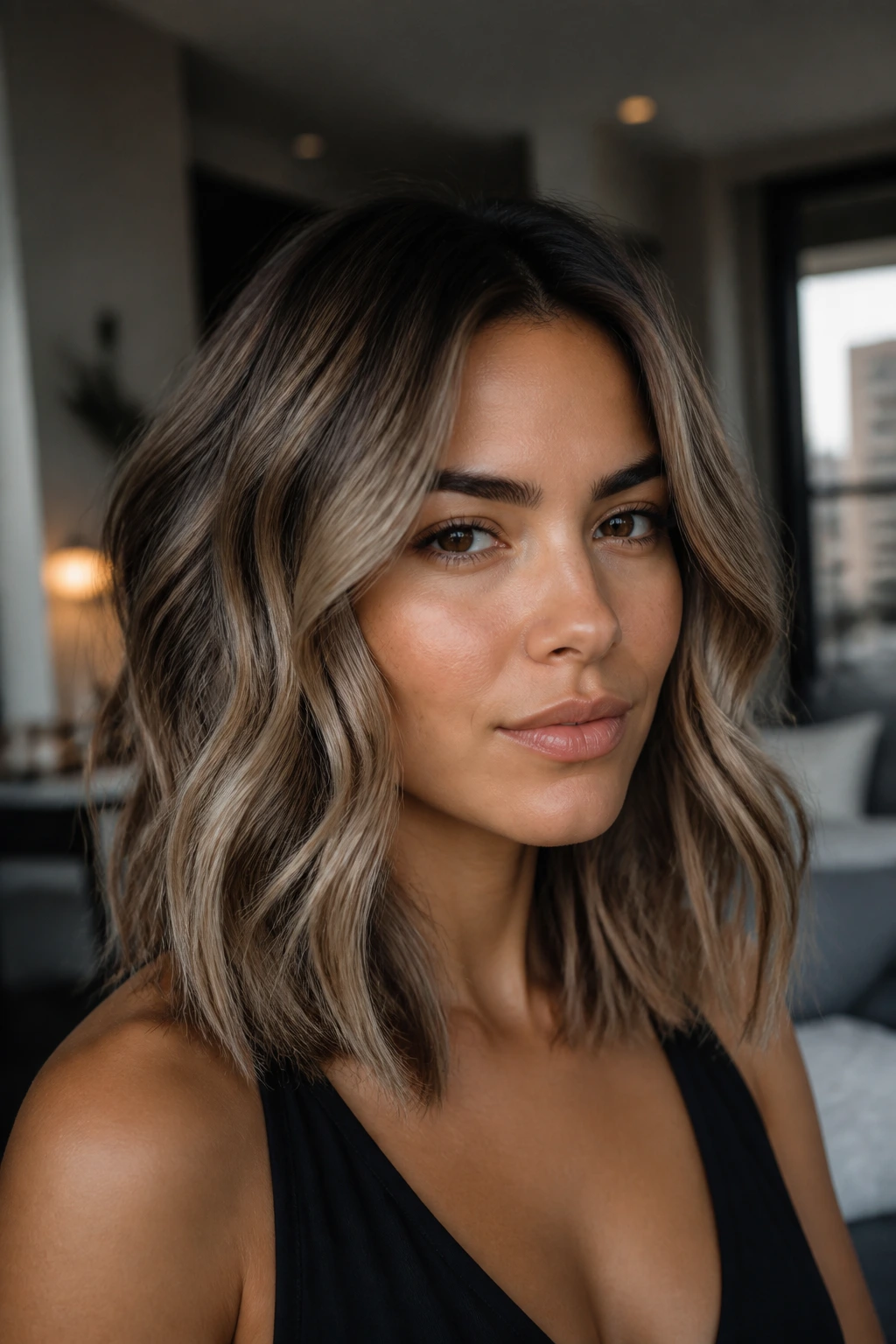
Smoky beige bronde is one of the few cooler-leaning shades I’d still put on medium skin, but only when the undertone is neutral or slightly olive. The reason it works is that the beige keeps the color from going icy, while the smoky root keeps it grounded.
This look has a softer mood than honey or copper. It’s less sun-drenched, more polished. On beachy waves, though, it still gets enough movement to feel alive. That’s the nice thing about bronde: the darker base and lighter mids can shift depending on where the light hits. You get more dimension than a single beige tone could ever give you.
I’d keep the highlights in the mid-lengths and ends, then use a root melt in a soft mushroom-brown or taupe-brown shade. Straight line demarcation is the enemy here. The goal is a smooth fade.
Best Undertones for This One
- Neutral medium skin.
- Olive medium skin.
- Warm skin that can wear cool tones if the base stays rich.
9. Amber Peekaboo Panels
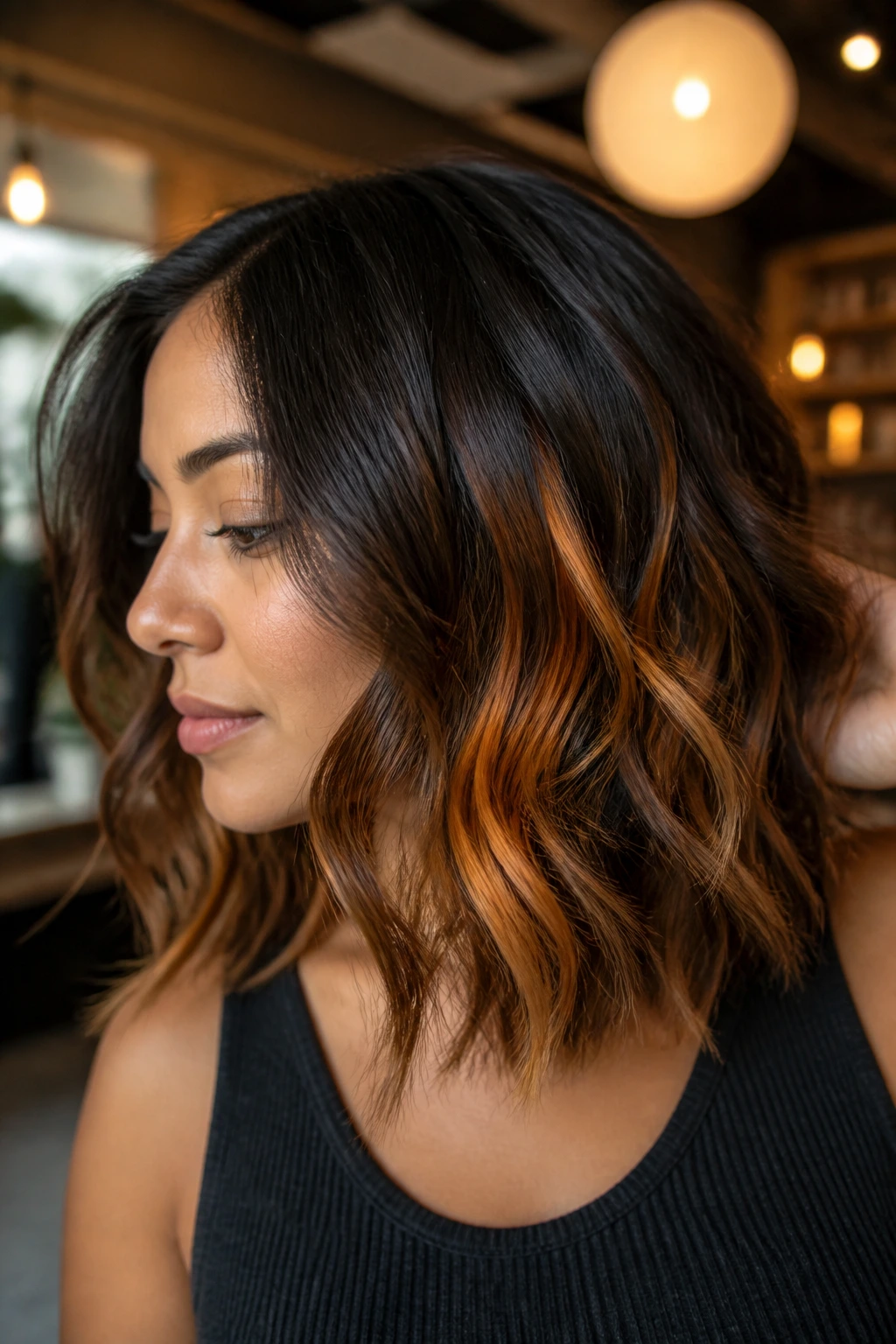
Peekaboo panels are the fun cousin in the group. They sit under the top layer, so the color flashes when the hair moves, flips, or falls into a wave. Amber is a smart choice because it’s warm enough for medium skin, but the hidden placement keeps it from looking loud all the time.
I like this on shoulder-length beach waves and layered cuts. Every bend opens a little window into the amber beneath, which gives the whole style depth even if the top layer is darker brown. It’s a neat trick. And a good one.
Because the color is hidden under the surface, you can go bolder with the tone than you might on the outer layer. A saturated amber or apricot-gold panel can look playful instead of overwhelming. If you wear your hair up, the effect changes again — suddenly the bright pieces are the whole point.
Ask for: a hidden underlayer of amber-gold highlights with a soft blend at the transition.
Good for: people who want color that shows movement, not a constant wall of brightness.
10. Golden Tiger Eye Highlights
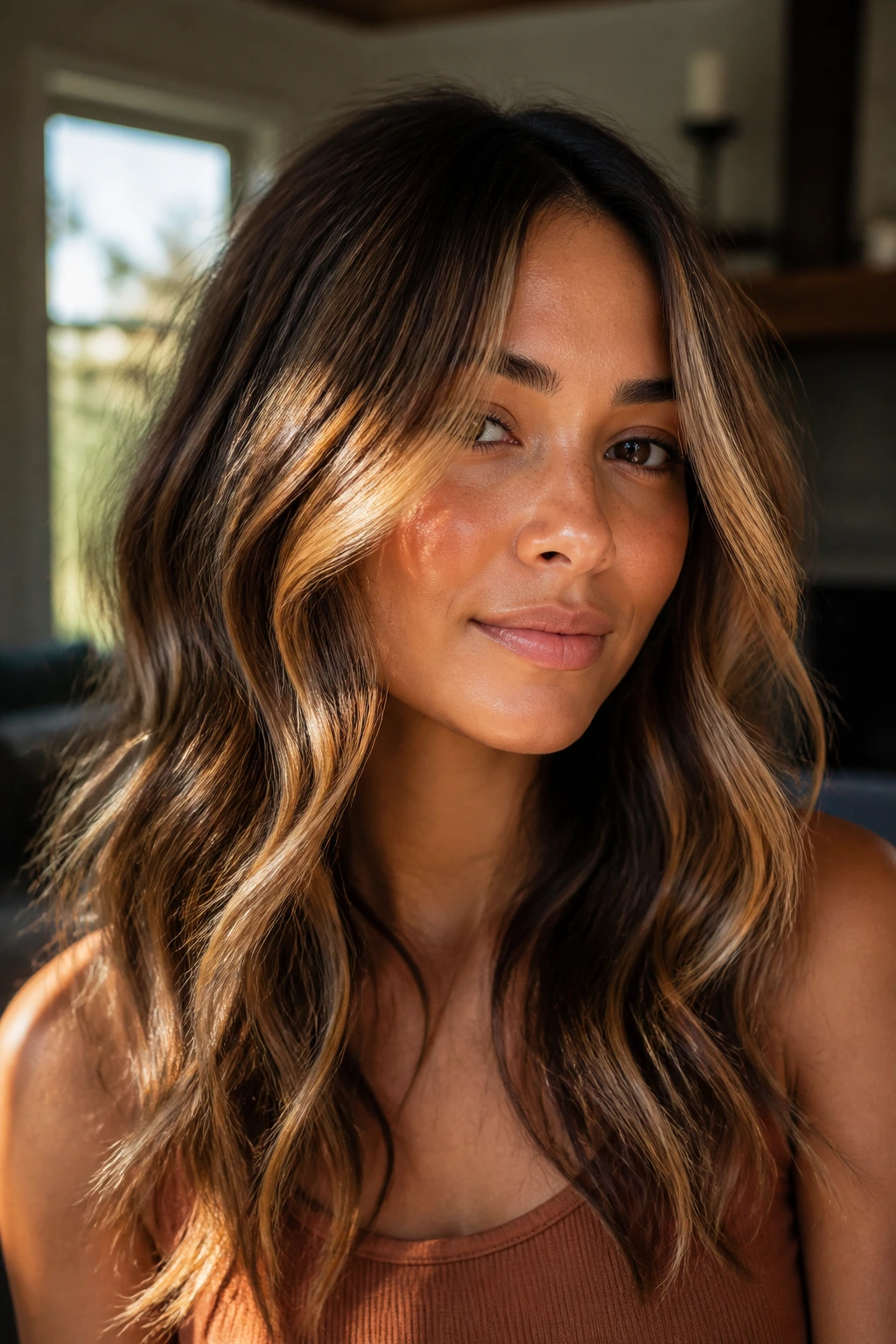
Tiger eye coloring borrows that banded, polished look from the stone itself, and it suits medium skin with a gold-friendly undertone beautifully. The mix of brown, caramel, and soft gold gives the hair a lined, marbled effect that beachy waves break apart in a flattering way.
This is a stronger, more noticeable look than babylights or gentle balayage. It’s also one of the most flattering ways to wear high contrast on medium skin because the tones stay in the warm family. No chalkiness. No weird pale cast. Just depth, shine, and a little drama around the bends of the wave.
I like tiger eye on medium to long hair with layered ends. The color has room to stretch. On straight hair it can look more linear, almost too organized, but the wave pattern softens those bands and makes them feel expensive rather than stripey.
Quick Ask-For Notes
- Keep the base at a rich chestnut or cocoa level.
- Paint caramel and gold in narrow ribbons.
- Finish with a gloss that stays warm, not beige-ash.
11. Mocha-to-Honey Melt
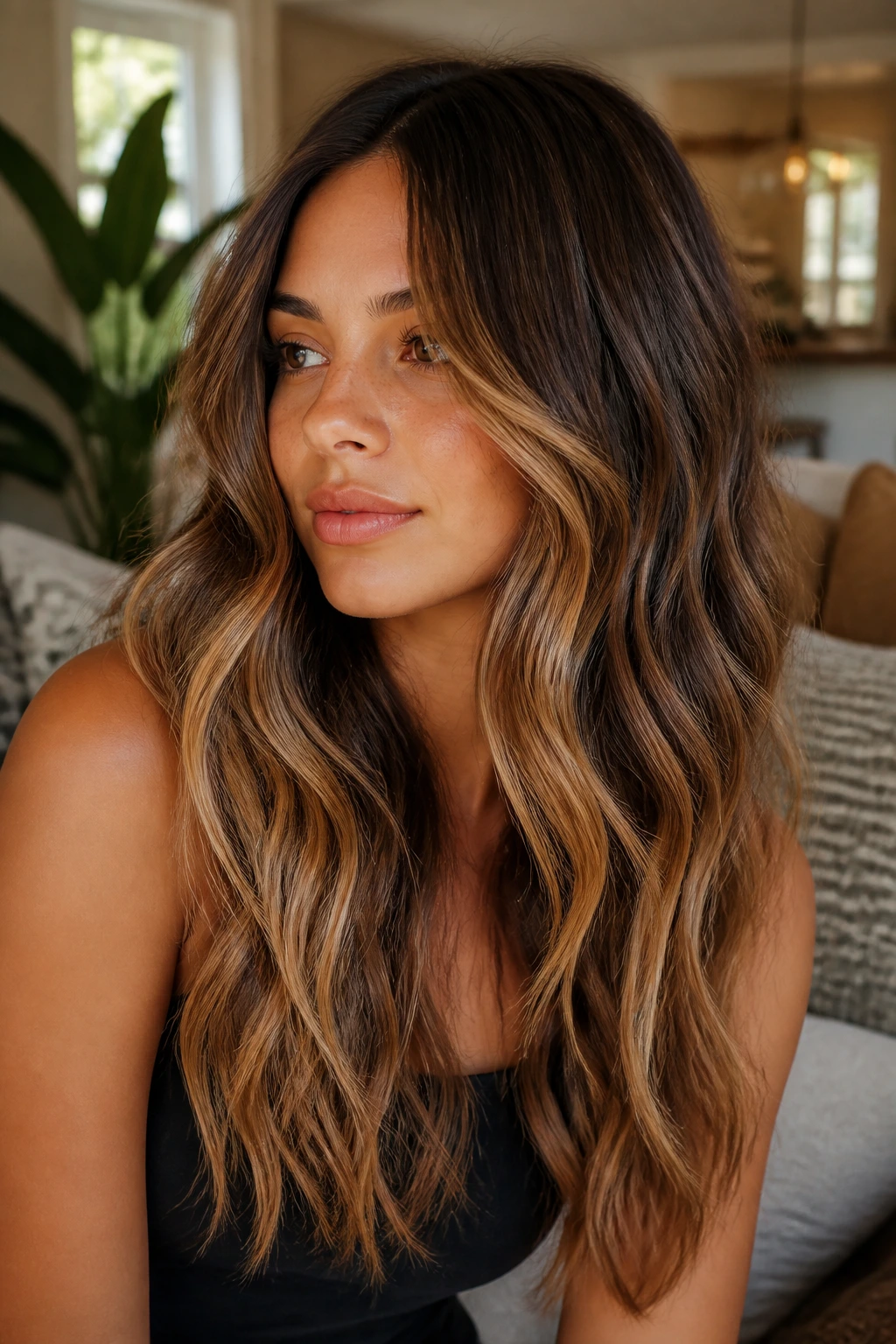
A mocha-to-honey melt is a clean way to lighten the hair without losing the richness that medium skin usually needs around the face. It starts with a deep mocha base at the root, then shifts through caramel, then lands in honey through the ends. The transition matters more than any single shade.
What makes this one so good on beachy waves is the gradient. Every curve of the wave shows a slightly different stage of the melt, so the hair looks three-dimensional even when the styling is minimal. There’s no hard break between dark and light. Just flow.
This is also a good option if you’re nervous about going too blonde too fast. You can keep the root and mids darker while still getting that brightness at the ends. The effect feels soft in motion but still bold enough to count as a real change.
Best for: medium skin with golden, neutral, or warm-olive undertones.
Maintenance note: the honey ends may need a gloss more often than the mocha root, especially if your hair is porous.
12. Apricot Copper Highlights
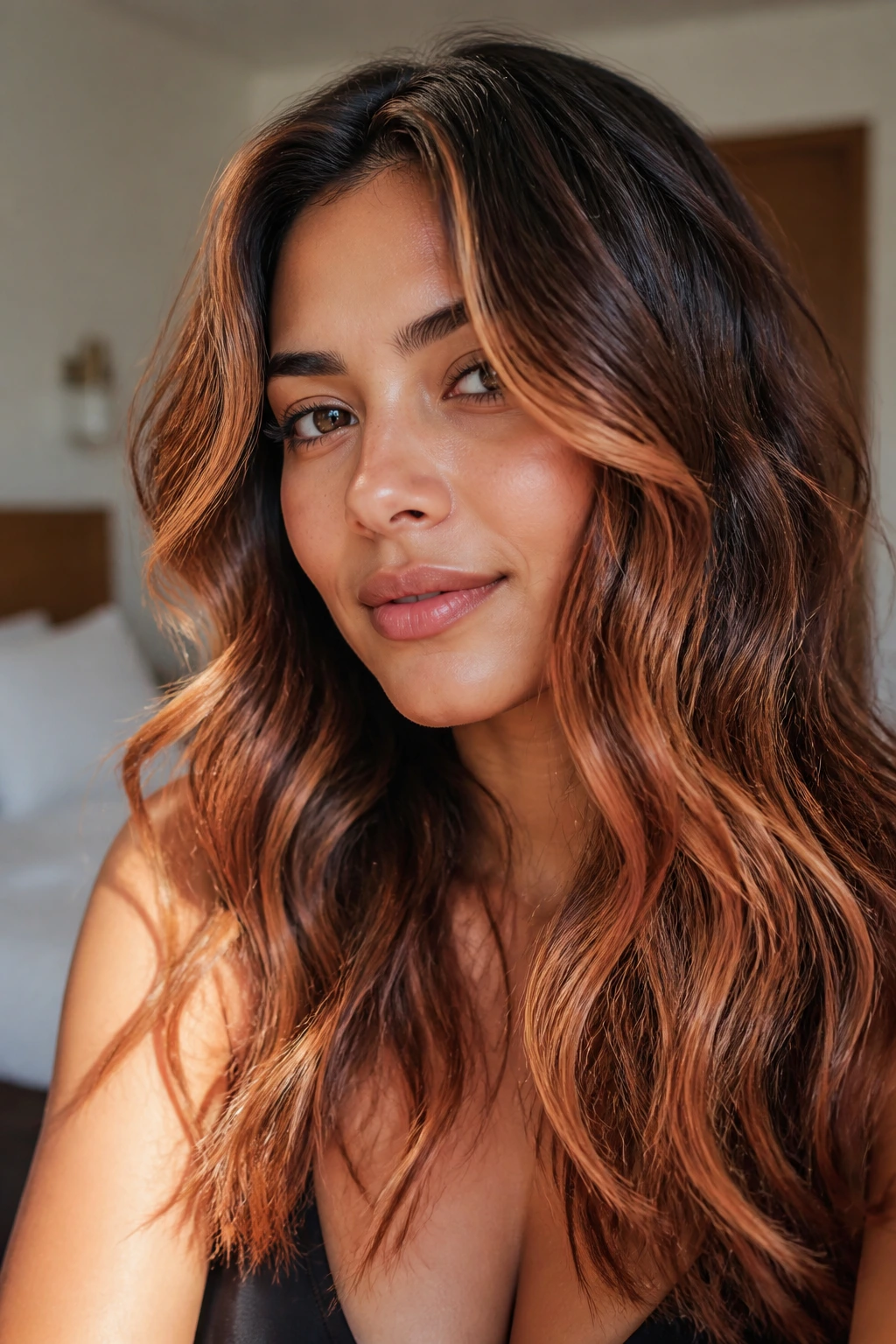
Apricot copper sits in that sweet spot between peach and copper, and on medium skin it can be gorgeous. Not easy. Gorgeous. The tone brings warmth to the cheeks and keeps the whole face from looking flat, especially if your undertones lean neutral or warm.
I like apricot copper in smaller ribbons rather than huge panels. A few well-placed streaks around the face, plus lighter tips through the waves, can give the hair a lit-from-within feel without making it look overly red. Beachy waves help because the curl pattern breaks the peach-copper tone into flashes instead of a solid block.
This shade is a bit more playful than honey or bronze. It has personality. If you wear coral lipstick, terracotta blush, or warm brown liner, the color can tie the whole look together in a way that feels intentional without being fussy.
Best Used When
- Your natural base is medium brunette.
- You want warmth that still feels fresh.
- You don’t mind a toner refresh when the copper starts to fade.
13. Champagne Beige Foils
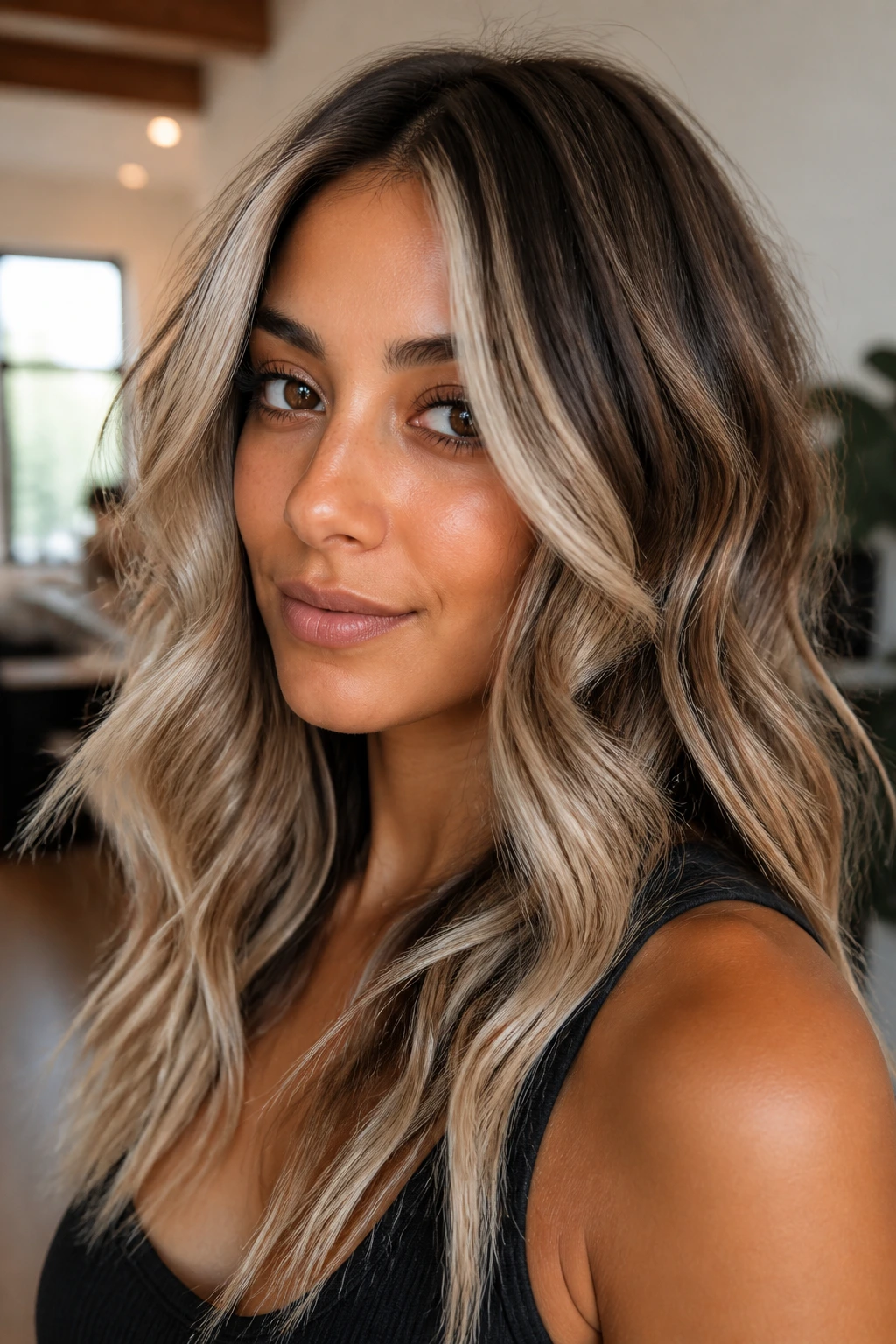
Champagne beige sounds delicate, but on medium skin it can read bold when the foils are placed well. The trick is to keep the beige creamy, not icy, and let the darker base do the heavy lifting. That contrast is what makes the color show up.
This is one of the better choices for neutral undertones. It brightens the hair without forcing it into the wrong temperature family. If your skin already has some natural warmth, champagne beige gives you lift without making the face look too red or too yellow. If your skin is neutral, it can look especially clean.
Beachy waves are what save this color from feeling precious. A straight blowout can make beige foils look too tidy. Waves break that up and let the champagne tone flash through the bends. I’d keep the face-framing foils a touch brighter than the interior pieces.
Watch for: ash-heavy toner. That’s the quickest way to dull champagne into a dusty beige.
14. Auburn Halo Highlights
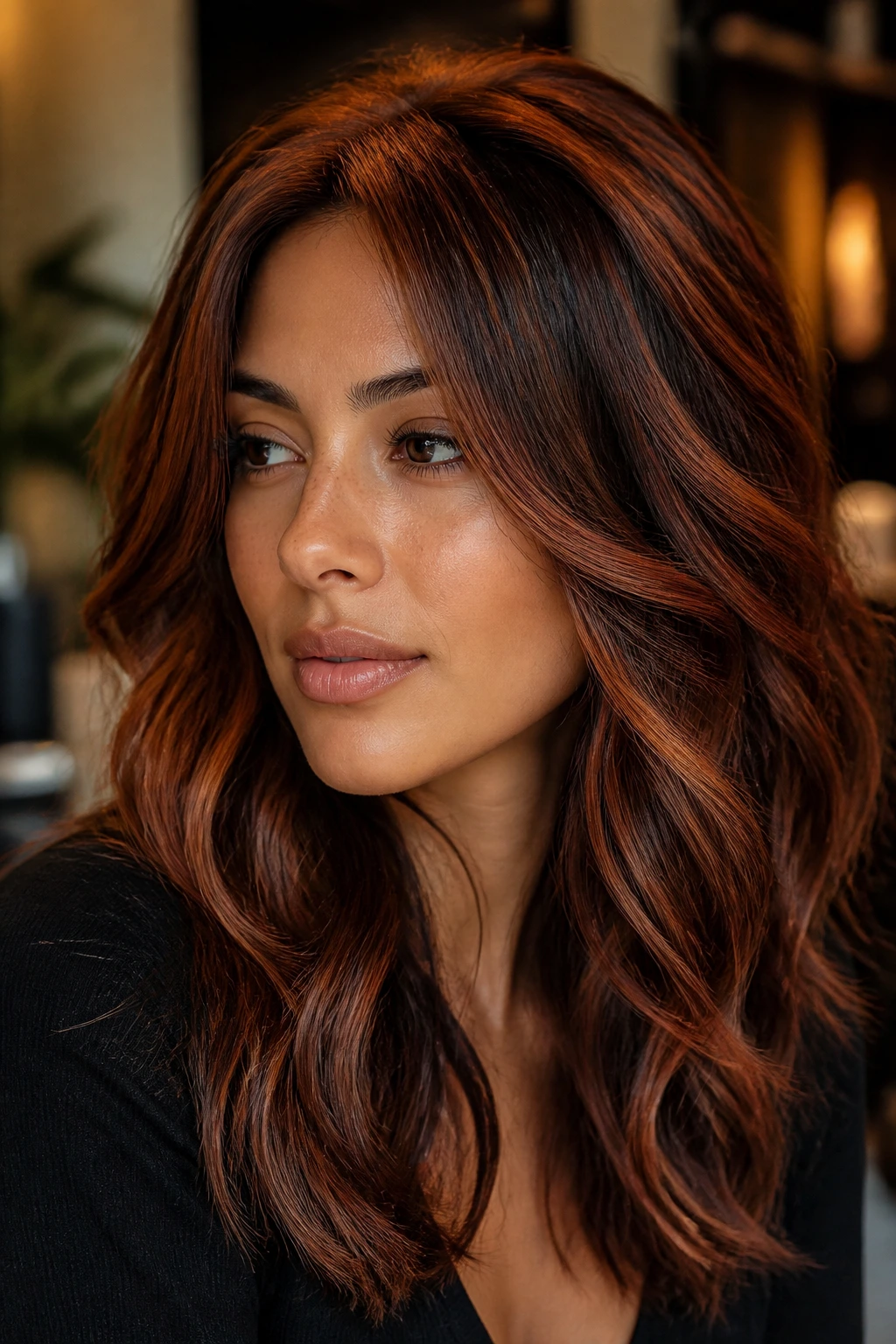
Auburn halo highlights are one of my favorite ways to use red-brown tones on medium skin because the warmth sits near the crown and around the outer layer, where it catches the most light. The result is less “all-over red” and more halo of warmth.
That halo effect pairs well with waves because the brighter auburn pieces show up at the top of each bend. When the hair moves, the color shifts in and out of view. It feels alive. And unlike a bright copper everywhere, auburn usually stays flattering even in lower light, which is a nice bonus if you live in a place where indoor lighting does strange things to hair color.
Keep the base a rich brunette or chestnut and let the auburn live in the surface layers. If you want the color to look expensive rather than brassy, ask for a gloss with a brown-red finish instead of a pure red toner.
Best for: medium skin with golden, olive, or neutral undertones.
15. Sandstone Balayage
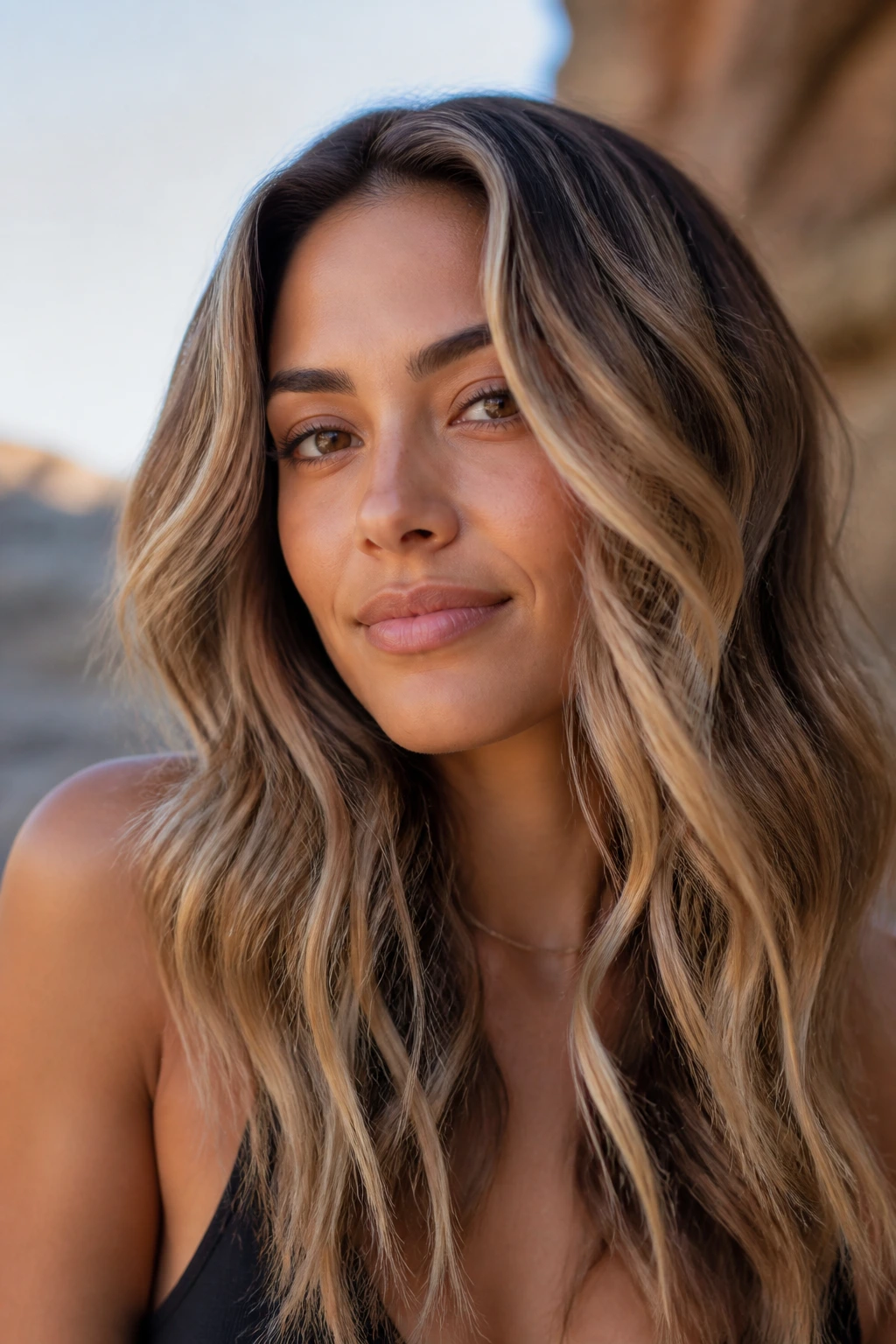
Sandstone balayage has that dry, desert palette that somehow makes medium skin look sunlit without tipping into loud blonde territory. It’s a blend of warm beige, soft brown, and muted gold, which sounds understated on paper and looks surprisingly dimensional in waves.
I like sandstone when someone wants a lighter look but hates the idea of warm orange or obvious stripey highlights. The tones sit close to the natural brunette family, so the change feels believable. Beachy waves do the rest. Every bend catches a different mineral-like tone, and the whole style reads textured instead of flat.
This one is especially good for finer hair because the shades create the illusion of density. You get lightness, but not so much contrast that the ends look thin. If your hair is thick, the result can still work — just add a few lowlights underneath so the surface ribbons stay crisp.
What to Ask For
- A softly painted balayage with beige-gold mids.
- One level deeper lowlights under the top layer.
- A satin-gloss finish rather than a high-ash toner.
16. Cherry Cola Face Framing
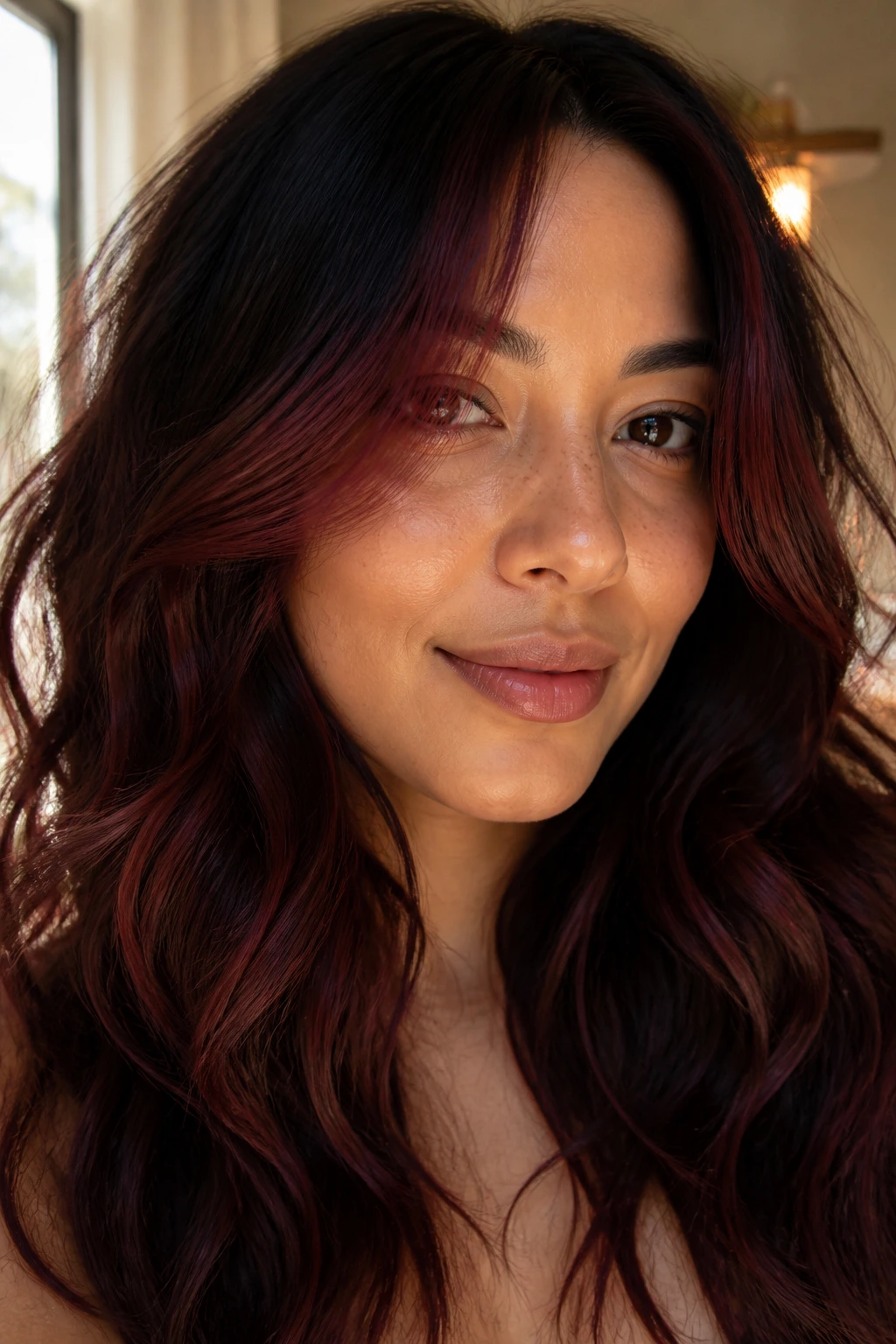
Cherry cola is for the person who wants their hair to look a little moody and a little expensive. The color sits between deep burgundy, brown, and a dark cherry tint, and on medium skin it adds warmth without going soft or sleepy.
Used as face-framing highlights, cherry cola can be far more wearable than an all-over red tone. The front pieces pick up light while the rest of the hair stays rich and dark. On beachy waves, those red-brown flashes make the hair look thicker around the face. They also pair beautifully with darker brows, which is a nice little bonus.
This is a strong choice if you want something bolder than caramel but don’t want to fight brassiness all the time. Red-brown shades tend to fade into softer brown-red tones rather than ugly orange, which is one reason I trust them more than some blondes on medium complexions.
Best on: medium skin with golden, olive, or deep-neutral undertones.
Avoid: over-lightening the cherry pieces. They should stay in the dark red family, not turn candy red.
17. Maple Syrup Ribbons
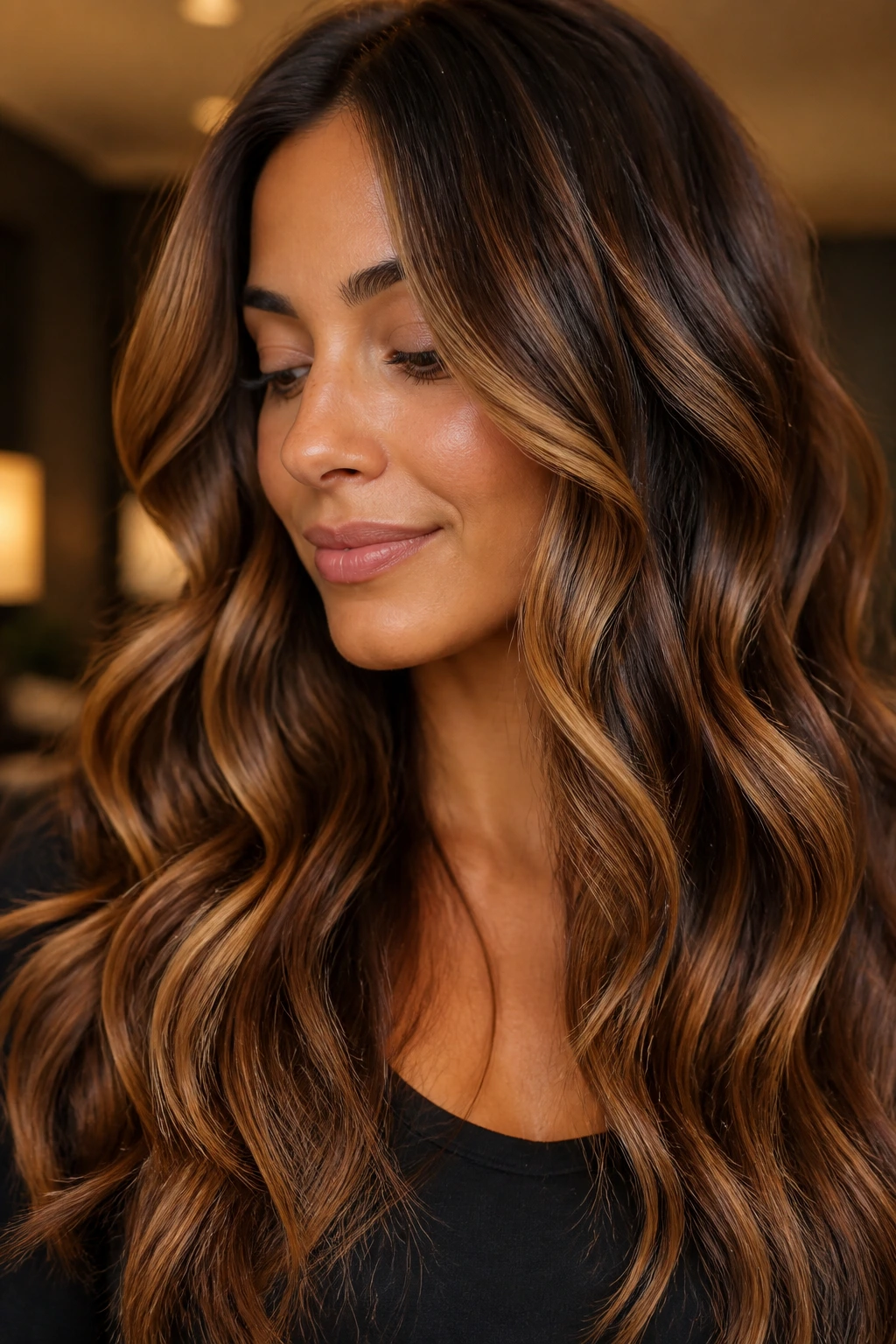
Maple syrup ribbons are richer and deeper than honey, which makes them a smart choice when you want warmth without a bright blonde finish. On medium skin, the tone feels cozy and polished, especially if the base hair is chestnut, mocha, or soft black-brown.
The appeal here is shine. Maple tones look best when they’re glossy, almost lacquered. On beachy waves, that shine lands along the wave crests and makes the hair look healthier than a more faded blonde would. I like this look for people who wear warmer makeup shades but don’t want to commit to copper.
It’s also a nice option for thick hair because the ribbons can be placed wider without looking chunky. The wave pattern keeps the color broken up. If the highlights are too fine, they can disappear. Wide enough ribbons, placed with purpose, are what make this one work.
Quick Styling Note
A wave with a bit of bend at the mid-shaft shows maple ribbons better than a loose curl that drops flat at the ends. The twist in the hair is what lets the color flash.
18. Warm Vanilla Lights
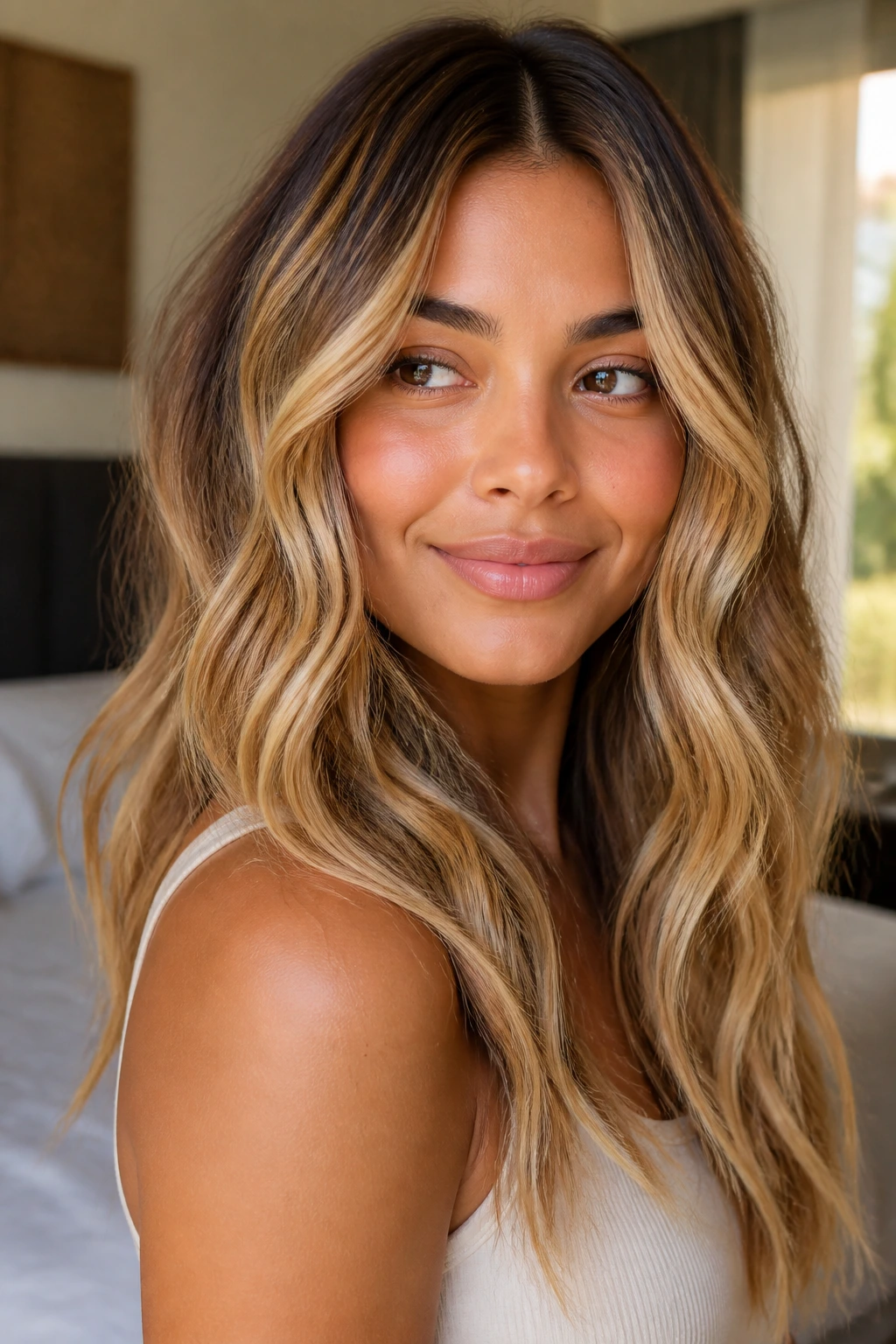
Warm vanilla lights can be tricky, because people often confuse vanilla with icy blonde. Not the same thing. The version that flatters medium skin stays creamy and warm, with a soft beige cast that keeps it from washing out the face.
This is a bolder lightening choice, so the base color needs to stay deep enough to anchor it. If the root is softened with a shadow and the lighter sections are concentrated through the mid-lengths and front, the result looks clean rather than harsh. On beachy waves, warm vanilla can read almost luminous.
I think this one works best on medium skin that leans neutral or golden and on hair that can hold tone well. Porous hair can go too pale or too dull too quickly, which is annoying. A fresh gloss and a good sulfate-free shampoo help here more than people expect.
Best cut pairings: lob, long layers, and curtain bangs.
Best styling partner: loose bends with a 1-inch iron, not tight ringlets.
19. Bronze and Espresso Dimension
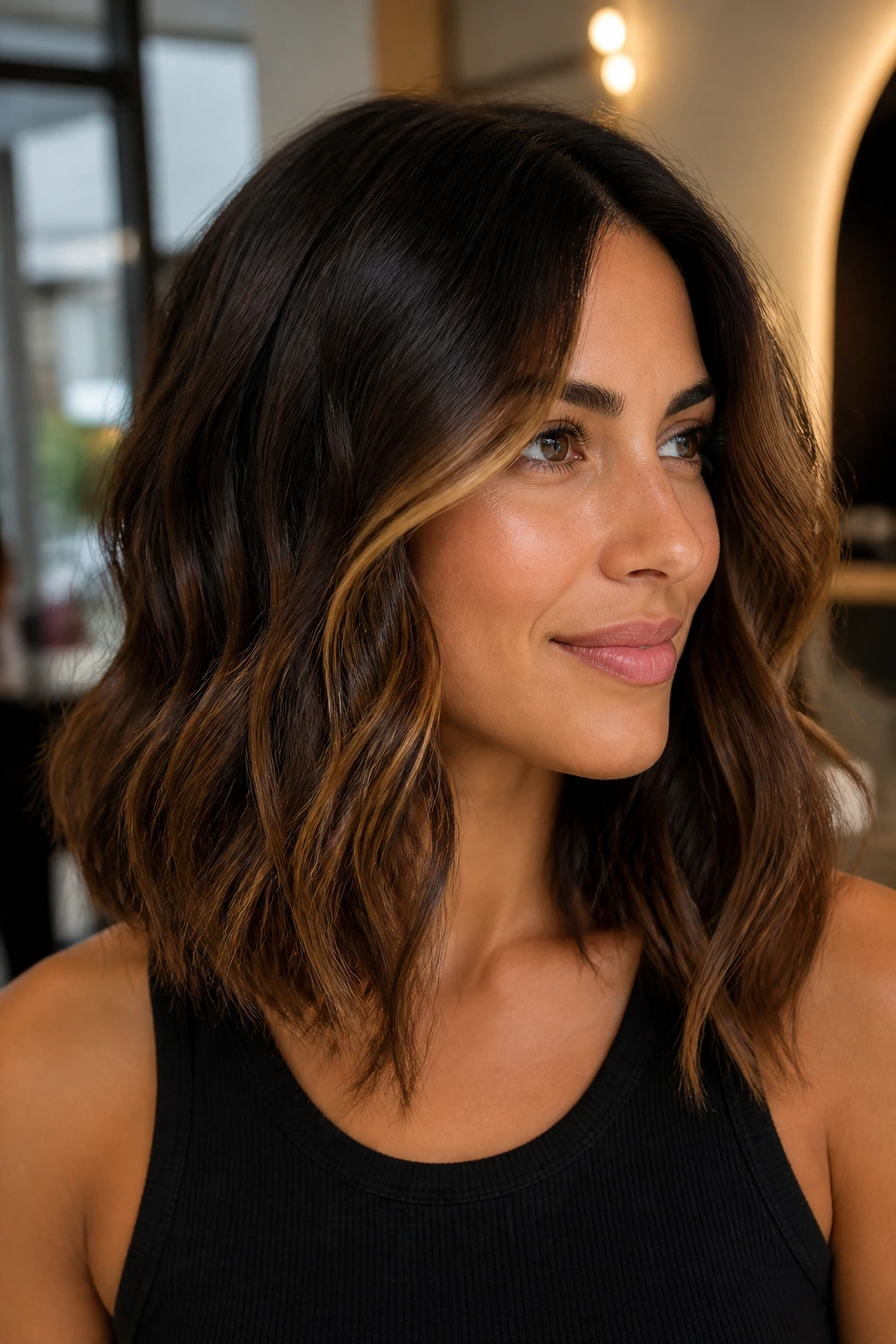
This is the look for someone who doesn’t want to lose the brunette identity at all. Bronze and espresso dimension keeps the base rich and dark, then throws in bronze ribbons so the waves catch light where they should. It’s restrained, but not boring. I’m fond of it.
Medium skin tends to look better with this kind of depth than with an all-over pale blonde, especially if the undertone is olive or neutral. The espresso base keeps the hair grounded. The bronze pieces prevent the color from disappearing into one dark mass. That combination looks especially good in shoulder-length beach waves, where the movement separates the darker and lighter strands.
You can wear this with minimal makeup and still look finished. That’s part of the appeal. The color does a lot of the visual work on its own.
The Smartest Placement
- Keep bronze pieces around the front third of the hair.
- Leave the underlayers espresso-dark.
- Ask for a gloss that keeps the bronze warm, not smoky.
20. Desert Rose Copper Streaks
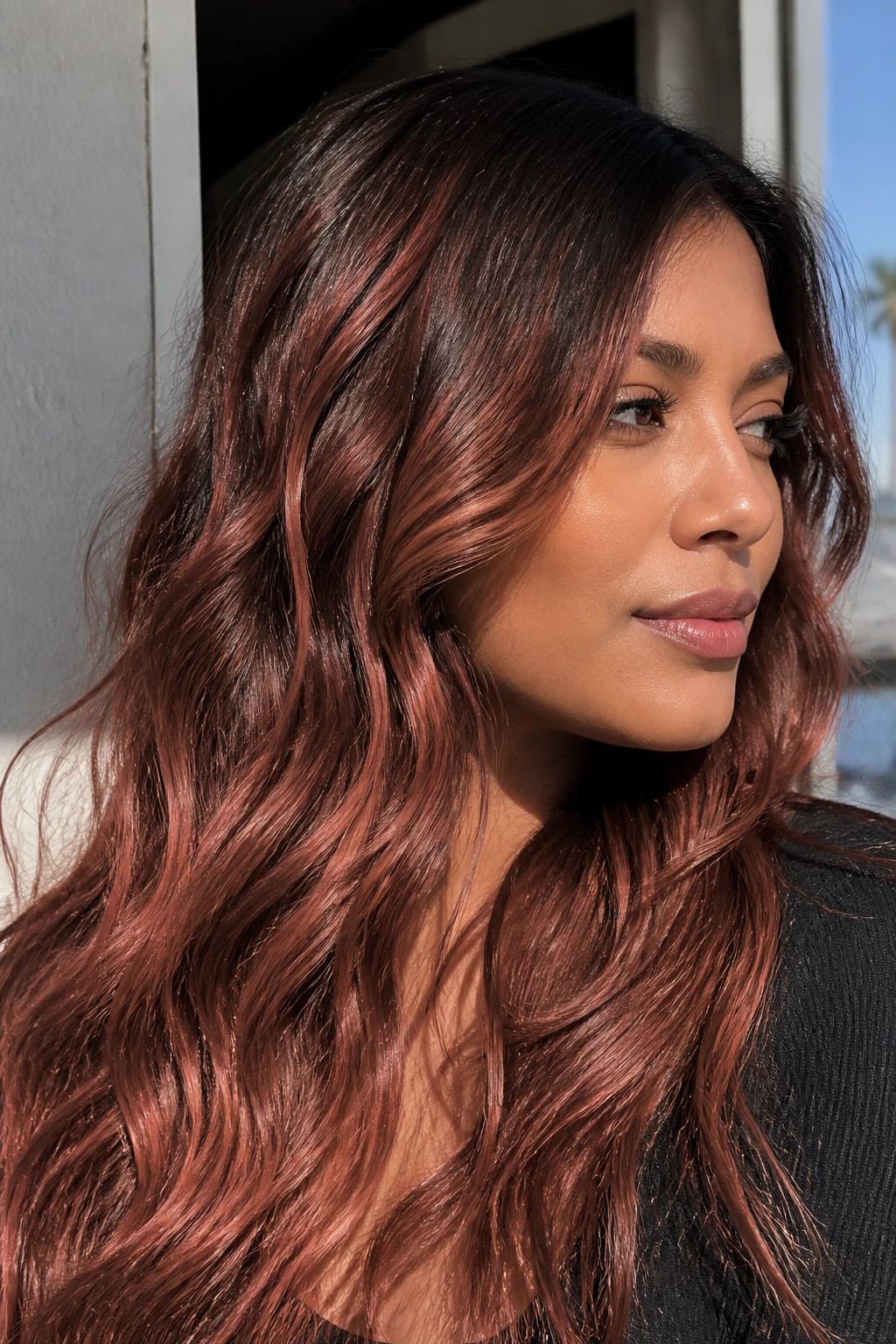
Desert rose copper is a little less obvious than straight copper and a lot prettier on medium skin than people expect. It leans into rose-gold warmth while keeping enough brown in the mix to stay wearable. Think copper with a dusty pink undertone, not pink hair.
This is one of those shades that changes depending on light. In daylight, the copper comes forward. Indoors, the rose-brown depth softens it. Beachy waves help because every bend shows a slightly different side of the tone. That movement keeps the color from looking flat or costume-like.
I’d recommend this if you already like warm jewelry tones and want something more expressive than caramel. It can be subtle enough for daily wear, but it still has personality. On medium skin, especially with golden undertones, it can give the face a warmer edge without making the hair scream red.
Tip: keep the roots slightly deeper so the desert rose pieces don’t float on their own.
21. Caramel Swirl Lowlights and Highlights
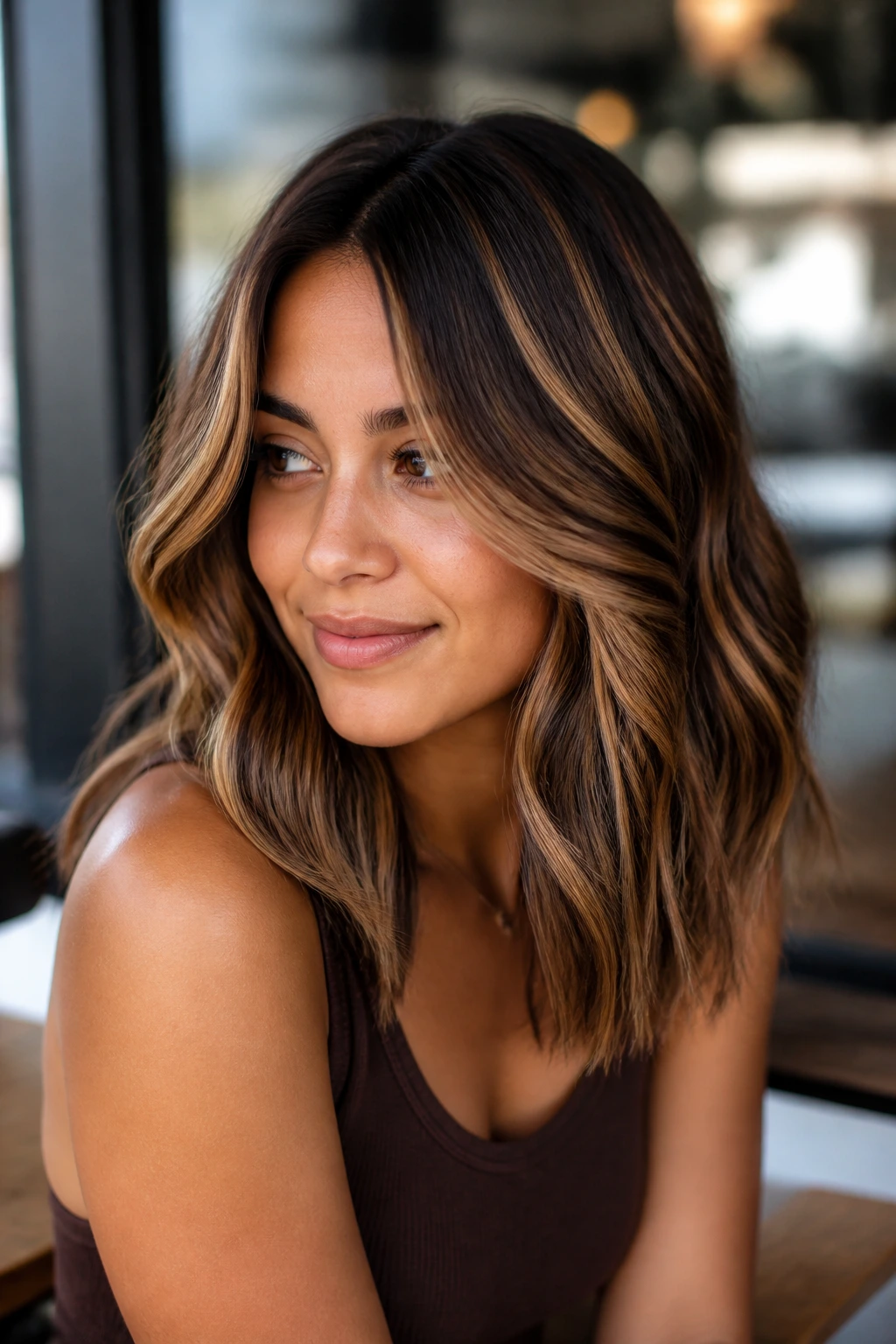
Not every strong color story needs more blonde. Sometimes the smartest move is to work both directions at once. Caramel swirl lowlights and highlights build contrast by weaving lighter caramel ribbons through darker brown panels, which makes beachy waves look fuller and more expensive.
This is a strong choice for medium skin because it keeps warmth in the palette while adding depth where the hair needs it. If you have thick hair, a single-tone highlight plan can make the shape feel bulky or vague. The lowlights give the hair definition. The caramel pieces catch the light. The whole thing feels tailored, not random.
I like this especially on layered cuts and medium-length waves. The color shifts as the hair moves, which gives you that lazy, sun-in-the-hair look without actually being lazy about the placement.
Good If You Want
- More thickness through the mids.
- Less contrast at the root.
- A grow-out that doesn’t look choppy.
22. Sunlit Cinnamon Layers
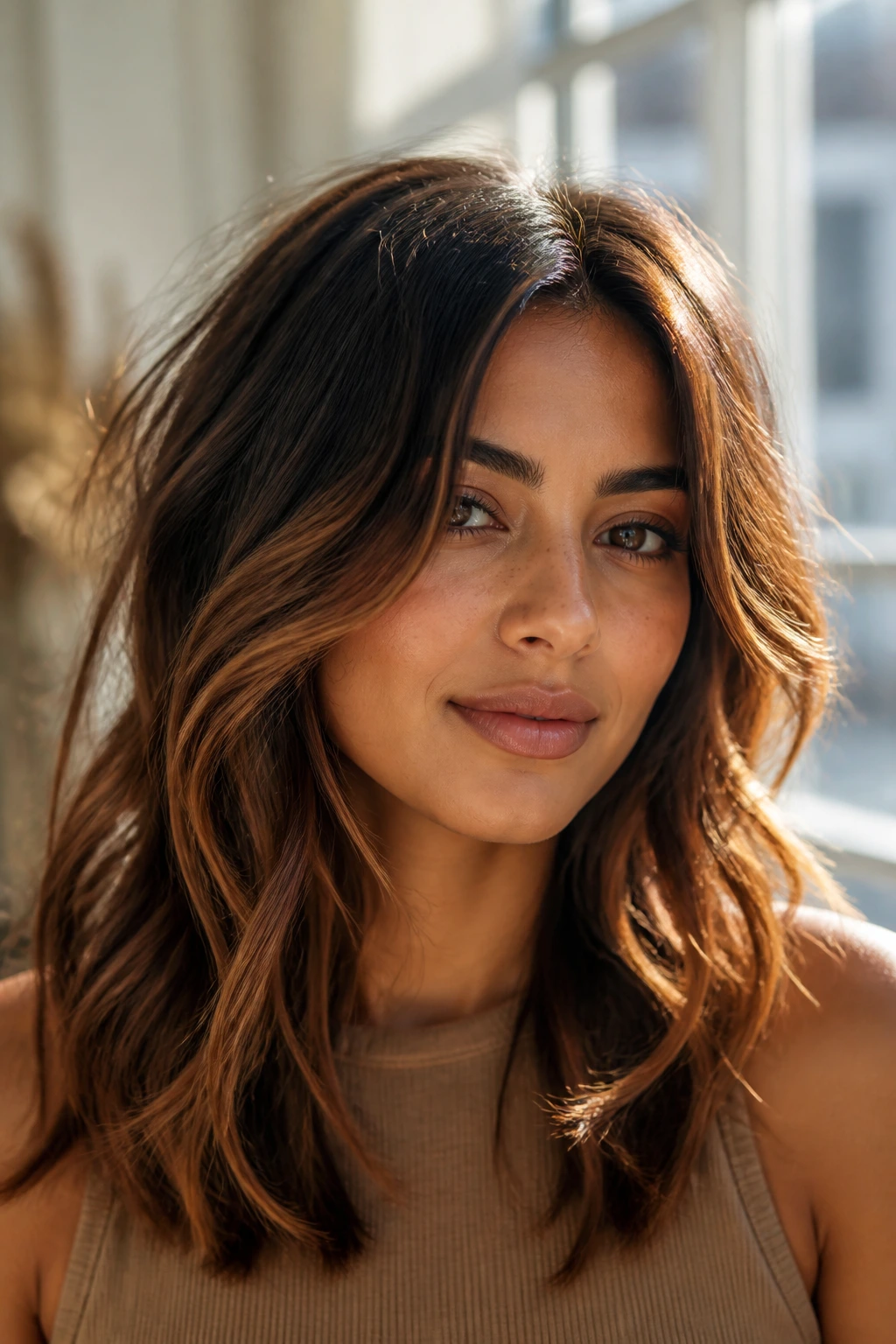
Sunlit cinnamon layers are what happen when you let warm color follow the haircut instead of fighting it. The cinnamon tones sit through the layers, not just the ends, so the cut gets visual movement every time the hair bends.
Medium skin with warm or olive undertones handles this shade well because cinnamon sits in that reddish-brown family that looks alive instead of flat. The key is keeping the ribbons soft enough to melt into the brunette base. You want warmth in the hair, not a block of red. Beachy waves scatter the cinnamon through the layers and make the style feel effortless, even if the coloring process itself was not effortless at all.
This one is especially flattering on medium to long layered cuts. It gives the hair a kind of internal glow, which is a phrase I don’t love, but in this case it fits. The color really does seem to come from inside the wave.
Best pairing: long shag layers or face-framing layers that move when you walk.
23. Walnut and Honey Foilayage
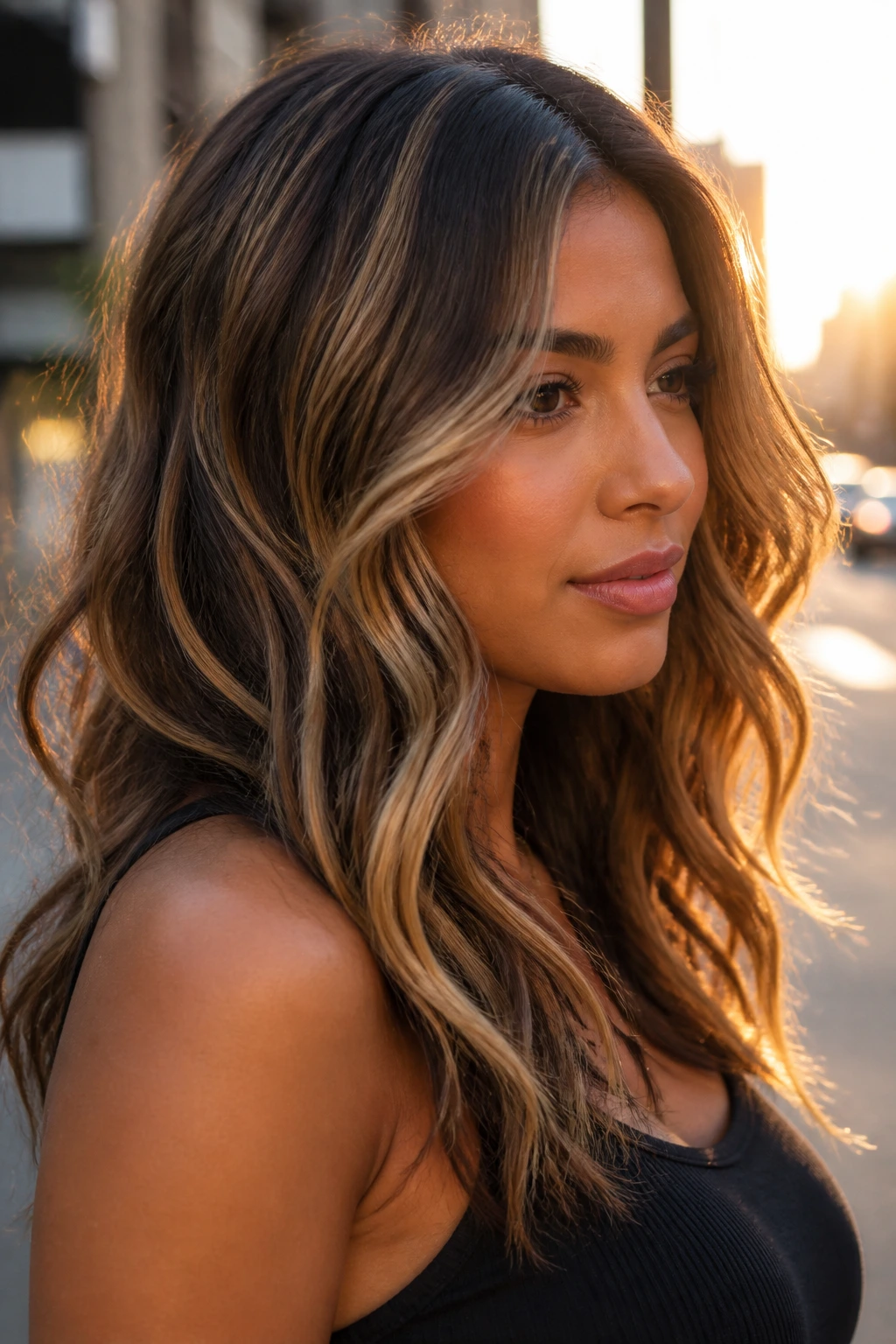
Walnut and honey foilayage is one of the more balanced options in the list. Walnut keeps the base grounded and cool-ish without going ash-heavy, while honey adds warmth and shine through the lightened sections. On medium skin, that balance can be a lifesaver if your undertone sits somewhere between golden and olive.
Foilayage gives you more lift than plain balayage, which matters when you want the honey to show clearly on beachy waves. The lighter ribbons catch the tops of the bends, and the walnut sections underneath keep everything from turning flat or overly bright. I especially like this on people with naturally darker brunette hair who still want a visible change.
The result is polished, but not too done. You can wear it with casual clothes and it still makes sense. You can also dress it up and the honey flashes read a little more luxe. That flexibility is why it keeps hanging around in my mental shortlist.
Ask for
- Walnut lowlights at the root and underlayer.
- Honey foil ribbons through the crown and front.
- A gloss that keeps the finish warm, not yellow.
24. Strawberry Copper Accent Pieces
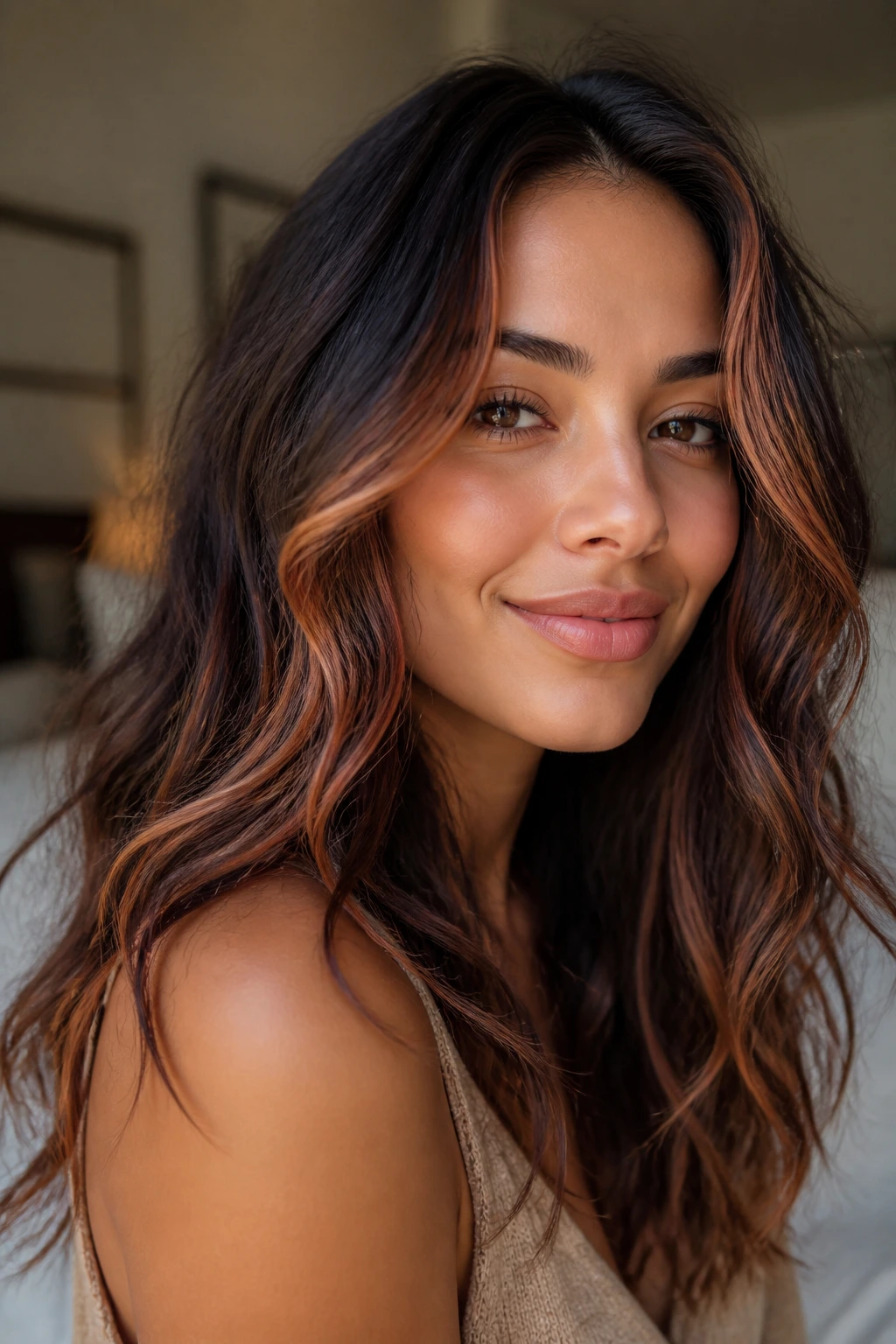
Strawberry copper is bolder than most people think medium skin can wear, and that’s exactly why I like it as an accent rather than an all-over plan. The color sits between copper and strawberry blonde, which gives it a bright, warm pop without drifting into pale peach territory.
Used in accent pieces, it can frame the face, highlight the ends, or peek through the surface of beachy waves. Medium skin with golden or peach undertones tends to wear this best, but neutral undertones can pull it off if the base stays rich. The contrast does the heavy lifting here. You want enough darkness underneath to make the strawberry glow.
This is a playful choice. Not subtle. If you want something that looks especially good in loose texture and under natural light, it’s a strong contender. I’d keep the pieces narrow and strategic rather than painting the whole head.
Best for: people who like warmth but want a slightly brighter edge than copper alone gives.
25. Dark Chocolate with Gold Ribbons
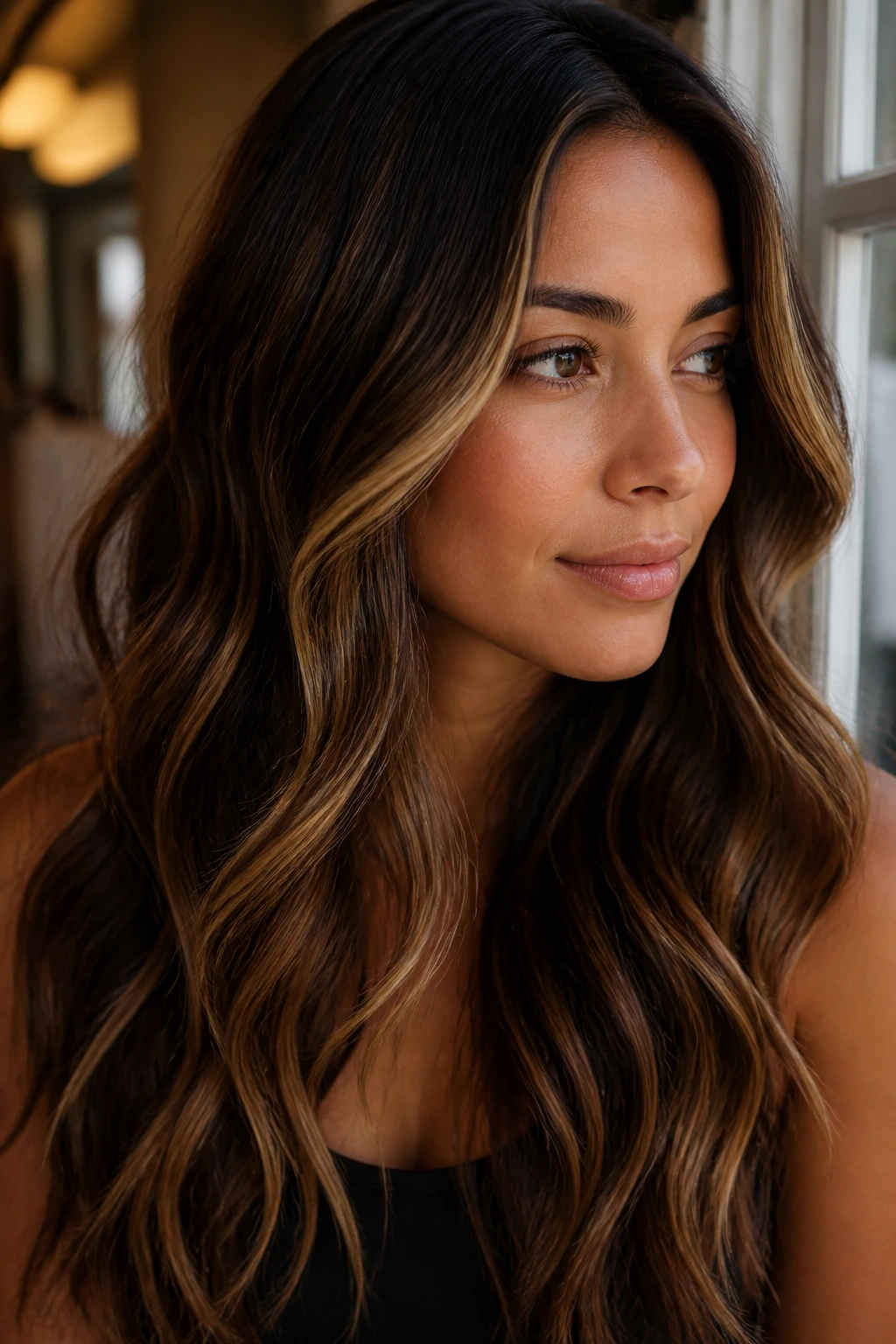
Dark chocolate with gold ribbons is a clean ending point because it proves a simple thing: medium skin usually looks better when the base stays rich enough to support the light. The gold ribbons don’t need to be huge. They just need to be placed where the waves bend and where the face needs lift.
This look is bold in a quiet way. The chocolate base keeps the hair glossy and dense, while the gold ribbons break up the darkness enough to show movement. On beachy waves, the contrast looks deliberate, not loud. That’s the sweet spot for a lot of medium skin tones, especially when the undertone is neutral or warm.
I’d choose this if you like brown hair but want the kind of dimension that makes people look twice. It’s also one of the easiest styles to keep looking good between appointments, because the root depth is part of the design rather than a flaw.
Best Finish
A warm gloss with a bit of shine serum on the ends. Not a lot. Just enough to make the gold catch and the chocolate stay rich.
Why Beachy Waves Make Color Look More Expensive
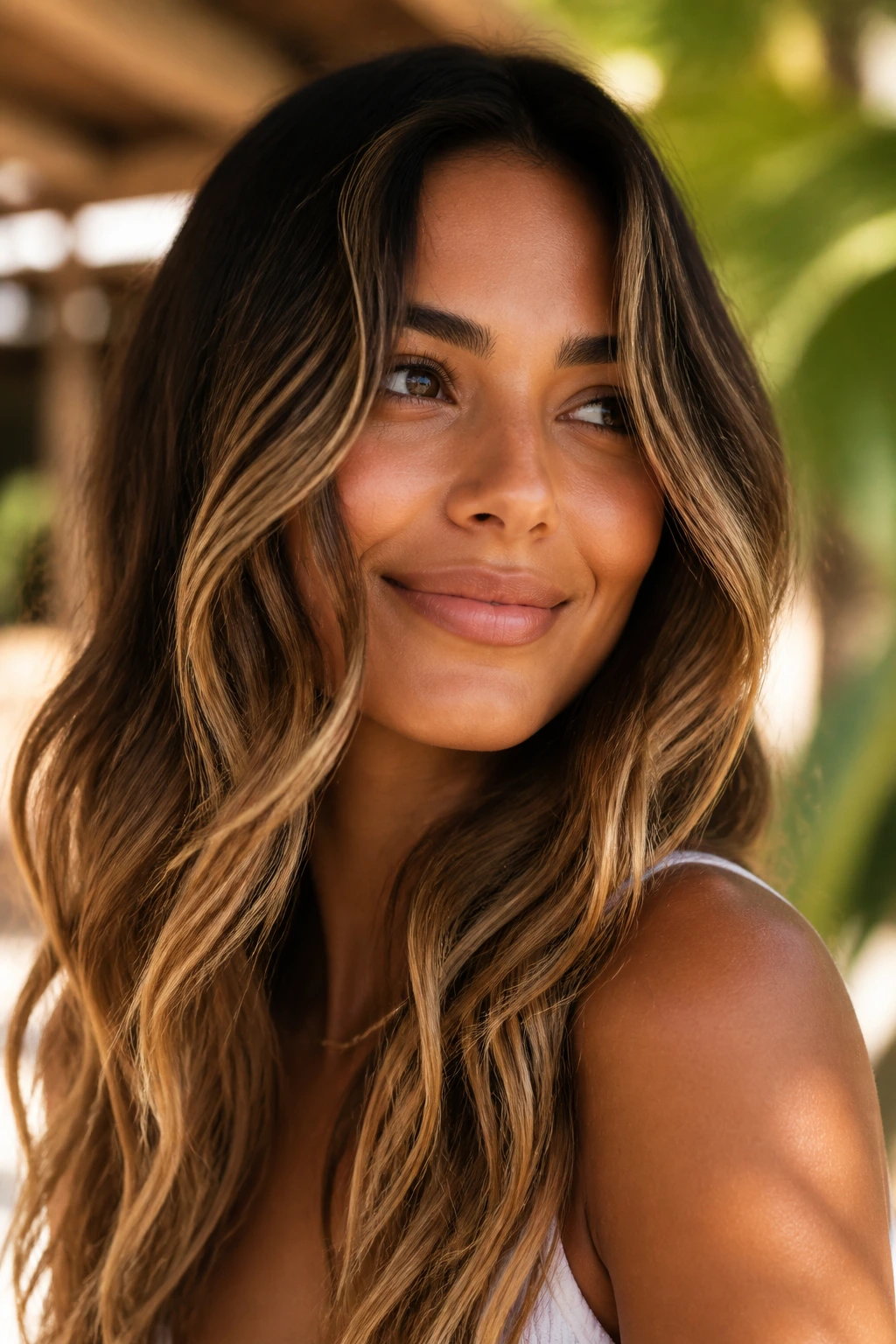
Beachy waves do more than add texture. They change the way the eye reads the color. A flat blowout shows the line where the highlight starts and stops. A wave hides that line by folding the hair over itself, which is why a well-placed ribbon can look softer and richer than the same shade on pin-straight hair.
Movement also helps the darker base keep its job. If every strand were light, the hair could look washed out on medium skin. But when the waves separate, you get flashes of light against deeper brown, and that contrast gives the style shape. It’s the difference between looking dyed and looking dimensional.
That’s why I keep coming back to placement. Bright pieces around the face, warm ribbons through the mids, a few darker panels underneath — those choices matter more once the hair has texture. The wave pattern turns them into something readable. Without that bend, a lot of these colors would feel ordinary.
Essential Tools for Getting the Look
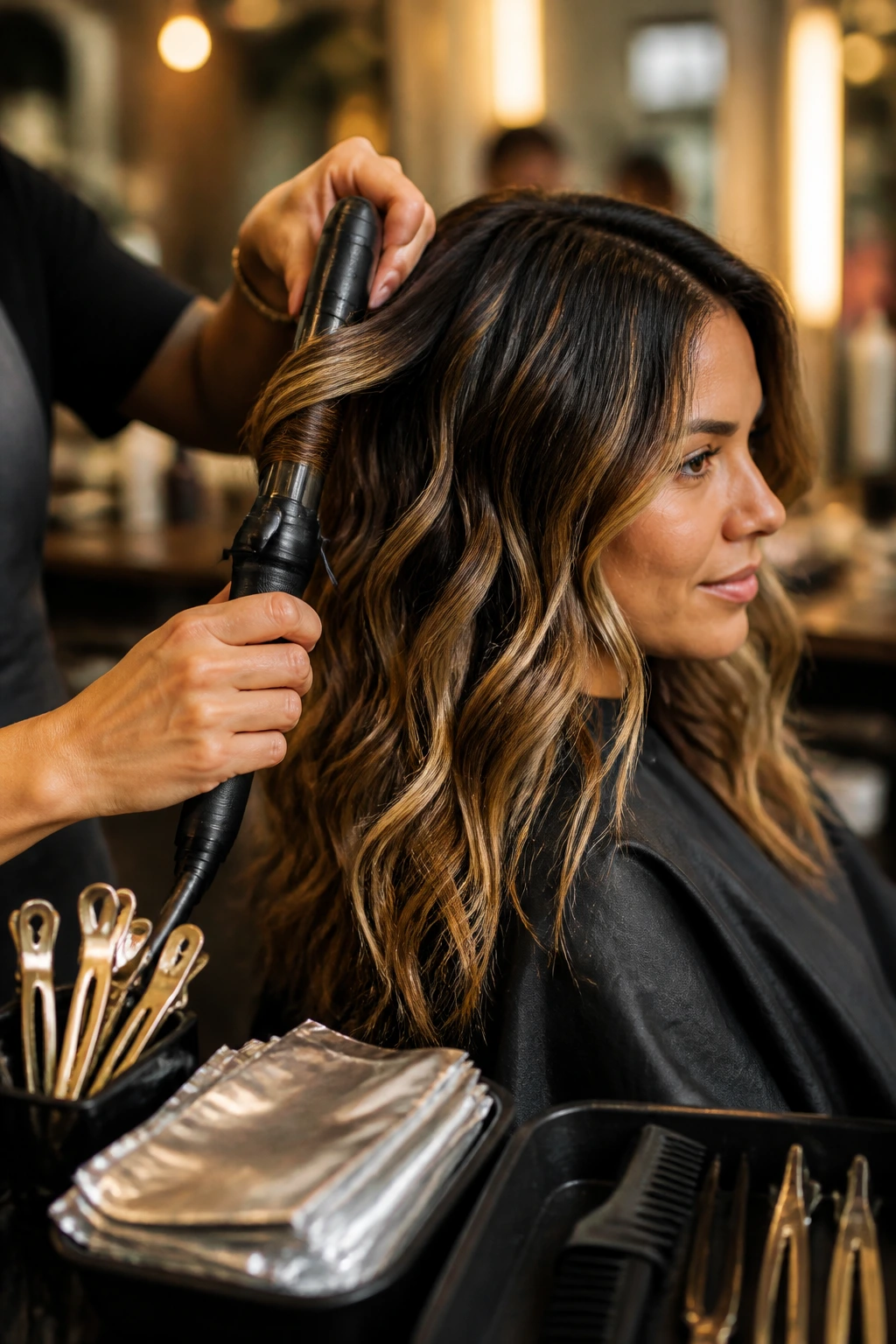
- Tail comb: Useful for clean sectioning, especially around the part and face frame.
- Sectioning clips: Keep the top layer out of the way while you place highlights or style waves.
- Foils or balayage board: Foils lift brighter; a board helps hand-painted pieces stay smooth.
- Tint brush and non-metal bowl: Needed for glosses, toners, or root smudges.
- 1-inch curling wand or flat iron: The easiest way to create beachy bends that show off ribbons of color.
- Heat protectant spray: Non-negotiable if you’re refreshing waves often.
- Color-safe sulfate-free shampoo: Helps warm tones stay in place longer.
- Weekly conditioning mask: Especially useful if you’ve lifted to honey, beige, or champagne.
- Wide-tooth comb: Better than a brush for keeping the wave pattern intact.
- Microfiber towel or cotton T-shirt: Reduces frizz when you scrunch damp hair.
Choosing the Right Shades for Your Undertone
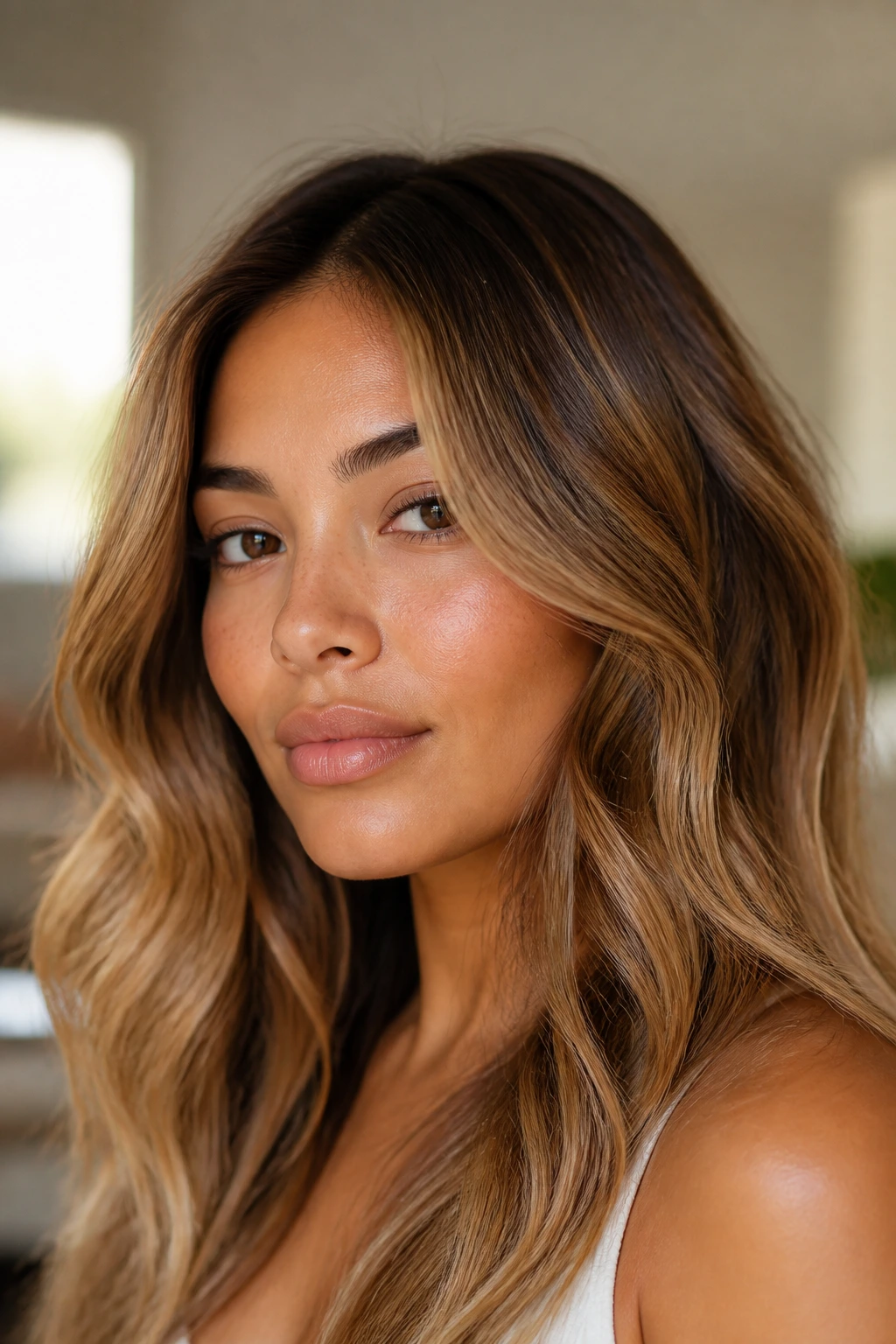
Medium skin doesn’t mean one shade family. That’s the first thing worth sorting out. Golden medium skin usually handles honey, caramel, bronze, amber, and copper with almost no fuss. Those tones sit close to the skin’s natural warmth, so the highlights look blended even when they’re bright.
Olive medium skin is the trickiest and, honestly, one of the most interesting. Too much yellow can look off. Too much ash can look dusty. The safer bets are walnut, bronze, tiger eye, mushroom-bronde with warmth kept in the gloss, and caramel that leans brown instead of gold. A root shadow helps, too. It keeps the color from floating on the face.
Neutral medium skin gets the widest range. Champagne beige, apricot copper, chocolate with gold ribbons, cherry cola, and warm vanilla lights can all work if the depth is right. I’d still avoid a flat icy blonde unless there’s a lot of brightness around the face and the base remains deep.
If you’re stuck between two options, choose the shade that keeps some brown in it. That’s the shortcut I trust most for medium skin. The hair will still look bright. It just won’t fight the face.
How to Wear the Color So the Ribbons Show Up
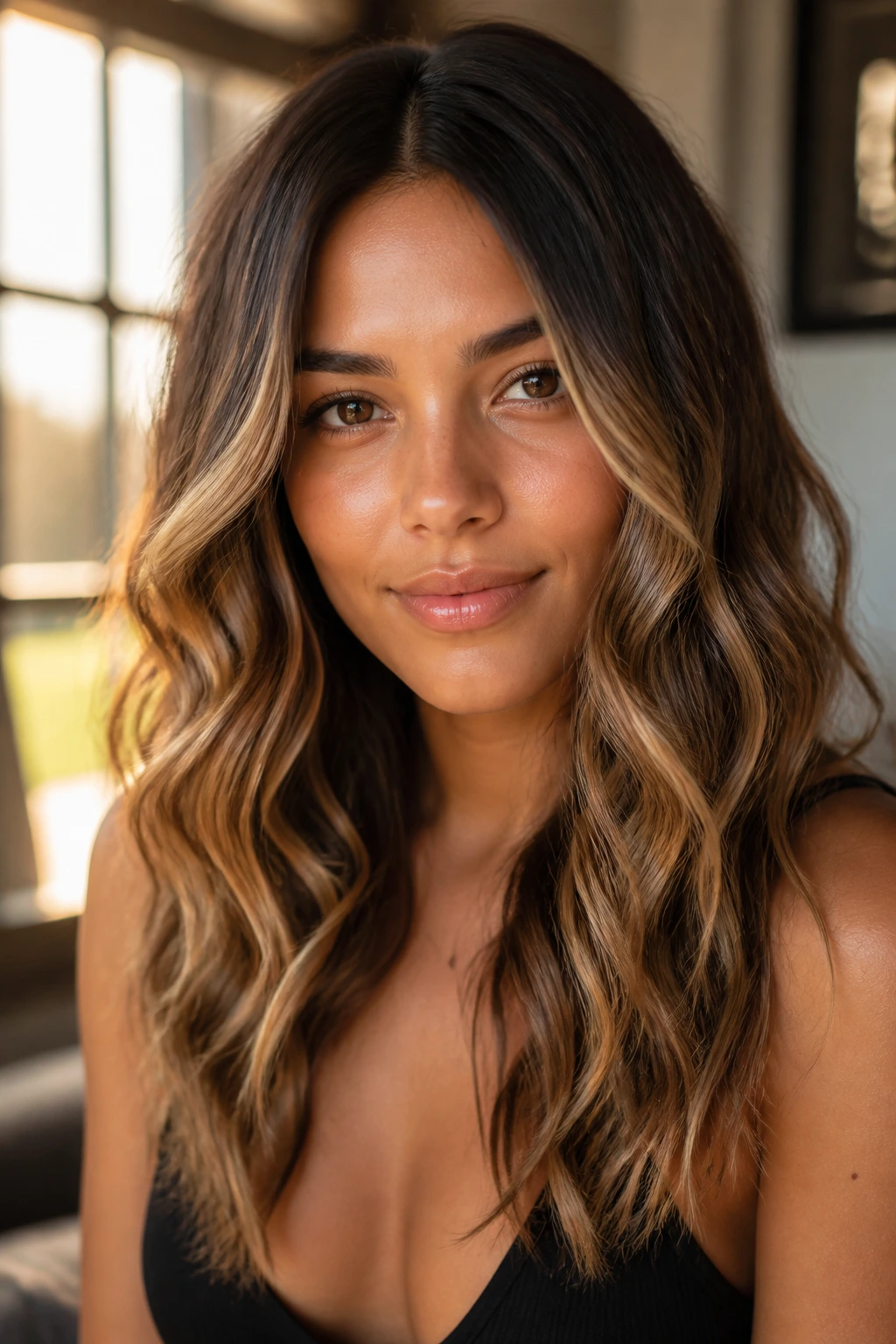
Parting: A center part keeps the lighter pieces balanced on both sides of the face, while a slight off-center part pushes the brightest section toward one cheekbone. If you want the color to look more deliberate, change the part in the mirror and see which side gives the hair the best fall.
Styling: Loose bends are better than tight curls. A 1-inch wand, wrapped away from the face on one side and toward the face on the other, gives that easy wave pattern where highlights can land on different ridges. Straight ends can work too, but only if the mid-shaft has enough movement.
Cut Pairings: Long layers, curtain bangs, a soft shag, or a textured lob all help. A blunt one-length cut can make even the best highlights look boxed in. The movement in the cut matters as much as the color placement.
Finish: Keep serum or oil to the last two inches of the hair. Too much product on the crown kills the lift, and once the crown goes flat, the highlights lose their sparkle. A light mist of flexible hairspray at the end is plenty.
Ways to Push the Look Further
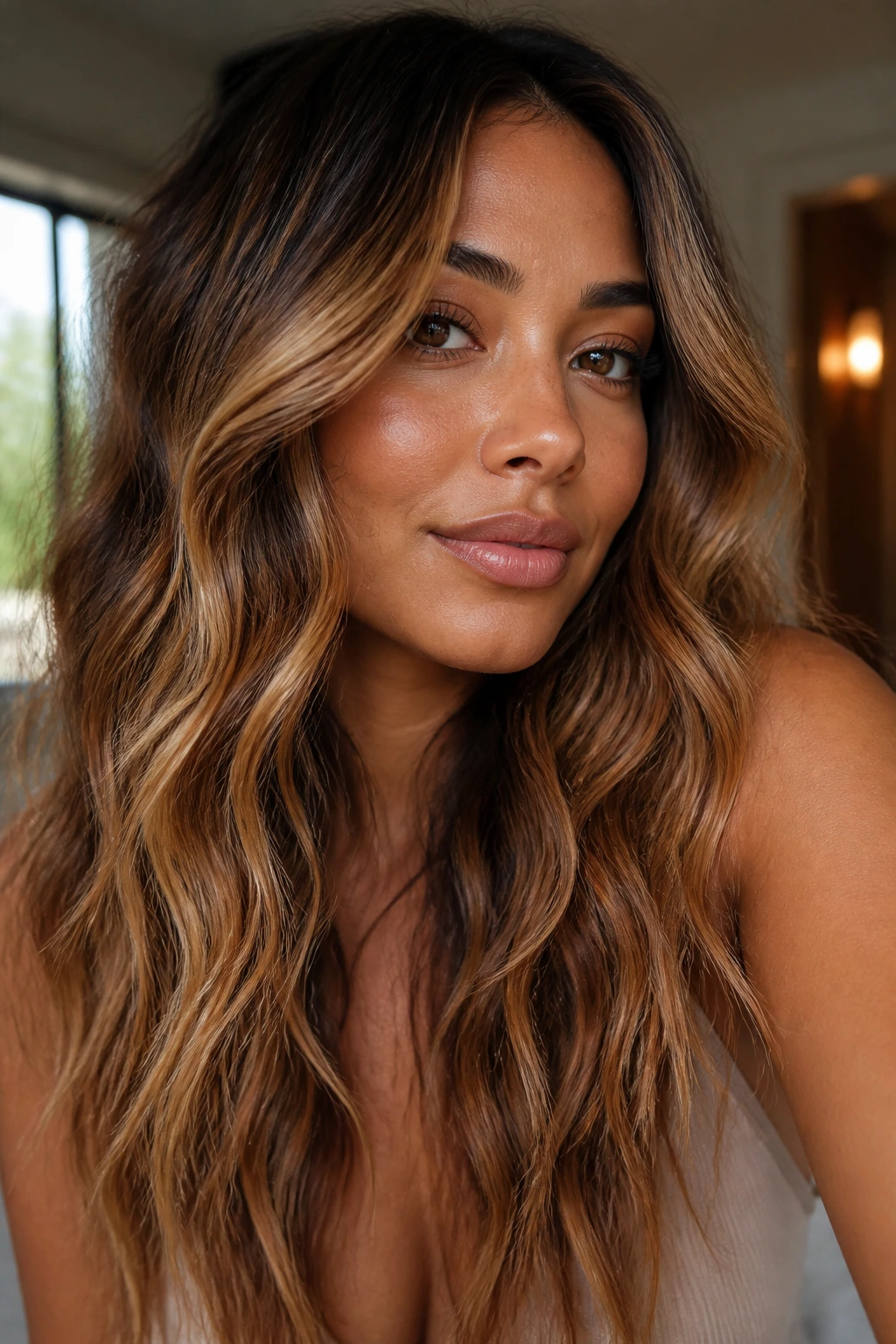
Gloss Boost: Ask for a clear or tinted gloss after lightening. Honey, beige, amber, and copper glosses keep the tone in the right family and give the hair that smooth, glassy surface waves love.
Depth Boost: If the hair is thick or coarse, add lowlights under the top layer. A single level deeper than the base is often enough to keep the highlights from looking spaced out.
Texture Boost: Rough-dry the roots until the hair is about 80% dry, then finish with a wand or diffuser. The slight mess in the texture helps the color separate into visible ribbons instead of one polished sheet.
Make It Yours: Warm undertones can handle copper, bronze, and maple tones. Olive undertones usually need more walnut or chestnut in the mix. Neutral medium skin can play in both camps, but I’d still keep the base rich.
Maintenance, Fade, and Touch-Up Timing
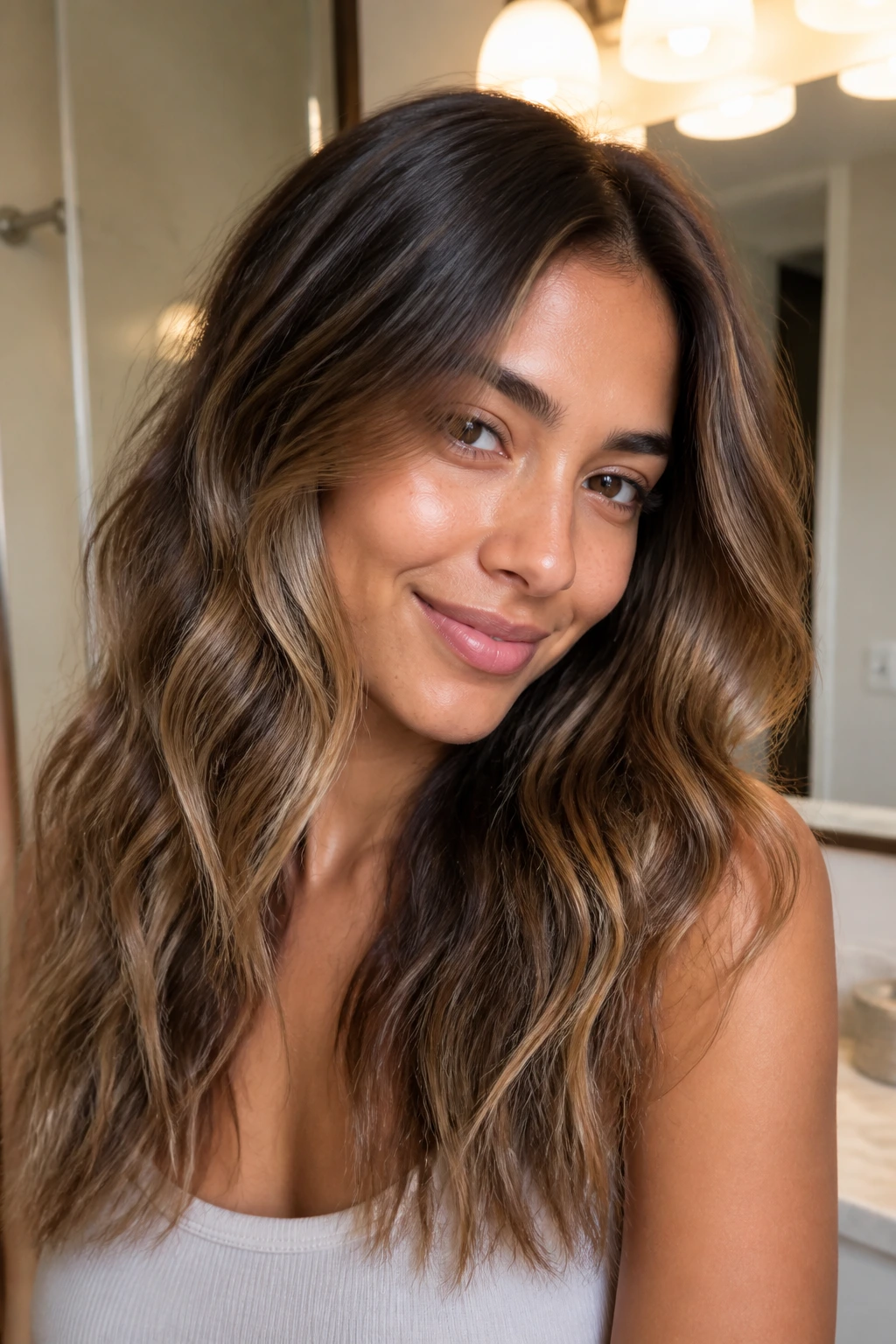
Color care on beachy waves is less about babying the hair and more about keeping the tone honest. Most warm highlight shades — honey, caramel, bronze, copper — start to drift after several washes if you shampoo too often or use hot water. Cooler beige tones can go dull even faster if the gloss is weak or the hair is porous.
A good rhythm is a salon gloss or toner every 6 to 8 weeks for lighter looks, and every 8 to 12 weeks for deeper brunette-and-caramel looks. Root smudges can stretch the grow-out even longer, which is one reason I like them so much. They keep the scalp area from turning into a bright-dark-bright mess as the hair grows.
At home, use sulfate-free shampoo, wash in cooler water when you can stand it, and keep a deep mask on hand for once a week. If you heat-style the waves often, a heat protectant every single time is not optional. Highlighted hair loses shine faster when it’s scorched, and beachy waves look best when the surface stays smooth enough to reflect light.
Swimmers and hard-water households need a little extra care. A clarifying wash once every 2 to 4 weeks helps strip buildup, but don’t overdo it or the color can fade fast. If brass starts creeping in, a color-safe blue or purple product can help, but only use it sparingly. Too much and the warmth you paid for gets flattened.
Variations and Adjustments to Try
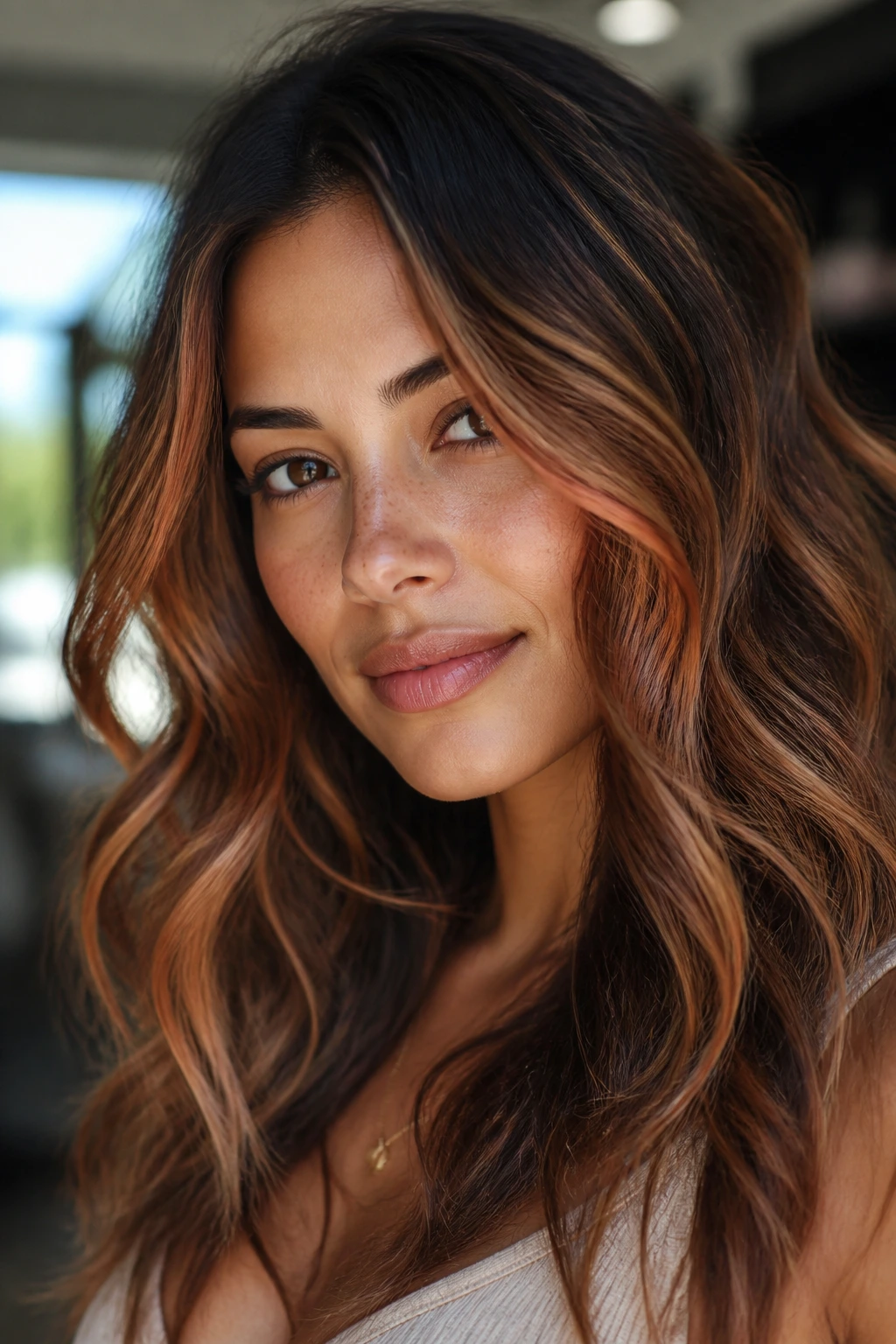
Soft Bronze Sweep: Lower the contrast and keep the highlights in the bronze-caramel family. This is a good fit if you want movement without a lot of visible lift at the root.
High-Contrast Money Frame: Brighten only the front two to four sections and leave the rest deeper. It’s bold, fast to grow out, and very good if you wear your hair in waves all the time.
Copper-Heavy Glow: Push the highlight tone warmer, especially through the face frame and ends. This suits golden medium skin and reads more expressive than caramel.
Cool Beige Reset: If your hair is pulling orange or the skin reads more neutral than warm, lean the toner toward beige rather than gold. Keep the base rich so the cooler tone doesn’t look dusty.
Curly-Wave Placement: For hair that’s naturally wavy or curly, keep the brightest pieces on the outer curve of the wave, not buried underneath. That way the color shows when the texture springs up.
Low-Maintenance Root Melt: Blend the root a level deeper than the base and keep the lightest pieces away from the scalp. This gives you a grown-out look that stays tidy longer between appointments.
Common Mistakes That Flatten the Color
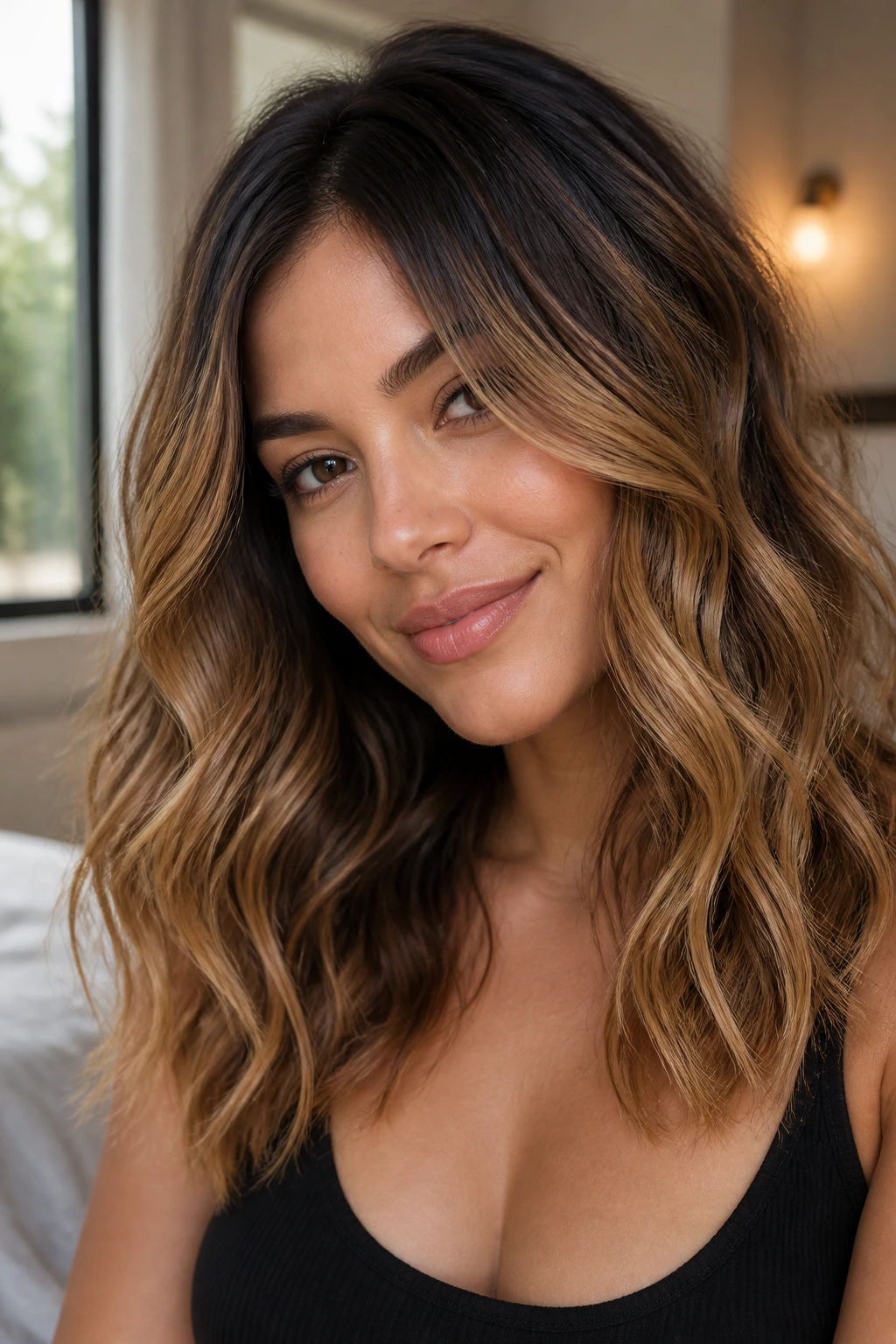
Going too pale too fast: A lot of people ask for blonde and forget that medium skin often needs some depth left in the hair. If the whole head gets lifted too far, the color can wash out the face. The fix is a richer base and lighter accents, not equal brightness everywhere.
Ignoring undertone: Ashy beige on warm skin can look dusty. Bright copper on a cool-neutral face can feel off. Choose the shade family that matches the skin’s warmth first, then fine-tune the brightness.
Over-lightening the front: A money piece should frame the face, not take over the whole haircut. If the face frame is too wide or too pale, the rest of the waves start to look dull by comparison. Keep it slimmer and softer.
Skipping a gloss: Highlights without a gloss often look rougher than they should, especially after the first few washes. Warm blondes can turn orange, and beige can go flat. A gloss keeps the color coherent.
Flattening the wave with too much product: Heavy oil or thick cream at the crown kills the movement that makes these highlights work. Use enough to smooth the ends, then stop. The wave needs air.
Leaving the haircut untouched: Long one-length hair can make even good highlights feel stuck. A few layers give the color a chance to move. That’s not a detail to skip.
Frequently Asked Questions
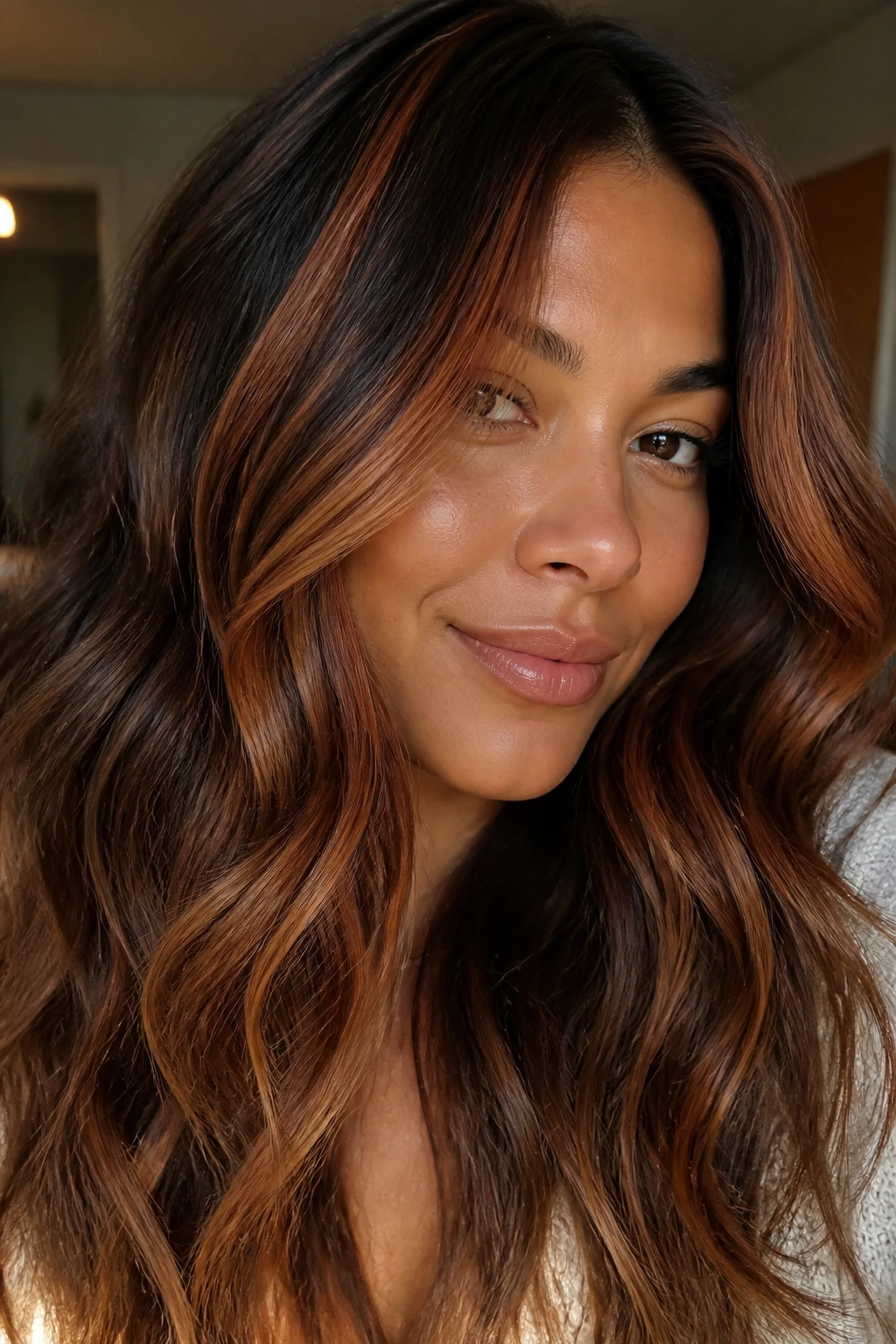
Which highlights flatter medium skin tones the most?
The safest family is warm: caramel, honey, bronze, amber, maple, and soft copper. If your undertone leans olive or neutral, beige-bronde, walnut, and smoky bronze can work too, but I’d still keep some warmth in the gloss.
Do beachy waves make highlights look brighter?
Yes, because the bend in the hair catches light at different angles. A straight style shows the highlight in one line; waves turn it into separate ribbons. That’s why the same color can look softer and more dimensional once it’s styled.
Can bold highlights work on naturally dark brown hair?
They can, but the placement matters. Foilyage, money pieces, and ribbon highlights usually work better than trying to lighten every strand at once. You get contrast without making the hair look patched.
Should I ask for balayage or foils?
Balayage gives a softer grow-out and a more blended finish. Foils lift brighter and show more contrast. If you want bold but wearable on medium skin, a mix of both — often called foilyage — is usually the smartest answer.
What if my highlights turn brassy?
That usually means the tone drifted warmer than you wanted, not that the color failed. Use a salon gloss or a color-safe blue or purple shampoo sparingly, and keep heat styling under control. Too much toner can make the hair look flat, so don’t overcorrect.
Do these looks work on fine hair?
They do, but keep the contrast thoughtful. Fine hair usually looks thicker with narrower ribbons and a few deeper panels underneath. Too many wide, pale sections can make it look sparse.
Can I wear these colors if my hair is wavy but not fully beachy?
Absolutely. Natural wave patterns often show dimension even better than styled curls. A salt spray, diffuser, or quick wand bend just helps the highlights read a little more clearly.
How often will I need touch-ups?
It depends on how bright you go. Warm balayage and root melts can stretch longer, while face-framing blondes and beige foils may need toner or a refresh every 6 to 8 weeks. If the root line starts looking sharp instead of blended, that’s your cue.
Keeping the Waves and Color in Sync
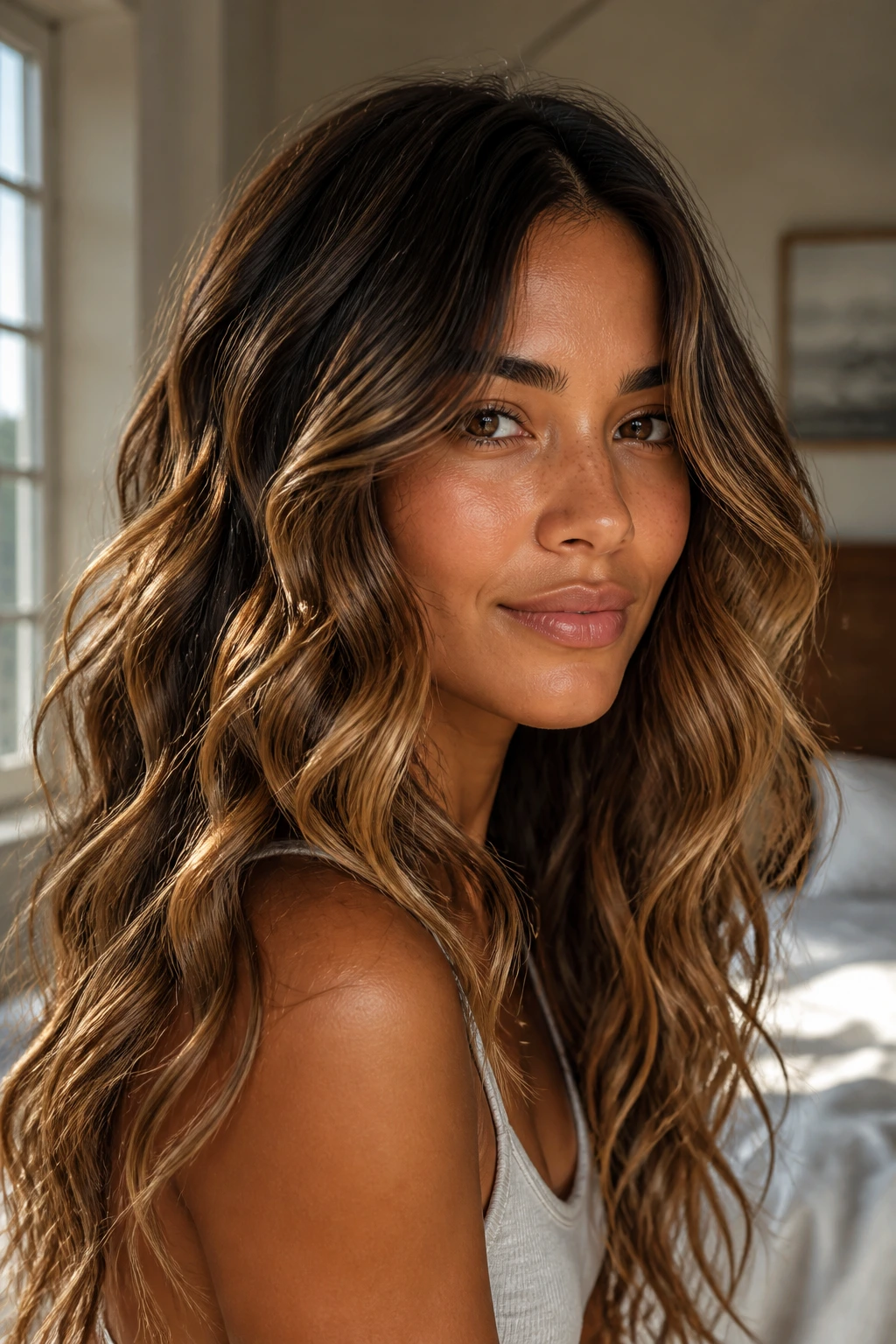
The best-looking highlight jobs on medium skin usually share the same trait: they keep the hair rich enough to support the brightness. That’s the piece people miss when they chase lighter and lighter color. The shine lives in the contrast.
Beachy waves make that contrast easier to wear, which is why these shades feel so right in motion. A good cut, a thoughtful gloss, and the right placement can turn even a simple brunette base into something that looks layered and alive. Not fussy. Not flat.
If you’re choosing between two shades, pick the one that leaves more depth at the root and more warmth in the gloss. That’s the version most likely to still look good when the waves loosen, the color softens, and the hair has lived a little.