



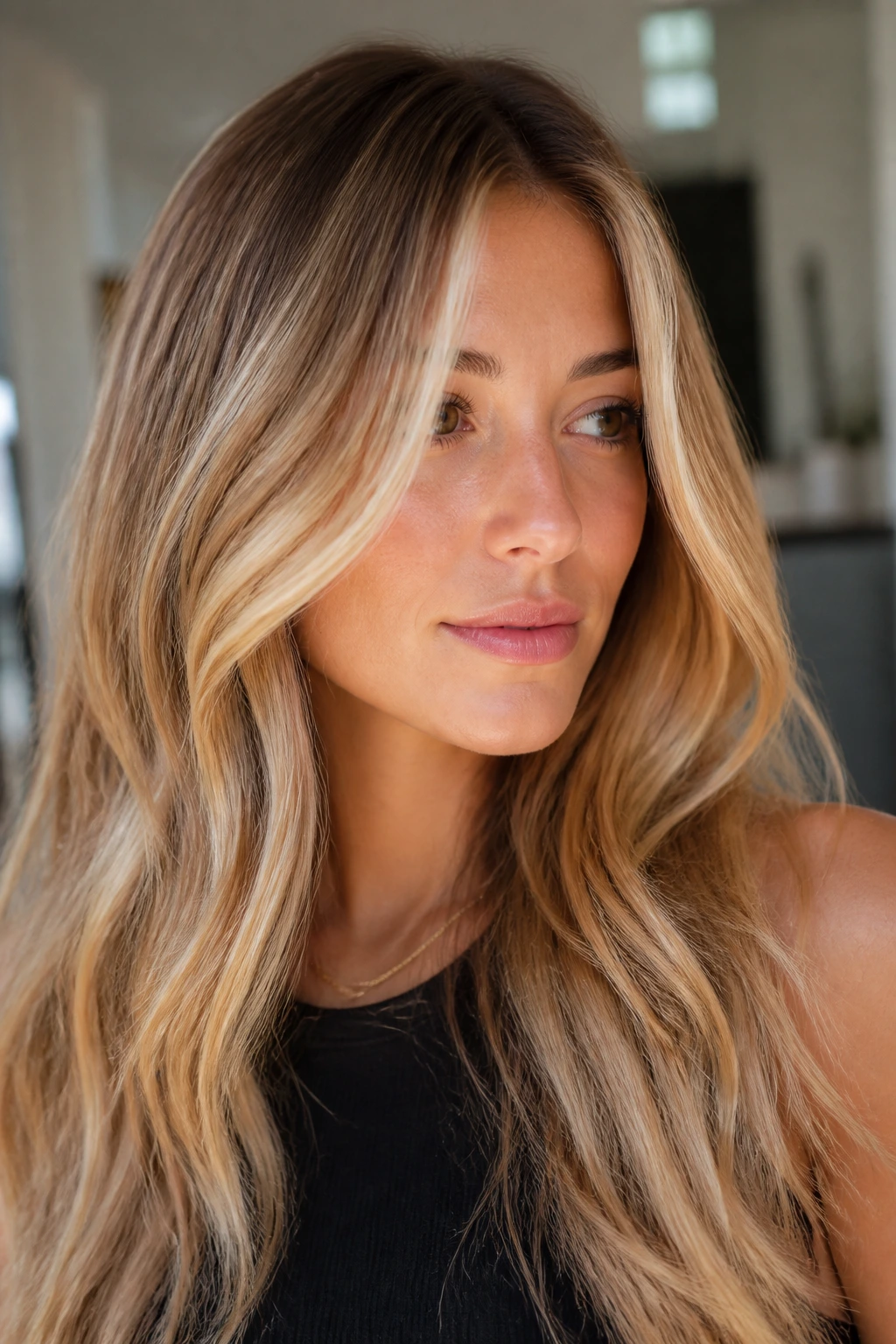
Gold blonde highlights on warm skin tones are one of those color choices that look settled from the first mirror check. When the gold lives in the honey-beige range instead of sliding into pale yellow, it smooths out peach, golden, and olive undertones instead of fighting them.
The real trick is that “gold” is not one shade. A thin money piece at the hairline, a soft balayage ribbon through the mids, and a warm gloss over prelightened ends all read differently on the face. Put the wrong version on warm skin and the whole thing can look brassy or flat. Put the right one on, and the hair starts doing that quiet, expensive-looking thing where it seems brighter near a window and softer indoors.
A lot of the bad highlight advice floating around comes from people chasing a cool, icy blonde on every head of hair. That can look crisp on cooler complexions. On warm skin, it can drain the color from the face. Gold blonde works because it borrows from what your skin already does well: warmth, glow, and depth. The 25 looks below all live in that lane, but they each get there in a slightly different way.
Why These 25 Shades Work on Warm Skin
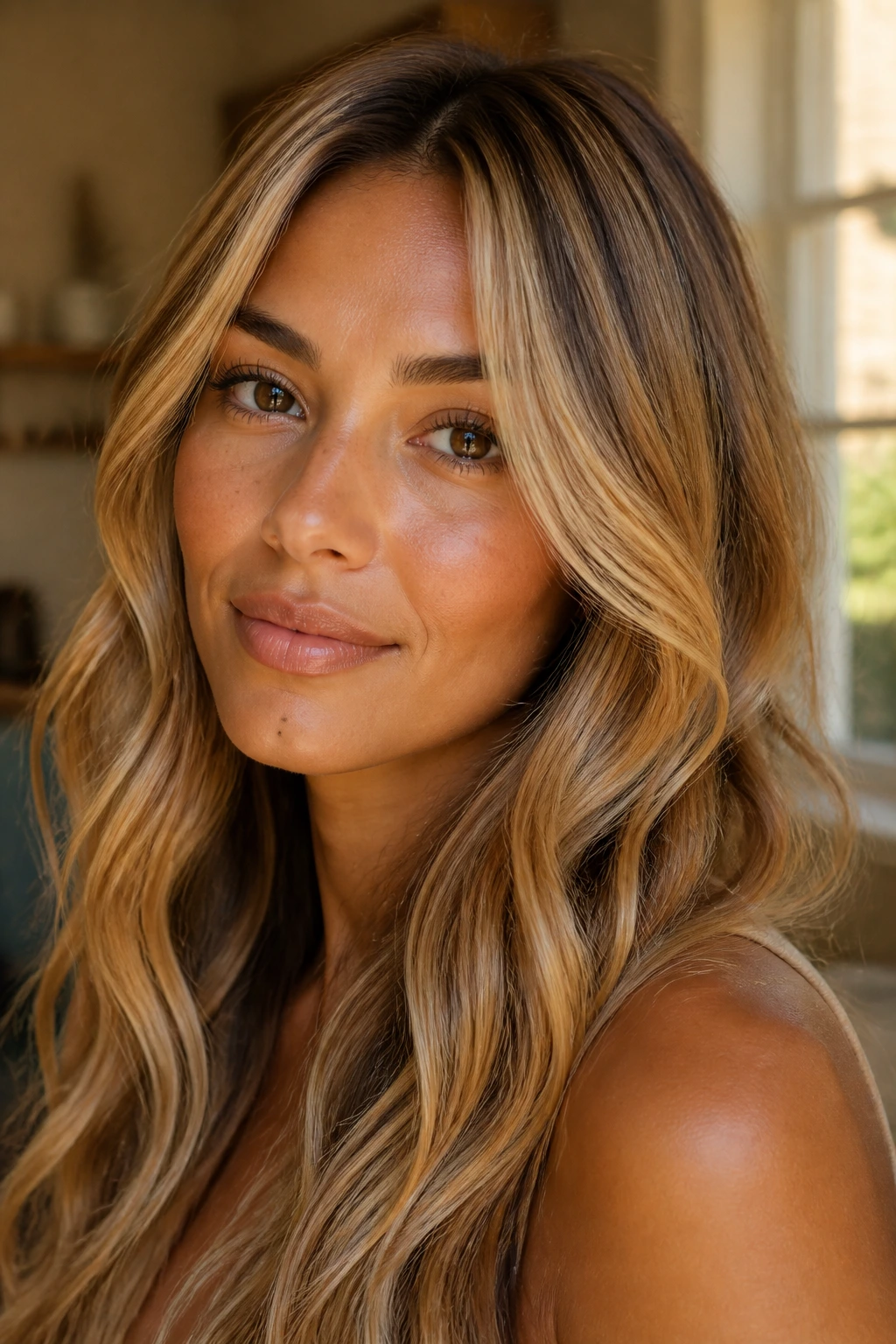
- They stay in the gold family: Honey, butter, amber, and beige-gold shades sit closer to warm undertones than ash or pearl blondes, so the hair and skin do not compete.
- They let you choose your upkeep: Some looks use a 1/2-inch face frame and a soft root shadow; others need a gloss every few weeks. That range matters more than people admit.
- They build dimension instead of one flat brightness: A level 7 base with level 8 or 9 highlights usually looks richer on warm skin than an all-over lift to the palest blonde.
- They flatter different textures: Fine hair needs babylights, curly hair needs ribbon placement, and thicker hair can handle panels or chunkier accents without looking stripey.
- They age well between appointments: The best warm blondes blur at the root and soften at the ends, so the grow-out looks intentional instead of like a color emergency.
1. Honey Money Piece
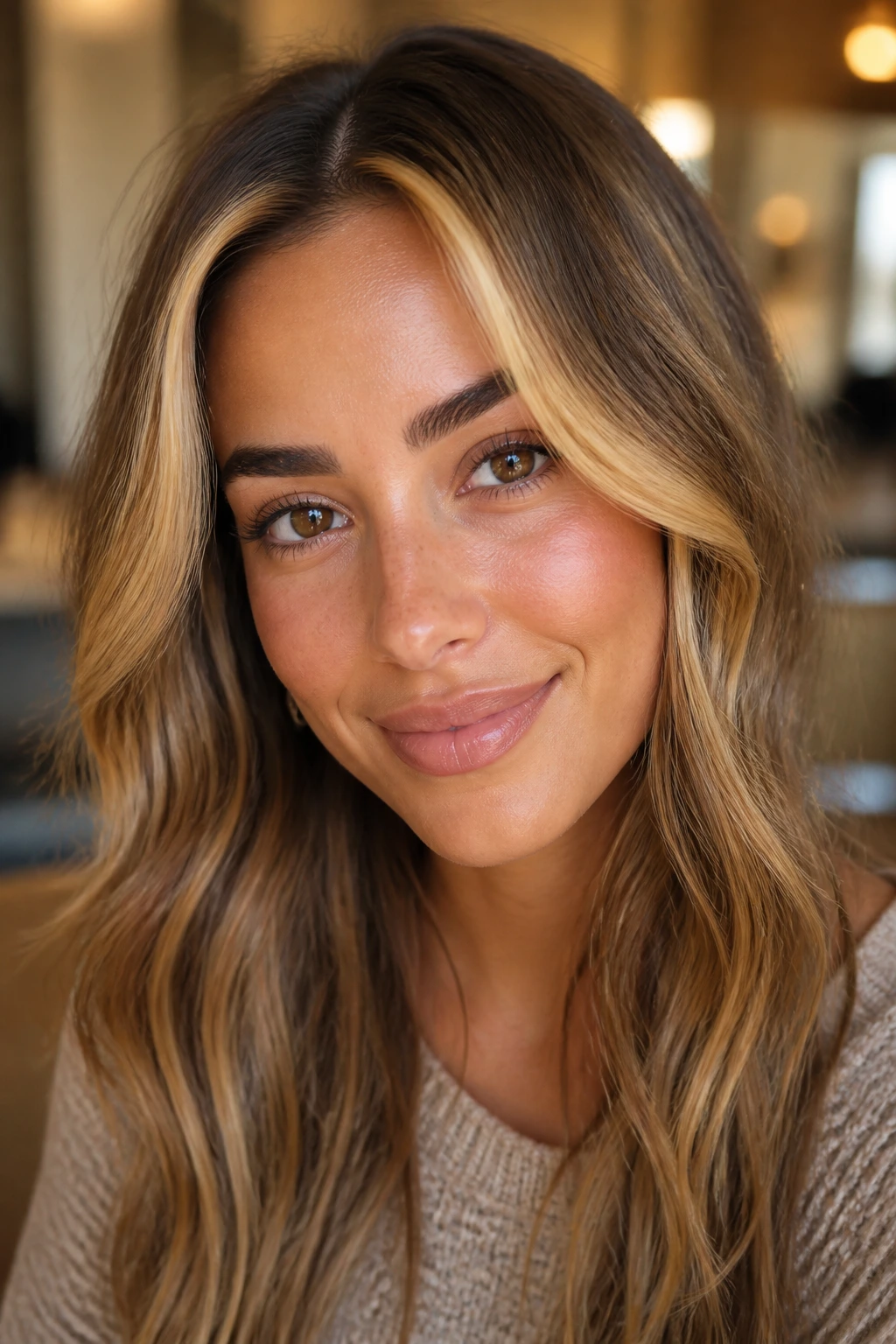
A honey money piece is the quickest way to wake up warm skin without committing to a full blonding session. Two bright slices at the front, usually about 1/2 to 1 inch wide, can pull light right onto the cheekbones and eyes while the rest of the hair stays grounded.
What makes this one work is restraint. Ask for a level 8 or level 9 honey tone, not pale lemon blonde, and ask the colorist to soften the transition just behind the hairline so the front doesn’t look pasted on. On warm skin, that soft gold reads like light, not dye.
Best for: curtain bangs, long layers, and anyone who wants a visible change that still grows out quietly.
2. Caramel Ribbon Balayage
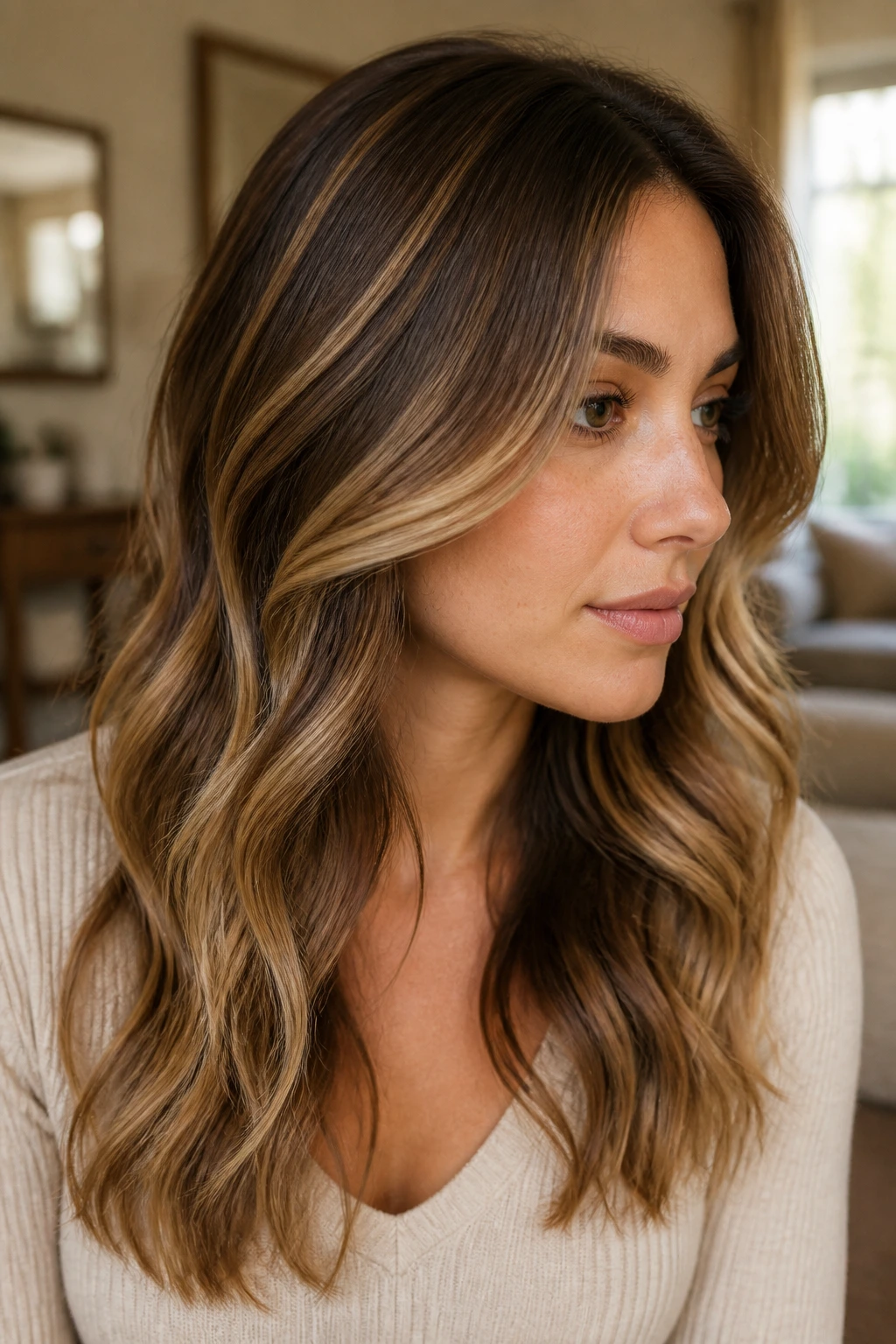
Why does caramel ribbon balayage look so calm on warm skin? Because the color moves in broad, hand-painted sweeps instead of thin stripes. Those ribbons usually sit from the midlengths to the ends, which gives the eye places to rest and keeps the top of the head from becoming too bright.
This is the version I reach for when someone wants warmth with texture. On medium brown or dark blonde hair, the ribbons should lift only two shades lighter than the base and finish with a caramel-beige gloss, not a copper glaze. That keeps the result plush instead of orange.
Good call if: you wear waves, shaggy layers, or a shoulder-length cut that needs movement more than brightness.
3. Buttery Babylights
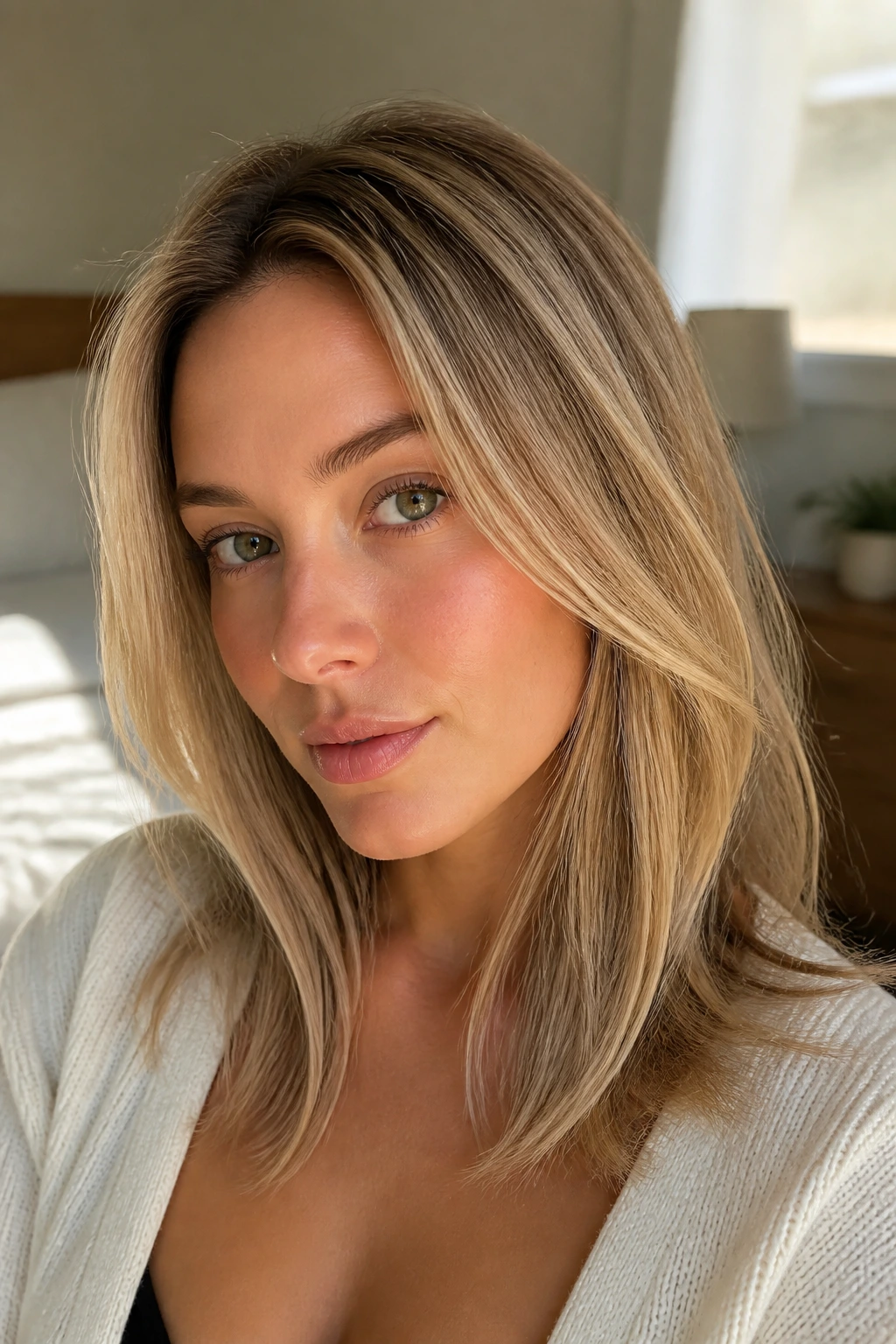
Fine hair loves buttery babylights because they give shine without obvious lines. The foils are tiny—think 1/8 to 1/4 inch sections—so the lift looks woven through the hair instead of painted on top of it. The effect is more shimmer than stripe, which is exactly what fine strands need.
On warm skin, buttery gold keeps the face from looking washed out the way a smoky ash blonde sometimes can. It also helps the hair look denser, because the tiny light pieces make the cut move when you turn your head. That matters. Big chunks can make fine hair look separated; babylights keep it soft.
4. Cinnamon Root Melt
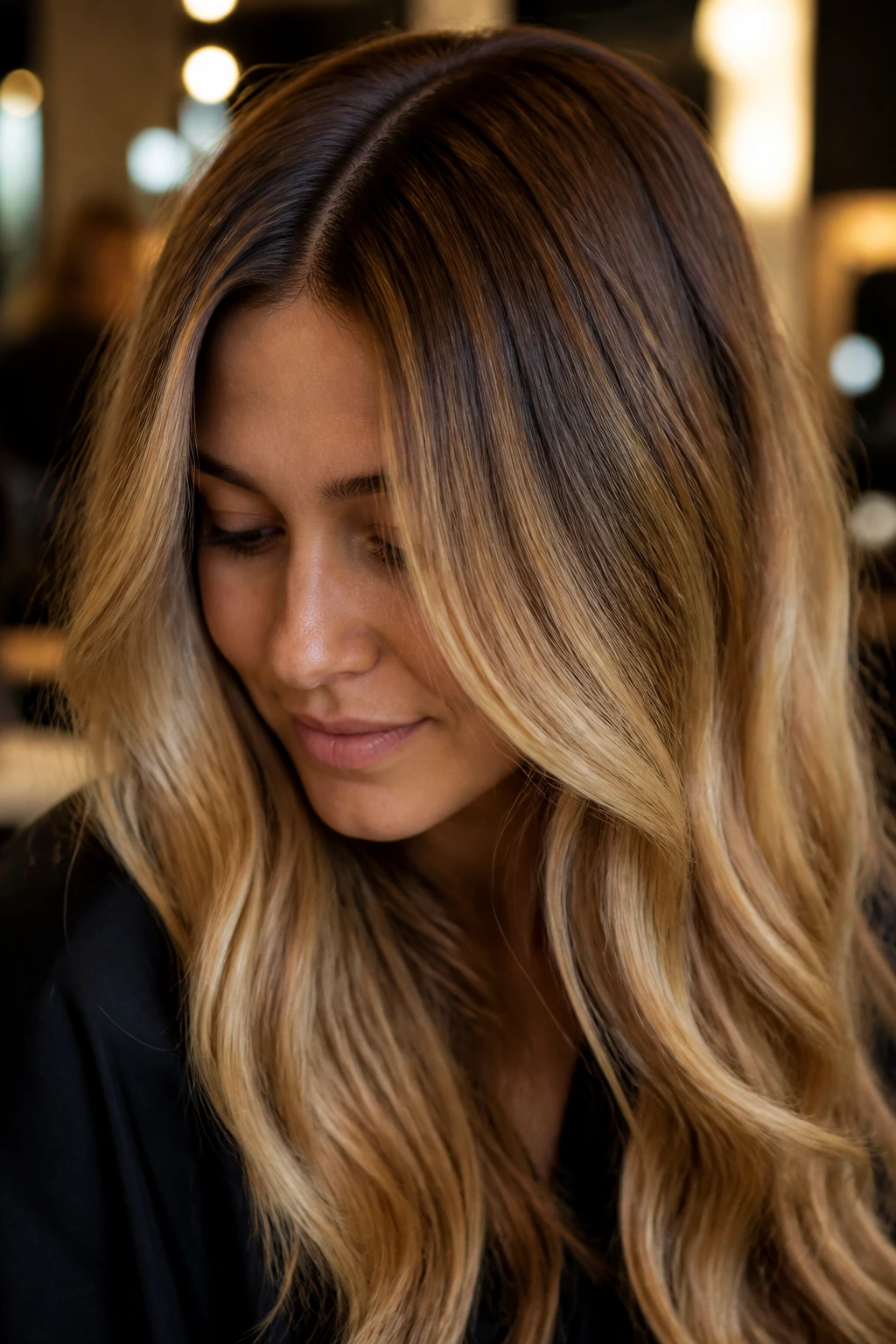
A cinnamon root melt is for people who like warmth but don’t want to babysit their color. The root stays one or two levels deeper than the mids, then melts into gold-blonde lengths with almost no hard line. It’s a smart choice if you go back to the salon every 8 to 12 weeks rather than every month.
The warmth at the root matters here. Cinnamon, chestnut, or warm brown at the base keeps the gold from floating too high off the scalp. On warm skin, that little bit of depth makes the blonde feel anchored.
Ask for: a soft shadow that starts about 1/4 to 1/2 inch from the scalp, then blends into honey-gold through the mids.
5. Vanilla-Drizzle Face Frame
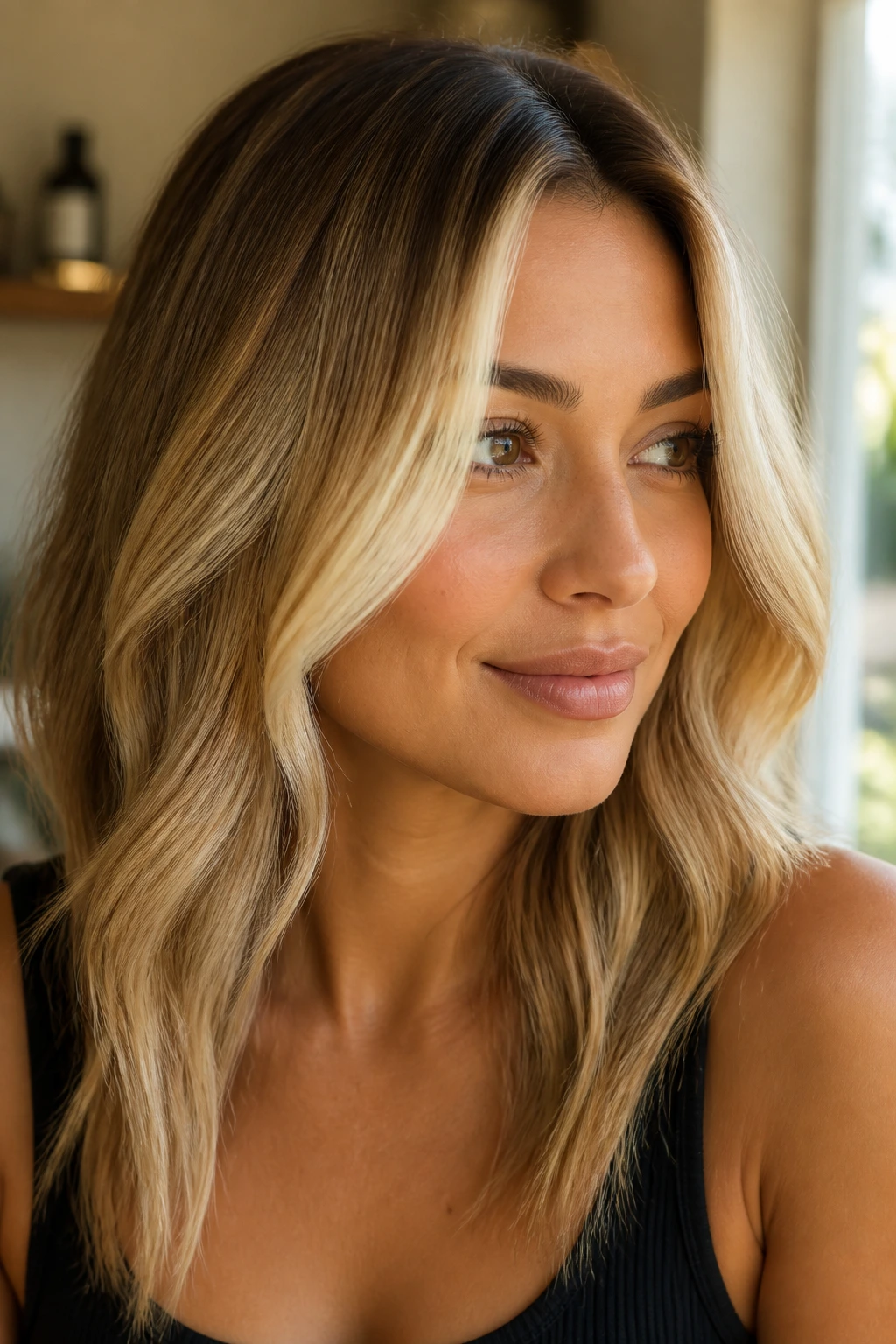
A vanilla-drizzle face frame gives you brightness where it counts without turning the whole head into a blonde project. The front pieces should be lighter than the rest of the hair, but the tone needs to stay creamy, not icy. That balance is what keeps the color flattering on warm skin.
This version works especially well around cheekbone-length layers and curtain bangs. The front gets a little more light, the sides get a little less, and the overall look feels lifted but controlled. If your hair tends to get brassy near the hairline, tell the colorist to keep the front soft at the root and glaze it warm rather than yellow.
6. Toasted Almond Midlength Lights
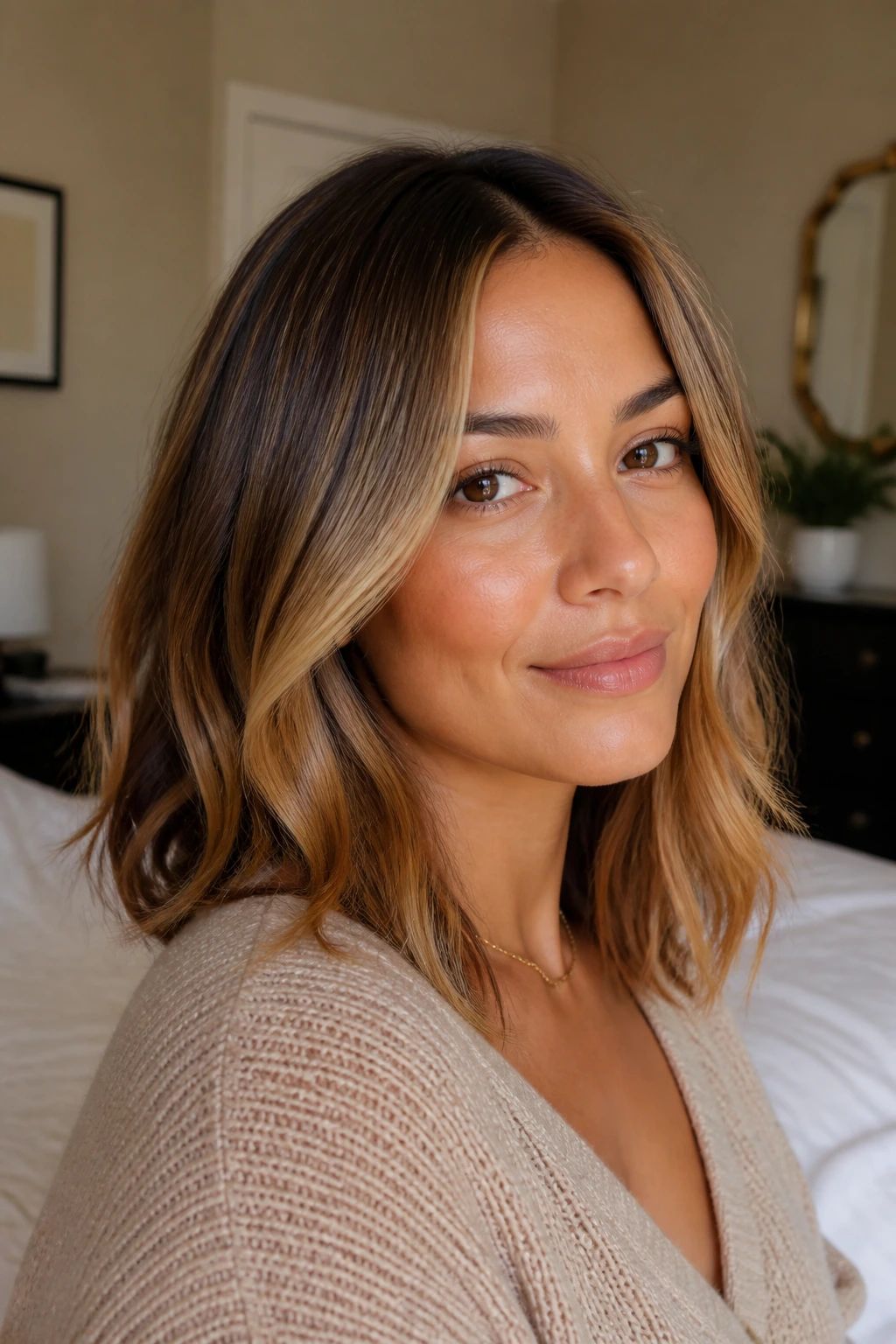
What makes toasted almond midlength lights look more refined than all-over blonde? The brightness sits in the middle of the hair, where movement is easiest to see, instead of crowding the scalp or bleaching the ends to death. It’s a smart placement for lobs and layered cuts that want shape.
The tone should read like almond skin with a little honey, not sandy beige. That warmer reflect is what flatters peach and golden complexions. If the ends are already light, keep them a touch deeper so the whole style doesn’t blur into one pale sheet.
7. Champagne-Gold Ends
Champagne-gold ends work best when the root is left deeper and the light lands where hair swings. This is a softer take on the “light ends” look—less beachy cliché, more polished shine. The blonde should sit in a creamy gold zone with just enough beige to keep it from looking raw.
Warm skin loves this when the hair is waved or curled, because the ends catch the eye without crowding the face. It’s a good choice if you want blonde to show most when you move, not when you’re sitting still. The downside is simple: if your ends are already dry, push for gloss rather than more lift.
8. Copper-Kissed Gold Streaks
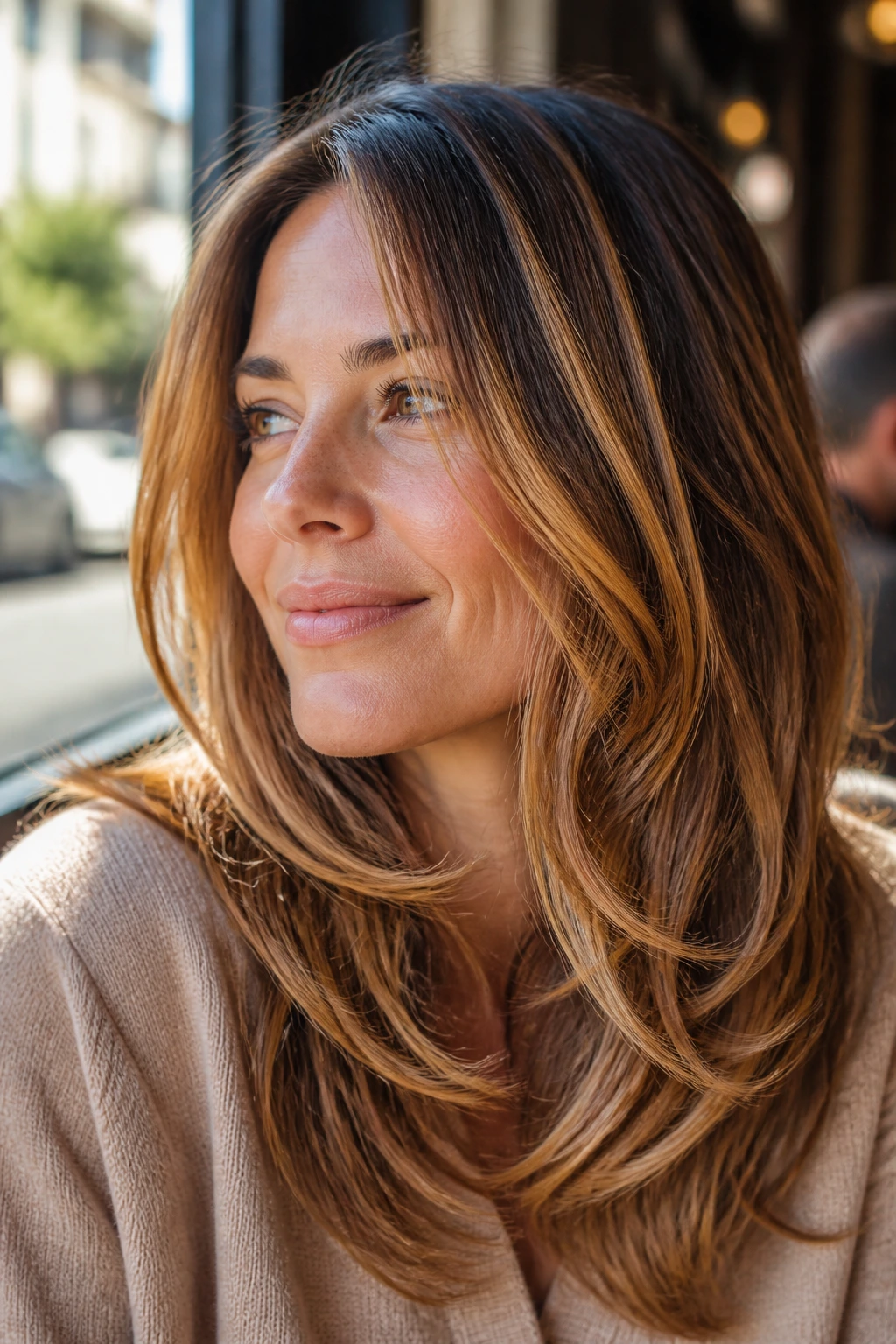
Why do copper-kissed gold streaks work so well on peachy or freckled warm skin? Because the hair shares a little color family with the complexion. The trick is to use copper as a whisper, not a headline—think gold with a warm copper glaze, not full red-blonde.
This look can be stunning on layered cuts because the streaks flash in the light and then disappear into the base again. It’s a good one for people who feel plain in beige blonde but do not want obvious red. If you have a strong orange tendency in your hair, keep the copper tiny and let the gold do the heavy lifting.
9. Sandy Gold Peekaboo Lights
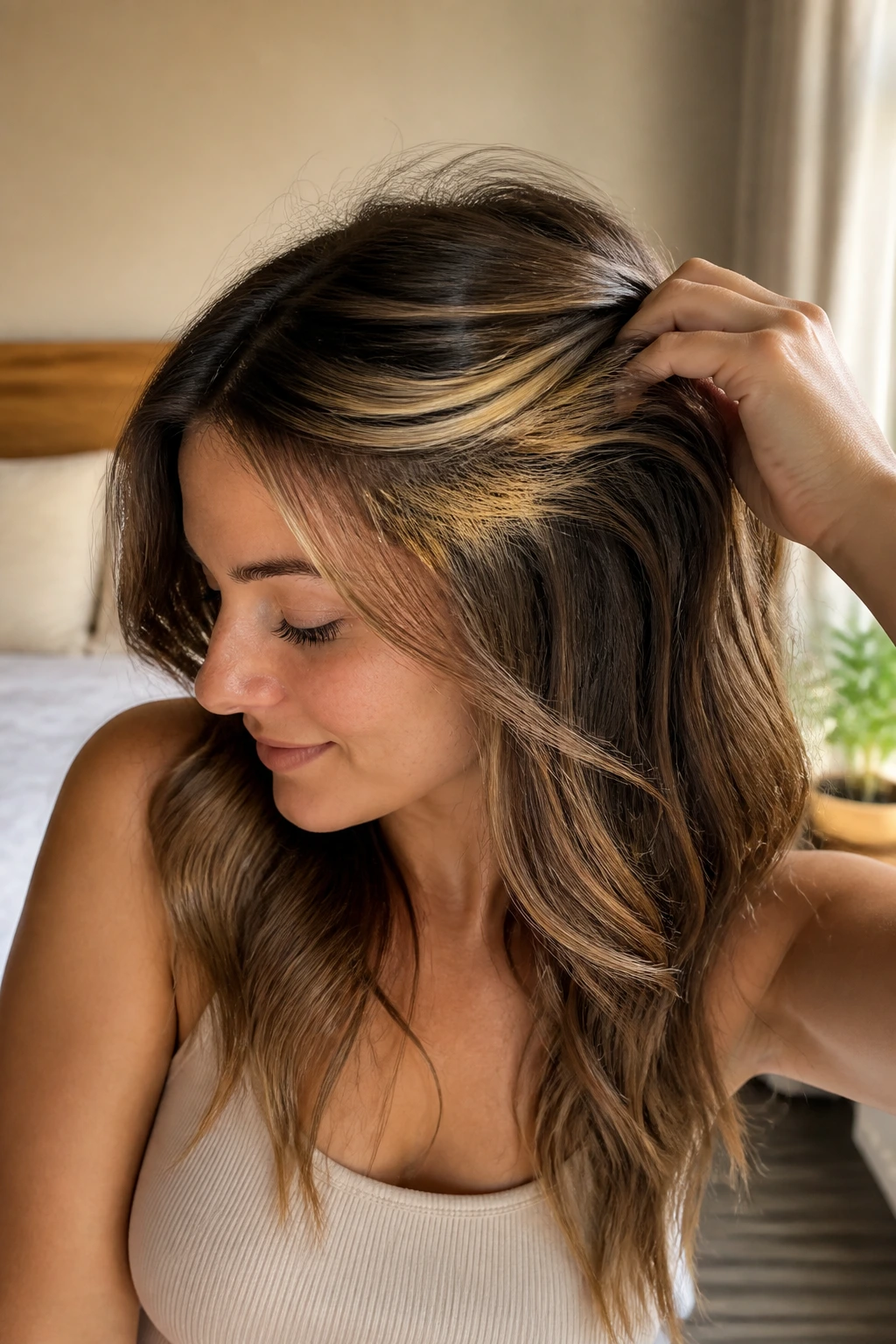
Peekaboo lights are for people who want movement, not a full public announcement. The gold is tucked under the top layer, often around the nape or inside the crown, so it only shows when the hair swings, twists, or gets tucked behind the ear.
That hidden placement can be especially good on warm skin because it creates depth without flooding the face with brightness. You get the warm flash when the hair moves, and the top layer stays rich and believable. It’s also one of the easier ways to test gold blonde before going more visible.
10. Golden Curl Pop Lights
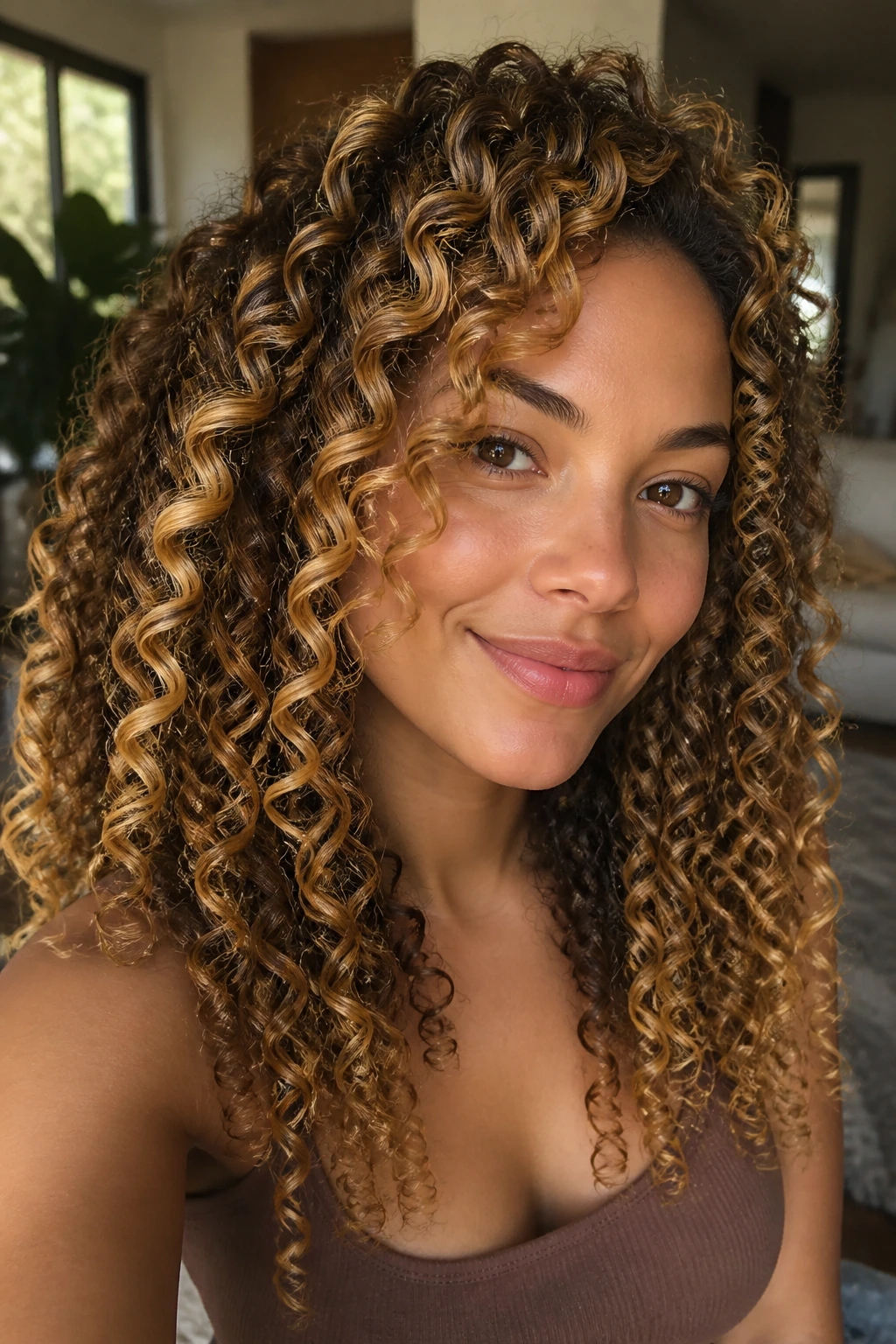
Curly hair needs gold placed where the curl bends, not painted across every strand like straight hair. That’s why this version works: the lighter pieces sit on the outer ringlets and a few interior curls, so the pattern follows the shape of the hair instead of fighting it.
On warm skin, golden curl pop lights make the curl pattern look clearer and the complexion look warmer. Ask the colorist to keep the lift even and not to bleach the ends too hard, because curly hair shrinks and the ends show damage faster than people expect. Soft gold on curls beats overprocessed blonde every time.
11. Bronde Glow Balayage
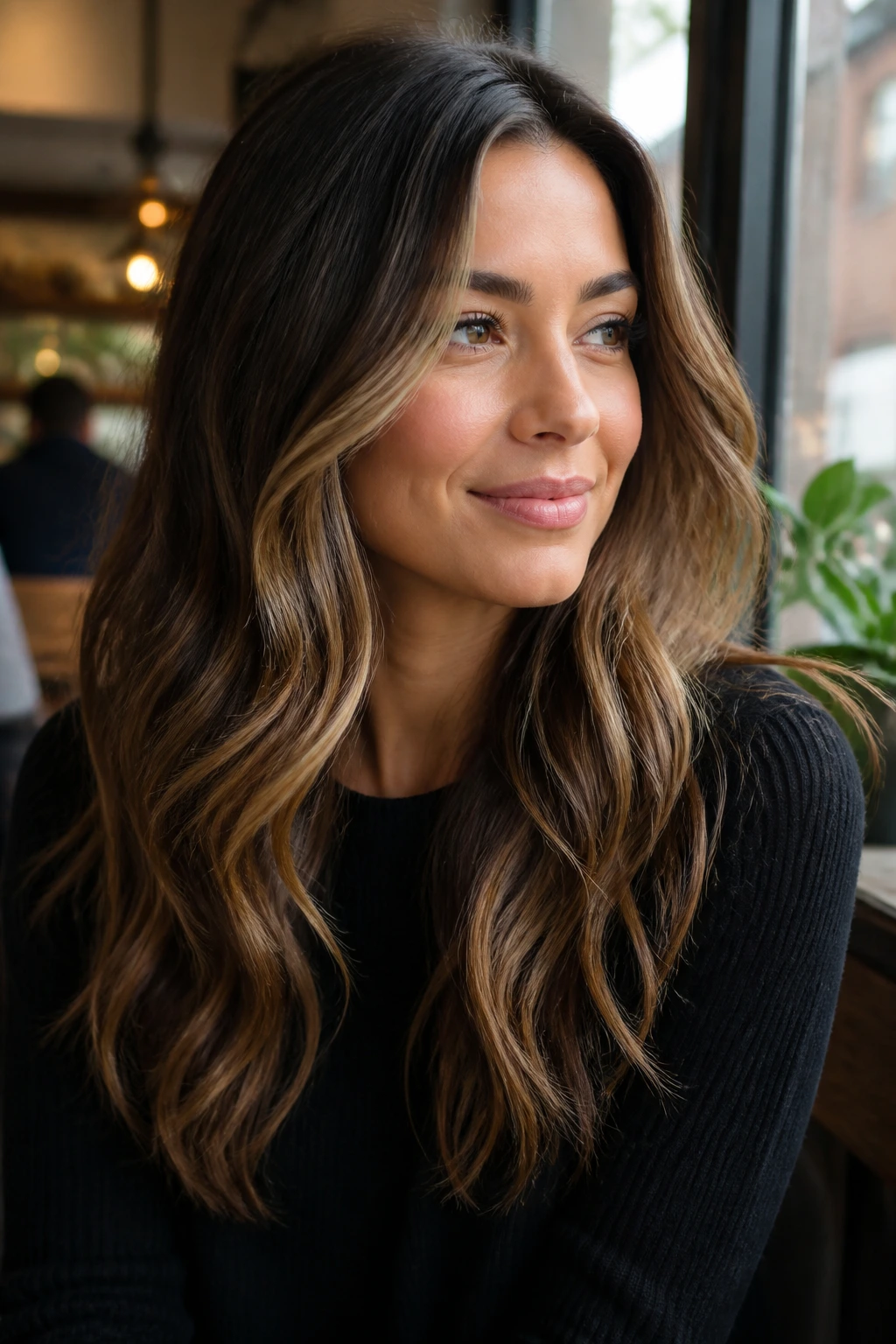
Bronde glow balayage is the safe harbor for brunettes who want gold without turning into a full blonde. The base stays brown, the highlights rise to a honey or gold-beige level, and a few lowlights keep the result grounded. It’s a low-drama way to brighten warm skin because the hair still looks like hair.
The best bronde reads as depth with light scattered through it, not two colors sitting side by side. If your natural base is around a level 5 or 6, ask for highlights that stop at level 7 or 8, then finish with a warm gloss. That small lift is often enough.
12. Sunlit Feathered Layers
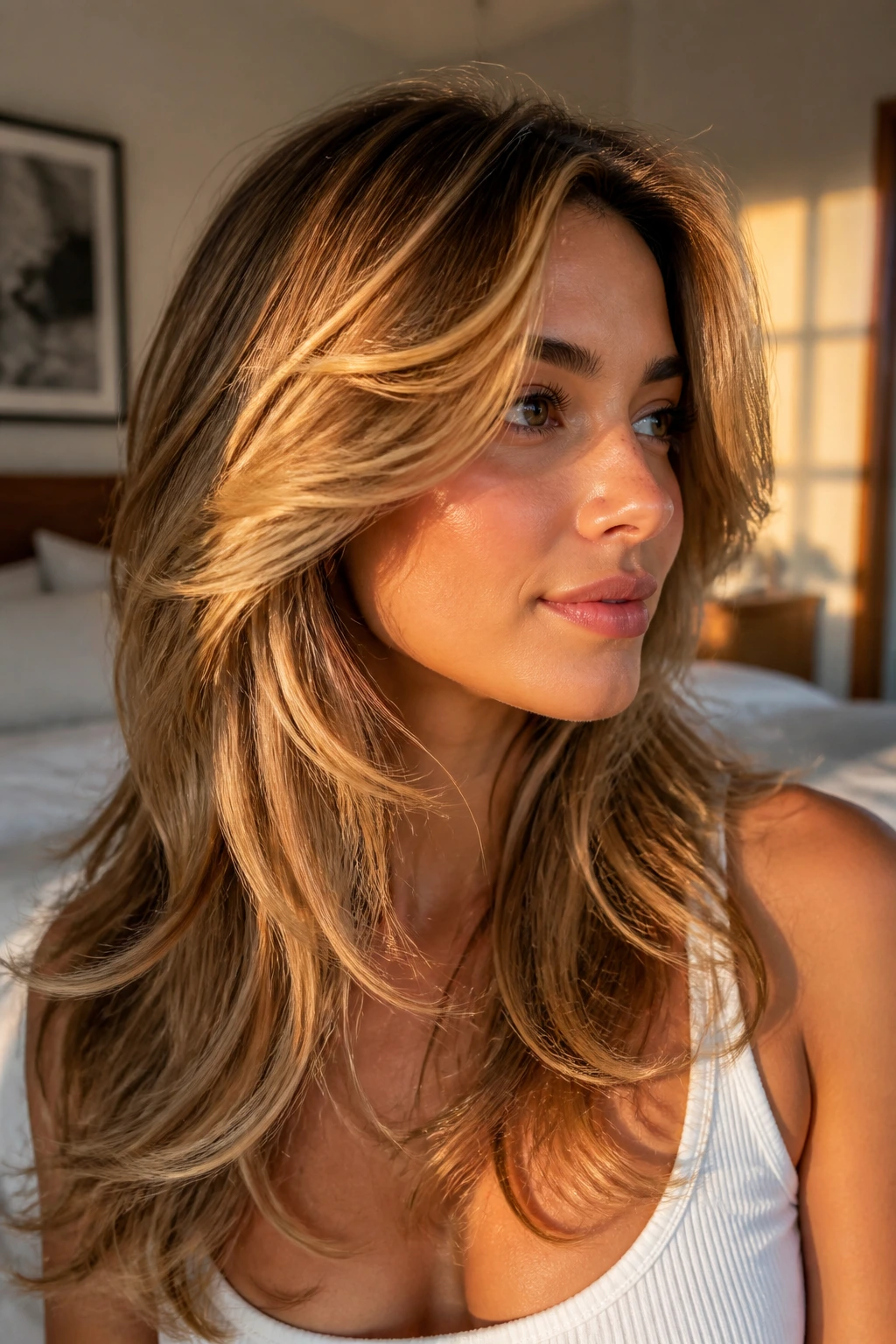
Sunlit feathered layers are for cuts that already have movement. Instead of painting brightness everywhere, the color follows the feathering of the haircut—lighter around the top, the face frame, and the pieces that kick outward when you blow-dry.
That placement matters on warm skin because it breaks the light into smaller pieces. The result feels airy instead of heavy. If your cut has shaggy edges or lots of texture, this is one of the better ways to make gold blonde look natural rather than styled to death.
13. Maple Toffee Panels
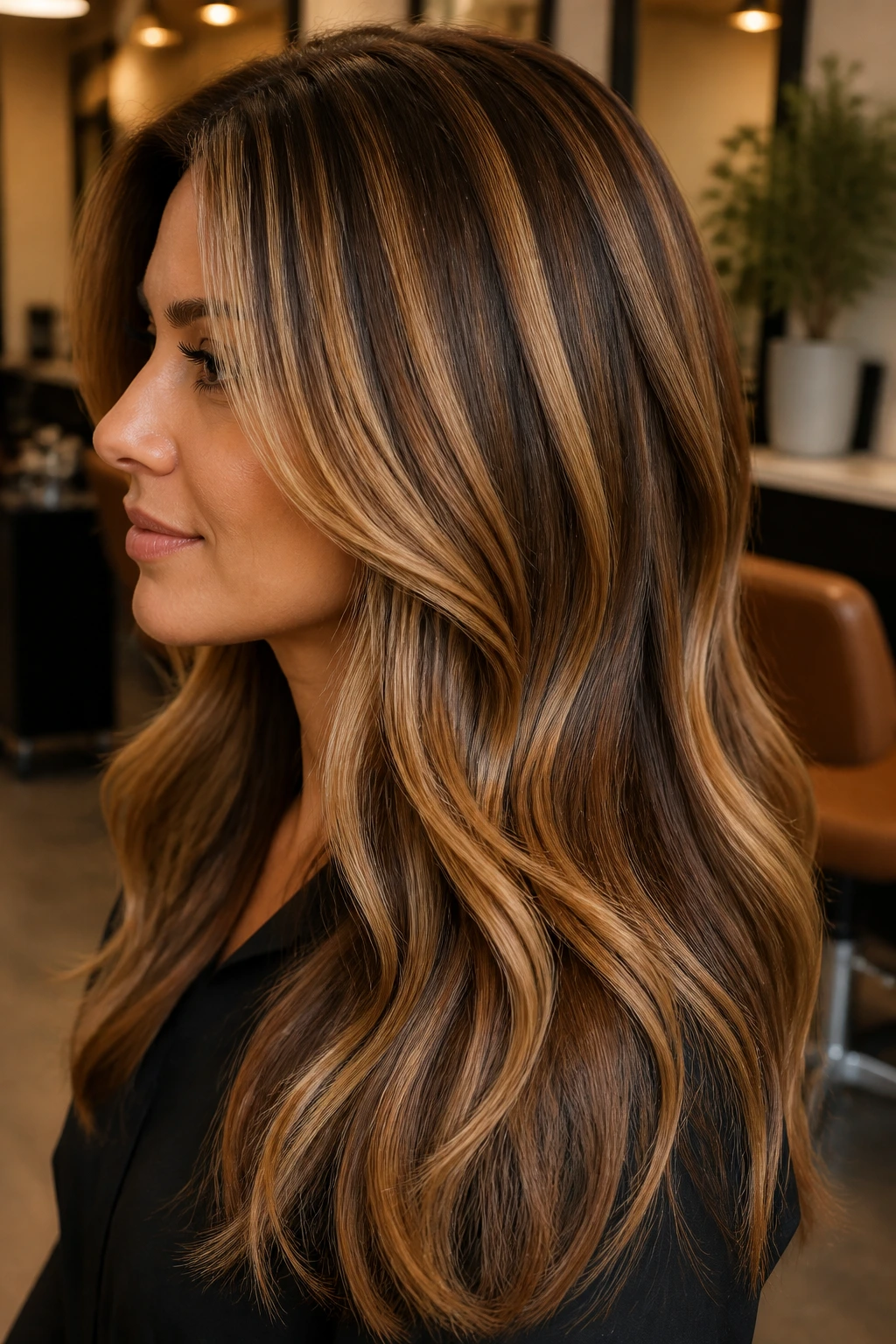
Maple toffee panels are broader, more visible sections of light, and they’re a good fit for thick hair that can swallow tiny highlights. The panels should stay warm and creamy, with lowlights between them so the blonde doesn’t wash out the haircut. Think of it as structure, not decoration.
On warm skin, the richer toffee base keeps the lighter pieces from turning stark. This one works especially well on blunt cuts, long layers, and dense textures that need contrast to show shape. It’s not whisper-soft. It is supposed to be seen.
14. Peachy Gold Gloss Highlights
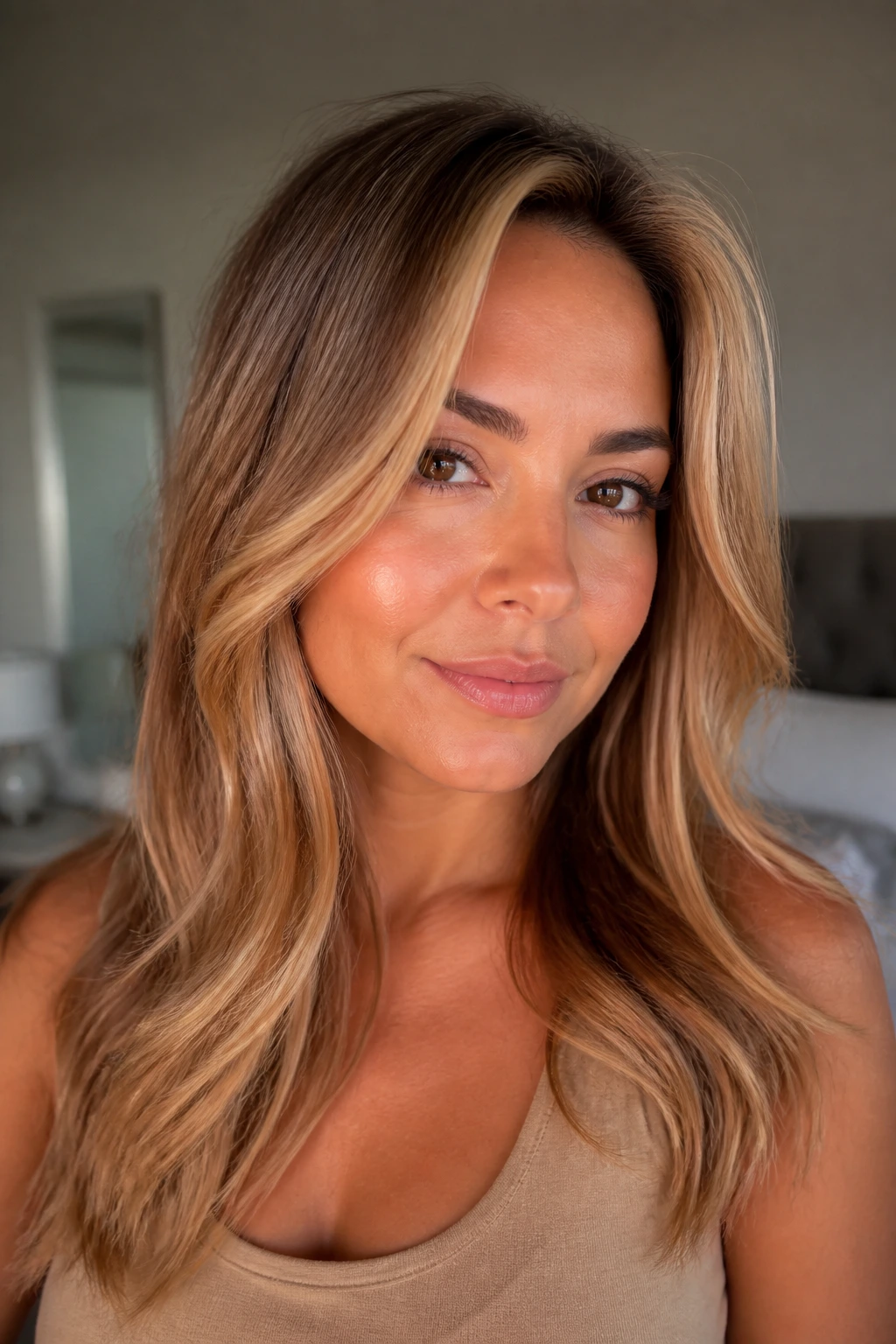
Sometimes the smartest move is not another round of bleach. A peachy gold gloss can wake up faded highlights, give them a warmer reflect, and make the whole head look freshly done without changing the structure of the color.
This is especially useful if your existing blonde has gone too pale or too beige. On warm skin, a peach-gold finish warms the face in a way that flat blonde does not. It’s a maintenance choice, yes, but it can look like a full color refresh if the base is already there.
15. Buttercream Lob Lights
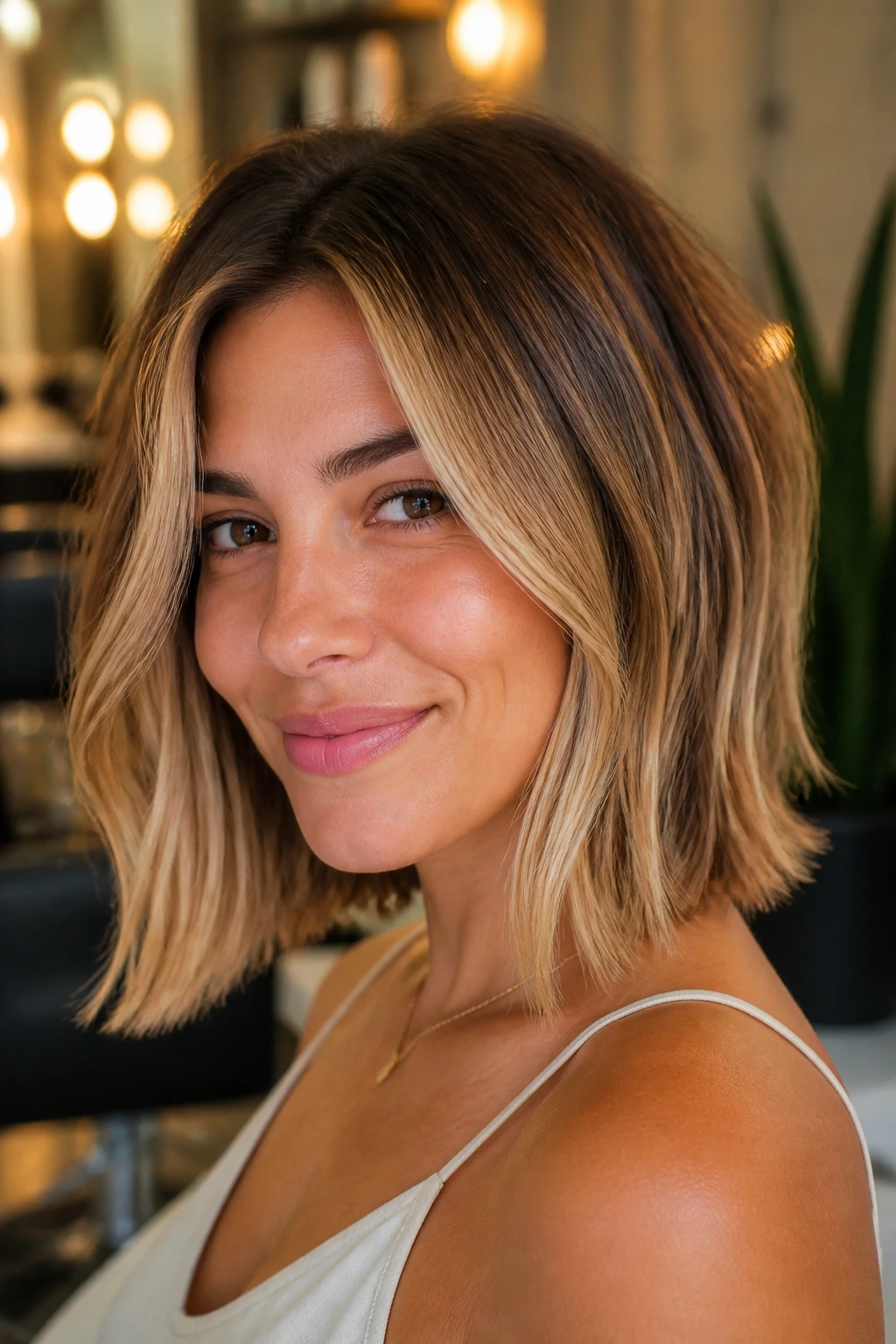
A buttercream lob needs highlight placement that respects the cut. The light should sit around the perimeter, skim the top layer, and brighten the front enough to show off the bob’s shape without bleaching every inch of it. A long bob can go flat fast if the color is too even.
Warm skin likes buttercream because it’s soft, creamy, and not too yellow. If you wear your lob straight, keep the ends a touch deeper. If you wear it with a bend, the light will catch the curve and make the whole cut look cleaner.
16. Warm-Rooted Foils
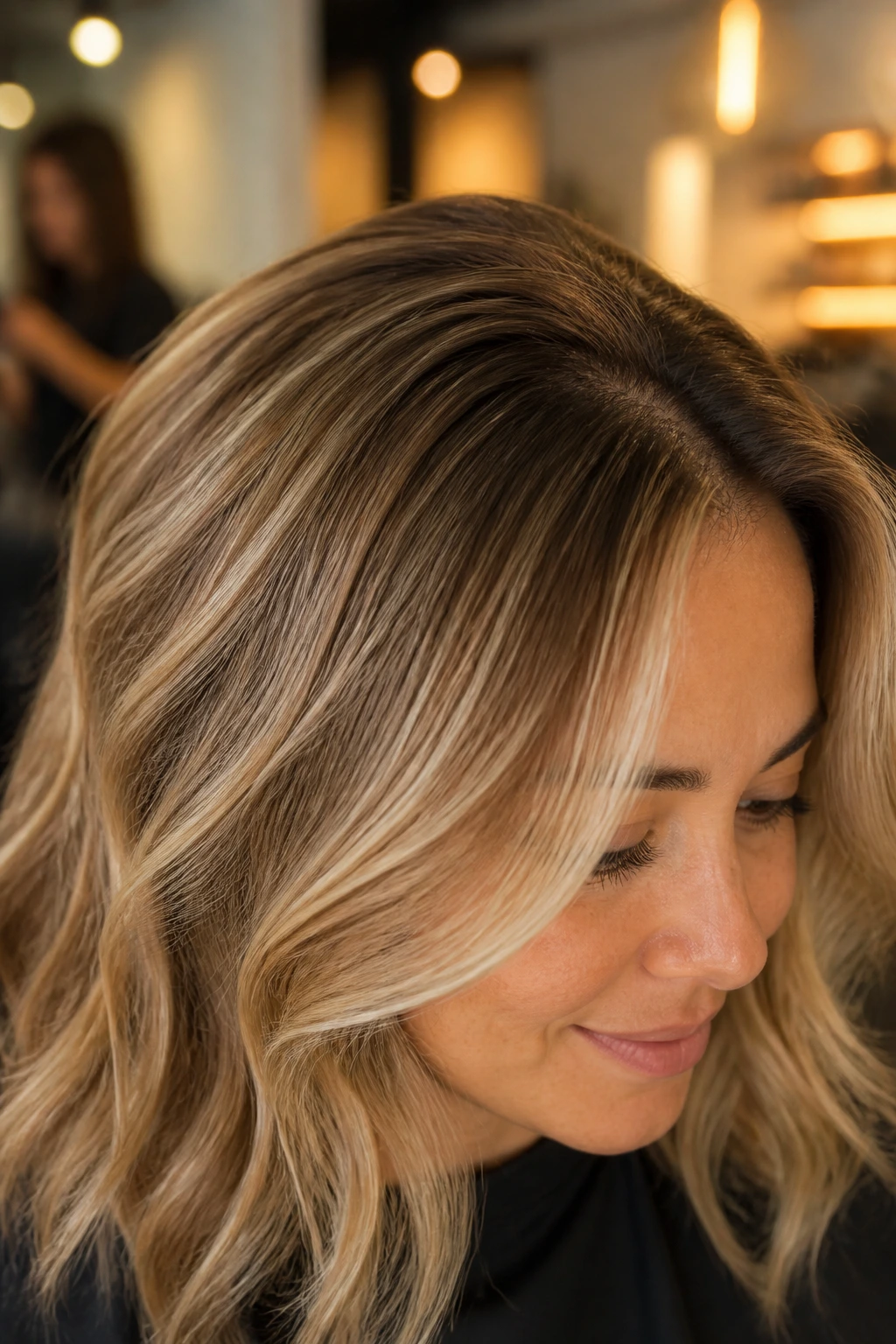
Warm-rooted foils are the classic salon answer for someone who wants brighter hair but a gentler grow-out. The root stays soft and warmer than the mids, which avoids that abrupt highlight line that can happen when the scalp is lifted too hard. It’s a clean look, not a stiff one.
For warm skin, this matters because the root shadow keeps the face from floating in blonde. Ask for a root that sits one shade deeper than the highlight zone and a toner that stays beige-gold instead of silver. If you have gray coming in, this is also easier to blend than a super-light root.
17. Bronze Blonde Dimension
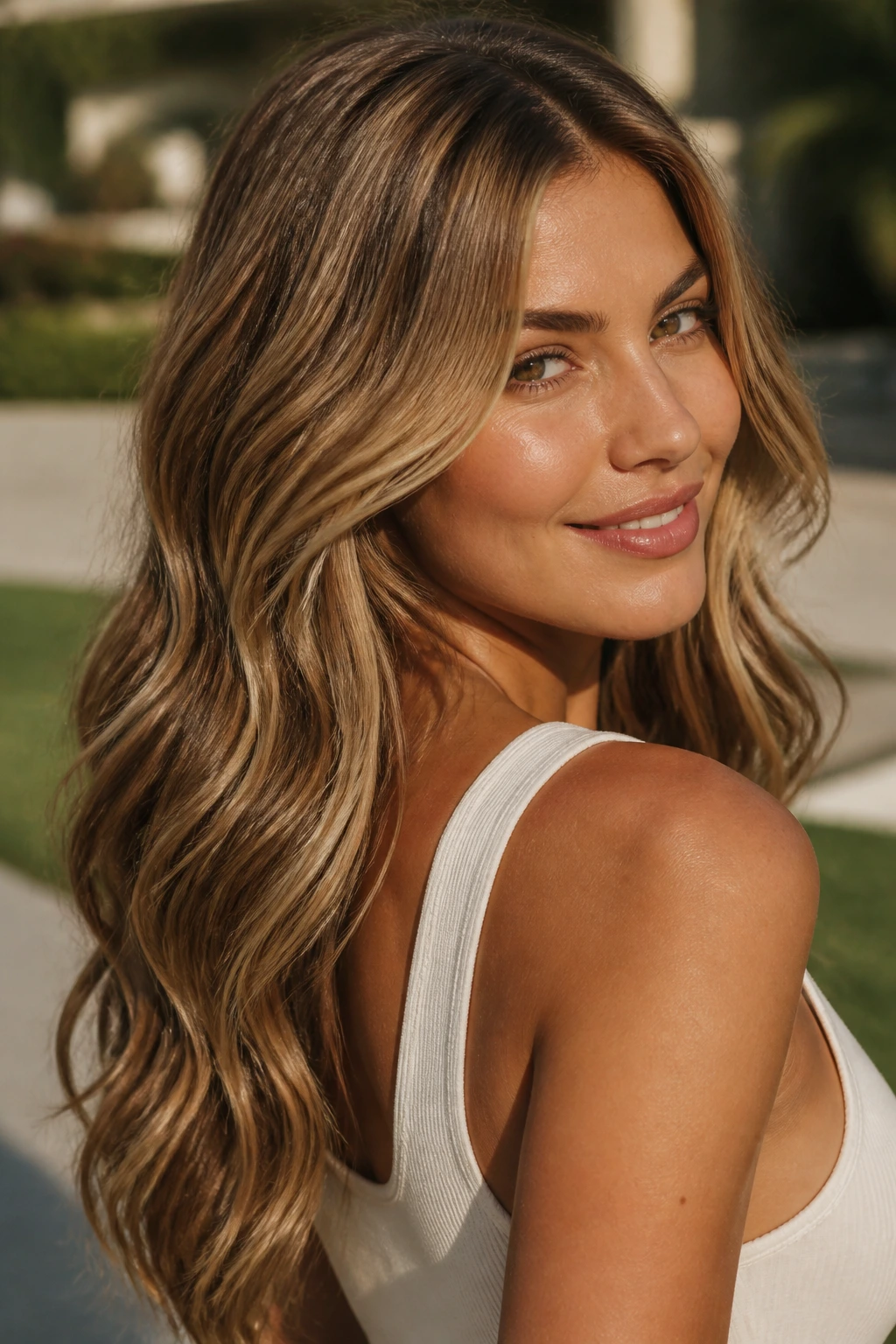
Bronze blonde dimension is one of my favorites for thick hair because it keeps the color from looking thin. The lowlights add brown-bronze depth, the highlights add gold, and the two together stop the hair from reading as one flat sheet.
Warm skin tends to love this because the bronze keeps the palette cohesive. There’s no harsh cool note snapping out of place. If your hair gets frizzy, this kind of depth can make the surface look smoother than a very pale blonde would.
18. Goldleaf Chunky Accents
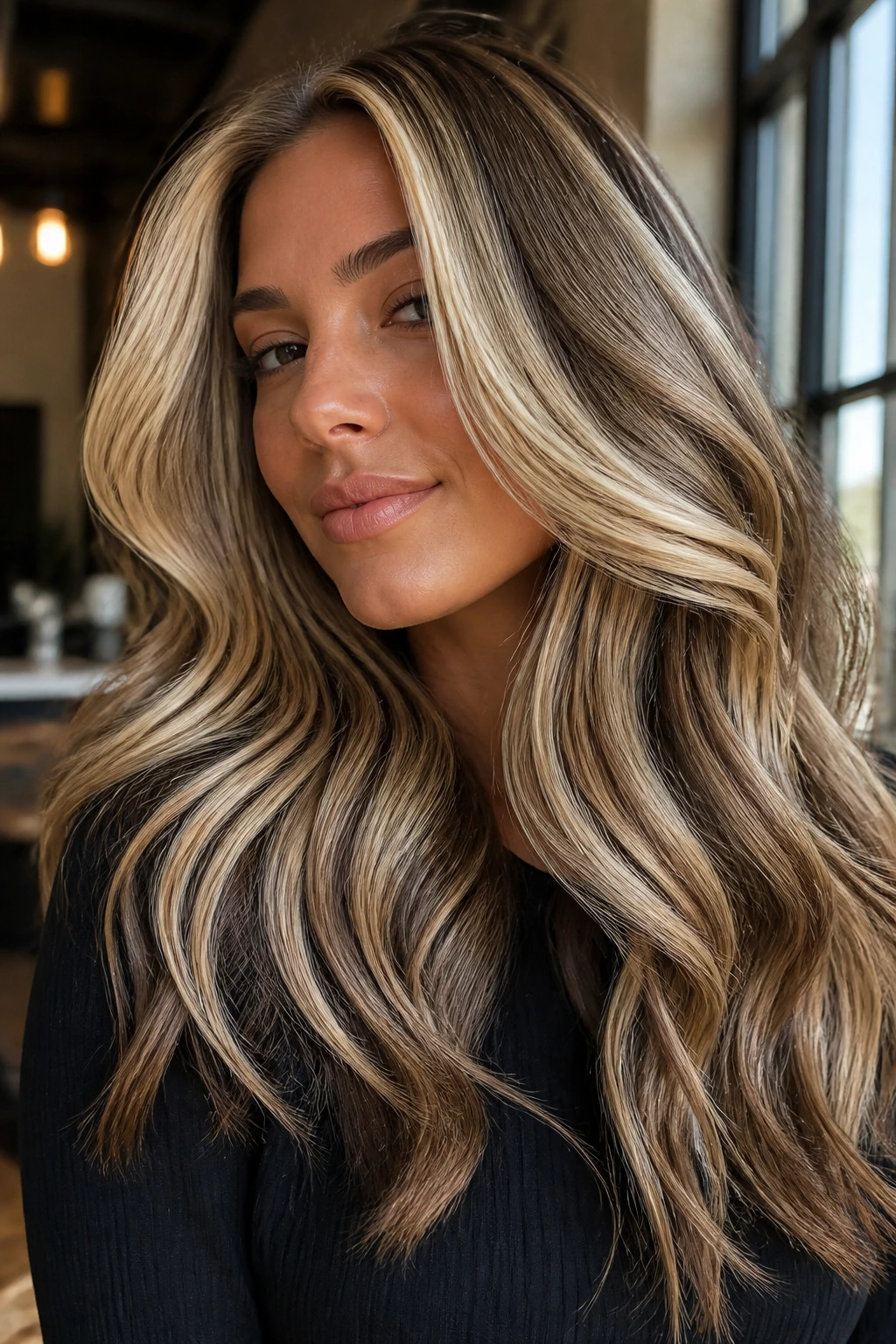
Chunky accents are not for everyone, and that is part of the charm. When the gold pieces are wider and carefully spaced, the style can look bold without turning into stripes. The key is tone: keep the gold rich and beige, and keep the base glossy.
On warm skin, goldleaf accents can be especially striking with a layered cut or a blunt line that needs visual edge. They work best when the hair has enough density to support bigger sections. If you want soft and barely-there, skip this one. If you want the highlight to be seen from across the room, this is your lane.
19. Curtain Bang Glow
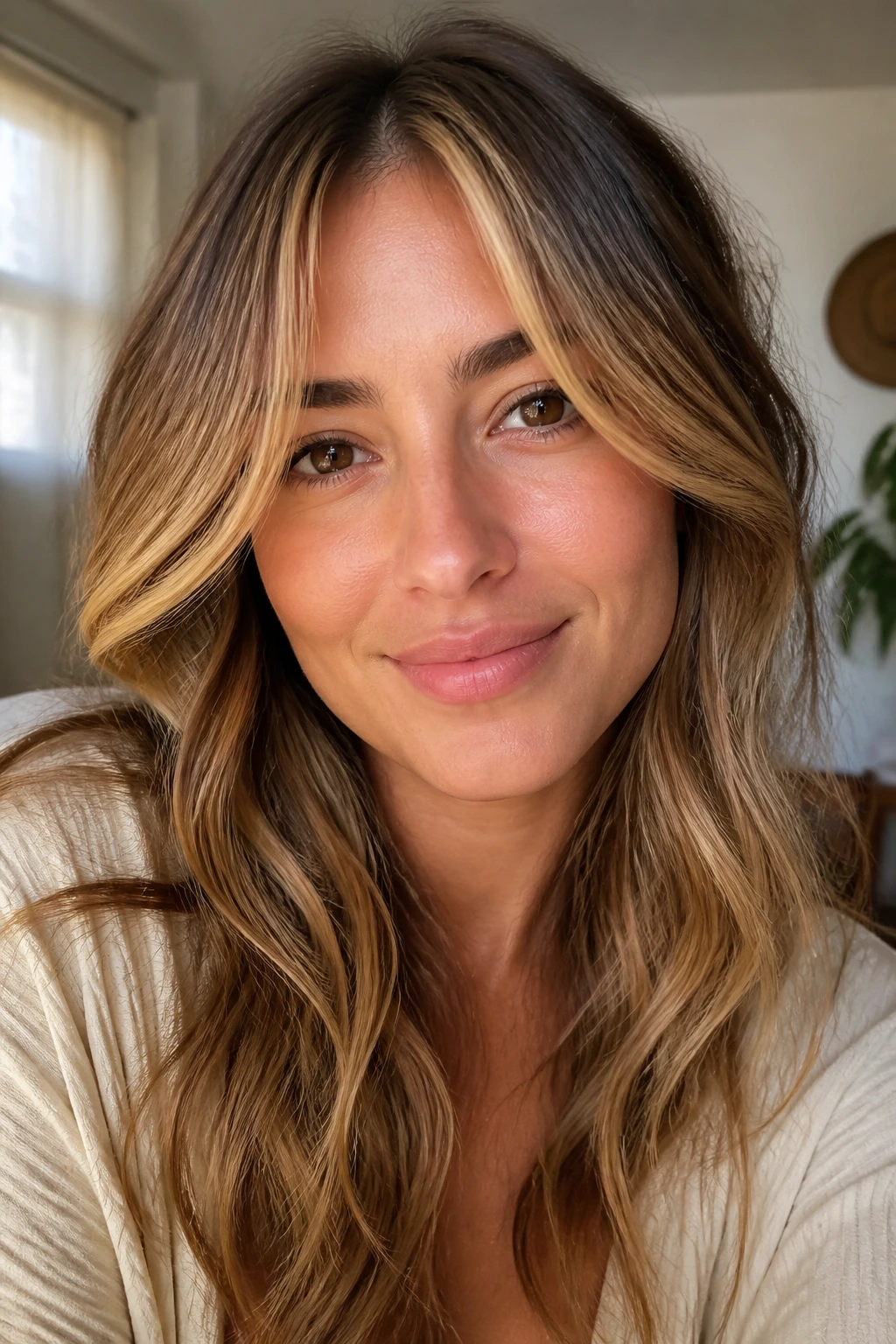
Curtain bangs eat up light like nothing else, which is why a dedicated glow around the fringe can change the whole face. The highlights should sit around the temple and the first few inches of the bangs, then melt into the rest of the hair so it does not look like the fringe was attached later.
Warm skin benefits because the brightness lands right where expression happens. Eyes look clearer, cheekbones look higher, and the haircut gets a little more shape. Keep the tone warm enough that the bangs do not turn yellow under indoor lighting.
20. Beachy Foilayage
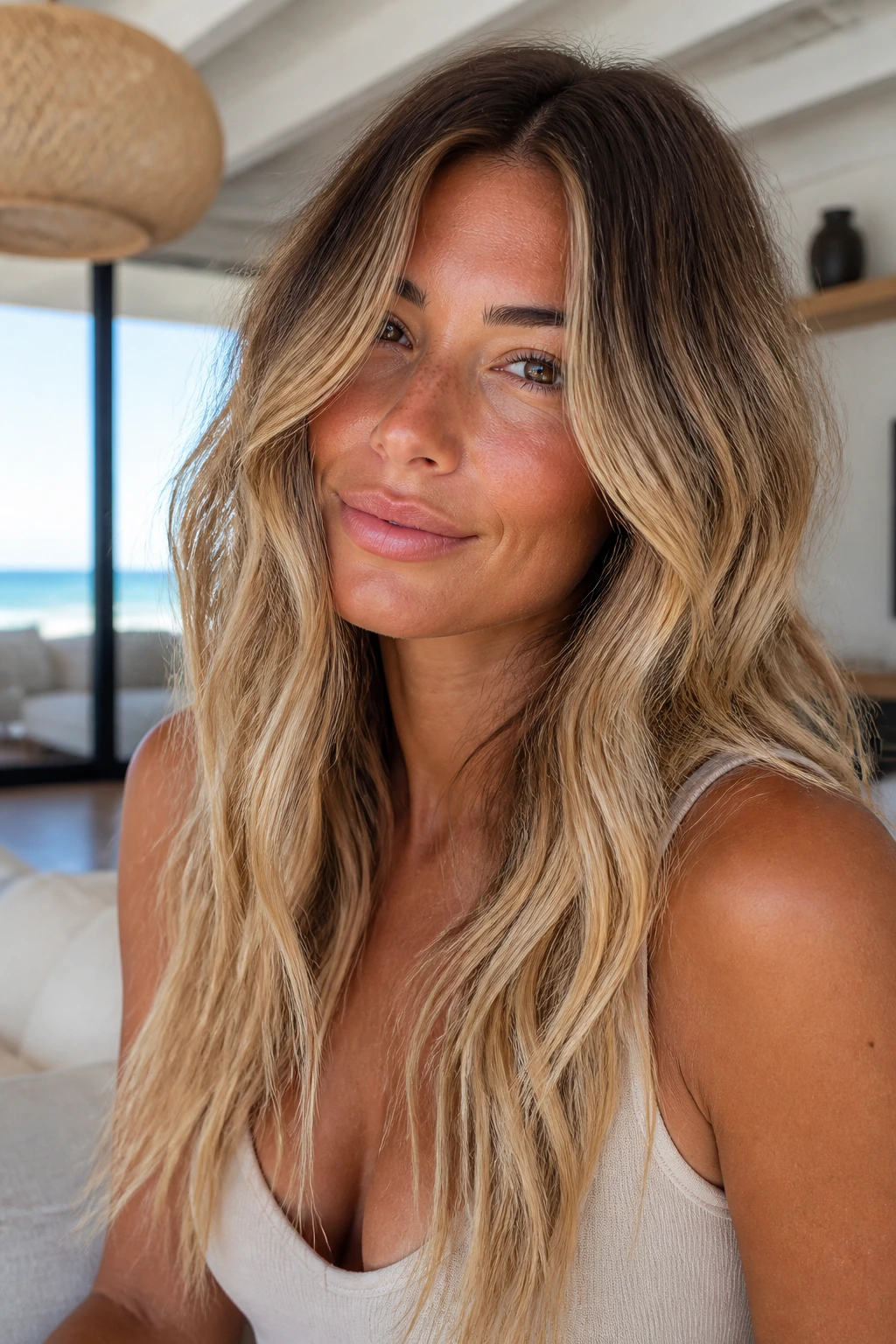
Foilayage is the hybrid move for people who want lift and softness in the same appointment. Foils give the hair enough strength to lighten, while balayage keeps the surface blend broken up so the highlights do not sit in obvious rows. It’s a better option than straight balayage when the hair is dark or resistant.
On warm skin, the mix gives you light that looks sun-touched rather than painted. The ends get bright, the mids stay soft, and the root can remain quietly deeper. If your natural hair is stubborn, this method usually gets you warmer blonde without overprocessing the whole head.
21. Beige-Gold Lowlight Mix
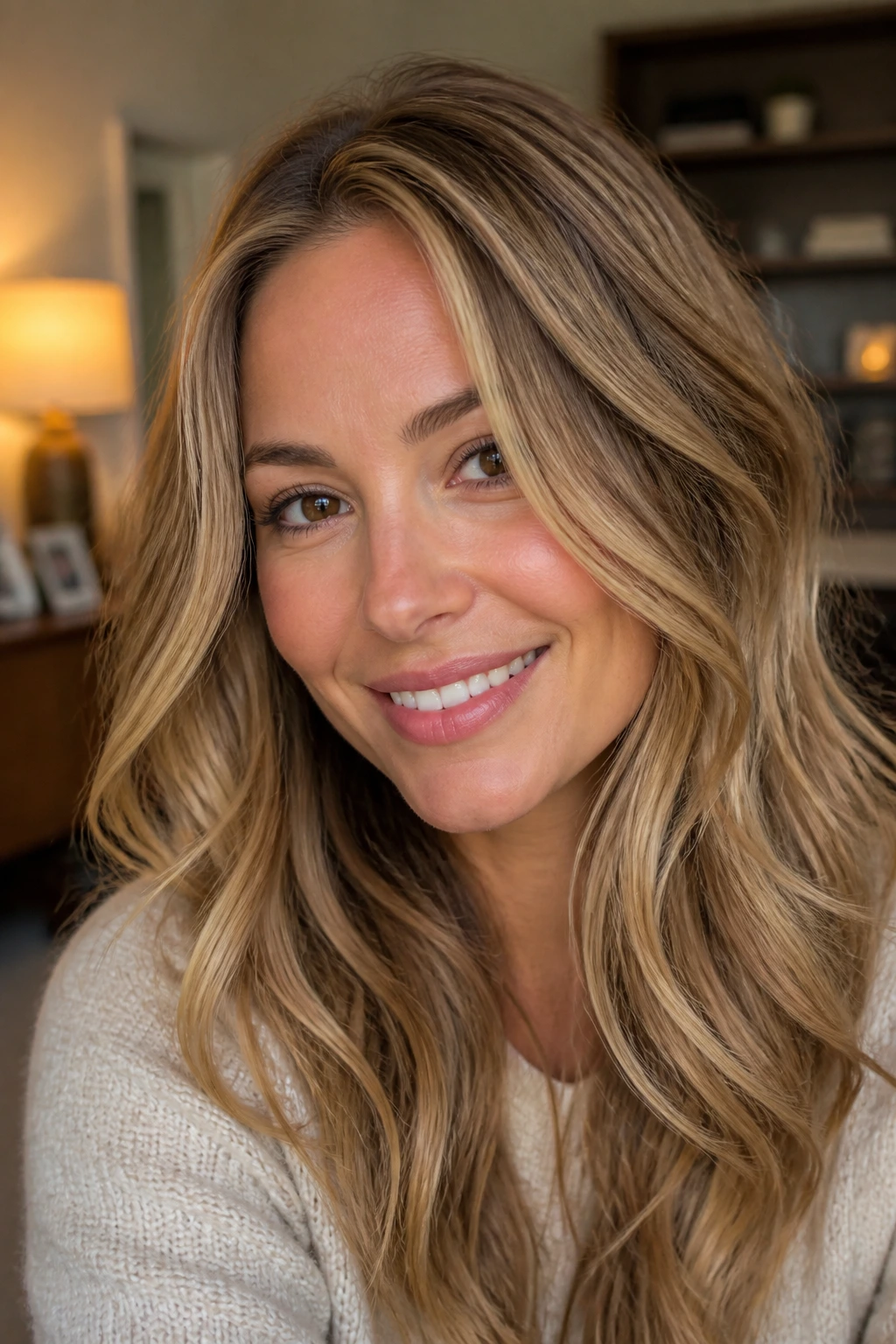
If your blonde looks too wide or too pale, beige-gold lowlights can bring it back to life. A few deeper pieces between the highlights create shadow, which makes the gold read richer and more expensive. Without that depth, warm blonde can go flat in a hurry.
This is especially helpful on fine hair or on previously lightened hair that has lost its shape. Warm skin tends to look better with a little contrast anyway, so the lowlights do more than save the hair—they help the complexion, too. The result is calmer and more dimensional.
22. Strawberry-Gold Blend
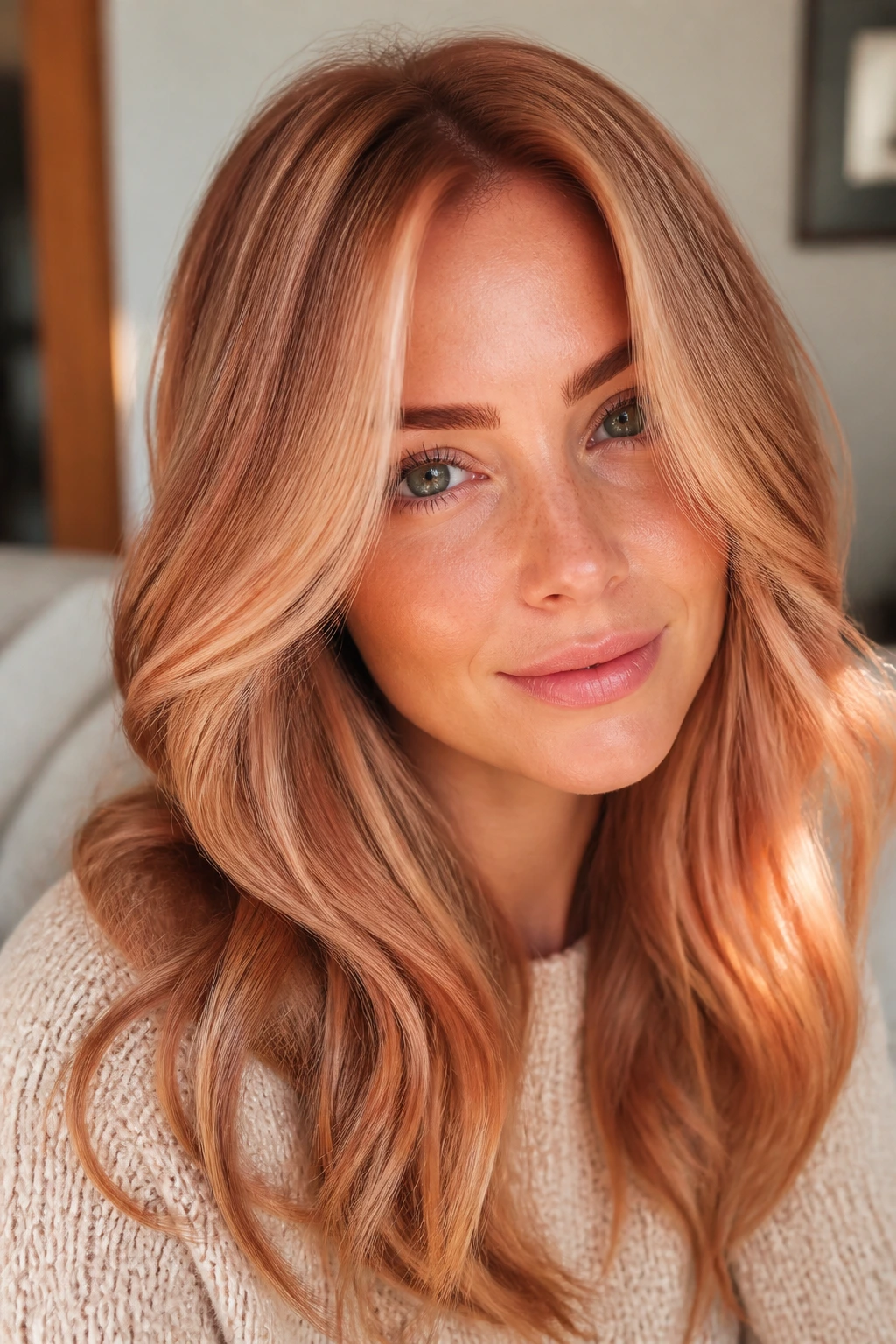
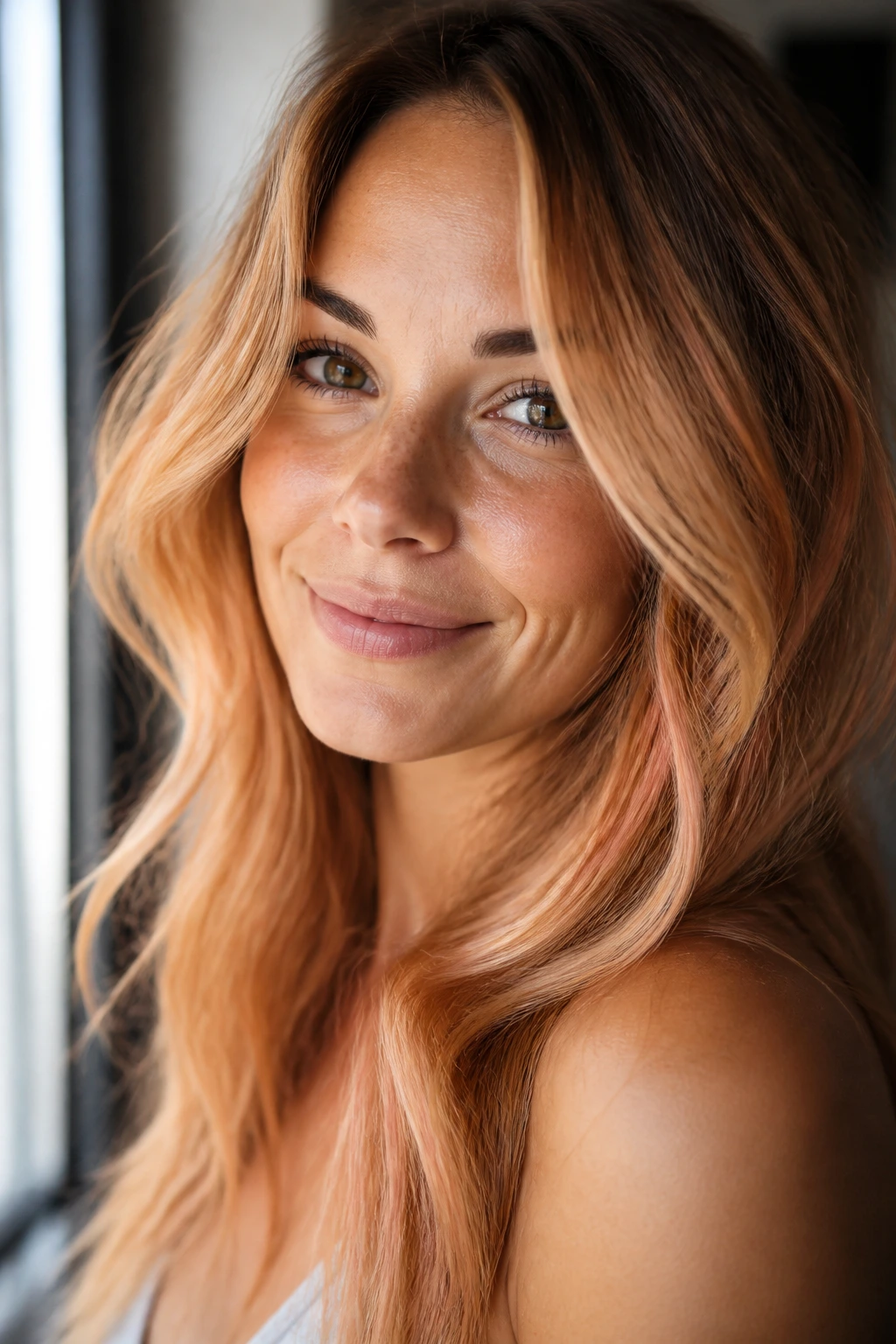
Strawberry-gold is the warmest version in the group, and it’s lovely on peachy or freckled skin when it stays soft. The tone should lean gold with the faintest rosy edge, not full copper. Too much red and the color starts shouting; just enough and the hair looks alive.
I like this best on shorter cuts, softly layered lengths, or anyone who wants their highlights to feel a little more romantic than standard honey blonde. It can be a sneaky-good choice for fair warm skin that gets washed out by beige blonde. The rosy note wakes things up.
23. Amber-Glazed Layers
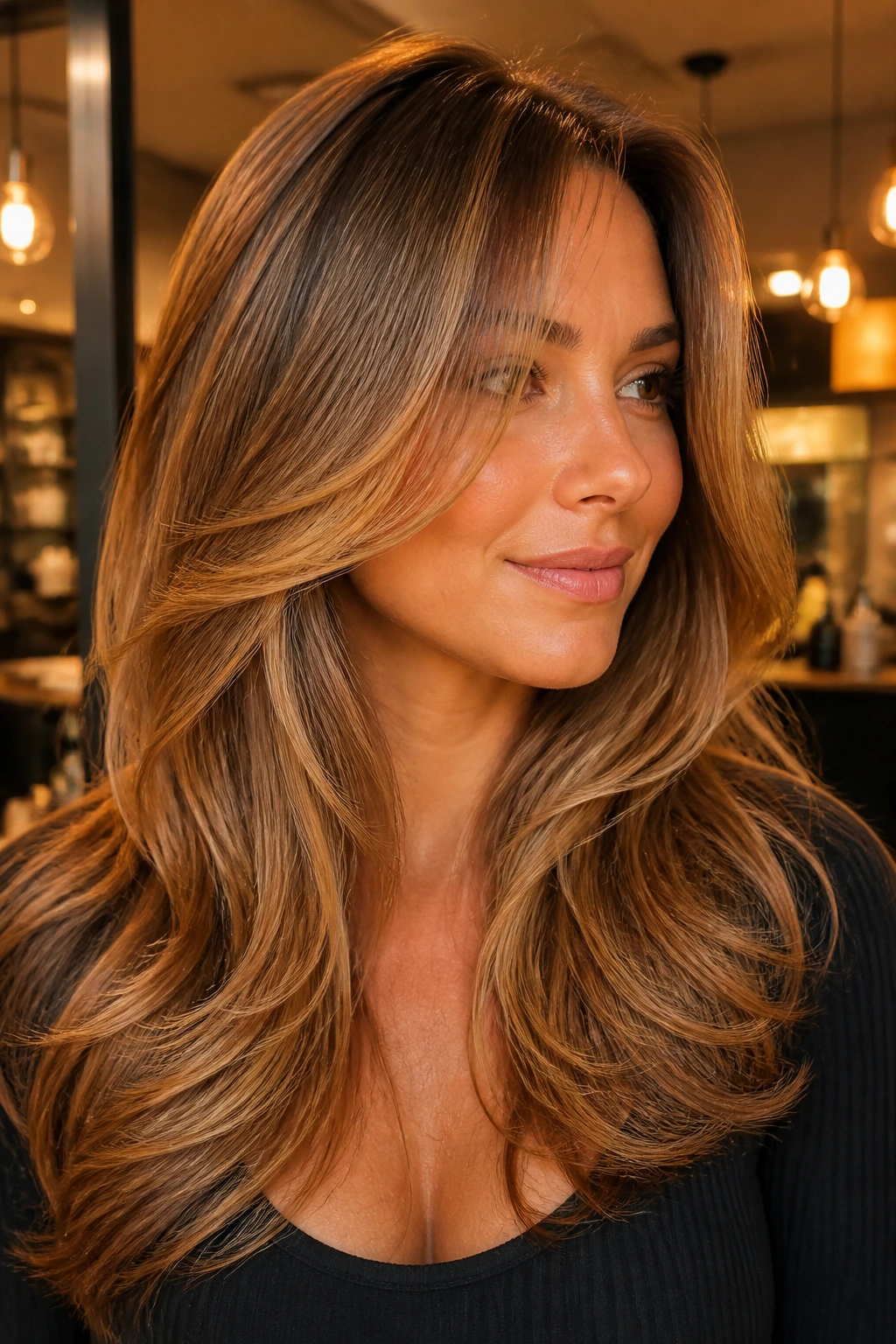
Amber-glazed layers are for people who already have highlights but want more richness, not more lightness. The glaze deepens the tone toward amber and gold, which can make layered cuts look glossier and more deliberate. It’s the color version of turning the lights down one notch and realizing the room looks better.
Warm skin usually loves this because amber reflects the same warm family as the complexion. It works especially well when hair has started to fade into a dull beige. One salon gloss can pull the whole style back together.
24. Soft-Gold Pixie Lights
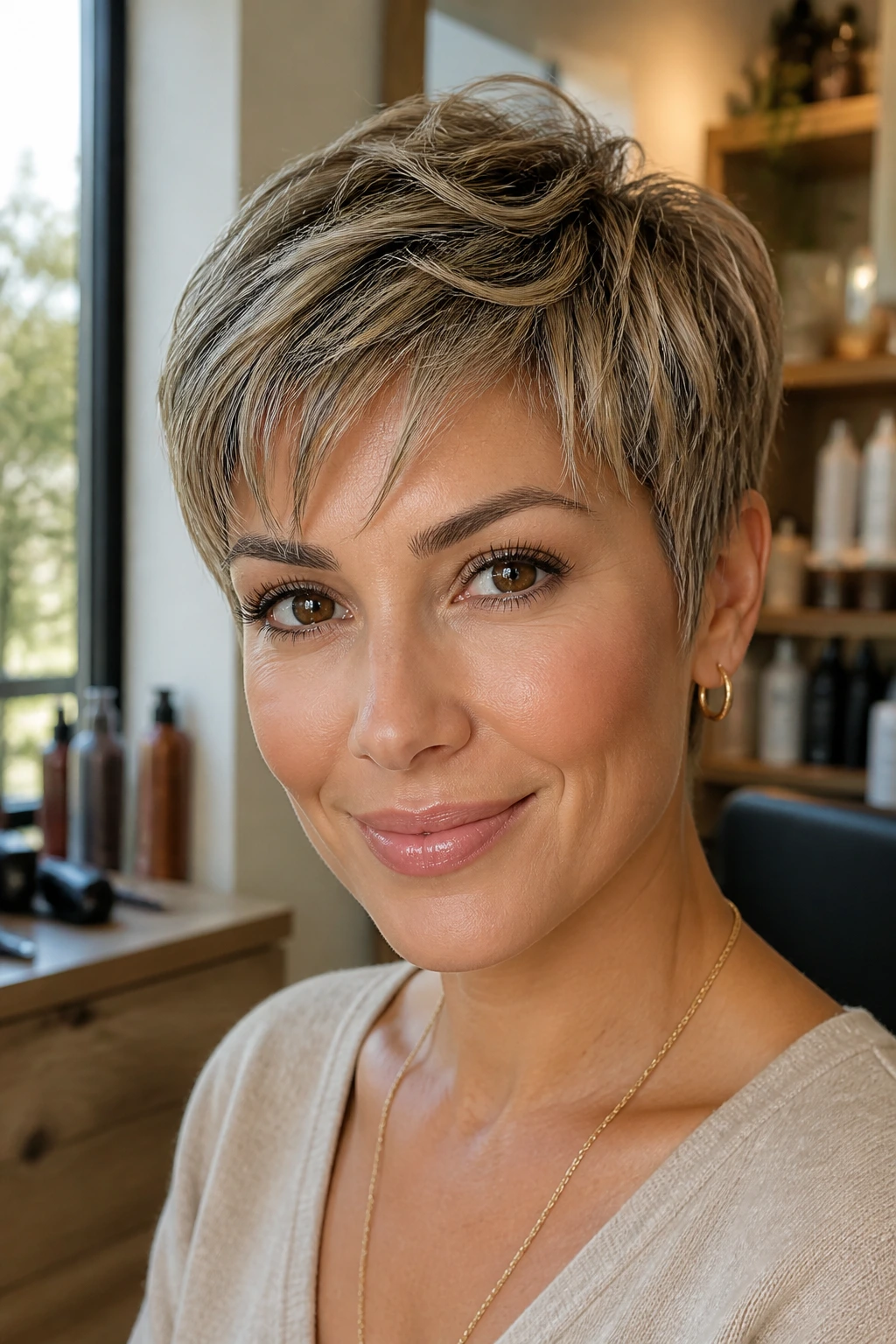
Short hair shows every color line, so soft-gold pixie lights need to be tiny and precise. The light should sit on the crown, around the fringe, and just at the sideburn area, where it can catch motion without creating a blocky stripe. On a pixie or bixie, that small placement does a lot.
Warm skin benefits because the gold brightens the face without overwhelming the cut. Keep the tone buttery and the sections fine. Chunky blonde on short hair can look harsh fast; soft gold gives the shape more lift and keeps the style clean.
25. Melted Halo Blonde
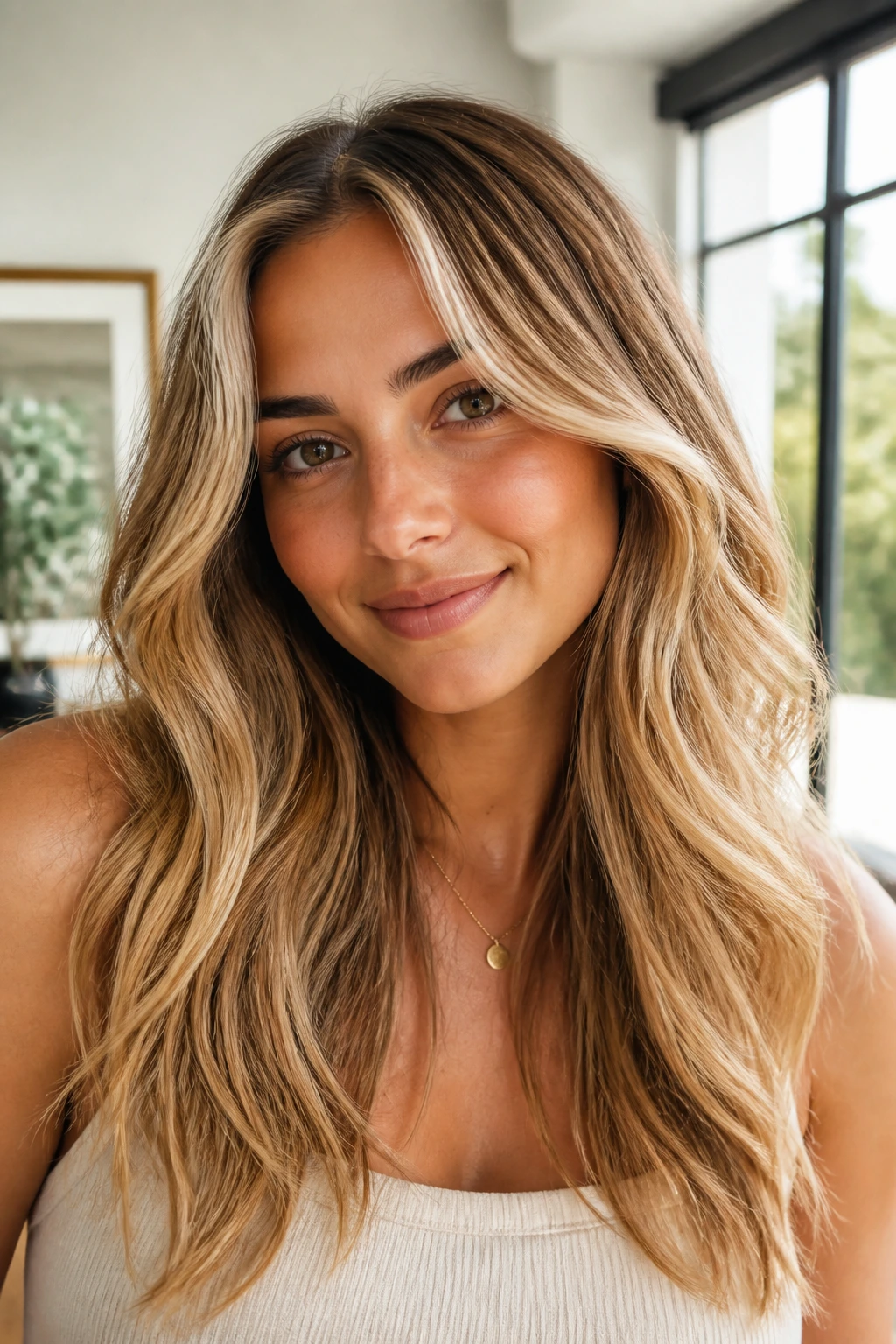
A melted halo blonde is what you get when you concentrate brightness where the eye naturally goes—around the face, the crown, and the upper lengths—then melt everything back down through deeper interior pieces. It’s one of the most flattering gold-blonde setups for warm skin because it frames the face without bleaching the whole head.
The halo placement gives you brightness, while the melt keeps the grow-out soft. If you want a look that feels more noticeable than babylights but less high-maintenance than full blonding, this is the one to bookmark. It looks especially good in natural light, where the gold can move instead of sitting still.
How to Brief Your Colorist So the Gold Lands Softly
Bring photos, yes, but bring the right kind. Daylight photos beat filtered ones, and close-up shots of the front hairline are more useful than a perfect studio selfie. A colorist can work with a warm gold reference much faster than with a picture that hides the root, the level, and the tone.
Say the tone words out loud. Honey, beige-gold, amber, butter, caramel—those are useful. Ash, silver, icy, pearl are not the direction if you want warmth to stay on the face. If your skin leans olive, be even more careful about too much yellow; beige-gold and soft amber usually behave better.
Also tell them how much time you want to spend in the chair next time. If you can only come back every 10 to 12 weeks, ask for a root shadow and softer placement. If you like to refresh often, you can push the face frame brighter and keep the mids lighter. That choice changes the whole plan.
Tools and Products That Keep the Tone Soft
- Color-safe shampoo: A sulfate-free formula helps keep warm gloss from washing out too fast, especially if you shampoo often.
- Moisturizing conditioner: Lightened hair needs slip, not just softness; look for something that detangles without leaving a waxy film.
- Heat protectant spray: Use it before blow-drying or flat-ironing, because warm blondes go dull fast when the cuticle gets rough.
- Beige or gold gloss: Salon glaze, shower gloss, or demi-permanent toner keeps the reflect warm instead of muddy.
- Wide-tooth comb: Best for curls and waves so the highlight ribbons stay separated instead of puffing up into fuzz.
- Tail comb and clips: Useful if you part your hair to show the money piece or keep your fringe and face frame clean while styling.
- Bond-repair treatment: Helpful when the hair has been lifted more than once; it keeps the highlighted pieces from snapping off at the ends.
- Shower filter: Worth it if your water is hard. Mineral buildup can make gold blonde look dull and gritty in a hurry.
Reading the Tone Chart Without Guessing
Hair color names can be slippery, which is why the level chart matters more than the label on the box or gloss tube. Honey, gold, butter, beige-gold, amber, and champagne all sit in warm territory, but they do not sit in the same spot. A level 7 gold will look deeper and richer than a level 9 gold, even if both are technically “gold blonde.”
If you want the safest route for warm skin, start with gold-beige before going full yellow-gold. Beige softens the reflect and keeps the color from looking too sunny or too raw. Amber is deeper and richer. Copper-gold brings more red into the blend and works best when your complexion already carries a peachy note.
One more thing people miss: the same formula reads differently on porous hair. If your ends grab color fast, a gloss can land darker than the swatch suggests. That’s why a strand test beats guessing, especially if your hair has been lightened before. A good warm blonde should look creamy in daylight, not neon in the sink.
How to Wear the Color So the Light Hits Right
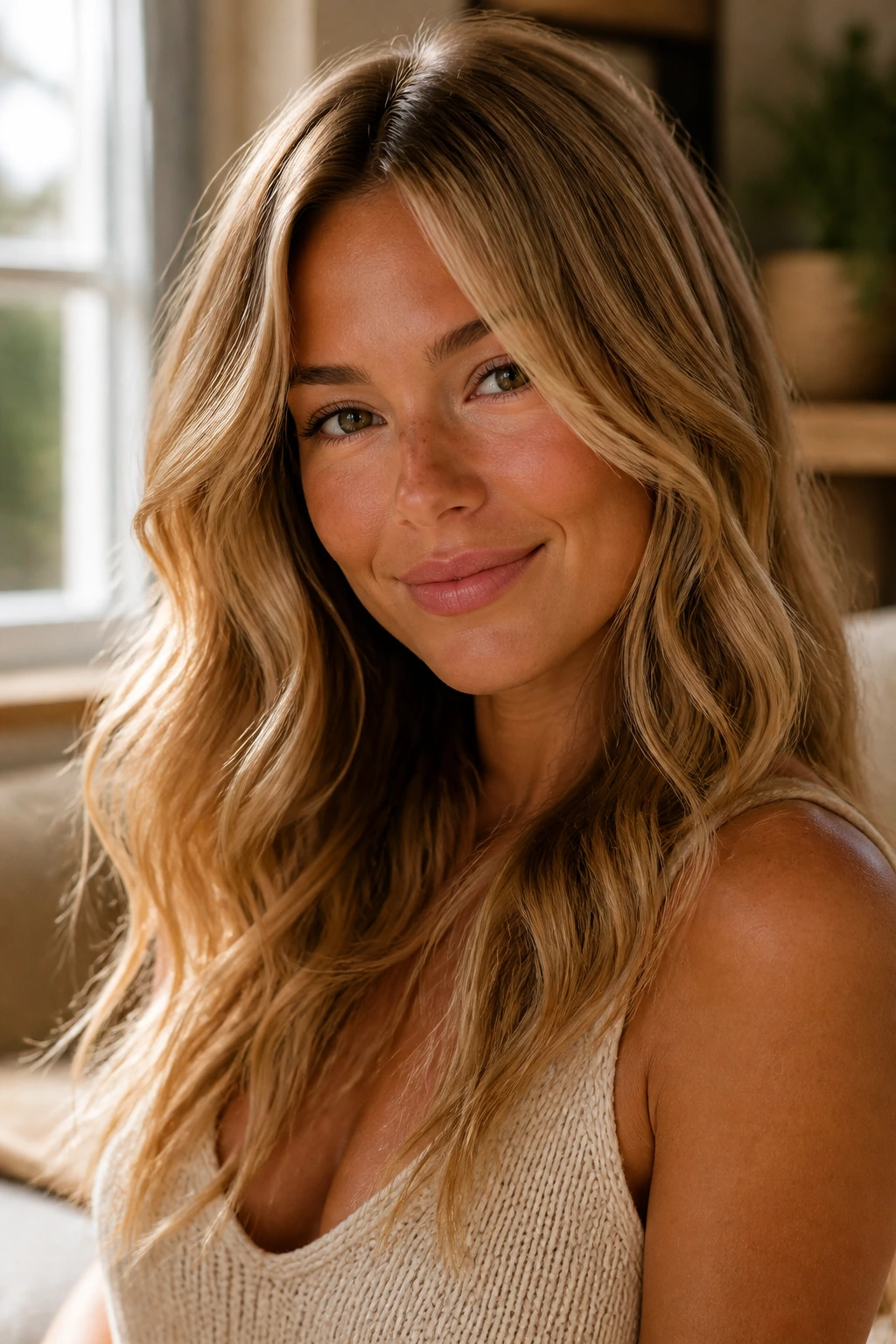
Parting: A middle part shows off curtain bangs, face frames, and halo highlights. A side part softens stronger jawlines and can make a brighter money piece feel less direct. Switch the part once in a while if you want to see where the gold really lives.
Styling: Loose bends, waves, and soft blowouts reveal ribboned highlights better than poker-straight hair. For curls, diffuse enough to keep the ringlets separate; for straight hair, use a round brush so the front pieces tuck and swing instead of hanging flat.
Makeup: Peach blush, warm bronzer, bronze liner, and terracotta shadows keep the face in the same warm lane as the hair. Cool mauves can work, but if you go too icy on the makeup too, the hair starts carrying all the warmth by itself.
Wardrobe: Cream, rust, olive, espresso, camel, and deep teal make gold-blonde highlights look richer. Stark white can be too loud against some warm blondes, especially if the tone is honey or amber. Try a soft off-white instead.
Additional Tips and Shine Boosters
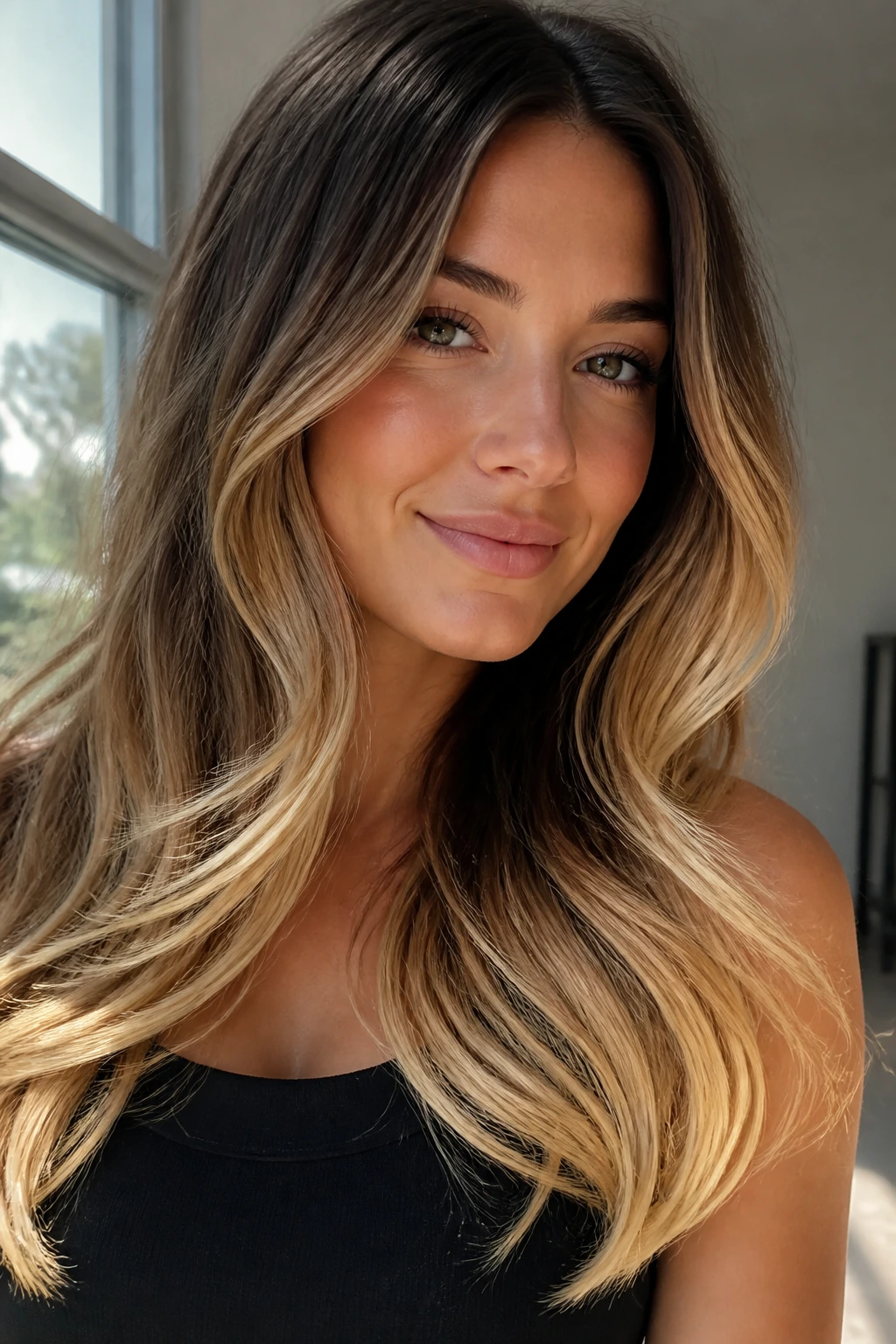
Tone Booster: If your highlights start leaning yellow, do not grab purple shampoo first and hope for the best. Use it sparingly—once every 2 or 3 weeks, and mostly on the brightest pieces—so you don’t mute the warmth that flatters your skin in the first place.
Customization: If the hair feels too light, add lowlights in beige-brown or soft bronze rather than lifting again. That creates shadow and gives the gold somewhere to land. If the hair feels too dark, brighten the face frame before touching the ends.
Heat-Saver: Keep hot tools around 300°F to 340°F for lightened lengths. Higher heat roughs up the cuticle, and gold tones lose their clean shine when the surface gets fuzzy.
Finishing Move: A pea-sized drop of light oil through the mids and ends gives warm blonde that soft, reflective finish that looks better in real life than in a product ad. Use too much and it turns slick. Use a little and it looks polished.
Common Mistakes That Make Gold Blonde Look Off
- Choosing ash because it sounds “blonder”: The symptom is a flat, drained face or a gray-green cast near the jaw. The fix is to ask for beige-gold, honey, or amber instead of smoky tones.
- Lifting too high too fast: When hair is pushed straight to pale blonde, the ends can look fragile and the color can stop feeling connected to warm skin. Stop at level 8 or 9 in most cases unless the hair is very strong and the goal is intentionally high contrast.
- Skipping lowlights on over-light hair: If the highlights are everywhere, the style starts to lose shape. A few deeper ribbons bring the haircut back into focus.
- Using purple shampoo like a weekly habit: Too much of it can mute the gold and leave the hair looking muddy. Use it only when the brightness turns too yellow, not just because it’s on the shelf.
- Ignoring the cut: Highlight placement should follow the haircut. A blunt bob wants different light than a layered shag, and curls need color where the bend happens, not where the strand is straight.
Variations and Color Directions to Try
Honey-First Softening: Keep the whole look in honey and beige-gold territory, with only a slight lift at the front. This works when you want the most forgiving grow-out and the least time in the salon chair.
Bronzed Brunette Lift: Leave more brown in the base and use gold only as a glow through the mids. It suits warm skin that looks better with depth than with a lot of brightness.
Peach Glow Blend: Add a whisper of peach or strawberry to the gold for a softer, rosy finish. This is a strong pick for fair warm skin, freckles, or anyone who wears peach makeup well.
Bold Halo Frame: Brighten the face frame and crown more than the rest of the hair, then keep the interior softer. The result is more noticeable, but the grow-out still stays manageable.
Curly Ribboning: On textured hair, use a ribboning pattern that follows the curl pattern instead of straight lines. The highlights show in motion and keep the curl shape clear.
Keeping the Color Fresh Between Appointments
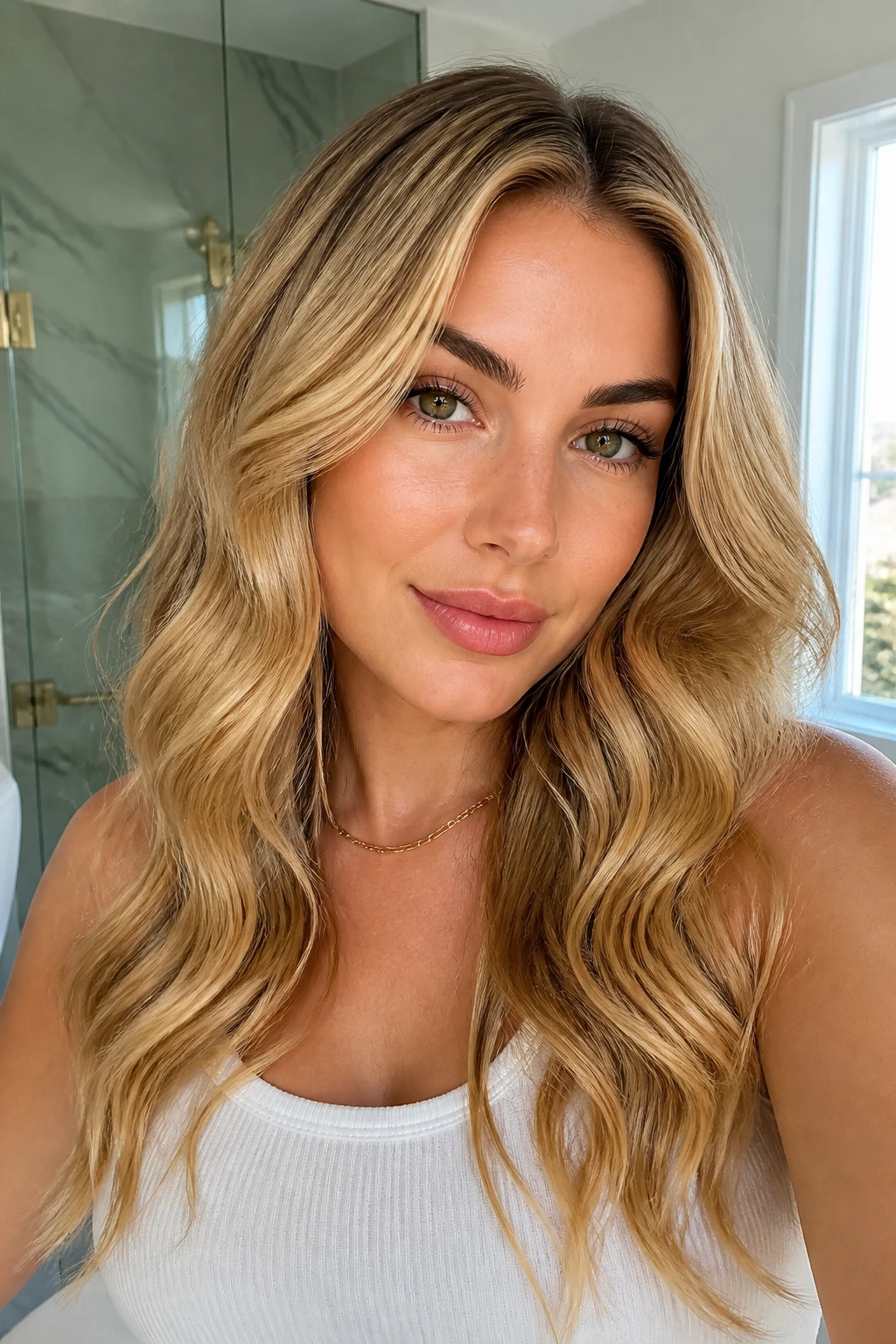
Warm blonde usually looks best when it is not washed to death. Shampoo 2 or 3 times a week if your scalp allows it, and use lukewarm water instead of hot. Hot water opens the cuticle too much, which makes the gloss fade faster and leaves the ends looking rough.
Glossing is where the color stays honest. Most warm blondes benefit from a salon gloss every 4 to 6 weeks if the hair is porous, or every 6 to 8 weeks if the hair holds tone well. Root touch-ups or highlight refreshes usually stretch to 8 to 12 weeks, depending on how visible the placement is.
A bond-repair treatment once or twice a week helps if the hair has been lightened more than once. And if you live with hard water, use a chelating shampoo about once a month. That one step can keep gold from turning dull and gritty faster than almost anything else.
Frequently Asked Questions
Is gold blonde better than ash blonde for warm skin tones?
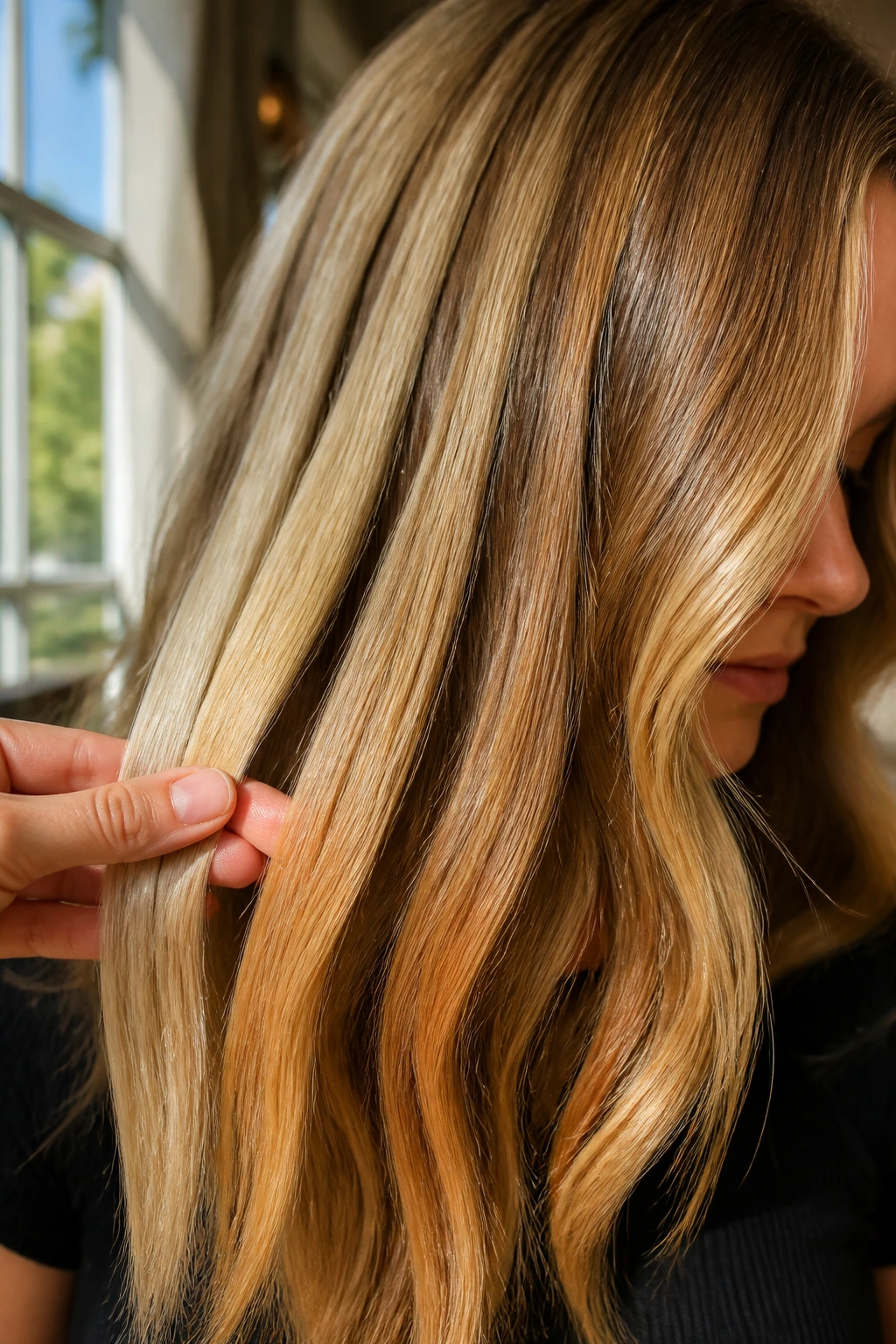
Usually, yes. Gold blonde works with peach, golden, and olive undertones, while ash can pull the face cooler and make some warm complexions look a little tired. The safest middle ground is beige-gold, which softens the warmth without muting it.
Will gold blonde highlights make my skin look orange?
Not if the tone is handled well. The problem is usually too much copper or too much yellow, not gold itself. Ask for honey, beige-gold, or amber-blonde and keep the front pieces soft rather than neon bright.
Can I get this look on dark brown hair without going full blonde?
Yes, and that’s often the better move. A bronde or ribbon balayage approach lets you keep depth at the root while lifting only the pieces that frame the face and catch movement.
How often should I gloss gold blonde highlights?
Most people do well with a gloss every 4 to 8 weeks, depending on porosity and how often they wash. If the highlights start turning flat or yellow at the ends, a gloss usually fixes the problem faster than more lightening.
What if my highlights turn too yellow after the first wash?
That usually means the toner was too light or too warm for your hair’s porosity. Try a beige or gold-beige gloss next time, and use purple shampoo only once in a while on the brightest pieces, not the whole head.
Do curly hair and gold blonde highlights need different placement?
Absolutely. Curly hair needs the light placed where the curl bends and where the ringlet opens, not in straight lines. That keeps the pattern natural and stops the color from getting lost once the curl springs back up.
Should I ask for lowlights too?
If your hair is fine, very light, or already heavily highlighted, yes. Lowlights give the gold somewhere to sit, and they keep the style from turning into one pale mass that looks thinner than it is.
How can I make gold blonde look softer for work or conservative settings?
Choose peekaboo lights, a soft root melt, or a beige-gold balayage rather than a heavy money piece. Those options still give warmth and brightness, but the grow-out is quieter and the color feels less loud in flat indoor light.
Warm Light That Still Looks Like Hair
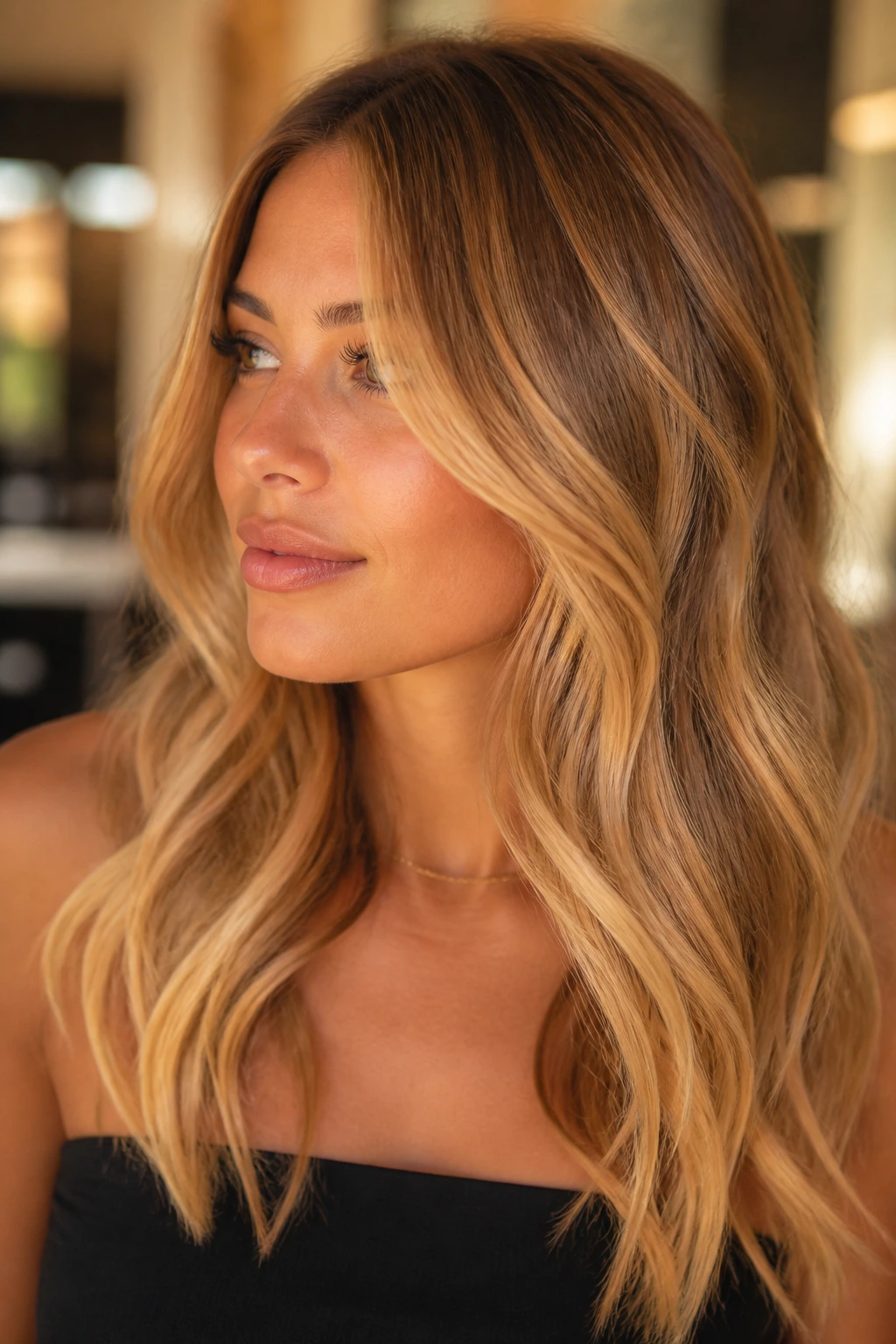
The best gold blonde does not look dyed in the obvious sense. It looks like the hair got a little more expensive, a little more dimensional, and a little better behaved in daylight. That is why the warm-skin versions matter so much: the tone and the placement work with your face instead of sitting on top of it.
Pick the level of brightness you can live with, then choose the version that matches your upkeep. A soft babylight, a warm root melt, a bright halo, or a curly ribbon pattern all give different results, but the best ones share the same idea—gold that feels like it belongs there.