



Brown highlights for women over 40 with fine hair work best when they do one quiet job well: they make the hair look denser, softer, and more expensive without turning it into a stripy mess. Fine hair doesn’t need loud color. It needs smart color — small changes in tone, a little shadow near the roots, a few lighter ribbons where the head catches light, and enough contrast to keep the hair from sitting flat.
The mistake I see most often is simple. Someone asks for “brown highlights,” gets chunky caramel pieces, and walks out with hair that looks thinner because every section is too clearly separated. Fine hair has a small margin for error. Once the pieces are too wide or too blonde, you lose the illusion of fullness and end up seeing scalp, part lines, and every blunt edge in the cut.
The good news is that brown is one of the best color families for this job. Chestnut, mocha, walnut, cocoa, toffee, mushroom brown — these shades can add depth without shouting. And when the placement is soft around the face, close together at the crown, and a touch darker underneath, the whole style looks like your hair has more body than it did an hour earlier. That’s the sweet spot, and it’s worth being picky about.
Why These Brown Highlights Work So Well on Fine Hair
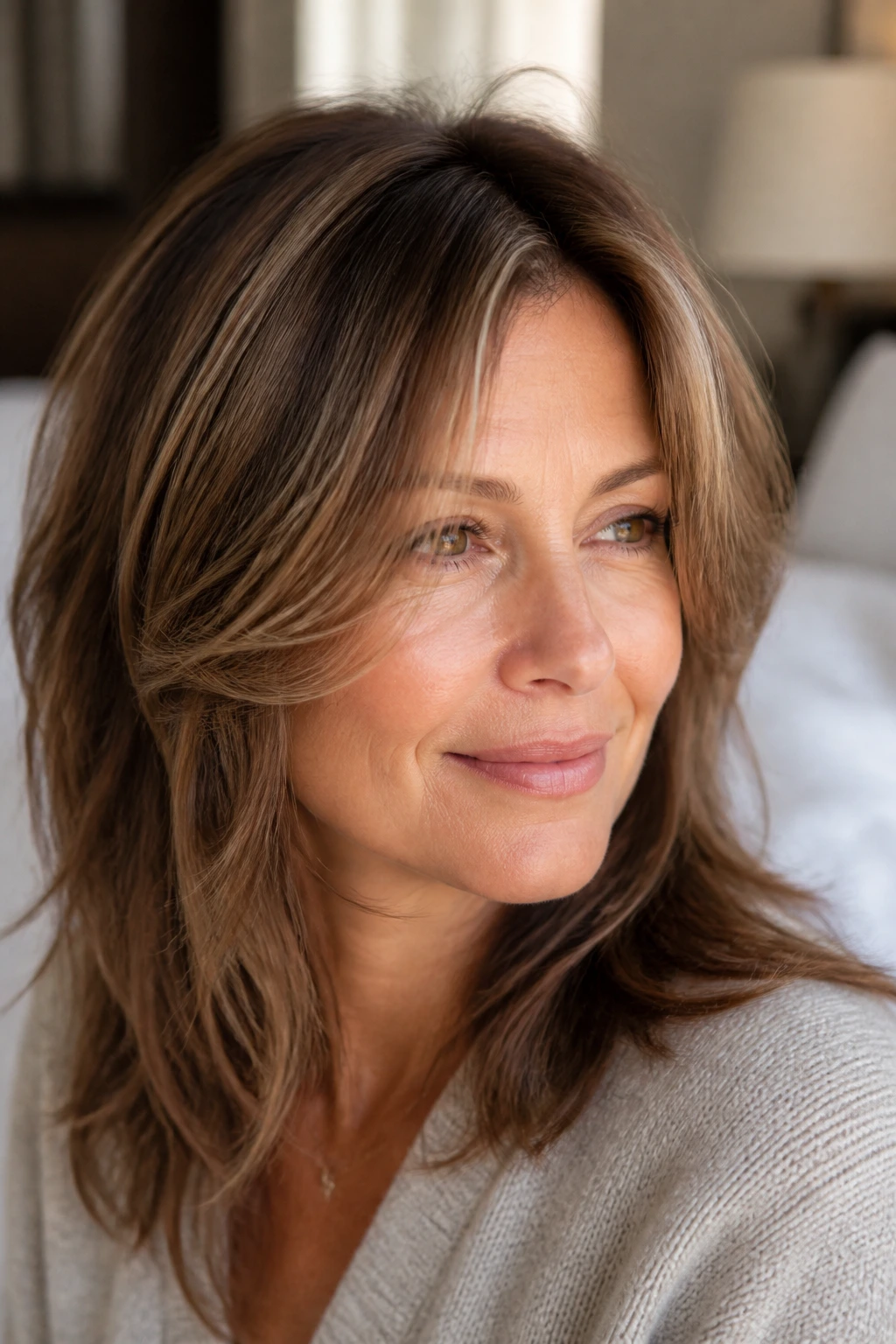
Fine hair needs texture more than contrast. Soft brown highlights create tiny shifts in tone that break up flat areas, which makes the hair read as fuller even when the strand count stays the same.
Brown shades are easier to blend near the scalp. A deep chestnut or mocha root can sit close to gray regrowth and part lines without looking harsh, which matters a lot when you don’t want a hard grow-out.
Low-contrast color is kinder to delicate strands. Lighter blonde pieces on fine hair can look flashy in the chair, then a little stark at home. Browns age more softly and usually look better on day two, not just straight from the salon.
Placement matters more than brightness. A few well-placed ribbons around the face and crown can do more for lift than heavy all-over lightening, and they usually require less toner upkeep.
The right brown tone can flatter changing skin tone. As hair and skin lose a little contrast over time, too-dark one-note hair can look heavy. Brown highlights bring back movement without making the hair look overprocessed.
1. Chestnut Babylights
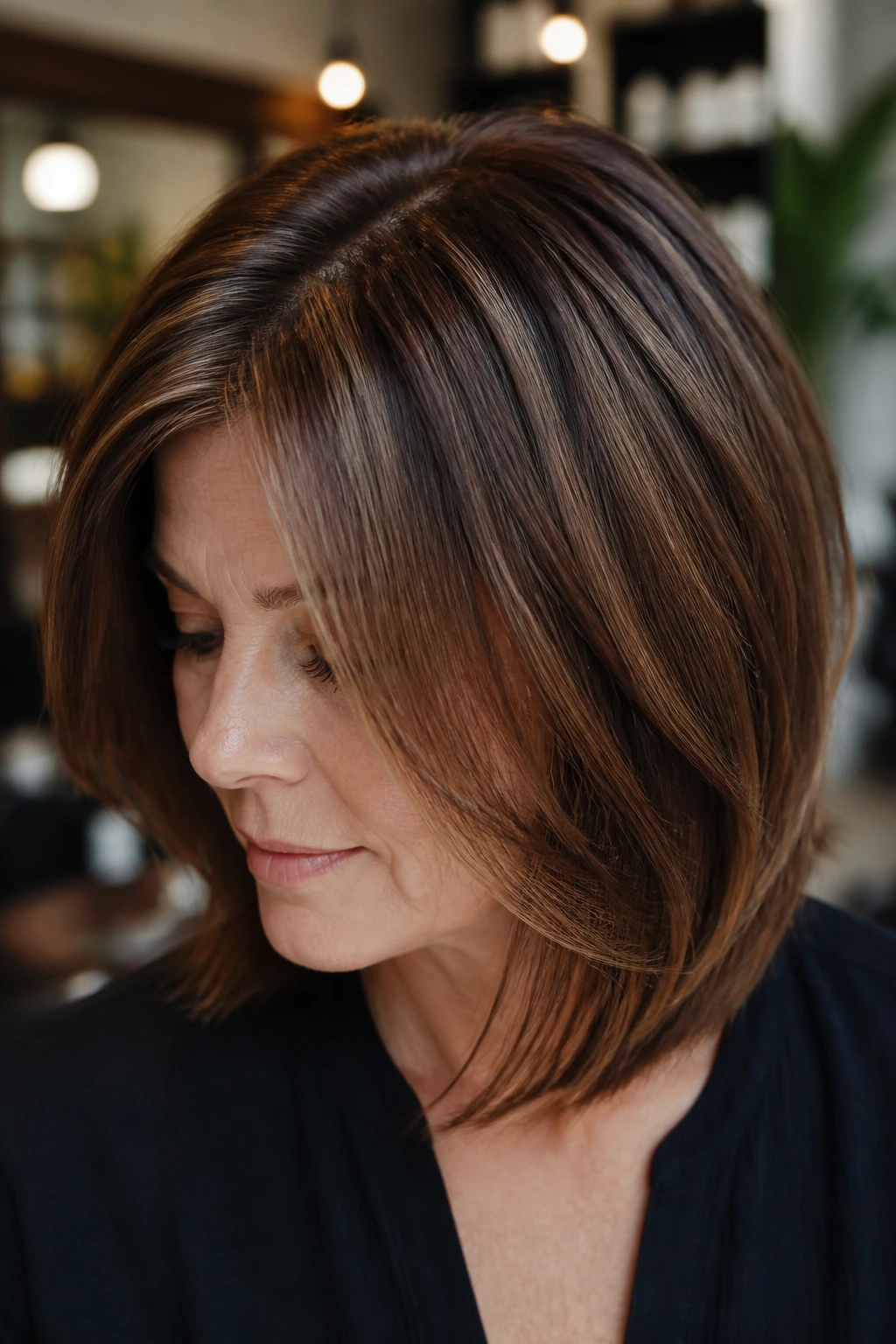
Chestnut babylights are the quiet achiever of the bunch. The pieces are fine enough that you notice movement before you notice color, which is exactly what fine hair needs. On a layered bob or shoulder-length cut, they give the crown a little shimmer without exposing the scalp in harsh stripes.
Why It Works
Ask for very small slices, kept close together at the part line and around the top layer. The tone should sit in the medium-brown range — not red, not blonde, just warm enough to catch light when the hair moves. If your natural color is a level 5 or 6 brown, chestnut babylights keep the base looking rich while softening the overall outline.
A little gloss after the service helps too. Chestnut can go dull if the finish is too matte, and fine hair already tends to lose shine faster than thicker hair.
2. Caramel Ribbon Highlights
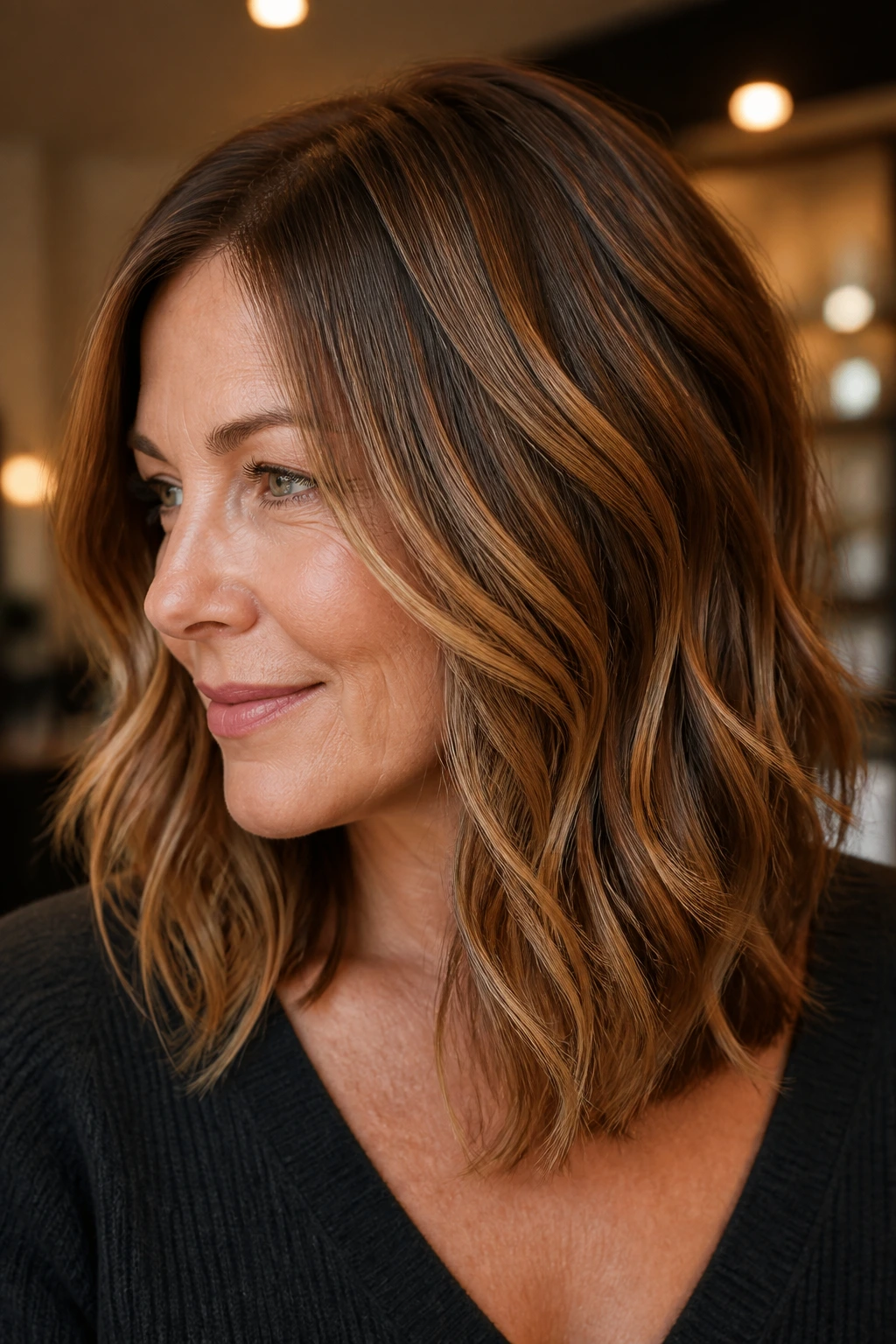
Caramel ribbons are wider than babylights, but they still need to stay thin enough to move. Think long, soft strokes through the mid-lengths and ends, not chunky streaks laid across the head like fence rails. On a blowout, they give that flicker of warmth that makes layered hair look more expensive than it is.
Why It Works
The trick is keeping the caramel close to a toasted, not golden, tone. Bright yellow caramel can look loud against fine hair. A softer caramel with a beige bend looks smoother through the lengths and doesn’t fight the base color.
Best cut match? A lob with soft internal layers. The ribbons catch on the bends in the hair, which gives the impression of density without needing a dramatic color shift.
3. Mocha Balayage
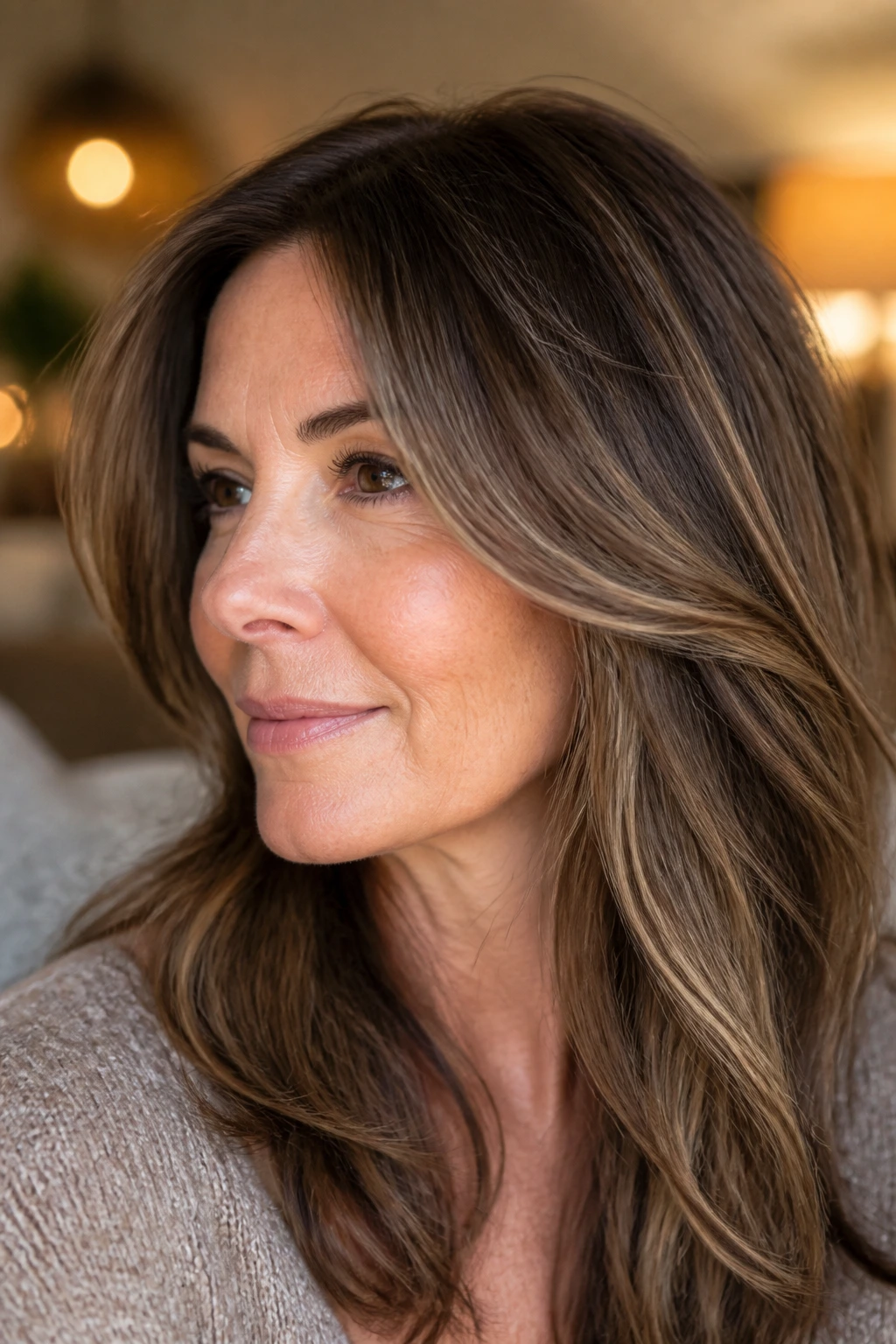
Mocha balayage is for the woman who wants depth first and brightness second. The roots stay deeper, the mids are softly painted, and the ends pick up a muted mocha lift that keeps the hair from looking heavy. It’s one of my favorite choices for fine hair because it doesn’t demand a lot of contrast to do its job.
The grow-out is kinder, too. Instead of a sharp line, you get a gradual shift that still looks intentional when the salon blow-dry fades and the hair gets tied back later in the week. That matters more than people think.
4. Cocoa Face-Framing Pieces
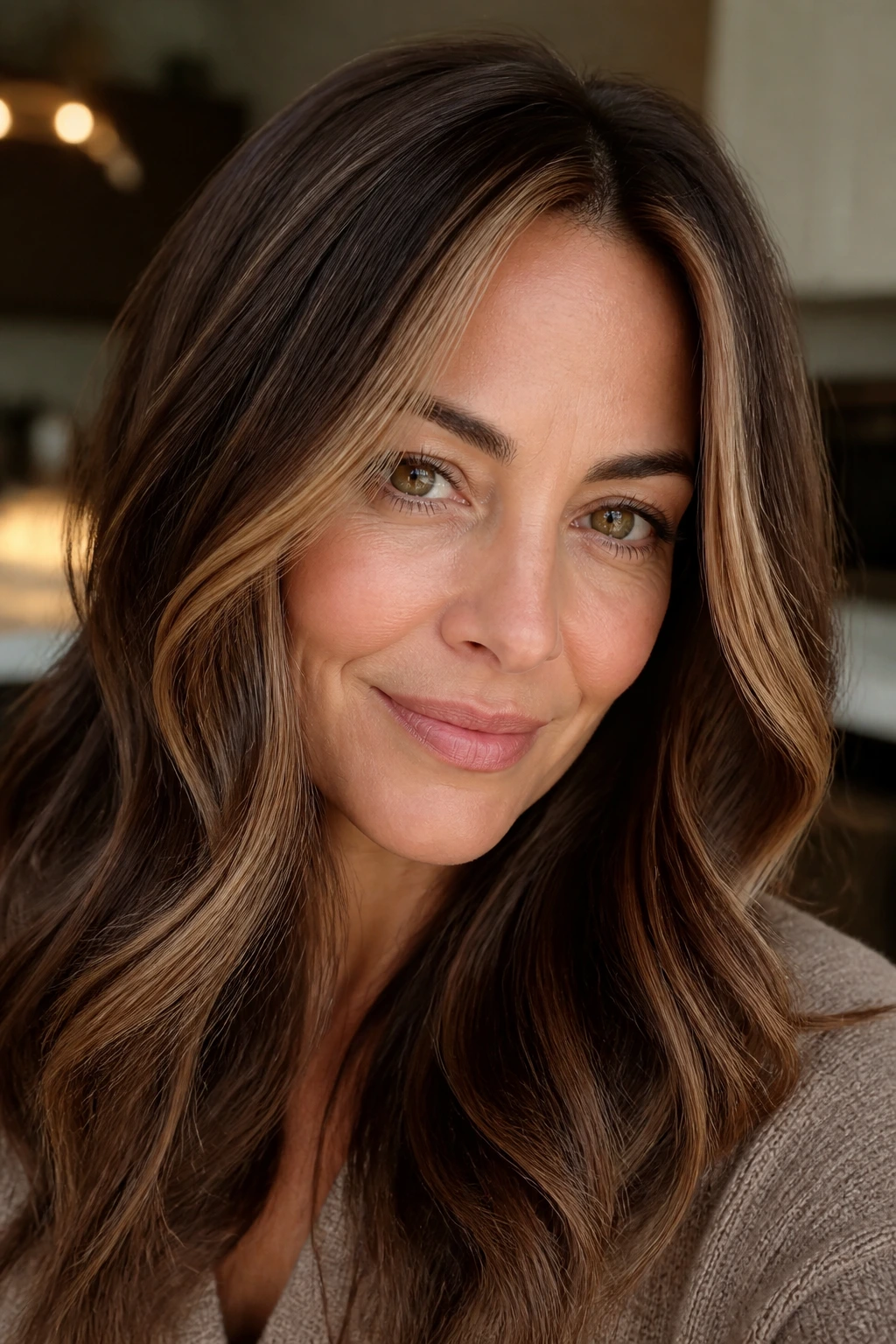
Cocoa face-framing pieces are a smart move when you want the face to look brighter without committing to a bright money piece. The color stays in the brown family, but the front sections are nudged lighter by just enough to lift the eyes and cheekbones.
This look works especially well if your hair is fine around the temples. A few lighter panels near the face can pull attention forward and away from a thin crown. Keep the pieces narrow. Wide face-framing color on fine hair can read as two big stripes, and that’s not the look.
5. Espresso Lowlights
Here’s the contrarian one: sometimes you need darker pieces, not lighter ones. Espresso lowlights add shadow between finer strands, which makes the rest of the hair appear thicker by comparison. I like this approach when the hair has been over-lightened in the past or when the ends feel see-through.
The formula is simple. Keep the lowlights a half to a full shade deeper than your base, then place them inside the hair and under the top layer. You don’t want to see every dark thread on top. You want the eye to register depth when the hair moves.
6. Warm Walnut Weave
Warm walnut is one of those shades that seems plain until you see it in motion. Then it starts doing real work. The warmth keeps the color from looking flat, and the brown base stops it from turning brassy. On fine hair, that balance is gold.
A woven placement through the crown and sides gives the style a woven, almost tweed-like effect. Not chunky. Not loud. Just enough variation to make a simple haircut look thicker. It’s especially nice on women who wear their hair straight, because the tone changes are doing some of the visual lifting that bends and curls would normally do.
7. Toffee Money Piece
The money piece gets oversold a lot, and fine hair suffers when it’s too heavy. A toffee version keeps the brightness, but the shade stays rooted in brown instead of swinging blonde. That means you still get a pop around the face without the harsh contrast that can make the front look thinner by comparison.
What to Ask For
- Narrow front panels: Keep the face-framing sections slim and softly blended into the part.
- Soft lift, not platinum: Ask for a toffee tone that sits a little lighter than your base, not a bright blonde strip.
- Feathered edges: The transition into the rest of the hair should blur, not stop.
A blunt bob and a toffee money piece can look sharp in a good way. The front gets lift, the rest stays richer, and the whole cut reads as more structured.
8. Mushroom Brown Gloss
Mushroom brown is cool, muted, and a little earthy. That’s the point. If your hair tends to pull orange or your skin leans cool, this shade keeps the whole look soft and calm. It also happens to be one of the best choices when you want to blur gray without making the hair look dyed to the hilt.
This is less about dramatic highlighting and more about tone control. Fine hair often looks better in a glossy, multi-tonal brown than in a brighter highlight pattern. The shine does a lot of the work, and the color stays easy on the eye.
9. Hazelnut Micro-Highlights
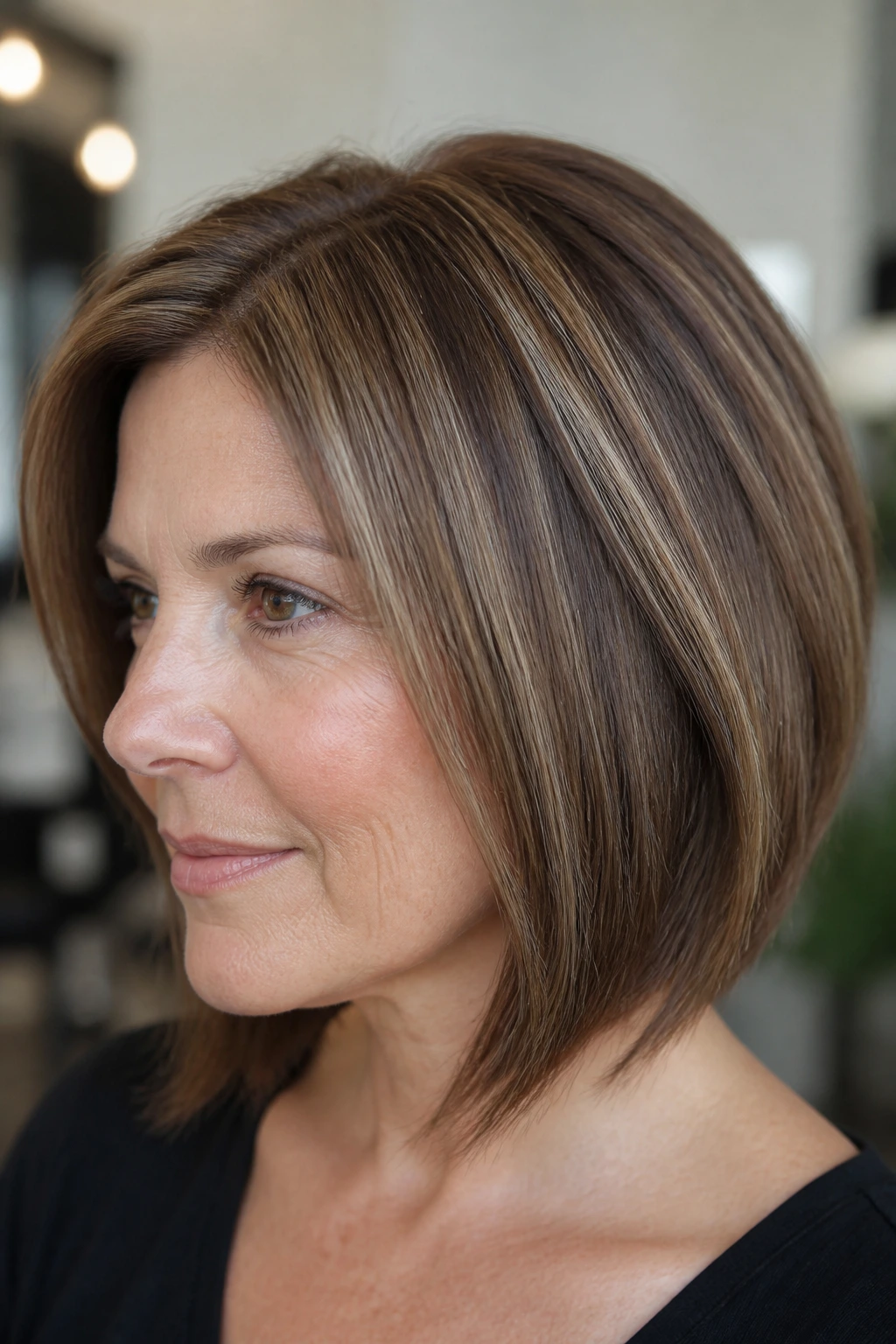
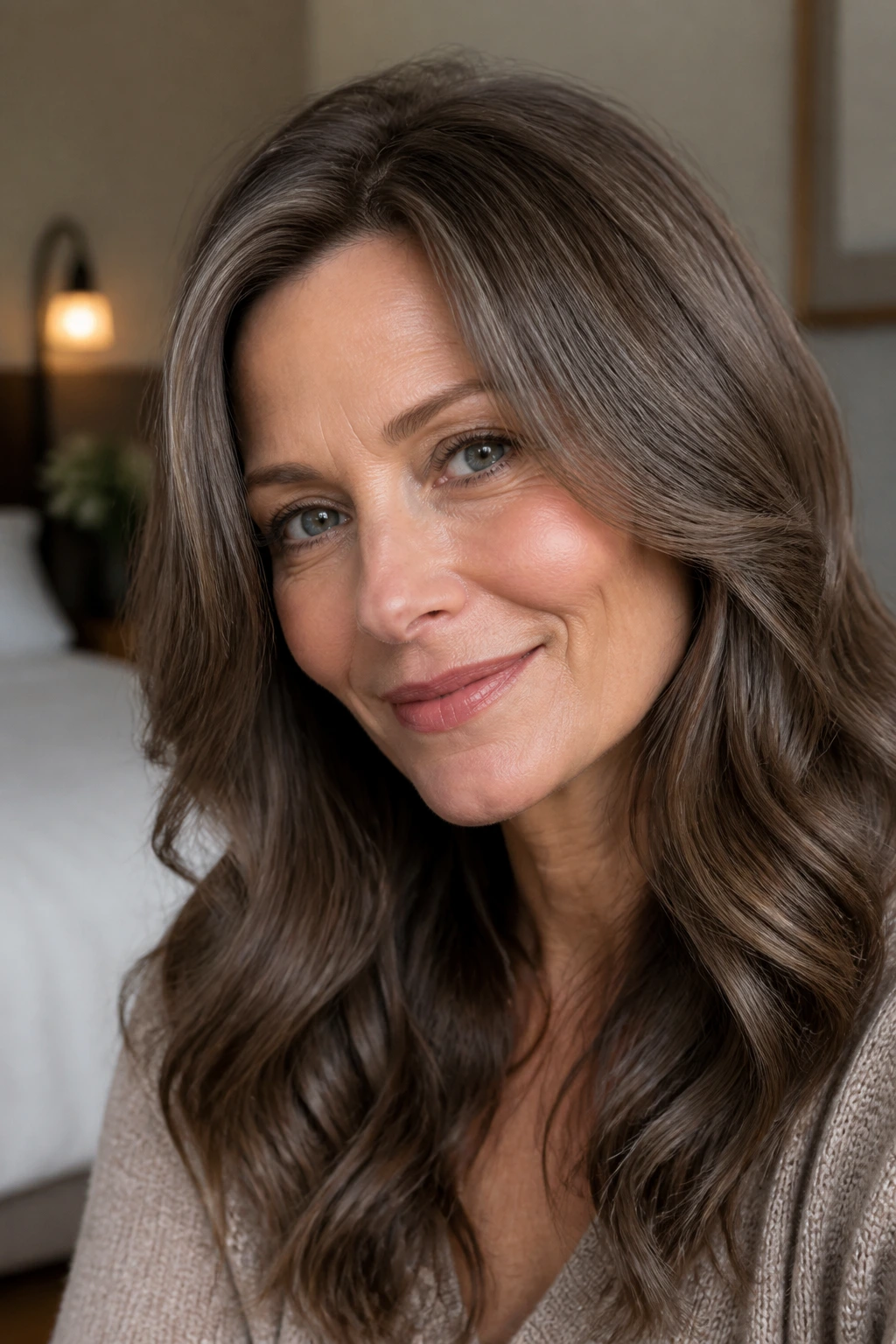
Hazelnut micro-highlights are tiny, almost threadlike pieces that live closer to the roots and crown than the ends. They’re useful when the hair is sparse and you want the top to look busier without adding obvious streaks. The color itself is soft and nutty, a little lighter than a base brunette but not enough to shout.
The biggest advantage is scale. Small pieces make the color read like natural variation instead of salon color. On fine hair, that matters. Big sections can expose the architecture of the haircut, and not always in a flattering way.
10. Cinnamon-Smoked Ends
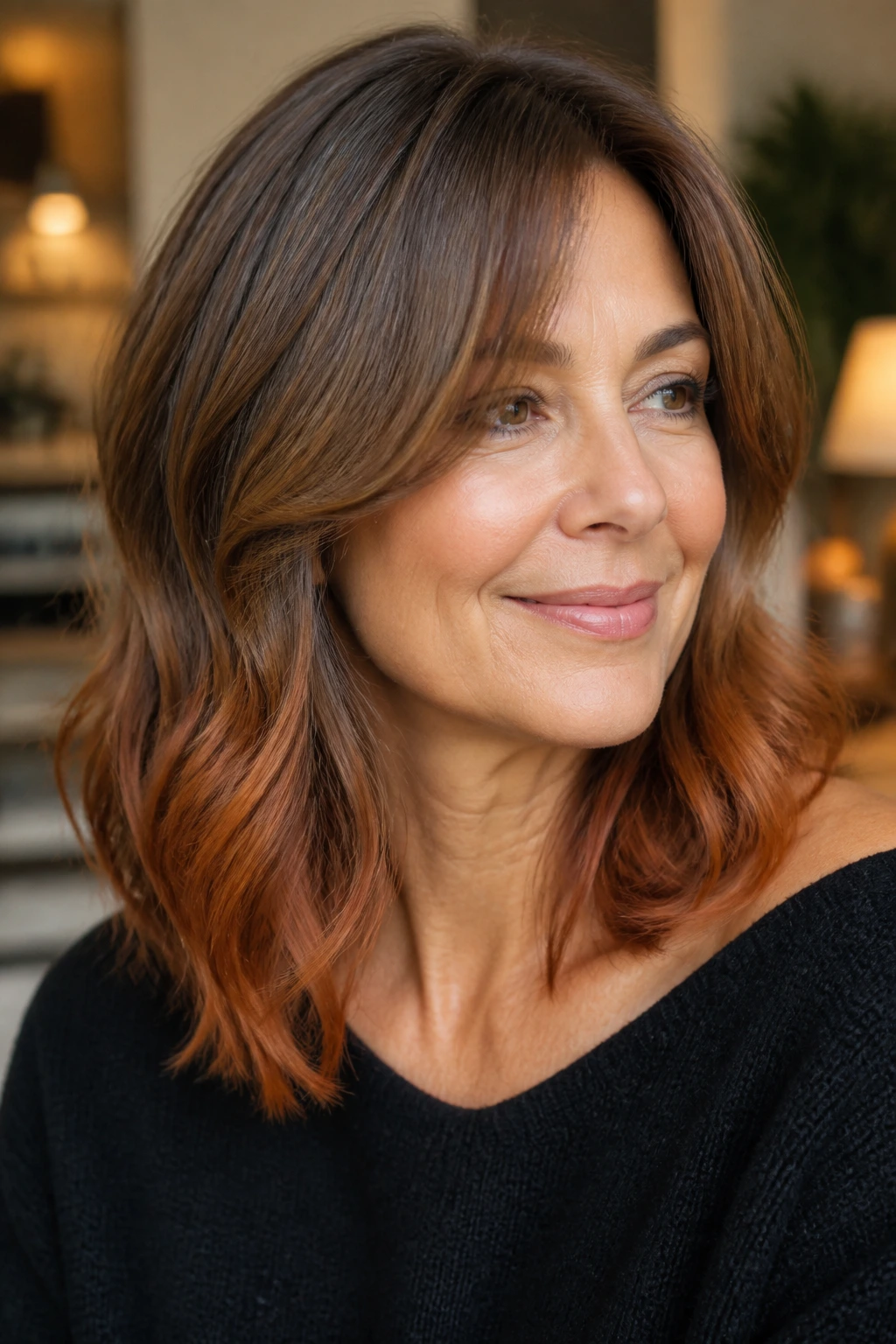
If your ends are thin and a little transparent, cinnamon-smoked color can help. The tone stays brown, but there’s a warm red-brown cast that gives the bottom of the hair more life. I like this on longer fine hair, especially when the ends need a visual boost.
The key is restraint. Too much red will announce itself. A smoky cinnamon finish keeps the hair looking rich rather than coppery, and the darker root-to-end blend stops the style from tipping into patchy territory.
11. Soft Brunette Contour Highlights
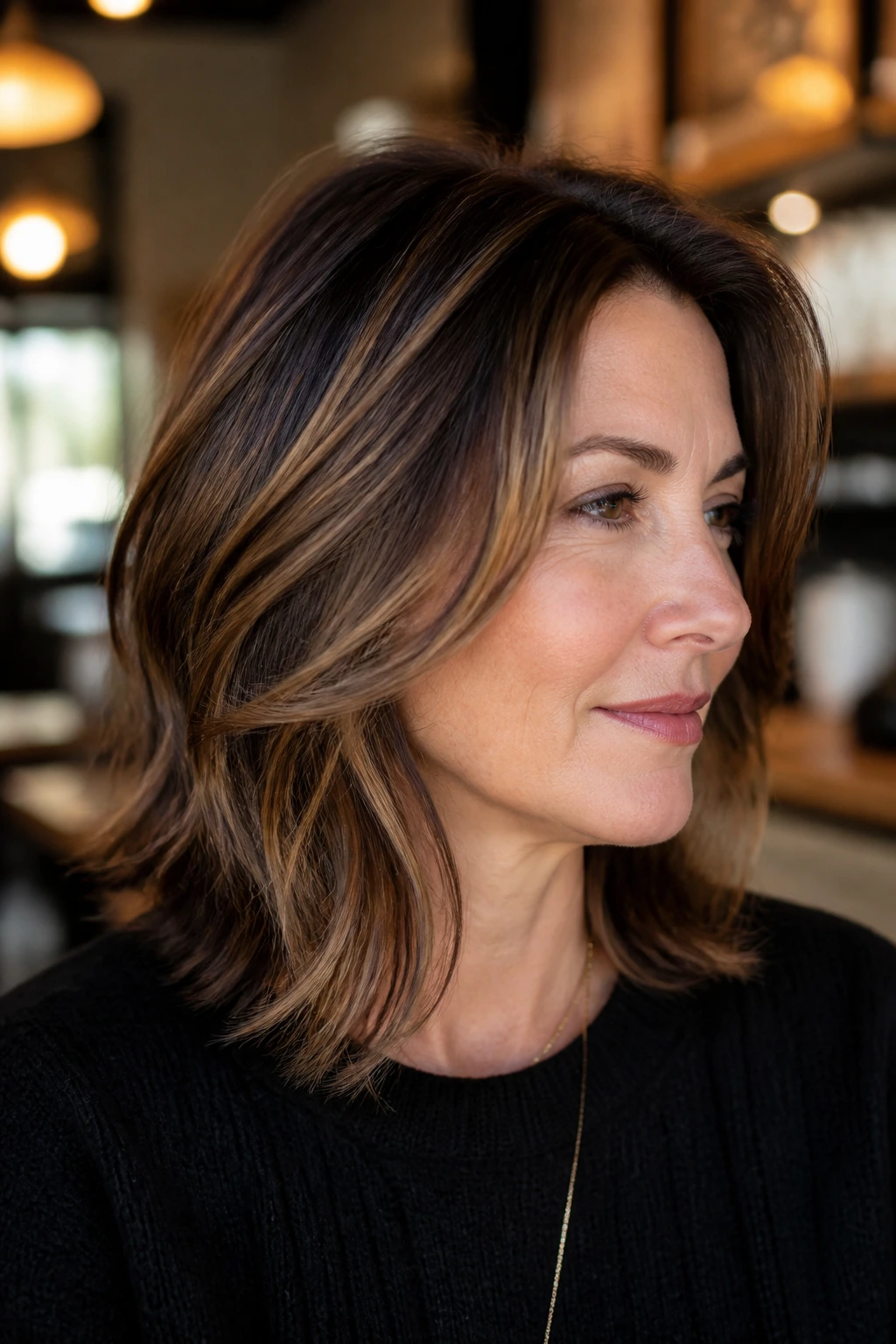
These are made to follow the haircut, not fight it. Brunette contour highlights sit where the hair already wants to move: around the face, along the part, and just above the jawline. On a layered cut, that can make the shape look better without much obvious color drama.
Think of it like contour makeup for hair. The lighter pieces pull forward; the deeper pieces fall back. Fine hair benefits because the cut gains shape from color placement, not just from layers that may or may not hold a blow-dry that day.
12. Bronde Feathering
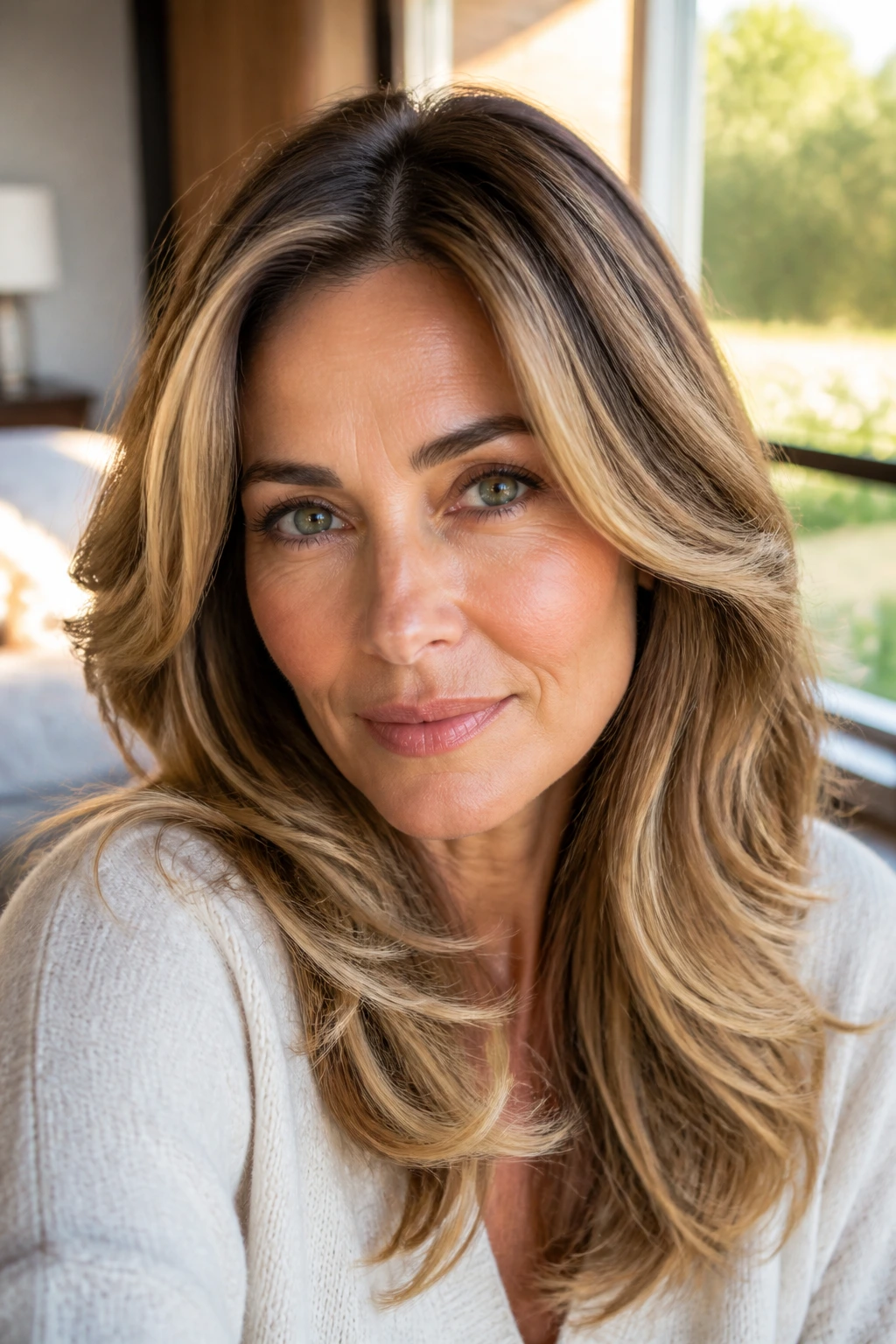
Bronde feathering lives in the gray area between brunette and blonde, which is exactly why it works for some women over 40. The blonde never takes over. The brown never feels heavy. On fine hair, that in-between tone gives you brightness without the visual weight of a full blonde service.
This look is best when the pieces are feathered at the ends and kept softer near the root. If the root is too light, the whole style can wash out. If the ends are too dark, it stops looking airy. The balance is the whole point.
13. Sandy Brown Whisper Lights
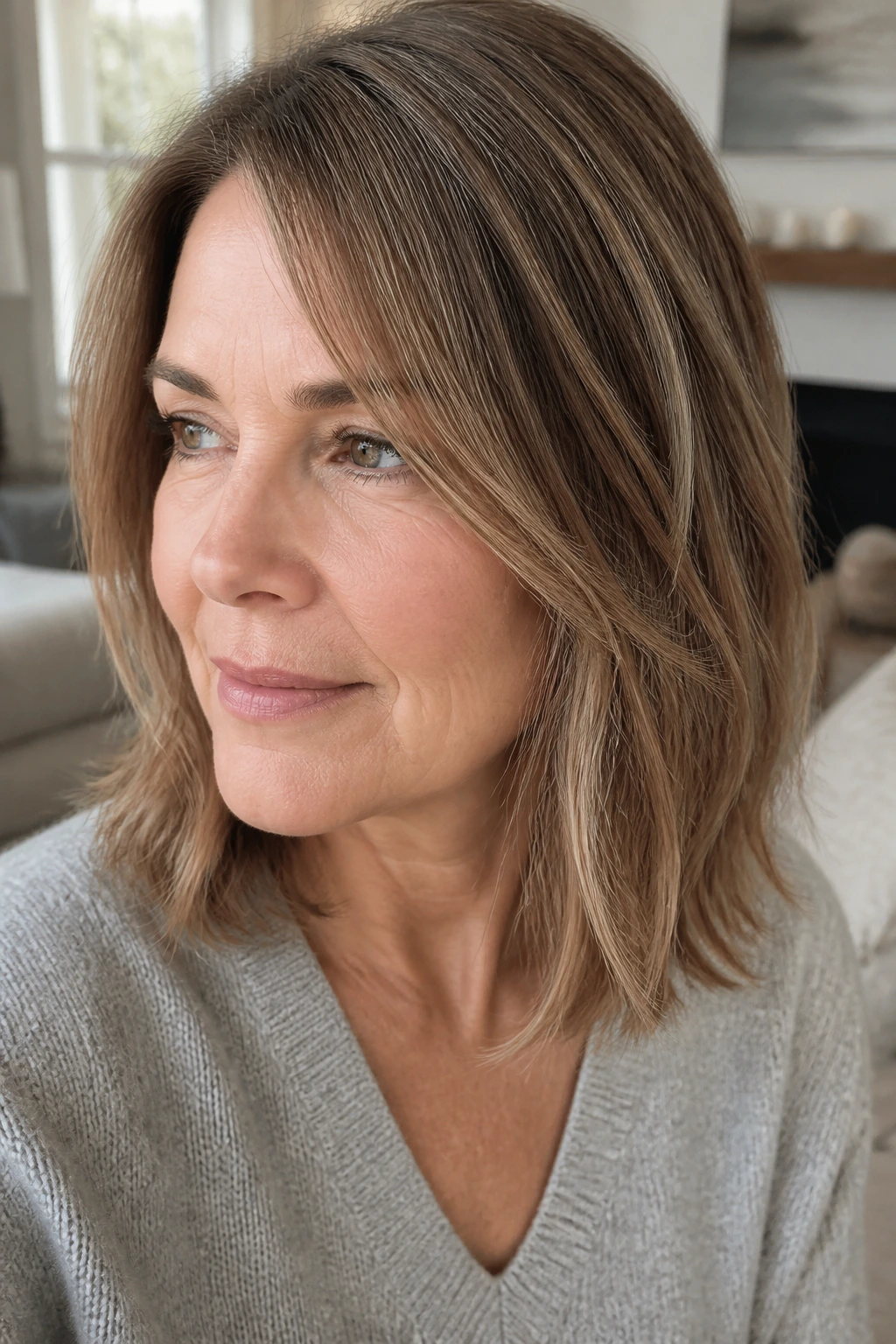
Sandy brown whisper lights are one of my favorite choices for people who dislike obvious color shifts. The pieces are so fine and muted that the effect is more like air moving through the hair than actual stripes of dye. That’s a good thing when the hair is fine and you want to keep the outline soft.
The sandy tone adds a cooler beige note, which can calm down warmth in natural brunette hair. It’s subtle enough to live with, yet still changes how the light lands on the cut. On shoulder-length hair, especially with a soft bend at the ends, the result looks airy and controlled.
14. Honeyed Brunette Veil
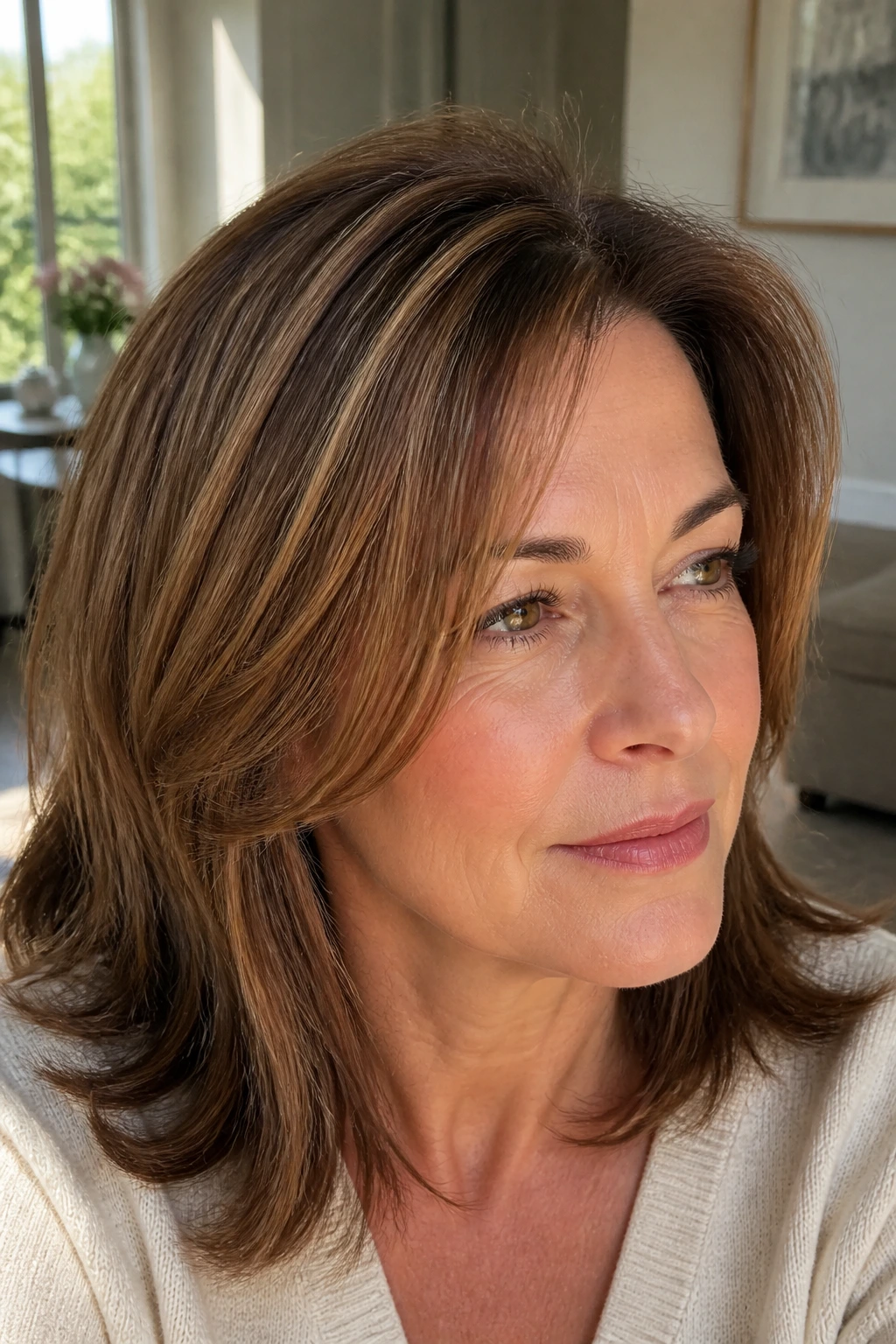
A honeyed veil adds warmth without tipping into gold overload. The brown base stays in charge, while the lighter strands sit like a thin filter over the top layer. It’s a nice choice if the skin tone likes warmth but the hair itself is fine enough to look overdone fast.
This style works best when the highlights are concentrated on the upper layers and around the crown. Too much honey through the bottom can make fine ends look fried. A veil on top, though, can make the whole haircut look fuller and a little sunnier.
15. Chocolate Melt Balayage
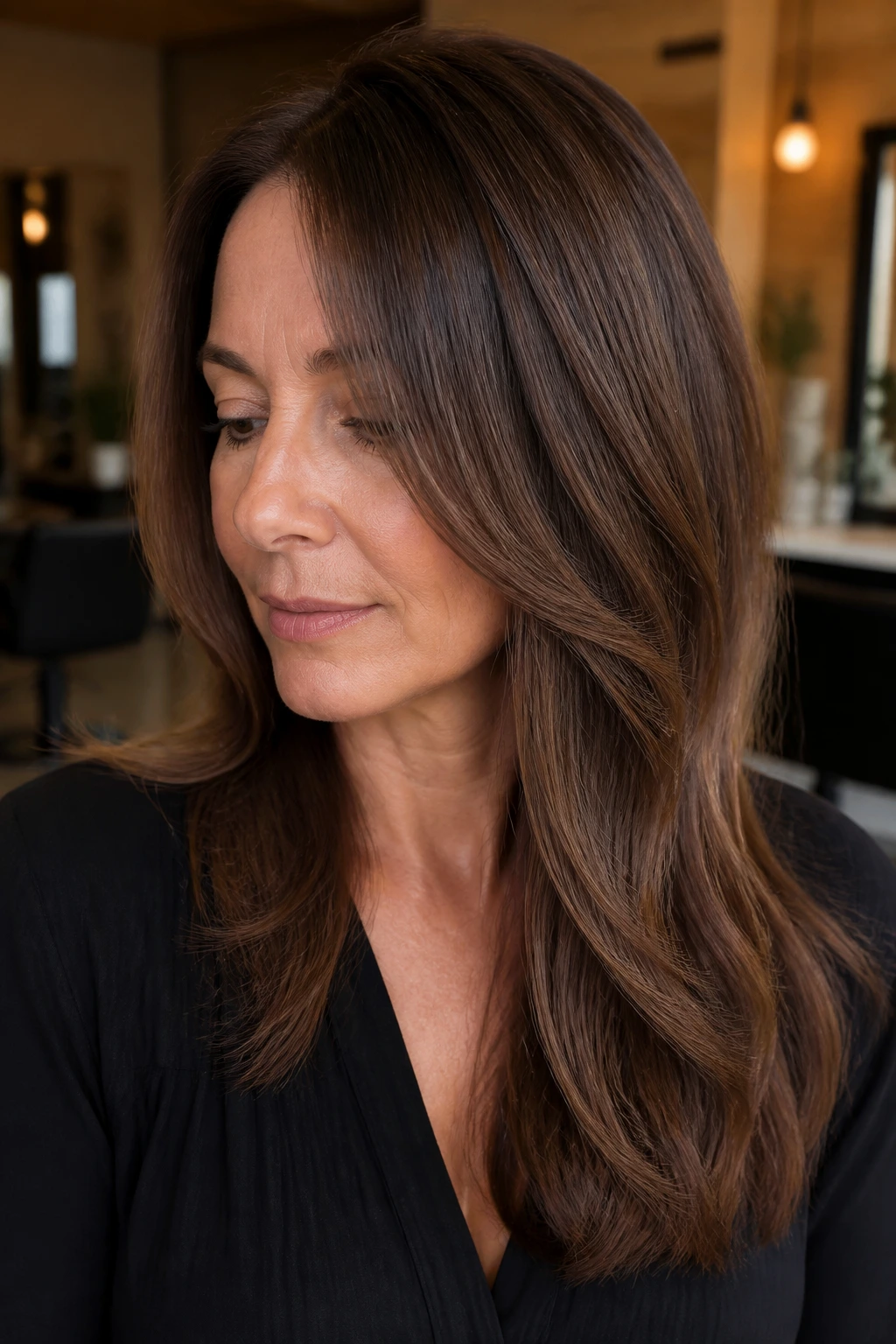
Chocolate melt balayage is built for women who want richness first. The roots stay deep, the mids soften, and the ends blend into a smooth chocolate tone that never feels harsh. That depth is useful on fine hair because it gives the eye a full starting point near the scalp.
The melt matters more than the highlight itself here. If the transition is smooth, the style looks expensive and calm. If the transition is choppy, the hair can start to look like separate bands. I’d take a softer melt over a brighter stripe any day.
16. Toasted Almond Ribbons
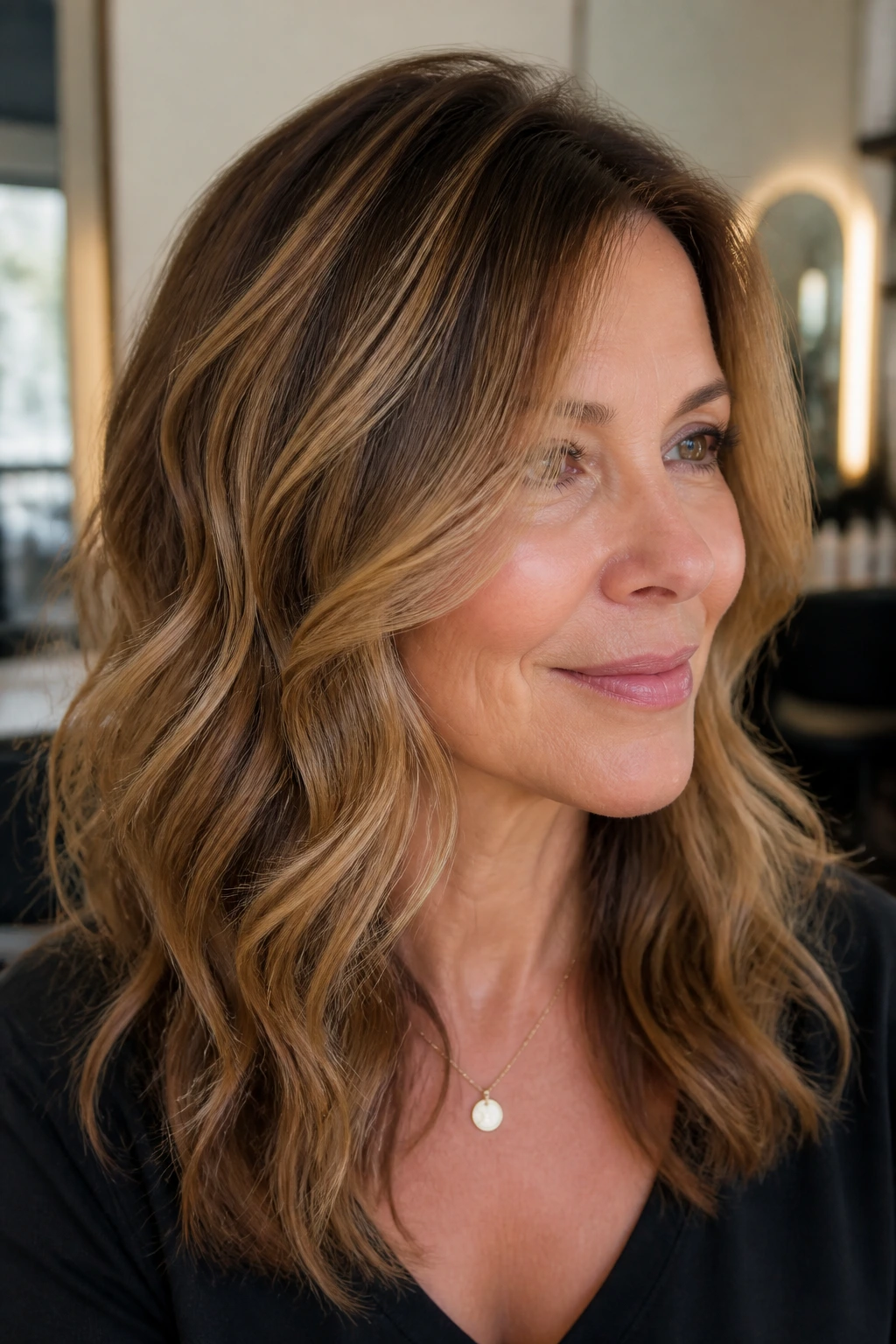
Toasted almond ribbons are warm, creamy, and a little lighter than classic brunette, but they still stay inside the brown family. They’re a good match for wavy fine hair because the ribbons can travel along the wave pattern without making the hair look fractured.
Ask for narrow ribbons that sit between the major layers, not just on top. That gives the style some built-in depth. If you wear your hair in a simple side part, toasted almond pieces around the front can shift the whole mood of the cut in two seconds.
17. Smoky Brown Foilayage
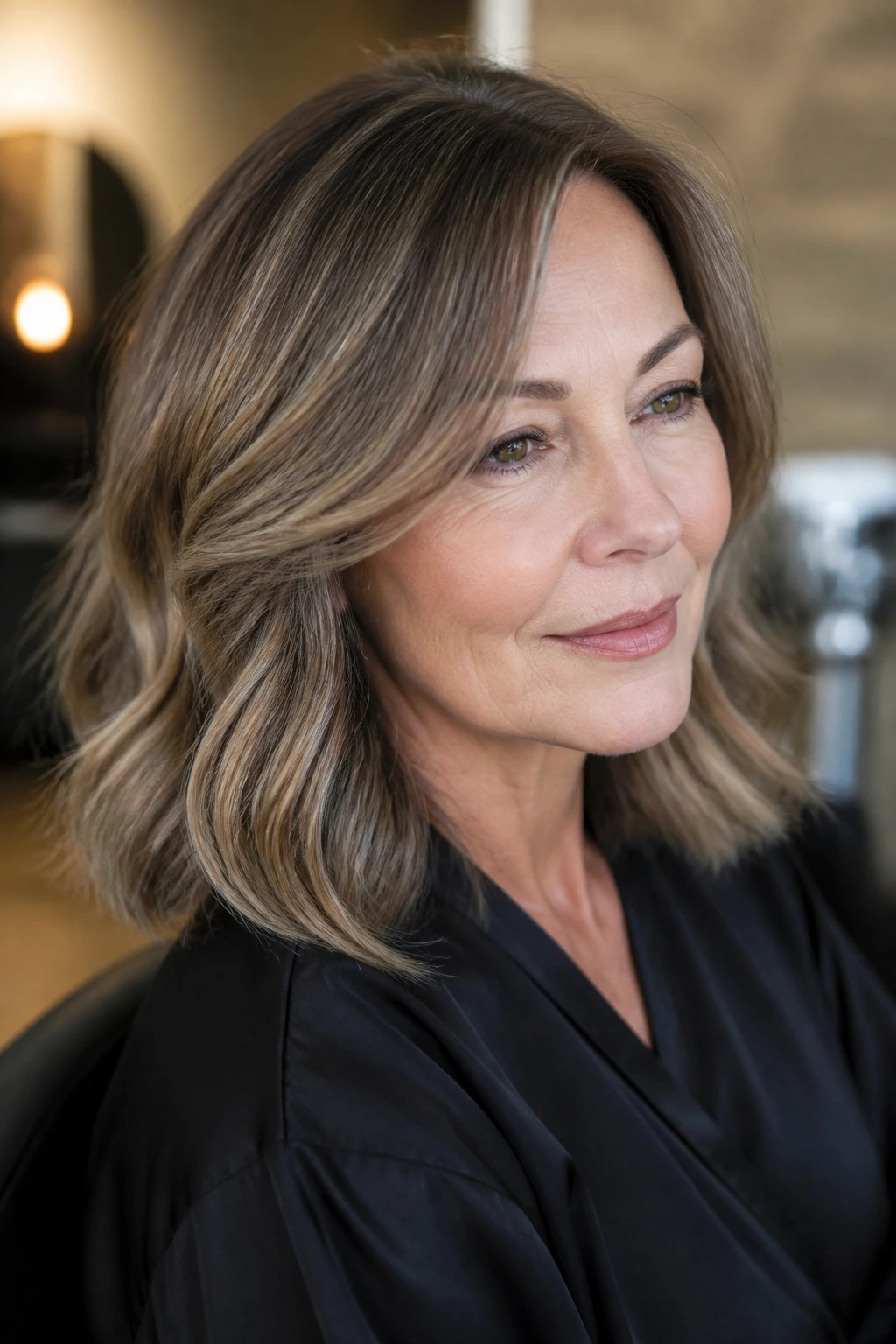
Smoky brown foilayage is for someone who wants clean lift but hates stripey highlights. The pieces are painted and wrapped, so you get a little more control than with freehand balayage. On fine hair, that control helps because you can choose exactly where the brightness goes.
Why It Helps Fine Hair
- More lift at the right spots: Foils can brighten the crown and face-framing sections without lightening the whole head.
- Softer edges: The smoky tone keeps the pieces from looking too blond or too sharp.
- Better gray blending: The contrast stays gentle enough that regrowth doesn’t scream at you.
This is a strong option if you like a polished finish and don’t mind a salon visit that feels a bit more technical.
18. Maple Latte Dimension
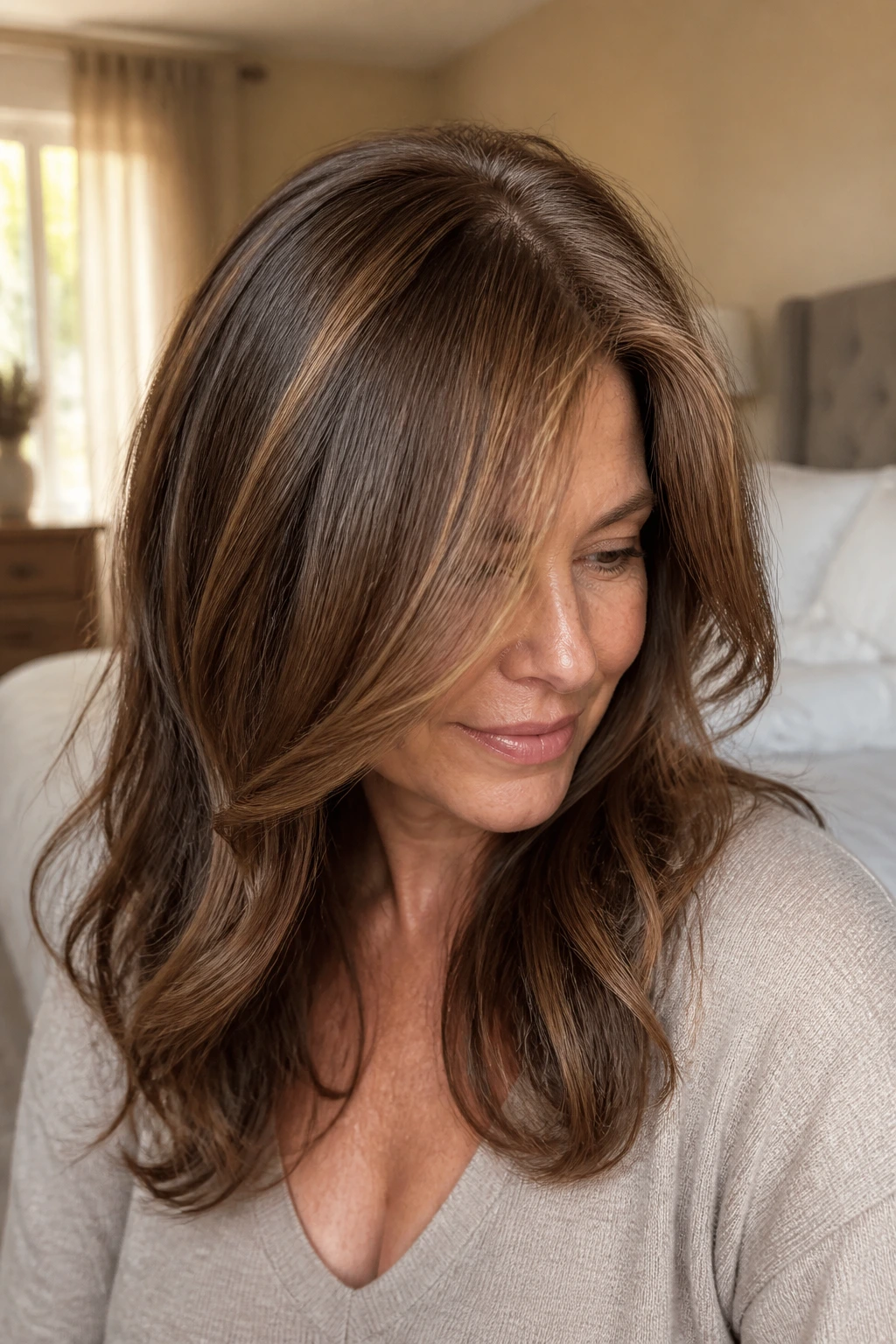
Maple latte dimension gives brunette hair a warm, creamy lift that still looks grounded. The color reads like a softer, milkier brown, and that subtle warmth can make fine hair look more reflective. I especially like this when the base color is flat and needs something to break it up without going blonde.
A little dimension near the crown helps the top layers catch light. Keep the ends deeper if your hair is very fine; too much lightness down there can make the perimeter look thin. The “latte” part should stay gentle.
19. Bronze Brown Peekaboo
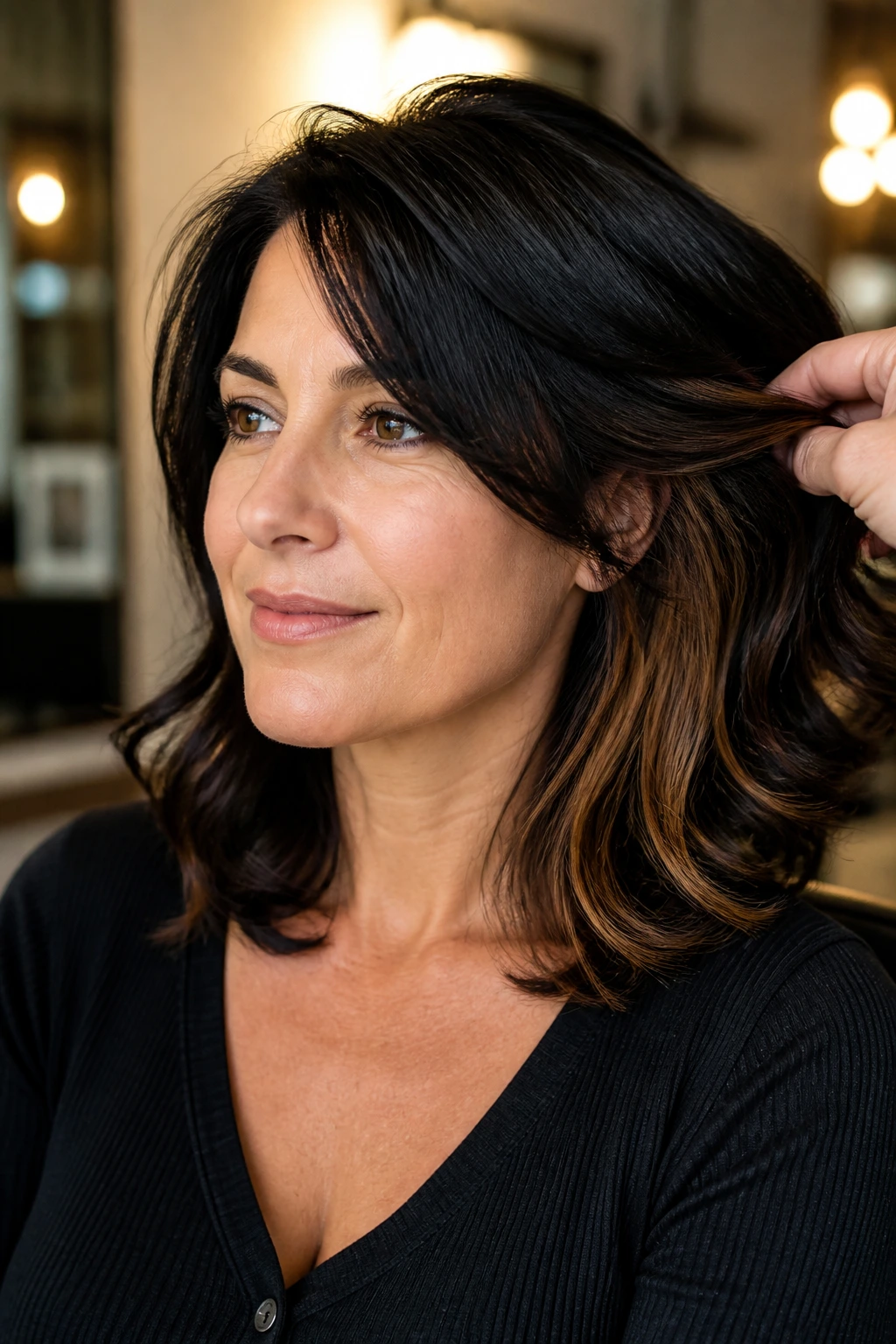
Peekaboo color is underrated on fine hair because it adds interest without changing the surface too much. Bronze brown pieces live underneath the top layer, so the hair looks normal from one angle and dimensional from another. That movement helps a simple cut feel less static.
This is a smart move if you like your hair dark but want some life in it. Bronze brings warmth, not brass, and the hidden placement protects the effect from looking too busy. If you tuck your hair behind your ears a lot, this one gives you a nice surprise without the commitment of full-face brightness.
20. Rooty Mocha Shadow Lights
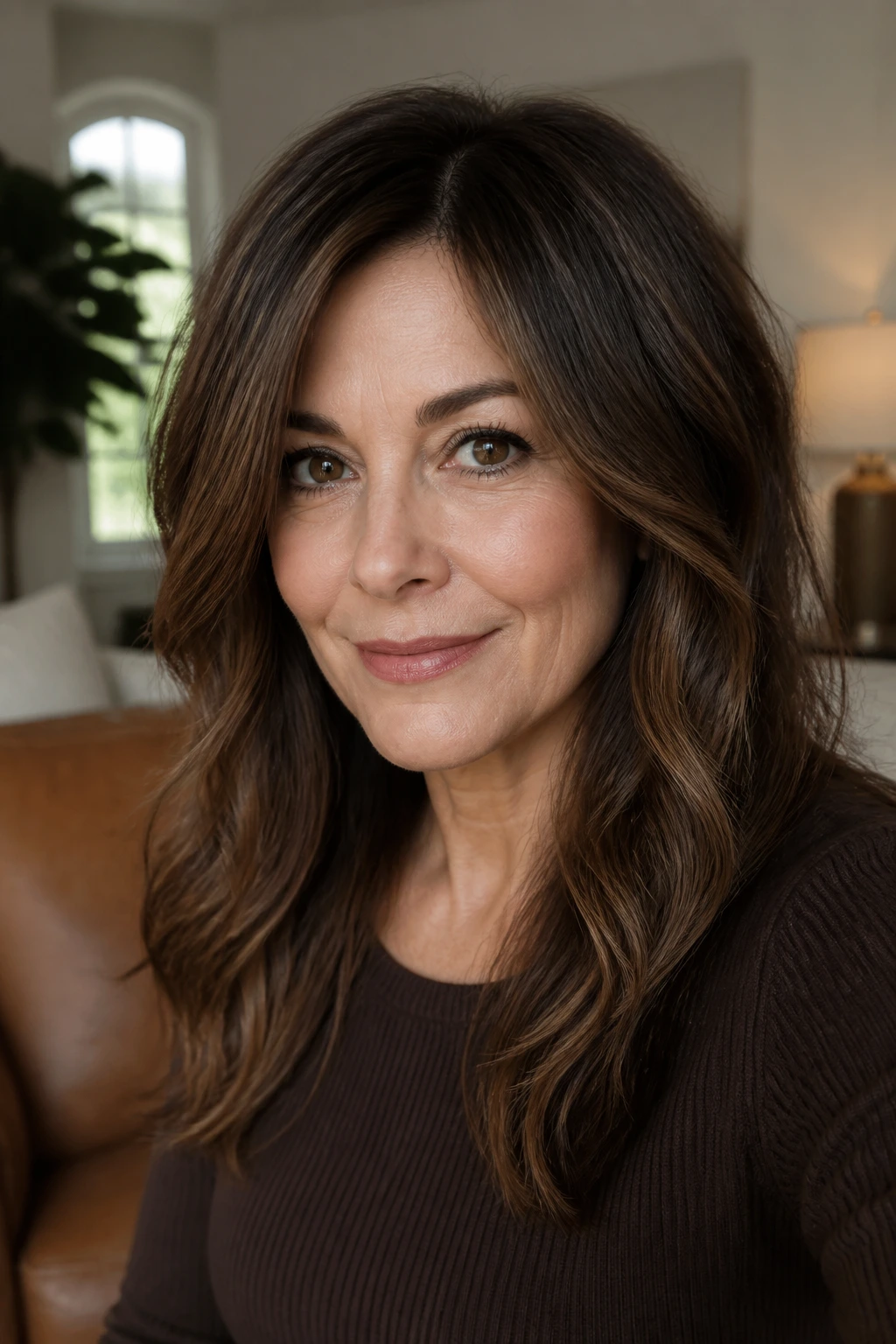
Rooty mocha shadow lights are one of the easiest ways to keep a color service looking intentional as it grows out. The root stays deep, the shadow sits just below the scalp, and the lighter pieces start lower down. That staggered color placement is especially kind to fine hair because it avoids a washed-out top.
The shadow near the roots also makes the scalp less visible under bright light. That can be a huge plus if the hair is sparse at the crown. You get lift where it matters, and the root doesn’t turn into a blunt line after a few weeks.
21. Tawny Veil Highlights
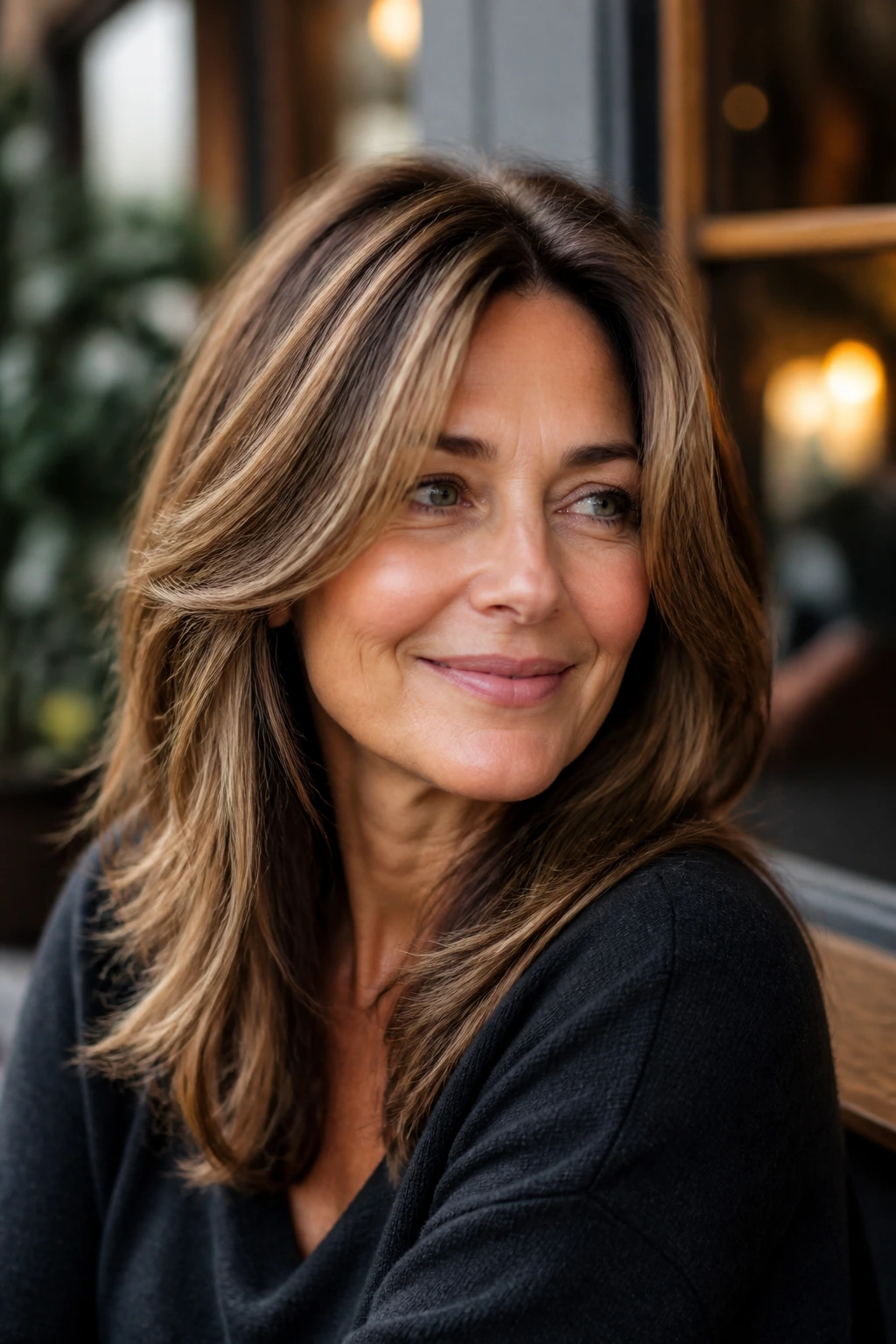
Tawny veil highlights bring a muted golden-brown warmth that looks soft rather than sunny. The veil effect means the highlights sit mostly in the upper layers, almost like a sheer filter over the darker base. On mature fine hair, that can be a sweet spot: some brightness, no hard edges.
This is a good match for layered cuts with movement around the shoulders. The tawny notes brighten the complexion, but the brown base keeps the hair from looking washed out. If your natural color is medium brown with a little warmth already in it, this is a gentle nudge in the right direction.
22. Cool Cocoa Lattice
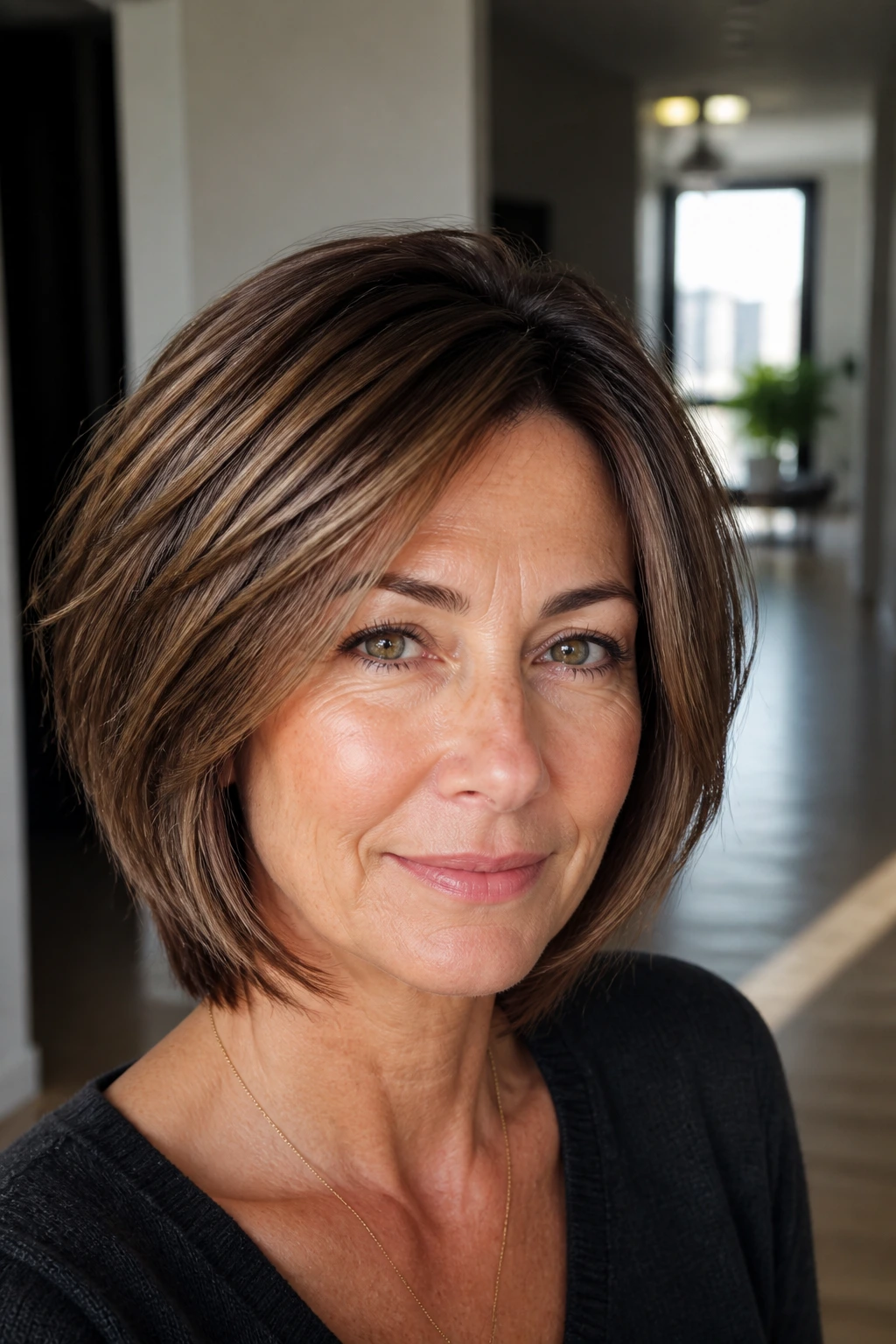
Cool cocoa lattice sounds fancier than it is. The look is built from tiny intersecting pieces of darker and lighter brown, which creates a woven effect through the hair. Fine hair benefits because the variation is small and close together, so the eye reads texture before it reads color.
The cool tone matters if your skin leans pink or if your hair pulls red every time it’s lightened. A cocoa base keeps the warmth under control. The lattice placement also keeps the top from looking like one flat sheet, which is a common problem with one-dimensional brunettes.
23. Sunlit Chestnut Layers
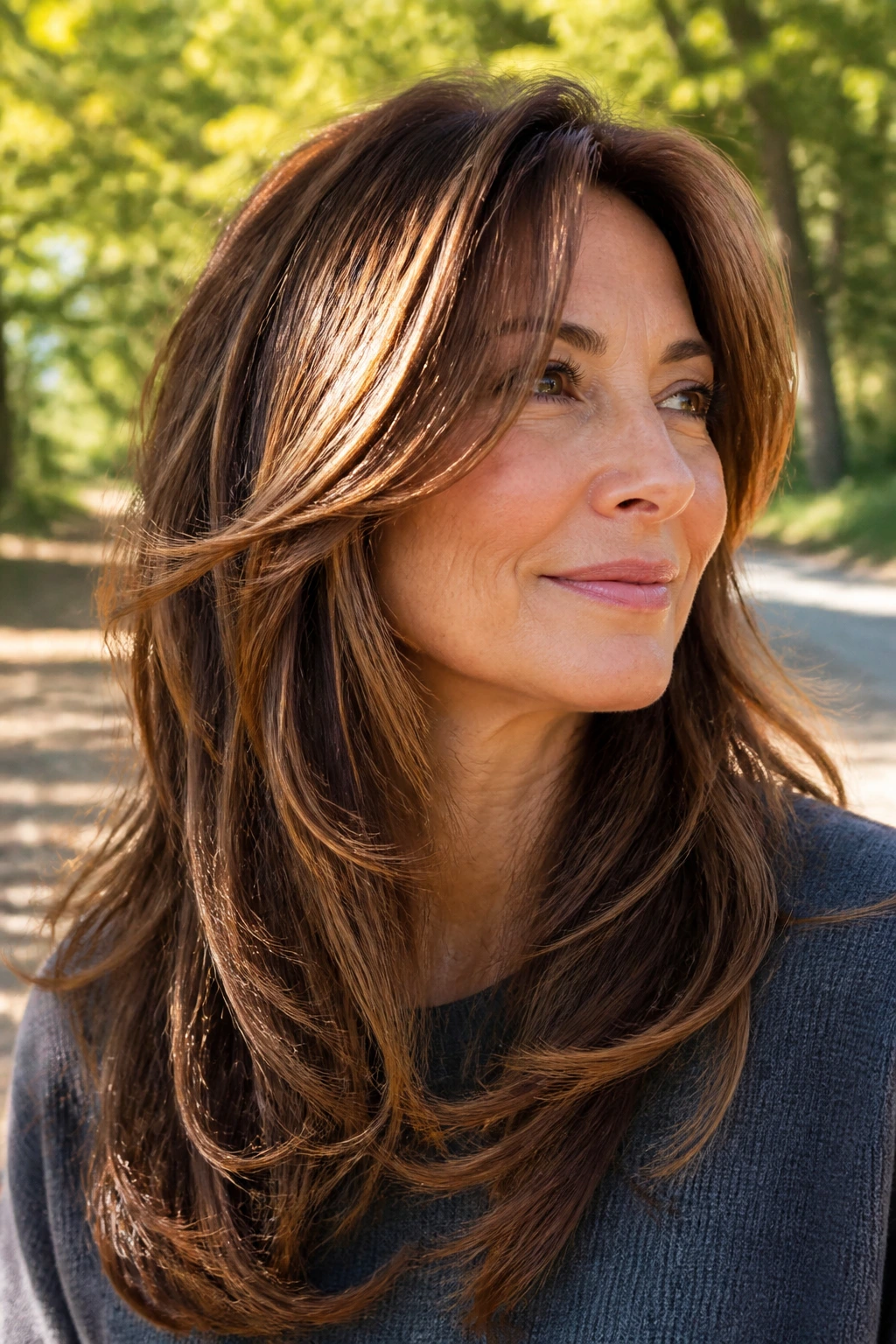
Sunlit chestnut layers are a little brighter than plain chestnut, but still firmly brown. The highlights are placed to follow the movement of the layers, which helps the haircut do the work. On fine hair, that matters. If the layers are cut well, the highlights ride them and create the sense of motion that thick hair gets naturally.
I like this on hair that’s medium length and air-dries with a slight wave. The chestnut catches light on the bends and disappears into the shadow when the hair settles. That changing surface is what keeps the look from going flat.
24. Cinnamon Brown Air-Touch
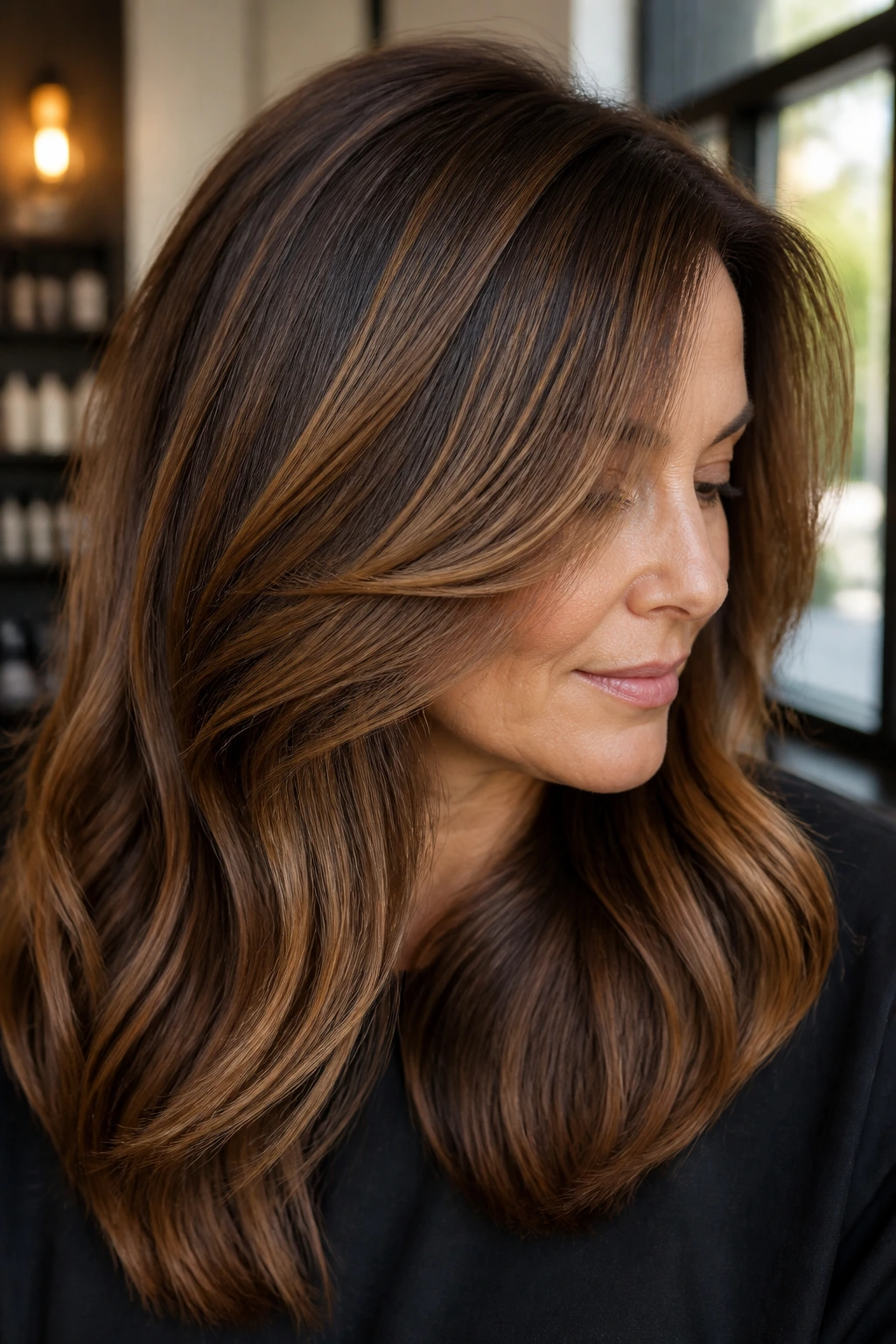
Air-touch color is useful when you want the softest possible blend. The stylist uses air to separate the finer hairs before lightening, which creates a feathered result instead of hard lines. In cinnamon brown, the effect is warm but airy, which makes it a very good fit for delicate strands.
This technique can keep the ends from looking overloaded, since the color is distributed in a very controlled way. If your hair is fragile or you’ve had a few rough lightening services, air-touch can be a calmer path than full foils.
25. Deep Brown Gloss with Sparse Caramel Threads
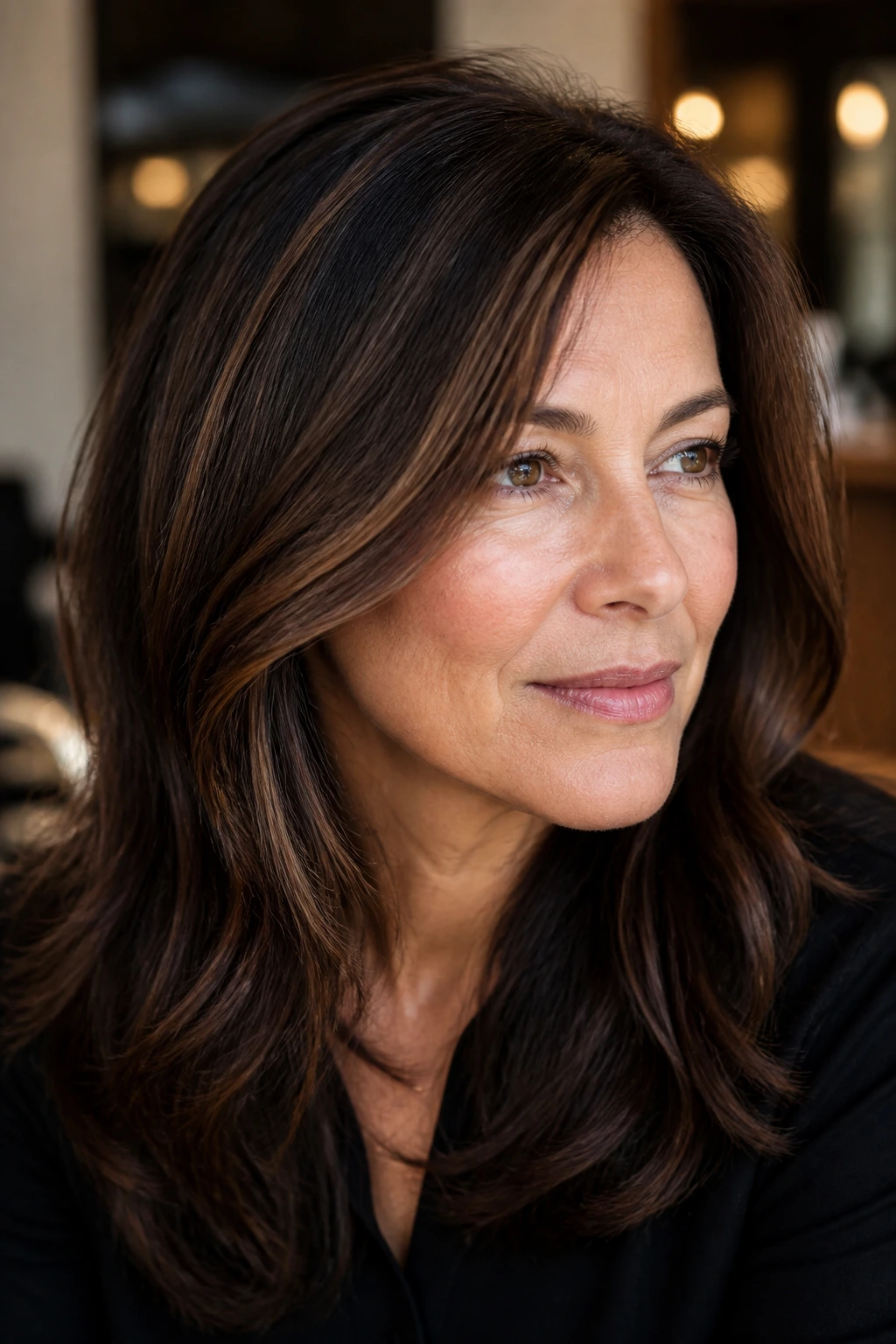
Sometimes the best answer is barely any highlight at all. A deep brown gloss with a few caramel threads gives you shine, depth, and just enough movement to keep the hair from sitting like a block. For women over 40 with fine hair, this can be the most elegant choice in the room.
The caramel should be sparse and deliberate. Two or three well-placed threads around the face and crown can do more than a full set of bright streaks if the base color is rich and the cut is sharp. It’s restrained, but it doesn’t look timid. There’s a difference.
Why Brown Highlights Make Fine Hair Look Thicker Instead of Thinner
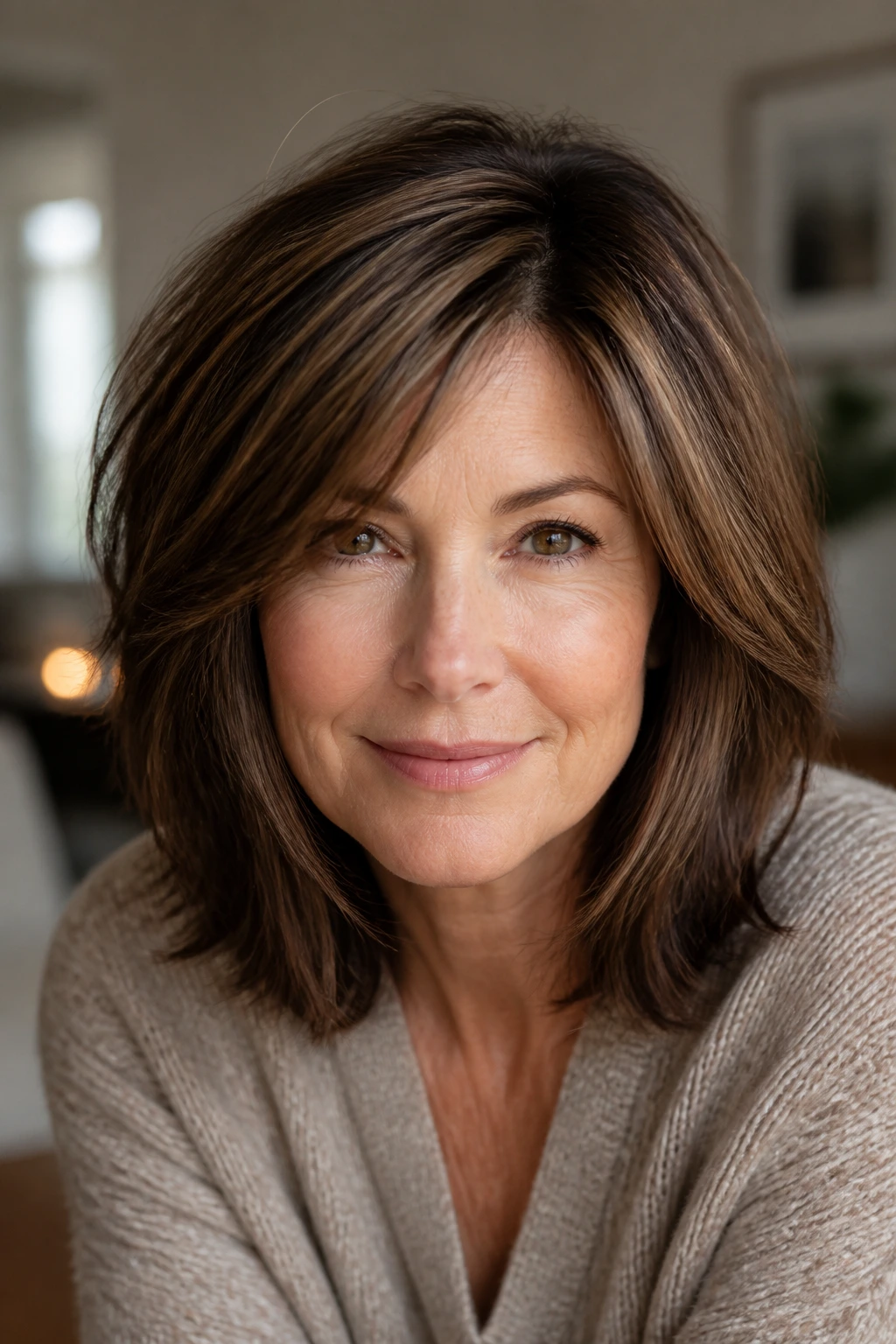
Fine hair can go flat when every strand sits in the same color family. Brown highlights fix that by breaking up the surface. A few lighter ribbons, a little shadow at the root, and one deeper panel under the top layer create tiny visual interruptions, and those interruptions read as density.
The other piece is shine. Brown shades tend to reflect light in a softer way than blonde, which keeps the hair from looking fragile. If the color is too pale, the strand diameter starts to matter more. If the color has depth, the eye reads the hair as fuller than it is.
Placement is where the magic happens. Crown pieces give lift. Face-framing pieces open things up. Lowlights underneath stop the ends from looking see-through. That’s the formula I trust most on hair that needs volume without weight.
How to Ask for Brown Highlights That Don’t Look Stripy
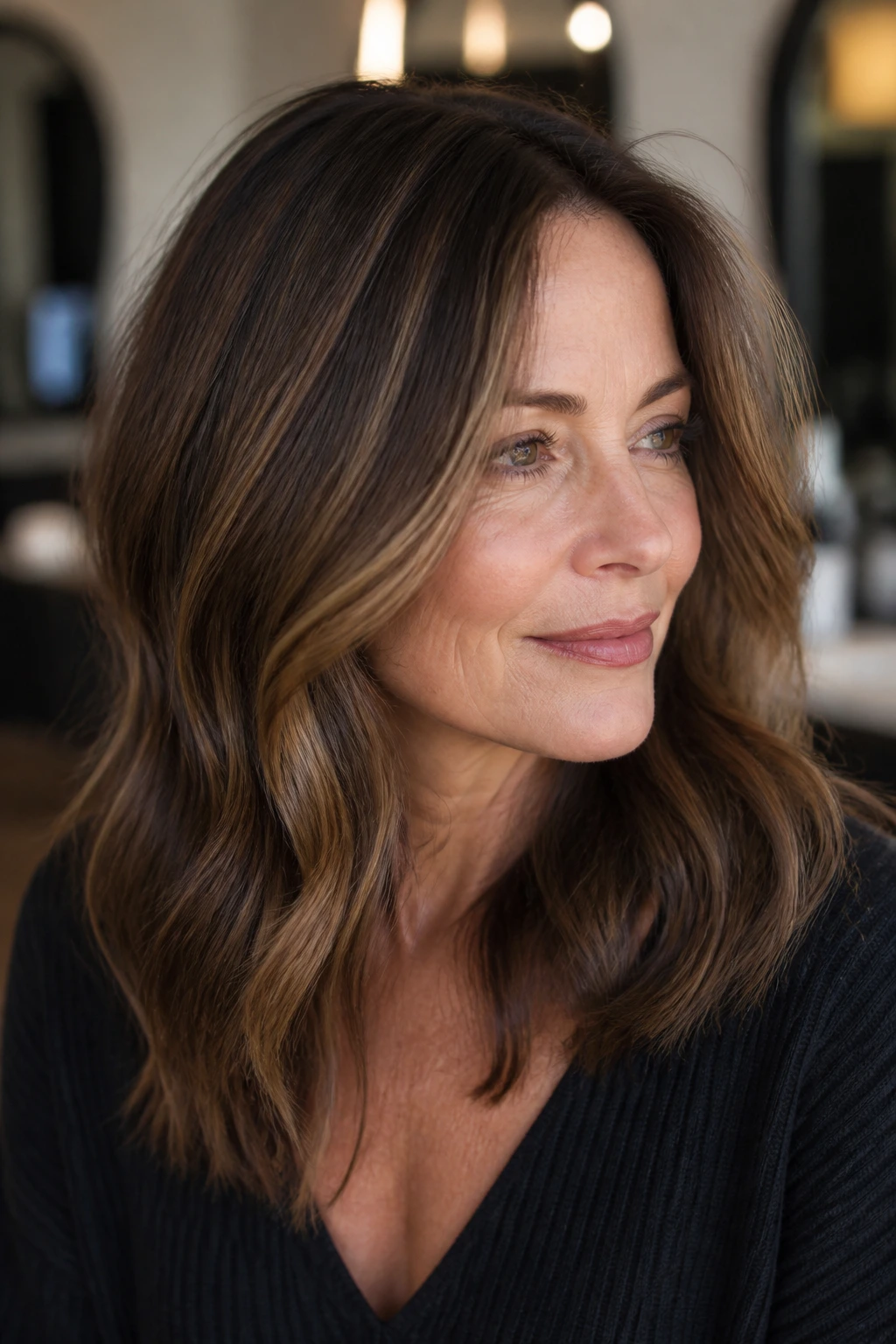
Say the words fine weave and soft blend to your colorist. Those two phrases do a lot of work. They tell the stylist you don’t want chunky placement, and they usually steer the conversation toward smaller sections, softer ribbons, and less contrast at the root.
Bring pictures, but bring the right kind. A photo of hair that looks glossy and dimensional is useful. A photo of a high-contrast blonde with thick chunks is not. If your hair is naturally fine, pictures with subtle depth and movement will get you much closer to the result you actually want.
Ask about the root area too. A little shadow near the scalp can make the highlights look softer and make grow-out easier. If you want gray blending, say that out loud. It changes the whole plan.
Choosing the Right Brown Shade for Your Skin Tone and Gray Pattern
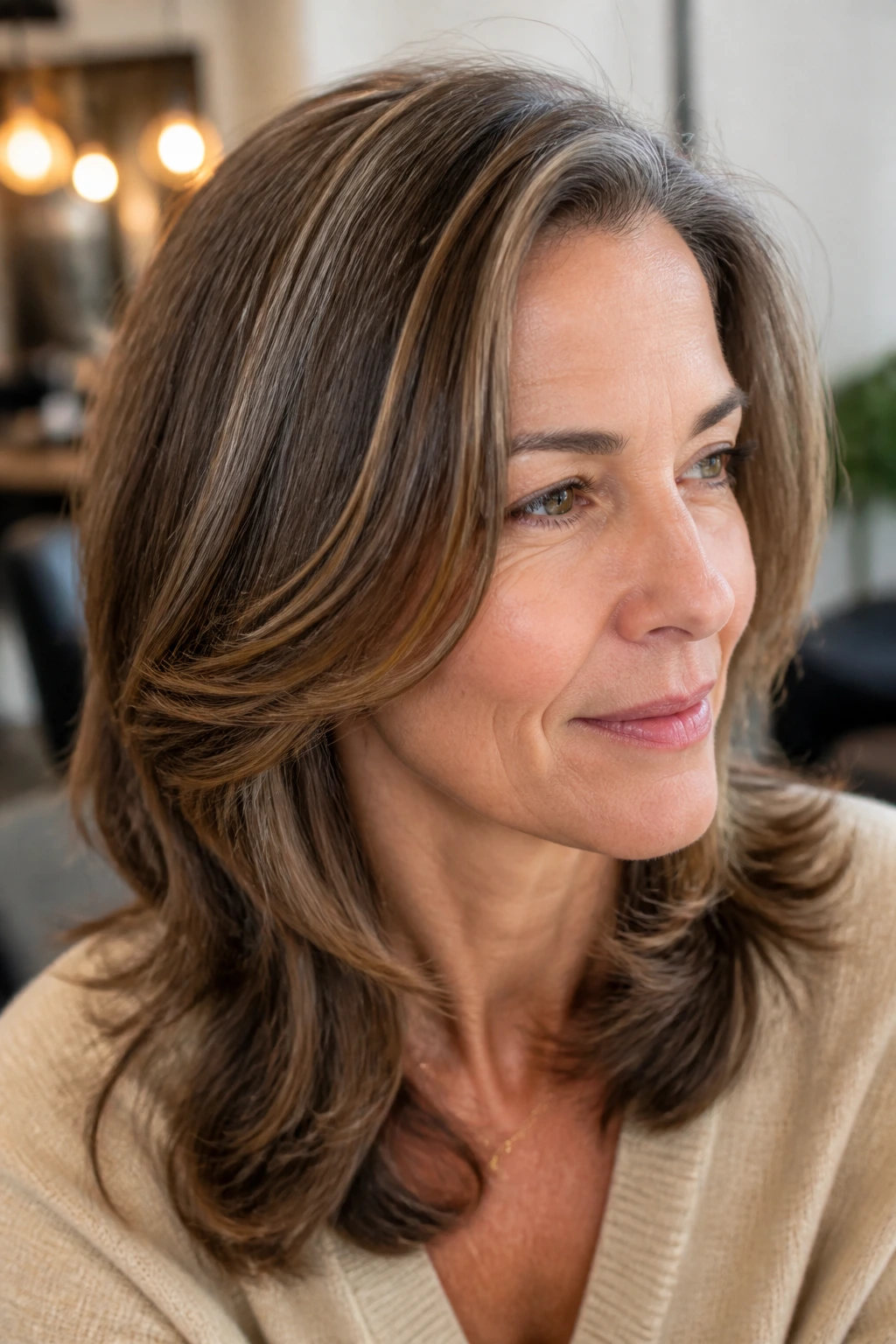
Warm skin with golden or olive undertones usually likes chestnut, toffee, walnut, and honeyed brunette tones. Cool skin often looks better with mushroom brown, cocoa, ash-brown, or smoky mocha. That doesn’t mean you’re locked into one lane. It just means the undertone of the highlight should support your face instead of fighting it.
Gray changes the picture a bit. If your silver comes in bright and crisp, a cool brown can keep it looking intentional. If your gray is softer or more salt-and-pepper, a warmer brown can add depth without turning muddy. The wrong shade here is usually the one that ignores what your own hair is doing at the root.
When in doubt, stay a little deeper than your first instinct. Fine hair can lose its shape if the color gets too pale. A rich brown with a few lighter threads often ages better than a big blond transformation.
Essential Tools for Keeping Brown Highlights Fresh
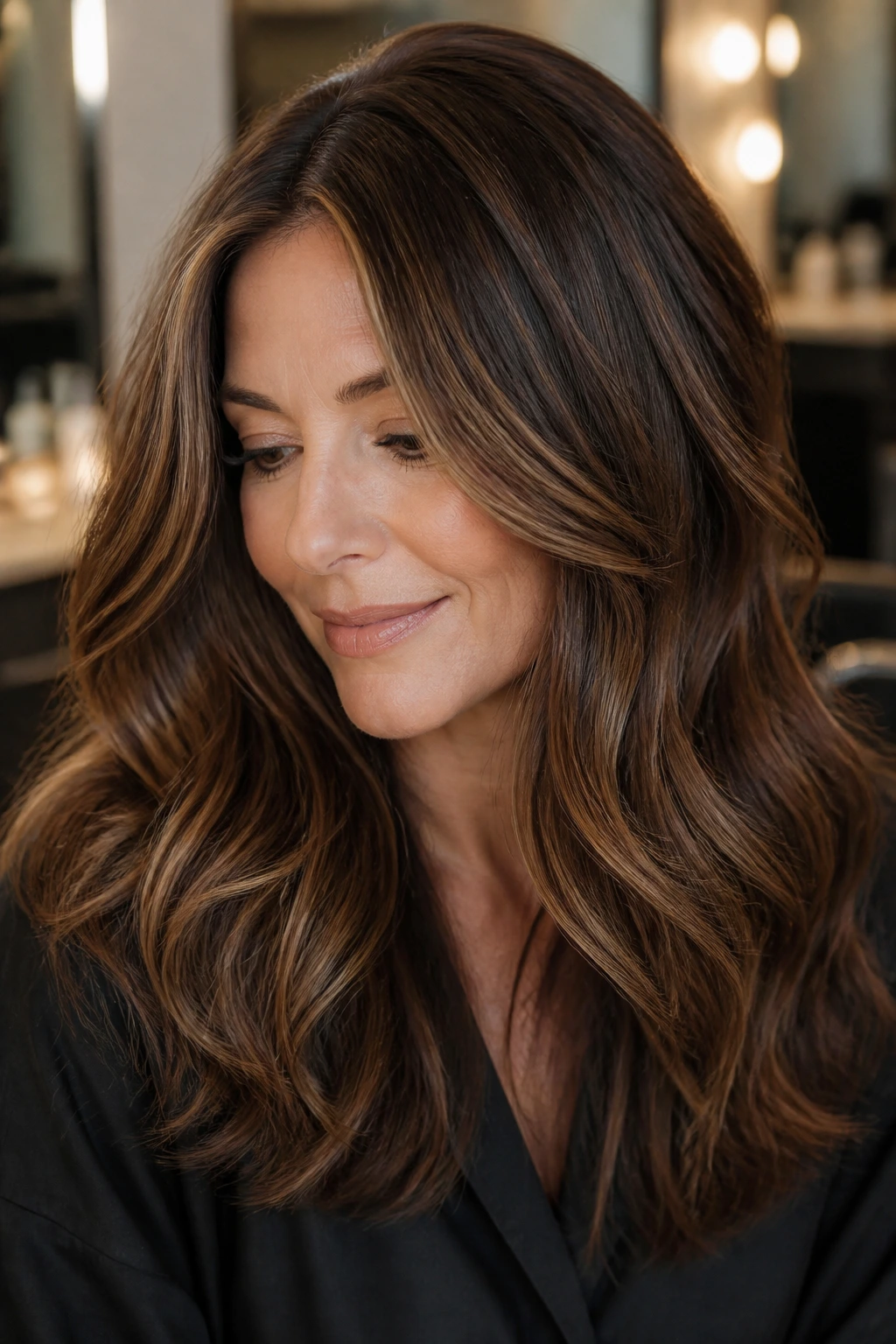
- Color-safe shampoo: Choose one without harsh clarifying agents for daily washing; it keeps the brown tones from fading too quickly.
- Blue shampoo or blue conditioner: Handy when your brunette starts pulling orange after a few weeks.
- Leave-in conditioner: Fine hair needs slip, but use a light one so the roots don’t collapse.
- Heat protectant spray: Brown highlights can lose shine fast if you skip this before blow-drying or curling.
- Wide-tooth comb: Better than yanking through wet, highlighted hair with a tight brush.
- Microfiber towel: Reduces friction, which matters when the hair is delicate.
- Round brush with a medium barrel: Good for lifting the root without making the ends puffy.
- Glossing serum or light oil: A drop or two on the mids and ends adds shine without greasy buildup.
How Brown Highlights for Women Over 40 with Fine Hair Should Be Styled
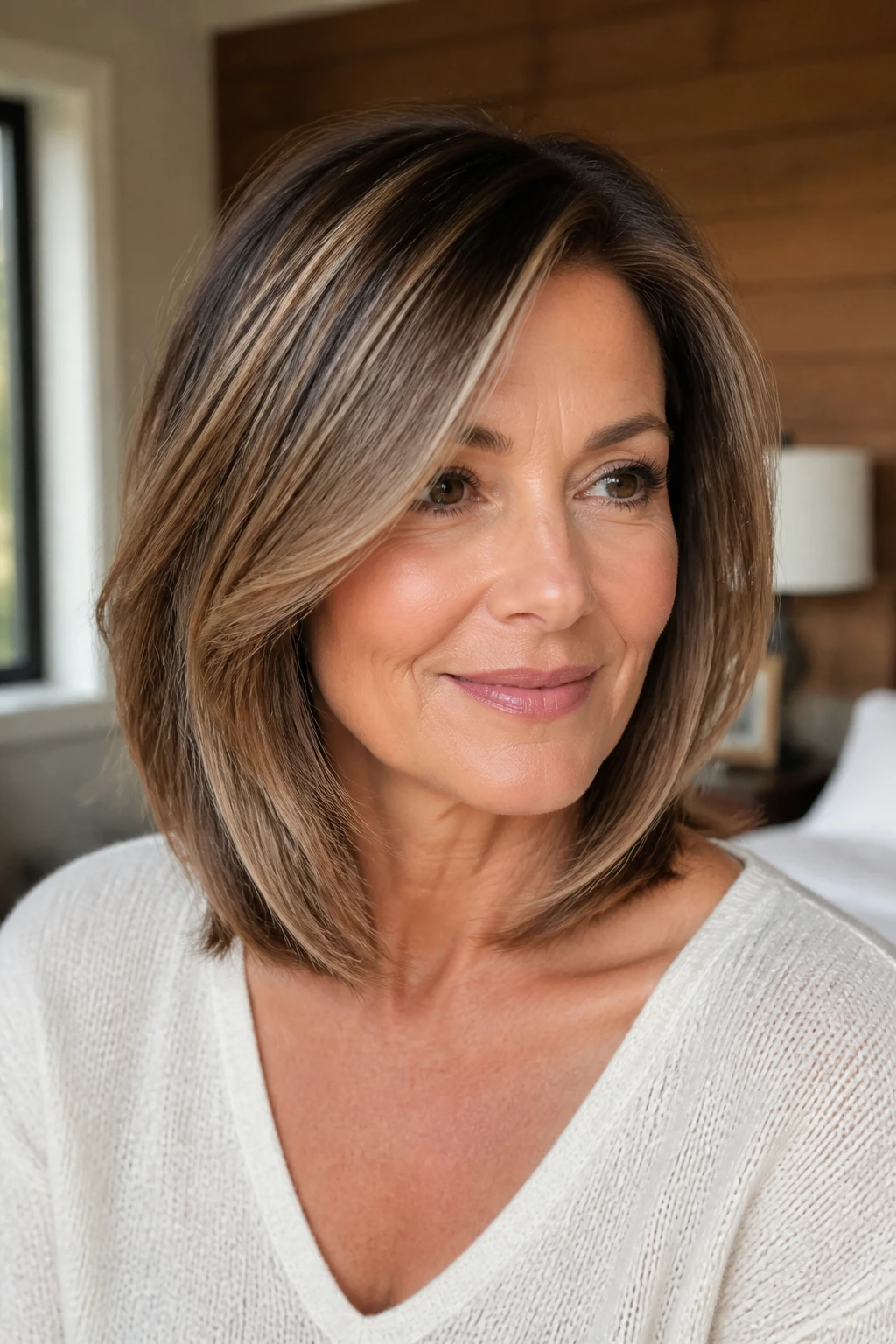
Presentation: Soft bends, loose blowouts, and a slightly off-center part show dimension better than pin-straight hair with heavy product. Fine hair looks fuller when the layers have some movement.
Accompaniments: Pair the color with a layered bob, a shoulder-length lob, curtain bangs, or face-framing layers that don’t swallow the front of the head. A blunt cut can work too, but it needs smarter placement and a good gloss.
Portions: If you’re asking for highlights, think partial or halo coverage before you go all-in. A very full head of light pieces can be too much on fine hair; selective placement often reads richer.
Finish: A clear gloss, a soft serum, and a quick root-lift blow-dry at the crown keep the brown tones visible. Heavy mousse or too much dry shampoo can bury the shine and flatten the very texture you paid for.
Additional Tips and Style Boosters
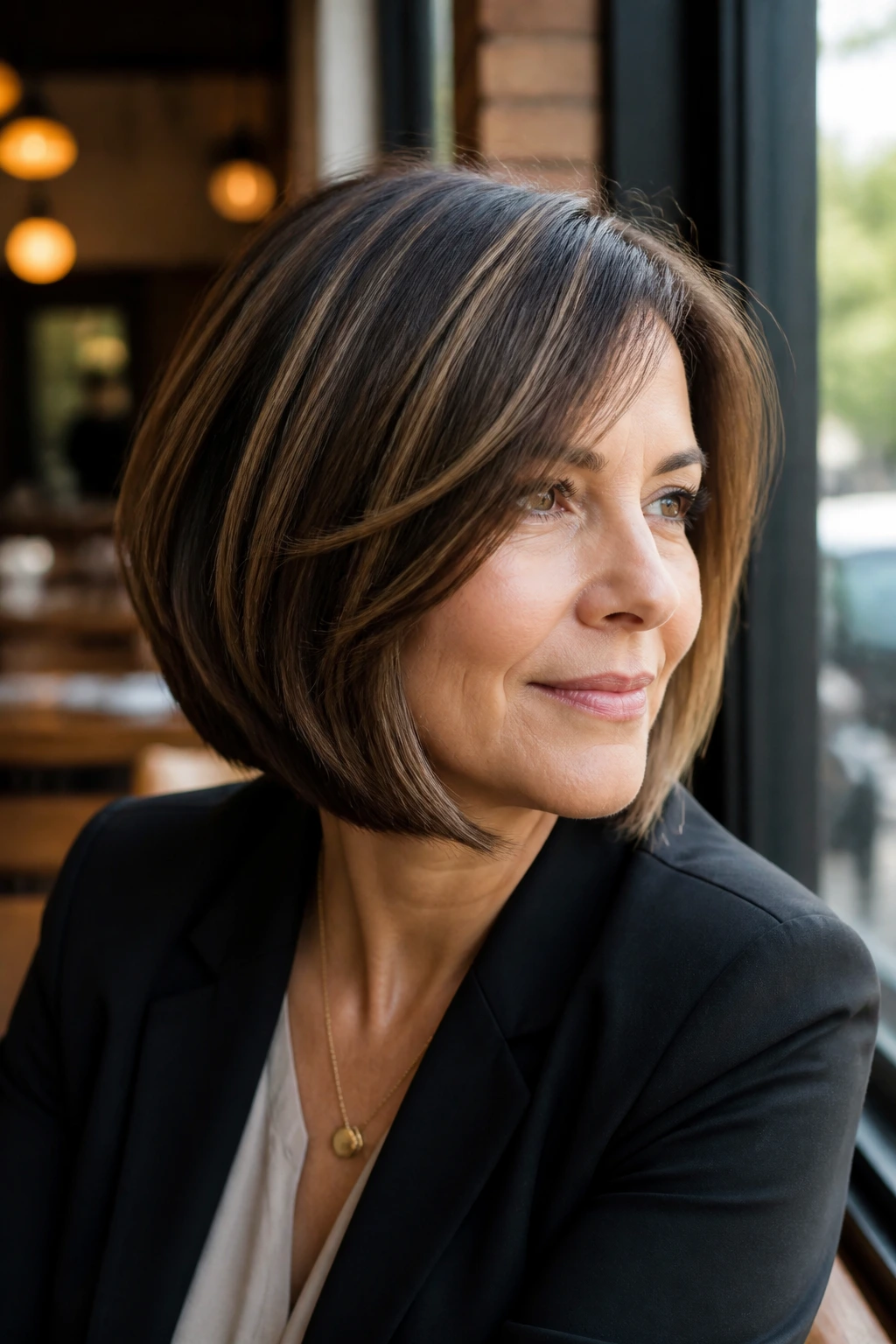
Flavor Enhancement: A clear or tinted gloss every 6 to 8 weeks can keep brown highlights from drifting muddy or orange. I prefer a gloss over a drastic recolor when the base is still good.
Customization: If your hair is very thin at the crown, ask for more depth underneath and lighter pieces only on the top layer. That mix gives the eye somewhere to land without exposing every scalp line.
Serving Suggestions: A soft side part, tucked-behind-the-ear styling, or a few face-framing bends from a 1-inch curling iron will show the color better than a stiff, sprayed-out blowout. Finish with a pea-sized amount of serum, not a palmful.
Make-It-Yours: If you wear glasses, keep a little brightness around the temples so the frames don’t swallow the face. If you prefer low maintenance, ask for a shadow root and fewer foils near the perimeter. If you want a little more lift, add one brighter panel near the part, not five.
Keeping Brown Highlights Looking Fresh Between Salon Visits
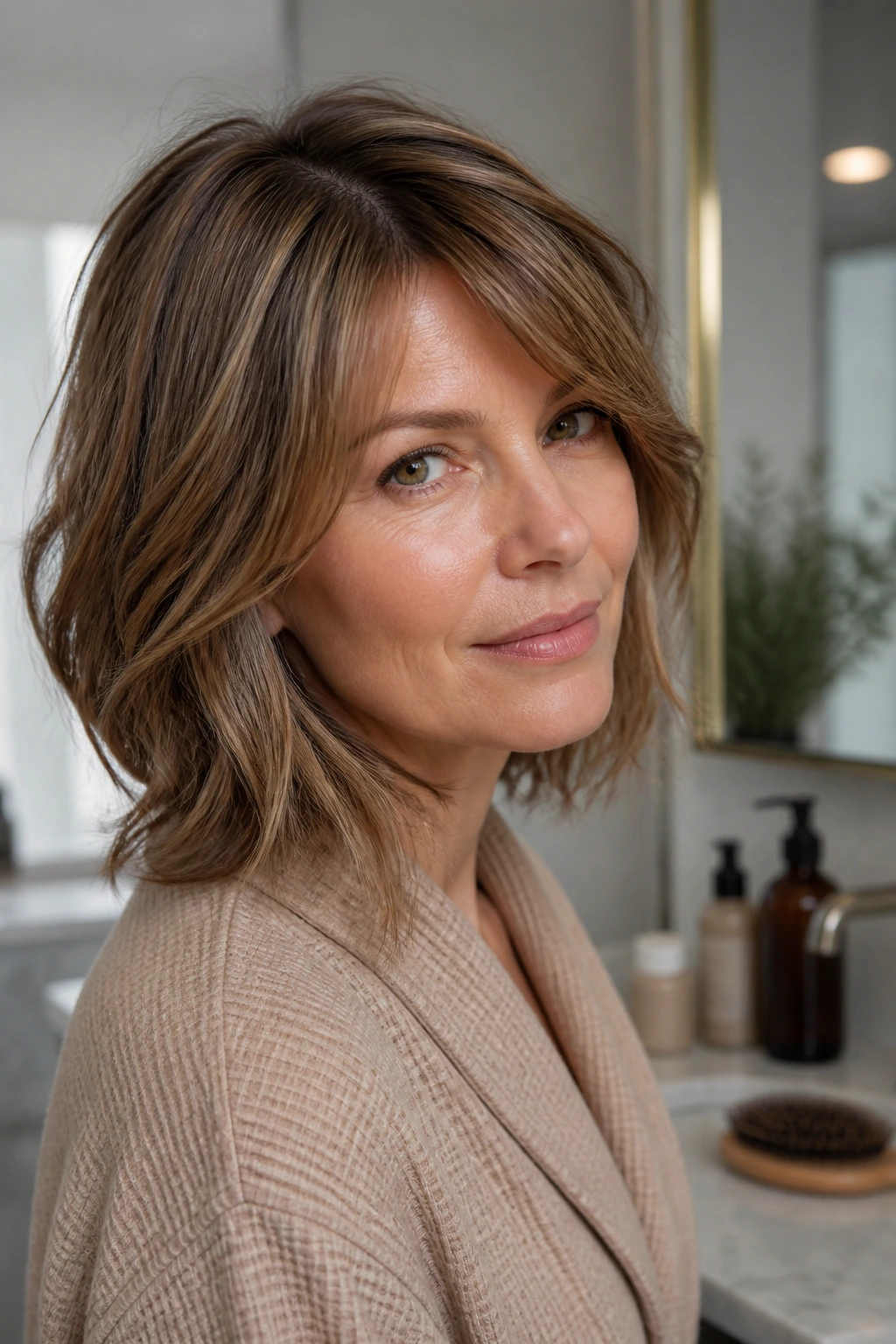
Fine hair does not forgive rough handling. Wash too often, and the toner fades. Heat it too hot, and the shine goes first. Sleep on it loosely and you’ll preserve both the cut and the color shape longer.
Most brown highlight services look best with a refresh every 8 to 12 weeks, depending on how much gray you have and how much contrast you chose. A gloss or toner refresh can happen sooner, around 4 to 6 weeks, especially if the color starts to lean warm. If your highlights are very soft, you may go longer without seeing a hard line.
At home, use lukewarm water, not hot. Hot water strips tone fast and makes fine hair feel like straw at the ends. If you blow-dry, keep the nozzle moving and use a round brush only at the crown and front where lift matters most. The rest can air-dry or get a loose finish. Less fuss, better result.
Common Mistakes That Make Brown Highlights Look Thin
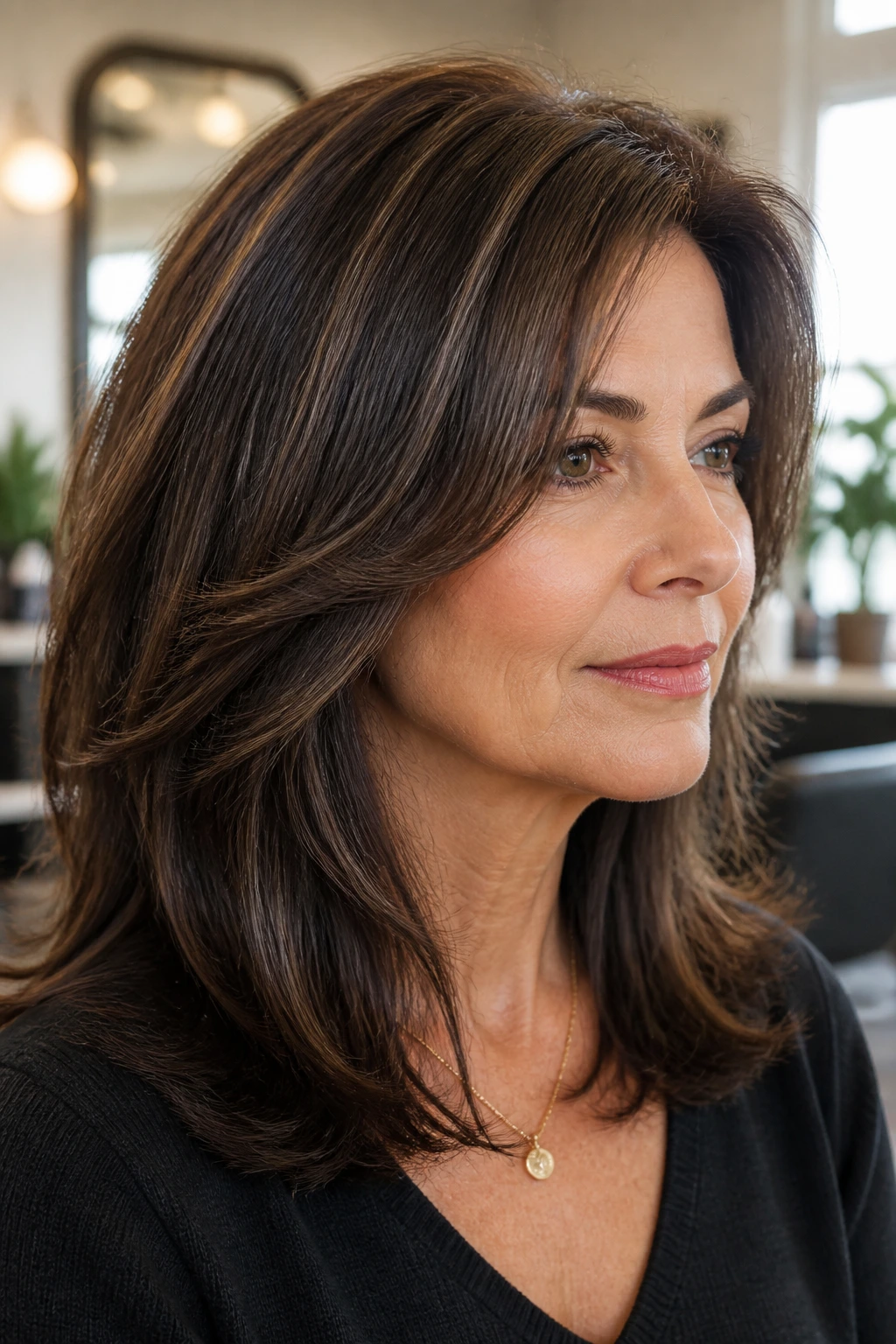
The first mistake is going too chunky. Big highlight pieces expose the scalp and create hard lines, which make fine hair look sliced up instead of fuller. The fix is simple: ask for micro-weaves, baby-lights, or fine ribbons.
The second mistake is lightening too close to the root without a plan for grow-out. That can look flat on day one and harsh by week three. A soft shadow root or a little depth at the scalp solves that.
Another one: skipping lowlights. If everything is light, the hair can lose body. A few deeper pieces underneath stop the whole head from floating into one pale surface.
Over-toning is a sneaky problem too. Too much ash can leave brown hair looking dull and muddy. If the hair starts to lose warmth, don’t keep piling on cool toner every appointment. Sometimes a gloss with a touch of warmth is the fix.
Variations and Adaptations to Try
Gray-Blending Smoke: Ask for a cool mocha base with ultra-fine silver-friendly highlights through the crown. This works well if your gray grows in fast and you want the regrowth to look intentional, not patchy.
Warm Caramel Lift: Keep the base rich and add soft caramel pieces only around the face and top layers. It’s a good choice if your skin likes warmth and you don’t want the hair to look dark around the eyes.
Low-Maintenance Shadow Root: Leave the root deeper and let the lighter pieces start lower on the shaft. This makes grow-out gentler and keeps fine hair from looking too exposed at the scalp.
Curly Fine-Hair Ribboning: Use thin, painted ribbons through the curls instead of a uniform highlight pattern. Curly fine hair needs movement inside the curl clumps, not broad streaks that break the shape apart.
Polished Bob Dimension: For a bob or lob, keep the highlights tighter near the front and crown, then deeper underneath. That gives the haircut more edge and keeps the perimeter from looking see-through.
FAQ
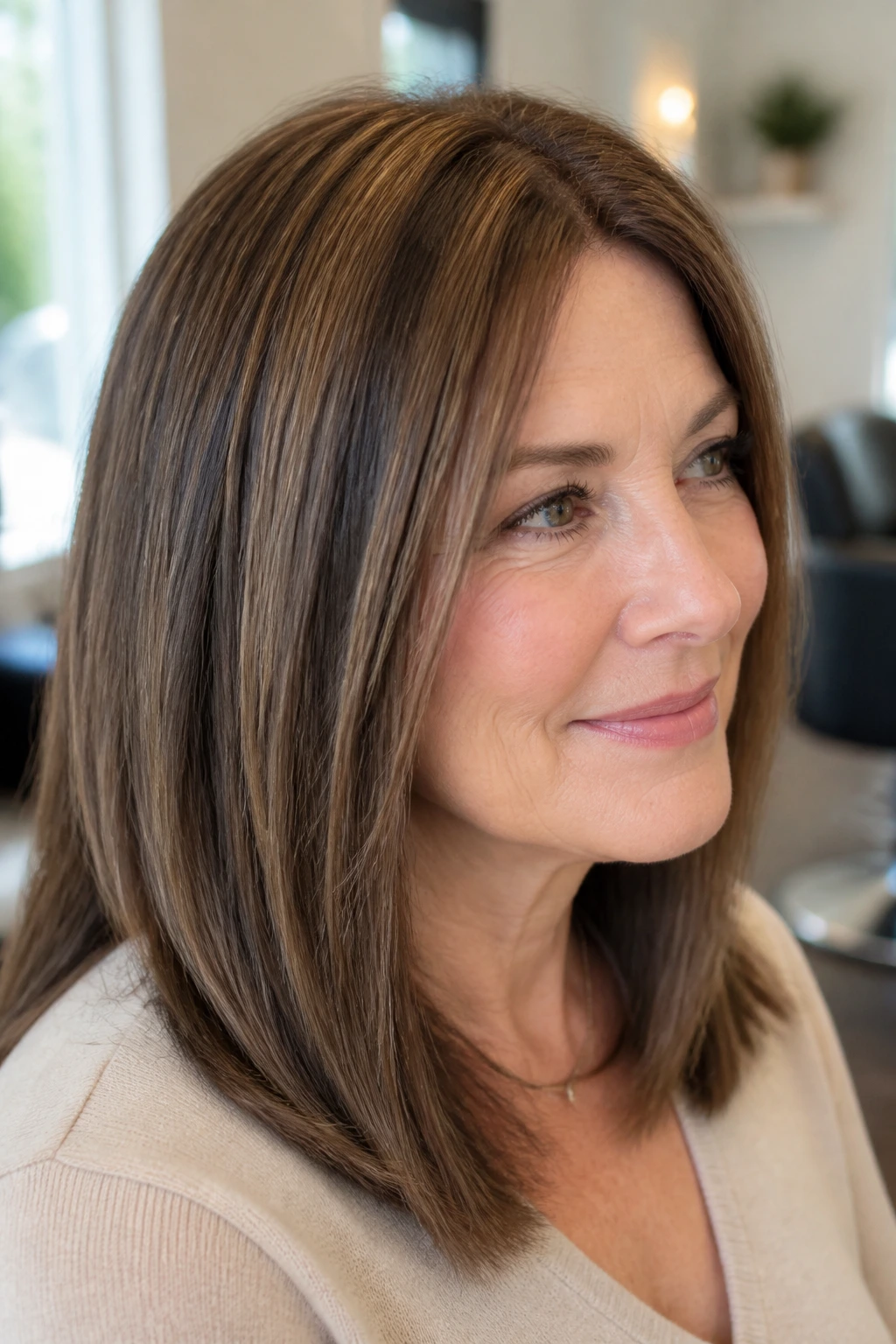
Will brown highlights make fine hair look thinner?
Not when they’re placed well. Fine hair looks thinner when the color is too chunky, too light, or too evenly spread. Soft brown highlights with small sections and a little root shadow usually do the opposite — they add depth and make the hair read as fuller.
What brown shade covers gray best?
Mocha, chestnut, mushroom brown, and walnut all blend gray in different ways. If your gray is strong and bright, a cool brown usually blends more smoothly. If your gray is softer, a warm brown can look richer without fighting the root.
Should I choose balayage or foils?
Balayage gives a softer grow-out, while foils give more control and brightness. For very fine hair, many stylists mix the two so the crown gets lift and the ends stay soft. That hybrid approach often looks better than a single technique used everywhere.
How often do I need touch-ups?
Most women with fine hair can stretch highlights for 8 to 12 weeks, but toner may need a refresh sooner. If the brown starts looking orange or the gray at the part becomes too visible, that’s your cue to go back in. The shade, not just the roots, tells the story.
Can I get brown highlights if my hair is already dark brown?
Yes, and sometimes that’s where the best results come from. Dark hair can take subtle chestnut, caramel, or cocoa pieces without needing a dramatic color shift. The trick is keeping the contrast soft so the hair gains movement without looking overworked.
What if my hair is very thin at the crown?
Then ask for depth underneath and lighter pieces only where the top layer needs lift. Too much light around the crown can expose the scalp. A careful placement plan does more than extra brightness ever will.
Can I keep these highlights looking good if I air-dry my hair?
Absolutely. Air-drying often helps fine hair keep its body, especially when the cut has some internal layers. Use a lightweight leave-in, scrunch or twist the hair a little while it dries, and finish with a drop of serum only on the ends.
Soft Dimension Wins
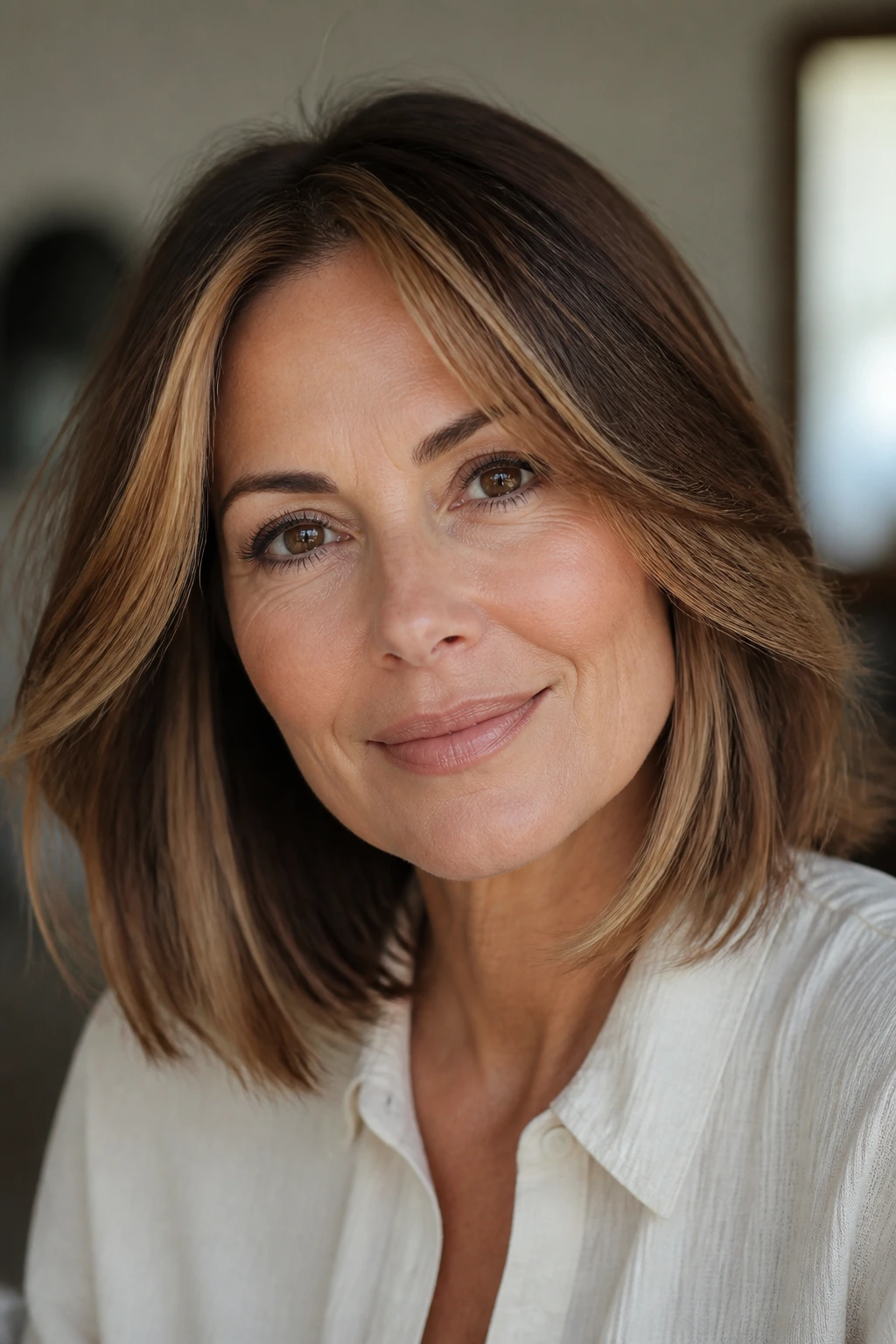
The best brown highlights on fine hair are usually the ones that stay a little quieter than you expected in the salon chair. That’s not a compromise. It’s the whole trick. Small ribbons, thoughtful shadow, and a tone that plays nicely with the base can make the hair look thicker, calmer, and more expensive in a way heavy highlights rarely do.
If you’re choosing among these looks, start with the one that fits your haircut and your maintenance habits, not the brightest one in the group. The prettiest result is the one that still looks good after a week of living in it, a few washes, and one rushed blow-dry before heading out the door.