



A clean braid pattern can change the whole attitude of natural hair. You see it the second the parts land right: the scalp looks neater, the shape feels intentional, and the style stops wobbling between “done” and “almost.” Braiding patterns hairstyles for natural hair are one of those rare styling lanes where the line work matters as much as the finished braid itself. Get the parting right and the rest feels easier. Mess it up and you can feel it before you even reach the mirror.
What I like most about braids on textured hair is that they can be soft, sharp, playful, or severe without changing the basic building blocks. A straight-back cornrow row and a curved feed-in pattern are cut from the same cloth, yet they read completely differently. One sits there like a clean uniform. The other moves. That’s the fun of it.
Some of these styles are built for long wear and low fuss. Others are for a week, a party, or a reset after a wash day that left your roots puffed and determined to do their own thing. A good braid pattern respects shrinkage, hair density, scalp comfort, and the reality that you still have to sleep on the thing. That last part matters more than people admit.
Why You’ll Love This Collection
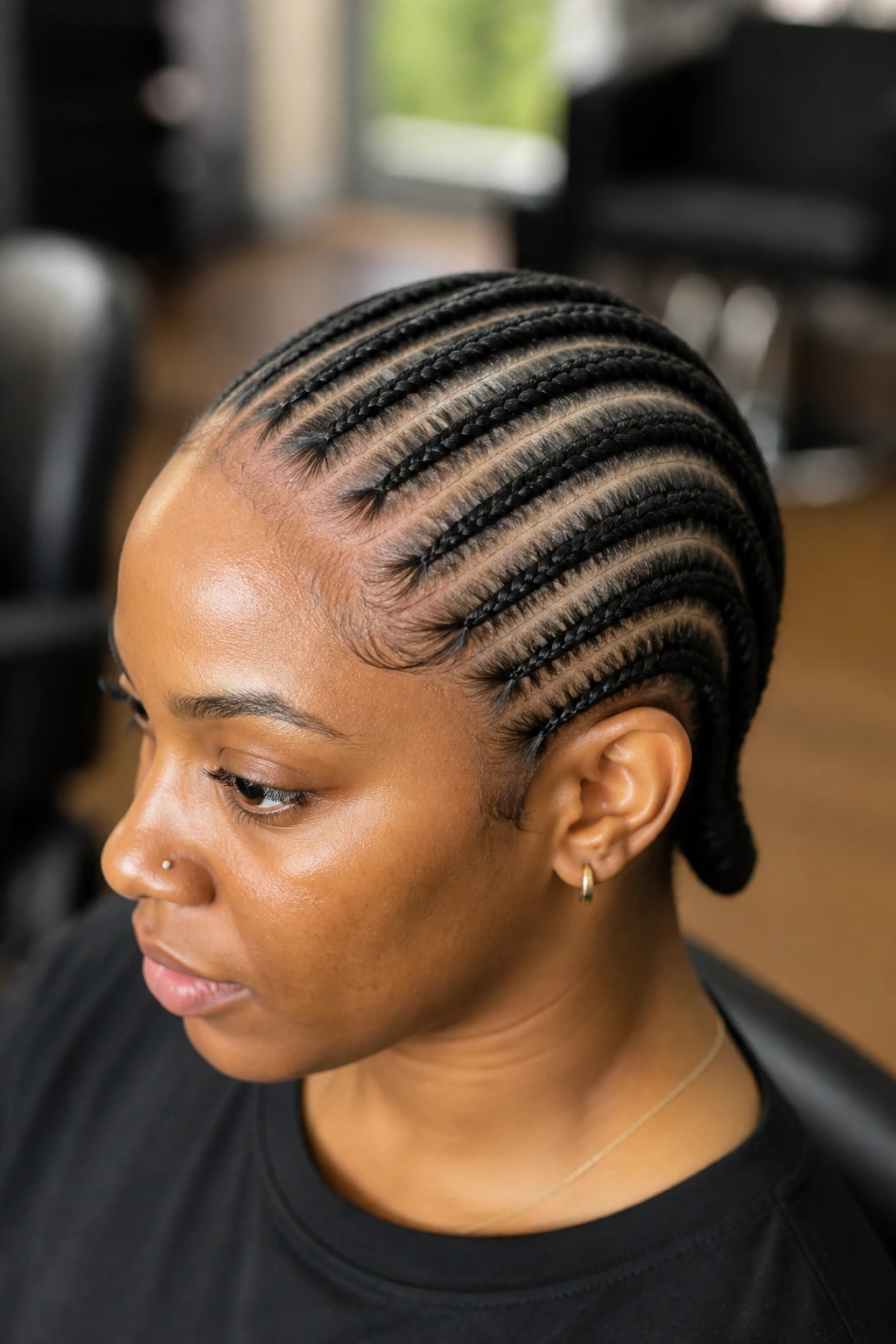
- Pattern does the heavy lifting: These styles lean on parting, direction, and braid placement, so the shape stays interesting even when you keep the rest of the look simple.
- Protective without being boring: Several of these styles tuck the ends away, keep daily manipulation low, and still give you room to wear beads, cuffs, or a clean bun.
- Short or long, there’s an option: Some patterns work best on stretched, shoulder-length hair; others come alive with added braiding hair or a longer base.
- Salons and home setups both fit: A few are easy to copy at a kitchen chair with a rat-tail comb, while others are better when a stylist can keep the sections crisp.
- Low-tension choices are here too: If your edges get irritated fast, you do not need to force a tight look to get a polished finish.
- There’s room for personality: Triangles, zigzags, swoops, beads, buns, and side parts change the whole mood without changing the basic braid language.
1. Straight-Back Cornrows
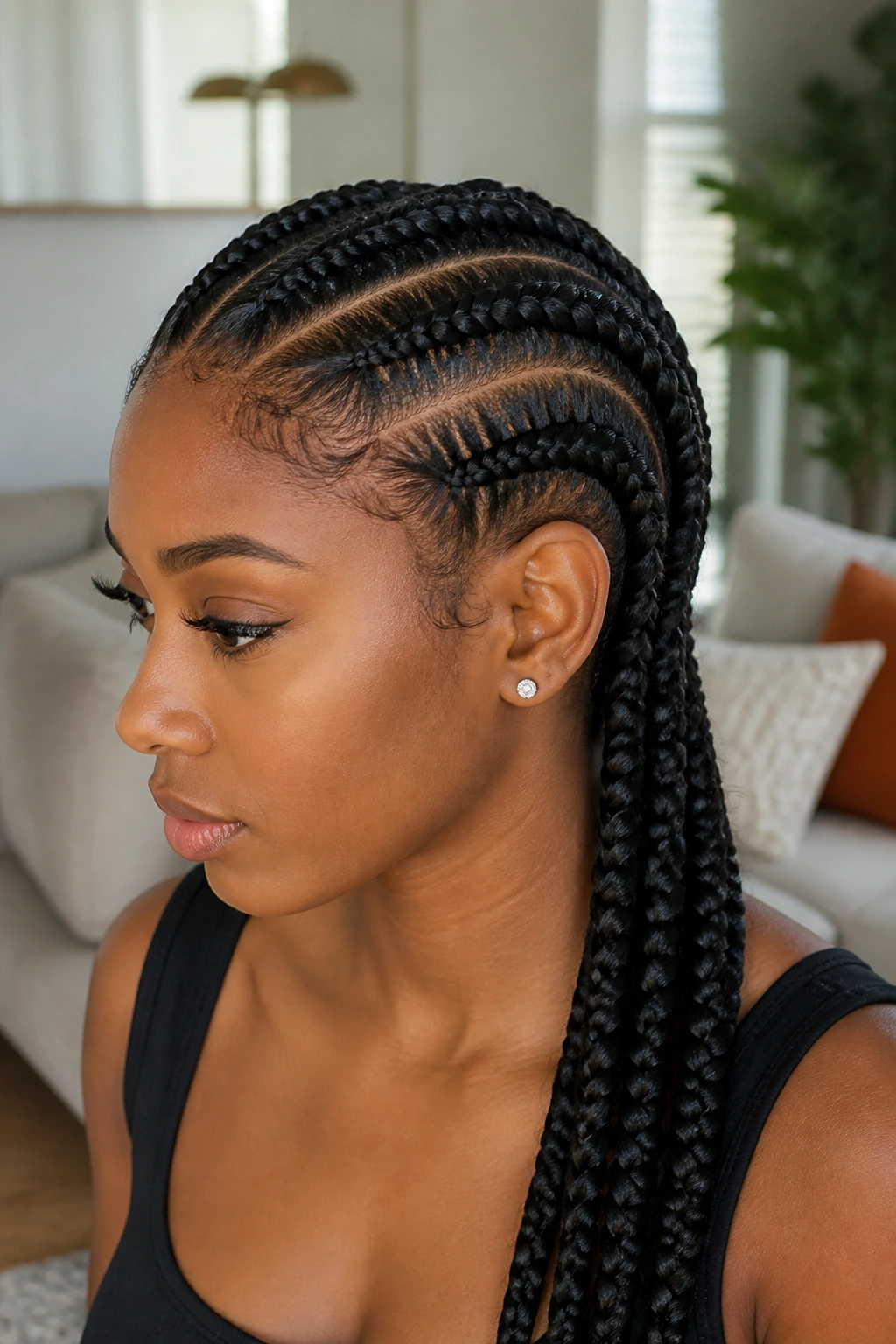
Straight-back cornrows are the old reliable of braid patterns, and I mean that in the best way. Clean rows running from the front hairline to the nape create a shape that stays readable even after a few days of wear. On stretched natural hair, the rows sit flatter and the finish looks sharper; on very shrunken hair, the pattern can bunch up at the neck.
Why It Works
The appeal is in the clarity. There’s nothing hiding the braid work, so every part line has to be tidy. That makes straight-backs a good choice when you want a style that looks neat under scarves, hats, or a hoodie.
What to Ask For
- Medium rows if you want a faster install
- Smaller rows if you want more scalp detail
- Light feed-in at the front if your hairline is delicate
Best move: keep the first inch off the hairline snug, not tight. The pattern should sit there, not squeeze.
2. Feed-In Cornrows
Feed-in cornrows start small at the root and gradually take in braiding hair, which gives the braid a smoother base and less of that bulky knot at the scalp. The first time you see a good feed-in set, the front looks almost sculpted. The braid seems to grow out of the part instead of sitting on top of it.
What Makes It Different
Feed-ins are especially useful when you want length without the harsh start that some extension styles have. They also look cleaner in the first few days because the root doesn’t flare out as much.
How to Wear It
- Side parts make the rows sweep nicely
- Middle parts give a more formal, centered look
- A little mousse over the finished rows helps the surface stay smooth
If your braider adds hair too quickly, the braid gets thick fast and the front loses that airy, gradual shape. Slow feed equals better line work.
3. Stitch Braids
Stitch braids are the sharpest-looking cornrow family member on this list. You get those crisp, horizontal “stitches” across the scalp, and the parting does a lot of the visual work before the braid even starts moving backward. They look clean because the sections are deliberate. Nothing random survives here.
Why They Work
They suit natural hair that has been detangled and stretched. A tail comb, firm gel, and a steady hand make the difference between neat lines and a fuzzy front. Stitch braids also hold up well for days because the pattern is compact.
Quick Reality Check
They are not a rush job. If the parting is sloppy, the whole style reads messy from ten feet away.
- Best on medium to long lengths
- Great with extensions for extra length
- Less forgiving if your section sizes drift
Tip: ask for the stitches to be spaced evenly all the way back; uneven spacing is the first thing people notice.
4. Lemonade Braids
Lemonade braids sweep hard to one side, and that side motion gives the style a little attitude without making the install complicated. The braid direction matters more than the braid size here. When the rows lean over the temple and shoulder, the whole head looks lifted and longer.
Why It Stands Out
Side-swept braiding softens the face in a way straight-back rows don’t. It’s a good pick if you want length around the jawline but don’t want a heavy curtain of hair falling straight down the middle.
Best For
- Oval and round faces that benefit from diagonal lines
- Medium to long natural hair
- Protective styling with a strong visual shape
A deep side part helps the pattern sit correctly. Without that part, it just becomes “cornrows that accidentally drifted.”
5. Curved Cornrows
Curved cornrows feel more designed than straight rows, and that’s the whole point. The braids arc around the scalp in gentle or dramatic bends, which gives the style a sense of motion before a single bead or cuff is added. If straight-backs are orderly, curved rows are the version that decided to have some fun.
What Makes It Work
The curve gives your braider room to play with face framing and crown placement. It also works well when you want the braids to follow the natural shape of the head instead of cutting across it in rigid lines.
Style Notes
- Small curves look subtle and polished
- Bigger curves read bold and graphic
- A good curved pattern should keep the spacing even, even as the line bends
Watch this part: the tighter the curve, the more important clean sectioning becomes. Sloppy curves look accidental fast.
6. Zigzag-Part Cornrows
The braid itself may be simple, but the part line makes all the noise. Zigzag parts turn a plain cornrow pattern into something with texture before the braid even starts. It’s a small detail that changes the whole mood of the style.
Why It Works
Zigzag parting is one of my favorite ways to wake up a basic cornrow set. It’s especially useful when you want visual interest without adding more braids, more length, or more hair.
How to Use It
- Keep the zigzags clean and not too tiny
- Use shine gel sparingly so the part lines stay visible
- Pair with medium-size braids so the pattern doesn’t disappear under too much hair
This one is best when the hair is stretched first. On highly shrunken roots, the zigzags can blur out before the braid even ends.
7. Heart-Part Cornrows
Heart parts are the style choice you make when you want the parting to do a little flirting. The braid shape can stay simple, but the heart at the front or crown gives the whole look a custom feel. It reads playful without turning into costume hair.
Why It Works
A heart part is a tiny bit of architecture on the scalp. It’s especially nice for birthday looks, school pictures, or any day when you want the braids to feel more personal than practical.
What to Keep in Mind
- The heart should be symmetrical enough to read from a few feet away
- Bigger hearts are easier to maintain than tiny ones
- Works best on smooth, detangled roots
A small bead at the tip of each side braid can finish it off without making the design noisy. One detail is enough.
8. Criss-Cross Cornrows
Criss-cross braids look more complex than they are, which is part of their charm. Sections cross over one another near the front or crown, creating a woven effect that feels almost like ribbon work. The scalp pattern becomes the main event.
Why It Stands Out
This style is a good way to get a statement look without needing super-long braids. The overlap gives the eye more to follow, so even medium-size braids read as layered and deliberate.
Best For
- Medium to thick natural hair
- People who want a front design that photographs cleanly
- Styles that pair well with a bun, ponytail, or loose ends
The biggest mistake is rushing the crossovers. If the overlap isn’t neat, the whole front looks tangled instead of styled.
9. Ghana Braids
Ghana braids are thick, close-to-scalp braids that build weight fast and keep the shape bold. They sit somewhere between classic cornrows and a feed-in style, with enough body at the root to look substantial but not so much that the head feels overloaded.
What They Do Well
They make a strong pattern with fewer rows, which is a win if you want a style that doesn’t require a dozen tiny sections. The braids can be swept straight back, curved, or even stacked into a bun later.
Style Tips
- Start with clean section lines
- Keep the first feed-in smooth so the braid doesn’t puff at the base
- Use lightweight extensions if you want them long
They’re one of those styles that looks expensive when the parts are crisp. When the parts are crooked, the whole thing gets noisy fast.
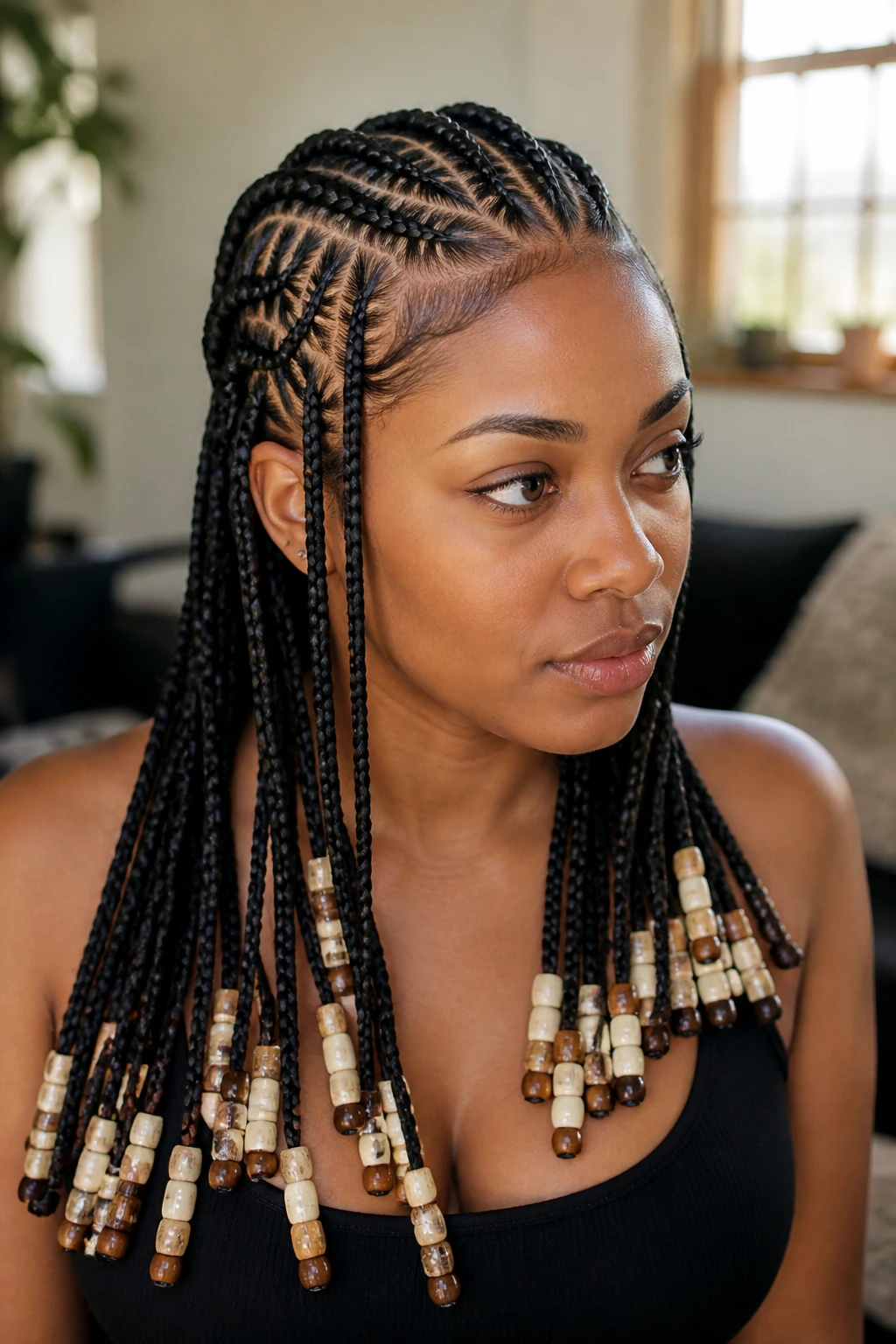
10. Fulani Braids
Fulani braids usually combine central cornrows with side braids, sometimes finished with beads, cuffs, or a single braid that hangs forward. The style has a built-in rhythm. There’s the center line, the side accents, and then the decorative pieces that make it feel finished.
Why It Works
Fulani braids give you pattern and movement at the same time. They’re one of the easiest ways to wear a braid style that looks rooted in design rather than just utility.
What to Add
- Beads at the ends for weight and sound
- Small cuffs near the front braids
- A middle part if you want the classic look
If you wear earrings, this style loves them. The forward braid and jewelry tend to play well together without fighting for attention.
11. Tribal Braids
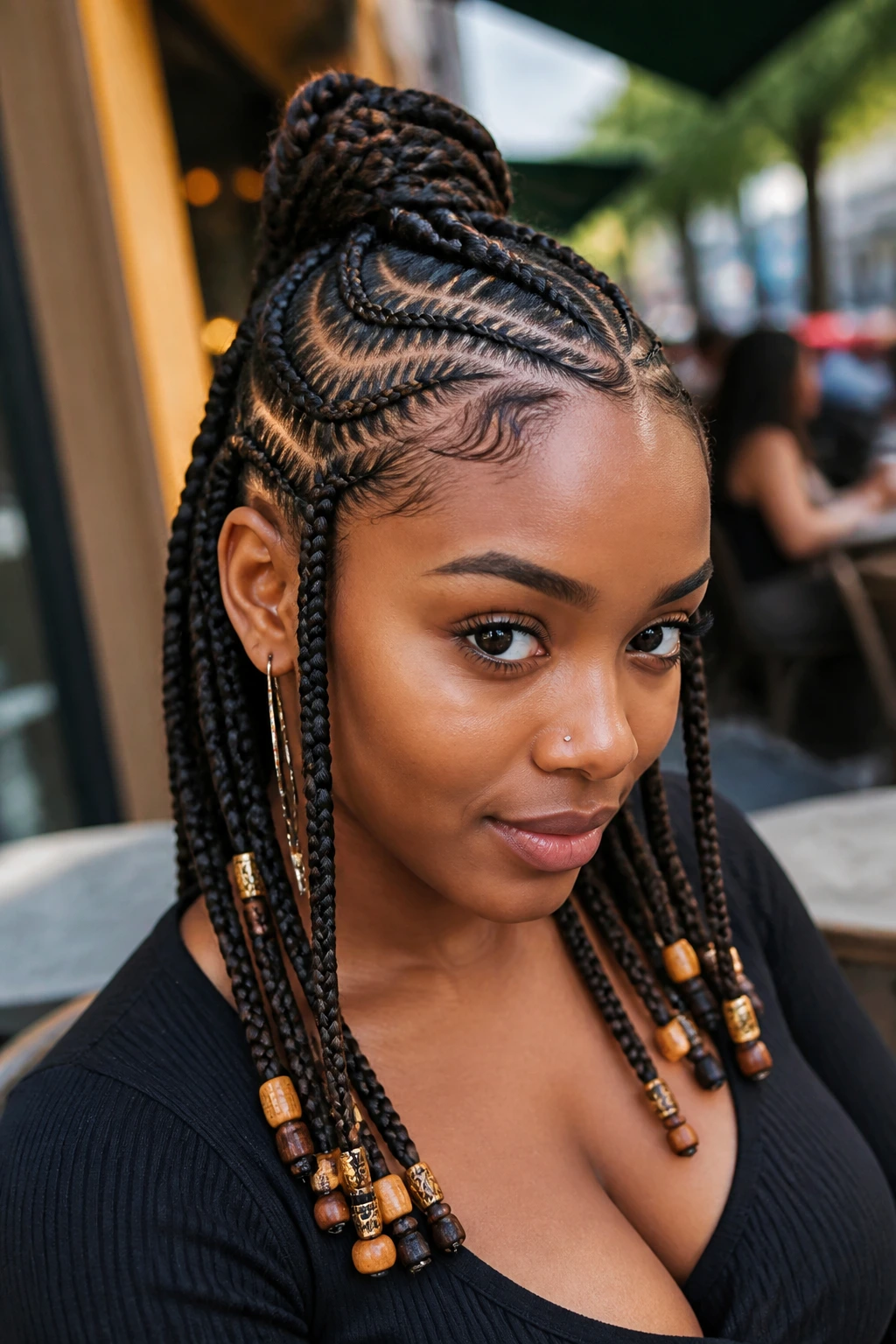
Tribal braids take the idea of pattern mixing and run with it. You might see cornrows in the center, feed-ins along the sides, beads at the ends, or small braids tucked between larger ones. The point is contrast. Different braid sizes and directions create the look.
Why It Works
This style feels rich because it never relies on one single braid shape. A good tribal set has enough variety that your eye keeps moving across the head, which makes even a simple outfit look more styled.
How to Keep It Cohesive
- Choose one braid size as the anchor
- Repeat one bead or cuff color throughout
- Keep part lines clean so the variety feels intentional
This is a style where too many ideas can crowd each other. Pick three, maybe four. More than that and the head starts arguing with itself.
12. Knotless Box Braids
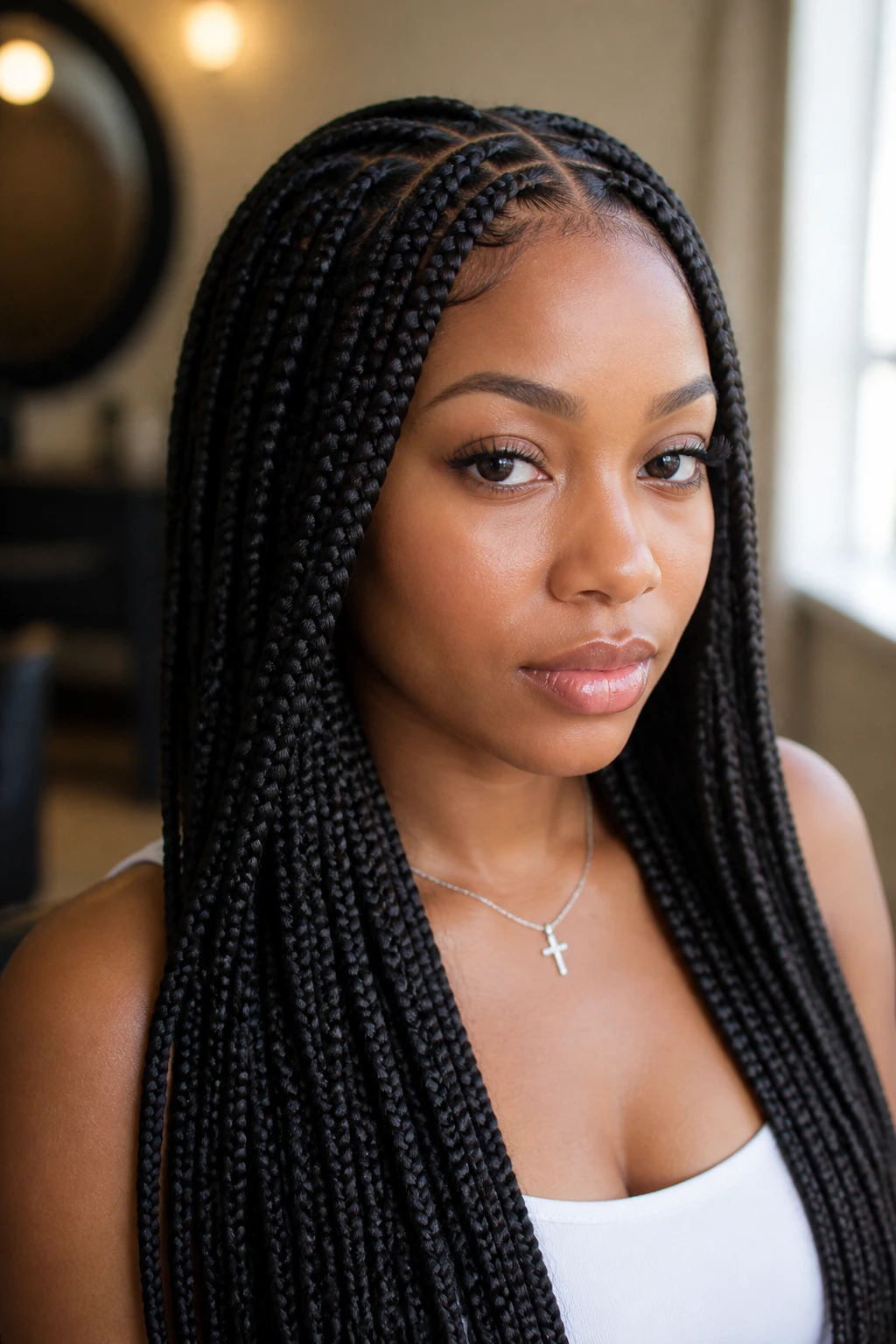
Knotless box braids are one of the gentler extension options because the braid starts with your natural hair and the added hair is fed in gradually. That smooth beginning matters. You feel less of a hard bump at the scalp, and the braid often moves more naturally.
What Makes Them Popular
They’re easier to wear for longer stretches because the roots don’t feel as locked down. They also look more natural at the hairline, especially if your edges are sensitive or you wear your braids up a lot.
Best For
- Medium to long wear
- People who want less tension at the root
- Natural hair that can take a clean part and smooth feed-in
The length can make them swing beautifully, but don’t overload the braid with too much hair. Heavy knots lose the whole point of knotless styling.
13. Triangle-Part Box Braids
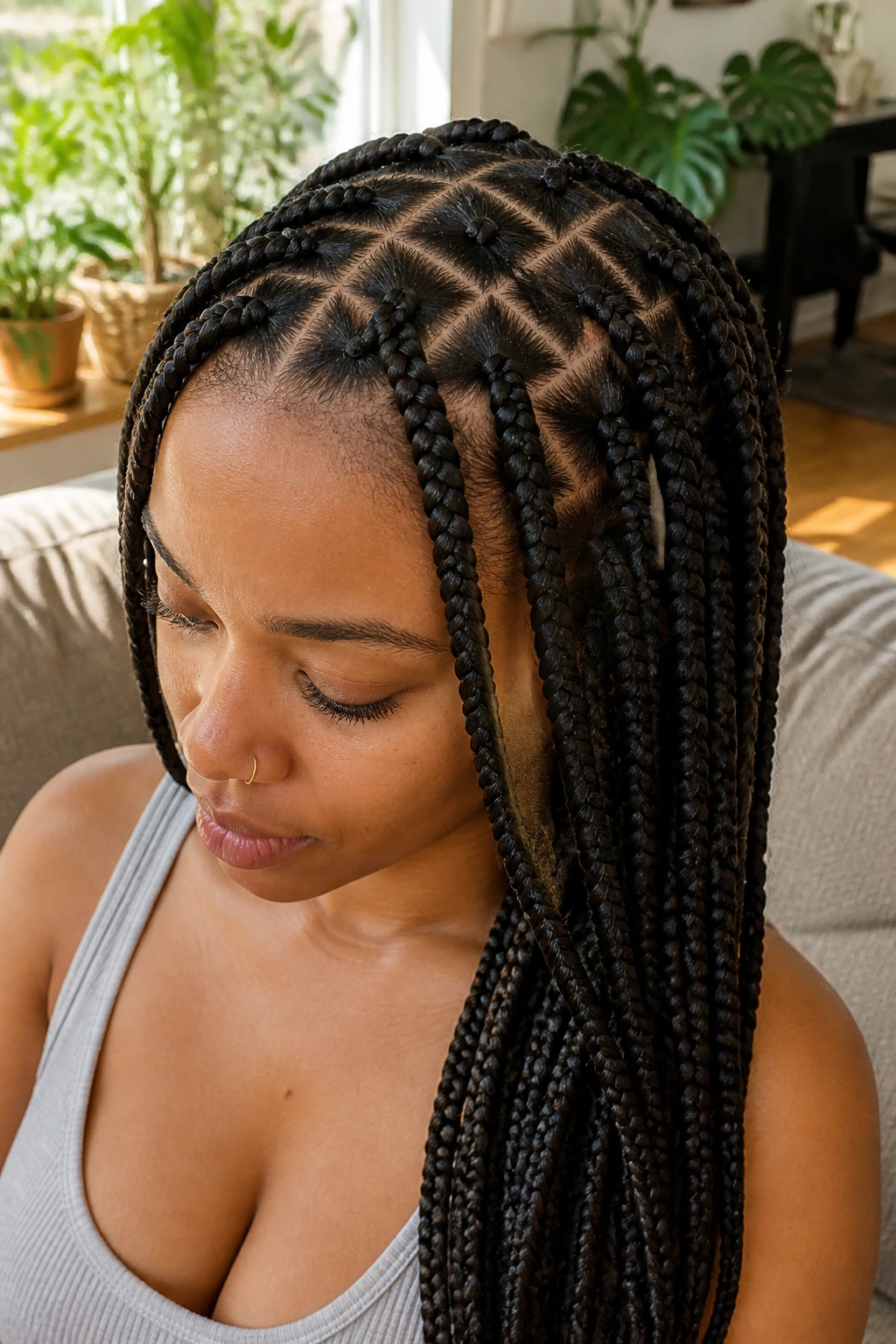
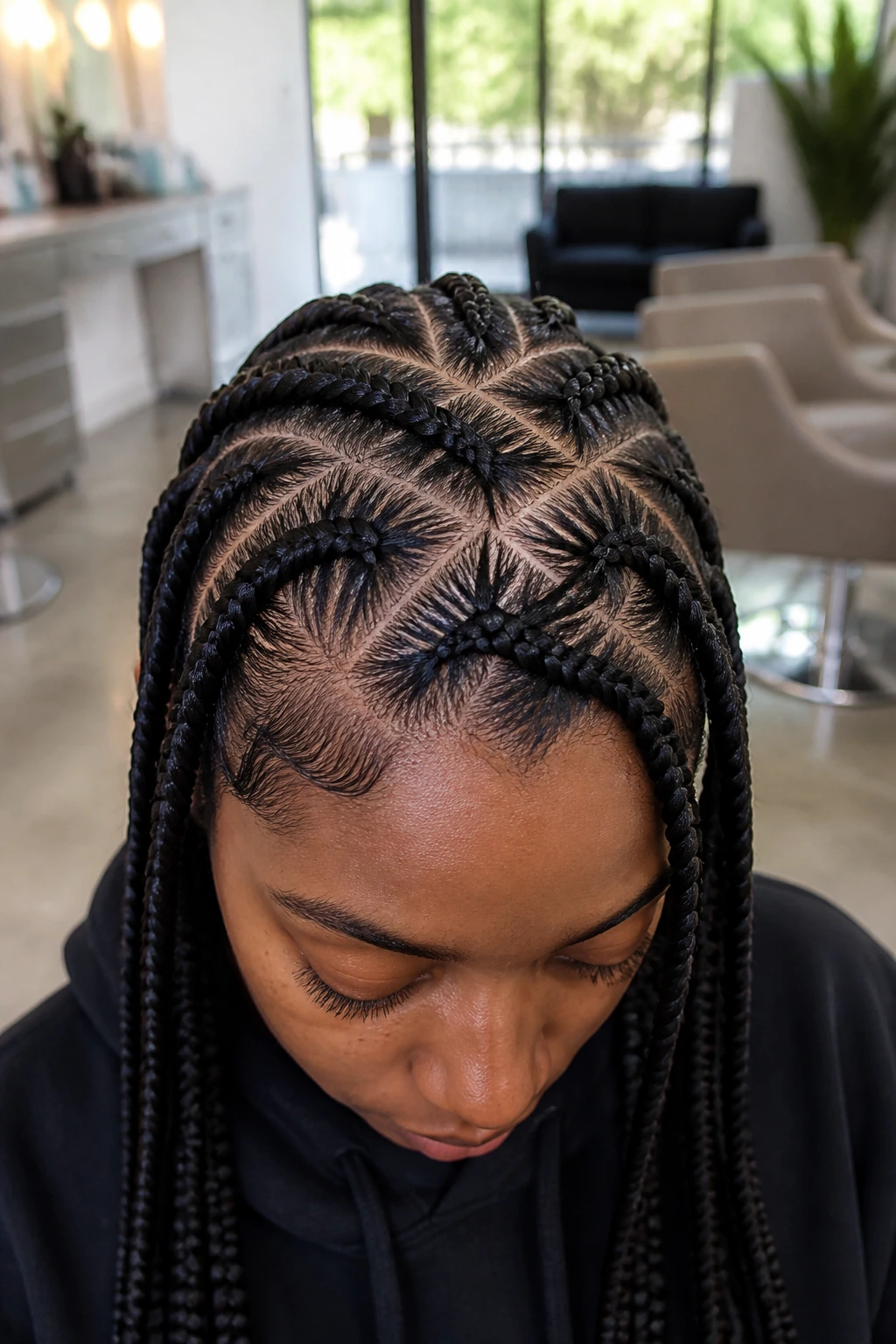
Triangle parts change the geometry of box braids in a way that feels fresh without altering the braid itself. The parting gives the scalp a cleaner, more modern look, and you notice it most when the braids are pulled back or clipped up.
Why It Stands Out
Triangle sections catch the light differently and break up the grid pattern you see with traditional square parts. It’s a small switch, but the finish looks custom.
What to Know
- Works well with small, medium, or jumbo braids
- Clean parting matters more than the braid size
- Best when the parts are even from front to back
If you want a style that feels familiar but not plain, triangle parts hit that middle ground nicely. Subtle. Not boring.
14. Jumbo Box Braids
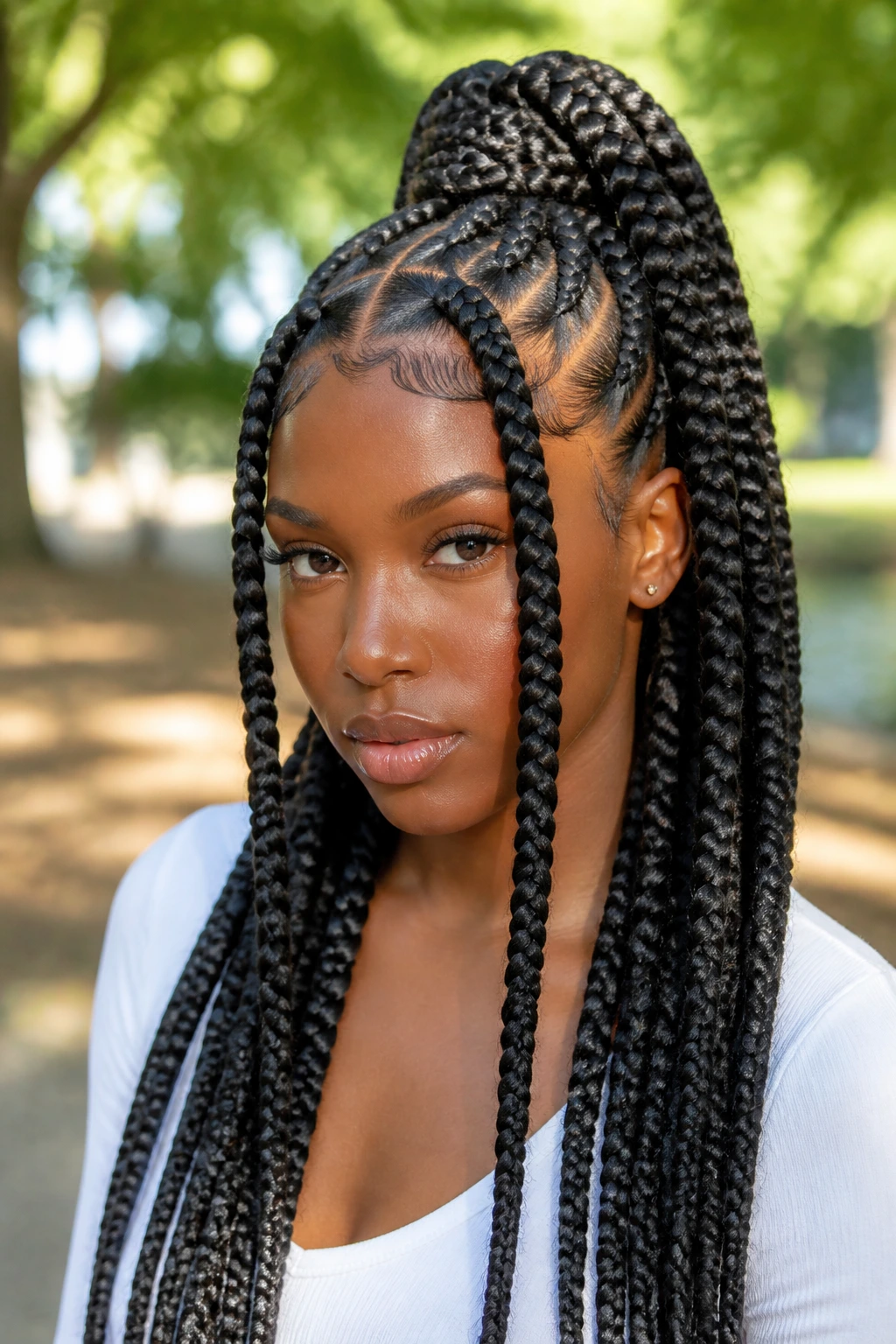
Jumbo box braids are for the days when you want the braid pattern to read from across the room. The sections are larger, the install goes faster, and the overall look has more weight. They’re not subtle. That’s the point.
Why They Work
Big braids are good when you want a protective style with less sitting time and fewer parts to manage. They also give you a strong silhouette, especially if you wear them in a ponytail or half-up style.
How to Wear Them
- Mid-back length keeps them easier to handle
- A few gold cuffs can finish the look without clutter
- A center part makes them feel more structured
The tradeoff is tension and bulk. If the braids are too heavy for your hair density, the style can feel tiring before it starts to look tired.
15. Micro Braids
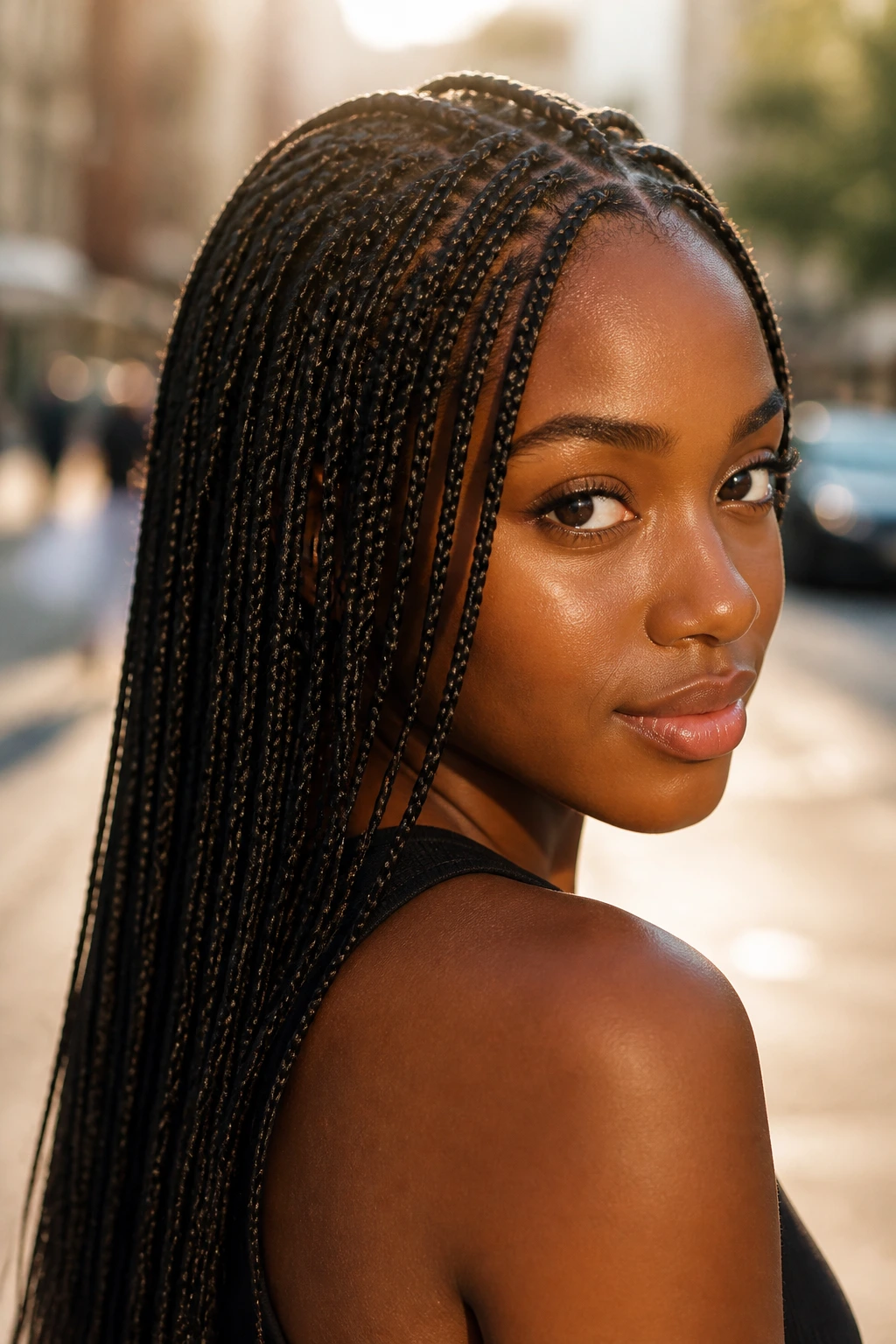
Micro braids are tiny, detailed, and slow to install, but they move like nothing else on this list. The small size gives the hair a lot of flexibility, which is why the style can look almost like loose hair when it’s done well.
Why It Works
They’re a strong option if you want a long-wear braid style with lots of swing. The smaller pattern also gives you more styling room later—ponytails, half-up looks, and side parts all land differently with micro braids.
What to Think About
- Install time is long
- Maintenance is more involved
- The style should never be so tight that it pins the scalp down
I like micro braids best when the parts are neat but not clinical. If every section looks identical to the millimeter, the style can lose some of its movement.
16. Braided Bob
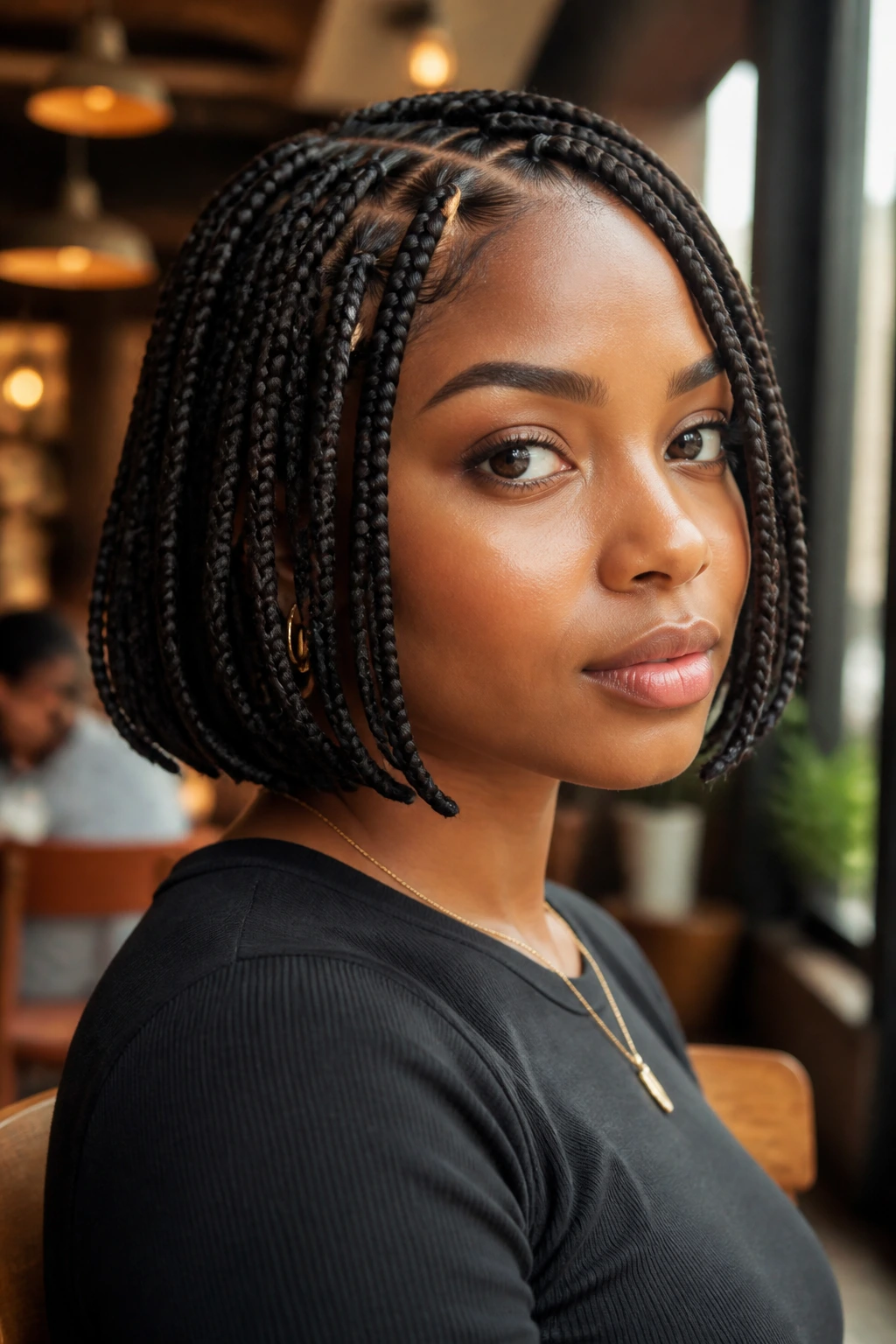
A braided bob chops the usual long braid silhouette down into something sharper and easier to wear. The length usually stops around the chin, jaw, or shoulders, and that shorter shape makes the braid pattern itself more visible.
Why It Stands Out
Shorter braids don’t disappear into the room. They sit around the face, move with the shoulders, and keep the look lighter on the neck. That matters when you want the protection of braids without the weight of long ends.
Best For
- Warm-weather wear
- People who want less bulk at the nape
- Box braids, knotless braids, or small feed-ins cut to a bob
A blunt finish looks modern. A slightly tapered bob looks softer. Both work, but the cut has to be clean or the whole style feels unfinished.
17. Braided Ponytail
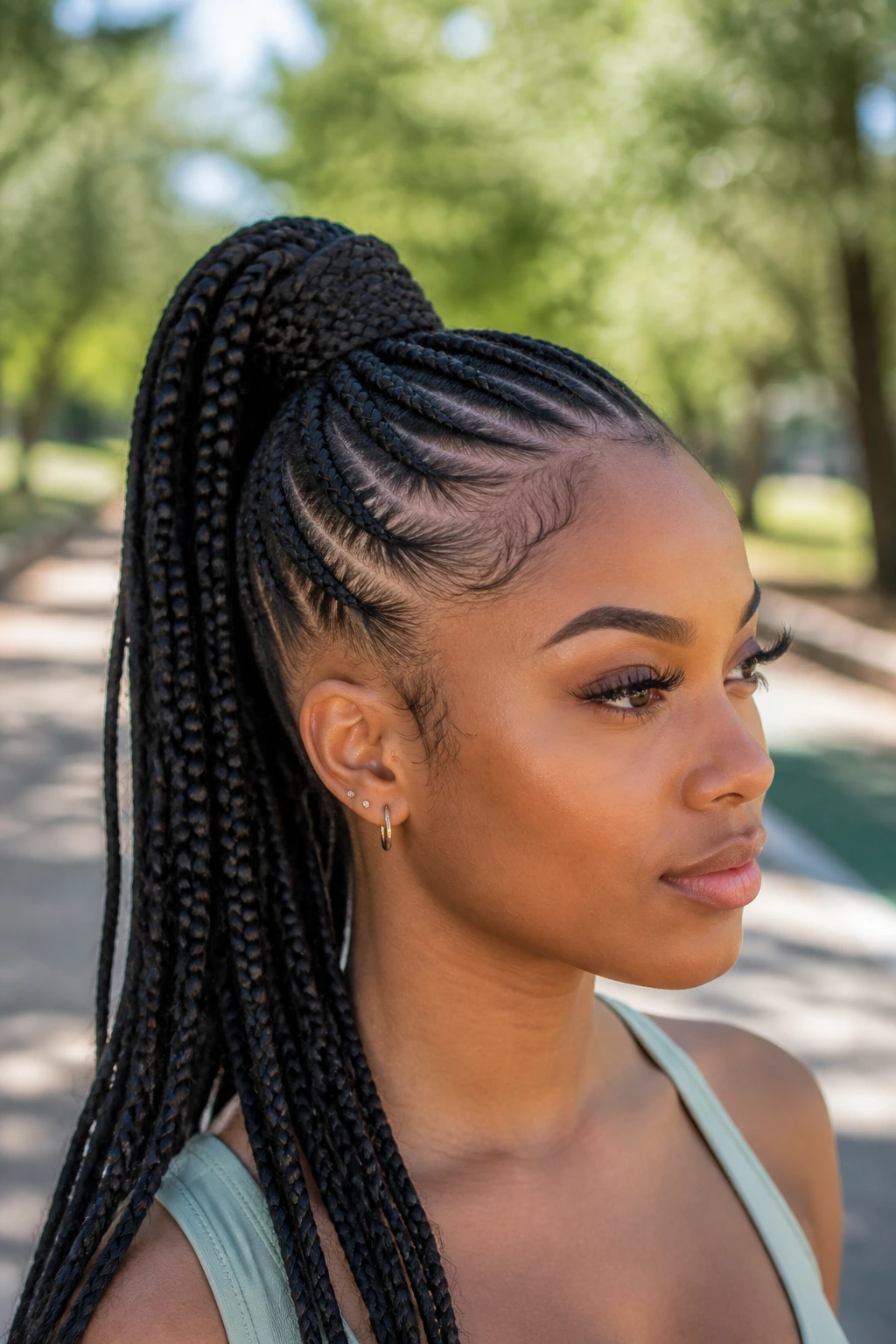
A braided ponytail pulls the braid pattern up and off the shoulders, which changes the whole feel of the style. Suddenly the scalp detail becomes the main thing you see, and the length gets a second job as the ponytail itself.
Why It Works
High ponytail braids are tidy, easy to dress up, and useful when you need the hair out of the way. Low ponytail versions feel a little more relaxed and can sit under hats or wraps more easily.
Style Notes
- Feed-in braids create the cleanest pony base
- Wrap a small braid around the ponytail holder for a polished finish
- Keep the root area smooth so the pony doesn’t bunch
A ponytail can pull hard if it’s installed too high and too tight. Ask for enough lift to look sleek, not enough to leave your temples annoyed.
18. Braided Bun
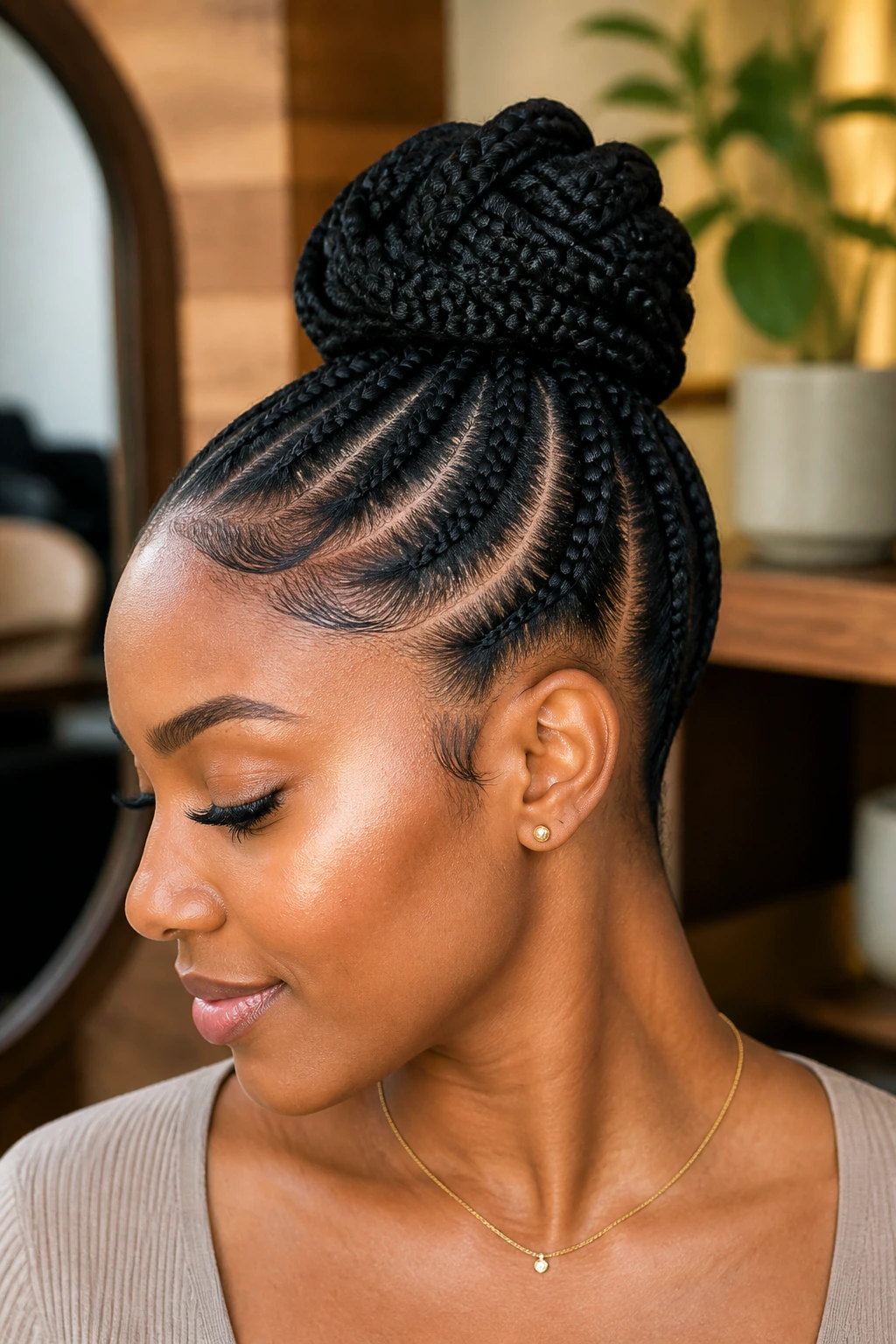
Braided buns are all about controlled shape. Whether the braids sweep into a top knot or a lower rolled bun, the style keeps the ends tucked and the silhouette neat. It’s one of the easiest braid looks to wear when you want your neck free.
Why It Stands Out
The bun gives the pattern a final stop, which makes the braid work feel intentional instead of endless. That can be especially nice on medium-length natural hair, where loose ends might otherwise stick out and fight the shape.
How to Wear It
- A centered bun reads formal
- A side bun softens the profile
- Add cuffs or a wrap if the bun needs a little more finish
If your braids are heavy, anchor the bun with pins that actually grip. A flimsy pin job makes the whole style sag by lunch.
19. Halo Braid Crown
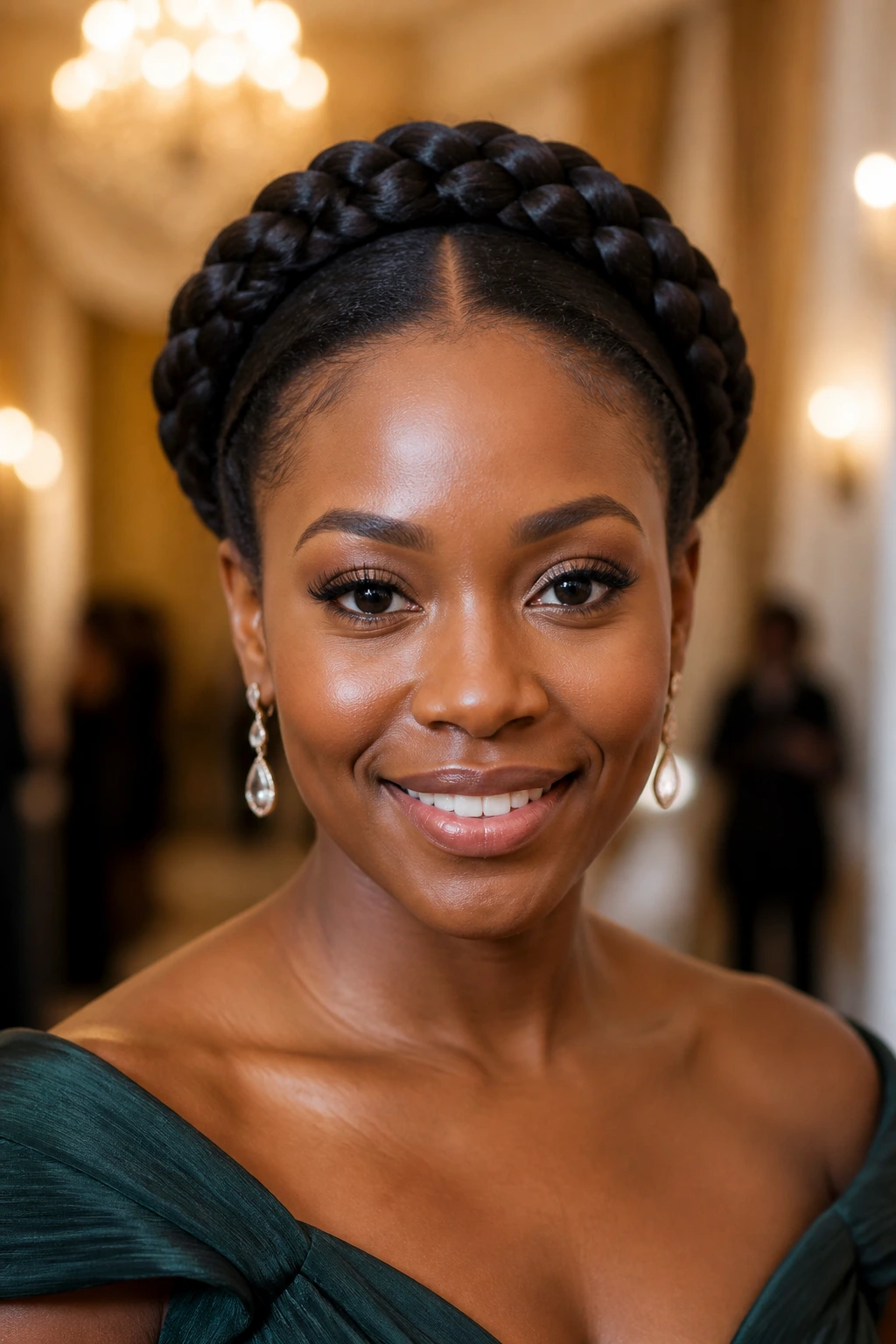
A halo braid crown circles the head like a frame, and that framing effect is why the style feels so complete even with little else going on. The braid wraps around the perimeter, leaving the center smooth or lightly styled.
Why It Works
It gives natural hair a regal shape without requiring long lengths or a stack of accessories. The braid itself is the ornament.
Best For
- Event styling
- Medium to long hair
- People who want a look that keeps everything off the face
The crown should sit snug to the head, but not glued down. If it hugs too tightly, the braid can look flattened instead of sculpted.
20. Crown Cornrows Into a Bun
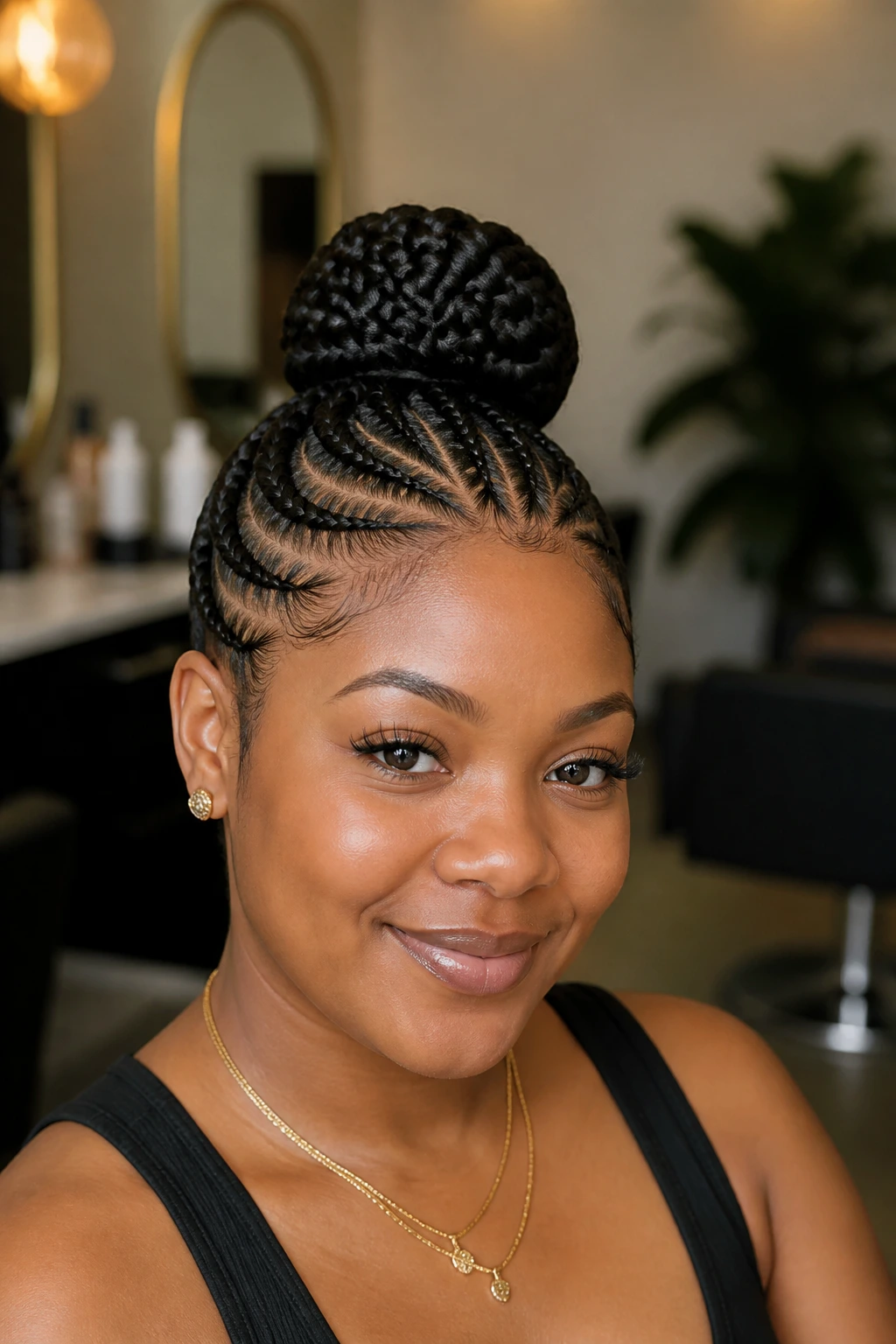
Crown cornrows into a bun take the halo idea and break it into routed rows that feed toward one focal point. The pattern is more architectural, and you can feel that when the braids all seem to move toward the same finish.
Why It Stands Out
It works well when you want a neat, pulled-together style that still shows off parting skill. The visual draw is the path the braids take before they meet the bun.
Style Notes
- Great for formal wear
- Keeps the perimeter tidy
- Works best when the sections are even around the crown
This is a style that rewards patience. If one row veers off line, the eye catches it fast because all the movement points toward the center.
21. Dutch Braid Pigtails
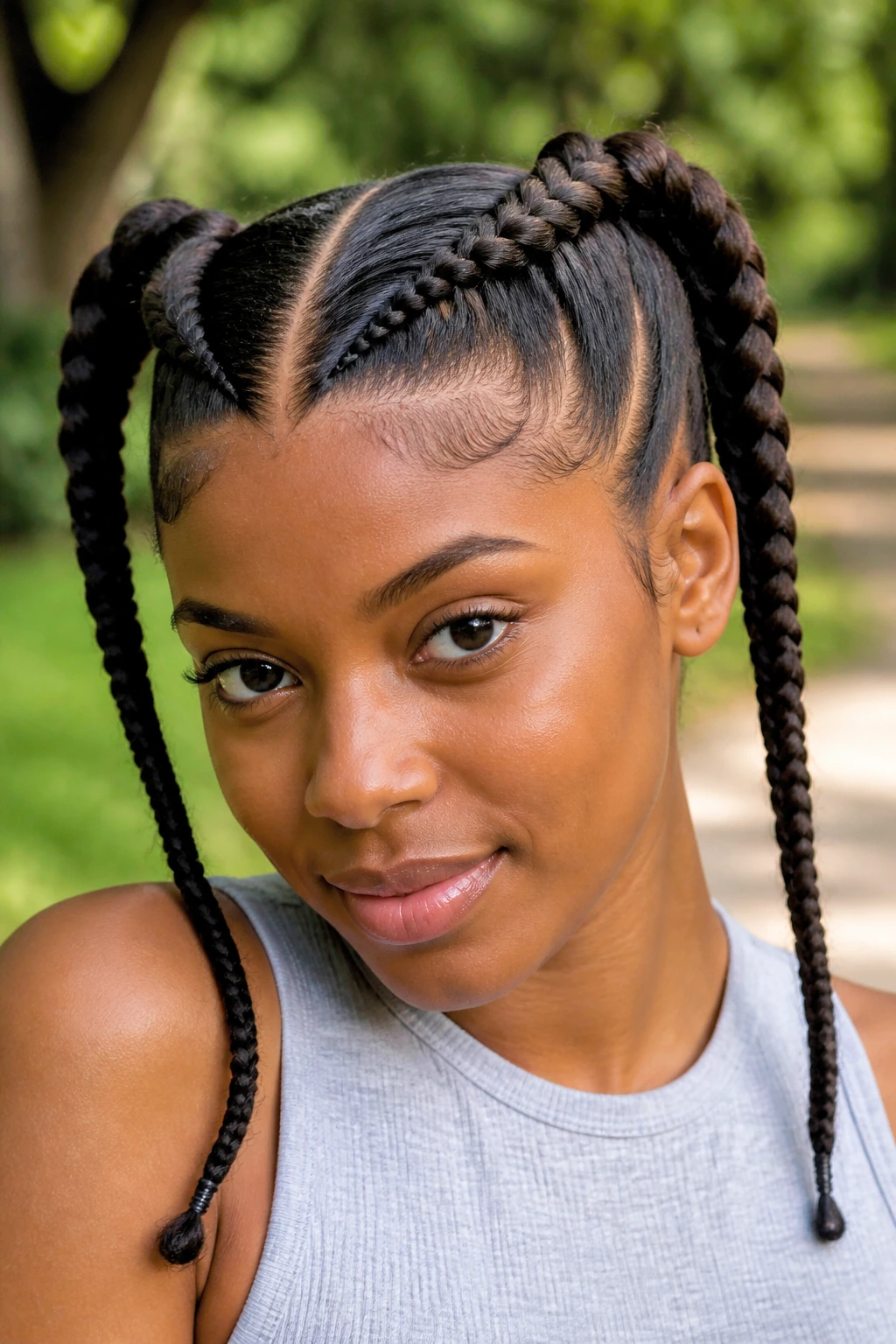
Dutch braid pigtails sit raised off the scalp instead of lying flat, which gives the style more texture and a little more bounce. The twin-braid shape feels sporty, but it can clean up nicely with smooth parting and neat ends.
Why It Works
The raised braid creates visible dimension right away. That matters on natural hair because the braid doesn’t blend into the base the way a flatter plait might.
How to Wear It
- High placement looks younger and more energetic
- Lower placement reads calmer and easier to wear daily
- Add small braids at the front if you want more detail
Pigtails can get juvenile fast if the parts are sloppy. Keep the rows crisp and the braid size balanced, and the style lands in a much better place.
22. French Braid Into a Low Bun
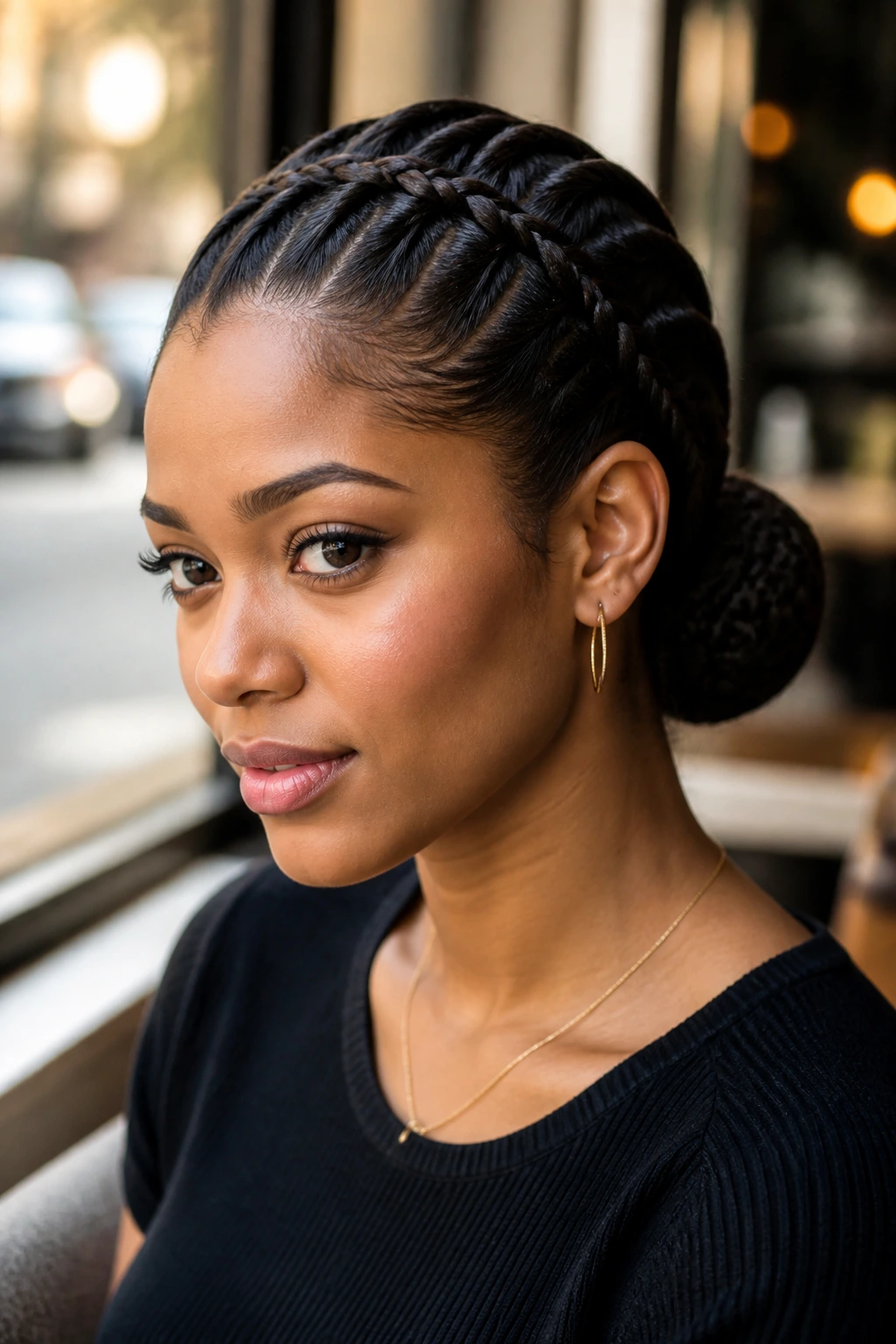
A French braid into a low bun has a quiet polish that never looks overworked. The braid starts at the crown, follows the head downward, and then collects into a bun at the nape. It’s a neat path with a neat ending.
Why It Stands Out
This style is useful when you want the hair up, secure, and off the shoulders without the sharper edge of a full cornrow set. It can be done on natural hair that has a bit of stretch and enough grip to hold the braid.
Best For
- School, work, or day-to-day wear
- Medium-length natural hair
- A lower-tension alternative to tighter braided looks
A little mousse before you braid can help the surface stay smoother. Too much product, though, and the strands get slippery and the braid loses grip.
23. Flat Twists Into a Puff
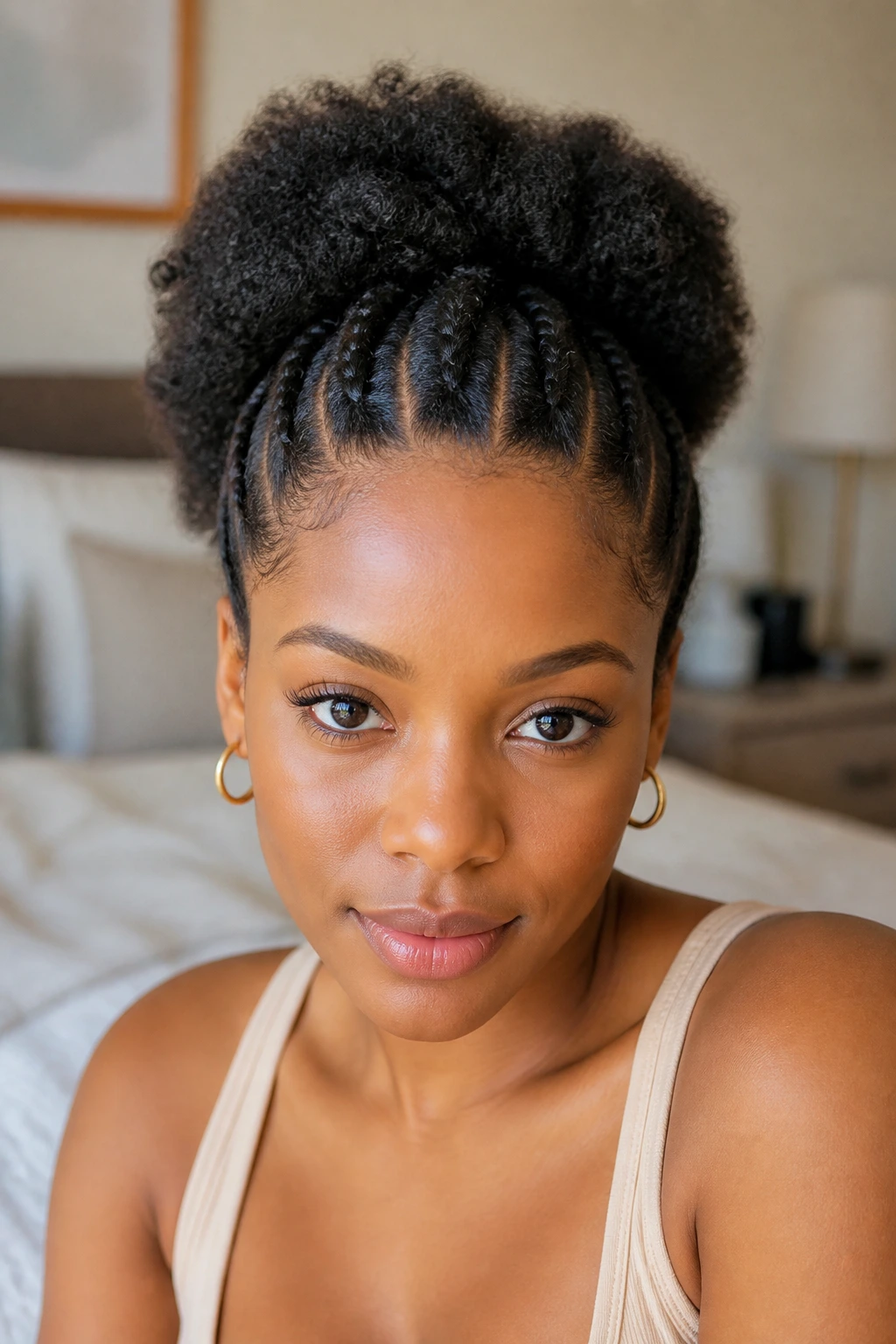
Flat twists aren’t braids, but they sit comfortably in the same styling family and they earn their place here. The twists run close to the scalp and usually feed into a puff at the back or crown, which lets the hair keep some softness.
Why It Works
This is one of the better choices when you want your roots controlled but still want your natural texture visible. It feels less formal than cornrows and can be gentler on edges if the tension is kept honest.
How to Use It
- Twist small sections for more detail
- Leave the puff full and defined
- Refresh the front with a little water and styling foam if needed
It’s a style that looks better when the puff isn’t forced flat. Let the texture sit up. That’s the point.
24. Twist-and-Braid Mix
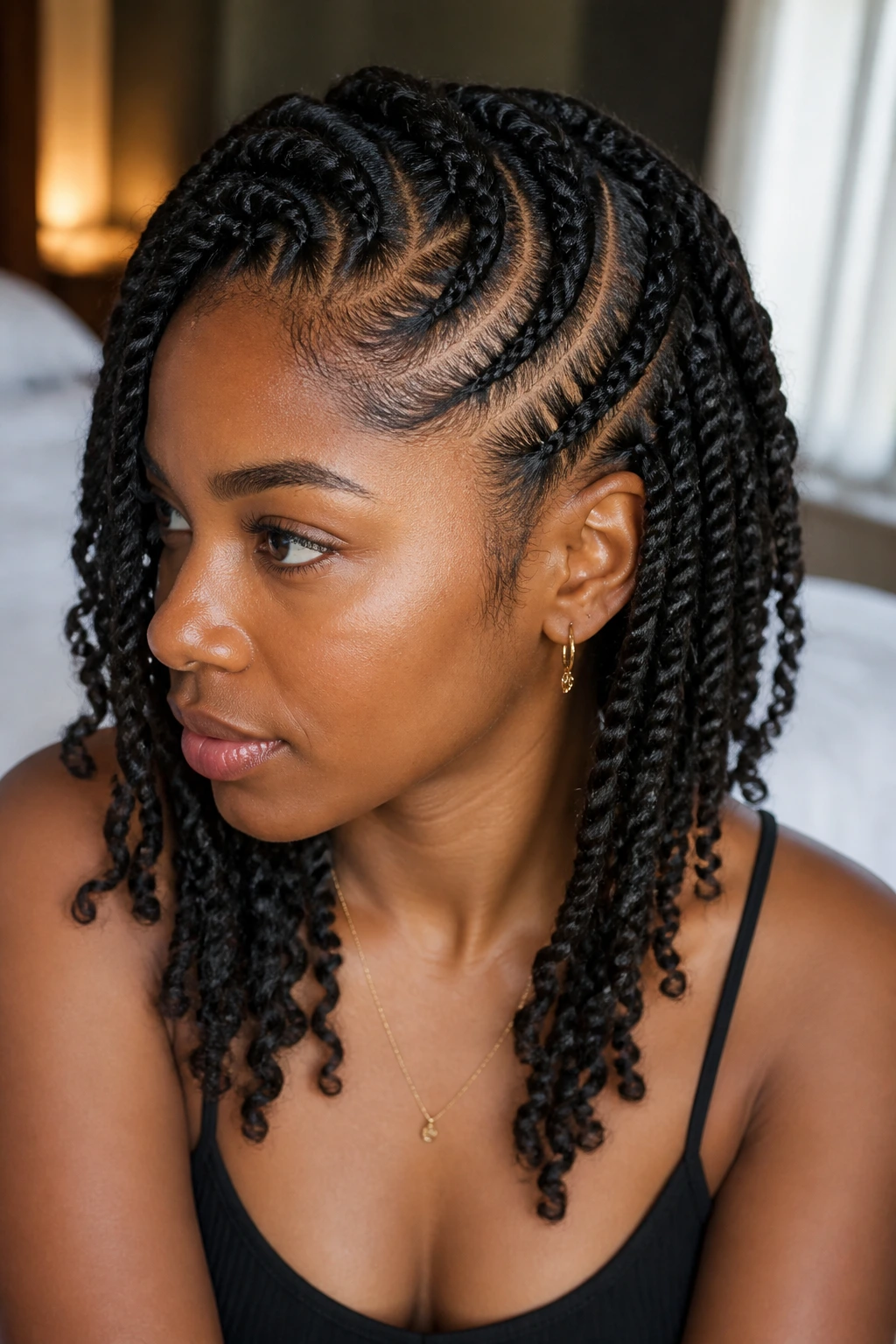
A twist-and-braid mix alternates textures, which keeps the style from reading too uniform. Some sections are braided, some are twisted, and that contrast gives the whole head more movement.
Why It Stands Out
It’s a good option when you want something softer than full cornrows but more structured than a set of all-over twists. The mixed texture keeps the eye moving.
Best For
- Medium natural hair
- Styles where you want a softer perimeter
- People who like variety but not chaos
The trick is repetition. Pick one pattern to repeat through the head so the style feels designed rather than random. A mixed style needs a clear rhythm.
25. Braided Mohawk
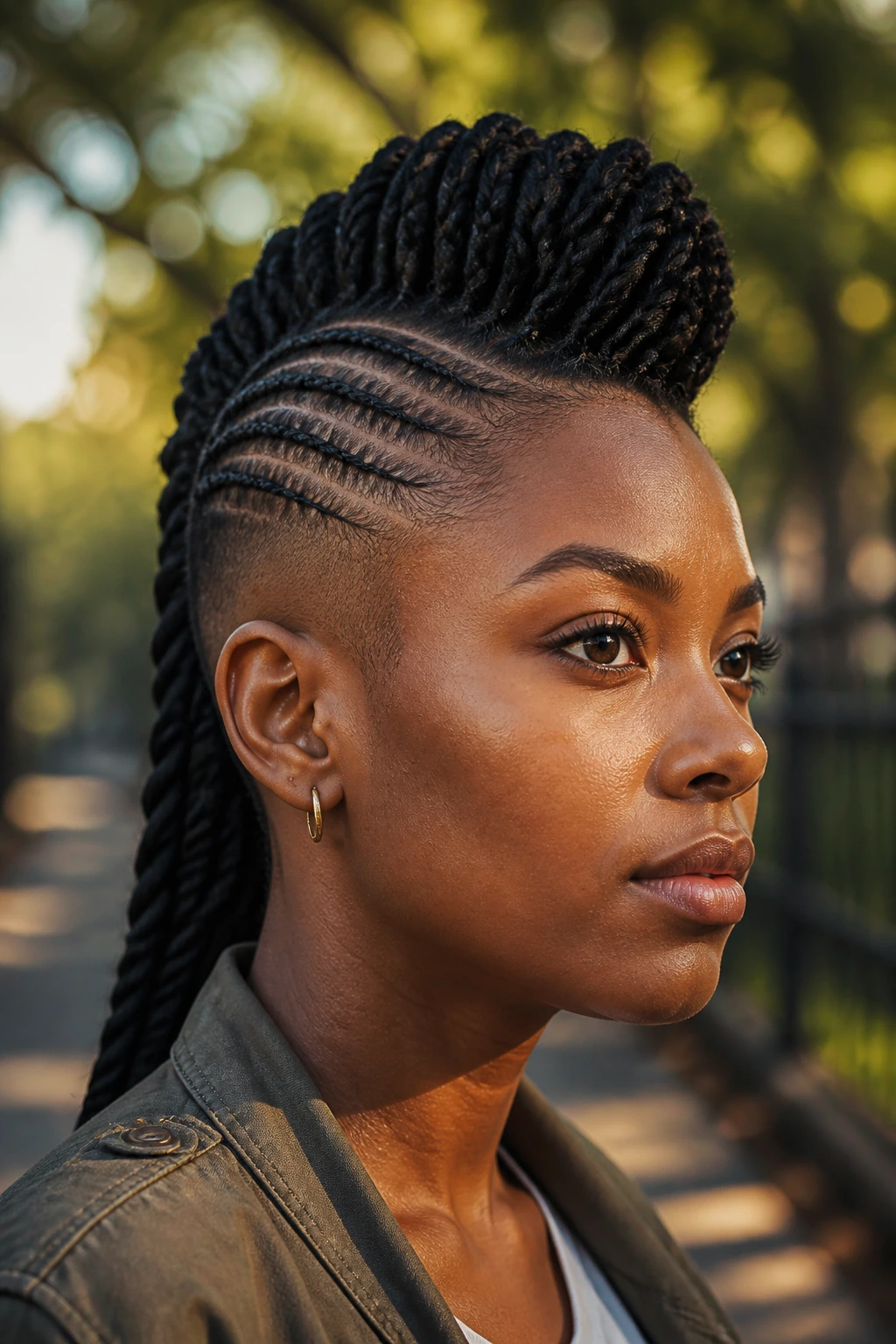
A braided mohawk keeps the sides tight and the center fuller, which gives the style a clean edge without flattening the whole head. It’s a bold silhouette, but not a fussy one.
Why It Works
The contrast between braided sides and a lifted center creates instant shape. That makes it a smart choice when you want volume where the eye lands and control where you don’t want the hair getting in the way.
How to Wear It
- Add curls or braid ends in the center for extra height
- Keep the sides snug, not stretched thin
- Works well with both short and medium lengths
If the center is too flat, the style loses its mohawk feel. Give it some lift. Not a helmet. Lift.
26. Half-Up, Half-Down Braids
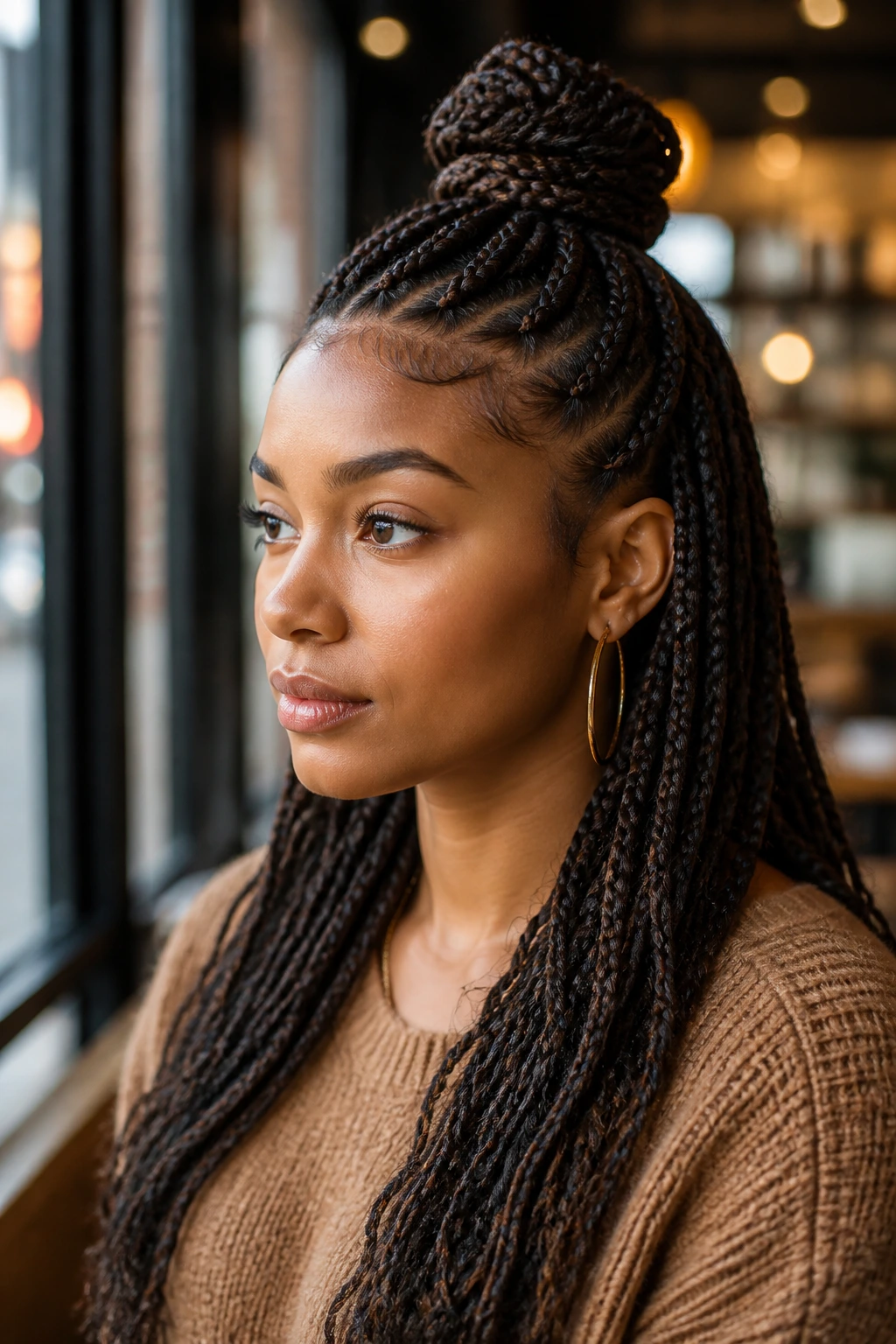
Half-up, half-down braids split the difference between structure and movement. The top section gets gathered into a bun, ponytail, or top braid, while the rest hangs loose. That contrast is what makes the style easy to wear.
Why It Stands Out
You get face-framing control without giving up length. It’s a nice middle ground when you don’t want all the hair pinned away, but you also don’t want it falling into your collar all day.
Style Notes
- Use feed-ins for a cleaner top section
- Leave the lower braids slightly longer for balance
- A wrap or scarf can change the look fast
This is one of those styles that looks different depending on where you place the “up” section. Small shift, big payoff.
27. Braided Space Buns
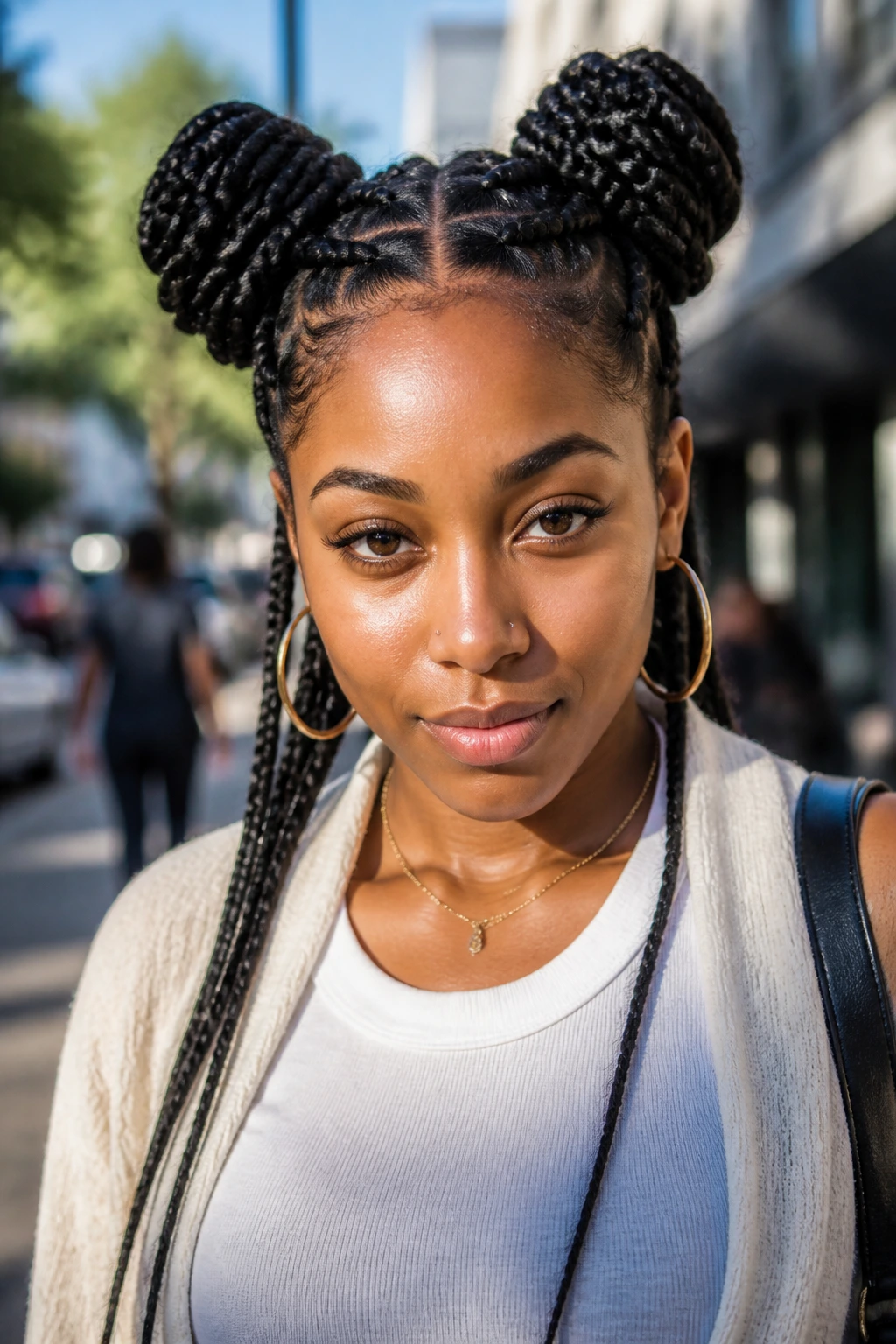
Braided space buns are playful, but they’re not childish when they’re done with clean parting and balanced proportions. Two buns sit high on the head, while the braids feed into each side. The shape does the work.
Why It Works
It keeps the style compact and useful when you want hair off your neck. It also gives you a fun shape without requiring a full loose length.
Best For
- Shorter events and day looks
- Younger wearers, yes, but also adults who like a strong shape
- Braids with enough length to wrap into buns securely
If the buns sit too far apart, the head can look stretched. Keep them balanced and the style feels intentional rather than scattered.
28. Feed-In Ponytail Braids
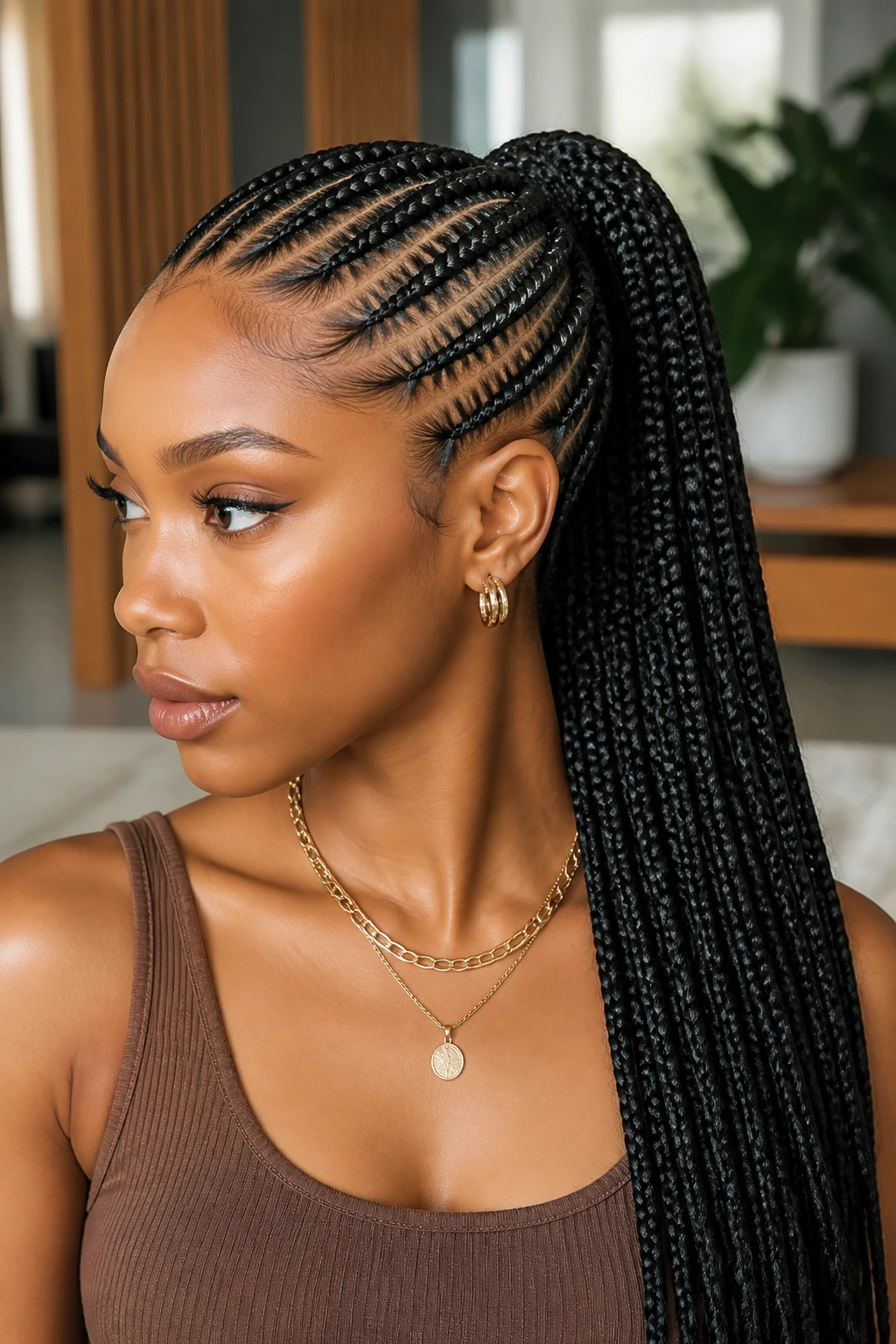
Feed-in ponytail braids start sleek at the scalp and build toward a gathered ponytail, often with serious length at the end. The pattern gives you a smooth root and a dramatic tail, which is a strong combination when you want impact without a full loose style.
Why It Stands Out
The feed-in method keeps the front tidy, and the ponytail creates a clean line from crown to end. It’s one of the sharper-looking ways to wear longer braid extensions.
Style Notes
- Great with a middle part or a deep side part
- Keep the pony anchored firmly so it doesn’t tug
- A small braid wrap can hide the elastic
This style only works if the base is snug enough to support the length. Too loose, and the pony droops. Too tight, and your scalp will complain.
29. Freestyle Geometric Braids
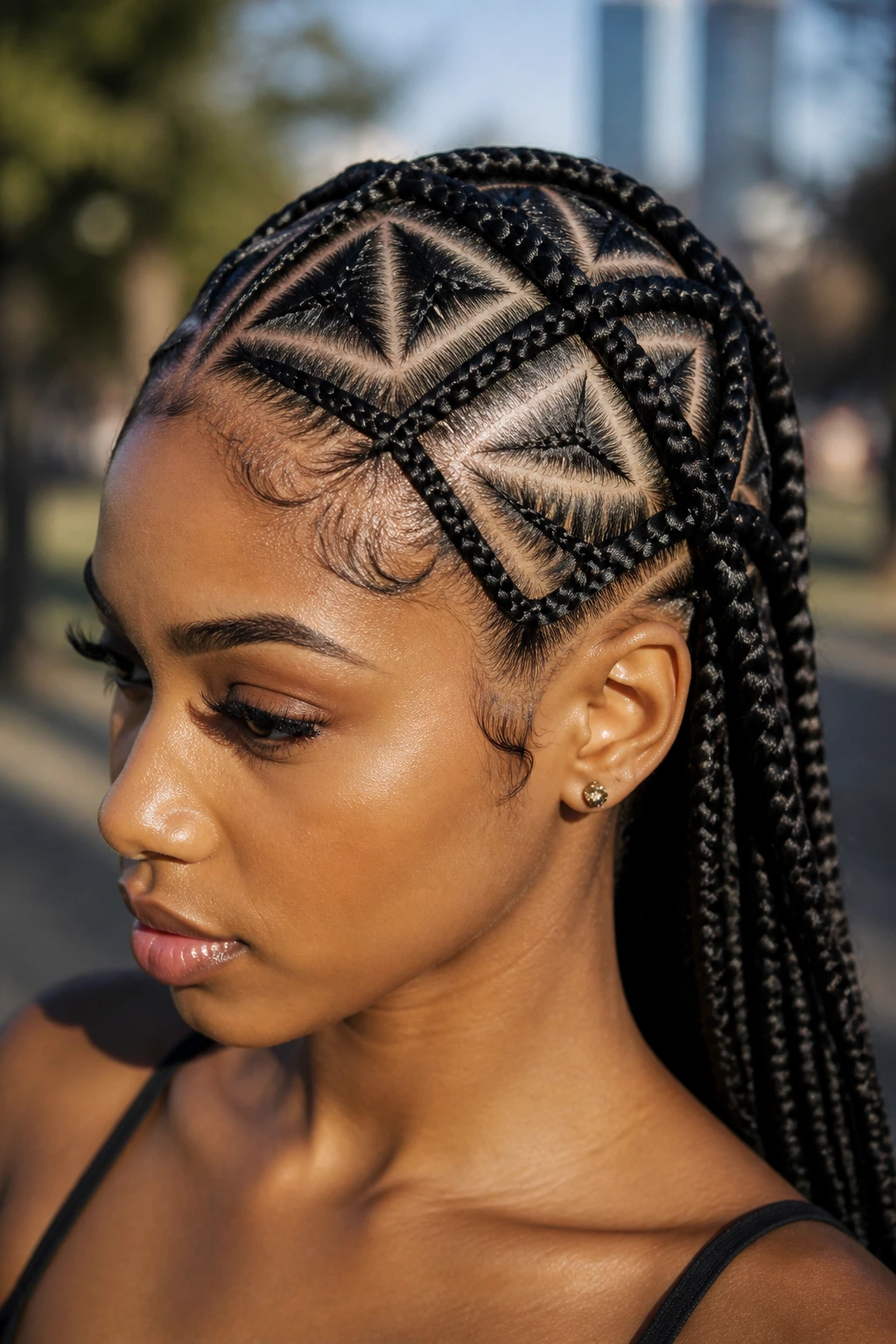
Freestyle geometric braids are the pattern-lover’s answer to everything else here. Triangles, diamonds, straight lines, curves, and angled parts can all show up in one head if the design is mapped with care. The result feels custom because it is.
Why It Works
This is the style you choose when the parting itself should be the statement. The braids can stay simple while the map on the scalp does the talking.
What to Know
- Best on hair that can hold clear sections
- Needs a braider with a steady hand and patience
- Works well when one or two shapes repeat across the head
There’s a fine line between creative and crowded. A good freestyle pattern still has breathing room. That space matters.
30. Butterfly Braids
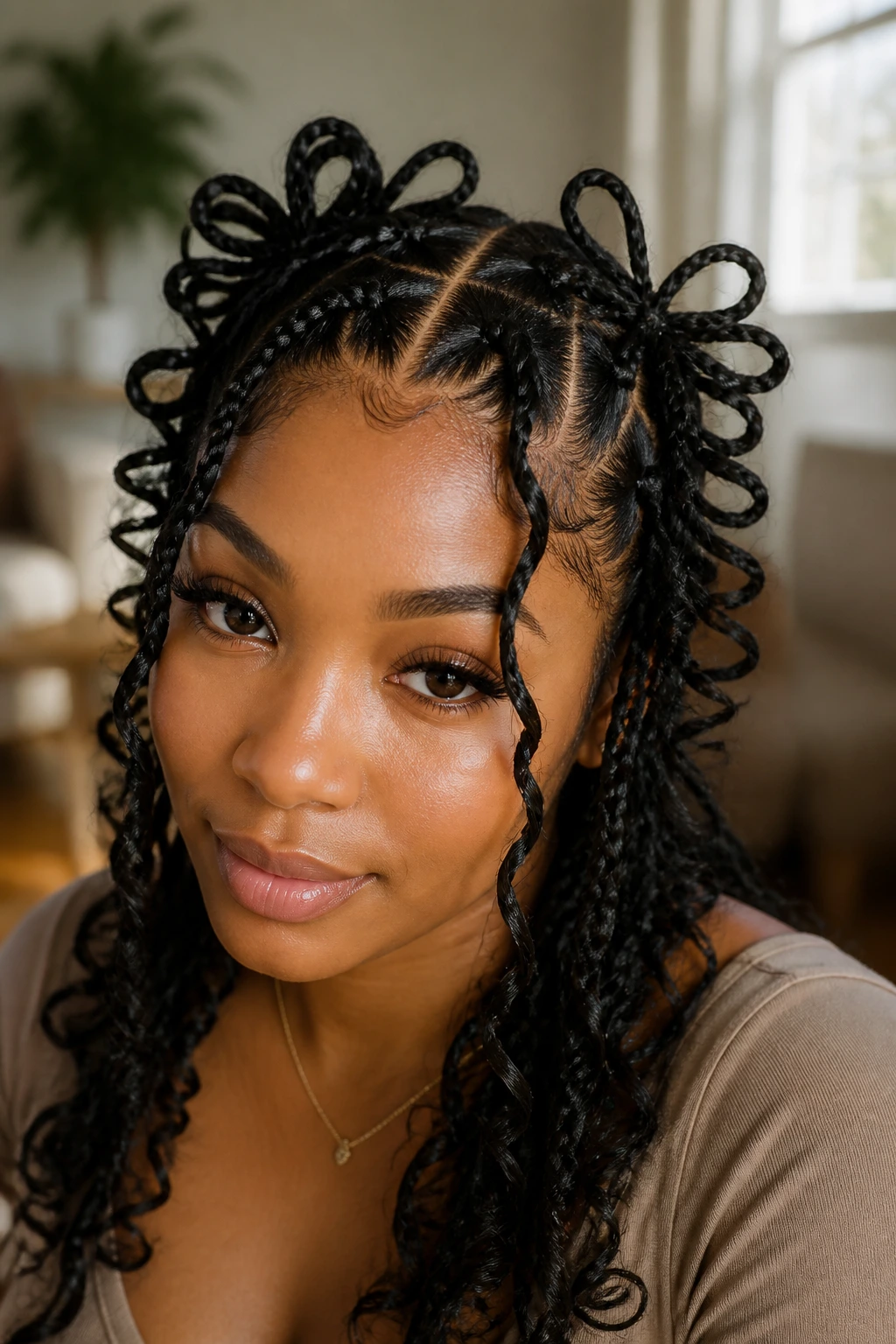
Butterfly braids mix braid structure with loose, looped texture that gives the finished style a softer, lived-in feel. They’re not the most rigid braid on the list, and that’s exactly why people reach for them when they want movement and texture together.
Why They Stand Out
The loose sections break up the braid body, so the style looks fuller and less stiff. It’s a good fit when you want the polish of braids without that stiff, plated look from root to end.
Best For
- Longer wear with a softer finish
- People who like texture around the face and ends
- Styles that can handle a little deliberate looseness
If the loops are too neat, the style loses the whole butterfly effect. Give it some air. Let it look touched, not locked.
Why Braiding Patterns Hairstyles for Natural Hair Hold Their Shape
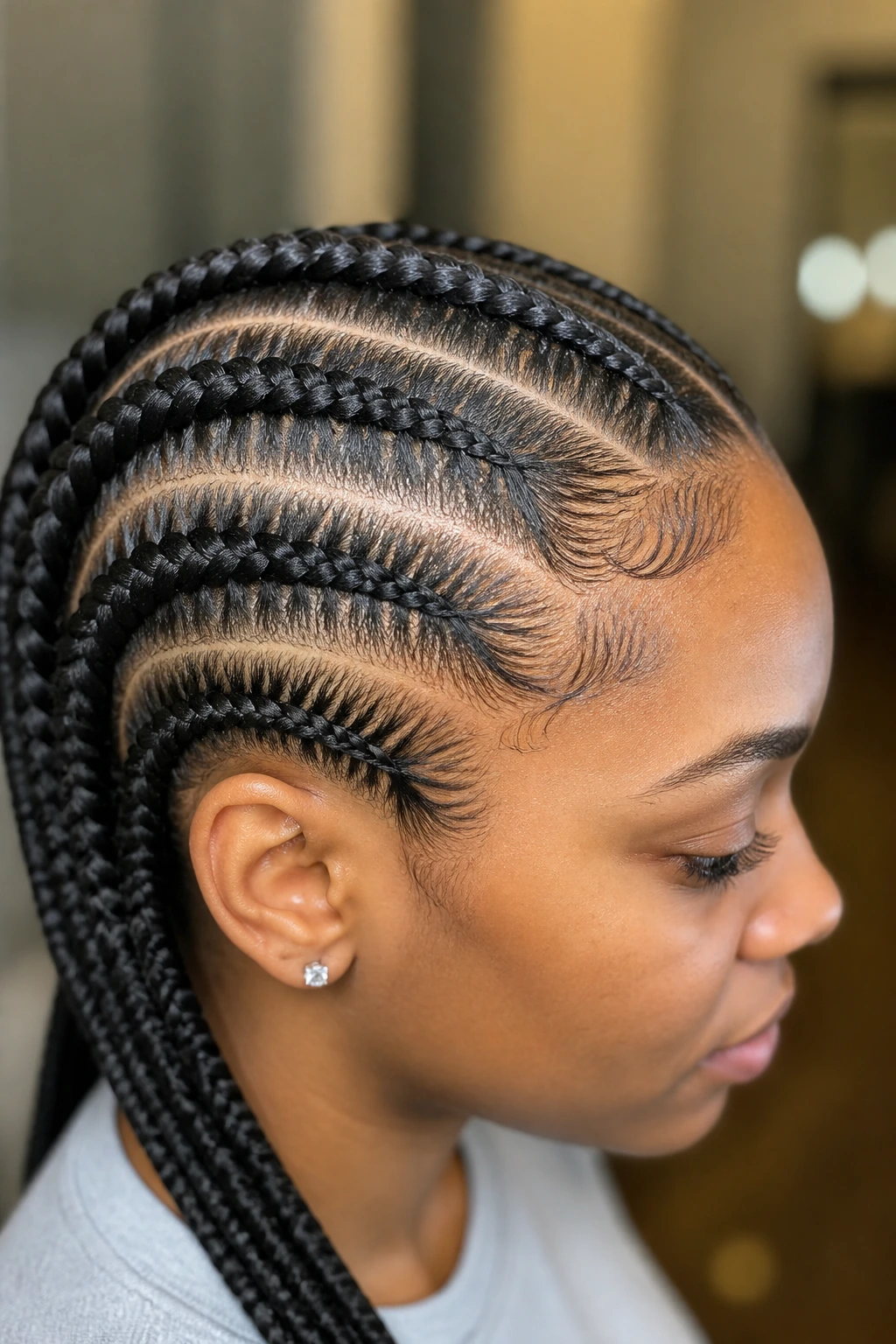
Braiding patterns hairstyles for natural hair work so well because the style is built from the scalp out. That means the braid isn’t just hanging there hoping for the best; it’s anchored by sectioning, tension, and direction. When those three things are lined up, the shape lasts longer and looks cleaner even after a few sleeps on a satin pillowcase.
The trick is starting with hair that has enough stretch to cooperate. Freshly washed, heavily moisturized roots can be slippery, and too much softness can make the part line puff back up before you finish the second row. Slightly stretched hair—banded, blown out on low heat, or set in a blown-out state from an earlier style—usually gives better control. The parts stay visible longer, and the braid slides into place instead of fighting the strand.
A lot of the difference comes down to density and direction too. A straight-back style on thick hair has a very different feel from the same pattern on finer strands. Curves, zigzags, and feed-ins need the same logic. If the parts are planned around the way your hair grows, the style settles in. If they ignore your growth pattern, you spend the whole wear time correcting what should have been right from the start.
The Combs, Clips, and Products That Make Clean Parts Easier
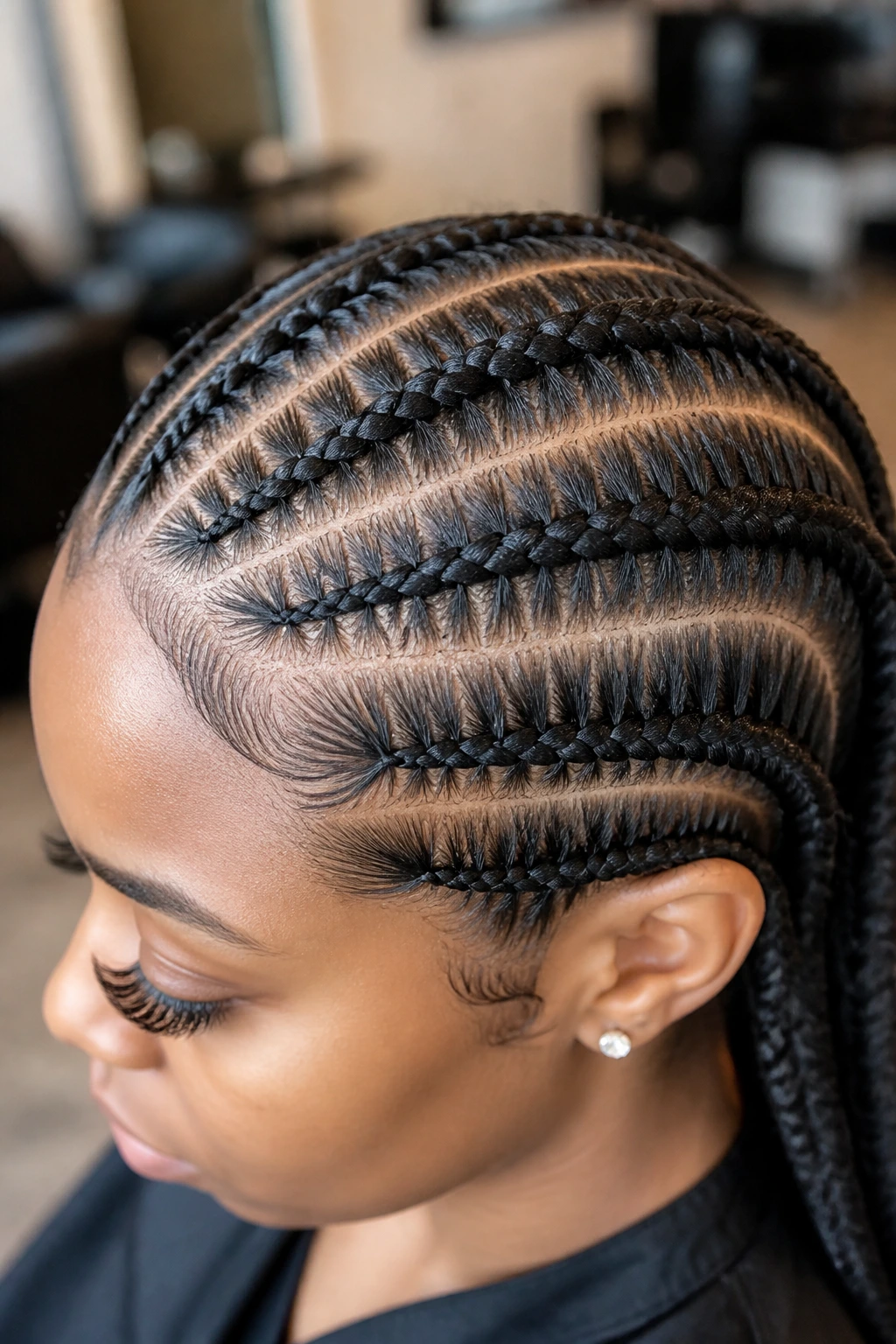
The right tools do not make you a better braider overnight, but they do make the work cleaner. A rat-tail comb with a thin metal or narrow plastic tail is the first thing I reach for, because the tail needs to slide through the hair without catching every coil on the way. Duckbill clips or double-prong clips keep the loose sections out of your hands, which matters more than people think when the hair keeps slipping back over the part.
For product, I like a light styling gel or braiding gel at the root, not a heavy glob that turns the part sticky and gray. A spray bottle with water and a tiny bit of leave-in can help the hair bend without frizzing, but the hair should not be drenched. Wet hair gets mushy, and mushy hair rarely parts cleanly. Braiding hair for extensions should be pre-stretched if you want a softer finish, and a satin scarf or bonnet is non-negotiable once the style is done.
A small brush for the hairline, a few no-snag elastics, and a clean microfiber towel round out the kit. The microfiber towel matters because it lets you blot product without roughing up the surface. Small thing. Big difference.
Prepping Natural Hair Before the First Section Gets Taken
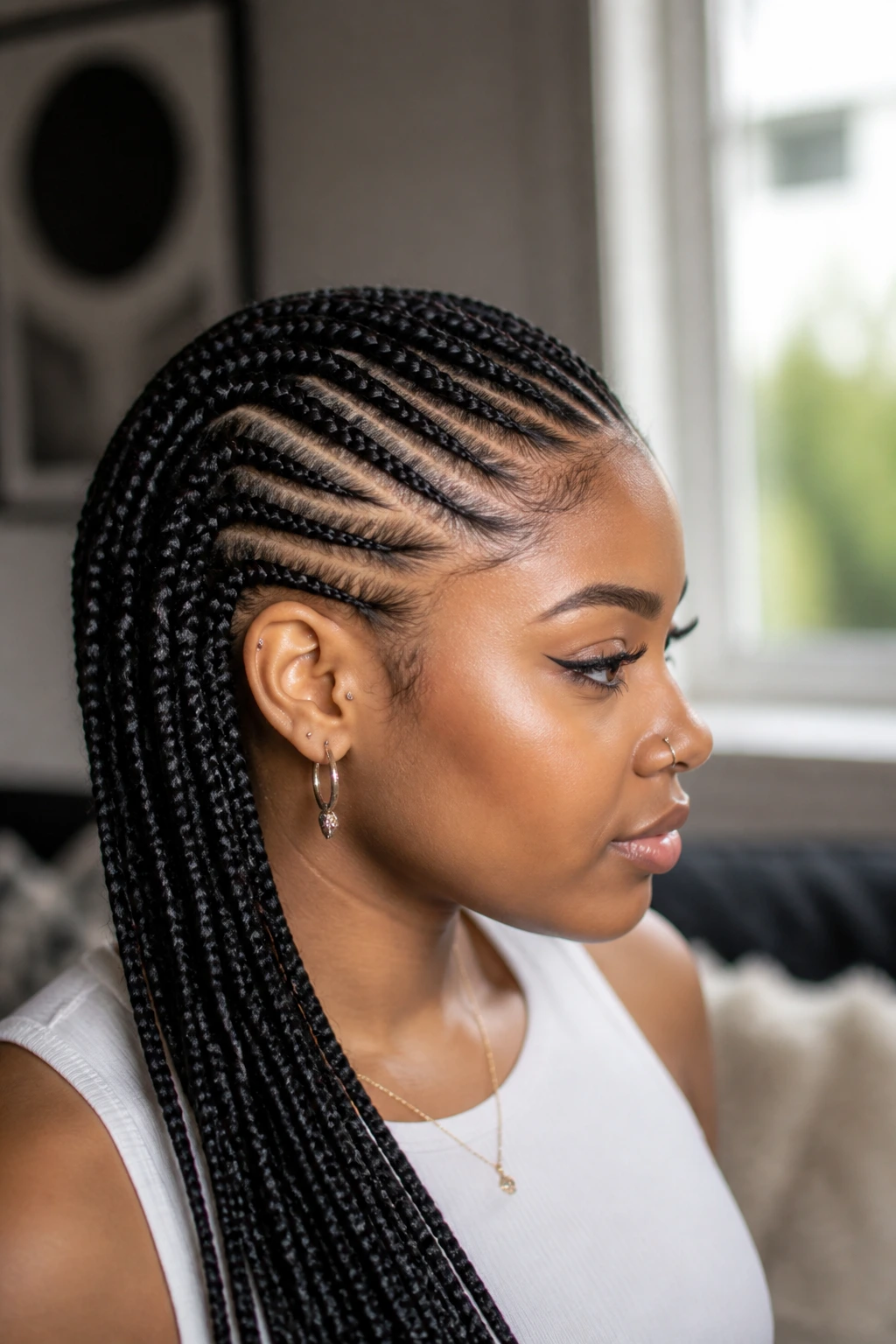
The prep work decides how much of your braid style survives the first three days. Start with detangled hair. Not “mostly” detangled. Fully. If a comb still catches in the middle of the strand, the braid line will show it later as little bumps and snagged sections, and those bumps are frustrating to fix once the pattern has started.
Stretched hair usually behaves best for braid patterns. That can mean a blow-dry on low heat if your hair handles heat well, or a stretch routine with braids, bands, or a twist-out that’s been fully dried and separated. The goal is simple: reduce shrinkage enough that the part line stays visible. You do not need bone-straight hair. You need cooperative hair.
Scalp prep matters too. If your scalp is dry or flaky, braid styles make the problem more obvious because everything is visible. A light scalp cleanse before styling, followed by a small amount of moisturizer or oil on the scalp—not flooding it—keeps the base comfortable. Heavy oils right before braiding usually get messy fast. I’d keep the scalp clean, lightly moisturized, and dry enough to hold the part. That balance is where the style starts to behave.
How to Wear These Braids From Errands to Events
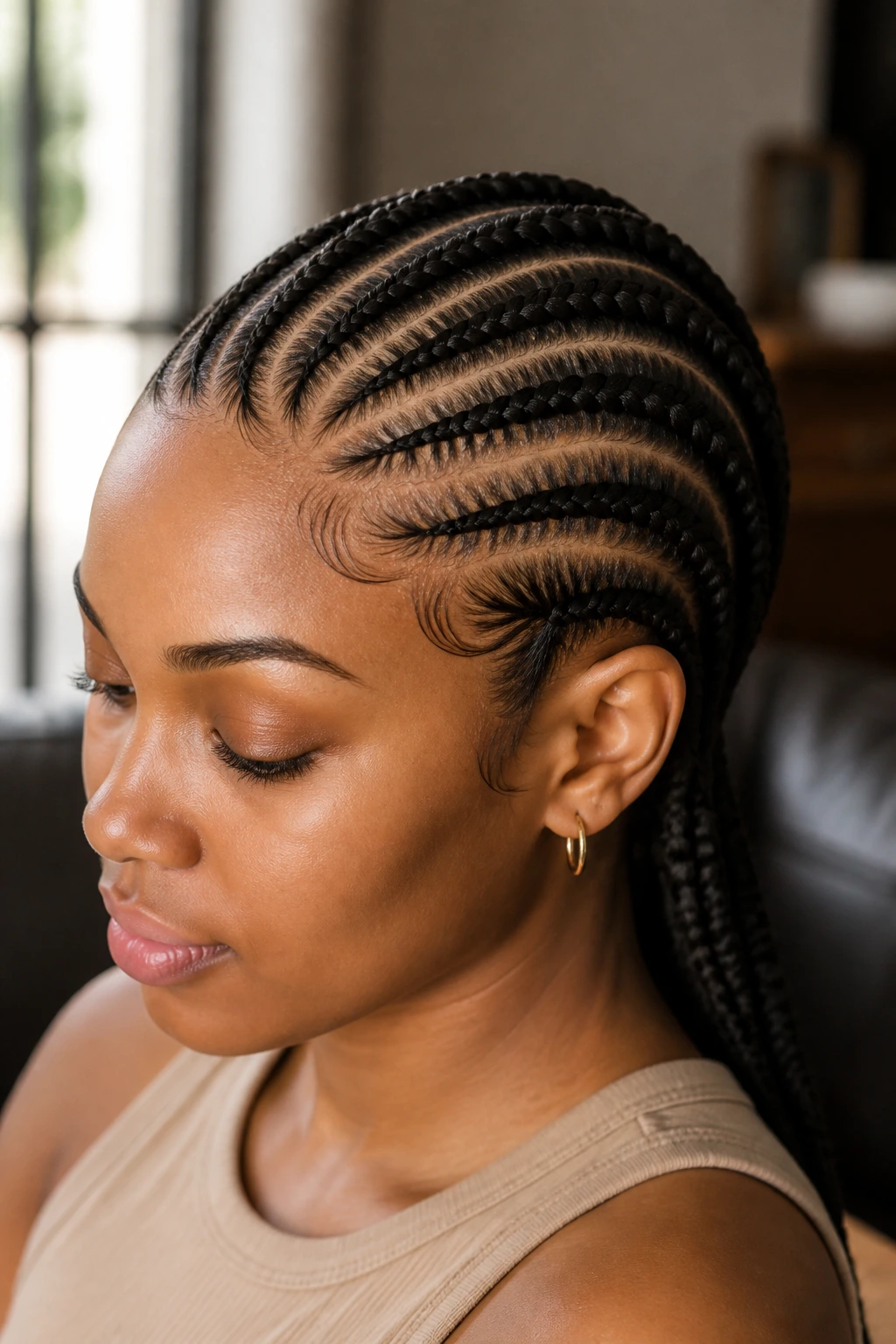
Everyday Wear: Straight-backs, knotless braids, braided bobs, and flat twists into a puff are the styles I’d reach for when the week is normal and the schedule is not. They sit under a scarf, pair with denim or work clothes, and don’t demand a fresh outfit to make sense. If the style stays neat with a simple middle part, that’s a good sign it belongs in the everyday pile.
Dress It Up: Fulani braids, heart-part cornrows, butterfly braids, and crown styles want accessories. Beads, cuffs, a clean bun, or a crisp part line give them enough finish to hold their own at an event. I like one focal detail, not four. A style with a strong pattern does not need a crowded stack of extras.
Best Pairings: Braided ponytails and half-up, half-down sets work well with hoop earrings, high collars, and outfits that leave the neck visible. Braided buns and halo crowns look especially clean with earrings that do not tangle in the hair. If the style is heavy around the face, keep the neckline simple. If the braids are pulled back, you can afford more detail in the clothes.
Small Tweaks That Change the Whole Look
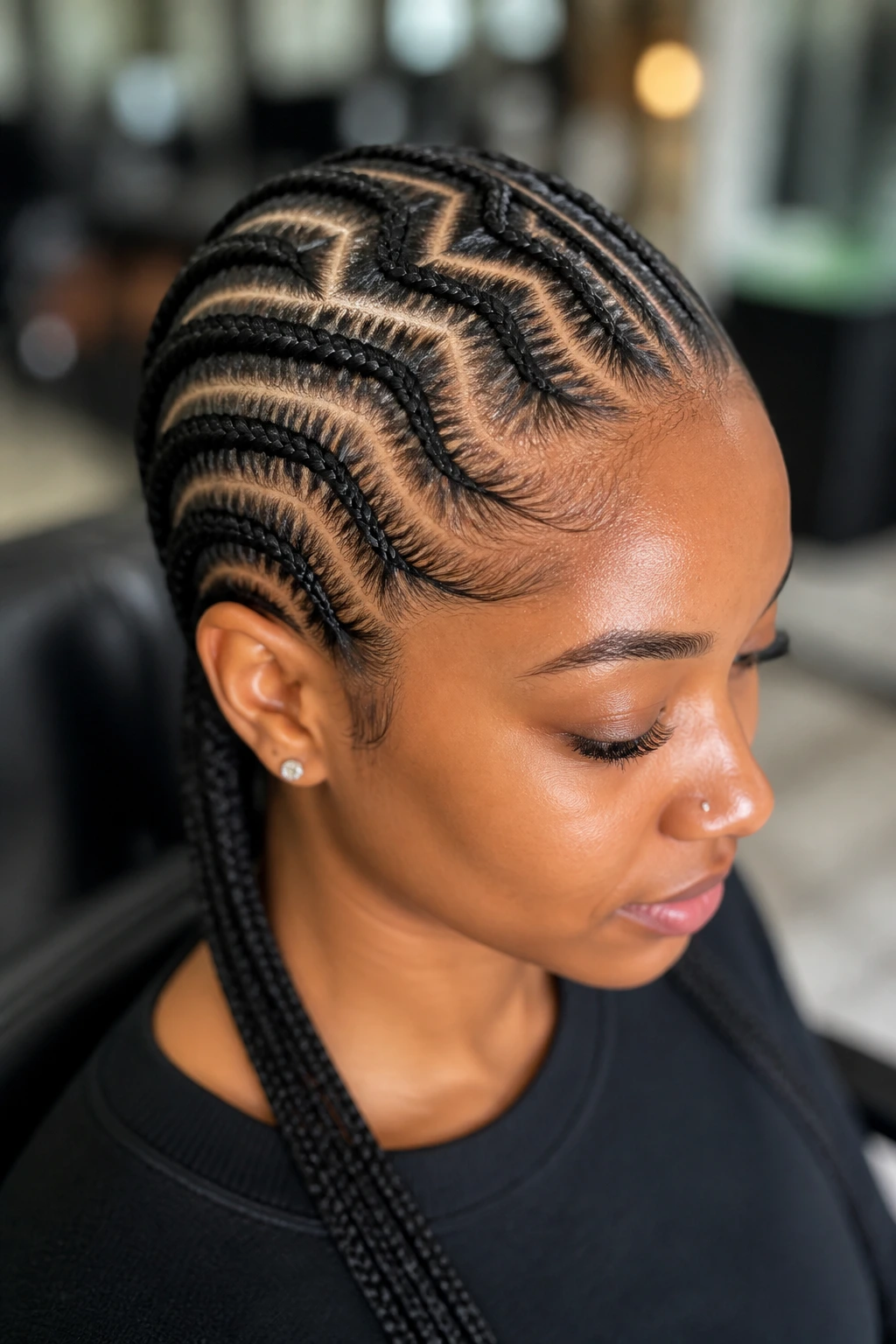
Shine: A light mousse over finished braids keeps the surface from looking dusty, especially on styles with straight parts. I prefer a soft set rather than a wet gloss; too much shine product makes the hair look coated, not cared for.
Accessory Move: Gold cuffs, wooden beads, clear beads, or even one colored thread wrapped around a braid can change the read of the style fast. Use one accent color and repeat it. Random color scatter usually looks like leftovers, not design.
Parting Shift: Moving a style from center part to side part can change its whole personality. Lemonade braids, braided bobs, and feed-ins especially benefit from that shift. Small change. Big visual difference.
Make-It-Yours: If you like softer finishes, leave a few curly pieces loose around the face. If you like cleaner lines, keep the ends tucked and the edges smooth. For a more protective feel, aim for a little less tension and a little more coverage at the perimeter.
Keeping Braids Fresh, Tidy, and Comfortable
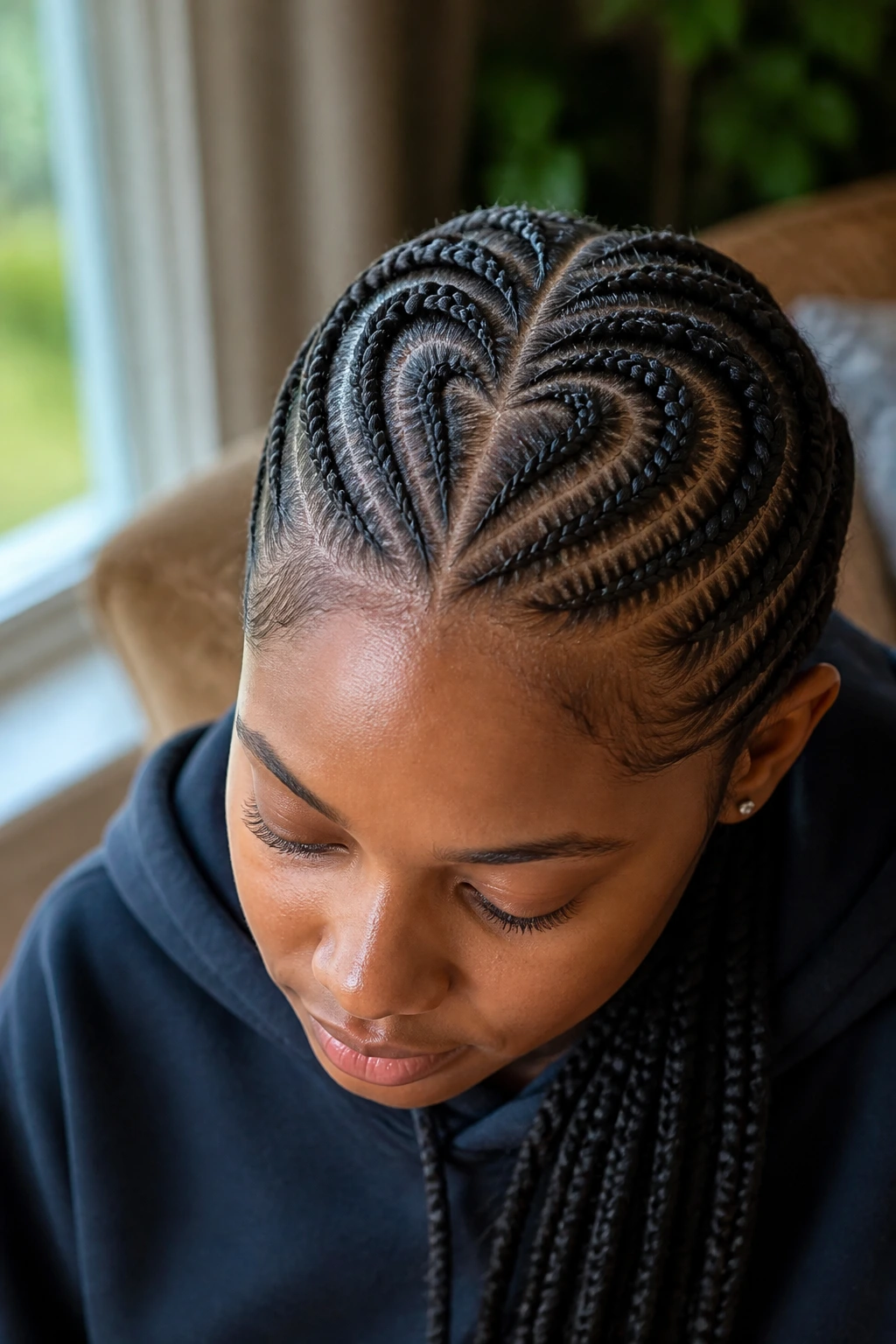
Most braid styles look their best in the first few days, but that doesn’t mean they fall apart after that. The real job is maintenance. A satin bonnet or scarf at night protects the part lines and keeps the ends from rubbing dry on a cotton pillowcase. If you sleep hard, I’d tie the scarf first and put the bonnet over it. Extra layer. Less frizz.
For scalp care, use a light braid spray or a diluted cleanser every few days if the roots start to feel itchy or coated. You do not want to drench the scalp in oil. That usually leads to buildup, not comfort. For larger styles like Ghana braids or jumbo box braids, a mousse refresh along the surface every few days can keep the braid body from looking rough. Small braids may need a quick palm-smoothing with a little foam more often.
Larger styles often wear comfortably for 2 to 4 weeks, while smaller knotless or micro styles can go longer if the scalp stays calm. I’d still watch the roots. Once the new growth starts making the pattern sit crooked or the hairline starts to ache, that’s your signal. A braid style should age into softness, not into irritation.
Braiding Pattern Variations Worth Trying Next
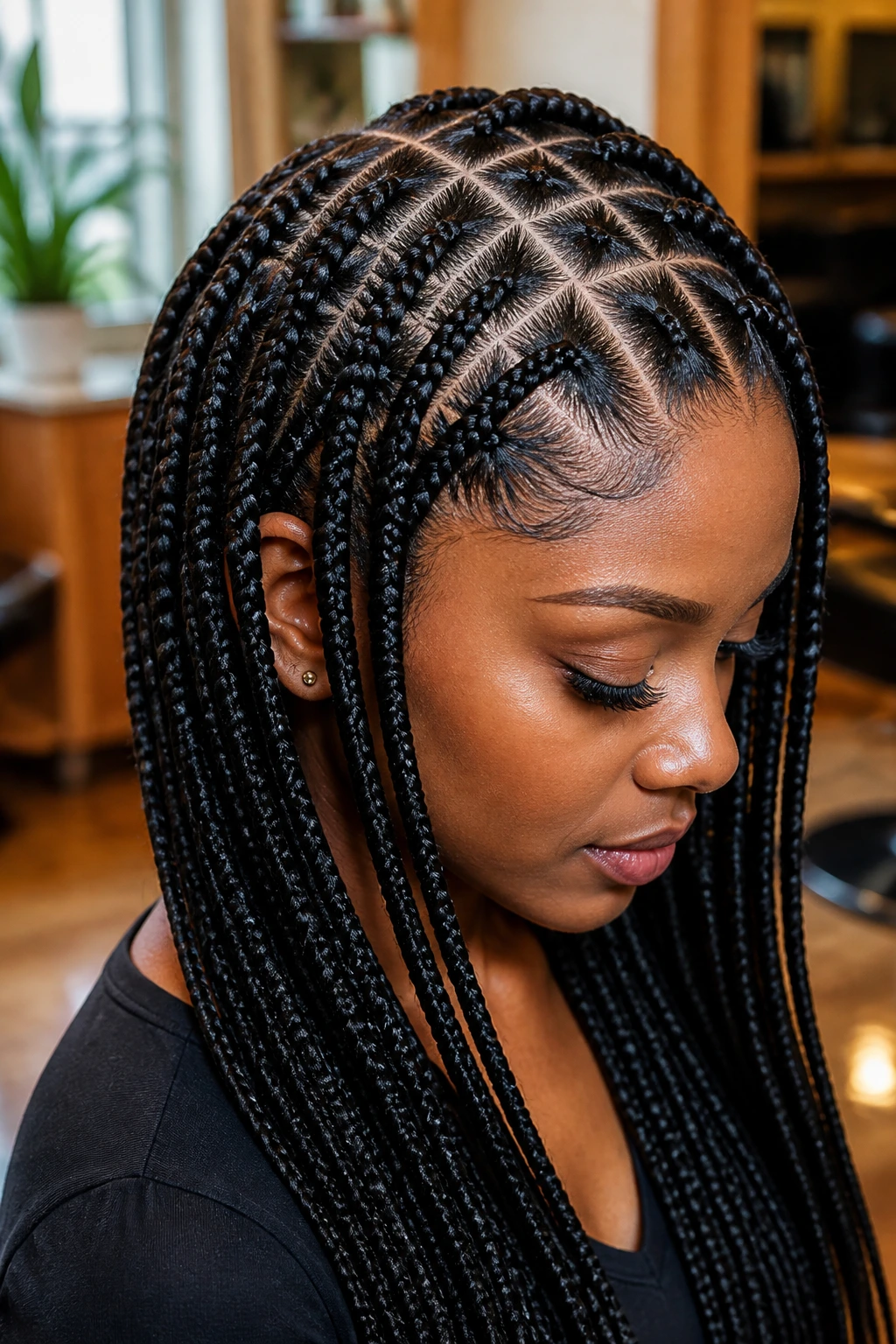
Low-Tension Line-Up: Choose knotless braids, flat twists, or medium feed-ins and keep the perimeter braid size modest. This version is good when your scalp gets tender fast or your edges have been stressed by tighter styles.
Bead-and-Cuff Finish: Add a repeat bead color to Fulani, tribal, or straight-back braids and place cuffs only on the front rows. It’s an easy way to get detail without changing the braid pattern itself.
Short-Hair Friendly Version: Go with smaller cornrows, a braided bob, or a braided crown that uses your own length instead of long extensions. Shorter hair actually helps some patterns read more clearly because the shape doesn’t get buried under weight.
High-Drama Length: Use feed-in ponytail braids or knotless braids with longer extensions when you want swing and movement. Keep the root neat and let the length carry the visual impact.
Soft-Boho Finish: Butterfly braids or a twist-and-braid mix with a few loose pieces around the face give a gentler, looser feel. Best when you want braid structure without a stiff outline.
Common Mistakes That Lead to Sore Scalp or Sloppy Parts
Braiding hair that’s too wet: Wet roots swell and slip, which makes parts fuzzy and braids harder to grip. Dry the hair fully before you start, or at least stretch it well enough that the moisture isn’t working against you.
Pulling the first row too tight: The front hairline should feel secure, not pinched. If your temples hurt by the end of the install, the style is too tight and will not magically become comfortable later.
Using too much product at the root: Heavy gel turns the scalp sticky, attracts lint, and makes clean parting harder. A thin layer is enough. You want control, not glue.
Letting part sizes drift: One section too wide and the next section too narrow throws off the whole pattern. Clip and re-check each row before you braid it down. A ten-second pause saves an hour of regret.
Skipping nighttime protection: Even a neat braid pattern gets rough if it rubs all night on cotton. Wrap it or bonnet it. That’s not optional if you want the style to last.
Frequently Asked Questions
How long do braiding patterns on natural hair usually last?
Larger cornrow-based styles often last 2 to 4 weeks, while smaller knotless or micro styles can last longer if the scalp stays comfortable. The real limiter is usually new growth and edge tension, not the braid itself.
Do I need blown-out hair before braiding?
Not always, but stretched hair is easier to part and braid cleanly. If your natural texture shrinks hard, a stretched base helps the braid pattern sit flatter and makes the parts easier to see.
Which braid styles are easiest on tender edges?
Knotless braids, medium flat twists, and loose feed-ins tend to be easier than tight cornrows or very small micro styles. The key is low tension at the hairline and a style that doesn’t pull the front backward all day.
Can I wash my hair while wearing braids?
Yes, especially with larger braided styles. Use a diluted cleanser at the scalp and rinse carefully so you don’t soak the entire style, then dry the roots thoroughly to avoid that damp, heavy feeling.
What if my parts don’t look even?
Uneven parts are usually easier to fix before the braid is finished than after. If a line drifts, stop and re-section it. Once the braid is in, the fix is often to leave it alone and make the next row more accurate.
Are these styles okay for short natural hair?
Some are, especially small cornrows, flat twists, braided crowns, and braided bobs. The shorter the hair, the more important stretch and clean sectioning become because there’s less length to hide a rough start.
What’s the best style if I want low daily upkeep?
Knotless box braids, Ghana braids, straight-back cornrows, and braided buns are strong choices. They keep the shape with minimal daily touching, as long as you protect them at night and keep the scalp from getting overloaded with product.
Can I do these styles at home?
Yes, but start with the simpler ones: straight-backs, Dutch braid pigtails, flat twists, or a basic braided bun. Stitch braids, criss-cross patterns, and freestyle geometric designs are much easier when a second pair of hands can keep the sections neat.
Braids That Stay in Rotation
The best braid pattern is the one that fits the way you live with your hair, not the one that looks hardest to do. Some styles need sharp parting and a calm hand. Others only need a clean base, a little patience, and enough room for the braids to move.
That’s the part people forget. A good braid pattern is not just decoration. It’s a small structure built to survive sleep, weather, work, and the odd day when you are not in the mood to touch your hair at all. Pick the shape that matches your scalp, your schedule, and how much tension you’re willing to carry, and the style does its job better.