



Fine hair can look twice as thin after a school day, and a square face shows every blunt line. That is why school haircuts for fine hair and square faces need more thought than a quick trim.
The wrong cut sits right on the jaw and turns the whole face boxy. The right one slips past the corners, keeps weight at the perimeter, and still survives a hoodie, a backpack strap, and one too many failed ponytail re-dos before first period.
I’m picky about this combination because the usual advice is backward. People tell fine-hair wearers to “add tons of layers,” then wonder why the ends start to look see-through. They tell square faces to hide behind curtain pieces and forget that the haircut still has to look like hair, not a curtain.
The styles below lean on soft angles, smart weight lines, and just enough movement to make the hair look fuller than it is. Some are short. Some stay at the collarbone. All of them are chosen for the same reason: they can look tidy at 7:30 a.m. and still make sense by the last bell.
Why These Cuts Earn Their Place in a School Routine
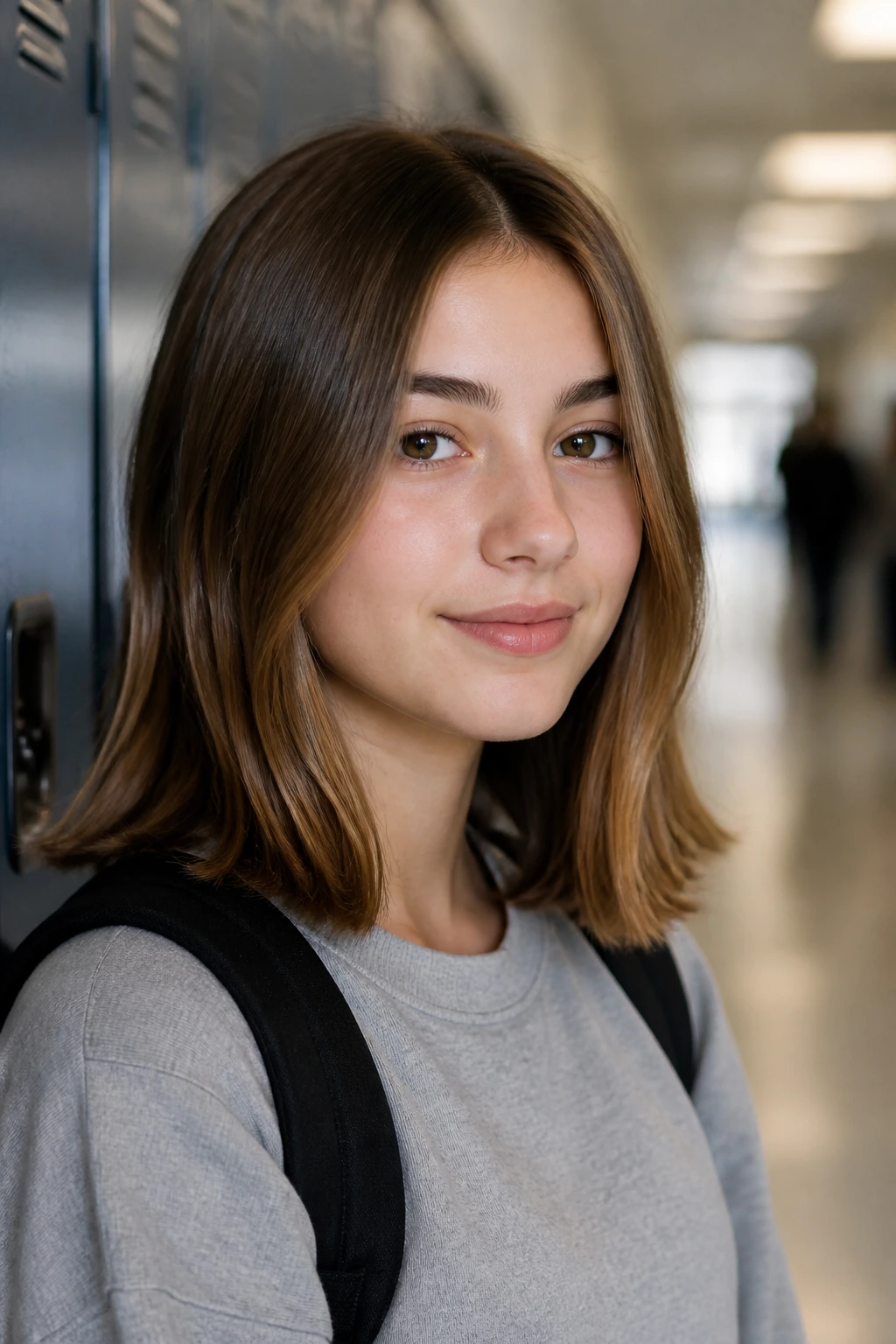
-
They avoid the jawline trap. The better cuts either land above the jaw with shape or slide below it, so the face does not look wider at the corners.
-
They keep enough weight at the ends. Fine hair looks fuller when the perimeter stays solid instead of getting chewed up by too many layers.
-
They survive backpacks, hoodies, and PE. Styles that collapse the second you pull fabric over them are a waste of time before first period.
-
They can be styled in under 10 minutes. That matters more than a fancy salon finish, because school hair has to look decent after a rushed mirror check.
-
They still tie back. A good school cut should work in a low ponytail, claw clip, or half-up twist without leaving awkward side flaps.
If a haircut needs constant hot-tool rescue, it is not a school haircut. It is a part-time project.
What a Square Face and Fine Hair Need From the Shape

A square face usually has width that stays fairly even through the forehead, cheekbones, and jaw. That does not mean the face needs to be hidden. It means the haircut should break up the strong corners instead of drawing a hard frame around them.
Fine hair asks for a different kind of help. It usually needs weight at the ends, controlled movement, and just enough layering to keep the shape from falling flat. Too many short layers can make the hair look wispy. Too much thinning can make it look like half the hair disappeared in the sink.
The sweet spot is usually one of three things: a cut that lands above the jaw, below the jaw, or softly around the collarbone. The cut should not stop right on the widest part of the jaw unless there is a lot of softening in the front. That is the line where a square face can start to look sharper than it needs to.
There is another detail people miss. Fine hair often looks better with a slight bevel, point-cut ends, or hidden internal shaping than with big visible layers. The shape matters more than the drama. Simple. Not boring.
1. Collarbone Lob With Soft Bevel

A collarbone lob is the haircut I reach for when someone wants length but hates that limp, stringy look fine hair can get by lunchtime. The ends sit on the collarbone instead of the jaw, so a square face keeps its clean lines without getting boxed in. The slight bevel stops the bottom edge from looking like a ruler.
Why It Sits So Well
-
The length lands below the jaw, which keeps the face from feeling wider.
-
A soft bevel at the ends makes the perimeter look thicker than a razor-thin cut.
-
It can be air-dried straight or bent under with a round brush in about 5 minutes.
Ask for one solid line with the last half-inch point-cut, not shredded. If your hair is very fine, keep the layers invisible and let the shape come from the outline.
That is what makes it school-friendly. It still fits in a ponytail, but it does not collapse when you take it out. If you want only one low-drama cut on this list, start here.
2. Curtain-Bang Mid-Length Cut

Curtain bangs are the fastest way to make a square face look softer without hiding the face itself. They split the front into two moving pieces, which takes attention off the jaw and gives fine hair a little lift where it matters most: right around the eyes and cheekbones.
The trick is in the length. Ask for the shortest point to skim around the cheekbone, not the middle of the forehead. If the fringe is cut too short on fine hair, it separates fast and starts to show little gaps. A longer curtain piece blends better, especially when the hair is school-rushed and only half styled.
I like this cut on students who wear a middle part but do not want a hard middle part. The fringe gives you a soft frame even when the rest of the hair is tied back. You can pin the bangs off the face for lab work or gym class, then let them fall again after lunch.
How to Wear It to School
Blow-dry the fringe first, side to side, with a small round brush. Thirty seconds each direction is enough to bend the roots. The rest of the hair can air-dry or get a quick rough-dry. Keep the fringe light and separated; heavy bangs on fine hair go flat fast.
3. Jaw-Skimming Bob With a Side Part

A short bob can work on a square face, but only when the line is handled with some manners. A blunt chin bob that ends exactly at the jaw can make the face look wider. A jaw-skimming bob with a side part and a soft, broken edge does the opposite. It nudges the eye sideways, then down, instead of stopping cold at the corners.
This is a strong choice for fine hair because the shorter length can make the ends look denser. The side part keeps it from feeling too symmetrical, and symmetry is the thing that often makes square faces look harsher than they are. If your hair lies flat, ask for a tiny bevel at the front, not a heavy stack in the back. Stacks can get puffy in one spot and thin everywhere else.
I would pick this cut for a student who wants a sharp look that still behaves in class. It tucks behind the ears. It fits under a beanie. It can be finger-styled in the bathroom mirror and still look deliberate.
One warning: do not let the shortest point land right on the jaw corner. Move it a little above or a little below. That small shift changes everything.
4. Long Layers That Start Below the Chin
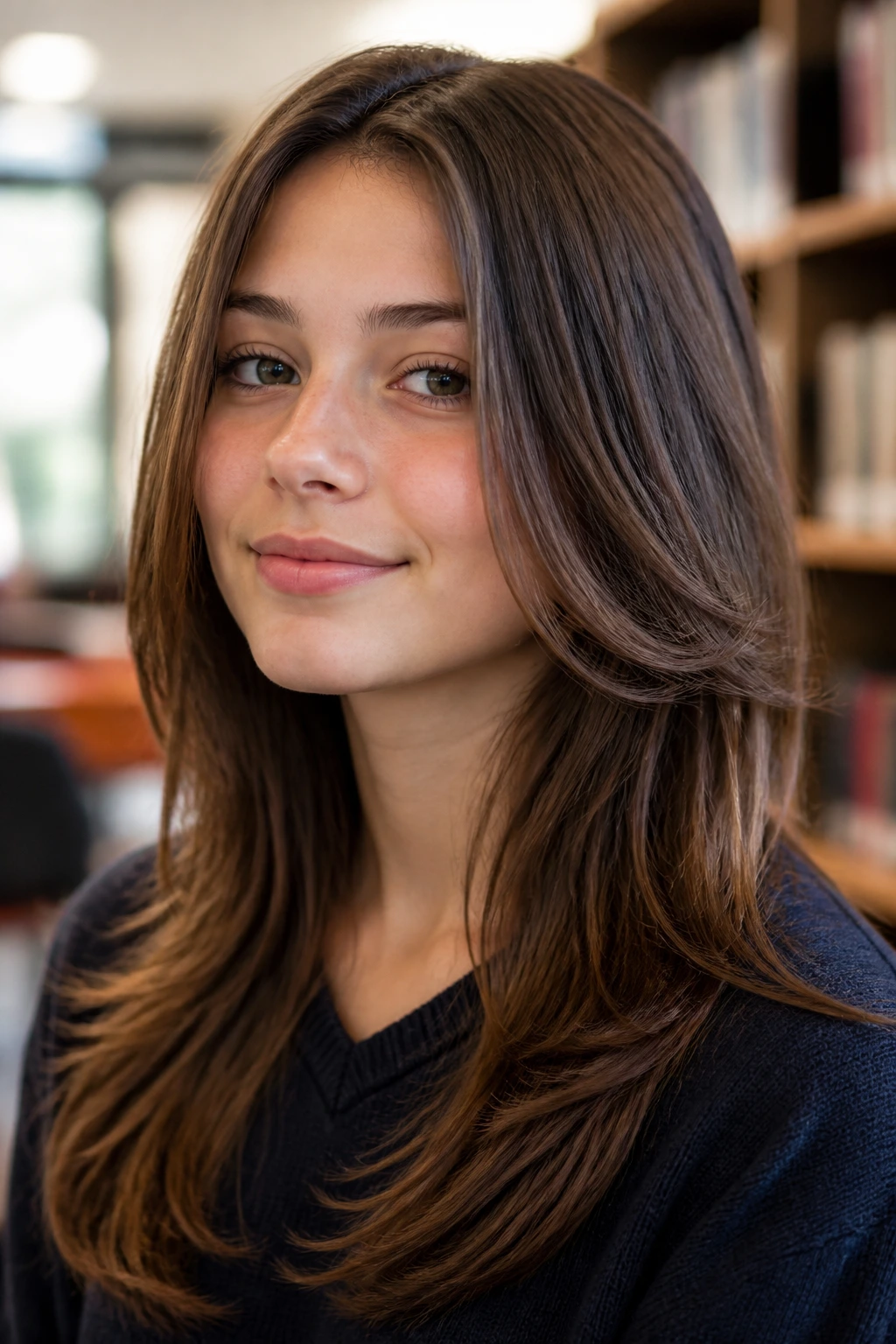
If you want to keep length, this is the safest place to start. Long layers that begin below the chin give fine hair movement without stripping away the bulk you actually need. For a square face, the important part is that the front pieces start low enough to soften the jaw instead of landing directly on it.
This cut works because the bottom line stays strong. The hair still looks like a full sheet from the back, which matters when the strands are fine and prone to separating into little see-through panels. The layers only wake up near the face and lower lengths. That means you get motion where the eye sees it, not everywhere at once.
What to Ask For
-
Keep the longest layers at or below collarbone length.
-
Leave the perimeter dense.
-
Add face-framing pieces that start around the mouth or lower cheekbone.
-
Skip aggressive thinning shears.
That last one matters. Fine hair does not need to be shredded into air. It needs structure with a bit of movement. This is the cut I’d send to anyone who wants to keep their hair in braids, ponytails, and loose waves without losing shape.
5. Side-Parted French Bob

The French bob has a reputation for being chic, but the version that works on square faces is softer than the photos usually show. Think chin-to-lip length, a side part, and a curve that bends gently under instead of sitting as a hard shelf. On fine hair, that bend is what keeps the bob from looking flat and strict.
The side part is doing real work here. It breaks the symmetry of a square face and gives a little lift right where fine hair often needs it: the root area near the part. If your hair grows forward at the temples, this cut can take that natural fall and turn it into softness instead of chaos.
I like this one for students who want a short haircut that still feels neat with minimal effort. You can tuck it behind one ear, clip it back on one side, or wear it as is. It looks polished without a lot of product, and that is a relief on rushed mornings.
Keep the ends clean but not blunt-blunt. A tiny bevel at the bottom keeps the line from getting heavy. If the hair is very fine, this is one of the few short cuts that can still look dense instead of airy.
6. Soft Shag With Airy Crown
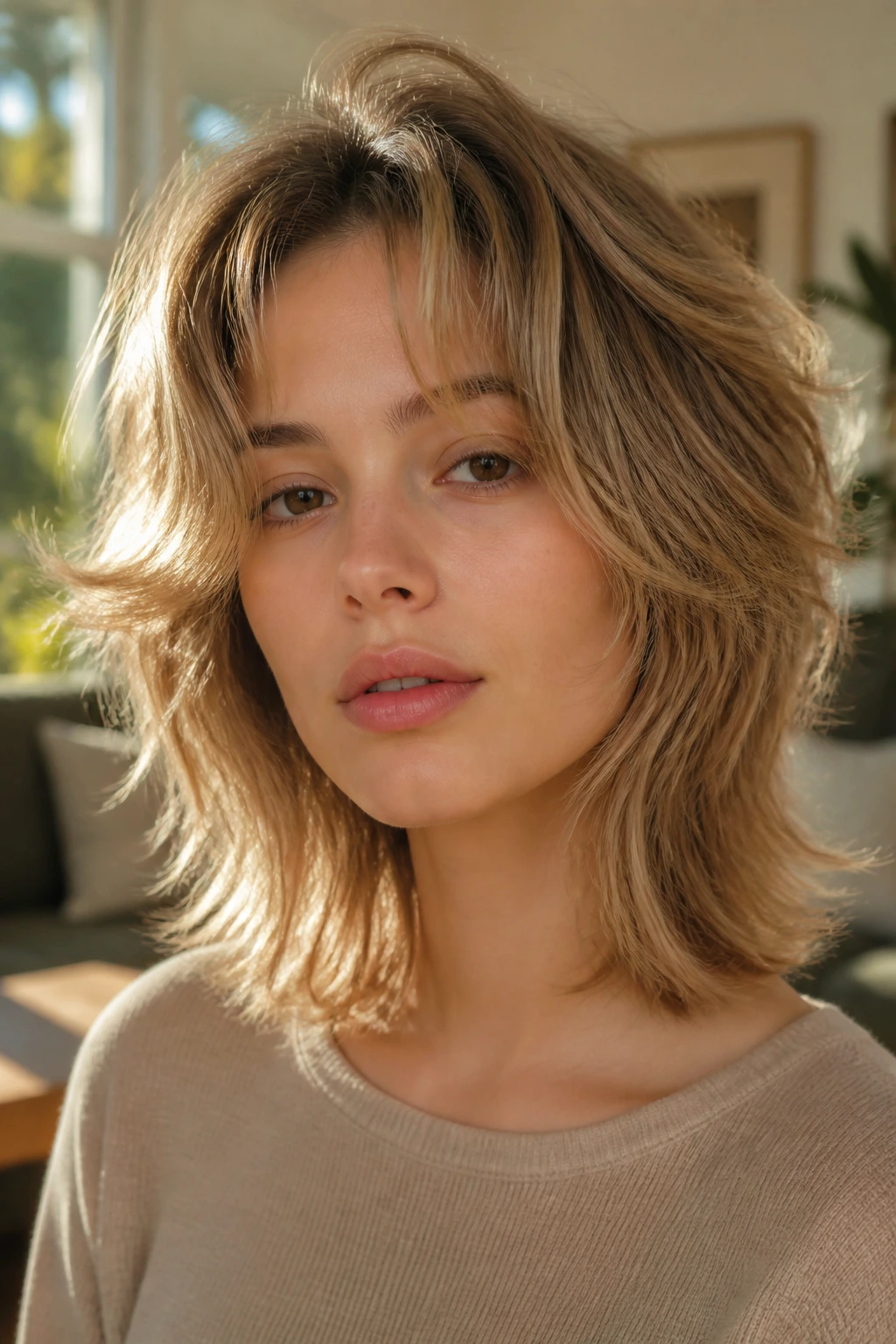
A soft shag can be gorgeous on fine hair, but only if the layers are kept civilized. I’m not talking about a shredded, punky mess that looks like it fought with a lawn mower. I mean a light shag with longer crown layers, loose face-framing pieces, and ends that still have enough weight to sit down.
Square faces benefit from the broken outline. The hair does not march straight across the jaw or forehead. It moves around them. That movement matters because strong angles look sharper when they are sitting under a flat, straight curtain of hair. The shag interrupts that line.
This cut also helps fine hair in a practical way: the top gets a little lift, which can make the overall head shape look fuller. That lift should come from the crown and cheekbone area, not from over-layering the bottom. If the bottom gets too thin, the whole cut starts to feel hollow.
For school, this one is good on hair that dries with a natural wave. Add a small amount of mousse through damp roots, scrunch once or twice, and leave it alone. If you smooth every piece into place, you lose the whole point. A shag should look touched, not fussed over.
7. Rounded Pixie With Longer Top
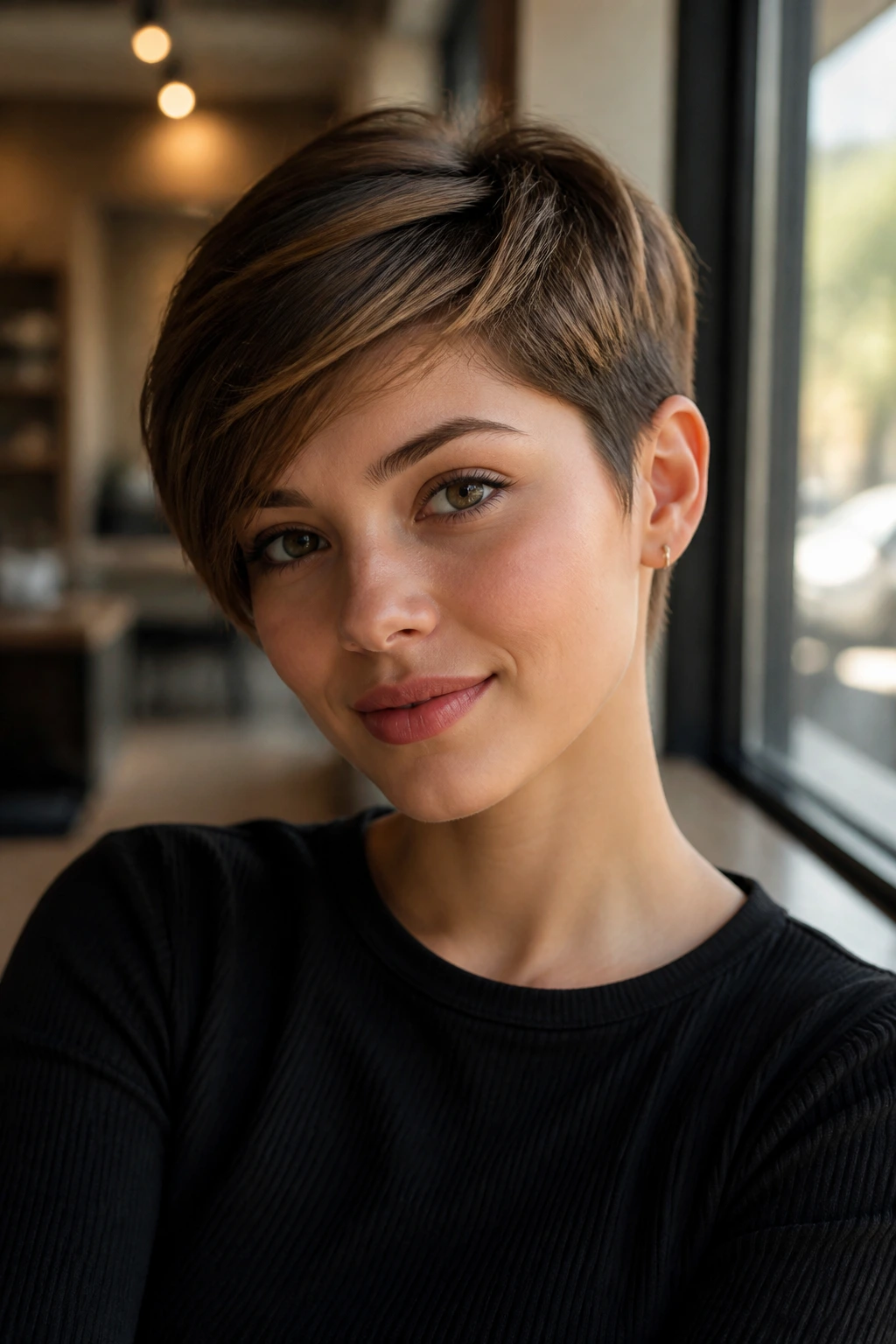
Short hair on a square face needs softness around the edges, and a rounded pixie does that better than a sharp crop. The sides and nape stay close, but the top carries a little extra length so the silhouette curves instead of boxing out the face. That curve is the key. Without it, a pixie can make a square jaw look even more graphic.
Fine hair often wakes up in a pixie. There is less weight dragging it down, so the roots can lift on their own. I like a longer top because it gives you a little room to move the fringe from side to side. On a school morning, that is gold. Ten seconds with your fingers and you’re done.
The best version keeps the fringe soft and a bit side-swept. A hard, straight fringe on a pixie can feel severe. Side movement breaks the line and gives the face breathing room. If you wear glasses, this cut can be especially nice because it keeps hair off the frames without looking choppy.
Ask for the nape and sides to be tapered but not shaved close unless you want that look. A small amount of length around the ears keeps the cut from feeling too severe. For fine hair that hates heavy styling, this is one of the smartest short options.
8. Invisible-Layer Collarbone Cut

This is the haircut for someone who wants movement but does not want the haircut to look layered. That distinction matters. Fine hair can get flimsy when the layers are too visible, so the better move is to keep the perimeter full and tuck the shaping inside the cut where it supports the surface instead of stealing from it.
The result is a collarbone-length shape that looks nearly one-length from the outside, but still moves a little when you turn your head. On a square face, the low front pieces help blur the jaw without landing on it. It feels softer than a blunt block and denser than a heavily layered cut.
I especially like this for students who have to tie their hair up a lot. Invisible layers keep the ponytail from feeling like one thick rope and one little tail. The cut also dries cleanly. That matters. Fine hair that dries into random wings can eat up your whole morning.
What Makes It Different
-
The weight stays at the bottom.
-
The movement is built inside the shape.
-
The front pieces stay long enough to soften the cheek and jaw.
-
The finish looks tidy even when air-dried.
If your hair is straight and fine, this is a quiet winner. It does not shout for attention. It just works.
9. Blunt Midi With Wispy Fringe

A blunt midi on fine hair sounds risky until you see what a solid line can do. Fine strands often look thicker when the ends are kept even, because the eye reads that strong perimeter as fullness. The square face part of the equation is handled by the fringe: it has to be wispy, soft, and a little broken so it does not turn the forehead into another hard plane.
I like this cut when the length sits below the chin and above the shoulders. That zone keeps the face from getting boxed in, and the fringe softens the top half without swallowing the face. If the fringe is dense, it can feel heavy fast. Better to let a little forehead show through. That airiness makes the cut easier to live with at school.
This is also one of the easier cuts to wear with uniforms, ties, or collars that sit close to the neck. It looks neat with a tucked shirt and still has enough shape to feel intentional after a long day. The blunt base gives it discipline. The fringe gives it movement.
Do not ask for razor-thin ends here. The whole point is to keep the line strong enough to make fine hair look fuller.
10. Feathered Wolf-Lite
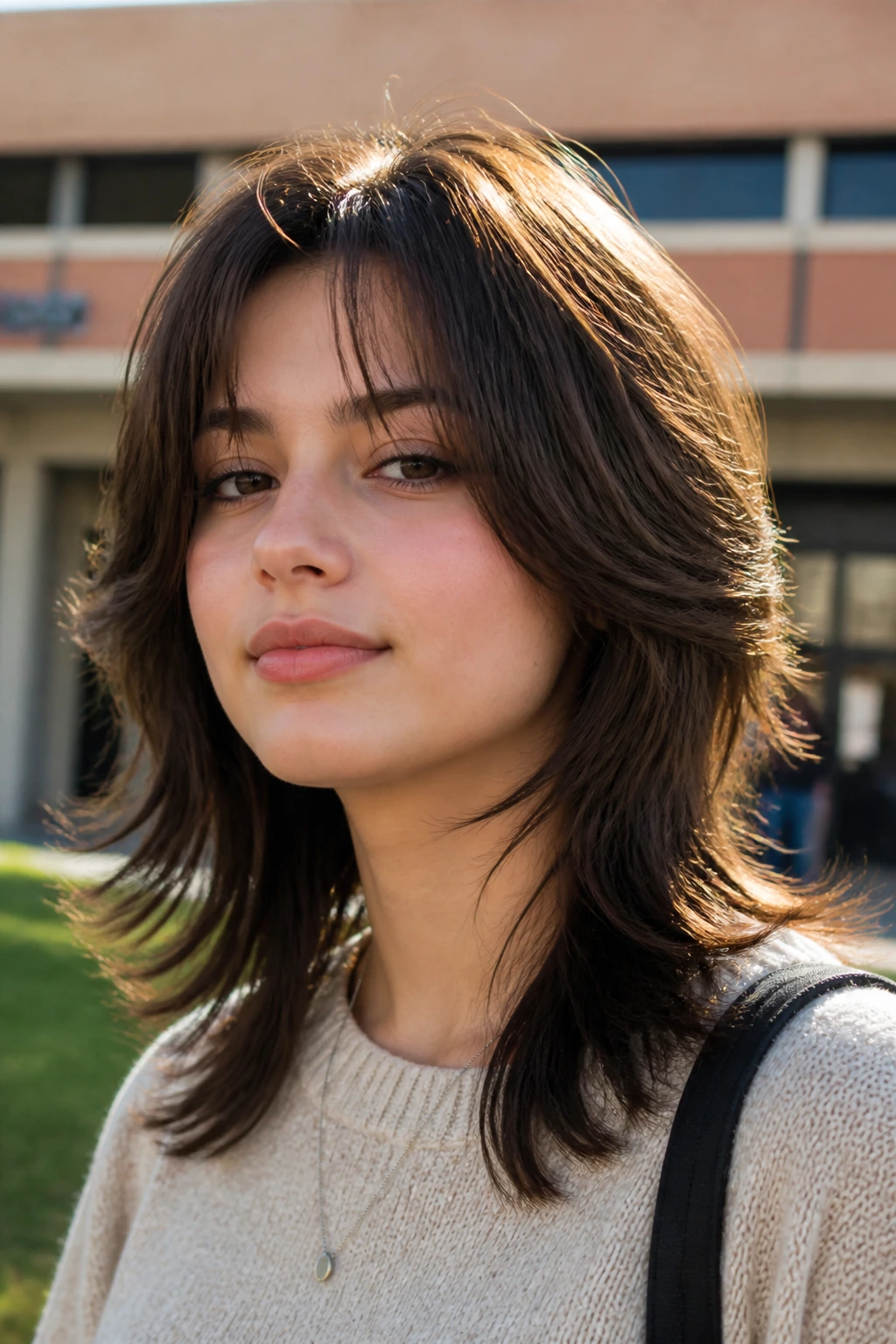
A full wolf cut can be too chopped up for fine hair, but the softer version — call it wolf-lite, if you want — can be a good fit. The crown has lift, the sides break softly around the cheekbones, and the back keeps enough length to prevent the whole thing from looking stringy. For a square face, the broken outline helps dissolve the jaw corners.
The difference between this and a shag is in the attitude. The shag is rounder and softer. The wolf-lite has a little more edge and a little more length contrast, but it should still be blended. If you can see the layers as separate chunks from the front, it’s too much. Fine hair needs connection between the layers so the style reads as full, not sparse.
This one suits students who like a bit of personality without needing a perfect blowout. It usually looks better with some natural bend. A little mousse or lightweight cream through the ends can help the layers sit together. Too much product, though, and the hair starts to lie flat again.
The face frame should start around the cheekbone or just below it. That is where the softness lives. Higher than that, and the cut can become too top-heavy.
11. Ear-Tuck Crop With Sideburn Length
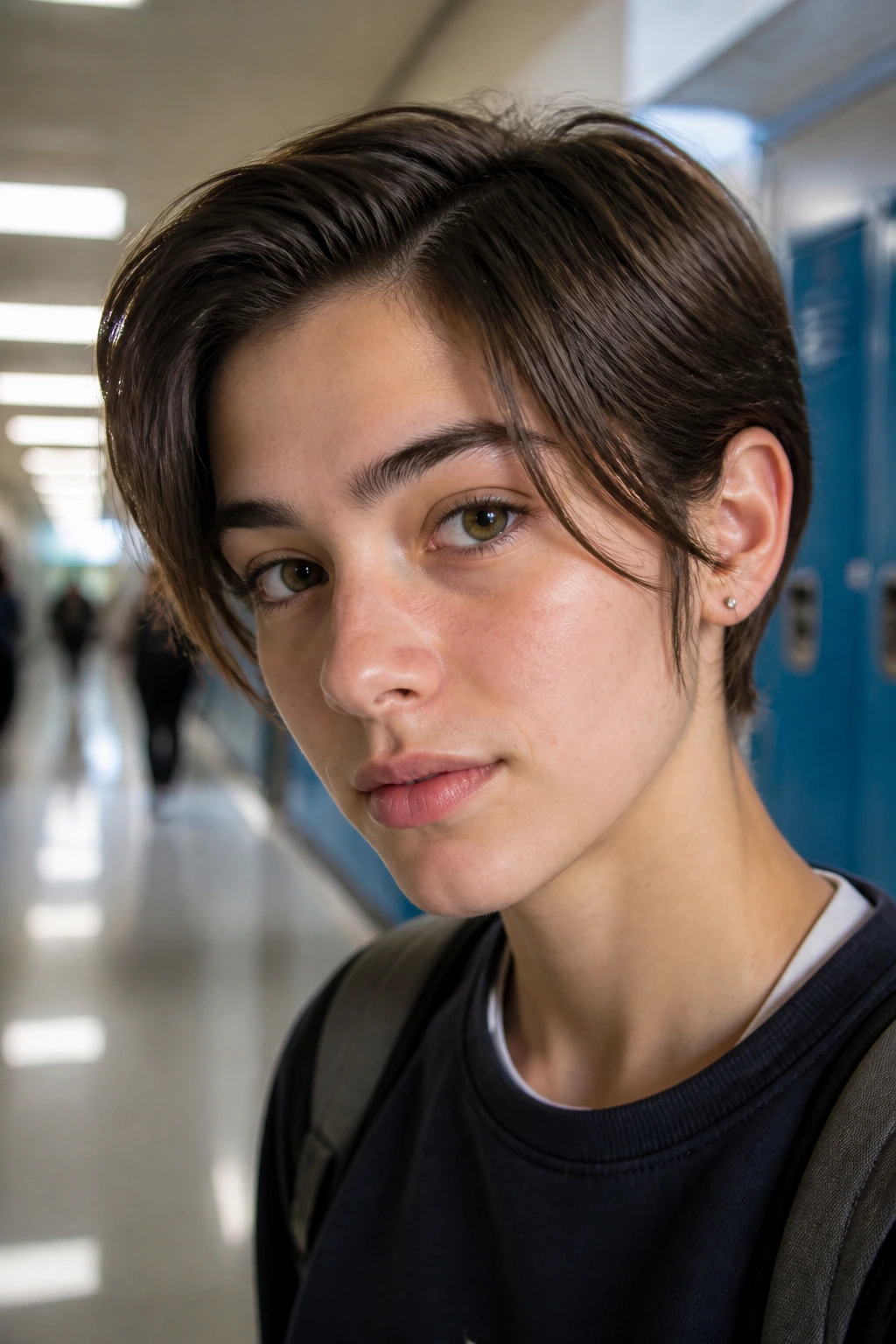
If you want hair off your face but do not want the “I just buzzed everything off” look, this crop is worth a serious look. The sides are short enough to tuck cleanly behind the ears, but the sideburns and front pieces stay long enough to soften the cheeks and jaw. That balance matters on a square face because it keeps the shape neat without turning it boxy.
Fine hair does well in this kind of cut because the reduced length gives it more natural lift. There is less weight pulling everything down. The haircut can look neat with no styling at all, which is useful on mornings when there is no time to fight with a brush.
I like this for sporty students, students who wear headphones a lot, and anyone who wants a clean shape that stays out of the eyes. It also grows out gracefully if the nape and sideburns are left soft. A hard clipper line tends to look harsh quickly; a softer taper lasts longer.
Quick Details Worth Asking For
-
Keep the sideburns at cheek level or slightly below.
-
Leave a little length at the temples.
-
Avoid an overly tight fade if the face is square.
-
Ask for the top to be long enough to sweep to one side.
A little softness near the ears goes a long way.
12. A-Line Bob With Gentle Front
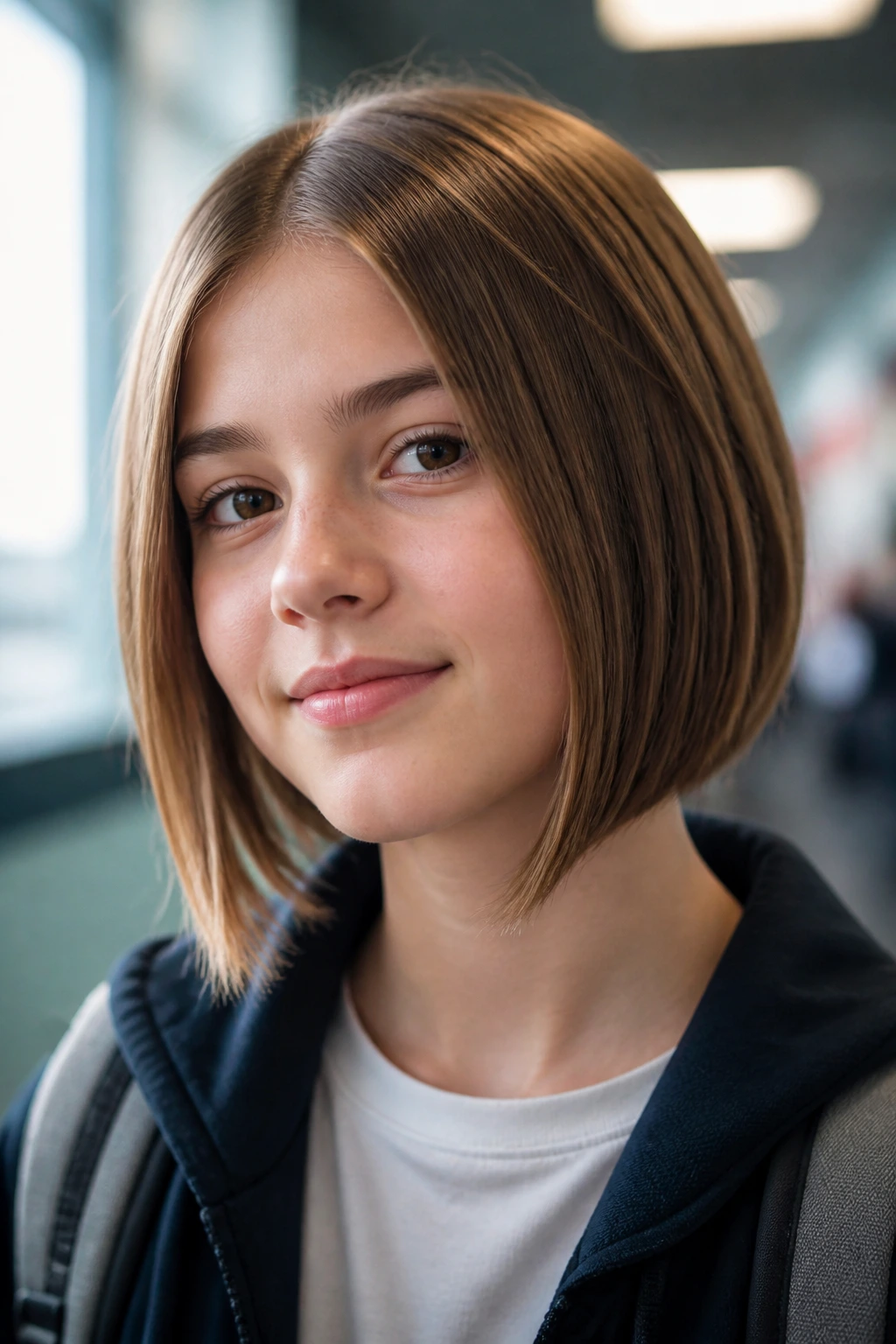
An A-line bob is one of the few bobs that naturally helps a square face instead of fighting it. The back is a little shorter, the front is a little longer, and that diagonal line pulls the eye downward. On fine hair, that angle can create the illusion of volume because the shape feels built, not flat.
The key word here is gentle. A steep A-line can feel dramatic and sharp, which is the last thing a square face needs. Keep the angle subtle. The front should graze just below the jaw or skim the upper neck, depending on how strong your jawline is. That small difference changes the whole mood of the cut.
This is a smart school haircut because it looks tidy even when it’s not freshly styled. The shape holds on its own. You can wear it straight, tuck one side behind the ear, or bend the ends under slightly with a flat brush. It does not need a lot of product, just a little direction.
If your hair is very fine, ask the stylist not to thin the sides too much. The front length already gives movement. Let the shape do the work.
13. Shoulder-Length Cut With Face-Framing Pieces

Shoulder-length hair is popular for a reason. It gives enough length for braids, clips, and ponytails, but it does not drag like very long hair can when it is fine. The square face piece of the equation comes from the face-framing pieces, which should start low enough to soften the jaw and cheekbones without creating a sharp shelf.
I prefer this cut when the back stays fairly solid and the front gets the movement. That way, the haircut still feels full when it is worn down. Fine hair often loses interest if too much is taken out of the middle. Keep the body where it counts.
This is a practical school choice for students who rotate between hair up, hair down, and half-up styles. It works with clips. It works with a headband. It works on days when you only have a minute to smooth the top and go. That flexibility is the whole point.
Ask for the face frame to begin below the cheekbone, especially if the jaw is wide or angular. The longer starting point softens the square shape instead of copying it.
14. Mixie With a Blended Neckline
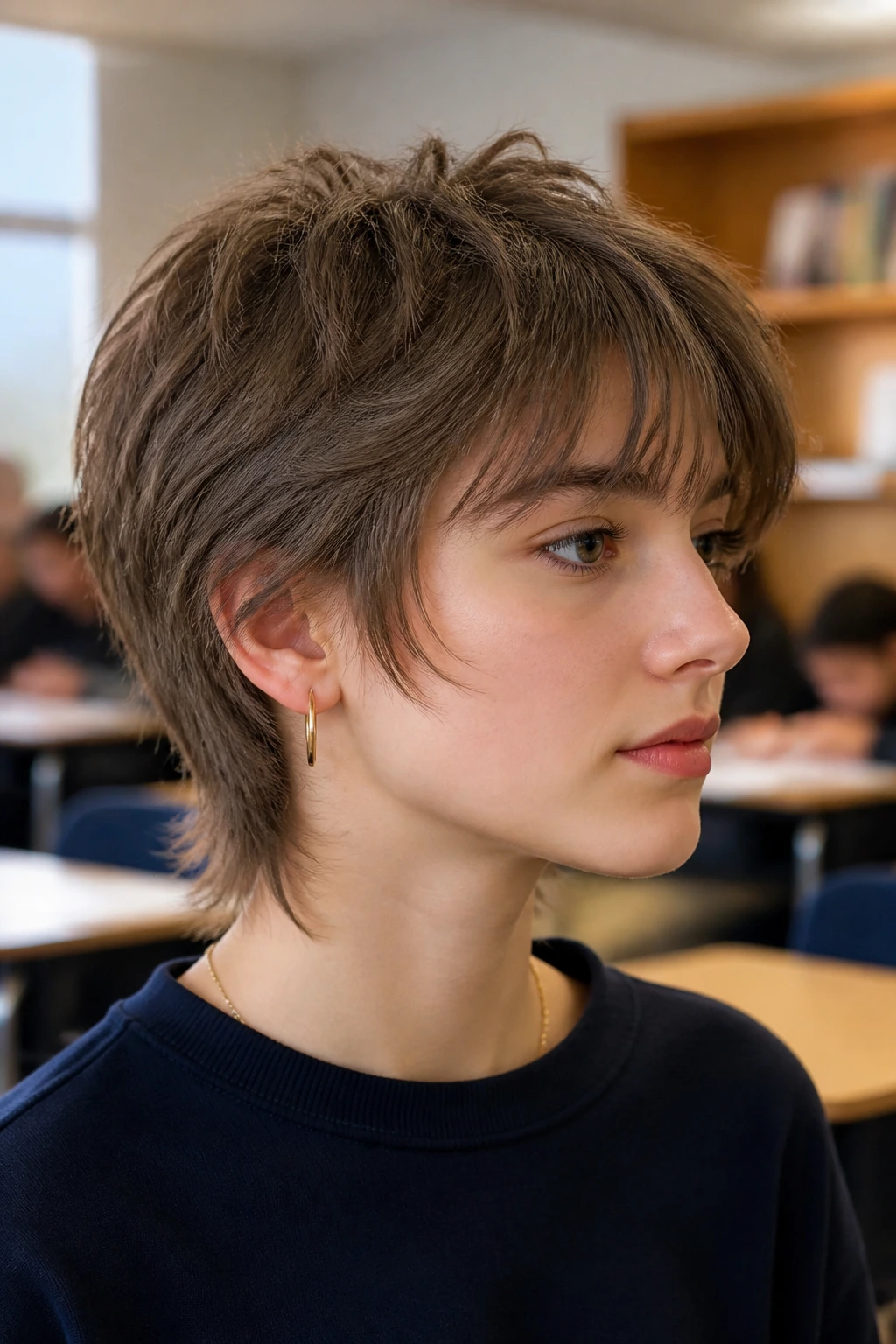
The mixie is a pixie-mullet hybrid, but the version that works for school should be blended, not dramatic. Think longer top, soft fringe, and a neckline that trails a little longer than a classic pixie without turning into a full mullet. On fine hair, that shape can actually look fuller because it creates movement in more than one direction.
Square faces benefit from the soft diagonal lines around the temples and cheekbones. The cut does not stop and start in one hard place. It shifts. That shift matters when the jaw is already strong. If the haircut is too rigid, the face starts to look square from hairline to chin. Nobody needs that.
This is for students who want something a bit bolder but still manageable with ordinary styling. It can air-dry with a little piecey texture, or you can smooth the top and let the neckline sit natural. The trick is to keep the transition gentle. A severe disconnect looks cool in a photo and weird under fluorescent classroom lights.
If your school is strict about hair length or shape, ask for a softer version with more blend through the sides. Same spirit. Less drama.
15. Bubble Bob With Interior Lift
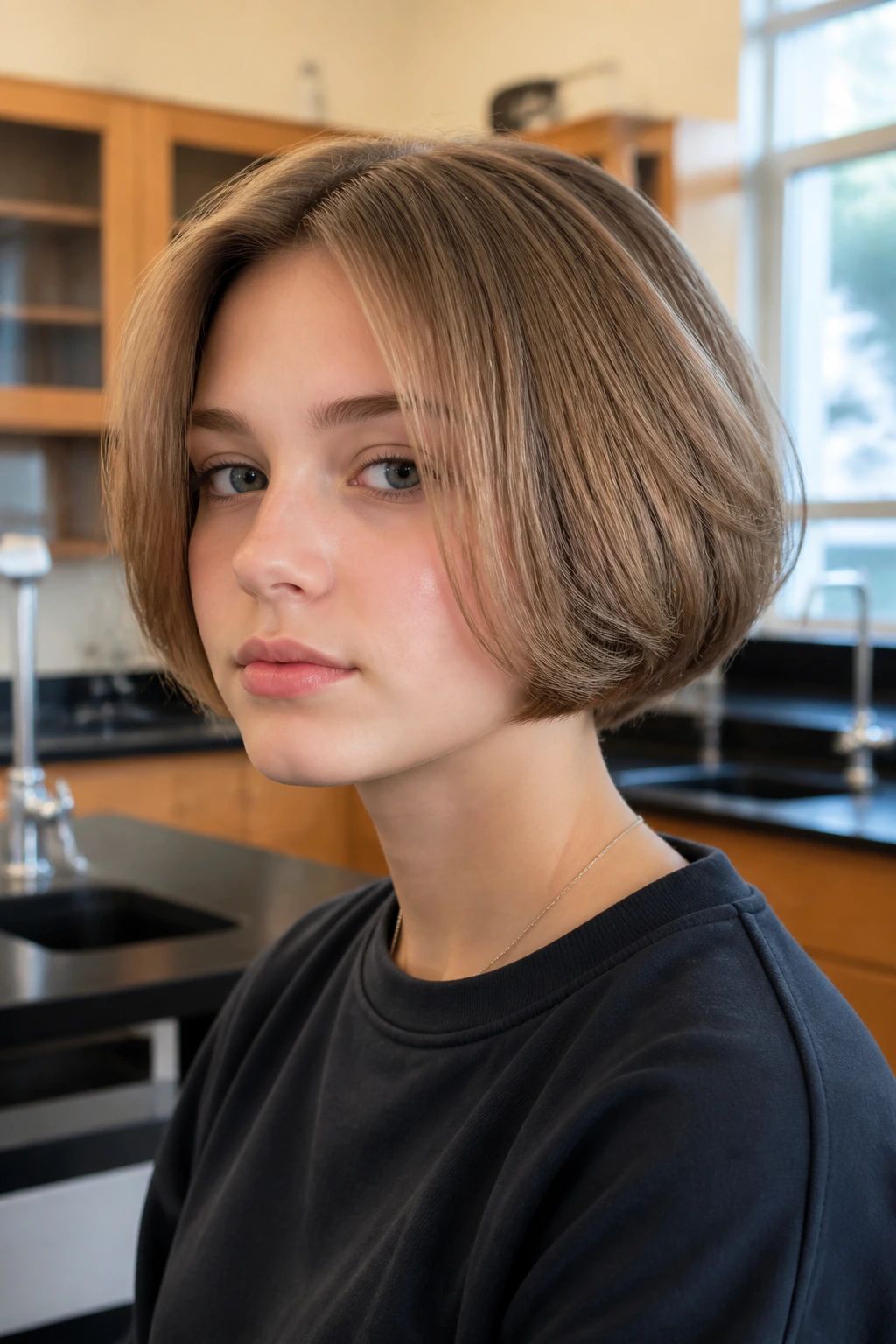
A bubble bob is built to look rounded, and that rounded silhouette is exactly why it works on square faces. The corners get softened by the curve of the style, not hidden under extra length. Fine hair also likes this cut because the shape creates body even when the strands themselves are light.
The best version keeps the perimeter full while removing a little weight from the inside. That creates lift without making the bottom look wispy. If you just take too much out of the interior, the shape loses its bubble and turns sad. There’s no graceful way to say that. It just does.
I like this for straight fine hair that tends to collapse around the jaw. A slight undercurve at the ends gives the illusion of density, especially when blow-dried with a round brush. It also looks clean tucked behind the ears, which is useful if the school day involves lab goggles, headphones, or a lot of movement.
This cut should feel rounded, not round. Subtle matters. The more obvious the bubble, the less wearable it becomes for school.
16. Long One-Length Cut With Beveled Ends
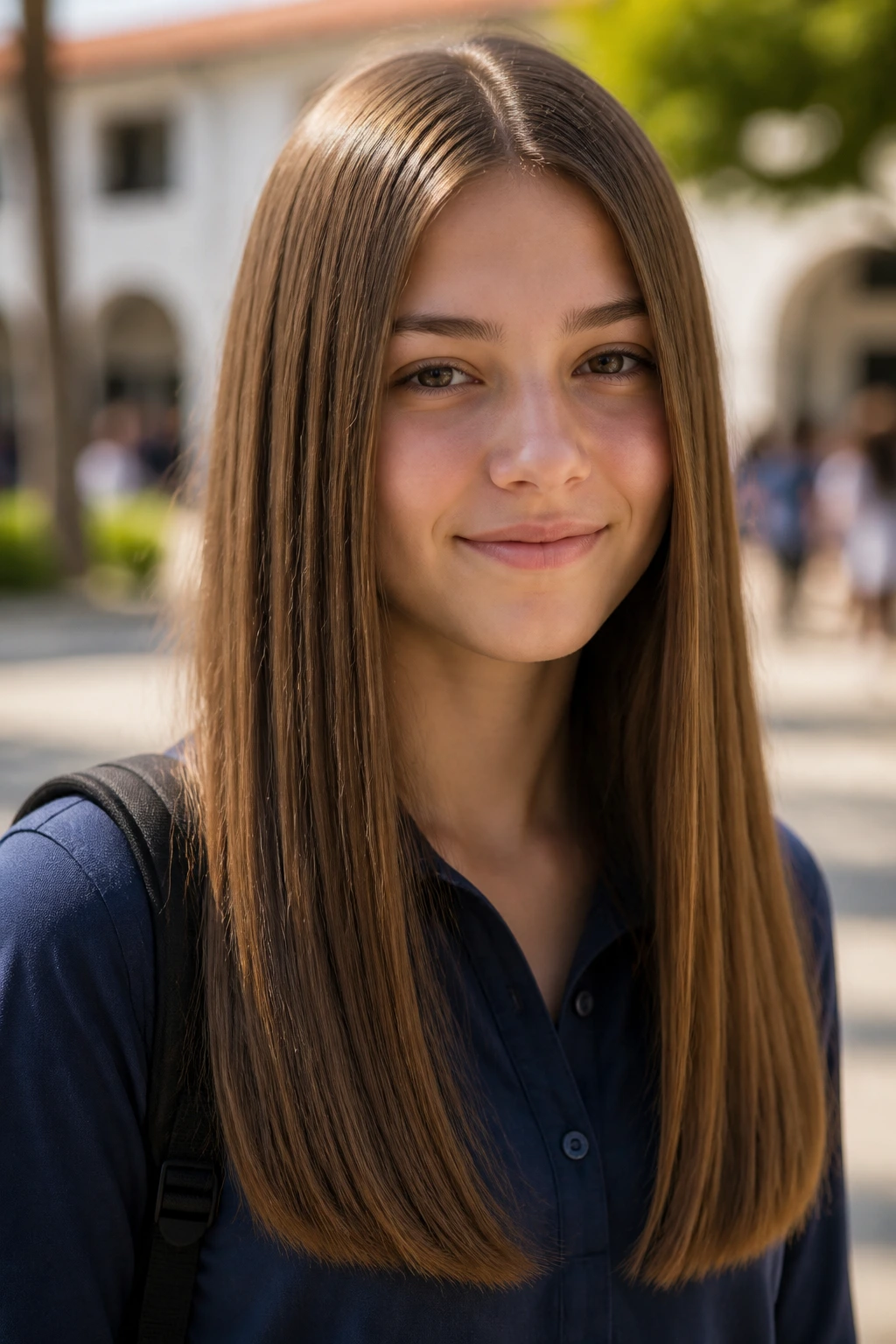
If your hair is already long and you do not want to lose it, do not let anybody convince you that you need a forest of layers. Fine hair often looks thicker when the length stays one-length, because the eye sees a fuller tail instead of a spread-out one. For square faces, the fix is to keep the hair below the jaw and soften it with a side part, curtain fringe, or a gentle bevel at the ends.
This is one of the most school-friendly cuts on the list because it can be tied back in two seconds. It also grows out gracefully. When the ends start to lose shape, a tiny trim brings it back. No big haircut rescue needed.
The one caution is weight. Very long fine hair can start to look stringy at the very bottom if it gets too thin. A beveled edge helps, but if the ends are already sparse, do not keep trimming upward for shape. That just eats the density you have left. Keep the line clean and let accessories do some work — clips, ribbons, low buns, the usual suspects.
This is a plain cut, yes. Plain is not a flaw. Sometimes plain is what gives fine hair the most visual heft.
17. Feathered Lob With Side-Swept Fringe

A feathered lob feels lighter than a blunt bob but more controlled than a shag. That makes it a strong middle ground for fine hair. The side-swept fringe softens the square face by breaking up the forehead line and drawing the eye diagonally across the face instead of straight down the center.
The feathering should be subtle. I’m not talking about the overly wispy, 2000s layers that leave the ends looking peeled apart. I mean enough soft movement that the front pieces can bend away from the jaw and the fringe can sit across the forehead without splitting. On fine hair, too much feathering is a trap. You want motion, not vacancy.
This cut is good for students who wear glasses, because the side-swept fringe can move around frames instead of landing right on them. It also works with low-maintenance styling. A quick blow-dry with a round brush at the fringe and a little bend through the ends is usually enough.
If you want a school haircut that feels polished without looking stiff, this is one of the easiest choices to live with.
18. Soft Mullet With School-Friendly Shape
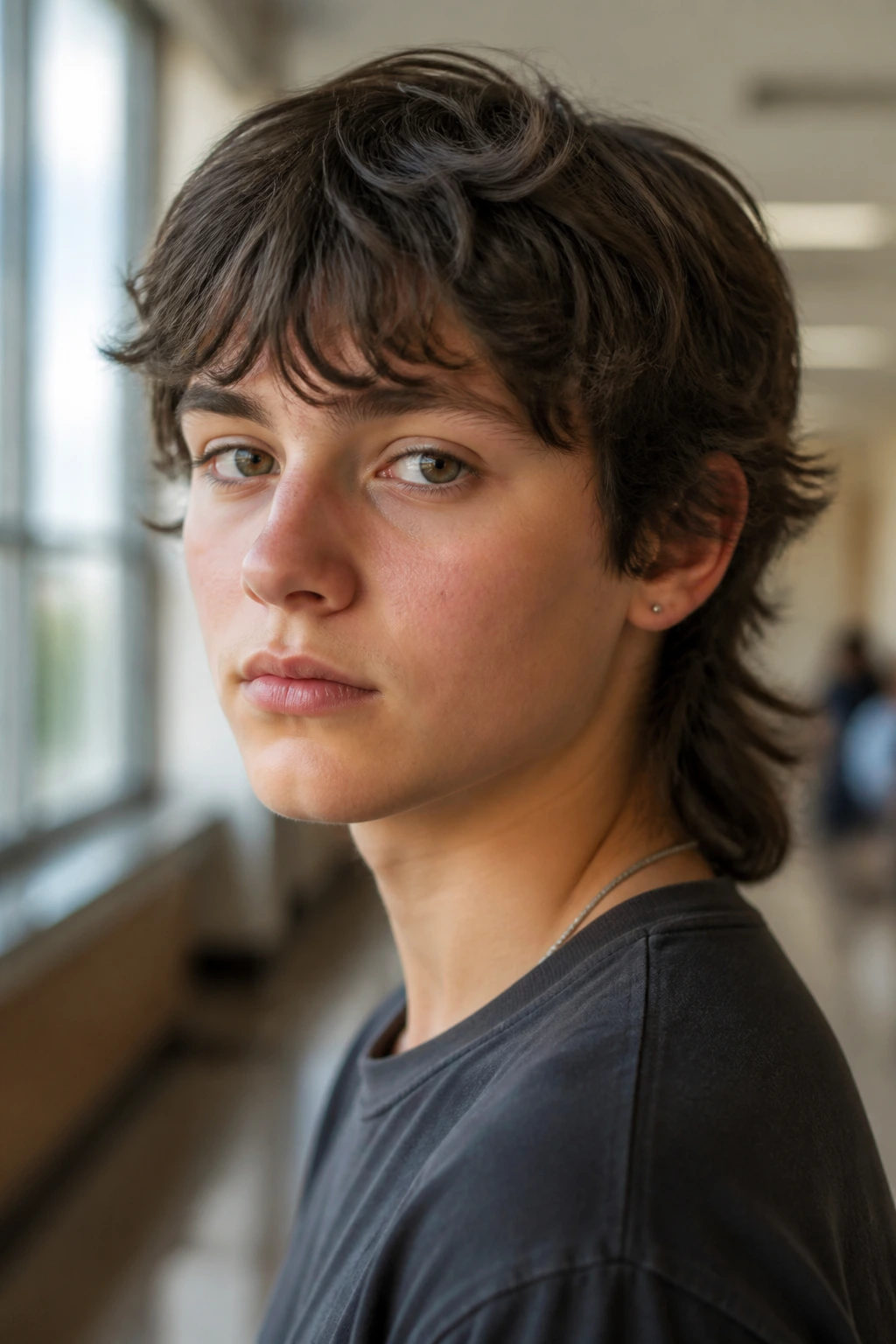
A soft mullet is not the same as a dramatic, disconnected mullet. The school-friendly version keeps the sides blended, the top a touch shorter, and the back only a little longer. That little bit of extra length in the back gives fine hair movement and keeps the head shape from looking flat at the crown.
Square faces can wear this because the front is softened with fringe and side pieces, while the back keeps the silhouette from stopping right at the jaw. The haircut has direction. It does not just sit there. That matters if your face already has strong lines and your hair needs help pretending to be thicker.
I’d only pick this if the stylist knows how to blend. Hard disconnects look cool in theory and messy in class. You want the neckline soft, not spiky. The fringe can be curtain-like or side-swept, depending on what part of the face you want to soften most.
It is a little bolder than the others on this list, but it can still be practical. The shape shows up even when the hair is air-dried, and that is half the battle with fine hair.
What Fine Hair Needs Most From a School-Day Cut
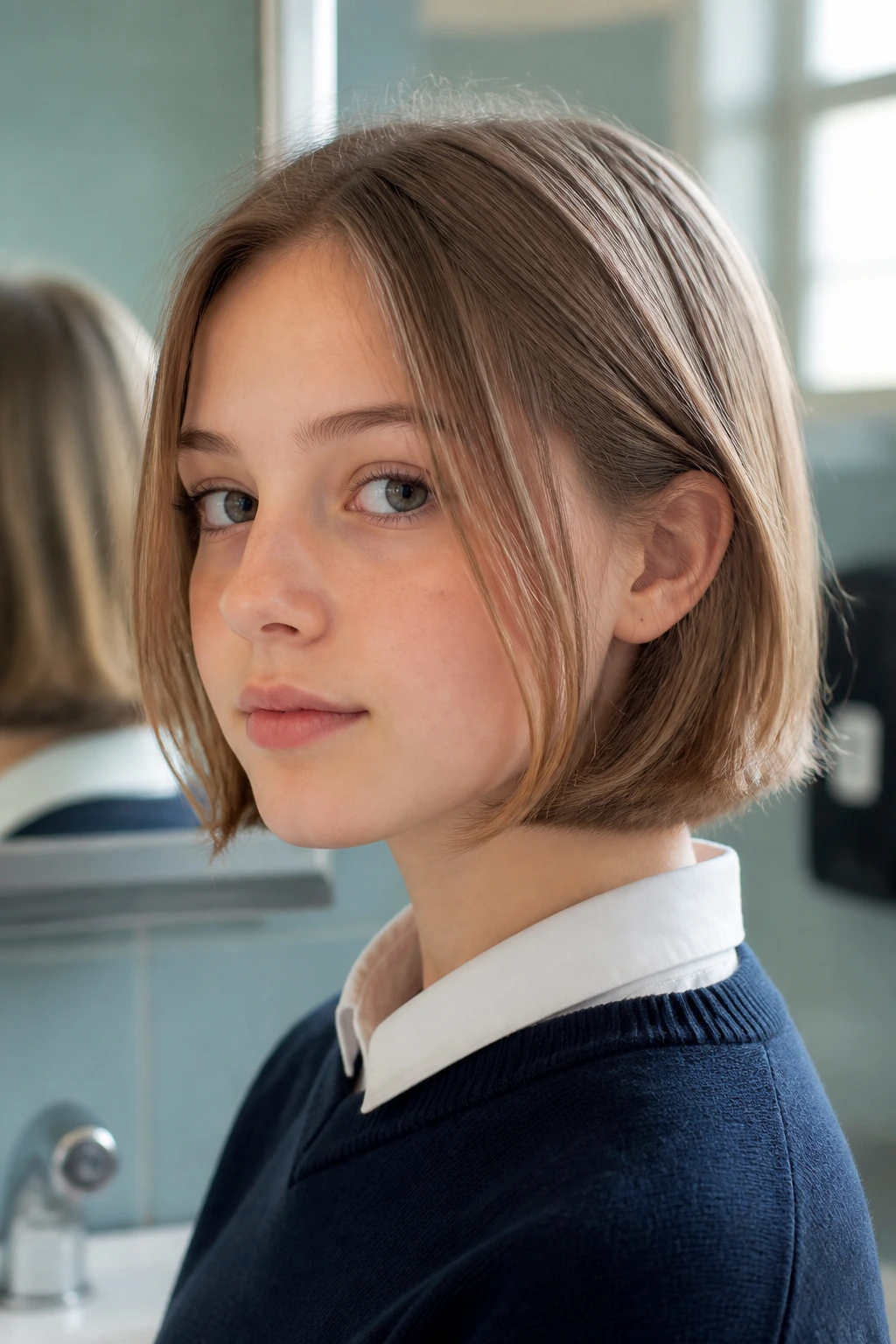
The cut matters more than the product bag. That sounds simple, but people get it backwards all the time. A decent shape can survive a humid classroom, a PE period, and a backpack strap rubbing the back of the neck. A bad shape needs rescue by 9 a.m., and no amount of dry shampoo fixes a haircut that was cut wrong in the first place.
Fine hair usually needs density left in the perimeter, not hacked away in layers. If the ends are too thin, the hair starts to look stringy the second it moves. It also needs a shape that does not stop on the jaw unless the face frame is doing some real softening. Square faces like a little diagonal motion. Straight across is the enemy here.
There is another thing I keep coming back to because it matters so much: the haircut should look good when it’s not freshly styled. School hair does not live on a salon floor. It lives under fluorescent lights, inside sweatbands, under hoods, and in rushed mirror checks. If a cut only works after twenty minutes with a hot tool, it is too fragile for daily life.
Tools and Products That Keep the Cut Looking Intentional
-
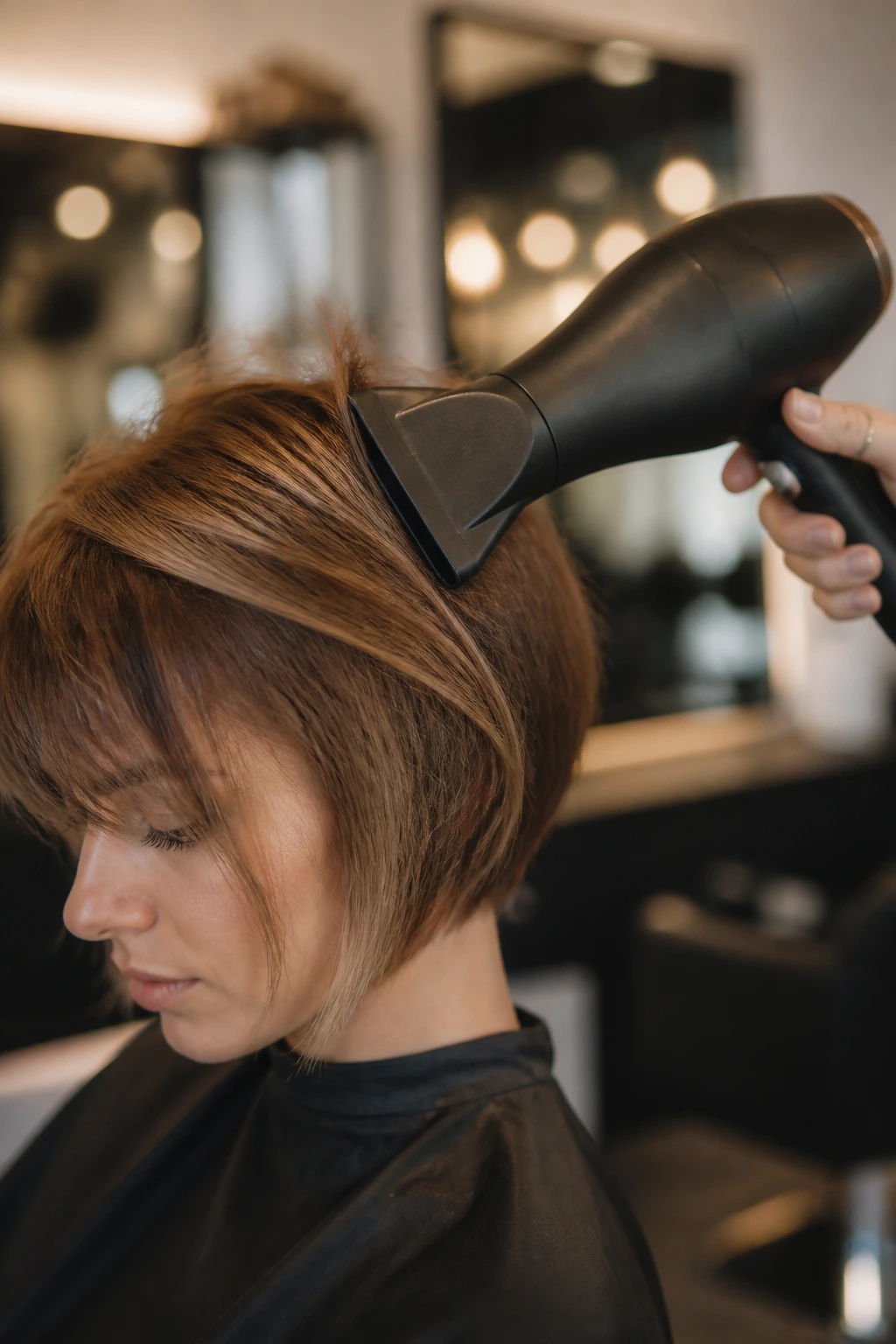
Blow dryer with a concentrator nozzle — directs air at the roots and makes fine hair lie in the shape you want instead of wherever it falls.
-
1-inch round brush — useful for bending curtain bangs, turning ends under, and giving a bob a little curve.
-
Wide-tooth comb — detangles fine hair without roughing up the cuticle or ripping through small knots.
-
Rat-tail comb — helps make a clean side part or split a curtain fringe evenly.
-
Light mousse — gives root memory and a touch of lift without the heavy feel of cream products.
-
Flexible-hold hairspray — keeps bangs and face-framing pieces in place without turning them stiff.
-
Dry shampoo — handy for roots that start to drop by midday; use a small amount and brush it through.
-
Small flat clips or bobby pins — perfect for pinning fringe away during sports, labs, or art class.
-
Satin pillowcase or bonnet — cuts down on morning frizz and keeps the ends from getting roughed up overnight.
If you only buy three things, make them the blow dryer, round brush, and dry shampoo. The rest helps, but those three do the heavy lifting.
How to Ask for the Right Version at the Salon
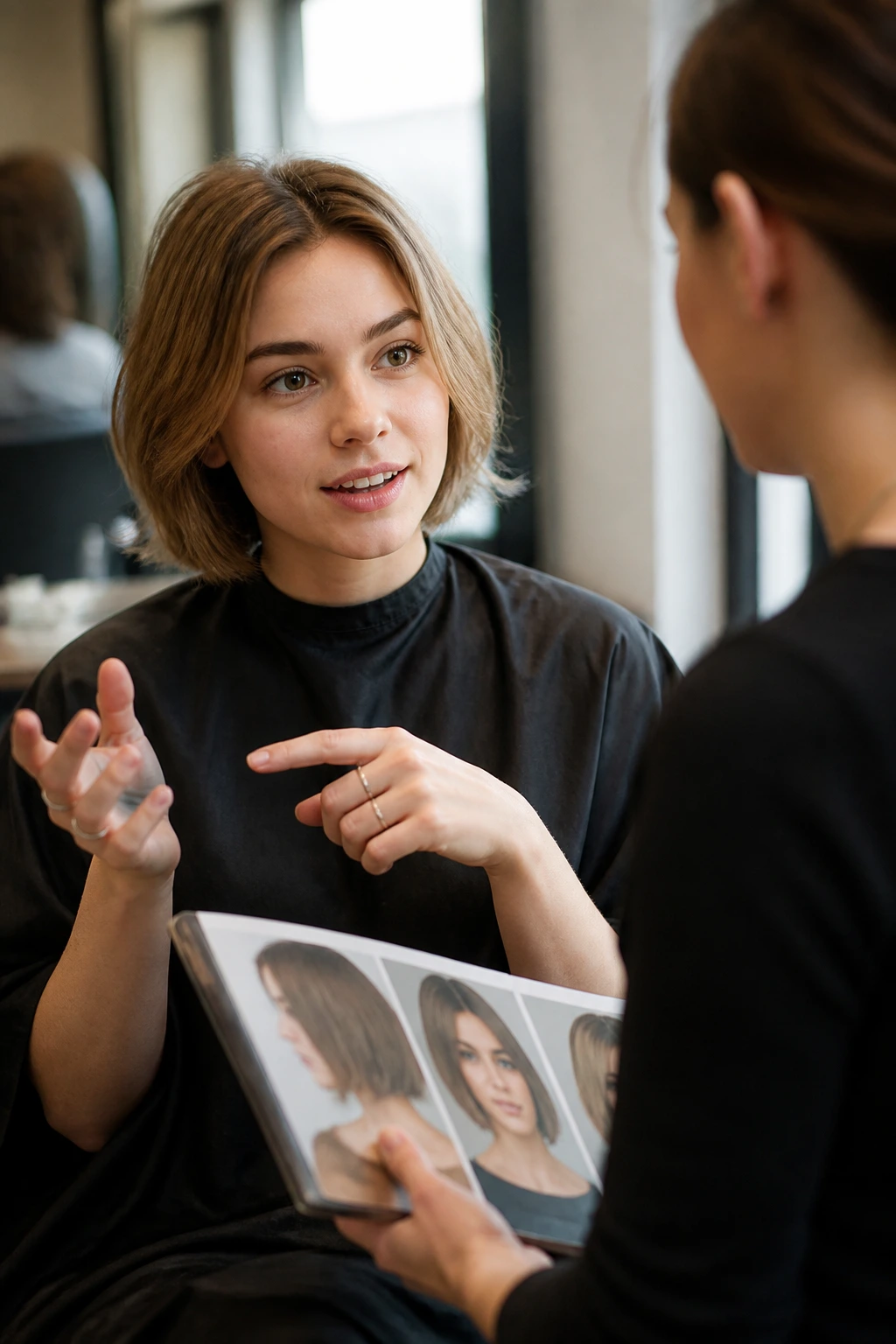
Bring photos, yes, but bring the right photos. A front view shows the shape. A side view shows whether the front pieces actually soften the jaw or just sit there looking pretty in a square picture. Haircuts for square faces often look different from the side than they do straight on, and that is where a lot of bad surprises happen.
Say the sentence out loud: “I have fine hair and a square face. I want softness around the jaw, but I do not want to lose density at the ends.” That one line tells the stylist more than ten vague compliments ever will. It also opens the door to a real conversation about length, parting, and how much layering the hair can handle.
If you usually wear your hair up for school or sports, say that too. A cut can be pretty and still fail if it falls apart in a ponytail. Mention glasses if you wear them. Mention a dress code if your school is strict about length or shape. Mention whether your hair flips forward, because some hairlines fight a middle part and will do it again the second you leave the chair.
And be suspicious of aggressive thinning shears on fine hair. I’m not saying they’re banned forever. I am saying they can turn a decent cut into a transparent one in a heartbeat. If the stylist starts talking about “taking out bulk” on already-fine hair, ask what that means in inches, not vibes.
Small Styling Moves That Make the Cut Behave
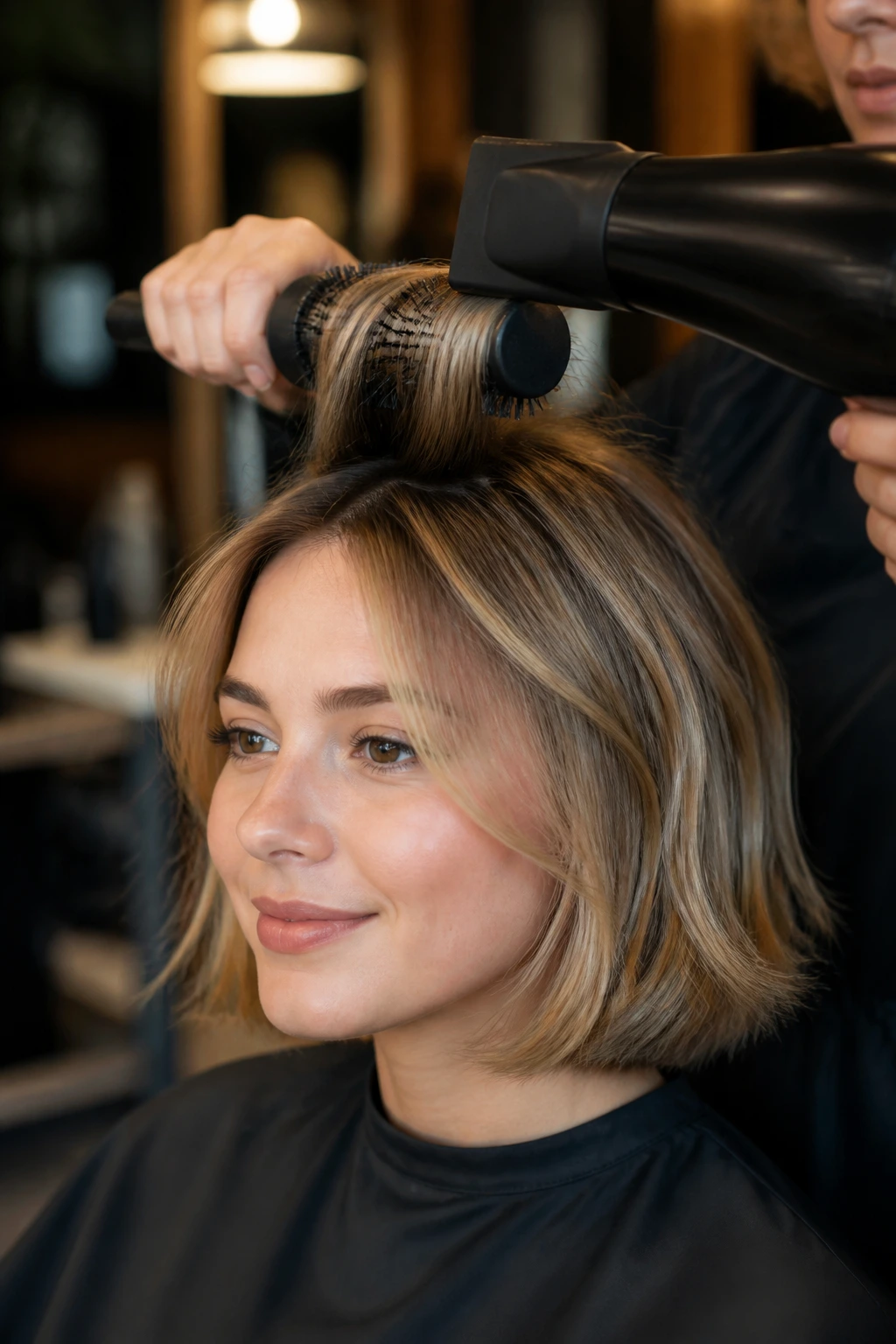
Root Lift: Blow-dry the roots first, before anything else. Fine hair loses shape fast if the roots lie flat, so lifting them early gives the whole cut a better base. A minute upside down can help; then flip back and smooth the top.
Soft Bend: For bobs, lobs, and shoulder-length cuts, wrap the ends around a round brush or bend them with a flat iron just once, not four times. You want a soft curve, not a polished pageant curl. A little bend at the end keeps the perimeter from looking skinny.
Fringe Control: Curtain bangs and side-swept fringes should be dried separately. They dry faster than the rest of the hair, and if you ignore them, they will split in the wrong place and stay there all day. A quick side-to-side blow-dry fixes that.
Second-Day Rescue: Put dry shampoo at the roots, wait a minute, then brush it through. Do not dump a cloud of it onto the lengths. Fine hair can look dusty if the product sits on the surface. A tiny amount at the root is enough.
Tie-Back Trick: If you wear your hair up for school, leave the face frame out and secure the back low. That keeps the shape from disappearing completely. A full tight ponytail can make a square face look harder and a fine-hair cut look too sparse.
The biggest mistake is overworking it. Fine hair likes a light hand. So do I.
Common Mistakes That Make Fine Hair Fall Flat

-
Cutting the shortest point right on the jaw. The symptom is immediate: the face looks wider and the cut looks trapped on top of the jawbone. The fix is to move the shortest front point above or below the jaw and soften the edge.
-
Over-layering the crown. You get lift for one day, then see-through ends the next. Fine hair needs support from the bottom, not a pile of short layers that eat density.
-
Using heavy cream at the roots. The hair may feel soft, but it will also collapse before lunch. Keep richer products from the ear down and use lightweight mousse or spray at the roots instead.
-
Making bangs too thick. Dense fringe on fine hair can separate into little strips and show too much scalp. Wispy curtain pieces or side-swept fringe usually behave better.
-
Thinning with a razor when the hair is already sparse. That can make the ends fray and look transparent. Ask for point-cutting or a soft bevel instead.
-
Waiting too long for trims. Fine hair loses its clean edge faster than thick hair does. Once the ends split and the face frame drops, the cut starts to feel tired even if the length is still there.
The pattern is boring, but useful: too much removal, too much heaviness, or too much sharpness. That trio causes most of the trouble.
Variations and Adaptations for Different School Rules
The PE-Proof Version
Keep any cut long enough to gather into a low ponytail or clipped half-up style. That usually means a lob, shoulder-length cut, or a longer pixie with side pieces. It’s the smartest choice if you have sports after class and no patience for fixing your hair twice.
The No-Heat Morning Version
Pick a shape that looks decent when air-dried: a soft shag, feathered lob, or invisible-layer collarbone cut. Ask for enough movement at the front so the hair bends on its own. If your hair dries pin-straight and flat, a little mousse at the roots is usually enough.
The Glasses-Friendly Fringe
Choose side-swept fringe or longer curtain pieces that sit above or around the frames, not right on top of them. Heavy, blunt bangs can fight glasses all day. A softer fringe keeps the face open and saves you from constant pushing.
The Grow-Out Version
If you hate frequent salon visits, pick a one-length lob, long layers below the chin, or a shoulder-length cut with soft face-framing pieces. These grow out in a cleaner way and do not turn into odd shapes after a few weeks.
The More-Texture Version
For students who like a little edge, lean toward the soft shag, wolf-lite, or mixie. Keep the blending gentle and the layers long enough to preserve density. That gives you movement without the chopped-up, see-through finish that fine hair often hates.
Keeping the Shape Between Trims
Fine hair usually needs more regular shape checks than people expect. Short cuts like pixies, mixies, and cropped bobs often need a trim every 4 to 6 weeks. Lobs, collarbone cuts, and shoulder-length styles usually hold for 6 to 10 weeks, depending on how fast your hair grows and how much shape is built into the front.
Bang trims are their own thing. Curtain bangs and side fringe often need a tiny clean-up every 3 to 4 weeks because they grow into the eyes fast. If you are trimming fringe at home, do it dry and take off almost nothing. Tiny snips. Not heroic ones.
At home, keep conditioner from the roots unless your hair is dry all over. Fine hair can get slick-looking fast if it is coated from scalp to ends. A lightweight conditioner from the ears down is usually enough. On the sleep side, a satin pillowcase helps the cut keep its shape better than cotton does, because cotton roughs up the ends and makes fine hair frizz at the edges.
If the ends start looking ragged, do not let the haircut drift for months. A dusting trim — just the split, translucent ends — can make the whole cut look fresher without taking much length off. That is a much smarter move than waiting until the style has fully collapsed.
Frequently Asked Questions
Which haircut on this list makes fine hair look thickest?
The blunt midi, bubble bob, and one-length collarbone lob usually create the strongest illusion of thickness because they keep the perimeter solid. If your hair is very fine, the clean outline tends to look fuller than a heavily layered cut.
Can a square face wear a bob without looking boxy?
Yes, but the bob needs softening. A side part, beveled ends, or front pieces that land below the jaw help break the square outline. A blunt bob that stops exactly at the jaw is the version that usually gives trouble.
Are bangs a bad idea for fine hair?
Not at all. They just need the right weight. Curtain bangs and side-swept fringe usually work better than heavy straight bangs, because they keep the forehead open and do not go flat as fast.
Should fine hair have lots of layers?
Usually not. Fine hair often looks thinner when the layers are too short or too many. Hidden internal shaping and soft face-framing pieces tend to work better than obvious choppy layers.
Can these cuts still go into a ponytail for school?
Most of them can, but the shorter cuts need a little more planning. Lobs, collarbone cuts, shoulder-length cuts, and long layers are the easiest for tying back. If you want ponytail flexibility, tell the stylist that before they pick up the scissors.
What if my hair is pin-straight and refuses to hold shape?
Pick a cut with a strong outline, like a one-length lob, A-line bob, or collarbone cut with a bevel. Then style only the roots and ends. Straight fine hair usually needs a little lift at the root and a small bend at the bottom, not a full round-brush marathon.
How often should I get trims?
Short crops need the most frequent upkeep, usually every 4 to 6 weeks. Medium cuts can stretch longer, but once the face-framing pieces drop into the jaw and the ends start splitting, the shape gets tired fast.
What if my school has a strict dress code?
Stick to cleaner shapes: lob, shoulder-length cut, one-length long hair, or a soft bob. Keep fringe soft and avoid extreme disconnects or shaved sides. The shape can still be flattering without looking flashy.
A Shape That Still Looks Good at Last Bell

The smartest school haircut for fine hair and a square face is not the one that looks the most dramatic in the salon mirror. It is the one that still has shape after a hoodie, a desk, a bus ride, and three bad mirror checks in the bathroom.
That usually means a soft outline, the right amount of length, and just enough movement to soften the jaw without starving the hair of density. Once you see how much difference a collarbone bevel or a gentle side part can make, the rest of the choices get easier.
Bring a photo. Mention your part. Tell the stylist where your hair falls flat. Then ask for the shape that fits your life, not the shape that only works for ten perfect minutes after styling.