



Shoulder-length hair has a useful habit: it stops before it becomes a project. Medium length haircuts for women over 50 sit in that practical strip around the collarbone and shoulders where the hair still moves, still frames the face, and still behaves after an ordinary wash-and-blow-dry instead of demanding a full production.
That length matters because hair changes. It can come in a little drier, a little coarser, a little flatter at the crown, sometimes all at once. A cut that understands those shifts is worth more than a trendy shape that looks terrific for two days and then folds in on itself. The right medium haircut keeps the ends from looking stringy, gives the top some lift, and leaves enough length to tuck behind the ear, clip back, or let air-dry without embarrassment.
What I like most about this range is how honest it is. A blunt collarbone line says one thing; soft layers say another. Curtain bangs, feathered ends, an angled lob, a shag with restraint — they all change the face in small, readable ways. That’s the real game here: not trying to look younger, not trying to chase some fantasy of “perfect hair,” just choosing a shape that makes sense with your texture, your routine, and the way your features sit now.
Why These Medium Cuts Keep Working So Well

-
They keep weight where hair needs it: A collarbone length can support ends that look full instead of wispy, which matters a lot if your hair has thinned a little through the years.
-
They make gray hair behave better: Silver and salt-and-pepper strands often look sharper in a controlled shape, especially when the perimeter is clean and the layers are intentional.
-
They play nicely with glasses and makeup: Medium hair doesn’t swamp the frame of the face, so cheekbones, brows, and lips still read clearly.
-
They give you room to style or ignore them: You can bend them under with a brush, add a loose wave, or let them dry with a bit of cream and stop there.
-
They’re kinder to second-day hair: A good shoulder-skimming cut usually looks better after a little movement has settled in. That’s a gift, not a flaw.
1. The Collarbone Blunt Lob
A blunt lob that lands right at the collarbone has a clean, almost architectural feel. It’s one of those cuts that looks deliberate even when you’ve barely styled it, because the line does the work for you. The ends sit thick, the perimeter stays honest, and the whole shape reads polished without needing a lot of layering to prop it up.
Why it works
The blunt edge gives fine or medium hair more visual density. If your ends tend to fray, this cut makes the bottom look deliberate instead of tired. It also plays especially well with straight hair or a soft bend, because the line stays visible.
For women who want a cut that won’t fight with glasses, scarves, or a busy neckline, this is a smart choice. It clears the shoulders just enough to move, but it does not float away from the body the way a shorter bob can.
Ask for: a one-length line with minimal internal layering and a tiny bit of face framing only if your stylist sees a heavy front.
Styling note: blow-dry with a medium round brush or a flat brush and tuck the ends under by half an inch. That small curve keeps it from looking boxy.
2. Soft Layered Lob with Face-Framing Pieces
This is the cut for someone who wants movement but does not want the shaggy, over-textured look that can turn fuzzy fast. The layers live low, the front opens the face, and the result feels light without losing its shape.
The best version starts with longer layers that drop below the cheekbones rather than crowding the crown. That way, the cut keeps some thickness around the ends while still giving you lift where the eye needs it most.
If your jawline feels a little soft or your hair has begun to sit flatter around the cheeks, these face-framing pieces can make a difference. They draw the eye upward without pretending to do miracle work. Honest shape. Better balance.
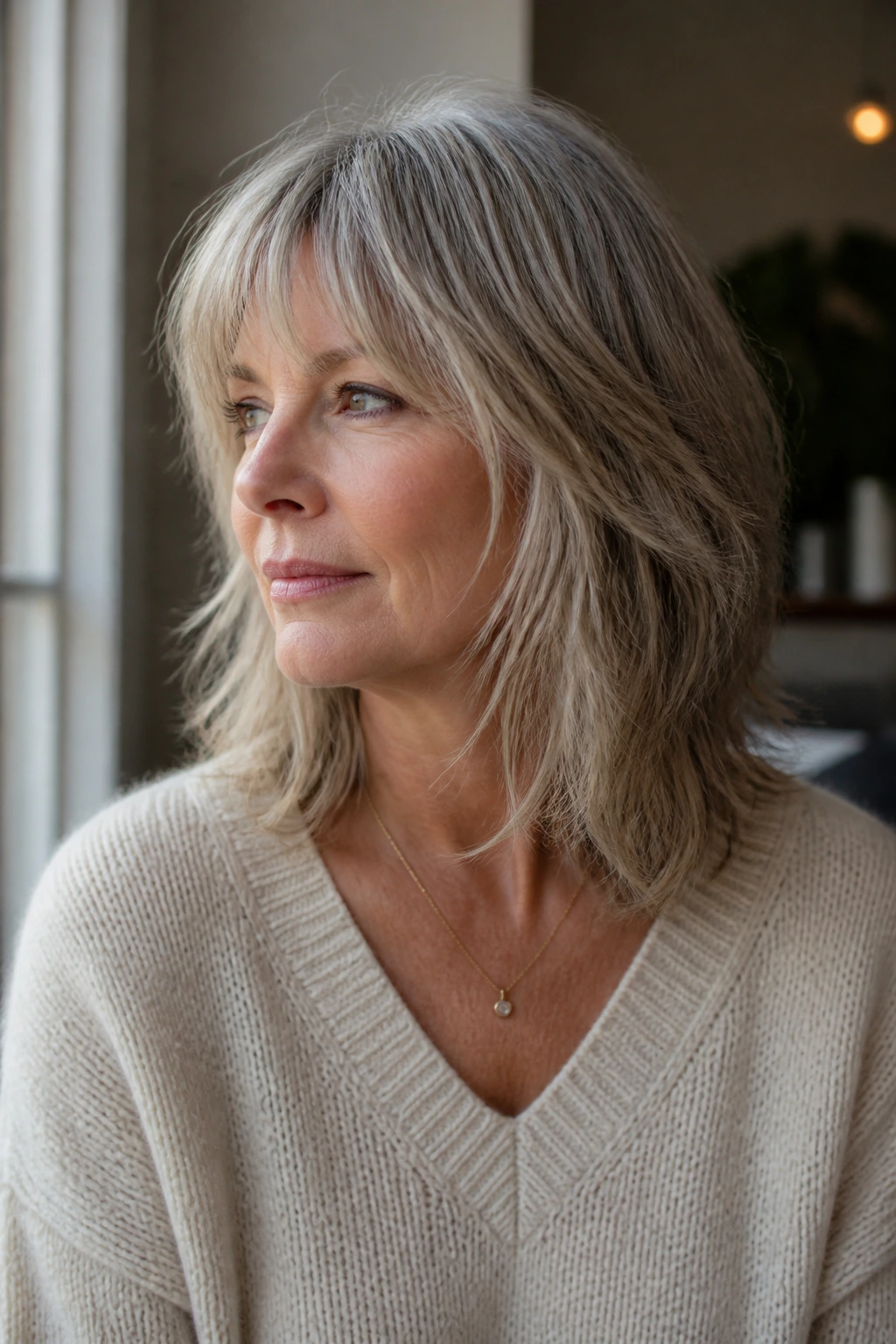
3. Shoulder-Length Shag with Wispy Ends
A shag works after 50 when it is edited, not exploded. That’s the part a lot of people get wrong. You do not need a wild, choppy haircut that looks like it escaped a music video. You need a soft shag with controlled layers, airy fringe, and ends that move when you turn your head.
This version is excellent for wavy hair because it lets the natural bend do half the styling. If your hair dries with a little body already, the shag shape makes that texture look intentional instead of messy. If your hair is straight, you can still wear it, but it will ask for a round brush or a few bends from a curling iron.
How to wear it
- Let the layers fall around the cheek and collarbone, not up near the crown.
- Keep the fringe soft so it grows out gracefully.
- Use a lightweight mousse at the roots if you want more lift.
A good shag should feel lively, not busy. There’s a difference.
4. Side-Swept Bangs with Mid-Length Layers
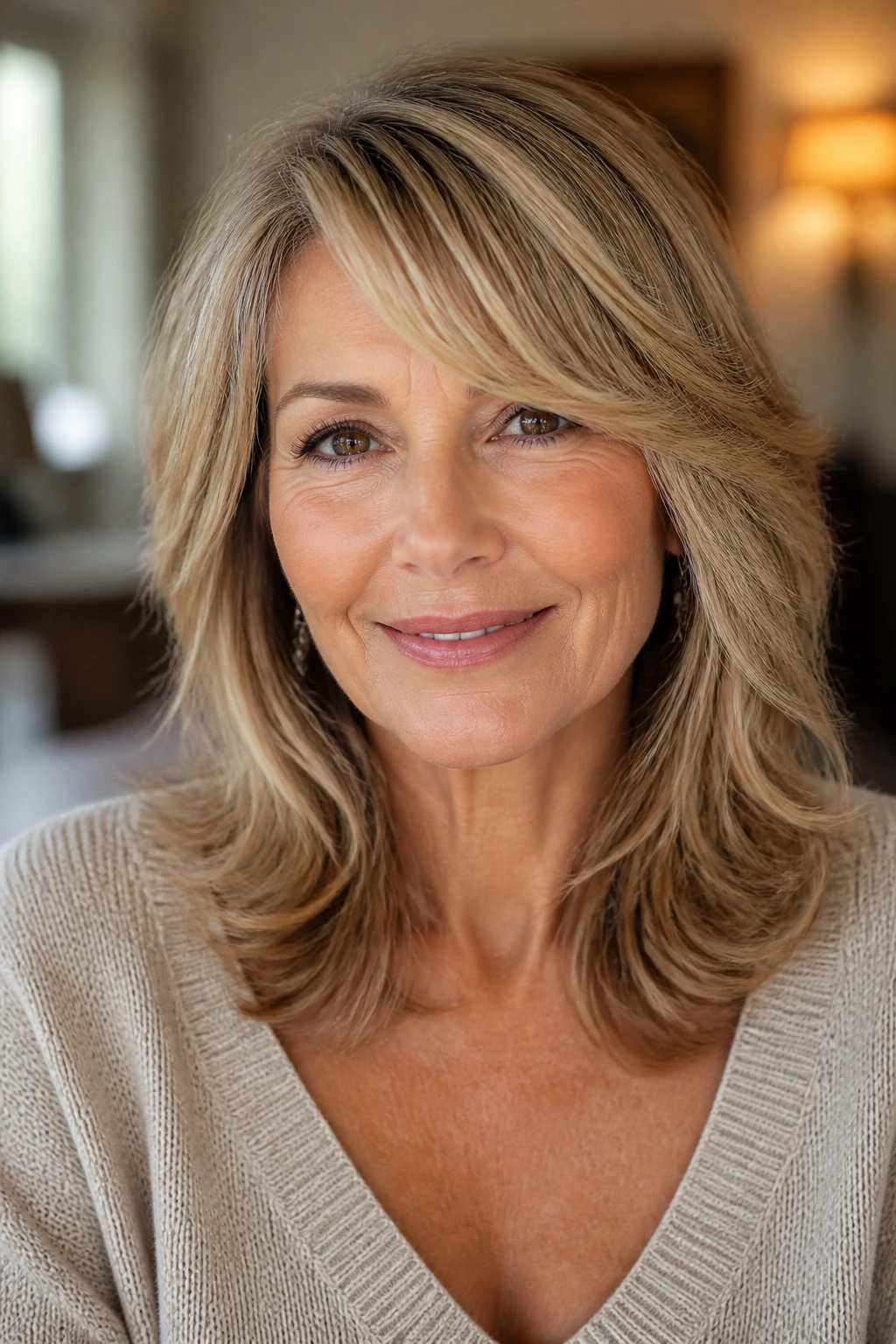
There’s a reason side-swept bangs keep coming back. They soften the upper half of the face without closing anything off, and they sit well with medium-length layers that need a little front structure. If you wear glasses, this can be one of the easiest bangs shapes to live with.
The trick is to keep the bang long enough to sweep, not chop. When side-swept bangs are cut too short, they kick up and look accidental. When they’re cut with a little length and a soft angle, they slide into the rest of the haircut like they belong there.
This style works especially well if your forehead lines are a concern but you do not want full fringe. It gives coverage where you want it and movement where you need it. No helmet effect. No heavy curtain across the eyes.
5. Curtain Bangs with a Center Part
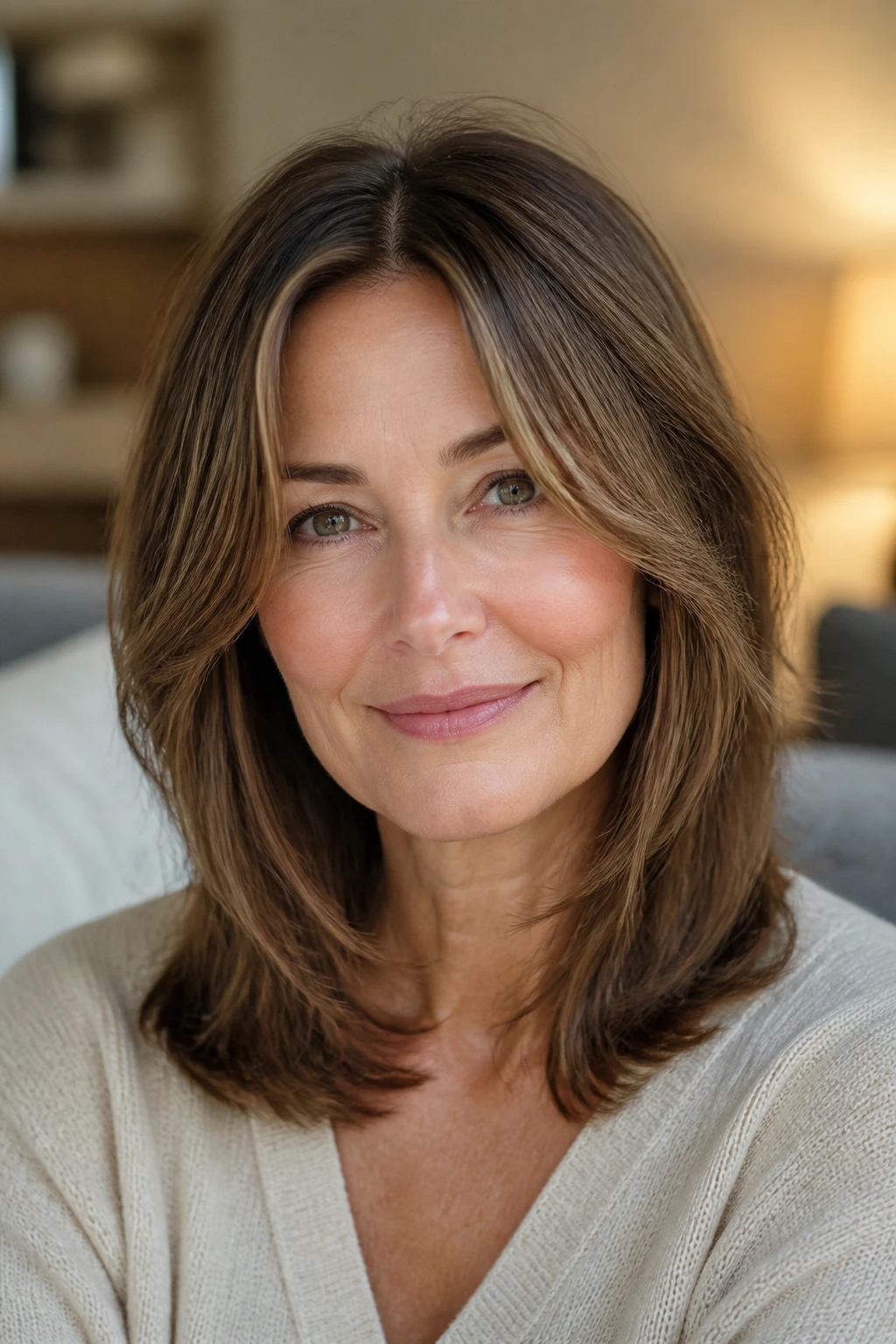
Curtain bangs are one of the easiest ways to change a medium haircut without committing to a full fringe. They part in the middle, skim the temples, and open like drapes around the face. Done well, they give shape without making the forehead feel boxed in.
What I like here is the flexibility. You can wear them centered on cleaner days, bend them to one side on humid days, and let them grow out without that awkward “I’m trapped in bangs” stage. That matters. A lot.
They do need a stylist who respects the hairline and the cowlicks. If your front section wants to split in a weird place, the bangs have to be cut with that in mind. Otherwise they’ll fight you every morning.
This is a strong choice for women who want softness around the eyes and cheekbones without losing the rest of the length.
6. Feathered Cut with Movement at the Ends
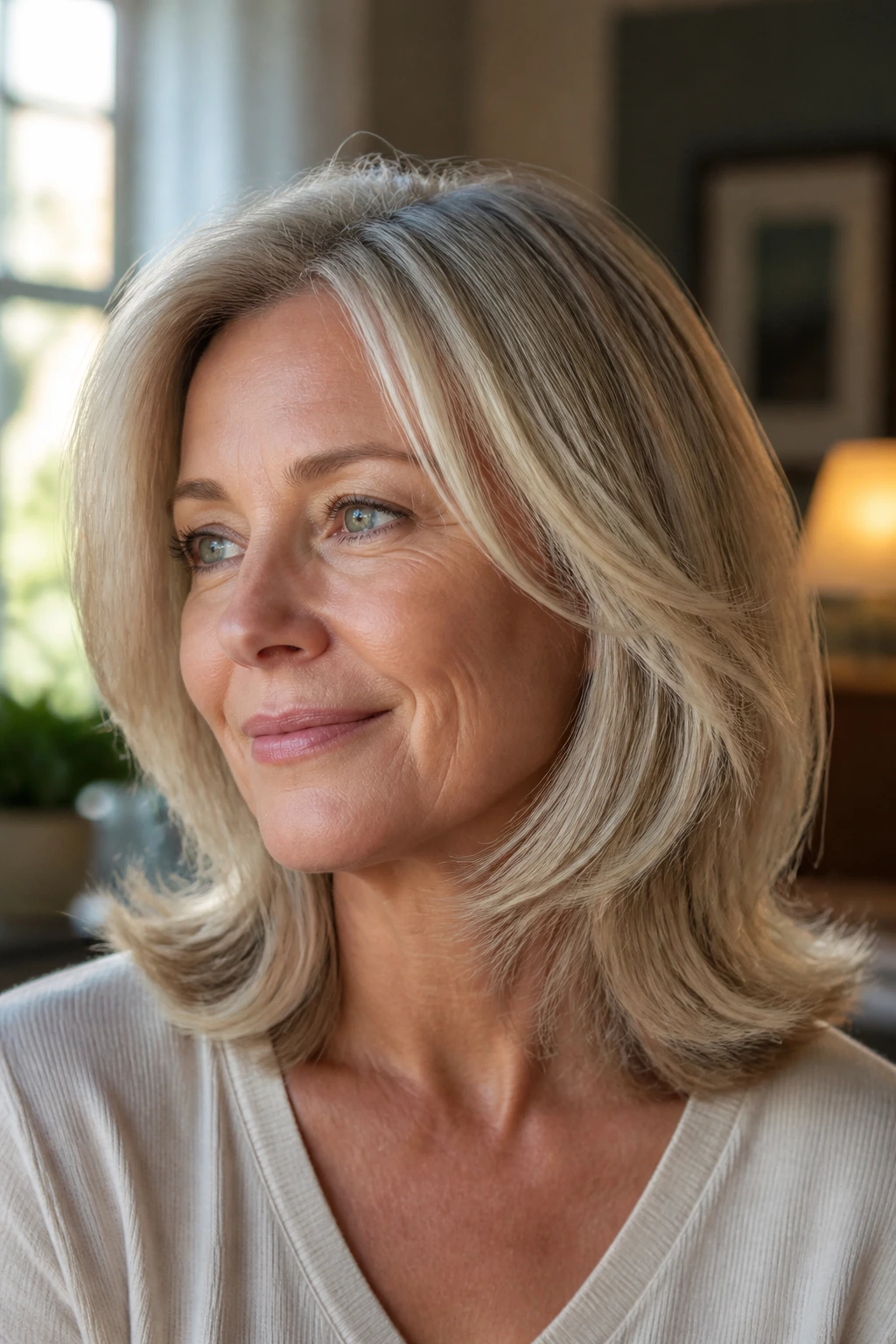
Feathering is one of those old salon words that still earns its keep when it’s done correctly. The idea is not to shred the hair. It’s to taper the ends so they move instead of hanging like a block.
A feathered medium cut can be a lifesaver for hair that feels heavy through the bottom but flat on top. The lighter ends keep the whole style from looking stuck to the head, and the motion around the shoulders is especially nice if you prefer a brushed-out finish.
Best for: straight to softly wavy hair that needs air around the perimeter.
Less ideal for: very fine hair that already lacks density at the ends, unless the feathering is kept subtle.
The whole point is movement with structure. If the ends get too thinned, the cut loses its backbone. Keep the taper gentle and the result stays graceful instead of wispy.
7. Choppy Textured Lob

A choppy lob has more edge than a blunt one, but it should still look controlled. The pieces are slightly irregular, the ends are broken up, and the shape feels a little lived-in from the start. That can be a relief if you dislike perfectly smooth hair that needs constant policing.
This cut works well when the hair has some natural body or a loose wave. The texture gives the movement a place to land. Add a little spray at the ends, scrunch once or twice, and you’re done.
One thing I’d avoid: too much piecey texture near the top of the head. That can make the crown look sparse, especially on finer hair. Keep the roughness toward the lower half of the cut where it adds interest instead of subtraction.
The right choppy lob looks modern because it has shape, not because it is aggressively layered.
8. Sleek One-Length Mid-Length Cut
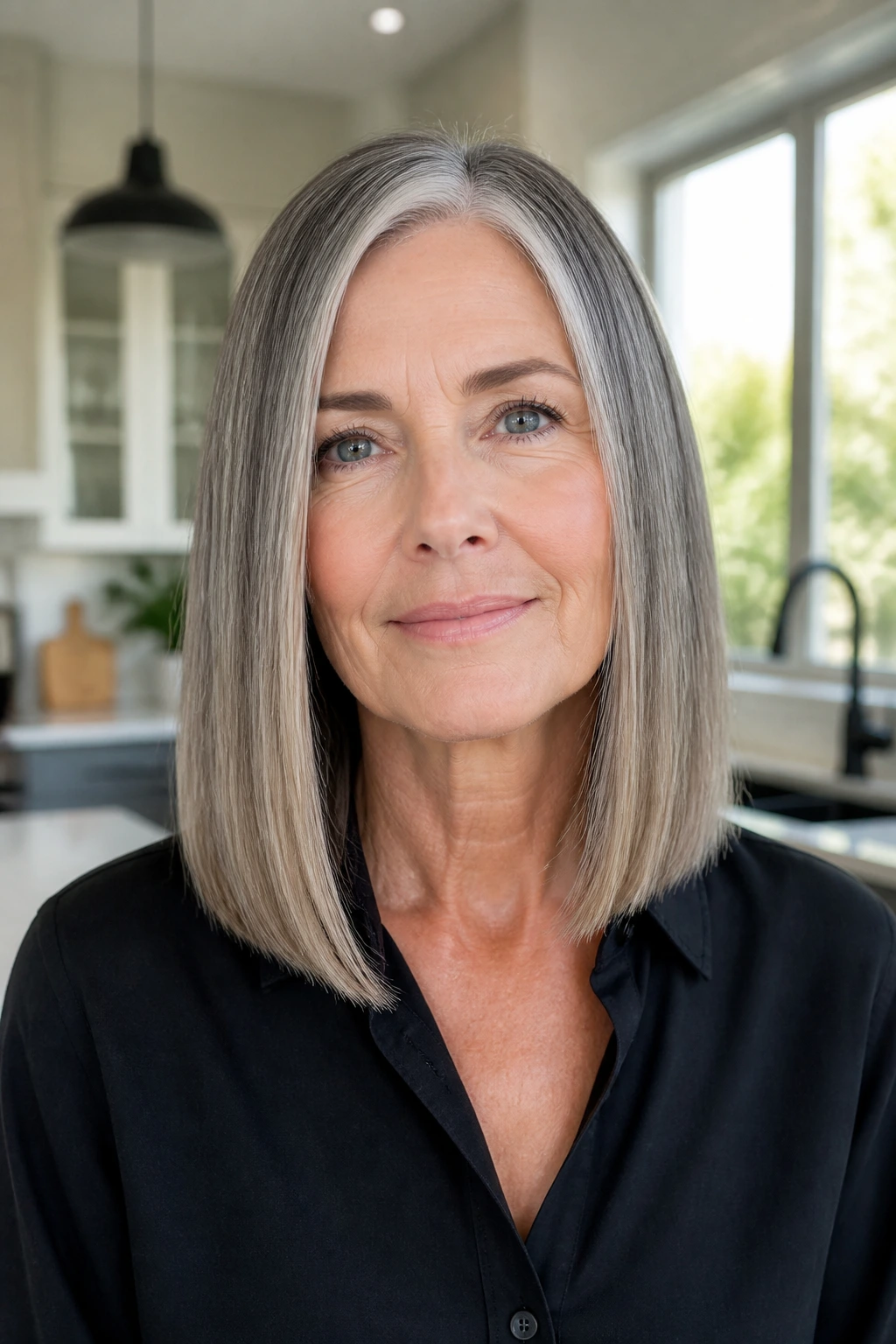
Sometimes the cleanest answer is the best one. A one-length medium cut gives a sharp outline that feels fresh on straight hair and especially smart on thicker hair that benefits from a strong edge. It doesn’t depend on layers to create a mood. The line itself carries the style.
This is the haircut I’d pick for someone who likes simple styling and hates fuss. You wash it, rough-dry it, bend the ends under if you want, and move on. There’s less to go wrong.
It can also be a strong choice for salt-and-pepper hair, which often looks striking when the cut is clean and the silver has a clear shape to sit in. If the hair is very fine, though, the one-length line needs a little help from a root-lifting product so it doesn’t collapse against the head.
No fluff. No extra pieces. Just a clean shape that behaves.
9. C-Cut Layers Around the Face
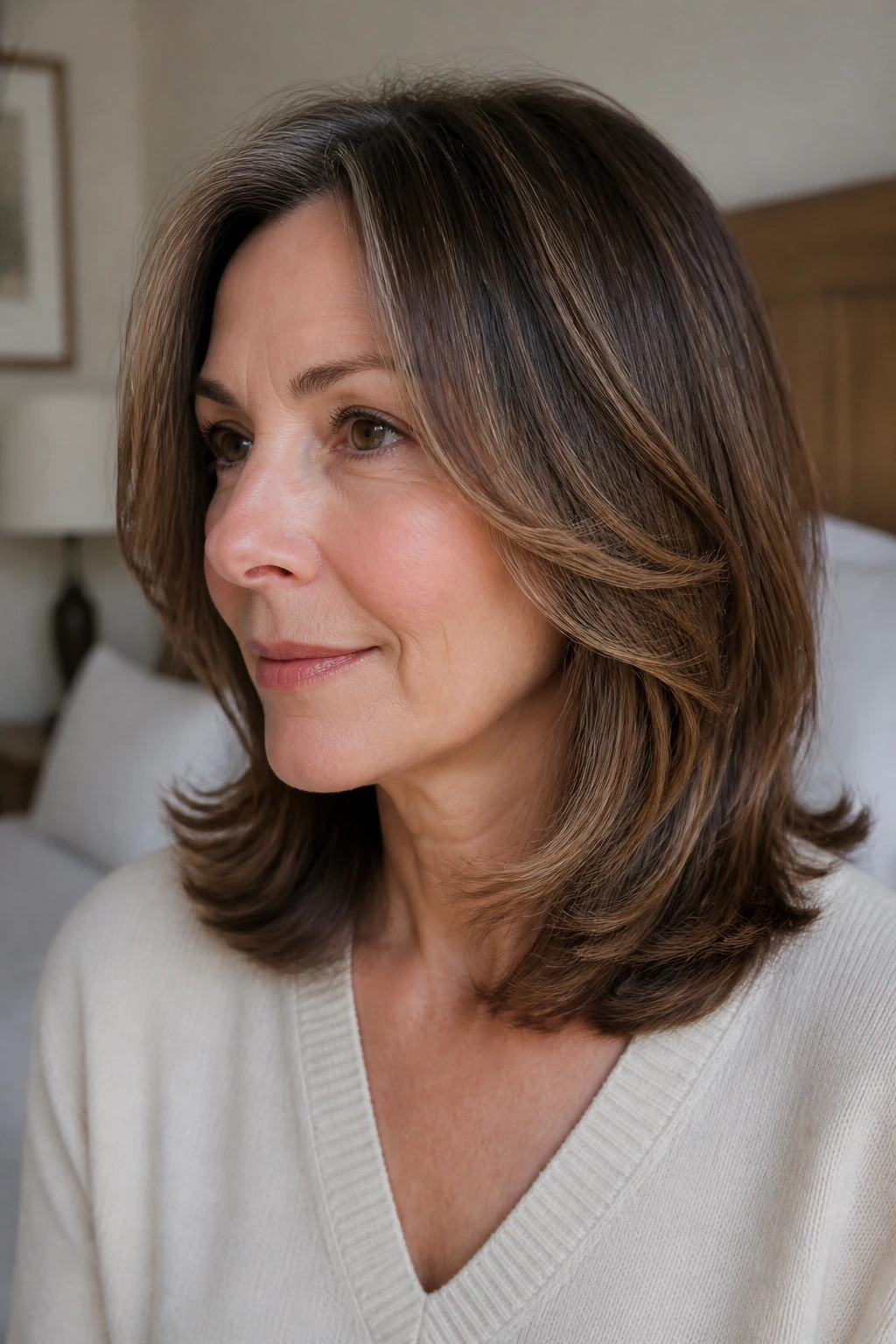
C-cut layers are a subtler cousin of face-framing layers. Instead of dropping straight down, the hair curves in a soft arc around the face, like a “C” shape laid over the cheek and jaw. It’s elegant without looking stiff.
This cut is useful if you want the front to feel lifted but not sliced. The curve brings attention to the cheekbones and softens the mouth area, which can be useful when you want the haircut to do a little visual balancing without screaming about it.
What to ask for
Tell the stylist you want layers that begin around the cheekbone and sweep down toward the collarbone, not a short front piece that ends abruptly. The front should blend, not chop.
Why people keep coming back to it
Because it grows out cleanly. That’s the whole story. A lot of layered cuts look sharp for two weeks and then lose the plot; this one usually keeps its line longer.
10. Angled Lob That Sits Longer in Front
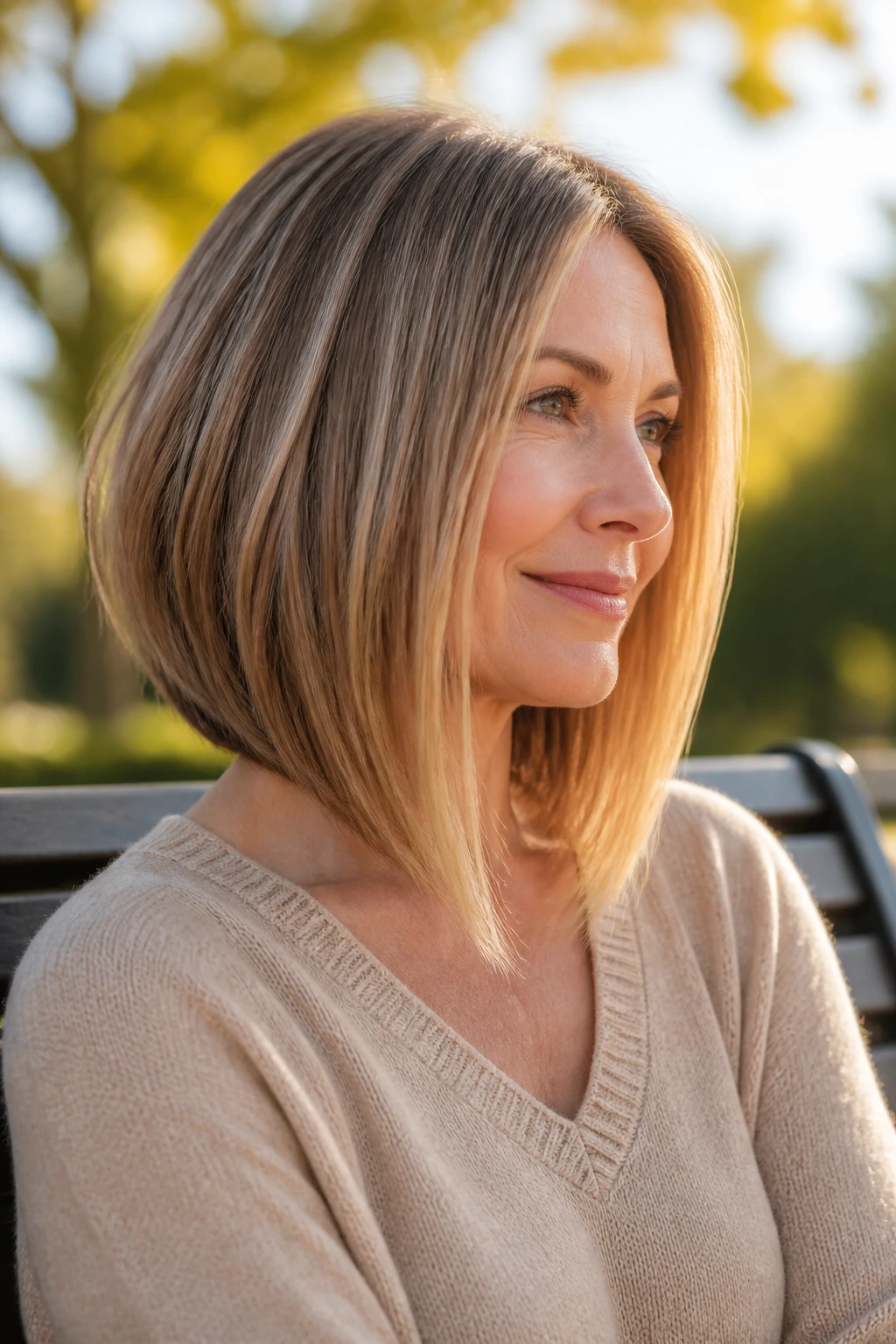
An angled lob has a bit of drama built into it, but the good version is quiet about it. The front sits longer than the back, which creates a subtle forward line that can lengthen the neck and sharpen the profile a touch. Subtle. Not severe.
This cut is especially good if your hair tends to puff at the sides, because the forward angle keeps the shape moving down and forward instead of outward. If you’ve got a rounder face, the diagonal line can be your friend. If your hair is very curly, the angle has to be adjusted carefully so it doesn’t spring up unevenly.
The thing to watch is over-tilting the angle. Too much and it starts looking like a haircut from a different decade. Keep the difference between back and front modest. That’s where the polish lives.
11. Rounded Layered Cut with Full Body

A rounded layered cut builds a softer silhouette, fuller at the sides and a little lifted through the top. Think of it as a shape that follows the head instead of fighting it. It’s a good answer for hair that feels limp when it’s cut into a straight line, because the rounding gives the style a sense of presence.
This one works nicely if your hair is medium density and you like volume that feels plush rather than spiky. The rounded outline can soften sharper facial angles, and it tends to sit well with a side part or a gently off-center part.
It does need the right layering. If the layers are too aggressive, the shape puffs out in awkward places. If they’re too long, the roundness disappears. The sweet spot is a cut that lets the top lift and the sides curve inward just enough to follow the jaw and shoulders.
12. Wavy Mid-Length Cut with Invisible Layers
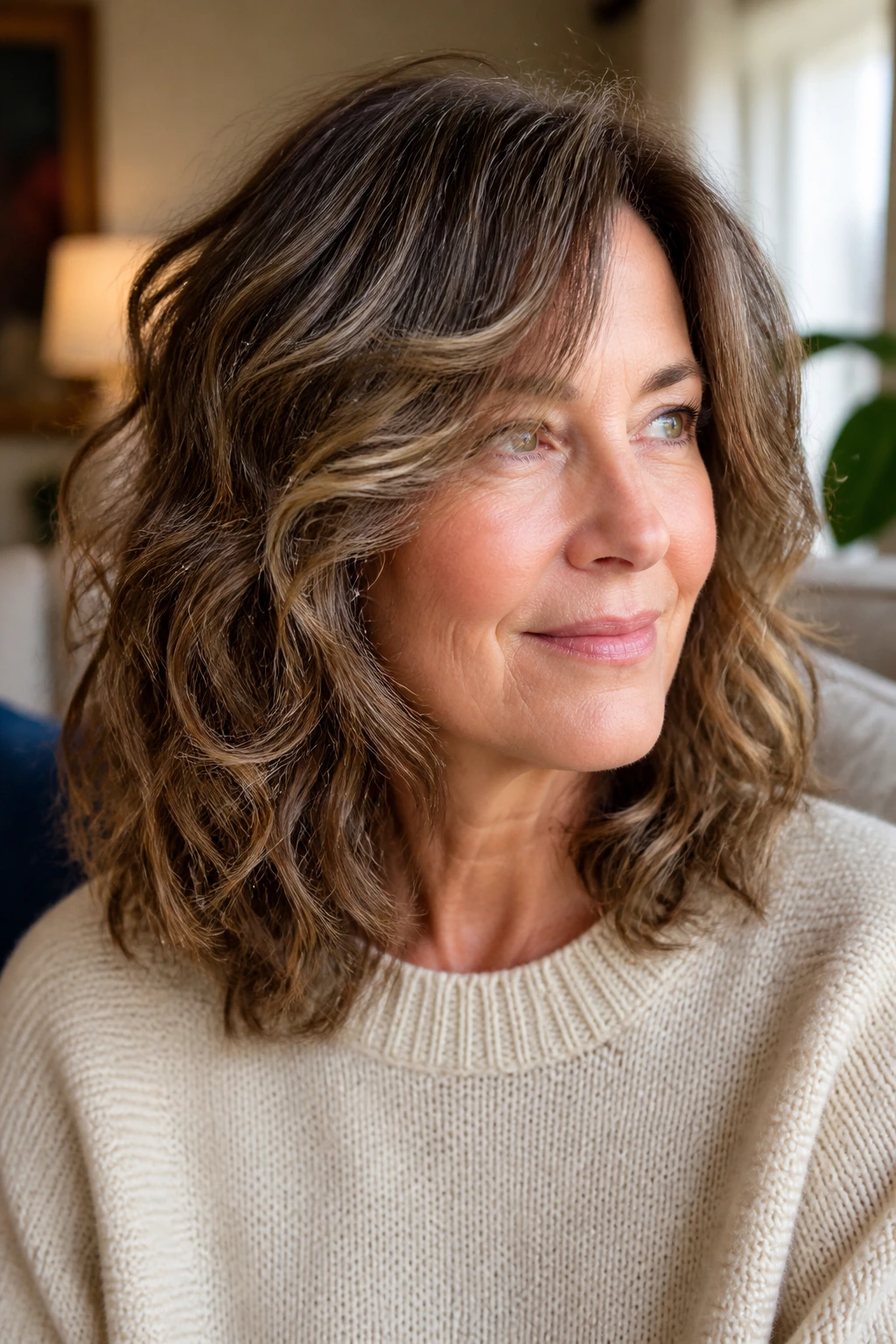
Invisible layers are the quiet workers of the haircut world. You do not see them as obvious steps; you see their effect in the way the hair falls. On wavy hair, that can be magic. Or at least, close enough.
The point is to remove weight from the interior so the wave can show up. Without that internal shaping, wavy hair often looks bulky at the bottom and flat at the root. With it, the bend appears more clearly and the whole style feels lighter.
How to wear it
- Air-dry with a touch of curl cream or leave-in.
- Scrunch only once the hair is half dry, not soaking.
- Diffuse if you want more lift at the crown.
This cut is one of the best choices if you want movement but hate the look of obvious layers. It reads soft and natural, which is often the right move.
13. Bottleneck Bangs with Soft Volume
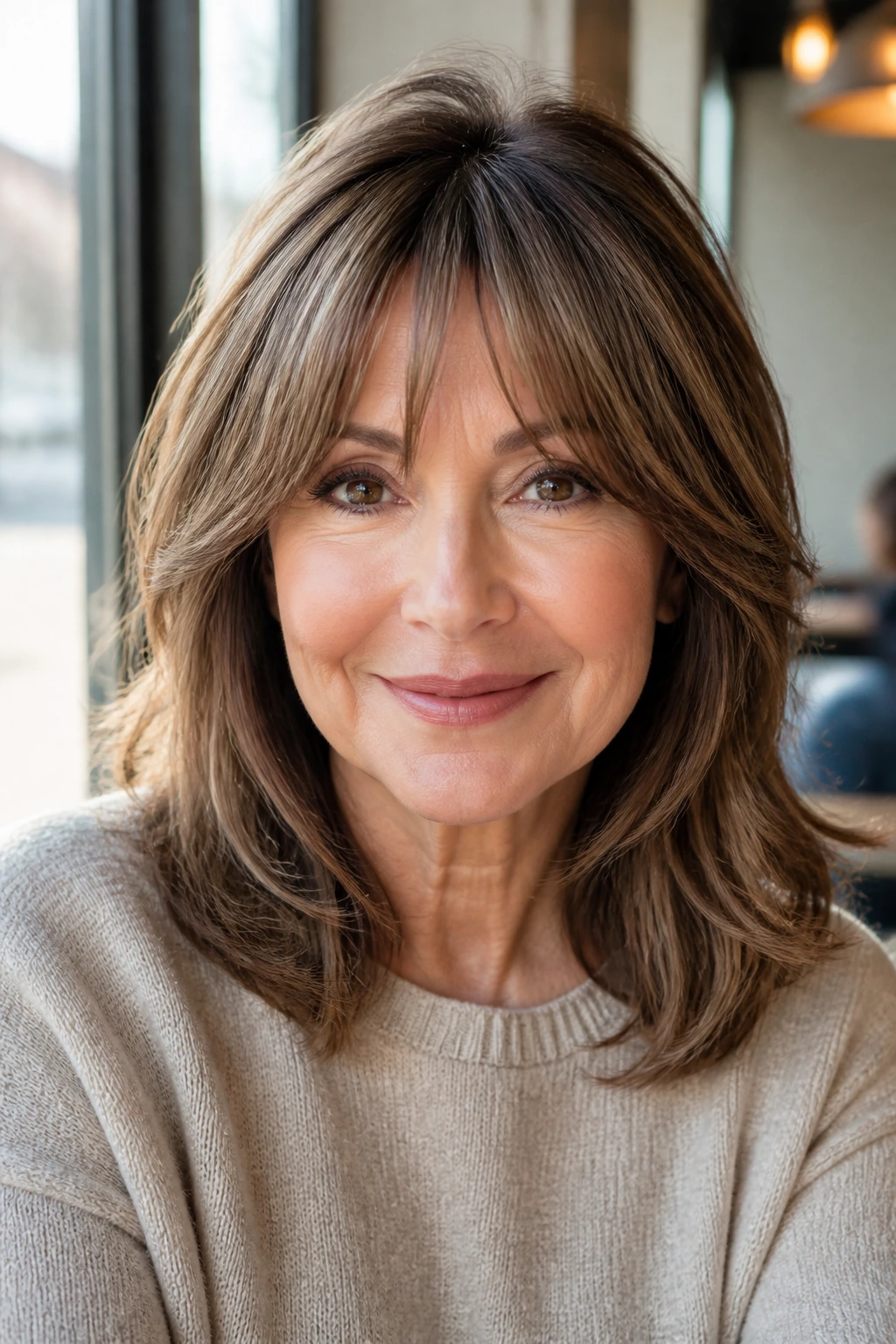
Bottleneck bangs are narrow between the brows and a little wider at the temples, which gives them a gentle opening shape. They feel fresher than a heavy straight fringe and less committed than full curtain bangs. That middle ground is useful.
For women over 50, this shape can soften forehead lines without stealing too much face. It frames the eyes and blends into medium-length layers in a way that feels relaxed, not staged. If your hairline has a few cowlicks, this fringe usually behaves better than a blunt bang because it gives the front some room to split and settle.
The soft volume around the top matters here. Keep the crown a little lifted, and the fringe starts to look deliberate. Let it fall flat, and the whole effect loses energy.
It’s a smart option for someone who wants bangs but not a heavy curtain every morning.
14. Silver-Blend Lob for Gray or Salt-and-Pepper Hair
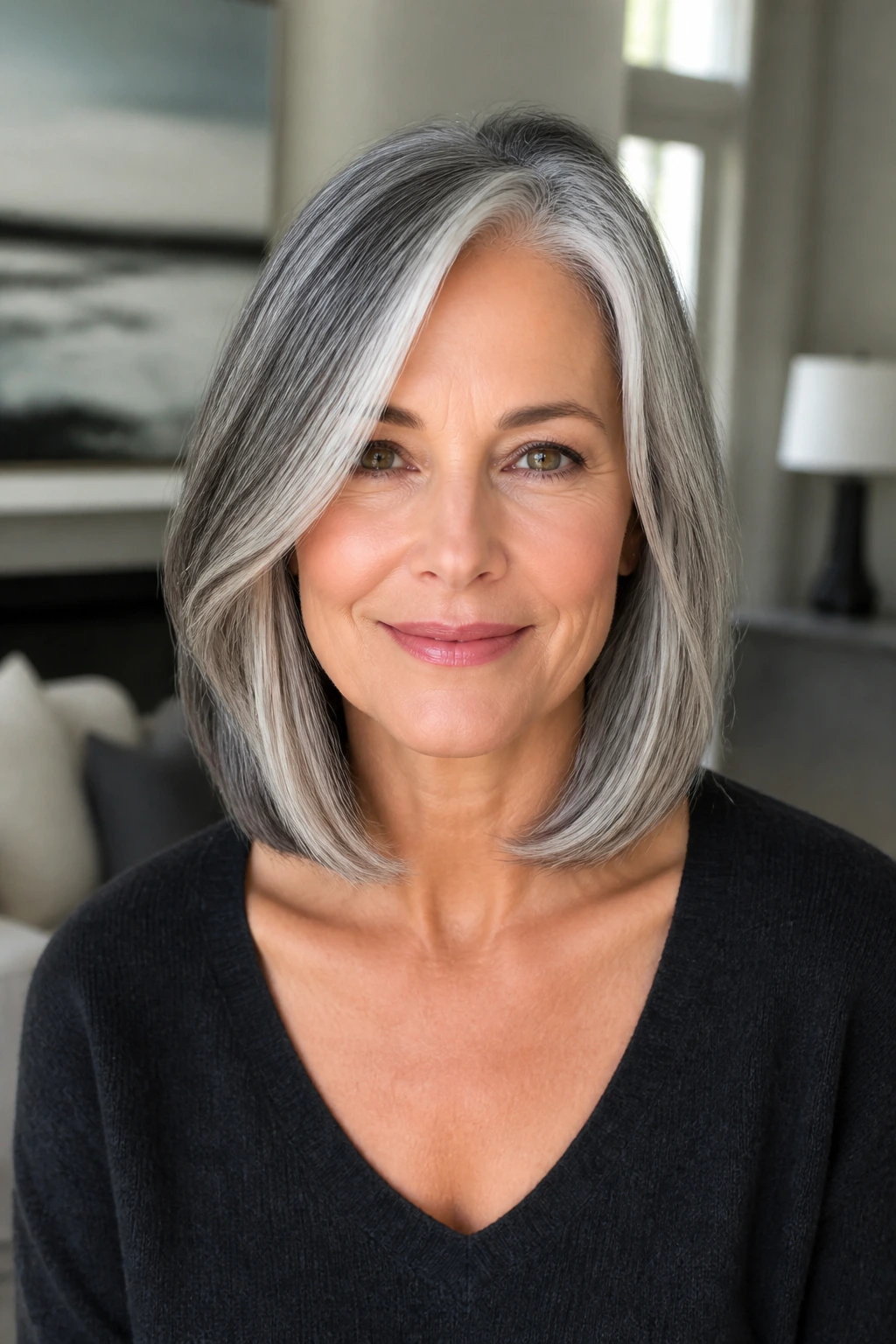
Gray hair can be coarse, shiny, wiry, soft, or all four on the same head. A silver-blend lob respects that mix instead of trying to smooth it into something fake. The cut usually works best when the perimeter is clean and the layers are gentle enough to avoid frizzing the lighter strands.
What I like about this shape is how well it shows off contrast. Silver near the front, darker depth underneath, a neat collarbone line — it can look striking without needing color tricks or heavy heat styling. If you do use purple shampoo, keep it modest. Too much and the hair can feel dry or dull.
This cut is also easy to grow with. As the gray shifts and spreads, the shape still holds. That matters more than people think. Haircuts should keep pace with color changes, not panic about them.
15. Long Layers for Thick Hair
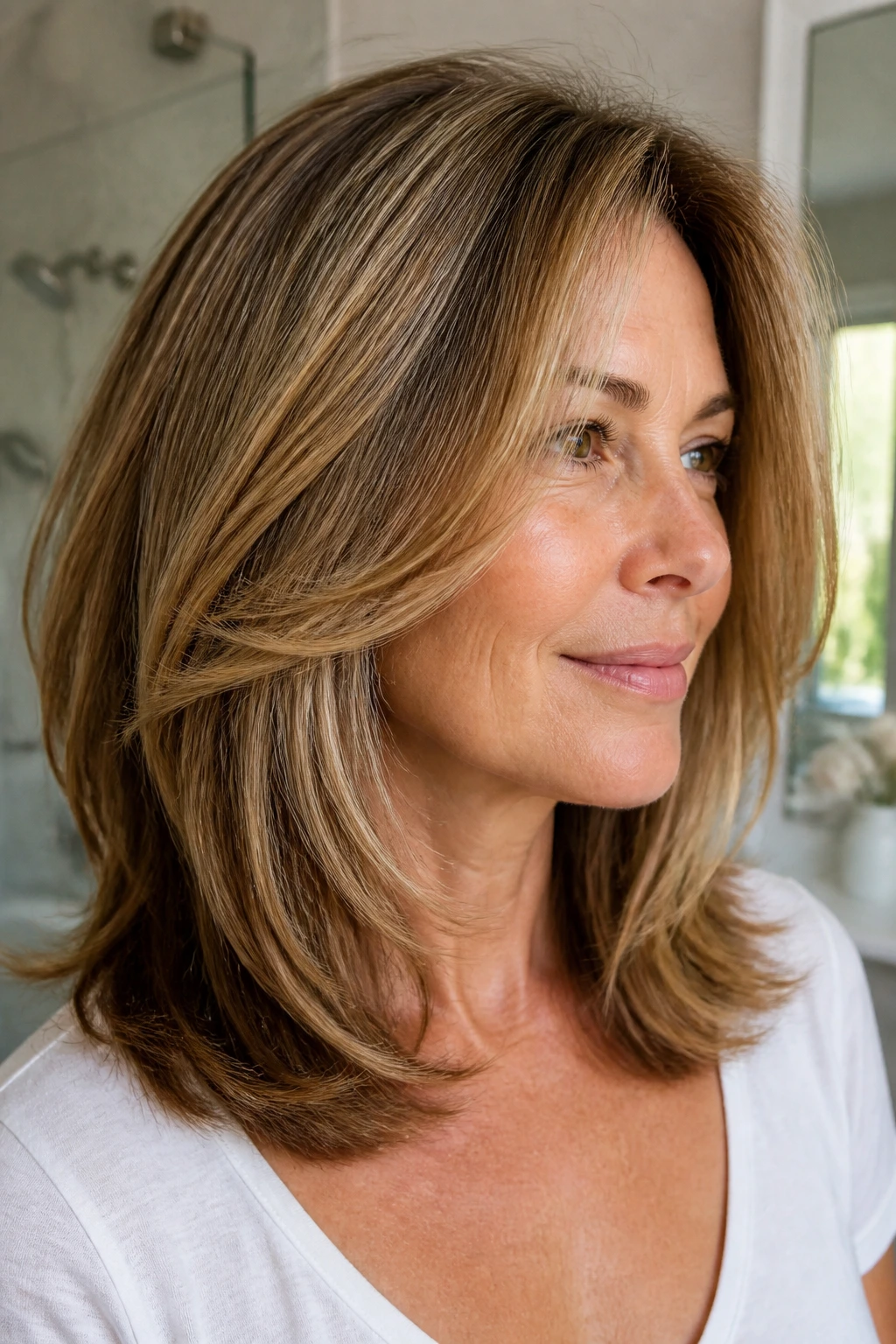
Thick hair is a gift until it isn’t. At medium length, it can balloon at the bottom if the weight is left too blunt, or it can become triangular if the layers are cut too high. Long layers solve that by taking bulk out of the interior while keeping enough heft at the ends.
The key is restraint. You do not need five different layer lengths. You need a few well-placed ones that stop the hair from sitting like a helmet and let it swing. The shape should still feel full, just less heavy.
This cut is especially good if your hair takes a long time to dry. Too much bulk means longer drying and more puffing. Long layers speed things up a little and make the finish easier to manage. Not effortless. Easier. That’s the more honest word.
16. Low-Maintenance Mid-Length Cut for Fine Hair
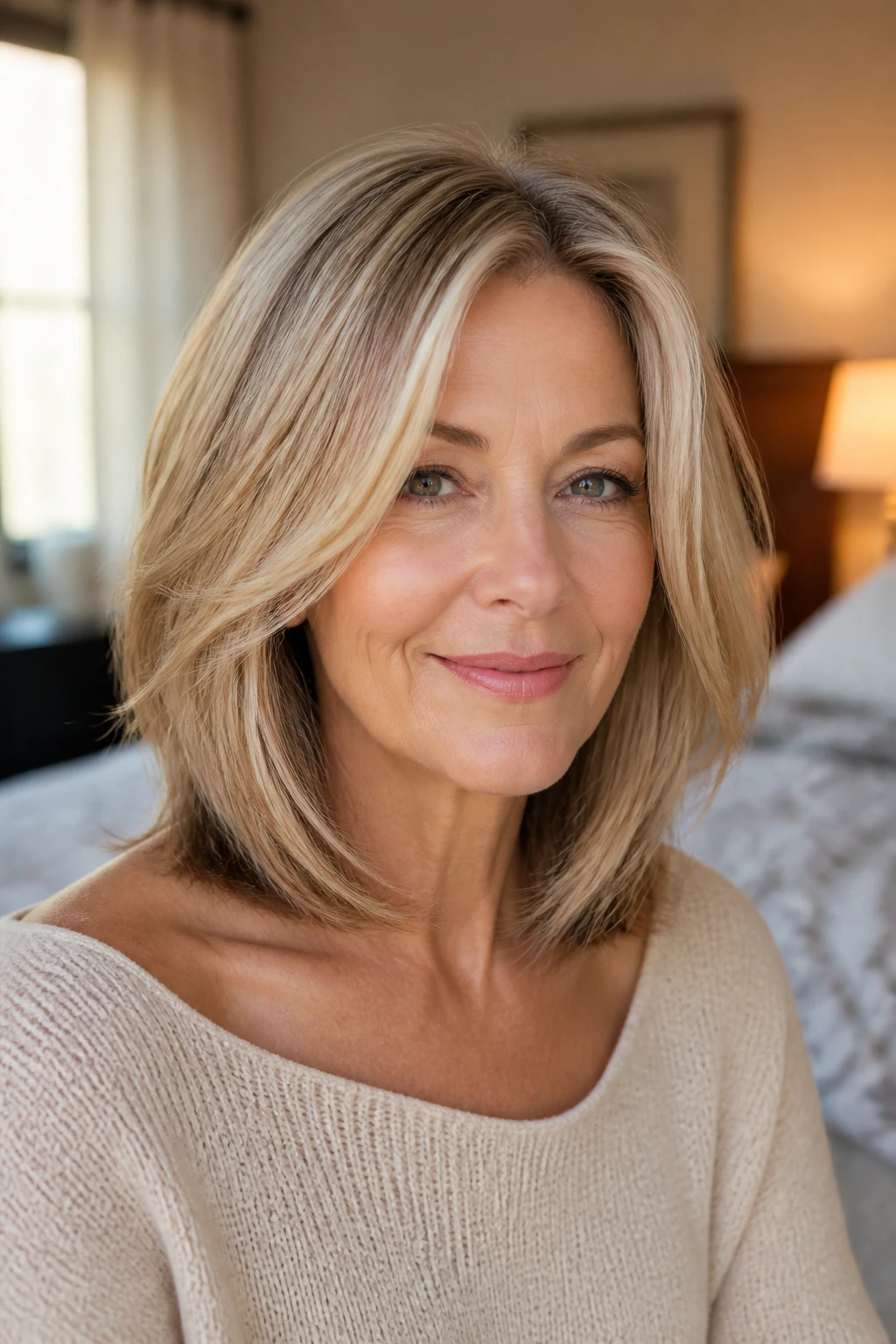
Fine hair usually looks best when the outline is tidy and the layers are shallow. A strong, clean perimeter gives the illusion of density, while a few soft internal layers keep the hair from collapsing into one flat curtain.
This is not the place for aggressive thinning shears. Fine hair can lose its shape fast if too much is removed. A better plan is a collarbone or shoulder-length line with a little bend around the face and a root boost at styling time.
Keep this in mind
A side part often gives fine hair more lift than a center part, especially if the crown tends to lie flat. That one small shift can change the whole head shape.
This cut is a favorite for people who want the hair to look fuller without spending twenty minutes rebuilding it each morning. The haircut should do some of that work for you.
17. Soft Razor-Cut Shag
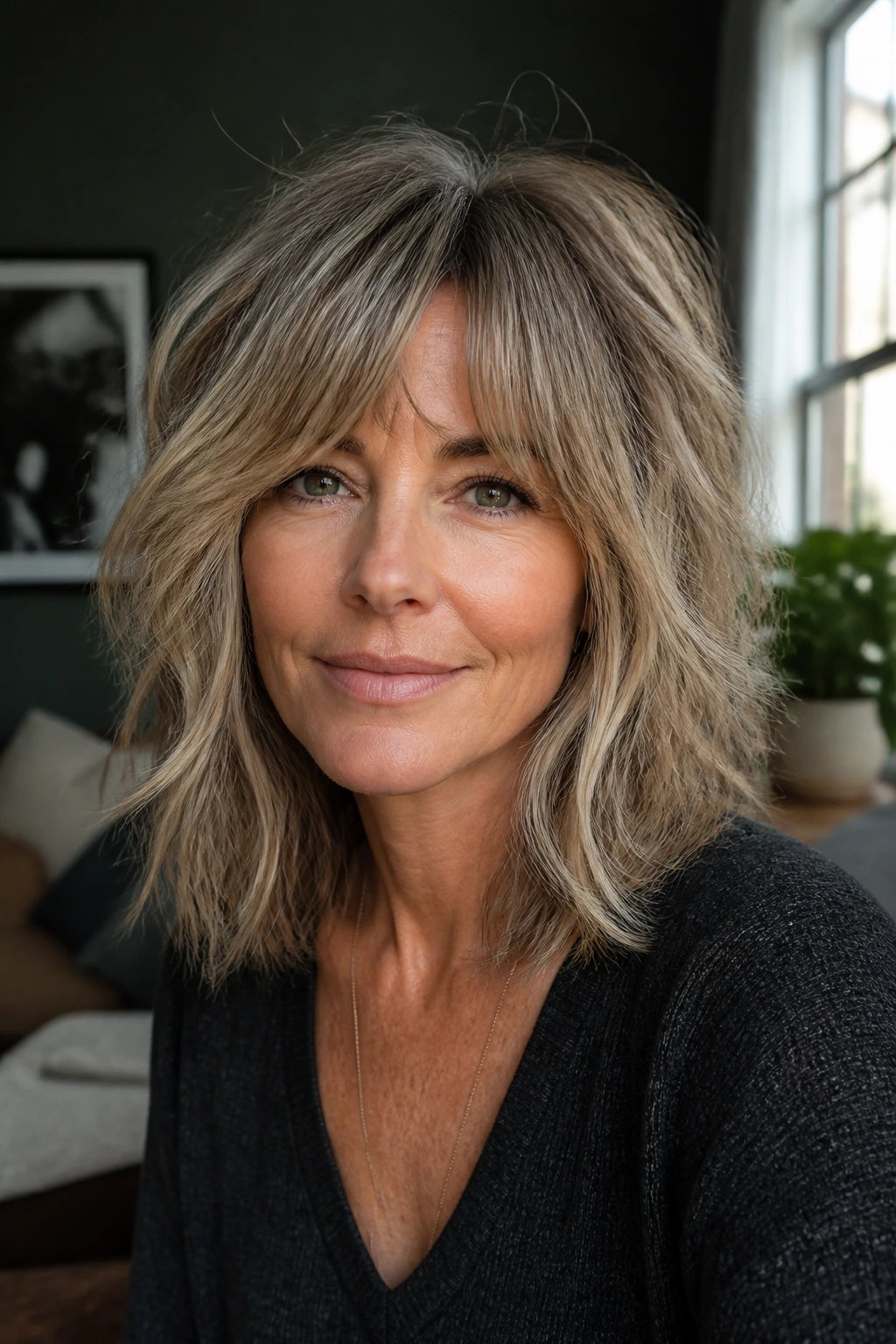
A razor-cut shag can look gorgeous, but it is not a free pass for texture. The blade softens the edges and gives the haircut a cloudier finish, which is excellent for hair that wants movement and a little messiness. It is less good for hair that frays easily or already feels dry at the ends.
If your hair has a medium wave or a light bend, the razor can make the texture feel more alive. The cut often sits well around the collarbone with fringe that splits into softer pieces. That makes it flexible and low-fuss on days when you don’t want to round-brush everything into obedience.
Use this shape when you want more swing and less stiffness. Just make sure the stylist knows how your hair behaves when it is dry, not only when it’s wet and cooperative in the chair.
18. Cheekbone Layers That Open the Face
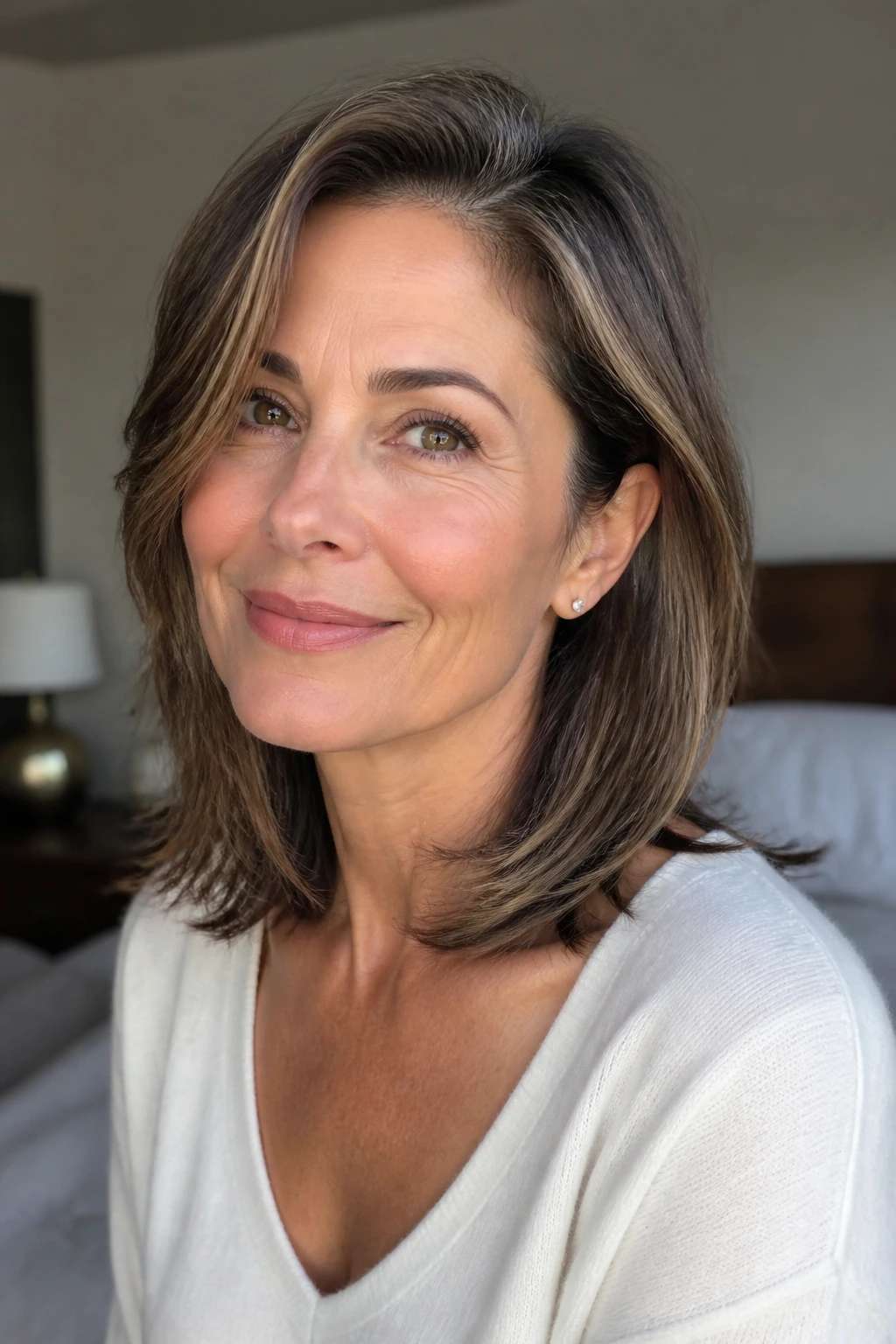
This is the haircut version of putting the light where you want it. Cheekbone layers begin high enough to frame the face, but not so high that the top goes hollow. They create lift around the eyes and soften the line from temple to jaw.
I like this cut for women who want a medium length style that feels polished but not severe. It can work with a side part or a center part, and it often looks especially good when the front pieces are tucked behind one ear. That tiny bit of asymmetry keeps the shape from feeling frozen.
What makes it different from ordinary face framing is the focus. These layers are not just decoration. They guide the eye. If you want the haircut to do some of the visual work around the upper face, this is the one to show your stylist.
Why Shoulder-Length Hair Keeps Its Shape So Well
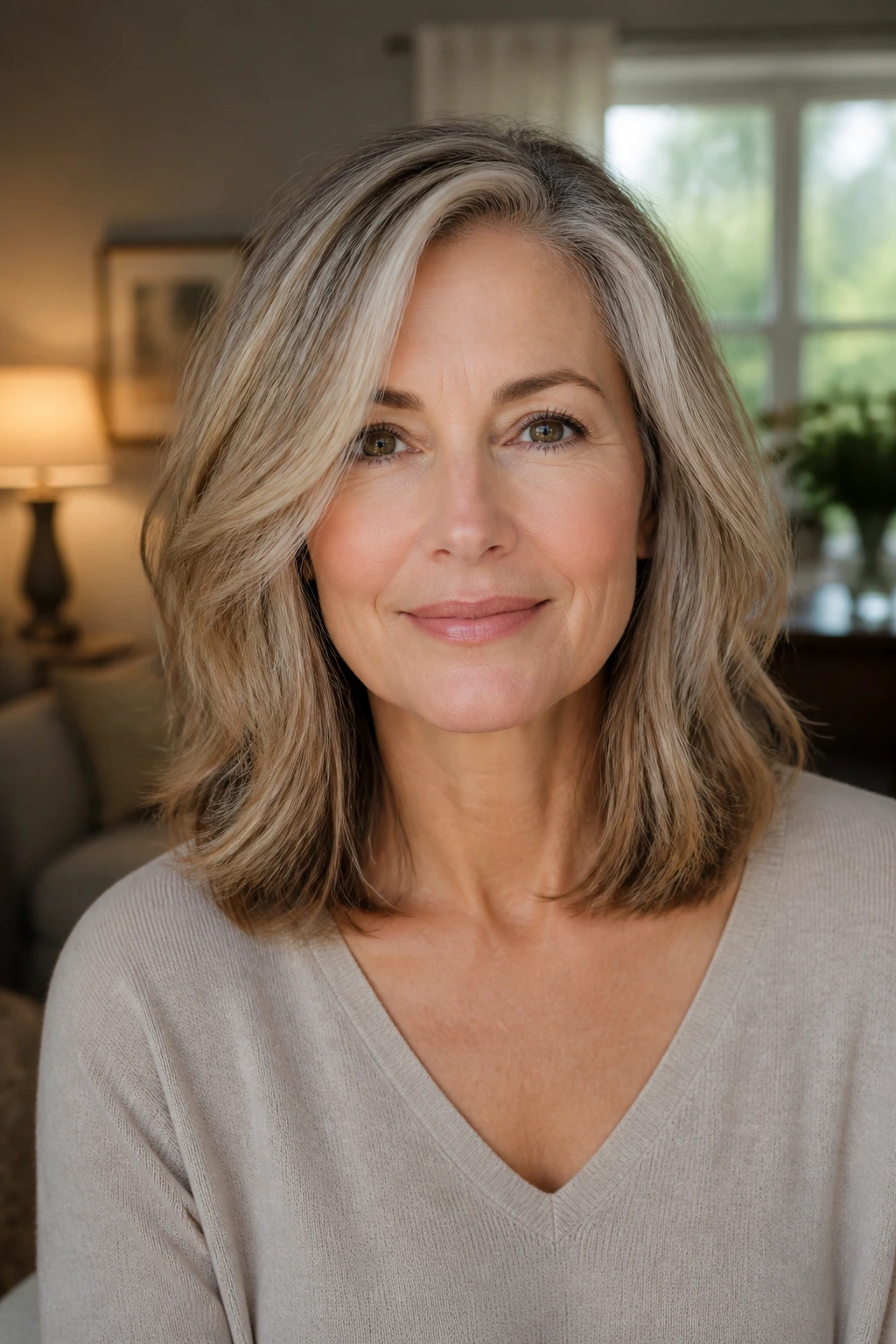
Medium length hair has one job that longer hair can’t always manage: it has to behave in less space. That sounds like a limitation, but it’s actually a gift. At collarbone or shoulder length, the hair keeps enough weight to hang neatly, yet it still has enough movement to show a shape instead of becoming a flat sheet.
That balance matters a lot after 50, when texture often changes under your fingers before you notice it in the mirror. Hair may get drier at the ends and flatter at the crown, which means a cut needs to manage both problems at once. A medium shape can do that better than a very long length, which can drag, and better than a short cut, which can flare.
The other reason this length works: it lets the stylist place weight strategically. If the hair is thick, they can remove some bulk without turning the ends see-through. If it’s fine, they can leave a harder line to preserve the appearance of fullness. That flexibility is what makes the category so useful.
And there’s a practical side. Medium hair can be tucked, pinned, braided, bent, waved, or left alone. You do not need a separate styling plan for every day of the week. Some mornings it gets a brush and a little serum. Some mornings it gets a clip and coffee. Both work.
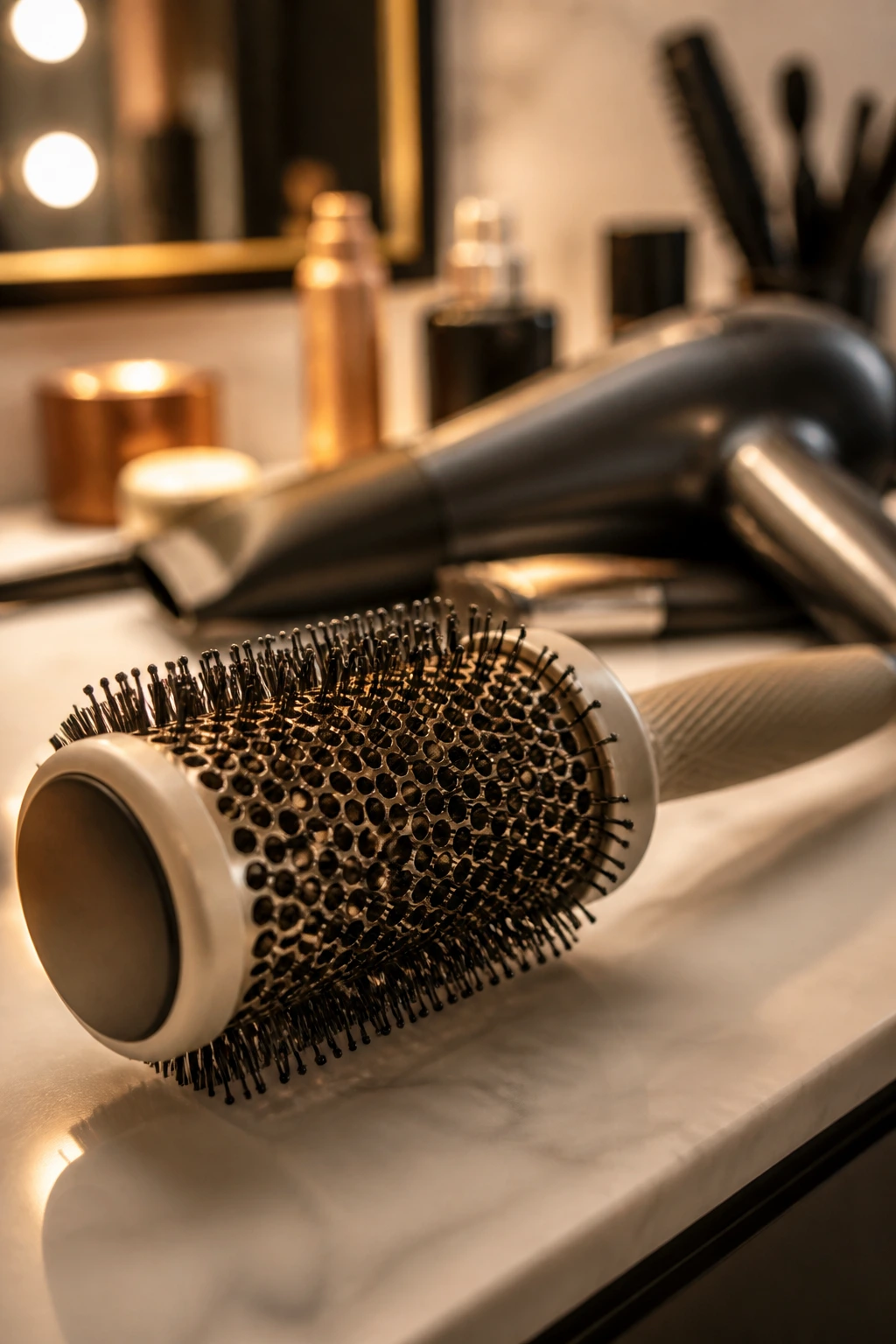
Essential Tools That Make These Cuts Easier
-
A 1.5- to 2-inch round brush: Big enough to create bend at the ends without making tight curls that fight the cut.
-
A blow dryer with a concentrator nozzle: Directs airflow where you want it and helps the cut sit smoother around bangs and layers.
-
Heat protectant spray: Useful if you use a round brush, flat iron, or curling iron, because medium lengths still get dried out at the ends.
-
Lightweight mousse or root-lifting foam: Especially good for fine hair and layered cuts that need lift at the crown.
-
Texturizing spray: Helpful for lobs and shags when you want second-day grip and a bit of separation.
-
A wide-tooth comb: Better than a brush for wavy or curly mid-length hair when you’re trying not to stretch the pattern flat.
-
Sectioning clips: Keep the crown and fringe under control while the rest of the hair dries.
-
A small flat iron or mini iron: Best for bending the front pieces or smoothing just the perimeter, not ironing every strand flat.
-
A salon cape or towel you don’t mind clipping around your shoulders: Not glamorous, but useful when you’re styling at home and don’t want product everywhere.
How to Leave the Salon with the Cut You Actually Wanted
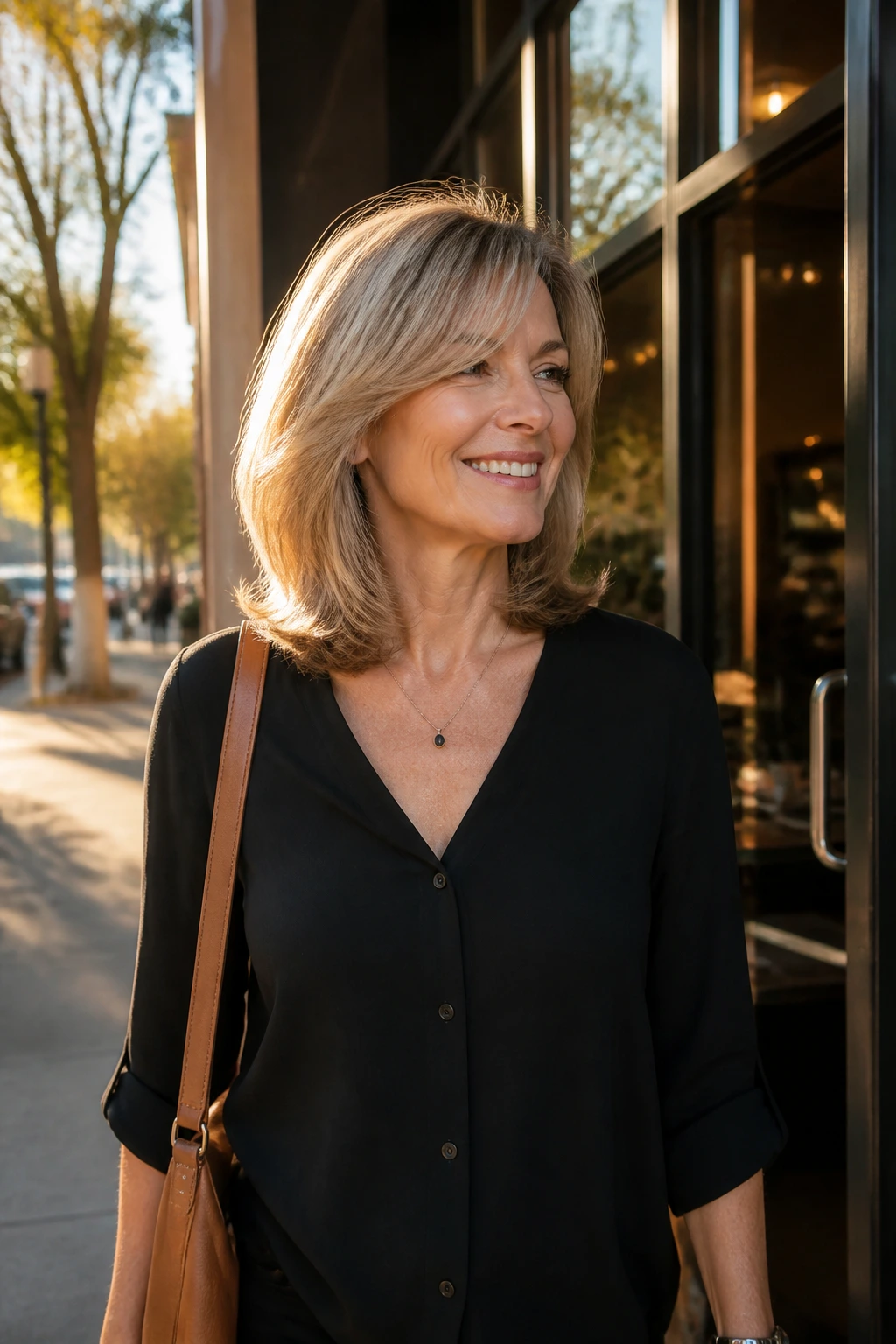
Bring photos, yes, but do not stop there. A photo shows the shape; it does not explain the texture, the density, or the way the hair was styled for the picture. Tell the stylist what you like about the photo in plain words: the length at the collarbone, the soft front, the blunt ends, the low layers. That tells them what to copy and what to leave out.
Say how you wear your hair. If you air-dry most days, say that. If you use a round brush once a week and then let it go, say that too. A layered cut that looks lovely in a blowout can fall apart on hair that never sees heat. A blunt cut can look heavy if your wave pattern needs some relief. The routine matters.
Mention the trouble spots. Cowlicks at the front. Flattening at the crown. A strong swirl on one side. Glasses that sit close to the temples. These details sound small in the chair and huge at home.
Talk about the maintenance you’ll actually do. If you will not come back for a fringe trim every four weeks, do not ask for bangs that need one. If you want a shape that can stretch longer, say so. Your haircut should fit your calendar, not punish it.
Common Mistakes That Make Medium Haircuts Look Off

The first mistake is cutting the layers too high. You end up with a puffed top and see-through ends, which is a bad deal on any head of hair and especially on finer textures. Keep the layers lower unless you want a very specific shaggy shape.
The second is taking bangs too short too fast. Short bangs can be chic, but they also expose every cowlick and grow out with a little attitude. If you’re unsure, start longer. You can always trim more later.
The third is thinning thick hair with a heavy hand. A razor or thinning shears can help, but too much removal leaves the ends frayed and the shape weak. Thick hair usually needs strategic weight removal, not a wholesale attack on the density.
The fourth is copying a photo without adjusting for texture. A straight lob on coarse wavy hair will not sit the same way as on fine straight hair. The picture is the reference, not the contract.
The fifth is ignoring day-two behavior. If the cut only works after a perfect blowout and an extra 20 minutes, it may not be the right shape for your life. That’s not a moral failure. It’s a fit problem.
Fresh Takes for Fine, Thick, Wavy, and Gray Hair

Fine-Hair Float: Ask for a blunt perimeter with just a whisper of layering around the face. This keeps the bottom looking full while giving the top enough shape to avoid flatness.
Thick-Hair Relief: Choose longer internal layers and a slightly angled front. The goal is to remove bulk without stripping the outline, so the haircut feels lighter when it dries.
Wave-Friendly Bend: Keep the layers invisible and let the ends sit loose. This works best if your hair bends naturally and you want the wave to show up without a lot of styling tools.
Gray-Gleam Shape: Use a clean lob or collarbone cut with soft movement near the face. Silver strands often look especially striking when the shape is neat and the front is opened a little.
Glasses-Friendly Fringe: Side-swept or bottleneck bangs sit better than heavy straight fringe when frames are part of the daily picture. They keep the front from fighting the glasses arms and give the face room.
Keeping the Shape Between Salon Visits
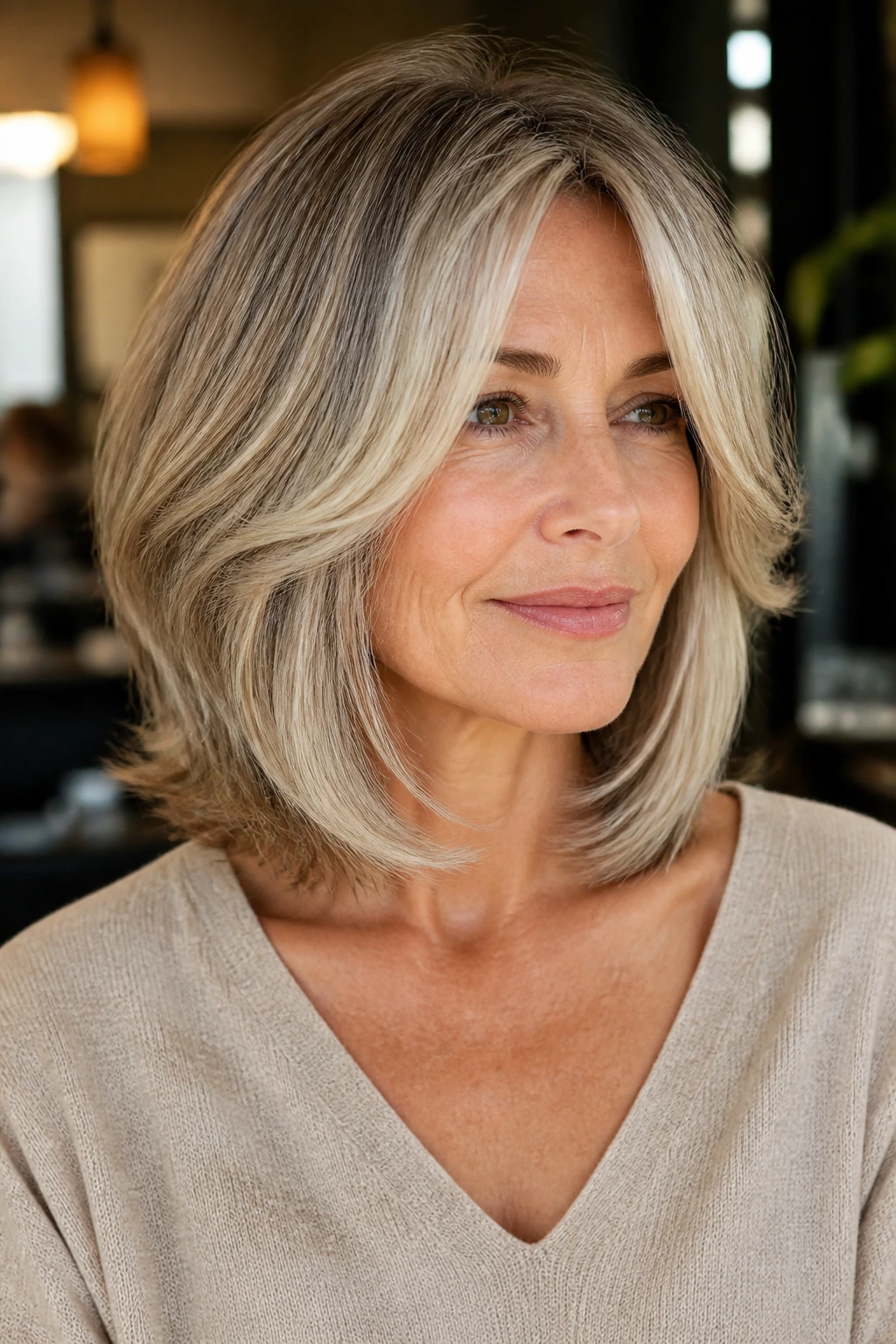
A medium haircut holds up best when it gets small, regular resets. Blunt lobs usually need a trim every 6 to 8 weeks if you want the line to stay crisp. Layered cuts can often stretch to 8 to 10 weeks, but fringe pieces may need attention sooner, especially if they start drifting into the eyes.
At home, blow-dry the roots first if you want lift. That sounds basic, and it is, but it matters. Hair that dries flat at the scalp rarely recovers with products alone. Use a little heat protectant, shape the ends, then stop before you keep fiddling and overworking the cut.
If your hair is gray or silver, keep a leave-in conditioner or light cream on the ends. Those strands often feel drier, and a small amount of moisture helps the haircut keep its line. If you use strong styling creams or sprays, a clarifying shampoo every few washes prevents buildup from making the hair droop.
Sleep also matters. A silk or satin pillowcase can keep the ends from roughing up as much overnight. Not magic. Just less friction.
Frequently Asked Questions
Are medium length haircuts flattering on women over 50?
Yes, when the shape matches the hair’s texture and density. Medium cuts can soften the face, keep enough weight at the ends, and avoid the heavy drag of long hair or the high-maintenance edge of a very short cut.
Do layers make thinning hair look worse?
They can, if the layers start too high or remove too much bulk. For thinning hair, shallow layers and a stronger perimeter usually work better than choppy pieces all over the head.
What is the most low-maintenance medium haircut?
A blunt lob at the collarbone usually asks for the least fuss. It holds its outline with minimal styling and often looks fine with a quick blow-dry or airdry plus a touch of cream.
Are bangs a bad idea if I have forehead lines?
No, but the style matters. Side-swept bangs, curtain bangs, or bottleneck bangs soften the forehead without putting a hard line straight across it.
What if my hair is naturally wavy or curly?
Choose cuts that respect the bend instead of forcing the hair into a rigid line. Invisible layers, a shag with restraint, or a soft lob often work better than a very blunt cut that fights the curl pattern.
How often should I trim a medium haircut?
Most medium styles look freshest with a trim every 6 to 10 weeks, depending on how crisp the shape is. Bangs usually need a quicker touch-up than the rest of the cut.
Can I wear a medium haircut straight one day and wavy the next?
Absolutely, if the cut is balanced. Longer layers, soft face-framing pieces, and a not-too-aggressive perimeter usually adapt well to both finishes.
What should I avoid if my crown goes flat?
Do not overlayer the top in search of volume. A little root lift from styling and a shape that keeps weight around the perimeter usually works better than removing more hair from the wrong place.
The Shape That Still Feels Like You

The best medium haircut is not the one that looks dramatic in the chair. It is the one that still looks like itself on day three, after a brush, a clip, a scarf, and a little weather. That’s where these cuts earn their keep.
If you keep one thing in mind, make it this: ask for shape, not just length. Shape is what makes the cut sit well around the face, the jaw, the shoulders, and the crown. Length alone is only half the story.
Bring a few photos, yes. Then speak in real terms — blunt, layered, angled, soft, lifted, tucked, airy — and let the cut match the hair you actually have. That’s the version worth leaving the salon for.