



Fresh braids on a child can look immaculate at breakfast and unravel at the hairline before pickup if the style is wrong for their head, their routine, or their patience. That’s the whole game with long lasting braids protective styles for kids: you want clean parts, low tension, and a finish that can survive slides, naps, backpack straps, and one too many head turns at circle time.
The styles that last longest aren’t the loudest ones. They’re the ones that sit flat at the scalp, keep weight where the hair can handle it, and don’t invite endless hands into the front row. A tight-looking braid can still be a bad braid if it starts with too much pull at the temple. A simple braid can outlast a fancier one if the parting is neat and the ends are sealed with care.
What follows is the practical version, not the Pinterest version. I’m thinking about tender scalps, busy school mornings, soft baby hair that refuses to stay put, and the awkward truth that kids rarely sit still long enough for a perfect style unless the style itself is built to stay calm. Some of these braids are better for fine hair, some for thick coils, and some for the child who won’t tolerate anything heavy at the edges. That split matters. A lot.
Why These Braids Earn Their Keep
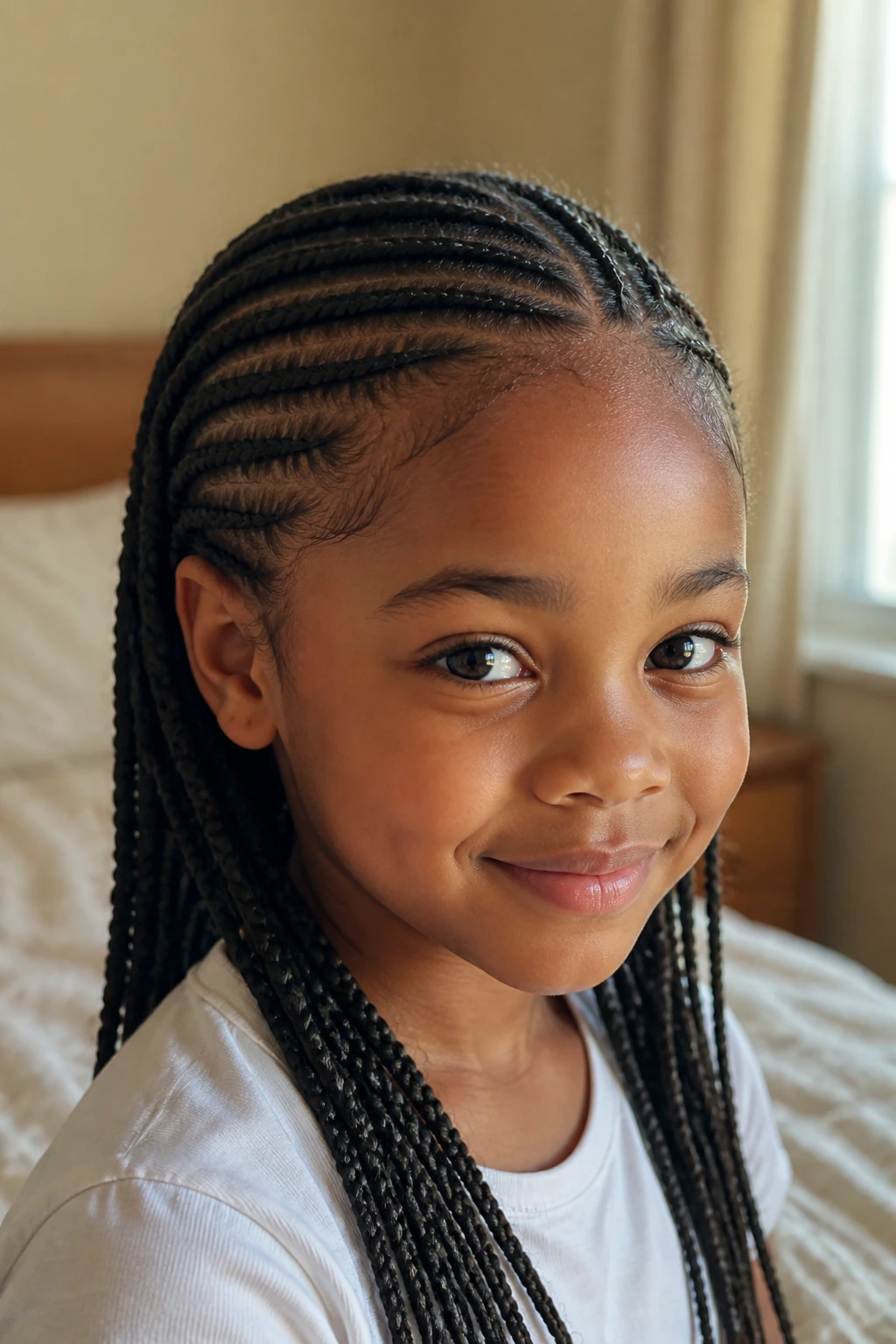
- Low tension wins: Styles that start with small, even sections and clean parting stay neater because the roots are not fighting one giant tug line.
- Flat at the scalp helps: Cornrows, feed-ins, and knotless starts lie closer to the head, so they frizz less under hats, car seats, and hoodies.
- Weight control matters: Beads, cuffs, and long extensions can be cute, but the lighter the finish, the longer the style usually looks fresh.
- Less daily handling equals more wear: The styles here are built for school, sleep, and play, not for constant restyling in the bathroom mirror.
- Kids’ comfort comes first: A style only lasts if the child will leave it alone. If it hurts, it won’t survive day two.
1. Knotless Box Braids with Tucked Ends
Knotless box braids are the style I reach for when a child has a sensitive scalp but still needs something that will sit neat for weeks. The braid starts with the child’s own hair first, then extension hair is fed in gradually, so you do not get that hard lump at the root that makes little heads complain before the first school bell.
Why It Stays Neat
The gentle start is the whole point. There’s less pulling at the base, which means fewer red marks, fewer sore spots, and less temptation to scratch the front row into fuzz. Keep the parts medium-sized, not tiny, and tuck or seal the ends so they do not unravel every time a sleeve brushes them.
For kids, this style usually wears best for 3 to 5 weeks if the scalp is cared for and the braids are not overpacked. It also grows out softly. That matters. A hard grow-out line at week two makes the style look tired fast.
Best for: tender-headed kids, school weeks, and anyone who needs a polished look without a heavy scalp.
2. Feed-In Cornrows into a Low Ponytail
Feed-in cornrows are one of the strongest choices for active kids because the braid lies flat from the start and the ponytail keeps the weight low. You can send a child to gymnastics, playgrounds, or a long car ride with this style and not spend the day chasing loose strands.
The trick is to keep the braid path clean and the ponytail compact. A pony that sits at the nape stays calmer than a high one, especially if the child sleeps in the style. If the ends are wrapped with a small scrunchie or clear elastic, the look lasts longer and the hair tangles less.
This one usually holds for 2 to 4 weeks, depending on how much the ponytail is handled. If your child likes to twist their hair during reading time, secure the pony with a soft band and skip bulky bows.
3. Triangle-Part Box Braids
Triangle parts make a braid style look intentional even after new growth starts coming in. Square parts can look tidy, sure, but triangle sections tend to hide a little more grow-out because the part lines don’t sit in a rigid grid.
That geometric look is not just cute. It gives each braid a cleaner base and can make medium-size braids feel a touch more playful without adding extra bulk. I like triangle parts for school-age kids who want something a little different but not fussy. Keep the braids shoulder length or just below if you want the ends to stay manageable.
Use clean, crisp parts and light edge styling only. Too much gel at the hairline turns into flaking by day three, and kids notice that faster than adults do. Wear time usually lands around 3 to 5 weeks.
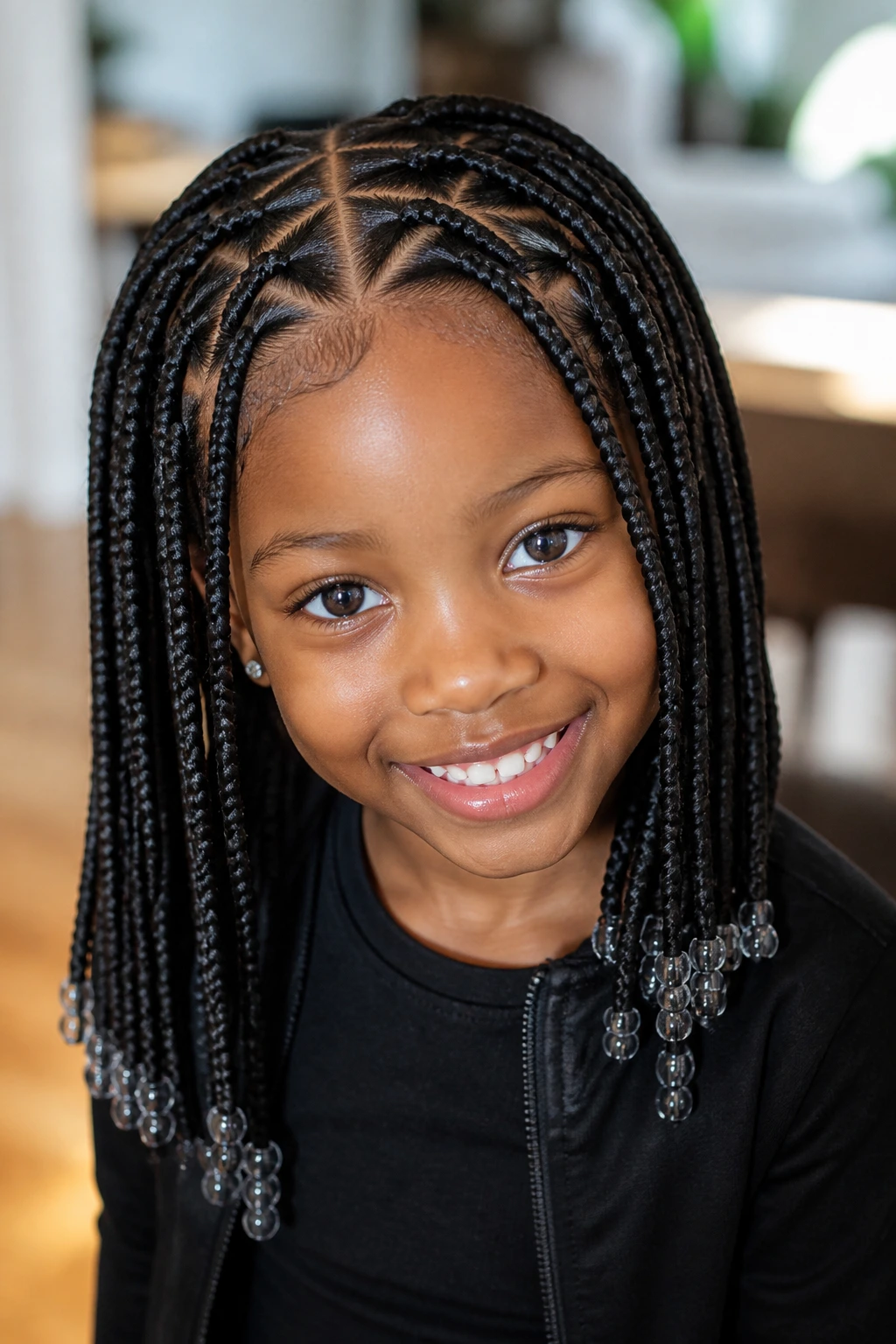
4. Fulani Braids with Lightweight Beads
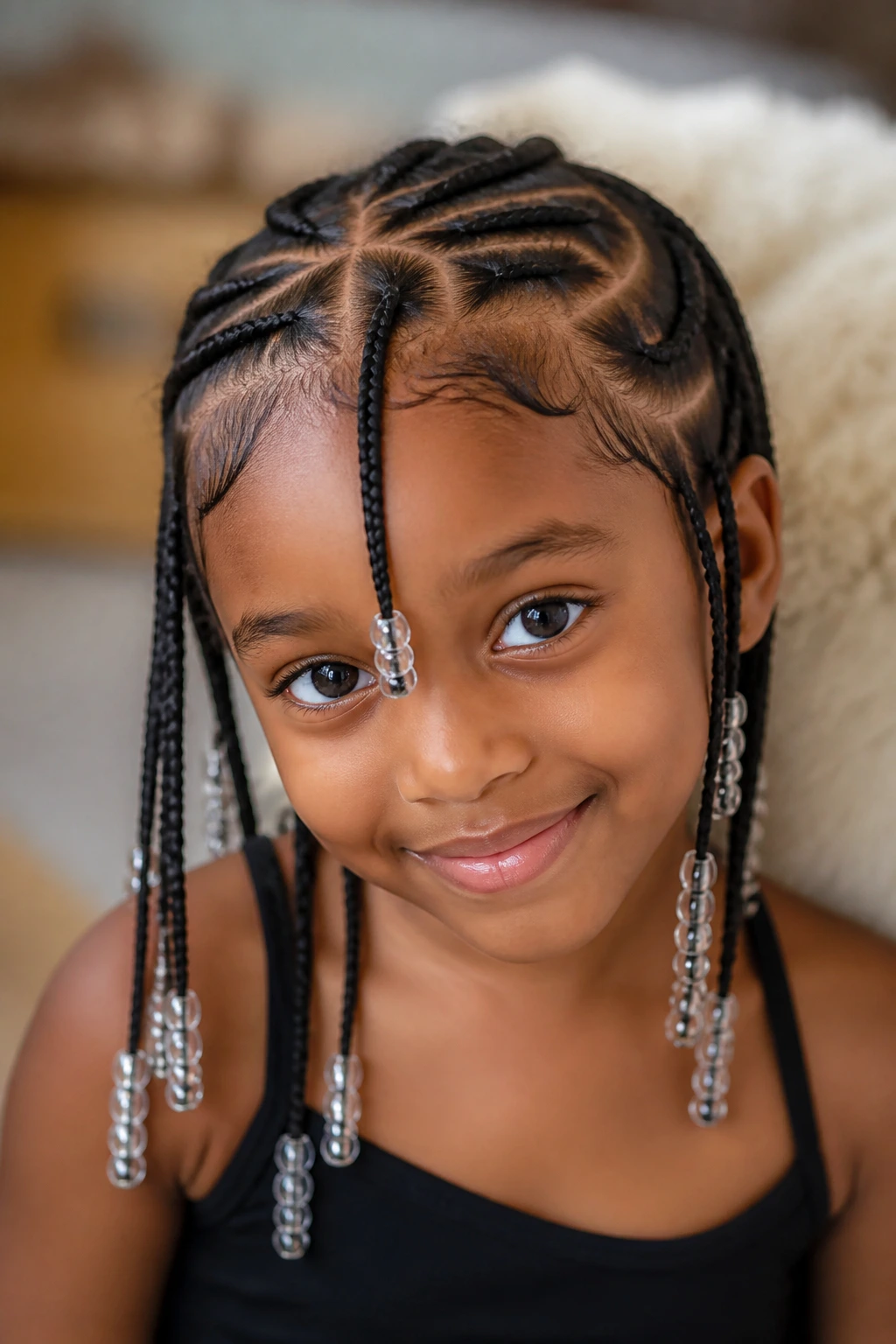
Fulani braids have a face-framing shape that feels special without being complicated. One central braid or a few slim braids run through the middle, side braids angle back, and the ends can carry beads if you keep them light. The look has movement, but it still stays rooted close to the scalp.
The part that makes or breaks this style is weight. Tiny beads piled onto every end can drag the braids down and tug at the scalp by the end of the week. A better move is to use fewer beads, smaller sizes, and only on the lower half of the braid.
I like this style for kids who want a dressier look that still works in real life. It tends to last 2 to 4 weeks, though the beads may need a quick reset if they slide. Keep the bead count modest. Less is better here.
5. Lemonade Side-Sweep Braids
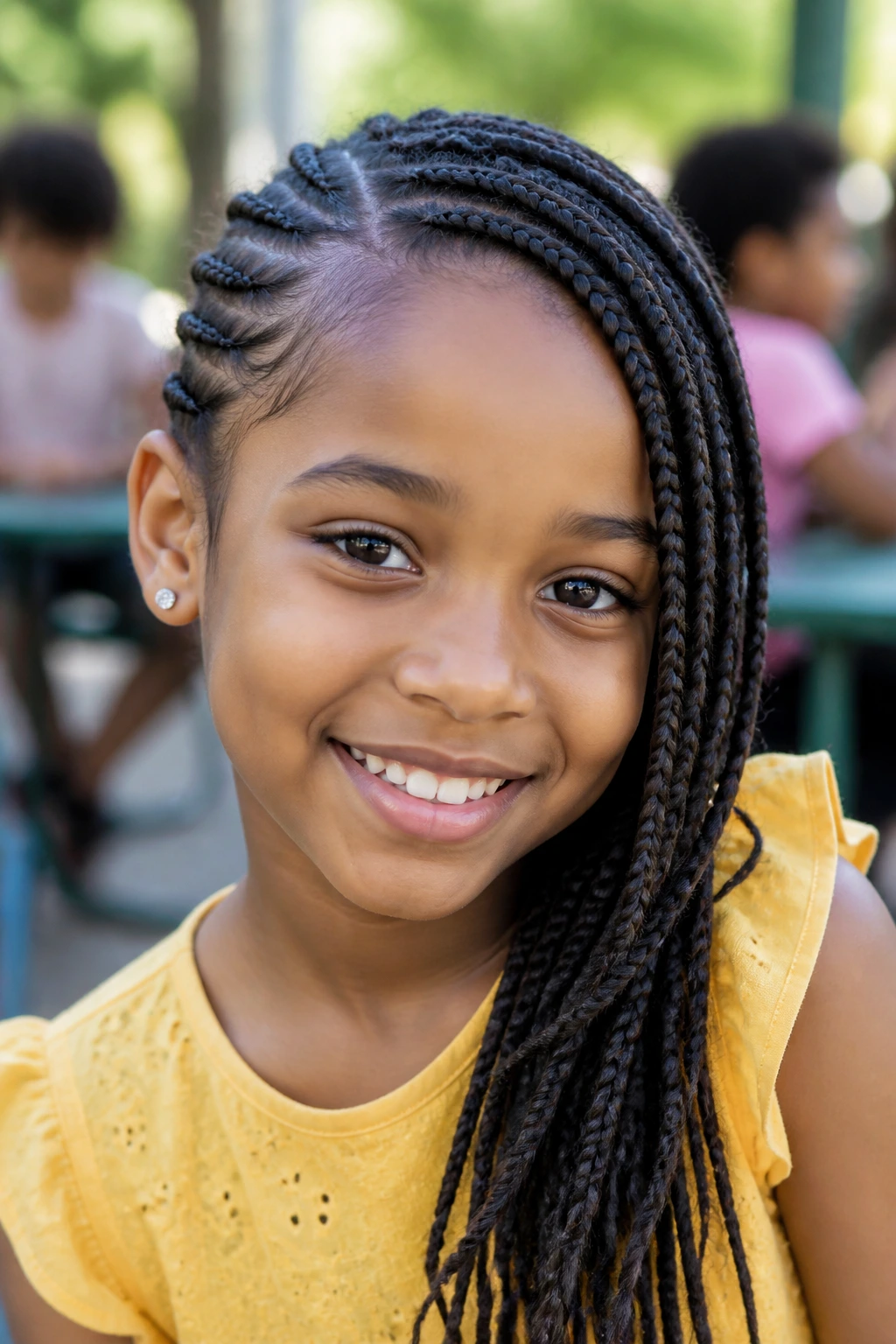
Side-sweep braids sit beautifully on kids who hate hair falling into their face. All the braids lean in one direction, so the front stays clean and the style feels a little easier to maintain during school and play. It also gives the scalp a break on the opposite side, which is a small mercy when a child has had a lot of braided styles back to back.
What helps this one last is a strong side part and even braid size. If the front pieces are too thin, they frizz early. If they are too thick, the sweep loses that soft curve and starts to look clunky. A shoulder-length finish keeps the style from catching on jacket zippers and backpack straps.
This style usually lasts 3 to 4 weeks. It’s one of my favorites for older kids who want a little attitude in the braid shape without losing practicality.
6. Braided Bob with Curled Ends
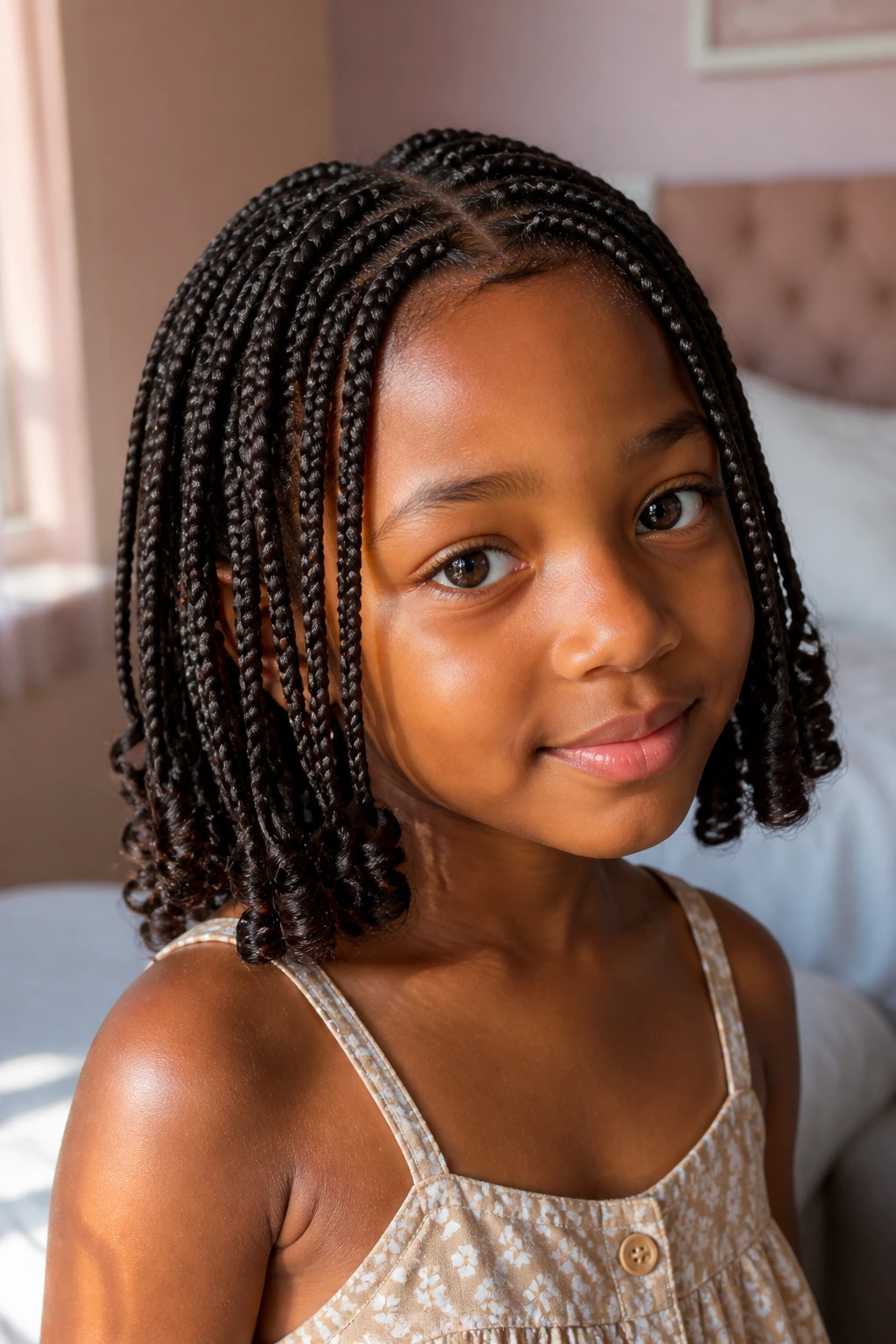
A braided bob is one of those styles that looks neat for a long time because there’s less length dragging through the day. Shorter braids mean less friction on sleeves, seat backs, and pillowcases. That alone buys you extra life.
The curled ends help soften the shape so the cut doesn’t feel severe. You can keep the braids at chin-to-shoulder length and finish the ends with a small curl, a bend, or a tucked seal depending on the child’s hair and the look you want. It’s a smart choice for kids who get overheated with long styles.
One thing: don’t overload this style with heavy beads. The point is lightness. If you want decoration, use a few cuffs near the front. The wear window is usually 2 to 4 weeks, and it often looks neat right up until the last few days.
7. Stitch Cornrows into a Low Bun
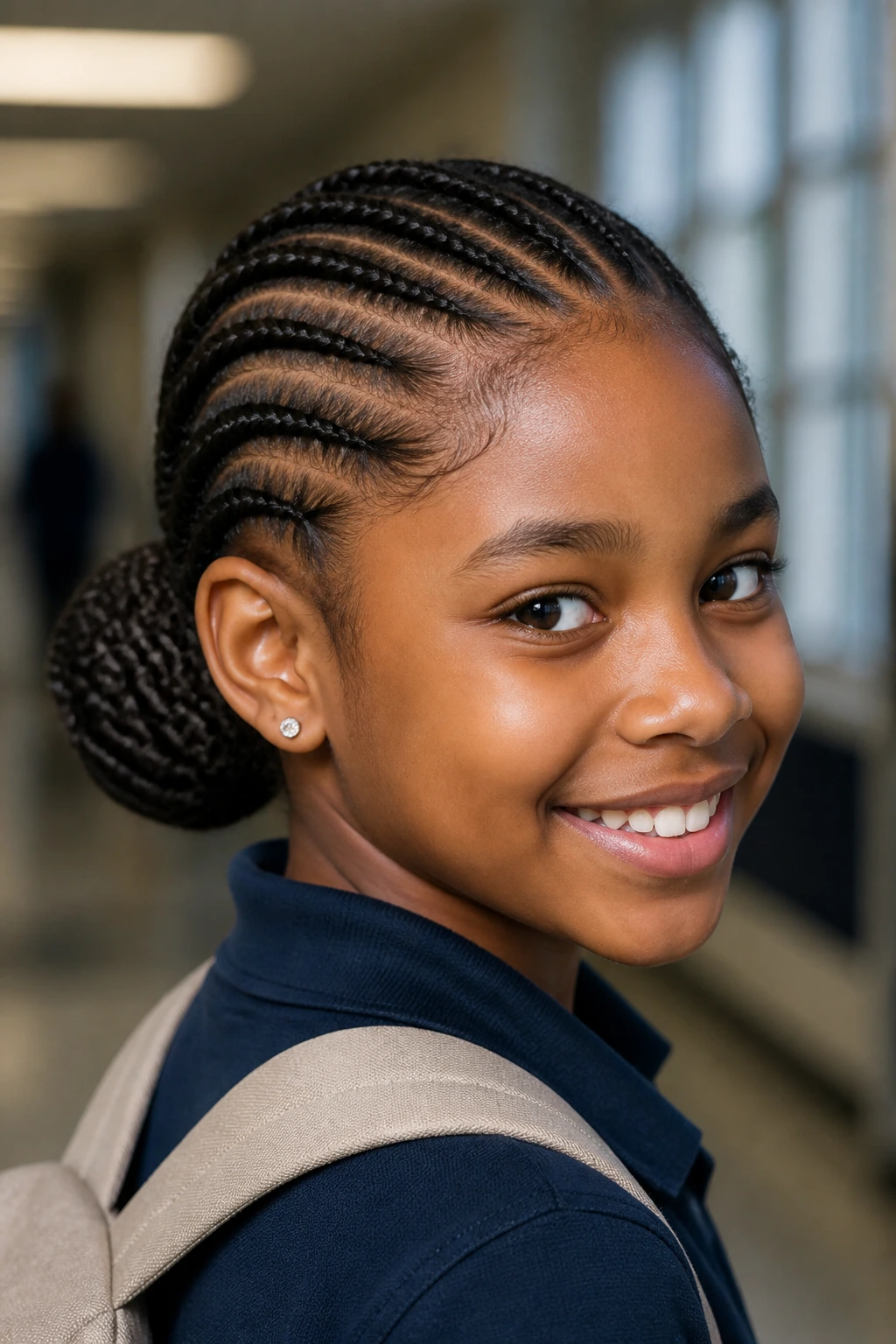
Stitch cornrows are crisp, straight rows with those clean, visible ridges that look almost drawn on. They hold their shape well because the braid pattern is tight in a structural sense, not a painful one if the hands are careful. A low bun at the back keeps the finish secure and tucks the ends away from fingers.
This style is especially good for school days when you want the hair out of the face and off the shoulders. It also works under hats better than styles with loose braiding hair floating around the neck. The bun should sit low and smooth, not high and pulled tight like a cheerleader topknot.
Give this one 2 to 3 weeks before the part lines start asking for a redo. If the bun needs to survive gym class, wrap it with a soft elastic instead of a hard band.
8. Ribbon-Tied Pigtail Braids
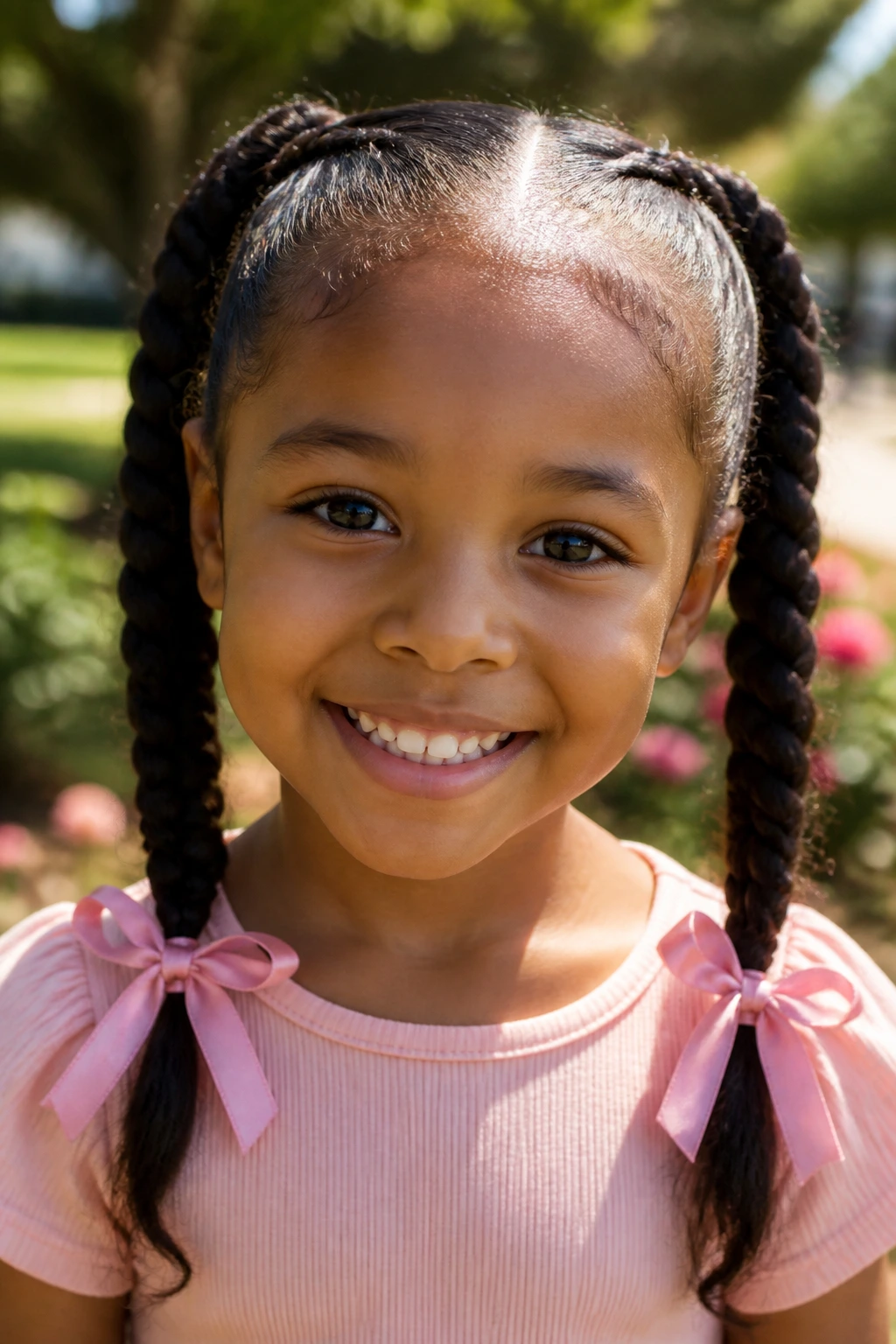
Pigtail braids never go out of favor with little kids because they feel friendly and easy. Two braids mean the style is balanced, and the ribbons turn the whole thing into something a child may actually leave alone. That matters more than people think.
For long wear, keep the braid size medium and the ribbon placement low enough that it doesn’t slide around at the crown. A tight ribbon at the top looks neat for ten minutes, then starts to slip. A bow tied closer to the braid end stays put better and doesn’t bother the scalp.
This style works best for younger kids or children who want a gentler look than full-length extensions. Expect 2 to 4 weeks if the parts are clean and the ribbons are swapped out when they start to look limp. Cute. Practical. No drama.
9. Halo Crown Braid with Hidden Tuck
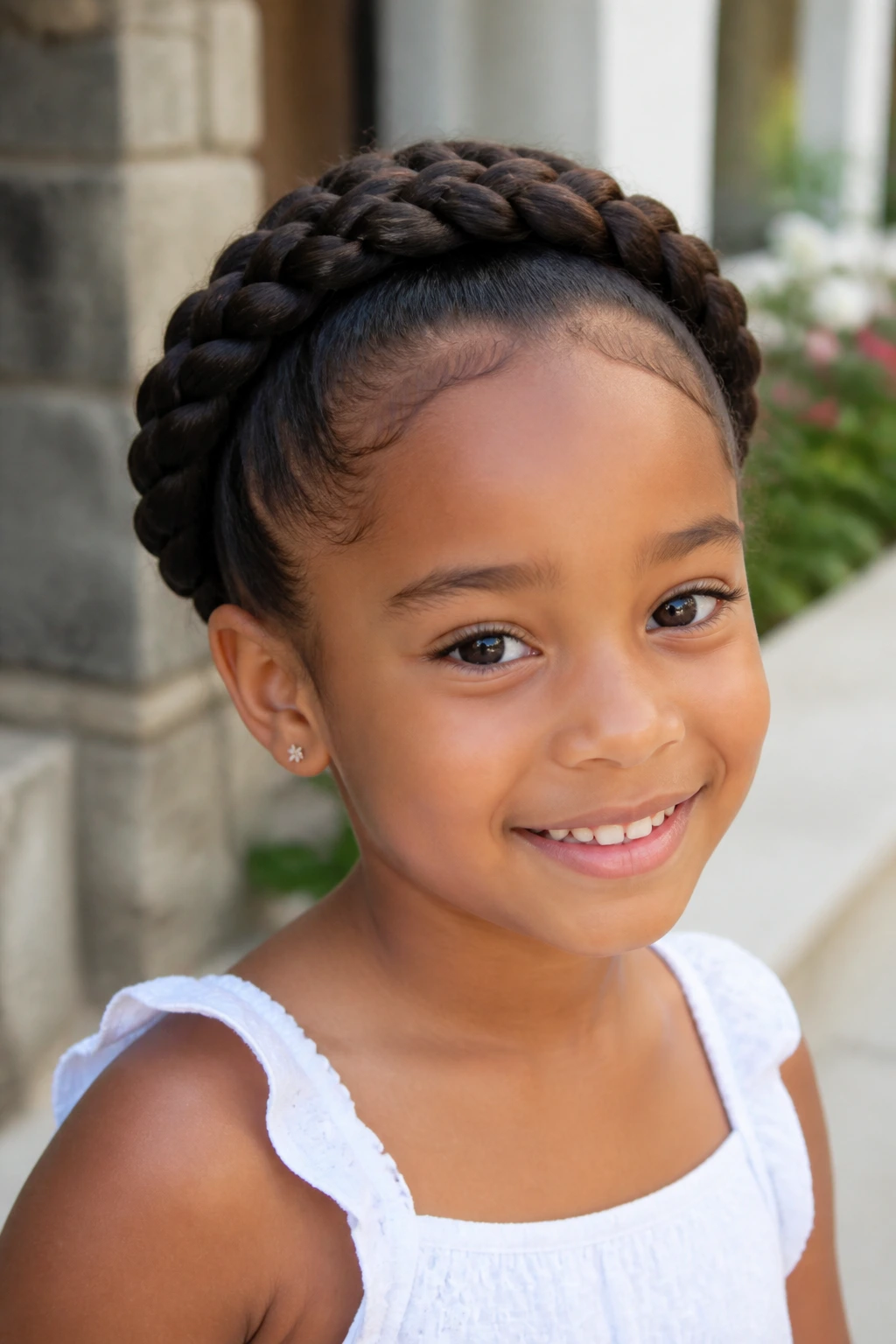
A crown braid circles the head like a built-in headband, which means the front stays tidy and the back stays out of the way. For kids who keep pushing hair off their forehead, this style solves the problem without constant redoing. It also has a neat little secret: the ends can be tucked away so they do not hang loose and tangle.
The style lasts best when the braid path follows the head shape instead of fighting it. Keep the tension even all the way around. If one side is pulled harder than the other, the style loosens unevenly and starts to feel lopsided.
I like this for picture day, choir, church, and any day when the front row needs to stay calm. It usually holds for 1 to 3 weeks, though the exact time depends on how much the child sleeps on the style and whether the tuck stays secure.
10. Zig-Zag Part Box Braids
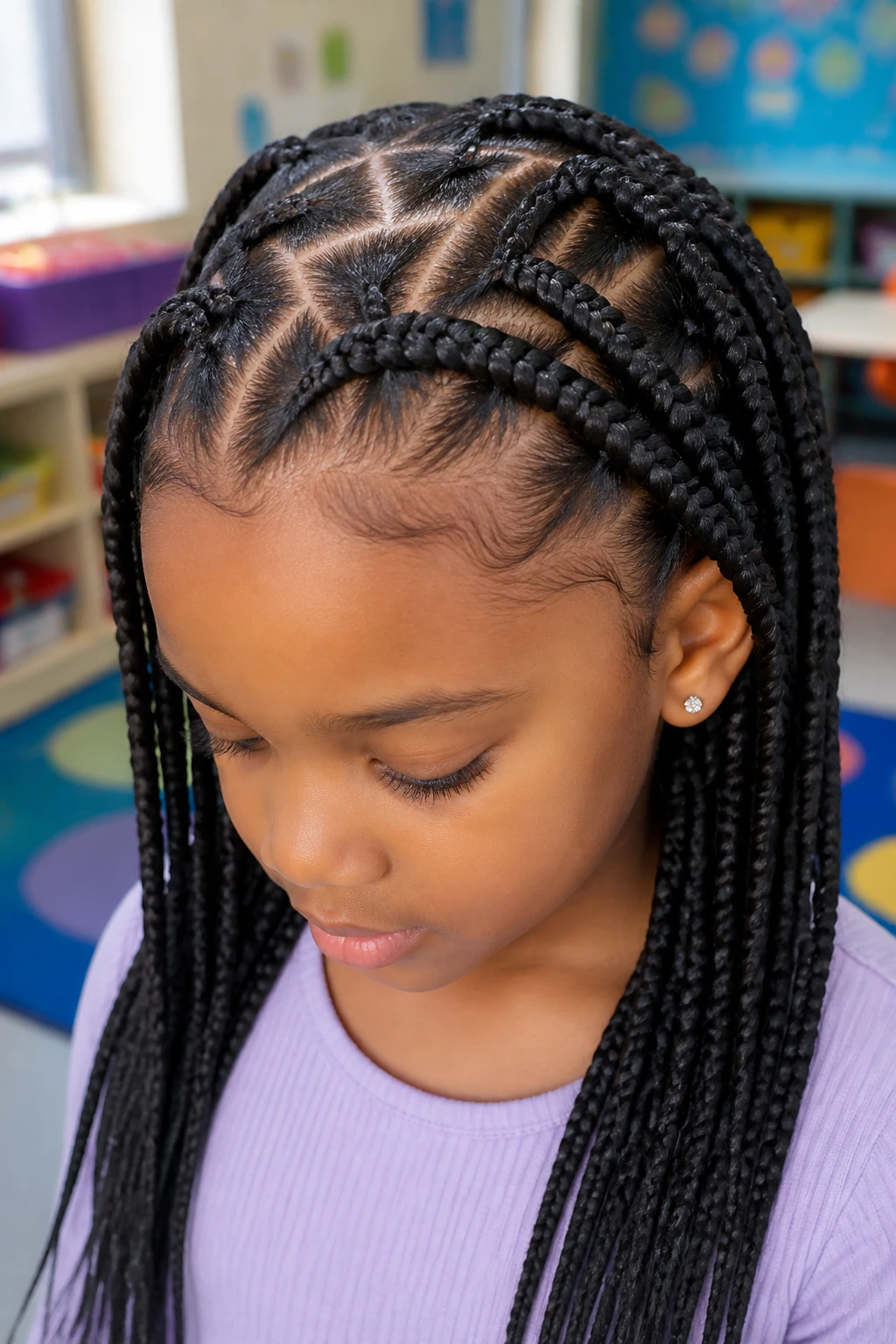
Zig-zag parts are a small detail with a big payoff. The pattern breaks up the scalp lines, so grow-out looks softer and the style has a little personality from the start. Kids tend to love this one because the parts feel playful instead of plain.
The braid itself can be classic box braids, knotless braids, or short braids with sealed ends. The zig-zag pattern is what changes the whole mood. It also hides a bit of new growth better than a straight grid, which is handy if you’re trying to stretch the style without it looking rough.
Keep the sections clean. If the zig-zag is sloppy, the whole style reads as messy instead of fun. With a tidy finish, this can last 3 to 5 weeks and still look fresh enough for school photos.
11. Feed-In Dutch Braids into Mini Buns
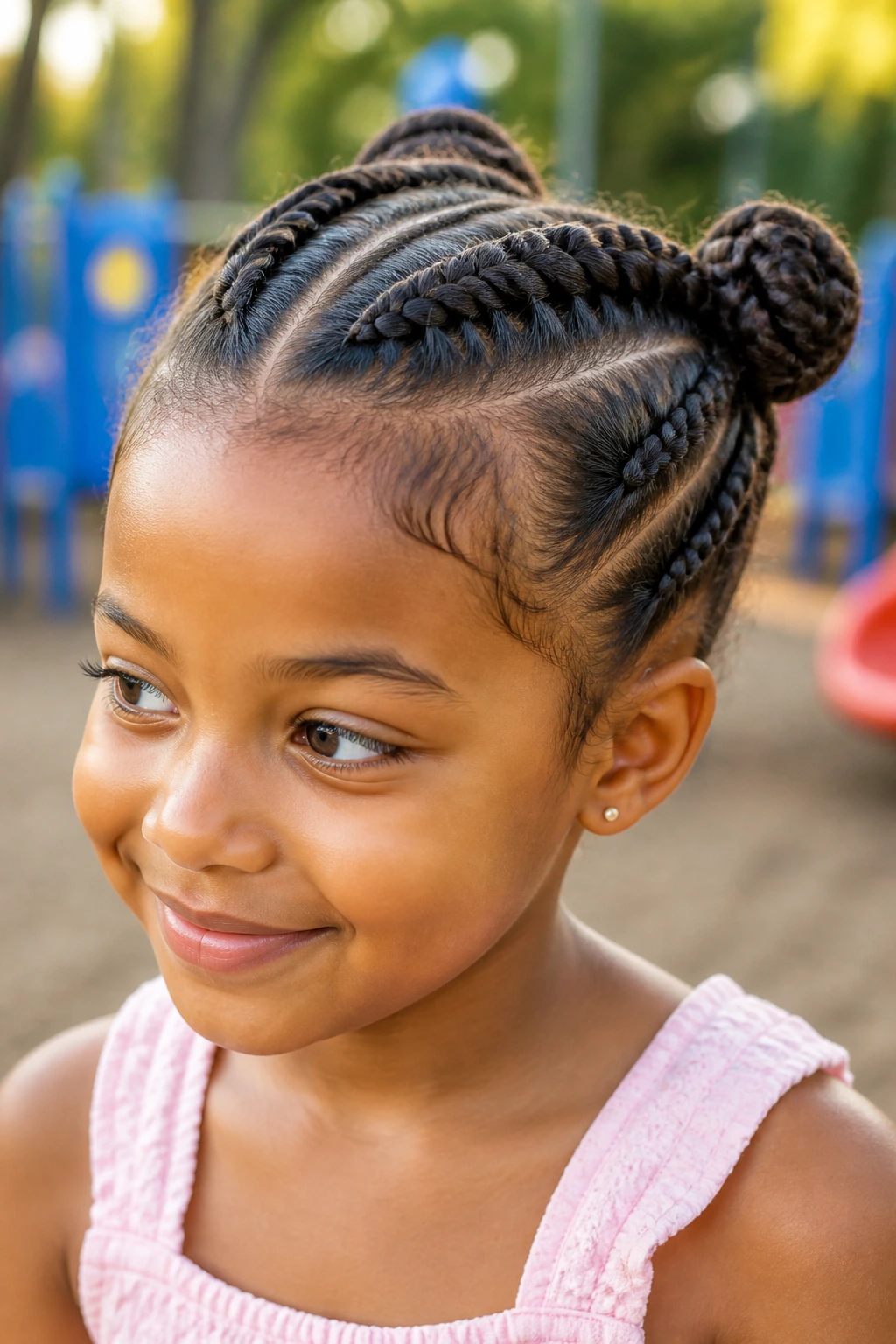
This one is a nice bridge between sporty and polished. Two Dutch braids begin at the front, feed in more hair as they go, then tuck into small buns near the back or sides. The braided base keeps the scalp neat, and the buns keep the ends contained.
It’s a strong choice for kids who run hot. Long loose braids on the shoulders can get sweaty and frizzy. Mini buns give the hair structure without a lot of extra weight. Make the buns small and low, though. Giant buns on a child’s head can sag by lunchtime.
This style usually wears for 2 to 4 weeks if you keep the part lines fresh and rewrap the buns as needed. It’s also a good one for kids who want a style that feels a little more grown up without looking stiff.
12. Half-Cornrow, Half-Braid Combo
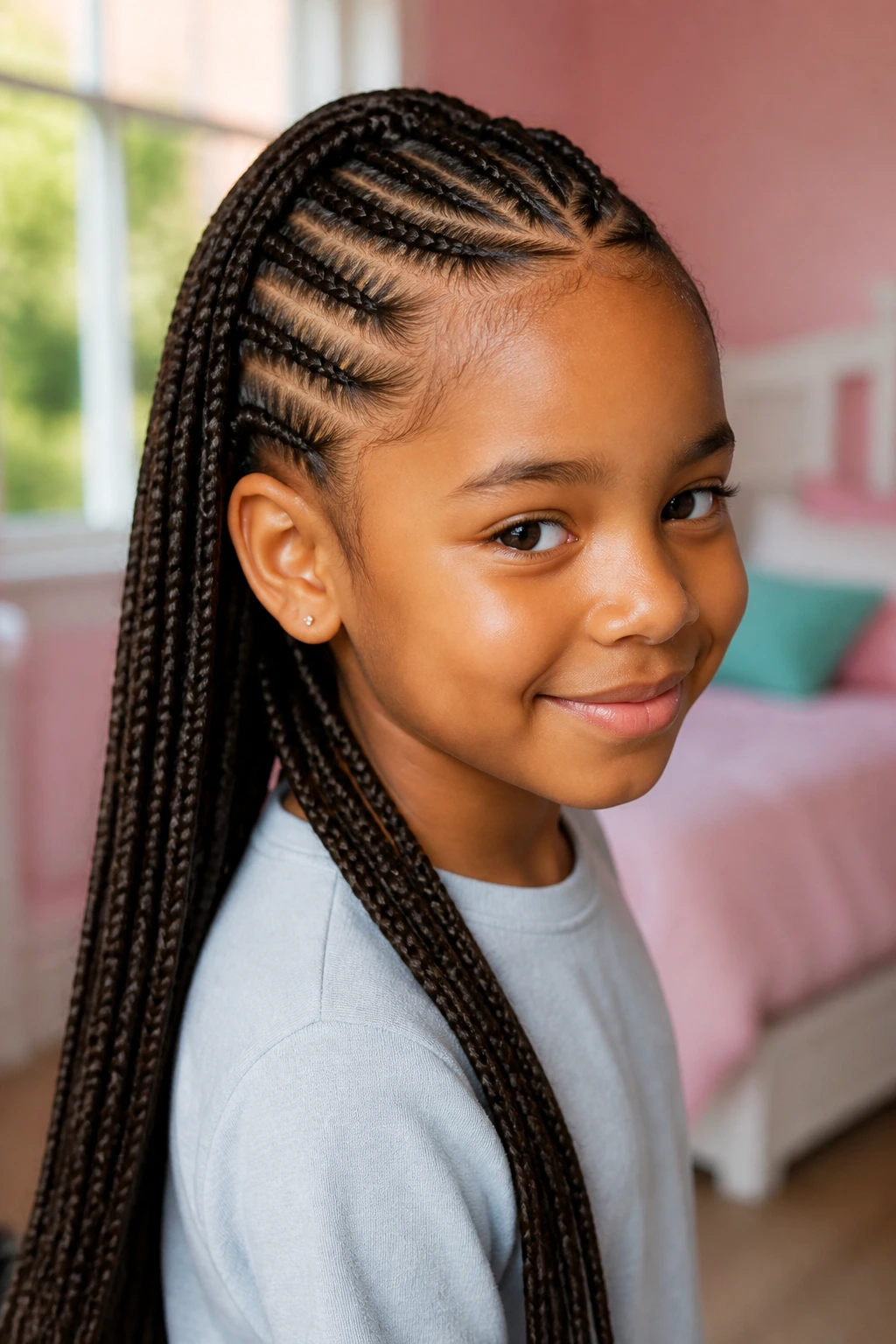
Some kids need the front off the face and the back left a little looser. That’s where a hybrid style earns its keep. Cornrows at the front control the hairline and keep flyaways down, while box braids or individual braids in the back give movement and length.
This combo works well when a child has different textures on the head — softer edges in front, denser coils in back, or just a kid who hates having a full head of tight braids. The front stays practical. The back can be styled with ribbons, cuffs, or plain ends depending on what the child will tolerate.
I like this one because it bends to the day instead of forcing one look everywhere. The wear time often lands around 2 to 4 weeks. Keep the front braids clean, because that’s the part everyone sees first.
13. Thread-Wrapped Braids
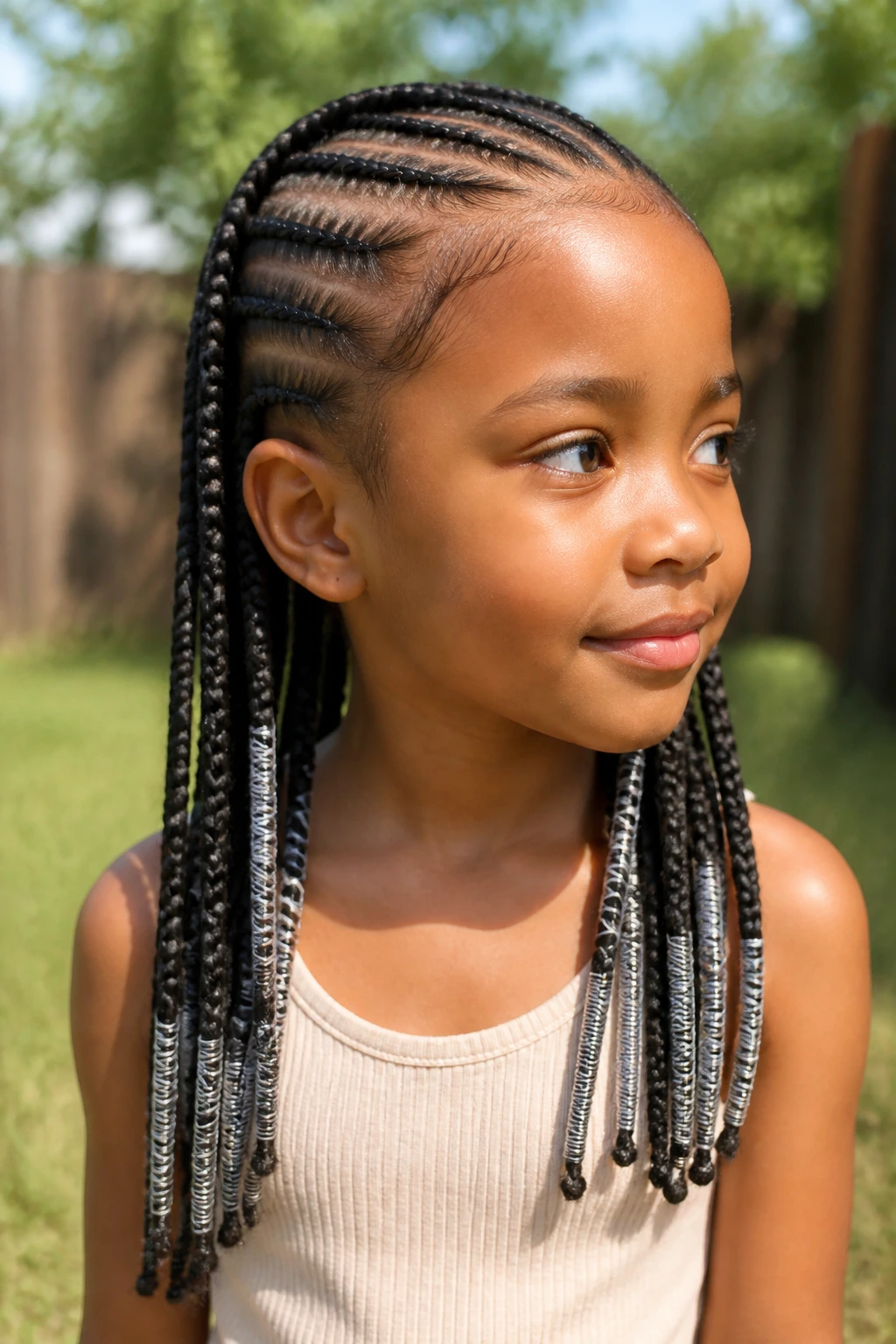
Thread wrapping looks simple, but it does a lot of work. A few turns of thread around the braid can compress flyaways, add color, and give the end of the style a more finished feel without piles of heavy accessories. The effect is neat and a little artsy.
Use lightweight thread and keep the wraps spaced. If the thread is wound too tightly, it can bite into the braid and make removal annoying later. I prefer wrapping the lower third or just the ends, not the whole braid. That keeps the style breathable and still interesting.
This is a good option for kids who don’t love beads or bows. It usually lasts 2 to 3 weeks, and the thread can be swapped out if the color starts to look dull. A small thing, really. But small things keep styles looking cared for.
14. Double Puff Cornrows with Braided Extensions
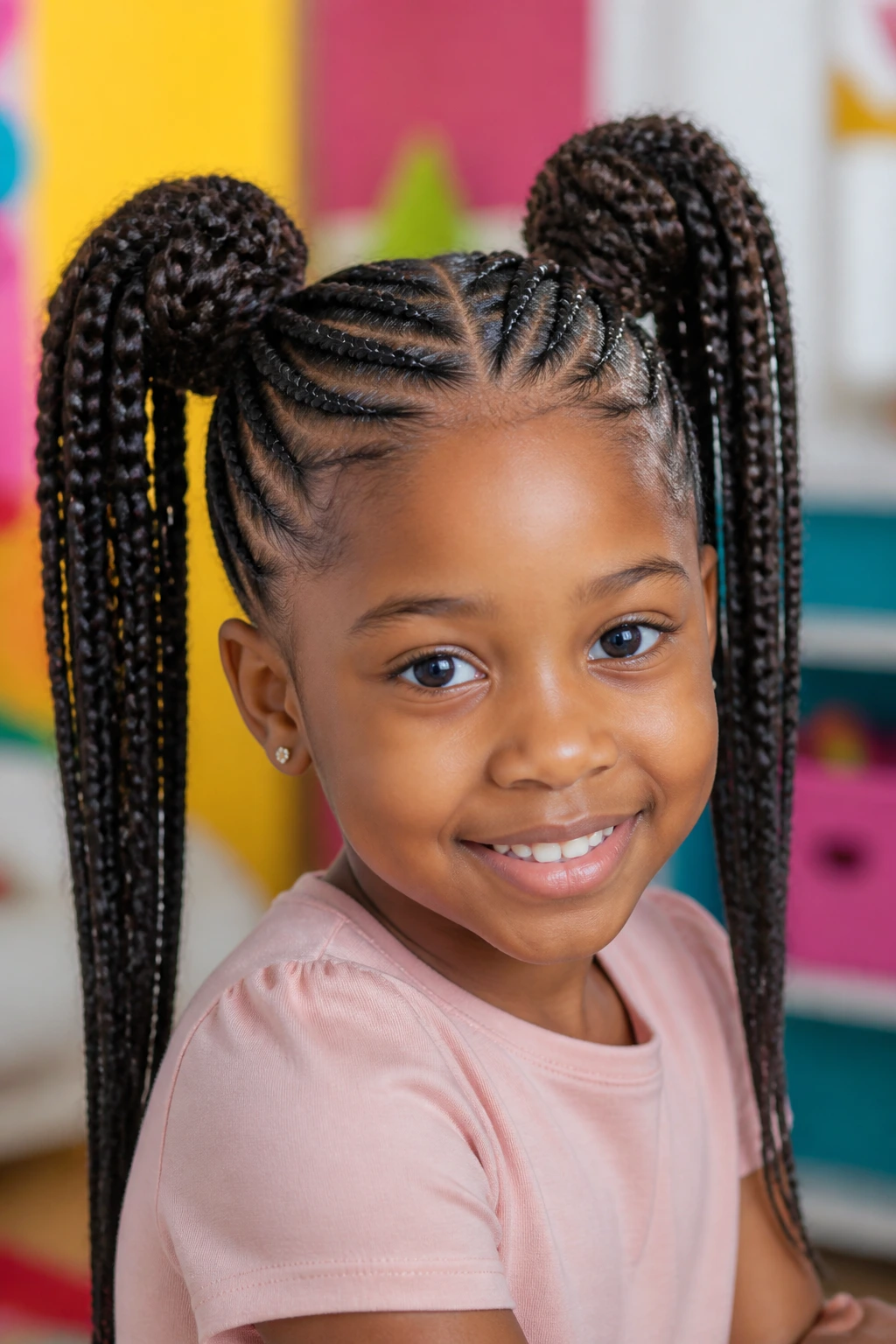
Double puffs can look playful and still behave like a proper protective style when the base is done as cornrows. The hair is controlled at the scalp, then gathered into two puffs that sit high enough to be fun but low enough not to feel weighty. Add braided extensions if you want more length without making the style bulky all over.
The best version of this style keeps the puff sections smooth and the attachment points secure. If the elastic bites too hard, the child will tug at it all day. A soft tie or a covered band is kinder. This is one of those styles that looks easy but needs good parting to stay neat.
For kids who love movement and a little bounce, this is a smart pick. It tends to hold for 2 to 4 weeks, depending on how much the puffs are touched. Not every style has to be stiff to last.
15. Heart-Part Braids
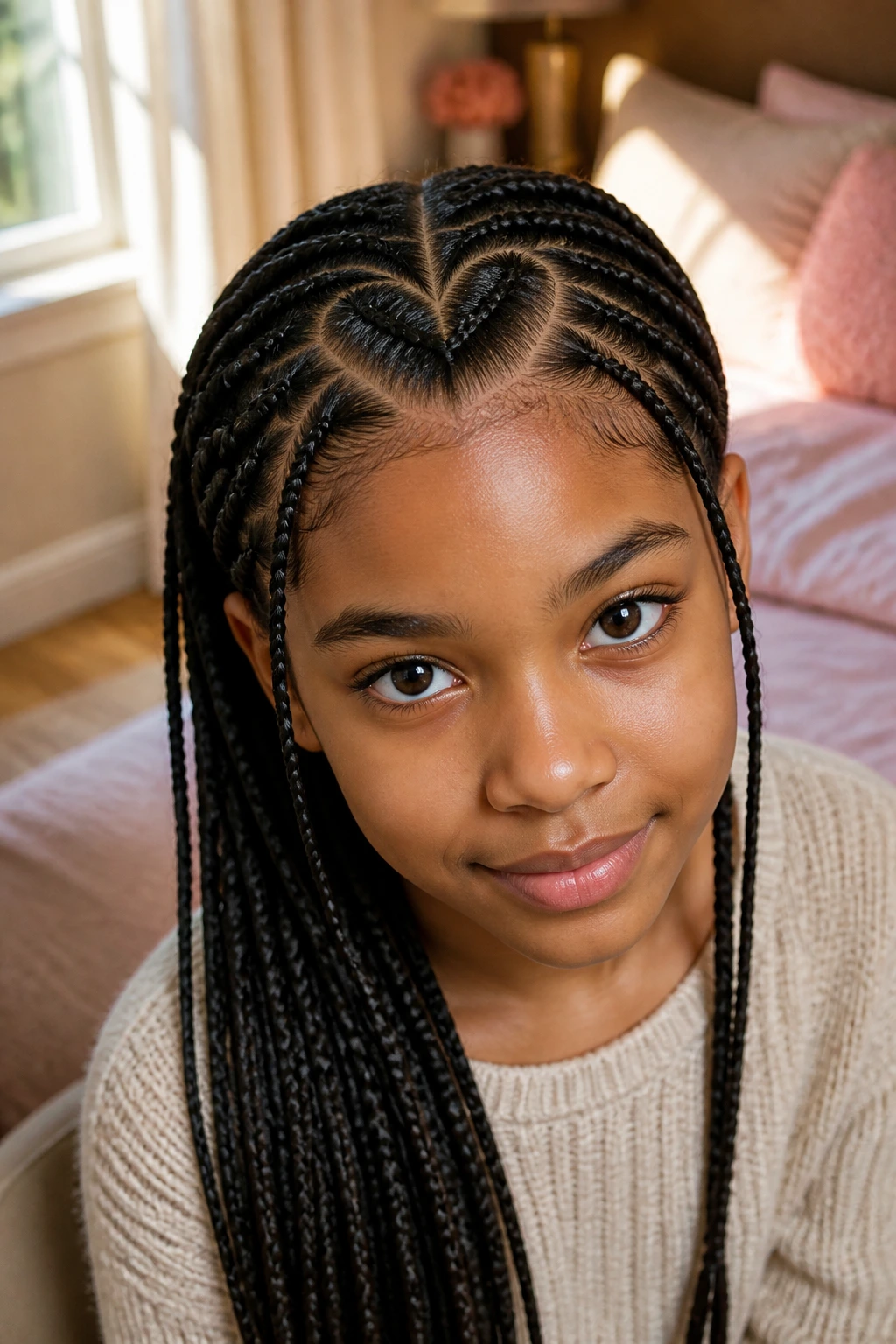
Heart parts are for the child who wants the braid to feel personal. The style still sits in protective braid form, but the parting spells out something with a little charm. That shape also gives the scalp a visual break from the usual grid, which helps the style feel fresh longer.
The key is precision. A heart part only looks sweet if the lines are clean and the curves are even. If the parting wobbles, the whole thing reads like an accident. Keep the braids simple once the part is done — no need to overload it with beads and cuffs everywhere.
This style can last 3 to 4 weeks if the base is well set. It’s the kind of braid that makes a child sit a little taller because they had a hand in choosing it.
16. Low Side Pony Braids
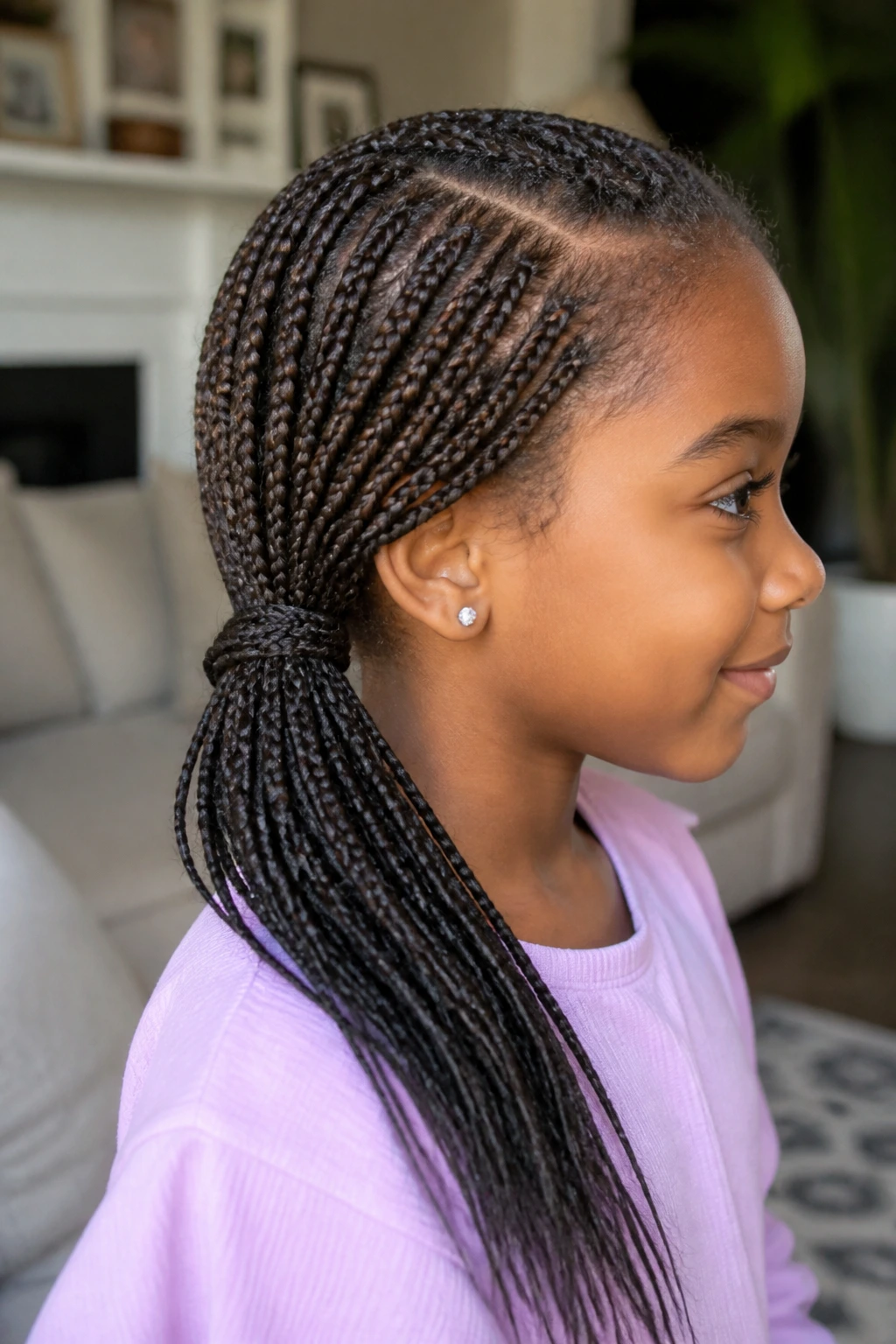
A low side pony gives you the calm of a ponytail and the structure of braids without dragging everything down the back. The side placement keeps the style interesting, and the low anchor point helps the hair sit more comfortably against a pillow at night. For kids who turn their heads a lot, that matters.
I like this one for children with medium to long hair because it keeps the weight from building up at the crown. It also works well when you want a style that can be dressed up with a bow or left plain for school. The side part should be clear but not razor sharp.
Wear time is usually 2 to 4 weeks. If the pony sits too high, it loosens faster. Keep it low and the style behaves better.
17. Braided Space Buns
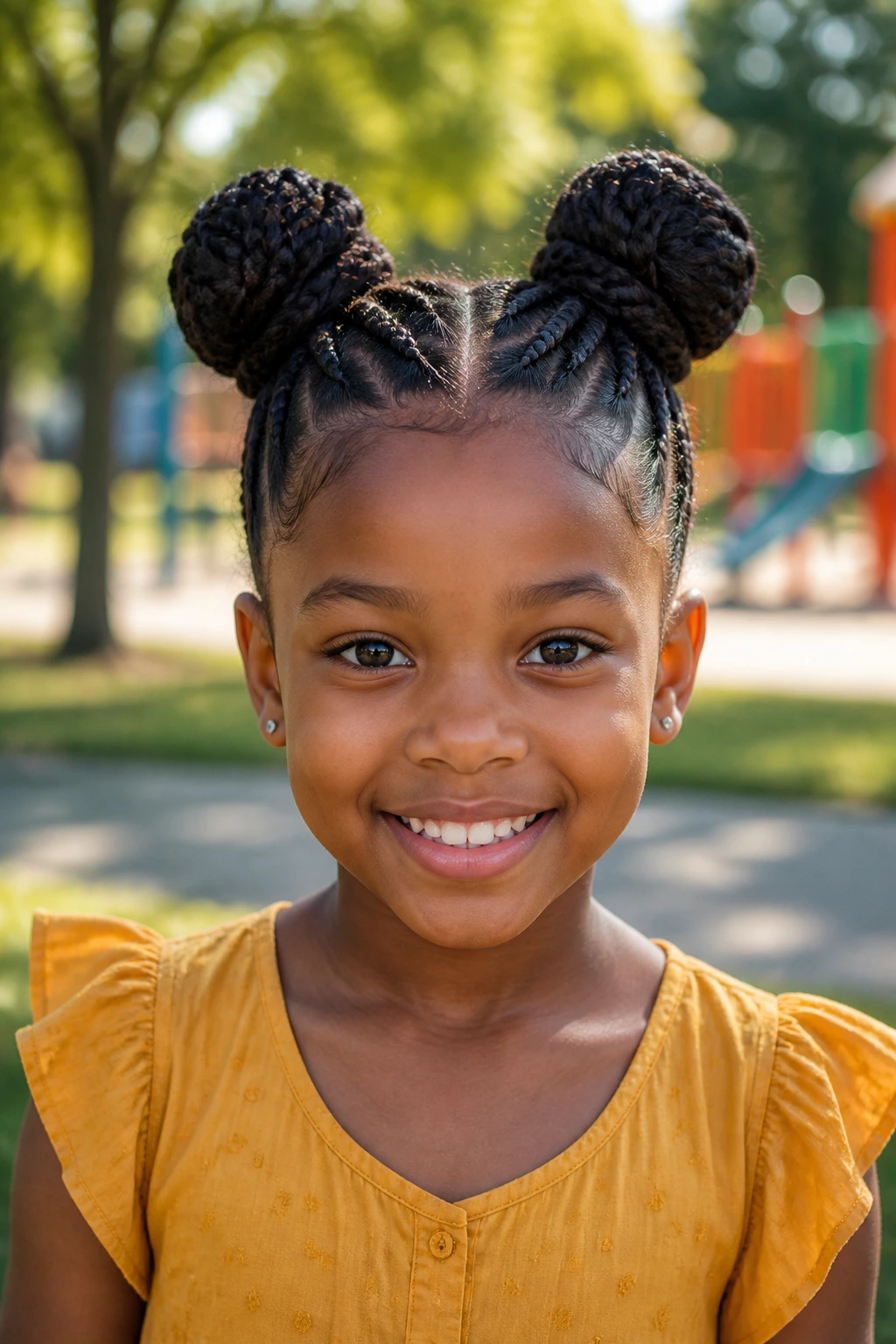
Braided space buns are playful, but they still count as protective when the hair is tucked and secured well. The braids feed into two buns that keep the ends away from tiny hands and reduce friction at the shoulders. Less rubbing, less frizz.
What makes this style work is balance. The buns need to sit evenly, and the braids leading into them should be firm without being rigid. If one bun is heavier than the other, the style starts to tilt by day two and never quite recovers.
This is a good choice for birthday weekends, school spirit days, or kids who want a more fun shape while still keeping the hair contained. Expect 1 to 3 weeks. It’s not the longest-wearing style on the list, but it earns its spot because the maintenance is easy.
18. French Curl Braids
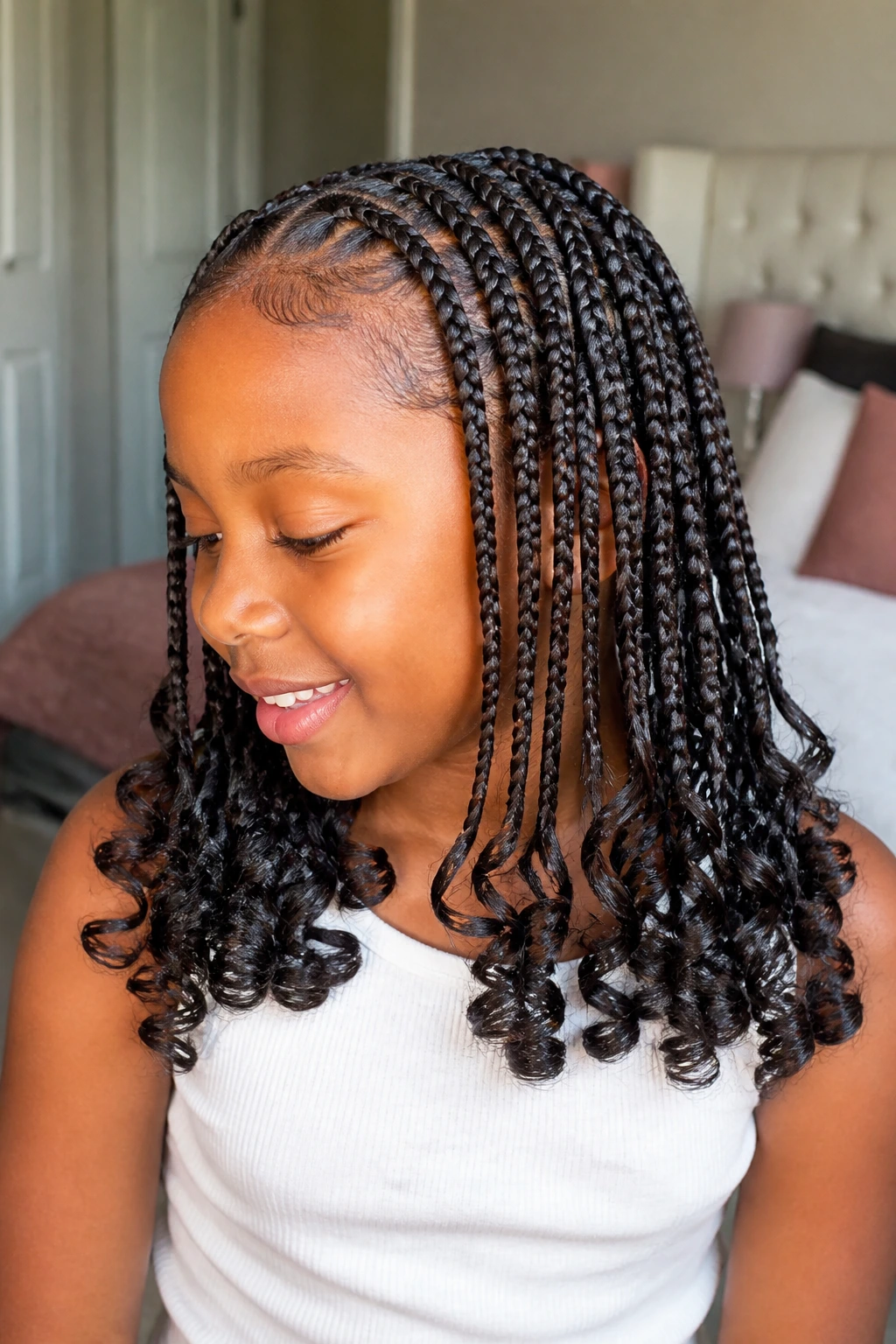
French curl braids have a soft finish that looks polished without feeling stiff. The curled ends bring movement and make the style feel lighter around the shoulders than long straight braids do. That curl also hides some wear at the end of the braid, which is useful when you’re trying to stretch a style just a little longer.
For kids, the best version keeps the braids medium-sized and the curls lightweight. Heavy curls can tangle after sleep and turn the ends into a fuzzy knot if nobody is checking them. A silk scarf at night helps a lot here. So does a loose pineapple or low wrap, depending on the child’s age.
This style often lasts 3 to 4 weeks. It’s one of the prettier long-wear options, but it likes care. Ignore the ends and they’ll announce themselves fast.
19. Cornrow Mohawk with Loose Braided Length
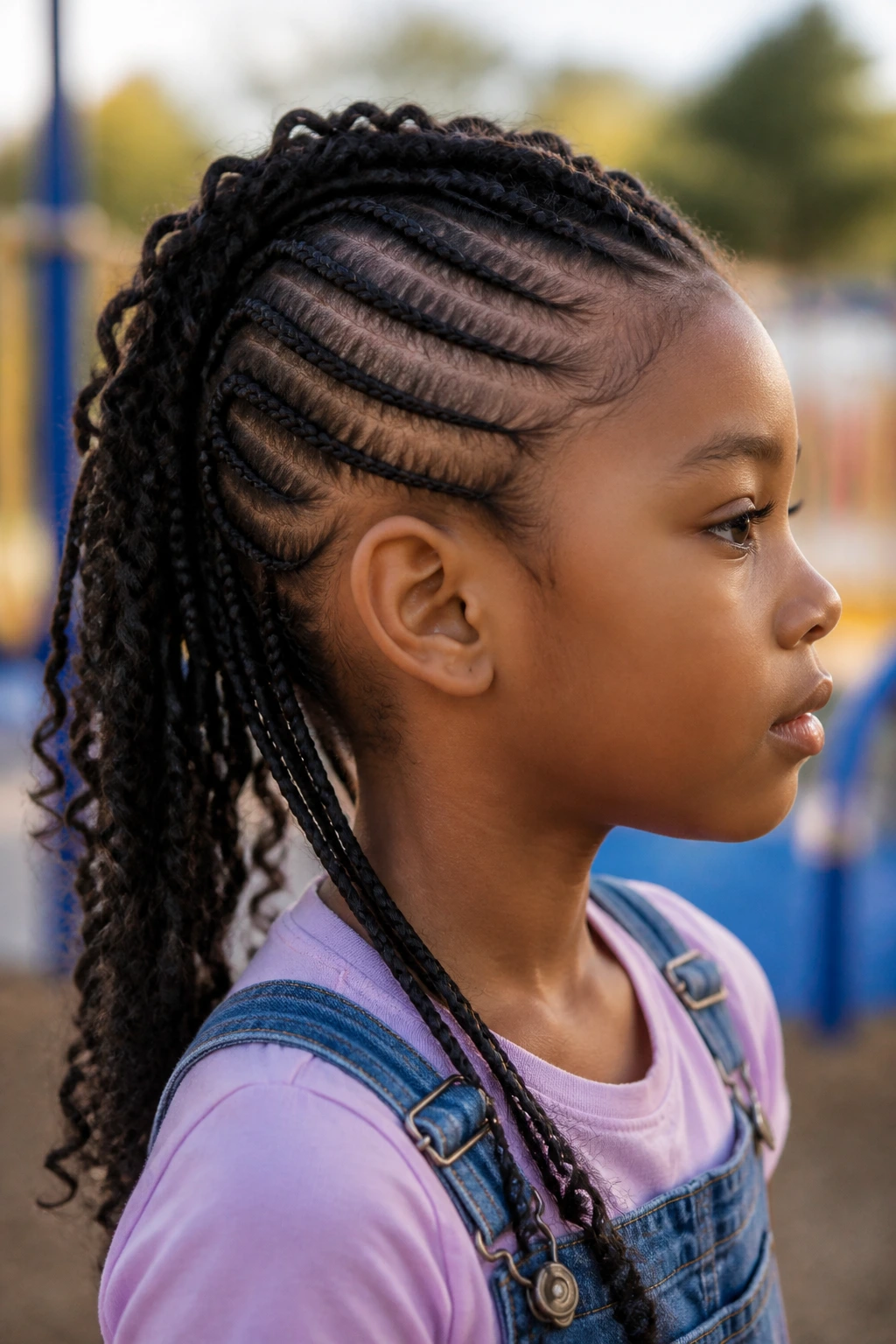
A braided mohawk is a strong choice when you want edge without losing control. The sides are cornrowed down close, which keeps the hair flat where kids usually get the most friction. The center section carries the personality, whether that means loose braids, a braided ridge, or a row of feed-ins running from forehead to nape.
This style works especially well for thicker hair that likes to puff out if left on its own. By keeping the sides controlled, the center can have a little movement without the style collapsing. It also wears helmets and hats better than a style with lots of width at the temples.
I’d give this one 2 to 4 weeks, depending on how much the center section is handled. If the child sleeps on one side every night, rotate the direction of the loose length a bit when you can.
20. Classic Straight-Back Cornrows with Bead-Ready Ends
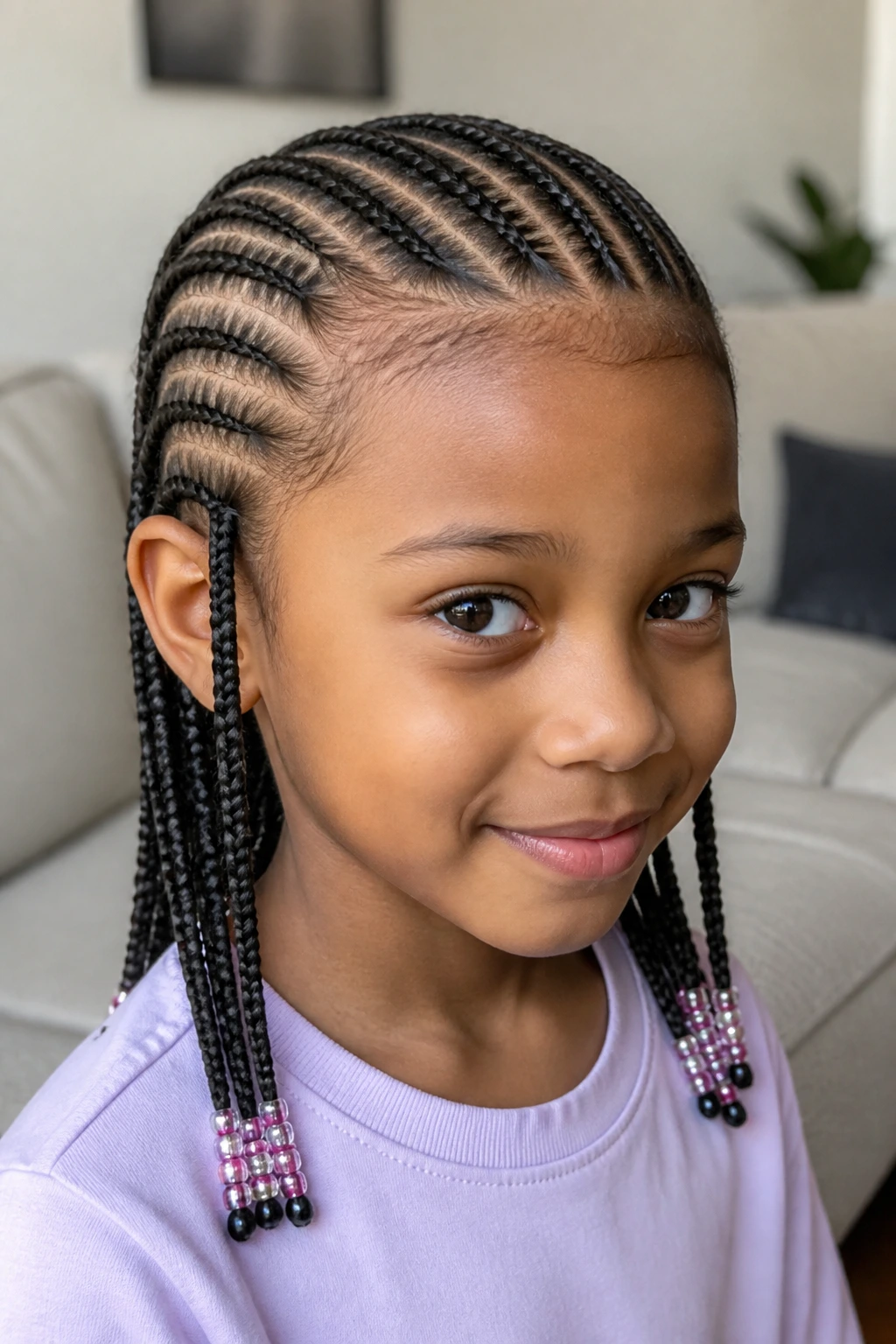
Straight-back cornrows are the old reliable of kids’ braided styles. They sit flat, they keep the hair off the face, and they survive ordinary chaos better than almost anything else. If you want a style that a child can wear to school, sleep in, and still have presentable the next morning, this is it.
The braid lines should be clean and even, but not microscopic. Tiny rows can look nice for a day and then start to stand up at the roots when the child moves around. Medium rows hold shape better and are easier on the scalp. Leave the ends plain if you want maximum longevity, or add a few light beads if the child wants some movement.
This style generally lasts 2 to 4 weeks. That may sound plain, but plain is often the point. Clean, simple, and hard to mess up.
What Makes a Braided Style Stay Neat on a Busy Head
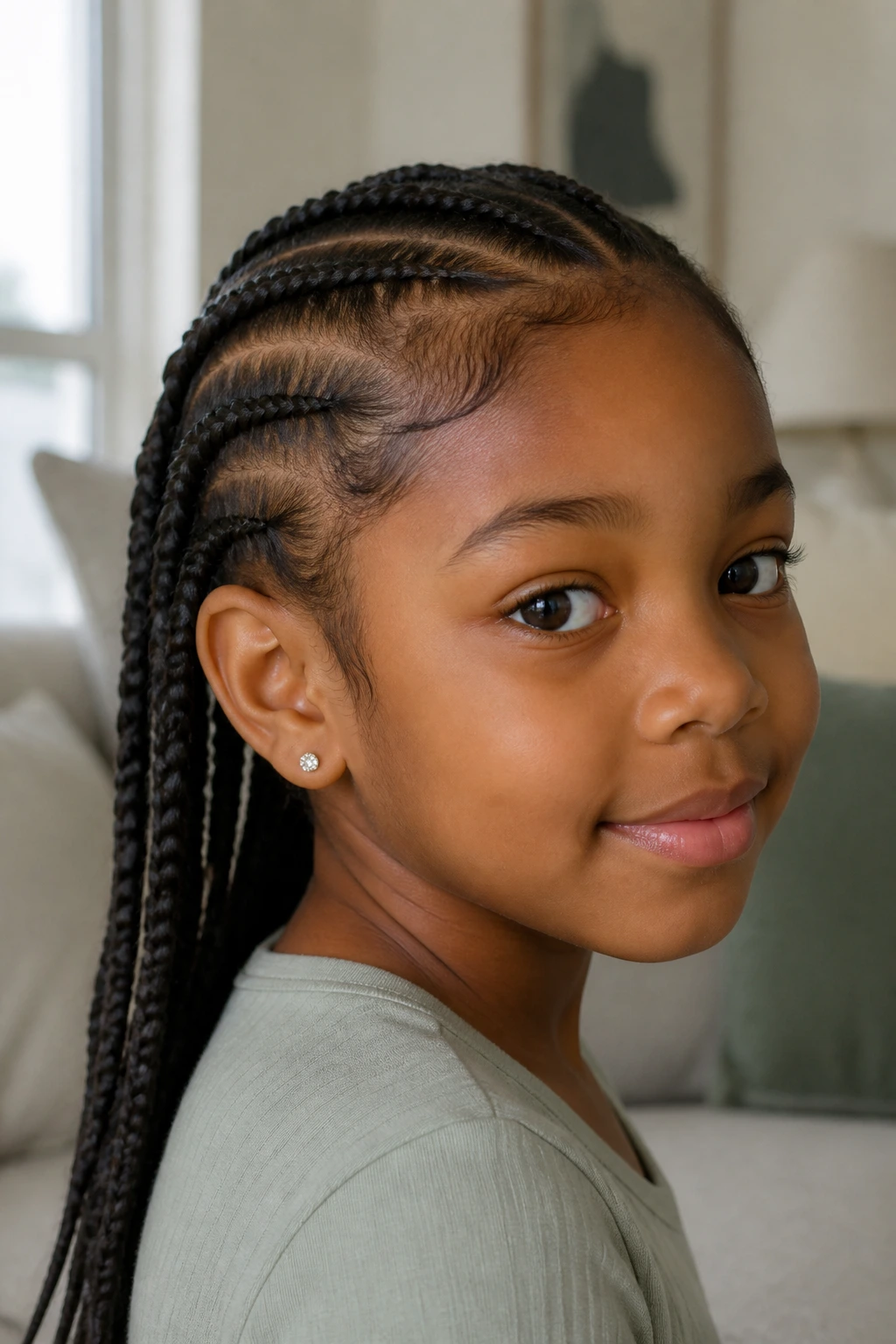
The styles that last on kids have one thing in common: they do not fight the child’s life. A braid can be gorgeous and still fail by Wednesday if it is too heavy, too tight, or too fussy for school mornings. I trust styles that sit close to the scalp, leave the edges calm, and give the ends somewhere to land without snagging on every sweatshirt zipper.
Tension is the first test. If the front row looks sharp but the child flinches when you touch the hairline, the style is already in trouble. A braid should feel secure, not tense. That difference shows up fastest around the temples and nape, where little heads often complain first.
Section size matters more than people admit. Bigger, even parts often outlast tiny, overworked ones because the scalp is not carrying as much pull. Then there’s the finish: tucked ends, light beads, soft elastics, and low ponytails tend to stay neater than dangling extras that catch on everything. Braid longevity is a mechanics problem more than a beauty problem. The beauty follows.
Essential Tools for Kid-Friendly Braids
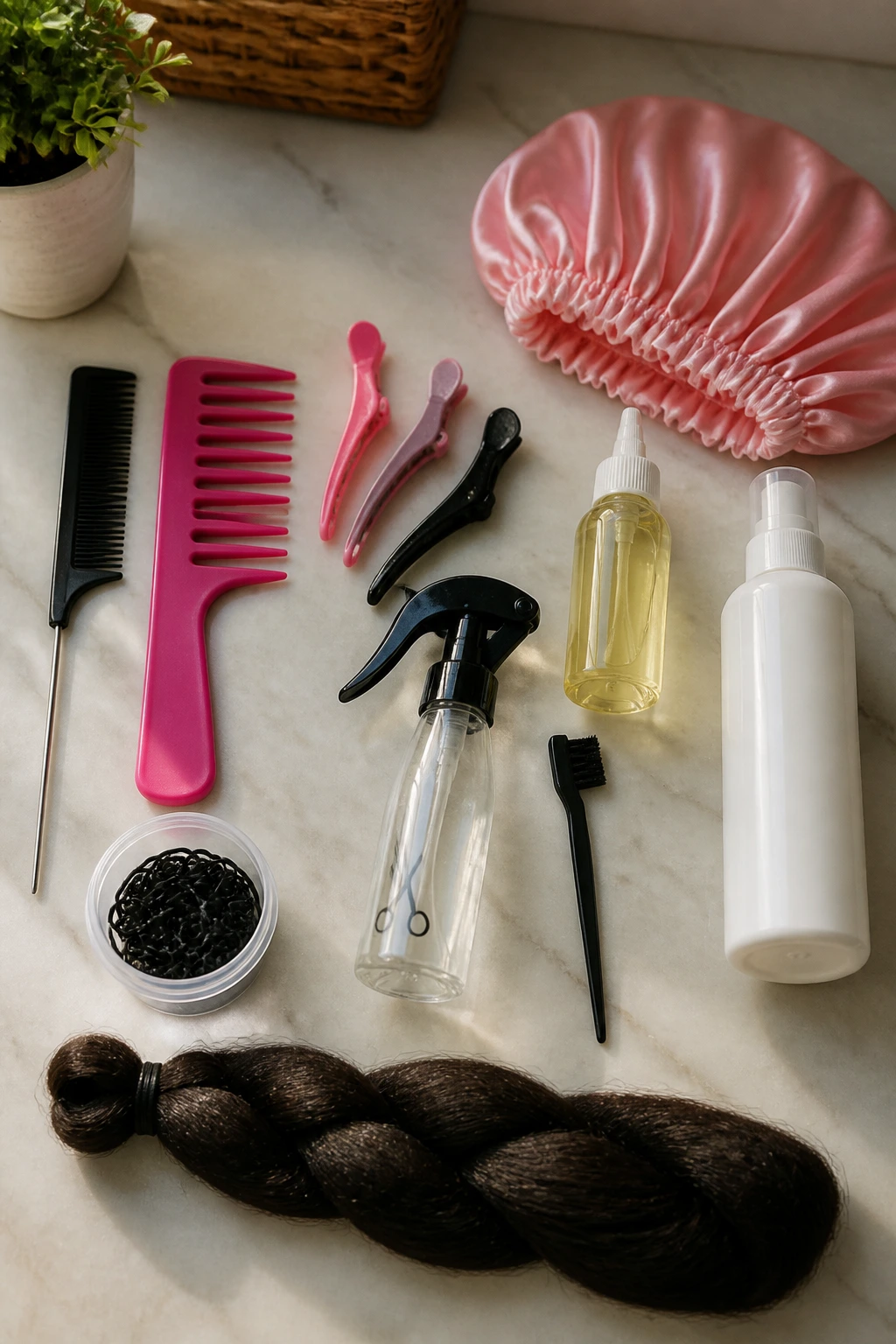
- Rat-tail comb: The pointed tail makes clean parts, and clean parts are half the battle.
- Wide-tooth detangling comb or brush: Use this after misting and before braiding so you’re not ripping through knots.
- Duckbill clips or sectioning clips: These keep the hair organized while you work row by row.
- Spray bottle with water or leave-in mix: Light misting helps with detangling and keeps the hair from frizzing while you section it.
- Lightweight leave-in conditioner: A small amount softens the hair without leaving it greasy.
- Edge brush: Handy for smoothing the front without piling on product.
- Small elastics: Use them for ends, puffs, and side sections, but don’t cinch them so hard they leave dents.
- Pre-stretched braiding hair: If you’re using extensions, this saves time and cuts down on blunt, stiff ends.
- Satin bonnet or scarf: Not optional if you want the style to survive sleep.
- Soft hair oil or scalp serum: A few drops help the scalp feel comfortable; too much turns the base heavy.
Choosing Long Lasting Braids Protective Styles for Kids by Hair Type
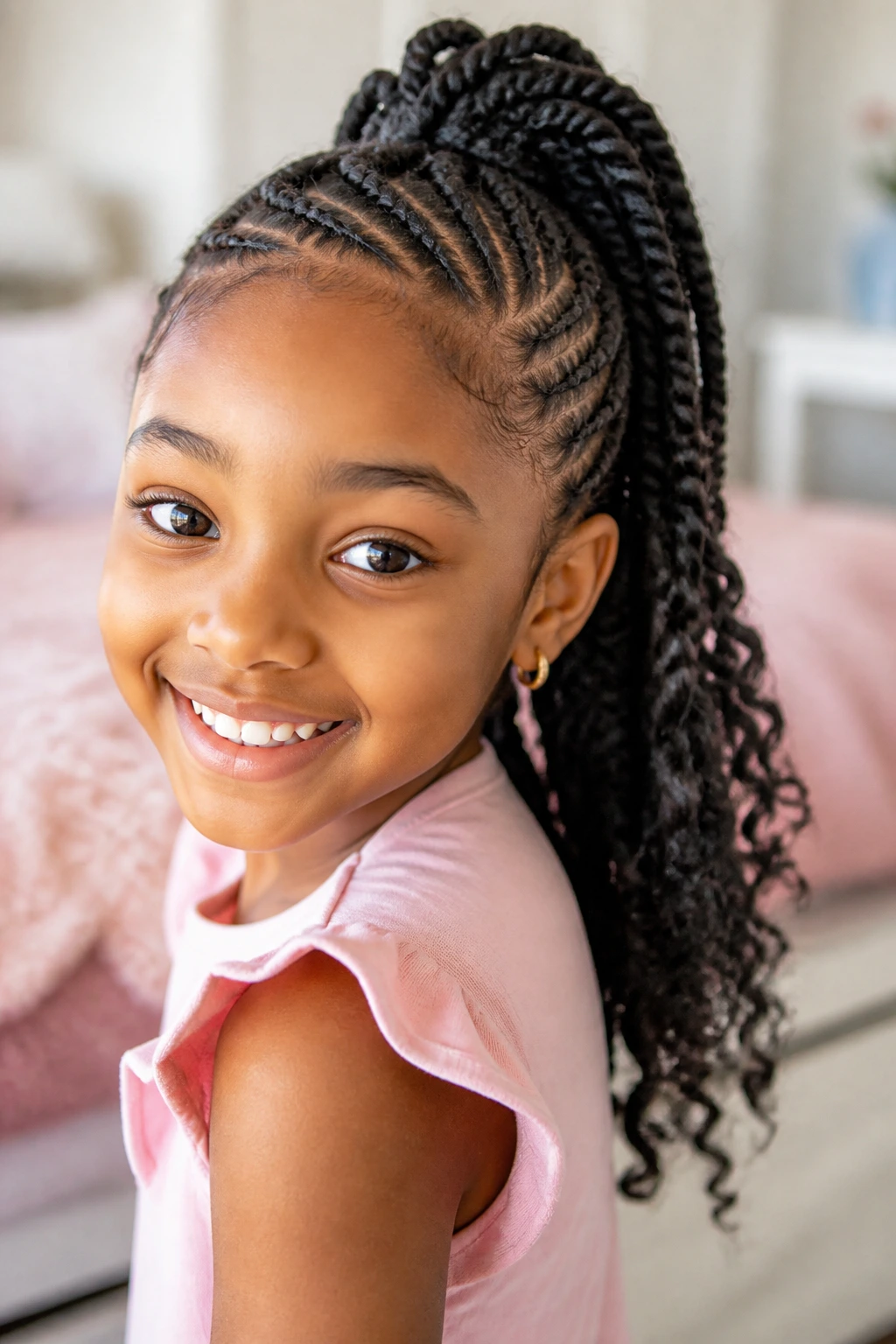
Kids with fine hair usually do better with lighter styles, fewer beads, and smaller amounts of added hair. Their scalp gives you less room for heavy finishes, so knotless starts, straight-back cornrows, and low pony styles tend to behave better. Dense hair can handle a little more structure, but it still needs breathing room at the roots.
The second thing I look at is length. If the hair is short, you want styles that anchor close to the scalp and do not depend on long loose ends to look finished. If the hair is shoulder length or longer, you can bring in feed-ins, curled ends, or braided puffs without fighting the natural length.
Texture plays a role too, but not in the slick, simplified way people love to talk about online. Coils shrink. Fine strands slip. Some hair knots faster than others. That means a style that looks cute on a smooth, straightened head may need a different size or finish on a tighter curl pattern. The best braid style is the one that matches the child’s actual hair, not the one in a glossy photo.
How to Wear These Styles for School, Play, and Picture Day
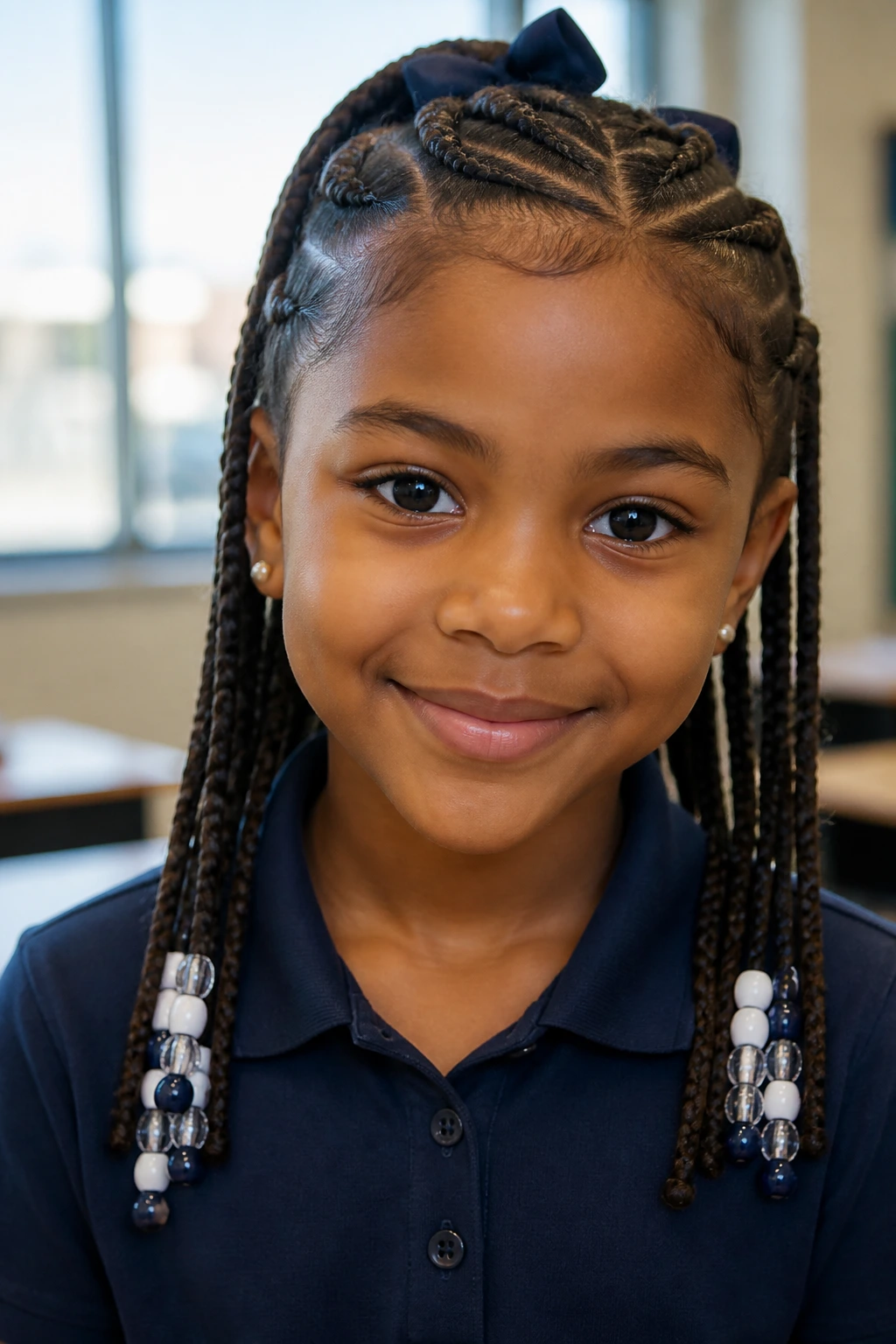
Presentation: Keep the parts crisp and the front row calm. A small ribbon, a few cuffs, or a neat low bow is usually enough; a child does not need a whole accessory shop attached to the head.
Companions: Satin bonnet, satin pillowcase, a spray bottle with water and leave-in, and a soft brush for the morning touch-up. Those four things do more for longevity than another jar of gel ever will.
Wear Window: Most of these styles sit best for 2 to 4 weeks, with the longer end reserved for low-tension braids and the shorter end for styles with curls, beads, or more moving pieces. If the scalp looks dusty, itchy, or puffy before that, the style is done.
Best For: School days, travel, family photos, sports practices, holidays, and any stretch of life where the hair needs to stop being the main event.
Extra Tips for Shine, Softness, and Less Frizz
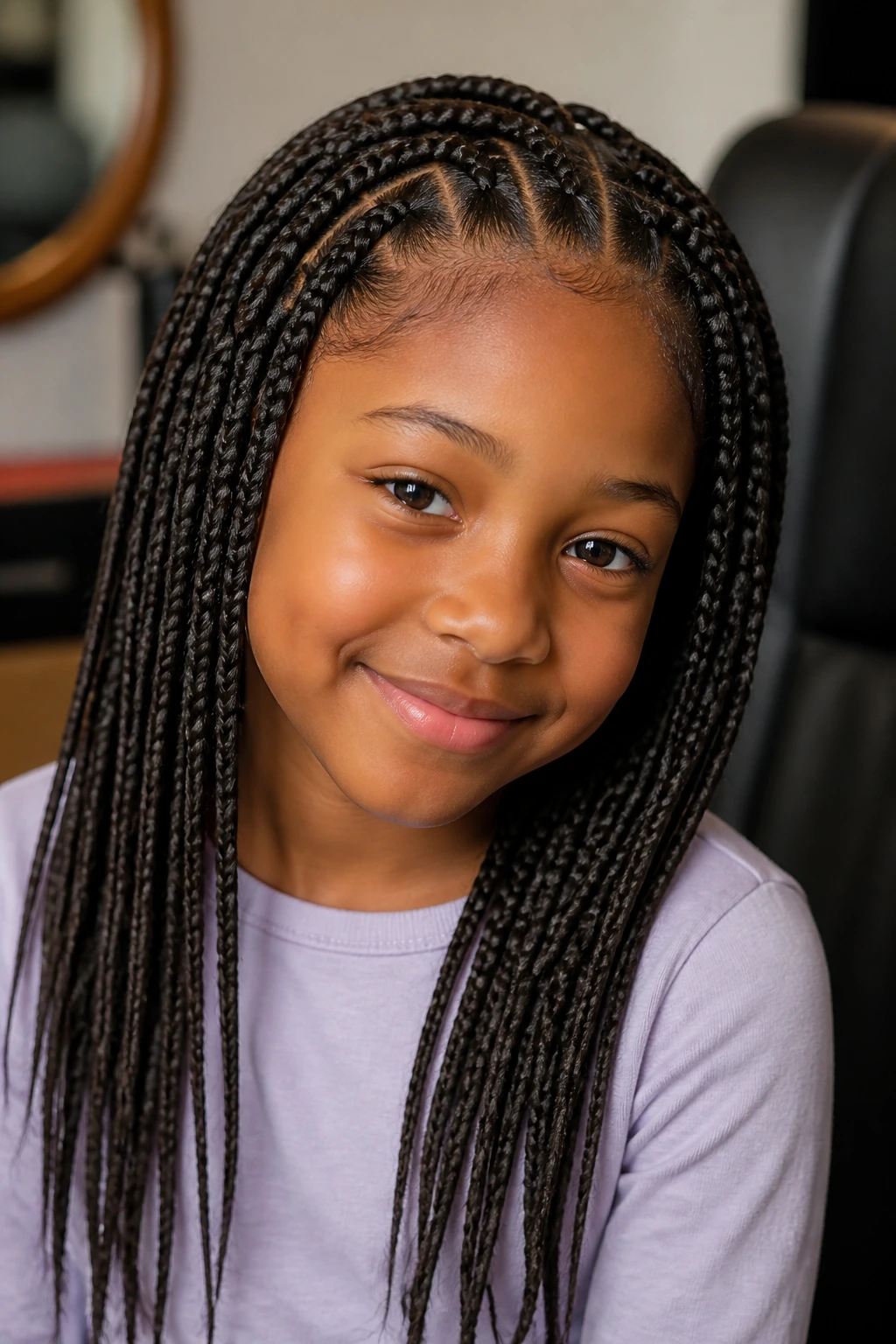
Moisture Boost: Mist the scalp lightly every few days with water and a small amount of leave-in conditioner. Don’t soak the braids. Damp, dripping hair under extensions is how you get that stale smell nobody wants to deal with.
Time Saver: Part the whole head before you start braiding. Seriously. It cuts the sitting time, and kids do much better when they can see the finish line instead of wondering if you’ve moved into a second hairstyle.
Pro Move: If the child’s hair is dense or shrinks fast, stretch it a little before braiding with low heat or an overnight stretch method. The parts lay flatter, and the braids sit smoother at the root.
Cost-Saver: Use accessories sparingly. A few clear beads or ribbon ties go farther than buying a giant box of extras you’ll never use again. The braid pattern should carry the style; the accessories should finish it.
Kid Input: Let the child pick one detail — beads, ribbon color, side part, or bun placement. One choice is enough. Too many choices turn a simple braid appointment into a negotiation.
Common Mistakes That Shorten Wear Time
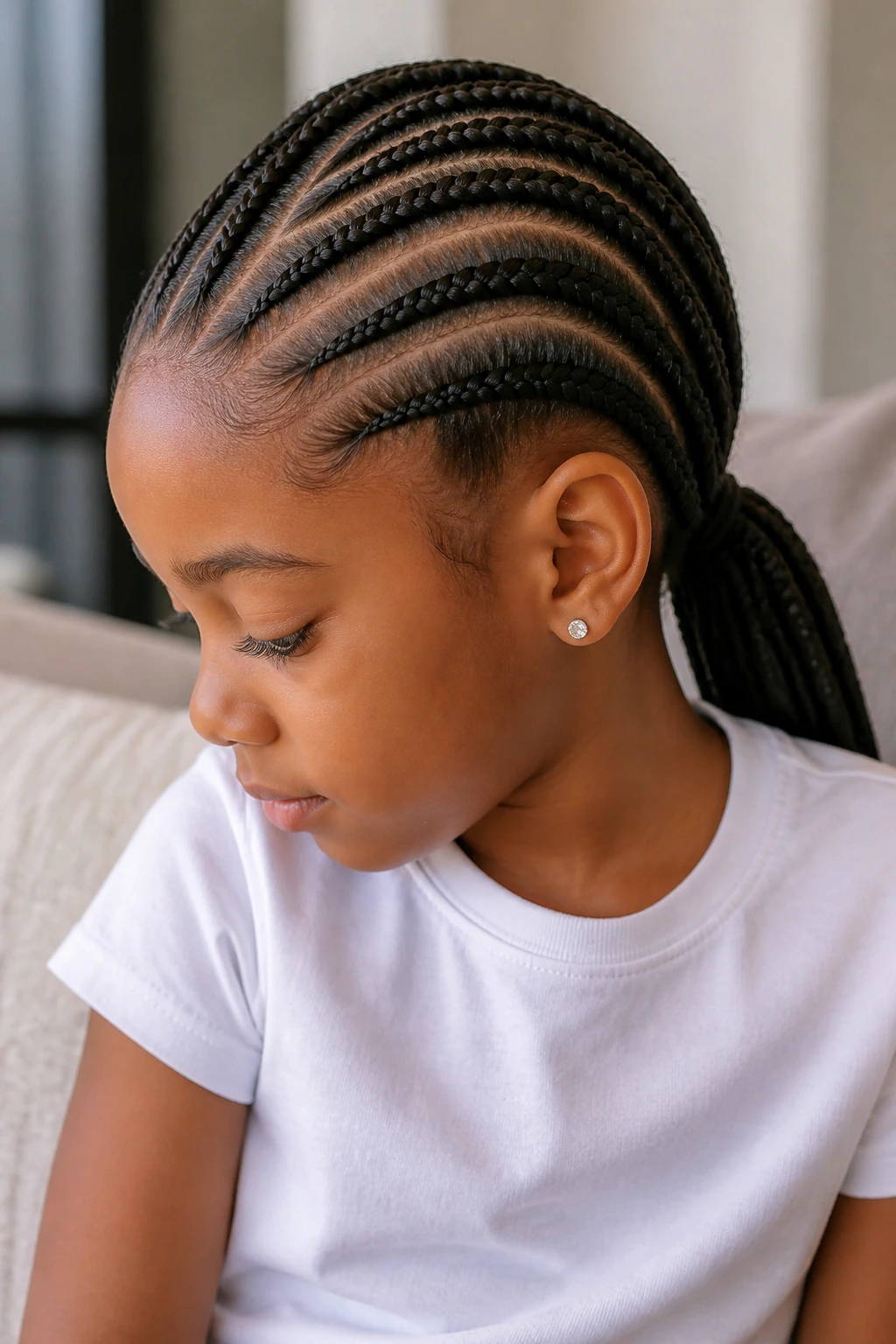
- Braiding too tight at the hairline: The scalp looks pulled, the child complains, and edges can start thinning over time. Fix it by loosening the first inch of each braid and checking comfort before you continue.
- Choosing heavy beads or oversized accessories: The braids slump, the ends snag, and the child starts playing with the hair to relieve the weight. Switch to smaller beads or fewer accents.
- Skipping the detangle-and-stretch step: Knots trapped under the braid make the style puffy from day one. Detangle in sections and make sure the hair is fully dry before you begin.
- Using too much gel or edge control: The front gets crusty, flakes appear, and the style looks older than it is. Use the lightest amount that lays the hair down.
- Leaving the style in too long: Roots mat, the scalp gets itchy, and the braids stop looking protective. Take them down before the hair starts tangling at the base.
- Ignoring nighttime care: Cotton pillowcases rough up the ends fast. A satin bonnet or scarf keeps the style from getting shredded while the child sleeps.
Style Swaps and Variations to Try
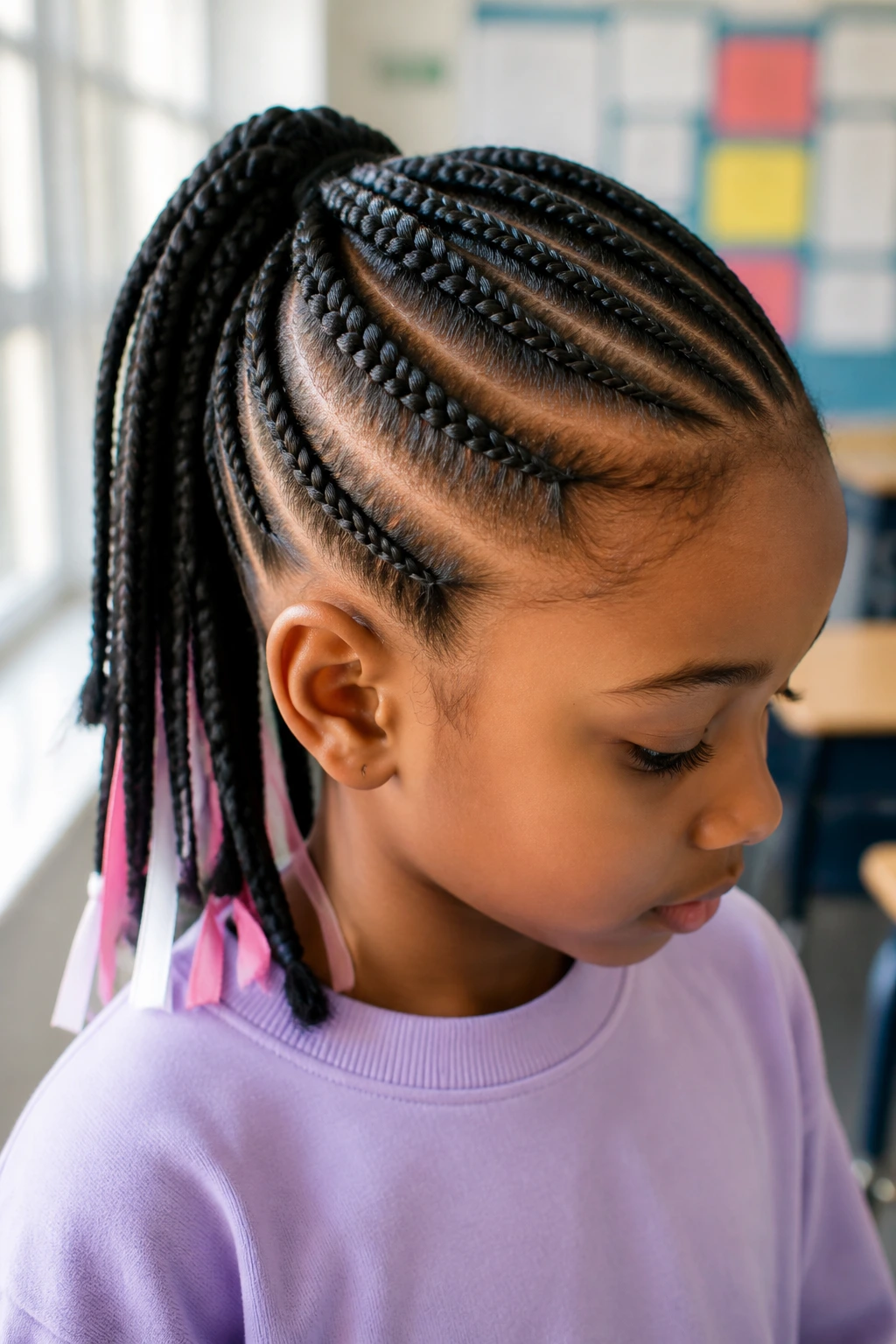
Tiny-Head Soft Part Version: Use fewer, larger sections and keep the braids close to the scalp. This works well for toddlers and kids who cannot sit still for long.
No-Extension Natural Hair Version: Skip added hair and keep the braid length short. The style lasts a little less time, but it is lighter and easier on a sensitive scalp.
School-Sports Hybrid: Start with cornrows at the front and finish with a low pony or bun. That keeps hair away from the face during class and off the neck during recess.
Ribbon-and-Bow Finish: Swap beads for soft ribbon ties at the ends. It gives the style a cheerful look without adding weight or noise.
Sensitive-Scalp Version: Use knotless starts, medium-sized sections, and no tight edges. This is the version to choose when the child usually complains halfway through braid day.
Night Care, Wash Day, and Safe Removal Timing
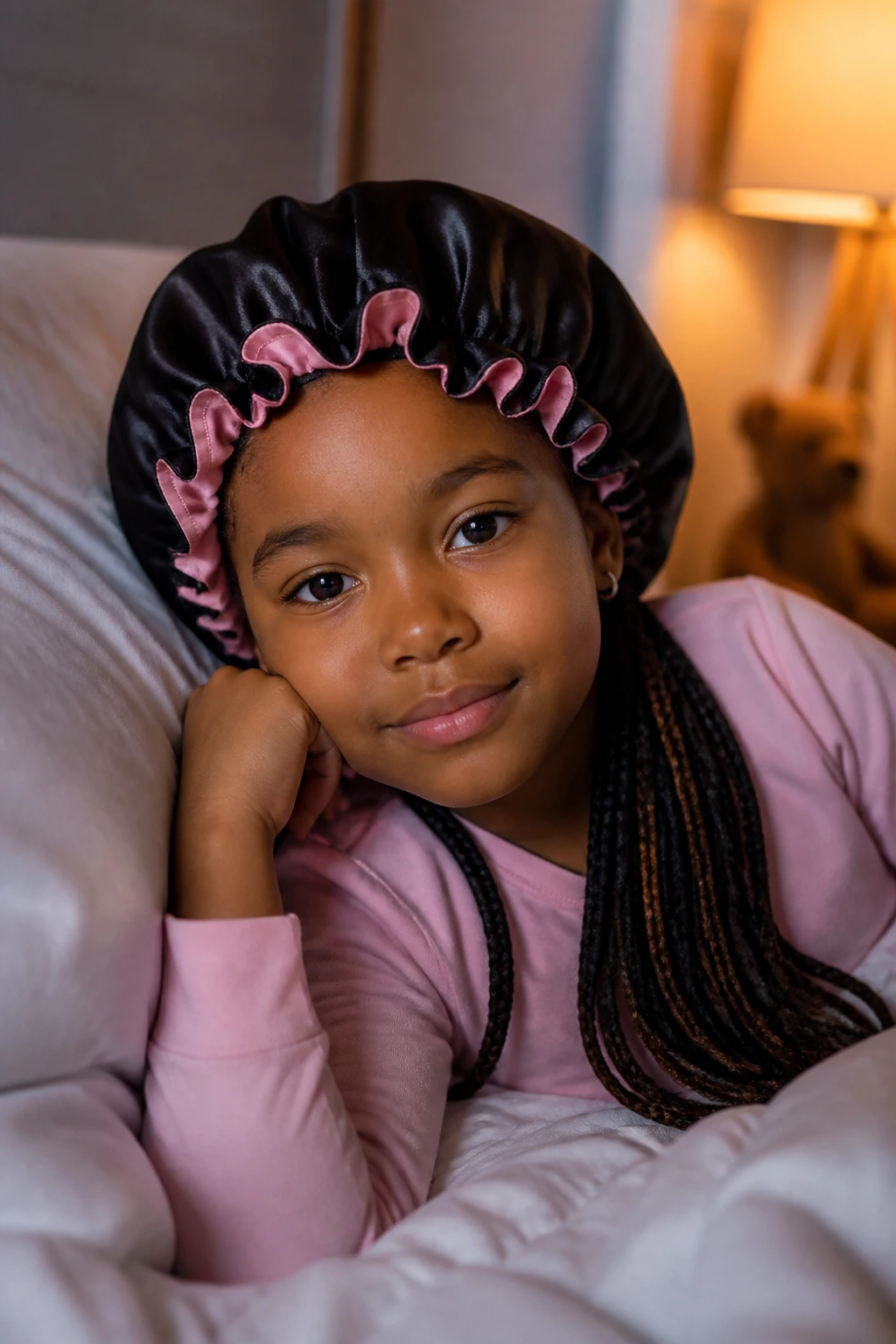
Braids keep their shape longer when the child sleeps like the style matters. A satin bonnet or scarf is the first line of defense, but a satin pillowcase helps on the nights the bonnet ends up on the floor. For loose ends, keep them gathered gently, not yanked into a tight bundle that bends the braids at odd angles.
A light scalp refresh every few days is enough for most kids. If you wash the braids, keep it simple: diluted shampoo at the scalp, gentle squeeze through the roots, and a careful rinse. Don’t scrub the braid length like you’re laundering a towel. Pat dry, then let the hair air dry or use low heat until it’s fully dry. Damp braids smell off fast. No one wants that.
As for removal, most kids do best when styles come down before the roots lock up. Two to four weeks is a comfortable range for many braided looks, though a very light cornrow style may stretch a little longer if the scalp stays happy. If you see buildup, scratching, or a lot of fuzz at the roots, it’s time. Pushing a style past its limit rarely earns extra beauty. It usually earns tears.
Questions Parents Ask Most About Kids’ Braids
How tight should kids’ braids be?
Tight enough to stay neat, loose enough that the child can sit through the appointment without wincing. If the hairline looks shiny, red, or puffy, the braid is too tight.
Can kids with fine hair wear long-lasting braids?
Yes, but keep the sections larger, the accessories lighter, and the extensions modest. Fine hair usually behaves better in knotless styles, cornrows, and short braided looks.
How often should I moisturize braids?
A light mist every few days is plenty for most children. Heavy oiling makes the hair look dull and can attract buildup around the scalp.
What if my child hates sleeping in a bonnet?
Use a satin pillowcase and keep the braids in a loose, low wrap. It’s not as good as a bonnet, but it’s much better than cotton sheets rubbing the style raw.
Can braids last through swimming lessons?
They can, but chlorine and repeated soaking shorten the wear time. Rinse the hair after swimming, gently squeeze out the water, and dry it fully before bed.
What if the scalp starts itching?
First check for product buildup or braids that are too tight. If the scalp still feels irritated after a gentle wash and a little air, take the style down rather than pushing through.
Are beads safe for very young kids?
They can be, but keep them light, secure, and age-appropriate. If the child mouths accessories or pulls them out, skip beads and use ribbon or plain ends instead.
Do these styles work on short hair?
Some do, especially cornrows, knotless starts, and crown styles. Short hair usually needs smaller sections and less added length so the braid can anchor properly.
Braids Worth Repeating
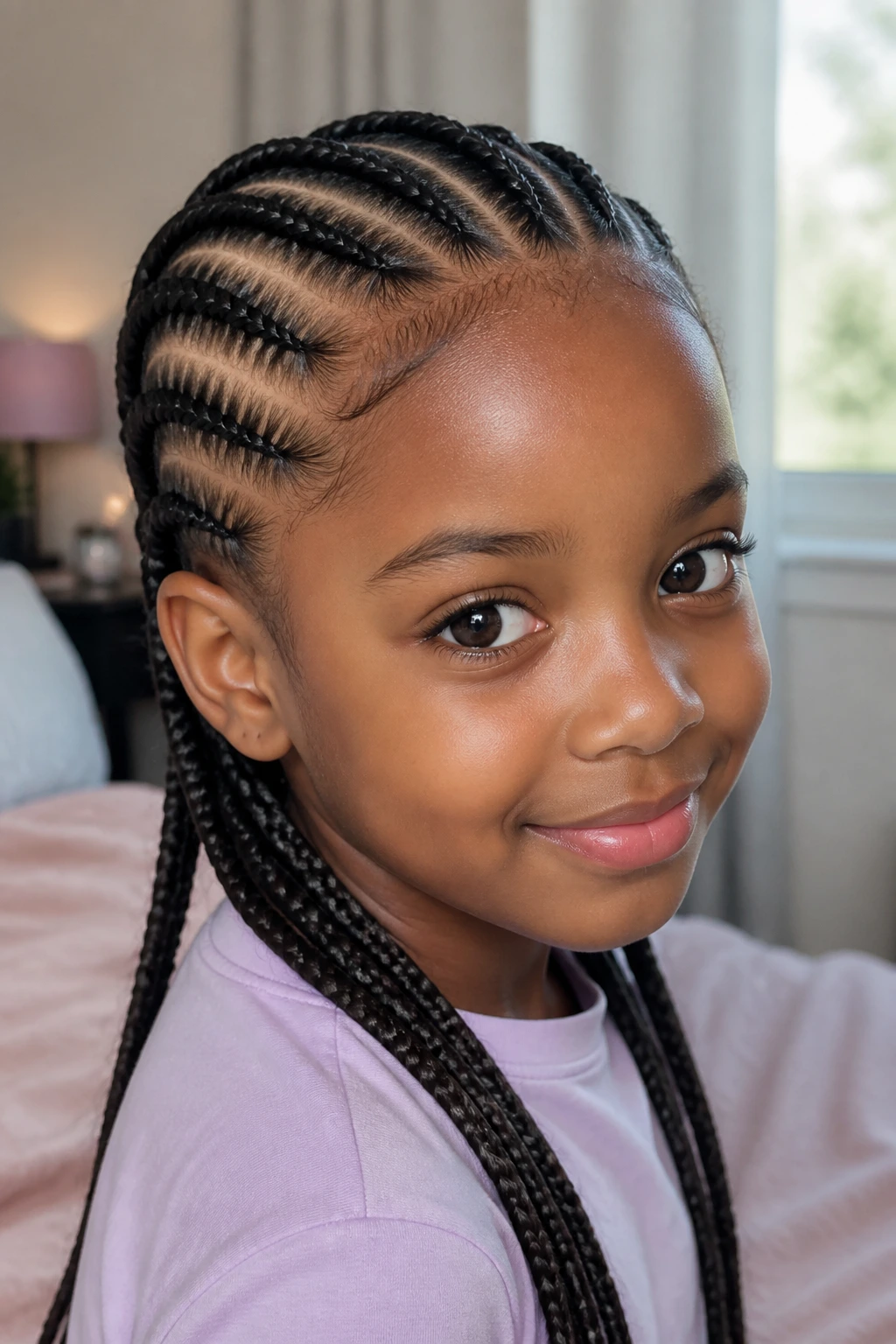
The styles that last on kids are rarely the most dramatic ones. They’re the braids that feel good on the scalp, stay flat at the root, and can take a nap, a playground slide, and a school day without collapsing into fuzz. That is the real test.
If you keep one rule in mind, make it this: comfort buys longevity. A child who can sleep, move, and forget about their hair for a while is a child whose braids will still look decent when you open the bonnet the next morning. Pick the style that suits the head in front of you, not the photo in your phone, and the result usually holds up far better.