



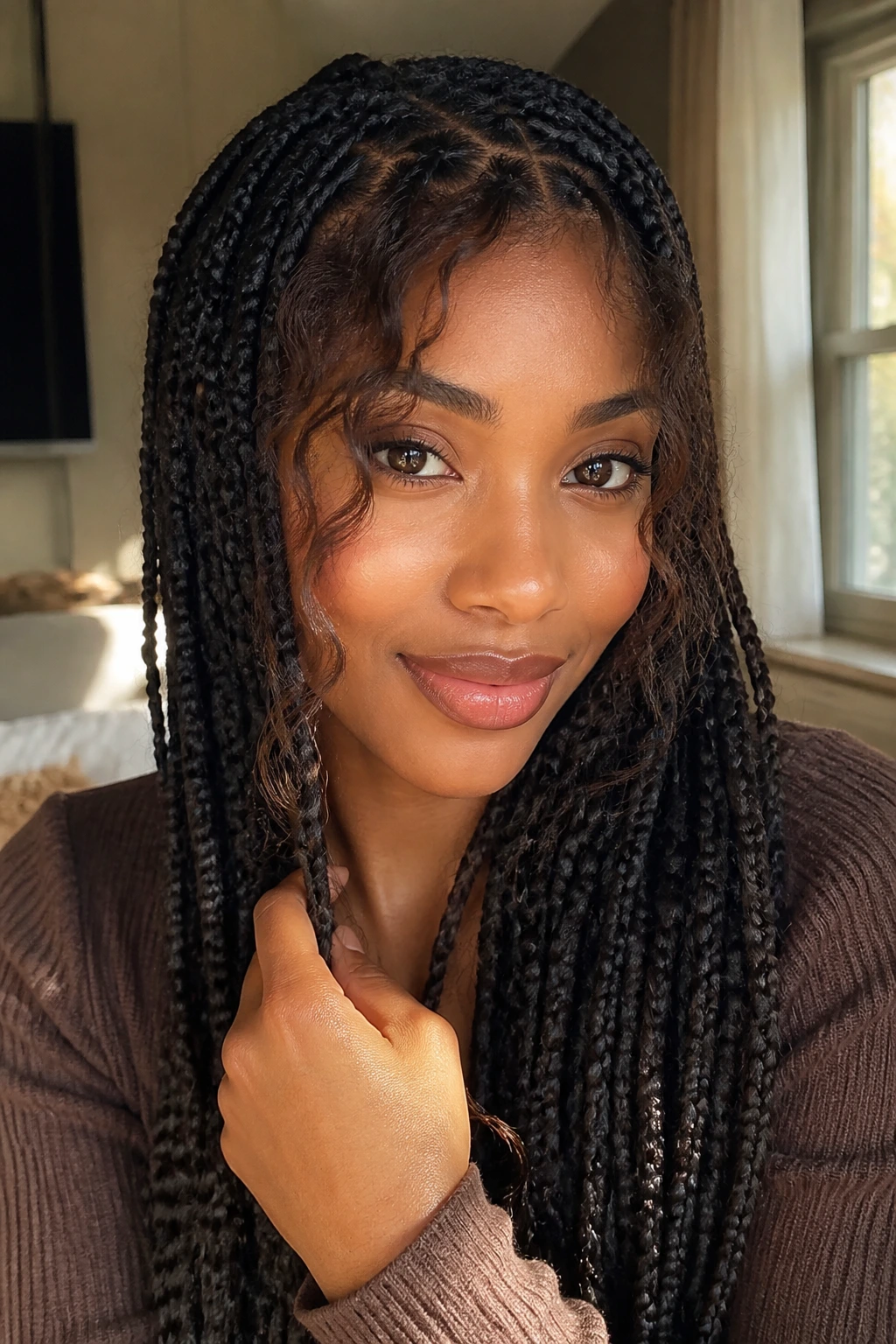
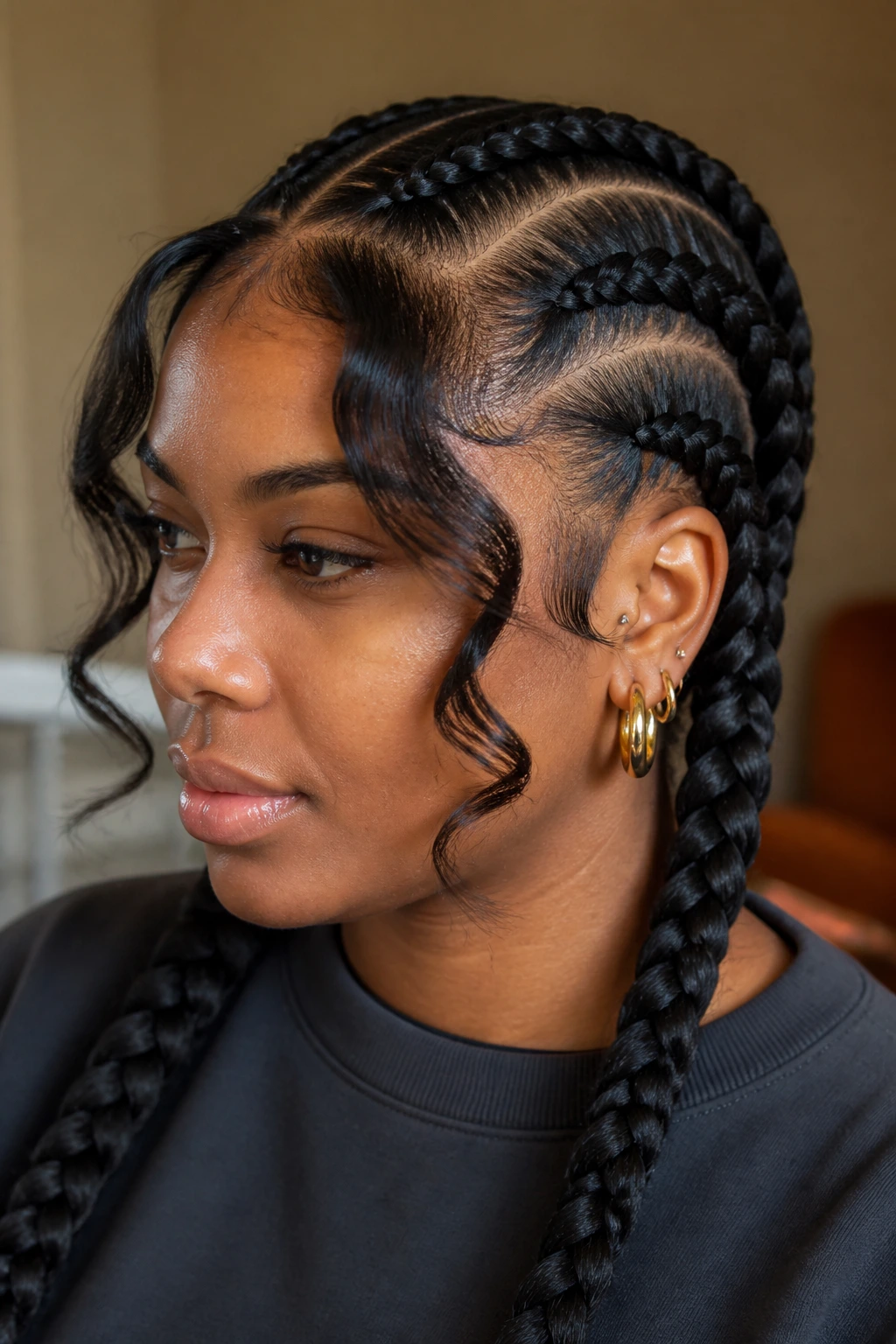
Braided styles for natural hair with curtain bangs do something a plain braid never quite manages: they keep the protection, but they soften the mood. The front of the style moves. The face breathes. And when the braids are done well, that little split fringe at the center — whether it’s curled, waved, or left in slim face-framing pieces — changes the whole read of the hairstyle.
That front section matters more than people think. Too much hair left out, and the look starts feeling loose in a bad way. Too little, and you lose the curtain effect entirely. The sweet spot is narrow enough to stay light around the temples, but deliberate enough that it looks like part of the design, not an accident after a long braiding session.
Natural hair gives these styles a lot of range because shrinkage, density, and texture all change the finish in useful ways. Tight coils can make the curtain pieces springier. Stretched hair can give you a longer, drapier fall. And if you’ve ever seen a braid style look a little stern around the hairline, curtain bangs are often the reason the second version looks more alive.
Why These Braided Looks Earn a Spot on the Save List
-
They soften the front edge: A clean braid pattern with two slim front sections left out keeps the style from looking boxy around the forehead and temples.
-
They work with different lengths: Short natural hair can handle tighter braid maps and face-framing pieces, while longer hair opens the door to ponytails, buns, and cascading lengths.
-
They make the style feel lighter: When the face area has movement, even long or chunky braids read less heavy and less stiff.
-
They’re easy to personalize: Beads, cuffs, curls, parting patterns, and braid size can change the whole mood without rebuilding the style from scratch.
-
They flatter natural texture: The curtain pieces can be stretched, waved, twisted, or curled to echo your own curl pattern instead of fighting it.
-
They give you options on rough hair days: A style like this still looks intentional when the front pieces frizz a little. That’s a mercy.
How Curtain Bangs Change the Shape of Braids
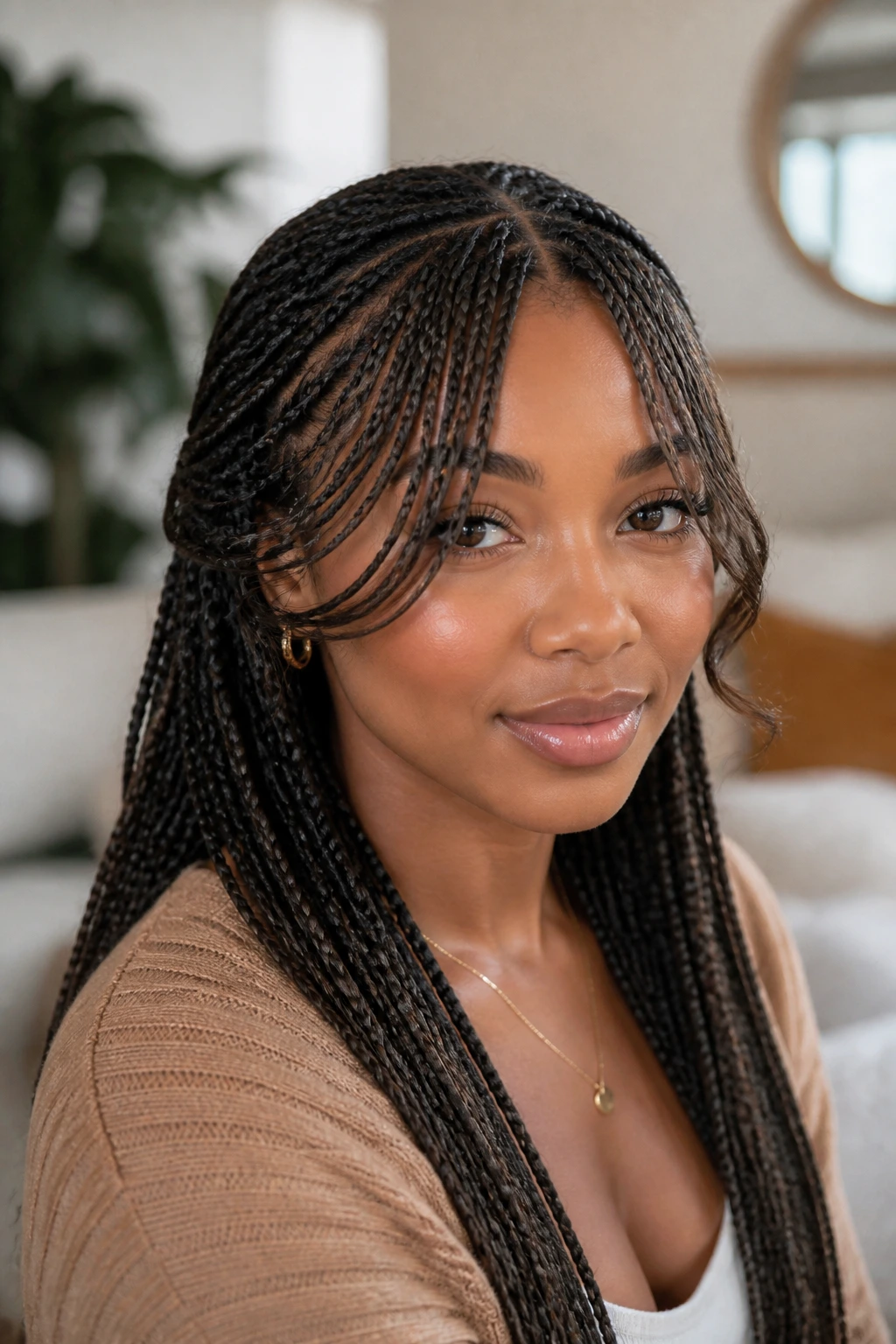
Curtain bangs do more than sit at the front of the face. They change how the eye reads the whole head. A braid style with a straight-across front can look severe, especially if the braids are long, dark, and tightly spaced. Split front pieces break that block up, so the style feels more layered and less like one solid curtain of plaits.
The trick is to think in widths, not just in “bangs.” If the front pieces are too broad, they fight the braid pattern. If they’re too skinny, they vanish into the rest of the style after the first hour outside. I like to reserve enough hair on each side to sit roughly at the outer corner of the eye, then taper those pieces so they feather toward the cheekbone.
The parting changes everything
A middle part gives the classic curtain-bang shape. A deep side part turns the same idea into something softer and a little more dramatic. Zig-zag, triangle, and heart parts work too, but they need cleaner sectioning at the front or the shape starts to feel fussy instead of sleek.
Tension matters more than decoration
A lot of people blame the curtain pieces when the real issue is the braid base. If the front rows are pulled too tight, the face-framing hair sits awkwardly, no matter how pretty the part is. Keep the front snug, not sharp. Your scalp should not feel like it’s doing a job interview.
The finish should move
Curtain bangs on braids should swing a little when you turn your head. They do not need to be glossy and frozen. A touch of mousse, a light curl set, or a soft wave with hot water on extension hair usually looks better than stiff gel and a prayer.
1. Knotless Box Braids with Curtain Bangs
Knotless box braids are one of the cleanest places to start because the base sits flatter and the front doesn’t feel bulky. Add curtain bangs and the whole style gets a softer profile without losing that neat box-braid rhythm. I especially like this on medium-to-long natural hair, where the movement at the front keeps the length from looking too heavy.
Why it works
The knotless start reduces the visual weight near the scalp, which is exactly where curtain bangs need room to breathe. The front pieces can skim the cheekbones instead of sticking out like two hard rails. If your hair tends to puff at the temples, this is a forgiving shape.
- Leave two narrow front sections, about two fingers wide each.
- Keep the bang pieces slightly longer than cheek length if your shrinkage is strong.
- Curl the front with flexi rods or a small perm rod set if you want a bend instead of a straight fall.
- Finish with mousse, not thick edge gel, so the front stays soft.
Best for: anyone who wants a polished braid set that still moves at the face.
2. Fulani Braids with Beaded Face-Framing Pieces
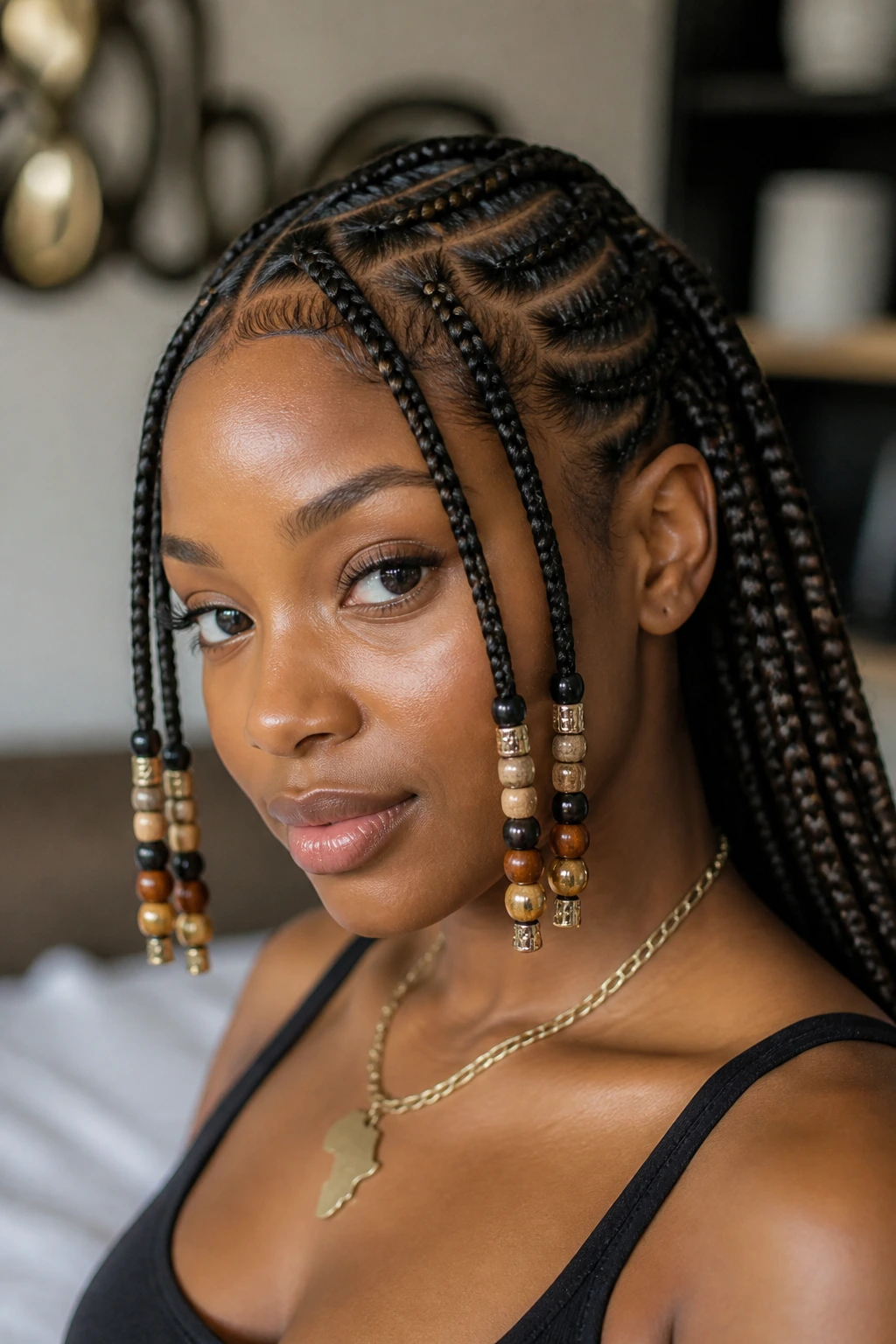
Fulani braids already know how to carry detail, so curtain bangs feel natural here instead of added on. The braid pattern does the heavy lifting, and the front pieces — often left slim and beaded — act like the frame around the picture. The result is elegant, but not stiff.
I like this look when the middle braid line is clean and the side braids are finished with a few small beads near the ends, not crowded at the root. That keeps the front light and stops the bangs from looking weighed down. If you’ve ever wanted a style that says “put together” without looking flat, this is it.
One thing: don’t overdecorate the face-framing pieces. A single bead at the end of each curtain strand can be enough. More than that, and the movement starts to disappear.
3. Jumbo Feed-In Cornrows with Curled Curtain Bang Pieces
Want the cleanest possible front with the least visual clutter? Jumbo feed-in cornrows do that beautifully. The rows are sleek and sculpted, then the curtain bang pieces soften the whole thing by breaking the straight line at the forehead. It’s a sharp style, but not a harsh one.
How to wear it
This works especially well when the front pieces are curled under or away from the face. A 1/2-inch rod set on the leave-out gives a gentle bend that sits right over the cheekbone. If you go straight, the style can read too severe unless your braid map is very rounded at the hairline.
- Use clean, narrow feed-ins at the front so the parting stays crisp.
- Keep the curtain pieces just long enough to brush the cheeks.
- Wrap the front at night so the curl doesn’t collapse.
- Avoid heavy pomades on the bang area; they make the front look greasy fast.
The biggest win here is contrast. Sleek rows behind. Soft movement in front. Simple. Strong. Done.
4. Goddess Braids with Loose Spiral Curtain Bangs
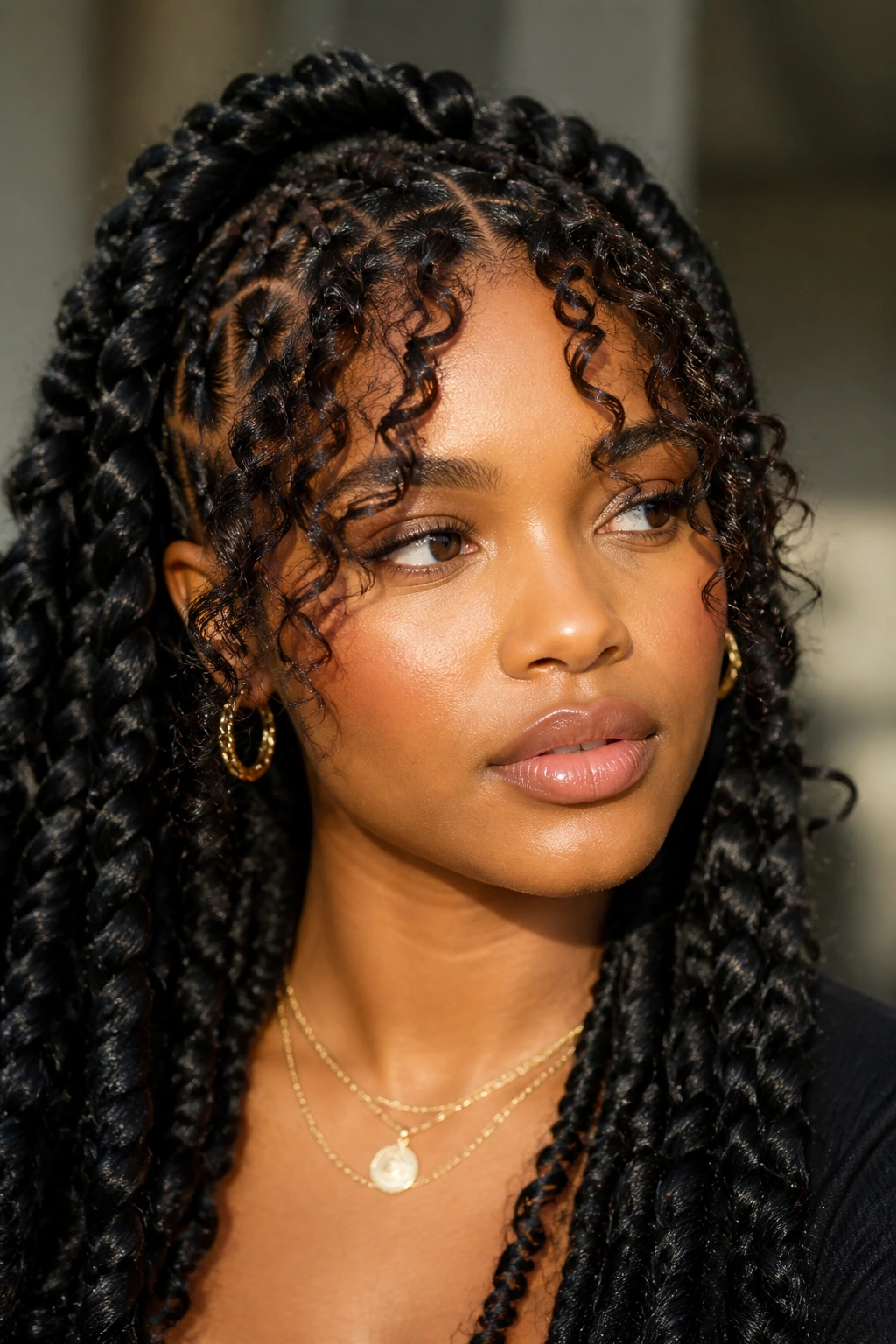
Goddess braids and curtain bangs are old friends. The thick braid lines give the style a strong shape, while the loose spiral front pieces stop it from feeling too formal. If you like hair that reads feminine without getting fussy, this pairing has a lot going for it.
The front should not be too perfect here. A slight bend, a little frizz, even a few flyaways around the temple can make the style look better. That’s the part people often miss. Goddess braids are generous by nature, and curtain bangs should echo that, not fight it.
I prefer this style with curled extension hair in the front pieces rather than stiff, poker-straight leave-out. It photographs well from the side because the bang pieces don’t disappear into the braid mass. They sit on top of it. That’s the whole point.
5. Braided Ponytail with Curtain Bangs
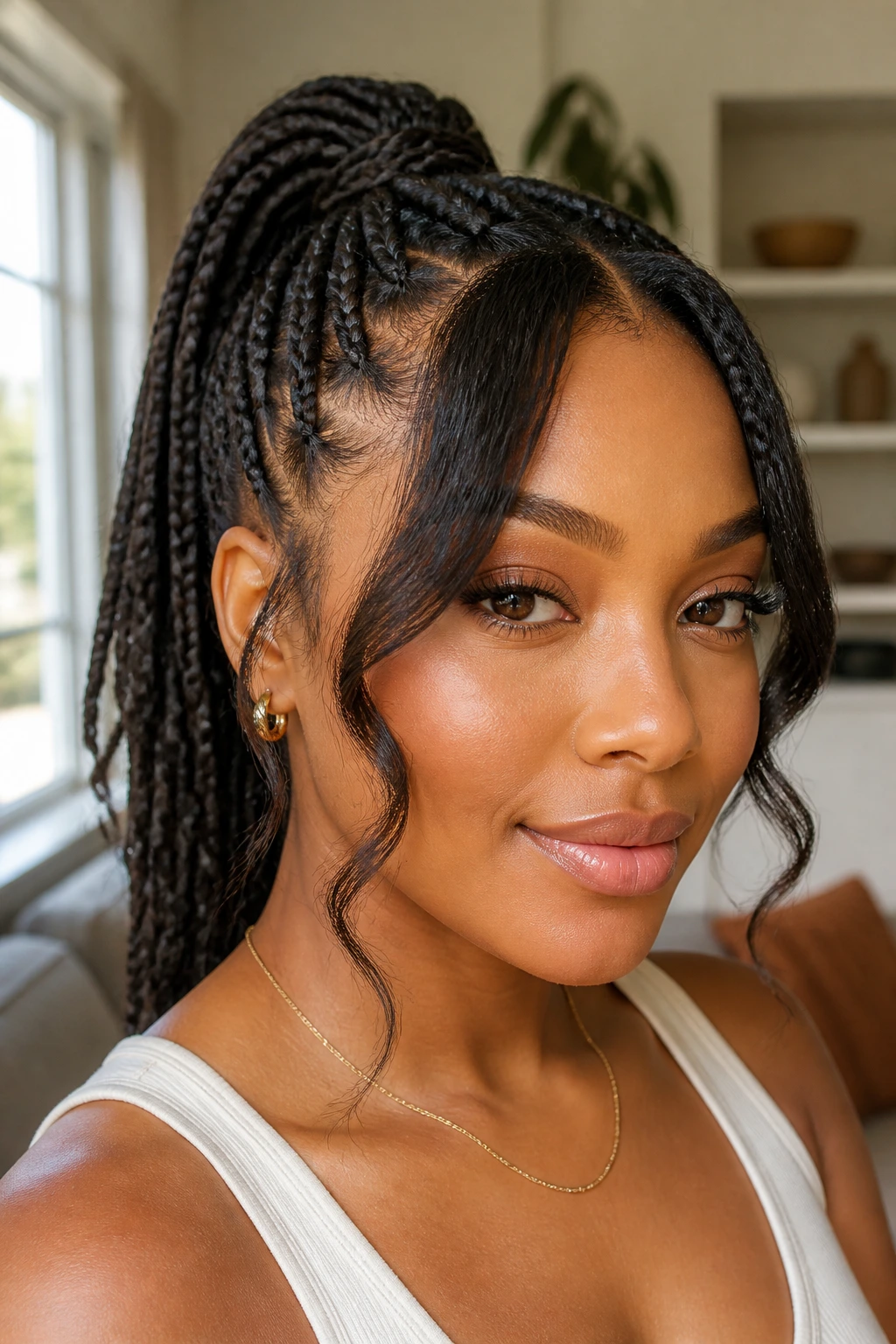
A braided ponytail with curtain bangs has a strong face shape built in. The ponytail lifts the eye, while the front pieces soften the center line and keep the style from feeling too pulled back. It’s one of those looks that can go from gym-adjacent to dressy just by changing the finish on the bangs.
What makes it work
The key is height. If the ponytail sits too low, the curtain pieces can sag into the cheeks and look accidental. If it sits too high, the bangs can feel disconnected from the rest of the style. Mid-high placement usually lands best, because it gives the face-framing strands a natural angle.
Use a smooth base and a loose front fall. I like a wrapped ponytail base with two slim face pieces left out, then curled away from the face. If the front is straight and flat, the whole style loses its softness.
6. Lemonade Braids with a Center-Part Curtain Sweep
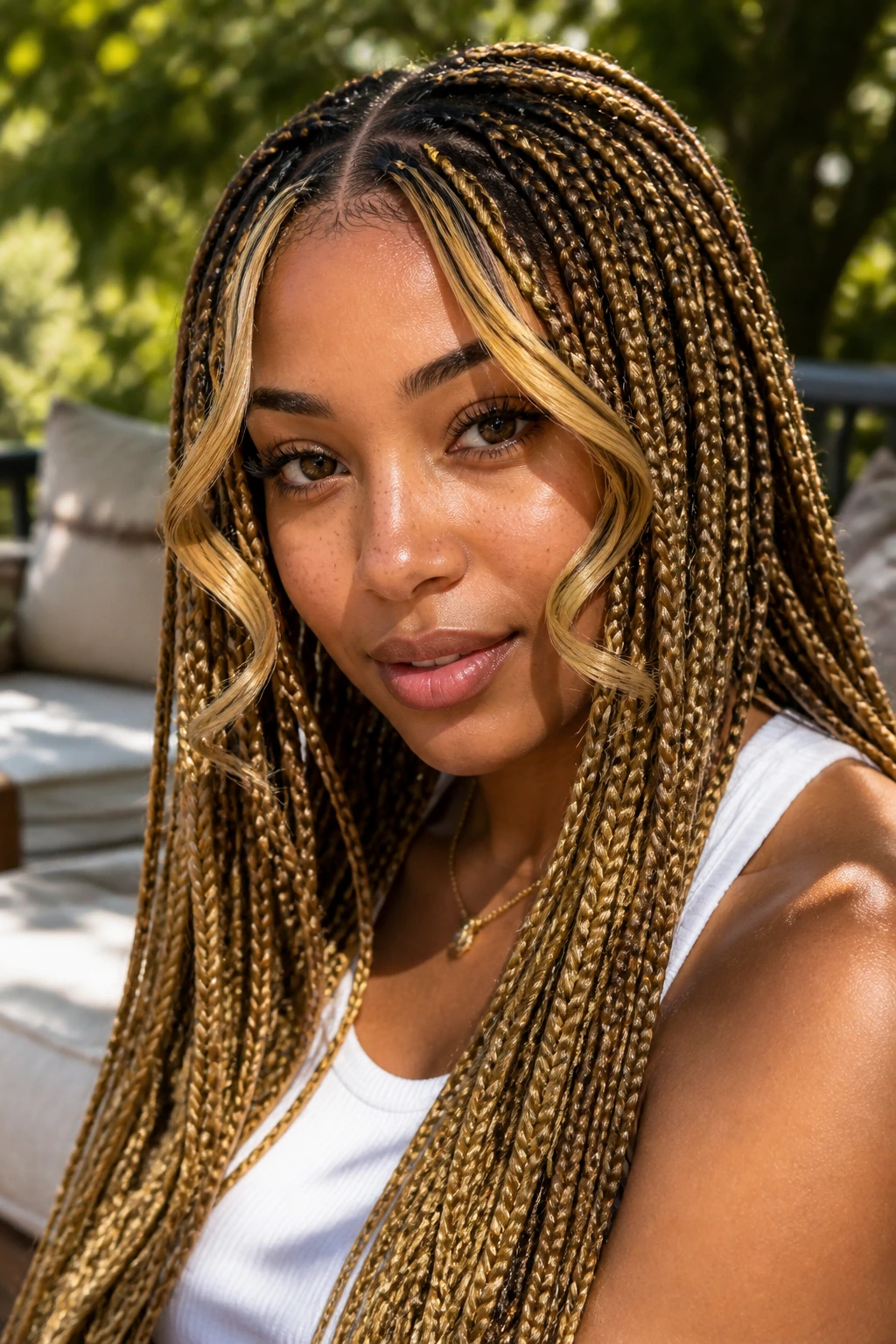
Lemonade braids already bring movement because the whole style flows to one side. Add a center-part curtain sweep at the front and the effect gets even more dimensional. You get that long, angled braid line plus a split front that opens the face instead of closing it in.
This style shines when the curtain pieces are slightly lighter than the rest of the braids in both thickness and texture. A small curl at the end helps them rest on the cheek instead of hanging like extra braid inventory. That sounds harsh, but hair can absolutely look like inventory when the front is too uniform.
A deep side-swept finish also means you can play with one tucked side and one visible side. That asymmetry is flattering. It gives the face room to move.
7. Triangle Box Braids with Soft Front Layers
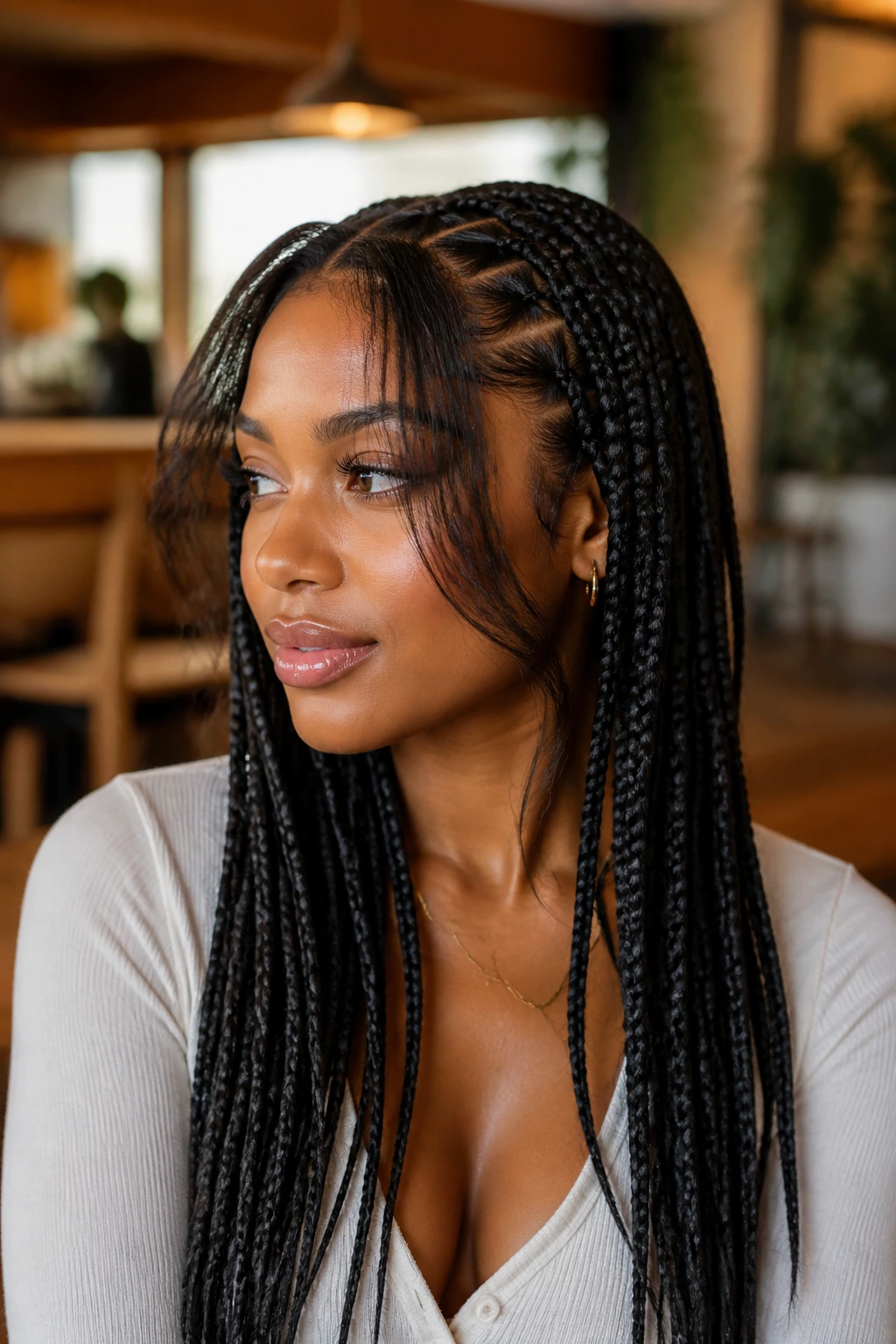
Triangle parts make box braids feel more modern, and the curtain bangs keep the whole set from reading too geometric. The triangular grid is visible enough to matter, which means the soft front pieces become even more useful. They interrupt the pattern in a good way.
This is one of my favorite styles for people who like structure but do not want the style to look severe. The front pieces should be tapered, not blunt. A blunt bang in front of triangle parts can look chopped off in a hurry; a feathered curtain front feels intentional.
If you want the front to sit flatter, stretch the leave-out before braiding with banding or a low-tension blow-dry. Less puff means a cleaner curtain line.
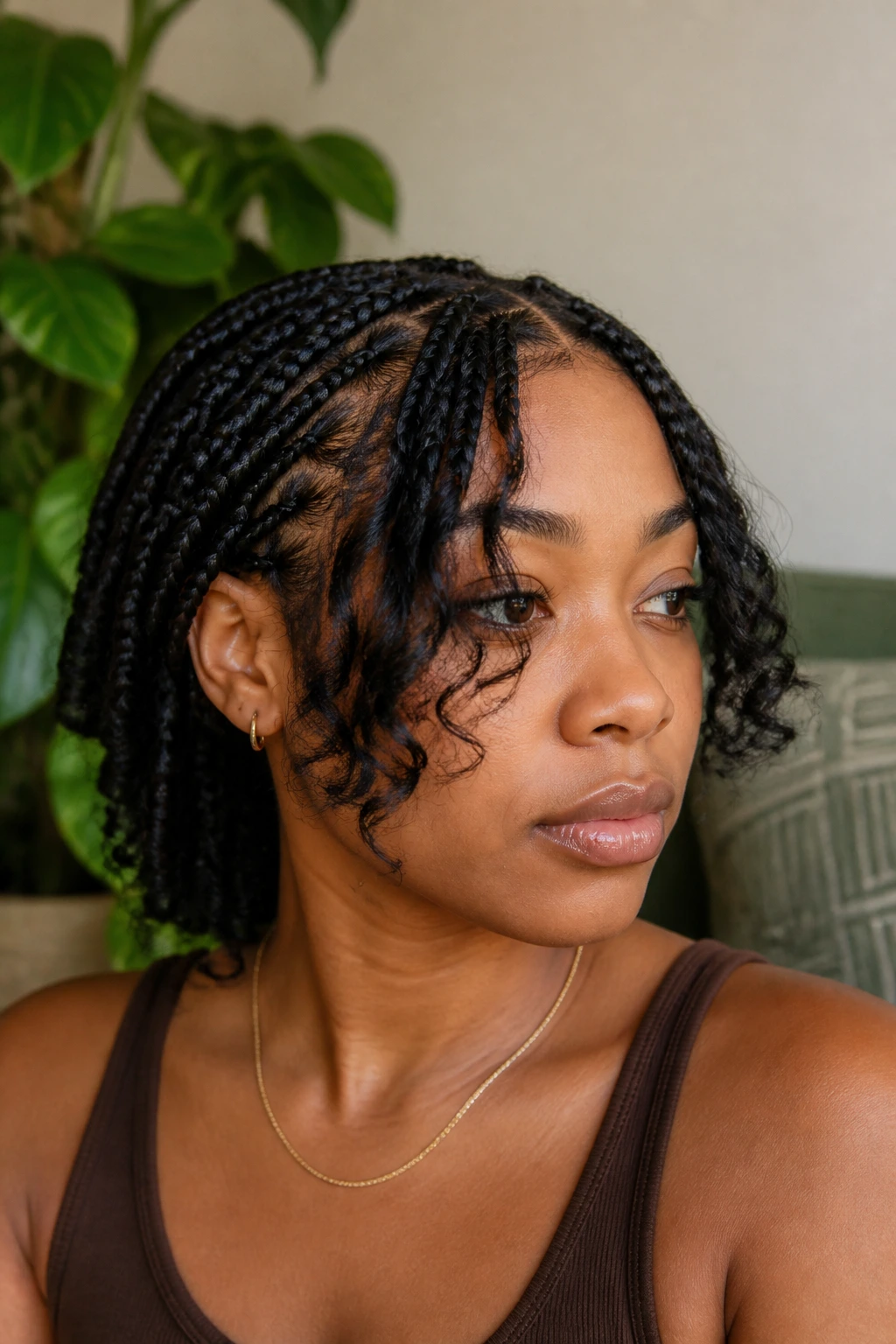
8. Boho Knotless Braids with Curly Curtain Bangs
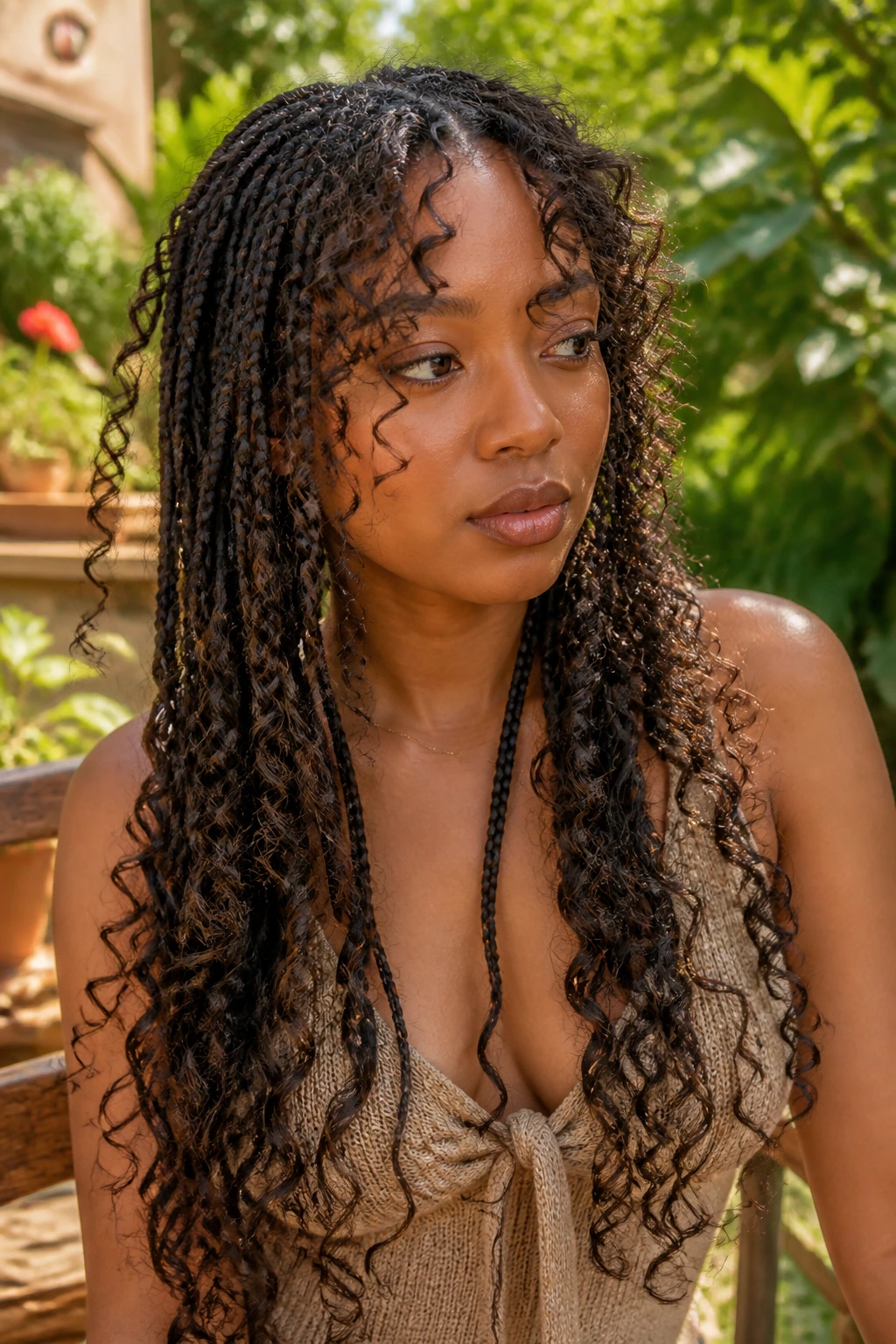
Boho knotless braids already come with a little looseness baked in, so curtain bangs fit them like they were planned from the start. The loose curls in the braids and the loose curls in front echo each other, which keeps the style from looking too stiff or too “done.”
Why it’s a favorite
The front pieces don’t need to be perfectly matched to the braid lengths. A mixed curl pattern can look better. One strand can coil tighter, the other can fall a bit looser, and the style still reads balanced because the overall texture is already playful.
- Set the curtain pieces on small rods if you want a springy front.
- Keep the curls light and bouncy, not crunchy.
- Use foam wrap lotion or setting mousse to help the front hold its bend.
- Refresh with a mist of water and a tiny bit of leave-in, not a soaking spray.
This one looks best when the front pieces are allowed to move. Overcontrolled boho braids miss the point.
9. Halo Braid with Wispy Curtain Bangs
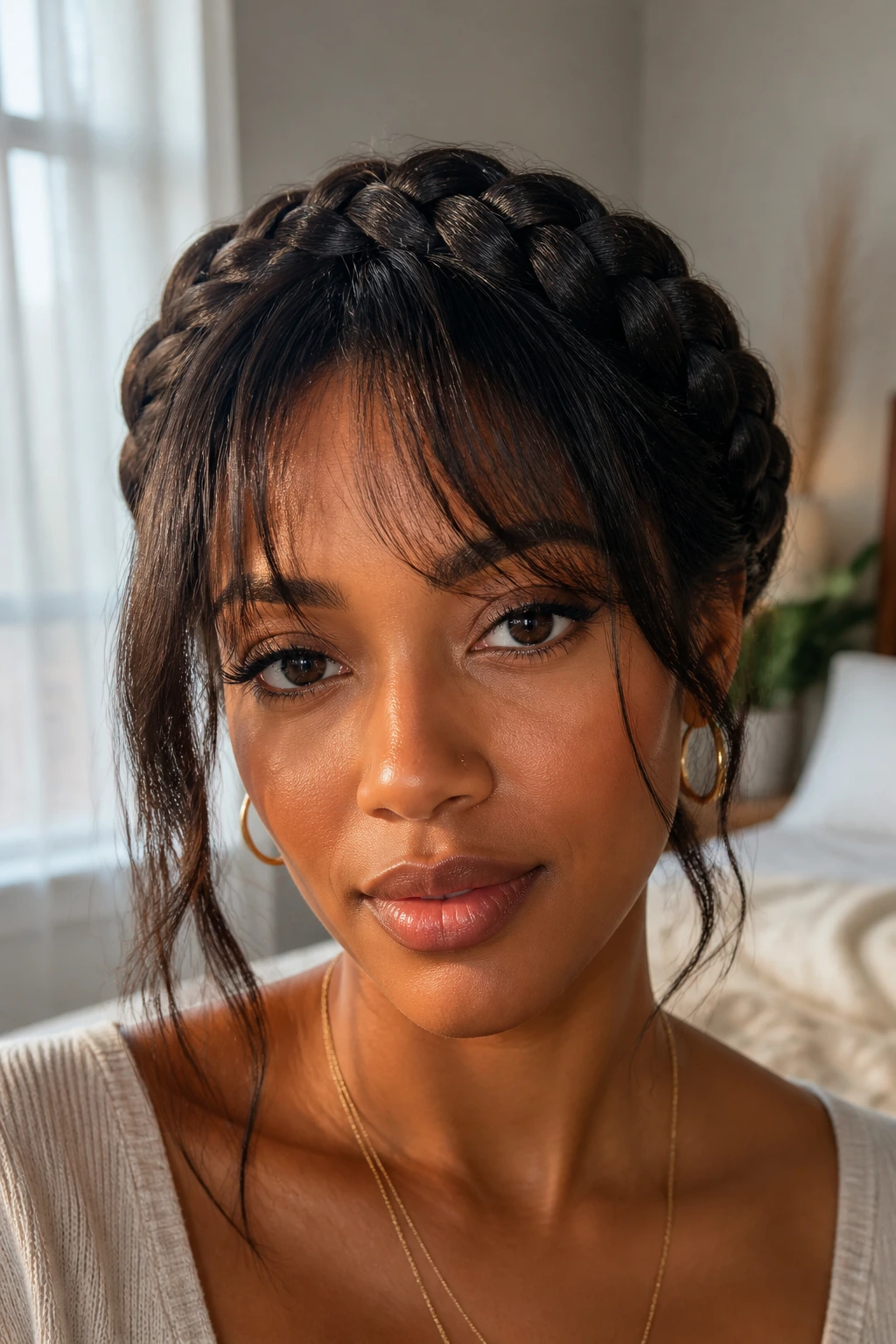
A halo braid sits close to the head and circles the face, so the curtain bangs have to be wispy or the whole thing gets crowded. That’s the beauty of it, though. You get a braid crown, but the center front still breathes.
This style is especially nice when you want your hair up and away, but not erased from the forehead. The bang pieces can be curled lightly and left to hang just below the brows, or they can be tucked behind the ears for a cleaner look. Both versions work.
The parting at the front should stay soft. Halo braids can look too strict if the curtain pieces are pulled tight and glossy. I’d rather see a little softness than a rigid line every time.
10. Stitch Braids into a Low Bun with Out-Left Bang Strands
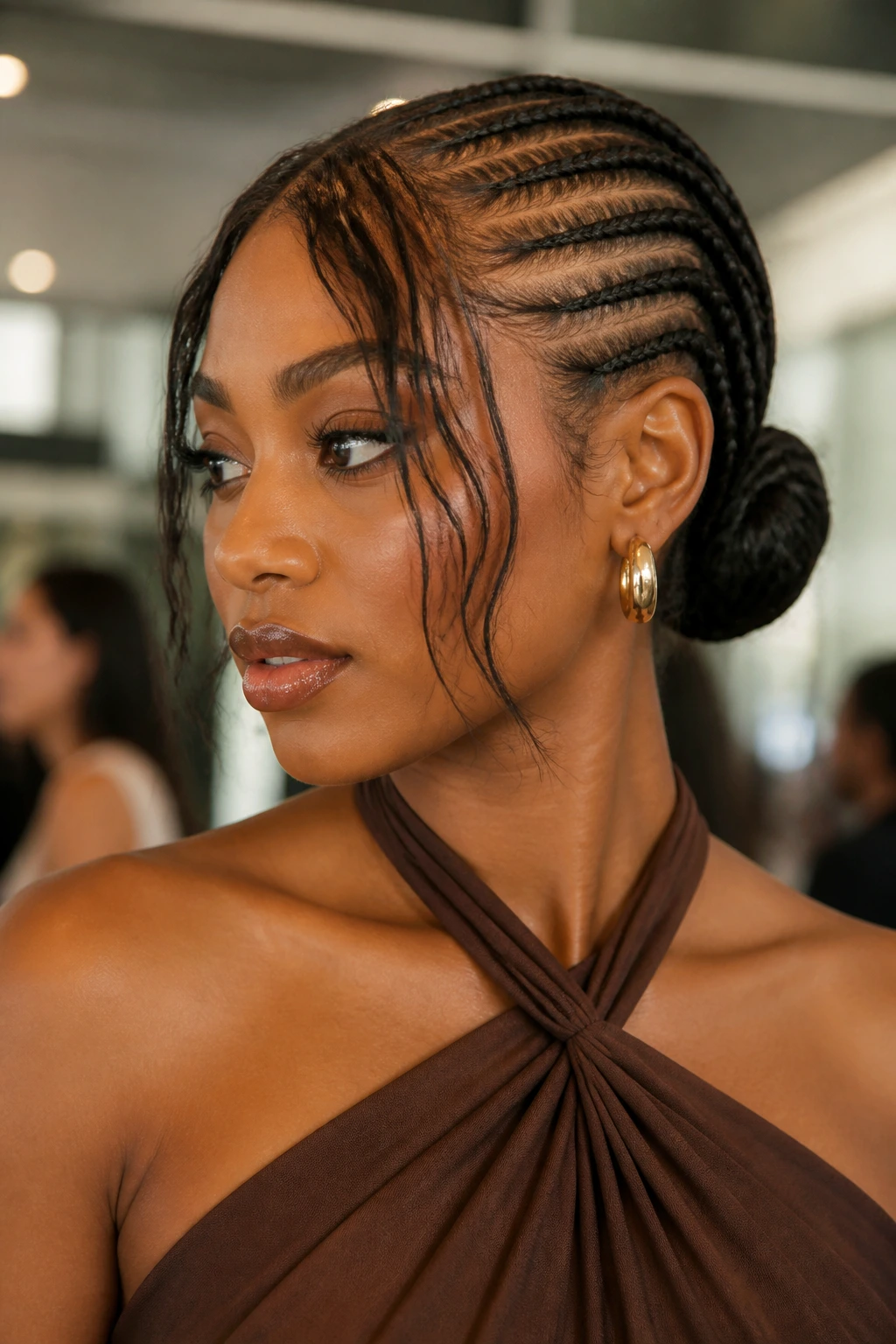
Stitch braids are all about precision, which makes the curtain bangs feel almost like a release valve. The lines are tidy. The bun is neat. Then those front strands loosen the whole look just enough. That contrast is why it works.
A low bun keeps the style grounded, and the face-framing pieces bring the focus back up. If you want this for work, a wedding, or any event where you need your hair to behave, it’s a smart move. Keep the bang pieces narrow and polished, not thick and fluffy.
Small styling note
The front strands should be wrapped or set before the rest of the bun goes in. If they’re ignored until the end, they often sit in awkward bends. That little bit of planning changes the whole finish.
11. Flat-Twist Braids with a Braided Fringe
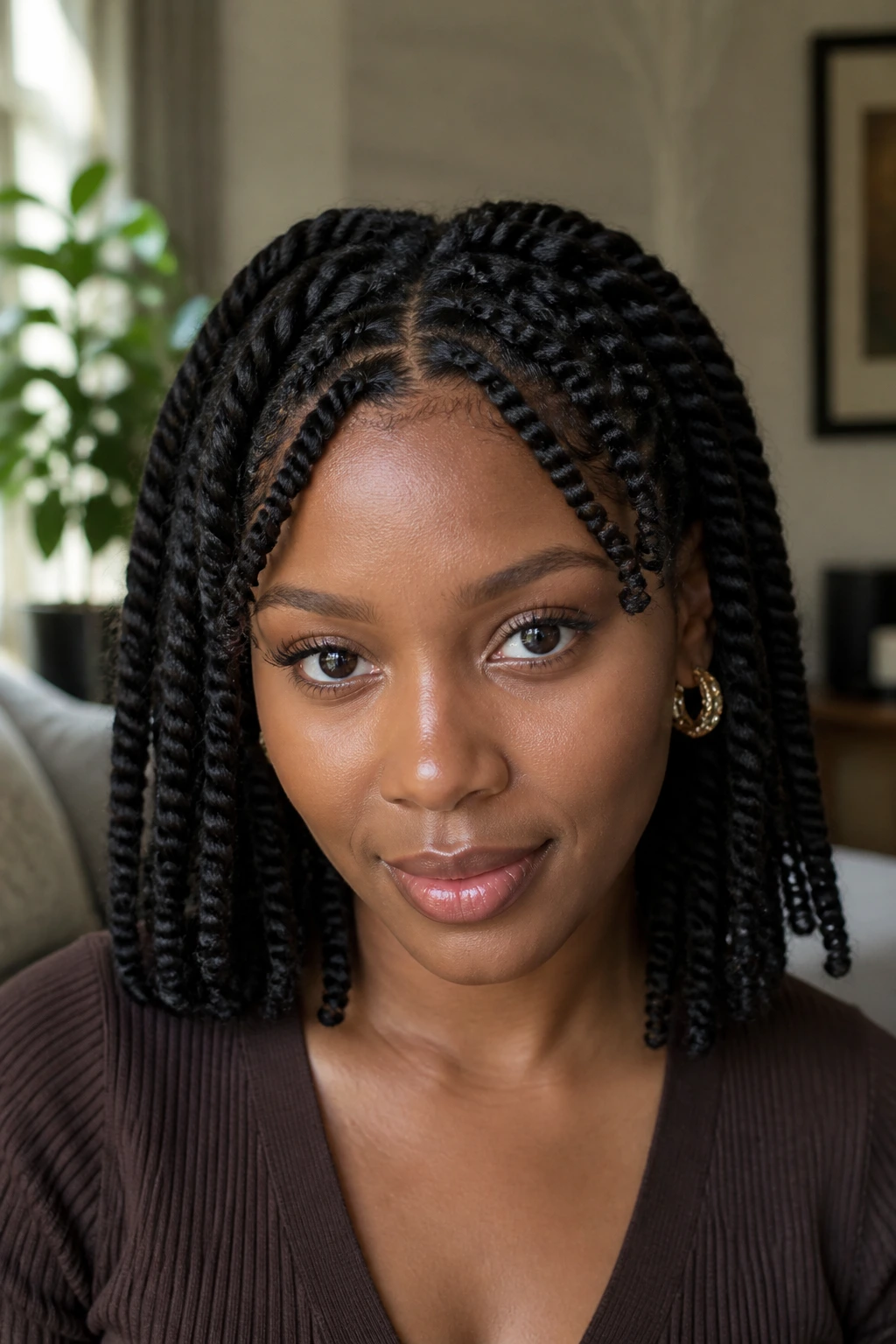
Flat twists make a lovely base for curtain bangs because the texture feels softer than a hard cornrow. Add a braided fringe at the front and the style gets a layered, almost vintage feel without getting costume-y. I like this on hair that has a little natural stretch already.
The fringe can be made from two tiny braids that split away from the middle, then sweep down toward the temples. It does not need to be a full bang. Sometimes two slim braided tendrils do the job better than a heavier front panel.
If your hairline is delicate, this is one of the gentler-looking options. The twist pattern lets the front sit close without the harsh ridge some tighter braid styles create.
12. Braided Bob with a Middle Curtain Part
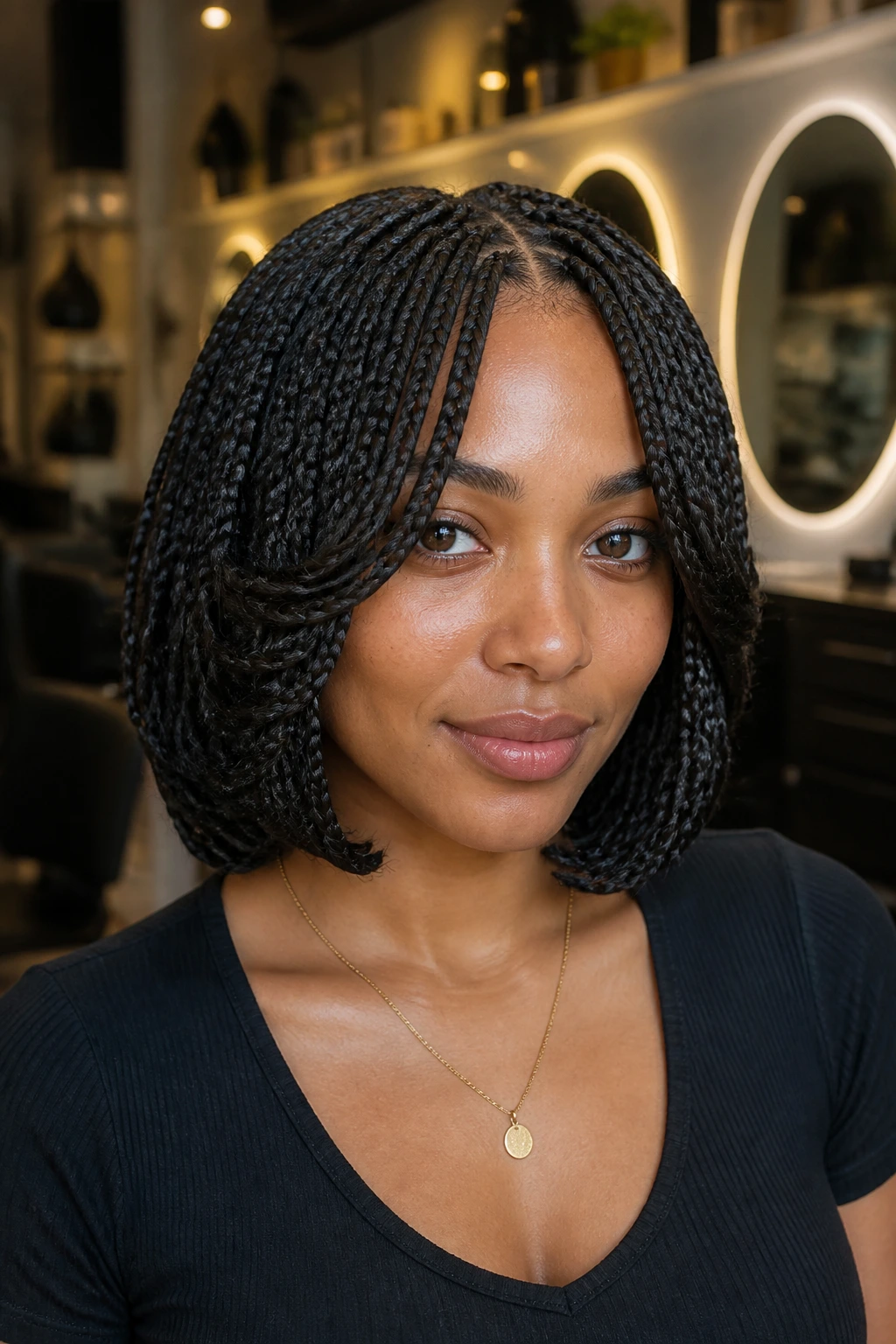
A braided bob gives you all the bounce of a shorter shape, and the center curtain part keeps it from feeling boxy. This combo looks crisp when the braid ends are tucked just right, but the front still has enough softness to move. Shorter braids can look severe fast. Curtain bangs fix that.
I especially like this with natural hair that has enough density to hold a clean part at the front. The bang pieces can be curled slightly under, which helps them rest against the cheek without puffing out. If the bob hits around the jaw or just below it, the face-framing pieces become even more important because they keep the silhouette from turning blocky.
A good braided bob should swing a little when you turn your head. If it doesn’t, the front probably needs a softer shape.
13. Tribal Braids with Long Wavy Curtain Pieces
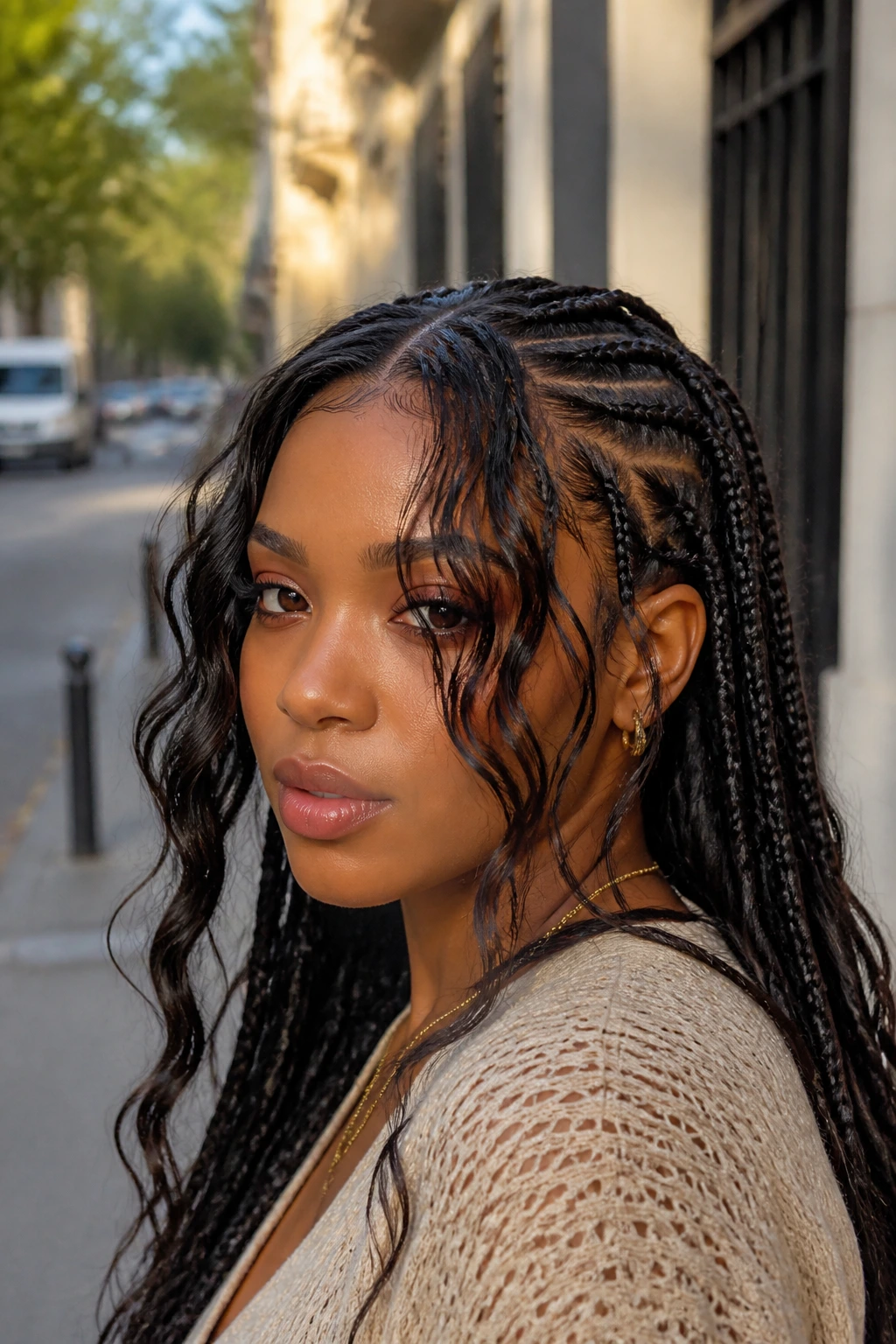
Tribal braids carry pattern, length, and adornment with ease. Curtain bangs fit that language because they add another layer of line without crowding the scalp. If you like styles that feel rooted in braid tradition but still look current, this one has a lot of personality.
The front pieces can be wavy instead of curled tight. That matters. The whole style often already has beads, parting designs, or long lengths, so a softer wave keeps the front from becoming too busy. Leave enough length for the pieces to brush the cheekbones, and don’t be shy about letting one side fall slightly longer than the other.
It’s the asymmetry that keeps tribal braids lively. Symmetry is neat. Movement is better.
14. Twin Braids with Soft Curtain Bangs and Puffs
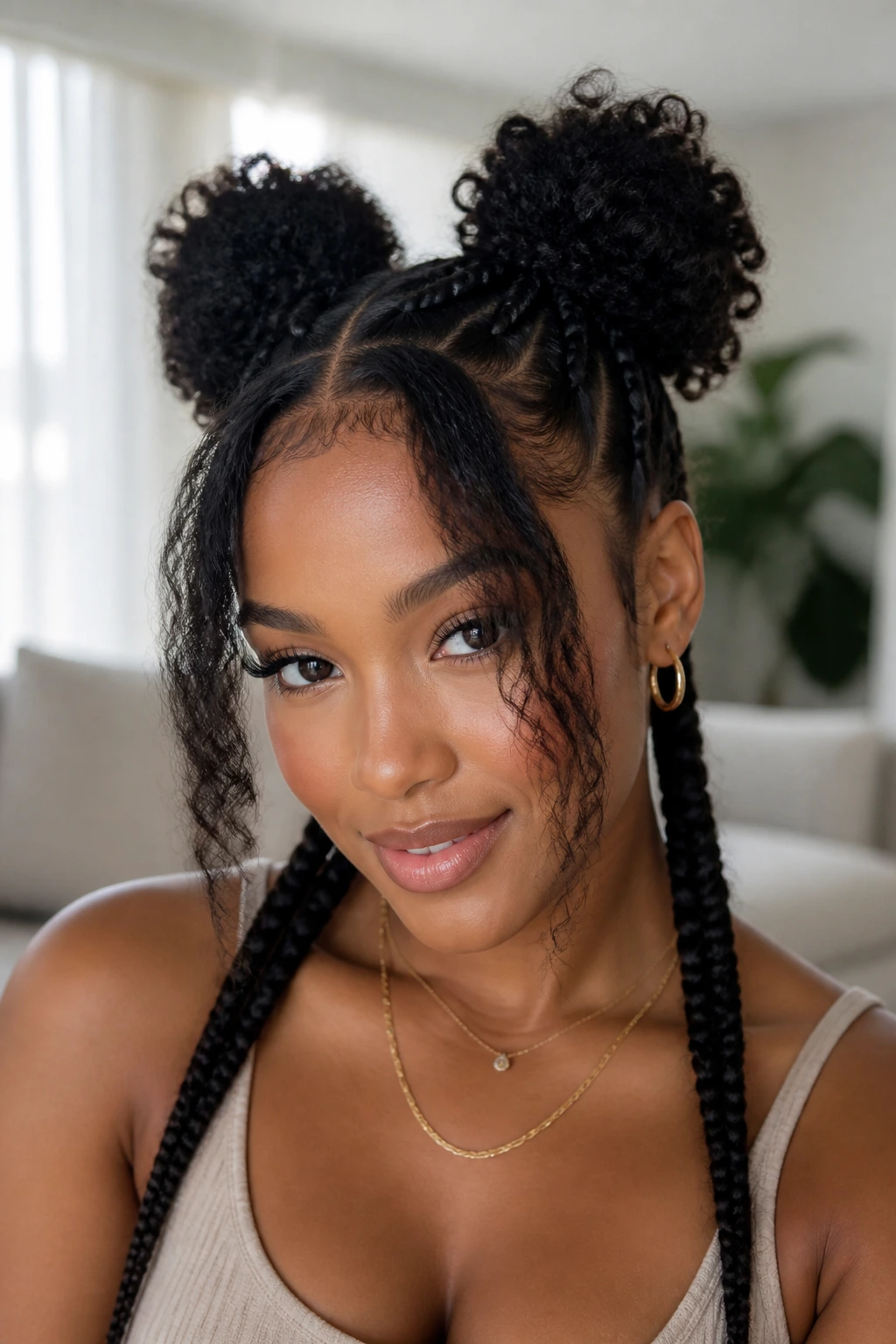
Twin braids with puffs can go sweet, sporty, or striking depending on the finish, and the curtain bangs are what make the style feel grown without losing the playful shape. The puffs keep the crown full; the front pieces keep the face open.
This is a strong option for shorter natural hair because you don’t need extreme length to make it work. The bangs can be stretched lightly, then shaped with a touch of mousse so they sit forward without frizzing into a halo. If you want more polish, braid the front pieces before letting them fall. If you want more softness, twist them instead.
The best versions leave room around the temples. Too much tightness there, and the whole style starts to look pinched.
15. Half-Up Top Knot with Braided Curtain Strands
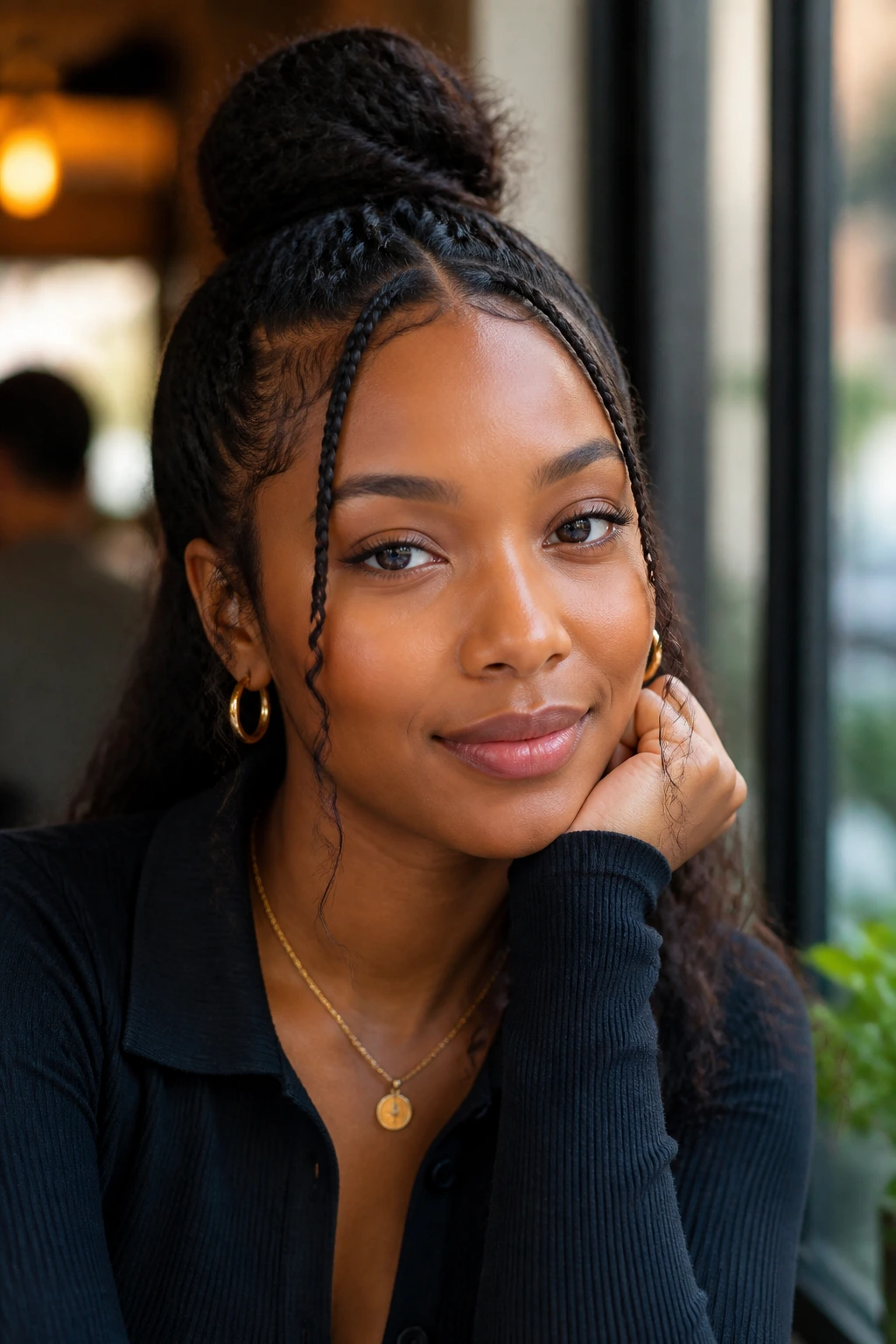
Half-up styles are usually about lift, and the curtain strands make sure the front doesn’t disappear when the crown goes up. A braided top knot with two face-framing pieces feels neat but not severe. The knot lifts the eye line; the bangs bring it back down to the face.
Who should try this
People with medium-length or long braids get the most out of this shape, but it can work on shorter sets too if the top knot isn’t overloaded. Keep the curtain strands narrow and let them curve inward a little. That inward bend matters more than most people realize.
- Place the top knot high enough to show the braid pattern underneath.
- Leave the front pieces long enough to graze the jaw or cheek.
- Use a soft wrap or scarf at night so the knot doesn’t flatten into a lump.
- Add a cuff or two on the knot if you want a little shine.
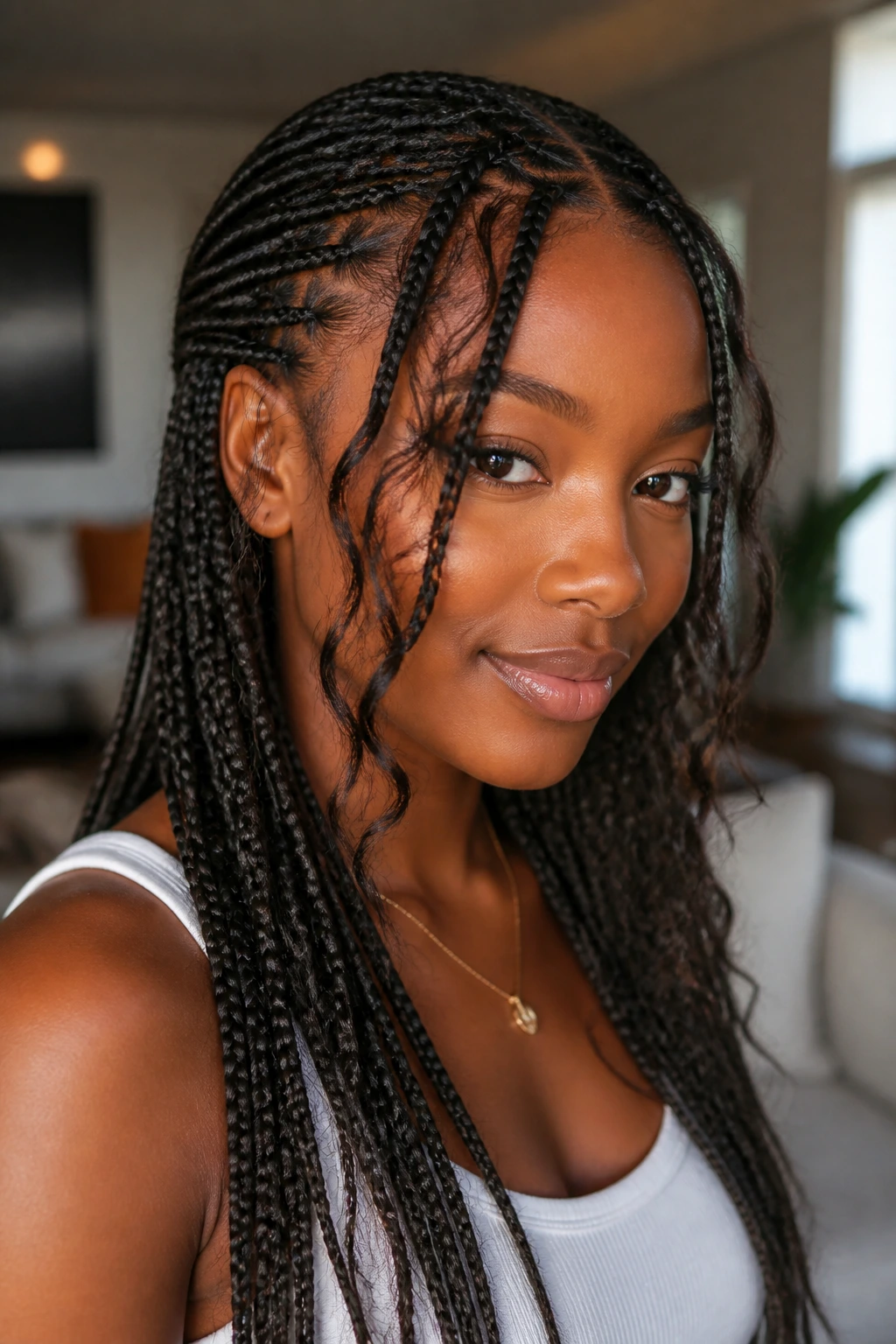
16. Micro Braids with a Deep Center Curtain Part
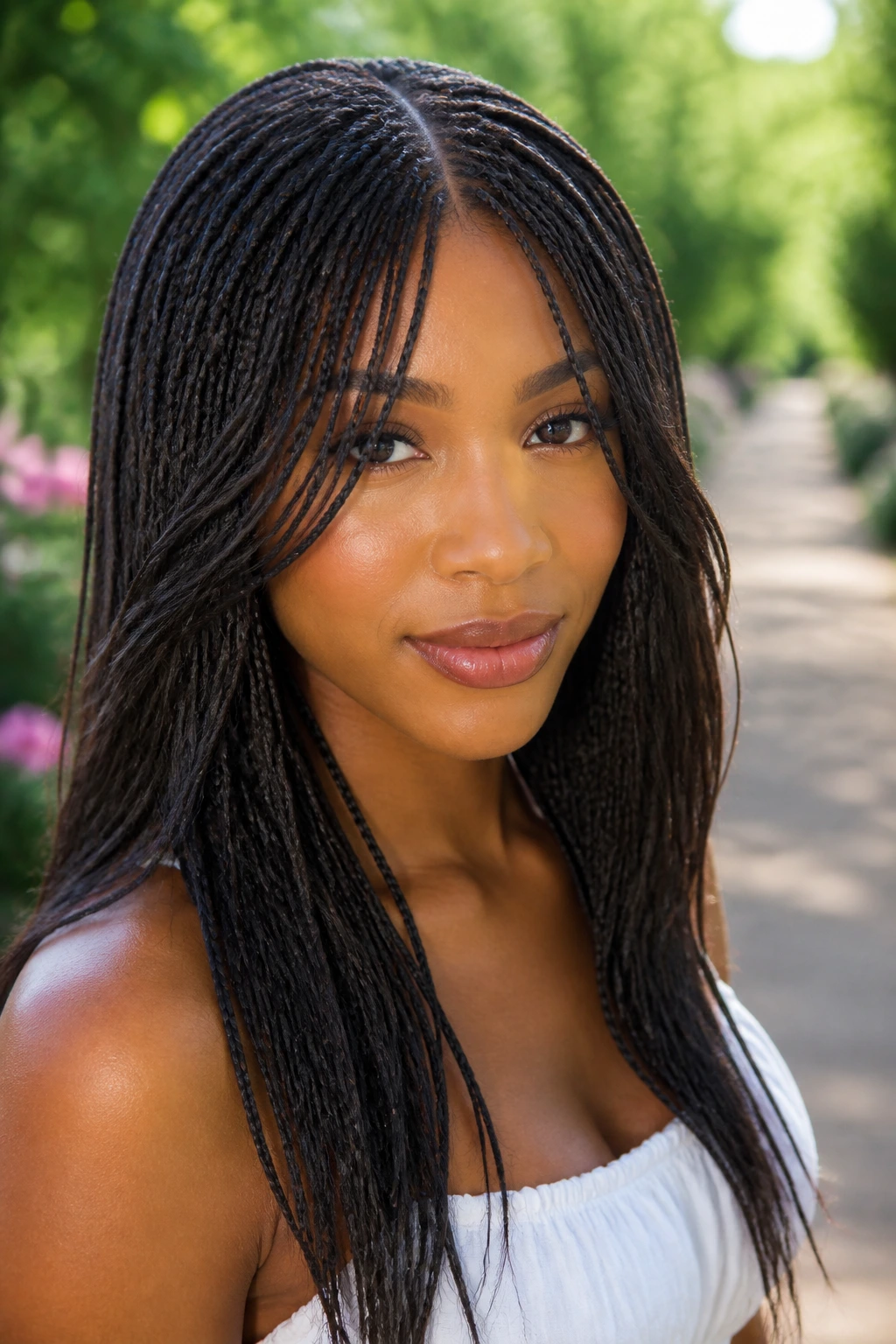
Micro braids love detail, and curtain bangs are detail with purpose. Because the braids are tiny, the face-framing pieces can be more delicate too. That lets the whole style stay airy instead of turning into a wall of hair.
A deep center part gives the front a clean lane, and the bang pieces can be left slightly longer than the rest of the front rows. I like this when the aim is movement rather than volume. The curtain pieces sway easily, and the tiny braids behind them create a soft visual texture that looks especially rich in natural light.
This style does need patience. Micro braids are not casual by nature. But the front pieces make the face feel less hidden, which is a useful trade-off.
17. Cornrow Bob with Curled Ends and Curtain Bangs
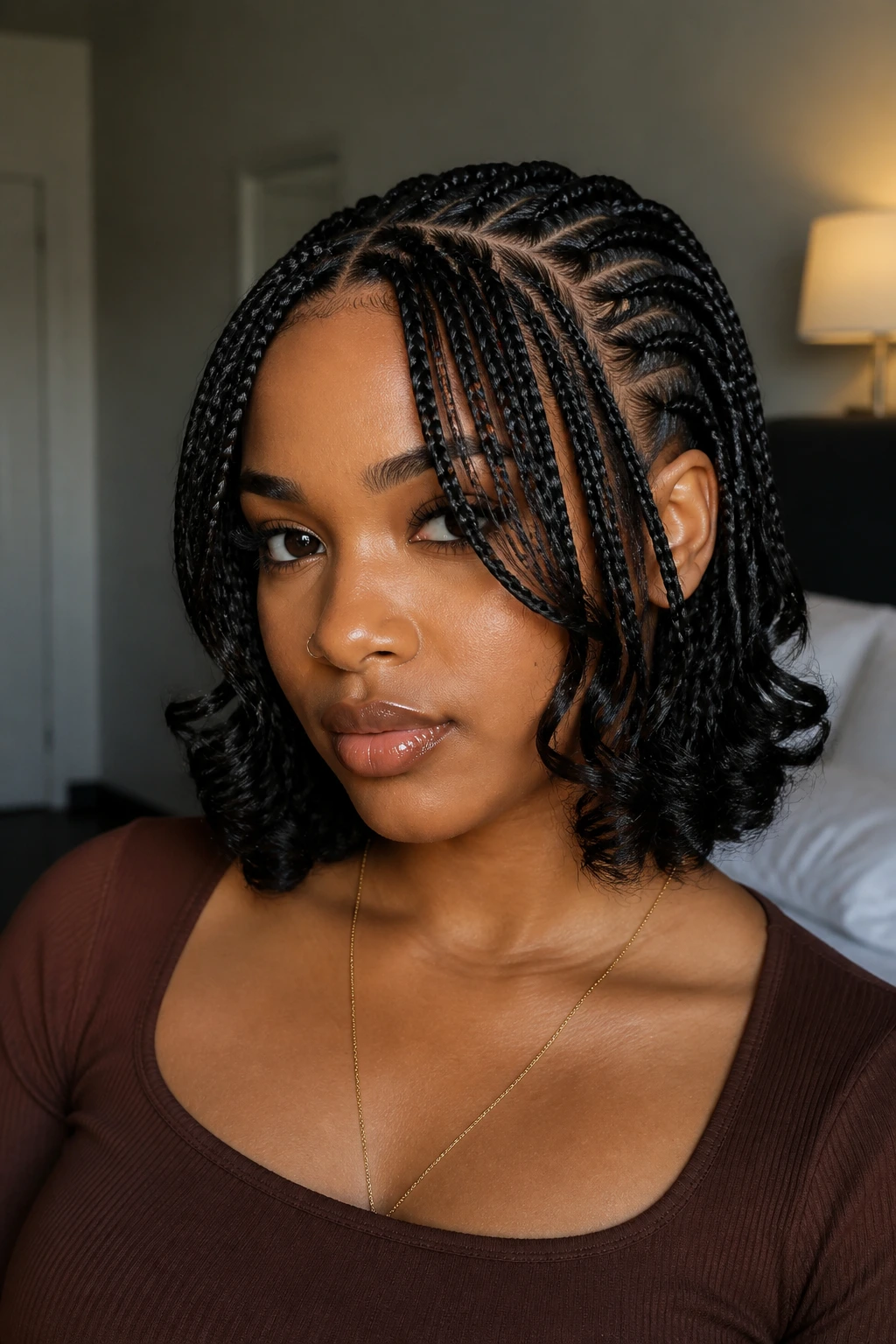
A cornrow bob can look very sharp on its own, almost architectural. Curtain bangs take the edge off. The curled ends soften the bottom line, and the front pieces keep the style from feeling too strict at the temples.
If you like a low-maintenance shape with a little polish, this is a smart choice. It holds its line well, and the bang pieces can be curled under or away from the face depending on how much openness you want. I prefer a light bend at the front rather than a stiff curl. The style reads younger and fresher that way.
The bob length also means less weight pulling the style down. That makes the curtain pieces sit cleaner around the cheekbones.
18. Braided Space Buns with Sleek Curtain Bangs
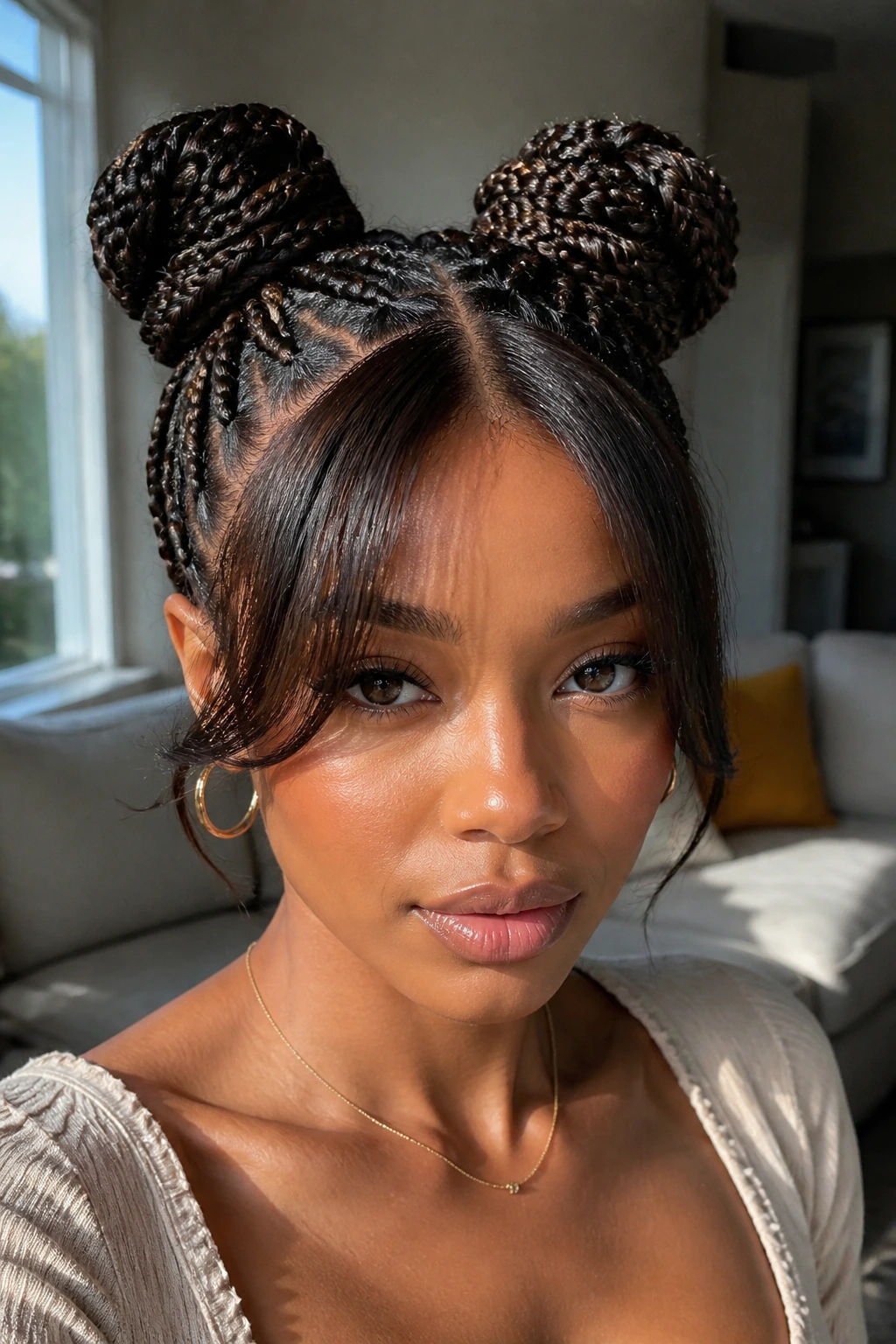
Braided space buns can go from playful to polished fast, and the curtain bangs are what keep them from looking too cartoonish. The buns lift the shape high, while the front pieces pull the eye back toward the center of the face. It’s a fun contrast.
This works best when the bangs are sleek at the root and softly curved at the ends. If the front is too fluffy, the style starts to look busy. If it’s too stiff, the whole thing gets stiff. So yes, there is a middle ground. There usually is.
A little shine serum on the braid length can help here, but keep it off the curtain pieces. The front needs movement more than gloss.
19. Low Chignon with Swept Curtain Front Pieces
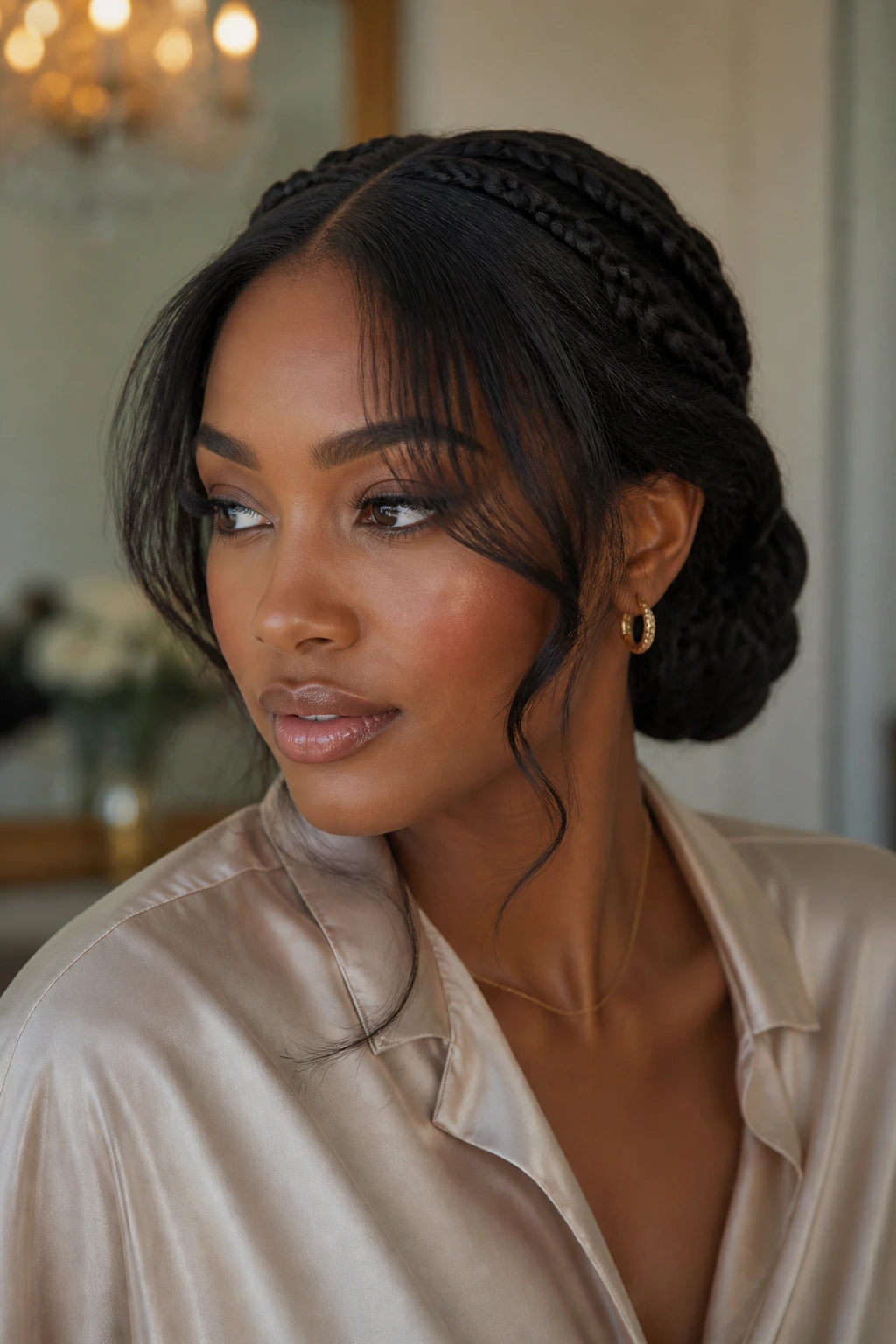
A low braided chignon is one of the most elegant ways to use curtain bangs without making the front the star. The bun sits low and smooth, and the front pieces sweep down just enough to balance the shape. It’s quiet, but not plain.
The swept front works especially well if you want the style to look pulled together without looking severe. I like it with one side slightly fuller than the other, because that gives the face a more natural frame. Keep the chignon compact. A large, loose bun and loose curtain pieces can start to fight each other.
This is a good event style, but it also works for regular days when you want your hair off your neck and still want some softness near the cheeks.
20. Side-Part Feed-In Ponytail with Accent Braids
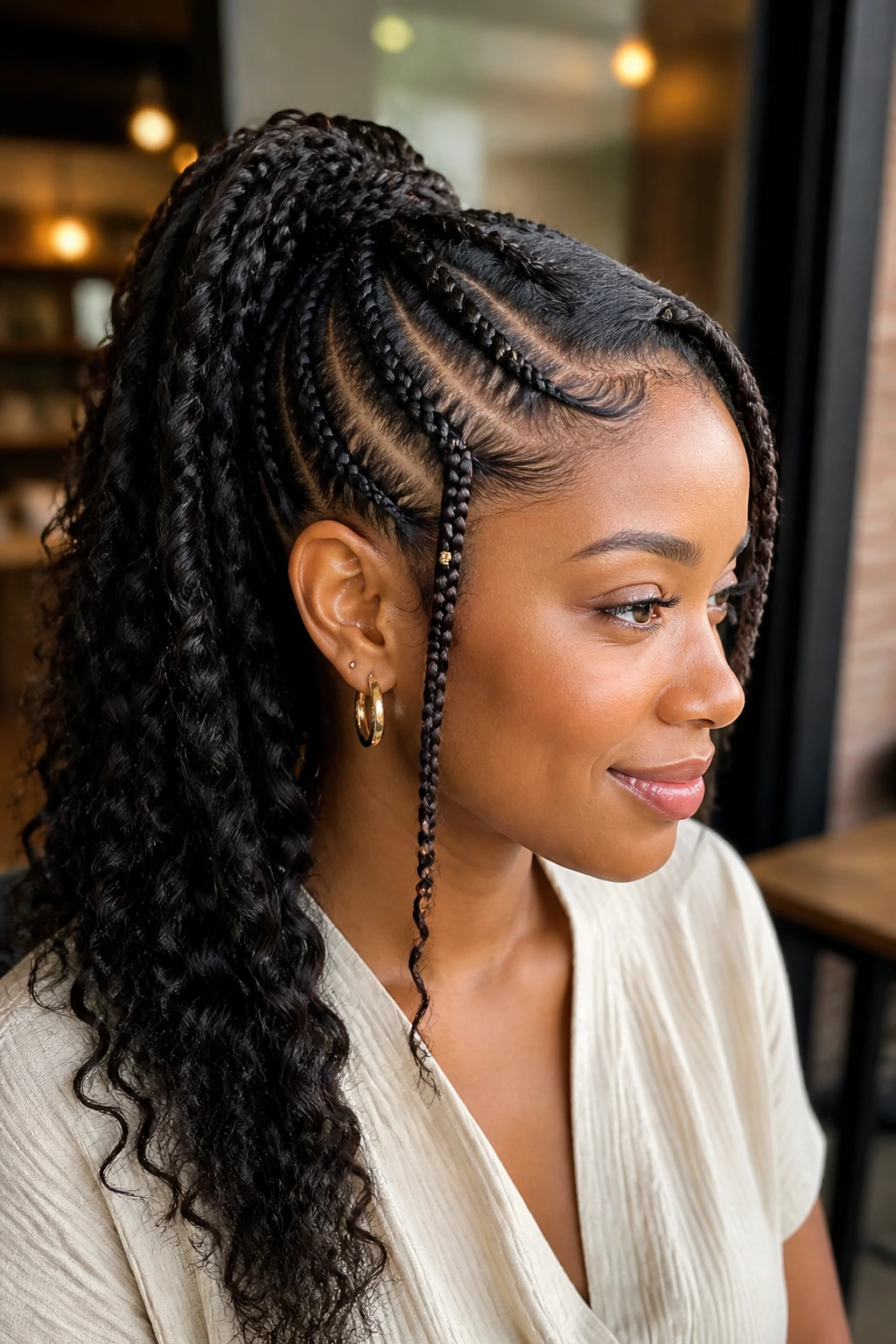
A side-part feed-in ponytail changes the balance of the whole head, and the curtain bangs make the part feel deliberate instead of dramatic for drama’s sake. The ponytail gives the style lift, the feed-ins keep the base sleek, and the front pieces break up the line at the forehead.
Accent braids near the hairline can help guide the eye toward the bangs. I like that because the front needs a little support in styles like this. If the bangs are the only soft piece, they can look isolated. A small accent braid beside them fixes that.
This shape is especially good when you want movement and height without a lot of loose length hanging around your shoulders.
21. Chevron-Part Knotless Braids with Wispy Bangs
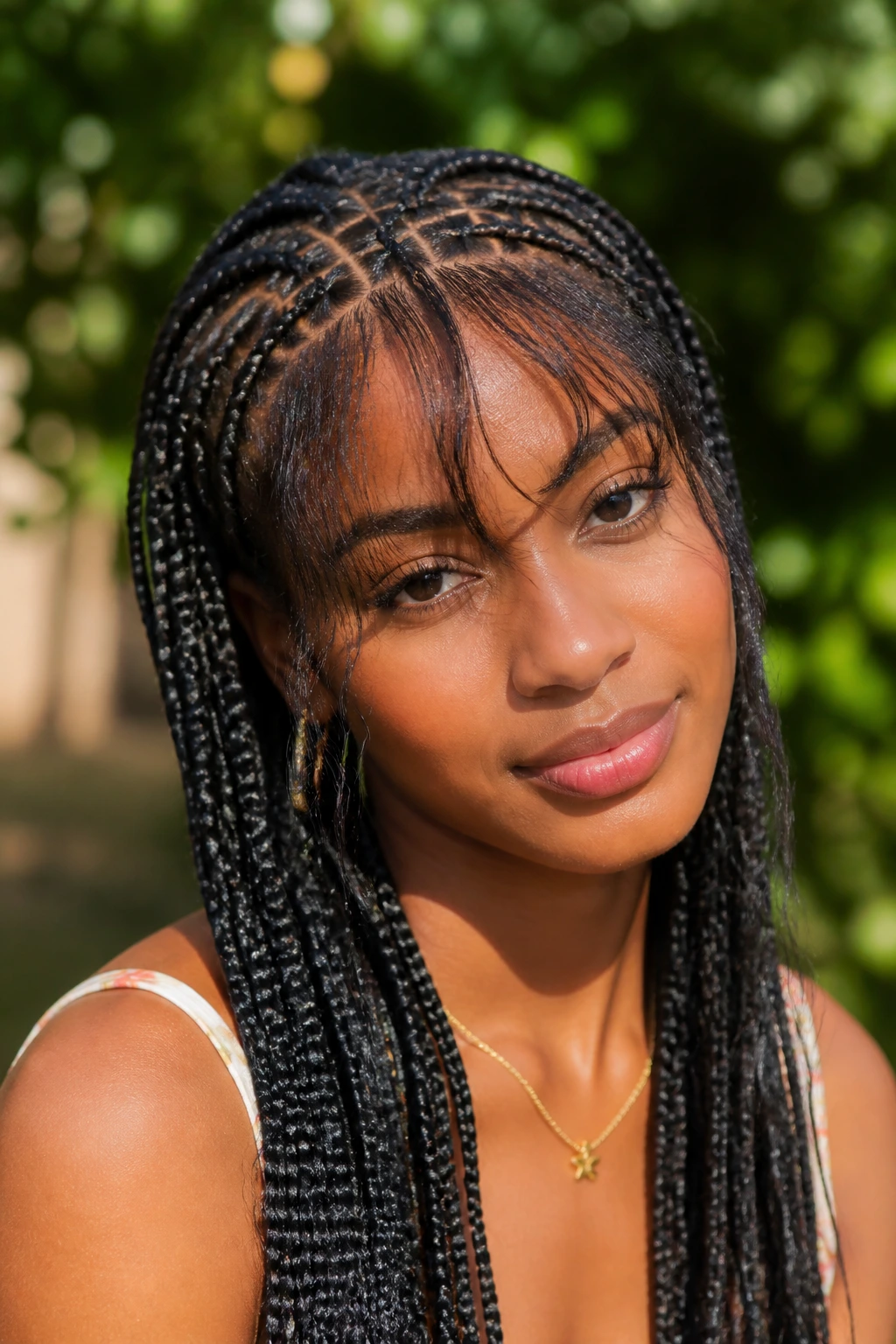
Chevron parts add a little visual surprise without being loud about it. Pair them with knotless braids and wispy curtain bangs, and the whole style feels tailored. Not in a stiff, suit-and-tie way. More like someone actually cared about the pattern.
The front bangs should stay feather-light here. A chevron part already gives the eye enough to study, so a heavy curtain fringe would overwork the front. Leave the pieces soft, thin, and easy to sweep aside if you want them out of the eyes.
This is a good style when you like detail and movement but don’t want extra bulk around the forehead. It’s tidy. It’s interesting. It doesn’t shout.
22. Crown Braid with Tucked Length and Soft Curtain Pieces
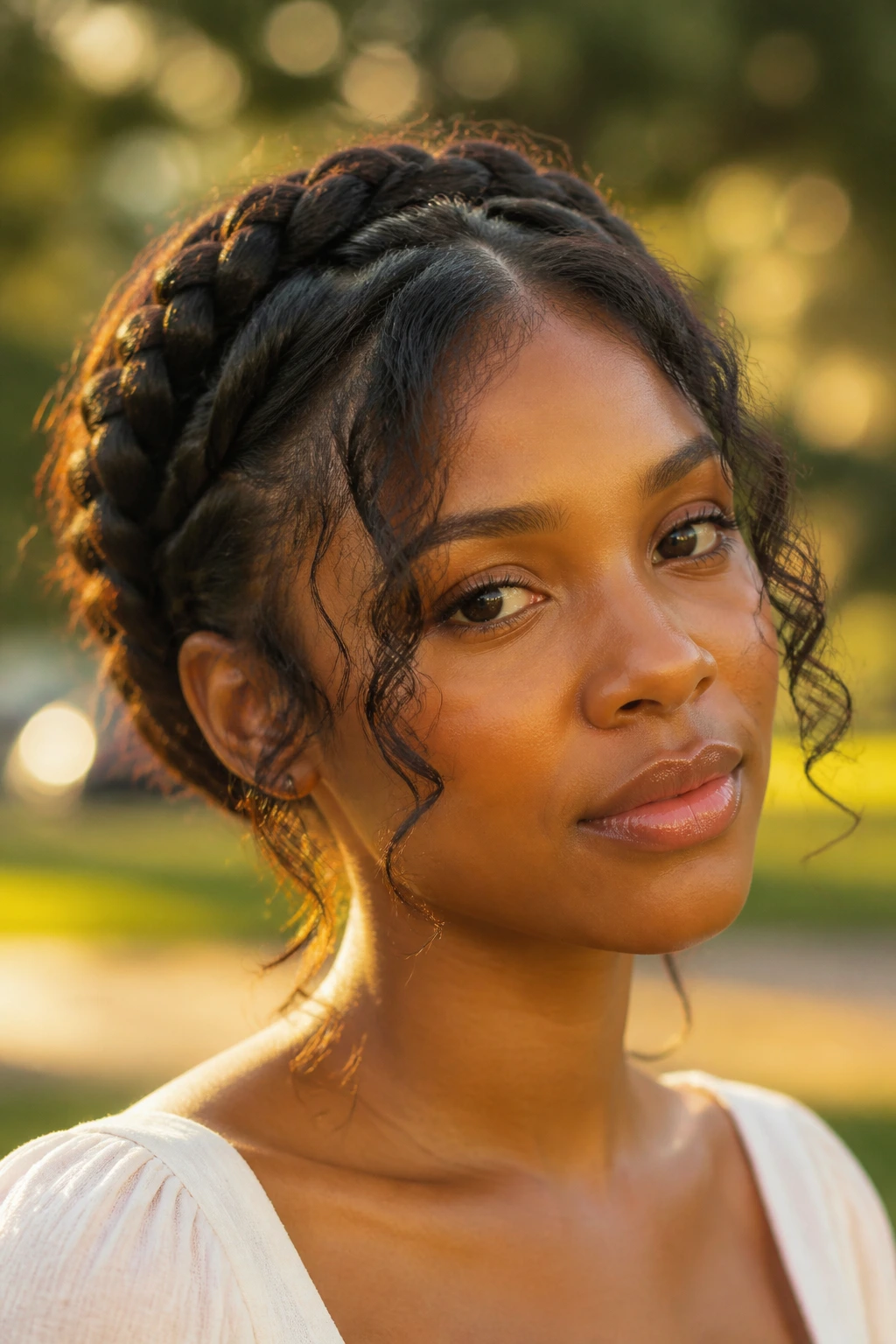
A crown braid can look almost sculptural, which is lovely until it gets too formal. Soft curtain pieces save it. They keep the front from feeling like a museum display and make the style feel wearable.
The tucked length at the back helps the braid line stay clean around the head, while the front pieces stay loose enough to move. I like this when the crown braid is wide and low rather than tight and high, because the curtain bangs need a little space to fall naturally. If the crown sits too close to the hairline, the bangs can seem squeezed.
The real appeal here is balance. Structured back. Soft front. No drama needed.
23. Crisscross Braids with Layered Front Sections
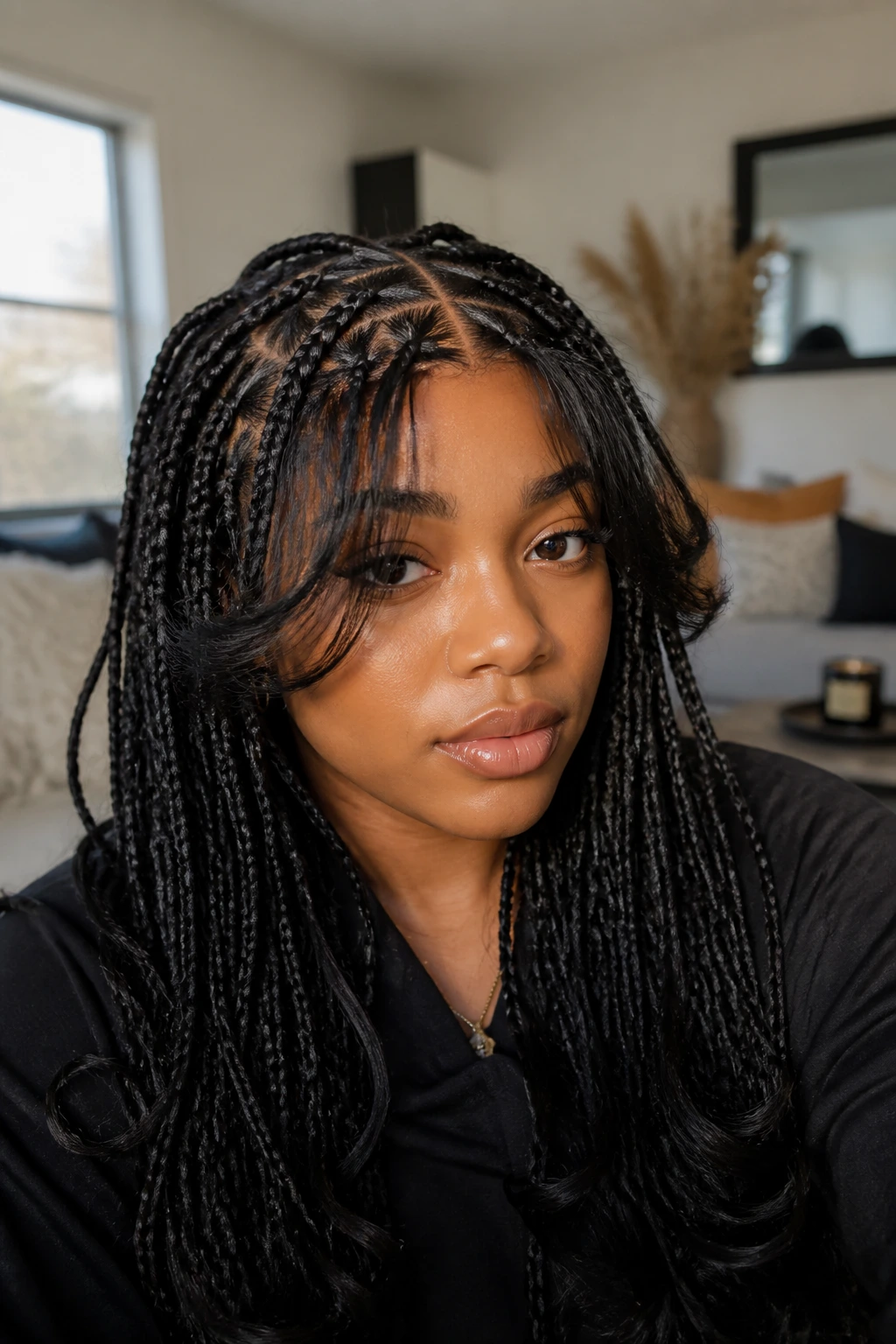
Crisscross braids have a built-in pattern that’s already doing a lot, so layered front sections are the smart way to bring in curtain bangs. Instead of one blunt face frame, you get several smaller pieces that overlap and soften the design.
That layering matters because the crisscross pattern can turn visually busy fast. The front pieces calm it down. They let the eye enter the style instead of hitting a wall of parting lines.
I’d keep the layers around the face slightly different lengths if your texture allows it. A little variation looks more natural than a perfectly even set. This is one of those cases where “imperfect” reads better.
24. Long Box Braids with Beaded Side Curtain Bangs
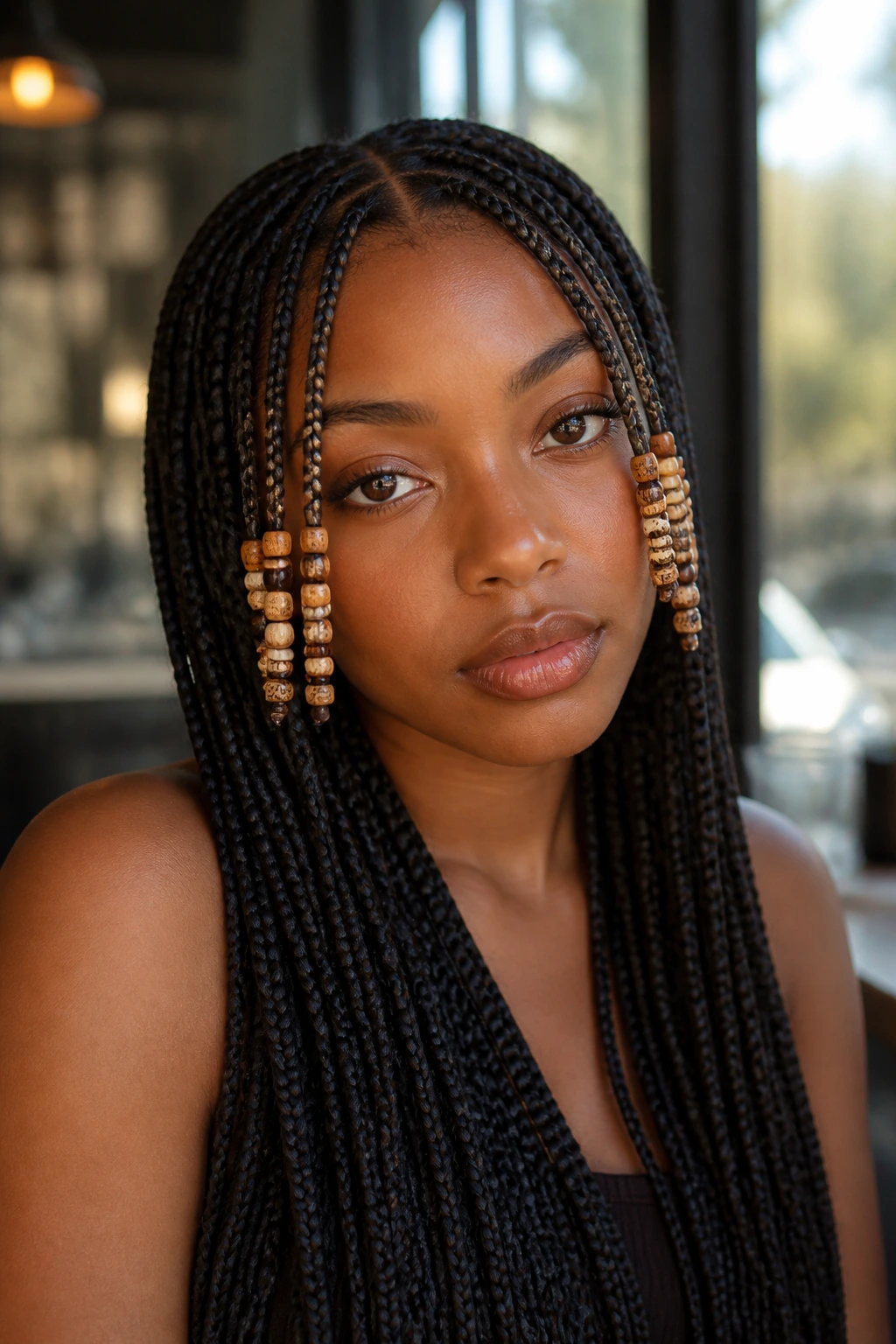
Long box braids love accessories, and beaded side curtain bangs are a clean way to give the front some character without adding weight everywhere else. The beads should live near the ends of the face-framing pieces, not near the roots. That keeps the curtain effect light.
This style is good when you want the braids themselves to stay the headline, but the face still deserves a little attention. A side curtain sweep can be more flattering than a strict middle part if your features read stronger on one side. The beads add rhythm, not clutter, when they’re spaced with restraint.
One strand with two beads can be enough. More is not always more. Sometimes it’s just more noise.
25. Braided Crown Ponytail with Feather-Light Bangs
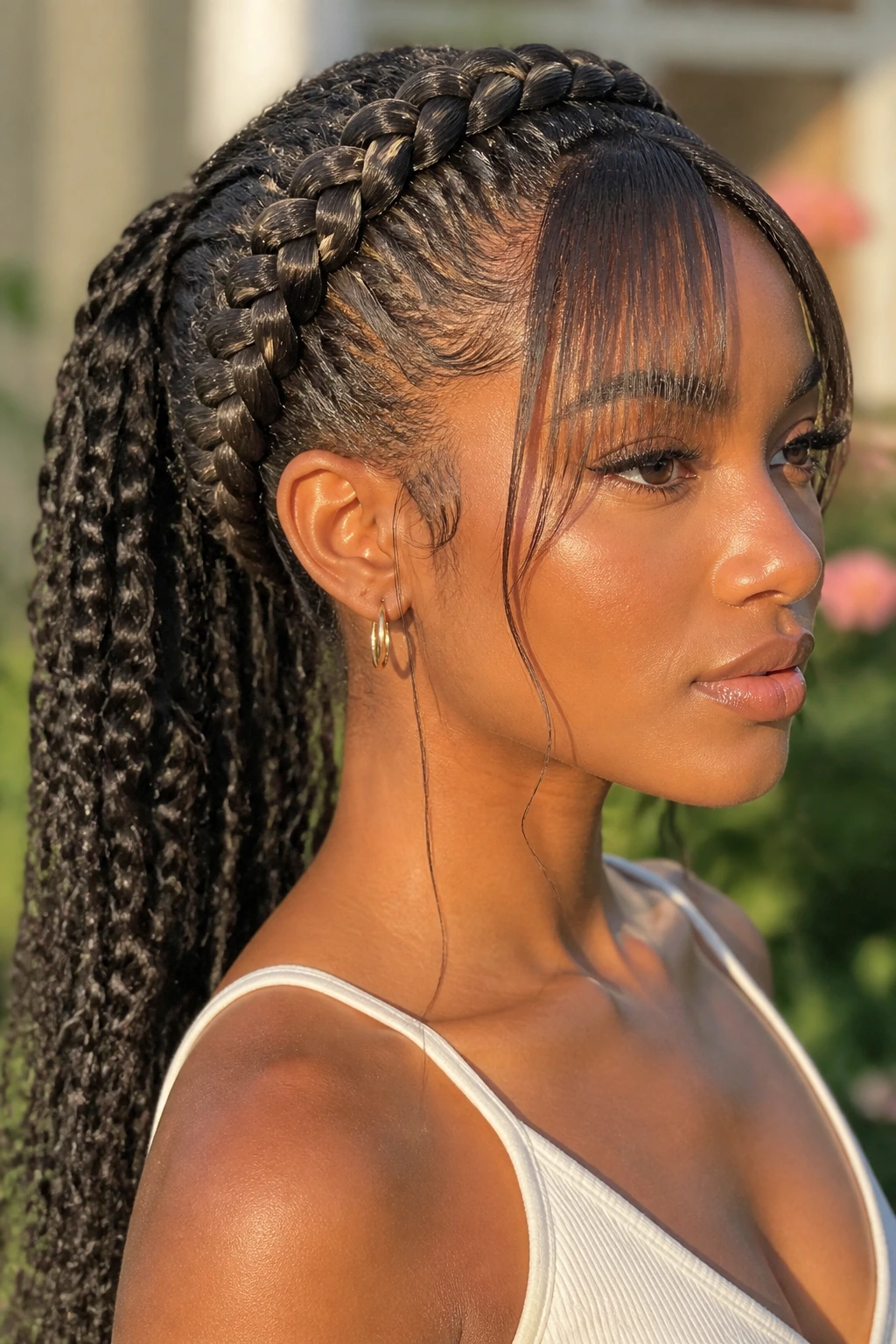
A braided crown ponytail has the lift of a ponytail and the polish of a crown braid, which gives it a nice in-between feel. Feather-light curtain bangs are the finishing move that keeps the front from looking overbuilt. This style carries itself well.
The ponytail base should be smooth, but the bangs can stay airy. That contrast is what makes it work. If the face-framing pieces are too thick, they steal attention from the crown shape. If they’re too thin, you lose the softness entirely. Thin, but present. That’s the sweet spot.
This is the style I’d pick when I wanted the front to look clean in profile and still have a little movement when I turn my head.
Choosing the Right Style for Your Length and Density
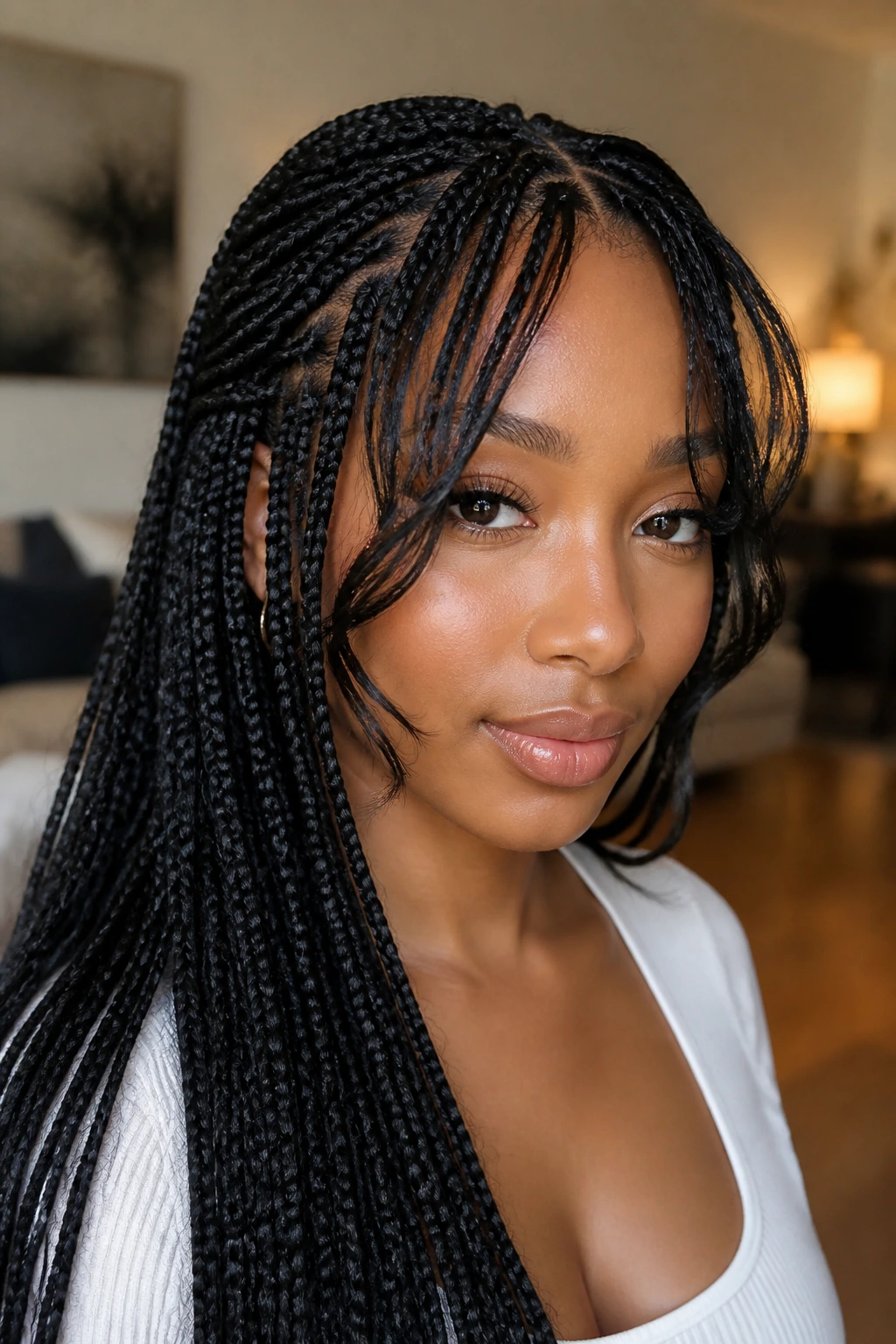
Not every braid pattern wants the same curtain bang treatment. Shorter natural hair usually does better with styles that keep the front relatively tight — think feed-ins, halo shapes, twin braids, and bob-length finishes. Longer hair can carry heavier layers, bigger buns, and more dramatic face-framing strands without losing balance.
Density matters too. If your hair is thick at the temples, leave the curtain pieces a touch narrower than you think you need. Thick front sections can overpower the rest of the style. Finer hair can go a little wider because it needs help showing up in the front.
Face shape is part of it, but I’d never chase that too hard. The cleanest rule is simpler: the more braid you have everywhere else, the lighter the front should feel.
Essential Tools for Braided Styles with Curtain Bangs
-
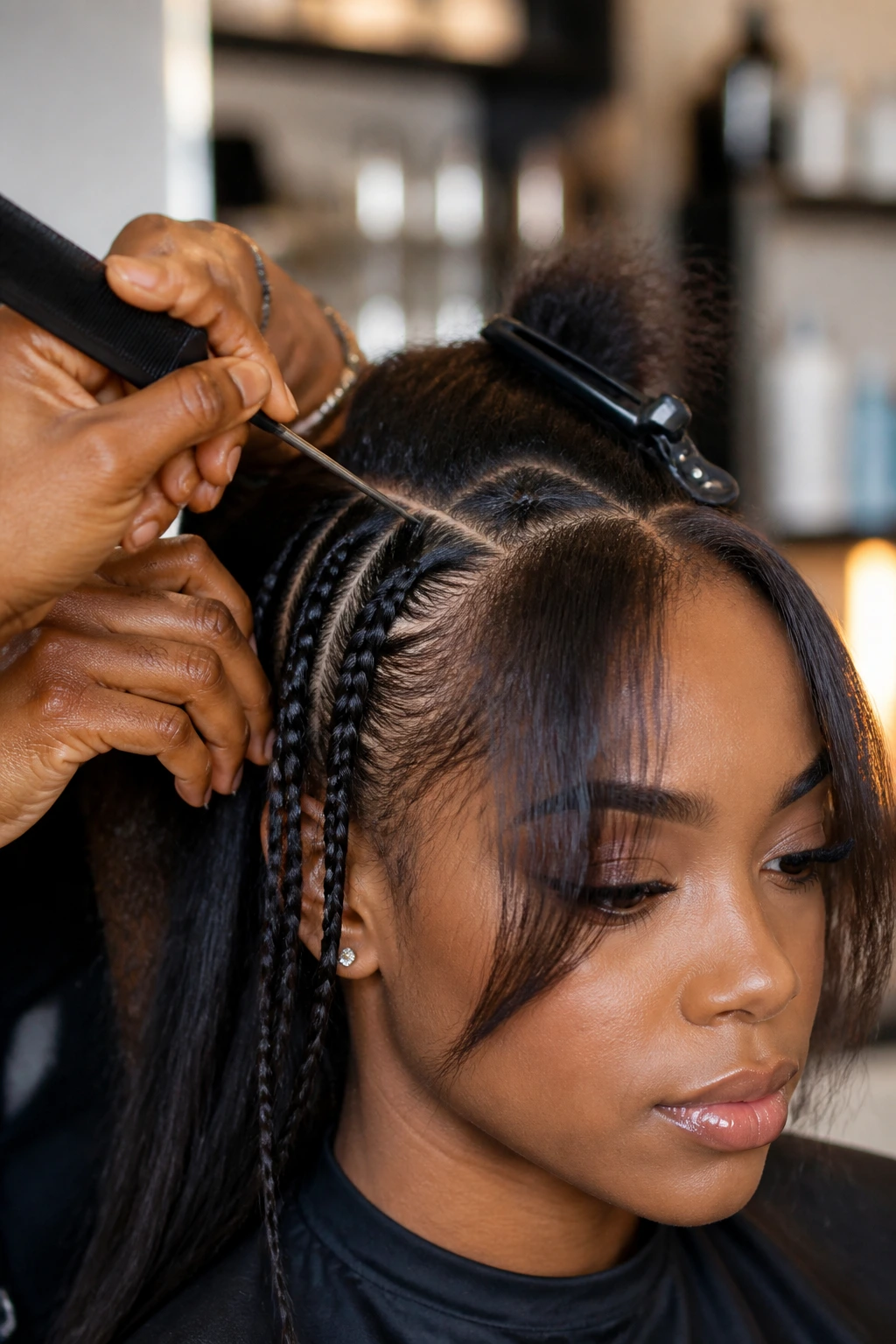
Rat-tail comb: Clean parts are half the job, and the tail helps map the front sections without tearing through the scalp.
-
Sectioning clips: These keep the crown and side hair out of the way while you work on the curtain pieces.
-
Braid gel or light edge control: Use it sparingly at the roots only; the front should hold, not cake up.
-
Foam mousse: This helps the curtain bangs settle and keeps extension hair from looking fuzzy.
-
Flexi rods or perm rods: Handy when you want the front pieces curled away from the face instead of hanging straight.
-
Satin scarf or wrap strip: The front takes the most friction at night, so wrapping it cleanly matters.
-
Braiding hair in the right texture: Match the extension hair to your own finish so the curtain pieces don’t look like they belong to a different hairstyle.
-
Spray bottle with water and leave-in mix: Keep it light; dampen, don’t soak.
Prepping Natural Hair Before the First Part Is Made
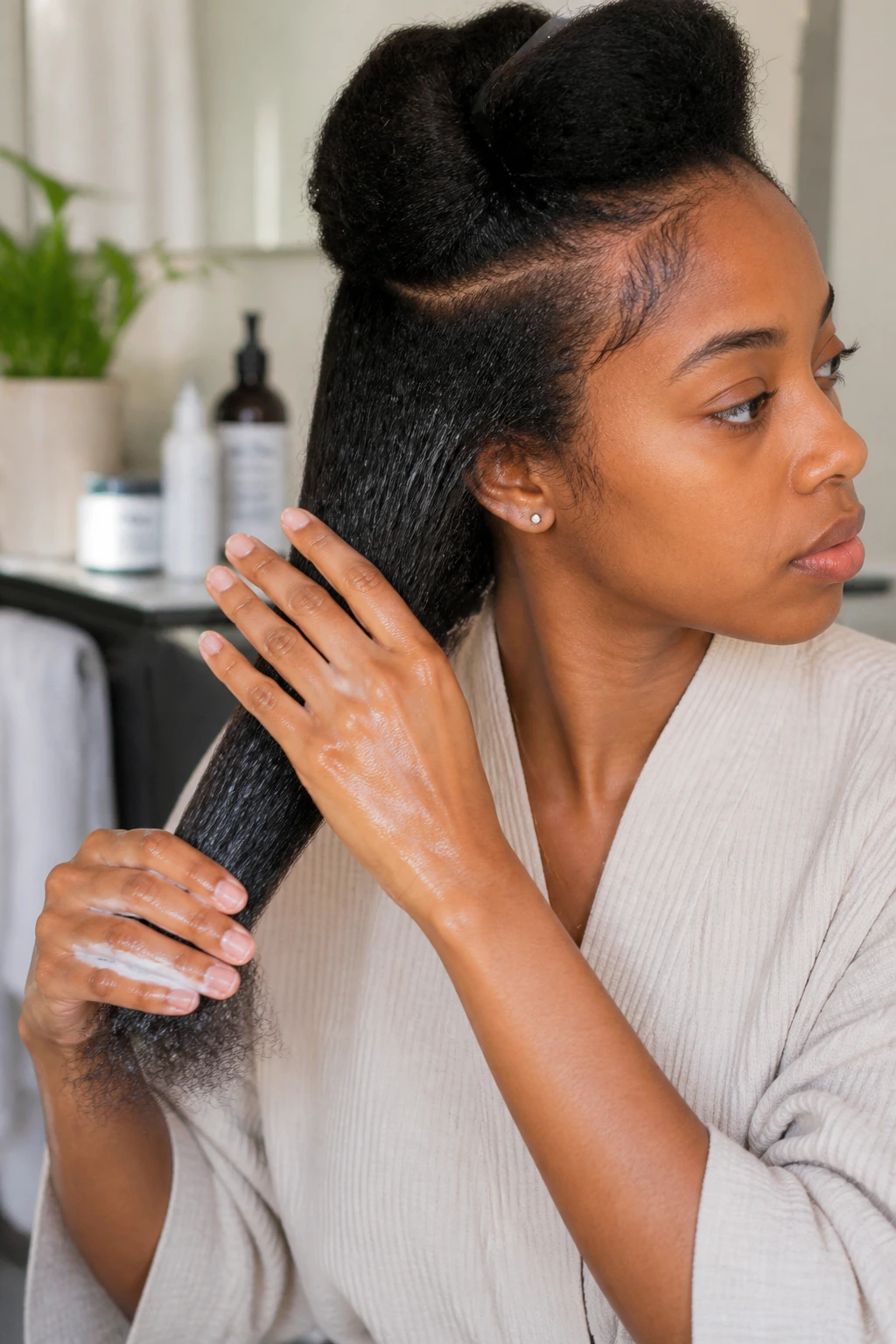
Clean parting starts with clean, stretched, detangled hair. If the hair at the front is packed with old product, the curtain pieces won’t lie where you want them to. They’ll puff, split, and make the braid base harder to control. That is a bad trade.
I like a gentle wash, a thorough detangle, and then some kind of stretch — banding, twists, or a low-heat blow-dry if that’s part of your routine. The goal is not to flatten your texture into submission. The goal is to reduce random shrinkage so the front sections behave once they’re left out.
Pay extra attention to the hairline and temple area. Those sections are small, easy to over-handle, and the first to complain if you yank too hard. A little leave-in on the lengths is fine. Heavy cream right at the root usually is not.
How to Keep Curtain Bangs Soft Instead of Puffy
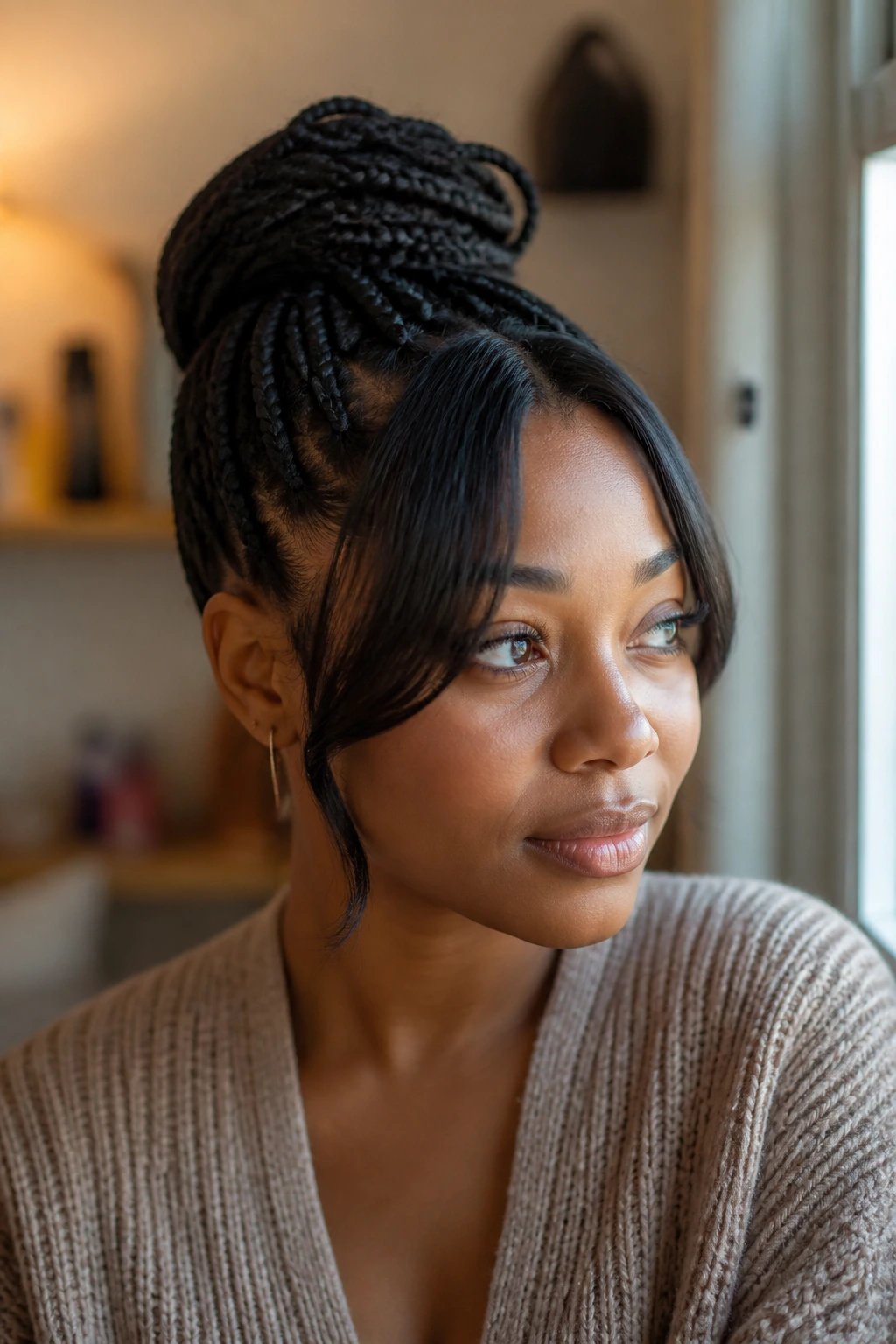
Curtain bangs on braids can go puffy fast, especially if the front pieces are left too thick or the weather has opinions. The fix is not to load the front with more gel. It’s to shape it better and wrap it properly.
A better front routine
Set the curtain pieces with a small amount of mousse or wrap lotion, then smooth them with your fingers or a soft brush. If they’re curly, let them dry before you touch them again. If they’re straight or lightly waved, wrap them down the middle of the night with a satin scarf so the bend stays controlled.
If the ends kick out too much, a quick rod set or a small two-strand twist overnight can calm them down. That works better than reapplying product every morning. Product buildup at the front is how braided styles start looking tired long before the rest of the head does.
A final note: touch the bangs less than you want to. Hands create frizz. It’s rude, but true.
Small Details That Make the Style Look Finished
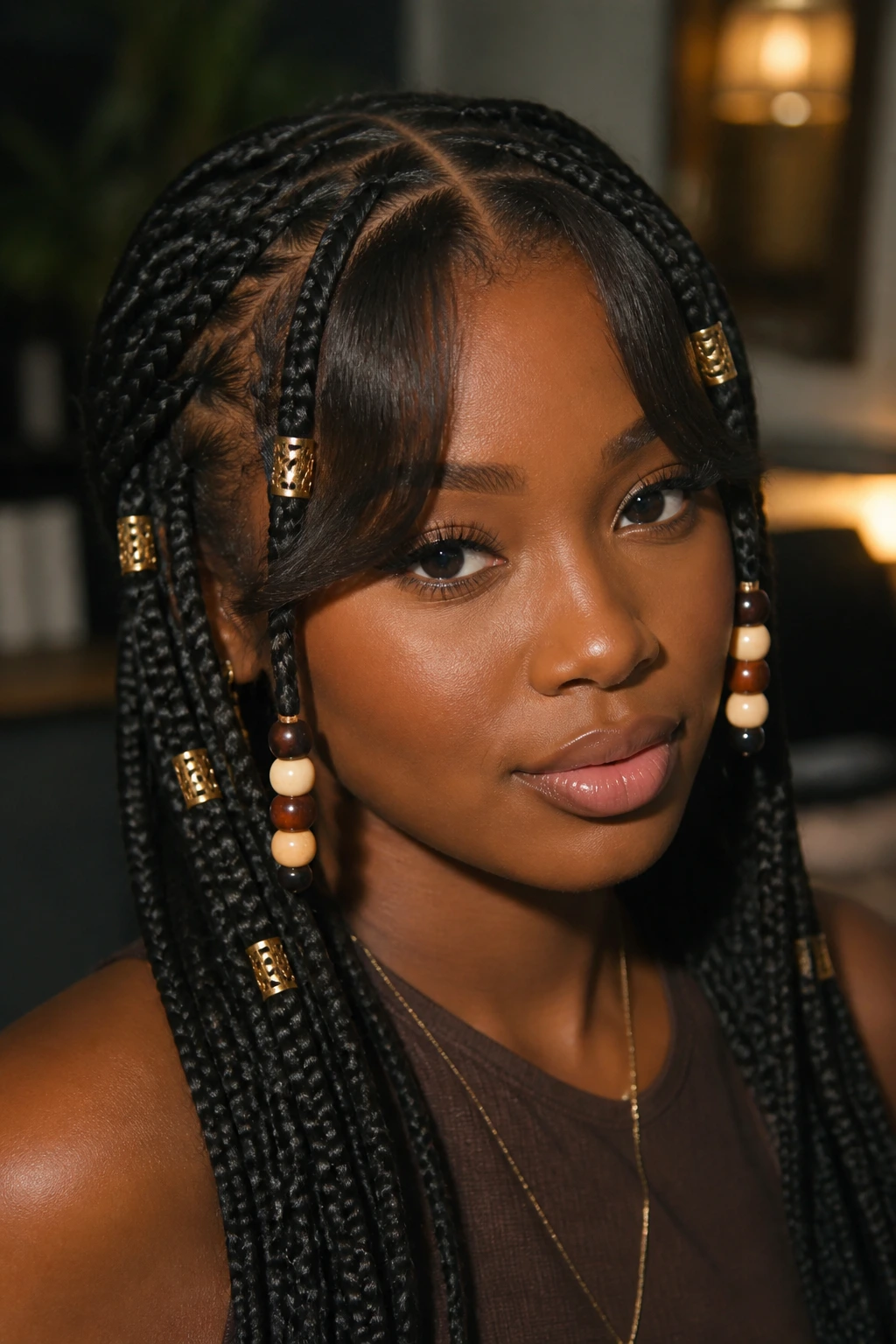
Tiny choices change the whole read of a braided style. Beads at the ends of a curtain piece can give the front just enough weight to sit properly. Cuffs on the outer braids can pull the eye toward the face. A center part that is slightly rounded at the hairline feels softer than one that’s dead straight and severe.
I also like when the front pieces echo something else in the style. A swooped part in the curtain bangs can repeat a side braid. A curled end can echo the curve of a bun. That kind of small visual echo makes the whole look feel thought through, even if nobody can name why.
And yes, shine matters — but only on the braid length. The bangs should stay touchable. That contrast is what keeps the style from looking plastic.
Common Mistakes That Age the Style Fast
-
Leaving the front pieces too thick: The bangs start to dominate the face and the braid pattern loses its shape. Keep the curtain sections narrow and tapered.
-
Pulling the front too tight: If the hairline feels sore or the forehead looks stretched, the style will age badly fast. Ease up at the temples and keep tension even.
-
Using heavy product on the bangs: Thick gel makes the front greasy and stiff, then the style flakes once it dries. Use light mousse or a small amount of cream instead.
-
Ignoring the front at night: The rest of the braids can survive a rough pillow; the curtain pieces usually cannot. Wrap the front or sleep in a bonnet that actually holds it down.
-
Making every front piece the same length: A little graduation looks softer and more natural. Dead-even fringe can look cut into place instead of lived-in.
Variations and Adaptations to Try
Low-Tension Version
Use larger sections, fewer rows at the front, and a softer parting shape. This is the one to choose if your scalp gets tender easily or if you want the style to last without the front feeling tight.
Heat-Free Curtain Bangs
Stretch the front with banding, twists, or a blow-dry on low heat, then set the pieces overnight with foam. You still get a curtain shape, but you skip direct heat styling on the leave-out.
Accessory-Heavy Front
Add beads, cuffs, or wrapped thread to the outer braids while keeping the curtain pieces simple. The contrast keeps the face open while still giving the style personality.
Short-Hair Friendly Build
Choose feed-in cornrows, twin braids, crown styles, or bob-length braids so the curtain pieces don’t have to do all the work. Shorter styles can still feel soft at the face if the front strands are narrow and well-shaped.
Dressy Event Finish
Set the bangs with smaller rods, smooth the roots, and tuck the braid length into a bun or ponytail. This version looks cleaner from the side and keeps the front polished in photos.
Sleep, Refresh, and Take-Down Care
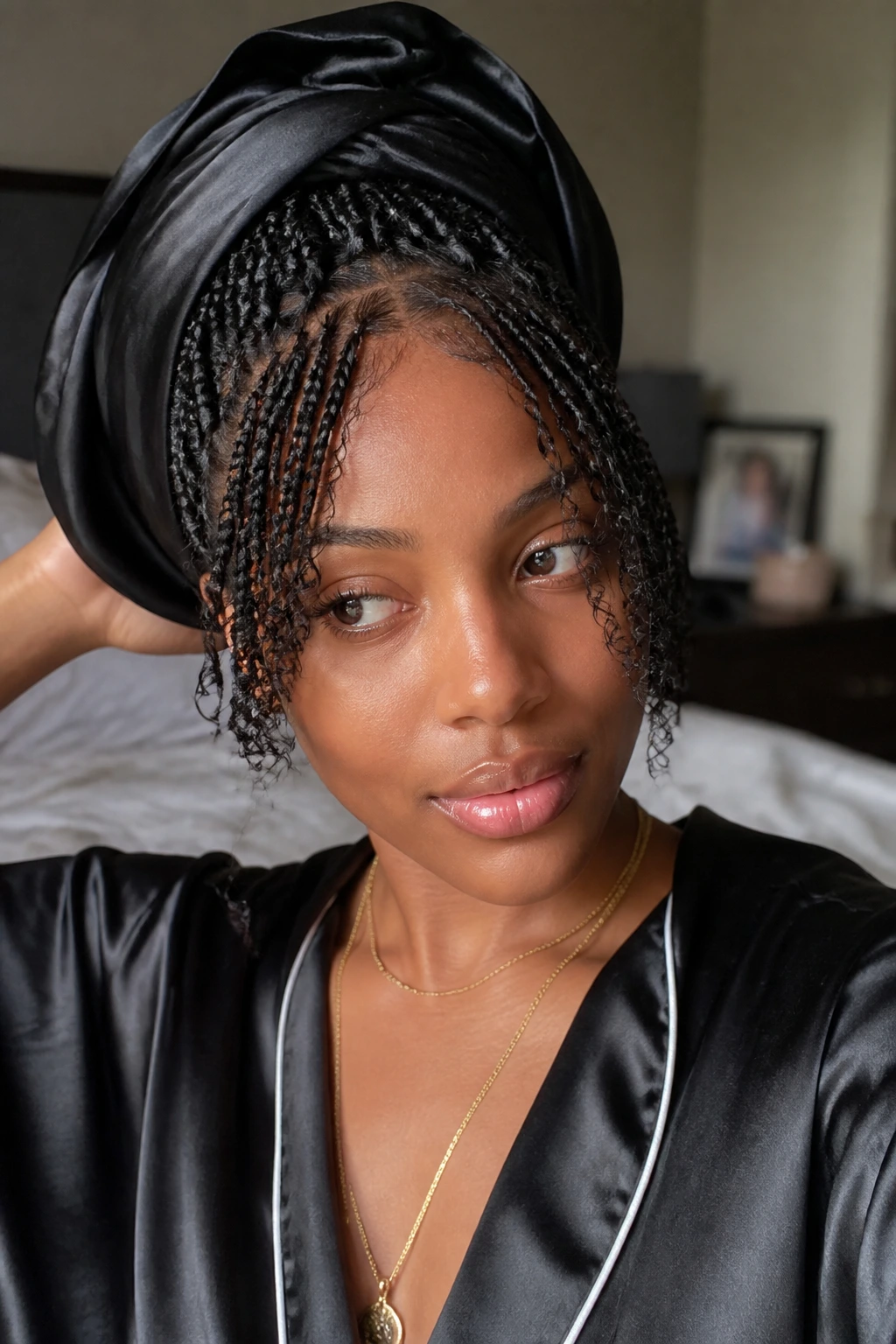
Braided styles with curtain bangs last longer when the front gets its own routine. At night, wrap the bangs flat with a satin scarf or tuck them into a bonnet that won’t crush the rest of the style. If the front curl pattern is part of the look, re-set it every few nights instead of waiting for it to collapse completely.
For refreshes, a light mist and a tiny bit of leave-in on the front pieces every few days is usually enough. Don’t drench the roots. That only makes the front swell and makes the next day harder. If the style includes curls, re-rod the curtain pieces when they start to lose shape.
Most braided styles like this stay neat for a few weeks if they’re not installed too tight. When the roots start to fray, the front stops looking intentional. That’s your cue. Not the scalp screaming. The front.
Frequently Asked Questions
Do I need to cut my own hair to get curtain bangs with braids?
No. Most of these looks are built by leaving out two narrow front sections during the install. You can shape them into a curtain effect with curl, wave, or simple stretch styling.
Which styles are gentlest on a tender hairline?
Usually the flatter ones: knotless braids, halo braids, soft feed-ins, and low buns with narrow face-framing pieces. The less bulk and pull at the temple, the happier your scalp tends to be.
How do I stop the front pieces from puffing up by midday?
Start with stretched hair, keep the curtain sections narrow, and use a light mousse or setting foam. A satin wrap at night does more than people expect, too. If the front starts puffy because the section is too thick, product won’t fix that.
Can curtain bangs work on short natural hair?
Yes, as long as the style is built for the length you have. Twin braids, feed-in rows, crown braids, and bob-length braid sets usually give you the cleanest result without forcing the front to do too much.
Should the front pieces be curled or straight?
Curled or softly waved usually looks better with braided styles because it gives the face frame a little shape. Straight works if the rest of the style is sleek, but it needs cleaner sectioning or it can look flat.
How long do these styles usually last?
That depends on braid size, tension, and how much of your own hair is left out at the front. Smaller sets can stay tidy longer; larger, softer styles may need more front refreshes to keep the curtain pieces looking neat.
What if my curtain bangs won’t lay flat?
Check the part size first. If the front sections are too thick, they’ll fight the braid pattern. If the pieces are thin but still puffy, stretch them more before styling and set them with mousse before wrapping.
Can I add beads or cuffs without making the bangs heavy?
Yes, but put the accessories on the outer braids or the ends of the curtain pieces, not near the scalp. Weight near the root drags the front down and makes the whole style feel tired.
The Styles I’d Reach for First
The prettiest braided styles in this group are the ones that leave room for the face to move. That’s the real trick here. Curtain bangs are not decoration pasted on top of a braid pattern; they’re part of the shape, part of the balance, part of what keeps the style from locking into one hard silhouette.
If I were narrowing this list for an actual appointment, I’d start with knotless box braids with soft curtain pieces, Fulani braids, and a braided ponytail with face-framing strands. Those three cover a lot of ground: neat, detailed, and easy to wear. The rest of the list gives you more room to play once you know what kind of front you like.
The best part is that none of these looks requires the front to be perfect to work. They just need to be thought through. That’s a good place to be.