



Braided updos for Black hair and heart-shaped faces are all about where the weight lands. Put too much height right at the crown and the face reads sharper than it should. Shift the braid line lower, sweep the front across the forehead, or tuck the finish at the nape, and the whole shape settles into something calmer and more balanced.
That matters because heart-shaped faces already carry strong visual energy up top. The forehead tends to be broader, the chin narrower, and the wrong braid can drag the eye straight to that top-heavy triangle. On textured hair, that effect gets louder fast if the part is too rigid, the bun sits too high, or the edges are pulled flat with no softness left around the temples.
The styles below lean the other way. Some are polished enough for a formal night out, some stay neat for weeks with a satin scarf and a light spritz, and some use added braiding hair to build a fuller shape around the lower half of the face. None of them rely on one trick alone. Placement matters. Tension matters. And a braid that lands an inch lower can change the whole read of the style.
Why These Braided Updos Earn Their Spot
- Face balance: Each style puts the visual weight away from the widest part of a heart-shaped face and closer to the cheekbones, jawline, or nape, which softens that upper-heavy silhouette.
- Protective by design: Most of these keep the ends tucked, pinned, or braided away, so you get less daily combing and fewer rough mornings with the same style.
- Length-flexible: Some work on shoulder-length natural hair, while others need added braiding hair or a bit of stretch; you do not need the same starting length for all 30.
- Office to event range: A low braided knot can look restrained on Monday and dressy on Saturday just by changing the part, the shine level, or the accessories.
- Texture-friendly: These styles respect coils, curls, and blown-out hair instead of fighting them flat, which keeps the overall shape cleaner and the scalp happier.
- Refreshable: The best ones can be revived with mousse, a scarf tie-down, and a few pins instead of a full redo.
1. Low Crown Braid Bun
A low crown braid bun is one of those styles that looks quiet at first and then wins the room. The braid starts with a deep side part, curves across the head, and settles into a bun just above the nape, which is where it stops the face from feeling too top-heavy.
On a heart-shaped face, that low placement is doing real work. It pulls the eye downward and makes room for the jawline to show up. Leave a slim face-framing piece near the temple if you like a softer edge, but keep the bun compact. Too much puff at the crown and you lose the balance.
2. Side-Swept Rope Braid Chignon
This one has a clean, sculpted line that feels a little old-school in the best way. A rope braid sweeps from one side of the hairline, crosses the back, and coils into a chignon just behind the ear. The whole thing reads long and diagonal, which is exactly what a heart-shaped face likes.
The diagonal pull matters. It breaks up the width at the forehead and guides the eye toward the lower half of the face instead of parking it up top. If your hair is dense, keep the rope braid tight enough to hold the shape but not so tight that it flattens the front into a hard edge.
3. Halo Braid with Tucked Ends
A halo braid can go wrong fast if it sits too high, so keep this one lower and a little looser around the temples. The braid should skim the forehead line like a soft band, then disappear into tucked ends at the back rather than sitting like a rigid crown.
That lower halo is the trick. It trims the visual height of the forehead without squashing the face shape, and it gives the style a rounder outline. If you want a little extra softness, pull one or two tiny loops free near the ears. Tiny. Not messy. Just enough to stop the style from looking helmet-like.
4. Braided Top Knot with Curtain Tendrils
A top knot can be tricky on heart-shaped faces because the eye jumps right to the crown. The fix is not to avoid height altogether. It is to keep the knot braided, compact, and paired with curtain tendrils that fall along the temples and cheekbones.
Those face-framing pieces do the heavy lifting. They interrupt the broad forehead and keep the style from feeling severe. I like this version when the knot sits just high enough to show the neckline of a dress, but not so high that the face starts looking stretched upward. Small knot. Soft front. Clean finish.
5. Low Woven Bun with Side Swoop
This style has a little more body around the jawline, which is why it works so well. The hair is braided or twisted into a woven pattern and anchored low, then one front section is swept across the forehead in a smooth curve before joining the bun.
That side swoop matters more than people think. It cuts the forehead width and directs attention diagonally, where heart-shaped faces usually want it. Keep the bun broad rather than tiny; a flat knot can make the chin look sharper. A wider bun feels more balanced, almost like the style is holding the face open instead of squeezing it inward.
6. Double Dutch Braid into Twisted Bun
Two Dutch braids moving from the front into a twisted bun give you a neat, symmetrical frame without making the face look pinched. The braids start around the temples, travel backward, and meet in a low bun that sits close to the occipital bone.
The reason this works is simple: the front half stays controlled, but the sides still have thickness. That little bit of width near the temples and upper cheek area softens the heart shape in a way a slicked-back look never will. If your hair is fine, pancake the braids gently after they’re secured. A flat palm and a careful tug on the braid edges can make the style look fuller without turning frizzy.
7. Crown Braid with Curved Nape Bun
This one feels elegant without being stiff. The braid travels around the top half of the head like a soft crown, then curves down into a bun tucked at the nape. The curve is important; a straight, rigid crown line can read too severe on a heart-shaped face.
A curved nape bun gives the style a lower resting point, which balances the broader upper face. If you want more softness, leave the braid slightly loose above the ears so it rounds the head instead of hugging it too tightly. That little bit of air around the braid makes a big difference in how the face reads.
8. Side-Swept Feed-In Braid Updo
This style brings drama without piling height on top. Feed-in braids start from a deep side part and move across the head in smooth, controlled lines before gathering into an updo near one side of the nape. The shape is slanted, not centered, which is exactly why it flatters.
Heart-shaped faces usually look best when the eye is moved off-center. A centered braid can make the forehead feel wider, but a side-swept feed-in line cuts across that width and settles the look. Keep the updo close to the head so the style has polish, not bulk.
9. Braided Ponytail Wrapped into Knot
A braided ponytail that gets wrapped into a knot can look sleek or soft depending on where you anchor it. For a heart-shaped face, keep the pony low enough that it doesn’t stand tall behind the crown. You want the eye going back and down, not straight up.
The wrapped knot gives the back of the style some fullness, which helps balance a narrower chin. If you want a little more face softness, let a narrow braid or twist fall from the front and tuck it behind the ear. Not loose. Just eased enough to blur the front edge.
10. Flat-Twist Updo with Soft Side Pieces
Flat twists have a flatter profile than many braids, which makes them useful when you want the top of the head to stay calm. Bring the twists back from a side part, pin them into a compact updo, and leave a couple of soft side pieces where the hairline starts to open.
That combination is doing a lot of balancing. The flat twist surface keeps the crown low, while the side pieces keep the face from feeling too bare. On textured hair, this style can look especially good when the twists are neat at the roots but not lacquered into place. A little texture near the temple reads softer and more human.
11. Mohawk Braid with Low Bun Base
A mohawk braid sounds bold, and it is, but it doesn’t have to be loud. Keep the braided ridge narrow and controlled, then let it settle into a low bun instead of a sky-high knot. That way you get the line and structure without the extra crown height.
For heart-shaped faces, that’s the sweet spot. You get a strong center line, but the lower bun holds the visual weight near the jaw and neck. If the sides are slicked too hard, the face can look sharper, so I like to leave the edges polished but not pasted flat. There should still be a little softness at the temple.
12. Basket-Weave Braided Bun
Basket-weave braids have a richer texture than a single large plait, and that richness helps when the face needs more fullness below the cheekbones. The braids cross and tuck into a bun with a woven surface, which gives the style depth without making it tall.
Keep the basket pattern broad across the back of the head rather than stacking everything at the crown. The lower, wider placement gives the face a more oval feel. This is one of those styles that looks best when the pieces are cleanly separated but not razor-tight. If the weave is too tight, it loses the softness that makes it work.
13. Asymmetrical Braided Chignon
This is the style for the person who likes one side to do a little more talking. The chignon sits behind one ear instead of dead center, and the braid path follows that same tilt. On a heart-shaped face, that asymmetry is a gift.
Why? Because the eye stops obsessing over the width of the forehead and starts following the line of the braid toward the jaw. A side chignon also leaves room for earrings to matter, which is nice if you like a little movement near the face. Keep the opposite side smoothed back, not flattened into a hard shell.
14. Pinned-Up Lemonade Braid Crown
Lemonade braid lines already have that diagonal sweep, so the updo version should keep the braids angled rather than gathered too squarely. Pin them upward into a crown that leans to one side and leave the ends tucked or hidden at the back.
This shape follows the face instead of boxing it in. Heart-shaped faces often look better with motion across the forehead than with a hard center line, and this style gives exactly that. If you want to soften it even more, let the front braid sit a fraction lower than you think it should. That small drop changes the whole mood.
15. Twisted Bantu-Knot Braid Hybrid Updo
This style sits in a sweet spot between sculpted and playful. Small bantu knots or knot-like braid coils build texture on top, while the rest of the hair is braided or pinned back into a low base. The result has some lift, but not the kind that makes the face look top-heavy.
For heart-shaped faces, keep the knot cluster modest and spaced. A row of tiny knots is easier on the eye than one giant mound at the crown. The lower braided base anchors everything so the style still feels balanced. It’s a strong choice if you want something that looks intentional up close and still reads clean from across the room.
16. Feed-In Cornrow Bun with Braided Bang
A braided bang can save a heart-shaped face from too much forehead exposure. Feed-in cornrows move back into a bun, while one braid or a few front pieces are shaped to fall forward in a controlled arc, almost like a braided fringe.
That front movement is the point. Instead of hiding the forehead with volume, it redirects it. The face feels narrower at the top and softer at the sides. Keep the bang braid light and slightly curved; a stiff, straight-down front piece can look blunt against the chin. A little bend in the braid is more flattering.
17. Curved Stitch Braid Updo
Stitch braids give you sharp parting, but sharp does not have to mean severe. If the parting curves around the head instead of slicing straight back, the whole updo softens. Gather the braids into a low knot or tucked roll near the nape.
The curved lines flatter the contours of a heart-shaped face because they echo the face shape instead of fighting it. Straight lines can make the forehead feel wider; curves break that up and add a gentler frame. I like this style when the scalp parts are crisp but the finish is low and compact. That contrast keeps it from looking too boxy.
18. Braided French Roll
A braided French roll can be striking, but only if the roll starts low enough on the head. Push it too high and you get a lot of vertical emphasis, which a heart-shaped face rarely needs. Keep it just behind the crown line, then tuck the ends into a clean shell.
The vertical shape works because the sides stay controlled while the lower half of the face gets room to breathe. If you want a softer result, pull the roll a touch wider rather than taller. That wider shell gives the jawline more visual support and keeps the face from looking narrow at the bottom. It’s a formal shape, yes, but not a stiff one.
19. Side Bun with Halo Braid Accents
A side bun shifts the entire style off the center axis, and that alone makes it friendly to heart-shaped faces. Add a halo braid or two small braids around the crown, then keep the bun low and slightly forward, near the jawline.
That placement is doing the balancing. The side bun gives fullness where the face narrows, while the halo braid keeps the forehead from feeling bare. You do not want a giant side bun perched high on the head. You want a rounded bun that feels tucked in and intentional, almost like it settled there naturally.
20. Crowned Braid Tuck with Braid-Out Ends
This one has a softer finish than a fully pinned bun. The braid wraps around the head, then tucks back, but the ends are left with a braid-out texture or a loose curl at the back. That little bit of movement keeps the style from becoming too rigid.
Heart-shaped faces benefit from that softness at the nape. The eye lands lower, and the face stays open without looking stark. If you want to wear this style for more than a quick evening, keep the crown braid secure and the back ends protected under a satin scarf at night. The shape holds better than people expect.
21. Multi-Braid Low Knot
Several thin braids pulled into a low knot create a dense but controlled silhouette. Instead of one large braid dominating the look, the smaller pieces build texture and then collect low, which is a nicer balance for a heart-shaped face.
The trick is to keep the knot low and wide. A narrow knot can leave too much empty space around the chin, and a very high knot will tug the eye upward. This style feels strongest when the braids are neat at the base and the knot is slightly rounded. Think contained, not tiny.
22. Braided High Puff Hybrid
A high puff can work here, but only if you keep the braids around it from competing with the forehead. The safest version uses braided sides or a braided front that feeds into a modest puff rather than a towering one. That gives you volume without turning the head into one giant focal point.
The puff should sit high enough to show shape, low enough to stay friendly. On a heart-shaped face, the braid path is what keeps it balanced. If the puff is too large, it can exaggerate the top-heavy effect. If it’s compact with a braided frame, it looks lively instead of oversized.
23. Zigzag Cornrow Updo
Zigzag parting adds interest without needing extra height. The part itself becomes part of the design, which is handy when you want the face to look framed but not crowded. Pull the cornrows back into a low bun or tucked roll and keep the zigzags clean from front to crown.
The irregular parting breaks up a broad forehead in a way that feels playful, not harsh. Heart-shaped faces often look better with broken lines up top than with one straight center path. If your scalp is sensitive, keep the parting width consistent so the zigzags stay sharp without too much pulling at the roots.
24. Wrapped Braid Bun with Cuff Details
This style is for the person who likes a clean silhouette and one or two smart accessories. The braids wrap tightly around a low bun, and a few cuffs or rings can be placed where the braid turns the corner. The finish is sleek, but not flat.
The low bun matters most. It gives the face a grounded lower half, which keeps the forehead from taking over. Accessories should sit on the braid path, not all over the head. Too much metal at the crown can make the style feel busy. One or two well-placed cuffs are enough.
25. Sculpted Side-Fall Braid Updo
This one leans into movement. The braid starts near one side, falls diagonally across the head, and then gets pinned into an updo that seems to settle over one cheekbone. The effect is gentle and a little dramatic without going full statement hair.
That side-fall line is especially good for heart-shaped faces because it cuts across the wider forehead and guides attention down toward the cheek and jaw. Keep the pinned section smooth, but let the front line stay relaxed. A braid that looks too forced loses the softness that makes the shape work.
26. Two-Tone Extension Bun
Color can shape a style almost as much as placement can. A two-tone bun, whether it uses subtle highlights or a deeper contrast, draws the eye through the braid structure and down into the bun instead of straight to the hairline. That extra depth helps the face feel less top-heavy.
On a heart-shaped face, I like this most when the lighter or brighter tone sits lower in the style. It creates a visual sink near the nape. If you use added hair, choose tones that blend with your natural base rather than fighting it. Hard contrast at the crown can sharpen the forehead more than you want.
27. Twisted Braid Rose Bun
A rose bun has a round, petal-like shape that softens the lower half of the face in a way a tight knot can’t. Build the bun low, with the braided sections twisting around each other in a circular pattern until it reads like a flower from the back.
The roundness is the selling point. Heart-shaped faces often need a little curve below the cheeks to counter the narrow chin, and this style gives that without adding height. Keep the braid tension even so the rose shape doesn’t collapse on one side. A lopsided rose bun can look accidental fast.
28. Goddess Braid Updo with Loose Curl Accents
Loose curl accents change the whole emotional tone of an updo. The braids still hold the structure, but the curly pieces around the sides and nape soften the edges and give the face a little more width where it needs it. That softness is especially useful if your forehead feels prominent.
I like this version when the curls are placed below the temple line, not right at the crown. That keeps the top neat while the lower half of the face gets movement. If the curls are too long or too dense, they can overwhelm the braid structure, so keep them light and deliberate.
29. Braided Fauxhawk with Tucked Sides
A fauxhawk usually sounds too high for a heart-shaped face, but a braided version can work if the ridge stays narrow and the sides are tucked close without being scraped tight. The center line gives the style energy, while the lower sides keep the silhouette from spreading.
The real trick is scale. A slim ridge looks confident; a fat ridge can make the forehead feel larger by comparison. Keep the lift controlled and the back anchored low. If you want a little softness, leave a few wisps near the ears instead of pinning everything to the scalp. Too much polish can make the face look sharper than necessary.
30. Softly Looped Low Braided Bun
This is one of my favorites because it doesn’t try too hard. The braids are looped into a low bun instead of wrapped tight, which leaves soft curves in the back and a relaxed line around the head. It’s neat, but it has breath in it.
That breath is what helps a heart-shaped face. The style settles near the nape, the loops widen the lower half a touch, and the face never feels overexposed at the forehead. If you want a style that can move from casual to dressed up with one pair of earrings, this is the one. It’s calm without being plain.
The Shape-Balancing Logic Behind the Styles
Heart-shaped faces ask for a bit of visual negotiation. The forehead is usually the broadest part, the chin narrows, and the sweet spot sits somewhere around the cheekbones. Braided updos help because they can move weight, line, and texture exactly where the face needs them. A low bun pulls the eye downward. A side braid breaks the width at the top. A soft front piece keeps the forehead from feeling exposed.
That is why I keep steering away from styles that stack too much volume directly on the crown. A high braid can be lovely, but on this face shape it can sharpen the triangle instead of balancing it. The safest move is usually a braid path that begins off-center, bends diagonally, or settles into a low anchor point.
Black hair textures make this even more interesting. Coils and curls bring shape on their own, so the braid does not have to do all the work. Sometimes a clean part and a low bun are enough. Sometimes you need added hair for fullness. Sometimes a few soft pieces left out around the temple are the whole trick.
Tools That Make the Styling Session Easier
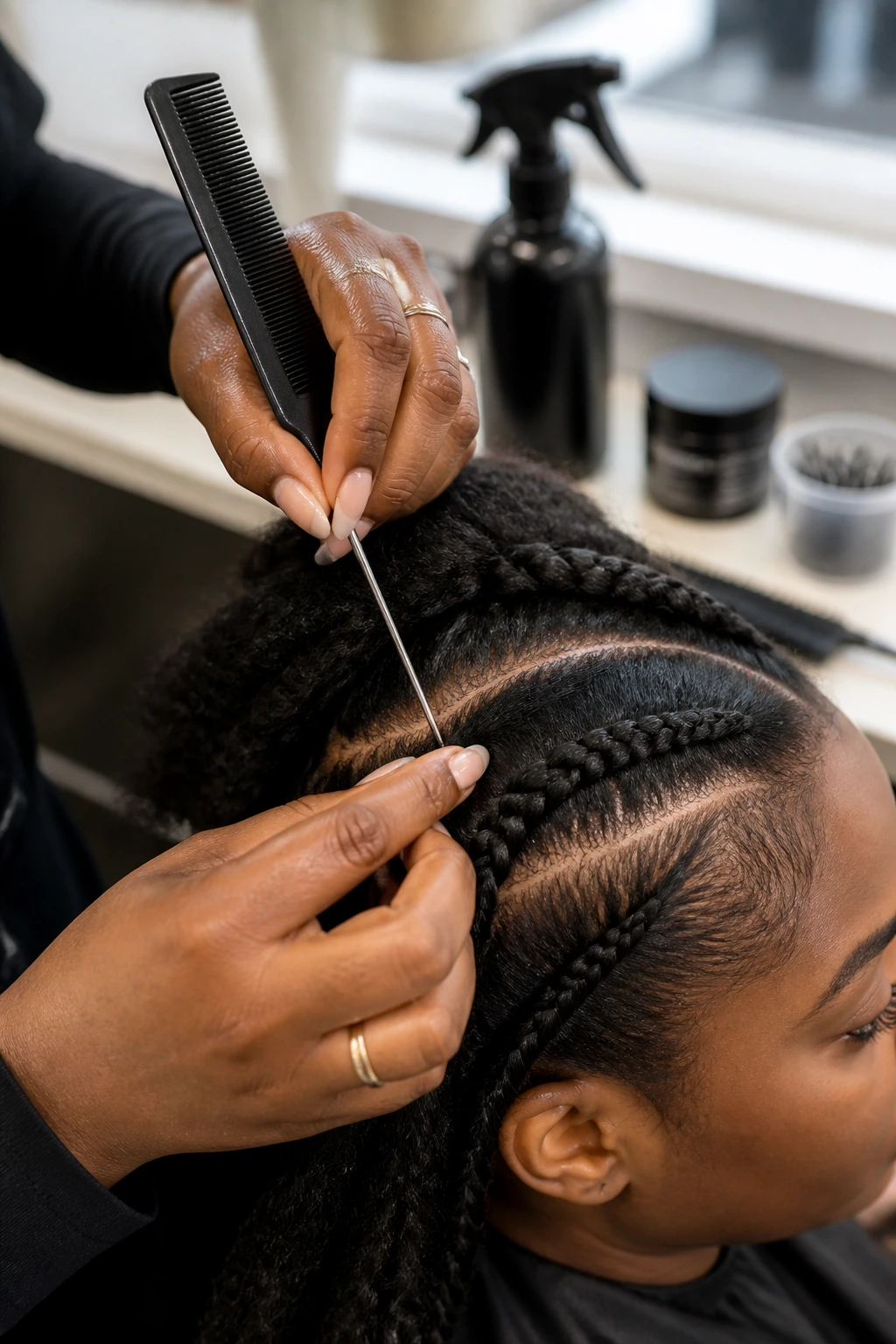
- Rat-tail comb: Use the pointed tail for clean parts and the flat back for smoothing sections before braiding.
- Spray bottle with water or leave-in mix: A light mist keeps stretched natural hair pliable without soaking it.
- Edge brush or soft toothbrush: Handy for laying the front hairline without dragging product across the whole forehead.
- Duckbill clips or sectioning clips: These keep the unworked hair out of your hands while you braid one section at a time.
- Bobby pins in two sizes: The smaller ones disappear into compact buns; the larger ones hold rolled sections and heavier braid ends.
- U-pins or hair pins: Better than regular bobby pins when you need to lock a braid loop in place without crushing it.
- Satin scarf or bonnet: This is the difference between a style that lasts and one that fuzzes up at the temples overnight.
- Styling mousse: A foam mousse helps set braid paths, calm flyaways, and give the finished updo a cleaner surface.
- Light oil or scalp serum: Use a small amount on the scalp lines and braiding parts, not all over the braid itself.
- Pre-stretched braiding hair: If you’re adding length or fullness, pre-stretched hair saves time and gives the ends a cleaner finish.
Choosing Hair, Extensions, and Part Sizes
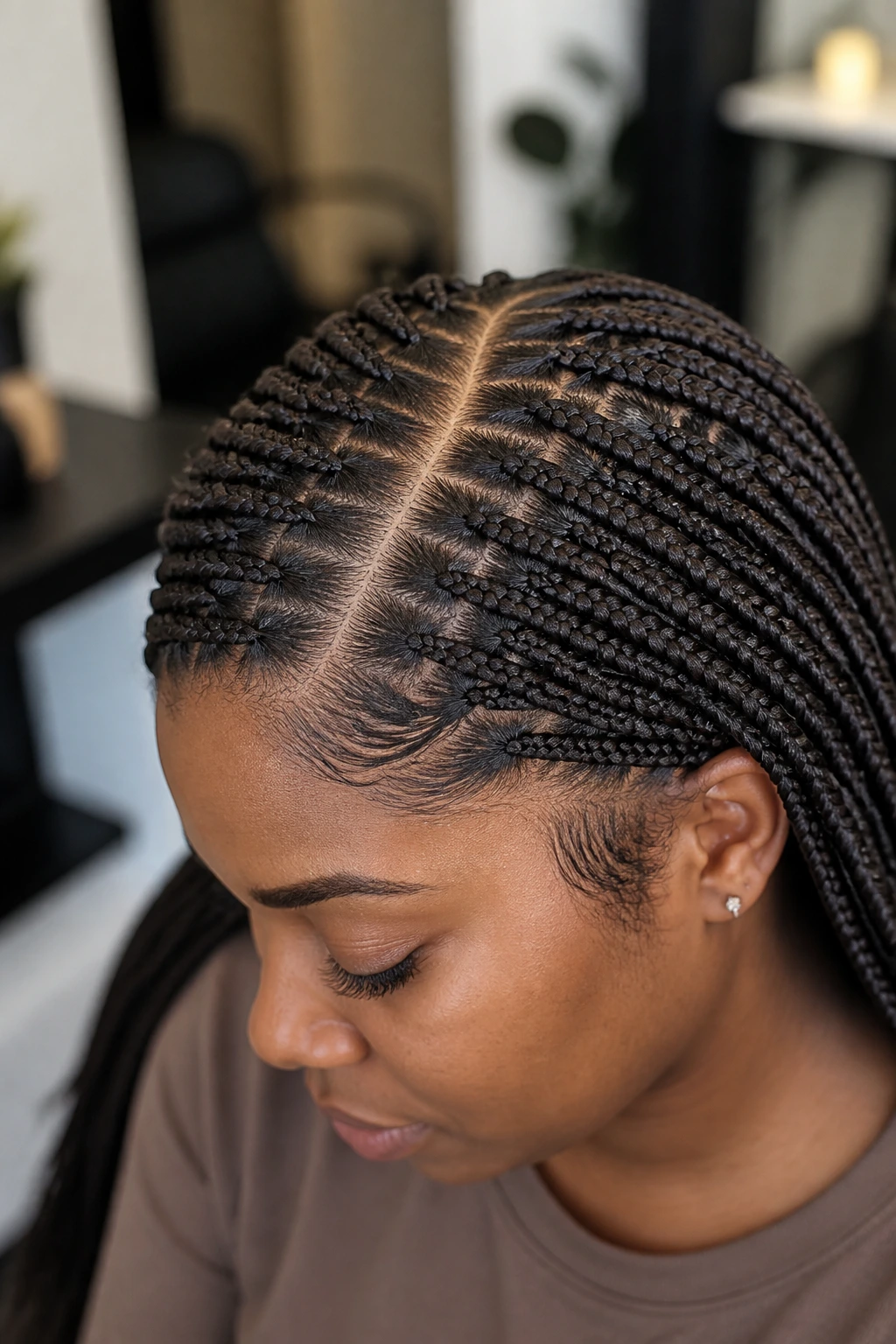
The best braid length is the one that supports the shape, not the one that overwhelms it. If you want a low bun or tucked chignon, you usually need less added hair than you think. If you want a full crown or a sculpted fauxhawk, you need a bit more body, but even then I’d stay away from heavy packs that drag at the scalp by day three.
Pre-stretched braiding hair is usually the safer choice for these updos because it blends better and reduces blunt ends that puff up at the back. If your natural hair is tightly coiled, stretching or banding it first can make the parting cleaner and the braid line smoother. If your hair is already blown out, keep the heat low and the braid tension moderate. You want control, not a crispy base.
Part size matters a lot on a heart-shaped face. Wider parts near the temples soften the top half, while very tiny parts can make the forehead feel too exposed. If your hairline is delicate or your edges are thin, choose larger front sections and avoid yanking the first inch of the braid too hard. The face should feel framed, not squeezed.
How to Wear Them with Outfits and Events
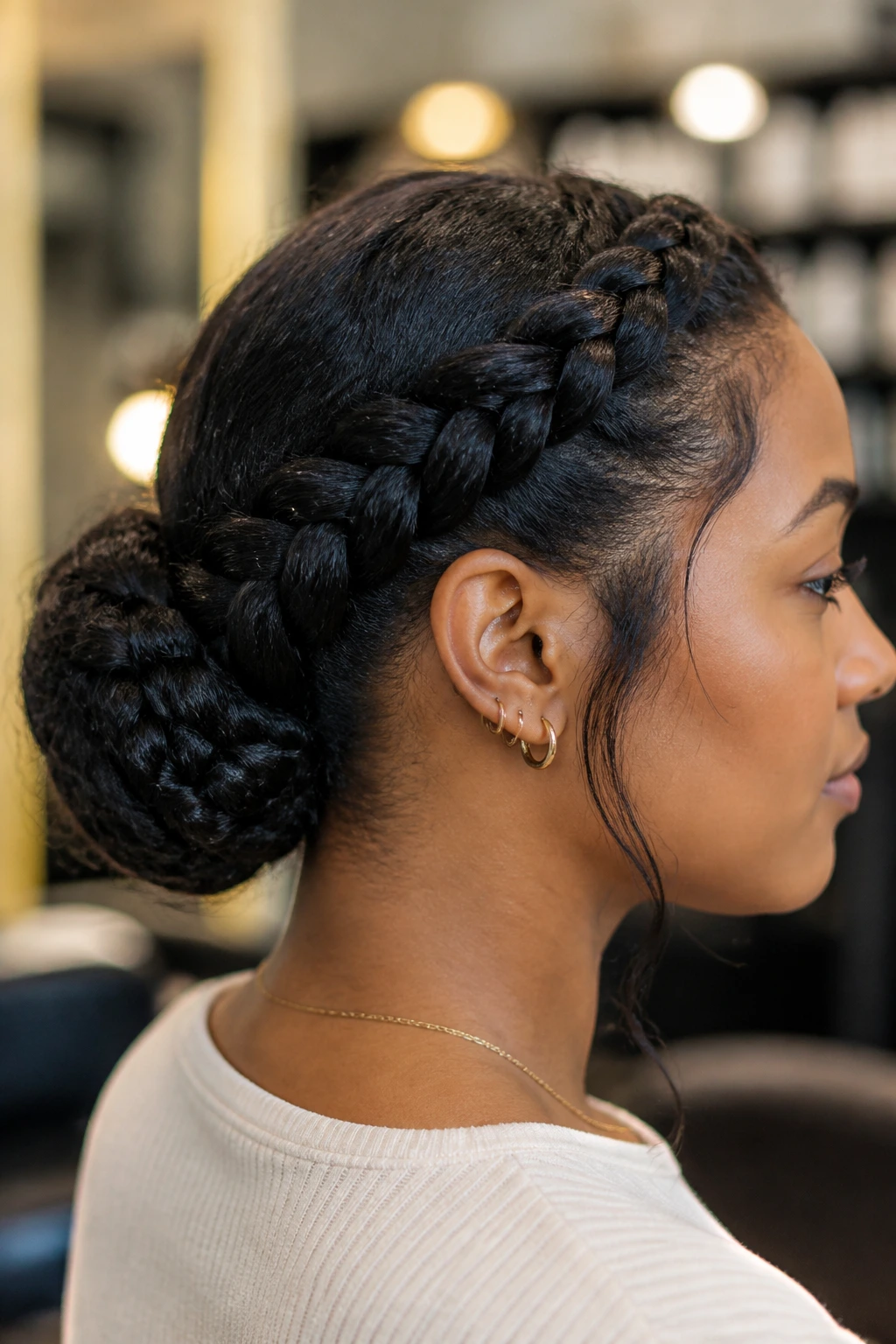
Placement: Low buns and side chignons work best with open necklines, collars, and earrings that have some length. If the style sits near the nape, the face gets to stay the focal point; if it sits high, it starts competing with your outfit. Keep that in mind before you decide where the braid should land.
Outfits: A braided French roll or wrapped bun looks sharp with a blazer, structured dress, or anything with a square neckline. A side-swept feed-in or goddess-style updo fits better with softer fabrics, off-shoulder tops, or drapey earrings. The styling does not need to match the outfit exactly, but the mood should not fight it.
Scale: Tiny braids with a compact knot feel neat and office-friendly. Larger braids with loops, cuffs, or curls have more movement and show up better for weddings, photos, or long evenings. The same face can wear both; the difference is how much room you leave around the forehead and jaw.
Beverage Pairing: Not a joke, just a practical note for the day you wear one of these styles for hours: carry water, not sticky drinks. Sugar and product near the hairline do not get along.
Little Adjustments That Change the Whole Look
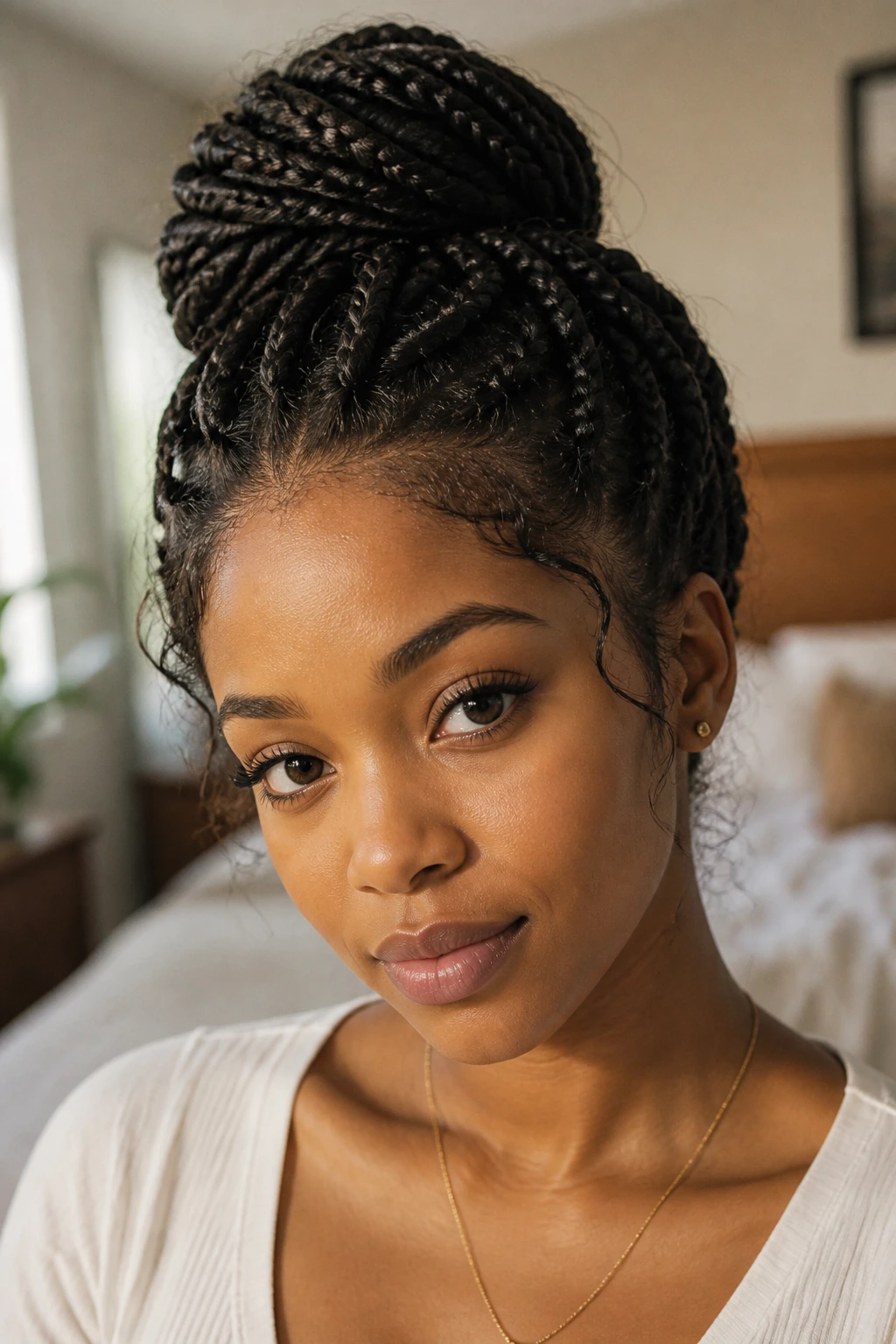
Softness at the temples: Leave a small amount of slack near the front corners of the hairline. Even a few millimeters of ease can stop the style from looking harsh on a heart-shaped face.
Accessory placement: Put cuffs, pearls, or small gold rings lower in the braid path, not right at the crown. That keeps the eye moving downward instead of back to the widest part of the face.
Texture control: If the braid surface looks too slick, tap a little mousse over the finished style and wrap it for ten minutes. If it looks too dry, a pea-sized amount of lightweight oil on your palms is enough. More than that starts weighing the braid down.
Make-It-Yours: If you like a sharper, more modern look, keep the lines clean and the bun compact. If you want softness, add one curled tendril, a side swoop, or a looped finish at the nape. Both directions can work on the same face shape.
Mistakes That Make a Braided Updo Fight Your Face
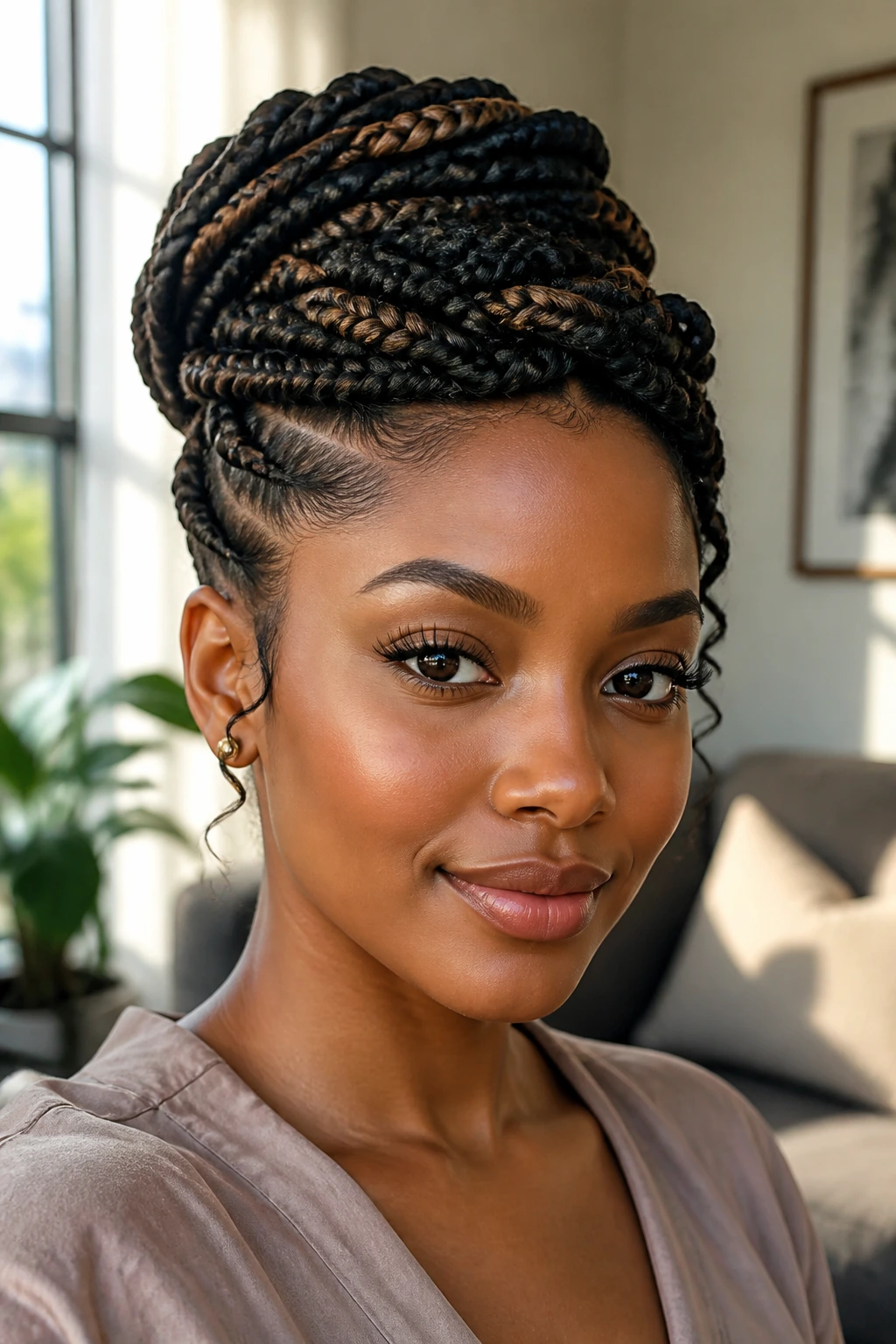
A few errors show up again and again, and they’re easy to spot. The style sits too high. The forehead looks wider. The jawline disappears. Most of the time, the fix is not a whole new hairstyle. It’s placement.
Too much height at the crown: This is the fastest way to make a heart-shaped face look top-heavy. If the style wants to rise, bring the braid lower or widen the bun instead of making it taller.
Front tension that’s too tight: If the braid grabs hard at the temples, you’ll see it in the face: pulled edges, a pinched hairline, and a shape that feels harsher than it should. Use a gentler grip on the first inch of braid.
A bun that’s too tiny: A tiny knot can make the lower face look even narrower. A fuller, wider bun gives the jawline more visual company.
Ignoring the nape: Frizz and loose ends at the back pull the eye to the wrong place. Smooth and pin that section cleanly, even if the front looks perfect.
Overloading one side with accessories: One giant cuff or a cluster of clips on the heavy side can tilt the whole silhouette. Balance the decoration, or keep it minimal.
Variations to Try When You Want a Different Mood
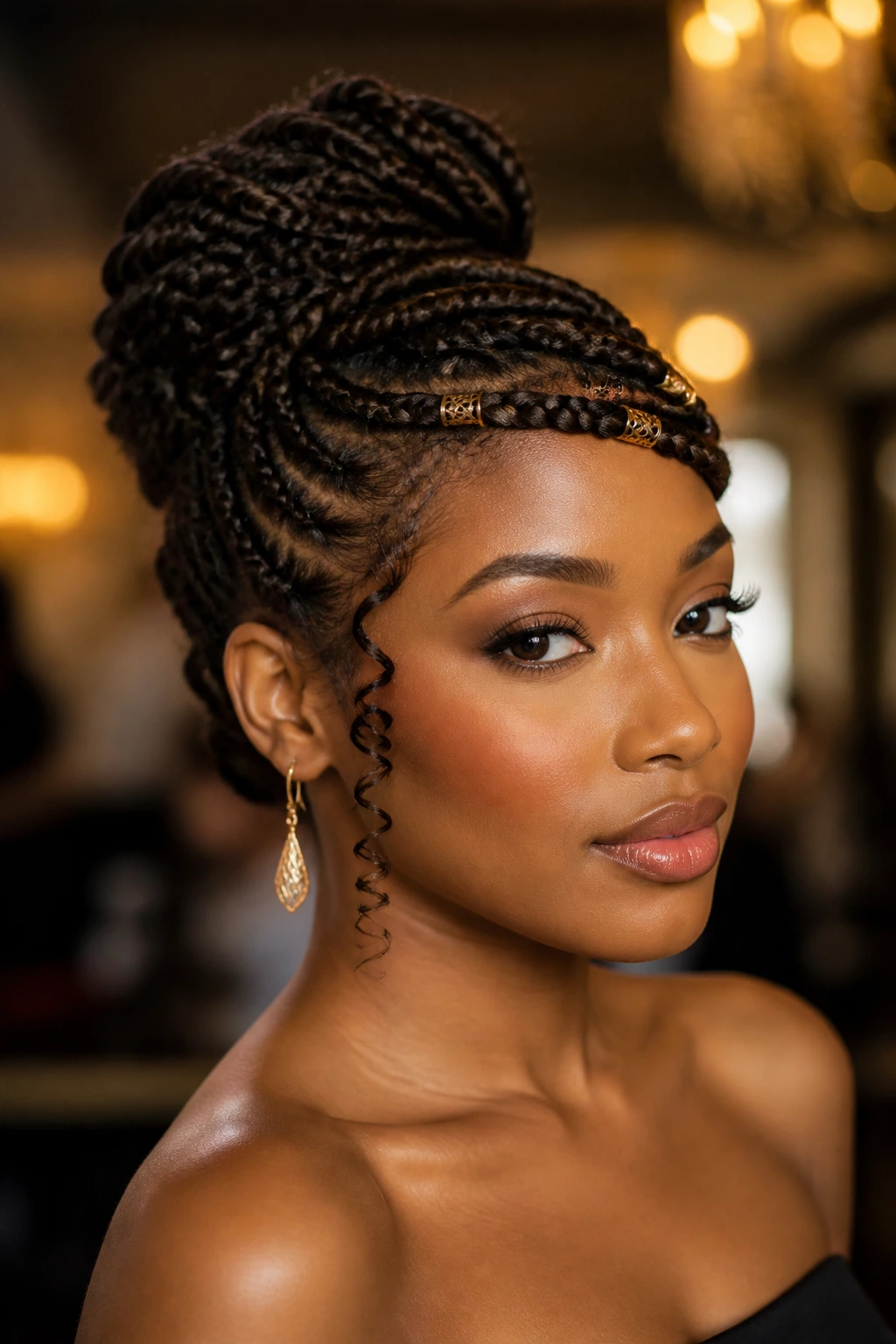
Soft-Office Version: Keep the braids slim, the bun low, and the parts straight. This version holds up well for long workdays and reads polished without feeling fussy.
Event-Ready Version: Add one curled tendril, a few gold cuffs, or a braided bang that sweeps across the forehead. The style still balances the face, but it has more movement in photos.
No-Extensions Version: On stretched natural hair, choose flat twists, smaller braids, or pinned rolls that use your own length. You get less bulk, which is helpful if your scalp dislikes added weight.
Fulani-Inspired Side Sweep: Bring the front braid paths diagonally across the head and tuck the back into a low knot. The side motion is especially kind to a heart-shaped face.
Low-Tension Version: Use fewer sections, wider parts, and a looser anchor at the nape. This is the one to choose if your hairline needs a break or if you know you’ll wear the style for a shorter window.
Keeping Braided Updos Fresh for Days or Weeks
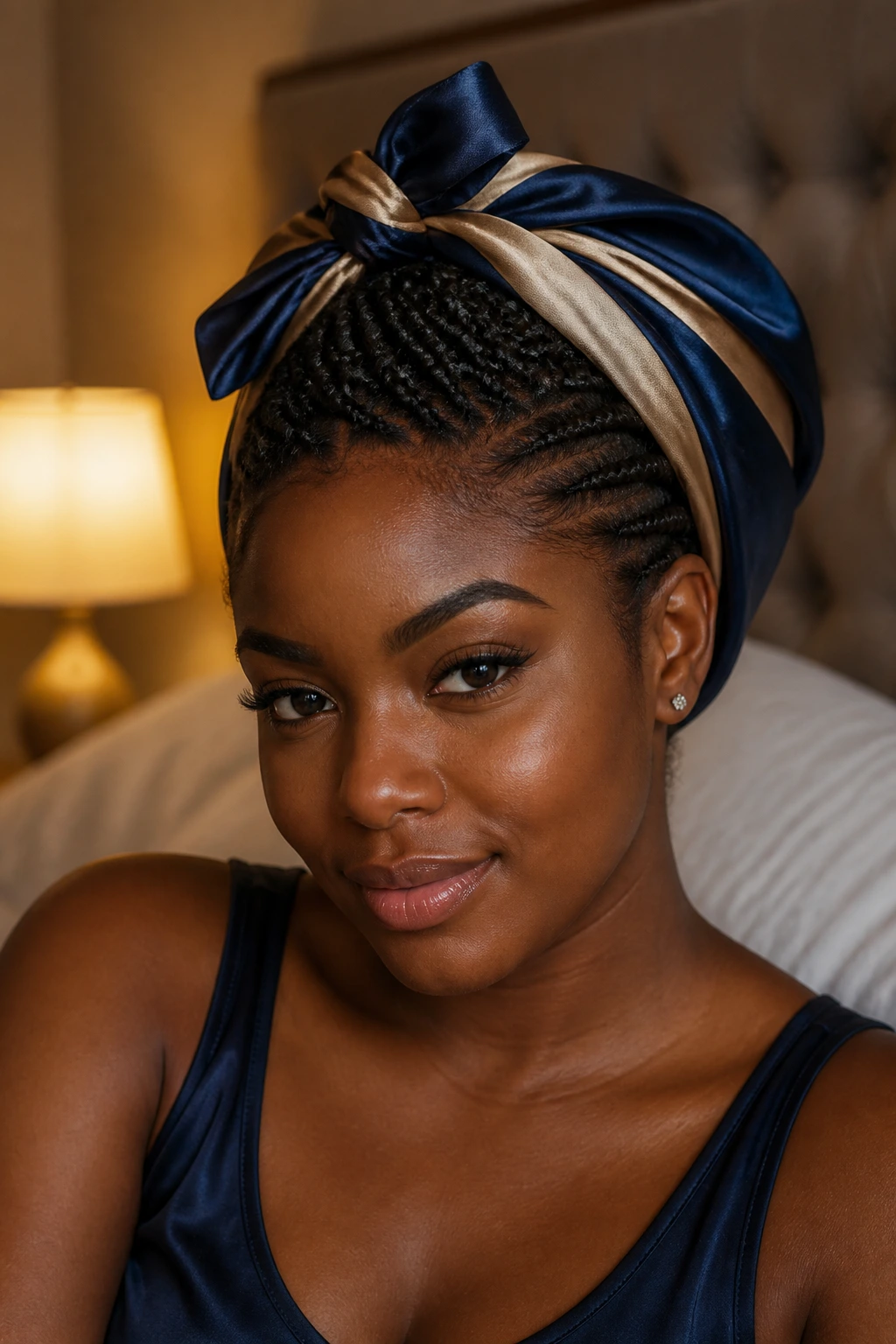
A braided updo should still look neat on day four, not only the day it’s installed. The first rule is simple: protect the shape at night. A satin scarf tied around the hairline and crown keeps the braid paths from fuzzing up while you sleep. If the style has loose tendrils, pin them back loosely before wrapping so they do not rub into a mess.
Refresh the roots every couple of days with a light spritz, then smooth the front with mousse or a tiny bit of edge control where needed. Do not soak the scalp. That’s how you end up with buildup that sits in the parts and makes the style look dusty faster than it should. If you’ve used added hair, a little oil on the scalp line is enough; the braid itself does not need to be drenched.
Most of these styles stay neat for about 1 to 2 weeks with light care, and a more compact low bun or French roll can stretch a bit longer if your scalp is comfortable. If you feel tightness, itching, or soreness at the temples, do not try to “push through.” Pulling styles tighter to make them last longer is the fastest way to ruin the hairline and the mood of the style.
Questions People Ask Before Sitting in the Chair
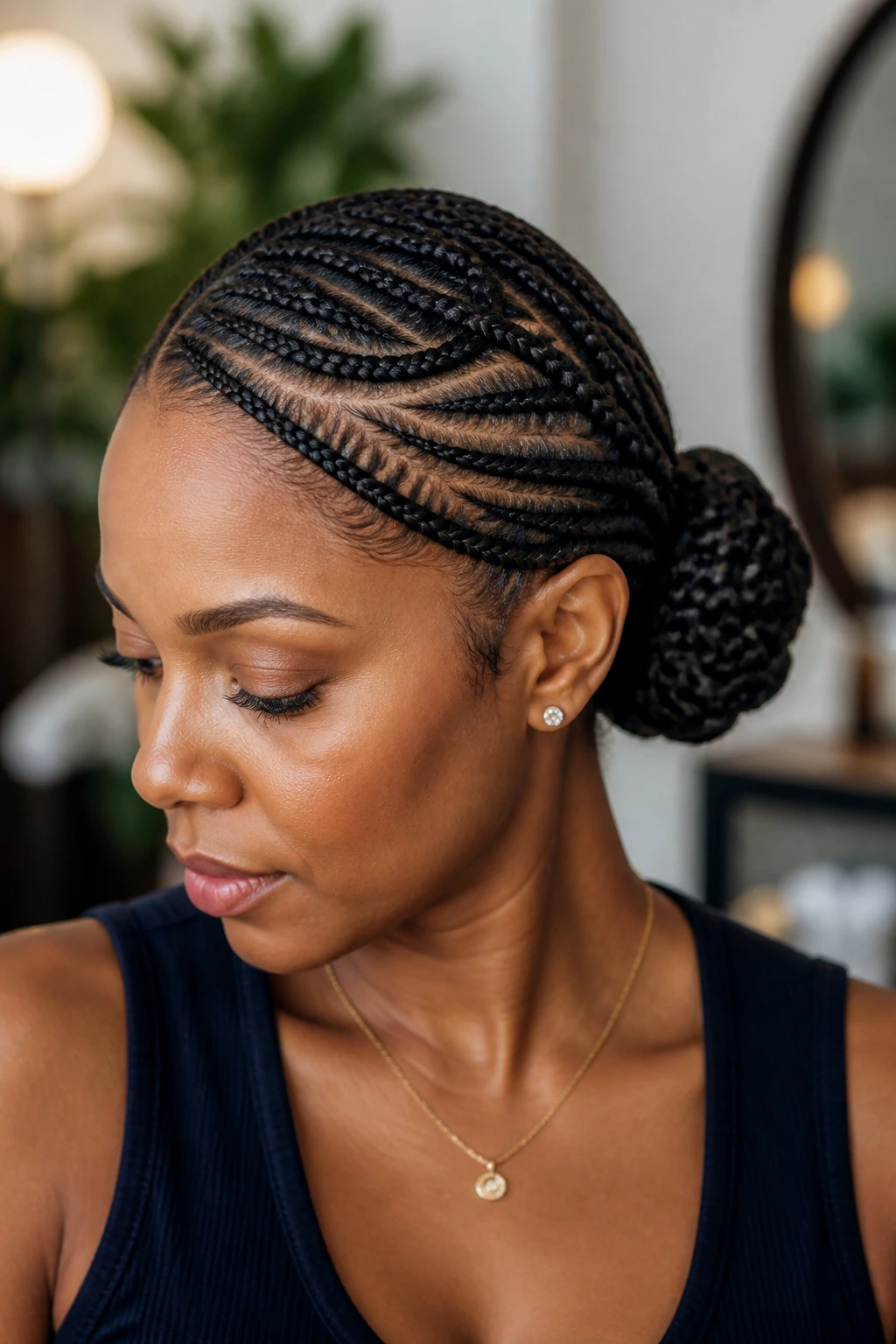
Which braided updos flatter a heart-shaped face most?
Low buns, side-swept braids, and styles with a soft front sweep usually work best because they shift attention away from the widest part of the forehead. Anything that lands low at the nape or moves diagonally across the head tends to be kinder than a tall centered style.
Can shorter natural hair work for braided updos?
Yes, though you’ll usually want smaller braids, flat twists, or a bit of added hair for the bun base. If your hair reaches at least a few inches past the scalp, a skilled braider can build a compact updo that stays put without a mountain of extensions.
Do I need added braiding hair for these styles?
Not always. Added hair gives fullness, length, and a cleaner tuck on many styles, but a lot of the lower bun and twist looks can be done on natural hair if it’s stretched and well-prepped.
Are braided updos actually protective?
They can be, if the tension is light and the ends are tucked safely away. A style stops being protective the second it pulls hard at the edges or leaves the hairline sore after a few hours.
What if my forehead looks too prominent in updos?
Pick styles with a side part, curtain tendril, braided bang, or diagonal braid line. Those small moves take pressure off the hairline and stop the top of the face from carrying the entire look.
How tight should the braids feel?
Secure, never sharp. If your scalp throbs, tingles, or feels hot after installation, the braid is too tight at the root and should be loosened.
Which styles are best for formal events?
Braided French rolls, low chignons, wrapped buns, and polished crown tucks photograph well because they hold their shape and keep the neckline clean. Add cuffs or a single pinned accent if you want a little shine without changing the structure.
How do I keep the style from looking puffy too soon?
Wrap it at night, smooth flyaways with mousse, and avoid heavy creams at the roots. The mistake most people make is feeding the style too much product when it only needs a light reset.
The Shape Is the Point
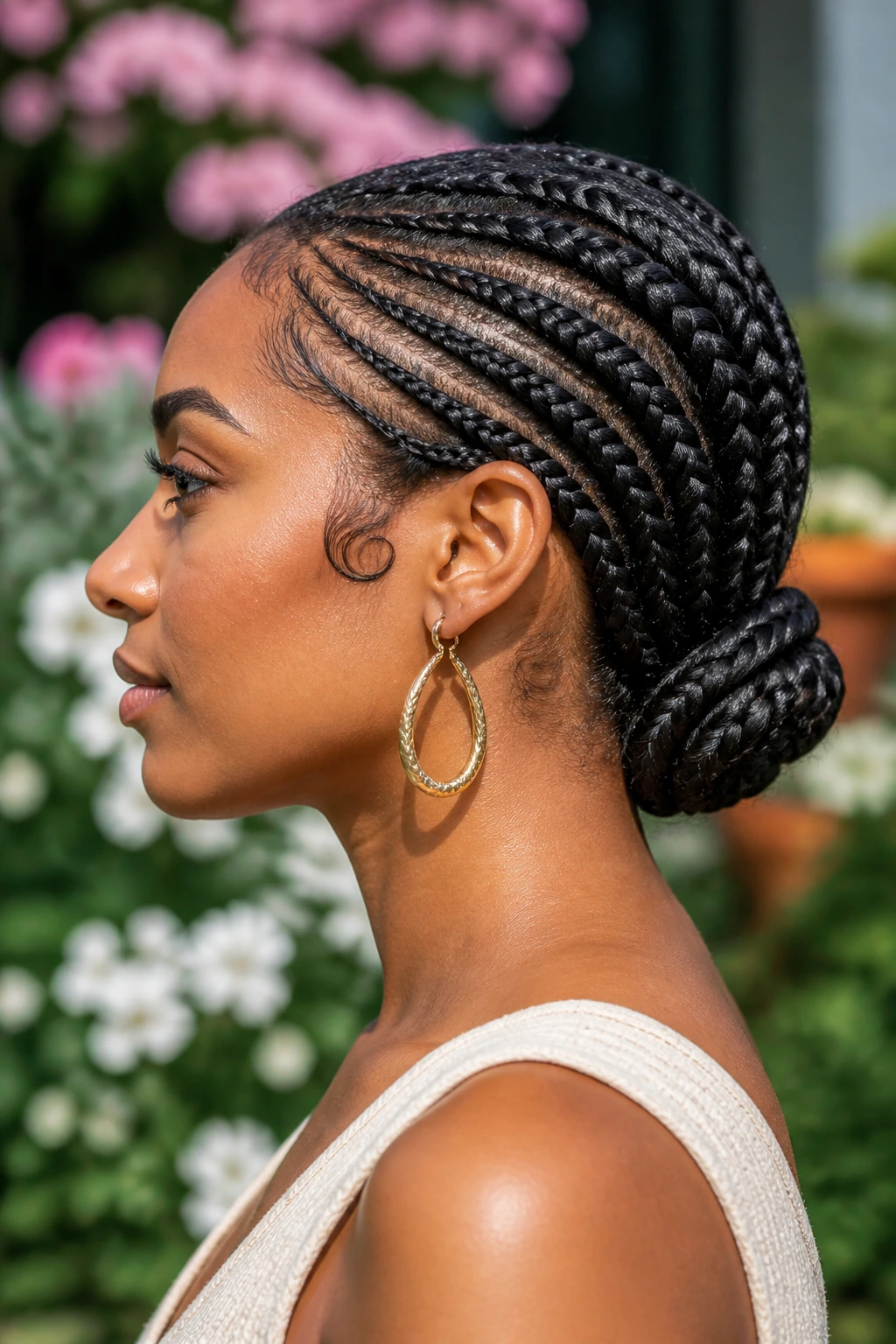
The best braided updos for Black hair and heart-shaped faces do not hide the face. They balance it. That means lower anchors, softer front lines, and enough structure around the jaw or nape to keep the whole silhouette from tilting upward.
Once you start looking at braid placement that way, the options open up fast. A side-swept chignon can feel softer. A low knot can feel richer. A braid with a small curve at the temple can do more for the face than ten extra pins ever will.
Pick the shape that fits your day, your texture, and your patience level, then let the braid do the balancing work.