



A square face can make braids look crisp in the best way, but the wrong parting or end length can turn that crispness into something boxy fast. Braids for natural hair and square faces work best when the lines move—sideways, downward, or upward on purpose—so the jaw has room instead of sitting under a hard stop of hair.
The part people miss is that this isn’t about hiding your features. It’s about steering the eye. A braid that lands right at the chin can make a strong jaw feel even stronger; a braid that drops below it, sweeps across it, or breaks up the line with curls and side pieces usually reads softer and more balanced. That’s the geometry of it. Not magic. Just shape.
And then there’s the hair itself. Natural hair can hold a braid beautifully, but tension, parting, and extension weight matter more than most people want to admit. The American Academy of Dermatology has long warned that tight braids can stress the hairline and lead to traction alopecia, which is a polite way of saying the edges pay for bad decisions. The good styles below don’t ask your scalp to suffer for the sake of a photo.
Why These Braids Work on Square Faces
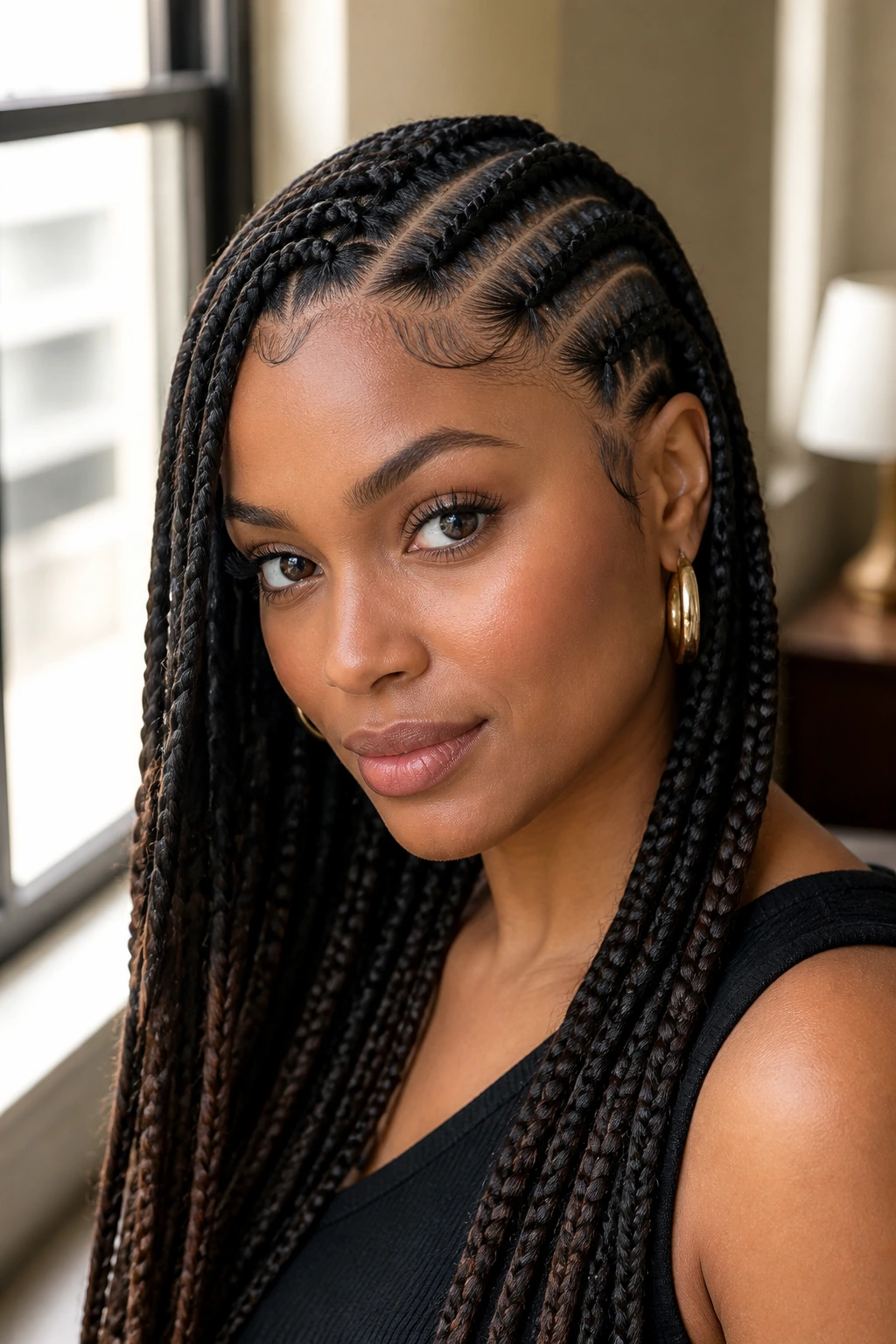
- They break the straight lines: A square face has a strong jaw and a broad forehead, so diagonal parts, curved rows, and side-swept lengths keep the face from reading too rigid.
- They play with length on purpose: Braids that fall below the chin usually lengthen the look of the face, while blunt chin-length ends tend to stop the eye right where the jaw begins.
- They let you choose soft or sharp: Some square faces look better softened with curls and tendrils; others look better with clean, sculpted lines. You don’t have to chase one “correct” answer.
- They protect natural hair when the tension is sane: Knotless roots, medium parts, and lighter extension weight reduce strain at the hairline and make the style easier to wear for weeks.
- They work with texture instead of flattening it: Good braid styles respect shrinkage, density, and coil pattern instead of fighting all three at once.
1. Side-Swept Lemonade Braids That Skim the Jaw
Side-swept lemonade braids are the easiest way to take the edge off a square face without making the style feel soft in a mushy way. The diagonal line does the work for you. It pulls the eye from the temple down past the cheek, so the jaw does not become the only thing you notice.
I like this style when the braids start just behind the front hairline and the lengths fall well below the chin. Never let the ends stop right at jaw level if you want the shape to feel longer. That one detail changes the whole read.
2. Knotless Box Braids with Soft Temple Pieces
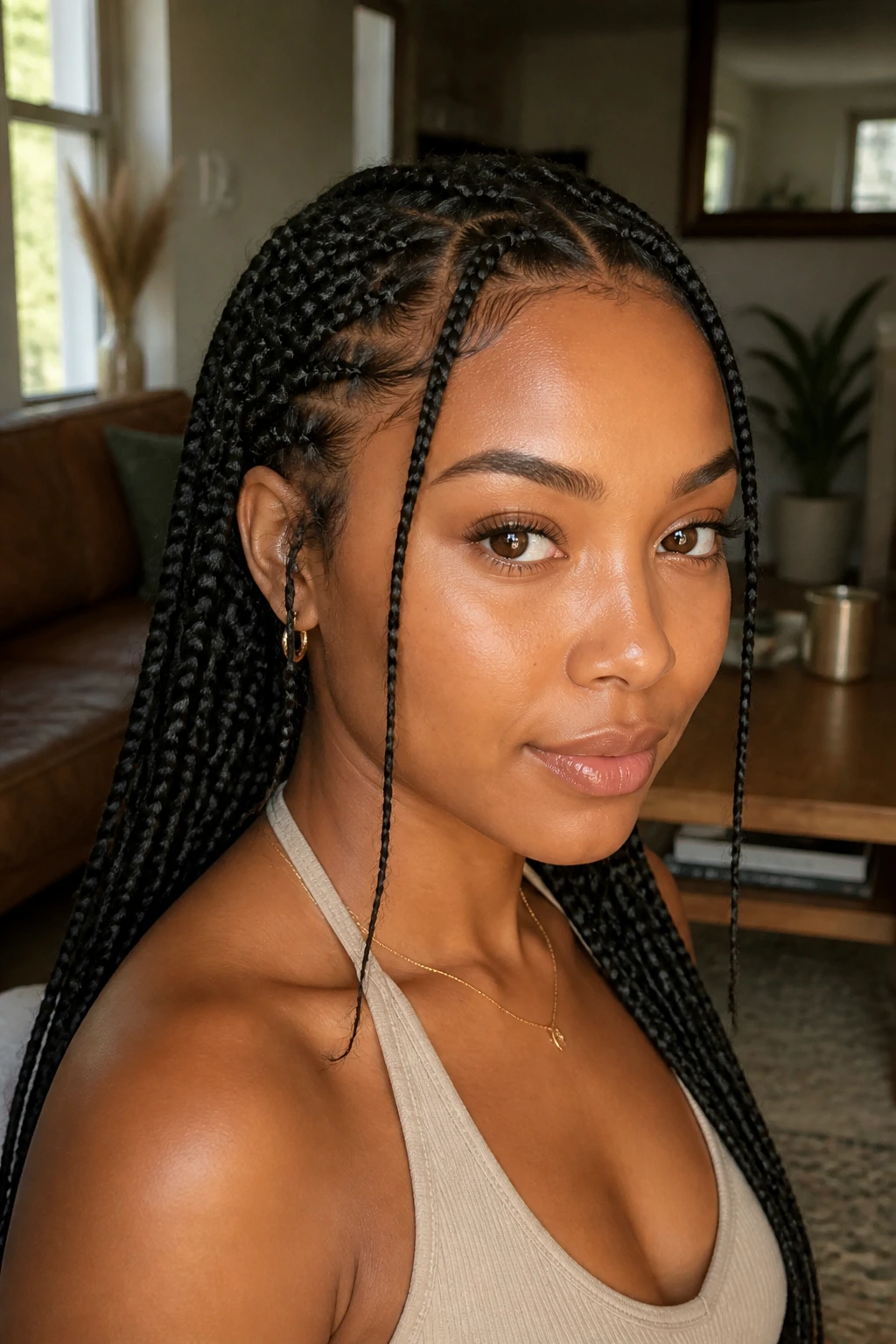
Knotless box braids are one of the calmest choices for square faces. The root lies flatter, so the front of the style does not add extra bulk at the hairline, and that matters when the forehead and jaw already carry strong lines. Add two slim temple pieces and the whole thing loosens up.
They also sit better on natural hair for long wear because the tension starts lighter at the scalp. If your braider can keep the parts medium-sized and leave the first few braids a touch lighter, the style stays neat without looking boxed in.
3. Curved Fulani Braids with Beaded Ends
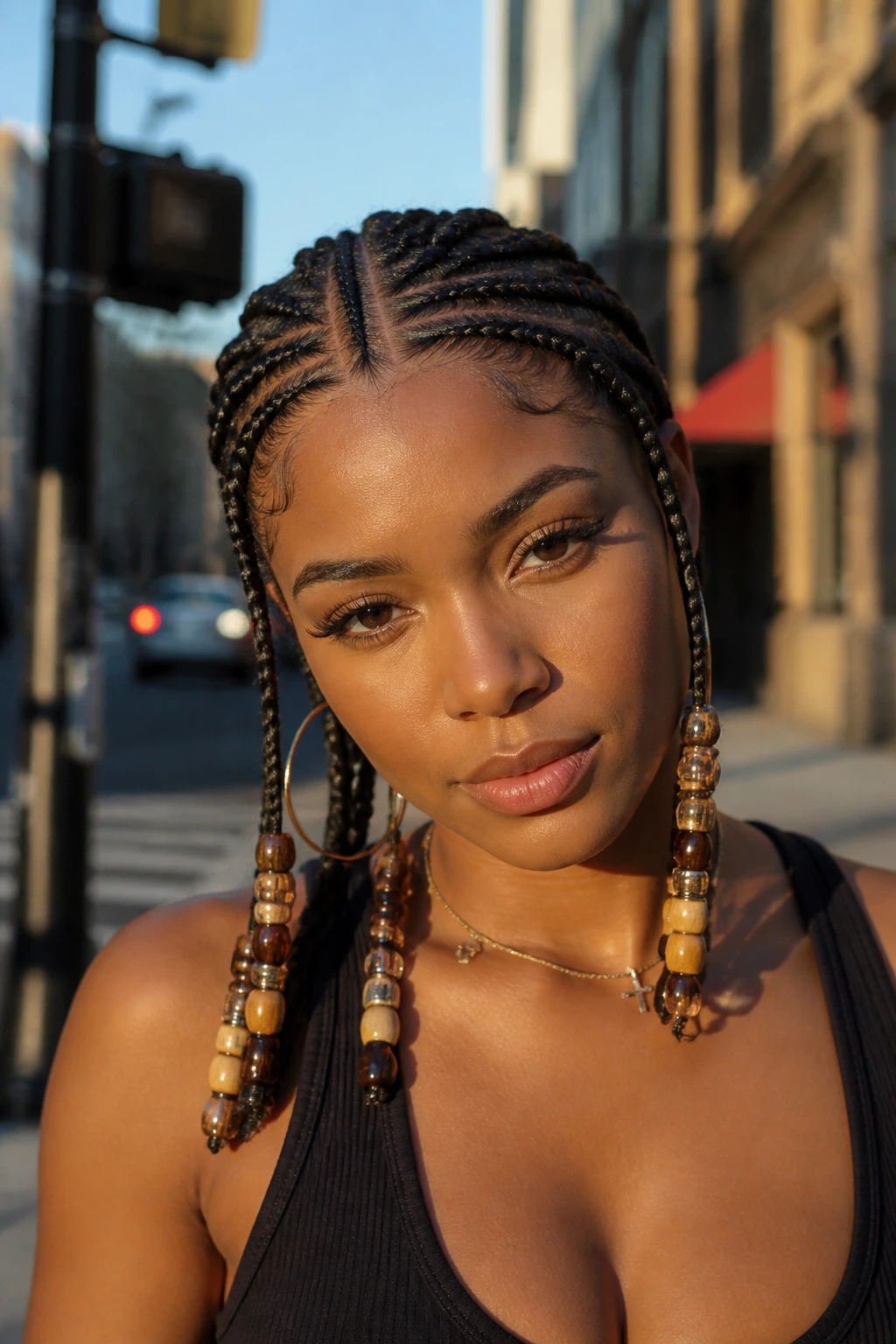
Can Fulani braids flatter a square face? Absolutely, if the rows curve instead of running straight like a ruler. The curved parting softens the forehead area, and the central braid gives the face a vertical line to follow. That combination is the reason this style works so well.
What to Ask For
- A narrow center braid or a slim central line.
- Side braids that arc toward the temples instead of cutting across them.
- Beads placed lower on the length, not crowded near the hairline.
The beads matter, too. Put them at the ends and they draw the eye downward, which is exactly where a square face usually benefits from a little help.
4. Goddess Braids with Loose Curls at the Jaw
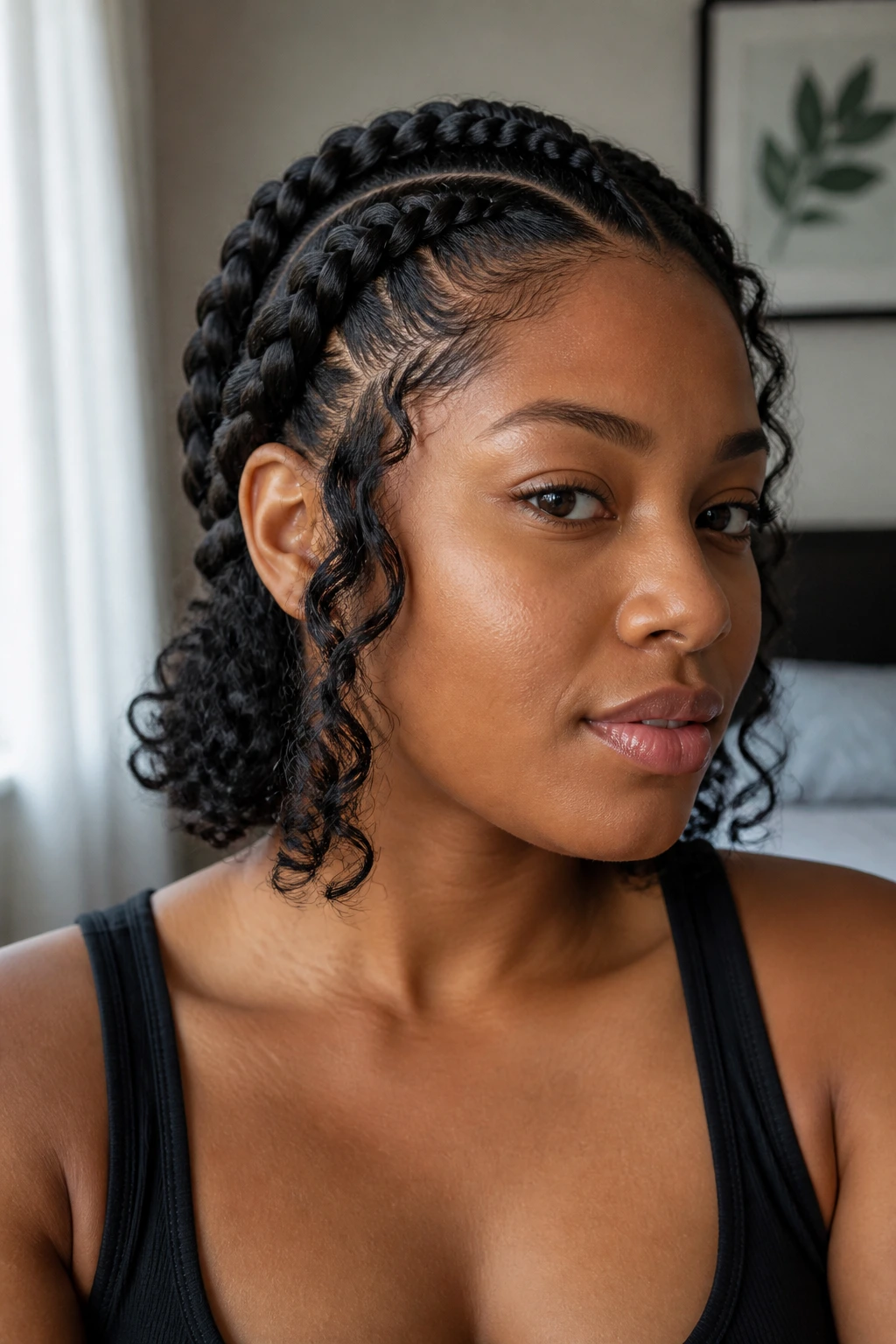
Picture two or three thick braids swept back from the face, then softened with curls that fall near the cheek and collarbone. That’s the whole trick. The braids keep the style structured, while the curls break up the hard outline that can make square faces look wider than they are.
Best detail to request: keep the curls starting below the ear. If they start too high, the style can get puffy around the temples. If they start lower, you get movement without losing the clean braid line.
The Details That Matter
- Use medium-thick braids, not tiny ones.
- Let the curls land below the jaw.
- Keep the parting soft and slightly curved.
- Use mousse on the curls, not heavy oil.
5. Deep Side-Part Feed-In Braids
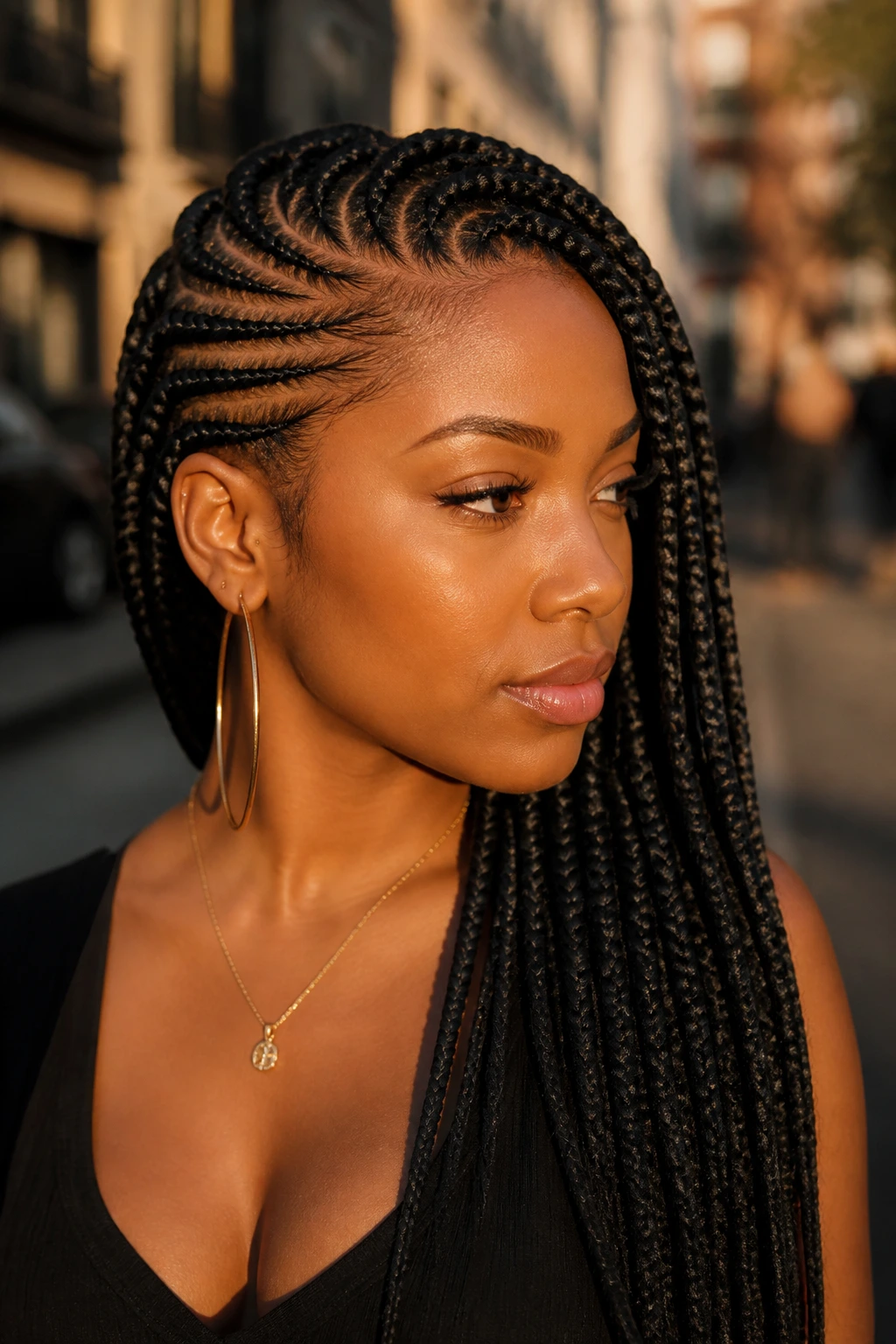
A deep side part changes everything before the first braid even starts. The face stops reading as a flat square shape and starts reading as layered, because one side carries more visual weight than the other. That asymmetry is doing real work.
I prefer this style when the braids sweep across the crown and gather into one side instead of hanging evenly on both sides. It feels sharper than a soft curl style, but it still bends the eye away from the widest part of the face.
The part should be clean, yes, but not severe. A part that looks like it was cut with a knife can be too hard against the forehead. A part with a slight curve feels better.
6. Collarbone-Length Braided Bob
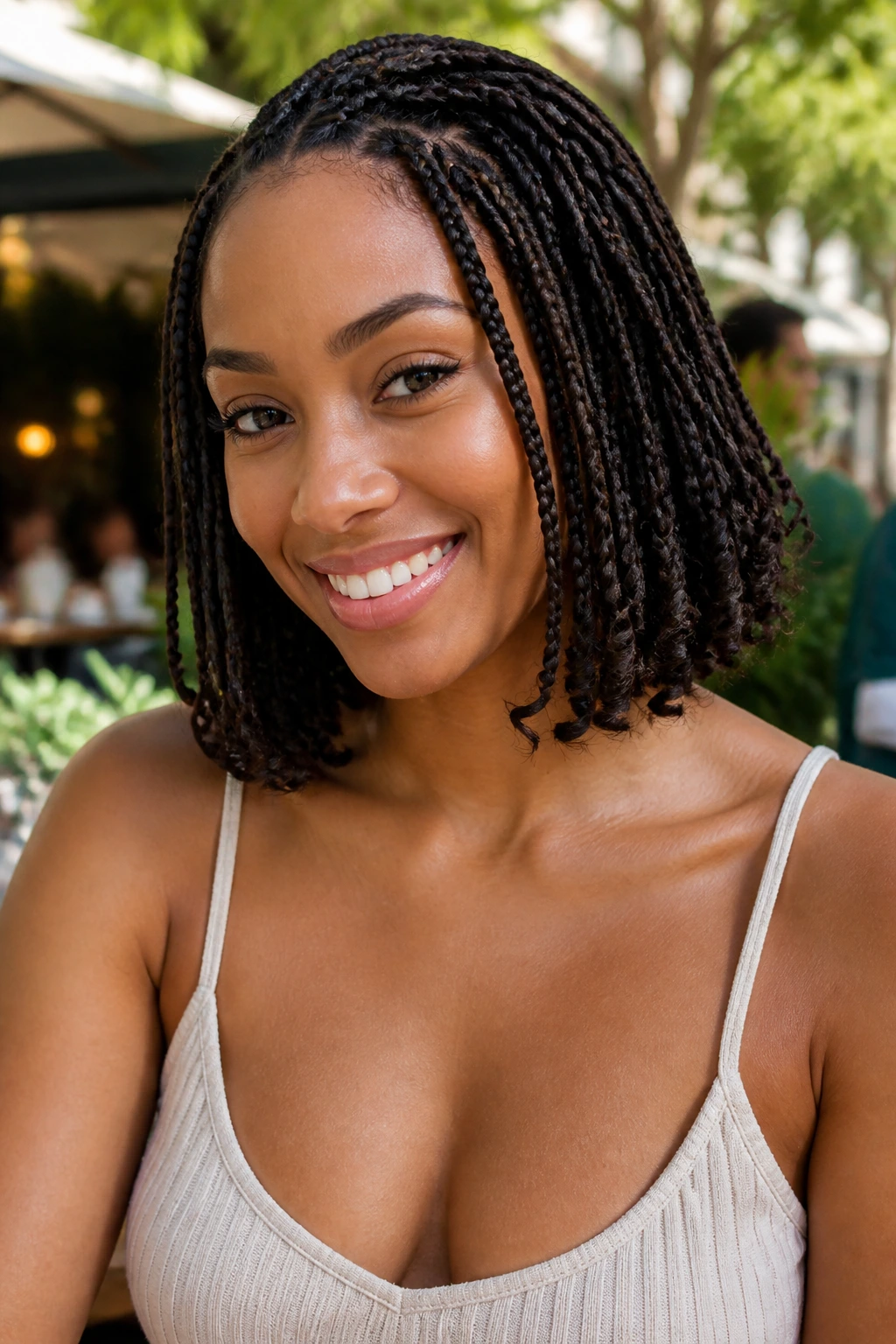
A braided bob can be brilliant on a square face, but only when it lands in the right place. Collarbone length beats chin length almost every time. Chin-length braids stop exactly where a square face already has strong structure, and that can make the whole look feel squat.
This version gives you the clean shape of a bob without the hard cutoff. It keeps the neck visible, which helps the face feel longer, and it looks especially good when the ends are softly curled or sealed with a blunt but not boxy finish.
7. Halo Braid with Wispy Face Framing
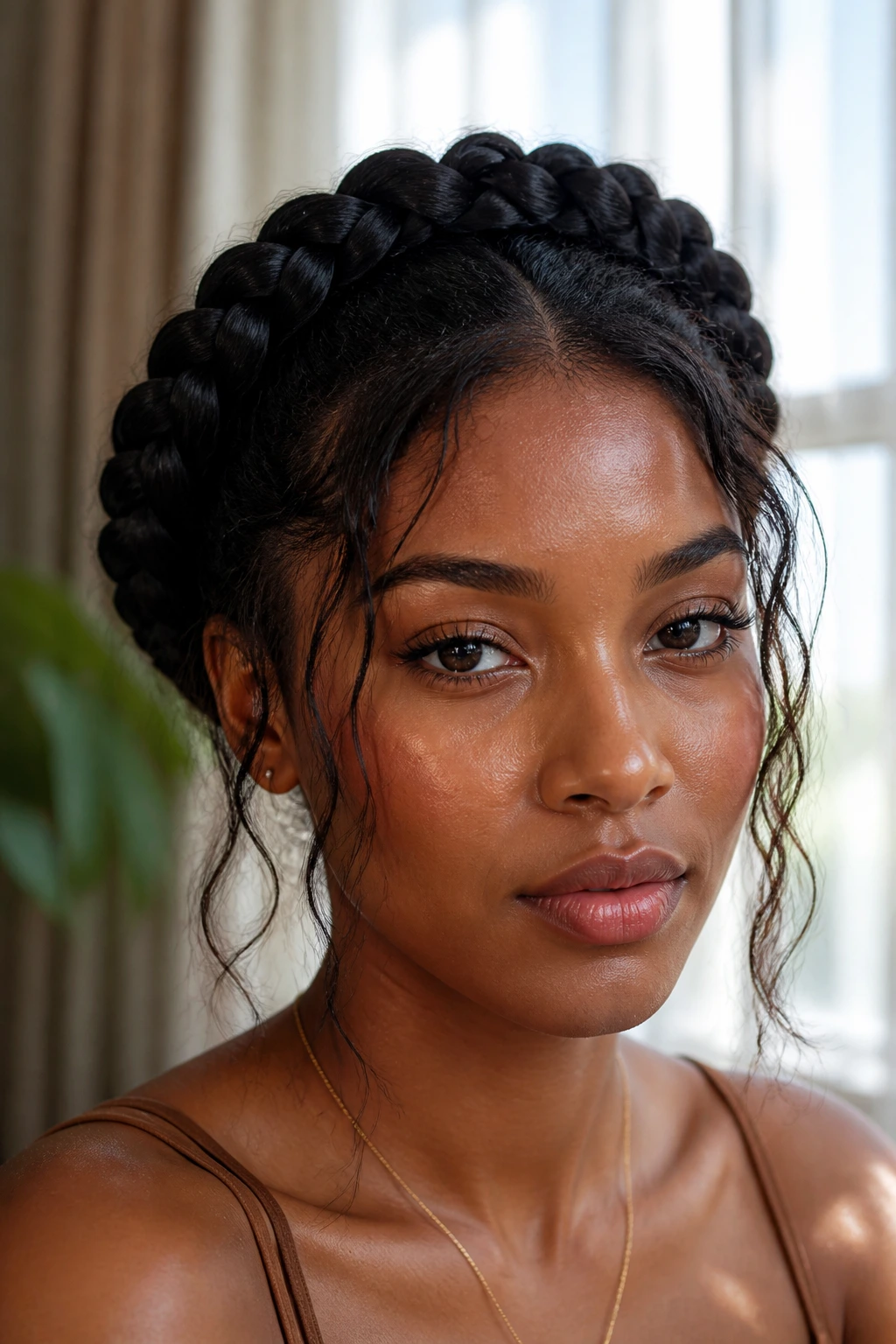
A halo braid pulls the eye upward and around the head, which is useful when you want the face to look open instead of wide. The braid itself becomes a crown, and the wispy pieces at the temples keep the style from feeling too sealed shut.
That little bit of movement around the forehead is what saves it. Without the loose face-framing bits, a halo braid can look too round and too tight against a square face. With them, it feels airy and controlled.
It’s one of those styles that looks elegant without trying to flatten anything. Good. It shouldn’t.
8. Long Jumbo Box Braids with a Middle Part
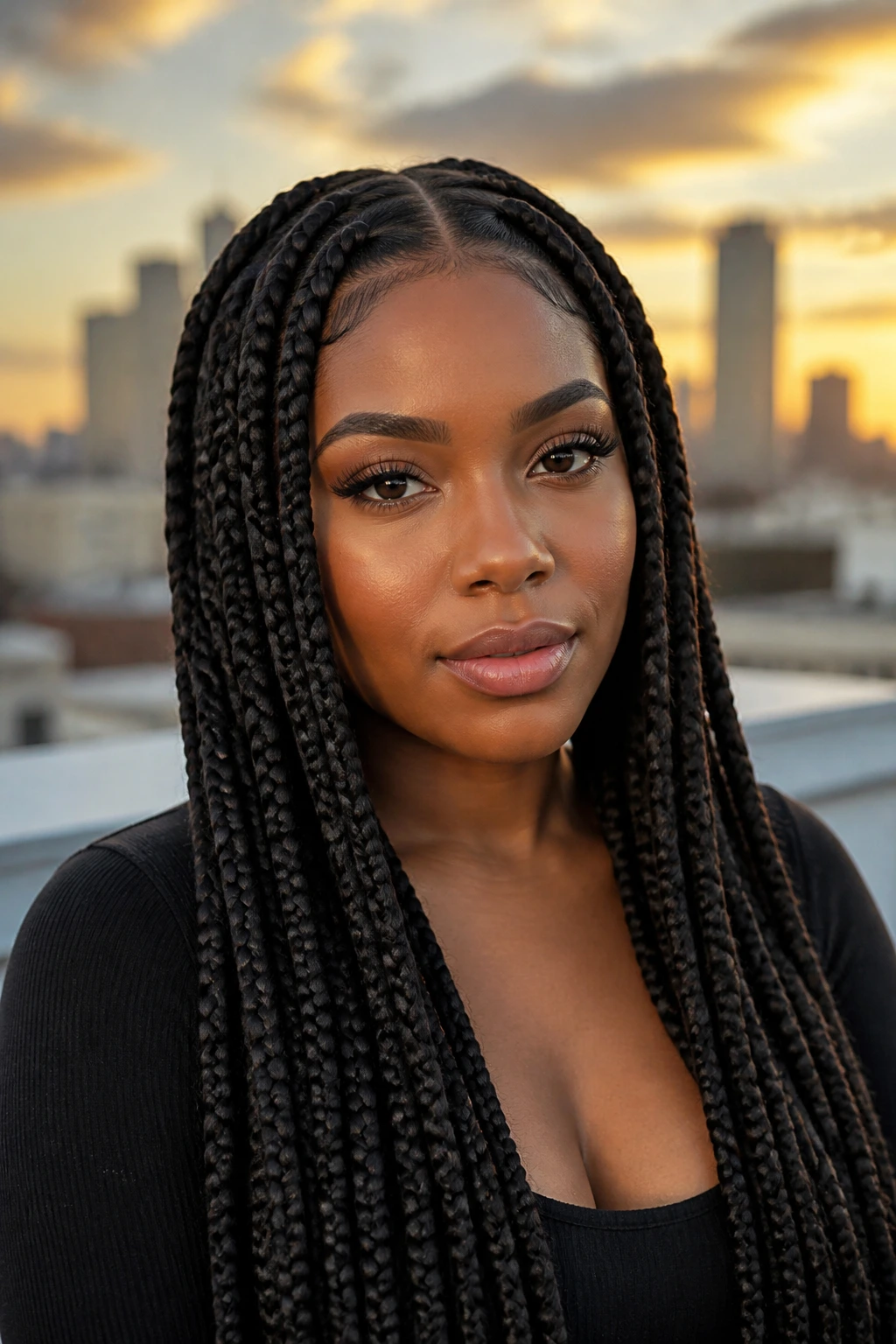
A middle part is not a deal-breaker for a square face. What matters is what the braids do after they leave the scalp. Long jumbo box braids create vertical lines, and vertical lines lengthen the face even when the top is centered.
The size matters here. Jumbo braids give you strong rhythm, but they need enough length to move past the jaw. If they stop too soon, the whole style can feel heavy. If they fall below the shoulders, the line gets better immediately.
I’d pick this when you want low fuss and a clean finish. It’s blunt, but in a good way.
9. Boho Knotless Braids with Curl Pop
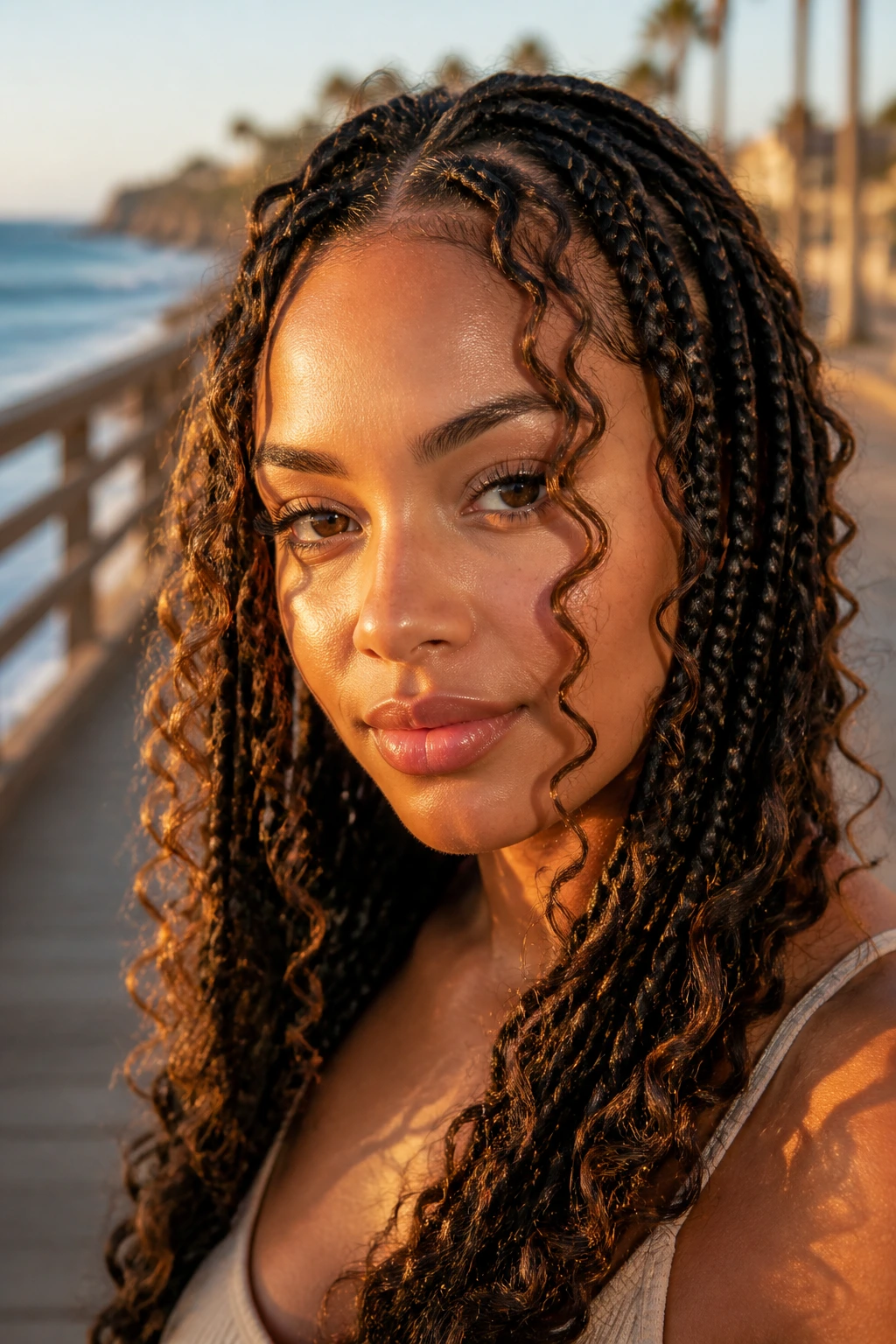
Do you want softness without losing braid structure? Boho knotless braids are the move. The loose curls threaded through the braids break up the hard edges around the face, and the knotless base keeps the scalp line neat.
This style is especially good when your square face needs a little movement near the cheeks and collarbone. The curls do not have to be huge. A few loose pieces near the front and through the lower half are enough to change the shape.
Why It Works
- The knotless root keeps the front light.
- The curls blur the jawline.
- The long length pulls the eye down.
- The mix of textures keeps the style from feeling stiff.
10. Stitch Braids into a Low Ponytail
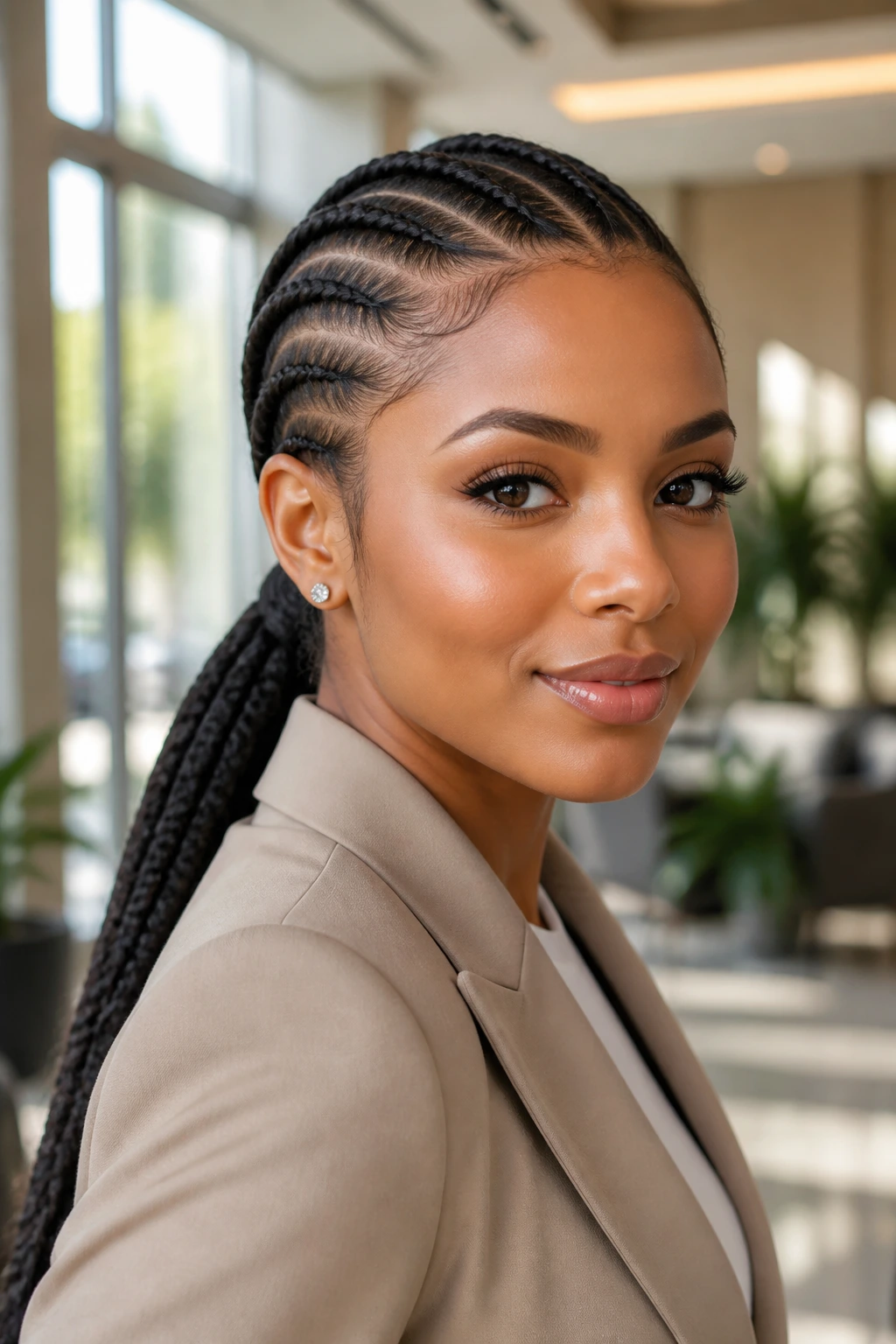
A low ponytail sounds simple until the stitch braids are pulled in with enough precision to make the whole style look tailored. That’s the charm here. The top stays sleek, the ponytail sits low and controlled, and the face gets a clear frame instead of a heavy curtain.
If your square face feels wide at the temples, this style helps because it clears the sides away and sends the line downward. Add curled ends to the ponytail and the finish gets softer without looking messy.
It’s a good office style, a good travel style, and a good “I do not want hair in my face” style. Useful. Which counts for a lot.
11. Ghana Braids with Soft Curving Rows
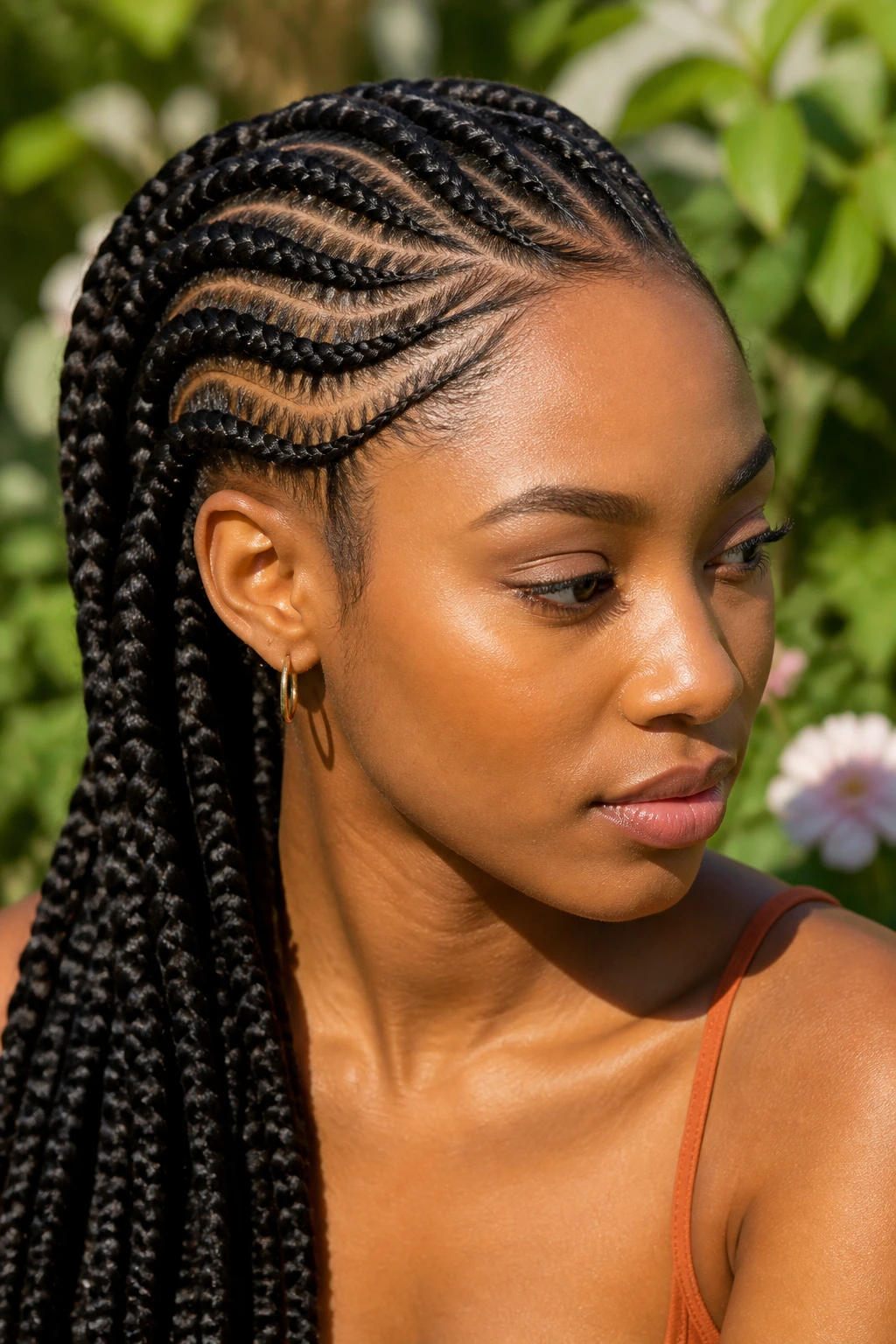
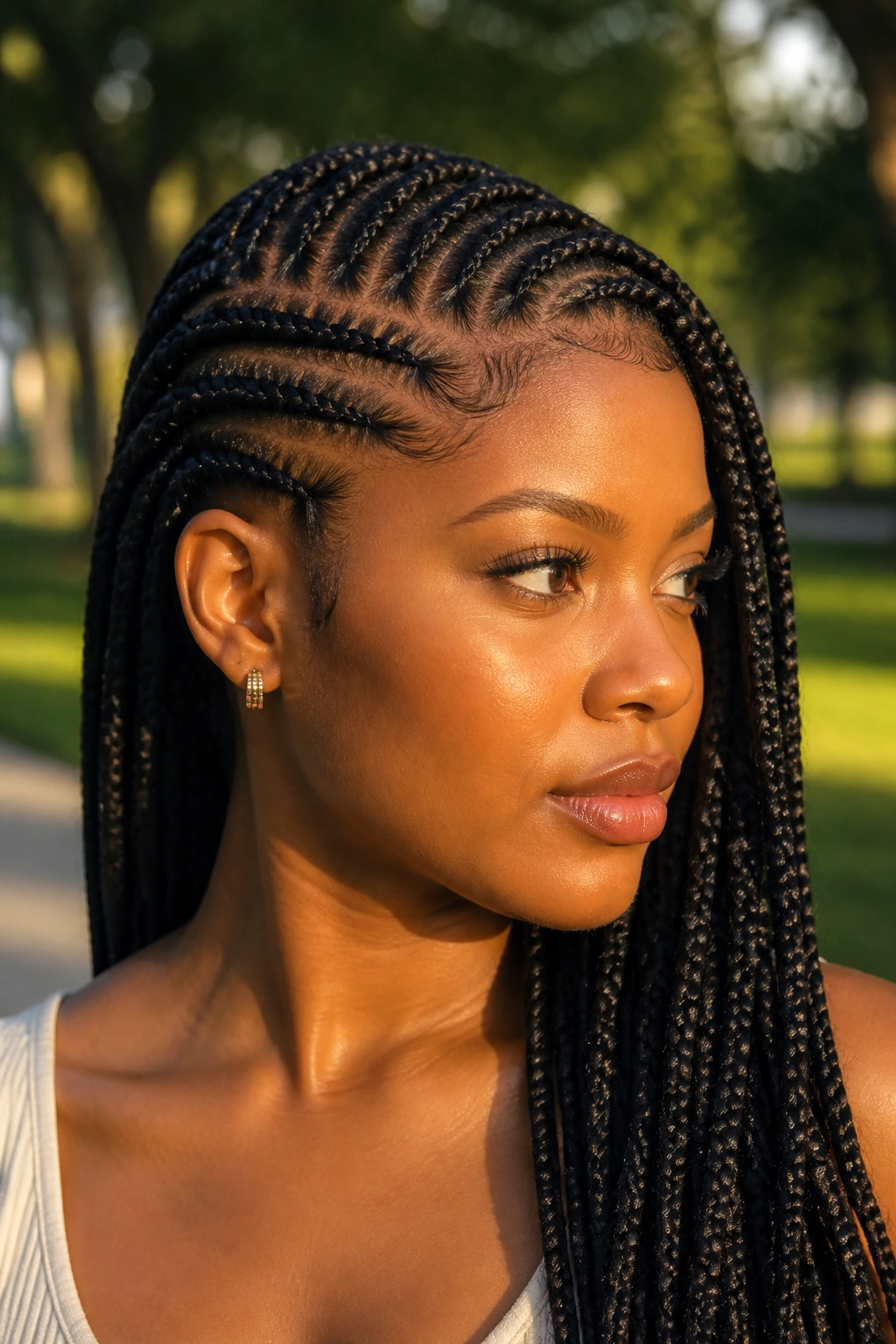
Ghana braids are thicker than basic cornrows, so they bring presence without relying on a million tiny sections. For square faces, the magic is in the curves. Straight rows can look severe; curved rows move the eye around the face instead of straight across it.
The scale works nicely on natural hair because the braids tend to feel substantial and controlled. If your hair is dense, this style handles that density instead of fighting it. And if the rows gently arc toward the back, the face looks less boxy right away.
This is one of the styles I reach for when I want structure but not stiffness.
12. Crown Cornrows into a High Bun
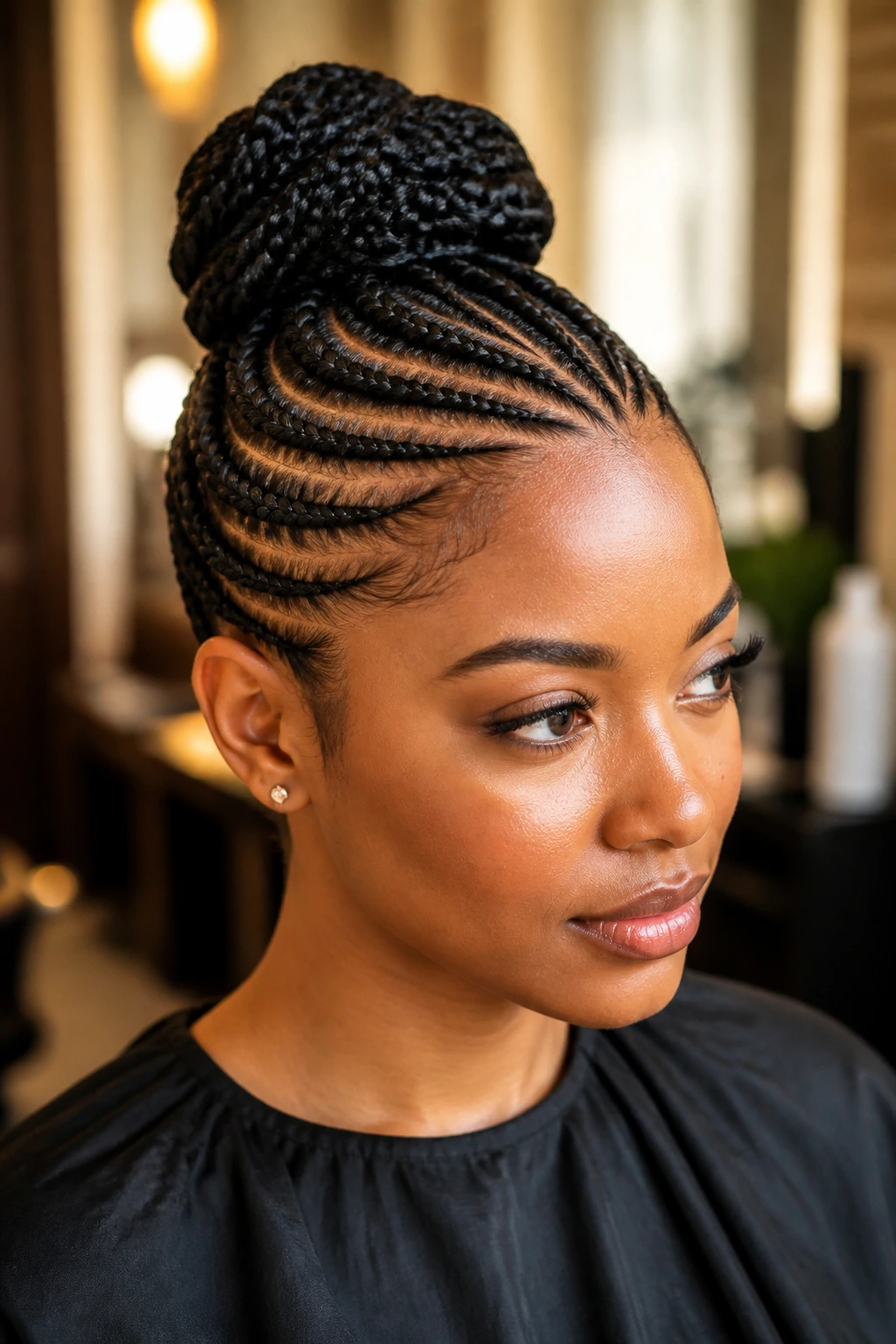
A crown bun gives a square face height, and height is a friend when the jawline is already strong. The trick is placement. Keep the bun rounded and slightly back from the hairline so it lifts the face instead of crowding it.
The cornrows leading into the bun should curve softly around the head. If they’re too straight, the style starts to feel like architecture for the sake of architecture. Pretty, maybe. But hard.
This look is especially good when you want your features out in the open and your hair pinned up cleanly. It has that polished tension between neat and dramatic.
13. Triangle-Part Box Braids
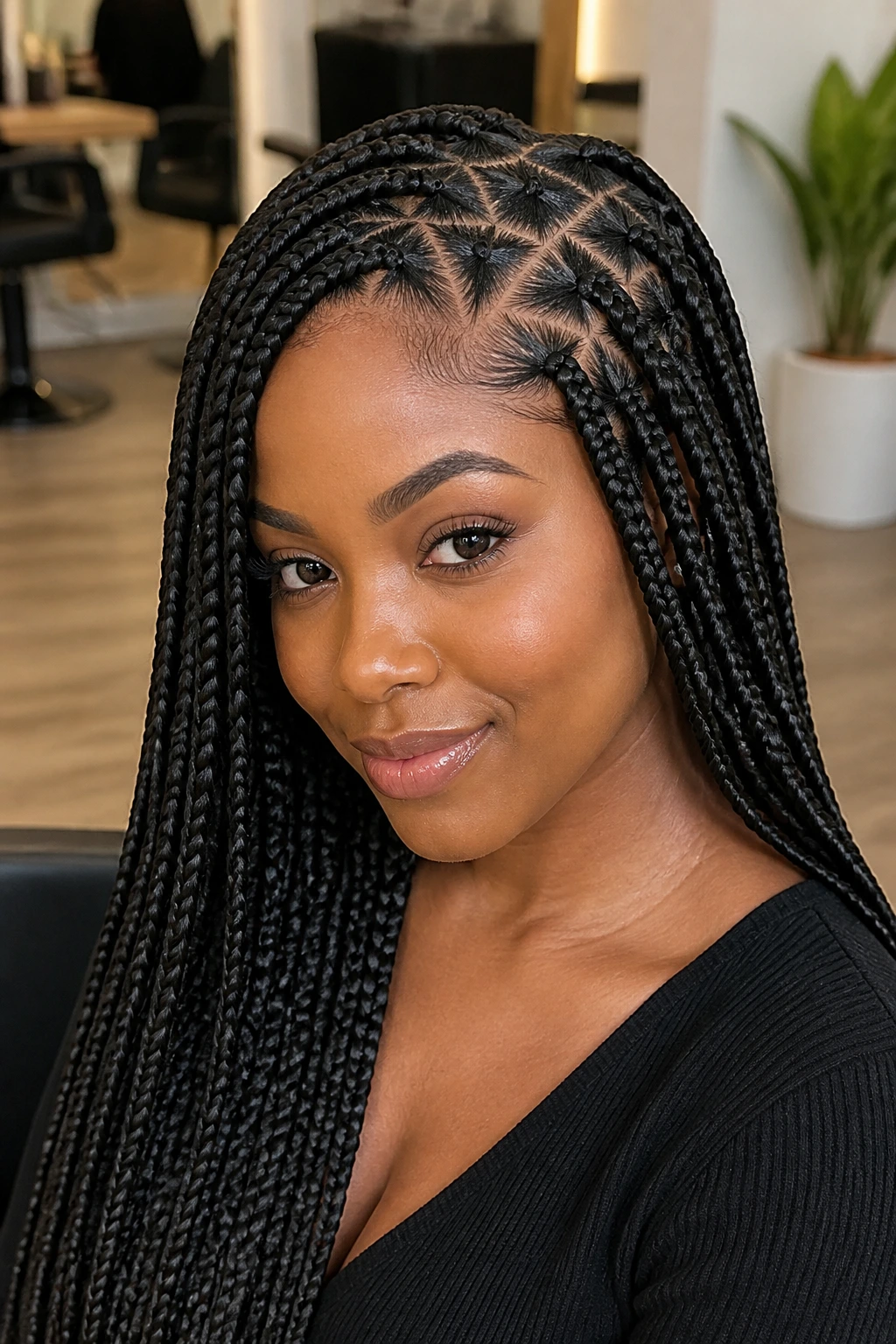
Triangle parts are underrated on square faces because they break the grid. Straight box parts can feel a little too orderly if the face already has a sharp outline; triangle parting adds small diagonals that soften the overall read.
The result is still box braids, but the pattern on the scalp looks more interesting and less rigid. That matters more than people think, especially in the front. The eye notices those parting shapes before it notices the length.
Quick Visual Payoff
- Diagonal parting softens the forehead area.
- The pattern keeps the style from looking flat.
- Medium-size braids usually balance the face best.
- A slight side part can push the whole style even softer.
14. Zig-Zag Cornrows with a Long Tail
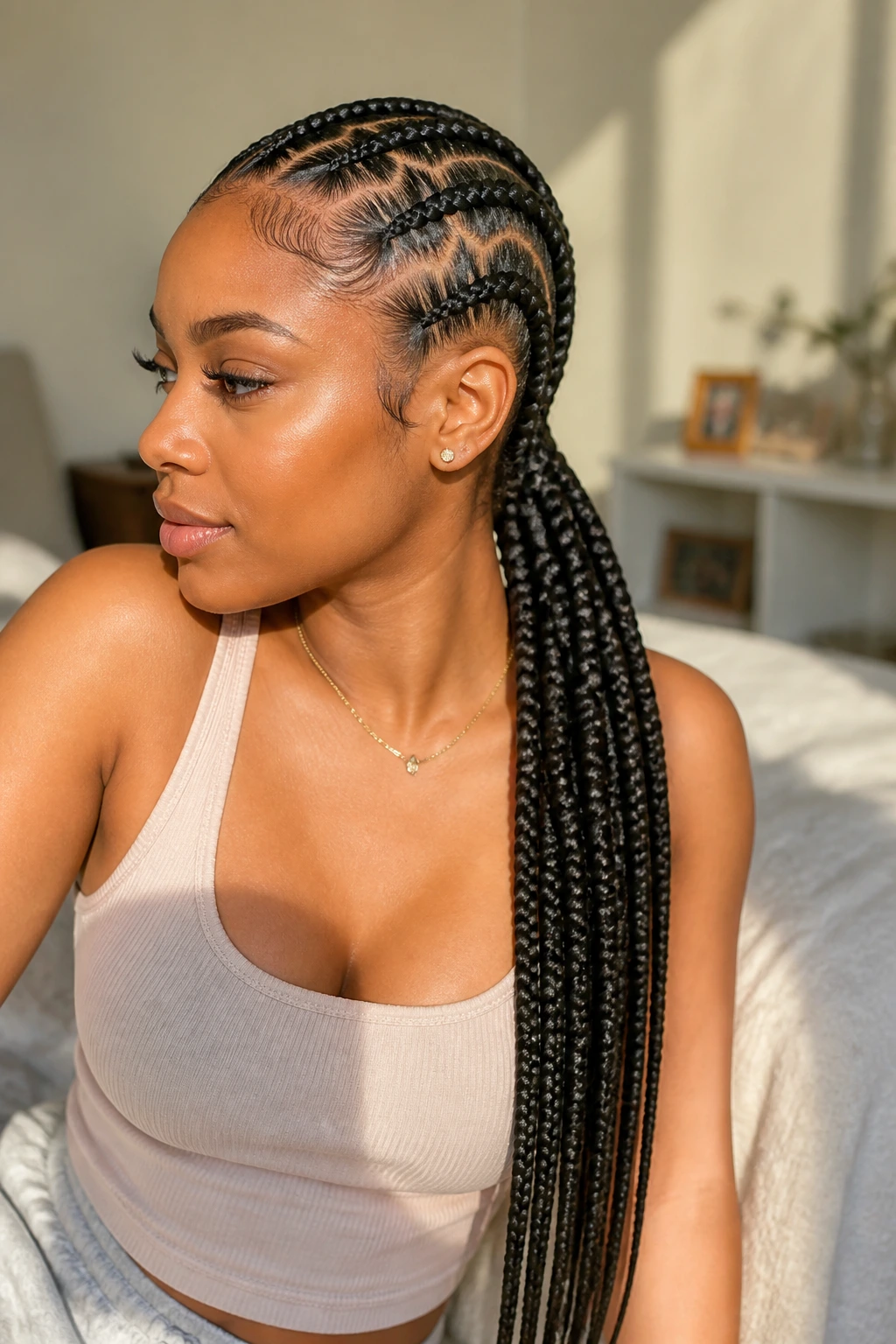
Zig-zag parts are playful, but they are not only for drama. On a square face, they interrupt straight lines and keep the scalp pattern from echoing the jaw’s angles too closely. That tiny change can make the whole style feel more relaxed.
The long tail matters just as much. A zig-zag top with a short finish can still feel boxy; a zig-zag top flowing into length gives the face somewhere to go. I’d keep the tail below shoulder level if possible.
This is the style for someone who likes detail. It has personality built in.
15. French Braids into a Low Bun
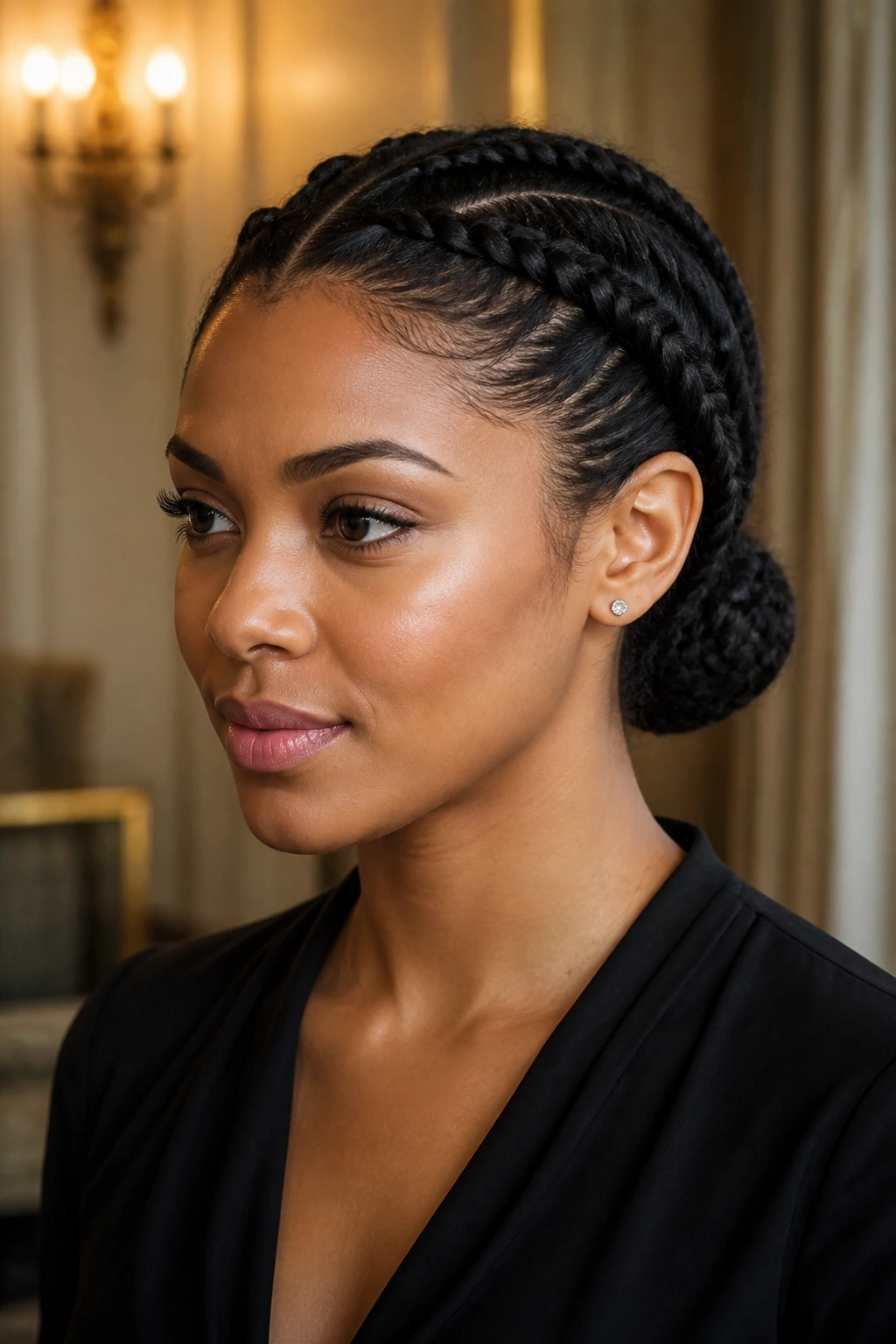
French braids into a low bun are neat, old-school, and quietly flattering. The braids pull the sides back, which opens the face, and the bun sits low enough that it doesn’t add extra height where you don’t need it. That balance helps square faces a lot.
Leave a few thin strands at the temples if you want the look to soften. Not chunky pieces. Thin ones. A little movement around the face is enough. Too much and the style loses its clean line.
This is one of those looks that feels formal without becoming severe. I like that.
16. Layered Micro Braids
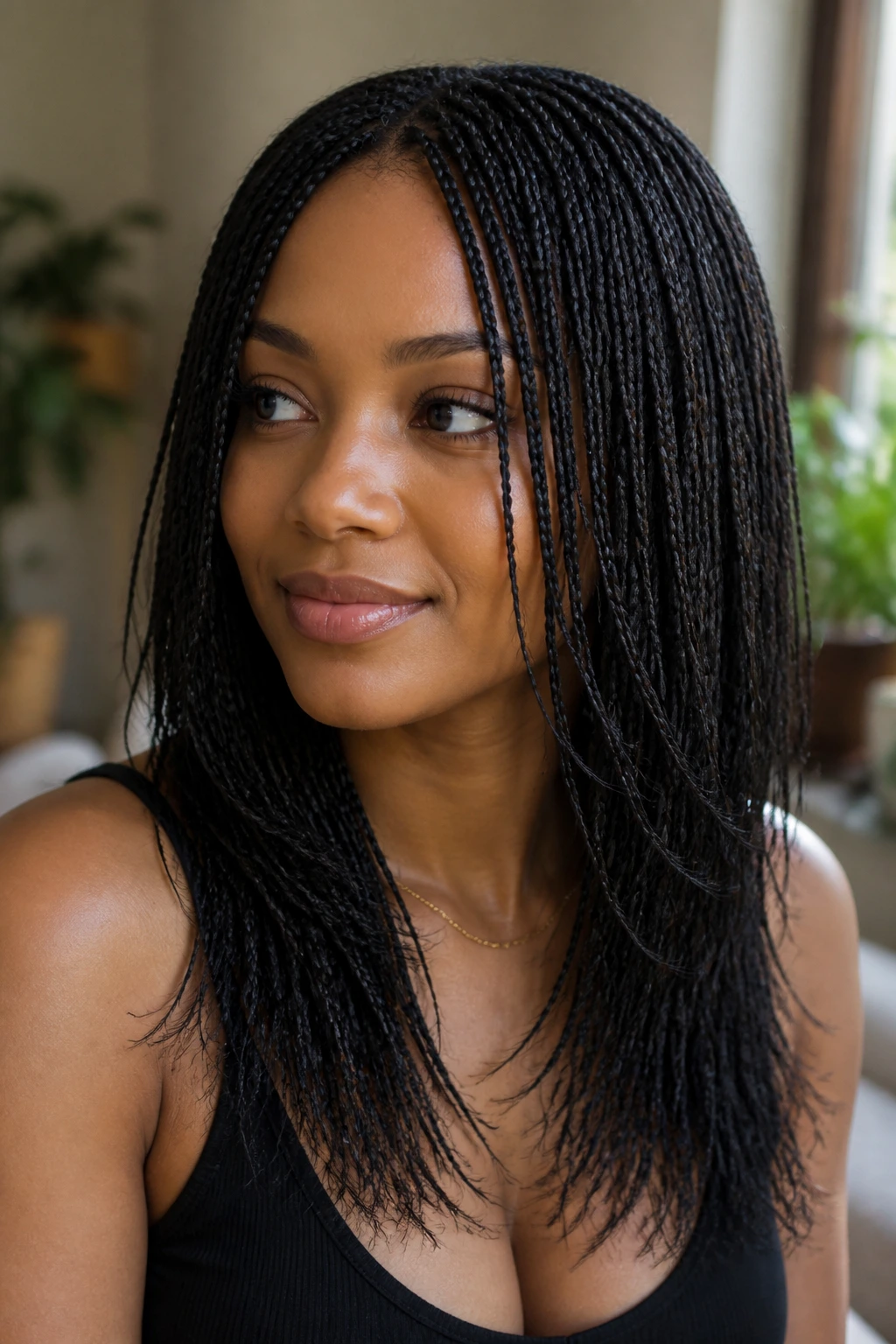
Micro braids can sit beautifully on a square face if the lengths are layered instead of cut into one blunt curtain. The layering keeps the ends from forming a hard horizontal line around the jaw and shoulders, which is where things can go sideways fast.
They do demand patience. A lot of patience. But the payoff is texture and movement, especially if your natural hair is dense and you want a protective style that reads light around the face. Ask for a layered finish or a few face-framing lengths that fall a little shorter than the rest.
17. Half-Up Half-Down Braids with Lift
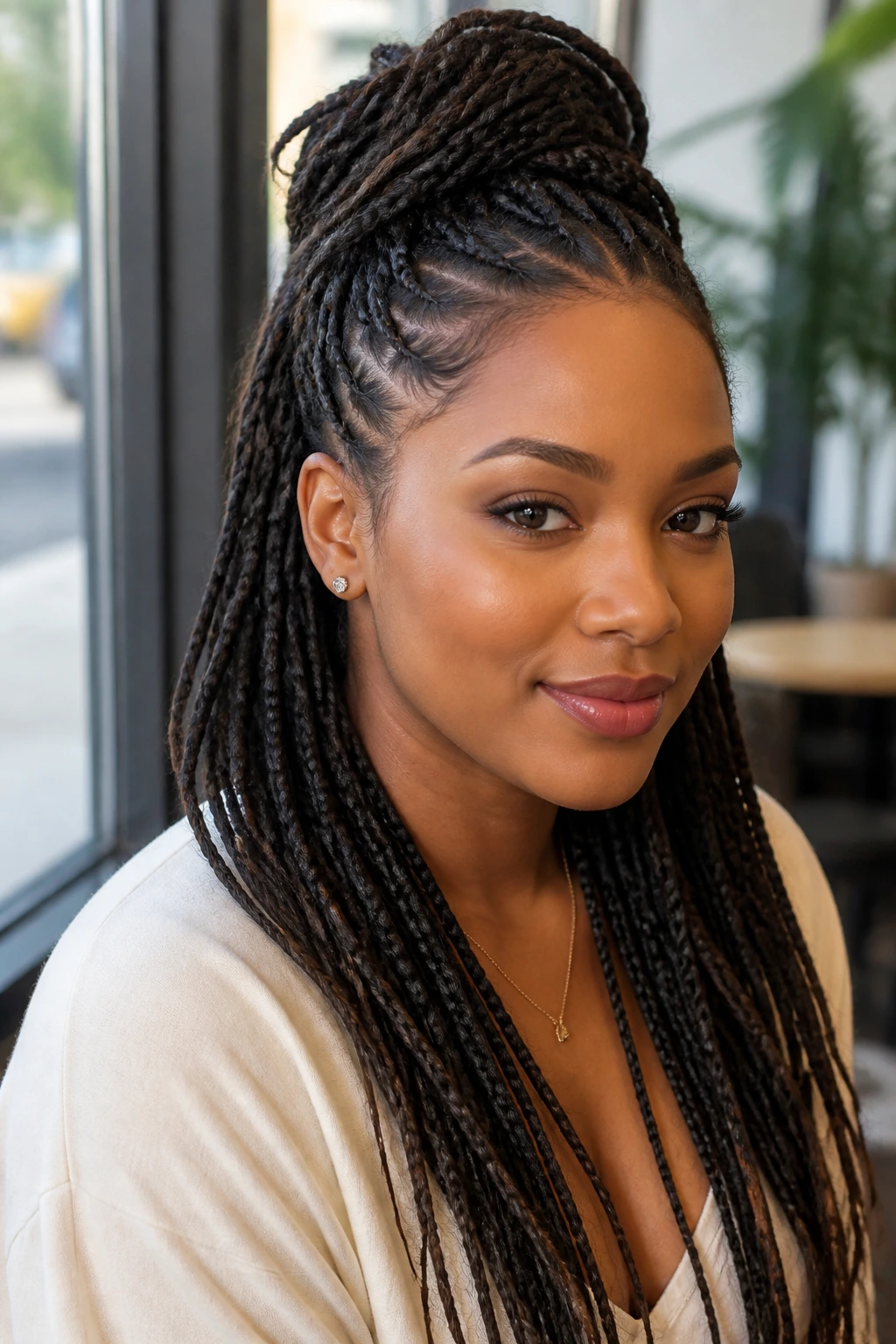
Half-up half-down braids give the face two jobs at once: lift on top and length below. That’s useful on a square face because the crown gets a little height while the lower half keeps the face from feeling wide. Clean. Easy to understand. Hard to mess up if the parting is right.
The top half should not be yanked tight. That’s where people get into trouble. You want lift, not a pulled-back line that exaggerates the forehead. The lower half can flow straight or with soft curls if you want even more movement.
It’s a nice compromise style when you want hair away from your face but not fully up.
18. Braided Pixie with a Swooped Fringe
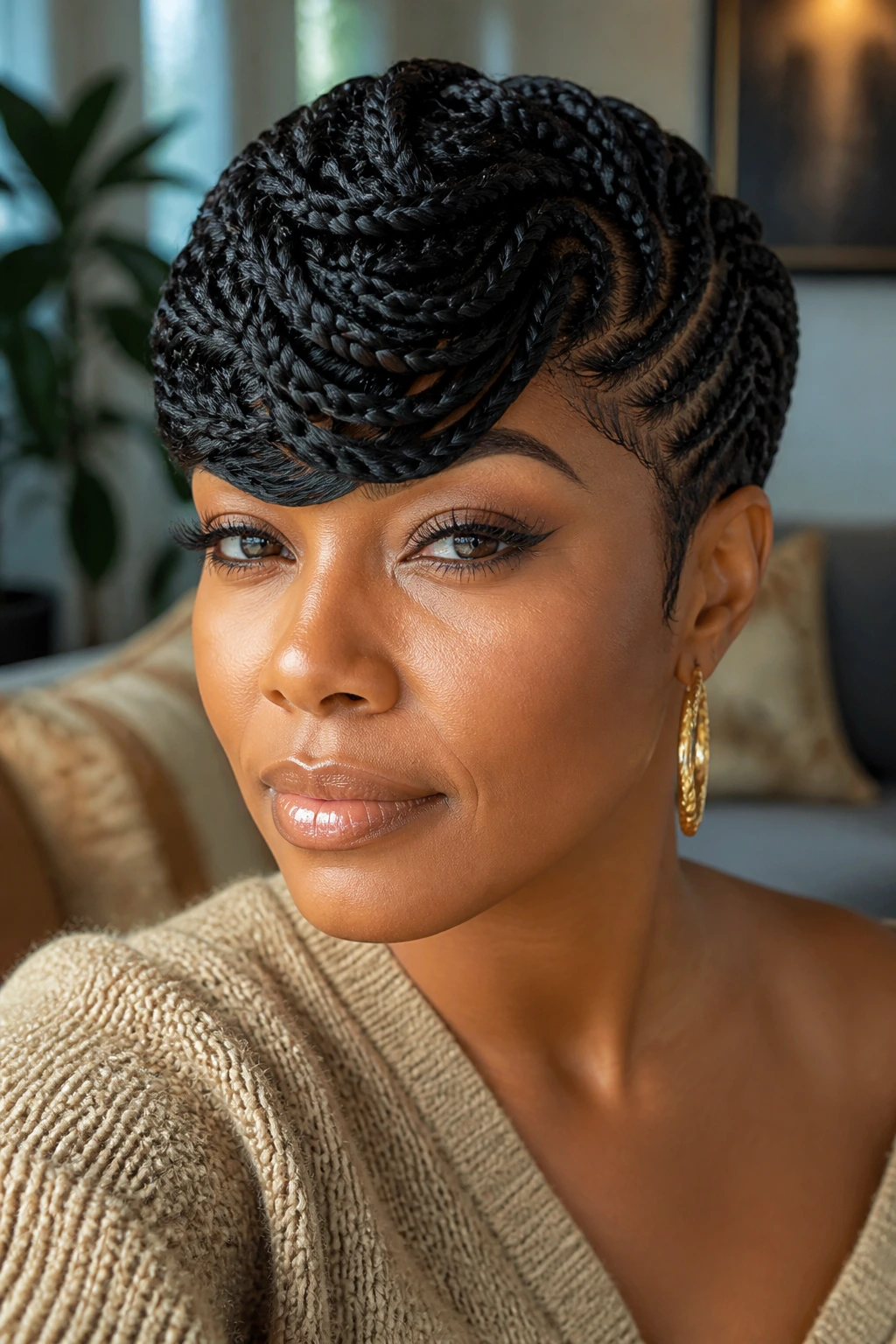
A braided pixie is not about hiding the square face. It’s about showing the bone structure and softening it just enough at the front. The swooped fringe does the softening, and the short length keeps the profile clean.
This style works when the fringe skims the brow or crosses just above one eye. Too short and it looks choppy. Too long and it starts to fight the whole point of the cut. It’s a sharp look, and I mean that in the literal sense.
If you like strong cheekbones and a short silhouette, this one deserves a look.
19. Two Large Feed-In Braids
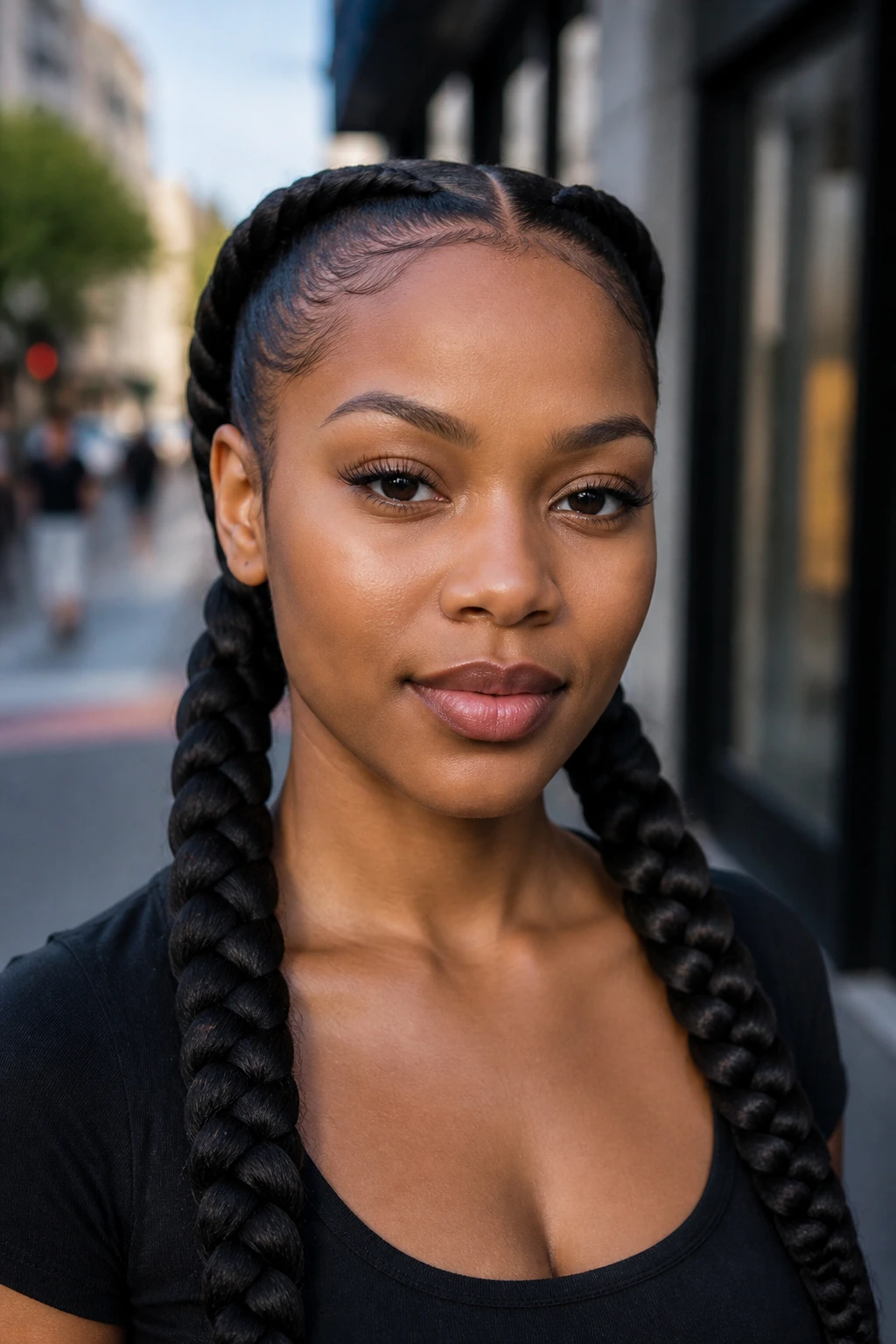
Two large feed-in braids can feel bold, but they’re very good at creating a long, clean line. The symmetry actually helps square faces when the braids are long enough to drop past the jaw. The face gets framed instead of boxed in.
The parting should sit cleanly in the middle or just off-center, and the braids should start with a smooth, graduated feed-in at the root. That keeps the top from feeling bulky. If you want a little softness, curl the ends or add a few beads lower down.
It’s a no-nonsense style with enough shape to stay interesting.
20. Lemonade Braids with Curled Ends
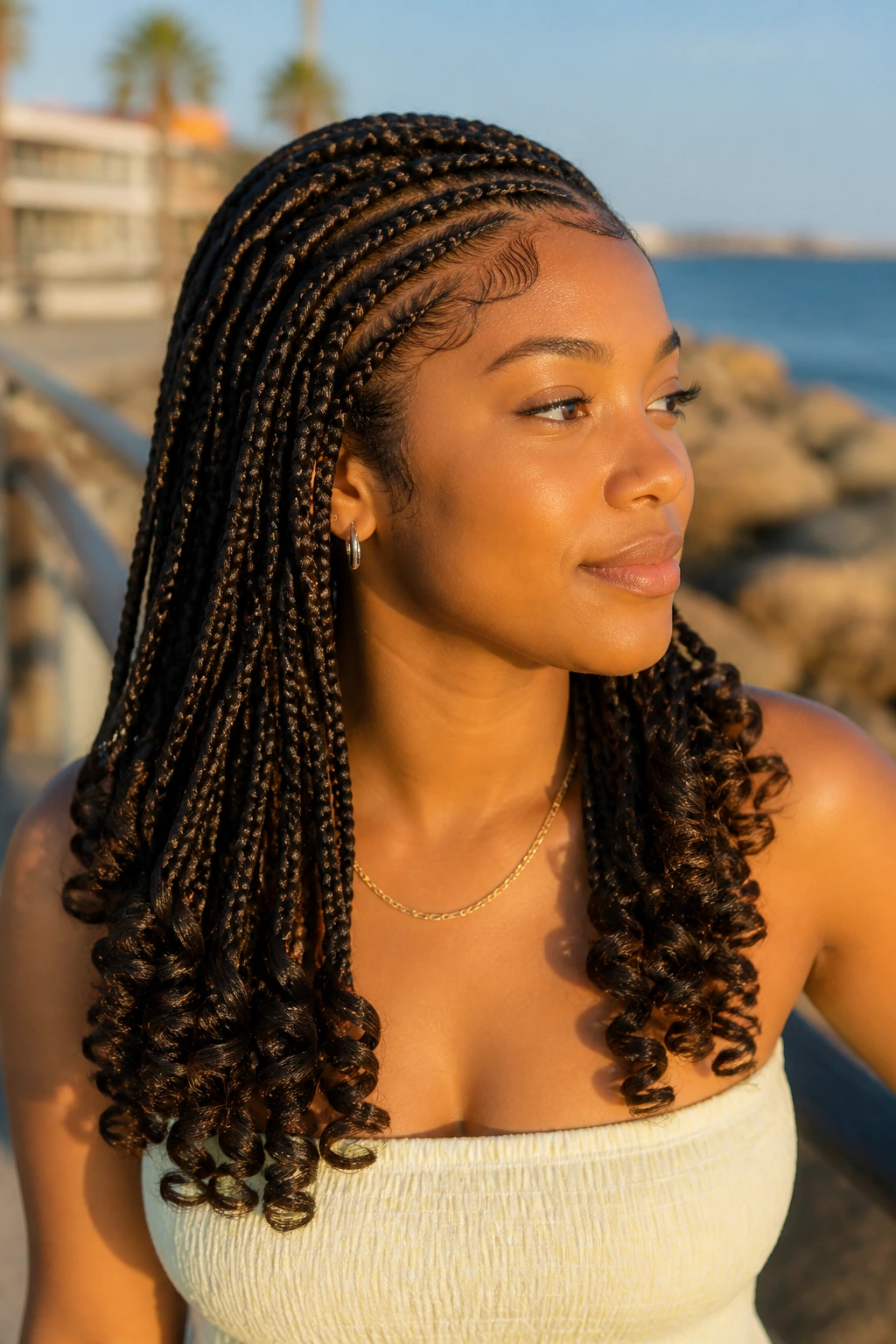
Lemonade braids with curled ends fix the one complaint people sometimes have about side-swept braids: the finish can look too hard if the ends are straight and blunt. Curled ends change that. They bring the eye back up and soften the stop of the braid line.
This is a good choice when you want the diagonal effect of lemonade braids but with a little more movement around the shoulders. The curls can be loose and brushed out or defined and springy. Either way, they make the whole style feel lighter around a square jaw.
21. Cornrow Updo with Braided Bangs
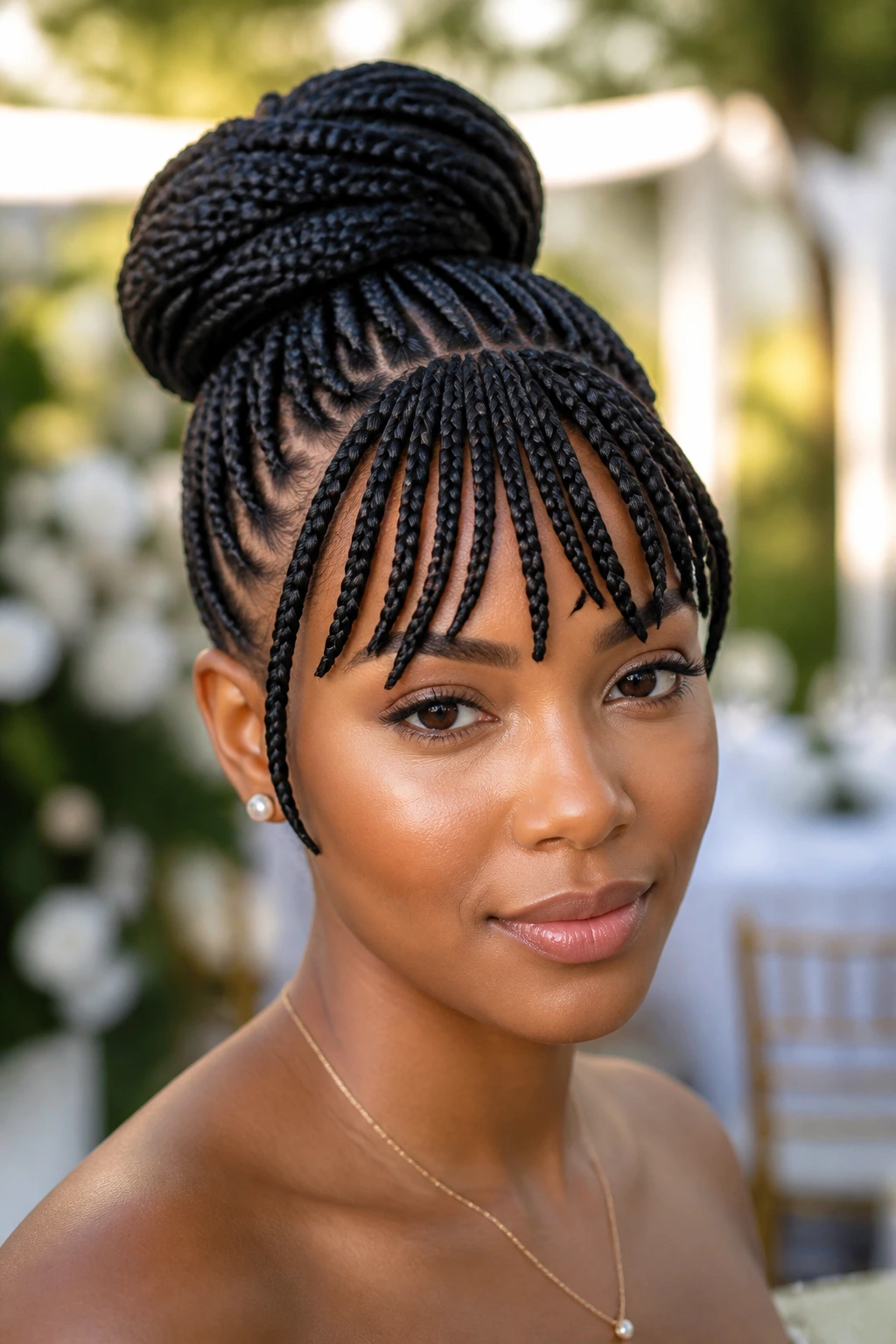
A cornrow updo with braided bangs is the kind of style that makes a square face look deliberate, not accidental. The bangs matter most. If they curve gently or taper at the edges, they frame the forehead without giving the face a blunt front edge.
Keep the updo compact and slightly rounded. A tall, boxy bun can fight the shape of the face, but a rounded updo with braided bangs feels much softer. It’s a good option for weddings, interviews, or any day you want your face fully open.
22. Tribal Braids with Beads and Cuffs
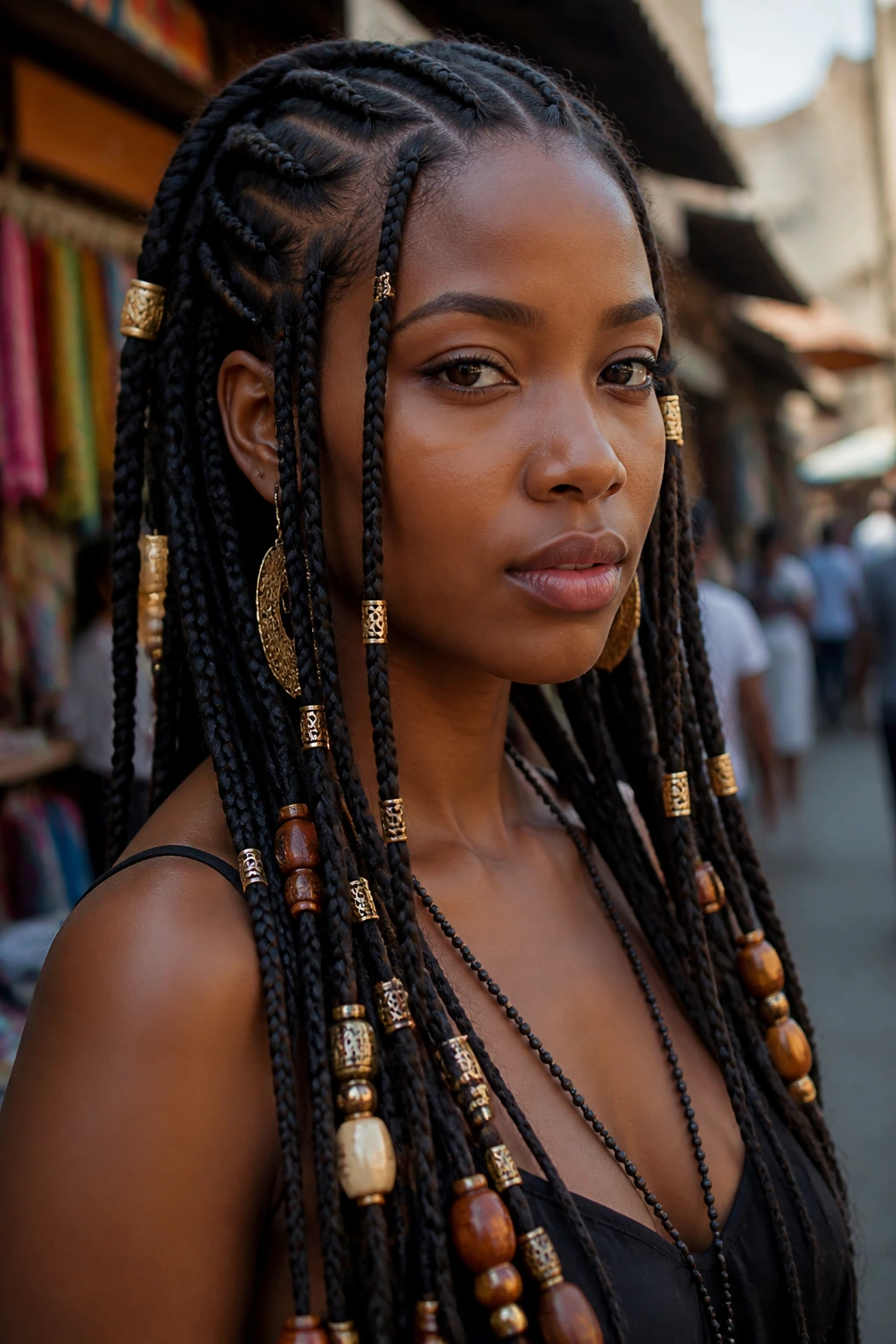
Tribal braids let you play with detail in a way that flat styles cannot. Beads, cuffs, and mixed braid sizes draw the eye down the length instead of letting it sit at the widest part of the face. That helps square features feel balanced.
The Right Way to Wear Them
- Put the heaviest visual detail lower on the braid.
- Keep the front rows neat and medium-sized.
- Use cuffs sparingly near the temples.
- Let the length do most of the talking.
Too many accessories near the scalp can overwhelm a square face. Lower placement usually works better. It leaves the forehead open and keeps the style from feeling crowded.
23. Low Braided Bun with Side Tendrils
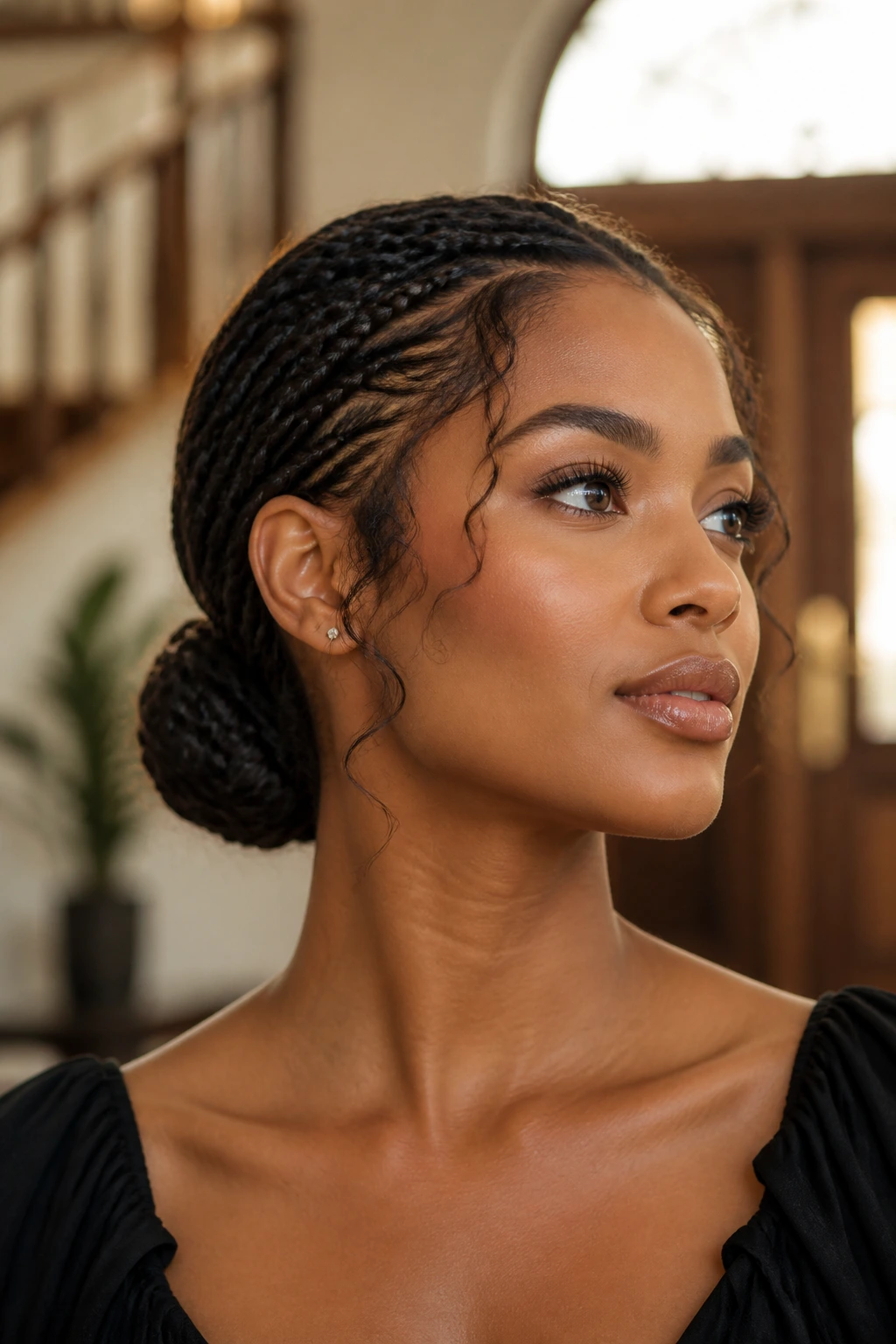
A low braided bun is one of the safest styles for a square face when you want polish. The bun sits low, so it does not add width, and the side tendrils soften the face just enough to keep it from looking severe. That contrast is the whole point.
I like this for formal settings because it holds its shape well and still leaves room around the cheekbones. The tendrils should be thin and a little irregular, not curled into perfect little spirals. Perfect tends to look stiff here.
It’s calm, clean, and easy on the profile. Sometimes that’s exactly right.
24. Curved Feed-In Braided Ponytail
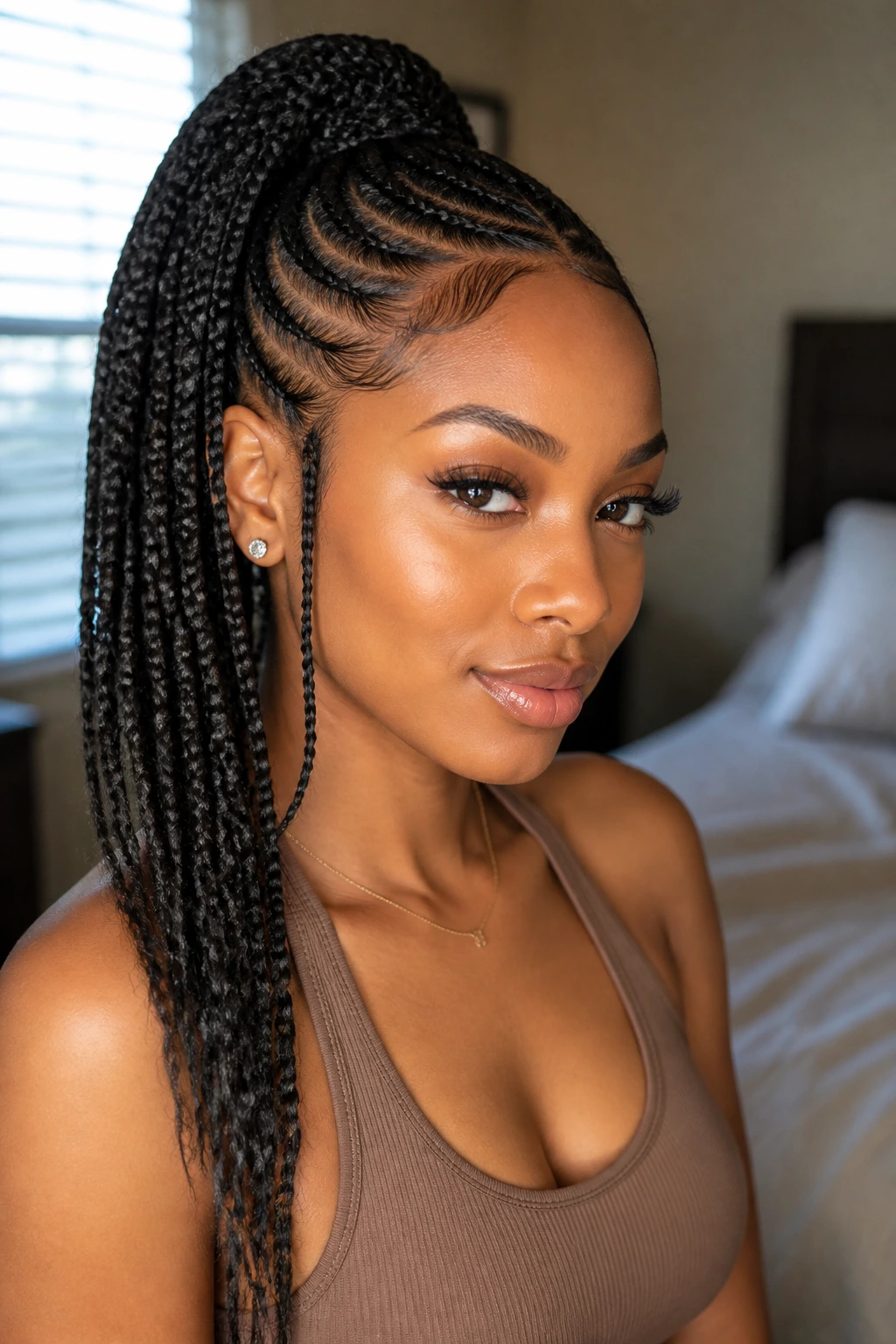
A curved feed-in braided ponytail gives you height, motion, and a strong line all at once. The curve near the scalp matters because it stops the style from feeling like a straight line pulled back from the face. That curve softens the forehead area and keeps the ponytail from feeling too harsh.
The ponytail itself can be long and sleek or slightly curled at the end. If the face is very square, I like a little bend in the feed-ins rather than a dead-straight track. It looks less severe and a little more alive.
This is one of the better styles when you want movement without loose hair everywhere.
25. Double Halo Braids That Open the Face
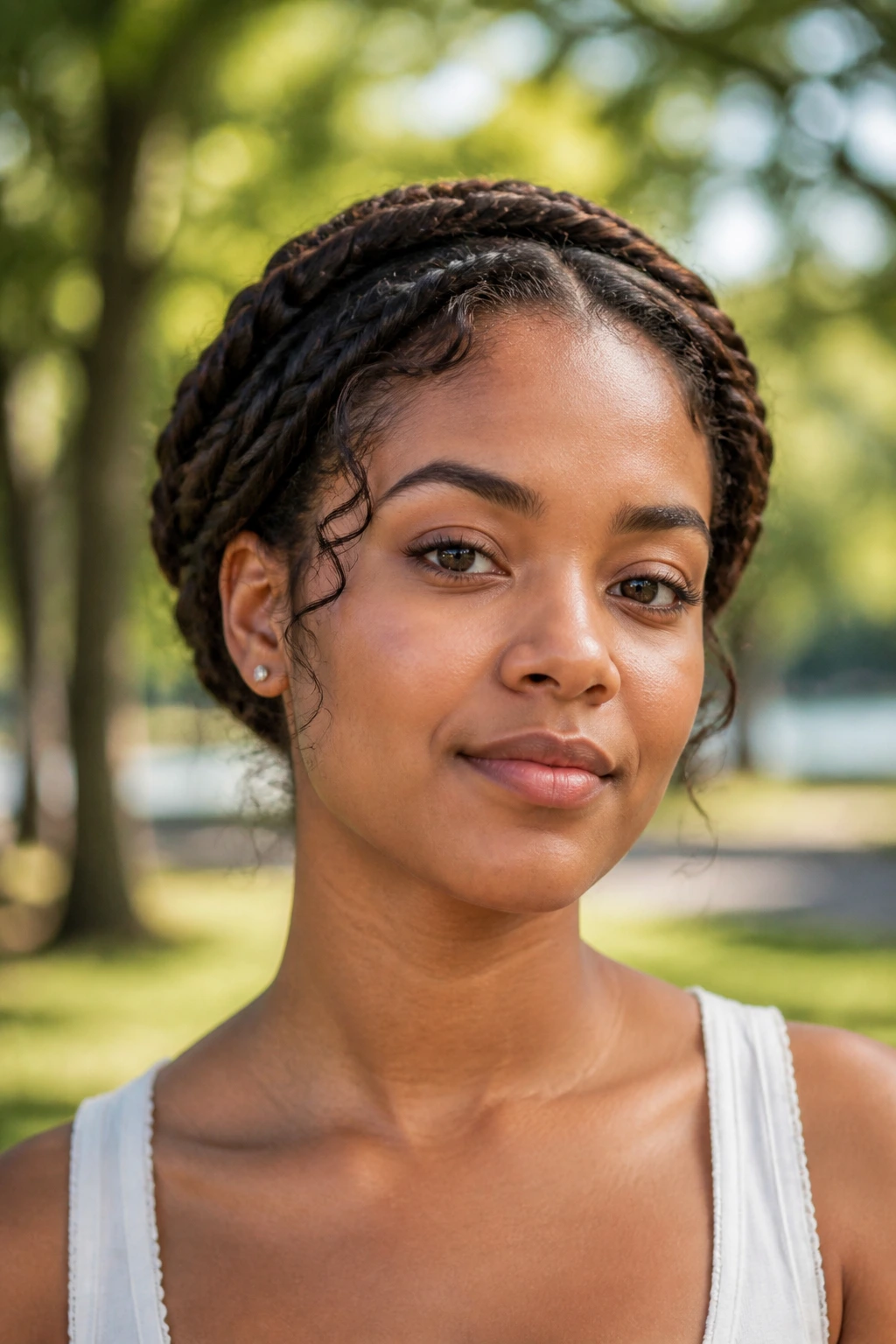
Double halo braids are dramatic, but they work because they create balance above and around the face instead of pressing straight across it. With two halo lines, the eye moves in a loop, not a block. That helps a square face look more open.
The style is strongest when the front stays light and the braids are not pulled painfully tight at the temples. Leave a small amount of softness around the ears or brow, and the whole thing reads more graceful. No need to overbuild it.
If you want a protective style that feels polished and a little regal, this is the one I’d save for the moments that matter.
Why Square Faces and Braids Need a Little Geometry
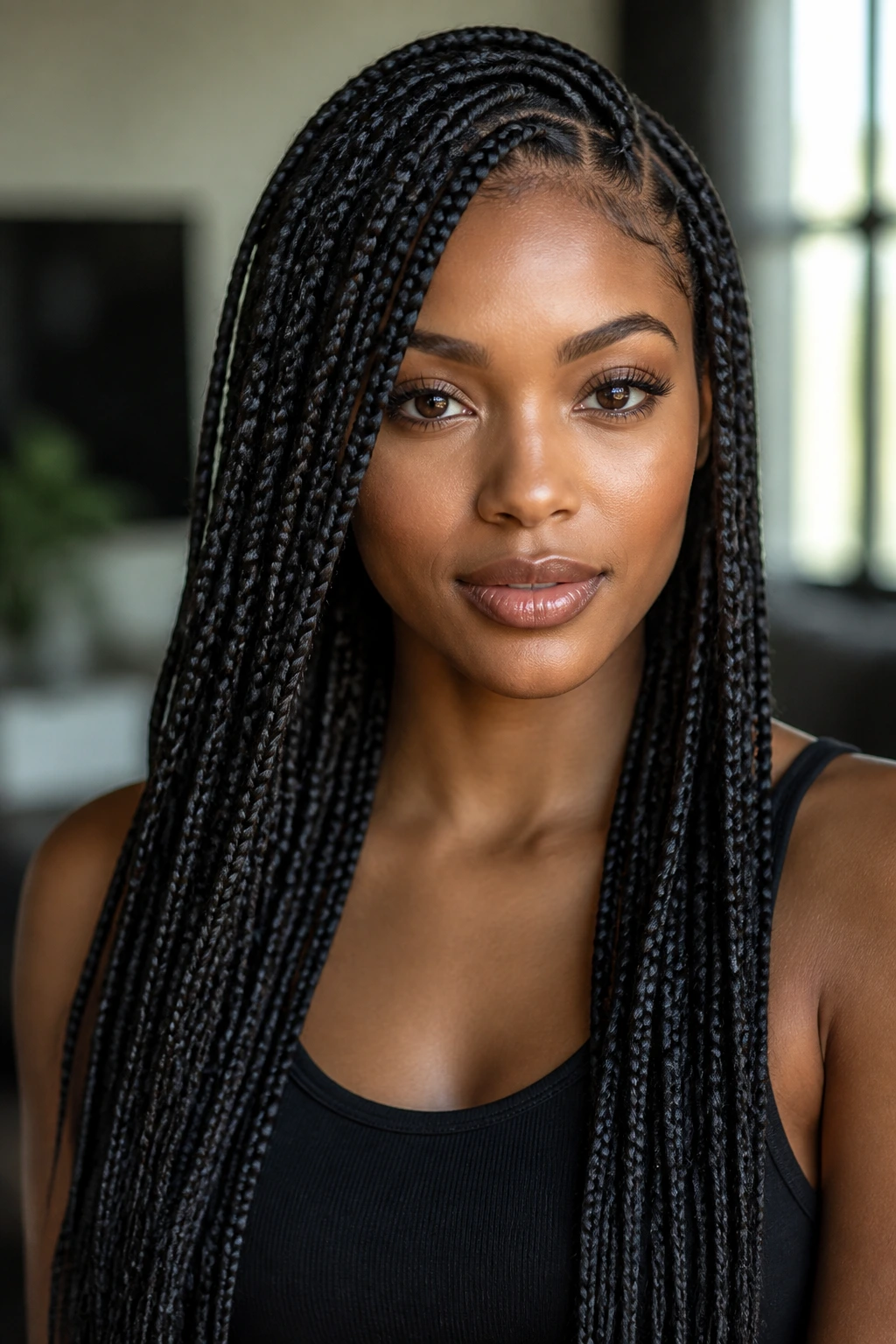
Square faces are not difficult. They’re structured. There’s a difference.
The forehead, cheekbones, and jawline tend to sit closer in width, which gives the face its strong outline. That shape can look incredible in braids, but the line of the style matters more than it does on softer face shapes. A center part, a blunt chin-length bob, and a dense braid line right at the jaw will all read differently on a square face than they do anywhere else. You feel it before you can name it.
The easiest fix is to think in directions. Side-swept styles create diagonals. Long braids create verticals. Curls and tendrils break up hard edges. Height at the crown stretches the eye upward. None of that hides the face. It just gives it room.
And then there’s the scalp. Tight braids, tiny parts, and heavy extensions can stress natural hair fast, especially around the edges and nape. The shape of the face matters, yes, but the shape of the install matters just as much. If the style looks good and hurts, it is not a good style.
Essential Tools for These Looks
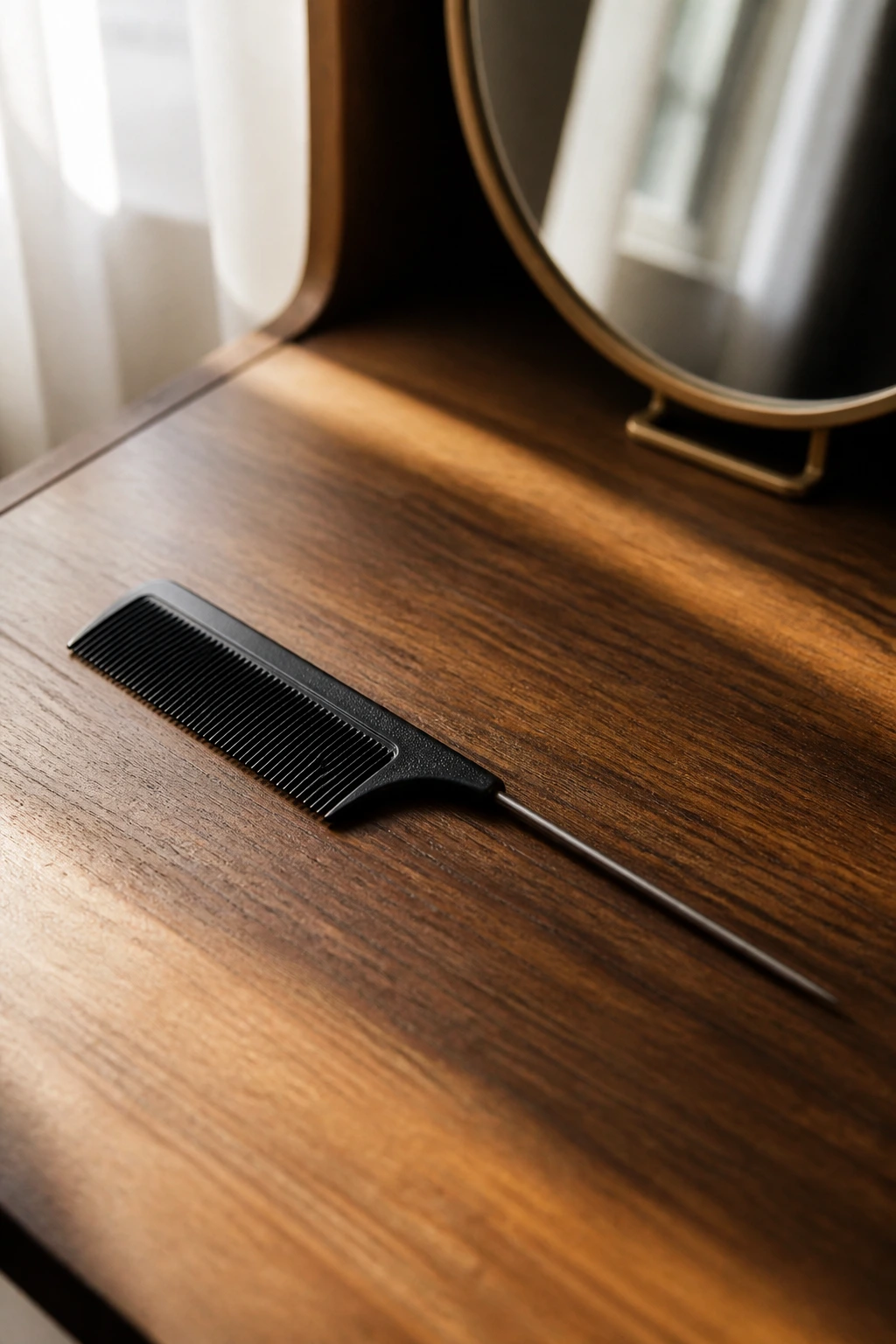
- Rat-tail comb: For crisp parts and cleaner sectioning, especially on cornrows, stitch braids, and triangle parts.
- Duckbill clips or sectioning clips: Keep hair out of the way while you work through one row at a time.
- Braiding hair: Pre-stretched synthetic hair is easier for knotless, feed-ins, and box braids because it saves prep and reduces blunt ends.
- Edge brush: Useful for smoothing the front without scraping the hairline raw.
- Mousse or foam wrap lotion: Helps settle frizz and keeps curls or braid surfaces tidy without piling on grease.
- Light scalp oil or braid spray: Use sparingly; a few drops or a light mist is enough.
- Satin scarf or bonnet: Nighttime protection matters more than fancy products do.
- Spray bottle with water and leave-in: Handy for re-moisturizing natural hair before braiding or refreshing curls at the ends.
- Hair ties without metal seams: Better for ponytails and half-up styles; metal can snag extensions.
Smart Shopping for Braiding Hair and Products
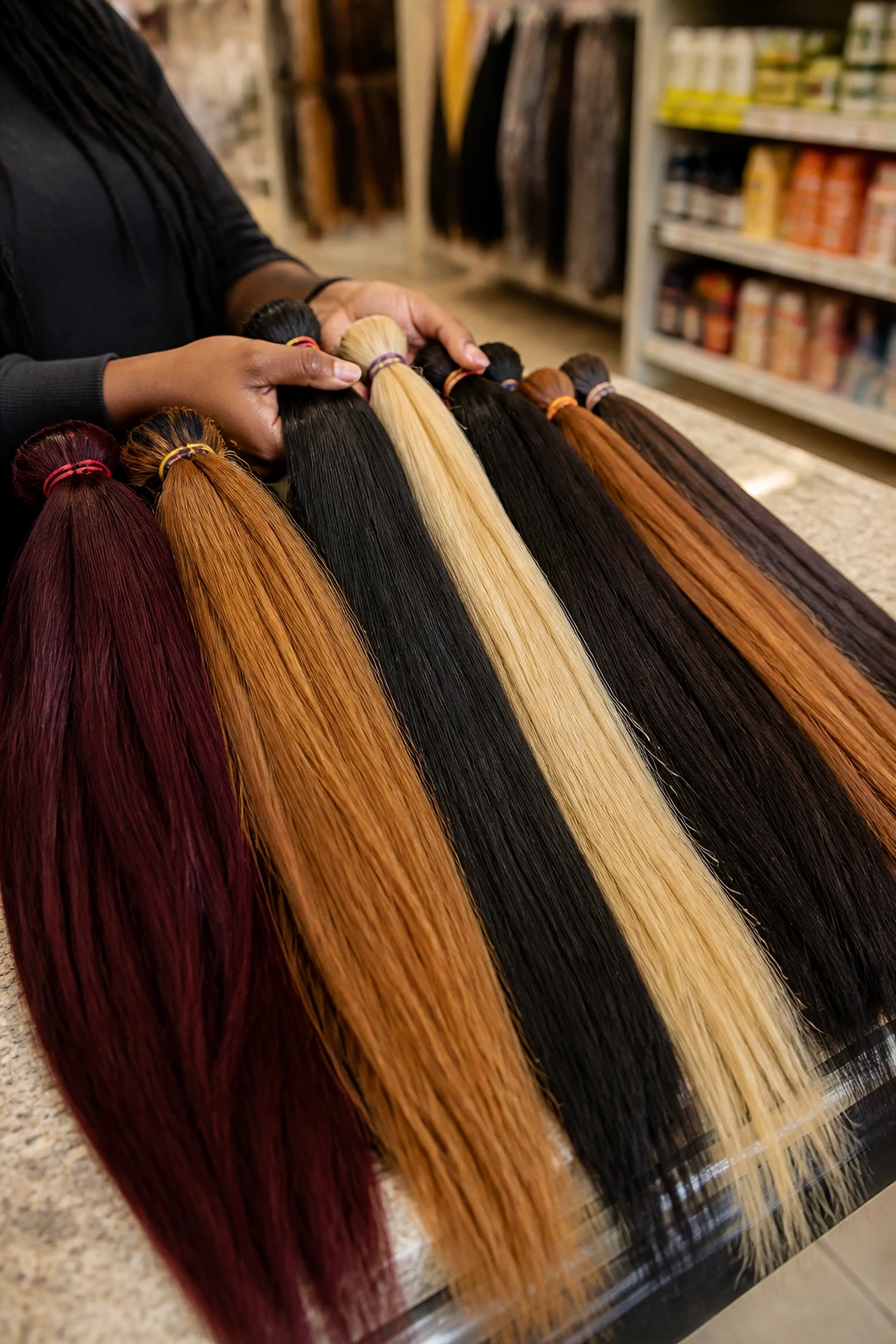
Braiding hair is where a lot of people overspend or make the install harder than it needs to be. For knotless, feed-in, and box braids, pre-stretched synthetic hair usually makes the braid lie flatter at the root and saves a ridiculous amount of prep time. If you’re doing a style with curls, you can mix in human-hair pieces for the ends, but you do not need expensive extensions for every braid.
Pay attention to weight. Heavy braids look impressive for about ten minutes, then they start pressing at the hairline and temples. If your natural hair is fine around the edges, go lighter, not bigger. Jumbo braids are fine if they’re balanced and not packed with too much hair.
For products, skip the thick grease jar unless your scalp actually needs it. A water-based mousse, a gentle braid spray, and a light oil on the scalp usually work better than smearing on half the cabinet. If your hair is low-porosity or prone to buildup, heavy creams sit on top and make braids feel dusty faster. That’s the kind of thing people only notice after the install starts itching.
How to Wear These Braids With Earrings, Necklines, and Makeup
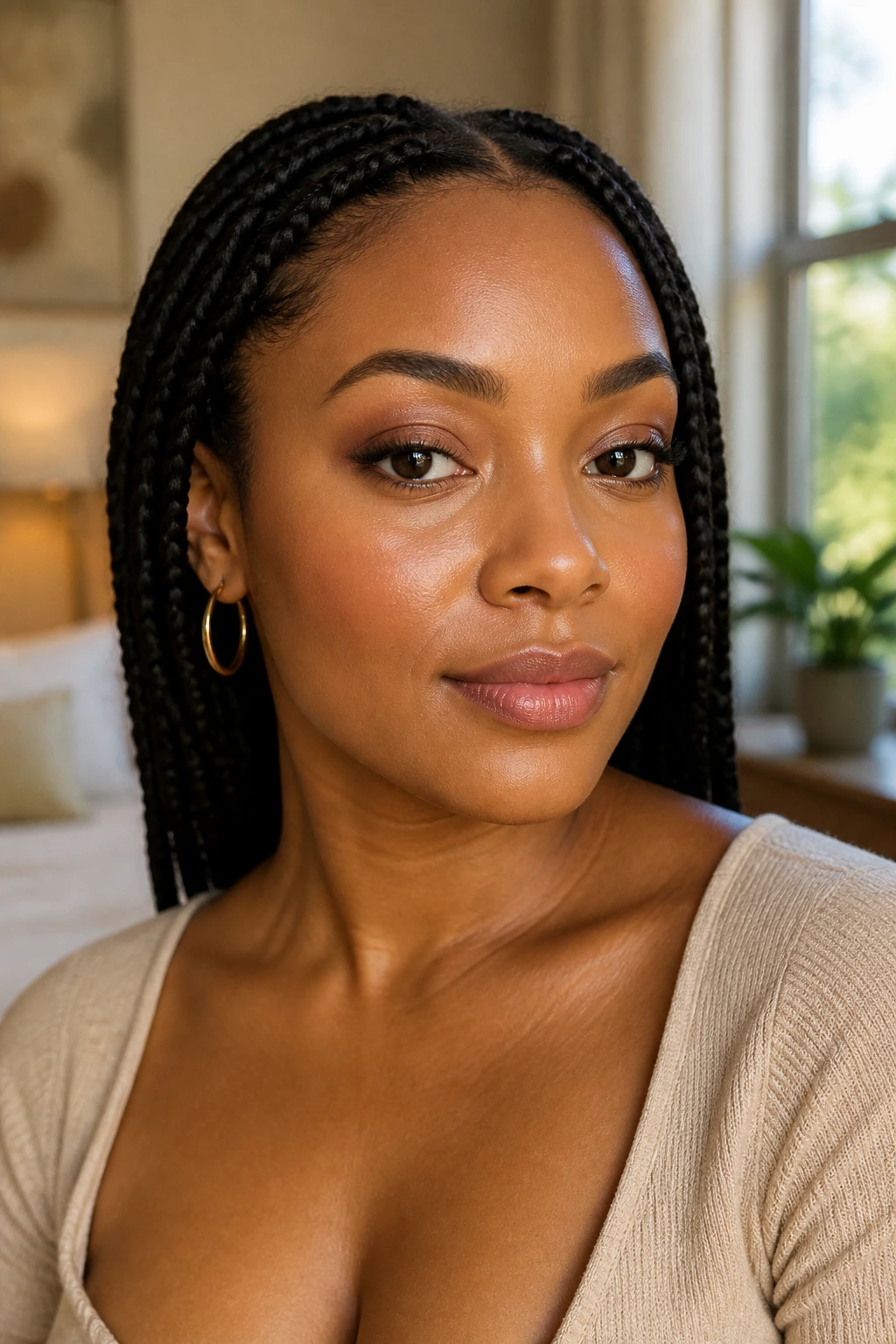
Frame: Let the braid line work with your face shape instead of flattening it. Side parts, curved rows, or temple pieces soften a square jaw; if you want a sharper look, keep the part cleaner and the sides tighter.
Accessories: Small cuffs, a few beads, or slim gold hoops add detail without crowding the face. Big earrings can work too, but if the braids are already heavy near the temples, keep the jewelry lighter and lower.
Necklines: Open necklines—V-necks, scoop necks, and soft collars—keep the whole look from feeling boxed in. A braid style that sits close to the face often looks best with a little space at the neckline.
Makeup: A square face can take strong brows and a defined lip well, but you do not need to paint the whole face into hard lines. A soft blush sweep and a little highlight on the cheekbone usually do more than heavy contour ever will.
Additional Tips and Texture Boosters
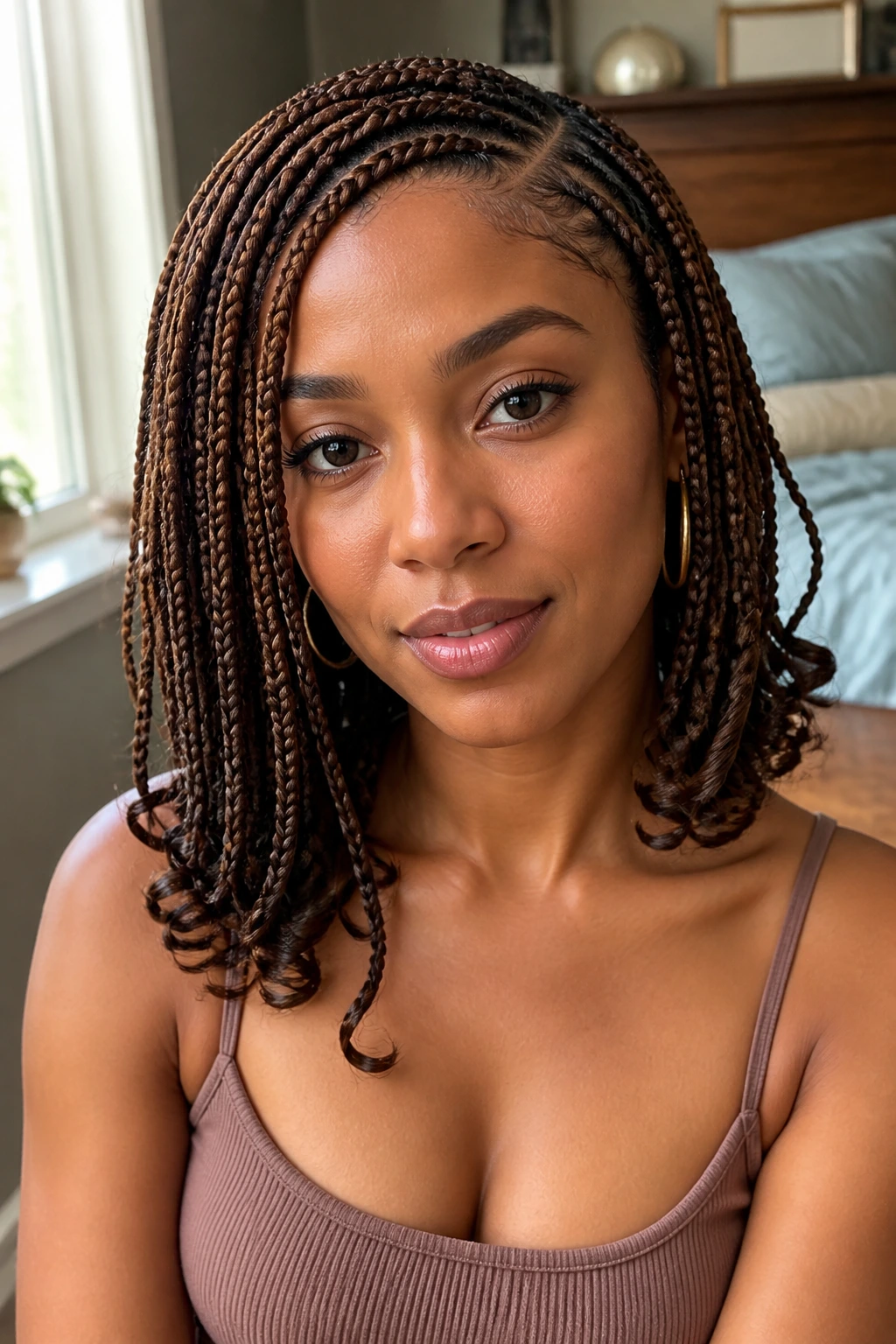
Parting Trick: If a straight middle part makes your face look too severe, ask for a slight curve or a deep side part. That one shift can turn a stiff style into something softer without changing the braid itself.
Length Trick: When you can choose, let the braids fall below the chin. That’s the line where square faces tend to breathe better. Collarbone length is safe. Shoulder length is safer. Chin length is where I start getting picky.
Color Trick: Warm brown, honey, copper, or chestnut braiding hair can soften strong features a little more than jet black, especially if your skin has warm undertones. It does not need to be flashy. Just a touch warmer can change the whole mood.
Softness Trick: Leave a few thin temple pieces or use curled ends on the braids. You do not need a lot. Two little pieces around the face can be enough to break up the hard line of the jaw.
Personal Style: If you like structure, go with cleaner cornrows, a bun, or a middle part. If you like movement, choose curls, side sweeps, or layered lengths. Square faces can wear both. They just need the braid shape to feel intentional.
Common Mistakes to Avoid
- Pulling the front too tight: If the braids hurt at the hairline or leave bumps, the install is too tight. That pain is not “normal,” and it is not worth it. Ask for more tension relief before the damage starts.
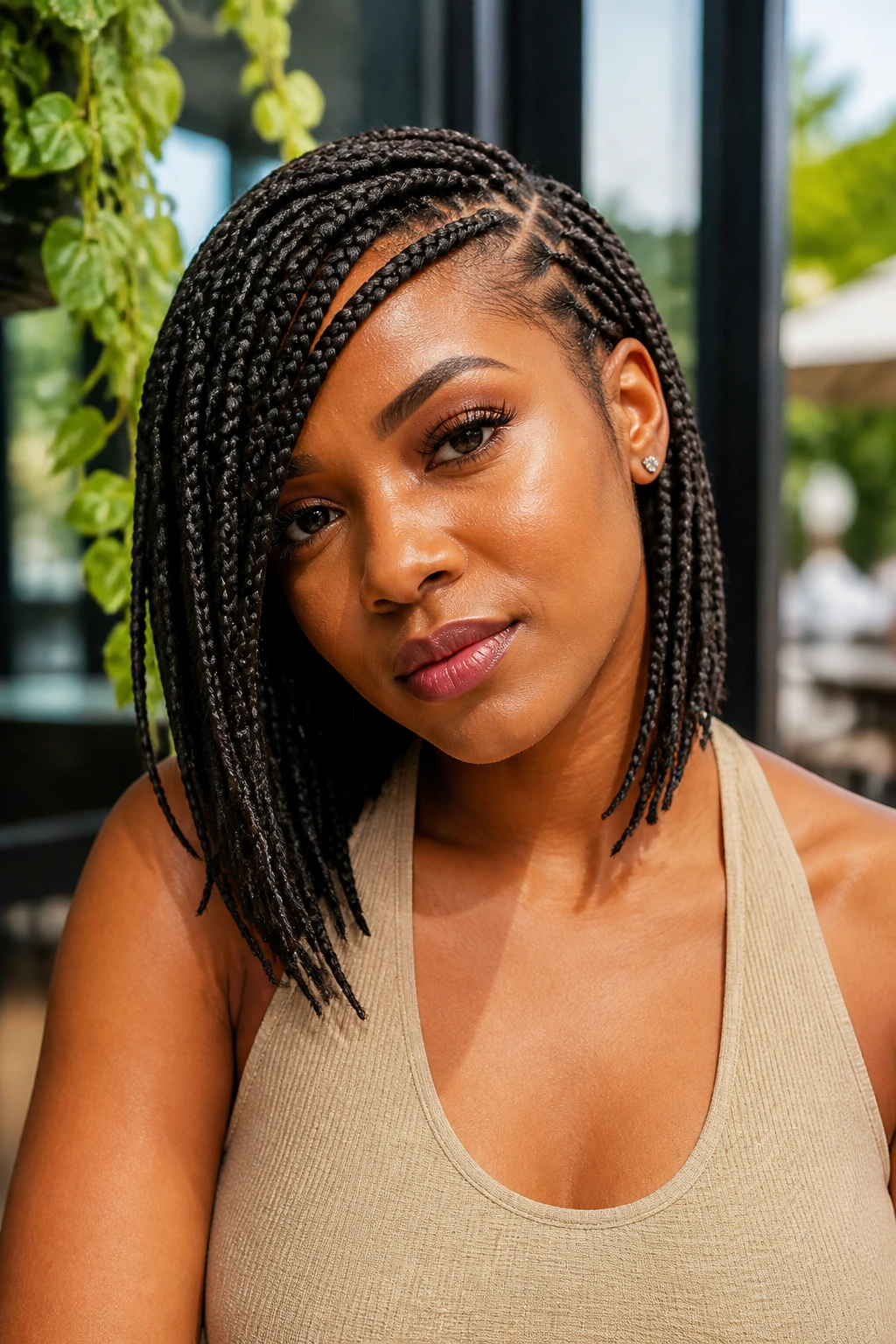
- Stopping the braid right at the jaw: Chin-length ends can make a square face look wider and shorter. If you want softness, go below the jaw or add curls that break the line.
- Choosing too much bulk at the temples: Heavy side pieces or oversized braids near the front can crowd the face. Keep the front lighter and let the fullness live farther back.
- Ignoring part shape: Straight lines everywhere can make square features feel harder than they are. Try curves, diagonals, or triangle parts if the style starts reading too rigid.
- Overloading with edge control: A glossy front is nice. A crunchy, shiny helmet is not. Use a small amount and stop when the hair lies down.
- Leaving braids in past the point of comfort: Natural hair will tell you when the style has worn out—itching, tenderness, frizz at the roots, or lifting edges. Do not wait for those signs to get louder.
Variations and Adaptations to Try
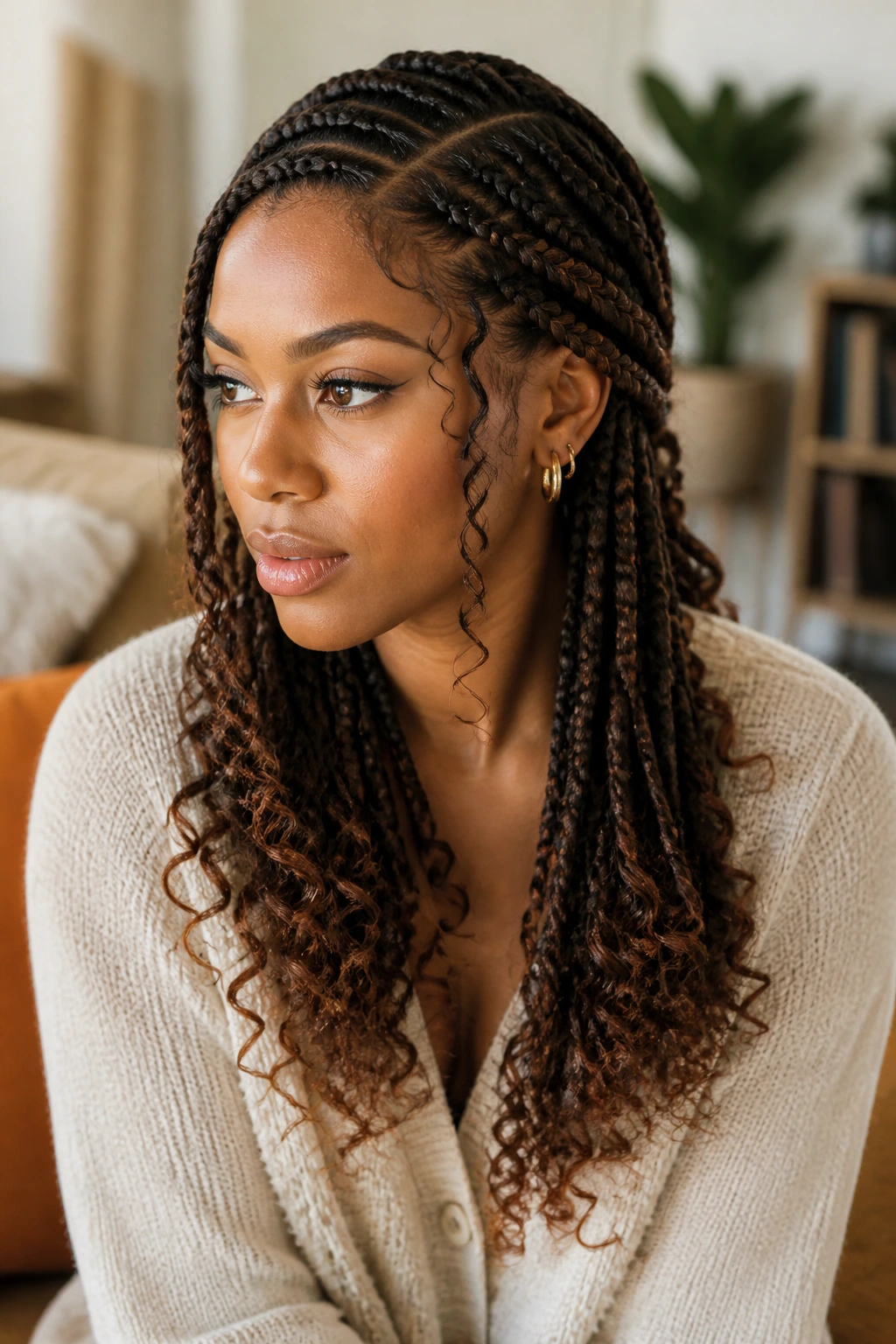
Soft Romantic Version: Add curls at the ends, a few temple pieces, and a side part. This version works when you want the square face softened, not sharpened.
Sleek Sculpted Version: Keep the parts clean, skip the loose pieces, and choose a middle part or crown braid. This is for people who like strong structure and don’t want the style to feel airy.
Low-Tension Protective Version: Use knotless roots, medium braid size, and lighter extension weight. It’s the version to choose if your edges are sensitive or your scalp gets sore easily.
Short-Hair Friendly Version: Focus on feed-ins, cornrows, and braided updos that use added hair only where needed. That keeps the front neat without forcing too much bulk onto short natural hair.
Event-Ready Version: Add beads, cuffs, curled ends, or a polished bun. Keep the front soft and the back controlled so the whole style reads dressed up without looking stiff.
Make-Ahead, Storage, and Refreshing Braids
Braids on natural hair last longer when the prep is done before install, not after the fact. Wash, deep condition, detangle, and stretch the hair the day before or earlier in the day, then let it dry completely. Damp natural hair under braids is asking for trouble. The scalp gets unhappy, and the style starts to smell off faster than it should.
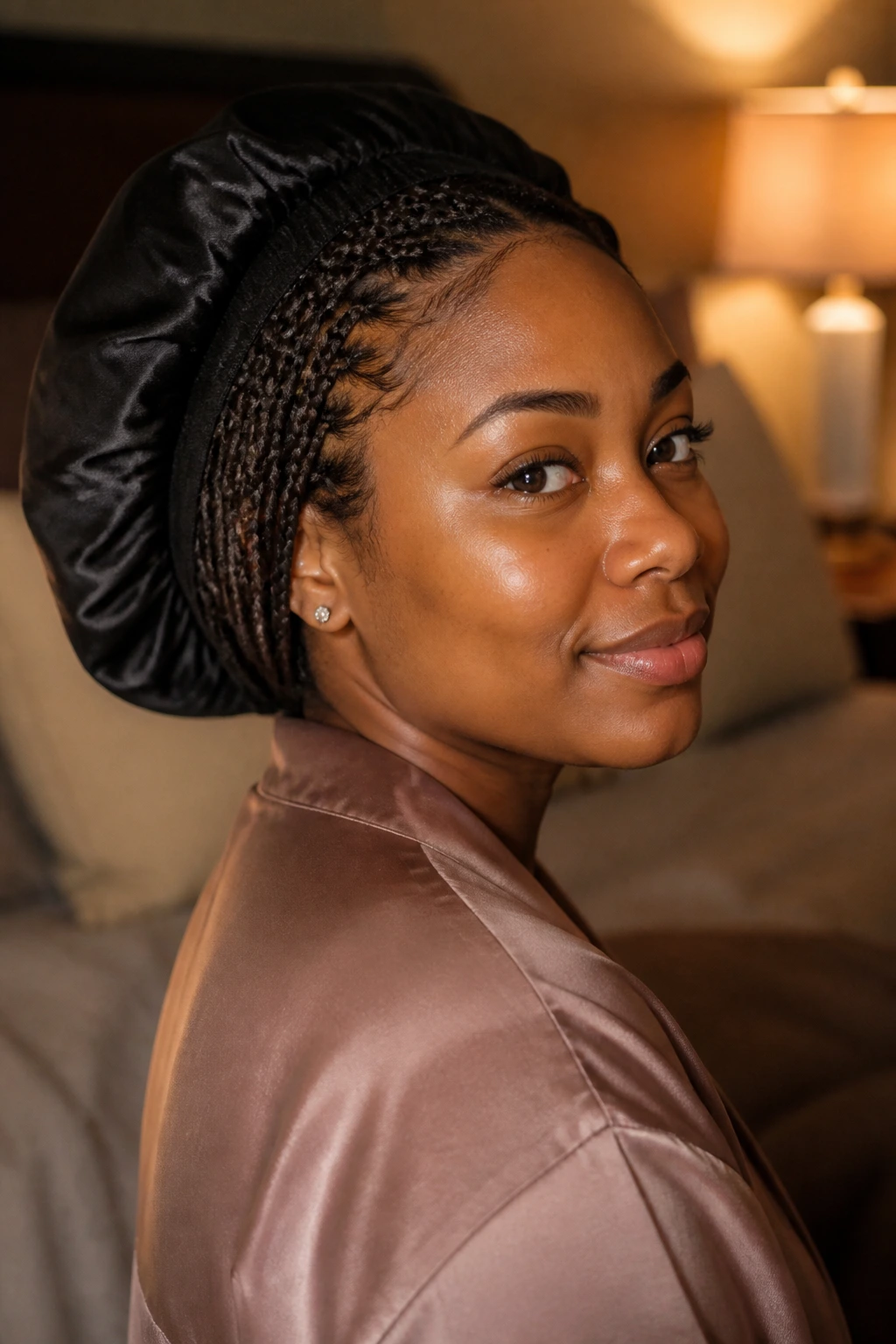
Once the braids are in, protect them every night with a satin scarf or bonnet. If the style is long, tuck the lengths loosely so they do not rub against the pillowcase. A light spritz of braid spray or water-and-leave-in every few days is enough for most styles. More is not always better. Too much product turns into buildup.
For wear time, medium knotless braids and feed-ins often hold up for about 4 to 6 weeks, larger braids may stay neat for 2 to 4 weeks, and micro braids can last longer if your scalp is comfortable. Wash the scalp only when needed—usually every 1 to 2 weeks—and dry it thoroughly afterward. If the roots start tangling hard, the edges start lifting, or the scalp gets sore, it’s time to take the style down.
Frequently Asked Questions
Which braids are most flattering for a square face?
Side-swept lemonade braids, knotless braids with face-framing pieces, layered boho braids, and long feed-ins usually soften the strongest lines. If you like sharper styling, center-parted jumbo braids or a braided bob can work too, as long as the length doesn’t stop right at the jaw.
Can square faces wear a middle part with braids?
Yes, and a lot of people do. The key is length and movement—long braids, curled ends, or a little softness around the temples keep the middle part from reading too severe.
Are knotless braids better than regular box braids for natural hair?
Knotless braids usually feel lighter at the root, which makes them a good choice if your scalp is sensitive or your hairline is fine. Regular box braids can still work well, but the front tension and added weight need to be handled carefully.
What braid length works best on a square face?
Collarbone length and below is the safest range if you want the face to look longer. Chin-length styles can work if you want a sharp look, but they’re the least forgiving if you’re trying to soften the jaw.
Do I need curls around my face to soften a square face?
No, but they help. A side part, a curved braid pattern, or a longer length can do the job on their own. Curls are just the easiest way to blur hard edges if you want a softer finish.
How tight should braids feel at the scalp?
Secure, not painful. If your hairline throbs, bumps appear, or you feel pulling when you move your eyebrows, the braids are too tight and need to be loosened.
Can shorter natural hair be braided in these styles?
Yes, especially with feed-ins, cornrows, and knotless styles that add hair gradually. The shorter the hair, the more important stretch and section control become, because a neat base keeps the install from slipping.
How do I keep the front from frizzing first?
Sleep with a satin scarf, keep your hands out of the front, and use a small amount of mousse on the frizzy sections instead of piling on edge control. The hairline takes the most friction, so it usually needs the most gentle handling.
Braids That Work With Your Angles
Square faces do not need to be “fixed.” They need braid styles that understand line, length, and tension. Once you start looking at braids that way, the good choices become obvious: sweep the eye, soften the jaw, lift the crown, or lean into the shape with clean structure.
The strongest styles in this list do one of those jobs without punishing the hairline. That’s the real standard. If the braid looks good but your scalp is angry, the style missed the point. If it feels comfortable but does nothing for your face shape, it missed the point in a different direction.
Pick the braid that gives your features room to breathe, then make the parting and length work for you. That’s where the style starts looking like it was made for your face rather than borrowed from someone else’s.