



The first thing you notice about black French braid hair extensions for summer is not the braid itself. It’s the relief. Hair off the neck, roots settled, no loose ends sticking to your shoulders while the air feels thick enough to drink. A good braid changes the whole day. A bad one—too tight, too shiny, too heavy—changes it in the wrong direction fast.
I’ve always had a soft spot for black braiding hair in deep 1B. It looks softer in daylight than jet black, which can go a little harsh under sun glare, and it usually plays nicer with textured hair if you’re trying to keep the install looking natural rather than helmet-like. The shape matters too. French braid extensions start close to the scalp and build as they go, so they can look polished without feeling overly fussy. That balance is the whole game.
Summer puts a style under a microscope. Sweat, humidity, pool water, sunscreen, scarf friction, the back of a car seat—everything tests the install. The braids in this collection all answer that problem a little differently. Some are neat and minimal. Some are dramatic. Some feel like the hairstyle version of opening a window and letting air move through a room.
Why Black French Braid Extensions Work When the Air Turns Heavy
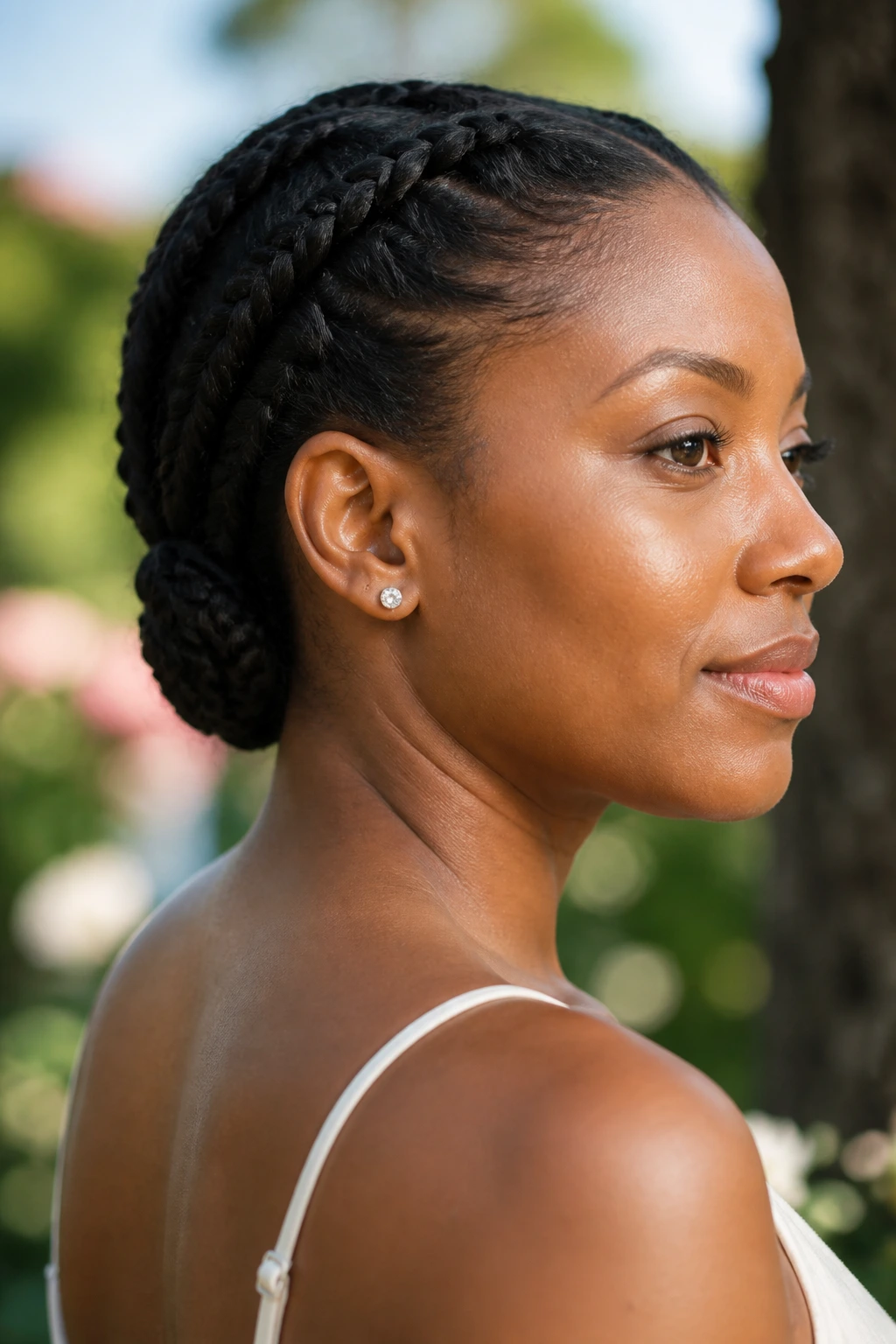
They move the hair off your neck fast. That sounds obvious, but the comfort difference between a loose style and a braid that sits cleanly at the nape is huge once the temperature climbs.
They hide grow-out better than many slick styles. French braid extensions start at the scalp and feed in as they go, so a little new growth doesn’t make the whole style look tired after a few days.
They can be lighter than they look. Medium feed-ins with pre-stretched braiding hair usually feel much easier to wear than bulky installs loaded with extra hair at the root.
They work with sweat instead of fighting it. A braid that’s compact at the scalp and controlled at the ends is easier to refresh than a style that frizzes loose in every direction.
They can go from errands to evening without a reset. A clean braid, one good edge brush pass, and maybe a cuff or two are enough. That’s the kind of low-maintenance that actually earns its keep.
1. Center-Part Feed-In French Braids
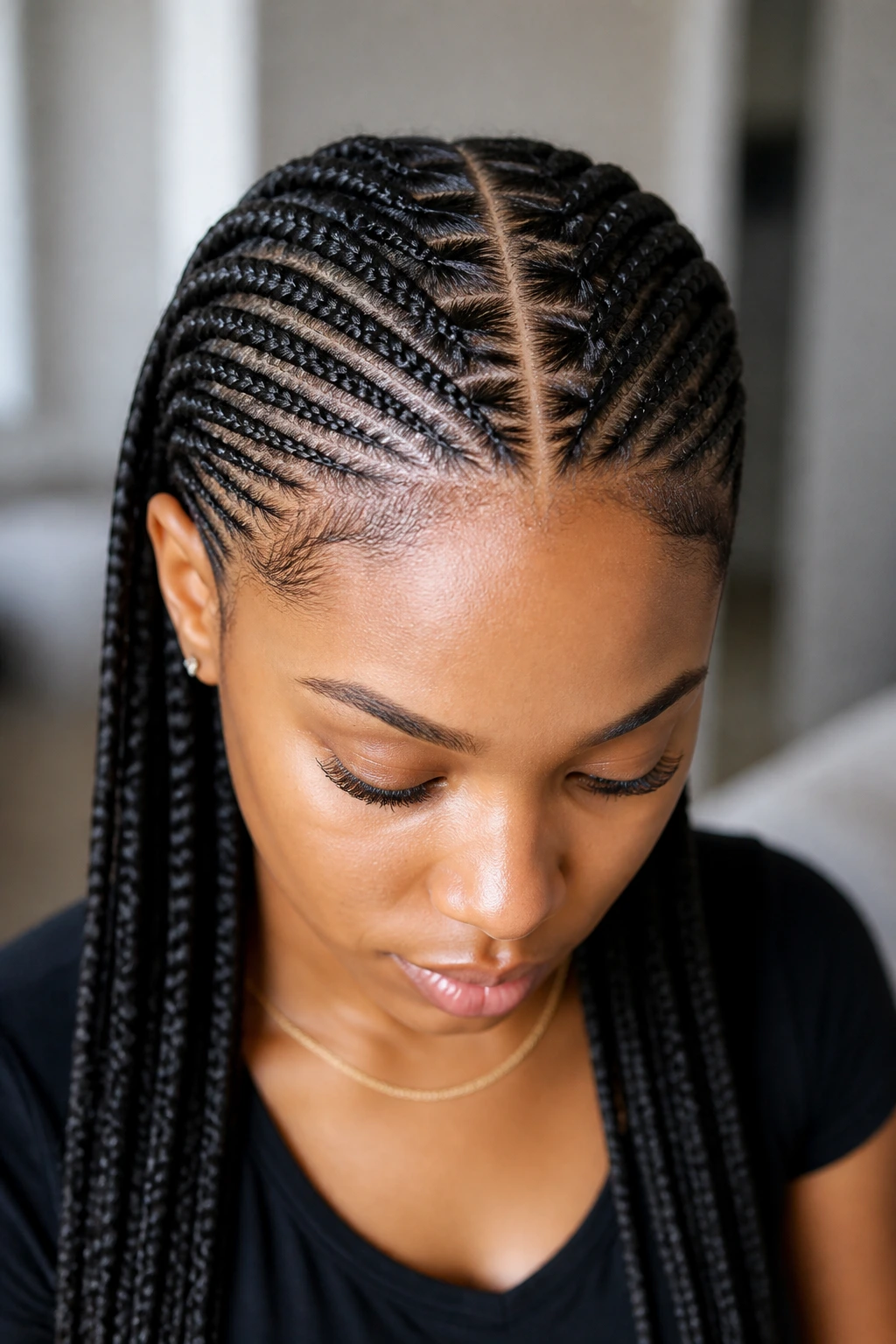
A center-part feed-in braid is the cleanest version of this whole idea. It looks calm, balanced, and a little severe in the best way, like it knows exactly where it’s going. When the part is straight and the feed-ins are thin at the front, the braid sits flat instead of puffing out around the temples.
I like this version when I want the style to read neat on day one and still hold its shape on day five. Ask for 2 to 3 packs of pre-stretched 1B braiding hair, a part that begins about an inch behind the hairline, and a gradual feed so the root doesn’t feel bulky. It’s a simple look, but not a boring one. There’s a reason it keeps showing up in hot weather.
2. Deep Side-Sweep French Braid
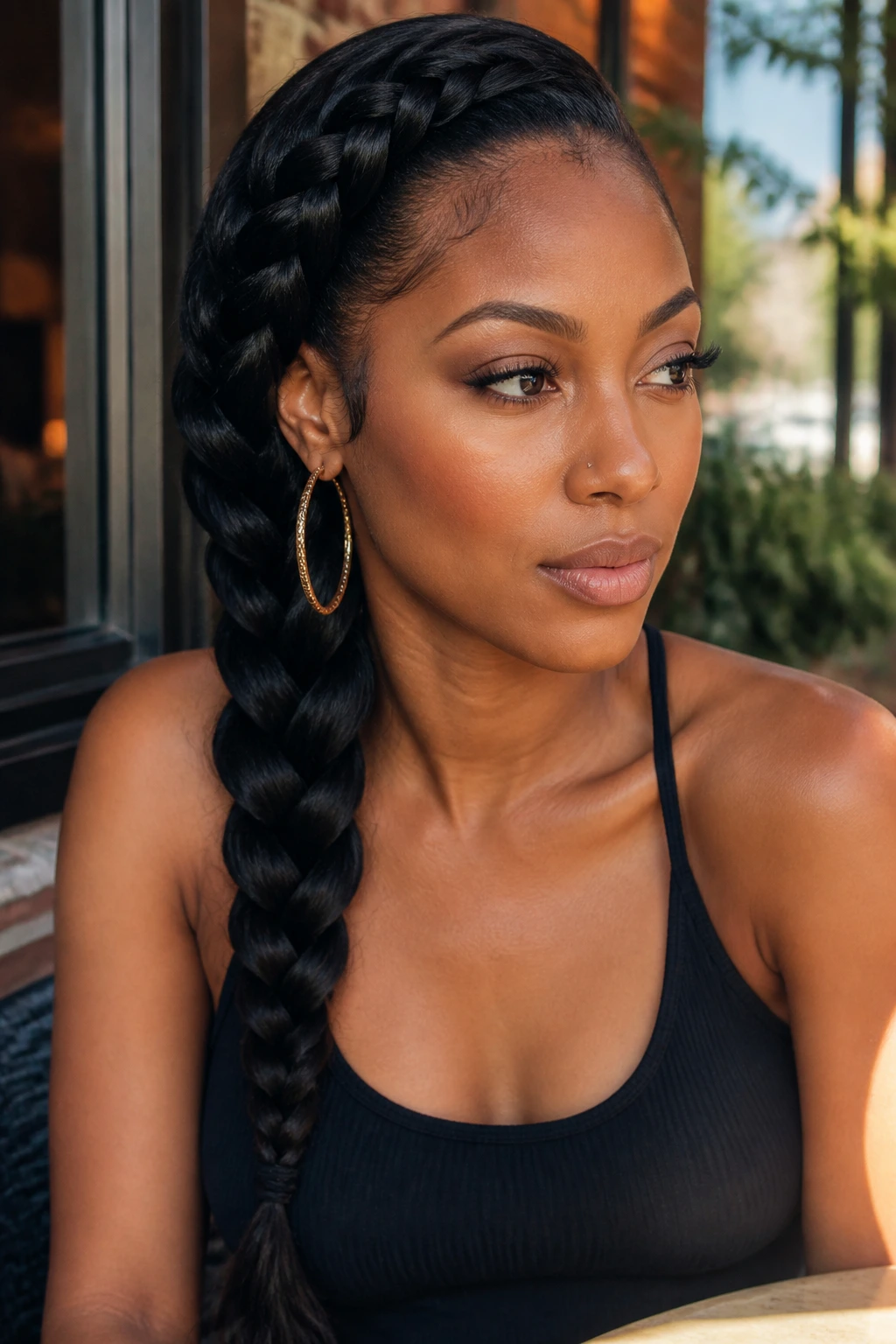
Want the braid to feel a little softer and a little more dramatic? Push the part to one side and let the braid sweep over one shoulder. The diagonal line changes the whole face shape. It can make a wide forehead look narrower, and it stops the style from feeling too symmetrical.
Ask for This Shape
- Part: A deep side part that lands above the eyebrow, not at the crown.
- Length: Mid-back is the sweet spot; anything longer starts to swing into your arm.
- Finish: A single cuff or wrapped end looks better here than a pile of accessories.
This one is especially good if you wear earrings or glasses. The line of the braid gives the rest of your face room to breathe. It’s polished, but it doesn’t feel stiff.
3. Jumbo Twin French Braids
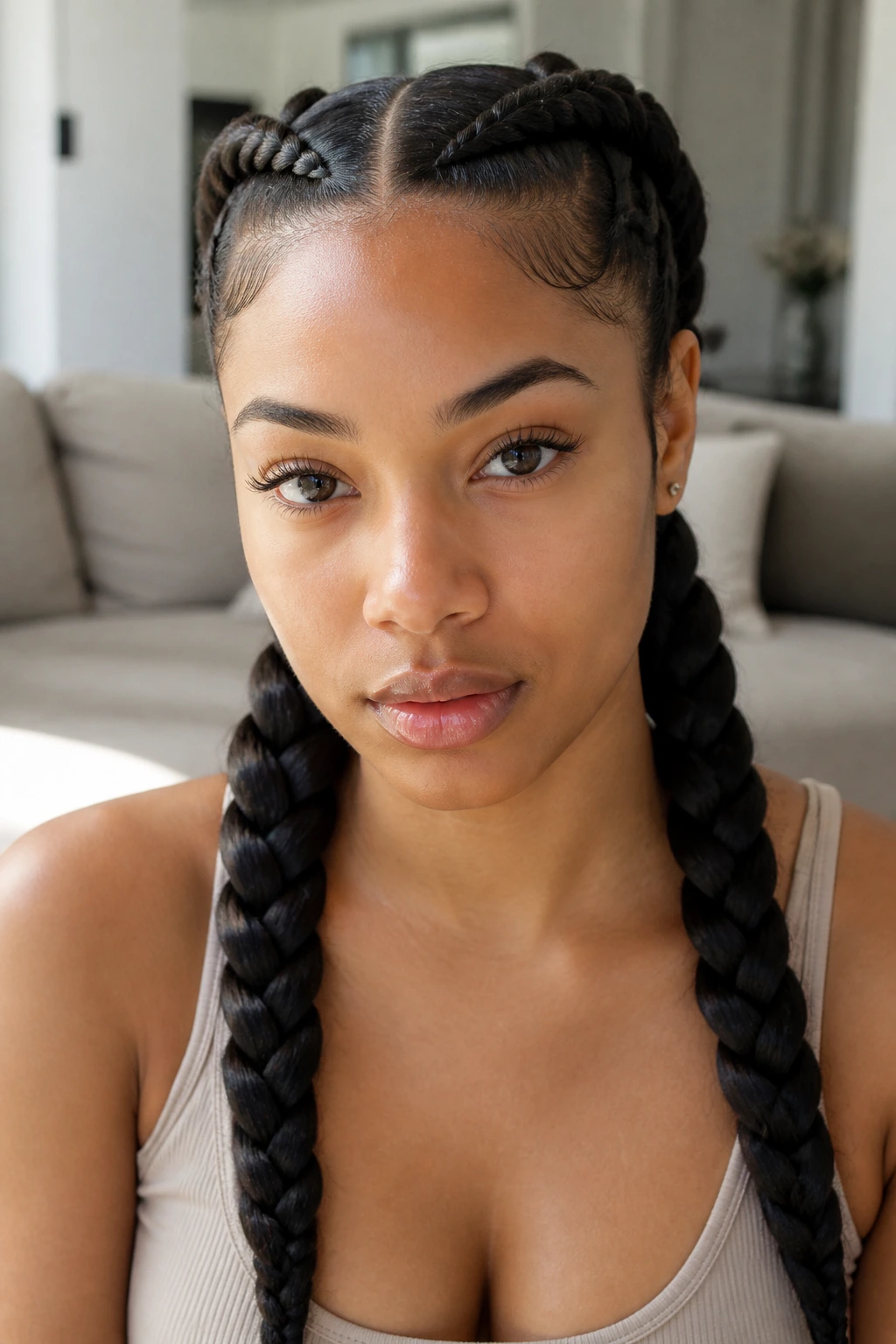
Two jumbo braids are blunt, practical, and kind of excellent. They’re faster to install than a tighter rowed style, and they leave more air around the scalp because the sections are larger. That can make a real difference when the weather is sticky and you’d rather not feel every strand.
They do come with weight. Don’t let a braider overpack the roots just because the ends need fullness. Four to five packs of braiding hair is usually plenty for a full, thick look. If the braid starts feeling brick-heavy before it reaches your shoulders, it’s too much. Simple as that. I’d choose this style for travel days, long errands, or any time I know I’m going to be in and out of heat all day.
4. Halo Crown French Braid
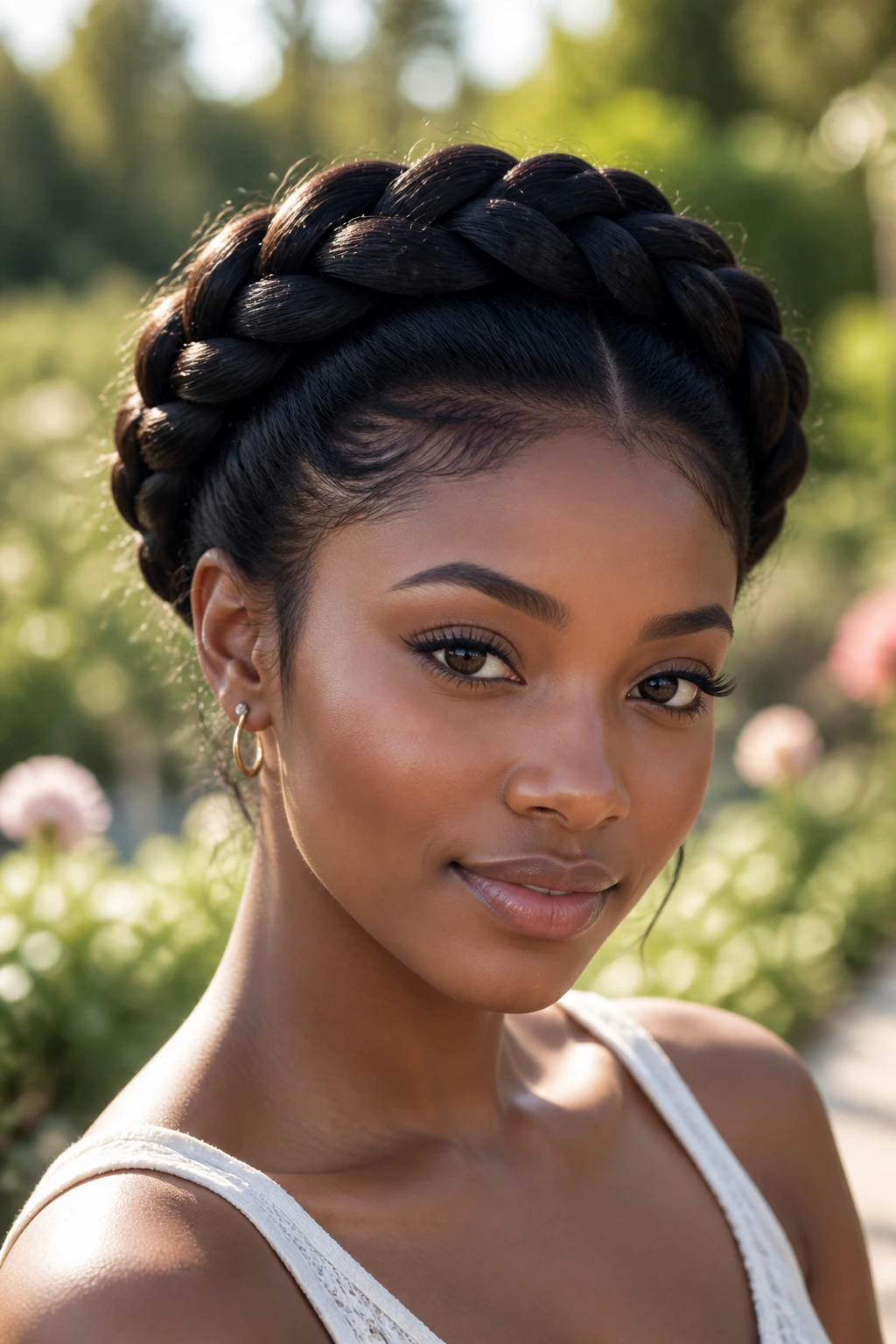
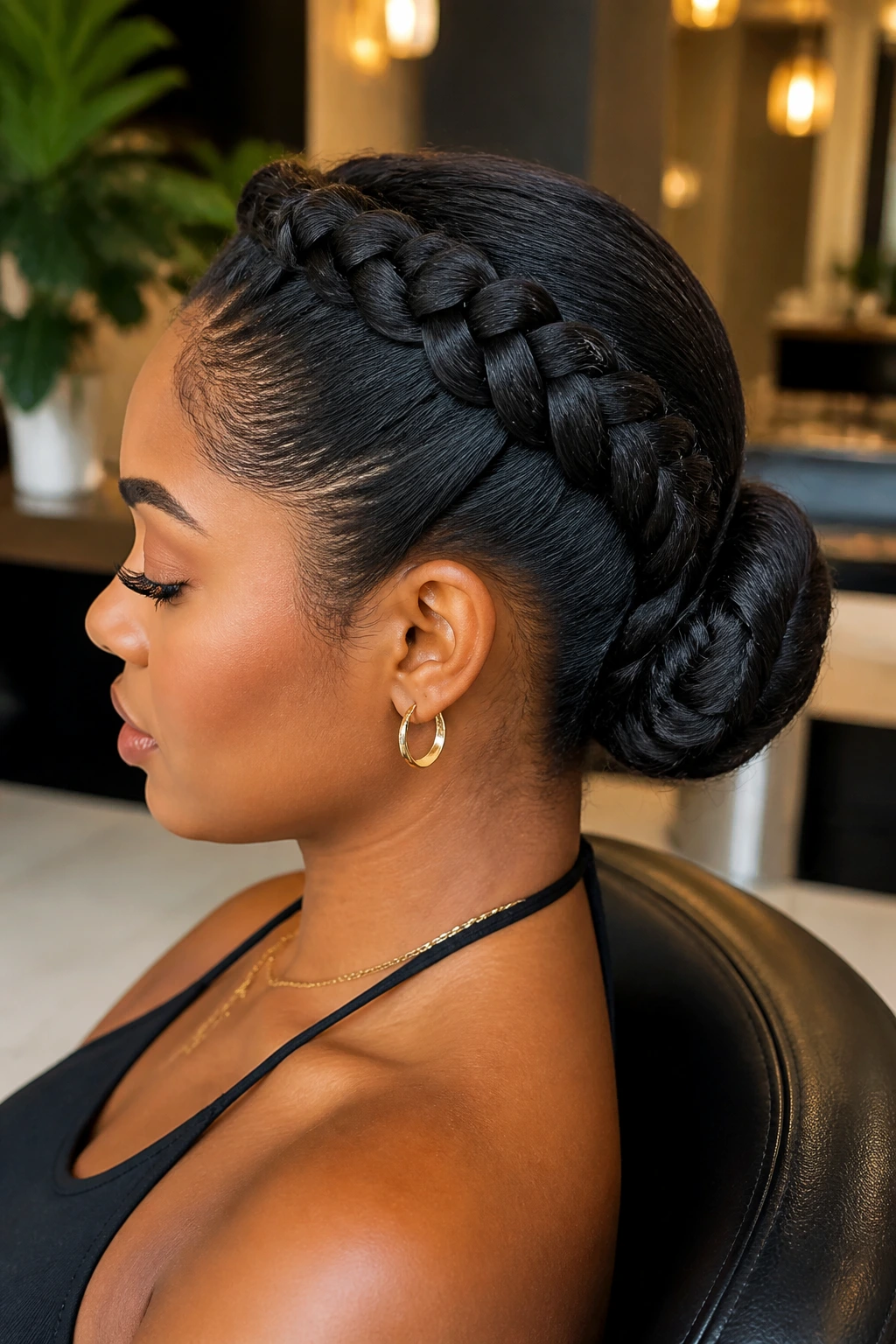
A halo braid does one thing very well: it gets every strand off the neck. The braid wraps around the perimeter of the head, which makes it feel almost cool to wear when the air is heavy. It also has a way of making a plain T-shirt look intentional.
The trick is keeping the braid narrow enough at the temples so it doesn’t pull. Tuck the tail under the crown and pin it flat with U-pins or hairpins, not a dozen bobby pins poked in random directions. Two packs of pre-stretched hair is usually enough unless you want a very thick crown. This is one of those styles that looks better the more it settles into place.
5. High French Braid Ponytail with Curly Ends
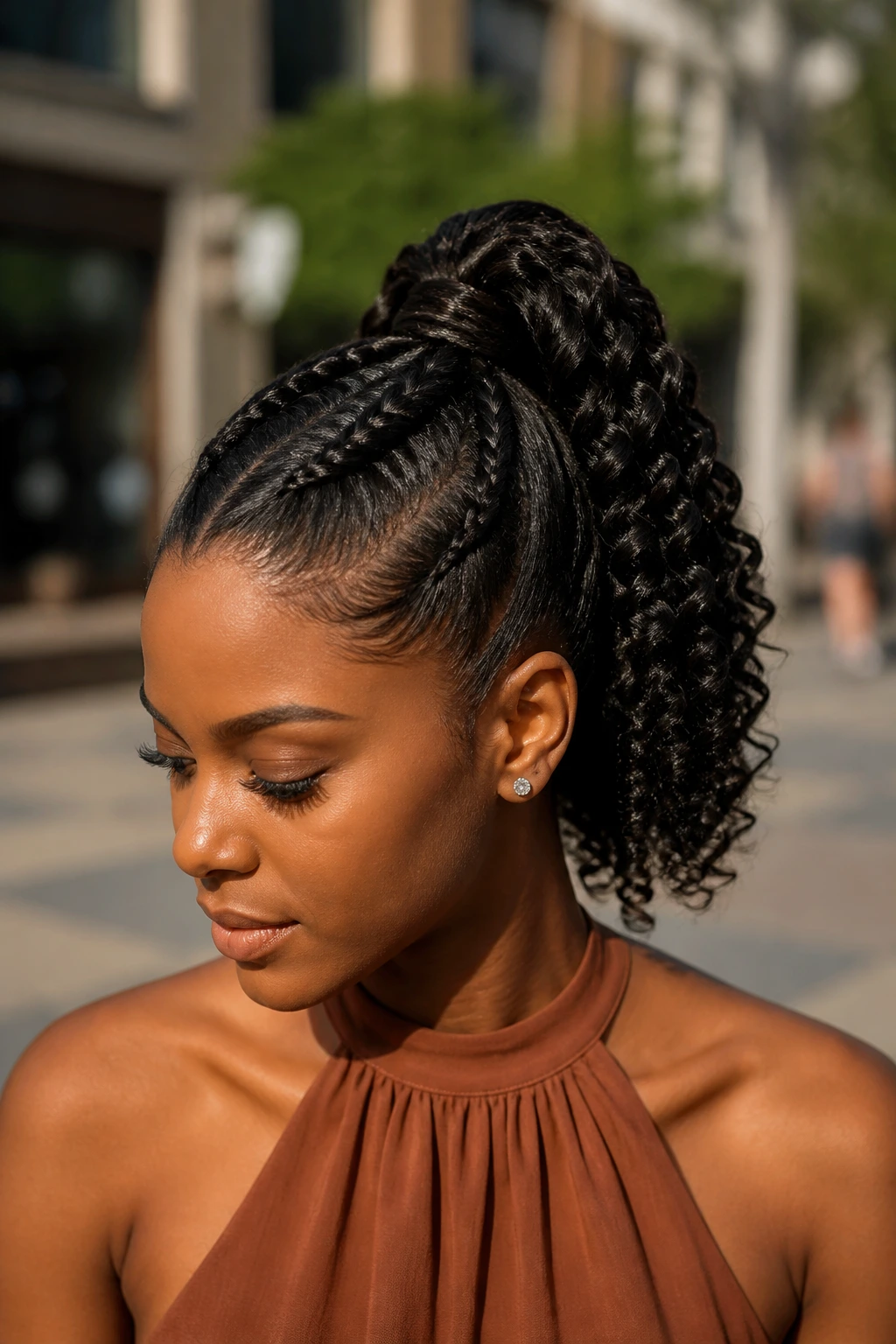
A high ponytail braid has a different energy. It lifts everything up, clears the shoulders, and gives you that little snap at the crown that feels good in warm weather. If you add curly ends—human hair or heat-safe pre-curled extensions—it softens the finish so the style doesn’t end in a blunt, stiff line.
Ask for the ponytail base to sit about 1 to 2 inches above the occipital bone, not pushed all the way to the crown if your scalp gets tender. That small adjustment keeps the pony from dragging on the roots all day. It’s a good choice for events too, because it reads dressier than a low braid without asking for much extra work.
6. Zig-Zag Part Feed-In French Braids
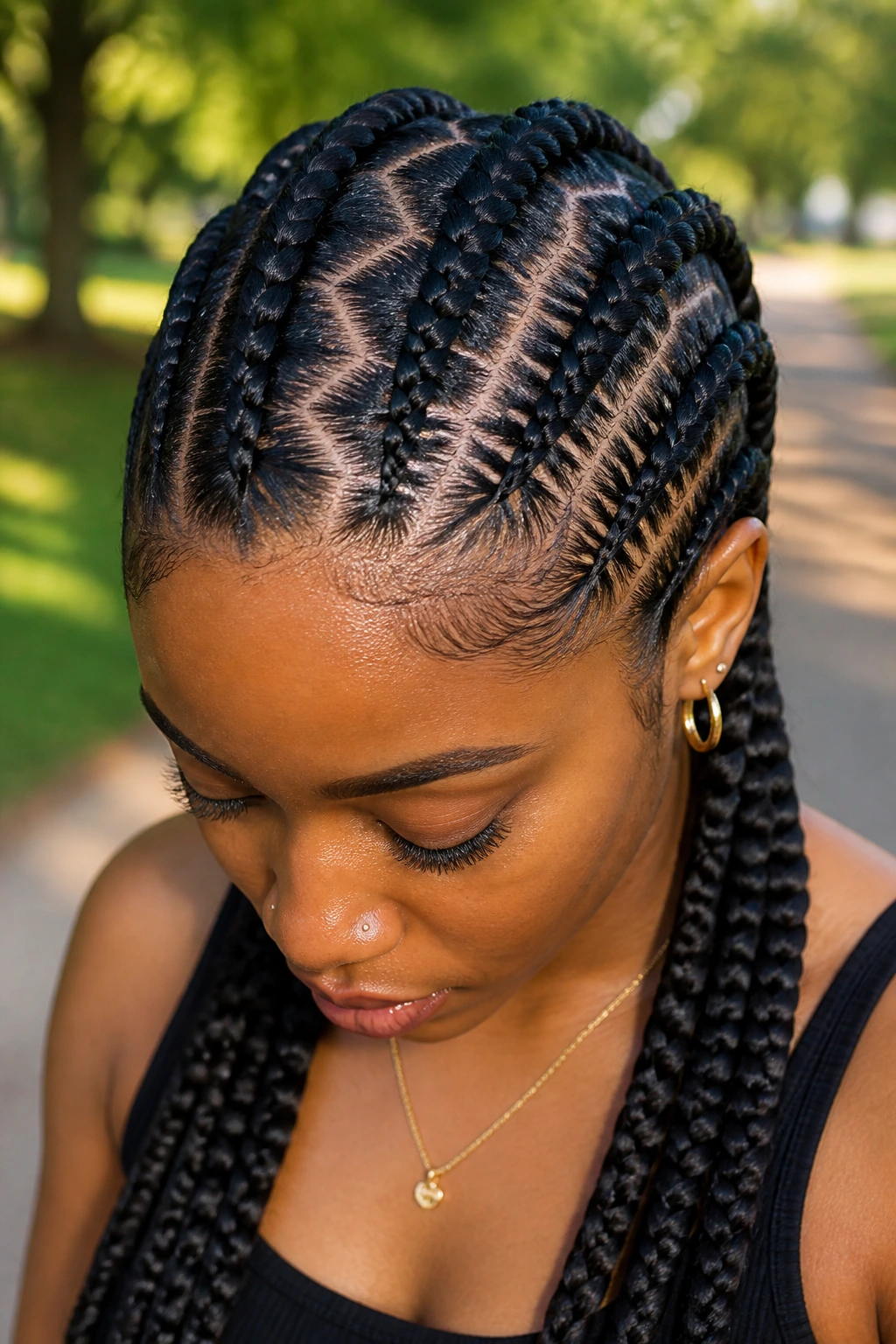
Straight parts are clean. Zig-zag parts are fun. That’s the whole pitch, and it’s a good one. The zig-zag detail gives the braid a little personality before the braid even starts, which is useful if you’re tired of styles that look too plain from the front.
What to Tell Your Braider
- Part first, braid second: The pattern needs to be mapped out before any extension hair goes in.
- Keep the zig-zag tight and deliberate: Wide, lazy turns look accidental.
- Use medium-sized sections: The parting is the feature; the braid itself should stay simple.
This style works best on a precise hand. If the pattern is crisp, it looks expensive without trying. If it’s crooked, the whole thing shows it. No hiding.
7. Half-Up French Braid with Loose Length
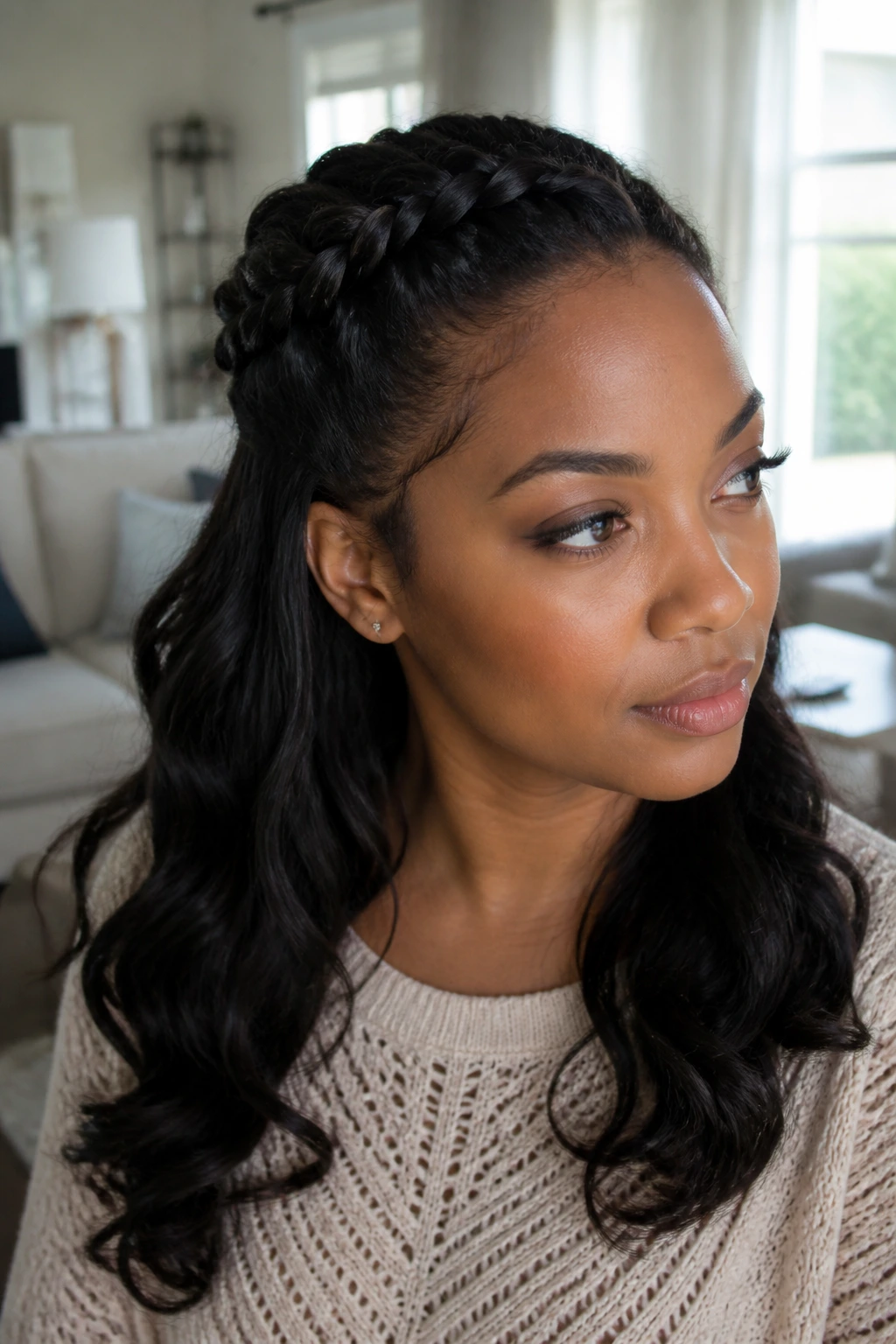
Half-up braids are for the days when you want control without giving up movement. The front stays off your face, the back still swings a little, and the whole style feels less locked-in than a full install. That makes it a nice bridge style if you like braided hair but don’t want every inch tucked away.
Keep the braided section small enough that it anchors the front, then leave the lower hair free or lightly waved. You can do this with 2 to 3 packs if you want a medium finish. I especially like it when the ends are curled or layered, because the contrast between the tidy top and loose bottom keeps the style from reading too severe.
8. Low French Braid Bun
Low buns have no patience for heat. They put the weight close to the neck, which sounds wrong until you realize that a compact bun often feels better than long braid lengths brushing your shoulders all day. It’s one of the easiest styles to wear with a collar, tank top, or open-back dress.
The key is not overstuffing the bun. Braid down to the nape, wrap the length around itself, and pin it with 4 to 6 sturdy pins—not one desperate pin that gives up by lunch. If you’re using extension hair, ask for a slimmer braid body so the bun can sit flat. A fat bun looks dramatic in the chair and annoying everywhere else.
9. Slim Feed-In French Braid Rows
Slim rows are the answer when your scalp wants less weight and more breathing room. Instead of a few big braids, you get several narrow feed-ins that lie close to the head. The style can look delicate from a distance, but up close it has a lot of structure.
Why the Thin Rows Work
- Less root pressure: Smaller sections distribute the tension better.
- Better scalp access: It’s easier to refresh partings and clean the scalp.
- Faster dry time: Smaller braids tend to dry quicker after a wash or swim.
This is the version I’d choose for tender edges or a fresh install before a trip. It isn’t the loudest style in the room. That’s the point.
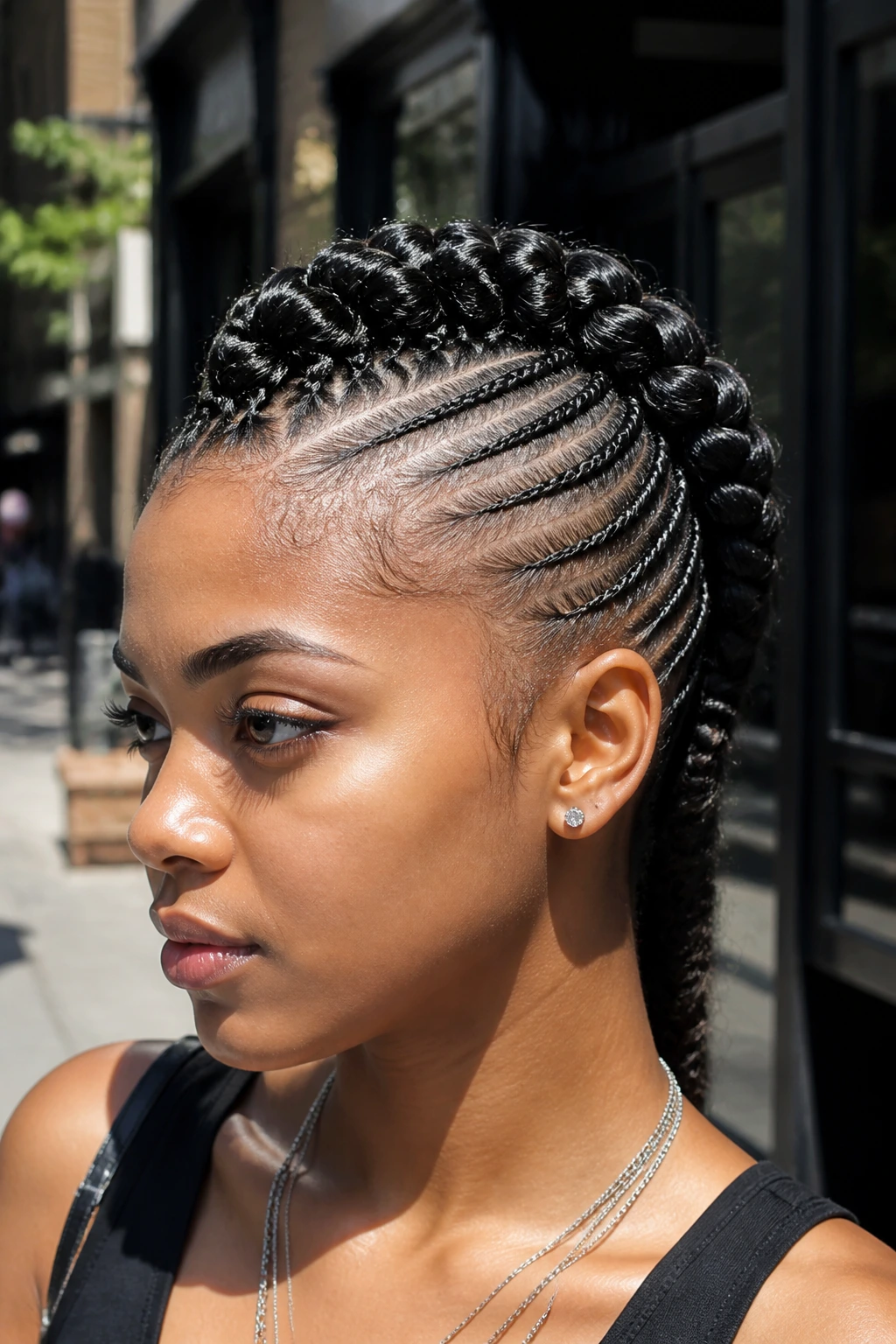
10. French Braid Mohawk
A French braid mohawk is what happens when you want the center of the head to do the talking. The sides stay tight, the middle braid rises a little higher, and the whole style gets a sporty edge that feels sharp without needing bright color or extra length.
This style really benefits from a clean line down the center and a firm braid at the crown. It’s not the best choice if you want a soft, sleepy look. It is the right choice if you want something that can take a workout, a windy walk, or a day that starts formal and ends casual. The shape stays interesting even when the weather isn’t cooperating.
11. Stitch-Braid French Ponytail
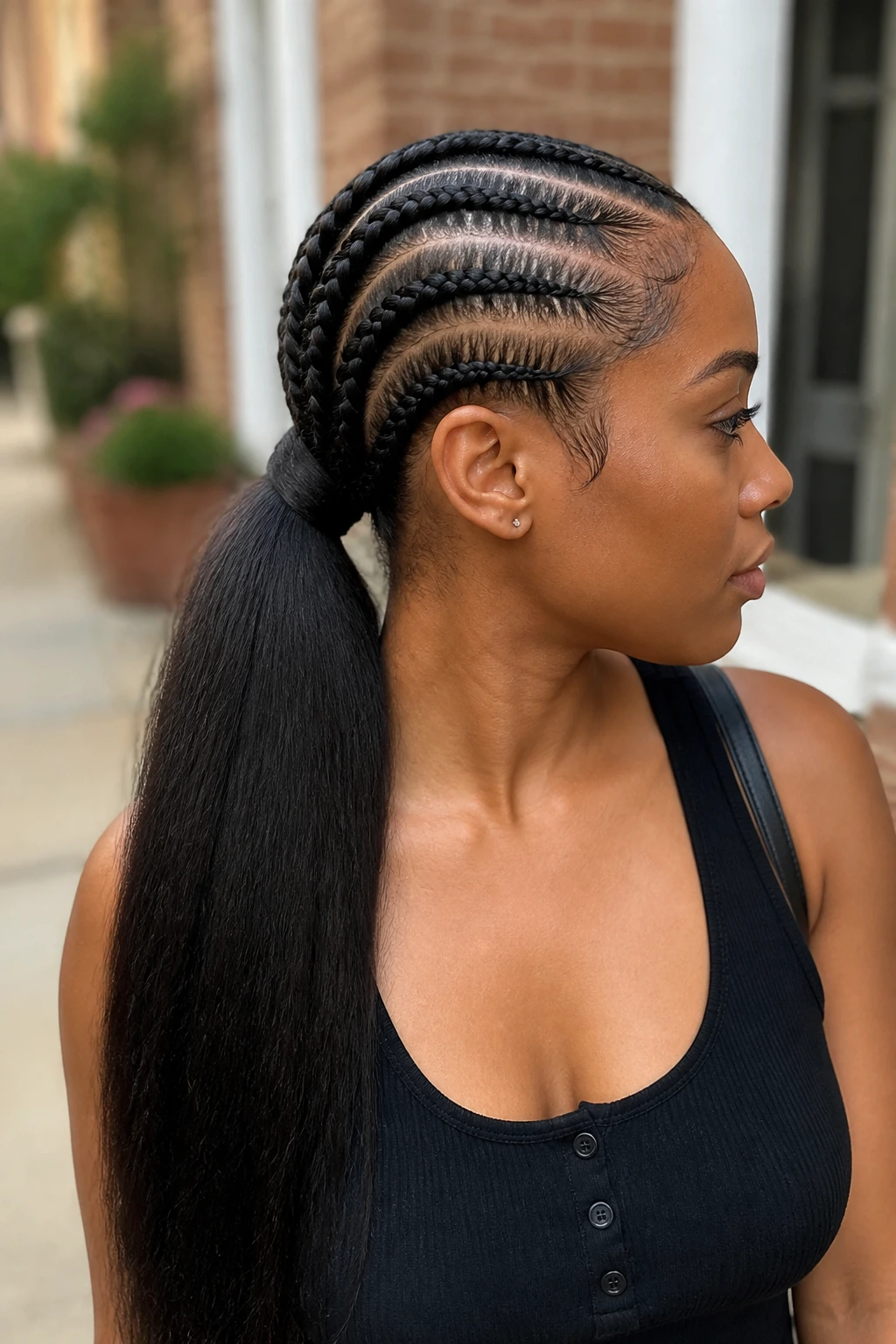
Stitch braids are all about the line. They give you that exact, almost carved look at the base, then move into a ponytail that can be sleek, curled, or left straight depending on the finish you want. The style feels crisp from the first glance.
What Makes It Different
A stitch pattern keeps the rows visibly neat, even when the rest of the braid is simple. That matters if you like a style that looks clean in photos without drowning the head in accessories.
A good stitch braid ponytail should sit flat at the scalp, not rise in ridges. If the base feels bumpy or bulky, the hair was fed in too fast. Slow feed-ins make the difference here. I’d keep this one accessory-light and let the parting do the work.
12. Heart-Part French Braids
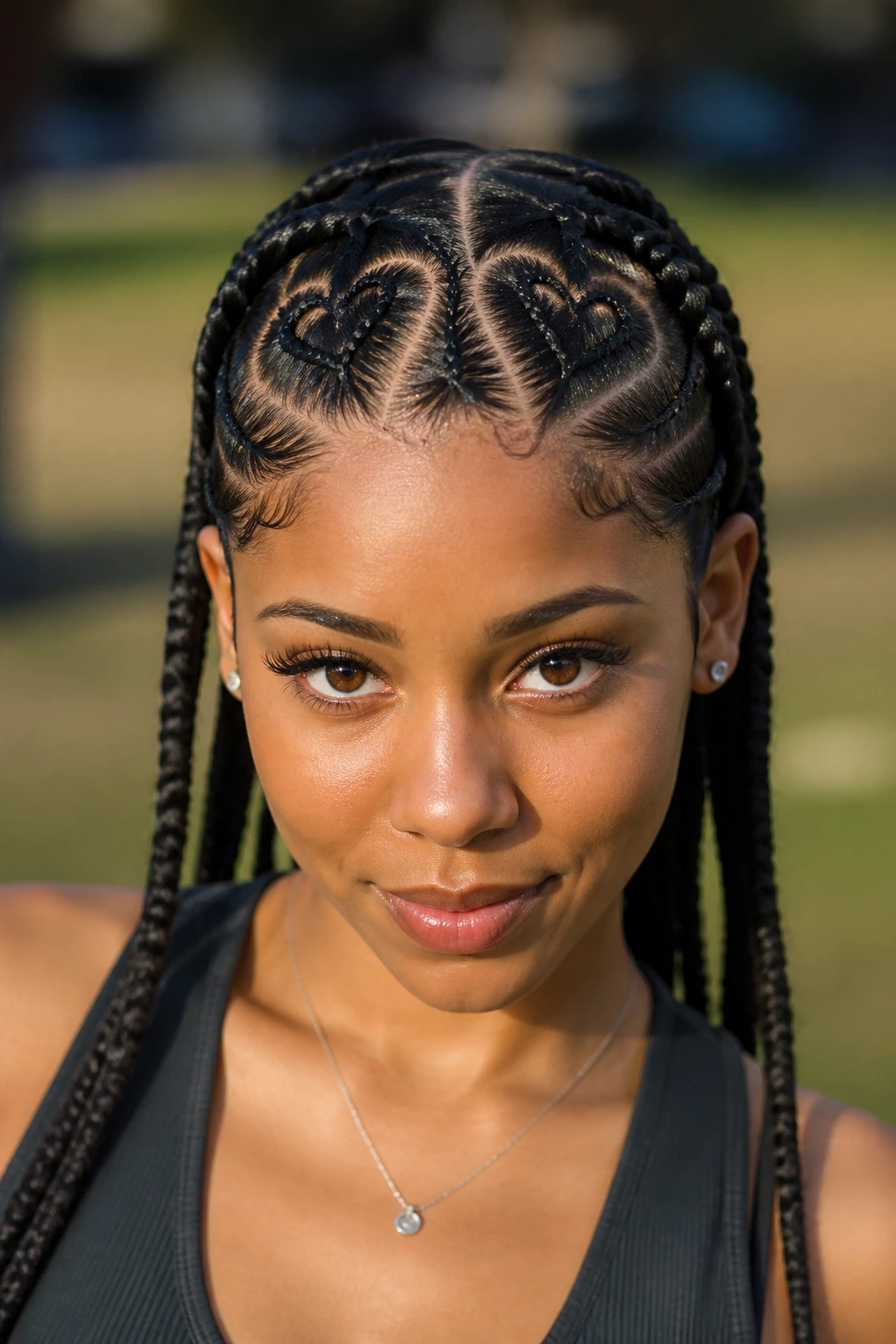
Heart parts are tiny, and people notice them instantly. That’s what makes them fun. The braid itself can be straightforward, even basic, but the parting detail turns the style into something playful enough for weekends, dates, or any day you want the hair to feel a little less serious.
Don’t overload the look with too many extras. One heart part on each side or one centered heart near the front is enough. If the braids are also long and thick, the parts can get lost under all that hair. Keep the sections crisp and let the pattern breathe. It’s one of those styles that looks best when the design is visible from a few feet away, not only up close.
13. One-Shoulder French Braid Statement
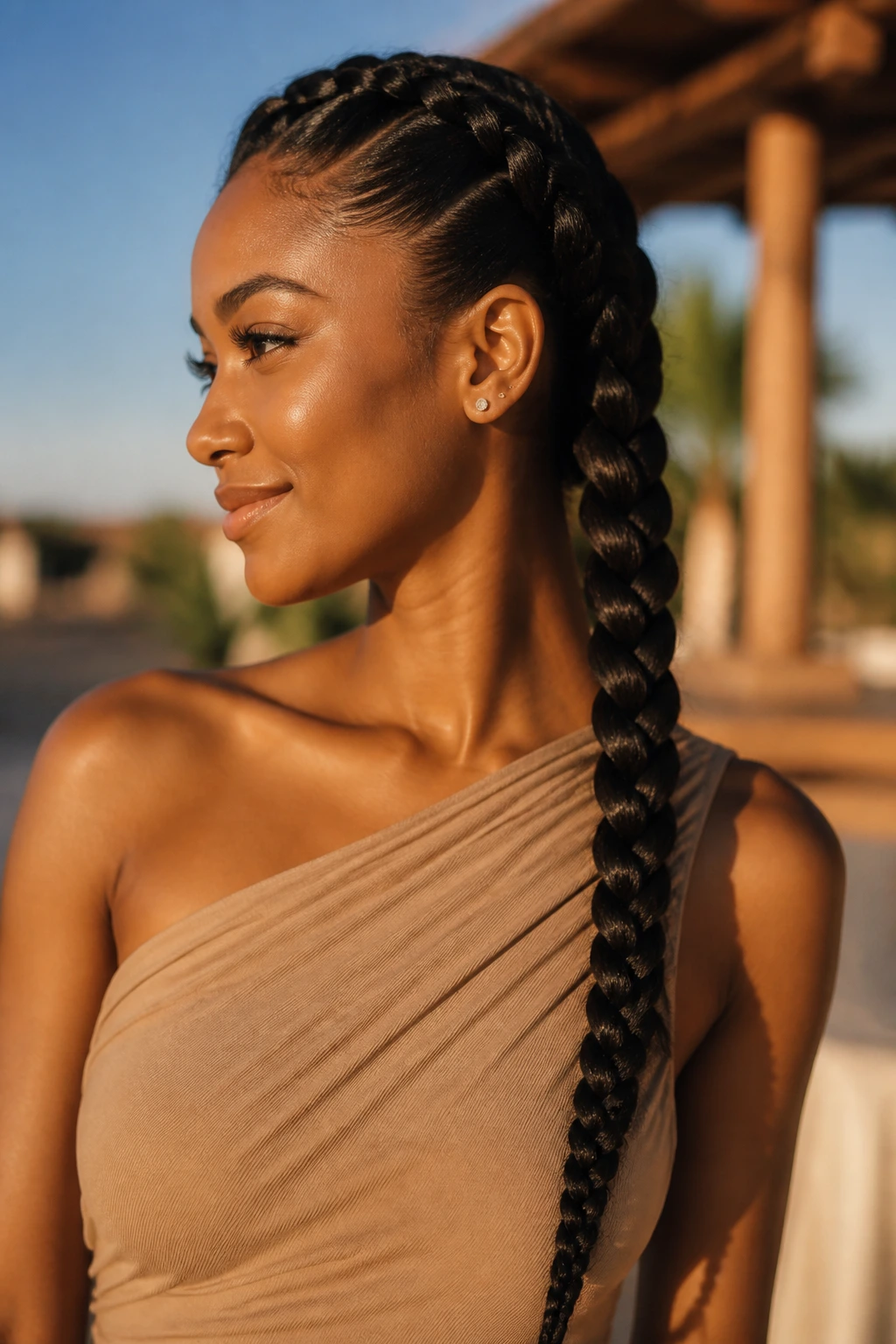
One thick braid draped over one shoulder is the closest thing braids have to a statement necklace. It’s easy to wear, easy to adjust, and easy to make look intentional. The shape also keeps one side of the neck completely free, which is a small mercy in warm weather.
I’d ask for the braid to start low and clean, then build enough length so it lands at the collarbone or lower. Too short and it looks unfinished. Too long and it starts catching on bags and car seats. Somewhere in the middle is right. There’s a nice bit of drama in this style without the daily maintenance of a fuller install.
14. Box-Part French Braid Pigtails
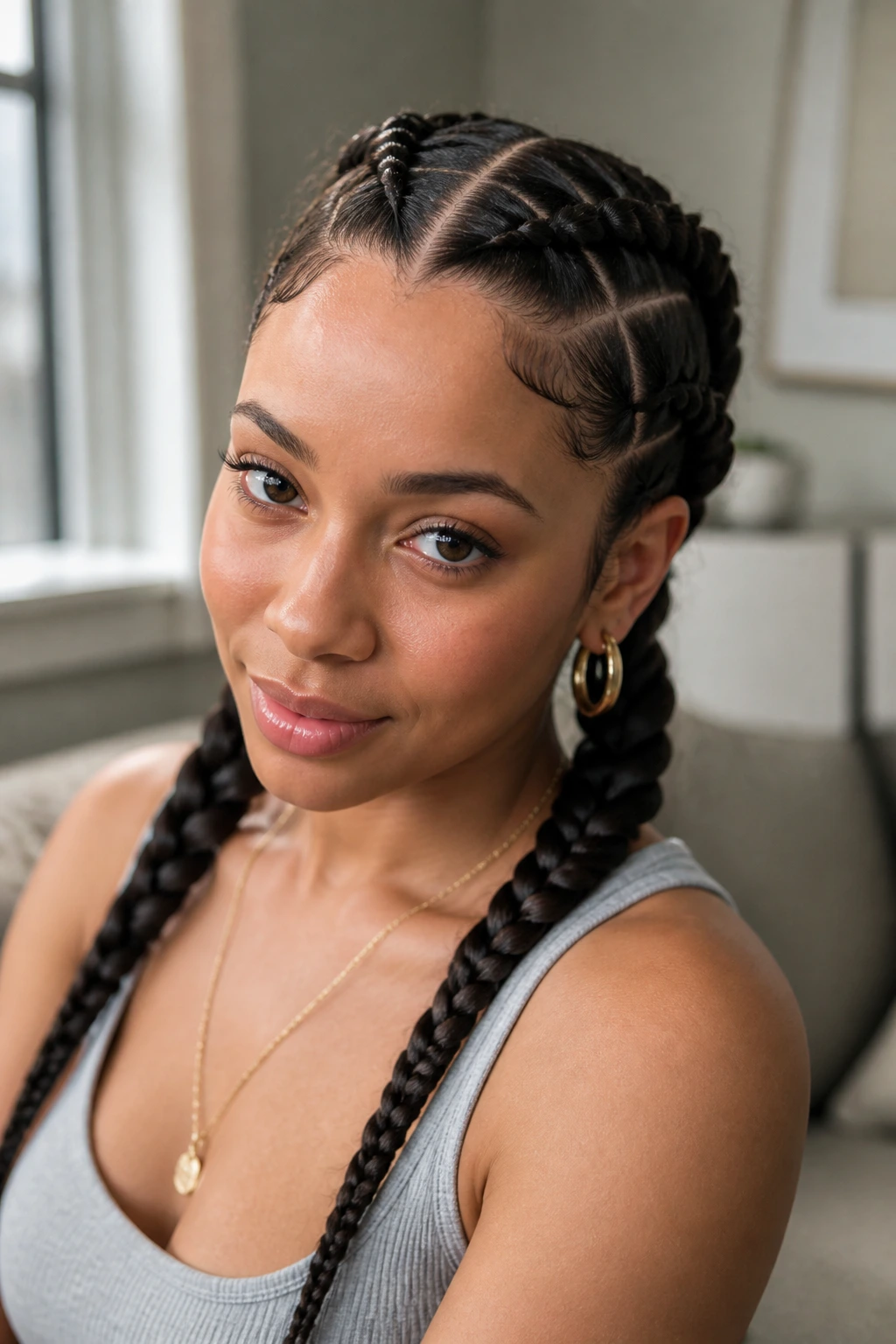
Box parts give the whole head a tidier rhythm. They also make grow-out look less messy, because the sections stay visually organized as the style softens over time. Pair that with pigtail French braids and you get something playful that still reads neat.
Why the Parting Matters
The square sections keep the roots looking deliberate even after a few nights of sleep.
The braid itself can stay medium-sized so the parting remains the visual anchor. If you go too big on the braid, the box pattern disappears. That’s a waste. This style is good when you want a little edge without committing to a loud finish.
15. French Braid Space Buns
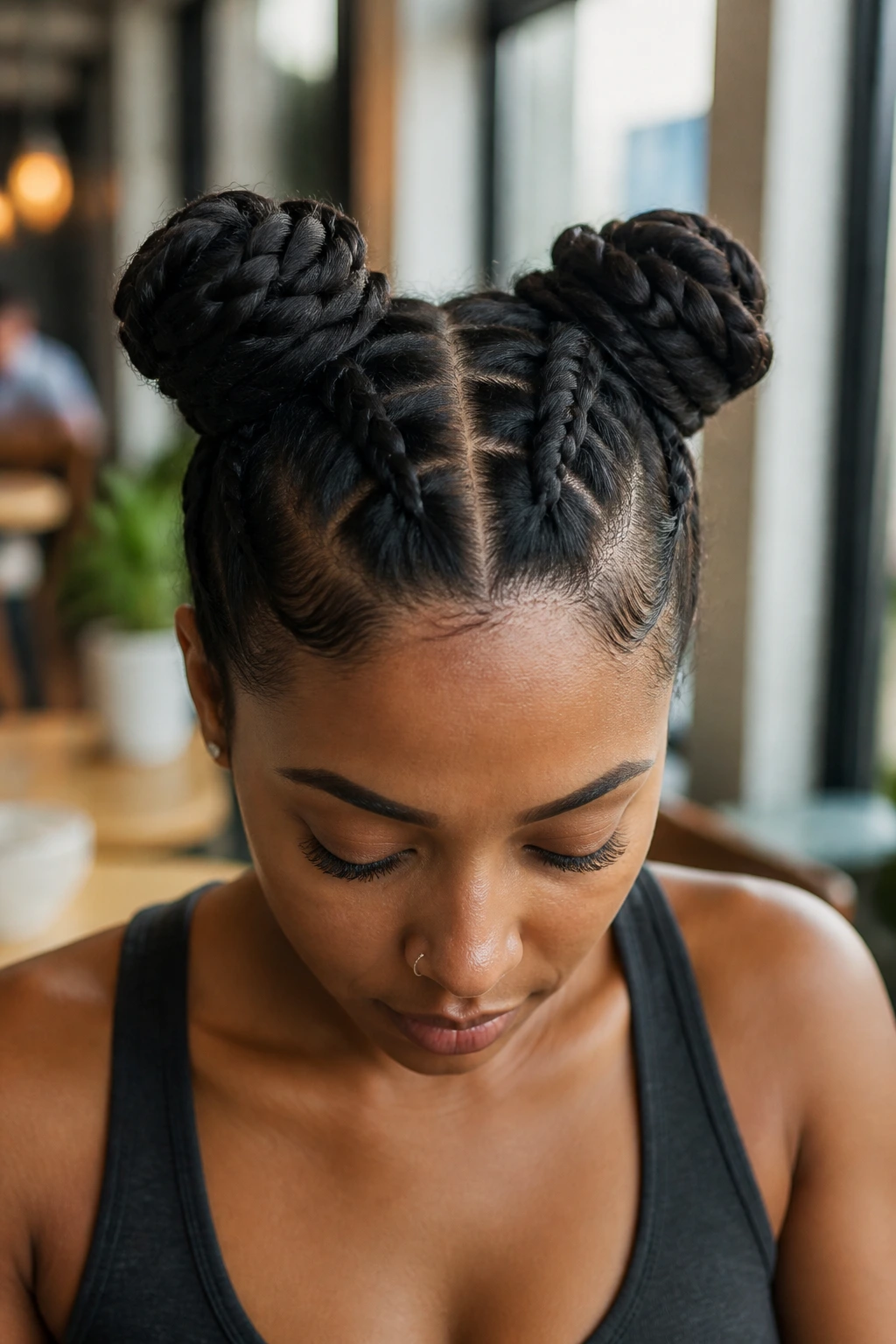
Space buns are one of those rare styles that feel fun and practical at the same time. Braiding the base first gives the buns a stronger hold, and it keeps loose strands from getting frizzy at the roots by day two. The neck stays clear, too, which is half the reason to wear anything in the summer.
I like this look best with medium-length extensions, not absurdly long ones. If the lengths are too heavy, the buns get lopsided and start pulling backward. Keep the buns compact, pin them well, and stop before you build a giant top-heavy shape. Cute is good. Teetering is not.
16. Beaded French Braids
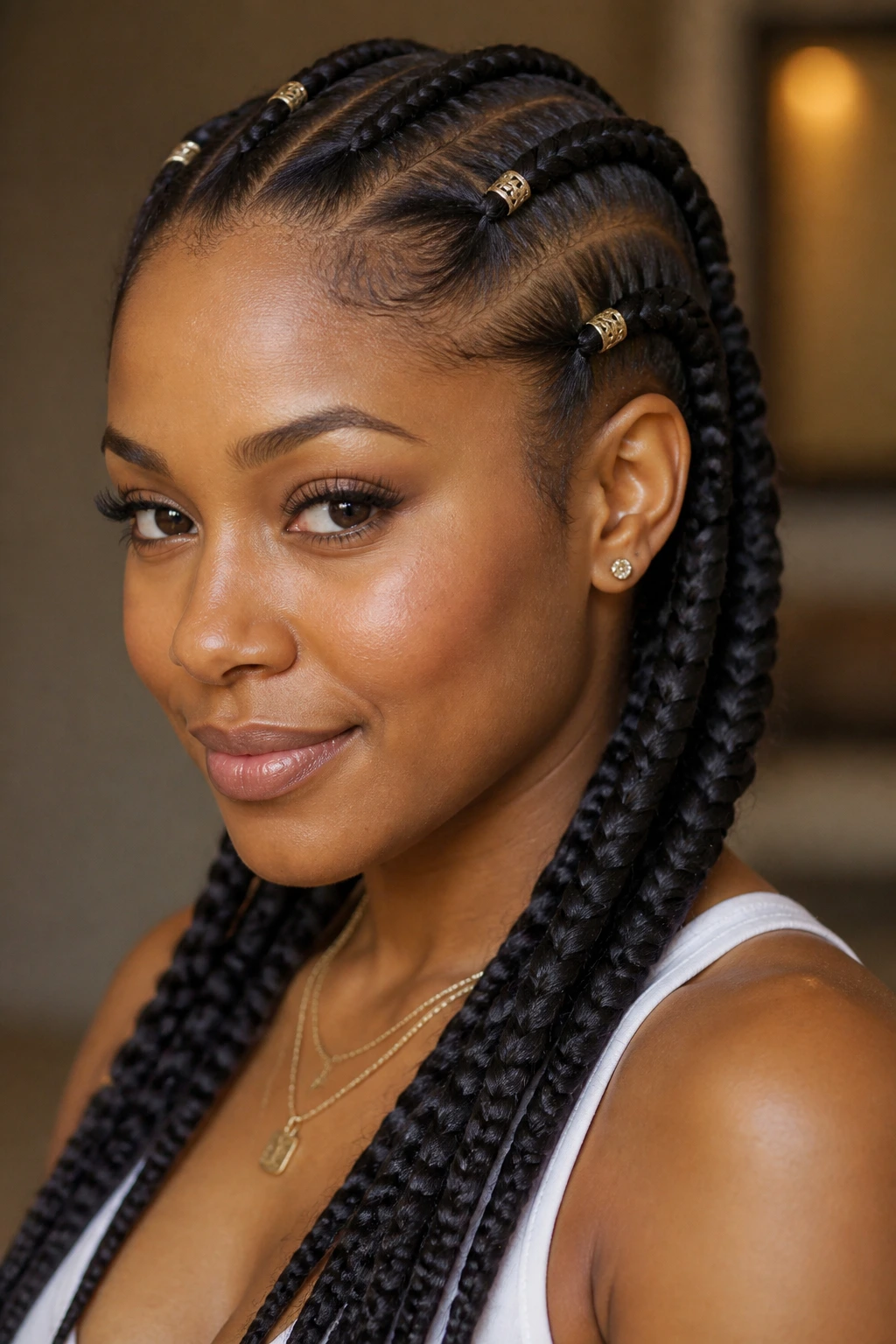
Beads can make a braid sing. They can also turn it into a rattly mess if you overdo it. The difference is restraint. A few beads near the ends, maybe a cuff at one or two junctions, and the style gets interest without extra pull.
Use lightweight beads, especially if the braid itself is long. Heavy glass or metal pieces tug more than people expect, and that tug adds up by the end of the day. This is a style for someone who wants the hair to move a little and make a little sound, but not feel decorated from root to tip. One strong accent is enough.
17. Curved Back-Sweep French Braids
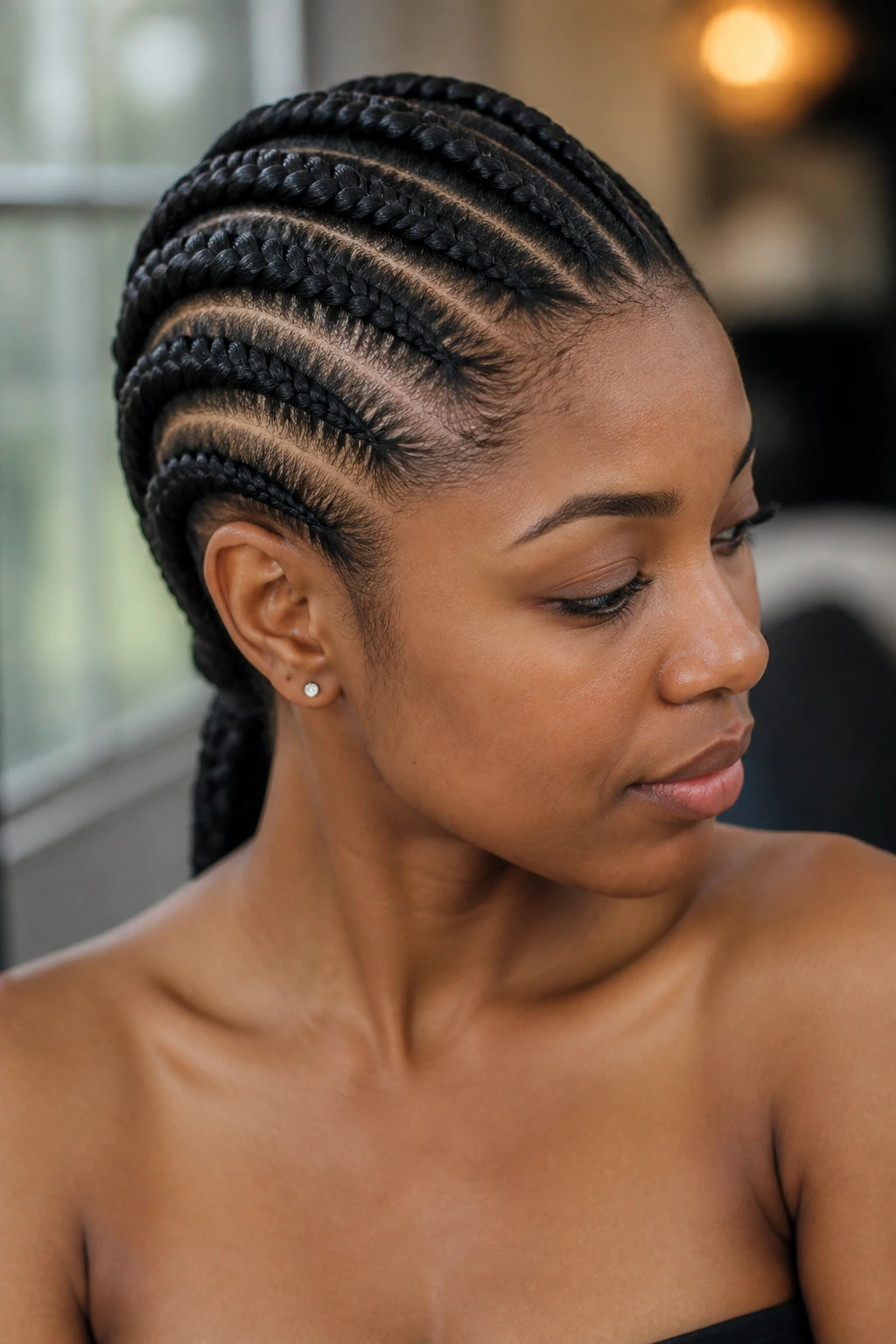
Curved rows soften the shape of the head in a way straight-back braids don’t. They move with the line of the skull instead of against it, which gives the style a smoother finish and keeps it from feeling too rigid. It’s subtle, but you notice it when the braids start to swing.
This is a good choice if your face shape or profile feels better with softer angles. It also pairs nicely with medium hoops or a bare neckline. The braid feels less formal than a center part and less playful than pigtails. That middle ground is useful. Not every style needs to announce itself from across the room.
18. Knotless French Braid Ponytail
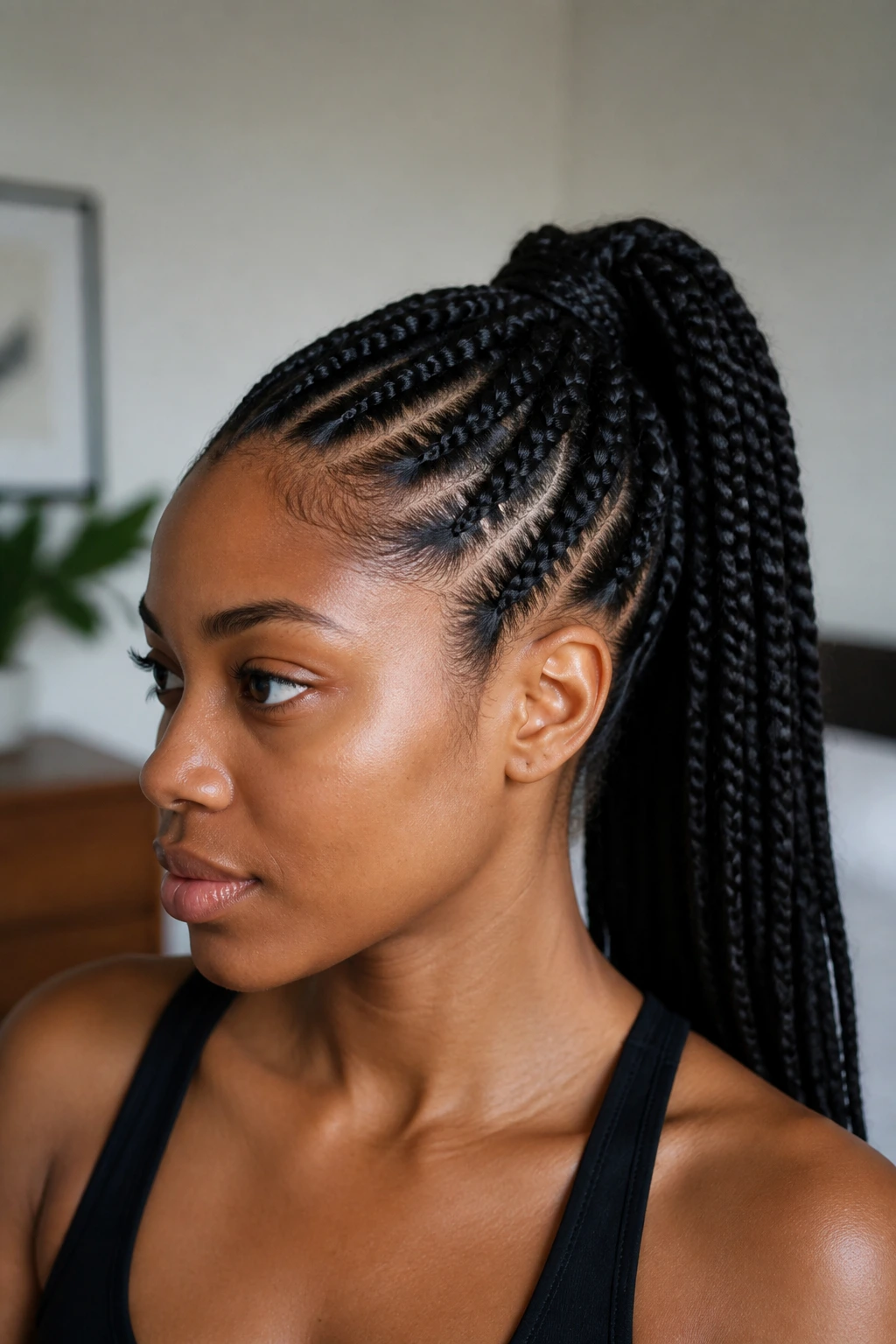
Knotless at the base means the extension hair gets fed in gradually over the first couple of inches instead of being anchored in one hard bump. Your edges will thank you. So will your scalp, especially if you’re sensitive around the hairline or tend to get headaches from tight installs.
Why Knotless Helps
- Less pressure at the start: The braid lies flatter and feels softer.
- Cleaner grow-out: The front doesn’t look abruptly dense.
- Better for longer wear: Less root tension usually means less irritation over time.
If you want a ponytail braid but hate the heavy feel of a thick base, this is the version to ask for. It’s not the flashiest choice. It’s the one that lets you keep the style longer without hating your own head.
19. Spiral-End Twin French Braids
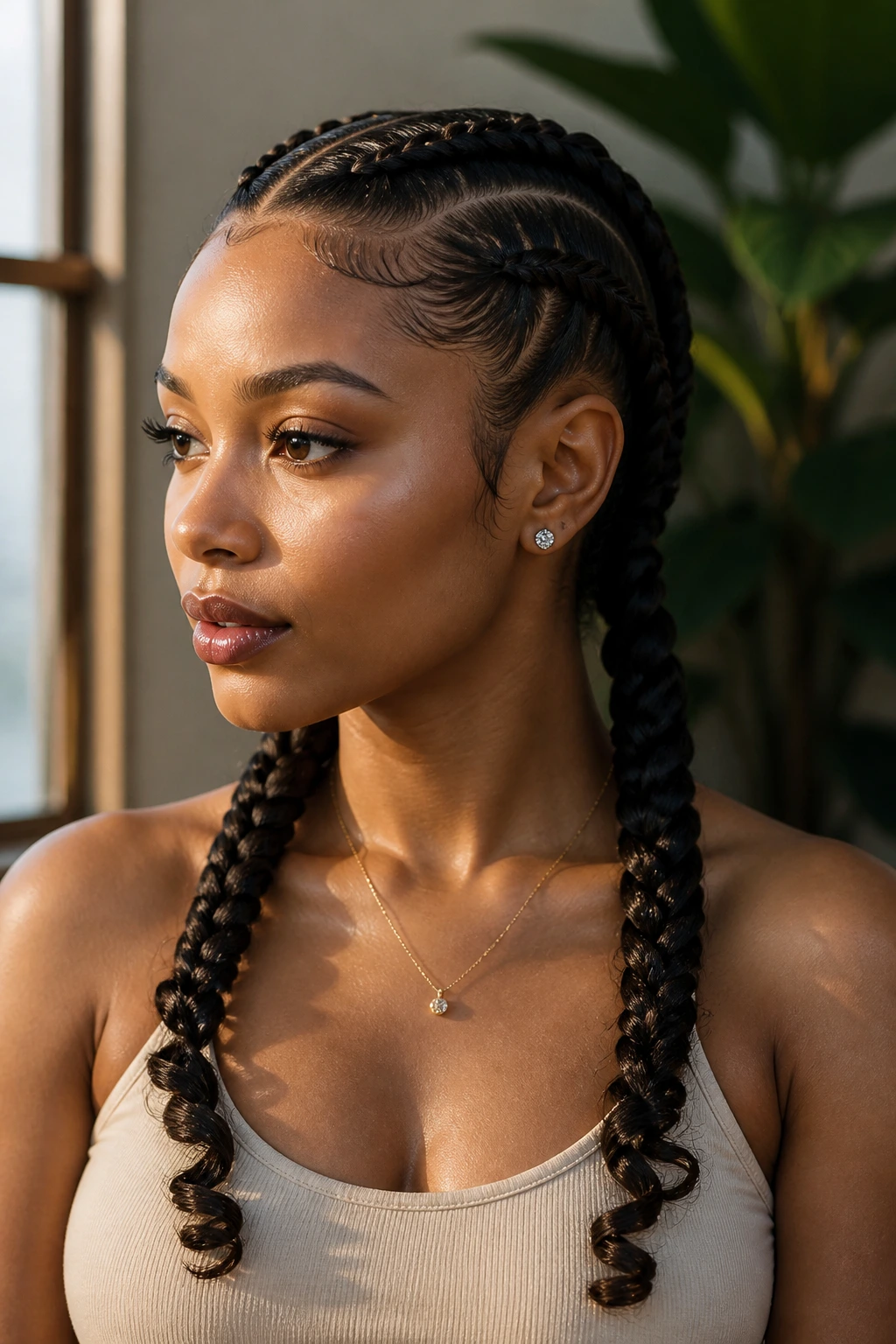
Curled ends change the whole mood of black braiding hair. Straight lengths can read structured and tidy. Spiral ends add motion, so the braids feel softer when they hit the shoulders or back. That little curl at the bottom catches air when you walk.
If you’re using synthetic braiding hair, make sure it’s heat-safe before you dip or set the ends. If you want a softer bend without hot water, curled human-hair ends are the easier route, though they cost more. I like this style because it keeps the neatness of twin braids but removes some of the stiffness at the finish. It feels less severe. That matters.
20. Face-Framing Crown French Braids
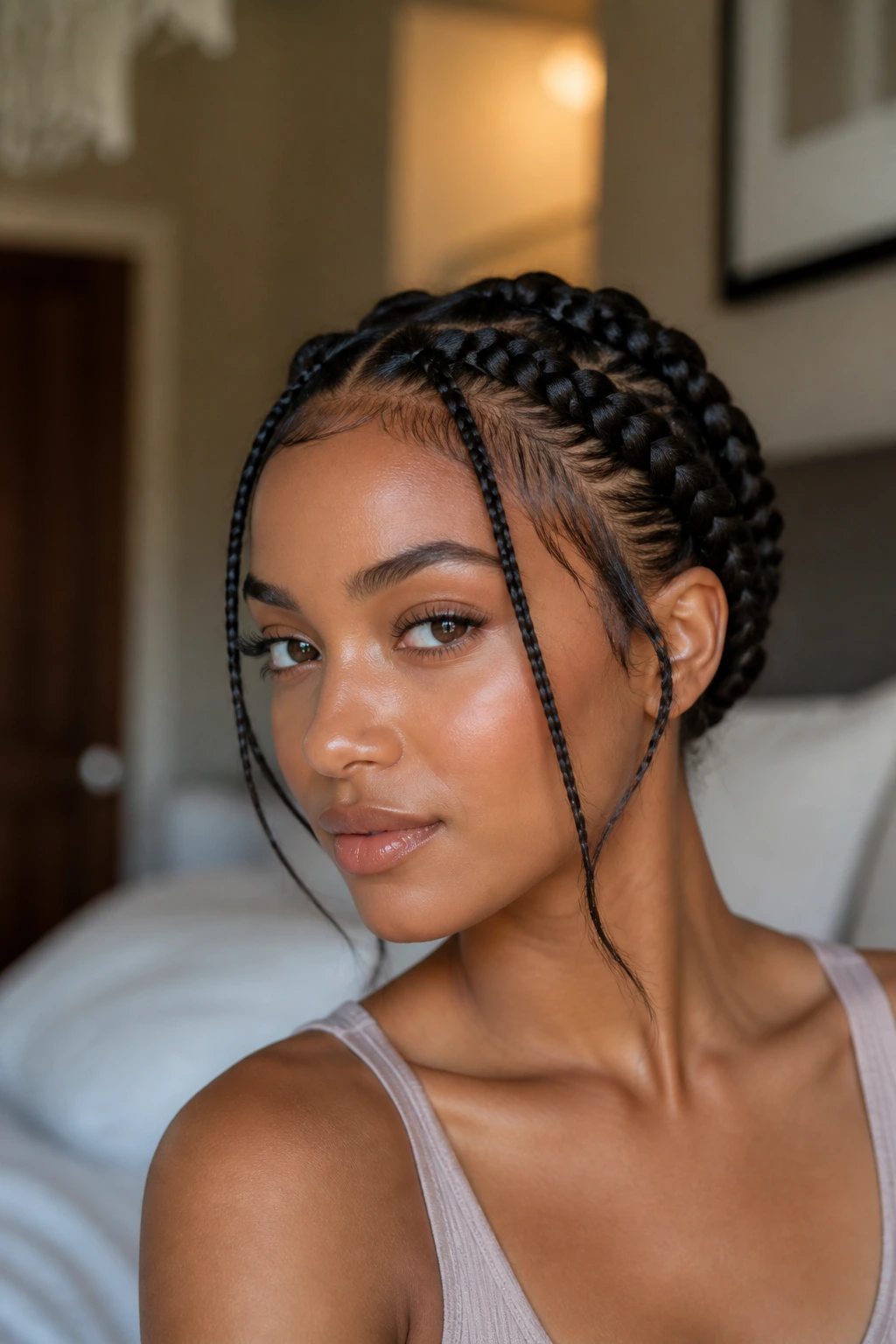
Face-framing braids are for people who like softness around the jaw. A few narrow braids around the front can break up the line of a crown style and keep the whole look from feeling too sealed off. The effect is light, but not flimsy.
This style works well with glasses, small hoops, or a strong lip color. The braid frames the face without taking over the whole head. I’d keep the back compact and the front pieces narrow so the style stays breathable. If you leave too much hair out, the protective part of the style starts to disappear. That’s the balance to watch.
21. Front-Heavy Halo French Braid
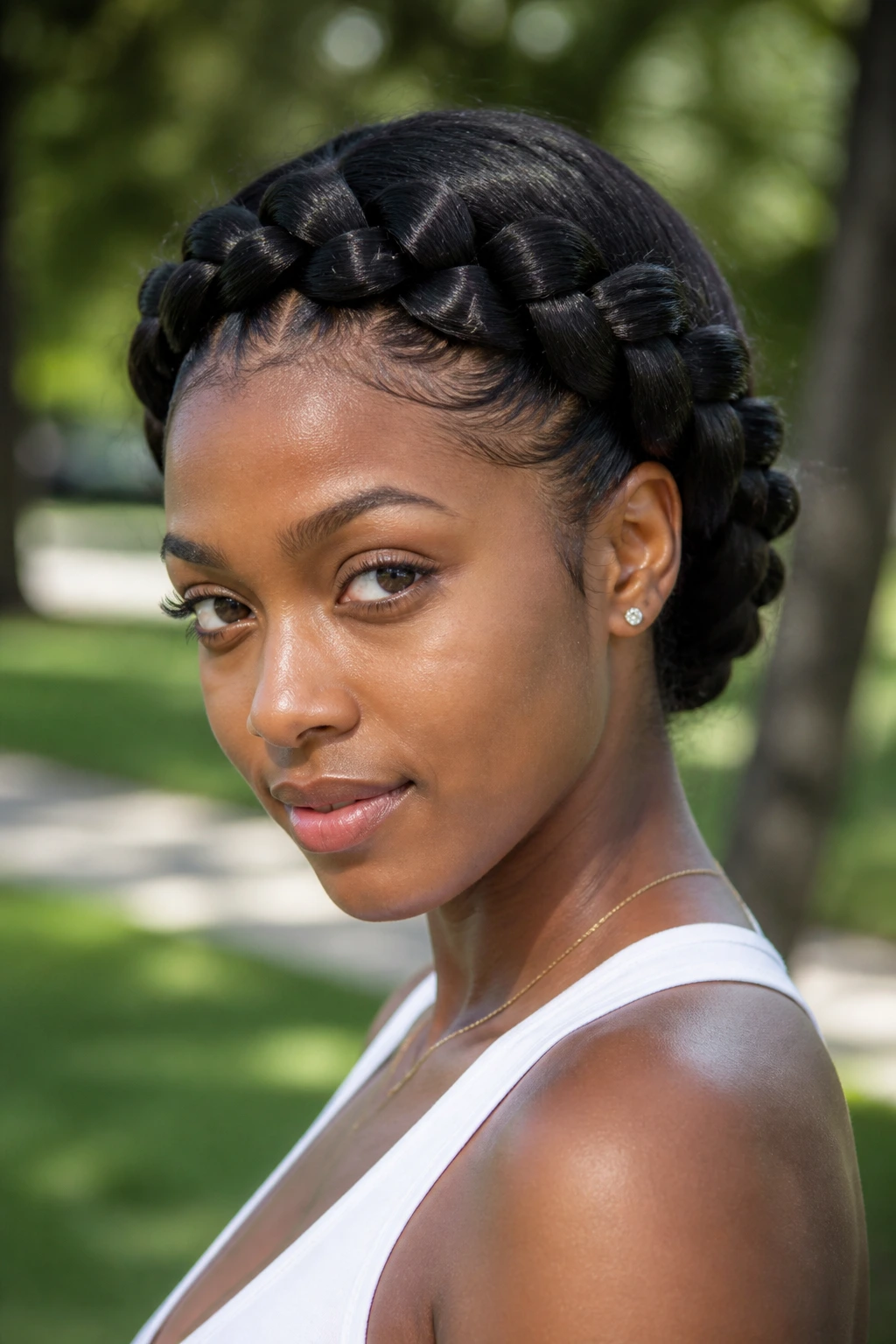
A front-heavy halo braid puts the detail where people actually look first: at the hairline and crown. It can feel a little more secure than a fully wrapped halo because the front braid does the visual lifting while the back stays tidy and out of the way.
This is a smart move when the back of your head gets hot quickly. The front stays sculpted, the neck stays clear, and the braid still gives you that wrapped-around shape without a full crown of weight. If you want the style to feel elegant instead of busy, keep the tail hidden and the parting narrow. Clean lines win here.
22. Wrapped Low French Braid Chignon
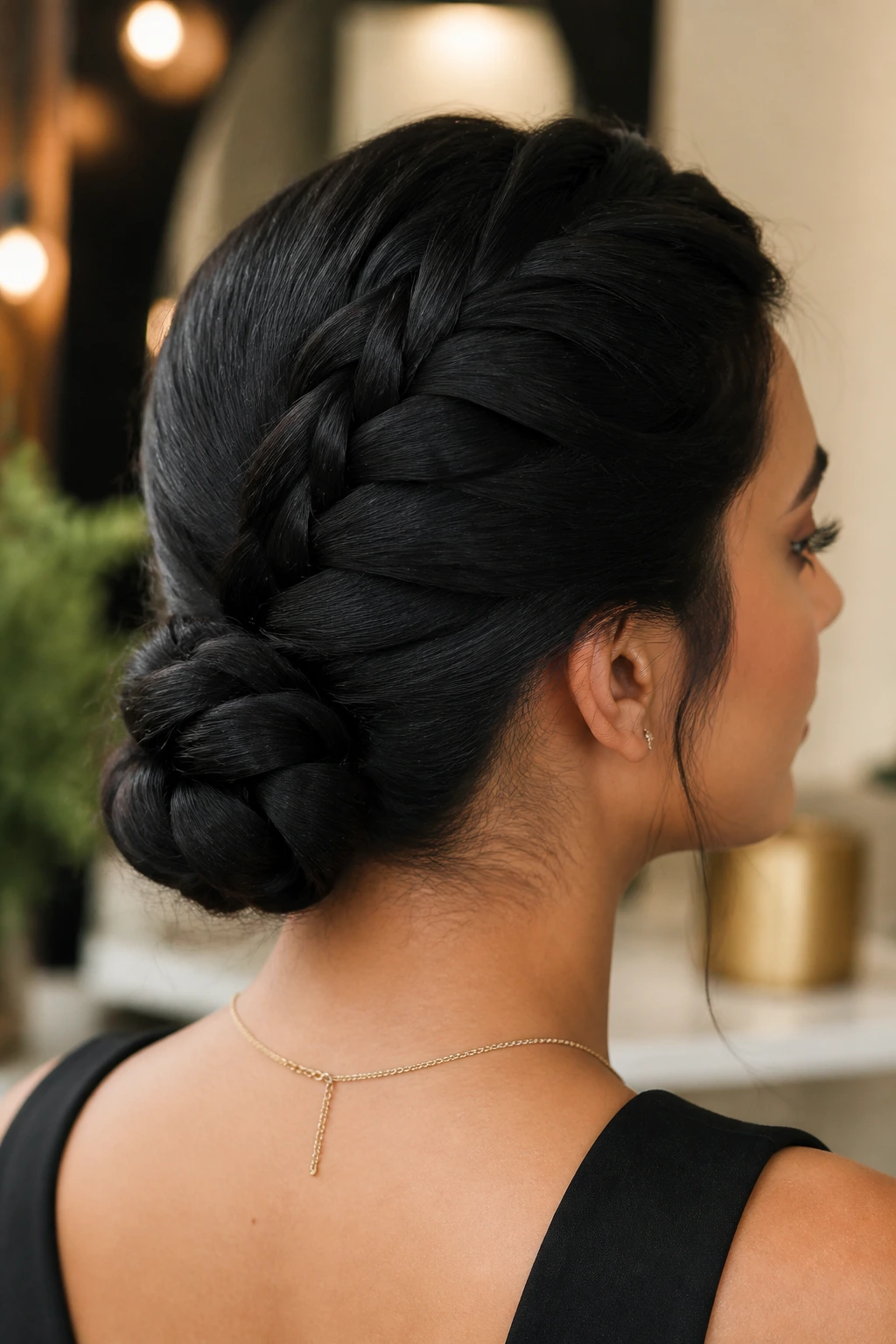
A chignon is the formal cousin of the low braid bun. It sits flatter, looks more finished, and has that neat wrapped shape that works with button-down shirts, dresses, and anywhere you don’t want hair bouncing around your shoulders. The braid ends disappear into the bun, which keeps the finish compact.
Use hairpins and a small net if needed, especially if the braid is thick or long. That extra support keeps the bun from sagging as the day goes on. I’d choose this style when I want the hair to look deliberate, not decorative. It’s a small difference. It changes everything.
23. Triangle-Part French Braids
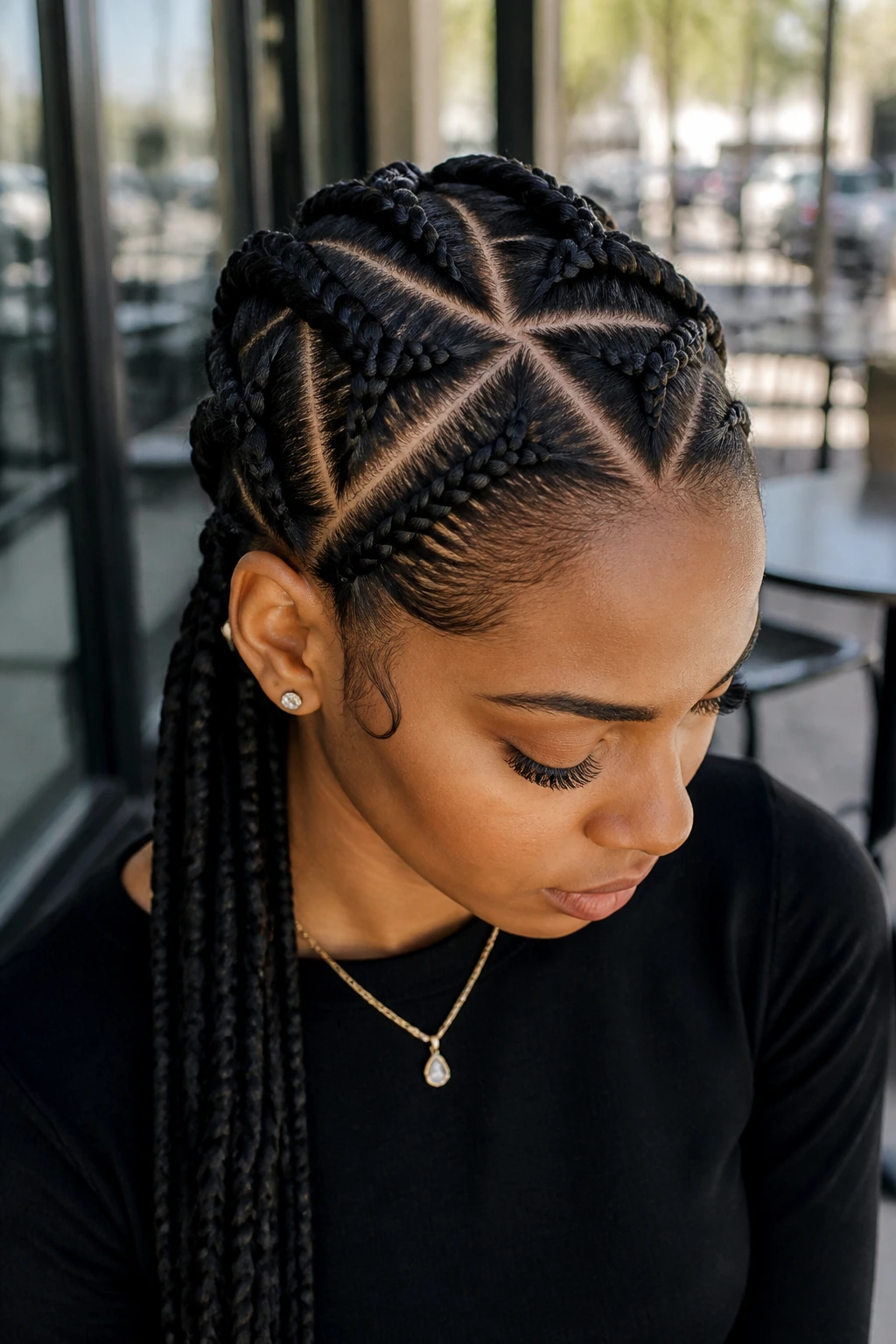
Triangle parts are a tiny detail with a big effect. They pull the eye away from the usual box pattern and give the head a softer, more custom rhythm. The shape works especially well on braids that are medium-sized, because the parting stays visible without needing to be huge.
The Part Does the Work
Triangle sections look best when they’re clean and slightly uneven in a natural way—not wobbly, just not ruler-straight.
The braid itself can stay simple. In fact, it should stay simple. Let the parting be the design. If you pile on cuffs, beads, and color, the part loses its charm. This is a good one for people who like the quiet detail no one notices until they’re standing close.
24. Rope-Tail Hybrid French Braid
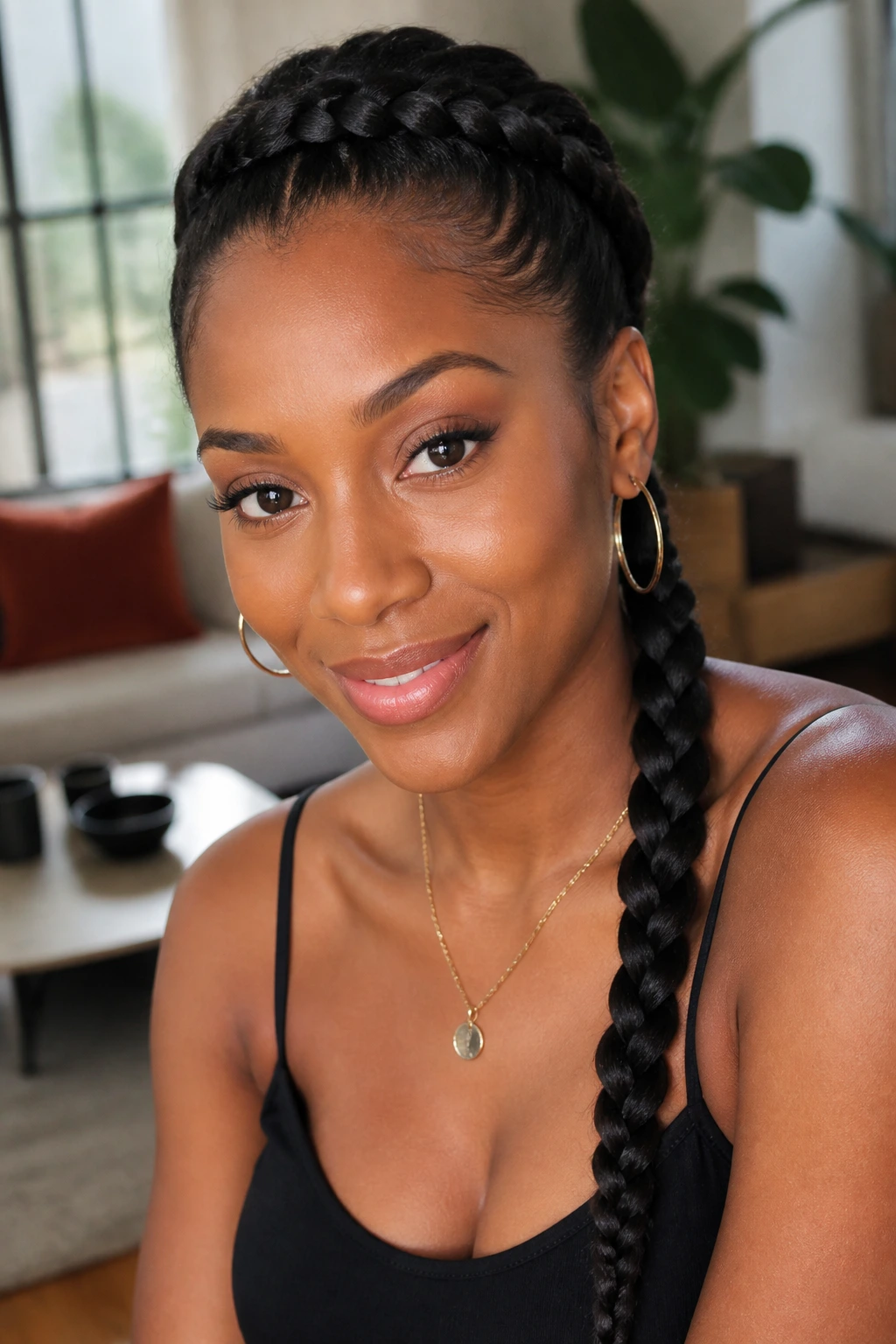
A rope-tail hybrid changes the texture at the end, which keeps a long braid from feeling flat all the way down. The top remains a classic French braid; the lower section twists into a rope finish that gives the tail a different kind of movement.
This works well if you want something long without the full weight of a wide braid all the way through. It’s also a nice way to refresh a style that might otherwise feel too plain. The twist at the end catches light differently and sits a little looser against the back. Small thing. Big payoff.
25. Side Crown into Low Ponytail
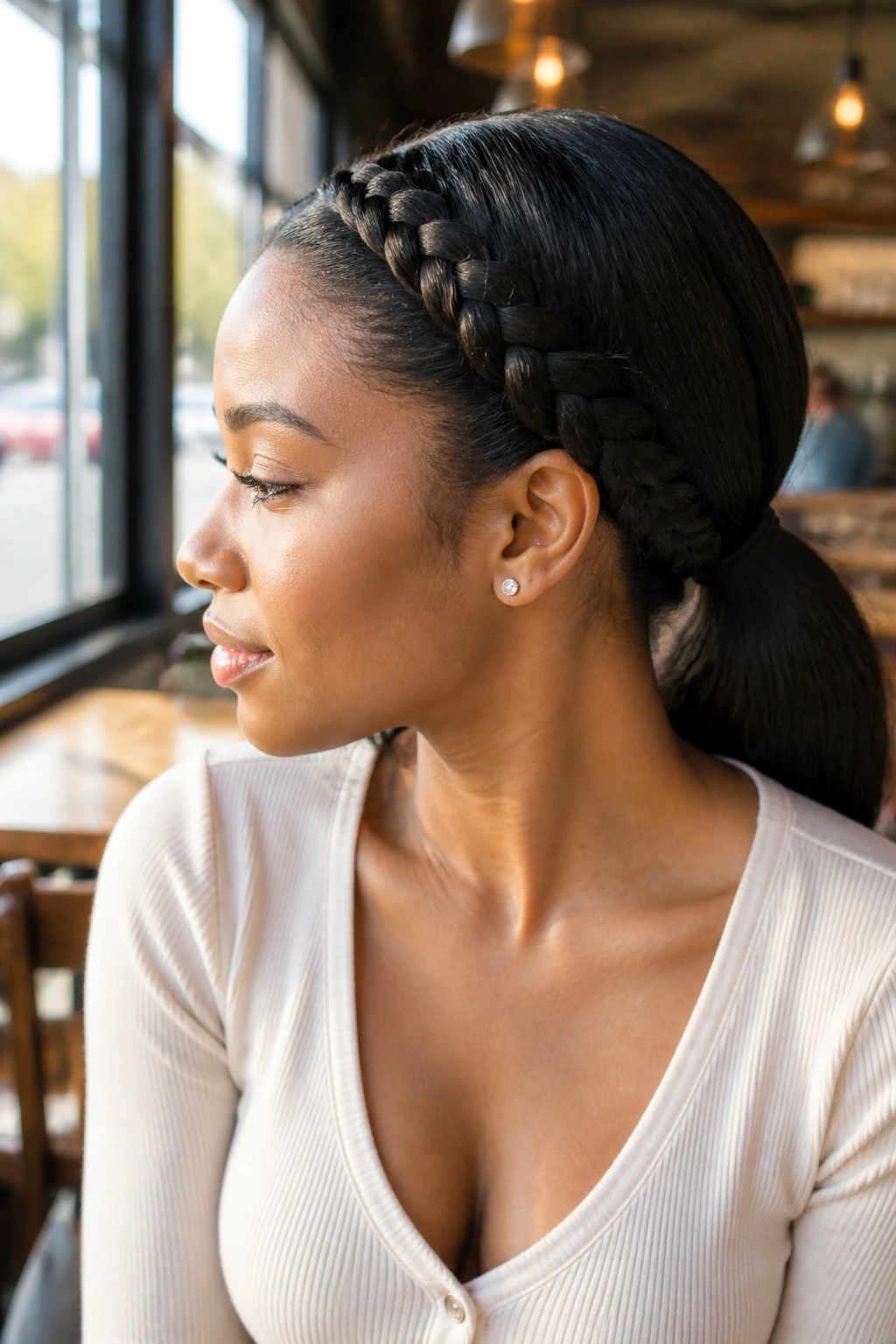
A side crown into a low ponytail is less fussy than it sounds. The braid starts along one side of the head, moves across the crown, and drops into a pony at the nape. You get the sweep of a crown braid without committing to a full wrap.
I like this one for days when I want the front controlled but the back still easy. It’s practical with open shirts and summer dresses because it avoids a bulky bun while keeping hair off the face. If your braids are long, stop the pony at collarbone length rather than dragging it down your back. That keeps the style lighter and easier to live with.
26. Waist-Length French Braid Drama
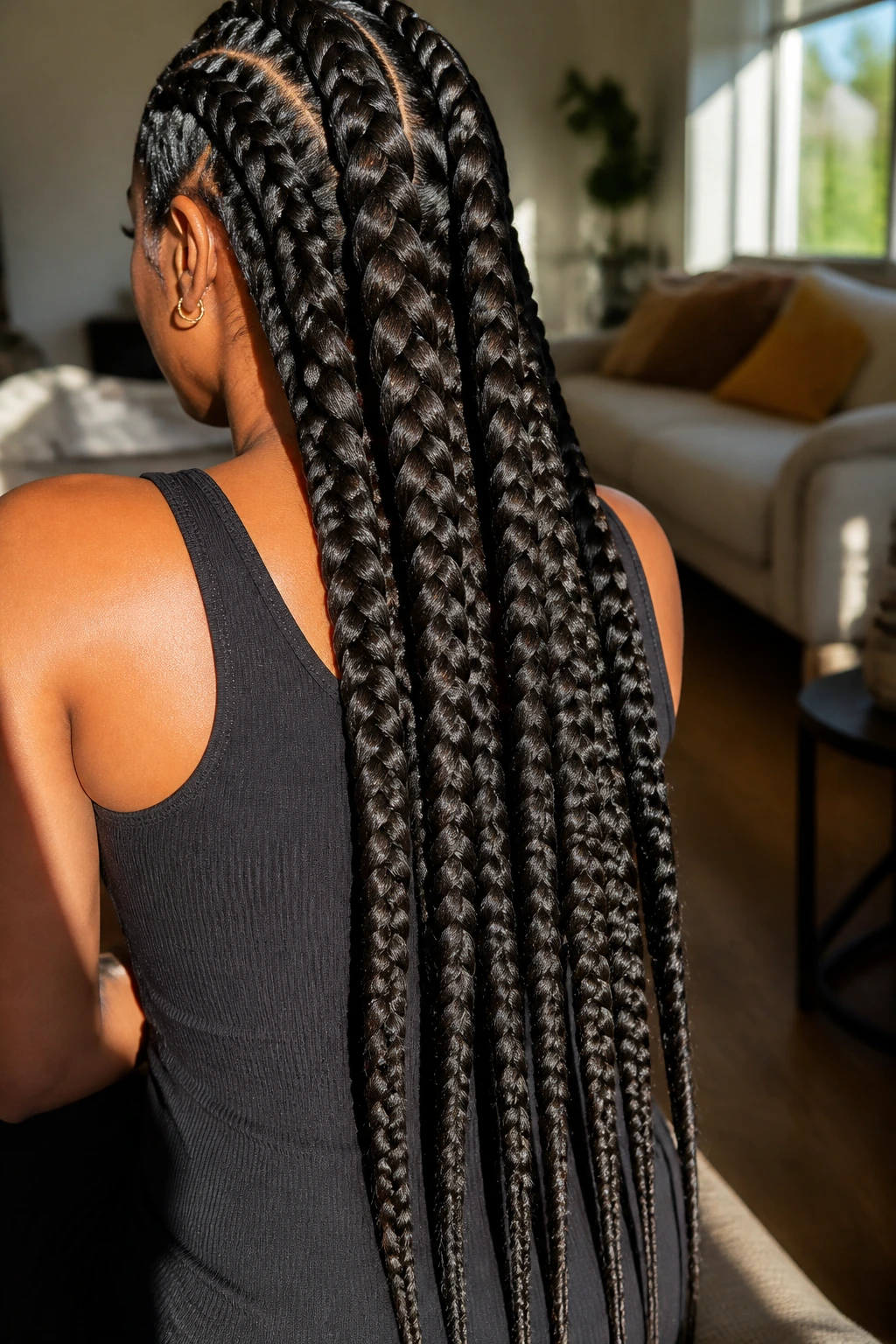
Waist-length braids are the drama move. They swing, they sit heavy, and they make a simple outfit look intentional in a single second. I wouldn’t call them low-maintenance, though. They need better wrapping, better drying, and more attention to weight than shorter styles.
If you want this length, keep the root sections slimmer so the install doesn’t feel like a helmet. Five to six packs of pre-stretched hair is a common range for a full, long finish, but the exact amount depends on how dense you want the braid body. Long is beautiful. Long is also work. Know that going in.
27. Pool-Day Medium French Braids
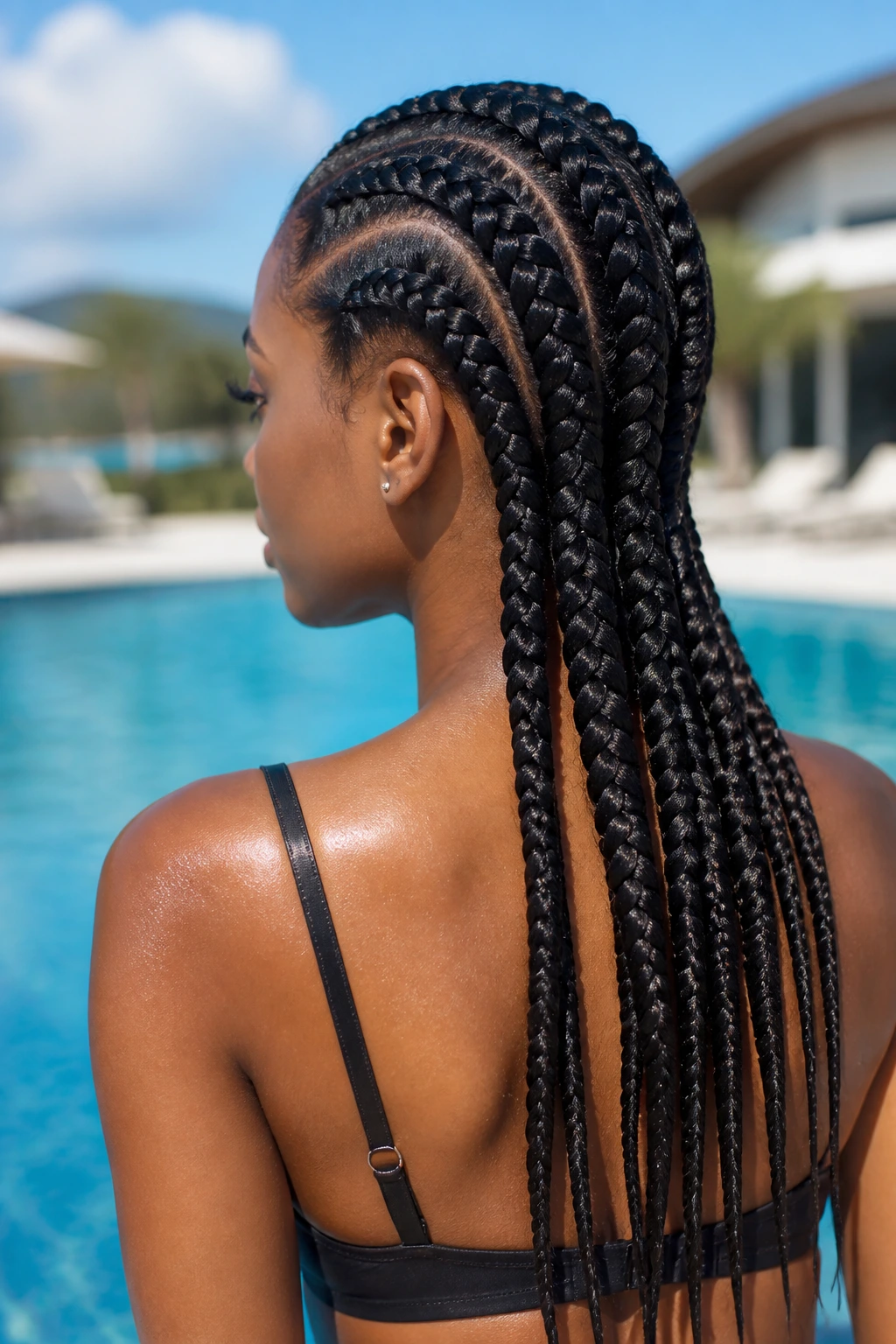
Pool days ask for less hair, not more. Medium French braids dry faster than very thick versions, and they’re easier to rinse clean after salt water or chlorine. The braid should be long enough to feel styled but short enough that the ends don’t soak and stay damp for hours.
Quick Pool-Day Notes
- Length: Shoulder to mid-back is ideal.
- Finish: Keep accessories minimal so nothing rusts or pulls.
- Aftercare: Rinse with cool water, squeeze gently with a microfiber towel, and dry the roots fully.
This is the style I’d reach for if I knew I’d be in and out of water and still wanted to look put together afterward. No theatrics. Just a braid that behaves.
28. French Braid Bob
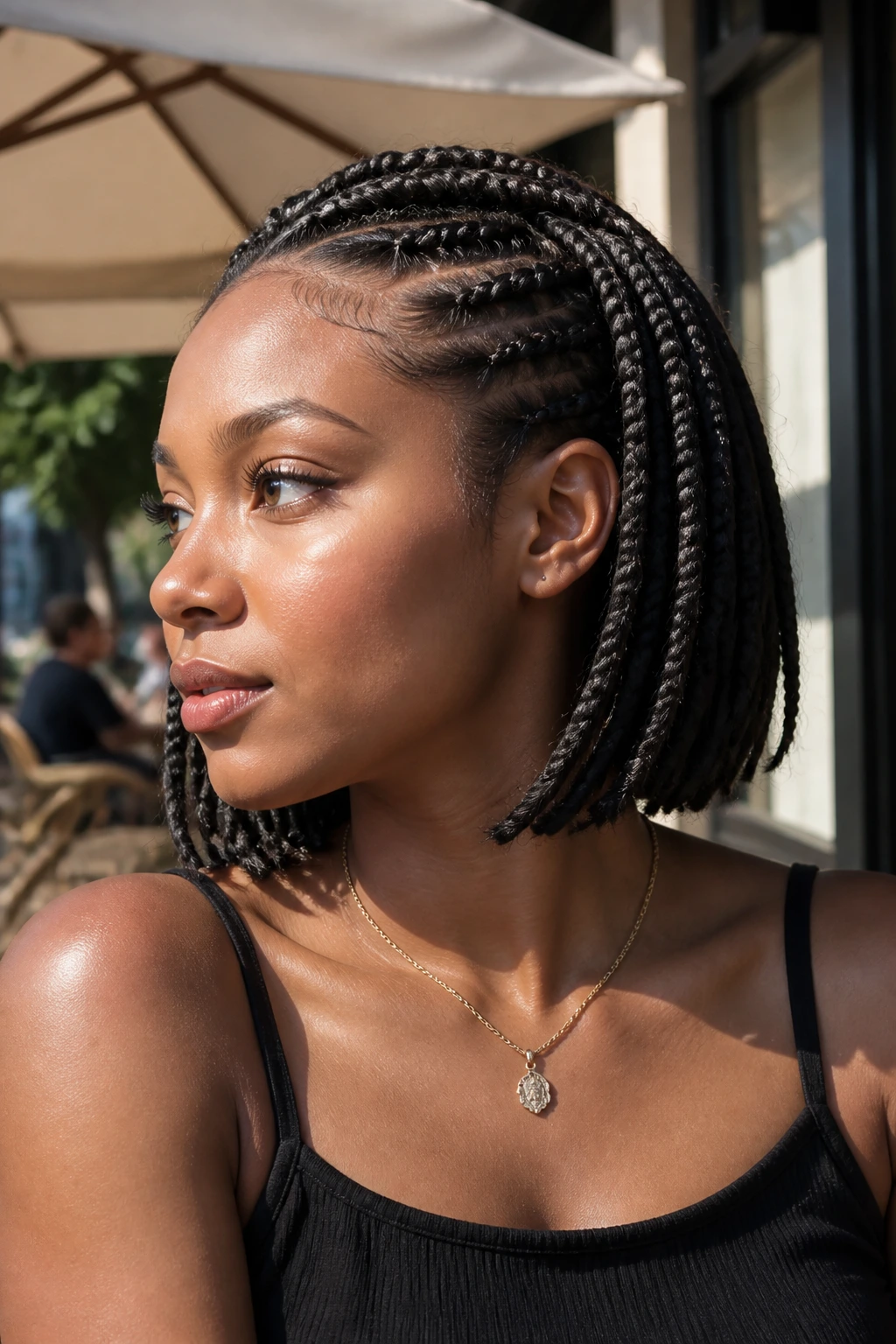
A braided bob is the quiet winner if you want movement without the swing of longer extensions. It sits around the shoulders or collarbone, which makes it easy to tuck behind the ears, put under a hat, or rinse and dry after a long day. It’s lighter too. That matters more than people think.
The short length gives the braid a sharper silhouette, and black braiding hair tends to look especially clean at this scale. Ask for the ends to be sealed neatly so they don’t fray into a fuzzy line by the second week. I’d pick this style over waist-length drama on days when comfort beats spectacle. Most days, honestly.
What Makes a Summer-Ready Install Feel Worth Wearing
The best summer braid isn’t the one that looks biggest in the chair. It’s the one that still feels decent when you’re walking through heat, sitting in traffic, or trying to sleep without yanking your scalp off the pillow. That usually means three things: the roots are calm, the extension hair isn’t overpacked, and the finished length matches your real life instead of your fantasy self.
French braid extensions do well because they start with structure at the scalp. That gives the style a clean base, and it also means the braid can be adapted to weight, parting, and length in a way some other installs can’t. A softer feed-in, a slightly shorter finish, or a lighter parting pattern can change comfort more than people expect. Tiny choices matter here. A lot.
Essential Equipment for These Styles
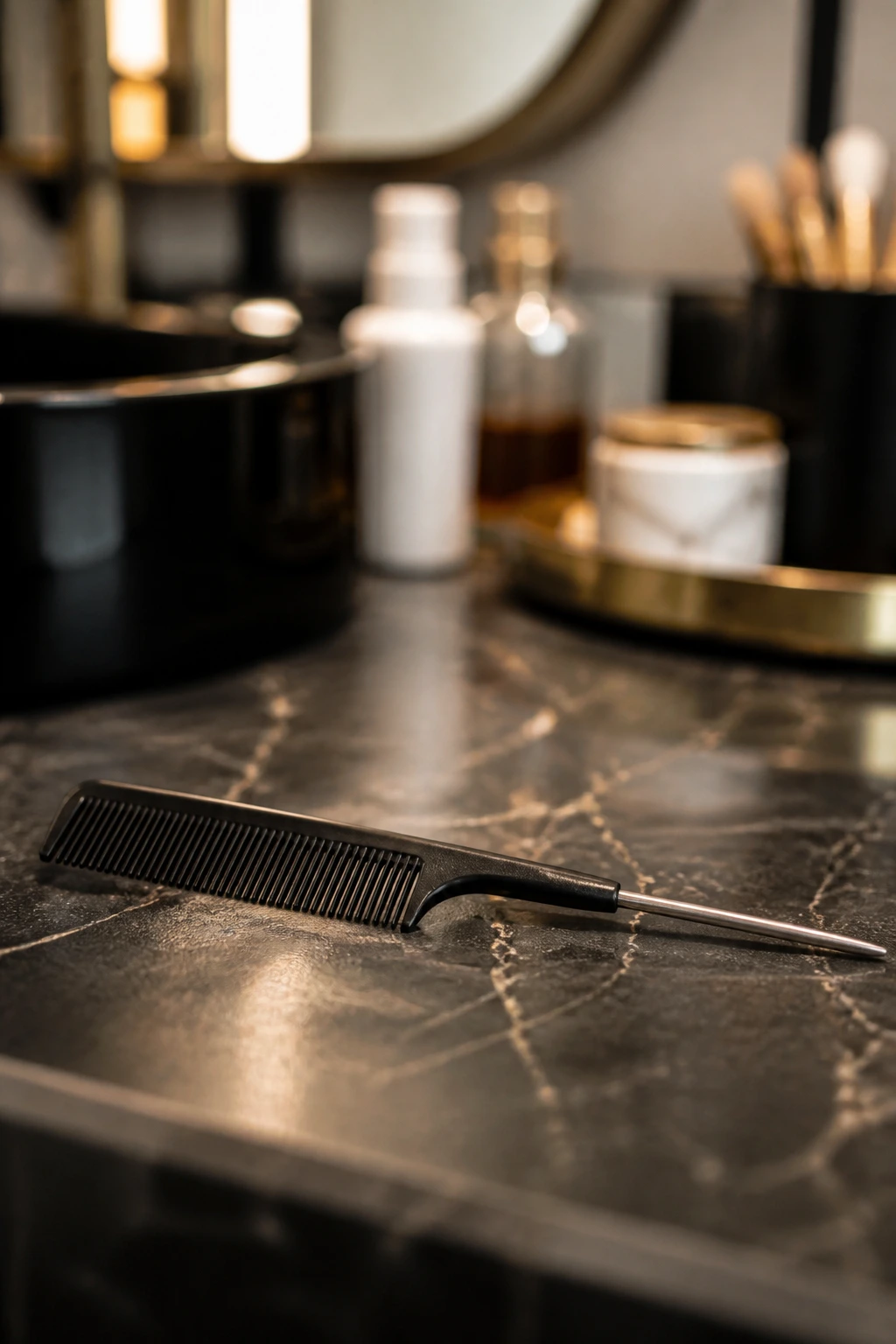
- Rat-tail comb with a pointed metal tip — For parting; a blunt comb just fights you.
- Duckbill clips — They hold sections out of the way without crimping the hair.
- Spray bottle with water and leave-in conditioner — Useful for stretching and softening the natural hair before braiding.
- Pre-stretched 1B braiding hair — The workhorse for most of these styles; matte finish usually looks softer.
- Braiding mousse or foam wrap lotion — Helps lay flyaways without making the hair sticky.
- Edge brush — Good for a neat hairline, but use a light hand.
- Hairpins and U-pins — Needed for buns, crowns, and tucked finishes.
- Small scissors — For trimming stray strands or accessory tails.
- Satin scarf or bonnet — Non-negotiable if you want the braid to last through sleep.
- Hooded dryer or cool blow-dryer — Handy after wash days or pool rinses so the roots don’t stay damp.
Smart Shopping for Black French Braid Hair Extensions
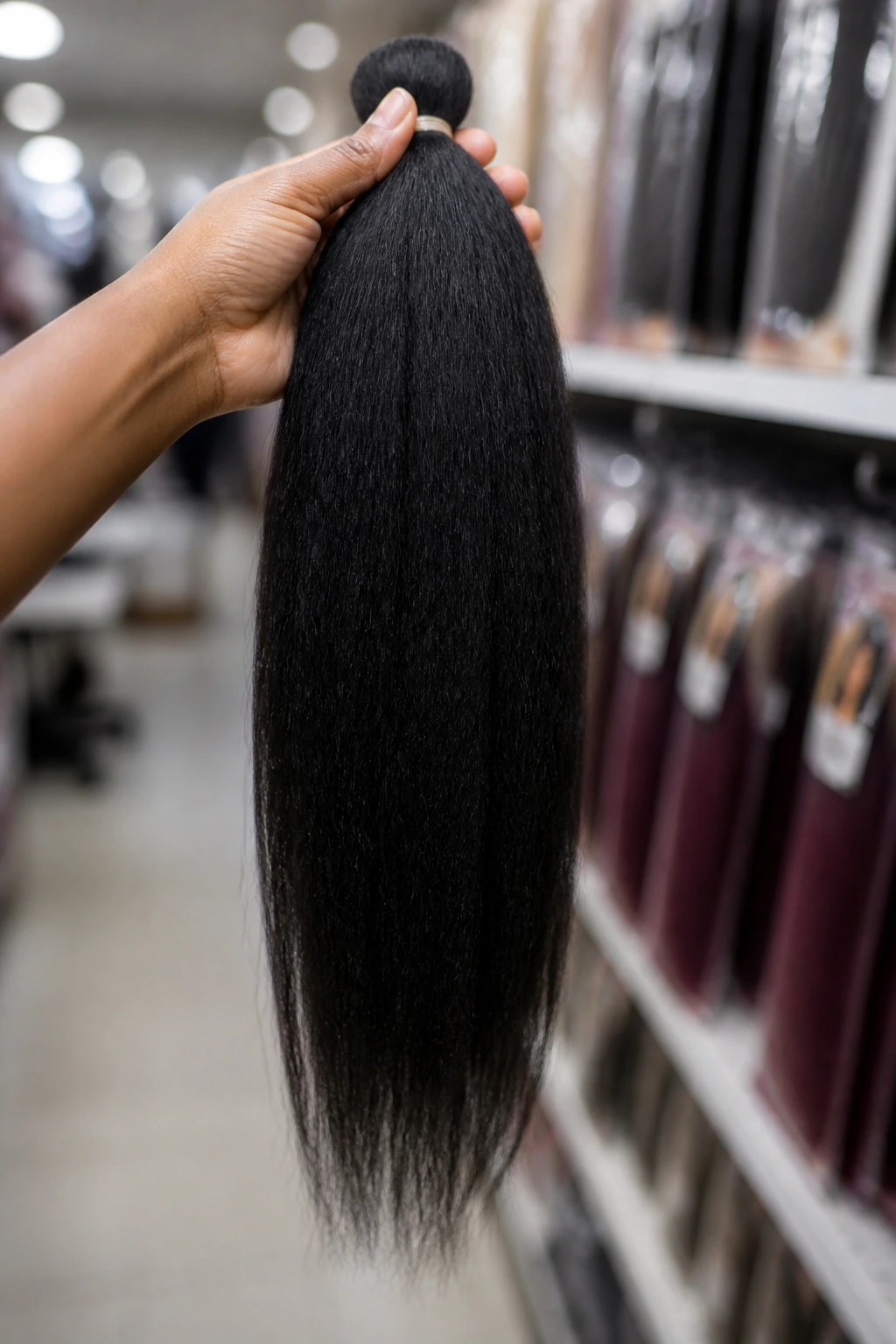
The hair you buy changes the whole look. If you want the braid to read soft in daylight, 1B is usually a safer bet than jet black. Jet black can look glossy in the sun in a way that makes the style feel more synthetic than you probably want. Pre-stretched braiding hair helps too, because the ends taper naturally instead of ending in a blunt, bulky line.
Length is where people get greedy. I’d argue that 18 to 24 inches is the sweet spot for most summer braids. Longer hair looks dramatic, yes, but it also catches on bags, dries slower after washing, and sits heavier on the shoulders. If you want a long look, choose it on purpose—not because you feel like longer automatically means better.
Think about texture as much as color. Matte synthetic hair works for most installs. Human hair belongs where you want softness, especially at curled ends or face-framing pieces. And if you plan to add beads or cuffs, buy slightly less hair and more accessories. The braid itself should stay the star.
How to Wear These Braids From Errands to Evening Plans
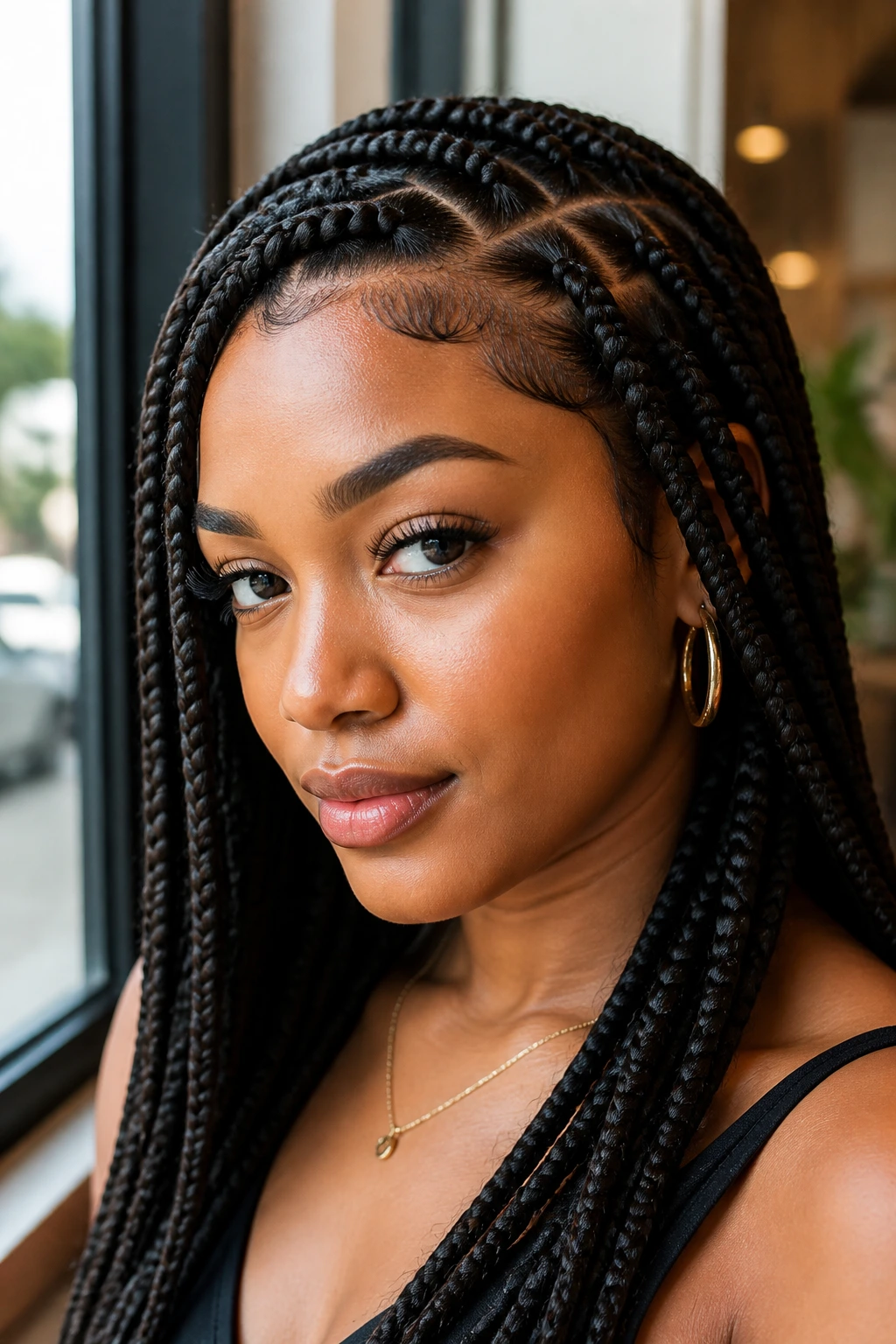
Presentation: Keep the roots clean and choose one finish point: sleek edges, a side part, or a few face-framing pieces. Too many finishing tricks at once make the style look busy.
Outfits: Long braids sit nicely with open necklines, big hoops, linen shirts, tanks, and simple summer dresses. Shorter braids and buns play better with collars, structured tops, and sporty sets.
Scale: If your scalp is tender, ask for fewer, thicker braids or a knotless base. If your hair is dense and you like a fuller look, smaller sections spread the weight more evenly.
Weather Match: These styles handle heat best when they’re not overloaded with product. A braid can survive humidity. A braid drowned in oil and edge gel usually can’t.
Small Upgrades That Change the Whole Look
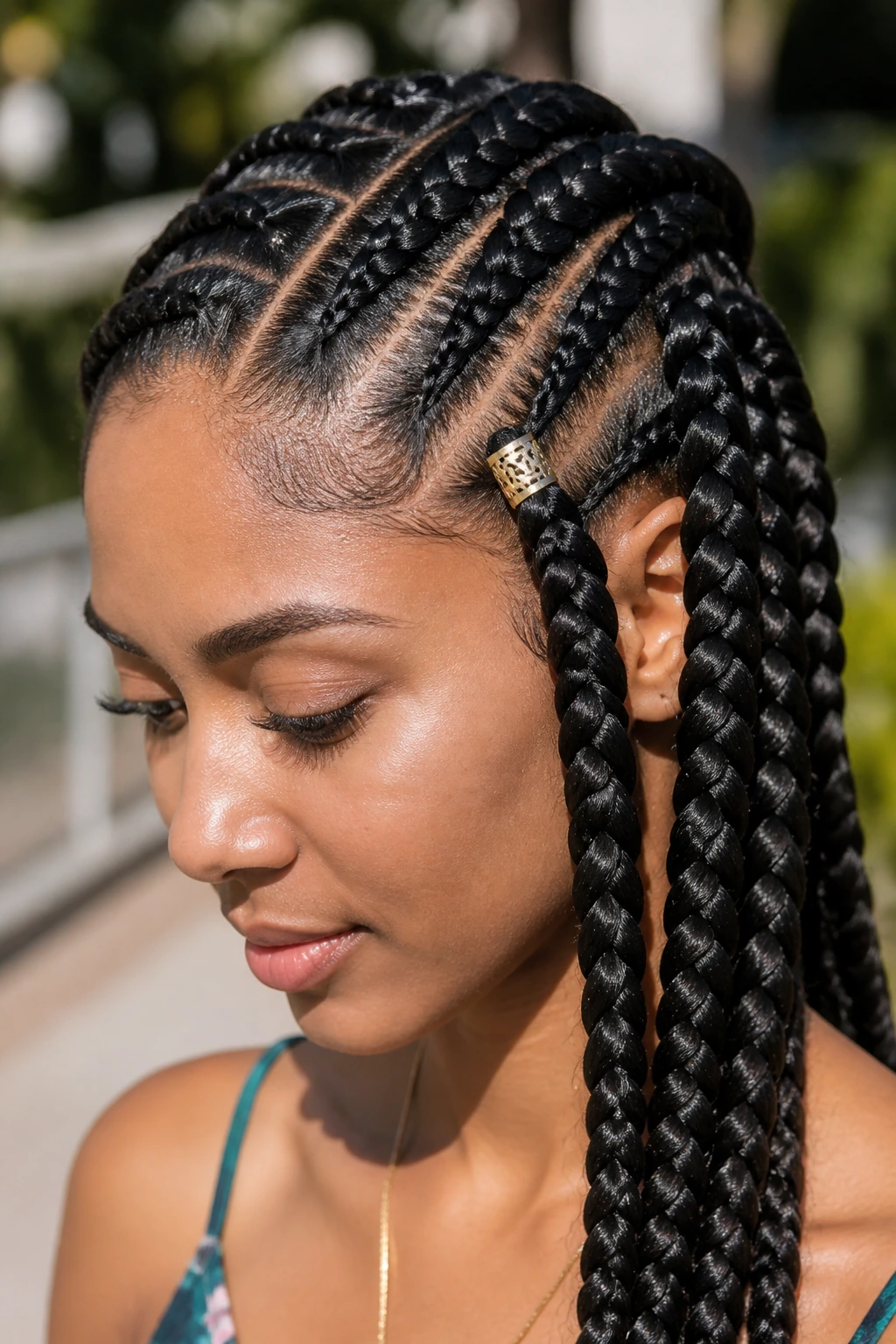
Accessory Play: Pick one lane—beads, cuffs, ribbons, or thread—and stick with it. One accent looks planned. Three accents look like a craft drawer.
Gloss Level: Use mousse or foam in a thin layer, then stop. The braid should feel smooth, not wet. Too much shine spray can make black braiding hair glare under sun.
Parting Trick: A crisp middle part, triangle part, or zig-zag line gives the whole style structure before the first braid even starts. If the part is off, you will keep noticing it.
Softness at the Hairline: Ask for the braid to start with less tension at the front and temples. A style that feels snug is fine. A style that throbs is not. That distinction matters more than any accessory.
Night Care, Wash Days, and Wear Time
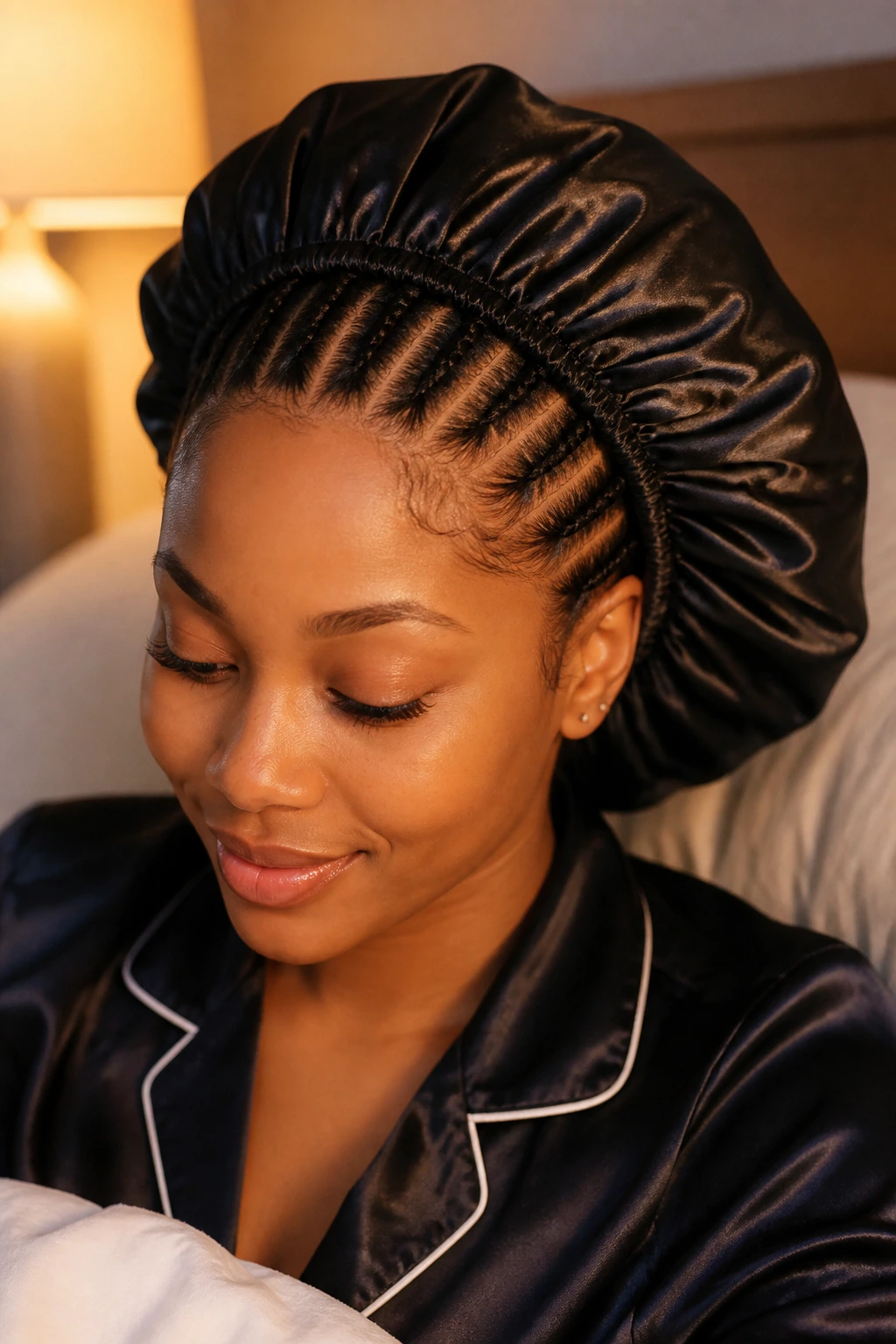
Wrap the hair every night. Every night. A satin scarf or bonnet keeps the roots flat, cuts down on lint, and slows the little frizzes that make a braid look older than it is. If the braid is long, I’d use a scarf to secure the roots and a bonnet or loose satin wrap over the length so the ends don’t rub against the pillow.
For wash day, use a diluted shampoo in a squeeze bottle or nozzle applicator and aim it at the scalp, not the braid itself. Let the water run down the lengths, then squeeze out excess moisture with a microfiber towel. If the roots stay damp, they can smell off later. That’s one of those details nobody enjoys discussing but everybody notices.
Wear time depends on size. Heavy or jumbo braids usually want out after 2 to 4 weeks. Medium styles can go 4 to 6 weeks if the scalp stays calm and clean. Smaller, lighter installs may reach 6 to 8 weeks, though I still prefer taking them out earlier if the hairline starts feeling tired. The scalp usually tells you before the calendar does.
Variations and Adaptations to Try
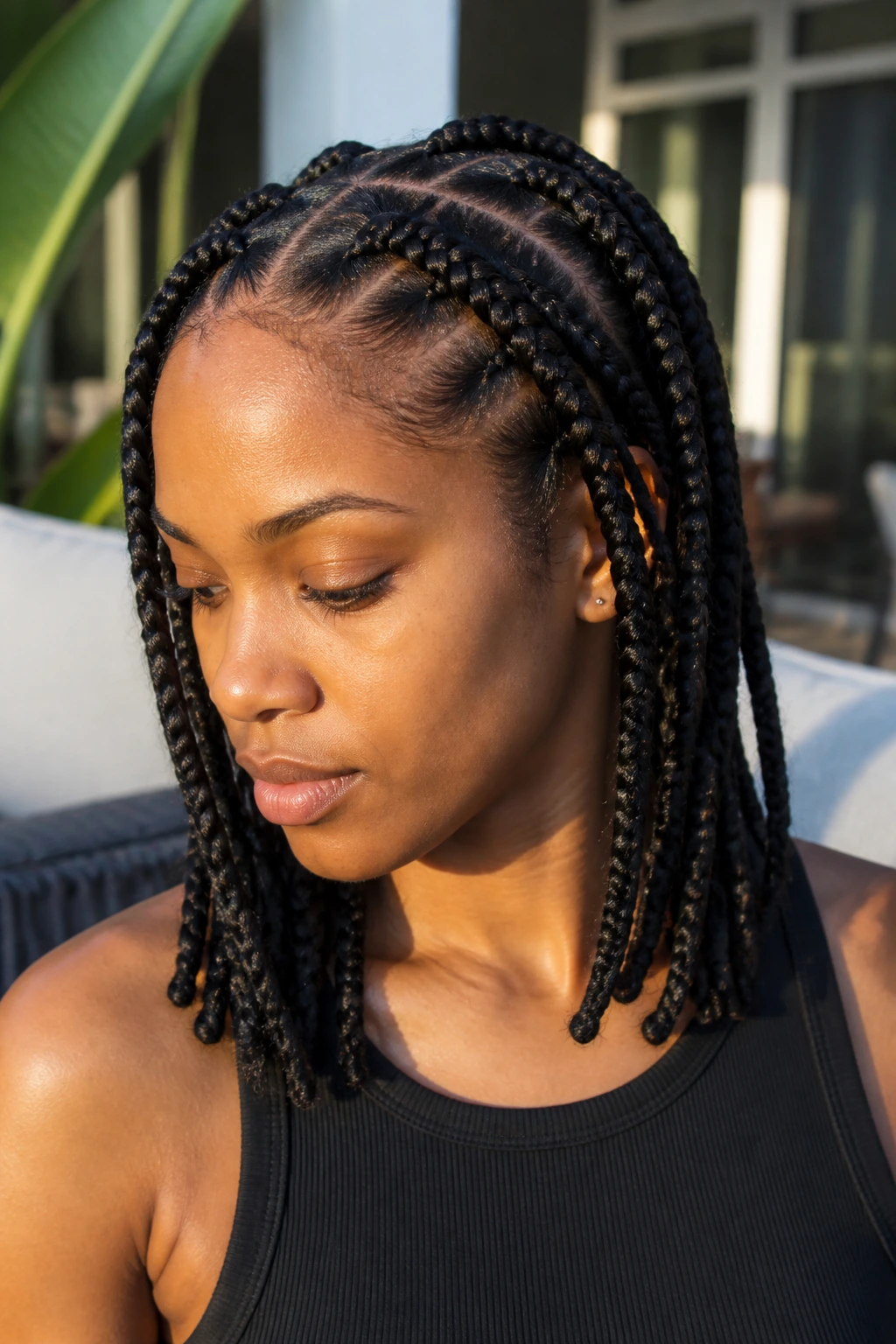
Soft-Tension Summer Set: Ask for knotless roots, medium sections, and no tight pull at the hairline. This version is easier to live in if your scalp complains easily.
Pool-Ready Short Set: Choose shoulder-length or bob-length braids with sealed ends. They dry faster, sit lighter, and don’t stay damp after a swim.
Dress-Up Detail Set: Add cuffs, a wrapped pony base, or one small accent braid near the front. It gives the style enough polish for an event without turning the whole head into a costume.
Minimalist Office Set: Stick to a center part, medium length, and no extra hardware. Clean lines do the work here.
Big-Length Weekend Set: Go waist-length with curved parts or twin braids if you want drama. Just know the weight changes how the style moves, especially at the shoulders.
Common Mistakes to Avoid
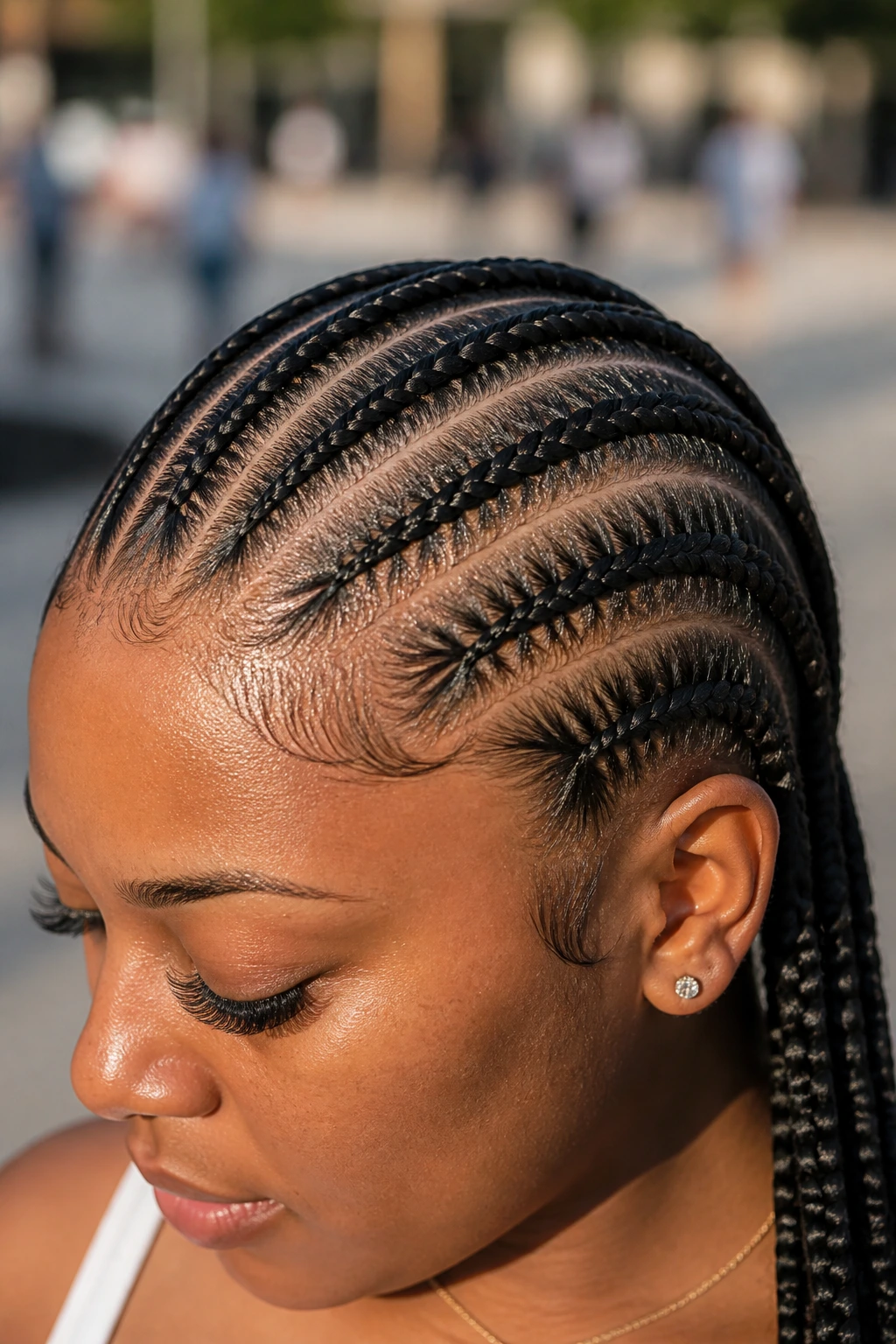
- Pulling the roots too tight. If your scalp feels hot, sore, or pinched while the braider is still working, speak up. The braid should feel secure, not punishing.
- Using too much extension hair at the start. A thick root looks bulky and can make the whole braid sit like a block. Feed the hair in gradually over the first couple of inches.
- Choosing a super shiny black finish for outdoor wear. Under strong sun, jet black can look a little plastic. A 1B or matte finish usually blends better.
- Skipping nighttime wrapping. Friction from pillows roughs up the braid fast, especially around the edges and nape.
- Leaving the style in too long. Once the roots are visibly stressed or the scalp feels clogged, the install is done. Long wear is only good if the hair underneath stays healthy.
- Letting damp braids air-dry all the way through the night. That’s how you get a stale smell nobody asked for. Dry the roots fully.
Questions That Come Up Before Install Day
How many packs of braiding hair do I need?
For two medium French braids or a crown style, 2 to 3 packs is often enough. Waist-length twin braids or a very full ponytail can take 4 to 6 packs depending on how dense you want the finish. If your braider feeds hair in slowly, you may need less than you think.
Is 1B better than jet black?
Most of the time, yes. 1B looks softer in daylight and blends better with natural hair textures, while jet black can read shinier and harsher outdoors. If you want the braid to look rich rather than glossy, I’d start with 1B.
Can I wash my scalp with these braids in?
Yes. Use diluted shampoo, focus on the scalp, and rinse well without scrubbing the braid lengths like you’re washing a sweater. Dry the roots thoroughly afterward or the style will start smelling stale.
How tight is too tight?
If the style gives you a headache, makes chewing feel weird, or leaves the hairline shiny and pulled, it’s too tight. That pain does not “settle in.” It usually gets worse.
Can I swim with French braid extensions?
You can, but shorter or medium lengths handle water better than long installs. Rinse the hair after pool or saltwater exposure, then dry the roots fully so moisture doesn’t linger at the scalp.
Do these styles work on shorter natural hair?
Yes, if the braider uses the right feed-in method and doesn’t force the roots to do all the work. Shorter natural hair often does better with medium or slimmer braids rather than giant heavy sections.
How do I keep the style from getting fuzzy?
Night wrapping matters most, followed by a light mousse pass and not drowning the scalp in oils. A little fuzz is normal. A lot of it usually means too much friction or too much product.
Which style is best if I want the least weight?
A bob, slim feed-in rows, or a knotless ponytail braid usually feels lighter than jumbo braids or waist-length installs. When comfort matters more than drama, shorter almost always wins.
Braids That Survive the Heat
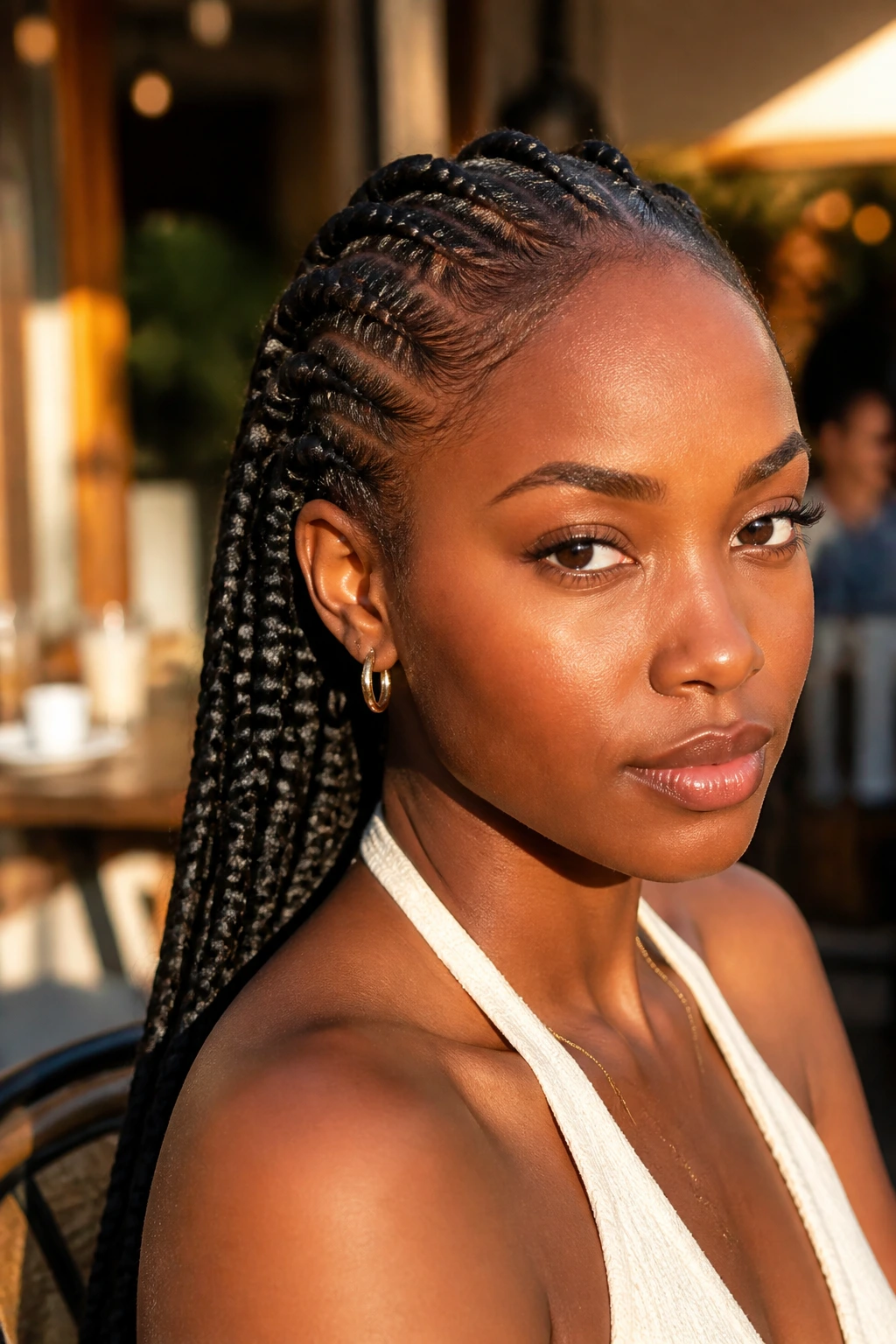
A braid worth wearing in summer should do more than look tidy in the mirror. It should sit well when you’re moving, hold up when the air gets sticky, and still feel decent after a night of sleep and a day of errands. That’s the standard I keep coming back to, because the rest is window dressing.
Pick the braid that matches your actual life. If you need lightness, go shorter. If you want drama, keep the root soft so the length doesn’t bully your scalp. If you love a clean finish, let the parts do the talking and keep the accessories lean. The best black French braid hair extensions for summer are the ones that still feel good once the chair is behind you and the heat is not.